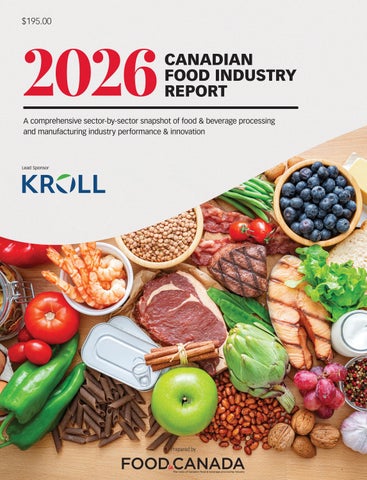

CANADIAN FOOD INDUSTRY REPORT 2026
A comprehensive sector-by-sector snapshot of food & beverage processing and manufacturing industry performance & innovation
Prepared by
Lead Sponsor


























EDITOR Nithya nnithya@annexbusinessmedia.com 437-220-3039
ASSOCIATE EDITOR Steven McGoey smcgoey@annexbusinessmedia.com 416-510-5206
ASSOCIATE PUBLISHER Kim Barton kbarton@annexbusinessmedia.com 416-510-5246
WRITER AND RESEARCHER Doug Burn
MEDIA DESIGNER Alison Keba akeba@annexbusinessmedia.com
ACCOUNT COORDINATOR Cheryl Fisher cfisher@annexbusinessmedia.com 416-510-5194
GROUP PUBLISHER/DIRECTOR
Paul Grossinger pgrossinger@annexbusinessmedia.com
sjamieson@annexbusinessmedia.com

EXECUTIVE SUMMARY
The domestic and export markets for Canadian F&B manufacturers—disrupted by trade tensions in spring 2025—have settled into an uneasy balance between price resistance at home and tighter trade conditions abroad. Within Canada, consumers were initially focused on price but are increasingly shifting toward a broader definition of value, weighing cost against nutrition, convenience, and support for local producers. This evolution creates opportunities for manufacturers to differentiate through product reformulation, premium private label offerings, and clearer value messaging. Internationally, exporters are reassessing the potential of markets covered by Canada’s free trade agreements, accelerating efforts in diversification, brand positioning, and logistics optimization. Together, these shifts favour manufacturers that can adapt portfolios, sharpen value propositions, and align innovation with changing consumer and trade realities.
CONSUMER TRENDS & THE ECONOMY
The similarities between spring 2026 and spring 2025 are obvious but the undercurrents are quite different. Expectations have changed. The spending habits adopted to ‘get us through’ have become baked-in. Bouts of cynicism have evolved into sustained skepticism about product claims, shortages and prices. As Jo-Ann McArthur, president and founder of Nourish Food Marketing noted in her 2026 forecast, consumers favour authenticity over perfection and insist on “radical transparency” to reclaim their trust. The front-of-pack warning labels on food packaging arrived just in time to meet this mood.
Continuing slow economic growth, high unemployment and persistent inflation have dragged consumer confidence to levels last seen in 2020 in the midst of the COVID pandemic (47.7 in 2025 vs. 48 in 2020). Consumers continue to cut back on non-essentials. They also demand more of what they consider essentials. Healthy options must be convenient. Where once it was enough to have a fibre claim on baked goods, for example, that is now a default. Nourish predicts consumers will be ‘maxed out’ on this single-nutrient focus.
SECTOR-SPECIFIC INSIGHTS: SEAFOOD
The seafood sector is navigating geopolitical volatility and a strategic push for market diversification. Domestic consumption trends are shifting toward convenient, high-protein seafood formats, with snackification encouraging growth in ready-to-eat and shelf-stable products. The 2026 outlook projects modest growth despite significant budget constraints.
PET FOOD
Canada’s pet food industry is undergoing a structural shift toward export diversification and domestic loyalty, with the Buy Canadian movement challenging U.S. market dominance. A demographic milestone in 2024 saw the cat population surpass dogs, making cat food the fastest-growing category. Sales are migrating to e-commerce and subscription models. The 2026 outlook is sluggish but stable, supported by health-driven demand.
BAKED GOODS
Canada’s bakery sector is transitioning from traditional loaves toward buns, rolls, and tortillas. Shoppers are increasingly prioritizing portion
control and ‘value-plus’ functional products like protein-enriched bread and sourdough. The 2026 outlook anticipates margin recovery supported by lower grain and flour price.
DAIRY & EGGS
Canada’s dairy sector is evolving in response to growing interest in protein-rich products. Budget pressures, however, have softened cheese demand, while butter showed a clear recovery, with consumption up 8 per cent in 2025. Cottage cheese also gained momentum, expanding 25 per cent in volume.
MEAT & POULTRY
Elevated meat prices have led many households to scale back purchases, yet animal protein remains a central component of Canadian diets. This affordability–availability squeeze is driving protein switching toward lower cost options, particularly poultry and value-oriented formats.
SWEETS & CONFECTIONERY
Canada’s sugar and confectionery sector is navigating inflation-led growth, with higher prices supporting sales despite a single-digit decline in chocolate volumes. Consumers are embracing mindful indulgence, favouring premium brands, smaller portions, and experiential value.
PRESERVED, FROZEN & PREPARED FOODS
Canada’s fruit and vegetable processing sector is seeing renewed demand for frozen and canned formats as consumers seek affordable, waste-reducing alternatives to volatile fresh produce prices. Shoppers are prioritizing value and functional staples, supporting growth in multi-use products such as broths. However, the 2026 outlook remains cautious as price sensitivity continues to constrain volume growth.
BEVERAGES
Canada’s beverage market is increasingly shaped by functional wellness and mindful moderation. While sugary and carbonated drinks face headwinds as health-focused consumption rises, cold coffee and functional teas continue to resonate with younger consumers. Beer and wine volumes have declined to multi-year lows. But RTD cocktails and domestic spirits remain resilient, aided by convenience and a temporary shelf-share boost after U.S. wines and spirits were removed.
PULSES, FLOURS & EDIBLE OILS
Canada’s record 107-million tonne harvest of field crops is lowering input costs for flour, and other milled grains and oilseeds. Shoppers are replacing ultra-processed snacks with whole-grain options and fiber-rich granola. Pulses are moving beyond raw commodities into organic soups and clean-label protein powders.
SNACKS, SAUCES & HMR
The Other Food Products sector is increasingly shaped by functional health, global flavour exploration, and economic pragmatism. Consumers are gravitating toward better-for-you products. Amid ongoing economic pressure, categories such as home meal replacement and premium sauces continue to flourish as affordable, restaurant-quality solutions.
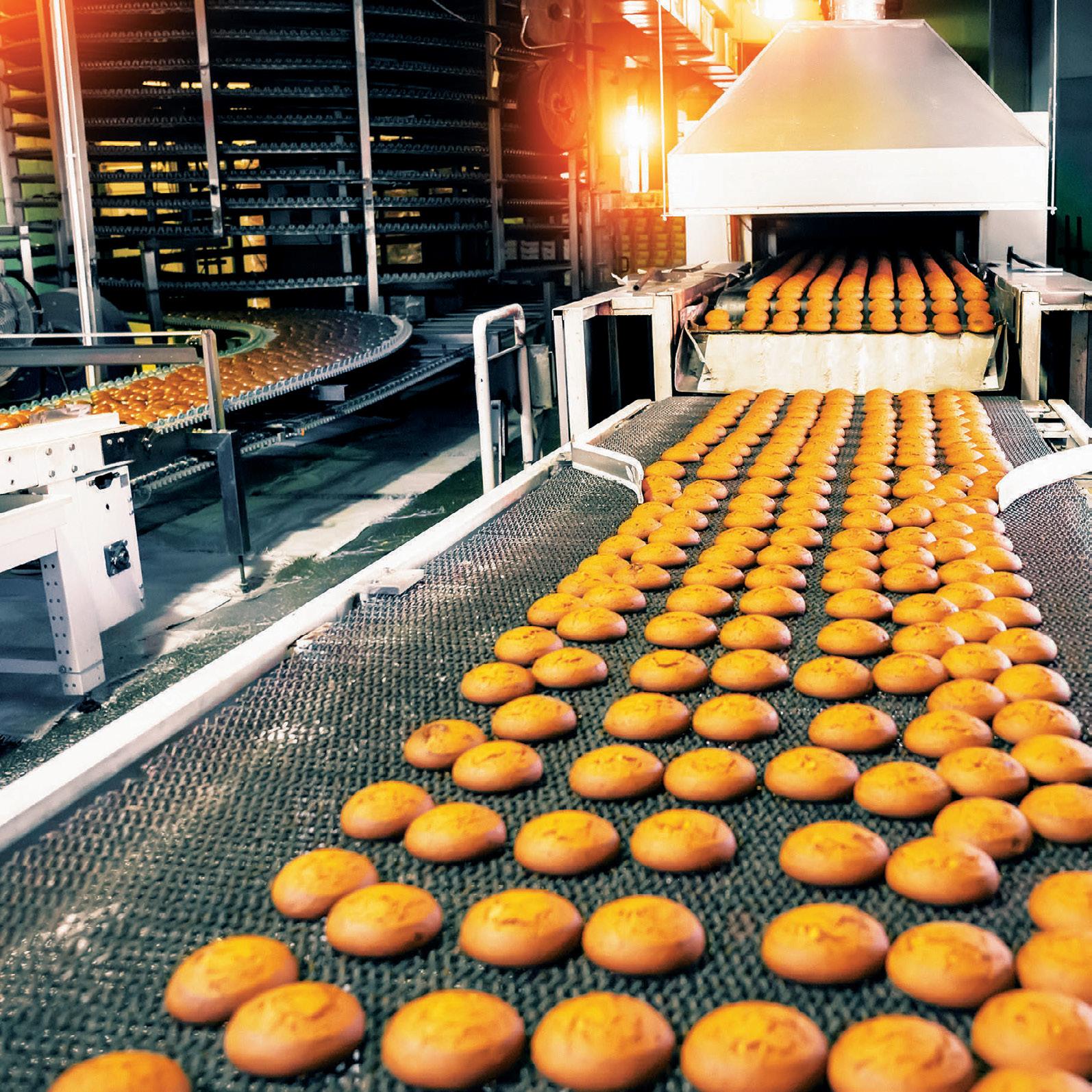


BAKED GOODS SECTOR [sector snapshot]
The baked goods sector includes most grain-based foods except for snack foods, which fall into the Other Food Product sector, and breakfast cereal, covered in the Grain and Oilseed Milling sector. Fresh and frozen bread, rolls, cakes and pastries accounted for 67 per cent of sector shipments in 2025; cookie and cracker manufacturing for 20 per cent; and flour mixes, dough and pasta manufacturing for the remaining 13 per cent.
For statistical purposes, retail bakeries including in-store bakeries are classified as manufacturers in this sector.
The value of shipments dropped by $1.1 billion in 2025 to $17.4 billion, a decline of 6 per cent in nominal terms but 7 per cent adjusted for prices. The sector’s misfortune reflected both depressed domestic demand, increased imports and stagnant exports. The value of imports increased by $100
OPENINGS AND CLOSINGS
Concord, Ont.-based Seenergy Foods opened a production facility in London and launched a new IQF pasta line in February. This is Seenergy’s second plant in Ontario. Seenergy has revenues approaching $100 million supplying RTE meals across North America. The new line features short-format varieties designed for foodservice and prepared food applications. It complements Seenergy Foods’ portfolio of over 150 IQF ready-to-eat ingredients.
Andriani S.p.A., an Italy-headquartered producer of gluten-free and plant-based foods, opened its first North American pasta production facility in London, Ont., in October 2025, at an estimated cost of $55 million. Wonderbrands ended sliced bread production at its Sudbury,
Bakeries and Tortilla Manufacturing
Sources: (1) Statistics Canada, Table 16-10-0047-01 Manufacturers’ sales, inventories, orders… by NAICS (North American Industry Classification System) – Sales of good manufactured –billions of dollars – not seasonally adjusted (2) Statistics Canada, Table 12-10-0176-01 Canadian International merchandise trade by industry for 2024 – billions of dollars – not seasonally adjusted (3) Calculated (shipments + imports – exports) (4) Statistics Canada, Table 18-10-026701 Industrial product price index, by industry, monthly Index January 2020 =100 (5) Calculated (shipment change – price change) (6) Statistics Canada, Table 36-10-0434-01 Gross domestic product at basic prices, by NAICS (North American Industry classification System) billions of dollars (Chained (2017) dollars – seasonally adjusted) (7) Calculated (exports/domestic market) (8) Calculated (shipments-exports)/domestic market)
million to $3.3 billion while the value of exports dropped $100 million to $8.1 billion, reducing Canada’s trade surplus by $200 million or 4 per cent to $4.8 billion. Real value added for the sector declined at the same pace as shipments 6 per cent to $4.6 billion.
The U.S. held its two-thirds (66 per cent) share of Canada’s baked goods imports. The three countries driving imports higher were Italy, China and France.
Note, pasta is included in this sector, and Italy is a major supplier of pasta. A 17 per cent increase in Canada’s exports to Mexico were more than offset by a decline in Canada’s exports to the U.S. and U.K. Exports of bread and rolls declined by 3 per cent while those of flour mixes, dough and pasta fell by 12 per cent. Cookie and cracker exports rose 2 per cent. The U.S. share of Canada’s exports held steady at 97 per cent.
Ont., facility due to “declining sales and reduced demand”. This decision eliminated approx. 50 jobs.
MERGERS & ACQUISITIONS
Private equity firm Arbor Investments acquired Mississauga, Ont.-based Furlani Foods in February. Furlani produces specialty breads, including garlic Texas toast, cheese bread, and breadsticks at its plants in Ontario, Iowa and Wisconsin. Vancouver-based Eshbal Functional Foods acquired Gluten Free Nation (GFN) in February for US$700,000. GFN is a Houston-based producer of premium gluten-free baked goods. Eshbal has also acquired a 55 per cent interest in Dare to Be Different Foods, a maker of gluten-free, vegetable-forward food products.
Swiss baker Cornu Holding SA announced in November 2025 a $32.5-million investment to build an artisan baked goods facility in Edmundston, N.B. This project is expected to create up to 50 new fulltime positions by the end of 2031, producing the company’s signature puff pastry flutes. Richardson International acquired the pasta business of 8th Avenue Food & Provisions. The transaction included three production facilities in North Dakota, Minnesota, and Virginia, as well as the Ronzoni retail brand.
“The handling and milling of durum wheat is a core strength of our business, and the opportunity to extend our reach into pasta builds directly on that foundation,” said Darwin Sobkow, executive vice-president and COO at Richardson International.
Investindustrial acquired TreeHouse Foods, a snacking and beverage private brand manufacturer, in a $3.9 billion deal. Dare Foods acquired Reno, Nevada-based Mary’s Gone Crackers in April last year, a leading gluten-free and organic cracker company with about 200 employees.
“By integrating Mary’s Gone Crackers’ expertise in premium organic and gluten-free snacks, Dare Foods will enhance its product portfolio and deliver expanded solutions to consumers globally,” said Paul Sinden, senior VP for sales, marketing and R&D at Dare Foods.
DECLINE IN TRADITIONAL LOAVES
The Canadian grocery landscape is currently defined by a significant transition in its largest category. While the bread, rolls, and buns
Photo © Kuvona / iStock / Getty Images Plus
sub-sector remains a cornerstone of household spending, with Canadian families allocating an average of $340 in 2023 (latest statistical year) to these bakery staples, according to Statistics Canada’s Detailed Food Spending report of May 2025, the nature of those purchases is shifting away from the conventional. According to Farm Credit Canada, sales of traditional packaged bread contracted by 7.5 per cent, as consumers are pivoting to specialized formats and perceived healthier alternatives.
This transition is largely propelled by a generational evolution in consumption habits. Younger demographics, in particular, are moving away from the standard large-format loaf. Alistair Senn, marketing director of commercial bread at Bimbo Canada, identifies the surging appeal of wraps and tacos as a primary driver of this trend. This retail shift mirrors broader dining patterns across the country. According to Vince Sgabellone, senior director of foodservice at Circana, visits to Mexican restaurants have risen by 5 per cent, significantly outpacing the 2 per cent growth seen in the general restaurant sector. This culinary movement is further evidenced by a remarkable 40 per cent increase in the number of Mexican-style dining establishments across Canada since 2020, a trend that directly fuels the demand for tortillas and flatbreads.
Shoppers are also gravitating toward enhanced portion control and smaller packaging. Senn emphasizes that for many modern consumers—who often view bakery items as a deserved reward—the ability to control portions has become more critical than traditional metrics. This behavioural shift has sparked the success of products like half loaves and premium ‘bake off’ varieties. These offerings create a high-quality bakery feel while actively reducing household food waste by providing only what the consumer can realistically consume.
At the same time, the market is being redefined by functional benefits. Protein-enriched breads and gut-friendly products like sourdough are leading the charge. The health halo surrounding sourdough is particularly strong in the Canadian market, with 58 per cent of consumers now perceiving it as a superior nutritional option. Further, a ‘Return of Real’ trend is elevating artisanal products, where previously dismissed flaws like irregular crusts are now marketed as a premium value proposition. Manufacturers are responding to these pressures by developing value-plus offerings: products that Senn describes as remaining affordable while delivering cleaner ingredient decks and enhanced nutritional profiles such as added protein or fibre.
COOKIES, CRACKERS TREND TO HEALTH OR FUN
The cookie and cracker market is currently navigating a move away from established national brands as households seek to optimize their annual spending, which currently averages $194 per year according to the April 2026 Survey of Household Spending. In 2025, major manufacturers experienced a noticeable sales decline of 3.3 per cent for cookies and 3 per cent for crackers. In contrast, private label alternatives—often positioned as more cost-effective options for price-sensitive families—saw growth of 2.1 and 1.5 per cent, respectively.
Innovation in this sector is dictated by a clean label mandate. Global consumer data indicates a strong preference for products that are free from artificial preservatives (29 per cent) and those utilizing all-natural ingredients (28 per cent). This drive for wellness has accelerated the development of specialized formulations, including gluten-free, nut-
Bakeries and Tortilla
Manufacturing Regional Breakdown of Canadian Output and International Breakdown of Imports and Exports
Sources: (1) Statistics Canada. Table 16-10-0117-01 Principal statistics for manufacturing industries by NAICS (North American Industry Classification System) – Revenue from goods manufactured (2023) – billion of dollars – not seasonally adjusted (2) Statistics Canada, Table 12-10-0176-01 Canadian International merchandise trade by industry for 2025 – billions of dollars – not seasonally adjusted
free, and sugar-free options. Additionally, GLP-1 medication users have reported a 29.7 per cent decrease in packaged cookie consumption, shifting their preferences instead toward high-protein and high-fibre alternatives that better align with their medical and nutritional goals.
The vegan segment is also expanding, with a particular focus on dairyfree and egg-free formulations. To stand out in a crowded market, brands are experimenting with innovative and vibrant ingredients. A social media-driven fibre craze has also spurred the inclusion of wheat germ to satisfy the demand for functional, high-fibre options that consumers can incorporate into their home baking.
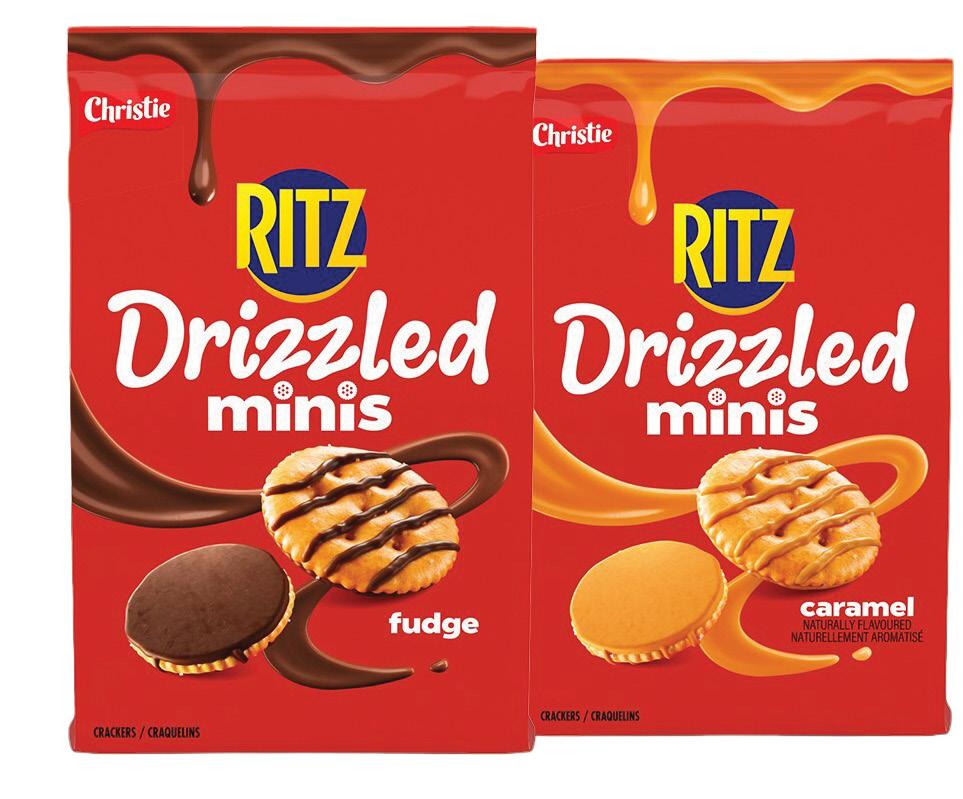
While health is a major focus, the desire for fun and indulgent snacking remains a powerful motivator, particularly for younger demographics who view snacking as an experience. Brands are finding success by blending contrasting flavour profiles to create excitement in the aisle. A prime example is Ritz Drizzled Minis, which pair the brand’s iconic savoury crunch with sweet fudge or caramel coatings. Heidi Chiu, marketing director for savoury at Mondelez Canada, explains that “young adults love snacks that feel fun and a little indulgent” and that these products sit “right in the middle” by bringing together the savory crunch of Ritz with a touch of sweetness. This strategy makes the product feel innovative for younger fans while remaining “easy and familiar” for older consumers. This push for differentiation is also leading to the inclusion of unique ingredients like miso, which adds an umami profile to cookies and helps brands establish a premium, artisanal identity.
PASTA TRENDS
Health-conscious, clean label preferences are now the primary engine for the global pasta and noodles market, with consumers seeking organic, low-carb, and protein-fortified varieties. As in the broader bakery sector, large manufacturers experienced sales declines in 2025—2.5 per cent for pasta and 3.3 per cent for noodles—while private labels grew by approx. 2 per cent. Smaller, niche manufacturers also achieved modest gains, reflecting a broader consumer move toward value and specialty brands.
New product entries are leaning heavily into these nutritional demands. Mighty Ramen, for example, has launched a vegan instant ramen that delivers 32g of plant-based protein per serving while
> BAKED GOODS SECTOR
being marketed as a lower-sodium alternative to conventional products. Other major players are targeting younger consumers through ‘fusion’ flavours and extreme convenience. In mid-2025, Nestle introduced its Maggi noodle line with adventurous, customizable flavours like Indian Classic Masala to the U.S. market, specifically targeting Gen Z. Mars also entered the category with Ben’s Original Street Food Noodles, boasting globally inspired tastes, no artificial colours, and a 90-sec. prep time.
HEALTH, INDULGENCE, AND CONVENIENCE
The modern pantry is being reshaped by three overarching themes: better-for-you health options, premium indulgence, and lifestyle-specific convenience. This has led to a flurry of diverse product launches designed to meet the evolving needs of fast-paced lifestyles. In the realm of health and ‘mindful indulgence,’ several brands have updated their portfolios to satisfy consumer requests for cleaner options. Mondelez introduced sugar-free Oreo cookies, containing zero added sugar while maintaining the original flavour profile. Mars launched Cheez-It Original Gluten Free crackers, using 100 per cent real cheese to deliver the iconic flavour without gluten. In the bread aisle, Bimbo Bakeries introduced Thomas’ High Protein Bagels, featuring 20g of protein per bagel. Flowers Foods also expanded its differentiated options with Nature’s Own Wheat + Protein and Dave’s Killer Bread Supreme Sourdough that speak directly to today’s protein-focused consumers.
Simultaneously, the trend toward premium and seasonal indulgence remains robust, as consumers still look for high-quality rewards. Tim Hortons launched Ryan’s Signature Donut, a from-scratch product featuring a new soft and fluffy dough covered in a glaze and icing drizzle made with maple syrup. General Mills introduced Pillsbury Big Cookies dough, which creates bakery-style treats over three times the size of their classic cookies to capitalize on the trend for larger, home-baked flavours. Mars announced the M&M’S Bakery Collection for a 2026 launch, featuring bakery-inspired flavours such as lemon meringue pie. Meanwhile, in the U.K., Baker & Baker released the Cadbury Snow Balls Cookie to drive the seasonal snacking occasion in in-store bakery departments.
Convenience and targeted marketing are also driving innovation for specific demographics. Dare Foods launched Bear Paws Active, marketed as portable fuel for busy, active children to help nourish them on the go. Bimbo Canada introduced the Dempster’s Half Loaf line, specifically designed to provide portion control and reduce food waste in smaller households. Additionally, Bimbo Canada partnered with Hostess to release a mystery flavours snack cake lineup, using Instagram activations to turn snacking into a taste-testing challenge.
BAKERS FACE LABOUR CHALLENGES
Despite these innovations, the Canadian baking sector is grappling with a critical labour crisis that threatens its operational stability. A significant regulatory backlog means some businesses are waiting up to two years for labour approvals, often forcing a scale-back in production. The problem is not merely a lack of workers, but a profound deficit in skilled craftsmanship. Martin Barnett, executive director of the Baking Association of Canada, highlights the lack of skilled bakers as one of the industry’s most pressing hurdles.
The sector is uniquely sensitive to these pressures because it dedicates nearly a fifth of its total expenses to labour—a figure that is nearly double the average for the food processing industry. Farm Credit Canada forecasts hourly wages will move up again, but the pace of headcount growth is expected to slow in 2026. While automation offers a potential solution for repetitive tasks such as dough portioning and packaging, its adoption is currently uneven. Larger processors are generally better positioned to make these technological investments, while small, artisanal businesses continue to struggle.
THE OUTLOOK
As the industry moves through 2026, the strategic focus has shifted toward improving margins even as total sales are anticipated to decline by 5.4 per cent. However, some relief is arriving in the form of a record-breaking Canadian harvest. Production of grains and oilseeds has reached 107 million tonnes, which is 16 per cent above the five-year average. This surplus is expected to drive down input costs, with Farm Credit Canada forecasting wheat prices will decline by 2.7 per cent and flour costs will drop by 1.9 per cent in early 2026.
While ingredient costs are stabilizing, the industry’s longterm success will depend on its ability to stimulate volume through innovation. The strategic pivot toward functional, value-plus products, such as high-fibre and protein-enriched formats, is intended to capture shifting consumer demands. Success will rely on delivering innovative, health-forward, and smaller formats that align with the lifestyle of the modern shopper. Ultimately, the bakers who thrive in 2026 will be those who successfully balance the high costs of labour and the need for automation with the consumer’s growing appetite for health-forward, convenient, and artisanal products.
Photo © Mondelez
DAIRY SECTOR
The dairy sector comprises three sub-sectors: fluid milk manufacturing including milk, cream, cottage cheese, sour cream, dairy substitutes, and yogurt; butter and cheese products, dry and canned dairy products; and ice cream, sherbet, and similar frozen desserts. Eggs and egg

[sector snapshot]
processors are included in this sector although egg production is classified as agricultural. Dairy sector shipments increased in value by $200 million to $19.8 billion in 2025, an increase of 1 per cent in nominal terms but unchanged from the year previous after adjusting for prices.
PLANT OPENINGS & CLOSURES
Danone Canada plans to expand its Boucherville, Que., plant production capacity for yogurt tubs by 40 per cent. The facility currently supplies more than one in three dairy yogurts sold in the country. Agropur plans to phase out production at its Edmonton ice cream plant to optimize operations. Chapman’s Ice Cream plans to build a new 175,000-sf production facility in Markdale, Ont., to produce allergy-friendly products currently unavailable in Canada. Burnbrae Farms broke ground on a 150,000-sf egg grading facility in Strathroy, Ont., which will be operational in late 2026.
MERGERS & ACQUISITIONS
Unilever completed the spinoff of The Magnum Ice Cream Company in December 2025. Magnum is now the world’s largest ice cream company with € 7.9 billion in fiscal 2024 revenues. Rotterdam-based Refresco acquired SunOpta, which has plant in has plants in California, Ontario and Minnesota in Feb. 2026.
IMPORTS RISE ON DOMESTIC DEMAND
Canadian dairy-related imports increased sharply in 2025, rising to about $2.1 billion from approx. $1.8 billion in 2024, an increase of 17 per cent YoY. This followed strong growth in earlier years, with imports rising from $1.2 billion in 2021 to $1.8 billion in 2024, implying a CAGR of about 13 per cent over that period.
The 2025 increase was driven by a small number of product groups. Cheese was the largest contributor, accounting for roughly 1/3 of the increase. Butter and other milk fats also made a significant contribution, each representing 10 per cent or more of the overall growth.
The largest country contributors were the United States, Italy, France, the Netherlands, and the United Kingdom. The United States is closely associated with cheddar, mozzarella, and processed cheeses; Italy with parmesan, grana padano, mozzarella, and provolone; France with brie, camembert, and blue veined cheeses; and the Netherlands with gouda and edam. These imports are governed by Canada’s tariff-rate quota system, which provides limited preferential access while imposing very high tariffs on imports beyond quota levels.
WEAKER DEMAND FOR CHEESE
In 2025, the Canadian domestic cheese market showed clear signs of softening across its three main segments: cheddar, specialty (variety),
Exports remained unchanged at $1.3 billion but the value of imports rose, causing the trade deficit to rise to $800 million vs. $500 million the previous year. Real value-added mirrored price adjusted growth in value of shipments, rising 1 per cent to $16.6 billion. Domestic processors’
share of the Canadian market declined to 90 per cent from 91 per cent the previous year. The American share of Canada’s domestic market rose to 6 per cent from 5 per cent the previous year, while total imports rose to 10 per cent in 2025 from 9 per cent in 2024.
and processed cheese. While per capita cheese consumption grew at an average annual rate of 1.6 per cent over the decade ending in 2022, demand declined slightly in 2023 and has failed to regain momentum.
According to the latest supply-disposition data, domestic disappearance—a proxy for consumption—was essentially flat for cheddar in 2025 at 174,097 tonnes. In contrast, demand declined by roughly 3 per cent for processed cheese, which fell to 74,104 tonnes, and specialty cheese, which dropped to 352,020 tonnes. The pullback in specialty cheese, typically a higher-priced and more discretionary category, suggests strained household budgets may be prompting consumers to trade down or reduce cheese purchases.
Import trends varied by category. Specialty cheese imports rose 8 per cent to 50,696 tonnes, increasing their share of the domestic market to 14 from 13 per cent in 2024. Cheddar imports increased by 7 per cent, nudging import penetration slightly higher to 6.3 per cent. Butter demand followed a similar but more pronounced trajectory. After
Dairy Product Manufacturing
Sources: (1) Statistics Canada, Table 16-10-0047-01 Manufacturers’ sales, inventories, orders… by NAICS (North American Industry Classification System) – Sales of good manufactured –billions of dollars – not seasonally adjusted (2) Statistics Canada, Table 12-10-0176-01 Canadian International merchandise trade by industry for 2024 – billions of dollars – not seasonally adjusted (3) Calculated (shipments + imports – exports) (4) Statistics Canada, Table 18-10-026701 Industrial product price index, by industry, monthly Index January 2020 =100 (5) Calculated (shipment change – price change) (6) Statistics Canada, Table 36-10-0434-01 Gross domestic product at basic prices, by NAICS (North American Industry classification System) billions of dollars (Chained (2017) dollars – seasonally adjusted) (7) Calculated (exports/domestic market) (8) Calculated (shipments-exports)/domestic market)
> DAIRY SECTOR
rising at a CAGR of 3.1 per cent to a peak of 3.6 kg per person in 2022, consumption softened in 2023. However, creamery butter demand rebounded in 2025, with domestic disappearance rising 8 per cent to 153,000 tonnes. Imports accounted for much of this growth, climbing 24 per cent to 39,300 tonnes and lifting their share of the market to 26 per cent, up from 22 a year earlier.
HIGH-PROTEIN MILK

The protein-forward nutrition trend has transformed the dairy aisle, with high-protein milk and milk drinks now ranking as the top-ranked product purchased with protein claims, according to Innova Market Insights’ consumer research. This surge is driven by the nearly 60 per cent of consumers who are actively incorporating more protein into their diets. In Canada, volume sales for products specifically claiming to contain milk protein grew by 12 per cent YoY.
Major beverage companies are scaling operations rapidly to keep pace with this trajectory. James Quincey, chair and CEO of the Coca-Cola Company said they will increase capacity for its Fairlife high protein dairy beverages by 30 per cent in 2026.
Saputo has also identified value-added milk as a primary driver of its recent financial performance. CEO Carl Colizza further emphasized the strain of this high demand on production. Colizza said Saputo has been investing in incremental capacity and capital upgrades to keep pace with growing demand for protein rich dairy.
This industry-wide pivot is supported by changes in dairy marketing boards, which are adjusting pricing structures for 2026 to place a higher dollar value on the protein component of raw milk. Consumers are increasingly seeking functional boosts from products like ultra-filtered milk, which can offer up to 20g of protein per serving with no added sugar. Euromonitor International forecast Canadian retail sales of high protein packaged food products (including high protein dairy products) to rise from $1.27 billion in 2022 to $1.63 billion in 2027.
YOGURT SALES SOAR ON PROTEIN CRAZE
Yogurt has been a primary beneficiary of the protein craze in 2025. According to Farm Credit Canada, while yogurt consumption grew by a mere 0.9 per cent between 2023 and 2024, it surged by an average of 8.3 per cent in 2025. This momentum is fuelled by the fact that nearly 60 per cent of consumers are incorporating more protein into their diets for overall health. Currently, yogurt is ranked as the third most popular protein source among Canadians, trailing only eggs and chicken.
To capitalize on this growth, manufacturers are moving beyond traditional formats to offer unique textures and playful food experiences appealling to younger demographics. An example is iÖGO nanö Bubbles by Lactalis Canada, which is the first bubble-style yogurt introduced to North American retail shelves. Designed for children aged 6 to 12, the product features a bubble texture inspired by bubble tea. Adrienne Pagot-Gérault, general manager of the yogurt and cul-
tured division at Lactalis Canada, said, “This breakthrough innovation expands our iÖGO nanö brand beyond drinkable yogurt into a creamy yogurt cup that reflects shifting consumer expectations for distinctive texture and playful food experiences while maintaining the brand’s high quality and nutritional value.”
The scale of this demand is further evidenced by the performance of global leaders like Danone. In 2025, Danone’s Oikos Pro platform exceeded €1 billion in revenue, while its broader portfolio of high-protein products, including Skyr and Kefir, also surpassed the €1 billion mark. To keep pace with this trajectory, Danone CEO Antoine de Saint-Affrique confirmed the company is aggressively expanding its infrastructure. Saint-Affrique said the company is scaling up North American manufacturing, adding successive production lines to expand capacity in fast-growing high-protein segments such as Skyr and Kefir as demand remains strong.
COTTAGE CHEESE, A BANNER YEAR
Once regarded as a 1970s diet staple, cottage cheese has emerged as a culinary phenomenon driven by the protein-forward nutrition trend and viral social media recipes. In 2025, the category saw a remarkable 25 per cent increase in volume, reaching 26,000 tonnes. This growth is partly fuelled by innovative uses on platforms like TikTok, where cottage cheese is featured in everything from pizza bases to desserts, a sub-segment that saw 44 per cent YoY growth.
Sara Abe, vice president of commercial capabilities and marketing at Gay Lea Foods, highlights the product’s unique appeal: “Cottage cheese has become one of the most dynamic growth drivers in the grocery aisle because it delivers a rare combination consumers are actively seeking: high protein density, relatively low sugar, and versatility.”
Abe further notes that 42 per cent of the category’s growth stems from new consumers who are finding occasions to enjoy it beyond traditional uses. The surge has even caught some producers off guard, leading to global strains on capacity and efforts to expand production. Colizza confirmed the intensity of this demand, stating that the company is “certainly running at the upper end of our capacity” and is adding incremental infrastructure to service the “growing market for cheese snacks” and protein-rich dairy.
ICE CREAM VOLUME SURGES
In 2025, Canada’s ice cream market experienced robust expansion, with volume growth reaching 4.3 per cent, for the 52 weeks ended September 20, according to Nielsen IQ. It more than doubled the 2.1 per cent growth recorded the previous year. This surge is partly driven by consumers treating dairy products as “healthy snacks” and seeking high-protein versions of traditional treats. According to Dairynomics, the market remains heavily weighted toward home consumption, with retail sales accounting for 70.7 per cent of the total ice cream market, while the foodservice sector captures the remaining share.
Photo © Magone / iStock / Getty Images Plus
Dairy Product Manufacturing
Regional Breakdown of Canadian Output and International Breakdown of Imports and Exports
(1)
Sources: (1) Statistics Canada. Table 16-10-0117-01 Principal statistics for manufacturing industries by NAICS (North American Industry Classification System) – Revenue from goods manufactured (2023) –billion of dollars – not seasonally adjusted (2) Statistics Canada, Table 12-10-0176-01 Canadian International merchandise trade by industry for 2025 – billions of dollars – not seasonally adjusted
Chapman’s Ice Cream has emerged as a primary beneficiary of the Buy Canadian movement, an influential trend where roughly 45 per cent of consumers are identified as ‘Canadian loyalists’ or ‘American good avoiders’. This sentiment translated into significant commercial gain when the company pledged to maintain price stability despite inflationary pressures. Ashley Chapman, COO, stated, “This past year has been crazy with an immediate response when we announced in March (2025) that we would not raise our prices despite the tariffs and the cost of imported ingredients... and there was an immediate spike of 30 per cent in sales.”
Beyond pricing, the brand leverages nostalgia and consumer feedback to sustain demand. For 2026, the company plans to introduce a pecan butter tart ice cream because “the pecan people were up in arms” following the success of their raisin butter tart variety. This localized focus allows domestic brands to thrive even as global giants like Unilever and Nestle exit the ice cream category to prioritize other segments.
EGGS: A RESILIENT PROTEIN STAPLE
Eggs continue to play a central role in Canadian diets. Demand remained strong in 2025, with egg production and consumption exceeding 900 million dozen because households and foodservice operators
THE OUTLOOK
The dairy sector outlook remains positive, supported by sustained consumer demand for protein rich foods that is driving strategic investment and portfolio shifts. Major players such as Danone are reporting double digit growth in high-protein dairy formats in North America and are expanding capacity to support these platforms. Coca-Cola is similarly scaling production of its Fairlife brand, with plans to lift capacity by roughly 30 per cent over the next several years to meet strong demand for ultra-filtered, high-protein milk beverages. Saputo continues to benefit from protein-led consumption trends, particularly in cottage cheese and snackable cheese formats. At the same time, global multinationals including Unilever and Nestle are exiting the ice cream business to simplify portfolios and focus on higher-growth categories, reinforcing opportunities for specialized processors in value-added and cheese-forward dairy segments.
leaned into eggs as a cost effective protein option amid higher prices for other animal proteins.
Beyond general wellness, eggs are increasingly highlighted by nutrition experts as a suitable protein choice for individuals using GLP-1 medications. Research shows that high-protein foods such as eggs can naturally stimulate endogenous GLP-1 secretion and promote satiety, complementing—but not replicating—the effects of GLP-1 therapies. While no population level data directly links GLP-1 use to egg purchasing behaviour, the alignment between eggs’ nutritional profile and GLP-1 dietary guidance has raised their profile in health and weight management discussions.
On the supply side, the avian influenza created intermittent production challenges in 2025, prompting temporary adjustments. Canadian egg imports increased during the year, with customs data showing a significant YoY rise—largely sourced from the United States—helping supplement domestic supply during periods of strain. Despite this increase, the Canadian egg market remained overwhelmingly domestically supplied.
Looking ahead, the sector’s long term outlook remains positive. Sustained demand for affordable protein, continued consumer acceptance, and relatively low feed costs support stability and growth, positioning eggs as one of the most resilient protein categories in the Canadian food market.
NEXT GENERATION DAIRY AND ALTERNATIVES
Across dairy and dairy-free launches, brands are blending indulgence with function. Protein fortification, reduced sugar, and muscle support benefits dominate, while playful textures and formats boost appeal. Innovations span shakes, cheeses, yogurts and snacks, reflecting demand for better-for-you products that still deliver taste, novelty and convenience across Canadian markets and beyond.
Montreal-based Good Protein launched Good Protein Maple Cookie in March 2026, a dairy-free powder with 21g of protein and 7g of fibre per serving. Agropur launched two new chocolate milk products under Québon and Sealtest in November 2025 with 40 per cent less sugar per serving than regular 1 per cent M.F. versions. Saputo expanded its cheese portfolio with Armstrong High in protein Marble Cheese.
Unilever North America introduced Yasso’s protein-packed, 14-oz spoonable frozen Greek yogurt in October 2025. Danone North America launched Oikos Fusion in August 2025, a creamy dairy drink featuring a patented combination of whey protein, leucine and vitamin D for muscle maintenance to support the needs of GLP-1 users.
SEAFOOD SECTOR [sector snapshot]
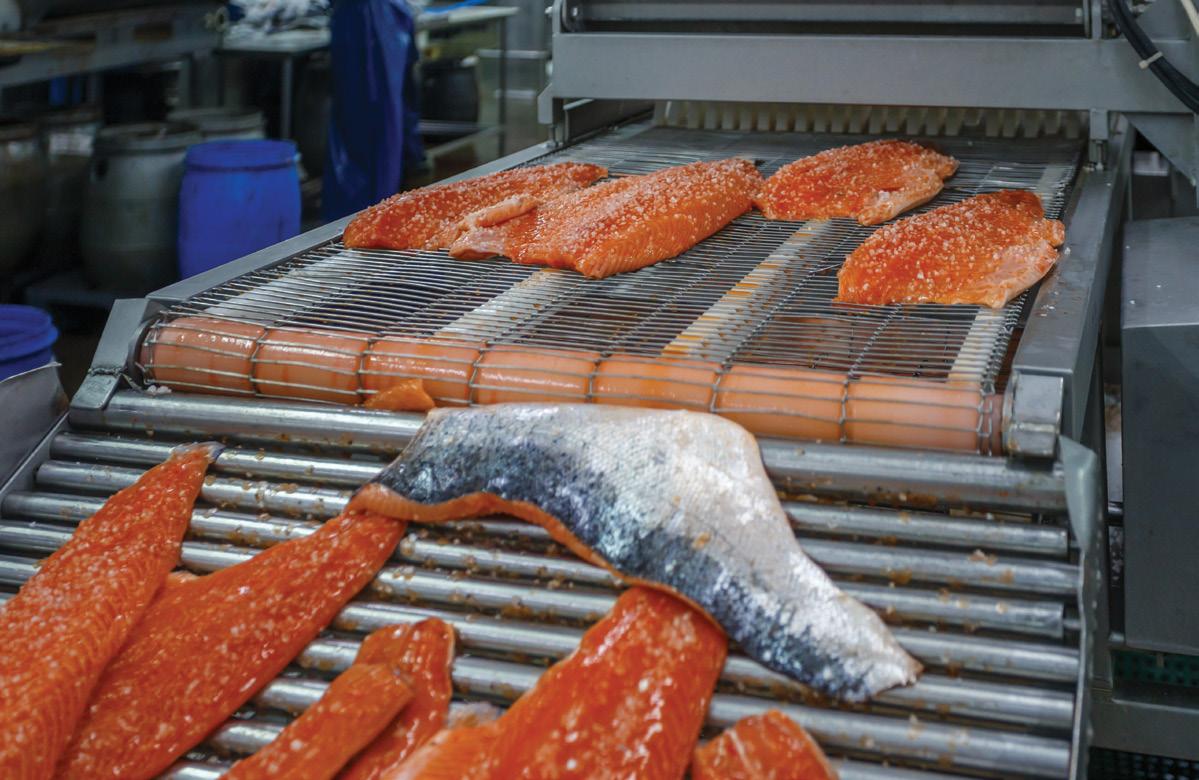
The Canadian seafood processing and packaging sector includes both freshwater and saltwater, wild and farmed, shellfish and finfish. Domestic supply and global demand for each species varies yearly. Canada has traditionally ranked fourth in the world for farmed salmon output but due to farm closures in British Columbia, we may lose that position to Australia and/ or the Faroe Island. Aquaculture now accounts for roughly 1/5 of Canada’s total seafood production, with finfish (primarily salmon) dominating farmed output. The most popular fish and seafood consumed by Canadians are salmon, shrimp, and tuna.

SHIPMENTS
The value of shipments declined in 2025 by $100 million or 2 per cent to $6.5 billion, largely due to a 6 per cent ($300 million) decline in domestic demand to $5 billion. Canadian processors compensated for a weak domestic market by increasing exports by $500 million to $5.9 billion. This resulted in Canada increasing its trade surplus to $1.5 billion from $1.4 billion in 2024. The U.S. accounted for all of Canada’s increased exports. It’s share of Canada’s seafood exports in 2025 rose to 64 from 54 per cent in the previous year. The value of imports increased by $300 million (9 per cent) to $4.3 million. Canada imported more from China (+$200 million) and India (+$100 million) and less from the United States (-$100 million). The value of shipments overall declined by 5 per cent after adjusting for prices. Similarly, the real value added for the seafood sector declined by 5 per cent to $1.5 billion.
MERGERS & ACQUISITIONS
Cooke to acquire Mediterranean aquaculture leader Avramar Greece. The original companies comprising the Avramar Greece group were
Seafood Product Preparation and Packaging
Sources: (1) Statistics Canada, Table 16-10-0047-01 Manufacturers’ sales, inventories, orders… by NAICS (North American Industry Classification System) – Sales of good manufactured – billions of dollars – not seasonally adjusted (2) Statistics Canada, Table 12-10-0176-01 Canadian International merchandise trade by industry for 2024 – billions of dollars – not seasonally adjusted (3) Calculated (shipments + imports – exports) (4) Statistics Canada, Table 18-10-0267-01 Industrial product price index, by industry, monthly Index January 2020 =100 (5) Calculated (shipment change – price change) (6) Statistics Canada, Table 36-10-0434-01 Gross domestic product at basic prices, by NAICS (North American Industry classification System) billions of dollars (Chained (2017) dollars – seasonally adjusted) (7) Calculated (exports/domestic market) (8) Calculated (shipments-exports)/domestic market)
established in 1981, and the company has grown to become a leader in Mediterranean aquaculture.
Saskatchewan Co-operative Fishers is bidding for the Winnipeg-based Freshwater Fish Marketing, the world’s largest wild-caught walleye supplier. In this ongoing federal bidding process, president Joan Beatty stated the strategic goal is “to save that plant... [and] to run it ourselves” to ensure local fishers remain economically viable. Final bidding closed in September. Negotiations were ongoing in March to reach a final agreement.
Oslo-based salmon farmer Cermaq acquired the salmon operations of Grieg Seafood ASA in Canada and Finmark, Norway, in December 2025 for approx. $1.3 billion. Greig operated salmon farms in British Columbia and Newfoundland and Labrador. Moncton-based Champlain Seafood acquired BA Richard Lobster processing facility in Sainte-Anne-de kent, N.B., in August 2025. Champlain has 13 seafood facilities in Eastern Canada and New England.
Scottish-based Seafood Ecosse acquired Macduff Shellfish’s land-based processing operations from Clearwater Seafoods in July 2025. High Liner Foods finalized its purchase of Mrs. Paul’s and Van de Kamp’s frozen breaded and battered seafood brands from Conagra Brands for an adjusted US$42.4 million in June 2025.
NAVIGATING TRADE, EXPORT VOLATILITY
Canada stands as the world’s fifth largest seafood exporter, but the industry faces significant volatility driven by heavy market concentration and geopolitical tensions. The United States remains the primary destination, holding a 71 per cent share, which leaves Canadian producers highly vulnerable to fluctuations in American demand.
Trade relations with China, Canada’s second largest export market, have been particularly turbulent. In March 2025, China imposed tariffs that caused B.C. prices for premium species like geoduck and Dungeness crab to plummet by 25 per cent. While a deal was reached in early 2026 to suspend “anti-discrimination tariffs” on crab and lobster from March through the end of the year, industry leaders remain wary. Jason McLinton, president of the Fisheries Council of Canada, noted that while this is a vital first step, “clarity on other species is essential” for long-term stability.
To mitigate these risks, there is a strategic push for market diversification. Export Development Canada identifies high-potential growth
pathways in Europe (Spain, France, Italy) and the Indo-Pacific (Japan, South Korea, Vietnam). Leveraging agreements like CETA provides tariff-free access to European markets while offering a buffer against trade tensions elsewhere.
Domestic volatility also stems from regulatory uncertainty, notably the proposed ban on West Coast salmon farms. This policy environment has contributed to B.C. salmon production remaining 40 per cent below its 2015 peak, allowing global competitors like Norway and Chile to gain ground. Experts argue that these manmade barriers—including unstable resource access and unpredictable regulations—jeopardize Canada’s food security and global competitiveness in an increasingly tense international landscape
HIGH PROTEIN & CONVENIENCE
Modern seafood priorities are shifting toward convenience and high-protein nutrition, catering to the fast-paced lifestyles of today’s consumers who demand quality without significant time investment. This group seeks easy-to-prep, chef-crafted solutions, such as 15-minute skillet meals or one-ingredient skinless loin portions, which provide a healthy, high-protein option for satisfying weeknight dinners.
There is a significant rise in ‘snackification’ across the market, reflecting a desire for versatility and portable nutrition. For instance, the introduction of the first single-serve flavoured tuna cans and premium surimi snacks suggests consumers are looking for new types of high-protein snacks. Further, pet parents prioritize nurturing and intentionality, choosing supplements made from wild-caught salmon and pollock. Innovation in flavour and ethical alternatives also shapes current seafood choices. Shoppers are gravitating toward bold profiles, such as ‘sweet-then-heat’ honey-blackened salmon, and clean-label, chemical-free products. For those prioritizing sustainability and accessibility, the emergence of plant-based whitefish fillets—designed to replicate the taste, texture, and nutrition of real fish—represents a massive shift. This technology aims to fill a demand gap by providing the benefits of seafood at an accessible price.
SHELF-STABLE SEAFOOD GOES LUXE
The trend toward canned and shelf-stable seafood is undergoing a significant transformation, evolving from a basic pantry staple into a viral affordable luxury fuelled by social media platforms like TikTok and Instagram. In Canada, the canned seafood category is estimated to generate roughly $2 to $3 billion in annual retail sales. Growth within the segment has been strongest in value-oriented and health-positioned products such as sardines and other small canned fish. Canadian imports of shelf-stable seafood expanded by 11 per cent in 2025 to $950 million in 2025, driven by a 26 per cent increase in shrimp and prawn imports to $300 million (3/4 unpackaged for use in foodservice or manufacturing and the remainder canned in Canada). Aside from skipjack tuna, domestic production exceeds imports in the largest canned and shelf-stable fish and seafood categories. Foodservice also purchases shelf-stable finfish and crustaceans for salads and sandwiches.
This culture shift to canned and other shelf-stable seafood is primarily driven by Millennials and Gen Z, who prioritize convenience, high protein, and sustainability. Innovation in the sector has moved beyond
Seafood Product Preparation and Packaging Regional Breakdown of Canadian Output and International Breakdown of Imports and Exports
Sources: (1) Statistics Canada. Table 16-10-0117-01 Principal statistics for manufacturing industries by NAICS (North American Industry Classification System) – Revenue from goods manufactured (2023) – billion of dollars – not seasonally adjusted (2) Statistics Canada, Table 12-10-0176-01 Canadian International merchandise trade by industry for 2025 – billions of dollars – not seasonally adjusted
traditional tins to include seafood jerky, shelf-stable bites, and salmon skin crisps, which compete with high-protein meat snacks. Premium brands are successfully using luxe packaging to make these products functional, yet stylish. Economically, shelf-stable options have shown resilience. Patagonia Provisions’ canned Atlantic mackerel is a success, ranking as the top-selling product in the natural retail channel, an indication that consumer demand for responsibly sourced, premium tinned fish is accelerating. Despite that momentum, Patagonia discontinued the product in 2025 after warming oceans and shifting fish stocks increased overfishing risks in Northeast Atlantic. After monthslong absence, the brand re entered the category in March 2026 with a Chilean jack mackerel sourced from a recovered, well-managed fishery certified for sustainability. By pairing luxe packaging with unusually detailed ethical transparency brands like Patagonia are helping reposition tinned fish as a stylish, values-driven food that balances indulgence, nutrition, and environmental responsibility
SHIFTING FOODSERVICE DEMAND
Seafood consumption in Canada’s foodservice sector currently reflects a period of stability with underlying shifts between restaurant categories. Note, fish and seafood are disproportionately consumed in

restaurants compared with other foods, with foodservice accounting for a larger share of seafood spending than for total food spending in Canada, according to Statistics Canada’s Food Expenditure Series (latest data released January 2025).
According to Vince Sgabellone, senior director of foodservice at Circana, “Overall seafood servings have been flat over the past several years”. This overall stability hides a divergence in performance: while full-service restaurants (FSRs) dominate the market—representing approximately 3/4 of all seafood servings—they saw a 3 per cent decline in the past year.
Conversely, quick-service restaurants experienced growth, though this was largely limited to fish sandwiches and heavily influenced by temporary promotions. Sgabellone explains that “it is just a coincidence that FSR declines were offset by QSR gains in the past year,” noting that these trends are “highly impacted by feature activity by the top players”.
Generational differences are increasingly significant. While older consumers (over 45) represent 47 per cent of total consumption, Millennials and Gen Z are gravitating toward convenient, portable formats. Gen Z interest in seafood snacks has jumped 23 per cent YoY, influenced by social media trends like ‘tinned fish’. These younger demographics seek healthy, functional options such as sushi, poke bowls, and innovative snacks like salmon skin crisps or jerky.
While the broader North American seafood market is valued at billions, the foodservice segment is projected to grow at a modest 1.3 per cent CAGR through 2030, trailing the 3.5 per cent growth seen in retail. Consumption occasions are split; while 48 per cent of seafood is eaten as a weekday meal, special occasions still drive 30 per cent of consumption, providing opportunities for premium and sustainable offerings like MSC-certified hake or lobster.
SEAFOOD INNOVATIONS
Recent seafood product launches across retail, foodservice, and adjacent categories point to a sector undergoing structural repositioning, not incremental change. The common thread is a shift away from seafood as an occasional, centre-of-plate protein toward convenient, high-protein, multi-occasion solutions.
Several launches underscore the industry’s push toward speed and simplicity. High Liner Foods’ fully cooked, MSC-certified white fish line, aimed at convenience stores and QSRs, highlights consistent preparation and ease of execution for operators. Similarly, Trident Seafoods’ Wild Alaska Pollock Skinless Loin Portions emphasize being a one-ingredient, protein-packed option that is quick to prepare at home. These launches reflect seafood’s effort to compete directly with chicken and prepared meals on convenience, and not just health. At the same time, seafood is clearly expanding beyond the traditional dinner occasion. Bumble Bee Seafoods’ introduction of Bumble Bee Snackers, single-serve flavoured tuna cans, and Louis Kemp’s premium Sea Legs surimi snack both reposition seafood as a portable, high-protein snack. adopting proven CPG tactics to remain relevant and approachable.
Sustainability and clean-label positioning have become embedded
rather than optional. High Liner foregrounds MSC certification even in foodservice, while Ocean Master Foods’ award winning UniPaste (a sea urchin roe paste) pairs a chemical-free formulation with extended frozen and thawed shelf life, addressing both quality and waste reduction.
Trident’s WellFurst pet supplements extend sustainable seafood narratives into the fast-growing pet nutrition space, showing how seafood companies are monetizing raw material strengths beyond human food.
Looking ahead, the fastest acceleration is expected in seafood snacks and single-serve protein formats, followed by fully cooked, heat-andserve whitefish for retail and foodservice. Flavour-forward, value-added frozen seafood is also poised for strong growth. Medium growth is likely in pet food and supplements using human-grade seafood inputs and in clean-label, shelf-life-extended premium ingredients for foodservice. Plant-based seafood will grow selectively, especially where it solves supply or affordability gaps, while traditional single-ingredient fillets should see steady but modest gains.
Overall, the launches signal that future seafood growth will come less from eating more fish at dinner, and more from eating seafood often, in more formats, and in more categories.
THE OUTLOOK
The 2026 outlook for the Canadian seafood industry is defined by modest value growth amidst significant consumer budget constraints. According to the latest forecasts, while overall food prices may rise by up to 6 per cent, seafood prices are anticipated to increase by a moderate 1 to 2 per cent. Farm Credit Canada notes in its 2026 Food and Beverage Report of April that Gross margins are forecast to surge 18.6 per cent as input costs ease. However, the outlook remains vulnerable to trade uncertainty with China and climate-driven supply risks. Market Research Future, in its February 2026 Canada Seafood Market Report, forecasts the Canadian seafood market to grow at a CAGR of approx. 2.4 per cent in value terms.
However, affordability remains a major hurdle, as 75 per cent of Canadians view food prices as a top concern. Consumers frequently find seafood higher-priced compared to proteins like chicken or pork. This financial strain is leading to value-led growth, where total spending increases due to higher prices and premiumization even as per-capita consumption volumes remain flat or modestly declining.
To adapt, the industry is shifting strategies. Retailers like M&M Food Market have implemented price freezes to ease checkout pressure, and processors like High Liner are expanding smaller pack sizes to reach price-sensitive shoppers. Despite these budget pressures, demand for convenient, sustainable formats is expected to persist through 2026.
Photo © Vladimir Mironov / iStock / Getty Images Plus
MEAT & POULTRY SECTOR
The meat and poultry sector includes primary and secondary processing of red meats and poultry. For statistical purposes the industry is divided into four sub-sectors – poultry slaughtering and processing, accounting for 25 per cent of the value of shipments; beef cattle slaughtering for 29 per cent; hog slaughtering for 15 per cent; and ‘other animal slaughtering and processing’ including the processing of wieners, sausages, luncheon meat and slaughter of lambs and
other animals. In 2025, this subsector accounted for 31 per cent of meat and poultry shipments. In 2025, poultry gained share at the expense of beef.
The value of shipments increased by $2.7 billion or 6 per cent to $46.5 billion in 2025. The value of imports and exports increased by $700 million, the former to $6.4 billion and the latter to $12.8 billion, leaving Canada’s trade surplus unchanged at $6.4 billion. The domestic market, increased in
PLANT OPENINGS, CLOSINGS AND INVESTMENTS
Hormel Foods sold its whole-bird turkey business to Life-Science Innovations in February. Interim CEO Jeff Ettinger stated, “Our strategy for sustainable, profitable growth centres on expanding our value-added protein portfolio to meet evolving consumer needs, while reducing our exposure to more volatile, commodity-driven businesses,”
Tyson Foods closed the Lexington, Neb., beef facility and converted its Amarillo, Texas, beef facility to a single, full-capacity shift. To meet customer demand, it increased production at other beef facilities, optimizing volumes across its network. The company stated the changes are designed to “right size its beef business and position it for long-term success.”
Olymel invested $142 million to expand its integrated pork processing plant in Trois-Rivieres, Que., that will allow it to better serve its customers in Canada and abroad.
“The project is perfectly aligned with our strategy of capitalizing on the creation of value-added products made with meat of superior quality that’s produced by local farmers,” said Yanick Gervais, Olymel CEO.
MERGERS & ACQUISITIONS
Smithfield Foods acquired Nathan’s Famous in January. The transaction is valued at US$450 million. Smithfield acquired a licensing agreement for the iconic hot dog brand in 2014. Maple Leaf Foods completed the spin-off of Canada Packers in October 2025, creating an independent pork-focused company valued at approximately $1.2 billion.
Markham, Ont.-based Sofina Foods acquired Malton, U.K.-based Finnebrogue, a family-owned manufacturer of outdoor-bred pork, sausages, rashers, and ham, as well as plant-based alternatives in June 2025. Finnebrogue, with 1,200 employees has four plants in Northern Ireland. The pork division is one of the largest processors and suppliers of products across the U.K. and Ireland. A month earlier, Sofina Foods acquired the assets of Levis, Que.-based Exceldor, which produces chicken and turkey products and has a revenue of $1.4 billion.
[sector snapshot]
value by $2.7 billion or 7 per cent to $40 billion. Double digit price increases for red meats reduced the nominal gains in shipments, imports, exports and the domestic market by 11 per cent, resulting in a volume decline of 5 per cent for shipments and 4 per cent decline for the domestic market. Real value added declined by 4 per cent to $7.6 billion.
Imports’ share of the domestic market increased to 16 per cent in 2025 from 15 per cent the previous year. The American share
of Canada’s meat and poultry imports declined to 56 per cent from 66 per cent in 2024, with U.S. losses offset by gains for Australia, New Zealand and Brazil. Canada’s exports continued to capture 28 per cent of shipments. The U.S. share of Canada’s export sales declined in 2025 to 57 per cent from 58 per cent in 2024 and 62 per cent in 2023. Double digit growth in sales to Japan and Mexico in 2025 increased their combined share of Canada’s exports to 25 per cent from 22 per cent.
CHRONIC LABOUR SHORTAGES
F&B processing stands as Canada’s largest manufacturing employer, with the meat and poultry processing segment alone accounting for 65,000 of the 312,000 individuals employed across the industry. While the sector is a massive economic engine contributing over $7.5 billion of the food and beverage industry’s $36.5 billion contribution to the national GDP, it is currently hindered by chronic labour gaps that leaders identify as one of the single biggest barriers to growth.
The most significant disruption to the workforce occurred in May 2025 with the winding down of the Agri-Food Immigration Pilot.
Meat Product Manufacturing
Sources: (1) Statistics Canada, Table 16-10-0047-01 Manufacturers’ sales, inventories, orders… by NAICS (North American Industry Classification System) – Sales of good manufactured – billions of dollars – not seasonally adjusted (2) Statistics Canada, Table 1210-0176-01 Canadian International merchandise trade by industry for 2024 – billions of dollars – not seasonally adjusted (3) Calculated (shipments + imports – exports) (4) Statistics Canada, Table 18-10-0267-01 Industrial product price index, by industry, monthly Index January 2020 =100 (5) Calculated (shipment change – price change) (6) Statistics Canada, Table 36-10-043401 Gross domestic product at basic prices, by NAICS (North American Industry classification System) billions of dollars (Chained (2017) dollars – seasonally adjusted) (7) Calculated (exports/domestic market) (8) Calculated (shipments-exports)/domestic market)
> MEAT & POULTRY SECTOR
Meat Product Manufacturing
Regional Breakdown of Canadian Output and International Breakdown of Imports and Exports
Sources: (1) Statistics Canada. Table 16-10-0117-01 Principal statistics for manufacturing industries by NAICS (North American Industry Classification System) – Revenue from goods manufactured (2023) – billion of dollars – not seasonally adjusted (2) Statistics Canada, Table 12-10-0176-01 Canadian International merchandise trade by industry for 2025 – billions of dollars – not seasonally adjusted
This program was critical because it recognized that food manufacturing is a year-round, permanent activity, unlike seasonal agricultural work. Its termination has left both employers and workers without a viable path toward long-term staffing. Beyond federal policy, interprovincial trade barriers—such as inhibited labour mobility caused by inconsistent provincial certifications—prevent workers from moving to regions with the highest demand.
Lauren Martin of the Canadian Meat Council (CMC) said, “There is a persistent but inaccurate narrative that the sector relies on immigration to secure cheap labour. International recruitment is actually a high-cost necessity.”
She added, “This is not about cheap labour in part because it costs up to $10,000 to $12,000 to bring in an immigrant if you include application fees, flights, accommodation etc., as compared to $0 for Canadian employees.”
These expenditures highlight the industry’s desperation to maintain operational capacity in a tight domestic market. CMC and various labour unions are calling for a new, dedicated immigration pathway. This solution focuses on creating a permanent route to residency for essential workers in the food sector. Industry advocates argue that without a program recognizing the permanent nature of these roles, the sector cannot achieve the stability required to grow or meet the increasing global demand for protein.
FRUGAL CANADIANS PLAYING THE MEAT TRIFECTA
In 2025, Canadian households faced a significant financial burden as prices across the entire meat category reached record levels. With meat prices rising 6 per cent overall led by retail beef prices climbing 13 per cent YoY, 86 per cent of consumers reported eating less meat to manage their monthly grocery bills. However, this reduction is not a rejection of the category; rather 77 per cent of shoppers still view animal protein as foundational to a healthy diet, an increase in perception of over 20 per cent since 2020.
To maintain their nutritional standards while managing tight budgets, shoppers are aggressively “protein switching” and seeking out “value proteins”. For the first time, the price of ground beef has sur-
passed the price of chicken breast, causing consumers to swap species based on weekly specials and discounts. Demand is shifting toward more affordable formats, such as ground turkey for burgers or frozen breakfast sausages, which offer a lower cost per serving. According to Conagra’s The Future of Frozen Food 2026 report, the breakfast sausage category has seen a 15 per cent volume increase among Gen Z and Millennials, as they are satiating and provide long-lasting energy.
Shopping behaviours have also pivoted toward bulk buying and “eating in”. Approx. 44 per cent of households have reduced their spending on outof-home dining, while 35 per cent have cut back on food delivery to prioritize essential grocery shopping. Consumers are seeking restaurant-quality frozen formats at retail, such as crispy chicken fillets and fingers, which allow families to replicate the takeout experience at a fraction of the cost.
Sylvain Charlebois of the Agri-Food Analytics Lab highlighted the unique nature of this market: “Very rarely have we seen all three main components of the meat trifecta (beef, chicken, and pork) become more expensive at the same time in a single year.”
He cautioned that for many families, “the squeeze isn’t over,” even as broader inflation begins to stabilize. Carmen Allison of NIQ concured that protein remains a non-negotiable priority. He explained, “Rising demand makes protein a key differentiator for brands and retailers” as 53 per cent of Canadians continue to prioritize health-focused purchases.
LAMB: FROM NICHE TO MAINSTREAM
The Canadian lamb market is defined by a widening gap between stable domestic supply and a surge in consumer demand. While domestic production remains steady at approximately 14.1 thousand tonnes (carcass weight equivalent), Canada increasingly relies on imports, which reached 27.3 thousand tonnes in 2025, up 12 per cent over the previous year. Per capita consumption has grown significantly, rising from 0.97 kg in 2019 to 1.23 kg today, notably higher than the 0.69 kg seen in the United States.
A primary catalyst for this growth is Canada’s shifting demographics. With a majority of new immigrants arriving from Asia, lamb is transitioning from a niche protein to a dietary foundation.
Corlena Patterson, executive director of the Canadian Sheep Federation, explains, “On the foodservice side, the growth in global cuisines is tightly linked to immigration... Many newly landed Canadians come
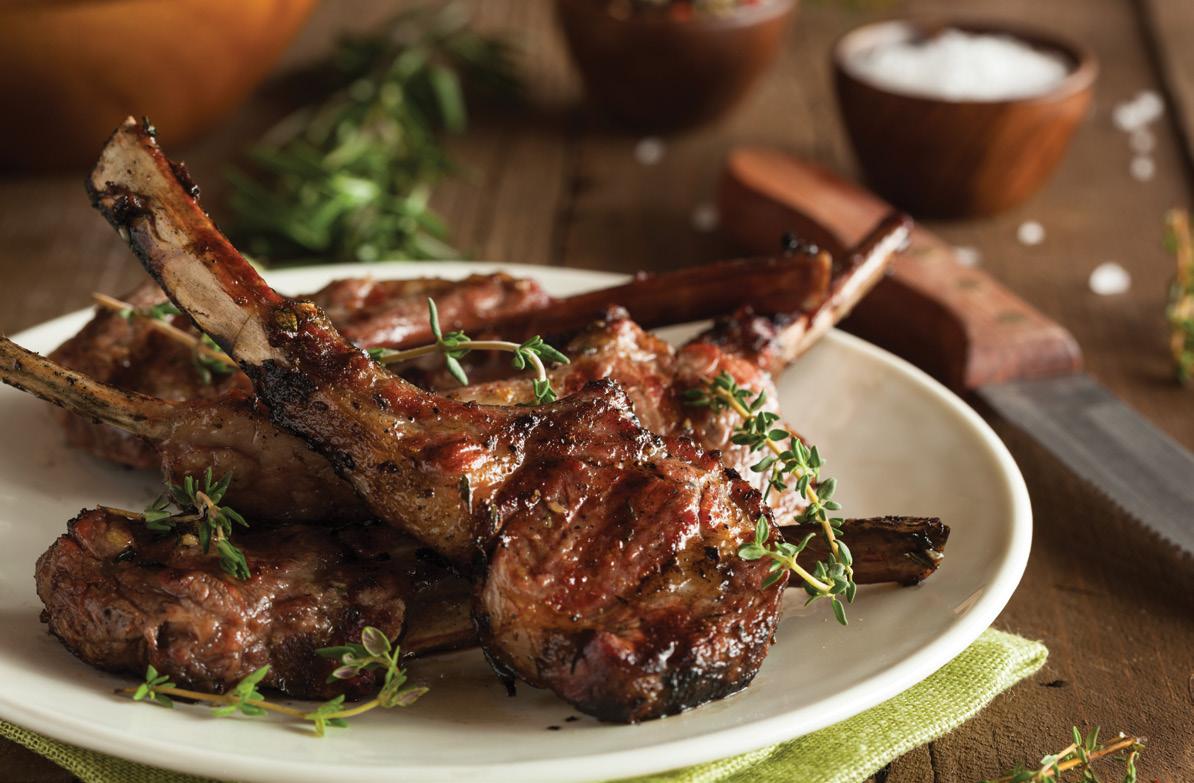
Younger shoppers also value the sustainability of sheep, which sup port pasture-based systems and a circular economy by providing food and renewable fibre. Consumption occasions are diversifying beyond traditional ethnic markets into mainstream foodservice, including fast-casual, QSR, and fusion menus.
Operators even use lamb as a “revived novelty” for value upgrades in steakhouses. In retail, major players like Loblaw have normalized the protein. The momentum is expected to persist. Henry Vega, a Montreal-based trade expert with Congressum, forecasted continued double-digit growth in 2026 for lamb.
TURKEY’S SHIFT TOWARD VALUE-ADDED
According to the Turkey Farmers of Canada, in 2025, driven by a 7.7 per cent spike in retail prices, Canadian turkey consumption volumes fell to 129 million kg from 137 million the previous year. This decline occurred as 86 per cent of consumers reported cutting back on meat due to high costs. While production stability improved as the impact of avian influenza lessened, manufacturers passed on higher costs, leading consumers to reduce their purchases.
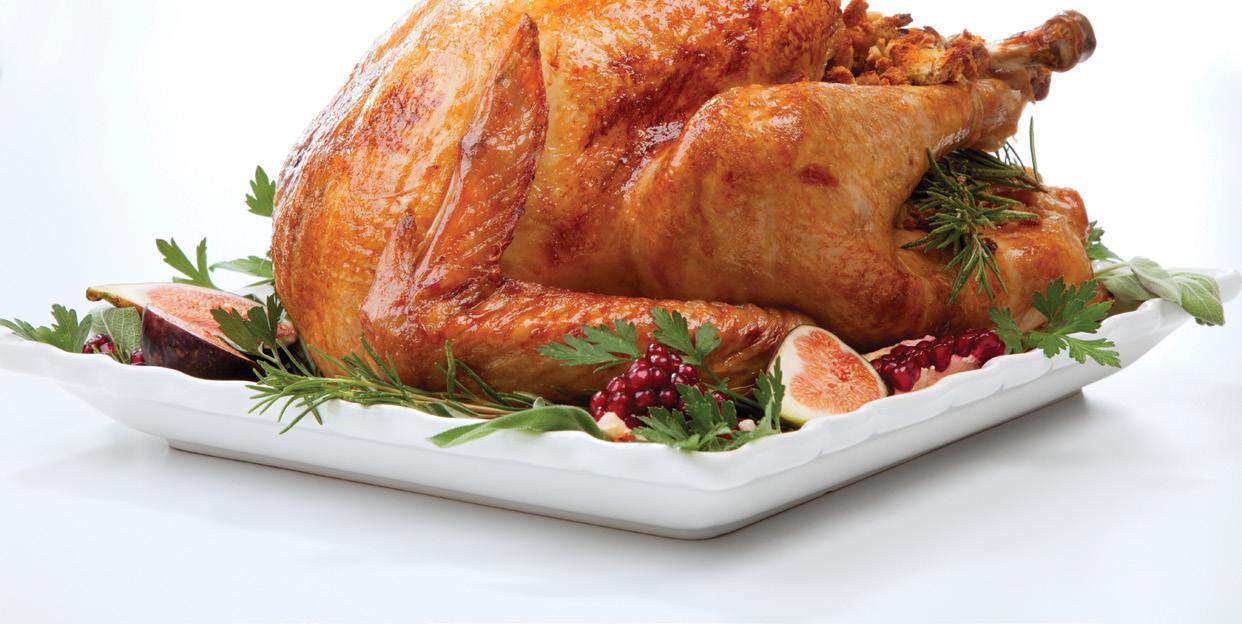
A major highlight for the sector was the September 2025 launch of the Thanksgiving Stack sandwich at Tim Hortons. This seasonal offering featured Canadian turkey paired with stuffing and cranberries, catering to consumer “cravings for comforting, homestyle flavours”. Such innovations align with a broader market shift where whole bird consumption has dropped to 30 per cent, while value-added products now represent 70 per cent of the market. This trend includes the rising popularity of ground turkey for turkey burgers, as shoppers increasingly seek lean, convenient proteins for smaller households.
The outlook is optimistic, with the turkey quota set 4 per cent higher this year. While poultry prices are forecast to rise by 2.5 per cent in the coming year, turkey is expected to benefit from the popularity of animal proteins as consumers prioritize healthy, affordable options in frozen and fresh aisles. Adam Power, executive director of the Turkey Farmers of Canada, emphasizes these evolving preferences, stating that growth is driven by “continuing opportunities in the value-added sector for items like ground turkey, turkey sausage, and meat snacks.”
PRODUCT INNOVATIONS
The meat and poultry industry is undergoing a significant transformation, driven by consumer demand for high-protein, functional snacks that fit active lifestyles. Major players like Maple Leaf Foods and Tyson
entries detail how these brands are redefining the protein snack land scape with these new offerings.
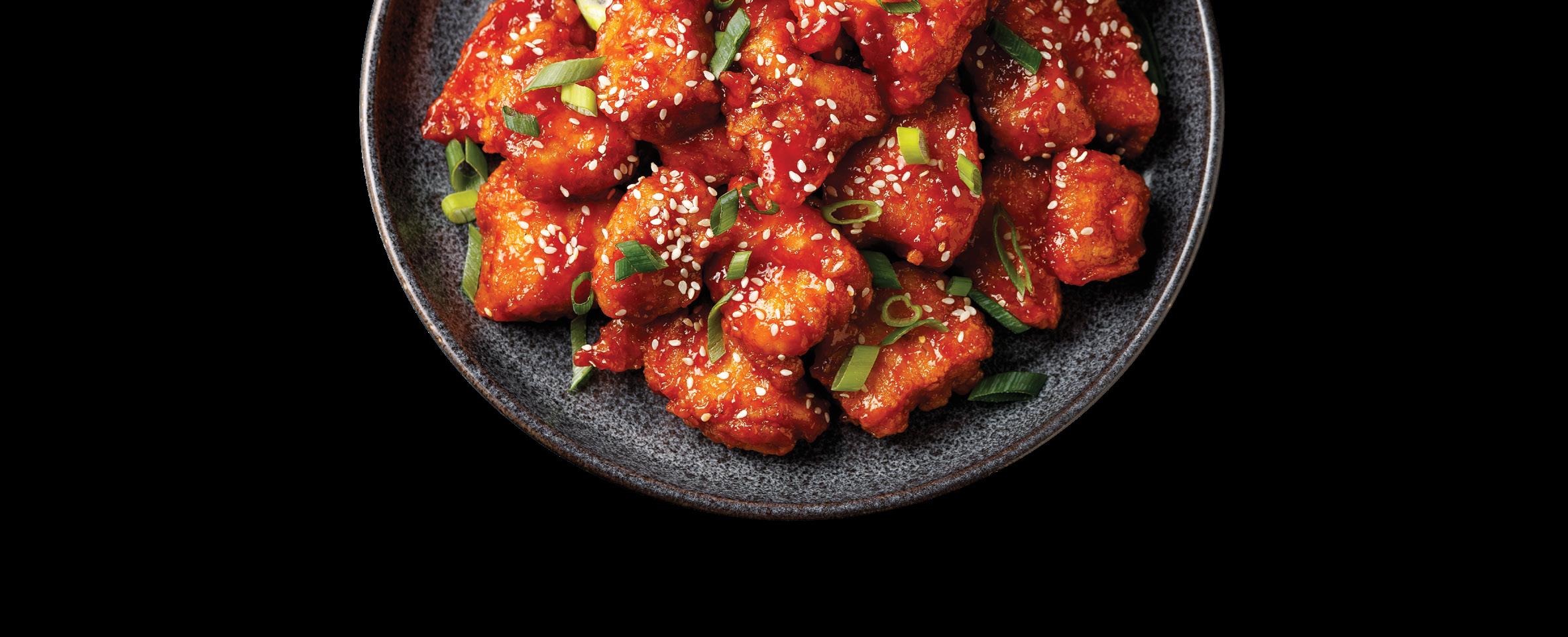
Maple Leaf Foods launched Greenfield Natural Meat Protein Snack Kits with 20g of protein and 7g of fibre per serving in March 2026. Also in March, Chomps launched premium chicken sticks. The 80-calorie, zero-sugar sticks offer 12g of protein. In the same month, PepsiCo Foods introduced its Good Warrior grassfed, gluten-free beef sticks featuring 10g of protein. In November 2025, Maple Leaf Foods launched Mighty Protein Meat Sticks, portable snacks made from lean, protein-dense chicken, delivering 12g of complete protein per stick. Tyson Foods launched portable Tyson Chicken Cups, a first-to-category microwaveable snack offering over 30g of protein per serving, in September 2025. At the same time, Conagra Brands introduced Slim Jim’s first chicken sticks, featuring Buffalo Wild Wings’ bold, restaurant-inspired sauces. Hormel Foods introduced Hormel Pepperoni Jalapeño and Dill Pickle flavors in August last year. Tyson Foods launched Tyson Simple Ingredient Nuggets in July 2025. This gluten-free innovation uses all-natural chicken and mozzarella cheese. Distinguishing itself with simplified labels, the product provides 23g of protein and 1-2g of carbs per serving. In June 2025, Pilgrim’s Pride launched flavour-forward nuggets featuring unique sizes and QSR-style recipes to freezer aisles. Sergio Nahuz, president, Prepared Foods, and CMO at Pilgrim’s U.S., stated, “We’re combatting chicken monotony by reimagining what chicken nuggets can be.”
THE OUTLOOK
The 2026 outlook for the meat and poultry sector is defined by a persistent protein craze as consumers prioritize animal-based nutrition despite elevated costs. While cattle prices are forecast to remain well above the five-year average due to record-low herd levels, poultry prices are projected to rise 2.5 per cent. In contrast, hog prices are expected to decline by 3.1 per cent. Shoppers are increasingly treating meat as a non-negotiable essential, with 77 per cent of Canadians agreeing it is foundational to a healthy diet. Innovation will focus on takeout-style frozen formats, such as crispy chicken fillets, as families replicate restaurant experiences at home. A major watch factor is the U.S. voluntary country-of-origin labeling, which could stifle demand for Canadian exports.

FRUIT & VEGETABLE PROCESSING SECTOR [sector snapshot]
The fruit and vegetable processing and specialty food manufacturing sector includes frozen, canned, pickled, and dried products comprising primarily fruits and vegetables. For statistical purposes, it is divided
INTERNATIONAL TRADE
into two sub-sectors: frozen food, including potato products (French fries), dinners, side dishes, pizza, fruits and vegetables; and nonfrozen products including canned fruit and vegetables, baby food, soups, juices, sauces, pickles,
and ketchup. Frozen gained share from shelf stable from 2019 through 2022 rising to 68 per cent from 65 and has held this share through 2025. Last year, shipments rose by $700 million (six per cent) to $11.9 billion
driven by domestic demand, which rose by $900 million to $11.8 billion. Adjusted for prices, shipments rose 2 per cent and real value added increased by 3 per cent to $2.3 billion (2017 chained dollars).
Imports account for 54 per cent of the domestic market and exports account for 54 per cent of Canadian shipments. In 2025 the value of exports was unchanged from the previous year at $6.5 billion but imports rose by $300 million (5 per cent) to $6.4 billion, reducing Canada’s trade surplus to $100 million. Within the mix of imports and exports there were some significant shifts. The U.S. share of Canada’s imports fell four points to 47 per cent as imports from the rest of the world rose by $400 million (13 per cent) to $3.4 billion, led by double digit gains from China, Mexico, Italy, Turkey and Thailand. The U.S. share of Canada’s exports declined by the same proportion to 81 from 85 per cent as Canada’s exports to the rest of the world rose by $250 million (27 per cent) to $1.2 billion led by a 50 to 70 per cent increases in sales to Japan, China and Germany.
EXPANSIONS & CONSOLIDATIONS
Coca-Cola has discontinued production of Minute Maid frozen juice concentrates, as shoppers now prefer refrigerated juices. Tindle Foods divested its U.S. operations, which produced private label, plant-based products, and moved production to Europe.
Nortera is making a five-year $28 million investment in its SaintDenis-sur-Richelieu plant that specializes in vegetable and legume canning, and the preparation of soups and sauces. The project will expand its capacity from 6 million to 10.6 million case equivalents. As part of this modernization effort, Nortera’s Saint-Césaire plant was closed in late January 2026. This transition created 70 permanent jobs at the Saint-Denis-sur-Richelieu plant and the elimination of approx. 100 positions at Saint-Césaire.
MERGERS & ACQUISITIONS
Florida-based Fresh Del Monte Produce acquired Del Monte Foods Corporation II for US$ 285 million in January. Premium Brands acquired North American sous-vide manufacturer Stampede Culinary Partners in December 2025 for US$662.5 million. Headquartered in Bridgeview, Ill., Stampede operates 530,000-sf of production and innovation facilities across Illinois, New Mexico, Georgia, and Ontario, which annually produce, store, and distribute 300 million lb of retail and menu products including chicken, beef, turkey, pork, vegetables, prepared meals, and alternative proteins. McCain Foods acquired Penobscot McCrum, a Washburn, Maine-based potato processor with 130 employees. The Kraft Heinz Company announced in September 2025 plans to separate into two publicly traded companies,
including a spin off of its North American grocery business to accelerate growth and sharpen strategic focus. Since then, the company has reversed course. Nortera acquired the Green Giant and Le Sieur brands in Canada from B&G Foods in October 2025. Conagra Brands sold its Chef Boyardee brand to Hometown Food Company, a portfolio company of Brynwood Partners.
FROM VALUE SIZING TO FROZEN REBOUND
The Canadian retail market for fruit and vegetable preserving and specialty food manufacturing was valued at $12.1 billion in 2023 (latest statistical year) and growing at the same pace over the previous four years as retail spending on all foods. The domestic market for manufacturers, of course, includes purchases by the foodservice sector and while foodservice operators have traditionally purchased fresh fruit, vegetables and other ingredients, they have increasingly turned to value-added options to reduce labour costs in restaurant kitchens. The most signifi-
Fruit and Vegetable Preserving and Specialty Food Manufacturing
Sources: (1) Statistics Canada, Table 16-10-0047-01 Manufacturers’ sales, inventories, orders… by NAICS (North American Industry Classification System) – Sales of good manufactured –billions of dollars – not seasonally adjusted (2) Statistics Canada, Table 12-10-0176-01 Canadian International merchandise trade by industry for 2024 – billions of dollars – not seasonally adjusted (3) Calculated (shipments + imports – exports) (4) Statistics Canada, Table 18-10-026701 Industrial product price index, by industry, monthly Index January 2020 =100 (5) Calculated (shipment change – price change) (6) Statistics Canada, Table 36-10-0434-01 Gross domestic product at basic prices, by NAICS (North American Industry classification System) billions of dollars (Chained (2017) dollars – seasonally adjusted) (7) Calculated (exports/domestic market) (8) Calculated (shipments-exports)/domestic market)
Fruit and Vegetable Preserving and Specialty Food Manufacturing: Regional Breakdown of Canadian Output and International Breakdown of Imports and Exports
cant categories within the sector are fruit and vegetable juices with $2 billion in 2023 retail sales; frozen and dried vegetables with $1.6 billion in sales; canned or bottled vegetables with $1.2 billion in sales; frozen prepared foods (e.g. dinners) with $2.6 billion; and soup with $1.5 billion in sales. Of the five, the fastest growing in retail sales were juices, frozen vegetables and canned vegetables over the 2019 to 2023 period. Within the categories, canned fruit outpaced frozen, and frozen dinners and entrées and frozen side dishes outpaced frozen pizza.
For the 52 weeks ended September 20, 2025, Nielsen IQ reported that volumes in the $600-million frozen pizza and subs category was down 4 per cent. Frozen foods, aside from pizza, has generally outperformed overall food spending. Sales volume (units) was up 2 per cent in the $2.3 billion frozen dinners and entrées category, up 1 per cent in the $500-million frozen potatoes category; up 2 per cent in the $400-million frozen vegetables category and up 4 per cent in $400-million frozen fruit category. The gains for frozen, canned and bottled fruit and vegetables reflect Canadians seeking more affordable options to fresh produce and reduced food waste.
Price volatility remains a defining factor for the category. In 2025, the CPI for preserved vegetables and preserved fruit outpaced the CPI for fresh alternatives (3 per cent vs. 0 per cent for vegetables; 6 per cent vs. 3 per cent for fruit). Canada’s Food Price Report 2026 forecasts 1 to 3 per cent price rise in fresh fruit and 3 to 5 per cent rise for vegetables. The rise for fresh vegetables favours frozen alternatives while the more moderate rise for fresh fruit may leave preserved alternatives unaffected.
Within the preserved fruit and vegetable categories consumers are increasingly gravitating toward ‘value-size’ products, which now represent over 41 per cent of the frozen aisle and offer a 20 to 30 per cent reduction in cost per serving. Addi tionally, the market is seeing a renewed focus on domestic production. Com panies like Nortera, as noted above, are investing to double the output of brands like Green Giant and Le Sieur. This investment is supported by local packaging manufacturers like Ideal Can, which is expanding to provide a reliable supply of cans for the F&B industry.
SOUP: FROM MEALS TO INGREDIENTS
Recent performance in the sector highlights a sharp divergence between products used for direct consumption and those serving as culinary foundations. This shift is driven by a return to scratch-based cooking as a strategic response to food inflation and a desire for greater meal customization. Mick J. Beekhuizen, president and CEO of Campbell’s, noted the “total soup portfolio slightly lagged the category on share, as cooking varieties within our condensed soup portfolio and broths remained strong, while eating soups remained under pressure.” Statistical trends support this, showing that while ready-toserve (RTS) consumption declined by 2 per cent, the broth category saw robust 9 per cent growth as a versatile cooking base.
Capitalizing on this ‘soup-as-an-ingredient” behaviour, Campbell’s launched a line of global-flavoured canned sauces in March 2026. These sauces are designed to support home cooks who use condensed staples as foundations for more complex dishes. This strategic approach has already helped the company engage younger demographics, adding over 2 million new buyers, including 1.2 million Millennial and Gen X households.
Modern trends, such as the social media-driven “desk drawer ramen” using bone broth and chili crisps, further demonstrate the demand for elevated, convenient staples. Consequently, future innovation is targeting premium, plant-based, and globally inspired profiles. Consumers are moving away from traditional canned options perceived to have high sodium or artificial additives, favouring nutrient-dense satiety and functional ingredients like collagen, turmeric, and ginger. Growing demand for authentic Thai, Mediterranean, and Korean flavours reflects a broader shift toward cleaner labels and sophisticated, internationally influenced pantry items.
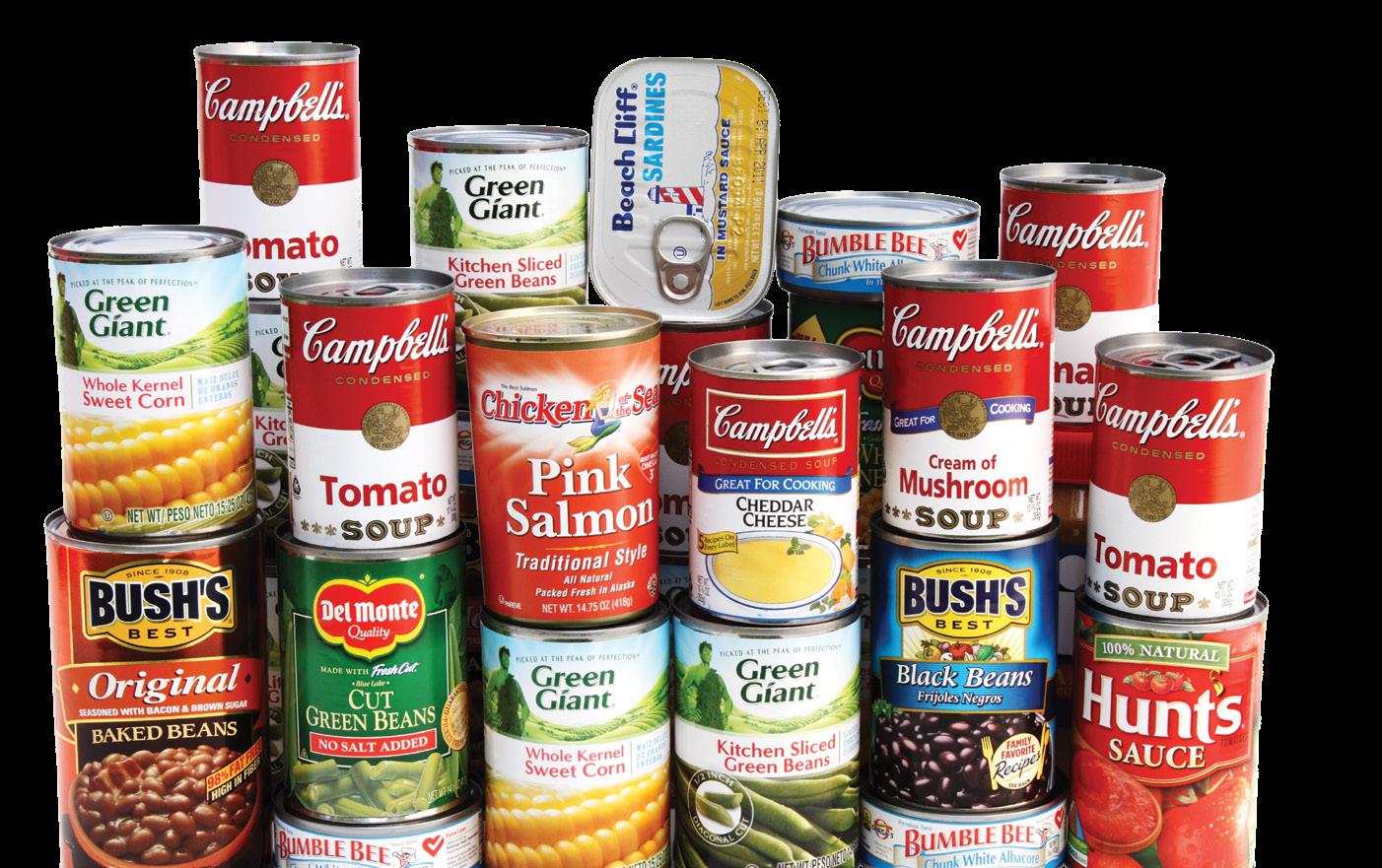
JUICE MARKET: PRICING AND INNOVATION
The 2019 to 2023 trends in the fruit and vegetable juice category have been reversed in the last three years. The sector is currently navigating significant volatility characterized by declining volumes and rising costs.
Sources: (1) Statistics Canada. Table 16-10-0117-01 Principal statistics for manufacturing industries by NAICS (North American Industry Classification System) – Revenue from goods manufactured (2023) –billion of dollars – not seasonally adjusted (2) Statistics
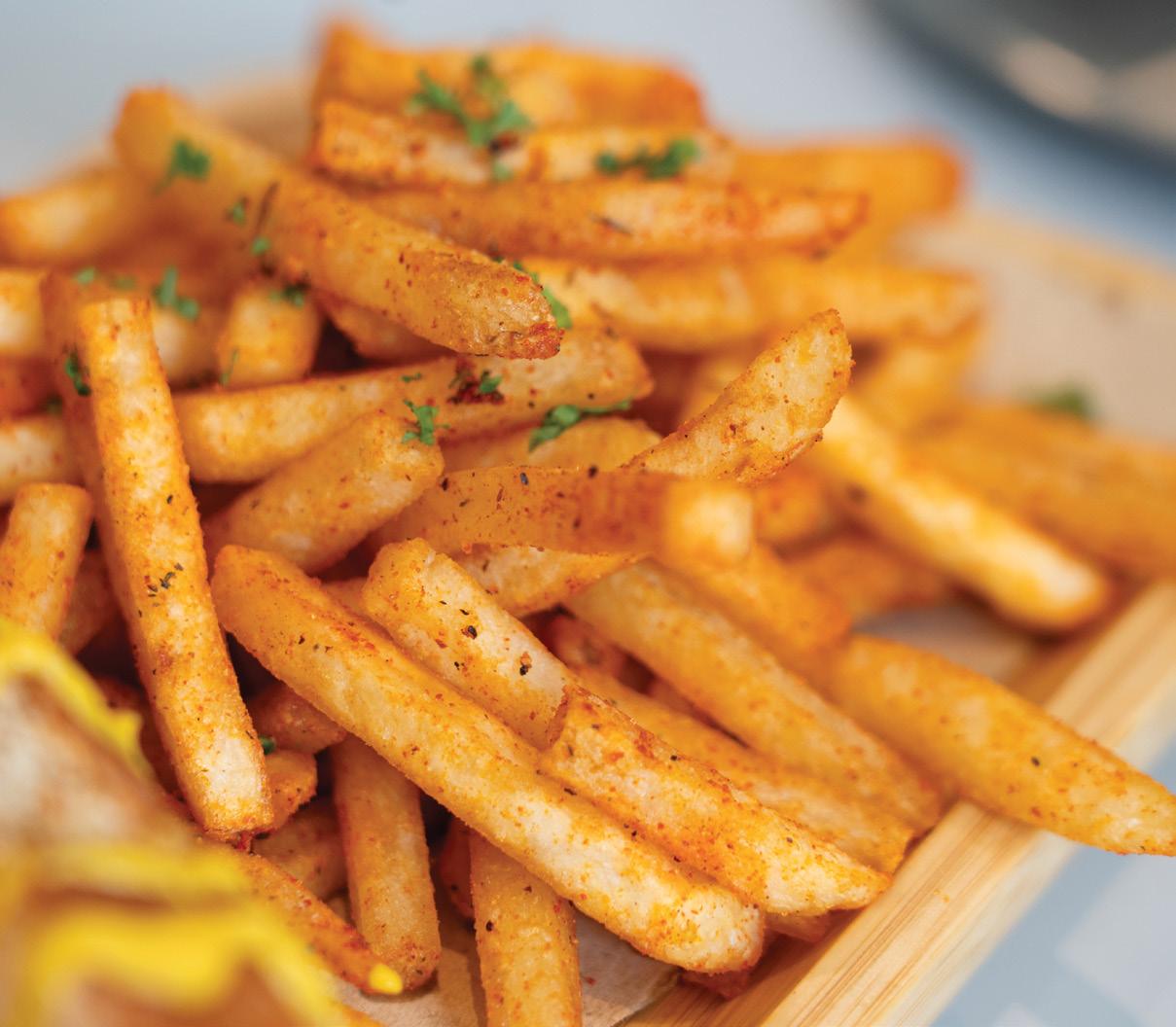
According to NielsenIQ MarketTrack, in the 52-week period ending December 27, 2025, refrigerated juice and drinks volume declined by 12 per cent as prices rose 9 per cent due to deeper declines for tomato juice volume as prices rose by double digits.
Lassonde Industries has maintained its market position despite these headwinds, reporting that while the overall category was down, its brand volumes remained relatively steady. To counter the instability of concentrate costs for staples like orange, apple, and pineapple—which are currently impacted by tariffs, international conflicts, and crop fluctuations—Lassonde will increase the proportion of juice blends.
FROZEN MEALS DEMAND HIGH
The Canadian retail market for frozen and prepared meals is a powerhouse within the processed food sector, enjoying a resurgence largely due to a strategic repositioning of the category as high-quality food flash-frozen at the peak of freshness, providing consumers with nutrient-dense satiety and portion control.
A fundamental driver of this growth is the industry-wide move toward transparency and clean labels. Jo-Ann McArthur, president of Nourish Food Marketing, noted that while few people recognized the industry’s internal reforms, Millennials did. This shift toward ‘real’
THE OUTLOOK
The 2026 outlook for the Canadian processed produce sector is characterized by price sensitivity and strategic innovation. With vegetable prices forecasted to rise by 3 to 5 per cent, affordability remains the primary driver, pushing shoppers toward value-size products that reduce cost per serving.
Farm Credit Canada noted in its 2026 Food and Beverage Report, “Looking ahead to 2026, sales growth is expected to moderate to 0.3 per cent while volumes are projected to decline 2.8 per cent. The removal of retaliatory tariffs is likely to stabilize import prices and renew competitive pressure from imports, particularly as consumers continue to look for value at the grocery store.”
ingredients and authenticity has transformed frozen meals from a compromise into a preferred option for time-strapped households. Innovation is increasingly tailored to Gen Z, whose culinary preferences are reshaping the freezer aisle. Bob Nolan, senior VP of growth science at Conagra Brands, highlighted this generational shift: “They’re eating spicy and bold foods, international flavours at three times the rate of previous generations.” This demand is evident in the high-protein frozen segment, which is expanding at 13 per cent annually. Nolan emphasized, “Consumers want more. They want more satiation... They want more protein in their diets.”
The morning meal represents another significant growth frontier. John Ghingo, president of Hormel Foods, noted that over 50 per cent of Gen Z consumers prioritize high-protein diets, which “speaks volumes about the future projections for the protein market”. To capture a greater share of the US$4.5 billion Americans spend on frozen breakfast food items, brands are developing protein-rich, portable solutions.
Technological alignment is also critical, specifically regarding the high household penetration of air fryers. In November 2025, Cavendish Farms capitalized on this trend by launching its Quick Crisp Crinkle Chips. Distinguishable by a rapid five-minute cook time, these air fryer-ready products specifically target the rising snacking occasion. This combination of value, innovation, and clean labeling has solidified frozen meals as a primary solution for 77 per cent of consumers who now prepare main meals in under 15 minutes.
BRANDS PRIORITIZE GLOBAL FLAVOURS
The current food landscape is increasingly defined by two primary industry focuses: the integration of high protein levels into convenience items and the expansion of authentic global flavour profiles. Brands are prioritizing nutritional density as a means to fuel consumers’ busy lifestyles. In the pasta segment, The Kraft Heinz Company introduced Kraft Mac & Cheese PowerMac in March, which combines its traditional flavour with a proprietary pasta delivering 17g of protein and 6g of fibre per serving.
The emphasis on protein also extends to categories traditionally associated with quick snacks or breakfasts. J. M. Smucker launched Higher Protein Uncrustables in September 2025, offering 12g of protein. In the soup aisle, General Mills debuted the Progresso Pitmaster line in July 2025. The five BBQ-inspired soups provide 14g of protein or more per can and are designed to deliver smoky flavours.
There is also a significant shift toward international profiles. Maple Leaf Foods launched Musafir in November 2025, a brand offering South Asian-inspired snacks and meals to meet demand for global flavours. McCain Foods also released a “Flavours of the World” brand, introducing Masala Fries and Chili Garlic Potato Bites featuring spice blends. Further, Campbell’s introduced Swanson Ramen Broth containing chicken stock infused with soy, garlic, and ginger to provide umami flavour without added MSG. Finally, preparation speed remains a critical factor in recent product launches. In the shelf-stable category, the Clark brand launched four ready-to-serve vegetarian legume sauces. These high-fibre products have a two-year shelf life.
CONFECTIONERY SECTOR [sector snapshot]
The sugar and confectionery sector comprises three sub-sectors: sugar manufacturing, primarily from domestic sugar beets and imported sugar cane; manufacturing chocolate confectionery from purchased chocolate or cocoa beans into boxed chocolate, chocolate bars, and seasonal specialties such as Easter eggs; and manufacturing non-chocolate
INTERNATIONAL TRADE
confectionery including chewing gum, mints, toffee, licorice, cough drops, and hard candy.
Most recently (2024), sugar manufacturing accounted for 32 per cent – a significant increase in share due to the building of new cane refineries; chocolate confectionery for 46 per cent, and non-chocolate confectionery for 22 per cent of overall sugar
and confectionery shipments.
In 2025, the value of sugar and confectionery shipments increased by $500 million or 8 per cent to $7.26 billion or 3 per cent, adjusted for rising prices.
Chocolate confectionery contributed almost all of the increase (87 per cent) as the value of shipments rose by $400 million (14 per cent) to reach $3.5 billion.
Non-chocolate confectionery contributed almost $100 million, with the value of shipments rising by 5 per cent to $1.6 billion. This was partially offset by modest decline in the value of sugar shipments to $2.1 billion. Real value added for the sector matched the 3 per cent growth in inflation adjusted shipments, rising to $2.3 billion.
The sugar and confectionery sector is highly integrated into North American and global markets with 92 per cent of shipment exported and imports holding 93 per cent of the domestic market. In 2025 both imports and exports increased in value by double digits. Imports rising by $1 billion or 18 per cent and exports by $900 million or 16 per cent, causing Canada’s trade surplus to be halved to $100 million compared to 2024.
The U.S. is Canada’s largest supplier and customer of sugar and confectionery products but in 2025 its share of our imports and exports declined. Although its exports to Canada increased by 14 per cent, those from Italy, Mexico, China and the rest of the world rose by 39 per cent, reducing its share to 91 from 92 per cent. Similarly, Canada’s imports from the U.S. increased by $400 million while those from Malaysia, Germany, Switzerland and other countries rose by $600 million, reducing its share of Canada’s exports to 43 from 44 per cent.
MERGERS & ACQUISITIONS
Mars completed its acquisition of Kellanova on December 11, 2025. This union combines brands like Mars, Snickers and M&M’s with Kellanova’s Pringles and Cheez-It. Trubar, a Vancouver-based better-for-you snacking company, was acquired by ETİ Gıda, a Turkish CPG company, for approx. $201 million. Trubar’s CEO Erica Groussman said the acquirer’s resources “will help us advance the growth of Trubar in North America.” Barry Callebaut and Planet A Foods announced a commercial long-term partnership in November 2025 to pioneer sustainable, cocoa-free chocolate alternatives like ChoViva. Dries Roekaerts, president, customer experience at Barry Callebaut, stated the strategic purpose: “This partnership marks a key milestone in diversifying our portfolio and capturing the exciting opportunities in chocolate alternatives without cocoa.”
ADAPTING TO VOLATILE PRICES
In 2025, the confectionery industry epitomized inflationary growth, a phenomenon where total market value rises even as actual consumption volumes shrink. In the U.S., sales reached $42.5 billion—a 5.3 per cent YoY increase—yet unit and volume sales declined for the fourth consecutive year. This trend was mirrored in Canada, where chocolate prices surged by 11 per cent while sales volume fell by 6 per cent. Overall, Canadian manufacturing sales in the sugar and confectionery sector rose 7.4 per cent, but this growth was largely driven by price hikes rather than increased demand.
Consumers, facing high prices and health-conscious trends, are increasingly moving away from mid-market brands in favour of premium, smaller-format treats. Lindt & Sprüngli Group CEO Adalbert Lechner highlighted this pivot toward mindful indulgence, noting that “GLP-1 users even grew their chocolate consumption stronger than the total chocolate market, and especially when it comes to premium chocolate,” as these consumers increasingly prioritize quality for their moments of bliss. Consequently, while mid-market volumes struggle, the appetite for highend, small-scale rewards remains resilient.
Significant economic volatility in raw materials, particularly cocoa and sugar, has forced manufacturers to innovate for strategic resilience. For instance, companies are developing chocolate compounds and cocoa-free alternatives to stabilize production costs. While cocoa prices saw sharp peaks in late 2024, by mid-to-late 2025, cocoa prices had fallen 30-45 per cent from 2024 highs, as improved weather and better crop prospects
Sugar and Confectionery Product Manufacturing
Sources: (1) Statistics Canada, Table 16-10-0047-01 Manufacturers’ sales, inventories, orders… by NAICS (North American Industry Classification System) – Sales of good manufactured –billions of dollars – not seasonally adjusted (2) Statistics Canada, Table 12-10-0176-01 Canadian International merchandise trade by industry for 2024 – billions of dollars – not seasonally adjusted (3) Calculated (shipments + imports – exports) (4) Statistics Canada, Table 18-10-026701 Industrial product price index, by industry, monthly Index January 2020 =100 (5) Calculated (shipment change – price change) (6) Statistics Canada, Table 36-10-0434-01 Gross domestic product at basic prices, by NAICS (North American Industry classification System) billions of dollars (Chained (2017) dollars – seasonally adjusted) (7) Calculated (exports/domestic market) (8) Calculated (shipments-exports)/domestic market)
> CONFECTIONERY SECTOR
(2)
Sources: (1) Statistics Canada. Table 16-10-0117-01 Principal statistics for manufacturing industries by NAICS (North American Industry Classification System) – Revenue from goods manufactured (2023) – billion of dollars – not seasonally adjusted (2) Statistics Canada, Table 12-10-0176-01 Canadian International merchandise trade by industry for 2025 – billions of dollars – not seasonally adjusted

in Côte d’Ivoire and Ghana eased supply fears. Although the World Bank projected cocoa prices to fall in 2026 and again in 2027 as production rebounds, RaboResearch noted cocoa and chocolate prices will remain above pre-crisis levels through at least 2027.
SUGAR, SYRUP AND HONEY PRODUCTION
In 2025, the Canadian production landscape for sweeteners experienced varied shifts in value and volume compared to recent years. Refined sugar shipments totaled $2.1 billion, which marked a 2 per cent decrease from 2024. Despite this slight YoY dip, the 2025 value remained 31 per cent higher than the five-year average, a surge primarily attributed to major capital investments in 2021 and 2023 that significantly expanded cane sugar refining capacity. Interestingly, while the total shipment value fell, the actual volume of sugar produced rose by 2 per cent once adjusted for the declining sugar prices seen throughout 2025.
The combined shipment value for honey and maple syrup reached $1.1 billion in 2025, a 2 per cent decline from the previous year. Within this category, honey shipments grew by 6 per cent to $250 million, whereas maple syrup shipments fell by 5 per cent to $850 million. Compared to the average of the previous five years, maple syrup production is up 16 per cent by volume while honey production is unchanged.
Canada refines sugar from sugar beets grown in Canada as well as
sugarcane imported from central and South America. Canada buys cane sugar at the world price, which is typically 50 per cent cheaper than the U.S. price, and once it is refined is subject to a tariff-rate quota (TRQ). Much of the sugar that is refined in Canada and exported to the U.S. is contained in foods such as confectionery, baked goods, sweetened beverages, chocolate, etc. which also fall into a TRQ for “sugar-containing products (SCPs)”.
Shipments within the quota enter at a low of or zero duty. Canada’s traditional share is 59,250 metric tonnes with an additional 9,600 tonnes added under CUSMA on a calendar year basis. In the 12 months ended September 2025, Canada utilized 90 per cent of its combined 63,000 tonne quota.
NON-CHOCOLATE CONFECTIONERY: SWICY AND PLAYFUL
Non-chocolate confectionery is shifting toward ‘swicy’ flavours and experiential textures to engage younger consumers. Innovation focuses on sensory excitement, featuring chili-coated gummies, multi-textural candies, and unique visual effects like glow-in-the-dark turmeric extract. Brands are also prioritizing clean labels, such as Mars transitioning iconic products to options without FD&C colours. These trends reflect a broader move toward bold, interactive, and playful snacking experiences designed for modern trend hunters.
Mondelez launched Sour Patch Kids Glow Ups in Canada in September 2025. The strawberry-watermelon gummies glow under blacklight using turmeric extract. “Glow Ups connects with Gen Z through playful, experiential innovation,” said Alexa Horowitz, brand manager, Mondelez Canada.
In January 2026, the Hershey Company’s Jolly Rancher brand debuted Heat Wave Gummies featuring chili-coated fruit flavours. “Today’s consumers desire excitement,” said Vivek Mehrotra, senior manager of Jolly Rancher. At the same time, Hershey debuted Shaq-A-Licious Slams, a multi-textural candy featuring crunchy balls and sour mango rings for a unique, hands-on experience. Mars introduced Skittles Gummies Fuego in January 2026. The product coats five Skittle flavours with a chilli layer of mango, watermelon, strawberry, raspberry, and lemon. Mars actually

Photo

featured over a dozen confectionery innovations for 2026 at the NACS trade show in Chicago in October 2025. Some of the highlights included freeze-dried M&M’s Pop’d Caramel, Twix Bites, Starburst Sour, Life Savers Gummies X’s and O’s, and Gummies Fruit Rings, and 5 Evolution gum.
TRANSFORMATIVE YEAR FOR CHOCOLATE CONFECTIONS
Chocolate confectionery is undergoing a premium transformation, blending luxury ingredients with nostalgic textures to entice trend hunters. A major highlight is the rise of Dubai chocolate-inspired bars, featuring pistachio and crispy kadayif, launched by Lindt and Hershey. Innovation also focuses on multisensory experiences, such as Ferrero Rocher’s chocolate squares and Lindt’s ChocoWafer, which combine creamy fillings with crispy elements. Further, the segment is expanding into functional indulgence with Mondelez’s Hu vegan bites and protein-enriched Oreo bars, reflecting a shift toward cleaner labels and permissible snacking for modern consumers.
Lindt & Sprungli hopes to have available production capacity by the end of 2026 or early 2027 to make its highly successful Lindor ChocoWafers more widely available in North America. First launched in Europe in the summer of 2023, the ChocoWafer, a combination of creamy chocolate and crispy cocoa wafers, is currently available in travel retail outlets across North America and online, but only in limited qualities at brick-and-mortar stores. The company debuted Tokyo-style Chocolade– Matcha Strawberry across key European airport hubs in December, introducing a travel-retail-exclusive tablet inspired by Japanese tea ceremonies.
The Hershey Company launched limited quantities (10,000 bars) of Hershey’s Dubai-Inspired Chocolate Bar in early December, featuring creamy pistachio and crispy kadayif pastry. Megan Pantalone, senior manager, innovation, noted, “This is for collectors, trend hunters, and anyone who wants to say they got one.”
Mondelez expanded the offerings of its Hu vegan chocolate line-up with the launch of Hu brand Dark Chocolate Bites, featuring individually wrapped, organic, creamy filled centres in three flavours: Hazelnut Butter, Cashew Butter + Pure Vanilla Bean, and Creamy Coconut. Hu co-founder Jordan Brown stated, “The bites are delicious, convenient, and made to be enjoyed anytime, anywhere.” Hu was specifically named as a contributor to the strong increases seen in the company’s chocolate category, at its Q3 earnings call in late October 2025. Ferrero Rocher introduced Ferrero Rocher chocolate squares in September. This modern twist features a thin shell, creamy filling, crispy hazelnuts, and crunchy crispies.
MINDFUL INDULGENCE
The confectionery landscape is undergoing a significant transformation driven by mindful indulgence, as consumers prioritize intentionality regarding sugar intake and ingredient quality. According to Euromonitor’s Nov. 2025 Voice of the Consumer: Health and Nutrition Survey, the top consumer preference is limited or no added sugar (34 per cent), followed by products free from preservatives (29 per cent) and all-natural
ingredients (28 per cent). This shift is accelerated by regulatory pressures, including Canada’s mandatory front-of-pack nutrition labels for highsugar foods, which is expected to catalyze a reformulation wave as manufacturers reduce sugar content to avoid these warning labels.
Manufacturers are aggressively scaling better-for-you options to meet these wellness demands. Key examples include Oreo Zero Sugar, various gluten-free options, and Hu vegan chocolate. There is also a distinct movement toward ‘real’ sweeteners, with shoppers increasingly favouring products sweetened with fruit, honey, or maple syrup over traditional or artificial alternatives. Further, products with a health halo, such as energy bars and nuts, performed well in 2025 as consumers seek snacks perceived as more nutritious.
Beyond traditional health metrics, brands are exploring the intersection of confectionery and wellness-adjacent ingredients to engage younger demographics like Gen Z. This involves incorporating ingredients associated with functional benefits to create more elevated experiences. Camryn Chousky, a communications specialist at Mondelez Canada, explained this strategy regarding the use of turmeric in candy: “While turmeric is traditionally associated with functional benefits like anti-inflammation, we’re seeing a shift where Gen Z are increasingly drawn to ingredients that support wellness. For Sour Patch Kids, turmeric allowed us to tap into that cultural conversation in a playful, unexpected way... taking an ingredient people recognize from wellness trends and developing a more elevated, intriguing candy experience in a natural way.” This evolution reflects a broader industry trend where transparency and functional attributes are becoming central to modern indulgence.
THE OUTLOOK
The outlook for the sugar and confectionery sector is defined by a tension between projected value growth and cautious consumer spending. While Euromonitor International in a report published prior to the run-up in cocoa prices forecast Canadian retail sales of confectionery (chocolate and non-chocolate) to rise by 5.5 per cent annually between 2024 and 2028 to reach $7.7 billion, many Canadians intend to reduce spending on snacks and confectionery in 2026 to prioritize essential expenses. On the supply side, industry analysts expect prices for sugar and cocoa to remain at elevated levels through at least mid-2027.
A major regulatory shift occurred on January 1, 2026, with mandatory front-of-pack nutrition labels for high-sugar products in Canada. This is expected to encourage reformulation to reduce sugar content in order to avoid a warning label. Manufacturers are also moving toward cleaner labels and natural sweeteners like honey or maple syrup to satisfy the 34 per cent of global consumers seeking limited or no added sugar. Despite these pressures, the sector remains resilient, supported by major factory investments and a focus on highspeed, social media-driven innovation.

BEVERAGE SECTOR [sector snapshot]
The beverage sector includes alcoholic and non-alcoholic drinks. Beverages not included in this sector include fluid milk produced by the Dairy Sector; juices manufactured by the Fruit and Vegetable Processing Sector; and tea and coffee (other than ready-to-drink) produced by the Other Food Products Sector. All the above beverages compete with tap water. Soft drink and water bottlers accounted for 38 per cent of the value of shipments in 2025; breweries for 38 per
INTERNATIONAL TRADE
cent; wineries for 11 per cent; and distilleries for 13 per cent each. In the last two years, soft drinks and water bottlers and distilleries have expanded their share of sector shipments relative to breweries and wineries.
In 2025, the value of shipments increased by $100 million to $15.8 billion with good growth for wineries and historic growth for distilleries offsetting modest declines of water and soft drinks as well as breweries. Shipments of water and soft drinks declined
by 2 per cent ($100 million) in nominal terms to $6 billion or 6 per cent adjusted for prices. Breweries experienced a 2 per cent ($100 million) decline to $6.1 billion, or a 7 per cent decline when adjusted for prices. Wineries and distilleries had an exceptionally good year as most provinces cut off imports of American wine and spirits in reaction to actual and threatened tariffs on Canadian exports. The value of shipments or wineries rose by $100 million to $1.7
billion, which amounted to 7 per cent in nominal terms and plus 4 per cent in real terms. The value of shipments of distilled products rose by $200 million to $2 billion, an increase of 13 per cent both before and after price adjustments because producer prices remained largely unchanged with those of 2024. Shipments of the entire beverages sector declined by 3 per cent after price adjustments and real value added fell 6 per cent to $5.9 billion.
International trade is only a significant factor in the wineries and distilleries sub-sectors. Until 2025, imports accounted for 71 per cent of the domestic wine market and 48 per cent of the Canadian market for spirits and RTD cocktails. In 2025, imports’ share of the two markets was reduced to 65 and 40 per cent respectively. Almost all of the decline are attributable to provincial liquor boards removing American wines and spirits from retail shelves. Imports for the overall sector declined by $300 million (5 per cent) to $6.2 billion while those from the U.S. dropped by
Manufacturing
Sources: (1) Statistics Canada, Table 16-10-0047-01 Manufacturers’ sales, inventories, orders… by NAICS (North American Industry Classification System) – Sales of good manufactured – billions of dollars – not seasonally adjusted (2) Statistics Canada, Table 12-10-0176-01 Canadian International merchandise trade by industry for 2024 – billions of dollars – not seasonally adjusted (3) Calculated (shipments + imports – exports) (4) Statistics Canada, Table 18-10-0267-01 Industrial product price index, by industry, monthly Index January 2020 =100 (5) Calculated (shipment change – price change) (6) Statistics Canada, Table 36-10-0434-01 Gross domestic product at basic prices, by NAICS (North American Industry classification System) billions of dollars (Chained (2017) dollars – seasonally adjusted) (7) Calculated (exports/domestic market) (8) Calculated (shipments-exports)/domestic market)
$700 million (31 per cent) to $1.6 billion and those from the rest of the world rose by $400 million (10 per cent) to $4.6 billion, which was led by double digit growth in French, Spanish, Australian and New Zealand imports of largely wines.
Exports as a share of domestic shipments dropped from 15 to 13 per cent between 2024 and 2025 in the winery sub-sector as the domestic market claimed a greater share of production. Exports as a share of distillery shipments declined to 48 from 49 per cent for the same reason. For the beverage sector overall, exports in 2025 remained unchanged from the prior year as a modest (1 per cent) decline in exports to the U.S. was offset by a 7 per cent increase in exports to Ireland, Japan, and the United Kingdom.
GROWTH AND RESTRUCTURING
Molson Coors announced a corporate restructuring in October, eliminating approx. 400 salaried positions across its Americas business. Coca-Cola Canada Bottling confirmed it is moving forward with its $141 million expansion of the Brampton, Ont., plant, which will add a 62,000-sf production wing and advanced can line.
MERGERS & ACQUISITIONS
Corby subsidiary Ace Beverage Group acquired exclusive rights for Canada Dry Mott’s brands. Anheuser-Busch acquired a majority stake in BeatBox, known for its fruit-forward Party Punch flavours, for approx. US$490 million. Corby Spirit and Wine increased its stake in Ace Beverage Holdco to 95 per cent in October. Keurig Dr Pepper Canada (KDP Canada) announced an exclusive distribution agreement with Cove Drinks in September 2025. Generous Brands, an L.A.-based leader in premium refrigerated beverages including Bolthouse Farms, agreed to purchase Health-Ade, a leader in Kombucha tea beverages, in July 2025. PepsiCo acquired functional soda brand Poppi in May 2025, for an estimated US$1.95 billion.
MARKET SHIFTS
The non-alcoholic beverage market is currently navigating a fundamental structural shift as consumers increasingly prioritize functionality and
Beverage
holistic health while balancing the realities of economic uncertainty. According to Gary Hemphill of Beverage Marketing, while the drive toward healthier choices remains a primary motivator, financial constraints are heavily influencing specific brand and category selections as consumers reach for more functional refreshments. This transition represents a significant change in how the industry operates, moving away from simple thirst-quenching products toward ‘beverages with purpose,’ where every sip must offer a tangible health benefit to justify its place in the consumer’s budget.
NON-ALCOHOLIC REFRESHMENT BEVERAGES
The energy drink category continues to serve as a primary engine of growth for the industry, recording a significant 10 per cent increase in consumption during 2025. However, the nature of this demand has evolved significantly beyond a basic caffeine hit. Modern consumers are seeking clean energy solutions that provide neurofunctional benefits, including enhanced mental clarity, mood support, and improved focus. This trend is largely driven by the rise of remote work culture, the gaming community, and a broader societal emphasis on mental health awareness, which stands in sharp contrast to traditional sports drinks that have shown flat to modestly declining consumption.
Traditional soft drinks are also being fundamentally reshaped by what experts call a wellness wave. The category is under intense pressure to integrate natural ingredients and gut-health benefits, such as fibre and probiotics. Economic pressures are visible within this sector, as soft drink prices rose by 8.5 per cent, leading to notable volume weakness as consumers seek better value for their money. Further, the growing adoption of GLP-1 weight-loss medications is prompting many individuals to move away from sugary carbonated beverages in favour of nutrient-dense options.
The bottled water sector reflects similar patterns of cautious spending and a desire for functionality. While flat bottled water grew by only 1 per cent in 2025—a notable slowdown from previous years—sparkling and value-added waters saw a low single-digit decline as consumers trimmed non-essential spending during periods of financial uncertainty. Innovation in this space is now centering on hydration mocktails and electrolyte-enhanced waters, which are proving popular with younger demographics who utilize them to meet their daily nutrient requirements.
THE SOBER-CURIOUS MOVEMENT
The beer industry is experiencing a significant contraction, losing mar-
ket share to other alcohol and non-alcohol categories at an alarming rate. Sales for breweries fell by 2.2 per cent in 2025, with consumption volumes plummeting 6.4 per cent during that same year. This follows an even steeper 12.6 per cent drop in 2024, placing beer volumes on a trajectory toward a decade low by 2026. While some breweries managed to improve their margins, they often did so through internal cost-cutting measures, such as reducing hourly staff by approx. 10 per cent, rather than through organic sales growth.
A major catalyst for this decline is the sober-curious movement, which has successfully engaged younger consumers who prioritize social connection and health over alcohol consumption. This demographic shift has forced breweries to innovate, often finding success by winning over drinkers with high-quality non-alcoholic alternatives. Additionally, the beer sector faces fierce competition for discretionary spending from THC-infused beverages and the rising use of GLP-1 drugs, which are leading many traditional drinkers to cut back. On the production side, a 22 per cent surge in aluminum prices, combined with ongoing trade tariffs, has inflated packaging costs, which now represent nearly 40 per cent of raw material expenses for the sector.
DOMESTIC WINERIES GAIN SHARE
The global wine market remains subdued, with categories like champagne losing ground as consumer sentiment remains negative regarding volume and value. However, Canadian domestic wineries have found a unique path to growth. Trade tensions and the removal of U.S. wine and distillery products from many retail shelves have allowed local producers to increase their share of domestic sales by 2 per cent, even as overall import volumes fell. This shift is supported by a strong Made in Canada movement and a growing consumer affinity for locally produced VQA offerings.
Beverage Manufacturing: Regional Breakdown of Canadian Output and International Breakdown of Imports and Exports
> BEVERAGE SECTOR
Resilience in the wine sector is also being driven by the rapid rise of the moderation segment. Low-alcohol wines are growing at approx. 60 per cent YoY in English Canada, appealing to a younger, newer wine consumer seeking social options for weeknights that offer lower caloric and alcohol content. Brands like Laylow are capitalizing on this by offering products with 6.5 per cent alcohol by volume and only 80 calories without sacrificing the flavour or structure of traditional wine. Despite high innovation, the industry still faces supply challenges, particularly in British Columbia where a 2024 deep freeze destroyed 84 per cent of the grape crop, forcing wineries to draw on existing inventories to bridge the production gap.
CANADIAN SPIRITS AND THE RTD REVOLUTION
Distilled spirits have emerged as a notable bright spot in the Canadian beverage landscape, with distillery sales increasing by 13.2 per cent in 2025. This robust performance stands in contrast to the broader alcoholic beverage sector and is largely fuelled by RTD segment. RTDs have evolved from simple hard seltzers into sophisticated, portable, and diverse cocktails that meet the modern consumer’s demand for convenience and complex flavour variety. Major players like Pernod Ricard report strong momentum for their RTD portfolios.
Trade dynamics have also favoured domestic spirit producers. Following retaliatory tariffs and the subsequent removal of U.S. products from liquor stores and restaurants, import volumes from the U.S. plummeted by 53.7 per cent in 2025. This provided domestic brands a unique opportunity to capture a larger portion of the market, with major gains specifically noted in the rum and vodka categories. This has also sparked a trend toward ‘quiet luxury,’ where consumers trade up to high-quality local whiskies and agave-based spirits. The agave category continues to thrive, with brands like the Mexico-made Mi Campo reporting volume growth as high as 38 per cent.
FUNCTION, FLAVOUR, MODERATION
The beverage industry is currently undergoing a transformative shift toward functional wellness and lifestyle-driven convenience, with new product lineups highlighting nutritional benefits such as protein fortification and immunity support. Brands are launching better-for-you options featuring low sugar and sophisticated non-alcoholic alternatives to traditional drinks.
Tim Hortons has launched a spring cold beverage lineup that addresses the growing demand for protein-rich menu options through its zero-sugar Protein Quenchers. Similarly, a partnership between PepsiCo and Starbucks will result in a protein-enhanced coffee line fortified with vitamins, minerals, and fibre to merge indulgence with functionality. PepsiCo is also expanding its Muscle Milk brand early next year with a reformulated texture and the removal of artificial sweeteners to focus on overall wellness.
In the realm of energy and soft drinks, Monster Beverage is preparing to launch Flrt, a zero-sugar energy drink with collagen and immunity support ingredients. PepsiCo has introduced Pepsi Prebiotic Cola with 3g of fibre. For those seeking lower sugar options in the tea category, Lipton Iced Tea launched its Fusions Lemonade Iced Tea with 50 per cent less sugar than traditional sodas.
Nostalgia and social media trends are also playing a major role in innovation. Tilray Brands introduced non-carbonated Popsicle Hard
flavoured beverages to create a nostalgic experience for adult consumers. Keurig Dr Pepper tapped into viral ‘dirty soda’ trends with Dr Pepper Creamy Coconut, offering a smooth and indulgent flavour profile. Meanwhile, Second Cup has entered the RTD space with premium canned lattes in Salted Caramel and Mocha flavours.
The mindful consumption trend is further evidenced by Peller Estates’ introduction of Laylow Wines, which provide full flavour with only 1g of sugar and 6.5 per cent alcohol. Arterra Wines Canada has also launched a 0 per cent alcohol portfolio for Jackson-Triggs. San Pellegrino has contributed to this segment with Ciao! Limoncello, a sparkling water that serves as a non-alcoholic alternative to traditional Italian spirits.
PRICES PRESSURED BY INPUT COSTS
Despite the surge in innovation, profitability is threatened by rising input costs. Between Jan. 2025 and Jan. 2026, aluminum prices rose 22 per cent. Since aluminum cans represent 40 per cent of packaging costs, and Canadian bottlers import most of their beverage can sheet from U.S., they are highly vulnerable to these price swings and trade tensions. Erich Schmidt of the Canadian Beverage Association notes that with limited pricing power and moderating demand, most of these higher costs have been absorbed by producers rather than being passed on to consumers, leading to significant margin compression across the industry.

THE OUTLOOK
The forecast for 2026 suggests a continued cooling in several major sub-sectors. In the non-alcoholic space, growth for bottled water is expected to remain at a subdued 1 per cent. Carbonated soft drink volumes are projected to remain flat, while the previously rapid growth of energy drinks is expected to slow from 10 to 6 per cent. In the alcohol sector, the outlook is even more cautious. Ready-to-drink cocktails are the only category forecasted for growth this year. Conversely, beer and spirits are expected to see 2 per cent volume declines, while the wine category is projected to drop by 3 per cent following a double-digit decline in the previous year. Cider is also expected to face a 5 per cent decline. The industry’s future success will likely depend on its ability to balance rising production costs with the consumer’s unwavering demand for functional, healthy, and locally produced beverage options.
OTHER FOOD PRODUCTS SECTOR
The Other Food Products Sector includes five sub-sectors: snack foods, including potato and corn-based snacks, extruded snacks, snack nuts, and peanut butter representing 27 per cent of shipments in 2025; coffee and tea (18 per cent); flavouring syrups and concentrates (6 per cent); seasonings and dressings including
INTERNATIONAL TRADE
sandwich spreads, spices, sauces, and vinegar (8 per cent); and ‘all other foods’ including bagged salads, fresh-cut vegetables, fresh pizza and pasta, and sandwiches (41 per cent).
Sector shipments increased in value by $300 million (2 per cent) to $19.1 billion, but adjusted for prices, declined in volume by 6 per cent.
[sector snapshot]
The $500-million increase in the value of coffee and tea shipments to $3.5 billion (7 per cent decline after price adjustments) was partially offset by a $200-million decline in the value of the seasonings and dressings sub-sector to $1.5 billion. The all other foods segment, which had been growing by 12 to 26 per cent annually since 2020, flatlined
Other Food Manufacturing
in 2025 at $7.8 billion and, adjusted for prices, fell 4 per cent. The value of the domestic market for other food products increased by $700 million or 4 per cent to $23.5 billion but adjusted for prices declined by 4 per cent. Real value for the Other Food Products Sector declined by 2 per cent to $4.6 billion (chained 2017 dollars).
Canadian manufacturers captured half of the domestic growth as imports rose in value by $500 million (6 per cent) to $8.9 billion to fill the remaining demand. The value of exports remained unchanged at $4.2 billion. Imports accounted for 38 per cent of domestic supply in 2025, up from 37 per cent in 2024 and 35 per cent in 2023. The biggest percentage gains for imports were in the seasonings and dressings sub-sector their share of the domestic market rose to 79 from 69 per cent. The All Other Foods sub-category saw the largest dollar loss for Canadian manufacturers as imports rose in value by $300 million $3.6 billion.
The U.S. share of Canadian imports and exports declined relative to overseas suppliers and markets. Canada’s imports from the U.S. declined by $100 million (or 2 per cent) to $8.9 billion, lowering its share of Canada’s imports to 66 from 71 per cent in 2024. Imports from all other countries rose by $600 million (27 per cent) to $600 million led by our next five largest suppliers (Switzerland, China, Italy, India and Vietnam). Canada’s exports to the U.S. declined by $100 million (4 per cent) to $3.7 billion, lowering its share of Canada’s exports to 88 from 90 per cent in 2024. Canada’s exports to South Korea, China, Japan, the U.K. and Australia rose by double digits, raising their share to 6 per cent.
MERGERS & ACQUISITIONS
McCormick & Company buys Unilever’s Foods business, featuring leading brands Knorr and Hellmann’s. The deal carries an estimated $44.8 billion enterprise value. Hormel Foods set up Justin’s as a standalone company in December 2025 with a 51:49 split in ownership between private equity firm Forward Consumer Partners and itself. Justin Gold, founder of the company’s extensive line of high-quality nut butters will return as a strategic advisor.
Snackruptors of Cambridge, Ont., acquired Hain Celestial’s North American Snacks business in February 2026 for US$115 million. Snackruptors manufactures private label snacks and baked goods. The Hershey Company acquired LesserEvil, a maker of organic snacks combining bold flavours and better-for-you ingredients, in November 2025 to broaden its salty portfolio. Keurig Dr Pepper (KDP) acquired JDE Peet’s for €15.7 billion in August. Following the deal, KDP plans to separate the merged operations into two independent, publicly traded entities—Global Coffee (pure-play coffee) and Beverage Co. (North American refreshment centred around brands like Dr. Pepper).
Sources: (1) Statistics Canada, Table 16-10-0047-01 Manufacturers’ sales, inventories, orders… by NAICS (North American Industry Classification System) – Sales of good manufactured – billions of dollars – not seasonally adjusted (2) Statistics Canada, Table 1210-0176-01 Canadian International merchandise trade by industry for 2024 – billions of dollars – not seasonally adjusted (3) Calculated (shipments + imports – exports) (4) Statistics Canada, Table 18-10-0267-01 Industrial product price index, by industry, monthly Index January 2020 =100 (5) Calculated (shipment change – price change) (6) Statistics Canada, Table 36-10-043401 Gross domestic product at basic prices, by NAICS (North American Industry classification System) billions of dollars (Chained (2017) dollars – seasonally adjusted) (7) Calculated (exports/domestic market) (8) Calculated (shipments-exports)/domestic market)
THE DOMESTIC MARKET
The All Other Foods sector is currently defined by a sophisticated intersection of health-conscious living, global culinary exploration, and economic pragmatism. As consumers navigate a post-inflationary environment, their purchasing habits have pivoted from passive consumption to intentional, functional, and adventurous choices. This evolution is reshaping every category from the snack aisle to the home meal replacement departments of supermarkets.
SALTY SNACKS IN TRANSITION
The Canadian salted snack market—encompassing chips, pretzels, and popcorn—valued at approx. $3.6 billion in retail sales in 2023, is now pivoting toward functional nutrition and clean-label integrity to maintain its momentum in a changing retail environment. This shift is partially a response to the profound and growing influence of GLP-1 weight-loss
> OTHER FOOD PRODUCTS SECTOR
medications; recent data indicates that roughly 25.3 per cent of these medication users have reduced their consumption of traditional salty snacks. To stay relevant, manufacturers are repositioning snacks as mini meals.
To navigate these changes, better-for-you attributes have become a dominant trend. Consumers are moving away from ultraprocessed foods in favour of products with high protein and fibre content. PepsiCo, for instance, is leaning heavily into this trend with the 2026 launch of Doritos Protein, while brands like SunChips and Siete have already demonstrated the success of this strategy, seeing 16 per cent growth in 2025 by prioritizing whole grains. Ramon Laguarta, chair and CEO of PepsiCo, has identified fibre and hydration as the two critical trends the company plans to capture at scale across its food portfolio.
At the same time, flavor profiles are becoming more daring, catalyzed by younger cohorts. Gen Z and Millennials are consuming spice and heat at three times the rate of previous generations, seeking authentic international profiles like Japanese-style barbecue and Mexican-inspired heat. Bob Nolan, senior VP of growth science at Conagra Brands, emphasized younger consumers are seeking bold foods and international flavours at a rate that significantly outpaces previous generations. This demand for ‘flavour fluency’ has propelled the bold flavours category to 20 per cent growth over the last three years.
Beyond taste, a texture boom is underway, with a 44 per cent increase in interest for crunchy, freeze-dried, or ‘airy’ formats. To satisfy health-conscious shoppers, brands are also swapping seed oils for premium alternatives like avocado or olive oil, emphasizing transparency and ingredient quality. As one in four snacks is now consumed away from home, the industry is also leaning into portable formats.
COFFEE & TEA SERVED COLD
In the beverage sector, coffee and tea have entered an era of functional indulgence, textural innovation, and a decisive shift toward cold prepara-

Other Food Manufacturing: Regional Breakdown of Canadian Output and International Breakdown of Imports and Exports
Sources: (1) Statistics Canada. Table 16-10-0117-01 Principal statistics for manufacturing industries by NAICS (North American Industry Classification System) – Revenue from goods manufactured (2023) – billion of dollars – not seasonally adjusted (2) Statistics Canada, Table 12-10-0176-01 Canadian International merchandise trade by indus-try for 2025 – billions of dollars – not seasonally adjusted
tions. Coffee trends are currently defined by a maximalist approach, where layered textures and micronutrient-rich ingredients justify menu prices that have risen roughly 7 per cent YoY. Cold foam has emerged as the primary innovation frontier, acting as a functional canvas for protein additives, lavender for stress relief, and specialized hormone-balance blends.
Vince Sgabellone, senior director of foodservice at Circana, highlights this fundamental transition, noting a significant move from hot brewed coffee into cold preparations, including iced, cold brew, and slush formats. This demographic shift is largely driven by Gen Z, 53 per cent of whom prefer cold coffee over any other generation. This cohort is also fuelling a 15 per cent surge in the instant coffee market as young consumers seek affordable, yet flavourful at-home options.
The tea category is experiencing its own renaissance through wellness-focused premiumization. Canadian tea sales reached $282.6 million at retail in 2025, buoyed by a multicultural population that is trading up to organic and functional varieties. Traditions such as masala chai and bubble tea are becoming mainstream, while matcha has achieved meteoric popularity for its cardiovascular benefits. For consumers focused on longevity and restorative habits, lower-caffeine alternatives like hojicha are gaining traction, reflecting a broader societal focus on sleep quality and ageing well.
EVOLUTION OF SAUCES AND DRESSINGS
McCormick’s acquisition of Unilever’s food portfolio highlights the F&B industry’s interest in seasonings, dressings and condiments. This sub-sector is defined by a burgeoning dipping culture and a strategic shift toward premiumization and functional health. As economic pressures mount— with 44 per cent of Canadians reporting reduced spending on dining out—sauces have become an affordable luxury that allows consumers to elevate simple at-home meals to restaurant-quality experiences.
Jo-Ann McArthur, president of Nourish Food Marketing, highlighted a polarization in the market, noting that while high-end indulgences and budget-friendly staples are thriving, the middle of the market is collapsing. In response, industry giants are acquiring chef-led brands, such as Campbell’s acquisition of Rao’s.
Photo © Olga Yastremska
/ Getty Images Plus
For a product to succeed in today’s environment, it must maintain a clean label to avoid front-of-pack warnings regarding sodium, sugar, and saturated fat. Ingredients like avocado oil, utilized by brands like Primal Kitchen, have become clear winners as consumers prioritize healthy fats. Additionally, vinegar is seeing a resurgence as a functional ingredient used in everything from everyday cooking to health-focused drinks. Flavour innovation is also peak, with Kraft Heinz growing its share of the market with mayonnaise-style sauces in Chimichurri, Piri Piri, and Smoky Mustard flavours. The BBQ segment is similarly diversifying with international profiles like Carolina Style Mustard and Ginger & Soy. This rise in flavour sophistication allows consumers to use high-impact condiments—including the McCormick’s 2026 Flavour of the Year, black currant—to effectively repurpose leftovers into gourmet creations.
HMR DRIVES ALL OTHER FOODS GROWTH
The All Other Foods sub-sector is composed of foods found in the HMR departments of supermarkets and sold at foodservice. The dominant trends is a shift toward high-quality, protein-centric meal solutions. Last year, the HMR market had reached a value of $3.4 billion, according to NielsenIQ, reflecting a 4 per cent increase in sales value and a 3 per cent growth in volume. This expansion was led by protein-centric solutions like sushi (+7 per cent) and deli entrees (+4 per cent), which are capturing at-home meal missions, as consumers seek affordable alternatives to dining out.
Consumers are demanding convenience that does not compromise culinary standards. George Paleologou, CEO of Premium Brands Holdings, observed the market for convenient food solutions is accelerating, as retail and foodservice customers seek ease of execution without sacrificing flavour, texture, nutritional value, or aesthetic appeal. This demand is underscored by the fact that 44 per cent of Canadians are spending less on out-of-home dining and 35 per cent have reduced their reliance on food delivery services due to economic constraints.
The ‘food is medicine’ movement is further influencing this sector. Retailers are strategically placing HMR sections next to produce departments to promote them as healthy, often reusing fresh ingredients that might otherwise be discarded. Vince Sgabellone of Circana highlighted that these sections increasingly offer healthy dinners, positioned to appeal to shoppers moving away from ultra-processed convenience foods.
Demographic shifts are also playing a role; with one-person households comprising nearly 29 per cent of all Canadian households (4.4 million persons) in 2021 compared to 28 per cent of households (3.3 million persons) in 2011. As a result, there is a massive demand for single-serve, portable formats that provide portion control and minimize waste. Further, the integration of digital ordering is allowing HMR items to become a seamless part of the weekly grocery shop, providing a cost-effective trade down from traditional restaurant meals.
NEW PRODUCTS
Many new products launched in the last 12 months have bridged the gap between professional kitchens and home pantries through global flavours and functional innovations. Industry leaders are launching chef-inspired condiments and international sauces designed to deliver bold, sophisticated tastes to the modern consumer.
Campbell’s introduced a line of global-flavoured canned sauces, stra-
tegically building on the consumer habit of using their signature soups as base ingredients for complex dishes.
Innovation has moved rapidly into the snacking sector with a focus on high-protein and keto-friendly solutions. Doritos Protein offers 10g of protein and contains no artificial colours. It meets the demands of the 70 per cent of consumers who want protein-fortified salty snacks. Quest Nutrition released baked, keto-friendly Mexican Street Corn and Pizza protein chips. Even traditional condiments are evolving, as seen with Heinz introducing the first-ever squeezable “Leftover Gravy” in November 2025, that was specifically designed to celebrate the day-after holiday meal ritual.
Retailers and wellness brands are also aligning their product lines with these shifting consumer needs. Loblaw Companies expanded its Power Bowls HMR lineup to include Shanghai Noodles. PepsiCo further targeted the growing demographic of GLP-1 medication users with the launch of Propel Clear Protein, a flavoured powder mix fortified with electrolytes and fibre.
Premiumization continues to drive the international segments of the market. PepsiCo Canada’s Miss Vickie’s brand recently introduced its Italian-inspired Ristoranti series of kettle-cooked chips as a celebration of Canadian culinary culture. At the same time, Campbell’s Canada brought Rao’s Alfredo Sauce to the domestic market, highlighting a low-carb, preservative-free recipe. Finally, Nestle Canada debuted its first liquid Espresso Concentrate in July 2025, providing a cafe-quality iced coffee solution that appeals to a new generation of coffee lovers by requiring no specialized machinery.
THE OUTLOOK
The trajectory for the remainder of 2026 is clear: success lies at the intersection of functional health, adventurous flavours, and value-driven indulgence. As the salted snack market aggressively incorporates protein and fibre to retain its $3.6 billion valuation (Euromonitor 2023) and counter the impact of GLP-1 medications, the industry is proving its resilience. In the beverage sector, coffee brands are embracing a maximalist approach to functional, protein-rich cold foams to justify higher price points, while the tea market continues its ascent toward wellness-focused blends targeting sleep and immunity. The accelerating growth in the HMR segment demonstrates convenience and quality are no longer mutually exclusive, as consumers trade down from restaurants to high-quality deli solutions. For the modern consumer, the dipping culture and texture boom are more than just passing trends—they are essential components of a health-conscious, intentional lifestyle that prioritizes the palate and the pocketbook. Across all sectors, the use of clean label ingredients and innovative flavour profiles will remain critical for attracting and retaining the loyalty of today’s discerning, intentional shoppers.

GRAIN & OILSEED MILLING SECTOR [sector snapshot]
The grain and oilseed milling sector comprises three subsectors. The flour milling and malt sub-sector is primarily engaged in milling wheat and pulses into flour mixes or dough as well as cleaning and polishing rice. It accounted for 10 per cent of sector shipments in 2025. The starch and vegetable fat and oil sub-sector includes the wet milling of corn and other
INTERNATIONAL TRADE
vegetables, but oilseed crushing accounts for more than 90 per cent of shipments. This group, which produces vegetable oils, margarines, and shortenings, accounted for 86 per cent of shipments in 2025. The breakfast cereal sub-sector includes the production of hot and cold cereals and granola, but not granola bars or cereal bars, which are classified as confectionery. In 2025,
breakfast cereal manufacturing accounted for 4 per cent of overall sector shipments.
The value of shipments in 2025 fell by 2 per cent to $18.4 billion, largely due to falling commodity prices and China applying a 100 per cent tariff on canola products in March 2025. The value of starch and vegetable fat and oil milling shipments declined by $400 million to $15.8 billion (2 per
cent). The value of flour milling shipments increased by 12 per cent or $200 million to $1.9 billion. Breakfast cereal shipments also declined in value by a third, falling to $700 million from $1 billion the previous year. Adjusted for prices, the value of shipments declined by 3 per cent and real value added (GDP) for the sector declined by 5 per cent to $2.1 billion (chained 2017 dollars).
BREAKFAST CEREAL – BEYOND ‘LESS SUGAR’
Grain and oilseed milling is highly dependent on export markets and Canada’s two largest markets, China and the U.S., bought significantly less last year compared to 2024. Canadian canola oil exports to the U.S. fell about 20 per cent ($2 billion) in 2025 to $8.5 billion due to trade uncertainty and reduced U.S. biofuel demand for aviation fuels. China’s anti-discrimination tariffs on canola caused its imports to drop by 40 per cent ($500 million) to $800 million. China agreed in January this year to restore seed tariffs to ~15 per cent effective March 1, and lift 100 per cent tariff on canola meal, but the seed oil is still subject to punitive tariffs.
MERGERS AND ACQUISITIONS
The Ferrero Group acquired WK Kellogg for US$3.1 billion total enterprise value. The deal includes WK Kellogg’s iconic cereal portfolio across the United States, Canada, and the Caribbean. WK Kellogg has plants in London and Belleville, Ont.
CAPITAL INVESTMENTS
Canadian-based Dainty Foods invests $150 million to build its first U.S. manufacturing facility in Batavia Township, Ohio. Alinova Canada and Japan’s Marusan Ai announced a $23.9-million investment in November to build a pilot-scale soy processing facility in Morrisburg, Ont.
THE RETURN OF REAL
After a decade defined by hyper-processing, functional claims layered on top of ultra-refined ingredients, and a race to engineer food into ever more convenient forms, the pendulum is swinging back. Across grocery aisles, export terminals, and ingredient sourcing desks, 2026 is shaping up as the year when ‘real’ quietly, but decisively reasserts itself.
Consumers are rejecting artificial perfection in favour of recognizable ingredients, shorter labels, and foods that feel culturally rooted rather than technologically contrived.
This cultural shift is reshaping demand for cereals and granola, cooking oils, pulses, and flours—both at home and abroad—at a moment when grain and oilseed markets are also being reset by record crops, lower prices, and export volatility. The result is a market defined less by scarcity than by selection: which crops, qualities, and formats best align with where food culture is heading next.
The Canadian breakfast cereal category is no longer the growth engine it once was. Euromonitor data show that while cereals posted a healthy 4.3 per cent CAGR between 2018 and 2023, growth was expected to decline over the 2024 to 2028 period. For legacy manufacturers, that deceleration has been painful—particularly in highly processed sub-categories such as cereal and granola bars, where large brands have lost significant share to smaller manufacturers and private label. Yet within this mature cereal category, granola stands out as the bright spot. The appeal of granola reflects more than nostalgia. It sits at the intersection of multiple consumer priorities: protein, fibre, texture, and ingredient transparency. Whole Foods Market’s 2026 trend forecast notes that while protein “continues to be king,” fibre is gaining traction as consumers seek digestive health and natural satiety, an advantage for oat-based products. At
Grain and Oilseed Milling
Sources: (1) Statistics Canada, Table 16-10-0047-01 Manufacturers’ sales, inventories, orders… by NAICS (North American Industry Classification System) – Sales of good manufactured –billions of dollars – not seasonally adjusted (2) Statistics Canada, Table 12-10-0176-01 Canadian International merchandise trade by industry for 2024 – billions of dollars – not seasonally adjusted (3) Calculated (shipments + imports – exports) (4) Statistics Canada, Table 18-10-026701 Industrial product price index, by industry, monthly Index January 2020 =100 (5) Calculated (shipment change – price change) (6) Statistics Canada, Table 36-10-0434-01 Gross domestic product at basic prices, by NAICS (North American Industry classification System) billions of dollars (Chained (2017) dollars – seasonally adjusted) (7) Calculated (exports/domestic market) (8) Calculated (shipments-exports)/domestic market)
Grain and Oilseed Milling
Regional Breakdown of Canadian Output and International Breakdown of Imports and Exports
EXPORT MARKETS OPENING UP FOR CANOLA
Canada’s canola sector enters 2026 with both strength and vulnerability. On the supply side, global grain and oilseed markets are well stocked. Farm Credit Canada reported Canada produced a record 107 million tonnes of grains and oilseeds, nearly 16 per cent above the five-year average. On the demand side, canola exports remain heavily concentrated. China and the United States account for nearly 90 per cent of Canadian canola exports, leaving the sector exposed to geopolitical risk. Industry leaders see domestic processing as part of the solution. Rick White of the Canadian Canola Growers Association has argued for streamlining regulations to allow more canola seed to flow into domestic biofuels.
Sources: (1) Statistics Canada. Table 16-10-0117-01 Principal statistics for manufacturing industries by NAICS (North American Industry Classification System) – Revenue from goods manufactured (2023) – billion of dollars – not seasonally adjusted (2) Statistics Canada, Table 12-10-0176-01 Canadian International merchandise trade by industry for 2025 – billions of dollars – not seasonally adjusted
the same time, the definition of breakfast itself is evolving. TasteWise, in its Culture Shift 2026 Food & Beverage Trend Forecast of late October, noted a sharp cultural pivot: Gen Z interest in cereal is down 5.9 per cent YoY, while interest in ramen and pho for breakfast is up 28 per cent.
EDIBLE OILS TREND TO NATURAL
Cooking oils are another category being reshaped by the return-to-real ethos—albeit in a more polarized way. On one hand, private label is gaining share in less-processed oil categories, reflecting consumers’ growing comfort with store brands when ingredient lists are short and functional differences are minimal. On the other hand, oils have been pulled into wider cultural debates around metabolic health, fertility, and ‘seed oil free’ eating.
TasteWise reported that social conversations linking seed oil free diets (+208 per cent YoY) and hormone balance are surging, particularly among Millennials and Gen Z.
From a supply perspective, edible oil markets are well supplied. Soy oil prices peaked twice between 2022 and 2023, before drifting lower and stabilizing between 40 and 50 US cents per lb, a level forecast to persist into mid-2027. Rabobank, in its North American agribusiness review of October 2025, attributed this softness to large soybean crops and anemic export sales, placing pressure on biodiesel mandates to absorb the surplus.
For food manufacturers, lower oil prices are welcome. For oilseed processors and exporters, the challenge is navigating a consumer environment where ‘natural’ is prized, but nutritional narratives are fragmented. Margarines and blended fats, in particular, are losing cultural relevance as consumers gravitate either to traditional butter or to clearly positioned oils such as olive and avocado.
PULSES, NO LONGER JUST AN INGREDIENT
Few ingredients benefit more from the return-to-real trend than pulses. Lentils, chickpeas, and peas deliver protein and fibre in a form consumers increasingly recognize as food, not formulation. This shift is evident in both centre-store and functional products. Canadian legacy brand Sprague Cannery, for example, has leaned into simple, organic pulsebased soups, such as its Mediterranean lentil variety, delivering protein and fibre using ingredients one could find in a grocery store.
CANADIAN FLOUR BUILD ON QUALITY
If canola faces export concentration risk, Canadian wheat enters 2026 from a position of confidence. Cereals Canada reported Canada is on track to become the world’s number one exporter of high-quality, high-protein wheat, shipping an estimated 27.4 million tonnes to over 80 international markets. Canada Western Amber Durum is globally recognized for its bright yellow colour, high protein content, and superior semolina yield, making it a preferred input for pasta and couscous.
GOOD PROSPECT FOR PULSES
Pulses are benefiting from diplomatic and dietary momentum. Farm Credit Canada predicted rising demand for pulses as value-added ingredients in snacks and ready-to-eat meals.
THE OUTLOOK
For ingredient purchasers, 2026 is shaping up as a year of cost relief paired with strategic choice. Farm Credit Canada forecasts that six of the top 10 raw material inputs by value will decline in cost in 2026, including canola (-2.1 per cent) and wheat (-2.7 per cent), while corn is expected to rise modestly. Record grain and oilseed supplies are keeping markets well supplied and prices are near five-year lows.
For commercial bakers, this is welcome news. Lower wheat prices ease pressure after years of inflation-driven price increases, even as volumes in bakery manufacturing declined in 2025. The opportunity now lies not in chasing volume, but in repositioning value—using high-quality flours, visible grains, and fibre-rich inclusions to align with clean label and digestive health trends.
Oil buyers benefit from stable edible oil markets, though brand positioning will matter more than input cost. Pulse ingredients stand out as the rare category offering both nutritional relevance and export momentum, particularly as GLP-1 adoption reshapes eating patterns. As a result, 2026 is less about scarcity management and more about intentional sourcing— choosing ingredients that fit not just budgets, but the cultural direction of food itself.
ANIMAL FOOD SECTOR [sector snapshot]
The animal food manufacturing sector is made up of two sub-sectors—dog and cat food manufacturing and all other animal food manufacturing, including pet food for birds, fish, reptiles, and other pets; and animal food for livestock and poultry. The combined value of shipments of the sector in 2025 was $10.2 billion, down by $100

INTERNATIONAL TRADE
Imports account for 22 to 23 per cent of the domestic animal food market and Canada’s exports 17 to 18 per cent of its production. In 2025 Canada’s trade deficit in animal food increased by $100 million to $750 million as imports remained unchanged at $2.4 billion and exports declined by $100 million to $1.7 billion.
The dog and cat pet food sub-sector mirrored the overall sector, with imports holding steady at $1.9 billion and exports falling slightly to $1.05 billion. Canada’s imports from the U.S. and China declined by $100 million while imports from Thailand rose by $200 million. Canada diversified its dog and cat food exports in 2025 by reducing the U.S. share to 55 from 62 per cent the previous year. Netherlands’s share more than doubled to 11 per cent as its imports of Canadian pet foods increased to $100 million. Note, Netherlands may be the port of entry for pet foods destined for other E.U. countries. Other notable increases were those destined for Mexico, Poland, and Israel.
CAPITAL INVESTMENTS
Formula Raw unveiled its 15,000-sf USDA-approved facility in Montreal in August, quadrupling monthly freeze-dried production to 30,000 kg.
MERGERS & ACQUISITIONS
Montreal-based Pure Treats acquired Primal Pet Foods with manufacturing facilities in Texas and Colorado, in February. Pure Treats is a leader in natural dog and cat treats, food, and toppers. French-based Nasta Pet Food acquired British Columbia’s FirstMate Pet Foods. This €120 million refinancing deal creates a group with 250+ employees, expecting €200 million in 2026 revenue and expanded industrial capacity.
CANADA DIVERSIFIES PET FOOD EXPORTS
The Canadian pet food industry is navigating a transformative era, characterized by a fundamental shift in trade strategies, a powerful resurgence in domestic brand loyalty, and a rapid migration toward digital commerce. As manufacturers look to the future, export diversification has transitioned from a secondary goal to a vital survival strategy designed to mitigate the risks associated with an over-reliance on traditional, single-market trade patterns. By 2025, Canadian pet food exports represented roughly half of the domestic industry’s total production. This global expansion is not happening in a vacuum; it is being actively championed by industry leadership, most notably Pets Canada, which provides the infrastructure necessary for local brands to compete on the world stage.
This strategic push for broader market access is a direct response to the evolving US$207 billion global pet care market, where demand for
million or 1 per cent from the previous year but, adjusted for a slight decline in producer price volume, was unchanged from the year previous. Real value added, however, increased by 3 per cent to $1.5 billion, offsetting much of the 3 per cent decline of 2024. Dog and cat food account for 20 to 25 per cent of total animal food shipments.
premium and ‘human-grade’ nutrition is accelerating. As global consumers seek out functional foods, Canadian producers are finding new opportunities to export specialized formulations that mirror human nutritional trends. This diversification is essential for maintaining a competitive edge as global trade patterns continue to shift, ensuring the Canadian industry remains resilient in the face of international economic volatility.
BUY CANADIAN
While the industry looks outward for growth, a powerful domestic movement is reshuffling the deck at home. The Buy Canadian movement has evolved into a formidable market force, presenting significant challenges for American manufacturers who have historically dominated the Canadian shelf. A NielsenIQ report from spring 2025 underscores the scale of this shift, revealing that 45 per cent of Canadian consumers were then classified as either ‘Canadian Loyalists’ or ‘American Good Avoiders’. The latter group is particularly influential, comprising 32 per cent of all shoppers. This demographic spends on average $624 per month on FMCG, which is more than the other two consumer groups on the Loyalist to Pragmatic shoppers’ spectrum.
The impact of this nationalistic sentiment is most visible in the dog
Animal Food Manufacturing
Sources: (1) Statistics Canada, Table 16-10-0047-01 Manufacturers’ sales, inventories, orders… by NAICS (North American Industry Classification System) – Sales of good manufactured –billions of dollars – not seasonally adjusted (2) Statistics Canada, Table 12-10-0176-01 Canadian International merchandise trade by industry for 2024 – billions of dollars – not seasonally adjusted (3) Calculated (shipments + imports – exports) (4) Statistics Canada, Table 18-10-026701 Industrial product price index, by industry, monthly Index January 2020 =100 (5) Calculated (shipment change – price change) (6) Statistics Canada, Table 36-10-0434-01 Gross domestic product at basic prices, by NAICS (North American Industry classification System) billions of dollars (Chained (2017) dollars – seasonally adjusted) (7) Calculated (exports/domestic market) (8) Calculated (shipments-exports)/domestic market)
treats category, where American Good Avoiders commanded a 42.3 per cent dollar share in March 2025. Major U.S. corporations have been forced to acknowledge the impact of this trend on their bottom lines. For instance, Colgate-Palmolive recently attributed a period of softness in the performance of the Hill’s Pet Nutrition brand in the Canadian market. President and CEO Noel Wallace cited Buy Canadian as one of the issues affecting the Canadian business. President and CEO Noel Wallace cited Buy Canadian as one of the issues affecting the Canadian business. Retailers like Pet Valu are seeing this play out daily on the store floor, reporting a surge in devoted pet lovers who specifically request made-in-Canada brands—such as First Mate or Canadian Naturals—and are willing to switch away from U.S.-owned retailers entirely to support domestic businesses. This behaviour is reflected in broader trade data, which shows the U.S. share of Canadian dog and cat food imports declining from 89 to 87 per cent as local manufacturers successfully capture a larger portion of the market.
PET FOOD SALES INCREASINGLY ONLINE
The global pet care market is being reshaped by a surge in demand for cat food, which saw a 6 per cent CAGR between 2020 and 2025. According to Euromonitor’s November report, feline favouritism is driving growth in the pet care market. The same report estimates 3.8 per cent growth in dog food sales. Within North America, the industry remains robust, with the U.S. market projected to reach nearly $64 billion by 2029. The Canadian market is following a similar trajectory. AAFC’s July 2025 Pet Food Trends in Canada report estimates 2024 pet food sales in the Canadian market to be $6.7 billion, having grown at a CAGR of 10 per cent for sales of dog & cat food ($6.6 billion) and at a CAGR of 8.1 per cent for sales of other pet food between 2019 and 2024.
Dog food sales accounted for 66.4 per cent of the total market share within the sector, followed by cat food (31.8 per cent), fish food (0.8 per cent), bird food (0.7 per cent), and small mammal/reptile food (0.4 per cent). Total Canadian pet food sales were forecast to grow at CAGR of 9.9 per cent over the next four years to reach $9.5 billion in 2029. However, the way these billions are spent is changing, as retail distribution undergoes a structural shift away from traditional brick-and-mortar stores.
In the U.S., the dominance of physical retail is waning rapidly, with its market share falling from 76 per cent in 2019 to just 59 per cent by 2025. During the same period, e-commerce surged to capture 41 per cent of the market. Canada is mirroring this digital migration, though
at a slightly different pace. According to a 2024 Euromonitor estimate cited in the AAFC report, store-based retail accounted for 86 per cent of Canadian pet food sales, while e-commerce held an 11.8 per cent share. Within the physical landscape, grocery retailers like supermarkets and hypermarkets still lead with 59.5 per cent of sales, followed by non-grocery specialists at 27.1 per cent. Despite the current dominance of physical stores, Canadian e-commerce is recording a staggering 18.5 per cent CAGR, which is more than double the 9 per cent growth rate seen in offline stores.
This digital explosion is being fuelled by “petflation” and a growing consumer preference for premium, fresh, and functional foods that are often easier to source online. Subscription models have become a vital sub-channel, offering pet owners much-needed price stability and the convenience of scheduled deliveries. DTC brands are capitalizing on this demand for personalized nutrition. These digital-first models are highly effective at locking in lifetime value by providing a seamless blend of functional nutrition and emotional care.
THE RISE OF FELINE FAVOURITISM
In 2024, for the first time, the cat population (8.9 million) officially surpassed the dog population (8.3 million) in Canada. Approx. 39.5 per cent of Canadian households now share their homes with a cat, compared to 38.1 per cent that own a dog. This shift is part of a global trend

known as “feline favouritism,” driven by modern pet owners who prefer the lower maintenance requirements and lower associated costs of cats. The AAFC report noted that between 2020 and 2025, cat food was the fastest-growing category with a 6 per cent CAGR. This growth significantly outpaced the 3.8 per cent rate seen in the dog food sector.
The demand for feline products is expected to remain strong, with cat food projected to grow at 4 per cent CAGR through 2030. This has triggered a surge in specialized innovations, including cat-focused toppers, hydration enhancers, and supplements designed for feline-specific health needs. Simultaneously, the composition of the dog population is evolving toward smaller breeds. In North America, the share of large dogs is expected to drop from 32 per cent in 2020 to just 27 per cent by 2030, while small dogs are projected to rise from 42 to 46 per cent over the same period. In Canada, while large dogs still account for 44 per cent of the population, the market is clearly transitioning. Despite these demographic shifts, dogs still represent the highest total spend, commanding 66.4 per cent of the Canadian pet food market share. Manufacturers are responding with science-forward formulations and supplemental feeding options, such as joint and mobility mixers, tailored for smaller dogs and ageing cats.

response to intensifying competition in traditional dry food segments and the sustained growth of premium, fresh, and functional niches. Leading players are diversifying their portfolios rather than making single-format bets. Recent activity include: : Updated its Science Diet portfolio in April 2025 with ActivBiome+ Multi-Benefit technology to support digestion and immune health.
: Launched the European premium line Edgard & Cooper in the U.S.
: Expanded its now Fresh Good Gravy collection in August 2025 to include its first beef dry recipe. Blue Buffalo: Entered the $3 billion fresh category with Love Made Fresh in October, which Nicole Ayers, business unit director, General Mills, said, “helps pet parents turn everyday feeding moments into fresh acts of love”.
• Royal Canin: Previewed GlycoAdvanced for overweight diabetic cats, using an increased nutrient-to-calorie ratio to enable safe caloric restriction in gently cooked formats.
• Spot & Tango: Introduced UnKibble to Canada in March, using sous-vide technology for human-grade ingredients.
• Champion Petfoods: Also in March, introduced Orijen Freshprey, a line of gently cooked recipes.
PET PARENT GENERATION DIFFERENCES
The purchasing habits of Canadian pet parents reveal a stark generational divide in both values and technology adoption. Gen Z and Millennial owners are the primary drivers of innovation, prioritizing functional benefits and ingredient transparency as tools for long-term wellness. These younger cohorts are often “eco-conscious early adopters,” who are more willing to experiment with alternative proteins like cultivated meat or insect protein. They also show a high level of interest in specialty pets, such as birds, and are far more likely to spend heavily on pet gifts compared to older generations. Further, Gen Zs, Millennials, and Gen Xers utilize subscription services at significantly higher rates than Boomers, favouring digital integration. In contrast, Gen X and Boomers place their highest emphasis on trust, simplicity, and proven reliability. While younger owners are drawn to “health halos” like human-grade or grain-free claims, older generations remain anchored in brand loyalty and national origin, making them a critical demographic for the domestic industry.
PRODUCT INNOVATION
The current wave of pet food innovation represents a move away from simple line extensions toward structurally different propositions centred on specific health outcomes and format innovation. Manufacturers are applying scientific frameworks—such as gut microbiome research— alongside processing technologies borrowed from human food production, such as sous-vide and gentle cooking. This recalibration is a
THE OUTLOOK
The outlook for the pet food industry in 2026 is best described as sluggish, but stable. While 65 per cent of pet owners have recently reduced their spending on “extras,” pet food remains a protected, health-driven staple that consumers are reluctant to cut. The primary growth engine for the coming year will be cat food that’s forecast to maintain a 4 per cent CAGR through 2030. Major players like J.M. Smucker are responding by expanding into the US$11 billion cat treat category, while General Mills plans a turnaround for its premium lines by launching protein-first products.
Future innovation will focus on performance pet food with functional benefits like microbiome-boosting ingredients and targeted nutrients for joint and cognitive health. Minimal processing—encompassing fresh, air-dried, and freeze-dried formats—remains the industry’s holy grail, as owners seek human-grade quality in convenient packages. In Canada, the strength of the Buy Canadian movement will continue to provide domestic brands with an edge over imports. Finally, e-commerce and subscription models will remain essential for providing brands with predictable revenue streams and the deep consumer data needed to lock in long-term loyalty.
Food and beverage industry M&A insights
Kroll Investment Banking
In Q1 2026, 60 transactions were announced in the food and beverage industry, representing a 5 per cent quarter-over-quarter increase from Q4 2025 and a 20 per cent YoY increase from Q1 2025. This increase in deal activity demonstrates growing confidence in the food and beverage industry following a 10-year low in deal activity in 2025. For the trailing twelve-month (TTM) period ending March 31, 2026, 249 transactions were announced in the food and beverage industry, which marks a 12 per cent decline from the TTM period ending March 31, 2025.
Several significant deals were announced in Q1 2026, including Pacific Coast Producers’ acquisition of certain branded canned fruit and plastic fruit cup assets of Del Monte Foods Corporation II, Refresco’s
acquisition of SunOpta, E. & J. Gallo Winery’s acquisition of Four Roses Distillery, Mission Produce’s acquisition of Calavo Growers, and Puratos’ acquisition of Dawn Foods. The alcoholic beverages, non-alcoholic beverages and general categories experienced the greatest deal activity, representing 60 per cent of total deal volume. The beverage categories alone represented 45 per cent of total deal volume in the quarter.
Over the TTM period ending March 31, 2026, food and beverage M&A volume remained predominantly driven by strategic buyers (including companies primarily owned by private equity investors), with strategic transactions representing 79 per cent of the total deal count. Of the 249 deals announced over the TTM period, 220 (88 per cent) were completed by privately owned buyers.
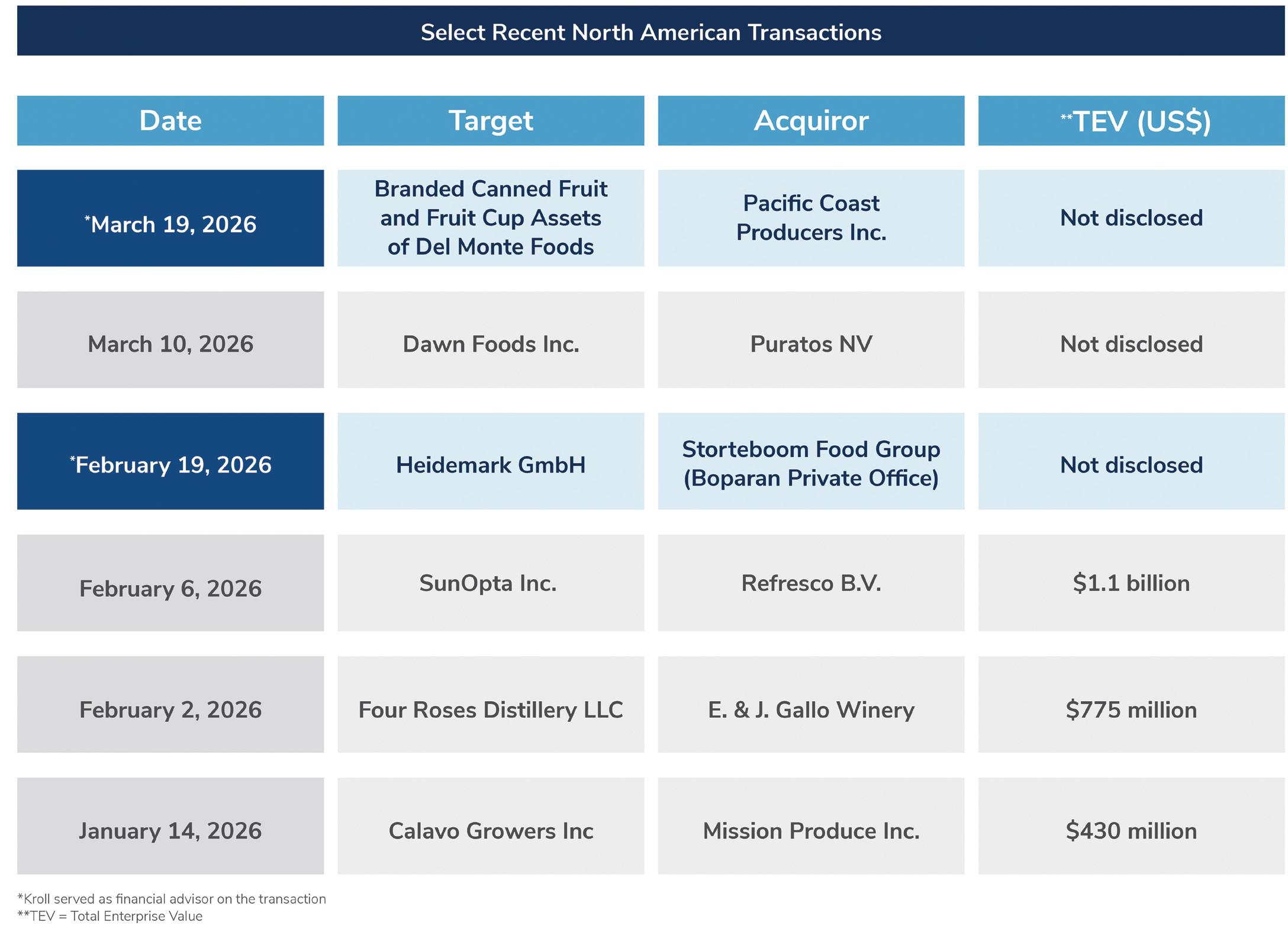
Interestingly, Q1 2026 experienced an above-normal proportion of deals completed by strategic buyers, which accounted for 88 per cent of total deals in the quarter. A common theme was product and/or geographic diversification, as food and beverage companies looked to de-risk operations and strengthen their supply chains. This is a shift compared to 2025, where geopolitical conflicts and economic uncertainty pushed deal activity in the sector to a 10-year low. As companies gain better understanding of risks and are generally better capitalized to transact, M&A plans are being re-explored, and for many companies are considered as a risk-mitigation strategy.
Looking forward, we are seeing an uptick in both strategic buyers and financial sponsors considering and exploring M&A opportunities. Strategics and private equity funds alike have significant capital
available for deployment, following a period of deferred investment driven by economic uncertainty and geopolitical tensions that led to a more tepid approach to M&A activity. Private equity sponsors are now sitting on significant dry powder with defined investment timelines and are actively pursuing high quality platform investments and meaningful add-ons. Strategic buyers are prioritizing scale, product diversification and access to rapidly growing sub-categories in the food and beverage space to remain resilient in a more volatile landscape.
We anticipate this momentum to continue, particularly in the back half of 2026 and going into 2027, noting that there is an extended lag time between when a company begins to consider M&A opportunities and when they execute on a transaction (for both the buy-and sell-side).
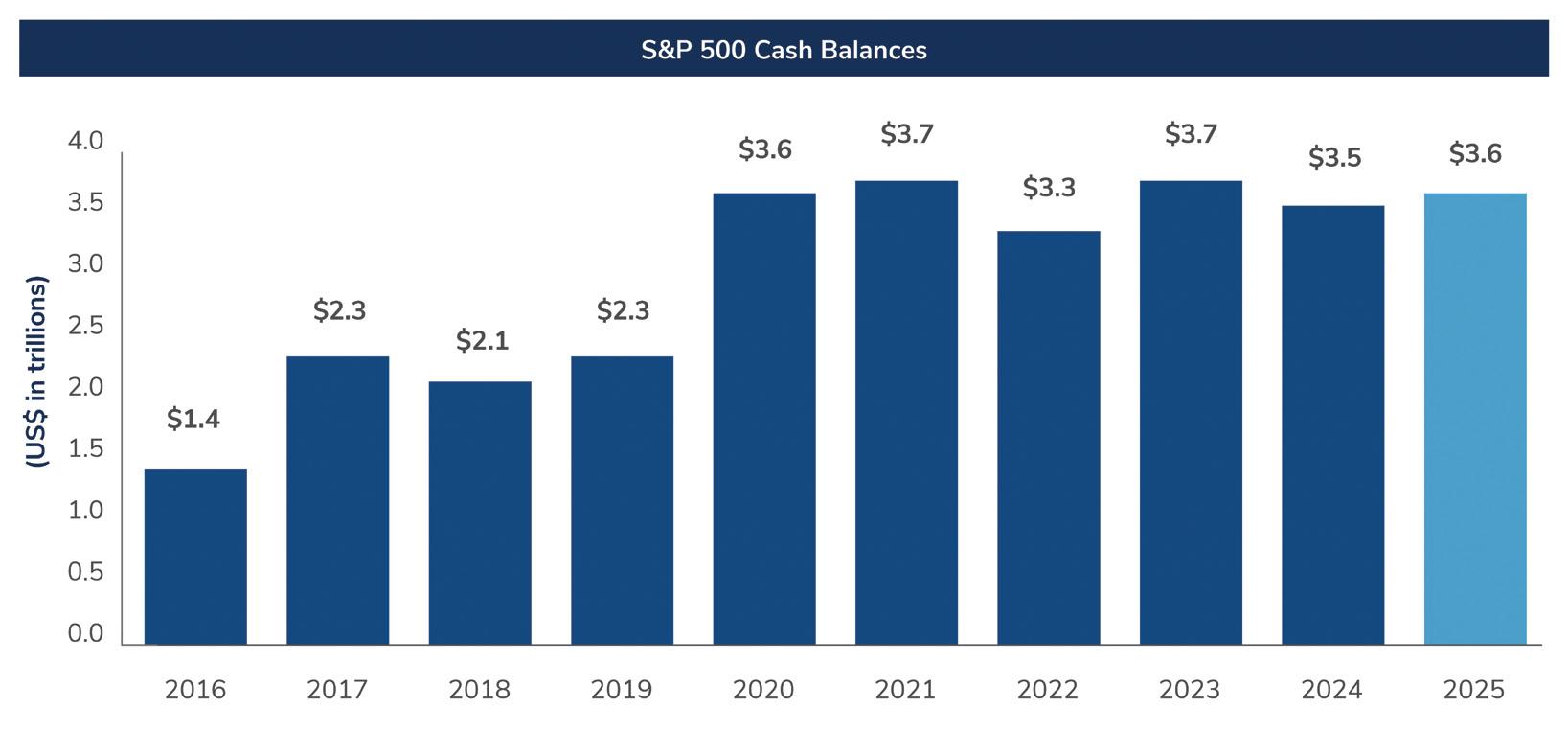
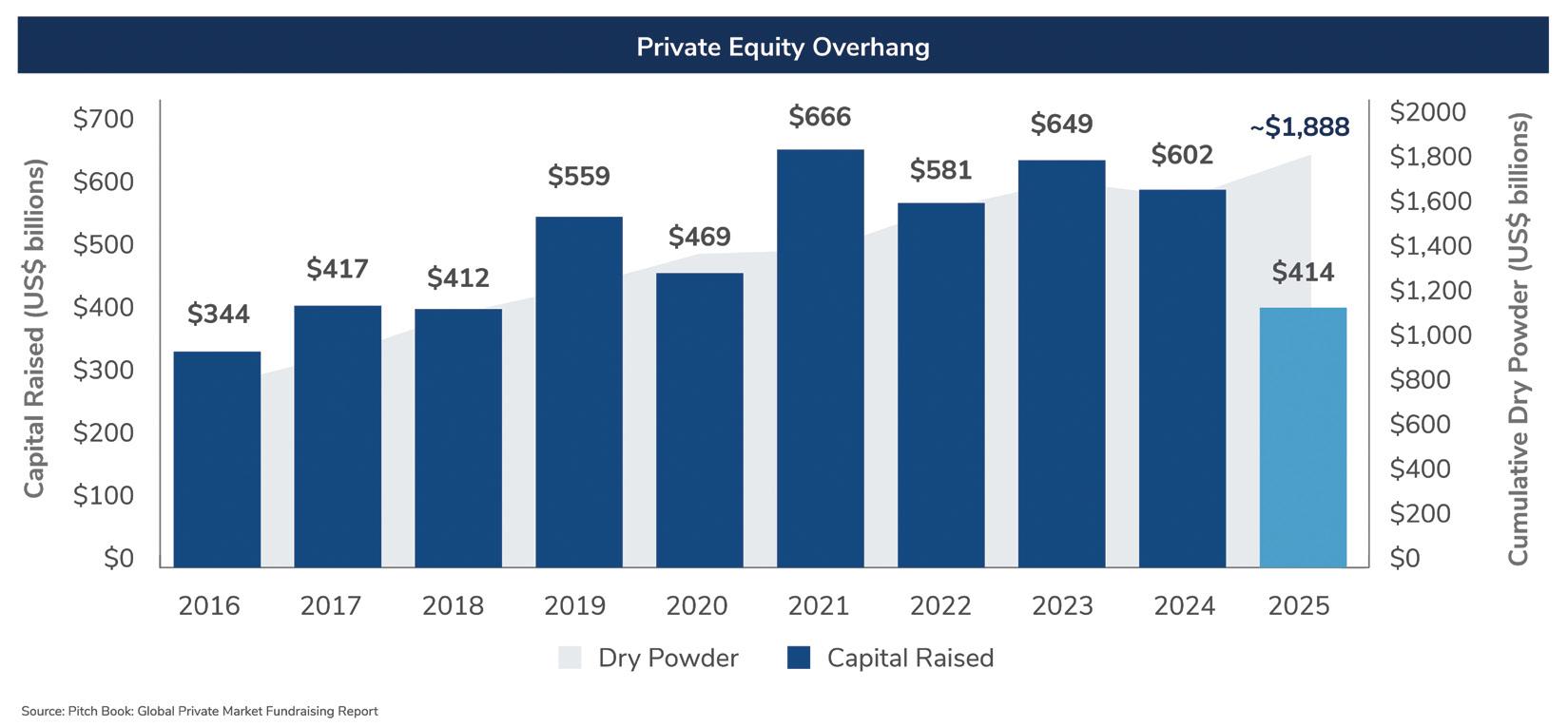
$3.6T
S&P500 cash balance as of end of 2025
$1.9T Equity Overhang
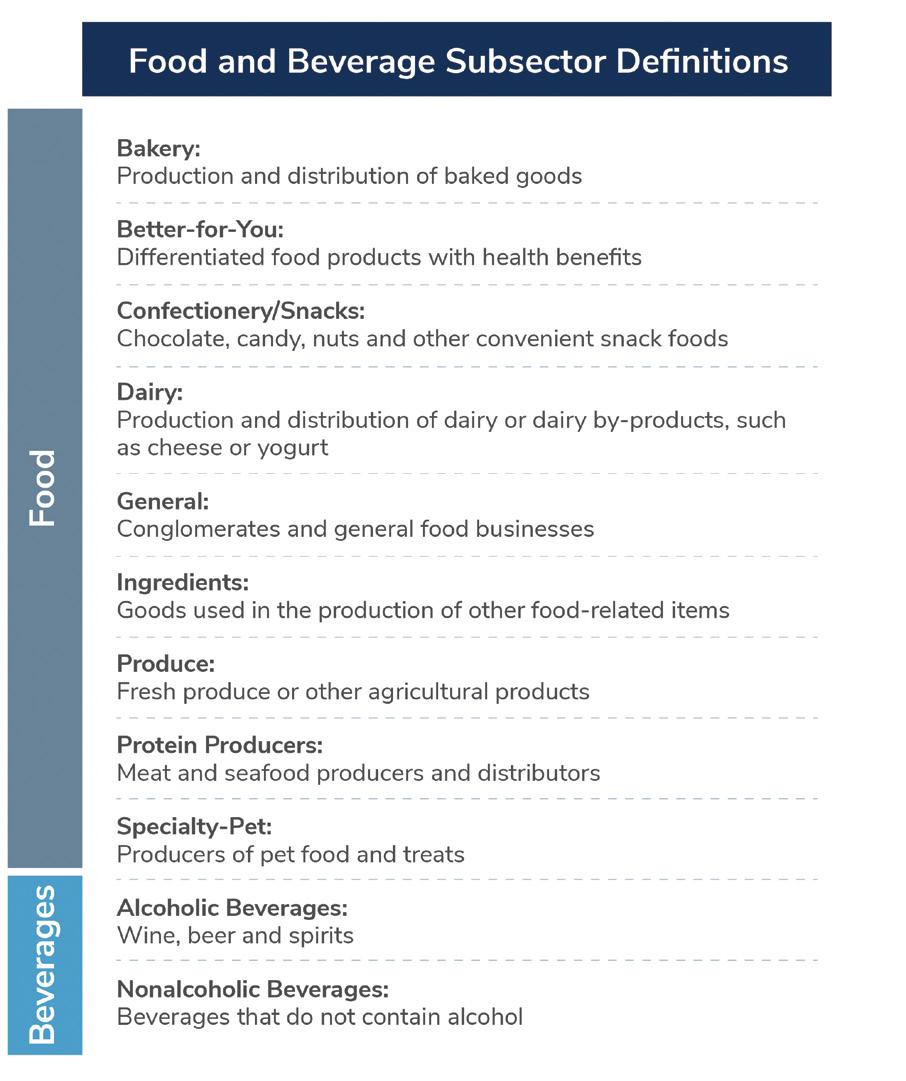
RECENT NORTH AMERICAN M&A ACTIVITY BY SECTOR
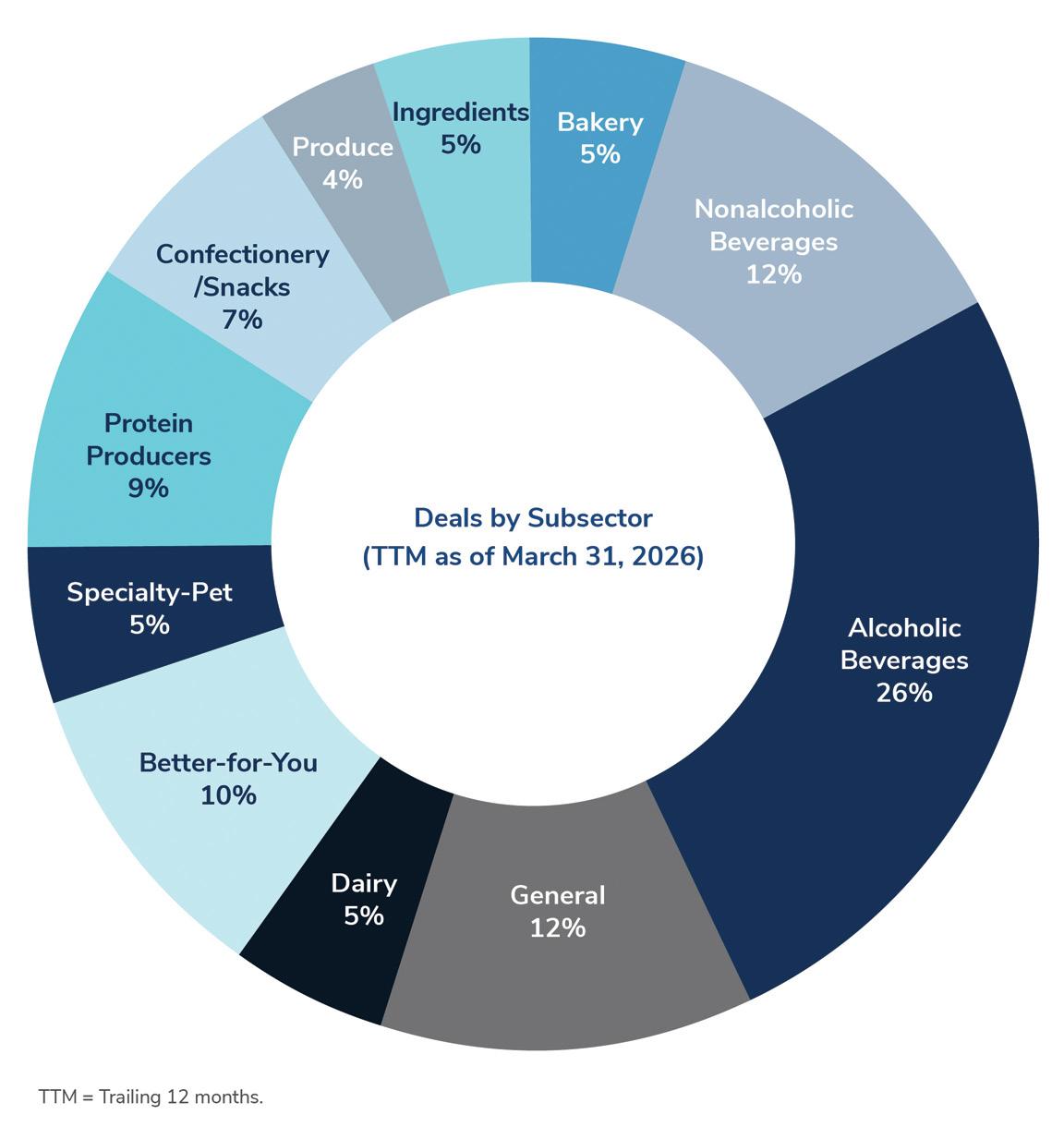
For deals closed in the TTM ended March 31, 2026, alcoholic beverages continue to lead M&A activity, driven by scaled players actively strengthening brand portfolios and expanding into growing niches as the industry continues to face headwinds of changing consumer demand from beer consumption towards ready-to-drink, premium-led, and low/no alcohol alternative segments. The non-alcoholic beverage market also remains active, with particularly strong deal flow with coffee roasters and distributors over the past 12 months.
The better-for-you and confectionary/snack sub-sectors have seen consistent transaction activity. With rising GLP-1 adoption and continued movement towards a healthier lifestyle, there is significant interest from both strategic and financial buyers in differentiated, better-for-you snack platforms. Within confectionery and snacks, acquirors are prioritizing premium, niche brands and protein-forward offerings including nuts and jerky.
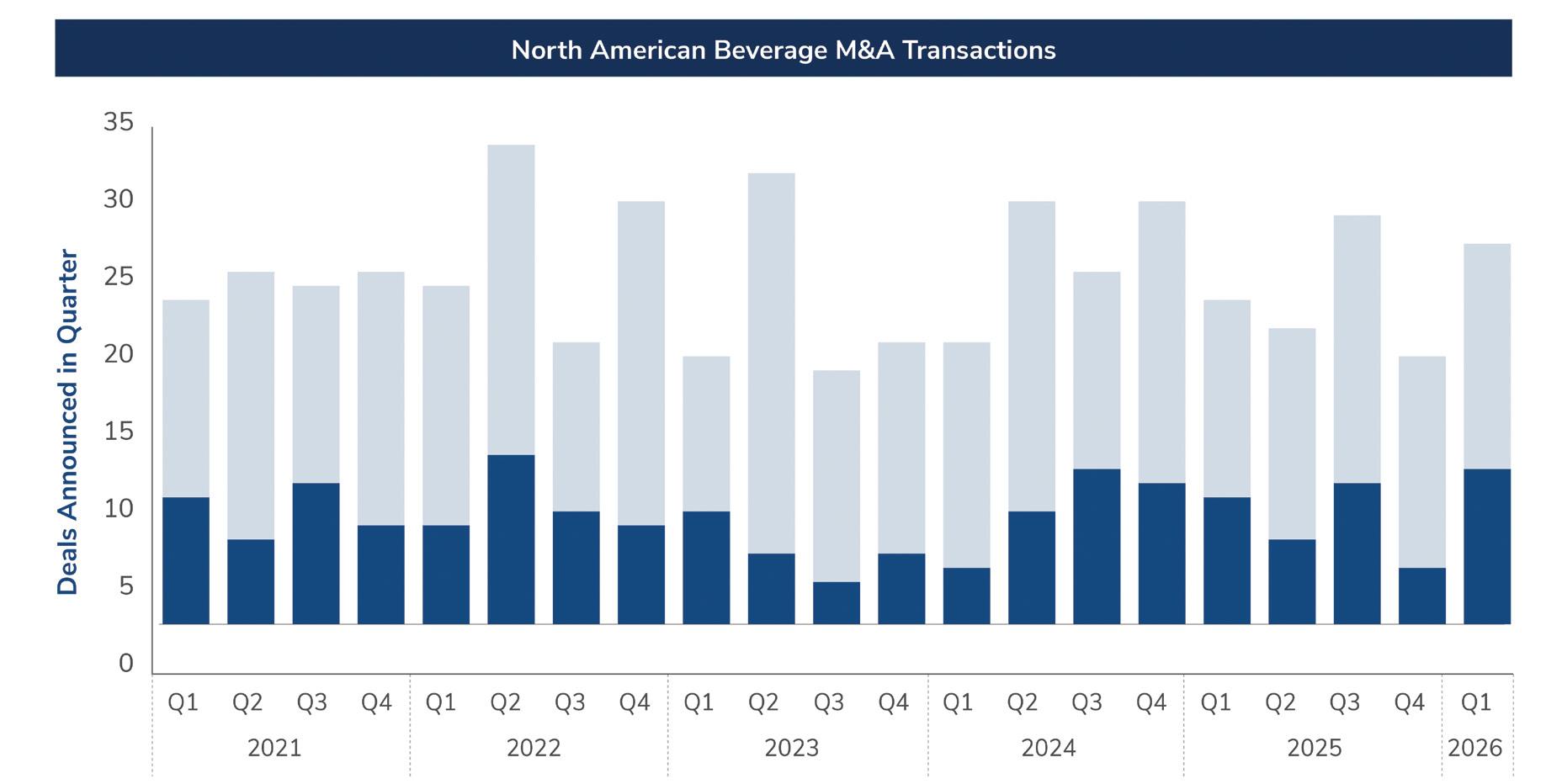


PUBLIC COMPANY TRADING MULTIPLES
Enterprise value to TTM EBITDA multiples for food & beverage companies are stabilizing or showing modest recovery for the start of 2026 after a general decline across the industry in 2025. More value-oriented segments such as general, produce, protein producers, and bakery reset to mid-single to high-single digit multiples, while ingredient companies demonstrated resilience, rebounding 11.1x by 2026 in line with five-year norms. Beverage sub-sectors have stabilized, with nonalco-
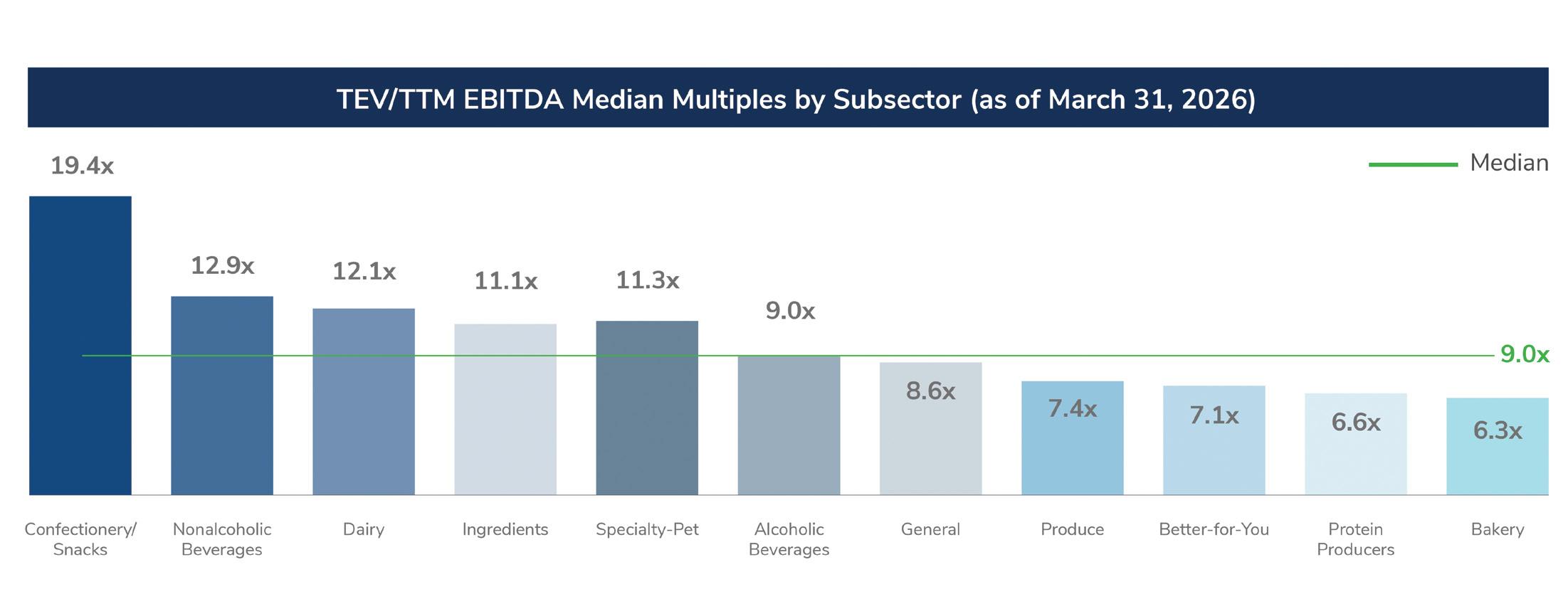
CONCLUSION
Overall, the food and beverage M&A landscape is showing signs of recovery as the industry moves beyond the volatility that defined 2025. A rebound in deal volume, coupled with a sustained preference for strategic-led transactions, underscores renewed confidence among both corporates and sponsors. Buyers are increasingly pursuing M&A as a means of diversification, supply chain resilience and risk mitigation, while ample capital and improving visibility into macroeconomic conditions
are supporting a gradual return to dealmaking. Although geopolitical uncertainty and trade dynamics, particularly in North America, remain key considerations, the combination of strong balance sheets, strategic imperatives and supportive policy initiatives positions the sector for momentum. As companies move from evaluation to execution, activity is expected to accelerate into the back half of 2026 and into 2027, reinforcing a more stable and opportunity-rich M&A environment.
holic beverage public multiples rising slightly to 12.9x while alcoholic beverages fell to 9.0x. Notably, growth-oriented categories continue to stand out: confectionery and snacks rebounded strongly to high-teen multiples, and better-for-you companies remain solidly above the sector median despite normalizing from peak levels. Overall, the data reflects a constructive post-peak normalization, with select sub-sectors retaining durable valuation premiums. This information is largely taken from Kroll’s quarterly Food & Beverage M&A report for the first quarter of 2026. If you would like to subscribe to Kroll’s quarterly Food & Beverage M&A report, please visit www.kroll.com/en/publications/m-and-a/food-andbeverage-industry-insights-spring-2026.









Kroll helps clients detect, manage and mitigate enterprise risk and make strategic and informed financial decisions to achieve an enduring competitive advantage.
Financial Advisory
Valuation Services
Transaction Opinions
Transaction Advisory Services
Alternative Asset Advisory
Real Estate Advisory Group
Risk Advisory
Cyber and Data Resilience
Expert Services

Investment Banking
Private Capital Markets Platform
Cost of Capital Navigator
Tax Services
Transfer Pricing
Fixed Asset Advisory Services
Investigations, Diligence and Compliance
Enterprise Security Risk Management
Financial Services Compliance and Regulation Restructuring
Business Services
Restructuring Administration
Agency and Trustee Services
Learn More
Issuer Services
Settlement Administration
Government Solutions
Business Support Solutions