FIC - April - May 2026

Page 1


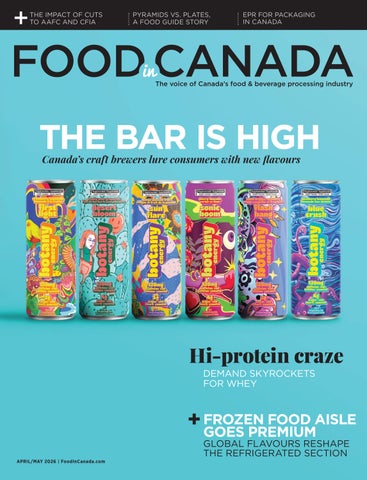
THE BAR IS HIGH

Canada’s craft brewers lure consumers with new flavours

APRIL/MAY 2026 • VOL. 86, ISSUE 2

Reader Service

Print and digital subscription inquiries or changes, please contact Angelita Potal, Customer Service

Tel: 416-510-5113 Fax: 416-510-6875

Email: apotal@annexbusinessmedia.com

Mail: 111 Gordon Baker Rd., Suite 400, Toronto, ON M2H 3R1

ED ITOR | Nithya n nithya @annexbusinessmedia.com 437-220-3039

ASSOCIATE EDITOR | Steven McGoey smcgoey@annexbusinessmedia.com 416-510-5206

ASSOCIATE PUBLISHER | Kim Barton kbarton@annexbusinessmedia.com 416-510-5246

MEDIA DESIGNER | Alison Keba akeba@annexbusinessmedia.com

ACCOUNT COORDINATOR | Cheryl Fisher cfisher @annexbusinessmedia.com 416-510-5194

AUDIENCE DEVELOPMENT MANAGER | Anita Madden amadden @annexbusinessmedia.com 416-510-5183

GROUP PUBLISHER/DIRECTOR OF PRODUCTION | Paul Grossinger pgrossinger@annexbusinessmedia.com

CEO | Scott Jamieson sjamieson@annexbusinessmedia.com

Publication Mail Agreement No. 40065710

Subscription rates

Canada 1-year – $90.12 per year

Canada 2-year – $132.55

Single Issue – $15.00

United States/Foreign – $169.68 All prices in CAD funds

Food in Canada is published 5 times per year by Annex Business Media. Occasionally, Food in Canada will mail information on behalf of industry related groups whose products and services we believe could be of interest to you. If you prefer not to receive this information, please contact our Audience Development in any of the four ways listed above.

Annex Privacy Officer

Privacy@annexbusinessmedia.com 800-668-2384

No part of the editorial content of this publication can be reprinted without the publisher’s written permission @2026 Annex Business Media. All rights reserved. Opinions expressed in this magazine are not necessarily those of the editor or the publisher. No liability is assumed for errors or omissions.

Mailing address

Annex Business Media

111 Gordon Baker Rd., Suite 400, Toronto, ON M2H 3R1 Tel: 416-442-5600 Fax: 416-442-2230

ISSN 1188-9187 (Print) ISSN 1929-6444 (Online)

Inclusive leadership in action

I recently had the opportunity to interview Dan Deveau, the owner of Toronto-based Cameron Advertising. During the interview, Deveau spoke a lot about the work culture at his company. He stressed the open-door policy he follows and how important it was for him to create a welcoming space where people could work without fear of judgement. It’s evident his leadership skills have been effective, as Cameron Advertising is home to several employees who are related to each other as well as have stayed with the company for a long time. I’ve noticed a similar pattern in many F&B manufacturing companies – it’s not uncommon for children to follow in their parents’ footsteps & join the same company. This prompted me to explore different leadership styles. Inclusive leadership caught my eye.

As described by the Center for Creative Leadership (CCL), “Inclusive leaders are individuals who are selfaware and actively seek out and consider different perspectives to inform their decision-making and collaborate more effectively with others.”

Inclusive leaders ensure team members are treated fairly, have a sense of belonging and value, and have the resources and support they need to achieve their full potential. CCL lists seven steps that leaders can take to become inclusive including deepening self-awareness, listening to understand, and being honest about vulnerabilities.

Michael Bach, a consultant for BuildForce Canada, an advocacy group for the construction industry, reduces them to the following four pillars:

• understanding and addressing individual biases;

• appreciating and effectively interacting with people from diverse backgrounds;

• acknowledging their own privilege and leveraging it to create inclusive and equitable workplaces; and

• leading with empathy.

Bach refers to a 2021 Catalyst study that found employees with highly empathic senior leaders have higher levels of creativity and engagement than those with less empathic leaders.

Promoting diversity

In a Forbes article, Julie Kratz quotes author Jennifer Brown, who wrote in The Shape of Change, “When we face challenges that have no precedent, when we navigate terrain for which we have no maps, we need the full spectrum of human experience and perspective available to us.”

Diversity building is a key characteristic of inclusive leadership. When you have people from different backgrounds and lived experiences on a team, you naturally have a variety of perspectives to draw from, which gives the company a competitive edge when compared to businesses with employees that think and act alike.

In a blog post on the Harvard Business

Nithya

School, Tim Stobierski refers to a CEO Force for Good study that estimated inclusive companies are 70 per cent more likely to capture new markets than less inclusive counterparts.

Key skills required

Harvard Business School Professor Robin Ely recommends leaders step away from the situation to put some distance between the moment & self, let go of the walls that tend to come up naturally when one is threatened, and approach the challenge with a clearer perspective.

Another important skill is being curious and thoughtful about team members – show an interest in their personal lives. This would help leaders develop empathy.

One of the skills that I value a lot is exhibiting vulnerability. It’s not a weakness to admit your ignorance. This acceptance will open the door to new learnings and growth as well as help build new relationships. After all, if you specialize in sales, it’s highly likely operations would be challenging if you’re new to that role. By embracing vulnerability, you’re also enabling your employees to reach out for help as needed. This helps them and the team grow.

How would you describe your leadership? I’d love to know.

Nithya nnithya@annexbusinessmedia.com

Protein Industries Canada partners with nine companies

Protein Industries Canada partners with 1847 Stone Milling, Farmery Estate Brewing Company, Grazy, Fresh Hemp Foods, Yofiit, Meet Restaurants, Henry’s Tempeh, HealX Vitals and Trueleaf Petcare in the second cohort of its Strengthening the Canadian Supply Chain Program. Launched in response to geopolitical sensitivities, the Strengthening the Canadian Supply Chain program aims to support Canadian companies in navigating changes in global trade relationships while increasing domestic food and ingredient processing. The nine companies will use Canadian ingredients in their products.

News> file

Indonesia expands access to Canadian beef, pork products Canadian exporters are now able to ship over-thirty-month bone-in beef, pork and pork products to Indonesia. The archipelago has also approved additional Canadian facilities. This enhanced access comes as Indonesia removed the residency restrictions on imported cattle. In 2024, Indonesia’s market was valued at $1.1 billion for beef imports and $42 million for pork imports.

NEW PRODUCTS

Fortress Technology releases new checkweigher

Fortress Technology will launch a compact, automated checkweigher system at Interpack 2026.

The Raptor Flex is specifically designed for food processors producing packs weighing up to 4kg of confectionery, bakery products, cooked meats and nutrition bars.

The Raptor Flex features two wipe-clean, lift-out conveyors and has a speed of 200 ppm. Processors can select from three conveyor widths – 100mm,

Ontario, Nova Scotia to allow interprovincial DTC alcohol sales

Ontario Premier Doug Ford and Nova Scotia Premier Tim Houston sign a firstof-its-kind agreement to allow consumers to purchase alcohol directly from the other province’s local producers, including breweries, wineries and distilleries. This will help tear down barriers to interprovincial trade and give consumers greater choice. Ontario and Nova Scotia will both implement a mark-up structure that ensures fairness and competitiveness for domestic producers and aligns with existing domestic tax rates.

Coca-Cola Canada Bottling invests $141M to expand Ontario facility

Coca-Cola Canada Bottling is investing more than $141 million to expand its Brampton, Ont., facility. The new can line will increase production by 20 million cases annually. Aiming to be operational in late 2027, the new line will involve the construction of a 62,000-sf

wing, adding to the 670,000-sf facility. This is Coca-Cola Canada Bottling’s largest plant in the country and houses a manufacturing facility, warehouse, distribution centre, customer solutions call centre, and local sales centre.

CFIA penalizes businesses for mislabelling products as Canadian

The Canadian Food Inspection Agency (CFIA) issues $47,000 in financial penalties to businesses for inaccurate or misleading country of origin claims since Apr. 1, 2025. Fortinos Etobicoke received a $10,000 penalty, Fresh in The City was fined $7,000, and Meatex Farms, Oxford Frozen Foods and the Real Canadian Superstore each were fined $10,000. There’s a growing concern among consumers over inaccurate and misleading origin claims. Food businesses are responsible for ensuring all food products they sell, whether made in Canada or imported, meet Canada’s legislative requirements.

200mm and 300mm – and multiple reject station options. www.fortresstechnology.com

Key Technology introduces new defect removal system

Key Technology introduces a new automatic defect removal (ADR) system for potato strips. ADR systems identify defects on wet potato strips and trim the affected areas so more usable product can be recovered. The conveyor belt and cutter-wheel operate with independent drives. ADR X is available as a plug-andplay system, and they can replace ADR 5 systems without significant layout changes. Additionally, Key Technology introduces its Compass optical sorter for fresh and IQF corn, peas and green beans. Compass can identify and remove a wide range of FM and product defects, including stones, sticks, plastic, metal and extraneous vegetable matter, as well as discoloured or damaged product and large ice or frozen agglomerates in IQF applications. The sorter can be installed at various points on the line as needed. www.key.net

Increase throughput and efficiency with Reiser form/fill/seal packaging

Produce the highest-quality vacuum, MAP, and VSP packages

Reiser Form/Fill/Seal Packaging Machines

n Fast, easy changeovers from one package style to another

n Reliable package seals eliminate leakers, rework, & returns

n Extends product shelf life

n Rapid Air System guarantees the highest quality packs

n Wide range of machines for all production requirements

n Backed by Reiser’s industry-leading service and support

Simpler. Faster. Better.

SCALING TRADITION

How Solmaz Foods is using automation to meet growing demand for halal meats

For Mehmet Solmaz, president of Solmaz Foods, the company’s journey from a neighbourhood butcher shop to a multi-line, export-ready meat processing plant was a natural evolution of a long-cherished family tradition.

Founded in 2001 by his father, Tahsin, Solmaz Foods began as a small butcher shop in Toronto. Mehmet’s father and grandfather were butchers in Turkey, and Mehmet himself began learning the trade at just 11 years of age.

Today, Mehmet represents the third generation in the business. He along with his brother, brother-in-law, and other family members lead a company that has become a significant player in Canada’s halal meat sector.

Over the past two decades, Solmaz Foods has undergone a steady but deliberate transformation. The company transitioned from retail to manufacturing in 2006, got incorporated in 2011, and significantly expanded its production footprint in 2016. That evolution has culminated in a fully certified, 20,000-sf production facility in south Etobicoke, supported by a 6,000-sf distribution centre in Toronto. In 2025, the company reached another key milestone of entering the U.S. market following USDA approval.

“We’ve always focused on growth and investment,” says Solmaz. “Each step allowed us to scale production, access new markets, and serve a broad range of customers.”

Meeting growing demand for halal meat

Today, Solmaz Foods processes between 7 and 9 tonnes of meat per day, supplying both retail and foodservice customers nationwide.

Its products are listed with major national chains, including Costco, and its foodservice division—serving schools, hospitals, restaurants, corporate customers and government institutions—has grown at a rate of roughly 40 per cent year-over-year.

This growth reflects broader shifts in consumer demand. Halal-certified products, once a niche category, are now experiencing strong mainstream expansion across North America. For Solmaz Foods, this has created opportunities in Canada as well as south of the border.

“Entering the U.S. came with uncertainties, particularly around tariffs and logistics,” says Solmaz. “But so far, the impact has been manageable, and demand continues to grow.”

The company’s product portfolio has expanded significantly. They began with just

two traditional Turkish items: soujok and pastirma. Now, they offer approx. 80 SKUs including pepperoni, sausages, and burgers.

Balancing authenticity with scale

Despite its growth, Solmaz Foods has maintained a strong emphasis on product authenticity. Recipe development is handled largely in-house, ensuring consistency while allowing the company to respond quickly to market gaps, particularly in the halal segment.

“At the core, we’re still focused on traditional flavours and quality,” says Solmaz. “But we’ve paired that with modern processing, strong food safety systems, and high-quality presentation.”

This combination has proven critical as customer expectations shift. Foodservice operators, in particular, are seeking ready-

Solmaz Foods in the west-end of Toronto is known for its halal meat products.
Photos © Nithya

to-use products that reduce labour in the kitchen while delivering consistent results.

Driving efficiency with automation

To meet these expectations, and support growth, Solmaz Foods has made significant investments in automation over the past several years. The company has moved away from manual processing towards more integrated systems, particularly in slicing, packaging, and production management.

An optimized ERP system now plays a central role in co-ordinating operations and ensuring timely order fulfillment. According to Solmaz, these changes have delivered measurable benefits, including improved consistency, higher throughput, and stronger margins.

Recently, they decided to automate their meat forming line. Working with their long-time equipment partner Reiser, Solmaz Foods installed a Vemag 500 system to automate the production of kebabs, which is a labour-intensive product category.

“We needed a solution that would help us grow in foodservice,” Solmaz explains. “Reiser came up with a simple and efficient idea of a forming machine connected with a stuffer that allows us to form traditional kebabs automatically.”

Reiser’s solution allows for continuous, automated forming of kebabs with consis-

tent shape and weight. The result is not only a significant reduction in labour requirements, but also improved product uniformity.

Beyond efficiency gains, the system has opened the door to further innovation.

“It’s given us new ideas,” says Solmaz. “We’re now looking at how we can build on this and automate even more of our processes.”

Navigating industry challenges

Like many meat processors, Solmaz Foods continues to operate in a challenging environment shaped by supply chain disruptions, labour shortages, and rising input costs.

The company has addressed supply chain volatility by strengthening supplier relationships and adopting a proactive procurement strategy. Raw materials are often secured months in advance, reducing exposure to short-term fluctuations. Wherever possible, Solmaz prioritizes Canadian suppliers to improve reliability and control costs.

The U.S.-Israel war on Iran has had an impact, albeit limited so far. Plastic packaging materials are costing more, but the increases remain manageable for now, shares Solmaz.

Labour, however, remains a more persistent challenge. With a workforce of approx. 70 employees, Solmaz Foods continues to seek skilled workers in a tight labour market.

“This is an industry-wide issue,” says Solmaz. “We’re focused on developing our exist-

ing team while investing in automation where it makes sense.”

Investing behind the scenes

While automation and expansion are visible markers of progress, some of the company’s most significant innovations have taken place behind the scenes.

One example is its proprietary traceability system, developed internally over nearly four years. Designed specifically for meat processing, the system provides end-to-end visibility across production and meets stringent regulatory and audit requirements.

The system reflects a broader commitment to continuous improvement, which extends beyond equipment and infrastructure to include people and processes.

“I have a great team that works hard behind the scenes,” says Solmaz. “None of this would be possible without them.”

Looking ahead

As Solmaz Foods continues to grow, its priorities remain clear: expand into new markets, strengthen its position in foodservice, and maintain the quality standards that have defined its success.

Automation will continue to play a central role in that strategy. At the same time, the company remains grounded in its origins, drawing on decades of butchery expertise to guide product development and maintain culinary authenticity.

For Solmaz, that balance is a competitive advantage and the foundation of this family business.

“We’ve always combined tradition with innovation,” he says. “That’s what allows us to keep moving forward.”

In an attempt to automate operations as much as possible, Solmaz Foods recently installed a Reiser Vemag 500 system to produce kebabs.
Mehmet Solmaz, president, Solmaz Foods.

Extended producer responsibility for packaging in Canada

Recycling programs in Canada began in the 1980s when environmental groups were being established along with the founding of the Green Party. At this time, medium- and large-sized municipalities began to implement curbside collection and recycling programs. These local governments managed the responsibility. The programs were funded with property taxes and fees.

As the population increased, so did the amount of solid waste. According to the federal government, the total amount of solid waste generated in Canada was 36.5 million tonnes in 2022. Of this, only 27.1 per cent from all sources (residential and non-residential) was diverted. Disposal of solid waste by landfilling is detrimental to the environment and surrounding communities. Current focus in the circular economy seeks to save valuable resources from landfill by reusing, recycling and composting efforts. Extended producer responsibility (EPR) programs have changed the Canadian waste management landscape by shifting recycling responsibilities to manufacturers.

EPR requires producers (i.e. brand owners, importers or manufacturers) to be responsible for end-of-life management of their products. According to BSI Group, more than 60 countries have adopted EPR schemes, which include sectors such as packaging, electronics and batteries. Both EPR and product stewardship programs exist in Canada. EPR programs allocate responsibilities of end-of-life management and funding to producers whereas stewardship programs are the responsibility of the provincial, territorial or municipal governments with funding from environmental fees and/or public

funds. EPR programs reduce landfilling by supporting waste reduction, encouraging reuse and improving recycling through producer initiatives to change packaging design and materials. Producers commonly form a producer responsibility organization (PRO) for collection and recycling or disposal of end-of-life products. Funding for EPR programs can be gathered from a point-of-sale fee or incorporated into the product’s price.

Multi-Material Stewardship Manitoba Packaging and Printed Paper Program Plan is in the process of transitioning to a full EPR program. New Brunswick is transitioning to EPR with Circular Materials as the PRO. The EPR program in Nova Scotia for packaging, paper products and packaging-like products was launched in December 2025. EPR regulation for packaging and paper products was introduced in Yukon in January 2024.

According to the federal government, the total amount of solid waste generated in Canada was 36.5 million tonnes in 2022. Of this, only 27.1 per cent was diverted.

Provincial control

In Canada, EPR packaging regulations are determined by the provinces and territories. Launched in British Columbia in May 2014, Recycle BC was the first full EPR program in North America. In January 2026, Ontario transitioned from Blue Box stewardship program to EPR with Circular Materials as the PRO. Quebec chose Éco Entreprises Québec as their PRO in 2022. Alberta’s EPR program for single-use products, packaging and paper products was implemented in April 2025. Saskatchewan has a Household Packaging and Paper Stewardship Plan that initiates a shift to full EPR program.

At the national level, Canada has introduced the Federal Plastics Registry (FPR) to support the Zero Plastic Waste goal and to provide data on plastics in the Canadian market. The FPR collects information from companies on the quantity and type of plastics from manufacturing to end-of-life. This data monitors progress and identifies future opportunities for the reduction of plastic waste. The initial reporting deadline was September 29, 2025, for plastics placed in the market in 2024.

EPR policies for packaging create a consistent and expanded material list within each province or territory. This creates collection and processing efficiencies by economies of scale and provides clarity to consumers on recycling practices. Producers are incentivized to reduce packaging material, incorporate recycled content, and to choose recyclable design and materials to reduce EPR fees. The success of Canadian EPR programs depends on the successful integration of technological innovation and change in consumer behaviour to realize the full benefits of improved waste diversion.

Carol Zweep is an associate with PAC Global, a not-for-profit advisor for its members

Premier Canadian Dairy Ingredients Manufacturer

Offering one of the most extensive product ranges in the country including:

• Butter

• Cream Cheese

• Cheese

• Fluid & Evaporated

• Functional Proteins

• Milk Powders

• Milk Replacers

• Whey Powders

• Whey Replacers

Lactalis Canada Ingredients is backed by a team of experts with deep industry expertise, partnering with customers to deliver innovative, tailored ingredient solutions.

DWhy Canada’s F&B industry needs crisis-ready leadership

isruption has become the new operating reality for Canada’s food and beverage manufacturers. In recent years the sector has navigated pandemic shutdowns, labour shortages, supply chain breakdowns and geopolitical tensions. For an industry that sits at the centre of Canada’s food economy, the question is no longer whether disruption will occur but how prepared leaders are when it does. Leadership during a crisis requires a unique set of skills. Unlike routine business challenges, crises often involve high pressure, incomplete information, and rapidly evolving circumstances. Crisis-ready leaders understand the importance of staying calm under pressure and gathering information before reacting. At the same time, leaders must remain flexible and approachable. The F&B manufacturing sector relies heavily on teamwork, co-ordination, and operational consistency.

When disruptions occur, employees look to leadership for guidance, stability, and reassurance. Leaders who demonstrate composure and clarity help prevent panic and maintain focus across the company.

A critical component of effective leadership is ensuring psychological health and safety in the workplace.

In a psychologically safe environment, employees feel welcome and supported. They come to work willingly, know their contributions matter, and have a sense of purpose. These conditions foster higher morale, stronger collaboration, and improved problem-solving, qualities that are important when organizations face difficult circumstances.

For employers, achieving psychological safety means creating a culture where open communication is encouraged, mistakes are treated as learning opportunities, and employees feel comfortable raising concerns without fear of retaliation.

Navigating a complex landscape

The case for crisis-ready leadership is strong in today’s geopolitical and economic landscape. Canada’s F&B manufacturers operate within an interconnected global system. Trade disruptions, conflicts, fluctuating costs, and regulatory changes can ripple through supply chains with little warning. At the same time, companies must manage internal pressures such as workforce shortages, employee stress, and evolving expectations around workplace culture.

These combined pressures mean the stakes are rising for industry leaders.

Twelve actions of a leader

Bill Howatt, crisis leadership expert and collaborator with Food Processing Skills Canada, identifies 12 key actions that help leaders prepare their teams and organizations for disruption:

1. Prepare the team for crisis: Conduct clear action plans and conduct regular simulations to enhance readiness.

2. Embrace curiosity: Ask questions to uncover new insights and opportunities.

3. Promote conversation: Build trust by encouraging two-way sharing of ideas.

4. Practice psychological safety: Look to promote belonging.

5. Cultivate a learning mindset: Encourage continuous learning and reflection to improve future responses.

6. Role model accountability: Leaders should own their actions and mistakes.

7. Build a strong network: Create a support system with other leaders.

8. Role model resilience: Promote mental health.

9. Lead with confidence: Set clear goals and objectives.

10. Stay accessible: Be visible and available for team members.

11. Foster a culture of accessibility: Model optimism and encourage a positive attitude to boost morale.

12. Acknowledge employees’ strengths: Celebrate individual contributions to motivate the team.

Canada’s F&B manufacturing industry will continue to face predictable and unexpected challenges. Organizations that invest in crisis-ready leadership will be better equipped to navigate disruptions.

PMeet the companies building Canada’s food processing infrastructure

rocessing technology is the engine room of Canada’s food sector. It determines how efficiently manufacturers operate, how much energy they consume, how safely they handle perishable goods, and how resilient their supply chains are in an increasingly unpredictable trade environment. Here are three Canadian companies offering advanced processing technology.

EnWave: Redefining dehydration

Vancouver-based EnWave has developed Radiant Energy Vacuum (REV) dehydration technology, a platform that uses vacuum-microwave energy to dry organic materials. Where conventional freeze drying or air drying can take days, REV completes the process in 30 to 120 minutes per batch—without sacrificing the nutrients, colours, flavours, or textures that define product quality.

The operational implications are significant. Producers can precisely target moisture levels and textures, from ultracrispy snacks to soft, chewy inclusions, while maintaining high yields and reducing energy use.

Moon Cheese, the shelf-stable cheese snack known for its crunch and clean ingredient list, is among the most recognizable products enabled by REV’s gentle, volumetric drying. Dole’s Good Crunch fruit chips are another example. Beyond snacks, the platform serves applications across fruits, vegetables, dairy, meats, seafood, and functional ingredients such as probiotics.

More than 50 licensees worldwide use REV systems, and producers without the capital for their own equipment can access the technology through EnWave’s toll manufacturing facility.

FPS Food Process Solutions: Engineering efficiency across the line Richmond, B.C.-based FPS Food Process Solutions is a global leader in turnkey food processing systems, providing everything from freezers and fryers to complete processing lines.

A compelling addition to FPS’s portfolio is its Pulsed Electric Field (PEF) technology. PEF uses high-voltage, low-energy electric pulses to disrupt cell membranes in foods, opening pores in treated cells. The applications include softening produce to reduce cutting force by up to 50 per cent, improving juice extraction yields by five to 40 per cent, decreasing drying times by 10 to 50 per cent, and reducing blanching and freezing times. Because PEF is non-thermal and non-chemical, it achieves these gains while preserving product quality rather than degrading it.

In 2024, FPS worked with OptiCept Technologies to install a PEF system at a dehydrated vegetable processor, where it handled up to 15,000 kg/hr of raw vegetables and delivered a 10 to 30 per cent reduction in drying time—in some cases eliminating the blanching step entirely. For processors facing rising energy costs and limited dryer capacity, PEF offers a way to increase output without replacing major equipment.

Qualtech: Precision cheesemaking Quebec City-based Qualtech provides turnkey solutions from design through commissioning and beyond, encompassing process piping, automation, custom fabrication, and operational support.

Their flagship CasoTech system is a fully automated cheese-making platform designed to replace the manual, physically demanding operations that have long defined the craft. It delivers hands-free, consistent production with improved control over critical parameters like temperature and pH, faster make times, minimized product losses, and reduced contamination risk. Designed with sustainability in mind, the system reduces water consumption and organic waste. CasoTech is customizable to fit a processor’s specific space and production needs.

For an industry grappling with persistent labour shortages and productivity challenges, this kind of automation is increasingly a necessity.

EnWave, FPS Food Process Solutions, and Qualtech share a common role in building the infrastructure that strengthens Canada’s downstream food sector capacity. Their technologies enable processors to produce more, waste less, use less energy, and deliver higher-quality products— outcomes that cascade through supply chains and ultimately reach consumers.

Processing technology may not generate headlines or shape popular conceptions of food innovation like cultivated meats or delivery robots, but it is foundational. A more productive and resilient Canadian food sector doesn’t get built without it.

Lavina Gully is regional innovation director for B.C. and Yukon for the Canadian Food Innovation Network.

Craft beer’s second wave

As the segment matures, breweries expand formats and flavours to drive growth

Adecade ago, craft beer had everyone buzzing. In a segment long dominated by multinationals, craft brewers offered new flavours, creative styles and local roots, with taprooms popping up nationwide and unique brews filling retail shelves. In recent years, however, the sector has been trending downward, a slowdown that has carried into 2026.

“After a brief lift earlier in the year—largely powered by the renewed ‘buy local’ movement—craft beer performance in both off premise and on premise channels has been in line with a slightly declining beer category,” says Gabriel Moreau, VP sales at market research and consumer insights firm NIQ Canada. “This mild contraction for craft beer follows several years of softness, a sharp contrast to the explosive growth the segment enjoyed throughout the 2010s.”

Several factors are behind the softening.

“In off premise, shelf space has significantly compressed as retailers rationalize assortments. On premise, the lingering aftershocks of COVID, combined with persistent inflation in the foodservice sector, continue to weigh on consumer spending,” Moreau explains. “With households still feeling financially stretched, price sensitivity is heightened, forcing craft breweries to justify their premium positioning against larger, lower priced competitors.”

At the Canadian Craft Brewers Association, Hilary Hoogsteen, Canada Beer Cup competition director, sees craft beer’s peak settling into a more balanced phase.

“Over the years, we saw strong growth in the craft beer segment, with a real boom around 2016 and 2017,” says Hoogsteen, who serves as competition director for the Canada Beer Cup. “Now, I would describe it as a mature market. Things are levelling off a bit, but there are certainly pockets of growth.”

DEMOGRAPHIC CHANGES

While the market may have matured, demographic shifts are redefining where the next phase of growth may come from. Moreau notes that craft beer’s core consumer group remains middle aged and older men, and is still under-represented among women and Canada’s growing immigrant population.

“Younger consumers are drinking less alcohol overall, and beer consumption in particular continues to trail earlier generations,” Moreau says. “At the same time, immigration will soon account for all population growth in Canada. By 2041, two in five Canadians will be part of a visible minority, many of whom today are less engaged with the craft category.”

As these shifts reshape the sector’s future, Moreau adds, they also highlight a clear opportunity, which is “to broaden craft beer’s appeal by innovating around flavour, formats and alcohol levels in ways that resonate with a more diverse consumer base.”

One major growth area is beverages that deliver real benefits, and not just a buzz. Hamilton, Ont.-based Collective Arts is an innovator in this space, with products ranging from non-alcoholic beer to energy drinks.

“We started in craft beer 13 years ago, but from the get-go, we always believed our brand would expand beyond craft beer,” says Toni Shelton, VP brand and strategy. “We have options for everyone, wherever they are in their drinking habits.”

Today, Collective Arts’ portfolio includes craft beer, non-alcoholic beer, ready-to-drink cocktails, spirits, cider and wellness beverages. Its foray into the latter started with sparkling waters that were initially designed as mixers. Positive feedback led the company to position them as standalone refreshments, which eventu-

Declining sales force craft brewers to think out of the box.
Photo © Rebellion Brewing

ally evolved into Botany, Collective Arts’ functional wellness brand.

Botany launched in 2022 with three varieties of zero-sugar, fruit-infused sparkling water. In 2024, they launched Botany Elixirs, a line of adaptogenic elixirs. The latest product line, Botany Energy, is a line of low-sugar, low-calorie energy drinks with 120 mg of natural caffeine, vitamins and functional ingredients like ginseng and schisandra. Available in six flavours, Botany Energy launched at 7-Eleven stores across Canada earlier this year.

“It’s made with real ingredients, doesn’t have a lot of sugar and doesn’t taste like it’s made with a bunch of artificial ingredients,” says Shelton of the latest launch. “Going back to our craft beer roots, we have to keep our commitment to quality, good ingredients and a premium brand experience as we grow.”

This commitment extends to Collective Arts’ non-alcoholic beer.

“We didn’t get into non-alc beer until 10 years in because we didn’t want to make a product that would taste sub-par,” says Shelton.

She notes that most zero-proof or non-alcoholic beers on the market are de-alcoholized, losing flavour and aroma during the process. Collective Arts uses a slow fermentation process to retain those key elements, with its non-alcoholic beers containing 0.4 per cent ABV.

Looking ahead, Shelton sees continued growth for non-alcoholic and low ABV options, especially as Gen Z consumers get older.

“We have a 3 per cent beer that doesn’t get a lot of attention or love right now, but that’s the type of beer that has longevity in the beer space,” says Shelton. “I also think beer is not going away. Despite being down, it’s one of the most popular drinks in the history of the world.”

Mark Heise, owner of Rebellion Brewing in Saskatchewan, shares a similarly optimistic view, even as his brewery faces the same pressures as the broader craft beer sector.

“Growth in new breweries opening has certainly slowed down and overall beer consumption has been declining for decades,” says Heise, who opened Rebellion in Regina in 2014 and recently established a second location in Saskatoon. “That’s not necessarily indicative of an industry in trouble. It’s more of an industry that is levelling off.”

EVOLVING DRINK MARKETS

The sector is also competing with a crowded ready-to-drink market, which now spans everything from cocktails and seltzers to hard iced teas and THC drinks.

“Consumers want to try it all and that makes it a big challenge,” says Heise.

Though Rebellion has dabbled in ready-to-drink products like hard coffee, it remains focused on making beer. Its product lineup includes Hazy IPA, the easy-drinking Beer!, Cerveza-style, Amber and Zilla IPA.

“A lot of people continue to enjoy our product,” says Heise. “I think the outlook on the beer industry is strong. It’s been the number one alcoholic beverage of choice for hundreds of years and I don’t think that’s all going to get wiped out just because Gen Z is drinking a little bit less.”

There are lots of room for craft beer itself to evolve with the times. At the Canadian Craft Brewers Association, Hoogsteen has a front-row seat to new trends through the Canada Beer Cup, which she says is a key indicator for where things are shifting.

Beer’s been the number one alcoholic beverage of choice for hundreds of years and I don’t think that’s all going to get wiped out just because Gen Z is drinking a little bit less — Mark Heise, owner, Rebellion Brewing.

“We’ve seen a lot of growth in non-alcoholic and low-alcoholic categories. That’s a large emerging trend right now,” she says. “Lagers are making a comeback and breweries are leaning into those. Consumer demand for light lagers in particular is increasing. Czech-style pilsners are also popular right now.”

Hoogsteen is also watching if Italian-style pilsners will make their way to Canada.

While the future of the craft beer market is hard to predict, Hoogsteen says craft breweries are very resilient and innovative.

“Those that continue to have a strong business model and quality products will continue to see success,” she says.

In 2022, Collective Arts launched Botany, a functional beverage brand.

A guide to global food trends shaping 2026 for Exporters

Global food trends are moving fast—but the signals are getting clearer. From international trade shows and buyer conversations to retail shelves around the world, 2026 is shaping up to be a year defined by diversification, rising protein demand, bolder flavour and smarter production.

For Canadian exporters, these shifts are no longer just a source of inspiration. They’re a planning imperative. This guide breaks down the key global food trends shaping 2026—and what they mean for companies looking to grow internationally.

Start with diversification, not scale

One of the most signifi cant changes in global food trade is strategic pivot from reliance on a single export destination.

“There’s been a big shift,” says Ashley Kanary –Director, Global Agri-Food at Export Development Canada (EDC).

“People want to see what the world has to offer beyond the United States.”

At major international shows, diversification is evident everywhere. Buyers are actively sourcing from multiple countries, weighing factors such as political stability, supply security and long-term growth. For exporters, this means rethinking market strategy.

What this means in practice:

• Look beyond one anchor market when planning growth

• Assess multiple regions for demand, risk and logistics

• Invest time in understanding market specific expectations early

Successful exporters are shifting from reactive selling to intentional market selection, building resilience alongside revenue.

Expect flavour to do more than excite

Flavour trends heading into 2026 are becoming bolder and more layered, but also more grounded in global cuisines.

Sweet and spicy combinations continue to rise, driven by fruit, heat and savoury elements.

Tropical fruits such as mango and pineapple, paired with peppers and fermented ingredients, are appearing across categories.

Tart fruits like pomegranate and black currant are also finding their way into savoury and seasoned foods.

These aren’t fads. They show growing consumer interest in authenticity and complexity over familiar fusion.

Exporter takeaway:

• Flavour innovation should be rooted in tradition, not gimmicks

• Global inspiration resonates more than North American reinterpretation

• Small flavour adjustments can create meaningful differentiation

Build product strategies around protein and fibre

If flavour attracts attention, nutrition drives repeat demand. Protein and fibre continue to dominate global purchasing decisions, particularly in fast growing regions across Asia and emerging markets.

“Protein and fibre are the big two,” Kanary says. “It’s about gut health, functional eating and staying full longer.”

This demand isn’t limited to niche products. It spans seafood, meat, dairy and value-added formats. Yogurts with high protein content, protein enriched snacks and functional dairy continue to gain traction.

How to respond:

• Think of protein as a platform, not a category

• Explore value-added formats alongside core commodities

• Balance nutrition claims with familiar forms

Understand why animal protein is regaining momentum

After several years of experimentation with plant-based alternatives, global meat and dairy consumption is rising again. Simplicity, nutrition clarity and ingredient familiarity are driving the shift.

Consumers are moving away from heavily processed products toward foods they recognize and trust. At the same time, global supply disruptions have put renewed emphasis on reliability.

Canada’s strengths are well aligned with this trend. Stable production, consistent quality and strong food safety standards matter more than ever to international buyers.

Key advantages for Canadian exporters:

• Predictable supply and production cycles

• Strong reputation for food safety and quality

• Consistent protein levels, particularly in grain and wheat

Reliability is becoming just as important as price in purchasing decisions.

Don’t sacrifice taste in the race to add protein

While protein demand is strong, execution matters. One of the biggest challenges in protein innovation remains taste. Many enriched products fail due to bitterness or unfamiliar texture.

The opportunity lies with companies that maintain flavour integrity while delivering nutrition.

Canadian innovators are proving that it’s possible by enhancing familiar foods, from confectionery to cheese products, without compromising taste.

“If you add protein to cheese, it still has to taste like cheese,” Kanary says

The rule of thumb:

• Nutrition should enhance the product, not redefine it

• Familiar formats help consumers accept functional benefits

• Taste remains the ultimate differentiator

Treat automation as a growth requirement

Automation and artificial intelligence (AI) are no longer optional for exporters scaling production.

Labour shortages and cost pressures are accelerating adoption across food manufacturing.

Automation enables companies to increase output, improve consistency and remain price competitive globally.

As production processes change, roles are shifting toward logistics, warehousing and system oversight.

At the same time, digital tools are influencing how consumers discover

and choose food, shaping demand indirectly.

Planning priority:

• View automation as an investment in competitiveness

• Align production capacity with export ambitions

• Prepare for evolving workforce needs

Factor regulation and Europe into growth plans

Diversification brings regulatory complexity. Labelling, certifications and compliance vary widely between markets and must be addressed early in expansion planning.

Europe presents a particularly strong opportunity for Canadian exporters. Produce, seafood, commodities and private label manufacturing all align well with European demand. Private label plays a much larger role in retail than in North America, creating opportunities for trusted suppliers.

Canada’s global reputation continues to open doors, especially in markets seeking stable partners.

Turning trends into action

For Canadian food exporters, 2026 isn’t about chasing trends, but about leading with intention. With strengths in quality, food safety, reliability and innovation, Canada is well positioned not only to meet global demand, but to help shape the next chapter of the global food sector.

EDC supports this growth with financing, market insights and connections that help exporters scale with confidence.

With the right preparation, Canadian exporters are well positioned not just to meet global demand, but to lead the next chapter of the global food sector.

A RESET IN THE FROZEN FOOD AISLE

After Nestle’s exit, Canada’s frozen food sector is shifting from volumedriven brands to products that prove their value — BY SÉVERINE LAVOIE —

When Nestle exited Canada’s frozen meals and pizza business in 2023, it did more than remove familiar brands from the shelf. It revealed how concentrated the category had become, and how exposed it was when a major player steps away.

This was not simply a supply gap. It created an inflection point for frozen foods in Canada.

For years, frozen meals relied on high-selling legacy brands that secured shelf space through predictability. With those anchors gone, retailers were forced to reassess not only what would replace them, but also what frozen should deliver going forward. The response has been clear.

Retail recalibration

Nestle’s departure forced a structural reset in one of grocery’s most established centre-store categories.

“Retailers didn’t just fill empty shelves; they upgraded them,” says Ted Lawson, chief commercial

officer at Nortera, which is a leading manufacturer of frozen vegetable products.

For buyers, the shift was immediate. According to Lawson, it created space for retailers to reconsider not only assortment, but also expectations. With legacy volume drivers gone, frozen was no longer insulated by familiarity. Buyers were able to evaluate which products delivered stronger margins and premium appeal.

In response, grocers reassessed planograms, expanded premium-tier private label offerings and diversified international selections. What first looked like a supply gap quickly turned into a chance to rethink price tiers and frozen’s role in the store.

Without high-volume anchors, retailers had room to rebalance value, margin and supply stability. Premium cues—from packaging to ingredient positioning—became more prominent across private label and branded assortments alike. Canadian-sourced and globally inspired products gained visibility, reflecting both operational realities and evolving shopper expectations.

Convenience, product quality and innovative flavours are key to repeat purchases in the frozen food section.

In Lawson’s view, frozen is now under closer scrutiny. In a category long protected by predictable sales, shelf space is tied to what a product delivers today, not just what it sold yesterday.

Opportunity for challengers

For challenger brands, the reset created a strategic opening. As legacy players vacated space, retailers became more receptive to products positioned to stand out, particularly those offering foodservice credibility, global flavour and premium cues. In a value-driven environment, brands capable of communicating quality gained relevance.

“Frozen meals used to be seen as a backup option,” says Khalil Khamis, CEO of Crafty Ramen. “Now it’s becoming a firstchoice option, especially when it delivers the comfort and quality you’d normally expect from a restaurant, but you can have it ready in minutes at home.”

Crafty Ramen, which has expanded nationally across major grocery banners, illustrates how culinary-led brands have leveraged the shift. Rather than competing solely on convenience,

the company has positioned its frozen offerings around authenticity and culinary standards more commonly associated with foodservice. It prides itself on offering the same mouthfeel as the ramen served in its restaurants.

Storytelling, Khamis notes, plays a role, but only to a point.

“Packaging can get someone to pick it up once, but quality is what brings them back,” he stresses.

It points to a broader change in how frozen is positioned. As retailers prioritize products that justify their place in the set, challenger brands are finding opportunity in novelty offerings, sustained value and repeat purchase.

Upstream alignment

The impact is not limited to what shoppers see on shelf. Ingredient suppliers are seeing the same pattern, which mirrors frozen’s move toward higher perceived quality and premium-level execution.

“We’re seeing more overlap than there was a few years ago,” says Ativ Ajmera, managing director at Seenergy Foods. “Both foodservice and retail customers are asking for consistent

NOAH GOLDBERG
IRENE DALEY DAVID BOONE
EKATERINA DOBROKHOTOVA
SCAN FOR TICKETS

performance, bold flavours and products that deliver an elevated at-home experience.”

According to Ajmera, ingredients originally developed for foodservice are increasingly influencing retail frozen innovation. As consumers move fluidly between eating out and in, expectations have risen for flavour, texture, consistency and reliability across preparation methods.

In this environment, execution can determine whether a product sustains sales beyond initial trial. As always, texture retention, flavour absorption and cooking performance directly influence repeat purchases by consumers.

As expectations rise, functionality moves out of the background. If a product doesn’t hold its structure or deliver consistent flavour, shoppers notice, and they don’t come back. In a competitive aisle, execution directly affects whether a SKU survives.

Advances in freezing technology, including IQF processes, have also helped reposition frozen as a quality-preserving format rather than a compromise.

The visible evolution

The change is most visible on shelf. Global flavours, restaurant-inspired concepts and elevated ready meals have become more prominent across categories. The rise of the air fryer has accelerated this shift, reinforcing demand for products delivering crisp texture and clearly defined preparation performance.

The same pattern is visible in frozen fruit. After a slight decline in 2023, unit sales in Canada began rebounding in 2024, with Quebec outperforming the national average, according to NielsenIQ data cited by Quebec-based brand Bleu & Bon.

“Consumers are looking for premium quality and real value for their money. They also want to avoid food waste and keep ready-to-use fruit on hand,” the company notes. That demand is reflected in growing interest for sliced strawberries and mixed fruit blends.

To meet that demand, Bleu & Bon opened a new 50,000-sf processing facility in the Laurentians last fall—an $8-million investment aimed at scaling Canadian-grown fruit year-round.

What differentiates this wave of innovation is not novelty alone, but positioning. Many of the new entrants and reformulated SKUs are designed to signal credibility. That can come through chefdriven branding, globally inspired flavour profiles or

ingredient transparency. In a post-legacy landscape, frozen products are increasingly expected to communicate quality at first glance.

Origin claims are also gaining prominence, as brands increasingly highlight Canadian-grown ingredients and local sourcing to reinforce transparency and supply resilience.

For brands like Crafty Ramen, frozen offers a

Global flavours and restaurant-styled premium products are increasingly being sold in the frozen food section.
Photos © Crafty Ramen

low-friction entry point for flavour exploration.

“A lot of these meals can be difficult to cook at home,” says Khamis. “Frozen makes it easy to try something different at home with very little effort.”

That accessibility has allowed global cuisines— from Japanese-style ramen to grain-forward and plant-based blends—to move further into the mainstream aisle. What might once have been niche or specialty offerings are now positioned as weeknight solutions, supported by improved packaging, clearer value propositions and broader retail distribution.

Frozen is now entering a more demanding phase. Innovation is visible but it must translate into sustained sales and repeat purchase. At the same time, emerging health priorities, including growing consumer focus on fibre and nutrient density, are influencing which frozen formats gain traction, thus raising the bar for manufacturers. Products must deliver

not only bold flavour and premium positioning, but also operational consistency and margin support. In this environment, novelty alone is unlikely to secure long-term placement. The aisle may be more dynamic than it was in 2023. But it is also more accountable. In this environment, products don’t inherit their place; they earn it, week after week.

Consumers prefer to buy mixed frozen fruit blends for convenience and also to limit food waste.

CThe impact of cuts to AAFC and CFIA

Dr. Amy Proulx

anada has long benefited from one of the world’s most respected food safety and agrifood innovation systems. The recent cuts to Agriculture and Agri-Food Canada (AAFC) and the Canadian Food Inspection Agency (CFIA) represent one of the most significant shifts in Canada’s agrifood landscape in more than a decade.

Restructuring AAFC

AAFC plans to close three federal research and development centres in Guelph, Ont., Lacombe, Alta., and Quebec City, Que. Two of these centres have direct ties to food safety. The Guelph facility has long-standing expertise in microbiology and process validation, and Lacombe specializes in meat science.

The closures are not occurring in isolation. Over the past 20 years, AAFC’s research budget has remained relatively flat, even as the R&D ecosystem diversified. Funding has become segmented across a range of alternative models that are meeting the research agenda at different levels of technical readiness for implementation or commercialization.

This evolution reflects a broader trend: public research is no longer defined by expert-driven agendas. Instead, it is shaped by industry needs, public good outcomes, and the demand for commercialization.

Lessons from the past

Canada has been here before. In the late 1990s, AAFC’s restructuring was widely criticized, including the controversial relocation of research from Vineland to Guelph. Yet the long-term outcome was the creation of the Vineland Research and Innovation Centre in Lincoln, Ont., a

globally recognized private-public model for demand-driven, industry-aligned research. This historical precedence demonstrates that structural change, while disruptive, can accelerate the emergence of new research models.

A more distributed ecosystem

Today, Canada’s innovation landscape is far more decentralized than it was two decades ago. The Technology Access Centres program, launched in 2010 with federal funding, has enabled colleges to become hubs for applied research and commercialization. Similarly, the Canadian Food Innovation Network (CFIN) has reshaped how innovation challenges

strategy behind research is transforming, from one where experts were localized into centres to where research is happening through a broad range of organizations.

The need for national co-ordination

The Canadian Agri-Food Policy Institute (CAPI) emphasized in an October 2025 report that national co-ordination is essential for modernization. AAFC remains the only organization with the mandate and reach to convene a truly national research and innovation strategy. In a more distributed ecosystem, this co-ordinating role is critical.

The recent cuts to AAFC and CFIA represent one of the most significant shifts in Canada’s agrifood landscape in more than a decade.

are identified and solved. By blending public funding with private investment, CFIN acts as a national convenor and a matchmaker between problems and solution providers across agrifood. This model reflects a shift away from centralized federal research toward a more networked innovation economy, all while leveraging federal funding. The AgriScience program under the Sustainable Agricultural Partnership reinforces this distributed approach, directing funds to clusters, NGOs, and private sector partners across the country. The financial investment

While AAFC’s restructuring may open the door to new innovation models, CFIA’s projected 20-per cent workforce reduction presents an immediate risk. Unlike research, inspection capacity cannot be decentralized or replaced by the private sector. Recent reliance on computer driven risk-based inspection modelling has already revealed vulnerabilities, most notably during the 2024 Joriki incident. A reduced workforce could exacerbate these gaps unless paired with strategic modernization. Some productivity gains are possible, such as outsourcing routine microbial and chemical testing, restructuring daily presence inspections, and developing collaborative rural and remote inspection models with municipal and First Nations public health units. These approaches could strengthen service delivery while preserving essential oversight. But they require investment, co-ordination, and a clear national strategy.

Canada is actively expanding its trade partnerships and positioning itself as a leader in value-added food and beverage innovation. To succeed, the country must maintain scientific excellence and regulatory credibility. Our government organizations are an important part of that foundation.

Dr. Amy Proulx is professor and academic program co-ordinator for the Culinary Innovation and Food Technology programs at Niagara College, Ont.

IPyramids vs. plates, a food guide story

n the past, the Canadian diet was constrained by limited availability of food. The systemic shortages of staple commodities during the Second World War intensified public health concerns about widespread nutrient deficiencies. Consequently, Canada established a national food guide in 1942. This early iteration prioritized “health protective foods” and a variety of vegetables. Recommendations also emphasized whole grain cereals and breads, various animal proteins as well as three to four eggs per week. Notably, while serving sizes were suggested, the guide encouraged consumption beyond the minimums where possible.

Principles of public health recommendations

When a governing body issues health recommendations, it is imperative that those directives are predicated on a comprehensive understanding of current public health challenges. Effective guidance adheres to the following principles:

1. Evidence-based: Recommendations must be derived from the totality of relevant scientific evidence, maintaining transparency regarding the limitations of current data.

2. Demographic inclusivity: Guidance should address the broadest possible population segment while providing nuanced considerations for specific sub-populations, such as infants and children.

3. Dynamic refinement: Policymakers must recognize nutritional guidance is an iterative process requiring ongoing evaluation. Dynamic refinement led to the 1944

update recommending iodized salt, which became mandatory in 1949.

Proportional vs. categorical models

The 2019 edition of Canada’s food guide represented a paradigm shift from rigid food groups and serving recommendations to a proportional model. This newer model is inherently more intuitive and relatable than previous ones. The current version recommends ½ a plate of fruit and vegetables, ¼-plate of protein foods from meats, fish, legumes, eggs, nuts and dairy, and ¼ of grain and grain products, mostly whole grain. Water is the recommended beverage.

Influence of political ideology on U.S. dietary guidance

Recent updates to dietary guidelines in the U.S. are framed through a political lens, often referred to as a “common sense” reversal of the former “food pyramid,” a model the U.S. transitioned away from in 2011. The 2011 guide actually recommended ½ a plate of fruits and vegetables, ½ a plate of grain and protein foods, with emphasis on whole grains, and a glass of milk.

In 2025 the U.S. reintroduced a pyramid structure. Albeit inverted, the model appears to prioritize political symbolism over nutritional utility. The new guideline stresses avoidance of highly processed food. It is incorrect, however, to suggest the former promoted highly processed foods. While the new guideline maintains some core nutritional tenets such as limiting added sugars and sodium while prioritizing fibre and water as a beverage of choice, it introduces contradictions. For instance, it visually promotes dietary patterns favouring foods

higher in saturated fat while advising saturated fat intake should not exceed 10 per cent of total daily calories. Current scientific consensus would question the overemphasis on protein foods at the expense of whole grain foods. “Carbophobic” and saturated fat favouring messaging undermine the balance of the recommendations. By complicating the visual and introducing contradictory messaging, the new U.S. model fails to meet the criteria for simple, effective public health communication.

Evidence-based guidance aimed at addressing nutritional adequacy while avoiding chronic dietary related health conditions must be focused. Nuanced throughout the guidance are political ideologies that are distracting. The concerns around artificial flavours, petroleum-based dyes, artificial preservatives, low-calorie non-nutritive sweeteners and “chemical additives” dilute a focused message. If knowledge is a well, Health Canada and the U.S. FDA used to drink from the same source. Today, the U.S. seems to be sipping from a different stream. Pragmatic guidance has been overshadowed by political ideology.

Gary Gnirss is president of Legal Suites.

EVERYBODY WANTS WHEY

Why there’s huge demand for the hi-protein ingredient and what’s ahead — BY TREENA HEIN —

There’s a serious shortage of whey in the food industry right now, driving huge price increases that show no signs of returning downward. Whey, an extremely digestible high-protein byproduct of cheesemaking, is the liquid that remains after milk is curdled and strained. It’s dried into whey protein concentrate (WPC) and whey protein isolate (WPI), ingredients which, until recently, have mostly gone into powdered sports nutrition products.

Demand for whey protein in other food and beverage categories has exploded over the past year, and there are no indications this will change.

“The good taste and excellent nutritional profile of whey proteins make them an excellent option for most applications,” explains Sebastian Rivas, sales manager at Prinova, a functional ingredients distributor with operations in the U.S., Europe and China. “Today we see new players from mainstream markets like Starbucks (think high-protein lattes and cold foam drinks) entering the field. At the same time production has not increased at the same pace, so we’ve reached a scenario where we have strong demand, limited availability and high prices.”

Overall, Rivas describes the situation as “complex and rapidly evolving.”

Demand from new players

But why the change? Why are huge players like Starbucks now adding whey to their products? Is it simply a continuation of the trend over the past five to 10 years, where consumers want more protein for satiety and because they don’t think they’re getting enough of it? Yes, to the latter part of that, says Mark Glazier, but there’s a twist.

Glazier has been in the sports nutrition product sector for many years. He owns NutraBio in New Jersey, with half of his 120,000sf manufacturing plant devoted to whey processing (purchased directly from cheese makers). First, Glazier invites us to go over the long-term trends relating to whey demand and pricing.

“There are always ebbs and flows of the price of WPC and WPI from the demand for milk, the demand for cheese,” he notes. “Sometimes large companies like Gatorade need whey protein, demand increases and price goes up but then comes back down. But the price has always been in the US$4-US$7 range. Sometimes it goes up to US$8 or US$9 for a month or so, but it’s never been what we have now, getting up to US$13/lb.”

Glazier further explains that most people in the food industry are going to say the demand for whey is higher right now because there’s more interest in fitness and general health in the wake of the pandemic. There’s also the fact that some U.S. companies using whey in their products import it, and the new tariffs have

Demand for whey protein has exploded due to a high demand for protein-packed foods and beverages.
Photos: © Nutrabio

Whey has gone mainstream. It’s no longer found just in sports nutrition products. The ingredient is being added to coffee, chocolate, pop tarts etc.

made it more expensive. But none of this, in Glazier’s view, is the driving force behind the sky-high demand and prices.

“I can tell you right now, from my experience and I’m on all ends of the marketplace, dealing with dairy processors who manufacturer whey protein and finished product makers, this price increase is 100 per cent caused by GLP-1 drugs,” he says.

The numbers are growing

In late 2025, Dr. Sylvain Charlebois, senior director of the AgriFood Analytics Lab at Dalhousie University, put the number of Canadians taking these drugs at 20 per cent. He expects this to increase this year as generic versions are about to hit the market at a third of the current price of approx. $500/month.

Glazier points to U.S. studies that put the number of American consumers on GLP-1 drugs from 12 to 18 per cent (with 20 per cent among 50-64-year-old women, according to a new RAND study).

When taking these drugs, the dramatic loss of body fat can come with muscle mass loss too.

“Your face can change. Your whole body can change, and you don’t look good anymore,” says Glazier. “And looking better was the point of taking the drug in the first place. So, doctors started to prescribe whey protein along with GLP-1. You need to take protein. That’s the dramatic change, and that’s what’s caused the underlying supply and demand issue with whey.”

Mainstream demand

To understand just how gigantic the demand is for whey-fortified products, let’s stop by the recent National Association of Convenience Stores (NACS) trade show, which showcases products convenience stores and gas stations can offer.

Glazier and some of his team members attended the show, and he shares what he saw.

“It didn’t matter who you spoke to at this huge show, whether it was the store owners, who own the chains, the distributors, or the brokers, the only thing they were talking about was whey snacks,” he reports. “You know you have everything in a convenience store, from cooked foods to auto supplies. There are 1,000 things in every convenience store, but there was only talk about whey at the show. They could have changed the name of that show to the Whey Protein Show. I heard again and again, ‘We need snacks fortified with whey—grab-and-go, chips, cookies, anything.’ They don’t care. They want single servings with whey protein.”

In Glazier’s view, the average GLP-1 user doesn’t understand protein. They just know their doctor told them that if they

Whey’s smooth taste and highly nutritious profile makes it a suitable option for most F&B applications.

Whey production developments

In North America and around the world, whey protein production is growing. In 2025 in the U.S., Glanbia and partner Southwest Cheese announced an expansion to increase whey protein isolate capacity by 10 million lb by mid-2027.

Actus Nutrition purchased a facility from Foremost Farms USA that manufactures whey protein, with plans to expand it. The deal also includes a long-term exclusive partnership to support whey protein growth for both firms.

U.K.-based Arla Foods Ingredients signed an agreement with South Dakota-based Valley Queen to produce a patented microparticulate whey protein concentrate.

In January 2026, FrieslandCampina acquired Wisconsin Whey Protein , with plans to more than double its whey protein isolate capacity.

don’t consume it, they are not going to look good.

“So they are grabbing anything they can, from chips, cookies and cakes to donuts, bars and shakes, as long as there’s some protein added to them. And now we’re talking about upward of, let’s say, 15 per cent of the entire population that is now grabbing protein shakes at Starbucks or Dunkin Donuts, or Pop Tarts with protein in them, or yogurt fortified with protein. So you’re seeing hundreds of brands that are coming out with chips and popcorn and all these other things fortified with whey protein.”

Big companies can afford to pay for whey, no matter the price.

“Let’s look at a premium coffee,” he says. “Right now, the customer is charged US$2 extra for the cold whey foam in a drink and this foam costs the company about 42 cents. So they can afford to pay US$15, US$17, US$20 or even US$30 a pound. I’ve heard that they’re willing to pay US$50 a pound if they have to. They’re fortifying their product and are still making a huge profit. And these companies sell products by the tens or hundreds of millions a day.”

Perhaps that’s why big, multinational dairy companies aren’t reporting any shortages.

In a statement to Food in Canada, Danone Canada said, “We can confirm that our supply chain remains stable, and we are not experiencing disruptions related to whey availability.”

Glazier, however, predicts that it’s going to be very difficult for sports nutrition players, who dominated the whey market for a long time, to afford the ingredient or even access any in another year or two.

This price increase is 100 per cent caused by GLP-1 drugs.

Alternatives to whey

WPI or WPC can be replaced by other protein powder ingredients, but it’s easier said than done. Options include soybeans, beef collagen, casein, milk protein isolate or milk protein concentrate, but these are expensive and may not have a suitable taste, consistency and/ or mouthfeel. Big companies are already working on substitutes for whey, but this will take time.

“Whey is the king,” says Glazier. “Its characteristics are already known. It has good flavour, mouthfeel etc. No other protein isolate has the same amino acid profile or is as complete as whey protein. Whey protein is the standard against which everything is measured.”

Reflecting on the situation and what’s to come, Glazier notes that there has never been a situation like this in the history of protein. In his view, there’s going to be a lot of consolidation of protein companies, and many sports nutrition product firms are likely to shut their doors.

“It’s an unfortunate reality, but the price will be unreachable for them and will stay that way,” Glazier emphasizes. “I do not see the price of whey coming down for years.”

Photo © Chet_W / iStock / Getty Images Plus

TONICA TURNS 20

Founder Zoey Shamai on scaling an ancient, fermented tea beverage

When Zoey Shamai discovered kombucha in the early 2000s on one of her yoga trips to Asia, it inspired her to embark on an entrepreneurial journey that’s celebrating its 20th anniversary this year.

As you may know, kombucha is tea fermented using bacteria and yeast. It is known to support gut health, reduce inflammation and boost the immune system. Shamai explains the beverage was made as early as 221 BC. Originally from China, kombucha was consumed in Europe, other parts of Asia for ages before reaching North America in the 1960s. In the late 1990s, companies began bottling kombucha beverages. Shamai’s brand, Tonica, was the first kombucha-based beverage to debut in Canada in 2006.

It’ll still take another decade for kombucha to become mainstream in Canada.

A spiritual seeker who loves meditation and yoga, Shamai never planned on becoming a beverage manufacturer and neither did she go to school for the same. While her mom was a food manufacturer—she founded Ruth’s Hemp Foods—Shamai’s interests lay elsewhere. However, her love for kombucha was infectious. She began brewing the tea at home for personal consumption because there was none on the market at that time. Soon friends and family members became her first ‘customers’. It grew organically from there.

“I had hoped, of course, that my friends and community would love the kombucha I was brewing, but I had no intention when I began to ever have a business, and certainly not a business this size. So, it’s quite a beautiful moment to see it all come to fruition,” Shamai recalls.

Shamai set up her first manufacturing plant in the area popularly known as the Junction Triangle in Toronto in 2010.

“One of the reasons why I started to manufacture it myself and figure out how to scale it up is because at that time, no one would touch kombucha. The factories that had the equipment I would want were like beer factories, and everyone was worried about bacterial cross-contamination,” says Shamai.

When she had to expand, Shamai moved into a facility in the Stockyards area of Toronto in 2013. This was before Stockyards became the commercial centre it is today. This shift was also Shamai’s biggest mistake.

Zoey Shamai.

“I knew I needed a bigger facility and the price was great. It ended up being a complete disaster. My regret was not doing my due diligence. I did not research the landlords. I just took their word that they were converting this facility that had been dormant for like 10 years and that they had upgraded everything,” recounts Shamai. “Within the first week of moving in, we discovered there was lead in the pipes and it destroyed almost all of my cultures.”

It took Shamai and her team nine months to recover and get into a new facility. Ever the glass-half-full girl, Shamai, in retrospect, felt the failure also helped her gain something valuable.

“The beautiful thing coming out of that was that I became a ‘scientist’ and really figured out how to bring back this culture, which I had had several years to build up organically. And every time we tried to get to a certain point, it would fail. I didn’t want to

bring in a concentrate or inject probiotics like I saw other people [doing] at that time. It did take about nine months, but now we have a proprietary blend.”

Tonica currently operates out of a 12,000-sf facility in Woodbridge, Ont., producing approx. 1000 cases a day.

Tonica products

Tonica sells kombucha-based beverages in fruit-forward flavours. They’re very mild and don’t have an acidic profile. Sold in bottle and can formats, you can find low sugar as well as sparkling options.

“My goal was to make it so light and flavourful that anyone could enjoy it, but they would also get those benefits of real authentic kombucha,” explains Shamai, who treats the Kombucha culture with care.

“It [kombucha] is a living culture. And a lot of us have seen all those incredible tests that came out

Tonica’s products are fruit-forward with a mild kombucha flavour.
Photos © Tonica
My goal was to make it so light and flavourful that anyone could enjoy it, but they would also get those benefits of real authentic kombucha.
— Zoey Shamai, founder, Tonica

decades ago about how water molecules react to the energy around them. So, we do have in our micro lab, beautiful music playing and colourful images of waterfalls on the doors and walls. We try to keep the energy very nice. Other than that, we don’t mess around with the traditional recipe that always worked so well. We’ve come up with a proprietary way to always continue that very strong culture,” she shares.

Around 2014, Shamai launched a super tonic line with gojiberry, turmeric, spirulina, etc. Tonica products are sold in 2,500 stores across Canada including Loblaws, Farm Boy, Sobeys, and Healthy Planet. They also do private label for Metro and Farm Boy.

Important milestones

Shamai had initially named her brand Fairies Tonic. In 2012, when she got the opportunity to pitch on the Dragon’s Den, the company was rebranded to Tonica, which aligns with her thinking of her product. Tonica’s kombuchas are, in Shamai’s mind, more of a tonic with health benefits than a tea or a fruity beverage.

“That was a huge moment for Tonica because even though I didn’t accept the deal, it was a very successful show. I was able to communicate to all the viewers across Canada about kombucha and why it is so good for digestion,” recalls Shamai.

In 2016, CBC did a follow-up show on Tonica, which also helped increase brand awareness for the company.

When asked about her ‘wins,’ Shamai was quick to highlight the installation of a fully automated bottling line eight years ago.

“We went from all manual filler, manual labeller, everything, and moved into this beautiful facility we’re in now with a fully automated line. When we started to run that, wow, it was incredible. I actually threw a party and had all my family and friends there to see it in action because it just reduced our time exponentially and made everything so much more efficient,” she recalls.

Shamai is also proud of the listings she acquired recently, as these can take years. After trying for two years, Tonica succeeded in getting listed on Save on Foods late last year. Another big win for her team was getting into No Frills and Maxi stores in Ontario and Quebec.

We ended the conversation with her thoughts on how young founders can weather these fraught times filled with supply chain

constraints and geopolitical tensions.

“I do feel that there’s this daunting feeling we’re never doing enough, and that we’re never going to be able to compare with what we see all around us. The biggest thing I’ve learned is that you really have to focus only on what you’re doing and bring all your energy to do the best you can,” she says. “It’s so important to just keep your focus on what you’re doing. And if you love doing it, and if you’re getting a good response, then keep going.”

Canadian Health Food Association unveils top wellness trends

According to the Canadian Health Food Association (CHFA), five trends are shaping the future of the natural, organic, and wellness industry. The following trends were in full display at the recently held CHFA NOW show in Vancouver, which was attended by more than 8,000 industry professionals.

TOP WELLNESS TRENDS

> Healthspan habits

Consumers want food products and supplements that help them feel good and age well. They’re also moving away from strict diets or eating patterns. Longevity is moving into everyday eating with comfort foods shifting from restriction to balance made with anti-inflammatory fats, while cellular health becomes part of daily wellness routines through functional foods and supplements.

> Conscious connection

According to CHFA, consumers are increasingly linking their personal health to the planet’s health, and seeking brands with products that make clear sourcing and safety claims.

> Wellness simplified

In a crowded market, shoppers are gravitating to brands and products that feel simpler, cleaner and easier to trust.

“Simplicity today means clarity and confidence. We know from our CHFA research that consumers are becoming more skeptical and overwhelmed with the amount of health and wellness research they are being bombarded with every day. We’re all scanning the shelves quickly, so we’re looking for packaging that communicates value without overwhelming us. That translates to clean, easy-to-understand

messaging, fewer but more meaningful claims and certifications, and ingredient lists that feel transparent and recognizable,” shared Lynsey Walker, VP, marketing & communications, CHFA. “Rather than stacking multiple buzzwords on pack, brands are prioritizing the claims that matter most and presenting them in a way that feels credible and digestible. It’s less about saying everything and more about saying the right things clearly.”

> Intentional packaging

Manufacturers must focus on being more transparent about product materials, as packaging is now part of the health conversation.

> GLP-1 journey

We’ve covered this trend extensively. As mentioned before, GLP-1 medications are changing eating habits and shaping a new wellness ecosystem. Consumers are seeking smaller portions of foods and beverages that are hi-protein, fibre-rich, and low in sugar.

“Protein remains a dominant driver in health and wellness. Consumers clearly understand its benefits— satiety, muscle support and sustained energy—so demand is still strong across categories. What’s evolving, however, is the conversation. We’re seeing growing awareness around overall nutritional balance, particularly the role of fibre alongside protein. Rather than simply seeking “more protein,” consumers are looking at how products support digestive health, blood sugar balance and longer-lasting fullness,” said Walker.

“Our trends for CHFA NOW Vancouver 2026 are informed by a combination of global forecasting and Canadian-specific insights,” explained Walker. “At CHFA, we subscribe to WGSN, a leading global trend forecasting platform, which helps us identify macro shifts shaping health, wellness and consumer behaviour over the coming years. We layer that with our own CHFA consumer research to understand how those global signals are materializing, specifically in Canada. Lastly, we’re also continuously connecting with our members, including brands, retailers, brokers and distributors, to closely monitor product innovation and retail movement.”

Photos © CHFA NOW, Lynsey Walker
Lynsey Walker

The numbers don’t lie when long-term value is measurable. (strong resale value) + (long-term durability)

(SRV) + (ltd)

When you’re planning your next fleet cycle, long-term value matters as much as the upfront cost.

Subaru vehicles are known for strong resale value and long-term durability, helping lower your total cost of ownership over time.

With Symmetrical Full-Time All-Wheel Drive and advanced safety technologies standard across the lineup, you’re investing in vehicles built to perform and hold their value.

Let’s plan ︴ subarufleet.ca

Turn static files into dynamic content formats.

Create a flipbook