Thomas Keaney
Arjuna George


We live in a world of increasingly demanding expectations and standards. We see this acutely in the realm of modern-day parenting, such as the full-blown authentic china-laden tea-party I once saw thrown for a four-year-old. Top that I dare not. I think we need look no further than the price of groceries and gas these days to wish for simpler times and little girls who’ve never heard of Sephora.
Fire crews face these various personal life expectations, perhaps in a different realm, but realm it is nonetheless. Maybe it’s never-ending repairs around the house or constant upgrades to newer, better furniture and appliances. It seems a lot of energy in life goes to levelling up these days, which can be tiring and seriously expensive. Wages haven’t increased with the cost of life overhead, let alone anything extra. Fire departments are
an entity operating in parallel, being asked to do more with less on the regular and feeling stretched thin as more and more of you is being required to keep up.
We need to target our resources because it takes time and energy to raise the bar on things and some things are actually much more important than others. This edition’s cover story looks at how the consolidation and changes to NFPA standards 1400 and 1550 are setting new bars for safety officers and firefighter training in Canada. This consolidation comes alongside the mandatory certification rule coming into effect in Ontario this year. Training often and training safely are cornerstones of not only successful performance, but firefighters making it home at night. The 2025 Great Canadian Fire Census conducted by the CAFC showed that 27 per cent of volunteer departments
deferred training due to budget constraints, up from 23 per cent in 2022. Thirty per cent of composite departments, 44 per cent of career departments and 39 per cent of metro departments reported deferral. The Canadian total was 28 per cent. This is significant.
Just like the land of modern parenting, the government budgets and policies are full of monetary pressures. Training needs to cut through the noise. The new standards set by the NFPA make sense and increase safety. Sometimes the best we can do is to do cut through our own noise and be sure we have the capacity to implement the highest priority: fire and life safety.
LAURA AIKEN Editor laiken@annexbusinessmedia.com
Studies indicate that relying on a single incident report may underestimate the true human cost of incidents by as much as
20%
Prostate cancer mortality dropped by over
50%
after screening began in the U.S. – Current Oncology, 2025 also known as the Great Fire of 1919, was one of Canada’s deadliest wildfires, claiming 223 lives and destroying six towns in northern Ontario.
During training, a firefighter’s heart rate should drop below 100 beats per minute prior to the start of the next drill – NFPA 1584
B.C. added 8 new types of cancer to its occupational cancer coverage under the province’s Worker Compensation Act – Government of B.C.
Alberta is spending
$400,000,000 – Statistics Canada’s Center for Statistical and Data Standards (CSDS)
to add five new Alberta-built water bombers to its fleet over the coming years.
Firefighters in B.C. who develop workrelated cancers may soon find it easier to access workers’ compensation benefits and support services.
The government of B.C., in partnership with the BC Professional Fire Fighters’ Association (BCPFFA), added eight new types of cancer to the presumptive list under the Workers’ Compensation Act.
The government reduced the service-year requirement for esophageal cancer and shifted the legal burden of proof away from individuals, ensuring that all B.C. firefighters, including structural and wildland personnel, receive the protection and support they deserve.
“Those who risk their lives to protect us deserve to be protected, too. Firefighters often face hazardous situations, and we’re making sure they have support when they need it the most,” said Premier David Eby in a press release.
The 2026 expansion adds tracheal, bronchial, laryngeal, nose, pharyngeal cancers, skin cancer linked to toxin absorption through PPE, mesothelioma associated with asbestos exposure, and soft tissue sarcoma affecting the body’s
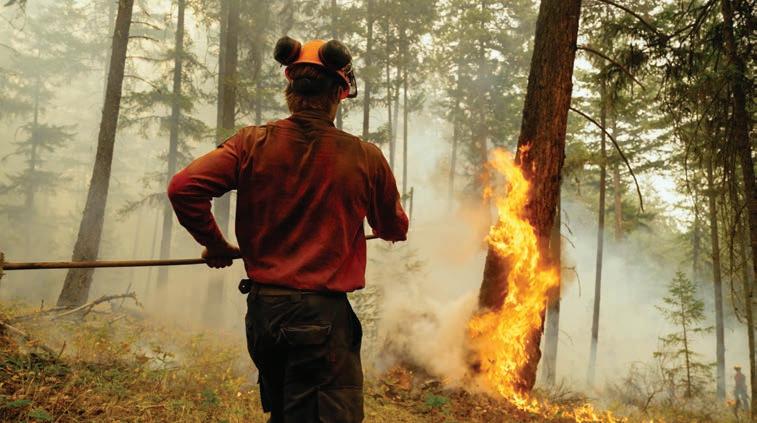
A firefighter with BC Wildfire Service approaches a blaze. B.C. added eight cancers to its occupational cancer coverage for firefighters.
The government amended the esophageal cancer cumulative serviceyear requirement from 20 to 15 years.
The B.C. government stated these legal protections are not merely policy shifts, but built on a foundation of rigorous scientific data.
If a firefighter develops one of the listed cancers after a certain period of employment, it is presumed that the cancer arose from exposure during their employment. The firefighter is then eligible for workers’ compensation benefits without having to prove the cancer is work-related.
Faced with rising costs for fire and emergency services across the province, the Ontario government doubled its Fire Protection Grant for 2026 from $10 million to $20 million.
Announced as part of the 2026 budget, this funding will support municipal fire departments in expanding cancer prevention initiatives and improve emergency response to lithium-ion battery related incidents.
“The Ontario Association of Fire Chiefs is deeply grateful to the provincial government for providing and increasing the Fire Protection
Grant in the 2026 Ontario Budget,” said Fire Chief Jeremy Parkin, president of the association, in a news release. “This grant will enable fire departments to implement cancer prevention programs, purchase equipment, and in addition mitigate risks associated with lithiumion battery incidents. Ontario’s fire departments and firefighters value our extremely positive relationship with the provincial government, and thank them for this important investment, and will continue to work with the government on sustainable funding opportunities for Ontario’s fire service.”
The Fire Protection Grant is available to municipal fire departments for both new and existing initiatives. Eligible projects include equipment, supplies and personal protective equipment that enhance municipal cancer prevention initiatives, equipment and supplies for lithium-ion battery incident response, and minor infrastructure upgrades and modernization, including enhanced broadband and internet connectivity
Nova Scotia introduced the Support for Fire Protection Services Act in a bid to strengthen and standardize fire services across the province.
Under the new Act, the minister of emergency management will provide oversight for municipal fire services and set provincewide standards for fire services, firefighter training and certification, personal protective equipment, transition support for fire services that want a municipal model, and resources for fire protection service planning, delivery and reporting.
Fire departments and fire service commissions that are not currently part of a municipal fire service will remain as is.

“We are committed to listening to the fire services sector, and this legislation is a direct result of what we’ve heard over the past year,” said Kim Masland, Minister of Emergency Management, in a news release. “This is the next step in addressing what we heard from the value-for-money audit of the Nova Scotia Firefighters School, the Fire Service Association of Nova Scotia’s governance review, and in-person meetings with over 700 fire chiefs, deputy chiefs, fire service co-ordinators and municipal leaders.”
The Support for Fire Protection Services Act also enables the creation of an Office of the Fire Commissioner, the first step in providing provincial oversight, co-ordination and support to municipalities and fire service providers.
It requires all municipalities – whether they oversee fire services or not – to conduct a fire protection service review to ensure municipalities and fire departments make evidence-based decisions about the services they provide to their community, ensure that local firefighter competencies, training and personal protective equipment meet the service standard required by the fire protection service review, and participate in a common records management system.
Nova Scotia’s government has hosted consultations with more than 700 participants to dicsuss these issues, including municipal elected officials and administrators, fire service leaders, firefighters, fire commissions and fire service co-ordinators. The government also said that fire departments across the province were consulted extensively.
“For more than 50 years, the fire service has recognized the need to modernize fire and emergency services in Nova Scotia,” said Greg Jones, president of the Fire Service Association of Nova Scotia, in a news release. “This announcement represents meaningful progress toward strengthening public safety and ensuring the fire service is equipped to meet the evolving needs of communities across the province.”

TAMARA ROITMAN, a fire service veteran with over 19 years of experience in the Greater Toronto Area, has taken her talents to Sudbury to serve as the city’s deputy fire chief starting April 27. Roitman recently served with Central York Fire Services, where she led training, NFPA certification programs, and co-chaired several committees.

The town of Clarington, Ont., promoted deputy chief BRADLEY LAMPORT to be the municipality’s new fire chief and director of emergency and fire services. Lamport originally began his career as a volunteer firefighter in Georgina before serving 18 years with the Markham Fire Department.

The Castlegar Fire Department in B.C. welcomed a new deputy fire chief. TONY MACKIE has been appointed to the role after serving as the department’s assistant fire chief since July 2025. Mackie brings over 30 years of experience to his new role.

The Town of Edson, Alta., promoted Deputy Chief JOEY CHERPIN to fire chief, replacing outgoing Fire Chief Brad Milton. Milton, who has been chief since 2023, is stepping down to pursue new opportunities in the emergency management field. Chief Cherpin has over 14 years of experience in protective services, including stints as a career and paid-on-call firefighter, training officer, and emergency medical responder.

After nearly a decade serving Kingston Fire and Rescue as deputy chief, KEVIN DONALDSON has been tapped to lead the city’s fire service. Donaldson brings over 31 years of veteran know-how to his new chief position, including stints as deputy chief for Stone Mills Township Fire Department and Napanee before joining Kingston’s fire service in 2017.
The Town of Whitby announced that MARK PANKHURST will lead the municipality’s fire ser-

vice on an interim basis. The new interim fire chief has over 30 years of experience in the fire service, including fire chief and deputy fire chief roles in Ajax, Kawartha Lakes, and Rama.

CAL LORENCZ has been appointed the new fire chief of Tarrys Fire Rescue in the Regional District of Central Kootenay (RDCK), B.C. Lorencz is a local veteran, having worked within the RDCK fire service for over 15 years, including 11 spent as the training officer for the Tarrys department.

In New Brunswick, NORM GARNETT has been named Hampton Fire Rescue’s newest fire chief. Garnett is a 21-year veteran in Hampton and has worked his way up through the ranks to the top. In 2021, he was awarded the municipality’s James Hovey Award for his volunteerism in the community.

After serving over four decades in the fire service, Fire Chief PAUL HURST announced his retirement from the View Royal Fire Department in B.C. Hurst originally joined the department as a volunteer when he was 16, became a career firefighter three years later in 1988, and was appointed chief in 2006. His retirement date is set for Oct. 1.
Hemlock Valley, B.C., Fire Chief KEN HARBORD has officially called it a career. Harbord joined the department in 1996 before being promoted to deputy chief in 1999. Then, 20 years later, he was named fire chief in 2019. The department held a surprise retirement party for Harbord on March 21, where several friends and residents gathered to wish him well in his retirement.

RONALD BELL, former fire chief of Medicine Hat Fire and Emergency Services, passed away on March 25 at the age of 93. Bell served 33 years in the fire service in the town he was born in, starting as a firefighter in 1960 before being named fire chief in 1983.


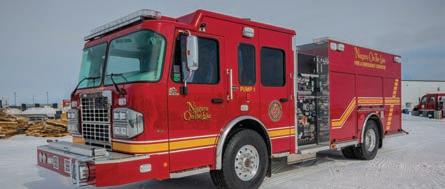
CLOCKWISE:
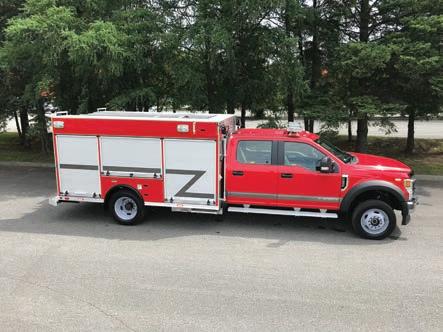
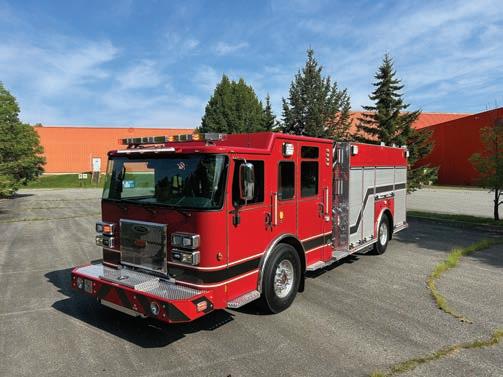
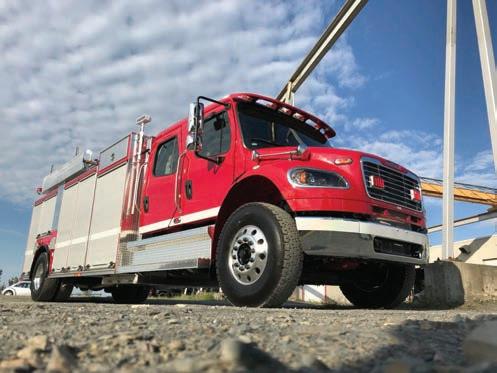
Drayton Valley/ Brazeau County Fire Services, Nanaimo Fire Rescue, Niagara-on-the-Lake Fire and Emergency Services, Oliver Paipoonge Fire and Emergency Services, Petrolia & North Enniskillen Fire Department, Barlow Creek Volunteer Fire Department
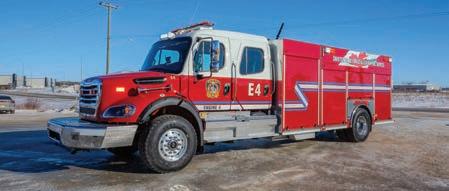
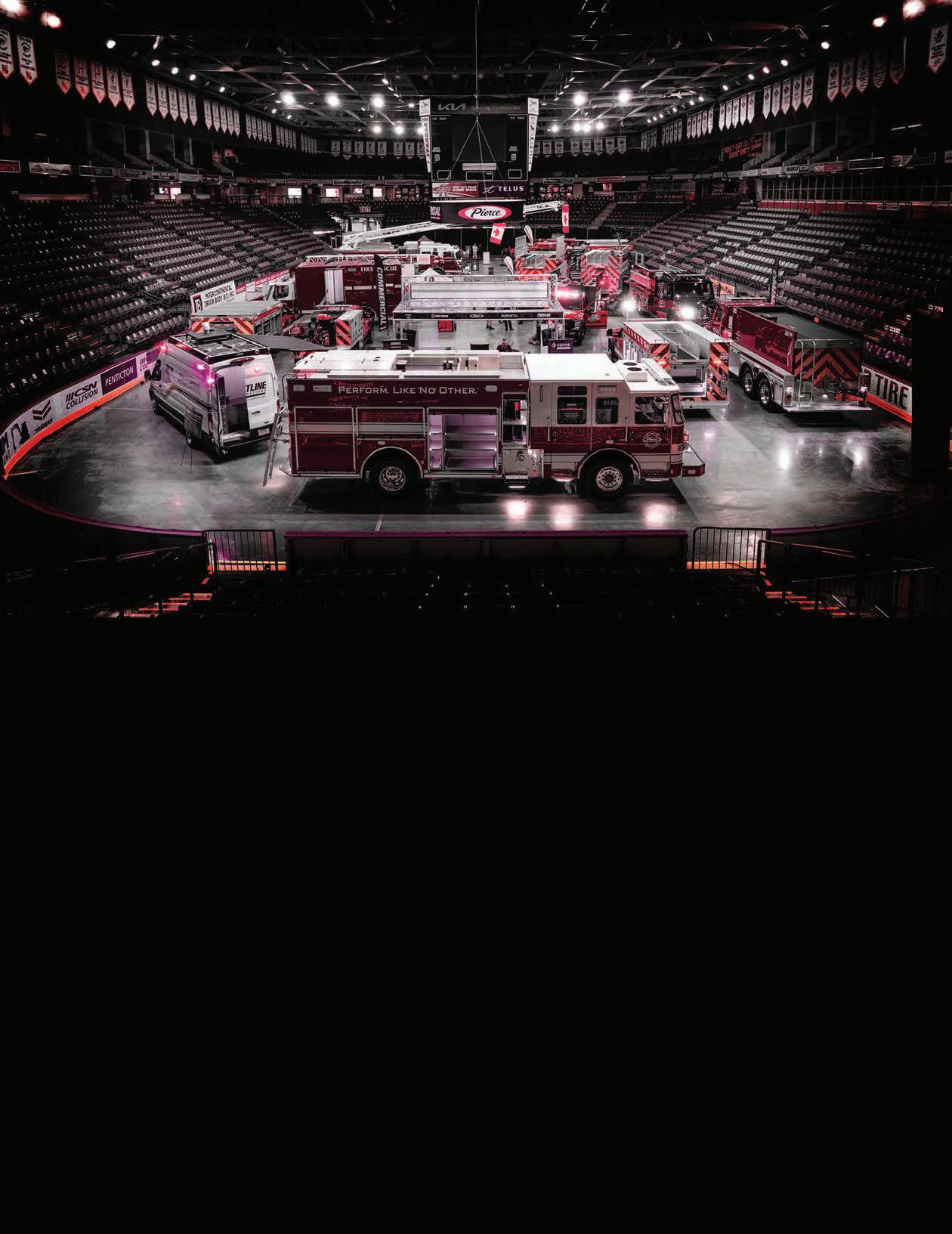
Drayton Valley/Brazeau County Fire Services took delivery of their new ER side control pumper built on a 4-door Freightliner crew cab chassis. The Fort Garry Fire Trucks apparatus features a Hale QMAX 1500 pump, 1,000 IG copoly tank, Whelen Emergency and scene light light package, Amdor painted roll doors, and was constructed with 5083 saltwater marine grade aluminum.
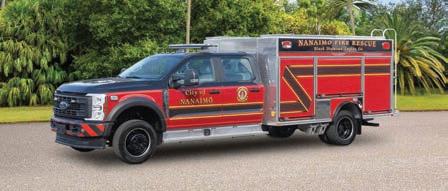
Commercial Emergency Equipment delivered a Pierce Manufacturing nonwalk-in rescue apparatus to the City of Nanaimo. Featuring an aluminum body, Whelen lighting and sound package, Whelen Justice lightbar, and portable electric winch, this truck also has an extended rear aluminum compartment.
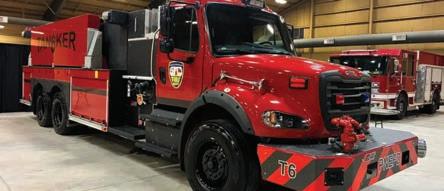
Niagara-on-the-Lake Fire and Emergency Services took delivery of the service’s new Fort Garry Fire Trucks ER pumper. Built on a Spartan
Metro Star EMFD 10” RR, the new truck features a Cummins L9 450 HP engine, Allison 3000 EVS transmission, Waterous CX1500 pump, and an 832 IG copoly water tank. The body was built with 5083 saltwater grade aluminum.
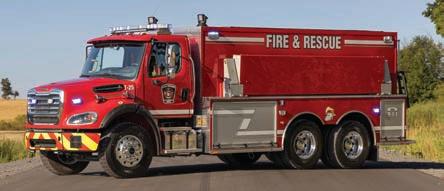
The township of Oliver Paipoonge took delivery of a new Battleshield tanker. The fire service’s new apparatus came with a Detroit DD13 450 HP engine, Allison 4000 EVS automatic transmission, NFPA lighting package from Whelen, 2500 IG poly water tank, and was built on a 2024 Freightliner M2 112 DC chassis.
Fort Garry Fire Trucks delivered a pumper tanker to the Petrolia & North Enniskillen Fire Department. Their
new truck comes equipped with a Hale PTO RSD1250 pump, side control pump house with two cross lay preconnects, front bumper trash line, copoly 2,500 IG water tank, Whelen emergency and scene lighting, and a Husky 2,500 IG portatank, all built on a 2-door Freightliner regular cab chassis.
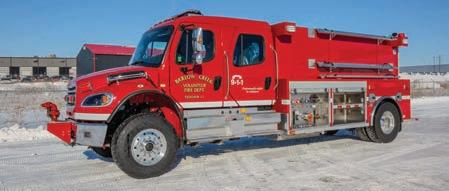
The Barlow Creek Volunteer Fire Department welcomed its new wet side tanker built and delivered by Fort Garry Fire Trucks. Manufactured on a 4-door Freightliner crew cab chassis body, the tanker features a 2,000 IG copoly water tank, a 2,500 USG portable tank, storage for three 10’ x 6” lengths of hard suction above the road side compartments, Whelen emergency light package, Hale PTO MBP750 pump, and a Fireman’s Friend tank fill.
If your fire department recently took delivery of an apparatus, or you’re a manufacturer or dealer with deliveries to share, please email laiken@annexbusinessmedia.com.
The solution for shallow & ugly water
Multiply your drafting sources
Fire Apparatus Magazine
March 2026 - Comments on Separators
“...game-changing drafting appliance ...”
“While the BearsPaw SEPARATOR may look like a traditional low-level strainer, it operates on a completely different principle: separation technology.”
— Recognized rural drafting expert & U.S. Fire Service instructor, Andy Soccodato
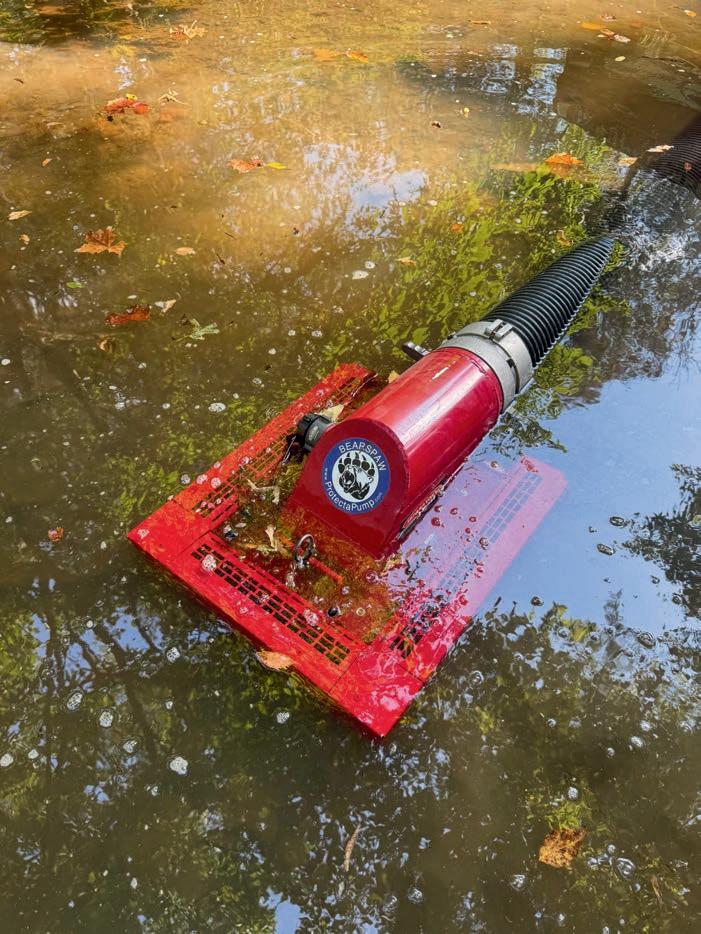
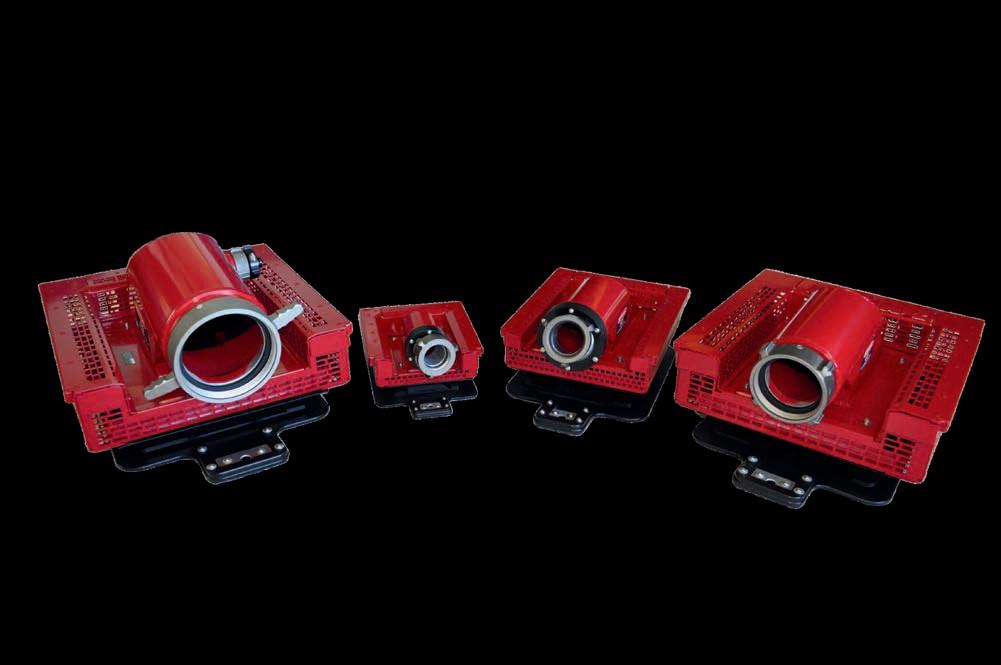
From grainy creek beds to dirty dump tanks, BearsPaw SEPARATORS® give crews one rugged patented appliance that thrives in the shallow, debris‑laden sources where strainers are either unsafe or unproductive. Separators draft without impacting aquatic life & habitat. See Trade Show Calendar, Videos, Fire Chief Testimonials, Product Info... ProtectaPump.com Your Shallow & Ugly Water Drafting Solution

By Thomas Keaney, NFPA Technical Committee Member
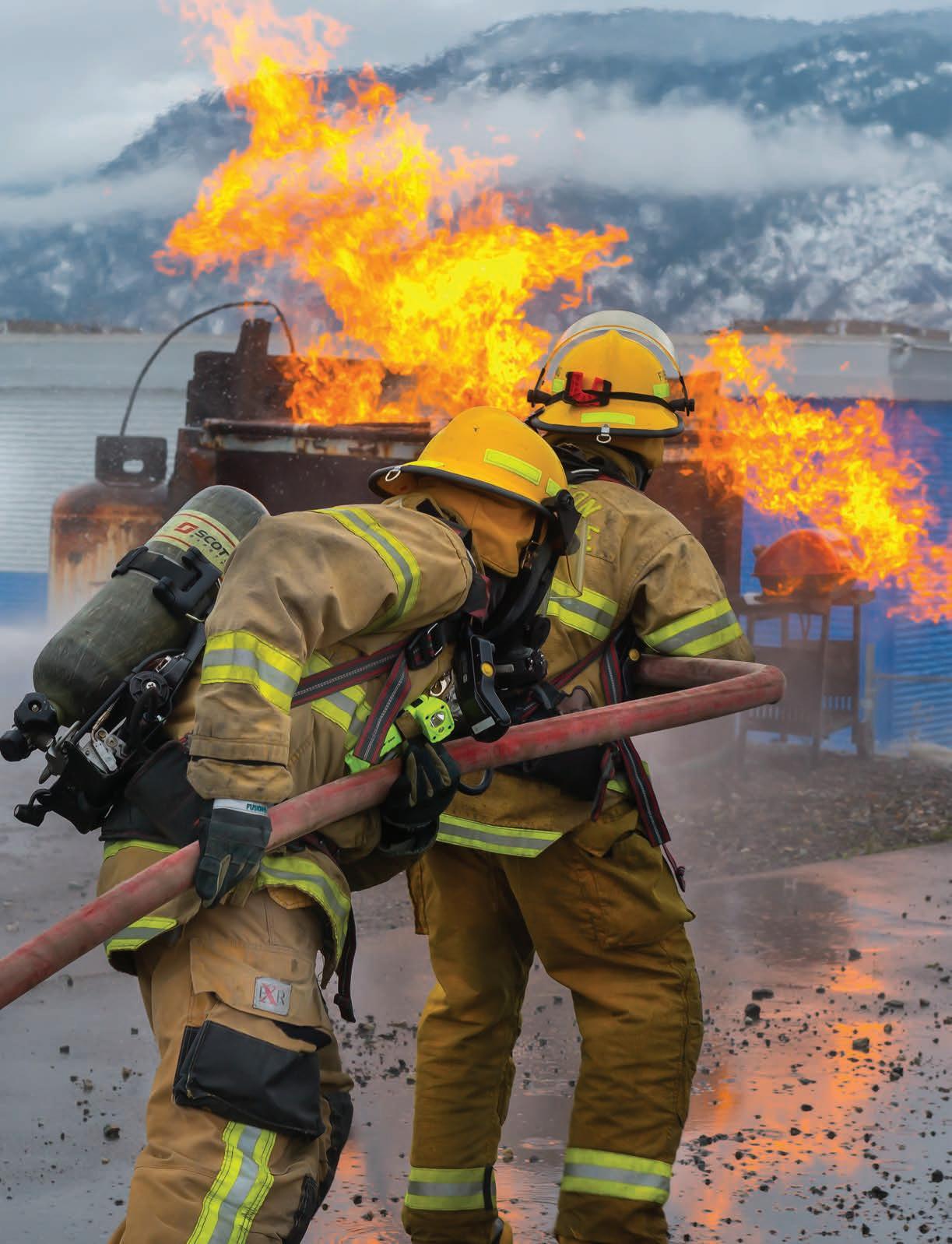
The National Fire Protection Association’s publication of NFPA 1400, Standard on Fire Service Training, marks one of the most consequential reforms to fire service training doctrine in decades. For Canadian departments — particularly those operating within Ontario’s evolving certification and occupational health framework — the implications extend well beyond curriculum alignment and procedural refinement.
NFPA 1400 consolidates seven legacy standards into a unified, 54-chapter framework. Live fire training, rapid intervention, instructor credentialing, training facility safety, and accountability systems are now integrated under a single governance architecture. This is more than an administrative streamlining exercise. It is a structural repositioning of training as an operational environment subject to command-level accountability.
Training is no longer an adjunct to operations. It is operations.
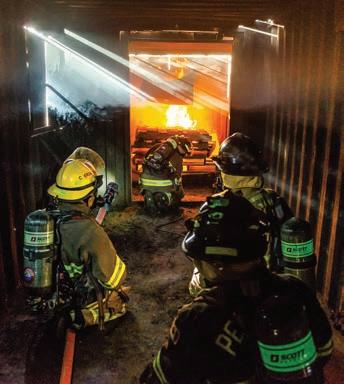
One of the most significant clarifications within NFPA 1400 appears in its live fire provisions. A Safety Officer (SO) shall be appointed for all live fire training evolutions. The language is deliberate and non-discretionary (NFPA 1400, Chapter 16, 16.5.1).
The Instructor-in-Charge (IIC) must meet qualification requirements as a Live Fire Instructor-in-Charge and retains operational
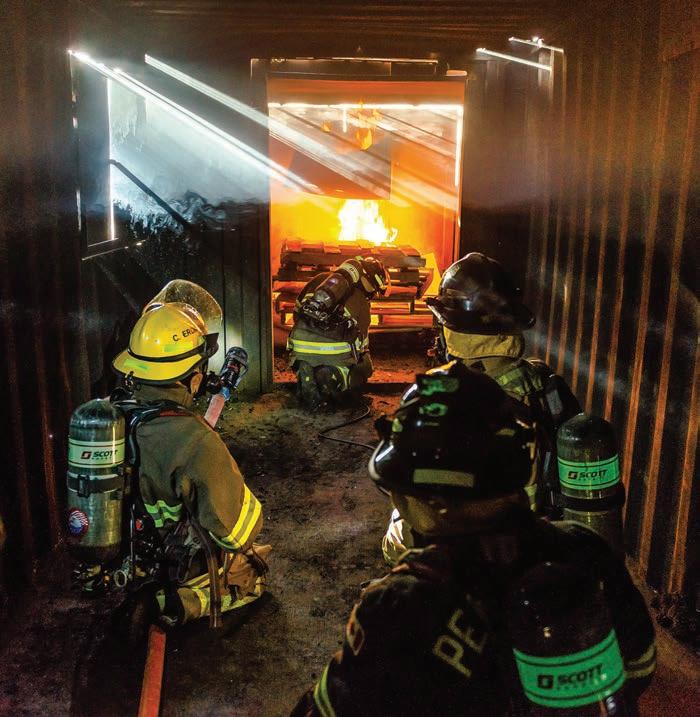
authority over the evolution. However, the SO must be independent of instructional roles and empowered with unilateral stop-work authority. This separation of duties mirrors incident command principles on the fireground (NFPA 1400, Chapter 23.3.1).
The implication is clear: high-risk training events must be managed with the same structural discipline as emergency incidents. Command presence, accountability systems, rehabilitation oversight, hazard control validation, and post-evolution review are no longer optional best practices. They are governance expectations.
Historically, the application of the Incident Safety Officer (ISO) role varied significantly across Canadian departments. In some organizations, the ISO function operated as advisory support. In others, it carried operational authority but lacked structural integration into training governance. With the consolidation of NFPA 1521 into NFPA 1550, and the parallel release of NFPA 1400, the
ISO is no longer peripheral to command. The role is embedded within a broader responder health and safety framework that formalizes independent authority and risk oversight responsibilities.
In modern training environments, the ISO must:
• Possess independent authority to stop, alter, or suspend unsafe evolutions
• Review lesson plans, fuel packages, and hazard mitigation measures in advance
• Validate accountability systems for all personnel entering hazard zones
• Oversee rehabilitation, physiological monitoring, and fatigue management
• Document deviations and participate in post-incident analysis
This is not observational oversight. It is command-level risk governance.
The contemporary ISO operates predictively rather than reactively. The function is to identify emerging hazards before they manifest as injury, exposure, or operational failure.
In Ontario, the governance implications are amplified by regulatory reform. Regulation 343/22 under the Fire Protection and Prevention Act mandates progressive certification compliance, with full implementation required by July 1, 2026. While NFPA standards are not automatically legislated, they increasingly inform due diligence expectations under Ontario’s Occupational Health and Safety Act (OHSA).
Section 25(2)(h) of the OHSA requires employers to take every precaution reasonable in the circumstances for worker protection. In practice, recognized industry standards are frequently relied upon to determine what constitutes “reasonable precaution.”
Failure to appoint or properly empower an ISO during high-risk live fire training may therefore be interpreted not merely as procedural oversight, but as a governance failure. In the context of Ministry of Labour investigations, NFPA-aligned practices can serve as evidence of due diligence. Conversely, deviation without documented rationale may weaken defensibility. For chief officers and municipal leaders, the message is direct: training governance is inseparable from corporate liability. The consolidated NFPA 1400 standard requires that
all participants have their vitals checked to ensure they are fit for duty before and after the training. While NFPA 1400 sets the overall safety standards, specific, actionable baseline, and rehabilitation (rehab) vitals for live fire training are often referenced from NFPA 1584 (Standard on the Rehabilitation Process for Members During Emergency Operations and Training Exercises).
Baseline vital signs (prior to training):
• Heart rate: Should be within a normal, resting range (typically <100 beats per minute)
• Blood pressure: Should be within a normal, resting range (systolic <160, diastolic <100 mmHg is often used as an upper limit in some protocols, though lower is preferred)
• Respiratory rate: 12 to 20 breaths per minute
• Temperature: <100.6°F (38.1°C)
• Physical/mental condition: Participant should be well-hydrated, rested, and show no signs of illness or excessive heat stress.
After completing each training evolution, participants should have their vitals re-checked in a designated rehab area to ensure they are safe to continue.
Rehabilitation (rehab) vitals (during/after training):
• Heart rate: Should drop below 100 beats per minute (often the primary indicator for release from rehab).
• Blood pressure: Should return to within normal limits.
• Oxygen saturation: >94 per cent.
• Visual assessment: Participants must be assessed for signs of heat-related illness (e.g., dizziness, extreme fatigue, excessive sweating or lack thereof).
Key requirements:
• Mandatory checks: All participants (students and instructors) must have their vitals taken prior to the start of the drill.
• Rehab area: A rehab area must be established, with personnel trained in monitoring heat-related disorders.
• Continuous monitoring: Participants are responsible for monitoring one another for signs of heat stress and should be sent to rehab if they feel symptomatic.
• Removal from training: If a participant’s vitals do not recover, or if they show signs of distress, they must be removed from the
training, often if they have visited rehab more than two times.
• Record keeping: All participant medical checks during rehab must be documented.
• Rotation: Participants in a hyperthermic environment must have a mandatory rest period after each session to allow for rehydration and core temperature reduction.
• Time limitations: Live fire sessions are limited to a maximum of one hour, with stricter limitations (30 minutes) when outside temperatures exceed 30°C (86°F) and relative humidity exceeds 80 per cent.
Specifically, the IIC and SO, have the responsibility over participant Health and Safety (NFPA 1400, Chapter16.4). A qualified SO must be appointed to supervise, with the authority to intervene and halt training if, among other dangers, they observe excessive physiological strain in participants. As well, the SO shall engage in instructor monitoring for signs of heat-related illness or exhaustion, ensuring proper, regular breaks.
The general goals of rehabilitation are as follows:
• To provide physical and mental rest, allowing the firefighter to recuperate from demands of emergency operations and adverse environmental conditions.
• To revitalize firefighters by providing fluid replacement and food as needed.
• To provide medical monitoring, including treatment of injuries, to determine if and when firefighters are able to return to action.” (NFPA 1400, 16.4, Annex G)
NFPA 1400 advances a layered approach to hazard recognition within training environments. This hierarchy moves beyond binary safe/unsafe judgments and establishes graduated intervention thresholds.
First-tier risks involve imminent threats requiring immediate stop-work authority — flashover indicators, structural compromise, compromised PPE, or uncontrolled fire growth.
Second-tier risks are developing hazards requiring collaboration between the ISO and IIC — fatigue accumulation, environmental shifts, apparatus placement concerns, or breakdowns in communication.
Third-tier risks are strategic governance considerations — training tempo, staffing ade-
quacy, fuel load alignment with objectives, and cumulative exposure management.
This tiered model shifts the ISO from reactive enforcement to structured risk anticipation. It also reinforces that safety oversight extends beyond momentary intervention into systemic evaluation.
One of the most practical and heavily debated reforms embedded in NFPA 1400 is the formalization of standardized fuel package guidance. The annex provisions address burn materials, fire load composition, and exposure controls. Historically, inconsistency in fuel selection contributed to unnecessary toxic exposure and increased long-term occupational risk. In Canada, where presumptive cancer legislation continues to expand across provinces, exposure mitigation during training is no longer a secondary consideration.
Standardized fuel package controls reduce variability and strengthen defensibility during inspection or investigation. They also align with the evolving recognition that cumulative exposure — not only catastrophic events — drives occupational disease. For Ontario departments operating within WSIB compensation frameworks, this shift carries financial and moral implications. Realism in training can no longer justify uncontrolled contaminant generation.
Rapid Intervention Team (RIT) training, once governed separately, is now embedded within NFPA 1400’s unified structure. This consolidation ensures that firefighter survival training and live fire evolutions operate within a shared safety governance plan. For example, Chapter 45.1.4, states “a safety officer shall be appointed for all rapid intervention crew evolutions.”
Unified Training Safety Plans have replaced fragmented documentation by interconnecting instructor credentialing, accountability protocols, and facility safety requirements into a cohesive framework. This integration provides essential structural clarity, significantly reducing the risk of ambiguity, especially during complex multi-company evolutions. Central to this shift is the foundational, rather than supplemental, integration of the Incident Management System (IMS) into the qualification and performance expectations of SOs under NFPA 1550. The standard establishes that SOs must operate within a structured command environment consistent with recognized incident management principles. In the Canadian
context, that means functional alignment with provincial IMS doctrine (e.g., Ontario IMS) and interoperability within unified or multi-agency command structures.
Under NFPA 1550, an SO is required to understand command structure and span of control, operate within established chain-of-command principles, communicate risk assessments directly to the Incident Commander (IC), and exercise independent authority without disrupting command unity. This requires more than technical safety knowledge. It requires formal competency in IMS roles, terminology, and operational decision-making cycles. An SO who does not understand how an IC processes
This is not observational oversight. It is command-level risk governance.
strategic, tactical, and operational objectives cannot effectively influence risk controls.
Within IMS, the SO is a Command Staff position reporting directly to the IC. Key characteristics of this relationship include direct access to the IC. Risk information must flow unfiltered. The SO is not embedded within operations or logistics. Their advisory and stop-work authority exists parallel to operational functions.
NFPA 1550 reinforces that the SO may identify unsafe acts or conditions and take corrective action. In an IMS structure, this authority must be clearly recognized and supported by the IC. The SO contributes to the Incident Action Plan (IAP) development process by identifying operational hazards, control measures, and resource implications. This elevates the role from reactive monitoring to proactive command participation.
To meet the rigorous expectations of NFPA 1550, SOs must demonstrate core competencies across several critical domains, including incident command structures, risk assessment methodologies within operational planning, and the management of accountability systems for personnel tracking. Furthermore, they must be proficient in integrating rehabilitation and health monitoring protocols and managing after-action review processes within formal IMS documentation. In Ontario and other jurisdictions adhering to standardized IMS doctrine, obtaining formal IMS certification or equivalent training is increasingly viewed as a vital prerequisite for the SO designation. This foundational competency is essential because while an officer may excel at hazard recognition, a lack of structural fluency in the command system will ultimately hinder their ability to influence high-level, command-level decision-making
Under the mandates of NFPA 1400, live fire training is required to mirror an operational command structure, ensuring that SOs in training environments function within an IMS-aligned framework. This deliberate structural consistency between high-risk training and real-world emergency response is designed to foster transferable discipline and eliminate governance ambiguity. To meet these standards, the training command must include a clear designation of an IC (or IIC equivalent), an independent SO who reports directly to command, defined operational sectors, and the seamless integration of accountability and rehabilitation protocols.
In Ontario, the integration of IMS-qualified SOs aligns with employer obligations under the Occupational Health and Safety Act, which requires every reasonable precaution for worker protection.
To strengthen due diligence defenses during investigations or litigation, organizations must demonstrate that their SOs are formally trained in the Incident Management System (IMS), integrated directly within the command staff, and officially empowered with documented stop-work authority. Conversely, neglecting these requirements by assigning safety duties to individuals who lack IMS competency can create significant legal vulnerabilities, potentially exposing municipalities to serious allegations of inadequate governance.
Under the guidelines of NFPA 1550, the role
of the SO is firmly established as a critical Command Staff function, ensuring that safety remains a primary pillar of operational leadership. These standards dictate that IMS competency is no longer an optional skill set but a structural requirement for the role. To preserve independent authority and ensure unbiased oversight, the SO must maintain a direct reporting line to the IC. Furthermore, professional qualification for this position necessitates a dual mastery of both technical safety expertise and high-level command-system fluency.
The modern safety officer is not simply a hazard observer. The role is a command-integrated risk governance position that requires operational credibility, structural authority, and formal incident management proficiency.
NFPA 1550 expands safety doctrine beyond acute injury prevention. It incorporates responder health, fatigue management, and behavioral health considerations into the ISO’s sphere of influence. Modern injury patterns frequently reflect cumulative stressors rather than singular catastrophic events. Heat strain, sleep disruption, psychological load, and repetitive exposure compound over time.
In Ontario and other provinces recognizing PTSD presumptions and expanded occupational disease claims, proactive rehabilitation oversight is aligned directly with employer obligations. The ISO must ensure rehabilitation is structured, documented, and responsive to environmental conditions. This represents a cultural shift: safety governance now includes long-term health stewardship.
Post-evolution analysis is no longer optional. Documentation of safety deviations, corrective actions, and lessons learned forms part of the governance infrastructure. In regulatory investigations or civil proceedings, contemporaneous documentation demonstrates control. Its absence suggests indifference.
Training records, safety plans, ISO appointment documentation, credential verification, and after-action reports must align with municipal retention policies and, in Ontario, disclosure obligations under the Municipal Freedom of Information and Protection of Privacy Act (MFIPPA). Record-keeping is not administrative overhead. It is institutional protection.
For chief officers and municipal administrators, NFPA 1400 signals measurable exposure in high-risk training environments. Operationally, departments must:
• Verify instructor and ISO credential compliance
• Formalize independent ISO appointment processes
• Audit live fire and RIT governance frameworks
• Standardize fuel package controls
• Maintain defensible documentation systems
Strategically, municipalities must recognize that failures in training governance can escalate into regulatory charges, reputational damage, or civil litigation. Training risk is corporate risk.
The consolidation embodied in NFPA 1400 and NFPA 1550 does more than streamline standards. It redefines the structural relationship between training and command. The Incident Safety Officer is no longer a
peripheral advisor. The ISO is embedded within the command system as a risk control function — empowered, independent, and accountable.
For Ontario departments, the implementation of National Fire Protection Association standards such as NFPA 1400 and NFPA 1550 must also be understood within the certification authority of the Ontario Office of the Fire Marshal. While NFPA standards establish nationally recognized competency and training benchmarks, the OFM maintains regulatory oversight of firefighter certification under Ontario’s legislative framework. In practice, this creates a dual-accountability environment: departments may align curricula and safety management systems with NFPA doctrine to meet industry best practice, but individual certification cards — including legacy or “grandfathered” credentials issued prior to mandatory Pro Board or IFSAC alignment — remain governed by OFM policy directives. As Ontario continues to modernize its certification model, particularly in relation to transitional





equivalency and prior learning recognition, fire chiefs and training officers must ensure that NFPA-aligned programming is carefully mapped to OFM credentialing requirements to avoid gaps between operational competence, documented qualifications, and legal authorization to perform.
Canadian departments that treat these standards as technical manuals will achieve compliance. Departments that embrace them as governance frameworks will achieve defensibility, operational credibility, and long-term firefighter protection. Training is now subject to the same command discipline as emergency response. That evolution reflects not regulatory overreach, but organizational maturity.
The next era of Canadian fire service leadership will not be defined solely by operational performance at incidents. It will be defined by how rigorously we command, document, and defend the environments in which we prepare to serve.
The transition to NFPA 1400 and 1550 rep-







resents more than just a regulatory update; it is a fundamental shift toward a culture of safety where training is no longer an adjunct to operations—it is the operation. By elevating training to the same standard as live emergency incidents, Canadian fire services are ensuring that clear separation of duties and command-level accountability are not just best practices, but governance expectations. Ultimately, embracing this structural shift is the most critical commitment we can make to the safety and professional integrity of the modern fire service.
To view NFPA 1400,1550 Online (Subscription Required): NFPA LiNK® - you can find it on the NFPA website and in NFPA LiNK. NFPA 1400 Standard on Fire Service Training (2026)
Thomas Keaney is a fire service officer with 27 years of experience in industrial and municipal fire training governance, incident safety, and regulatory compliance within Ontario’s municipal framework. He is a member of the Fire Department Safety Officers Association (FDSOA) and serves as a Technical Committee Member for NFPA standards 1400, 1405, 1710, and 1750. He is also an Effective Command instructor (CCSATT).



























By Rob Grimwood, Fire Chief, Sudbury, Ontario
As much as I love being a fire chief, and loved being a deputy chief, when I look back at my amazing career many of the fondest memories are when I served as a lieutenant or captain leading smaller teams of firefighters at a task level. There was nothing more challenging and fulfilling than leading two or three firefighters into a structure fire and accomplishing our goals quickly and safely.
When leading firefighters into a fire, there were times I led from the literal front, being the first person through the door. This was sometime necessary given the dynamics of the situation and/ or the experience of the crew.
There were other times, however, where it was more strategic to be the last through the door and to take an oversight role. This exemplified trust in the crew’s ability to navigate the hazards being confronted. These same principles can be used in leadership not when faced with a structure fire, but with managing day-to-day demands, decision, and team growth.
“Leading from the front” has long been the traditional image of strong fire service leadership. But experienced leaders understand that effective leadership is not confined to one position. Sometimes the most impactful leadership comes from behind the line quietly guiding, supporting, and empowering others.
Understanding the difference between leading from the front and leading from the back, and knowing when to do each, is a critical leadership skill for today’s fire service. To be effective, a leader must know that there is a time and place for both.
Leading from the back is less intense, but no less powerful.
Leading from the front is the most visible form of leadership. It involves setting the example, demonstrating competence, and taking responsibility when the situation demands decisive direction.
In emergency operations, this style is often necessary. When crews arrive at a structure fire, hazardous materials incident, or technical rescue, firefighters expect clear direction. In those moments, hesitation or uncertainty can erode confidence and slow down operations.
Leading from the front means demonstrating what you expect from others. Officers who arrive prepared, train hard, and perform professionally send a clear message about expectations.
However, leading from the front does not mean doing everything yourself. Some officers mistakenly interpret this concept as needing to be the most aggressive firefighter on every call. In reality, leadership from the front is about accountability and visibility, not ego.
When officers feel they must always be the primary driver of every task or decision, they risk limiting the growth of their team. Firefighters need opportunities to develop their own skills, judgment, and leadership abilities.
Another risk is burnout. Fire service leaders who believe they must carry every responsibility themselves often become overwhelmed, which is not sustainable.
This is where the second style of leadership becomes equally important.
Leading from the back is less intense, but no less powerful. It focuses
on creating an environment where others succeed.
For example, during training exercises, an officer might step back and allow a senior firefighter to lead the drill. In this moment, the officer is still responsible for the outcome, but the spotlight is intentionally placed on others. Firefighters who feel trusted to contribute are more engaged and invested in their work.
Leading from the back also means removing obstacles. Good leaders quietly ensure their crews have the resources, training, and support they need to succeed. In many ways, leading from the back is about recognizing that leadership is about developing others.
The most effective fire service leaders know when to move between these two positions, which can be fluid and sometimes mean shifting between the two on the same initiative.
Strong leaders constantly assess the situation and ask themselves a simple question: What does my team need from me right now? Sometimes the answer is direction. Sometimes the answer is support.
The fire service has a proud tradition of courageous leadership from the front. That tradition will always be important. But modern fire service leadership also requires the wisdom to step aside when appropriate.
Sometimes leadership means being the first one through the door. Other times it means standing just behind the line, making sure everyone else has the opportunity to succeed.
The best fire service leaders know how to do both.





By Len Garis and Anna Wilkinson
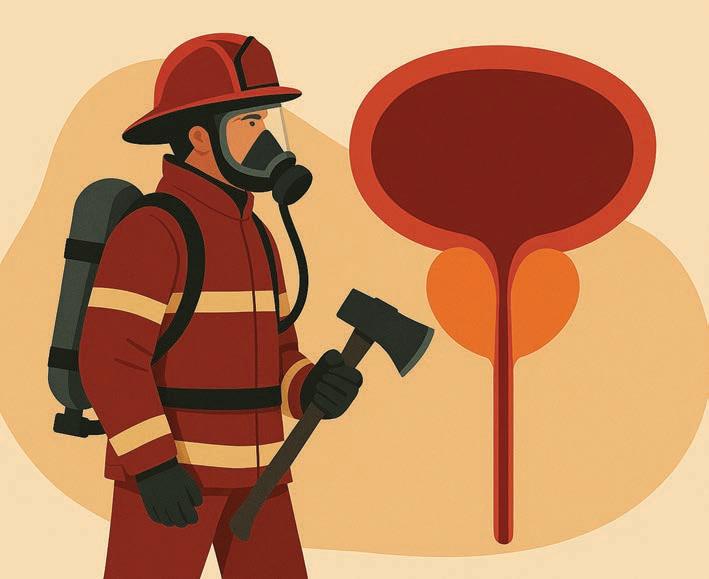
Cancer is now the leading cause of line-of-duty deaths among Canadian firefighters. While lung, colorectal, and skin cancers often dominate the conversation, prostate cancer deserves equal attention. It is the most commonly diagnosed cancer among Canadian men (excluding non-melanoma skin cancers) and the third leading cause of cancer death.
For firefighters, prostate cancer is not just a population-level issue — it is a workplace hazard with direct implications for health, compensation, and survivorship. There is limited evidence that fire fighting causes prostate cancer, and increased prostate cancer mortality has been found to be associated with more years as a firefighter (Teras et al, 2025).
Recent Canadian research provides new insights into prostate cancer trends in the context of PSA (prostate-specific antigen) screening guideline changes ( Wilkinson et al., 2025). These findings carry important lessons for the fire service, particularly as firefighters continue to advocate for presumptive coverage, equitable access to screening, and occupational health protections.
Occupational exposure: Firefighters are regularly exposed to carcinogens such as polycyclic aromatic hydrocarbons, diesel exhaust, benzene, and flame retardants. These exposures are cumulative, occurring over decades of service. Research has linked them to elevated risks of multiple cancers, including prostate cancer.
Several provinces include prostate cancer in presumptive legislation for firefighter occupational disease claims. However, eligibility often depends on years of service and age at diagnosis. This creates gaps: younger firefighters diagnosed early may not qualify, while retirees may face challenges proving occupational causation.
Our national guidelines recommend against prostate cancer screening, and so, access to PSA screening is inconsistent across Canada. In Ontario, B.C., and Quebec, men often must pay out-of-pocket. For firefighters in smaller or rural departments, barriers to timely screening are compounded by limited healthcare access. This inequity undermines occupational justice.
This study used 40 years of national cancer data to investigate the impacts of prostate cancer screening guideline changes on prostate cancer outcomes. It included over half a million prostate cancer cases and almost 150,000 prostate cancer deaths. Prostate cancer screening has never been recommended in Canada, but changes in Canadian cases were clearly linked to U.S. guideline changes.
The key findings of this study were:
• After screening became widespread, prostate cancer diagnosis shifted to an earlier age
• Cases increased rapidly in younger men and decreased among men 75 and older
• Prostate cancer mortality dropped by over 50 per cent after screening started, with the biggest changes seen among men in their late 50s and 60s
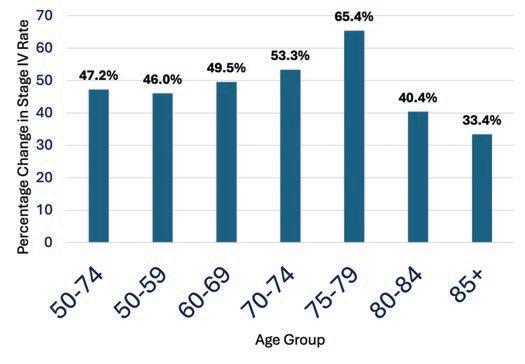
• After U.S. recommendations against screening, mortality reductions lessened and Stage IV or incurable cases increased among both younger and older men
• The rate of Stage IV cancer at diagnosis increased by about 50 per cent among men 50 to 74
• Multiple new life prolonging treatments for patients which have increased survival in stage IV cancer
• However, the overall survival for prostate cancer is lower now than it was 20 years ago with the increasing number of incurable Stage IV cases
These findings suggest that screening was finding clinically relevant cases in younger men.
Many Canadian firefighters in their peak service years fall into the age
bracket where the highest morality benefit from screening was noted. Early detection could prevent advanced disease and preserve both life expectancy and quality of life.
For a profession already at elevated cancer risk, reduced screening uptake can mean more late-stage diagnoses. This undermines presumptive coverage frameworks, which often rely on early detection to establish occupational causation.
Many retirees are diagnosed after leaving the service. Earlier detection during active duty could reduce the burden of advanced disease in retirement.
26_001517_Firefighting_In_Canada_MAY_CN Mod: March 19, 2026 3:50 PM Print: 03/19/26 4:16:45 PM page 1 v7

While treatment advances are critical, prevention and early detection remain the most cost-effective strategies. For firefighters, this means advocating for accessible PSA screening as part of occupational health programs
Screening is about prevention, not just detection. Firefighters understand prevention better than most. Just as smoke alarms and sprinklers save lives by acting early, PSA screening saves lives by catching cancer before it spreads.
Think of Stage IV disease as the “fully involved fire.” The rise in Stage IV prostate cancer after screening guidelines changed is akin to arriving at a structure fire already fully involved. Screening shifts the timeline, allowing intervention when the “fire” is still contained.
Currently, PSA screening in Canada is inconsistently applied. For firefighters, this creates inequities: those with strong union support or urban healthcare access may get screened, while
Presumptive coverage alignment: Prostate cancer is included in presumptive coverage in several provinces, but eligibility criteria vary. Aligning presumptive frameworks with the latest epidemiological evidence would strengthen firefighter protections.
Occupational health programs: Fire departments should integrate PSA screening into annual occupational health checks, particularly for men aged 50 to 69. This would reduce reliance on self-advocacy.
Equity lens: For Indigenous and racialized firefighters, barriers to screening compound occupational risks. National firefighter health strategies should address these inequities.
Integration with innovations: Active surveillance and MRI-guided biopsy are reducing overdiagnosis and overtreatment. Firefighter health programs should incorporate these innovations, balancing early detection with quality-of-life considerations.

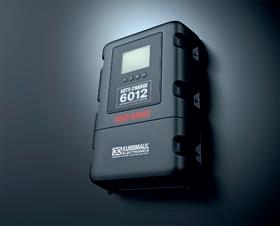

With a Touch Screen and rotating mounting feet, installation is hassle-free

Dual Battery Type Technology enables simultaneous charging of two different battery chemistries

Optional Remote Touch Display available
community:
• Integrate screening into occupational health protocols, ensuring annual access for men aged 50 to 69
• Educate members on the importance of early detection
• Address equity gaps
• Track outcomes through firefighter cancer registries
• Strengthen union advocacy, ensuring PSA screening is recognized as a core occupational health right
• Promote survivorship programs, supporting firefighters diagnosed with prostate cancer through treatment, recovery, and return to duty
The evidence is clear: PSA screening reduced mortality, particularly among men in their 50s and 60s. When screening declined, stage IV diagnoses rose, and survival gains plateaued or even dropped despite treatment advances.
The fire service knows the value of prevention. By advocating for accessible PSA testing, integrating it into occupational health programs, and addressing equity gaps, the Canadian firefighter community can lead the way in reducing prostate cancer mortality.
Cancer prevention is fire prevention. For firefighters, the fight against prostate cancer is a fight for their lives, their families, and the future of the service.
References
https://www.canada.ca/en/health-canada/services/ environmental-workplace-health/firefighters-health/national-framework-cancers-linked-firefighting.html
Teras, L. R., Diver, W. R., Mitchell, E. L., Hodge, J. M., Turner, M. C., Deubler, E. L., Smith, R. A., Knudsen, K. E., Dahut, W. L., & Patel, A. V. (2025). Occupation as a firefighter and cancer mortality in a population-based cohort in the United States. International journal of epidemiology, 54(4), dyaf104. https://doi.org/10.1093/ije/dyaf104
Wilkinson AN, Ellison LF, Zhang SX, Ong M, Morgan SC, Goldenberg SL, Breau RH, Morash C. Canadian Prostate Cancer Trends in the Context of PSA Screening Guideline Changes. Current Oncology. 2025; 32(12):669. https://doi. org/10.3390/curroncol32120669
Len Garis, Retired Fire Chief for the City of Surrey, B.C., Associate Scientist Emeritus with the B.C. Injury Research and Prevention Unit, and Research Associate with the Community Health and Social Innovations Hub, University of the Fraser Valley. Contact: lwgaris@outlook.com. Anna Wilkinson is a family physician and GP Oncologist at the Ottawa Hospital. She is an Associate Professor in the Department of Family Medicine at the University of Ottawa, Program Director for the PGY-3 FP Oncology program and Regional Cancer Primary Care Lead. Contact: anwilkinson@toh.ca









By Luigi Davoli
Building trust and loyalty in the modern fire service through servant leadership.
As chief fire officers, we all understand that leadership is the backbone of the fire service. The fire service has earned the public’s implicit trust. Our rank and file expect us to lead them through the most dangerous and unpredictable moments in their lives. However, leadership in the modern fire service requires more than command presence and technical expertise. Leadership requires a philosophy that sustains trust, fosters loyalty, and builds organizational resilience.
The founder of servant leadership, Robert Greenleaf, stated, “The first and most important choice a leader makes is the choice to serve, without which one’s capacity to lead is severely limited.” Servant leadership provides that framework. It shifts the focus from authority to stewardship, from the number of bugles on the collar to responsibility and care. In his book, Leadership: 50 Points of Wisdom for Today’s Leader, retired General Rick Hillier makes it clear that the first point of wisdom for a leader is to put their people first. He reinforces the notion in his last point, stating, “When you are in trouble, the world is falling in around your ears, your reputation is being shredded, stress is high, friends are few, bosses are angry and complete failure looms, go back to Rule One: Focus on People. You can’t go far wrong.” By putting people first, it empowers and drives them to the vision of the fire service. Furthermore, it builds trust and loyalty within the service. At the most senior levels of the fire service, it is the most effective way to strengthen the members and create a resilient department.
The core concept of servant leadership, as Robert Greenleaf stated above, is straightforward: leaders serve their people first. As one rises through the ranks, the idea remains the same; however, the who shifts. Frank Viscuso states in his book 35 Things Every Fire Officer Must Know and Do, “the first thing to do is take a step back and remind yourself that being a firefighter was never about you; it was about taking care of the community you serve. And being a fire officer is not about you either, it is still about taking care of the community you serve, only now that community has expanded to include the firefighters in your charge.” In essence, this means prioritizing the needs, growth, and well-being of fire service members so they can better support the fire department’s vision and mission.

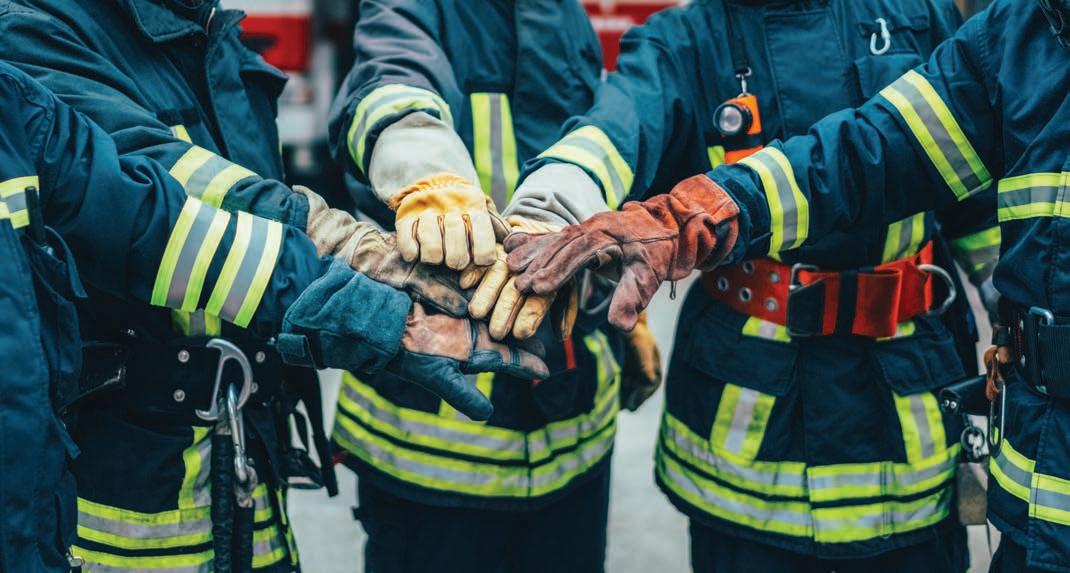
For the fire service, this philosophy is not a new concept. Service and servitude are embedded in the culture. However, when chief officers deliberately adopt servant leadership, they espouse a culture of humility, empathy, and accountability. This then cascades through the ranks, further strengthening the fire service.
Trust is currency in leadership. Trust is far more valuable than even gold. Without trust, no amount of technical knowledge or positional authority will inspire confidence from those a leader seeks to lead. Firefighters must trust their chief officers to make sound decisions under pressure. Chief officers must earn that trust by focusing on supporting their members.
Servant leadership builds trust by:
• Modelling consistency and transparency. Fire chiefs who communicate openly and act predictably set the tone for the department.
• Demonstrating care for members. When leaders show genuine interest in the well-being of their members, both on and off duty, trust follows.
• Owning responsibility. Servant leaders do not deflect blame. They accept accountability while giving credit to the team.
Remember that failure is but an orphan. At the senior officer level, building trust is not about one interaction. Trust is about creating an environment where trust flows in every direction, from the firefighter on their first day to the fire chief on their retirement day.
Loyalty is often viewed as a cultural byproduct, but for fire chiefs, it is a strategic asset. Fire departments with loyal fire service members experience better retention, stronger morale, and achieve greater operational effectiveness. Loyalty creates sustainability and stability, allowing fire chiefs to focus on the department’s future.
To note, loyalty is a two-way street. Fire service members must be loyal to their officers and vice versa; chief officers must be loyal to their members.
Servant leadership inspires loyalty by:
• Investing in people: Fire chiefs who prioritize training, mentorship, and career development create members who stay for the long term.
• Empowering others: When firefighters and company officers feel that their voices matter, loyalty deepens.
• Protecting the culture: Servant leaders ensure recognition is shared, traditions are upheld, and values are preserved.
Loyalty at the individual level translates into a resilient organization. A loyal service can weather any storm, adapt to a new environment, and sustain the public trust.
Servant leadership manifests differently in the fire station and on the fireground, but the impact is equally significant. In the fire station, servant leadership is about relationships. This is where chief officers engage with staff, demonstrate humility and foster psychological safety. These small daily interactions help to shape the culture and leave a lasting impression.
On the fireground, servant leadership is about preparation and accountability. Chief officers ensure members are trained and equipped long before the tones go off. During an incident, they lead with clarity, respect, and from the front. Afterwards, they debrief the incident with honesty, actively listen to feedback, and accept responsibility for the outcomes.
In both environments, servant leadership
demonstrates that authority is exercised in service of the mission and the people, rather than in service of the individual leader.
At the senior levels of the fire department, the benefits of servant leadership extend far beyond the fire crews or individual firefighters. The payoffs of servant leadership ripple through the fire department.
The payoffs are:
• Recruitment and retention: In a time of staffing challenges, fire departments that embrace servant leadership attract new talent more effectively, while simultaneously retaining members longer.
• Collaboration: Trust builds between shifts, fire stations and divisions when servant leadership is the standard.
• Succession planning: Through mentoring and empowering others, servant leaders forge the next generation of chief officers, ensuring continuity.
• Community trust: The way chief officers treat their members is reflected in how members then treat the public. Servant leadership reinforces the fire service’s reputation as one of the most trusted professions that exists. It is a trust that is given without reservation by the community we serve.
For fire chiefs tasked with guiding an entire organization, these outcomes are priceless.
The fire service is modelled on a paramilitary structure with a clearly defined hierarchy. Some may see servant leadership as incompatible with the paramilitary structure in the fire service. They would equate “serving” with weakness, indecision or compliance to others. However, servant leadership does not mean avoiding discipline or being subservient. What it does entail is leading with accountability, empathy, and humility.
The most effective fire chiefs balance com-
passion with decisiveness. They understand that respect earned through service is more enduring than compliance demanded through rank alone.
Consider the impact a fire chief who practiced servant leadership throughout their career would have. Firefighters who served alongside them learn that leadership is about service, not self-promotion. Officers who are mentored in this environment would carry those values forward. Over time, a culture of servant leadership becomes ingrained in the fire department. Ultimately, it creates a legacy, as General Hillier explains in his book, Leadership: 50 Points of Wisdom for Today’s Leader, that “As a leader, you want to inspire your people to be so engaged and committed, to have accomplished so much that even when they are ninety-five years old, sitting in a rocking chair on the back porch, they will look back on their time under your leadership with satisfaction of accomplishment and contribution, and a feeling that they have made a difference.”
That legacy outlives any administration. It creates fire departments where trust and loyalty are not expected – they are aspirational. As a servant leader, you can then look back and say that the job is done.
At the senior level, whether in the fire service or any other entity, leadership is less about the next fire and more about the organization’s future. Servant leadership offers a pathway to build trust, inspire loyalty, and create a resilient fire service that stands the test of time and winds of change.
The fire service has always been about service – service to the community and service to one another. By embracing servant leadership, fire chiefs ensure that this ethos does not just live on the fireground but becomes embodied in the culture of the entire fire service.
The strongest leaders are not those who demand loyalty but those who seek to earn it. Loyalty is not owned, it is rented, and rent is due every day. In today’s fire service, servant leadership may be the most powerful way to do just that.
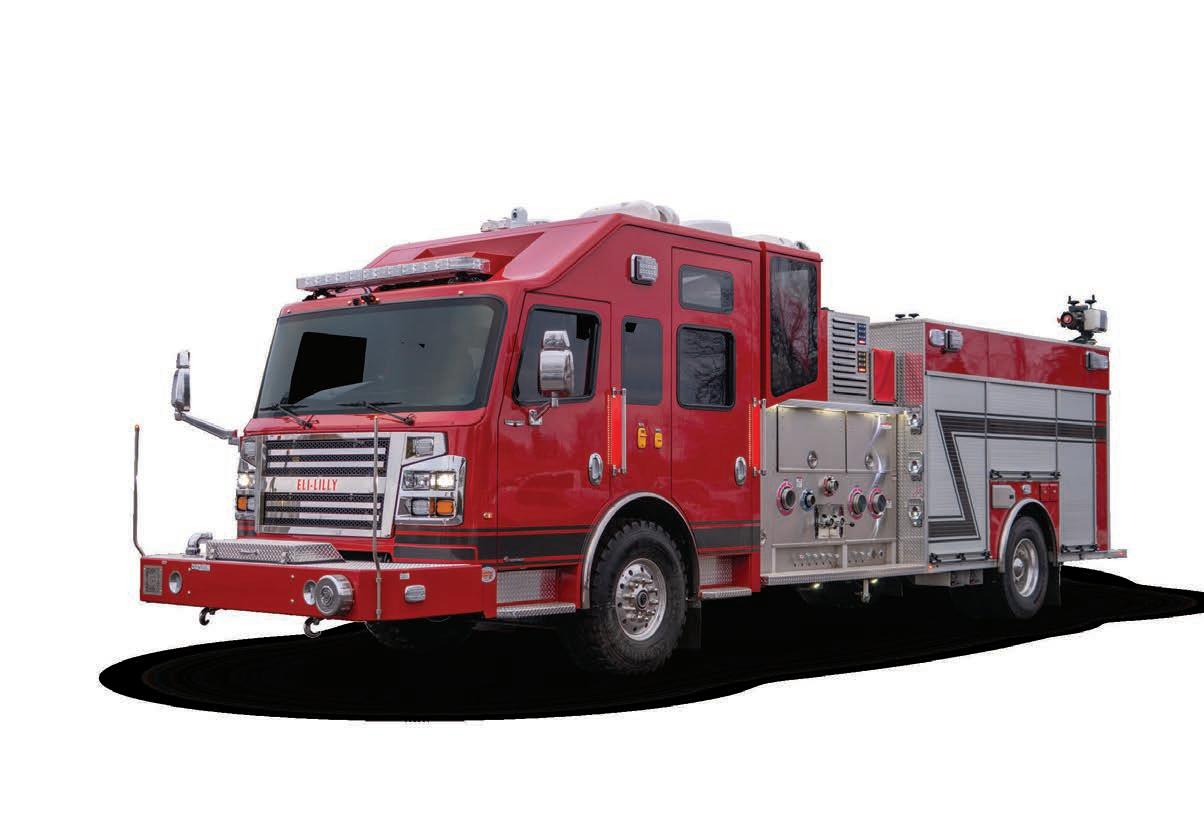
design. All Rosenbauer pumps are precision-engineered for the toughest fire ground conditions and built in our U.S. headquarters in Wyoming, MN. From compact pumps to high-volume and ultra-high pressure systems, our lineup delivers unmatched performance and application-specific solutions. Rosenbauer monitors deliver high volumes of water & foam solution at industry-leading distances.
Contact your local Rosenbauer dealer.





By Dave Robertson, Fire Chief
Municipal departments need to be ready for a broadening WUI landscape.
There is a broad gap between where Canada’s municipal fire service is and where it needs to be in the context of structure protection in the wildland urban interface (WUI). There’s no question efforts are addressing this disparity, notably by BC Wildfire Service and Alberta Wildfire, but it remains a systemic and an organizational culture problem. Operational silos between provincial fire services and municipal departments are real, entrenched, and beyond the scope of a single article.
Departments aren’t failing, the training infrastructure just hasn’t kept pace with a changed threat environment. The following article is not an attempt to solve the larger bureaucratic and cultural friction. It is an overview of the municipal WUI training gap and an offering of existing tools for chiefs and training officers to consider implementing to begin closing that gap designed to keep the conversation front and centre.
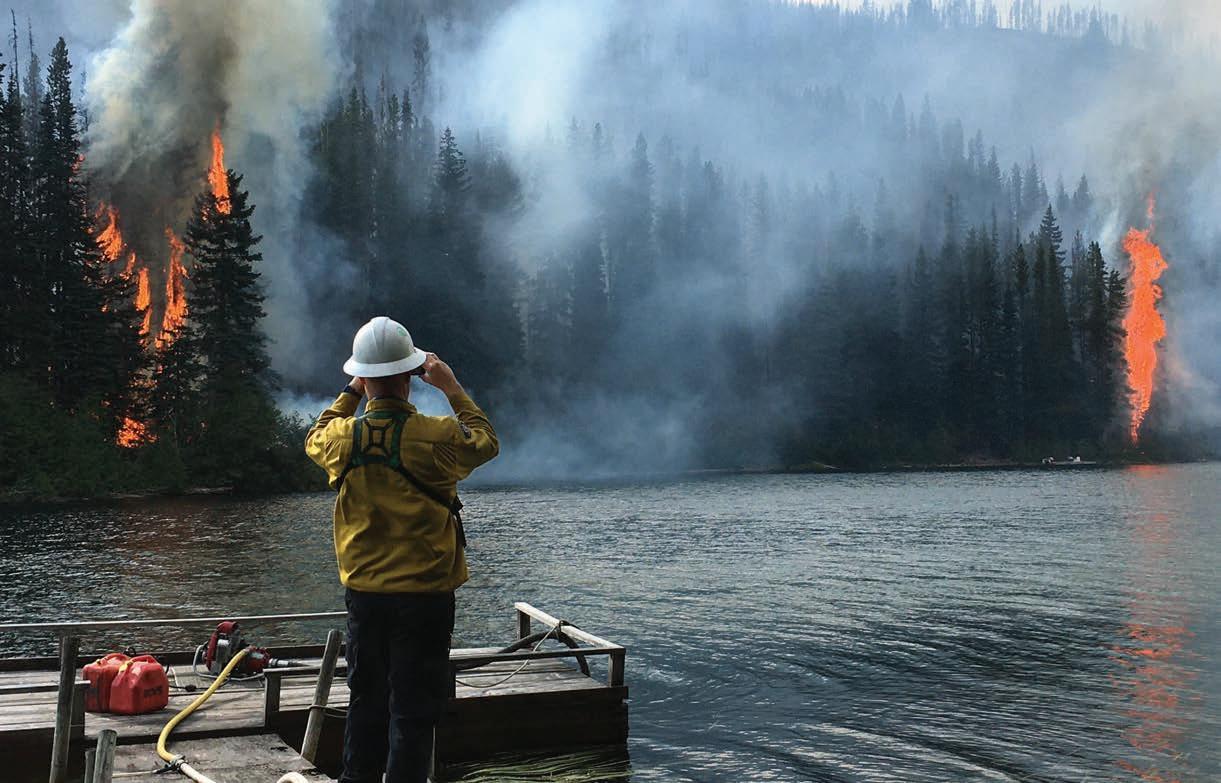
Training for fire in the WUI is critically important now, before the smoke shows. From Halifax to Lahaina, Yellowknife to Fort McMurray, stories of municipal departments Responding in the
Interface (RTI), and getting caught behind the incident curve when wildfire enters the town’s population centre are becoming more common. Responders are often finding themselves in that position without proper gear or training.
Even departments that aren’t wildfire-naive, like Jasper who faced the 2024 Jasper Wildfire Complex, or the crews that battled 2021’s Marshall Fire in Boulder County, Col., found themselves quickly outrun, outgunned, and outmanned when the fire jumped from the wildland into the WUI, moving from structure to structure.
These are not cautionary tales from distant places. They are operational previews that raise the question: Will Canadian municipal departments be ready when it happens?
Look at your own region’s potential for a WUI fire and investigate if there’s a standing protection agreement with a wildfire agency, like Ontario’s Ministry of Natural Resources’ Aviation, Forest Fire and Emergency Services (AFFES). Work closely with these agencies for those fires outside your municipality’s limits because they are your local subject matter experts on wildfire behaviour and mitigation operations. These agencies will prove invaluable when building out your department’s wildland training section.
In 2003, the Cedar Fire in southern California grew to over a quarter million acres, riding the seasonal Santa Ana winds with gusts of over 60 miles and hour and noted flame lengths of over 70 feet, reported the California Department of Forestry and Fire Protection. The Riverwood Estates neighbourhood sits on a ridge above a canyon and is surrounded by grass and chaparral (dense, woody shrubland) that had fully cured in a long-term drought. Homes lay directly in the Cedar Fire’s path.
As with many urban departments in America’s west, the Novato Fire Department was experienced and highly trained in wildland fire. Novato sent a crew, Engine 6162, to be part of a Task Force whose operations included structure protection in Riverwood Estates. Engineer Steve Rucker was part of the crew. Initially experiencing clear skies, moderate winds and a fire that at the time was upslope and upwind - a safe position relative to Engine 6162 - they then noted a significant wind shift,
increased windspeed, and an ignition below their position. Less than 15 minutes from what were initially a safe position, the fire “made a run”, moving from the bottom to the top of the slope, roughly a half mile, in just under two minutes. Throwing flame lengths of 40 to 50 feet, it overtook their position, forcing them to escape for their lives into a nearby house for shelter. Two of the crew members made it into the house. A third, the engine captain, was just moments behind them but suffered second and third degree burns. Steve Rucker, the last in line on the escape, got caught by the intense heat and was witnessed dropping to his knees, never to get up again. He never made it.
His line-of-duty death is shared here as a cautionary tale. Novato’s crew was familiar with structure triage and protection, and were working with several agencies within a formalized Incident Command System (ICS) framework. They were still overrun by a wildfire in the WUI. Canadian municipal agencies without all that support, existing in a legacy wildland fire culture, lacking wildfire-specific training or the right type and amounts of tools and PPE are getting set up for failure, possibly catastrophic. Though the fuel load, terrain and weather patterns differ in Canada from southern California, the fire behaviour can be just as unpredictable, volatile and lethal. This is why I’m pointing out the training gap.
At the 2024 Fire-Rescue Canada conference in Montreal, when provincial Canadian Association of Fire Chiefs (CAFC) representatives were asked what kept them up at night, they almost universally cited the multi-faceted wildland fire problem as what fueled their nightmares, and rightfully so. Recent history has clearly revealed that Canada’s wildfire landscape has become more threatening to population centres. Fuel loads are shifting and changing; weather patterns are driving drought; heat waves are more frequent, more intense and lasting longer; more heat drives more violent weather, more lightning, and stronger winds push fire forward; and changing social/cultural effects see a population growing outwards into our largely forest-covered country.
But as these patterns are relatively new, most Canadian departments don’t yet carry a wildland fire legacy. Building that legacy would
equate to having wildland instruction, drills and evolutions already on the annual training calendar. It would see wildland-specific PPE, tools and gear on the procurement schedule. It would drive conversations in the firehouse, realize plans for high wildfire season staffing, and wildland response SOPs or SOGs would be in place.
So, let’s start the legacy now.
The CAFC conference discussion noted a multi-pronged wildland fire problem: insufficient staffing, weak interoperability, inadequate municipal department wildfire knowledge, and lack of a national coordinating body. The picture it painted makes the case clear — training must be a priority. Making it a priority will lead to training content being current, robust and frequent. It may even open doors for a better joint training landscape with wildfire agencies.
If you’re advancing your department to either expand or update its current wildland training, know that it will be a broad task. You will need to use a third party subject matter expert to deliver training or take on the training yourself. If the latter is the case, it will involve advancing your own levels of wildland fire knowledge and possibly attending a train-the-trainer course. You will also need to coordinate with your respective wildfire agency, your local and provincial emergency management programs, and perform involved research with existing lesson plans, guiding documents, example SOPs/SOGs, etc. (see resources at the end of article). And, of course, there is also the time and effort behind your own lesson plan development and delivery. This training needs to land on the calendar not just where it fits, but where it is appropriate. There is a right time and place. You can’t train on ice rescue in July. Likewise, training for wildland in the middle of the wildfire season seems like an opportunity wasted and probably too late. Determining where it lands on the calendar depends on balancing against other priorities, like an incoming fire academy, or the anticipated fire season which is both defined and fluid (for example, long range fire weather and fuel load forecasts will alter this timing). The season is typically March to October, meaning training should land between November and February. Watch for
communication from your respective provincial wildfire agencies.
Training needs to include the fundamentals of wildland fire, structure triage and structure protection. For the fundamentals of wildfire, such as fuel, weather, terrain, tools and PPE, and the operations performed to mitigate wildfire, see the resources at the end of this article and contact your provincial/territorial agency to gather information and hopefully start moving towards joint/complementary training.
If wildland training is a priority, then training (and eventually responding) in the right gear, with the right tools, is an equal priority. Structural PPE was designed for a different fight: heavy, heat-retaining, and restrictive. WUI fire is outdoor work, physically demanding, and most often occurs during times of high outdoor temperatures. PPE that provides some thermal and environmental protection while also providing a level of agility is vital. Importantly, if crews train in structural gear, they’ll respond in structural gear. Training fidelity matters: Practice the way you play. Get the gear.
As part of your training considerations, anticipate the need for rehab, objections that may arise in the crew and existing mutual aid agreements.
As significant a task as this is, it’s the creation of a much needed, cannot be ignored, operational training legacy.
Structure triage is the rapid determination of what buildings to defend and which are not defensible. From the French military, it originally meant sorting or separating battlefield casualties to determine treatment priority. Adapted for first response, it’s in common use today, particularly in emergency medicine. As firefighters, START triage (Simple Triage And Rapid Treatment) in mass casualty incidents may sound familiar.
Structure triage is very similar, being the rapid determination of what buildings to defend and which are not defensible. Against specific criteria, it is the systematic evaluation of buildings threatened by wildland fire to determine which can be actively defended, which can have their immediate surroundings prepped and left, or which can be neither and are then abandoned. In essence it means choosing those buildings in a fire-threatened area that can be saved, ideally before the fire arrives.
Triage categories are typically split into three levels. Not-threatened means the area has a Safety Zone and TRA (Temporary Refuge Area). Building construction and/or defensible space make ignition unlikely during initial fire front contact. Threatened defensible means the area has a Safety Zone and TRA. Building construction and/or defensible space deems structure defense tactics during fire front contact required. Threatened non-defensible means no Safety Zone or TRA present. Structure has challenges that don’t allow firefighters to safely stay and protect the structure during fire front contact.
Verbiage and some specific tactics may differ region to region, but when considering operations there are commonalities:
• What is the fire behaviour in relation to the threatened structure(s)?: Get updates from involved agencies. A morning briefing (if a campaign fire), hourly and real-time are all important forecasts. Consider training on obtaining your own “spot” forecasts. Maintain situation awareness of the fire environment. Weather changes can immediately affect behaviour.
2026-01-28 8:08 AM
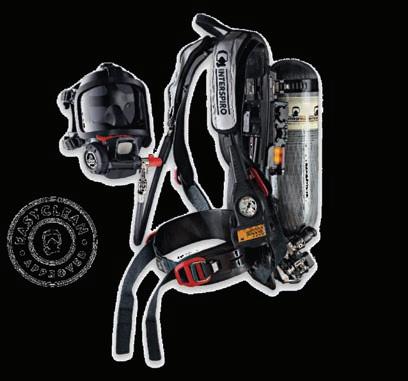
CANADIAN SAFETY EQUIPMENT IS PROUD TO BE A DISTRIBUTOR FOR THE INTERSPIRO RESPIRATORY PROTECTION LINE. THEIR STATE OF THE ART S9 INCURVE IS ONE OF THE MOST COMFORTABLE SCBAs YOU WILL EVER WEAR.
GIVE US A CALL AT 0182 OR EMAIL US AT INFO@CDNSAFETY.
No company has a richer history in respiratory protection than Interspiro. Their innovations have become industry standards, time and time again.


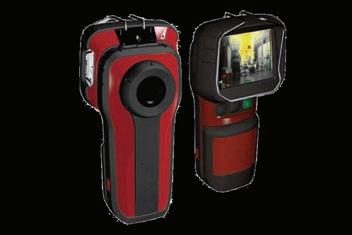
Themost advancedthermal imager for firefighting
Larger 3.5″ display for viewof the fire sceneand lightweightatjust830g(1.8
Extended dynamic temperature range to 1100˚C (2000 greaterscenedetail hotter fire scenarios
Enhanced feature setincluding laserpointer to aid communication, electronic compass for greaterscene awarenessandheat/coldseeker technology NFPA approved

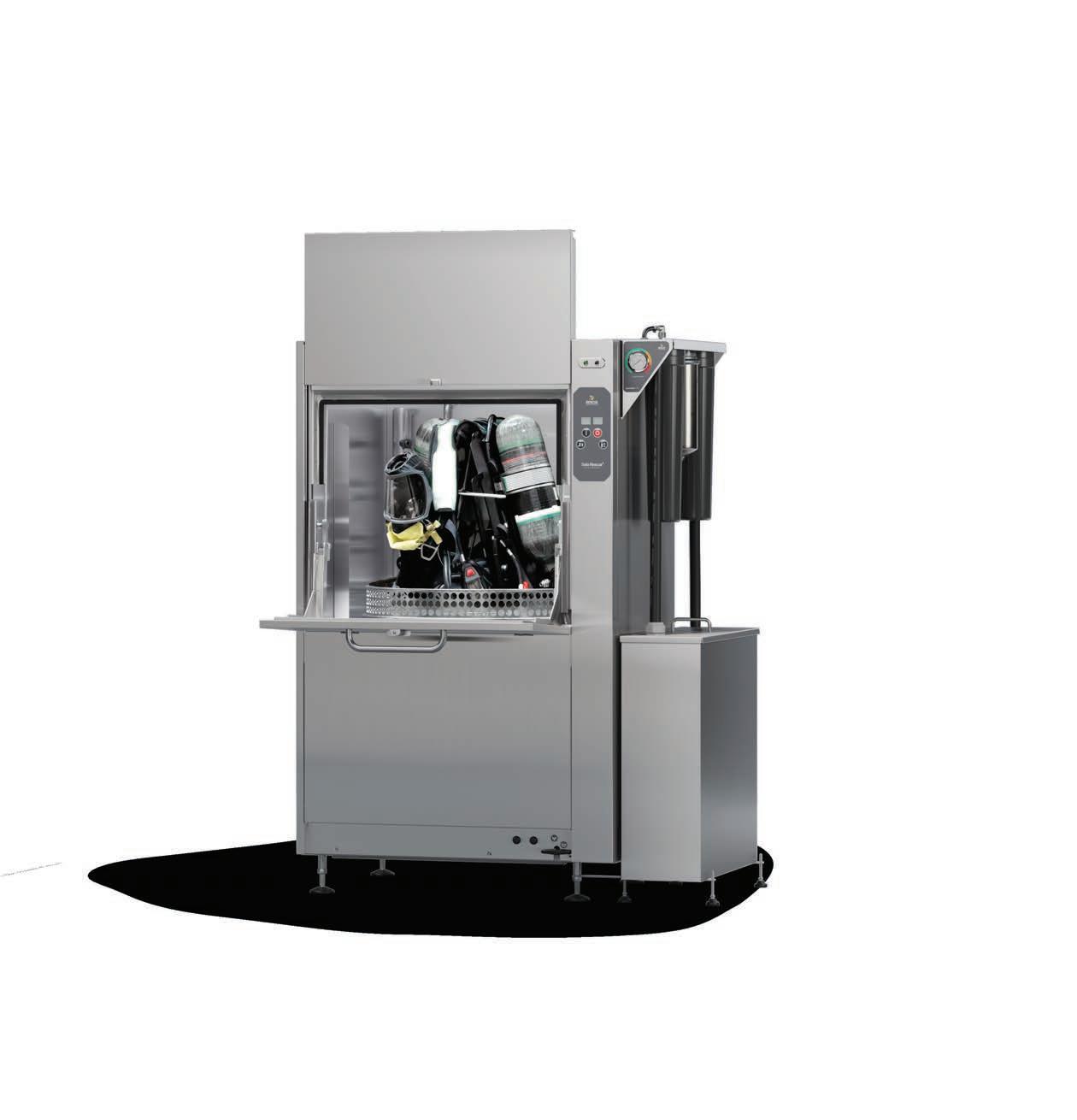
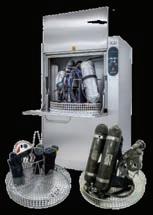
The Solo SCBA Decon/Washing machine was designed and built for one purpose only…to protect Fire Fighters from Cancer causing agents found in the Smoke and residue left on their SCBAs. As an added bonus it can clean Gloves, Boots and Helmets. In addition, it substantially lowers the time spent decontaminating firefighter equipment. The SOLO is the only SCBA decon machine that meets both NFPA and CSA standards (both Existing and Upcoming.

ü REDUCED HEALTH RISK
ü SAVES TIME 2/PKS IN 8 MIN ü EASY TO USE
Qualified by MSA, SCOTT, DRAEGER & INTERSPIRO for cleaning their SCBAs.
Five year standard Warranty
Ten Year limited Warranty

WASH/DECON TWO SCBAs





In 8 minutes. Also cleans, boots, gloves and helmets.








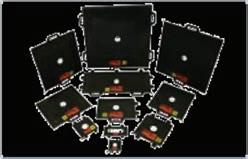
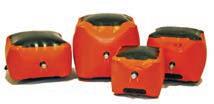

SLED WITH ICE RUNNERS RESCUE POLE TETHER LINE WITH REEL and more….






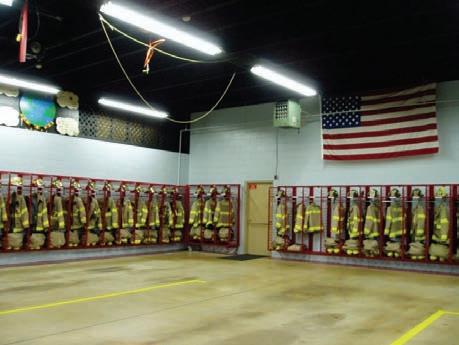
GEAR RACKS - HOSE RACKS & DRIERS- BOTTLE STORAGE – GEAR EXTRACTORS & DRIERS

Conflagration – “a raging, destructive fire,” a wildland fire with a moving front, further explained as “structure-tostructure fire spread” (or urban conflagration)
• Safety Zones and TRAs pre-planned and identified.
• Do comms work in that area? Do you have a lookout for real time fire behaviour?
• Are the property owners onsite?
• What is the building’s location, construction type, and proximity to impending/approaching fire? Proximity is also considered in direct relation to fire advance timelines. Age, materials, condition and proximity to approaching fire need to be factored in. Third party apps are emerging. ESRI’s “Survey123” is already available in B.C. to aid assessments.
• What resources are available? Are we putting personnel at undue risk? Consider number of apparatus, personnel, capabilities, mutual aid, access to water, and joint operations with other agencies.
• Does this structure’s area fit into the overall incident action plan (IAP)?
• Once triage is completed, is flagging, door marking or some other obvious indicator is attached to the property?
• Do you have enough time to protect the structure and potentially access Safety Zones and TRAs?
This is not a comprehensive list. The full and broad list of all operational considerations are available in the resources section below and would further be learned and trained on in formalized instruction and ongoing drills and training.
Once these factors are assessed and conditions support engagement, is the structure in fact protectable? Will the approaching fire be deemed too severe, fast moving or unpredictable to warrant protecting even a “protectable” structure?
Triage is a moving target that will change as the fire and its behaviour changes. Any change in fire behaviour can change whether a structure can be protected. Accurate fire behaviour forecasting is essential to effective structure triage and conducting safe structure defence operations.
Structure protection, or in wildfire agency parlance, SP, means taking asset protection measures well ahead of an approaching fire by,
for example, setting up sprinklers. In active WUI fire where structures are immediately threatened, SP means active structural fire fighting tactics altered for the WUI landscape.
Structure protection, also known as structure defence in the WUI, is the application of tactics, tools, and personnel to defend buildings from a rapidly advancing, and sometimes already present, fire. It’s a distinct operational discipline that sits at the intersection of both structural and wildland fire fighting.
Unlike structural fire fighting, which also requires constant situational awareness, the fire environment in the WUI happens at a fast pace, and the tactical working ground can also change at any time given changes in fire behaviour. The structure being defended can change as buildings are triaged and tactical priorities change, with crews going from one structure to another, moving with the fire or staying behind a house when the fire is passing over then moving into full suppression mode when it passes.
There are also the number of structures in the crew’s scope of operations (as opposed to the more typical one structure fire at a time), more physical movement of both personnel and apparatus around the fire area, and additional operational considerations such as moving against/around active evacuations and the tactical maneuvering of other crews.
The following operations are adapted from California’s FIRESCOPE (FIrefighting RESources of California Organized for Potential Emergencies) WUI Structure Defense framework. It was published in 2013 but built on decades of operational experience and are offered here as a baseline set of structure triage and defense tactics.
CHECK AND GO: Assess the structure quickly. Leave before fire front arrives. The crew evaluates and exits as time and conditions don’t support any prep work.
PREP AND GO: Some preparation of the structure can be completed before the fire front arrives, and then crews leave. No safety zone exists to support staying.
PREP AND DEFEND: A safety zone and TRA are present and there is enough time to prep the structure before the fire front arrives. Crews stay and actively defend the structure as fire front passes.
FIRE FRONT FOLLOWING: A tactic used after the fire front passes. Crews move in behind it to extinguish spot fires, hot spots, and ember ignitions around structures, and defend partially involved buildings.
BUMP AND RUN: Used when fire front impact is imminent. Resources move ahead of the fire front, extinguishing spot fires and protecting structures as they go, then leapfrog forward and repeat, continuously advancing to stay just ahead of the fire.
ANCHOR AND HOLD: Resources establish a defensible position and hold it. Used when fire behaviour and conditions support a stationary defensive stand.
TACTICAL PATROL: Continuous mobile monitoring of an assigned area before, during, and after the fire front. Key element is mobility. Though structures are lost after fire front passes, tactical patrol catches and extinguishes secondary ignitions.
Note: The first three are primary tactics and single-structure focused. The remaining four are secondary tactics with a broader focus, requiring more resources and coordination, and will shift as fire conditions change.
Critical to SP in this dynamic atmosphere is the element of agility and remembering of a key tenet: never get locked into a single plan of action. This means a continuous assessment of the fire and its potential, and continually identifying TRAs and Escape Routes.
There’s no question that both climate and social/cultural changes have the fireline expanding. This expansion is driven by more frequent and more intense fires along with society’s need to extend our neighbourhoods outwards. The WUI is growing and expanding into where we all live. Canadian municipal departments will most likely face wildland fire in the WUI. It’s an eventuality that is approaching quickly. It’s time to answer to that reality. Training is where that answer gets written.
This section provides resources to guide the training buildout for RTI. International Association of Firefighters Responding to the Interface. This is free training, funded by the Canadian government. A flyer and request for training can be found at https://www.iaff.org/wildfire/ training-canada/
Alberta’s Emergency Management Agency and Forestry Operations Branch created WUI guidelines to improve integration and interoperability for all emergency management stakeholders potentially having to respond in the interface. This is an excellent general and expansive guide: https://open.alberta.ca/publications/alberta-wildland-urban-interface-guidelines
BC Wildfire Service - Wildland Fire Operations & Safety – Student Manual. While it is a B.C.-based downloadable pdf that covers the course, it is an excellent initial training program that focuses on wildfire safety, terminology, suppression tactics, and tool use. https://www2.gov.bc.ca/ assets/gov/public-safety-and-emergency-services/wildfire-status/employment/wff1_manual.pdf

UL Solutions’ Fire Safety Institute (FSRI) provides an excellent, and free, online training course specific to structure triage in the WUI. https:// training.fsri.org/course/169/structure-triage-considerations-for-wildland-urban-interface-firefighting
Find national, provincial, and territorial contacts for training officers. Make sure you identify yourself, state your intent (joint training/ interoperability), and request connection to regional wildfire training or prevention personnel. FireEDGE Wildland Contact Sheet.pdf
FIRESCOPE Wildland Urban Interface (WUI) Structure Defense was revised in 2013 but remains a current reference point. Further updated info can be found through purchasing the 2022 Field Operations Guide (FOG), (with updated structure triage, structure protection guidelines) https://firescope.caloes.ca.gov/ICS%20Documents/WUI-SD.pdf
References
• National Wildfire Coordinating Group, “Conflagration,” in NWCG Glossary of Wildland Fire, PMS 205, last modified December 15, 2025.
• California Department of Forestry and Fire Protection. Cedar Fire Engine Crew Entrapment, Fatality, and Burn Injuries: Informational Summary Report (Green Sheet). Sacramento, CA: California Department of Forestry and Fire Protection, 2003.


• Novato Fire Protection District. Cedar Fire Incident Recovery Report. Novato, CA: Novato Fire Protection District, 2004. Page 5
• Canadian Association of Fire Chiefs. “New Data from Fire Chiefs Puts Safety of Electric Vehicles, Housing, and Climate in Question.”
• Environment and Climate Change Canada. “Canada’s Top 10 Weather Stories of 2025.” Government of Canada.
• FIRESCOPE. Wildland Urban Interface (WUI) Structure Defense. WUI-SD. California Governor’s Office of Emergency Services, October 21, 2013.
CANADA
BC (British Columbia)
AB (Alberta)
SK (Saskatchewan)
MB (Manitoba)
ON (Ontario)
QC (Quebec)
PE (Prince Edward Island)
NL (Newfoundland & Labrador)
NB (New Brunswick)
NS (Nova Scotia)
NT (Northwest Territories)
NU (Nunavut)
YT (Yukon)

356 Bishopsgate Road
Burford ON N0E 1A0
Tel: 800-254-2049
Toll free: 800-254-2049
Web: www.1200-degrees.com
Ontario’s exclusive E-ONE fire apparatus dealer, 1200 Degrees Ontario provides new and used apparatus sales, refurbishments, accident repair, maintenance, and parts support for all makes and models across the province. We represent leading fire equipment manufacturers including Holmatro Extrication/Shoring Tools, Dräger SCBA and Gas Detection, FLIR Thermal Imaging Cameras, Niedner Hose, F500 Encapsulator, Blowhard Fans, Haix Boots, Bridgehill Fire Blankets, and Fire-Dex PPE. We are the Akron Brass master dealer for Ontario, the Hale pump factory-authorized service team, DriveOn authorized, and more. 1200 Degrees Ontario is an industry leader in Annual NFPA testing, servicing all makes and models with expert mobile and in-shop service. Following a $6 million investment, 1200 Degrees Ontario now operates from a new, purpose-built facility at 356 Bishopsgate Road, Burford (Brant County), expanding service capacity, parts inventory, and sales to support fire departments across Ontario.

251 Queen St. S., Ste. 512 Mississauga ON L5M 1L7
Tel: 905-826-6682
Toll free: 866-735-1480
Fax: 866-511-6904
Web: www.airmation.ca
Air Technology Solutions is dedicated to our Clients, offering updated, timely, full service Indoor Air Quality (IAQ) solutions. Air quality concerns are mitigated using a unique combination of professional indoor air quality assessment coupled with solutions. Off the shelf or customized site specific air cleaning equipment is available to resolve IAQ issues. Our technical experts review client requirements and budgetary availability. The finest appropriate air cleaning systems are provided. Air Technology Solutions is a leader in Diesel Exhaust Remediation and is the ONLY environmental tested and proven filtration system to exceed standards: NFPA, NIOSH, OSHA and ASHRAE. Building and facility managers, business owners, contractors, architects, and engineers have been working with Air Technology Solutions since 1986 to resolve IAQ needs. Employee and personnel safety and health are key issues. Breathing safe air in the workplace is of utmost importance. We provide global customized solutions to control contaminants, pollutants and odours in your facility. We look forward to servicing your requirements.
Serving All of Canada
347 Corduroy Road
Vars ON K0A 3H0
Tel: 613-443-1911
Toll free: 855-539-1911
Web: http://www.battleshield.ca
Battleshield Industries Limited is proud Canadian, family-owned and operated manufacturer, providing solutions for those who serve and protect and has become a leader in the industry. Battleshield specializes in manufacturing pumpers, tankers, pumper tankers, pumper rescues, rescue units and refurbishments of any apparatus. It is equipped to provide on-site laser cutting and bending services to meet customers’ individual needs. It is a onestop shop for part sales, annual mobile pump testing, repairs, and preventative maintenance of all makes and models. Established in 2012 by a dedicated firefighter and with its highly specialized technicians (310T, 310S, EVT, CWB, CAN/ULC, pump and electrical technicians), full-time engineers, and 24/7 emergency service, you can trust Battleshield to provide the vehicles and support you need to perform your duties safely and effectively.
Serving All of Eastern Canada
927 Goldstream Ave
Victoria British Columbia V9B 2Y2
Tel: 778-404-7385
Web: protectapump.com
Since 2016 BearsPaw ProtectaPump from BC, Canada has been revolutionizing Rural & Wildland fire drafting from shallow natural water sources, even 6 inches—whether swamp or sand. SEPARATORS® shatter the restrictions of traditional strainers with their patented liquids/solids separation technology. Separators outperform strainers in both natural sources & dump tanks, serving as a perfect all-rounder for any water source. It safely drafts where strainers can’t. Finally shallow water works!
Protect your pump • Protect your crew • Protect your community Advanced Technology for Ultimate Water Access Info, Testimonials, & Quotes: ProtectaPump.com
Serving All of Canada
CANADA WILDFIRE TECHNOLOGY
8298 Forbes Street
Mission BC V2V6V1
Tel: 236-518-6554
Web: wildfiretechnology.ca
We provide wildfire prevention and protection solutions across Canada—from PPE to pumps and skid units. Our mission is to make wildfire response simple, effective, and safe for homeowners, business owners, first responders, and communities.
Serving All of Canada
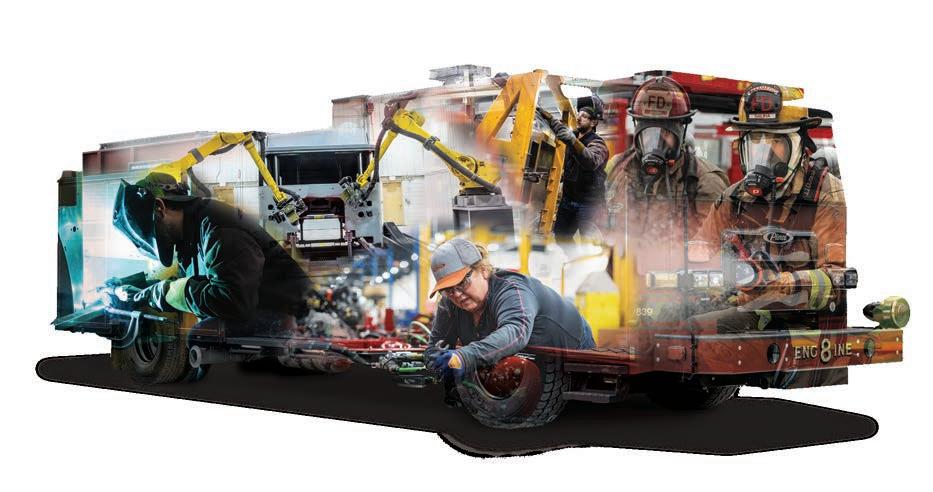
Advancing the fire service through innovation, connected solutions, and disciplined manufacturing.
The future of firefighting demands more—more speed, more connectivity, and more reliability. Pierce is driving that future forward by reimagining how apparatus are designed, built, and delivered. Through innovation, connected technologies, and investing in next-generation manufacturing, we’re setting the pace for urgency and excellence—today and for what comes next. The Future Isn’t Waiting. Neither Are We.


LEARN MORE: piercemfg.com/expansion
#3 – 2865 Argentia Rd.
Mississauga ON L5N 8G6
Tel: 905-826-2740
Toll free: 800-265-0182
Fax: 905-272-1866
Web: http://www.cdnsafety.com
We supply Industrial and Fire SCBA’s, SCBA Decon Washer, Thermal Cameras, CAF Systems, Fall Protection, Bunker Gear, Fire and Rescue and Ballistic helmets, Fire Hose, Communications Equipment, Nozzles, Fittings, Hazmat Suits, Ventilation Fans, Gas Detectors, Confined Space Rescue Equipment, Water and Ice Rescue equipment, Industrial and Municipal Safety and Lone Worker Protection systems.
38 Thibault St. Pierreville QC J0G 1J0
Tel: 450-568-7020
Fax: 450-568-3049
Web: www.thibaultfiretrucks.com
We are a Canadian based company and we manufacture a full line of fire apparatus which includes aerial ladders, pumpers, tankers, rescue units and vacuum tankers. We provide parts and other related products.
Serving QC
591 Chester Road
Delta BC V3M 6G7
Tel: 877-443-2626
Toll free: 800-665-6126
Web: www.comemerg.ca
Commercial Emergency Equipment is Canada’s expert supplier of emergency equipment. Commercial is the authorized dealer for Pierce, BME Fire Trucks, MAXIMETAL, Frontline Communications, and Oshkosh Airport Products apparatus from Ontario to BC including all Canadian Territories. Commercial is also the manufacturer of the FireLine Quick Attack series of Vehicles. With a 75-year history, 350+ employees across Canada in six main branches, and 270,000+ sq. ft. of combined production and service space, Commercial has an unmatched parts, service, training, testing, and support network for emergency apparatus.
Commercial provides its customers access to industry-leading service and support including mobile EVT’s, pump testing, annual inspections and maintenance, a significant stock of on-the-shelf parts, 24/7 emergency service and more. We warehouse an extensive inventory of OEM and aftermarket parts, tools, and equipment ensuring quick delivery and reduced downtime to our customers.
5651 Chemin St-Francois
St. Laurent QC H4S 1W6
Tel: 514-737-2280
Toll free: 866-737-2280
Fax: 514-737-2751
Web: www.cseis.com
We supply Industrial and Fire, SCBA’S, SCBA Decon Washers, Gear Extractors and Dryers, Thermal Cameras, CAF Systems, Fall Protection, Bunker Gear, Fire, Rescue and Ballistic Helmets, Fire Hose, Communications Equipment, Nozzles, Fittings, Hazmat Suits, Ventilation Fans, Gas Detectors, Confined Space Rescue Equipment, High Angle Rescue Equipment, Ice and Water rescue equipment, Boots and Gloves. Everything for Fire Fighting, EMS, Law Enforcement, Industrial and Municipal Safety and Lone Worker Protection Systems.
325 Spring Lake Drive
Itasca IL 60143
Tel: 630-735-3500
Toll free: 800-323-0244
Web: www.darley.com
You serve others. We serve you.™
Founded in 1908, Darley provides the highest quality pump, technology, and equipment solutions for first responders around the world. With origins in Midwest manufacturing, Darley offers a complete line of unmanned systems, immersive training technology, equipment and pumps. More information is available at www. darley.com.
Serving All of Canada
DRAEGER SAFETY CANADA LTD.
2425 Skymark Ave., Unit 1 Mississauga ON L4W 4Y6
Tel: 905-212-6600
Toll free: 877-372-4371
Fax: 905-212-6602
Web: www.draeger.com/en-us_ ca/Safety/Firefighting
With over 130 years of experience, Dräger is a trusted leader in firefighting safety equipment. Our portfolio includes SCBA, live fire training systems, fixed and mobile gas detectors, flame detectors, thermal imaging cameras, and drugs and alcohol testing equipment—all designed to keep first responders safe in the most challenging environments.
Contact us at +1 877-372-4371 or visit draeger.com to learn more. Our product services and technical training courses are available year-round at our Mississauga, Ontario, and Edmonton, Alberta locations. Schedule your SCBA and gas detector service today, and experience the quality and reliability that has been safeguarding firefighters worldwide for generations.
Serving All of Canada
PO Box 530, 105 Donly Drive S. Simcoe ON N3Y 4N5
Tel: 877-267-3473
Fax: 877-624-1940
Web: www.firehallbookstore.com
Firehall Bookstore is your headquarters for training & public education materials, providing resources to the Canadian Fire Service and its professionals. Products include textbooks, NFPA standards, and fire safety & prevention educational materials for community outreach. Product lines include: NFPA, IFSTA, Jones & Bartlett, Fire Engineering Books, Action Training Systems, Pearson, Exam Preps from Dr. Ben Hirst and more.
Serving All of Canada
FORT GARRY
FIRE TRUCKS LTD.
53 Bergen Cutoff Rd.
Centreport MB R4B 0A6
Tel: 204-594-3473
Toll free: 800-565-3473
Fax: 204-694-3230
Web: www.fgft.com
Fort Garry Fire Trucks is Canada’s oldest and largest manufacturer of high-quality fire apparatus, offering a complete line of pumpers, tankers, rescues, aerial devices, and custom-designed and engineered specialized units. With headquarters in Winnipeg, Manitoba, Canada, our customers emanate from cities, towns, and municipalities throughout Canada, the U.S., and abroad with the harshest weather, climates, and terrain. We have one of the largest fire apparatus engineering departments among our competitors, dedicated to designing and producing equipment for the most extreme conditions in the world. We are the exclusive Canadian distributor of Sutphen Corporation aerial ladders and platforms. We truly build ‘One Tough Truck’ and boast over 105 years of quality.
COAST TO COAST SALES AND SERVICE NETWORK:
Brian Nash — Vice President –Sales – bnash@fgft.ca
Toll-Free: 1-800-565-3473 (ext. 3471) Cell: 204-981-7845
Chad Kamminga — Service & Warranty – ckammin Serving All of Canada
FSI® NORTH AMERICA, A DIVISION OF FIRE SAFETY INTERNATIONAL INC.®
311 Abbe Road
Sheffield Lake, OH OH 44054
Tel: 440-949-2400
Fax: 404-949-2900
Web: WWW.FSINORTH.COM
FSI – Serving the Life Safety Market worldwide since 1997
FSI North America® is a Full line supplier of mobile, portable and fixed DAT® series hazmat decon shower systems that include traditional water/solution based decon from first responder to multi line mass casualty systems, electrostatic equipment only decon, and Far UVC 222nm Disinfection.
FSI® TEAS® (Temporary Emergency Air Shelters) shelter systems, offered in a broad range of size and configurations, for Command, Isolation, Drive Thru Flu/Covid Shot, Field Hospitals/ Alternate Care from 10-1,000 beds, Sleeping, Fire Fighter Rehab, and Temporary Morgues.
FSI® offers a complete range of Isolation Rooms, Shelters, and Bed/Chair systems.
FSI® also offers a complete range of sizes and configurations of Trailer Systems, Rescue Boats, and EMS supplies such as the FSI Transporter Disposable Backboards, Triage Tape Systems, FSI Medical Field Cots, Trauma Kits, and Mortuary supplies such as body bags.
Serving All of Canada


















818 Trakk Lane
Woodstock IL 60098
Tel: 800-991-2120
Fax: 815-338-8640
Web: www.readyrack.com
Since 1980, Groves Incorporated has been a leader in storage and transportation systems. After pioneering the open-air turnout storage system to support the fire and safety industry, Groves Incorporated expanded its Ready Rack product line. From storage racks to cleaning and drying equipment, to hose and SCBA storage, we take pride in providing the highest quality products to meet the demanding needs of our customers.
Serving All of Canada
505 McCormick Dr. Glen Burnie MD 21061
Tel: 410-768-9662
Fax: 410-768-4878
Web: www.holmatro.com
Holmatro is the world’s leading rescue equipment supplier. Our equipment is used by first responders around the world in rescue, special tactics and industrial applications. With two high-tech production plants in North America and Netherlands, we maintain the strictest quality, safety and performance standards in the market.
At Holmatro, we are dedicated to developing innovative tools using leading technology. Our Pentheon Series is the newest line of battery powered equipment that offers users the unrestrained performance, unparalleled speed and ultimate control you have never experienced before. And with battery management made easy, you are always rescue ready!
To see our newest products, schedule a demo and request more information, visit holmatro. com. You can count on us, for life.
Serving All of Canada
3175 McCallum Rd.
Abbotsford BC V2S 7W5
Tel: 604-859-3124
Toll free: 888-611-2896
Fax: 604-859-5821
Web: hubfire.com
Our ongoing mission is to build quality and drive trust. Since 1959, our commitment to delivering the highest performing fire-rescue vehicles in Canada is guided by our pursuit of firefighter safety and efficiency. Our renowned customer-centric focus is provided through an experienced and dedicated team of in-house designers, fabricators, and finishers. Everything that bears the Hub name is purpose-built to achieve the highest possible standards and deliver maximum lifecycle value.
2359 Fiset Blvd
Sorel-Tracy QC J3P 5K2
Tel: 450-743-3918
Fax: 450-743-3906
Web: www.industrieslafleur.com
Fire rescue trucks (walk-in and non walk-in rescue trucks)
Custom truck bodies
High quality since 1969
ISO 9001
CWB 47.1 & 47.2

62 Bradwick Dr., Vaughan ON L4K 1K8
Tel: 416-602-0404
Web: www.kochek.com
sales@kochekcanada.com
Robin Lewis, Customer Service
laura@kochekcanada.com
Laura Kenyon, Regional Director
Serving All of Canada

140 Roy Blvd
Brantford ON N3R7K2
Tel: 519-753-6717
Web: www.kuritec.com
Kuri Tec, located in Brantford, Ontario, Canada, is part of the Kuriyama Group of Companies founded in 1939. Since 1984, Kuri Tec has provided quality hoses and accessories through a strong distributor network across the Canadian market.
Kuriyama Fire Products, a division of the Kuriyama Group, has been a trusted supplier of fire hose, fire nozzles, and fire accessories to firefighters worldwide for over 50 years. We offer equipment tailored to Municipal, Industrial, and Forestry firefighting needs, all designed to meet the highest standards of safety and reliability through NFPA and ULC.
With an extensive product line that includes fire hoses, nozzles, and accessories like fire backpacks, we strive to deliver the best solutions for every firefighting situation. Whether it’s industrial, specialty, or firefighting applications, Kuri Tec provides top-quality products and exceptional service.

9345, 25e Ave
Saint-Georges, QC G6A 1L1
Tel: 418-228-6637
Toll free: 800-510-6337
Fax: 418-228-0493
Web: www.maximetal.com
MAXIMETAL, an Oshkosh Corporation company, is a dynamic, innovative company with 40 years’ experience designing and building optimized intervention vehicles for Fire & Emergency as well as Power & Utility customers.
OUR MISSION: To support those who keep our families safe and comfortable by designing and building vehicles that stand out for their quality and ingenuity.
MAXIMETAL is represented by Canada’s most robust apparatus dealer network, coast-to-coast. Find your dealer here: www.maximetal.com/find-a-dealer/ Serving All of Canada

MERCEDES TEXTILES LTD.
Montreal QC
Tel: 514-335-4337
Fax: 514-335-9633
Web: www.mercedestextiles.com
For over 45 years, Mercedes Textiles has proudly delivered the most innovative and reliable water delivery systems to the firefighting community. From hoses & couplings to portable pumps, municipal to forestry, we put our technology where your courage is.
FIRE HOSE & COUPLINGS:
• KrakenEXO® – The most advanced UL-listed attack fire hose on the market – weighs less, kinks less, flows more water, beats the heat
• MegaFlo® Breather – Large volume attack & supply hose designed for fastest deployment, easiest recovery & best packability
• Highwater Hose Inc. – We offer of a wide range of rubber-covered lightweight, lay-flat & industrial hoses via our partner brand
• Many hoses available with iReflect® & WAYOUT® couplings and iDentify® Coding System – all manufactured under one roof, customized to your specifications, & NFPA 1961 compliant
• Best warranty on the market: 2-year All Hazards, 10-year manufacturing defects & Lifetime against delamination (2-10-L)
POWERFUL FIRE PUMPS:
We are a leading manufacturer of high pressure, lightweight, portable fire pumps for forestry & municipal fire applications. When you need water, we deliver.
OUR DISTRIBUTORS: www.indsales.ca – Labrador www.cumings.ca – NB, NL (MINUS LABRADOR), NS, PE www.larsenal.ca – QC www.municipalequipment.ca –S/S.E. ONT www.transcanadasafety.ca –N/N.C. ONT www.soucisalosafety.com – N/N.C. ONT
www.realsafety.ca – MB www.wfrfire.com – BC,AB,SK,YT,NWT

5865 McLaughlin Road Unit 1 Mississauga ON L5R 1B8
Tel: 905-712-0722
Web: www.nederman.com
With over 80 years of experience and well over 100,000 installations, Nederman offers diesel exhaust extraction systems designed specifically for emergency and fire vehicles. From the planning and design stage to installation, commissioning and maintenance support Nederman is your clean air partner.
Nederman Magna Systems reliably capture 100% of dangerous diesel exhaust emissions with source capture technology that prevents fumes from traveling throughout the station. Exhaust fumes are removed right at the tailpipe – the most efficient method. Our system design supports ergonomic attachments and quick-release when speed is required for fast station exits. Magna Systems have no coiled hoses or loops and saves space between trucks.
Nederman’s wide variety of product solutions are trusted at thousands of fire stations around the world with high quality construction and exceptional performance that maximized protection.
Serving All of Canada
NFPA
c/o Firehall Bookstore, PO Box 530, 105 Donly Dr. S. Simcoe ON N3Y 4N5
Tel: 877-267-3473
Fax: 877-624-1940
Web: www.firehallbookstore.com
Canadian distributor for NFPA standards, Fire Prevention Week™, Sparky the Fire Dog® and other public education items.
Serving All of Canada
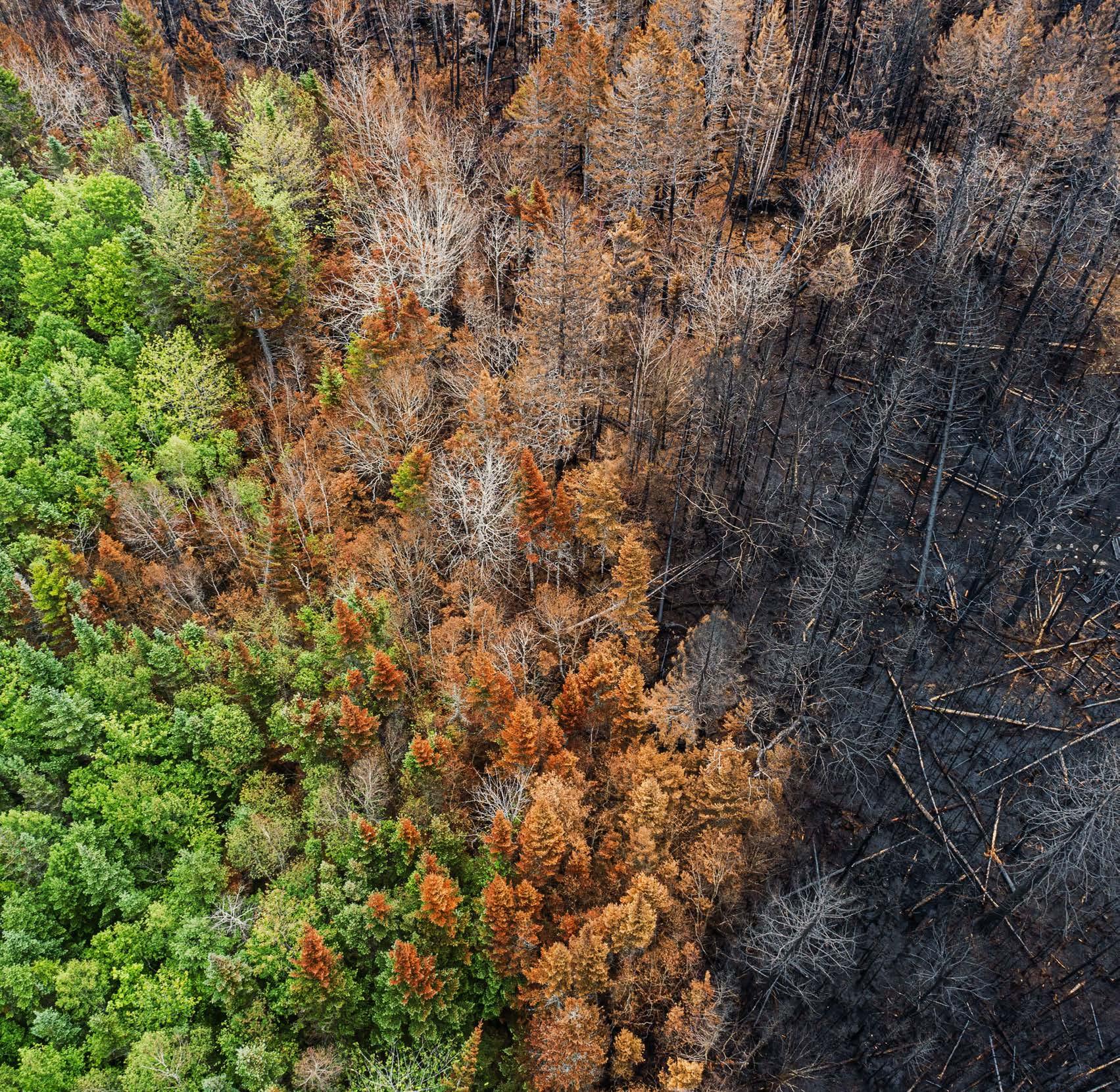

1397 Old Hwy. 99
Dundas ON L9H 5E3
Tel: 905-628-3324
Toll free: 800-474-6698
Web: www.ontariofiretruck.com
Ontario Fire Truck Inc. is Ontario’s first choice for Fire Apparatus Service & Sales. We are your first and only call for Fire Apparatus Service, Sales & Testing! We offer you the finest repairs in the industry; we offer a 24 hour, 7 days a week service. All of our service staff is fully licensed Class “A” & “T” both provincially and EVT certified. We are fully insured and have over 30 years experience combined to provide the best service at your location. Our fully stocked mobile service trucks travel all over Ontario! Why take your truck anywhere, we come to you for both Service and Testing! Our Sales staff has over 70 years combined experience in the fire industry, we offer only the finest Seagrave fire apparatus, and Our Company believes only the best will do! We are the authorized sales and Service Company for Seagrave fire apparatus and equipment companies. “The bitterness of poor quality remains, long after the sweetness of low price is forgotten”
Serving All of Canada
9485 Garrard Rd. N.
Ashburn ON L0B-1A0
Tel: 905-244-4720
Advanced fire and smoke suppressant designed for rapid knockdown and enhanced scene control
PFC-free, non-toxic organic formulation that absorbs heat and reduces smoke and toxic fumes
Leaves fuel inert and can be used as a pre-treatment, providing a tactical advantage in fire prevention
Water-based additive compatible with existing equipment no change to operations required
Not a foam or gel — no blanket breakdown, delivering consistent performance in dynamic conditions
Effective across Class A, B, and D fires
Supports firefighter safety by reducing exposure to harmful byproducts and improving visibility on scene
Does not interfere with arson investigations
Long shelf life (5 years) with easy storage and handling
Reduces water usage and overall operational costs
Sustainable solution supporting environmentally responsible fire suppression
Approved by the U.S. Department of Agriculture, U.S. Forest Service, and U.S. Department of the Interior
Contact Michael Bellon - Go in with more confidence using Pyrocap!
Serving All of Canada
7215 Gateway Court Manassas VA 20109
Tel: 346-464-8050
Toll free: 571-650-2500
Web: www.rescueintellitech.com/ en-us
Rescue Intellitech, part of Sandberg Development Group founded in the 1960s, is dedicated to protecting firefighters by reducing exposure to harmful contaminants. Our integrated decontamination solutions—including the Solo Rescue® decon washer, DeconFilter™ Pro S, Puro® C87 detergent, and drying cabinets—help departments clean critical equipment effectively, reducing cancer risk and enhancing operational readiness. Developed and tested in collaboration with firefighters, our solutions are built for real-world conditions. Both the Solo Rescue® and Puro® C87 are third-party tested to meet NFPA 1850 standards, reinforcing our commitment to safety, performance, and compliance. With precision manufacturing and rigorous quality control, we deliver reliable solutions trusted by departments worldwide. Other innovative companies in the group include AIMPOINT®, GAIM®, NORDISK® and Camurus®.
Head Office: 200 Logan Road, Unit 3
Bridgewater NS B4V 3J8
Tel: 403-347-7045
Toll free: 800-494-4210
Fax: 403-347-7049
Web: www.rockymountainphoenix. com
Rocky Mountain Phoenix is your one-stop-shop for top-of-theline innovative fire truck and fire equipment products and services. We offer a comprehensive line of emergency apparatus and emergency equipment, brands you know and trust; Rosenbauer, MSA, Innotex, CET Fire Pumps, HURST Jaws of Life, Akron Brass, Haix, Key Hose, MSA Cairns, Task Force Tips, Ready Rack, Firecraft and many more. We service what we sell. We provide 24/7 service for all your emergency fire apparatus and fire equipment through our Shop Service and Mobile Service.
Annual fire pump testing, fire truck and fire equipment service and repairs for British Columbia, Alberta, Saskatchewan, Manitoba, Nova Scotia, PEI and all of Canada’s Arctic.
Visit Us: www.rockymountainphoenix.com
BRANCHES: 103-2285 Queen St. Abbotsford, BC V2T 6T3
Tel: 604-864-7303 | Fax: 604-8644938 | Toll Free: 1-888-815-0500
200 Logan Rd, Unit 3
Bridgewater, NS B4V 3J8
Tel: 1-844-530-4003 | Serving
ROLLNRACK
PO Box 328
Mukwonago WI 53149
Tel: 262-363-2030
Web: www.rollnrack.com
THE ROLLNRACK HOSE MANAGEMENT SYSTEM will streamline your hose management operations with a priority on safety and efficiency. The Power Roller can drain and roll a 100’ length of LDH in under 30 seconds and can be used on ALL hose. Heavy LDH rolls are rocked into or out of the unit. All hose is loaded with just two firefighters onto stationary rigs. Our Efficiency Package saves you money. The new Power Roller EXPRESS drains and rolls 3” diameter hose and smaller. The FASTBACK is a manual roller for attack line. The ROLLNRACK SYSTEM improves a firefighter’s quality of life immediately. MADE IN THE USA
Serving All of Canada

1775 Meyerside Drive, Unit 11-12
Mississauga ON L5T 1E2
Tel: 905-564-7900
Toll free: 877-572-0040
Web: www.firetrucks.ca
From our beginning in 1993, Safetek Profire set out to be a different kind of company. One that honoured and celebrated our customers. Get to know us and you’ll soon discover that our passion is to serve.
We are proud to represent some of the most recognized fire-rescue vehicle brands including: E-ONE, EVI, Hub Fire Engines, Iturri, KME, Ladder Tower, Smeal, Spartan, and SVI.
OUR MISSION:
Serving Those Who Keep Our Communities Safe.
* Not all brands are available in all regions.

3842 Redman Drive
Fort Collins CO 80524
Tel: 970-297-7100
Fax: 970-297-7099
Web: www.supervac.com
A one-stop shop for all things ventilation, Super Vac offers the largest lineup of PPVs, spanning from 8- to 80-inch blades, as well as smoke ejectors, rescue saws, rehab misters, smoke curtains and more. Super Vac’s lineup includes its popular battery fan that works with DeWalt, Makita, Milwaukee and HURST batteries.
Serving All of Canada
3842 Redman Dr. Fort Collins CO 80524
Tel: 970-297-7100
Toll free: 888-784-1112
Fax: 970-297-7099
Web: www.svitrucks.com
SVI Trucks, a Super Vacuum Manufacturing Company located in Fort Collins, Colo., builds custom fire apparatus, including rescue trucks, hazmat units, command vehicles, fire engines, tanker trucks, law enforcement vehicles and more. To see SVI’s full fleet, visit svitrucks.com. To browse drawings, features and specifications of a truck, visit SVI’s Apparatus pages and click on any truck image.
Serving All of Canada

10805 Rancho Bernardo Rd, Suite 200
San Diego CA 92127
Tel: 519-820-7751
Toll free: 877-944-6372
Fax: 858-487-8762
Web: www.vectorsolutions.com
Vector Solutions for Fire & EMS is the leading Unified Agency Readiness Platform helping fire and EMS agencies save time, streamline operations, improve performance, and achieve measurable outcomes. Our solutions help agencies improve their readiness goals through industry-leading training management systems, online training courses, live skill evaluations, policy management, truck checks and PPE/asset management, shift scheduling, critical incident and exposure tracking, academy automation, and auto-reporting to state standards and training systems. Trusted by more than 10,000 public safety agencies and 2 million first responders, Vector helps departments achieve operational excellence. Learn more at vectorsolutions.com/fire.
Serving AB|ALL|BC|MB|NB| NL|NS|NT|NU|ON|PE|QC|SK|YT
6635 Henri-Bourassa W. Montreal QC H4R 1E1
Tel: 514-637-1818
Toll free: 855-616-1818
Web: www.waterax.com
Trusted by wildland firefighters around the world, WATERAX sets the industry standard by developing innovative, portable fire pumps and water-handling equipment designed to withstand demanding applications and rugged environments. With a time-tested legacy of reliability, WATERAX carries on its mission to place powerful, precision engineered pumps into the hands of the men and women who need to move water to protect our forests and most cherished natural resources from the ravages of wildfires!
A Modern Pump for the Modern Firefighter - Maintaining the tradition while moving technology forward: the MARK-3® Watson Edition plugs right into your existing MARK-3® water-moving systems. It will set a new benchmark of excellence for high-pressure fire pumps in the wildland firefighting community for generations to come. The MARK-3® Watson Edition is an entirely new platform that boasts exciting modernized features including the first ever purpose-built engine for a wildland pump.
Serving All of Canada
125 Hardman Ave. S.
South St. Paul MN 55075
Tel: 651-450-5000
Fax: 651-450-5090
Web: www.waterousco.com
C.H. Waterous started Waterous Engine Works Company in 1844 in Brantford, Ontario and then expanded to South St. Paul, Minnesota in 1886. Since then, Waterous has been the leader in the manufacturing of fire pumps for our everyday heroes. At Waterous, we have been and always will be firefighters.
Serving All of Canada
129-7155 57 St. SE
Calgary AB T2C 5W2
Tel: 403-279-0400
Toll free: 800-561-0400
Fax: 800-561-0400
Web: www.wfrfire.com
WFR Wholesale Fire & Rescue
Ltd. is a proudly Canadian, independently owned supplier of firefighting and rescue equipment for municipal, wildland, and industrial teams across the country. Since 1986, we’ve focused on combining reliable products with knowledgeable, down to earth service—helping responders get the equipment they need with confidence.
As a stocking distributor supported by a trusted network of manufacturers and suppliers, we offer access to thousands of proven products, along with responsive quoting and accurate, dependable order fulfillment from a team that knows the work you do. To make purchasing easier and budgeting clearer, we also provide a priced online catalog so customers can create quotes and place orders anytime. Paired with our in house support, this creates a straightforward, reliable experience from the moment you start a quote to the moment your equipment arrives.
Serving All of Canada

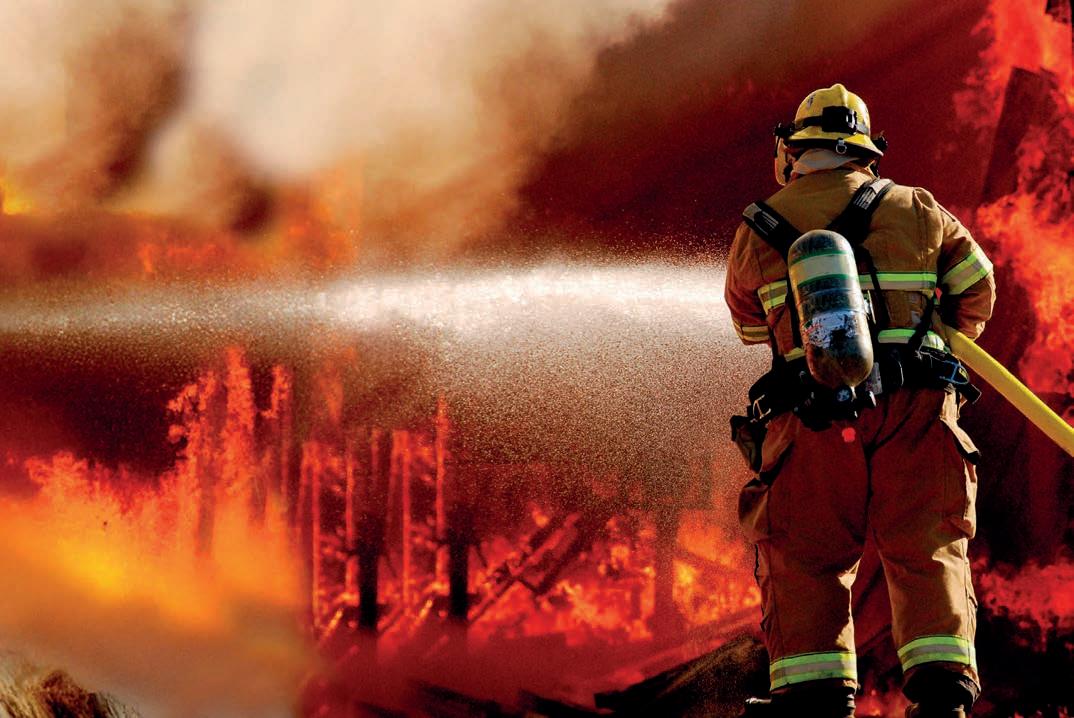
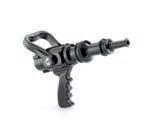



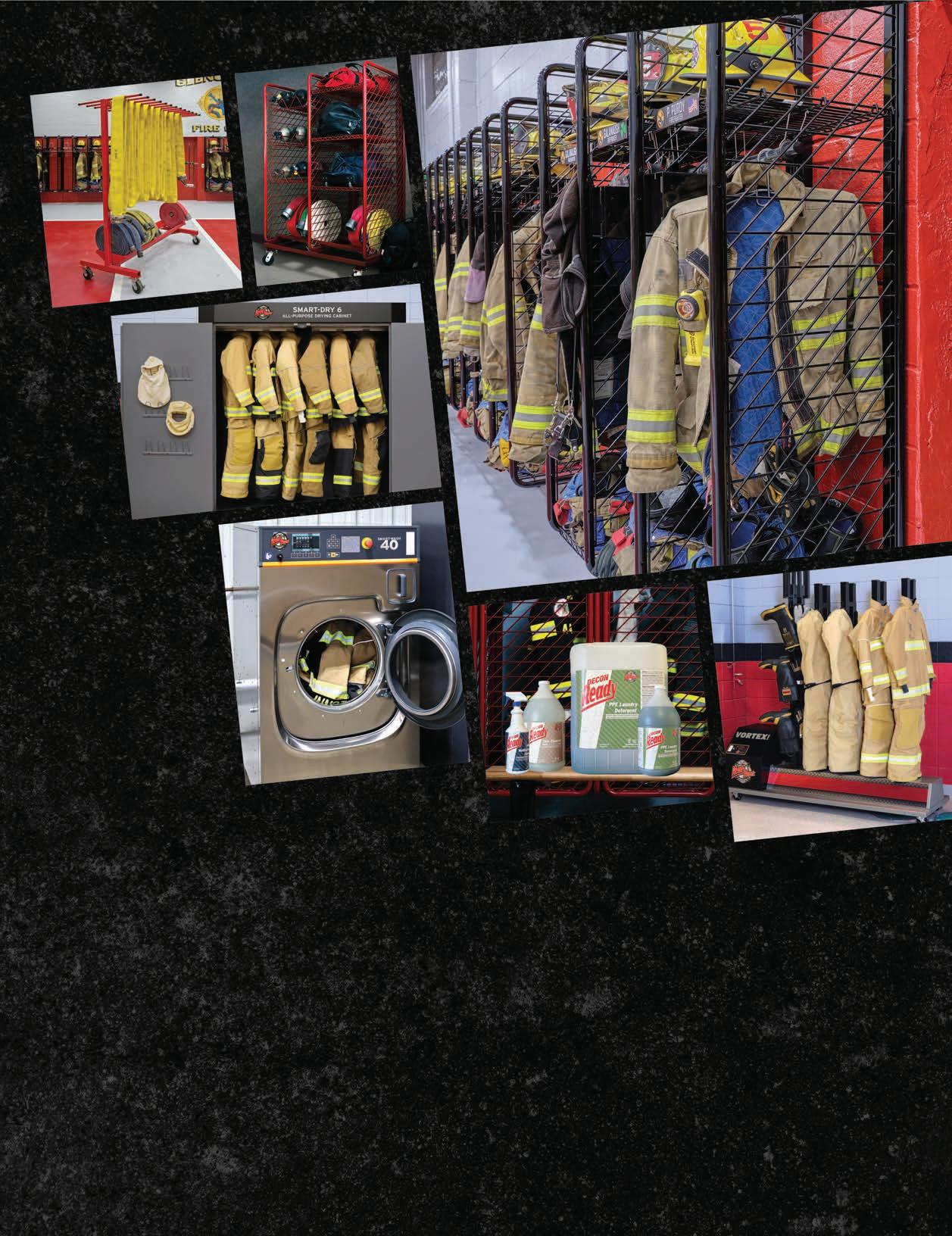
By Stephen Hilton, Firefighter and Certified Instructor
Stephen Hilton has 21 years in the fire service. He is currently working for the London fire department as a firefighter. He is a certified level II fire instructor working for Firestar Services and is a certified instructor with the IAFF Fireground Survival Program. He is a member of his department’s peer support team. You can reach Stephen at hilts6ff@yahoo.ca.
Modern fireground search and rescue procedures remain among the most dangerous and critical tactics performed by firefighters. The primary function or mission of any structure fire response is life safety, and search and rescue operations often place fire crews in a high risk, low visibility, and possibly rapidly changing environment. Since today’s fires burn faster and buildings fail sooner due to light weight construction and unpredictable fuel loads, traditional search and rescue methods alone are not always sufficient.
VEIS has materialized as a highly effective, targeted search and rescue tactic designed to rapidly locate and remove one or more victims while improving firefighter safety and survivability. When VEIS is performed correctly, it allows firefighters to access areas that may be cut off by fire conditions and conduct a focused search and rescue under more controlled conditions. Here are the steps that comprise the acronym.
VENT: Create an opening for access to the fire structure, usually a window. This is done deliberately, with coordination, because venting changes fire behaviour and flow paths. Always clear glass completely and remove any obstructions using a hand tool like a NY Roof Hook.
ENTER: Make entry to the room through the created opening (window). Entry is typically into a targeted room, often a bedroom, and entry is usually made headfirst, using a ladder to help gain access into the window.
ISOLATE: Control and close the door between the room and the rest
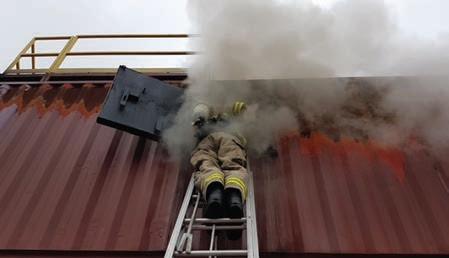
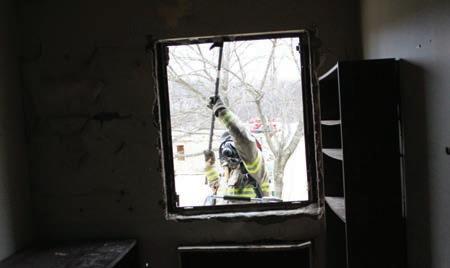
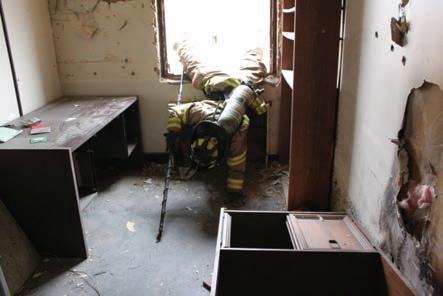
of the fire structure immediately. This will isolate the room from heat, smoke, and fire flow paths. Greatly improving survivability for both victims and firefighters.
SEARCH: Conduct a rapid, thorough and systematic search and rescue of the isolated room. If a victim is found, removal is usually back out the same window.
Unlike traditional search and rescue methods that usually begin at the entry point and move inward, VEIS targets the high probability victim locations, most commonly bedrooms. Entering from the exterior is a tactic that is especially valuable when interior conditions prevent fire crews from safely reaching those specific areas. Modern day furnishings produce higher heat release rates and reach flashover more quickly than your legacy materials. Victims may be overcome in minutes, making rapid access to sleeping or refugee areas critical. Fire conditions, collapse hazards, or delayed hose line deployment and placement can make traditional interior search unsafe or impossible. VEIS allows crews to avoid and bypass those potential hazards.
By isolating the room from the flow path, VEIS limits the heat, smoke, and toxic gases, creating a more tenable environment for both the victims and firefighters.
Vent: The ventilation of the room is performed deliberately and for a specific purpose, not to just simply remove smoke, fire and toxic gases. Key considerations during the ventilation process include confirming that the window being breached belongs to the
correct and intended room, not a window to a hallway; be sure to always communicate to Incident Command before venting and be aware of the fire location and any potential flow paths. Be sure to clear the glass completely and remove all obstructions. Always remember that uncoordinated ventilation can intensify fire conditions, so timing and communication is essential.
Enter: The firefighter making entry is typically headfirst to stay low from heat, toxic gases and to hopefully have better visibility while searching. Best practices when entering mean always maintaining three points of contact and carrying the following essential tools — hallagen or roof hook, thermal imager, radio, and a flashlight. Control your body position when entering to quickly retreat if conditions change rapidly.
Maintain orientation with the firefighter at the window. The window is your lifeline, never lose the location of it.
Isolate: Isolation is the most critical task of the four skills of VEIS. Once inside the room, immediately locate the door and close it. But, before closing the door, perform a quick and rapid search in the hallway for any potential victims outside of the room. Hook one foot around the door jamb to maintain constant contact of the door and room while performing the rapid search.
Search: With the room isolated, firefighters conduct a rapid, systematic search of the room. The search priorities should be beds and sleeping areas, closets and behind doors. Along walls and any egress paths. The search should be performed methodically starting at the closed door and working your way around the room until you are back at the door to complete a full search of the room. The search should be done as a oriented search, meaning a firefighter is in the room performing the actual search while the second firefighter should be located at the window assisting the searching firefighter by using the thermal imager to help search the room for any potential victims, to keep constant contact with the searching firefighter, and for situational awareness. Always keep in constant communications with Incident Command of any changes or immediate findings. If a victim is found, removal should be coordinated with outside fire crews immediately.
Please remember that VEIS is not a replacement for traditional search and rescue, it is a complementary tactic used when conditions dictate.
VEIS carries inherent risks and should always be executed with discipline and knowledge. Always maintain situational awareness of the searching firefighter and flow paths. Monitor fire behaviour continuously. Always complete your 360 size up and have a knowledge of possible fire locations and awareness. Make sure to have an egress plan and always communicate and stay in contact with Incident Command. Never freelance. VEIS must be assigned to a fire crew and coordinated. A poorly executed VEIS can make conditions worse and put the searching firefighter in a dangerous situation.
To achieve successful VEIS operations, the department should have clear departmental SOPs in place on what should and shouldn’t be done. All firefighters should know and be trained in fire behaviour, how to
read smoke, the importance of door control (how and why to use it), how to apply ladder placement at a window to practice entry, and egress techniques. It is very important to get regular and repetitive hands-on training to master the skills. To achieve and get the most out of this tactic, fire departments should train VEIS under the most realistic conditions possible, which includes using a training tower/ building with live fire and heat, smoke, and stress to build the competence and confidence required for each firefighter.
VEIS is a proven, lifesaving tactic that reflects the realities of modern fire behaviour and building construction. VEIS is a targeted, high risk/ high reward tactic which is designed to help save civilian and firefighter lives. When used appropriately, it allows firefighters to quickly and efficiently access high priority and dangerous flow paths, and execute a rapid, systematic survivable search. Like all fireground tactics, VEIS demands and requires discipline and coordination. When all these elements are present, VEIS becomes a potential and effective tool in the fire services’ mission to protect life, both civilian and firefighter.
Stay safe and keep training!
Do you have ideas for articles on training in your fire department that you’d like to see in the pages of Fire Fighting in Canada? Please reach out to Laura Aiken, editor, at laiken@annexbusinessmedia.com.
By
Fire Fighting in Canada associate editor Jacob Munro spoke with St. Catharines Fire Chief Dave Upper about his Ontario Association of Fire Chiefs’ Fire Chief of the Year recognition, his recent accomplishments, and leadership growth. Upper was presented with the award in January at the 2026 OAFC Hicks Morley Labour Relations Seminar in Toronto. The award is presented annually to fire chiefs who exhibit exceptional leadership, dedication, and make a profound impact on their communities.
Q: First off, congratulations on winning the Ontario Fire Chief of the Year award from the OAFC. What does the win mean for you personally and professionally? Thank you. It was very surprising, but I’m very honoured and very humbled to receive the award from a professional perspective. I think it just shows what a great leadership team that we have in St. Catharines.
I’m sure if you talk to most firefighters and chiefs, as we go through our careers, we’re thinking in our heads, “I wish I could change this, fix that, or do something differently to make things better.” That’s kind of inherent in our DNA. I think with our team, we’ve been able to do that, and it’s not even having to do big grandiose things. It could be things as small as helping a teammate who has personal things on the go by flexing time or lending an ear.
On a personal note, it’s an incredible honour, but I’m also very proud to be part of something that’s so much bigger than myself. I’m just very blessed and fortunate to be able to lead this team.
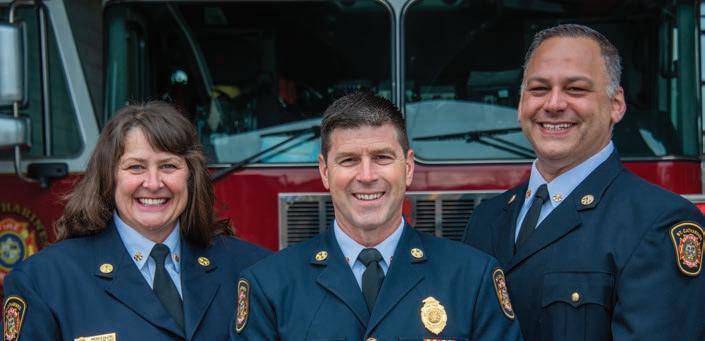
Q: What qualities do you think define strong leadership in today’s fire service?
Strong leadership in today’s fire service is grounded in confident humility, captured in a line from the famous WW2-era General Douglas MacArthur: “O Lord, who will be strong enough to know when he was weak.”
For a fire chief, that means recognizing you cannot know everything and having the strength of character to admit it. In a complex, evolving environment, leaders must build strong, diverse teams and play to collective strengths. They also need the judgment to know when to lead from the front and when to step back and support by clearing the path so others can perform at their best.
A second defining quality is a presence of calm reassurance. In a fast-moving, high-pressure environment, leaders set the tone. So, providing steady, composed direction helps reduce anxiety, build confidence, and keep teams focused. Clear, measured leadership allows crews to move forward with purpose,
even in uncertain or rapidly evolving situations. Finally, one of our creeds is striving every day to make somebody’s bad day a little better. We can’t unburn things. We can’t undo tragedies. So how can we be nice and try to make things a little bit better?
Q: You’ve been with St. Catharine’s fire department for 35 years now. When you look back, are there any key events that helped shape who you are as a leader? There’s one event that really had a big impact on me. We were working on revamping our communications on the fire ground with retired Fire Chief Steve Kraft.
When we were chatting with him, he told us that if we can get our association on board and working with us, we’ll be able to move mountains. That was a really important piece of guidance for us, and through that project we did form a great relationship with our association and were able to get them on board and have them work with us. It was a great end result.

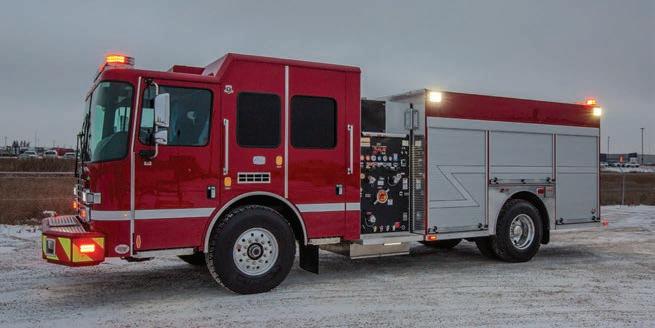
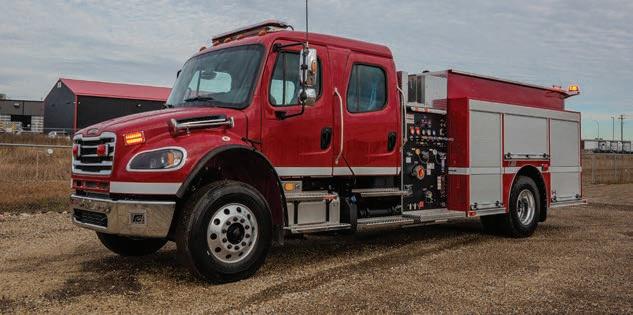
When timing matters and a ready solution is required, Fort Garry Fire Trucks currently has a selection of brand-new fire apparatus that are fully built, inspected, and available for immediate purchase and delivery. These units are complete and ready to be placed into service, offering departments a rare opportunity to secure new apparatus without extended production timelines.
This available lineup includes proven Fort Garry Fire Trucks configurations designed to support municipal, combination, and volunteer departments facing fleet transitions, operational gaps, or immediate replacement needs. Current availability includes custom-built Emergency Rescue pumpers on HME cab-over chassis with both enclosed and open pump house layouts, a
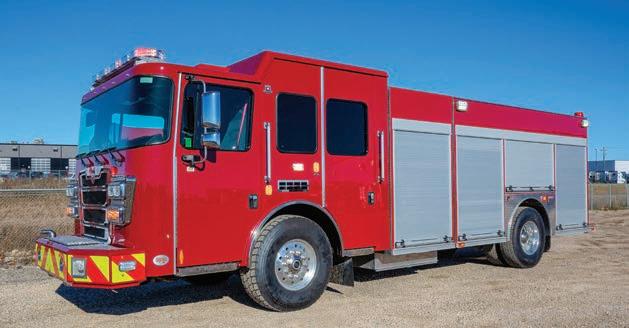
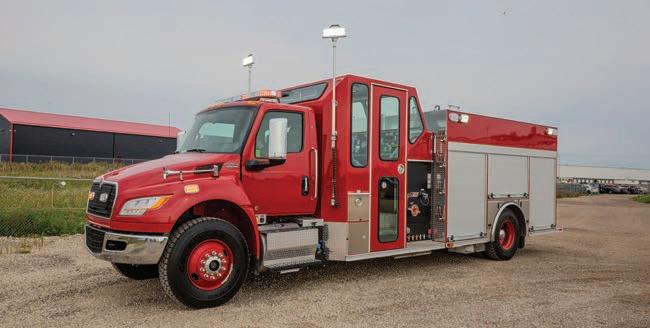

commercial Emergency Rescue pumper featuring a top-mount enclosed 4-man crown pump configuration, and a Crusader pumper built with formed aluminum body construction. Each apparatus is engineered and built with the same standards, craftsmanship, and attention to detail found in every Fort Garry Fire Trucks build.
From structural response and rescue operations to demanding frontline service, these trucks reflect practical, field-driven design using trusted chassis, pumps, and components relied on by departments across North America. Every unit is configured to balance capability, reliability, and ease of operation, allowing crews to focus on the task at hand when it matters most.

If your department requires a dependable fire truck that can be delivered now, these available units provide a practical and efficient solution. Scan the QR code to view detailed specifications, photos, and configuration information for each apparatus currently available.
For availability, pricing, or delivery details, call 1-800-565-3473 or visit the Contact Us page at www.fgft.com to connect with a Fort Garry Fire Trucks sales representative.
FORT GARRY FIRE TRUCKS — ONE TOUGH TRUCK. BUILT TO SERVE.
Q: How has the role of fire chief evolved since you first joined the service?
A couple of things have really changed. For one, being intentional about being in the presence of the staff, being with them. You can be pulled into meetings and all kinds of other things corporately, and it’s easy to get pulled into that vortex. So, you have to be really intentional about being with staff and being in their presence, making sure you’re around and making sure you’re accessible.
When I first started, a lot of the decisions were based on the fire chief’s wisdom, experience and knowledge, which was great back then, but now with all of the technology around us, there’s been a shift towards evidence-based decision making, using all the analytics, and that’s been a big change for the chiefs. I don’t think it’s all one and it’s not all the other, it’s a piece of the puzzle, and I think it’s really important that you lean into your data analytics, but also that you use the wisdom and knowledge and experience that chiefs have.
Q: There are all kinds of changes happening in the world, like extreme weather a nd evolving building technologies. How is your department adapting to these new types of emergencies?
It’s really a mix of things. On the extreme weather side, it ties closely into emergency management, and what we’re seeing is much stronger communication across the board. It’s not just internal anymore. We’re working more closely with external partners and other agencies, getting clearer on who’s reacting, who’s being proactive and how teams are activated. That level of coordination has been a big step forward.
On the building side, with things like lightweight construction, it really comes down to staying on top of the research and the science around fire behaviour. We’re looking at what’s coming out, what’s working and then figuring out how to bring that into our operations, whether that’s new equipment, new tactics or even rethinking how we handle things like high-rise response.
At the end of the day, it’s about being willing to adapt. The job is getting more complex, so we have to keep learning and keep adjusting.
Q: Mental health and wellness have become big priorities for first responders. How has your team approached these i ssues?
There’s been a real shift over the years. We’ve embraced it, but it’s still a work in progress and there’s still some stigma. I think where we’ve gotten better is recognizing that balance between caring for others and actually taking care of ourselves, which we didn’t always do well in the past.
Now we’re much more intentional about it. We have counselling resources, strong peer support and more awareness around things like sleep, fitness and overall health. We’re also encouraging people to treat mental health like physical health, getting checkups, talking to someone and being proactive. That self-care piece is what ultimately helps us do a better job for others.
Q: Let’s take a look ahead. What are your top priorities for the next few years? It really comes down to two things, taking
care of our people and continuing to move the department forward. On the people side, that means everything from mental health to physical health and reducing exposure risks. We’ve been able to invest in things like new decontamination equipment through provincial grants, which is a big step in protecting our crews long term.
At the same time, we’re focused on evolving the department. That includes meeting new certification requirements, embracing technology like station alerting to reduce stress on crews and improving records management as we move toward next generation 911. We’ve also got capital projects ahead, including replacing aging fire halls, so it’s about keeping up on all fronts.
Q: I wanted to end today’s chat with a look at the past. If you could go back to your first day on the job in 1991. What would you tell young Dave?
Great question, it’s neat to think about that. Back then, the mindset was to be a bit of a jack of all trades, good at everything but not necessarily a master of anything. What I see now is firefighters becoming true experts in specific areas, whether it’s technical rescue, forcible entry or fire ground survival, and it’s incredible to see how that lifts the whole team.
So the advice would be simple, find what you’re passionate about and go all in on it. Become a content expert in that area, because that depth of knowledge doesn’t just help you, it makes everyone around you better.
This article has been edited and condensed.
Item 1593705282 | $113.80
This updated and expanded edition delivers scenario-based lessons and clear operational guidance on the fire tetrahedron, flow path control, and ventilation management, survivability-focused search, fire attack that limits air entertainment and controls growth, and command-level size-up and decision frameworks.
Item 36410 | $133.00
This new edition from IFSTA is designed to build strong instructional foundations, equipping readers with knowledge and skills to effectively prepare, deliver, and evaluate training that directly impacts firefighter safety and performance. Instructor 10th meets the job performance requirements (JPRs) of NFPA 1020, Standard for Fire and Emergency Services Instructor, Fire Officer, and Emergency Medical Services Officer Professional Qualifications (2025)
Item 1593705275 | $85.00
Drawing on decades of experience with Fire Department of New York (FDNY), Chief Thomas Dunne outlines clear strategies for managing fear, evaluating risk, building confidence, and maintaining command presence during high-stress incidents. This book delivers straightforward tools you can apply on the fireground, in the station, and in everyday life to help you stay calm, communicate clearly, and act decisively in any challenging situation.




By Arjuna George
Arjuna George retired as a fire chief in November of 2021 after serving the department in Salt Spring Island, B.C., since 1997. He is now a fire service coach and consultant. Visit silverarrowco.com or email arjuna@silverarrowco.com.
The goal of succession planning isn’t simply to get someone ready for a specific role but rather to help develop leaders who can take on future positions as they rise in the ranks.
If you aren’t considering how your organization will function after key talent leaves, then you may be putting the organization at risk. Succession planning is not just about replacing people; it’s about filling gaps in knowledge, skills and competencies across an organization by transferring knowledge from one person to another. The goal of succession planning isn’t simply to get someone ready for a specific role but rather to help develop leaders who can take on future positions as they rise in the ranks.
Succession planning helps fire services avoid “holes” in leadership or talent due to unforeseen circumstances such as employee turnover or retirement age limits. This type of planning ensures that talented people always wait in line for opportunities within an organization, regardless of whether they’re needed immediately or not. A succession plan can help with the following:
• Vacations: When key talent goes on vacation, it provides an opportunity for senior staff to gain valuable firsthand experience.
• Sudden resignations: Are you prepared for an emergency replacement? Without a plan, a critical leadership position could be there one day and gone the next. Succession planning allows for temporary solutions for operational continuity.
• Retirement: Successful organizations help groom their next leaders, not so
they are all the same and like-minded, but more to continue the vision. Unprepared organizations often experience continued leadership and vision change, leading to low morale and frustrated firefighters.
• Recruitment and retention: We are in the people business. We fail the public if we are not adequately equipped to provide our number one asset (our people). Succession planning helps recruitment greatly as prospects can see their future growth and opportunities.
It’s not just about replacing people, but also about developing them to prepare them for their next role within the department. When succession planning is done correctly, it can help ensure that there is no gap between the retirement of one generation of leaders and the arrival of another who will take over their responsibilities and continue moving forward with success.
1. Identify the critical positions, those that would disrupt operations if left vacant.
2. Identify who are the high-potential people to fill those key roles.
3. Decide when or if they will be ready to fill the position.
4. Decide what they need for support to be successful (training, cross-training, mentoring etc.)
5. Finally, what ongoing support and professional development do they require to excel?
Who benefits from succession planning? The answer is everyone.
• The outgoing person often feels less pressure to stay longer than they want.
• It relieves a lot of stress (not having to worry about your organization because you know it is in good hands).
• It can be a good feeling to know that the one to fill your boots will do a great job.
• It can also allow for your legacy to continue through the next leadership.
• It allows time to be prepared, learn, and be mentored by the outgoing person.
• It provides a less stressful environment, knowing that a plan is in place.
• It provides opportunities to trial the work before being in the position.
• It provides clarity on your future within the organization.
• It provides clarity to all members on the vision long term.
• It provides stability within the ranks and knowledge of the potential future.
• It provides continuity of plans, legacy projects and strategic goals.
• It provides a smooth transition at all ranks.
Know your people to select prospects for key positions. It’s also vital to consider a diverse makeup of candidates. The overall aim is to deliver a continuous service with minimal disruptions. And to do that, we need leaders with different viewpoints, strengths and backgrounds. We are all replaceable; embrace it. This means our job is to set up the next leadership to excel and leave the organization better than we found it.
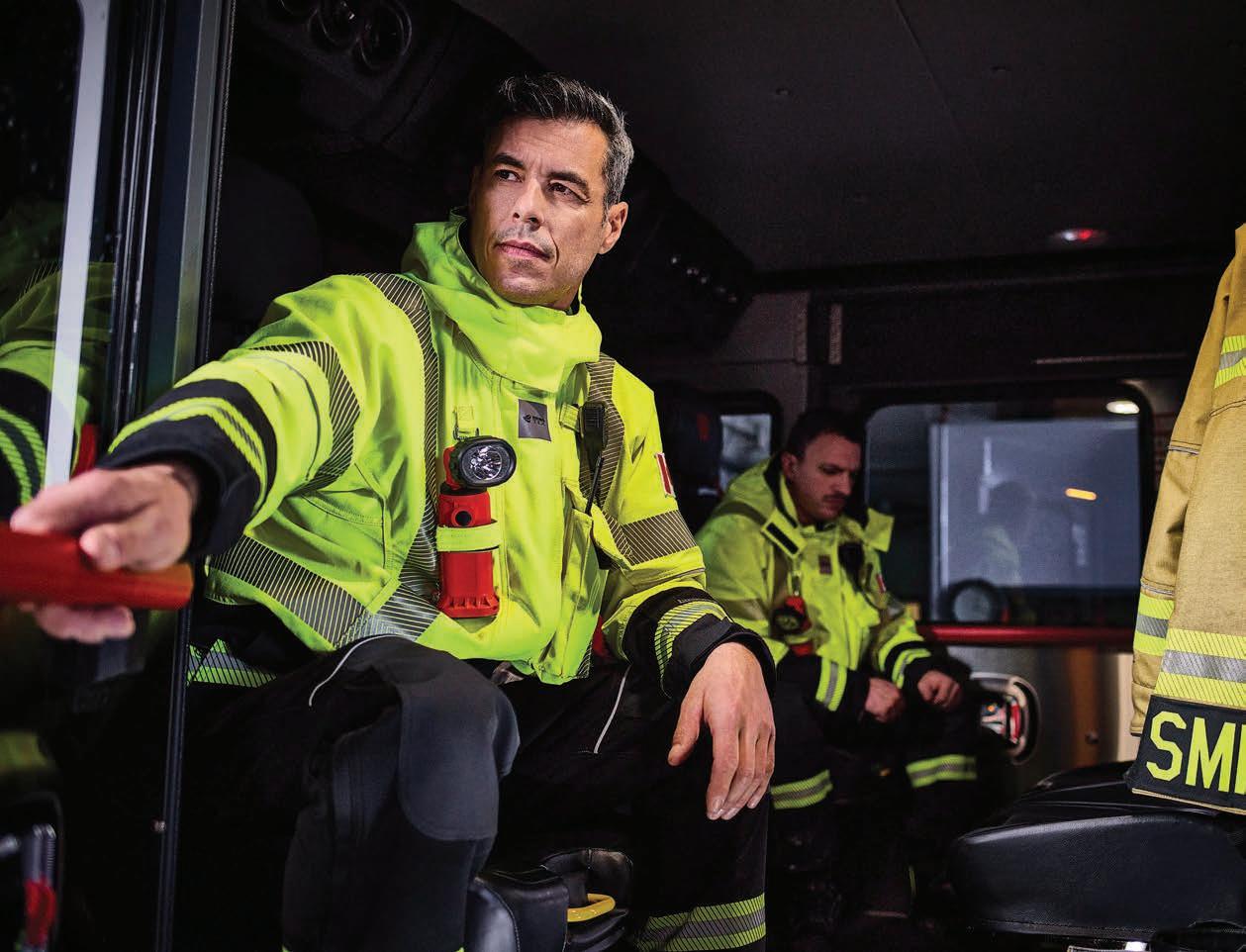
Our most versatile rescue gear to date: ENERGY™ PRIME. A multi-function gear that easily adapts to take on wildfires, technical rescues, and medical emergencies, thanks to a removable moisture barrier. Designed and certified to meet the demands of modern firefighting, INNOTEX® ENERGY™ PRIME is the primary gear firefighters can count on every day. INNOTEX protects firefighters with high-performance turnout gear for structural fires and rescue gear to respond to every other call. We’ve got their backs in every situation.
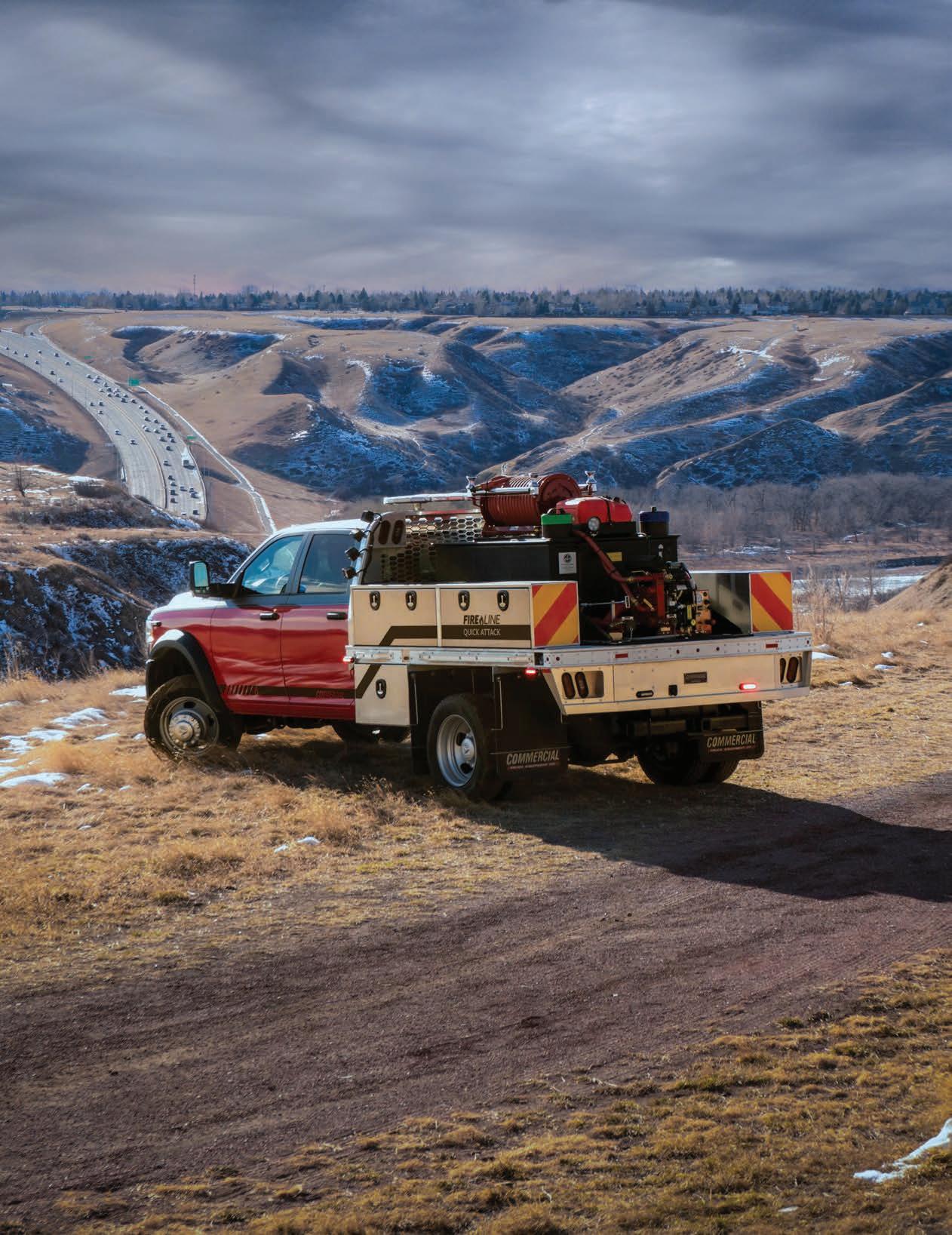

Darley is proud to announce a decade-long succession plan with the appointment of Lee Wise as its new President effective January 1, 2026. Lee Wise succeeds Paul C. Darley, who has served in the role for 30 years. Lee will continue to report to Paul in his on-going roles as Chief Executive Officer and Chairman of the Board, guiding the company’s strategic vision and long-term growth.
Lee currently serves as the Chief Financial Officer for Darley. His promotion to President marks a significant milestone in the company’s storied history, as the first non-family member to assume this role in 118 years. Recognized for his extensive industry experience at Rockwell-Collins and Brunswick and steadfast alignment with the company’s core values, Lee has earned the full support of the Darley Board, management team, and the entire family.

“Our succession plan has been in progress for over a decade. Lee brings the perfect blend of corporate and defense experience, coupled with a passion for driving growth. His leadership style and ethical approach align perfectly with our professional family culture,” said Paul Darley. “He has demonstrated an unwavering commitment to our mission and to the communities we serve. The Darley family, most notably our fourth generation, stands united behind Lee as he steps into this important role.”
Audrey Darley Welch, Vice President of Defense Supply Chain added, “All fourth-generation family members working in the business are fully united in our support of Lee. His outside perspective and proven leadership will play a critical role as we continue to professionalize the organization and pursue our next phase of growth. We look forward to learning from Lee and working together to advance the legacy our family has built over generations.”
“I am honored to step into the role of President at Darley, and deeply grateful for the trust placed in me by our Board of Directors, shareholders, and colleagues. Their confidence inspires me, and I am committed to honoring our values and driving meaningful progress together,” comments Lee.
Darley Data CenterSM - Compare Performance of Up to Four Departments with a Click of a Button
Darley is proud to announce the launch of the Darley Data CenterSM, a powerful new customized platform that helps first responders visualize data, identify trends, and compare department performance through a proprietary data tool that analyzes National Fire Incident Reporting System (NFIRS) data.
• Current public data pull from NFIRS, transitioning to NERIS
• Ability to compare data including analytics, predictive modeling, interoperability with existing systems from multiple departments (currently up to four with potential to increase)
• Potential impact on response times, resource allocation, situational awareness
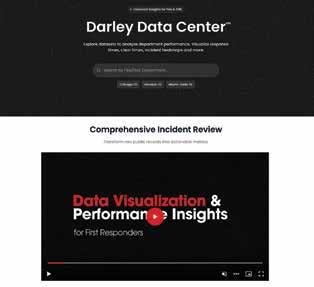
“We’re incredibly excited to offer this powerful platform as a free service to the first responder community,” said Paul Darley, Chairman & CEO at Darley. “The Darley Data CenterSM helps fire departments dynamically visualize their data and compare performance, providing leaders with actionable insights that support effective, informed operations and resource
cation decisions.” Get started on DarleyData.com
Darley is entering an exciting new chapter as we launch Operation 3B30, our five-year strategic plan with a bold plan to reach $3 billion in revenue by 2030. We will achieve this through a relentless focus on you, our customers, Team Darley members, and partners.

It might surprise you to learn that Darley is one of fewer than 25 U.S. family businesses over 100 years old with greater than $1 billion in revenue. These enduring “Evergreen Family Businesses” succeed by balancing multi-generational family leadership with strong non-family executives, while contributing to society in meaningful ways. With that philosophy guiding us, we began our succession planning, which we call continuity planning, over 10 years ago. Several third-generation Darley family members have recently retired, and we have promoted exceptional family and non-family leaders to carry the business forward.
As part of that plan, Lee Wise has assumed the role of President, becoming the first non-family president in Darley’s 118-year history. Lee brings an exceptional blend of corporate and defense experience, paired with a growth-oriented mindset and a strong ethical foundation. His leadership style aligns seamlessly with Darley’s values and our professional family culture.
The entire Darley family, and most notably our fourth generation, stand fully behind Lee. The Darley family will continue to represent the heart and soul of the company to industry, supported by dedicated team members of non-family professionals across the organization.
I am not retiring. As Chairman and CEO, I will remain actively involved, focusing on the big “boulders” - passionately engaged, while focusing on key customers, partners, employees and strategic opportunities that will drive our growth. While defense, state, and municipal contracts will remain central to our strategy, we are also investing heavily in manufacturing across our pump, fire, defense, and adjacent markets. Achieving CMMC Level 2 certification further strengthens our position with defense customers.
Every member of the Darley team is committed to working hard and working passionately to continue earning your trust and your business, while continuing to be dedicated stewards of a company built by those before us. You serve others. We serve you.

Paul C. Darley Chairman & Chief Executive Officer
pauldarley@darley.com
Cell: 1-708-267-6288
Darley is proud to announce that it has successfully achieved Cybersecurity Maturity Model Certification (CMMC) Level 2, following a rigorous assessment by a Certified Third-Party Assessment Organization (C3PAO). There are roughly 80,000 defense contractors in the USA and Darley was one of the first 300 to receive this certification.

Darley is one of the 50 largest defense contractors in the United States, and this milestone underscores our unwavering commitment to safeguarding Controlled Unclassified Information (CUI) and meeting the stringent cybersecurity requirements set forth by the U.S. Department of War.
The CMMC C3PAO certification Level 2 validates that Darley has implemented all 110 security controls outlined in NIST SP 800-171, ensuring robust protection of sensitive government data. This achievement positions Darley among an elite group of defense contractors prepared for the DOW’s evolving cybersecurity mandates, joining 575 companies that have completed the Level 2 C3PAO assessment process, while more than 7,000 organizations have entered a Level 1 self-assessment score into the Supplier Performance Risk System (SPRS). The Importance of CMMC:
• Compliance with Department of War Requirements: As of November 2025, CMMC Level 2 certification is a prerequisite for bidding on many defense contracts.
• Enhanced Cybersecurity Posture: Certification ensures Darley’s systems, processes, and policies meet the highest standards for protecting CUI.
• Customer Confidence: Validates Darley’s commitment to operational excellence and risk mitigation across the supply chain.
“Achieving CMMC Level 2 certification is a significant milestone for our company and our customers,” says Paul Darley, Chairman & CEO of Darley. “It demonstrates our dedication to protecting sensitive information and meeting the highest standards of cybersecurity.”
On February 13, 2026, Darley was recognized as Pierce Mfg. Supplier of the Year 2025, honoring a partnership built on unwavering performance, technical excellence, and over a century of shared commitment to the fire service.
Jay Junkins, VP of Supply Chain at Pierce, stated that “Darley supported validation and addressed issues quickly to keep production stable and predictable. That stability matters to the dealers. It protects our delivery schedules, and it reduces the prices. The system they provide is mission-critical and it must perform under strict conditions and be reliable when lives are on the line.”
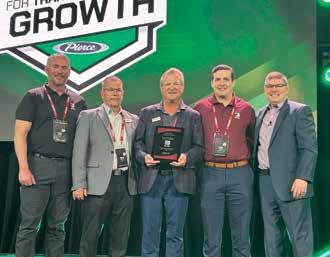
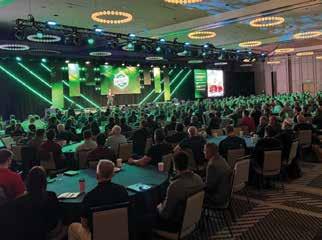
Pierce also emphasized the legacy Darley brings to every apparatus: “A trusted name in the fire service since 1908, with decades of innovation built into Pierce apparatus.”
Paul Darley, Chairman & CEO of Darley, said, “Thanks, Jay, and the entire Pierce team and the entire Pierce dealer network. You don’t know how much this means to us. I’ll tell you, we started working with Pierce about 30 years ago, and to imagine us standing here in front of you, accepting this award is simply momentous. Our team at Darley works so hard every day to earn your trust and respect, and those out in the field.”
Fire departments looking to modernize their fleet, optimize budgets, accelerate replacement of aging apparatus, or prolong the life of their first-out engine continue to gravitate to Darley’s Tactical Pumper.™ The Tactical Pumper™ is the only Mini/Midi Pumper on the market affording fire departments a 1500 gpm pump, 400 gallon water tank, and 4-person cab occupancy. In addition, Darley’s Max Tactical Pumper™ offers offroad capabilities which enhance readiness and community resilience in Wildland Urban Interface settings. With 100 years of experience designing and manufacturing fire apparatus, we are confident saying Darley’s Tactical Pumper offering can improve safety in the communities you serve. Please reach out to us if there is anything we can do to support you. For pricing and information reach out to kyledarley@darley.com or to learn more visit darley.com/what-we-provide/tactical-pumpers/
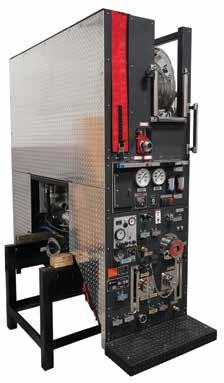

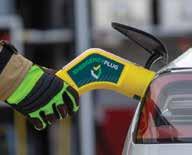
The increasing frequency and volatility of wildfire is contributing to a spike in demand for Type 3 Fire Apparatus. To address demand, Darley Tactical’s Engineering Team developed the M34 Module™. The M34 Module™ is designed in accordance with standards set forth in CAL FIRE’s Type 3 Wildland Fire Apparatus Specification. The M34 Module™ provides OEMs a turnkey price-competitive solution to compete on CAL FIRE bids and add on opportunities. OEMs should reach out to kyledarley@ darley.com for pricing and information. See this module firsthand by visiting Booth 3657
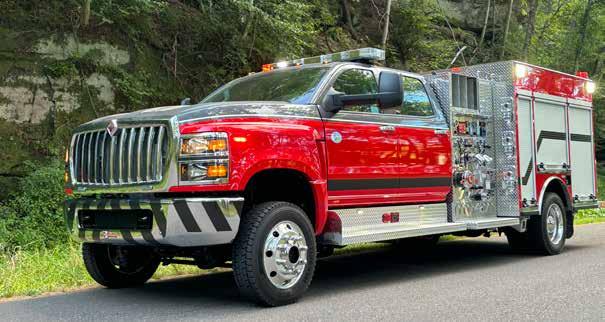
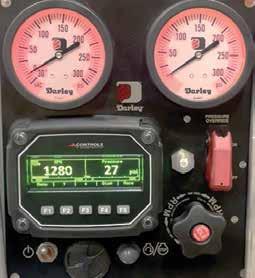
We are excited to announce that the new Kubota E-Gov engine and its updated control panels have been fully validated, released, and are now ready for purchase. Engineering has completed testing, and the new system delivers improved electronic control, streamlined operation, and enhanced reliability. This release officially transitions us away from legacy Digitrol-based configurations and positions the E-Gov platform as our standard offering moving forward. Sales teams can quote and accept orders now. Additional support materials, drawings, documentation and configuration details are now available on darley.com/product/1-1-2-age-24k/
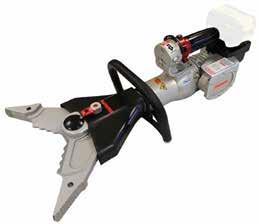
Battery fires are the hottest topic in fire and Darley has the tools you need to handle or prevent major disasters. Come see us at FDIC to discuss: fire blankets, lithium-ion foam, EV plugs, safe battery storage solutions, battery shipping and storage containers. We want to understand your: pain points, SOPs, tactics and discuss possible solutions to the problems you’re tasked to deal with. Many households have a potential fire waiting to ignite - preparation and planning is necessary to ensure your department is ready!
If your department wants cutting-edge solutions to strengthen its response capabilities, connect with Darley in Booth 3657. We provide a comprehensive drone portfolio for: search and rescue, hot spot detection, wildfire monitoring, air monitoring, AED or PFD delivery, damage assessment and most importantly, drone as a first responder (DFR) platforms. We offer a VR training platform to aid in training for: firefighting, CPR, evacuation and communication. We offer command vehicles with the latest technology in connectivity and communication by using drones and Starlink. We track assets and provide live streaming to Command. Innovation and forward thinking have always been core competencies at Darley; come take a look into the future and learn what your department will be using. Explore the next generation of uncrewed technology at FDIC.
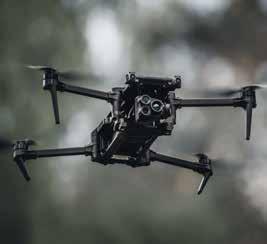
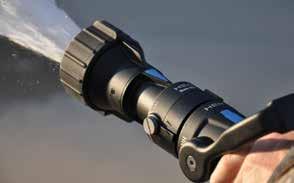
Darley is proud to Partner with HEN® Nozzles. They are designed for maximum efficiency and control. HEN® BLADE nozzles deliver faster knockdowns and reduced water usage. The BLADE nozzle delivers both a traditional solid stream and a blade-shaped pattern in a single design. Benefits of the bladed pattern include a larger coverage area with larger, thick water droplets. There is no stem or baffle to reduce droplet size to achieve this pattern. The design also requires less movement of the nozzle for greater coverage efficiency. Part of Darley’s mission is to deliver the newest technology to meet our customers’ future needs. Shop HEN® nozzles on shop.darley.com/hen
Darley’s new EV storage containment solutions specialize in handling, storing and transporting batteries. Our products contain fire, eliminate extension, provide venting and reduce toxic gas spread. Chargers, computers, e-bikes, electric vehicles, or power tools in your fire department or on your truck. Lithium Ion batteries are everywhere and we provide the most comprehensive and safest way to store batteries whether damaged or not.
Annual Incidents: The NFPA estimates that lithium-ion batteries cause over 2,000 fires each year in the U.S.
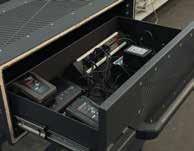
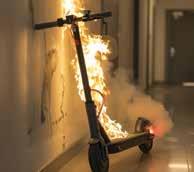
A U.S. Consumer Product Safety Commission study reported over 25,000 incidents over a five-year period, averaging 5,000+ per year. In 2023 FDNY reported 267 battery-caused fires, 150 injuries, and 18 deaths.
We provide shipping containers, storage bags, damaged-battery packaging, recycling bins, workstations, storage lockers, and more. How does your department currently manage battery storage and transportation?
Darley, in partnership with Trijicon, recently hosted the Darley Federal Range Forum at The Crucible Complex in Fredericksburg, VA. The event brought together DOW professionals and 50 top defense manufacturers for a full day of live demonstrations and hands-on training.
Attendees explored next-generation counter-UAS, UAS, mobility, and C6ISR technologies. Demonstrations included live C-UAS detect-and-defeat scenarios, short and medium-range UAS training, and full ATAK-integrated systems. Participants also experienced Darley’s Mobile Command Post, off-road platforms, weapons systems, and a Trijicon-hosted live-fire range.
Darley’s Uncrewed Systems portfolio now offers the Parrot ANAFI UKR GOV, a lightweight yet rugged tactical micro-UAV designed for government and public safety operations.
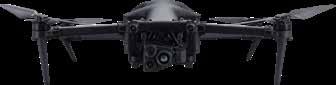
The Parrot ANAFI UKR GOV delivers advanced imaging and resilient connectivity: its EO/IR gimbal combines a 35× zoom full-color camera and a FLIR Boson 640 thermal sensor, while communications include encrypted Wi-Fi, 5G, and LoRa. Embedded edge-Al enables real-time autonomy in GNSS-denied environments. The system incorporates AES-XTS encryption, FIPS 140-2 digital signing, and Blue UAS/NDAA compliance to protect sensitive data.
Powered by the new XLR Smart Battery, the Parrot ANAFI UKR GOV achieves 70 minutes of flight endurance - nearly double the standard 38 minute benchmark - significantly expanding mission capacity for ISR, SAR, infrastructure inspection, and long-range surveillance. For custom drone programs contact nickfay@darley. com Federal and DOW, or johnapkarian@darley.com for Public Safety.
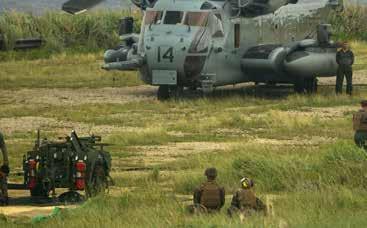
Ohler pump division of Darley has introduced the Tactical Aviation Ground Refueling System (TAGRS), a rapidly deployable refueling solution for military and expeditionary aviation operations. Designed for use in austere and forward environments, TAGRS integrates fuel storage, filtration, pumping, and distribution into a modular, transportable system. It can be quickly deployed by ground or air and configured to refuel multiple aircraft at once. TAGRS helps reduce aircraft turnaround time and extend operational reach, supporting more efficient and effective aviation missions where permanent infrastructure is unavailable.
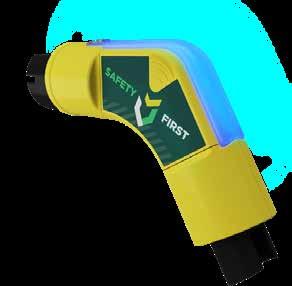
Darley is a leader in sales of EV safety products, including the Emergency Plug. We are pleased to offer the next generation of this effective safety product. The Emergency Plug H3 automatically detects whether the vehicle registers that the battery pack temperature is becoming too high, in accordance with the IEC 61851-1 standard. As soon as the Emergency Plug detects this, it gives a clear visual warning: a red flashing signal next to the blue LED indicator. This allows you to immediately access whether there is an increased risk. Place your order for the BR192 - Emergency Plug H3 on shop.darley.com/h3 now.

Wayne Hable, P.E. Chief Engineer waynehable@darley.com
What is the lowest temperature we can safely operate our Darley pump?
Asked by many pump operators in the upper Midwest of the United States and Canada during the winter season.
Answer.
Thinking the elastomer components in the pump are the limiting factor here, their temperature ranges are as follows:
The majority of mechanical seals are good to a temperature range of -40°F (-40°C) to 180°F (82°C).
The H100 mechanical seal (2nd stage pump) is good to a temperature range of -20°F (-29°C) to 275°F (135°C).
The buna O-rings, which we typically use for sealing the pump, are good to a temperature range of -22°F (-30°C) to 212°F (100°C).
The Viton O-rings, which we typically use for sealing the transmission, are good to a temperature range of -65°F (-55°C) to 390°F (200°C).
The rubber lip oil seals that we use are good to a temperature range of -40°F (-40°C) to 250°F (121°C).
The 80W-90 oil is the next item to consider. Petroleum based 80W-90 oil has a pour point of -25°F (-33°C). Synthetic based 80W-90 oil has a pour point of -44°F (-42°C). Pour point of an oil is where it becomes a solid so to speak. You don’t want to take the pump transmission down in temperature until it’s at its oil pour point temperature - the oil then behaves like a solid at its pour point and that may cause issues trying to conjugate the oil
thru the gear mesh and rolling bearings. I think a 4F to 5F safety factor between the oil pour point and its safe operating point would be wise to consider. Therefore, I’d say petroleum based 80W90 should be good down to a -20°F (-29°C) temperature and synthetic based 80W-90 oil should be good down to a -40°F (-40°C) temperature.
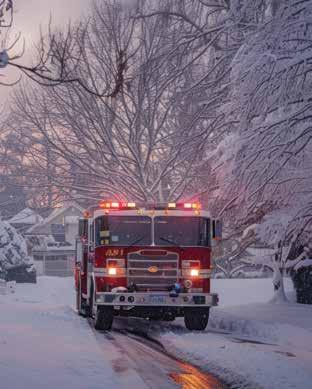
All of these factors add up to imply that buna O-rings would be the limiting factor at -22°F (-30°C) for low temperature applications if synthetic based 80W-90 oil was used on a non 2nd stage pump. Therefore, -20°F (-29°C) would be the limiting factor if petroleum based 80W-90 oil was used. If we switched all the O-rings to Viton and used synthetic based 80W-90 oil, then the lowest temperature we could possibly go down to would be -40°F (-40°C) on a non 2nd stage pump.
This is with the understanding the pump is kept drained of water and dry when at or below 32°F (0°C). Overall, these temperature considerations highlight the importance of selecting the correct elastomers and lubricants for the expected operating environment. Ensuring the appropriate combination of O-rings, seal materials, and oil type will help maintain pump reliability and prevent cold-temperature performance issues.
Darley is proud to announce it has been named as a 2025 Chicagoland Top Workplace by the Chicago Tribune. The Chicago Tribune partners with Energage LLC, a third-party employee engagement technology firm, to conduct confidential surveys that capture authentic employee feedback. The survey uniquely measures various aspects of the employee experience, including how employees feel respected and supported, enabled to grow, and empowered to execute.
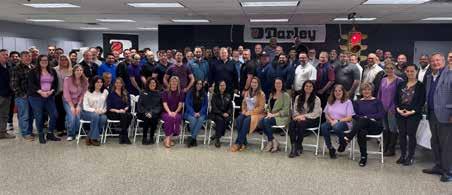
“Being named a Chicagoland Top Workplace by the Chicago Tribune is a tremendous honor because it reflects the voices of our employees,” comments Paul Darley, CEO of Darley. “At Darley, we strive to foster a culture where every team member feels valued, supported, and empowered to grow. This recognition affirms that our people-first approach is making a meaningful impact.” We are deeply grateful to our incredible team.
For more than a century, Darley has built its reputation on one core com mitment: ensuring first responders can rely on their pumps and equipment when it matters most. That dedication is evident in every Midship and PTO pump Darley manufactures and reinforced by the industry’s longest and most comprehensive warranty. We stand firmly behind the quality and durability of our pumps, giving departments confidence that their investment is protected.

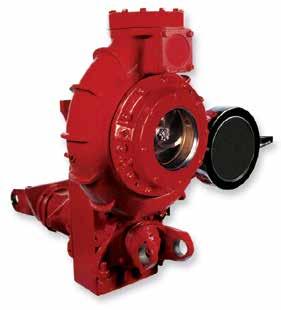
Wow, what a milestone! 10K is more than just a number to us. It’s a humbling reminder of the trust you place in us to share meaningful engaging content that’s inspires, informs and connects. Your support means the world to us. Here’s to continuing to grow together with a purpose.

Find us on social - LinkedIn, Facebook and Instagram: @wsdarley

Charting the Future: Growth, Innovation, and the Power of People at Darley
As we reflect on Darley’s remarkable journey, I am filled with pride at how far we’ve come, and even more excited for what lies ahead. Our company’s growth is not just measured in numbers, but in the dedication of our people, the strength of our leadership, and our ability to adapt in fast-moving markets.
The landscape for our customers is evolving rapidly, with emerging technologies like drones, robotics, and advanced data platforms reshaping the way we serve first responders and defense communities. At Darley, we recognize that staying ahead means more than just investing in new products, it requires a culture of innovation, agility, and a willingness to embrace change. Our recent launches, including the Darley Data CenterSM and expanded VR and drone solutions, are a testament to our commitment to lead, not follow.
None of this progress would be possible without our extraordinary employees. Being named a Chicagoland Top Workplace by the Chicago Tribune is a direct reflection of the passion, resilience, and teamwork that define Darley. Our people are the driving force behind our success, and their commitment to our mission inspires me every day.
Strong leadership and a forward-thinking Board and advisory teams have been instrumental in guiding our strategy. The recent appointment of Lee Wise as President marks a new chapter, blending tradition with fresh perspectives to ensure we remain agile and focused on longterm growth. Together, we are building on a legacy while positioning Darley to thrive in dynamic, high-tech markets.
As we look to the future, our strategy is clear: invest in our people, embrace innovation, and execute with purpose. With the right plans in place and a united team, I am confident that Darley will continue to set the standard for excellence in our industry.
Thank you for being part of our journey.
Peter Darley Executive VP & COO peterdarley@darley.com
After a remarkable 36 years, John Long, Chief Information Officer, has retired from Darley. His journey with the company started with summer internships and transitioned into full-time roles in 1989, spanning locations in Melrose Park, IL, and Chippewa Falls, WI, before coming to an end in late 2025.
Throughout his career at Darley, John played a key role in numerous major projects, such as achieving CMMC C3PAO certification Level 2 and upgrading JDE R25. He partnered with hundreds of colleagues over the years and actively contributed to operational milestones including facility expansions, acquisitions, ERP transitions, and significant upgrades to company systems and infrastructure.
Chippewa Falls became deeply meaningful to John, both professionally and personally. It’s where he met his wife, gave back to his church community, and mentored young people through Big Brothers–Big Sisters.
“Thanks again to each of you. It’s been a great ride. I wish all of you the best.” John said on his last day. From all of us at Darley, thank you for everything, John!
Darley is thrilled to announce the addition of Ashley Everson to our team! Ashley brings a wealth of experience and a strong commitment to excellence, which aligns perfectly with our company values.
Ashley joins us from a family deeply rooted in public service and community safety with her father, brother, and husband all having proudly served as firefighters in the northern suburbs of Chicago.
Darley looks forward to the contributions she will make to our continued success.


As a proud member of the Darley family, my career has always been shaped by a deep appreciation for service, integrity, and the responsibility that comes with being part of a multi-generational business. Today, I serve as the OEM & DOW Business Development Manager, where I focus on building strategic partnerships and helping expand our presence within the defense and contract manufacturing space. My path has taken me through a diverse mix of roles in sales leadership, operations, and customer engagement. Each step has reinforced how much I value contributing to a mission that is bigger than myself.
What drives me in my work is the opportunity to connect with people and strengthen relationships across industries and within our own organization. I take pride in helping bridge the traditions our family business was founded on with the innovation required to stay competitive in modern markets. Whether I’m working with prime contractors, exploring new verticals, or collaborating with teammates on long-term strategy, I’m motivated by the idea that what we build today helps shape the legacy we pass on to the next generation.
Outside of my professional life, I’m first and foremost a husband and a father. My wife Meghan and I are raising three energetic boys - Roman (6), Camden (4), and Easton (1), along with our dog, Brownie, who adds to the daily chaos. Time outdoors or on the water is our family reset, grounding me in what really matters. On the rare kid-free day, you’ll still find me outside hunting, fishing, or enjoying baseball, passions that have always brought me both challenge and calm.
Looking ahead, I see my journey as a blend of heritage and hard work. I’m grateful for the chance to contribute to our family’s business.
Our tuition-free Pump Academy provides comprehensive knowledge ranging from pump theory to hands-on maintenance and repair of Darley pumps and accessories. To keep up with ongoing advancements, we advise OEM service centers to participate at least once every five years. Sign up today at www.darley.com/ pump-academy
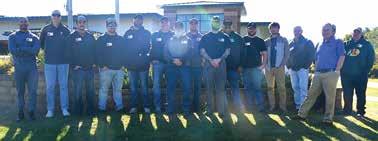
to catalog 106, Circa 1940.
Since 1908, Darley has evolved to meet our customers’ changing needs. Through all the growth, one thing remains constant: our commitment to delivering the highest - quality solutions for first responders.

Nolan Darley is the great-great grandson of our founder William Stuart Darley. Nolan enjoys working on projects in the yard, playing sports, snowboarding, hunting, fishing, and learning new things. Nolan is a caring and compassionate big brother to siblings Mason and Sydney. Nolan is always quick to offer a helping hand on the next big project or to share ideas necessary to complete it. Nolan is the son of Kyle and Alesha Darley.
There are currently 31 fourth and 35 fifthgeneration Darley family members who are descendants of William S. Darley.
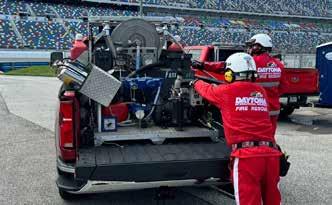
Darley’s Fast Attack skid units are trusted at the Daytona International Speedway.
“From an emergency services perspective, we require an equipment partner that responds when needed, has plenty of inventory, and most importantly – is one you can build a relationship with. Darley Fire Equipment checks all those boxes for us. While managing multiple large events a year, we depend on solid service and communication. We have strong relationships with all employees we work with at Darley and appreciate the attention provided to our needs from Paul Darley through the line staff. At any time of the day or night, we know we can count on Darley, and, occasionally, we have provided equipment to reciprocate the assistance upon request. It has been a great partnership for many years.” - Troy Willrick, Managing Director, Emergency & Event Services, Daytona International Speedway
Darley recently shipped a multipurpose direct drive 2BE18V pump to the Antarctica.
The pump is being used to provide additional firefighting capability for structures and equipment at Palmer Station, which is the northernmost U.S. year-round research station in Antarctica, serving as a key center for marine and biological research in the Antarctic Peninsula region.

Image: “Palmer Station Antarctica fingerpost” by *christopher*, via Wikimedia Commons. Licensed under CC BY 2.0 (https://creativecommons.org/licenses/ by/2.0/). No changes were made.
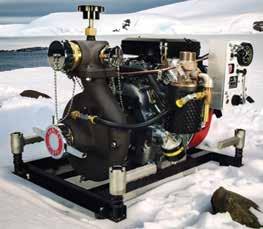
The station was established in 1968 on Anvers Island, off the Antarctic Peninsula. It is the only U.S. research station located north of the Antarctic Circle. Named after Nathaniel Brown Palmer, the American sealer who was one of the first recorded northern hemisphere explorers to sight Antarctica in 1820.
Darley and Ford are working together to put real capability into the hands of search and rescue teams across the country.
Through Ford’s Bronco “Answer the Call” program, five Bronco Badlands are being donated to under-resourced SAR organizations. Each one is equipped with Darley rescue and communications solutions so the Broncos can move straight into operations.
These Broncos are built around what teams actually need in the field: reliable connectivity, scene lighting, recovery gear, and support for drones and mapping tools, all on a platform crews already know.
Teton County Search and Rescue was an early recipient of a vehicle.

Darley and Ford working together again with upfitted Broncos.
Early recipients include Kern County Fire & Rescue in California and Teton County Search & Rescue in Wyoming, with additional teams to be selected through a national application process. The goal is straightforward: give proven agencies a vehicle that can reach the trailhead, the canyon, or the floodplain and help them do their work more effectively.
You can learn more about the “Answer the Call” program here on nasar.org/page/AnswerTheCall
The Leadership Podcast celebrates its 500th episode with a standout conversation featuring Admiral Bill McRaven, the leader behind the viral “Make Your Bed” commencement address and bestselling book by the same name. McRaven breaks down the simple, powerful habits that define truly effective leadership. His message aligns closely with the culture we strive for at Darley: Small actions, discipline, and teamwork create big impact.
Top Takeaways That Resonate here at Darley:

• Start with small wins - even making your bed builds momentum, much like our emphasis on daily habits that drive consistency and excellence.
• Persevere through challenges - adversity strengthens leaders, a value reflected in our commitment to innovation and continuous improvement.
• Lead with heart - measure people by character, not titles, echoing Darley’s focus on integrity and people-first leadership.
• Never quit - resilience is core to both McRaven’s message and the way Darley teams show up for each other and those we serve.
This milestone episode is a powerful reminder that leadership isn’t about complexity it’s about consistency, character, and showing up with purpose, just as we do across Darley every day. We’re proud to have been the exclusive sponsor of The Leadership Podcast for over five years. Listen to this podcast at theleadershippodcast.com/tlp500-the-leadership-myths-we-keep-getting-wrong-with-admiral-bill-mcraven/
Darley recently launched darley .com/defense, a modernized online platform built to best serve our defense customers and partners, delivering a unified user experience that streamlines navigation, accelerates content sourcing, and simplifies access to procurement information.
The updated site showcases Darley’s capabilities and solutions while helping visitors quickly find the resources they need.
“Darley has a long legacy of supporting those who protect and serve, and this launch marks a major step forward in how we connect our defense community to mission critical solutions,” said Audrey Darley, Vice President of Defense Supply Chain. “By integrating modern technology with decades of expertise, we’re providing a streamlined, intuitive experience that helps our customers move their missions forward.”
Darley, in partnership with the National Fallen Firefighters Foundation (NFFF), is proud to announce the winners of the 2025 Fire Service Thought Leadership Essay Contest: Understanding the “Why” Behind Mental Health Challenges in the Fire Service.
Now in its fourth year, this initiative challenged firefighters nationwide to explore the deeper causes of mental health struggles in the fire service, beyond the obvious demands of a high-risk, life-saving profession.

“Understanding the ‘why’ behind these challenges is crucial if we want to create meaningful, lasting solutions,” said Paul Darley, CEO of Darley. With 85 entries submitted, it’s clear the fire service is ready to engage in this critical conversation and lead the way forward.

Congratulations to the following:
First Place: Marc Wysocki, Sheffield Volunteer FD, Captain (MA)
Second Place: Marc Revere, Mountain View & Monterey Park FD, Fire Chief (Ret., CA)
Third Place: John Murphy, Eastside Fire and Rescue, Deputy Fire Chief (Ret.), Fire Commissioner (WA)
For the 2026 essay contest, we invite participants to submit their essays on the following subject: How can artificial intelligence (AI) be used to improve firefighter health, wellness, and safety?
April
April
April
May
May
May
June 1 - 5
June 1 - 6
June 4
June
June
June
Aug
Aug 12 - 13
Aug
Sept
Sept
Oct 6 - 8
Oct 12 - 14