Paul Grossinger pgrossinger@annexbusinessmedia.com (416) 510-5240
PRESIDENT & CEO
Scott Jamieson sjamieson@annexbusinessmedia.com
Process improvement is improving quality while reducing operational costs.
Constant demand for consistency in product quality and taste makes Food & Beverage a demanding industry. With our comprehensive portfolio of instruments, industry expertise and accredited calibration services we ensure plant availability, resource conservation and repeatability in processing with traceable compliance.
3 EDITOR’S LETTER
5 F&B NEWS
The lastest industry news from across the country.
9 REPORT
Three per cent of food manufacturers use data predictively.
11
HEALTH & SAFETY
Tips for staying safe while working in the summer heat.
14 KANBAN FOR MAINTENANCE
Keeping critical parts flowing in food and beverage plants.
17 AI’S GROWING ROLE IN F&B PROCESSING
A glimpse into technology’s ability to transform food production. Do
The dog days of summer
Ican’t speak for the whole country, but in Ontario, summer is one of the best times to be a Canadian. Here, we tend to try to cram as much fun as we can into a few short months with cottages, festivals, camping trips, backyard barbecues and pretty much anything that involves sunshine, friends and cold beer.
But for the food and beverage factories that help make these good times possible, it’s a different story – especially when it comes to maintenance. While we welcome the hot weather outside, those steamy days can make maintenance trickier inside the plant, whether it’s an ice cream factory or a meat processor. For instance, refrigeration and process cooling equipment that has plenty of headroom in February can turn into a bottleneck in July, when higher ambient temperatures reduce refrigeration efficiency and increase cooling loads. Summer can also bring higher humidity, which means more condensation in and around refrigerated spaces. Standing water, condensation or a drain that doesn’t get cleaned as often as it should can quickly become bigger sanitation concerns. Food manufacturers already know this better than most industries, which is why so much of summer maintenance comes down to unglamorous things like moisture control and sanitation discipline.
I n general, everything is working a little harder. Beverage lines and seasonal foods tend to see demand increase in summer, while harvest windows can make things busier for processors handling seasonal crops. Many plants are also balancing vacation schedules with seasonal production demands, all while trying to find opportunities to take equipment offline for
maintenance. It all adds up. A missed filter change or an ignored drain can turn into unplanned downtime, a food safety issue or both.
I know I’m probably telling you things you already know. But having been in this role for two years now, it’s all new to me.
In fact, working for manufacturing publications has changed the way I view the world entirely. It’s made me think differently about the processes behind so many of the things I take for granted each day, whether it’s the laptop I’m using right now, the car I’ll drive later or the groceries I’ll pick up at the store.
It’s especially opened my eyes to the critical role maintenance plays in those processes (something I hadn’t really considered before this job). In the food and beverage sector, maintenance teams don’t just keep production humming; they also play a critical role in food quality and safety.
So, this summer, when I’m kicking back with a cold one or indulging in a double scoop of French vanilla, I’ll have a little more appreciation for the people behind the product.
In the meantime, I’d love to hear about the unique challenges your plant faces each season and how you handle them. Reach out and let me know.
Kirstyn Brown kbrown@annexbusinessmedia.com
NEWS
CHAMPION PETFOODS ANNOUNCES
OPENING OF $32M PILOT FACILITY IN ACHESON, ALBERTA
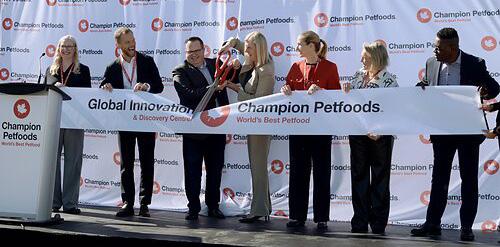
Champion Petfoods celebrated the grand opening of its $32 million Global Innovation and Discovery Centre, a new pilot facility located at its NorthStar Kitchen in Acheson, Alberta. The investment is made by
Champion’s parent company Mars.
According to a press release from Champion Petfoods, the company’s scientists, nutritionists, veterinarians and product developers can now conduct controlled development work on market-specific recipes and new technologies for its ORIJEN and ACANA brands before scaling them to pro-
Champion Petfoods inaugurated its Global Innovation & Discovery Centre in Acheson, Alberta on Tuesday, June 24th, 2026.
duction kitchens. This investment is part of a broader commitment, which includes an additional $15 million planned for Champion’s Canadian facilities over the next five years to enhance production, packaging and sustainability, the company said.
The centre will aim to leverage the region’s agricultural network by sourcing ingredients regionally and nationally, to try and better support the local economy.
“At Champion Petfoods, true innovation is driven by an uncompromising commitment to rigorous research and the high-quality ingredients,” said Jeff Johnston, Senior Vice President, Research, Innovation and Product Development at Champion Petfoods. “This Global Innovation and Discovery Centre uniquely positions us to pioneer breakthrough recipes and proprietary technologies. By bridging evidence-based science with our world-class region -
al ingredient sourcing, we have the agility to rapidly test and perfect nutrient-dense foods that continue to set the global standard for pet health and nutrition.”
CFIA REINSTATES LICENCES FOR QUEBEC FROZEN DESSERT MANUFACTURER
The Canadian Food Inspection Agency (CFIA) has reinstated the Safe Food for Canadians licences of Abe’s Frozen Desserts Inc. in Terrebonne, Que., effective June 20, 2026.
The licences had been suspended on May 8 following a CFIA inspection that identified non-compliance with the following the Safe Food for Canadians Regulations (SFCR) requirements:
• controls applied during product pasteurization;
• implementation of a preventive control plan and hazards analysis;
• controls, sanitation and sampling
measures related to Listeria monocytogenes; and
• equipment maintenance and related record keeping.
According to the CFIA, the licences were reinstated after corrective measures were taken. No food recall was associated with the suspension.
The CFIA noted that licence suspensions are issued when businesses fail to meet requirements under the Safe Food for Canadians Act and Regulations and are lifted once compliance has been restored.
HOPA PORTS MARKS OPENING OF NEW SUCRO CAN CANADA SUGAR REFINERY
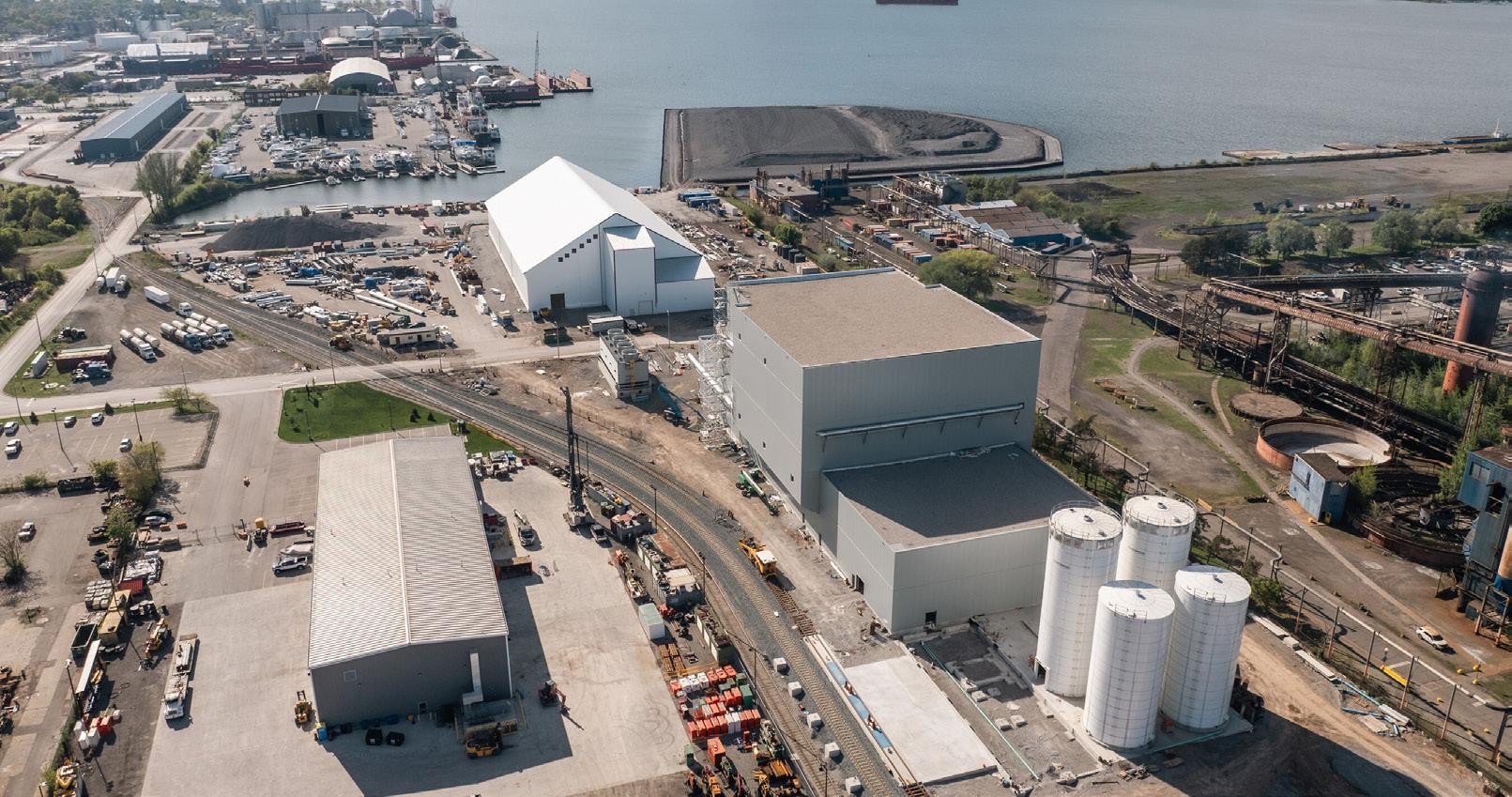
Sucro Can Canada and HOPA Ports marked the official opening of Sucro Can’s new sugar refinery, located at Pier 15 in the Port of Hamilton. HOPA Ports said the move represents years of partnership at the port.
Sucro Can first established operations at the port with its initial building lease at Pier 10 in 2014, marking the company’s entry into Hamilton as its Canadian refining base. Building on that foundation, an agreement
systems come online.
The facility currently employs approximately 65 skilled workers, with employment expected to continue growing.
Operations include the production of dry and liquid refined sugar, packaged in industrial formats for food manufacturing customers.
ICTC AND NGEN RELEASE REPORT ON DIGITAL TRANSFORMATION IN F&B MANUFACTURING
for the new refinery at Pier 15 was finalized in 2023, setting the stage for the next phase of growth.
Construction of the new refinery began in April 2024 and was completed in April 2026, delivering new industrial capacity, purpose built for long term growth and supply chain reliability, the company said.
Located near key food manufacturing sector supply chain partners and customers, the refinery’s location
aims to allow Sucro Can to receive raw sugar by vessel and distribute refined products to food manufacturers across Ontario, Quebec and the U.S. Midwest.
According to the press release, the refinery will gradually increase volumes year over year, receiving up to 10 vessels during its first year of full operations in 2026, increasing to approximately 14 vessels in 2027, with continued expansion as additional
A new roadmap from the Information and Communications Technology Council (ICTC) and Next Generation Manufacturing Canada (NGen) finds that most Canadian food and beverage plants are still early in their digital transformation journey.
While half of manufacturers surveyed have adopted cloud computing and cybersecurity tools, and 37 per cent are using sensors and IoT devices, only three per cent have systems advanced enough to predict equipment failures or support autonomous decision-making. High purchase costs, workforce skills gaps
Sucro Can refinery at Port of Hamilton
CNW GROUP/HAMILTON-OSHAWA PORT AUTHORITY)
and ageing, hard-to-connect machinery remain the biggest barriers to getting there.
For report details, turn to page 9.
FEDERAL GOVERNMENT INVESTS OVER $4.7M TO SUPPORT FOOD PRODUCTION IN NUNAVUT
The federal government recently announced it is investing up to $4,787,324 in targeted funding for two community food processing plants in Nunavut. CanNor is contributing up to $1,925,000 through the Regional Tariff Response Initiative the Gjoa Haven Hunters and Trappers Association for the Country foods processing facility development project in Gjoa, Nunavut.
This three-year project intends to establish a country foods processing facility that will initially focus on Arctic char, with the potential to later process other country foods, such as muskox. This project aims to improve food security and sovereignty by increasing the community’s capacity to process, package, store and distribute locally harvested food. The Government of Nunavut is contributing $1,487,850,
da $283,019, Taloyoak Umaruliririgut Association $268,409 and Kitikmeot Inuit Association $25,000.
LOVO EXPANDS QUEBEC EGG GRADING FACILITY
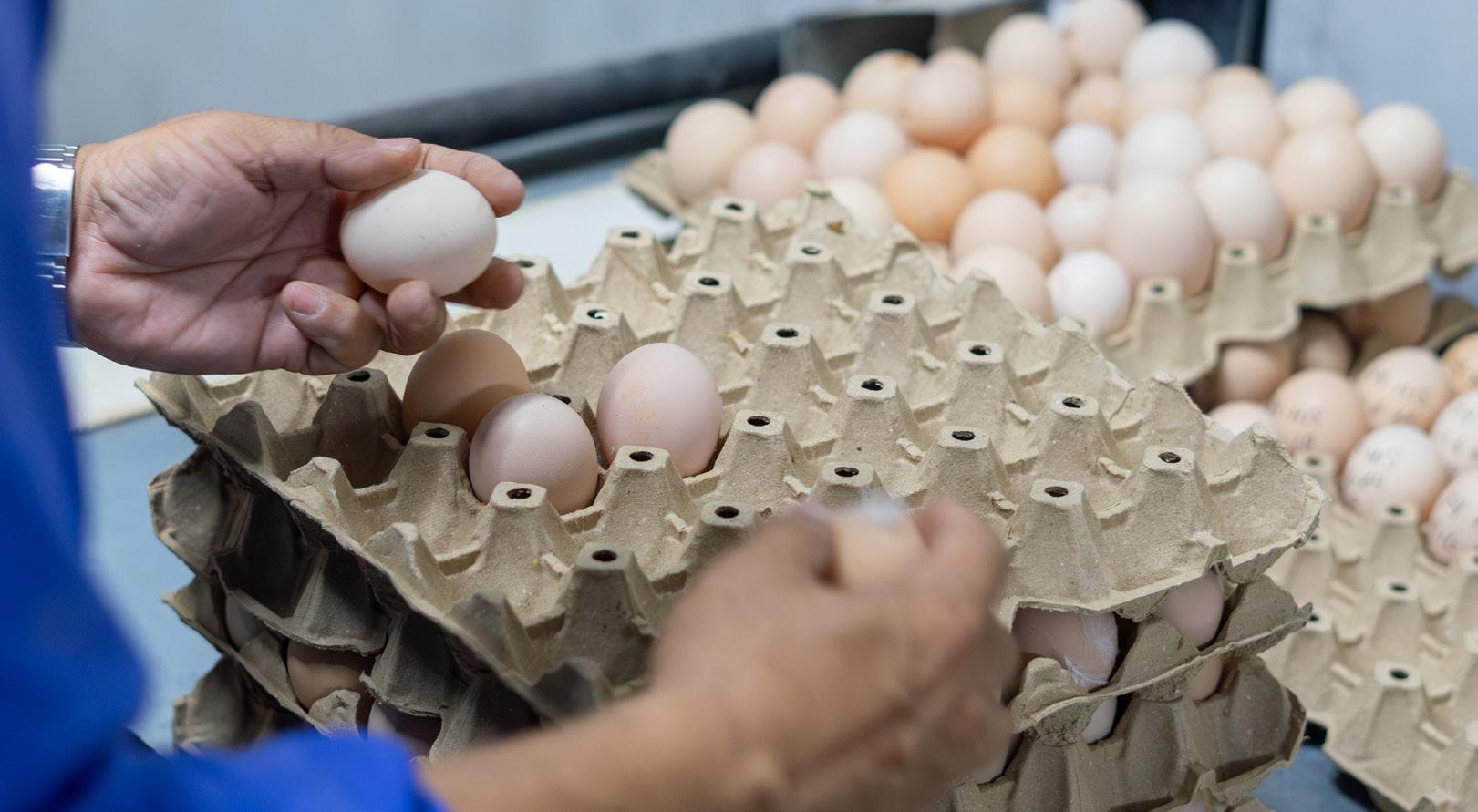
Lovo, formerly Nutri Group, has launched Phase 2 of the expansion project at its Saint-Lambert-de-Lauzon egg grading facility in Eastern Quebec. The first phase, completed earlier this year, focused on modernizing egg handling and preparation equipment. The second phase includes a strategic investment of nearly $10 million aimed at supporting business growth and modernizing operations.
Fisheries and Oceans Canada $360,615 and the Gjoa Haven Hunters and Trappers Association $42,400.
CanNor is also contributing up to $1,464,736 to the Taloyoak Umaruliririgut Association for the Niqihaqut Cut and Wrap Facility in Taloyoak, Nunavut. This two-year project will construct a modular facility for cutting and wrapping meat. The facility will increase access to fresh, affordable, locally pro-
cessed food, while building community capacity and supporting hunters and harvesters in the region.
Traditional foods will be processed in Taloyoak and services may expand in the future. Additionally, the Government of Nunavut is contributing $783,244, Fisheries and Oceans Canada $470,935, Crown-Indigenous Relations and Northern Affairs $283,019, Indigenous Services Cana-
Phase 2 of the project includes an 18,000-square-foot expansion, bringing the total building size to 62,000 square feet. This addition will primarily enhance storage and production areas. The project is expected to increase overall capacity by 10 per cent with the expansion scheduled for completion by November 2026. Lovo is expected have an economic impact of more than $85 million over the next five years.
Lovo has launched Phase 2 of the expansion project at its Saint-Lambert-deLauzon egg grading facility in Eastern Quebec.
JUST THREE PER CENT OF FOOD MANUFACTURERS USE
DATA PREDICTIVELY, ICTC REPORT FINDS
New report highlights the technologies food processors are adopting and the barriers preventing many from reaching higher levels of digital maturity.
BY KIRSTYN BROWN
Anew report from the Information and Communications Technology Council (ICTC) and Next Generation Manufacturing Canada (NGen) suggests Canada’s food and beverage manufacturers are adopting digital technologies at increasing rates, but relatively few have integrated those systems well enough to support predictive or autonomous decision-making.
The report, Accelerating Digital Transformation in Canada’s Food and Beverage Manufacturing Sector, draws on a survey of Canadian manufacturers, interviews with industry leaders and a sector roundtable to examine how food manufacturers are adopting technologies such
as artificial intelligence, industrial automation, sensors and IoT, digital twins, cloud computing and advanced data analytics.
ADOPTION IS GROWING, BUT MATURITY LAGS
According to the report, cybersecurity and cloud computing are currently the most widely adopted digital technologies in the sector, with 50 per cent of food and beverage manufacturers reporting they use each technology. Sensors and IoT technologies are used by 37 per cent of respondents, while 27 per cent report using both artificial intelligence and big data analytics. Twenty per cent use robotics and industrial automation technologies, and 10 per cent have
adopted digital twins.
Despite those adoption rates, the report found that most manufacturers have not yet achieved higher levels of digital maturity. Fifty-three per cent of surveyed companies reported using digital technologies in isolated applications or partially networked environments. A further 27 per cent said they have interconnected technologies but analyze data only on an ad hoc basis, while just 17 per cent regularly and systematically analyze data from connected systems. Only three per cent reported using connected technologies in predictive or autonomous ways. The findings suggest that while many food manufacturers have begun investing in digital tools, relatively few have progressed to the point where those technologies are fully integrated across operations.
WHERE THE TECHNOLOGY IS BEING APPLIED
{ For maintenance and operations leaders, the report highlights equipment monitoring through sensors and IoT devices, predictive maintenance, machine vision systems and AIassisted troubleshooting tools as emerging use cases.
tivity required for modern monitoring and analytics systems, forcing manufacturers to pursue gradual retrofit projects rather than large-scale technology upgrades.
For maintenance and operations leaders, the report highlights equipment monitoring through sensors and IoT devices, predictive maintenance, machine vision systems and AI-assisted troubleshooting tools as emerging use cases. Companies interviewed for the report said they are increasingly using operational data to identify equipment anomalies, reduce unplanned downtime and improve decision-making.
The report also notes that improving profitability was the leading driver of digital technology adoption, cited by 63 per cent of respondents. Other key
Among the most pressing business challenges identified by food manufacturers were real-time supply chain visibility (53 per cent), adapting to changing consumer demands (47 per cent), food safety and regulatory compliance (47 per cent), and managing perishable inventory and waste (33 per cent). Maintaining consistent product quality despite variability in raw materials was cited by 27 per cent of respondents.
motivators included enhancing product quality (37 per cent), responding to customer expectations (20 per cent), offsetting labour shortages (17 per cent) and pursuing new market opportunities (17 per cent).
BARRIERS TO ADOPTION
The roadmap highlights several obstacles slowing adoption. Half of respondents cited high purchase costs and market uncertainty as major barriers, while 37 per cent pointed to uncertain economic returns. A lack of skilled workers was identified by 23 per cent of manufacturers, and 20 per cent cited challenges integrating modern technologies with existing equipment and systems.
Legacy equipment continues to be a particular challenge for many food manufacturers. The report notes that older machines often lack the connec-
Workforce readiness remains another area of concern. While 57 per cent of respondents said they have employees with the skills needed to implement new digital technologies, only 20 per cent reported having a formal staff training plan in place to support adoption efforts.
The report also points to the loss of institutional knowledge as experienced maintenance personnel retire, creating additional pressure on companies to capture expertise and improve knowledge-transfer processes.
A LONG-TERM TRANSFORMATION
ICTC and NGen conclude that successful digital transformation will require more than technology investments alone. The roadmap recommends a phased approach that includes pilot projects, workforce training, ROI measurement, change management planning and strategic partnerships to support long-term implementation efforts.
THE HEAT IS ON:
WORKING SAFELY IN HOT ENVIRONMENTS
What
rising indoor temperatures mean for worker health and safe operations.
BY CANADIAN
CENTRE FOR OCCUPATIONAL HEALTH AND SAFETY (CCOHS)
Hh eat is part of the job in many workplaces. You might feel it on a plant floor, inside a mechanical room or anywhere equipment is running for long stretches. These indoor spaces can heat up quickly, and over the course of a shift, that heat can build. When that happens, working conditions get more than just uncomfortable. Heat starts to affect how people feel, how they work and how safely the job gets done. As temperatures rise and heat events become more frequent, managing heat exposure is becoming a bigger part of everyday health and safety.
MORE THAN DISCOMFORT
Working in a hot environment puts real strain on the body. When heat builds faster than the body can cool itself, internal temperature rises. Sweating helps, but it is not always enough. Early signs can often go undetected. A worker feels tired sooner than expected. They get dizzy, nauseous or develop muscle cramps. If conditions continue,
those symptoms can progress to confusion, disorientation or worse. In the most serious cases, heat stroke can occur and requires immediate medical attention. Heat also affects how people think. Reaction times slow down, focus drops and decision-making becomes less sharp. In environments where timing, coordination and attention to detail matter, that can increase the chance of something going wrong.
WHERE INDOOR HEAT COMES FROM
Indoor heat often comes from the work itself. Boilers, furnaces, ovens, engines and other equipment generate heat, especially in enclosed or poorly ventilated spaces.
You may not notice it right away. A space that feels manageable at the start of a shift can feel very different a few hours later, once equipment has been running and the air has had little chance to circulate. Humidity makes things worse. When the air holds more moisture, sweat cannot evaporate as easily and the body has a harder time cooling down.
The job itself adds to the load. Physically demanding work generates body heat. Personal protective equipment can trap that heat and limit airflow. All of this combines to create conditions that can change throughout the day and from one area to another.
A GROWING CHALLENGE
Hot indoor environments are not new, but they can
be hard to manage. Warmer outdoor temperatures can raise baseline conditions inside buildings, especially where cooling systems are limited or where equipment is already producing heat.
For employers, this shows up in a few ways. Workers fatigue faster, productivity can drop and the likelihood of mistakes or incidents can increase, especially during longer shifts or extended heat events.
UNDERSTANDING THE RISK
T here is no single temperature that tells you when work is safe or unsafe. What matters is the
overall heat load, which depends on temperature, humidity, air movement, workload and what workers are wearing.
That is why it helps to look beyond the thermostat. Some workplaces use tools that account for these combined factors, such as measuring the wet bulb globe temperature (WBGT), to get a better sense of how conditions are affecting workers. These tools can help assess heat stress risks more accurately than air temperature alone.
The key is to look at how the work is being done. The conditions next to a piece of equipment may be
very different from the rest of the space. What feels manageable in one area may not be in another.
CONTROLLING HEAT AT THE SOURCE
If you can reduce the heat, start there. In indoor environments, that often means looking at equipment and airflow. Improving ventilation can help move hot air out and bring cooler air in. Cooling systems can lower overall temperatures. Insulating or shielding hot equipment can reduce how much heat reaches workers.
Even small adjustments can help. Increasing airflow or creating cooler zones where workers can step away from the heat can make a noticeable difference over the course of a shift.
ADJUSTING HOW WORK IS DONE
How work is organized matters just as much as the physical environment.
Workers should acclimatize to hot conditions before a full workload and gradually increase the duration and intensity of physical activity.
If you can schedule more demanding tasks for cooler parts of the day, do it. Build in regular breaks before workers start to feel unwell. Rotate tasks so the same person is not exposed to the hottest conditions for long periods.
Make it easy for workers to stay hydrated. Ensure there is access to water and a place to cool down.
{Heat should not only be addressed during extreme weather. It needs to be part of how work is planned and carried out every day. That means thinking about heat when scheduling tasks, checking in with workers as conditions change and adjusting as needed.
These simple steps go a long way in preventing heat stress.
Clothing and equipment should also be part of the conversation. Personal protective equipment is often necessary, but it can add to heat strain. Where possible, look for options that balance protection with comfort.
RECOGNIZING AND RESPONDING
Even with the right controls, heat can still catch up with people. Workers and supervisors need to know what to look for. One challenge is that people do not always recognize symptoms in themselves. In many cases, a co-worker is the first to notice that something is off.
If someone shows mild symptoms of heat stress, act quickly. Move them to a cooler area, provide fluids, and monitor how they are doing. If symptoms are severe (confusion or loss of consciousness), get medical help right away.
Just as important, make it easy for people to speak up. If a worker says it is too hot to continue safely, take them seriously.
MAKING HEAT PART OF EVERYDAY PLANNING
Heat should not only be addressed during extreme weather. It needs to be part of how work is planned and carried out every day. That means thinking about heat when scheduling tasks, checking in with workers as conditions change and adjusting as needed. Short safety conversations can help keep heat risks top of mind and reinforce what to watch for.
Incorporating heat management into daily planning makes it easier to manage. Workers can anticipate what to expect, supervisors know what to monitor, and the job gets done more safely. When heat is part of the job, managing it needs to be part of the work.
The Canadian Centre for Occupational Health and Safety (CCOHS) promotes the total well-being — physical, psychosocial, and mental health — of workers in Canada by providing information, advice, education, and management systems and solutions that support the prevention of injury and illness. Visit www.ccohs.ca for more safety tips.
FOR MAINTENANCE:
KEEPING CRITICAL PARTS FLOWING IN FOOD AND BEVERAGE PLANTS
A practical look at how Kanban – and the two-bin system – helps maintenance teams stabilize inventory.
BY HOLLY BLAIR, P.ENG
Walk into most maintenance shops and you’ll see a familiar pattern: technicians searching for parts, urgent jobs jumping the queue and critical spares somehow unavailable when they’re needed most. It looks like a parts problem on the surface, but it’s not. It’s a flow problem.
Maintenance teams are working in a reactive environment where the system doesn’t support them, and as a result, time, money and effort are lost every day. Kanban offers a simple, practical way to bring control back by creating visibility and structure around how parts move through the operation.
While Kanban is often associated with production and inventory management, the same principles can help maintenance teams in food and beverage plants reduce stockouts, manage storeroom inventory more effectively and ensure critical spare parts are available when equipment failures occur.
WHAT IS KANBAN?
Kanban is a visual, pull-based system used to manage the flow of materials and work. It signals when to replenish inventory based on actual consumption rather
than forecasts or assumptions. In practice, this means parts are only reordered when they are used, creating a controlled, predictable flow that aligns inventory levels with actual demand.
THE REALITY OF MAINTENANCE OPERATIONS
Maintenance operates under constant pressure. Equipment fails unexpectedly, production demands immediate response and there’s little tolerance for delays. In that environment, teams do what they need to do to keep things running. Parts get ordered “just in case.” Inventory builds up in some areas while running out in others. Technicians hold onto critical components because they don’t trust the system to have them available next time. Expediting becomes normal, and the storeroom turns into a place where material exists, but not necessarily where or when it’s needed. The issue isn’t effort – it’s the absence of a clear, reliable system to manage flow.
HOW KANBAN WORKS
Kanban creates flow by shifting from a push system to a pull system. Instead of ordering parts based on forecasts, assumptions or urgency, replenishment is triggered by actual usage.
When a part is consumed, that consumption creates a signal to replace it. Inventory levels are set based on actual demand and lead times, not on the fear of running out of parts. This creates a system that is far more stable, predictable and easier to manage. It removes the reliance on memory, spreadsheets or constant monitoring and replaces it with a simple, visual process that works consistently. In a maintenance context, Kanban is most effective for high-usage, repeatable items. Bearings, fasteners, fuses, filters, lubricants and standard electrical components are all good candidates. These are the items that create the most disruption when they’re missing and the most waste when they’re overstocked. Managing them through a Kanban system ensures that they are available when needed without tying up excess cash and space in inventory.
THE TWO-BIN KANBAN SYSTEM
A common approach to Kanban is the two-bin system. Each part has two defined quantities stored in separate bins or locations. Technicians pull from the first bin during normal use. Once that bin is empty, they move to the second bin and the empty bin becomes the signal to reorder. That signal could be as simple as a card, a tag or a designated location. The key is that replenishment is triggered immediately when the first bin is depleted, ensuring that new stock arrives before the second bin runs out. It’s a straightforward system, but when applied consistently, it eliminates a significant amount of variability and stress.
When Kanban is implemented effectively, the impact is immediate and measurable. Stockouts are reduced because replenishment is based on actual consumption. Inventory levels decrease because over-ordering is eliminated. Expediting drops because the system is no longer constantly reacting to shortages. Technicians spend less time searching for parts or managing inventory and more time focused on maintenance work. Visibility improves, making it easier to understand usage patterns and identify opportunities for further improvement.
One of the most powerful effects of Kanban is the change in behaviour it creates. In the absence of a clear system, individuals naturally develop workarounds to protect themselves from uncertainty. They stockpile parts, place early orders, or create informal storage locations. These behaviours are logical responses to a broken system, but they introduce more variability and inefficiency over time. Kanban replaces those individual workarounds with a shared, visible process that everyone follows. It creates consistency, builds trust in the system, and reduces the need for workarounds altogether.
That said, Kanban is often misunderstood or poorly implemented. One common mistake is trying to apply it to everything at once. Not all parts require a Kanban system and attempting to manage low-usage or highly variable items this way can create unnecessary complexity. Another issue is setting bin quantities based on guesswork rather than actual usage and lead times. If quantities are too
low, stockouts will occur; if they are too high, excess inventory will return. Supplier reliability also plays a role. Kanban depends on consistent replenishment, so unstable supply chains need to be addressed alongside the system itself.
The good news is that getting started doesn’t require a large-scale initiative. Kanban can be introduced in a focused, practical way. Start by selecting a small group of high-usage parts in one area of the operation. Establish clear quantities based on consumption and lead time. Set up a simple two-bin system with a visible reorder trigger. Monitor how it performs and make adjustments as needed. This approach allows the team to learn and build confidence before expanding the system more broadly.
THE BOTTOM LINE
In today’s environment, maintenance teams are being asked to do more with less. Equipment is aging, resources are constrained, and supply chains are less predictable than they once were. In that context, having a stable, reliable system for managing parts is essential. Kanban provides that stability. It reduces reliance on urgency and individual effort and replaces it with a system that supports consistent execution.
Most maintenance challenges aren’t caused by a lack of effort. They’re caused by systems that make it harder than it should be to do the work. Kanban is one of the simplest ways to change that. By creating flow, improving visibility, and reducing variability, it allows maintenance teams to focus on what they do best – keeping equipment running and supporting production. And when the system works, everything else starts to follow.
Holly Blair, P.Eng, is a chemical engineer, Lean Six Sigma Master Black Belt and founder of Lean Possibilities. She is the author of</i> Lean Transformation for Small and Mid-Size Manufacturers: A Practical Guide to Efficiency, Profitability, and Sustainable Growth.
ARTIFICIAL INTELLIGENCE’S
GROWING ROLE IN F&B PROCESSING
A glimpse into technology’s ability to transform food production.
BY TREENA HEIN
It’s an exciting time for Canada’s F&B processors. Long plagued by crippling labour shortages – and now facing tariff uncertainties and a faltering economy – food companies are turning to artificial intelligence (AI) for deepened automation, data analysis and actionable insights. In concert with machine vision and other sensor systems, AI technologies are now making various aspects of food production much more efficient, with further gains to come.
“AI is being deployed across virtually every stage of food processing, with some really impressive results in areas requiring precision and consis-
tency,” explains Ryan Khurana, senior fellow at the Foundation for American Innovation, and a contributor to the Macdonald-Laurier Institute.
He notes that in the supply chain, larger food companies are using AI to optimise everything from warehouse management to delivery routes, reducing transportation costs and minimizing spoilage. The data crunching abilities of AI can also provide insight into demand forecasting, says Khurana, and in addition, dramatically shorten product development timelines. On the equipment side of things, he adds AI can provide greater insight into predictive and proactive maintenance to
save costs and prevent costly downtime.
On the plant floor, according to Khurana, AI is achieving nothing short of transforming food safety from reactive to proactive.
“Instead of just testing after problems occur, AI can analyse patterns to predict potential safety risks before they happen,” he explains. “Computer vision systems powered by AI are revolutionising how we inspect food products. These systems can spot defects, contamination and quality issues that human inspectors might miss, and they can do it much faster and more consistently.”
When combined with sensor systems AI can continually monitor and optimize conditions during various parts of processing.
“For things like mixing, heating, and extrusion, AI algorithms can analyse real-time data from sensors and make continuous adjustments to temperature, timing and ingredient ratios,” says Khurana. “This means more consistent products.”
DEVELOPING NEW TECHNOLOGIES
Under Canada’s new Ministry of AI and Digital Innovation, the Scale AI global innovation cluster is providing support for AI technology development and adoption in all sectors. Scale AI CEO Julien Billot says the most common AI applications he’s seeing right now in the food industry involve prediction and decision support.
“We’re often seeing AI used to forecast demand, which helps optimize staffing levels or ensure the
McCain Foods has received $8.5 million from Scale AI and investment from other partners such as Lemay.ai for its new ‘McCain Driving Impact’ project.
right amount of fresh produce is available at the right time and place,” he says. “Regarding decision support, the goal is to free up employees to focus on higher-value tasks while utilizing AI as an analytical tool to make faster, better-informed decisions.”
Scale AI is supporting a few food production-related projects, all part of a recent funding announcement of almost $99 million for 23 projects, financed in a two-to-one ratio of private: public investment.
McCain Foods has received $8.5 million from Scale AI and investment from other partners such as Lemay.ai for its new ‘McCain Driving Impact’ project. In this initiative, technologies will be developed to minimize spoiled potato raw input from growers, allow production lines to operate more smoothly,
identify problematic areas along the manufacturing process, ensure efficient use of utilities and more.
ENSURING MEAT QUALITY
Looking at AI systems already in place in food processing, Canada-based P&P Optica (PPO) has added it to its automated meat quality screening systems, launched a decade ago and sold in North America, Europe and Australia. Employing hyperspectral and other real-time imaging technologies, these systems detect low-density foreign objects, bone, ‘lean point’ and in chicken specifically, a quality issue called woody breast. In January, PPO added product size, shape and thickness measurement, along with estimates of product weight.
AI-equipped hyperspectral imaging systems offer precise detection of foreign materials, bones, lean point, and woody breast in chicken products.
The AI models run in real-time on the processing line, identifying defects and triggering downstream equipment to sort or remove product automatically at speeds of up to 200 pieces per minute. PPO marketing manager Stewart Wright explains the neural network for each customer is trained to compare actual meat to a database containing thousands of labelled product images. The more diverse examples (different product forms, sizes, foreign materials and quality variations) the AI is exposed to, the more robust and reliable it becomes. Wright further explains that at system installation, “our commissioning process involves collecting as much in-factory data as possible. This allows the AI to fine-tune its performance based on plant-specific conditions like temperature, product flow and specific foreign material types. Our models are constantly refined.”
Future models, he reports, will assess even more complex combinations of defects and quality issues in a single pass.
“We’re also building tools to predict performance issues, optimize yield and improve traceability,” says Wright, “to enhance supplier management through improved data visibility, both upstream and downstream.”
Indeed, AI’s ability to maintain virtually 100 per
{“By around 2030, I expect we’ll see most large Canadian food processors implementing AIpowered quality control and predictive maintenance systems. Mid-sized companies will likely focus on high-impact applications like demand forecasting and automated inspection.”
cent precision, even in the face of high variability and complexity, sets it apart from systems without the technology, explains Shirin Saleem, VP of product engineering at U.S.-based Cognex. The company offers automated screening and product data analysis to customers worldwide, including packaging and label inspection, ensuring product components are placed properly (e.g. jelly on cookies) and tracking products throughout the production process.
Looking forward, Saleem says advances in neural network architectures and edge computing are making AI tools in food production increasingly data-efficient and user-friendly.
“Many no longer require large datasets or deep technical expertise to train,” she says. “In fact, some can be deployed and fine-tuned directly on the pro-
duction floor using compact, embedded vision systems equipped with graphic processing units, eliminating the need for bulky, power-hungry PCs.”
WHAT’S AHEAD
When Khurana considers AI’s future in Canadian processing over the next five years, he expects there will be substantial, but measured adoption.
“Canadian businesses are still in the early stages of AI adoption overall,” he says. “By around 2030, I expect we’ll see most large Canadian food processors implementing AI-powered quality control and predictive maintenance systems. Mid-sized companies will likely focus on high-impact applications like demand forecasting and automated inspection. Smaller processors will probably adopt cloud-based AI solutions as they become more accessible and affordable.”
At the same time, “main barriers remain cost, data privacy concerns and finding people with the right skills to implement these systems,” he says. “However, as cloud-based solutions become more common and government support increases, these hurdles should become more manageable for smaller processors. I think Canada’s food processing sector has a real opportunity to become a global leader in AI adoption. We have the research foundation and innovative companies to make it happen.”
This article was originally published in the Oct. 2025 issue of Food in Canada.