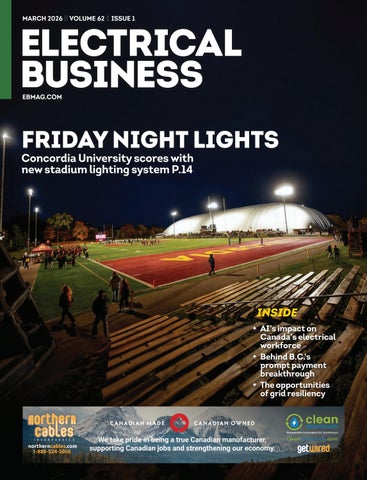
Concordia University scores with new stadium lighting system P.14

+AI’s impact on Canada’s electrical workforce
+Behind B.C.’s prompt payment breakthrough
+The opportunities of grid resiliency

Concordia University scores with new stadium lighting system P.14
+AI’s impact on Canada’s electrical workforce
+Behind B.C.’s prompt payment breakthrough
+The opportunities of grid resiliency






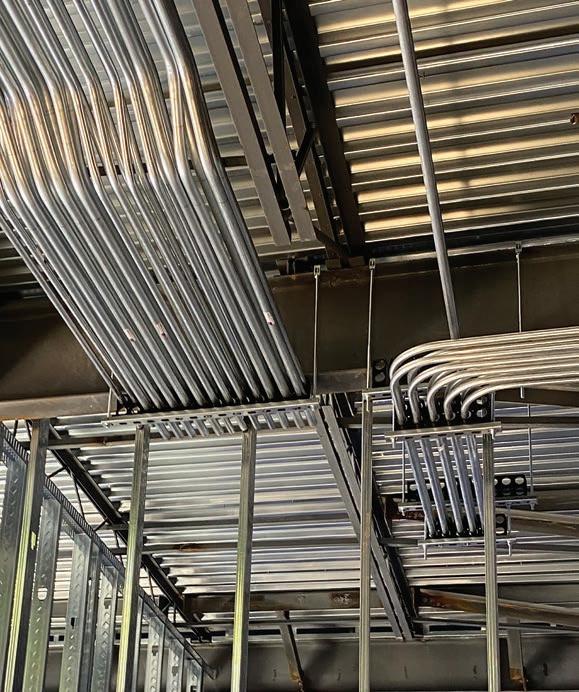
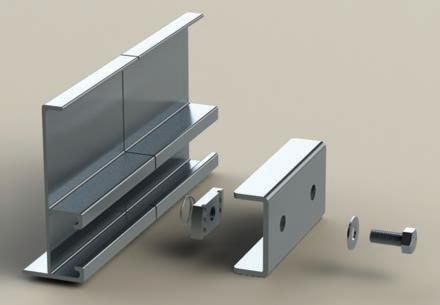
Time-savingnon-metallic CableAble® Support Brackets are the ONE BRACKET for support of EMT or flexible metal conduit, power MC and NM cables, and low voltage cables, in commercial or residential work, with plenum or non-plenum ceilings.
Four- and eight-hole CableAble mounts horizontally or vertically to studs or unistrut. And horizontally to all thread and beam clamps.








Arlington develops and manufactures quality electrical and low voltage products that solve jobsite problems, meet code requirements and save installers time.
For more than 75 years, Arlington has been a leading manufacturer of traditional metallic and non-metallic fittings and connectors - and remains an industry leader in the development of unique and innovative electrical and communications products.
Items like our patented SNAP-TITE®, Snap2It®, our recessed IN BOX® and TV BOX®, and AnyBody® conduit bodies, among many others, have made their mark on the electrical industry.
Arlington’s 8412 series Feeder Cable Fittings are NOW LISTED for Tray Cable and Steel and Aluminum Flexible Metal Conduit. Available in multiple sizes, with a built-in end stop, each fitting comes with additional end stop bushings that vary the size of the opening to accommodate different cable types and sizes – and a free cable sizing template. https://www.aifittings.com/landing/8412
CableStop™ Transition Fittings, for EV chargers and equipment feeds, deliver the cost-effective way to transition feeder cables to EMT, IMC and RMC conduit. Available with set-screw or compression connections, they integrate our patented 8412 series MC cable fittings and conduit fittings, for easy transitions to larger knockout sizes.
https://www.aifittings.com/landing/cablestop/
Engineered for contractor-grade reliability, Arlington’s new robust CableAble™ Commercial Grade Conduit Support System is rated for maximum conduit and wire loading in commercial applications. Its wide 2-inch hole rim makes pulling cable faster and easier. Available now in 1-inch, 1-1/4 inch coming soon.
https://aifittings.com/landing/cableable-2-inch
Ideal for construction and industrial electrician apprentices, students, trade qualifiers, and challengers
Aligned with the major work activities, tasks, and sub-tasks of the RSOS
Practice questions with answers to check and reinforce your knowledge

The Canadian Electrical Trade Study Guide helps you prepare for the trade certification exam
Are you planning to take the Construction Electrician Red Seal Exam to demonstrate your knowledge and skills in your trade? CSA Group’s Canadian Electrical Trade Study Guide can help strengthen your understanding of electrical systems, refresh your knowledge, and gain confidence before taking the exam.
Why should you use the guide?
Developed by electrical professionals from across the country, the guide provides:
• an overview of the 2024 Canadian Electrical Code, Part I (CE Code)
• requirements of other relevant CSA standards
• diagrams illustrating the key CE Code concepts
• explanations of concepts covered in the Red Seal Occupational Standard (RSOS)
• step-by-step examples of calculations included in the CE Code
• practice questions with answers to check and reinforce your knowledge
• additional resources for electrical trades journeypersons

Get the Canadian Electrical Trade Study Guide
csagroup.org/CETSG


JACK BURTON
Hello there! My name is Jack Burton, and I’m excited to share that I have taken on the role of editor for Electrical Business.
It’s clear that over the publication’s 60-plus years of covering the sector, Electrical Business has come to play a strong and trusted role in educating, celebrating, and connecting the many different sides of Canada’s electrical industry, and I’m keen to retain that momentum.
While I might be fresh to the world of watts and wiring, I’ve been covering various subsectors of Canada’s construction landscape for several years, including cranes, heavy lifting, roadbuilding, and quarrying.
The handful of months I’ve already spent covering this industry have flown by, but one thing that’s been consistent across the many conversations, new faces, and events that have kept my calendar full is an eagerness among you all to connect and share knowledge from the many sides of the sector.
From my travels through other corners of the country’s construction industry, my advice is to not to take the amount of opportunities to connect within your sector for granted – this volume of events and chances to network and collaborate is the exception, not the rule.
Thanks to this overall welcoming nature, I’ve already had the privilege of meeting many of you, and I’m looking forward to continuing to both deepen those relationships and build many more.
By the time you’re reading this, I’m probably headed to Edmonton for the IEEE and IAS’ Electrical Safety, Technical, Maintenance Projects (ESTMP) workshop, and I welcome any hello’s or introductions should we cross paths. This June, I’ll be in the land of lighthouses and lobsters for Electro Federation Canada (EFC)’s annual conference in Halifax, and I encourage the same from anyone in attendance.
Since you all seem to love a chance to gather and break bread, I’m also excited to announce that Electrical Business will be hosting our own event on September 17 in Toronto.
The LiveWire Conference and Tradeshow is aimed at bringing together electrical contractors to learn and connect around the issues, solutions, and technology shaping the present and future of the industry, and I look forward to seeing you there!
jburton@annexbusinessmedia.com

company/electrical-business-network

18 12
26 30
Friday night lights

26
12 30

Stadium scores big with new lighting system.
Artificial intelligence, real transformation
New EHRC report explores AI’s impacts on Canada’s electrical workforce.
Insights from the industry partners who drove B.C.’s prompt payment breakthrough.
As grid needs continue to evolve, so are the skills and solutions of the industries it powers.
24 The Estimator
Closing the gap: risk control vs. incomplete information
34 Code File
Electrical training vs. electrical education vs. electrical development
6 Industry news
22 Code conundrum
23 Calendar
33 Products & solutions
33 Personalities

This past November, ground officially broke on the Skyview 2 Battery Energy Storage System in Ontario. When complete, the project will be the largest battery energy storage facility in Canadian history.
Procured through the Independent Electricity System Operator (IESO)’s Long Term 1 Request for Proposals, the $750 million project will feature approximately 400 battery containers and provide power to nearly 400,000 homes by its projected completion in 2027.
The facility, which will be located on roughly 30 acres of rural land in the Leeds and Grenville area township of Edwardsburgh Cardinal, is being developed through a partnership between Potentia Renewables Inc. and the Algonquins of Pikwakanagan First Nation. The construction process will introduce up to 300 jobs in the local area, with additional operational positions to be added.
The facility will bring Ontario’s total energy storage capacity up to nearly 3,000 MW.
the number of nationwide EV charging ports by 8,000.
This expansion of EV charging infrastructure will be installed across a total of 122 different projects, with funding allocated through Natural Resources Canada’s Zero Emission Vehicle Infrastructure Program (ZEVIP).
Among the list of recipients, the Pollution Probe Foundation, a non-profit charitable organization, tops the funded projects at $7,300,000 for 495 chargers, while the York Region Standard Condominium Corporation 1329 is the lowest at $39,900 for 20 chargers. A full list of projects can be found on the federal government’s website.
With 67 per cent of Canada’s 38,000 EV charging points currently located in Ontario and Quebec, this investment aims to both diversify the locations of the country’s charging infrastructure and remedy the lag in reaching NRCan’s stated goal of having 52,000 charging points by the end of 2025.
This news follows an announcement from Prime Minister Mark Carney earlier in February regarding plans for the federal government to spend a total of $1.5 billion on the country’s EV infrastructure; part of a larger suite of changes to Canada’s federal auto strategy.
Reader Service
Print and digital subscription enquiries or changes, please contact Customer Service: Angelita Potal Tel: 416-510-5113
Fax: (416) 510-6875
email: apotal@annexbusinessmedia.com
Mail: 111 Gordon Baker Rd., Suite 400 Toronto, ON M2H 3R1
Editor Jack Burton jburton@annexbusinessmedia.com
Brand Sales Manager Leslie Osborne losborne@annexbusinessmedia.com
Media Designer Lisa Zambri lzambri@annexbusinessmedia.com
Canada’s federal government is adding up to $84.4 million dollars to the country’s EV charging infrastructure, with this investment set to expand March 2026 || Volume 62 || Issue 1
The Government of Ontario has declared the Ring of Fire’s 230-kilo-
Account Coordinator Emily Guimarães eguimaraes@annexbusinessmedia.com
Group Publisher Danielle Labrie dlabrie@annexbusinessmedia.com
Audience Development Manager Urszula Grzyb ugrzyb@annexbusinessmedia.com 416-510-5180
CEO Scott Jamieson sjamieson@annexbusinessmedia.com
Published by Annex Business Media 111 Gordon Baker Road, Suite 400 Toronto, ON M2H 3R1 Tel. 416-442-5600
ELECTRICAL BUSINESS is the #1 Canadian resource for electrical contractors, maintenance and engineering professionals, distributors, manufacturers and their agents and associated stakeholders.
PRINTED IN CANADA ISSN 0013-4244
Publication Mail Agreement #40065710
Subscription rates
Canada: $40.31 (per year + tax)
Canada: $68.42 (2 years + tax)
Canada: $9.00 (single issue)
USA: $91.76 (CAD per year)
Foreign: $110.32 (CAD per year)
Annex Privacy Officer
Email: privacy@annexbusinessmedia.com
Tel: 800-668-2374
Occasionally, Electrical Business will mail information on behalf of industry related groups whose products and services we believe may be of interest to you. If you prefer not to receive this information, please contact our Customer Service department in any of the four ways listed above.
The contents of Electrical Business are copyright ©2026 by Annex Business Media and may not be reproduced in whole or part without written consent. Annex Business Media disclaims any warranty as to the accuracy, completeness or currency of the contents of this publication and disclaims all liability in respect of the results of any action taken or not taken in reliance upon information in this publication.
We acknowledge the [financial] support of the Government of Canada




metre Greenstone Transmission Line a priority project; designating Hydro One to develop and construct it.
The line will run from Nipigon Bay to the surrounding area of the Aroland First Nation; the gateway to the Ring of Fire. The project is expected to reach completion in 2032, and will provide the necessary capacity for unlocking an additional 350-700 megawatts of hydroelectricity and other power generation.
The 230km single-circuit transmission line is designed to support a second circuit and will run from the East-West Tie near Nipigon Bay, connect to a new station near the Longlac Transformer Station, and extend north to terminate at a new switching station in or near Aroland First Nation.
The project is expected to create more than 7,000 jobs in the area. Additionally, the Ontario government and Hydro One have committed to keeping 93 per cent of project costs within the country to support Canadian industries.
The Greenstone Transmission Line project began in 2023 with the launch of the Northern Ontario Connection Study by the IESO and Ontario government. This study provided a foundation for Ontario’s Reducing Diesel Initiative in 2024, which ultimately led to the commitment to construct clean energy transmission and generation in the area.
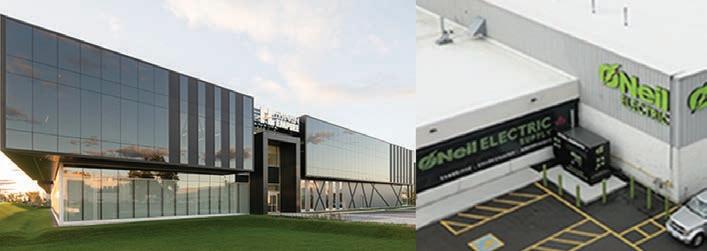
Eastern Canada-based independent electrical distributor Franklin Empire has entered a definitive agreement to acquire Ontario’s O’Neil Electric Supply.
Franklin Empire and O’Neil are both family-owned private businesses that share Affiliated Distributors (AD) membership, with the combined business to retain O’Neil’s strong teams and local expertise, said a press release.
“This acquisition marks a very exciting time in Franklin Empire’s history. The cultural alignment between the Backman family and O’Neil family is
an excellent fit,” said Franklin Empire co-president Cliff Backman. “We are so happy that O’Neil will remain a part of an independent distributor within the AD community.”
Both companies have a combined 145 years of experience in Eastern Canada’s electrical sector.
Franklin Empire was founded in 1942, and is comprised of 600 employees across its 23 branches and five assembly and repair shops in both Ontario and Quebec. Since its founding in 1965, O’Neil Electric has grown to a team of roughly 150 employees and operates three branches across Ontario.
Canada Infrastructure Bank (CIB) is providing $54 million in equity loans to Mi’kmaw and Mi’gmaq First Nations to go toward the construction of the Wasoqonatl electricity transmission line between Onslow, N.S. and Salisbury, N.B.
This additional funding brings the CIB’s total investment in the Wasoqonatl project to $285 million. The 160-kilometre, 345-kV transmission line will run parallel to the existing Onslow-Salisbury connection and is scheduled to be complete in 2028.
Through the CIB’s Indigenous Equity Initiative (IEI), $36 million will be provided to Wskijinu’k Mtmo’taqnuow Agency Limited (WMA), which will enable Nova Scotia’s 13 Mi’kmaw First Nations to acquire an equity stake in the project. $18 million will be provided to the MUIN Transmission Limited Partnership, securing the New Brunswick Mi’gmaq First Nation’s first ownership stake in a large-scale clean power project.
Construction of the project is anticipated to support approximately 587 jobs and generate $105 million in GDP. Project ownership will exist
through a regulated utility corporation alongside limited partnerships with Nova Scotia Power Inc., the CIB, MUIN Transmission Limited Partnership and WMA.
Small power transformer manufacturer and distributor CES Transformers opened its new 160,000 sq. ft. expanded facility in Markham, Ont. on January 13.
The new facility is set to more than triple CES’ production capacity for high-efficiency power transformers and create more than 150 new advanced manufacturing jobs in the Markham area by 2030.
The federal government contributed a total of $3.75 million in fuding for the facility expansion through the Federal Economic Development Agency for Southern Ontario (FedDec Ontario). Several federal ministers were in attendance at the facility’s grand opening, in addition to leaders from across the provincial government and industry at large.
CES cited Ontario and North America’s growing need for energy in the face of supply chain bottlenecks as motivating the company to meet this demand through increasing the volume and power of its transformer solutions.
“Canada’s electricity demand is projected to double or even triple by 2050, and meeting that challenge requires a strong, domestic supply chain,” said CES Transformers president Adam Bryk. “Our expanded facility ensures we can deliver customized, high-quality transformers right here at home – supporting customers, creating jobs, and strengthening the grid for decades to come.”
CES Transformers is a Canadian family-owned company that has specialized in the manufacturing



The MEET (Mechanical Electrical Electronic Technology) Show returns to Moncton...

This iconic biennial event draws exhibitors and visitors from throughout Canada and the US, showcasing the very latest products and services available to the mechanical and electrical industries in today’s market.








distribution of small and medium power transformers aimed at both utility and industrial customers for nearly 40 years.
Ontario’s Hammond Power Solutions enters AEG acquisition agreement Guelph, Ont.-headquartered drytype transformer and power quality solutions provider Hammond Power Solutions (HPS) has entered a definitive agreement to acquire global industrial power electronics provider AEG Power Solutions.
AEG operates primarily across Europe and Asia’s industrial, infrastructure, transportation, and energy sectors, employing more than 780 professionals across five manufacturing facilities.
Under the agreement, HPS will acquire AEG’s outstanding equity in an all-cash transaction of $365 million CAD. Subject to regulatory and customary conditions, the transaction is anticipated to close in the second quarter of 2026. Upon completion, AEG will operate as a wholly-owned subsidiary of HPS.
In addition to its Guelph headquarters, HPS has multiple manufacturing facilities across Canada, the U.S., Mexico, and India; with 9 regional warehouses throughout North America.
On February 19, more than 300 professionals from across Canada’s electricity sector gathered at Vantage Venues in Downtown Toronto for the Electricity Human Resources Council (EHRC)’s sold-out 13th annual Awards of Excellence.
The headline Leader of the Year Award, presented Bruce Power’s VP and chief HR officer Karen Smith, went to Electrical Safety Authority (ESA) CEO Josie Erzetic for her efforts to successfully align the ESA as a prominent partner in Ontario’s energy transition built on accountability,
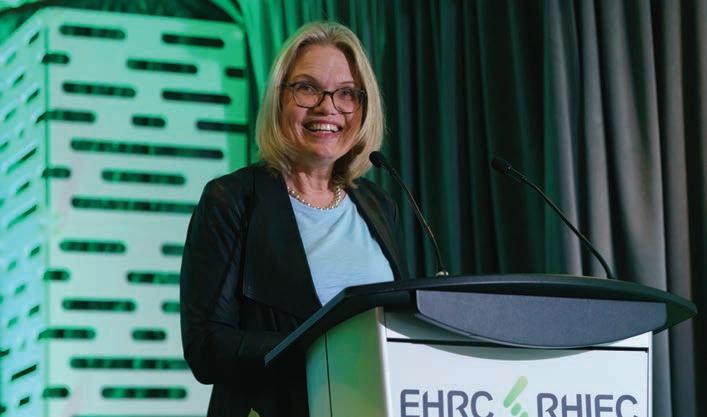
ESA CEO Josie Erzetic accepts the EHRC’s Leader of the Year Award as part of its 13th annual Awards of Excellence program. (Source: EHRC)
inclusion, and integrity since her appointment in 2022.
“When I became CEO in 2022, I wanted ESA to be the voice of safety in the electricity sector. I also had a clear view about how we should use that voice to collaborate with our stakeholders to help them achieve their goals, to facilitate interactions with us and to support growth, rather than act as a barrier, with safety always as a priority,” Erzetic said in her acceptance speech.
The Excellence in HR Innovation Award was presented by Burlington Hydro’s EVP of corporate and chief people officer, Jennifer Smith, to Valard Construction for its Indigenous engagement program. The program has seen the company successfully integrate Indigenous populations into 13 per cent of its workforce, with this figure rising to 30 per cent on major projects.
Fortis Inc. received the Excellence in Workplace Culture Award in the small-midsize category, presented by the IBEW First District’s international representative Bruce Harris. Fortis was recognized for its efforts in implementing people-first leadership development and mentorship programs from its head office of 53 employees.
The sole tie of the afternoon occurred for the Excellence in Workplace Culture Award in the large organization category, which saw two winners honoured due to equally outstanding yet distinct efforts in developing organizational culture. The Ontario Energy Board’s VP of people, culture, and strategic policy, Lenore
Robson, presented the award to both the ethics office at Ontario Power Generation and Hydro One’s Step Up instructors and logistics staff.
Toronto Hydro’s director of HR operations, Jennifer Stulberg, presented the Emerging Leader of the Year Award to the Nuclear Innovation Institute’s president and CEO Jessica Linthorne. Linthorne received the award for a number of efforts including expanding skills development programs, launching new clean energy research centres and projects, along with championing STEM education for students and Indigenous youth.
The Excellence in Diversity, Equity & Inclusion Award, in the large organization category, was presented by Jennifer Whyte, a staff officer at the Power Workers’ Union, to Newfoundland and Labrador Hydro’s Amanda McClafferty. While McClafferty could not be in attendance due to weather, she received the award for her development of a multi-year Accessibility Plan to promote diverse recruitment strategies, along with undertaking accessibility audits on the Churchill Falls project.
Making its debut at the event’s 13th installment, the new Youth Impact Award was presented by Georgian College’s president and CEO Kevin Weaver to the New Brunswick Electricity Now Implementation Team, which includes stakeholders from the New Brunswick Department of Education Centres of Excellence, NB Power, and St. John Energy. The Electricity Now program is an initiative aimed at educating students across the province on the possible pathways
available to them in New Brunswick’s energy sector.
The EHRC’s Excellence Awards return for their 14th annual installment on February 17, 2027.
Schneider Electric opens new Canadian headquarters in Milton, Ont.
Schneider Electric Canada held the grand opening for its new head office and EcoFit Center in Milton, Ont. this past February 26.
Moving from its previous Mississauga headquarters, the company’s new head office consolidates multiple sites into a modernized hub to support operations including research and development, software services, and training across the organization.
The site also features the newly-relocated EcoFit Center Canada; an advanced facility dedicated to extending the life of Canada’s electrical infrastructure through modernization and circularity practices.
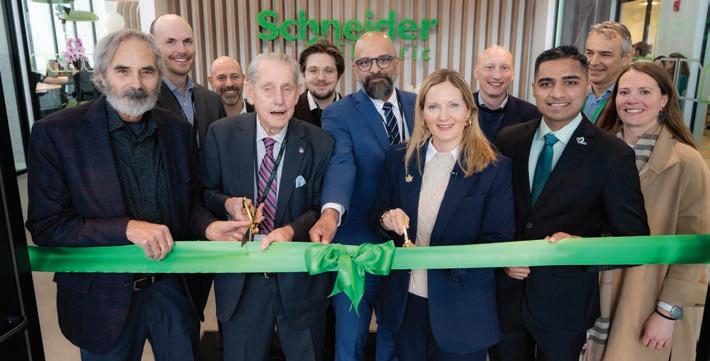
Schneider Electric Canada and local stakeholders gathered in Milton, Ont. on February 26 to celebrate the grand opening of the company’s new Canadian headquarters. (Source: Schneider Electric)
Founded in 2006, Schneider Electric Canada’s EcoFit Center specializes in low- and medium-voltage modernization, switchgear and UPS retrofits, PLC and drive upgrades, and circularity-focused services that extend the life of the country’s electrical assets.
“This facility strengthens our local economy, supports job creation, and reinforces Milton’s role as a hub for clean energy innovation. Schneider

Electric’s commitment to sustainability and Canadian-made solutions aligns with our community’s vision for long-term growth and prosperity,” said the Town of Milton’s Mayor Gordon Krantz.
We’re limited by space here, but have plenty of room online! Read the news behind the news. Visit EBMag.com and click “News”
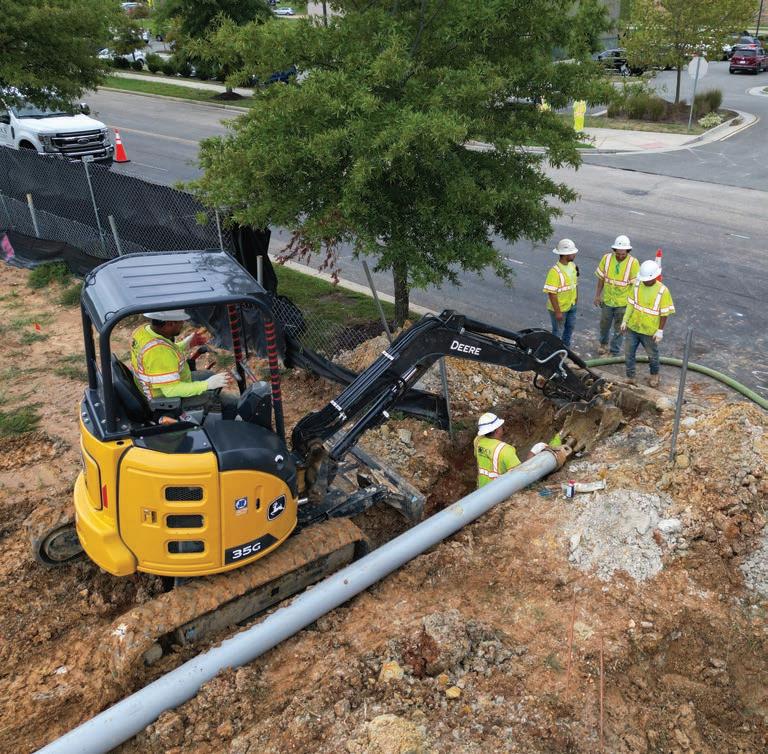
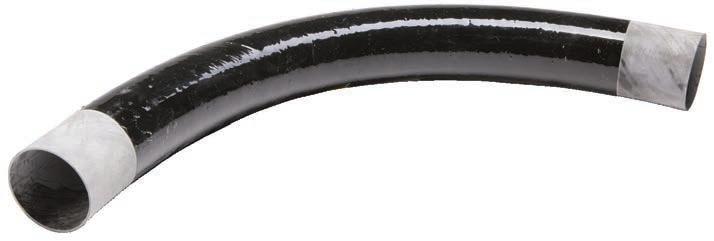
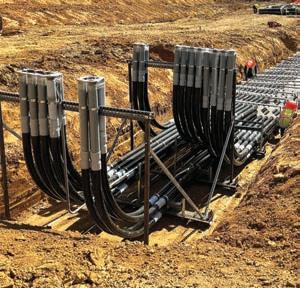
Certa-Com® PVC Electrical Conduit is engineered for HDD and open/continuous trench installations. Manufactured with IPS outside diameters and Schedule 40 wall thickness, it meets NEMA TC-2, UL 651, and CSA requirements—providing long-term protection for electrical, data, and fiber infrastructure.
Explore our selection of highquality Rigid Conduit, Duct, and ENT providing versatility and reliability in electrical installations.

BY JACK BURTON
When it comes to winning the game of outdoor stadium lighting, elements such as poor illumination quality, costly maintenance, and convoluted changing procedures are players best left on the bench.
These shortcomings had all long-plagued the outdoor lighting system at Concordia University’s namesake stadium in downtown Montreal, made up of 144 separate 1,500-watt metal halide (HID) lamps positioned on 65-foot poles surrounding the field.
While the 4,000-capacity stadium has played to host to the Concordia Stingers varsity football, soccer, rugby, and field hockey teams since its construction in 2003, wear and tear to its lighting system over the decades – combined with costly and inefficient maintenance demands – had the University looking to give its stadium’s lighting system
a second wind.
“Previous lighting set-ups, typically utilizing metal halide lamps, frequently fell short in areas of energy efficiency, light uniformity, and colour rendering,” shared Ledvance’s Eastern region account manager, Martin Leclair.
Leclair explained that contemporary standards for outdoor arena lighting systems had long outpaced the current set-up at Concordia Stadium across a number of different elements – a gap that Ledvance, in collaboration with Concordia and several other local partners, joined forces to help close.
“Contemporary Illuminating Engineering Society (IES) standards for outdoor arena lighting, primarily guided by ANSI/IES RP-6-20, emphasize high-efficiency LED technology, precise glare control, improved uniformity, and specific illuminance
Concordia Stadium’s latest lighting upgrade fixed a number of longstanding coverage and maintenance issues, in addition to supporting Concordia University’s overall net zero goals.
levels tailored to the level of play needed,” said Leclair.
In addition to Ledvance, Concordia assembled a team comprised of Longueuil, Quebec-based architectural lighting firm Luxtec, electrical engineers from Montreal’s Dupras Ledoux and Groupe Specs, along with Quebec-based electrical contracting firm Groupe LML to execute the full-court press on replacing the stadium’s lighting system.
The project spanned 2022 to late 2024 between tendering and completion, with the new lighting system, now comprised of 134 separate 400 to 1200-Watt 4000K Ledvance LED Sports Light fixtures, helping to modernize the quality, efficiency, and maintenance needs of the stadium for the athletes that call it home turf.
“Thanks to our upgrade, we reduced energy consumption on the field by 100kW annually,
which has driven substantial reductions in maintenance and operational costs and helped ensure that the project is both a financial and sustainability success,” shared the manager of Concordia’s Internal Expert Services, Brendan O’Neill.
Winning the long game
While even the best bulbs eventually need replacing, the positioning of the stadium’s former lighting system on 65-foot poles made changing them out a prolonged and costly affair. This was partially due to the previous set-up requiring the University’s electricians or subcontractors to rent lifts in order to perform the necessary maintenance.
Lighting maintenance in specialized outdoor settings such as stadiums or arenas is far from a standard affair, with Leclair further explaining that an array of unique demands and durability considerations are required by these types of systems. This means that solutions which drive efficiency across the maintenance process are given top priority, he said.
“Installing and maintaining large-scale outdoor arena or sports field lighting requires specialized expertise compared to standard commercial or residential outdoor lighting, focusing heavily on durability, high-precision aiming, and sophisticated control systems,” he said. “Some key differences include high-pole mounting, alongside the need for IP-65-rated fixtures to withstand harsh environments, with the wind playing a big factor as well.”
The costs and processes asso-

The upgrade saw the installation of 134 separate 400 to 1200Watt 4000K Ledvance LED Sports Light fixtures, which sport a 150,000-hour lifespan for lowered maintenance needs.
ciated with this level of maintenance led to many of the burnt-out bulbs at Concordia Stadium being ignored, further worsening the facility’s lighting conditions, especially during the shortened autumn days that comprise season kickoff.
“Many of the lamps were out, so the lighting quality was poor,” said O’Neill. “Our electricians or subcontractors had to go up on lifts to change them, and we had a hard time procuring the lamps as well due to delivery delays and costs. While our lighting system was functional enough when the bulbs were replaced, our operations team found the system difficult and costly to maintain.”
In addition to the declining quality of its lighting coverage, the stadium’s previous system also lacked alignment with Concordia University’s PLAN/NET ZERØ decarbonization initiative, which is comprised of a number of deep retrofits and research campaigns focused on achieving net zero carbon emissions in buildings across both of Concordia’s campuses by 2040.
cooling, and other purposes, and helps our university support the global challenge of reducing fossil fuel consumption.”
The comeback kid
Once Luxtec signed on to the project, the firm conducted a photometric audit that identified the need for a lighting system that provided stronger light, more uniform structure, and increased efficiency in alignment with contemporary IES recommendations.
The project partners decided to go for a one-for-one changeout with Ledvance’s 4000K LED sports fixtures, configured in 3x3, 4x4, and 5x5 beam distributions to optimize lighting coverage.
Previous lighting set-ups, typically utilizing metal halide lamps, frequently fell short in areas of energy efficiency, light uniformity, and colour rendering.
“In support of ‘PLAN/NET ZERØ’ – our university’s proactive approach to the decarbonization of our facilities and activities – we’re encouraged to achieve our sustainability goals,” O’Neill said. “Freeing up electricity from our lighting allows it to [now] be used for heating,
The decision to use Ledvance fixtures was influenced by a number of features, including easy installation, significant rebates from Hydro Quebec due to their Design Lights Consortium (DLC) 5.1 Premium certification, high-visibility from their 4000K lighting temperature, and perhaps most importantly, their 150,000-hour lifespan that minimized maintenance costs and turnaround times associated with the stadium’s prior lighting.
The answers these lighting solutions provided to the range of challenges that high-performance outdoor lighting must contend with made them the ideal choice for Concordia’s upgrade, shared

“Outdoor lighting systems in arenas such as outdoor sports field complexes face significant challenges due to exposure to harsh weather year-round, leading to high maintenance needs,” said Leclair. “Ledvance addresses these issues with durable, ANSI 3G vibration rating, IP65 ratings, and a polycarbonate lens to ensure a robust housing with 10kV surge suppression for an additional layer of protection, endurance, and
The 4,000-capacity stadium has been the home to the Concordia Stingers varsity football, soccer, rugby, and field hockey teams since its construction in 2003.
long-lasting performance.”
Additionally, the teams integrated the lighting system with remote-control features that allow University staff to operate or adjust lighting intensity via tablet for additional energy savings, along with a laser for each fixture to assist with aiming purposes.
With the new system now operational for over a year, O’Neill confirmed its impacts both on and off the field.
“In our profession of providing building services, it often costs more money or requires more energy to get a better result, but in this case, we achieved a better outcome while reducing both energy costs and consumption,” he said.

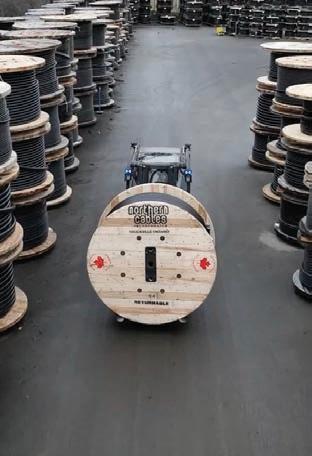

Manufacturing is the backbone of our economy. It builds strong communities, creates skilled jobs, and ensures Canadians have the essential products needed to power homes, businesses, and infrastructure across the country.
At Northern Cables Inc., we are proud to be 100% Canadian-owned and operated. Employing more than 300 Canadians, we manufacture high-quality, CSA-listed wire and cable right here at home, supplying electrical contractors and distributors from coast to coast.
Our commitment goes beyond products. We source our raw materials from trusted North American suppliers, including Canadian-made aluminum produced using clean hydroelectric power. By keeping our supply chain close to home, we support local industry, reduce reliance on overseas imports, and strengthen Canada’s manufacturing sector.
When you choose Northern Cables, you’re choosing to invest in Canadian jobs, Canadian communities, and Canadian expertise.
Build Canadian. Buy Canadian.
Builds strong communities
Creates sustainable, skilled jobs
Supplies essential products Canada depends on
Northern Cables is proud to:
• Be 100% Canadian-owned and operated
• Support 300+ Canadian jobs
• Manufacture high-quality, CSA-listed products
• Supply electrical contractors across Canada







Designed and manufactured in Canada with input from engineers and end-users just like you, the Star Teck family of Teck cable fittings continues to evolve, solving the unique challenges of Canadian industry whilst improving performance and installation efficiency.
Performance, evolved. A Star Teck tradition.




A pioneer in the design and manufacture of Teck cable fittings, the Star Teck product line remains an industry standard to this day.
Since the introduction of the 10464 fitting in 1953, we’ve gathered feedback from end users working in the harshest and most corrosive industrial environments to bring you the Star Teck line of high-performance Teck cable fittings which, year after year, remain an industry benchmark for safety, quality construction and ease of installation.
Designed and manufactured in Canada to meet the unique challenges of Canadian industry, the Star Teck cable fittings line continues to evolve, keeping pace with technological advances whilst improving performance and installation efficiency.





BY JACK BURTON
It’s been several years since artificial intelligence platforms were introduced to the public, but momentum continues to show no signs of slowing in the everyday changes this technology is bringing to the ways we work, live, and perhaps most importantly, build.
Stanford University’s AI Index illustrates the speed of this transformation, showing AI adoption to have jumped from 55 per cent in 2023 to 78 per cent in 2024. Today, AI continues to be inescapable – whether it’s showing up in topics of everyday conversation to the technology we use.
A significant driver of AI’s growth has been its potential impacts on the workplace: not only the possible efficiencies and new skills it may bring in its transformed labour landscape, but also the new subsectors and roles that are emerging to support this technology. A new report from the Electricity Human Resources Council (EHRC) and the Future Skills Centre aims to illustrate what these impacts might look like for Canada’s electrical sector. Released in November of 2025, Powering Intelligence: AI-Driven Change in Canada’s Electricity Workforce sees the EHRC and Future Skills Centre breaking down some of the specific changes that AI is set to bring across Canada’s electrical sector, and the roles and skills required from workers and
“AI will not replace human judgment, but it will redefine how decisions are made and who makes them,” reads the report’s opening message.
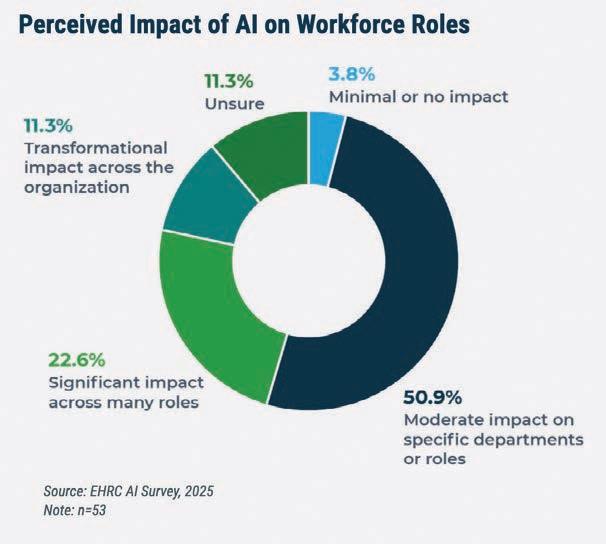
Figure 1: For more than half of respondents, AI has already brought moderate impacts to specific departments or roles.
organizations alike to keep up with this change in an inclusive and sustainable manner.
“AI will not replace human judgment, but it will redefine how decisions are made and who makes them. We must ensure that all communities – urban, rural, Indigenous and remote –benefit from the opportunities AI presents,” shared EHRC CEO Michelle Branigan and Future Skills Centre executive director Noel Baldwin in the report’s joint
introductory message. This commitment to cultivating an understanding of AI’s use cases, benefits, and impacts was reflected in a series of region-specific virtual roundtables that the EHRC hosted from November 25 to 28, 2025. These roundtables saw Branigan and those involved in the development of the report connecting with groups of electrical professionals across Canada to share their findings on the changes AI is bringing to how they work.
Even with deep research and insights from 20 stakeholder organizations across Canada’s electrical sector comprising the report, the EHRC shared that its conclusions are not immune to the rapid pace of change brought on by advancements in contemporary technology and the resulting difficulties with achieving stable insights.
Branigan detailed these difficulties in her opening statement for the November 26 virtual roundtable on the report, aimed at Canada’s western provinces and territories.
“I’ll be very honest: we put a lot of work into this report, and it looks great, but it’s going to be out of a date in six months – that’s how fast things are changing,” said Branigan. “I think nimbleness and agility are top of mind for us right now, so it’s really important that we’re working together collaboratively to be able to prepare for what is ahead.”
Data from respondents reinforced the idea that this change brought by AI isn’t coming, but rather has already arrived: a total of 50.9 per cent of respondents shared that AI has already brought moderate impacts to specific departments or roles, with 22.6 per cent reporting significant impact across many roles and 11.3 per cent seeing transformational, organization-wide impacts (see Figure 1).
The EHRC’s vice president of programs, Mark Chapeskie, added some context to the council’s motivation and goals in developing the report. Just as important as illuminating AI’s impact on skills and processes across the sector was showcasing how widespread AI adoption and
its demands are also set to influence the type of work and projects that are prioritized.
To this end, the report also looks at the impact that the compute power and grid demand required by widespread AI adoption will have on the needs and responsibilities of Canada’s electrical sector.
“When we started this research, there were two questions we were asked to answer: one was, of course, the jobs and skills piece of it, but the other question we sought to answer was what kind of an impact the forecasted power demand for the compute and cooling power of data centers will have on workforce numbers out to 2031,” said Chapeskie.
Even with potential volatility from AI-associated increases in grid and data infrastructure demands, the electrical sector’s outlook on the impact of this technology remains positive, with 87 per cent of respondents surveyed for the report expecting to see an increase in efficiency and productivity from AI adoption.
The EHRC’s economist Tania Chaar shared that many see this technology as a means of improving areas of operation such as customer service, decision-making, predictive maintenance, and demand forecasting, in addition to helping to manage progress toward Canada’s decarbonization targets and introducing new jobs in data-focused roles.
While AI’s promises for workers across Canada’s electrical sector remain high, Chaar urged that successful adoption across the electrical workforce is not a phenomenon that will occur in isolation: “There is
also recognition that to fully realize these benefits, they need external support,” she said.
“Training and upskilling programs are the most requested resources, alongside clear industry guidelines and forums for collaboration,” she said, adding that successfully drawing forth AI’s transformative potential will rely on “collective learning, shared standards, and a focus on people as much as the technology itself.”
Demand for a number of new skills and proficiencies in the electrical sector will emerge from the need for effective AI implementation, including data analytics, change management and organizational design, systems integration, data reporting, and cybersecurity

The Powering Intelligence report, developed in collaboration with the Future Skills Centre, is available on the EHRC’s website.

bandngo.com
1-888-871-6573
sales@bandngo.com

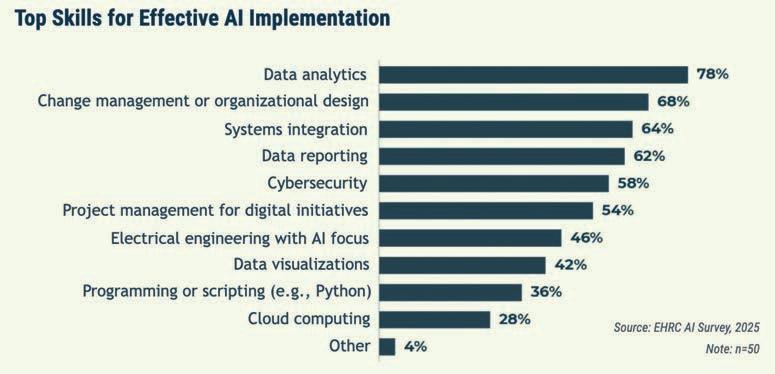
(see Figure 2).
For Chaar, these new skills indicate a shift away from the traditional reliance on manual data processing jobs and routine field inspections, while also illustrating that “not only do you need those technical skills and an understanding of the technology itself, but also the more ‘soft’ skills that come with managing that integration and a multi-faceted approach that will enable employees to leverage this technology properly,” she said.
With AI adoption continuing to accelerate, so will the role of data centres as a key player in supporting this adoption. With this changing landscape of major projects, Canada’s electrical sector is also being further transformed by this shift.
“Data centres were always part of the digital infrastructure, especially for areas such as cloud computing and big data analytics, so it was always there,” said Chaar. “However, the surge we’re seeing right now is very much tied to this accelerated adoption of AI.”
A total of 290 data centres are currently located within Canada’s borders, with plans to add many more in the coming years. Current volume and future plans have positioned these buildings and the energy they require as among the country’s fastest-growing electri-
city loads, the report shared, with this growth brought on by factors such as the constant power needs, specialized cooling systems, and reliability requirements of data centres.
Factors such as cost of space, energy costs, and latency are the primary considerations of data centre providers in deciding where to build, with Chaar stating that these priorities have led to clustering around end-demand centres; oftentimes larger urban areas such as Toronto, Montreal and Vancouver.
A combination of this concentrated pattern of data centre locations, their historical proximity to high-load population centres, and elevated energy needs of these buildings “can place immense pressure on transmission networks, cooling systems, and grid stability overall,” said Chaar.
The increased pressure that data centres place on overall grid stability brings with it new responsibilities for Canada’s electrical infrastructure, along with those who operate, maintain, and build it.
Chaar emphasized this sharp uptick in anticipated grid pressure by referencing news out of Quebec from April of 2025, where the province shared that it anticipates an increase of 4.1 terawatt hours in data centre demand between 2023 and 2032, along with Ontario’s Independent Electricity
Systems Operator (IESO) listing data centres as a key growth driver behind commercial power usage.
Even with the continued push to position data centres as a key component of Canada’s digital and electrical infrastructure plans remaining strong, the report found the long-term employment impacts of these projects under current conditions to be surprisingly muted when it comes to the electricity sector.
Figure 2: The report found a number of new skills to be emerging from the overall need for effective AI implementation.
According to the report, data centres generate 1,000 to 1,500 short-term jobs related to site preparation and installation per project.
Unfortunately, these levels decline sharply when looked at from the perspective of a wider timeline, with only 50 to 200 long-term employment opportunities introduced once data centres reach an operational state.
“While these roles are specialized and stable, they offer limited opportunities for broader workforce engagement,” the report reads. “This contrast underscores the need for targeted training and regional planning to ensure communities benefit from both construction and operational phases.”
This data underscores the report’s framing of AI as a transformative influence on Canada’s electrical workforce, rather than a replacement for it; further emphasized by the perspective of a union representative shared in the report, who believes AI’s influence will remain limited in the near to medium term.
Elaborating on the representative’s insights, the EHRC shared in the report that “AI is seen as a tool to improve planning and coordination rather than a threat to these jobs,” concluding that, “For trades and utility workers, the near future appears stable, though ongoing dialogue, monitoring and inclusive planning will be essential as technology evolves.”


Nexleds Limited is one of Canada’s leading manufacturers of architectural and modern LED lighting solutions. Since establishing its Canadian operations in 2014, Nexleds has consistently delivered innovative ideas and products designed to meet the growing demand for high-performance LED lighting fixtures.
As the 2020 recipient of the Electro Federation Canada (EFC) Award for Social & Sustainability, we remain committed to delivering energy-efficient solutions that meet the diverse needs of both commercial and residential clients. Our LED fixtures are always made using premium materials and engineered to exceed standard specifications. Each product undergoes rigorous testing to ensure exceptional performance, reliability, and long-term durability. Nexleds continues to invest in advanced lighting technologies, developing new designs and forwardthinking solutions that help shape the future of lighting in Canada.

Learn more at: www.nexleds.ca


We offer multiple solutions to more effectively seal around conduits, cables and Teck cables that reduce installation times and create watertight seals.

Whether you need to meet CEC codes for sealing conduit/raceways, increase electrical reliability, storm hardening of your system, or manage how cables enter walls, we have the solution for you.


GABRIEL BONE
Technical training developer with Ontario’s Electrical Safety Authority
TACKLE THE CODE CONUNDRUM IF YOU DARE!
Welcome to the newest round of questions that test your knowledge of the CE Code-Part I. Answers will appear in the June 2026 edition of Electrical Business Magazine, and online at EBMag.com under Features.
QUESTION 1
What is the minimum distance from a shower stall a light switch can be installed when the branch circuit is protected by a Class A GFCI?
a) 500 mm c) 1,000 mm
b) 750 mm d) 1,500 mm
QUESTION 2
What is the maximum number of outlets permitted on a 2-wire branch circuit protected by an unmarked 20 A circuit breaker?
a) 12 outlets c) 16 outlets
b) 15 outlets d) 20 outlets
QUESTION 3
What is the minimum grounding conductor size for a coaxial cable?
a) No. 14 AWG Cu.
b) No. 10 AWG Cu.
c) No. 8 AWG Cu.
d) No. 6 AWG Cu.
ANSWERS
Electrical Business, November 2025 ed.
Question 1
Which of the following branch circuits for a single dwelling are required to be AFCI protected?
a) 5-15R receptacle for an attached garage door opener. Rule 26-658.
Question 2
Which Zone classification describes an area in which an explosive dust atmosphere, in the form of a cloud of dust in air, is present continuously, or for long periods, or frequently?
d) Zone 20. Rule 18-002.
Question 3
construction

For the installation of traveling cables for an elevator, what is the minimum size conductor for operating, control, signal, and communications circuits?
c) No. 26 AWG. Rule 38-012 2).
How did YOU do?
3 • Seasoned journeyman 1 • Apprentice
2 • Need refresher training 0 • Just here for fun!
Women in Construction Breakfast
Annex Business Media
April 9, Toronto events.annexbusinessmedia.com
LEDucation Tradeshow and Conference
April 14-15, New York, N.Y. leducation.org
Salon Lumen
April 15-16, Montreal lumen.ca/en/exhibition
Energy Storage Alberta Summit
Canadian Renewable Energy Assoc. April 16, Calgary, Alta. renewablesassociation.ca
CNA2026: Power and Purpose
Canadian Nuclear Assoc.
April 28-30, Ottawa conference.cna.ca
The MEET Show
May 6-7, Moncton, N.B. meetshow.ca
Agents of Change 2026
Electricity Human Resources Council May 13-14, Montreal ehrc.ca/agents
ECAA Annual Conference
ECA of Alberta May 21-24, Jasper, Alta. ecaa.ab.ca
Skills Canada National Competition May 28-29, Toronto skillscompetencescanada.com
ECABC Conference & AGM
ECA of British Columbia
June 1-2, Kelowna, B.C. eca.bc.ca
EFC Annual Industry Conference
Electro-Federation Canada June 2-4, Halifax electrofed.com
EASA Convention & Solutions Expo
Electrical Apparatus Service Assoc.
June 13-16, Orlando, Fla. easa.com/convention
Got an event to share? Email the editor at jburton@annexbusinessmedia.com. Check out Electrical Business Magazine’s online industry calendar at ebmag. com/events for direct links to these events (and others).


• Holds 22 ft. (6.7 m) of water head pressure and up to 90 ft. (27m) surges • Rodent-resistant formula with a bittering agent additive • Can seal conduits of all sizes and is re-enterable

JOHN M. WIESEL
As the quality of information in tender packages deteriorates, it’s easy to get bogged down with unclear details that can be conflicting, misleading, or incorrect. Too often, time is wasted trying to resolve issues that may not be acknowledged or addressed by competitors at all. The result can be an inflated price driven by due diligence, while others submit leaner tenders through omission, gaining an artificial advantage.
During the estimating process, while reviewing tender documents, drawing packages, and completing take-offs, discrepancies and errors inevitably surface. These issues are not always created with the specific project in mind, and should not be assumed to be intentional: modern design and engineering workflows rely heavily on templates and reused content, often prepared by less-experienced designers with senior professionals providing only high-level oversight.
Simply lamenting the poor quality of information is futile, and unlikely to drive industry change: it’s the equivalent of placing a hazard sign out for a spill and walking away, when you could just as easily grab a rag and wipe it up, mitigating the risk yourself.
Often, these discrepancies can present opportunities to influence the design to your preferences, manage risk, and even create competitive advantages, if you are willing to put in the effort and have the capabilities to do so.
During review and take off, make note of any issues as they start to arise and carry on. Do not stop: in many cases, you will come across information that provides clarity. Set a threshold for when to address unresolved items, whether it be at the end of each day, each week, or once the take-off is complete, depending on the job and timeline.
When that threshold is reached, review what remains unresolved and determine the most appropriate re-
sponse: submitting an RFI before the job closes, qualifying the item on your tender submission, or, in some cases, not disclosing it at all if you think it may provide a competitive edge over less experienced bidders and competitors that aren’t being as attentive (while keeping in mind any moral or ethical issues).
“Success can largely depend on whether you choose to drive the process or passively wait for decisions that may come too late, or not at all.”
Avoid inundating clients and engineers with ongoing queries, especially if the information is available but just hasn’t been worked through yet. At the same time, don’t wait until it is too late if you would like them to address your query: as a general rule, allow at least three days before close, longer if it will affect costs on items that require special pricing from your suppliers.
Putting together an RFI should be more than asking a question. Since it is an opportunity to have input, steer the opportunity to showcase your capabilities and knowledge, and start making a case for yourself and your company to form part of the team that executes the project.
If an RFI is submitted and no addendum is issued prior to the deadline, clearly qualify it in your tender submission. You may also include an ‘add or deduct’ price, allowing your client to account for the risk while keeping your base price competitive with others who may not have been as diligent or wise to the issue.
When unresolved items are quietly included without qualification, clients
are often unaware. By clearly stating assumptions and exclusions, you help ensure their costing and tender process is more complete. More importantly, you demonstrate foresight, competence, and commercial awareness, rather than relying on the client to somehow infer why your price is higher.
Would you assume that something is better simply because it costs more? Or would you feel comfortable paying for a Bentley when you had budgeted and requested a Toyota Corolla? On the bid spec side of the electrical industry, clients have already paid for a design in most scenarios, and are trusting that all pricing is based on the same scope unless alerted otherwise.
This can make it challenging for them to see direct comparisons when assumptions or scope differences are not clearly communicated.
Remember: you’re in the chosen pool of experts they are considering. It’s a great chance to prove they made the right choice in selecting you for the opportunity.
Consistently producing tenders that clearly address discrepancies will set you apart. Well-qualified submissions protect you from unnecessary risk, strengthen your position, and can even allow you to influence both the opportunity and the information in your favour.
Success can largely depend on whether you choose to drive the process or passively wait for decisions that may come too late, or not at all.
Taking proactive control of the opportunity before tender pricing is due can often be the difference between administrative activity and executing truly successful tenders.
John M. Wiesel, ME, is the principal at Suderman Estimating Systems and has spent over 25 years in the construction industry from an apprentice, Red Seal journeyman, project manager and estimator. Suderman Estimating Systems courses are Gold Seal certified by the Canadian Construction Association. www.sudermanestimating.com
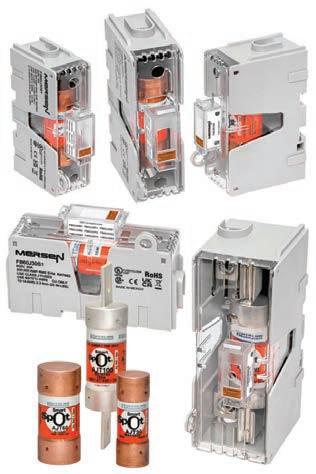

Pair Mersen’s 700VAC Class J AJT fuses with our Open Style Class J Fuse Blocks for a powerful and compact solution for all your protection needs.
Mersen’s AJT Series Class J Fuses are compact fuses that offer big protection. The AJT Series provides optimal performance, prevents interchangeability with old fuses, saves valuable panel space, and provides superior protection. Rated from 1 to 600 amperes and available in indicating (timesaving SmartSpot? indicator) and nonindicating (suitable for Class 1 Div 2 applications) versions, they’re the right fuses for any new installation. Plus, Mersen is the only fuse manufacturer to offer Class J fuses with the 700VAC specification.
Mersen’s Gen2 Open Style Class J Fuse Blocks accommodate Class J fuses ranging from 0-100A, 600V. They’re available with a choice of screw, pressure plate, and box connectors to fit a wide range of stranded or solid wire. DIN-rail mountable, more compact, and with dovetail nesting, these blocks are IP20 rated when paired with Mersen’s new transparent dead front covers.
For more information, visit mersen.com.
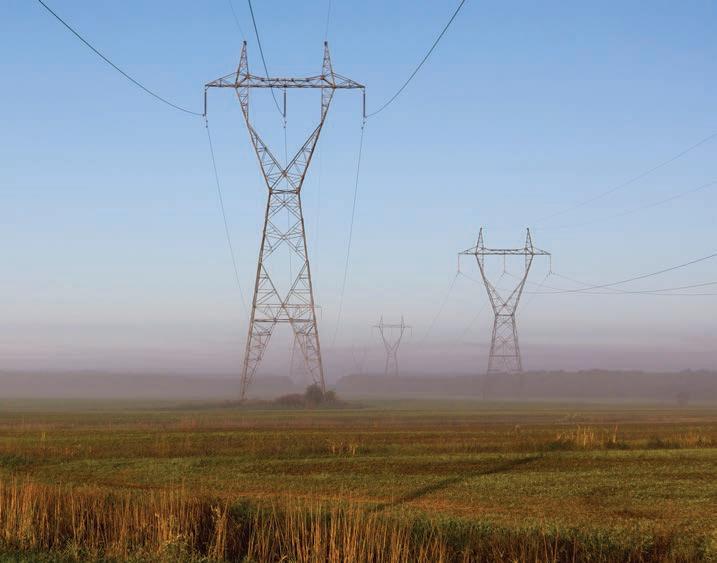

Recent improvements to the Mersen Class J AJT fuse series have enabled an increase in AC operating voltage from 600VAC to 700VAC. This change better accommodates power transmission networks at 600V, especially common in Northeast Canada and the Midwest US.
Mersen is the only fuse manufacturer to offer Class J fuses with the 700VAC specification. Visit mersen.com for more information.

Insights from the industry partners who drove B.C.’s prompt payment breakthrough. /
BY ANTHONY CAPKUN
British Columbia tabled Bill 20 on October 7; the culmination of years of effort to introduce prompt payment legislation in the province. Bill 20 aims to establish clear payment timelines and a fast-track adjudication process, but it may not be implemented for another 18 months, and there is still a lot of work ahead.
Electrical Business spoke with the three association proponents largely responsible for carrying the prompt payment ball past the goalposts in a roundtable discussion, including:
• BC Constr uction Association (BCCA), represented by Chris Atchison, who has served as presi-
dent since January 2017.
• Electrical Contractors Association of BC (ECABC), represented by Matt MacInnis, who has served as president since September 2022.
• Mechanical Contractors Association of BC (MCABC), represented by Kim Barbero, who has served as CEO since April 2019.
EBMAG: What were your initial reactions when you learned Bill 20 had finally been, or was going to be tabled?
ATCHISON: Prompt payment has been a priority of consecutive BCCA boards for as long as I’ve been in my role. Matt, Kim and I – and our associations
– have been the “tip of the spear” on this issue for a long time. Even when we received notice in April that the Attorney General was starting to really pay attention to this issue – and we were afforded the opportunity to provide feedback on the draft legislation – the tabling on October 7 was still a bit surreal.
BARBERO: My initial reaction, truly, was a genuine sense of relief and pride, and I think our entire construction industry felt the same. As Chris said, this has been a long time in the works. We’ve been at it for more than a decade, so we’re very proud of the collective efforts that have gone into this moment. It also validates all the work that we have put into it.
EBMAG: Did anything in there surprise you in the legislation itself, positively or negatively?
BARBERO: I feel more encouraged than surprised. I’m encouraged that the government is looking to adopt key elements, particularly those that we’re seeing in the Ontario legislation, which Chris and Matt and I and so many others in the construction industry have used as a reference model.
This prompt payment framework is a bit of a double-edged sword: it allows for collaboration with industry, which is positive, but it’s still potentially 18 months away when all is said and done. So we’re really at the starting point, because we have a lot of work ahead of us. Everybody is excited to get going on this, but we still need to focus on the regulations to make sure they’re clear and consistent.
MACINNIS: There was a surprise, and it was the government’s transparency
when allowing industry stakeholders to be involved and review the draft legislation before it came in front of the House. While the legislation isn’t perfect, to the government’s credit, there weren’t surprises.
I think what matters more to me is the reaction I’ve received from our members. Many of our members who aren’t necessarily actively engaged in public affairs have been effusive in their enthusiasm. And we’ve even heard from some of our Hall of Fame [retired] members, writing to ECABC and saying, “Thank goodness you guys finally got this across the finish line.”
EBMAG: Looking back to 2018 and earlier, what about the province’s prompt payment journey stands out the most for you?
BARBERO: This is a story of persistence, collaboration, and credibility that started well before my time here at MCABC. We never gave up! And it
has been a true team effort across the sectors; an effort that turned what some might refer to as a ‘niche industry issue’ into bona fide economic reform.
MACINNIS: One item that does stand out is the length of that journey. I’ve been in my role for three years, but also worked alongside ECABC prior to that, and also with Kim and Chris through my predecessor, Deb Cahill. This has been a very lengthy piece of advocacy, taking longer than most of us would have liked. But it’s important to remember that we finally got here through industry collaboration. I think that delivering that consistent and coherent message to government over time was a deciding factor in getting us here.
EBMAG: At one of the 2021 prompt payment Town Halls, there was feedback that the province needed more data before moving ahead. How did comments like that sit with you and your membership?
BARBERO: It was very frustrating, especially since Ontario already had a successful model. But it also energized us! It was the impetus to stay persistent and lead on the issue a little bit differently.
ATCHISON: I remember that Town Hall. The AG Office wanted more data, especially on adjudication, as I recall, so we recalibrated and carried out a cross-jurisdictional analysis to get them the information they wanted. So every setback, every frustration, created a new opportunity to reset, recalibrate, and prove to government that our movement was not going to go away.
EBMAG: How did collaboration between your three associations evolve, and what did you learn from that partnership?
ATCHISON: After starting with BCCA, I had meetings with both Kim and Matt’s predecessors, and began to learn from the Ontario experience: that trade and general contractors and manufacturers and suppliers all need to be a part of this. If we didn’t have everyone on board, then we would run the risk of failure, because Ontario had its failures, too. So in those initial meetings between our three groups, we understood that, collectively, we represented a broad swath of industry representatives.
I referred to our three groups earlier as the tip of the spear: coordinating meetings, advancing advocacy points. There was a lot of leverage coming from other partner associations who saw the benefit of advancing payment certainty in our industry.
MACINNIS: As Chris alluded to, it’s important to acknowledge the broad support this legislation had leading up to its introduction in the House, including general business associations and labour, like the IBEW Locals with which some of our members are signatories.
The support from these organizations really emphasized to government that prompt payment isn’t just a business-to-business problem but an issue that directly impacts tradespeople. That cross-sectoral, cross-organizational support sent a really clear message to
government.
BARBERO: Our collaboration really reinforced that when we’re aligned and speak with one voice, government listens. And it’s such an important reminder because we’re all busy with any number of issues affecting our members, and it’s easier to just take your own path. But when we work on something like this together, we are so much stronger.
EBMAG: The Ministry of Attorney General noted that there will be a transition period for outreach and education. How are your associations helping members prepare?
BARBERO: In collaboration with others, MCABC intends to act as a bridge between government and contractors and owners as this prompt payment framework rolls out. There is a lot of education that needs to take place, so our goal is to ensure that every contractor, from large to small, knows exactly how to move forward. And we hope to do this in collaboration with our peers so that we’re all aligned in that educational process.
MACINNIS: Like Kim said, we will also prepare materials for ECABC members, and I’m sure all of us on this call will collaborate on that. There are also a few law firms with whom we regularly work for contract-related matters, and we’ll get their input, as well.
ATCHISON: We produced a document called “Myths and Realities of Prompt Payment” that describes how prompt payment rolled out in other jurisdictions and the way it’s intended to roll out in British Columbia. We’re also curating questions from our members and the industry through a dedicated FAQ page on the BCCA website.
EBMAG: It was mentioned that B.C. may still have to wait about 18 months for prompt payment to get going. When it finally does, what will success look like to you?
MACINNIS: I’m mildly optimistic that we might get there sooner than 18 months. When speaking in the House,
the Attorney General used the term months, not years, when describing the time for enactment, so that’s a potentially positive indicator.
Prompt payment is about ensuring contractors get paid in a fair and reasonable time for the work that they’ve completed, so the main metric for success is whether people are getting paid faster. Another metric, to a much lesser extent, is whether people use the adjudication system.
For prompt payment legislation to be effective for industry, contractors will need to utilize the law as it’s intended –which is one of the problems we’ve seen in other jurisdictions that have been slow to adopt some aspects of the legislation. The work we do collectively to educate and inform our members about the tools that will become available will be a driving factor for success.
ATCHISON: To Matt’s point, success cannot necessarily be measured by the number of adjudications. That will be a longer-term metric but, just because it exists, it doesn’t mean people want to end up in arbitration. The main thing is you cannot just ignore another party, because we will have legislation that prohibits that.
I think we will start hearing about more people having more conversations and resolving issues amongst themselves. I expect we will hear fewer stories about people being completely powerless in a situation, where monies are being withheld for either convenience or for leverage, both of which shouldn’t exist in the construction industry of the future.
BARBERO: As Chris pointed out, if there isn’t a significant number of adjudications and decisions, it doesn’t necessarily mean the system is failing. In fact, it’s probably working.
You cannot stimulate the economy while starving its engine. With prompt payment, the mechanical contracting industry will have the ability, the capital, to make investments in innovation, technology, and training for workforce development. These are investments they want to make.
I have no doubt that when we see payment certainty in action, our industry – and others – will prosper.


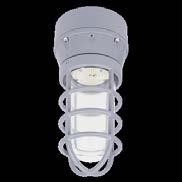

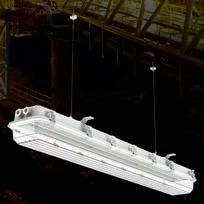
LEDVANCE Hazardous Location LED Luminaires are engineered to perform at their best in the worst environments, under the most extreme conditions. Explosion-proof and supremely rugged, our indoor and outdoor luminaires meet or exceed all industry safety standards for hazardous areas.
Certified to UL844 and CSA 22.2 No. 137, the new luminaires are engineered to perform in Class I, Division 2; Class II, Divisions 1 & 2; and Class III hazardous environments. With IP66 and IK08 ratings and lifespans up to 100,000 hours (L70), LEDVANCE Hazardous Location Luminaires offer long-term durability and peace of mind in oil and gas refineries, wastewater treatment plants, power facilities, shipping terminals, and other high-risk settings.
No matter how tough the challenge, you can count on these tough LEDs to get the job done, safely and reliably. The full Hazardous Location portfolio is now available through authorized distributors. Learn more by scanning the QR code.














As grid needs evolve, so are the skills and solutions of the industries it powers.
BY JACK BURTON

As trends in consumer power usage shift, so are the ways that Canada’s electrical infrastructure serves those needs. With changes in how Canadians interact with the grid continuing to pile up, one question emerges: can it keep up?
While initiatives such as EV adoption, provincial shifts away from natural gas heating, and the increased focus on data centres within the nation’s infrastructure priorities continue to foster different forms of electrical solutions, these wider electrification efforts bring with them additional electrical loads, reinforcing – and perhaps redefining –the importance of grid resiliency.
A number of new solutions and opportunities across Canada’s electrical workforce have emerged as the nation works to clarify the ‘why’ behind grid resiliency – and electrical workers explore the ‘how’ of achieving it – amidst both national and global trends in electrification.
The Carney administration’s ardent focus on building up the country’s
infrastructure portfolio has joined Canada’s pursuit of its net-zero targets as one of the key priorities shaping the country and its construction sector as it enters its next chapter.
As these plans continue to solidify and gain momentum, so do the overall pressures these projects and initiatives place on the grid, raising concerns that the demands presented by these projects may outpace the electrical grid’s ability to reliably deliver power, shared the VP of 3M’s electrical markets division, Chris Dujovski.
“Our electrical infrastructure is experiencing immense pressure, given the rapid growth of AI and data centres creating unprecedented demand for power that the existing grid is not equipped to handle,” he shared.
The push for data centres as a centrepiece of many regions’ digital infrastructure has presented its own grid concerns, though Canada’s specific pressures span even wider. This unique need for grid resiliency across the country becomes even more acute when coupled with Canada’s vulnerability to extreme weather, added Bekhe Purkis, the Canadian division leader for 3M’s
electrical markets division, especially in light of its active shift toward renewable energy sources.
“While both Canadian and U.S. markets share similar decarbonization goals and grid modernization challenges, there are distinct, regional differences,” she said. “Canada has been aggressive in renewable energy adoption and has unique climate considerations; extreme cold weather conditions that require specialized solutions for grid infrastructure durability and performance.”
Among the specialized solutions cited by Purkis is the integration of load flexibility and load shifting practices into demand-side operations, which are supported by leveraging predictive analytics to forecast loads, renewable outputs, and pricing.
Uniting all of these practices, Dujovski believes, is a new approach toward grid architecture from the utilities side that prioritizes a shift toward more dynamic and multi-directional flows of power distribution.
“As the demand for energy increases, it’s critical we help utilities rethink the grid architecture. Rather than one-directional flow of energy, from utility to







consumer, we are increasingly seeing the need for multi-directional flow to incorporate renewable sources,” he said.
This approach is reflected through practices such as the adoption of generation and storage systems, including battery energy storage systems (BESSs), thermal storage technology, and distributed generation to be used in reducing dependence during highstress periods.
As new sources of grid demand continue to be exponentially introduced into the everyday lives of Canadians, managing peak load periods becomes one of the primary considerations when building a grid fit for the future.
“Electrification accelerates demand growth, so as sectors such as transportation, heating, and industrial processes shift from fossil fuels to electricity, total load increases faster than historic planning models anticipated,” Purkis said. “At the same time, renewable generation introduces variability because solar and wind output is intermittent, and transmission congestion becomes more common.”
For Steven Lupo, North American business manager for smart grid and energy management solutions provider Trilliant, the path forward is simple: “It’s all about managing peak,” he said.
Lupo believes the ideal approach to peak management focuses on visibility – specifically, making the data that allows for visibility of conditions and performance to be easily accessible.
When one can observe and track the trends, patterns, and issues that comprise grid performance, the puzzle of properly acting and reacting to these evolving demands – often before any true issues arise – is more easily solved, he said.
“If I’ve got anomalies, things that are happening in the grid that are affecting voltage and current in different ways and at different times, I need visibility and real-time monitoring so I can be aware of it,” he said. “That’s where the world of analytics and predictive tools are really going to play a part, in managing those peaks and valleys.”
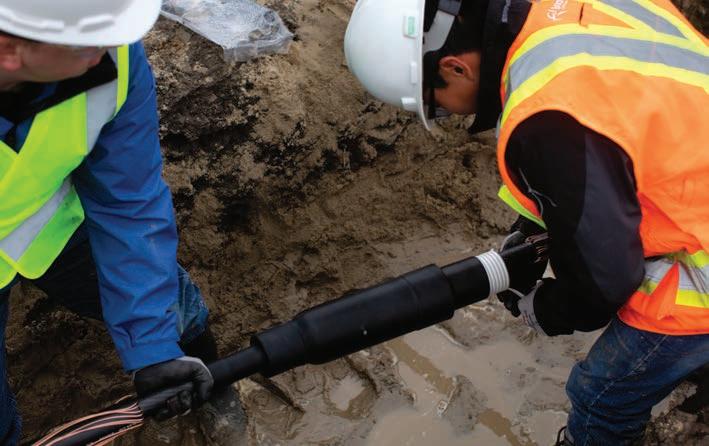
3M and Borea Construction have partnered to advance a number of renewable energy projects across Canada, including the pictured solar farm project in Ontario.
Helping to provide the predictive edge required to manage power distribution and demand are smart grid systems, Lupo explained, making possible the condition monitoring needed to adapt to the needs of the grid, before any of those needs evolve into major problems.
Smart grids leverage contemporary features such as digital technology, twoway communication, and automated control systems, presenting a solution to the measurement and forecasting issues associated with a traditional fixed and centralized grid. By monitoring and managing electrical flow from all generation sources to end-users in real-time, overall management becomes a more efficient and proactive process.
These features offer a way to navigate many of the problems associated with the one-way, top-down centralization of traditional grid systems, which is increasingly difficult to navigate as sources of grid pressure continue to grow in both volume and complexity.
“It’s a gamble right now, where things tend to work when all things are equal and nominal. When you move to a more dynamic scenario like right now, where you’ve got higher loads because of the widespread electrification that’s happening, that centralized philosophy doesn’t work so well,” said Lupo.
The changes and solutions demanded by grid resiliency are not limited to the utility or demand-management side. As with many technological shifts, a number of opportunities are emerging
regarding the skills and type of work carried out by electrical contractors.
Specifically, Lupo believes the increased adoption of smart grids will bring upon a reprioritization of software skills, mirroring the training and specializations that appeared in the electrical sector surrounding the internet and telecommunications advancements which occurred around the turn of the millennium.
“Going back 25 years, I remember when electrical contractors had to equip their workforce with additional tools around all the [telecommunications] advancements, as the data services and wiring started becoming part and parcel to the electrical wire – separate divisions were created, and different skill sets were in,” he said. “Training programs were developed, and I see this happening again very similarly, but in an even more interesting and opportunistic way for technicians, engineers, and journeymen.”
Lupo forecasts that smart grid systems, along with grid resiliency measures at large, will lead to a shift away from project-focused validation work and toward practices that rely on data and software-based proficiencies, such as analysis, connectivity, and systems networking.
“Looking at the performance of these of these networks, a lot of it ties to IT skills, and so that cross-link between the infrastructure and cabling side is super important,” he said. “As a worker, being able to bring in the communication technology side of it, I think, is going to be a big plus.”

Mersen has expanded its STXH series of surge protective devices (SPDs) with a new 75kA rating model designed for wholehome residential protection through compatibility with all residential electrical panels.
The Surge-Trap is suitable for any 120/240VAC splitphase application due to its UL Type 1 listing and full compliance with UL 1449, 5th edition.

Milwaukee Tool launched a range of new bit socket sets with four flat sides to the market this past January. The wrench-compatible sockets feature four parallel flat sides to deter rolling and increase access in tight-spaced applications. Each set of chrome plated sockets features laser-engraved size markings. The sockets feature a one-piece design that offers improved durability compared to two-piece sockets, due to the lowered risk around bit separation at the socket base.
New socket sets that will be launching in this line include low-profile, triple square, tamper proof TORX, long reach and long reach ball end sockets.

Burndy has introduced its new Patriot PAT221 compact battery crimper, designed for small to midsize terminals.
The PAT221 features scissor action and an angled head, along with a one-second crimp time with auto retract, interchangeable dies and wheels, a connector hold for wire insertion, and a safety trigger lock with emergency release.
The model is compatible with #22 AWG to #1 AWG copper terminals and splices. The PAT221 also includes a red LED indicator for incompatible crimps.
LEDtronics’ PTS780-0xx028B/WP is a non-relampable, front-mounting series of direct incandescent-replacement LED lights designed for industrial, medical, machine tool, and control panel applications. The lights are designed for mounting in holes of Ø17.46mm diameter and can replace incandescent or LED in panels of up to 7.62mm thickness.
Available in a range of colours, units ship with a nylon PA6 header, stainless steel washers, and a low-profile polycarbonate flat lens with clear color; featuring a projected lifespan of approximately 30,000 hours.

Ledvance has named Eric Liu as CEO for Ledvance Canada, with Liu’s appointment effective as of February 2.
As CEO of Ledvance Canada, Liu will lead Ledvance’s Canadian business with a focus on strengthening the company’s growth, customer partnerships, and go-to-market execution across the country.

Lori Bagazzoli has been appointed head of strateg ic sales for Ledvance Canada. In this role, Bagazzoli will build on her deep knowledge of the Canadian market and customer relationships to expand Ledvance’s support for the project and specification market and work to improve coverage, responsiveness, and execution across priority segments in Canada.


Ledvance Canada also named Linda Conejo as its new senior trade sales operations manager. Conejo brings industry and product knowledge built across more than 24 years of Ledvance experience to the role.
Eaton has appointed Rahul Duggal to the role of business unit manager for commercial products & assemblies (CPA) and power distribution and control assembles (PDCA) for Canada.
Duggal began his tenure at Eaton as part of its leadership development unit in the sales stream and has since held roles in product management, commercial operations, and sales leadership.
In his new role, Duggal will be responsible for Eaton’s full CPA and PDCA product line in the Canadian market and will oversee market growth, strategic planning and development, product innovation, the support and training of sales, and P&L.

ECS Electrical Cable Supply has promoted G.W. Kirk Readings to the role of chief revenue officer (CRO).
Kirk joined ECS in 2009 as an internal sales representative at its Toronto branch, and most recently served as the company’s national utility manager. As CRO, Kirk will oversee the alignment of ECS’ sales and marketing to deliver on its strategy, performance, and communication goals.

British Columbia’s Elec-Tech Sales Ltd., which represents a number of the province’s electrical manufacturers, has added Brandon Ayers to its sales team as a business development manager.
Ayers has a decade of experience as a Red Seal and B.C. Master Electrician, and has since spent more than four years working on the distribution side as both an account representative and district sales manager.

DAVID PILON
Apprenticeship is the development of individuals through a combination of on-the-job training, classroom education, and the opportunities to put it all together.
When an apprentice starts in the trade, they are quickly signed into an apprenticeship. This apprenticeship will be job or trade specific, and will focus on hands-on training which is short term and limited to practical, on-the-job training opportunities.
The training a person receives is likely based on several factors, such as the background and experience of the journeyperson they are working with, the jobs a contractor has on the books, or that contractor’s strategies for working with apprentices.
tices need to know, and educate these individuals on the broad theoretical knowledge of different aspects of the trades. This starts with general trade knowledge, common trade knowledge, and then moves into specific installations, code rules, techniques, and electrical theory.
The instructors are also journeyperson electricians, trying to impart their knowledge and experiences to the apprentices. This is an additive opportunity for the apprentices to, at a minimum, be exposed to other aspects of the trade.
Stay young and keep learning: it is the only path to success in the trades.
Contractors and journeypersons will work to provide their apprentice with a well-rounded training experience, but no apprentice will see or do it all – it just isn’t feasible.
In the electrical trade, we understand that the field is far too broad and quickly changing for one person to have truly mastered it all. Electrical education aims to fulfill the inevitable gaps in training originating from differing experiences, approaches, and opportunities available to apprentices.
To support the apprentice, we then send them to trade school. Here, instructors try to assess what the appren-
This combination of education and training results in apprentices successfully completing their apprenticeship, which is their overall initial development. This development is then tested, with success resulting in them receiving a journeyed status certification.
But what does journeyed status mean? In our minds, it signifies that a certified, skilled tradesperson has completed the necessary practical and technical training, passed the necessary exams, and is now qualified. But what exactly are they qualified for?
If they completed their apprenticeship in an industrial setting, are they qualified to wire a home? If they spent their apprenticeship wiring homes, are they qualified to work on high-voltage distribution?
The answers to these questions are yes – and no. What they are truly qualified for is learning on their own and knowing what they don’t know.
Education in the trades never ends. If they want to take their development and continue in the vein of their training, then they are set to go. However, the CE Codes are updated and changed every three years to meet safety concerns and new technology. The journeyed status tells us that the individual is now responsible for learning about what is new, along with how those changes may affect what they do.
If the individual chooses to chart a new path, then it is incumbent upon that individual to find a path which ensures they have the ability and opportunity to grow into that position and continue to learn.
This could be through hiring qualified people and learning from them. It may include classroom training, consultant training, or even wholesaler courses. It may involve Googling or researching to find processes, people, or online courses – but continuing education is a must.
In the trades, the choice to stop learning means that your development will stagnate, and conflict is sure to ensue when dealing with owners, engineers, inspectors and even other contractors. The failure lies solely in each individual apprentice or journeyperson.
It is often difficult to remain humble and to ask for help, or let people ‘below you’ such as employees know that you need to do some learning. Looking for new learning opportunities and remaining open to someone teaching the old dog a new trick is a sure path to success.
Whether it is business strategy, management training, or how to wire a generator to a solar array, it must be up to date and relevant.
Stay young and keep learning: it is the only path to success in the trades.
No burn-through eliminates elbow repairs
Light weight facilitates a smooth, safe, cost-effective installation
Low conduit coefficient of friction makes cable pulling a breeze

Durable and corrosion-resistant for lower total cost of ownership
A 110 °C temperature rating results in less ampacity derating for the cable