
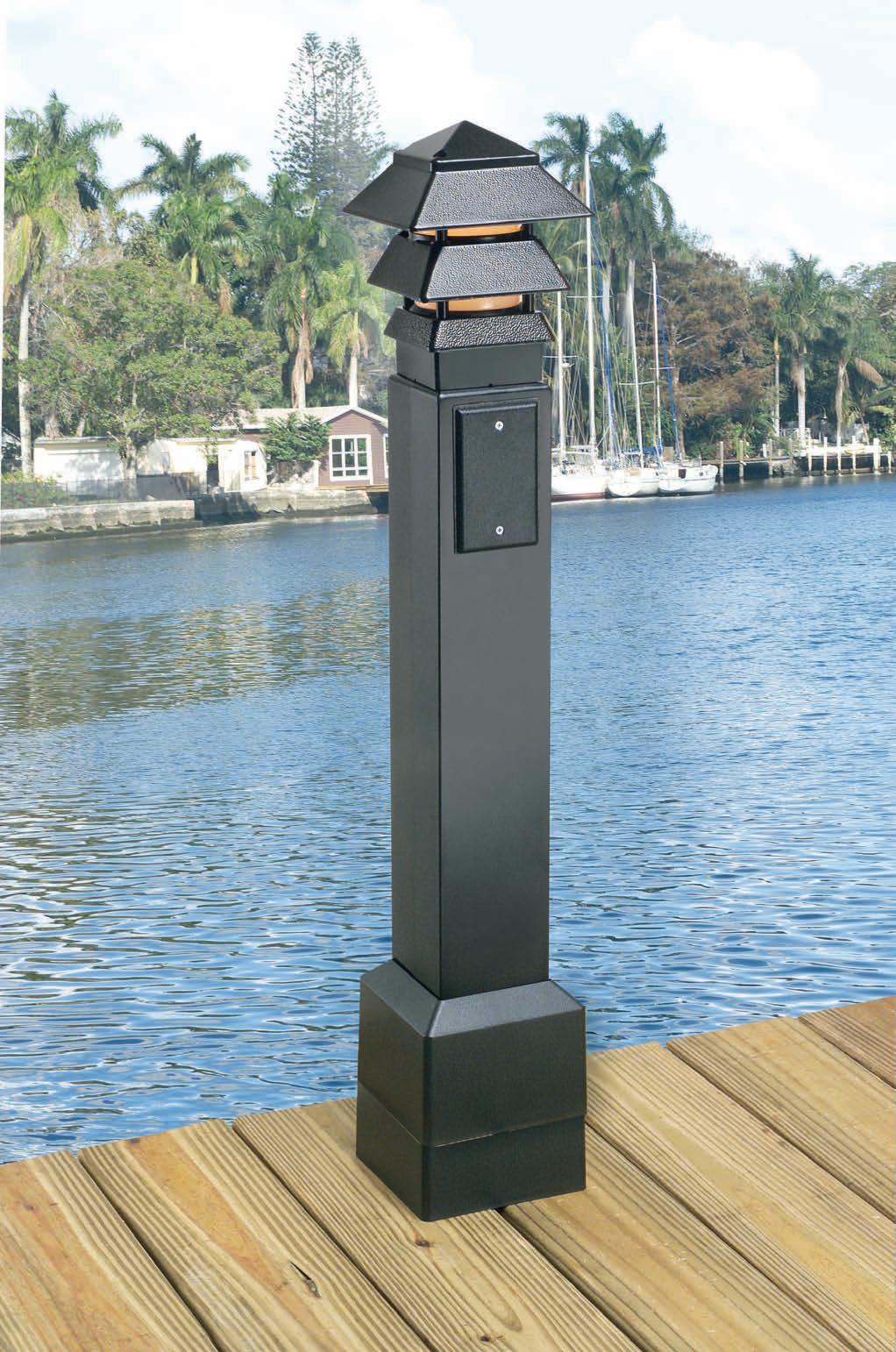
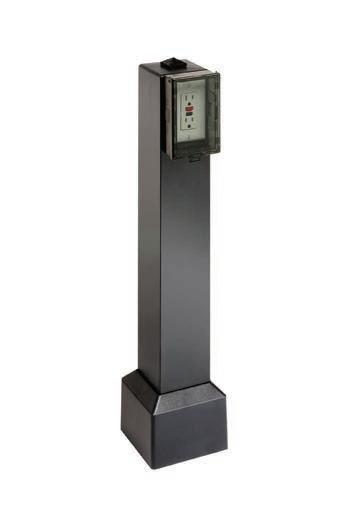
® are the attractive, safe, and easy way to install a light fixture and/or one or two devices outdoors!
Each kit comes with a low-voltage separator that gives you the option to install power and low-voltage in the same post.
Non-metallic, heavy-duty, damage resistant UV rated plastic
Perfect for decks, boat docks and concrete walkways
Non chipping permanent colors...black, bronze Bollard Kits comes in two heights... 28” or 35” tall








JACK BURTON
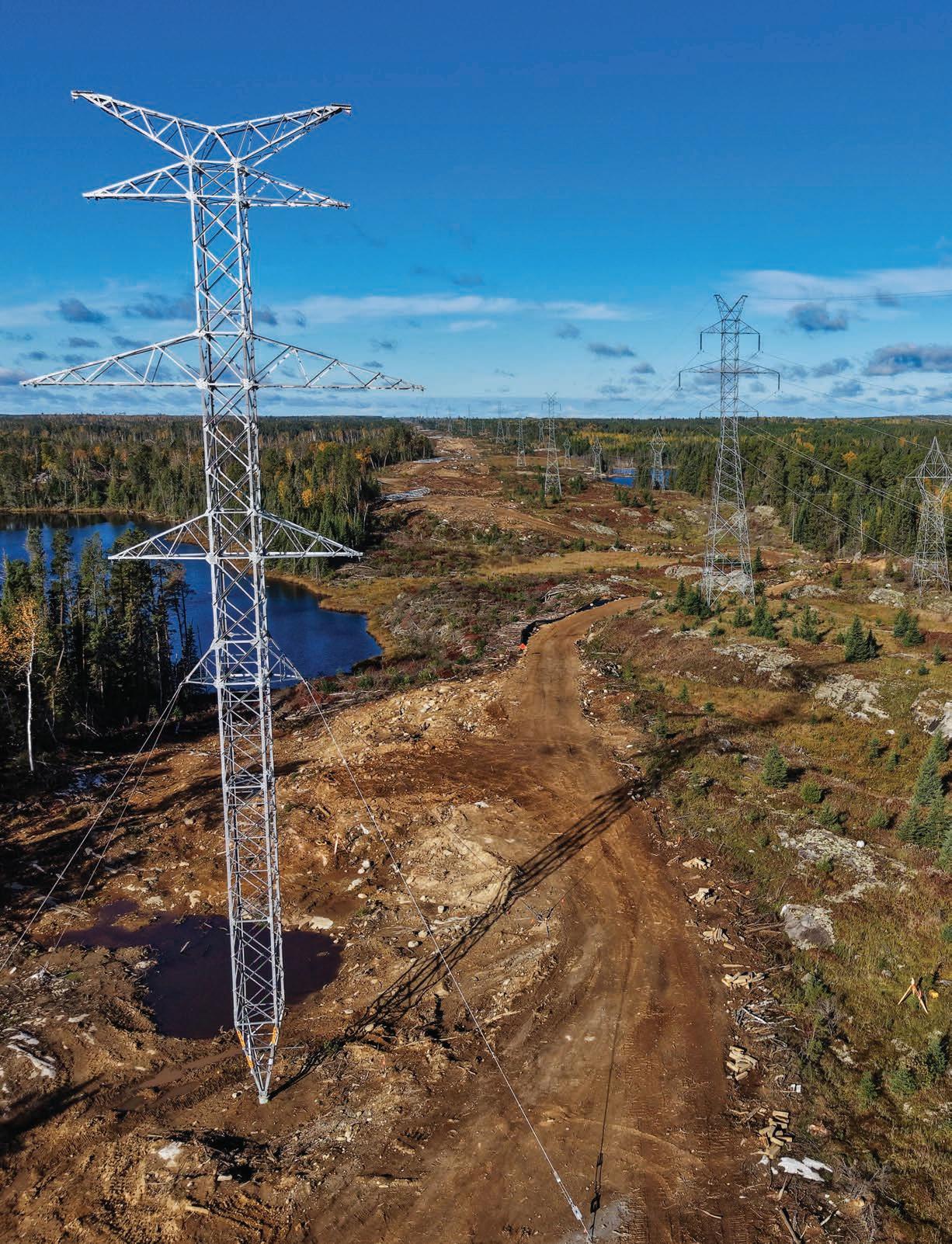
Since I began covering this sector several months ago, I’ve noticed that “opportunity” has been one of its defining features. Many of the changes that Canada’s electrical landscape is currently undergoing –large-scale electrification efforts, the current data centre buildout, and emerging technologies such as EVs and smart building solutions – are not only transforming the type of work that electrical contractors perform, but the volume of it as well.
When the Government of Ontario announced a 10-strong interprovincial-territorial alliance that will look to expand Canada’s cross-provincial transmission infrastructure, I was excited to highlight the potential opportunities behind it [check out our Cover Story on Page 10] – and in the months following, this significant announcement would emerge as just one piece of a larger, country-wide energy infrastructure narrative.
On May 14, just over two months after these efforts were shared, Prime Minister Mark Carney announced a new National Electricity Strategy, filled with opportunities for Canada’s overall electricity sector in the decades to come – double, to be exact.
The bold goal behind the strategy is a doubling of Canada’s overall grid capacity between now and 2050, with these efforts aiming to help the country take control of its own energy destiny amidst global uncertainty, while also delivering over $15 billion in total energy savings to Canadians between now and the target deadline.
It’s a multi-pronged approach, centering on large-scale energy infrastructure construction, expanding interprovincial interties through new and modernized grids, securing approximately 130,000 in skilled labourers needed to perform this work, and expanding domestic manufacturing to keep the components used in these efforts Canadian-made.
Our country’s grid resiliency and modernization needs have been regular topics across many conversations I’ve had, and with the federal government ramping up these efforts, I’m excited to see where those conversations continue to take me – and wherever that may be, I’ll be sure to bring you all along for the ride.
jburton@annexbusinessmedia.com

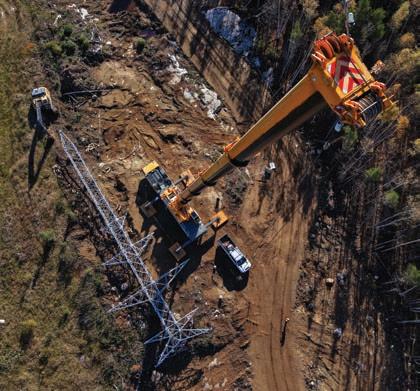
Begin transmission


Interprovincial agreement launches new era of collaboration for Canada’s transmission infrastructure.
EMPOWER Electrical Leadership Showcase
A spotlight on those leading the charge from across Canada’s electrical sector.
Big energy in Edmonton
Highlights from the 2026 ESTMP Workshop.
Canada’s renewable sector enters its ‘coming of age’ moment. 10 24 14
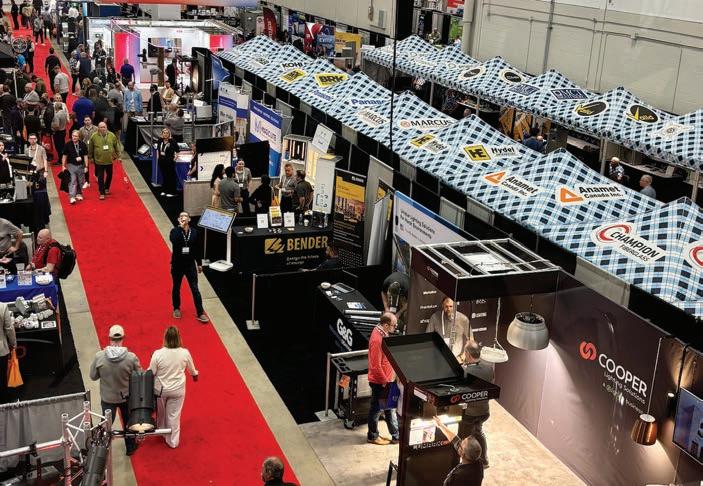
The 2026 edition of the Mechanical Electrical Electronic Technology (MEET) Show took place at the Moncton Coliseum from May 6 to 7, with this year’s show bringing together a record-breaking number of professionals from across the mechanical and electrical sectors for a sold-out show floor.
In addition to a trade show floor showcasing the latest innovations, technologies, and products from the mechanical and electrical sectors, the 2026 MEET Show also featured a line-up of educational seminar presentations, an industry dinner with live entertainment, and the 8th biennial MEET Innovation Awards, which are presented by each of MEET’s sponsor associations to recognize innovative products from across the show’s featured subsectors.
This year’s Innovation Award winners included:
• Explor.ai for its Estim.ai automated takeoff solution, presented by Electro-Federation Canada (EFC).
• The Beta-Calco Bend-It suspended continuous configurator, presented by the Illuminating Engineering
Society (IES).
• CIMCO Refrigeration Inc.’s Thermal Force One solution, presented by the Atlantic Canada Mechanical Exhibitors (ACME).
• The A.O. Smith Corporation’s Cyclone FLEX with AiQ adaptive gas technology, presented by the Canadian Institute of Plumbing and Heating (CIPH).
“The energy on the show floor this year has been exceptional,” said show manager Shawn Murphy. “From breakthrough product launches to the sheer level of engagement, our exhibitors raised the bar and delivered an outstanding experience that reflects the strength and momentum of these industries.”
The MEET Show will return for its next installment in 2028, set to take place from May 3 to 4.
Prime Minister Mark Carney has announced the federal government’s new National Electricity Strategy, which looks to double Canada’s grid capacity by 2050 through a number of infrastructure and workforce initiatives.
June 2026 || Volume 62 || Issue 2
Reader Service
Print and digital subscription enquiries or changes, please contact Customer Service: Angelita Potal
Tel: 416-510-5113
Fax: (416) 510-6875
email: apotal@annexbusinessmedia.com
Mail: 111 Gordon Baker Rd., Suite 400 Toronto, ON M2H 3R1
Editor Jack Burton jburton@annexbusinessmedia.com
Brand Sales Manager Leslie Osborne losborne@annexbusinessmedia.com
Media Designer Curtis Martin cmartin@annexbusinessmedia.com
Account Coordinator Emily Guimarães eguimaraes@annexbusinessmedia.com
Group Publisher Danielle Labrie dlabrie@annexbusinessmedia.com
Audience Development Manager Urszula Grzyb ugrzyb@annexbusinessmedia.com 416-510-5180
CEO Scott Jamieson sjamieson@annexbusinessmedia.com
Published by Annex Business Media 111 Gordon Baker Road, Suite 400 Toronto, ON M2H 3R1 Tel. 416-442-5600
ELECTRICAL BUSINESS is the #1 Canadian resource for electrical contractors, maintenance and engineering professionals, distributors, manufacturers and their agents and associated stakeholders.
PRINTED IN CANADA ISSN 0013-4244
Publication Mail Agreement #40065710
Subscription rates
Canada: $40.31 (per year + tax)
Canada: $68.42 (2 years + tax)
Canada: $9.00 (single issue)
USA: $91.76 (CAD per year)
Foreign: $110.32 (CAD per year)
Annex Privacy Officer
Email: privacy@annexbusinessmedia.com
Tel: 800-668-2374
Occasionally, Electrical Business will mail information on behalf of industry related groups whose products and services we believe may be of interest to you. If you prefer not to receive this information, please contact our Customer Service department in any of the four ways listed above.
The contents of Electrical Business are copyright ©2026 by Annex Business Media and may not be reproduced in whole or part without written consent. Annex Business Media disclaims any warranty as to the accuracy, completeness or currency of the contents of this publication and disclaims all liability in respect of the results of any action taken or not taken in reliance upon information in this publication.
We acknowledge the [financial] support of the Government of Canada
Built for the electrical industry to help you reach qualified candidates and manage recruitment more efficiently.
Targeted industry job board
Applicant tracking tools
Guided job posting process


Investing in tomorrow’s talent while continuously elevating today’s workforce—because building the future of our industry starts with developing the people who power it.
Industry-specific training modules
Supports onboarding and upskilling
Built for the electrical industry


In the May 14 announcement, Carney shared that he is launching conversations with provinces, territories, Indigenous Peoples, utilities, and unions to identify and act toward strategies related to four “pillars” that look to advance the government’s grid expansion target.
The first two goals focus on the major projects and construction efforts necessary to meet the 2050 target, starting off with building the infrastructure necessary to double Canada’s electrical capacity, including generation, transmission, distribution, storage, and grid modernisation projects. The second pillar aims to connect Canada’s east, north, and west grids through new and expanded transmission lines. Consultations will be held to identify how to achieve each of these goals.
The third pillar goal focuses on securing the labour needed to achieve this overall strategy, with the government looking to help train, attract, and retain the 130,00-plus high-skilled workers that will be needed to succeed at these grid expansion efforts. Consultations will be held between the government, industry, and training partners on the workforce development initiatives needed to secure this high volume of labour.
The fourth pillar looks to ensure that the majority of components and technologies used in this increased volume of work are Canadian-made, with consultations to be held on pathways to grow domestic manufacturing capacity.
“In a rapidly changing and more volatile world, Canada is taking control of our future. With our new National Electricity Strategy, we will build at scale and speed to double our grid and power Canada strong with clean, affordable, reliable energy for all generations. When we master energy, we master our destiny,” said Prime Minister Mark Carney.
The federal government shared that in addition to a more sustainable Canada, these efforts could also create up to $15 billion in total energy savings by 2050 and lower total energy costs for 7 in 10 Canadian households.
This focus on affordability is further reflected in the expanded support that
has been announced for energy-saving residential retrofits. Through this expansion, up to one million households will receive additional support in transitioning to more affordable energy measures through financing and grant programs.
The strategy is outlined in Natural Resources Canada’s new document, Powering Canada Strong: A National Strategy for an Electrified Canadian Economy, available online.
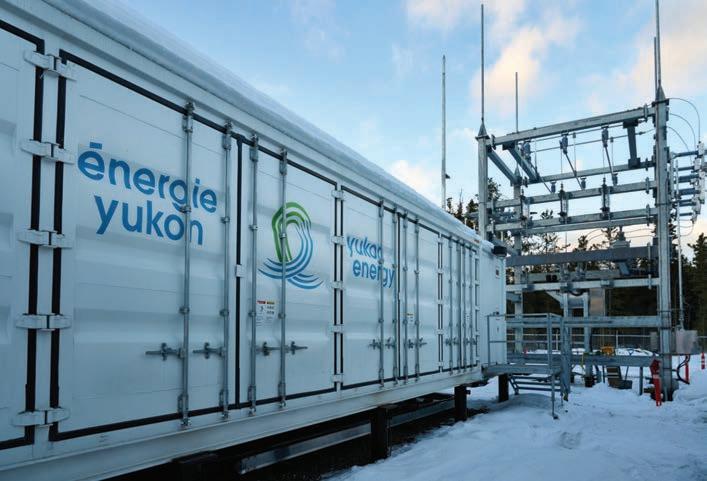
Yukon Energy has announced that the Whitehorse Grid-Scale Battery Energy Storage System (BESS) project is currently proceeding through the commissioning and testing stages, and is expected to reach completion this summer.
The completion timeline was announced following a recent site visit from the CSA Group, who are serving as an independent third-party authority in assisting with confirming that applicable electrical components used across the project meet relevant safety standards.
The current final stretch of work will see the BESS’ batteries integrated into
the existing electrical system. Once operational, the project will be the first grid-scale BESS in the Yukon and stand as the largest system of its kind in Northern Canada.
The project is being carried out by SunGrid Solutions in partnership with LG Energy Solution and Valard Construction. SunGrid Solutions is a Canadian company that has deployed over 500 megawatt hours of battery storage solutions across North America.
To reflect the system’s construction on Kwanlin Dün First Nation Settlement Land and the shared Traditional Territories of the Kwanlin Dün First Nation and Ta’an Kwäch’än Council, businesses owned by Kwanlin Dün First Nation and Ta’an Kwäch’än Council have played a significant role in the investment, procurement, and contracting opportunities surrounding the project.
The Ontario government has designated Hydro One to build and develop the 162-kilometre, double-circuit 230-kV Red Lake Transmission Line after naming it a priority project.
The transmission line connects through Dryden, Ear Falls, and Red Lake,
Ont. to provide critical power transmission for mining and other major investments across Northern Ontario.
The province shared that between now and 2050, electricity demand is set to increase potentially as high as 525 per cent in the Red Lake region due to 41 proposed mining projects in the area, such as Kinross Gold’s Great Bear project and Frontier Lithium’s PAK Lithium project; with these projects driving demand from its current figure of 120 megawatts to a potential 750 megawatts over this time period.
The project’s priority designation will assist in accelerating Ontario Energy Board approval processes while providing the regulatory certainty necessary for development work to begin.
First Nations communities will be consulted with over the development process, and will be able to access employment opportunities throughout its construction, along with economic opportunities through Hydro One’s
equity partnership model, which provides local First Nations communities with an equity ownership stake of up to 50 per cent in the transmission line once it is complete.
“This project will support regional growth and provide long-term energy capacity to the recently connected First Nations north of Red Lake. Lac Seul First Nation applauds Ontario for prioritizing this project and recognizing the value of First Nation partnerships to move it forward in a good way,” said Lac Seul First Nation Chief Clifford Bull.
DeWalt has released its new AI in the Trades report, which compiles survey results from respondents across six different countries to explore the relationship between AI readiness and available training measures among the
construction workforce.
In Canada, the survey found that 87 per cent of construction professionals believe that artificial intelligence technology will be indispensable within five years. Despite this belief, only 16 per cent of those surveyed currently use AI on the job, with respondents citing a lack of formal, on-the-job training as the primary barrier to wider AI adoption among construction tradespeople.
This need for more formal AI training resources is further illustrated by where and how construction professionals in the survey are seeking out knowledge on using this technology, with self-directed resources such as YouTube (40 per cent) and online platforms such as Coursera (39 per cent) topping the list for U.S. respondents.
Despite the results showing independent learning to be the primary mode of how respondents are building AI skills, additional data shows this



approach may be in response to a lack of available training initiatives for this technology: 89 per cent of respondents believe AI education must be embedded in trade schools and technical programs, and 62 per cent expressed a need for hands-on training directly tied to real construction tasks.
The survey was conducted online in December 2025, with respondents including workers and decision makers from small, medium, and large companies across trades including electricians, carpenters, concrete workers, HVAC technicians, plumbers, drywall installers, general contractors, and construction technicians.
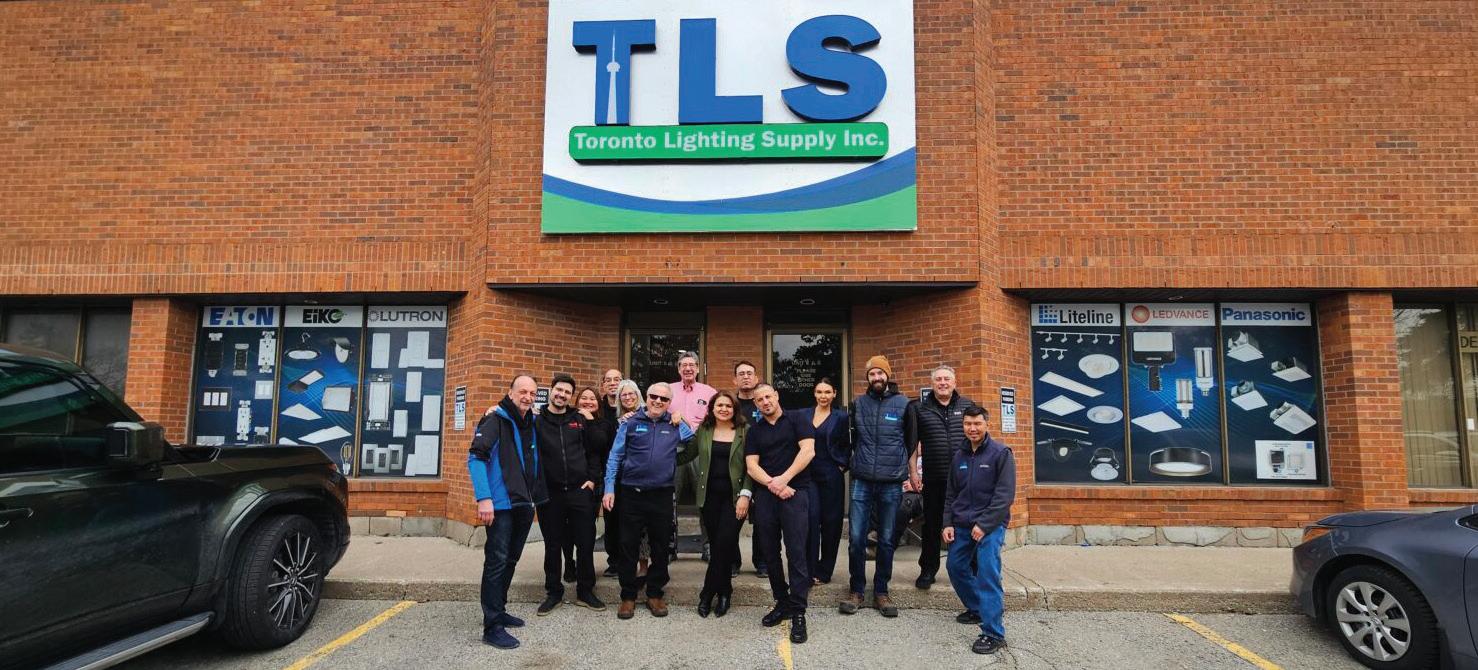
Toronto Lighting Supply (TLS) held the grand opening of its Vaughan, Ont. location on April 24, with customers, supplier partners, industry representatives and local officials from across the GTA in attendance.
The event featured a ribbon-cutting ceremony, showroom tours, product displays, and networking opportunities.
Complementing the company’s original Toronto facility, TLS’ new location
was designed to showcase its range of lighting displays, control solutions, and contractor-focused inventory in a modern, professional environment, TLS shared.
Through both locations, TLS serves electricians, contractors, designers, builders, and developers with lighting solutions across residential, commercial, and industrial projects.
In a press release, TLS thanked the attendees, supplier partners, industry representatives, and community members who contributed to the success of the event.
“Opening our Vaughan location is an important milestone for our company,” the TLS team said. “We are grateful for the support from our customers, vendors, partners, family, and community. Our focus remains on building long-term relationships while continuing to provide reliable service, fast turnaround times, and dependable support for electricians and contractors across Ontario.”
The Independent Electricity System Operator (IESO) has awarded two 20-year co-ownership contracts to
global renewable energy developer and operator Neoen, in partnership with local First Nations communities, for two solar farm projects in Northern Ontario.
Neoen’s first partnership is with Garden River First Nation, with the co-owned solar farm to be located east of the City of Sault Ste. Marie. Upon completion, it is set to be the largest solar farm in Ontario at 253 MWp. The second contract will see Neoen partner with the Matachewan First Nation for a 65 MWp solar farm project located in Northeastern Ontario’s District of Temiskaming.
Both Neoen and each First Nation partner will share a 50 per cent equity partnership through these co-ownership agreements, with both including a 20-year solar contract awarded to Neoen and the respective First Nations stakeholder by the IESO through its Long-Term 2 Energy Supply procurement process.
The Garden River First Nation project is expected to begin construction in 2028, with a target in-service date of 2030. When operational, it will provide 380,000 MWh of annual emissions-free energy to the provincial power grid. The farm will be located 55 km east of the City of Sault Ste. Marie.
The Nation has pursued solar projects since the first iteration of its
Indigenous Community Energy Plan in 2017, though this solar farm marks its first utility-scale renewable energy project. Garden River First Nation’s 50 per cent ownership stake is also anticipated to bring increases in employment opportunities and local spending to the area, a press release said.
“For Garden River First Nation, this project represents more than energy production. It reflects our responsibility as Anishinaabe people to care for the land while creating meaningful opportunities for our community and future generations,” said Garden River First Nation Chief Karen Bell. “We enter this work with a clear vision grounded in respect for our lands, our people, and the generations yet to come.”
Construction on the Matachewan First Nation solar farm is expected to begin in 2028, with a target in-service date of 2029. The farm will be located approximately 20km southeast from the City of Temiskaming Shores, and when complete will provide nearly 100,000 MWh of annual emission-free energy to Ontario’s power grid. This project also marks the Nation’s foray into the utility-scale renewable energy space.
“As President of the Matachewan Limited Partnership, I am pleased to have worked with Neoen to achieve this contract award with Ontario through
IESO,” said Jason Batise, president of Matachewan First Nation Limited Partnership. “We realize we are in the beginning stages of our solar energy project journey with our partners, and we look forward to the opportunities this initiative will provide for Matachewan First Nation.”
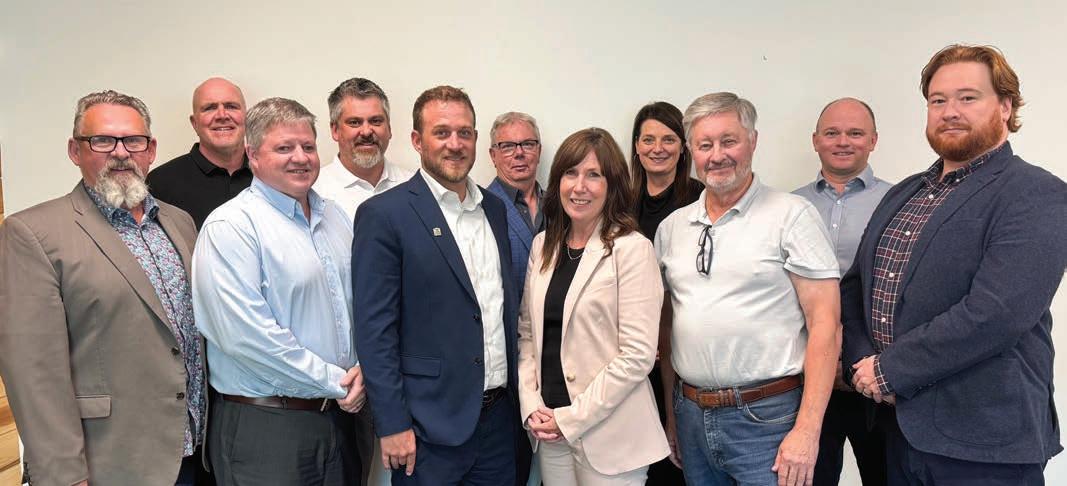
Leaders from across eight different construction associations in Canada’s East Coast provinces have formed the Atlantic Construction Alliance (ACA).
The ACA looks to provide a united voice for the planning, management, and building of projects across Canada’s four Atlantic provinces. The association shared that its primary advocacy goals include fairer rules, the modernization of procurement practices, improved labour mobility, workforce development, long-term infrastructure planning, and accelerated delivery of new housing.
The eight founding partners of the ACA include:
• Construction Association of Nova Scotia
• Nova Scotia Road Builders Association
• Construction Association of New Brunswick
• New Brunswick Road Builders and Heavy Construction Association
• Construction Association of Prince Edward Island
• Prince Edward Island Road Builders and Heavy Construction Association
• Newfoundland and Labrador Construction Association
• Heavy Civil Association of Newfoundland and Labrador
The new Alliance aims to act as a collaborative forum for Atlantic industry leaders to share best practices, conduct joint research, and deliver unified policy positions on cross-provincial issues, while also engaging the region’s governments, owners, and post-secondary institutions.
“Each province has unique strengths, but our challenges – workforce shortages, rising costs, and outdated procurement frameworks – are the same,” said Construction Association of Nova Scotia president and CEO Duncan Williams. “The Atlantic Construction Alliance allows us to speak with one voice on behalf of our industry, our workers, and our future.”
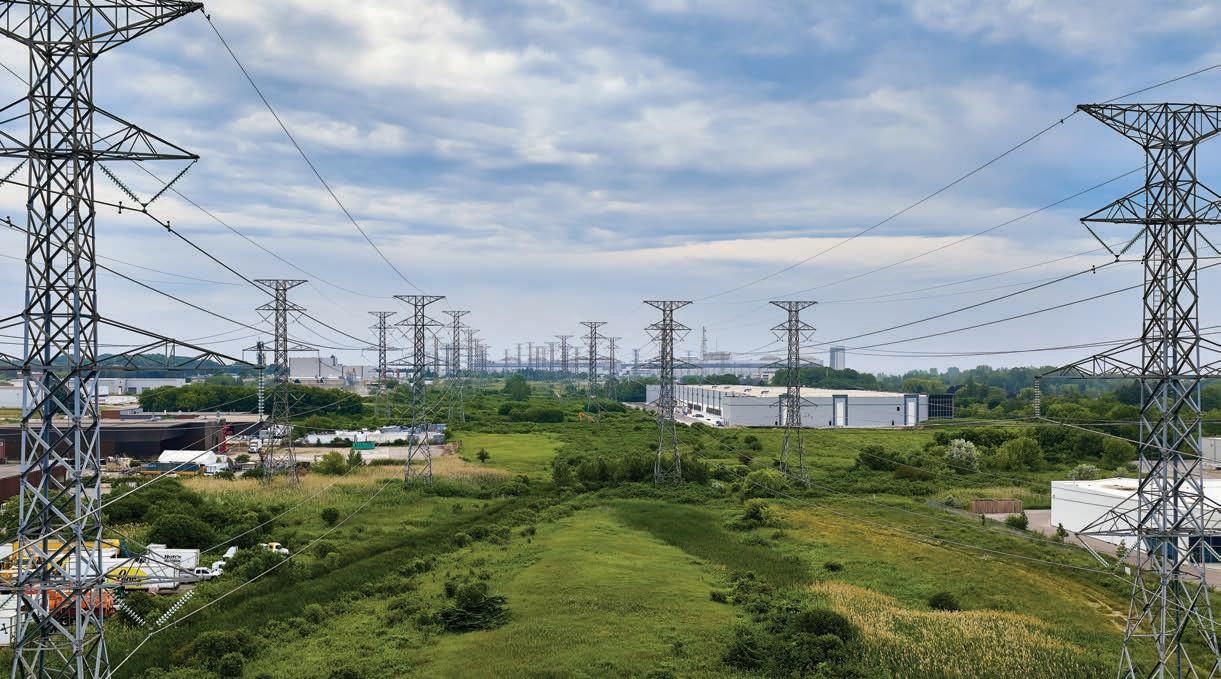
As Canada’s population grows and new areas of the country are industrialized, provinces and territories across Canada are taking a hard look at electricity supply – demand, capacity, transmission, and more. Within Ontario alone, for example, demand is forecast to potentially increase as much as 90 per cent over the next 25 years, according to Ontario’s Independent Electricity System Operator (IESO).
In September 2025, these factors were discussed at the ‘Connecting Canada – Building an Energy Superpower Summit,’ hosted by the Government of Ontario. Leaders from across the nation agreed that, in order to address growing electricity demand in individual jurisdictions and for the security of Canada’s national electrical system, more sharing capacity should be developed.
From these discussions emerged the new ‘National Energy Corridor Agreement,’ a collaborative energy initiative signed in early March 2026 by the majority of provincial and territorial leaders from across the country.
Through this first-of-its-kind part-
nership, participating provinces and territories will collaborate in identifying and acting on new opportunities to advance interprovincial transmission infrastructure, while also advocating for the federal support required to accelerate transmission corridors connecting Canada’s east-west and north-south.
The Government of Ontario recently stated that Canada’s grids were built for a different era; mainly designed to operate within provincial borders, rather than to support a modern national economy. This agreement looks to change that.
“Rapid population growth, major industrial expansion, critical mineral development and electrification are driving unprecedented demand for power, while limited interprovincial connections prevent regions from sharing reliable, clean electricity efficiently,” the Province of Ontario stated in the news release about the Corridor Agreement.
The statement highlighted the severity of the issue, stating that
“without action, these constraints will lead to higher costs, slower project development and missed economic opportunities,” at a time “when Canada must strengthen its energy security and global competitiveness.”
In practice, increasing interprovincial grid connectivity will in many cases be a matter of building on infrastructure that’s already in place – while also using lessons learned up to this point about the best ways to expand infrastructure and arranged transmission between jurisdictions.
For example, Ontario already has 11 interties with Quebec and three with its other neighbouring province, Manitoba. Ontario’s total export transfer capability is about 2,385 megawatts (MW) and total import is about 2,580 MW. In 2025, Ontario exported 18 TWh out of province, more than 10 per cent of its total generation.
Many national leaders are very excited that the capacity to share electricity among provinces and territories is going to be boosted. Candace Laing, for example, president and CEO of the Canadian Chamber of Commerce, stated
Ideal for construction and industrial electrician apprentices, students, trade qualifiers, and challengers
Aligned with the major work activities, tasks, and sub-tasks of the RSOS
Practice questions with answers to check and reinforce your knowledge

The Canadian Electrical Trade Study Guide helps you prepare for the trade certification exam
Are you planning to take the Construction Electrician Red Seal Exam to demonstrate your knowledge and skills in your trade? CSA Group’s Canadian Electrical Trade Study Guide can help strengthen your understanding of electrical systems, refresh your knowledge, and gain confidence before taking the exam.
Why should you use the guide?
Developed by electrical professionals from across the country, the guide provides:
• an overview of the 2024 Canadian Electrical Code, Part I (CE Code)
• requirements of other relevant CSA standards
• diagrams illustrating the key CE Code concepts
• explanations of concepts covered in the Red Seal Occupational Standard (RSOS)
• step-by-step examples of calculations included in the CE Code
• practice questions with answers to check and reinforce your knowledge
• additional resources for electrical trades journeypersons

Get the Canadian Electrical Trade Study Guide
csagroup.org/CETSG

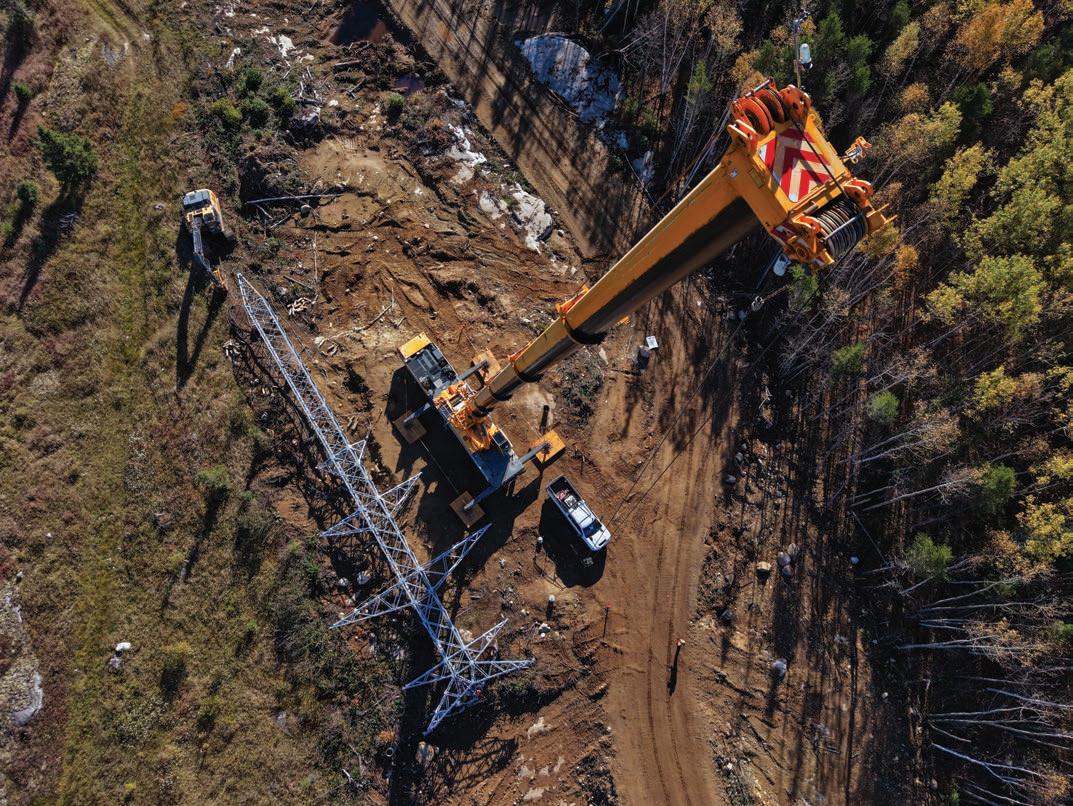
in March that the Corridor Agreement “is the kind of nation-building and silo-busting Canada needs right now.”
Laing believes that connecting and strengthening electricity systems across provinces and territories “will act as a magnet for investment, power industrial growth and strengthen communities.”
In Laing’s view, a more integrated grid “makes Canada more competitive, more resilient and better positioned to make sure Canadians are energy secure and can fully benefit from our diverse energy resources.”
The National Energy Corridor Agreement has been signed by all provinces and territories except three: Quebec, Nunavut and Newfoundland & Labrador.
There are four main goals within the agreement. As the participating provinces and territories reach the first goal of identifying and advancing new transmission infrastructure opportunities, they will accomplish the second goal of helping regions meet growing demand and maximize the use of clean, reliable power before it’s exported abroad.
Thirdly, the participating jurisdictions will work together to advocate for federal support, and lastly, partner with Indigenous communities in energy development through meaningful participation and shared economic benefit.
In terms of what Canada’s national transmission network has looked like up to this point, Ontario’s ties with
its neighbours reflect the big picture, according to SaskPower spokesperson Joel Cherry.
Cherry noted that many transmission interties already exist between Canada’s neighbouring provinces, “allowing power to flow across borders and helping to balance supply and demand when local generation is constrained.”
For its part, Saskatchewan has five interties with Manitoba, sharing up to 425 MW, and one 150-MW intertie with Alberta (plus one 150 MW intertie with the U.S. as well).
It’s likely that a number of interties, if not the majority of them, will be strengthened under the new Corridor Agreement – and the one shared by Saskatchewan and Alberta is a good bet for a capacity increase.
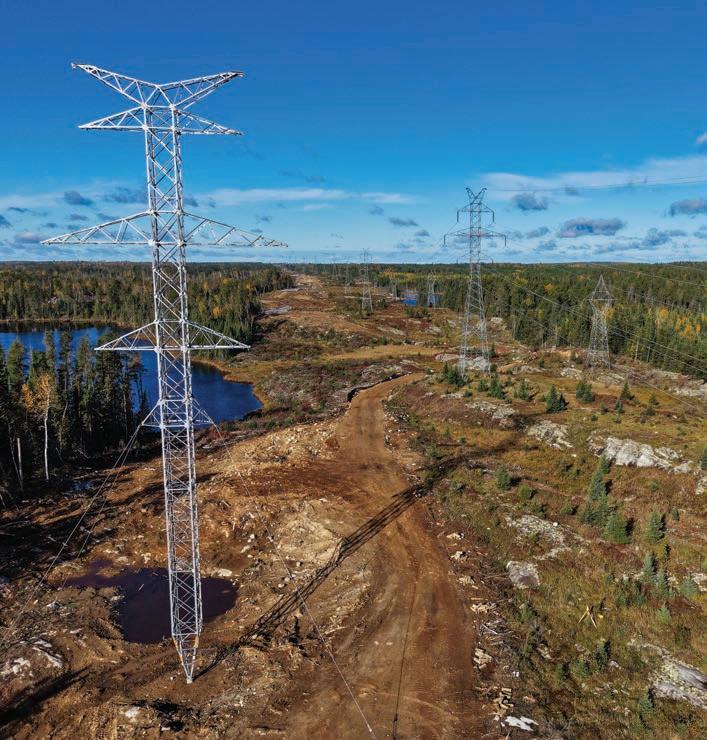
As with some other interties in Canada, the Saskatchewan-Alberta intertie requires a high-voltage direct current (HVDC) converter station due to a lack of synchronization between the electrical systems of each province; with the current converter beginning to show its age.
When a piece of infrastructure is being replaced, Cherry explains, it is also an ideal opportunity to make that replacement bigger: “Alberta’s energy regulator, the AESO, has publicly acknowledged that the station, ATCO’s McNeill Converter Station, is nearing end-of-life, and AESO plans to replace or upgrade it as part of its long-term transmission strategy.”
At the same time, Cherry noted that “the McNeill replacement is intended not just for reliability, but also to potentially increase the capacity.”
Of course, every province and territory has its own electricity needs, demand projections, existing electricity sharing capacity and its own set of prioritized infrastructure upgrades – and some of these upgrades, such as the McNeill Converter Station, align with the goals of the Corridor Agreement.
In the early days of the agreement, though, how existing priorities and other factors mesh with these new goals will be worked out in the months and years to come.
In Saskatchewan, Cherry explains that his province’s existing long-term transmission investment plan includes developing new transmission in the far north, connecting the province’s northern and southern power systems for the first time, and more.
This investment plan also already
aligns with the Corridor Agreement, in that a priority of the plan is “expanding interconnections with neighbouring provinces and U.S. markets,” Cherry explained, serving the overall goal of looking “to improve resilience and create more opportunity for power imports and exports.”
While it may be too early to predict how much the Corridor Agreement will expand electrical workforces in participating provinces and territories, Cherry can say that “improving eastwest transmission connections will unlock new economic opportunities” in Saskatchewan, while also supporting growing demand and grid reliability.
In looking at how the National Energy Corridor Agreement might play out in Central Canada, IESO spokesperson Michael Dodsworth explained that his organization will evaluate Ontario’s existing intertie system to see where opportunities exist, and that electricity sharing arrangements with Ontario and its neighbours will continue to present unique considerations.
“The level of enhancements that may be needed between Ontario and Quebec will be different than what’s needed between Ontario and Manitoba, or Ontario and New York,” Dodsworth said. “That’s why we need to plan and build in tandem with neighbouring provinces and states to advance projects where investments in interties will benefit both parties.”
From the perspective of Hydro One Networks, which builds and operates transmission lines in Ontario, spokesperson Madeleine Porter noted that initial work stemming from this Agreement on the province’s 14 existing interties might entail capacity expansion, among other goals.
Porter also shared that Hydro One looks forward to supporting the government and IESO as they lead planning work with their counterparts to assess regional, provincial, and national needs to determine next steps.
“We applaud the Ontario government and partners across provinces and territories for coming together around a forward-looking vision that puts Canada and Canadians first,” she said.







BY JACK BURTON
The large scale of Canada’s electrical industry comes partly from the diversity of subsectors, technologies, specializations and project types that comprise it. In such a broad and varied sector, it’s no surprise that the many different forms of leadership pushing it forward are just as wide-ranging.
Highlighting just how diverse leadership can look like across the sector – whether it’s in the type of work being done or in unique paths to career success – was the goal behind Electrical Business’ EMPOWER Electrical Leadership Showcase; a celebration of the wide range of people and achievements powering the industry forward.
Beyond the profiles featured in this issue, we’ll be sharing interviews with honourees on our Direct & Current podcast over the upcoming months; diving deeper into the leadership lessons and tips for success they’ve learned from across their careers so far. Stay tuned to ebmag.com for episode announcements.
Congratulations to all of our honourees!
Anna Lary
Project lead, ConnectHER Hub at BCIT – Vancouver, B.C.
As the project lead behind the British Columbia Institute of Technology (BCIT)’s ConnectHER Hub, Anna Lary successfully translated over a decade and a half of in-field experience into an

“If we want a more diverse trades workforce and classrooms, and better outcomes for a wider range of learners, innovation in teaching is absolutely essential.” – Anna Lary, BCIT
opportunity to shape, inspire, and diversify the next generation of Canada’s electrical workforce.
Lary’s transition into the classroom occurred when she found herself searching for something more accommodating toward her responsibilities as a mother and career development needs, with her entrance into this new chapter being largely unexpected.
“While I had always enjoyed mentoring apprentices and sharing practical knowledge, teaching had not been something I had seriously considered. Both of my parents
were professors, and I had seen my path as something quite different,” she said.
In finding her voice as an educator, Lary prioritized authenticity and effectiveness, informed by her own experiences as a woman in the field and what she perceived as traditional teaching’s narrow approach to how tradespeople are expected to learn and behave.
“It became clear to me that the deliverers of trades education have a responsibility to affect change at a systemic level to support the growing diversity in our classrooms and on jobsites,” she said. “If we want a more diverse trades workforce and classrooms, and better outcomes for a wider range of learners, innovation in teaching is absolutely essential.”
One of the ways Lary set about achieving these goals was hosting small social gatherings featuring underrepresented voices in the trades. As the gatherings and her partnerships across the industry grew, Lary secured a year of funding to launch the ConnectHER Hub at BCIT, with the program growing from there.
Created to connect women and gender-diverse individuals with the resources and community needed to support their careers, the Hub provides a coordinated and intentional way of building what Lary describes as “an ecology of supports, creating multiple points of connection across education, industry, and community to address barriers in a more comprehensive way.”
Rather than being rooted in any specific measure or training module, the change that ConnectHER looks to both create and inspire in others centers on an overall shift toward understanding that underrepresented voices become stronger through collaboration and acceptance.
“I know that the desire for respect, belonging, and safe working conditions is not unique to any one group,” she said. “The goal is not to create separate systems, but to raise the standard across the board so that more people can enter, stay, and succeed in the trades.”

Ark Tsisserev Principal, AES Engineering –Vancouver, B.C.
While Ark Tsisserev’s experience across the electrical industry spans across a range of roles, decades, and borders – both provincial and international – it’s his consistent pursuit of opportunities to learn, and the growth provided by
those opportunities, which have helped Tsisserev leave his mark across Canada’s electrical sector throughout his career.
Tsisserev began his career in 1962 as a construction electrician in Ukraine, receiving his Ph.D. in the dynamic stability of high-voltage power system networks a decade later. After working in design and research for five years, he and his family emigrated from the Soviet Union to Canada as political refugees.
Following his arrival in Canada, Tsisserev worked various jobs in both Manitoba and Alberta’s electrical sectors before returning to school at the University of Manitoba to complete his master’s degree in electrical engineering. Through various roles and responsibilities across the industry, Tsisserev become more deeply embedded in guiding the country’s electrical sector forward over the decades that followed.
These experiences include membership with the Manitoba Association of Professional Engineers, working for the City of Winnipeg’s Inspections Department, accepting an invitation to serve as Chief Electrical Inspector for the City of Vancouver, and working with the CSA Group.
Uniting these responsibilities is a perspective that refuses to take any opportunity to grow and evolve alongside the industry for granted: in a sector defined by innovation and change, Tsisserev credits this openness to learning as one of the cornerstones behind any good leader among Canada’s electrical workforce.
“The industry changed quite drastically, and all
industry stakeholders had to adapt to these changes in order to continue to function effectively,” he said. “It has been a continuous learning and adaptation process, and this process does not stop and will not stop.”
Through his work with a number of committees, Tsisserev has helped shape many industry standards across various stages of development, contributing via chairman positions with groups such as the technical committee for the Canadian Electric Code, the CSA Steering Committee for the requirements of electrical safety, and the Canadian National Committee for the IEC Technical Committee for low voltage installations.
It’s no surprise that behind Tsisserev’s varied career is a belief that lifelong learning goes hand in hand with forging a lifelong leader: “Be curious, explore all possible opportunities to learn, elevate your knowledge, skills and abilities, and be open to changes,” he said.

Bolis Ibrahim President, Cence Power – Markham, Ont.
Bolis Ibrahim’s electrical career started with an idea – and fuelled by his vision
and leadership, that idea has helped him grow into a founder, company president, and even a Forbes 30 Under 30 honouree in 2023.
While studying electrical engineering at Toronto Metropolitan University, Ibrahim recognized the disconnect between the DC power that much of the modern world runs on and the AC power predominantly delivered by the grid. To close that gap, Ibrahim founded Argentum Electronics in 2015, with its efficient DC power distribution systems merging into Cence Power in 2022, where Ibrahim currently serves as president.
“To me, leadership in this sector means challenging the status quo while bringing the entire industry along with you.”
– Bolis Ibrahim, Cence Power
Since then, Ibrahim’s solutions have been successfully implemented across millions of square footage in buildings around the globe, with Ibrahim believing the impact he’s seen these solutions have to far outweigh any titles or honours received throughout his career.
“Being recognized on the Forbes 30 Under 30 list in 2023 for Manufacturing and Industry was a great milestone, but the true accomplishment has been assembling a world-class team that is actively decarbonizing the built environment,” he said.
Beyond his work leading Cence Power, Ibrahim’s company has also been active in helping to form con-
sortiums, working standards bodies, and code-shaping panels to help expedite standards for low-voltage, direct current, and fault-managed power distribution. These initiatives, Ibrahim shared, reflect his perspective that bringing about change is only meaningful if one is also contributing to help the industry as a whole adapt to those changes.
“To me, leadership in this sector means challenging the status quo while bringing the entire industry along with you. It is not enough to just build a disruptive product,” he said. “True leadership involves creating the standards, ecosystems, and partnerships necessary for that technology to thrive safely and at scale.”
For Ibrahim, the responsibility of helping to shepherd this change also involves ensuring that those impacted by these shifts can benefit from and respond to them in a safe and informed manner; with this approach integrated into the design for many of Cence’s solutions.
“In Canada’s electrical sector, safety is not just a regulatory hurdle to clear – it is the bedrock of innovation. You cannot introduce paradigm-shifting electrical infrastructure if you cannot guarantee that the people installing, maintaining, and using it are completely safe,” Ibrahim said. “Solid leadership means viewing safety as a feature, not a constraint.”
Daniel Langlois Director of Regulator & AHJ Relations, CSA Group – Toronto,
Ont. Daniel Langlois describes his 35-plus year career with the CSA Group as both professionally rewarding and deeply meaningful, with

the real-world impacts of his standards work in the electrical and fire prevention fields sustaining his drive to continue leading positive change for workers on both a national and international level.
“What has sustained my interest and engagement throughout the years is the knowledge that this work matters. Every investigation, every committee discussion, and every technical decision has the potential to prevent future incidents and save lives,” Langlois said. “Looking back, I consider myself extremely fortunate to have built a career that allowed me to make a positive impact on public safety every day.”
Langlois has spent more than two decades working closely with electrical and fire Authority Having Jurisdictions (AHJs) across Canada, the U.S., and internationally to investigate incidents and help translate real-world findings into meaningful improvements for the codes and standards that keep workers safe.
Behind this work is a philosophy that Langlois describes as “firmly rooted in the practical application of codes and standards, not simply as documents, but
as living tools that directly protect people and communities.”
Langlois has brought this holistic approach to a number of standards groups he participates in, including his voting membership on the Canadian Electrical Code Part I, a vice chair position on the Canadian Advisory Council on Electrical Safety’s Standards Effective Dates executive committee, and serving as chairman of the IAEI International Executive Board of Directors from 2023 to 2025.
Given his deep background in codes and standards, it’s no surprise that Langlois sees the function of an effective leader to share plenty in common with a well-written compliance document; seeing in both a similar purpose to guide, educate, and empower their respective groups.
“Codes, standards, compliance, and safety are the backbone of effective leadership in the electrical sector – they turn shared expertise into clear, trusted guidance that protects the public and supports sound decision making,” he said. “They are not constraints, they are enablers, providing consistency and reliability as new technologies are adopted.”
Michelle Branigan
CEO, Electricity Human Resources Canada – Ottawa,
Ont.
“I sometimes joke that I’m ‘the accidental CEO,’” Michelle Branigan shared. Though she admits becoming a CEO was never her plan growing up, Branigan’s leadership is informed by a full-effort approach, regardless of the role at hand: “Work ethic matters. If you’re going to do something, why do it at

anything less than your best?”
Arriving in Canada from Ireland at 19 years old, Branigan spent time in Toronto and Vancouver before returning to Dublin and joining the country’s economic development agency. Branigan credits her work helping Irish-owned
“Leadership is about creating space for others to grow. The mentors who invested in me changed the trajectory of my career, and I try to pay that forward every day.”
– Michelle Branigan, EHRC
companies grow, innovate, and expand with helping to light her leadership fire.
“It was an environment that really helped shape how I think about leadership and people,” she said. By 2007, Branigan had returned to Canada to take a project

management role with Electricity Human Resources Canada (EHRC), which she has since grown into a trusted partner on labour market intelligence, workforce development, and diversity and inclusion.
The continued success that Branigan has brought to EHRC over her tenure boils down to three key lessons that she credits with helping shape her own approach to leading.
“First, curiosity is a superpower,” she said. “I entered this sector knowing nothing about electricity, but I was willing to learn, ask questions, and surround myself with people who knew more than I did. Second: leadership is about creating space for others to grow. The mentors who invested in me
changed the trajectory of my career, and I try to pay that forward every day. Finally, resiliency matters. My career has taken me across countries, sectors, and roles, and each transition taught me that adaptability and openness can lead to opportunities you never expected.”
These lessons form the foundation of the people-centric approach that has informed Branigan’s successes across her leadership with EHRC, including initiatives such as its Leadership Accord on Diversity and Inclusion, Bright Futures Initiative for Indigenous youth, and range of Work-Integrated Learning (WIL) programs.
“For me, leadership in this moment is about staying grounded in people. It’s about creating space for con-
tinuous learning, because the reality is that jobs will change and the work will change,” she said. “What will set individuals – and organizations – up for success is the ability to adapt and stay curious.”



Vancouver Island District Manager, City Electric Supply –Vancouver Island, B.C. When Yasin Alhomsi entered Canada’s electrical sector over ten years ago, he wasn’t just learning a new industry, but also a whole new culture; having arrived in Canada from overseas as a Syrian refugee just two months prior.
Beginning in the warehouse at City Electric Supply (CES)’s Richmond, B.C. location, Alhomsi spent the first year of the job balancing his work duties with dedicating hours per day to learning English through a local language education program for newcomers.
His hard work quickly turned into visible progress, with Alhomsi advancing through the roles of inside sales, account manager, and finally branch manager for CES’ Courtenay facility.
At the helm of CES’ Courtenay branch, Al-
homsi drove the location to recognition as one of the company’s most-improved branches across consecutive years, while also developing many of his own employees into managerial positions.
Alhomsi credits the hard work of learning a new industry, language, and culture as helping build the dedication required to find this success, with this dedication eventually helping him grow into the role of District Manager for CES’ Vancouver Island locations.
“Before I left [Syria], I had a business degree and was working as an operations manager at an air freight company. I arrived in Canada with none of that recognized. I had no network, no language skills, and no shortcuts,” he said. “Going through that means you stop taking opportunities for granted because you remember what it feels like to have none […] You learn to operate without a safety net and you wake up knowing there is no one to call, and it’s on you to swim or sink.”
The wins that Alhomsi has secured not just for himself, but for his team members and their career paths, have been the product of him experiencing firsthand the impact that patience and dedication from leadership can have in building the confidence needed to excel in one’s role.
“I lead by helping team members believe in themselves. I’ve seen how powerful this approach can be from my own experience when I was first hired. City Electric Supply hired a warehouse worker with limited English, and someone decided to take a chance on me. I try to be that person for my team,” he said.
BY JACK BURTON
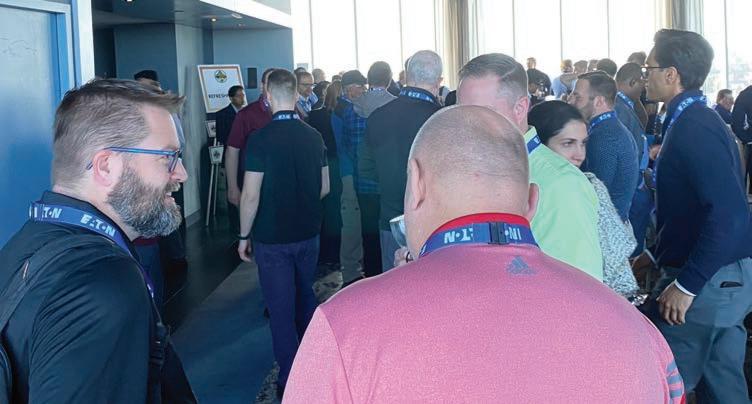
From March 23 to 25, the International Electrical and Electronics Engineers (IEEE) and its Industrial Applications Society (IAS) held the 2026 edition of its Electrical Safety, Technical, Maintenance and Projects (ESTMP) Workshop. This year’s Workshop focused not only on what’s current across Canada’s electrical and industrial sectors, but what might be next for them as well.
The ESTMP Workshop was started 21 years ago by OBIEC Consulting’s Tim Driscoll, who was asked by one of the executives from IEEE’s Northern Canada section about running an electrical conference exploring some of the obstacles and opportunities coming out of the mega-projects being engineered and constructed in Alberta’s oil sands.
Driscoll, who had been involved in the IEEE’s Electrical Safety
“We will need the power, and we will need the partnership; there’s no one company who can crack this.”
– Shitiz Agarwal, Schneider Electric
Workshop (ESW) and Petroleum and Chemical Industry Committee (PCIC) Conference, shared that he “jumped in feet-first, after stating that I would get involved if we make ‘safety’ a major thrust of the conference.”
Originally founded as the Electrical Safety, Technical, and Mega-Projects Workshop, a chaging project landscape saw the event swap out ‘mega-projects’ for ‘maintenance’ in its title. Despite this change, the ESTMP Workshop remains focused on the technical and safety issues of industrial electrical applications.
The 2026 Workshop opened with consultant Kent Zehr exploring the evolution of the electrical and engineering sectors, based on his decades-spanning career.
“In 1880, Thomas Edison patented the electric light bulb. That began the development of widespread power generation
Over its 21 years, the ESTMP Workshop has become a touchpoint gathering for many stakeholders across Western Canada’s electrical and industrial sectors.
distribution, and it became common usage everywhere,” said Zehr. “I’ve seen almost half of that development, and I can confirm nobody who started out when I did could imagine where we would be today.”
Zehr ended with comments on the moment of possibility and excitement defining the sector.
“There’s [an IEEE] centenary coming up, and I wonder what kind of technology will be featured there – I sure don’t know,” Zehr admitted. “I hope some people in this room have an inkling or two, but I would be very surprised if anybody could make a firm projection on it.”
The immense change around the usage and available solutions of electrical systems was echoed by keynote speaker Shitiz Agarwal, vice president of power systems at Schneider Electric, in his presentation “Energy for AI, AI for Energy.”
Current capacity is a major issue in handling demand forecasts, with Agarwal sharing that globally, approximately 225 gigawatts of new demand – more than the total installed grid capacity of Canada – will be introduced by data centres over the next five years.
For Agarwal, successfully meeting this moment means a fine balance of people, partnerships, and perspective.
“We will need the power, and we will need the partnership; there’s no one company who can crack this,” he said. “We need to act on both sides in parallel to ensure that we are doing the right type of infrastructural development both globally and in Canada.”
The 2028 ESTMP Workshop will take place in Calgary, Alta.

BY MELVIN NEWMAN
Since ChatGPT burst onto the scene in late 2022, AI has gone from tech industry novelty to everyday business tool. Electrical contractors are no exception. AI is showing up in everything from project communication to marketing.
So where to start? With the task contractors ask about most: estimating. And here’s the reality check: AI is not going to replace your estimator. Despite the hype, no generative AI tool can produce an accurate electrical estimate from scratch.
Accurate estimating depends on knowledge that simply isn’t available to these systems. An AI doesn’t know that your best journeyman electrician is out for six weeks. It doesn’t know that your electrical supply house just raised prices on copper wire, or

While AI can be integrated into the workflows of electrical contractors, these tools are only as useful as one’s approach to using them, says Patabid’s Melvin Newman
that the general contractor on this job is notorious for scope creep. These are the factors that separate a winning bid from a money-losing one, and they live in your team’s expertise, not in a language model.
Where AI does excel is in the tedious, time-consuming work that bogs down your preconstruction processes. Think automated takeoffs, extracting quantities from electrical drawings, or organizing specification data. The sweet spot is using AI to handle the grunt work faster. This frees up your estimators to focus on what actually requires judgement: pricing strategy, risk assessment, and building the relationships that win work. Tools like AI estimating software can automate takeoffs while keeping your team in control of the pricing decisions that matter.
Practical AI writing prompts AI can be implemented in many areas of an electrical contracting business, not just estimating. In fact, some of the biggest time savings come from tasks you probably don’t think about as automation candidates: writing scope letters, drafting client emails, digesting tender documents, and even improving your Google rankings. These are the areas where AI truly shines.
The key to getting useful results from any AI tool is writing a good prompt. Vague prompts get vague results. Specific prompts get specific, usable outputs. Below are practical prompts you can copy, customize, and start using today.
Scope letters: Scope letters are critical to protecting your business, but writing them from
scratch for every project eats up valuable time. AI can generate a professional first draft in minutes. The key is giving it enough context about your project and what you need to include or exclude.
Sample prompt: “Write a professional scope letter for an electrical contractor bidding on a power distribution system for a 50,000 square foot commercial office building. Include the following scope items: main electrical service, panel installations, branch circuit wiring, lighting systems, and grounding. Exclude the following: low voltage systems, fire alarm integration, and final commissioning. Use a formal but clear tone.”
Client communication: From proposal emails to follow-ups to project updates, client communication takes more time than most contractors realize. AI can draft professional correspondence quickly, and you can refine it to match your voice.
Sample prompt: “Write a follow-up email to a general contractor we submitted a bid to two weeks ago. The project is a new medical clinic electrical system. Keep the tone professional but friendly, and ask if they have any questions about our proposal or need any clarification on our electrical scope.”
Project document summarization: Tender packages can run thousands of pages. AI can help you quickly extract what matters so you can decide whether a project is worth pursuing and flag key requirements before you start your estimate.
Sample prompt: “Summarize the key electrical scope requirements from the following specification sections. Identify any unusual requirements, owner-furnished equipment, specific product requirements, and potential exclusions I should note in my bid. Here is the text: [paste specification text]”
SEO and marketing content: Most electrical contractors know they should be doing more with their website and online presence but don’t have the time. AI can help you create blog posts, website page content, and social media posts and captions.
Sample prompt: “Write a 500-word blog post for an electrical contractor’s website targeting the keyword ‘commercial electrical installation Calgary.’ The tone should be professional but approachable. Include a section on what building owners should look for when hiring an electrical contractor.”
Improve local search visibility: The right prompts can help you choose better categories, write stronger descriptions, and identify keywords that get your business in front of more potential customers. This translates to more phone calls, more website clicks, and more work.
Sample prompt: “Suggest five Google Business Profile categories for an electrical contractor that specializes in commercial electrical installation, power distribution systems, and industrial electrical services in [City].”
Tips for getting the most out of AI
AI tools are only as useful as your approach to using them. Here are some practical tips to help you get better results and avoid common pitfalls: Always use a free trial first: There are dozens of AI tools on the market. Before committing, take advantage of free trials and free tiers. ChatGPT, Claude, and Microsoft Copilot all have free versions you can test with real work before spending a dollar.
Put in the effort to learn: AI isn’t magic. It requires some upfront investment of your time to understand how to prompt effectively and where these tools fit into your workflow. Treat it like learning any new piece of software: put in the effort early, experiment with real tasks, and see if it’s a good fit for how your team works. The contractors who get the most value from AI are the ones who commit to learning it rather than expecting instant results.
Start a new chat for each project: AI tools like ChatGPT and Claude maintain context within a conversation. If you’re jumping between projects in the same chat, the AI can get confused and mix details from one job into another. Start fresh for each project to keep things clean and accurate.
Be specific with your AI writing prompts: The more detail you provide, the better your output. Instead of asking for “a scope letter,” tell the AI the project type, square footage, scope inclusions, exclusions, and the tone you want. Think of it like briefing a new employee: the clearer your instructions, the less back and forth you’ll need. Implement and iterate: Your first AI prompt won’t always give you exactly
what you need. That’s normal. Treat AI as a collaborative tool. Review the output, tell it what to fix or adjust, and refine from there. Most people give up after one mediocre result. The real value comes when you learn how to guide the AI toward what you actually want.
Tell the AI what to do when it doesn’t know the answer: AI tools sometimes make things up when they don’t know the answer. To avoid this, end your prompt with a simple instruction like: ‘If you don’t know the answer, say so. Don’t make anything up.’ This small addition can save you from “confidently wrong” outputs.
Don’t paste confidential information into public AI tools: Free versions of ChatGPT and other tools may use your inputs to train future models. Be cautious about pasting sensitive client information, pricing details, or proprietary data. If confidentiality is a concern, consider paid enterprise versions that offer better data privacy protection.
Use AI to assist, not replace, your judgment: AI can draft, summarize, and suggest, but it doesn’t know your clients, your suppliers, or the nuances of your local market. Always review outputs before sending them out. The goal is to save time on the first draft, not to hand over decision-making.
AI isn’t going to take over your business, but it can take a lot of tedious work off your plate. The contractors who treat these tools as a starting point rather than a finished product will find real value in them. But remember where AI falls short. It can help you write faster, but it can’t price a job. It can summarize a spec, but it doesn’t know your labour rates or your supplier deals.
The real efficiency gains in preconstruction come from pairing smart AI writing prompts with tools built specifically for estimating. That’s where purpose-built tools like PataBid Quantify come in - book a live demo today at https://www.patabid.com/ electrical-estimating-software.
Melvin Newman is the CEO and co-founder of PataBid. With nearly two decades of experience in construction estimating, Newman has provided his expertise in AI, ML, and systems development to the construction industry through Patabid since the platform’s launch in 2018.

We offer multiple solutions to more effectively seal around conduits, cables and Teck cables that reduce installation times and create watertight seals.

Whether you need to meet CEC codes for sealing conduit/raceways, increase electrical reliability, storm hardening of your system, or manage how cables enter walls, we have the solution for you.


GABRIEL BONE
Technical training developer with Ontario’s Electrical Safety Authority
QUESTION 1
In a Zone 21 location, where a raceway connects a dust tight enclosure to a non-dust tight enclosure, which method is acceptable for preventing dust from entering the dust tight enclosure?
a) Installing a removable seal within 300 mm of the dust tight enclosure
b) Providing a vertical section of raceway that is at least 1.5 m long downward from the dust tight enclosure
c) Installing a horizontal section of raceway that is at least 1.5 m long upward from the dust tight enclosure
d) Install standard raceway couplings and connectors provided they are fitted with a gasket
2
Which features are required for all manual transfer switches for a healthcare facility’s essential electrical system?
a) A readily visible mechanical indicator showing the switch’s position
b) Automatic retransfer to the normal supply upon restoration
c) Control power derived from a permanently connected battery
d) Electrical interlocking only (not mechanical) between the normal and emergency supplies
QUESTION 3
What is the maximum permitted voltage drop feeding remote lamps installed and supplied from an emergency power supply?
a) Voltage drop is not permitted for luminaires supplied by an emergency power supply
b) 1 % of the applied voltage
c) 3 % of the applied voltage
d) 5 % of the applied voltage
Electrical Business, March 2026 ed.
Question 1
What is the minimum distance from a shower stall a light switch can be installed when the branch circuit is protected by a Class A GFCI?
a) 500 mm. Rule 30-320 3) b).
Question 2

What is the maximum number of outlets permitted on a 2-wire branch circuit protected by an unmarked 20 A circuit breaker?
c) 16 outlets. Rule 8-304 1) c).
Question 3
What is the minimum grounding conductor size for a coaxial cable?
a) No. 14 AWG Cu. Rule 54-300 3).
IDEA 2026
International District Energy Assoc. June 23-26, Ottawa districtenergy.org
2026 Retrofit Canada Conference
Energy Conference Network June 24-25, Halifax retrofitcanadaconference.energyconferencenetwork.com
BILD Alberta Conference
Building Industry & Land Development Assoc. (Alberta) September 10-13, Jasper, Alta. bildalberta.ca/conference
IAEI Fall Convention and Tradeshow
Independent Alliance of the Electrical Industry September 15-17, Lloydminster, Alta. iaei.org
ESA Ontario Electrical Safety Awards & Annual Meeting Electrical Safety Authority September 16, Toronto esasafe.com
Canadian Airports National Electrical Workshop (CANEW) Canadian Airports Electrical Assoc. September 20-26, Fredericton canew.ca
Energy Storage Canada Conference Energy Storage Canada September 22-23, Toronto energystoragecanada.org
NECA Convention & Tradeshow
National Electrical Contractors Association October 4-7, Las Vegas neca2026.smallworldlabs.com
LiveWire Conference
Electrical Business Magazine October 8, Mississauga livewirecanada.com
Electricity Transformation Canada
Canadian Renewable Energy Assoc. October 19-21, Toronto electricity-transformation.ca
Kitchen + Bath Canada November 11-12, Toronto kbcexpo.com
The Buildings Show 2026 December 2-4, Toronto informaconnect.com/the-buildings-show


• Holds 22 ft. (6.7 m) of water head pressure and up to 90 ft. (27m) surges • Rodent-resistant formula with a bittering agent additive •
conduits of all sizes and
Canada’s renewable sector enters its ‘coming of age’ moment.
BY JACK BURTON

Within the overall landscape of Canada’s energy infrastructure, renewables continue to outgrow their ‘new kid on the block’ status as efforts to build out and rely upon these projects only continue to ramp up nationwide.
Recent data reinforces the steep upswing that renewables appear to be on, with the Canadian Renewable Energy Association (CanREA) sharing that at the end of 2025, the combined wind, solar, and storage capacity installed across the country contributed a total of 25 GW to
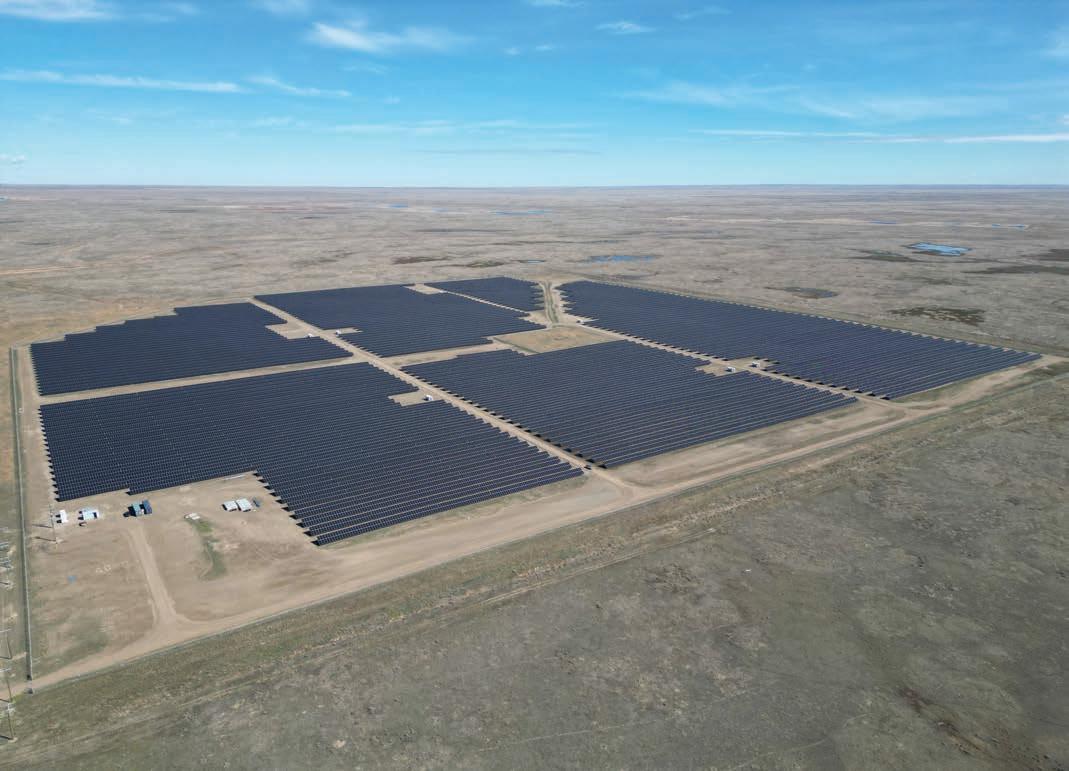
The Mesgi’g Ugju’s’n 2 (MU2) Wind
Project 1 is a 102.2 MW wind farm in Quebec’s Gaspésie region, on the Mi’gmaq traditional territory of Gespe’gewa’gi.
Canada’s total electrical output –a 56 per cent increase since the turn of the decade alone.
Even with this rise, CanREA suggests that the current growth experienced by the sector may only signal the beginning: the association’s 2025 Market Outlook projects that between now and 2050, 70 per cent of all new electricity capacity built during this period will come from wind, solar, and energy storage projects.
Combined, these findings indicate that the current renewable buildout is far from a fad. Rather, it can be seen as a growing – and
accelerating – priority within Canada’s overall electricity ecosystem.
Beyond the increasing prioritization of these projects within Canada’s infrastructure initiatives, another indicator of the renewable sector potentially outgrowing its relative infancy is the current moment faced by its initial wave of projects, particularly in the wind energy subsector: as many contracts among the first round of these projects approach end-of-life, the time has come for decisions to be made regarding what this sector’s continued growth will look like.
The end of the beginning Amidst exponential demand for renewable solutions, the 20-year power purchase agreements behind much of Canada’s first generation of utility-scale wind farms built in the mid-2000s are now approaching their deadline, with the country’s first wave of solar infrastructure not far behind.
For CanREA’s senior director of member programs Phil McKay, this moment is not just an industry milestone, but also a decisive point for what role this sector will play in Canada’s wider energy efforts and related project priorities.
“For the longest time, we had built this stuff, but never actually gotten to the end-of-life of a facility. Now, we are approaching that milestone,” he said. “What we’re finding is a lot of these fa-
The Tilley Solar Project is a 23.6 MW Indigenous-led solar array located in Newell, Alta., on Treaty 7 territory.
cilities can continue to run past their expected timeframe, but now, you have the staff who have been maintaining and operating these facilities talking to their developer arm again: ‘Do we want to repower this thing with new machines, or do we want to just take it down and call it quits?’”
The answer to that question, McKay explained, is driven largely by economics, rather than the state of the renewable infrastructure itself. A five-year extension may mean running that existing infrastructure as-is to squeeze the remaining value out of the aging equipment. A fresh, 20-year contract not only opens the door for a full repowering, but also opens the door for taking advantage of many modern technological benefits achieved since initial construction.
In the decades following the first wave of renewable installations, the capabilities of wind and solar technology have increased dramatically. These advancements have greatly outpaced the capabilities of early-generation machines, presenting opportunities for significantly more power at often the same land footprint.
This decision point may be even more notable for solar projects, with McKay sharing that advancements for solar technology may be great enough to commercially justify a repower at the 15-year mark.
“It’s not about the racking or piling that’s breaking down or rusting out or anything – that stuff’s got lots of life left in it. It’s just [the capabilities of] the power generation gear itself,” he said. The landscape of financial
incentives has also evolved, with McKay sharing that the previous era of up-front rebates and cash incentive programs is giving way to a structure centered around investment tax credits (ITCs).
Ottawa’s current suite of clean economy ITCs, including the Clean Technology Manufacturing ITC and the proposed Clean Electricity ITC for generation and storage equipment, aim to reduce the required costs of these inherently capital-intensive projects, while also improving operating economics over the life of the asset.
This structure is not exclusive to the large-scale end of the project spectrum either, with smaller commercial, industrial, and residential installations of renewable equipment also shifting toward long-term cost reduction models to support the leveraging of net metering programs and longterm loans.
“It’s less about rebates and those kinds of cash incentives, and more about investment tax credits; giving that tax break upfront for projects that are capital intensive,” said McKay. “What’s not always getting the national headlines is all the behind-the-meter stuff: big box stores, distribution centres, commercial and industrial folks who are just trying to offset or hedge their power prices. They’re building solar; they’re putting batteries behind the meter.”
As contractors interested in capitalizing on this renewable wave look for where to focus their capabilities across wind, solar, and battery storage, they must navigate distinct construction, maintenance, and operational considerations presented by each of these project types.
Adding to this complexity is the differing stages of maturity that each of these subsectors exists at, and the different needs and
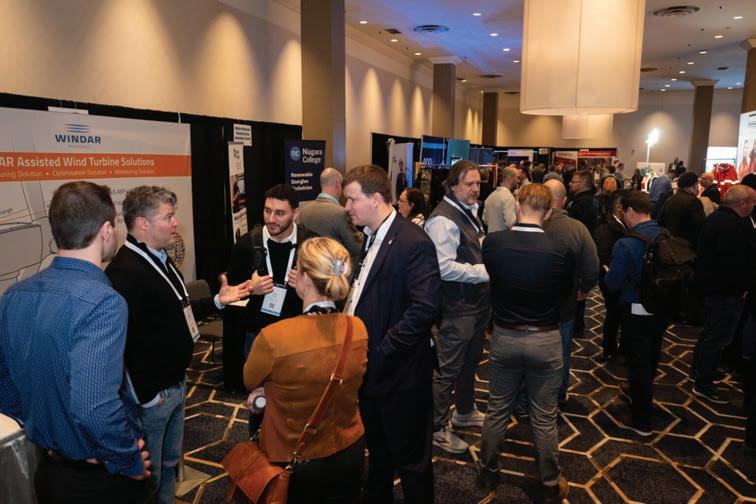
Renewables’ ‘coming of age’ moment was a central focus of CanREA’s Operators Summit this past February.
considerations that come with each of them.
The impending contract expiration currently defining the renewable landscape’s ‘coming of age’ moment was the theme of CanREA’s 2026 Operators Summit, held in Toronto from February 11 to 12. The Summit’s opening panel explored the implications of this moment by looking to define what all three primary renewable streams looked like at this pivotal stage.
With the expiration of wind energy contracts most imminent, supply chain challenges are being brought into sharp focus.
JJ Davis, vice president of operations and asset management at Kruger Energy, offered a frank assessment of the industry’s readiness as part of this panel:
“The supply chains are from Europe, or parts are made in Asia or Europe – nothing’s made in Canada,” he said. “If you need to replace a motor in the automotive industry, you go to a shop down the street and buy a brand-new motor. In the wind industry, you need to identify a specialized service and find a shop that will deal that way. You can’t go buy a blade for a wind farm that was built five years ago, let alone 17 years ago.”
Solar is defined by notably different characteristics. With no mobile components, fewer jurisdictional permitting obstacles, and a more competitive global equipment market, solar’s primary considerations are purely electrical when compared to wind. These considerations include voltage configurations, inverter specifications, rapid shutdown compliance, and ensuring that upgraded panels integrate effectively with existing systems.
“The biggest considerations are voltages and configurations, and making sure you look at your site very closely so that a bigger panel actually works. But it’s all within the fence, typically, and it’s a lot more in-control with better options if you need to look to repower,” said Davis.
Battery energy storage systems (BESSs) are the newest pillar of the sector, with these projects seeing rapid growth partially due to their increasingly-critical role in grid stability. Barbara Ellard, director of markets and procurement at the Independent Electricity System Operator (IESO), noted her organization has prioritized storage highly in recent procurements, with
approximately three GW expected to come into service for Ontario.
“Storage is the new kid on the block for us,” she said. “We are looking for storage to really be that flexible tool; a great dance partner to some of the intermittent resources. A great partner to make sure that during those peak hours, we have that additional boost of energy that was surplus or more available during the off-peak hours.”
This array of potential repowerings, new builds, storage installations, and behind-the-meter commercial projects make up an enormous and sustained volume of work for not just Canada’s electrical contractors, but increasingly, the broader trades across the country.
Employment in renewable electricity has grown from roughly 4,700 workers in 2012 to 23,000 as of 2024, according to Electricity Human Resources Can-
ada (EHRC)’s 2025 Winds of Change report, with Canada’s green economy set to create up to 400,000 new jobs by the end of the decade.
Will this growth in renewables’ labour force be enough to power this volume of opportunity? Both the post-secondary system and federal government are putting in considerable effort to answer ‘yes’ to that question.
Initiatives include Ottawa’s Sustainable Jobs Training Fund, announced in early 2025, which has committed $75 million to low-carbon skills development with the goal of training 10,000 workers for sustainable trades, including renewable energy, over a three-year period.
“It’s going to be a lot about the people, about the contractors, and supports available. If we hit a point where we don’t have the expertise to upgrade, or enough people to address what we’re talking about – gigawatts
and gigawatts across the country –then I could see the industry looking for other options, whether bringing in people from outside or shutting down a facility because the cost of labour is too high,” McKay said. “But it’s also going to be a huge opportunity for Canada’s workforce.”
Looking beyond the level of direct construction work created by this moment, McKay also drew attention to the supply chain dimension of this buildout, where wiring, power electronics, and control systems expertise is also in high demand.
“Often, we think about the end product, but there are refurbishment facilities in Toronto right now that are taking apart wind turbine generators and putting them back together,” said McKay. “That’s shop work, that’s factory work, where all the wiring, electronics, all of that kind of stuff, is going to be needing some expertise.”




If you spend enough time in this industry, you start to see a pattern: most disputes are not really about the issue on paper. They are about how the issue was handled from the moment it first surfaced.
Electrical subcontractors in particular tend to feel the pressure early. You are often deep into sequencing, dependent on others, and carrying coordination risk that is not always reflected in your contract. When something goes sideways, the instinct is to react quickly - sometimes too quickly - and that is where problems begin.
Over the years, I have come to view dispute resolution less as a legal exercise and more as a project management discipline. If you treat it that way from the outset, you can keep most issues from escalating into something that affects cash flow or relationships.
1. Start with the contract - but focus on process, not just entitlement
You are electrical contractors. Everything you do is governed by a contract. But too many disputes jump immediately to “who is right” instead of “what is the process for dealing with this.”
Before you argue substance, take a step back and align on process: Who needs to be involved? How much time does each side need to prepare? Is there a contractual meeting requirement, escalation ladder, or mediation step? These are not administrative detailsthey shape outcomes.
In my experience, when both sides agree on a fair process early, the tone of the entire discussion changes.
2. Communication is rarely the strength people think it is Everyone says they communicate well. Very few actually do when there is money on the line.
Miscommunication is one of the most consistent drivers of claims. A direction that was “clear” in the moment becomes ambiguous weeks later. A site
conversation is remembered differently by each party. An email meant to be helpful reads as defensive.
Electrical subcontractors can protect themselves by being disciplined: confirm directions in writing, document assumptions, and avoid casual language on contentious issues. It is not about being adversarial - it is about creating a reliable record before memories start to drift. On very few occasions will you find yourself over-communicating.
3. Normalize frictionit is part of the process
One of the most useful things you can do on a project is to understand what “normal” looks like. Delays happen, change orders get challenged, and people get frustrated – none of that, on its own, means the project is off the rails.
When parties treat every disagreement as exceptional, they tend to overreact. When they understand that tension is a natural part of construction, they are more likely to stay focused on resolution rather than escalation.
I often tell clients that if everyone is a bit frustrated at some point in the process, that is not a sign of failure - it is a sign that the issues are being engaged.
4. Frame the discussion properly - value over price
A common mistake in, for example, change order discussions is to apologize for pricing. The instinctive response is to soften your position – that is usually the wrong move.
The moment you apologize for your price, you signal that even you are not confident in it. The discussion shifts entirely to cost, and you lose control of the narrative.
A better approach is to reframe the issue around value and cause. What drove the change? What constraints were imposed? What risks were absorbed? If you keep the conversation anchored in those factors, you are far more likely to justify your entitlement.
5.
Many subcontractors approach negotiations from a defensive posture: “What happens to us if this doesn’t get resolved?”
That mindset leads to concessions. Instead, consider the other side’s position. What happens to them if the issue remains unresolved? How does it affect their schedule, their owner relationship, or their overall project risk?
When you understand both sides of that equation, you negotiate from a position of strength, even if you are the smaller player.
6. Avoid “going legal” unless you have to Formal dispute processes - adjudication, arbitration, litigation - have their place. But they are, in many ways, an admission that the project team has failed to resolve the issue internally.
Once lawyers are involved, positions tend to harden. Costs increase. Relationships deteriorate. And the timeline rarely improves.
The better approach is to exhaust reasonable, structured efforts within the project team first. Not informal conversations, but deliberate, organized attempts to resolve the issue using the mechanisms already available.
At the end of the day, most disputes are not remembered for their dollar value. They are remembered for how the parties conducted themselves.
In construction, as in anything else, people may forget the specifics of a disagreement months later. They will not forget how they were treated in the process. For electrical subcontractors, that is not just a philosophical point - it is a business strategy.
This article is provided for general information purposes only and does not constitute legal advice. Dan Leduc comes from a family of electrical contractors and is a partner at Soloway Wright LLP, Chair of the Ottawa Construction Association, and can be reached at dleduc@ solowaywright.com

Source: ABB
ABB has expanded its EH3 range of of glass reinforced polyester (GRP) outdoor enclosure cabinets, with the addition announced at 2026’s Light + Building Show this past March in Frankfurt, Germany.
With a height of 1,310mm, the new enclosures are designed to address issues of increased complexity and component usage in modern electrical infrastructure applications such as renewable energy integration and intelligent energy management systems, through features such as larger enclosures and integrated mounting plates.
The expanded enclosure joins ABB’s existing 875mm and 1,125mm configurations in the EH3 series. All EH3-series models feature IP-rated protection suited to sustain the demands of outdoor environments, in addition to vandal-resistant locking mechanisms and sloped-roof designs to prevent water and debris accumulation.
Milwaukee introduces 2-in-1 1000V insulated flip shank multi-bit screwdriver
Milwaukee Tool has released its new 2-in-1 1000V insulated flip shank multi-bit screwdriver for electrician use.
The flame-retardant and impact-resistant 1000V-rated layer of insulation offers
Source: Milwaukee
protection rated for UL classification and certified to IEC 60900 and ASTM F1505 standards for insulated hand tools.
The unit’s quick-change flip shank includes both a #2 Phillips and quarter-inch slotted bit.
In addition to insulation, the anti-peel handle also features a cushion grip. The tool is backed by Milwaukee’s Limited Lifetime Warranty.
SATCO Products Inc. has launched its new Beam Selectable LED fixtures, a line of commercial luminaires designed for adjustable on-site light distribution free of fixture changes.
The Beam Selectable line includes round and linear high bays, flood lights, area lights, and wall packs.
Each fixture features field-adjustable beam distributions using an internal selector switch. Additional features such as LED technology, durable construction, and advanced thermal management designed for long-term operation make the line of products ideal for use in demanding environments such as warehouses, manufacturing facilities, parking areas, and building exteriors.
All Beam Selectable fixtures are certified to the new DLC 6.0 standard, supporting energy efficiency goals and rebate eligibility where applicable.

The Canadian Construction Association (CCA) has appointed Trevor Doucette, senior director of operations for the Synergy Group of Companies, as the chair of its board of directors for the 2026-2027 term.
The appointment of Doucette to board chair took place on March 9 at the CCA’s annual general meeting. Doucette succeeds outgoing chair Francis Roy, CEO of Quebec’s Groupe Humaco.

Brad Lueck has been named the new president of Gescan, a Soneparowned distributor of electrical supplies and equipment based in Western Canada.
Lueck’s appointment was effective March 23. He is based out of Gescan’s head office in Coquitlam, B.C.
Originally from B.C., Lueck has more than 15 years of experience in the electrical distribution market, having most recently worked out of Alberta. His career began in the warehouse before moving into to sales, branch management, and progressive leadership roles.
In 2019, Lueck was recognized as one of tED Magazine’s 30 Under 35.
Intralec Electrical Products, a manufacturers’ representative serving Southern and Central Ontario, has announced two personnel changes to its sales team. As part of these changes, Trevor Doherty has been promoted to the role of

sales manager. In his new role, Doherty will serve as sales manager for his established territory of Kitchener, Waterloo, Guelph, and the Northwestern GTA. Doherty has served as one of Intralec’s sales representatives for more than a decade. In addition to managing his regional accounts, Doherty will provide increased support to Intralec’s head office distributors and toward mentoring the company’s broader sales team.

Darryl Sinanan joins Intralec as its new inside sales representative. Across his career, Sinanan has developed a reputation for designing impactful training programs and organizational growth initiatives in industries such as banking, insurance, and pensions; having worked with partners in North America, India, the Philippines, Pakistan, and the United Kingdom.

Panduit has appointed Salma Siddiqui to the role of director of sales for the Canadian market.
Siddiqui will lead Panduit’s Canadian electrical division and focus on strengthening partnerships and customer support while advancing Panduit’s presence across the Canadian market. Siddiqui brings more than 15 years of experience in the electrical industry to the role, having most recently worked in the lighting subsector.

P.ENG
Plug-In Photovoltaic (PIPV) equipment and systems are receiving a lot of attention since several states in the USA are permitting their installation, but questions are being raised regarding the safety and compliance of these systems.
PIPV systems are intended to be connected to existing branch circuits through a cord-and-plug connection. These systems are marketed as simple, consumer-installable generation equipment that connects directly to a general-purpose receptacle.
However, these products are not approved and currently there are no applicable Canadian safety standards. Additionally, they cannot be installed in a safe or compliant manner, and introduce several safety hazards such as the existing receptacles and the electrical system installed were never intended for back feeding from an energy source.
The product may cause overheating and fire from overloaded receptacles or branch circuit wiring. Other potential issues are high-resistance heating at loose plug connections, along with back feed and islanding hazards during outages. The risk of shock or electrocution from the exposed accessible metal live parts from the male-end cords increases the likelihood of serious injury.
PIPV systems can also compromise GFCI protection. Current GFCI stan-
dards assume uni-directional current flow, but PIPV introduces bi-directional flow, potentially blinding GFCIs and leaving circuits unprotected.
In addition to the obvious safety hazards, there are numerous Canadian Electrical Code (CE Code) requirements that need to be satisfied with the introduction of an embedded energy source. Some examples include:
• Rules 64-076 and 84-022 require a warning notice indicating there is an embedded energy source, a single line diagram of the interconnected system installed in a conspicuous place for the utility, and plaque showing all locations of disconnecting means.
• Rule 64-058 requires circuits connected to more than one electrical source to have overcurrent devices located so as to provide overcurrent protection from all sources.
• Rule 64-218 requires rapid shutdown devices to be located such that it can be initiated by fire fighters or the fire alarm system
With increased interest in these products and in an attempt to mitigate the associated safety risks, UL has published an Outline of Investigation (OOI) UL3700 for PIPV equipment.
Additionally, there is a bi-national UL standard under development, ANSI/ CAN/UL 3700 related to Plug-In Solar products. Once published, PIPV equip-
ment can be certified to this standard. The certification requirements will mitigate the risks outlined above.
One of the main requirements of the OOI is requiring proprietary non-standard plug configurations. This requirement forces the installation of a specialty proprietary outlet with corresponding configuration (mated pair). This accomplishes three important goals:
1. Requir ing a licensed person to install the specialty outlet, thus introducing the opportunity to comply with all requirements of the CE Code for embedded energy resources.
2. Trigging the need for a permit with electrical safety AHJs.
3. Prohibiting plugging into a standard receptacle that was never intended for that purpose, thus mitigating safety hazards.
Although this requirement can be perceived as an obstacle that is taking away one of the fundamental features of the product – to be easily plugged into an existing receptacle – it is critical to understand the safety hazards introduced by that feature.
Other requirements of the OOI include bi-directional GFC protection, anti-islanding features, and marking installation instructions.
As a minimum to consider accepting plug-in photovoltaic equipment, the following conditions must be met:
• The equipment must bear a recognized cer tification/approval marking.
Always consult your local AHJ for more specific interpretations. ADVERTISER INDEX
• A specialty (unique nonstandard configuration) PIPV outlet is installed.
• PIPV outlet is fed by dedicated branch circuit or proper overcurrent protection is provided to the circuit wiring.
Hanna, P.Eng., is Senior Director, Engineering & Regulations, at Ontario’s Electrical Safety Authority (ESA). She is also Chair of the ESA’s Ontario Provincial Code Committee and a member of the CSA Technical Committee on CE Code-Part I..
No burn-through eliminates elbow repairs
Light weight facilitates a smooth, safe, cost-effective installation
Low conduit coefficient of friction makes cable pulling a breeze

Durable and corrosion-resistant for lower total cost of ownership
A 110 °C temperature rating results in less ampacity derating for the cable


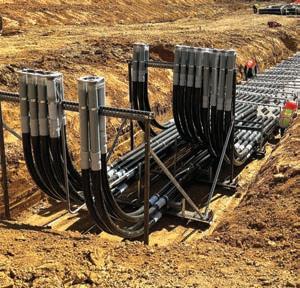
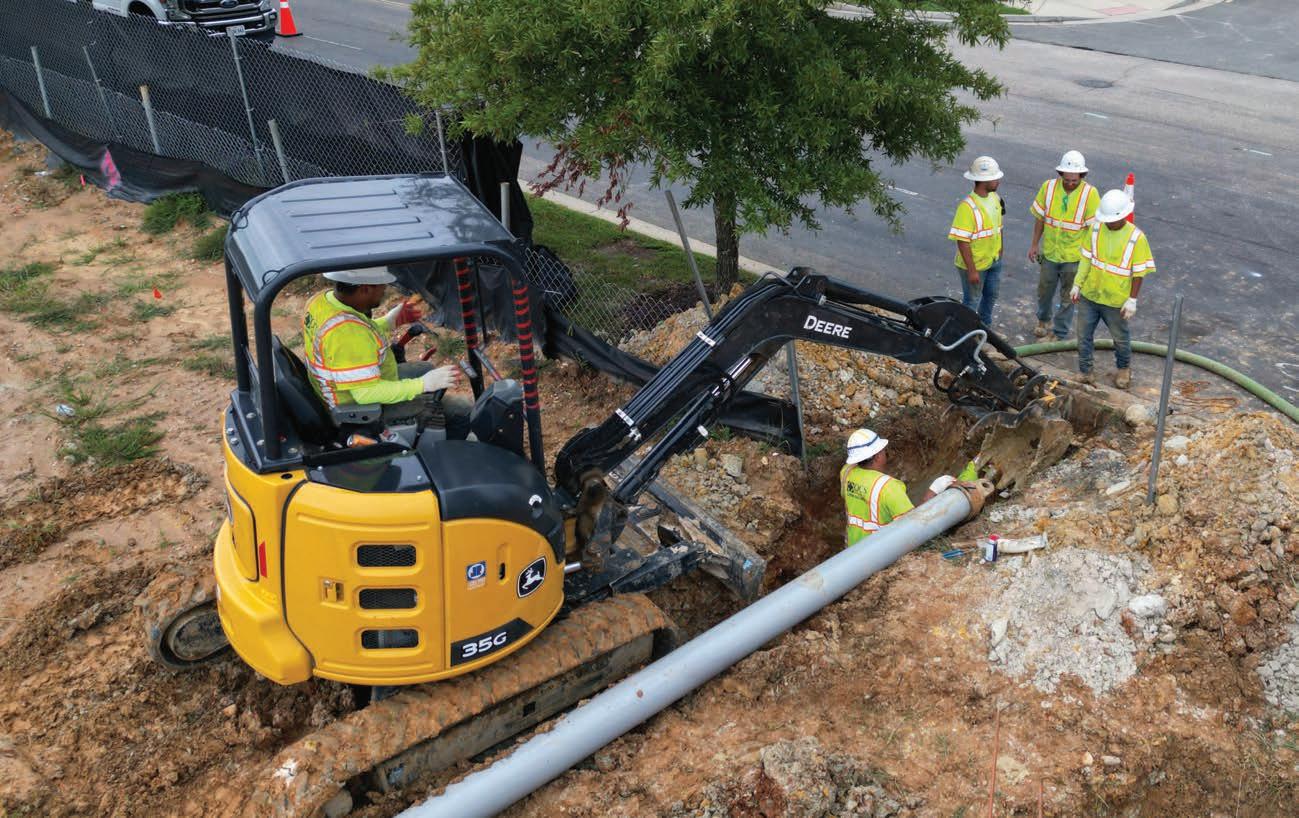

Certa-Com® PVC Electrical Conduit is designed for HDD or open/continuous trench installations. Manufactured in iron pipe size (IPS) outside diameters, it meets all NEMA TC-2 and UL 651 requirements. Widely specified for electrical utilities, data, and optical fiber communication, it helps protect infrastructure and reduce weather-related damage.
Learn more at westlakepipe.com/ebm © 2026 Westlake Pipe & Fittings. All rights reserved. Safeguard Electrical