Audience Development Manager | Anita Madden amadden@annexbusinessmedia.com 416-510-5183
Media Designer | Emily Sun cmartin@annexbusinessmedia.com
Group Publisher | Michelle Bertholet mbertholet@annexbusinessmedia.com
CEO | Scott Jamieson sjamieson@annexbusinessmedia.com
Printed in Canada ISSN 1488-4305
Publications Mail Agreement #40065710
Subscription rates:
Canada – 1 yr $18.56 CDN
Canada – 2 yrs $26.52 CDN
From time to time, we at Drainage Contractor make our subscription list available to reputable companies and organizations whose products and services we believe may be of interest to you. If you do not want your name to be made available, contact our circulation department in any of the four ways listed above.
Optimizing through modelling to take tile placement to the next level.
If we can make use of the full field by properly managing depressions, can we increase yields through better water management?
CONTRACTOR AT WORK
Mike Cook and family share their a scent through the drainage business and the world of drainage GPS.
DRAINAGE MANAGEMENT SYSTEMS
A new "designer" solution could give bioreactors a phosphorus edge.
Subscribe to our eNews
Our biweekly eNews arrives in inboxes every other Tuesday. New for 2026: we've consolidated "general ag" news into The Biweekly Brief, to focus more of our eNews on the drainage and water management news that's most important to you.
Follow us on social media
Find us on Instagram and LinkedIn, where you'll find the latest on DC's news, features, events, promos and more.
The only way is forward
Challenges aside, the world still needs to eat – meaning drainage still must be installed, and evolve.
by Bree Rody
It’s probably a little too easy to focus an editorial for Drainage Contractor – any agriculture publication, really – by talking about the weather. But then again, we all default to speaking about the weather anytime we encounter a stranger and aren’t quite sure what to talk about. And when you work in agriculture, the weather is the difference between planting starting (and finishing) on time and, well, not. It means the difference between getting nutrients out on the field quickly – but safely – versus not. It’s one of the biggest factors in whether you can finish that job on time – and the one factor over which you have no control.
When I started writing that first paragraph, the weather outside my home office window was a treacherous freezing rain, which has since cleared up slightly and given way to rain-rain. It’s been dreary ever since the end of winter – which did indeed stretch out the full six weeks after Groundhog Day, regardless of what the shadow said. Producers all over look anxiously to the skies, seemingly waiting for more bad news – sorry, but between trade challenges and fuel costs, we can’t pretend there aren’t universal pressures on the industry.
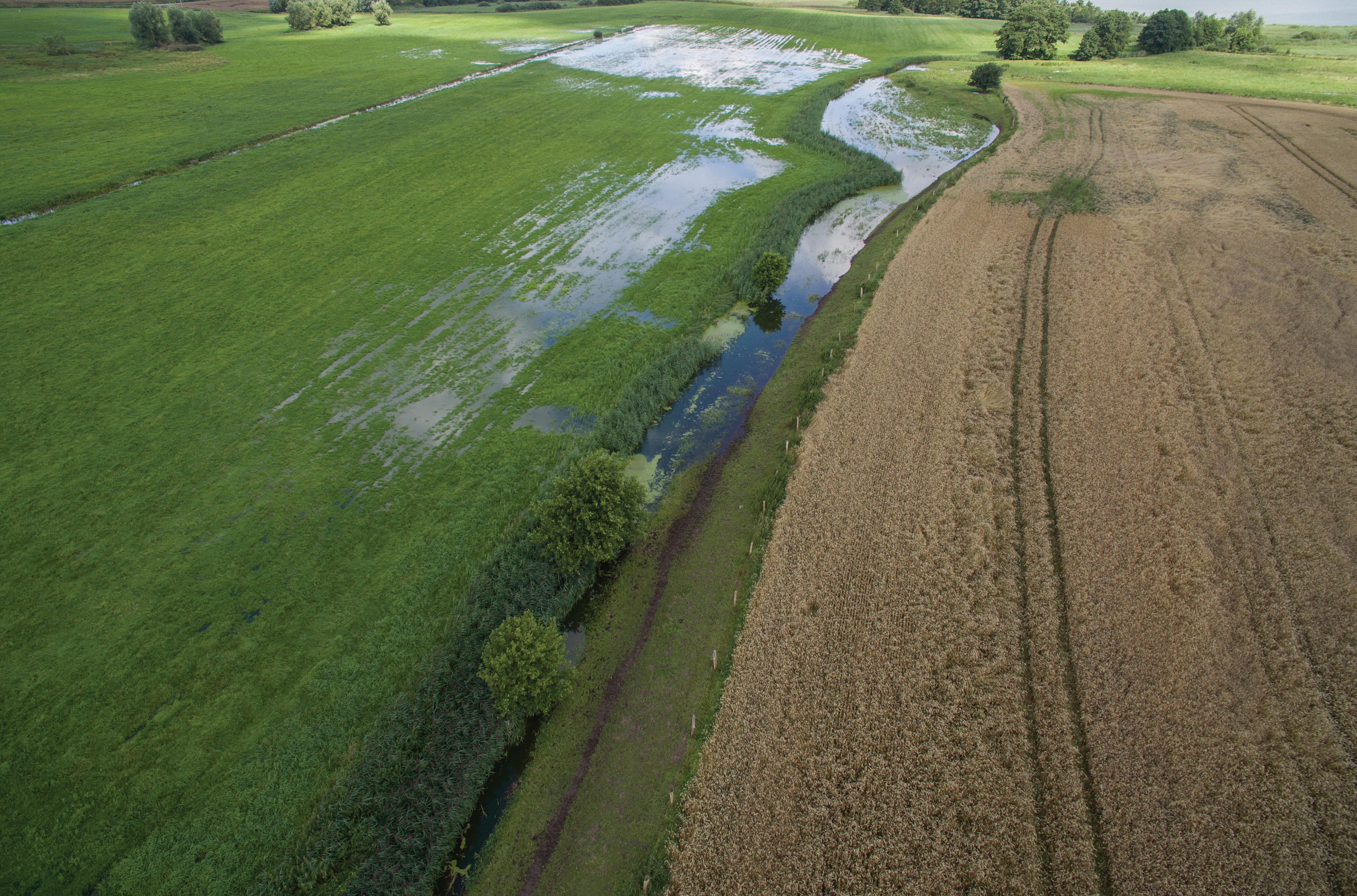
Drainage systems will not look the same in all areas, as soil and topography vary wildly.
But the thing about agriculture is, it moves forward, regardless of whether or not things are ideal. Quite simply, the world needs to eat.
That’s why it’s gratifying to be surrounded by so much innovation and research related to agriculture, including water management and drainage. Water management goes hand-in-hand with soil health, and soil health is directly responsible for the size and quality of yields. We now have definitive research showing drainage has positive impacts on the growth of canola in Saskatchewan – an emerging, important market for drainage – which we’ve covered on Page 20. It’s noteworthy because this isn’t a market where we’re used to drainage being a given.
Saskatchewan is such an emerging market in drainage that the province is still working toward effective drainage policy.
And we’ve talked, sometimes at great length, about the expansion of drainage into new regions, like the U.S. Midsouth, or Northeastern Ontario. While drainage experts and contractors themselves have clarified that yes, there is strong growth in these regions, but that doesn’t mean you should pack up and leave your drainage-rich area for (metaphorically) greener pastures.
Drainage and water management systems will not look the same in all areas, as soil types and topography, climate and weather patterns, even growing season lengths, differ wildly across the map. And these emerging drainage markets still aren’t seeing work done at the same rate as one would in, say, Iowa. Some contractors have instead set up satellite offices, spending only parts of their years in these emerging markets.
But all markets have to start somewhere. And it’s telling that during a historically difficult time for the agriculture industry, we keep forging ahead –getting tile in the ground, filling the combines and making the shipments on time. The weather isn’t always ideal, and sometimes it’s hard to see the reward on the other side, but I don’t need to tell you that it’s there. The reward is, we all eat.
Speaking of rewards, we were excited to have a successful first edition of DrainWest Forum in Brandon, MB this past March. You can read more about it on Page 8 and 9, but in the meantime, you’ll be excited to know that DrainWest is, indeed, coming back in 2027 – this time to Saskatchewan! DC
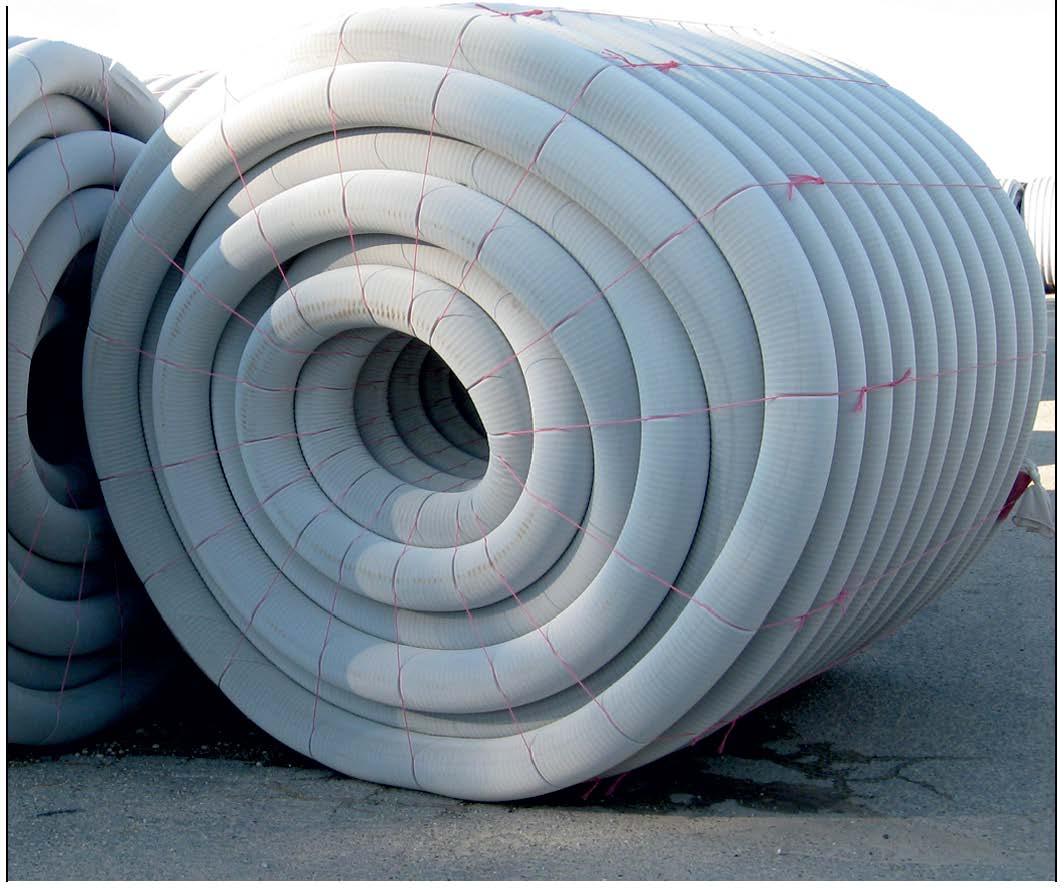
Our team works closely with you to ensure orders are dropped right on the spot, right on time. Right Pipe. Right Place. Right Time.
INDUSTRY NEWS
MANITOBA GROUP LOOKS TO STRENGTHEN DRAINAGE
In February, Keystone Agricultural Producers (KAP), the association that unites agricultural, production and commodity groups across Manitoba, held its AGM in Winnipeg. Panels and policy workshops focused on Manitoba’s drainage network, right to repair, interoperability and digital agriculture.
Of the 11 resolutions passed, three involved drainage. Although tile drainage is still in its relative infancy in Manitoba compared to other provinces, producers have increasingly taken steps to lobby the government for a proactive approach to drainage.
One motion resolved that KAP lobby the Government of Manitoba to ensure provincial drainage networks are maintained on an annual basis. Another resolved KAP lobby the province to review the drainage permitting process, consult with producers and make changes at improving the speed and predictability for drainage projects. The next motion resolved that KAP, in collaboration with the Association of Manitoba Municipalities, encourage local governments to enter into agreements with producers to conduct drainage maintenance work.
COCHRANE GETS $1M DRAINAGE GRANT
The Timiskaming-Cochrane region in Ontario will receive $1M through the Northern Ontario Heritage Fund Corporation (NOHFC), to help the Northern Ontario Farm Innovation Alliance (NOFIA) bring tile drainage improvements to more cropland in the region.
It’s the most recent investment in the growing agricultural industry for Northeastern Ontario, which has historically been known for long winters and tough-to-drain soils, making it less ideal than its neighbors to the south for ag operations, specifically tile-drained operations.
This investment was announced Feb. 6, leading into the recent Northern Ontario Ag Conference in Sudbury.
“Agriculture in the North is thriving and ready to grow,” said Northern economic development and growth minister George Pirie in a statement announcing the funding. “The NOHFC’s tile drainage program is one more example of how our government’s actions and strategic investments are securing a stronger, more resilient and self-reliant northern Ontario agriculture sector, supporting a bright future for our farming communities.”
The project will support the tiling of 1,923 acres of land, benefitting a group of 14 producers.
Currently, agriculture in Northern Ontario supports just under 9,000 jobs, with farm cash receipts growing to $246 million in 2024, up from $182 million in 2006.
NOHFC has invested in 37 separate tile drainage projects in the last eight years, and drainage contractors have begun setting up outposts or completing more jobs in Northern Ontario. However, at a recent LICO conference, which featured a panel on northern drainage, panelists cautioned the audience that despite obvious growth in Northern agriculture – and therefore drainage – that growth is not exactly at a rate that should prompt contractors to abandon their Southern headquarters and move with the hopes of cornering a burgeoning market.
Emily Seed, executive director of the Northern Ontario Farm Innovation Alliance, said on the panel that full-time work in drainage is still not abundant in the region. “A few years ago, we saw a much bigger push to move North,” she said. “It’s since slowed.”
TILE DRAINAGE CAN PLAY A PART IN STRATEGY: MINNESOTA
Minnesota has elaborated on changes to its Nutrient Reduction Strategy, released earlier this year.
The strategy addresses the state’s goal to reduce nutrients entering rivers and lakes, as well as the Gulf of Mexico and other major lakes and waterways, and includes specific targets. One of those goals is reduce nitrogen levels leaving the state, by 45 percent.
The updates are based on a decade of water and nutrient monitoring. This includes a focus on keeping water on its landscape of origin longer, rather than expelling all farm water through tile drainage.
Officials have clarified that this does not mean doing away with tile drainage, but rather incorporating practices to slow runoff and reduce losses. State scientist Matt Drewitz said at a recent nutrient management conference that various strategies can work in different landscapes, and that local watershed plans can include specific water storage goals tailored to regional conditions. Some strategies include edgeof-field practices, such as saturated buffers or denitrifying bioreactors, whereas in-field practices, like drainage water management (which includes controlled drainage and drainage water recycling) may work better in some fields and operations.
On-farm practices also play a key role, and some crops can absorb nutrients more effectively, which was proven through an Illinois study earlier this year.
To our attendees, presenters, sponsors and exhibitors of the inaugural DrainWEST Forum
GOLD SPONSORS
EXHIBITORS
SPECIAL FEATURE
CRUCIAL CONVERSATIONS
First-of-its-kind conference hits Manitoba
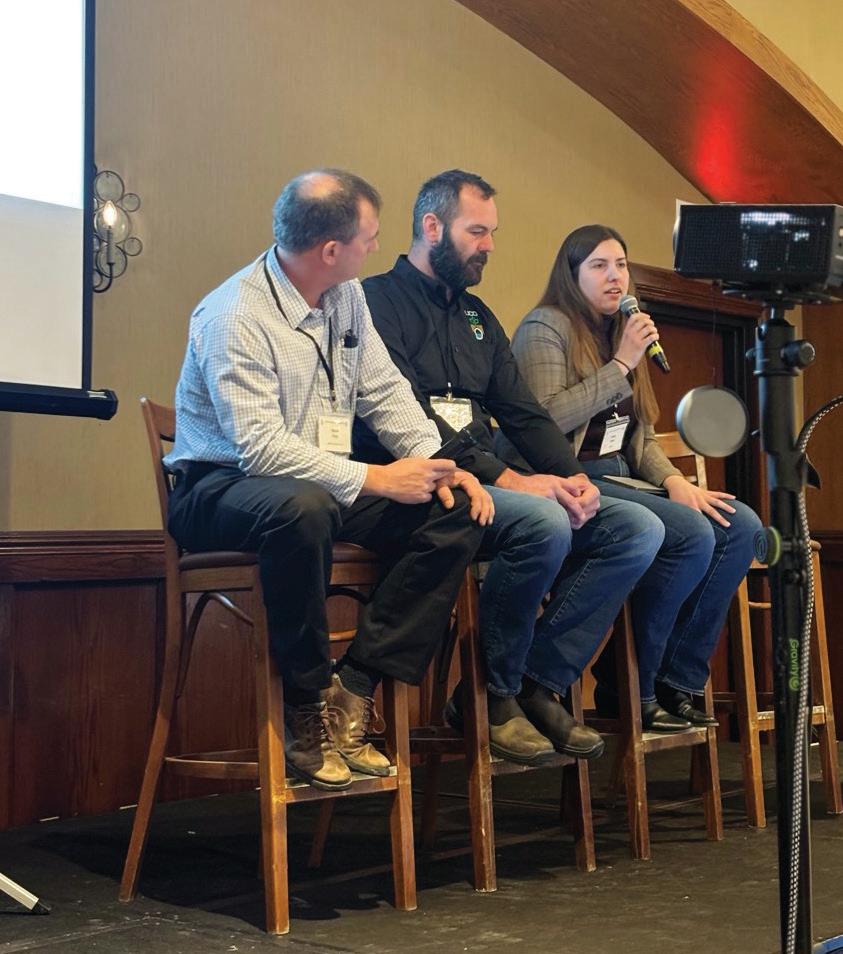
On March 11, more than 100 individuals – including producers, contractors, brand representatives, academia, government officials and more – filled the ballroom at Brandon’s Victoria Inn and Conference Centre for the first-ever DrainWest Forum.
by DRAINAGE CONTRACTOR STAFF
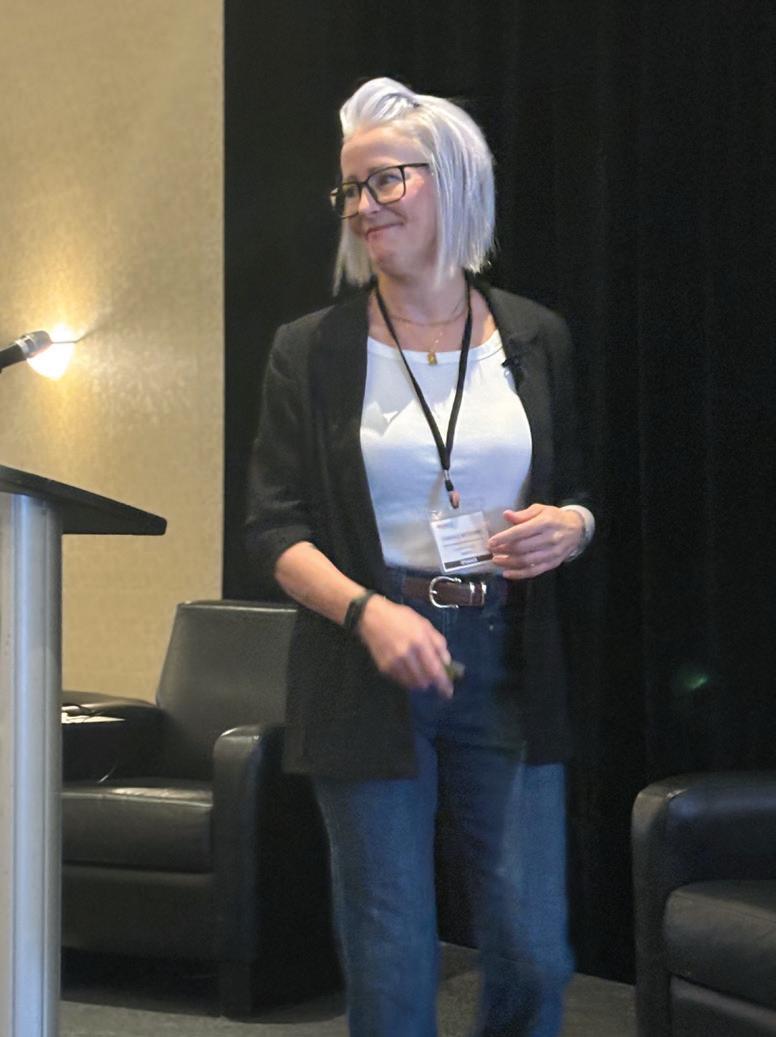
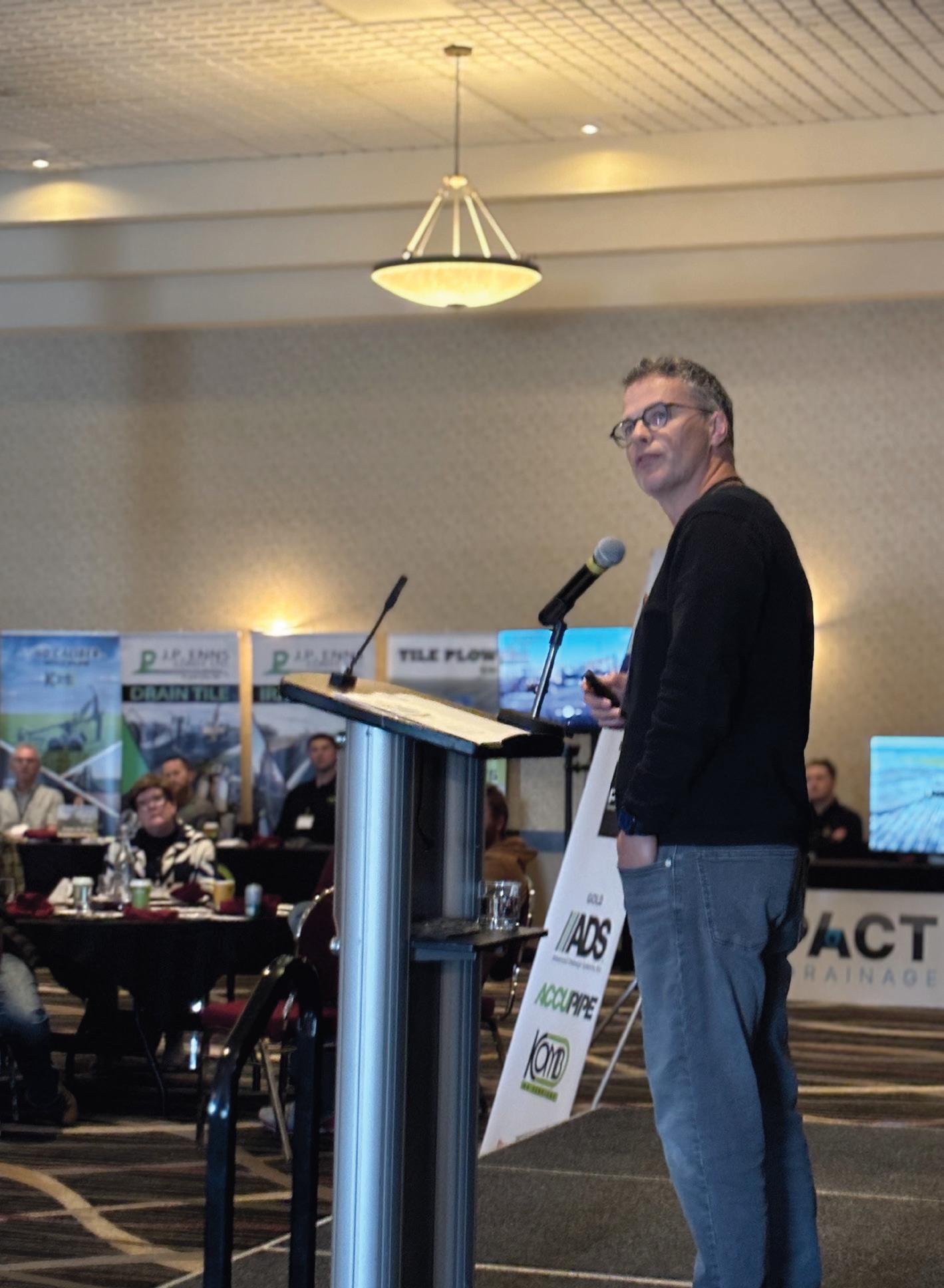
LEFT: Keynote Candace Mitschke of SaskFSA emphasized the need for a healthy agricultural and drainage industry in order to promote positive conversations..
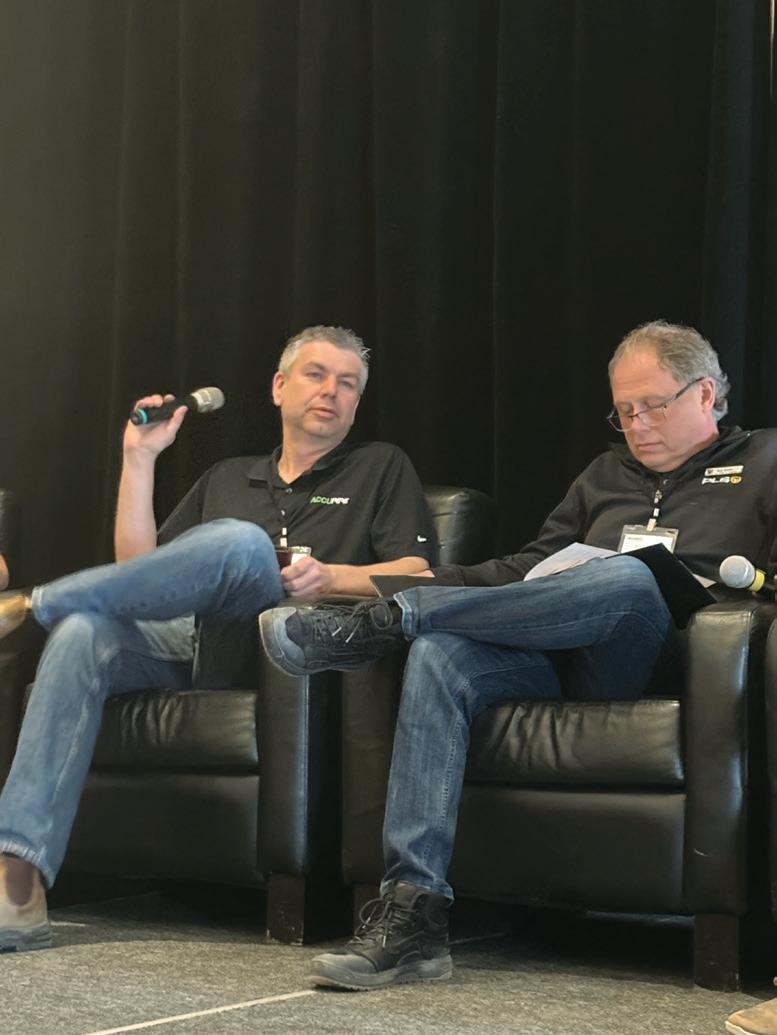
RIGHT: A sponsored panel from Precision Land Solutions delivered the best – and the dirtiest – advice and anecdotes from 20 years in drainage.
Presented by Drainage Contractor and its parent company Annex Business Media, DrainWest Forum is a one-day conference featuring educational and conversational sessions dedicated to excellence in agricultural drainage and water management, with a particular focus on Western Canada, as Manitoba and Saskatchewan grow their drainage activity.
The aim was to bring together all aspects of industry to promote positive and productive conversation around drainage – how it can help farm operations and increase yields,
as well as how contractors, producers, conservation, government and industry can work together to strike a tone in conversation that is more amiable than acrimonious.
As such, speakers included contractors like Impact Drainage co-founder Hudson Mealy, public agricultural scientists like University of Manitoba’s Ranjan Sri Ranjan and Manitoba Agriculture’s Megan Westphal, and independent consultants like AgriEarth Consulting’s David Whetter. Other speakers included PBS Consulting’s Bruce Shewfelt, University of
Minnesota’s Lindsay Pease and keynote speaker Candance Mitschke, who shared her learnings on collaboration and productivity from her experiences as a professional ag communicator and executive director of both the Saskatchewan Farm Stewardship Association (SaskFSA) and the Saskatchewan Drainage Extension Network (Sask-DEN). The day also included a panel led by Chris Unrau of presenting sponsor Precision Land Solutions and featuring Frank Elias, Ray Wolfe and Glen Bartley of Precision Land Solutions, and Garnet Peters of AccuPipe.
Although the topics varied from the business of drainage to soil science and in-field water management, with sessions touching on niche topics such as plant diversity, use of livestock, intercropping, soil Ph and microbes, thermal energy and more, many sessions came down to a common theme: that effective water management plays a part in farm resilience.
“If a farm is not in the black, it cannot promote conservation,” said Mitschke, who emphasized that healthy conversation cannot exist without a healthy industry – and, the reverse is true. “Drainage promotes farm productivity and resil-
iency,” she said.
For farmers – most of the attendee audience was comprised of producers – Wolfe said installing some sort of water management system is similar to real estate. “You know how they always say, ‘the best time to buy real estate is 10 years ago, the second best time is now?’” he asked the audience. Similarly, “Don’t wait to buy real estate, buy real estate and wait… the same goes for tiling. Don’t wait to tile. Start tiling and wait.”
Tiling alone is rarely the best solution to promote conservation, some speakers added – a healthy soil profile is the most
inherently important aspect of productivity on the farm, and drainage plays a part in that. Westphal detailed how plant diversity, use of livestock and maintaining living plants and roots can add to the health of productive soils. Shewfelt added that an understanding of earth science is also the strong foundation for an optimal understanding of soil and water science. “Geology is the basis for what happens in our soils, and what’s happening below that tile is sometimes just as important as what’s happening over it.”
DrainWest will return in 2027 – stay tuned for more details. DC
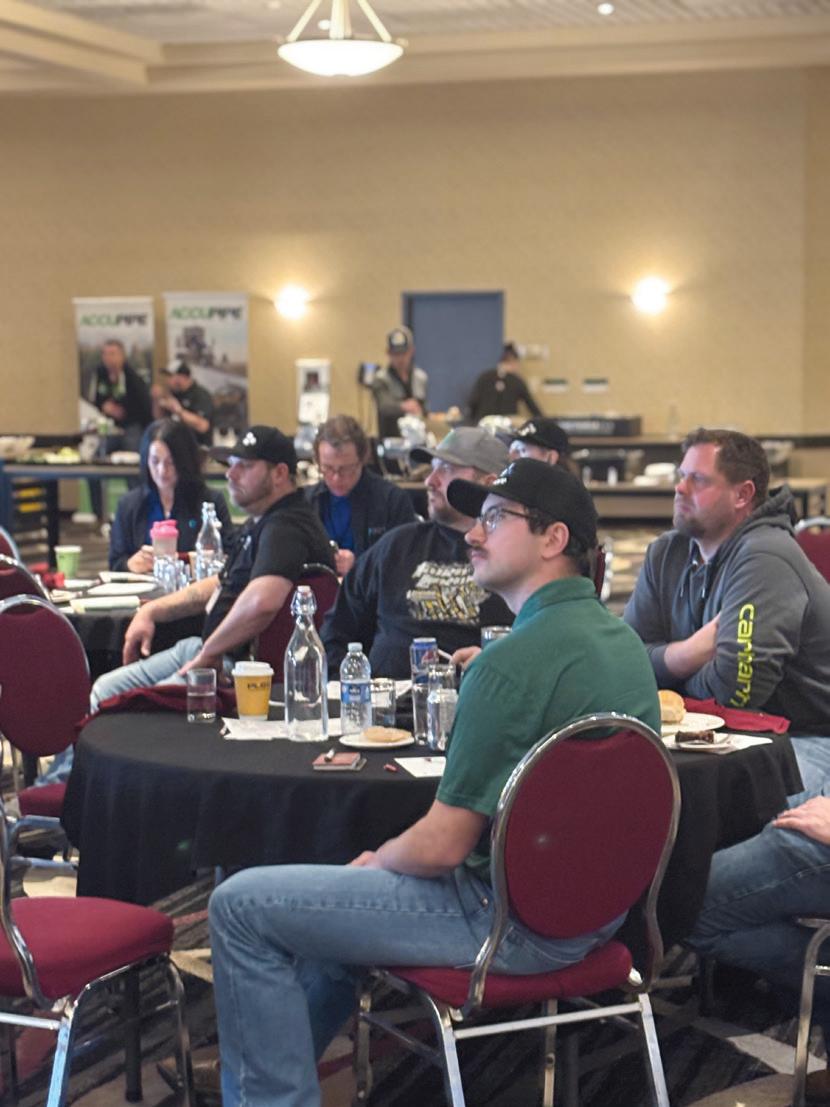
Attendees at DrainWest spanned numerous roles, including contractors, producers, government regulators and scientists and municipal politicians.
AgriEarth Solutions' David Whetter busts myths and brings clarity to the issue of salinity, an issue that begins in water – not in soils.
Drainage across the map
By Mel Luymes
There is a lot going on in the drainage industry that we don’t hear about in Ontario, and it is critical that we stay involved in issues that will impact the industry. That was a clear takeaway from a keynote panel discussion at the Ontario Drainage Conference in January.
Despite blizzard conditions, nearly 400 drainage contractors, engineers, superintendents, suppliers and even a few farmers came out to the Lamplighter Inn in London, ON for LICO’s 66th annual conference in conjunction with the Drainage Superintendents Association of Ontario (DSAO). The trade show was buzzing all day, and the morning’s joint keynote panel brought all parts of the industry in one room. It featured Dr. Ehsan Ghane (Michigan), Candace Mitschke (Saskatchewan), and Chad Klotzbach (New York State), each offering a window into how drainage is practiced, regulated, and debated in other parts of the continent.
The discussion began with Dr. Ehsan Ghane, Associate Professor and Drainage Extension
Specialist with Michigan State University (MSU). He works closely with drainage contractors from the Michigan chapter of the Land Improvement Contractors of America (LICA). While Michigan has a similar landscape to southwestern Ontario, it does not have the same formalized drainage standards. Dr. Ghane often sees contractors undersizing drainage systems, and much of his work is focused on finding the “two Rs” –right sizing and right spacing – for Michigan farms and communicating those principles to contractors and farmers through MSU’s Drainage Design Workshop. He is also active in conservation drainage research and in the Conservation Drainage Network, hosting the annual event in East Lansing, MI from June 2-4, 2026 (the closest it has ever been to Ontario)! Candace Mitschke offered a very different perspective from Saskatchewan, where there are only a handful of drainage contractors and where drainage permitting is complex, can be extremely challenging, and at times simply not attainable. Mitschke is the Executive Director
LICO's 2026 Drainage Conference took place at London's Lamplighter Inn.
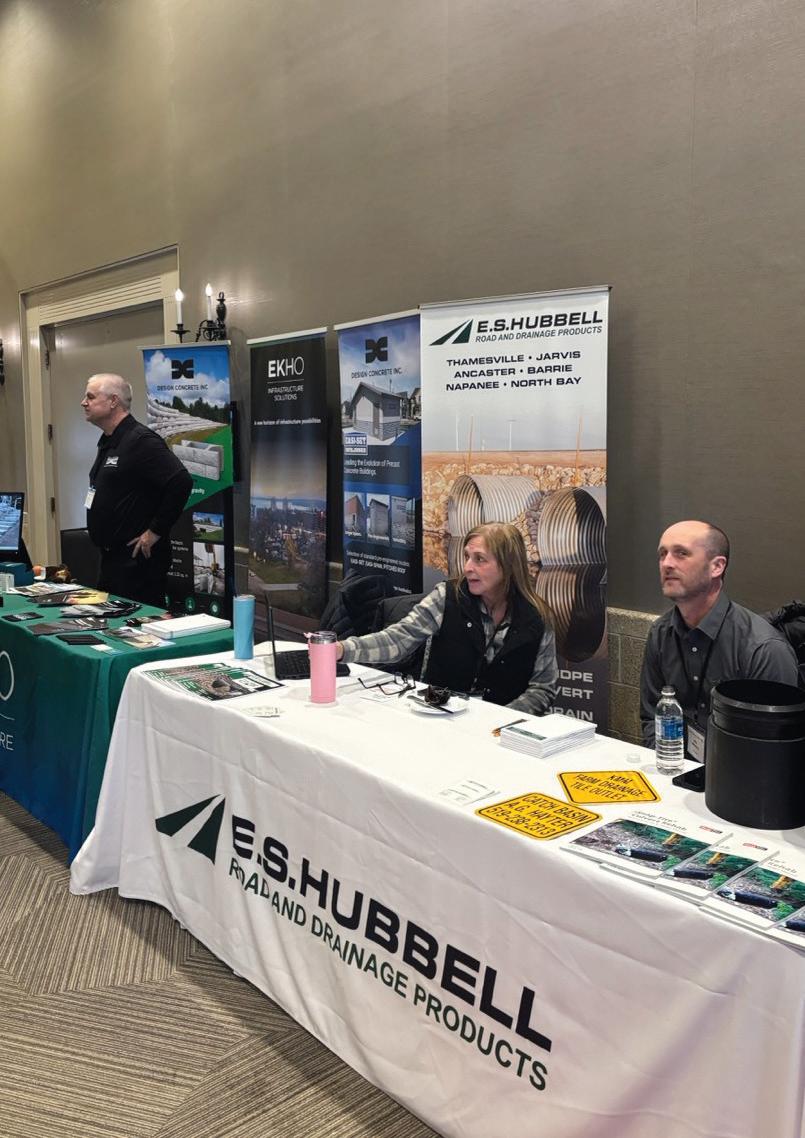
The annual trade show featured Ontario and multinational companies alike.
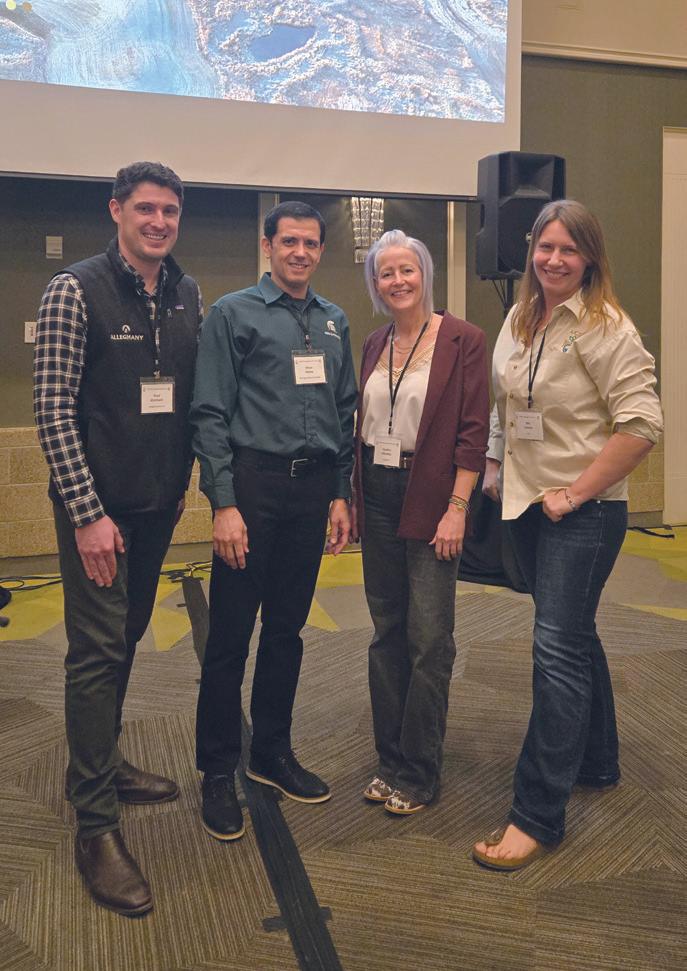
Speakers Klotzbach, Ghane, Mitschke and Luymes were part of the morning session.
of the Saskatchewan Farm Stewardship Association (SaskFSA), which was formed in 2011 by a group of farmers to advocate for progressive land and water policy. Over the decades, Saskatchewan agriculture has been impacted by both drought and flooding. Water management has been critical, yet historically drainage remained a political hot potato in the province, marked by a lack of clarity and ownership. That is slowly changing, she says.
The year after SaskFSA was formed, Saskatchewan’s Water Security Agency (WSA) was established. In 2015, the province passed an amendment to legislation that removed the grandfathering or approval of drainage projects pre-1981, and effectively deemed the drainage infrastructure servicing approximately two million acres of farmland to be illegal and now unapproved. As a grassroots advocate for responsible drainage, SaskFSA spearheaded a collaborative – the Saskatchewan Drainage Extension Network – to bring stakeholders together to address the province’s water management challenges through research and demonstration. In 2025, the Agricultural Water Stewardship Policy
(wetland retention policy) was announced, with a goal to retain 40-60 percent of wetland areas across agricultural landscapes. SaskFSA continues to build connections to pave the way for improved water management, though it remains a challenging road, with detours!
The final perspective came from Chad Klotzbach, a drainage contractor, engineer, and owner of Alleghany Services. Based in New York, his crews work across the eastern United States. Klotzbach described a growing disconnect between drainage professionals and a broader public perception that drainage is inherently harmful to the environment. He is seeing increasing attempts to regulate drainage as point-source pollution under the Clean Water Act.
Klotzbach sees the issue over a longer time horizon and believes the drainage industry needs to be far more proactive politically. While he is involved in the Agricultural Drainage Management Coalition (ADMC), their focus is on water quality and agronomics, not politics. Without a strong organization representing the industry in the U.S., Alleghany
Services has hired its own strategist to engage with state-level policymakers.
Chad is also staying on the leading edge of conservation drainage, installing controlled drainage and nutrient-reduction structures and leveraging environmental funding for clean water projects. He stressed the need to reframe drainage as water management, helping the public understand its role in water collection, flood mitigation, nutrient reduction, and climate adaptation. Drainage can be a critical solution, he argued, but without collective effort from the agricultural and drainage sectors, it risks being seen solely as part of the problem.
All three panelists, from different regions and perspectives, agreed that more work remains and that collaboration across borders and disciplines is essential. While Ontario benefits from a strong licensing program and a positive relationship with OMAFRA, the drainage industry cannot remain silent on the growing challenges – public opposition, regulatory uncertainty, and pressure to demonstrate environmental benefits – that are affecting the rest of North America. DC
Drainage contractors are an agronomist’s best friend
By Keegan Kult
Or at least they should be. Most of those reading this article realize that water management will increase yields through better aeration, warmer soils for earlier germination, and healthier root systems. Drainage also improves trafficability which reduces compaction all the while reducing surface runoff. Benefits that do not get discussed enough is the role that drainage plays in how crops are able to utilize nutrients, mainly nitrogen.
Nitrogen is one of the most expensive annual budget items for corn producers. It is also one of the biggest public concerns associated with tile drainage as nitrogen in the form of nitrate is water soluble and is a risk of being lost.
ADMC and its members have been leaders in advocating and developing the use of conservation drainage practices such as drainage water management, saturated buffers, denitrifying bioreactors, and treatment wetlands to reduce the amount of nitrogen transported by the system. Research at Iowa State University is showing that
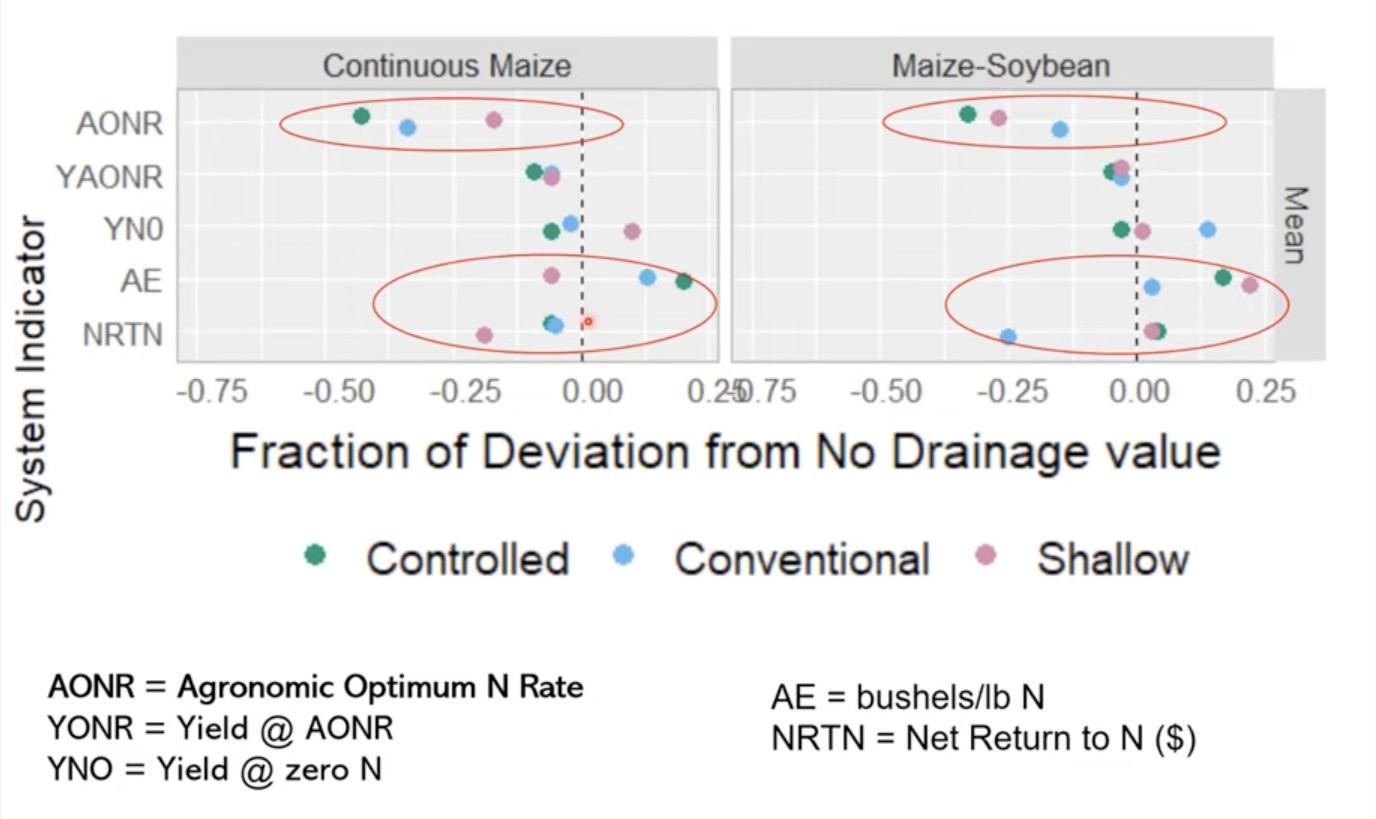
A 2022 Iowa State University Webinar compared continuous corn, and corn-soybean rotations, and their performance with controlled, conventional and shallow drainage.
a properly designed water management system can result in more of the applied nitrogen going towards harvested grain and reduce the variability of prescribing the optimal amount of nitrogen that needs to be applied for maximum return.
Many farmers and their advisors rely on a version of the Maximum Return to N (MRTN) which has been developed by many universities in the Midwest. These N recommendations have come from geographically relevant trials of varying rates and tracking the yield response. This method seems logical, so one would expect a correlation between applied nitrogen and yield. Yet, trial graphs show scattered results rather than a clear trend. The best available method is to recommend an average from a cloud of data points as there is variability from field to field and year to year.
This results in about 30 percent of growers underapplying nitrogen, 40 percent overapplying, and 30 percent being in the right range. The danger in underapplying is leaving yield and
profit on the table. The bigger danger is overapplying N as it will lose the farmer money and greatly increase the amount of N that is lost to the environment. There is an enormous opportunity to improve these methods as variability can be around 100 pounds of N per year!
Research at Iowa State University’s Southeast Research Farm looked at how controlled drainage (drainage water management), shallow drainage and conventional drainage impacted cropping system’s N use. A key finding in this study was that controlled drainage reduced the variability of the Agronomic Optimum Nitrogen Rate in a corn-soybean rotation by 75 per-
A well-designed drainage system is a tool for maximizing nitrogen efficiency in crop fields.
able to make more accurate nitrogen recommendations.
Even with the most accurate N recommendation, there can still be a surplus of 50 pounds per acre due to the Nitrogen Use Efficiency (NUE) of the crop/field. NUE is the measure of how effective a crop is at converting applied N to harvested grain. NUE varies based upon the 4R’s (nitrogen rate, timing, source, and placement), weather, soil properties including drainage, crop genetics, and landscape position.
Modelling work by Dr. Mike Castellano of Iowa State University shows that NUE can increase by 14 percent in drained verses undrained conditions. This means that farmers can grow more corn with less applied nitrogen and minimize the amount lost to the environment.
In summary, a well-designed drainage system is a powerful tool for maximizing nitrogen efficiency in crop fields. By reducing variability in nitrogen requirements and improving Nitrogen Use Efficiency (NUE), these systems help farmers apply the right amount of fertilizer, leading to higher yields and lower losses to the environment. Controlled drainage further minimizes risks and uncertainties. With farmers facing tough margins, controlled drainage offers more in potential yield gains and the ability to DC
This article is based on an ADMC webinar in which Dr. Mike Castellano of Iowa State University presented “Conservation Drainage for Environmental and Economic Risk Reduction” in 2022. The webinar can be viewed with the following link https://youtu. be/iFeHpcx-m30?si=vLICLmQ4q77mWGyo
Solar expansion and farm drainage: Bridging the gap
By Vinayak Shedekar, The Ohio State University
Utility-scale solar development is rapidly expanding across the Midwest and parts of Canada. These projects are often located on flat, productive farmland that depends heavily on subsurface drainage. As a result, contractors are on the front lines of a critical challenge – and opportunity.
WHERE DOES DRAINAGE FIT?
Solar projects typically progress from land leasing and conceptual design to engineering, permitting, and construction. These are highvalue developments, and in some cases include agrivoltaic systems where farming continues between panel rows – making drainage even more important. In Ohio, developers must submit a drainage mitigation plan during permitting to address shared infrastructure. However, these plans are often based on incomplete information.
And, despite all this, subsurface drainage is rarely considered early in the design process. Instead, it is often treated as part of stormwater management – or worse, addressed only after problems arise during construction.
WHAT ARE THE RISKS?
Solar construction involves extensive earthwork, pile driving, trenching and more, posing a risk to existing tile systems within the property as well as some of the shared infrastructure with upstream or downstream neighbors. Damage can include: Crushed or severed laterals, submains, and mains, punctured plastic tubing or dislodged clay tiles – issues often compounded by construction crews unfamiliar with subsurface drainage. And if problems go undiscovered for years – as they often do – the site may see prolonged ponding.
MAPPING TILES IS CRUCIAL
Where are the tile lines? This is often difficult
to answer. Many projects move forward with incomplete or outdated maps. Even existing maps may need field-verification. Accuracy matters. For integration with solar design, tile locations should ideally be mapped within ±0.5 ft. A workable approach should include:
• Collecting information from landowners, neighbors, SWCDs, NRCS, county engineers, and local contractors
• Converting maps into accurate, to-scale digital formats (GIS or CAD)
• Verifying locations in the field using probing, tile cameras, trenching, or similar methods
• Ensuring design teams have access to verified maps before construction begins
Once drainage is understood, projects typically follow one of two paths: Preserve and work around the existing system while keeping track of damages; or replace the drainage system entirely in cases where damage is unavoidable and installing a new system is more practical. In both cases, early involvement from drainage professionals is not optional.
STANDARDS AND ACCOUNTABILITY
Solar development lacks clear, widely adopted guidelines. There is growing consensus that the industry needs standardized drainage mitigation guidelines, clear construction and inspection protocols and better education for developers, EPC contractors and landowners
The good news: many solar developers have begun to see that fixing drainage after construction is more expensive than addressing it upfront. For contractors, this is both a challenge and an opportunity. Your expertise is becoming essential. Early engagement, accurate mapping, and practical standards are key to solar and drainage successfully coexisting on working farmland. DC
By Ehsan Ghane
Legacy P: What you need to know
Phosphorus loss is dominated by legacy P.
A 2023 study introduced a novel method to distinguish contributions of “new P” (recently applied fertilizers) from “old P” (legacy soil phosphorus) in subsurface drainage discharge from sites in Ohio and Indiana. The findings revealed that new P accounted for only 0–17 percent of dissolved reactive phosphorus (DRP) loss, while legacy soil P dominated at 83–100 percent. These findings highlight the need to emphasize strategies to mitigate legacy P to make a big impact on water quality.
Similar findings emerged from the MSU edgeof-field research project, where old P accounted for 97 percent of the loss from an inorganic fertilizer-applied on-farm site and 84 percent from an organic manure-applied on-farm site.
THE ENDURING WATER QUALITY PROBLEM FROM LEGACY P
Simpson et al. 2024 analyzed over 600 soil and sediment samples across diverse sites in the USA. They found that these soils have enough legacy P to sustain high P loss for decades. These findings show that without proactive management, legacy P will continue to degrade water quality for the foreseeable future, presenting a significant obstacle to achieving our water quality goal. The legacy P problem can be addressed by drawdown of the soil test P, but this has its own challenges.
BIG IMPACT, BUT A LONG JOURNEY
A drawdown of soil test P (STP) by crop removal can address the legacy P problem, but it will be a marathon, not a sprint; progress will be steady, but slow. A meta-analysis by Gatiboni et al. 2025 of 56 fields under no fertilization showed that STP could be reduced by 4.3–8.2 percent annually, depending on the initial STP levels. Soils with very high STP levels (116–261 Mehlich-3) required 16 years to halve their STP concentration without any fertilizer application. The higher the STP, the slower the drawdown, making it vital to avoid additional accumulation of legacy P through careful nutrient management.
THE ROLE OF NUTRIENT MANAGEMENT
While legacy P is the main driver of water quality degradation, new P loss (recently applied fertilizers) also plays a role. The source, timing, rate and application methods each affect new P loss. The Osterholz et al. 2024 study analyzed 155 P applications across Ohio and Indiana and found surface broadcast of liquid manure posed the highest risk of increased new P loss, while injection and incorporation reduced new P loss. These findings emphasize the benefit of 4R nutrient management to address the smaller but still-important contribution of new P loss. However, to make a big impact on water quality, we need to address the dominant legacy P in two ways: first, drawdown of the STP to achieve results over the long term, and second, by implementing water management to achieve results over the short term.
WATER MANAGEMENT
Since phosphorus moves with water, managing water movement off the farm can improve water quality more quickly. Drainage water recycling integrated with controlled drainage offers advantages: first, it reduces drainage discharge through controlled drainage, and second it captures and stores the remaining drainage discharge for supplemental irrigation (Figure 3). This practice can improve water quality by retaining nutrients in the reservoir and build crop yield resiliency with supplemental irrigation during drought periods, according to Hay et al. 2021. The water quality and crop yield benefits of drainage water recycling warrant thorough investigation into its economics and additional advantages.
Without proactive management, legacy P will continue to degrade water quality for decades, presenting a significant obstacle to achieving our water quality goal. Nutrient management is a start, but by itself may not be enough to achieve those goals. We must tackle both legacy and new P by integrating nutrient and water management practices. With collaborative efforts, we can protect Lake Erie’s water quality and sustain agricultural production for future generations. DC
Strength in people
By Steve Anderson
Greeting from Illinois! I am Steve Anderson the new president of LICA for 2026.
It is a return for me as I served here in 2015. I have been a LICA member for close to 40 years now. Words don’t really express the value it has brought me: from simple knowledge to relationships that cross borders. LICA is quite the association for the drainage contractor, as well as the earthmovers involved in the moving of dirt. We just finished with another CON EXPO, where LICA help plan and implement the education sessions. If you attended, I hope you got to attend some of the classes, or at least stopped in at our booth.
It is a new period for LICA with a new CEO, Dennis Mikula, who is bringing new energy, focus and drive to the group. Already we are seeing results with a new CAT benefit structured for associations to bring added savings to CAT equipment purchasers. We finished our winter convention ahead of CON EXPO with some strong energy in the committee meetings where many of the industry issues were discussed, old friendships renewed and new ones begun. The real value you get from LICA is that networking, where you can ask someone who already does what you want to do
– you don’t have to reinvent the wheel, so to speak. We also held a focus group meeting with a CAT representative who wanted to know what the group looks for in small equipment, what we own and why, as well as giving opinions on what Cat and other sellers can do better for the customer. It was a good meeting that was well attended by members that got to share things they might not have got to share to a manufacturer otherwise. I expect this will happen again with other manufacturers in the future.
It is a good time to be in LICA – so if you are not, this is the time to do so. The CEO and staff are working hard to obtain new benefits for the group, with the CAT one being the first major one that is worth far more than what it costs to join. Don’t worry if there is not a chapter in your state, as you can be a member at large and enjoy all the benefits. States have their own as well, so it might be good to look into a state that is close.
But, like any group it’s the people that matter and in this group we have some fine ones with lots of knowledge and will to share it.. All it takes is coming to an event or two and get to know them just like I did so many years ago. It’s well worth your time and the small membership fee. DC
Image courtesy of LICA
A WORD FROM THE BOARD CHAIR
By Jeff Schnell
Over the past six months, the Land Improvement Contractors of America has continued to build momentum in ways that position our organization for a strong and successful future. From leadership transitions to meaningful industry engagement, it has been an exciting and productive time for LICA.
Besides welcoming Steve as our new president, we’ve also added the aforementioned Dennis as CEO as of Jan. 1. Dennis is a dynamic and intelligent leader who has already made a tremendous impact on our organization. His vision, energy, and ability to connect with members and partners alike are helping to strengthen LICA at every level.
Over the past year, we have also made important internal strides that will serve our organization well into the future. We have streamlined our committee structure and clearly defined the duties of officers, directors, and committee chairpersons, creating better alignment and accountability across the board.
In addition, we have worked closely with our state executive secretaries to better define the role National LICA plays in supporting each individual state chapter. These efforts are: strengthening communication, improving efficiency and ensuring we are all moving in the same direction.
None of this progress would be possible without the dedication of so many individuals within our organization. I want to extend my sincere thanks to our executive committee, the national board, our state executive secretaries, and all LICA members for your continued support throughout my time as president. Serving in this role has been a true honor, and I am grateful for the trust and encouragement you have given me along the way.
LICA’s strength has always come from its people, and as we look ahead, I am confident that our best days are still in front of us.
OPTIMIZING THROUGH MODELLING
A new approach and its tools are poised to take tile placement to a new level
Drainage contractors are skilled from the outset in creating and executing drainage plans for individual fields, and they also grow in experience every year. They’re also, like professionals in any other sector, keen to use new science and new technology to make minor – or major – improvements to the services they offer.
By TREENA HEIN
That opportunity is coming fast, thanks to the hard work of scientists in both the U.S. and Canada.
Some years ago, Dr. Robert Grant at the University of Alberta created a new computer model called ‘ecosys’ that simulates the physics of soil oxygen movement and crop oxygen uptake as affected by soil water movement caused by evapotranspiration, crop water uptake, runoff and drainage.
This model, which Grant has made freely available, has been further developed by Dr. Kaiyu Guan, Dr. Bin Peng and PhD student Zewei Ma at the Agroecosystem Sustainability Center (ASC) at the University of Illinois Urbana-Champaign (UIUC). Peng is an assistant professor of agricultural water management and water quality at UIUC and leads the Water, Agriculture and Conservation Innovation (WACI) Lab. Among other titles, Guan holds the ‘Blue-Waters’ Professorship at UIUC-National Center for Supercomputing Applications, and is the chief scientist at the NASA Acres Consortium, a collaborative organization that works to advance U.S. agricultural research.
Guan, Peng and Ma have validated their ecosys model against multi-year field data, and run many simulations comparing drained and undrained conditions in order to understand the full set of ecological changes that result from drainage, from crop performance to potentially increased leaching of soil nitrogen. The team is now using AI to further advance the model, preparing it for large-scale rollout and creating additional tools that will benefit both drainage contractors and farmers.
Their paper, ‘Soil oxygen dynamics: a key mediator of tile drainage impacts on coupled hydrological, biogeochemical and crop systems’ was recently published in Hydrology and Earth System Sciences. The research was supported by the National Science Foundation, the U.S. Department of Agriculture, the Foundation for Food & Agriculture Research and the U.S. Department of Energy.
OXYGEN IS EVERYTHING
These scientists have concluded that soil oxygen dynamics are the most critical factor in how we can amplify the impact of field
MITIGATING THE IMPACTS OF CLIMATE CHANGE
These scientists have also found that tile drainage holds the potential to be a valuable adaptation strategy to enhance agricultural production under climate change. “Our results at the study site have demonstrated that tile drainage has the potential to increase crop yield under excessive precipitation conditions, and it might play a more critical role in sustaining high crop yields in the future, especially given the projected increase in spring precipitation and the likelihood of more intense precipitation events in the U.S. Midwest,” says Peng. “Our results also reveal that tile drainage has the potential to sustain a high crop yield under a projected increase in summer drought due to the better-developed root systems that are possible with proper tile drainage. However, we advocate other approaches to sustain high crop yield in the face of increasing risks of drought, such as subirrigation systems and control drainage systems.”
However, these researchers also point out that tile drainage poses threats to downstream water quality under increased impacts of climate change – and using controlled drainage may not be the answer in all situations. We must first acknowledge that tile drainage increases N loss to freshwater systems and ultimately to coastal regions, and increased spring precipitation due to climate change is going to flush even more N through the drainage system. To prevent N loss, there are in-field management practices (e.g., improved fertilizer management and cover crops) and edge-of-field practices (e.g., controlled drainage, saturated buffers, woodchip bioreactors and subirrigation systems). These practices provide promising outcomes to reduce N loss and enhance other ecosystem services, but there are still questions about their effectiveness for controlling nutrient loss under different conditions. Under dry conditions for example, controlled drainage can help reduce N loss and potentially provide yield protection, but Peng and his colleagues also point out that there’s a study showing that controlled drainage could have negative yield impacts during wet seasons.
“Moreover, the efficacy of controlled drainage in reducing nitrogen loads remains highly uncertain,” he says. “While controlled drainage directly reduces N loss through retaining water, this retained water and N may exit the system through other pathways, such as surface/subsurface runoff, adjacent tile systems or deep percolation. More research is needed to comprehensively understand the impacts of all these conservation practices on agricultural productivity, nutrient loss reduction and other ecosystem services as well as their trade-offs and balance in the context of climate change mitigation in tile-drained ecosystems.”
Much of Kaiyu Guan's research has focused on models that focus on ecological changes from drainage.
drainage on crop growth and the health of soil, crop and the ecology in and around farms. The team notes that computer models created in the past to explore the effects of tile drainage, none of which explicitly simulate soil oxygen dynamics, cannot capture the true effects of tile drainage on yield prediction, crop nutrient availability and more, including the thorny area of nutrient leaching.
“Previous models use soil moisture as a proxy measurement for soil oxygen, which isn’t very accurate, or they don’t include soil oxygen at all,” Guan explains. “Soil oxygen is the reason farmers put in tile drainage in the first place. It’s the first principle. When the soil is not drained, the space between the soil particles stays filled with water and the root system is suffocated. No oxygen can reach it and root cells need oxygen.” Conversely, when the soil contains adequate oxygen, plants develop denser
and deeper root systems, supporting more robust plant health and higher yields.
“Soil oxygen is also critical for soil microbe activity,” Guan notes. “More oxygen enables microbes to degrade soil organic matter and release nutrients to the soil and plants. By looking at soil oxygen dynamics, we can better understand the soil-plant nitrogen cycle and carbon cycle, and better manage water quality. We can achieve a much greater understanding of the agriculture system and use drainage to the fullest advantage.”
CONCLUSIONS SO FAR
Guan explains that he and his colleagues already have enough research to say with
benefits of tile drainage to crops are clear, but tile drainage has never been tied to yield so clearly before,” he says. “We will publish this very soon. We are excited that this will provide support for using tile drainage as an important tool for yield. We are continuing to work on the model on a large scale.”
They are also creating associated tools that will assist with better designs for tile drainage systems. “We haven’t reached out to industry yet but we are very interested in talking to industry members, in having these conversations, about how the tools can be designed and used,” says Guan. “Very soon we will have some prototype tools to share with contractors. One
Guan, Peng and Ma are very excited that their work is about to move onto actual farms, and hopefully on a large scale quite quickly. “The point of this work is to help farmers, and this should also potentially help the tile drainage industry,” Guan says. “We are pleased to have come this far and look forward to working with farmers and contractors going forward to make more progress.”
simulations with different tile drainage designs, how many tiles, how deep, different interval spacing etc. Then you get a recommendation of which is best in terms of soil oxygen, nutrient availability and so on. We have been developing this over the last two years and it will be ready over the next few months.”
For his part, Grant is very pleased to see his work supporting a coming revolution in the use of tile drainage. “I am glad that after so many years of development, he says, “my model is being applied in such useful ways.” The ecosys model has also been used at the U.S. Department of Energy’s Oak Ridge National Laboratory on ‘NGEE Arctic’ Ecosystem Experiments. DC
MAKING USE OF THE FULL FIELD
Bringing productivity to soil depressions.
It seems almost every crop field has at least one. A depression that stays too wet, is swampy and usually is seen as an area to work around because it can’t be accessed at the right time for planting or when it can, crops generally underperform there.
While some wetlands provide habitat for wildlife, aid in drought support and deliver other farm benefits, others are only wasted land that provides no return.
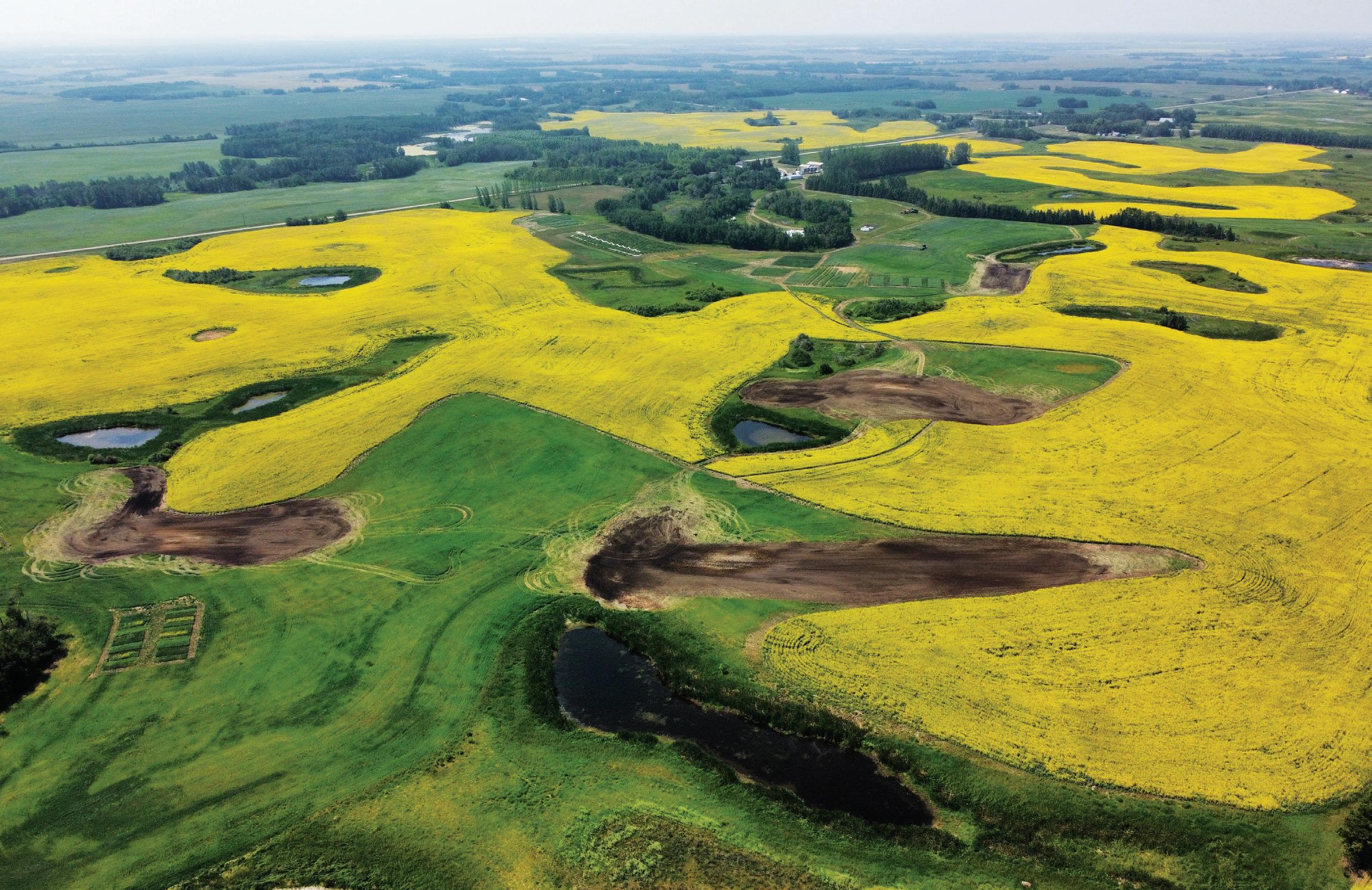
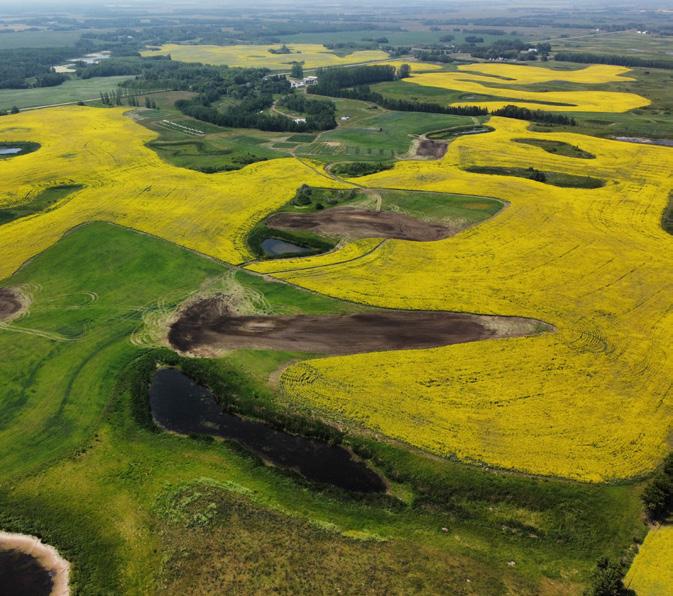
Research out of Saskatchewan, Canada into drainage options such as tile, surface and a combination of methods, has led to positive outcomes in soil health and yields for previously underperforming wetlands. It is possible those soil depressions could become productive contributors to a farm.
A HISTORY OF ASSESSING DRAINAGE
Robin Lokken, general manager of the Conservation Learning Centre near Prince Albert, Saskatchewan, wanted to see if tile drainage—which isn’t widely used in the province—could make a difference to the outcomes from challenging field depressions. Her project started in 2023 on the learning center’s farmland and builds on her work during her master’s degree studies about how surface drainage can affect soil properties and fertility over time.
“I’m originally from Ontario, but came to [Saskatchewan] to complete grad studies [in drainage and soil properties],” she says. “Following the completion of my studies, I began working at the Conservation Learning Centre Research Farm. The farm has lots of isolated depres-
by RONDA PAYNE
sions and when I started, had lost a lot of cultivated acres due to high water levels.”
She saw that Saskatchewan farmers, who traditionally use surface drainage as their go-to option, were becoming more interested in tile drainage. To her, the wet depressions at the research farm were the ideal location for a drainage study that could continue for the foreseeable future. It could give farmers
and drainage experts valuable long-term insights into how various drainage methods performed over time.
With her drainage research background, Lokken had the knowledge she needed to select the right locations on the farm for the study to make it applicable to other growing fields with depressed areas and wetlands facing similar drainage issues.
The surface of the field at the Prince Albert research site during tile installation.
She does caution that climate may play a role in adapting the study to other regions.
“Our climate is very different than southern Ontario, for example, where tile drainage is common,” she says. “In southern Ontario, soils do not freeze throughout the winter, whereas they can and do in Saskatchewan. This is very likely to affect how tile performs during spring runoff in our climate differently than Ontario.”
LOCAL EXPERTISE ASSISTS WITH THE PLAN
Olaf Boettcher, president of Precision Drainage Solutions, was the contractor for the tile drainage portion of the project. While the topography of numerous depressions seen at the research farm isn’t typical throughout all of Saskatchewan, he says it is common to have depressions in this “corner” of the province. Prince Albert sits slightly south of the geographic center of Saskatchewan and is considered to be in the province’s northeastern growing area. The research farm isn’t alone in having wet depressions. They are a common feature in other rolling hill, prairie farming regions outside of the province.
Boettcher described the farm as having sandy clay loam soil texture. This soil type is common for prairie growing regions along rivers, like Prince Albert, which is on the banks of the North Saskatchewan River, which flows into the Saskatchewan River and ultimately into Lake Winnipeg.
“We looked at the field we were going to work with and came up with a plan of what we were going to do,” he says of how he and Lokken approached the project. “We looked at it
from a classical perspective of what works where. The typical principles of drainage options and then applied those principles from there.”
While Boettcher provides drainage solutions within Saskatchewan, he has trained, and also works in collaboration with others in drainage, in North Dakota, Manitoba and Ontario.
“We apply all the knowledge from those areas,” he says of how the company approaches any project.
STUDY PARAMETERS AND SOIL MOVEMENT
Lokken and Boettcher collaborated, deciding which of the drainage solutions to use on which wetlands. The various methods were each repeated at least three times to form the replicated study and were installed in the summer of 2023: tile drainage using subsurface perforated pipes; surface drainage through open ditch and backfilling; a combination of tile and surface drainage; and a drop inlet with a single buried tile. These study zones are compared to control areas including undrained depressions with similar features as the drained zones and cultivated regions upland from wetlands.
“I believe this method of tile drainage is relatively uncommon in other regions of the world, where the goal is to often drain whole fields or sections of fields,” Lokken says. “With this study we are draining isolated pockets, so Saskatchewan is well suited for investigating these various drainage methods due to the prairie pothole region that extends into both Alberta and Manitoba.”
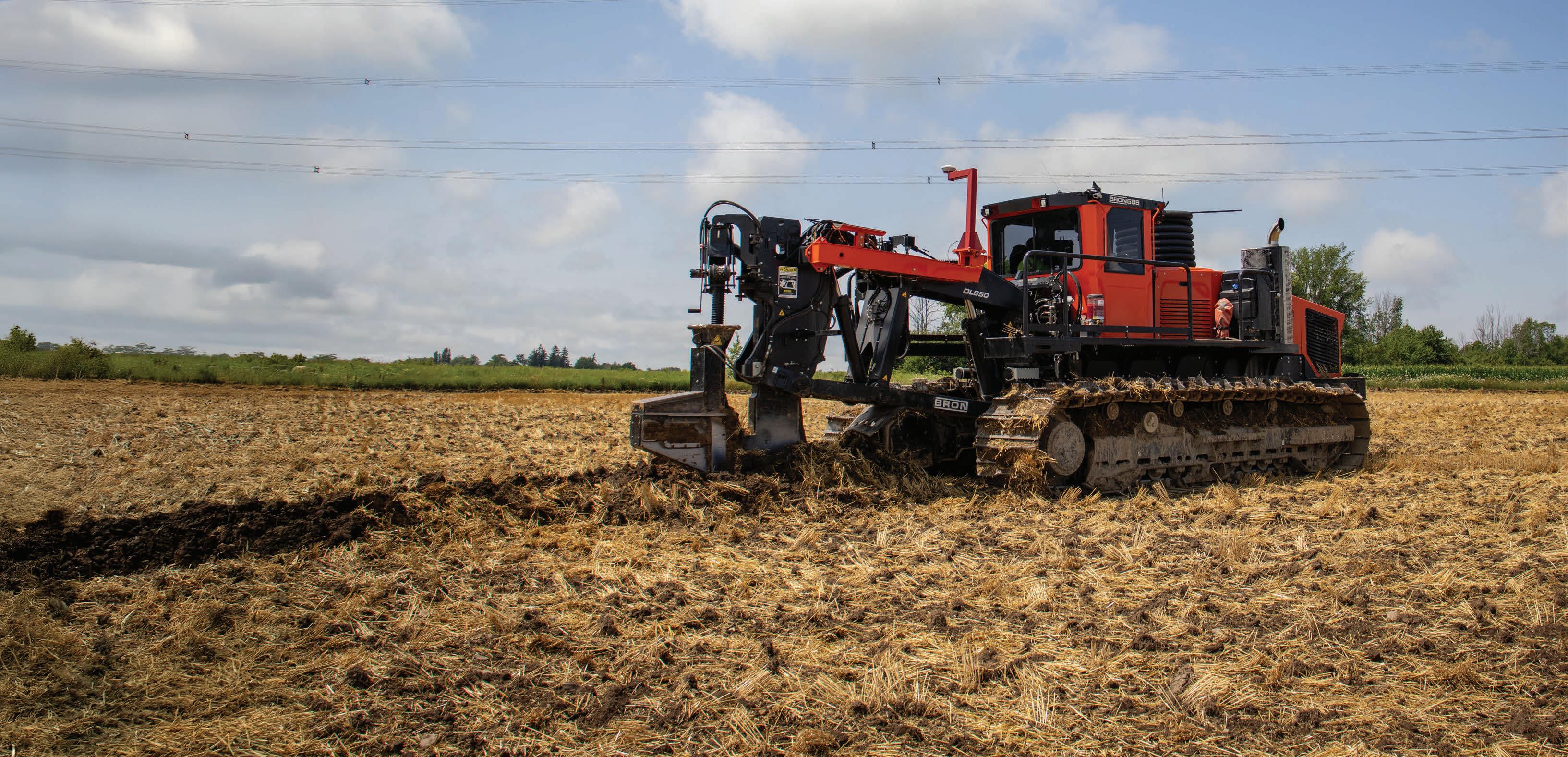
Minimizing soil disturbance was a goal in the installation of the surface drainage, which was conducted by a local crop producer. Surface drainage was developed using a heavy cultivator and pull dozer with real-time kinematic (RTK) technology.
While the efforts were made, the most significant soil property changes Lokken found from all the study’s solutions were in the surface drainage treatments.
This is due to the disruption of soils from excavation of ditches and filling of depressions which moves soil more than in other drainage options.
“In these [surface drainage] treatments, surface soil from the surrounding area from the construction of the ditch is used to fill in the depression to reduce the ability for water to pond,” she says. “This has resulted in more nutrient, carbon rich soil to be stacked over top of the original soil, burying other nutrient and carbon rich soil at depth.”
She says installing the surface drainage has also resulted in moving soil carbonates from deeper in the soil profile to the newly blended surface soil.
“These soil carbonates are likely responsible for tying up some of the available soil phosphorus,” Lokken says.
So far, this reduced phosphorus hasn’t impacted yields.
Boettcher did the tile drainage work of placing the four inches socked drain tile pipe at a depth of three feet. Spacing was set at 40 feet. between tile sections. He says there weren’t any unique or unexpected challenges in the project.
“One thing that’s pretty important is good workmanship,” he says. “With tile drainage, quality workmanship has a big impact on draining. People specialize in different areas.”
ENVIRONMENTAL FACTORS AND SOIL AND CROP OUTCOMES
All study areas were planted in wheat in 2024 and canola in 2025, which are typical crops in this section of Saskatchewan. However, the undrained wetland control area was cultivated only when planting was feasible during dry periods.
Precipitation has been low in the Prince Albert region for a number of years. In her case study about the project, Lokken notes nine of the last 12 years have seen lower precipitation than long-term norms. Despite this, there were significant spring rains in 2024 and 2025 that led to some persistent wetlands and crop loss.
The replication of the four drainage options ensured greater reliability of results. Data was gathered in 2022 (prior to drainage), post-drainage in 2023 and after crop harvests in 2024 and 2025. Each wetland was sampled at its center, edge and on the midslope within the existing cultivated land. Data captured includes a range of soil properties including soil bulk density, pH, EC, carbon and nutrient availability, crop yield and grain quality.
Overall, the drainage has increased seeded acres and allowed for earlier access to wetland field areas. This has led to improved operations.
Perhaps most important is the increase to yields. In 2024, wheat yields doubled for the drained wetlands compared to undrained depressions. Surface combined with tile drainage led the way with close to 80 bushels per acre compared to 32 bushels per acre seen in the undrained areas.
“In addition to yield increases, there was increased protein content in wheat grown in drained soils,” Lokken says. “Even under drier conditions we saw positive results that drainage is improving yields and reducing year-to-year variability that occurs when farming undrained depressions.”
However, the benefits are less apparent during dry years and she says continuous data collection will be essential for longterm understanding.
Data on canola is still being processed. She believes all crops would benefit from appropriate drainage.
“I would expect to see positive effects in all crops,” she says. “Some crops likely more than others. I would expect crops that tend to have greater sensitivity to saturated soils, like peas, are likely to have more pronounced yield losses in undrained depressions.”
FUTURE RESULTS
The project has been funded for a second phase, so assessing water quality will be added to the metrics this year.
“Ultimately, we want to identify if any of the drainage meth ods are best or better and how we should manage these drained areas in the future,” says Lokken. “There’s no clear winning method yet. Drainage can be very expensive to install, so hav ing this information is key. Having prairie-specific drainage data will also be extremely valuable for models.”
Looking at the various options has revealed benefits to drain ing wetlands that don’t contribute to farm productivity. The ongoing nature of the study will allow farmers and drainage pro fessionals to decide which solutions deliver the most economical benefits in tandem with understanding any drawbacks. DC
GEO-KNIT ® - Drainage Filter
Syfilco is a manufacturer of circular knit drainage filter. Contact us today for more information on our GEO-KNIT ® product line.
CONTRACTOR AT WORK
WELL-POSITIONED
How a company blossomed through GPS integration.
There can never be too many Cooks in the drainage “kitchen.” For Mike Cook, helping farmers plot and tile their fields for better water management has been not only a lifelong interest, but a family affair.
Continuing a legacy that began in 1948 when Mike’s grandfather, Lewis, began working at Sandusky Tile – manufacturers of cement, then eventually, plastic tile – and then followed by the founding of Cook’s Drainage Management by his father John, a venture that is still in operation today, 72-year-old Mike Cook is well regarded and respected in an industry that the USDA says has increased the land value of naturally wet Eastern U.S. counties by an estimated $16.8–$18.7 billion.
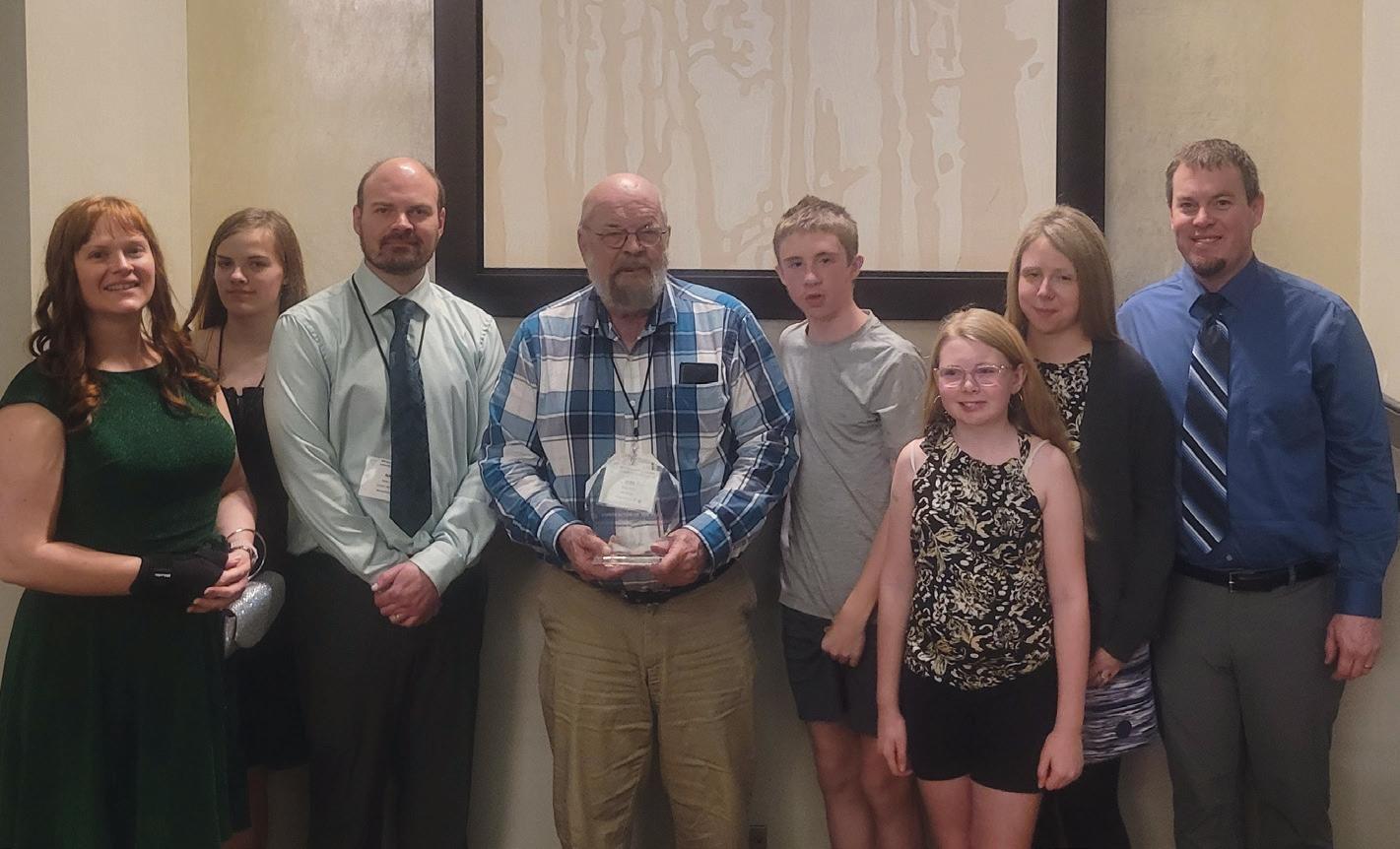
Recently honored by the Michigan chapter of the Land Improvement Contractors of America (LICA) as 2024 Contractor of the Year for his own enterprise, Mike Cook’s Soil & Water Management Systems (SWMS), he’s already got the fourth generation of Cooks pouring their blood, sweat and tears into both SWMS, where his son Adam, 36, runs day-to-day operations, and AGPS Inc., where his son Nate, 41, oversees and co-owns (with Mike) a complementary venture that offers geologic mapping software that helps farmers around the world plot their acreage to determine where to install their water management systems.
Even extended family have gotten into the act: nephew Ben is running his dad’s business, while Nate’s wife Sarah not only serves as the bookkeeper for SWMS, but also has been the Michigan LICA’s executive director for the past 11 years.
Since Mike has two granddaughters and a grandson, will there be a fifth generation to maintain the tradition?
by NICK KREWEN
“There could be,” Cook tells Drainage Contractor, on the two companies that are operated out of his home in Westphalia Township, about 25 miles northwest of Lansing. “The grandkids are somewhat involved, but they’re not old enough yet. I’m just grateful that my boys decided to plow with me. I feel proud as a Dad that they’ve got the same interests that I do.”
The kicker? The Cook clan has never taken up farming. In fact, Mike’s initial love was surveying, attracted by “the mathematics and the demand” of the vocation as he graduated from Big Rapid, Michigan’s Ferris State University in 1976.
However, eventually the allure wore off.
“I worked surveying for a year or two and decided that wasn’t what I wanted to
do,” he admits. “Hancor, a tile company, approached me about consulting for them.” His initial role involved research and development, advising on the arch pipe – an arch-shaped folded pipe that would open and expand as it traveled through the boot of the excavator.
“I started working on that as well as working on the new fittings,” says Cook, who spent a couple years at Hancor’s Bad Axe, MI location before relocating to the Findlay, OH office. After nine years at Hancor, Cook decided to return to Michigan and start a family. Looking to stay at home, he acquired Mike Crookson Water Management Systems in 1987.
At the time Cook took over the company, drainage technology was still in its
Mike Cook (center) and family celebrate his 2024 Contractor of the Year award.
Image courtesy of Mike Cook
infancy, when it was common for farmers to incorporate multiple lasers into their heavy machinery to assist them in deciding how deep to plant their tile.
“I’d work in rolling fields, and when you had the laser, you had to set up multiple lasers to put in a single line of tile,” he explains. “As it progressed, we did it with a total station control machine (a mirror-equipped surveying tool that would track the machine and send the operator all the collected data.) It would tell us our position in the field while the laser told what the depth would be.”
Calculations had to be made on the fly. “If you were set up on seventh or 10th grade and you only wanted to 10th grade, you had to deduct that manually through the laser,” Cook explains. “It took a lot of thinking in the plow.”
It wasn’t until he attended a presentation by research agricultural engineer Mark Williams at LICA about incorporating satellite-driven GPS and Total Robotics technology into the profession, that he started to entertain a new reality.
“It just intrigued me,” Cook. remembers, “ I went to Mark and said, ‘if they can measure all these coal piles, why can’t we use this to control my machine?’”
After developing the concept of linking GPS to several pieces of machinery designed to insert tile under the farmland surface, SWMS brought it to the market within a few years, with Cook forming AGPS Inc. with brothers Mark and Alan Williams.
Cook said the road to success wasn’t easy. “There were a lot of challenges. The computer programmer, Alan Williams, spent a lot of days out in his camper around job sites writing code, inputting it into a machine and seeing if it would work. And when we first started out, we were using a combination of a laser and a low-level GPS just to track where we were.
“Later, they finally released a 3D GPS that was accurate enough to actually do it on a machine.”
By this point, Adam and Nate, still in their early teens, were recruited into the business. “From an early age, Dad wanted me in equipment,” Adam remembers. “All throughout high school, Dad was on the computer and GPS side of things. By the time I was 21 or 22, it definitely seemed that that’s where my life was going and that’s what I wanted to do.”
Nate was 12 when he started operating a backhoe. “I’d be working my summers digging in third connections and that’s when Dad started getting into GPS,” he explains. “He would drop me off at a field with the four-wheeler and I would topo survey for him. After meeting with farmers, he’d pick me up.”
Nate also built up his savvy in computer technology over the years and also learned how to repair them. Software company GeoLogic was so impressed that they hired him. “I guess I’m unique in that I grew up in the drainage industry, but I’m also a computer whiz,” explains Nate.
Eventually, a split between AGPS Inc.’s owners and GeoLogic resulted in Mike and Nate purchasing the AGPS name. Today, mapping out topography to determine where to insert drainage tiling has become something of a science. AGPS utilizes the GeoLogic proprietary software and accesses the 24-satellite-based GPS radio navigation system, providing global positioning, navigating and timing services to determine precise 3D locations on a 24/7 basis.
Reliable Tile, Engineered for Performance
Sustainable tile drainage solutions that stabilize the water table, minimize soil salinity, and improve field performance
Over 60 Million Feet Manufactured – Proven quality serving NW Ontario and across the Prairies.
Durable, Fit-for-Purpose Pipe – Built to last in every soil type.
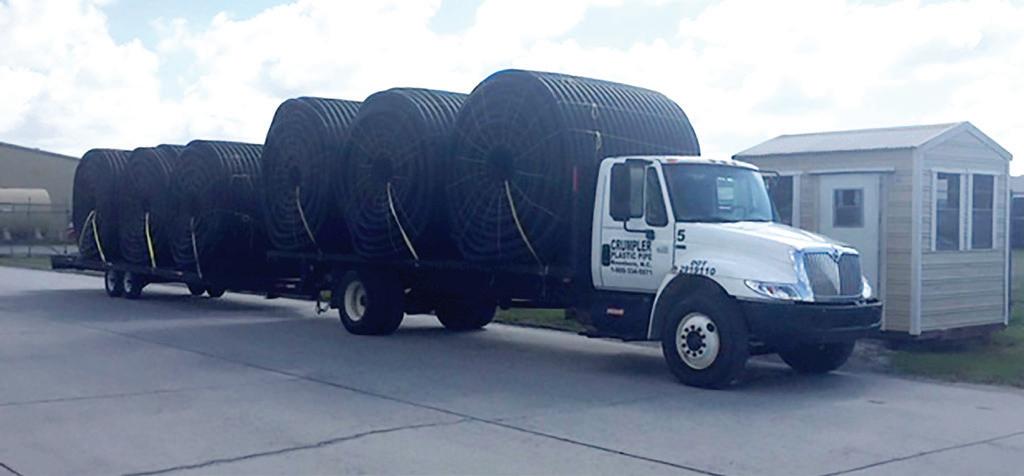
Logistics Made Easy – With our own fleet of trucks, we ensure on-time delivery, every time. Trusted Support - We answer the phone directly and take the time to visit project sites to fully understand each job.
Cook says the functional reality of the GPS is even better than a printout would suggest. “If you look at a printout, it might show a diagram of uneven up-and-down measurement spikes. But the software converts it into a straight, level line.
“It’s really accurate to within a couple hundredths of a centimeter. When we started, you couldn’t get in a tree line because you couldn’t get a signal. With this newer software, you can go right through a canopy of trees and do a pretty good job of it.”
The software also employs Vertical Curve technology and LiDAR data conversion. “Vertical curve technology was written into the software when we started,” Cook says of the Windowsbased program. ‘Typically, it’s a recording a point every 10 feet as you go, but it’s actually making the changes simultaneously. If you’re on a 1,000-foot run, you’re getting 100 points that you’re collecting data on, but you’re actually using 1,000 points to calculate where you’ve got to be... So it allows for a smoother transition of the pipe, you know, and a more uniform depth. You need to keep that tile the same depth throughout the whole field, instead of shallow and deep.”
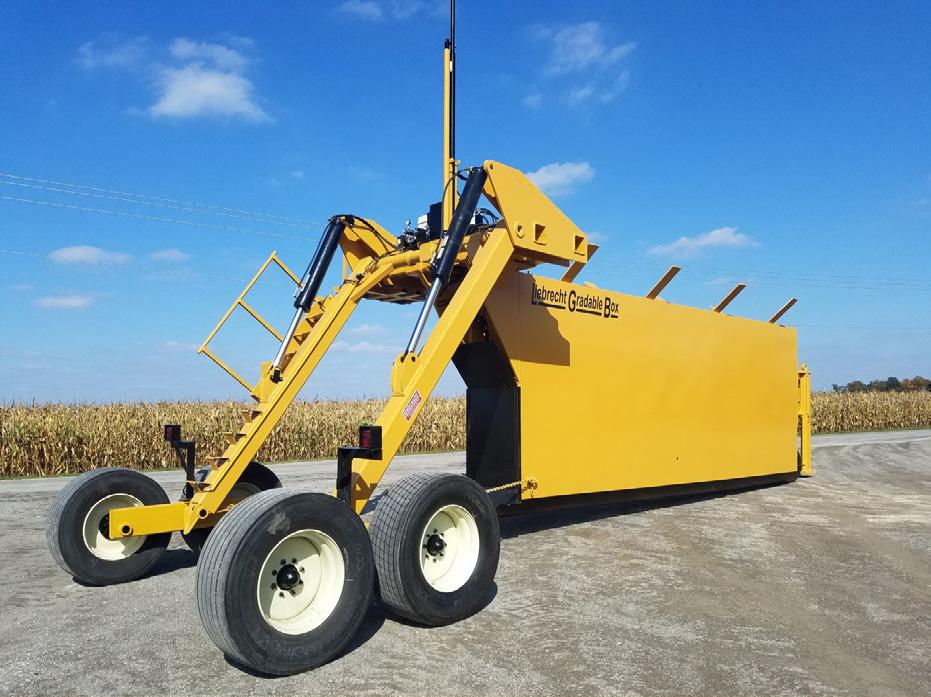
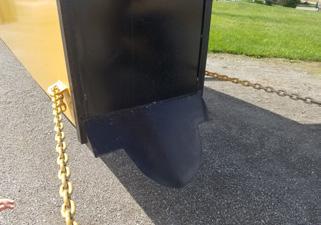
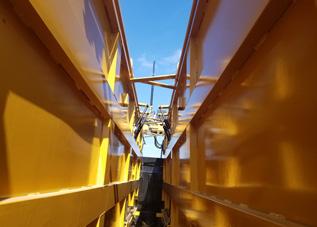
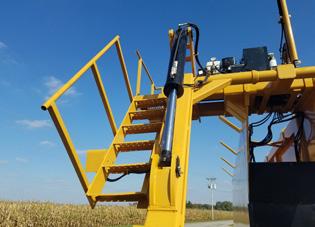
LIEBRECHT GRADABLE TRENCH BOX
2023-04-11 10:16 AM
• Install smooth wall pipe from 12” to 36”
• Rounded bottom for proper tile support
• Automatic laser grade or GPS control
• Hydraulic pushers for coupling of tile
Also check out our website for our other drainage products.
The LiDAR data conversion system also added an efficiency bonus for farmers by eliminating a time-consuming step. “Once LiDAR came out, we found we could take that data and do all our planning without having to actually run a survey buggy in the field,” reveals Mike.
“We always had to figure out the topography of the ground... how it’s shaped. With today’s information, we can survey it quickly with GPS and a four-wheeler or we can use LiDAR to get the information direct from the satellite network.
“In quite a few areas in the United States, the accuracy is good enough that you can actually put it in a machine and that’s your survey file. It saves a lot of time... We don’t survey any fields anymore, unless we’re fighting grade and have to make sure we’ve got a ditch deep enough. We’re using handheld GPS to check it.” As a result, the company, under the direction of Nate, has compiled an international clientele located as far away as Australia, France and Sweden.
On the SWMS side of things, Cook says his company also offers land leveling work to farmers and surface ditch construction with a machine inventory that includes “two Bron plows, an integrating 60-50 trencher that goes 12 feet deep, several bulldozers and excavators, including a Hitachi excavator... on the GPS side of it, we sell NovAtel, a subsidiary of Hexagon. Our machine controllers – which are instructed by the computer to open or shut the valves make the machine move up and down and steer the tile into the valves – are made by Rust Sales Inc. out in North Dakota.”
With Bron machinery averaging $800 K per unit; an actuator costing around $150K and complementary GPS equipment adding another $50K in expenses, Cook says “a normal single operation could set back a company $1 million” or so in start-up costs.
With the cost of installing tile hovering between $500 to $1500 per acre, according to USDA stats (although Cook thinks the lower figure should be $750), Cook maintains the mandate of his two companies has always been about making life easier for agrarians through tile and topography, epitomized by one word: efficiency. “I feel like I was put here on this Earth to take care of God’s green land.” DC
IGNITE ATTACHMENTS
ADDS NEW BUCKET TO LINEUP
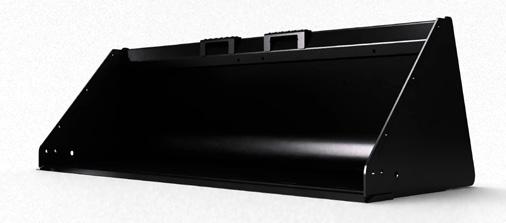
Construction, demolition and heavy equipment specialist Ignite Attachments has introduced a new bucket designed for compact track loaders and skid steers in the 75- to 100plus horsepower range.
The new, 80-inch bucket, which boasts 16.7 cubic feet of heaped capacity represents a step forward in Ignite’s expansion into higher-HP equipment categories. With additional steel reinforcement, higher capacity and robust construction, it is
built for heavy equipment and resource contractors who must keep up with demanding work, such as demolition cleanup, foundation prep and large-scale site grading.
The bucket features lasercut, robot-welded steel for consistent strength and precision fit. A quick-attach universal skid steer interface makes the bucket compatible with a wide range of machines, and bolt-on cutting edge and tooth bar options will be available beginning in January 2026 to further enhance versatility in the field. It incorporates additional steel along the bottom and sides, increasing capacity and overall durability. This reinforcement
makes it ideal for operators handling abrasive materials such as crushed concrete, gravel or demolition debris, as well as those tackling heavy grading projects or hauling large volumes of soil on new construction sites.
NEW HOLLAND SHOWCASES HYBRID TELEHANDLER PROTOTYPE
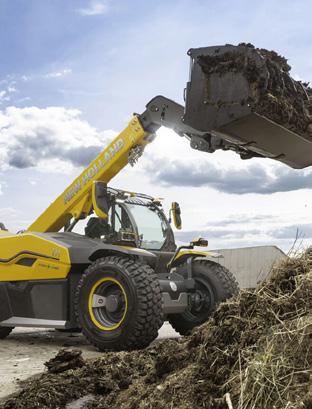
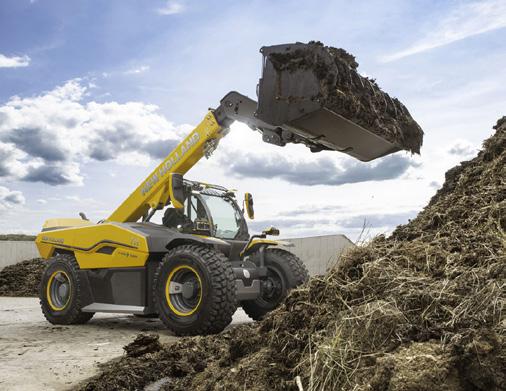
New Holland’s new hybrid prototype telehandler, which is powered by FPT’s F28 hybrid natural gas engine in high voltage configuration. The compact engine combines a high-efficiency 2.8-liter, fourcylinder natural gas engine with an on-axis integrated e-drive. It offers a modular layout for plug-and-play replacement of larger diesel engines. It delivers up to 75
kW of electric power, supporting improved load response, reduced fuel consumption and lower emissions. The telehandler itself combines electric drive and compressed natural gas propulsion for the handling of agricultural materials. Designed for typical farming application with a lift capacity comparable to traditional diesel-powered telehandlers, it’s purported to achieve up to 70 percent energy savings and 30 percent improved performance compared to its diesel counterparts. DC
Agricultural Drain Systems
MANAGEMENT SYSTEMS
A NEW SOLUTION
New research could address phosphorus loss in bioreactors
Denitrifying bioreactors are one of the most quickly thought of examples of an edge-of-field practice in agricultural drainage – one that could potentially solve some of the potential problems posed by tile drainage.
The bioreactors, which are about the size of a small studio apartment, using woodchips as a carbon source, which “clean” the tile drainage water. Specifically, they clean it by reducing nitrogen from the water supply before it is transported off of the field. The downstream benefits are undeniable – excess nutrients in waterways fuel harmful algal blooms creating hypoxic or “dead” zones in water and reducing biodiversity.
But while denitrifying bioreactors are effective at the job they’ve set out to do – denitrify – there’s still the matter of phosphorus. Dissolved phosphorus, says research scientist Wei Zheng, is a manor concern in farm water drainage.
Zheng is a researcher in environmental chemistry at the Illinois Sustainable Technology Center, a division of the Prairie Research Institute at the University of Illinois UrabanaChampaign, and recently led a study with his colleague, postdoctoral researcher Hongxu Zhou, on a combination that could potentially do a better job at removing more nutrients from drained water. They landed on a two-step module – combining the woodchip bioreactors with a two-step biochar water treatment system – to reduce nitrogen as well a phosphorus.
Drainage Contractor caught up with Zheng in March to discuss what led to this research and the new development. He says bioreactors are a good tool in the fight against nutrient transport, but do not provide a full-picture, 360-degree solution. “The bioreactors are typically
very efficient at removing nitrates, but not phosphor,” he says. “[In agricultural runoff] there will always be at least some phosphorus.” In fact, he says, phosphorus may increase when the bioreactor is first installed, as phosphorus which is naturally present in the woodchip biomass may leach into the water.
In combining another system, Zheng says, the team was able to be far more efficient. However, this also meant putting a great deal of attention into the biochar.
“Typically, regular biochar is not efficient to remove phosphorus, which is why we designed a special – we call it ‘designer’ – biochar.” He says typical biochar has a lower absorption capacity.
The “designer” biochar was produced with lime sludge, which is a byproduct of lime processing in water treatment plants. “Lime sludge has higher calcium and magnesium,” he explains. This gives the biochar a higher absorption capacity. That material is made into biochar by being mixed with fine sawdust and heated to high temperatures in low-oxygen conditions to be made into compressed pellets, which Zheng says is a key aspect of the product.
“We want to increase density,” he explains. Pelletizing the biochar means the material will stay in sorption channels – not simply washed away. “When this is put in the field, when the water flow goes through, it won’t be washed out.”
When tested in a one-hectare field trial, the bioreactor-biochar system reduced nitrate-nitrogen loads in farm runoff by 58
by Bree Rody
percent and lessened ammonium-nitrogen loads by 72 percent. The biochar-sorption module reduced the concentrations of dissolved phosphorus by three to 92 percent and total phosphorus by 20 to 92 percent, depending on seasonal flow conditions.
The team is now evaluating the practice at a larger scale, on a 16-acre commercial farm, which Zheng says should provide them with more detailed results regarding the phosphorus reductions.
Economic barriers are still seen as prohibitive to the adoption of edge-of-field practices by some, which is part of why the team conducted a techno-economic assessment. Zheng explains: “We calculated based on how much the bioreactor and biochar cost, building the structure… and we based it on the field experiment, how many nutrients were removed. If you can capture one kilogram of nitrate, one kilogram phosphate, what would [be the] cost?”
The unit removal costs were calculated at $90.30 per kilogram of nitratenitrogen retained per year and $63.90 per kilogram of dissolved reactive phosphorus removed from the drainage water per year. The modeling suggests that scaling the system to a 10-hectare site would substantially lower these costs.
The new approach could also help offset its costs because the spent biochar, which is loaded with phosphorus, can be reapplied to fields as fertilizer. In addition, adding biochar to the soil may improve soil health, increase crop yields and make farmers eligible for carbon credits. DC