CAMPUS SECURITY
A guide to the technologies and trends shaping the market

Sponsored by:


Presented by:



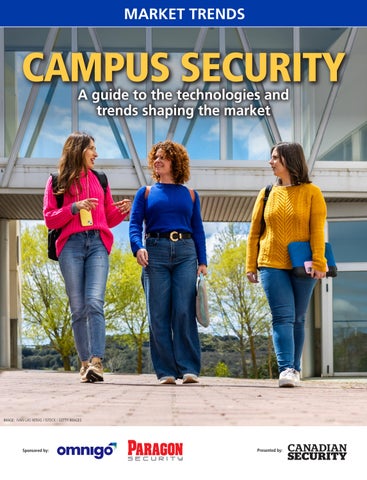
A guide to the technologies and trends shaping the market
Sponsored by:
Presented by:
By Canadian Security Staff
To learn more about current trends in campus security, Canadian Security recently sat down with industry experts to discuss key topics ranging from the integration of in-house and contract security guards; open-source intelligence; and the latest training techniques, including mental health awareness.
Sponsored by Paragon Security and Omnigo, the discussion was moderated by Canadian Security editor Neil Sutton and featured panelists Kirsty Bradley-McMurtrie, associate vicepresident of risk management for Conestoga College; Brine Hamilton, senior sales engineer for Omnigo; Danielle Weddepohl, director of public safety and emergency management for George Brown Polytechnic; and Robert Bartlett, vice-president of training for Paragon Security.
The roundtable kicked off with a discussion about how colleges are integrating in-house and contract security guards to optimize safety on campus.
At George Brown, for example, operations run smoothly between the college’s employees and the contract security team that works across its three campuses in downtown Toronto. One of the reasons they work well together is consistent training for both staff and contracted security team members.
“We have people that are on the investigative side, the emergency management side, and security operations, supporting those three campuses, residents and our satellite buildings,” Weddepohl said.
The George Brown guarding team also has an emergency medical responder division.
“They’re trained in emergency response procedures and a higher level of first aid, so they’re actually able to take in cases where people could be experiencing everything from seizures, minor cuts and burns, to more advanced medical issues prior to tri-
aging to first responders. Sometimes we can actually alleviate it from going on to that next triage level. It’s been a really nice complement to our team,” Weddepohl added.
Conestoga College’s security department has evolved over recent years, eliminating silos between different divisions to improve integration and efficiencies.
“ The in-house security team and our contracted security team, we’re just one team, and that’s important for vision. If you’re a visitor, staff or student on our campus, we’re all the same team,” said Bradley-McMurtrie.
While there are in-house and contracted security team members, everyone operates under the same policies, training, standards and supervision. This is particularly helpful since Conestoga College comprises 11 different campuses across five different municipalities in Southwestern Ontario. One of the key tools used in their security operations is a dispatch emergency communication centre that was developed off-site at the college’s administration building.
“They really are the core of our security
“We’re collecting as much information as possible and then disseminating that towards our service managers and directors.”
— Robert Bartlett, Paragon Security
operations, as well as the dispatch or the switchboard for the college. Every call comes into us, and we monitor all locations, including our radio communications,” said Bradley-McMurtrie.
Alignment and communication are key to ensure a successful partnership between campus staff and contracted security professionals.
“Having those open lines of communication and partners who are aware of the needs of the guard, and the needs of an individual coming into the industry, and what motivates them and drives them to succeed in their careers, really for me is the first and foremost part,” Bartlett said.
Hamilton adds that having in-house and contract team members receive some of the same training helps integrate both teams.
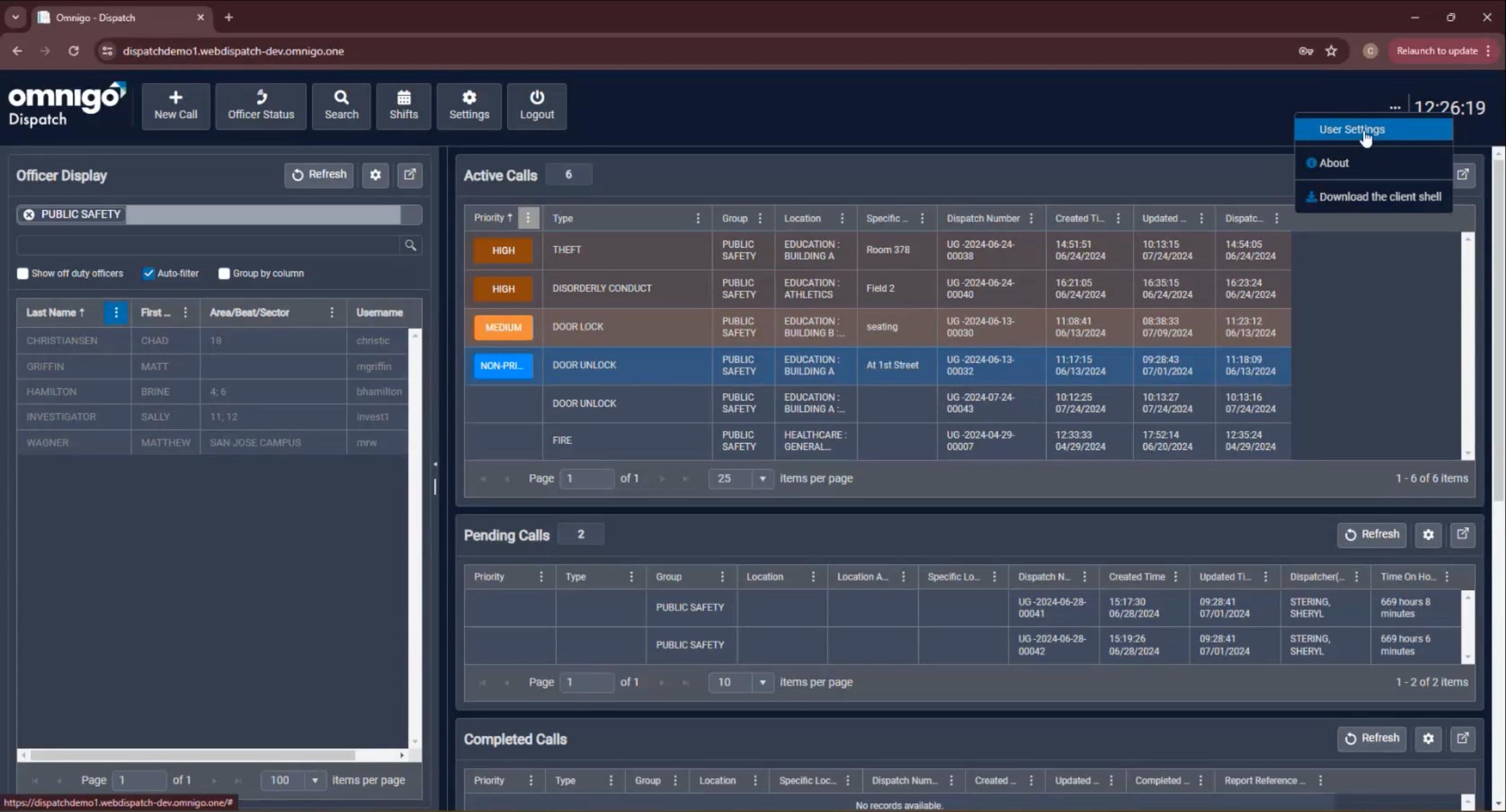
In his current role at Omnigo with a focus on education and healthcare, Hamilton likes to regularly do site visits and see how security teams are using Omnigo’s software. That way he can lean on his past experiences in professional security to help them build on what they’re doing and understand what elements of the software they’re using correctly, and which features they may not be taking full advantage of.
“Integrations are a big part of what keeps these operation centres functioning well, so we’re looking at that and just really making sure that they’re maximizing technology,” Hamilton said.
When it comes to using open-source intelligence (OSINT) in campus security operations, Weddepohl said that George Brown Polytechnic relies on relationships with other post-secondaries and shares data through its membership in the Ontario Association of College and University Security Administrators (OACUSA).
One of the key partners for the security team at George Brown is the internal communications team. Weddepohl said her team uses data collected from them on a daily basis to inform them in their decision making.
“They’re doing the social media listening and really seeing when our name is mentioned over social media. Community partners and even some of our vendors, like International SOS, give us information about international events that could have local implication,” Weddepohl said.
Paragon Security leverages open-source information in several different ways, but the first and foremost is community partnerships.
“We partner with Shield and local police services in the communities that we serve, also local BIAs to make sure that we’re collecting as much information as possible and then disseminating that outward towards our service managers and directors to share when that’s necessary,” Bartlett explained. He added this is useful for identifying preincident indicators that could give them a clue that something might take place, such as a large-scale public demonstration.
Conestoga College also leverages its partnership with OACUSA. The college uses alerts for whenever its name, or any of its partnering institutions are mentioned.
“If something’s happening at one institution that they have found on social media, our chat group shares with everybody so then we can connect with our community partners,” Bradley-McMurtrie explained.
In a campus environment where security professionals are integrating with a student body and a large group of people, a wide variety of training is required, including mental health and de-escalation training.
At Conestoga College, Bradley-Mc-
Murtrie said it is important for the college to partner with its contract security provider and do all their training together.
“ They’re bringing to us the community training — what they see at other potential client sites, what they see in the industry, and we’re bringing the college-focused training. So, mental health, first aid, all our guards have that training,” she said. “We also provide them with safe-talk suicide awareness training, because like most security professionals, they’re there at night when nobody else is.”
As first responders, security professionals need to be comfortable and confident in their ability to respond to those types of situations, especially if they’re going into residences, Bradley-McMurtrie noted.
“For us, it’s not new training, but it’s making sure that we’re practicing it all the time,” said Bradley-McMurtrie. “But like in any situation, sometimes you’ll freeze a bit if you haven’t practiced it for a while. So, continually practicing those types of situations from fire alarms to full evacuations to lockdown drills, and then also doing those larger scale ones with the full college community.”
George Brown performs similar training with its security teams. Weddepohl said that it’s important to have consistent practice, while also evolving training over time to respond to more complex cases.
As guards move past basic training, they are educated in responding to more complex situations such as sexual violence, mental health awareness, gender-based violence, anti-racism, and de-escalation strategies.
“ We also work really closely with our counseling team, and they actually train our entire guarding staff on mental health response,” Weddepohl said.
In the post-COVID world, Bartlett said that Paragon Security is experiencing spikes in mental health-related incidents, and that they are training guards to look at these scenarios more as an external support to people in crisis.
“One of the pieces that I’m most proud of since being in this role was developing a partnership with CAMH (Centre for Addiction and Mental Health) to come in and teach mental health awareness to our employees and then integrating that into our customer service course and into our mental health awareness course,” he said. | CS

To Campus law enforcement agencies face increasing pressure to do more than respond to incidents. They must demonstrate compliance, maintain transparency, support investigations, and provide leadership with actionable insights that improve campus safety.
The challenge is that many institutions still manage incidents, investigations, evidence, and reporting across multiple systems. When information is scattered, it becomes difficult to identify trends, measure outcomes, or ensure consistency from the initial report through final resolution.
The foundation of an effective campus safety program begins with three key principles: standardize, centralize, and analyze.
Meaningful data starts with consistent data collection. When officers, dispatchers, investigators, and security personnel document incidents differently, agencies lose the ability to accurately compare events, identify patterns, and evaluate performance.
Standardized reporting ensures that incidents are classified consistently, required information is captured every time, and reporting procedures are followed across the organization. Whether documenting a theft, conduct violation, suspicious activity, or criminal offense, a common reporting framework creates reliable data that can support investigations, compliance requirements, and strategic decision-making.
Incident reports are only one piece of the campus safety picture. Investigations, evidence, records, dispatch activity, and compliance reporting all generate information that must be connected to tell the complete story.
By centralizing these functions within a single platform, campus law enforcement agencies gain greater visibility into every incident from initial report through final disposition. Investigators can access complete case information, evidence can be securely managed and tracked, and administrators can ensure proper documentation for regulatory and institutional reporting requirements.
Centralization also reduces duplication of effort, improves collaboration, and helps maintain chain of custody and auditability throughout the investigative process.
The true value of standardized, centralized data is the ability to transform information into intelligence.
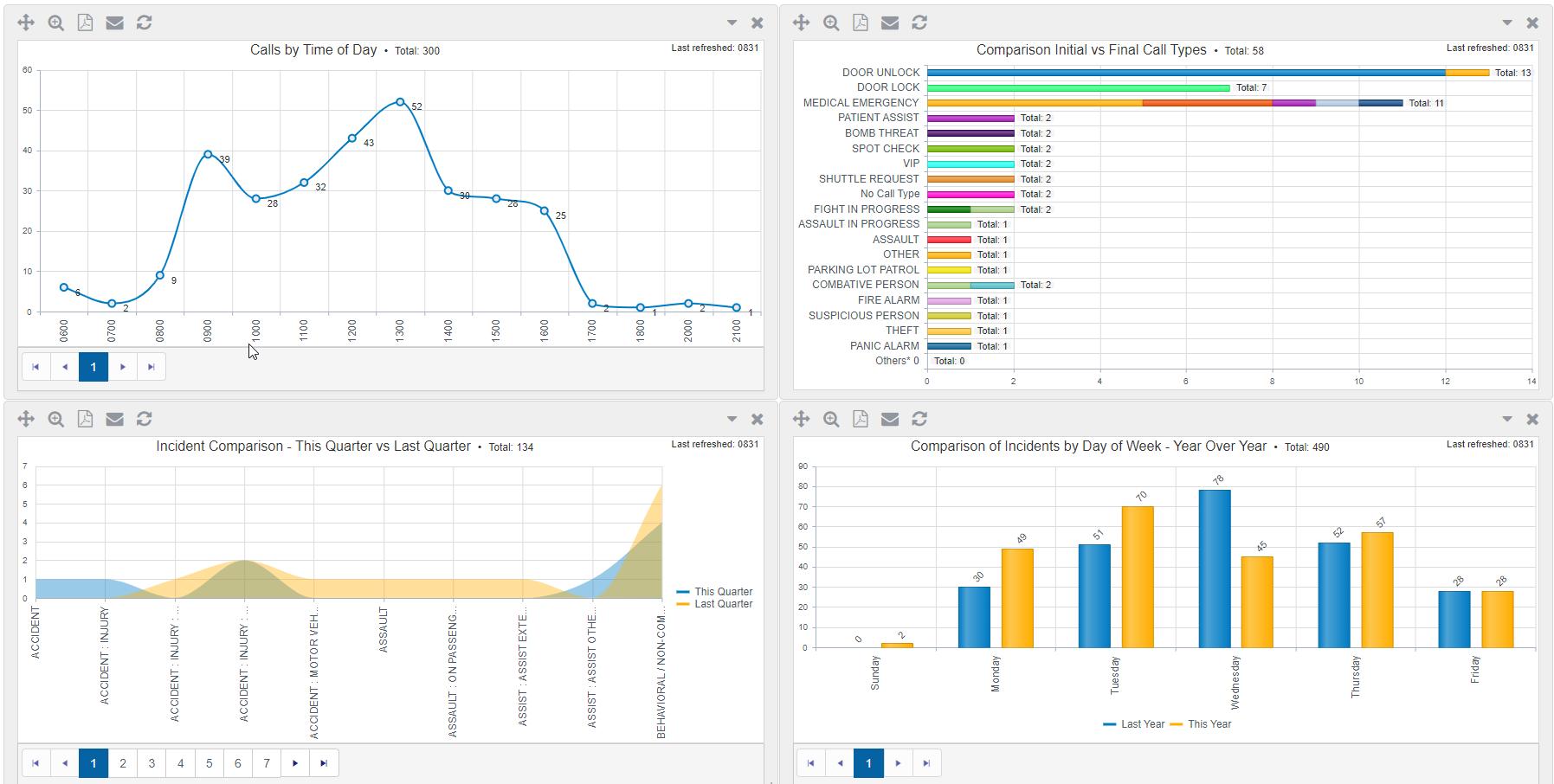
With access to real-time analytics and reporting, campus safety leaders can identify emerging trends, allocate resources more effectively, and evaluate the impact of policies and programs. Data can reveal recurring incident types, high-risk locations, seasonal patterns, and operational efficiencies that might otherwise go unnoticed.
Most importantly, analytics provide leadership with objective information to support decision-making, demonstrate accountability, and continuously improve campus safety operations.
In today’s higher education environment, compliance and control depend on more than collecting information—they require the ability to standardize processes, centralize data, and analyze results. When these three elements work together, campus law enforcement agencies are better equipped to protect their communities while meeting the growing demands of modern public safety.

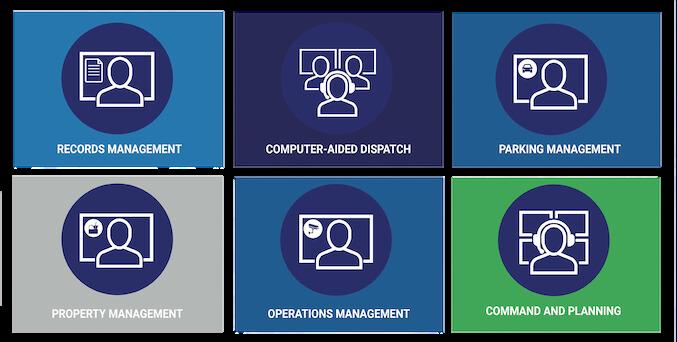


COMPUTER-AIDED DISPATCH RECORDS MANAGEMENT EVIDENCE MANAGEMENT

INVESTIGATION MANAGEMENT

ANALYTICS AND REPORTING
Omnigo’s industry-leading incident management software is used by over 600 educational institutions to manage the entire incident lifecycle from planning and dispatch to reporting, investigation, and resolution while ensuring officer safety, regulatory compliance, and chain of custody.



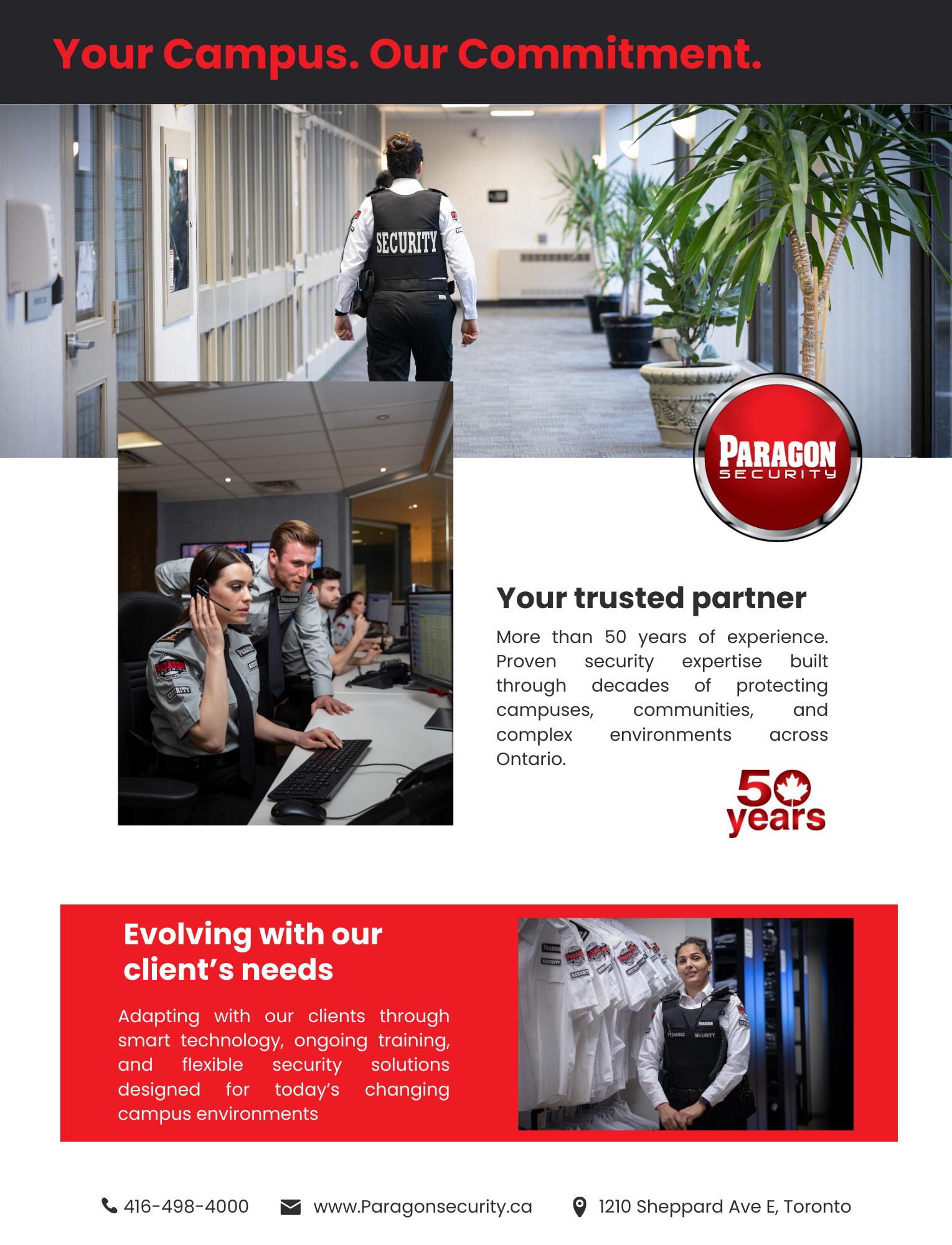
Today’s campus security landscape is evolving faster than ever. Colleges and universities are vibrant, diverse ecosystems where thousands of people study, work, and live and they expect safe, welcoming environments that support their well-being. At Paragon Security, we believe the strongest campus programs are built on three pillars: exceptional people, meaningful partnerships, and smart innovation.
What sets Paragon apart is our long-standing commitment to collaboration. We don’t simply provide security services, we work alongside industry-leading partners to ensure our campus teams stay ahead of the curve. Our training partnership with CAMH reinforces our belief that mentalhealth awareness is central to modern security work. Through CAMHaligned learning, our guards develop deeper understanding of crisis response, empathy-driven communication, and the unique needs of students facing stress or mental-health challenges. On a campus, where the first interaction can define the tone of an entire situation, this specialized training makes a tangible difference.
We also invest heavily in leadership development. Our relationship with Dale Carnegie ensures that every member of our management
team, supervisors, team leads, and site managers benefits from proven coaching on communication, confidence, and service excellence. These skills translate directly into better support for our guards and better experiences for students, faculty, and staff. When leaders lead well, campuses feel it.
Our focus on innovation extends beyond traditional training. Paragon recently partnered with the MIT School of Business to advance our integration of artificial intelligence into everyday security and business operations. But for us, AI isn’t about replacing people, it’s about empowering them. Whether it’s improving incident reporting, strengthening situational awareness, or identifying emerging risk trends, our technology strategy is designed to enhance decision-making and free teams to focus on what matters most: human connection and support.
This holistic approach is rooted in our belief that security on a campus is not simply about protection, it’s about community. Guards are ambassadors, problem solvers, and trusted points of contact. Technology helps them be more effective, partnerships keep them learning, and leadership programs ensure our teams show up with professionalism and purpose.