www.canplastics.com
JUNE 2021
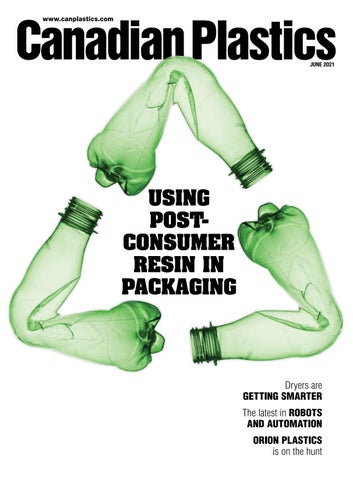
USING POSTCONSUMER RESIN IN PACKAGING
Dryers are GETTING SMARTER The latest in ROBOTS AND AUTOMATION ORION PLASTICS is on the hunt
Molded to Perfection With over 160 years of steel production experience backing their brands, Swiss Steel Group is not only a pioneer, but also a market leader in specialty steels. Their comprehensive range of Formadur®, Thermodur®, Cryodur®, and Mold Die® grades allows you to choose the ideally suited mold material for your application. In addition, an extensive range of value added services provides you with more alternatives from one source, Swiss Steel USA / Canada. www.swisssteel-international.us www.swisssteel-international.ca +1 800 323 1233
contents JUNE 2021 VOLUME 80 • NUMBER 3
We headed to the West Coast in the March 1968 issue of Canadian Plastics, with a cover story that examined the state of the industry in British Columbia. The verdict? Things were booming, in particular through demand for fibre-reinforced plastic (FRP) boats to navigate the province’s thousands of miles of coastline and hundreds of lakes, and plastic pipe for the expanding pulp and paper industry. “B.C. fabricators are way ahead of eastern fabricators in FRP in the pulp and paper industry,” the general manager at one processing plant told us. “We know the economists are predicting a recession in ‘68, but we don’t expect to get it out here.”
Photo Credit: Stock.adobe
FROM THE ARCHIVES
9
Number of the month:
*62,000
*Square footage of Orion Plastics’ fabrication plant in St. Albert, Alta. (See pg. 17)
4
5
6
Editor’s View: Giving plastics a hearing Ideas & Innovations: New technique detects microplastics in snow/ Microbes developed that eat PET water bottles News: • Apollo Funds to buy majority stake in ABC Technologies • New initiative targets Great Lakes plastic pollution • Quebec-based Solmax acquires TenCate Geosynthetics • Supplier News and People
20 Technology Showcase
14
18
cover story
9
PACKAGING: The ins and outs of using post-consumer resin
Driven by consumer demand, eco-friendly packaging that uses postconsumer resin is gaining traction on the shelf. But for packaging suppliers that have to meet very specific brand standards, working with this material poses some challenges.
features
12 DRYERS: Getting smarter
Smart dryers are still a work in progress, and challenges remain, but these latest Industry 4.0-themed developments take resin drying to a new level of intelligence and connectivity.
15 ROBOTS AND AUTOMATION: What’s new, now
Now more than ever, automated technology is changing the nature of plastics manufacturing. Here are some of the latest product offerings in robots and cobots.
17 SHEET EXTRUSION: Orion Plastics is on the hunt
This Alberta-based sheet extrusion maker has been killing it in the heavy gauge vacuum forming sector for years, and has now also become a major supplier of meltblown fabric for medical masks.
21 Advertising Index 22 Technical Tips: Why cushion is critical for your injection molding process
Visit us at www.canplastics.com June 2021 Canadian Plastics
3
editor’s view
Canadian Plastics magazine reports on and interprets developments in plastics markets and technologies worldwide for plastics processors, moldmakers and end-users based in Canada.
www.canplastics.com
Giving plastics a hearing
T
he ticking bomb that is the proposal to declare plastic products “toxic” under Canadian environmental laws gets closer to detonating every day, and the damage the explosion would do to our industry was made clear during an April 12 hearing of the federal government’s Standing Committee on Environment and Sustainable Development. John Galt, Husky Injection Molding Systems president and CEO, Bob Masterson, president and CEO of the Chemistry Industry Association of Canada (CIAC), and Elena Mantagaris, CIAC’s vice president of plastics all participated in the virtual hearing and pushed back strongly against the proposal – which would declare plastic a toxin regulated under the Canadian Environmental Protection Act (CEPA) by 2022, and also ban single-use disposable products including retail bags, straws, and cutlery – saying it would unfairly malign our industry’s reputation, deter investment, and cost thousands of jobs. Government officials say the CEPA label would give agencies more tools and authority to manage plastic along its life cycle. But I think most people reading this magazine would say it’s a massive, unscientific overreaction that will scare away the funding that could otherwise drive future jobs and growth, including in making plastics more recyclable. “We have largely become a flyover destination for chemistry sector investment…and the listing of all plastic manufactured items as toxic will exacerbate that,” Bob Masterson told the hearing. “The biggest economic impact that will arise from the proposed federal actions will be the effect on future investment opportunities. It sends a message that Canada’s ambivalent at best, if not actually in opposition to, growth and investment in the sector.” For her part, Elena Mantagaris said that smaller plastics processing or recycling companies are concerned about
4 Canadian Plastics June 2021
what the federal listing and bans would do to their business plans. “I think many of our members are questioning whether future investments in this country are feasible, whether it’s in recycling or in the plastics production sector in general,” she said, estimating that large-scale plastic product bans in Canada could cost at least 13,000 jobs and likely more. After taking a moment to remind the committee that plastic is not, in fact, toxic – “they are chemically stable and one of the most commonly used materials within the medical industry…plastic is medical-grade” – John Galt reiterated that the CEPA label puts investment and jobs at risk. “Since this legislation has been [introduced], Husky and many of our customers and co-suppliers to the industry have put our investments in Canada on hold,” Galt told the hearing. The Canadian plan has also drawn criticism from our colleagues to the south. The Plastics Industry Association in Washington, D.C. is on record as saying that it sees the CEPA designation as a non-tariff trade barrier that will disrupt US$12 billion in crossborder trade in plastics. These criticisms are all correct and they certainly need to be voiced, but in the end they feel a bit like bullets bouncing off Superman’s chest. The signs indicate that we’re losing not only in the legislature but also in the all-important court of public opinion: According to a poll released by Oceana Canada in February, two-thirds of Canadians think the federal government should expand the ban to include even more single-use products. Given the undeniable benefits of plastic compared to competing materials like paper and metal, this shows that, in the face of too many photos of plastic pollution going viral – and too much bad publicity in general – we need to be better at getting our message out.
Reader Service Print and digital subscription inquiries or changes, please contact Barb Adelt, Audience Development Manager Tel: 416-510-5184 Fax: 416-510-6875 email: badelt@annexbusinessmedia.com Mail: 111 Gordon Baker Rd., Suite 400 Toronto, ON M2H 3R1 EDITOR Mark Stephen 416-510-5110 Fax: 416-442-2230 mstephen@canplastics.com ASSOCIATE PUBLISHER Catherine McDonald 289-921-6520 cmcdonald@annexbusinessmedia.com ASSOCIATE PUBLISHER Stephen Kranabetter C: 416-561-5362 W: 416-510-6791 skranabetter@annexbusinessmedia.com MEDIA DESIGNER Graham Jeffrey gjeffrey@annexbusinessmedia.com ACCOUNT COORDINATOR Cheryl Fisher 416-510-5194 cfisher@annexbusinessmedia.com VP/GROUP PUBLISHER Diane Kleer dkleer@annexbusinessmedia.com COO Scott Jamieson sjamieson@annexbusinessmedia.com PRINTED IN CANADA ISSN 008-4778 (Print) ISSN 1923-3671 (Online) Publication Mail Agreement #40065710 2020 SUBSCRIPTION RATES 5 issues Canadian Plastics, plus Dec. 2021 Buyers’ Guide: CANADA: 1 Year $77.50 plus applicable taxes; 2 Years $123.50+ taxes USA: $176.00 (CAD) / year FOREIGN: $201.00 (CAD) / year
Occasionally, Canadian Plastics will mail information on behalf of industry related groups whose products and services we believe could be of interest to you. If you prefer not to receive this information, please contact our audience development department in any of the four ways listed above. Annex Privacy Officer privacy@annexbusinessmedia.com • Tel: 800-668-2374 No part of the editorial content of this publication can be reprinted without the publisher’s written permission ©2021 Annex Business Media. All rights reserved. Opinions expressed in this magazine are not necessarily those of the editor or the publisher. No liability is assumed for errors or omissions. All advertising is subject to the publisher’s approval. Such approval does not imply any endorsement of the products or services advertised. Publisher reserves the right to refuse advertising that does not meet the standards of the publication. MEMBER: Magazines Canada, Canadian Plastics Industry Association.
Mark Stephen, editor
mstephen@canplastics.com www.canplastics.com
ideas & innovations
T
he snow is gone in most of Canada for another six months or so, but in one way it hasn’t been forgotten: as it melted, it left pollution behind in the form of microplastics and nanoplastics, which can measure from five millimetres in diameter to less than one micrometre in diameter. And given how small these particles are, finding and studying them – in order to learn their impacts on the ecosystem and on human health – can be very difficult; for example, nets or sieves that are used to collect microplastic samples need extraordinarily
small filters in order to capture nanoparticles. Which is why a research team at McGill University in Montreal developed a new type of nanostructure – which is a structure that measures roughly a nanometre, or one billionth of a metre, in size – composed of sustainable materials such as zinc oxide, titanium oxide, and cobalt, which have wellknown masses and sizes. Using these extremely small nanostructures, the team was able to collect and study nanoplastics that had accumulated in Montreal’s freshlyfallen snow. They did this by using a nanostructured mass spectrometry technique that uses light to separate and analyze particles based on their weights. This technique allowed the scientists to study nanoplastics weighing as little as a picogram, or one trillionth of a gram, a development that team member and McGill PhD candidate Zi Wang called “orders of magnitude” more sensitive than previous techniques. After analyzing their samples, the team concluded that much of the microplastics and nanoplastics came from soluble plastics found in antifreeze products, or polyethylene glycols, that became airborne and were picked up by falling snowflakes – a discovery that matters, Wang said, because it adds to the growing body of information about how plastic pollution is spread. “We hope this new technique can be used by scientists in different domains [to] gain key information about the quantity of microplastics and nanoplastics in urban environments,” he explained. CPL
Microbes developed that eat PET water bottles
P
ET is an all-too-common type of plastic waste, and its incredible durability – which comes from its long, tough strands of ethylene glycol and terephthalic acid monomers – means that it lasts for decades, potentially clogging rivers, beaches, forests, and waterways. But probably no one ever thought of eating PET waste as a means of disposal, until now. Prof. Jay Mellies and a team of students at Reed College in Portland, Ore., have discovered colonies of bacteria that can break down PET. And it gets weirder: The colonies don’t consist of a single species, but are composed instead of a consortium of five different types of bacteria that work synergistically to consume PET and convert it into a source of energy. Drawing on an earlier project by one of Mellies’ students which found that bacteria can evolve to feed on hydrocarbons in PET, Mellies and his team spent months culturing 192 separate colonies of soil bacteria on PET and found that, after an eight-week trial, the PET in one of their samples had lost three per cent of its mass. The bacteria had eaten it. More remarkable still, the successful sample contained five different strains
of bacteria living side by side, with some strains breaking down the PET into components that other strains could digest, and so on. The team is now focused on finding ways to make the process more efficient, and Mellies believes the potential upside is huge – not only for fighting pollution, but also for harnessing microbial symbiosis for other problems. CPL June 2021 Canadian Plastics
5
Photo Credit: Stock.adobe
Photo Credit: Stock.adobe
New technique detects microplastics in snow
news
Apollo Funds to buy majority stake in ABC Technologies Investment firm Apollo Funds, managed by Apollo Global Management Inc., is acquiring a majority stake in Torontobased automotive parts molder ABC Technologies Holdings Inc. New York-based Apollo Funds will purchase 51 per cent of the outstanding common shares of ABC from ABC LP, according to an April 13 news release. “ABC’s strong operational and financial performance, combined with its near-term opportunities as a platform for industry consolidation in the automotive technical
plastics space, led to an unsolicited offer from Apollo Funds,” Todd Sheppelman, ABC’s president and CEO, said in the release. At closing, Apollo Funds will also be able to nominate five of the nine members of ABC’s board and ABC will retain its ability to nominate three members of the board. Founded in 1974, ABC makes a wide range of automotive systems and components using blow molding, injection molding, thermoforming, sheet extrusion, interior and exterior painting, and material compounding. CPL
Photo Credit: Stock.adobe
New initiative targets Great Lakes plastic pollution
A cross-border Canada-U.S. business group is developing a plastics pollution plan for the Great Lakes, with initial funding from several firms in the industry, including Dow Inc. and Charter Next Generation. The Council of the Great Lakes Region – which has
offices in Ottawa, and Cleveland, Ohio – announced in March that it’s launching a five-year effort to identify projects to tackle plastic pollution, and it pointed to another industry effort, the Alliance to End Plastic Waste (AEPW), as a potential guide. Other founding partners of the project, called Circular Great Lakes, are plastic film manufacturer Pregis Corp. and flexible packaging supplier American Packaging Corp., along with Imperial Oil Ltd. and tobacco company Rothmans, Benson & Hedges Inc. “Priorities of the initiative include driving systemic changes necessary to close the loop for plastics in the region, shifting away from a linear, take-make-dispose economy and materials management mindset,” the group said. In its announcement, the group prominently mentioned AEPW, a US$1.5-billion effort launched in 2019 by the plastics and consumer product industries. The Great Lakes group said it will work with AEPW and other partners to develop its action plan. CPL
Groupe Solmax Inc., a Varennes, Que.-based manufacturer of polyethylene geomembranes for industrial and environmental applications, has acquired TenCate Geosynthetics, a provider of geosynthetics and industrial fabrics headquartered in the Netherlands, from Koninklijke Ten Cate. The financial terms of the deal have not been disclosed. “This transaction will increase [the companies’] products’ use in civil engineering, road infrastructure, hydraulic, and environmental works,” Jean-Louis Vangeluwe, president of Solmax, said in an April 7 news release. “The size, capacity for innovation, geographic reach, and resources of the new organization will further enhance the better position of geosynthetics as important products in the construction sector.” Caisse de dépôt et placement du Quebec and Fonds de solidarité FTQ, Solmax’s financial partners, will both invest
6 Canadian Plastics June 2021
Photo Credit: Groupe Solmax Inc.
Quebec-based Solmax acquires TenCate Geosynthetics
in the transaction, the release said. The deal marks the second recent major acquisition for Solmax. In 2018, it purchased GSE Environmental Inc. CPL www.canplastics.com
news
Die Mold Services North America Corp. (DMS), a mold component supplier in Oldcastle, Ont., has acquired Windsor, Ont.-based competitor Component Guys Inc. The founders of Component Guys – Frank Iatonna, president, and Jason Mayville, general manager – formerly worked at DMS. Iatonna was the president for five years, and Mayville used to be DMS’ purchaser. The two companies will operate independently during a transition phase expected to be “brief,” according to a March 10 news release, which also says the mold and die sector is positioned for strong growth. “This acquisition will allow DMS North America to be in a stronger position to better supply this industry growth,” the release said. DMS has two other locations in North America aside from its Oldcastle office: in Ontario, Calif., and Elk Grove Village, Ill. The company’s product range includes ejector pins, core pins, sleeve ejectors, blade ejectors, leader pins, and bushings. Component Guys supplies custom and standard ejectors, sleeves, and core pins, as well as slide retainers, lifters, slide core units, and gibs. CPL
CPL_Struktol_June21.indd 1
Shuman Plastics co-founder Hy Shuman passes away
Hyman “Hy” Shuman, the co-founder of Depew, N.Y.-based material supplier Shuman Plastics Inc., died March 25 at age 94. After being wounded in Okinawa during World War II, Shuman returned to Buffalo and joined his father Philip in a scrap business in 1947. Shortly thereafter Hyman was joined by his brother Charles and in 1962 the two men led the transition of the business from a recycler of paper, metal, and glass into Shuman Plastics, one of the first North American companies to focus exclusively on recycling and trading plastics. Over the years the company expanded its operations to include Canada, Europe, and Asia. Hy Shuman retired in 1995 and the business continues to be owned and managed by his nephews, Ken and Dan Shuman. Today the company is a supplier of virgin and recycled resins, provides toll processing and compounding services, and offers the Dyna-Purge brand of purging compounds. CPL
June 2021 Canadian Plastics
7
2021-03-03 2:26 PM
Photo Credit: Shuman Plastics Inc.
DMS North America acquires Component Guys
news
PEOPLE
Marc Aandeweg
SUPPLIER NEWS
Peter Brouwer
Brenda Chamulak
Dan Murphy
John Thayer
– Dosing technology maker Movacolor, headquartered in Sneek, the Netherlands, has named Marc Aandeweg as CEO. – Omron Automation Americas, headquartered in Hoffman Estates, Ill., has named Peter Brouwer as vice president of sales for Canada and the U.S. – Wayne, Pa.-based packaging supplier Tekni-Plex has named Brenda Chamulak as president and CEO. She succeeds Paul Young, who has become chairman of Tekni-Plex’s board of directors. – Amcor Rigid Packaging, of Ann Arbor, Mich., has named Dan Murphy as vice president of its North American operations. – Calgary-based Nova Chemicals Corp. has named John Thayer as interim senior vice president of operations, replacing Arnel Santos, who is leaving the company.
8 Canadian Plastics June 2021
CPL_DecBuyGuide20_Wittmann1.indd 1
– Arburg Inc., the U.S. subsidiary of Germany-based injection molding machine maker Arburg, has appointed the Würth Additive Group, headquartered in Indianapolis, Ind., to distribute its Freeformer additive manufacturing system in Canada and the U.S. – Azelis Americas CASE LLC, headquartered in Cincinnati, Ohio, is now the exclusive North American distributor for BASF’s polyurethane catalyst portfolio, which is marketed under the Lupragen brand. – Belgium-based Domo Chemicals has named Bamberger Polymers Corp., of Mississauga, Ont., as a distributor of its Domamid engineered and virgin nylon 6 resins, Econamid nylon range of recycled resins, and Domonyl nylon 6/6 compounds in North America.
www.canplastics.com 2019-11-20 11:55 AM
packaging
The ins and outs of using post-consumer resin Driven by consumer demand, eco-friendly packaging that uses post-consumer resin is gaining traction on the shelf. But for packaging suppliers that have to meet very specific brand standards, working with this material poses some challenges. By Mark Stephen, editor
N
SUPPLY AND DEMAND
But for the material and packaging product suppliers, going green isn’t without challenges, beginning with finding a steady source of high-quality PCR. In a nutshell, consumers aren’t yet recycling enough plastic worldwide, which drastically impacts the supply. Amherst, N.S.-based flexible packaging supplier Emmerson Packaging was way ahead of the recycling curve, having started incorporating PCR into its films in the late 1980s, but moved away from the practice in the mid-1990s due to poor quality supplies. “Advancements in recycling technology over the last few years have improved the quality of PCR to a level that now enables us to incorpoJune 2021 Canadian Plastics
9
Photo Credit: Stock.adobe
othing is so powerful as an idea whose time has come, French author Victor Hugo once wrote, and the idea of using post-consumer resin (PCR) in packaging has arrived with a vengeance. Consumers are now demanding sustainable packaging options, and a growing number of brand owners, retailers, product manufacturers, and food producers have mandates to incorporate more recycled content in plastic bottles and bags. And in some jurisdictions, it’s now the law. A European Union (EU) law enacted in 2019 mandates that plastic bottles be made of at least 25 per cent recycled plastic by 2025 and 30 per cent by 2030, and all 28 EU member countries now have to amend their national laws to comply. On this side of the pond, Canada’s federal government has set a 50 per cent recycled content target in plastic products – which includes all packaging – by 2030. And in the U.S., a new law in California requires that plastic bottles covered by the bottle deposit program contain at least 15 per cent PCR by 2022, and it could become a national model. So, one way or another, this ship is sailing, and many Canadian packaging suppliers are already onboard. To name just a very few, Vegpro – said to be the largest fresh baby lettuces producer in Canada – has teamed up with Quebec-based packager Cascades to replace all Fresh Attitude salad containers, traditionally made from virgin plastic, with 100 per cent recycled and recyclable plastic containers; Ice Rivers Springs has become the first beverage company in North America to collect blue box materials to produce 100 per cent recycled plastic bottles, using no new plastic; and all Hellmann’s mayonnaise jars and bottles made by Unilever Canada are now made with 100 per cent recycled plastic.
packaging
rate FDA-compliant PCR for direct food-contact applications, but the sources for this material are still very limited,” said Dawn MacDonald, the firm’s innovation manager. “Many companies are working toward offering FDAapproved resin options, but they aren’t available yet.” Unlike sourcing virgin material, brands, converters, and suppliers must work as a team and make the proper investments to build a viable infrastructure, and this is still a work in progress. Although things are getting better, in part due to China’s 2018 Green Fence ban on importing a range of discarded plastic types. “Since that decision from China, we’ve seen a growing focus to extract value from these streams that, historically, would have been exported in a mixed plastics bale,” said Domenic Di Mondo, vice president of technology and business development with Brantford, Ont.-based recycling technology firm GreenMantra Technologies. “Today, we see new capacity for the recovery and processing of resins like polypropylene [PP], and there are even buyers for PET thermoform bales. And importantly, we also see more North American opportunity for polyethylene [PE] films, both collected commercially as well as recovered at municipal recycling facilities. All of these developments are combining to accelerate the availability and consistency of high-quality post-consumer material, and sourcing high-quality recycled materials is becoming less challenging every day.” Another concern relates to a different kind of green: money. “The PCR market is transitioning from a mindset of recovery for the purpose of generating a low-cost feedstock – generally to offset higher virgin plastic prices – to one focused on value delivery, which accepts that some PCR prices may be higher than virgin plastic,” said Anna Rajkovic, circular economy market manager with Calgary-based Nova Chemicals Corp. And it’s getting worse. “The cost of PCR is considerably higher than virgin, and is increasing,” Dawn MacDonald said.
GREY MATTER
A hallmark of modern packaging is that it makes an impression on the consumer through unconventional designs, convenience features, brilliant colours, and more. And at least as far as the brilliant colours go, PCR doesn’t always deliver, and cost is a big reason why. Recycling gets sorted by plastic type and composition but usually not by colour, since this increases the cost significantly; which means that when plastics get recycled together, the colours mix and create grey granules, making the recycled plastic that results greyish as well. This can be a non-starter for packaging designers that have to meet very specific brand design standards. But while colour can be a barrier at present, there are signs of an attitude change. “Looking forward, we see many new sustainable brands coming online which embrace the colour variations of recycled content,” said Domenic Di Mondo. “These brands also use specific darker colour palettes that enable more flexibility to use different recycled streams. This leads to the new quip that ‘grey is the new
10 Canadian Plastics June 2021
Nova Chemicals has developed a series of customizable film structure designs for flexible packaging that use PCR in the core layer. Image Credit: Nova Chemicals Corp.
green,’ but in all seriousness, this is the attitude we need to have to take our use of recycled content to the next level.” A second aesthetic concern relates to imperfections in PCR blends that can cause minor product blemishes. Certain plastics just don’t mix well, and the contamination caused by their mixing – or worse yet, the addition of other factors such as food, dirt or other contaminants – can result in less-thanperfect visuals in the final product. This doesn’t mean PCR can’t be used, just that brands and consumers need to have realistic expectations about the results. “We sometimes encounter unmelts or gels that don’t melt and flow uniformly, which creates small, hard particles in the film,” said Dawn MacDonald. “Generally, this is acceptable, as the customers wanting PCR understand that it comes with a compromise.” The good news is, new technologies are being implemented to address this problem. “For contamination, near infrared sorting can detect polymer type and ensure a homogenous stream – i.e., PE PCR that’s free of PP contamination – while improved wash lines are better at removing labels which would otherwise appear as gels in the final product,” said Anna Rajkovic. And according to Domenic Di Mondo, GreenMantra has developed a line of new sustainable plastic processing aids aimed to help overcome shifts in melt flow and other degradation that can occur with multiple melt cycles.
LETTER OF THE LAW
A critical step in replacing virgin plastic with PCR in any packaging application is making sure the recycled resin complies with applicable regulations, which can vary internationally and from region to region – and not every type of PCR works for every use case or complies with these regulations. In Canada and the U.S., the PCR material must meet all of the same legal requirements as virgin resin. Europe has more stringent guidelines: Under a reguwww.canplastics.com
packaging
lation set over a decade ago, only food-contact materials and articles that contain recycled plastic obtained from an authorized recycling process may be used in the EU. And it gets even trickier elsewhere: In several jurisdictions, such as India and Mercosur – an economic and political bloc comprising Argentina, Brazil, Paraguay, Uruguay, and Venezuela – recycled PET (rPET) is permitted in food applications but recycled PE is not. What’s not tricky at all is the fact that it’s the responsibility of the supplier or manufacturer to ensure that a PCR material is suitable for the final application, wherever in the world it goes. “This is achieved through testing and by assurance from regulatory statements provided by plastic suppliers,” Anna Rajkovic said. Another step is to match the properties of the PCR to the virgin resin that’s being displaced, the goal being to ensure that the processability, and ultimately the performance of the part, is similar. “Some resins can be used interchangeably for certain applications – for example, both PET and polystyrene can be used for thermoform clamshells – but most resins are selected for their functionality to do a specific job,” said Domenic Di Mondo. “PET has excellent barrier properties, for example, making it ideal for carbonated beverages, but you wouldn’t be able to put a carbonated beverage in HDPE. On the other hand, HDPE has superb dimensional stability and that makes it a great resin for large, heavy jugs of detergent or plastic pallets, while PET couldn’t hold that shape with such a large volume of liquid or weight.” In general, these same processing rules apply to the recycled versions of the resins, Di Mondo continued, so the performance requirements for each packaging application must be considered so that the correct recycled resin can be selected. Current recycled resin technology also informs this decision. “At present, HDPE is the only PCR available for flexible food packaging and, depending on the application and package type, it can work very well,” said Dawn MacDonald. “For example, if the package already contains HDPE, then it’s relatively simple to substitute the virgin PE with the PCR. However, if it’s an LLDPE bag with no HDPE, the converter will be changing the properties of the package with the addition of the HDPE PCR.” And even with more prosaic applications like bottles, rPET is not a drop-in equivalent material to virgin PET; the use of high percentages of rPET in the resin could change the material properties and affect the filling process, resulting in bottle structure shrinkage and deformation. As a result, lightweight, hot fill containers with a high percentage of rPET aren’t common.
specific performance and/or property requirements may need to look to closed-loop systems, where post-use material is returned to the producer for incorporation into the same types of applications.” For example, Nova recently introduced a white rLLDPE PCR manufactured from closed-loop agricultural and irrigation film recyclate for use in agricultural film, heavy-duty shipping sacks, collation shrink, trash bags, and liners; the new grade is one of Nova’s first three grades of 100 per cent PE PCR targeted to flexible film applications. Recycled plastics have come a long way as far as strength and durability, but – for now, at least – getting even more PCR into even more packaging applications will depend on designers, branding agencies, and consumers accepting some imperfections. The good news is, there’s a precedent. “Brown and grey paper towels and coffee filters have a characteristic dull colour and are proudly labelled as recycled,” said Domenic Di Mondo. “More brand owners and consumers need to make this shift, and understand that the colour of the packaging doesn’t indicate product quality or performance. And if they can’t, they have to be willing to pay a price premium for the costs that are built into high-quality PCR.” It’s the price of an idea whose time has definitely come. CPL
Improve Production, Increase Quality
Impact your bottom line with these great NEW products!
Conformal Cooled Sprue Bushing Reduce cycle times by up to 30%, optimize cooling and eliminate waste.
ProLifterTM Eliminate excessive wear with this non-binding, self aligning, easy to install lifter.
Digital Flow Meters Increase accuracy and efficiency with this intelligent mold cooling system.
Mold EZ Connect Decrease your assembly and down time with quick, easy mold testing and troubleshooting.
CHOOSE WISELY
All of which is why the converter has to pick and choose which packaging applications can displace virgin resin with PCR. “Highly regulated applications like food-contact and pressure pipe will see the largest hurdles to adoption of PCR,” Anna Rajkovic said. “Some applications with
On-Time Delivery & Competitive Pricing
www.pcs-company.com call: (800) 521-0546 June 2021 Canadian Plastics
CPL_PCS_.indd 1
11
2021-05-06 10:40 AM
dryers
GETTING SMARTER Smart dryers are still a work in progress, and challenges remain, but these latest Industry 4.0-themed developments take resin drying to a new level of intelligence and connectivity. By Mark Stephen, editor
E
ven before COVID-19 hit, Industry 4.0 technologies were transforming plastics manufacturing worldwide. Now, solutions such as the Industrial Internet of Things (IIoT), artificial intelligence (AI), and analytics have taken on new significance. But while the pandemic has accelerated the drive of many plastics processors to digitally transform, Industry 4.0 – also referred to as the fourth industrial revolution or smart manufacturing – remains a work in progress, with key standards and protocols still in development. And when it comes to resin drying, the situation seems particularly fluid. Compared to processes like injection molding and extrusion, the journey of drying technology makers towards being “smart” has been a bit more halting, perhaps because it requires a huge investment of time and resources without a supplier knowing whether the industry is willing to pay for the technology. “Many companies have done limited dryer/molding machine integrations over the years, either in partnerships between companies or on an individual, project-by-project basis,” said Mark Haynie, dryer product manager with Novatec. “But at the end of the day, the customers have to see the value in connected technologies, and some of them have been so busy filling orders during the pandemic that the future is almost secondary.”
LEARNING CURVE
Smart drying has actually come a long way already. “Old dryers followed one simple principle: blowing hot air through the hopper,” said Christoph Schweinberger, international sales manager for material handling with Wittmann Battenfeld. “But they didn’t take care of any material deterioration or energy loss.” The evolution of smart drying began with the addition of PID controls to manage the heating portion, and then with dewpoint monitors to ensure a good drying environment. “Next came the addition of touchscreens, which allowed for trending of process variables, documentation of historical values, and the ability to view the drying process in real time,” said A.J. Zambanini, product manager, drying, with Conair Group. “All of these factors have come together to make smart dryers.”
12 Canadian Plastics June 2021
Piovan’s GenesysNext Industry 4.0-themed dryer has a complete sensor kit for performance monitoring and predictive maintenance. Photo Credit: Piovan
But while Industry 4.0 has evolved from a buzzword into something real, we haven’t yet reached the ultimate goal: a common interface through which disparate pieces of machinery and equipment – including dryers – made by different manufacturers can communicate in a plastics manufacturing environment. The most likely candidate for this interface is Euromap 83. Developed by Euromap, Europe’s association for plastics and rubber machinery manufacturers, Euromap 83 is based on OPC-UA – which is an interoperability standard used in the field of industrial automation by several industries – and is intended to be the common language that all these newly conversant machines will speak in the future. Governing associations in the largest markets for plastics machinery production – North America, Europe, and Asia – have been working for several years now to make Euromap 83 (and its various subsections) the global standard, and its adoption is still a work in progress.
GATHERING DATA
But this hasn’t stopped many dryer makers from developing connected technology that utilizes the current protocols for all they’re worth, gathering and transmitting data, detecting disturbances, and allowing algorithms to support – or replace – human decision-making whenever possible. According to A.J. Zambanini, Conair’s Optimizer PET system uses realtime feedback from the drying process to give actionable information to the dryer. “The dryer uses this data to make www.canplastics.com
dryers
decisions about the drying process, and can adjust the regeneration heater and process air blower VFD on the fly, to optimize the process and ensure quality product at the lowest energy cost,” he said. “If variables such as incoming material temperature or moisture content change, the system sees this and acts accordingly.” The next step is getting this data online, Zambanini continued, and Conair drying systems can be connected using a single Ethernet port to send real-time equipment data to the company’s SmartServices Industry 4.0 platform. “SmartServices collects the data and transmits it to the secure, cloud-based repository where the user can see it and use it to control the equipment from anywhere in the world,” he said. Dri-Air Industries, which introduced its SmartTouch controls with Industry 4.0 communications in early 2020, unveiled its new SmartView
Desktop App earlier this year, a webbased application that connects a processor’s dryers through each dryer’s unique IP address. Available with the SmartTouch controlled dryers, the app puts the control of all dryers in one central location, showing dryer status, dewpoint, hopper status, regeneration status, and the dryer IP address. From this one screen, operators are able to start and stop dryers, set hopper temperatures on single- and dual-hopper portable dryers, and customize names for each of the individual dryers. Maguire Products rebranded its VBD vacuum dryers as the Ultra dryers in 2019 to emphasize their low energy consumption, but the line also has some smart features. Load cells adapted into the dryers provide data that allows them to achieve automatic startups and stops; the data also makes possible automatic adaptive drying, which means that the dryers are able to automatically regulate
materials in process according to demand and to increase or decrease materials in process, so only what’s required is dried. Motan, which developed an OPCUA interface back in 2015 to help manufacturers embrace Industry 4.0 through both effective automation and control of machines, launched its new Compact dryer series earlier this year; the dryers can be configured for IIoT applications through reserved communication ports in the latest industry standards, the company said.
PROBLEM PREVENTION
DryerSense is Novatec’s approach to the Industry 4.0 initiative for predictive and prescriptive maintenance on dryer products, and company officials say it differs from competing equipment monitoring systems in that it analyzes both process and machine component data to identify and address electrical
Water Chillers
Portable Chillers : .25 -40 tons Indoor Portable Chillers ... Air or Water Cooled
Central Chillers : 5-180 tons
Indoor & Outdoor units ... Air or Water Cooled Complete chiller & pump system packages or stand alone chilling modules.
NEW MG Portable Chiller Control System
905-895-9667
Portable & Central Chillers Manufactured by Advantage With Exclusive Canadian Distributor, Chillers Inc.
www.ChillersInc.com
CPL_Chillers_June20.indd 1
1228 GORHAM STREET, UNIT 11 NEWMARKET, ONTARIO L3Y 8Z1
June 2021 Canadian Plastics
13
2020-05-05 10:45 AM
dryers
through either a USB port or OPC-UA.
GETTING CLOSER
Dri-Air Industries’ SmartView Desktop App connects a processor’s dryers through each dryer’s unique IP address. Photo Credit: Dri-Air Industries Inc.
and/or mechanical issues before they become a problem. “We created a digital dryer in the control system that mimics the dryer and takes various inputs and uses them to determine the health of the dryer, not based on a fixed maintenance schedule but on the dryer evaluating itself,” said Mark Haynie. Information is displayed, dashboard fashion — red/yellow/green — which can be viewed on a notebook computer, the desktop or a smartphone, Haynie continued, and DryerSense measures things like filter performance, the mechanics involved in rotation of the desiccant wheel, and does several checks on blowers, both process blower and blowers for the regeneration process. Vibration and power monitoring are key indications of potential problems with blowers, the wheel rotation, and other functions. “This gives the customer plenty of advance warning to order replacement parts,” Haynie said. Piovan’s GenesysNext is the company’s newest generation dryer specifically for recycled PET, and according to Tony Rodrigues, managing director of Piovan Canada, it was designed with Industry 4.0 principles in mind. “It has a complete sensor kit for performance monitoring and predictive maintenance, and gives the user only the information that’s really relevant,” he said. “The process blowers are equipped with a frequency converter
14 Canadian Plastics June 2021
on board that’s now completely integrated in the dryer control, to implement real-time diagnostics and scheduling of preventive maintenance; the process air flow is managed with a new algorithm of control that eliminates the need of airflow meters in field, increasing accuracy without needing periodic calibration; and filters are monitored with pressure transducers to estimate residual lifetime of the filtering cartridges.” Wittmann Battenfeld has long touted the interoperability of its various lines of equipment, including dryers. “Wittmann dryers can be connected to a central control, which enables a visualization of the drying process and makes it possible to share all relevant drying information via OPC-DA, which is a widely-used OPC protocol for real-time data access,” said Christoph Schweinberger. “The operator can check quality and adjust the needed dryer settings depending on the material being used, so wrong settings of drying temperatures can be avoided.” And the company’s newest compressed air resin dryer (CARD) for injection molders, which hit the North American market in October 2020, can communicate with the injection press during startup via its “countdown mode,” which sends a signal to the machine to let it know how long the dryer has been operating and whether the resin is dry enough; and all material drying data can be exported
We don’t know when the plastics industry will adopt the global standard of a common language spoken between dryers and other machinery, but the pandemic has no doubt helped the process along, as more molders now want to be able to view and operate dryers remotely. And when the adoption does happen, it might be a bit of a game changer. “Dryers have many benefits that may not be visible unless the system is fully integrated,” said A.J. Zambanini. For now, however, it’s a question of processors getting the best from current protocols without losing access to older platforms that still work. “Our plan is to make OPC-UA available on our latest control platforms moving forward, but to also support previous communication protocols like Modbus, which is heavily used today,” Zambanini said. “This flexibility will be key to getting existing and future facilities online.” CPL
RESOURCE LIST Conair Group (Cranberry Township, Pa.); www.conairgroup.com; 724-584-5500 Dier International Plastics Inc. (Unionville, Ont.); www.dierinternational.com; 416-219-0509 Industries Laferriere (Mascouche, Que.); www.industrieslaferriere.ca; 450-477-8880 Turner Group Inc. (Seattle, Wash.); www.turnergroup.net; 206-769-3707 Dri-Air Industries Inc./Maguire Products Canada Inc. (East Windsor, Conn.); www.dri-air.com; 860-627-5110 Maguire Products Canada Inc. (Vaughan, Ont.); www.maguire.com; 905-879-1100 Motan Inc. (Plainwell, Mich.); www.motan-colortronic.com; 800-991-9921 D Cube (Montreal); www.dcube.ca; 514-272-0500 Novatec Inc./Maguire Products Canada Inc. (Baltimore, Md.); www.novatec.com; 410-789-4811 Piovan Canada Ltd. (Mississuaga, Ont.); www.piovan.com; 905-629-8822 Wittmann Battenfeld Canada Inc. (Richmond Hill, Ont.); www.wittmann-group.com; 905-887-5355 www.canplastics.com
robots and automation
WHAT’S NEW, NOW
Sepro Group’s new Med series of three-, five- and six-axis robots can be used across the entire production line in a cleanroom. Photo Credit: Sepro Group
Now more than ever, automated technology is changing the nature of plastics manufacturing. Here are some of the latest product offerings in robots and cobots. By Mark Stephen, editor
S
ometimes a crisis completely reshuffles the deck, and other times it just accelerates a development that was underway already. There are countless examples of the COVID-19 pandemic doing the former; an example of the latter involves manufacturing automation, which was already trending before and is now being adopted even faster as more firms look to maintain social distancing between plant floor workers. So, almost a year and a half into the crisis, this seems like a good time to check in and look at some of the newest robotic automation technologies on the market, some of which were set to be unveiled at the NPE2021 trade show until – speaking of shuffling the deck – it was cancelled.
KEEP IT CLEAN
Kuka’s new KR Delta parallel arm robot is a low-payload unit said to be particularly suitable for precise pickand-place tasks and – thanks to its stainless steel body – also well-suited to operation in hygienically sensitive areas, such as in direct contact with food packaging and medical parts. Controlled by the KR C5 micro, which is Kuka’s latest control technology, it
can be installed on the ceiling, and operates with a cycle time of 0.5 seconds (in the small Adept cycle) with a reach of 1,200 millimetres and a payload capacity of up to six kilograms or 13 pounds. Since its body is made of stainless steel, the KR Delta is temperature- and corrosion-resistant; and with a protection rating of IP 67, it’s easy to clean and disinfect, even using a highpressure cleaner with a pressure of up to 100 kPA. Demand is up for automation in cleanrooms and sensitive production environments of plastics processing plants for the medical and pharmaceutical markets, and Sepro Group’s new Med series of three-, five- and six-axis robots is based on that demand. According to Claude Bernard, the company’s product marketing director, the robots can be used across the entire production line in a cleanroom – from assembly to inspection, traceability, and packaging – and include FDA-approved lubrication on all linear guiding surfaces and gearing. “Sepro’s 5X Med and S5 Med lines each include robots in three different sizes to allow them to serve molding machines with 30 to 800 tons of clamping force,” Bernard said. “Nominal payload capacity – part plus
end-of-arm tooling [EOAT] – ranges from five to 20 kilograms or 11 to 44 pounds.” The company’s six-axis robots are offered in collaboration with Stäubli Robotics – the standard Stäubli arms are certified for ISO 5 cleanrooms without modification, and four models are available to serve molding machines from 20 to 1,300 tons.
EASY AND EFFICIENT
Fanuc America has introduced its next development in robotics and CNC integration for more efficient operations: Fanuc CNCs now have the ability to control connected Fanuc robots, providing machine tending or other assistance through Fanuc’s Quick and Simple Startup of Robotization (QSSR). Fanuc’s QSSR package has been designed to simplify the connection of a Fanuc robot to a Fanuc-controlled machine tool. The new QSSR G-code feature – available on Fanuc CNC series Oi-F, Oi-F Plus, 30i-B, and 30i-B Plus – allows operators and machine tool builders to program robots through the Fanuc CNC in ISO standard G-code format. According to the company, anyone unfamiliar with robotic programming language will no longer June 2021 Canadian Plastics
15
robots and automation
Wittmann Battenfeld’s R9 robot controller. Photo Credit: Wittmann Battenfeld
require additional training or specialists because the programming can be performed with G-codes. A reliance on a separate teach pendant for the robot is also greatly reduced with the capability of robotic programming and operation through the CNC user interface, Fanuc officials said. Wittmann Battenfeld has added more features to enhance the R9 robot control system product, which it says has been adopted more broadly across the market. The new features include programming functions, ergonomic vertical touchscreen pendants, “replay” of preceding sequences for troubleshooting, and a digital twin simulator. The control system can be used to better simulate complex processes to predict outcomes, company officials added. Wittmann Battenfeld also recently expanded its Primus robot series with the largest Primus model yet: the Primus 48T. The model has a payload of 20 kilograms or 44 pounds, with clamping forces of anywhere between 20 and 900 tons.
CAPITALIZING ON COBOTS
A big area of growth during the pandemic – partly because they tend to be easier to implement than their traditional cousins – has been collaborative robots (cobots) which, because they’re designed to share a workspace with
16 Canadian Plastics June 2021
their human counterparts, often don’t require guarding and can fit into relatively small, occupied spaces. Together with Omron, Muller Technology recently launched what it calls the industry’s first self-contained cobot case packer for lids and containers. Incorporating an Omron six-axis cobot and a standard Muller HMI, which eliminates any programming requirements and stores multiple recipes for a wide range of stack and box sizes, the cobot case packer offers portability, quick part changeover for different size configurations, and a return on investment of less than one year, Muller officials said. It can be purchased separately or integrated into Muller’s M-Line integrated robotic and automation system, which was introduced last year. The newest generation of Proco Machinery’s Pakman case packer for blow molded bottles is integrated with a Yaskawa Motoman HC10 or HC20 cobot that works interactively with humans and needs minimal “teaching” for new tasks. Featuring a collating, indexing accumulator system to accumulate complete layers of bottles inside the packing cell, the new model is said to provide simplified operation, smaller footprint, and flexibility for different packing configurations and quick tooling changeovers. “The accumulation table stages the layer of bottles so they
can be picked up by the cobot’s EOAT and placed inside a box, which helps to increase the line speed of the Pakman packaging cell since there will be one movement of the robot per layer,” said Siva Krish, Proco’s vice president of sales. “Also, PET containers typically tend to repel each other when they’re close together, due to the high static levels in heated bottles; the Packman layer pack EOAT technology beats this problem by placing containers inside the box as a complete layer, preventing any change in bottle position.” And Universal Robots (UR) is developing an interface that will allow its cobots to be part of Siemens’ Totally Integrated Automation – or TIA – portal, to enable systems integrators and machine builders to integrate cobot arms into complex manufacturing environments. According to Bernd Meier, UR’s director of global key accounts, the UR cobots will become part of the Simatic Robot Library in the TIA environment through an interpreter interface scheduled for completion by the end of this year, which will allow users to download programming examples and use them to control UR cobots. “This will accelerate their integration and implementation into complex production lines, and make it easier to combine them with technologies like Edge data analyses or cloud services to include them in the monitoring of plant conditions,” Meier said. CPL RESOURCE LIST Fanuc Canada Ltd. (Mississauga, Ont.); www.fanuc.com; 905-812-2300 Kuka Robotics Canada (Mississauga, Ont.); www.kuka.com; 905-858-5852 Muller Technology Co. Inc. (Fort Collins, Colo.): www.muller-technology.com; 970-229-9500 Proco Machinery Inc. (Mississauga, Ont.); www.procomachinery.com; 905-602-6066 Sepro Canada (Montreal); www.sepro-group.com; 514-515-9349 Universal Robots USA Inc. (Ann Arbor, Mich.); www.universal-robots.com; 844-462-6268 Wittmann Battenfeld Canada Inc. (Richmond Hill, Ont.); www.wittmann-group.com; 905-887-5355 www.canplastics.com
sheet extrusion
ORION PLASTICS IS ON THE HUNT This Alberta-based sheet extrusion maker has been killing it in the heavy gauge vacuum forming sector for years, and has now also become a major supplier of meltblown fabric for medical masks. Orion’s fabrication plant with rooftop solar array. All photos courtesy of Orion Plastics By Mark Stephen, editor
N
amed after the greatest hunter in Greek mythology, Orion is one of the brightest and most recognizable constellations in the night sky. So, if you’re going to use it as the name of your company, you’ve got a lot to live up to. Orion Plastics Inc. is pulling it off. The St. Albert, Alta.-based company has been doing business for over 20 years as a manufacturer of custom extruded plastics sheet products for the heavy gauge vacuum forming industry. As one of Canada’s largest sheet extrusion companies, with shipping across North America and overseas, Orion has been killing it in that sector for a long time now, serving thermoforming companies, distributors, and fabricators that make hockey rink siding (including for the NHL), vehicle dashboards and interior panels, marine and recreational vehicle parts, garden and agricultural equipment, and more. And since the COVID-19 pandemic hit, the company has launched into a second specialization as a producer of non-woven fabrics – in particular meltblown polypropyl-
ene (PP) non-woven fabric – for the manufacture of N95 and three-ply Level 3 medical masks to prevent the spread of the virus.
UNHOSTILE TAKEOVER
Orion Plastics was founded in 1999 by entrepreneur Wayne Minion as a family business, and by 2011 it had grown to approximately $10 million in sales but without much profitability, and the Minion family was looking to wind it down. Which didn’t sit well with a core group of employees. “My colleagues Greg Makar, Nuno Branco and myself had been with Orion almost since the beginning, and we had invested a lot of sweat equity in it and didn’t want to see it end,” said Stephen Moore, Orion’s president. “We bought the company in 2014, and very quickly doubled its sales: this past year was our highest in sales growth and revenue.” Orion currently has about 60 employees and operates from a 62,000-square-foot fabrication plant in St. Albert’s Campbell Business Park. The company has been ISO certified since 2003, and is ISO 9001:2015 certified and Certificate of Recognition
(COR) safety certified. One key to Orion’s success, Moore said, has been maintaining the flexibility and service-oriented outlook of a smaller firm despite having become much larger. “Before us, the plastic sheet industry was being serviced by large suppliers that weren’t able to listen to what customers’ requirements were,” he said. “We do listen; customer service is important to us. As we’ve added more manufacturing capacity and more equipment and more employees, we’ve worked hard to maintain the same formula we had as a smaller company.” Second, Moore continued, Orion has the right people in place in the right jobs, beginning with the three owners. “I worked my way up from shop floor to management, and I’ve always tended towards a leadership role, which was a natural fit.” Moore said. “Nuno is the vice president of operations and is good at achieving operational excellence and building a team; and Greg is the vice president of sales and marketing, and is a great salesman and the public face of the company in many ways, which suits him. The three of us have similar value June 2021 Canadian Plastics
17
sheet extrusion
Clockwise from bottom left: Meltblown fabric for Orion’s medical masks; making extruded sheet on the shop floor; and the Orion leadership team, including Greg Makar (centre), Stephen Moore (fourth from right) and Nuno Branco (third from right).
sets and work well together.” The rest of Orion’s leadership team also play key roles. “Trying to get all 60 employees to march in order toward a common goal is very challenging, and our plant manager Ronald Kumar – who is a Lean Six Sigma Black Belt – is invaluable here,” Moore said. Other key personnel include Joseph Provenzano, sales and customer support manager; Lloyd Espiritu, operations coordinator; Deon Persaud, production manager; and Shaun Pregizer, maintenance manager. Third, the company invests where it can to increase organizational efficiencies and decrease operational costs like natural gas and electricity. “We have one of the largest solar arrays in the Edmonton/St. Albert area on the roof of our building, and we produce approximately one million kW hours per year of solar production,” Moore said. “We also undertook an energy efficiency review a few years ago that led to some key operational changes, including tracking our actual outputs on each production line, and completing LED lighting conversions across our plant.” Another important change was the installation of a new measurement system to determine overall equipment efficiency by tracking the uptime, downtime, and setup time for each order. In the span of one year, Orion has saved over 382,000 kW of electricity (a seven per cent decrease) and nearly 1,300 gigajoules of gas (a 17.7 per cent decrease).
18 Canadian Plastics June 2021
Fourth, Orion chooses – and uses – its material suppliers carefully. “We have rail access, and we import raw materials from around the world,” Moore said. “Different resin and specialty additive suppliers are suited for different applications, and the secret isn’t working with the cheapest suppliers, but with those that have the best balance of attributes: cost, quality, performance, and deliverability.” Finally, Orion follows the 80-20 rule. “During our restructuring, we focused our efforts on the top 20 per cent of our customers – they were the best in the industry, having just weathered the financial crisis in 2008-2009 and come out stronger,” Moore said. “We still stick to this principle today, focusing on our core customers and exceeding their expectations, instead of trying to be everything to everyone.”
A NEW DIRECTION
Powered by all of these tailwinds, Orion entered the new decade going strong. And then the world changed. “The first three months of 2020 were business as usual for us, but then as the pandemic took hold we had a reduction in business, like many manufacturers,” Moore said. Unlike many manufacturers, however, Orion occupied a position of strength. “We have a very strong economic moat around our company, and a lot of working capital,” Moore continued. So, when the Alberta government activated its Bits and Pieces Program – created during World War II so that businesses can submit unsolicited offers of products and services to help others during an emergency or disaster – Orion was able to invest for a quick pivot into servicing mask makers. “There was a demand for N95 and three-ply medical masks, but Canada was short of meltblown PP non-woven fabric because that infrastructure was offshored years ago,” Moore said. “We were given an order to produce masks, so we reshored it.” The company bought three meltblown PP non-woven lines www.canplastics.com
sheet extrusion
and flew them to its plant, where they were assembled between April and June 2020. “While we were waiting, we built an 8,000-square-foot Class 8 cleanroom for production and in-house testing equipment to verify a PFE and BFE rating of 98 per cent,” Moore said. “The machines were commissioned in July, and we’re now making N95-grade material for mask suppliers throughout Canada and are also working on developing the holy grail of masks: the N99 for the European Union.” Like many plastics processors thrown into the deep end of mask making, it’s been an adjustment for the Orion staff, which was increased by 12 workers to take on the new workload. “Learning about the medical industry in general has been like drinking from a firehose, and working with medical grade meltblown PP is very difficult if you don’t
know what you’re doing,” Moore said. “We developed our process with help from ExxonMobil, LyondellBasell, and our additive suppliers, and our product is much better than the meltblown PP that’s coming from China. Although this has been a small part of our business, it’s rewarding to be part of the solution, and I see us having long-term relationships with some of our new mask supplying customers going forward.” And as pandemic restrictions have slowly loosened, Orion’s traditional markets have come back to life. “Vacuum forming is still the core part of our business, and is now doing better than ever,” Moore said. “We supply to the RV and marine among other sectors, and when the economy reopened and no one could fly, everyone wanted to go camping or boating.” Whenever the pandemic finally
ends, Orion’s owners, management, and staff will likely look back on it as a breakthrough into a new echelon. “We were doing well before, and we’re still doing well, but now we’re looking at partnering with our customers to do things that are even more amazing – including with automobile electrification – so the sky is the limit,” Moore said. “We’re very aware of disruptive technologies like 3D printing and additive manufacturing, and we’re building these into our future business models; and I’m a member of the TEC Canada global networking and leadership development program, which Orion can draw on. Put it all together and we’re a big challenge for other players in our sector to compete with. We think the name Orion says a lot about us: it’s ‘the Hunter’, which is a great thing to be if you’re in the plastics industry.” CPL
New
Additive Feeder High performance metering equipment of colorant, additives and regrind
• Mounts to feed throat of any machine • Control system allows additive ratios up to 30% • Each mounting box will accommodate up to three auger units for other additives and regrind • 24V or 110V controls as standard
Made in the U.S.A
• Calibration port as standard to verify metering rates • Blank mounting plate on feeder boxes - drill and match to your current mounting-hole pattern • Clamp down lid option • Replacement parts readily available
Item #167017 (Standard – In Stock)
Customized Units Available – Call Now to Order!
1.800.537.5375 www.imscompany.com
System includes mounting box, standard ½" auger unit, standard 17lb. hopper and control panel 70+ years Serving the Plastics Industry
technology showcase
AUXILIARY EQUIPMENT
EXTRUSION
Deduster redesigned, simplified
Automated extrusion process changes the extruded profile
Conair Group has simplified the operation of its DeDuster C-50 separator to eliminate wear-prone moving parts and improve processing of regrind. Major design improvements include an adjustable, pneumatically driven vibratory feeder that replaces a paddle-style metering device that was prone to wear. The C-50 also has a larger opening through which solids flow inside of the DeDuster, and can now typically process regrinds up to 3/8 inches or 9.5 millimetres. Also, a built-in level sensor shuts off the feeder when the hopper below is nearly full. The C-50 commonly achieves residual dust content of fewer than 50 ppm for fines smaller than 500 microns and 100 per cent streamer removal. Conair Group (Cranberry Township, Pa.); www.conairgroup.com; 724-584-5500 Dier International Plastics Inc. (Unionville, Ont.); www.dierinternational.com; 416-219-0509 Industries Laferriere (Mascouche, Que.); www.industrieslaferriere.ca; 450-477-8880 Turner Group Inc. (Seattle, Wash.); www.turnergroup.net; 206-769-3707
INJECTION MOLDING Expanded line for wide range of applications Milacron has added to its electric Fanuc Roboshot injection molding machines with the new Alpha-SiB line, with 55-, 110-, 140-, 165- and 240-ton models. Milacron and Fanuc adapted the Roboshot Alpha to meet the requirements of a variety of applications on both the clamping and injection unit. Special features have been developed for applications involving medical products, liquid silicone rubber, optics, electrical connectors, and packaging. The Alpha-SiB series includes a high-resolution/performance Panel iH control and new electrical standards. Additionally, several previous options are now standard with the SiB series, including increased mold stack height, three-stage air eject, expanded I/O for automation/sequencing, and precision clamp-force control for consistent venting and reduced mold wear. Milacron (Cincinnati, Ohio); www.milacron.com; 513-536-2000
20 Canadian Plastics June 2021
Guill Tool & Manufacturing Inc. has released its new reciprocating head, which replaces the traditional tip and die assembly with a linear reciprocating assembly that changes the tube’s profile within a given length. This process is repeated throughout a single extrusion run without interruptions. Cutting capability, in association with the extrusion speed, cuts the finished product to length. While cost and value stream activities are reduced, quality is improved, since only one extrusion run is needed to produce a finished product. The new reciprocating head eliminates an assembly operation and in-process inventory, so there’s no need to store tubing shapes and connectors. Guill Tool & Engineering Inc. (West Warwick, R.I.); www.guill.com; 401-828-7600
PACKAGING Mobile app centralizes all industry calculators
Flexible packaging supplier Polykar Inc. has introduced PolyApp, a new free app for iPhone and iPad (iOS) devices that centralizes all industry calculators that are used daily in one location. The app is developed for production planners, extrusion operators or sales reps working for a converter or distributor, and allows users to prepare orders and do dimensional calculations for the specific product (rolls or boxed) being designed, manufactured, quoted or purchased. Calculations are all done within a matter of seconds after entering specifications. The app – which can be downloaded from the App Store by searching for “PolyApp” – features easy-to-use tools, including liner dimension, weight/1,000, film thickness, order planning, yield, roll OD and footage, and blow-up ratio. Polykar Inc. (Saint-Laurent, Que.); www.polykar.com; 514-335-0059 www.canplastics.com
technology showcase
MOLDS Innovative external latch lock design DME’s new EZ-Latch is an external latch lock that can be used in a range of different mold designs requiring plate control, including molds with three-plate sequencing, two-stage ejection, and stationary side (cavity) ejection application. Other benefits include the possibility to use the latch locks with thinner mold plates; and the EZ-Latch Lock requires no machining modifications. The system comes in multiple lengths to sequence plates with a wide range of stroke requirements and create optimized timing for the mold movements. Standard sizes can accommodate most mold base sizes and applications, and DME can provide special sizes upon request. DME of Canada (Mississauga, Ont.); www.dme.net; 905-677-6370
Visit www.canplastics.com for the latest news, stories, products, videos, photo galleries and industry events
advertising index Advertiser
Page Website
Chillers Inc.
13
www.chillersinc.com
Dyna-Purge Div./Shuman Plastics Inc. 22
www.dynapurge.com
IMS
19
www.imscompany.com
Maguire Products
OBC
www.maguire.com
PCS Co.
11
www.pcs-company.com
Plastic Process Equipment Inc.
IBC
www.ppe.com
Sepro Canada
21
www.sepro-group.com
Struktol Canada
7
www.4Struktol.com
Swiss Steel
IFC
www.swisssteel-international.ca
Wittmann Battenfeld
8
www.wittmann-group.com
01-8938-COL-CanadianPlastics-Success-7x5.qxp_Layout 1 3/5/21 12:46 PM Page 1
Affordable
Experience Full Control
Sepro Success Robots
Include 5-Axis Option Sepro has completely redesigned its bestselling Success Line and now includes a 5-axis servo version. All Success robots feature best-in-class technology: • reliable cam-follower bearings • larger part-handling and wider stroke capacity • more compact footprint • simpler maintenance Success robots are THE most versatile and technological solution for injectors. Seven models are available for IMMs from 60 to 900 tons. www.sepro-group.com • seprocanada@sepro-group.com • 514-515-9349 • @SeproGroup l
CPL_Sepro_MarApril21.indd 1
June 2021 Canadian Plastics
21
2021-03-08 9:21 AM
technical tips
Why cushion is critical for your injection molding process By Jim Clifford, RJG Inc.
Y
ou might ask the question, why bother with cushion if you monitor peak shot volume? Although it’s important to monitor peak shot volume to ensure you’re injecting the same amount of material into the mold every time, cushion can be just as critical to make sure you’re running the same process. The reason is, without having a cushion, you can’t transmit pressure into the cavity – once the screw bottoms out, it no longer has anything to push on, which will cause the actual cavity pressure to fluctuate, making it difficult to overcome viscosity shifts. But why does it matter what the cushion size is as long as we make sure there is one? A few years ago I worked for a molder, and we transferred in a machine and some molds. Once everything was set up to run, we qualified the three molds that would be running in this machine. All three ran well, with an acceptable scrap rate.
More Product. Less scraP.
Frustrated with profits being lost to unnecessary scrap costs? Minimize waste with Dyna-Purge – the most effective commercial purging compound in the industry. With over 30 years of innovation, Dyna-Purge provides unequaled product and technical support. Our customers enjoy outstanding customer service and reliable results. Start reducing scrap costs and increasing profits today. Request a free sample of Dyna-Purge and see for yourself. Discover the Difference. 866-607-8743 www.dynapurge.com DYNA-PURGE is a registered trademark of ShUMAN PlASticS, iNc.
After we had the machine for approximately one year, it was time for maintenance on the screw and barrel to make sure it was within tolerance. But when the screw was removed and inspected, we discovered that it was six inches shorter than it should have been. We then made the decision to order the correct length screw. Once everything was ready to run, we found that none of the three molds would run to the validated process. How could this happen? We didn’t change the screw type, L/D, profile or intensification ratio by going to a smaller screw. For some reason, all three processes were over-packing the parts, causing the dimensions to be out of tolerance and the parts to stick in the cover half of the mold. The main difference we could see was the cushion that we thought was originally around 0.250 inches on these three molds was actually 6.250 inches. With plastic being compressible, we looked at this larger cushion like a sponge. With the larger cushion, when the process was set to the validated pack and hold pressure with the same amount of time, we were transmitting less psi into the cavity. Once we had the correct size screw and a smaller cushion, we were now packing the cavities out more; which, in turn, caused some of the cavities to stick in the A-half of the tool.
BUILT-IN SAFETIES
There are also a few machines in the industry that have built-in safeties that prevent damage to the screw tip and end cap. I’ve only ever seen this on a couple of machines, but if you watch the injection psi when the screw stroke goes below 0.100 inches, it will cause the injection pressure to drop out. If you’re not paying attention to the actual pressure during this time, you may never notice that the machine is doing this. In theory, there should be a clearance between the screw tip and end cap of the barrel, but I’ve rarely seen this checked when a screw and barrel are reassembled, so I can see why some manufacturers may have this built-in safety – it’s not a bad safety to have, it’s just important to know if your machines do this and to make sure you don’t run too small of a cushion. In the end, molders are trying to make quality parts with a repeatable process, and the more critical portions of the process you can monitor, the better you can ensure consistent parts. As you can see from the two examples above, monitoring cushion is just as important as monitoring the other variables. CPL Jim Clifford has been an RJG certified trainer since 2012. RJG Inc. is a Traverse City, Mich.-based training and consulting company that specializes in the injection molding industry. Visit www.rjginc.com for more.
22 Canadian Plastics June 2021 CP_MoreProdLessScrap_Resize.indd 1 CPL_Shuman Dyna-Purge_Jjune21_CSA.indd 1
www.canplastics.com 2017-02-22 7:07 3:22 AM PM 2021-04-30
HOPPER LOADERS STAINLESS STEEL
AUTOMATIC DEPENDABLE PRICED RIGHT CHECK OUR UPGRADED FEATURES SUPPLIED AS
STANDARD
AT NO EXTRA COST TO YOU!
TAL-6UFX
660
450
LBS./HR.
TAL-12UFX
900
LBS./HR.
LBS./HR.
TAL-15UFX
FULLY SELF CONTAINED WITH WIRELESS REMOTE CONTROL STANDARD
12 lb. Hopper Capacity
8 lb. Hopper Capacity
3 lb. Hopper Capacity
Allows settings from floor level up to 25 ft. distance.
TAL-3U-EFX
450
LBS./HR.
4 SIZES & 2 STYLES
PROPORTIONAL DUAL FEED VALVE
TPV-38-CFX Converts all PPE TAL-FX Series Vacuum Loaders to Dual Feed Function.
TO CHOOSE FROM!
4.5 lb. Hopper Capacity
Dual Feed Valve
Mounts directly onto loader inlet tube. Slaves off all PPE TAL-FX Vacuum Loader Control Boxes. Our PPE Vacuum Loaders are a PPE exclusive only available from PPE. Do not confuse these with any other make, model or manufacturer.
Just in time Sight Glass model for feed throat mounting.
Quality Products, Fair Prices & Best Service since 1974 ®
PPE
P LASTIC P ROCESS E QUIPMENT, INC. E 8303 CORPORATE PARK DRIVE W 6385 MONTESSOURI STREET A MACEDONIA, OHIO 44056 E LAS VEGAS, NEVADA 89113 S 216-367-7000 FAX: 216-367-7022 S 702-433-6385 FAX: 702-433-6388 T Toll Free: 800-321-0562 T TOLL FREE: 800-258-8877
www.ppe.com
e-mail: sales@ppe.com Toll Free: USA, Canada & Mexico
800-362-0706 Order Fax: 800-223-8305
#ULTRADRYERSAVES
ENERGY USED TO DRY MATERIAL
Desiccant Dryer
Dryer
4
watts/lb/hr
$7,128*
A N N U A L CO S T TO D RY M AT E R I A L
$634*
A N N U A L CO S T TO D RY M AT E R I A L
45 watts/lb/hr
*Based on 220 pounds per hour, 6000 hours per year, kW cost at national average of $0.12 per kW, measured at 80% of rated max throughput. This chart shows the excess energy required to dry the material.
WITH
FIRST IN CLASS
Energy efficient, unique vacuum drying technology Ultra-low kW energy usage - fast ROI and savings for a lifetime Faster drying, faster start-ups, minimal maintenance ULTRA Dryer smart features and controls Industry leading 5-year warranty Want to save with the ULTRA Dryer? Call us now to find out more. @MaguireProducts
Maguire-Products
MaguireProducts
info@maguire.com | www.maguire.com
USA Toll Free +1 888 459 2412 | Canada +1 905 879 1 100 | Europe +441827 338 280 | Asia +65 6848 7117 | IMEA +971 4 817 0419 | Taiwan +886 4 2658 1535