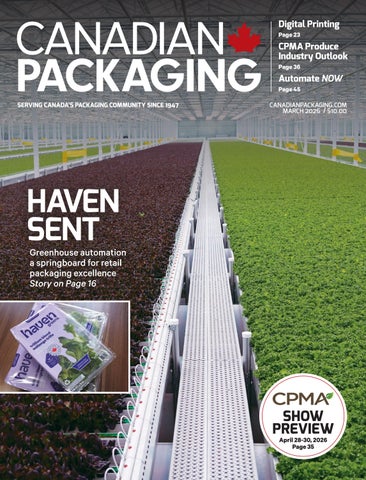
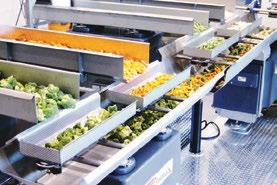
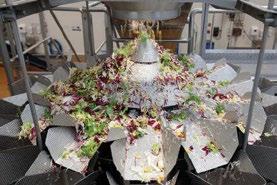
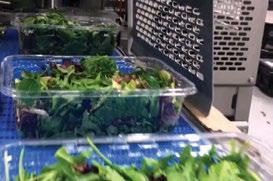
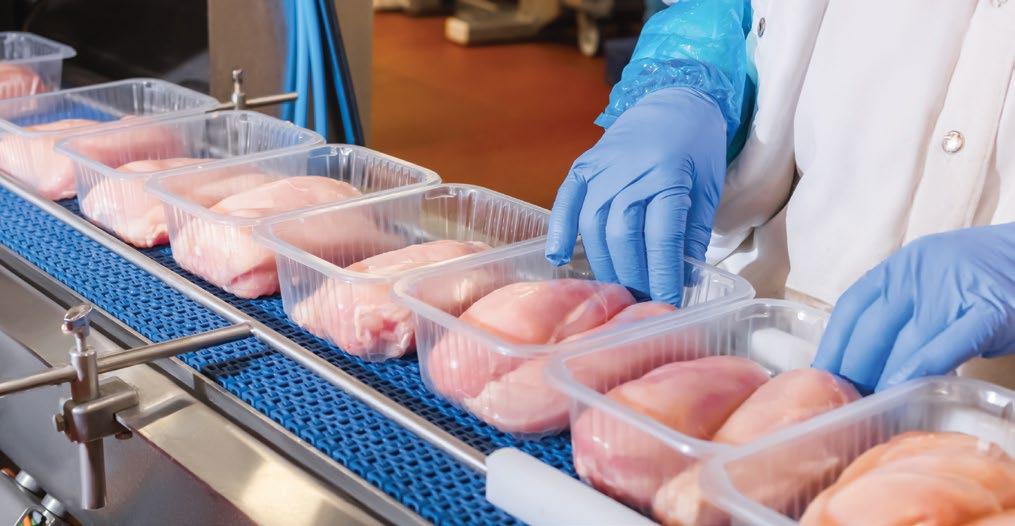
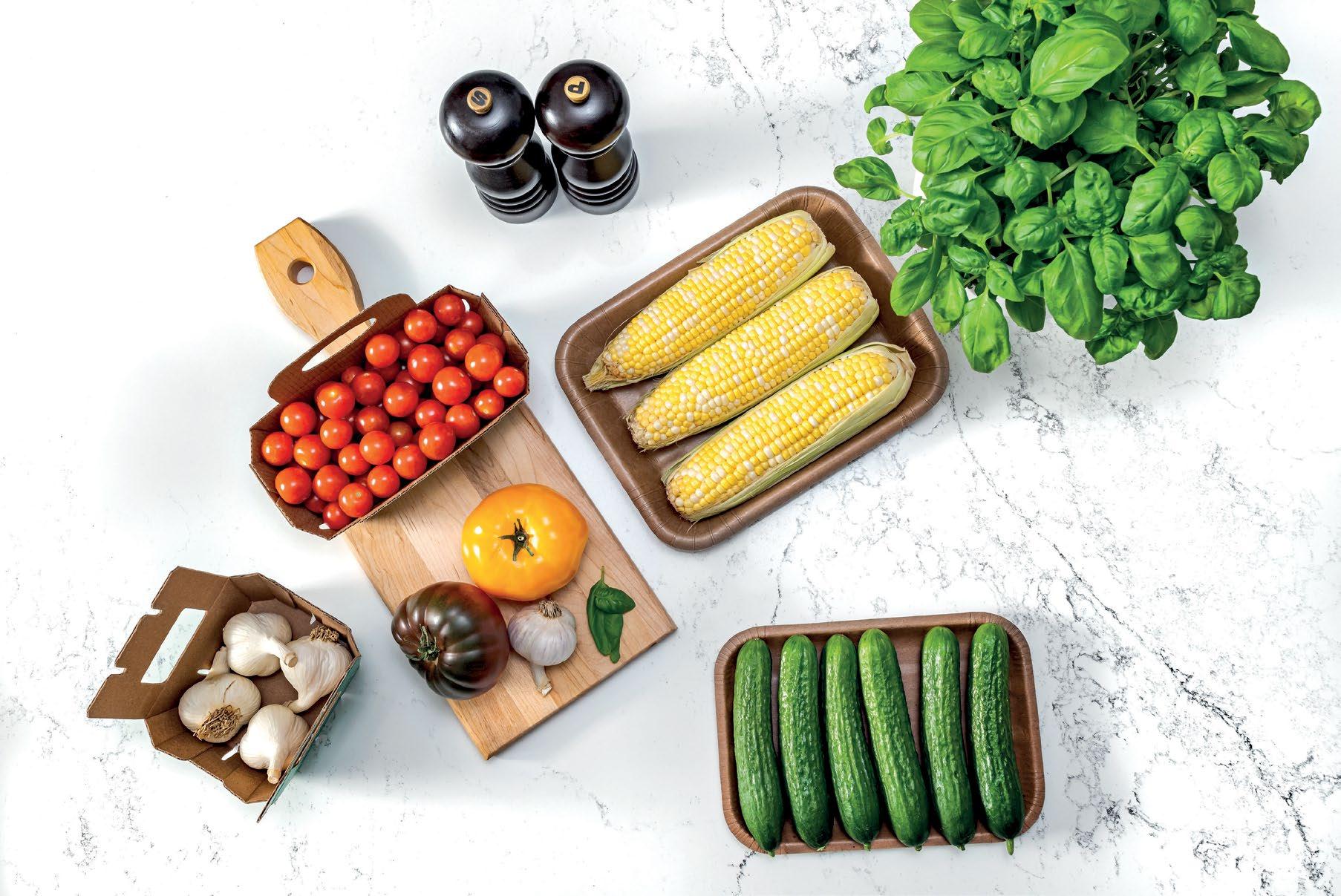
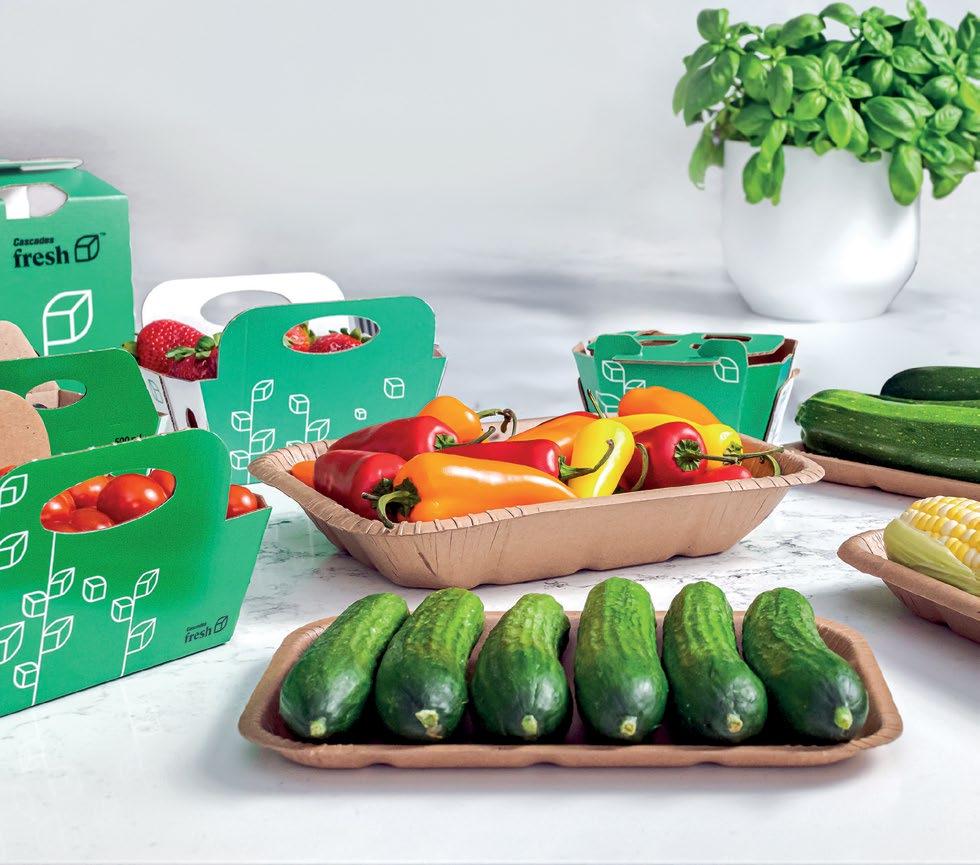
Greenhouse automation a springboard for retail packaging excellence Story on Page 16
Delivering Results.
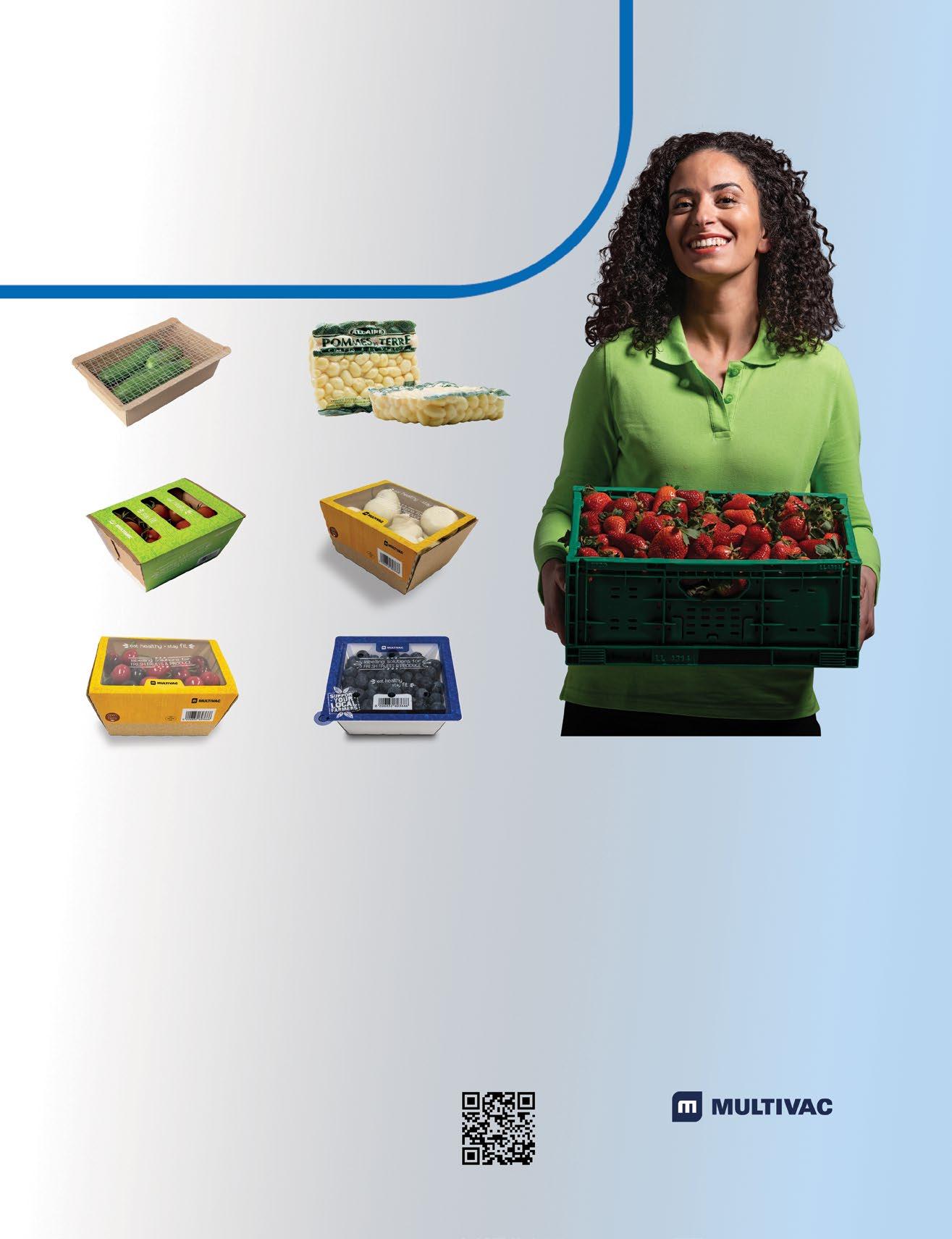
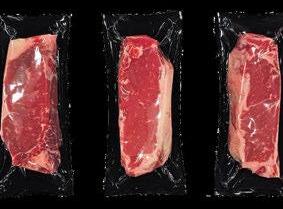
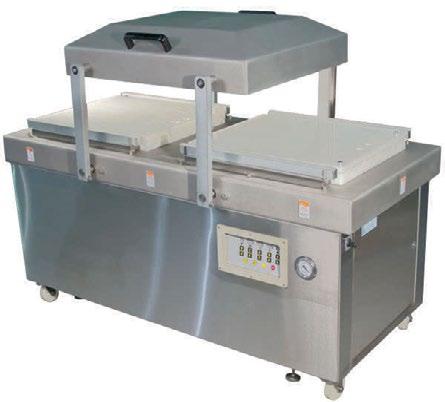
With Heat and Control, you have a partner with the scale to support your success, the innovation to advance your operations, and a commitment to quality that will help you offer better products for consumers.
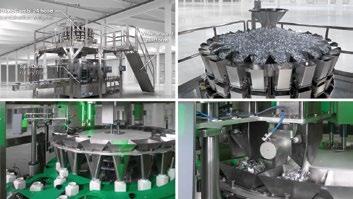
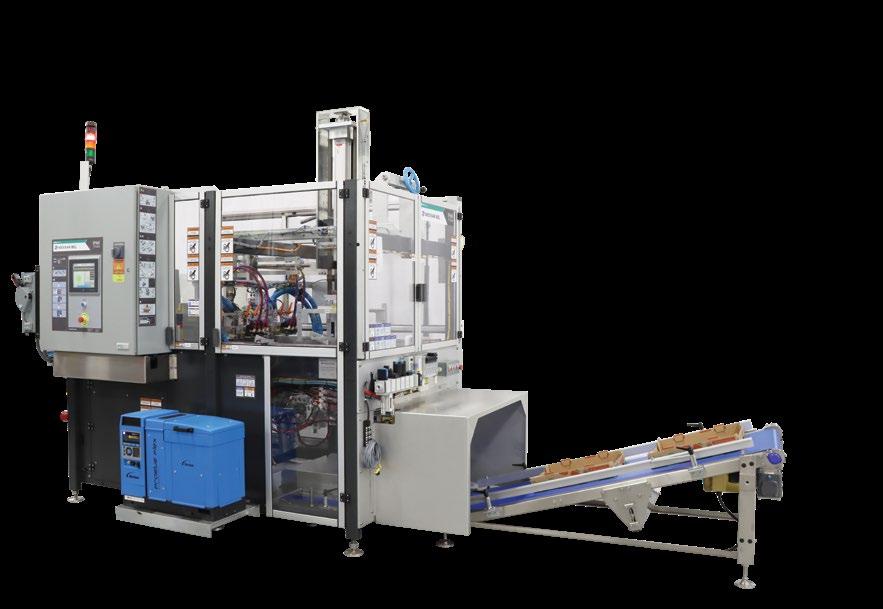
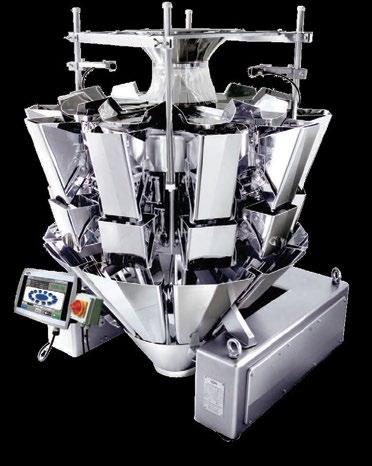
• Multihead weighing
Tray filling
• Produce blending/mixing
• Horizontal motion conveying
• Incline, belt and bucket conveyors
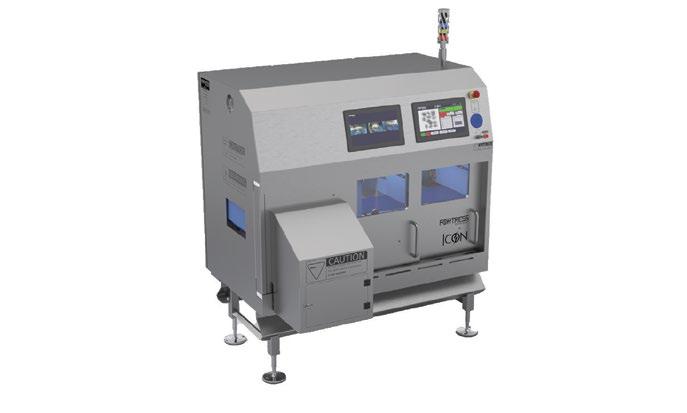
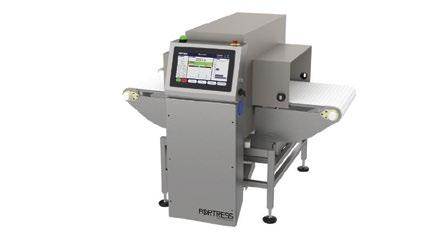
• Checkweighing and seal checking
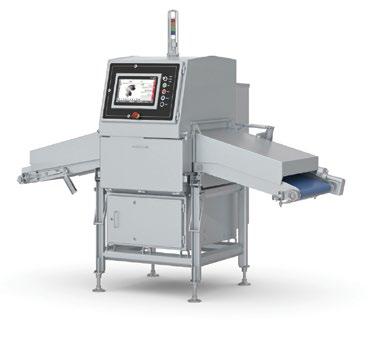
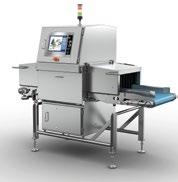
• Metal detection and x-ray inspection
• Controls and information systems
We are successful when you are successful. That’s why we apply creativity, engineering excellence, and determined perseverance to every project to help our customers get the performance their business demands—whether measured by flavor, efficiencies, sustainability, improvement, or innovation. FRESH PRODUCE PACKAGING & INSPECTION SOLUTIONS
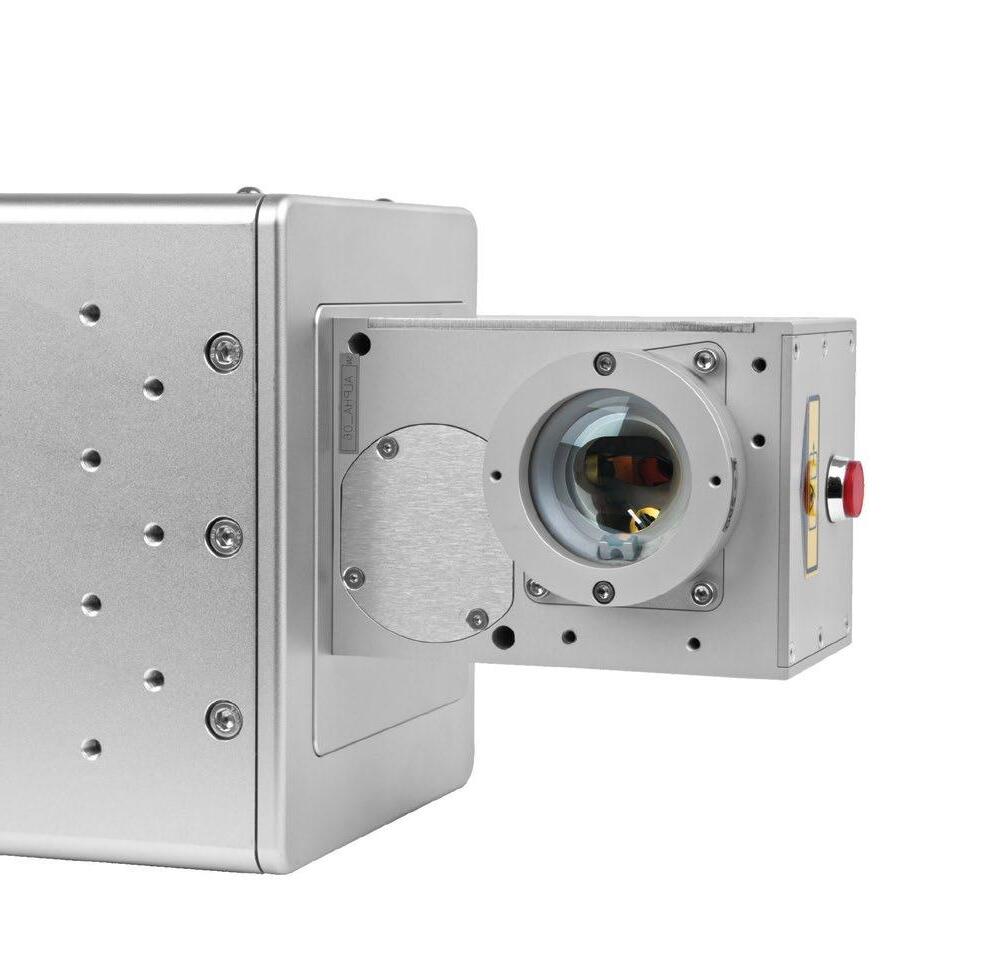
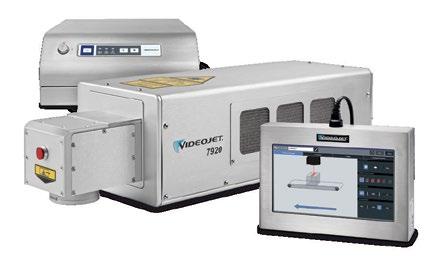
Videojet® 7920 UV Laser Marking System
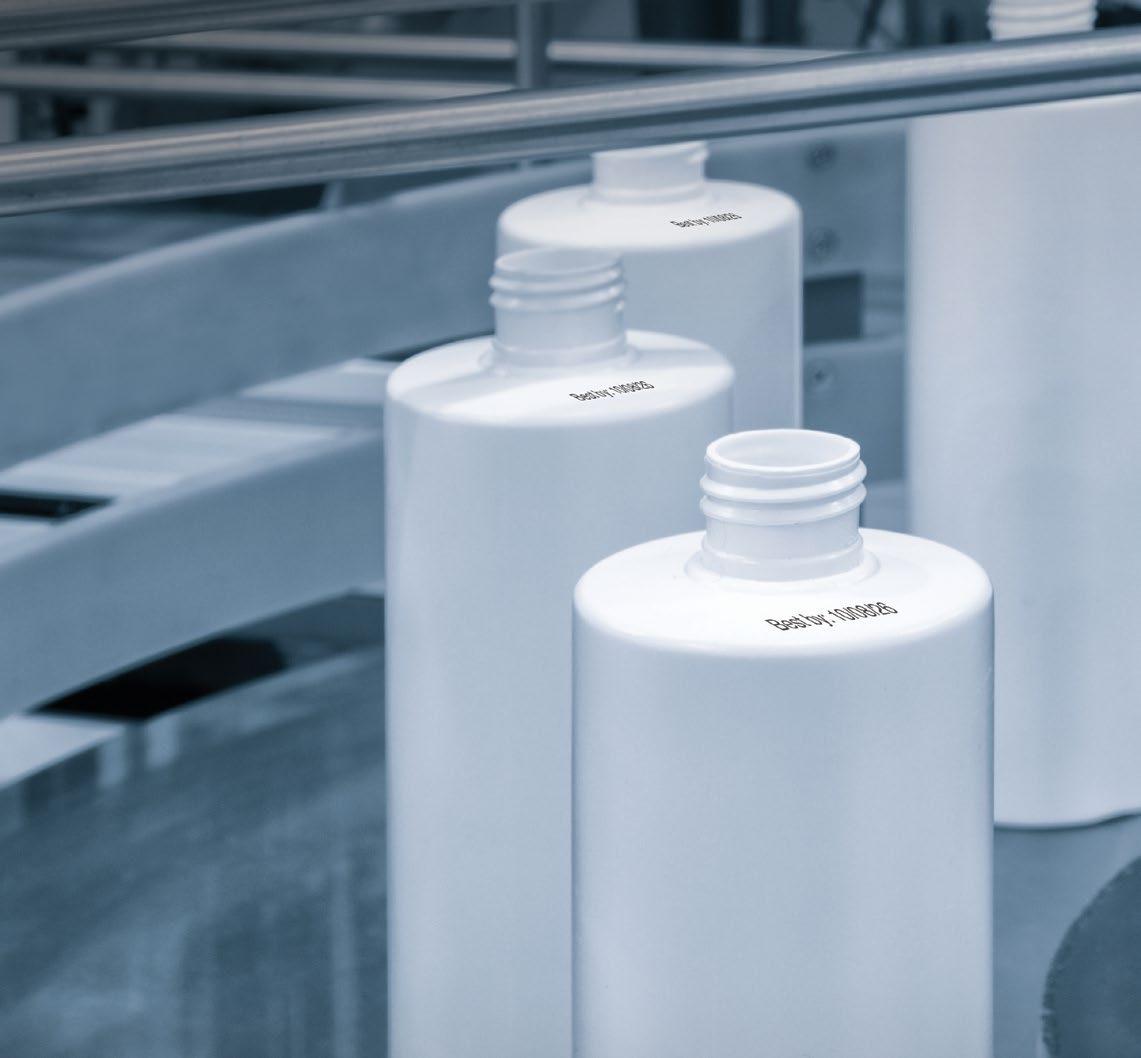
The Videojet 7920 UV laser marking system is engineered to optimize your operations with innovative Videojet SmartFocusTM technology, helping to reduce manual intervention while maintaining packaging integrity.
See how you can achieve your automation goals with the Videojet 7920 UV Laser and SmartFocus™ technology.
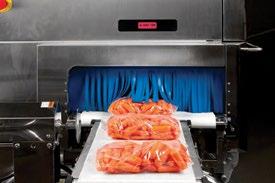
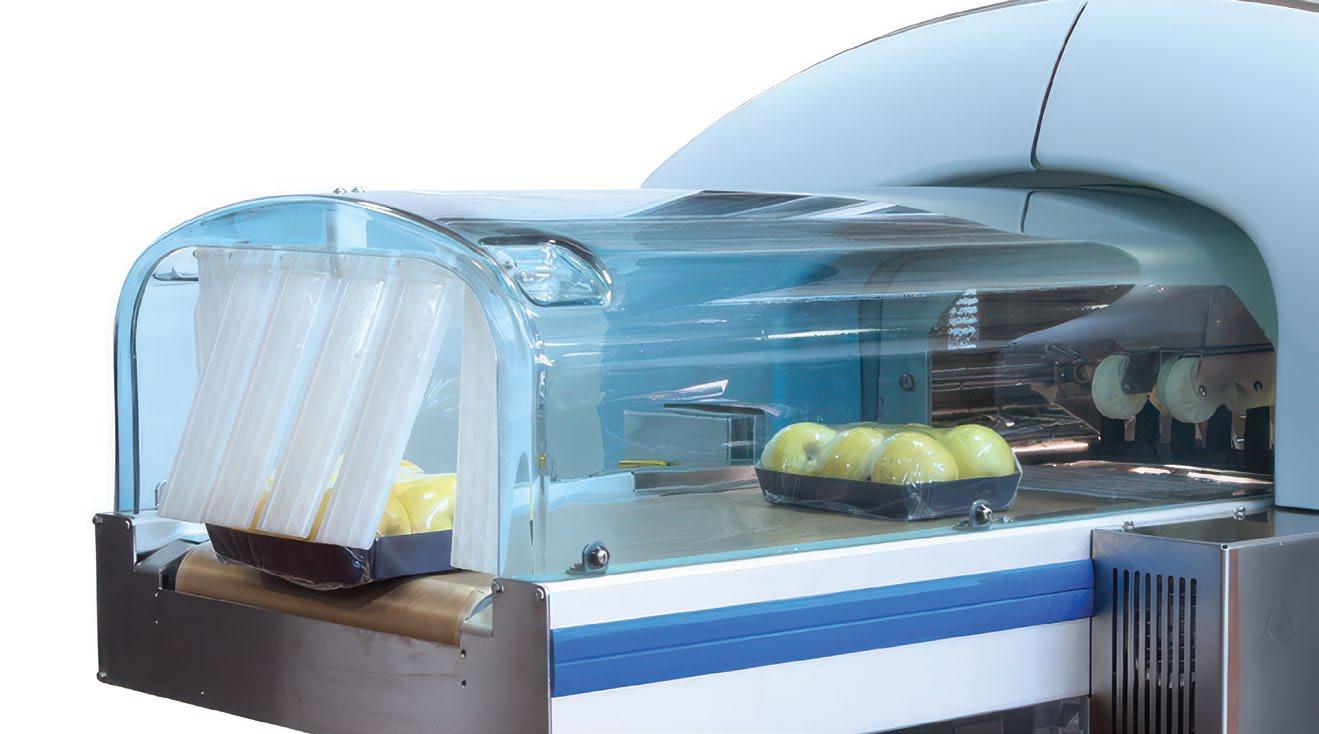
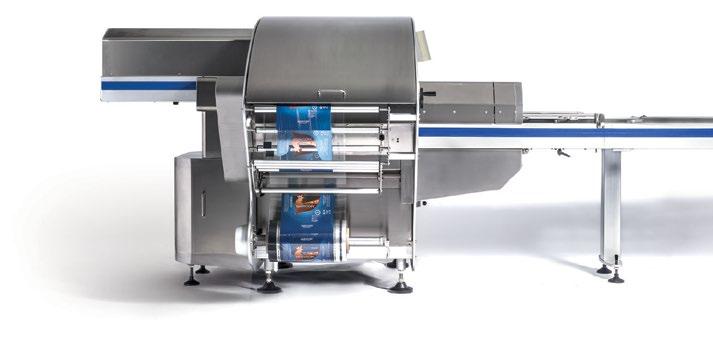
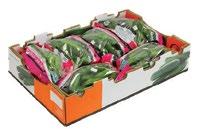
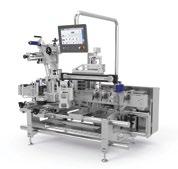
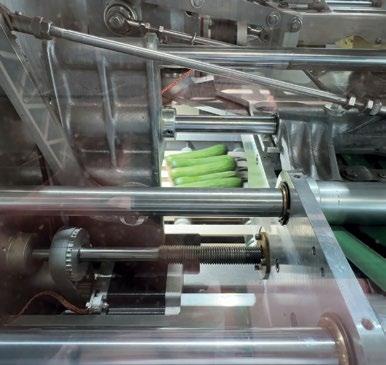
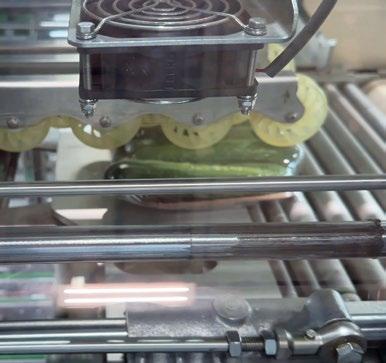
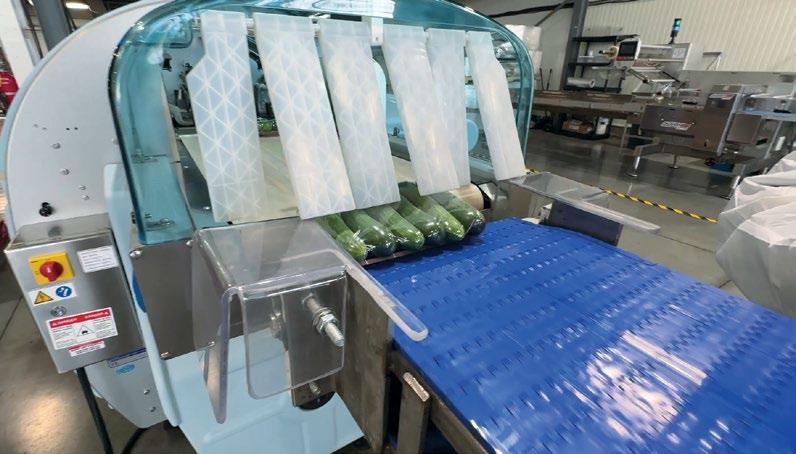
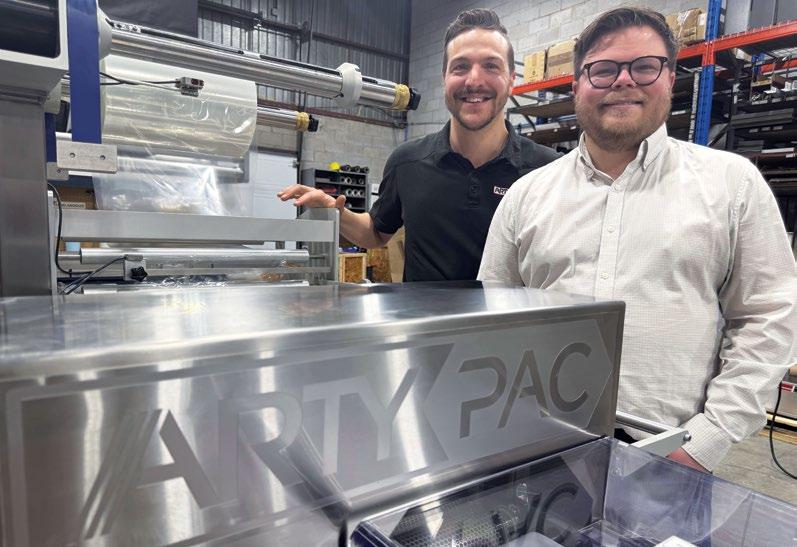
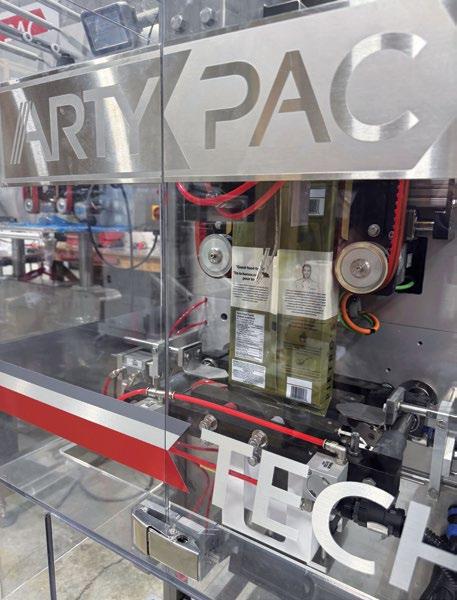
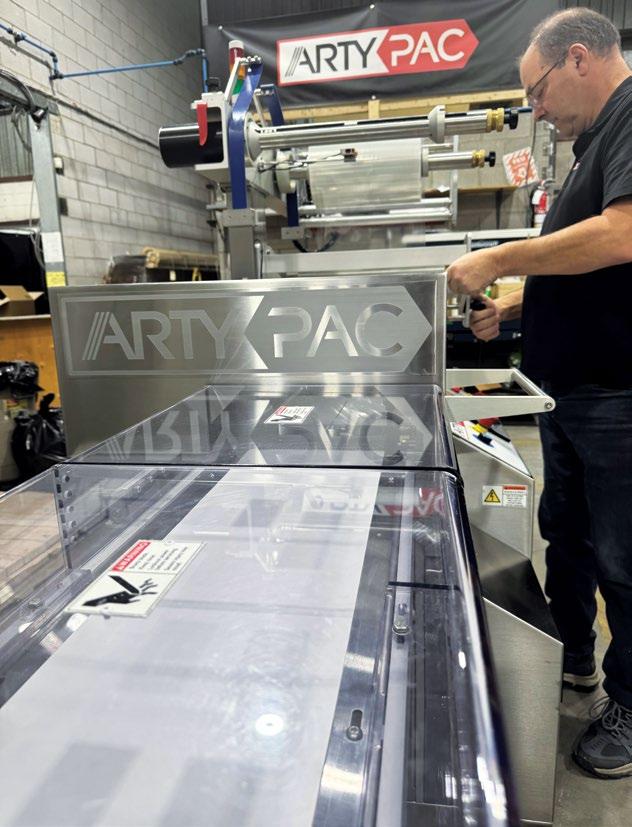
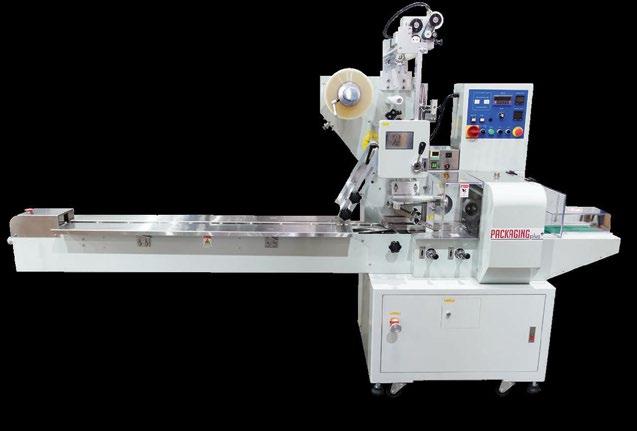
Make your product more appealing with highly attractive Fabbri stretch wrap packaging
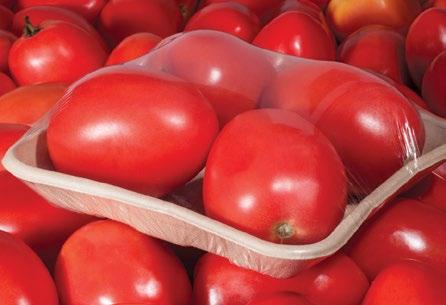
Nothing says “fresh” and “just packed ” like Fabbri packaging
n Uses stretch film to overwrap fresh food products in preformed trays.
n Produces tight, wrinkle-free packages with securely sealed bottoms.
n Handles a wide range of tray sizes with minimal changeovers to reduce downtime and increase production.
n Up to 75 packs per minute.
16 HAVEN’S SAKE
Canada’s first fully automated baby lettuce greenhouse up and running with exciting retail product offerings and a rapidly growing customer base.
FEATURES
23 Planetary Journey
Leading display and retail-ready packaging manufacturer moves into digital printing to enhance its core design and production competencies.
29 Generational Changes
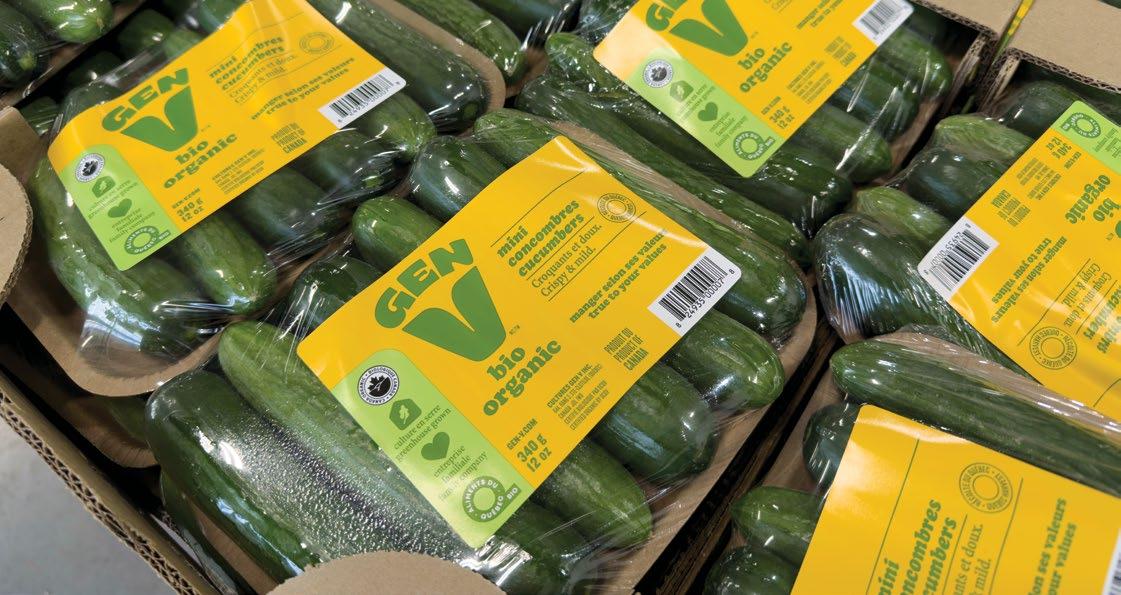
Leading Quebec greenhouse operator invests in robust stretch film wrapping machinery to speed up the packaging of its organic mini cucumbers.
33 Show of Strength
A bief preview of the upcoming CPMA 2026 conference and trade show in Toronto next month.
34 Growing Forward
The Canadian Produce Marketing Association (CPMA) provides its take on the new trade and other challenges facing Canada’s fresh produce sector.
42 The Human Factor
Plastic packaging manufacturer bucking industry trends to forge its own path to lasting success.
45 Lease on Life
The
Automatic bagging machinery OEM thriving under the new ownership structure focused on rapid market share and revenue growth. COLUMNS FROM THE EDITOR 4 George
48
A valid case for a more self-reliant domestic food value chain
Source: Bank of Canada 22%
The rise in Canada’s grocery prices since 2022
For a rich industrialized country like Canada—blessed with an abundance of land, water and key natural resources—it is puzzling that food security and affordability are a top-of-mind issue for millions of Canadian consumers. With the capacity for complete self-sufficiency in feeding its population, as well as a large chunk of the rest of the world, Canada’s food production infrastructure should in fact be a point of national pride, rather than an expression of complacent ineptitude.
But as the first half of this decade has painfully exposed, our food system’s vulnerability to external geopolitical and economic turbulence offers clear proof of many institutionalized shortcomings that have kept the nation’s food manufacturing base from reaching its full potential.
According to a new landmark report from the Canadian Food Innovation Network (CFIN), “A decade of compounding disruptions—pandemic, extreme weather, shipping crises, and now the disintegration of stable trade relations with our closest and largest partner—has exposed the systemic fragility of Canada’s food system.”
Unfortunately for Canadian consumers, this fragility has translated into record food inflation across all major food groups and product categories in recent years.
As the CFIN report notes, “Our country is one of the world’s largest agricultural producers, but it has outsourced much of the processing, technology, and infrastructure that turns those raw agricultural inputs into the food Canadians rely on.
“That dependency means the food system absorbs the full force of every global disruption, and Canadian consumers pay for it at the grocery store,” says the report, titled Building Resilient Supply Chains through Canadian Innovation
According to CFIN, which counts more than 8,000 member-companies representing food processors, distributors, retailers, technology companies and investors, Canada’s food supply chain vulnerabilities are a result of “structural” chronic underinvestment in the critical “missing middle” of the nation’s food system, which is composed largely of smaller-sized companies with insufficient resources to cope with sudden price
increases and supply shortages originating elsewhere.
As the report point out, “Canada’s 573 medium-sized food processing enterprises—firms with 100 to 499 employees— generate $18.4 billion in sales and are heavily trade-oriented, with exports accounting for 71 percent of their revenue.
“These are the firms best positioned to adopt new technologies, scale domestic processing capacity, and grow into the anchor processors Canada needs.
“But there are far too few of them,” the report laments, “and they face the same capital constraints as the rest of the sector.”
While providing additional funding to these companies to upgrade their technological and production capabilities would be helpful, it is not in itself the cure-all our food system needs, according to CFIN.
“What is missing is coordinated, longterm investment in getting innovation to the thousands of processors, distributors and operators who make up the backbone of Canada’s food sector,” the CFIN study proclaims, citing other smaller countries as viable examples to emulate.
“The Netherlands, with a fraction of Canada’s agricultural land, became one of the world’s largest food exporters through decades of sustained public investment in processing technology, supply chain infrastructure, and the institutions connecting research to industry,” CFIN points out.
For all that, the CFIN report notes that Canada is finally coming to grips with the systemic shortcomings.
“The good news is that the Canadian are building the processing capacity, operational technology, and supply chain infrastructure to address these vulnerabilities,” the report concludes.
“For Canada’s food sector, this means the path to resilient supply chains requires organizations and programs that span the full innovation cycle: funding and validating emerging technologies with industry partners and accelerating deployment of proven solutions across the thousands of processors, distributors, and operators that cannot navigate the process alone.”
GEORGE GUIDONI, editor GGuidoni@canadianpackaging.com
MARCH 2026 | VOLUME 79, NO. 2
Reader Service
Print and digital subscription inquires or changes, please contact Angelita Potal, Customer Service Tel: 416-510-5113
apotal@annexbusinessmedia.com
Mail: 111 Gordon Baker Rd., Suite 400, Toronto, ON M2H 3R1
Senior Publisher Stephen Dean | (416) 510-5198 SDean@canadianpackaging.com
Editor George Guidoni | (416) 510-5227 GGuidoni@canadianpackaging.com
Audience Development Manager Barbara Adelt | (416) 510-5184 Fax: (416) 510-6875 badelt@annexbusinessmedia.com
Media Designer Alison Keba | (519) 429-5181 akeba@annexbusinessmedia.com
CEO Scott Jamieson SJamieson@annexbusinessmedia.com
Annex Business Media 111 Gordon Baker Rd., Suite 400, Toronto, ON M2H 3R1; Tel: 416-442-5600.
Canadian Packaging, established 1947, is published 8 times per year except for occasional combined, expanded or premium issues, which count as two subscription issues.
PRINTED IN CANADA ISSN 008-4654 (PRINT), ISSN 1929-6592 (ONLINE)
PUBLICATIONS MAIL AGREEMENT NO. 40065710
SUBSCRIPTION PRICE PER YEAR (INCLUDING ANNUAL BUYERS’ GUIDE: Canada $83.27 per year, USA $190.41 (CDN) per year, Outside Canada $215.87 (CDN) per year, Single Copy Canada $10.00. From time to time Canadian Packaging will mail information on behalf of industry-related groups whose products and services we believe may be of interest to you. If you prefer not to receive this information, please contact our circulation department in any of the four ways listed above.
We acknowledge the [financial] support of the Government of Canada
BEST-IN-CLASS
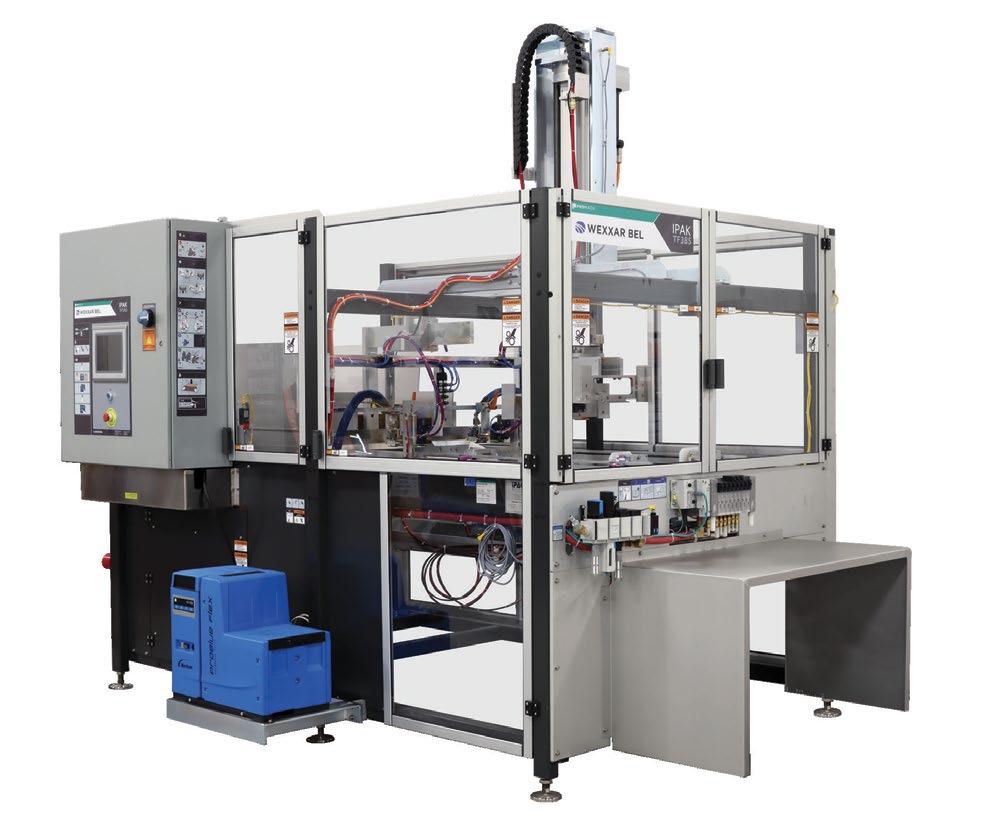
FULLY AUTOMATIC TRAY FORMER TRUSTED BY PRODUCE GROWERS
EXPERIENCE WHAT YOUR PRODUCTION LINE HAS BEEN MISSING
• Reliable tray forming with precise glue application
• Quick, tool-less changeovers to minimize downtime
• Heavy-duty design for demanding environments
• Forms up to 50 trays per minute to help maximize output Visit our booth #224 at See the IPAK Tray Former live in
SCAN TO SEE MORE
Cascades restructuring a mix of good and bad news for its operations
Leading Canadian corrugated packaging and tissue products group Cascades Inc. has announced a $6.9-million investment at its uncoated recycled boxboard manufacturing plant near the company’s global headquarters in Kingsey Fall, Que., to upgrade the facility equipment’s production capacity and product quality.
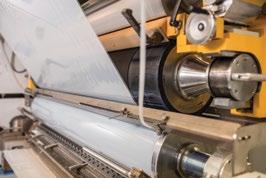
Since last September, Cascades has installed several new pieces of equipment to improve sheet quality control at its Papier Kingsey Falls facility (see picture) to improve the sheet’s properties to better meet the needs of the food packaging industry, including surface finish and printing requirements.
According to the company, this project is an important step in strengthening Cascades’ position in this market by driving its growth and ensuring long-term competitiveness.
“This project will enable us to increase our capacity and remain a valued partner for our customers,” says Cascades president and chief executive officer Hugues Simon.
Solutions for Physical Contamination Detection Recover Product and Profit from On-Hold Inventory
Physical contamination detection is an essential part of the production process, particularly in the food and beverage industry. Contamination caused by a foreign object can do serious harm if the contaminated product reaches a consumer. METTLER TOLEDO X-ray Reclaim provides rapid, reliable foreign material re-inspection services, helping food and beverage processors manage on-hold inventory quickly and confidently.
Our PXT™ Photon Counting and Dual Energy technologies detect most standard foreign materials in packaged food and beverage products at below 1 mm, helping you release on-hold inventory with minimal disruption. We’re able to detect most common contaminants, including bone, dense foreign material, gaskets and O-rings, metal and stainless steel, plastic, rubber, stone, and wire.
Learn more about METTLER TOLEDO X-ray Reclaim by contacting us at info@xrayreclaim.com or by visiting
www.xrayreclaim.com
“It underscores our unwavering commitment to investing in our assets in Quebec to accelerate our growth,” Simon says. “I’d like to thank the employees who helped install this equipment.
“Their expertise and dedication have made this project a resounding success.”
Commissioned in 1972, this Kingsey Falls plant employs 68 workers to make products for the industrial and food packaging markets. Said to be one of the region’s top industrial employers, the plant provides competitive salaries and a benefits program tailored to its employees’ lifestyle, according to Cascades.
However, the announcement follows a recent decision by Cascades to exit the honeycomb paperboard and partition packaging product sectors, resulting in swift closures of its Quebec-based plants in Saint-Césaire and Berthierville, along with a U.S.-based facility in York, Pa.
According to Cascades, the three mothballed facilities specialize in niche markets that are no longer aligned with the company’s long-term growth plans.
“Focusing Cascades’ assets on its strategic markets is essential to achieving our optimization and profitability improvement objectives,” says Simon. “The markets served by these plants no longer align with the business strategy of our packaging sector.
“This refocusing will allow us to invest in strengthening our position as a partner of choice for customers in our priority sectors,” Simon states.
While the closure of the Berthierville honeycomb packaging plant is effective immediately, impacting 52 employees, Cascades has reached a deal with Emballages LM of Saint-François-de-la-Rivièredu-Sud, Que., to sell some of its key assets for approximately $9 million.
The closure of the Berthierville honeycomb packaging plant—specializing in the manufacturing of cardboard partitions for the beverage market—will result in the loss of 52 full-time jobs, with another 37 jobs eliminated as a result of the York plant’s closure. Cascades says, the plants’ profitability has been eroded in recent years by continuous decline in market demand, with geographic distance from main customers also reducing their competitiveness.
Leading soft-drink bottler unveils new high-tech Calgary warehouse equipped with high-density ASRS
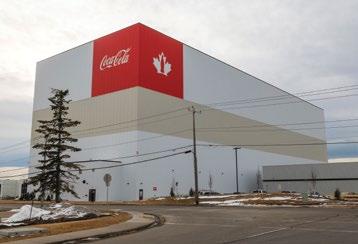
Coke Canada Bottling has formally unveiled its new high-density, high-tech warehousing facility in Calgary last month, capping off a $75-million investment that includes installation of the company’s first-ever ASRS (Automated Storage and Retrieval System).
Rising nearly 12 storeys high and capable of storing close to 20,000 pallets, the automated warehouse can store more than 65.5 million 355-ml cans at full capacity, according to the family-owned bottler, reinforcing Calgary’s role as a key hub for the company’s western Canadian operations.
Delivered in close collaboration with System Logistics, CANA Construction and 30 other Canadian-based business partners, the project injected approximately $29 million into the local economy.
Formed as an independent Canadian-owned company in 2018, Coke Canada Bottling employs more than 400 people in Calgary, where it operates a Combo Centre campus housing its manufacturing, sales and distribution activities, with the new automated warehouse enabling it to centralize storage within the company’s local Calgary operations.
According to the company, the Calgary
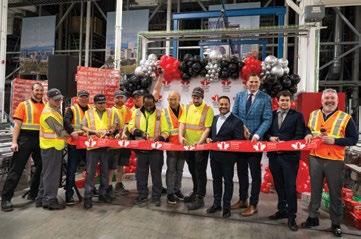
Coke Canada Calgary employees, including president Tony Chow and CEO Todd Parsons, join minister Shuvaloy Majumdar, member of parliament for Calgary Heritage; Joseph Chow, minister of jobs, economy, trade and immigration; and Calgary councillor Dan McLean, for the opening of the company’s new Automated Storage and Retrieval System.
project represents its largest single investments since it began operating as an independent corporate entity.
“We’re proud to add a new, red beacon to the iconic Calgary skyline representing our ongoing commitment to investing in how we make, move and sell Canadians’ favorite beverages right here in Alberta,” states Coke Canada Bottling president Tony Chow.
Rising nearly 12 storeys high and capable of storing close to 20,000 pallets, the 60,000-square-foot warehouse is now a prominent landmark in Calgary’s northeast, visible to travelers arriving at Calgary International Airport.
“This state-of-the-art warehouse features our first high-density, technology-enabled system which will improve our speed and agility, helping us to grow and better meet the evolving needs of our customers in Western Canada,” Chow says.
“This $75-million high-tech investment is a strong vote of confidence in Alberta, our economy, and in the skilled workers, trades, and partners who helped bring this facility to life,” adds Joseph Chow, Alberta’s minister of
jobs, economy, trade and immigration.
“We are proud that Coke Canada Bottling has chosen Calgary as home for this project, reinforcing Alberta’s role as a hub for innovation, manufacturing and economic growth,” Chow states.
“Our government looks forward to keeping Alberta the best place to invest, attracting the confidence of major companies like Coke Canada Bottling for decades to come.”
Adds Calgary mayor Jeromy Farkas: “This major investment by Coke Canada Bottling reinforces Calgary’s reputation as a city that means business, as we continue to deliver the right atmosphere for world-class companies to operate, grow and succeed.
“We’re proud to see this high-tech facility to not only call Calgary home,” Farkas says, “but to thrive and expand here.
“We are encouraged by their continued confidence in our city and look forward to supporting continued investment and job creation right here in Calgary.”
As Calgary’s Local Bottler and a familyowned business, the company makes, moves and sells many of the brands Canadians know and love, including Coca-Cola, Coke Zero Sugar, Diet Coke, FUZE Iced Tea, Sprite, Fanta, Dasani, Monster, Canada Dry and A&W brand products.
Canmaker invests $85 million to expand its Canadian operations
Massilly North America has announced a massive $85-million capital upgrade at its manufacturing facility in Brantford, Ont., that will enable the plant to begin production of metal cans for the Canadian food packaging industry—creating 50 new full-time positions and protecting 228 existing jobs.
A subsidiary of the Massilly Group, founded in France in 1911, Massilly North America is a global manufacturer of metal lids closures for food jars. The company first started operating in Canada in 1996 in Mississauga, Ont., in 1996, before moving to Brantford in 2012.
“We are a global can manufacturer in Europe and in other places, so this is a natural evolution for us,” says Massilly North America’s president Garnet Lasby, adding the company is planning to use 100-percent Canadian-made steel to manufacture the cans in large commercial quantities.
Lasby says the Ontario government, which is providing $5 million in funding through the Ontario Together Trade Fund (OTTF) tariff-relief program, had identified a need to develop an Ontario food can manufacturing industry to fill a gap in the Canadian agri-food sector, after which it approached Massilly to
fill that gap.
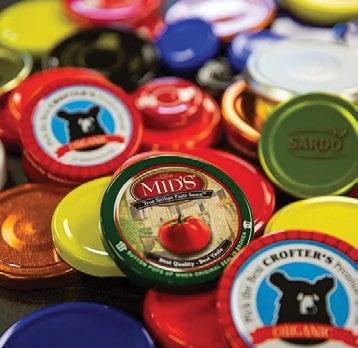
A sampling of metal jar lids currently produced at Massily North America’s plant in Brantford, Ont.
“We looked at the business case for it, and with some help from the province we decided to make this significant investment in a product that Ontario needs and will support the Canadian agri-food sector,” says Lasby, calling the investments “a testament” to the company’s belief in Canadian manufacturing.
“By combining Canadian steel with our technical expertise, we are creating a ‘Made in Canada’ solution that will benefit the environment, the economy and the consumer,” Lasby states.
Never Obsolete.
Fortress Technology engineers upgradeable inspection systems for Canadian food and packaging manufacturers who plan long term.
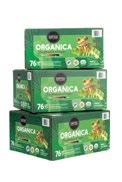
Toronto-based corrugated packaging products manufacturer Atlantic Packaging Products has picked up the prestigious Best in Class PAC Global award in the Technical at the 2026 PAC Global Awards gala ceremony in Toronto last month for its innovative packaging solution for the Zavida Coffee Roasters Organica coffee brand. Produced on the Koenig & Bauer Durst SPC 130 digital press, the premium corrugated package demonstrates the exceptional precision and color depth now achievable through direct digital prining on uncoated white-top corrugate. (See Picture) “The Koenig & Bauer Durst SPC 130 press enables high-speed, high-quality production that redefines traditional printing methods, offering exceptional flexibility and faster speed to market to meet evolving customer demands,” says Atlantic Packaging’s plant manager Larissa Fritzen. Designed to reflect the natural, sustainable essence of the Organica brand, the new packaging showcases vivid, high-resolution imagery with remarkable clarity, notes Atlantic’s digital print manager Anthony Memme. “The intricate textures and organic tones reinforce the brand’s environmental commitment through visual storytelling,” Memme explains. “The use of uncoated white-top corrugate aligns with eco-conscious values, offering a tactile experience that complements the design.”
Leading Finnish paperboard packaging producer Metsä Board has announced plans to open up a new Packaging Design Studio facility in Milan, Italy, this summer as part of the company’s strategy to accelerate packaging innovation and strengthen collaboration with European brand-owners, converters and packaging developers. “Located in one of Europe’s leading design capitals, the Milan studio gives us a perfect setting to work even more closely with our customers,” says Erja Hyrsky, Metsä Board’s senior vice-president of commercial operations. “The studio makes it easy to connect, test ideas and move towards solutions that keep pace with the fast-evolving packaging landscape.” Hyrsky says the new studio will be equipped with modern tools and advanced AI (artificial intelligence)-supported design and simulation technologies to enhance the way design sprints and cocreation sessions are carried out more effectively, especially in projects where sustainability targets, performance requirements or regulatory changes drive the need for new solutions.
ORBIS Corporation, a wholly-owned subsidiary of Menasha Corporation specializing in reusable transit and
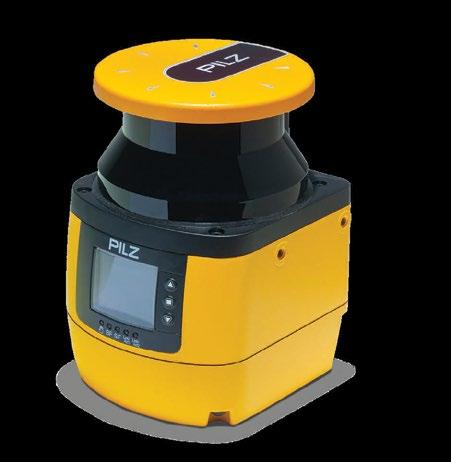
Pilz PSENscan
industrial packaging solutions, has completed the acquisition of Robinson Industries, Coleman, Mich.-based manufacturer of single and twin-sheet thermoforming, sheet extrusion, and structural foam injection molding machinery for manufacturing of custom pallets, lids and trays for automotive, industrial, agricultural and retail packaging applications. “Robinson Industries’ legacy of innovation and technical excellence aligns with ORBIS’ vision to transform supply chains through reusable packaging,” says Norm Kukuk, president of ORBIS Corporation in Oconomowac, Wis. “By combining our strengths, we will accelerate design innovation, deliver faster solutions, and help customers achieve greater sustainability and efficiency.” The acquisition follows the recent opening of a renovated ORBIS manufacturing facility in Greenville, Tex., that is expected to create more than 190 new jobs over the next three years. Totaling 420,000 square feet of production and 240,000 square feet of warehouse space, the Greenville facility produces a broad range of
reusable totes and pallets for moving, storing and protecting various consumers and industrial products through their supply chains.
Leading multinational chemical and consumer goods company Henkel AG & Co. KGaA, headquartered in Düsseldorf, Germany, has reached a deal to acquire the assets of Swiss-based ATP Adhesive Systems from global private equity firm Arsenal Capital Partners. According to Henkel, the acquisition will enable its Adhesive Technologies business to expand its portfolio beyond liquid products. An established expert in high-performance water-based specialty tapes for a wide variety of end-markets, ATP currently employs about 700 people across Europe and North America, generating revenues of around US$320 million last year. “This acquisition delivers a compelling portfolio of water-based specialty tapes with increasing use cases as a more sustainable alternative with low VOC (volatile organic compounds) levels, and consequently driving growth well above the broader tapes industry,” says Mark Dorn, executive vicepresident responsible for Henkel’s Adhesive Technologies business unit.
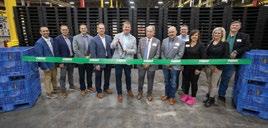
ORBIS Corporation officials perform the ceremonial ribbon-cutting during the formal opening of the company’s renovated manufacturing facility in Greenville, Tex.
MARCH 25-27
Louisville, Ky.: PPC 2026 Spring Outlook & Strategies Conference, by the Paperboard Packaging Council (PPC). At Omni Louisville. To register, go to: www.paperboxorg.com
MARCH 31 – APRIL 2
Dubai, U.A.E.: Gulf Print & Pack 2026, printing and packaging technologies exhibition for the Middle East and North Africa (MENA) region by Informa PLC. At the Dubai World Trade Centre. To register, go to: www.gulfprintpack.com
APRIL 13-16
Atlanta, Ga.: MODEX 2026, material handling, logistics and supply chain technologies exhibition by MHI. At Georgia World Congress Center. To register, go to: www.modex.com
APRIL 14-16
Barcelona, Spain: IMFA Annual Conference By the International Molded Fiber Association (IMFA). At Torre Melina Gran Meliá. To register, go to: www.imfa.org
APRIL 21-24
Shanghai, China: CHINAPLAS 2026, global plastics and rubber trade fair by Adsale Exhibition Services Ltd. At the National Exhibition and Convention Center (NECC). To register, go to: www.ChinaPlasOnline.com
APRIL 29-30
Toronto: 2026 CPMA Convention and Trade Show, by the Canadian Produce Marketing Association (CPMA). At the Metro Toronto Convention Centre. To register, go to: www.convention.cpma.ca
APRIL 29 – MAY 1
Montreal: SIAL Canada 2026, global food marketplace by Expo Canada-France. At Palais des Congrès. To register, go to: www.sialcanada.com
MAY 3-4
Toronto: Bakery Showcase 2026, trade show and conference by Annex Business Media and the Baking Association of Canada (BAC). At the Toronto Congress Centre. To register, go to: www.bakeryshowcasecanada.com
MAY 7-13
Düsseldorf, Germany: interpack 2026, global packaging and processing technologies exhibition by Messe Düsseldorf GmbH. At Messe Düsseldorf. To register, go to: www.interpack.com
MAY 19-22
Barcelona, Spain: FESPA Global Print Expo 2026, jointly with European Sign Expo 2026, Personalisation Experience 2026, and Corrugated 2026. By FESPA(Federation of European Screen Printers Associations). At Fira de Barcelona. To register, go to: www.fespa.com
Endress+Hauser Canada , Burlington, Ont.-based supplier of measurement instrumentation, services and solutions for industrial process engineering in the food-and-beverage, oil and gas, chemical, mining and other heavy industries, has appointed Eliza Vrbanac as managing director.
Corrugated packaging products manufacturer Cascades Inc. of Kingsey Falls, Que., has appointed François Fillion as vice-president of excellence.
cations headquartered in Lossburg, Germany, has appointed Dr. Volker Nilles as the company’s new chief executive officer.
Processing Technologies International, LLC (PTi), Aurora, Ill.-based manufacturer of plastic sheet extrusion machinery, has appointed Ryan Leopold as vice-president of operations.
GMG Color Americas, Boston, Ma.based supplier of color management software solutions for printing, packaging and other graphic arts applications, has appointed Matt Sisson as its new sales director for the U.S. north central region.
Dart Controls, Zionsville, Ind.-based manufacturer of variable speed motor drives, controls and accessories for electric motors, has appointed John Burch as the company’s new president.
Arburg, leading global manufacturer of injection molding machinery for plastic processing appli-
Magline, Inc. , Standish, Mich.-based supplier of hand trucks, carts and other material handling solutions, has appointed Jonathan Welzel as vice-president of marketing.
Monadnock Paper Mills, Inc., Bennington, N.H.based manufacturer of specialty papers for printing, packaging and technical applications, has appointed Andrew Manns as its new chief executive officer.
Cincinnati, Ohio-headquartered packaging machinery consortium ProMach has appointed Adam Chapis as the new regional sales manager for the U.S. northeast territory of the company’s Flexible Packaging Group division, which comprises the Bartelt, HMC and Matrix brands of flexible packaging equipment.
TAKE THE BEST WEIGH FORWARD
Engineered for superior performance, accuracy and line integration, the new High-Speed Rigid Container Weigh Filling System from WeighPack Systems Inc. features the advanced 24-head PrimoCombi multihead weigher, paired with the Spindexer HS rotary filler, to deliver exceptional throughput and consistency for demanding production environments. Designed to meet the growing needs of food, cannabis, snack, nutraceutical, hardware, and specialty product manufacturers, the new system achieves speeds of up to 150 rigid containers per minute, while ensuring gentle handling and precise weight accuracy. The system’s 24-Head PrimoCombi delivers high-precision weight accuracy for a wide variety of products, while the Spindexer HS rotary filler for smooth and efficient container movement through its gear-worm transfer system, triple star wheel assembly, and dual timing catch boxes—ensuring consistent fills, stable indexing, and minimal product giveaway. The integrated walk-around platform allows operators easier access for inspections and maintenance, while improving ergonomic workflow and overall equipment efficiency—further enhanced by the use of color-coordinated changeover parts to allow operators quickly identify, remove, and replace components with near-zero error risk.
WeighPack Systems, Inc.
TRIMMING THE FAT
Eagle Product Inspection has advanced its FA3 Series Fat Analysis (FA) systems by incorporating its dual-energy X-Ray absorptiometry (DEXA) technology to enable precise measurement of fat content in various meat products. In addition, it also and calculate the chemical lean (CL) value of meat products to ensure the product labels comply with U.S. Department of Agriculture (USDA) and Food Safety Inspection Service (FSIS) standards. Comprising the FA3/M and FA3/C models, the FA Series delivers benefits that extend beyond regulatory compliance, according to Eagle, by ensuring the batches meet target specifications the first time to enable processors to reduce rework, improve product consistency and quality, and optimize existing inventory. Robust construction allows operation in harsh washdown environments, and the systems are effective across a wide range of red meat and poultry applications, whether fresh, chilled, frozen, or packaged. The FA3/M model provides accurate fat measurement
to +/-1 CL and contaminant detection in fresh, chilled, frozen, and hot-boned loose bulk meat, as well as frozen or tempered meat blocks and unwrapped meat conveyed in plastic crates. For its part, the FA3/C provides inline fat measurement contaminant detection of packaged products in formats including plastic crates, cartons, and vacuum-packed blocks.
Eagle Product Inspection
SHAPE SHIFTING
The new L 320 series of labelers from MULTIVAC is a new high-performance solution engineered to deliver maximum flexibility and precision in product labeling of cylindrical and conical products, as well as shaped bottles, at high throughput rates. The versatile system enables high-speed wraparound, front/back or top labeling, and even applying and sealing labels—offering a highly flexible solution for challenging packaging tasks and exacting production environments. After the packs are converged and aligned on the transport conveyor, a robust product guiding system ensures that the labels are applied exactly at the intended position. Depending on the particular requirements, several label dispensers can be integrated into the L 320, so that different labels can be applied in one operation, with the system’s servo technology ensuring maximum labeling accuracy. As an option, the L 320 series can be equipped with visual inspection systems to carry out comprehensive inspection of products, labels and print data—including the checking of label presence, barcodes and printed information.
MULTIVAC Group
STRETCHING THE LIMITS
Designed for high-volume, high-performance wrapping, the new Octopus Prestige stretchwrapper from Signode combines exceptional speeds with an operator-driven design and exceptional reliability to offer a multitude of performance attributes that include:
• Record wrapping speed, helping plants boost throughput and meet demanding delivery schedules;
• TopDown service access, enabling all maintenance to be performed efficiently at floor level;
• Simplified mechanics, with fewer sensors and adjustments for improved uptime;
• Reduced film usage, thanks to the new Double-S film carriage system that helps improve film conversion and sustainability;
• Superior load stability, made possible by enhanced flexibility to apply the right containment force throughout the wrapping cycle.
Signode
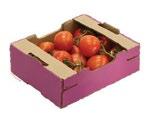
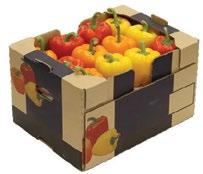
Corrugated packaging solution to keep fresh produce moving
Operating a 42,000-square-meter corrugated production site in a rural town of Mórahalom, Pacapime Hungary specializes in supplying customers across Hungary, Romania, Croatia, Serbia and Western Europe with high-quality fresh produce boxes for apples, pears, tomatoes and bell peppers grown in these regions.
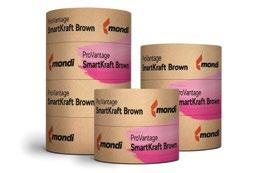
As every produce grower knows, packaging for fresh fruit and vegetables requires reliable strength, durability and effective ventilation to protect produce during transport while maintaining attractive presentation at retail. To meet these requirements, Pacapime Hungary relies on the vantage ProVantage SmartKraft Brown containerboard grade supplied by Mondi, a leading global producer of sustainable packaging and paper products with global headquarters in Vienna, Austria.
Corrugated boxmaker Pacapime
Hungary uses Mondi’s containerboard to provide effective and sustainable transit packaging solutions for European fruit and vegetable growers.
According to Mondi, the containerboard’s impressive strength properties support reliable burst and tear resistance, while consistent runnability and processing properties enable efficient production and dependable box performance. Moreover, the ProVantage SmartKraft Brown features a 100-percent fresh-fiber top ply to ensure high surface integrity and consistent quality.
“High-quality kraftliners are important in fresh produce applications,” says Pacapime Hungary’ manging director Tom Pissens. “The paper must consistently support box performance, as our customers rely on us to deliver quality packaging every time.”
The collaboration between Mondi and Pacapime Hungary has been on a long-term partnership approach, including close technical cooperation and on-site containerboard support including joint trials, data-driven optimization and continuous knowledge exchange.
“Business is about people and long-term trust,” adds managing co-director Pacapime Hungary Lynn Pissens.
“Our collaboration with Mondi provides the stability and technical expertise that allow us to deliver consistent quality and drive innovation together.”
As Pissens relates, sustainability is a vital shared priority for both companies. To that end, Pacapime Hungary has invested in water treatment systems, solar panels and transparent certification processes to meet growing customer and consumer expectations. All in all, the exemplary business partnership enabled Mondi and Pacapime Hungary to provide sustainable corrugated packaging solutions that reduce food waste, create value across the supply chain, and protect fresh produce from field to shelf.
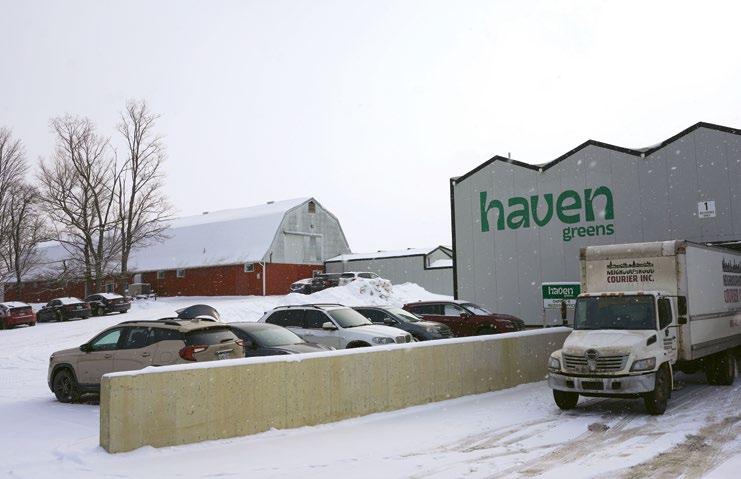
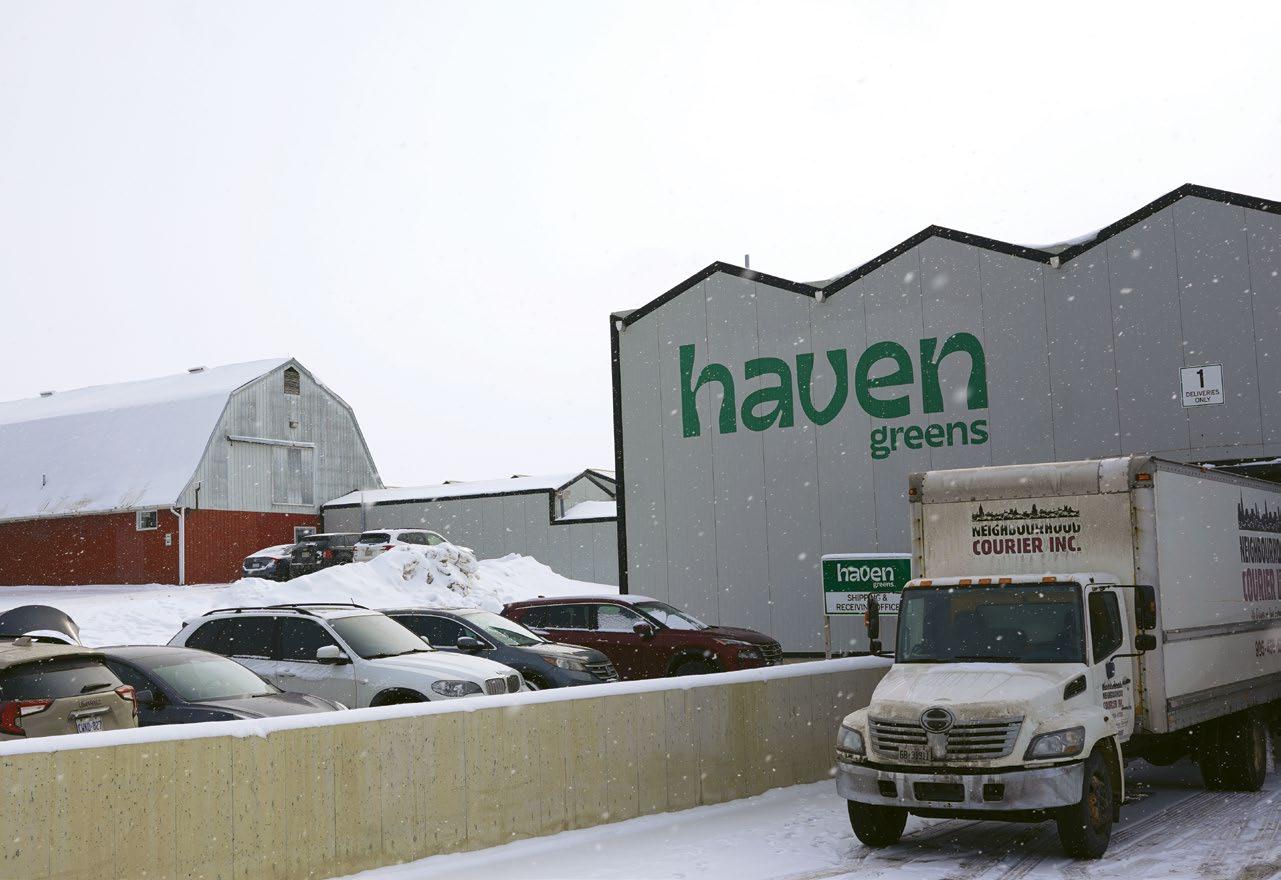
A refrigerated delivery truck parked at the shipping dock of the five-acre Haven Greens greenhouse just north of Toronto in King City, Ont., waiting to be loaded with fresh product for quick distribution and delivery to the company’s growing list of prominent retail and foodservice customers.
TOTAL REFRESH
New lettuce greenhouse operator combines advanced automation and modern packaging technology to set new benchmarks for product taste and freshness
By George Guidoni, Editor
Photos by Ahmad Sayed
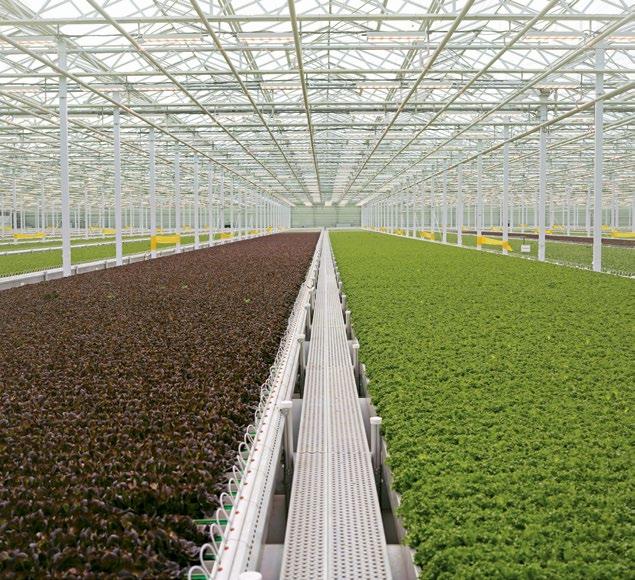
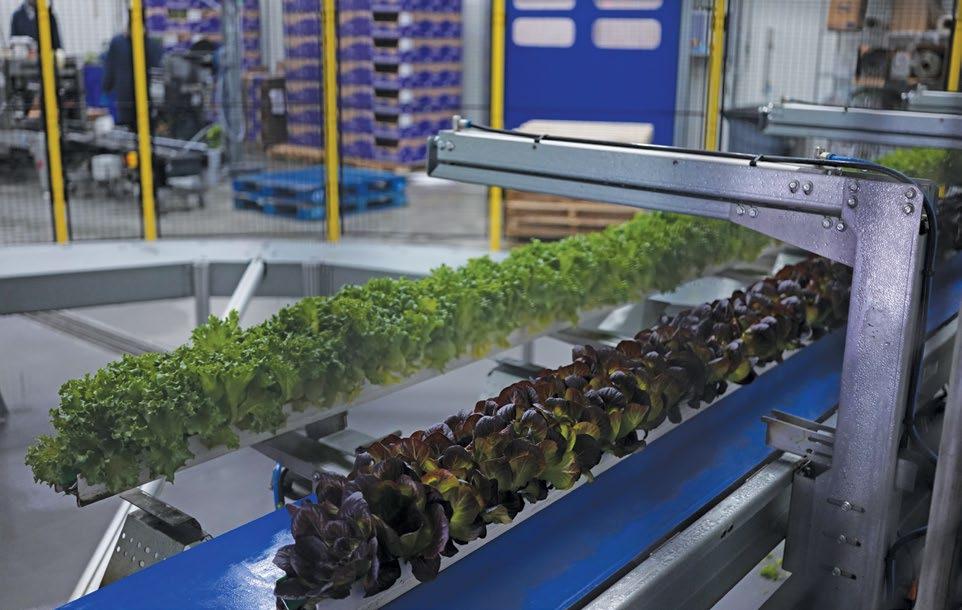
Every day is a fresh new harvest day at the Haven Greens greenhouse operation in King City, Ont., where automation and AI (artificial intelligence) technologies play a central role in the production of high-quality baby lettuce in a fully climate-controlled indoor environment set up to ensure maximum product freshness and crunchy texture for its leafy creations, with minimal human intervention.
A brain-child of the company’s founder and chief executive officer, Jay Willmot, the five-acre greenhouse is already producing about 10,500 pounds of fresh lettuce per day, barely a year since launching the first batches of its Haven Greens brand of green and red baby lettuce leaf into the Canadian retail markets.
For Willmot, a third-generation farm-
er who has masterminded the recent transformation of the family’s legacy thoroughbred horse farming enterprise into an agri-tech start-up, the company’s early success is a strong validation of his long-held belief that modern technology and traditional farming practices can not only co-exist, but in fact improve the Canadians’ quality of life through greater home-grown produce availability and self-sufficiency.
“Well over 90 per cent of the leafy greens consumed in Canada are imported from the U.S.,” Willmot says, “so there is a real need to grow Canadian production volumes to ensure better food security and food sovereignty for Canadian consumers, with an opportunity to ‘Buy Canadian’ by giving them a choice that is both fresh and affordable.
“Food security and food sovereignty are big issues for Canada,” Willmot asserts, “and obviously we can’t solve this problem for Canada ourselves because
we’re just not big enough.
“But if we can inspire other people to pick up that food sovereignty mantle, we’ll be happy to be leading the charge towards serving the Canadian market with more Canadian-grown produce,” he states.
“The market has really evolved in the last 10 years in terms of consumer education and knowledge about greenhouse lettuce versus field lettuce,” Willmot notes, “but being able to offer pesticide-free, non-GMO lettuce that does not need washing before eating really creates a whole new category with a fresh, crunchy and tasty product that is a real game-changer in this market.
“It has taken a lot of hard work and up-front investment to build Canada’s first fully-automated greenhouse for lettuce,” he points out, “but we believe it’s an important first step towards building this critical infrastructure to supply the Canadian domestic market with local product.”
As Willmot relates, “We are the first greenhouse in Canada where not a single human touches the crop, from sowing and seeding all the way out to harvest and going into the package.
“It’s a totally hand-free process where everything is mechanized, with conveyors
and mobile gullies (gutters) automatically transporting the product throughout the greenhouse to our harvesting area and on to the pack house,” Willmot explains.
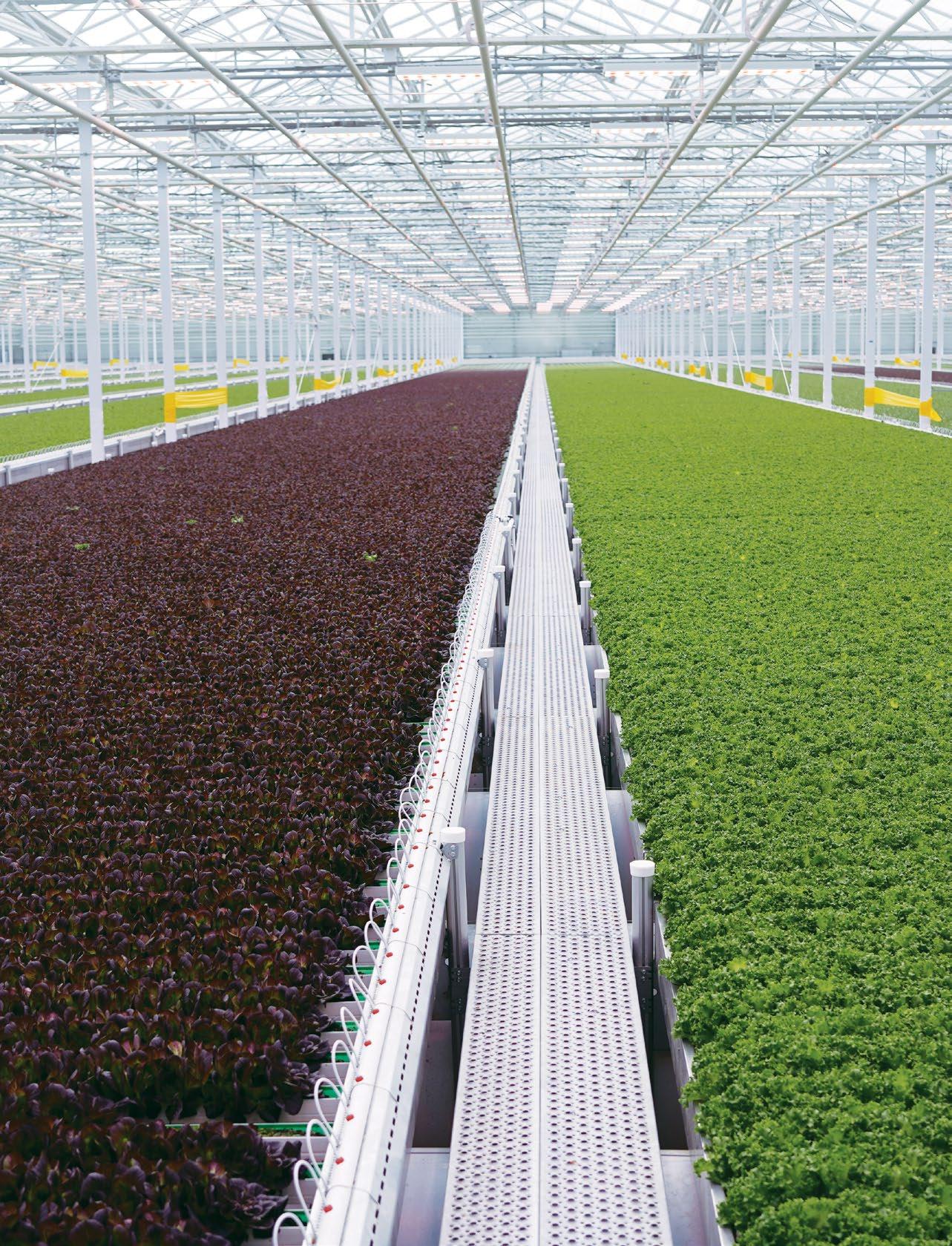
The Mobile Gully System (MGS) at the Haven Greens greenhouse consists of multiple conveyor belts and robotic arms that guide gutters through each stage of cultivation—from soil filling to seeding.
After seeding, the gutters spend two days in a dark germination chamber for the seeds to sprout, before being rotated back into the greenhouse to mature under tightly controlled and monitored temperature, humidity, light and moisture conditions.
Each gutter uses RFID (radio frequency identification) technology to track plant health and maximize yield by adjusting the indoor environment as dictated by the AI-enabled central computer system throughout the growing process—about 24 days for green and red baby lettuce, and 14 days for flavor varietals such as mustard and arugula.
“We control every aspect of the environment here in our greenhouse, including things like lighting, irrigation and fertigation, the climate, humidity, temperatures, and air pressure inside the greenhouse,” Willmot relates, “and we integrate that with what’s happening
outside of the greenhouse.
“So we’re even constantly measuring the weather outdoors,” he points out, “to make sure that what we’re doing inside is as efficient and as sustainable as possible.
As Willmot relates, “We collect data on everything we do, using multiple different sensors, advanced smart machine-learning algorithms, and narrow-band AI to drive a lot of the processes and make calculations to determine the most efficient path to achieving our goals.
“So there is a constant interplay between our computing equipment, our growers and our production staff to adjust to any trends and to see how well our strategies are being implemented.”
As Willmot points out, “There’s a lot of life science that goes into ensuring good growing conditions 365 days a year.
“You need really precise nutrient balancing to make sure you’re giving the plants exactly what they need throughout the growing cycle,” Willmot elaborates.
“You also need to make sure that you’re fighting the proliferation of any root pathogens or other issues that could be causing the plant not to transport those nutrients effectively.
“And of course, you need to get this product out to consumers in the shortest amount of time so that they can experi-
From top left clockwise
The fully automated Haven Greens greenhouse incorporates the advanced Mobile Gully System to transport the green and red baby lettuce through all its growing and cultivations stages without human intervention.
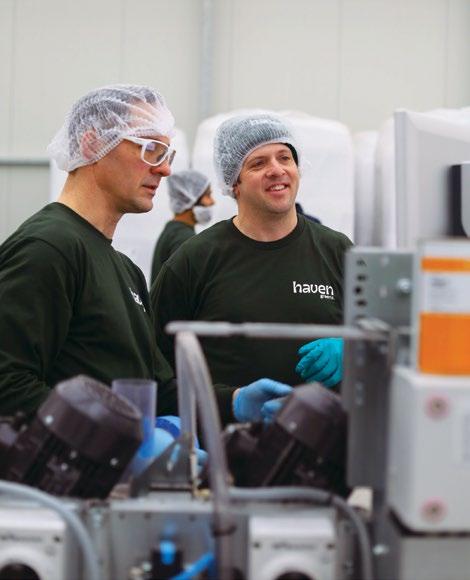
Haven Greens chief agriculture officer Eric Highfield (left) and chief executive officer Jay Willmot keeping an eye on the fast-paced packaging process unfolding inside the Pack Hall.
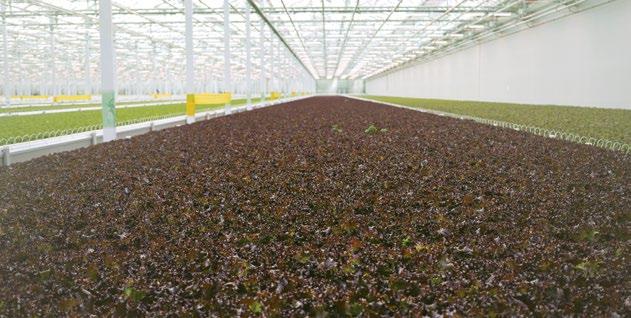
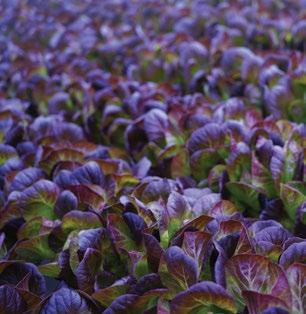
Vivid vibrant colors are the hallmark of the red baby lettuce grown inside the Haven Greens greenhouse.
The Haven Greens greenhouse currently has the capacity to produce, process and package about 10,500 pounds of fresh baby lettuce salad mixes daily.
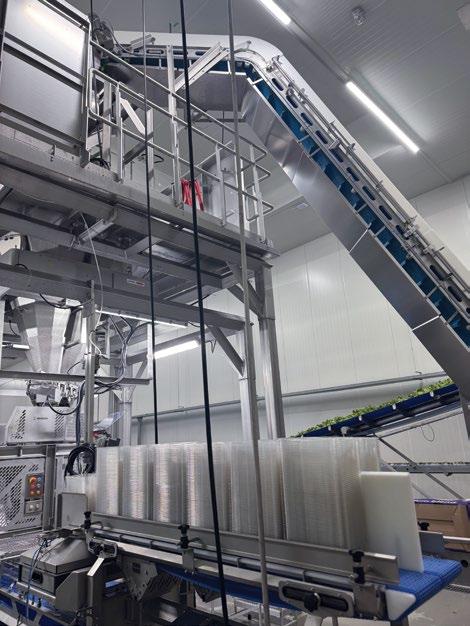
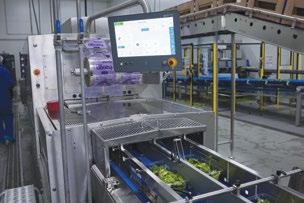
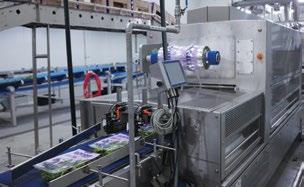
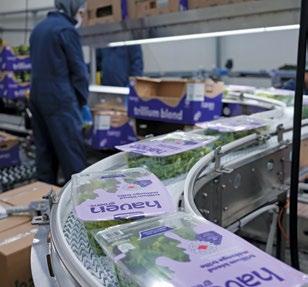
An incline bucket elevator carrying filled trays of freshly harvested baby lettuce up to the automatic weighscales, where the product is precision-measured and dispensed into individual stainless-steel buckets in preparation for being deposited inside the awaiting clear plastic trays prior to being top-sealed on the automatic dual-lane MULTIVAC TX815 tray-sealer.
ence the freshness of the product,” says Willmot, citing a 48-hour order-to-delivery turnaround for customers in both retail and foodservice sectors.
“The biggest thing for us is our proximity to our consumers, so that our lettuce is fresher than others when it gets to the consumers’ table,” Willmot states.
“Freshness is really, really important when it comes to the eating experience,” he proclaims, “and we deliver that freshness by growing nice healthy, crisp and crunchy plants without using any pesticides, delivered to consumers ready-toeat, straight from the package.”
This promise of a better, fresher and more satisfying salad experience is quickly resonating among leading Canadian retailers, now accounting for about 45 percent of Haven Greens’ business, as well as its foodservice clients.
Since delivering its first shipments of the Haven Greens retail packs to Toronto-based boutique grocery chain Summerhill Market last spring, the company has also added leading grocers such as Metro, Sobeys and Costco to its client list, along with a growing number of independent grocers.
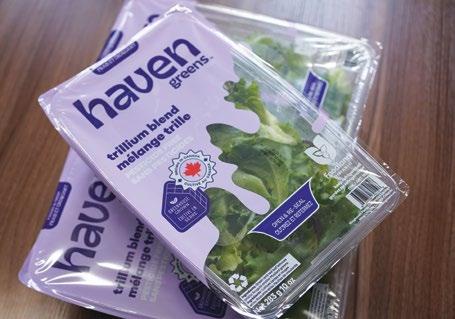
At the moment, the company’s flagship Haven Greens brand—packed in 113- and 226-gram top-sealed, recyclable plastic trays with built-in resealable tabs incorporated in the top film layer—is available in Baby Green Leaf , Baby Red+Green Leaf and Baby Spring Mix blends. In addition, the company has also developed a one-off 283-gram top-sealed
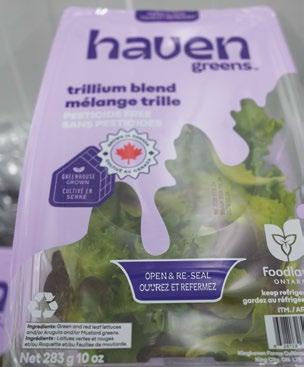
tray package used exclusively for the Trillium Blend salad mix it ships to Costco.
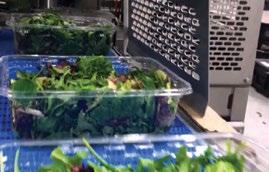
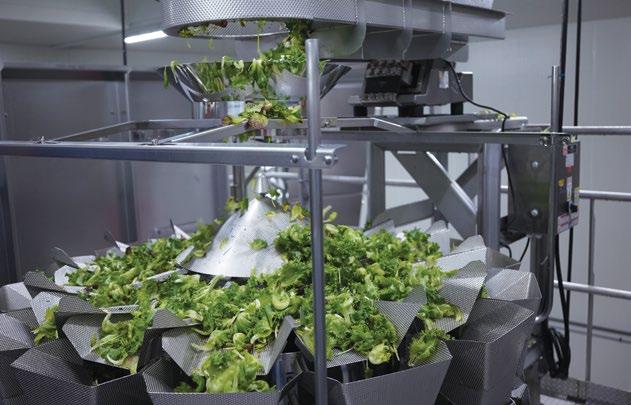
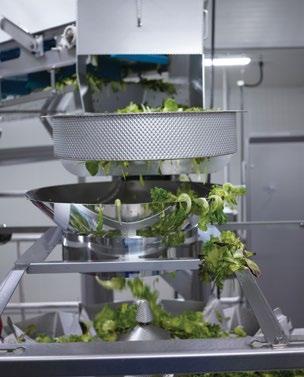
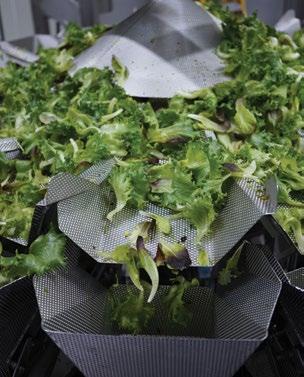
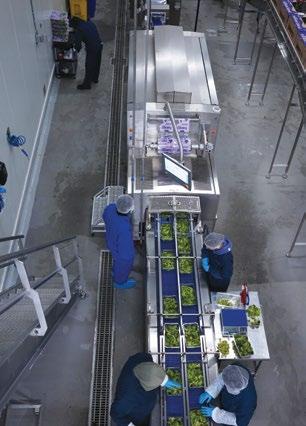
All the filling and packaging of these trays unfolds in the company’s busy Pack Hall department, where inflowing rows of lettuce are processed into loose leaves and transferred onto a multi-head automatic weigh scale, which dispenses precisely measured portions of the fresh, crunchy greens into the awaiting trays on the conveyor belt below.
Again, the entire primary packaging process is automated for hands-free product handling, with packhouse personnel not touching any product until the perfectly top-sealed finished trays come out of the packhouse’s state-ofthe-art, fully automatic tray-sealing machine, manufactured in Germany by the renowned global packaging machinery builder MULTIVAC Group
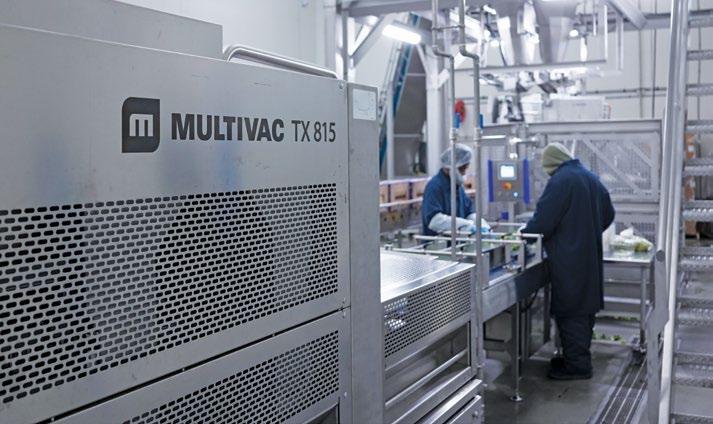
Installed by MULTIVAC Canada experts a little over a year ago, the MULTIVAC TX815 is a high-performance, automatic, dual-track tray sealer designed for maximum output for traypacked food products.
Part of MULTIVAC’s renowned TX series tray-sealing machines, the dual-track TX815 plays an integral, vital role in helping Haven Greens run a highly automated process.
Loaded with cutting-edge features and performance attributes, the TX815 makes light work of churning out about 100 finished trays per minute at Haven Greens in continuous operation when
running both lanes, while ensuring swift, smooth transfer flow for the light, delicate product.
Optimized for large tray sizes, the high-speed machine utilizes advanced X-Tools die technology to evenly distribute sealing forces across every tray, ensuring uniform and reliable package integrity.
According to MULTIVAC, RFID (radio frequency identification)-coded dies are particularly beneficial for companies running many different tray formats that require frequent die changes.
Moreover, the MULTIVAC TX815 provides seamless digital integration with smart service features, including Multi Sensor Control, Flow Manager, Smart Production Dashboard, Smart OEE Analyzer, Smart Log Analyzer, Smart Data Backup, and Smart Machine Report. Featuring fully hygienic design to comply with Haven Greens’ strict sanitation regime—involving a nightly sanitation shift to keep the entire greenhouse spanking clean—the MULTIVAC TX815 produces airtight, attractive top-sealed tray packs that can be easily stacked on the retail shelf with side panels on the bottom, allowing the pre-printed cozy graphics and branding elements on top of the top-seal film layer catch the shoppers’ attention in the produce aisles.
Currently processing more than 40,000 trays per day with minimal human intervention, the machine also facilitates remarkably quick product changeovers to help keep production running, accord-
ing to Haven Green’s chief agriculture officer, Eric Highfield.
“We are able to switch between a fourounce and an eight-ounce tray in less than 30 minutes,” says Highfield, a lifelong produce industry veteran and now also a big fan of MULTIVAC’s tray-sealing technology.
“It’s been a reliable piece of equipment that enables us to process 10 to 11 pounds of lettuce every 20 seconds,” Highfield says, “so the time it takes for the lettuce entering the Pack Hall to the time that it’s put into a retail tray is less than two minutes.
Says Highfield: “Being able to run dual lanes gives us an opportunity to achieve at least 100 trays per minute, if
not higher, which is pretty much the ‘Gold Standard’ when it comes to this specific type of automatically-cut baby leaf lettuce.”
As Highfield recalls, “We were looking for speed, and we were also looking for a company that was able to provide service in a very timely manner, while being able to stand behind the product that they delivered.”
According to Highfield, the MULTIVAC TX815 delivered on each key selection criterion from the outset, helping the company hit the market running with an attractive, high-impact retail package boasting an 18-day shelf-life without any gas-flushing, along with the highly convenient resealable pull-up
Installed about a year ago, the MULTIVAC TX815 dual-lane tray-sealer enables the Pack Hall staff to produce up to 100 top-sealed trays per minute in mostly hands-free operation, with the machine’s highly hygienic design helping ensure optimal product safety to complement impressive shelf-life performance delivered by the air-tight, top-sealed retail packs used to distribute the Haven Greens brand through leading Canadian grocers.
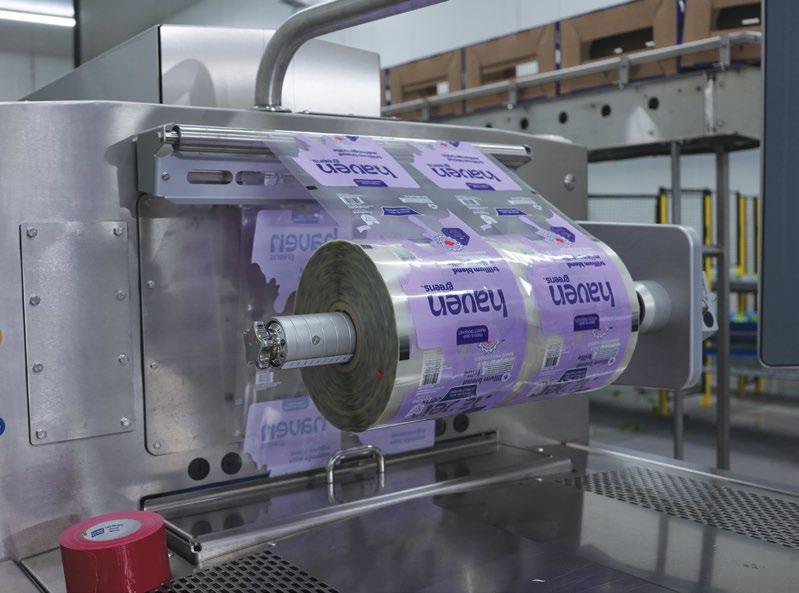
Close-up of a roll of high-quality top-seal plastic film, feturing built-in reselable tabs incoporated into the sturdy film structure, used to lock in product freshness and cruncy crispiness inside the fully-recyclable clear plastic trays.
for
high
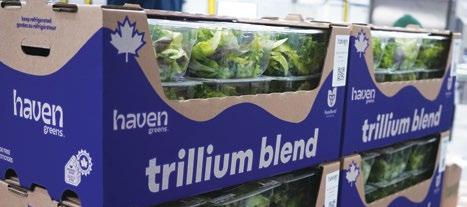
Left: Close-up of the Haven Greens Trillium Blend brand large-sized trays produced for Costco packed inside the pre-printed retail-ready corrugated shipping boxes.
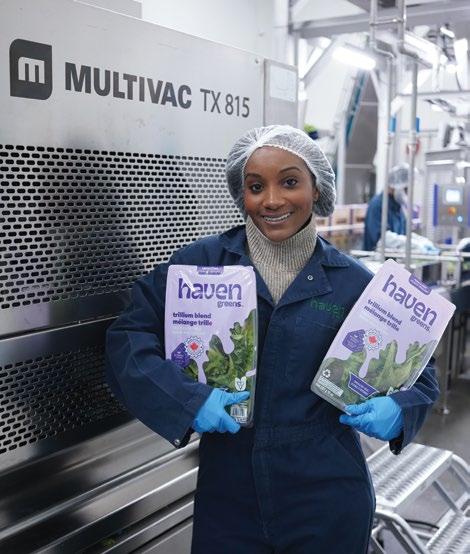
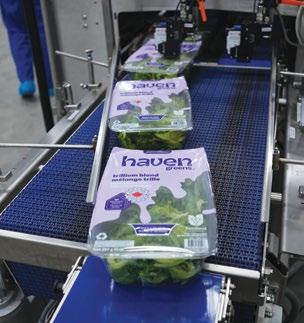
Below: Haven Greens brand and content manager Amanda Maitland holds up two Club Store packs of the Trillium Blend salad mixes, produced exclusively for Costco, coming off the MULTIVAC TX815 tray-sealer.
windows in the front panels for easy opening and reclosing of any leftovers.
“It allows consumers to have a fresh experience each and every time they go into the refrigerator to pull product from this package,” Highfield extols.
For his part, Willmot cites MULTIVAC’s vast experience in the global produce industry, along with its renowned technological prowess and local technical support, as key factors for choosing a MULTIVAC solution for the company’s packaging line.
“We wanted to make sure that a light crop like leafy greens was understood by the integrator that came in to install their technology in our Pack Hall,” Willmot recalls.
“We look for experience in every aspect of everything that we do here at Haven Greens,” Willmot says, “so it was
very important for us to work with somebody who had done this before.
“And with the MULTIVAC Canada warehouse being located only 30 minutes away from us [in Brampton], it was a great opportunity to have an OEM service partner that we could trust.”
Says Willmot: “The integrated MULTIVAC system allows us to truly live up to what we say in terms of offering Canadians a no-hands, pesticide-free product, available 365 days a year in diverse packaging formats at our retail customers, with plenty of opportunity to scale up.
“We take innovation very seriously here at Haven Greens,” Willmot concludes, “and MULTIVAC has been incredibly important in allowing us to deliver our vision to Canadians everywhere across the country.”
Above: Haven Greens CEO and founder Jay Willmot (left) and chief agriculture officer Eric Highfield are full of praise
the
quality of retail packages processed on the MULTIVAC TX815 tray-sealing machine.
Please see a video of the MULTIVAC TX815 dual-lane tray-sealing machine in operation at the Haven Farms lettuce greenhouse in King City, Ont., by scanning the barcode on the left.
It’s Recyclable.
• It’s Reliable.
• It’s Food Safe.
• It’s a Billboard.
PLANETARY JOURNEY
Stalwart Canadian corrugated industry trail-blazer raises its digital printing capabilities to higher levels of excellence in retail-ready and display packaging production
By George Guidoni, Editor
Photos by Ahmad Sayed
Reaching for the stars with manufacturing and distribution excellence is a time-honored and well-tested modus operandi for the talented, hard-working packaging and supply chain professionals employed at the Planet Group of Companies of Concord, Ont.
With a long track record of continuous growth in market share and production capabilities tracing back to the 1960s, the privately-owned company is one of Canada’s largest vertically-integrated producers of corrugated packaging and retail merchandising solutions that also offers a broad range of related warehousing, distribution and logistics services to leading CPG (consumer packaged goods) manufacturers selling their
brands through retail channels across Canada.
Operating multiple facilities in the GTA (Greater Toronto Area) region, totalling over one million square feet, Planet Group’s expansive portfolio comprises several integrated corporate entities focused on different parts of the modern-day value chain, including:
• Hughes Decorr, designer and manufacturer of POP (point-of-purchase) displays and retail-ready packaging.
• Planet Paper, manufacturer of corrugated packaging products.
• Planet Protective, supplier of protective packaging solutions.
• Planet Corrugated, manufacturer of sustainable single-face corrugated rolls and pads.
• Pack Metrics, specializing in co-packing, fulfillment and 4PL solutions for
Planet Paper’s sales manager
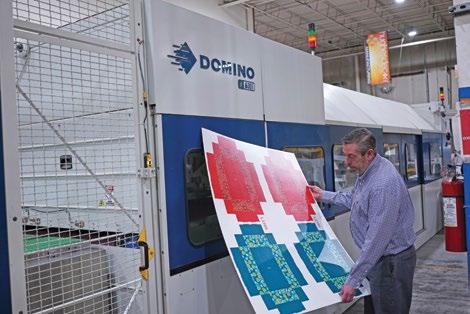
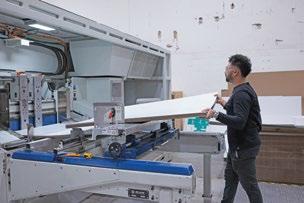
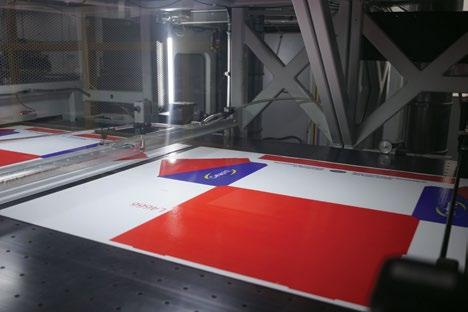
Wayne Towle conducting a thorough quality assurance check on the freshly printed sheets processed on the new Domino 630i corrugated digital printing press recently installed at the Hughes Decorr plant in Concord, Ont.
creating retail-ready products.
• Britman, provider of turnkey contract packaging, co-packing, fulfillment services and other 3PL (third-party logistics) services tailored for major CPG brands.
• Planet Logistics, supplier of transportation, inventory, warehousing, freight and other supply chain management services.
As Planet Group’s President and Chief executive officer Jason Berns explains, the integration of so many valuable skillsets provides a strong competitive advantage by leveraging any of its companies’ unique strengths, production capabilities and resources seamlessly and rapidly.
“Over the decades, we have grown alongside the Canadian retail and CPG industries, adapting to an ever-changing
and evolving retail landscape,” says Berns, citing the company’s “proudly Canadian-owned” roots and close proximity to major Canadian markets.
“Being in the GTA has always been strategic for us,” Berns relates. “We are close to major highways, distribution hubs, and importantly, close to our sister companies within the Planet Group.
“That proximity gives us real operational advantages, especially when speed and coordination matter,” Berns points out.
“It enables us to offer integrated services that extend well beyond traditional display manufacturing, from design and engineering through manufacturing, co-packing, warehousing and logistics.”
According to Berns, integration across most daily supply chain activities enables Planet Group companies to deliver end-
to-end solutions that are greater than the sum of their parts.
This stellar commitment to best-inclass customer service is on daily display inside the 135,000-square-foot Concord facility operated by Planet Group’s Hughes Decorr division, originally founded in the 1960s under the Hughes Container moniker.
Serving customers in the all-important retail sector, Hughes Decorr’s own repertoire has greatly expanded under Planet Group’s ownership, transforming from a one-time commodity brown-box supplier into a full-fledged design and manufacturer of shopper marketing and retail display solutions, including POP displays, retail-ready packaging and, increasingly, digitally printed corrugated programs.
Successfully partnering with brands and retailers to provide client-centric, full-service design, manufacturing packaging and merchandising solutions for all retail marketing needs has enabled Hughes Decorr to develop strong core competencies in all areas of its business, including:
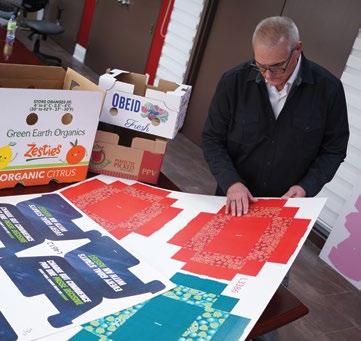
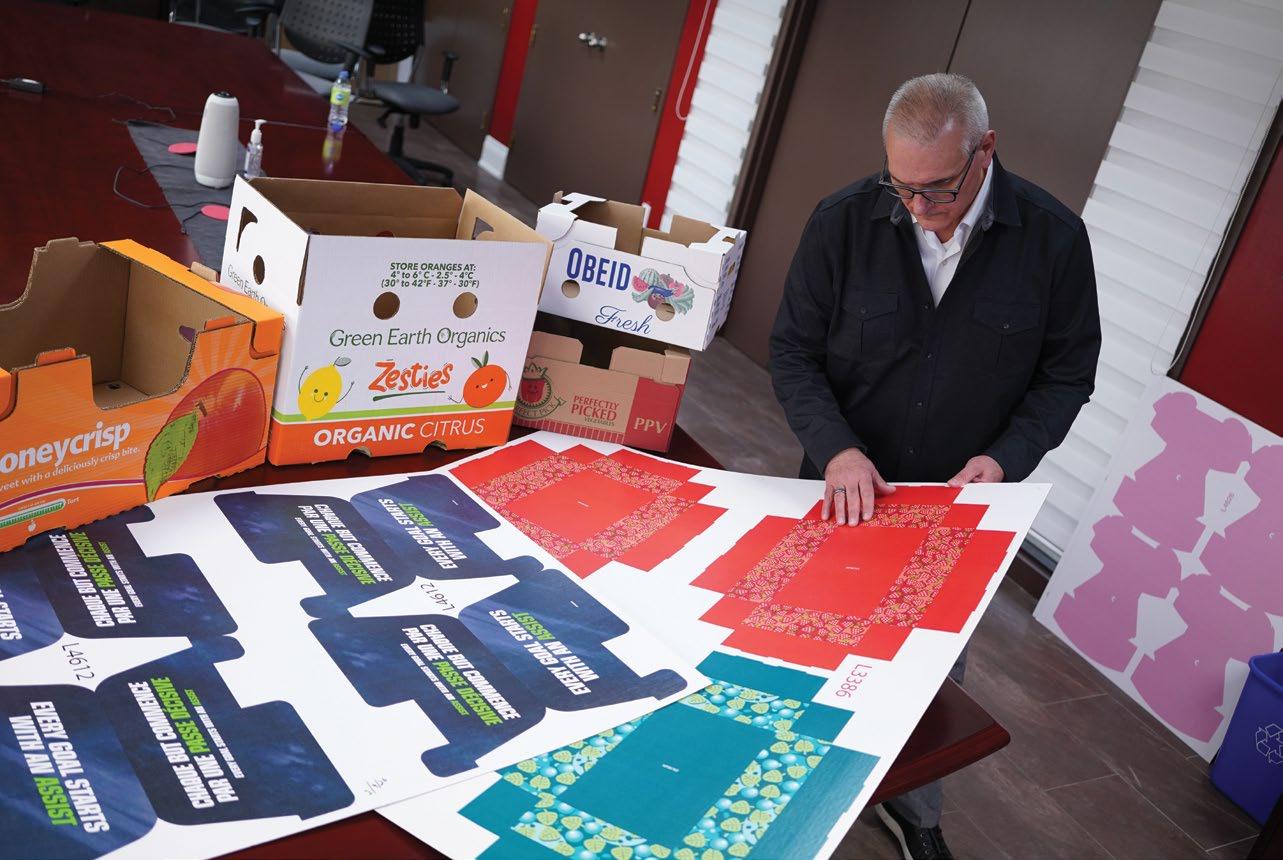
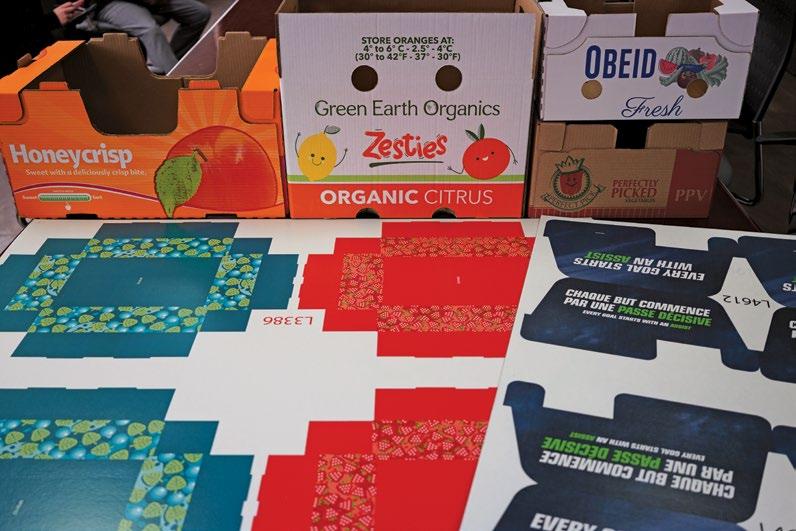
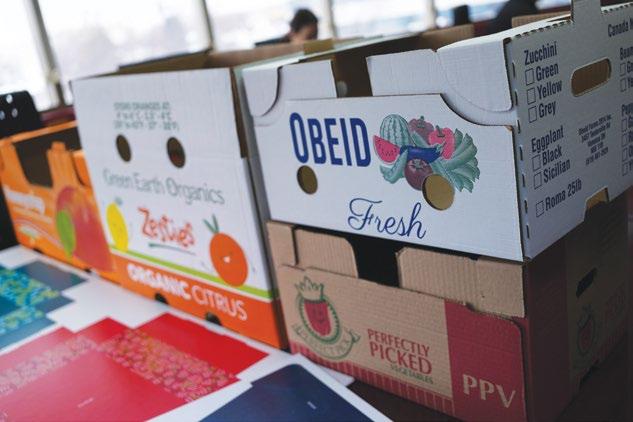
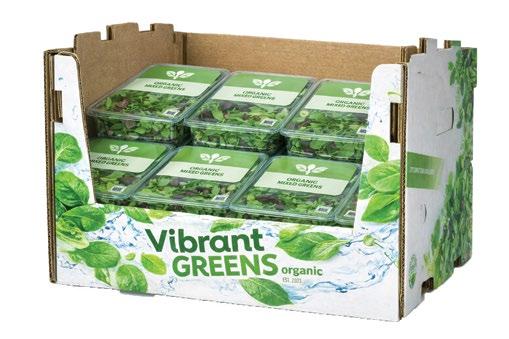
A sampling of the attractive, high-quality corrugated retail-ready packaging produced by Hughes Decorr for leading produce growers and other major CPG brands and manufacturers operating in the Canadian marketplace.
• POP Retail Displays, supported with in-house, full-service structural and graphic design studio.
• Packaging, offering a broad range of packaging solutions, from multipacking and bundling to gift-packs and e-commerce packaging, along with co-packing, repacking and kitting services.
• Retail Solutions. By combining deep shopper insights with strategic category management and broad retail expertise, the company delivers innovative design adaptation and brand strategy services, including shopper marketing, design innovation, and retail and branding consultations.
All these services are backed up with an exceptional array of high-performance manufacturing competencies for high-quality lithographic, flexographic and digital printing and converting, as well as prototype and mock-up creation.
As Hughes Decorr’s vice-president of sales Stephen Longmire remarks, “For us, it has never been about producing a display.
“It is about helping brands connect with the consumer at retail in a way that is structurally sound, visually impactfull, and aligned with retailer and brand expectations.
“We work with national brands and retailers across Canada from coast-tocoast,” Longmire relates, “and we support select U.S. programs as well.
“Our clients include brands in health and beauty, food and beverage, confectionery, home improvement, and other categories where shelf presence and retail execution make a measurable difference,” he relates.
Making that difference has enabled Hughes Decorr to earn a prestigious Bestin-Class award in last month’s 2026 PAC Global Awards competition in Toronto for the company’s innovative multipack locking system for the Softsoap Costco project, demonstrating exceptional sustainability and engineering attributes.
“This project demonstrates that sustainability and retail effectiveness can work in tandem when innovation and engineering are prioritized from the outset,” Longmire states.
“We successfully engineered meaningful material substitutions and reductions,” he continues, “while maintaining structural integrity and shelf presence.
“By approaching design with both environmental performance and merchandising requirements in mind, we were able to deliver solutions that achieved measurable impact without compromising execution at retail.”
As Hughes Decorr’s plant manager Craig Berry concurs, “We are continuously looking at ways to reduce our environmental footprint through material optimization, digital efficiencies, waterbased ink systems, and local sourcing strategies that reduce transportation impact.
“We maintain zero production scrapto-landfill,” he adds, “ensuring all manufacturing waste is fully recycled.”
A holder of multiple globally recognized certifications for responsible environmental management, including Sedex , FSC (Forest Stewardship Council) Chain-of-Custody and EcoVadis, among others, the Planet Group company’s commitment for packaging sustainability is second to none, according to Planet Paper’s sales manager
Clockwise from top
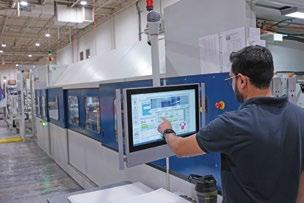
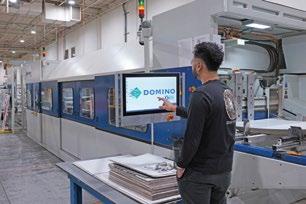
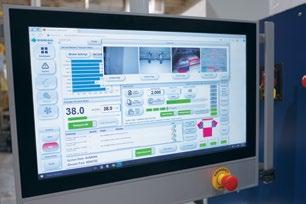
Hughes Decorr’s vice-president of sales Stephen Longmire; Hughes Deccor press operators controlling and monitoring the Domino X630i operations during a press run via a large-screen HMI (human-machine interface) terminal displaying all of the key operational data in real time;
Hughes Decorr plant manager Craig Berry assessing print quality of a finished sheet coming off the Domino X630i digital press.
Wayne Towle.
“Sustainability remains a constant driver in today’s market,” Towle states, “where conversations increasingly focus on recyclable substrates, water-based inks, life-cycle assessments, and EPR (Extended Producer Responsibility) compliance.
“Our role at Planet Group is to help clients navigate these expectations in a practical way,” Towle explains, “by balancing environmental objectives with real-world retail requirements.
“Speed, validated sustainability, and measurable performance are influencing nearly every program we execute,” Towle asserts, citing recent installation of a state-of-the-art Domino X630i digital corrugated press as a critical strategic investment in the company’s future.
“As digital transformation continues to reshape the industry, brands are seeking shorter production runs, faster product launches, and greater customization to meet evolving retail demands,” Towle states.
As the first Domino X630i digital cor-
rugated press to be installed in Canada, according to Towle, the new versatile single-pass press is a perfect fit to meet those growing demands.
“Our HD360 process is designed to help brands identify and implement the most sustainable solution for their programs,” Towle extols.
“By aligning brand objectives, retailer requirements and manufacturing capabilities, we ensure sustainability is built into the design from the beginning,” he states, “not treated as an afterthought.”
Despite being a very recent addition to the Hughes Decorr plant, “Today, more than 50 per cent of our digital square footage is produced on the Domino press,” says plant manager Berry, “with that percentage continuing to grow.
“Since the installation, we have transitioned a significant portion of our multipass digital workload onto the platform, expanding overall capacity,” Berry reveals.
“The Domino digital press integrates seamlessly with our existing workflow and complements our conventional print operations,” says Berry, lauding the new
press’s advanced technological and sustainability attributes that prompted Hughes Decorr to select Domino’s digital press technology for its needs.
“After evaluating several platforms, Domino stood out for its color consistency, water-based ink technology, production efficiency, and overall reliability,” Berry points out.
“The new press supports more efficient material usage, reduced set-up waste and controlled productions runs, aligning with our commitment to sustainable corrugated solutions.”
With its world headquarters in the U.K and North American headquarters in Gurnee, Ill., Domino is a leading global manufacturer and distributor of digital printing and product identification solutions.
Celebrating its 48th year in business this year, the company’s innovative technologies and world-class manufacturing skillset is well-reflected in the streamlined design and operational flexibility designed built into the Domino X630i digital corrugated press.
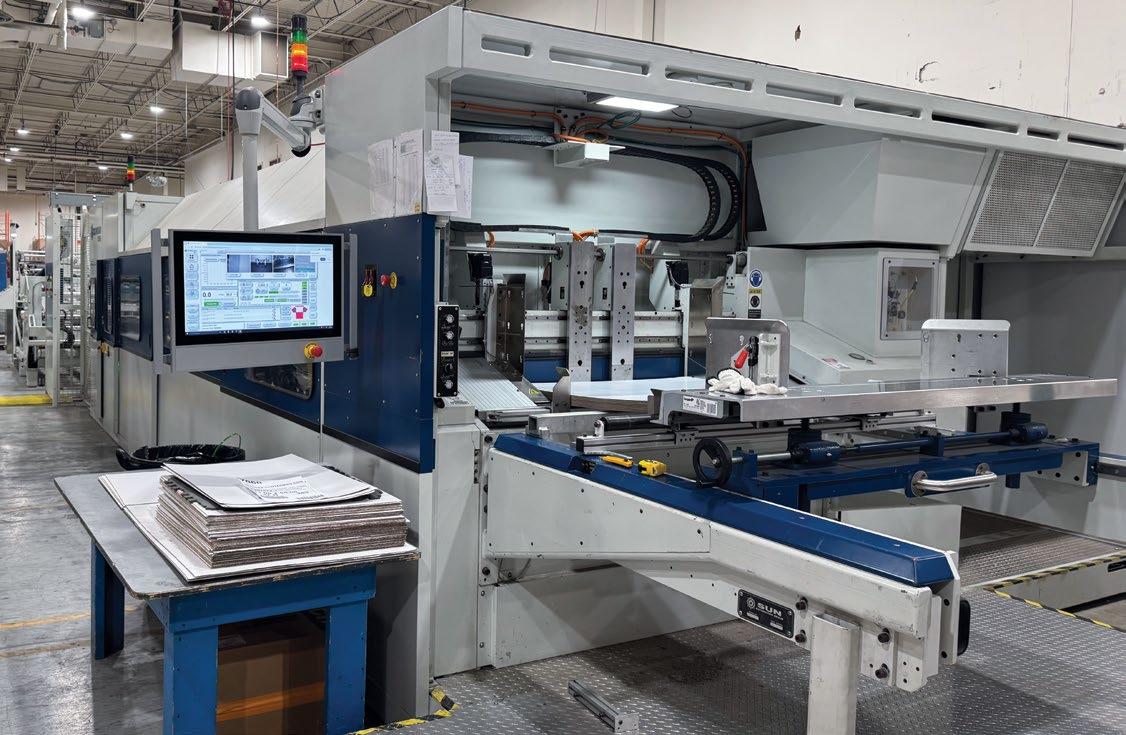
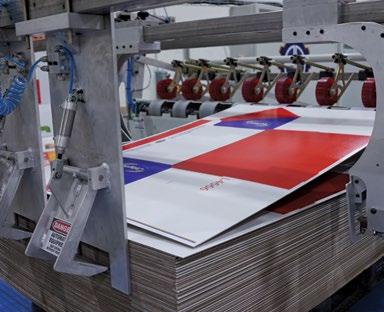
The advanced design includes a servo-controlled leading-edge bottom feeder for continuous feed operation, cleaning, inspection, unique vacuum sheet transport, and drying with either bundler or stacking output options.
Based on Domino’s proven Generation 6 inkjet platform, with over 40 years of inkjet development experience, the X630i includes unique Domino intelligent technology combining advanced i-Tech components to create a highly flexible and reliable system featuring:
• An automated i -Tech CleanCap
inkjet cleaning and capping solution to facilitate reduced maintenance requirements.
• The i-Tech ActiFlow technology to provide continuous ink recirculation. for more consistent print results.
• The i-Tech StitchLink functionality for achieving precise print head alignment to deliver the highest quality print results.
• The highly versatile Domino AQ95 aqueous ink set, including i-Tech PolyM with unique polymeric particles, providing the ability to reliably print onto coated and uncoated corrugated stock without the need of a primer or separate bonding agent.
Says Berry: “From a performance standpoint, the system delivers consistent color, sharp graphic reproduction, and faster turnaround times.
“In certain applications, it has allowed us to reduce manufacturing steps and to shorten lead-times without compromising quality,” he notes.
The first-ever Domino X6i digital corrugated press to be installed in Canada is loaded with multiple advanced technological features and attributes enabling Hughes Decorr to maintain robust and highly reliable continuous operation with minimal downtime.
“Beyond productivity gains, the press strengthens our ability to execute shorter runs, support retailer-specific programs, and respond quickly to market demands,” Berry adds.
“The addition of the platform increases operational flexibility and supports our long-term digital growth strategy,” says Berry, extending compliments to the highly skilled Domino technical team that helped get the press fully running within two months of arrival to the Hughes Decorr plant, while providing top-notch after-sales technical support after commissioning.
Their (Domino’s) remote diagnostic capabilities and responsive technical support have been key strengths in helping maintain uptime and operational efficiency,” he states.
For his part, Longmire expects the company’s investment in advanced digital press technology for Domino to pay off in a big way in coming years.
“Hughes Decorr operates in a highly
competitive industry, where companies that prioritize innovation and sustainability distinguish themselves in the market,” he points out.
“The pace of change is constant, and brands expect their partners to anticipate challenges rather than react to them.
“Today, much of the discussion centers around sustainability metrics, cost pressures, retailer compliance, and supply chain resilience,” Longmire expands. “The ability to validate environmental claims, engineer material reductions and maintain structural performance has become a meaningful
differentiator in the marketplace,.
“As such, the new Domino press will be a valuable asset to helping us achieve that level of differentiation.”
Adds Hughes Decorr’s director of marketing and retail strategy Darko Martinovic: “At Hughes Decorr, we bring together art, science, and engineering to craft retail displays that capture attention and drive shopper engagement.
“Every design is validated to ensure it delivers maximum ROI, making packaging and displays a critical part of CPG and retail strategies,” Martinovic relates.
“Our goal is to create connected retail experiences that resonate with consum-
ers at the moment of sale.”
As Planet Group’s president and CEO Jason Berns sums up, “We see ourselves as long-term CPG and retail partners, providing innovative and sustainable solutions adapted for retail execution.
“Being Canadian-owned and privately held allows us to remain agile, invest for the long term, and build lasting partnership,” Berns proclaims. “From design and engineering through manufacturing and logistics, our focus remains on delivering innovative solutions that perform consistently and meet the evolving needs of the Canadian retailers and consumers alike.”
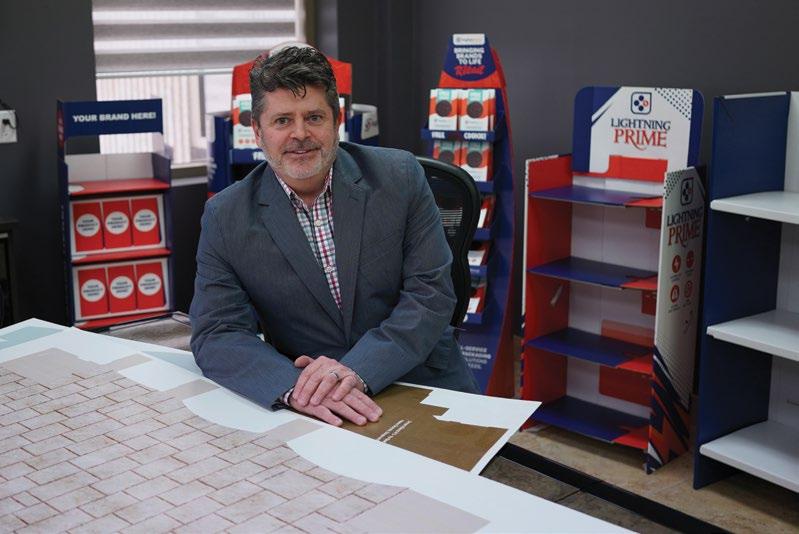
Hughes Decorr’s vice-president of sales Stephen Longmire (left) joins Planet Paper’s sales manager Wayne Towle to verify the print quality and color consistency of a corrugated paper sheet processed on the Domino digital press.
Hughes Decorr’s director of marketing and retail strategy
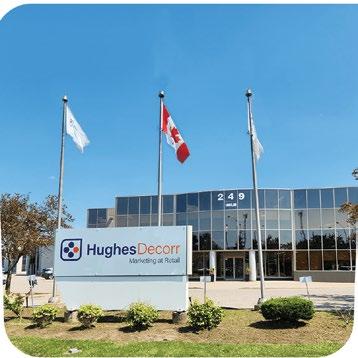
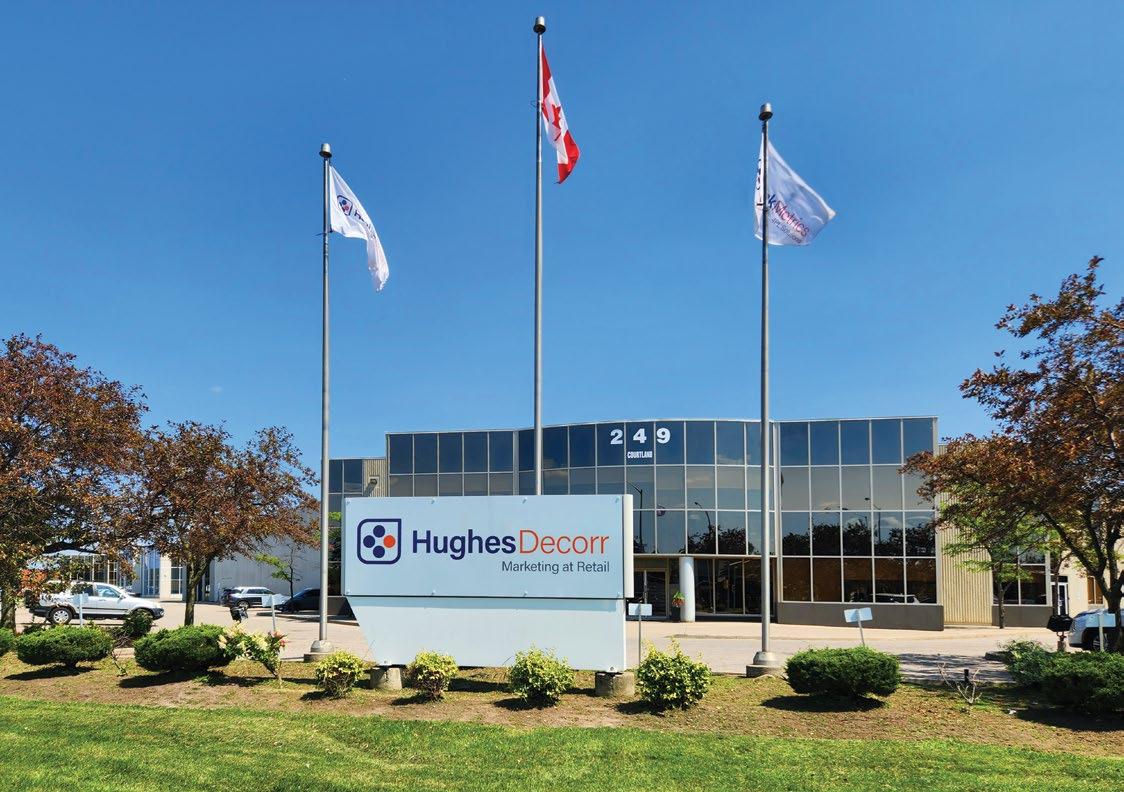
Darko Martinovic in front of the entrance to the company’s state-of-the-art production facility in Concord, Ont.
REC YC L A B I L IT Y
Choose AmFiber™, a paper-based recyclable solution for brands to achieve their sustainability goals while meeting consumers’ needs for convenience.
GENERATIONAL CHANGES
Enterprising Quebec lettuce grower expands its packaging repertoire and competencies with advanced stretch film wrapping technology
By Andrew Snook
Photos by Pierre Longtin
When the founders of Gen V started growing lettuce year-round in technologically advanced greenhouses
in 1987, they were considered a trailblazer for agricultural operations in Mirabel, Que.
“In ’87, some visionaries at the time wanted to grow lettuce in a futuristic way: indoors, which was kind of peculiar at the time,” says Francis Terrault, operations manager for Gen V and second-generation member active in the Terrault family business.
Originally founded as Hydroserre by current president Sylvain Terrault, Francis’ uncle, along with multiple partners,
the business has grown significantly over the past 39 years from 30,000 square meters of greenhouses in Mirabel to 300,000 square metres spread across four locations.
“At the start there was only one greenhouse in Mirabel, which was close to 10 acres, and then they grew and grew,” Francis says.
As the operation expanded, Sylvain began buying up shares of the company from the mid-90s to mid-2000s, and eventually bought out his partner, who was looking to retire, in 2008.
“My uncle bought them out and became the sole shareholder of the company at the time,” Francis Terrault recounts.
“And then, there were some acquisitions of other greenhouses since 2008.”
In 2009, Gen V purchased a green-
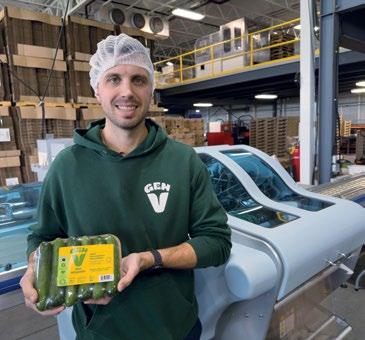
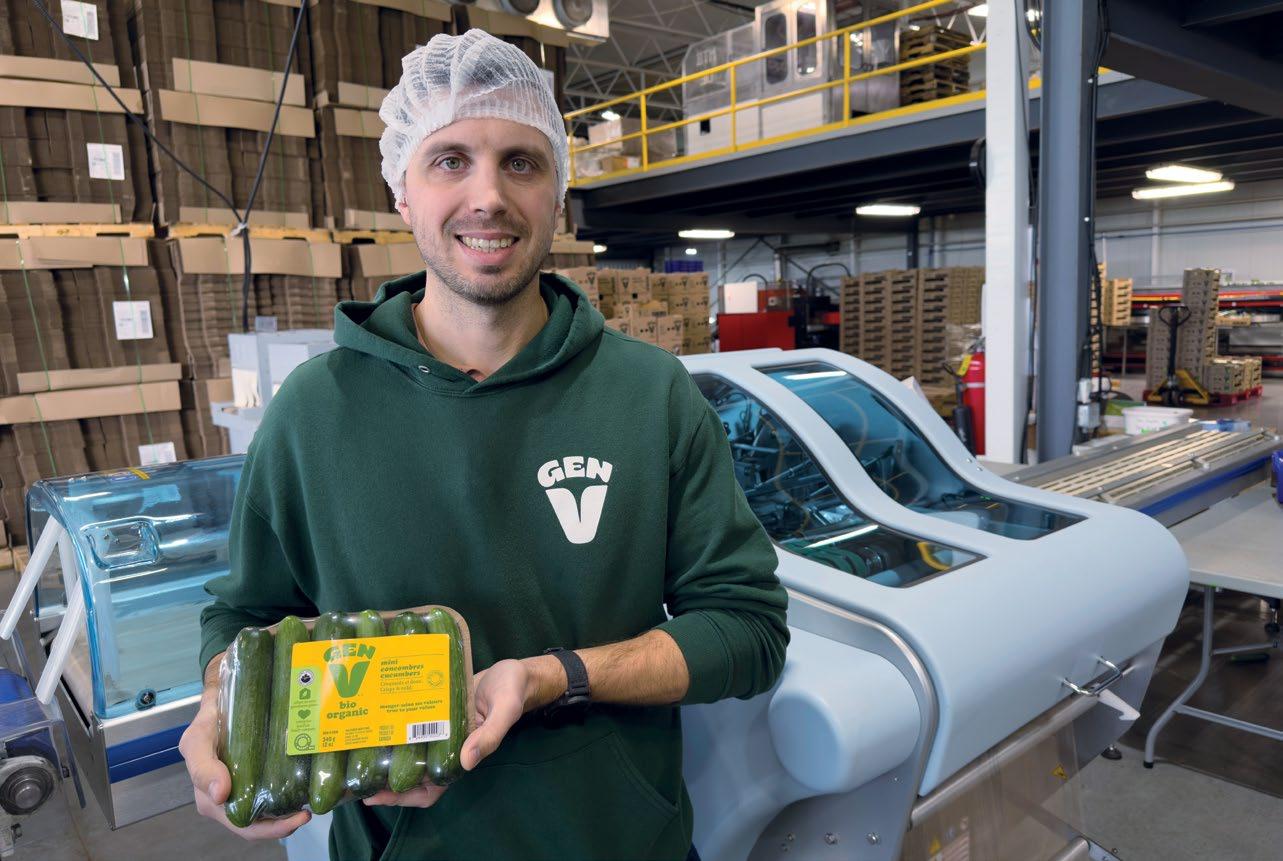
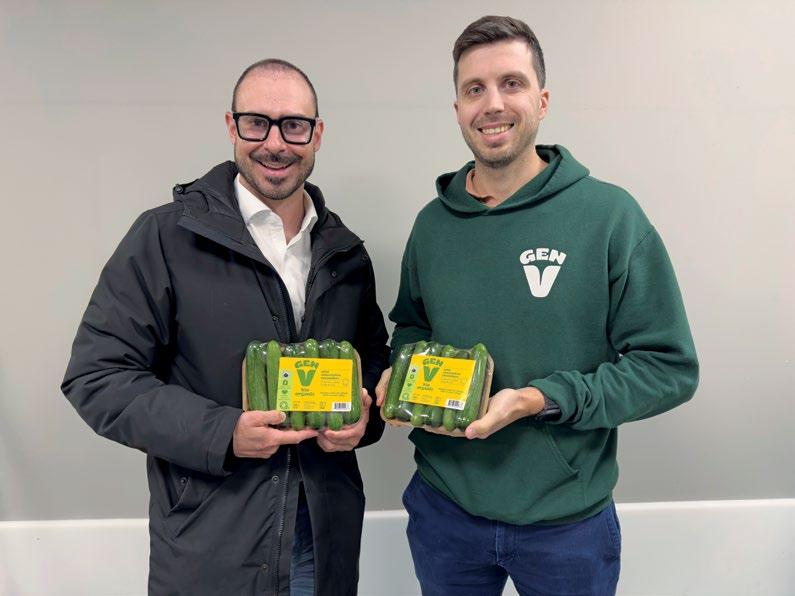
Gen V operations manager Francis Terrault holds up a finished tray-pack of the company’s flagship brand of mini cucumbers coming off the Automac 55 Più stretch film wrapping machine, expertly installed by Reiser Canada, positioned right behind him.
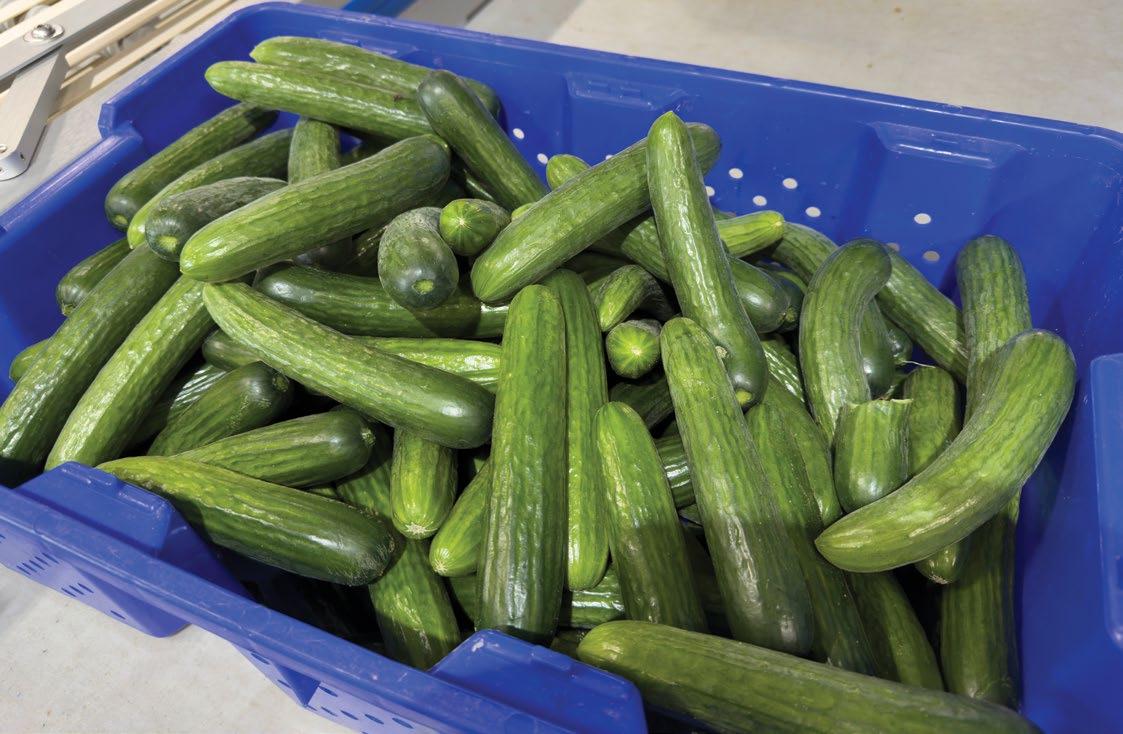
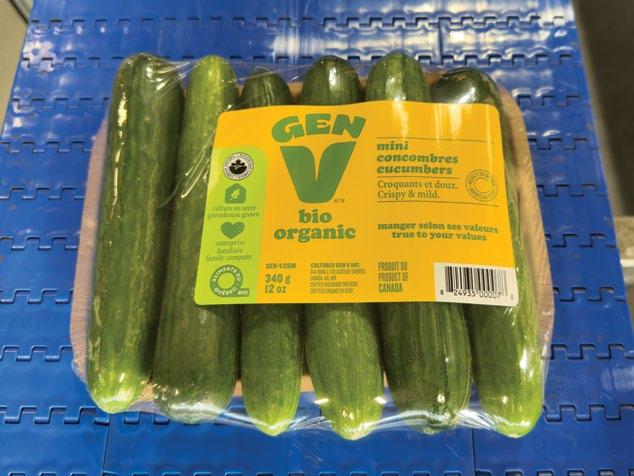
Grown inside high-tech, environmentally-controlled greenhouses located in Quebec, the Gen V brand of organic mini cucumbers boast crisp texture, mildly sweet flavor, and high water content.
house in Ham-Nord, Que., which was only approximately three acres of production.
Then in 2019, Les Serres Lefort, which was growing lettuce for them as a partnership, started experiencing financial difficulties, prompting Gen V to acquired them the following year.
The purchase sparked massive growth for the small greenhouse hydroponic lettuce grower—jumping from 10 to 60 acres in size.
In addition to growing lettuce, the year-round production of Gen V also moved into cucumber and bell pepper
production.
“They had 20 acres of organic cucumbers and peppers. Also, there was another 20 to 25 acres of hydroponic lettuce they were doing for us,” Terrault explains.
While the vegetable business meant a big spike to their overall production, Gen V had also acquired close to 25 acres of transplants of small seedlings for the field-grown business in the Les Serres Lefort acquisition.
“It was their bread-and-butter, the transplants, which were nurseries for the field growers,” Terrault relates. “They were doing 50 to 60 per cent of the field-
grown crops for the South Shore area of Montreal.
“That was the main business that they had, and so we inherited it with the acquiring of the company.”
In 2023, the company officially launched the Gen V brand after merging Hydroserre and Les Serres Lefort under one corporate banner.
That same year, the company acquired tomato grower Les Serres Royales to become one of the largest indoor tomato growers in Quebec, with 80 acres of greenhouse production.
Between the mergers and growth ex-
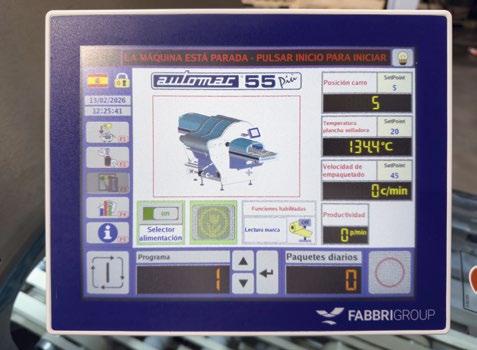
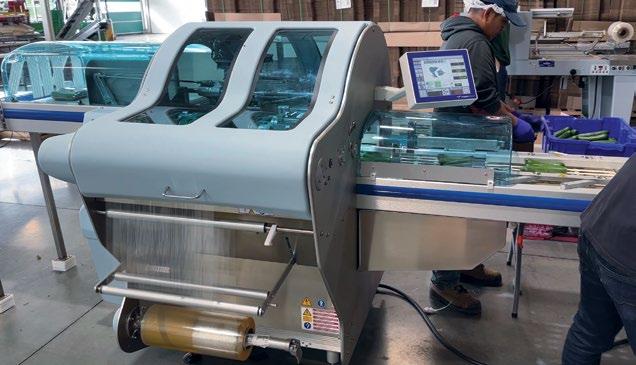
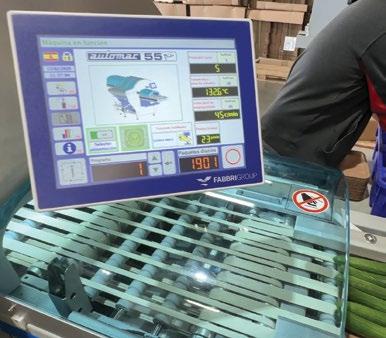
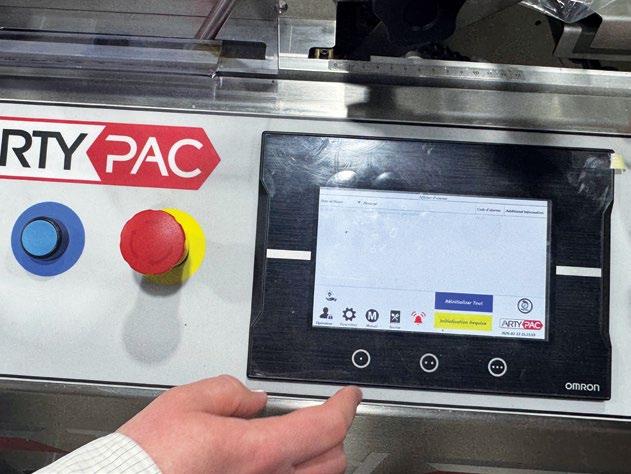
Manufactured by Fabbri Group, the Automac 55 Più stretch film wrapper is equipped with a multilingual touchscreen HMI (human-machine interface) for user-friendly operation to create tightly-wrapped tray-packs.
Above Reiser Canada’s sales rep Jean-Yves Belisle (left) joins Gen V operations manager Francis Terrault to display the finished packs of organic greenhouse-grown mini cucumbers packaged on the robust Automac 55 Più stretch film wrapper (right), which can reach swift running speeds of up to 55 packs per minute, requiring just one operator to load the trays by hand at the very start of the packaging process.
perienced since that time, Gen V’s team has grown to approximately 500 employees, including temporary workers arriving primarily from Mexico and Guatemala.
While the full integration of Les Serres Royales into its overall operations is still an ongoing process, Terrault says the past two years have been relatively smooth sailing.
“The transition was not bad with Les Serres Lefort, because we already had a partnership with them for the last 10 years.
“We’ve known pretty much all of the company, a lot of the employees, and the way they worked,” Terrault remarks.
The fact that Gen V acquired a fullfledged tomato grower, instead of just brand or a product line, helped to make the transition easier, Terrault notes.
“It wasn’t like the next day after acquisition we had double the capacity of cucumbers or lettuce,” he says. “It was a smooth transition despite us having to learn something completely new.
“There were already people in place who were experts in their categories,” Terrault says, “so they already knew what to do.”
The most popular vegetables currently grown by Gen V include Boston lettuce, English cucumbers, mini-cucumbers, bell peppers (green, red, yellow and orange), and tomatoes (cherry, raisin and beef).
Today, the company’s total annual production output typically comprises 2,000 tonnes of organic cucumbers; 850 tonnes of mini cucumbers; 350 tonnes of bell peppers; 2,700 tonnes of lettuce; and 3,800 tonnes of tomatoes.
On the packaging side of the business, the most common issue that has had to be addressed as a result of higher volumes was removing various bottlenecks that impact overall production, according to Terrault.
The most recent investment that Gen V made to improve its production capacity through optimizing its packaging operations involved the purchase of a model Automac 55 Più stretch film wrapper manufactured in Italy by Fabbri Group
Dedicated to the packaging of mini cucumbers, the robust machine was delivered and installed by leading Canadian processing and packaging machinery supplier Reiser (Canada) Ltd. of Burlington, Ont.
“We’ve had other packaging lines for our mini cucumbers in the past, and most of them were not very efficient,” Terrault says. “Most of them were old recycled machines from warehouses, which we were working with for a bit too long.”
To review their options for enhancing the packaging line, Gen V attended the annual Canadian Greenhouse Conference in Niagara Falls, Ont., where Gen V’s management team met representatives from Reiser to explore new packaging options.
“We had a good conversation with them and learned we could be a lot faster and have a much more efficient packaging line with a way better product,” Terrault recalls.
In addition to capacity, one of the issues that Gen V had with its old equipment was that the wrapping was not always sufficiently tight coming off of the packaging line, causing unnecessary rework to take place.
But since installing the Fabbri Group’s Automac 55 Più wrapper six months ago, Gen V has experienced no such issues.
“In the past, I would have issues with the packaging line for the mini cucumbers,” Terrault recalls, “and we would have had to work around those issues at least once, if not twice a month.
“But for the last six months, I haven’t had anything like that,” Terrault extols.
“Everything is working fine and we are also faster than we used to be, so everything is a win-win.”
With the Automac 55 Più capable of reaching throughput speeds of up to 55 packs of mini cucumbers per minute, “That has really helped them increase their production,” says Jean-Yves Belisle, sales representative for Reiser Canada.
As Terrault explains, Gen V opted for a semi-automated packaging machine because they didn’t have a large enough volume of mini cucumbers to justify the expense of a fully automated line.
“We have a few workers at the front of
the line putting mini cucumbers on the on the trays,” he says, “but from then on it’s fully automatic.
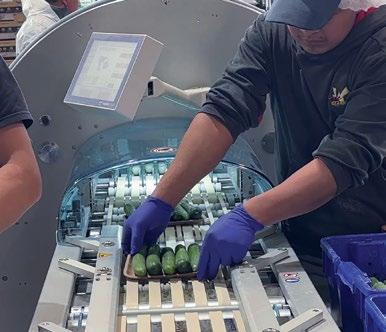
“The tray goes in the packaging line, it is wrapped, the sticker goes on, and at the end of the conveyor we have a worker that puts the packages into the boxes and palletizes them,” Terrault explains.
While the company has 10 packaging lines in total for handling all of its various types of produce, this is the first time Gen V worked with Reiser on a project.
The decision to work with Reiser stemmed from a combination of the quality of the machines and the glowing supplier’s reputation in the greenhouse sector, according to Terrault.
“We talked with contacts in the industry that already have those types of ma-
chines, and they were very happy with what they have,” Terrault confides.
“So the peer review was pretty high [and] the communication with Reiser was also was pretty good.
“It’s a small world, where the farmers pretty much all know each other in this industry,” Belisle adds.
“We’ve been quite successful in the past seven to eight years within this market,” says Belisle, adding that he personally got involved in helping out with the installation.
“Typically, sales reps don’t get involved too much in the installation of equipment,” he says, “but I helped our technician install a couple of parts and also did some minor assembly.
“I found it pretty easy to assemble,
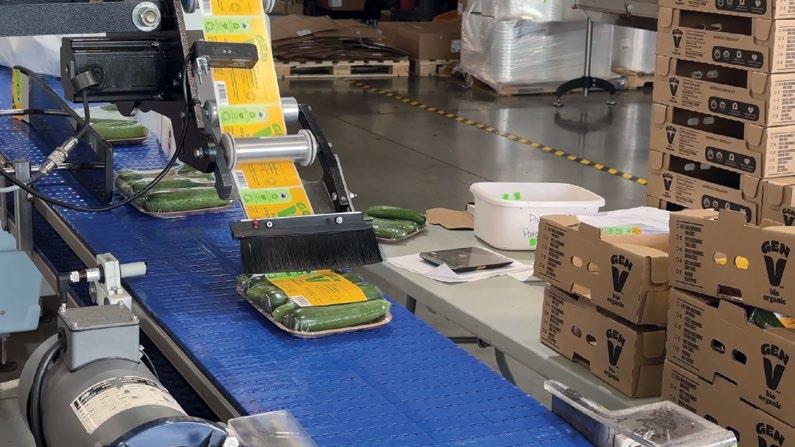
After the tightly wrapped tray-packs of Gen V brand organic mini cucumbers exit the Automac 55 Più stretch film wrapping machine, a large pressure-sensitive product label is immediately attached to each passing pack by an inline label applicator before proceeding down the conveyor line to be placed inside corrugated shipping cases.
right up to getting it rolling,” Belisle states. “It’s a very well-designed machine that is easy to assemble, easy to use, and easy to maintain.”
Reiser’s close proximity for future servicing of the machine was also an important selection factor, according to Terrault, who points out that Buying from and supporting local companies is important to Gen V.
“We’re trying to buy mostly in Quebec if possible,” he says, “but if not, from elsewhere in Canada.
“The fact that they (Reiser Canada) are Canadian helped a lot in our decision,” Terrault states.
According to Riser, the Fabbri Group Automac 55 Più can be equipped with extended in-feed conveyors and exit conveyor rollers that allow for optimal integration with a producer’s devices
placed at the entrance and exit of the packaging machine.
The Automac 55 Più can also be equipped with photocells and connectors that allow for interaction with portioning machines and weigh-price labelling devices.
Notably, it also comes equipped with a user-friendly HMI (human-machine interface) that operates in English, French and Spanish, which is particularly helpful for the Gen V employees.
“Every operator can easily understand what the machine is doing,” Belisle says. “Most of the managers out there speak Spanish, so for them it was a welcome addition.”
One of the other key features of the Automac 55 Più is its ability to change reels with exceptional speed.
“The reel replacement takes less than a minute,” Belisle notes, “and the film can be changed in about 45 seconds, which means that there’s no downtime.
“It’s a very efficient machine in that regard.”
The main challenge that Gen V and some other Canadian growers are currently facing is a “two-headed monster,” according to Terrault: the dumping of cheap Mexican-grown produce into the Canadian market and increased U.S. protectionism.
“This is our main issue right now,” Francis asserts. “The fact that the U.S. made a tax to stop Mexican dumping and the Canadian government hasn’t means that we’re in the midst of a crisis in in fruits and vegetables industry right now, with a lot of American companies switching back to American products.
“There’s a lot of greenhouses that are
in construction or have been constructed in the U.S. in the last few years,” he says, “which makes for more competition on the grocery shelves.”
Terrault says he’s also concerned about what tighter borders for Canadian produce will mean for the massive operations in Leamington, Ont., and other parts of southwestern Ontario, if they are not able to access the U.S. markets.
“They’re way bigger than what we have in Quebec,” he points out, “so theythey could flood the Canadian market by themselves,” Terrault says.
“It makes the prices drop, which is why the U.S. market is very important for all of the greenhouse growers in Canada.”
Logistics operations also present some challenges related to coordinating such a massive amount of production.
“Being able to ship quality products on time with fresh produce coming from four different sites with five different major crops, and deliver them to the northeastern U.S., Ontario, the Maritimes and Quebec—that’s one big challenge,” Francis says.
Another hurdle for the company is managing climate change.
“In greenhouse production, we have the capacity to modify the environment a bit – the lighting, humidity, temperature – but at the end of the day, especially in the summertime, there’s not much we can do,” Francis says, adding that water shortages are often an issue.
“Climate change is a big challenge for us, trying to manage our crops through the heat waves and the challenges throughout seasons, which are all shifting the last 10 to 15 years.”
SHOW OF STRENGTH
Annual showcase of Canadian produce industry excellence all set to roll into Toronto next month
With winter finally melting into spring, the timing could not be better, and the urgency could hardly be higher, for the annual Convention and Trade Show of the Canadian Produce Marketing Association (CPMA) in Toronto next month.
Scheduled to run April 29-30, 2026, at the Metro Toronto Convention Centre in the city’s downtown core, CPMA 2026 is by far the largest fresh fruit and vegetables industry event in Canada this year—providing a unique forum for produce industry leaders to enhance their business opportunities through an exceptional combination of education and networking opportunities.
As such, the show’s 101st edition will bring together thousands of participants from all segments of the produce supply chain including the growers, packers, shippers, wholesalers, retailers, brokers, transporters, importers and exporters, as well as companies operating in the floral and foodservice industries.
With the exhibit space already completely sold-out for weeks, CPMA is confident to surpass some of the record-breaking attendance records set at last year’s convention in Montreal, which attracted over 4,300 visitors and 650 exhibitors, including 138 international exhibitor representing eight countries.
As CPMA points out, the long-running produce industry showcase will feature extended show hours on the first day of the show this year, along with a guided bus tour will visiting several leading retailers across Toronto to discover what’s new and unique in the market.
“The upcoming CPMA Conference and Trade Show in Toronto remains the flagship national gathering for Canada’s fresh produce sector, but with a modernized format that reflects how the industry
dent Ron Lemaire.
“This year’s event features a more focused schedule and streamlined program, moving away from the longer, traditional format toward longer, more higher - impact trade show days, targeted business meetings, and curated programming that maximizes time and value for participants,” Lemaire adds.
In addition, CPMA will also host the second edition of the Women in Produce Summit, a half-day event (May 1, 2026) dedicated to celebrating women by highlighting their leadership and achievements within the produce sector.
According to CPMA, the summit will aim to inspire and empower both current and future generations of women in the fruit and vegetable sector, by fostering growth, recognition, and opportunities for women across the entire produce supply chain.
As always, the CPMA showcase will celebrate outstanding professional and marketplace achievements with memorable and highly prestigious industry awards, including:
• The coveted Packer’s Produce Person of the Year Award. Selected by editorial staff of The Packer magazine, this awards is presented to an individual who has excelled in all facets of their career in the past year, including business success, fostering relationships in the produce industry, and giving back to the community.
• CPMA Lifetime Achievement Award, honoring an individual who
A bird’s-eye view of the busy show-floor action at CPMA 2025 last year in Montreal (top picture) and a panoramic view of the Metro Toronto Convention Centre complex, host venue for next month’s CPMA 2026 convention and trade show.
has been recognized by their peers for their significant contribution to the produce industry throughout their career, and for their continuous support of CPMA activities and industry initiatives.
• Best Booth Awards, including Best Island Booth, Best Inline Booth and the Best First-Time Exhibitor awards.
• Best New Product Awards, recognizing exhibitors participating in the show’s New Product Showcase competition, with awards including Best New Product, Best Snackable Product , Packaging Innovation and Best Organic Product
As CPMA president Lemaire concludes: “The show’s message is clear: strong connections, practical insight and forward-looking growth, delivered in a format designed for today’s fast-moving produce industry.”
To register for CPMA 2026 convention and trade show in Toronto next month, please go to: www.convention/cpma.ca
does business today,” says CPMA presi-
GROWING FORWARD
Canada’s fresh produce sector finds itself at a crossroads amidst heightened trade tensions and domestic regulatory pressures over singleuse plastic packaging
QPlease put the importance of the U.S. market for Canadian produce companies in proper context for us.
A(Ron Lemaire) The United States is Canada’s most important fresh produce trading partner. Nearly half of Canada’s fresh produce exports are destined for the U.S., with greenhouse vegetables such as tomatoes, cucumbers, and peppers among the most export-dependent products.
Greenhouse production has become a key growth engine, allowing Canadian producers to supply U.S. markets even during winter months. In 2024, more than 75 per cent of our greenhouse vegetable output was exported, almost entirely to the U.S.
CQanada’s fresh fruit and vegetable sector is a major contributor to the national economy, generating $18.6 billion in GDP (Gross Domestic Product), supporting more than 188,000 jobs, and delivering over $5 billion in government tax revenue in 2024, according to recent industry analysis by the Conference Board of Canada economic think-tank in Ottawa.
The vast sector spans farms, greenhouses, wholesalers, logistics providers and retailers supplying Canadians with fresh produce year-round while exporting significant volumes to international markets—particularly the United States.
But with the massive uncertainty over the many punishing trade tariffs ushered in announced by the newly protectionist White House administration over the last year, the anxiety over the possibility of prolonged trade wars with our biggest trade partner has certainly put the Canadian produce industry on edge.
With the existing trilateral CUSMA (Canada-U.S.-Mexico Trade Agreement) trade deal up for review this summer, the Canadian Packaging magazine recently reached out to Ron Lemaire and Daniel Duguay—president and senior director of sustainability at CPMA (Canadian Produce Marketing Association) respectively—to assess the industry’s prospects and challenges in the coming year.
For an industry still plagued by stubborn price inflation and perennial labor shortages, getting things right a home and abroad has arguably never been more critical than now.
So what would be the economic impact of tariffs on our produce exports there?
AAny U.S. tariffs on Canadian fresh produce would have immediate and measurable economic consequences.
A 10-percent tariff would reduce Canada’s GDP by $214 million and cost 2,332 jobs, while a 25-percent tariff would cut GDP by $535 million, eliminate 5,830 jobs and reducing worker incomes by $348 million. In addition, government revenues would fall by as much as $144 million annually under the higher tariff scenario.
Because fresh produce is highly perishable and operates on thin margins, producers and exporters have limited ability to absorb tariff costs, which are typically passed on through higher prices and reduced demand.
QWhat would be the impact of that on Canadian consumers and our domestic economy in general?
ACanada already relies on imports for more than half of its fresh produce supply, reflecting the country’s climate and growing population.
Trade disruptions could lead to higher prices, tighter availability and fewer choices for consumers, particularly for fruits and vegetables that cannot be grown domestically year-round. Recent consumer surveys show that concerns about food prices and produce availability are already elevated, suggesting limited resilience to further shocks.
While fresh produce has largely avoided tariffs to date, a recent Conference Board of Canada study cautions that ongoing trade volatility, and the possibility of a U.S. withdrawal from CUSMA
While the retail prices for fresh fruits and vegetable have increased well above the corresponding rise in general inflation, CPMA contends the most households can still build healthy meals at home by using flyers and weekly specials to find best deals.
would make that uncertainty remain a structural risk for the sector.
The Conference Board report concludes that while Canada’s fresh produce sector is economically significant, it is trade-exposed, and that maintaining stable and predictable access to the U.S. markets is critical to maintaining jobs, investment, and affordable access to fresh fruits and vegetables for Canadians.
QThere is a lot of talk about the need to diversify Canada’s export market to lessen our reliance on the U.S. across many sectors, fresh produce included. How important and how practical is it for Canadian produce companies to follow this advice?
ADiversification doesn’t mean negating or ignoring the U.S. market. The goal here should be is maintaining existing trade ties with U.S., while beginning
Photo
to expand diversification in other markets to minimize our continued reliance on the U.S
This doesn’t mean a full shift of product flows to other jurisdictions, because the perishable nature of the products wouldn’t allow us to do that. But expanding market access in different commodities in Mexico, while looking at access to India and elsewhere in Asia, where some of our premium products could go, is definitely a strategy worth pursuing.
QSo what is it that the Canadian industry could offer these markets in order to grow those trade ties?
AThe Canadian brand still carries significant weight relative to quality, freshness, open skies, clean air and good business practices.
Many of our commodities, from blueberries and cranberries to cherries, apples potatoes, onions, carrots … all of these and many other items are renowned for their quality and freshness, and they resonate with consumers in many different global markets.
The main challenge to that right now is not having the supply chains that enable us to get these product out of the country in a cost-effective way: that’s the primary need that we must all address.
QIn addition to diversification, there have been many calls for the Canadian producers in all industries to become more self-reliant by focusing more on their domestic markets. But can Canada really ever become fully self-sufficient with fresh produce?
ASelf-sufficiency is definitely possible in Canada, but only if you only want to eat, potatoes, carrots and onions year-round, which is pretty much how we fed ourselves in years before the World War II. Back then, things like strawberries and other seasonal regional crops were only eaten during the summer months.
But the industry and the country have both has changed greatly since then. The Canadian consumer demands much more today because of the diversity of culture and the diversity of Canadians traveling around the world and experiencing new products, after which they come home demanding for those product to be available here.
So rather than hindering, the global nature of the industry carries a lot of benefits for Canada in terms of spurring product innovation at home. We have a strong domestic industry with an opportunity to meet Canadians’ demand for local product grown in controlled environments, meaning greenhouses, on a year-round basis, and this is the one area that the government should be looking to
expand and diversify.
The catch is that controlled-environment agriculture requires a lot of energy and water to maintain, not to mention the time to build the infrastructure, so it will be vital to find the right balance of resources and market demand to enable that expansion to succeed.
QConsidering that there are no tariffs in place at the moment, why are Canadian consumers still paying so much for the fruits and vegetables, even well after the COVID -era supply chain disruptions?
APrice inflation in the fresh produce sector is being driven by a combination of higher labor costs, rising input prices, climate disruptions, and supply chain pressures.
Fresh fruits and vegetables are highly labor-intensive and perishable, which means producers and suppliers have limited ability to absorb cost increases. When wages, fuel, energy, packaging, or transportation costs rise, those pressures move quickly through the supply chain.
These factors have contributed to higher prices for consumers and tighter margins for growers, wholesalers, and retailers. At the same time, weather volatility and Canada’s reliance on imports for year-round supply have added to price instability. For consumers, this has raised affordability concerns, while for the industry it has increased financial risk and reduced flexibility.
Despite these pressures, fresh produce remains one of the most affordable ways to eat well, especially when shoppers buy seasonal items and use promotions.
As CPMA’s own Half Your Plate initiative shows, Canadians can still build healthy meals by shopping smart—using flyers and weekly specials to purchase fresh fruits and vegetables for around $20 per week.
QHow does Canada’s produce industry currently rank on the world stage and in the context of global economy?
ACanada’s fresh produce industry is highly competitive on the global stage, particularly in greenhouse vegetables, where the country is recognized as a world leader. While Canada is not the largest producer by volume, it consistently ranks among the most productive, innovative, and technologically advanced producers, especially in controlled environment agriculture.
In this regard, southwestern Ontario is a standout globally, with one of the largest concentrations of high-tech greenhouse capacity in North America. These operations are among the most efficient in the world, using advanced cli-
mate control, automation, water recycling, and energy management to deliver high-quality, safe and diverse produce year-round, even in winter conditions. Much of this production supplies both Canadian consumers and export markets, particularly the U.S.
Overall, Canada primarily competes on quality, reliability, innovation and sustainability, rather than low costs, and as such it continues to attract global investment because of its strong standards, skilled operators, and advanced production systems.
Q
What are some of the major notable efforts and initiatives CPMA is involved in to help its member-companies cope with the current challenges?
AAfter decades of advocacy, CPMA played a central role in securing passage of the Financial Protection for Fresh Fruit and Vegetable Farmers Act (Bill C-280), providing sellers with long-sought protections and improving market confidence across the supply chain. We are now working on the regulations.
Sustainability, CPMA
In 2025, CPMA successfully advocated for the removal of Canadian retaliatory tariffs on certain U.S. fresh produce items, helping reduce costs for importers and consumers while protecting Canadian exporters during a period of heightened trade volatility.
Naturally, CPMA has been deeply engaged with federal officials and international partners on trade stability, tariff risk and the upcoming CUSMA review, ensuring fresh produce considerations remain front-and-center in North American trade discussions.
We also achieved progress on some major long-standing labeling irritants with the CFIA (Canadian Food Inspection Agency), while contributing expert input to numerous federal consultations on food affordability, supply-chain resilience, labor, sustainability and regulatory reform.
Q With the federal court of appeal recently confirming the constitutionality of Canada’s ban on single-use plastics, where does the industry find itself in terms of meeting its packaging sustainability mandates and objectives?
A(Daniel Duguay) This is a real setback for us on several points. We were really surprised and disappointed by the court’s decision, which took 19 months to reach.
It bring us right back to the same concerns we expressed back in 2023 in response to the original ban introduced by the Trudeau government—mainly the very negative impacts it would have on the produce industry, the supply chains, the
Ron Lemaire, President, CPMA
Daniel Duguay, Senior Director,
availability of the food, the cost of the food, and the shelf-life of the food.
We remain concerned because the federal government has not signalled anything formally in regard to this decision, leading us to believe that they don’t intend to go back off away from the ban.
We have heard anecdotally that they’ve learned a lot in the last two years and that they’ve done a number of self-commissioned studies on plastic produce packaging, but those are not formal statements of what the government actually intends to do, so this remains major concern.
QWhy does the produce industry continue to oppose the idea of reducing its plastic footprint so strongly?
AThe industry actually continues to be active in mitigating unnecessary use of plastics, lightweighting the materials and so on, but it cannot be done to the detriment of the sustainability of the supply chain— not if incurs significant increases in food loss and waste; not if it adversely affects shelf-life; and definitely not if it drives the cost of food up.
There are always trade-offs between recyclability and the less desirable outcomes such as like food loss and waste minimization or shelf-life maximization, for example, so any government regulations have to recognize the fact that we’re dealing with highly perishable commodities for which plastic are sometimes the only cost-effective option.
According to the CPMA, many varieties of Canadian-grown berries have been successfully introduced to lucrative new export markets in recent years, cashing in on their glowing reputation for outstanding product quality, freshness and taste.
QHow do you expect this to play out under the new federal government?
AWe obviously didn’t expect the government to put out a statement within a week of that federal court of appeal decision, but it’ll be very disappointed if we’re not going to be provided some a sense of where they tend to go with it in the near future.
For all intents and purposes, we are being asked to execute a plastic elimination strategy, compared to many other industries that are being asked to do plastic waste minimization, which are not the same thing.
We are now basically under a pollution prevention plan notice of being told to have 95 per cent of our product sold in bulk or plastic-free in four years, whereas other industries are just told do add more recycled content.
So we remain concerned that there still widely-held perception that the produce sector is an industry that can somehow go plastic-free or deliver significant plastic reductions, while other industries can proceed ‘business as usual,’ but with a little more PCR content.
We can only hope that Prime Minister Mark Carney’s government will take a more pragmatic and less ideological approach to regulations on plastics going forward, or run the risk of some parts of the industry taking their argu-
ment against the plastic ban all the way to the Supreme Court of Canada, if necessary.
There are also political risks tied to this issue. Because Alberta is a very significant player in the petroleum and industry, it is also a significant player in the plastics business—meaning that they face a lot of risk in complying with a strategy that is detrimental to plastics production in the province. So we may yet see a lot of pressure and pushback coming in from the provinces on this issue.
QHaving been around for over 100 years, please reflect on your association’s longevity and staying power.
A(Ron Lemaire) The CPMA’s longevity and staying power come from its ability to evolve with the produce industry, while staying focused on real member needs. For over a century, the association has remained relevant by delivering practical value—advocating for fair markets, supporting food safety and trade, and convening the full supply chain to solve shared challenges. Our influence is built on trust, credibility, and evidence-based engagement with governments and global partners, while our diverse and growing membership reflects an association that listens, adapts, and continues to matter to how the industry operates today.
THE HUMAN FACTOR
Corrugated plastic packaging producer challenging the ongoing industry commodization through innovation, customization and a warm personal touch
In an industry where consolidation is accelerating and scale often dominates the conversation, it can be tempting to believe that plastic packaging has become a commodity business—standardized, price-driven, and dictated by a handful of global players. But in the heart of Cornwall, Ont. a different story is unfolding.
For management and staff of Laminacorr Industries Inc., packaging is not just about plastic. It is about partnership, it is about performance and, above all, it is about people.
Founded in 1998, the privately-owned company started out by producing corrugated plastic sheets for the reusable packaging industry—pioneering the mass lamination process now widely used in automotive packaging.
This innovation set the foundation for innovation growth and leadership in high-performance, sustainable packaging solutions. Today, the company employs over 140 people at its 90,000-square-foot production facility in Cornwall and at a 200,000-square-foot plant in Desoto, Tex, processing more than 20 million pounds of extruded corrugated plastic annually. Following the market success of its lamination and die-cut products, the company integrated vertically in 2008 to produce corrugated plastic sheets for the packaging industry—leading to the launch of its flagship FluteCorr line of durable, reusable plastic corrugated sheets for diverse packaging applications.
In 2018, Laminacorr completed a 20,000-square-foot warehouse expansion, along with installation of a 100-inch-wide
From left Laminacorr president an co-founder Guy Robichaud flashes a smile alongside his daughters, Kristel and Félicia Robichaud, who are both part of the company’s progressive and proactive leadership team.
OMIPA extruder, vastly expanding its product range.
The following year, Laminacorr installed a new high-speed die-cutter to enhance efficiency and precision—enabling to it deliver custom corrugated plastic products faster, while maintaining high standards of quality and durability.
The landmark 2021 acquisition of Technical Container (TCC)—manufacturer of reusable auto-locking corrugated plastic boxes—provided the Laminacorr Group of Companies with substantial additional capacity, new proprietary processes, and a larger distribution presence.
In 2024, the renamed TTC Division was upgraded with installation of a new 100-inch-wide production line, followed by arrival of a new flexo rotary die-cutter to boost production capacity and efficiency of high-volume orders.
In a market where major North American players increasingly set pricing benchmarks and promote generic, standardized solutions, Laminacorr has chosen the alternative path of specialization, customization and deep customer support through their expertise.
“We did this not as a reaction, but out of conviction,” says Laminacorr’s president Guy Robichaud.
Surrounded in his office by a vast assortment of packaging solutions, Robichaud is unequivocally clear about his organization’s mission.
“Our purpose is simple yet ambitious: We exist to enhance human relations towards mutual success by developing innovative products that continuously push the boundaries,” Robichaud states.
“In an era where supply chains are global and impersonal, we see our role differently,” Robichaud points out. “We believe strong human relationships create stronger businesses, and when you have trust, expertise and accountability converge, innovation naturally follows.
“That belief shapes everything we do— from our product development philosophy to our leadership culture,” Robichaud proclaims.
Naturally, Laminacorr did not start as a multinational enterprise; it began as a
family dream. Founded by Guy Robichaud and his wife Isabelle, the company was built on grit, technical curiosity, and an unwavering work ethic.
In the early years, success was never guaranteed. Their three daughters were doing their homework in the conference room while the couple were working to fulfil orders.
What sustained the business was proximity to customers, responsiveness to their needs, and the willingness to do what others would not.
So when the broader plastic packaging industry began consolidating, Laminacorr doubled down on agility instead. “While others standardized, we specialized,” Robichaud states. “That mindset became our DNA. Rather than protecting the past, we’re all about pushing forward.”
The entrepreneurial courage and perseverance displayed by founders Guy and Isabelle laid out the foundation for a company that now stands as a challenger brand in a highly concentrated market, partnering with customers who also value expertise, trust and long-term growth.
“We bring specialized design and product knowledge to deliver customized, high-performance solutions,” Robichaud states, “not off-the-shelf answers.
“Our entire team acts as an extension of our customers,” he elaborates. “From the president to the production floor staff, we are accessible, accountable, and personally invested in their success.
“We treat your customers as our own— delivering quality, consistency, and value at a fair price.
“And we build relationships grounded in mutual respect and designed to grow and prosper together,” Robichaud says.
“In an industry where standard SKUs (stock-keeping units) dominate, customization is not a side offering for us—it is our competitive advantage.”
As Robichaud relates, the significant capital investments in integration, printing capability, process optimization and expanded packaging capabilities over the last few years enabled Laminacorr to create a fully-integrated value chain capable of delivering exceptionally prototyping and design adaptation; high output and flex-
ibility in short and medium production runs; and improved automation and operational excellence.
“By strengthening our vertical integration, we have reduced dependency, increased agility, and improved lead times— all while elevating quality standards,” says Robichaud.
“Operational excellence is not a slogan at Laminacorr: it is a daily discipline.”
According to Robichaud, the North American plastic packaging market is currently navigating through some significant trade distortions and turbulence.
With the U.S. tariffs on Chinese plastic packaging imports having soared by nearly 145 per cent, a lot of Chinese product is currently being redirected towards Canada, where tariff protections have lagged.
This creates an uneven playing field for Canadian manufacturers committed to quality, compliance, and sustainable practices, Robichaud points out.
Yet Laminacorr refuses to compete on race-to-the-bottom pricing.
As Laminacorr’s chief operating officer Pascal Perreault remarks, “We cannot control unfair global trade practices.
“What we can control is our ability to innovate, customize, and deliver an unmatched customer experience,” Perreault states. “Our strength lies in our people— their creativity, their discipline, and their commitment to doing things right.
Involved in helping run the familyowned business from their early days, Kristel and Félicia Robichaud demonstrate how a corrugated plastic sheet is transformed into a durable and reusble packaging solutiong with superior product protection attributes and performance.
A sampling of corrugated plastic container solutions produced at the Laminacorr Industries manufacturing facility in Cornwall using advanced high-performance laminating, die-cutting and converting equipment.
“Thanks to our Laminacorr employees, we minimize the impact of dumping not by lowering standards, but by raising the bar,” Perreault explains. “Rather than chasing volume, we focus on value,” he states. “Rather than competing on commodity price, we compete on performance and partnership.
“Customers who value precision, technical support, and reliability understand the difference.”
As Laminacorr enters its next chapter of growth, a new generation of leaders is accelerating its transformation.
As the company’s corporate transformation leader, Félicia Robichaud represents the entrepreneurial fire of the company’s origins, combined with a modern, data-driven mindset.
Focused on operational excellence and transformation, she brings relentless discipline to process optimization and governance, with her leadership style grounded in clarity, accountability, and continuous improvement.
“Operational excellence is all about respect—respect for our customers, our employees and our future,” she states.
“When we eliminate waste, strengthen processes and improve transparency, we don’t just increase margins—we build trust,” Félicia says, adding that Laminacorr remains competitive not only through innovation, but also through flawless execution.
For her part, Kristel Robichaud looks after elevating customer experience, bringing creative intensity to the customer side of the business.
A powerhouse of energy and care
through multiple assignment across the organization, Kristel is committed to elevating customer experience from transactional to strategic by combining marketplace responsiveness with keen anticipation pf market trends.
“Our customers don’t just need a supplier: they need a partner who understands their pressures before they articulate them,” Kristel states.
“When we act as an extension of their team, we create resilience together,” adds Kristel, whole leadership skills shaped Laminacorr’s customer processes to become more proactive, data-informed and integrated—strengthening long-term relationships in a volatile market.
While industry consolidation has brought scale efficiencies and purchasing power to large players, it has also narrowed solution diversity, according to Perreault.
“Not every customer benefits from a standardized product,” he states. “Laminacorr’s agility allows us to respond where large organizations cannot—with speed, engineering creativity, and executive accessibility.
Says Perreault: “At Laminacorr, performance and humanity are not in opposition—they are interdependent.
“Our mission is to design and manufacture innovative packaging solutions that drive measurable performance for our partners,” Perreault expands, “and our vision is to remain a leading, agile innovator in North America—recognized not only for product excellence, but for relationship excellence.
“We believe that long-term success is mutual, so that when our customers grow,
we grow as well,” he continues. “When our employees develop, our innovation expands.
“That philosophy is why many of our customer relationships span years,” he points out, “even decades.”
For her part, Félicia Robichaud says she is grateful for the foundational vision laid down by co-founder Guy and Isabelle, whose hard work continues to inspire the next generation.
“The plastic packaging industry will continue to evolve, trade environments will shift, and consolidation will intensify,” she acknowledges “That said, Laminacorr’s commitment to pushing the boundaries of innovation, strengthening human relations through partnerships, competing with integrity, and growing together with our customers will remain unchanged.”
As Laminacorr co-founder Guy Robichaud aptly sums up, “The future of Canadian packaging will not be defined solely by scale.
“It will be defined by those willing to challenge, innovate, and care deeply about the people behind every product,” he concludes.
“At Laminacorr, that future has already begun.”
Top
Laminacorr president Guy Robichaud picks up a stack of corrugated plastic sheets processed on the Cornwall plant’s robust rotary die-cutter manfactured by the MarquipWardUnited division of BW Papersystems.
Bottom
Laminacorr’s chief operating officer Pascal Perreault taking a walk around the Cornwall plant’s busy production floor.
NEW LEASE ON LIFE
Montreal-based packaging machinery manufacturer spreading its wings under the new corporate ownership
By Pierre Deschamps
In the industrial world, many SMEs (small and medium-sized enterprises) have had to, at one time or another, sell their company to new shareholders who were not family members or who did not hold positions of responsibility within the organization.
Successfully carrying out this handover, as it is commonly called, is not something everyone can do.
So when the transfer of ownership to buyers with no prior connection to the company is carried out successfully and in an exemplary manner, it’s a feat well worth recounting.
Founded in 1996 by Randy Aucoin and Antonio Peixeiro, Montreal-based Artypac Automation Inc. specializes in the design, manufacture and distribution of automated packaging equipment—providing effective solutions to clients in the food, chemical, pharmaceutical, and consumer goods sectors that are expressly designed to match the characteristics of its customers’ products to achieve optimal performance.
With a diverse product portfolio that includes horizontal flow-wrappers, vertical form-fill-seal (VFFS) machinery, shrinksleeve applicators, fillers, conveyors, printers and validation systems, Artypac had built up a solid customer base and track record over the last 30 years, counting over 475 end-use customers in 10 different countries, with more than 1,115 equipment installations to date.
But with the passage of time inevitably enticing its founder to consider well-deserved retirement from the daily grind, finding suitable new owners for
the hard-working, vertically-integrated packaging OEM (original equipment manufacturer) eventually became an important strategic imperative.
As a result, since February 2023 the ownership of Artypac has been transferred to Gabriel Laurin, who serves as
Artypac Automation’s new owners, vice-president of finance and operations
Olivier Goulet (left) and company president Gabriel Laurin, strike a confident pose alongside the high-performance automated bagging machinery produced at Artypac’s manufacturing facility in Montreal.
the company president, and Olivier Goulet, holding the position of vice-president of finance and operations.
As Aucoin stated at the time, “I am very proud of the leading position Artypac has carved out for itself in the industry over the past 28 years by offering quality equipment and services focused on customer satisfaction—all thanks to an exceptional team.
“The time has come to pass the torch to a new generation that can propel Artypac’s growth into the future,” he emphasized.
It is worth noting that neither Gabriel Laurin nor Olivier Goulet came from the packaging industry.
The first had worked for a major Canadian private equity fund; the second had held several financial and operational positions with large Quebec-based manufacturing companies.
“We both wanted to take on new challenges,” says Laurin, “so when we learned that the founder of Artypac wanted to step down, we contacted Randy Aucoin to explore a possible acquisition.
“We quickly reached an agreement, in which Randy would assist us for a year, but the quality of our relationship is such that he is still with us today.
“Being able to count on the advice of someone who knows everything about packaging is invaluable,” he states.
As Laurin reveals, “Our ambition wasn’t to create a company from scratch, but to acquire a well-established company with a solid commercial base and a portfolio of quality products.
“We were also looking for a company
To meet these objectives, “We strengthened our sales team and decided to participate regularly in major industry trade shows like SIAL in Montreal and Toronto, and PACK EXPO in Chicago and Las Vegas, while also optimizing our website and increasing our advertising.
“All of this is aimed at sustaining our growth,” says Laurin, citing a 30-percent increase in revenues since the ownership change, along with targeting to “double our current revenues within five years, or even triple it within 10 years.”
As part of this growth strategy, the company is planning for a significant expansion of its U.S. activities, primarily focusing on the bakery, spices and coffee promising “significant growth potential,” according to Laurin.
Artypac’s current equipment portfolio includes numerous high-performance machines for both horizontal and vertical bagging.
For horizontal bagging, there’s the new fully-washable 90H-TECH HXL model, which can form, fill and seal bags ranging from two to 14 inches wide.
For vertical bagging, the brand-new 130V-TECH HL model, also fully washable, can form, fill and seal bags up to a maximum width of bags up to 12 inches wide. The rollstock machine is perfect for packaging dry bulk products or liquids (hot or cold) at speeds of up to 70 cycles per minute, according to Artypac.
All packaging machines sold by Artypac are generally supplied with a wide range of advanced peripheral equipment from reputable suppliers, including Yamato multihead weighscales, Videojet printers and coders, OMRON electronic components and Eriez metal detectors, among others.
Since the start of the year, Artypac also started offering its clients a rather unusual form of support: free optimization sessions for their primary packaging processes.
Artypac’s application specialist Richard Gareau conducting a quick diagnostic test of a newly-built machine using an on-board touchscreen OMRON touchscreen HMI (human-machine interface) terminal designed for user-friendly machine operation.
that offered significant growth potential,” he adds, “and in our view Artypac met all the criteria.”
When the new shareholders acquired Artypac, one of their first decisions was to enhance engineering and assembly expertise by forming a team of highly skilled capable of supporting the new management’s strategic direction.
“Our ambition is to innovate with the equipment to increase our production volume and explore new markets, both in Canada and the U.S.,” says Laurin.
“When I contact a client, I offer to visit their plant to analyze the use of the equipment we’ve previously supplied,” explains Richard Gareau, an application specialist at Artypac. “This intervention, which can last a few hours, is free of charge.
“It surprises our clients at first, but when we explain the objective of my approach, which is to ensure the optimal use of Artypac equipment, they understand the full benefit they can derive from my visit to their plant,” he notes.
The interventions of Artypac’s application specialist range from the simplest to the most complex.
For example, they might recommend
installing a spare roll holder near a bagging machine to avoid production downtime while a new roll is retrieved from elsewhere in the plant, or optimizing bagging machine settings to achieve a higher production rate.
All in all, since the acquisition of Artypac by the new shareholders, the smooth transition described above has enabled the company to increase sales, offer new models, explore new geographic markets, and support its customers in a variety of ways.
At the core of Artypac’s manufacturing prowess, the company’s talented engineering team is involved in every project to ensure optimal design of all aspects, since each equipment is perfectly adapted to the products to be packaged. The team is also in charge of the continuous improvement of the product portfolio, as well as all research and development initiatives.
For its part, Artypac’s team of assemblers put the Artypac equipment together and integrate all the high-quality components—many of them manufactured in-house on state-of-the-art CNC (computer numerical control) machines—in order to complete and deliver high-quality systems to its customers on time.
These activities are expertly supported by Artypac’s procurement team—entrusted to guarantee consistency in the quality of the mechanical and electrical components used in the manufacture of its equipment—along with the highly knowledgeable sales team composed of technical experts with several years of experience in the automated packaging industry.
“Their primary responsibility is to fully understand our customers’ needs and develop, with the support of engineering, solutions that will optimize their
ing
As
By taking on these new challenges, the new shareholders are convinced that they made the “right choice” in acquir-
“This decision is validated by our pride in having become true ‘entrepreneurs’ who are fully committed to the current and future success of the company.”
packaging operations, while generating an appealing return on investment,” Laurin remarks.
Artypac, Laurin sums up.
Laurin concludes,
A newly assembled automatic VFFS bagging machine (top) undergoing trial product runs inside Artypac Automation’s manufacturing plant in Montreal under the watchful eye of new company owners
Gabriel Laurin (left) and Olivier Goulet.
Packaging provides motivation to stick with the program/Naomi Hiltz
New Year’s resolutions were never really my thing—until this year. There was a time when I could rely on mitosis, blind optimism, and a metabolism that burned through pizza like a blast furnace. Sadly, those days have retired without notice or forwarding addresses. Thus, this year I’ve done something radical: I joined a gym. Yes, voluntarily. The last time I belonged to one, it was less about fitness and more about teenagers parading their latest athletic fashion. Which is how I recently found myself driving clear across town to my favorite little mom-and-pop health food store, ready to stock up and officially launch what I’m optimistically calling “My Next Chapter.”
As I stood in the aisle holding a package of Ginger Snaps from ShaSha Co., I realized this wasn’t just a cookie purchase: it felt like a small but intentional step forward. Radiating cheerful optimism, the clear clamshell allows you see the product before purchase. No mystery, no gimmicks, just honest, crisp ginger snaps staring back at you like they’ve been waiting patiently for tea-time. The clamshell lid is attached by a built-in hinge and opens upward while staying connected to the base. It snaps shut with small tabs that click into place, creating a secure resealable closure. Words like “sprouted,” “non-GMO ingredients,” and “no artificial flavors, colors, or preservatives” are front-and-center, making it easy to feel like you’re choosing something thoughtful rather than impulsive. Even the sturdy container signals care—protecting the cookies, preserving freshness, and reinforcing that this is food meant to be enjoyed, not just grabbed and forgotten. The packaging is portionable, shelf-stable, recyclable, and more durable than it may appear at first glance. Made with simple ingredients and shelf-life of several months unopened, these cookies feel like a smarter indulgence rather than a derailment. It’s not about perfection; it’s progress, and sometimes progress looks like a bright yellow label, a sturdy little box, and a ginger snap that delivers the perfect crunch with every bite.
your lunch.
Clockwise from top
The Cwench Sports Hydration 500-ml aseptic Tetra Pak drink carton.
The multicomparment tray-pack of Greco’s Fresh Markets salad kit. The 532-ml square-shaped bottle of Karma Energy Water. The Ginger Snaps clamshell cookie package.
The packaging is a marvel of “freshness architecture,” utilizing a multi-compartment tray to ensure the ingredients are in their own private VIP suites. By isolating the juicy pomegranate seeds and the dressing from the greens and almonds, the design prevents a “soggy meltdown,” ensuring that your arugula stays crisp and peppery rather than turning into a sad, swampy mess by the time you’re ready to eat. Nutritionally, this kit is a bit of a powerhouse. The arugula base is the sophisticated, nutrient-dense cousin of boring iceberg lettuce, packed with Vitamin K for bone health. The pomegranate seeds act as little “antioxidant bombs” that provide a burst of Vitamin C, while the slivered almonds offer the healthy fats and protein needed to keep you full. pre-measured, you don’t have to worry about accidentally overdoing it on the cheese or dressing; the kit is perfectly Calibrated for a balanced flavor profile, the salad kit comes in a clear plastic tray de-
signed so you can see exactly what you’re buying. The container uses what’s called a reusable tray sealer, with a fitted lid that snaps back on after opening—unlike flimsy film tops that never quite reseal. What I appreciate most, though, is the overall practicality. The tray is sturdy enough to double as a bowl, the lid seals well enough to store leftovers, and depending on local recycling programs, the container itself can often be recycled.
The KARMA Energy Water is a functional beverage designed for maximum nutrient potency through its innovative “push cap” delivery system. Unlike standard drinks where vitamins can degrade in water over time, this product stores its active ingredients, including 150-mg of natural caffeine, as a dry powder inside the specialized cap until the moment of consumption. The packaging invites the user to be part of the process:once you push the cap, the raspberry-peach infusion swirls into the clear water below, transforming it into a vibrant, flavored energy boost. Formulated as a cleaner, shelf-stable alternative to traditional canned energy drinks, it provides a mighty caffeine kick equivalent to roughly two shots of espresso. Visually, the product uses a high-contrast palette of magenta, soft pink, and white to signal its Raspberry Peach flavor profile. The branding is dominated by the word “KARMA” in a bold, white, vertical font that stretches the length of the label to creating a modern and athletic look.
The Cwench Sports Hydration packaging is a masterpiece of modern functional design, perfectly aligned with a high-performance weight loss journey. This sophisticated 500-ml Tetra Pak aseptic carton utilizes a complex six-layer composite of paperboard, polyethylene, and a microscopic aluminum foil barrier to lock in freshness and protect the delicate electrolyte balance without the need for artificial preservatives, while the handy DreamCap screw-cap closure makes it easy to open, reseal, and take on the go—perfect for staying hydrated wherever life takes you!
NAOMI HILTZ is a freelance photographer and video producer living in Vaughan, Ont.
The Greco’s Fresh Market salad kit is a luxury apartment complex for