

SENIOR PUBLISHER
Stephen Dean (416) 510-5198
SDean@canadianpackaging.com
EDITOR
• Quick reference directory search for leading
launched a promo to our advertisers offering listings to those who started their programs with ads in our first issue of the year.
• When users go to our
• When readers of stories on our e-newsletter link back to where these stories are hosted on our site.
TAKE ADVANTAGE:
• Invest in digital ad placements in the Big Box and Leaderboard positons above Category Captains.
2 ad rotation per position.
George Guidoni (416) 510-5227
GGuidoni@canadianpackaging.com
ART DIRECTOR
Jaime Ratcliffe jratcliffe@annexbusinessmedia.com
ACCOUNT COORDINATOR
Barb Comer (888) 599-2228 ext 210 bcomer@annexbusinessmedia.com.
AUDIENCE DEVELOPMENT
MANAGER – TEAM LEAD
Barbara Adelt (416) 510-5184
badelt@annexbusinessmedia.com
CEO Scott Jaimeson sjamieson@annexbusinessmedia.com
By Andrew Snook, Photos by Kevin Schyf
Ganong Bros. has been producing chocolates and candies for almost as long as Canada has been a country.
Based in St. Stephen, N.B., the fifth-generation family-run business started up operations in 1873, making it Canada’s longest-standing family-owned and operated chocolate company.
The venerable candymaker produces some of the most classic and longest-running chocolates and sweets in North America, including Chicken Bones cinnamon-flavored candy (since 1885); Delecto boxed chocolates (1917); and the Pal-o-Mine candy bar (1920).
Moreover, Ganong Bros. was also the first Canadian company to purchase a lozenge machine from Europe (1889); first in the country
to make lollipops); and the first to introduce heart-shaped chocolate boxes.
Growing in leaps and bounds since its inception, Ganong Bros. is now an industry leader in candy manufacturing and co-packing services for some of the biggest brands in North America.
It’s hard to believe that with such a rich history Ganong Bros. didn’t start out in the sweets business, but as a general store.
“St. Stephen was a big shipbuilding town. We’re right on the St. Croix River, on the border of Maine, and there was a lot of industry at the time,” explains Nick Ganong, chief operating officer at Ganong Bros. and one of the fifth-generation of the Ganong family running the business, along with his sister, president and
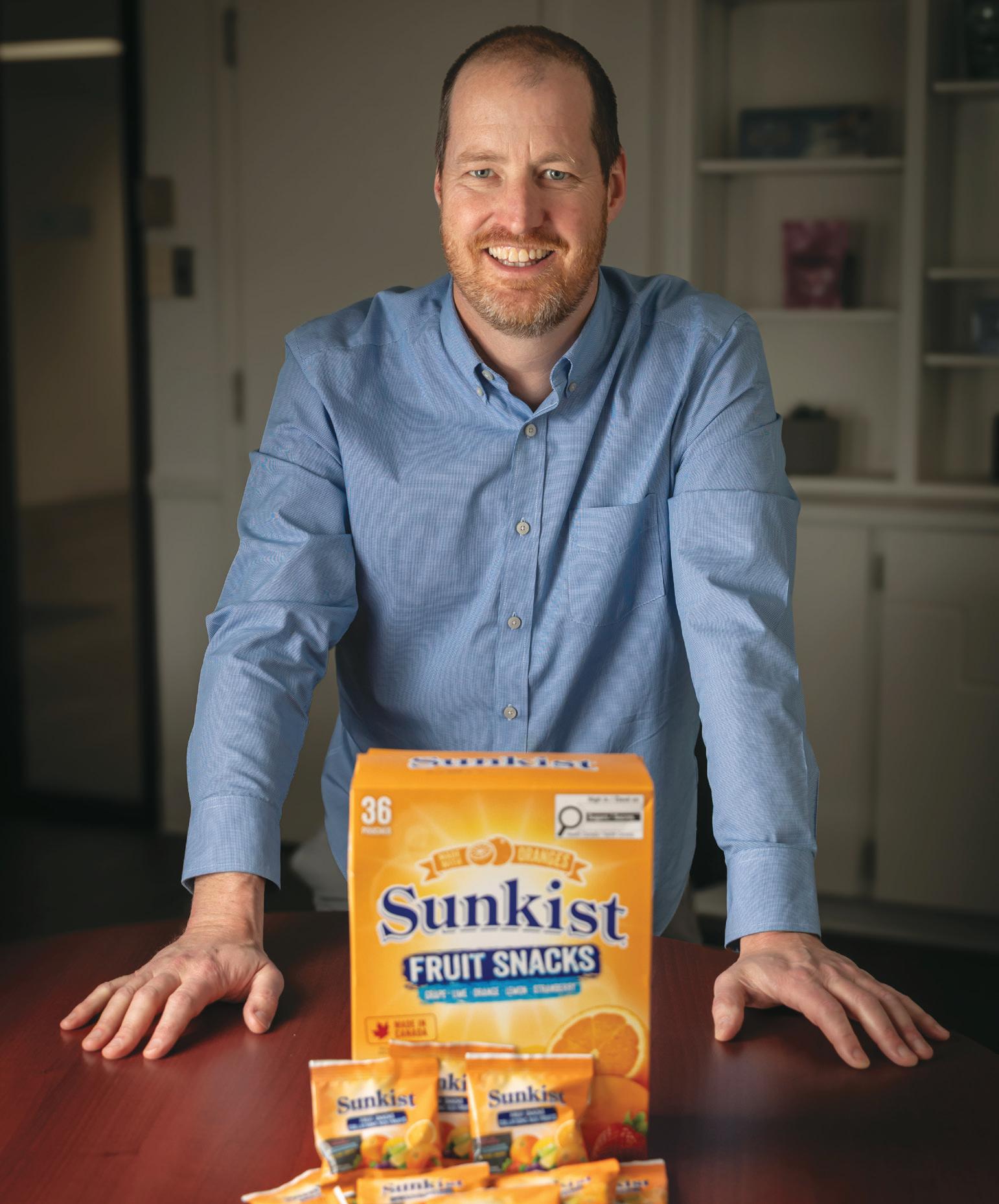
chief executive officer Bryana Ganong.
The general store wanted to differentiate itself from competitors, so the Ganong family hired a candy maker to work in the back of the store.
The idea was so successful that in 1873 the store was converted from a general store into a full-time candy manufacturing factory.
Ganong Bros. remained in its original factory until 1990, when they constructed a new production facility in St. Stephen, housing with 130,000 square feet of operating space and 45,000 square feet of warehouse space.
The company currently employs more than 300 people, making it one of the largest employers in the region.
As the company grew its own brands, it also started taking on co-manufacturing services for other candy companies—a trend that has taken off in the world of food production.
The company nowadays produces approximately 15 million pounds of chocolates and candies annually at the St. Stephen facility using 20 different manufacturing lines and 22 different packaging lines.
While many of its production processes have been automated over time, there are still some tried-and-true processes in place, Nick Ganong relates.
“Walking through our factory is a bit like a walk through confectionery history,” Ganong remarks. “Some of our processes maintain elements of our original methods in order to keep the product quality and attributes our customers know and love.
“Then there are some areas in the plant that are heavily automated with robotics,” he points out.
“There’s a pretty big split, but we’re constantly on a journey to find ways to automate and reduce some of our more labor-intensive operations.”
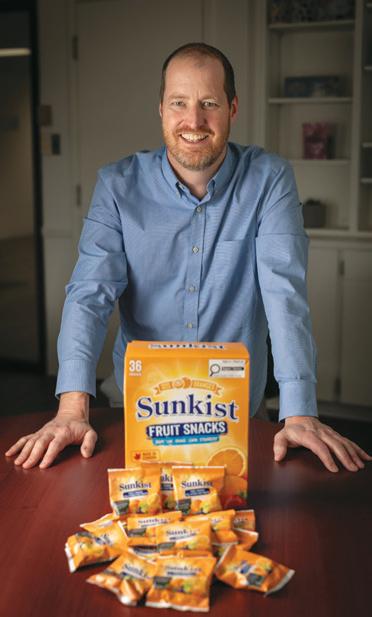
In 1997, the company became the official Canadian Licensee of the Sunkist brand. Since that time, Ganong Bros. has con-

tinued to produce Sunkist fruit snack products in addition to its own branded candies and chocolates.
The demand for Sunkist fruit snack products has grown significantly over the past 29 years, while also attracting other potential co-manufacturing clients in the U.S. looking to offer more
variety to their own products offerings. So much so, in fact, that the candymaker recently invested in a new packaging line to keep pace with production demands.
“We manufacture faster than we package for this product type, and we had a new opportunity to improve our unit costs and our
productivity, and also a new opportunity to work with a co-manufacturing partner in the U.S.,” Ganong explains.
“But while we had the manufacturing capacity to make the candy, but we didn’t have the packaging capacity to be able to convert it into finished goods,” Ganong recounts.
To meet those packaging demands, Ganong recently purchased and installed four Mars Rapid vertical form-fill-seal (VFFS) baggers, along with four ELITEWEIGH 24H multihead weighers from PLAN IT Packaging Systems, based in Mississauga, Ont., and Tampa, Fla.
“This allowed us to be able to make improvements to our existing product lines and allowed for enough capacity to take on new business by adding the four new baggers,” says Ganong.
PLAN IT Packaging Systems (www.planitpackaging.com) is one of Canada’s fastest-growing packaging automation companies, delivering advanced solutions in weighing, bagging, flow-wrapping, case-packing, and end-of-line robotics and palletizing.
With a major U.S. facility in Tampa and a new 40,000-squarefoot Canadian operation in Mississauga being readied to come online on July 1, the company is rapidly expanding to meet rising demand across North America.
“Known for its robust systems, engineering aptitude, and fully integrated turnkey approach, PLAN IT continues to position itself as a leading partner for manufacturers seeking modern, efficient, and highly reliable packaging automation and robotics,” says Mark Evangelista, sales director for PLAN IT Packaging.
This first project collaboration between Ganong Bros. and PLAN IT Packaging was initiated when Ganong Bros. reached out looking for a multihead weigher to marry into a third-party bagger they were considering buying at the time.
“We had an initial conversation, and I educated them on some of our offerings,” recalls Sal Choudhary, sales manager for PLAN
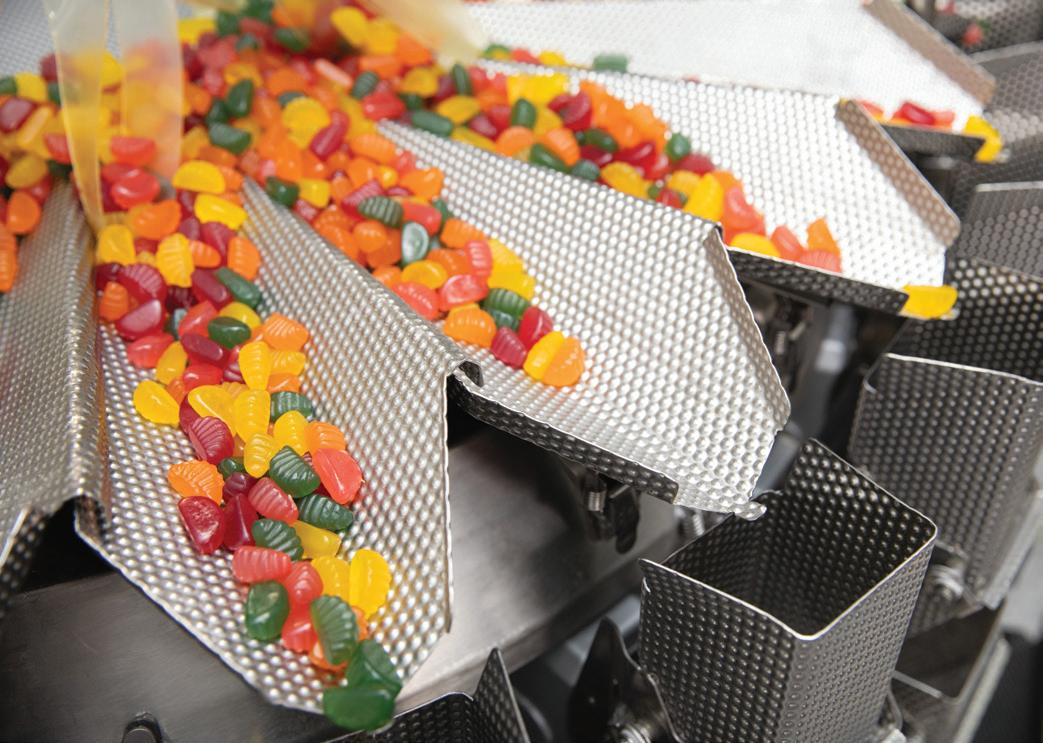
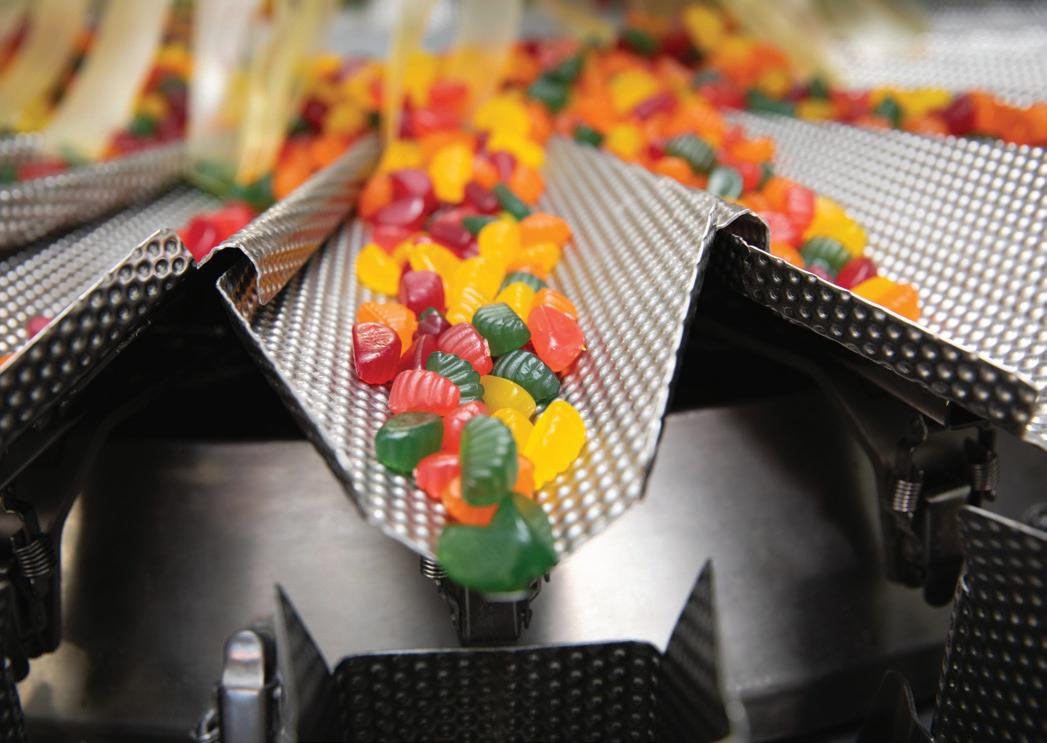
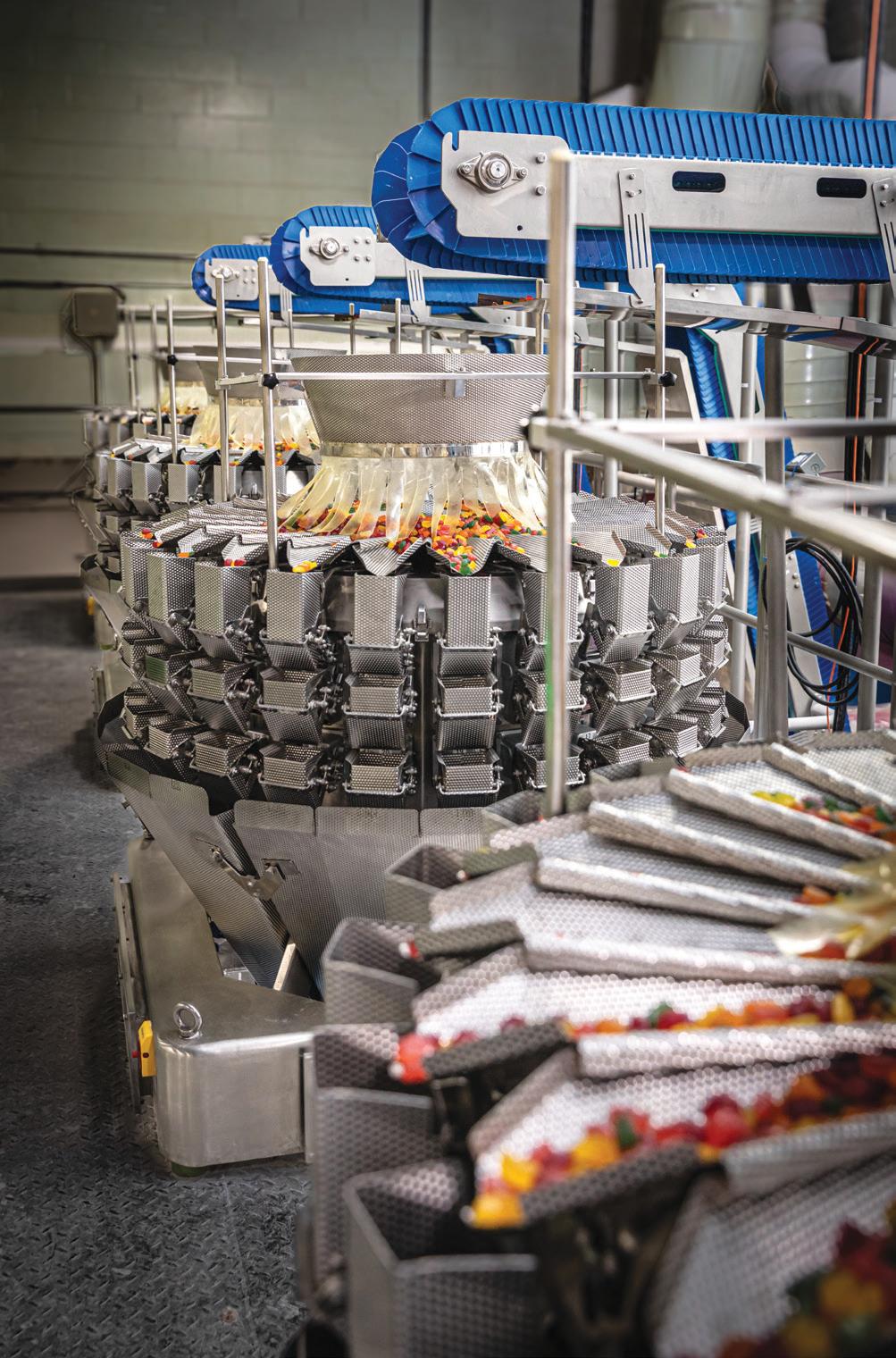
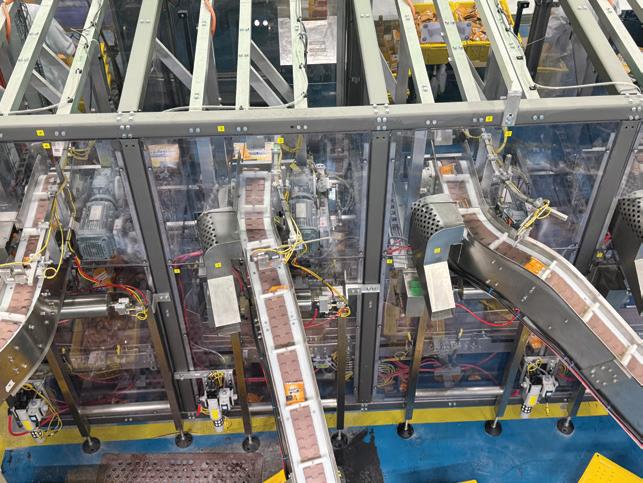
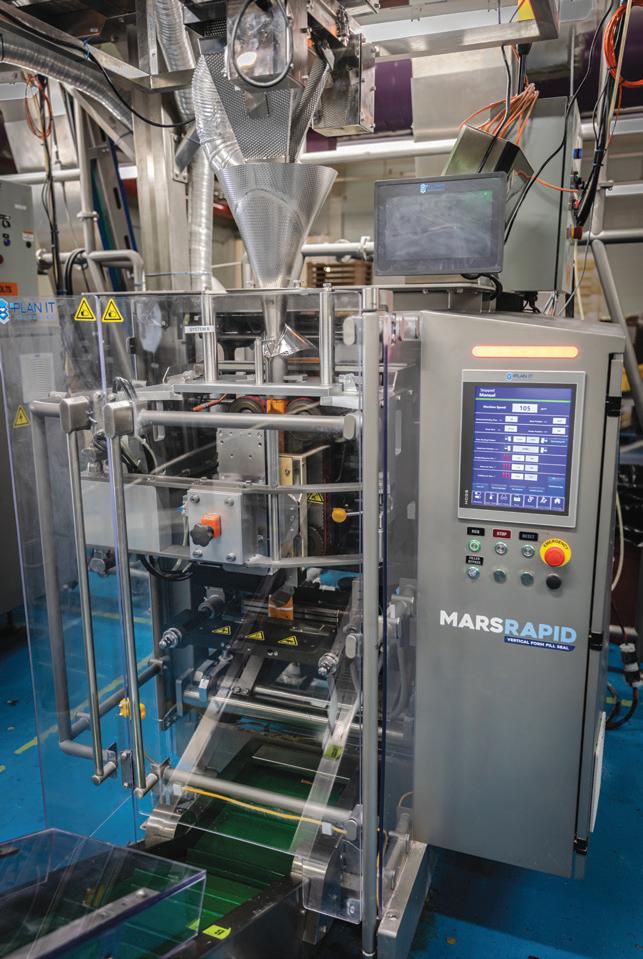
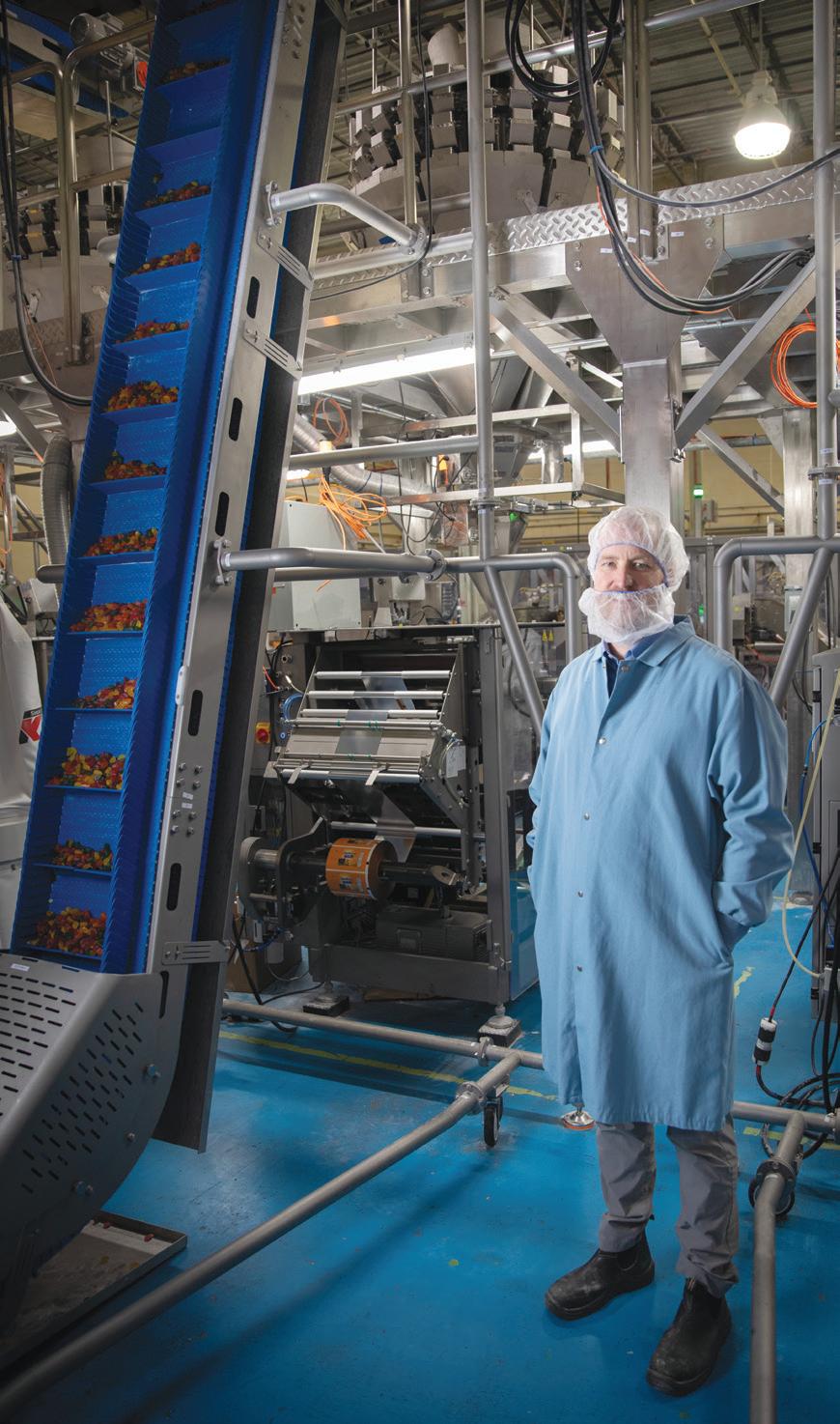
Finished Sunkist pouches bing transferred to an AFA cartoner to be placed into folding cartons; Nick Ganong on the plant floor; the MARS Rapid vertical bagger.
IT Packaging.
“With PLAN IT being a turnkey packaging solutions provider, taking your product all the way through to a finished pallet, I wanted to make sure the Ganong Bros. team were familiar with our capabilities,” Choudhary states.
Originally, Ganong Bros. was considering purchasing two multihead weighers to integrate into one bagging line, but Choudhary says they recommended an alternative route to improve redundancies.
“Instead of relying 100 per cent on one bagger, we suggested to divvy it up into different units,” he relates.
“That way they have repeatability, and the versatility, to be able to run different products,” Choudhary explains. “They liked that idea.”
Ganong Bros. was also interested in purchasing a single bagging line that had two baggers welded together on one frame, but once again, Choudhary suggested another option to improve redundancies.
“If that bagger goes down, you no longer have a bagging operation that’s live,” he says.
“So I suggested to them that maybe we could break that process into completely independent bagging lines.”
As Choudhary relates, Ganong Bros.’ minimum throughput requirement was 400 bags a minute, while the bagger they were considering was only rated to makes going to 350 to 400 bags per minute maximum.
So, Choudhary suggested four completely
independent bagging lines that package 150 bags per minute, which would also give the operation plenty of redundancy to run continuously.
“If one line does go down for any reason, at least you still have other lines up and running,” he explains.
“They liked that idea too,” he says. “Their concern was pricing at that point, but we came in very competitive.”
By installing four new bagging lines, Ganong has expanded their capacity for pouching in order to accommodate new demand through the factory.
“Not only does it give a better output than what we had initially forecasted with a single system or two systems, but it also gives them the chance to minimize downtime with the redundancy of multiple lines,” Choudhary says.
According to PLAN IT, the Mars Rapid VFFS baggers with four ELITEWEIGH 24H mutlihead weighers installed at the St. Stephen plant feature:
• Stainless-steel framing;
• Four incline infeed conveyors to carry product from ground level up to the top of the systems;
• Four exit conveyors to carry finished pouches from under the vertical bagger and bring them up to working height.
• An incline infeed conveyor boasting a modular belt with cleats for easy sanitation.
• The ELITEWEIGH 24H mutlihead weigher
is equipped with:
• A 24-head weigher with dimpled contact parts to reduce contact surface with the product;
• Tool-less removable contact parts for easy sanitation;
• A third layer of memory buckets to use as a temporary holding bucket that stores product when the weigh bucket’s contents don’t fit into an optimal combination;
• A triple timing bucket to store three complete target weights at any given moment to maintain higher speeds without sacrificing accuracy;
• High-precision digital strain-gauge loadcells for high accuracy, reliability and high speed dynamic weighing;
• angled contact parts for better product flow. For its part, the Mars Rapid VFFS bagger features a servo-driven vertical bagger with six servo motors powered by Omron controls, while the unit’s open-frame design delivers great accessibility, fast changeovers and superior sanitation.
“With full visibility and easy access from all sides, the operators can clean, service and adjust the system in a fraction of the time—boosting uptime and overall line efficiency,” Choudhary says.
Moreover, the Mars Rapid bagger is designed with continuous-motion sealing jaws that act as a pulley for the film, while adding seal dwell time for higher speeds—running the 22-gram
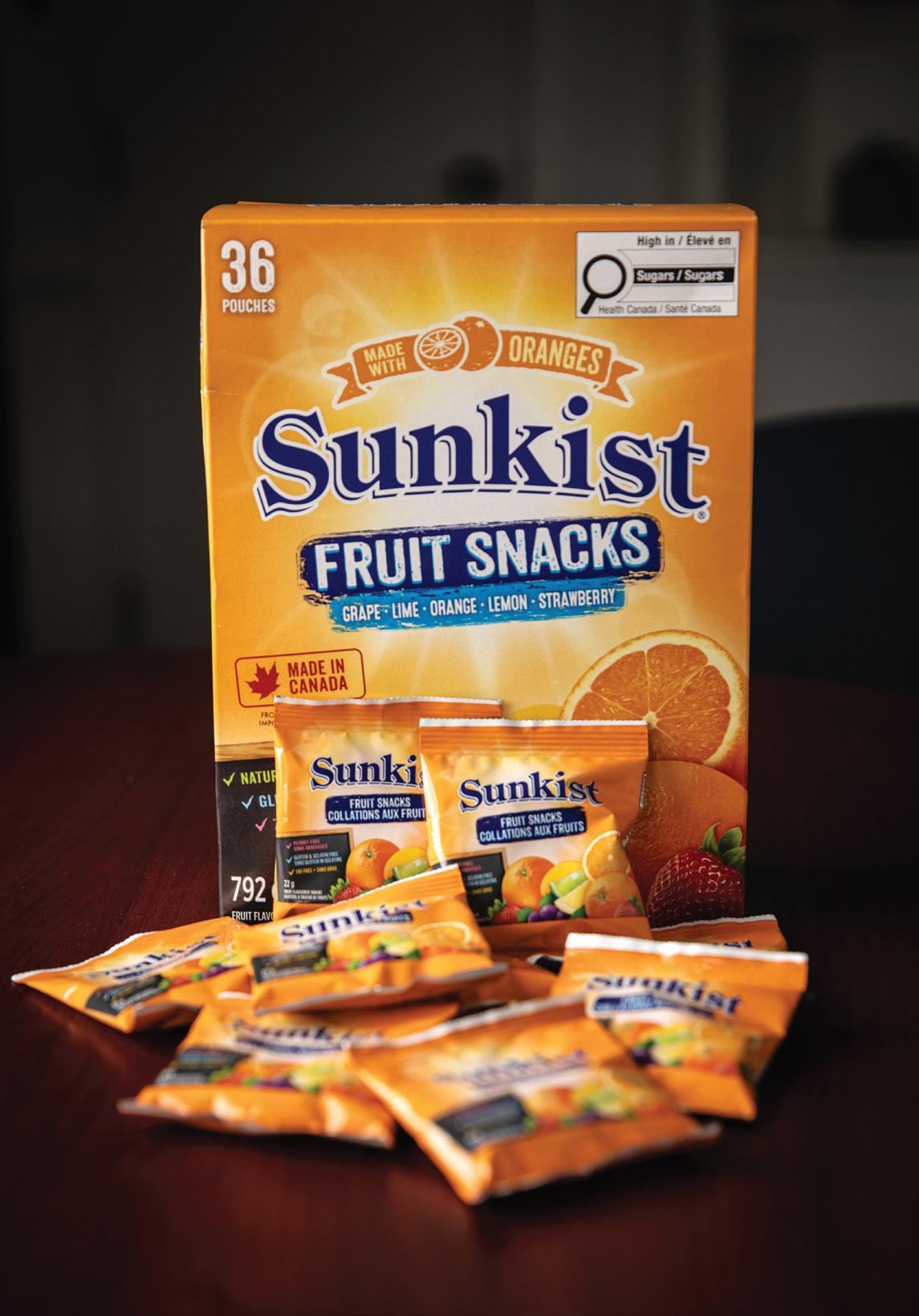
Close-up of the colorful single-serve pouches of Sunkist Fruit Snacks brand packaged inside the color-matching folding cartons retailing at leading grocers across Canada.
Sunkist pouches at up to 185 packages per minute.
Other key features include an automatic film centering and unwinding system; tear notch seal jaws for tear notch cutouts; tool-less removable forming tube for easy changeovers; and an overhead pan to prevent contamination of product.
“It allowed us to get around 2.5 times the output of what we were having on that packaging process on the existing line,” Nick Ganong says.
“Hence it allowed us to shift some volume around, so there’ll be more people on these lines, operating them to get more output.
“It didn’t displace people,” Ganong asserts. “It just enabled those people to be able to accomplish more in the run of a shift.”
Ganong also compliments the ELITEWEIGH 24H multihead weighers for allowing Ganong Bros. the flexibility for packaging a lot of different combinations, while operating at a higher speeds.
Ganong says his company talked to 30 different vendors that provided similar types of packaging equipment, but he was ultimately sold on PLAN IT Packaging’s combination of a short lead-times (only three months from purchase to commissioning), competitive pricing, and being able to deliver the promised throughput.
“Overall, the business case was sound to move forward with them,” he says.
Having PLAN IT Packaging technical experts located relatively close by in Mississauga for any servicing or maintenance was also a bonus.
“We were able to travel to them and do the testing on-site without having to cross international borders,” Ganong points out.
“And if you go back 10 or 11 months, there was a lot of dialogue and concerns around potential tariffs, so buying from a Canadian supplier helped us to reduce the risk around potential impact to tariffs.”
While many Canadian workers often worry that automation will replace them, Ganong says that is not the case at his plant.
“We are growing, and want to grow faster than we will be able to grow the number of people,” he says.
“So we are confident that we’ll continue to find opportunities to employ as many people as we can find,” he says.
“It’s not about reduction of jobs: it’s about upskilling our staff,” Ganong states. “We have found that some of the manual, repetitive tasks are not as engaging, and retaining staff in those roles is difficult.”
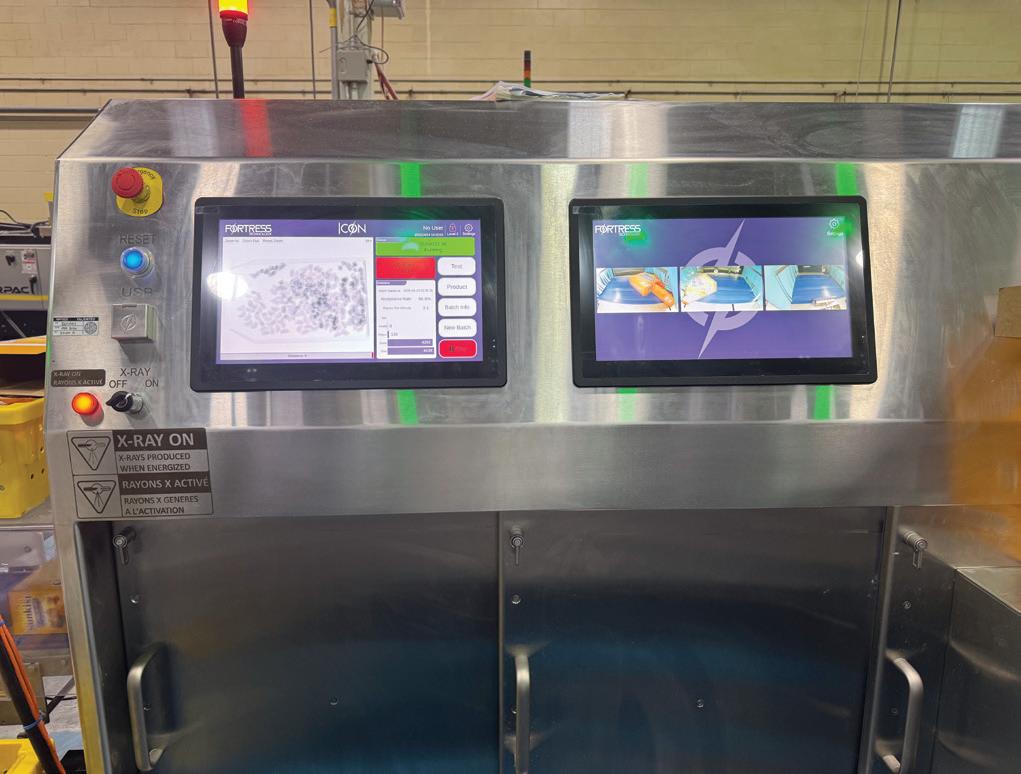
Ganong says the company is always looking for ways to automate less popular tasks such as product inspection.
“We’re asking humans to do things that are difficult for human to accomplish, like looking at 350 packages a minute as they go by to pick out any defective packages.
“That’s a tough job and difficult to do as a manual process,” Ganong says. “In a lot of cases we’ve already implemented, or will be implementing, vision systems to do those tasks with technology.”
Case-packing and preparation is another area Ganong is always looking to automate.
“There are tasks, like getting cases ready, where we can do with a machine,” he comments, “but it would still require someone to
operate that machine.
“Incorporating technology in this way is more engaging for the staff overseeing it,” Ganong says, adding that it would create some value for the employees while improving completeness for the company.
As Ganong relates, in 2018 the company Ganong achieved the vaunted, globally recognized Safe Quality Foods (SQF) Level III certification, which is the highest standard that can be achieved for food safety and food quality systems.
From a competitive standpoint, having the highest certifications in food safety, along with the technologies to reduce production bottlenecks, are keys to a successful food production operation, according to Ganong.
“Our goal is to be as turnkey as we can be for our own brands
and our co-manufacturing partners,” says Ganong.
“We want our customers to be able to order a finished product, and then we create it from start to finish and get it into the format that they want it delivered to the retailer,” Ganong sums up.
“That way they don’t have to go through all the intermediate steps involved in sending product to a co-packer,” he concludes, “while we get the opportunity to add as much value as we can while the product is here.”
www.planitpackaging.com
Please watch the video of how Ganong Bros. packages its Sunkist brand candies on Canadian Packaging TV at www.canadianpackaging.com












The importance of flexibility, sustainability and automation to the future of the global food and beverage industries
By George Guidoni, Editor
It’s a familiar scenario: trawling around the supermarket, you’re presented with row after row of products of all shapes and colors, all of them full of promise.
Your eye roves along the jam-packed shelves and suddenly come to an abrupt halt. They have already made their decision, even while your brain may still be thinking about which item is best. In many cases, it’s the packaging that triggers your decision to buy— ideally by providing a pleasing design combined with uncompromising product protection and sustainable materials at an attractive price. But while making that decision may take mere seconds, combining attractive design with superior functionality, sustainability and affordability requires a whole lot of technology and expertise that only a few global packaging equipment suppliers can readily suppliers can readily provide from a single source.
Headquartered in Dortmund, Germany, KHS GmbH (www.khs. com) is one of those elite suppliers, whose holistic line strategy starts with the packaging design and culminates in the development of perfectly
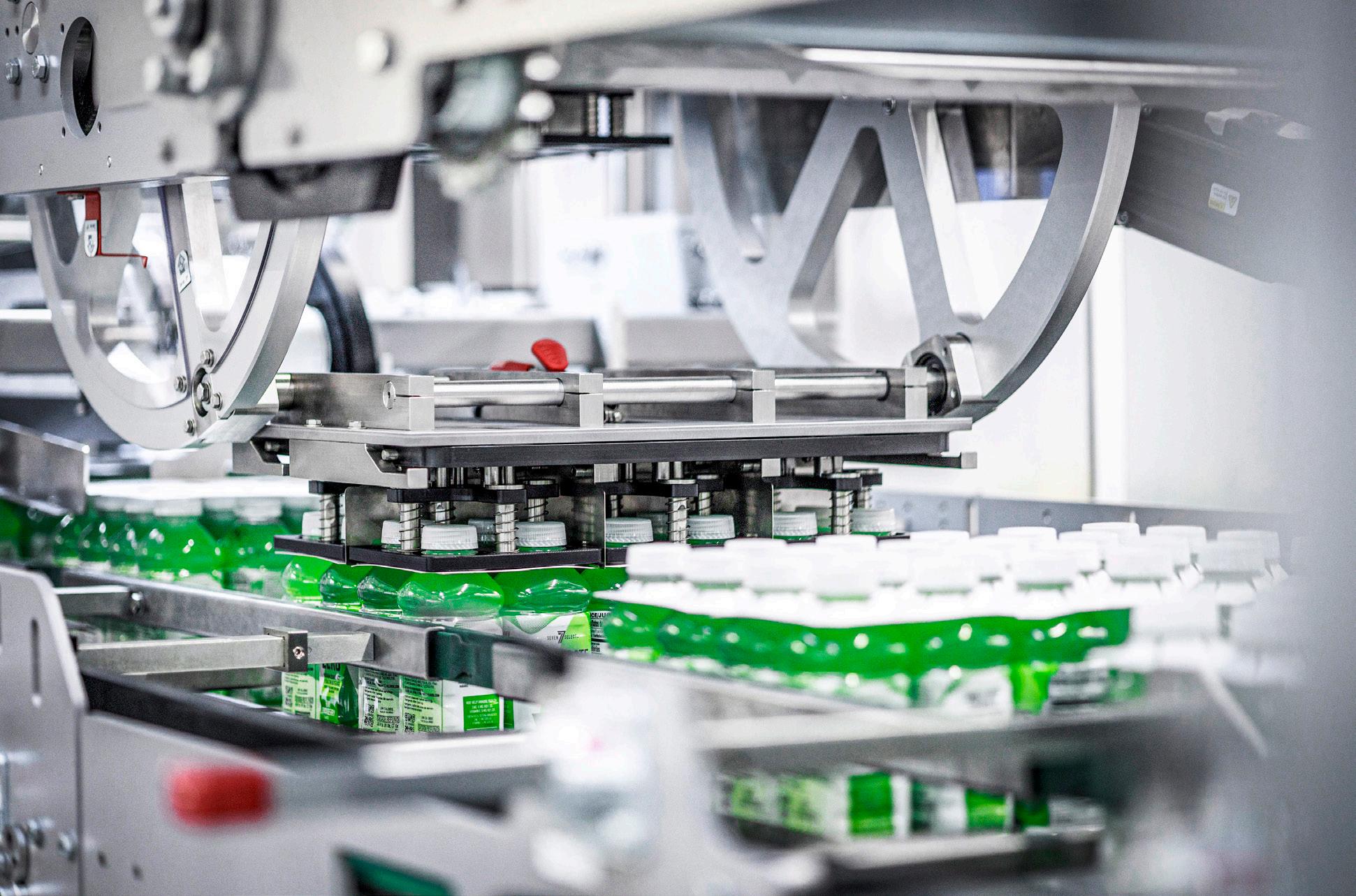
orchestrated line systems and solutions that are ideally tailored to market requirements and the individual needs of the customer.
In doing so, the turnkey supplier offers its clients processes that boast a maximum of flexibility, reliability and cost-effectiveness— providing customers with key support in overcoming today’s multiple geopolitical, environmental workforce and other challenges.
It’s no secret that many producers in the beverage and food sectors are battling with an acute lack of specialist workers, as the availability of qualified operating personnel has notably dropped worldwide over the past few years.
In response, the demand for fully or partly automatic systems has risen steeply.
The manifold legal provisions businesses in the beverage and packaging industries are confronted with on a global scale are also proving to be a considerable challenge.
The most recent example of this is the European Union’s new Packaging and Packaging
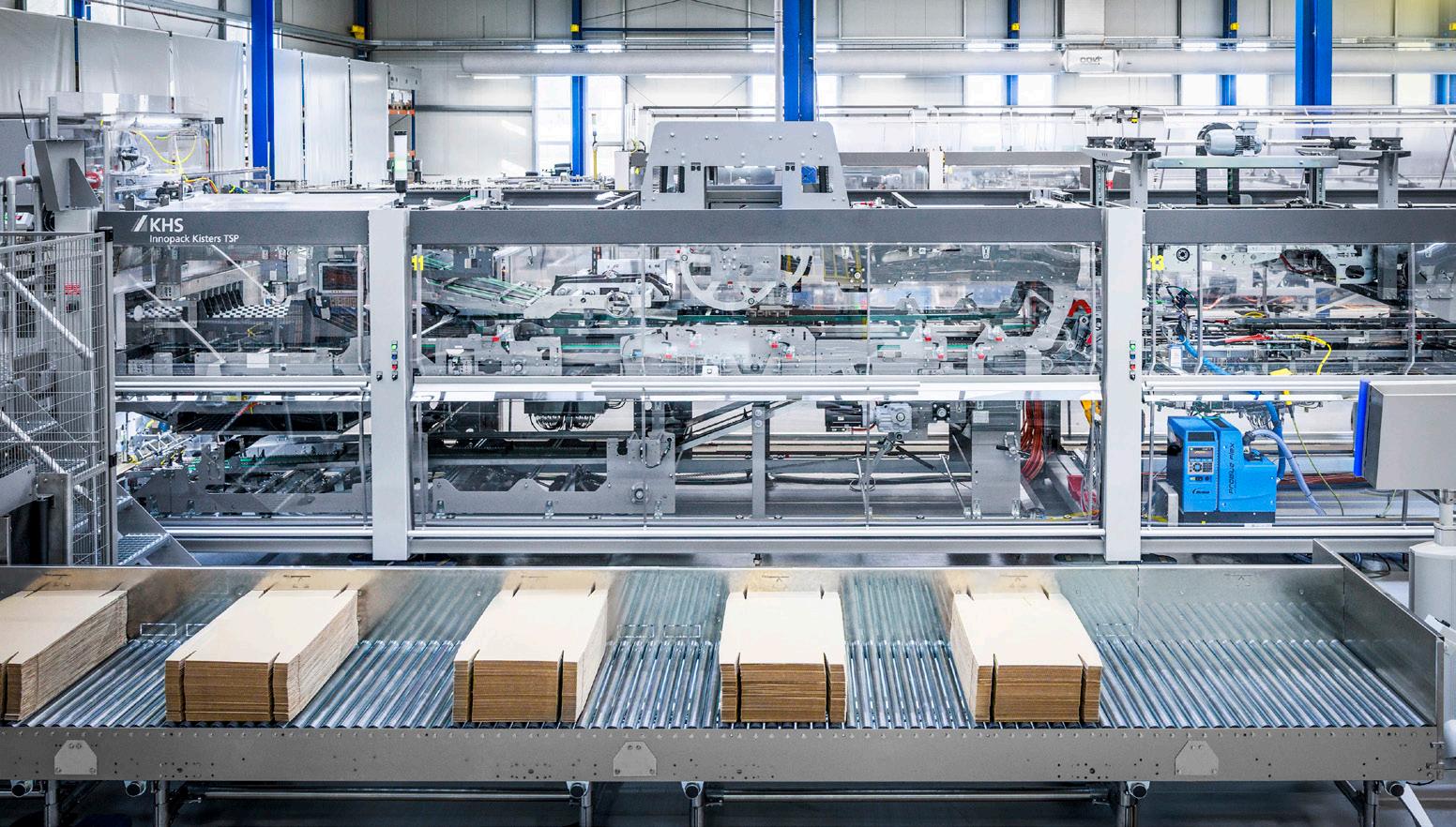
The KHS Innopack Kisters TSP Advanced gives operators maximum flexibility, packing PET and glass bottles and cans on trays, in film as well as on trays or pads and film.
"The worldwide requirement for lowplastic or plastic-free systems has significantly increased in the last few years, especially for secondary packaging."
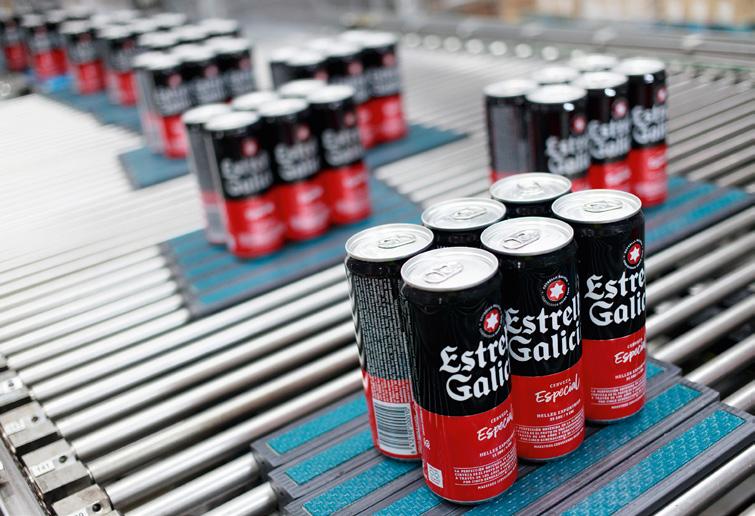
Nature MultiPack turns cans and PET bottles into robust packs using small dots of adhesive to provide maximum pack stability with handy carrying convenience.
=Waste Regulation (PPWR) that will mean profound change—not all of it foreseeable right now—for the entire sector.
As a result, resource-conserving packaging and increased use of recycled materials in particular are therefore very much in demand. The worldwide requirement for low-plastic or plastic-free systems has significantly increased in the last few years, especially for secondary packaging, with a definite shift towards cardboard, paper and plastic film that contains a high percentage of recyclate.
As a turnkey supplier with a comprehensive packaging and machinery portfolio, KHS can always expertly provide systems and solutions to cater for changing market conditions.
One example of this is the further-developed KHS Innopack Kisters TSP Advanced—a fully automatic machine gives operators a high level of flexibility in packing PET and glass bottles and cans on trays, in film as well as on trays or pads and film.
At last month’s interpack 2026 global packaging exhibition, KHS presented this well-established system with its new patented, optional BottleClip Carrier application for the very first time, showing how the cardboard carrying handle joins PET containers together to form stable packs.
Designed as a resource-conserving alternative to plastic ring systems which are no longer allowed in some countries, the new BottleClip Carrier option is available for all standard KHS
Kisters machines in the Advanced series that have been specially developed for the high-performance sector.
The KHS Innopack Kisters TSP Advanced, for example, processes up to 7,200 packs per hour, while offering the advantages of low operating costs, high line availability and fully automatic processes that significantly reduce operating requirements.
Besides the BottleClip Carrier , secondary packaging made of paper and the Carton Nature Pack (CNP) from KHS are also proving to be very popular.
The CNP bundles cans to form stable packs with the help of a cardboard topper clipped onto the upper rim of the can, using no plastic whatsoever.
KHS’ globally market-proven Nature MultiPack (NMP) does away with both cardboard and plastic film, turning cans or PET bottles into stable packs using nothing more than a few small dots of adhesive.
This sustainable KHS system cuts down on valuable resources and gives consumers maximum pack stability coupled with perfect carrying convenience, whereby container can be easily detached from the rest of the pack as and when required.
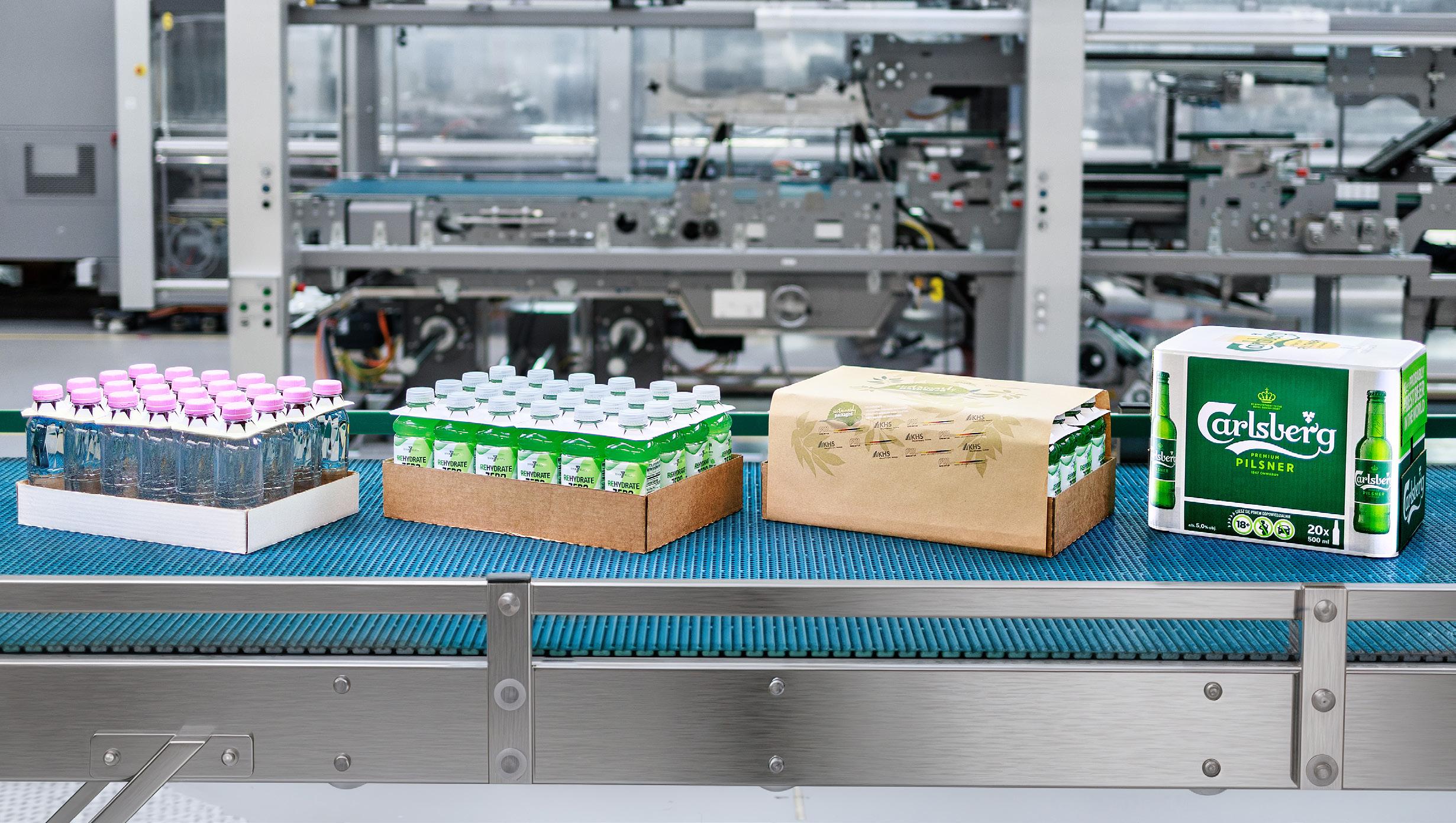
KHS helps companies worldwide to develop and establish sustainable packaging systems, whether for secondary film, cardboard, paper and adhesive dot applications or for primary can, carton, glass and PET containers.
With its Nature MultiPack, KHS has taken on a pioneering role in establishing plastic-free packaging on an international scale. In many regions of the world, particularly in Asia, Africa and South America, secondary packaging made of film and PET bottles continue to dominate the market.
To that end, KHS is helping companies worldwide to develop and establish sustainable packaging, whether for secondary film, cardboard, paper and adhesive dot applications or for primary can, carton, glass and PET containers.
In doing so, together with its customers KHS strives to meet corporate sustainability targets and fully comply with legal requirements. In its plastic systems and solutions, the Dortmund packaging and line specialist strongly centers on increased use of recyclate and lightweighting.
Two groundbreaking bottle innovations serve as examples of this strategic alignment.
The KHS Premium LITE, for instance, combines minimal material consumption with a high-quality look. Clocking up just 6.2 grams on the scales, the 0.25-liter PET container is extremely light. Despite its minimal weight, this bottle—designed in cooperation with Husky Technologies—is ideal for processing at maximum filling speeds.
With KHS SUPREME, the systems supplier has taken the protection of oxygen-sensitive beverages up to the next level.
Combining the protective properties of glass with the weight benefits of plastic, the premium PET bottle tried- and-tested Plasmax barrier technology from KHS, a wafer-thin layer of silicon oxide on the inside of the PET bottle that reliably protects highly sensitive products such as juice, CSDs, beer, tea, wine and liquid food
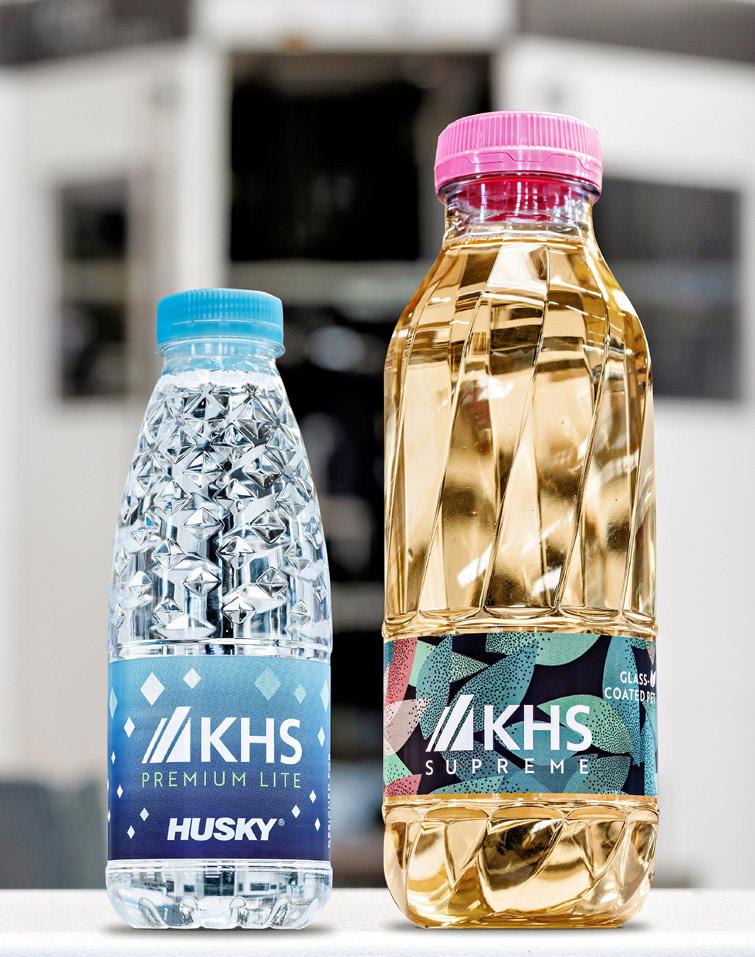
from oxidation and the loss of carbon dioxide.
This process preserves taste, color and quality for long periods of time and considerably lengthens the product’s shelf life. Furthermore, Plasmax coating can be used on lightweight containers and on bottles made of virgin PET or up to 100-percent recyclate.
Formulated to completely dissolve during the standard recycling process—unlike conventional barrier material systems such as scavengers and multilayered structures—the purity of the separated PET is maintained, making Plasmax -coated bottles are fully recyclable and perfect for use in closed-loop PET systems.
Because the development of resource-conserving, future-proof packaging is a complex affairs, KHS thus offers its clients a holistic consultancy service for container systems.
As such, Bottles & Shapes strikes a balance between consumer- and environmentally-friendly design, reliable line behavior and the efficient use of resources —for PET/[r]PET as well as glass bottles and cans.
Here, KHS experts support customers from their initial design to the launch of a product that’s perfectly tailored to the specific requirements of the respective company.
KHS’ broad service portfolio is intended to provide long-term line availability at a low TCO. Its success is founded in the intensive support KHS specialists provide their customers with—working in cooperative partnership with them on an equal footing.
The company’s individual needs and challenges are always in focus, whether this be the design of a turnkey line or the overhaul of an existing machine.
KHS’ extensive range of services also includes its established Innoline Basic Line Monitoring software, 3D line design, remote diagnostics and maintenance system ReDiS and its Augmented Reality Service.
Using KHS InnoPET iflex automated line changeovers, KHS facilitates customer format changeovers within 30 minutes, with product changeovers performed in just ten minutes.
When applying the iflex option on PET lines, up to 80 per cent of all manual line conversion
tasks are rendered superfluous. Regarding automation, operators also profit from AI-assisted inspection technology for tethered caps.
Outstanding packaging and line expertise, paired with a multifaceted service portfolio, ensures long-term success for both KHS and its customers, as well as giving them stability in politically and economically challenging times. Thanks to its strategic concentration on processes that provide maximum flexibility, reliability, cost-effectiveness and sustainability, KHS stands firm as one of the world’s leading developers of packaging and plant technology for the beverage and liquid food industries. www.khs.com
Automatic metal detector testing technology a cornerstone of effective food safety compliance
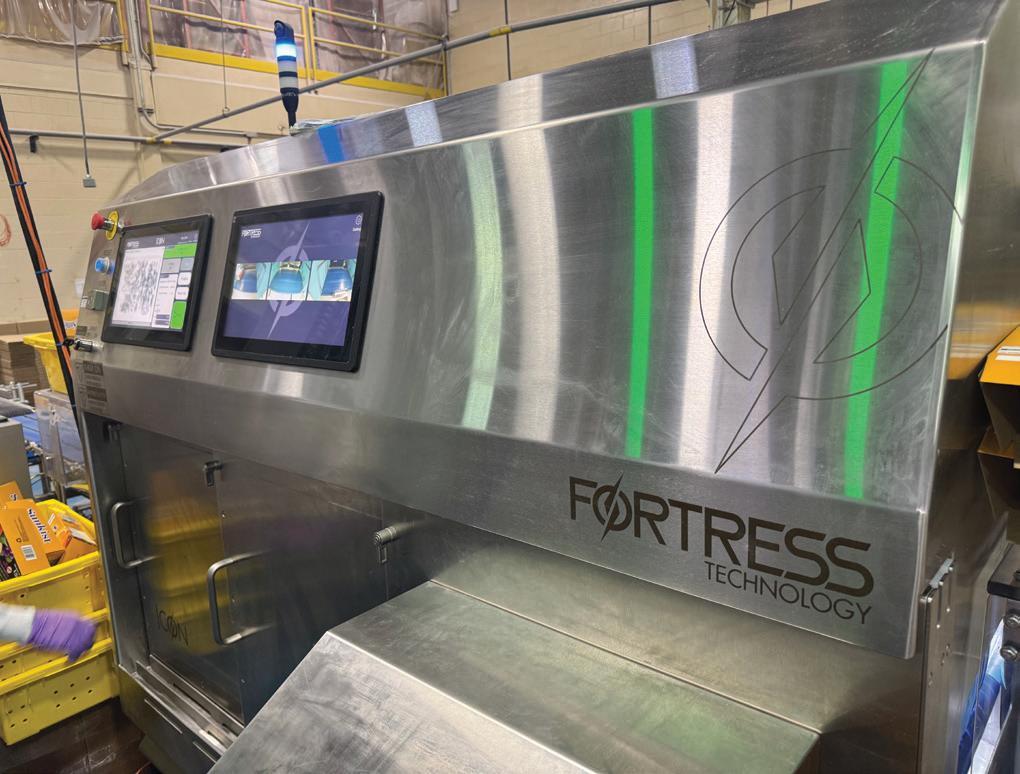
In 2010, Toronto-based metal detection specialists Fortress Technology (www.fortresstechnology.com) became the first inspection company globally to automate routine safety checks of food metal detectors.
Today, its pioneering Halo Automatic Testing System continues to be the cornerstone of ensuring food metal detectors are repeatably challenged under true production conditions.
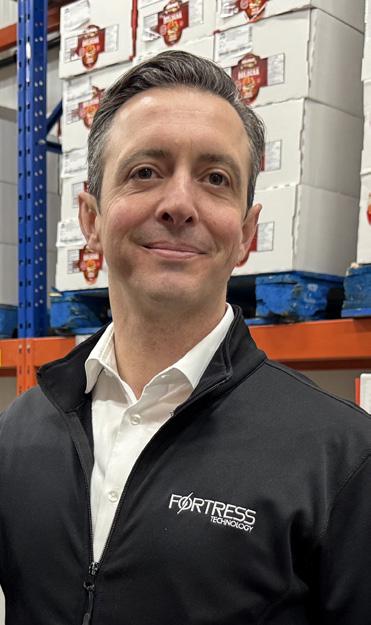
The company’s regional sales manager Eric Garr draws on over 15 years of quantifiable data and customer feedback to explain how the Fortress Technology system eliminates human errors.
In addition to reducing food waste and accelerating ROI (return-on-investment), Eric Garr addresses how the system improves operational efficiency and enhances safety standards.
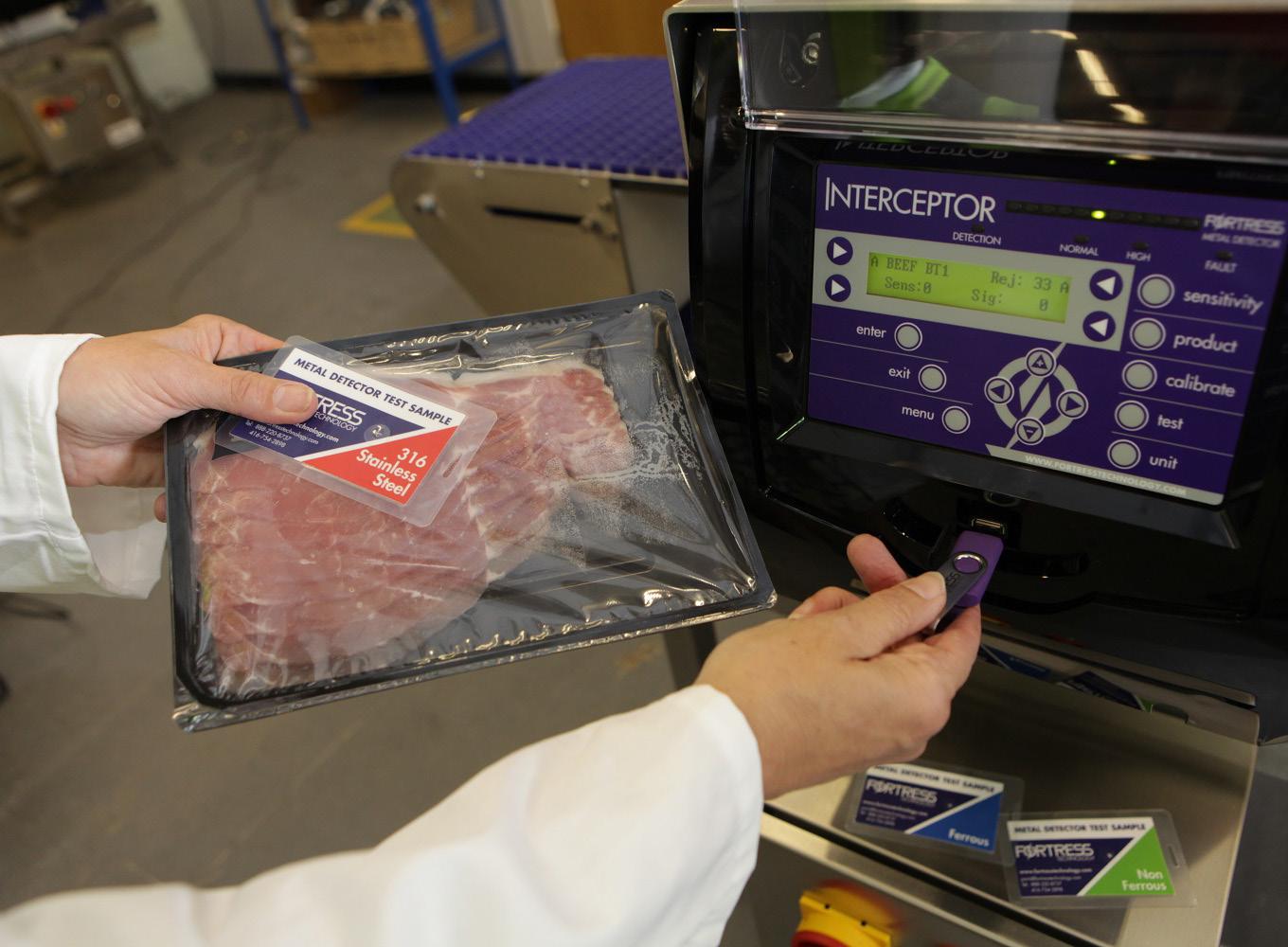
Industry standards typically require metal detector testing at the start and end of every shift and at consistent intervals during production.
He also discusses cost and upgrade options and describes why customers with newer Fortress Technology metal detectors are increasingly activating Halo.
QWhat is the cost of the Halo Automatic Testing System?
AThe Halo Automatic Testing System is typically a single capital investment that is integrated on an individual Fortress Technology gravity, pipeline or conveyor metal detector. Once purchased, there is no recurring subscription fees to operate the device.
Customers report that the principal value comes from the long-term operational savings.
By automating routine checks on our metal detectors, the Halo Automatic Testing System reduces the labor time and production interruptions caused by hourly manual testing.
In many facilities, the ROI of the Fortress Technology system due to efficiency savings can be realized in less than 12 months.
QCan I add Halo to my existing Fortress Technology equipment?
AEvery new Fortress Technology metal detector is manufactured as ‘Halo-ready.’ For facilities with existing infrastructure, upgrading may be a viable option for these newer models.
The feasibility of this depends entirely on the specific stock model, the application type (gravity, pipeline or conveyor) and the original date of manufacture.
If it is a ‘Halo-ready’ unit, it allows food manufacturers to modernize their safety protocols without the capital expenditure of a full system replacement.
If upgrading is not feasible due to the age of metal detectors, it may be valuable to calculate what you are losing in product
QDo I have to test every food metal detector in my factory, and if so, how often?
AYes, the testing of food metal detectors is essential. Food manufacturers must regularly verify the functionality of their metal detection systems as part of mandated food safety and quality assurance programs, including HACCP and GFSI. It applies to every type of food metal detector, even the most expensive and reliable models.
These routine checks confirm that the system is detecting metal contaminations that are a risk for their process and that all affected products are being rejected. This helps to maintain food safety and audit compliance.
Industry standards typically require metal detector testing at the start and end of every shift, at consistent intervals during production, often hourly, and using critical limits that mitigate hazards to an acceptable level.
While manual testing is possible, but this is time-consuming, labor-intensive, and requires thorough documentation of every result.
The test samples on manual checks should be placed in the product and the result must be documented to comply with HACCP and GFSI requirements.
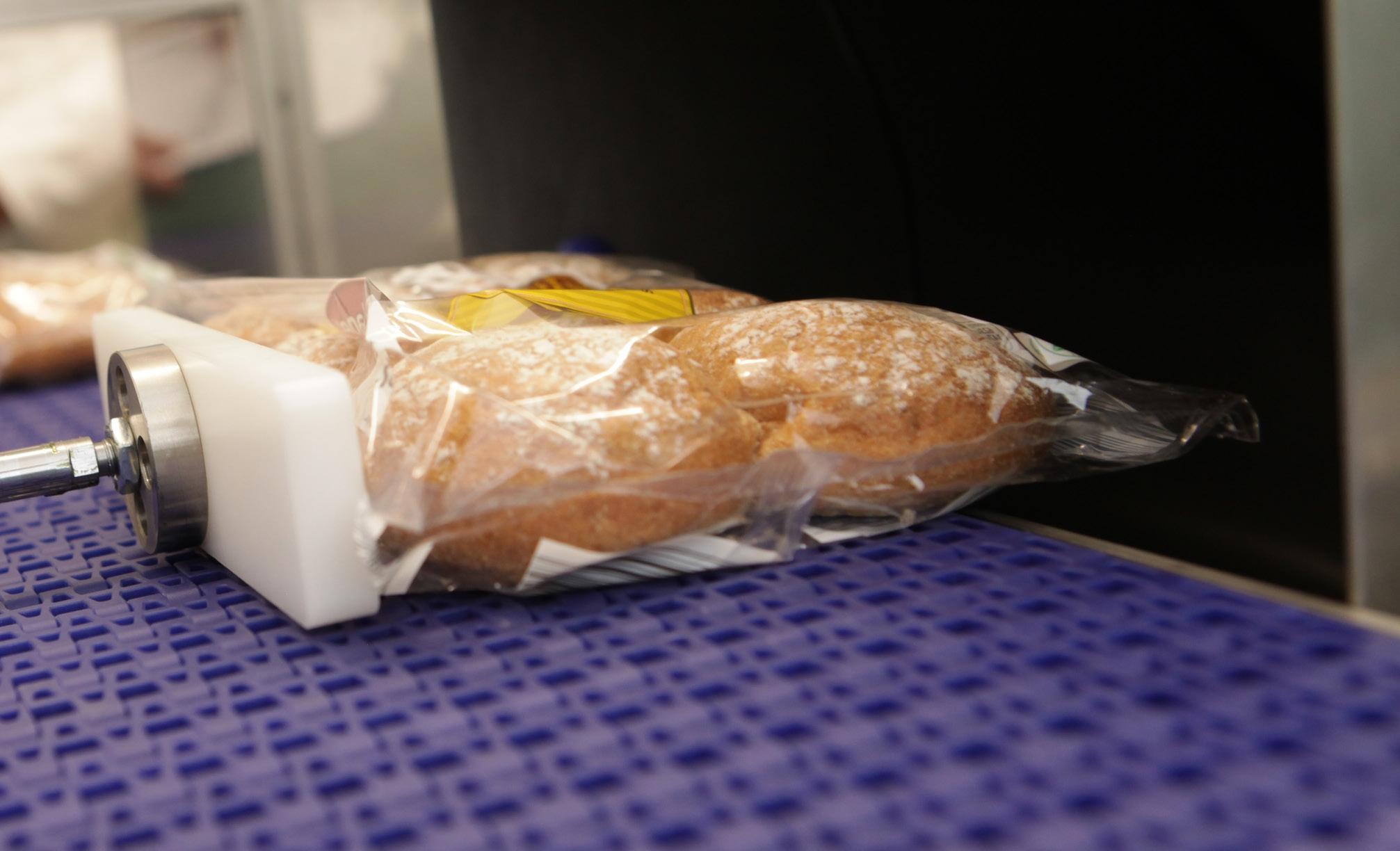
Automatic metal detector testing offers a superior alternative by generating a precise, calibrated signal that challenges the detector with controlled repeatability that human testing simply cannot match.
waste, spending on labor to perform manual tests and how long the metal detector is down for between each test.
Then compare this to installing a new, higher performance metal detector with a Halo Automatic Testing System installed. Our Halo ROI calculator can help put everything into context.
QHow easy and quickly can Halo be rolled out?
AThe Halo Automatic Testing System is intentionally designed for quick and simple deployment. On compatible systems, the hardware is already in place, so setup typically takes several minutes. Most installations can be completed without complex
commissioning.
Facilities also have the flexibility to trigger tests manually via the Fortress Technology HMI or pre-program them at specific intervals to align with internal quality control policies.
QIs ther extra software required to run Halo?
ANo. Every test with the Halo Automatic Testing System can either be scheduled to run automatically at a defined time or activated by pushing a button on the HMI. This can be pre-programed and doesn’t require additional software to run the test.
To assist with reporting, the Contact Reporter program included on all Fortress Technology metal detector to generats the necessary PDF or Excel reports, capturing all testing events and detector activity for long-term storage.
For optimal reporting efficiency, processors may consider using the implement Contact 4.0 platfrom, which provides real-time networked monitoring across multiple production lines and can automatically transfer your testing data to your centralized management system. The Contact 4.0 can also make your test documentation process more efficient.
QWhat does a typical Halo-generated report look like?
AEach Halo report generates a tamperproof electronic record that includes:
• Exact date and time of the test;
“With the implementation of automatic testing, process and safety checks are seamlessly incorporated into workflows, eliminating potential disruptions and bottlenecks.”
• Metal type (ferrous, non-ferrous, stainless steel);
• Resulting signal strength to prove sensitivity limits for each metal;
• Detector status and verification of the reject mechanism response;
• Pass/fail results and associated event logs for any faults.
With digital files are available for instant retrieval, the platform provides absolute transparency and concrete evidence of repeatable performance in the event of an audit or retailer request.
QWill automatic testing become the norm?
AOver the last decade Fortress Technology has observed a significant shift in customers implementing automated test verifications. Human-centric testing protocols are inherently vulnerable to fatigue, inconsistency and procedural drift. In high-volume environments, these small errors can lead to significant non-compliance issues during audits, or worse a product recall. Our customers are the biggest advocates of the Halo Automatic Testing System. Manufacturers indicate that with the implementation of automated testing, process and safety checks are seamlessly incorporated into workflows, eliminating potential disruptions and bottlenecks.
www.fortresstechnology.com
New AI-based solution for mixed-product robotic handling lets software select the best gripping tool for application
When robotic cells must handle a range of variable products within the same machine, mixed-product environments often require repeated programming, application-specific integration, and expensive 3D camera set-ups. These demands can slow deployment, increase integration cost, and make it difficult to scale automation across operations.
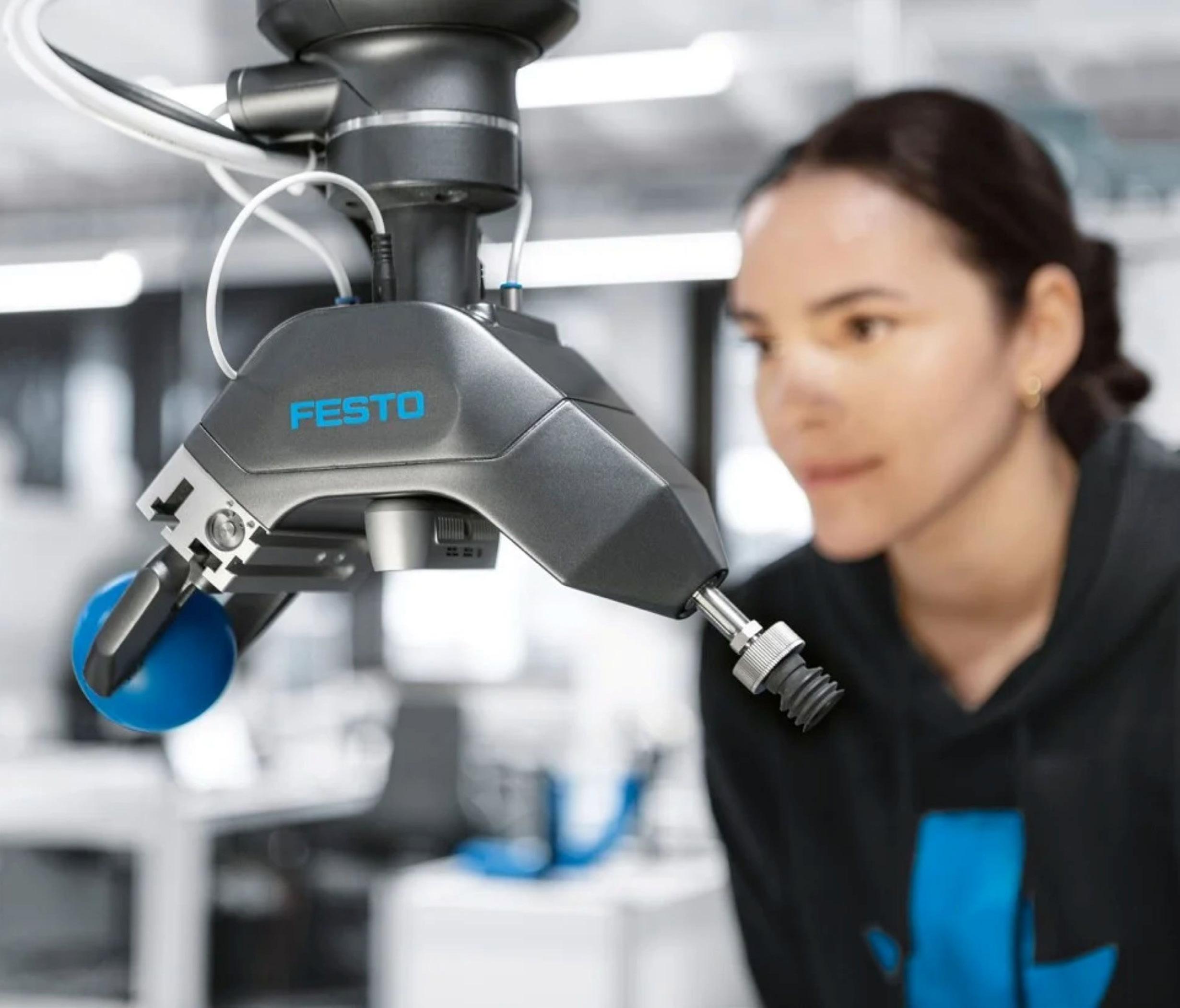
To address these challenges, automation device specialists at Festo (www.festo.com) have developed GripperAI , a universal AIbased software that enables robots to handle a range of items without custom programming.
The software operates locally at the cell on a standard industrial PC with a connected 3D camera and automatically adjusts for mixed products without programming or template loading between SKUs (stock-keeping units).
Deploying GripperAI involves standard integration steps: mounting and aligning the camera, verifying usable lighting, calibrating the robot base to the camera’s frame, and configuring the software’s pick parameters.
After that, the software calculates a gripping point for each sighted item, selects a tool when multiple ones are available, and the robot’s path control carries out the move. If a grip is missed, the system recalculates and retries, sustaining the operation rather than stopping for reprogramming.
Since the software architecture does not change between camera types, facilities can apply the most economical vision hardware that meets the application requirements.
Unless packaging or surface conditions require higher-resolution imaging, most applications can be satisfied with cost-effective 3D cameras.
Moreover, the GripperAI is compatible with most industrial robots, cobots, and Cartesian systems that have a path control system to exe-
“If a grip is missed, the system recalculates and retries, sustaining the operation rather than stopping for reprogramming.”
manual handling and ergonomics in high-speed operations, GripperAI offers a multitude of capabilities and operational benefits, including:
• Handling mixed, unknown, and chaotically stored items without template loading between SKUs;
• Calculating gripping points automatically and selecting the most suitable available tool;
• Sustaining operation with automatic recalculation and retry if a grip is missed;
cute the motion the software specifies.
Because the software is robot-agnostic, cells can be deployed or expanded without locking into a single brand or model, helping to protect existing investments while gaining the flexibility to add capacity with the most cost-effective equipment for the application.
Recently Würth Group, a global leader in fastening and assembly solutions for industrial, construction, and automotive applications,
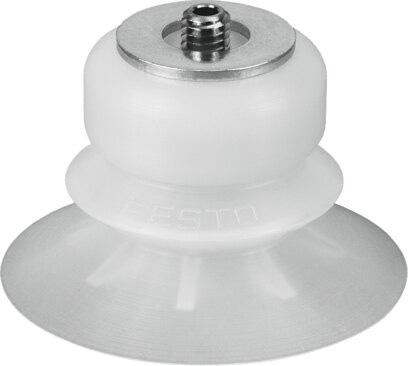
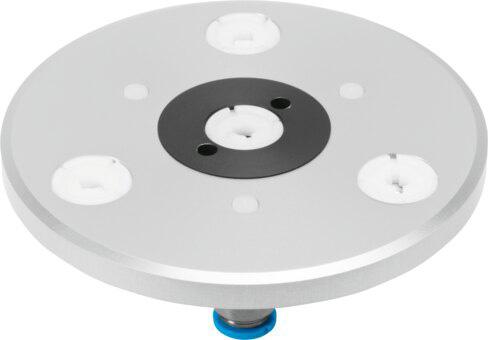
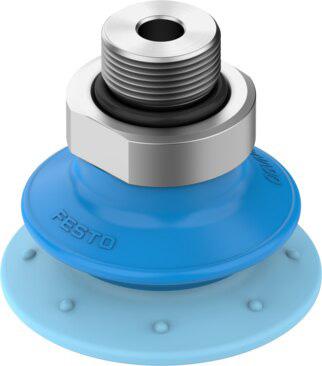
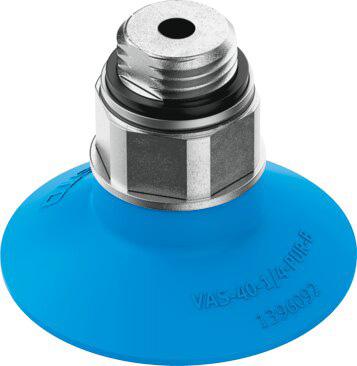
faced the pressure of rising SKU counts and product mix variation at its central distribution hub in Germany. Now when an item reaches final packaging, a robot equipped with GripperAI uses a tool station with various vacuum and mechanical grippers to ensure it has the correct gripper for the product or package, which can vary from small parts like USB sticks up to boxes weighing up to 20 kilograms.
Designed to solves the issues associated with
• Operating locally on a standard industrial PC with connected 3D camera;
• Supporting cost-effective 3D vision hardware, with architecture remaining consistent across camera type;
• Compatibility with most industrial robots, cobots, and Cartesian systems with path control;
• Enables deployment and expansion without locking into a single robot brand or model. www.festo.com