HPAI: Vaccination questions intensify p.12
aMPV: The shifting landscape p.20
January 2026
Research: What’s driving HPAI risk p.24
canadianpoultrymag.com
ANNUAL POULTRY HEALTH CHECKUP
Gains amid ongoing pressures Pg 8
Providing experienced vaccination crews across Canada for your Layers and Breeders. Call us for your next flock!
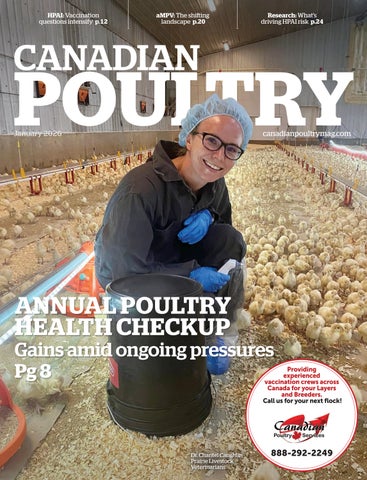
Dr. Chantel Caughlin Prairie Livestock Veterinarians
888-292-2249
www.hellmannpoultry.com
PRO Motion
The aviary rearing system that grows with your pullets
THE
NATIONAL POULTRY SHOW:
BOOTH #721B • self-training from day 1 • easy-to-operate • excellent monitoring • smooth transition to aviary laying system For more information call us TOLL FREE: 1-800-894-4082
Eggcellence. Made in Germany.
ALBERTA Envirotech AG Systems Ltd.: +1 800 233 6913 ATLANTIC CANADA Johann Benner: +49 170 562 0738 ATLANTIC CANADA (SERVICE) Agritech Farm Equipment Ltd.: +1 902 667 5550 BRITISH COLUMBIA New Leaf Equipment: +1 778 752 9279 MANITOBA Caldora Poultry Equipment Inc.: +1 204 346 3584 MIDDLE / WESTERN ONTARIO Andrew Stokman: +1 519 777 1495 MIDDLE / WESTERN ONTARIO Pullets Plus Inc.: +1 519 669 2225 ONTARIO (SERVICE) Jeff Earl: +1 519 348 8483 QUEBEC / EASTER ONTARIO Stéphane Chouinard: +1 450 266 9604 SASKATCHEWAN Greg Olson: +1 306 260 8081 SASKATCHEWAN Star Egg Company Ltd.: +1 306 244 4041
CONTENTS
January 2026 Vol. 113, No. 1 canadianpoultrymag.com
12
20 COLUMNS
8 DEPARTMENTS
FEATURES
04 | From the editor Looking ahead with clear eyes 06 | What’s Hatching CFC reports new gains in environmental performance 29 | Classifieds
8
COVER STORY Annual poultry health checkup Gains balanced by HPAI, bacterial and respiratory pressures.
12
Vaccination questions intensify Canada weighs targeted HPAI vaccination.
16
What your waterlines hide A simple swab test can help improve flock health and performance.
14 | Building Bridges Bridging the gap with farmers
20
aMPV’s shifting landscape Understanding current aMPV pressures and how biosecurity, surveillance and vaccination are shaping outcomes.
24
What’s driving HPAI risk New national research pinpoints the practices that raise or reduce HPAI risk on turkey and duck farms. ON THE COVER This issue’s cover story explores the key disease trends that shaped Canada’s poultry sector in 2025, with experts outlining rising HPAI activity, persistent bacterial pressures and growing respiratory challenges. See our annual poultry health update on page 8.
ISSN 1703-2911. Canadian Poultry is published 10 times per year by Annex Business Media. Canada Post Publications Mail Agreement No. 40065710. Return undeliverable Canadian addresses to: Circulation Department, 111 Gordon Baker Rd., Suite 400, Toronto ON M2H 3R1. No part of the editorial content in this publication may be reprinted without the publisher’s written permission. © 2026 Annex Business Media. All rights reserved. Opinions expressed in this magazine are not necessarily those of the editor or publisher. No liability is assumed for errors or omissions. All advertising is subject to the publisher’s approval. Such approval does not imply any endorsement of the products or services advertised. Publisher reserves the right to refuse advertising that does not meet the standards of this publication. Printed in Canada.
From the Editor
canadianpoultrymag.com
by Brett Ruffell
Looking ahead with clear eyes
H
appy New Year, and welcome to Canadian Poultr y’s annual poultry health issue. The first issue of the year is always a chance to take stock of where we’ve been and where the industry is headed. And if there’s one truth shaping 2026, it is that the future will demand both vigilance and vision. Progress is being made on many fronts, but an old foe continues to define so much of the path forward: highly pathogenic avian influenza (HPAI). This year’s issue takes a for-
“The lessons of the past year are shaping clearer, sharper questions about how we protect Canadian flocks.” ward-looking approach to flock health, recognizing that preparing for tomorrow requires understanding not only the pressures we face today, but also the emerging tools that may help us manage them. On page 12, we bring you a detailed update on Canada’s evaluation of HPAI vaccination – a topic that has shifted rapidly from theoretical debate to practical planning. Early-season virus activity has sharpened the urgency of this discussion, and Canadian regulators, researchers and industry partners are now examining when, where and how targeted vac-
@CanadianPoultry
facebook.com/CanadianPoultry
cination might fit into the country’s long-term strategy. It is a complex conversation, grounded in epidemiology, economics and the realities of barn-level logistics. Just as important is new Canadian research featured on page 24, which identifies the specific barn practices that raise or lower HPAI risk in turkeys and ducks. These findings – now distilled into producer-friendly infographics – offer clear, evidence-based steps farmers can take immediately. They also highlight a message echoed across sectors: prevention remains our strongest tool, but prevention must evolve as the virus does. Our cover story on page 8 rounds out this issue with a comprehensive look at poultry health trends over the past year. While some sectors saw meaningful improvements, others faced rising pressures, from bacterial infections to respiratory disease. Layer, broiler, turkey and breeder operations all carry distinct challenges – and distinct opportunities to refine management. As we begin 2026, the industry stands at a crossroads: working to contain a familiar threat while preparing for the next chapter of poultry health innovation. We hope this issue provides the insight and foresight to help you navigate both. Here’s to a productive, resilient and healthy year ahead.
canadianpoultrymag canadianpoultrymag.com
Reader Service Print and digital subscription inquiries or changes, please contact Angelita Potal, Customer Service Rep. Tel: (416) 510-5113 Email: apotal@annexbusinessmedia.com Mail: 111 Gordon Baker Rd., Suite 400, Toronto, ON M2H 3R1 Editor Brett Ruffell bruffell@annexbusinessmedia.com 226-971-2133 Brand Sales Manager Ross Anderson randerson@annexbusinessmedia.com Cell: 289-925-7565 Account Coordinator Julie Montgomery jmontgomery@annexbusinessmedia.com 416-510-5163 Media Designer Alison Keba Group Publisher Michelle Bertholet mbertholet@annexbusinessmedia.com Audience Development Manager Anita Madden amadden@annexbusinessmedia.com 416-510-5183 CEO Scott Jamieson sjamieson@annexbusinessmedia.com PUBLICATION MAIL AGREEMENT #40065710 Printed in Canada ISSN 1703-2911 Subscription Rates Canada - Single-copy $10.00 Canada – 1 Year $34.48 Canada – 2 years $58.87 (plus applicable taxes) USA – 1 Year $97.06 CDN Foreign – 1 Year $109.79 CDN GST - #867172652RT0001 Occasionally, Canadian Poultry Magazine will mail information on behalf of industry-related groups whose products and services we believe may be of interest to you. If you prefer not to receive this information, please contact our circulation department in any of the four ways listed above. Annex Privacy Officer privacy@annexbusinessmedia.com Tel: 800-668-2374 No part of the editorial content of this publication may be reprinted without the publisher’s written permission. ©2026 Annex Business Media. All rights reserved. Opinions expressed in this magazine are not necessarily those of the editor or the publisher. No liability is assumed for errors or omissions. All advertising is subject to the publisher’s approval. Such approval does not imply any endorsement of the products or services advertised. Publisher reserves the right to refuse advertising that does not meet the standards of the publication.
From the first day your chicks and poults are placed, water is one of the first things they look for, and for decades farmers and poultry have relied on our drinkers for a consistent flow of fresh water. Our drinkers provide poultry the single most important ingredient for the BEST POSSIBLE START, AND HEALTHIEST LIFE DURING LAY PERIOD AND GROW-OUT.
Glass-Pac Canada St. Jacobs, Ontario Tel: (519) 664-3811 Fax: (519) 664-3003
Les Equipments Avipor Cowansville, Quebec Tel: (450) 263-6222 Fax: (450) 263-9021
Specht-Canada Inc. Stony Plain, Alberta Tel: (780) 963-4795 Fax: (780) 963-5034
Carstairs, Alberta Tel: (403) 337-3767 Fax: (403) 337-3590
RELENTLESS QUALITY. EXCEPTIONAL SERVICE. WWW.LUBINGUSA.COM | INFO@LUBINGUSA.COM | 423-709-1000
What’s Hatching
CFC reports new gains in environmental performance
Chicken price fears questioned Chicken Farmers of Canada is pushing back against recent media warnings of steep chicken price increases, saying data show prices remain stable. With production up, Canadians can expect steady availability and pricing despite short-term pressures.
Aviagen appoints new North America president Aviagen has appointed Derrick Tice as president of its North American operations. A 15-year company veteran, Tice has held leadership roles and previously worked with Boehringer Ingelheim.
6% is the reduction in chicken’s carbon footprint since 2016.
Chicken Farmers of Canada (CFC) has released new lifecycle assessment (LCA) results showing measurable improvements in the environmental footprint of Canadian chicken production over the past seven years. The assessment, completed by Groupe AGÉCO, analyzes greenhouse gas emissions, water use and other environmental indicators from farm to processing. Since the last full review in 2016, the carbon footprint per kilogram of eviscerated chicken has fallen by six per cent, dropping from 2.3 kg CO2
equivalent per kilogram to 2.2 kg. “Canadian chicken farmers are committed to continuous improvement,” says Tim Klompmaker, chair of CFC. “This assessment shows that while chicken is already one of the lowest-carbon animal proteins, our sector continues to find ways to further reduce emissions and use resources more responsibly.” The results also show a six per cent improvement in feed conversion ratio from 2016 to 2023, stable water use over the same period and about a 10 per cent reduction in the carbon footprint associated with feed.
PROFESSIONAL POULTRY SERVICES Also providing the following services; BROILER LOADING PULLET MOVING EQUIPMENT INSTALLATION Did you know… All pullets hatched after September 1, 2025, will be required to receive two live salmonella vaccinations and a killed salmonella vaccine injection.
WE CAN HELP! CONTACT US FOR A FREE QUOTE TODAY schedule@eliteservices.ca | O: 604.793.7000 | TF: 1-833-363-5483
6
CANADIAN POULTRY
CP_ELITESERVICES_NOV25_LAZ.indd 1
BARN WASHING & DISINFECTING
SERVING British Columbia, Alberta, Saskatchewan
AND NOW MANITOBA! January 2026
2025-10-01 10:51 AM
NEW FROM CEVA
CROSS-PROTECTION IN EVERY DROPLET
*
*
Protection against GA08, GA13 and DMV/1639/11 IBV types.
™
A live monovalent bronchitis vaccine. Every droplet of Cevac IBron™ carries a tidal wave of protection against the DMV isolates of the avian infectious bronchitis virus. This live, monovalent bronchitis vaccine can be administered using coarse spray application or the gel spray route for rapid uptake. Cevac IBron™ is the latest example of Ceva’s continual commitment to research and innovation, both today and in the future.
Contact your Ceva representative today to turn the tide on avian infectious bronchitis, with IBron™.
Tel: 800.510.8864 • service.canada@ceva.com • ceva-canada.ca
Cover Story
Annual poultry health checkup Gains in turkey health balanced by HPAI, bacterial and respiratory pressures. By Lilian Schaer
C
8
CANADIAN POULTRY
Layer flocks remained stable but continued to battle E. coli and IBV-related production impacts.
and the spread of aMPV-B. Weather played a role, too. While Western producers had a relatively forgiving year with minimal smoke, heat spikes or deep freezes, Eastern farmers battled heat stress and infrastructure limitations that contributed to rising condemnation rates and higher subclinical disease levels. The most consequential development nationally, noted Caughlin, is the growing conversation around possible HPAI vaccination. The Canadian Food Inspection Agency is exploring a potential field trial, signalling that vaccination may become part of Canada’s long-term response strategy as the country enters its fourth wave of the virus. “It is very difficult to predict AI. The general consensus is that most people accept it is here to stay, but the sustainability of our response is something we need to re-evaluate,” she said.
Western flock pressures A defining feature of the year in Western Canada was the sharp increase in HPAI detections starting in late October, with Alberta, Saskatchewan and Manitoba reporting case numbers significantly higher than at the same time last year. Broilers were the most affected species, followed by turkeys, with isolated activity in layers. According to Caughlin, the pattern of spread continues to defy migratory logic, moving south to north and back again, which highlights HPAI’s fluid and unpredictable nature. Veterinarians are detecting more Infectious Bursal Disease (IBD) in broilers, often tied to co-infections with IBH and linked to suboptimal growth and feed conversion. Chick quality continues to fluctuate due to lingering impacts from British Columbia’s breeder HPAI outbreaks last year and ongoing disease challenges in the United States. January 2026
PHOTO: A L LT EC H
anada’s poultry sector is wrapping up another challenging year marked by a sharp rise in highly pathogenic avian influenza (HPAI), persistent bacterial infections across the country and increasing respiratory disease pressures, particularly in Eastern Canada. While some regions have seen meaningful progress, such as steep declines in avian metapneumovirus (aMPV-B) in vaccinated turkey flocks, other long-standing issues like lameness, Inclusion Body Hepatitis (IBH), blackhead and multi-drug-resistant E. coli remain difficult to control. These findings were shared at the Poultry Service Industry Workshop by Dr. Chantel Caughlin of Prairie Livestock Veterinarians in Alberta and Dr. Ben Schlegel of Poultry Health Services in Ontario. According to Caughlin and Schlegel, Canada’s overall disease landscape this year was shaped by three dominant trends. First, there was a fall surge of avian influenza in Alberta, Saskatchewan and Manitoba that rose higher than in previous fall migrations. Second, systemic bacterial infections remained consistently high, particularly cases involving E. coli and Enterococcus/E. cecorum. Finally, respiratory pressures continued to build in the East, led by infectious bronchitis (IBV)
One of Western Canada’s biggest wins, however, has been the dramatic reduction of aMPV-B in turkeys, particularly in Manitoba, following widespread vaccine adoption. Eastern flock pressures The East faced a year dominated by bacterial infections, respiratory disease and rising condemnation rates, all of which point to a growing subclinical burden on flocks. E. coli and E. cecorum remain major drivers of early and late systemic infections, while IBV and aMPV-B continue to cause production losses. Heat stress and infrastructure challenges created additional strain on bird growth and health. Emerging concerns include the continued spread of aMPV-B across species and increasing reports of multi-drug-resistant E. coli. According to Schlegel, this reinforces the need for long-term control strategies for pathogens that have entrenched themselves over multiple production cycles. Broilers Broilers in Western Canada experienced significant disease variability this year, largely due to inconsistent chick quality, periodic surges in IBH and a noticeable increase in IBD activity. Bacterial lameness caused by Enterococcus and E. coli remains widespread and continues to generate both welfare concerns and increased condemnations. Performance losses tied to IBD were evident in flocks exposed to field strains circulating in British Columbia and Ontario. “This isn’t new, but something we’ve been monitoring closely,” Caughlin said. “We see sub-optimal performance, especially reduced weight gain and decreased feed efficiency, or co-infections like IBH.” Eastern broiler production showed similar patterns. Systemic E. coli and E. cecorum infections increased at both early and late stages, and higher IBV activity contributed to a rise in viral and bacterial lameness. While salmonella pressure eased, Schlegel noted, condemnations related to airsacculitis, ascites and contamination increased, reflecting higher subclinical disease levels across the region. CANADIAN POULTRY
9
Broiler breeders Broiler breeders in the West continued to face first-week mortality issues tied to septicemia, along with periodic detections of multi-drug-resistant E. coli. Although the situation has not dramatically worsened compared to previous years, the
industry continues to monitor developments closely; any decline in breeder health has potential to cascade into broiler performance challenges, Caughlin said. In the East, broiler breeders had a relatively stable year, though bacterial lameness, respiratory co-infections and persis-
The Smarter Way to Go Cage-Free. One Company. One System. One Complete Solution. From pullets to layers, Cage-Free One™ aligns every essential component to streamline labor, support natural bird behavior, and preserve egg quality. When it’s designed to work together, it’s engineered to work better.
choretime.com/cagefreeone
AVIARIES • NESTS/COLLECTORS • FEED/WATER • CONTROLS • CLIMATE
CP_CBT-choretime_January26_CSA.indd 1
2025-12-05 1:30 PM
Cover Story
tent coccidiosis issues remain part of routine casework. Sporadic appearances of blackhead and gangrenous dermatitis underscore the continued presence of less predictable pathogens in some areas.
Ornithobacterium rhinotracheale (ORT) activity. Condemnations for ascites, airsacculitis and contamination increased, while multi-drug-resistant E. coli, botulism and blackhead were also found.
Turkeys It was a relatively stable year for turkeys in Western Canada, with fewer health challenges than broilers. E. coli and necrotic enteritis remain steady pressures, and occasional Mycoplasma cases still appear, but the major success has been the marked decrease in aMPV-B following vaccination campaigns. Blackhead remains largely contained to British Columbia and has not been detected in Alberta or Saskatchewan. Eastern turkey flocks faced a tougher landscape. aMPV-B surged sharply, contributing to higher mortality and increased E. coli co-infections. Respiratory disease pressure remains high, including elevated
Layers Layers remain the most stable and consistently healthy sector in Western poultry production, said Caughlin, with strong overall flock performance, though systemic E. coli infections are more common in freerun and outdoor-access systems due to higher dust and environmental exposure. Egg Farmers of Canada’s emergency egg-supply measures saw some farms move into extended lay programs, which meant keeping birds to 80-plus weeks. While effective for short-term supply gaps, extended lay increased stress and disease risk tied to moving mixed-age birds and transporting older hens.
BOOST YOUR POULTRY PERFORMANCE WITH VDL Meller Poultry Equipment Inc.
826 Nanticoke Creek Parkway, Jarvis, Ontario, N0A 1J0 Call us on: 519-587-2667 Or visit our website: www.mellerpoultry.ca
10
CANADIAN POULTRY
CP_MELLER_JAN26_BAS.indd 1
Eastern layer flocks were similarly stable overall, but with notable increases in aMPV-B antibody titers, osteoporosis, coccidiosis and necrotic enteritis. One of the most persistent challenges continues to be IBV, which causes production drops and abnormal eggs. The path forward Prevention remains Canada’s most reliable disease-management tool. Both Caughlin and Schlegel stressed that the single most critical element of biosecurity is how people enter and exit barns — meaning boot changes, hand hygiene, dedicated clothing and movement controls remain non-negotiable. Paying attention to water sanitation, pest control and manure management is also essential, particularly in flocks dealing with systemic bacterial infections or respiratory pathogens.
SYSTEMS AND EQUIPMENT
Cage Free Layers | Broiler Breeders
Authorized dealer VDL Jansen VDL Agrotech
Phone: 204-371-1800
January 2026
2025-12-10 1:23 PM
DERRICK TICE,
STUART BISS,
President of Aviagen North America
Vice President of Aviagen’s North Region
Derrick Tice, President Aviagen North America, brings more than 15 years of experience with Aviagen, supported by a distinguished background in operational leadership, quality assurance, and strategic account management. His proven commitment to service, continuous improvement, and customer value positions him to lead Aviagen North America into its next chapter of growth and innovation.
Stuart Biss is Vice President of Aviagen’s North Region. With experience working in both the UK and U.S. poultry industries, he brings a hands-on, practical approach to supporting customers and driving performance. His background spans hatcheries and processing at every production level, giving him a full perspective on improving results across the supply chain.
VISIT AVIAGEN AT
THE NATIONAL POULTRY SHOW
February 4th – 5th 2026 • Booth Number: 709J
WHY WORK WITH AVIAGEN? • PROVEN GENETICS. Decades of balanced breeding deliver the performance, efficiency, and robustness producers count on every single day. • DEDICATED CANADIAN TECHNICAL SUPPORT. Local experts focused on Canadian customers. • INNOVATION THAT PAYS OFF. Ongoing investment in R&D drives consistent genetic progress and long term value. • EXPERT SUPPORT. From hatchery to processing, our people bring practical, field tested experience. • STRONG CUSTOMER RELATIONSHIPS. We stay close to your operation, understand your challenges, and work alongside you to drive better results.
Health
Vaccination questions intensify Canada weighs targeted HPAI vaccination as earlyseason virus pressure intensifies. By Melanie Epp
T
Agencies urge long-term planning Heightened activity comes at a time when global animal health authorities are urging countries to expand their preparedness strategies. In its State of the World’s Animal Health 2025 report, published in May, the World Organisation for Animal Health (WOAH) warned that HPAI has become an entrenched global threat requiring longterm management rather than short-term emergency response. The organisation encourages its member countries to consider vaccination as part of a broader control strategy that includes surveillance, biosecurity and movement controls. WOAH’s experts note that vaccination, when supported by strong post-vaccination monitoring, can reduce clinical disease, decrease virus shedding and lower the scale of culling during outbreaks. 12
CANADIAN POULTRY
HPAI vaccines are delivered by hand today, with in-ovo and spray options under development.
France introduced a national vaccination campaign in 2023 targeting ducks, the species most heavily affected by repeated epidemics. Boehringer-Ingelheim, one of the suppliers for France’s programme, says the strategy was built on four pillars: a clearly defined vaccination plan, licensed vaccines, surveillance requirements and traceability systems. These elements formed the basis of the French rollout, which now involves vaccinating an estimated 60 million ducks annually. According to the company, the approach helped stabilize production after years of severe losses. In March, the Netherlands launched a pilot program on a laying-hen farm to evaluate bird flu vaccination for potential largescale application. A Canadian context The European experience is not directly applicable to Canada, which has a different sector structure and disease pattern. Can-
ada’s most vulnerable flocks are turkey and ducks, and the density of multi-species production regions is lower than in western France. Still, developments in Europe have prompted Canadian regulators to gather more data on how vaccination could work under domestic conditions. Jean-Pierre Vaillancourt of Université de Montréal says the international picture makes clear that strategies must be tailored to local epidemiology – and it certainly doesn’t involve vaccinating every bird. France chose ducks because they accounted for the most outbreaks, but Canada has never experienced similar scale. “In France, they had over 1,000 outbreaks one year,” he said. “We have never seen that in Canada.” He notes that British Columbia continues to experience the highest burden of cases, driven partly by regional species composition and landscape features. Canada’s official position remains cauJanuary 2026
PHOTO: © SY H I N_STA S / A D OB E STO C K
he earlier-than-expected surge in highly pathogenic avian influenza (HPAI) cases across both Europe and North America this fall has raised concerns about the winter ahead. Early-season detections and disease pressure continues to mount as migratory birds move south. Canada has also reported new cases this fall, with British Columbia again facing the largest concentration of outbreaks.
FEB 4-5, 2026
WED 9AM–5PM | THUR 9AM–4PM
Tickets available now! Scan the QR code or visit NationalPoultryShow.com
The Largest Poultry Show in Canada Brought to you by:
The J-AAR Expo Centre (Formerly - The Agriplex) at Western Fair District 845 Florence St, London, ON
Health
Dr. Shayan Sharif (front) and PhD researcher Dr. Fatemeh Fazel work together at the University of Guelph on vaccine platforms for avian influenza.
CFIA has licensed three vaccines for restricted government use, which may be applied during the field trial. Although details on the products have not been released, the trial will focus on turkeys and will include defined surveillance and movement controls.
We’re celebrating
25 years! Canadian Poultry Research Council marks a great milestone this year. For 25 years, we’ve supported timely and relevant Canadian research to ensure our entire poultry sector is on the leading edge of innovation.
Thank you to all our collaborators, researchers and industry partners.
cp-rc.ca
CP_CanadianPoultryResearch_January26_CSA.indd 1 CPRC ad CPM January 2026 issue_4.6875x 4.75.indd 1
2025-12-04 9:26 AM 2025-12-03 9:09 AM
Vaillancourt says the agency previously conducted an economic assessment in British Columbia to determine whether vaccination would financially benefit producers. The analysis suggested that costs associated with vaccination and surveillance would be roughly equivalent to current losses. “It came out as neutral,” he said, noting that officials still regarded the trial as worthwhile to better understand practical challenges. Canadian innovation: new vaccine technologies Alongside regulatory evaluation, Canadian researchers are advancing new vaccine technologies. At the University of Guelph, Dr. Shayan Sharif is leading a project to develop an mRNA-based vaccine that could be delivered in ovo or through mucosal routes such as spray or drinking water. Sharif says his team aims to generate both disease protection and a reduction in infection. “What we want to do is to have something that is sort of harmonised with other vaccines that are delivered either in-ovo before the chick is hatched or through mucosal surfaces,” he explained. The research is progressing through controlled laboratory work using low-pathogenicity strains as a preliminary model. Sharif says the challenge is not in producing mRNA but in effectively targeting it to the respiratory and gastrointestinal systems. His lab has extensive experience with in-ovo and mucosal vaccination platforms, which he says provides an early advantage. His team is collaborating with CFIA’s Winnipeg laboratory to assess immunogenicity and protection in experimental settings. “Timeline wise, we are probably looking at next, I would say year and a half to two years before we have anything that we can share,” he said. Funding partners include the OMAFA, the Canadian Poultry Research Council and the Saskatchewan Chicken Industry. 14
CANADIAN POULTRY
January 2026
PHOTO: M A RT I N S C H WA L B E
tious. In a written statement, the Canadian Food Inspection Agency (CFIA) said it has established a national task force that brings together veterinarians, academics, industry representatives and federal departments to examine the potential role of vaccination. “The task force is examining the potential use of vaccination against HPAI, in certain circumstances, as part of the disease response in Canada,” CFIA’s statement to Canadian Poultry magazine says. The agency is working towards a confined field trial to evaluate the logistics and effectiveness of administering an HPAI vaccine on poultry farms. The results will be used to inform how a national vaccination strategy could be rolled out. CFIA emphasized, however, that no formal decision on Canada’s vaccine strategy has been made. Strong biosecurity continues to be the country’s first line of defence.
Industry readiness and regulatory considerations While industry interest in vaccination grows, it has been tempered by practical considerations. Boehringer-Ingelheim told Canadian Poultry magazine that the scientific characteristics of its HPAI vaccines would allow for deployment in a range of species, including turkeys, if regulators approved their use. However, the company said that specific assessments of Canadian regulatory needs must come from CFIA. Thomas Delquigny, technical manager, Boehringer-Ingelheim, emphasized lessons from Europe, saying that coordinated implementation and clear surveillance rules have been essential to maintaining confidence in vaccinated supply chains. “It needs everybody to be aligned and really going in the same direction,” Delquigny said. For now, CFIA’s trial will help determine how vaccination could function in selected regions. Vaillancourt says the outcome should inform discussions in areas with recurring disease pressure, particularly British Columbia. He adds that any future plan would need to address on-farm logistics, surveillance capacity, potential changes to regional farm density and funding mechanisms. He does not expect a national vaccination program in the near future. “So far, what I see in Canada does not justify a national vaccination programme coast to coast,” he says. International evidence shows that vaccination can help stabilise high-risk sectors when paired with strong oversight. In Canada, vaccination remains under evaluation, with regulators, researchers and industry watching closely for new data. As Vaillancourt cautions, decisions must be grounded in local epidemiology and supported by the systems needed to monitor vaccinated flocks. “Vaccination has to be limited to where it makes sense,” he says. CANADIAN POULTRY
15
Improve your bird performance with Avi-Air.
3 Stainless steel washing system 3 0-10v communication 3 Efficient and durable double heat exchange cores
www.exaconinc.ca Contact your local dealer or call us for a dealer near you
Exeter, ON 1 866-335-1431 sales@exacon.ca
CP_EXACON_AVIAIR_JAN25_GWJ.indd 1
2024-12-06 8:13 AM
Nutrition
What your waterlines hide
P
roducers often express concern about waterline cleanliness and whether bacteria are hiding inside and affecting bird health and performance. Many are also unsure where to start or what kind of testing to do. Most are familiar with traditional water-quality testing, where water samples are collected from the source and various points along waterlines and submitted for analysis of minerals, pH or total coliforms. This testing should absolutely be done routinely to assess overall water quality.
However, this approach often misses the biofilm attached to the inside of the waterlines. That is why I recommend adding another simple but valuable tool: the waterline swab test. This method goes a step further, allowing us to detect the bacteria hiding inside the lines, particularly those embedded within the biofilm. What is biofilm? Biofilm is a sticky layer of bacteria, minerals and organic debris that builds up inside waterlines. You may have felt it in water bowls that have not been scrubbed
“Biofilm is an invisible problem that often goes unnoticed until performance issues begin to surface.” 16
CANADIAN POULTRY
A sterile swab like this is used to collect water-line samples and is readily available through most lab suppliers or diagnostic labs.
for a while: that slimy layer at the bottom. It is an intelligent adaptation that allows certain bacteria to survive, persist and recontaminate the system. Common pathogens such as E. coli, Pseudomonas and Salmonella are well known to form biofilm. The waterlines in a poultry barn create an ideal environment for biofilm to thrive. They are warm and full of hiding spots and organic matter. Warm weather, residues from medications or multivitamins, and irregular cleaning cycles all make the problem worse. What is trickiest is that biofilm is invisible until performance issues begin to appear. How dirty waterlines affect flock performance depends on many factors, including flock age, immune and nutritional status, and the presence of other intestinal challenges such as necrotic enteritis or coccidiosis. Sometimes all you may see are pasty vents or loose droppings without other obvious clinical signs. January 2026
PHOTO: © S H E R RY YOU NG / A D OB E STO C K
A simple swab test can reveal hidden biofilm bacteria and help improve flock health and performance. By Dr. Gigi Lin
@CABEFscholarship
cabef.org
Canadian agriculture and food needs more talented people. Each year, CABEF helps students to pursue rewarding agri-food careers through seven $2,500 scholarships. We’re looking for the future leaders who will help this industry meet tomorrow’s challenges.
Do you know someone who needs to fund their future in agri-food?
Tell a student today. Scholarship application deadline is
April 30, 2026
Want to help support the next generation of agri-food leaders?
Become a “Champion of CABEF.” This program allows your organization to directly sponsor a deserving student. Contact CABEF at info@cabef.org. CABEF is a registered charity (#828593731RR0001). For more information on all registered charities in Canada under the Income Tax Act , please visit Canada Revenue Agency www.cra-arc.gc.ca/charities.
Nutrition Five key things to know about waterline swabbing 1. Biofilm is often hidden The good news: it is simple and • Gather your materials: bacterial Biofilm develops inside waterlines and can inexpensive to monitor swabs (available through your veterinarharbour pathogens such as E. coli, Pseudomonas The waterline swab approach is different ian, local lab or online supplier), disposand Salmonella, impacting flock health even when water looks clean. able nitrile gloves to minimize contamfrom simply collecting water. The swab ination, zip-lock bags and a permanent physically scrapes the biofilm attached to 2. Standard tests miss it marker. the inside of the line, providing a more Routine water-quality testing is important but accurate way to detect hidden bacteria. • Choose your sampling time: decide does not detect bacteria embedded within the biofilm lining the waterlines. whether this is for investigation or rouSome labs even offer disinfectant-sensitivity testing in addition to antibiotic-sensitine monitoring. Ideally, sample right 3. Swabbing is simple and affordable tivity testing. This helps determine not after birds are shipped, when the lines Producers can collect their own waterline swabs only which bacteria are present but also have been actively used but before with basic tools, making it an easy addition to regular monitoring programs. which disinfectant classes they are sensicleaning. If birds remain in the barn, you tive or resistant to. can still sample; just avoid contamina4. Results strengthen sanitation plans tion and keep debris out. These results can help guide your saniIdentifying bacteria and their disinfectant sensitivities helps refine cleaning protocols and tation plan and ensure your products re- • Collect the samples: remove a few ensures chosen products remain effective. main effective. In addition, inspecting the nipple drinkers to access the inside of interior of the waterline at the same time the line. Swab the front, middle and end 5. Use it for troubleshooting allows you to use your senses to see and of several lines to obtain representative LABEL WIDTH 10.5” and prevention Swabbing can help pinpoint causes of wet litter, smell, giving you a clearer idea of the syssamples. Label each sample with the pasty vents or poor growth, and providesLAYFLAT a LAYFLAT 5.25” tem’s overall condition. date and location. Additional samples valuable annual benchmark for evaluating You can collect samples yourself with a can be taken from the pre-barn water MAX ART AREA 10” water-system cleaning. few basic supplies: system as needed.
®
Equipment Friendly
Triple-C® Efficiently Removes PREVENT EXPENSIVE COOLING Mineral & Scale Build-Up PADPads REPLACEMENT COSTS From Cool Cell
KEEP OUT O
Hazard S May be c burns an
Proxy Clean’s Triple-C provides a unique Equipmentscrubbing Friendly action that effectively loosens with Foaming Action and removes scale, mineral and heavy Precautionary Statem 946 ml Do not breathe fume/m metal deposits from cool cell pads. DIRECTIONS FOR USE: ®
NORMAL CLEANING of COOL CELL PADS Foaming Cleanser
any exposed skin thoro gloves/protective cloth
Precautionary Statem • Won't harm cool cell pads, piping, 1. Allow system to operate until pads are wet cool cell pads to remove scale • Scrubs First Aid: 2. Add 1 Quart of Triple-C to the recirculation tank or delivery systems equipment and( Foaming mineral build up is Normal ) 3. Allow system to circulate for 4-6 hours IF IN EYES: Rinse caut OFF system & rinse pads with fresh water • Chloride/Chlorine free, greatly reducing 4. Turn Remove contact lenses Affordable ( System can be allowed to sit IDLE overnight & rinsed the next day ) rinsing. 5. Drain system & refill with fresh water the potential for corrosion • Avoid expensive pad replacement costs ®
Environmentally Safe Buildup
HEAVY CLEANING of COOL CELL PADS Buildup UTILIZING the QWIK-FOAM APPLICATOR • Environmentally friendly and fast acting
BEFORE
BEFORE
1. Allow system to operate until pads are wet 2. Use Qwik-Foam applicator to foam 1 Quart of Triple-C® directly onto the Cool Cell Pads 3. Allow system to circulate for 6-8 hours (Foaming is Normal) 4. Turn OFF system & rinse pads with fresh water ( System can be allowed to sit IDLE overnight & rinsed the next day )
AFTER
K)$)$H)#'T)-"#)
U'
AFTER
5. Drain system & refill with fresh water
IF ON SKIN (or hair): R contaminated clothing IF INHALED: Remove for breathing. IF SWALLOWED: Rins Immediately call a POI
Precautionary Statem Dispose of contents an disposal plant.
Manufactured For: Proxy-Clean® Products 2020 McKinney Street Melissa, TX 75454 www.proxyclean.com ©2020 FOR INDUSTRIAL USE ONLY
PROXY-C
Contact
sales@county-line.ca (800) 463-7622 (Hickson ext 4) is a Registered Trademark www.county-line.ca is a Registered Trademark
Net Contents 1 US Quart
24PHO
®
©2020
18
CANADIAN POULTRY
January 2026
CP_CountyLine_Jan26_CSA.indd 1
2025-11-27 1:13 PM ©2020
• Submit the samples: send them to an animal health lab that performs bacterial culture. Submit immediately, or refrigerate overnight if needed. Most labs charge $40 to $60 per swab, and results typically take 24 to 72 hours. • If you are concerned about Salmonella, request a Salmonella culture. It requires special media and may not grow on routine bacterial plates. When to swab and test Waterline testing is not only for outbreaks. It is also a valuable preventive tool to evaluate your water cleaning and sanitation protocol, or to help troubleshoot performance problems. Examples include increased bacterial septicemia or high condemnation rates; intestinal challenges such as dysbacteriosis, wet litter or pasty vents; unexplained drops in growth rate; or suboptimal feed conversion. Waterline swabbing is also useful as part of your annual water-system evaluation. In these cases, conduct pre-cleaning and post-cleaning swabs to measure how effective your cleaning program truly is. Interpreting and applying results How the report guides you depends on your goal and the farm’s history. Some results are straightforward – for example, any detection of Pseudomonas species should prompt investigation and thorough water system cleaning and sanitation. Others require context and should be interpreted alongside routine water quality results, flock performance data, and your current sanitation program. A single swab result should never be interpreted in isolation. Use it as an ancillary tool to assess whether your cleaning routine is effective or needs adjustment. When in doubt, work with your vet or field technician to interpret results and build a baseline. Swab results aid troubleshooting and monitoring by identifying bacterial issues and tracking recurring problem areas. Dr. Gigi Lin is a board-certified poultry veterinarian. She provides diagnostic, research, consultation, continuing education, and field services to all levels of the poultry industry in Western Canada.
CANADIAN POULTRY
19
CP_Exacon_January26_CSA.indd 1
2025-12-10 12:46 PM
Health
aMPV’s shifting landscape Understanding current aMPV pressures and how biosecurity, surveillance and vaccination are shaping outcomes. By Treena Hein
S
20
CANADIAN POULTRY
role in disease outcomes.” There are four distinct serotypes (A, B, C, D) of the virus. Canada has had serotype C present for many years in wild birds, but in 2023, types A and B emerged in the U.S. as highly virulent infections. By May 2024, Ontario started to see outbreaks of type B and mixed A+B. There have also been aMPV cases reported in Manitoba and Quebec. In terms of outbreaks in Ontario this year, Dr. Davor Ojkic (virologist and immunologist at the University of Guelph Animal Health Laboratory) reported on Sept. 23 that 2025 has so far been similar to 2024. However, that could change as we approach year’s end, he says, as this disease may cause more issues during colder months. More specifically, Dr. Lucica Rosca, poultry veterinarian at Ontario Ministry of Agriculture, Food & Agribusiness (OMAFA), reported 114 cases as of Sept. 24 (mainly type B, at 62 turkey farms, 43 broiler farms, 7 egg farms and 2 small
Canadian turkey flocks continue to face ongoing pressures from aMPV, driven largely by persistent type B activity.
flocks). The Ontario Animal Health Network (OAHN) puts the U.S. case count for 2025 at over 1,200. In its 2025 second quarter report, OAHN notes more detections of type B during April, May and June this year. Turkey flocks had “health challenges with aMPV type B infection listed as the main condition ... Affected flocks are presenting with an increase percentage of mortality, and most of the clinical signs are related to secondary E. coli infections.” In chickens, OAHN states that aMPV infections were correlated in April, May and June to several comorbidities such as E. coli and IBV. “It was also noted that [in layer flocks], different breeds were exhibiting different clinical signs: for example, White breeds with slow to peak or production pause for a couple of weeks but no clinical signs whereas Brown breeds were January 2026
PHOTO: A L LT EC H
ince its arrival in Canada in March 2024, avian metapneumovirus (aMPV) has mostly impacted poultry farms in Ontario and it’s now likely a permanent part of the disease landscape there. As Dr. Anastasia Novy at Guelph Poultry Veterinary Services explains, “it is clear that the virus continues to circulate throughout southwestern Ontario and will likely remain endemic. Like infectious bronchitis in chickens, aMPV is a respiratory virus that will continue to circulate across the industry indefinitely.” This disease is highly contagious, with a slight mortality risk in chickens and a mortality rate of up to 40 per cent in turkeys. However, because aMPV impairs the immune system, infection increases the likelihood of contracting secondary infections. The clinical signs of aMPV may become more severe – and risk of mortality rises – if there is concurrent infection with E. coli, Ornithobacterium rhinotracheale, Pasteurella multocida, Mycoplasma spp., infectious bronchitis virus or infectious laryngotracheitis. Dr. Babak Sanei (associate director for poultry, medicated feed additives and aquaculture at Zoetis) notes that this disease has been particularly devastating in Canadian turkey operations, with “seasonality, management practices and other predisposing factors play a major
Innovation You Can Trust, Performance You Can Count On
Contact our team info@kaiserag.com
Health
presenting increase in mortality, disease and comorbidities lingering in the flock for prolonged period. The most affected age was between 24 and 26 weeks.” According to Novy, clinical signs appear unchanged from last year, and primarily include snicking, panting, drops in egg
production and feed intake, neurologic signs and secondary bacterial infections. Diagnosis: no change Consult your veterinarian if any symptoms appear (see end of story). According to Novy, “diagnostic approaches remain
CP_Core Calcium_May23_MLD.indd 1
2023-04-12 11:03 AM
CP_JeniMobile_JulyAug23_MLD.indd 1
2023-06-28 7:49 AM
largely the same, including PCR testing, histopathology and serology to identify the presence of the virus and/or lesions. Secondary bacterial infections should be cultured, and antimicrobial susceptibility profiles evaluated to ensure appropriate treatment is provided.” She adds that since aMPV causes generalized immunosuppression, the disease should be included on the differential diagnosis list for any unusual clinical presentations or late bacterial outbreaks in longer-lived commodities such as turkeys, breeders and layers. “Often, by the time clinical signs are apparent, PCR testing for the virus is too late,” Novy explains. “In such cases, it may be more effective to test nearby barns where birds are not yet showing signs.” Prevention pathways Strict implementation of biosecurity protocols remains paramount to prevent entry of this pathogen into the barn. Indeed, Al Dam (OMAFA provincial poultry specialist) says the fact that “genotypes A and B are the ones present on poultry farms but haven’t yet been definitively shown to be present in wild birds highlights that transmission is likely occurring from farm to farm through movement of birds, eggs, vehicles, people, clothing and equipment.” In addition, keep wild birds away from barns as much as possible, and also ensure insects and rodents are kept out. Sanitize equipment, vehicles, clothing and so on properly too, but keep in mind “there is a high airborne transmissibility and infectivity of the virus,” says Rosca, “that makes it especially difficult to prevent, even after cleaning and disinfecting.” Vaccination is now also available for prevention of infection or lessening its impact. Rosca explains that aMPV vaccination has been used in Europe for years. Here in Canada, it was only in early September that the Canadian Food Inspection Agency (CFIA) issued permits for over 7.2 million doses of vaccine. At this point, three different vaccines for aMPV have been created by Zoetis, Boehringer Ingel22
CANADIAN POULTRY
January 2026
Fast Facts on aMPV heim and Hipra. They are in various stages of limited use and approval in Canada and the U.S. and beyond, but all three are expected to receive full usage licences for Canada within about a year. Sanei notes that the Zoetis vaccine (Poulvac TRT, for turkeys only) is now available to major turkey hatcheries in Manitoba, Ontario and Quebec. Field veterinarians can also now access this product through their company or consulting veterinarians, who must apply to CFIA prior to receiving a shipment. Novy notes that while it’s still a little early to draw firm conclusions, she’s observed so far that turkey flocks which have received this vaccine have experienced fewer E. coli outbreaks. It’s targeted at aMPV type A, but published studies have shown cross-protection against type B as well. Poulvac TRT is administered to turkeys via spray, at the hatchery or potentially on day one at the farm. Sanei says a field booster may be considered at the discretion of consulting veterinarians. However, Rosca notes that vaccination must be carried out correctly. “Proper vaccine administration is important to avoid any unvaccinated birds,” she explains, “which is a primary reason for the emergence of virus subpopulations.” And in the end, she notes that vaccination is also not sufficient by itself to prevent infection if the other main pillars of protection are not in place, including proper biosecurity and surveillance of other diseases that may be present in the flock. Producers should vaccinate as their veterinarian advises, maintain strict biosecurity and always monitor their flocks closely, but Rosca also advises making improvements to barn management as needed, including continuous water line sanitation, ventilation adjustments and litter treatment. Symptoms of aMPV can occur in birds of any age.
• aMPV is also known as turkey rhinotracheitis (TRT), swollen head syndrome (SHS) and avian rhinotracheitis (ART).
• Lowers immune system resilience – increases risk of secondary infections such as E. coli.
• Highly contagious.
• Slight mortality risk in chickens and a mortality rate of up to 40 per cent in turkeys.
• Now expected to remain endemic in Ontario.
• Management should include vaccination, strict biosecurity protocols, close flock monitoring and enhanced barn environment cleaning and ventilation as needed.
Acquisition of KD Poultry and Moore’s Produce
We are pleased to share that KD Poultry and Moore’s Produce were acquired by Dave and Bob Ottens. Raised on a dairy farm near Listowel, Dave and Bob have been active in the poultry industry since their teens. They currently own Moonfleet Poultry, a thriving broiler catching business based outside of Harriston. Since the acquisition, we have worked closely with the former owners to ensure a smooth operational transition. In November 2025, we celebrated our one-year mark and are happy to announce that all transitional arrangements have concluded and Moonfleet has assumed full operational control. We extend our thanks to the Chamberlains for their contributions through the transition. We recognize the unique complexities of this segment of the poultry industry and are fully committed to learning, adapting, and delivering value. Our priorities going forward are on strengthening operations, building strong relationships, and raising the bar on the quality and service standards to best serve the poultry industry. This includes reviewing current operations, investing in systems, processes, and equipment, and building a strong team to support long-term growth and reliability. As part of our commitment to revitalizing and improving these operations, we are also announcing that KD Poultry will now operate under the name First Wing Poultry Services, effective immediately. This new identity reflects our renewed commitment to quality, service, and accountability within the poultry industry. Both First Wing Poultry Services and Moore’s Produce are now operating out of our Listowel office. To support this new phase, the Ottens have brought on Caitlin Woolcott to manage both newly acquired companies. Caitlin previously worked with them at their Swan Creek Layer Farm in Elora and brings over 11 years of poultry experience to this role. We appreciate the industry’s patience and support as we navigate this transition and focus on delivering meaningful improvements. Should you have any questions or wish to connect further, please don’t hesitate to reach out. Our office number remains 519-291-4570 and our company emails are fwps@moonfleetpoultry.com and moores@moonfleetpoultry.com. Sincerely, Moonfleet Group of Companies
Detailed symptom description here: www.uoguelph.ca/ahl/ avian-metapneumovirus-subtypeb-first-cases-confirmed-canada
CANADIAN POULTRY
23
CP_Moonfleet_Jan26_CWM.indd 1
2025-12-09 3:00 PM
Research
What’s driving HPAI risk New national research pinpoints the practices that raise or reduce HPAI risk on turkey and duck farms. By Treena Hein
I
Turkey findings at a glance First, turkeys, where Dr. Manon Racicot at CFIA and Dr. Jennifer Provencher at ECCC led investigations into infection levels and associated factors and practices on farms in Ontario and Quebec. In mid-2025, Canadian Poultry published a story on the findings to that point, and while nothing much new has emerged in the final analysis, this quick summary adds a few points. Overall, like all poultry farmers, turkey farmers should practise “double bubble” biosecurity. The first biosecurity bubble is placed around poultry barns through strict adherence to barnentry protocols designed to prevent virus introduction. Upgrading entryways with barriers, training, signage and more should be considered to ensure compliance. T he second bubble protects the area around the barns, with a focus on about 500 m in every direction. Here, farmers should reduce the risk of virus presence by discouraging wild birds, scavengers and other wildlife. Protect clean bedding from access by any bird or animal and ensure carcasses cannot be accessed by wildlife. “We actually see that 70 per cent of non-infected turkey farms in the study didn’t store clean bedding on the farm at all, so that is the best practice,” says Racicot. “With regard to deadstock, if 24
CANADIAN POULTRY
Research from CFIA and partners outlines the barn-level practices that help prevent HPAI in turkeys and ducks.
you compost the carcasses, you should have a closed composter or shed.” She adds that in Quebec, where dead turkeys and other poultry are often picked up by rendering services, the rendering truck is an HPAI transmission risk. Ideally, the truck should stay at the roadside rather than entering the farm. “And good carcass management is not only about composting or bird pickup, but also handling of the dead birds beforehand,” Racicot explains. “It is a risky practice to leave dead turkeys outside even for a short time. Leaving them out can attract scavengers. And do not bring back inside the bucket you use for dead birds without taking decontamination steps, as it could be contaminated with wild bird feces.” Inside the turkey infographic Mindy Lamer, a CFIA field epidemiologist who led the turkey data analysis, explains that the infographic contrasts practices more common on infected farms with those seen more often on non-infected farms. Structural risk factors appear at the bottom, but because they are difficult to change, producers are encouraged to focus on the side-panel recommendations. “Having more than four barns, more than two employees, or a farm manager rather than the owner as the primary operator were more frequent at infected farms,” says Lamer. “Infected farms also tended to have more production cycles. Adding one more cycle per year increases the odds of HPAI infection by 20 to 30 per cent.” With larger operations and more cycles comes greater pressure January 2026
PHOTO: B IG DU TC H M A N
f you are a duck or turkey farmer in Canada, you now have clear guidance on which farm factors and practices increase or decrease the odds of your flocks contracting HPAI (highly pathogenic avian influenza). Experts at the Canadian Food Inspection Agency (CFIA), Environment and Climate Change Canada (ECCC) and University of Montreal have finished their analysis of recent studies – and infographics summarizing the findings, one for turkeys and one for ducks, are now being distributed to producers as easy reminders of the main findings. Results will also be presented at various poultry conferences in Quebec and Ontario.
Feathering:
An visual indicator of broiler breeder health Feathering in broiler breeders is an indicator of health, welfare, and productivity. Well-developed feathers help regulate temperature and protect against injury, while poor feather condition often signals nutritional deficiencies, disease, stress, or management problems.
By monitoring feather quality alongside other health indicators, producers can quickly identify problems and implement corrective measures.
Key Points: • Good management in rearing is essential for proper feather development including maintaining correct brooding conditions, correct stocking density, temperature control, and feeding and watering space. • Management issues in production can also cause feather loss especially feed access and distribution. • Feather loss might indicate poor gut health or feed quality issues. Intestinal issues can lead to feather loss primarily through nutritional malabsorption and systemic stress. • Ectoparasites can cause feather loss, carry and spread disease, and cause skin lesions which can lead to skin infections. Development and Retention: • Using the correct formulation level of nutrients and dietary intake will support good development of feathers. • Good biosecurity practices help keep birds healthy, prevent infestations, and maintain good feathering. Economic Impact: Feathering issues compromise thermoregulation diverting feed energy away from egg production. Poor feathering also increases susceptibility to injury and infection, and makes males less receptive to mating, ultimately reducing fertility.
To read the full article and learn more about broiler breeder health and feathering, scan the QR code or visit: www.cobbgenetics.com/biosecurity
Copyright ©2025 Cobb-Vantress, LLC. All Rights Reserved.
Research
Key risk and protective factors for HPAI infection in Canadian turkey barns.
on training and compliance. “Shipment-to-slaughter practices are another area to focus on,” Lamer adds. “Thinning was an infection risk factor in our study and others. If thinning is required, remaining birds must be protected from outside contamination. Crates should be disinfected thoroughly and catching crews must follow biosecurity protocols.” Moving turkeys between barns was also associated with infection risk. If movement is unavoidable, equipment should be fully decontaminated before use.
PHOTO: C F I A
Duck farm updates Two years ago, Racicot and Dr. J.P. Vaillancourt at the University of Montreal were asked by the Quebec Ministry of Agriculture to examine why duck farms in that province have experienced proportionally more HPAI outbreaks than turkey, egg and broiler farms. A key factor was integration, with employees and equipment shared between farms, increasing transmission risk. Producers were given targeted biosecurity recommendations. A 2024 adoption survey showed strong progress. “Training has improved, written protocols put in place and much more,” says
Proudly serving Southwestern Ontario since 1985
AGROTEC CONSTRUCTION LTD.
STORAGE FACILITIES
Design, build & retrofit
WOOD & STEEL STRUCTURES
POULTRY BARNS WORKSHOPS SHEDS & STORAGE
BARN STRAIGHTENING Experience. . . That’s the Braemar Difference. For your FREE estimate please call
CFBA
1- 800 - 215 - 1996
CANADIAN FARM BUILDERS ASSOCIALTION
519-212-4878
www.agrotecconstruction.com 26
NEW BARNS
www.braemarbuildings.com
CANADIAN POULTRY
CP_Agrotec_April25_CSA.indd 1
January 2026 2025-03-06 3:50 PMQP April23_MLD.indd 1 CP_BRAEMAR
2023-03-07 3:44 PM
Breathe better. Grow better.
Wet litter? We can fix that. Contact us! +1-855-573-2877 www.esaseries.com
Scan for more info!
Health
Summary of HPAI risk groups and biosecurity practices on Quebec duck farms.
Racicot. “The incidence of HPAI infection has dropped.” A second analysis, similar to the turkey study, examined which practices were more common on infected farms. Racicot’s PhD student Vitória Régia Lima Campêlo conducted this work, summarized in a duck-specific infographic.
BROILER CHICKENS: WELFARE IN PRACTICE Scan code to buy this book
PHOTO: C F I A
The duck infographic The visual groups farms into three risk categories based on biosecurity. “The first group is at lower risk for HPAI,” says Campêlo. These are generally small, non-integrated operations with long downtime periods of more than nine days, strong worker training and high compliance with hygiene and access rules. The second group includes large farms with downtime of less than nine days. Their infection risk is neither significantly higher nor lower, and these operations typically have solid barn-level biosecurity and strict visitor controls. The third group consists of large duck farms producing birds for force-feeding. These operations often lack health management programs, show poor hand hygiene between barns and fail to disinfect feed delivery trucks, increasing HPAI risk.
Broiler Chickens is a short practical book of guidelines and advice to good welfare practice in broiler chicken farming. With contributions from world expert researchers in poultry welfare, this book distils academic research into applied advice on the farm for industry and farm workers. The content covered includes health and disease impacts with a One Health focus, housing for optimal health, broiler breeders, hatchery management, broiler slaughter practices, transport, animal welfare assessment measures, and a discussion of welfare improvement measures on the farm. $33.95 | Item#1789180152
Educational Resources for Industry Professionals | 877-267-3473 | annexbookstore.com
28
CANADIAN POULTRY
CP_BOOKAD_JAN26_GWJ.indd 1
January 2026
2025-12-10 3:01 PM
CLASSIFIEDS
Contact Ross to place an ad – 289-925-7565 or randerson@annexbusinessmedia.com
APPAREL
EQUIPMENT FOR SALE
BARN DISINFECTING Use code
CompostDrum.com
TBC10
for 10% off your order
Easy, Effective, Economical
Hoodies, Sweaters, T Shirts Hats and Toques Custom orders And much more ! Cluck in style today Check out the roost at truebantamcoopwear.ca
CP_TRUEBANTAM_JAN26_BAS.indd 1
BARN WASHING
CP_newtechfog class_Sept22_MLD.indd 1
519-527-2525
John@ActiumComposting.com
778-548-7968 SamGabara@NewLeafequipment.ca
CP_Actium_Class_June23_CSA.indd 2 2025-12-18 11:46 AM
2023-05-11 2:31 PM
2022-08-03 11:11 AM
BARN WASHING AND DISINFECTING
G, COMPOSTINHIRL! GIVE IT A W
Western Canada info@agprowest.ca 604-746-5376 www.agprowest.ca
Eastern Canada sales@county-line.ca 519-291-5012 www.county-line.ca canadianpoultrymag.com CP_CountryLine - Classified_Dec25_CSA.indd 1
CANADIAN POULTRY
29
2025-11-03 1:15 PM
Building Bridges By Crystal Mackay
Crystal Mackay is CEO of LOFT32 and co-founder of UTENSIL.ca, the unique online toolbox of training resources for people in agriculture and food. She is passionate about fueling the people who feed the world and delivers this message on connection and collaboration as a keynote speaker and trainer.
T
he future of Canada’s poultry sector and entire food system is standing at a crossroads – and the people who keep it running are disappearing faster than we can replace them. Nearly 40 per cent of farmers are set to retire along with many agribusiness professionals within the decade. Long-trusted business relationships are no longer guaranteed, and the poultry sector is feeling the squeeze. As new people come into the poultry sector – many without farm experience or education – the question becomes clear: How do we prepare people to work with the most essential, complex, and misunderstood clients in the country – farmers? Advice from the field Recognizing there is great expertise in the field, we surveyed our network of farmers and farm connections in 2021 with a very clear and simple question: “What advice would you give to someone to better work with Canadian farmers?” We were quite surprised by the response, in both volume and level of detail – we had struck a nerve. Farmers had strong feelings and opinions to share, with many ideas for sales or service providers and those who work for farm organizations. We wrapped all those ideas into an 30
CANADIAN POULTRY
A strong advisor–farmer relationship starts with listening, respect, and trust.
online training resource hosted by Saskatchewan farmer Cherilyn Nagel on UTENSIL.ca called “So…Your Client is a Farmer.” Here are five pro tips and some practical context from that training resource: 5. No two farms are the same. No two farmers are the same. There is no such thing as an average farm. These points are the foundation of Canadian agriculture – and the very thing that makes it complex. 4. Get to know the team at the farm. Don’t assume who the decision-maker is or who needs to be involved in conversations on different aspects of the business. Important alert: female farmers feel strongly
about the need for respect and to be treated as the businesspeople they are. This was by far the most common point in the survey results. 3. Respect is table stakes. Farmers want to be treated with respect – for them, for their business realities, and for their time. This needs to go both ways – farmers also need to respect you and your time. 2. Confidentiality matters – a lot. Everyone knows someone who knows someone in the poultry industry and rural Canada. Keep examples vague and keep any negative comments to yourself. 1. It all starts with trust. The best relationships are built
on trust. Farmers, like all of us, want to trust the people they work with to deliver what they say they are going to do. While data and price support decisions, the foundational principle remains strong – we are in the people business. Relationships built on a solid foundation of trust will go farther and weather more storms. How do you earn trust and build those relationships with your members or clients? Start by showing up. Make the effort to connect – in person is always best. Get to know the humans and the connections will happen. There are hundreds of agricultural organizations in Canada and thousands of poultry farms and related businesses throughout the supply chain. We do not have enough people – and definitely not enough people with agriculture backgrounds, education, or knowledge overall, including how to work with or for farmers. The next time you meet a person new to the industry and they say apologetically, “I’m not from a farm” or “I didn’t go to agriculture college” or “I don’t know anything about the poultry industry,” stop them there. Say thank you – we need more people like you. Let’s help them feel welcome and level up their confidence by equipping them with the knowledge and tools they need to be more successful. Win-win-win. January 2026
PHOTO: © BU DI M I R J EV T IC / A D OB E STO C K
Bridging the gap with farmers
TAKE PRIDE! YOUR WORK STRENGTHENS THE RAISED BY A CANADIAN FARMER BRAND!
"Knowing that our farmers are maintaining certification on the Animal Care and On-Farm Food Safety programs is critical to our business. When our customers have questions about on-farm standards, we’re confident that we’ll find the answers in the programs’ comprehensive requirements." – Carol Frazer, Senior Director, Corporate Affairs, Maple Lodge Farms
YOU HAVE AN INSTINCT TO PROTECT. WE HAVE AN INSTINCT TO PROTECT FAST. Introducing Poulvac® Procerta™ HVT-IBD. Timing is everything in a poultry operation, and Zoetis created its newest vector vaccine to put time back on your side. Backed by the latest science resulting in excellent overall protection, studies found that Poulvac Procerta HVT-IBD protected chickens fast against classic IBD and AL-2.1-3 It’s a quick way to full protection from infectious bursal disease. Contact your Zoetis representative or visit PoulvacProcerta.com.
Brown A. et al., Early Onset and Duration of Immunity of a Recombinant HVT-IBD Vaccine Against Virulent, Variant, and Very Virulent Infectious Bursal Disease Challenges. American Association of Avian Pathologists, Virtual Conference, Jul 30-Aug 6, 2020 Brown A. et al., Efficacy of a recombinant HVT-IBD vaccine in layers following virulent, variant, and very virulent IBD challenge, International Poultry Scientific Forum, Atlanta, GA (virtual), Jan 25-26, 2021. 3 Brown A. et al., Early Onset and Duration of Immunity of a Recombinant HVT-IBD Vaccine Against Virulent, Variant, and Very Virulent Infectious Bursal Disease Challenges, Western Poultry Disease Conference, Sacramento, CA (virtual), Mar 15-16, 2021. All trademarks are the property of Zoetis or its licensors. © 2024 Zoetis Services LLC. All rights reserved. 1
2