
Canadian chicken farmers are proving that sustainability isn’t just a goal — it’s part of how they farm every day.
The latest Life Cycle Assessment (LCA), conducted by Groupe AGÉCO for Chicken Farmers of Canada, shows real progress. Since 2016, the carbon footprint of producing one kilogram of chicken has dropped by 6%, thanks to smarter feed use, barn improvements, and ongoing innovation on the farm.
Chicken is already one of the lowest-carbon emitting animal proteins—but we’re always looking to do better,” says Tim Klompmaker, Chair of Chicken Farmers of Canada.
“This report shows how farmers’ commitment to continuous improvement is paying off.


Today, chicken production accounts for just 0.4% of Canada’s total greenhouse gas emissions—and farmers continue to invest in upgrades like smart automation and improved ventilation to keep moving forward.
Supported by Canada’s supply management system, farmers have the stability to plan ahead and invest in sustainability for the long term—so Canadians can feel good about choosing chicken raised right here at home.

by Brett Ruffell
Energy has always been one of poultry production’s biggest inputs –and, increasingly, one of its biggest opportunities.
In this issue of Canadian Poultry, we look closely at how producers are rethinking energy use not just as a cost to manage, but as a lever to improve resilience, efficiency and long-term sustainability. From onfarm innovations to large-scale research projects, the message is clear: smarter energy decisions are becoming central to competitive poultry production in Canada.
“Clean, forward-looking, and flexible enough to reflect both solar, heat exchangers and resilience.”
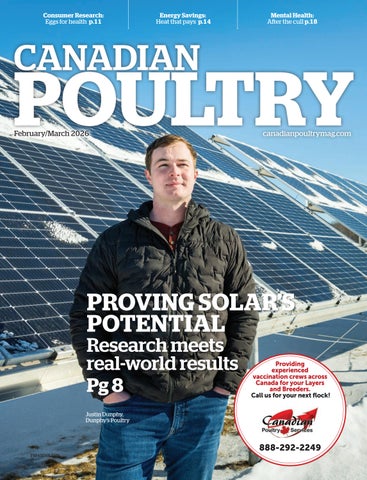
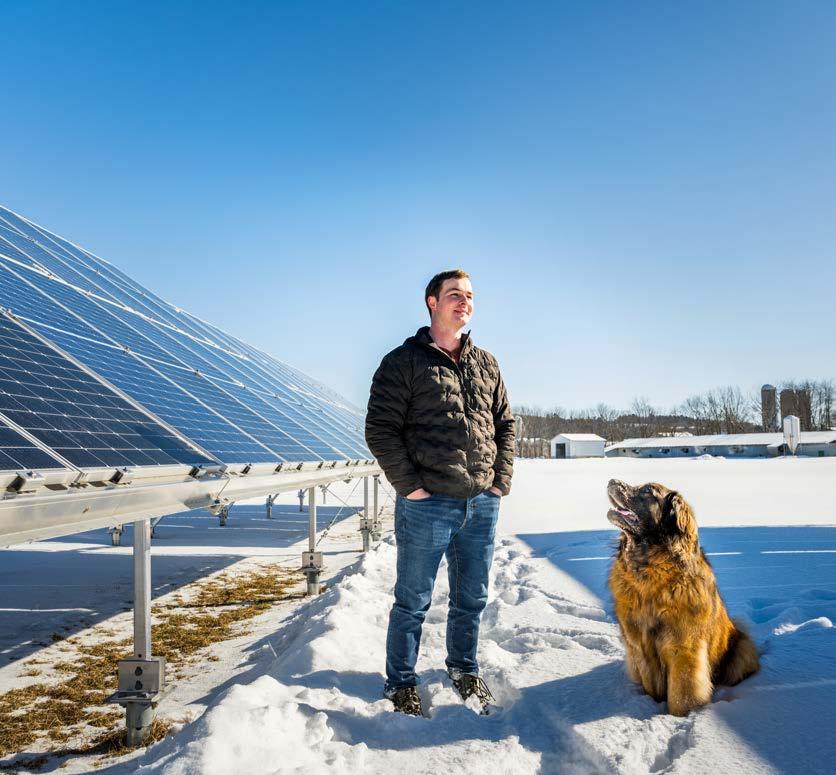
Our cover story (page 8) explores new research into solar energy use in the poultry sector, paired with real-world results from Dunphy’s Poultry Farm in New Brunswick. What stands out in this story is how quickly solar has moved from being perceived as a “nice-to-have” environmental option to a sound business decision. With falling installation costs and rising electricity prices, solar is delivering measurable returns – from reduced emissions and lower power bills to greater peace of mind through battery-backed energy security. For the Dunphy family, solar is not just offsetting power use; it’s strengthening the farm’s ability to weather outages and uncertainty.
Energy efficiency inside the barn
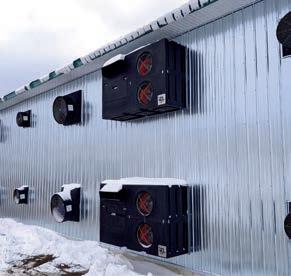
is also front and centre in this issue. On page 14, we dive into a large heat exchanger project at a broiler operation, where new designs are overcoming long-standing challenges around humidity, dust and maintenance. With documented fuel reductions of up to 50 per cent, improvements in bird comfort and measurable gains in feed efficiency, heat exchangers are proving their value as both an environmental and economic tool. As more data emerges from multi-year projects, producers are gaining clearer benchmarks to assess return on investment and system sizing.
Energy decisions, of course, don’t exist in a vacuum. On page 18, we examine the mental toll flock culls take on farmers during ongoing avian influenza outbreaks, reminding us that resilience is not only technical or financial – it’s human. Investments that reduce risk, improve reliability and add stability can matter just as much for peace of mind as for performance metrics.
This issue also includes new research on pullet perching preferences (page 22) and promising findings on the human health benefits of eggs (page 11), underscoring how innovation continues acr oss every link of the poultry value chain.
As energy costs, climate pressures and production demands continue to evolve, one thing is certain: efficiency is no longer optional. It’s becoming a defining feature of modern poultry farming – and an opportunity well worth seizing.
canadianpoultrymag.com
Reader Service
Print and digital subscription inquiries or changes, please contact Angelita Potal, Customer Service Rep.
Tel: (416) 510-5113
Email: apotal@annexbusinessmedia.com
Mail: 111 Gordon Baker Rd., Suite 400, Toronto, ON M2H 3R1
Editor Brett Ruffell bruffell@annexbusinessmedia.com 226-971-2133
Brand Sales Manager
Ross Anderson randerson@annexbusinessmedia.com Cell: 289-925-7565
Account Coordinator
Julie Montgomery jmontgomery@annexbusinessmedia.com 416-510-5163
Media Designer Lisa Zambri
Group Publisher Michelle Bertholet mbertholet@annexbusinessmedia.com
Audience Development Manager
Anita Madden amadden@annexbusinessmedia.com 416-510-5183
CEO Scott Jamieson sjamieson@annexbusinessmedia.com
PUBLICATION MAIL AGREEMENT #40065710
Printed in Canada ISSN 1703-2911
Subscription Rates
Canada - Single-copy $10.00
Canada – 1 Year $34.48
Canada – 2 years $58.87 (plus applicable taxes)
USA – 1 Year $97.06 CDN Foreign – 1 Year $109.79 CDN
GST - #867172652RT0001
Occasionally, Canadian Poultry Magazine will mail information on behalf of industry-related groups whose products and services we believe may be of interest to you. If you prefer not to receive this information, please contact our circulation department in any of the four ways listed above.
Annex Privacy Officer privacy@annexbusinessmedia.com Tel: 800-668-2374
No part of the editorial content of this publication may be reprinted without the publisher’s written permission. ©2026 Annex Business Media. All rights reserved. Opinions expressed in this magazine are not necessarily those of the editor or the publisher. No liability is assumed for errors or omissions. All advertising is subject to the publisher’s approval. Such approval does not imply any endorsement of the products or services advertised. Publisher reserves the right to refuse advertising that does not meet the standards of the publication.

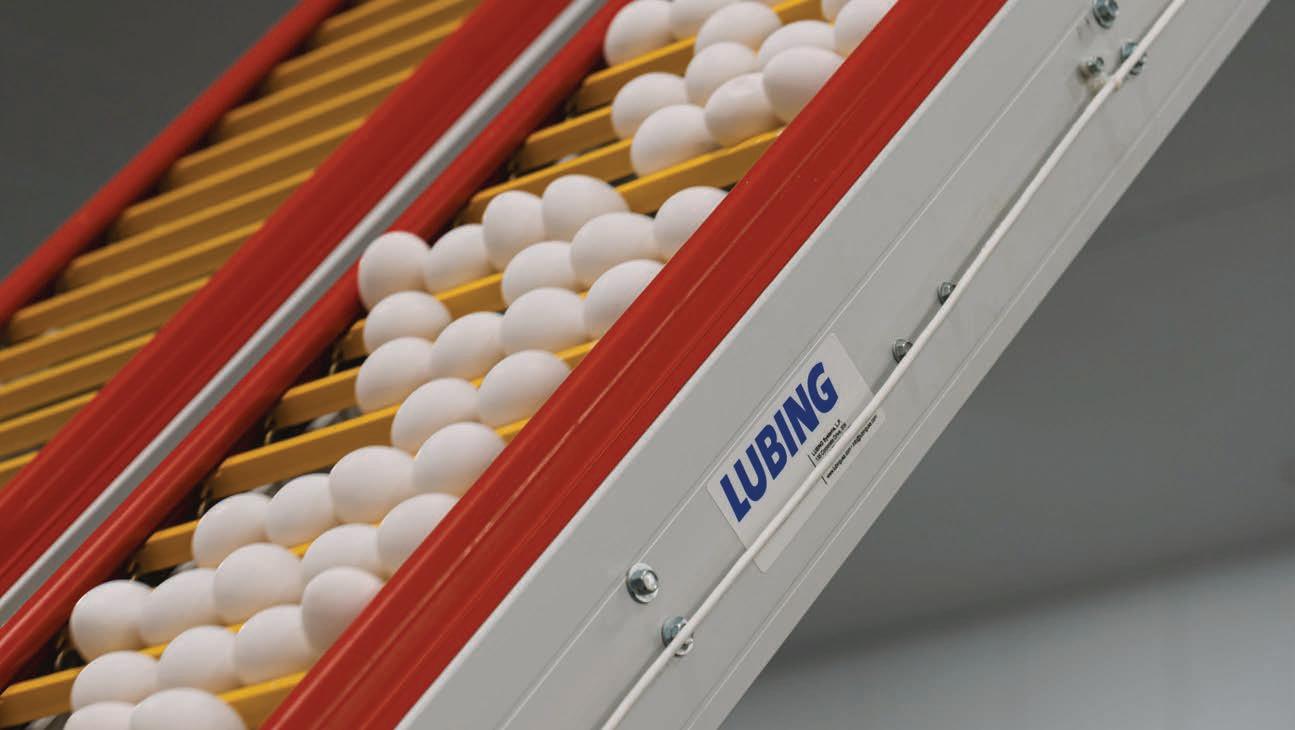

Our egg conveying systems safely transport a large volume of eggs from the nest to the processing area, which is why the majority of all eggs produced in the United States are riding on a LUBING egg conveying system.
Our conveying systems are flexible, and can be adapted to nearly any configuration with curves, angles, heights and distances.
Glass-Pac Canada
St. Jacobs, Ontario
Tel: (519) 664-3811
Fax: (519) 664-3003
Carstairs, Alberta
Tel: (403) 337-3767
Fax: (403) 337-3590
Les Equipments Avipor Cowansville, Quebec
Tel: (450) 263-6222
Fax: (450) 263-9021
Specht-Canada Inc.
Stony Plain, Alberta
Tel: (780) 963-4795
Fax: (780) 963-5034

Unions warn that planned federal cuts of 1,371 positions at the Canadian Food Inspection Agency could jeopardize food safety and disease control across Canada. The reductions would eliminate more than 20 per cent of CFIA’s workforce, already reduced in recent years. Union leaders say fewer inspectors could mean slower responses to food-borne illness outbreaks and weaker oversight during avian influenza and other animal disease threats.
Agriculture and Agri-Food Canada is closing seven research operations and reducing hundreds of positions as part of broader federal public service cuts, sparking concern across the agriculture sector. Research centres in Guelph, Quebec City and Lacombe, along with four satellite farms, are affected. While no immediate closures are planned, critics warn the loss of decades-long research capacity could have lasting impacts on Canadian agriculture, innovation and rural communities.
Severe flooding across British Columbia and parts of Alberta caused nearly $90 million in insured damage last month, according to the Insurance Bureau of Canada. The Fraser Valley was hardest hit, with floodwaters inundating homes, businesses, farm fields and poultry barns near Abbotsford. The bureau is urging the province to prioritize funding for its flood strategy, warning that stronger mitigation and resilience measures are more cost-effective than repeated disaster recovery.
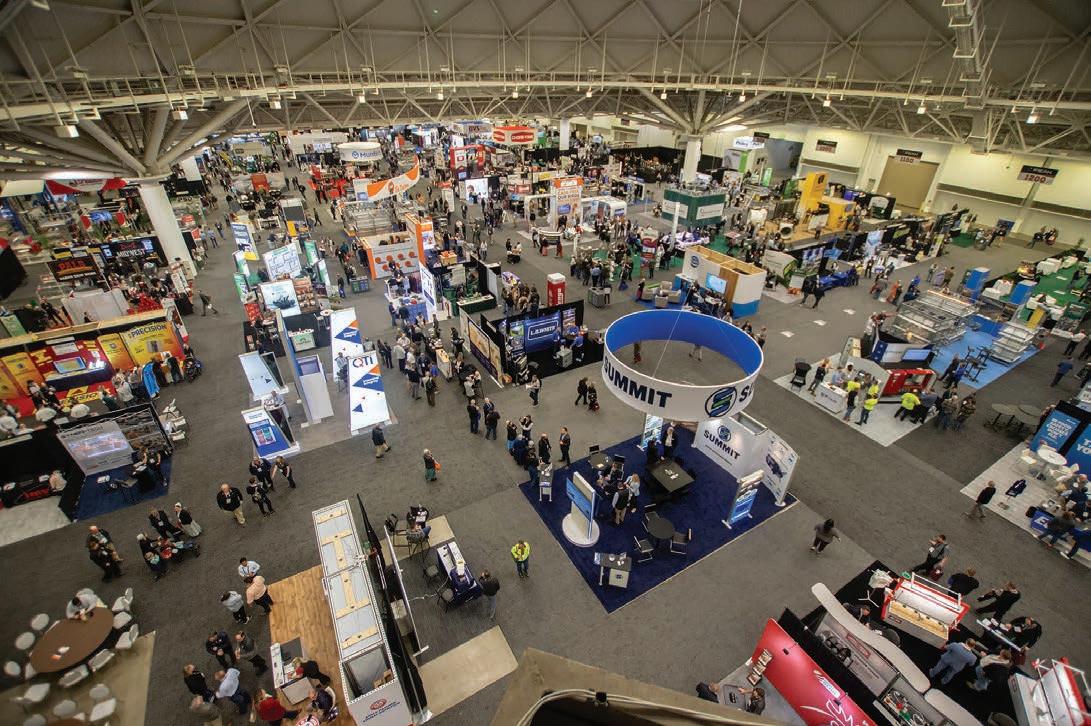
Attendees fill the show floor at the International Production & Processing Expo (IPPE), the world’s largest annual event serving the poultry, egg, meat and animal food industries.

The 2026 International Production & Processing Expo (IPPE) wrapped up in Atlanta this week with strong attendance, a packed show floor and a record-setting amount of exhibit space.
Organizers say this year’s event is approaching 33,000 registered attendees, featured more than 1,385 exhibitors and covered over 663,000 square feet of exhibit space – the largest trade show floor in IPPE’s history.
663,000 square feet of exhibit space made up the largest trade show floor in IPPE’s history.
Sponsored by the U.S. Poultry & Egg Association, the American Feed Industry Association and the Meat Institute, IPPE is recognized as the world’s largest annual event serving the poultry, egg, meat and animal food industries.
“Despite the weather-related challenges, we are really excited about the efforts attendees and exhibitors made to be at IPPE this week,” IPPE show organizers said in a statement. “The large trade show floor and attendee and exhibitor numbers continue to complement IPPE’s comprehensive education sessions, networking opportunities
and extensive exhibits showcasing the latest innovative technology, equipment and services for our industries.”
The expansive exhibit floor remained the central draw, with companies representing all segments of the animal food, meat, poultry and egg industries. Exhibitors showcased new products and services spanning live production, primary and further processing, and packaging.
IPPE’s education program again played a major role, offering more than 80 hours of sessions focused on topics such as artificial intelligence, sustainability in animal agriculture, food and worker safety, industry trends and poultry market outlooks.
Additional featured events included the International Poultry Scientific Forum, TECHTalks program, New Product Showcase and several publisher-sponsored programs.
Organizers have already announced that the 2027 IPPE will take place Jan. 26-28 in Atlanta, Ga.
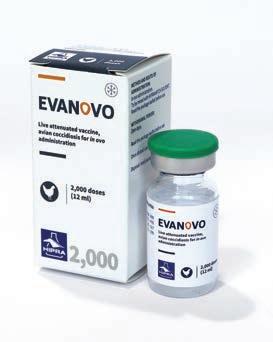
EVANOVO is a new in-ovo coccidiosis vaccine now available in Canada, offering a streamlined way to deliver early, uniform immunity in broilers. Administered at the hatchery, it avoids extra chick handling and chilling associated with spray methods while ensuring consistent dosing before hatch. As an attenuated vaccine, it supports immunity with less gut disruption and reduces the need for cocci-break treatments later in the grow-out period. The vaccine provides protection for up to 63 days and can be paired with other in-ovo vaccines as part of an integrated health program.

Cevac IBron is a live monovalent bronchitis vaccine formulated with the Georgia (GA) serotype of IBV. It is recommended for healthy chickens one day of age or older, providing protection against IBV GA08 and GA13 when administered by coarse spray, or against IBV GA08 and DMV/1639/11 when given via gel droplet. Supported by multiple efficacy studies, Cevac IBron offers reliable coverage against key circulating IBV variants, helping maintain respiratory health, flock uniformity, and overall flock performance. The vaccine can be integrated into existing vaccination programs.




research and on-farm results reveal what solar can deliver for poultry producers.
By Ronda Payne
Humans and animals alike are drawn to the sun for all that it brings: heat, light, vitamins and an overall sense of feeling good. But the sun can contribute in other ways too. It can help the environment and the bottom line when it’s harnessed in the right ways.
Solar application in the Maritimes
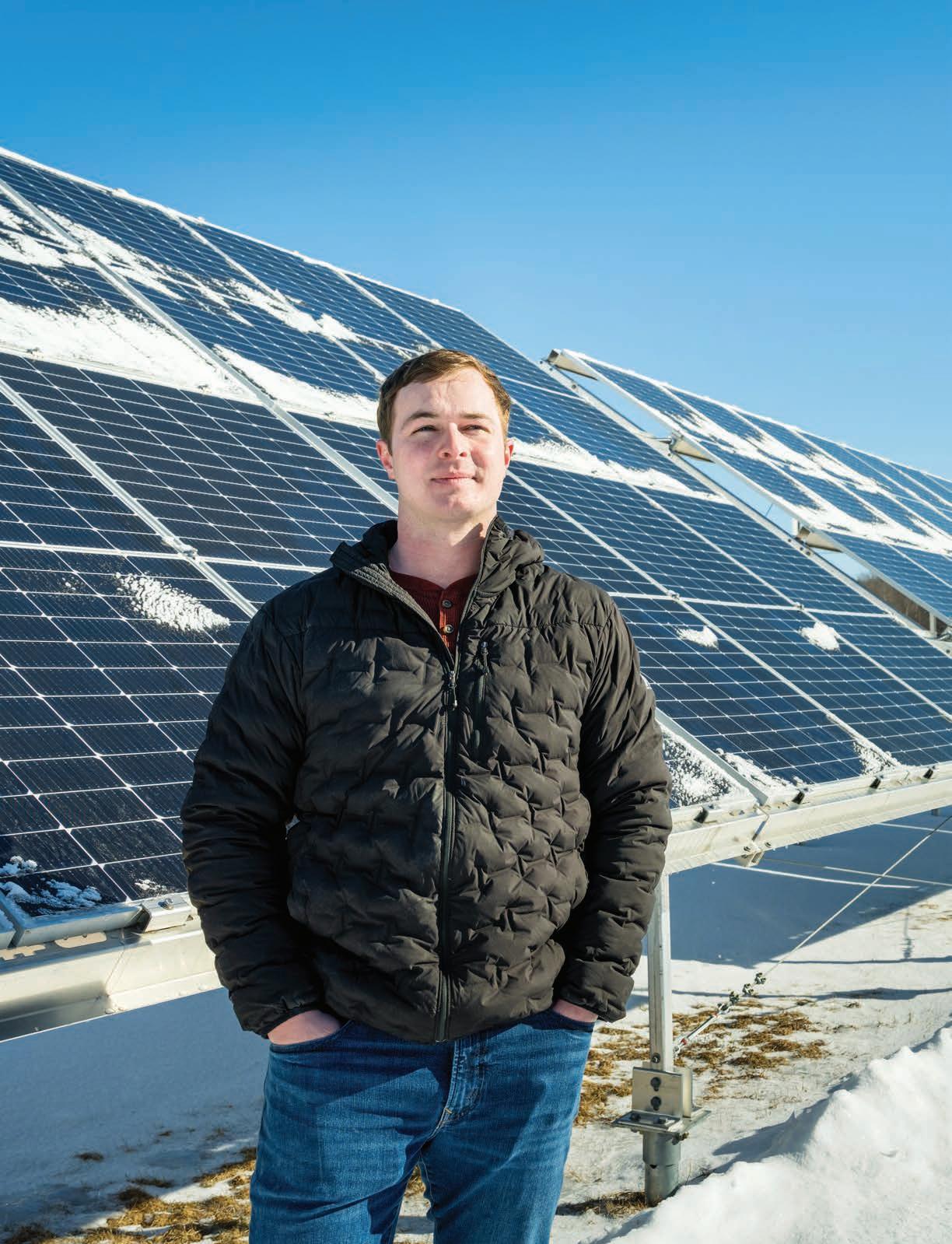
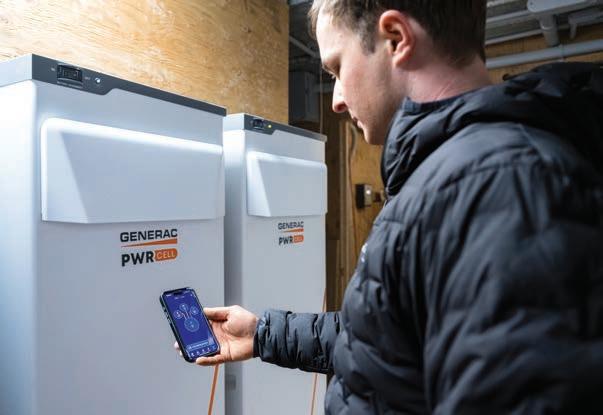
At Dunphy’s Poultry Farm in Keswick, N.B., solar became a part of the operation at the end of 2023 when 12 Noreaster units from the Smart Energy Company went live with additional battery backup. Justin Dunphy, who oversees poultry production at his family’s fourth-generation farm, says he is overall happy with the decision to switch to solar.
“We fully commissioned our solar project late October 2023 and on the 1st of December, 2023, NB Power connected our system to the grid, which gave us the ability to begin offsetting power to the rest of our farm,” says Dunphy.
Established in 1970, the farm
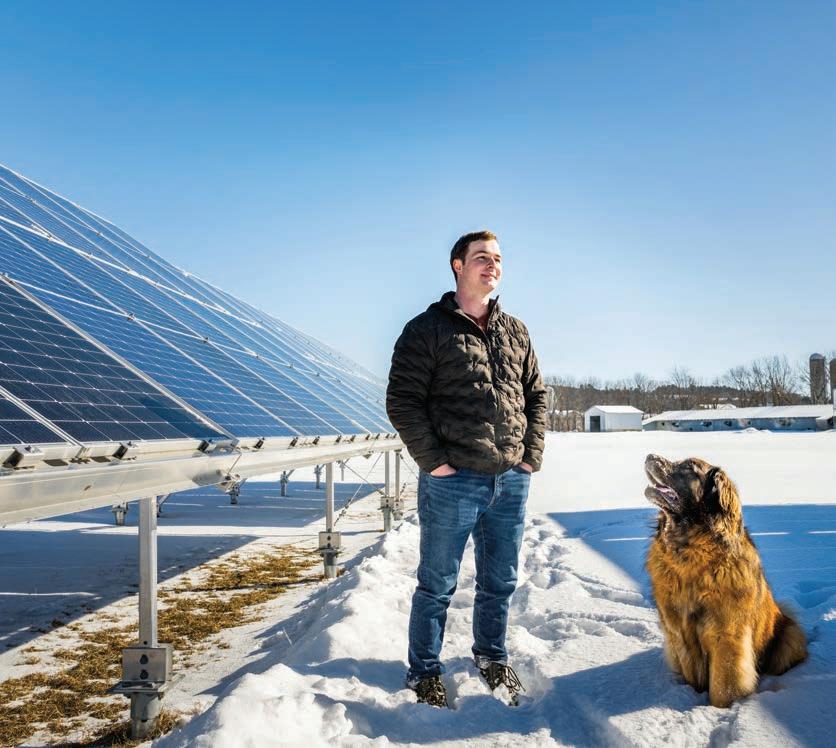
manages about 67,000 laying hens and the raising of about 120,000 pullets each year. The Noreasters, set up in an unused floodplain area, harness solar power and provide it to NB Power’s grid. In one year, this allowed the Dunphy’s to avoid 88 tonnes of CO2, save almost $22,000 on energy and provide 63 per cent of their power needs.
“Having solar is extremely low maintenance for us,” Dunphy says.
“For the most part, we are completely hands-off. We have integrated regular checks into our maintenance program to make sure that the system is running as expected and that our back-up battery power is always ready to take over in the event of a power outage.”
up without fossil fuels
This need for a back-up power supply was revealed during the discovery conversations Dunphy and his dad Jeff had with Smart Energy. Jeff Mc-
Aloon, co-CEO and co-owner of Smart Energy says it’s an amazing story that began with a reality check.
“One of the early conversations we had was just their power requirements,” McAloon says. “They were shocked by the amount they were paying for power when they started this process.”
He says this isn’t uncommon. Power is necessary in poultry production and some farmers pay the bill without thinking too much about it because they don’t think they have alternative options.
“That end is really the beginning of the journey,” he says. “Once any consumer is aware of their power, they’re going to look at other things they can do.”
McAloon also learned there is only a 20-minute grace period if the power fails.
“They have livestock and produce eggs,” he says. “If they lose power for more than 20 minutes, they can lose
an entire flock.”
The Dunphys assumed they would need a diesel-powered generator with the system like they did with their traditional energy, but with the battery backup, the farm is protected in “a clean energy way,” says McAloon. It became clear during the conversations that someone always had to be on guard in case there was a power outage, to get to the generator and start it up, but with the battery, it starts supplying power instantaneously.
A five-day outage in the Maritimes in late 2025 didn’t cause much more than a flicker as the power supply switched over to the
battery backup and Dunphy didn’t have to do a thing. Power was supplied continuously as the sun refilled the battery.
“It’s great peace of mind,” McAloon says. He adds that the environmental aspect was a “nice to have” in the past, but something few were willing to pay a premium for. Now, the decision is truly a win-win with the costs of solar installation coming down and the price of traditional power going up.
“Gone are the days where we had to consider whether to do something green,” he says. “You’re doing both now. It makes absolutely good business sense and it’s good for the environment.”
Looking at power use in poultry from an environmental payback stance showed Léandra Vanbaelinghem, a UBC research technician in life cycle assessment, that Alberta, Saskatchewan and Ontario made the most sense for solar use at laying hen poultry farms.
“I did a GIS [geographic information system] analysis to determine which areas in Canada would have sufficient solar energy to have a return,” she says. “These three provinces would return an environmental benefit over a 30-year life span of solar equipment.”
Vanbaelinghem’s study was based on reporting poultry farms as of 2020 and the modelling considered that all poultry farms in an identified region switched to solar. Of the farms in Alberta (which has a particularly dirty power grid), there would be a 17 per cent reduction in environmental impact considering greenhouse gases specifically; in Saskatchewan it would be 14 per cent and in Ontario it would be 2.2 per cent.
“The problem with Manitoba and Quebec is that their electric grid is already pretty clean, so the offsetting didn’t produce much of an effect,” she says. “Overall, the number of farms that were in regions where there was sufficient solar energy… was about 21 per cent of farms in Canada.”
If all the poultry farms identified as having sufficient solar energy were to switch, nationwide, there would be a two per cent reduction in greenhouse gas uses and an 11 per cent reduction in water uses.
The return means the manufacturing, installation and use of the solar equipment are included in the consideration of environmental impacts to be offset by the power they generate from the sun.
The modelling Vanbaelinghem did considered the surplus energy from the farm would be contributed to the
Justin Dunphy monitors the farm’s solar power system using a digital dashboard that tracks production, usage, and battery backup status in real time.
" Knowing what I know now, I would have considered a larger-scale system from the beginning. "
grid, like what happens at the Dunphy’s farm.
She found that the 200 kWp solar systems were best in terms of environmental impact. The larger (400 and 500 kWp) systems use up a significant amount of raw materials in their development.
“The next step from this research is we will be looking at wind turbines,” she says. “For places where there’s not enough solar viability, we’ll see if turbines can offset it.”
She agrees that some farms that aren’t in the regions identified as being beneficial in her study may well see benefits.
“If a farmer wanted to just supply his own farm, there still could be benefits there,” Vanbaelinghem says. “It’s very context dependent. For some, they may be able to use solar, nine or 10 months of the year and then have to access the grid for their other months. That may be okay. We just didn’t look at that in the study.”
She advises farmers to consider the energy system they draw from in their own assessment of solar.
“Find out what environmental impacts are important to them,” the researcher says.
New Canadian research from the University of British Columbia used life cycle assessment modelling to evaluate where, and how effectively, solar PV systems could reduce environmental impacts on poultry farms.
17% is the potential reduction in greenhouse gas impacts if laying hen farms in Alberta switched to solar PV systems, reflecting the province’s carbon-intensive power grid.
14% is the modeled reduction in Saskatchewan, while 2.2% is the projected reduction in Ontario due to its cleaner electricity mix.
21% of Canadian poultry farms are located in regions with sufficient solar resources to generate meaningful environmental returns over a 30-year system lifespan.
200 kWp systems delivered the strongest environmental performance in the study, offering the best balance between energy generation and material use.
2% is the estimated nationwide reduction in greenhouse gas emissions if all viable poultry farms adopted solar, alongside an 11% reduction in water use.
McAloon says it’s important to be educated on how much energy a farm is using now and what it is costing. They should also consider what unused land they have where a ground-based system like the Noreaster could be set up. “Farmers value their independence,” he says. That’s a big selling point for Dunphy. “It is impressive technology that creates long-term benefits that we will realize for generations to come,” Dunphy says. “With ever-rising and unpredictable energy costs, we are able to rely on our own energy production to keep our operation running efficiently and profitably.”
Because Smart Energy systems work something like LEGO where more can be added in the future easily, Dunphy is considering this. “Solar has become a valuable component to our operations,” he says. “Knowing what I know now, I would have considered a larger scale system from the beginning. Overall, the system has proven to be a cost-effective and sustainable part of our farm that we can continue to build on.”
research explores how whole eggs may support cancer recovery and cut Alzheimer’s risk.
Eggs are one of nature’s most perfect foods – nutrient dense, protein rich, and packaged in their own no-nonsense, environmentally friendly shell. But could eggs be doing even more than previously thought when it comes to human health?
One recent study examined how eggs may support post-cancer treatment recovery, while another explored whether weekly egg consumption could reduce the risk of Alzheimer’s disease.
The post-cancer treatment study did not unfold as planned for Vera Mazurak, professor in the Division of Human Nutrition within the Faculty of Agricultural, Life and Environmental Sciences at the University of Alberta.
While there weren’t enough participants to move ahead, this became an impor tant learning experience for future research design.
“I think it’s an awesome study. It’s just the way patients flow through things was a challenge,” she says.

“With cancer, they might start [the study] and then they had to go back for more treatment. We have no control over their medical appointments.”
Just one egg per week may support brain health in seniors. Because eggs are simple, flexible and familiar, they fit easily into daily meal planning.
The goal was to examine how two eggs a day could support patients’ bodies as they move through treatment recovery. Cancer and treatment are known to reduce food intake, leading to weight loss, decr eased immune function, muscle loss and other nutrition-impact symptoms.
Mazurak notes that a healthy adult typically loses about five per cent of muscle mass per decade beginning around age 40 or 50 – but cancer treatments can induce the equivalent of two decades of muscle loss in a very short period.
Beyond the physical impacts, the emotional side of eating becomes complex. Not eating, or no longer participating in family meals, often leaves both patients and caregivers distressed.
“We refer to them as chemo sensory alterations – changes to taste and smell,” she says. “They’re very hard to predict and they don’t always move in the same direction. For some patients, the smell is stronger or the taste is stronger or it doesn’t even taste like food at all, or it tastes the same but you no longer like it. It’s transient and it can be very distressing.”
Meal-replacement drinks can help, but if chocolate “tastes like
turpentine” or others are enjoying roast beef, a shake can feel isolating. Eggs, however, often remain appealing and familiar – one of the reasons Mazurak’s team designed the study around them.
“Food isn’t just about nutrients,” she says. “There’s a lot of things revolving around the things we eat and the get-togethers we have that revolve around food.”
Why eggs offer a unique advantage
“We’re trying to provide a high, very good-quality protein source with a smaller amount of calories,” Mazurak explains. “We want to get as many nutrients in that sitting as possible. We were capitalizing on their preference for eggs, and they are a nutritional powerhouse and have what cancer patients need to recover. There’s been very few studies in cancer where they look at whole food inter ventions.”
Recipes for breakfast, lunch, dinner and desserts were assembled
to help participants reintegrate meals – even small ones – back into daily life. Burnbrae Farms supplied egg coupons, while Egg Farmers of Canada funded the graduate student working on the study.
With funding and early insights, the next stage of the project aims to recruit participants who have completed treatment and who self-identify as research partners, offering input and feedback r ather than participating passively.
While cancer remains a major concern for an aging population, cognitive decline is another. Estimates sug gest almost one million Canadians could be living with dementia by 2030. As the most common form of dementia, Alzheimer’s is a condition many hope to prevent.
A recent study from Tufts University found that the choline and omega-3 fatty acids naturally present in whole eggs were associated with a potential reduced risk of Alzheimer’s disease.
“Eggs are widely recognized as an excellent source of choline, a micronutrient that is increasingly being studied for its positive impact on
benefits keep eggs in demand
These studies highlight how Egg Farmers of Canada continues to bring new insights to the industry, and farmers can extend this outreach through social media, virtual farm tours and other educational tools.
Simple sound-bites such as “Did you know eggs can reduce the risk of Alzheimer’s disease?” can spark conversations and inspire greater
brain health and cognitive function in older adults,” Egg Farmers of Canada wrote in an email statement. “Eggs can help maintain good brain health for Canadians.”
In a cohort of 1,024 participants with an average age of 81.4 years, followed for six years, 280 were diagnosed with Alzheimer’s disease. Those who ate one or more eggs a week showed a 47 per cent reduced risk compared with fellow study participants.
“While these results are encouraging, we look forward to further research that explores the relationship between eggs and cognitive health,” the statement continues.
“We are proud to support this work as part of our commitment to exploring the versatility of whole eggs as a practical dietary intervention strategy for older adults.”
Just one egg per week may support brain health in seniors. Because eggs are simple, flexible and familiar, they fit easily into daily meal planning.
As research expands, this knowledge may support senior-living facilities, caregivers and families in incorporating eggs more regularly into dietary plans.

interest in eggs. The cancer study’s findings also support purposeful recipe sharing from the farm.
Eggs remain a familiar, flexible food – and a nutritional powerhouse worth talking about.
Eggs remain a familiar, nutrient-rich food worth talking about at
farm level.
Canadian agriculture and food needs more talented people.
Each year, CABEF helps students to pursue rewarding agri-food careers through seven $2,500 scholarships. We’re looking for the future leaders who will help this industry meet tomorrow’s challenges.
Do you know someone who needs to fund their future in agri-food? Tell a student today.
Scholarship application deadline is April 30, 2026
Want to help support the next generation of agri-food leaders?
Become a “Champion of CABEF.” This program allows your organization to directly sponsor a deserving student. Contact CABEF at info@cabef.org.
By Treena Hein
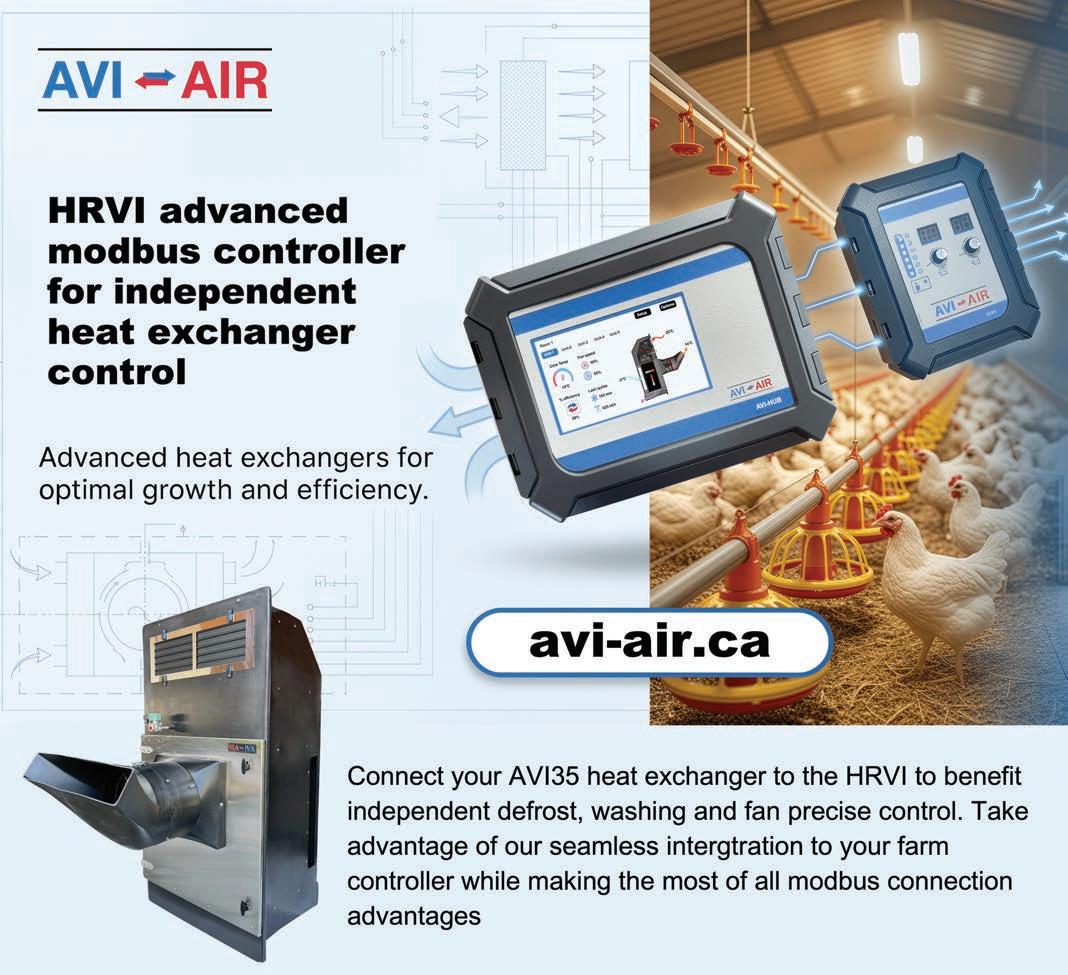
At this point, heat exchangers are pretty much a no-brainer in Canadian poultry production for new barn builds or if the farmer has the investment capital available to add them to an existing barn. In years past, the high humidity and dust in poultry barns presented challenges for heat exchangers, requiring them to undergo a detailed cleaning during flock production, but new designs make cleaning easier and enable most or all of it to be done between flocks.
Incoming air is heated quickly and does not have time to collect moisture before it’s exhausted, improving air quality and humidity control compared with regular exhaust ventilation. Drier litter leads to better bird health and welfare outcomes.
As Justin Montreuil of Avantis Cooperative explains, “there are three major key points to producing good chicken: feed, water and air. Good air quality can be challenging, especially in winter, where Canadian chick-
en producers know they must heat the barn – and in a conventional barn, most of the heat is lost outside through traditional ventilation systems.”
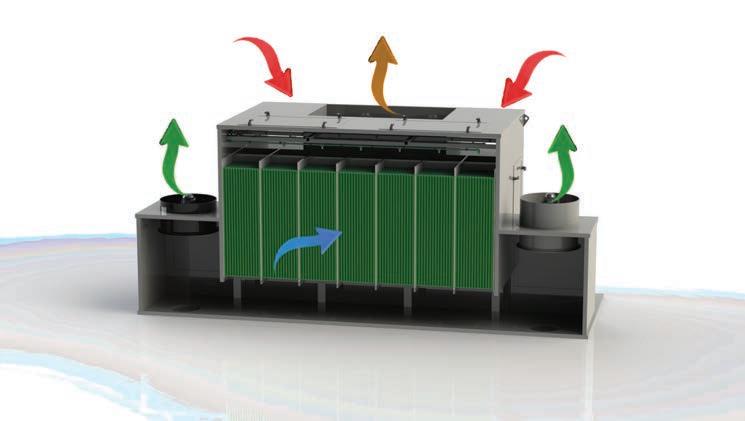
Instead, with a heat exchanger, heat from stale barn air (containing dust, humidity, CO2 and other gases) is transferred to fresh, dry cold air entering the barn. Air streams remain separate or are partially mixed. This heat transfer reduces the fuel needed to warm barn air, lowering greenhouse gas emissions.
Heat exchangers also reduce energy costs, and Avantis Cooperative is wrapping up a two-year project measuring these factors. The project used close to $1 million in federal funding through Agriculture & Agri-Food Canada’s Agricultural Clean Technology Program, spanning Quebec and New Brunswick. Avantis is the largest of six cooperatives in the Sollio Agriculture network, specializing in crop and livestock production, digital agriculture, hay trading and milk transport, with more than 120 locations operating under the Sollio Agriculture brand and other banners
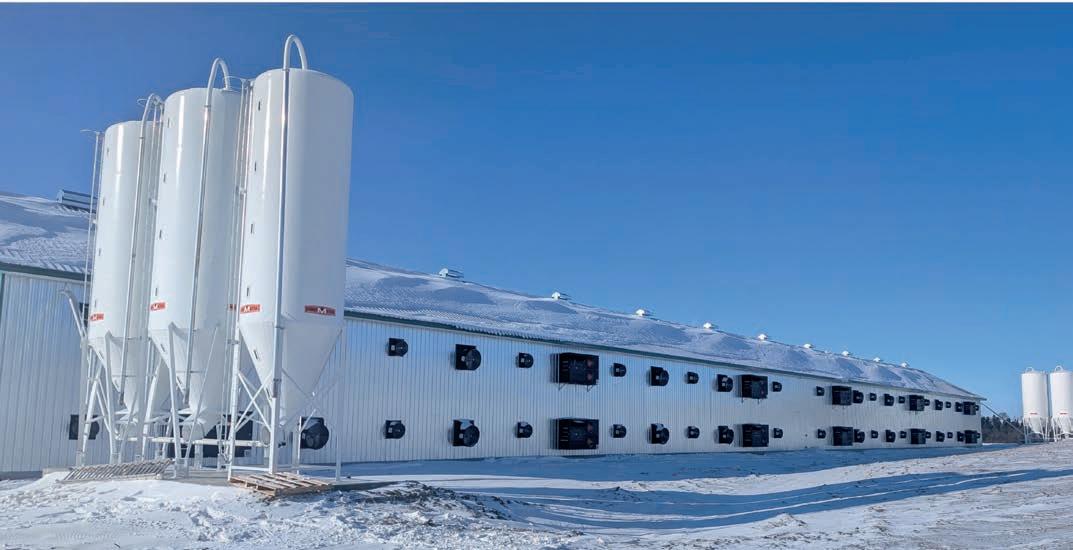
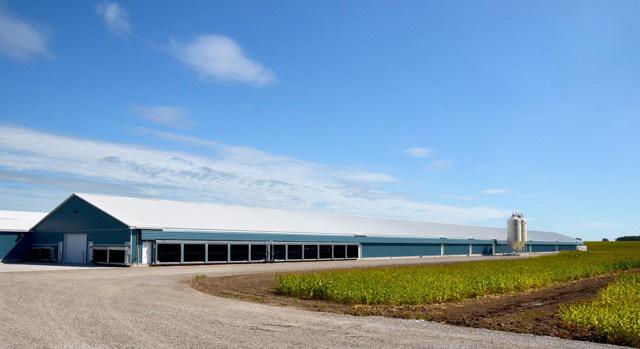
Starting in 2024, heat exchangers from ESA were installed in five Avantis broiler barns: three barns in 2024 (one new and two existing) and two new barns in 2025. The installation was overseen by IEL Technologie Agricole (a company purchased by Avantis several years ago).
“Everything was carefully thought out,” says Montreuil, “including structure to support the ESA machines, water lines to feed the auto-cleaning cycle of the machines and
ventilation calculations.”
He adds that “the ESA team is very proactive and are willing to come to your farm to improve their understanding of your barn and also to improve the machine efficiency.”
Montreuil and his colleagues have observed a fuel consumption reduction of between 40 and 50 per cent. They have also noted improvements in bird welfare. “Chicks don’t like cold air draft, and with heat exchangers, instead of letting -15°C cold air directly enter the barn, we can push to a pre-heat of almost 15°C air in the barn,” he says. “We have improved feed efficiency by two points and also added around 0.04$/kg produced.”
Montreuil says there’s been a challenge in that condensation in the heat exchanger freezes into ice, but
ESA has improved their latest model by adding a heating wire to address this issue. Still, he also advises that “you still need good access to the rear of your barn to check your machine and break ice if needed.”
The Avantis team is ‘sold’ on this technology and is planning to add more of it to its operations. “As always, we want to improve profitability of our production by investing in tools that enable this, like ESA heat exchangers,” says Montreuil. “We are looking to add them in our next barn project in 2026.”
Canadian Poultry has tracked other
heat exchange installations to present the industry with continually updated information. In 2023, we r eported that Keet Farm in Georgeville, Que. installed 23 Avi-Air heat exchangers in its broiler barns. In its own studies on brooder heating time with side-by-side identical barns over three years, Avi-Air has found that compared to conventional minimum ventilation, the yearly average reduction of heating time was 45 per cent better with the heat exchangers.
In 2024, we reported on Pondeuses JL egg farms in St. Hyacinthe, Que., where Vencomatic ECO Zero heat exchangers were added to six barns built in 2021. Due to better bird health, more egg production and reduced heating costs, the owners experienced increased revenue of $10.94 per bird.
Heat exchanger capacity
Mathieu Brodeur, president at Avi-Air, has previously noted that farmers considering heat exchangers should carefully assess ROI timelines. CFM (ft³/min) output per dollar and heat core efficiency are critical. He advises poultry producers to understand how many days in a broiler cycle heat exchangers alone can provide winter ventila-
tion (0°C and below), since once conventional ventilation is required, the benefits are reduced. Therefore, systems should be sized to handle ventilation for the first 21 days. Montreuil confirms that in Avantis barns, cross ventilation is not used during the first three weeks of the broiler cycle, with heat exchangers instead providing ventilation.

• All Poultry Related Buildings & Sheds
• All Poultry Related Buildings & Sheds
• Serving South Central Ontario-East of Hwy. #6
• Serving South Central Ontario-East of Hwy. #6
From ESA marketing coordinator Jacob
Sauvé
When do heat exchangers make the most sense?
Heat exchangers deliver the greatest return in barns with high ventilation rates and tight temperature targets. These buildings require significant energy to maintain stable conditions, particularly in winter. In these situations, heat exchangers can operate continuously, reducing wasted heat while improving air quality and humidity control.
Common pitfalls to avoid
One common mistake is installing too few units to cover only part of minimum ventilation. While this approach can work, it requires careful management of the transition between heat exchangers and conventional exhaust fans, adding complexity to ventilation control.
Producers should also avoid relying on a single, centralized heat exchanger to serve an entire barn. This setup complicates airflow management and increases operational risk if the unit goes offline. Multiple, distributed units allow for better airflow control and reduce downtime risk.
Art Kloosterman (705) 944-8952
Art Kloosterman (705) 944-8952
Art Kloosterman (705) 944-8952
CP_AgroDesign_May23_MLD.indd 1
Finally, ensure the system can properly adjust fresh-air intake as ventilation demand changes. Units without this capability can create cold drafts when ventilation levels are modified.

2023-04-18 11:21 AM
Key questions to ask suppliers or engineers
1. How will the system integrate with my existing ventilation and control setup, and where should units be placed for optimal airflow?
2. What technical support and after-sales service are available?
3. How is the unit designed for cleaning and routine maintenance?
4. What does installation involve, and what are the total costs?
5. What energy and performance savings can I realistically expect given my barn design and ventilation profile?
6. How is the system engineered to perform in Canadian winter conditions?
What to measure to evaluate success
Producers should focus on practical, on-farm indicators, including litter condition and bird comfort (more consistent litter dryness and fewer wet spots), in-barn air quality (humidity, ammonia and CO2 levels), and overall energy savings.
Bird performance is also a key metric. Birds housed in drier conditions require less energy to stay warm, which can improve feed conversion and reduce cost per kilogram produced.
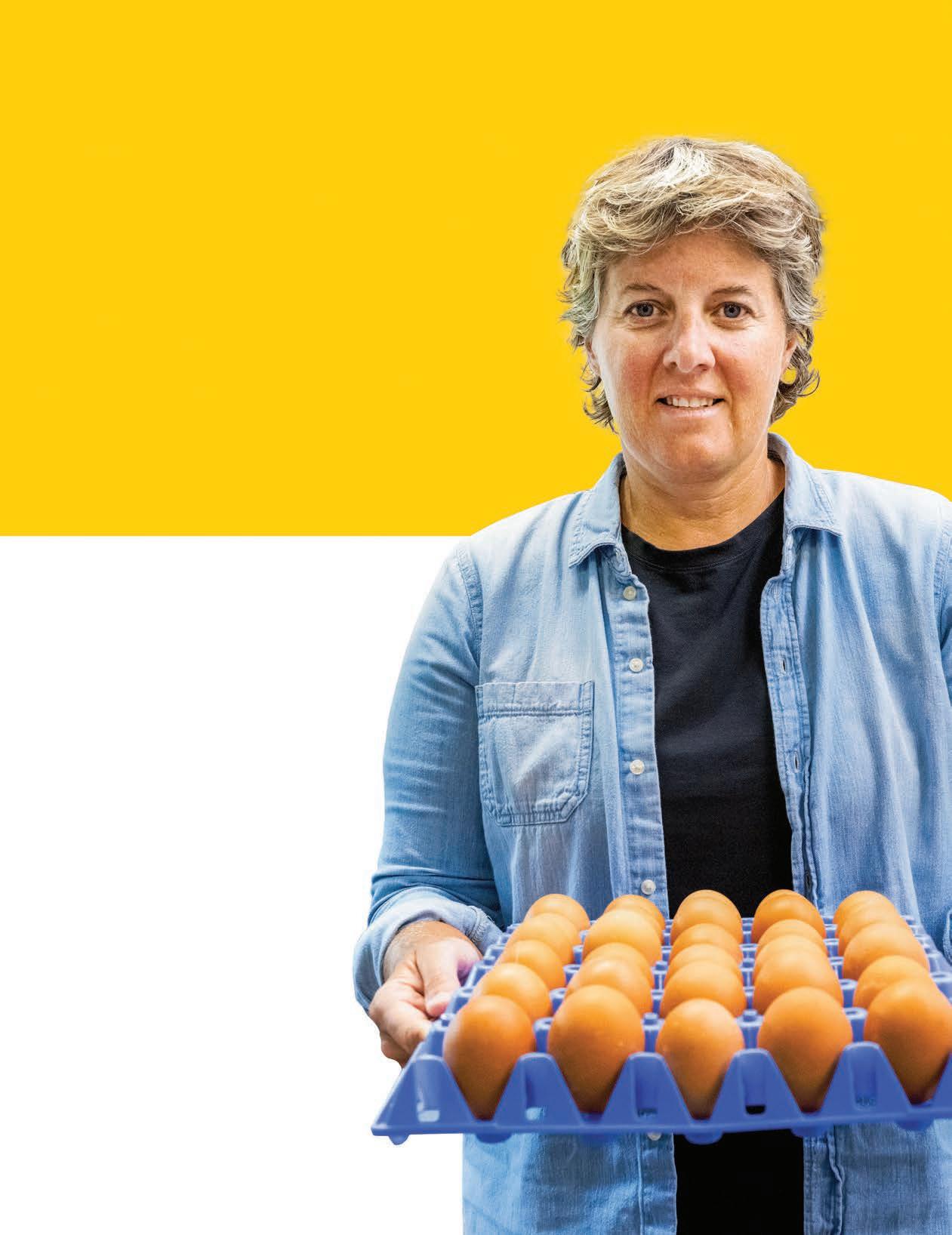
Canadians can count on fresh, high-quality eggs. Farmers deliver them through a made-in-Canada system: supply management.
Learn more at eggfarmers.ca/supplymanagement
Farming’s mental health challenges may be openly discussed, but the threat of a flock cull puts emotional wellbeing front and centre.
By Ronda Payne
Mental health has come a long way from heavily medicating people with lithium and leaving them in a back bedroom, institutionalizing them or telling them to “just be happier.” But there’s still a heck of a long way to go to normalize what is, ironically, an incredibly common human experience.
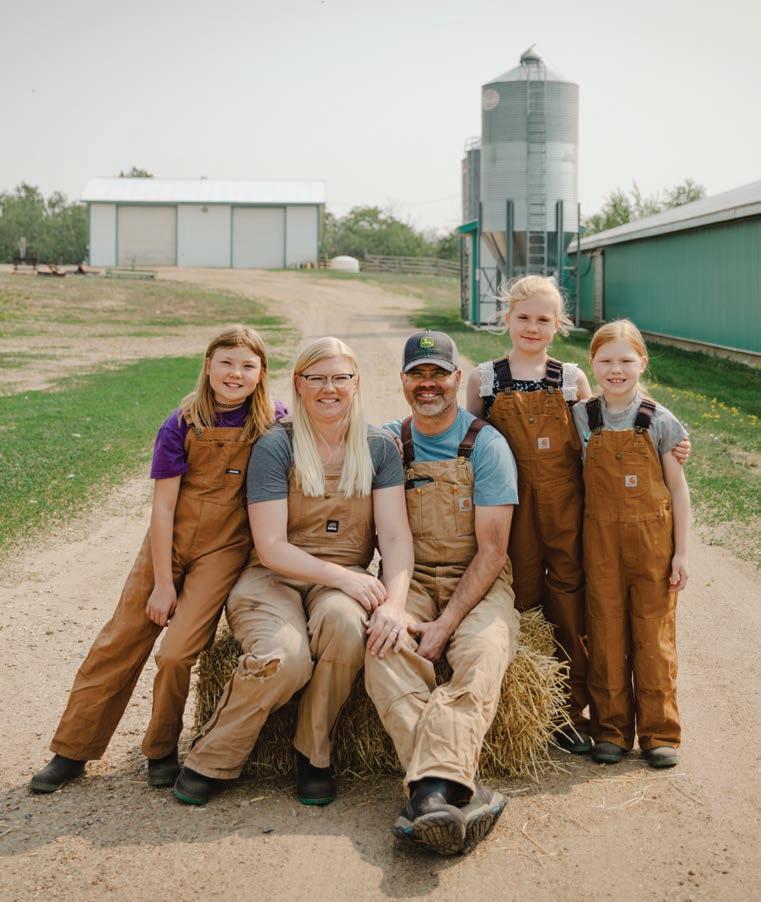
Farmers like Hinke Therrien of Alberta-based Ment-2B Agribusiness, a broiler and turkey operation near Edmonton in Sturgeon County, are familiar with the anxiety of wondering if HPAI will hit, despair at the confirmation, uncer tainty of the process toward rebuilding, then the disbelief and anger as it comes around again. She and her husband Marc had a HPAI positive on September 3, 2022 and again on October 29, 2025.
It’s easier the second time around, but…
Whether it’s having been through the process before, knowing to ask for
help, having access to supports or (most likely) a combination of all three, the producer is feeling more grounded going through this latest depopulation.
“The first time around it was sad, overwhelming. You don’t know what you’re getting yourself into,” she says. “Now, I know what to do. Get out of my way, let me get to it. Let’s get to it quickly and let’s get ‘er done. I could channel that anger into work.”
1,000+
Canadian farmers have accessed provincial mental health helplines in recent years.
Fortunately, despite not seeing the doctor often, she found help before the first cull at the women’s clinic where she’s a patient and took the support she got from within the industry.
“There was a network they started within that first year and it’s just gotten better,” she says of Alberta’s support programs. “I think we just need to keep talking about it. The
stigmas are still there. Just talking about it is good.”
Good isn’t good enough says a report by Rebecca J. Purc-Stephenson from the Department of Social Science at the University of Alberta about the mental health impact to farmers from culling livestock due to disease. In the report, she notes that the Canadian government’s emergency management framework doesn’t fully address the mental health needs of farmers and sought to identify the impacts as well as the strategies that could help farmers build more resilience.
“The existing emergency management framework follows a continuous four-phase cycle: prevention, preparation, response and recovery,”
the report notes. “We adapted this framework based on our findings to specifically address the mental health needs of farmers dealing with livestock diseases and depopulation.”
Among the 12 activities suggested were education and communication opportunities as well as items more directly correlated to mental health like “identify crisis counselors and therapists in the region who can support farmers” and “ensure farmers have access to mental health counselors to process the event and learn strategies for healthy coping.”
This could help with the themes that came up in the study: emotional distress, threats to identity, economic burden, distrust and frustration with authorities and resilience and adaptation.
Challenge the blame game
“If I were to talk to anybody that has [a disease outbreak], I’d say ‘you can’t blame
yourself,” says Therrien. “You start questioning every aspect. Everything. It’s not your fault; you will get through this.”
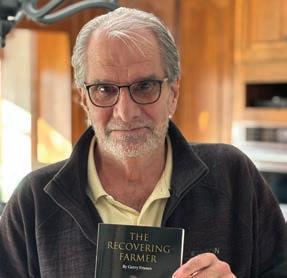
But that sense of blame and fault are common says Gerry Friesen, The Recovering Farmer, a speaker, coach and advocate for prioritizing good mental health. Friesen wrote a book about his journey from farmer, to not-a-farmer and the accompanying mental health challenges along the way. His book, The Recovering Farmer, explores that transition.
“There’s threats to their identity, there’s stigma involved, there’s internal conflict,” he says. “Very often folks think they are alone… that causes people to isolate themselves.”
Friesen says when being a competent farmer and a steward of animals makes up someone’s identity, a cull can be devastating in multiple ways. Those who identify as a farmer are left wondering who they are if they decide to discontinue farming; or they
The need for mental health support is high in livestock production and it isn’t always about disease. Animal activism, climbing input prices, lack of labour and other factors are driving a push for more resources. The Alberta Poultry Industry Emergency Management Team (APIEMT) is taking a proactive approach.
The organization is recruiting farmers with lived experiences of the stressors of farming to be mentors to others going through challenges that may impact their mental health. The Do More Agriculture Foundation will be providing a virtual training workshop for these mentors.
Alberta Chicken Producers, a member of APIEMT, also provides resources to support farmers on its website through articles, access to the Alberta Mental Health Hotline and a detailed list of mental health resources in the Emergency Response Plan. There are free counselling programs for farmers in all provinces and territories across Canada as well as the Canadian Centre for Agricultural Wellbeing and the Do More Agriculture Foundation.
may be left with fear and anxiety of another outbreak if they restart.
“If I’m not who I am, then who am I?” he asks. “You wake up one morning and you need to build a new identity and that can be a real challenge.”


His advice, in brief, is similar to Therrien’s. “Talk about it, talk about it, talk about it,” he says. “That may be to a family member, that may be to a neighbour, that may be to a friend and for goodness sake, that could be to a professional.”
He wants to see reaching out to professionals become a normal response, just as one would for a broken limb.
Identify when it’s no longer working
Therrien walked around “like a zombie” for a few days and recognized she needed help when she took the couple’s three daughters to school but left their lunches behind. While some wouldn’t see that as a flag, Therrien did and took action to get support.
At the Alberta Chicken Producers, Rob Renema, producer programs and research manager, says the industry has improved at providing help as case counts have risen. The team has gained experience and now has point people who specialize in different
aspects of a disease outbreak. Stress levels, he says, were dramatically higher a few years ago, and mental health is now included in regular HPAI training.
“ We are multidisciplinary in our office. We’re essentially advocating for the producer,” he says. “We’ve gone the route of having a producer liaison role… someone they can trust and talk to.”
The organization is training farmers to support one another, and that liaison can assist with any aspect of an outbreak. But some may need help before an outbreak, given the anxiety and hypervigilance noted in Purc-Stephenson’s report.
Friesen says farmers need to ask for help before they think they need it. Many hide their need by putting on a brave face or denying their internal pain.
“Yesterday. That’s the short answer,” he says of when to ask for help. “There are producers who may not have gone through this but are worried sick. If I’m waking up with my gut tied up in anxiety, it’s a good

time to see someone who can help.”
Therrien was more public about the outbreak the second time because she felt more confident and supported, despite some negative reactions.
“I don’t have any shame anymore because I think I’m doing everything I possibly can to avoid it,” she says. “The industry is so much better.”



By Jane Robinson
There’s a wealth of research on the needs of laying hens housed in non-caged systems, but research and recommendations on rearing pullets come up short – especially on the use of perches and platforms.
Madison Penney recently completed a research project as part of her master’s degree at the University of Guelph looking at th e perching preferences of laying hen pullets. The goal was to broaden the knowledge base for pullets, possibly inform future Code of Practice updates, and provide some practical insights and tips for producers.
Under the current Code, perches are the only roosting structure required in cagefree systems for layers housed in aviaries –and are commonly limited to round metal rods that birds can wrap their toes around to sit or roost above the floor. As inherently ground-dwelling birds, chickens are hardwired to roost in high places, mostly at night to avoid predators.
“Based on what we already know about laying hen behaviour, anatomy and preferences, we wanted to know if the definition of a perch that includes toe wrapping is the most accurate or most important in this new era of cage-free systems,” says Penney, who worked with Dr. Tina Widowski on this research.
They set out to determine if pullets prefer to roost on structures that allow their toes to grasp (perch) or stand flat (platform), and to find out if elevation makes a difference to these choices. They were also
Madison Penney completed her master’s on a research project that found pullets prefer elevated platforms.
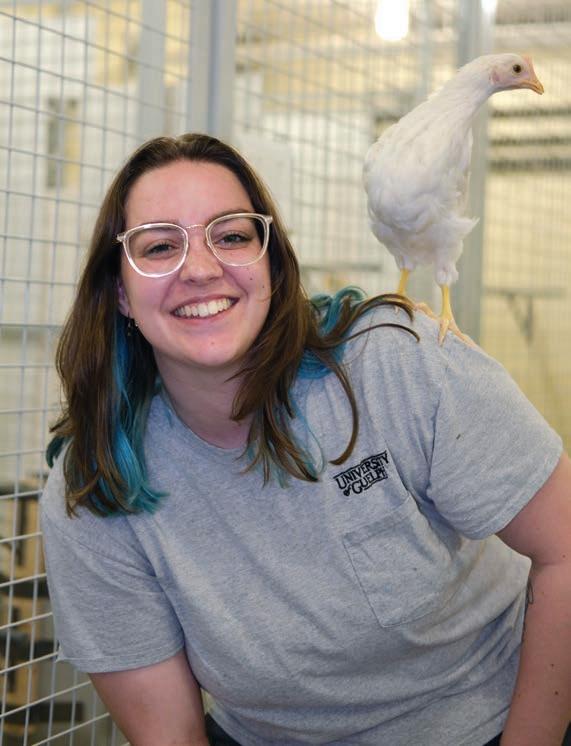
looking to identify any strain differences in roosting preferences.
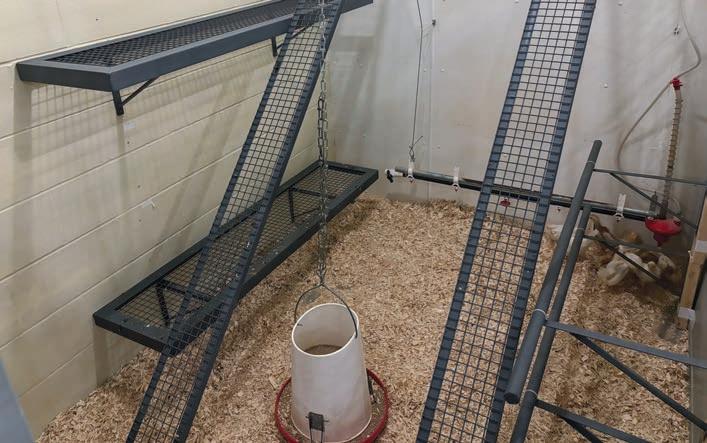
The project reared a group of pullets for a 19-week period from hatch to start of lay. A total of 120 white-feathered and 120 brown-feathered pullets were housed in groups of 10 in a combination of pens with all white birds, all brown birds, and some pens with a 50/50 mix of both strains. All pens had two round perches, two flat wire raised platforms and two ramps.
Perches and platforms were set at two different heights. The low heights stayed in the same place throughout the project. The higher structures changed elevation during the project to give all birds in all pens the option of choosing the height and type of structure for roosting.
Photos were also taken of pullets’ feet when they were on round perches to compare foot lengths between the strains –another piece of information that could inform bird preferences.
Key study findings
“We found that overall, pullets prefer ele -
vated flat platforms,” says Penney. “It didn’t matter if it was the highest available structure – that’s where most birds chose to roost.”
As pullets aged, elevation became more important than the type of roosting structure. After 16 weeks of age, birds preferred to roost on the perch – but only when it was the highest structure available. Penney suspects this may be because as their feet got larger, pullets were able to grasp the perch and balance better, as well as having better feather coverage, mobility and strength.
When Penney compared strains, both white and brown pullets showed a clear preference for platforms over perches. But white pullets sought higher elevated roosting structures more than brown pullets, which spent more time on the ground. When strains were housed together, more brown pullets roosted on platforms compared to when they were housed with other brown pullets.
As expected, foot length increased as the birds aged – and so did the use of perches, but not platforms. “Proportionally, white pullets have longer feet than brown pullets,


so having bigger feet may contribute to their ability to get a good grasp on a perch.”
Research has already shown that the well-being and productivity of pullets when they become laying hens is highly dependent on their rearing environment. This project is helping amass more research and recommendations for pullets, including a few practical tips for pullet rearing structures.
Give them access to vertical space. “It’s really important that pullets learn how to use structures at different heights, so these options need to be in rearing systems so birds can succeed in adult housing,” says Penney. “If they can’t learn to navigate vertical space, they will struggle when they transition to adult aviaries.”
Add more platforms. Penney would love to see alternate structures like plat-
forms included in future updates to the Code of Practice for pullets. “It might be time to update and expand the definition of a perch for pullets, and having more platforms for younger pullets would definitely be useful for the birds.”
Include ramps wherever possible. While ramps are also not in the Code of Practice, Penney observed pullets using ramps as young as three days of age. “It’s
another vertical structure that’s used in layer housing and is known to help reduce fractures and injuries to the birds.”
Consider the strain. “We like to joke that brown birds are from Mars and white birds are from Venus,” says Penney. “So, if you are raising brown pullets, you might need a simpler system of structures to navigate – or more encouragement for birds to seek elevation.”
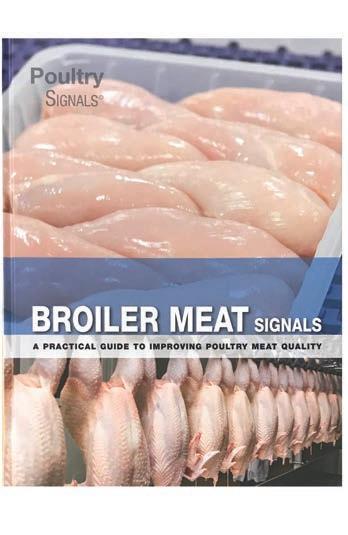

Broiler Meat Signals contains practical information about broilers and all further steps in processing. With practical tools and modern insights to guarantee an efficient produced, safe, healthy and tasty product.
On a global scale, poultry will soon be one of the most important protein source in the human diet. The quality of this meat is essential. The modern consumer is critical and has high standards of expectation. It is a challenge to meet up to these expectations.





By Crystal Mackay
New technologies and applications for agriculture, food and communications continue to evolve rapidly. I recently visited the IPPE show in Atlanta and was struck by how much technology is now shaping our sector. In many ways, it reflects how far we have come in our lifetimes — with instant access to data, people and tools through the devices in our pockets.
While these advances are exciting, connecting with people who aren’t familiar with farming or our food system still requires context. Many positive perceptions of agriculture are rooted in “the good old days.” That isn’t a bad thing, but it is our job to help build a bridge from 1926 to 2026 — showing that while technology has changed, the heart of farming has not.
From farms to restaurants, the people who work across the poultry sector genuinely care about producing high-quality food. Here are seven things I wish Canadians knew about food and farming, and some ideas on how to frame those conversations.
1. Canada is a world leader for safe, high quality food.
We have an abundant food supply from an incredible food system in Canada. This includes world class best practices, rules and laws for food safety, traceability, and inspection from the farm right through to your plate. I’ve studied this around the world, and always come home to this conclusion, with pride.
2. Farm families own and operate our farms.
While larger than in the past, today’s farms are still run by real people with genuine connections with the land and their animals. Many are multi-generational, with the same hard-working farmers’ values of those that came before us. We have better equipment and technology today, but Mother Nature is still a tough boss.
3. Farming is based on science with a view to improve.
Farming has always been based on continuous improvement – from how to breed healthier animals to grow a bigger crop. How we grow food is based on science. There is significant research behind every aspect of how we farm. Fields of study range from animal behaviour to advanced gene editing and food science. Today’s farmers are more educated too. I like to say Old MacDonald’s grandchildren went to school and are now home farming!
4. Farmers genuinely care for their animals.
Caring for our birds 365 days a year is a serious commitment that re-
Open conversations about modern farming help bridge the gap between long-held perceptions and today’s science-driven food system.
quires knowledge and a passion for it. Even with new technology, it is still hard work that can be incredibly heartbreaking or rewarding depending on the day. Are there some bad actors? Yes, sadly a few.
However, the thousands of people working on farms doing a great job of caring for animals every day rarely make the news.
5. Feeding people needs to be sustainable.
Growing any type of food has impacts on the environment. We need to keep working on reducing environmental impacts of food, and everything else we do. Sustainability includes environment, social and economic pillars. Farming and the entire food system needs to be sustainable to keep feeding people; to keep farmers in business; to keep contributing to the economy and rural communities; and improving our land for future generations.
6. There is no such thing as “GMO Free” water or “Hormone Free” food.
“It is our job to show that while technology has changed, the heart of farming has not.”
Ask why and think critically about what you pay more for in your food. Read food labels and claims carefully. For example, hormones are in all living plants and animals, including peas and beer! Growth hormones are not approved for use at all in poultry, pork or dairy. They are approved for use in beef. Read more at realdirtonfarming.ca.
7. Be curious about your food. You’re feeding and fuelling yourself and your family. Be curious about your food. Take some time to find experts and source credible information. If you want to know about farming, ask a farmer or related expert in the field.
*Protection against GA08, GA13 and DMV/1639/11 IBV types.
A live monovalent bronchitis vaccine.
Every droplet of Cevac IBron™ carries a tidal wave of protection against the DMV isolates of the avian infectious bronchitis virus. This live, monovalent bronchitis vaccine can be administered using coarse spray application or the gel spray route for rapid uptake.
Cevac IBron™ is the latest example of Ceva’s continual commitment to research and innovation, both today and in the future.
Contact your Ceva representative today to turn the tide on avian infectious bronchitis, with IBron™.
Tel: 800.510.8864 • service.canada@ceva.com • ceva-canada.ca