Providing Ontario with crews for Layer moves and vaccinations.
New
COLUMNS
27 | Cracking Condemns
Cellulitis: The hidden profit thief
30 | Building Bridges Human energy and progress
Ventilation fundamentals
How small changes in barn climate affect bird health and performance.
Managing microbiota
Understanding how barn microbes influence broiler health and productivity.
From the Editor
by Brett Ruffell
Protein demand strengthens poultry outlook
Rising demand for protein-rich foods is creating a favourable outlook for Canada’s poultry sector heading into 2026. A new market outlook from Farm Credit Canada highlights how shifting consumer behaviour – particularly the rising cost of beef – is pushing more Canadians toward chicken and eggs.
For years, ground beef was typically cheaper than chicken breast. That dynamic has changed. Beef prices have climbed sharply, and in many cases chicken is now the
High beef prices are reminding consumers of something poultry producers have long known – chicken and eggs remain among the most affordable, versatile proteins available.
more economical option at the grocery store. When households are trying to stretch their food budgets, that difference matters.
For poultry producers, this shift reinforces the strength of the sector’s long-term fundamentals. Chicken and eggs offer consumers a combination that is hard to beat – affordability, convenience and strong nutritional value. When economic pressures mount, those attributes become even more important.
Demand is already reflecting that reality. Chicken prices rose modestly toward the end of 2025, but still far below the pace of beef price increases. At the same time, egg consumption continues a decades-long upward trend as consum-
ers increasingly look for accessible sources of protein.
While demand remains strong, the production side of the equation still faces uncertainty. Avian influenza continues to pose a risk in several regions, particularly in British Columbia and Ontario. If outbreaks are contained, strong chick placements in late 2025 suggest broiler production should remain solid through the early part of this year.
Feed costs are also providing some stability. With global grain supplies relatively ample, input costs are expected to remain manageable for producers, helping maintain positive margins even if farm-gate prices stay relatively steady.
Taken together, these factors point to a poultry sector that remains resilient in a changing market environment.
Of course, producing poultry efficiently isn’t just about markets and economics – it’s also about the conditions inside the barn.
In this issue of Canadian Poultry, we take a closer look at barn air quality and ventilation. Our cover story explores practical strategies for improving airflow, heating and cooling to support bird health and efficiency. We also examine worker air quality in modern layer housing, look at emerging research on airflow and disease risk, revisit ventilation fundamentals and explore how the microbial environment inside barns can influence broiler health and productivity.
canadianpoultrymag.com
Reader Service
Print and digital subscription inquiries or changes, please contact Angelita Potal, Customer Service Rep.
Tel: (416) 510-5113
Email: apotal@annexbusinessmedia.com
Mail: 111 Gordon Baker Rd., Suite 400, Toronto, ON M2H 3R1
CEO Scott Jamieson sjamieson@annexbusinessmedia.com
PUBLICATION MAIL AGREEMENT #40065710
Printed in Canada ISSN 1703-2911
Subscription Rates
Canada - Single-copy $10.00
Canada – 1 Year $34.48
Canada – 2 years $58.87 (plus applicable taxes)
USA – 1 Year $97.06 CDN Foreign – 1 Year $109.79 CDN
GST - #867172652RT0001
Occasionally, Canadian Poultry Magazine will mail information on behalf of industry-related groups whose products and services we believe may be of interest to you. If you prefer not to receive this information, please contact our circulation department in any of the four ways listed above.
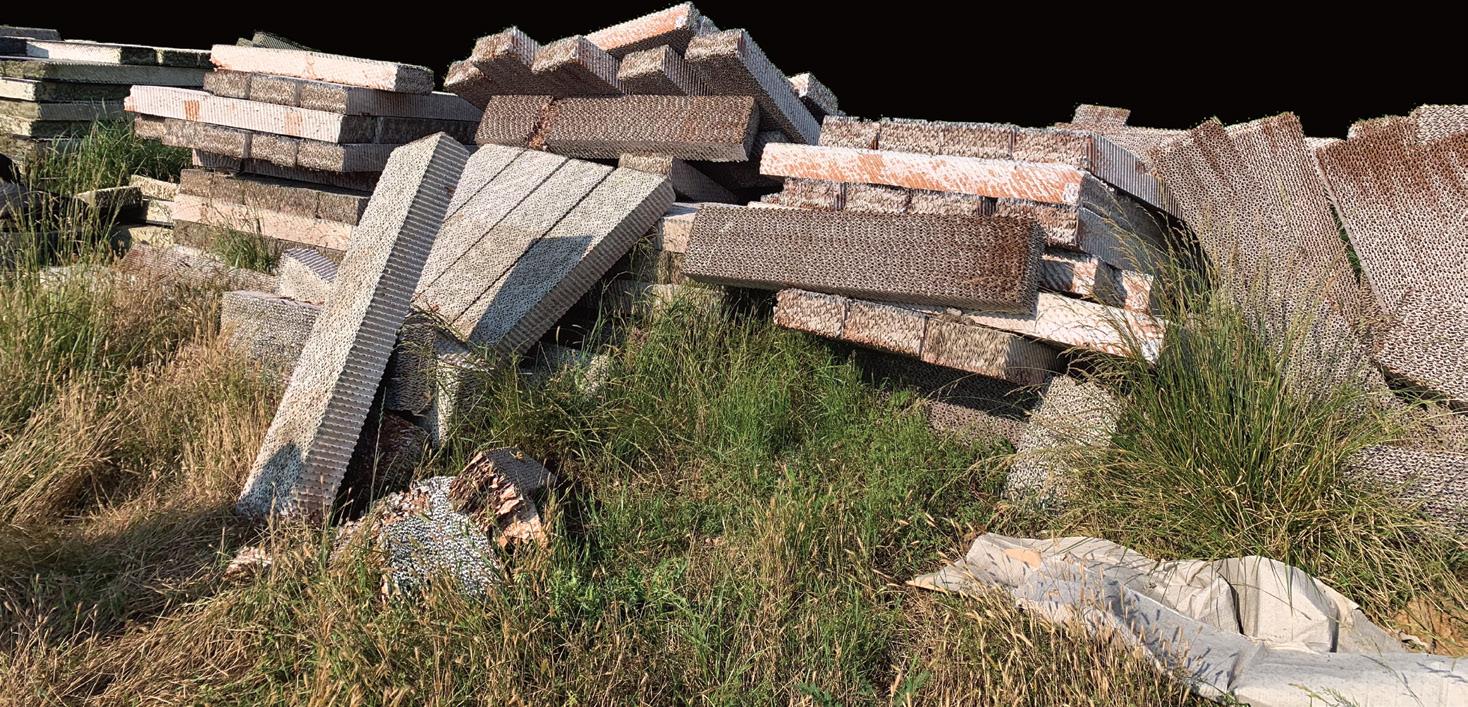
Buildup is a reality for every cooling system—but it shouldn't be a death sentence for your pads. While paper absorbs minerals, sags, and eventually ends up in a field, OptiCOOL Plastic Pads are a "one-and-done" investment for the life of your building.
• Lightweight Efficiency: Protects your framing from the massive weight of mineral-soaked paper.
• Peak Cooling: Engineered to slow water transit for maximum evaporation. Invest in a cooling solution that stays on your wall, not in your field.
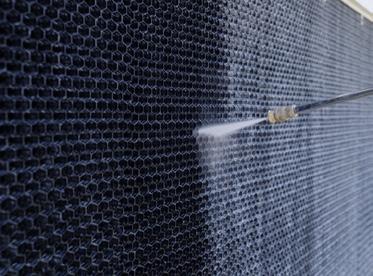
SIMPLY PRESSURE WASH INSTEAD OF REPLACING YOUR PADS
Glass-Pac Canada
St. Jacobs, Ontario
Tel: (519) 664-3811
Fax: (519) 664-3003
Carstairs, Alberta
Tel: (403) 337-3767
Fax: (403) 337-3590
Les Equipments Avipor Cowansville, Quebec
Tel: (450) 263-6222
Fax: (450) 263-9021
Specht-Canada Inc.
Stony Plain, Alberta
Tel: (780) 963-4795
Fax: (780) 963-5034 WATCH THIS VIDEO TO LEARN
What’s Hatching
National Poultry Show returns to London
Poultry farmers, suppliers and industry leaders gathered in London, Ont., Feb. 4–5 for the National Poultry Show at the Western Fair District. Organizers emphasized strict biosecurity measures amid ongoing avian influenza concerns, including the absence of live birds. With more than 160 exhibitors, the event highlighted new equipment, automation and farm technologies while giving producers a chance to connect, share ideas and learn about emerging industry challenges and opportunities.
Canadian egg leader joins global YEL cohort
Matt Vane, owner and operator of Cherry Creek Enterprises and a director with Egg Farmers of Canada representing the Northwest Territories, has been selected for the 2026–27 Young Egg Leaders programme run by the World Egg Organisation. The initiative brings together emerging leaders from around the world to build industry connections, develop leadership skills and collaborate on challenges facing the global egg sector.
Rayzel retires from Big Dutchman after 28 years
Clovis Rayzel has retired after 28 years with Big Dutchman, including 20 years as president of Big Dutchman North America. During his tenure, the company’s North American operations and its subsidiary, Prism Controls, experienced significant growth. Rayzel will remain involved part-time on select projects. Budd Bentley, formerly president of Prism Controls, has taken over as president of Big Dutchman North America, while Eric Hansen has been named president of Prism Controls.
Dr. Alexandra Harlander will succeed Dr. Tina Widowski as Egg Farmers of Canada Research Chair in Poultry Welfare at the University of Guelph.
Dr. Alexandra Harlander named poultry welfare research chair
Egg Farmers of Canada (EFC) and the University of Guelph have named Dr. Alexandra Harlander as the new Research Chair in Poultry Welfare, strengthening a long-standing partnership focused on advancing science-based animal care in Canada’s egg sector.
Harlander is a professor in the Department of Animal Biosciences at the University of Guelph’s Ontario Agricultural College. Her appointment follows a renewed $1.3-million investment that will support continued poultry welfare research and help inform on-farm management decisions and national animal care standards.
$1.3M is the renewed investment supporting poultry welfare research at the University of Guelph.
“This long-standing commitment from EFC demonstrates how deeply the agri-food sector trusts the research happening at OAC and the University of Guelph,” says John Cranfield, dean of the Ontario Agricultural College. “We are very grateful for this renewed investment and for EFC’s continued partnership in advancing science that strengthens animal welfare, sustainability and the long-term success of Canadian agriculture.”
Harlander’s research focuses on laying hen behaviour and movement across different housing systems. Her work has contributed to the National Farm Animal Care Council’s Codes of Practice and to industry initiatives such as a national feather-scoring system. Her research has also been supported through the Ontario Agri-Food Innovation Alliance.
“True animal care is shared care. It includes the hens, the farmers and the farm families in every barn across the country,” Harlander says.
“I strive to develop practical, science-based solutions that benefit
the birds and the wellbeing of the people who care for them. I look forward to working directly with farmers and their birds to address the challenges they face, and I am honoured to be named the EFC Research Chair in Poultry Welfare.”
Egg farmers see the role as a key driver of continuous improvement in the sector.
“Egg farmers are focused on advancing our sector through forward-looking, evidence-based research,” says Roger Pelissero, chair of EFC.
“Partnerships like this are vital in driving new innovation, enhancing poultry health and wellbeing and developing the next generation of experts. Dr. Harlander’s expertise will provide valuable insights and help us improve on already high standards of animal care.”
In her new role, Harlander will build on the work of her predecessor, Dr. Tina Widowski, who held the research chair since 2011 and made significant contributions to poultry welfare science. The appointment reinforces the University of Guelph’s position as a national hub for agri-food research with practical benefits for farmers, animals and Canadians.
Samantha Haverkamp reappointed to Farm Products Council of Canada
The federal government has reappointed Ontario hatching egg producer Samantha Haverkamp as a member of the Farm Products Council of Canada (FPCC) for a three-year term, effective April 21, 2026.
The announcement was made Feb. 6 by Heath MacDonald, Minister of Agriculture and Agri-Food.
Haverkamp farms with her family near Vanessa, Ont., and brings a strong mix of on-farm, business and governance experience to the role. She holds postsecondary credentials in horticulture, agriculture and business, and has previously worked in agricultural inputs and agricultural finance.
Since 2022, she has served as chair of the Ontario Broiler Chicken Hatching Egg Producers
Association and is also a board member with the Poultry Industry Council.
Her leadership and growing national profile were recently highlighted in Canadian Poultry’s 2025 Who’s Who issue, which profiled Haverkamp as a next-generation leader helping shape the future of Canada’s hatching egg sector.
In a statement, MacDonald praised Haverkamp’s leadership and sector knowledge, noting her continued contributions to supply management and agricultural promotion and research.
The FPCC serves as the federal oversight body for Canada’s poultry and egg marketing agencies under supply management and advises the minister on matters related to agencies established under the Farm Products Agencies Act.
3 YEARS
is the length of Samantha Haverkamp’s new term as a member of the Farm Products Council of Canada.
Coming Events
APRIL
APR. 14-16, 2026
PEAK 2026, Minneapolis, Minn. midwestpoultry.com
APR. 15, 2026
PIC’s Ag Advisors Day, Elora, Ont. poultryindustrycouncil.ca
MAY
MAY 5-7, 2026
Animal Nutrition Conference of Canada Edmonton animalnutritionconference.ca
MAY 14, 2026
PIC’s Research Impacts, Hybrid – Virtual Elora, Ont. poultryindustrycouncil.ca
MAY 25-27, 2026
ANAC AGM and Convention, Quebec City anacan.org
JUNE
JUNE 17, 2026
PIC’s Poultry Health Day Stratford, Ont. poultryindustrycouncil.ca
JULY
JULY 10-13, 2026
2026 PSA Annual Meeting, Toronto poultryscience.org
JULY 13-17, 2026
World’s Poultry Congress, Toronto wpc2026toronto.com
JULY 21-23, 2026
Ag in Motion Saskatoon, Sask. aginmotion.ca
Aviagen partnership supports poultry research
The Canadian Poultry Research Council (CPRC) is marking more than a decade of collaboration with poultry genetics company Aviagen. Since becoming a sponsor in 2015, Aviagen has contributed annually to CPRC-coordinated research funding for Canada’s poultry sector. In 2018, the company also established a $5,000 postgraduate scholarship for poultry research students, doubling the award in 2025. The partnership supports innovation, research and the next generation of poultry professionals in Canada.
Farmers gather for CFO annual meeting
More than 350 farmers, industry partners and government representatives attended the 2026 Chicken Farmers of Ontario (CFO) Annual General Meeting in Mississauga on March 3. Speakers included Ontario Premier Doug Ford and agriculture minister Trevor Jones, who reaffirmed government support for supply management. CFO also announced a $10,000 donation to Feed Ontario, introduced new entrants to the sector and released its 2025 Annual Performance Report and 2026–2028 Strategic Plan outlining priorities for Ontario’s chicken industry.
U.K. launches HPAI vaccine trial in turkeys
Britain has launched a 24-week trial of avian influenza vaccines in turkeys to evaluate their effectiveness and potential impact on poultry trade. Turkeys were chosen due to their high susceptibility to highly pathogenic avian influenza. Canada is also studying vaccination and is preparing a confined field trial to assess its use.
Think Turkey campaign highlights whole protein on National Protein Day
Think Turkey used National Protein Day to encourage Canadians to rethink what high-quality protein means and look beyond highly processed protein products.
grams is how much natural high-quality, lean protein turkey provides per 100 grams.
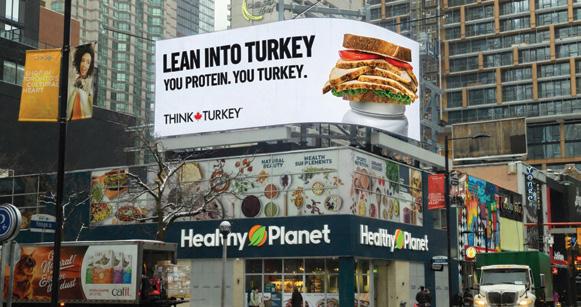
The organization launched the campaign on Feb. 27 with a message aimed at cutting through the growing hype around protein-added snacks, bars and powders. Instead, Think Turkey encouraged consumers to focus on whole foods, highlighting Canadian turkey as a naturally lean, nutrient-dense protein source.
The initiative included high-visibility billboards in Toronto and Montreal designed to spark conversation about protein quality. The campaign was also supported by a national digital and social media push that ran through March.
The message was amplified by registered dietitian Nicole Addison and Canadian Olympic
decathlete Damian Warner, who spoke about the role of whole foods in supporting athletic performance and recovery.
Addison said that while protein has become a popular nutrition buzzword, the quality of protein sources still matters. Turkey, she noted, is naturally rich in complete protein while remaining low in fat and calories.
Warner said whole foods such as turkey have long been part of his nutrition strategy both as an elite athlete and as a parent preparing meals for his family.
The campaign built on Think Turkey’s broader “You Turkey” platform, which positions turkey as a go-to fuel for active Canadians, athletes and families seeking healthy meal options.
Think Turkey said the initiative aimed to help consumers better understand the benefits of choosing whole, minimally processed protein sources.
the latest poultry-related news, stories, blogs and analysis from across Canada at:
New ‘You Turkey’ billboard near Sankofa Square in Toronto.
The Product Roundup
What’s new with climate control systems
HOTRHOD radiant heaters
From Cumberland
HOTRHOD radiant heaters from Cumberland are engineered to provide more uniform heat distribution in poultry barns, creating a consistent comfort zone for birds. Unlike conventional radiant heaters that concentrate heat in specific areas, HOTRHOD uses separate upper and lower tube temperatures and highly polished aluminum reflectors to reduce hot spots. Upper combustion tubes operate at higher temperatures, while lower tubes deliver gentler radiant energy for more even floor temperatures throughout the house.
MagDrive
variable frequency
inverter
From DACS
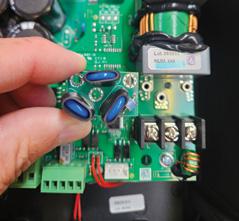
DACS has introduced the MagDrive variable frequency inverter, designed to deliver
reliable fan control in demanding farm environments. The unit features a durable all-aluminum enclosure and has been certified by FORCE Technology to meet IP69+ ingress protection, allowing it to withstand high-pressure washdowns and even temporary submersion. A smart, replaceable power input module with built-in surge protection helps safeguard the system. If damaged, the module can be swapped in under five minutes, minimizing downtime and potential production losses.
Equal Pressure Ventilation System
From SKOV
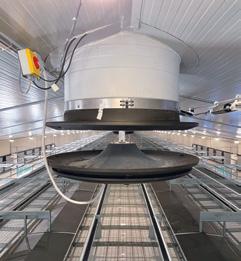
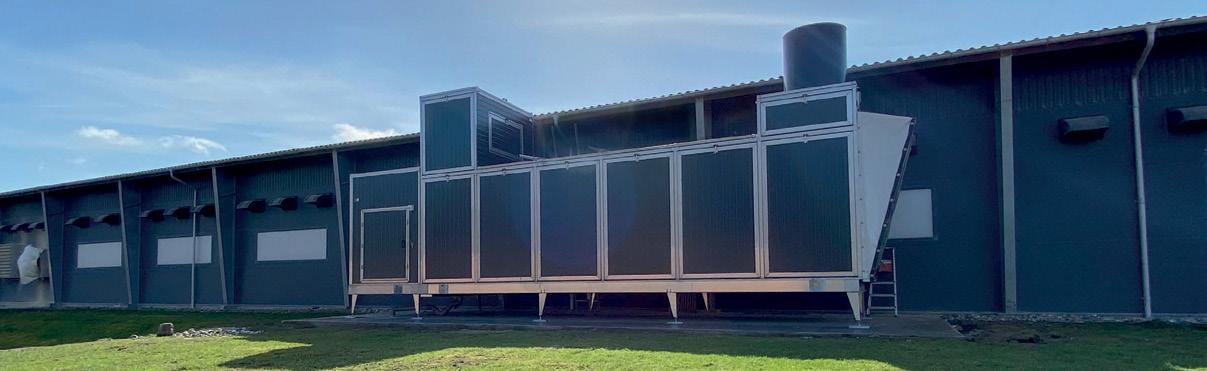
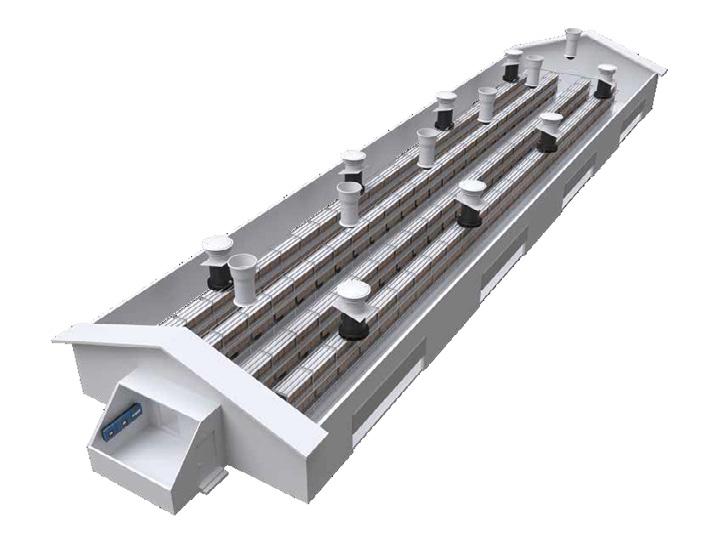
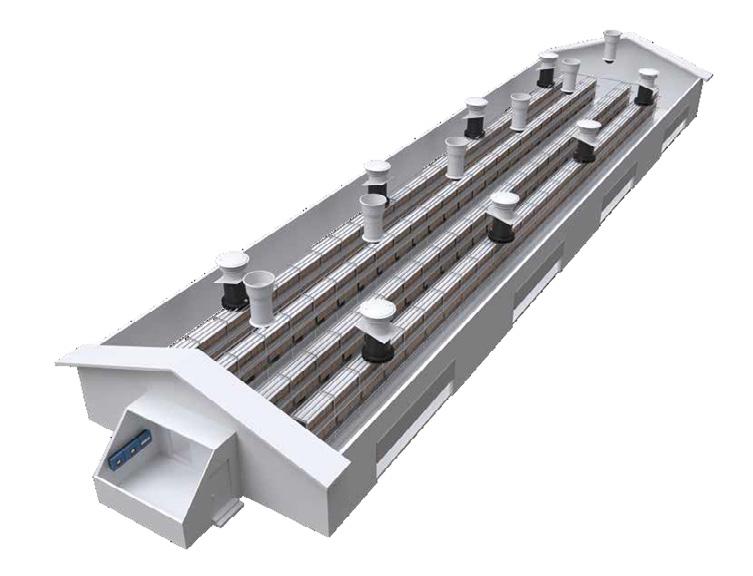
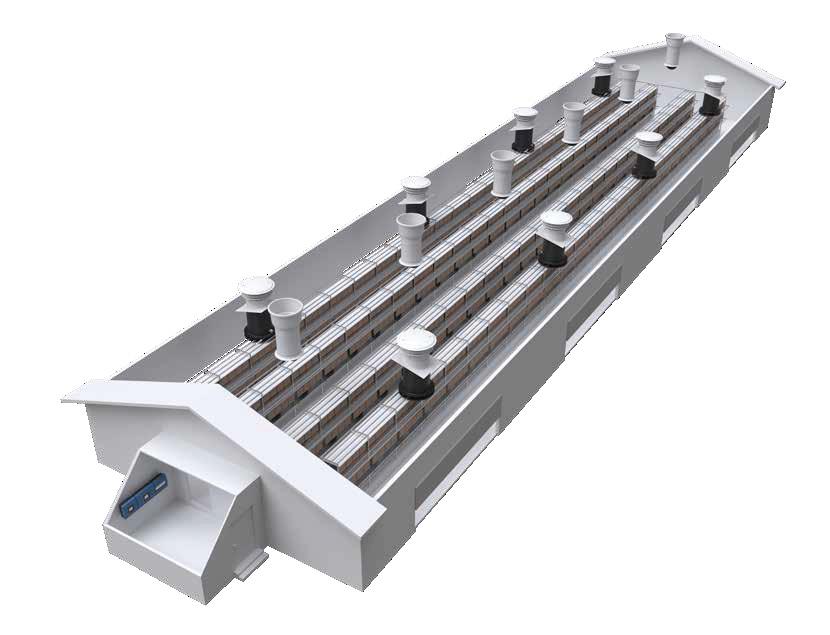
SKOV’s Equal Pressure Ventilation System is designed to maintain a stable indoor climate in modern cage-free and free-range layer houses. The system provides full control of air intake and exhaust by supplying fresh air through roof inlets or attic spaces while removing air through chimneys or wall fans equipped with active ventilation. This balanced airflow prevents uncontrolled drafts through pop-holes, helping maintain consistent air quality,
bird distribution and climate conditions in facilities where hens move between indoor and outdoor environments.
Exacon Agrifan ventilation fans
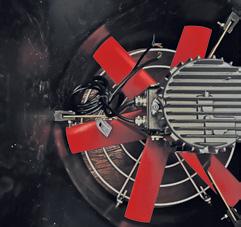
From Exacon Exacon’s Agrifan ventilation fans incorporate EC motor technology to improve energy efficiency and climate control in livestock facilities. Compared to traditional AC motor fans, EC motors can reduce energy consumption by 40–70 per cent while allowing precise fan speed modulation through a simple 0–10 V control signal without the need for an external VFD. With fewer moving parts and no belts or capacitors, the fans operate quietly and require minimal maintenance while supporting stable, efficient barn ventilation.
AVI35 heat exchanger with Modbus controller
From Avi-Air
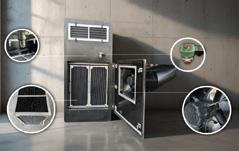
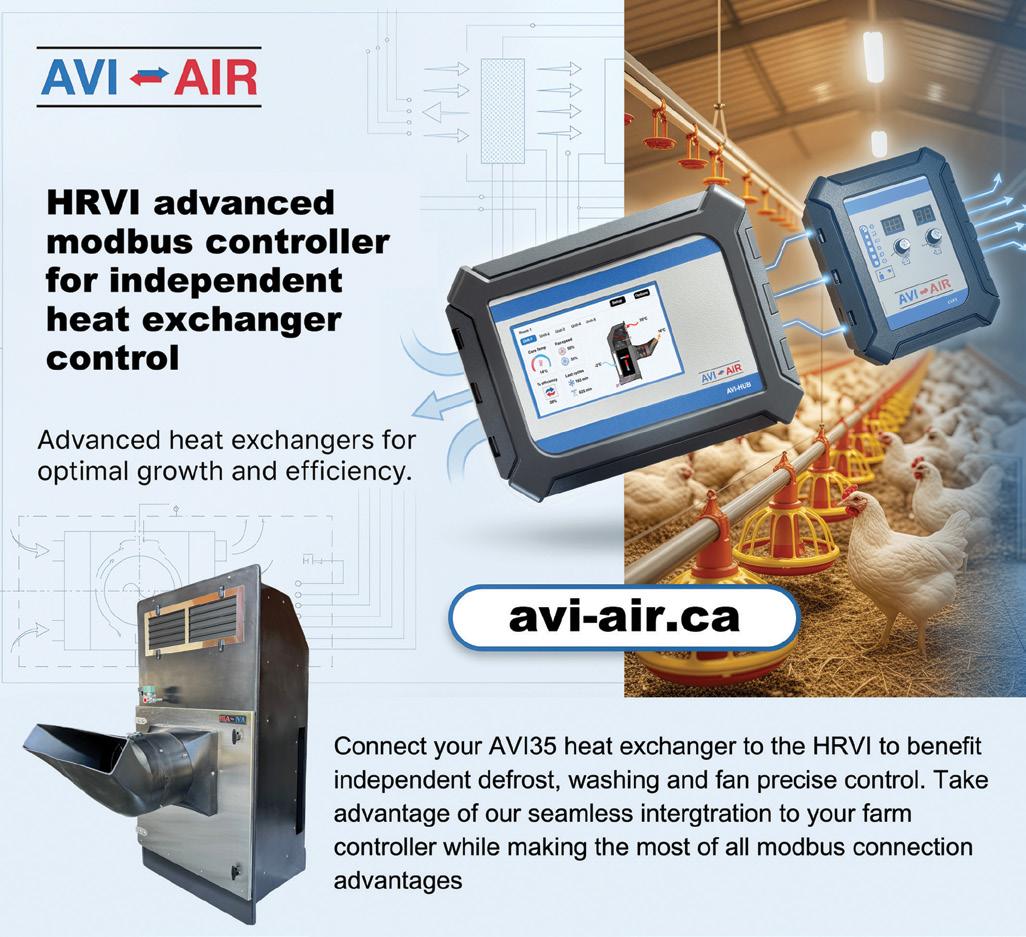
Avi-Air’s AVI35 heat exchanger with Modbus controller adds advanced monitoring and control to the company’s established heat recovery system for poultry barns. The HRVI control module manages fan speeds, defrost
and washing cycles while calculating heat recovery efficiency and sending operating data to a centralized AVI HUB interface. Equipped with EC motors for improved energy efficiency, the system helps optimize ventilation performance and maintain stable barn climates while simplifying management when multiple exchangers are installed.
Aeron wall inlet
From TPI-Polytechniek
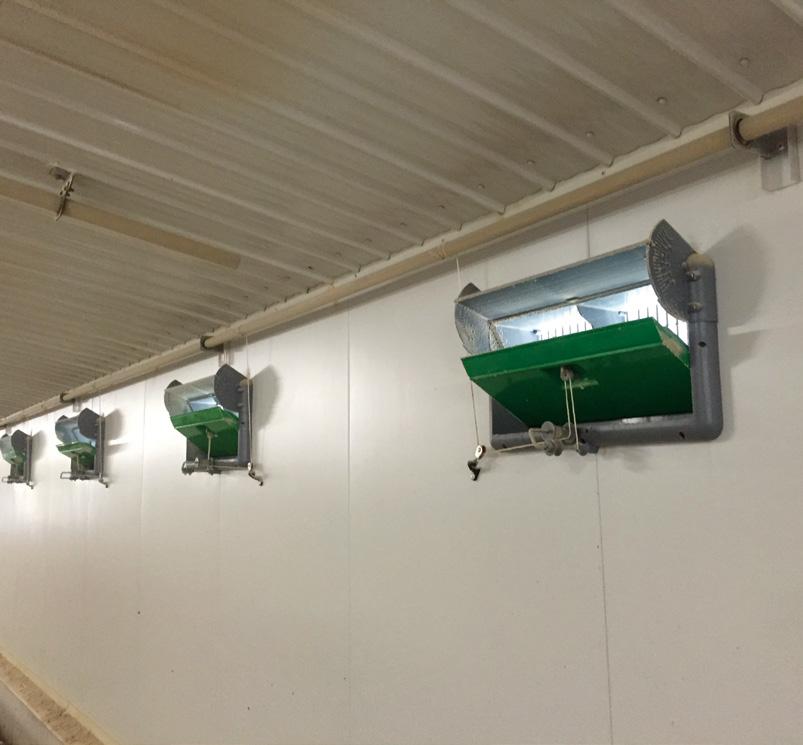
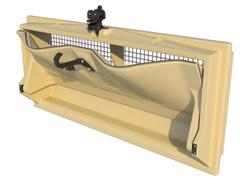
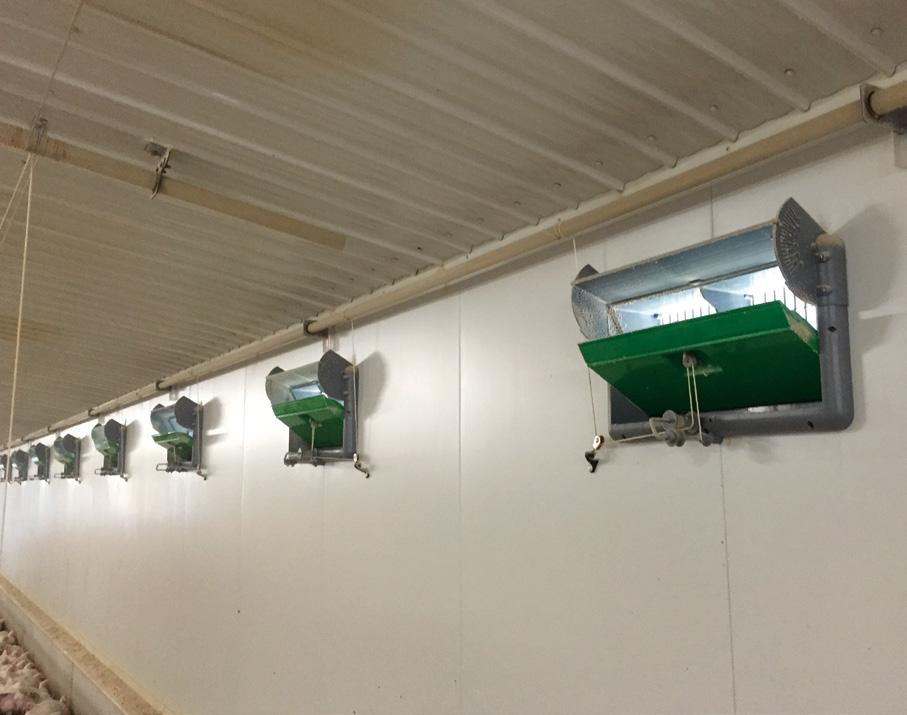
The Aeron wall inlet from TPI delivers precise minimum ventilation for poultry barns, particularly for young, draft-sensitive birds. Its W-shaped inner valve creates stable air jets and adjusts airflow direction as the inlet opens, maintaining consistent climate control from minimum to maximum ventilation. At full opening, the inlet can deliver up to 3,950 cfm while generating a cooling wind-chill effect. Durable pulley hardware with an integrated closing catch simplifies operation and cleaning.
5 smart air strategies
Practical ventilation, heating and cooling strategies to reduce energy costs and improve bird health.
By Treena Hein
Whether you are upgrading an older barn or planning a new one, ventilation, heating and cooling is key for excellent bird health and welfare. It’s also a huge energy cost consideration. But a one-size-fits-all approach to barn air management is impractical, given the range of barn designs, sizes and locations across Canada. Rather, Canadian poultry producers should look closely at the basics in their barns and ensure they are all addressed properly. Here are five practical strategies to consider.
1Check your negative pressure system
Michael Czarick, with the University of Georgia Department of Poultry Science, notes that negative pressure ventilation systems – whether in new or old barns –work very well. However, they must be supported by a properly sealed, tight barn.
(We all know how much the sucking power of a vacuum is affected if the hose has holes!)
“For negative ventilation systems to be effective, you must maximize air entering the inlets and minimize the amount entering through cracks,” Czarick says. “Only the air that enters through inlets will benefit the birds because it’s the only air brought into the house by exhaust fans that will be heated and dried before it moves down to bird level. Air that enters through cracks tends to quickly fall to the floor, resulting in wet litter, ammonia and chilled birds. Furthermore, under typical wintertime conditions, air leaks cost a lot per day in heating fuel.”
To determine the degree of air leakage, close the barn, turn on a couple of fans and measure the resulting negative pressure. Enter that information into Poultry411’s Poultry House Tightness Calculator at poultryventilation.com/resources to calculate the precise leakage area; the tool
also estimates potential heating cost impacts and evaluates minimum ventilation system performance.
Czarick cautions, however, that to obtain accurate results, ensure fans used in the pressure test are properly maintained and their air-moving capacity at 0.10” static pressure is known.
Here’s an example of a 50’ X 500’ barn. If a static pressure of 0.10” were measured when a single tunnel fan (rated at 25,000 cfm @ 0.10”) is turned on, the calculator would indicate about 19.4 square feet of leakage area. The leakage area calculator would also show the relative leakage area (square feet of leakage per 1,000 ft2 of floor space), thus standardizing tightness test results, Czarick says.
A relative leakage of 0.4 or lower is viewed as excellent (a house capable of providing a high level of environmental control and energy efficiency during cold weather) and anything above one is viewed as very poor.
Properly maintained fans help keep poultry barn environments dry and comfortable for birds.
PHOTO CREDIT: MICHAEL CZARICK
Cover Story
Bonus strategy for brooding:
Service every brooder and heater
Campbell notes that while there may be enough appliances in barns, they may not be producing enough heat. “Example: if existing brooder produces 70 per cent of the heat it was designed for when new, then you might not have enough heat to preheat and brood during cold weather,” he says. “The heaters will have to run overtime to achieve and maintain target temperatures and sometimes that is not even possible. If heaters seem never shut off, then it is time to revisit maintenance. Our birds need like-new brooder and heater performance.”
He notes also that while it’s important to make sure the outside of the heaters are clean, it’s the inside that really matters.
“Just note that brooders and heaters will not work if there is not enough fresh air delivery into the combustion chamber, so check fresh air delivery for restrictions,” he says.
“Also, if there is no pressure, low pressure or and even too-high fuel pressure, this will cause a brooder or heater to malfunction. Make sure you have the right pressure and get professional help if you do not know how to achieve this. Orifices need to be cleaned too.”
Also check that the brooders and heaters are sparking properly. Pilot lights, ignitors, etc. all must be in like-new condition, says Campbell, to allow the brooders and heaters to start and burn efficiently every time they are started.
2 Seal air leaks
While this strategy may seem obvious, Dr. Jesse Campbell, associate extension professor of biosystems engineering at Auburn University, says he and his colleagues still often find significant air leaks in poultry barns.
These leaks are particularly common around concrete foundations. He also says it’s common to find some leakage in tunnel, end wall and man doors.
To ensure all leaks are dealt with, Campbell advises examining all vents. Tighten, adjust and lubricate hinges as needed, and if any vents are not functional, repair or replace them. “They all need to open evenly and seal shut when closed,” he explains. “Similarly, clean, adjust, repair or replace damaged fan shutters. In breeding barns, tape any holes in tunnel curtains or sidewall curtains.”
3 Right-size your fan choice
Whether you are planning a retrofit or a new build, Jerry Emmanuel of Cargill’s Poultry Team in Edmonton, advises the strategy of being sure you are employing the right-sized fan.
“For example, one 36-inch fan can provide [better performance] compared to two 24-inch fans,” he notes. “The 36-inch will simply provide more air exchange, and the producer will be able to run it longer. That way producers are using less power while also gaining better air exchange in the barn.”
4
Service all minimum ventilation fans
Staying with fans, Campbell notes that any minimum ventilation fan (each being key in keeping the barn environment dry and comfortable for birds) can operate 288
A tightly sealed barn ensures fresh air enters only through controlled inlets, helping maintain proper ventilation and air quality.
PHOTO CREDIT: MICHAEL CZARICK
times over just one day. “These fans are under the stress of constant start and stop every few minutes,” he explains. “They also operate under the increased static pressure of 0.10” to 0.15”. This is why it’s critical to service them properly, especially in situations of wet litter during cold weather. We need as close to 100 per cent fan performance as possible to keep air fresh and litter dry.”
Campbell also advises examining shutters for proper open-close, and cleaning and repairing (or replacing) as needed. “Likewise, the tensioners should be inspected, greased or replaced to keep the belt tight,” he notes. “Bearings should be inspected for wear (noise), and greased or replaced as need. Belts should be in excellent condition, with a tight fit and all pulleys aligned.”
5 Service all ventilation motors
Campell notes that if minimum ventilation fans cycle 288 times per day, inlets can operate over 576 times (open then close) per day, in addition to constant adjustment to maintain static pressure. He says flawless functioning of the inlet motor/system (typically only one per barn) is paramount from both an energy efficiency and bird comfort standpoint.
Therefore, clean, inspect and service (lubricate, repair or replace any damaged parts) this system often. Inspect, grease and replace pulleys, sprockets, rods and cables as needed.
ROI on strategy implementation
Which strategies will save the most
money depends largely on the barn’s current condition. Producers will see larger improvements if many fans, vents, brooders and heaters need servicing and cleaning. Likewise, producers with multiple air leaks – rather than just one – will see bigger gains in system efficiency.
“When you go over everything, it’s typically a little of this, a little of that, and it all adds up,” Campbell says. “Servicing doesn’t generally cost a lot. It’s more a time investment. It’s the same with sealing leaks, it doesn’t cost much, it just takes time and must be done correctly. We have to avoid the thinking where we install something and expect it to work without checking on it regularly. That is a strategy that never pays.”
Pests can impact livestock. Protect your farm’s health.
The health and well-being of your animals is critical — but nuisance pests can spread disease, cause stress and reduce productivity. Envu provides targeted solutions to help you take control, reduce pest pressure and keep your animals healthier and happier:
+Reduce stress and disease risks
+Protect livestock in barns, poultry houses and outdoor areas
+Maintain productivity and farm hygiene
Up in the air
Do we need a healthier environment for workers in layer housing?
By Jane Robinson
Improving animal welfare has driven the transition to alternative housing systems for laying hens in Canada. When birds have space to exhibit their natural behaviours – foraging, scratching, dust bathing and using nest boxes – they are healthier, happier and more productive.
Caroline Duchaine is interested in another angle on layer housing – comparing air quality for barn workers between caged and non-caged housing systems. It’s a One Health approach that considers both animal and human implications.
As the Canadian Research Chair on Bioaerosols at Laval University, Duchaine has been researching bioaerosols and occupational health of agricultural workers for more than three decades.
Bioaerosols are a wide range of materials that can be carried by air and include allergens, proteins, dust, dander, insect spores, as well as microbes and fungi. These airborne elements impact the quality of air for animals and the people working with them. Duchaine recently completed research to compare air quality in various laying housing systems.
“There has been a lot of focus on changing the housing systems for laying hens, but nobody has looked at the impact of different types of housing on farm workers,” Duchaine says.
“I am very happy to see the shift to cageless systems, and what really interests me is looking at the whole picture with a One Health approach that looks at every aspect of a system.”
Testing the worst-case scenario for air quality
Duchaine wanted to determine if housing systems that allow birds to move around and exhibit natural behaviours (aviaries) have more airborne contaminants. Those contaminants could come from feed, litter, skin and naturally occurring microorganisms in the environment.
“Aviary housing allows manure and litter to accumulate so there is more biological matter that is good for the birds, but maybe not workers,” Duchaine says.
The bioaerosols or particulate matter of interest to Duchaine are characterized by size – smaller particles can stay airborne longer with more potential to be inhaled by anyone working in the barn and potentially lodge deeper in their respiratory tract.
Duchaine and her team focused solely on workers in this research and did not study bird performance.
Over a two-year period (2020-2022), they evaluated layer farms in Quebec with at least 18,000 hens. They compared six barns with conventional housing, six
barns with enriched colonies and six aviary barns with multi-level cage-free housing. All barns were equipped with the same mechanical ventilation.
They evaluated air quality during the winter months to provide the “worst-case scenario” with no outside ventilation –something that would normally add a dilution factor to airborne contaminants.
Air sampling was done inside each barn to measure various sizes of particulate matter and bioaerosols, as well as ammonia levels, air temperature and velocity, and relative humidity.
How layer housing systems stack up
Duchaine wasn’t really surprised by the study results. Overall, aviaries are dustier because hens move around more, generating more environmental concerns that affect air quality for barn workers.
There were higher concentrations of all sizes of particulate matter in aviaries compared to conventional cages and enriched colonies. There was no measurable difference in dust levels between conventional and enriched systems. Researchers
Measuring air quality in aviaries – compared to enriched colony and conventional laying hen housing – found they were dustier with higher levels of all sizes of particulate matter.
METRO TORONTO CONVENTION CENTER
JULY 13-17, 2026
Worker Health
also found the same level of fungal pathogens in the air across all three systems, while the age of the birds, building size and animal density had no effect on levels of airborne dust or bioaerosol concentrations.
No “safe” exposure level
Duchaine knows bird welfare is the key driver in the transition to layer housing systems. “I think some attention now needs to turn towards worker health and safety because it’s almost impossible to refer to any amount of exposure to airborne microbes as ‘safe’,” Duchaine says.
Farmers may not complain about respiratory symptoms on a day-to-day basis, but Duchaine knows extended exposure to contaminants can lead to irreversible
lung conditions later in life. From past work on air quality in swine and dairy barns, she also knows farmers are reluctant to wear protective gear in barns – but it’s still the best recommendation.
“I want producers to think of themselves as part of the housing system and treat themselves with as much care as they do for their animals,” Duchaine says. “If farmers or their workers are sick from the environmental conditions in the barn, then I think the housing system has failed.”
Masks and other mitigation strategies
Duchaine wants to raise awareness about the importance of human health alongside animal health and welfare.
“I do think the industry is changing and more aware of long-term risks from exposure to dust,” Duchaine says. “I encourage barn workers to consider some type of respiratory protection, N95 mask or other, that would certainly help reduce their risk.”
To explore other alternatives to improve air quality in aviaries, Duchaine is also looking at mitigation strategies to keep the dust down, including spraying an oil emulsion on litter, heating the floor under litter and adding activated biocharcoal to litter. The results vary on how well each mitigation might improve air quality.
“Now, we’re looking at how a combination of these mitigation strategies –combining oil sprinkling, heated floors and litter amendments – could improve air quality in a commercial aviary setting,” Duchaine says.
Caroline Duchaine, Canadian Research Chair in Bioaerosols, Laval University.
WILD BIRDS ARE MIGRATING AGAIN
PROPER BOOT CHANGES, EVERY TIME, ARE THE BEST WAY TO KEEP WHAT’S OUT, OUT!
Boot change No boot change PROTECT OUR FLOCKS!
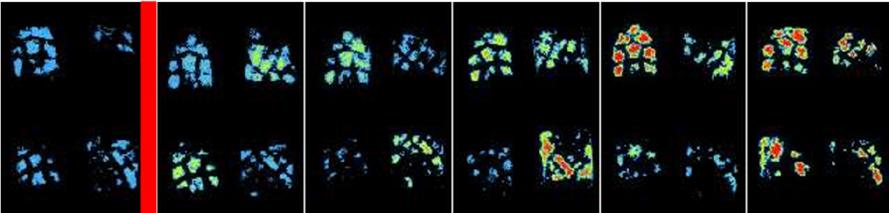
* Based on a research trial by Huard et al., 2017, that utilized live organisms to simulate a barn environment. After walking in the contaminated area before the red line, boots were either changed or not changed before walking another 10 steps and then floor samples analyzed and illuminated to see the resulting spread.
Rethinking barn airflow
New ventilation research aims to reduce disease risk and stress in laying hens.
By Lilian Schear
Airflow inside a poultry barn might not be something producers see every day – but it may be one of the most important factors affecting bird health, production and disease risk.
New research led by Dr. Lingying Zhao, Distinguished Professor in Air Quality Engineering at College of Food, Agricultural, and Environmental Sciences, The Ohio State University, is taking a closer look at how ventilation design influences heat stress, cold stress and the potential spread of airborne disease in commercial layer operations.
Using advanced computer modelling, Zhao’s team is exploring a new approach to barn ventilation that could change how air moves through poultry houses – and how birds experience their environment.
“Our goal is to understand how air actually flows around birds,” Zhao explains. “Ventilation is fundamental to production, bird health and disease prevention, but we have not always paid enough attention to the airborne pathway.”
The work comes at a time when North American poultry producers are facing growing pressure from highly pathogenic avian influenza (HPAI), evolving housing systems and increasing challenges managing temperature extremes.
airborne disease.
The challenge: moving air without spreading problems
Modern poultry barns rely heavily on mechanical ventilation to remove heat, moisture, dust and gases such as ammonia. Tunnel ventilation, where air enters one end of the barn and exits through exhaust fans at the other, has become the industry standard, especially for cooling birds during summer.
The system works well for temperature control. But it also creates a hidden challenge. As air travels through the barn, it picks up heat, humidity, dust particles and microorganisms before passing across other birds.
“With traditional tunnel ventilation, all birds are sharing the same air as it moves through the building,” Zhao says. “If contaminated air is present, it may pass many birds before being exhausted out of
the poultry house.”
According to Zhao, research has increasingly suggested airborne transmission may play a larger role in disease spread than previously believed. Viruses can attach to dust particles and remain suspended in moving air.
While strict biosecurity measures focus on limiting contact with wild birds, equipment and people, Zhao says airflow itself deserves more attention.
“Modern production systems already minimize direct contact with wild birds,” she says. “Air pathways may be another important transmission route we need to consider.”
Reducing heat stress
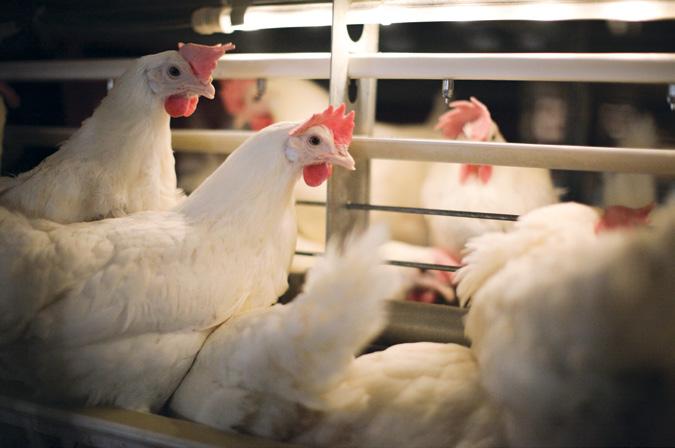
The issue extends beyond disease prevention. Heat stress remains a major economic concern for egg producers as hens
Researchers are studying how airflow patterns inside layer barns influence bird comfort, heat stress and the potential spread of
begin experiencing stress when temperatures rise above their comfort zone in summer heat. This leads to reduced feed intake, egg production and shell quality while increasing mortality risk.
Cold stress and poor air quality in winter also affect performance, especially when ventilation rates are reduced to conserve heat.
Keeping conditions uniform throughout large barns is difficult with current tunnel ventilation systems. That’s because birds near air inlets may stay cool and dry, while those closer to exhaust fans experience warmer, more humid conditions.
A different idea: upward airflow ventilation
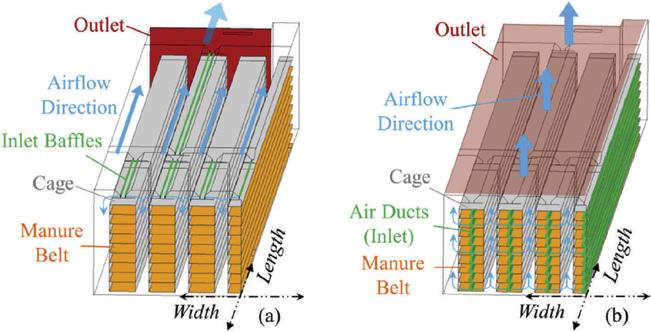
To address these issues, Zhao’s research team developed an alternative concept known as upward airflow displacement ventilation (UADV).
Instead of pushing air horizontally through the barn, the system introduces fresh air beneath cages or bird areas. As hens warm the air, it naturally rises and is removed through roof exhaust fans.
In theory, Zhao explains, each group of birds receives fresh air directly, reducing mixing between sections of the barn. The approach also shortens the pathway contaminated air travels before leaving the building.
What computer modelling revealed
To test whether the concept could work in real conditions, Zhao’s team used Computational Fluid Dynamics (CFD) modelling to run detailed
simulations that predict airflow, temperature and particle movement inside buildings.
Unlike equipment company design models, CFD modelling allows researchers to simulate how heat, moisture and airborne particles behave under different weather conditions.
Students on Zhao’s team collected measurements from a commercial Ohio layer farm to build and validate the model before running simulations.
The results were encouraging, she notes. Compared with conventional tunnel ventilation, simulations showed the upward airflow system could reduce dangerous heat stress levels in summer from 8.7 per cent of birds to 0.7 per cent, reduce cold stress exposure in winter from 18.3 per cent to 5.8 per cent, lower modeled disease transmission risk from nearly 30 per cent to under three per cent in summer conditions, and improve overall temperature uniformity throughout the barn.
Zhao cautions that these are only modelling results showing proof of concept, but she’s encouraged by the potential UADV presents.
Transitioning to cage-free adds complexity
While her team’s early work focused on conventional caged systems, the industry’s shift toward cage-free housing presents new challenges, as ventilation becomes more complicated when birds can move freely.
“In cage-free systems, birds choose where they stay,” Zhao says. “Achieving uniform airflow becomes much more diffi-
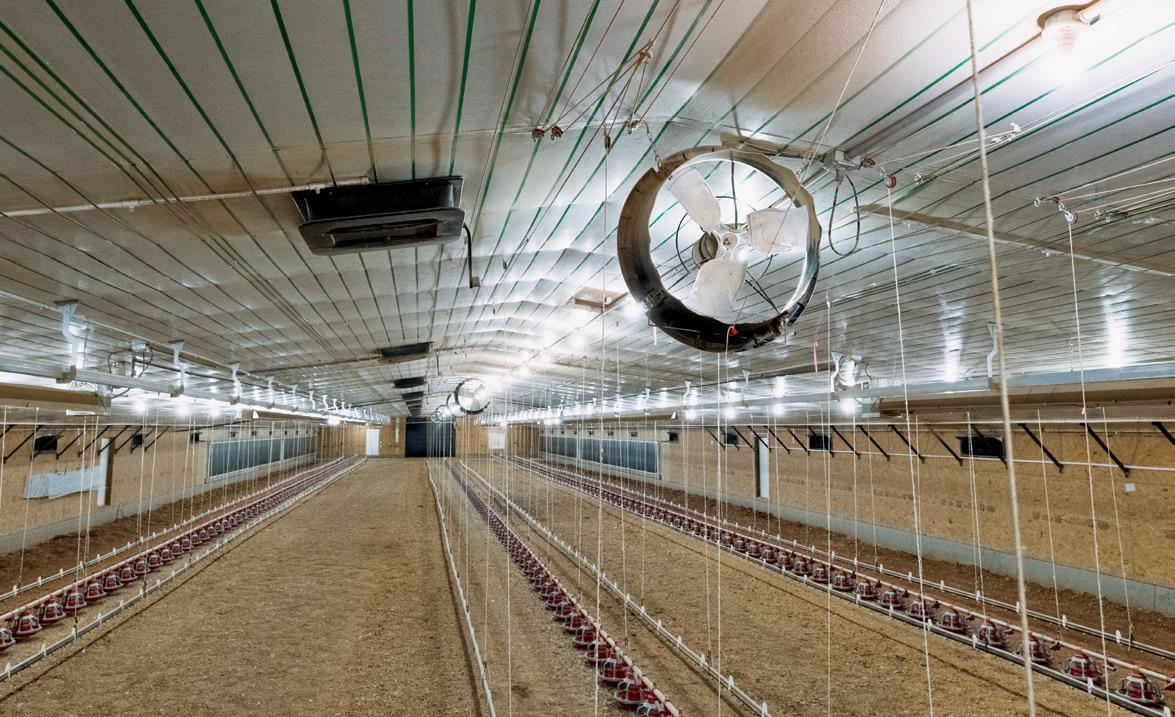
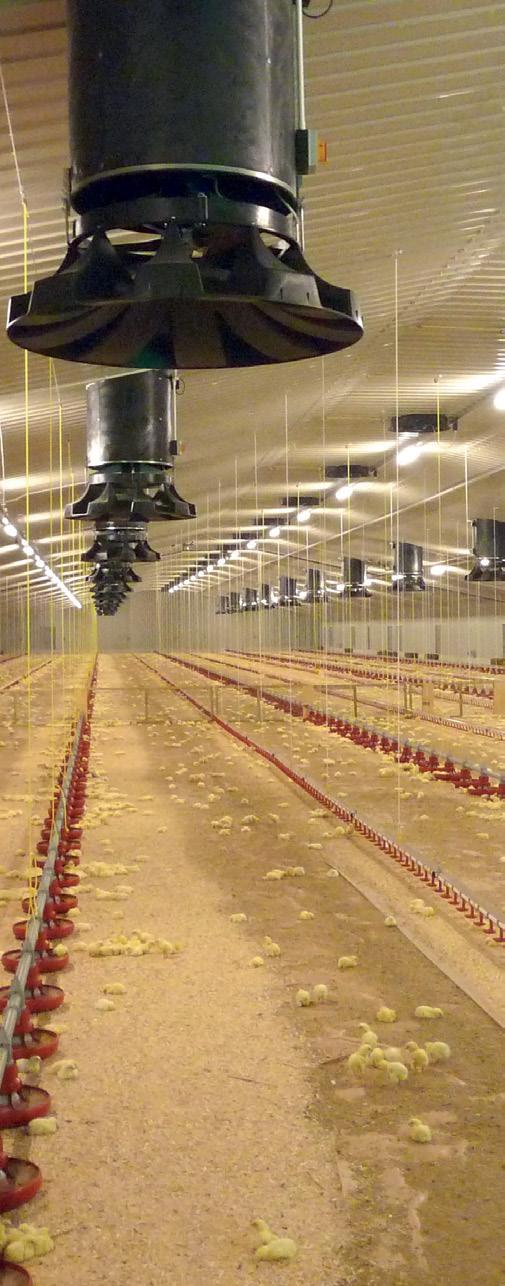
A ventilation system from DACS ensures a dry and well-ventilated house with a constant flow of temperate air to the birds from day one, allowing animals to grow to their full potential
cult because birds are everywhere in the poultry house.”
A new project funded by the United States Department of Agriculture (USDA) is now underway to adapt the upward airflow concept to cage-free barns, and researchers hope to complete initial CFD simulations later this year.
Not ready for installation – yet
Despite the promising modelling results, Zhao stresses the system is not ready for immediate on-farm adoption as the research currently only demonstrates feasibility, not a finalized commercial design.
Equipment manufacturers would need to translate the concept into practical systems, determining duct sizing, fan capacity, pressure balance and installation costs. As well, economic analysis has not yet been completed; the next step is working with industry partners to evalu-
Still, there are already steps farmers can take to improve barn conditions. First, treat ventilation as a central management tool rather than just temperature control.
Schematic diagrams of the TV system (a) and UADV system (b) in one-quarter of the commercial manure-belt layer house.
Key areas producers can focus on include maintaining proper airflow distribution throughout barns, managing dust levels that can carry pathogens, monitoring ammonia and humidity levels, preventing both heat and cold stress yearround, and continuing strong biosecurity practices.
The bigger message: air matters
For Zhao, the takeaway for poultry farmers is simple. Air quality deserves the same attention as feed, water and genetics.
“Ventilation is really key,” she says. “We often think about disease coming from outside sources primarily through surface contact, but ventilation and airborne transmission inside barns are also very important.”
As the poultry industry waits for improved vaccines and long-term solutions for HPAI, better environmental control could become one of the most powerful tools available, she believes.
And while upward airflow ventilation is still in the research phase, Zhao is looking for producer input and equipment manufacture collaborations to shape what comes next.
“Understanding real on-farm challenges is what allows research to become practical and effective solutions,” she says.
Save on average 6 grams of feed per bird, per day with the ECO Unit!
The ECO Unit is a smart solution for layer farmers to achieve minimum ventilation while optimizing feed consump tion and egg yield through improved indoor conditions. This innovative investment ensures cost savings, improved bird welfare, and increased profitability for your farm’s future.
BC - T: +1 604 859 4240 webuildfarms@unitedagri.com
Western Ag Systems
SK - T: +1 306 382 0700 webuildfarms@westernagsystems.com
Barn Management
Barn ventilation fundamentals
Small changes in temperature, airflow and humidity can have a big impact on bird health and performance.
By Doug Martin
Maintaining proper ventilation in poultry barns is among the most important management practices to promote bird health and performance. In my role working with poultry producers across Canada, I often see how small changes in barn conditions can have a major impact on flock performance. Understanding the fundamentals of ventilation is key to achieving and maintaining an optimal poultry barn environment.
Environmental swings
Even small changes in temperature, wind speed or humidity can have drastic effects on flock performance. Under-ventilating by just a few thousand cubic feet can negatively affect birds by causing increased ammonia levels, damp floors and high humidity. All of these conditions are very detrimental to bird performance.
Maintaining fans so they operate at maximum performance is essential. It’s also important to minimize air leaks through vent and tunnel doors. Maintaining a tight building and adequate static pressure helps achieve a stable and optimal barn environment.
Young to older birds
For young birds, providing an adequate
if probes are located too close to heaters. In that situation, the controller may think the barn is warmer than it actually is.
seal around vent and tunnel doors and fan louvers helps force air to the centre of the poultry barn. This is a fundamental principle of ventilation. It’s critical to get birds off to a good start and maintain barn conditions that encourage optimal performance throughout the life of the flock.
As birds grow older, increasing wind speed becomes more important as a cooling mechanism. That means ensuring belts are tight, shutters are clean and fans are running efficiently so that air movement through the building remains consistent.
Barn hot spots
Air leaks are one of the most common causes of cold spots in poultry barns. Temperature probe placement for the environmental controller can also create problems
If one or two probes are too close to the heater, the heating system may not run as often as needed, leaving parts of the barn too cool. It’s important to understand where temperature probes should be placed and to conduct periodic maintenance to confirm that probes remain accurate.
During the summer months, air often enters the barn through the evaporative cooling system and is then removed by fans at the opposite end. Typically, hot spots are less common, but temperature gain can occur if wind speed is not high enough to move air quickly through the building. In that case, the barn can warm up as the air moves through it.
Improving the performance of existing fans can often help solve this problem. Installing new belts, cleaning fan shutters
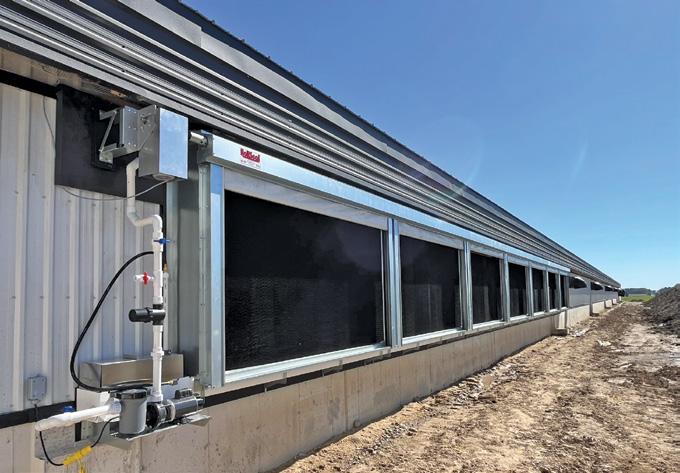
Evaporative cooling pads help lower barn temperatures in summer by cooling incoming air before it moves through the building and is exhausted by tunnel fans.
Doug Martin is the Canadian sales manager for Cumberland, a global provider of poultry production equipment and systems.
and checking whether evaporative cooling pads need replacing can make a noticeable difference. If pads accumulate dust or mineral buildup, they can clog and slow wind speed, forcing fans to work harder to pull air through the system.
Another good practice is to have the total maximum tunnel fan CFM checked by a professional. In many cases, tunnel barns are under-ventilated, which can also cause temperature gain because there is not enough wind speed to move air quickly through the building.
For cold weather issues, useful steps include recalibrating or replacing temperature probes, cleaning dust off heat reflectors on heaters so radiant heat is directed where it is needed and checking gas pres-
sure to determine whether an older heater should be replaced.
Reading the birds
One of the most important management practices is simply reading the birds. If they are huddled in the middle of the barn, it is probably too cool. If they are pushed toward the walls, it is likely too hot.
Producers can also monitor the previous day’s water consumption. A reduction may indicate illness or signal that something else in the barn environment is not right. Wet or caked litter is another warning sign. Damp floors usually indicate
Meller Poultry Equipment Inc.
826 Nanticoke Creek Parkway, Jarvis, Ontario, N0A 1J0
Call us on: 519-587-2667
Or visit our website: www.mellerpoultry.ca
Authorized dealer VDL Jansen VDL Agrotech
under-ventilation and the need to run fans to bring more fresh air into the barn. Adequate ventilation removes carbon monoxide, humidity and ammonia while also moving large volumes of air over birds to provide cooling.
Proper ventilation is probably the single biggest factor in maximizing bird performance. Producers understand that, but every day brings different weather conditions and challenges. The goal remains the same – maintaining a stable environment for the flock – but achieving it often requires making small adjustments from day to day.
MELLER POULTRY EQUIPMENT
AUTHORIZED DEALER VDL JANSEN
FLATTOP (X)XL NEST SINGLE TIER CAGE-FREE HOUSING
The nest systems of VDL Jansen are long proven in the market, and known for their nest acceptance and egg quality. Our nest is designed to stimulate natural behavior of the hens and have them produce a maximum number of high quality eggs. Available nest area can be optimized by using single or double-tiered nest boxes, whereas a flat roof facilitates for some extra useable area to achieve an optimum bird density in the barn. Our perch frames provide sufficient space for placement of extra perch and feed trough length in the barn. As the perch frames can be winched during clean out, cleaning is easy and more efficient.
• Excellent nest acceptance
• Optimal nest capacity
• Made of durable materials
Meller Poultry Equipment
Call us on: 519-587-2667
Or visit our website: www.mellerpoultry.ca
For young birds, providing an adequate seal around vent and tunnel doors and fan louvers helps force air to the centre of the poultry barn.
Production
This research is funded by the Canadian Poultry Research Council as part of the Poultry Science Cluster which is supported by Agriculture and Agri-Food Canada as part of the Sustainable Canadian Agricultural Partnership, a federal-provincialterritorial initiative.
Managing microbiota
A
big picture view on improving broiler production.
By Jane Robinson
Moussa S. Diarra is evaluating every angle of broiler production to help producers improve the way they manage their barns and their birds. It’s a broad-based project that’s looking at how factors like ventilation, weather, feed and breed can influence bird performance, health and environmental impact.
He wants to offer poultry producers an innovative approach to improve farm practices, and it means getting up close with the big, complex world of tiny microorganisms.
A research scientist with Agriculture and Agri-Food Canada (AAFC) at the Guelph Research and Development Centre, Diarra began this five-year project by demonstrating how the shifting composition of bacteria in the agricultural environment is related to weather conditions. He’s collaborating with Wen Chen, AAFC Ottawa, Xin Zhao, McGill University and Duta Animesh, University of Guelph.
Diarra and his team identified the microorganisms found in broiler production. These include bacteria, viruses, fungi and parasites found in the air in the barn, in the bird, in the water and in the feed – and are collectively referred to as the microbiota.
The goal of this project is to apply a One Health approach when examining the interactions and relationships between the environmental conditions during poultry production, the bird’s physiology and the corresponding microbiota.
Looking for links
By studying all these microorganisms in
Gathering farm-level data
broiler barns – and comparing them to all the elements that affect broiler production – Diarra is looking for links and connections that could uncover new options for producers to manage biological and management factors.
“It’s important that we do this research on commercial broiler operations to generate farm-based data on different types of farms,” Diarra says. “By analyzing all the microorganisms we found throughout the entire production system, we are looking to connect the dots to be able to predict bird performance from every angle.”
It’s a significant undertaking. You can’t see the microorganisms that make up the microbiota in a barn, but they are everywhere. In the air, in the barn litter, in the feed and in the water – and are all affected by weather (bacteria thrive in hot temperatures), breed and feeding program.
This research has a lot of moving parts. First, the research team are understanding how production practices (feed, breed, weather, etc.) shape the makeup of the microbiota. Then they look at the impact all the microorganisms have on bird performance, health and the environment. And finally, Diarra and his team study how all those factors interact with each other to be able to predict bird performance and give farmers a prescription of sorts that takes all this information into account.
To date, the researchers have collected data from nine broiler farms in Ontario. Farms include those on conventional feeding programs, raised without antibiotics and raised without medically important antibiotics. They gathered weather conditions at sampling times for each farm, bird breed (Ross or Cobb), performance data and cecal samples for microbiota to better understand their interrelationships. By characterizing microbiota in production, they are also looking for bacteria that may have probiotic potential as an antibiotic alternative.
They are now gathering more samples (air, fecal, feed and litter) and other production information from nine commercial broiler farms in Quebec to understand and mitigate the impacts of climate change on the production environment, evolution of microbiome, and their relationships with poultry health and productivity.
What they’ve found so far
Diarra’s research has shown that poultry productivity and health are linked to the farm’s management and raising environment – key factors that shape the composition, structure and function of a bird’s gut and litter microbiome.
As Diarra and his team continue to collect, evaluate and correlate the information they are gathering, there are some early results of interest. Weather plays a significant role in affecting the local microorganisms in a barn, meaning microbiome management must be
Researchers are studying all the microorganisms in broiler barns to understand how they interact to impact bird performance.
Flicker-free and precision
Fly Problem?
Break the fly reproduction cycle with regular introductions of fly parasites. These natural enemies attack and kill flies where they feed and breed: in the manure!
Effective: Control flies before they mature and breed.
Safe: For humans and other animals. Deadly for flies.
Natural: Unlike pesticides, no harmful side effects.
Economical: Comparable or less cost than pesticides.
local. Diet explains about 32.5 per cent of microbial variance, but only after controlling for the farm effects. The findings also suggest you can’t boost gut health just through diet, as a “global” diet solution will have different results on different farms.
Also, not all bacteria are harmful. Beneficial bacteria could potentially be used to develop probiotic solutions to improve birds’ gut health, while identifying detrimental bacteria may help predict antimicrobial resistance.
A prescription for performance “By analyzing the microbiome in the barn – as well as in the diet, weather, feed and breed –we can come up with a prediction of how to improve key production parameters like body weight gain, feed conversion ratio and mortality rate,” Diarra says. “We will also be able to predict the impact of these activities on greenhouse gas emissions.”
What that might look like on-farm could be a “prescription” for using a certain type of feed for a certain breed during a specific season that
would improve broiler productivity – all driven from an understanding of how the various microorganisms interact to impact the bird. Diarra expects the findings from this research will be applicable to laying hens and turkeys. “Poultry is an important protein, but global warming adds a real risk for bacteria that thrive at higher temperatures,” Diarra says. “We are looking for sustainable efforts to develop innovative new approaches to poultry production by looking at all the factors that impact poultry production together.”
Cracking Condemns
By Dr. Gigi Lin
Dr. Gigi Lin is a board-certified poultry veterinarian. She provides diagnostic, research, consultation, continuing education, and field services to all levels of the poultry industry in Western Canada. In this new column, she will help producers understand and prevent condemnations.
Cellulitis Chapter 1: The hidden profit thief
In my previous article, we explored how to interpret the feedback coming from the processing plant to identify where profit is slipping through the cracks. If you have spent any time looking at your condemnation reports lately, you have likely seen a familiar term at the top of the list: cellulitis. It is consistently the leading cause of condemnation across many broiler operations.
Over the next few issues, I want to take a deep dive into this specific condition. We will start with the basics of what cellulitis is and why it is so costly, then move into the risk factors, diagnostic tools and practical management tips that can help minimize its impact.
FULL CONTROL OF AIR INTAKE AND AIR OUTLET
In an equal pressure system, the fresh air is supplied through the roof inlets, and the exhaust air is achieved through high efficiency chimney fans, ensuring a neutral pressure. The roof inlets can also be equipped with recirculation units to ensure fresh air is mixed with stale barn air.
Advantages:
• Large eggs with good shell
• Higher returns per square meter
• Reduced use of veterinary medicines
What exactly is cellulitis?
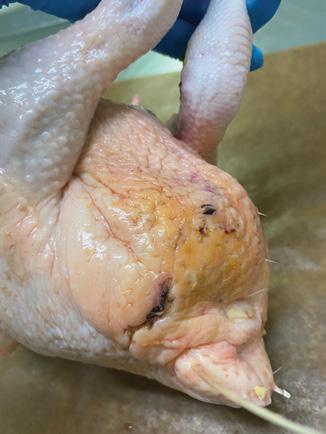
Cellulitis is a frustratingly silent problem. Unlike birds showing lameness or respiratory signs, a bird with cellulitis often appears perfectly healthy while walking through the litter. The lesion remains hidden under the feathers and is usually discovered only after the bird is de-feathered at the plant.
Cellulitis is a sub-acute inflammation of the tissue beneath the skin. It usually begins with a break in the skin’s normal defenses, such as a small scratch or nick. This allows opportunistic bacteria, most commonly E. coli, to enter the nutrient-rich tissue between the skin and muscle.
This design is especially suited to free-range facilities that can't run negative pressure when pop hole doors are open.
Lesions most often occur on the lower abdomen, breast or thigh, areas frequently
Listowel 8582 Hwy 23 N., Listowel ON (800) 463-7622
Hickson
596202 Highway 59, Woodstock, ON (800) 463-7622 ext 4
Cracking Condemns
in contact with the environment and prone to injury.
Once bacteria invade the connective tissue, the bird’s immune system attempts to contain the infection. Birds do not produce liquid pus like mammals. Instead, they form a flat, yellowish, cheese-like plaque made of fibrin that adheres to the tissue.
A common misconception is that cellulitis is mainly a “plant problem” caused during catching. In reality, it takes at least three to four days for the body to produce this plaque. By the time it is detected at the plant, the infection has usually been developing for days, sometimes weeks.
Why it matters
From a welfare standpoint, these lesions are inflammatory and likely cause discomfort, even if birds show few outward signs. Cellulitis also reflects broader environmental and management stressors. Poor
litter conditions, for example, not only harbour bacteria but also contribute to footpad dermatitis and higher ammonia levels, all of which affect bird comfort and health.
There is also a hidden performance cost. When a bird’s immune system fights infection, nutrients are diverted away from muscle growth. Flocks with higher cellulitis levels may, therefore, struggle to reach their full genetic potential for feed conversion.
In Canada, CFIA inspection standards determine how cellulitis cases are handled. If the lesion is small and localized, the plant may perform a partial condemnation or trim. While the carcass can still be used, weight is lost and the product is downgraded, reducing final payout.
If the infection is extensive or shows systemic spread, a full condemnation is issued. At that point, the entire bird is lost after weeks of investment in chicks, feed, heating and labour.
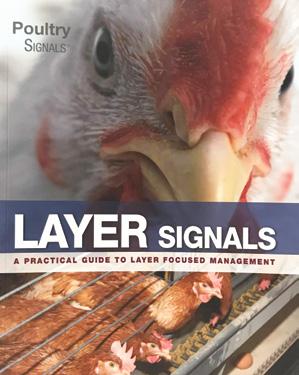
LAYER SIGNALS: A PRACTICAL GUIDE TO LAYER FOCUSED MANAGEMENT
Finding the evidence
If you want to understand how much this hidden lesion is costing you, start with your Flock Condemnation Report. Rising cellulitis numbers often signal that scratches are occurring early in the flock’s life, giving infections time to develop.
It is also useful to compare your results with provincial industry benchmarks. The CFIA publishes monthly condemnation data from federally inspected plants in each province.
Comparing your numbers with these benchmarks can help identify opportunities for improvement. If your rates exceed the provincial average, environmental or management factors likely need attention. Understanding the pathology is only the first step. In the next article of this series, we will examine the specific risk factors that predispose flocks to skin damage and infection.
Both kept in cage or floor systems, for a good performance during the production period, the management should be correct and efficient.
But how do you know that what you are doing is right? Your chickens continuously send out signals: about their health, how well they know their way around their surroundings and whether they feel happy and comfortable.
Layer Signals is a practical guide that shows you how to pick up the signals given by your animals at an early stage, how to interpret them and which action to take.
Building Bridges
By Crystal Mackay
Human energy and industry progress
Spring in Canada marks the time when we emerge from winter routines with renewed hope and optimism for the season ahead. As the days grow longer and activity begins to accelerate, it’s a natural time to think about energy differently.
This spring, it’s worth asking a different question: What if we looked beyond kilowatts and fuel costs to the forces that truly shape progress in the poultry sector – leadership, resilience and the collective drive toward a brighter future? Let’s consider the energy behind the people and organizations moving the industry forward.
Let’s start with our poultry industry. What are the Canadian advantages? Many point to our natural resources, access to skilled professionals and technical experts, innovative thinking, advanced equipment and access to capital. The list is long, but one high-value asset that is often overlooked is our strong spirit of collaboration and cooperation.
We take it for granted that we can get a certain type of poultry farmer or aspect of the poultry industry or the entire sector in a room together. And not just once, but several times a year from coast to coast at regional, provincial or national meetings, events or trade shows in addition to regular business interactions.
A few years ago, I spoke at a global feed industry event in France about the importance of
the entire food system working together to earn public trust, highlighting the Canadian Centre for Food Integrity (CCFI) model. The European audience appreciated the concept but found it remarkable that such collaboration could be put into practice.
Many felt it would be difficult to gather even one segment of their poultry industry in the same room – let alone bring together multiple sectors across the food value chain. That reaction prompted reflection: while progress rarely feels fast enough, collaboration is a uniquely Canadian advantage.
Canada’s poultry sector is highly organized and coordinated – nationally, provincially and regionally, as is our entire
food system. Some may argue this is a negative, with too many organizations and too much process. While there is always room for improvement with efficiencies, the real value is often underappreciated.
Collaboration does not mean universal agreement. Differences in perspective are both natural and necessary for strong outcomes. Rather, collaboration creates space for open dialogue, builds bridges across the value chain and strengthens both businesses and the industry over time.
Now, let’s talk about you –the people who power the poultry industry. What fuels your energy?
Interestingly, the same factors that strengthen our sector also
energize individuals: connection and collaboration. Engaging with others across the poultry industry naturally renews motivation, sparks ideas and deepens passion for your work.
So, the next time you feel too busy – or question whether you can spare the time or expense to attend an industry event –pause and reconsider. Is it truly a cost, or is it an investment in yourself and your organization? It doesn’t have to be a major conference. It could be a simple coffee meeting or a virtual check-in with a colleague.
In my experience, making the effort to show up and engage in conversations with people in our food system consistently leads to positive outcomes – with renewed energy as an added benefit for you, your farm or organization and the entire poultry industry.
Crystal Mackay is CEO of LOFT32 and co-founder of UTENSIL.ca, the unique online toolbox of training resources for people in agriculture and food. She is passionate about fueling the people who feed the world and delivers keynotes and training to help elevate people and businesses.
Industry events and meetings help strengthen connections and collaboration across Canada’s poultry sector.
SAFETY • CONSISTENCY • OPTIMAL VACCINE UPTAKE
A unique coccidiosis vaccine that balances the safety and efficacy needed for poultry that are raised without antibiotics, or in management programs to reduce resistance against anticoccidials.