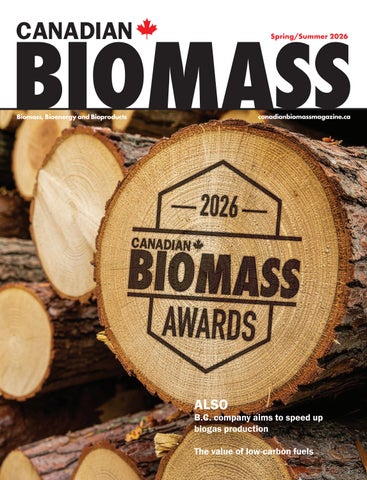
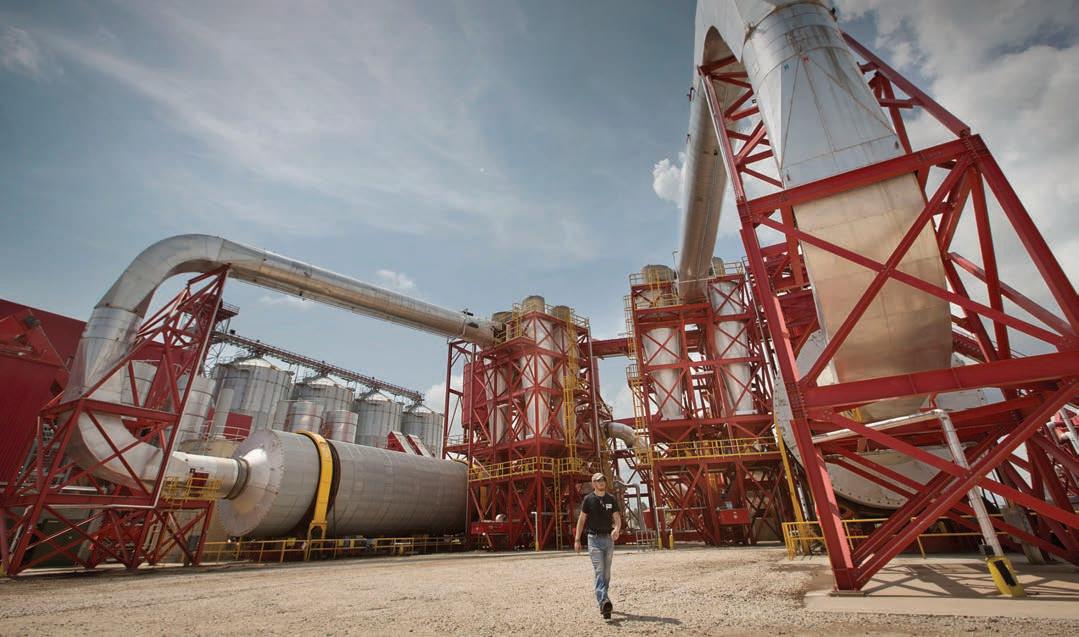
The Canadian Biomass Awards program celebrates outstanding individuals, companies and communities working passionately to advance the country’s bioeconomy. Read all about the 2026 Canadian Biomass Awards winners and their accomplishments.
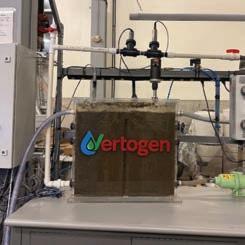
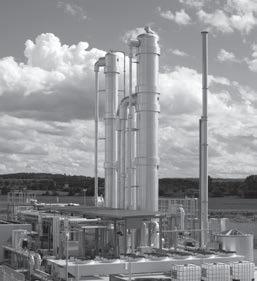
Vancouver-based Vertogen Technologies’ proprietary RNG Accelerator is designed to reduce processing times for anaerobic digesters by upwards of 90 per cent.
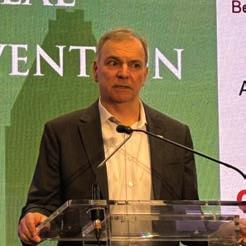
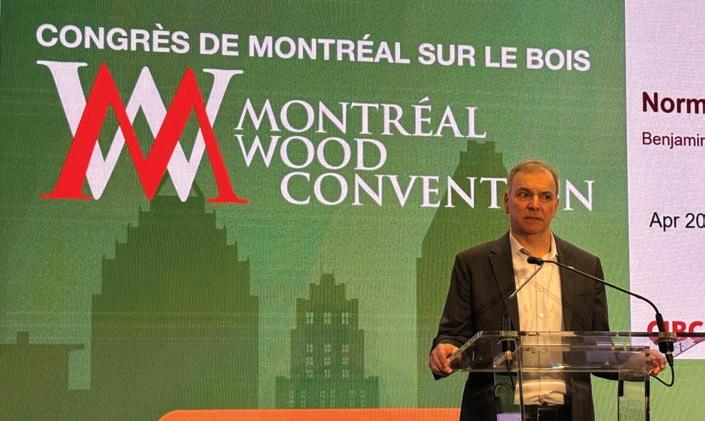
The popular Montreal Wood Convention hosted presentations tackling oil shock, lumber markets and the overall health of Canada’s economy.
While the impact of the U.S. tariffs and duties have impacted the forest products sector across Canada, I’m not sure any province has been hit harder than Ontario. The province is completely dependent on our neighbour to the south for its export market, as it represents nearly all of its export market for softwood lumber.
The tariffs and duties slapped on Canada have given the European markets a competitive advantage and they are eating away at the country’s marketshare in the U.S. Combine that with the U.S. homebuilding sector slowdown and we have a serious problem for Ontario’s producers. The province’s homebuilding sector is also having its own struggles, which exacerbates the issue. Add to that that fact that Ontario’s pulp mills are struggling and we’ve got a potential recipe for disaster.
30,000 tons of biocarbon. CHAR Tech is also building the capacity for renewable natural gas production expected to commence in 2027; and the company recently announced the acquisition of Elkem’s biocarbon assets in Saquenay, Que., which includes a biocarbon pellet production facility.
While kudos certainly goes out to Andrew White and his team at CHAR Tech for doing an incredible job building the company, it is important to note that none of this would have been possible without funding from the Province of Ontario, which has invested $6.4 million into the company to date.
Volume 26 No. 2
Reader Service Print and digital subscription inquiries or changes, please contact Angelita Potal, Customer Service Ph: (416) 510-5113 Fax: (416) 510-6875 Email: apotal@annexbusinessmedia.com Mail: 111 Gordon Baker Rd., Suite 400 Toronto, ON M2H 3R1
Interm Editor - Andrew Snook Ph: (416) 510-5239 ssobanski@annexbusinessmedia.com
Contributors - Gordon Murray, Fred Ghatala and Maria Church
Group Publisher - Anne Beswick Ph: (416) 510-5248 Mobile: 416-277-8428 abeswick@annexbusinessmedia.com
Western Sales Manager - Tim Shaddick twshaddick@gmail.com Ph: (604) 264-1158 Fax: (604) 264-1367
Audience Development Manager - Layla Samel Ph: 416-510-5187 lsamel@annexbusinessmedia.com
Media Designer - Curtis Martin
CEO - Scott Jamieson
Canadian Biomass is published four times a year: Winter, Spring, Summer and Fall. Published by Annex Business Media.
However, out of dire times often springs innovation, and we are seeing that taking place in Ontario. Brave innovators are charging forward with biomass products created from the sector’s residuals and forest biomass, which is exciting to watch unfold.
For example, CHAR Technologies (CHAR Tech) is producing biocarbon out of woody biomass at its plant in Thorold, Ont. to be sold to ArcelorMittal Dofasco to reduce its fossil carbon emissions in the steelmaking process (another hard-hit sector in the province). The construction of another biocarbon plant in Lake Nipigon is expected to commence this summer, which will target an annual production of
The province has been actively funding a variety of forest biomass companies in recent years to assist with new technologies, upgrading equipment, and helping them expand and explore markets. Some of the recipients of this funding include biocarbon companies Haliburton Forest Biochar (more than $4.6 million); Infinite Carbon, (over $3.3 million); Killaloe Wood Products ($952,437); McRae Mills ($146,475); and Bancroft Minden Forest Company ($20,000).
Municipal, provincial and federal governments need to continue doing all that they can to ensure a healthy forest products sector in Ontario. The reality is that the province cannot afford the loss of any sector that contributes more than $5 billion to its annual GDP and supports 128,000 direct and indirect jobs.
Hopefully, we will continue to see more supports announced for the sector in the near future. •
Publication Mail Agreement # 40065710
Printed in Canada ISSN 2290-3097
Subscription Rates: Canada - 1 Yr $60.47; 2 Yr $108.20 (Canadian prices do not include applicable taxes) USA – 1 Yr $128.89 CDN; Foreign – 1 Yr $146.39 CDN
CALL FOR UNITY: CWF SPEAKERS FOCUS ON OVERCOMING FRAGMENTATION
By Maria Church
The Atlantic Canada forest industry’s strength as a large collection of independent businesses and woodlot owners can also be a weakness if it leads to fragmentation and disjointed efforts.
Speakers at the Canadian Woodlands Forum (CWF) Spring Meeting in Moncton, N.B., March 25 to 26 reiterated this point and urged unity of message and purpose among members, who range from woodlot owners to researchers to logging contractors and sawmillers.
Among those calling for action was Jason Limongelli, vice-president of woodlands with J.D. Irving Limited (JDI), the region’s largest forestry producer. Limongelli told attendees the company is taking steps to pull back the curtain and share their story.
“There’s a lot of negative headwinds and we’ve lost a bit of our pride, but we need to get it back,” Limongelli told the audience. “We should be proud and promote the fact that we’re doing a good job.”
JDI currently manages 2.4 million hectares of woodlands between New Brunswick, Nova Scotia, and Maine. But insecure fibre availability is still limiting the company’s investments in Canada, Limongelli said.
Nova Scotia’s and New Brunswick’s largest economic assets are their crown land, yet governments have no economic objectives for that land. It’s a similar story across Canada: annual allowable cut (AAC) is decreasing despite forest inventory increasing since the ’90s, Limongelli said. Policy is the constraint, and policy is influenced by public perceptions.
We need to return to a more balanced approach that factors in ecological, social, and economic objectives, Limongelli said, adding that securing the political will to take this approach will mean getting the public on board.
Getting the public on board will mean more companies and individuals sharing their stories, Limongelli said.
JDI has proven the forests in New Brunswick have the potential to produce a lot of fibre without a lot of effort. Limongelli noted in their Black Brook Freehold in New Brunswick they harvest 3.19 cubic metres per hectare per year. That is higher than even Finland which lists an average of 2.4 cubic metres per hectare.
There are more good stories to tell. JDI is investing $1.5 billion in its Saint John westside pulp mill that will increase its capacity to between 1,000 to 2,000 tonnes per day. It’s welcome news for a region where many low-grade wood customers have exited.
Limongelli said he hopes more small players in the industry, from woodlot owners to harvester operators, are ready to share their stories.
“We all need to speak up. We all need to do our part,” he said.
CANADA-U.S. RELATIONS
Conversations around government policy inevitably turn to U.S. market uncertainty and the CWF brought in Washington-based Maggie Monday, associate with Cassidy Levy Kent, to update members on current U.S. trade policy.
Monday referenced the news that the U.S. supreme court struck down the International Emergency Economic Powers Act – better known as IEEPA – tariffs and noted that a refund process is being developed now. She said it will not be an automatic process and
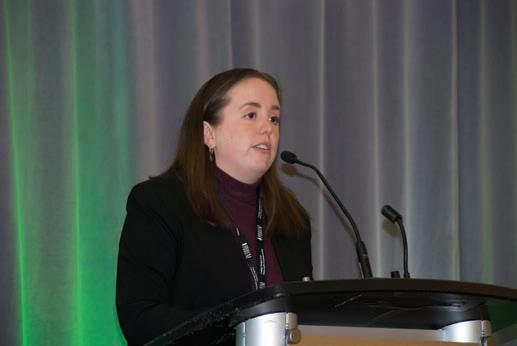
Maggie Monday, associate with Cassidy Levy Kent based in Washington, D.C., updates CWF members on current U.S. trade policy. Photo: Maria Church.
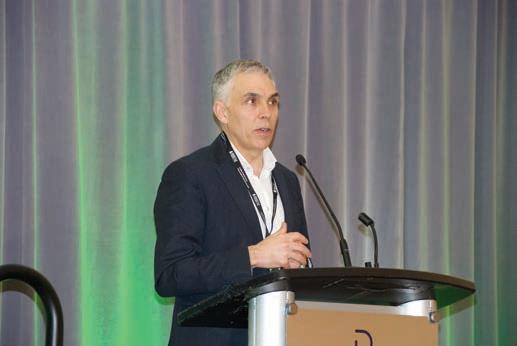
Jason Limongelli, vice-president, woodlands with J.D. Irving Limited (JDI), says the region’s largest forestry company is taking steps to tell more good news stories about forestry. Photo: Maria Church.
advised companies who might have been affected to be proactive. Another update centred on the softwood lumber trade landscape. There are currently no ongoing negotiations, Monday said. The U.S. Softwood Lumber Coalition is not interested in settling the dispute since it’s clear Canada’s market share decreased significantly since the duties went in place. The new rates will be announced in April, but she said they do not anticipate any changes.
CUMSA – the Canada-U.S.-Mexico Agreement – talks are ramping up with the official review beginning in July. Monday said it’s possible the U.S. wants separate deals with Canada and Mexico. Either way, “the administration focus is not on this in-
dustry, unfortunately,” she said.
Monday noted there is a new forced labour investigation under section 301 of the 1974 Trade Act that could result in new tariffs and Canada was named as part of the investigation.
“This review process has made tension even higher between the U.S. and Canada,” Monday said. “I know this is frustrating… hopefully with the CUMSA review there will be some concessions made on the American side.”
In all cases, Monday encouraged the audience to expect additional tariff actions and to keep detailed records and consider auditing for import compliance.
DRIPA DISCUSSED DURING COFI 2026 CONVENTION
British Columbia Assembly of First Nations Regional Chief Terry Teegee offered his perspectives on the state of reconciliation and forestry in British Columbia during the 2026 COFI Convention held from April 8 to 10 in Vancouver.
During his presentation, Chief Teegee talked about the Declaration of Rights of Indigenous Peoples Act (DRIPA) and the recent announcement by B.C. Premier David Eby of his desire to pause certain sections of DRIPA for upwards of three years.
DRIPA was officially passed on November 26, 2019. To assist with guiding the implementation of the UN Declaration in B.C., the provincial government released The Declaration Act Action Plan in March 2022, which included 89 priority actions.
In their discussions with Premier Eby, it has been made clear that the Chiefs of the province will not support any amendments, repeal or suspension of DRIPA.
“Economic outcomes in British Columbia are closely tied to how rights and title are recognized and upheld,” Chief Teegee told the crowd.
He stressed that this decision is not about private property.
“No First Nations want anything to do with private property. Rather, negotiations need to be had with this provincial government in regard to title,” Chief Teegee said. “At the core of this commitment, is free, prior, and informed consent. These are not barriers to development. They are the conditions that allow development to proceed in a way that holds value for generations to come. When the approach is consistent, it
supports stability across the sector.”
He added that this clarity supports stronger partnerships between governments, industry, and First Nations, and that changes to the framework introduce risk that extends beyond any individual project. Chief Teegee was in attendance at the Legislative Assembly of British Columbia to witness the passing of DRIPA in 2019.
“Let us give reconciliation the time, space, and the resources and dedication it deserves. I think it’s really important to also understand at this point with the premier it does a disservice to all of us in this room when we’re having negotiations in the media… rather, we should be coming together and discussing what are the options to move forward,” Chief Teegee said.
He told the crowd that DRIPA needs to be fully implemented to allow for predictability and sustainability of the mining industry, as well as other types of resource extraction.
“Many First Nations are concerned about mining and other extractive industries such as oil and gas, because we have one shot at it. With the forestry industry, you have second, perhaps third growth. There isn’t going to be more coming back. There isn’t going to be more oil and gas. You have one shot to make the best of any industry that First Nations are involved in for generational wealth,” Chief Teegee said. “We have to uphold our rights, title, and interests. We have to be part of the economy. We need to have better discus-
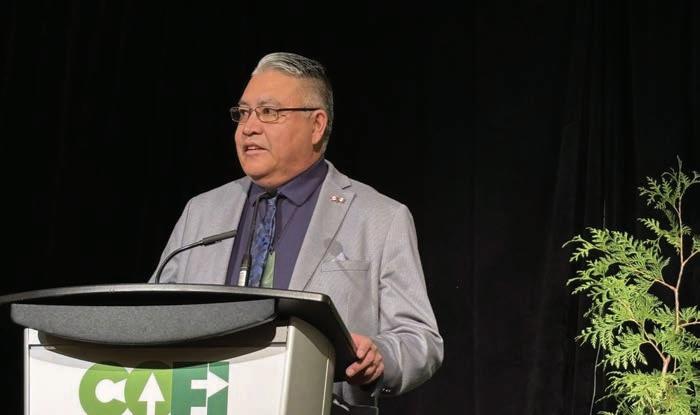
British Columbia Assembly of First Nations Regional Chief Terry Teegee discussed the Declaration of Rights of Indigenous Peoples Act (DRIPA) during his speech at the 2026 COFI Convention. Photo: Andrew Snook.
sions in regard to how decisions are made. So, we’re calling upon this government to not repeal DRIPA.”
In regard to the forest products sector, Chief Teegee encouraged everyone in the crowd to continue creating good partnerships like the ones he’s witnessed over the past few decades.
“Work with the many First Nations that are out there. I think in this room, there’s a reality of how to work with First Nations, and we need to be a part of that economy,” Chief Teegee said.
He ended his speech stating that he hopes that a positive solution will come from future talks between First Nations and Premier Eby.
“We certainly hope that the Premier Eby comes to some level of agreement with our First Nations across this province, and not pause DRIPA and work with us for full implementation, which was committed to in the action plan, which was committed to on November 26 in 2019,” Chief Teegee told the crowd.
GORMAN GROUP ACQUIRES $120-MILLION TENURE TRANSFER
HEADING GOES HERE
B.C. Minister of Forests Ravi Parmar has approved a $120-million tenure transfer from Weyerhaeuser to the Gorman Group. The news follows the May 2025 announcement by Weyerhaeuser of the sale of its Princeton, B.C. mill to the Gorman Group, which was finalized this past September.
The Ontario government on March 28 announced a $682,529 investment in six economic development projects in Hearst, Ont., including $35,808 for wood pellet producer
I.C.S. (Lacroix) Lumber.
The Ministry of Forests stated that the transferred tenures total approximately 682,000 cubic metres and consists of 46,000 hectares of tenure in Tree Farm Licence 59, near Oliver, B.C., providing more than 57,000 cubic metres of harvest per year; two replaceable forest licences in the Merritt timber supply area, providing more than 538,000 cubic metres of harvest per year; and one replaceable forest licence in the Okanagan timber supply area, providing almost 87,000 cubic metres of harvest per year. Prior to the tenure transfers, the Gorman Group had an estimated tenure of 734,000 cubic metres per year.
The funds will help I.C.S. (Lacroix) purchase new equipment that will help it increase its production capacity and expand operations.
“Through the collaborative partnerships we are announcing today, our government is ensuring Hearst’s economy continues to grow,” said Greg Rickford, Ontario Minister of Northern Development, Mines, Natural Resources and Forestry, in a statement. “By investing in projects from varied sectors, we are promoting a more diverse, dynamic and innovative economic climate.”
In addition to the Princeton mill, the Gorman Group owns and operates Canoe Forest Products in Canoe; Downie Timber and Selkirk Cedar in Revelstoke; Gorman Bros Lumber in West Kelowna; and the Lumby Pole Division in Lumby.
I.C.S. (Lacroix) produces premium wood pellets under the LacWood brand.
The tenure transfer will help ensure a stable supply of fibre for the Princeton mill, which has received a great deal of public support. The Minister of Forests stated that it received close to 300 letters during the public comment period in support of the tenure transfer from individuals, businesses, First Nations, contractors, community forests and unions.
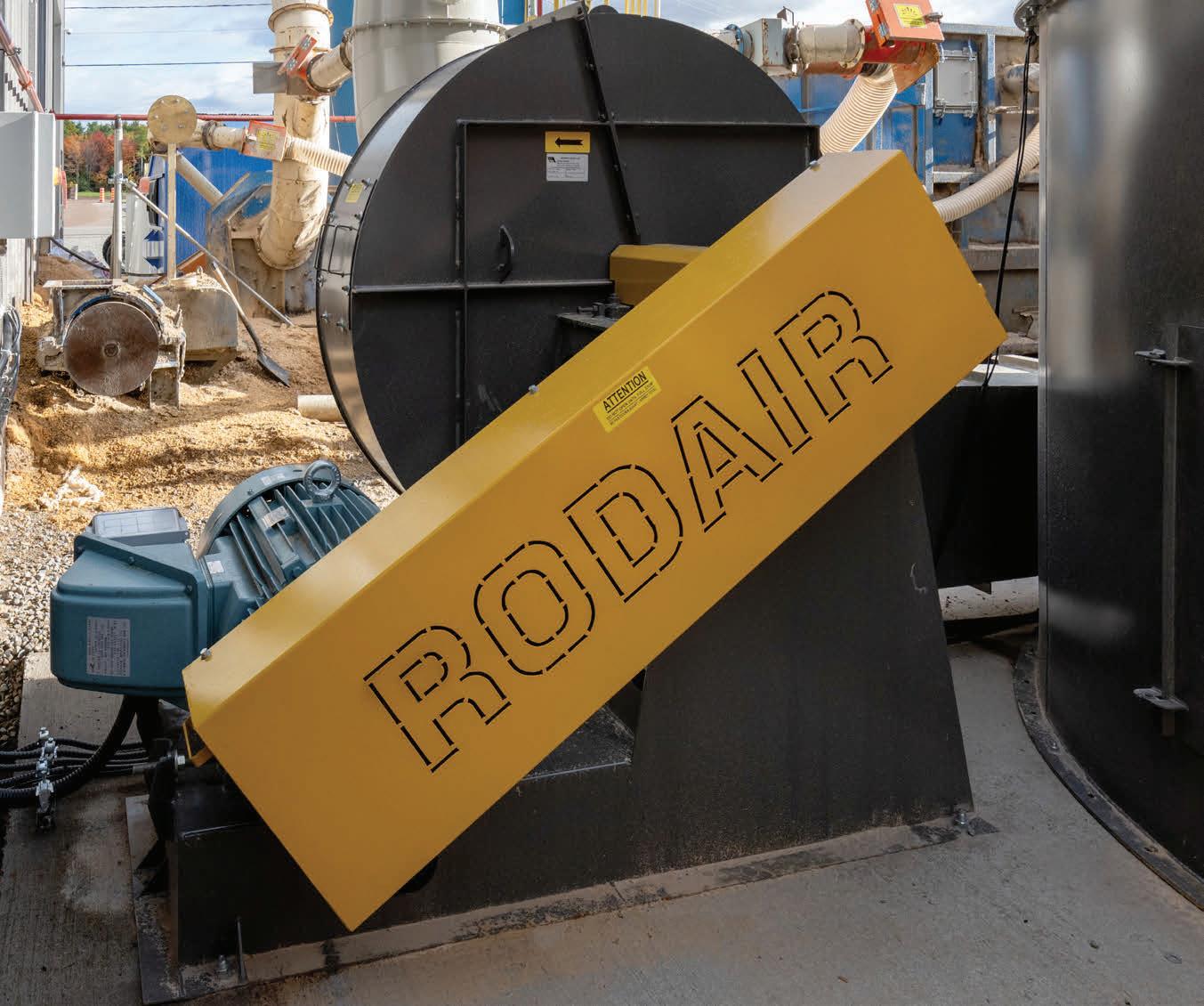
SUPPLIER OF THE BEST SOLUTIONS FOR YOUR DUST MITIGATION NEEDS
For over 60 years, we have proudly designed and manufactured our equipment in Quebec.
Strength through unity
WPAC working to move pellet industry forward
By Gordon Murray, Executive Director, Wood Pellet Association of Canada
Canada’s wood pellet sector is recognized around the world for its quality, sustainability and reliability. This position is no accident. It is supported by coordinated industry efforts through the Wood Pellet Association of Canada (WPAC), the sector’s national voice. We are a member‑driven organization and the unified voice of Canada’s world-leading pellet industry.
We represent more than 50 producers and industry participants from coast to coast. Our work spans market development, regulatory engagement, sustainability advocacy and safety leadership. These are areas where a unified sector voice consistently achieves more than individual companies can on their own.
GLOBAL REPRESENTATION
WPAC exists to help our members compete in both global and domestic markets. By working collectively, we represent members’ interests on critical trade, policy and regulatory issues that would be costly, complex and risky to address individually.
We build and maintain relationships in key international markets, particularly Japan and Europe, where evolving sustainability standards, regulatory frameworks and safety expectations directly affect market access for Canadian pellets.
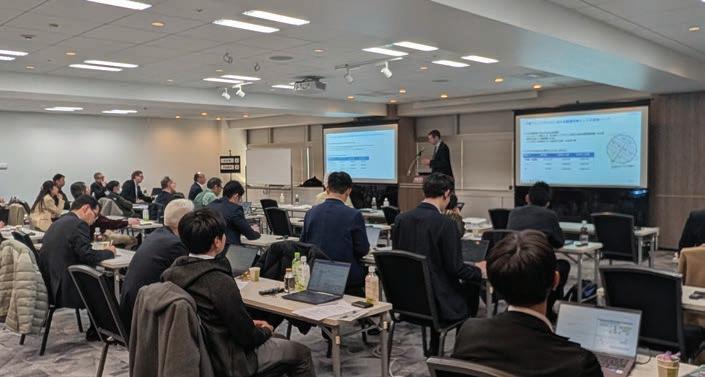
In Japan—one of Canada’s most important long-term pellet markets—we focus on stakeholder outreach and reinforcing Canada’s reputation as a reliable, sustainable supplier. Our work includes direct engagement with Japanese utilities and participation in international technical working groups, and an annual mission involving provincial and federal governments, as well as industry partners. The WPAC team recently returned from Tokyo, where we worked with Ørsted,
FutureMetrics, Firefly and Hanwa to enhance safety operations by running a safe wood pellet storage workshop focused on preventing, detecting, and managing self-heating incidents.
In Europe, we regularly engage in discussions related to the Renewable Energy Directive (RED III) and the European Union Deforestation Regulation (EUDR), and we hold a seat on the European Pellet Council. For our members, this means staying aligned with evolving standards, which is critical for maintaining market access and customer confidence over the long term.
Here at home, we also work to expand and strengthen Canadian demand. A good example is our ongoing collaboration with NB Power on the potential conversion of the Belledune Generating Station in New Brunswick from coal to thermally treated pellets. This first‑of‑its‑kind project shows how coordinated industry engagement can support major energy transitions
while opening new domestic opportunities for producers.
Another example of our work at home can be found up north and throughout Atlantic Canada, where we are continuing to grow the pellet sector’s bioheat markets while displacing less sustainable fuel sources that have high price volatility.
SAFETY LEADERSHIP
Safety is a cornerstone of WPAC’s work and a key benefit of membership.
Through our long-standing Safety Committee, we provide sector-led leadership focused on strengthening safety culture across pellet operations. We publish guidance, share best practices and create space for collaboration on critical topics such as dryer operations, pellet storage and fire prevention. An example of this is our semi-annual Safety Summit being held in June.
Our multi-year safety work plans help ensure continuity and focus; supporting members as they work to reduce risk, pro-
WPAC hosts a safety workshop in Japan to reinforce the reputation of Canadian wood pellets as a safe energy solution and strengthen industry understanding of self-heating mechanisms, prevention strategies, early detection and incident management.
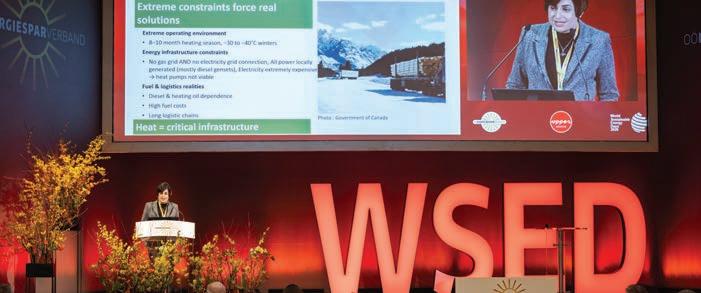
Yazdan Panah, Associate Executive Director, WPAC, participates in the European Pellet Conference to strengthen relationships, explore new market opportunities and advance Canada’s position as a reliable supply of wood pellets.
tect employees and strengthen long-term operational performance.
This shared approach extends beyond individual plants. When producers, shippers, ports and service providers align around common safety expectations, risk is reduced across the entire supply chain.
WORKING TOGETHER
The value of a strong association isn’t always visible in any single transaction or policy win. It accumulates over time: in the quality of relationships built with governments and utilities, in the credibility that comes from consistent messaging, and in the foundation of trust that makes Canadian pellets a preferred choice in competitive global markets.
WPAC brings together producers of all sizes along with supply chain and associate members, reflecting the reality that a healthy pellet sector depends on strong collaboration across the value chain. When the industry speaks with one voice on policy, sustainability and safety, it carries more weight, with regulators, with trading partners and with the customers whose long term confidence we all depend on.
Government and partner support also amplifies what members contribute collectively. Resources pooled at the association level are regularly leveraged with public funding and partnership dollars, which means the work that gets done – whether it’s a mission to Japan, participation in a European regulatory process, or a domestic market development initiative – goes further than any single organization could
take it alone.
Our annual WPAC Conference every September is another reflection of this. It brings the sector together: producers, suppliers, researchers, government representatives and international partners. We share knowledge, identify opportunities and strengthen the relationships that underpin everything else we do as a sector.
THE WORK AHEAD
The environment facing Canada’s wood pellet industry is more complex than it was a decade ago. Global markets are evolving, significant regulatory changes are on the horizon, sustainability expectations are tightening, and the scrutiny of bioenergy is intensifying. These aren’t reasons for concern so much as reasons to be well organized, well connected and well prepared. That’s what WPAC exists to support.
Progress in this industry has always come from consistent, collective effort: advancing market access, strengthening safety culture, reinforcing sector credibility. The companies and communities that depend on a strong Canadian pellet industry are best served when the sector is aligned, engaged and speaking clearly with a common purpose. That’s the work we do every day.
For those invested in the success of Canada’s wood pellet industry, WPAC membership is both a practical advantage and a shared commitment to long-term success.
To learn more about WPAC or to become a member, visit: www.pellet.org. •
Fahimeh
Company of the Year
Arctic Energy Alliance
In northern remote communities like those found in the Northwest Territories, it’s common for people residing in those communities to work together on a variety of initiatives. For the Arctic Energy Alliance, working together is directly in their mandate:
The Arctic Energy Alliance (AEA) is a not-for-profit society with a mandate to help communities, consumers, producers, regulators and policymakers to work together to reduce the costs and environmental impacts of energy and utility services in the Northwest Territories.
“The Arctic Energy Alliance is a leader in advancing northern bioenergy,” says David Dubois, manager of business development for Fink Machine. “In 2025, it delivered a successful NWT Biomass Week, expanded funding for pellet heating – supporting 46 wood and pellet stoves and one boiler –completed key pre-feasibility studies, facilitated pellet boiler installations, and provided biomass boiler operator training. Its support for the 2026 Arctic Bioenergy Summit further proves its national leadership.”
The roots of the AEA stem from programs implemented by the Government of the Northwest Territories more than 30 years ago.
“At that time, the Government of Northwest Territories had a number of
energy related programs spread across several different departments; so there was a decision taken at that time to create a non for profit society, the Arctic Energy Alliance, and essentially, to transfer administration of those programs over to this new organization,” recalls Mark Heyck, executive director of the AEA who has been with the organization since 2018.
The creation of the AEA was intended to create an organization that could offer more flexibility as a public facing service delivery agency than the territorial government. The organization was officially founded in 1997 in Yellowknife with
a few staff members. Over the next 30 years, the AEA took on additional government programs to better serve the N.W.T. population, setting up satellite offices in five other communities outside of Yellowknife: Inuvik, Norman Wells, Behchoko, Fort Simpson and Hay River. The AEA currently employs 17 full-time staff.
“We’ve evolved quite a bit. We’ve taken on additional responsibilities. We’ve got a technical staff complement of about five people who are certified residential energy advisors, so they can do home energy evaluations under EnerGuide Rating System. We’ve trained some of those folks
The AEA manages a variety of initiatives promoting the use of biomass including community energy planning and boiler operator training. Photos: Arctic Energy Alliance.
up to do bigger building energy audits for larger facilities,” Mark says.
The AEA has also gotten involved with community energy planning.
“We’ve got kind of a group of program coordinators within the organization who will engage with different communities,” Mark says. “Over the past six years, we’ve done community energy planning with about 15 communities in the Northwest Territories, and we’re continuing that work through the next few fiscal years.”
The AEA has played a role of testing out and supporting new technologies to see if they’re technically and economically feasible in a northern context. Wood pellets for space heating applications are one example of that work, which began in the early 2000s.
“We did not have a lot of viable alternatives to fossil fuels, but one that we knew was viable was biomass,” Mark says. “We saw a few people starting to adopt wood pellets for space heating, so the organization dove into that particular technology to see how well it was working; how cost effective it was versus the price of oil; and then what we could do as an organization to help incentivize and encourage the deployment of more biomass space heating technology.”
The AEA enhanced its funding programs to include biomass systems, including large wood pellet boilers. Staff have worked with communities to perform pre-feasibility studies for biomass district heating systems.
“We’ve even gone so far as to work with different communities on developing heat sales agreements. For community governments that build a district heating system, for example, if they are able to connect to a territorial government building establishing a system, they can sell heat to the territorial government or to others in the community,” Mark explains.
While some communities outside of N.W.T. push back against biomass-fuelled systems, people in the territory largely embrace these technologies.
“We’ve been heating with wood for thousands of years. The technology has evolved, but there was never any pushback to it,” Mark says. “When we first started
out, we had kind of dual goals. One was to help northerners reduce their energy costs, but then also help mitigate climate change by reducing greenhouse gas emissions.”
In the earlier days of the AEA, the focus was on the reducing energy costs. Fortunately, the organization was able to showcase a biomass-fuelled district heating system that was installed at the City of Yellowknife’s correctional facility that demonstrated the technical viability of the equipment and its considerable cost savings. Since that time, hospitals, schools and other several other types of government infrastructure are now heated with wood pellet boiler systems. While there have been some people in the N.W.T. government that have been concerned about having a stable supply of pellets, the reality is that the number being consumed by the territory is a small drop in the bucket of Canadian production.
“There’s about 3 million tons of pellets produced in Canada annually, and the N.W.T. uses somewhere in the neighborhood of 20,000 to 25,000 tons. So, we’re a very small fraction of the whole. When we hear numbers like that, it reduces our anxiety level about security of supply,” Mark says.
Almost all of the wood pellets consumed in the N.W.T. are supplied from wood pellet plants in northern Alberta. While that makes the supply close by for some regions, there are communities in the territory that are considering producing their own fuel.
“We’ve identified a desire in a lot of communities to try to produce fuel truly locally. Wood chipping would be the logical step there,” Mark says.
While large-scale district heating systems are a significant part of their biomass programs, the AEA are also focused on helping communities install smaller wood stoves and biomass boilers.
“We’ve partnered with communities on a fifty fifty cost share basis to get EPA certified wood stoves properly and safely installed by certified installers and inspected by certified inspectors,” Mark says.
From 2019 to 2024, the AEA helped get approximately 300 wood stoves installed across a variety of communities throughout the N.W.T.
“I step back from that project every once in a while, to think about it, and it’s neat because we’re taking these financial resources that are provided by government and using them to purchase Canadian-made wood stoves, which is helping the Canadian economy,” Mark says. “These stoves are being transported across the country up to the Northwest Territories, oftentimes in communities where they’re going to only have winter road access. So, we’ve got a short window of time to be able to get those stoves and materials transported into the community and bring in teams of installers working with local people… and at the end of the day, you’ve got an elder with a new, safe, code-compliant wood stove providing low-cost heat and low-carbon heat in that in that household.”
Those wood stoves are installed at zero cost to the end recipient with the AEA picking up half the cost and the community government pickup up the other half.
“It’s a great partnership and it’s worked really well,” Mark says.
Going forward, the AEA would like to be able to offer rebates for wood pellet stoves as well. The staff are looking at modeling a new program after the wood stove program for pellet stoves instead.
“While we’re striving for these bigger, higher-impact projects, we’re also not losing sight of some of the more micro-level projects and the work, so we are be able to support individual homeowners throughout the territory,” Mark says. •
Biomass boiler operator training in 2024.
Gordon Murray has sawdust in his veins.
After working much of his career in the traditional forest products sector in sawmills and forestry operations and finance, Gordon worked as a financial consultant and was in the process of trying to sell a sawmill when he discovered the wood pellet sector.
“I couldn’t find any buyers from the sawmill sector that wanted to buy another mill. I started thinking about how they had a lot of wood waste up there, so I began researching the wood pellet sector,” he recalls.
Gordon began marketing the sawmill as a potential location to produce wood pellets in addition to traditional wood products.
“It turned out that I was able to do that. I sold the mill to a pellet company and then I got to know the owners, and then they introduced me to the wood pellet association because they were in need of help at the time. It was more luck than anything,” he says.
From the moment Gordon had the opportunity to help build up the wood pellets sector, he became enthralled by it.
“I was working as a forestry consultant at the time and was brought in as a parttime helper for the pellet sector association and I got super passionate about it,” he says.
Over his years in the forest products sector, Gordon saw, firsthand, the results of not having homes for mills’ residuals.
“Working in sawmills, we had beehive burners at every plant. Communities would complain about the smoke and the pollution,” he recalls. “That was a fight for years, to try to get rid of those things, and now we’ve taken what was garbage and turned it into a global industry.”
Gordon has been involved the wood pellet sector for the past 18 years and has
Lifetime Achievement Award Gordon Murray
supported its growth through his role as executive director of the Wood Pellet Association of Canada (WPAC) from a fledgling industry to the sector it is today.
“This has been a difficult road, with numerous challenges thrown up over the years by government policy, fibre availability, pellet plant safety preparedness, eNGO pressure, logistics frailty, sustainability certification and end user demands,” says Vaughan Bassett, WPAC president. “Through all this Gord has continued to move the Canadian industry forward with a level of grace and professionalism that has hidden the degree of energy, commitment and political capital required to pull it off. No one has worked harder or smarter to keep this industry viable and on behalf of the Board of WPAC, we salute Gord for this extraordinary effort.”
When asked about his proudest moments leading the association, Gordon has trouble picking just one.
“There was the growth in Asia. The rapid expansion into Europe. It was all part of that momentum, building our reputation as Canadian producers for top quality and sustainable pellets,” Gordon says. “The estab-
lishment of our safety committee and reducing accidents from fires and explosions, and from combustible dust, building up knowledge that way. Those are our highlights.”
Gordon has also enjoyed getting to know all of the WPAC members.
“I’ve really developed a great rapport with everybody, right from the senior management to the shop floor,” he says.
He’s enjoyed travelling to wood pellet plants to get a better understanding of how they operate, as well as his trips abroad.
“We’re building our markets. Just being a part of that whole experience is super rewarding. I’ve met so many people along the way, and learned a lot from people,” he says, adding that people in the wood pellet sector are very forward-looking and optimistic. “It’s the excitement of building a new industry.”
That’s not to say the industry doesn’t face challenges to this day. Thin margins, reliable and affordable fibre supply, and public relations all remain challenges for the sector’s producers.
“There’s an ongoing story we’ve got to tell to spread the good word about sustainable forest management in Canada; and even though we’re just using a waste product, it does come as a waste from a sustainably produced or managed source for us,” Gordon says. “There’s always been a myth about the efficiency of shipping large quantities of wood pellets in ship holds across oceans – this sort of a notion that it can’t be greenhouse gas efficient, when, in fact, it really is.”
WPAC regularly works with regulators to remove misunderstandings and misinformation and prove to them that the story of the wood pellet sector is one of a sustainable made-in-Canada product. To help ensure product quality, Gordon and his team helped develop the ENplus
Quality Certification Program, which became a worldwide certification program for quality. WPAC also worked on the development of the Sustainable Biomass Program. Gordon volunteered on the standards committee for five years developing those standards. He has also been active in promoting bioheat adoption in Canada.
“We’ve been working with the Canadian Standards Association on the development of Canadian standards for pressure vessels in small biomass combustors and trying to enable the importation of European boiler technologies into Canada,” Gordon says. “We’re well along the way on that. I think it will have an impact on growing the domestic market.”
Gordon and the rest of the team at WPAC is also working with producers to find a way to be part of the conversion of the Port of Belledune in New Brunswick.
“NB Power is taking on an ambitious project to convert Belledune from burning coal to using advanced wood pellets, but there’s no established capacity in Cana-
da. So, we’re working with the suppliers, NB Power, and government to try and derisk that, raise some capital, and help the producers to evaluate the project and be a meaningful part of the supply chain for NB Power,” Gordon explains.
Another of Gordon’s highlights has been working with a fantastic team.
“Bringing a nice little team together like Fahimeh Yazdan Panah, Jen Rayworth, Karen Brandt and Suzanne Wheatley, all these people that support us now, it’s just an awesome team. Everybody’s equally passionate about it, and it’s just fun to be a part of,” he says.
Bringing together the industry members for the annual WPAC Conference has also been one of his favourite aspects of his career. The 2026 annual conference will take place on Sept. 22 and 23 in Victoria, B.C. Gordon is always happy to create a conference program that is beneficial to all of the member companies.
“The one thing I always remember is it’s the member companies that are the
ones that have put the money up, taken the risks, bought the equipment, and really made it happen. My role has been to be an advocate and to try to help them collectively. But it’s the members that have to take the credit for building the industry. They’re the ones that did it,” he says.
For people just starting their careers in the wood pellet sector, Gordon had this advice.
“Believe in yourself and be bold enough to take on new things, and be prepared to fail, and just keep trying again and again,” he says. “Understand the importance of relationships. Early in a career, it’s all about how technically competent you are, and people focus on trying to understand the technical parts of the job. But the more time that you spend in it, you discover how important relationships are. Always try to present yourself as positively as you can. Be a good communicator. Be passionate. If you see something you want to accomplish, just go after it, and you’ll get there.” •
CONGRATULATES
ALL WINNERS OF 2026 BIOMASS AWARDS
GORD MURRAY WPAC Executive Director
YAZDAN PANAH
WPAC Associate Executive Director
FAHIMEH
For almost three decades, Jordan Solomon has been a leading figure in the biomass sector’s effort to solve one of its most persistent barriers to growth: feedstock risk. As president and CEO of Ecostrat, Jordan has built his career at the intersection of biomass supply, project development, finance, and market creation. He has worked with leading biofuel, biochemical, and bioenergy companies on supply chain strategy, contracting, resource procurement, risk assessment, and financing. Increasingly, his work has focused on a larger objective: building the market infrastructure needed to catalyze and de-risk investment in biomanufacturing.
Among Jordan’s most significant contributions has been his leadership in developing the Biomass Supply Chain Risk (BSCR) standards and the BDO Zone standards in Canada. Working with Natural Resources Canada, the Standards Council of Canada, and the Canadian Standards Association, he led the development of frameworks that were later formalized as Canadian national standards for biomass supply chain risk and regional readiness for biomanufacturing.
“For me, the central challenge has always been how to make biomass opportunity legible to capital,” Jordan says. “If the market lacks the standards, the data, and the tools to evaluate risk properly, good projects will struggle to move forward.”
That same approach shaped one of Jordan’s most important recent initiatives: Feedstock Supply Insurance (FSI), developed in partnership with the insurance underwriter New Energy Risk. The instrument addresses a structural challenge in the industry. Many developers can secure long-term supply agreements, but those agreements often rely on networks of small and mid-sized suppliers that do not offer
Champion of the Year
Jordan Solomon
COMPANY
THOUGHT
the balance sheet strength lenders typically require. FSI was designed to help close that gap. By capping feedstock cost exposure at a level a project can support, it offers a mechanism to strengthen lender confidence and support debt financing. Officially launched in late 2025, it is now being advanced with multiple projects and is emerging as a new financing tool for the biofuels, renewable chemical, biogas and bioproduct sectors.
If FSI reflects Jordan’s commitment to addressing project-level risk, the Biofuel Development Opportunity (BDO) Zone Initiative reflects his vision for addressing risk at the regional level.
Jordan pioneered the BDO Zone Initiative to give developers and investors standardized, technical, and investment-grade intelligence on where new bio-based manufacturing projects are most likely to succeed. Rather than requiring developers to assemble fragmented local data on their own, BDO Zones provide a standards-based rating of regional readiness, including biomass availability, supply chain strength, and other critical attributes.
The first BDO Zone “A” Rating was is-
sued for Melville, Sask. in November 2020. What began as an effort to help one community position itself more effectively for investment has since grown into a North American platform. As of December 2025, 61 BDO Zones had been issued across Canada and the United States.
BDO Zones have delivered measurable results. More than $10 billion of announced project value is associated with projects that have been directly linked to BDO Zones or are using BDO Zone ratings as part of their capital-raising efforts. Recent analysis by the University of Tennessee, examining six announced projects advancing in BDO Zones, found an average annual economic impact of $423 million per project, including direct, indirect, and induced effects.
In Canada, one of the most prominent examples is the $845-million biofuels facility announced for Vegreville, Alta. Supported in part through the Clean Fuels Fund, the BDO Zone rating helped position the region for a project aligned with Canada’s ambitions in sustainable aviation fuel and the broader bioeconomy. The growth of the initiative also contributed to the development of the CSA TS-005 BDO Zone national standard in 2025, created with the support of Natural Resources Canada and the Standards Council of Canada.
That systems-level perspective also shapes Jordan’s broader vision for Canada. He has consistently argued that the country’s challenge is not a lack of biomass, but a lack of the market infrastructure needed to attract global developers and capital at scale. In his view, Canada’s forest biomass, agricultural residues, and other underutilized resources can support a new generation of higher-value industries, from biofuels and renewable chemicals to advanced bioproducts.
Project of the Year Palmer Project
In 2017, B.C. wildfires destroyed approximately 1.2 million hectares of forest. The devastation left behind in the Palmer Lake, B.C. area was severe. More than 100,000 hectares of dense pine forest burned during those fires. Afterwards, the combination of massive buildups of fire killed pine trees along with dense new growth – at levels as high as 100,000 pine seedlings growing per hectare – were creating an unhealthy environment for forest recovery. It was also creating a stockpile of potential kindling for the next round of wildfires.
“It’s been a mess left behind from those wildfires. The trees are starting to fall over. Animals won’t go through there. You can’t use the area,” explains Daniel Persson, forestry superintendent for Central Chilcotin Rehabilitation Ltd. (CCR) based in Williams Lake, B.C.
To improve these conditions, CCR developed a treatment plan that would optimize the recovery of useable wood fibre while reducing future wildfire risk and creating an environment where the forest could thrive once again.
“We started brainstorming internally on how we could find a way to utilize this fibre. Tŝi Del Del Biomass, in partnership with CCR, made some significant investments on new equipment, including a flail chipper, and then trialled an area to see if we can make pulp products on top of the hog products that we’re making with the grinder. It proved itself pretty successful,” Daniel says.
To date, CCR has treated approximate-
ly 1,000 acres of the dead pine forests and another 1,000 hectares of fire killed fir stands.
“We’re going full tilt, treating as much as we can, creating employment, too,” Daniel says. “We’ll have only treated roughly two per cent of this dead area of pine. So, we’re hoping that we can continue this for a long time to come.”
One of the ways that CCR has found a home for the fire killed fibre is through
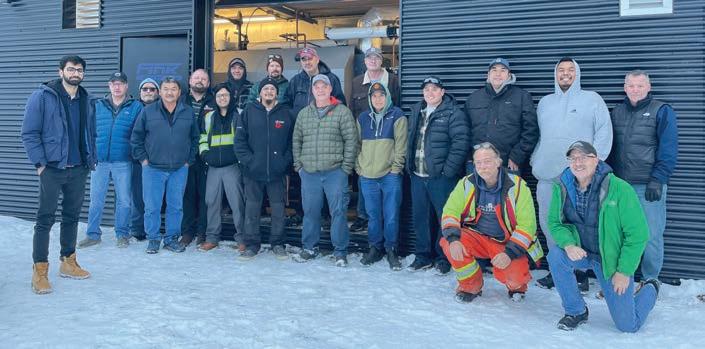
We are honoured to receive the Canadian Biomass Award for Community Project of the Year.
We extend our sincere thanks to the community members, partners, and dedicated crews whose commitment and collaboration made this project possible.
This recognition belongs to all of you. Your hard work continues to create lasting impact for our communities, our forests and future generations.
pulp mills, which Daniel says was a huge breakthrough.
“Nobody’s really done that before, and the pulp mills were reluctant at the start to buy any loads of pulp, but we got them to trial it with us. The more we sent them, the happier they got. Now we’re doing it on a large scale,” he says.
Since the areas that CCR are harvesting are largely single species stands, it makes harvesting operations much simpler. However, the company is regularly running into the challenge of running out of permits.
“The hard part for us is getting government agencies on board where the land needs to be treated,” says Joe Webster, manager of Tŝi Del Del Biomass. “For us, starting and stopping all the time, we can’t fulfill our contractual obligation that the pulp mill gave us.”
He adds that it’s difficult to retain an experienced team if you’re constantly forced to lay people off due to unnecessary work stoppages.
“Operationally, it’s really difficult when you stand on a hill and all you see is 100,000 hectares around you of pine trees, and you wonder why you’re not continuing on,” Joe says.
Initiatives like the Palmer Project, which pairs fibre utilization and wildfire risk reduction, is the only scalable solution to wildfire risk reduction, Daniel says, adding that additional public funding will be needed to continue operations past its current contract end date of March 31, 2028.
“The only part that would need any public funding is the treatment of the land. For the rest of it, industry will look after the rate, that’s there; but they can’t do it
all. The fibre isn’t worth enough,” Joe explains.
While the Palmer Project is reliant on some public funding, CCR stated that the project has contributed approximately $14 million in GDP to the province’s economy to date.
“The Palmer Project demonstrates how biomass recovery can play a critical role in wildfire rehabilitation,” says Aleece Laird, founder of Amplify Consulting. “CCR removed dense fire killed pine and recovered previously unused fibre for Canada’s pulp and bioenergy markets. The project reduced extreme wildfire risk, restored forest health, and created employment for Indigenous workers. At a time of limited fibre supply, it established a practical model for utilizing wildfire damaged forests to support Canada’s biomass and forest products sector.” •
Thought Leader of the Year
Fahimeh Yazdan
When Dr. Fahimeh Yazdan Panah first travelled from her home in Iran to the University of British Columbia (UBC) in Vancouver to pursue her graduate degree in 2007, she wasn’t familiar with the wood pellet sector.
“Back home, energy meant oil and gas. Biomass simply wasn’t part of the conversation,” she recalls.
However, the biomass sector appeared on her radar quickly that year after industry expert John Swaan visited UBC in response to fatalities that took place on board a vessel shipping wood pellets to Sweden.
“He came to UBC at the time, and he
said, ‘We’re going to have to do something about this, and we need to understand this material better. We need to be prepared to protect the personnel who are working around this fuel,’” Fahimeh recalls.
John built a large storage silo at UBC that was able to store between three to four tons of pellets for the purpose of studying off-gassing and self-heating of wood pellets.
“At the time, I had no idea what wood pellets were or what is off-gassing or self-heating. That’s when I got introduced to the sector,” Fahimeh says.
What followed was foundational.
Working alongside Dr. Shahab Sokhansanj, John Swaan and Gordon Murray, Fahimeh helped lead some of the first systematic research into off-gassing and self-heating in wood pellets - at a time when the industry had no clear answers.
“We developed the reaction mechanisms, the kinetics - essentially the scientific foundation for understanding emissions from wood pellets,” she says.
That work would go on to inform global safety practices across the supply chain.
In 2019, she officially joined WPAC as its director of research and technical development and has led many of the association’s key initiatives and research related to safety and emissions, as well as helping shape policy and commercial and sustainability strategies. In 2025, Fahimeh was promoted to associate executive director of WPAC.
Canada’s reputation as a safe and stable supplied of wood pellets has grown leaps and bounds since 2007. Fahimeh regularly runs safety workshops around the world.
“Recognized internationally, she has led webinars, workshops, and publications addressing catastrophic fire and explosion risks,” Gordon says. “In 2025, she co-led a major international workshop in Copenhagen; and she led a Tokyo workshop in March 2026. She also led a working group on drum dryer safety with a report to be published in 2026.”
Fahimeh found herself drawn into the industry as she witnessed the research from her post-graduate studies having practical applications within the sector.
“You don’t always have the time and luxury of doing projects that you can implement right away in industry and see the impact. From the first day that I started my studies here, I have been focused on the safety of the sector, and I could see the result and the impact it’s making. It made me more engaged and interested,” she says.
Having her research and projects focus on making operations safer is something that Fahimeh is very passionate about.
“When I look back at the impact of all of these projects, it puts a big smile on my face. That’s what keeps me going,” she says.
One of the main projects that Fahimeh
is currently undertaking is a review of the entire process safety management (PSM) process for the wood pellet industry in Canada, which took years to gain the necessary support and approvals.
“For years, safety improvements were often reactive – responding to incidents,” she explains. “PSM changes that. It’s a system-wide, proactive approach to managing risk before incidents happen.”
After years of groundwork, the initiative is now gaining full industry momentum.
As the associate executive director, Fahimeh’s main short-term goal is focusing on the PSM project.
“We’ve been successful in getting dedicated resources for this and I’m really excited to push it forward,” she says. “Even though we’ve accomplished so much in safety, PSM is a wider approach, and it’s a systematic approach that makes a huge difference. And once we have that in place, it takes a long time to get buy-in from producers and stakeholders, because it’s a big
commitment, but it’s coming.”
In the long term, Fahimeh would like to see more focus on domestic use of pellets in Canada.
“We have momentum going on in the Maritimes for bioheat projects, and can build on that with the Belledune Coal Power Plant Conversion to torrefied material. We’re looking at a huge amount of pellets being used in that facility,” she says.
Fahimeh also points to emerging opportunities in bioenergy with carbon capture and storage.
“We have all the right ingredients. We have everything that is needed to try BECCS and see with our members can move toward that more. We are one of the most sustainable producers of wood pellets, and we stand out for that. We have high-quality pellets. But what can we do beyond that? Is there more that we can do for Canada and use made-in-Canada fuel? Long-term, all of our efforts are around that,” she says. •
Speeding up biogas production
RNG Accelerator designed to reduce processing times for anaerobic digesters
By Andrew Snook
While the Province of B.C. has expressed desire to expand its renewable gas production capacity, one roadblock to its production has always been the time it takes to convert organic waste into biogas. However, Vancouver-based Vertogen Technologies aims to solve this issue with its proprietary Renewable Natural Gas (RNG) Accelerator, designed to reduce process-
ing times for anaerobic digesters by upwards of 90 per cent through a high-rate pretreatment process that speeds up RNG production from wastewater sludge and organic waste.
This technology got the attention of NorthX Climate Tech (NorthX), which recently announced an investment of $500,000 in non-dilutive investments into Vertogen Technologies. The funding will
support Vertogen’s expansion of its pilot testing and deploying its RNG Accelerator at a wastewater treatment plant in British Columbia within the next eight months. NorthX stated that this technology would drop standard production times from more than 20 days to less than two days.
“The issue of RNG production and the constraints that it’s faced in the past – being slow, capital intensive and inefficient
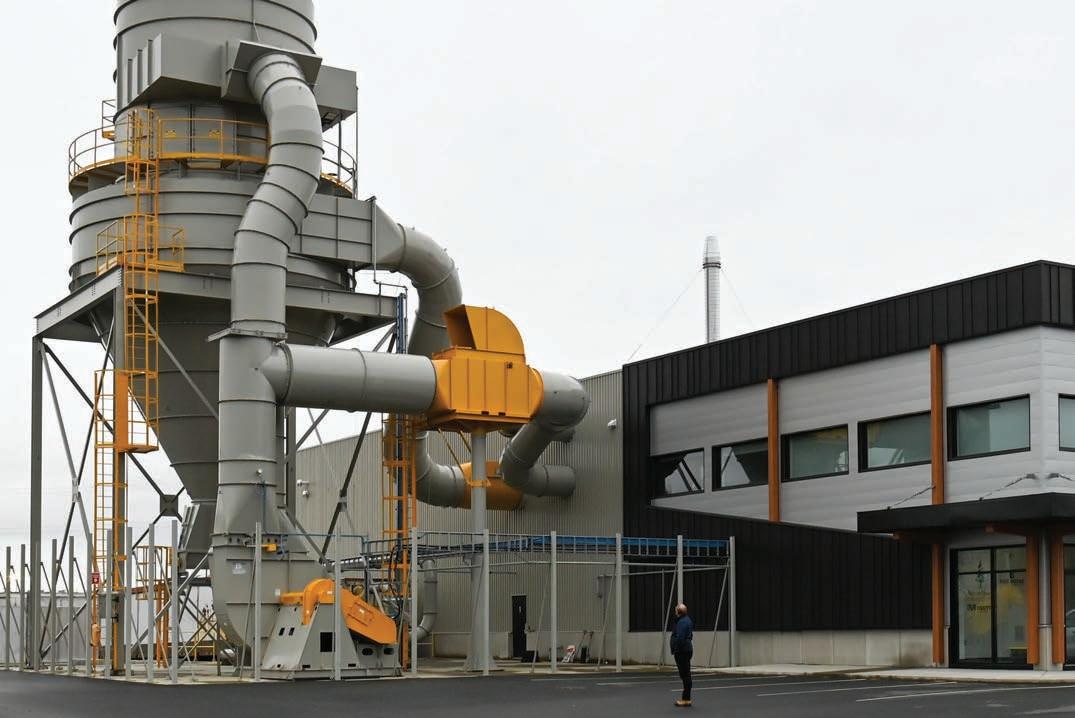
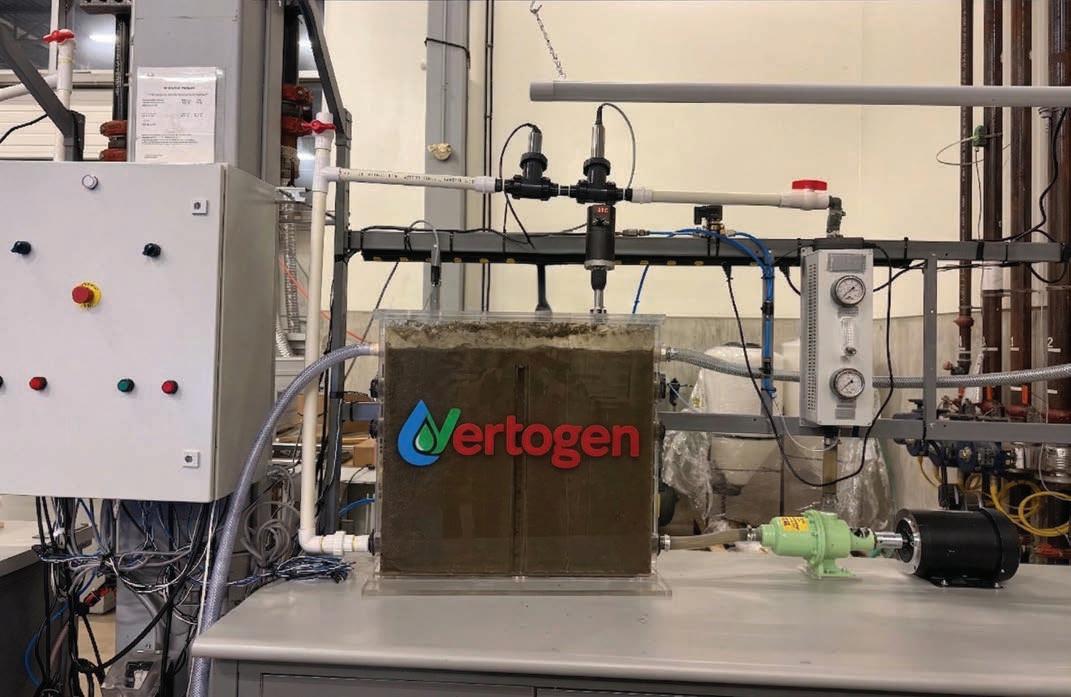
The RNG Accelerator is designed to reduce processing times for anaerobic digesters by up to 90 per cent. Photo: Vertogen Technologies.
– NorthX is really looking for solutions to target these issues, and Vertogen provides a technology that’s compatible with existing infrastructure and still is able to significantly increase RNG production. So, for us, that makes it a very attractive solution,” says Ashley Callister, investment lead at NorthX Climate Tech who evaluates biomass solutions, low-carbon fuel innovations, and wildfire technologies for the organization.
NorthX’s role is to essentially de-risk and validate innovative technologies while providing funding to companies that can showcase the potential for scaling up.
“In the biomass space, it’s understanding where you’re getting feedstock from, who your off-taker is, what those agreements look like, and what the certainty can be,” Callister explains, adding that the “valley of death” for these entrepreneurs is almost always the commercial scale up of their technologies. “That’s challenging for any low-carbon fuel, but especially at an earlier stage.”
HOW IT WORKS
Typical anaerobic digestion involves four different groups of bacteria. The first group decomposes large solids into smaller solids; the second group takes those small solids and organic material and converts it into volatile fatty acids; and a third group breaks down the volatile fatty acids into acetic acid, not unlike vinegar.
“What’s advantageous is the last group of bacteria are anaerobic. That means they can’t survive with oxygen, but they love acetic acid which they can easily transport though the cell membrane and then convert it into biogas, consisting of carbon dioxide and methane as a renewable natural gas,” explains Dr. Troy Vassos, CEO of Vertogen and the creator of the technology.
These four groups of bacteria are all present in a conventional digester which is optimized for the methane gas producers, under conditions that are sub-optimal for the other three. As a consequence, it can take 20 days or more to produce methane gas and about 60 per cent of the original solids going to waste.
“That’s generally the best that can be
done under those conditions,” Vassos says. “In the past 10 to 15, years, people have been looking at trying to optimize renewable gas production, make it work faster and better. Multiple attempts to speed up and optimize the process have failed to yield phenomenal results”, Vassos says.
That is until Vertogen’s technology, which began its journey in a lab about 25 years ago when Vassos came across a phenomenon that resulted in extremely high yields of acetic acid that shouldn’t have existed under the observed conditions.
“We took a look at it, and through research, determined that we could accelerate the process by separately optimizing the growing conditions for the first three groups of bacteria, causing them to rapidly convert the waste organic matter into large amounts of acetic acid over 24 to 48 hours, and then feed the acetic acid to the methanogens, which convert the acetic acid to methane gas within hours” Vassos explains.
This both dramatically reduces the amount of time it takes to generate methane gas from organic matter and we can easily adapt the process to an existing conventionally designed anaerobic digester,” Vassos says. “Essentially, we take the organic matter that the big reactor normally takes, and convert most of it into acetic acid, and then send the acetic acid enhanced feedstock to the digester to continue the digestion process while the methane producing bacteria immediately convert the acetic acid into methane gas.”
The current pilot testing being done with the funding from NorthX involves establishing optimal operating conditions for different sources of waste organic matter for application at a commercial scale.
“We know we can treat all of the organic waste sources we are considering, but the question is, what are the optimal conditions? Animal manure, food waste from restaurants, municipal wastewater, sludges, any type of organic green waste, even that can be decomposed, could be managed in the same way,” Vassos explains.
The research is being performed at the Annacis Research and Event Centre, a sustainable resource recovery research
facility owned by Metro Vancouver and located next to their municipal wastewater treatment facility on Annacis Island, in Delta, B.C.
“The Metro Vancouver location gives us access to shared laboratory facilities, research space and access to municipal primary sludge and secondary waste activated sludge. We’re currently working with the primary sludge, which is what we used for the original research work. We will then advance to investigate optimal conditions for waste activated sludge, animal manure and then food waste. Then within the next six to eight months, we’ll advance into a large-scale pilot operation that will support a large anaerobic digester, so essentially, a much bigger scaled application,” Vassos says.
The ability to speed up the process for municipal wastes and convert them into renewable energy has the potential to generate significant economic benefits to municipalities while finding more optimal ways to dispose of their waste.
“What we’re doing, essentially, reduces the capital cost for anaerobic digestion and increases the amount of organic waste and the amount of energy that can be generated, which means the production of renewable natural gas can be much more economical than it has been historically. Secondly, we can take existing infrastructure that has already been paid for, and we’re talking hundreds of millions of dollars in a treatment plant, and being able to make it work 10 times better than it did before; take 10 times more waste; and delay any expansion of anaerobic digestion facilities, probably for just about forever,” Vassos says. “From a practical standpoint of the lifespan of a digester, it has great potential for being very disruptive as a technology.”
“Producing renewable gas from waste has huge potential but has long been constrained by slow, costly processes,” says Dr. Troy Vassos, CEO of Vertogen. “By dramatically reducing processing time, our technology helps make renewable gas production faster and more efficient, while lowering waste and disposal costs.
To learn more about Vertogen Technologies, visit: www.vertogen.ca. •
Montreal Wood Convention offers economic outlook
Presentations tackled oil shock, lumber markets, and the overall health of Canada’s economy
By Andrew Snook
The Montreal Wood Convention attracted approximately 1,200 people and featured sessions on oil shock, lumber markets and the economy.
The popular annual convention hosted by the Québec Forest Industry Council (QFIC), Québec Wood Export Bureau (QWEB), Ontario Forest Industries Association (OFIA), and the Maritime Lumber Bureau (MLB), kicked off with a presentation by Benjamin Tal of CIBC Capital Markets.
During Tal’s presentation he went into detail discussing the current oil shock the world is experiencing and their historical connections with recessions.
“Every time we’ve had an oil shock, five minutes after, we had a recession,” he told the crowd.
Tal pointed to the 1973-74 oil embargo and the recessions of the early 1980s and 1990s as examples of recessions following oil shocks.
“Even the 2008 mother of all recessions, the financial crisis, was led by an oil shock when oil prices went up to $120,” Tal said.
While there is a connection between oil shocks and recessions, he argues that it is the response to oil shocks by government institutions – namely, higher interest rates – that led to those recessions.
Whether a recession will follow an oil shock can be measured by four factors: where the oil market was at the eve of the crisis; where the economy was at the eve of the crisis; the magnitude of the shock; and the duration of that shock.
“When it comes to where the oil market was, we are lucky. It was actually in equilibrium. So, not a big deal. It went up, but it didn’t go up from very low levels,” he said.
However, the second factor – the state of the Canadian economy – could be a negative contributor as it is not in the most healthy of states. Tal said that the Canadian and U.S. economies were already showing signs of weakness prior to the oil shock, so its duration will be the biggest factor. Even if everything were to go back to normal tomorrow, Tal said that it would take upwards of seven weeks for oil to flow normally; and up to three months for natural gas prices to go back to pre-shock levels.
During his regular meetings with the
Bank of Canada and the Federal Reserve, Tal urges them both not to repeat past mistakes fighting oil prices with higher interest rates. While the current oil shock has been challenging for economies, Tal believes it will be short lived, as that is in the best interests of both Iran and the U.S.
“Iran and the U.S. are desperate for some sort of resolution. Iran cannot last with a situation in which they don’t have any oil money. They need to compromise. Trump cannot afford $150-a-barrel oil,” he told the crowd, noting that the U.S. Midterms are soon approaching and higher gasoline prices, along with higher food and energy costs, will hurt the Republicans during the upcoming elections on Nov. 3, 2026.
Benjamin Tal of CIBC Capital Markets discussed the impact of the current oil shock and the state of the Canadian economy.
Photo: Andrew Snook.
GLOBAL LUMBER MARKETS
The Montreal Wood Convention sessions continued with a presentation by Paul F. Jannke of the Forest Economic Advisors LLC looking at the global lumber markets.
Jannke said that there is tremendous pent-up demand building for housing in the U.S., particularly with young adults in the 18 to 34 years of age category.
“If today, they had the same rate of separating out from other adults – from their parents, from their friends – as we had in 2000, we would have 2 million more households out there, and that would be the need for 2 million more housing units,” he told the crowd.
Due to affordability issues, adults are living together who, historically, would not have been doing so.
“As soon as it becomes affordable, as soon as a household income gets high enough, they’re going to go out and form a separate housing unit, and that’s propping up housing starts,” Jannke said.
The slowing of U.S. homebuilding has led to significant closures of mills across all regions of the U.S.
“In total, it was about 6 billion more feet. Interestingly, a lot of it occurred in the South, but in net, the South actually grew, and part of the reason why we had closures in the South was because there was so much capacity expansion and new mills going in, and then older mills were shut down, or redundant mills were shut down, and so that led to a bunch of closures,” Jannke explained.
The markets reacted with prices increasing for lumber to a point where there was some profitability to be had for U.S. producers.
“For the Canadian producers, shipping into the U.S. You’re still not making money, likely, if you’re an average producer, but if we then include the fact that 40 per cent of your wood is going elsewhere, you’re back to more of a break-even point,” Jannke says. “This is obviously a good place to be, because if you’re losing money, we would see continued closures.”
Another cause for concern right now is rising freight costs due to the ongoing U.S.-Iran war. The uncertainty and rising costs associated with the current oil shock has made it extremely difficult for lumber
buyers to predict future shipping costs.
When it comes to U.S. duties and tariffs, Canadian lumber suppliers are facing a significant disadvantage when competing with European wood products for U.S. market share, since European producers face far lower tariffs. While there has been an aggressive call for Canadian producers to expand the markets for their wood products, expanding outside of North America will face stiff competition, despite lumber availability from Europe expected to decrease significantly in the long term, Jannke noted. He said Canada will face fierce competition from Russia and the U.S. South, which, due to excess supply, is pushing producers to focus more on export markets.
He added that there are only three major lumber consuming regions for Canada to export its products: the U.S., China, and Europe. The U.S. is not expected to have much demand in 2026, with growth somewhere between 250- to 500-million board feet, based on 1.36 million housing starts.
In 2027, the U.S. housing market is only expected to experience moderate growth. Demand for lumber in China is also only expected to increase modestly with high demand unlikely to come back due to an oversupply of existing housing units, slowing down urbanization rates, a declining adult population, low levels of live births, and an over-reliance on exports.
His conclusion was that Canadian producers need to maintain their market share in the U.S.; and noted that the lower cost regions in Canada can compete with U.S. domestic producers. Despite the higher costs for SPF, U.S. homebuilders largely continue to demand that lumber for their framing applications.
“It’s going to be a slow process with southern pine selling at a discount to SPF for builders to transition over,” Jannke said. “If they do, and to the extent that we do see that happen, it will likely be through things like using southern pine trusses, wall systems, floor systems, joists, that sort of thing.” •
Combustible Dust Specialists
Allied brings 49 years experience to help you meet current NFPA Standards with: system design/documentation, spark detection, isolation, grounding, PLC, venting, blast path management, clean-up systems and duct audits — CWB certified and member SMACNA.
Sawmill – Biomass – Boardplants – Pulp & Paper – Power Generation – Mining 52 years of Industrial Air Systems www.alliedblower.com ◆
The value of low-carbon fuels
IBiofuels are dampening price volatility during the U.S.-Iran conflict
t’s easy, but inaccurate, to suggest that Canadians’ home finances would be stronger without biofuels, but the data do not support that theory. Furthermore, a domestic biofuel industry that utilizes Canadian farm crop feedstocks insulates us from the instability caused by global trade tensions by shoring up domestic supply of transportation fuels and lessening reliance on foreign markets and volatile trade policies.
Surging global petroleum and refined product prices are impacting Canadian drivers and our economy. To the question of whether biofuels in our fuel supply are helping or hurting Canadians in the midst of the Iranian conflict, the facts are unequivocal: biofuels are dampening both price increases and price volatility resulting from an unstable geopolitical situation.
The first reason is simple supply and demand economics. Restricted crude oil supplies have driven pump prices higher. Prices drop when more fuel supplies are available.
Canada’s average 10-per-cent ethanol content in gasoline provides that additional supply for Canada’s cars and light trucks. Without ethanol, pump prices would be substantially higher.
This dynamic has been the subject of expert studies quantifying the fuel cost benefits of biofuel blending when global fossil fuel supply is disrupted by war or sanctions.
A 2014 study concluded that ethanol blending was suppressing gasoline prices by US$0.25/gallon, and a 2017 study
By Fred Ghatala
calculated fuel savings associated with additional ethanol supply to be US$0.22/ gallon under relatively quiet geopolitics.
A 2022 study assessed the presence of six-per-cent biomass-based diesel content in U.S. diesel volumes to have reduced the cost of diesel by 4 per cent, or US $0.22/gallon.
Secondly, ethanol is cheaper than gasoline, and the price spread is growing.
The most recent Biofuels in Canada report shows Canadian wholesale ethanol was 7.4 cents per litre cheaper than gasoline.
More critically, the ‘gasoline-ethanol spread’ is wider now than it has been in years.
Biofuel blended in gasoline (e.g. ethanol) reduced Canadian wholesale gasoline costs by $1.7 billion in 2024. Since 2010, ethanol has reduced wholesale gasoline costs by over $13.2 billion.
Finally, biofuel and conventional fuel prices have responded asymmetrically to global energy instability.
Since the start of the Iranian conflict, Canadian wholesale gasoline prices have risen by 28 per cent, while wholesale ethanol prices have risen 5.5 per cent. Moreover, the cost of feedstock – corn – has risen two per cent, and biomass-based diesel feedstock – canola oil – has increased three per cent.
Biofuel in gasoline is already saving motorists money and also has lower price volatility relative to global energy instabilities. That reality is even more important in today’s geopolitical environment,
where war in the Middle East, disruptions around the Strait of Hormuz, sanctions, and broader trade tensions are again exposing how vulnerable petroleum markets are to shocks far beyond Canada’s borders.
In recent days, global oil prices have surged sharply as conflict related supply risks intensified, underscoring the value of fuel sources that are produced at home and are less exposed to global crude disruptions.
Experts estimate that biofuels add at least $6.4 billion every year to the Canadian economy.
Federal, provincial, and territorial governments are actively renewing an industrial strategy for Canada’s fuel supply chains, and that effort should continue.
Canada’s Clean Fuel Regulations are specifically designed to drive the use of cleaner fuels, support jobs and innovation, and strengthen the long-term availability of low-carbon fuel supply, while recent federal measures and proposed amendments have been aimed at improving the resiliency and competitiveness of domestic biofuel producers. In this context, supportive policy is not optional; it is essential.
The economic, energy security, and affordability benefits of biofuels are a cornerstone on which to build a more resilient, secure, and affordable Canadian economy. •
Fred Ghatala is the president of Advanced Biofuels Canada
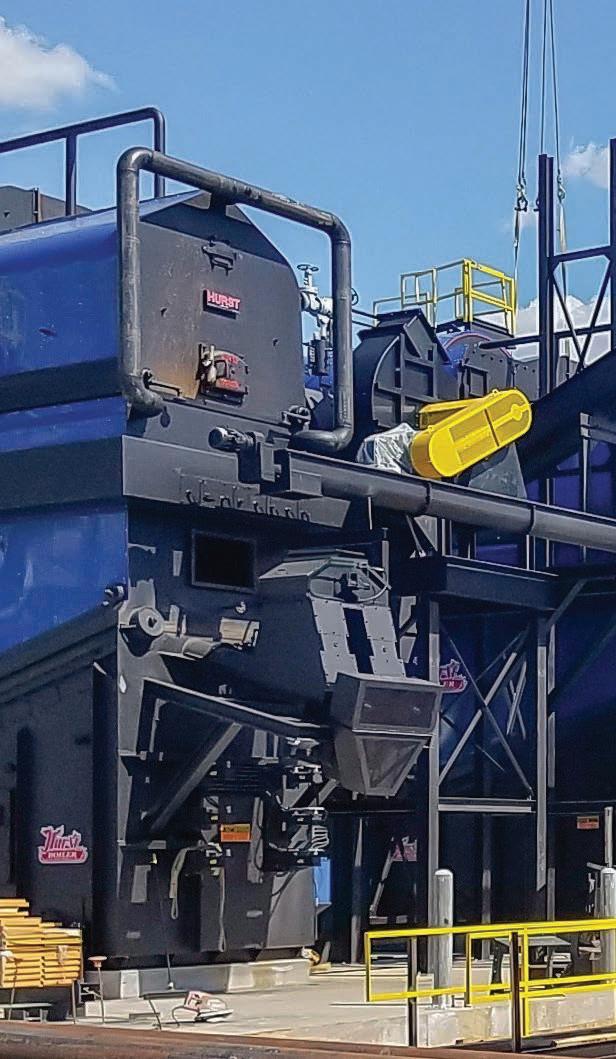
Hurst biomass systems lead the alternative energy boiler market with innovative solid-fuel-combustion design
Hurst is a custom manufacturer of engineered packaged steam and hot water boilers and integrated boiler systems, renewable fuel fired gasification/ combustion/heat recovery systems, biomass & hybrid boiler systems, CHP/ co-generation systems, PLC-integrated boiler controls, parts & boiler room accessories. Fire-tube, water-tube & feedwater equipment for all industrial heating & process applications. Low NOx modular boilers & burners available.
Hurst Biomass Systems lead the alternative energy boiler market with innovative solid-fuel-combustion design.
Complete modular construction for easy low cost installation.
Hurst has specialized in custom design of biomass steam plants and cogeneration systems since 1967.
High Efficiency Integrated Control Systems
Offering integration and scalability, the new, high efficiency Integrated Control Systems from Hurst Boiler for boiler room monitoring and communications provide advanced supervisory boiler controls for all new and legacy Hurst products.