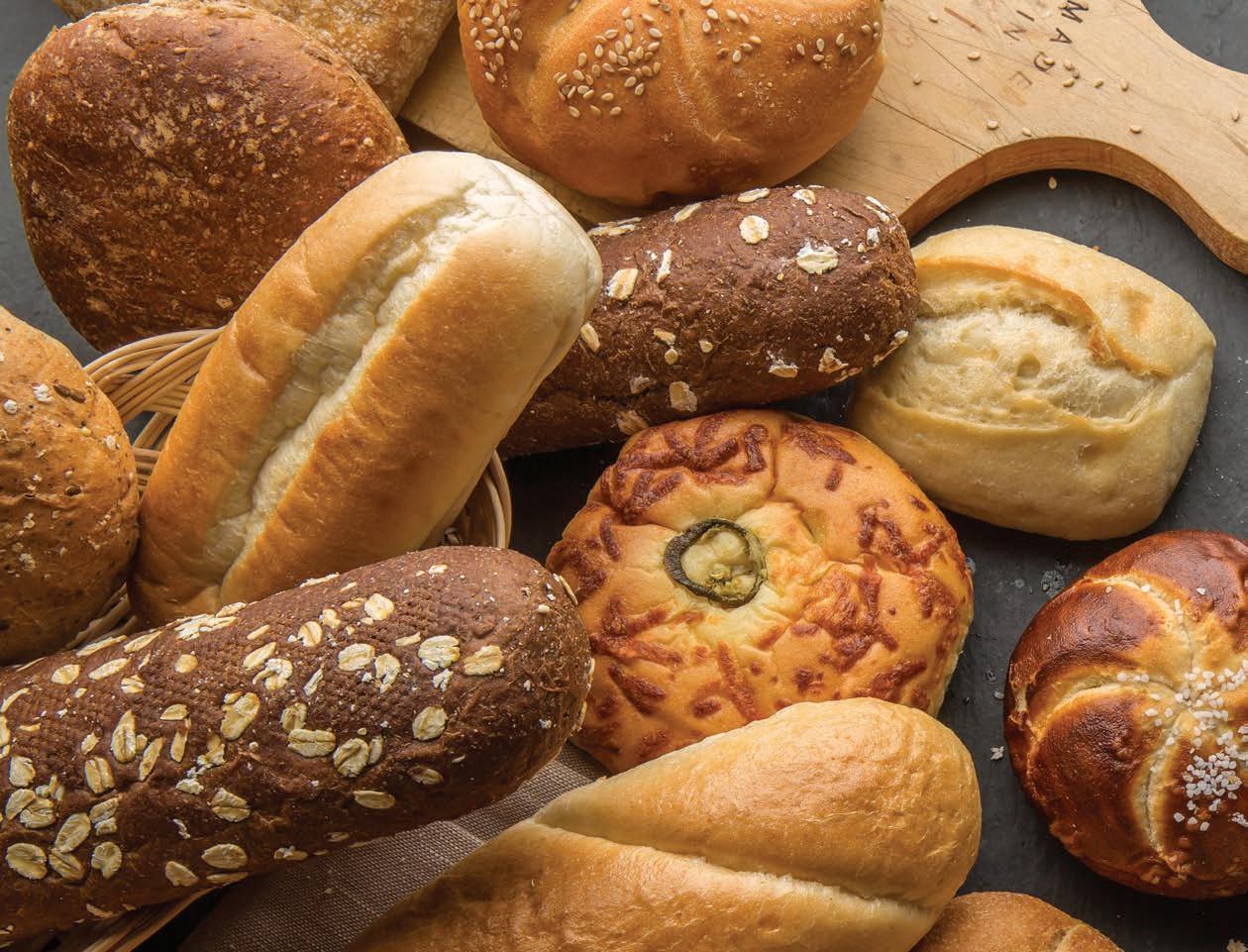
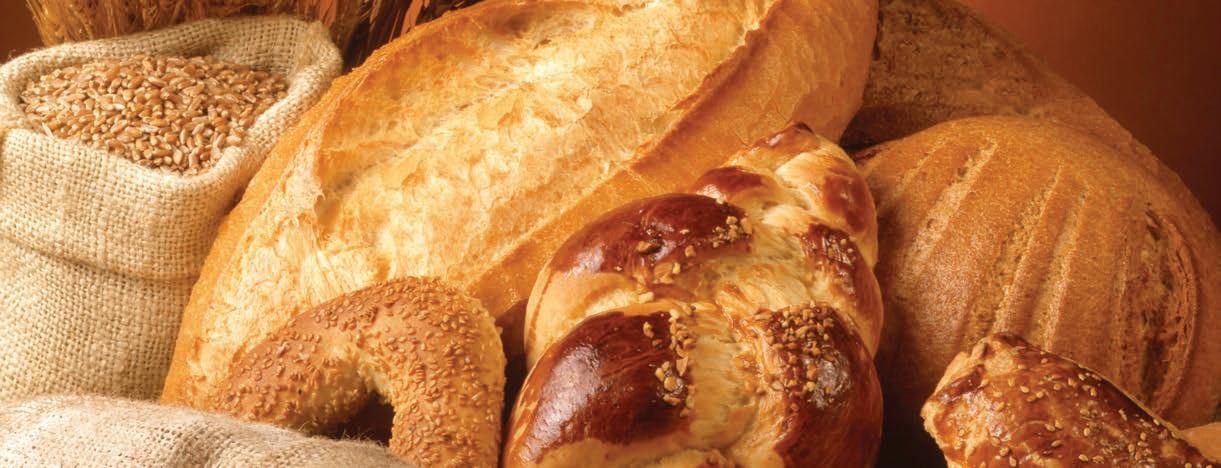
Produce your entire line of buns and rolls with a single, versatile Vemag Dough Divider
n Gently handles dough
n Unmatched scaling accuracy
n Precisely scales a wide range of dough portions
n Produces a variety of crumb structures
n Handles absorption rates from 45% to 95%
n No divider oil needed
n Fast, easy changeovers
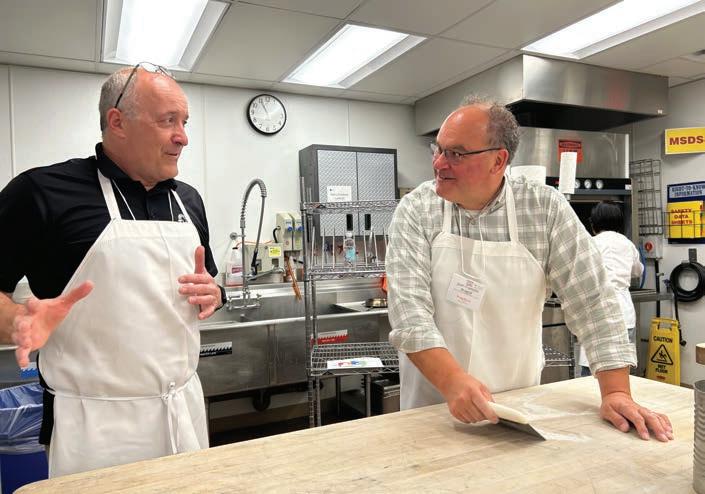
n Come run your product with us at the Reiser Customer Center.
Vemag 500 dough divider
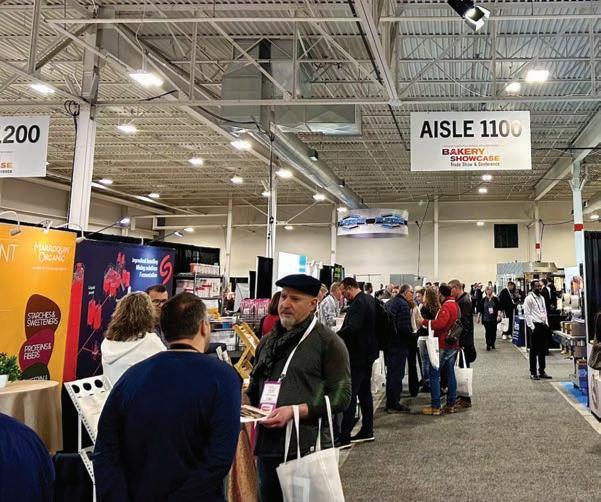
BAKERY SHOWCASE BUZZED. The annual trade show and conference drew a record crowd who came to learn, enjoy the Bakery Cup and shop.
FEATURES
8 Bakery Showcase highlights
Couldn’t get to Bakery Showcase? Here’s a recap hitting some of the highlights of the education sessions, demonstrations, the Bakery Cup of Canada competition and action on the show floor.
18 Sweet layers of history
Chef Karen Barr explores French techniques and flavours and sweet traditions of Vietnam to enrich your own bakery.
COLUMNS
22 Concepts for Success
Seven easy ways to attract international visitors to your bakery.
ON THE COVER Vietnam’s dessert scene still carries the imprint of French colonization. Yet, local bakers and pastry chefs have combined French techniques with flavours and traditions native to Vietnam. For a glimpse, see page 18.
DEPARTMENTS
Bakery Cup of Canada 2026: Close-up video and photo highlights
Get a behind-the-scenes look at the hard work, fun and camaraderie experienced by competitors at the Baking Association of Canada’s first national Bakery Cup of Canada held at Bakery Showcase in Toronto May 2-4, 2026. See what it’s like to compete – straight from the show floor. Visit bakersjournal.com!
BAKERS JOURNAL EXTRAS | BAC updates and webinars | Legislation affecting bakeries | Stories of independent bakeries | Showcase information | Irresistible recipes… plus, the latest industry news and new products. www.bakersjournal.com
BY COLLEEN CROSS
SHARED GOALS
Icame away from Bakery Showcase all fired up.
There’s no denying the boost of energy you get from a busy in-person baking industry event.
That was true in Toronto in May, where we saw how much appetite there is for us to gather, share experiences and work toward solutions to our common challenges.
Whether that gathering takes place in person at national or regional events, through a webinar or around an online hub of bakersjournal.com or the BAC’s baking.ca, it must happen for this industry to thrive and grow.
Bakeries, manufacturers, suppliers across Canada have many shared concerns. Atop the list is the challenge of attracting, smoothing the path to hire, and retaining good employees.
This is shared by the colleges. Baking and pastry programs across Canada also want graduates to succeed in finding suitable and rewarding positions with potential for career growth.
That’s why the federal government’s announcement in May that it will provide $6 billion in funding to recruit, train and hire 80,000 to 100,000 new Red Seal trades workers, including bakers and cooks, in the next five years, is a welcome one.
The new funding will help provide young Canadians with paid, job-ready placements that lead directly into registered apprenticeships, boost and modernize apprenticeship training to expedite Red Seal certification, and address challenges that can stop apprentices from completing their training.
It’s a good start and a message that acknowledges the urgency of the situation.
Our national board is tackling this challenge with energy. In this issue’s Bulletin, Martin Barnett outlines the BAC’s priorities over the next year and half. I urge you to read through the priorities and give your feedback to the board. Whether you are a BAC member or not, the association works for the benefit of the industry as a whole and wants to hear from you.
Barnett writes, “One of the most urgent issues facing Canadian bakeries, especially in Atlantic Canada and rural regions, is the uncertainty facing foreign workers who are already here, already trained and already essential to our operations.”
He and the board want to know how work permit expiries are affecting your bakery and what a stable Permanent Resident pathway would mean for your team.
They also are connecting with culinary and baking schools and have prioritized leadership development and standardized onboarding tools. Bakeries are encouraged to let them know which skills are hardest to find in new hires and which training formats work best for your team.
One issue that has come to the attention of Bakers Journal, in Ontario at least, is the time-consuming and sometimes confusing process students must undertake to register as apprentices.
At a recent college event, we learned about the Ontario Youth Apprenticeship Program, which gives high school students in select regions exposure to the baking and culinary profession through specialized classes and industry placements. The province provides $1,000 to each business that hires an apprentice and mentors them to obtain their Red Seal certification.
Clearly, government and industry are making the effort to connect with students, but there may be a bit of a disconnect between the message potential apprentices are receiving to join this vibrant industry and the complex experience they encounter with the administrative process.
We plan to explore this process and the experiences of applicants in upcoming articles. I would like to hear from students, baking schools and bakeries in all provinces and territories about the apprenticeship experience. Please email me at ccross@annexbusinessmedia.com or call 416-843-8905. / BJ
JUNE 2026 | VOL. 86, NO. 3
Reader Service
Print and digital subscription inquiries or changes, please contact Angelita Potal, Customer Service Rep. Tel: (416) 510-5113
Email: apotal@annexbusinessmedia.com
Mail: 111 Gordon Baker Rd., Suite 400, Toronto, ON M2H 3R1
GROUP PUBLISHER | Adam Szpakowski aszpakowski@annexbusinessmedia.com
AUDIENCE DEVELOPMENT MANAGER | Beata Olechnowicz bolechnowicz@annexbusinessmedia.com 416-510-5182
CEO | Scott Jamieson sjamieson@annexbusinessmedia.com
Mailing Address P.O. Box 530, 105 Donly Dr. S., Simcoe, ON N3Y 4N5
PUBLICATION MAIL AGREEMENT NO. 40065710.
ISSN 0005-4097
Published five times per year (Feb, Apr, June, Sept, Dec) by Annex Business Media.
Subscription Rates
- 1 Year $89.64
Copy Canada - $5.00 All prices in CAD funds.
Occasionally, Bakers Journal will mail information on behalf of industry-related groups whose products and services we believe may be of interest to you. If you prefer not to receive this information, please contact our circulation department in any of the four ways listed above.
Opinions expressed in this magazine are not necessarily those of the editor or the publisher. No liability is assumed for errors or omissions. All advertising is subject to the publisher’s approval. Such approval does not imply any endorsement of the products or services advertised. Publisher reserves the right to refuse advertising that does not meet the standards of the publication.
No part of the editorial content of this publication may be reprinted without the publisher’s written permission.
Offering one of the most extensive product ranges in the country including:
• Butter
• Cream Cheese
• Cheese
• Fluid & Evaporated
• Functional Proteins
• Milk Powders
• Milk Replacers
• Whey Powders
• Whey Replacers
Lactalis Canada Ingredients is backed by a team of experts with deep industry expertise, partnering with customers to deliver innovative, tailored ingredient solutions.
¦ industry news ¦
briefly | International bakery consultant Mario Fortin retires; Ontario introduces agri-food legislation; ‘TikTok & Your Bakery’ webinar explores how short videos are driving foot traffic to your business | for more news in the baking world, check out our website, www.bakersjournal.com
Le Duo Choc. patisserie earns top honours in Bakery Cup of Canada competition
It was a sweet victory for a Quebec bakery and patisserie seeking a challenge.
Florent Lehmann, owner of Le Duo Choc. patisserie in Candiac, Que., and assistant Félix Jeandot were the overall winners in the Bakery Cup competition, a competition that tested the skills of professional bakers in specialty breads, croissants, baguettes, viennoiserie and an artistic showpiece at the BAC’s Bakery
Showcase in Toronto May 3-4.
Lehmann and Jeandot won awards in the individual categories of best specialty bread, baguette and croissant. Jeandot also earned a nod as outstanding assistant. Lehmann recently competed as a member of Team Canada, who won the Americas selection of the Coupe du monde de la boulangerie, or Bakery World Cup, and went on to place fifth in the world at the finals in Paris in January.
Ilynna Lam and assistant Aidria Quilty won best viennoiserie and artistic showpiece categories. Lam is pastry chef at XIX Nineteen in St. Albert, Alta., and an instructor in NAIT’s baking and pastry program where Quilty is a student.
The awards come with cash prizes, trophies and, for Lehmann and Jeandot, the opportunity to qualify and compete at the 2027 Mondiale du pain in Nantes, France.
B.C. ‘Bakers Den’ competition to celebrate bakery innovation
The Baking Association of Canada’s B.C. Chapter is hosting a baking competition aimed at showcasing talent and innovation in bakeries in B.C.
The BAC invites bakeries to enter and showcase their innovative baked products. Do you have:
• a new or innovative product?
• a signature item ready for the market?
• a product you believe is the next big thing? Participants will compete and be judged by their industry peers for a chance to win major education, training, equipment, supplies and support prizes, including a first-place prize of $5,000 value, secondplace prize of $2,500 value and thirdplace prize of $1,000 value. *Please note that prizes are in kind only and have no cash value.
The deadline for entries is July 29, 2026. Submit your product ideas by email to info@baking.ca.
Products will be judged on product concept, food costing, scalability, marketability and your sales plan.
The final event and winning presentations will take place Sept. 18 at Island City Baking’s Frozen Dough Division in Burnaby from 11 a.m. to 3 p.m.
Finalists will receive one year’s free BAC membership, be featured in Bakers Journal and potentially compete nationally at Bakery Showcase.
For more information about the competition, including a worksheet you can download, visit baking.ca.
We engineered the 872 Plus to deliver more value with less effort – fewer parts to maintain, less downtime, and reliable performance that keeps production moving. It’s easier to operate and maintain, quick to set up, lighter in weight, and built to reduce your overall cost.
Less complexity, more results.
BUZZ OF BAKERIES
The Baking Association of Canada’s annual conference and trade show, held May 3-4 at the Toronto Congress Centre, saw record registration of more than 3,000 bakers and members of the industry gather for networking, product sampling and consultation with 200 exhibitors, demonstrations, education sessions and the first national Bakery Cup of Canada competition.
Several dynamic sessions highlighted smart and talented creators and operators in the industry.
WOMEN IN BAKERY
A panel of inspiring women kicked off Showcase by sharing their career journeys and lessons learned over their
career journeys.
Constanza Kristen, senior manager, process and packaging, Give and Go/ Mondelez, urged women starting out in baking to make human connections. “If you don’t’ know people, you don’t know business,” Kristen said, noting that, although putting yourself out there can be intimidating, asking questions is a great way to start. “People love to talk.”
Elisabeth Brasseur, vicepresident, Farinart and SPB Solutions, said the business climate for women has improved since she started attending trade shows and clients regularly assumed she was the spouse of a colleague rather than co-owner of a respected flour and milling company. “Things have changed. Take heart!”
Brasseur advised women starting out.
Kate Nugent, culinary arts baking and pastry professor, George Brown Polytechnic, recalled moving “from banking to baking” when a professor suggested she attend a meeting of the then Bakery Production Club of Ontario. She found herself at a table with 10 men wondering if she belonged. After working in several bakeries and as a professor, Nugent is still deeply involved with BAC’s Ontario Chapter and a member of the national board, and a mentor to many students.
Kate Tomic, business team director, bakery, Caldic Canada, pivoted from working as a hands-on pastry chef in restaurants to a more “sustainable” career in R&D. Tomic
praised today’s students as smart and driven, advising them to be open to change and fearless in connecting: “Don’t wait to get involved: introduce yourself.”
Rosalyn Hyslop shared how she and husband Blair, who met while working in Junior Achievement in New Brunswick, bought Mrs. Dunster’s bakery in 2014. “We wanted to own a business,” said Hyslop, co-owner and co-CEO. She remembered the bank calling them “too aggressive” in growing the business and proving the bank wrong by growing by 35 per cent the first year on top of recovering the business’s debt at the time of sale.
The lineup of women eager to talk with the speakers is evidence this session struck a strong chord.
Caoimhe Henry and Brittany Buchanan moderated a panel featuring Kate Nugent, Constanza Kristen, Elisabeth Brasseur, Kate Tomic and Rosalyn Hyslop. These women in successful and influential leadership positions shared their career experiences and advice for those starting out in bakery.
Taste Tomorrow is the world’s largest ecosystem for consumer understanding in the patisserie, bakery, and chocolate sectors. Developed by Puratos over a decade ago, this visionary consumer research initiative offers a dynamic global perspective on the food industry today and provides predictions for its trajectory tomorrow.
Explore the latest trends, innovations and insights that will shape the future of food.
A panel discussion on dessert trends moderated by Martin Barnett, executive director of the BAC, featured Ryan Mallin, head chef at RMP Bakehouse at Pearl Morissette in Jordan, Ont., Hans Juarez, pastry chef at Quails’ Gate Winery in Kelowna, B.C., David Haman, professor at George Brown Polytechnic, and Joanne Yolles, a celebrated pastry chef at Toronto’s Scaramouche and other restaurants who now teaches private classes.
Mallin observed that Canadians are demanding whole wheat even in their indulgences, while Suarez said his customers are looking for more vegan options – a challenge that requires finding egg substitutes. Haman identified a shift away from haute pastry such as entremets toward desserts with substance. As he put it, “People want substance and grit as opposed to air and gelatin.”
Panellists agreed that new bakers and pastry chefs need to master basic skills before experimenting and that learning
new trends and techniques is a good thing, as long as “you know where the trend came from,” in the words of Suarez.
Yolles said she enjoys using social media as a learning tool to discover new techniques but finds that trendy desserts don’t always suit her strengths. “Keep your identity and stick to what you’re good at,” she advised.
ADVICE FOR NEW BAKERY ENTREPRENEURS
In a starter guide to opening your bakery, Kimberly Houston and Scott Calvert of the Retail Bakers of America walked novice bakers through key points in their Business of Baking program. Houston and Calvert urged bakers to raise their prices as needed, or set them high from the start, to cover their costs. Calvert cautioned bakers to base prices on cost formulas and not competitors’ prices, which may have been set based on imperfect assumptions or on a whim.
Houston recommended starting with eight to 12 items and perfecting them and to “never open with a chocolate chip
cookie because everyone has their own favourite version and you will never match that.”
Calvert urged new owners receiving financing to make sure they have the option to pay off a loan all at once without penalty.
Houston emphasized that your brand is not just a logo or a product. “Your brand is how you present yourself,” she said, adding that this permeates every aspect of your business, including how you transport your products. “It’s what you want people to say about your business.”
DEEP DIVE ON CAKE TEXTURES
Our perceptions of texture are subjective, but using a common language to describe texture can help you home in on your customers’ needs and upsell using a characteristic that is growing in importance for consumers. This was a takeaway from an interactive education session presented by Puratos.
Puratos’ research suggests 72 per cent of North Americans like to try food with different textures and 64 per cent like to
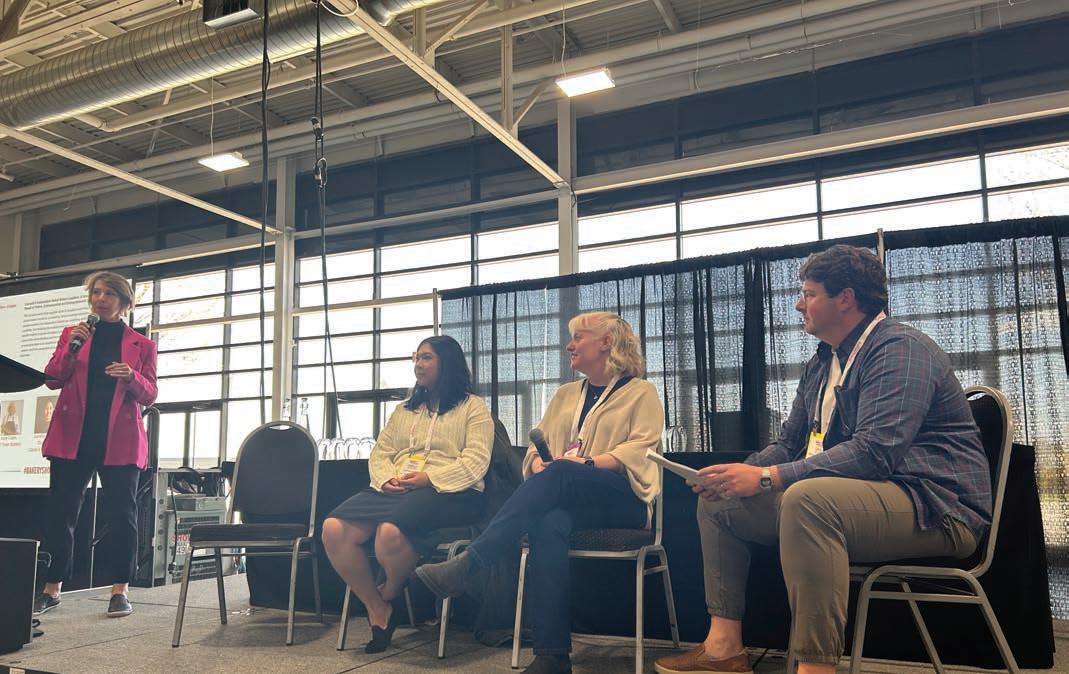
Marissa Sertich, Retail Bakers of America, drew thoughtful insights from panellists Junelle Casalon, Castle & Coal in Toronto, Kate Cram, Old Town Bakery and Wild Poppy Market, Nanaimo, B.C., and David Baxter, Circles and Squares Bakery, Toronto.
try food in new formats.
Chef Pedro Sousa, a pastry chef and Technical Advisor at Puratos, discussed patisserie trends and ways to describe cake in the context of the company’s Cake Texture Collection, a curated showcase from around the world designed to help baking professionals understand and appreciate the diversity of textures and use a common language to describe them.
The takeaway for bakeries? It’s important to be aware of the nuances of texture. A customer may notice and be disappointed by the texture of a cake or product. They may also be surprised and delighted by a cake texture and enjoy a greater feeling of indulgence.
PANEL FEATURES SAVVY INDEPENDENT RETAIL BAKERY LEADERS
A dynamic panel brought together some of Canada’s most successful artisan bakery owners – each with a unique business model – for an inspiring, forward-looking conversation.
Expertly moderated by Marissa Sertich, executive director of the Retail Bakers of America, the in-depth session explored how independent bakeries organize, identify and grow their bakery operations while navigating a challenging retail landscape. Panellists were Kate Cram, owner, Red Seal baker and entrepreneur, Old Town Bakery and Wild Poppy Market, Nanaimo, B.C.; David Baxter, owner, Circles and Squares Bakery, Toronto; and Junelle Casalon, co-owner of Castle & Coal in Toronto.
The speakers identified labour as a shared concern but were optimistic about future projects and growth.
Baxter said there is a big opportunity for independent retail bakeries to gain customers based on high-quality products and service: “There’s a lot of people who want something better than 75-per-cent good enough. If you’re able to give them that 80 to 95 per cent of how good something can be on a consistent level, I think there’s just a lot of opportunity there.”
Cram is excited the general public seems to respect what bakeries do: “I
don’t know if social media has added to that, but people know a lot about sourdough. They’re excited about lamination. They’re excited to try things. They’re recognizing that in what you’re doing and excited to see it. That fuels us to try to do more and more.”
Casalon shared details of a successful initiative: “I’m excited about our dessert tastings at the shop. Before we started, I wondered if people would be willing to come out and pay $95 for like five desserts. . . . It’s showing them they don’t need to go to a fine-dining restaurant to eat these kinds of desserts and see these kinds of plates. At the same time, I kind of want to challenge myself and my team. At the end of the day, you get to talk to people, get their feedback and they leave with a goodie bag.”
DEMOS TOUCHED ON TECHNIQUES, FLAVOURS AND REDUCING WASTE AND FOOD COSTS
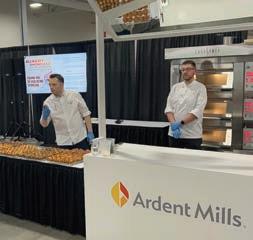
The show featured demonstrations by Jamie Brown of Boeker Sourdough of Germany on evaluating the taste of sourdough, celebrity cake artist April Julien on tips for making hyper-realistic cakes that resemble everyday objects, Canadian Pizza Chef of the Year Bart Nadherny on how to make award-winning sourdough pizza and incorporate brioche dough into garlic knots to reduce product waste, and Julien Bruyer of Team Canada on variations of modern pain au chocolat, featuring new flavours, stencil print design, bicolour technique, shapes and scoring. Reid McEachran, international marketing manager, and Ed Reinwald, certified master baker, with Ardent Mills, led an informative session on a new, singleingredient cocoa alternative made using roasted and malted wheat, explaining how substituting a percentage of the alternative product for traditional cocoa can reduce a bakery’s ingredient costs by up to 35 per cent. McEachran said Cocoa Replace is a clean-label, non-GMO alternative that mimics the colour and flavour of traditional cocoa while improving moisture retention and product texture. Attendees heard it can replace up to 35 per cent of natural cocoa and 90 per cent of dark cocoa without sacrificing likeability or requiring significant formulation changes.
COMPETITION SHINES LIGHT ON INNOVATIVE PRO BAKERS
The Bakery Cup of Canada competition
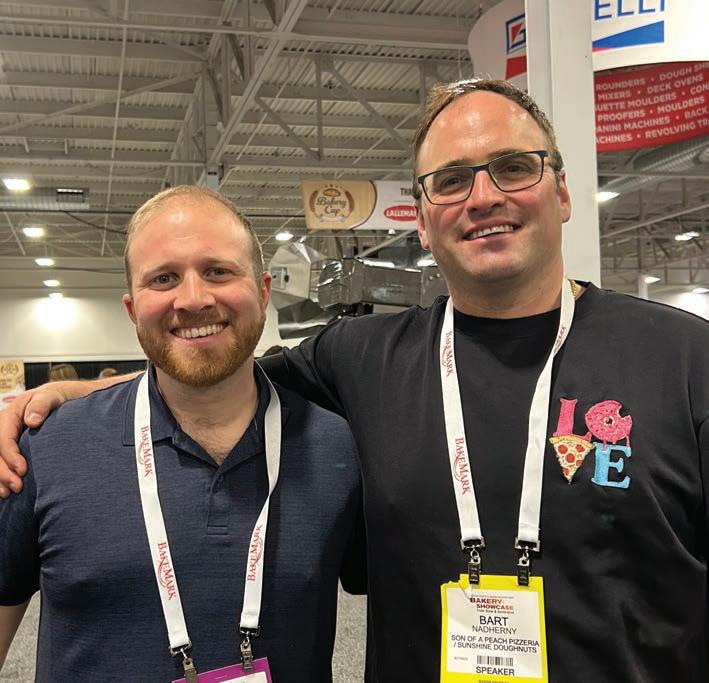
John Paul Deleo, Tre Mari Bakery, and Bart Nadherny, Son of a Peach Pizzeria, met and talked shop after Nadherny’s demonstration.
saw professional bakers make specialty breads, croissants, baguettes, viennoiserie and an artistic showpiece from start to finish in seven hours.
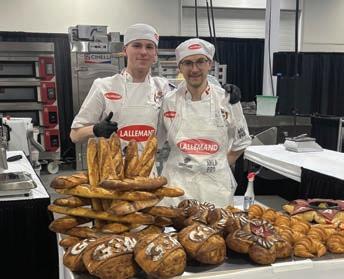
Florent Lehmann, owner of Le Duo Choc. patisserie in Candiac, Que., and assistant Félix Jeandot were the overall winners in the Bakery Cup competition.
Lehmann completed formal training in France, then worked in England before moving to Canada 10 years ago. “Since then, I’ve worked with both small artisan bakeries and larger companies, as well as with mills, which has allowed me to develop a broad and solid understanding of baking from grain to finished product,” he told Bakers Journal. Jeandot started working at Le Duo Choc three years ago at age 14, initially at the dish station. A year and a half ago, he began learning baking alongside Florent and they competed in the Quebec edition of the Bakery Cup in 2025 where they won the baguette and specialty breads awards.
The two practised on weekends and sometimes in the evenings after work to prepare for the competition.
Lehmann said his strengths were his experience, technical knowledge and strong understanding of ingredients and processes. Jeandot, he said, contributed “motivation, energy, curiosity and a very positive attitude.”
Lehmann said the team’s signature baguette was made using a 75 per cent poolish. Their specialty bread incorporated Canadian Grand Marquis wheat and featured potato, leek and Louis d’Or cheese. He said their croissants incorporated a poolish made with 48 per cent butter for the lamination.
Lehmann and Jeandot said their ability to adjust to new equipment, flour and other factors helped them do well. And the enjoyed working together: “We know we need to have fun and take pleasure in what we’re doing,” Lehmann said.
On returning to the shop, they found the demand for their croissants had increased and they made about 600 in three hours.
They are making plans to apply and qualify for the Mondiale competition in France in October 2027. The first step is to
find a sponsor.
Ilynna Lam and assistant Aidria Quilty won best viennoiserie and artistic showpiece categories. Lam is pastry chef at XIX Nineteen in St. Albert, Alta., and an instructor in NAIT’s baking and pastry program where Quilty is a student.
Lam said she competed to build on her own skills and to give Quilty, a graduating student, an opportunity. “My goal was the journey,” she said in a video interview.
Her favourite element was the showpiece. “They are whimsical things and I love creating them.”
The team’s winning Black Forest viennoiserie featured sour cherry and tonka bean, which has a light almond profile. “On the outside it was crisp, inside soft and chewy, with a sour cherry gel on top,” Lam said, estimating they practised making the pasty more than 60 times.
Lam is setting her sights on a pastry competition in November.
Dumonceaux, a world baking expert with Skills Canada and coach of Team Canada, praised the hard work, creativity and adaptability of the four teams
competing. He emphasized the sacrifices made by team members, who work full time, practised on their own time over several months and travelled to the competition at their own expense.
Addressing the BAC’s annual general meeting during the conference, Dumonceaux said competitions directly elevate the industry by encouraging bakers to advance their skills and by channelling those learnings and the resulting innovation directly into their own bakeries and into the schools.
Dumonceaux, a world baking expert with Skills Canada and coach of Team Canada, praised the hard work, creativity and adaptability of the four teams competing. He emphasized the sacrifices made by team members, who work full time, practised on their own time over several months and travelled to the competition at their own expense. He noted the finished products reflected a full range of savoury and sweet flavours.
Addressing the BAC’s annual general meeting during the conference, Dumon-
ceaux said competitions directly elevate the industry by encouraging bakers to advance their skills and by channelling those learnings and the resulting innovation directly into their own bakeries and into the schools. As an example, he taught his students how to make a high-quality croissant using the formula and techniques perfected by the competitive bakers.
POSITIVE FEEDBACK
“This Showcase was even better than we expected, and we expected a good show,” said BAC executive director Martin Barnett. The feedback from our exhibitors and the attendees was extremely positive.”
“The demonstrations, competition and panel discussions were extremely well managed and interesting. It was encouraging to see seats filled up.
He said it’s important to gather as an industry. “Bakers love to network and often don’t get the opportunity, so anytime an organization can provide that, it’s a great thing. It’s important for them
EQUIPMENT SOLUTIONS FOR GROWING BAKERIES
to see in person what’s new in equipment, ingredients and services. A handshake cannot be done virtually.”
The next Bakery Showcase will take place April 25-26, 2027, in Vancouver. “We have lots of exciting plans for 2027 and expect this to be a truly international show with participation from the Pacific Rim and beyond,” Barnett said.
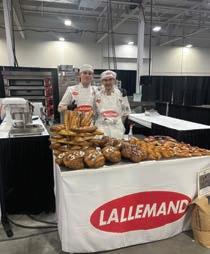
Thank you to our Showcase sponsors: BakeMark, AB Mauri, Paperless Forms by Datahex, Puratos, FCC, Ardent Mills, Lallemand, and Les Margarines Thibault, and to our Bakery Cup of Canada sponsors.
Thank you to Lallemand, platinum sponsor; Arla Pro, gold sponsor, Les Moulins de Soulanges, bronze sponsor, and to CCMB/Chicago Metallic, our pan sponsor, and Puratos, our ingredient sponsor, and in-kind equipment, supplies and ingredient providers G. Cinelli Esperia, Rondo, MiWe, Humber Polytechnic, Casasanta/LC Bakery, Caldic and K2 Milling.
Watch for more reporting online at bakersjournal.com and subscribe for free to the Bakers Journal enewsletter. / BJ
THE BAKING ASSOCIATION OF CANADA NEWSLETTER
Notes from the Executive Director
Our strength comes from how we gather around the bench, as at Farmer-Miller-Baker Edmonton.
BUILDING OUR SHARED ROAD MAP: BAC PRIORITIES FOR THE NEXT 12-18 MONTHS
As we look ahead to the next year and a half, one thing is clear: the strength of Canada’s baking sector comes from the way we gather around the baker’s bench, where ideas are kneaded, challenges are shared, and
solutions take shape with everyone lending a hand. Whether you run a neighbourhood cake shop, a regional commercial bakery, a national production facility, or anything in between, your voice shapes the trajectory of the Baking Association of Canada.
This year, we’ve brought together input from the BAC Board, the Canadian Bakery
BAC’s priorities for next 12-18 months
Who the CBEC is and how to get involved
Call for input from bakeries
Executives Council (CBEC), and you, the bakers, to build a shared road map for the work ahead. This is not a static plan. It’s a living conversation that will continue to evolve with your feedback and input.
PATH TO PERMANENT RESIDENCY: KEEPING THE WORKERS WHO ALREADY KEEP US RUNNING
One of the most urgent issues facing Canadian bakeries, especially in Atlantic Canada and rural regions, is the uncertainty facing foreign workers who are already here, already trained, and already essential to our operations.
Over the next 12-18 months, the BAC will continue advocating for clear, stable and fair pathways to permanent residency for the workers who have built their lives and careers in our bakeries. This includes supporting the continued residency of workers who are already in Canada and actively working toward PR, calling for federal allocations that allow provinces to extend work permits for existing workers, not just manage new arrivals, highlighting the real-world impact of “immigration leapfrog” – the costly cycle of losing trained workers due to permit expiry – and sharing members’ data showing that the overwhelming majority of applicants for
bakery jobs are newcomers already here, not Canadians waiting in the wings.
The BAC board and CBEC both have identified this as a top priority. Bakers across the country have been clear: losing trained, committed workers because of paperwork timelines is not just inefficient –it’s inhumane.
We want to hear from you: How are work permit expiries affecting your bakery? What would a stable PR pathway mean for your team?
ADVOCACY THAT REFLECTS YOUR REALITY
Government relations remain a core priority. Over the next 12-18 months, the BAC will continue pushing for practical, modernized support for bakeries of all sizes – from labour pathways and training incentives to easing energy costs, transportation pressures, and regulatory alignment across provinces.
The BAC Board has emphasized the need for a unified national voice, while CBEC members have highlighted the urgency of predictable supply chains and clearer regulatory guidance. Bakers across the country have told us they want simpler programs, less red tape, and more recognition of the essential role bakeries play in local economies.
We want to hear from you: What policy barriers slow you down the most? Where should BAC focus its advocacy energy first?
EDUCATION AND SKILLS: BUILDING THE WORKFORCE WE NEED
The future of our sector depends on a strong, skilled and inspired workforce. The BAC will expand its work in training, microcredentials and partnerships that bridge artisan craft with industrial production.
The BAC board has prioritized national training pathways and stronger connections with culinary schools. CBEC members have asked for leadership development and standardized onboarding tools. Bakers across the country continue to tell us they need flexible, accessible training that fits the rhythm of real bakery life.
We want to hear from you: What skills are hardest to find in new hires? What training formats work best for your team?
EVENTS THAT BRING US TOGETHER
If there’s one thing we’ve learned in recent years, it’s that bakers thrive in community.
Over the next 12-18 months, the BAC will continue strengthening national and regional events, from Bakery Showcase, technical workshops and hands-on demos to storytelling panels, competitions and executive roundtables.
The BAC board is focused on elevating competitions and offering events that reflect our mission of serving all Canadian bakers. CBEC members want more strategic conversations and supply-chain collaboration. Bakers across the country have asked for events that feel welcoming, practical and rooted in real experience.
We want to hear from you: What types of events help you most? What would make BAC gatherings even more inclusive and useful?
INDUSTRIAL BAKING: PREPARING FOR THE BAKERY OF 2030
Industrial bakeries are navigating rapid change: automation, robotics, data, flexible production, and the shift toward short-run, high-variety manufacturing. The BAC will support members exploring modernization, funding programs and innovation partnerships. CBEC members have emphasized the need for benchmarking tools and guidance on adopting new technologies. Bakers across the country are curious about what’s coming next and how to adopt innovation in a way that’s practical, affordable and human centred.
We want to hear from you: What technologies are you considering but unsure about? What prevents you from adopting automation today?
ARTISAN BAKING AND LABOUR SUSTAINABILITY
Artisan bakeries continue to be the heart of Canada’s food culture and some of the businesses most strained by labour shortages, burnout and rising costs. The BAC will focus on supporting small bakeries with labour solutions, mentorship and pathways from culinary schools to independent shops.
The BAC board recognizes artisan bakeries as vital community anchors.
CBEC members want more visibility regarding artisan challenges and opportunities. Bakers themselves have asked for support in recruitment, retention and building sustainable careers in the craft.
We want to hear from you: What labour challenges hit you hardest? What would help you retain staff longer?
CUSMA AND NORTH AMERICAN SUPPLY CHAINS
Cross-border ingredient flows, equipment imports and regulatory alignment continue to shape the competitiveness of Canadian bakeries. Over the next 18 months, the BAC will monitor CUSMA developments, strengthen North American partnerships and support members navigating compliance and supply-chain complexity.
CBEC members have asked for clearer guidance and benchmarking across the continent. Bakers across the country want predictability, transparency and opportunities to grow.
We want to hear from you: How do cross-border issues affect your bakery? What CUSMA-related topics need clearer explanation?
THIS ROAD MAP BELONGS TO ALL OF US
As we continue shaping this road map, I keep returning to that image of the baker’s bench: a place where everyone stands shoulder to shoulder, sharing tools, sharing stories and shaping something positive together. That’s what this work is. The BAC board and CBEC have provided strong direction, but the most important voice in this conversation is yours.
Your input helps us build a sector that is resilient, innovative and deeply interconnected – a sector where every bakery, from the smallest artisan shop to the largest industrial facility, feels seen, supported and part of something bigger.
Martin Barnett, Executive Director Baking Association of Canada mbarnett@baking.ca
First BAC Legacy Awards honour industry ‘champions’
BY BAKERS JOURNAL STAFF
THE BAC IS . . .
A national table where every baker has a seat. The Baking Association of Canada is the national voice of our sector connecting artisan shops, commercial bakeries, suppliers, educators and emerging talent across the country. We advocate for you on industry-related issues, build training pathways, host events that bring our community together and celebrate the craft and business of baking in all its forms.
Whether you’re a one-person cake shop or a multiline industrial facility, the BAC is here to support your growth, amplify your voice and strengthen the future of Canadian baking.
BECOME A MEMBER OR RENEW TODAY AT BAKING.CA/MEMBERSHIP
WHO THE CBEC IS AND HOW TO GET INVOLVED
The first BAC Legacy Awards honoured John McColl, Sylvie Cholette and Paul Futtrup at an emotion-filled soiree recognizing their achievements and decades of service.
Members of the baking community connected and shared stories at the informal awards presentation May 3 at Chop Steakhouse during Bakery Showcase. It was emceed by Peter Jacobs of the BAC’s national board.
From 1969 to 1982 Paul Futtrup worked as master baker and head baker for the Loblaw supermarket chain in Canada opening many in-store bakeries. In 1982 he became part owner of a frozen dough and pastry manufacturing bakery called Dough Delight, where he stayed until 1992, when the bakery was sold.
Speakers highlighted Futtrup’s ability to win the trust of colleagues and become a key person in the Loblaws organization and a champion of the industry.
Cholette joined her father’s company, Thor Industries, in 1977, working her way up through sales and leasing to become general manager. She ran a successful bakery-café in King City, Ont., called La Boulangerie. In 1998 she joined Embassy Flavours (now Embassy Ingredients), where she was senior technical manager working with clients around the world. In 2016, Cholette joined Nutriart as director of business development.
Denise Stemmler, a technical advisor with BakeMark, spoke of Cholette’s willingness to go the extra mile. “If she can’t do it herself, she always knows someone,” Stemmler said.
McColl moved to Canada in 1978 where he worked until 1983 as foreman in bakeries like Dorset Foods, John Baird Scottish Bakery and Scottish Corner Bakery. In 1985, he began his career with Puratos England, where he was a technical advisor, then manager, covering the bottom half of England and the south of Wales. In 1988 he returned to Canada to work with Puratos for 30 years.
Kate Tomic of Caldic Canada said McColl championed her through a key career change. “John makes people feel supported,” Tomic said.
The Canadian Bakery Executives Council (CBEC) is an information and advocacy group shaped by the people who run Canada’s bakeries. We bring together senior leaders from across the country to share insight, identify emerging issues and help guide the BAC’s strategic direction. It’s a space for honest, practical conversation – the kind you’d have around the baker’s bench – about labour, supply chains, innovation, regulation and the realities of running a bakery in Canada today.
CBEC is open to owners, senior decision-makers and government-relations leads from bakery and pastry manufacturing operations of all sizes.
Want to participate or learn more? Email info@baking.ca. We welcome new voices at the table.
THE VALUE OF THE CANADIAN BAKING SECTOR
We are an essential industry woven into the daily life of the country. Canada’s baking sector contributes over 20 billion dollars to the national economy each year. We employ tens of thousands of people, support farmers and millers, anchor main streets and keep communities fed with products that are both part of everyday life and special treats for joyous occasions. Our sector plays a vital role in food security, cultural identity and regional economic development.
WHY YOUR VOICE MATTERS
The BAC seeks a national conversation shaped by the people who bake for this country every day. Every priority we set, from labour pathways to training, events, innovation and supply chains, comes directly from the conversations we have with you. Your stories, your challenges and your ideas shape the work of the BAC board, the CBEC and the direction of our entire sector. Everyone brings something to the baker’s bench, and together we shape our future.
Have something to share? Reach out anytime by emailing info@baking.ca. Your voice truly makes a difference.
Kate Tomic, BAC Ontario, John McColl, Sylvie Cholette, Paul Futtrup and Peter Jacobs, BAC National.
NIGHT AT THE RACES!
Woodbine Racetrack, 555 Rexdale Blvd, Etobicoke, ON, M9W 5L2
SEPTEMBER 24, 2026
COME AND JOIN US FOR A NIGHT AT THE RACES TO RAISE FUNDS FOR BAKING AND PASTRY STUDENT SCHOLARSHIPS!
Enjoy an evening of races, networking, dinner and prizes – all to raise funds to support scholarships for our baking and pastry program students.
The event will begin with a reception in the Turf Lounge at 5pm, and the excitement of the horse races will last from 5 to 8pm. Enjoy a reception from 5:00 to 6:30 p.m., including a cash bar in the lounge, followed by a buffet dinner featuring chef stations from 6:30 to 8:30.
Sponsorships available.
Register now for the Baking Association of Canada’s Ontario Chapter Night at the Races event!
For sponsorship information: Contact Event Co-Chair, Christian Boisvert christian.boisvert@live.com 416-689-2325
SWEET LAYERS OF HISTORY
Vietnam’s dessert scene still carries the imprint of French colonization. Yet, local bakers and pastry chefs have combined French techniques with flavours and traditions native to Vietnam. And classic Vietnamese sweets have endured, offering a rich and often overlooked side of the country’s cuisine. Here’s a glimpse.
Close to the banks of the Hoai River in Hoi An, a historic town in central Vietnam, with its distinctive bright yellow buildings interspersed with Parisian-style architecture, is Em’s Bakery. The sidewalk café is known for its contemplative showcase of pastries, Vietnamese coffee and tea.
“In a warm climate like Hoi An, our team intentionally creates desserts that are not overly sweet,” says pastry chef Cao Van Thang. “Rather than relying on sugar, the focus is placed on natural flavours, particularly the depth of carefully selected chocolate and the brightness of tropical fruits we have here in Vietnam. We use European flour and seeds, real French butter and the freshest ingredients to create our products.”
The Calypso dessert is crafted to resemble ripe Vietnamese mangoes found at local street markets. After splicing it open with a fork, customers find a delectable mango mousse, enriched with white chocolate, layered over a coconut dacquoise. At its centre is a mango-andpassion-fruit compote with diced mango and reduced passion-fruit purée.
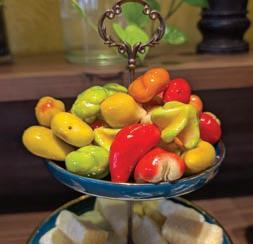
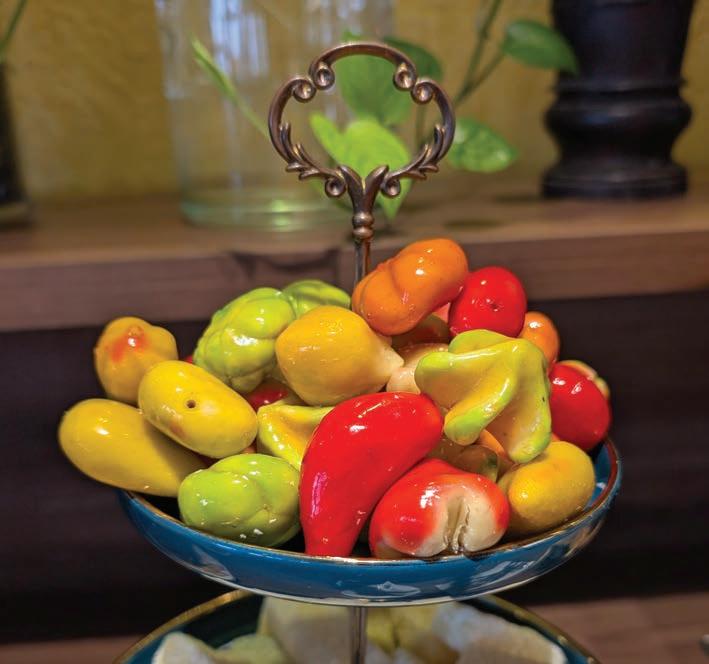
}At Hue hotel breakfast buffets, platters of mini cakes are commonly on display. Mung-bean dough is hand-formed to resemble fruits and vegetables. The pieces are painted and dipped into a glaze to create a high-gloss finish.
Che or sweet soup is deeply rooted in Hue’s traditional culture. The lotus seed and longan sweet soup requires only three ingredients, the third of which is sugar.
with a fresh Vietnamese lime leaf.
Citrus Pearl explores sun-ripened citrus, with a surprise interior of dark chocolate mousse on a soft chocolate sponge base. At its core are juicy orange segments, with orange zest and a hint of passionfruit. Finished with a velvety golden-orange glow, this dessert is topped
Further north, through the Hai Van pass, which weaves along the South China Sea coastline and jungle-covered mountains, lies the ancient city of Hue. Filled with pagodas, palaces and tombs, Vietnam’s former capital was home to the Nguyen Dynasty (1802-1945), the last imperial dynasty. Numerous traditional Vietnamese desserts are attributed to this dynasty, which is noted
for hosting lavish banquets.
Beyond the croissants and cream puffs, at Hue hotel breakfast buffets, conversation-provoking platters of mini fruit- and vegetable-shaped “cakes” also are commonly on display. To make the dough, mung beans are soaked overnight and then cooked and mashed into a paste with sugar. Then, each is hand-formed to resemble anything from carrots and bok choy to starfruit and dragon fruit. Painted with a tiny brush using natural or artificial food colouring, the pieces are dipped into a glaze to create a high-gloss finish. Symbolizing good luck and prosperity, these sweet treats are also
PHOTO: KAREN BARR
Available raw or roasted
An excellent alternative to nuts
Mild in flavour and add a pleasant crunch to food
Ideal for a variety of foods, including bakery products, granola, snack bars, salad toppings and plant-based foods
Rich in healthy fats, protein, fibre, minerals, vitamin E and phytochemicals
served at the end of meals, where celebratory restaurateurs may even present them hidden among a bouquet of flowers on floral stem wires.
Che or sweet soup is deeply rooted in Hue’s traditional culture. The lotus seed and longan sweet soup requires only three ingredients, the third of which is sugar. Once a noble dish reserved for kings, today you’ll find a large variety in shops and street stalls, such as tapioca with coconut, sweet banana, or sweet soups featuring a variety of beans.
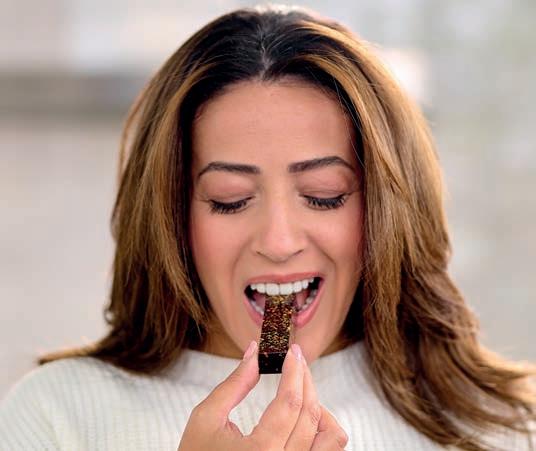
Made with sesame seeds, sugar, malt, honey and roasted peanuts, Hue’s distinctive sesame candy can easily become addictive. One of the most popular brands is Thien Huong, which opened in 1940 as the very first producer of sesame candy in Hue. Locals eat this sweet, indulgent confection, served with bitter local lotus-flower tea. Travellers weigh down their luggage with gifts for
friends back home.
Hanoi, the capital of Vietnam, is a city racing with enthusiasm and motorcycles. Heading to the city’s French quarter is not only a reprieve from the frantic pace, but it is also the home of the elegant Sofitel Legend Metropole Hanoi. Built in 1901, the hotel is proud to be celebrating its 125th anniversary this year.
At Le Beaulieu, the hotel’s contemporary French fine dining restaurant, selected classical French desserts feature strong Vietnamese influences. Café aux Oeufs is a creative reinterpretation of Vietnam’s beloved egg coffee. A seamless fusion of French culinary techniques and the finest local ingredients, it features Vietnamese Arabica coffee, dark and milk chocolate, and a silky vanilla sabayon reminiscent of the creamy egg yolk foam found in traditional egg coffee.
Fun fact. While working at the hotel in
the 1940s, bartender Nguyen Van Giang needed to devise an inventive way to serve cappuccino-style drinks during a dairy shortage. By whipping together egg yolks, sugar, and condensed milk, a new coffee topping was crafted. The egg coffee became a national beverage sensation, perfectly blending the bitter with the sweet.
Spice Garden, the Vietnamese restaurant at Sofitel Legend Metropole Hanoi, offers a lunch buffet with plenty of variety for the curious dessert lover. Bánh trôi is a traditional Vietnamese dessert of stuffed sticky rice balls with two different fillings: black sesame seeds and mung bean paste. It is served in warm syrup made from brown sugar and sliced ginger, enriched with a touch of coconut milk and finished with peanuts on top. Also, on the dessert buffet, you’ll find traditional crème caramel, which somehow pairs perfectly with Bánh trôi.
Looking at the à la carte dinner menu, Chinh, also known as Abby, one of the friendly servers in the dining room, says the tempura banana dessert is a favourite for both international and nostalgic local guests. Here’s why: “Every day after school, children try to convince their parents to take them to a street vendor for a fried banana. These treats are delicious, and the banana is soft and warm inside the dough.”
On the Spice Garden menu, the tempura banana is served with coconut sorbet, an almond crumble, and a French touch of salted caramel sauce. Additional ice creams and sorbets on the menu come in tempting Asian flavours such as coconut, green tea, young rice, and mango.
Elsewhere in Hanoi bakeries, shoppers find pain aux raisins breakfast pastries with chunks of sweet potato, puff pastry rectangles filled with mango jam, matcha-filled coronets, Hong Kong-style egg tarts, and cake donuts with vanilla or chocolate glaze, topped with colourful, crushed macarons in a variety of flavours.
In the end, Vietnam’s desserts are a dialogue between cultures. From French-inspired desserts to time-honoured traditions, every bite tells a sweet story. / BJ
Karen Barr is an Ottawa-based writer and licensed chef who travels the world to explore topics about food and culture.
Citrus Pearl explores sun-ripened citrus, with a surprise interior of dark chocolate mousse on a soft chocolate sponge base. At its core are juicy orange segments, with orange zest and a hint of passionfruit.
PHOTO: EM’S BAKERY
concepts for success ¦
BY DIANE CHIASSON
SEVEN EASY WAYS TO ATTRACT INTERNATIONAL VISITORS TO YOUR BAKERY
Attracting regular customers and international travellers during the summer season is essential for your success.
When it comes to popularity with international travellers, Canada ranks near the top of the list.
Attracting regular customers and international travellers during the summer season is essential for your success. Here are seven easy ways to make your bakery a must-visit stop for international travellers.
1. OPTIMIZE YOUR ONLINE VISIBILITY
}Focus on making your footprint efficient and cohesive. Tourists rely heavily on search and mapping tools. Make sure international travellers can find you. Claim and update your Google Business Profile, make sure your Apple Maps listing is accurate and monitor your TripAdvisor page.
Put your baked goods in front of thousands of potential customers by posting high-quality photos and videos. Run giveaways and contests to boost engagement. Interact with customers through monitoring and responding to online comments, direct messages, and reviews.
2. LOCATION-BASED SOCIAL MEDIA
Use Instagram and TikTok’s location tags to reach people currently in your area. Use these platforms to highlight the heritage, origin story and traditional baking methods behind your international items. Run hyper-local targeted ads showing your bakery’s esthetic or signature items. Partner with local travel influencers to put your bakery on the map.
Tourists are often on the move. Prepare special sampler boxes, travel-friendly pastry assortments or picnic-ready bundles.
3. BRIDGE THE LANGUAGE GAP
Make sure your Google Maps listing includes clear pins and categories (for example, “bakery,” “gluten-free,” “coffee”). High-quality photos and updated summer hours are crucial for tourists who rely on their phones to find food.
Update your operating hours and add high-quality photos of your bestsellers. State clearly whether you have Englishspeaking staff or a multilingual menu. Tourists often research their food destinations before they arrive. Use highly visual platforms like Instagram and TikTok to showcase your vibrant, culturally diverse baked goods. Tag tourism hashtags in your city, town or neighbourhood, and consider adding short captions in different languages.
Have a scannable QR code in your window that links to a translated menu or use easily understandable photo menus.
Remove the guesswork for tourists. Offer clear, translated menus. Print a few laminated, multilingual menus (for example, Spanish, French, Mandarin) or place a QR code on tables or at the counter that links to a translated digital menu.
Small visual cues can make international customers feel instantly welcome. Use universal icons (such as dairy-free, gluten-free or nut symbols) on your menu tags and price lists. It’s also a great idea to provide a QR code at the register that links to a translated menu.
Make sure your menu boards and item descriptions are easy to understand for non-native speakers, using photos and ingredient lists to bridge language gaps.
4. OFFER ‘GRAB-AND-GO’ PACKS
Tourists are often on the move. Prepare special sampler boxes, travel-friendly pastry assortments or picnic-ready bundles. Items that are easy to carry while walking or make great edible gifts to take back to their hotels are highly attractive to travellers.
Package your bestsellers in easy-tocarry boxes or bags for customers heading to the beach, a nearby park or a landmark. Offer bottled water or iced coffee: tourists walking in the summer heat are highly likely to buy a drink alongside a pastry.
5.
OFFER ‘TASTE
OF THE REGION’
International visitors are usually looking for authentic, local experiences. Introduce a seasonal summer item that highlights local ingredients or create a unique fusion pastry that bridges your bakery’s specialty with globally recognized flavours. Feature “must-try” items.
6. BORDERLESS PAYMENTS
International travellers rarely carry local cash. Make sure your point-of-sale system supports contactless payments. Nothing frustrates a traveller more than discovering their preferred payment method isn’t accepted. Upgrade your POS system to accept contactless payments via mobile wallets like Apple Pay and Google Pay, chip cards from global issuers such as Visa, Mastercard, and American Express, and international tap-and-go cards.
7. HIGHLIGHT CULTURAL DIVERSITY
Feature the heritage behind your baked goods. Display small, charming signs explaining the history of your signature international recipes, such as where the ingredients are sourced or the cultural significance of the treat to give international visitors a taste of home or experience authentic local culture. / BJ
Diane Chiasson, FCSI, president of Chiasson Consultants Inc., has been helping foodservice, hospitality and retail operators increase sales for over 35 years by providing innovative and revenue-increasing food service and retail merchandising programs, interior design, branding, menu engineering, marketing and promotional campaigns. Contact her at 416-926-1338, send her an email at chiasson@chiassonconsultlants. com, or visit www.chiassonconsultants.com