Aquaponics’ sophistication surges as business advances
BY LYNN FANTOM
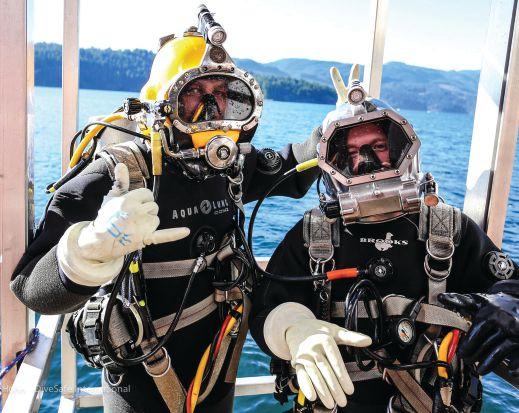
Aquaponics grower B.J. Davis misses the “thumbs-up” he would get from sous-chefs when he delivered greens to restaurants at posh spas in Sedona, Arizona. Absent, too, are the school kids on farm tours who grow wide-eyed when they realize how much science and math they need if they want to to become aquaponics farmers, too.
But while COVID-19 has temporarily robbed Davis of these pleasures, the co-owner of The Fish’s Garden in Camp Verde, Arizona, is instead
using this period to scale his operation with a new greenhouse — and double lettuce production without adding any more fish.
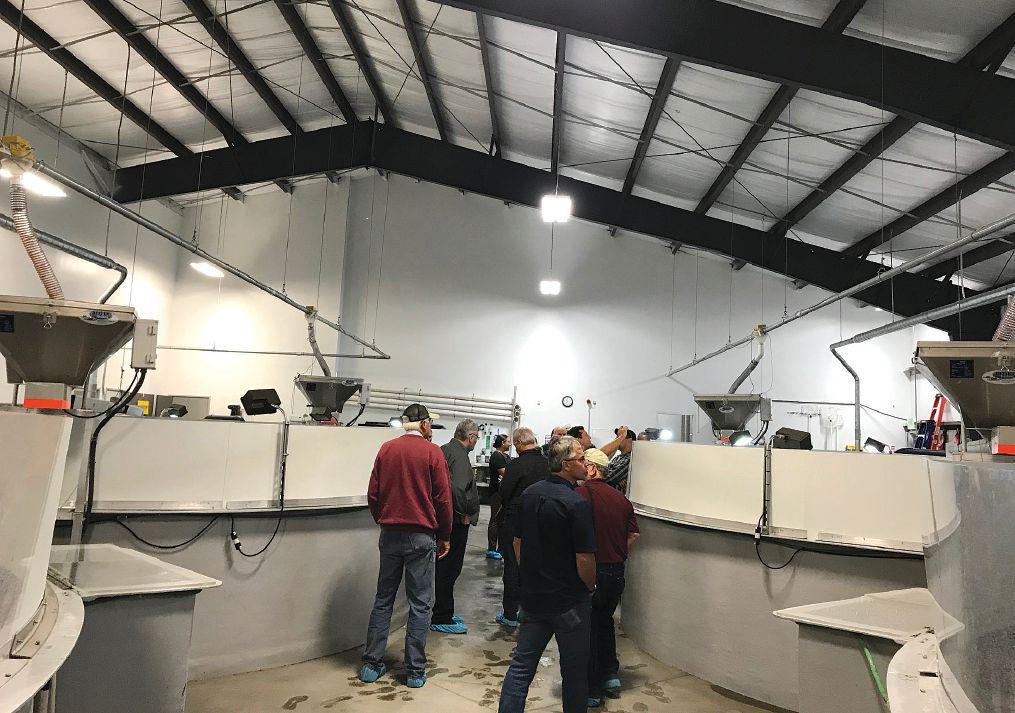
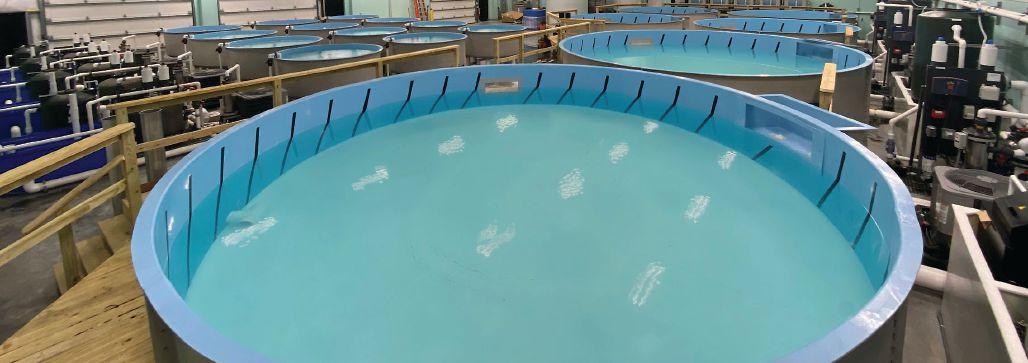
This enthusiastic architect-turned-farmer is among a growing legion who are embracing aquaponics at a time when there is a refinement of technology to make it more efficient. Both academic institutions and industry are probing a range of elements, including artificial lighting and water quality, with an eye toward saving energy and labor.
continued on page 6
Interest grows in RAS grow-out, but where are the big players?
Guided by data and experience, leading salmon producers think differently when adopting RAS, says investment fund CEO
BY LIZA MAYER
W hy are the big players in aquaculture unenthusiastic about using RAS for growing Atlantic salmon to market size? A CEO of a New York-based investment fund has some interesting insights.
FRESHWATER FOCUS
US researchers build case for burbot production
They can grow it, but will farmers come?
BY LYNN FANTOM
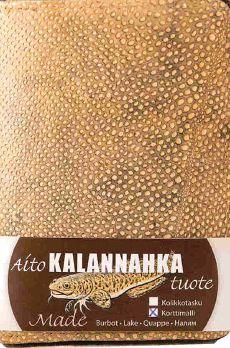
In Belgium, burbot is at the heart of a beloved traditional Flemish stew. Scandinavians revere its roe. It is said that a French home cook would sell her soul for a burbot’s liver. Today in Finland, a sustainable luxury brand markets burbot handbags for over US$500.
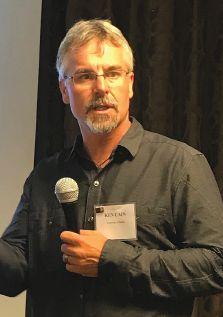
And now it may not be long before burbot (Lota lota) makes waves in North America. “It could be cultured immediately in aquaculture sites that typically raise salmonids,” says Dr Kenneth Cain, professor, Department of Fish and Wildlife Sciences at the University of Idaho.
Following decades of successful work to restore dwindling wild populations in Idaho and British Columbia, researchers are ready to move burbot from the lab to the farm. This coldwater species, the only freshwater member of the cod family, grows well under conditions similar to trout and demonstrates resistance to many salmonid diseases. After years of research, it will come with what is virtually a “user’s guide” for commercial culture.
This practical knowledge — encompassing diet, stocking density, and disease susceptibility — was propelled by a USDA grant to the Western Regional Aquaculture Center. That funded a four-year project at the University of Idaho to examine biological feasibility of raising burbot through all stages, as well as economic viability.
With two years under their belts, the researchers already can pass on considerable know-how to farmers.
continued on page 20
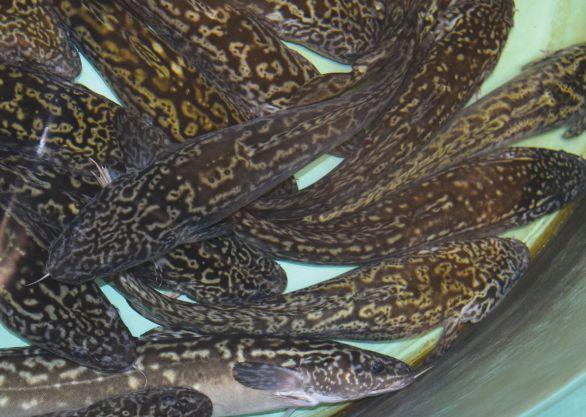
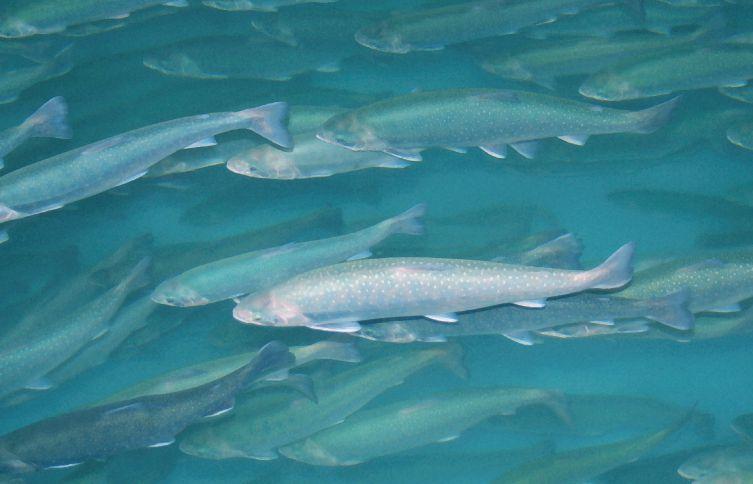
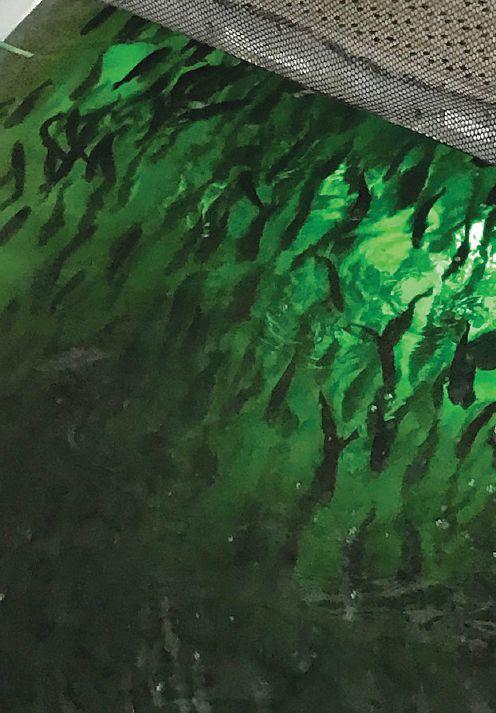
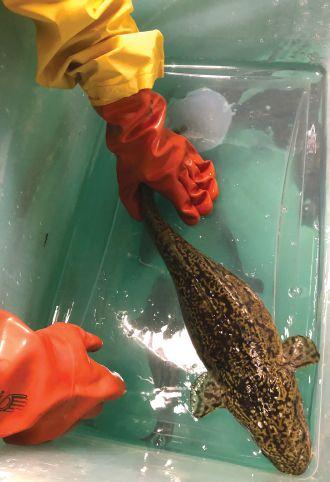
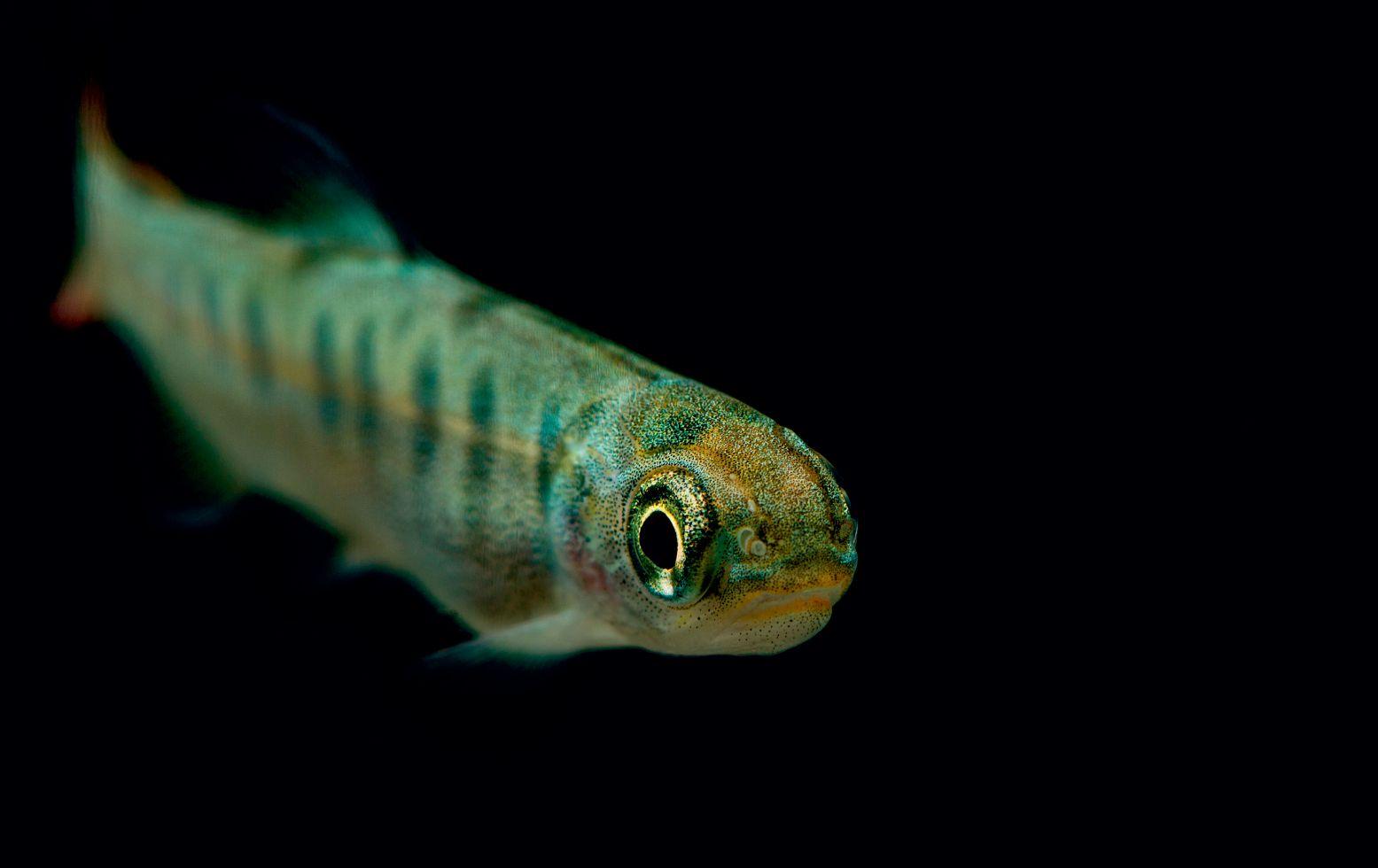
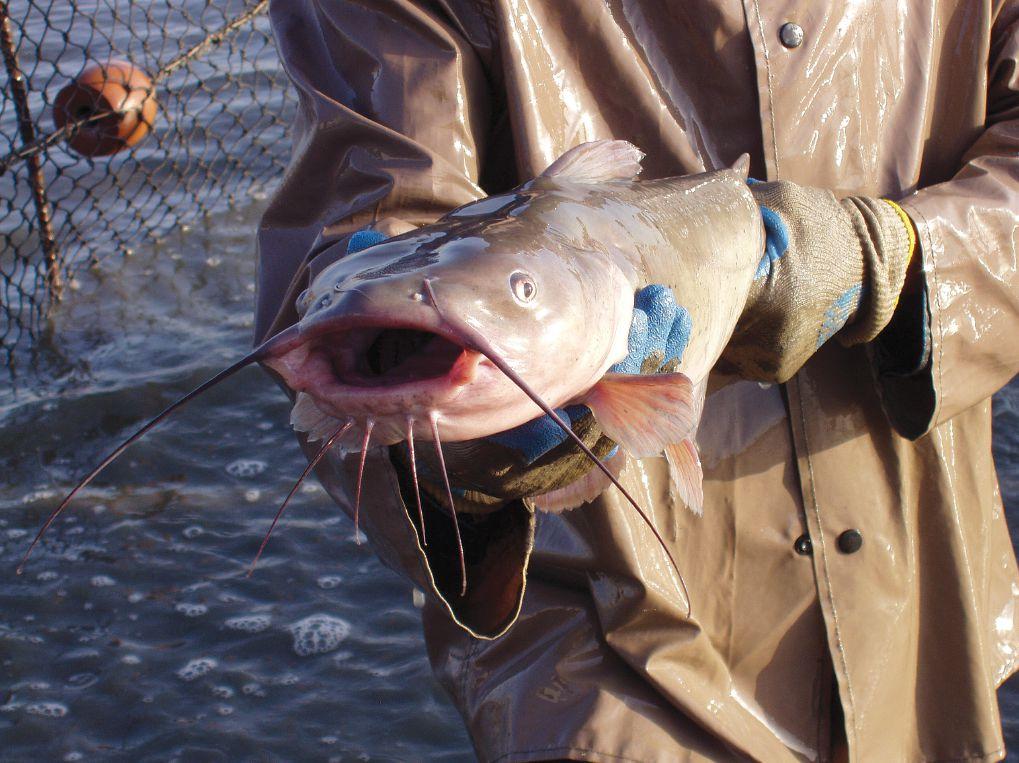
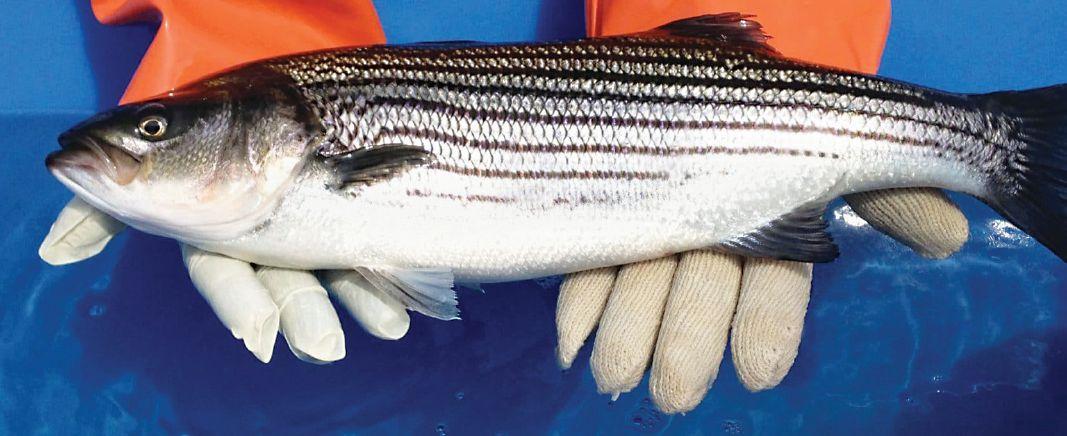
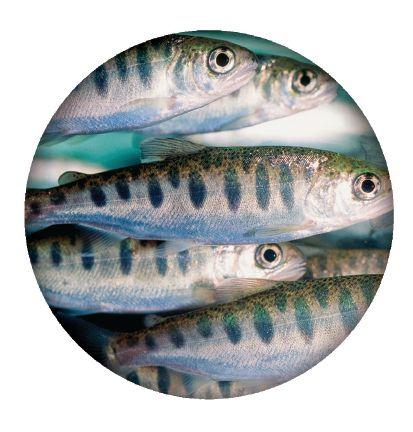
Burbot demonstrate a huddling behavior and perform well in stocking densities higher than those typical for trout
Photo: University of Idaho
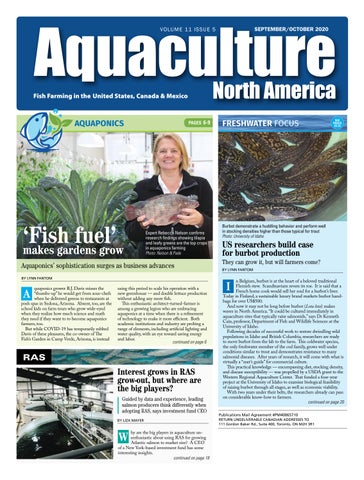
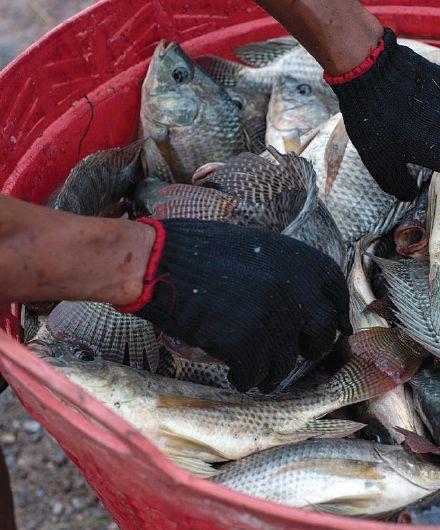
Expert Rebecca Nelson confirms research findings showing tilapia and leafy greens are the top crops in aquaponics farming
Photo: Nelson & Pade
Court says NOAA has no power over offshore aquaculture
The 5th US Circuit Court of Appeals in New Orleans upheld in August a 2018 decision declaring that the National Oceanic and Atmospheric Administration (NOAA) does not have authority to regulate aquaculture in US offshore waters.
The plaintiffs in the case comprise of fishing and public interest groups who argued that NOAA exceeded its authority to regulate fishing under the Magnuson-Stevens Act by including offshore aquaculture as a “fishing” activity.
Kate Goggin, NOAA Fisheries spokesperson, said the agency is reviewing the Fifth Circuit decision. “We remain committed to expanding the social, environmental, and economic benefits of sustainable marine aquaculture in the US,” Goggin said in an email.
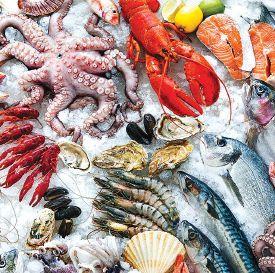
Review of science supports more frequent consumption of seafood
NOAA says the Louisiana court’s ruling is not a prohibition on marine aquaculture in the United States
“It is important to note that this ruling is not a prohibition on marine aquaculture, neither nationally nor in the Gulf of Mexico, and we will continue to work with stakeholders through existing policies and legislation to increase aquaculture permitting efficiency and predictability,” she said.
But for some potential investors, the latest decision means the question as to who’s in charge remains unanswered. This uncertainty has kept businesses from applying for offshore aquaculture permits.
For offshore farming advocate Neil Anthony Sims, “this just means that NOAA doesn’t have to issue a permit for any aquaculture.” As this publication reported earlier, his company’s permit for Velella Epsilon, a small-scale yet innovative submersible netpen trial planned for offshore of Florida, is now in its third year of regulatory review.
“And so our Velella Epsilon project does not require a NOAA permit, but we do need to get a permit from EPA. We also need to get a permit from Army Corps of Engineers,” he said.
It has been more than four years since NOAA opened the federal waters in the Gulf of Mexico to fish farming. The Gulf would have been the test bed for this nascent industry sector, but “nobody wants to be the guinea pig,” a farmer once told this publication.
All-electric salmon farm now a reality
ANorwegian farm has become the world’s first to run entirely on shore power. Many fish farmers have shore power to their sites but the farm of Bremnes Seashore in Ålfjorden in Sveio Municipality is the first to supply shore power to the entire operation – from the work vessel, staff transport vessel, net cleaning, feed barge, all the way to the pen operations.
Nonprofit group Clear Seas defines shore power as the process of providing electrical power from the shore to a docked ship (but in this case, the entire farm’s day-today functioning) thereby allowing the ship’s engines to be turned off and the burning of diesel fuel to cease.
Bremnes Seashore says it wasn’t easy to provide sufficient electrical power from shore to pen. One challenge was the equipment had to withstand the damp and at times harsh climate found on a fish farm. But the farmer and its partners, tech provider ABB and Oslo-based environmental group Bellona Foundation found a way.
Bellona says the project shows a path forward for the whole industry. It says investments in a fully electric shore power supply will pay off in the longer term.
“Aquaculture must reduce its climate gas footprint, and emissions from production is a part of this. The local environmental gain is also important. Through electrification, fish welfare increases, and the risk of diesel spills are reduced. Additionally, all noise from diesel generators is eliminated. This improves the work environment and helps the local community,” says Christian Eriksen, head of policy and research at Bellona.
Norway’s Prime Minister Erna Solberg hopes that this starts the electrification of the fish farming industry in Norway – and perhaps, the global industry.
Bremnes Seashore has 23 farm sites, including the all-electric farm. Together, they produce 500,000 salmon meals per day, says the company.
Vitamin sea
Seafood consumption supported in new US dietary guidelines in development
Acommittee created to examine the science and provide guidance in the development of the next edition of the US food guide supports the regular consumption of seafood of all ages.
In its report, the 2020 Dietary Guidelines Advisory Committee supports the advice to eat 8-12 ounces of seafood weekly, particularly before, during and after pregnancy. The report highlights that only 20 percent of adult Americans and 6 percent of children meet the goal of eating seafood twice per week.
“The report is one more piece of evidence that Americans of all ages should eat seafood more frequently. As part of a healthy dietary pattern, seafood offers a lifetime of benefits, from brain development among babies to heart health and a healthy weight for adults. The report even notes the link between diet-related diseases – which regular seafood consumption can help prevent – and increased susceptibility to the current global pandemic,” said John Connelly, President of the National Fisheries Institute (NFI).
The USDA and Health and Human Services noted that the committee’s report is not a draft of the Dietary Guidelines but it will help guide its development, along with input from federal agencies and the public.
The current edition guided Americans from 2015-2020. NFI said it is crucial that the final Guidelines “use simple, consistent language” to make it user-friendly for the general public.
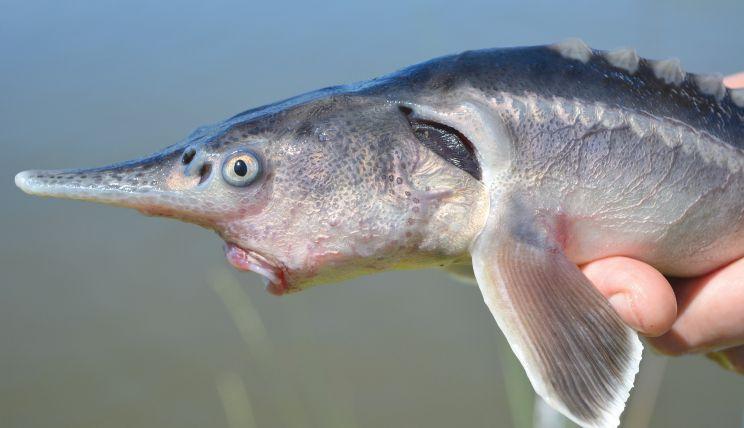
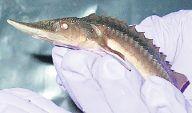
‘sturddlefish,’ the new hybrid is a combination of American paddlefish and Russian sturgeon
Scientists accidentally create new fish
Discuss its potential for sustainable aquaculture
Anew fish hybrid accidentally bred in a Hungarian lab made the news this past summer and the Internet quickly nicknamed it “sturddlefish” because it is a cross between an American paddlefish and a Russian sturgeon.
While it may be tempting to explore its commercial prospects, the researchers that inadvertently created the hybrid say its aquaculture potential is still a subject for debate.
But suppose the sturddlefish inherited the paddlefish parent’s planktivorous feeding habit, “the new hybrid can play an important role in adapting pond aquaculture to the challenges of climate change,” the researchers said.
“Non-fed species have a lower carbon footprint than fed ones, and the co-culture of a filter feeder with relatively high market value as a supplementary species would strengthen pond aquaculture both from an ecological and environmental perspective.”
But it’s too early in the game, as noted earlier.
How could this species have been bred by chance anyway?
According to the paper published in the journal Genes, the original intention of the researchers from Hungary’s National Agricultural Research and Innovation Centre and Research Institute for Fisheries and Aquaculture, was to apply gynogenesis. This is a system of asexual reproduction where, in this case, only the sperm of the American paddlefish is required – but not its DNA – to fertilize the egg of the Russian sturgeon.
To their surprise, the eggs produced fish. The researcher said this was the first successful hybridization between these two species.
This is not the first sturgeon hybrid, however. Sturgeon hybrids are commonly used in aquaculture to exploit the advantages of the superior qualities of the individuals being crossbred. In fact, another study estimated that hybrids account for approximately 35 percent of global sturgeon meat and 20 percent of caviar production.
Nicknamed
Photo: Florian Toth via The New York Times
Norwegian farm Bremnes Seashore has ended all use of fossil fuel at one of its farms Photo: Bremnes Seashore
Photo: @ Arkady Chubykin / Adobe Stock
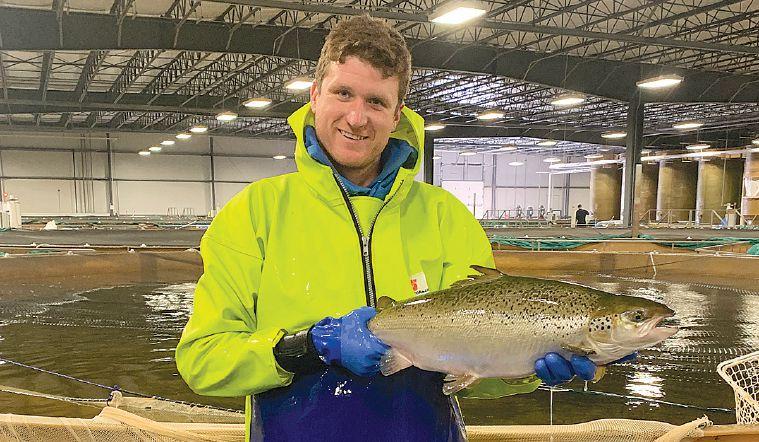
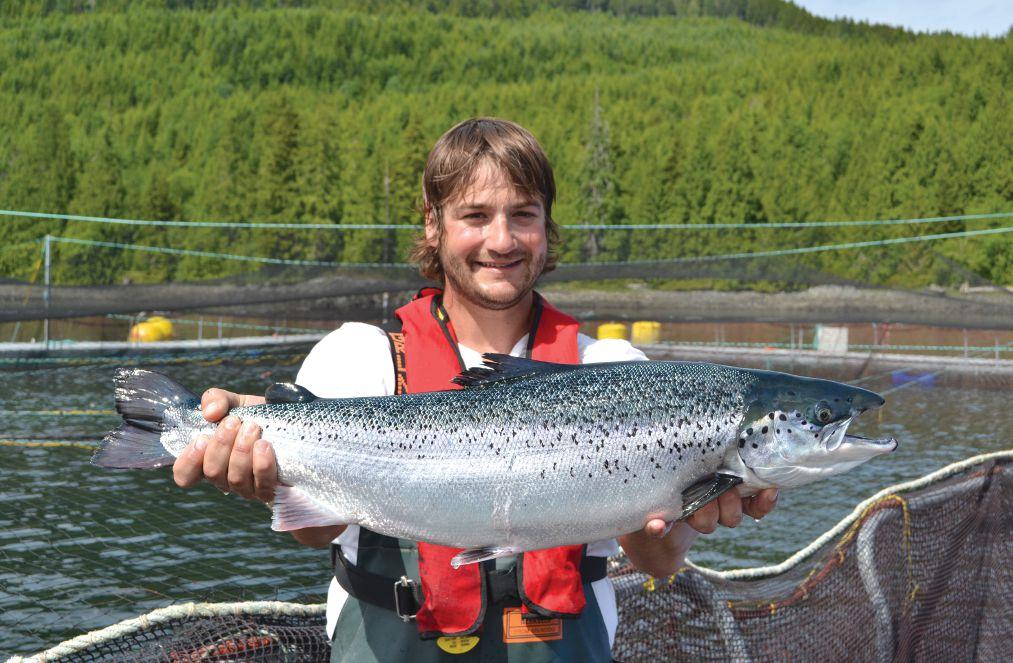
Peter Bowyer holding a non-GM salmon from the company’s initial harvest of 10,000 lbs in the United States in June
RAS
is
viable, declares AquaBounty following milestone harvest
AquaBounty Technologies harvested its first crop of conventional (non-genetically modified) Atlantic salmon at its US land-based aquaculture facility in June, a milestone the company says confirms recirculating aquaculture system (RAS) as an “efficient and sustainable way” of raising Atlantic salmon.
The company known for developing the world’s first genetically modified salmon raised non-GM salmon at its Indiana facility as a stop-gap measure while the importation of GM salmon eggs into the US was banned. The Food and Drug Administration has lifted that ban in March 2019.
The first harvest of 10,000 lbs is within the company’s target. This will ramp up to 25,000 lbs per week, until such time when all of the conventional salmon at the Indiana facility have been harvested by Q4 2020. Thereafter, AquaBounty will raise only GM salmon, known by the trade name, AquaAdvantage Salmon (AAS).
“The first harvest of conventional salmon represents the start of the commercialization phase for AAS, a milestone over 30 years in the making. This will be a breakthrough moment not only for AquaBounty, but for the industry — as it will be the first sale of a genetically engineered animal protein in the US,” said Sylvia Wulf, CEO of AquaBounty.
The first harvest of AAS at the 1,200-metric-ton Indiana facility is expected in Q4 2020. Then in Q1 2021, the company expects its first harvest of AAS salmon at its farm in Prince Edward Island, Canada.
AquaBounty is planning to build another farm in the US. It will be a 10,000-MT landbased facility at a yet-unannounced location. “We believe we are now positioned to seize emerging growth opportunities within the space,” Wulf said.
The long-term plan is to have other existing RAS farmers “who wish to remain competitive in the marketplace” to also farm AAS.
“AAS salmon was really designed to grow in land-based RAS farms. Our fish was designed to operate in that kind of a system,” Wulf told this publication in an earlier interview.
Revival of National Seafood Council proposed in the US
Aproposal to re-establish the National Seafood Council to improve consumer confidence in and consumption of US seafood in the United States is now before the US Secretary of Commerce for consideration.
A similar council was originally enacted by Congress in 1987 and ran for a period of five years, from 1987 to 1991, as legislated under the Fish and Seafood Promotion Act of 1986. The seafood industry was to take on the financing of the council after the seed money from original appropriation ran out.
The Marine Fisheries Advisory Committee, which was formed to advise the Secretary of Commerce on matters related to marine resources, now says it’s time to revive the council. It came up with the proposal after investigating over the past 18 months how the federal government can best help to improve consumer confidence and consumption of US seafood.
The committee said there is a need to promote seafood’s nutritional value and the inherent sustainability of the management practices in harvesting and farming US seafood products.
Increasing the consumption of domestic seafood could directly improve the health of the American people, it said, and “facilitating this is not only in the best interest of the seafood industry, but also a service to the public.”
Market disruptions due to COVID-19 have amplified the need for a singular voice to promote the seafood industry. “It is clear that the pandemic created significant, sustained challenges in the seafood supply chain and these challenges only increase the need for a National Seafood Council to enhance resilience for all seafood-related industries in the face of disruptions,” the National Aquaculture Association commented.
Affordability a must in monitoring-buoy project
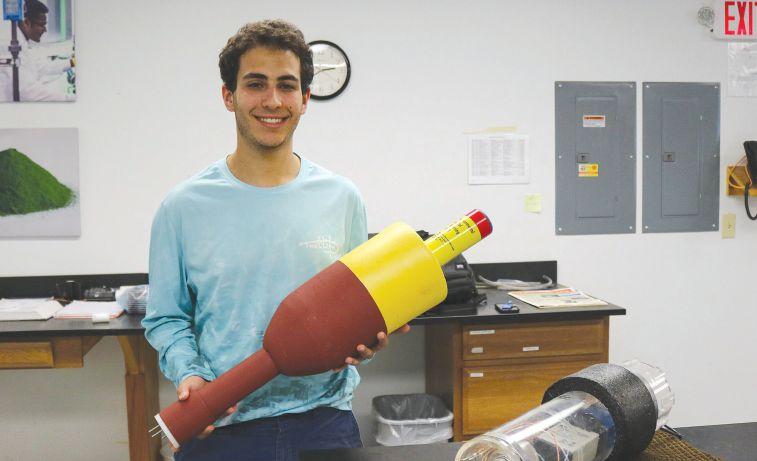
Environmental monitoring systems can be as simple or as complex as anyone would like them to be, depending on one’s purpose. But for University of Maine engineering alum Joshua Girgis, a key requirement was to come up one that oyster and seaweed famers can afford.
Girgis is one of 30 interns at Maine Aquaculture Innovation Center. Under the guidance of Dr Chris Davis, director of the Maine Aquaculture Innovation Center, Girgis has developed a low-cost environmental monitoring buoy.
Environmental buoys are deployed in freshwater or marine environments to gather information on water conditions such as ocean temperature and salinity. For farmers, this helpful information guides them as to where to site their farms or when to put seed oysters and kelp in the water, for instance.
Based on the current prototype Girgis has produced, each farmer is expected to shell out $2,000 for the gadget and $7 monthly operating fee.
Girgis believes this price is much lower than similar products in the market, but he acknowledged that more market research is needed before he could make a clear comparison.
He hopes to lower the price even further. “We are currently doing some research and indepth engineering on reducing our large costs, specifically in instrumentation,” he said.
Field-testing has shown stable results, but some tweaks are being done to keep the data buoy accurate, precise, small, easy to clean and to make sure it has a long operating life.
The project is a research-industry partnership supported by the UMaine System Research Reinvestment Fund, Maine Aquaculture Innovation Center, Maine Technology Institute, Maine ESPCoR and the US National Science Foundation, and the University of Maine Darling Marine Center.
Editor Liza Mayer
Tel: 778-828-6867
lmayer@annexbusinessmedia.com
Advertising Manager Jeremy Thain
Tel: (250) 474-3982
Fax: (250) 478-3979
Toll free in N.A. 1-877-936-2266 jthain@annexbusinessmedia.com
Audience Development Manager / Subscriptions Urszula Grzyb
Tel: 416-510-5180 ugrzyb@annexbusinessmedia.com Fax: 416-510-6875 or 416-442-2191
at www.aquaculturenorthamerica.com
Regular Contributors: Ruby Gonzalez, John Nickum, Matt Jones, Lynn Fantom
Annex Privacy Officer
Privacy@annexbusinessmedia.com
Tel: 800-668-2384
Group Publisher Todd Humber thumber@annexbusinessmedia.com
COO Scott Jamieson sjamieson@annexbusinessmedia.com
AquaBounty staff
Photo: AquaBounty
Joshua Girgis holds prototype of the environmental monitoring buoy he developed
Photo: Maine Aquaculture Innovation Center
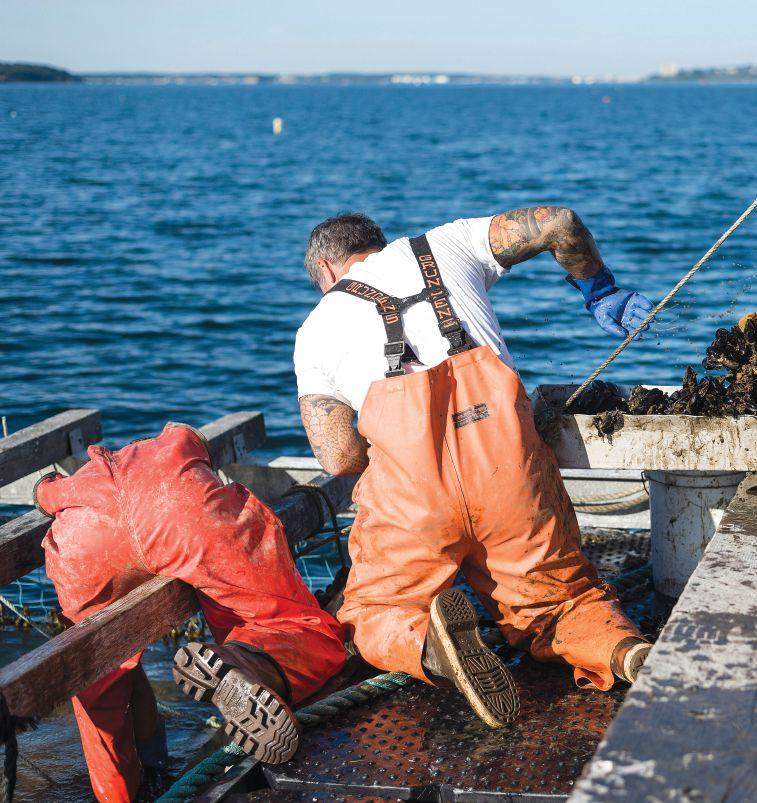
Maine’s aquaculture industry could need up to 80 percent more workers by 2030, says new report
Maine unveils strategies to address skill shortage State will need up to 80 percent more workers by 2030, says new report
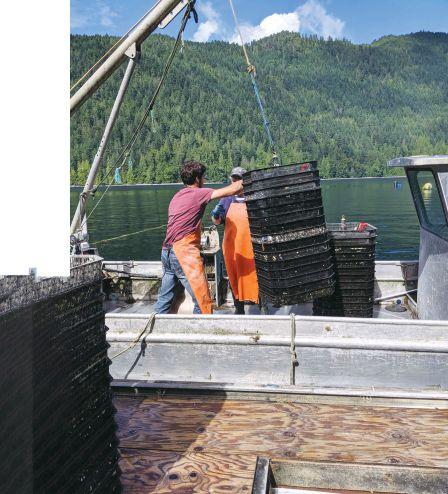
Sixty-two percent of food fish will come from aquaculture by 2030, according to the Food and Agriculture Organization of the United Nations, but without a skilled workforce the industry would be hard pressed to deliver. Such is the challenge faced by many seafood farmers in North America, including those in Maine.
It is the perfect time to embark on the strategy to provide the industry with skilled, dedicated labor and create pathways for Maine talent to enter this important growth sector.
“Finding workers with the right skills is a year-afteryear challenge for Mook Sea Farm,” says Bill Mook, owner of Mook Sea Farm, an oyster farm on the Damariscotta River in Midcoast Maine.
In a new report, “Maine Aquaculture Workforce Development Strategy,” the Gulf of Maine Research Institute and Maine Aquaculture Association recognize the need to establish a comprehensive workforce training system to meet those needs.
The state’s aquaculture industry is comprised of largely owner-operator-scale shellfish and marine algae farms, mid-sized service providers, and large-scale finfish farms. New production models, such as land-based recirculating aquaculture systems, provide yet another growing employment opportunity in this sector.
In 2019, Maine aquaculture created 622 direct and 1,169 indirect jobs. These numbers are projected to rise by 33 percent and 43 percent, respectively, by 2022. By 2030, direct jobs and indirect jobs are forecast to grow by roughly 80 percent (to 1,175) and by 89 percent(to 2,218) from 2019 numbers.
The report recommended four major strategies to meet the industry’s needs:
• the creation of three vocational hubs across the state to provide vocational training specific to aquaculture;
• an aquaculture apprenticeship program;
• the development of new occupational standards; and
• marketing support to promote the new learning opportunities.
“Maine’s aquaculture industry is poised to grow across all existing and nascent subsectors. It is the perfect time to embark on the strategy to provide the industry with skilled, dedicated labor and create pathways for Maine talent to enter this important growth sector,” the report said.
Shellfish farmer Mook says he’s impressed with the initiatives. “They are founded on industry needs and prioritize the type of training and experience to produce employees that can enable our continued growth,” he said.
The report was developed in partnership with Educate Maine and sponsored by FocusMaine.
Photo: Bangs Island Mussels
• Over 50 years of custom fiberglass aquaculture tank manufacturing experience
• Over 200 standard sizes of fish rearing troughs, round fish culture tanks, raceway tanks and more
• Can custom build tanks to your specs including viewing windows, custom gel coat colors, insulation, screens and fittings
• Use only FDA approved materials
Contact us today, as we would love to help you succeed on your next aquaculture project. Get a quote: 830-780-3304 or call toll free 1-800-242-3524 or email sales@redewald.com www.redewald.com
Study Aquaculture/Fisheries with
The Aquaculture Research Institute (ARI) provides undergraduate and graduate students with research experience and hands on fish culture experience at facilities on-campus and in the heart of the Idaho aquaculture industry.
A Bachelor of Science degree in Fisheries with an Aquaculture minor is offered through the Department of Fish and Wildlife Sciences in the College of Natural Resources.
AQUAPONICS
‘Fish fuel’ makes gardens grow
For more information, go to www.uidaho.edu/aquaculture and www.uidaho.edu/cnr/undergraduate-majors/bs-fisheries; or contact ARI Director Brian Small, bcsmall@uidaho.edu, 208-837-9096, or Dept. of Fish & Wildlife Sciences, Kim Stout, kstout@uidaho.edu, 208-885-6434.
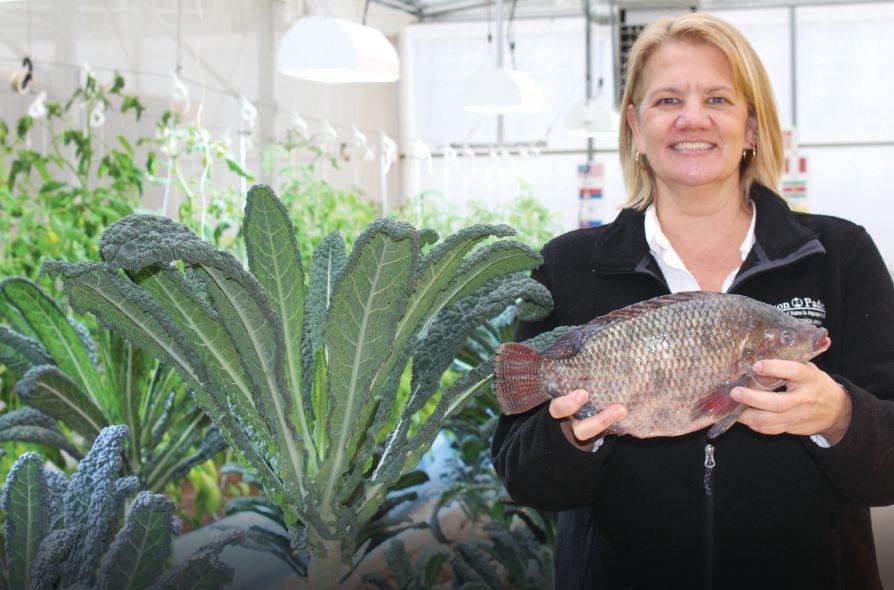
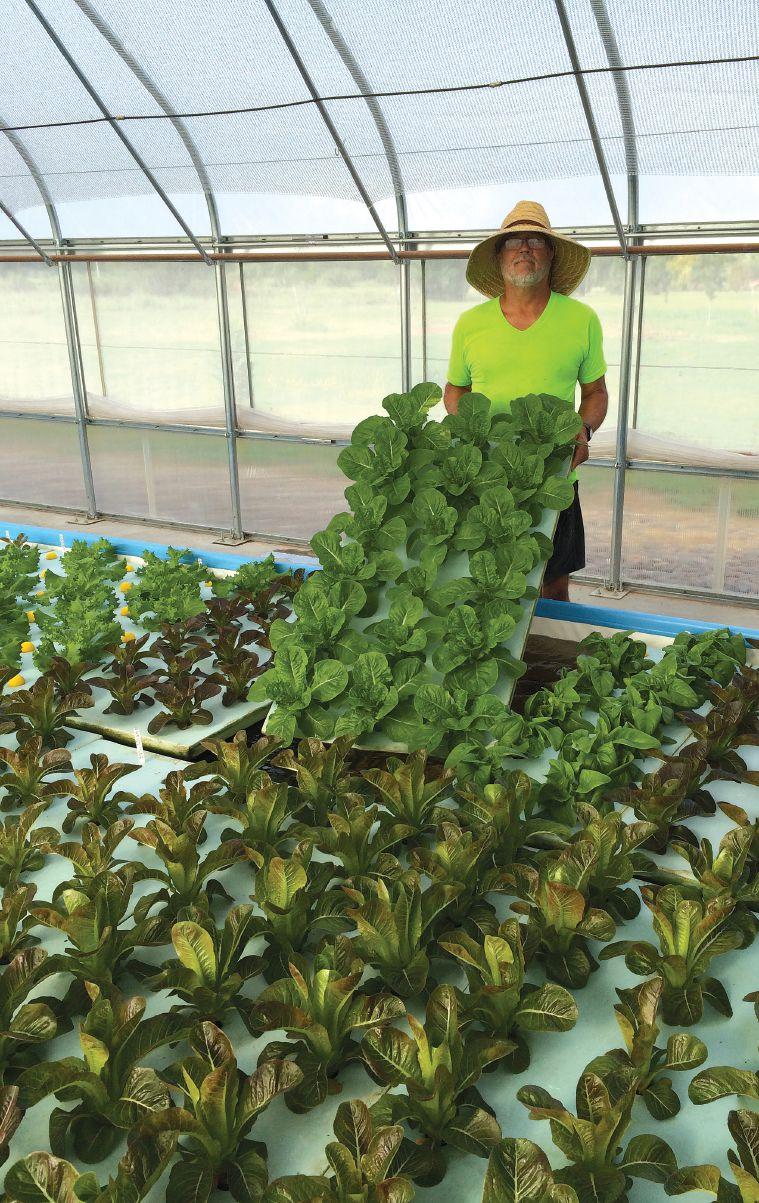
Architect-turned-farmer B.J. Davis with rafts of lettuce at The Fish’s Garden in Camp Verde, Arizona All photos: The Fish’s Garden
“There’s a lot happening now,” says Dr Ron Malone, an environmental engineer and educator who holds a number of patents on floating bead filters. “Before there were more spiritual, I-want-to-be-in-harmony-with-nature type of growers. In the developing world, aquaponics was a practical supplement for food. Now we’re getting a whole different group of people coming in and trying to make it more efficient.”
That includes both growers and scientists. In fact, Brandon Yep, a researcher at the University of Guelph, found that in the past three years, over 160 scientific articles have been published on aquaponic technology, detailing numerous trends and technological advancements. From the Netherlands, Germany, Italy, Switzerland, and Iceland, researchers are building on early work done in the US and particularly that of the pioneering Dr James Rakocy of University of the Virgin Islands (UVI), who developed the first commercial coupled aquaponic system and began offering workshops in 1999. The program has hosted students from more than 50 countries. One of those was B.J. Davis.
GROWTH
The global aquaponics market is expected to grow close to 13 percent annually from 2019 to reach $1.4 billion by 2025, according to Meticulous Research, a market research and consulting firm. North America now represents the largest share, but Asia Pacific will see the highest growth rate. New market segments include backyard farming, urban food production, and even school facilities for teaching STEM (science, technology, engineering, math). Currently, the largest segment is commercial production. Those farmers, however, might not be who you think. Aquaponics expert Rebecca Nelson, who co-founded Nelson and Pade in 1985, says, “Going back 20 years, I thought our market would be fish farmers who want to be more profitable, diverse, and sustainable. Or hydroponics farmers that want the same things, and so they would add fish. But that isn’t at all how the industry evolved. The people moving forward in the aquaponics industry are those interested in having a business and doing some kind of farming that’s fully sustainable.”
All Photos: The Fish's Garden
Her customers with small- and medium-sized commercial operations, who earn a good living from them, include former architects, engineers, teachers, and medical professionals, people who “planned it correctly and then executed with a science-based system and good management and marketing.”
“It’s really the Holy Grail for someone looking for a green business,” she adds.
TRENDS
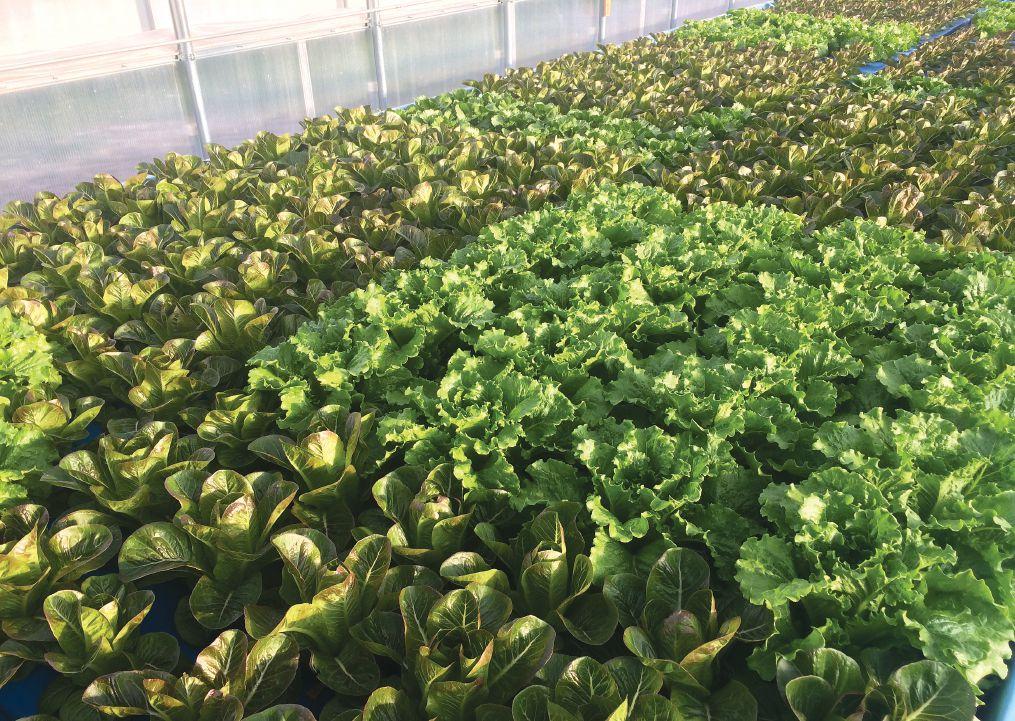
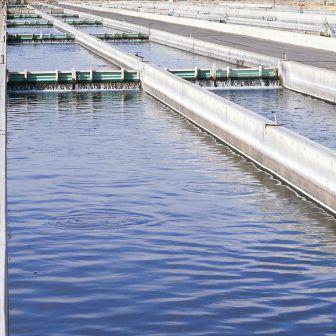
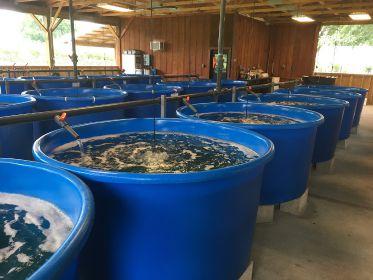
The dense growth of lettuce in the raft beds of
Aquaponics systems grow food in a way that addresses many sustainability issues, including limited water, environmental pollution, aversion to antibiotics and pesticides, and shrinking arable land, according to Yep.
His research cites a strong majority of commercial growers opt for tilapia and leafy vegetables, the preferred crop because they develop well in nitrogen-concentrated water, grow fast, and are in high demand.
“When you do the math,” says Nelson, “the leafy greens grow the fastest and will have the best return.” The labor and footprint required for crops must also be factored into the profitability equation, which is why tomatoes and strawberries are lower on the list.
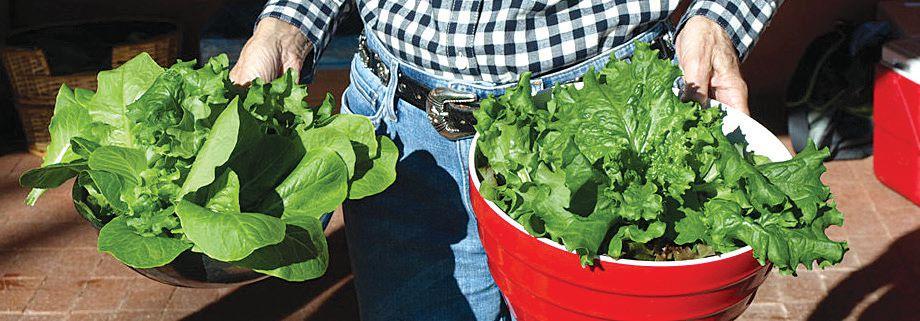
But leafy greens is a broad category. Davis has experimented with over 50 varieties of lettuce. His arugula is in high demand and, when he expands, he will add to his core raft systems some media beds for other crops like microgreens “which are really big around here for restaurants.” He listens to his customers, for whom he also grows custom crops on request.
The fish in his system are a hardy crop of bluegills, which he sells to bass farms as a feeder population. But the greens are the money-makers.
Owned by Davis and his wife Cat, who was an electrical engineer, The Fish’s Garden is also on the cusp of the trend to improve operational efficiency. When they initially contemplated a move from their hometown of Toronto to Arizona to start an aquaponics business, their first step was to scrutinize a pro forma “to demonstrate that we could make money as a couple.” Now, after six years of harvests, they are moving to all LED lighting and doubling their solar energy to further reduce their utility bills.
SYSTEM COMPONENTS AND DESIGN
For any system to succeed, uneaten feed and fish waste must be removed quickly or water quality will degrade. Growers juggle considerations of effectiveness, expense, and maintenance in choosing the solids and bio filters to do that work.
Now filters have been developed that can serve both functions. The ease of backwashing and maintenance have also been improved.
Another decision is the pumps to move water among system components. They include both electrically run im-
peller (submersible and inline) and airlift designs. To conserve energy, there have also been advances in airlift technology, according to D. Allen Pattillo, an aquaculture specialist at Auburn University.
Dr. Malone, who is also the president of AST Filters, says his company’s preference is to design systems with airlift operations. Otherwise, with pumps, there is a great energy cost. “You’re killing several ancient trees in the form of oil to produce a couple heads of lettuce. We can’t sustain that.”
He also favors decoupled systems, a trend that Yep notes is “becoming increasingly popular.” Unlike the classic closed
system with water flowing in one continuous loop (exemplified by Racozy’s design) this newer approach utilizes sub-loops designed for superior filtration, isolation of disease, and adjustability of nutrients, water temperature and pH. Plants and fish each get what is optimal.
“You can carry 20 to 30 percent more trays with a decoupled system,” Malone adds. “Essentially, you can get more out of your feed and, at the same time, lessen your environmental impacts by digesting the sludge internally and decoupling the system.”
He appears optimistic, especially as he speaks about the future impact of students who are learning about aquaponics now. “It’s hard to say where aquaponics might be in another 10 years,” he adds.
The Fish’s Garden demonstrate why lettuce is the leading crop for profitability
The Fish’s Garden lettuce is served at the restaurants of posh spas in Sedona, Arizona
AQUAPONICS
Photo: @
High-tech food production could entice youth to work the farm
BY LIZA MAYER
The growth in technology-based food production such recirculating aquaculture and aquaponics could bring back the youth to the agriculture workforce.
Dr Louis R. D’Abramo, Professor Emeritus at the Department of Wildlife, Fisheries and Aquaculture at Mississippi State University, noted this is especially true in North America, where young people in generally do not find rural life appealing, unlike their counterparts outside the region.
“It is not difficult to attract international students to fouryear graduate programs because in most cases, they come from countries that have flourishing aquaculture industries that significantly contribute to the economy and many individuals who are willing to work in the industry have different lifestyles and generally live in rural areas,” says D’Abramo.
The aversion to working in a remote setting, where most farms are located, is echoed in Canada as a key challenge in attracting and retaining aquaculture workforce. The report “Labor Market Forecast to 2029” from the Canadian Agricultural Human Resource Council, says this could delay or prevent the industry’s expansion.
The departure of young people from farm work has been going on for a generation but aquaculture’s expansion particularly in so-called “controlled environment agriculture” could provide some relief.
As food production systems become more technologybased, allowing farm sites to move closer to urban centres, more young people studying various disciplines could be enticed to engage in it.
“There will be a need for individuals who have a business background, most probably individuals who have earned an
Innovation Beyond Measure
Results Beyond Expectation
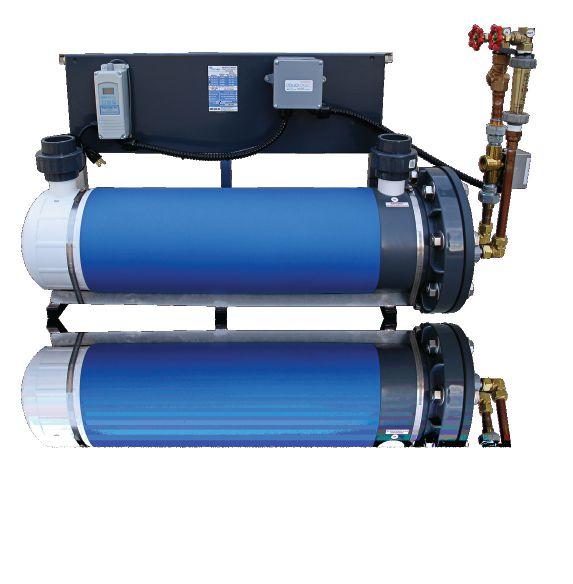
• 100% Titanium Heat Exchangers
• Salt & Fresh Water Safe
• Available with Tube Sheet, Helical Coil, or Plate
• Hot & Cold Water Loop Systems
• Compact Designs
• Easy Installation
• Incubator Rack Systems
• Gas Boilers
MBA with an emphasis in aquaculture business management and individuals who are specifically trained and graduate from a two-year college with an Associates degree,” says D’Abramo.
Dr Michael Schwarz, Director of the Virginia Seafood Agriculture Research and Extension Center, says the fastergrowing segment under the controlled environment agriculture umbrella is aquaponics. Commercial-scale producers, not homestead farms, are driving its growth, he says.
Taking its cue from the industry and investors, Virginia Tech’s new SmartFarm Innovation Network has established a Controlled Environmental Agriculture Innovation and Education Center where the focus is on SmartFarm technologies.
“We’re starting to see significant capital investment in aquaponics, which in many cases is tying salmonid with the production. In those you need multiple, diverse disciplines in the workforce. If you’re doing aquaponics, you need people that are growing fish, you need people that understand the plants -- production, health, disease control, biosecurity to harvesting,” said Schwarz.
At Vancouver Island University (VIU) in British Columbia, students learn about economic, environmental and social sustainability by understanding crop diversification and improved farm economics, which reduce the ecological footprint of food production, and how to operate an integrated food production system.
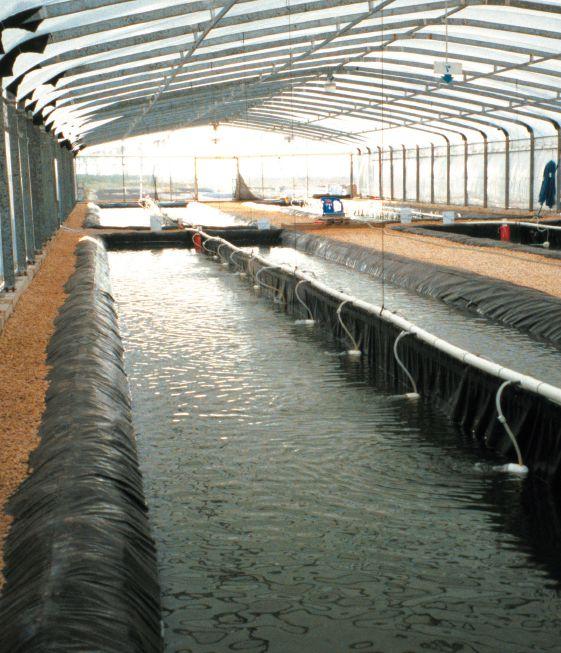
VIU’s aquaculture greenhouse is unique because it grows sturgeon, a cool water fish, whereas most operations typically grow warm water fish, such as tilapia.
“We’re running out of arable land right now so aquaponics is an alternative we can use,” says Holli Desrocher, a first year student at VIU’s Fisheries and Aquaculture Technology Program. “I wanted to learn more about it to be selfsufficient. When I get older and have kids I want to be able to grow my own vegetables to feed my family.”
D’Abramo acknowledges there’s plenty of work to do, both for the industry and the academe.
“Aquaculture in the US needs to be marketed for what it is. People who engage in aquaculture are indeed ‘trying to save the world.’ That gets people’s attention. The academe needs to find outlets like social media to inform. This approach is essential with current generations. An environment that encourages cooperation between the private sector and university researchers is essential,” he says.
He also placed the onus on researchers like himself to “become better and more frequent communicators about aquaculture” in order to help dispel misinformation. “Effective communication to the general public is commonly not a strong point of university researchers,” he admitted.
Where Water Drives Innovation.
CROnePix /Adobe Stock
AQUAPONICS
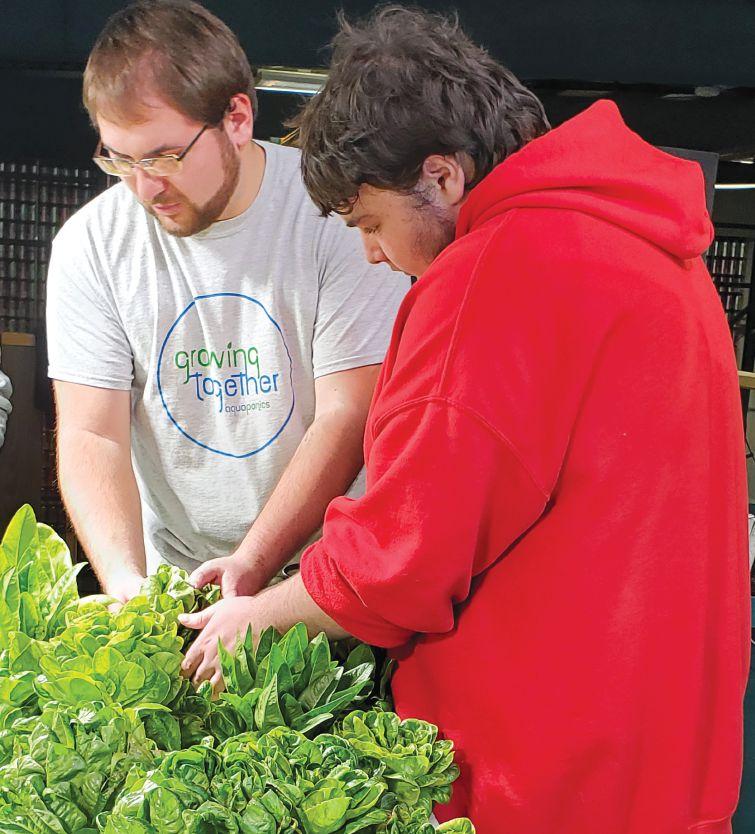
A participant in the Growing Together Aquaponics program examines greens from the aquaponics garden. The program engages students with intellectual or developmental disabilities
Photo: Robert Arnhold
Students with disabilities thrive in aquaponics program
As former professor of physical and health education at Pennsylvania’s Slippery Rock University, Robert Arnhold trained people with disabilities and helped them navigate the challenges of transitioning between high school and college or the workforce.
When he discovered aquaponics two years ago, he knew it would be ideal as a vocational program for students with intellectual or developmental disabilities. In February 2018, he launched the Growing Together Aquaponics program.
Students from over 10 school districts in the state tend the program’s aquaponics garden housed at the North Country Brewing Company’s canning facility in Slippery Rock. They grow broccoli, cauliflower, peppers, rosemary and microgreens, and sell them to the North Country Brew Pub and other local restaurants. They also grow tilapia and koi.
The program has various levels that cater to the students’ needs. “We work with a lot of different sensory needs,” says Arnhold. “You can address the sensory need that they have and avoid the sensory overload. There’s sight, sound, smell, taste and touch involved. You can avoid what is overwhelming to them and increase what they need.”
“Some of our students don’t really want to be near the fish, but they really like the plants or vice versa,” adds operations manager Marena Toth. “There’s just so many different types of components and tasks and criteria that people can do all the way down.”
Students who participate in the program are provided the opportunity to teach classes on the aspects of the system that they learned. They can also avail of the services of the university’s Rock Life program, which provides participants a path to employment and wellness.
One of the students is Zoe. “Working here gave me social skills, teamwork skills, leadership skills and communication skills,” she says. “I enjoy harvesting what we’ve grown and sending it off to the restaurants to be used in different ways. When I go to the restaurants, I like seeing the comments on the menu about which dish has produce from the system.”
Initiative brings aquaculture into Maine classrooms
One of the biggest challenges for educators is getting students to fully engage in the subject matter being studied. Place-based learning has thus emerged as an educational philosophy to enhance student engagement with issues in their own communities.
In Maine, where aquaculture is growing as wild fisheries decline, bringing aquaculture into the classroom will help students understand what’s going on in their communities, believes Morgan Cuthbert, a seventh-grade science teacher at Frank H. Harrison Middle School in Yarmouth, Maine. In 2019, Cuthbert started an initiative called Aquaculture me! to help other educators in Maine integrate aquaculture into their curriculum.
He says aquaculture in the classroom also helps improve science education. “The biggest issue I see when teaching science is linking students to authentic research and mak-
ing the curriculum feel real and relatable.”
Since integrating aquaculture into his school curriculum, the impact on students is clear: “Place-based learning, where the students were hands-on, actually doing the science and watching something grow in front of them and connecting with the sea farmers around them, increased their engagement,” he says.
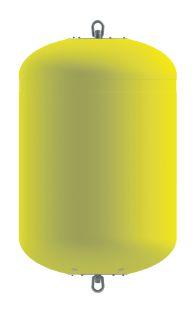
Bright yellow buoys in the water bodies near local homes are a familiar sight for Cuthbert’s students. Helping them to understand what those buoys are, what may be growing beneath them and what farming looks like up close make their learning more tangible, he says.
“Asking kids to spore kelp in the classroom and help a sea farmer to put it out on the long lines then watch it grow to a nine-foot kelp is one of those really cool moments.”
In January, Aquaculture me! gathered teachers, aquaculture researchers and specialists from around Maine for professional development. A second event, funded with a $5,000 grant from Maine Sea Grant, was scheduled for July but was cancelled due to COVID-19. Instead, a virtual event is being planned for mid-September.
While it’s possible that Sea Grant could again fund another Aquaculture me! event in 2021, Cuthbert continues to seek other potential funding sources who would see the value in the initiative.
“Maine is a waterfront community. We live on the coast and have all these major fisheries so looking at workforce development and getting kids engaged in the science behind aquaculture is really important,” he says. “The hope is that students will look forward to aquaculture as a career path.”
-- Matt Jones
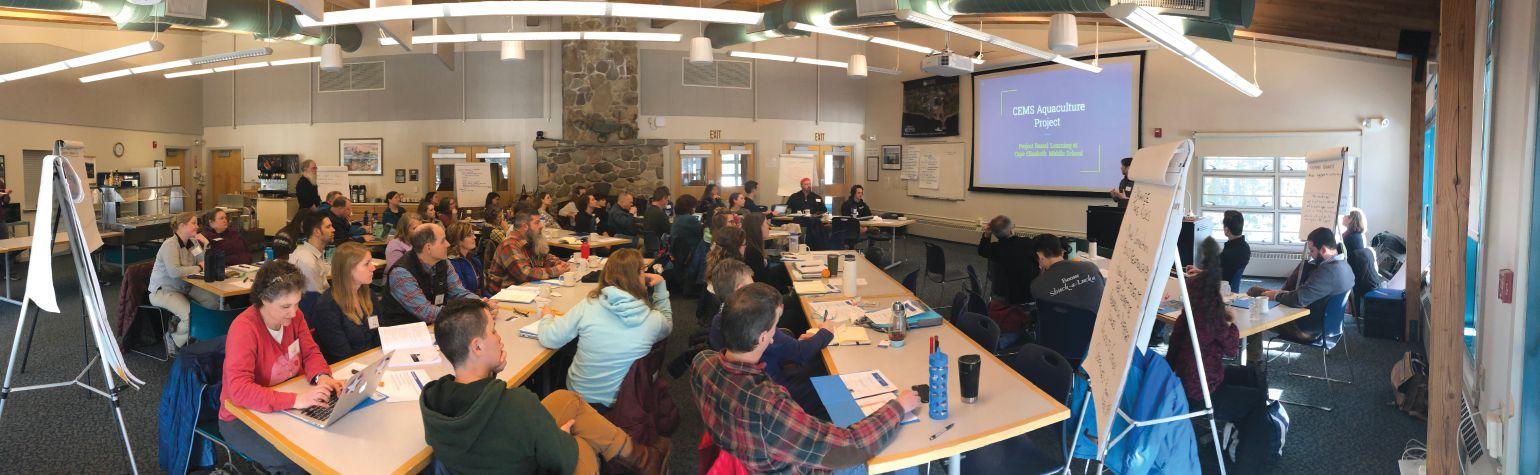
Aquaculture me!’s first workshop in January brought together teachers, aquaculture researchers and specialists to explore ways to connect aquaculture to the classroom
Credit: Morgan Cuthbert
Feed could play key role in reducing aquaculture’s footprint
Global aquaculture accounts for a modest amount of greenhouse gas emissions compared to terrestrial livestock farming but one way it could reduce its footprint further is by looking at the biggest source: feed production. According to a paper released recently by the Food and Agriculture Organization, production of crop feed materials accounted for 39 percent of total aquaculture emissions in 2017. This figure increases to 57 percent when the emissions arising from fishmeal production, feed blending and transport are added.
“Feed is the main source of emissions in most systems, so some of the reduction can be achieved before we even get to the fish farm, in the production of feed materials,” said Dr Michael McLeod, one of the authors of the study “Quantifying greenhouse gas emissions from global aquaculture.”
“It is such a dynamic and fast-growing sector. While the emissions from fish farming are unlikely to reach the profile of, for example, beef farming, if there are ways of reducing emissions while improving financial performance, why not use them?” added McLeod, a climate-change research scientist at Scotland’s Rural College. East and South Asia produced the most aquaculture products in 2017 with 57,633,000 tons and 8,401,000 tons, liveweight, respectively, and they also produced the highest emissions. This pattern was observed with the production of most species groups.
Developing genetically improved breeds suitable for lower feed conversion rates, improving health, using more precise feeding methods and improving on-farm energy efficiency are among the other ways to reduce emissions, the study said. However, finding which one would be most cost-effective would depend very much in where one is starting from, for instance, the species and farm location, said McLeod. “Aquaculture is a very diverse sector; you’re dealing with a lot more species than terrestrial farming for a start.”
– Ruby Gonzalez
Promising findings in fight against tilapia virus
Selective breeding to produce tilapia strains resistant to the tilapia lake virus (TiLV) may be one way of limiting the spread and economic damage of the disease.
Scientists from the University of Edinburgh’s Roslin Institute, non-profit research group WorldFish and University College Cork’s School of Biological Earth and Environmental Science arrived at this conclusion after studying 1,821 genetically improved farmed tilapia (GIFT). They put the GIFT tilapia – a strain that grows faster than conventional tilapia and widely farmed worldwide – in a pond that had an outbreak of TiLV then analyzed their genes.
The tilapia, which were from 124 families, showed a variation in survival. Some family groups had no deaths, while other groups saw a 100-percent death rate.
“These results demonstrate that host resistance to TiLV is highly heritable in a Nile tilapia breeding population with GIFT origin. Therefore, selective breeding to increase resistance and reduce mortalities due to TiLV is a feasible and promising approach,” wrote A. Barría et al, authors of the study “Genetic parameters for resistance to Tilapia Lake Virus in Nile tilapia.”
The findings have promising implications for protecting stocks of tilapia from the virus, which causes up to 90 percent mortalities. The virus was first detected in the US in 2019, roughly five years since it was first detected overseas.
“Tilapia Lake Virus poses a real problem to fish farmers worldwide, impacting on the livelihoods and food security of millions of people. This research is the result of a long-term collaboration between Roslin and WorldFish (source of the GIFT strain), and is the first step to breeding tilapia strains with improved resistance to the virus,” said Professor Ross Houston, co-author and Personal Chair of Aquaculture Genetics at the Roslin Institute.
– Ruby Gonzalez
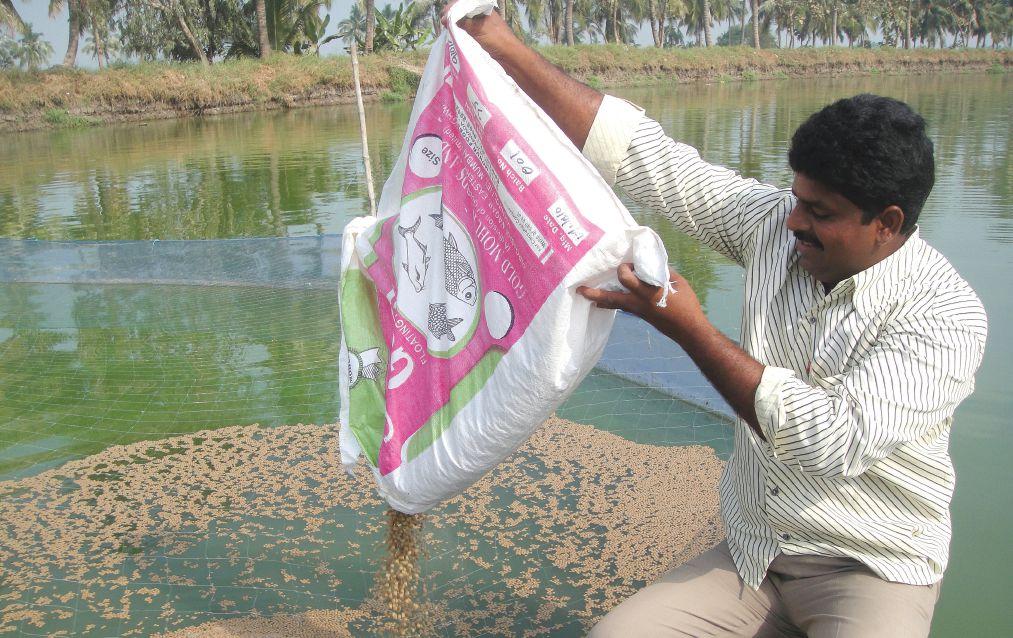
Feeding fish in a net pen in India. Production of crop feed materials is the highest generator of GHG emissions in aquaculture
Credit: FATP 609/ R. Ramakrishna
Researchers have discovered findings that hold promise in fighting a lethal virus in tilapia
Photo: Adobe Stock
Study into the nutritional quality of store-bought
salmon yields surprising results
Astudy into the nutrient content of various species of salmon available to Canadian consumers has yielded unexpected results, some of which may help dispel misconceptions about farmed salmon.
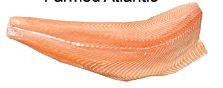
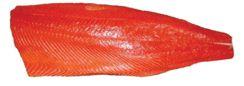
Researchers at Dalhousie University in Nova Scotia purchased six different types of salmon that are commonly available in stores in Canada: farmed Atlantic, farmed organic Atlantic, farmed organic Chinook, wild Chinook, wild Pacific pink and wild Sockeye. They then analyzed them for protein, fat, fatty acids, amino acids, potassium, iron, cholesterol, and mercury content. (See table below for study findings.)
The results showed it is the species of salmon that makes the biggest difference in nutritional quality, not whether it was farm raised or wild caught, says lead researcher Dr Stefanie Colombo, an assistant professor of Aquaculture at the Dalhousie’s Agriculture Campus.
“I was surprised by a few things. I thought I would see more similarities within the wild salmon group (Sockeye, Chinook, Pacific) and within farmed salmon group (Atlantic and Chinook), but the results did clearly show that salmon types are different - again, which implies their diet and environment. I suspected that there would be differences, since salmon are not just ‘salmon’, different species have unique nutritional composition.”
Farmed Atlantic salmon has the highest protein among the farmed salmon, a higher EPA/DHA content than its organic counterpart, and the lowest mercury content among all types studied. It is also the most affordable at CAD$12.49–15.25 per lb ($9.34$11.40 per lb) at the time of the study.
Colombo believes there is an opportunity for producers to reach out to consumers through marketing, labeling, social media or pamphlets at the supermarket to provide important information on the nutritional value of farmed Atlantic salmon.
“For example, consuming EPA and DHA that is rich in Atlantic salmon fillets is linked to improved cardiovascular and neurological health, the development of visual capabilities and brain development in fetuses, and has anti-inflammatory properties. So being able to provide a label such as ‘excellent source of EPA and DHA for heart and brain health’ could be a helpful label for consumers in deciding what to buy for dinner.”
On the part of consumers trying to balance nutrition and the family budget, farmed Atlantic salmon may be the most convenient and affordable option, especially for consumers who regularly include salmon in their daily meals, Colombo added.
ANALYSIS OF SALMON AVAILABLE TO CANADIAN CONSUMERS
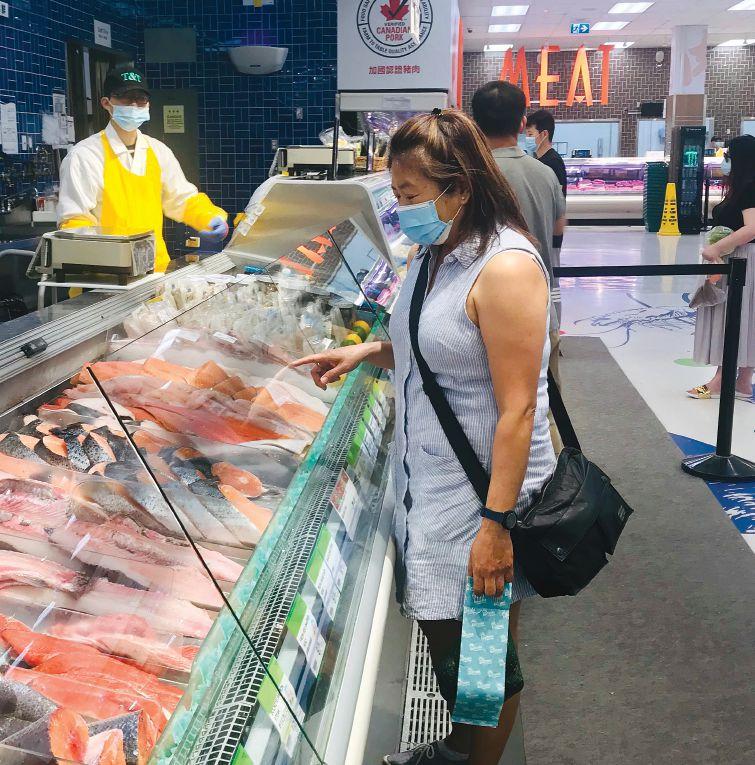
Results of a study into the nutrient content of salmon available in Canadian stores could help consumers in their purchasing decisions
Photo: Liza Mayer
THESE FOR BETTER FISH HEALTH
Our patented aerators for ponds, tanks, raceways, rearing habitats, and transport deliver oxygen critical to fresh and salt water fish.
Research yields insight into sea veggies’ potential
Next step is to investigate possible economic opportunities
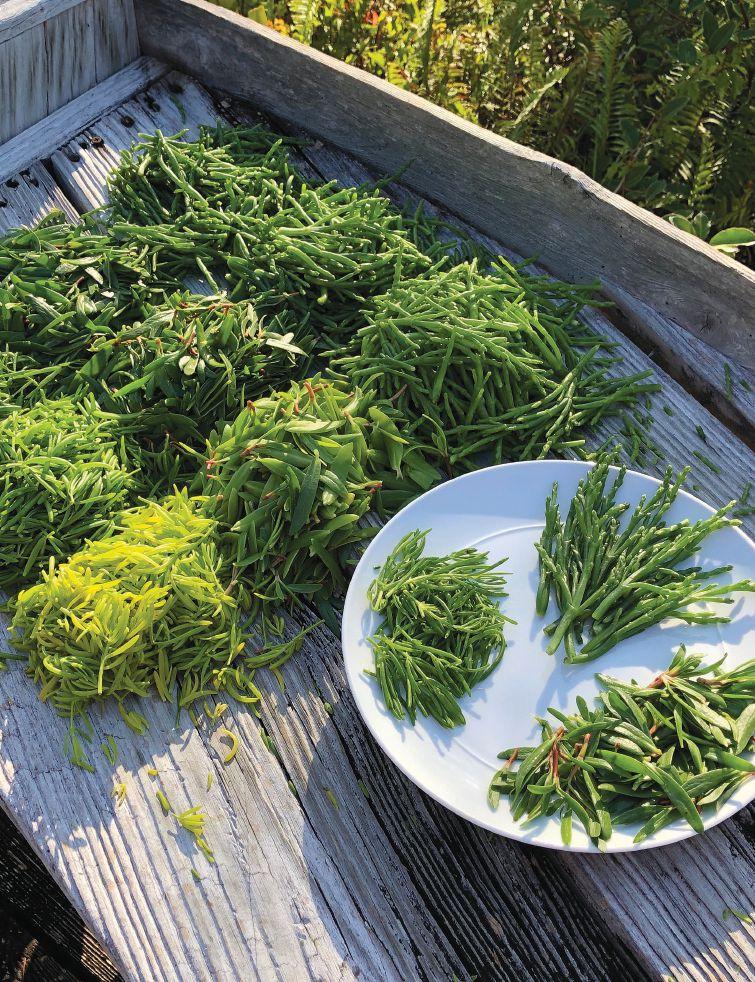
In what could be the first step toward a new aquaculture sector in Florida, researchers at Florida Atlantic University (FAU) have succeeded in growing nutritious sea vegetables using aquaculture while minimizing waste and maximizing efficiency and productivity.
The team from FAU’s Harbor Branch Oceanographic Institute raised three types of saltwater vegetables: sea asparagus, sea purslane and saltwort. All three are considred a vegetable, herb or garnish.
The team aimed to demonstrate and identify the optimal growth criteria for the plants, determine markets, work with chefs to develop recipes, and understand consumers’ acceptance of the product.
The plants were raised in different substrates: sand, clay pebbles, and water only in a land-based Integrated Multi-Trophic Aquaculture (IMTA) system that also housed fish, shrimp, urchins, oysters and macroalgae.
By the end of the study, researchers had grown a total of 187 plants, losing only two plants, which demonstrates their exceptional survival, the team said. The edible parts of each plant accounted for more than half of the plant, most notably saltwort as 75 percent of it was edible. The plants did better overall in the sand substrate.
The next step is to determine the economics of growing these plants and the market values. The reserachers will share their findings with future producers, with the hope of generating a new aquaculture industry in Florida and elsewhere.
“Sea vegetables are a great source of minerals and would be a healthy addition to any meal,” said Dr Paul Wills, principal investigator of the IMTA project, a research professor and associate director for research at FAU’s Harbor Branch.
Dr Megan Davis, a research professor, aquaculture and stock enhancement, is co-principal investigator in the study. Other team members are Dr Jordon Beckler, Dr Ikuko Fujisaki-Butler; Obby Tapley; Richard Mulroy; Richard Baptiste; Matt Quinan; Lynn Wilking; and Brian Cousin, who are all with FAU’s Harbor Branch.
HI_Fresh-
Sea asparagus, sea purslane and saltwort were co-cultured with other marine animals in a land-based IMTA system
Photo: Megan Davis/Florida Atlantic University
Researchers succeed in fortifying oysters with vitamins
Enhancing food with micronutrients to enhance people’s health isn’t new but integrating micronutrients in live oysters is.
Researchers at Cambridge University said they have come up with a cheap and effective way of doing this, and it adds only 0.9 percent to the retail price of oysters.
The researchers, David Willer and David Aldridge, chose Pacific oysters (Crassostrea gigas) as vehicle for vitamins A and D because of the world population’s deficiency in these vitamins and the bivalve’s widespread popularity as a food source.
The high cost of supplemental pills is another reason the duo explored this nutrient-delivery method. “Vitamin supplements or fortified food condiments are often expensive and seen as a luxury by the people who really need them,” they wrote.
The researchers found that the ideal duration and time to feed the oysters the “vitamin bullets” they devised is eight hours during the 48-hour depuration stage of bivalve production. This will effectively integrate nutrients into the bivalve gut and surrounding tissue.
“As humans consume the entire organism including the gut when they eat a bivalve, these nutrients will be available to humans,” the researchers wrote in their paper “Vitamin Bullets. Microencapsulated Feeds to Fortify Shellfish and Tackle Human Nutrient Deficiencies.”
While it is true that supplemental nutrients can be included into the feed of terrestrial farm animals, this is inefficient because feeds must be fed to animals for a far longer period of the animals’ lifetime in order to generate elevated nutrient levels in the animals’ tissue, they said.
The experiment showed Pacific oysters successfully consumed the microcapsules, resulting in elevated micronutrient levels in whole-organism tissue samples.
The study marks the first successful fortification of bivalves with micronutrients beneficial to human health via this method.
The next step is for further research studies and industry trials. “Taking these steps can provide stakeholders in aquaculture to make an invaluable contribution toward improving the quality and sustainability of our global food system,” they wrote.
Strong skin, strong fish
Saltwater acclimation in land phase strengthens skin of post-smolt Atlantic salmon, says new study
with their strategy of giving their fish extra time in closed containment
Helping post-smolt Atlantic salmon get used to saltwater before transferring them to the sea strengthens their skin and reduces their vulnerability to wounds, according to a new research from Norway.
In an earlier study, Nofima scientists found that the immune system of Atlantic salmon weakens during the time of smoltification, which is the developmental stage prior to their transfer to seawater cages.
A new study sought to explore possible interventions that could help strenghten the fish prior to transferring them to the sea. University of Bergen student Marte Fredriksen and the Nofima researchers were particularly interested in studying skin ulcers caused by a bacterium called Tenacibaculum.
In trials conducted by the researchers with Cermaq R&D, the skin of post-smolt salmon raised in freshwater tanks developed differently from those reared in tanks where salt was added to the water (26 parts per thousand of salt).
Normally, post-smolts are transferred directly from freshwater to seawater shortly after smoltification. In the
trials, some fish were kept in freshwater for longer periods while some were kept in tanks where salt water was added before transferring them to the sea. Once they were transferred to the seawater, the freshwater salmon had a weaker skin surface than those of the brackish water salmon.
“We believe that the transition to full-strength seawater is a greater strain on freshwater fish than on brackish water fish. This suggests that the fish can be acclimatised to seawater by keeping them in brackish water before transferring to seawater, therefore reducing the risk of tenacibaculosis,” said Christian Karlsen, an aquamedicine scientist at Nofima and Fredriksen’s supervisor.
The findings confirm that Atlantic salmon producers are on the right track with their strategy of giving their fish extra time in closed containment to strengthen them against some of the challenges they will encounter in the ocean.
“Prolonged time in purified seawater before transferral provides a number of benefits, both during the land phase and also later on in relation to the performance, health and welfare of the fish,” said Cermaq’s Sverre Bang Småge.
Researchers at Cambridge University have found a way to integrate nutrients into live oysters
The study findings offer further proof that Atlantic salmon producers are on the right track
Photo: Cermaq
Ancient Hawaiian fishpond survives test of time
BY MARI-LEN DE GUZMAN
When a centuries-old Hawaiian fishpond along the North Shore of Oahu began experiencing excessive algae bloom 10 years ago, oysters became the ideal solution to enhance water quality in the ponds and ensure fish survival.
“That overbloom of algae was making it unhealthy for our fish because algae make oxygen in the water at daytime, but
at night time it takes it away. When you have too much algae and you lose that balance, fish will die from low DO (dissolved oxygen) at night because the algae are taking away the oxygen from the water,” explains Ku’uipo McCarty, pond manager at Kualoa Farm where the Moli’i fishpond is located. The abundance of algae in the pond makes it ideal for growing oysters, which benefit from the pond’s natural
that's still in use. The water’s high salinity is ideal for growing oysters
phytoplankton production. Kualoa has been farming Hawaiian oysters at the Moli’i fishpond for the last six years since receiving government permits. It is the only certified pond in Oahu to grow oysters.
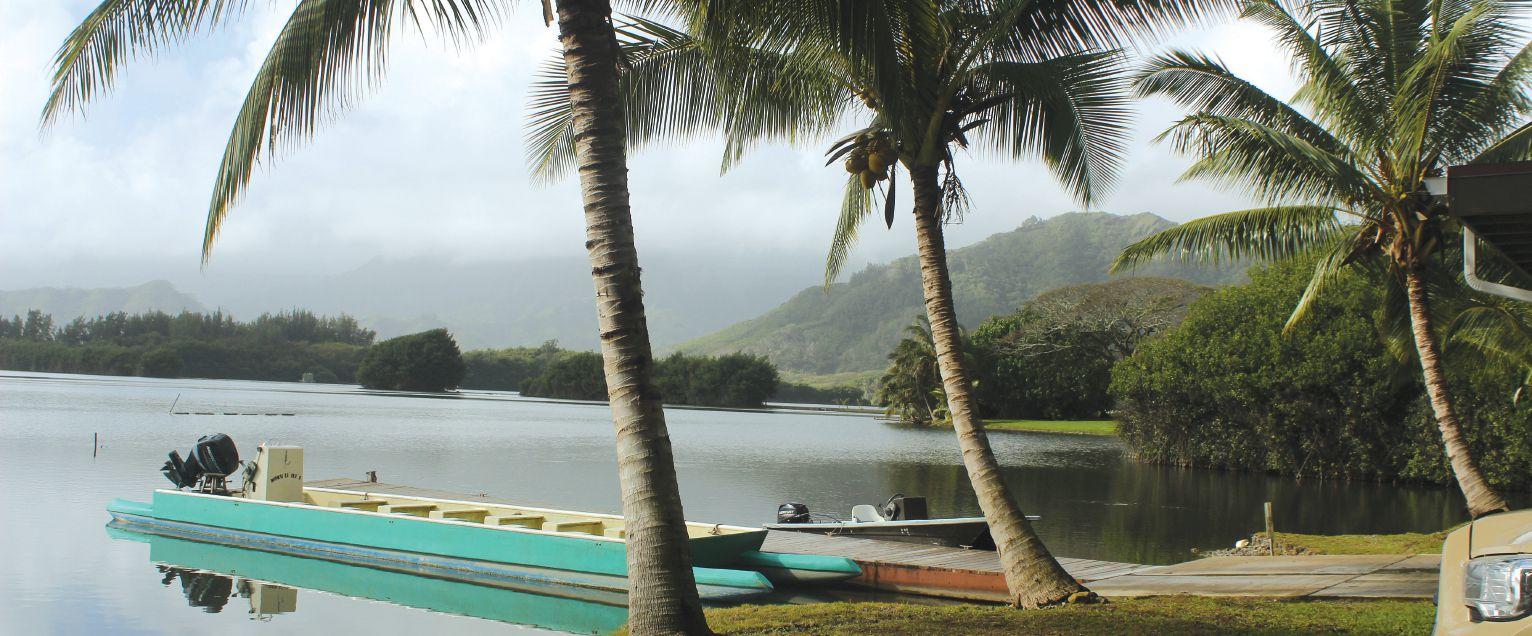
The 125-acre Moli’i fishpond is 800 years old and is one of the few surviving ancient Hawaiian fishponds today. Although oysters have become the farm’s main produce for commercial
The Kualoa farm harvests up to 13,000 oysters from the Moli’i pond per month
The 800-year-old Moli’i fishpond is one of only a few ancient Hawaiian fishponds in Oahu
All photos: Mari-Len De Guzman
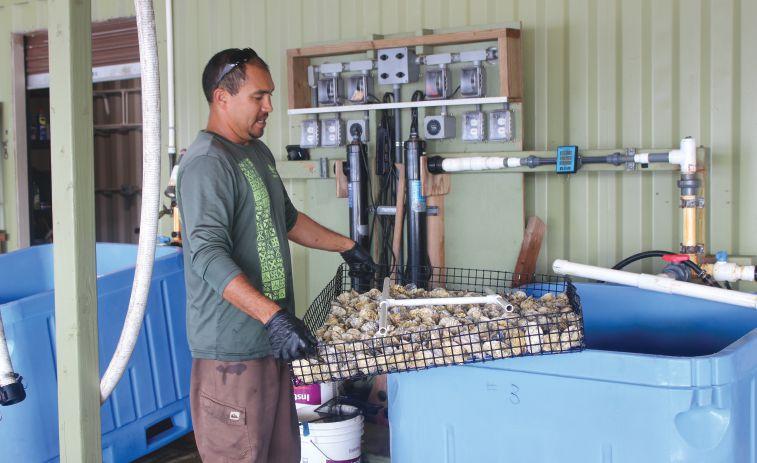
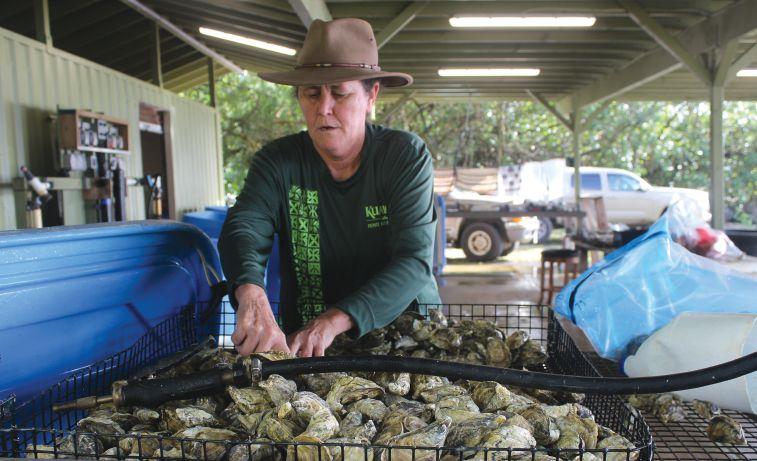
Ku’uipo McCarty, pond manager, gets the oysters ready for packaging
aquaculture, fish and other species, such as Samoan crabs, also thrive here and help maintain balance in the pond’s ecosystem.
The farm grows Pacific triploid oyster. The sterile oyster is chosen to prevent the species from spawning and prevent an overgrowth on the enclosed pond. This also ensures a yearround harvest for the farm.
“We are getting a wonderful ecological balancing effect, but we are not overdoing it by having too much natural reproduction of these animals,” explains McCarty, who has worked at Kualoa Ranch for 31 years.
McCarty and two other staff members manage the day-to-day operation of the oyster farm. It’s a lean team for such a labor-intensive undertaking with year-round harvests and a weekly manual treatment regimen to ensure that the oysters are free of barnacles and muddy mudworms (Polydora websteri). The resulting market-ready oysters are clean and great-tasting, which makes it all worth the work, McCarty says.
UNIQUE GROWING PROCESS
The Moli’i pond contains about a quarter million oysters at any given moment. Production is roughly 13,000 pieces of oysters per month, of which around 10,000 are picked up by the farm’s authorized distributor. The rest are sold by the dozen to the local community. The distributor sells the oysters to other islands in Hawaii, specifically to Maui and Kauai. With the COVID-19 pandemic, however, most of the harvest are now sold directly to the community.
Growing oysters in a pond has its unique advantages, says McCarty. The farm uses different-sized floating baskets at various stages of the oysters’ lifecycle.
“Because it’s an enclosed pond, I don’t have to worry about my gear straying anywhere,” she says. “If it gets loose, it’s in our pond and I can get it. This is a privately-owned fishpond, there’s no trespassing, no fishing. It’s different from, say, a lease that someone would have in the ocean. We are contained.”
The pond itself is shallow – only about two to three feet deep – with a very muddy sediment on the bottom. The floating baskets keep the oysters out of the mud and allow the oysters to stay afloat as they feed on the phytoplankton on top of the water. When new oyster seeds come in, they are placed in baskets with 4-millimeter mesh screens. The so-called “mini mesh” are small enough to keep the seeds from falling out of the baskets. As the oysters grow bigger, they are transferred to baskets with half-inch to one-inch mesh screens until they’re ready for harvest. The whole grow-out cycle takes about nine months. A big challenge at the Kualoa farm are the mudworms, a common nuisance with oysters grown in mud ponds. Mudworm burrows itself into the oyster shell. It does not actually eat the oyster, but once inside, the oyster covers the worm with nacre. When a shucking knife hits that covering where the worm is, mud would get in the oyster.
After going through a 48-hour period of purging, aquaculture lead labor Israel Velez gets the oysters ready for packaging
But that process was such a hassle so the Kualoa team worked to ensure the barnacles don’t get a chance to settle in the first place, by pressure-washing the baskets at the first sign of small barnacles setting in.
To get the harvest ready for the market, Kualoa oysters go through a period of depuration – a 48-hour purging process where oysters are placed in tanks with artificial seawater to purge the gut so that it goes to market with an empty gut. This results in a clean and sweet tasting product, McCarty explains.
McCarty’s team tried desiccation, or the process of drying out the oysters, to eradicate the problem. “We did that for three years but it didn’t work.”
What worked, they found, was soaking the baskets overnight in freshwater, once a week.
“We would bring every basket in, and we’ll wash it on the dock and then we’ll place it into the tubs of freshwater and by the time we get a hundred baskets in, it’s the end of the day,” she explains. “We let it go overnight, and the next morning we take those 100 out and we bring 100 in. That takes care of the worms. We’ve been worm-free, or at least managed, for the past two years since we started doing that.”
Treating the oysters with the freshwater soak is done constantly and consistently, notes Israel Velez, aquaculture lead labor at Kualoa.
WATER QUALITY
One of the reasons the Moli’i fishpond has been certified and approved to grow oysters is its salinity content. While other Hawaiian fishponds are freshwater ponds, Moli’i has an average salinity of 30 parts per thousand – the ocean is at 33 salinity. To grow oysters, a pond needs at least 20 parts per thousand of salinity, McCarty explains.
“This is saltwater with a little bit of freshwater,” she says of the Kualoa-owned pond.
The Moli’i fishpond went through stringent water quality testing over two years before Kualoa Ranch acquired the necessary permits and certification to farm oysters.
“Fortunately, this ranch owns the whole watershed so there’s no urban development. This means you don’t have any cesspool runoff or anything like that,” McCarty says.
“When the worm spawns and the larvae is in the water column, usually during the spring to summer months, that’s when it’s very heavily settling on our baskets. And at that time, it’s very important that we do (freshwater soaking) every week. If we miss, we find that within a week about two percent of the oysters end up with mudworm blisters,” Velez explains.
CLEAN AND CLEAR
Barnacles are also an issue the farm has to contend with, McCarty says. “Chefs don’t like barnacle-covered gear.”
When McCarty had a crop of oysters covered in barnacles, they put the oysters in a cement mixer with water to try and break apart the barnacles by having them rub against each other in the cement mixer. Then they place the oysters back in the water for a week to make sure the oysters survived.
They may be invisible to the naked eye, but the negative effects are hard to miss.
AB20® nutritional specialty product is designed to help lower the available moisture – and potential for mold and hazardous mycotoxins – in your fish feed. With the right solutions in place, you can help protect fish health and help maintain their performance.
AB20 is backed by our Dynamic Quality Assurance® program.
AB20—The best value in binding solutions.
TECH
TALK By Lalou Ramos
Understanding Blockchain
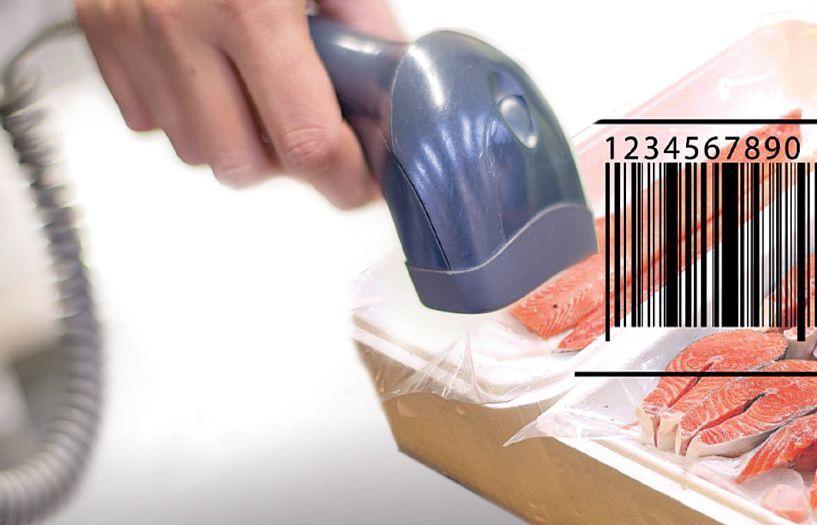
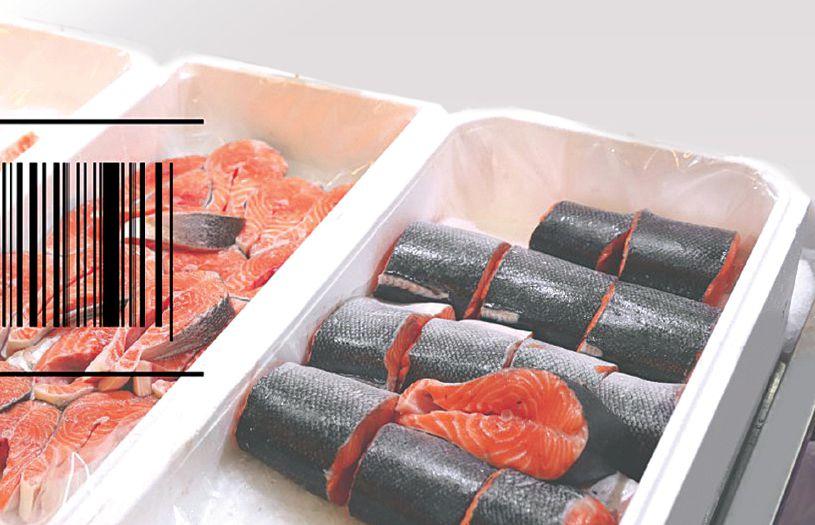
Blockchain is one tech buzzword that gets everyone confused. Some say it’s a ledger, others say it’s a database, still others say it’s a new currency associated with illicit transactions on the dark web. At first glance you would think the technology is far removed from aquaculture, until you hear tech giant IBM promoting the use of the blockchain to enable traceability of seafood like shrimp and salmon. Industry watchers also think it has a huge potential in tracking and validating scientific researches, including those related to our industry. With this simple explainer, Aquaculture North America (ANA) hopes to unravel the mysteries behind blockchain so that the next time the term comes up in a conversation, you will be able to share your thoughts about the technology though a fish farmer’s lens.
What really is blockchain?
Blockchain is a novel way to store, validate, authorize and move digital transaction. Think of a database that keeps a list of records. The record, called “block”, is updated once a new version of the same record is created thereby forming a chain of blocks, hence the name. The history of all the updates in the record is saved and time stamped so you know the updates made, who updated it and when.
Who gets to access those ‘blocks’?
Blockchain record is available to everyone in the blockchain network; say a blockchain network for the salmon producers, sellers and buyers supply chain. That’s why is it also referred to as an immutable public ledger because if an outsider wishes to change a block, he will have to secure permission from everyone in that specific blockchain network.
Sounds straightforward. Why is it such a big deal?
Digital records are fairly easy to steal, tamper with or overwrite. Trolling, hacking, computer viruses or even fake news makes information taken from the Internet unreliable. Trust has always been an issue with records being available online. Blockchain offers a solution.
Why can we trust records in a blockchain?
There is risk involved with information or records kept in one place and safeguarded
by a single authority, say an admin or a bank, because records can be tampered with and you and the other stakeholders of information would never know what happened. Blockchain’s database is distributed, meaning everyone has a copy of it and are alerted about updates and edits to the document or transaction record all the time.
I get the importance of trustworthiness and security of records, but are those critical in aquaculture?
Today’s consumers are becoming more sophisticated in their choice of food and are more socially conscious and ethical; they demand to know where and how their fish is farmed. They want the assurance that the food they buy is safe to eat. These require tracking the fish origin and shipment trail.
On the part of the producers, farm-to-table traceability gives fish farmers the assurance that their products retain freshness and maintain good quality during transport, in the supermarket and in the consumer's basket.
Furthermore, food supply chain traceability makes it easier for authorities to monitor compliance with food safety regulations to prevent food-borne diseases. Blockchain makes record keeping within the supply chain easier, more efficient and secure. It encourages vigilance and builds trust among players in the industry.
How can blockchain be applied to aquaculture research?
Research are being conducted around the world to improve yield, profitability and sustainability of fish farms. Blockchain can be leveraged to support record keeping and sharing of information among those involved in the research. It would ensure the accuracy, relevance and timeliness of the information.
Sounds like it has huge potential to move our industry forward. How come people only associate blockchain with cryptocurrency at the moment?
Cryptocurrency is one of the earlier established blockchain applications providing people a digital currency and alternative fund source for online payments. Its popularity is driven by the dramatic increase in the value of Bitcoin, a popular cryptocurrency, as well as the increase in the number of merchants accepting crypto payments.
All images: Adobe Stock
Interest grows in RAS growout, but where are the big players?
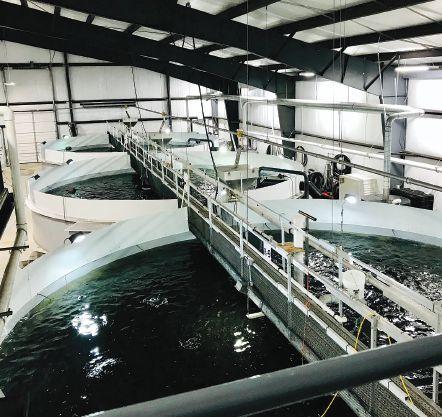
There are more than 80 land-based salmon projects underway in various stages worldwide so far, but the industry giants are visibly absent from the building boom.
“Good farmers are resistant to change,” says Francisco Gomes, CEO of Pontos Aqua. Outrageous? Perhaps. After all, wasn’t it the salmon farmers who developed modern recirculating aquaculture systems (RAS) technology? RAS has been around in a variety of primitive forms for a better part of the century and these farmers have been leading the way in improving the technology for many years.
So what is Gomes trying to say? Hear him out.
A marine biologist by training, Gomes brings more than 20 years of experience in managing aquaculture operations worldwide when looking for industry investments.
“I thought that I had something to offer to fill in that gap so I started Pontos (in 2014) with the vision of bridging capital, sophisticated financial capital, to invest in the industry,” he says.
“I found over the years that farmers that are intrinsically resistant to change — but very attentive to change — are the farmers that know when to react and in what intensity. Those had the best results.”
Industry leaders growing Atlantic salmon in net pens in the ocean certainly have RAS as part of their strategy. However, they would rather build on, rather than upend, this tried-andtested production model. In the ocean-versus-land-farming debate, net pen farmers tout the higher efficiency to be gained in producing fish in the ocean, its smaller carbon footprint than any protein produced on land, and the lower cost of production.
DATA-BACKED DECISIONS
Gomes says these industry giants have valuable data and experience gained through the years to guide them in filtering through the noise that surrounds any disruption.
“They are the most experienced and they have the best data set to know what actually can be done. They also have the best idea of the returns on invested capital they can themselves obtain and they are the best judges of how risky it is or not for them to convert to new production methods. And they are very objective and rational about it.”
Moreover, they tend to focus on a few things, one at a time, he says. “First they de-risk the technology in highervalue applications such as post-smolt RAS. That creates the option of being able to increasingly produce larger smolt, increasingly produce bigger and bigger biomass and bigger and bigger size fish.”
This way, they learn what’s necessary to tackle the changes that come from the technology. “So, for instance, you have to now be aware of the impact of maturation in growing fish, endure the impact of smoltification, all of that, the feeds themselves of course, the different genetic lines. And so slowly but surely by learning how to do bigger smolts every year, eventually they’ll know how to big, full-size fish indoors.”
RAS IS ATTRACTIVE, BUT...
He understands the attraction of RAS for growing Atlantic salmon to market size.
He says RAS is a very sensible thesis of using technology to completely control the environment of production, similar to what’s done in livestock.
“Farming is, by default, the attempt to engineer a flexible cost structure that can accommodate the different swings of commodities both on the inputs and on the outputs: the cost of feeds, the cost of the ingredients of the feeds, and the price of the product itself in the sales market,” he says. However, RAS has high fixed costs, which take away most of the flexibility required. This rigid cost structure goes against the idea of what farming is, Gomes suggests.
“The business of managing the farm is the business of being stable and conservative, but at the same time bringing an engineering of capital on to how to flex that cost structure in order to remain competitive. This is not the approach that is involved in scaling up a RAS farm at a rigid cost structure. And so there’s a fundamental conflict with historical developments of farming right there,” he says.
All photos: Liza Mayer
“The size of the bets of Atlantic Sapphire is so large that regardless of what’s going to happen it’s a very polarizing scene. It’s our own little Tesla, if you will.”
– Francisco Gomes, CEO, Pontos Aqua
Moreover, most of the investment poured into RAS –“uneducated money” he called it – is very unaware of the specific risks of execution of the technology, he observed.
“People have gone about de-risking (their operations) by making them very big. And this question of creating operating leverage to scale, of course, makes a lot of sense on paper but I think it’s in the translation of what’s on paper to reality that often uneducated or unexposed capital make some leaps in judgment and in calculation that are not grounded by reality or by track record.”
He says blue-sky prospectuses are presented frequently as: “Look we’re going to produce at this cost and the market prices at this. This is a great business, 40 percent EBITDA, etc.”
But, often, those simulations and those plans fall short of reality, he says.
“A team that is fully vested in the details and the complexity of their cost structure in reality, by experience, having the right levels of conservative assumptions, will likely not run out of cash. Teams that can see that in advance and are prepared for any eventuality – for instance missed crops or missed FCRs – are the ones that will survive.”
Reliability, stability and predictability in a farm operation are a must for survival, he continued. “But because of the novelty of RAS, because of the tinkering aspect of the technology, I think those often tend to be minimized.”
SUPPORTING THE BRAVE
Although results have been slow in coming for the emerging crop of RAS operators (trailblazer Atlantic Sapphire reported two mishaps this year in Denmark and Miami), bold entrepreneurs like them need industry support, says Gomes. It should also be remembered that any innovation – whether or not they displaced the previous ones – would always be the result of the combination of entrepreneurs taking the first initiative and industry players hedging their bets, he added.
“It’s a shame when that happens,” says Gomes, referring to the emergency harvest of 200,000 fish at Atlantic Sapphire’s Miami RAS farm in July. “I think that we should show solidarity with them and with what they’re doing. It’s not good for anyone in the industry when such a large investment has to face these kinds of challenges.
“The size of the bets of Atlantic Sapphire is so large that regardless of what’s going to happen it’s a very polarizing scene. It’s our own little Tesla, if you will.”
Nonetheless, a lot is riding on Atlantic Sapphire’s fate. If the company is successful, it will be a great boost for RAS. It could open up greater access to capital too. However, if it
fails, it could sour investors thereby limiting access to capital for others wanting to develop more modest RAS facilities.
OUTLOOK
Still, Gomes is enthusiastic about the future of RAS.
Pontos Aqua, which is touted as a unique financing and de-risking ecosystem for the global aquaculture industry, is an investor in Terra Blue Farms, recently launched in the US.
Max Holtzman, Principal at Pontos Aqua Advisory, said the venture is “a species-agnostic, distributed scale RAS model, where multiple, small-scale RAS farms benefit from being aggregated on one platform - the Terra Blue Hub.”
“Scale benefits are achieved by centralizing critical upstream and downstream functions at the hub, allowing individual farms to focus on lean, cost-efficient husbandry,” says Holtzman. He did not provide specific details about Terra Blue Farms’ initial project: a warmwater marine finfish.
“We believe Terra Blue is going to be very successful or else we wouldn’t have invested in it,” says Gomes. “And we believe that there is space for more than one model.”
There are also different schools of thought in relation to what is necessary to create substantial returns on invested capital out of RAS, he added.
“The differences between the different approaches has to do with how different people are looking at the risk of scale and (whether they see) scale as a de-risking element or as a source of risk; how different people are looking at the engineering of the systems; the technological solution itself and the management of the systems; and what kind of structure of capital can be applied. The devil is of course in the details.”
There’s no shortage of examples proving RAS has been successful as a technology, he claims. “There’s ample evidence that people can produce fish in RAS. There is ample evidence that people can sell fish from RAS – fish, shrimp, other seafood. It is a contributor to the seafood supply, as small as it is, but it’s growing.”
“But there are not that many successful cases,” he acknowledged. “It has more to do with the application of the technology and sometimes the species itself.”
He says it won’t be the last the industry will hear of technical glitches. “We will have incidents and we’ll have losses but it will only get better in time. I think that we should all realize that we’re at the beginnings of the development of RAS. And there’s still a lot of room for improvement and for learning. Having said that, I think that we should all realize that it’s like that for any species in any cultivation method. That’s the beginning of everything and so we should be the motivated by that.”
Gomes foresees a great growth of investment in salmon and shrimp RAS facilities of 10,000 to 20,000 tons and above. Buoyed, he says, by the farm-to-fork trend, he anticipates an “explosion of localities” where smaller volumes of production of other species will come from facilities closer to market.
And when this happens, the industry will also see the maturation of the supply chain for RAS – from feed, genetics, health ingredients and therapeutics.
But to the real question of when people will make serious money out of RAS, “that is more tricky,” he admits. “That’s a prediction that each one of us have to keep to ourselves.”
CLEAN FEED. CLEAN WATER.
Wenger innovative extrusion solutions deliver clean, durable, nutritional feeds specifically designed for the most e cient RAS operations. Feeds produced on Wenger systems maintain their integrity better and longer, for clean and clear water. So you feed the fish, not the filter. Learn more about the Wenger RAS advantage. Email us at
FRESHWATER FOCUS
continued from cover All photos: University of Idaho
US researchers build case for burbot production
LOWER-COST FEED
For example, Cain’s team recently published encouraging findings about burbot diet during commercial culture. Although juveniles grew better and preferred more expensive marine-type formulations, they performed well on trouttype diets. During the sub-adult growout stage, when a farm incurs the majority of feed costs, burbot did equally well on the marine and trout diets. That signals lower operating costs for producers.
Even more recent work shows there is an opportunity to increase soy protein and reduce fishmeal levels in diets. “Positive from the standpoint of economics, for sure,” says Cain.
What’s more, researchers have documented a one-to-one feed conversion ratio throughout the juvenile growth stages, which is now also being assessed during growout experiments.
“This species is still basically ‘wild’ and has yet to be truly domesticated, like rainbow trout,” adds Luke Oliver, a doctoral candidate in Cain’s lab. As selective breeding occurs, many factors, including growth rates, will continue to improve.
HIGHER STOCKING DENSITY
Burbot are a benthic species that huddle together during the day and feed voraciously at night. And they can be cannibalistic. That behavior has been managed through feeding protocols and grading out larger fish. They perform better in higher stocking densities, which some researchers hypothesize breaks a social hierarchy.
Idaho scientists have found burbot can be raised at 50 to 60 kilograms per cubic meter, a higher density than trout. However, water quality (particularly ammonia and oxygen)
must be kept at levels similar to those for trout. The group is working with Dr Chris Myrick at Colorado State University to further characterize those limits, says Cain.
DISEASE RESISTANCE
As trout farmers continue to grapple with coldwater bacterial and columnaris diseases, fish health and disease resistance are high on their list before they will adopt a new species.
After a disease outbreak of burbot at a commercial facility, scientists took the opportunity to learn more. They isolated two types of bacteria: Aeromonas bacterium and Flavobacterium columnare and used them in experimental infections. Little mortality resulted.
Researchers hypothesized that poor water quality or some type of stress may have set the stage for Aeromonas bacteria to cause a disease outbreak. F. columnare just happened to be isolated in the sampling, since burbot were relatively resistant and did not develop disease following an F. columnare challenge.
These initial findings will help formulate the foundation of disease management methods that will be developed as burbot aquaculture expands.
FARM DIVERSIFICATION
Burbot grow well at 15 degrees Centigrade. “This suggests that with little modification a burbot growout production system could be easily and relatively cheaply incorporated into an existing trout production facility, diversifying production,” says Oliver.
Preliminary growout trials have been conducted both at
the College of Southern Idaho and some commercial facilities to investigate polyculture with trout. Minimal mortality and no fish health issues in either group resulted. Cain does note one bottleneck for trout producers who want to diversify: processing. Burbot will not go through the same machines.
OYSTER GRADING TECHNOLOGY
A WINNING COMBINATION
at its finest.
SED Graders work at incredible speed with a gentle touch and precision accuracy. Our fully automated graders boost productivity by up to 48% by increasing throughput, reducing labour costs and decreasing product damage. The end result for farmers is a better oyster, in less time, for less cost.
SED Vision Grader
Using the latest in vision technology, this fully automated grader separates, cleans, measures, sorts, counts and bags up to eight fully grown oysters per second with a count accuracy of up to 99%.
SED Water Grader
Designed to gently grade seed and juvenile oysters, our fully automated, economical SED Water Grader can reduce mortality rates to 1.5%, sorting and cleaning oysters at an average of 100,000 per hour.
Call us today to discuss your grading needs at Tel. +61 (0)3 6442 1563 Or contact us via our new website www.sedgraders.com
Growout trials of burbot, shown here being graded, are conducted at the College of Southern Idaho and some commercial facilities
FRESHWATER FOCUS
OPPORTUNITIES
The best model for developing commercial production of burbot, Cain believes, is for companies interested in burbot culture to rely initially on the lab for hatchery work. Burbot can be challenging in their early life stages. A long incubation period for eggs and 50 to 60 days of feeding larvae live artemia make it risky and expensive. But research is improving that outlook, too.
“We’re set up to feed-train those at a young stage and to
produce juveniles for growout,” Cain notes.
The Idaho researchers are also advancing their understanding of methods to produce sterile burbot through triploid induction. By referencing the parameters for triploid induction in Atlantic cod, they were able to induce triploids in burbot during their very first year. “This would have been much harder without cod as a model,” says Oliver.
WHAT CONSUMERS SAY
If the European experience is any guide, raising burbot offers a number of market opportunities. Its meat, liver, roe, and skin can all be utilized.
To evaluate potential as a food fish specifically, the researchers conducted both a restaurant survey and sensory tasting panel that demonstrated that burbot are, as Cain says, “one of the most promising candidates for commercialization as a food fish.”
In the restaurant trial among 150 customers — 82 percent of which had never tried burbot before — both the flavor and texture of burbot scored high. In fact, 96 percent said they would try burbot again.
Last year, at the Washington State University sensory facility, researchers asked a consumer panel of 84 participants to compare burbot with two prominent aquaculture species: trout and tilapia. Panelists evaluated aroma, flavor, and texture; 81 percent preferred burbot over trout and 87 percent over tilapia.
Moureen Matuha, another Idaho graduate researcher, oversaw the study. She is now developing an “enterprise budget” so that farmers will have pro forma revenue and costs.
She thinks burbot tastes like cod and often wishes she had some for dinner.
Until commercial production, though, lucky anglers are the only ones bringing burbot back to the home kitchen. Online recipes point to several preparations. Some like it swathed in a blanket of bacon, almost like scallops. Others treat it as a stand-in for cod. But a clear favorite seems to be “Poor Man’s Lobster,” which requires simmering in salted water with lemon juice. Then, just dip in melted butter.
HATCHERY CHALLENGES,
Among her research projects, Moureen Matuha is developing a burbot commercial enterprise budget so farmers can evaluate pro forma revenue and expenses
Burbot are resistant to many salmonid diseases and have the potential to be co-cultured with trout
The mottled skin of burbot has led European fashion designers to use it for expensive leather goods, such as this wallet priced at €134 ($158) Photo: Kalaparkki, Finland
•
and energy efficiency and minimize maintenance
• Preassembled, skid-mounted Life Support System with multiple options
• Full system monitoring available
• Salt water and fresh water versions available to suit any species e.g. crab, lobster, geoduck, tilapia and more Call us today at 206.937.0392
Report highlights ASC’s role as driver of environmental and social improvements in aquaculture
Report: ASC
impacts farm performance
en years after its founding by the World Wildlife Fund, the Aquaculture Stewardship Council (ASC) for the first time released a report that demonstrates the positive impact the ASC standards have had on the environment, conditions for farm workers and on local communities.
TASC certification requires that seafood farms meet robust environmental and social standards. Today, 1,000 farms and nearly 2 million tonnes of seafood have been ASC-certified worldwide, and roughly 18,000 products carry the ASC label.
The Monitoring and Evaluation Report noted significant gains in sustainability in the biggest source of emissions in aquaculture: feed production. It said ASC-certified farms, particularly salmon and shrimp farms, are learning to work with each other and their feed suppliers to reduce their reliance on wild-caught fish in the feed they use in order to reduce the pressure on wild fishery stocks.
Another revelation was the 50-percent increase in the compliance of shrimp farms with ASC’s environmental performance requirements between 2014 and 2018.
There is also evidence that treatment of staff and local communities have improved, the report said. Advancements have been noted in health and safety; working hours and overtime; and transparency in wage setting, among others.
“The positive impacts highlighted are proof of concept for the ASC as a driver of environmental and social improvements in aquaculture,” the organization said, adding that it will continue to strengthen and expand the program.
US farmed catfish industry honors three farmers
The COVID-19 pandemic was no reason for the US Farm Raised Catfish Industry not to celebrate its members. In fact, it is perhaps even more fitting to honor them for the role they and other seafood producers are playing during these challenging times.
This year, the Catfish Farmer of the Year Awards went to three farmers: Luke Smelley of Greensboro, AL; Terry Kruse of McCrory, AR; and Will Nobile of Moorhead, MS.
“Farmers of the Year are chosen annually from a large field of many deserving catfish producers in the US Farm-Raised Catfish industry. Although it is a difficult task to select just one farmer from each of the top three catfish-producing states, those who are selected embody the spirit of the American farmer. All have made significant contributions to the US farm-raised catfish industry,” the association said.
The award winners become the face of the industry in promotional materials in their respective states.
“We want to provide a connection between the farm-raised catfish that people know and love and the hundreds of family farms that dot the Southern United States where these fish are grown. The Catfish Farmers of the Year are the face of the American farmer producing an American product for the American consumer,” said Roger Barlow, president of The Catfish Institute.
(L to R): Luke Smelley of Alabama; Terry Kruse of Arkansas, and Will Nobile of Mississippi are recipients of the 2020 Catfish Farmers of the Year Award Photo: The Catfish Institute
Photo: ASC
Aquaflor® is now approved for use in all freshwater-reared finfish at dose rates of up to 15 mg/kg*. I t ’s cleared for use in recirculating aquaculture systems, too.
S o whether you raise trout, tilapia, bass, c atfish or even baitfish or ornamentals, you can turn to Aquaflor for managing the toughest bac terial diseases of farm-raised fish.*
For the full stor y, call our fish-health specialist, K asha Cox, at 662.907.0692 or visit our new website at Aquaflor-USA.com.
keeps getting
or fenicol)
* In the USA, Aquaflor is approved for use at 10-15 mg/kg in freshwater-reared salmonids for the control of mor tality due to furunculosis associated with Aeromonas salmonicida and coldwater disease associated with Flavobacterium psychrophilum; in catfish for the control of mor tality due to enteric septicemia of catfish associated with Edwardsiella ictaluri; and in all freshwater-reared finfish for the control of mor tality due to columnaris disease associated with Flavobacterium columnare At 15 mg/kg Aquaflor is also approved in freshwater-reared warmwater finfish for the control of mor tality due to streptococcal septicemia associated with Streptococcus iniae. LABEL CLAIMS NOT APPROVED IN CANADA.
CAUTION: Federal law restricts medicated feed containing this veterinary feed directive (VFD) drug to use by or on the order of a licensed veterinarian.
Coronavirus leaves its muddy watermark on California’s aquaculture
State agency exec outlines trends shaping local industry
BY JULIA HOLLISTER
One of the latest trends in fish farming is partly the result of COVID-19 and partly due to changes in consumer buying and cooking habits.
“The coronavirus has most definitely affected the state’s aquaculture,” said Randy Lovell, State Aquaculture coordinator, California Department of Fish and Wildlife. “Since so much of our seafood consumption is channeled via food service, the closing of restaurants puts a strain on finding outlets for production. Shelter-in-place orders have also kept anglers home more than normal, resulting in fewer orders to stock fishing waters.”
Reducing production not only decreases sales but also spending on feed, labor, and energy. The virus puts standing inventories at risk. Fish can be fed less but not to the point of compromising their health, so they continue to grow, and in extreme cases, can push production system capacities (and cash reserves) to their limits.
This can affect production and other operations, as well. As formats and handling practices change – for instance, distributing frozen instead of fresh product – a different set of regulatory practices need to be met and consumer preferences identified.
INNOVATION FOCAL POINTS
Lovell points out other trends are emerging, too. There are three main ones.
First, tighter rules regarding the use of water in a state that sees cycles of drought, higher costs tied to groundwater pumping, and increasing competition for all freshwater sources have added to the incentives to use this natural resource more efficiently, for instance, through recirculation.
Second, advances in genetic techniques open new opportunities in the search for better fish health management strategies, production yields, and other benefits. However, the challenge to regulators is keeping
Clearly - Healthier Harvests!
pace with the rate of innovation and the evaluation and management of risk that accompanies the adoption of such new techniques.
A third area of focus is the search for fish feed protein substitutes for fish meal/oil. Many alternative ingredients have been identified, but challenges remain in terms of supply at the scale needed now and in the future.
The California Fish and Wildlife Department is working with the state’s aquaculture farms to develop sustainable, eco-friendly practices.
The process of registering inland commercial aquaculture facilities with the department includes a review of species, facilities, methods, and locations relative to adjacent wildlife, habitat, and watersheds to avoid or minimize harm. Registration needs to be renewed on an annual basis.
“There has been interest in expanding aquaculture for the last 30-40 years, and the efforts have met with varying success at various times and locations,” Lovell said. “Markets for aquaculture products have been evolving during that time, with early demand in California for freshwater fish destined for stocking and recreational angler needs. A very modest amount is being processed for fresh seafood markets.”
Backyard farming
There also appears a strong interest in home-based aquaculture, sometimes coupled with hydroponic plant cultivation that ranges from hobby-scale to a level that could be commercialized at some point.
According to Lowell, new entrants into aquaculture in California are often employees of existing farms who want to venture out on their own. There are more aquaculturists diversifying into agriculture to utilize their nutrient-rich supply of water, than the opposite case where traditional farmers might move from livestock or row crops into fish, he noted.
“Many who pursue this at home are seeking control over quality amid concerns about imported product, or simply the gratification (and perhaps the economy) that comes with providing for oneself. Unfortunately, the hard work it takes to be successful in fish husbandry is not for everyone, so there are many who don’t continue beyond the hobby,” he said.
Channel catfish, produced at Imperial Catfish in Imperial, California. Aquaculture contributes roughly $200 million to the California economy
Photo: Dennis Faria
FRESHWATER FOCUS
Responses to Q2 survey indicate a similar trend as in the Q1 results
Q2 SURVEY: COVID-19’s consequences continue
Social distancing measures and restaurant closures implemented to flatten the epidemic curve continued to impact aquaculture businesses in the United States in the second quarter of the year.
According to the latest survey jointly conducted by Virginia Tech and The Ohio State University Extension, 78 percent of 158 players in the aquaculture, aquaponics and allied industries surveyed reported having been impacted by the coronavirus disease pandemic in Q2 2020.
Other key findings are:
• 43% had had private orders/contracts cancelled
• 27% had terminated employees
• 74% had experienced lost sales
• 9% had no cash available to cover operating expenses
• 22% had less than one month of cash available to cover operating expenses
• 45% would survive three months without external intervention
• 56% indicated that Federal assistance would help their farm or business to survive, and
• 33% indicated that state assistance would help their farm or business to survive
The year-round survey, with quarterly reports scheduled, seeks to determine the prevailing market conditions and the industry’s overall economic sentiment as it struggles with the unforeseen impact of COVID-19 in the months ahead.
Although the total number of respondents for the Q2 survey was lower, many of the responses indicate a similar trend as was observed in the Q1 results, said the authors.
Scientists discover broader benefits of coldwater disease vaccine
In May, researchers from the University of Idaho and Michigan State University released encouraging findings about the effectiveness of an immersion vaccine to protect salmonids against emerging and novel strains in the family of Flavobacteria.
Trout farmers recognize these bacteria as the ones that cause bacterial coldwater disease (also known as rainbow trout fry syndrome), bacterial gill disease, and columnaris — all “notoriously difficult to prevent and control despite nearly 100 years of research,” according to one of the paper’s authors.
A recent insight, however, is that this family (notably including Flavobacterium and Chryseobacterium genera) contains hundreds of species, which all have a very similar appearance when cultured in the lab. Without DNA sequencing, diagnosis of the precise bacterium just isn’t definitive. That could lead to wrong assumptions, even faulty treatments.
Dr Ken Cain of the University of Idaho says an enhanced version of the coldwater vaccine that awaits USDA approval has also shown efficacy against emerging and novel bacterial strains of Flavobacteria
To address that issue, teams working with Dr Thomas Loch and Dr Mohamed Faisal at Michigan State University have been tapping advances in molecular biology and biotechnology to isolate different species and determine their prevalence.
Dr Kenneth Cain of the University of Idaho wanted to find out if the vaccine developed in his lab for coldwater disease could be utilized against some of these emerging and novel species. This was a particularly important question since such cases have been increasing.
In 2010, Cain and his colleagues had successfully developed a “live attenuated” version of the Flavobacterium — one that is less virulent, but still alive. Such bacteria can grow and produce immunity. The University of Idaho patented the vaccine. Since then, an enhanced version has been developed and awaits its own patent, as well as approval by the US Department of Agriculture.
In the meantime, tests of its efficacy have continued.
The enhanced version of the vaccine was used in the study, published in the Journal of Fish Diseases, to examine how it would perform against emerging and novel species isolated from the Great Lakes Region.
Juvenile rainbow trout were vaccinated and developed antibodies associated with bacterial coldwater disease. They were then challenged in four ways: with two Chryseobacterium isolates, a Flavobacterium isolate, a combination of the three, and a “standard virulent” strain. Control groups of fish, which were not vaccinated, were infected in the same manner.
The vaccine produced strong protection (relative survival rate of 94 percent) against the “standard virulent,” as expected. In addition, it was effective against the combination of the three emerging and novel isolates, yielding a relative survival rate of 85 percent.
However, protection did not occur with each of the three isolates alone. It should be noted that in the controls of the individual isolates, the mortality was really low. “In combination they represent a greater threat, and it was good news that the immersion vaccine worked in that case,” says Cain.
The takeaway, he emphasizes, is that the tool developed to prevent coldwater disease may bring some additional advantages. “If every once in a while, a farmer has an outbreak that is caused by one of these emerging and novel bacterial strains and not completely related to the strain that causes coldwater disease, then this vaccine could provide benefit in that context as well.”
For a new and related project, the University of Idaho team, in collaboration with researchers at UC Davis, is now collecting and characterizing similar Flavobacterial isolates from facilities throughout California, Washington State, Oregon, Idaho, Utah, and Colorado where there have been disease outbreaks. Will the vaccine help with those, too?
The work goes on.
— Lynn Fantom
Photo: Liza Mayer
Photo: @ master1305 / Adobe Stock
Seafood industry: Let’s end wild vs farmed debate
Similarities between the two should be embraced, urge industry execs
The seafood sector should be promoted as a whole because farmed versus wild arguments are counterproductive.
This was the takeaway from the online discussion panel titled “Come together: Uniting the wild & farmed seafood sectors” hosted by the Global Aquaculture Alliance (GAA).
“The two are interconnected,” says GAA President George Chamberlain. “Sometimes issues from one can boil over to the other. For example, marine ingredients in aquaculture feeds are coming from wild capture fisheries. Aquaculture took some heat when there were problems with social issues on fishing vessels in the Gulf of Thailand that were related to the production of fishmeal. One issue can really hit everyone in the supply chain and we all need to work together.”
“If every American ate seafood twice a week, we need 26 lbs of seafood per person per year.”
Brian Perkins, Marine Stewardship Council regional director for the Americas, said lack of awareness is part of the problem. “The consumer is not educated, they’re confused. And what happens when they get the negative message [the attitude] is ‘well, I’m not sure if I’m supposed to eat this fish or that fish.’ So they just end up eating no fish.”
The panellists concurred that unified messages are stronger. Linda Cornish, president of the Seafood Nutrition Partnership, said the public health message is a good place to start. There are a lot of positive health messages both sides can work with in order to get everybody eat more seafood, she said. “If every American ate seafood twice a week, we need 26 lbs of seafood per person per year.”
Chamberlain emphasized that while the discussion was focused around doing away with the contentious debate between the two sectors, continued competition between farms and wild fisheries is healthy and encouraged.
“We’re not proposing that everything be considered equal and that the differences that exist are ignored or perhaps price advantages abandoned,” says Chamberlain.
“In the early days of aquaculture it was a tiny, niche product and it often commanded a higher price than wild catch. Now for several of the major species like shrimp, salmon and tilapia, aquaculture is the mainstream and wild catch is the niche. And wild catch now demands a premium. And I think that’s okay. Although we want to work together and we want to talk in terms of seafood, I think it’s still fine to have some differentiation in the marketplace but I don’t think it means fighting each other.”
– Matt Jones
Negative messages in the farmed vs wild debate confuse and discourage consumers from eating seafood, says a Marine Stewardship Council executive Photo: Liza Mayer
Powell retires from nonprofit, relaunches consulting business
Six years after taking the helm of CEO at the BC Centre for Aquatic Health Sciences (BC CAHS) in Campbell River, British Columbia, Dr Jim Powell is bidding the nonprofit goodbye and relaunching his consulting business.
Fidelis Aquaculture Management, a consulting company Powell founded 11 years ago in Campbell River, will offer service contracts that address issues that affect both wild fish and cultured fish. These include broodstock and smolt optimization, animal welfare, biosecurity, drug development and registration, conservation and recovery of endangered species.
Jim Powell is relaunching his consulting business following his departure from a BC aquatic research facility
Powell, who will soon celebrate his 40th year in the industry, leaves the aquatic research facility in a very good position, former colleagues said.
“During the six years that Jim directed the organization, he led the development of the management team and followed a belief of developing employees from within, which led to financial stability and growth. Through this approach, the BC CAHS staff were able to build their internal capabilities and create an Outreach and Education program,” says Maureen Ritter, Chair of the BC CAHS Board.
Moreover, under Powell’s leadership, the nonprofit centre obtained ISO/IEC 17025 accreditation and numerous Canada Food Inspection Agency and US Fish and Wildlife Service certifications. This allowed the lab to support a wider range of research and offer diagnostics services that gave it financial independence, the centre said in a statement.
Powell recently secured funding for the creation of an aquatic animal health wet lab at BC CAHS. The wet lab will enable the facility to expand its aquatic animal health research and environmental monitoring services in the province.
AKVA names head of North American and Australasian
operations
quaculture technology firm AKVA Group has hired Chris Beattie as regional business director for North America and Australasia from September.
AHe will remain based in Vancouver, BC, where he most recently held the role of executive director of Precision Aquaculture at Merck Animal Health Ventures.
A marine biologist by training, Beattie started his career in the aquaculture industry at Skretting in Scotland in 1999. He rose through the ranks at the feed company in Scotland and Canada over the next 16 years, according to LinkedIn.
Merck Animal Health Ventures then hired him as executive director of Global Aquaculture Business in New Jersey. He then led the company’s Precision Aquaculture business in Vancouver.
Beattie currently sits on the Fisheries and Aquaculture Strategic Advisory Council of Genome BC and volunteers as a business mentor at the University of British Columbia. He was a former board member of the BC Salmon Farmers Association and the Canadian Aquaculture Alliance.
Chris Beattie
Vet to support Ontario’s fish farmers
Ontario-based Upper Grand Veterinary Services has expanded its team with the addition of veterinarian Mykolas Kamaitis.
Kamaitis, who was formerly with Mowi Canada West as veterinarian and fish health manager, will lead UGVS’ fish health division.
The practice offers fish health management services including consultation, on-farm support, and fish health management plan and protocol development for Ontario seafood producers. UGVS also offers fish health screening and diagnostic services and is USFW Title 50 certified.
UGVS is a member of the Ontario Aquaculture Association.
New starter feed from Cargill
Cargill has launched a new micro-pellet starter feed suitable for both conventional aquaculture systems and recirculating aquaculture systems (RAS).
The feed producer said it launched the product, EWOS Natura XCEL, after multiple trials showed “superior nutrition” for chum, pink and trout species. The feed is also viable for coho and sockeye fry at temperatures of 8°C or higher.
Key ingredients of the new feed include fishmeal and other sustainable protein alternatives, said the company. “The new formulation delivers measurable benefits without compromising nutrition or fry growth, so hatcheries can maintain schedule targets,” it added.
NaturaXCEL from Cargill is produced in the US and is available in 0.3mm, 0.6mm, 0.8mm and 1.2mm sizes
Enhanced features maximize net pen monitoring
Gael Force Group of Scotland has unveiled a suite of enhanced camera technology that provides salmon farmers with improved capabilities to monitor feeding and fish activity inside pens.
The new range of products under the SeaSight brand includes a SeaSight HD Camera, which comes with the SeaSight Control software. The company says the system captures underwater video in “crystal clear high definition,” giving farmers greater clarity and control.
The SeaFeed Pellet Detection package can be added to the system as an option. Pellet Detection combines video imagery from the HD Camera and detection algorithms to intelligently pinpoint feed pellets.
These features can, as an option, be fully integrated with the SeaFeed Feed System. The system provides automatic control of feeding. If preferred, a manual-mode option is also available within the system.
“We have invested a significant amount of time and effort bringing together all the elements of the new SeaSight range. It’s fantastic to see our new products and software working in tandem, empowering our customers to feed and care for their fish even more sustainably,” says Gael Force Aquaculture Sales Manager Craig Graham. He added that innovation is high on the company’s five-year growth strategy. “There’s lots more to come,” he said.
Docking solutions
ASouth Carolina-based manufacturer of floating dock products says its Dock Blocks save users up to 50 percent in maintenance costs because of the product’s durability and low-maintenance design.
“Our floating docks are designed and built by experts to help aquaculture farmers have faster access to their nets and cages. The companies that work with us see as much as 50 percent lowered maintenance costs so they can maximize operations and stop wasting money on dock repairs,” said CEO Matt West.
The company says its product is the industry’s only patented modular floating dock system. The four-pin connection system is 75-percent faster to install, it added.
The floating docks are made with HDPE. The company said it produces docking systems in a zero-waste manufacturing process and using entirely recyclable materials.
Dock Blocks surround net pen
Mykolas Kamaitis leads UGVS’ fish health division Screen shows areas monitored using SeaSight HD camera technology