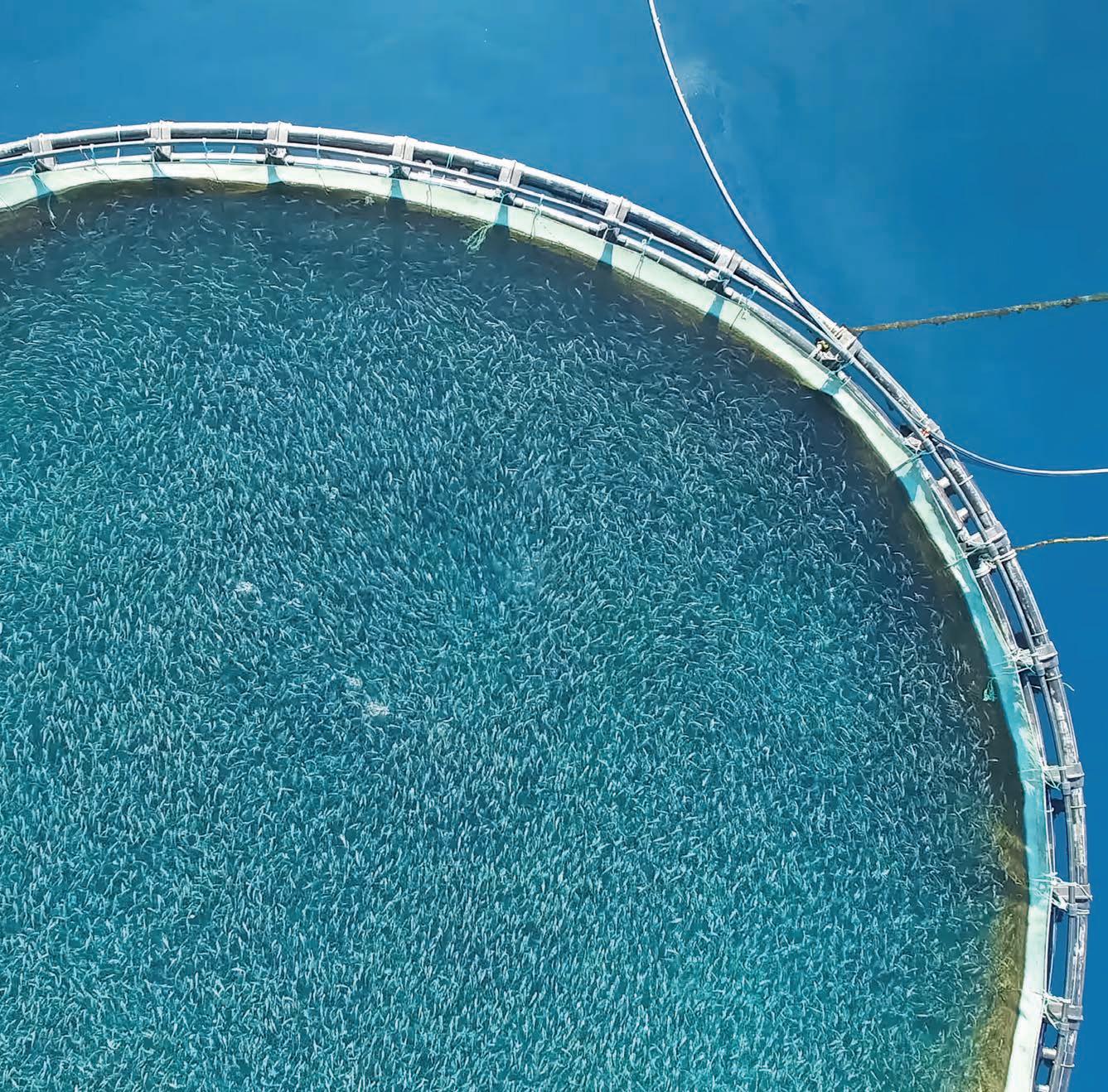
A inyearsalmon
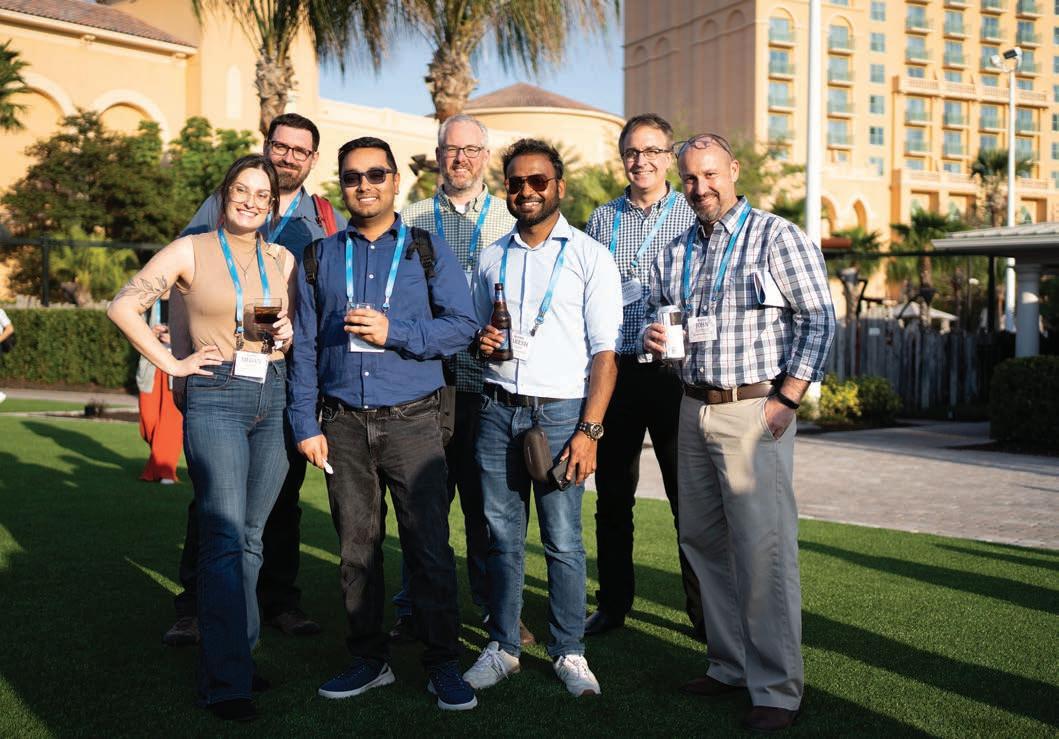




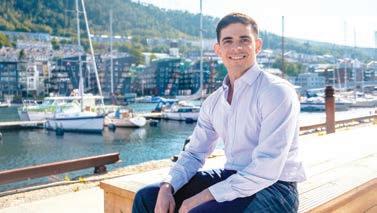
Drue Banta
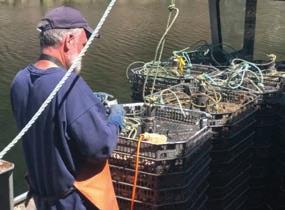
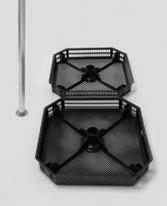
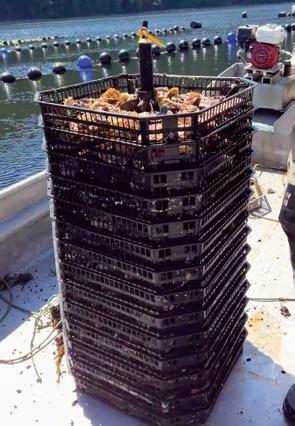
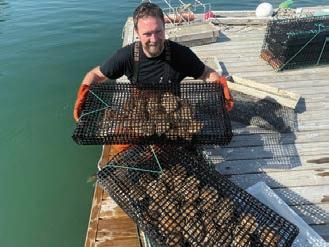
Oyster Trays stacked with quality

VOLUME 16 ISSUE 6 | NOVEMBER/DECEMBER 2025
Reader Service
Print and digital subscription inquiries or changes, please contact customer service
Angelita Potal
Tel: (416) 510-5113 • Fax: (416) 510-6875
Email: apotal@annexbusinessmedia.com
Mail: 111 Gordon Baker Rd., Suite 400, Toronto, ON M2H 3R1
Editor Jean Ko Din jkodin@annexbusinessmedia.com
Associate Editor Sherene Chen-See schen-see@annexbusinessmedia.com
Contributors Imani Black, Micah Conkling, Alan Cook, Ben Normand, Ian Roberts, Leah Williams Stoker, Drue Banta Winters
Associate Publisher / Advertising Manager Jeremy Thain jthain@annexbusinessmedia.com +1-250-474-3982
Brand Sales Manager Patrick Villanueva pvillanueva@annexbusinessmedia.com 416-606-6964
Account Coordinator Barb Vowles bvowles@annexbusinessmedia.com
Media Designer Svetlana Avrutin savrutin@annexbusinessmedia.com
Audience Development Manager Urszula Grzyb ugrzyb@annexbusinessmedia.com
Group Publisher Anne Beswick abeswick@annexbusinessmedia.com 416-410-5248
CEO Scott Jamieson sjamieson@annexbusinessmedia.com
PUBLISHED BY ANNEX BUSINESS MEDIA 105 Donly Drive South, Simcoe, ON N3Y 4N5
Aquaculture North America is published five times a year by Annex Business Media. The authority for statements and claims made in Aquaculture North America is the responsibility of the contributors. Reference to named products or technologies does not imply endorsement by the publisher.
Subscription rates (five issues) Canada: $37.74+Tax Within North America: $48.96 CAD Outside North America: $63.24 CAD To subscribe visit our website at www.aquaculturenorthamerica.com
Printed in Canada ISSN 1922-4117 Publications Mail Agreement #PM40065710
RETURN UNDELIVERABLE CANADIAN ADDRESSES TO 111 Gordon Baker Rd., Suite 400, Toronto, ON M2H 3R1 Annex Privacy Officer Privacy@annexbusinessmedia.com Tel: 800-668-2374
The contents of Aquaculture North America are copyright ©2025 by Annex Business Media and may not be reproduced in whole or part without written consent. Annex Business Media disclaims any warranty as to the accuracy, completeness or currency of the contents of this publication and disclaims all liability in respect of the results of any action taken or not taken in reliance upon information in this publication.
Next Ad Deadline
The advertising deadline for the January/February issue is Nov 12 Don’t miss the opportunity to be part of this publication. For more information, or to reserve space in the next issue, call our advertising department at +1.250.474.3982 jthain@annexbusinessmedia.com
Next Editorial Deadline
The editorial deadline for the January/February issue is Nov 7. Contact Jean Ko Din at jkodin@annexbusinessmedia.com for details. Material should be submitted electronically with prior arrangement with the editor.


From the Editor
BY JEAN KO DIN
Waiting in vain
At the time of this publication, British Columbia still awaits the final draft of a transition plan to remove salmon net pens from federal waters by 2029. The Canadian government published its draft plan in September last year and said the final draft of this plan would soon follow in "early 2025" after a thorough public consultation process. One year later and the industry is still waiting with baited breath.
A lot has happened since then. The United States administration's tariffs on the global economy and continued threats of making Canada its 51st state has bolstered political will for Canada to be more economically independent from its southern neighbour.
Canadian Prime Minister Mark Carney and his Cabinet Ministry has since expressed their priority to strengthen domestic supply chains, especially the steel, softwood lumber, and agriculture industries. But where does seafood and aquaculture fit in to this?
The Canadian government makes one mention to seafood as part of its new measures "to protect, build, and transform Canadian strategic industries." The document acknowledges the toll these shifting trade policies have had to "key sectors like grain, fish and seafood." Then, the paragraph goes on to outline a plan to invest in AgriMarketing and trade diversification measures to build Canada's reputation abroad.
over two years in order for that industry to restructure their value chains.
“Canadian farmers work tirelessly to produce the best products in the world. Our government stands with them, and we will continue to push for fair market access, boost our competitiveness, and help producers manage the impacts of a changing global trade environment," said Heath MacDonald, Minister of Agriculture and Agri-Food in the government's press release.
Leaders in the Canadian government continue to dangle a carrot in front of the industry. Or more accurately, they are dangling a draft plan of a carrot that says it will be good for everyone.
Meanwhile, the aquaculture sector continues to await a transition plan that promises to remove its current B.C. operations by June 2029, which is about three and a half years from now.
After watching this saga unfold, it's not hard to imagine how helpless and frustrated this industry probably feels. Leaders in the Canadian government continue to dangle a carrot in front of the industry. Or more accurately, they are dangling a draft plan of a carrot that says it will be good for everyone.
I wasn't in attendance at this year's Cold Harvest conference in St. John's, Newfoundland. Fisheries and Oceans Canada minister, Joanne Thompson, was scheduled to make an address at the event. Our Salmon Farming: Inside & Out podcast host, Ian Roberts, even extended an invite to chat with the minister. But less than a week before the event, we hear from the minister's office that they have pulled out of the event altogether.
I tried to read on, hoping that it wasn't the one and only mention of our sector, but the next paragraph already moves on to talk about increasing loan limits for canola producers. For those who are curious, the government is introducing new biofuel production incentives with more than C$370 million (US$263.2 million) allocated
I hestitate to draw unfounded conclusions but I also think I'm safe in inferring that their priorities do not lie with aquaculture. But plan or no plan, apathy will be the true nail in the coffin for this industry, so we hope you stay engaged. Canadians voted for a government that is meant to represent our interests. Share your thoughts at jkodin@ annexbusinessmedia.com. | ANA
Aquaculture North America’s Editorial Advisory Board: Ian Roberts | Sandra Shumway | Jason Mann | Jeanne Mcknight | Mykolas Kamaitis | Jamie Baker
Alaska Mariculture Cluster funds Kelp Ark to cultivate seed bank
The Alaska Mariculture Cluster (AMC) is committing US$199,393 to non-profit Kelp Ark, to foster gametophyte seed banking for Alaskan kelp.
As part of the grant, researchers at Kelp Ark and University of Alaska Fairbank (UAF)’s Lena Point facility in Juneau, AK, will collaborate to develop the seed bank, according to a statement from the Alaska Mariculture Research and Training Center (AMRTC), University of Alaska.
“This molecular work has the potential to inform Alaska’s kelp farm permitting process,” said AMRTC. “Additionally, the established seed banks will be in the public domain, and therefore will further future scientific research on mariculture, conservation, kelp life history, and kelp genetics.”
Kelp Ark will start single cell origin gametophyte cultures for sugar, ribbon, and bull kelp, AMRTC indicated.
The UAF Lena Point facility will house the cultures in a collection. Kelp Ark’s facility in San Pedro, Calif. will replicate the collection, which will be cultured to gain insight into Alaska kelp population structure, AMRTC explained.
The work builds upon and is supported by Kelp Ark’s ongoing work building a kelp genetics seed bank and researching sterile seed, AMRTC added.
“The AMC Kelp Seed Quality Improvement program is an important step towards addressing kelp seed quality and consistency in Alaska and represents AMC’s commitment to adapting our program to respond to emerging industry needs,” AMC indicated in a statement.
Why create a seed bank for kelp?
“There are three main goals for this collection. The first is to safeguard the kelp biodiversity. Second, is to sequence and decipher the population structures of these species. Finally, it is to have these individual strains available for future
use in mariculture, if the possibility of gametophyte-seeded farming becomes a possibility in Alaska,” said Kelp Ark on its website.
To scale the kelp industry in Alaska, farmers need reliable access to quality kelp seed. Seed consistency can lower cost structures and improve yield estimates, which can inform business planning and build trust with buyers, AMRTC added.
Sea lice persist despite lack of salmon farms in B.C. coast
In parts of coastal British Columbia (B.C.), sea lice infestations on wild juvenile salmon in the absence of salmon aquaculture is occurring at similar levels as during full-scale aquaculture production.
This according to a study in the Diseases of Aquatic Organisms journal. The study followed sea
lice infestation levels in salmon for nine years in the B.C. coastal region of the Broughton Archipelego.
“In 2024, the prevalence of [sea lice species] L. salmonis and C. clemensi on salmon species was similar to or higher than annual prevalence values measured between 2016 and 2021,” said the study authors.
Previously, it was widely assumed that sea lice infestations of wild salmon originated from the farmed salmon nearby. However, more recent research has shown that aquaculture’s contribution to wild salmon infestations may have been overestimated.
In recent years, finfish aquaculture facilities have been removed from several B.C. coastal regions, including the Broughton Archipelago. This provided an opportunity to look for corresponding reduc-
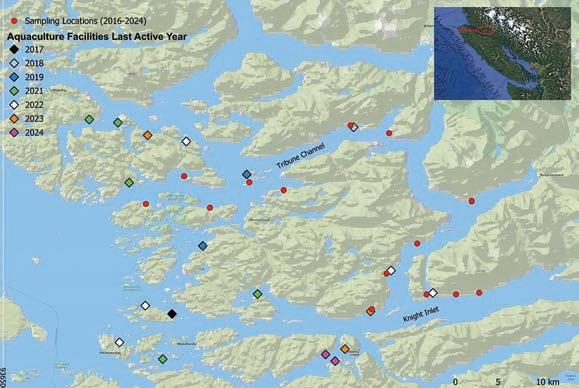
tions in sea lice infestations in the wild salmon population.
This study compared sea lice infestations on juvenile chum salmon and pink salmon in the area over nine years. This included three years with extensive aquaculture, five years with phased farm removal, and one year where aquaculture facilities were almost entirely removed.
The dataset was compiled between 2016 and 2024.
The study area focused on Tribune Channel and Fife Sound, which had the highest density of continuously operating Atlantic finfish aquaculture facilities in the Broughton Archipelago. The area is an important migration corridor for wild juvenile salmon emerging from streams in Knight Inlet, Thompson Sound, Bond Sound, and Viner Sound.
The annual prevalence of sea lice displayed similar patterns of infestation in both salmon species.
A key finding was the increased prevalence of sea lice infections in 2024. This coincided with the absence of open netpen salmon aquaculture in this region.
“This study provides clear evidence that the prevalence and intensity of sea lice infestations on juvenile salmon in the Broughton Archipelago in the virtual absence of salmon aquaculture occur at levels equal to or greater than those observed during full-scale production,” concluded the study authors.
Ontario Animal Health
Network offers new course on working with aquaculture vets
The Ontario Animal Health Network (OAHN) is offering a free course on working effectively with an aquaculture veterinarian.
The course helps farmers and other aquaculture industry personnel collaborate with veterinarians to enhance fish health, ensure sustainability, and improve farm management, said the OAHN on its website.
This series of six learning mod-
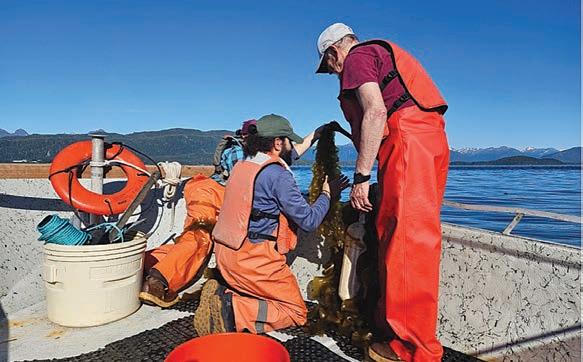
Kelp Ark team harvesting kelp in Juneau, Alaska.
PHOTO: MICHAEL MARTY-RIVERA, KELP ARK
ules is focused on Ontario but may apply to other jurisdictions.
It begins with an introduction to working with a veterinarian and establishing an effective veterinarian-client-patient relationship. It then delves into the benefits and importance of regular veterinary site visits.
The course discusses the importance of data, types of data, and methods and collection of data. It addresses the appropriate use of telemedicine in aquaculture. Finally, it describes strategies for developing a fish health management plan.
Case studies are examined and takeaways are available at the end of each module.
For more information, or to register for the course, see the OAHN website.
NOAA lists 13 new Aquaculture Opportunity Areas in Gulf, California
In January, U.S. President Donald Trump signed an executive order that directs U.S. government agencies to refer to this oceanic basin as the “Gulf of America.” It is still internationally recognized as the Gulf of Mexico, including the International Hydrographic Organization and the United Nations Conference on the Standardization of Geographical Names.
“Each year, Americans eat approximately US$15 billion in seafood farmed and imported from foreign countries. The U.S. leads the world in aquaculture science and technology, yet we rank 20th globally in marine aquaculture production,” said Eugenio Piñeiro Soler, acting assistant secretary of commerce for oceans and atmosphere and NOAA Fisheries assistant administrator.
“By growing our domestic aquaculture industry, we will strengthen American health, create good-paying jobs, and drive sustainable, long-term economic growth for our nation.”
Two environmental impact statements for the Gulf Coast and Southern California identify locations with good potential for developing multiple commercial aquaculture projects.
Nineteen scientific support products and robust public input were incorporated when compiling these final documents. They build on draft documents released in 2024.



The U.S. National Oceanic and Atmospheric Association (NOAA) has identified 13 Aquaculture Opportunity Areas to help strengthen the nation’s seafood industry, reduce reliance on foreign imports, and create high-quality jobs.
NOAA said these Aquaculture Opportunity Areas total more than 21,000 acres of U.S. federal waters in the “Gulf of America” and off the coast of Southern California.
In Southern California, NOAA experts identified 10 prime locations potentially suitable for seaweed, shellfish, and finfish aquaculture. Eight locations are in the Santa Barbara Channel and two in Santa Monica Bay. They range from 500 to 2,000 acres, and total 16,500 acres.
In the Gulf, three locations off the coast of Texas may be suitable for seaweed, shellfish, and finfish aquaculture. They range in size from 500 to 2,000 acres, and total 4,500 acres.
NOAA plans to also conduct baseline environmental surveys in the Gulf to provide prospective farm applicants with valuable data.
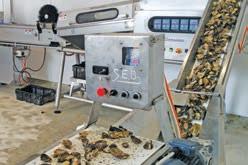







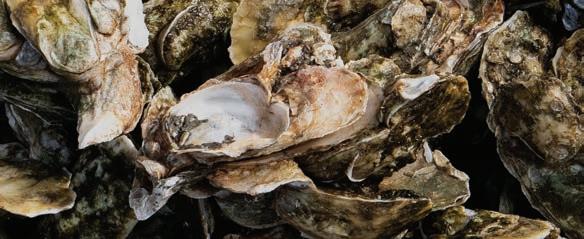

Commercial aquaculture contributes to boosting U.S.-sourced seafood and economic growth.
PHOTO: DARRYL TORCKLER
UC Santa Cruz study: microalgae may be answer to sustainable trout farming
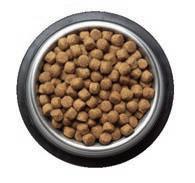
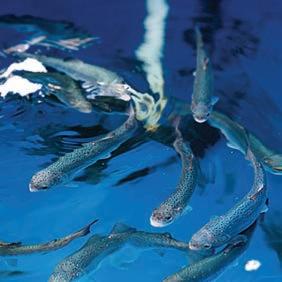
University of California (UC) Santa Cruz researchers say they have successfully created a feed formulation with microalgae for rainbow trout.
The microalgae, from human dietary supplement industry leftovers, may one day replace traditional fishmeal ingredients sourced from wild-caught fish, the university said in a press release. This innovation was published in Foods
“The world depends on fish farms,” explained assistant professor and lead author, Pallab Sarker. “Aquaculture can help to feed our growing population, but right now, it too often comes at a surprising cost to wild fish. So we and others have been working to find solutions that don’t put further stress on ocean ecosystems.”
In the new formulation, the team used varying levels of the marine microalgal species, Nannochloropsis sp. QH25.
During a two-month “growth study” with more than 500 trout, they fed the fish twice a day with either a conventional reference diet or new experimental feed for mulations that replaced fishmeal with microalgae at levels of 33, 66, or 100 per cent.
The results showed no signif
perimental feeds. Nutritional value for humans was also comparable.
“These findings could potentially help to solve a major supply and demand problem in the seafood industry,” said UC Santa Cruz.
Scientists have been developing feed ingredients from microalgae, which are good sources of omega-3 fatty acids.
In their early work, Sarker and his team combined different types of microalgae into feed for tilapia. But tilapia are vegetarians. It’s
This time, the team added taurine and lecithin to their feed as flavor and smell enhancers. They also used new processing techniques. The trout enjoyed the new formulation.
Overall, Sarker says microalgae have huge potential to help the aquaculture industry, but the microalgae production industry will need to improve.
“Microalgae is still pricey, but we hope this type of research, showing the promises of microalgae,
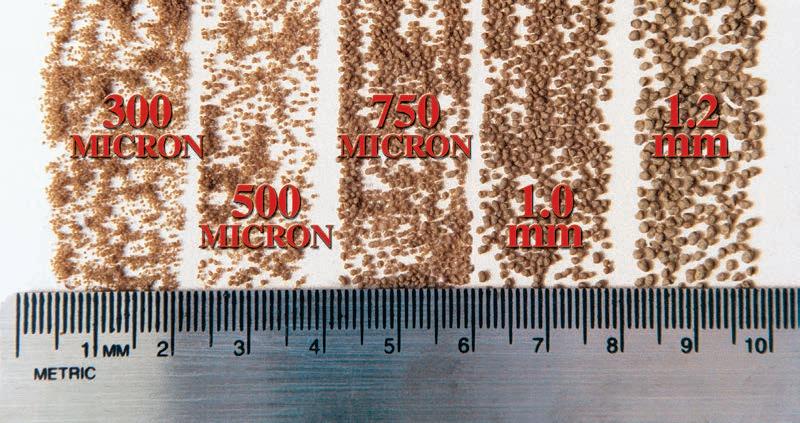
Master Your Aquafeed Universe

Sinking to floating. Sub-millimeter to pellet. When you select an Extrusion Processing System from Extru-Tech, you have a complete Universe with the ability to maintain size yields over 95%. As your business evolves, you have the flexibility to change your finished product without the need for significant capital expenditures.
In an industry where aquafeed can represent 50% of your operation cost, don’t gamble. Contact Extru-Tech and optimize your flexibility and profitability.
mal mortality event exceeding 10 percent at three of its facilities. The combined population at the three sites is over 1.7 million fish.
The total loss at all three sites is estimated at over 400,000 fish (133,334 at Broad Cove site, 133,334 at Harvey Hill South site, and 133,334 at Harvey Hill East site), Mowi reported, as indicated on the Newfoundland Aquaculture Industry Association (NAIA) website. The three sites are located in Harvey Breton Bay, Newfoundland and Labrador.
The public notices are done in compliance with the Department of Fisheries, Forestry and Agriculture policy AP 17. The cause of the mortality event is still under investigation.
“The mortalities are being removed. They are being properly disposed of in accordance with all applicable regulations, policies, and procedures,” said the statement. “Some of the remaining fish
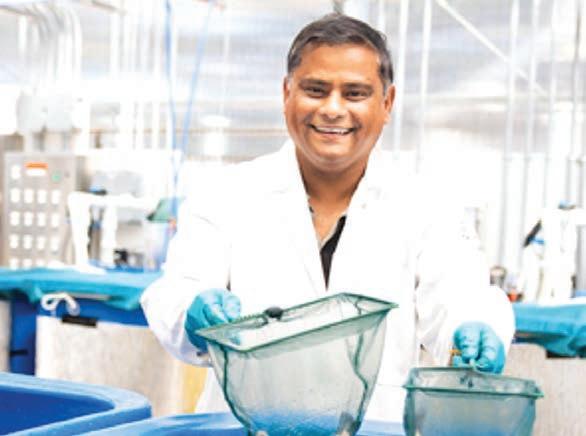
Study lead author, Pallab Sarker. PHOTO: NICK GONZALES/UC SANTA CRUZ
This latest incident follows an “incident mortality” at Mowi in July where almost 18,000 salmon died; a mortality event in 2021 where almost 93,000 salmon died; and a larger event in 2019 where 2.6 million fish died.
Mowi is the world’s largest supplier of farm-raised salmon, according to its website.
Short, diverse supply chains lead to resilience, U.S. study says
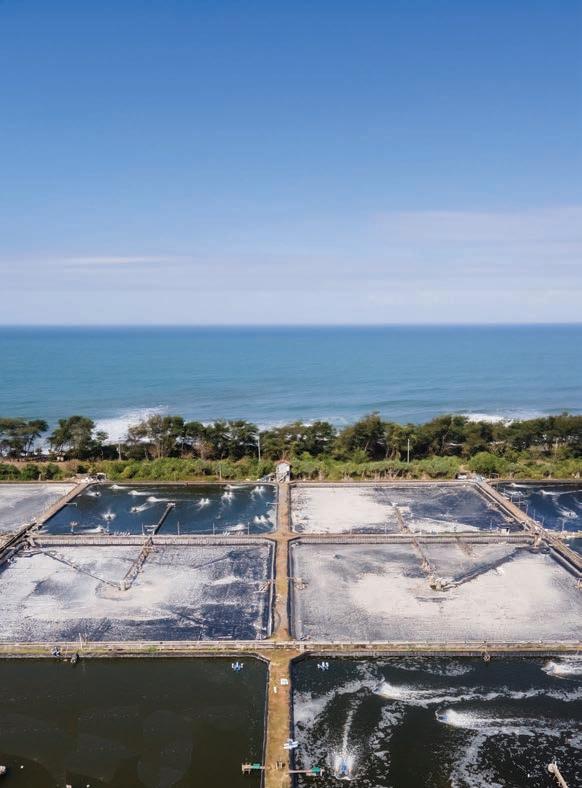
Aquaculture farms in the Western U.S. are more resilient if they focus on the U.S. market, according to a new economic study published in Aquaculture
The study was designed to identify, map, and analyze supply chains developed by aquaculture producers in the U.S. Western Region.
It found that fewer points in a supply chain where products exchange hands could mean greater resilience for aquaculture businesses during economically hard times. Vulnerabilities were mostly related to the regulatory system, said the study.
Producers also show greater resilience if they diversify the species farmed and develop diverse supply chains, according to a survey of Western U.S. producers.
“Identification, mapping, and characterization of U.S. aquaculture supply chains and identifying the risks to which supply chain actors are vulnerable is an essential first step to further studies, to provide guidance to aquaculture
businesses, researchers, and policy makers,” wrote lead author Carole Engle.
Farm-level survey data, supplemented with USDA Census of Agriculture data, revealed 219 aquaculture supply chains in the U.S. Western Region. The study characterized the actors and linkages in each supply chain, as well as economic vulnerability and resilience among aquaculture businesses.
Seven supply chain categories were identified by the study:
1. Food fish live-hauled to live fish markets (tilapia, largemouth bass, catfish, hybrid carp, hybrid striped bass)
2. Food fish for processing (trout, tilapia)
3. Sport fish for recreation (trout, catfish, sunfish, largemouth bass)
4. Sturgeon raised primarily to harvest roe for caviar
5. Shellfish sold live into retail outlets (oyster bars, restaurants, supermarkets, live markets)
6. Shellfish sold to processors for shucking
7. Shellfish sold for export (geoduck, Manila clams, oysters)
The supply chains identified had from two to six points where inputs or products exchanged hands, called “nodes.”
Aquaculture farm businesses in the region that showed enhanced resilience tended to have fewer nodes, a primary focus on the U.S. domestic market, and participation in trade associations that share information and engage with regulatory authorities, the authors explained.
Supply chains targeting export markets had greater numbers of nodes than supply chains serving domestic markets, the study indicated.
Despite these vulnerabilities, researchers noted numerous aquaculture businesses in the region have shown resilience. Some have survived long-term and sometimes across generations within a farm family.



UC Santa Cruz researchers replaced fishmeal in trout feed using recycled marine microalgea.
PHOTO : NICK GONZALEZ/UC SANTA CRUZ
Aquanomics
BY ALAN COOK
Aquaculture vessels are definitely getting their pound of flesh
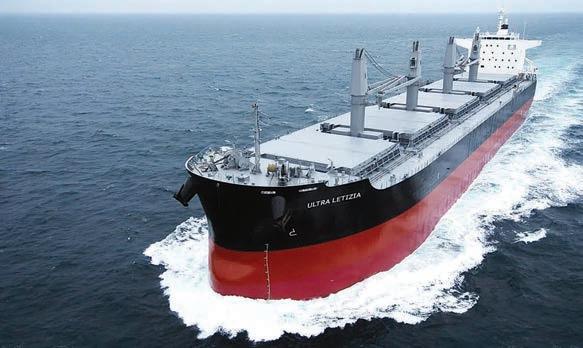
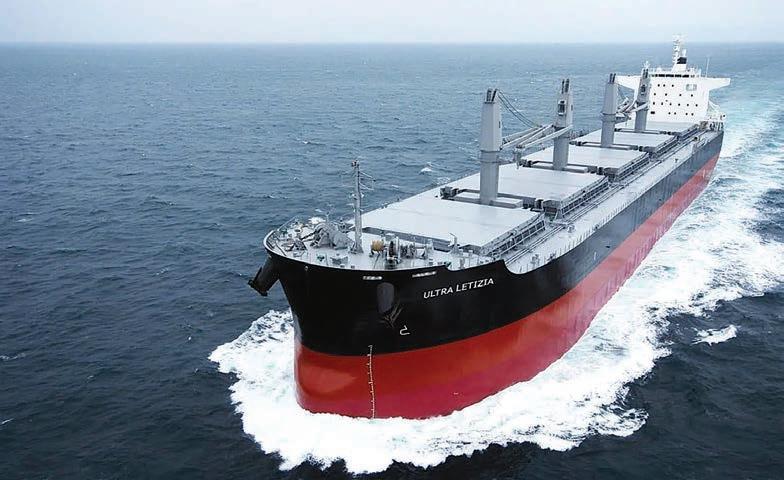
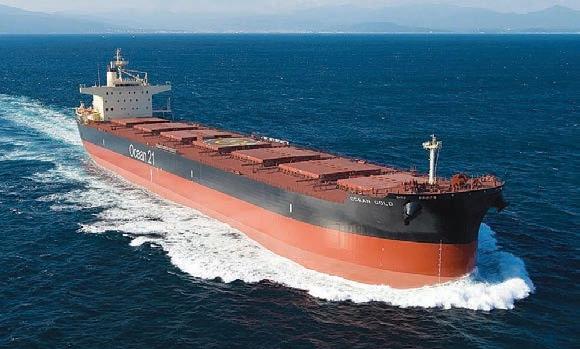
I’ve been working on a project for one of my clients and came across some information that truly floored me. We were looking at day rates for chartering large vessels – in this case, we were looking at published rates for bulk tankers in the Ultramax and Post-Panamax categories of vessels.
For those unfamiliar with these types of vessels, here are their basic characteristics:
• Ultramax – 60,000-65,000 deadweight tonnage (DWT), 200-210 meters long, 32 meters wide, and drawing 10-14 meters in depth.
• Post-Panamax – 80,000120,000 DWT, 225-250 meters long, 32-35 meters wide, and drawing 10-14 meters in depth. Both types of vessels are commonly used in the marine freight industry for moving bulk commodities like ores, grain, etc. A quick Google search tells me that more than 150 Ultramax bulk carriers were ordered in 2023 from shipyards. Getting a solid number of vessels operating is tricky but they are very common and travel to every ocean on earth in all kinds of conditions. The piece of information that
blew my mind was the published day rates for these vessels.
An Ultramax carrier can be spot chartered on a day rate as low as US$14,000 per day to a high of $22,000 per day depending on the route, region, and particulars of the vessel being chartered.
Assuming a two-week shipyard visit per year, that works out to a range of US$5-7.5 million in charter costs per year. Post-Panamax vessels can be chartered at somewhat higher rates but, in my opinion, are exceedingly cheap compared to what salmon farmers pay for vessels. These ships are 10-15 times larger than an average wellboat, five to nine times larger than the largest wellboat currently in operation and many times larger than any service vessel in operation.
My experience
As a salmon farmer with decades of experience in several farming regions, these numbers are incredible to me. I live in a port city, so I see them coming through port every day and had always assumed they would cost US$80-100 million to charter per year. It wouldn’t have taken
much research to correct my misunderstanding but better late than never.
Aquaculture vessels are obviously specialized, operate in tricky environments, and farmers use a lot of them for many tasks on a farm. Like many of my colleagues, however, I became accustomed to the notion that a boat was a hole in the water into which one threw money and felt, incorrectly, that other industries suffered the same fate.
In the early days of salmon farming, we relied less on specialized vessels. The gold standard at the time was to put the fish in a pen and then try to avoid handling them. As the industry changed, we became much more reliant on specialized vessels. Two immediate examples come to mind: the elimination of copper-based anti-foulant paint on nets led initially to the need for vessels to wash nets and, over time, to an increase in gill health-related challenges and an additional need to bathe/handle fish to treat that condition.
Similarly, in the early days, sea lice were not a problem. Or if they were a problem, they were handled by in-feed
parasiticides. As these products became ineffective over time, and pressures to treat sea lice with non-pharmaceutical methods grew, farmers turned to vessel-mounted systems for treatment. As the use of these systems grew, the costs of excessive handling increased (mortality, sea lice resistance, etc.) and further created demand for specialized vessels.
An important thing to keep in mind when thinking about aquaculture vessels is that outside of a few basic activities – mooring a new farm, delivering feed, cages and equipment, and harvesting – none of the activities performed by service vessels add value to the product of a farm. At best, they preserve value, but mostly, they are a pure cost. Every time a farmer handles fish, they lose growth, cause stress and damage, and kill fish. Sadly, the alternative (doing nothing) is worse.
Aquaculture service vessel companies
Vessel companies make a lot of money. According to a 2021 report from Salmon Business, most Norwegian service vessel
Alan Cook has more than 25 years of experience in the aquaculture and seafood industry in notable companies around the world, including Mowi Canada East and Cooke Aquaculture. He now runs his own consultancy firm, providing his expertise in strategic and operational planning, investment planning, and project management. (info@AlanWCook.com)
Ultramax and Post-Panamax bulk tanker vessels PHOTOS: AO SHIPPING
companies make healthy margins with earnings before interest and taxes (EBIT) values between 25 and 50 percent. This information is a bit dated and there has been consolidation in the sector, but I don’t believe, for a minute, that key players in the industry are making any less. On a margin basis, service vessel companies make more money than salmon farming companies.
Here are the types of service vessels commonly found on a net pen farm:
Wellboats – Historically, they would have been used primarily for delivering smolts, harvesting, and size grading. In recent years, more of their activities have been focused on treating sea lice and amoebic gill disease. They have become larger and more sophisticated every year. At 12,000 DWT, they conservatively have an annual charter rate of €11-12 million (US$12.7-13.8 million) (€34,ooo or US$39,299 per day). Back to the bulk tanker comparison, more than twice the price for a quarter of the volume. In its 2023 report (the last one before they went private), Froya, the service vessel company, earned €95 million (US$109.8 million) from its fleet of 19 wellboats.
Service vessels – These vessels provide basic services to salmon farms. Activities include towing and mooring cages, feed barges, and other equipment, installing, changing, cleaning, and removing nets. With increasing fish health challenges, supporting lice and Amoebic gill disease treatments and other fish handling events have become a much bigger focus of activity. In 2023, Froya had 64 vessels in this category, earning an average of €1.2 million (US$1.4 million) per year.
Dive boats and crew transport –Moving people around safely has become much more expensive as
farms have moved into more remote locations exposed to open ocean conditions. For the longest time, salmon farming was a bit below the radar in terms of crew transport but there’s little tolerance in that area today.
Feed transport – Every kilo of feed fed on a farm is transported to site, often across long distances. Typically, rates for feed delivery vessels are lower than more specialized aquaculture vessels but still operate at a premium to the bulk tankers I mentioned above. The vessel I used in eastern Canada was roughly four percent of the size of an Ultramax bulk tanker and about 60 percent of the cost.
So what?
So, what’s the point of whining about this?
Salmon farmers continue to make excellent profits and have been able to pass along vessel costs to consumers. Aquaculture vessel companies have a spe cialized skillset, have invested heavily in modern equipment, operate in a highly regulated environment, and are free to negotiate the best deal possible.
Both things are true, but we should not lose sight of the fact that salmon farming, as currently conducted, is a high-cost under taking and to a certain extent, it is that way because companies operating in the value chain are wringing extraordinary profits from it.
Other marine industries prove that lower costs are possible. If the current paradigm holds, the situation in salmon farming will only get worse. If the industry moves offshore, sea conditions will limit the number of safe working days per year, and vessels will require dynamic positioning systems, even more highly skilled crews, and advanced equipment to provide basic services.
been lying at the bottom of the sea off Karmøy, Norway since February 2024, following a towing accident. In that example, the crane being used in the recovery effort could not work safely in wave heights over 0.3 meters.
On many of the offshore sites currently being considered in Norway and other regions, conditions would never be below this threshold. Perhaps capable offshore vessels will come from the oil and gas sector, but I am skeptical that any cost-savings will come from that direction.
Land-based farms offer the opportunity to eliminate the need for specialized aquaculture service vessels but come with costs and other issues that more than replace the money spent
on vessels. They may shift the paradigm slightly if they are successful and can scale but the essential nature of an industry that has come to rely on extraordinary barriers to entry and high market prices will not change.
Going back to a rant about how existing developments in offshore and land-based will only serve to entrench current approaches, I think we, as proponents and investors in the sector, should be aware of our pre-judgments and ask ourselves if existing ways of doing things are the right ways. After having my eyes opened about costs in other marine industries, I will be looking for any opportunity to shed cost and reduce complexity. | ANA
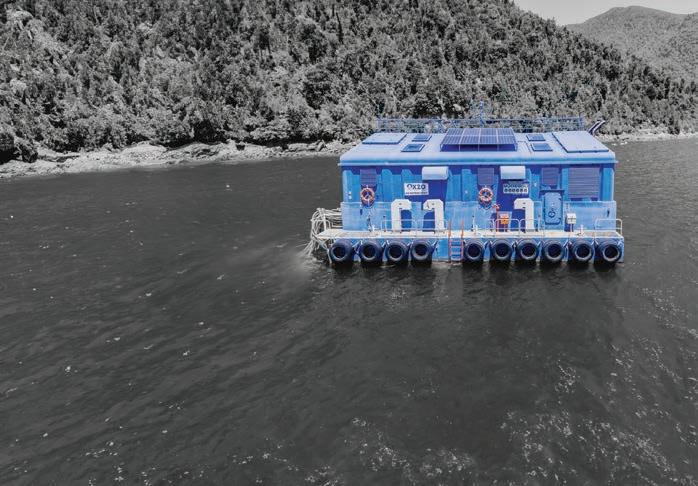

Our OXYMAR® generation and injection systems ensure a continuous and uninterrupted high-volume supply of oxygen and air.



Last year, Karmsund Shipping was struggling to recover the workboat “Maya,” which has
OXYMAR®
This opinion editorial is an excerpt of Alan Cook’s Understanding Fish Farming blog.

BY DRUE BANTA WINTERS
Why we went to Washington
Stronger America Through Seafood (SATS) led a delegation of aquaculture industry leaders to Capitol Hill to advocate for industry growth.
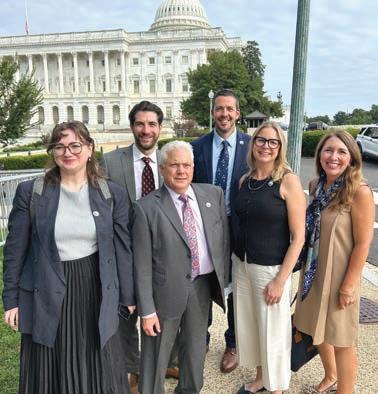
Last week in Washington, D.C., Stronger America Through Seafood (SATS) brought together a diverse coalition of seafood leaders on Sept. 10-11 for a legislative fly-in on Capitol Hill. Over the course of two days, our coalition met with Members of Congress and congressional staffers to discuss the opportunities of expanding aquaculture into U.S. federal waters.
For many in the aquaculture industry, political advocacy does not come naturally. We raise fish, develop technology, supply feed, and contribute in many other ways to support our nation’s seafood supply chain. But the reality is that decisions made in our nation’s capital – and in state capitals across the country – impact whether we can continue to build a sustainable aquaculture industry here in the U.S.
That is why SATS organized this fly-in: to showcase the hardworking professionals committed to ensuring American families have access to sustainable and healthful seafood, correct decades of misinformation that have been falsely perpetuated about our industry, and educate lawmakers on the significant opportunity that open ocean aquaculture growth offers to strengthen America’s seafood supply and food security.
America’s seafood gap
Demand for healthy and sustainable protein continues to grow, but the U.S. already harvests our sustainable limit of wild-caught seafood. While other countries have prioritized sustainable aquaculture, the U.S. ranks only 18th
in seafood production globally. We import up to 85 percent of the seafood we consume, including half from fish farms in other countries. This means we are losing out on billions of dollars in economic activity and tens of thousands of jobs that could exist here at home.
That is because duplicative and costly environmental reviews by multiple federal agencies and a lack of a clear permitting framework have made it nearly impossible for fish farmers to establish aquaculture operations in U.S. federal waters. Until a federal permitting pathway for open ocean aquaculture is put in place, the U.S. will continue to fall behind other countries.
The MARA Act and growing bipartisan momentum
New legislation in Congress, the bipartisan Marine Aquaculture Research for America (MARA) Act of 2025 (S.2586), would help lay the groundwork towards establishing a robust American open ocean aquaculture industry.
Introduced this past July 2025 by Senators Brian Schatz (D-HI) and Roger Wicker (R-MS), the bill builds on years of prior legislative efforts. The MARA Act has already gained strong bipartisan support, as well as backing from leading environmental groups, seafood industry leaders, award-winning chefs, and academics who recognize that aquaculture is a necessary tool to meet the growing demand for protein while reducing pressure on wild fisheries.
With growing momentum for establishing an open ocean aquaculture industry in America, there has never been a greater opportunity to change the
Open ocean aquaculture is a sustainable complement to our nation’s wild fisheries. Fishermen and fish farmers would work together to increase the supply of American-raised seafood coming into our nation’s ports, revitalizing our working waterfront communities. But despite our vast ocean resources, skilled seafood workforce, and top-tier science and research institutions, no commercial-scale finfish farms currently operate in U.S. federal waters.
Passing the MARA Act would not only help to increase our nation’s seafood production and re-establish the U.S. as a top leader in sustainable seafood; it would help revitalize working waterfronts, spur investment in portside infrastructure, and create jobs across the supply chain.
From the hatcheries that raise and supply young fish for open ocean aquaculture, to the feed mills that produce their feed, to the seafood processors who prepare and package the fish, to the wholesalers, retailers, and restaurants that sell it – and the equipment and technology companies supporting
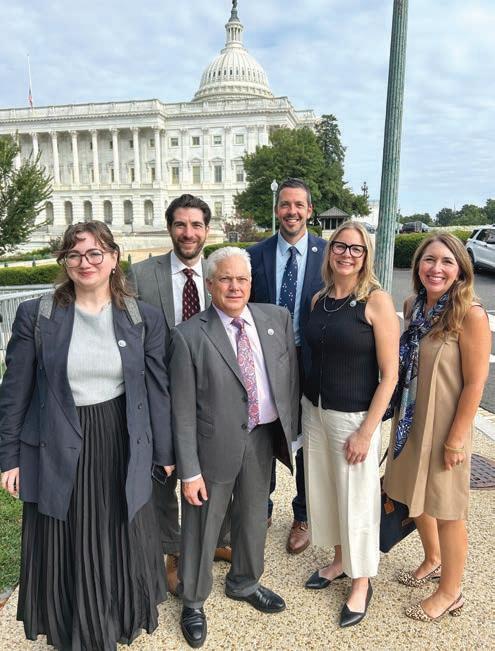
Representatives from companies across the seafood supply chain went to Capitol Hill to raise awareness for the bipartisan Marine Aquaculture Research for America (MARA) Act.
tide.
every stage of seafood production –growth in aquaculture benefits the entire seafood supply chain. It also opens new markets for America’s terrestrial farmers that grow the crops used in plant-based fish feeds, like soybeans, corn, peas, wheat, barley, rice, canola, and flaxseed.
Why we went to Washington
During our legislative fly-in, representatives from companies across the seafood supply chain, including Cargill, Cuna del Mar, Fortune Fish & Gourmet, Innovasea, Manna Fish Farms, Sysco, and Zeigler, as well as representatives from supportive groups, including the American Soybean Association, the National Fisheries Institute, and the Soy Aquaculture Alliance, joined on Capitol Hill to meet with lawmakers.
After the MARA Act was introduced in Congress, SATS organized this year’s fly-in to raise awareness of and advocate for the bill. We invited our member companies and partner organizations to join us in Washington, D.C., and many were eager to participate. SATS regularly meets with lawmakers throughout the year to educate them on the need for federal legislation to support the expansion of aquaculture in America.
This year’s fly-in built on our years of advocacy, bringing together a diverse group of industry voices to explain in-person with lawmakers and their staff how expanding U.S. aquaculture in our nation’s open ocean waters would benefit their communities
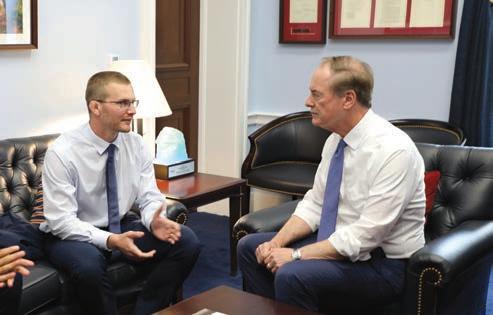
and businesses. We met with dozens of congressional offices, including those on the relevant committees of jurisdiction.
We explained how today’s modern technology is making aquaculture more sustainable than ever, with AI-powered feed cameras, real-time sensors, and advanced modelling systems that optimize feeding, monitor fish health, and reduce environmental impact.
We discussed how communities across the country, including within both coastal and inland states, would benefit from the expansion of American aquaculture as new jobs and economic opportunities are created across the seafood supply chain.
We talked about the opportunity to establish new markets for terrestrial farmers of American-grown soy and other crops in plant-based fish feed as our industry grows.
And we raised awareness of the benefits to American families who want more fresh, healthy, and sustainably U.S.-raised seafood options for their dinner tables.
These conversations matter. Too often, the only voices lawmakers hear on aquaculture are those spreading misinformation. In some states, we have seen our opponents succeed in banning aquaculture operations because of this misinformation. If we want to see our industry succeed, we can’t sit on the sidelines anymore.
The need for a unified industry
After two days of successful and engaging meetings, our recent fly-in demonstrated how powerful it is when this industry joins together to make a difference.
Throughout the course of our meetings, we found that lawmakers were genuinely interested in learning more about our industry’s work, its potential for growth in offshore waters, and the benefits that would be realized across the country. They appreciated hearing directly from business owners, scientists, and fish farmers about the jobs, innovation, and environmental stewardship taking place in their states and congressional districts.
With growing momentum for establishing an open ocean aquaculture industry in America, there has never been a greater opportunity to change the tide and advance our industry’s growth in the U.S. SATS will continue to advocate for the MARA Act and for a pathway forward for open ocean aquaculture in U.S. waters.
We encourage America’s seafood leaders to join us as we work to secure a sustainable seafood future for all. | ANA

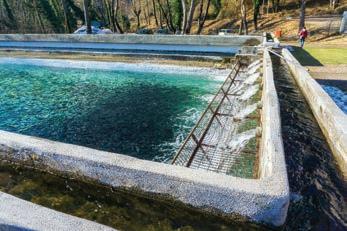
technology uses a proprietary method to infuse gases into liquids, maximizing oxygen efficiency for aquaculture applications. Potential benefits include:

DGI
Tyler Hershey, sales operations manager at Ziegler Feed, was one of the SATS delegates who met with lawmakers in Washington, D.C. to advocate for federal legislation to support the aquaculture expansion.
Deep Dive
BY BEN NORMAND
compliance, and communications. (ben.r.normand@gmail.com)
Many more fish in the sea
A reminder of the power of gathering united in our Canadian aquaculture industry
Most of us have heard the age-old adage that there are many more fish in the sea.
Typically, it’s offered as consolation to a loved one in times of loss and grief, or missed opportunity – “Don’t worry, the right job is waiting for you,” or “There’s many more fish in the sea, you don’t need him.” The underlying notion is, of course, that because there are so many fish, the value of each fish is less than the amount of energy and time we’re expending worrying about losing it.
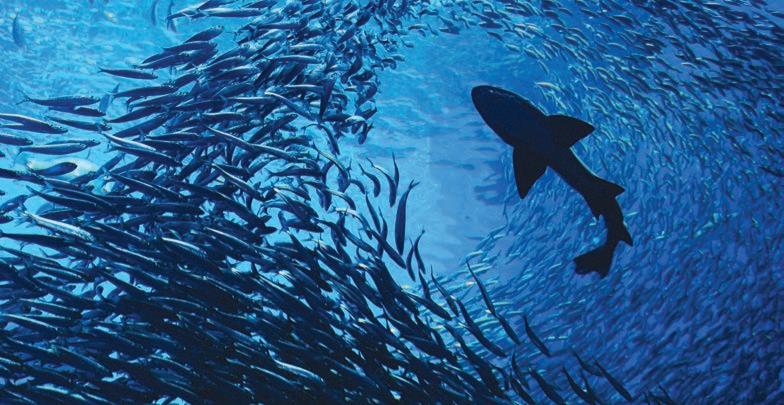
I’m no philosopher, and maybe we are all just little fish in one big ocean, each generally destined to make little lasting impact. The single anchoveta has almost no impact on the outcome of anything. And yet, anchoveta are impactful. Fortunes are made and lost by their presence, or lack thereof, for example. These impacts are not created by their exclusive presence but by their schooling. Large and/or plentiful healthy and mature schools support a thriving ecosystem and robust fishing activity, and a lack of these facilitates the opposite.
Their power lies in numbers and coordination. Through schooling, they can deter predators, spawn, and generally navigate their way through a dangerous and complicated sea. They coordinate by sensing minute changes in the direction and movement of the fish next to them with such precision that they seem to think and move with one mind.
We, as an industry in North America, are currently moving through our own dangerous and complicated sea. In addition to systemic issues like regulatory uncertainty and environmental change, there are very real and very big sharks out there, with multi-million dollar social media and public relations budgets that would like nothing more than to chew through us for no better reason than to make themselves a little fatter.
There are things we can, however. Gathering is one of them.
On the surface, there are many practical and obvious benefits to attending conferences in our industry. These include the opportunity to establish and reinforce business
relationships, the opportunity to stay up-todate on the latest scientific developments, the opportunity to support local communities and businesses, and the opportunity to recognize and celebrate our achievements. But the through-thread between all these benefits is alignment, whatever the specific details may be.
To quote one of my dear colleagues in his summary of the benefit of attending the most recent British Columbia Salmon Farmers Association annual general meeting, “We witnessed a powerful moment of alignment.”
This phrase stuck with me because it says it all: through gathering to share information and to align our vision, message, and relationships, we can reinforce our ability to move as one for the safety and benefit of all. This, dear readers, is the real power of gathering in our industry.
While teaching with Fleming College, I told my students that it’s not only my job to teach you how to grow fish, but also how to be successful in our industry. To this end, I would constantly encourage them to join their local association and attend as many conferences as possible. This was not just fluff. I sincerely believe in the importance of this.
At the time of writing this column, I am at the Newfoundland Aquaculture Industry Association Cold Harvest Conference in beautiful St. John’s. This is one of many that my Skretting colleagues and I attend annually,
and it’s been an amazing experience.
We have learned from experts in public relations, government relations, genetics, environmental research, artificial intelligence, and aquaculture, among many others. We have had the pleasure of further reinforcing the strong relationships we have cultivated with our customers. We have started exploring new working relationships with other providers to further advance our industry. We were able to come together at the gala to recognize several of our industry’s most notable people and achievements within Newfoundland, while enjoying a few laughs.
The energy and joy in that room were so real, you could almost cut it with a knife. We have witnessed our own powerful moment of alignment through gathering, and we’ll take that away with us when we leave, to the benefit of all. By this schooling, we will continue to dodge the sharks that circle us.
This year, I’ve had the great honour of being elected to the board of both the Aquaculture Association of Canada and the Newfoundland Aquaculture Industry Association. I am very happy to have the opportunity to put actions to words by helping to facilitate gathering and encouraging alignment in our industry. But, I am just one anchoveta in the greater school. The real impact comes from gathering us all together.
There are, indeed, many more fish in the sea, and I couldn’t be happier about it.
Happy schooling, everyone.
Ben Normand is a fish farmer, writer, college instructor, and cheerleader for aquaculture. He has worked with various fin and shellfish species in New Zealand and Canada in production management,
The push for unedited content
Reviewing Season 3 of the Salmon Farming: Inside & Out podcast
By Ian Roberts
This past month, several large news outlets in the United States have announced that they will only conduct interviews live or only air footage that is pre-recorded without cuts or edits.
This change in policy is directly linked to the numerous legal challenges and settlements – justified or not – alleging that a source’s narrative has been strategically manipulated in the editing room. One American news conglomerate credited “audience feedback” for the shift.
As someone who, for decades, has stood in front of the camera delivering aquaculture messaging, it was always my biggest concern. If the news outlet or filmmaker was wanting to "make" the news, then I was putting myself and the organization at great risk. If my messaging conflicted with the program’s desired narrative, then I may be cut entirely (that happened).
Or, perhaps worse, if I erred or fell short on the day, that out-of-context soundbite may become the clickbait headline they were hoping for (yup, also happened).
Perhaps at the root of the issue is that media – whether mainstream, social, or film – has become so glaringly polarized over the last decade. You can watch two politically opposed news stations reporting on the same subject and through careful selection of sources and sound bites, two very different storylines can be created.
It has become increasingly difficult to trust what you’re hearing: Is that what they really meant to say? Was that presented in context? Did they say more important things that have been deleted?
Think tariffs for a second. Who actually pays for tariffs depends on which news media is reporting it to you. It doesn’t seem to matter what the economic facts are.
Maybe, just maybe, there’s another root of the issue that we all must take personal ownership of. Has our desire for the Coles Notes (Cliff Notes to our American readers) on important issues and our rush to scroll
Podcasting has been one of the fastest growing communication mediums with 600 million listeners expected to tune in this year.
down our thread to receive only top-line messaging, pushed all media to "dumb it down" for us?
I strongly believe that our ability to freely and critically think has been slowly eroded by the cutting room floor. Instead of having a literal encyclopedia of knowledge to review and consider, today we receive sound bites and revenue-driving clickbait.
Well, perhaps there is a signal that we are wanting to cut the bait: with the rise of the podcast.
Podcasting has been one of the fastest-growing communication mediums with 600 million listeners expected to tune in this year. Conversational podcasts are mostly unedited, rather opting to leave you feeling like you’re in on the conversation, ripe with "ums" and "ahs" and the occasional fumbled word. It’s real and not typically a polished script.
Granted, we can still choose to live inside our echo chamber. But at least we’ve knowingly made the choice to surround ourselves with confirmation bias, rather than naively
thinking we’re getting a balanced perspective from a carefully crafted "news" story or Netflix documentary.
Recognizing this trend, Aquaculture North America (ANA) has been on the forefront of producing informative podcasts since 2020 with RAS Talk, Women in North American Aquaculture, and Salmon Farming: Inside & Out.
I was fortunate to be given the opportunity to host the Salmon Farming Inside and Out podcast back in early 2023. Now in its third season, I have been very impressed hearing from so many material experts openly sharing their knowledge and perspectives. I won’t list all the interviews here but would encourage you to visit ANA’s website (or wherever you stream your favorite podcasts) to view more than 30 episodes.
I will, on second thought, mention one episode. The ANA team have been committed to provide balance to their listeners and had, therefore, invited organizations critical of salmon farming to share their perspectives. The Pacific Salmon Foundation, the David Suzuki Foundation, and Wild First (a Tony Allard project) all declined their invitations.
However, this season, a past researcher for the David Suzuki Foundation contacted the podcast to compliment the series on its endeavour to share many and all perspectives, and offered to come on the show. We have since received much positive feedback on that episode featuring Corey Peet, which aired in August 2025.
The podcast is unedited and long-form, which can leave the interviewee feeling very vulnerable. After all, all the words and thoughts are yours to own. There’s no one in the editing room to blame.
But it’s also real and authentic, and I think many of us have missed that. Thank you, podcast. | ANA Ian Roberts is a 30-year salmon farming veteran and owner of Precision Public Relations. He is host of the

Generation Aqua
BY IMANI BLACK
Imani Black is an aquaculture professional, advocate, and industry trailblazer with a decade of experience in oyster farming and hatchery management across Maryland and Virginia. As the founder of Minorities In Aquaculture and a graduate with a Master’s degree in Ecological Anthropology from the University of Maryland Center for Environmental Science, she is dedicated to fostering workforce inclusivity and equity through mentorship, education, and advocacy. (imanib@mianpo.org / www.mianpo.org / @imaniiiblackkk)
Looking back, moving forward
Building the future of aquaculture one year at a time
Seafood is having a moment.
More people are paying attention to where their food comes from. More conversations are happening about sustainability, innovation, and the future of protein. And aquaculture and seafood – whether you’re in farming, processing, research, policy, or maritime trades – is at the center of that story.
This visibility is a gift, but also a responsibility. Right now, we have the chance to reclaim the narrative of aquaculture and show the public what it truly represents: sustainability, resilience, and opportunity. But we can only do that if we’re honest about both our accomplishments and our struggles, and if we commit to building an industry that reflects the communities we serve.
Reflections from five years of MIA
As 2025 closes, I’ve been reflecting on the past five years of building Minorities In Aquaculture (MIA). It’s been a journey full of opportunities, impactful people, and eye-opening conversations. It’s also been a path of major trial and error, figuring out how to be an entrepreneur, an aspiring leader, and a person navigating the responsibility that comes with showing up in this space in all the ways I’m called to.
When MIA began, it was an undeveloped melting pot of ideas. I thought I knew what it could be, but honestly, it has repeatedly shifted and revealed itself into something deeper and more expansive each year. Along the way, I’ve made mistakes,
learned what works, and discovered that the kind of presence I want to have in this industry is rooted in intentionality.
My goal has never been perfection. It’s been to do good work, to build something meaningful with others who are equally passionate, and to be proud of my small piece of this ocean pie.
This year reminded me of what’s possible. MIA expanded internships to new regions, connecting more students to hatcheries, farms, and labs. More women of color took their first steps into aquaculture careers. Mentorship networks grew stronger, linking newcomers to professionals who could guide them.
But, I also learned that scaling requires more than passion. It requires sustainable resources, the right infrastructure, and strong partnerships. Representation is important, but it only has an impact when it transforms the
system, giving people the power to lead, not just participate.
These lessons reinforced something I think we all feel: progress is real, but it’s fragile unless we commit as an industry to pushing it forward together.
The next five years
The next five years will be critical. The pressures on our industry are undeniable: workforce shortages, generational career shifts, climate challenges, and consumer demand for transparency. We’ve made progress, but the gaps remain. Too few people are entering the pipeline. Old perceptions about seafood careers persist. And strategies aren’t yet bold enough to secure the workforce of the future.
At MIA, our 2026-2030 strategic plan is designed to address these challenges head-on, not just for our organization, but as part of the larger effort to move the entire industry forward. The
goals we’ve set mirror what aquaculture, seafood, and maritime professionals across the country are already calling for: clearer career pathways, stronger connections with communities, and a sharper, more unified story about what aquaculture truly represents.
For MIA, that means expanding programs that make careers accessible and financially viable, countering misinformation with facts and human stories, and deepening partnerships with industry, academia, government, and community organizations to widen the pipeline. It also means leaning into technology and innovation to make aquaculture more resilient and attractive to the next generation, and finding ways to bring them in and make it easier for them to stay.
But progress will also depend on breaking out of silos. Too often, aquaculture has relied on familiar networks and traditional
Looking ahead to the next five years, Imani Black said Minorities in Aquaculture must become more bold in expanding programs that make careers accessible and financially viable for young professionals.
ways of collaborating. The next phase requires us to think bigger, to bring in voices, skills, and perspectives that haven’t always been included in shaping this industry. That could mean inviting partners from education, workforce development, finance, or technology into conversations where they’ve historically been absent. It could mean creating new spaces where farmers, processors, scientists, and communities solve challenges side-by-side rather than in parallel.
And honestly, we also have to ask ourselves: when are we going to put aside the perceptions, biases, and misconceptions we hold about other parts of this field – whether it’s commercial, academia, or government – and finally sit down to acknowledge that most of us are working toward the same goals? Until we get on the same page about why
We must demonstrate that inclusion is not an optional add-on. It’s a strategy for growth, competitiveness, and sustainability.
silos still exist, we can’t begin to break them.
This isn’t about doing more of the same. It’s about reimagining how we work together so that aquaculture becomes not just more innovative, but more connected, intentional, and impactful. Because without breaking down these walls in the next five years, we risk falling short of the workforce, production, and sustainability goals that 2030 demands of us.
Most importantly, we must demonstrate that inclusion is not an optional add-on. It’s a strategy for growth, competitiveness, and sustainability. If we want to meet the demands of the future, the industry must open its doors wider, and MIA is committed to
helping build those doorways. These aren’t abstract goals. They are the building blocks of an industry that can not only meet the challenges ahead but thrive in the face of them.
Closing reflection
Looking back on the last five years, I’m proud of what MIA has built but I’m even more proud of what we have built together as an industry. The talent, the drive, and the passion are here. What remains is the will to create pathways wide enough, intentional enough, and lasting enough to carry that talent into the future.
Seafood has the spotlight right now. Aquaculture no longer has the luxury of being seen as
niche. This is our time to define ourselves as vital to U.S. food security, sustainability, and innovation. Whether you’re on the water, in a lab, running a plant, or shaping policy, your presence matters in how this story is told and where it goes next.
The next five years will be decisive. If we continue to lean into the challenges, break down silos, and do the hard work of aligning around our shared goals, we will meet this moment. And if we do, I believe that when we look back in 2030, we won’t just see more seafood produced. We’ll see an industry reshaped by people who had the courage to work differently, work together, and build something better.
Because the future of aquaculture isn’t coming someday, it’s being built right now, one choice, one collaboration, and one year at a time. | ANA
Hands Across the Water Viewpoint
BY MICAH CONKLING
Micah Conkling is a marine science researcher, aquaculturist, and educator based in midcoast Maine. He is a founding board member and secretary of ETHOS: Earth Ocean Food Systems, a non-profit organization dedicated to directly connecting funders to innovative aquatic-foods programs. (mlc@ oceanethos.org)
Introducing ETHOS and its mission to bridge the aquaculture funding gap
Globally, there is a severe lack of resources, including access to knowledge and funding, that reach small-scale, ecologically regenerative, economically viable, and Indigenous-led aquaculture projects. Such community-scale initiatives profoundly benefit their local regions yet are often unable to progress beyond early development stages.
A growing cohort of aquatic-foods farmers and development specialists are concerned that less than 10 percent of global funding for aquaculture is reaching initiatives that simultaneously focus on ecosystem and social-economic sustainability, especially as interest expands in the funding community to support initiatives that promote local food security and ecological stewardship.
Earth Ocean Food Systems, Inc. (ETHOS) is working to bridge this gap, connect values-based investors with the globally important aquaculture projects, and address the tangle of complexities that characterize ocean/aquatic food production worldwide. ETHOS is volunteer-led by a team whose diverse backgrounds and networks uniquely enable them to do something now to build solutions to global food insecurity.
Prior to meeting, the ETHOS team members were already aligned with what would become the 501(c)3 non-profit organization’s core values around the necessity of community-scale aquaculture development, innovation, and sustainable food production.
As an international and transdisciplinary collective of applied research scientists, aquatic foods producers, food sovereignty experts, and organizational development specialists, they
have decades of research-driven and community-responsive aquaculture, and a dedication to supporting viable small-scale, responsible initiatives, worldwide.
Inside our ETHOS
In an era where the health of our oceans and freshwater systems are more critical than ever, ETHOS promotes aquatic foods developments that are redefining approaches to local
development and worldwide food security.
Our goal is to amplify the visibility and viability of locally and globally-minded aquaculture practitioners and sustainable marine resource management initiatives because we believe they have economically and ecologically sustainable futures when they become connected to proper funding, peer networks, and other resources.
ETHOS oper ates under a bold premise: that ecologically sustainable aquaculture can revolutionize our ocean/aquatic food production systems, provide economically viable solutions to local and global food security, and maintain/ advance ecosystem health. With a strategic focus on ecological and regenerative aquaculture, ETHOS identifies underfunded areas of aquaculture innovation occurring within community-scale projects, Indigenous-led initiatives, and those in Small Island Developing States (SIDS) and regions.
Hands Across the Water
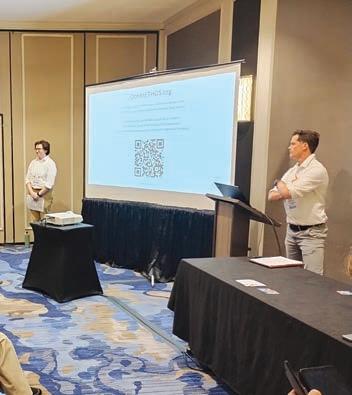
ETHOS commitment to sustainable ecological aquaculture was prominently displayed at the World Aquaculture Society (WAS) Triennial Aquaculture Conference in 2025, where they presented their “Approach to Regenerative Aquaculture that Supports Aquatic Food Systems for Ecological Restoration, Human Health, and Community Food Sovereignty.” This presentation highlighted our
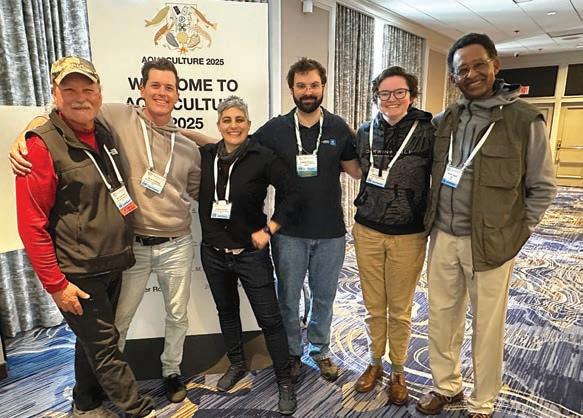
Left to right: Barry Antonio Costa-Pierce, Micah Conkling, Cristina Sandolo, Jonathan Roques, Bek Woodburn, Kifle Hagos
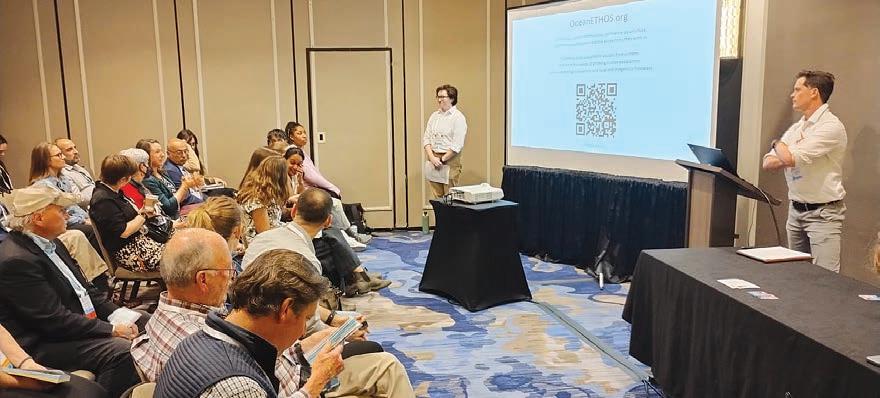
ETHOS founding members introduced their mission to aquaculture professionals at this year's Triennial Aquaculture Conference.
groundbreaking approach and urged further participation from global stakeholders.
Barry António Costa-Pierce and Kifle W. Hagos, longtime WAS members, introduced the ETHOS p rogram concept of Hands Across the Water, an innovative “unconference” of like-minded aquatic foods workers, applied science researchers, entrepreneurs, and funders that immerses its participants in the field at ETHOS partner farm Kaua’i Sea Farms on the island of Kaua’i, Hawai’i for a one-of-a-kind working partnership meeting.
We have plans for our first conference at Kauai Sea Farm, where we would bring together a cohort of up to 30 entrepreneurs working on community-scale, Indigenous-based, ecological, and restorative aquaculture and fisheries.
This immersion workshop would combine real-time action and problem-solving projects at the host site. Participants worked on opai hatchery production, conducted water quality assessments, and analyzed beneficial impacts of the fishpond on the local ecosystem.
The goal is for values-based practitioners and funders alike to learn alongside each other about this exceptional case study in Indigenous and woman-led ocean/aquatic food production that is benefiting the community and ecosystem.
Hands Across the Water demonstrates the heart of ETHOS' commitment to fostering novel connections and collaboration. We hope to bring this initiative back in 2026. These engagements are designed to increase local economic activity, support food sovereignty, and enhance the readiness of projects for broader application and replication.
Transdisciplinary leadership
ETHOS’ diverse board members are key to their innovative approach.
As a leader and adviser to numerous international aquaculture projects, Costa-Pierce is an acclaimed, lifelong aquaculture practitioner, educator, and applied-science researcher.
Page Nelson and Cristina Sandolo bring decades of organizational development, strategy-setting, and leadership development experience focusing on environmental justice and food justice.
Micah Conkling (myself) is a marine science researcher and educator, who has expertise in sustainable small-scale mariculture development. He serves a secretary of the ETHOS board of directors.
Hagos applies his deep knowledge in integrated coastal ecosystem management and sustainable seafood production in Africa and elsewhere.
Bek Woodburn has a background in food justice and oyster aquaculture management, bringing hands-on, community-based, and sustainable food production experience.
Jonathan Roques' multi-species laboratory and field work in the Nordic countries and Japan are intertwined with his leadership in international graduate aquaculture and marine science education.
Roger Jacobs has long built digital and physical infrastructures for island communities that are working towards a more resilient future.
Together, this team offers organizational expertise and a shared commitment to relationship-focused project development.
Expanding the sustainability movement
With a unique focus on channeling support to environmentally and socially responsible aquaculture initiatives, ETHOS is receiving attention from a variety of platforms and organizations.
The Conservation Alliance for Seafood Solutions, a membership organization focused on
advancing ocean health and responsible seafood development, invited ETHOS to present at their 15th annual conference in October 2025 in Hawaii.
N ot only did this present an opportunity for ETHOS to share its story with a new audience, it also facilitated deeper relationship-building with ETHOS’ partners in Hawaii, like Kauai Sea Farm, and other mission-driven seafood and aquaculture initiatives.
ETHOS en visions a future where ocean/aquatic food systems are not only sustainable but are fundamental to supporting/ increasing biodiversity with humans that are thriving.
ETHOS is a vital part of a movement towards a future where ocean/aquatic food systems are integral to ecological restoration and human well-being.
As ETHOS bridges critical gaps in resources and knowledge, its efforts are a beacon for sustainable practices in aquaculture and beyond.
This visionary approach by ETHOS invites all stakeholders in the aquaculture sector to join in fostering an environmentally sustainable and socially just food system that truly caters to the needs of both local and global communities. | ANA

ETHOS can be found on social media and at their website,
Showcase
Trident adds two new hybrid vessels to its fleet
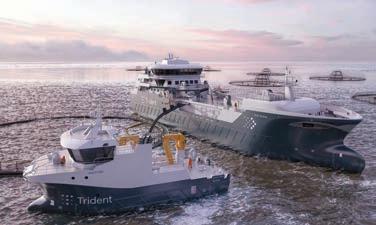
Trident is introducing new hybrid vessels IMAGE: TRIDENT
Trident Aqua Services is taking major steps toward a more sustainable future by adding a live fish carrier and a premium service vessel, both powered by battery hybrid technology.
“The new vessels combine advanced technology with innovative design, meeting the highest requirements for environment, biosecurity, and fish welfare in the aquaculture industry,” Trident said in a press release.
Trident Aqua Services now has seven vessels under construction, including these two, bringing their total fleet to 69 vessels. The investment in battery-hybrid vessels aims to
Quality & Value Quality

deliver significant emission reductions, as well as operational reliability and efficiency.
The new live fish carrier will be built at the Zamakona shipyard in Bilbao. This is the fourth vessel that Trident has contracted there. Trident is planning for this vessel to have a capacity of 4,000 m³, with a state-of-the-art fish handling system, a powerful reverse osmosis plant, and hybrid propulsion.
In addition, Trident Aqua Services is contracting a new 27-metre premium service vessel to be built at Sletta Ship Yard. The vessel will have a 1,570 kWh battery pack and is built for complex aquaculture operations. Trident plans to equip the vessel with powerful deck equipment and a remotely operated vehicle system capable of bolt drilling down to 300 meters, said Trident.
Trident Aqua Services is a global maritime aqua-service group with a focus on fish health, safety, environment, and quality standards.
Manolin updates Watershed
platform to include cage-level harvest timing and sea lice treatments
bands show the expected variability for each prediction, the company explained.
Accuracy of the models range from 85 to 97 percent.
The models are trained on farm-generated data from ERP systems, cameras, and environmental sensors. These data are enriched with Manolin’s proprietary algorithms.
“We’re focused on bringing together multiple data signals at the cage level,” said John Costantino, co-founder of Manolin. “This is the first iteration, trained on a small subset of our network data. As we add more context, we expect performance to continue improving.”
Dramm Corp. welcomes new Western technical rep, announces U.S. restructure
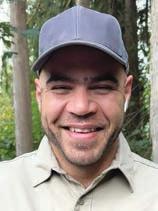
The Dramm Corporation is welcoming Brandon Parham as its new Western technical representative.

Manolin, which provides data intelligence for the aquaculture industry, has updated its Watershed platform to deliver cage-level harvest forecaster and sea lice treatment recommender tools.
“Both tools are part of Manolin’s 19 newly built models, the company’s largest update since fall 2024,” the company said in a press release. “The models span pricing, quality, growth, mortality, and clustering methods. They define normal ranges for farms, including eight clustering models for sea lice treatment planning and 11 harvest-planning models.”
The harvest planner provides cage-level, 90day projections for biomass, expected quality, and price.
The treatment recommender provides farm-specific normal ranges. This helps farmers to flag deviations and helps guide the choice of sea lice treatment, said Manolin.
Each forecast includes upper, lower, and average bands up to 90 days for all active cages within an organization. The 90-day forecast
In his new role, Parham will oversee distributor relationships and support commercial sales throughout the Western region, Dramm Corp. said in a statement.
“Brandon brings valuable experience from both the grower and supplier sides of the industry, having managed indoor growing operations and represented leading water treatment companies and greenhouse distributors,” said the company.
Parham will work closely with customers across Alaska, Arizona, California, Hawaii, Idaho, Montana, Nevada, Oregon, and Washington. He will focus on solutions that include hand watering tools, complete irrigation systems, chemical application, horizontal airflow systems, humidity management tools, and integrated water system design.
In addition, Dramm Corp. has restructured its U.S. sales territories to strengthen service and support.
With the recent promotion of Russell Blackwell to director of retail sales, his previous Southeastern grower sales responsibilities have been reassigned, dividing the country into three focused regions to better serve growers nationwide.
Founded in 1941 with the invention of the 400AL Water Breaker Nozzle, Dramm Corp. provides innovative products and complete irrigation and water management solutions for growers.
John Costantino, CTO of Manolin IMAGE: MANOLIN
Brandon Parham, Dramm Corp.’s new Western technical representative
PHOTO: DRAMM CORP.
Aquatec
unveils nextgeneration AI tools
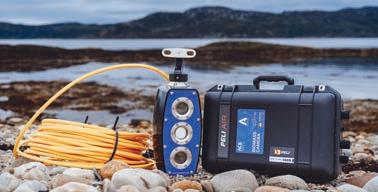
Ace Aquatec has successfully brought five species-specific modules and new health and harvest monitoring tools for its groundbreaking A-BIOMASS artificial intelligence (AI)-powered underwater camera to market since launch.
These specially trained modules have been designed for use with Atlantic salmon, trout, yellowtail, chinook salmon, and char, the company said in a statement.
“The new modules have already yielded impressive results for clients,” said Ace Aquatec.
The trout module, tested in Scotland, achieved 98 percent accuracy against harvest results. The yellowtail module, deployed in Australia under low-light conditions, achieved 98 percent accuracy within a few days of deployment. The model for chinook salmon, released last year in New Zealand, consistently achieved 99 percent accuracy.
“The developments in Ace Aquatec’s AI offering for fish farmers demonstrates the breadth of opportunity across the globe to harness technology that not only improves efficiency across operations but brings welfare of farmed fish to the highest standards,” said Nathan Pyne-Carter, CEO of Ace Aquatec.
Ace Aquatec’s new health module is based on LAKSVEL’s welfare indicators, a standardized, operational welfare monitoring protocol for Atlantic salmon held in sea cages. The AI camera identifies and records welfare indicators, providing a range of information on fish conditions and externally observable health status such as wounds and maturation.
This helps enable farmers to detect and treat disease at an early stage, meaning fewer instances of disease and overall improvements in fish health, the company concluded.
DNV launches AI-powered compliance tools
Independent assurance and risk management provider, DNV, introduced a new Smarter Compliance tool powered by artificial intelligence (AI). The new technology aims to improve automation and benchmarking in the aquaculture sector worldwide. It ensures that
fish farmers have full control and visibility of their compliance status at any time, said DNV.
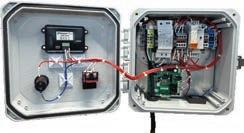
The automatic compliance solution will help farmers reduce manual documentation and enable continuous control of fish farm integrity, related to preventing fish escape.
Instead of relying on manual monitoring, the technology enables automated and continuous compliance checks, directly from the fish farm to a fully automated overview for operators, the company said.

This helps streamline documentation, enhances control, and simplifies data sharing with both internal teams and external stakeholders, including regulators.
The solution aims to seamlessly integrate with current production and compliance systems. It maps the variables, from maintenance and operations to laws and regulations, that need to be met, said DNV.
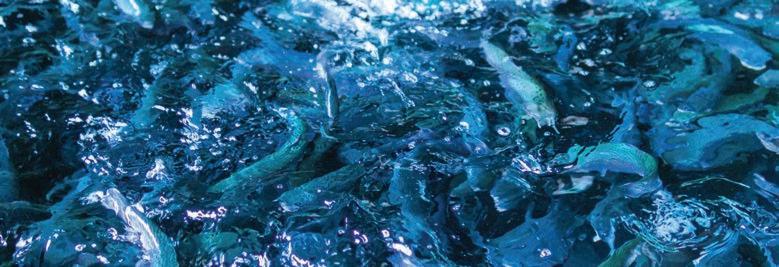


A-BIOMASS underwater camera for Atlantic salmon
PHOTO: ACE AQUATEC

Career Fieldnotes
BY LEAH WILLIAMS STOKER
is a recruiter and career strategist focused on aquaculture, natural resources, and sustainability. She is the founder of FishPros Network and a regular columnist for Aquaculture North America
The importance of succession planning
As the U.S. aquaculture industr y navigates rapid innovation, market demands, and workforce changes, there’s a quieter but critical shift happening beneath the surface: leadership turnover. Many of the industry’s most trusted executives are approaching retirement or repositioning their careers, and the bench behind them isn’t always ready. For a sector responsible for feeding millions, leadership succession isn’t just a future concern, it’s a now priority.
Succession planning is no longer just about preparing the next CEO. It’s about building resilient companies with talent pipelines deep enough to weather transitions, adapt to emerging challenges, and carry the industry forward with integrity, innovation, and grit.
The leadership gap is real
From seafood processors and hatchery operators to aquaculture tech startups and feed producers, companies across the value chain are beginning to ask: Who’s next?
In many cases, the answer is murky. Unlike larger corporate sectors that have formalized succession protocols, many aquaculture and seafood businesses, especially family-run or founder-led companies, operate with lean management layers and tight-knit executive teams. When a senior leader exits, their institutional knowledge, relationships, and strategic vision often go with them. If there’s no successor identified and no process to develop one, companies risk costly delays, internal disruption, and even loss of contracts or investor confidence.
Start with internal talent pipelines
Succession planning doesn’t begin with a resignation, it begins with recognition. Companies must regularly assess and invest in their internal talent bench. That means identifying high-potential individuals at every level, offering them stretch assignments, mentorship, and visibility to senior leadership.
A simple but effective exercise is to ask: “If [Executive Name] left today, who could step in, and what would they need to be ready in six months?” The answer reveals more than just a gap; it reveals a growth opportunity. Companies that prioritize internal development often enjoy stronger retention,
better morale, and smoother leadership transitions. For example, cross-training hatchery technicians to understand sales forecasts, or teaching sales managers the financial implications of feed cost changes, helps future leaders see the big picture before they step into the spotlight.
Attract external leaders with crossover strengths
Of course, not every successor will (or should) come from inside. External candidates bring fresh perspective, outside experience, and often critical skills that are in short supply, especially in areas like automation, marketing, analytics, sustainability strategy, or artificial intelligence (AI) implementation.
Forward-thinking companies are beginning to recognize the value of crossover professionals from adjacent sectors such as:
• Environmental science and marine policy
• Food production and cold chain logistics
• Retail and consumer packaged goods
• AgTech and sustainability startups
Bringing in someone from outside the sector doesn’t mean sacrificing industry knowledge; it means adding new tools to the leadership toolkit. When paired with internal experts, these hires can bridge gaps in vision, capability, and scale.
Use recruitment, mentorship, and branding
Succession is not a talent problem, it’s a system problem.
The most prepared companies use a layered approach that combines recruitment with ongoing relationship-building with potential candidates (not just when roles are open); mentorship by pairing emerging leaders with industry veterans, either internally or through professional networks; professional branding, helping team members build visibility, thought leadership, and confidence as future leaders.
One growing trend is the use of confidential talent pipelines, external “benches” of highly qualified, industry-aligned professionals who are quietly vetted and available when key openings arise. This allows companies
to move quickly, discreetly, and strategically when a transition is needed.
The role of AI and digital networks
As hiring grows more complex, AI tools are emerging as valuable allies in identifying talent, predicting success, and mapping internal capability.
For instance, AI can analyze current leadership strengths versus market trends; suggest skill gaps and training priorities; recommend aligned candidates based on cultural, technical, and operational fit; and assist with onboarding and leadership coaching support. When paired with human judgment and deep industry knowledge, AI becomes a powerful addition to succession planning, not a replacement for it.
Likewise, digital professional networks are becoming more important than ever. Leaders today are increasingly judged not just by their résumés, but by their reputation, visibility, and contributions to their industry. Platforms like LinkedIn and sector-specific communities allow companies to identify emerging voices and rising talent in real time.
A legacy mindset matters
Finally, succession is not about filling a seat, it’s about continuing a legacy. The leaders most successful at preparing their organizations for what’s next do so with humility, foresight, and a deep sense of responsibility. They recognize that mentorship, knowledge transfer, and creating space for new voices is as important as day-to-day execution.
Whether it’s a founder preparing to step back, or a CEO grooming their successor, the companies that thrive are those that view succession not as a threat, but as an opportunity to grow stronger.
To wrap up, the U.S. aquaculture industry is at an inflection point. As technologies evolve, regulations shift, and global markets expand, the need for strong, adaptable leadership is only growing. With intentional planning, open dialogue, and the right support systems in place, companies can build a leadership pipeline that is future-ready. After all, the tide doesn’t stop changing and neither should we. | ANA
Leah Williams Stoker
CONTACT US
Canada +1-519-240-8484
USA +1-662-295-5881 info@phibro-aqua.com pahc.com/

PHIBRO ANIMAL HEALTH
Advancing Aquaculture Health in North America
Phibro Animal Health Corporation (NASDAQ: PAHC) is a global leader in animal health and nutrition, serving aquaculture producers in over 80 countries with innovative solutions that enhance animal care, performance, and sustainability. With more than a century of experience and a portfolio of over 1,500 products, Phibro is trusted worldwide for its commitment to animal health and producer success.
In North America, Phibro is proud to partner with aquaculture producers by offering proven, science-based solutions and expert technical support. Earlier this year, we announced U.S. FDA approval of PAQFLOR®, a broad-spectrum antibiotic, 50% florfenicol premix, already well-established in Canada as PAQ Flor®. This innovative solution gives producers a reliable, cost-effective option to strengthen fish health and support sustainable production. Phibro also offers Terramycin®-Aqua 800 in Canada and Terramycin® 200 for Fish in the U.S., further expanding our portfolio of trusted health management tools.
Our North American Aqua team is here to provide personalized guidance, product information, and technical support:
• Mike Brown – Vice President, Mineral Nutrition & Aqua, (USA)
• Kevan McQuary – Multi-species Key Account Manager (USA)
• Michael Foti – Director, PAHC (Canada)
• Stuart Padgett - NAR Aqua Manager
With deep expertise and a shared commitment to aquaculture success, our team supports producers across species and production environments, from salmon raised at sea to warmwater and coldwater finfish operations.
Phibro continues to strengthen its capabilities, including a recent agreement to acquire Zoetis’s Medicated Feed Additives portfolio and relevant production facilities, reinforcing our commitment to delivering high-quality, specialized solutions.
North America Team - Mike Brown (Vice President Mineral Nutrition and Aqua) & Kevan McQuary (Multi-species Key Account Manager) for USA, Michael Foti (Director, PAHC Canada) and Stuart Padgett (NAR Aqua Manager).