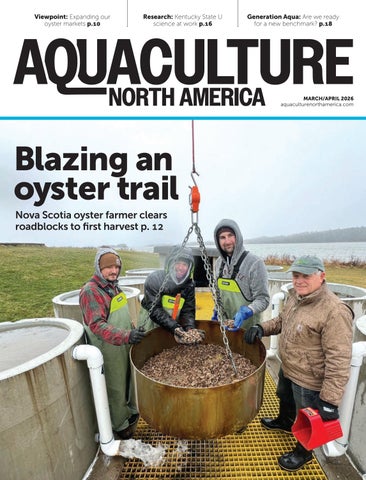
Blazing an oyster trail
Nova Scotia oyster farmer clears roadblocks to first harvest p. 12

By Robert Rheault, East Coast Shellfish Growers
By Maria Church







VOLUME 17 ISSUE 2 | MARCH/APRIL 2026
Reader Service
Print and digital subscription inquiries or changes, please contact customer service
Angelita Potal
Tel: (416) 510-5113
Fax: (416) 510-6875
Email: apotal@annexbusinessmedia.com
Mail: 111 Gordon Baker Rd., Suite 400, Toronto, ON M2H 3R1
Editor Jean Ko Din jkodin@annexbusinessmedia.com
Contributors Imani Black, Ben Normand, Robert Rheault, Maria Church, Matt Jones
Associate Publisher Jeremy Thain jthain@annexbusinessmedia.com +1-250-474-3982
Brand Sales Manager Patrick Villanueva pvillanueva@annexbusinessmedia.com 416-606-6964
Account Coordinator Barb Vowles bvowles@annexbusinessmedia.com
Media Designer Lisa Zambri lzambri@annexbusinessmedia.com
Audience Development Manager Urszula Grzyb ugrzyb@annexbusinessmedia.com 416-510-5180
Group Publisher Anne Beswick abeswick@annexbusinessmedia.com 416-410-5248
CEO Scott Jamieson sjamieson@annexbusinessmedia.com
PUBLISHED BY ANNEX BUSINESS MEDIA 105 Donly Drive South, Simcoe, ON N3Y 4N5
Aquaculture North America is published six times a year by Annex Business Media. The authority for statements and claims made in Aquaculture North America is the responsibility of the contributors. Reference to named products or technologies does not imply endorsement by the publisher.
Subscription rates (five issues)
Canada: $39.25 (per year+tax) | Canada: $67.36 (2 years+tax)
U.S: $50.92 (CDN per year) | Foreign: $65.77 (CDN per year)
To subscribe visit our website at aquaculturenorthamerica.com
Printed in Canada ISSN 1922-4117
Publications Mail Agreement #PM40065710
RETURN UNDELIVERABLE CANADIAN ADDRESSES TO 111 Gordon Baker Rd., Suite 400, Toronto, ON M2H 3R1
Annex Privacy Officer
Privacy@annexbusinessmedia.com Tel: 800-668-2374
The contents of Aquaculture North America are copyright ©2026 by Annex Business Media and may not be reproduced in whole or part without written consent. Annex Business Media disclaims any warranty as to the accuracy, completeness or currency of the contents of this publication and disclaims all liability in respect of the results of any action taken or not taken in reliance upon information in this publication.
Next Ad Deadline
The advertising deadline for the January/February issue is Nov 12 Don’t miss the opportunity to be part of this publication. For more information, or to reserve space in the next issue, call our advertising department at +1.250.474.3982 jthain@annexbusinessmedia.com
Next Editorial Deadline
The editorial deadline for the September/October issue is Nov 7. Contact Jean Ko Din at jkodin@annexbusinessmedia. com for details. Material should be submitted electronically with prior arrangement with the editor.


From the Editor
BY JEAN KO DIN
Why we gather
While we were in production for this magazine issue, I was attending the annual Aquaculture America conference in Las Vegas, Nev. Like in every year prior to this one, I'm coming back home from this event with a head full or ideas and a heart full of renewed passion for aquaculture.
Part of attending these conferences every year is to meet with friends and mentors that I've come to know over the years. Of course, I work hard all year to cultivate these relationships from a distance, either through email or video call. And yet, sitting down for 30 minutes allowed us to check-in with each other's activities, come up with new ways that we can work together, and most importantly, connect on a human level.
There's something that happens when you are surrounded by like-minded people that helps us amplify each other's passions for the industry. I can't quantify how important these conferences are in igniting that need for collaboration and cooperation, but it was certainly a running theme that many mentioned to me throughout that week.
including finfish, mollusks, crustaceans, and aquatic plants. And so, lessons learned from a salmon net pen operation rarely overlap with those who might be farming geoducks in the same provincial waters.
There's something that happens when you are surrounded by likeminded people that helps us amplify each other's passions for the industry.
And so, I think my biggest takeaway from Aquaculture America 2026 is that aquaculture's diversity is its biggest strength, but it can also be its biggest weakness if we let it.
During one of the networking sessions, someone explained, for example, that in the poultry industry, there is only one major species of chicken, Gallus gallus domesticus (the domestic chicken), that is farmed for food production in the world. This can allow for a more universal knowledge transfer to solve common problems about nutrition efficiency, animal welfare, sustainability, and smart farming technology.
Comparitively, global aquaculture includes about 500 to 600 aquatic species,
I admit this may be an exaggerated example to support the point that I want to make about the challenge this industry faces in forming a united effort to solve problems together. However, I think it is also illustrative of how difficult it can be. Fortunately, one simple solution to address this could be to just gather in the same room and talk. I think this industy is lucky to have so many conferences and events that give everyone an opportunity to meet in person. It could be Aquaculture America, or the Canadian Freshwater Aquaculture Conference, or it could even be our very own RAStech Conference & Trade Fair. There are others who are not as lucky to have a travel budget, and so, they take advantage of online opportunities like our Aquaculture Nexus virtual event or webinars like NextWave.
At the surface, these gatherings can feel superficial because you are not always returning to your farm with a tangible thing in your hand that will magically fix your problems. But then again, not all problems that appear in your farm stop where your driveway ends.
I heard once that it is easy to understand that "it takes a village," but then, no one wants to be a villager and do their part to contribute. We're missing the part where we align ourselves with a collective to solve the big problems.
I met many of you who read these pages during my week in Las Vegas and I hope you do take me up on my invitation to stay engaged. I hope you share your thoughts at jkodin@annexbusinessmedia.com. | ANA
Aquaculture North America’s Editorial Advisory Board
Marcy Cockrell | Kathleen Hartman | Jeff Hetrick | Ian Roberts
Global seafood markets ‘cautiously optimistic’ in 2026: report
A new aquaculture outlook report says that steady market demand combined with shifting trade flows and geopolitical uncertainty have the global seafood markets entering 2026 on “cautiously optimistic footing.”
The report, "Global aquaculture update 1H 2026," from the Netherlands-based company RaboResearch Food & Agribusiness looks at global aquaculture demand and supply drivers.
“While inflation has eased in major economies, supporting demand, the industry still faces headwinds from macroeconomic uncertainty, evolving tariff regimes, and climate-related pressures,” Novel Sharma, seafood analyst at RaboResearch, said in a news release.
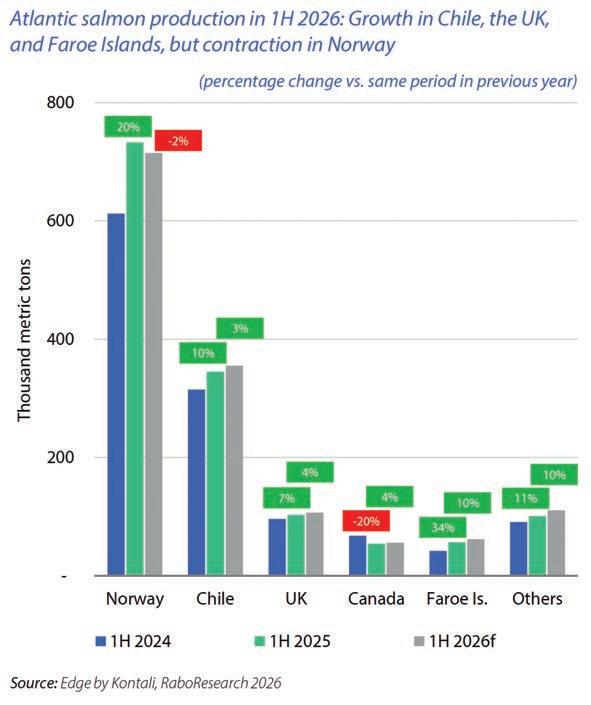
The report notes that salmon supply growth is set to stall in early 2026 as large producers in Norway and Chile have constrained biomass following large harvest numbers in late 2025.
Tighter supply is pushing prices higher, which is resulting in a “clear rebound underway” in Europe and the U.S., Sharma.
The report’s shrimp markets analysis highlights that tariff exposure and market access are defining global competition.
Ecuador is benefiting from tariff advantages and growing capacity, while India is under U.S. tariff
pressure, Vietnam is holding its ground, and Indonesia remains challenged by its reliance on the U.S. and growing regional competition.
Global fish meal markets have tight supply conditions in early 2026, which were shaped by Peru’s poor 2025 anchovy season due to unusually warm surface waters, the news release states.
“If ocean temperatures return to something closer to normal,
that should give the biomass some room to recover, but there are still risks if surface temperatures fluctuate,” Sharma said.
“Even if supply does improve, we expect fish meal prices to stay elevated.”
New study maps U.S. leadership in ‘restorative’ aquaculture
A new study from The Nature Conservancy analyzed scenarios
to expand restorative aquaculture in the United States.
The study, “Restorative seafood production from aquaculture needs optimism and intervention,” published in ICES Journal of Marine Science, was a collaboration with industry stakeholders and academic institutions and included an online survey and regional workshops.
Restorative aquaculture was defined in the study as “commercial or subsistence aquaculture that provides direct ecological benefits to the surrounding environment.”
The study mapped two potential futures for restorative aquaculture by 2035, one with “business as usual” and another with substantial growth.
The analysis identified barriers to the substantial growth pathway, including regulatory challenges, limited financial support, and negative public perception.
“To support continued exploration of this approach, we pinpointed promising interventions across investment, research, regulation, market development, training, and Indigenous knowledge and leadership,” The Nature Conservancy said in its summary of the study.
"If implemented, these changes could substantially boost restorative aquaculture acreage, production, and benefits, while supporting thousands of sustainable jobs in coastal communities."

Optimize the return on your capital investment with a single screw extrusion system. Buy one system and cost-effectively deliver product to multiple market opportunities.
• One system capable of economy up to super premium fresh meat petfood
• Aquatic feeds that range from floating to sinking shrimp feed
• Capitalize on high margin petfood treat opportunities
• Significantly lower operating cost per ton versus competitive systems
An Extru-Tech Single Screw Extrusion System provides all the flexibility and production efficiencies at around half the cost of competitive extrusion systems with high operating costs.

Canadian black cod producer wins agri-tech export award
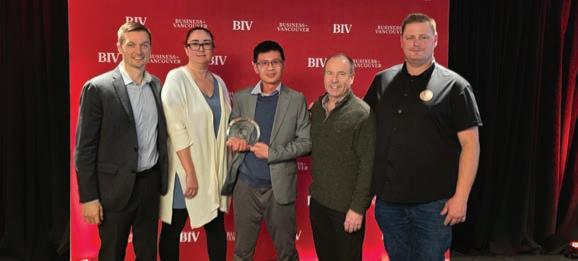
British Columbia’s Golden Eagle Sablefish, the world’s only producer of black cod from egg to plate, has earned an agri-tech export award.
Located on Salt Spring Island, B.C., Golden Eagle Sablefish operates a state-of-the-art hatchery and marine grow-out farms in Kyuquot Sound.
The aquaculture company received a 2025 B.C. Export Award in
the Agri-Tech category from media company Business in Vancouver.
“This award recognizes not just innovation, but persistence,” Jade Berg, director of marketing and innovation for Golden Eagle Sablefish, said.
“We’ve spent years proving that high-quality, fully traceable, and environmentally responsible aquaculture, powered by leading aqua-technology, can succeed on a global stage, and that British Columbia can lead the world in premium seafood.”
Golden Eagle Sablefish has a long-standing partnership with Kyuquot-Checleseht First Nation, and holds designations from Monterey Bay Aquarium Seafood Watch: Green – Best Choice rating, and Ocean Wise: Recommended Seafood Partner.
The company exports fresh black cod to international markets year-round.
First U.S. East Coast shellfish farm earns BAP certification
Cherrystone Aqua-Farms in Cape Charles, Va., has become the first U.S. East Coast shellfish farm and the first hard clam farm in the U.S. to earn the Best Aquaculture Practices (BAP) certification.
The fifth-generation family-led company is the U.S.’s largest producer of hard-shelled clams and a major producer of Eastern oysters.
The company said in a news
release the BAP certification process was a multi-day, onsite evaluation of 9,000 acres of farm sites on Virginia’s Eastern Shore.
“This certification reflects how we’ve chosen to operate, day in and day out,” Cherrystone AquaFarms COO Tim Rapine said in the release. “We believe responsible farming, healthy waterways, and exceptional shellfish all go hand in hand; BAP confirms that approach.”
Global Seafood Alliance’s BAP program certifies hatcheries, farms, feed and plants around the world. Steve Hart with the Global Seafood Alliance congratulated Cherrystone on their certification.
“Achieving BAP certification speaks to their commitment to

HOSTED BY Ian Roberts
Presented by Sponsored by
responsible practices and continuous improvement. Cherrystone’s certification sets a meaningful milestone for responsible shellfish farming in the United States,” Hart said.
Chad Ballard, president of Cherrystone Aqua-Farms, said in the release the certification reflects the values the company was built on.
“None of this is possible without the dedicated people behind the work; a team that shows up daily with a deep respect and understanding for the waterways we farm and the responsibility we bear for having that privilege. That commitment is what makes milestones like this possible,” Ballard said.
Cherrystone Aqua-Farms is a subsidiary of Ballard Fish & Oyster Co., also headquartered in Cape Charles, Va.
Colorado aquaponics farm opens to the community
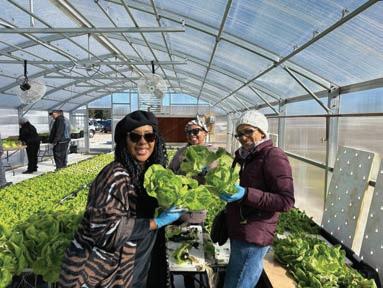
A community development corporation in southeast Colorado Springs, Co., cut the ribbon on an aquaponics operation they say will improve access to healthy, affordable food.
The Solid Rock Community Development Corporation held a grand opening for its Aquapod Farm on Jan. 17, giving away 700 heads of lettuce to attendees.
The Aquapod Farm is a custom-built closedloop system that supports community-scale food production and educational activities.
The aquaponics facility uses an OASYS system, which is a deep water culture system that holds around 7,000 gallons of water with 360 fish divided between three, 275-gallon tanks.
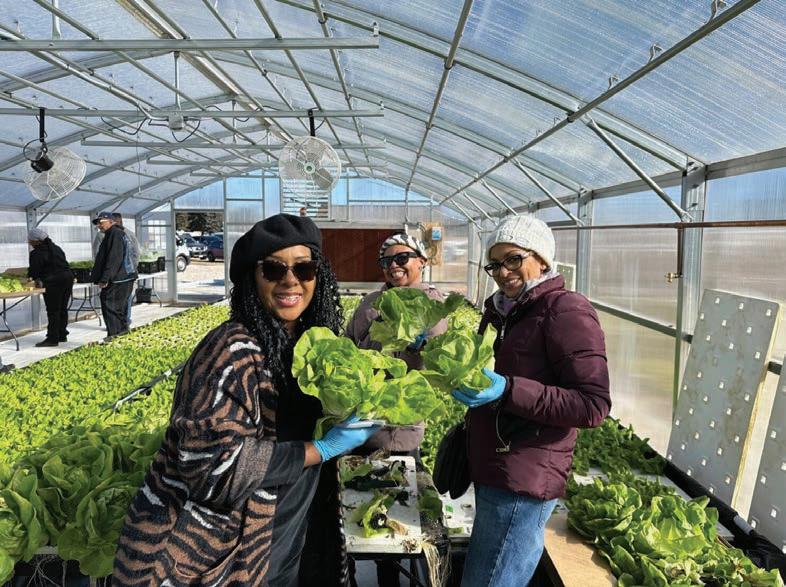
Six 4-by-31 ft. grow beds with floating rafts allow for about 805 square feet of space to plant, which is expected to produce around 8,000 pounds of harvested lettuce per year.
Around 540 pounds of fish are expected to be harvested each year.
According to the OASYS website, the aquaponics approach reduces water usage up to 90 per cent compared to traditional farming.
Review board approves Nova Scotia salmon farm expansion
Nova Scotia’s aquaculture review board has greenlit Kelly Cove Salmon to expand its offshore salmon farm near Liverpool Bay, N.S.
The Nova Scotia Aquaculture Review Board (ARB) released its decision Feb. 17, approving the company’s lease boundary amendment and expansion, which will allow the Coffin Island farm to add six cages to its current 14.
The ARB’s decision concluded they were “satisfied there would be no negative, or any, impact of this amendment” on the province’s eight statutory mandates, which include sustainability measures, public use of the waters, and fishery activities, among others.
Kelly Cove’s parent company, New Brunswick-headquartered Cooke Aquaculture, welcomed the ARB’s approval.
“The week-long ARB public hearing in October was rigorous and brought together input from multiple stakeholders and intervenors,” Joel Richardson, vice-president of public relations for Cooke Aquaculture Inc., said in a news release. “We appreciate that the board allowed the time necessary for everyone to make presentations, ask questions and gain an understanding of how our aquaculture farming works.”
Chad Schrader, site manager at the Coffin Island Salmon Farm, said in the release he is proud of the work they do at the Coffin Island site.
“Being able to live and work in the community where I was born and raised means a great deal to me and my family,” Schrader said. “I’m glad the ARB relied on sound science and the real facts about modern aquaculture when making its decision.”
As part of the expansion, Kelly Cove plans to install new, state-of-the-art cages, containment nets, and underwater smart-farming technology.
The technology will include an integrated suite of advanced digital tools, sensors, robotics and AI-driven systems to monitor fish farming in real-time, the company said.
Jeff Bishop, executive director of the Aquaculture Association of Nova Scotia, said they
PHOTO: SOLID ROCK COMMUNITY DEVELOPMENT CORPORATION AQUAPOD FARM, FACEBOOK
were pleased to see the salmon farm expansion approval and look forward to future ARB decisions that can help guide industry investment.
“As sea farmers, we are focused on providing sustainable meals grown right here at home. Supporting and encouraging growth in our resource sectors strengthens rural and urban parts of our province,” Bishop said.
NFL taps Keith Sullivan for fisheries, aquaculture deputy minister
The Newfoundland and Labrador government has named Keith Sullivan the new deputy minister of fisheries and aquaculture.
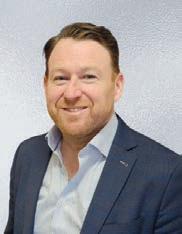
Sullivan was most recently the executive director of the Newfoundland and Labrador Aquaculture Industry Association (NAIA), and has held roles with the Fish, Food and Allied Workers (FFAW) union and Canadian Independent Fish Harvesters Federation, among others.
Newfoundland and Labrador Premier Tony Wakeham said in a media release Sullivan’s appointment reflects the government’s “strong commitment to backing both the fishing and aquaculture sectors.
“From his days growing up on the Southern Shore, to representing fish harvesters and plant workers with the FFAW, to his most recent role as executive director of [NAIA], Keith Sullivan has dedicated his career to Newfoundland and Labrador’s fishery. He understands the industry, cares deeply about the people who depend on it, and champions the communities it supports,” Wakeham said.
Sullivan holds a Bachelor of Science in biology from St. Francis Xavier University in Nova Scotia and a post-graduate diploma in sustainable aquaculture from the Fisheries and Marine Institute of Memorial University in Newfoundland.
Sullivan was a notable critic of the memorandum of understanding (MOU) signed in 2023 by the province, federal government and First Nations governments involving a national marine conservation area in Newfoundland’s south coast.
The province said on Feb. 3 it terminated the MOU, citing concerns about the risk to aquaculture, fishing and mining operations.












Keith Sullivan PHOTO: NAIA

Viewpoint
BY ROBERT RHEAULT, EAST COAST SHELLFISH GROWERS ASSOCIATION
Robert Rheault is the executive director of the East Coast Shellfish Growers Association. He is dedicated to defining the value of ecosystem services associated with shellfish so the shellfish grower community can earn the social license to farm the commons. (bob@ecsga.org)
Evolving our oyster markets
Iworked with a small team on a NOAA-funded project to predict the future markets for oysters in the United States. Bobbi Hudson (executive director of the Pacific Shellfish Institute) and Matt Parker (an extension agent at the University of Maryland specializing in aquaculture business) collaborated on assembling a report. It proved to be quite challenging to pull together all of the state production data, and it was fascinating to interview dozens of experts from around the country. The findings were interesting and, honestly, quite concerning. I knew it would be tough to get harvest data from the states.
Some states report in bushels, some by count, some by the sack, some by pounds, and some by gallons of meat. Conversion factors vary widely, so a bushel can range from 200 to 350 oysters, with a similar range for gallons of meat. Since we were trying to model markets, we also tried to capture wild-harvest landings. It took most of last year to gather the data, and in some cases the numbers are more than a little questionable. It would be valuable to have uniform methods of collecting shellfish landings data. Significant regional differences exist in the industry’s nature, production methods, trends, and even seasonal consumption
quality oysters, in less time, for less

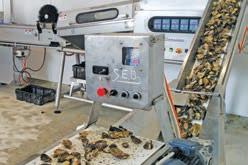
SED Vision Grader
The number 1 labour saving equipment in America.
Cleans, measures, sorts, counts and bags oysters fast and automatically.
ACCURATE - high production with minimal labour – average processing speed of 14,000 oysters per hour using only one operator.

patterns. Regulations and leasing laws have a huge impact on production in certain states. The development of MSX-resistant oysters ushered in a massive increase in Virginia’s production starting in 2010 that dwarfed much of the East Coast. On the East Coast, we found strong growth in production from 2000 to 2015 with regular increases in price and production in the major producing states. But after 2015, farmed oyster production leveled off, prices stopped climbing, and inflation-adjusted prices to the growers actually dipped.
There was a sharp 30 percent drop in sales nationwide in 2020 due to the pandemic, but at least on the East Coast, production bounced back. West Coast production of Pacific oysters was remarkably constant from 2005 up until 2020, but appears to have tailed off since, rather than recovering.
Gulf Coast farmed oyster production is still largely dependent on wild spat and therefore varies widely from year to year. Disruptions such as Hurricane Katrina in 2005, the Deepwater Horizon oil spill in 2010, and the Mississippi River diversion efforts resulted in large swings
in both wild and farmed production in Louisiana, the largest producing state in the nation.
One of the big revelations of the project was significant increases in imported oysters from Canada and Mexico in the years following the pandemic. After 2020, imports of live, fresh oysters roughly tripled in value to over US$75 million, with Canada sending up to US$60 million worth (mostly from Atlantic Canada farms) and Mexico sending $15 million worth. An additional US$15 million worth of frozen oyster meats (and US$355,000 to US$720,000 of fresh oysters) is coming in from South Korea, which has indicated it intends to double or triple exports to the U.S. going forward.
However, with the volatile market situation, it’s unclear what our global trading partners will be shipping into the U.S. Foreign producers also enjoy structural advantages. Governmental support, subsidies, and reduced regulatory costs allow for the development of very large farms that let foreign producers take advantage of significant economies of scale.
In an effort to level the playing
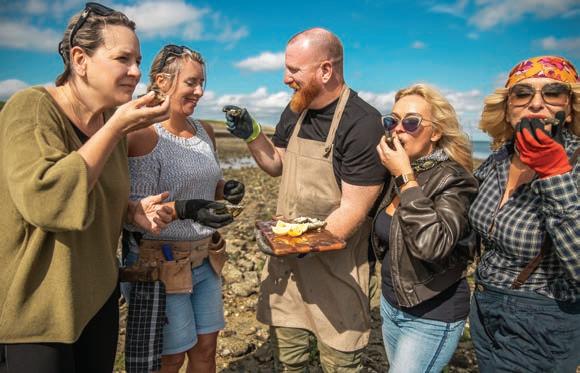
Marketing to new consumers is a challenge the industry must face head-on, says ECSGA executive director Bob Rheault.
field, the ECSGA board of directors submitted a letter to trade officials asking for import tariffs on oysters, in spite of the fact that many of us are strong proponents of free trade and open markets.
Our market project also documented other important trends impacting growers in the U.S. While our ability to raise prices to buyers has been stifled for the past seven to 10 years, input costs have risen dramatically. Labor costs shot up sharply after the pandemic, with wages slightly exceeding the inflationary spike that ensued. The National Restaurant Association reports that labor now accounts for up to 40 percent of operating expenses, up from 30 percent pre-pandemic. Growers have found it harder to find affordable help as well. Cage wire, rope, fuel, and shipping costs have all risen sharply.
The trend of rising input costs, flat demand trends, and farmgate prices is clearly putting the squeeze on growers’ profit margins. Given that the majority of oyster farmers are small-scale operators with fewer than five employees, it is hard to take advantage of proven economies of scale.
Matt Parker’s PhD thesis examined the impact of the scale of production on the break-even cost for the farmer. He showed that growers who produce over 2.5 million oysters a year can make a profit selling an oyster for half the price of a grower who sells only 500,000 a year. This exerts tremendous pressure on smaller farms to consolidate or grow to scale.
Meanwhile, as restaurants raised prices to keep up with food and labor costs, more than half of fine-dining establishments reported declines in patronage, as many budget-conscious diners began favoring takeout and “fast-casual” options. This trend certainly does not bode well for oyster consumption.
While growers and wholesale dealers report that they have been unable to raise prices for almost a decade, oyster prices in restaurants have increased significantly, keeping pace with inflation. Sticker shock at the restaurant is probably making diners think twice about ordering a dozen oysters, and that may stifle demand until consumers adjust to the new normal of inflated restaurant dining prices. I suggest that the industry needs to invest in marketing. If we are going to expand production without driving down prices, we will need to grow demand. Growers have great stories to tell. Our interviews with oyster professionals revealed a broad consensus that oysters have traits that should attract a wide range of customers. High scores for sustainability and
nutritional value, and a reputation for being a great food for celebrating should help us expand markets.
Getting that message out to new consumers, especially young diners and those who may never have experienced a fresh, raw oyster’s magnificent flavor, is a challenge we must face head-on. The days of being able to sell all we can grow without having to spend money on marketing are probably behind us.
How we organize thousands of small growers and dealers into such an effort is a question I will try to answer in the years ahead. I hope you have ideas and solutions to share. | ANA
This column was originally published in the East Coast Shellfish Growers Association newsletter. https://ecsga.org/newsletter-archives/
Oyster Trays stacked with quality
For over 35 years oyster growers worldwide have trusted our S1000 Oyster Tray and S4000 nursery tray, to produce the highest quality half-shell oyster for today’s demanding consumers.
Blazing an oyster trail
Nova Scotia oyster farmer clears roadblocks to first harvest
By Maria Church
Afamily-run oyster farm in rural Nova Scotia, Canada, is proving that blazing a trail in shellfish farming is challenging, but persevere and the rewards are sweet.
Town Point Oysters operates a landbased nursery and marine grow-out sites on 88 leased acres in the Antigonish Harbour and 12 acres in Merigomish Harbour in northern Nova Scotia. The farm is pioneering a novel cylindrical growth system and is mere months away from its first harvest this spring.
Led by husband and wife team Ernie and Jane Porter, Town Point employs sons Ted Porter and John Porter, as well as Ted’s wife Rachel Odgers and her brother, Alex Odgers.
After what can easily be described as gale-force headwinds while establishing the oyster farm in the early 2020s, the family has thrown its doors wide open, regularly running farm tours and sharing their daily work on social media.
In a couple short years of operations the farm has hosted more than 200 tours and amassed a social media following that regularly sees their photos and videos viewed by hundreds of thousands of people.
“People have come here from as far away as Miami for a farm tour. From North Carolina, from New Jersey. From B.C. Pennsylvania. Lot’s of other places,” Ernie says. He describes one family with young children who told him they came specifically to Nova Scotia to tour the farm.
“When you’re getting that much
positive feedback, it’s encouraging and we like it. We see it as a win win. We get to tell our story and they get to see something that they appreciate,” Ernie says.
Moving targets
The Town Point story is remarkable. It’s a tale of the Porter family’s resilience in spite of unfortunate timing and a muddled regulatory process.
The family’s regional ties go back more than 20 years when they purchased the current land for a cottage. Summers at the cottage inspired Ted to consider wild oyster harvesting as his summer job.
“I’d see people out picking wild oysters and I thought that seemed a lot better than working construction in the summer,” Ted explains.
After some digging, he found out that harvesting licenses are hard to come by. “It was not going to work out
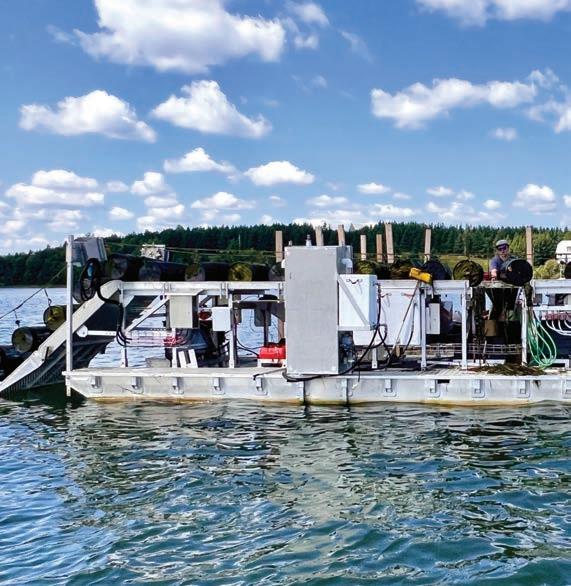
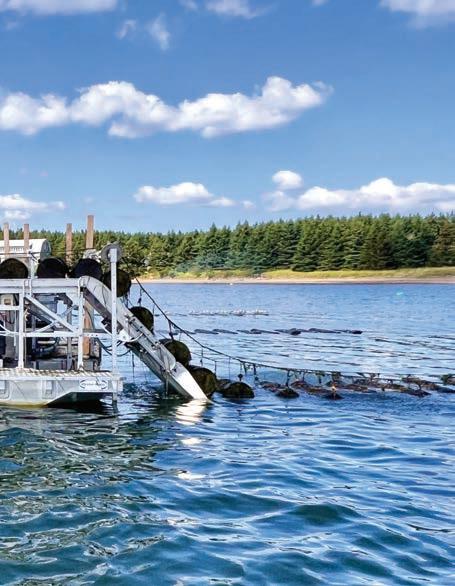
Point is pioneering a novel cylindrical oyster growth system and mechanized work platform called BOBR - Benefit of Being Round.
for a summer job, but clearly there was an opportunity with oysters in Antigonish Harbour. They grow prolifically. And that kind of set the seed,” Ted says.
In the mid 2010s, the Porter family began to more seriously look at setting up an oyster farm. Ernie volunteered to do odd jobs for a nearby oyster farmer, and he and Jane attended aquaculture conferences and trade shows and visited farms around the world.
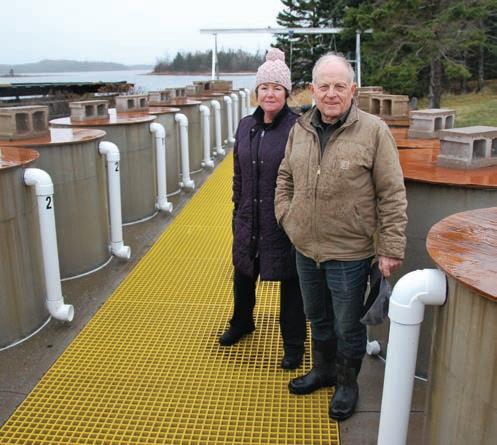
Town Point Oysters’ Ernie and Jane Porter farm in northern Nova Scotia on 88 leased acres in the Antigonish Harbour and 12 acres in Merigomish Harbour.
PHOTO: MARIA CHURCH
When the time came to begin filing farm applications in 2019, Nova Scotia had just greenlit a brand-new aquaculture application process. Town Point’s application became the guinea pig of the untested rules, which set the company back nearly five years as they underwent a turbulent and drawn-out public engagement process.
The process came to a head in 2023 when well-funded opponents set on kiboshing Town Point’s plans brought lawyers into the public hearings. Seven days of acrimonious hearings held over months were headline news in local media.
“What in [the government’s] vision was to be a concise hearing, maybe a day, was seven days of hearings. A lot of money was spent to decide a very simple and straightforward issue that is environmentally benign and the science supports,” Ernie says.
In early 2024, Town Point secured the long-awaited approval to farm in Antigonish Harbour. Hundreds of thousands of seed oysters were finally released into rich waters after a winter spent in a well-monitored, rejigged basement freezer.
Despite a chance to put the
Town
PHOTO: TOWN POINT OYSTERS
application process behind them forever, Ernie chose to go before the province’s regulators later that year to support legislation that would improve the lease application process and head off future public battles.
As John explains it, the legislation required every applicant to prove the same sound science in the court of public opinion. “It’s something factual, but it could be argued
again and again and again by everyone who has a disagreement with another new applicant with the same criteria,” John says.
The province collected feedback on the initial application process and agreed with recommended improvements. The legislation was changed to no longer require land-based aquaculture, marine plants or shellfish applications to be decided through the province’s aquaculture review board. Instead, these applications will be decided administratively by the province.
“It would be easy to be mad [at the government] for putting us in a position where we were drug through the mud for five years. But it’s pointless to harbour those feelings. They weren’t doing it deliberately,” Ernie says. “We have an excellent relationship with the fisheries department now. We do a lot of things collaboratively to both our benefits.”
A new way to farm
Even on a drizzly January day when the daily work is tinkering on boats and barges, Ted, John, Ernie and Jane were happy to tour this writer around the farm, proudly explaining
how they’re pioneering a novel technology: DockPort’s BOBR growth system.
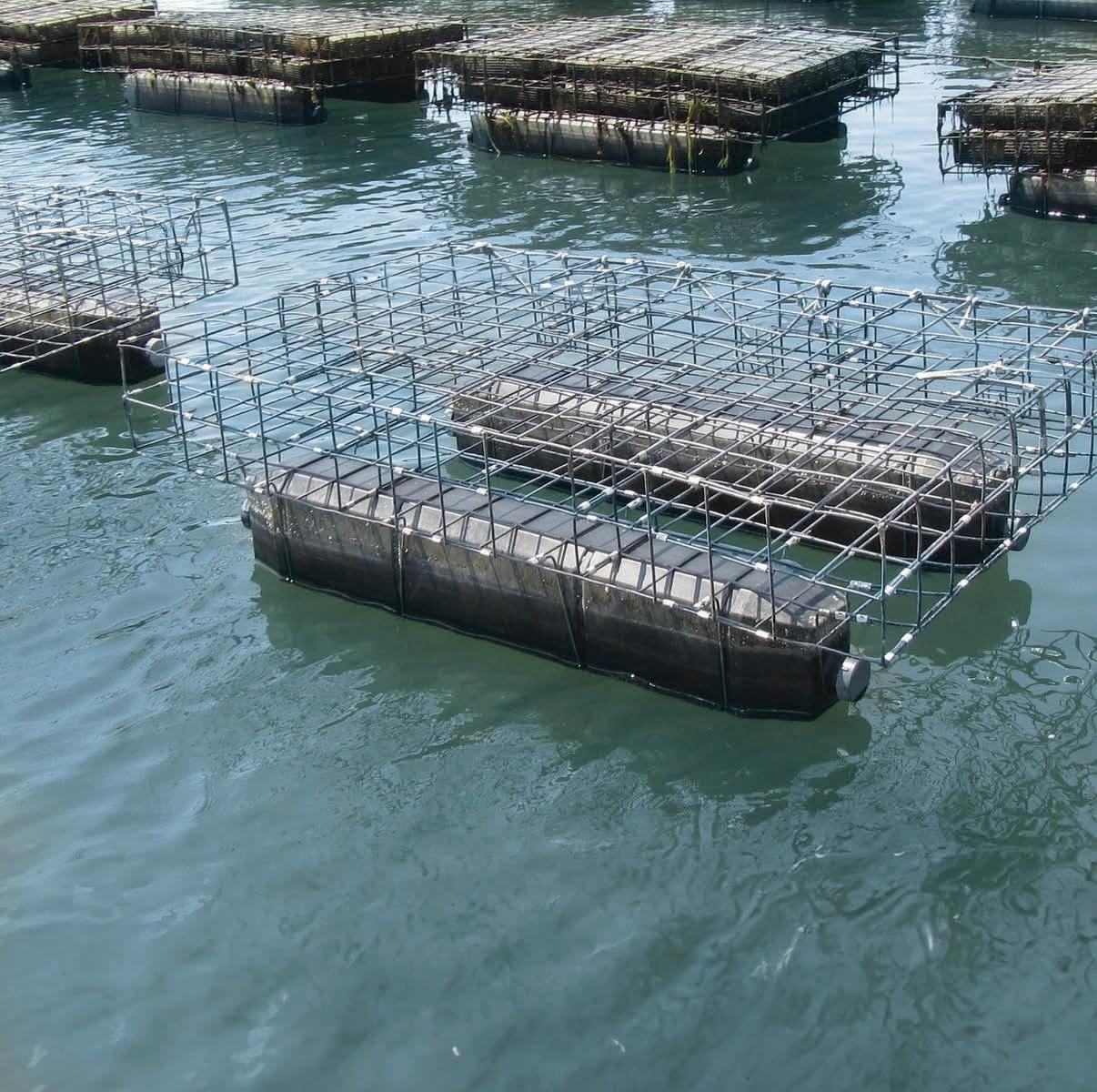
The BOBR (an acronym for Benefit of Being Round) system uses cylindrical growth units in tandem with a mechanized work platform.
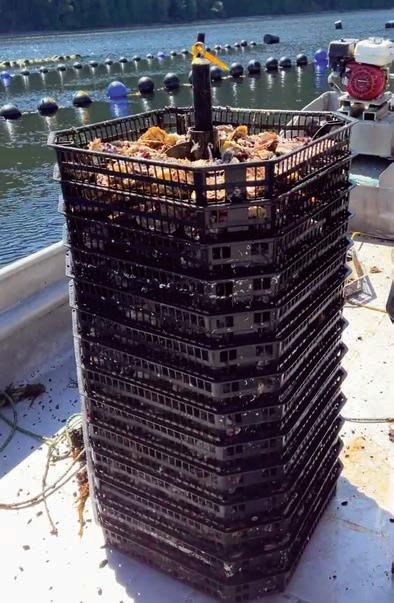
The 76-litre growth units with adjustable floats are attached on each end to parallel lines that extend up to 415 feet. The work platform barge – aptly named Oyster-Matic – uses rope haulers on the back and star wheels on the front to pull itself down the line, hoisting the growth units to allow for defouling, sorting, splitting, tumbling or harvest before they are deposited back in the water on the other end.
Mechanizing the husbandry tasks means that Town Point can efficiently farm millions of oysters with only two or three operators working on the platform. The benefits of mechanization are complimented by the efficiency of doing all the husbandry tasks out on the lease without the need for shore trips.
“It’s an assembly line,” John says. “Doing a sort on a line, split and restock … one or two people empty each growth unit, one person is running them through our sorter, and another is popping them in new cages and putting




those back on the line as the boat moves down.”
In January, the farm had 16 anchored lines, each line holding 200 units. They have the capacity to run more than 200 lines on their marine grow-out sites.
DockPort is a co-venture between Ernie – a civil engineer by trade – and vetearn oyster farmer and marine biologist Philip Docker. Both Philip’s farm Shandaph Oysters and Town Point operate as demonstration sites for the BOBR growth system.
“It’s been a whole lot of learning,” Ted says. “Not only are we brand-new novices in oyster farming, we’re also using a new technology. Sometimes certain aspects don’t work the way they are supposed to, so we’re shaking everything down, fixing bugs, learning about farming, and growing a very cool business.”
“Sometimes the answer to
‘Why isn’t this working?’ is, ‘Tell dad that DockPort needs to fix something,’” John adds with a laugh. “It’s nice to have the ear of your supplier.”
Town Point is proving that the novel technology not only improves productivity and reduces physical labour, the unique cylindrical shape of the BOBRs improves the shape of the final oysters as they naturally tumble in the ocean waves.
Reaping the rewards
With a couple seasons now under their belt and the knowledge they helped pave a new regulatory trail for future Nova Scotia shellfish farmers, the Porters are optimistic about the future of the company.
Construction is finishing up on Town Point’s packaging facility, and a plan is in place for a spring harvest. Finding a market for their oysters has been the easiest
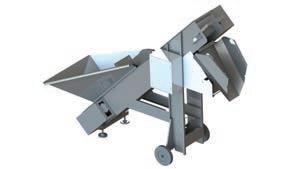
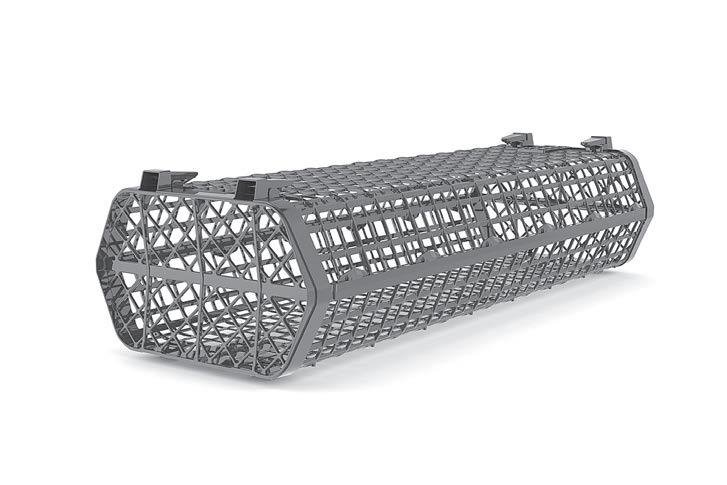
PROVEN EQUIPMENT for shellfish producers
part, they say.
“There is quite a bit of interest in our product, and it’s rolling in more and more now,” Ted says.
“All of the West and East Coast of the States, and all across Canada. Buyers are reaching out to us.”
The future will also likely see tourism added to Town Point’s revenue stream. The farm’s growing social media popularity and a steady stream of farm tour requests has made it clear there is an appetite. Like marketing a wine, John says, people want
to know the story of the oyster, where it came from, and what makes it taste that way.
“Two identical species of oysters, or even two oysters that are siblings and raised in different estuaries, even different areas of the same estuary, are going to look and taste different,” he says.
As the farm and the family settle into daily operations, Town Point is well on its way to becoming a regional example of responsible, sustainable, regenerative farming. | ANA










Mulot Bagging Machine
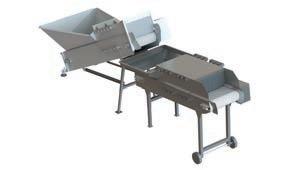
Mulot Washer
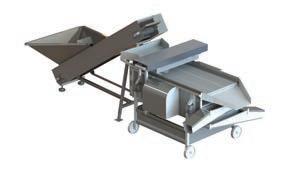
Mulot Vibratory Grader
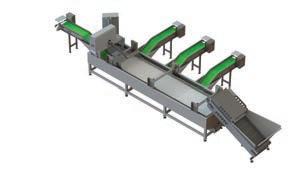
Mulot Water Bath Grader
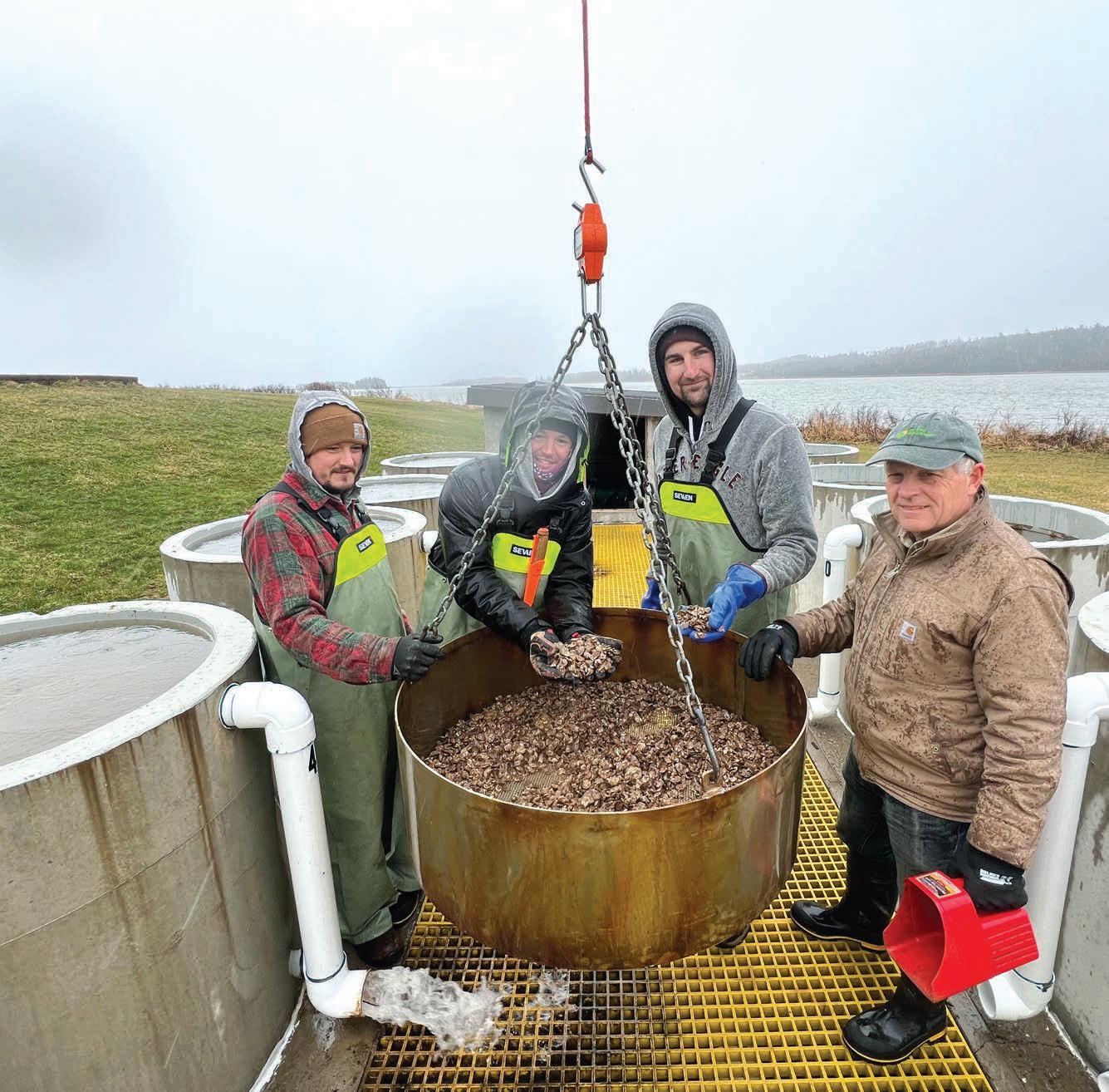
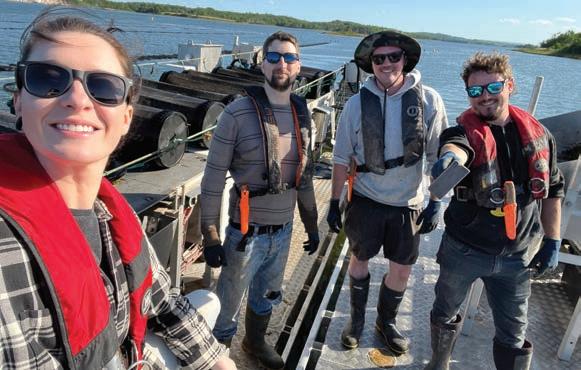
The family-run oyster farm employs Porter sons Ted and John, as well as Ted’s wife, Rachel Odgers and her brother, Alex Odgers. From left, Rachel, Alex, Ted and John.
PHOTO: TOWN POINT OYSTERS
Kentucky science at work
KSU Aquatic Research Center pushing the industry forward
By Matt Jones
Kentucky State University (KSU) Aquatic Research Center (ARC) is home to a dedicated team of academics who are focused on the newly developing frontiers of the aquaculture industry and related research.
“The program gradually evolved starting around 1981,” says Andrew Ray, chair of the KSU’s School of Aquaculture and Aquatic Science. “At that time, there was a lot of interest in catfish, primarily. It was going pretty strong in Mississippi and Alabama, which it still is. People up here in Kentucky thought it’d be a good, potentially lucrative crop for our farmers as well.”
Interest in catfish in Kentucky soon faded, however. Ray posits that the state is too far north for catfish to truly thrive. But, it did lead to an interest in other species in the state, including freshwater prawn, largemouth bass and others and aquaculture research that KSU grew alongside the industry. Ray’s own specialty has been on recirculating aquaculture systems (RAS) for marine shrimp, though in recent years, he has begun looking at
olive flounder as well.
“Who in America needs fresh seafood the most?” asks Ray rhetorically.
“On the coast, you have pretty well-established wild caught industries. As you move inland, fewer and fewer people are able to really get that fresh, high-quality seafood, so I see this as a real opportunity moving forward in the aquaculture industry to try to bring the ocean to the interior part of the country.”
Inside the labs
Located in Frankfort, Ky., KSU ARC was created in 1981 and is Kentucky’s only dedicated aquatic research complex. It covers 14 acres, including 33 research
Emmanuel Annang (left) and Ayomide Taiwo working on Ayomide’s research on growth, gonads, and reproductive indices with Broodstock Nile Tilapia (Oreochromis niloticus)
ponds, a 3000-square-foot hatchery for spawning, holding and experimental tanks. It also has a 3,500-square-foot nutrition laboratory with a wet lab. A classroom/multi-purpose building for instruction, research and library resources, with a Fish Disease Diagnostic Laboratory was completed in 2005.
Dr. Ken Semmens (third from right, kneeling) with students collecting and moving American paddlefish (Polyodon spathula)
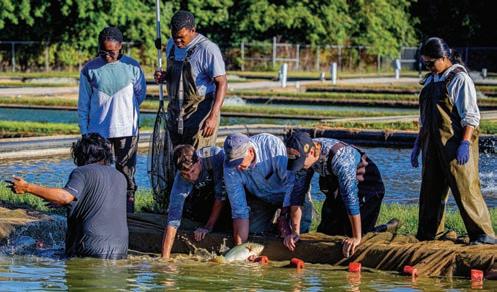
A 14,400 square-foot Aquatic Production Technologies Laboratory opened in 2012 to provide year-round support for controlled-environmental research across multiple species in RAS systems. This facility houses a water-quality lab and a genetics lab used for student research and teaching. The program originally started in a converted pole barn, which has now been converted even further into a 4,000-square-foot office/ laboratory building, which includes a genomics lab.
An interesting question that arises in the conversation with Ray is whether the KSU ARC is industry-driven or whether it is research driven. In other words, is the research focus driven by the industry’s needs, or is the hope that their independent research will help to drive and direct the industry?
Ray mentions that the KSU’s mission statement – going back to 1890 land grant agreements –is to do applied research that will get into the hands of farmers and other related industry people, such as feed manufacturers, veterinarian services, and others.
“We try to respond to the needs of industry, but as researchers, we often have new ideas that we want to test out that aren’t necessarily proven yet in the industry. So I think there’s also a valuable role for us,” he explains.
“There are those that say, ‘Well, you should just do what people in industry tell you to do.’ I understand where they’re coming from on that, but we may be aware of new technologies and new techniques that we’ve learned by experimentation that need to be evaluated to see if they will make sense in the industry. So, it’s both. It’s leading with research and responding to industry needs.”
Expanding efforts
As such, the KSU ARC has a very broad program, including a nutritionist, a fish health expert, a geneticist among others, while Ray identifies himself as a production scientist. And they can observe the industry adopting their work. Ray notes that he had conducted trials with homemade salt mixtures recently and a major hatchery contacted him to find out the formula. The nutritionist is currently looking at utilizing fruit and vegetable waste from a major airline as a feed ingredient for shrimp.
“Is airline fruit and vegetable waste going to be a major feed ingredient anytime soon in the aquaculture industry? Probably not, but you never know. He’s always testing all kinds of new things,” he says.
The fish health expert, on the other hand, recognized the challenges in getting medicated feeds to farms in a timely manner and developed a program where he maintains an

assortment of medicated feeds that he distributes.
Ray notes that KSU’s flagship academic program is the Master of Science in Aquaculture and Aquatic Science, and they were the first to offer a comprehensive assortment of online aquaculture courses – almost enough to get an entire Master’s degree online. They have also been at the forefront of developing largemouth bass as a food fish and they are, to Ray’s knowledge, the driver for research into indoor marine shrimp at their scale.
“A gentleman invested three and a half million dollars into an indoor shrimp farm [in Ann Arbor, Mich.], modeled entirely off our commercial demonstration system here. That’s a real compliment when you know somebody invests that kind of money into the system that we’ve proven and tested over the years,” says Ray.
Community building
One of the highlights of the year for the KSU ARC is their Shrimp Farming Symposium. They held the first in 2018 and received very positive feedback from attendees. Ray says that his goal is to see U.S. aquaculture grow substantially and the symposium is one of the ways he hopes to achieve that.
“A meeting like this, bringing
together current farmers, future investors, and discussing some of the opportunity and some of the issues that might be holding us back as an industry is a really good thing to do,” he says.
“Everything from nutrition to disease to breeding programs, hatcheries. There’s been a little bit of a bottleneck over the years. How can we get around some of these things? What’s needed to drive this industry forward? That’s the big question from the symposium. And, of course, there’s some people there with some really unique experience as well, engineering experience and things like that, that will be exciting to listen to.”
While the exact scheduling was still being finalized when Ray spoke with Aquaculture North America, generally the format
will see a speaker share their experiences and insight and then opening up the floor to discussion and questions from attendees.
Speakers for the symposium are set to include Ray himself, Khalid Al-Naif (the aforementioned investor who established a shrimp farm in Ann Arbor, Mich.), Dr. Craig Browdy (CTO, SyAqua Group), Dr. George Chamberlain (Center for Responsible Seafood), Dr. Arun Dhar (University of Arizona), Andre Faul, M.S. (Faul Family Riverside Farm), Robins McIntosh (Charoen Pokphand Foods Public Company), Dr. Waldemar Rossi (KSUARC) and Dr. Bert Wecker (CTO, Oceanloop).
The 2026 KSU Shrimp Farming Symposium will be held April 10-11 at the Harold Benson Research Farm, also in Frankfort, Ky. | ANA
Ongoing research by the team at the KSU Aquatic Research Center.
Andrew Ray, PhD: effects of density, in-house made salt mixtures, and salinity levels on olive flounder production in RAS, horizontal substrate in marine shrimp RAS, incorporation of halophyte plants and macroalgae in remediation of marine aquaculture effluent, effects of salinity on anaerobic digestion of RAS waste for GHG capture, combined effects of inorganic nitrogen compounds on shrimp production.
Ken Thompson, PhD: use of aquaculture/aquaponics environments to improve student perception of STEM disciplines and careers, hands-on classroom aquaponics to improve perception of STEM in urban high schools.
Patrick Erbland, PhD: automated, intelligent feeding system, control system to stabilize foam fractionator performance under variable environmental conditions.
Robert Durborow, PhD: AI/machine learning incorporation into KSU aquaculture fish disease case database, measuring antibiotic activity in frozen feed over time, establishing baseline histology of fish species encountered in KSU Fish Disease Diagnostic Laboratory and comparing to histopathology of species when infected.
Waldemar Rossi, PhD: Leads Aquaculture Nutrition research program, focusing on nutritional optimization of feeds for finfish and crustacean species.
Noel Novelo, PhD: Expanding agricultural production by securing and diversifying food production, developing and improving on aquatic genetic resources, and creating resources based on assistive reproductive technologies including ultrasound imaging and cryopreservation.
Ken Semmens, PhD: Addresses production and marketing issues facing the industry relevant to small farms in Kentucky and region, focusing on design and management of floating raceways.
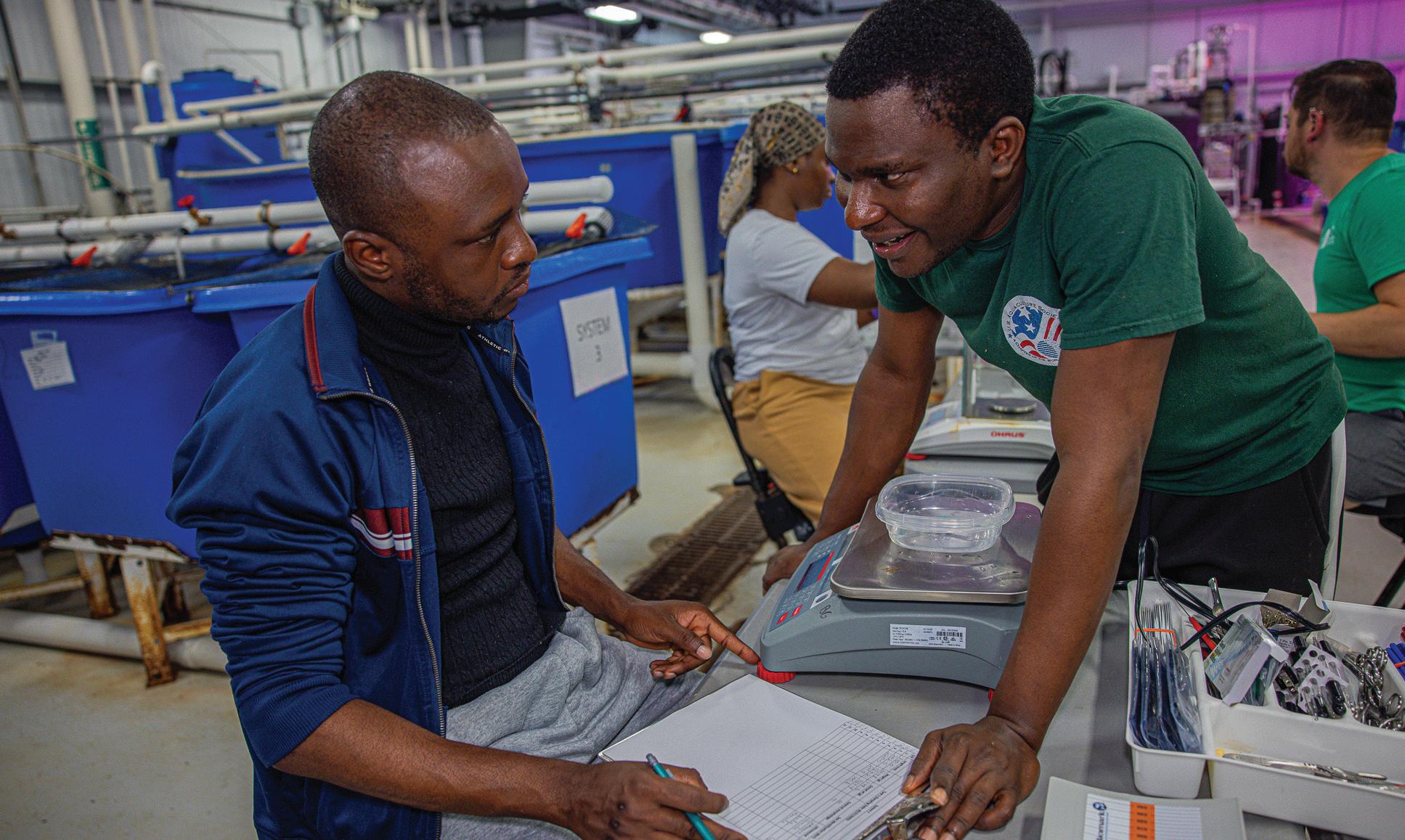
Student Lucien Blakemore harvesting barramundi that were raised in the Aquatic Research Center’s aquaponics system

Generation Aqua
BY IMANI BLACK
Imani Black is an aquaculture professional, aquaculture advocate, and industry trailblazer with a decade of experience in oyster farming and hatchery management across Maryland and Virginia. As the founder of Minorities In Aquaculture and a graduate with a Master’s degree in Ecological Anthropology from the University of Maryland Center for Environmental Science, she is dedicated to fostering workforce inclusivity and equity through mentorship, education, and advocacy. (imanib@mianpo.org / www.mianpo.org / @imaniiiblackkk)
Are we ready for a new benchmark?
For the first time, the American aquaculture industry is unified in setting a standard for what early-career aquaculture professionals should know and be able to do the moment they step onto a farm, into a hatchery, or into a research facility.
This February, at Aquaculture America 2026, Michelle “Mick” Walsh, current president of the U.S. Aquaculture Society, officially announced an effort she described as “something that’s been talked about for years but never fully realized.” She announced a joint aquaculture workforce certification developed by the National Aquaculture Association (NAA), the U.S. Aquaculture Society (USAS), and the American Fisheries Society’s Fish Culture Section (AFS-FCS).
“Aquaculture is diverse, geographically, technologically, culturally, and ensuring this certification remains relevant across species and regions will require ongoing review and adaptation.
Over the last several years, across countless discussions, these societies wanted to address a consistent barrier within aquaculture’s workforce development. It’s a barrier experienced in a few different angles: employers need clearer signals about applicant competency; training programs need a consistent benchmark; and students and early-career professionals want a credential that actually reflects their knowledge and experience.
This joint workforce certification establishes universal expectations for aquaculture training, experience, service, and industry knowledge, while giving individuals a clear way to document their skills for career advancement. The program will be structured around three tiers that reflect increasing levels of skill and knowledge.
Importantly, the purpose of this certification is to give individuals a formal mechanism to document and articulate their skills regardless of whether a specific employer immediately adopts or requires the credential. In that sense, it is designed first as a workforce-facing tool, not an employer-controlled gatekeeper.
This framing helps explain the NAA’s involvement. NAA’s role ensures the certification remains grounded in industry realities while prioritizing individual skill recognition and portability across employers, regions, and sectors.
Where the certification shines
The framework acknowledges something everyone in aquaculture already knows. This is a “learn by doing” profession.
The structure itself seems intentionally practical in every sense. To qualify, applicants must document 4,000 hours of combined experience, instructional training, and professional service. That’s at least 3,000 hours coming in applied work through jobs, internships, seasonal roles, or volunteer positions, plus verified service complete instruction of up to 1,000 hours.
Because skills in this field develop through repetition, troubleshooting, observation, and mentorship, the emphasis on verifiable, real-world experience makes complete sense. The skills self-assessment reinforces this by evaluating competency across husbandry, life-support systems, recordkeeping, regulatory awareness, safety, and daily operations. The broader hope is that this creates a more level playing field for those who gained expertise outside traditional academic pathways. And for employers, it aims to deliver the clarity they’ve been asking for on whether an applicant is actually prepared for the work.
Another key piece is the General Aquaculture Content Exam – a 50-question assessment designed to capture the core knowledge every technician or early-career culturist should have, regardless of species or system.
Built around sections of the Maine Aquaculture Association’s Maine Aquaculture Occupational Standards, the exam covers water quality fundamentals, biosecurity, system operations, health management, and environmental stewardship. Whether someone is working in finfish, RAS, shellfish hatcheries, or seaweed production, these foundations remain constant. Creating a shared knowledge baseline across sectors could strengthen workforce readiness and help streamline employer expectations. But it also raises an important question for the
future: will there be ongoing dialogue about what information belongs (and doesn’t belong) on this exam as the industry evolves?
Where questions still remain
But as with anything new, excitement should be paired with a grounded look at the challenges, especially around access, implementation, and long-term sustainability.
The current plan requires applicants to take the exam in person at Aquaculture America or the Triennial. I shared with Mick before the event that my clearest concern with this is undoubtedly accessibility.
It’s no secret that these conferences are incredible spaces for learning, but they are also expensive, often prohibitively so. Travel, registration, lodging, and time away from hourly work disproportionately impact the exact people this certification is meant to uplift: technicians, students, and early-career professionals. And if that’s the case, how do we make both the exam and the broader application process truly accessible not just in theory, but in practice?
If we want a credential that represents the entire workforce, accessibility has to be built in from the very beginning. It should be easier, not harder, for people to fulfill requirements and immerse themselves in the communities that make aquaculture what it is. Early conversations emphasized avoiding a siloed credential, which is important because siloing is one of the biggest barriers to creating multidisciplinary momentum across this industry.
But even if the credential itself avoids silos, how will employers actually integrate it into their hiring standards, expectations, and workplace culture? What incentives will they have to prioritize certified applicants or recognize this as a meaningful signal of readiness?
And then there’s the administrative side. These societies are pillars in our field but they are largely volunteer-run. Managing applications, verifying hours, scoring exams, and maintaining consistent standards year after year is no small undertaking. Several leaders involved in planning raised concerns about workload and the need for long-term organizational capacity. Without
strong administrative infrastructure, even the best-designed certification risks losing traction.
So, what structures will be needed to support this effort sustainably? How do we ensure societies and volunteers aren’t stretched beyond their limits?
These are questions worth asking now, not later. They’re opportunities. Opportunities to refine and strengthen the certification before it becomes fully established and more difficult to adjust. And they’re opportunities to make sure this initiative serves not only the industry at large, but the people who will carry aquaculture forward.
Building a tool for the future
As I’ve said many times in this column, aquaculture is diverse, geographically, technologically, culturally, and ensuring this certification remains relevant across species and regions will require ongoing review and adaptation. Shared fundamentals matter but the details will need continual refinement as the industry evolves.
So, how will the exam be updated as
technologies shift and best practices change? How will feedback loops work?
Despite a few unanswered questions, the societies are already thinking ahead: Level 2 and Level 3 certifications, hands-on or scenario-based assessments, advancing toward a tiered model similar to what we see in life-support operator programs, fisheries credentials, and other technical professions.
As aquaculture continues to expand, diversify, and professionalize, we need tools that bring the field together rather than fragment it. This certification could do exactly that, if it remains grounded in the realities of the people who make aquaculture work every day. Ultimately, it must honor the craft, elevate expectations, and provide clarity for those entering the field while helping employers more easily identify strong candidates.
A path forward
The future of this industry depends on a skilled, recognized, and empowered workforce. As someone committed to strengthening the next generation of aquaculture leaders, I genuinely believe this
certification has tremendous potential. It offers a promising framework, and a real chance to get it right. But potential only becomes reality when intentional effort pushes it forward and ensures it evolves into its most impactful form.

Maybe it’s just me, but this cross-society collaboration finally feels like the signal I’ve been waiting for: that aquaculture is choosing to invest in its workforce with intention, coordination, and a long-term vision we haven’t always seen. If these societies continue embracing industry feedback, addressing structural barriers, and designing with the lived realities of the workforce in mind, this certification could become one of the most meaningful tools our sector has ever introduced.
And trust me, I do not say that lightly. An industry scaling as rapidly and diversely as ours has always needed shared standards, shared language, and shared infrastructure that strengthen career pathways and support the people who make this work possible. This certification has the potential to lay that foundation, and I truly hope it does. | ANA


Showcase
BIO-UV Group, MicroWISE partner on port-side water treatment
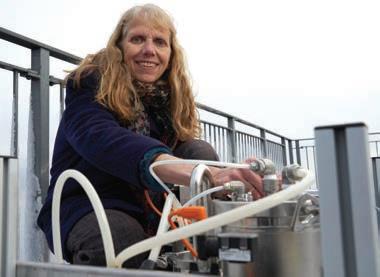
Water treatment technology firm BIO-UV Group has partnered with water-monitoring company MicroWISE to create an integrated approach to port-side ballast-water treatment and compliance validation.
BIO-UV said in a news release the collaboration combines their BIO-SEA ballast-water treatment technology with MicroWISE’s real-time organism analysis.
The new treatment and verification solution addresses rising enforcement pressures and expected growth of port-side reception facilities, the company said.
“One of the biggest challenges for ports is obtaining reliable biological data in real time,” MicroWISE CEO Pia Haecky said. “By providing independently verifiable organism counts at the point of treatment, we give ports and regulators the confidence to make fast, transparent decisions about ballast-water discharge.”
The companies said they will continue joint research and development on sediment removal, flocculation processes and a potential
SEA BASS AND SEA BREAM: A PRACTICAL APPROACH TO DISEASE CONTROL AND HEALTH MANAGEMENT
single-pass treatment configuration.
SPAROS, aquaManager launch data-driven feeding solution
Aquaculture suppliers SPAROS and aquaManager have released their joint commercial feeding and growth plan tool, OptiFeeSH.
The data-driven solution optimizes feeding strategies and growth plans based on site-specific conditions and production objectives.
The companies said pilots in commercial land-based and offshore operations found OptiFeeSH feeding plans in pre-growing phases
achieved up to 50 percent more biomass growth compared to baseline growth.
“The strength of this tool lies in its ability to generate reliable feeding tables that our feeders can confidently implement in the field without fear of compromising growth,” said Rui Amaral, production controller at Flatlantic.
OptiFeeSH also saved the producers valuable time and improved growth predictability, the press release notes. OptiFeeSH is now commercially available to farms of all sizes.
Garware
introduces new generation of nets
India-based technical textile supplier Garware Technical Fibres has developed a new generation of aquaculture nets that improve durability and efficiency.
The new CFR has a composite-core construction that ensures a uniform shape, higher strength and reduced weight. A version of this new product, S.CFR, is entirely recyclable.
Pro Max is an evolution of the company’s successful X18 product designed for dropdown configurations. The Pro Max has greater rigidity and improved abrasion resistance com-
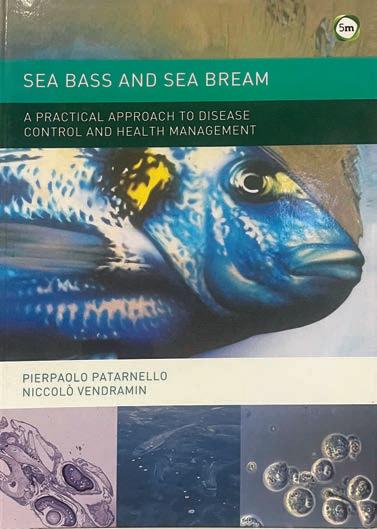
The aim of this book is to provide practical advice and awareness of health management and disease control in sea bass and sea bream, the most widely-farmed fish in the Mediterranean region.
This important book gives particular emphasis to rapid diagnosis and response to the most dangerous pathologies, which can cause severe economic losses in affected fish farms.
MicroWISE CEO Pia Haecky PHOTO: BIO-UV
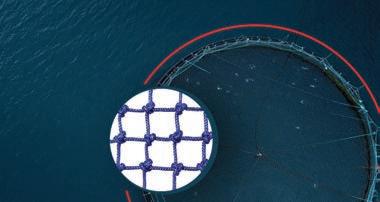
pared to the X18.
Safemax is an evolution of the SUC MBX, Garware’s most widely used product in the industry. The Safemax has the same tensile strength as SUC MBX, but a smaller diameter and no stainless-steel strands. It surpasses SUC MBX in cut resistance and rigidity.
NaturAlleva, Innovafeed to add insect ingredients to aquafeed
Italian aquaculture feed producer NaturAlleva and France’s insect ingredient producer Innovafeed are partnering to add black soldier fly ingredients to aquafeed formulations for the Mediterranean region.
The partnership is the first large-scale commercial deployment of insect-based ingredients in aquaculture, the companies said.
The black soldier fly ingredients contain chitin, lauric acid and antimicrobial peptides that have been shown to have measurable benefits for Mediterranean species such as sea bass, sea bream, sturgeon and trout.
NaturAlleva will begin using Innovafeed’s black soldier fly ingredients “at meaningful commercial volumes” in its sea bass and sea bream feed formulations in January 2026, the companies said.
The partnership will also see both companies jointly invest in further research and development on functional properties of insect-based aquafeed ingredients, particularly chitin-related benefits in other species.
Poseidon secures $20M to scale fish welfare tech worldwide
British Columbia-based fish life support technology firm Poseidon Ocean Systems received a CA$20-million (US$14.5-million) boost from Export Development Canada (EDC) to expand internationally.
Poseidon’s modular life support platform includes barges, oxygen diffuser technology, and oxygen compressors the Oxypressor and
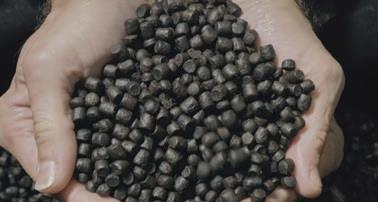
Flowpressor.
“Poseidon’s innovative aquaculture technology is helping fish farmers worldwide boost yields while significantly reducing their carbon footprint,” said Guillermo Freire, senior vice-president of the mid-market group at EDC.
Established in Campbell River, B.C. in 2015, Poseidon has expanded to Puerto Montt, Chile, and Western Scotland, and has distributors in Norway and Tasmania. The company has deployed more than 100 fish life support units over five countries.
Poseidon said in the release the EDC funding will allow them to respond to the growing demand for ready-to-deploy fish welfare technologies, to improve their solutions, and to advance new development.
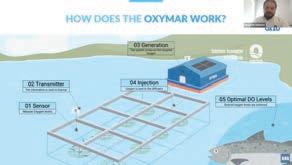
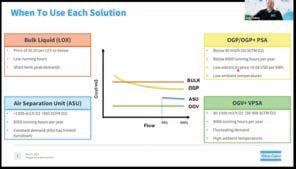
AQUACULTURE TECHNOLOGY LUNCH & LEARN WEEK 2026
•
•
•
your chosen aquaculture technology topic ahead of others!
Please


PREVIOUSLY FEATURED TECHNOLOGY PARTNERS

Deep Dive
BY BEN NORMAND
fish farmer,
He has worked with various fin and shellfish species in New Zealand and Canada in production management, compliance, and communications. (ben.r.normand@gmail.com)
The safety paradox in aquaculture work
We just love paradoxes. They’re like the Rubik’s cube you’ve been working on for days but can’t put down – phrases that are so close to logical and straightforward that we’re determined to figure them out and yet they remain enigmatic and exciting.
The classic line from George Orwell’s nove l"1984" is a perfect example, “War is peace, freedom is slavery, ignorance is strength.” This sentence has lived rent-free in my mind for 20 years. But why?
The definition of a paradox is “a seemingly absurd or self-contradictory statement or proposition that when investigated or explained may prove to be well founded or true.” I’m often drawn to Orwell’s paradoxical sentence because its enigmatic nature is intriguing, and because I spend time with it, I find the truth in it.
Everyone understands safety in aquaculture operations, at least theoretically. We all want everyone to be able to do their jobs and go home safely and in good health at the end of the day. And yet, injuries remain too common despite great efforts towards realizing workplace safety. The challenge, it seems, lies in how to get people to take this desire and engrain it into every decision they make every day. We need to have this way of thinking living rent-free in people’s minds for 20 years and beyond.
aquaculture safety paradox: Too fast is too slow, more is less, safe is unsafe.
Too fast is too slow
I hate getting cuts. Like, I really hate cuts, especially on my hands.
In a previous life on salmon farms, we did our net cleaning and mending at sea as we didn’t have a net loft close enough to send them away. When we emptied a pen, we would raise it, ring-layer by ring-layer, pressure wash it and mend it. When it was raised completely, we would float a small flat-bottomed boat inside the pen and pressure wash the bottom, then would spend time on our knees on the deck, leaning over the side, mending it.
Safety is not some goal we arrive at and we’re done. It’s a way of thinking.
What we need is to frame safety thinking as a paradox, so everyone is drawn to it, chews on it, and finds the truth in it.
And so, I present to you, the
During this bottom-mending process, we would have a knife in one hand and our mending needle in another. As a young man who wanted to impress his coworkers, the first few times I did this task, I kept pushing to go faster. With my hands in the water, my skin was soft, and while I’d get one patch done quickly, I would keep cutting my hand because I would move too fast and knick my hand on my knife. After a few cuts, my hands would be sore and swollen, and, honestly, I ended up being slower. Ultimately, I became better at the task, and safer, when I slowed down just a little. Sure, I didn’t get the first patch done as quickly, but I got more patches done each day when I stopped injuring myself. The age-old adage that slow and steady wins the race is so true when it comes to farm safety. I’m not saying slow production to a snail’s pace, but the stats don’t lie: when people rush, they get
hurt. This phenomenon is only amplified when you’re working in a dynamic, water-based environment. So, before you leap from that platform to save one second, think about the hours it will take to fix up your broken leg.
As my workplace says now, “Take a minute.”
More is less
This is the most obtuse of the three, but I think it’s important. Injuries and safety risks cost us time, money, mental health and productivity. These costs are largely able to be addressed through the application of smart safety solutions. Where opportunities for safer solutions exist, the reduction in costs associated with not addressing that risk represents a positive ROI for our operations.
I misunderstanding of the logic behind this can be carried too far – wearing two lifejackets is not more safe, rather a case where more is actually more in terms of the financial cost of lifejackets as well as the productivity cost of having a staff who can barely move.
A good example is vessel-mounted cranes. In the past, some farmers would shy away from the cost of engineered cranes and would opt for simple, fabricated aluminum boom cranes. These would usually do the trick, but without proper engineering, and an increasing workload, these cranes began to present a real safety risk with enormous costs.
I remember hearing about one farmer who was killed when one of these broke, the cost to his family and his crew was immeasurable, and the application of a relatively small cost of an engineered crane could have avoided
this. As well, once the crane is installed, the application of more time to maintain that crane properly results in less downtime and less risk.
Safe is unsafe
Safety is not some goal we arrive at and we’re done. It’s a way of thinking, and its proper application looks like a constant reassessment of existing practices, gear, workflows, etc. to identify ways to do better.
New workers tend to be the most likely to be injured because they’re new, unfamiliar, or have something to prove (see me cutting myself above!). But they’re not the only ones: very experienced workers get injured too. The human brain loves to simplify its work as much as possible. When someone has done certain tasks for years, they build muscle memory, and the brain gets used to associated risk factors and begins to tune them out. But in a dynamic environment, this makes their work less safe.
We have not achieved the enlightened state of the perfectly safe workplace, and we may never get there. But we must keep trying. When we think we’ve completed the work of workplace safety, and we’ve got it all figured out, we increase our risk through a decrease in conscious awareness.
Will this paradox solve workplace safety? No. But can it take a place in your coworkers’ minds, prompting regular engagement and discovery of workplace safety truth? Absolutely. Even the cowboy boat captain who thinks lifejackets are actually more dangerous (we all know one) will still be engaging with it while he makes fun of it and tries to poke holes in it.
Stay safe, everyone. | ANA
Ben Normand a
writer, college instructor, and cheerleader for aquaculture.