Viewpoint: Priorities for National Aquaculture Association p.10
Research: Rice & fish co-culture shows potential in south U.S. p.16
Career Fieldnotes: Building your professional brand in 2026 p.22
JANUARY/FEBRUARY 2026 aquaculturenorthamerica.com
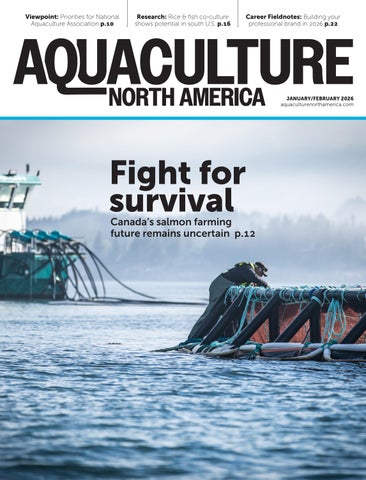
Fight for survival
Canada’s salmon farming future remains uncertain p.12
P A R T N E R S H I P, T R U S T, A N D I N N O VAT I O N . P R E PA R I N G T O G E T H E R F O R T O M O R R O W ’S WAT E R S .
AQUAFLOR®
(florfenicol) T Y P E A M E D I C A T E D A R T I C L E
LEARN MORE ABOUT OUR INDUSTRY LEADING SOLUTIONS. Copyright © 2025 Merck & Co., Inc., Rahway, NJ USA, and its affiliates. All rights reserved. US-AQP-250400001
Contents January/February 2026 Vol. 17, No. 1 aquaculturenorthamerica.com
Features VIEWPOINT
10 Strengthening our industry A federal advocacy update from the National Aquaculture Association By Maria Smithson COVER STORY
12 Fight for survival Canada’s salmon farming future remains uncertain By Mari-Len De Guzman
16 Fish in the field Research demonstrates potential of rice-fish co-culture in southern U.S. By Matt Jones GENERATION AQUA
18 Job potential vs. job reality
COVER PHOTO: ATLANTIC FISH FARMERS
Why the future of aquaculture depends on today’s young professionals By Imani Black
Columns
Departments
5 From the Editor Entering a new phase 8 Deep Dive The case for the winter oyster By Ben Normand 22 Career Fieldnotes Upgrade your professional brand for 2026 By Leah Williams Stoker
6 News 20 Showcase
AQUACULTURE NORTH AMERICA
aquaculturenorthamerica.com ANA_ReedMariculture_JanFeb26_CSA.indd 1
3
2025-11-27 9:46 AM
ST. AUGUSTINE, FLORIDA
MAY
19-21 PLATUNUM SPONSORS
REGISTER NOW ras-tec.com
From the Editor BY JEAN KO DIN VOLUME 17, ISSUE 1 | JANUARY/FEBRUARY 2026
Reader Service Print and digital subscription inquiries or changes, please contact customer service Angelita Potal Tel: (416) 510-5113 Fax: (416) 510-6875 Email: apotal@annexbusinessmedia.com Mail: 111 Gordon Baker Rd., Suite 400, Toronto, ON M2H 3R1 Editor Jean Ko Din jkodin@annexbusinessmedia.com Contributors Imani Black, Mari-Len De Guzman, Matt Jones, Ben Normand, Maria Smithson, Leah Williams Stoker Associate Publisher Jeremy Thain jthain@annexbusinessmedia.com +1-250-474-3982 Brand Sales Manager Patrick Villanueva pvillanueva@annexbusinessmedia.com 416-606-6964 Account Coordinator Barb Vowles bvowles@annexbusinessmedia.com Media Designer Emily Sun esun@annexbusinessmedia.com Audience Development Manager Urszula Grzyb ugrzyb@annexbusinessmedia.com 416-510-5180 Group Publisher Anne Beswick abeswick@annexbusinessmedia.com 416-410-5248 CEO Scott Jamieson sjamieson@annexbusinessmedia.com PUBLISHED BY ANNEX BUSINESS MEDIA 105 Donly Drive South, Simcoe, ON N3Y 4N5 Aquaculture North America is published six times a year by Annex Business Media. The authority for statements and claims made in Aquaculture North America is the responsibility of the contributors. Reference to named products or technologies does not imply endorsement by the publisher. Subscription rates (five issues) Canada: $39.25 (per year+tax) | Canada: $67.36 (2 years+tax) U.S: $50.92 (CDN per year) | Foreign: $65.77 (CDN per year) To subscribe visit our website at aquaculturenorthamerica.com Printed in Canada ISSN 1922-4117 Publications Mail Agreement #PM40065710 RETURN UNDELIVERABLE CANADIAN ADDRESSES TO 111 Gordon Baker Rd., Suite 400, Toronto, ON M2H 3R1 Annex Privacy Officer Privacy@annexbusinessmedia.com Tel: 800-668-2374 The contents of Aquaculture North America are copyright ©2026 by Annex Business Media and may not be reproduced in whole or part without written consent. Annex Business Media disclaims any warranty as to the accuracy, completeness or currency of the contents of this publication and disclaims all liability in respect of the results of any action taken or not taken in reliance upon information in this publication.
Next Ad Deadline The advertising deadline for the March/April issue is Feb. 9 Don’t miss the opportunity to be part of this publication. For more information, or to reserve space in the next issue, call our advertising department at +1.250.474.3982 jthain@annexbusinessmedia.com
Next Editorial Deadline The editorial deadline for the March/April issue is Jan. 23. Contact Jean Ko Din at jkodin@annexbusinessmedia.com for details. Material should be submitted electronically with prior arrangement with the editor.
Entering a new phase
W
ith the mark of another revolution around the sun, it is once again time for all of us to think about what the next chapter of our lives will look like. As I try to think about what my personal New Year resolutions might be, I also want to think about what my new goals might be for Aquaculture North America. I hope my previous editorial letters make it evident that I've always seen my role on this publication as a service to the industry. I want to help share stories that drive progress and promote growth in a sector that believes so much in being of service to feeding the world sustainably. I hope that the people that read these pages come away encouraged to learn and be empowered by this shared purpose. I will continue to strive my best to help in this pursuit. That being said, 2025 was not an easy year for the industry to work through. This past year, many people in the industry faced economic instability, job uncertainty, regulatory shifts, climate change, and so many other things. And, these challenges don't just disappear because we've turned a new page to mark 2026. There is a lot more work to do ahead. Even so, I choose to look at the new calendar year as a blank slate. I want to let go of the heavy burdens of the past year and start again with a refreshed determination to do what I do best – tell your stories. With the shifting sands that we experienced in the past year, our team at Annex Business Media is doubling down on new ideas. I think 2025 has shown us all that we can't get too comfortable with the work that we've come to "know" because the projects that were once considered a reliable success does not guarantee our future success. In order to evolve, we must be okay with being uncomfortable. In fact, we could even be a little suspicious about what we're willing to settle for. After all, evolution requires transformation. In biological terms, living organisms
Aquaculture North America’s Editorial Advisory Board: Ian Roberts | Sandra Shumway | Jason Mann | Jeanne Mcknight | Mykolas Kamaitis | Jamie Baker
AquacultureNorthAmerica aquaculturenorthamerica.com
experience death in order to make rise to a stronger generation. Only genetic traits that help an animal thrive in its current environment are inherited and the genetic traits that no longer serve the animal's survival slowly disappear over the generations. Perhaps, we don't think about this enough when we look ahead to the changing times. In the new year, I'll try not to be too precious about past projects that no longer serve our goals to grow. Instead, I will try to boldly pave a new path to what our Annex team, our editorial advisory board, and our content partners believe makes Aquaculture North America stand out as a publication that serves the North American aquaculturist. We will bring back projects that continue to thrive in this new, digital environment, such as Aquaculture Technology Webinar Week (or Aqua Tech Week on May 20-23) and Aquaculture Nexus 2026 (Sept. 3). Our popular Salmon Farming Inside & Out podcast with Ian Roberts will also return in the new year. We will also introduce new projects, like the NextWave webinar series (Feb. 5, March 5, and April 9) in partnership with the Next Generation Seafood Alliance. There are other projects that are currently in development, and I hope to tell you more about them soon. Please continue to cheer us on and engage with the work that we do. We couldn't do any of these things without your support. Sign up for a free magazine and email newsletter subscription. Register to our free online events. Follow our LinkedIn page and share our articles with your network. The more we know that our content reaches our aquaculture community, the more we can continue to serve you the information you need to evolve in your aquaculture work. And as always, we hope you also reach out personally from time to time. I am constantly learning about the topics and the ideas that you care about. If there is a subject or an idea you want us to do, please share your thoughts with me at jkodin@annexbusinessmedia. com. | ANA
@aquaculture_na
aquaculture-north-america AQUACULTURE NORTH AMERICA
5
News
Sustainability outcomes such as fish survival rates and responsible feed sourcing are improving for Canadian salmon farmers according to the latest sustainability report from the Canadian Aquaculture Industry Alliance (CAIA). The CAIA published its 2025 Sustainability Report Card with benchmarks centred around fish health, climate change, sustainable feed, food security, food traceability, ocean health, and public reporting. The results are based on the 2023 production year for CAIA’s salmon producing members. The new report highlights a 50 percent reduction in the use of
with nearly all marine ingredients – fishmeal, oil, and protein – in fish feed sustainably certified by accredited third parties. Fish escape incidents have dropped from 13 in 2022 to eight in 2023. Those eight incidents resulted in 1,246 escaped fish. The report also notes that 100 percent of the ocean farms are reducing feed waste by using underwater cameras and sensor equipment to monitor feed levels. “Canada has the most coldwater aquaculture potential in the world. We can be a global leader but, to build Canada strong, this opportunity needs to be realized,” Kennedy said. “Right now, there is a window for Canada to reset policy to embrace the seafood farming sector as part of the fabric of a competitive, innovative and sustainable Canadian agriculture and agri-food sector and protect Canadian workers and the over
Mulot Bagging Machine
Mulot Washer
Anesthetics Treatments Spawning Biosecurity Antimicrobials Nutrition Transport
Washington state-based Taylor Shellfish Farms, North America’s largest producer of oysters, has received Aquaculture Stewardship Council (ASC) certification for seven shellfish species, making it the first and only ASC-certified bivalve farm in the U.S.
Mulot Vibratory Grader
Mulot Water Bath Grader
Formutech Inc.
Charlottetown, P.E.I. Phone 1 855-599-0099 E-mail info@formutech.ca www.formutech.ca
US (866) 986-1376 / sales@syndel.com CANADA (866) 248-5212 / sales@syndel.ca INTERNATIONAL sales@syndel.com
AQUACULTURE NORTH AMERICA
HI_Syndel_Mayjune23_MLD.indd 1
Taylor Shellfish becomes first ASC-certified bivalve farm in U.S.
PROVEN EQUIPMENT for shellfish producers
GLOBAL LEADER IN FISH HEALTH SOLUTIONS
6
3,000 supplier companies to the sector... With the right regulatory environment and a pathway to unlock investment in innovation, we will continue to advance the sector’s performance.”
PHOTO: TAYLOR SHELLFISH FARMS/FACEBOOK
Canadian salmon farmers improve sustainability outcomes: report
antibiotics thanks to vaccines and advanced veterinary health management practices, and a nearly 85 percent increase in fish survival rates with mortality loss during farming dropping to 15 percent nationwide. “Aquaculture farmers know that growing food for Canadians must be environmentally, socially, and economically sustainable,” CAIA president Tim Kennedy said in a news release. “These results show salmon farming companies have adopted science-based methods that have improved the standard of salmon farm sustainability overall in Canada. Moreover, the results clearly reinforce that ocean farming, innovation, increased production and job creation need to be supported by governments to build investor confidence.” According to the report, 97 percent of all operations have adopted responsible feed sourcing
January/February 2026 ANA_FORMUTECH_QP_MarApr25_MLD.indd 1 2023-03-30 8:48 AM
2025-02-03 2:35 PM
The seven species certified as responsibly farmed are Olympia oyster, Kumamoto oyster, Eastern oyster, Mediterranean mussel, Manila clam, Geoduck clam, and Pacific oyster. “We believe true sustainability means caring for both people and the planet,” Jada Brown, marketing manager for Taylor Shellfish Farms, said in a news release. “Our new ASC certification is a badge of that belief – recognizing our responsible farming practices, commitment to clean water, and the fair, empowering workplaces we’ve built for our teams across Washington’s coastlines.” The multi-day independent audit by SCS Global Services involved visits across six Washington State regions and more than 200 aquaculture concessions. Taylor Shellfish farms on more than 15,000 acres of tidelands in the state. Family-owned Taylor Shellfish has farmed in the Pacific Northwest since 1890. Their product line includes geoduck, mussels, clams and specialty half-shell oysters. “With this certification, Taylor Shellfish becomes the first and only bivalve farm to achieve ASC certification in the United States, and just the fifth U.S.-based farm to join ASC’s leading global program,” Erica Tardiff, U.S. market development manager at ASC, said in the release. “Many U.S. consumers opt for local seafood and Taylor’s certification is an important step to expanding regional ASC-labeled options, as awareness and demand for sustainable seafood grows among shoppers, diners and communities.”
USDA earmarks $1.7M for six aquaculture research projects Six aquaculture research projects are receiving a total of US$1.7 million in grant funding from the USDA’s National Institute of Food and Agriculture. The funding is part of the U.S. Department of Agriculture (USDA) Special Research Grants for Aquaculture Research. This competitive grant program aims to support the aquaculture industry in the U.S. The 2025 grants are going to the Ballard Fish and Oyster Company LLC, Oregon State University, Southeastern Sea Products Inc., Research Foundation for the State University of New York, Mississippi State University, and University of Maryland. Ballard Fish and Oyster Company will co-ordinate a large-scale experiment on operating clam farms in Virginia, studying how farming practices, growing location, genetics, and disease may affect hard clam survival and growth. Oregon State University’s project will use a novel implementation of rapid predictive phenotyping of oyster larvae to bolster breeding programs across the U.S. with the goal of
improving how industry selects broodstock and farm sites for their offspring. Southeastern Sea Products in Florida plans to evaluate the economic viability of hybrid clams, assess consumer acceptance, develop pricing models and exam their competitiveness against imports. A project from the Research Foundation for the State University of New York will identify disease-resistant scallops suitable for aquaculture and stock enhancement, as well as conduct genetic analyses to characterize resistant scallops and support future stock selection efforts. Mississippi State University’s project will study the efficiency of catfish processing with the goal of improving the slaughter process, including evaluating stunning designs and methods of euthanasia. University of Maryland, College Park, is partnering with the North Point High School Welding Career and Technical Education Program to design, build, test and evaluate larger oyster dredges. If successful, the larger designs will be offered to industry as a potential method to increase profits.
New credit program aims to boost Mexico aquaculture The Mexican government has opened new credit lines for aquaculture producers to finance materials, supplies, equipment, and infrastructure. The National Commission of Aquaculture and Fisheries says the new loans under the Cosechando Soberanía (Harvesting Sovereignty) Program are up to $1.3 million pesos (US$71,000) with an 8.5 percent interest rate. The loans are designed to support smallscale producers in order to boost food produce and improve worker well-being, the government said in a Nov. 18 news release. Loan recipients must be registered under the federal fisheries and aquaculture registry, or have valid authorization. The loans will help cover materials such as cages, culture tanks, oyster bags or baskets, and equipment such as pumps, aerators, generators, and cold rooms.
AQUACULTURE NORTH AMERICA
aquaculturenorthamerica.com ANA_Aquacare_JanFeb26_CSA.indd 1
7
2025-11-27 2:32 PM
Deep Dive BY BEN NORMAND
Ben Normand a fish farmer, writer, college instructor, and cheerleader for aquaculture. He has worked with various fin and shellfish species in New Zealand and Canada in production management, compliance, and communications. (ben.r.normand@gmail.com)
The case for the winter oyster
P
icture this: you’re sitting on the patio at your favourite Charlottetown restaurant at 8 p.m. in early August, surrounded by loved ones. Your day has been full of leisure and joy, and you’ve smiled so much that your cheeks hurt. Under the cotton candy sky, everything feels like a dream. You ask the server for a glass of white wine (the good kind) and a dozen Malpeque oysters to start. At $3 per oyster, your expectations are high. They place the ice-filled platter of shellfish in front of you, and you’re surprised to see oysters
Of the many hundreds I’ve eaten, nothing compares to a PEI oyster in the winter. 8
AQUACULTURE NORTH AMERICA
with small, watery meats that come nowhere near to filling the shell. Total bummer, right? Why did this happen? Do they have a bad supplier? Aren’t Malpeque oysters supposed to be the very best? The answer is simple biology. The humble Eastern Oyster (Crassostrea virginica), like many shellfish, devotes a shocking amount of energy and physical resources to the act of spawning. A female oyster can release up to 100 million eggs in each spawning event. Sure, the eggs are microscopic, but if you’re a creature that’s only three inches long, storing, then releasing 100 million eggs of any size is bound to leave you a fraction of your original size. And this is, indeed, what happens. Eastern Oysters can
lose up to 40 percent of their meat size through spawning. Through late summer and into fall, as it recovers from spawning, the oyster filters up to 189 litres of water per day, capturing and consuming plankton and detritus. This heavy feeding allows them to store fat and glycogen, critical energy sources they will require as they head into winter when feeding slows and then stops. They will also need great energy reserves for the inevitable demands that producing the next enormous batch of gametes exacts on their system. As they feed and grow and store, the oyster plumps up, and suddenly you have the fat, shell-filling meat you had hoped for. But I can tell you, the real value of a winter oyster isn’t that it’s plump: January/February 2026
PHOTO: MAXIMFESENKO/GETTY IMAGES
Why Prince Edward Island’s best kept secret should not be a secret
it’s the flavor. I’ll never forget the first time I chewed an oyster. It was 2016, and I was on a small barge in an oyster lease on the Mahurangi River, north of Aukland. I was working for an oyster farmer, and he insisted we regularly try the crop while we work. He shucked it open, I let it run right past my tongue and down my throat, and he immediately called me out. “How can you even taste it?!” he asked. I wasn’t quite sure how to answer because I really thought that was how you ate them. Up to that point, I’d slurped a few here and there, but I didn’t understand why people were so crazy for them, because all I ever tasted was the salty water that lubricated their quickly journey past my palate and straight into my stomach. The next one, I chewed, and I am not exaggerating when I say it changed my life. Each bite through a different part of the oyster released a new flavour, and I was shocked by the complexity I found. By practicing the important step of giving them a few chews before swallowing, and sampling different species of oysters from different water bodies and during different times of year, I’ve come to realize just how much variability there is out there. And let me tell you, of the many hundreds I’ve eaten, nothing compares to a PEI oyster in winter. Here’s why: • They’re fat: building fat reserves and generating gametes not only makes them plumper, it generates a creamier mouthfeel that gently prepares your pallet for what is to come
• They’re salty: this is true of PEI oysters at anytime of year, but reduced evaporation due to ice cover and reduced freshwater inflow leaves our oysters bathed in saltier water. This takes your prepared pallet and excites it dramatically. • They’re sweet: remember the glycogen? Glycogen is a form of glucose, and the oyster, like many animals, stores it as a readily available and easily consumed energy source when needed. The more glycogen an oyster has, the sweeter it is, and my goodness are PEI winter oysters ever sweet! Your excited pallet welcomes the interplay between salty and sweet, and invariably when the salt fades, the sweetness remains as the dominant aftertaste. Honestly, they’re borderline candylike at times. Beyond the flavor, by moving past the oyster summer association we seem to have developed for ourselves, consumption of winter oysters help stimulate greater year-round employment opportunities for farmers. Much of the PEI shellfish industry would historically lay off workers in the winter, when leases are covered in ice and work can’t be done. But as demand increases through winter, these farmers spend more time harvesting through the ice, processing and shipping you the freshest and the best. So, while I don’t advocate you recreate our opening scene in the dead of winter exactly, I do suggest you grace your holiday and winter feasts with the presence of oysters at their best. Your guests will thank you, the farmers will thank you, and I promise you your palate will thank you. | ANA
Oyster Trays stacked with quality
DESIGN | EQUIPMENT | SOLUTIONS
For over 35 years oyster growers worldwide have trusted our S1000 Oyster Tray and S4000 nursery tray, to produce the highest quality half-shell oyster for today’s demanding consumers.
HYDROTECH PRODUCTS Very low operating cost.
ROTOMOLDED PLASTIC TANKS
ENTERPRISES
Cell: 604-833-5311 darksea@shaw.ca
S4000 nursery trays
Currently the only free-standing, semi-square, plastic tank for aquaculture.
CUSTOM CONTROLLERS Custom designed control panels built for aquaculture & aquaponics.
S1000 oyster trays
FIBERGLASS TANKS Ready to ship—no waiting!
New products added daily! There is nothing we can’t source! Subscribe to our newsletter to receive updates.
Featuring our 6061 T-6 aluminum suspender pole which stands up to the harshest of salt water environments.
Phone: +1 407 995 6490 | Web: AquaticED.com AQUACULTURE NORTH AMERICA
aquaculturenorthamerica.com ANA_DARKSEA_MarApr25_BAS .indd 1
ANA_AquaticEquipmentDesign_JanFeb26_CSA.indd 1 2025-02-03 2:28 PM
9
2025-11-24 3:14 PM
Viewpoint BY MARIA SMITHSON, NATIONAL AQUACULTURE ASSOCIATION
Maria Smithson is the director of Membership and Marketing at the National Aquaculture Association. (maria@ nationalaquaculture.org)
Strengthening our industry
S
ince 1989, the National Aquaculture Association (NAA) has served as the unified voice of America’s aquaculture community, championing policies, building strategic partnerships, and promoting public understanding of U.S. farmed aquatic products. In 2025, that commitment is stronger than ever. This year brings both new opportunities and familiar challenges. With federal agencies reopening key regulatory processes, Congress considering legislation that directly affects aquaculture, and public awareness around domestic seafood production on the rise, NAA is working vigorously to ensure farmers’ voices are strongly heard. What follows is an overview of the NAA’s 2025 federal advocacy work, shaped by input from our Legislative and Government Relations Committee, our state and regional associations, our board of directors, and the many farmers whose needs guide our mission.
Leading on legislative priorities Last May, NAA staff and board members met with members of Congress and bipartisan staff from the Senate Agriculture Committee to press for priorities in the 2025 Farm Bill. Staff also visited the offices of every representative and senator serving on both the House and Senate Agriculture Committees, increasing awareness and understanding of current policy issues critical to the well-being of the aquaculture sector. Key NAA 2025 Farm Bill priorities include: Increase funding for applied aquaculture research – In 2024, 10
AQUACULTURE NORTH AMERICA
The National Aquaculture Association is commited to advancing policy priorities for U.S. aquaculture.
NAA released an independent review of the U.S. Department of Agriclture (USDA)'s Regional Aquaculture Center (RAC) program. Although it has remained stagnant at US$5 million annually since 2013, the analysis found the program highly impactful, supporting more than 1,200 participants across 170 institutions and funding projects in 55 states, territories, and countries. The NAA is advocating for an increase to US$20 million annually, with adjustments for inflation, to restore RAC’s ability to support critical research, extension, and development. Remove the adjusted gross income limitation – Thanks to sustained advocacy by NAA staff, progress on adjusting the AGI limitation advanced through H.R. 1, the “Big Beautiful Bill.” The bill, which is now law, includes a key provision waiving the AGI cap for operations where at least 70 percent of income is derived from farming. This is an important win for aquaculture producers who were previously excluded from critical federal programs simply because of their business structure.
Modernize the National Aquaculture Act of 1980 – NAA is urging Congress to update the National Aquaculture Act to include establishing an Aquaculture Center of Excellence, expanding AFRI eligibility to include shellfish, improving Whole Farm and Micro Farm insurance, supporting research on new species, and restoring USDA’s Food Supply Chain Guaranteed Loan Program in order to better reflect today’s sustainable aquatic farming industry.
Beyond the 2025 Farm Bill The MARA Act – The NAA Marine Committee is reviewing the Marine Aquaculture Research for America (MARA) Act to ensure that the legislation protects the interests of domestic marine farmers, while establishing a clear and practical legal framework for responsible aquaculture development in federal waters. As Congress evaluates this measure, NAA is collaborating with members and partners to assess potential impacts, strengthen provisions that support U.S. producers, and
advocate for policy that enables sustainable, economically viable offshore aquaculture. The Cormorant Relief Act of 2025 – NAA strongly backs the Cormorant Relief Act, which addresses severe losses caused by unchecked populations of double-crested cormorants, especially in the catfish, tilapia, and baitfish sectors. Predation reduces stock, disrupts harvest schedules, increases labor needs, and raises production costs. Existing regulations do not offer timely or region-specific tools for addressing outbreaks. Passage of the act would restore essential flexibility to manage cormorant impacts on farms across the U.S. The Sturgeon Conservation and Sustainability Act of 2025 – NAA is championing the Sturgeon Conservation and Sustainability Act to allow for the distinction of captive-bred from wild sturgeon populations listed in the Endangered Species Act. This clarification supports a science-focused approach to conserving wild stocks while ensuring long-term viability of U.S. sturgeon farms engaged in breeding, growout, and research. The No IRIS Act – NAA supports the “No IRIS Act,” which would prevent the Environmental Protection Agency (EPA) from using its IRIS assessment for formaldehyde in its rulemaking, unless specifically authorized by Congress. The IRIS assessment has been widely criticized as scientifically flawed, inconsistent with global standards, and potentially harmful to aquaculture operations that depend on formaldehyde for disease control, egg protection, and parasite management. January/February 2026
PHOTO: COOKE AQUACULTURE
A federal advocacy update from the National Aquaculture Association in the U.S.
The Safe American Food Exports (SAFE) Act – The SAFE Act strengthens protections for aquaculture and livestock exports during disease outbreaks by allowing USDA to proactively negotiate regionalization agreements with trade partners and recognize disease-free regions within the U.S., preventing nationwide export bans when an outbreak is localized. With aquaculture explicitly included, this legislation ensures stable trade for fish and shellfish producers and minimizes regulatory confusion during animal disease outbreaks. Anti-octopus farming bills – Anti-octopus farming bills have emerged in 10 states and at the federal level, though no commercial octopus farms exist anywhere in the world. Washington and California enacted bans in 2024, while Oregon rejected a similar bill in 2025. Currently, legislation to prohibit octopus farming is being considered in Hawaii, Massachusetts, New Jersey, New York, and North Carolina, and the Octopus Protection Act has been introduced again in Congress. NAA is actively opposing this legislation, which targets a nonexistent industry. It
sets a concerning precedent for banning species-specific farming, and distorts policymakers’ understanding of aquaculture practices in the U.S. and abroad.
Fighting for fair, common-sense regulatory improvements In response to an Office of Management and Budget request for proposals to revise or rescind regulations that hinder American businesses, the NAA submitted targeted recommendations addressing rules that are outdated, duplicative, or inconsistent with congressional intent. Lacey Act misapplication – NAA urged the U.S. Fish and Wildlife Service (USFWS) to cease listing native species as “Injurious Wildlife” under the Lacey Act, noting that Congress never authorized such listings or pathogen-based justifications for species already established in the U.S. Costly inspection fees – NAA also highlighted burdensome overtime, port, and inspection fees imposed by USFWS on international shipments of aquatic products. These fees are incompatible with 24/7 global
trade and place unnecessary financial strain on exporters and importers. Outdated salmonid import regulations – Decades-old salmonid import inspection requirements are duplicative, outdated, and misaligned with modern science. NAA stressed that USDA, not USFWS, is the nation’s lead authority on aquatic animal health, making these legacy rules unnecessary. Unworkable transport regulations – NAA urged revisions to Department of Transportation rules governing hours of service and electronic logging devices for livestock haulers – regulations that do not account for the unique needs of transporting live aquatic animals safely and humanely. In summary, as we reflect on a year marked by meaningful progress, NAA remains deeply committed to advancing the policy priorities essential to the success of U.S. aquaculture. From championing core Farm Bill goals and pushing forward the Cormorant Relief and Sturgeon Conservation Acts, to supporting common-sense legislation and regulatory modernization, NAA continues to lead with clarity and purpose. | ANA
Poultry By-Product Meal as a PROTEIN SOURCE
FOR FISH
Studies performed at the Oceanic Institute (2001) indicate “poultry meal can replace fish meal at an inclusion level of 45% in shrimp diets without loss of growth.”
www.poultryrenderers.org Hosted by:
Ian Roberts
ANA_Poultry Protein_Mayjune23_CSA.indd 1
2023-03-24 9:21 AM
Presented by
OWNERS NARROW BOLD
Sponsored by
AVAILABLE TO DOWNLOAD ON
APPLE PODCASTS, GOOGLE PODCAST AND SPOTIFY
aquaculturenorthamerica.com ANA_Kytola Instruments_JanFEb26_CSA.indd 1
AQUACULTURE NORTH AMERICA
11
2025-11-12 1:31 PM ANA_SALMONPODCAST_5.1875 x 2.5_JANFEB26_LAZ.indd 1 2025-12-08 3:56 PM
COVER STORY
Fight for survival Canada’s salmon farming future remains uncertain By Mari-Len De Guzman
12
AQUACULTURE NORTH AMERICA
Stagnant growth In the meantime, as the breadth of the socioeconomic impact of the ban becomes increasingly evident, concerns about investability, growth, and innovation in an industry that contributed over a billion dollars to the national economy in 2023 continue to loom. B.C.’s salmon production has declined 45 percent over the last six years, dropping from an annual output of more than 90,000 tonnes to less than 50,000 tonnes, according to data from the B.C. Salmon Farmers Association (BCSFA). This dramatic reduction was a result of several farm closures across the Broughton Archipelago, Discovery Islands, and the Sunshine Coast. “ I’m worried about the investability of Canada’s resource economy generally,” says Ken Coates, professor emeritus at the Johnson Shoyama Graduate School of Public Policy, University of Saskatchewan. “ We’re scaring away billions of dollars, tens of billions of dollars of investment every year from energy, from mining, from forestry, from other things, because our regulations are not seen as being reasonable, and not competitive on an international scale.” Coates is the author of a report published by public policy think tank Macdonald Laurier Institute that investigated how Canada’s salmon farming industry could benefit coastal communities, foster cooperation with First Nations, drive innovation and protect wild salmon. In the report titled, “Swimming against the tide: The case for salmon
Unlike the federally regulated B.C. sector, regulatory jurisdiction of aquaculture in the Eastern region remains in the hands of the provincial governments.
fish farming in British Columbia,” Coates called for the reversal of the ban on net pen farming, “and returning to evidence-based decision-making that relies on government scientists, Indigenous knowledge and academic experts.” “On the surface, salmon farming seems like a logical place for the Government of Canada to re-evaluate their programs and activities. And we’ve heard signs that (the government) is doing exactly that and they are having those conversations,” Coates says. He noted, however, that despite those “signs” the industry has yet to see evidence that the government January/February 2026
PHOTO: ATLANTIC CANADA FISH FARMERS ASSOCIATION
A
s the changing dynamic in Canada’s salmon farming sector continues to bear down, industry advocates are now looking to Prime Minister Mark Carney’s new Liberal government to provide a clear path forward for salmon farmers. Banking on the federal government’s ambitious pronouncements for nation-building projects to boost an economy weakened by the ongoing trade war with the United States, Canada’s aquaculture industry has been actively lobbying Ottawa to get lawmakers’ attention. With the looming deadline for B.C. net-pen farms to be banned by 2029 and an entire industry virtually at a stand-still, a lengthening status quo could have significant economic consequences. “ The decisions and all the indecisions in the last six years has suppressed capital coming into Canada. And it has actually suppressed innovation,” says Tim Kennedy, president and CEO of Ottawa-based Canadian Aquaculture Industry Alliance (CAIA), one of the leading organizations spearheading advocacy efforts on behalf of the industry. “ What we’re really hoping is that the current government can provide very positive signals so that capital and investment can be released to actually work on the innovation that needs to happen to have more efficient and sustainable production in British Columbia.” And with Carney’s Canada Strong 2025 federal budget narrowly passing the House of Commons in November, the industry is optimistic those clear signals will emerge soon.
is taking a new or different policy approach from its predecessor. But time is of the essence, says Coates. If the ban is not resolved soon and net pen farms are allowed to shut down, the federal government could face millions, if not billions, of dollars in compensation claims, he explains. “The closures will also see very successful coastal communities, including Indigenous communities, suffer egregious changes in their economy, and therefore in their society and their wellbeing. It would be mind-boggling to think our Government of Canada would allow that to happen,” says Coates, adding that he remains cautiously optimistic the aquaculturenorthamerica.com
government will respond positively. According to the Indigenous Partnerships Success Showcase, there are currently 17 First Nations that have agreements and business arrangements with finfish aquaculture companies in B.C. It estimates the economic fallout from the salmon farm closures could negatively impact more than 4,700 and C$1.2 billion (US$858.4 million) in economic activity. Data from the BCSFA indicates the province’s salmon farming sector employed approximately 7,500 people in 2019. Farm closures over the last six years have since resulted in 3,000 jobs lost and C$170 million (US$121.6 million) in lost income for families.
Movers and shakers Canada’s biggest salmon producers have been making significant moves that signal a changing business dynamic, particularly in B.C.’s salmon farming sector. In July 2025, global salmon producer Grieg Seafood, which has been operating in Canada for more than 30 years, announced it is divesting its Canadian operations, in a US$1-billion-dollar sale agreement with Cermaq, which also includes Grieg’s Finnmark operations. The deal, which as of this writing is undergoing review by the Competition Bureau, if approved effectively boosts Cermaq’s salmon production AQUACULTURE NORTH AMERICA
13
COVER STORY
capacity in Canada. Still, Cermaq has earlier expressed concern about the growing uncertainty in international investments in Canada, exacerbated by the B.C. ban. “While every other salmon producing country has farming licenses of at least 25 years duration or eternal duration, the short license length in British Columbia continues to be a barrier to significant investment, despite our strong willingness to grow the industry,” Cermaq CEO Steven Rafferty said in a statement issued in 2024. In the same year, salmon giant Mowi announced a strategic review of its Western Canada operations, following the closure of its Discovery Island farms and a processing facility in Surrey, B.C. in 2022. CAIA, along with industry stakeholders and regional aquaculture associations across Canada were in Ottawa in November meeting with members of parliament. ”We’ve gone through a period of economic stagnation under the previous government,” says Kennedy. “So, Prime Minister Carney focusing on economic opportunity is very welcome. And our deep hope is, of course, that
Canadian Aquaculture Industry Alliance members from its board of directors, regional associations, staff, as well as municipal leaders from Campbell River, B.C., and Eastern Charlotte, N.B., stand in front of Parliament Hill in Ottawa. PHOTO: CANADIAN AQUACULTURE INDUSTRY ALLIANCE
the B.C. situation is looked at very carefully.” Kennedy notes that industry advocates are not necessarily calling for a return to the 2019 pre-ban era. A lot has changed within
the sector over the last six years. Farms and facilities have permanently closed, and new and deeper partnerships have since been forged with local First Nations.
Brought to you by
Oxygen That Works as Hard as Your Farm Does In modern aquaculture, stability is everything. When oxygen levels drop or fluctuate, fish health, growth, and performance are immediately at risk. That’s where OXZO makes a measurable difference. Recognized for its automated oxygen and air generation systems, OXZO delivers on-site oxygen production through its flagship solutions, Oxymar® and Oxymovil®—giving farms greater control, reduced dependence on external supply, and improved long-term efficiency. For sea-based farms, the Oxymar® system is engineered to deliver large volumes of oxygen to highproduction sites. It maintains stable dissolved oxygen levels during critical situations such as low-oxygen events, plankton blooms, and treatments. Built for harsh offshore conditions, Oxymar® ensures continuous performance throughout the full production cycle, helping reduce mortality and improve overall fish welfare. For land-based operations, the Oxymovil® system offers complete operational independence by producing oxygen on demand. This precision eliminates unnecessary waste, lowers operating costs, and ensures consistent performance from hatchery to harvest, year-round. Together, Oxymar® and Oxymovil® showcase OXZO’s commitment to reliable, efficient, and sustainable aquaculture. Whether on sea or on land, OXZO gives producers the confidence to grow more, waste less, and operate with certainty.
www.oxzo.cl
14
When oxygen matters most, OXZO delivers.
AQUACULTURE NORTH AMERICA ANA_Oxzo_Advertorial_Dec25_EJS.indd 1
January/February 2026 2025-12-05 1:31 PM
“We need clear signals from the government around performance outcomes. So that it’s clear for the industry where we need to go,” says Kennedy. “ It’s really a pathway towards clarity of outcome, and a longer term pathway so that companies can invest.” The BCSFA, which represents some 60 businesses and organizations within B.C.’s finfish aquaculture value chain, has maintained that closed containment systems, which the federal policy has favoured as an alternative to net pens, is just not a realistic or achievable option by 2029. “The technology has not been proven to scale anywhere in the world,” says Michelle Franze, BCSFA manager of communications, partnerships and community. “Under a renewed and responsible policy, investment can reopen, allowing the sector to generate C$2.5 billion (US$1.8 billion) in annual economic output and 9,000 jobs by 2030, and C$4.2 billion (US$3 billion) in annual economic output with over 16,000 jobs by 2040.”
Atlantic Canada Amid the uncertainties facing its Western counterparts, Atlantic Canada’s salmon farming sector offers a silver lining. Unlike the federally regulated B.C. sector, regulatory jurisdiction of aquaculture in the Eastern region remains in the hands of the provincial governments. And Atlantic Canada farmers would like to keep it that way. “ It’s a wonderful storyline to date,” says Tom Taylor, executive director of New Brunswick-based Atlantic Canada Fish Farmers Association (ACFFA). “ It’s on us to continuously promote, advocate, provide education on what we’re doing. We need to protect these jobs and the socio-economic benefits we’re getting here in Atlanta Canada.”
The region produces around 58,000 metric tonnes of Atlantic salmon annually, directly and indirectly supporting about 8,000 jobs. With B.C. production drastically reduced to less than 50,000 tons a year (~45,000 metric tonnes), Atlantic Canada is now producing more than Western Canada. Even as Atlantic Canada slowly builds its own salmon production capacity, Taylor says it is in the region’s best interest to stop the shrinking of B.C.’s salmon farming sector. “We’re going to see the realization of the negative impact [of the ban] beginning heavily this fall (2025) in B.C., and so we need a signal from the federal government very soon,” he says. Taylor was among the industry stakeholders that lobbied in Ottawa in November and he says they received a “very strong, supportive message” from members of parliament. The socioeconomic impact of salmon farming can have anANA_HexcylSystems_MayJune23_MLD.indd ex1 2023-04-03 8:55 AM tensive ripple effect throughout the value chain, Taylor explains. “When a transport truck travels Custom Nets, Service, Cages, Moorings, to a northern community like Plankton / Lice Tarps, and Underwater Drones Klemtu to receive Atlantic salmon that have been raised, processed, packaged and now ready to go to urban city centers, these transport trucks are bringing fresh fruits and vegetables, canned goods and frozen goods and other things that never came to those communities in the past.” PRO MAX “It’s these benefits that people don’t even see or recognize that are real in everyday lives for people living in rural communities,” Taylor adds. He, too, expresses optimism that the aquaculture sector would soon gain some traction The New Flagship with Carney, given that Canada’s aquaculture generates about C$5 billion (US$3.6 billion) in economic activity. “To me, that is very significant to the prime minister. I’m sure it www.AffordableROV.com www.morenot.ca will catch their attention.” | ANA
DELIVERING THE DIFFERENCE ™ AQUACULTURE NORTH AMERICA
aquaculturenorthamerica.com ANA_MORENOT_JULAUG25_ASK.indd 1
15
2025-06-19 2:46 PM
RESEARCH A koi fish roams a rice paddy during trials carried out by members of the Dale Bumpers National Rice Research Center and the Harry K. Dupree Stuttgart National Aquaculture Research Center.
Fish in the field
G
rowing fish in rice paddies goes back to South and Southwest China, over 20 centuries ago. For most of that time, the fish was a side feature, mostly intended for the famer’s sustenance. But in the 1970s, with local and international markets opening, the farmers saw that selling fish could become a significant part of their business. From the late '90s to the early 2000s, China saw the area used for rice-fish co-culture expand by four percent (from 1.464 million hectares to 1.528 million) – by the end of that same period, the amount of food fish produced in paddy fields increased by 214 percent, from 649,996 tons to 849,055. Loach, tilapia, catfish, shrimp and carp have generally been the most common species used. Rice paddies can be found in Arkansas, California, Louisiana, Mississippi, Missouri and Texas. And co-cultivation is not completely unheard of in the United States. Rice and crawfish have been successfully grown
16
AQUACULTURE NORTH AMERICA
together in Louisiana. A joint effort between the Dale Bumpers National Rice Research Center and the Harry K. Dupree Stuttgart National Aquaculture Research Center (HKDSNARC or SNARC), the experiments that were carried out examined the potential for growing koi fish in rice paddies. While further research is required, the initial findings were very encouraging. “We selected koi because they are one of the best fish for this type of technology,” says the co-principal investigator of the research effort, Yulin Jia. “But other fish, such as tilapia and catfish, would work for these systems.” Bartholomew Green, the other co-principal investigator, notes that the key focus was on stocking fish in paddies under cultivation to evaluate what impacts on fertilizer, herbicide, and pesticide use would result and how they would affect rice productivity, in the context of potential diversification strategies for U.S. rice farmers. As such, the warmwater fish culture component had to integrate into existing rice growing as
seamlessly as possible. “Consequently, typical aquaculture practices like daily feeding, mechanical aeration and water exchange were deemed impractical,” explains Green. “Benthopelagic food habits, hardiness, tolerance of shallow water depths, variable and high-water temperatures, and low dissolved oxygen concentrations, availability of fingerlings of the desired size, and reaching a marketable size with good market value within the 120 to 150-day rice growing period were factors that guided warm water fish selection.” One of the biggest benefits of this technique is the relatively low infrastructure requirement beyond having a functional rice paddy. The one infrastructure issue they faced was predation. Jia says that a bird – a white egret, he suspects – frequented their experiments trying to make a meal of the koi. Failed deterrent efforts included a scarecrow, noise-making flags and even a noise cannon, but a toy coyote finally got the job done. Another reason koi were selected for the initial trials was they are generally able to January/February 2026
PHOTOS: YULIN JIA
Research demonstrates potential of rice-fish co-culture in the southern U.S. By Matt Jones
Dr. Yulin Jia (left) and Dr. Bartholomew Green pose with a scarecrow with Jia’s visage which did not scare off birds, and a toy coyote that did.
be sustained on the grass in the paddies. Some other fish species would likely require additional feed to prevent them from eating the rice itself – the koi will also eat the rice if there’s no grass available. Green adds that koi, and the ornamental market, also presented the greatest potential for success in the context of rice farming as currently practiced in the United States.
The research showed benefits for both the farmer’s operation and the rice itself. With fish in the system, fish waste will feed the rice as a fertilizer, reducing input costs for the farmer. That fertilizer will likely result in a higher yield, higher protein content and higher milling quality. “If the rice is broken, you sell it as flour at 50 percent of intact rice, so milling quality is super important for farmers,” says Jia.
“So there’s a lot of added benefit, not only the income from fish but also helping rice to have better yield and better quality.” One question that comes to mind to anyone familiar with how specific conditions have to be for aquaculture operations is how the suitability window for rice paddies compares to that of fish. Green says that koi are very well-suited to those conditions. The water temperature in flooded paddies stayed within acceptable ranges for koi carp, but other fish species may not fit the anticipated temperature fluctuations of the paddy water so perfectly. “More importantly, paddy water dissolved oxygen concentration preferably should exceed a minimum of 2.0 mg/L and definitely exceed 1.0 mg/L to ensure fish survival and good growth,” says Green. “Again, dissolved oxygen requirements of other candidate fish must be considered because mechanical aeration and water exchange as dissolved oxygen management strategies are not practical.” Jia says the next step in their research is to analyze the toxicity of fish grown in these systems
D Delta H Hydronics, L.L.C.
to ensure they are safe for consumption. No pesticides were used in their efforts, but some herbicides were used before rice seedlings emerged. Obviously, this is not a concern with ornamental fish, but something that will have to be examined before growing fish for food in the system. Other future trials include testing different varieties of fish and rice, different stocking rates, and examining the emissions of greenhouse gases and heavy metals. “If our preliminary results are validated [economically through on-farm trials] then rice-fish co-culture would be a diversification strategy available to rice farmers in the United States,” says Green. There is no information, however, showing that this effort is worth pursuing in the other direction – while this could be a valuable diversification strategy for rice farmers, aquaculture practitioners should not be thinking about putting in a rice paddy. “I don’t really see the fish farmer adding rice plants because it’s more difficult to grow rice than fish,” notes Jia. | ANA
CUSTOM HEAT EXCHANGERS AVAILABLE PACKAGED TITANIUM CHILLERS AND BOILERS AVAILABLE
AQUACULTURE TEMPERATURE CONTROL SPECIALIST
Boilers & Boiler Skids
Titanium Heat Pumps and Chillers
Titanium & Stainless Steel Plate Heat Exchangers
VISIT US AT: WWW.DELTAHYDRO.COM Delta Ads 2025 - 1-3 Ratio.indd 1 aquaculturenorthamerica.com HI_Delta Hydronics_MarApr25_CSA.indd 1
Titanium & Stainless Steel Helical & Grid Coils
CALL US AT: 727-861-2421 2025-01-11 17:02:06 17 AQUACULTURE NORTH AMERICA 2025-01-13 1:17 PM
Generation Aqua BY IMANI BLACK
Imani Black is an aquaculture professional, aquaculture advocate, and industry trailblazer with a decade of experience in oyster farming and hatchery management across Maryland and Virginia. As the founder of Minorities In Aquaculture and a graduate with a Master’s degree in Ecological Anthropology from the University of Maryland Center for Environmental Science, she is dedicated to fostering workforce inclusivity and equity through mentorship, education, and advocacy. (imanib@mianpo.org / www.mianpo.org / @imaniiiblackkk)
Job potential vs. job reality Why the future of aquaculture depends on today’s young professionals
The distance between possibility and reality When people highlight future workforce projections, they rarely acknowledge the realities young professionals face today. A student may be passionate about shellfish restoration, but if training opportunities are inaccessible, internships are unpaid, or the cost of a certification is out of reach, that passion quickly meets a barrier. The industry often talks about needing more workers, yet many young professionals still struggle to find their point of entry. Some are the first in their family to pursue science 18
AQUACULTURE NORTH AMERICA
Mentorship and hands-on experience are key in setting young people up for success but opportunities are still few and far between.
or maritime careers. Some lack transportation to coastal facilities. Others feel isolated because they rarely see anyone who shares their background in leadership roles. These challenges build up quietly. And if they go unaddressed, projections for 2050 remain just that. As I often discuss with colleagues, young aquaculture professionals are not the workforce of tomorrow. They are the workforce of right now, already carrying the weight of an industry in transition.
Strong workforce models Across the broader maritime sector, there are programs building powerful on-ramps for young and early-career professionals. The New England Young Fishermen’s Alliance, for example,
has created training models that weave together business readiness, hands-on fishing experience, and community-centered mentorship. Their approach invests in both the technical and personal development of young fishermen preparing to take on multigenerational responsibilities. Similarly, the Alaska Longline Fishermen’s Association’s Young Fishermen’s Initiative has developed leadership opportunities, safety training, and direct commercial fishing experience for emerging professionals. Programs like these show how multidisciplinary training – integrating hands-on work, local knowledge, and industry awareness – sets young people up for success. They demonstrate what’s possible when training includes real-world experience, community knowledge, and long-term support. By pairing their strong foundations with MIA’s focus on expanding who has access, who feels welcome, and who sees a future for themselves in this work, we can create training models that not only prepare young professionals for today’s industry, but equip them to lead in the rapidly changing decades ahead.
Representation shapes retention Early in my own career, I learned how powerful representation can be and how damaging its absence is. When young professionals step into an industry where no one looks like them, they begin questioning whether they belong. That internal uncertainty shapes how boldly they pursue opportunities, how long they stay, and whether they ever see themselves in leadership. Representation is not a footnote to the workforce conversation – it’s foundational. Culture, retention, and innovation all depend on environments where January/February 2026
PHOTO: MINORITIES IN AQUACULTURE
A
quaculture is often positioned as one of the world’s most powerful tools for building sustainable food systems. According to a recent World Bank and World Wildlife Fund report, the industry could generate more than 22 million jobs by 2050. These projections are bold, hopeful, and inspiring. But numbers alone don’t tell the full story. The long-term health of the industry depends on how well we prepare the next generation to step into those roles – and right now, the path into aquaculture is not equally accessible to all. My work with students, interns, and early-career professionals involved in Minorities In Aquaculture (MIA) has given me a deep understanding of what the next generation needs to thrive – and what the industry must do differently. I meet young people every day who care deeply about climate resilience, sustainable seafood, coastal communities, and environmental justice. They want to be part of the solution. They want careers with meaning. And they’re entering a field during a time of both enormous opportunity and intense uncertainty.
identity is an asset, not an obstacle. Through MIA’s programs, young people find community, mentorship, and learning spaces where their full selves are embraced. That sense of belonging is often the difference between whether a talented new professional stays in aquaculture long term or leaves after a few seasons.
Hands-on training must be the baseline For emerging aquaculture professionals, meaningful field experience is essential. The next generation must understand the realities of working in hatcheries, on farms, in nurseries, and on the water. Hands-on training builds technical skill and confidence, which is something classroom learning alone cannot replace. Paid internships, apprenticeships, and joint training programs – like the collaborative models used successfully in commercial fisheries – must become standard practice. Without this shift, too many young people will remain on the outside looking in.
Preparing for a future full of change The next generation will inherit an aquaculture field shaped by climate change, regulatory shifts, emerging technology, and environmental pressure. Their careers will demand adaptability, creativity, and a strong foundation in both science and community engagement. Workforce development must evolve accordingly. Training must include: • Climate literacy and resilience • Data and technology fluency
• Communication and leadership skills • Community engagement and cultural awareness • Business and entrepreneurship fundamentals • Occupational safety and wellbeing • A global understanding of seafood systems These competencies are not optional examples. We have to view this development as the backbone of the industry’s future.
Mentorship builds leaders, not just workers The future of aquaculture will be defined by the young people stepping into the field today. They are talented, driven, and motivated by purpose. But talent is not enough. They need systems that support them, environments that welcome them, and training that equips them for the challenges ahead. Young professionals need guidance on navigating workplace culture, finding opportunities, and advocating for themselves. This is why I often say that representation isn’t simply an add-on, it’s about creating an industry where the next generation feels a sense of belonging and purpose, and mentorship is one of the strongest tools to achieve that. If the industry hopes to fill the millions of jobs projected by 2050, we need intentional investment in the people who will fill them – starting now, not later. The young professionals I encounter every day remind me that the future of aquaculture is not on the horizon. It has already arrived, and whether that future thrives depends on the choices we make today. | ANA
AQUACULTURE AMERICA 2026
AQUACULTURE AMERICA 2026 February 16-19, 2026 Paris Las Vegas Las Vegas, Nevada USA
ALL IN ON
AQUACULTURE LAS VEGAS USA
World Aquaculture Singapore 2026
FULLY AUTOMATIC OYSTER PROCESSING TECHNOLOGY Better quality oysters, in less time, for less cost.
June 2-5, 2026
SED Vision Grader
Singapore EXPO Convention & Exhibition Centre
The number 1 labour saving equipment in America.
WORLD AQUACULTURE 2026
Cleans, measures, sorts, counts and bags oysters fast and automatically.
Tanzania - with AFRAQ26 Dar es Salaam, December 1 - 4, 2026 www.was.org
ACCURATE - high production with minimal labour – average processing speed of 14,000 oysters per hour using only one operator.
For More Information:
Call us today to discuss your grading needs at
Event Information: www.was.org Conference & Registration: worldaqua@was.org Tradeshow: mario@marevent.com
Tel. +61 (0)3 6442 1563 Or contact us via our website
www.sedgraders.com AQUACULTURE NORTH AMERICA
aquaculturenorthamerica.com WAS 4-show 3.875 x 5.25 ad.indd 1
ANA_World Aquaculture_NovDec25_cSA.indd 1
10/3/25 08:53
2025-10-03 ANA_SEDGraders_QP_JANFEB26_BAS.indd 11:21 AM 1
19
2025-11-25 10:20 AM
Showcase Dramm adds new western technical rep, restructures US sales territories Dramm Corporation has appointed Brandon Parham as its new western technical representative to oversee the company’s distributor relationships and support commercial sales in the western region. Parham will work with customers across Alaska, Arizona, California, Hawaii, Idaho, Montana, Nevada, Oregon, and Washington, to offer hand watering tools, complete irrigation systems, chemical application, horizontal airflow systems, humidity management tools, and integrated water system design. Dramm also announced it has restructured its U.S. sales territories with the goal of strengthening service and support. With the promotion of former southeaster sales representative Russell Blackwell to director of retail sales, the U.S. is now divided into three focused regions, the company said.
Ace Aquatec releases new modules for AI-powered underwater camera Ace Aquatec’s aquaculture AI camera has five new species-specific modules designed for use with Atlantic salmon, trout, yellowtail, chinook salmon, and char. In a news release, Ace Aquatec said the new species-specific modules are achieving 98-99 percent accuracy levels compared to harvest results for clients in Scotland, Australia, New Zealand, UK, and Chile. The company’s new health module is based on LAKSVEL’s welfare indicators. The AI camera identifies and records indicators that give information on fish conditions and observable health status.
Ace Aquatec has also deployed its new proprietary A-HARVESTCAM module at harvesting sites in Scotland. The module measures average weight, distribution of fish count, and weight classes in real-time during harvest. A more advanced graded harvest estimator allows farmers to digitally grade their fish population based on known or accepted split weights. “With the ability to monitor remotely across species and locations, our vast data sets will offer real-time information at every stage of the farming process,” Ace Aquatec CEO Nathan Pyne-Carter said in the release.
EnviroZyme launches new microbiology-driven products Ohio-based biotechnology company EnviroZyme launched a new bioaugmentation product line, Aqualytics, for fish and shrimp. The brand is debuting with two formulas – H2Sure and ClariBac – engineered to improve water quality, animal survivability, and pond performance, the company said in a news release. H2Sure blends proprietary multi-strain
permalon ®
INNOVATION BEYOND MEASURE RESULTS BEYOND EXPECTATION 100% Titanium Heat Exchangers
High-Performance Chillers & Titanium Heat Exchangers
Hot & Cold Water Loop Systems Heat Exchangers in Tube Sheet, Helical Coil, or Plate Compact Designs Easy Installation Salt & Fresh Water Safe Chiller & Heat Pump Packages
BUILT LIKE TANKS.
Electric Heaters & Gas Boilers
CONTACT US TODAY! (704) 774 1391 info@aqualogicinc.com sales@aqualogicinc.com http://www.aqualogicinc.com 2806 Gray Fox Road Monroe, NC 28110
PERMALON® AQUACULTURE LINERS UV stabilized • Resist puncture & tears Lightweight • Custom fabrication Sizes up to an acre 800-231-6074 REEFINDUSTRIES.COM
©2026 Reef Industries Inc. Permalon is a registered trademark of Reef Industries Inc.
20
AQUACULTURE NORTH AMERICA
ANA_Reef_JanFeb26_CSA.indd 1
January/February 2026 2025-11-14 HI_Aqua 10:09 Logic AM _JanFeb26_CSA.indd 1
2025-11-10 7:25 AM
Commercial Filtration Systems Commercial Filtration Systems Commercial Filtration Systems Customized for your fish farm, hatchery or research operation!
Commercial Filtration Customized for your fish farm, hatcherySystems or research operation!
Customized for your fish hatchery farm, hatchery oroperation! research operation! Customized for your fish farm, or research
bacterial species designed to eliminate hydrogen sulfide. The formula rapidly oxides hydrogen sulfide into a harmless byproduct. ClariBac is a specialized blend of heterotrophic bacteria that targets waste accumulation in ponds. The bacteria break down sludge, uneaten feed, and ammonia-producing compounds to stabilize water quality. “With growing pressure on aquaculture to be more efficient, sustainable, and responsive to environmental challenges, the need for smarter solutions has never been greater,” Joe Slone, vice-president of water and environmental technologies, said in the release. “Aqualytics represent our response to that need – a science-first approach to supporting cleaner water and healthier yields.”
Our Commercial LSS Packages are custom Our Commercial LSS Packages are custom Our LSSLSS Packages are custom engineered to meet your specific needs. OurCommercial Commercial Packages are custom engineered meet specific needs. engineered to to meet youryour specific needs.
engineered to meet your specific needs.
• Marine and Freshwater • Mechanical filtration Marine and Freshwater •••Mechanical filtration Mechanical filtration Chemicalfiltration filtration •• Mechanical filtration • Chemical Chemical filtration Ultraviolet disinfection •• Ultraviolet disinfection Chemical filtration • Ultraviolet disinfection NEMAenclosed enclosed controls •• NEMA controls • NEMA enclosed controls Ultraviolet disinfection •• Bio-filter Bio-filtertowers towers • Bio-filter towers controls NEMA enclosed Marineand and Freshwater •• Marine Freshwater
• De-gassing towers • Wide variety of flow rates • De-gassing • Wide• variety of flow rates Wide variety oftowers flow rates Flow control valves • Flow• valves • Wide variety of flow rates •control Flow control valves • Protein skimmers • Protein •skimmers Flow skimmers control valves • Protein • Variable frequency-drive • Variable frequency-drive pumps pumps • Variable frequency-drive pumps • Protein skimmers • Temperature management • Temperature management • Temperature management pumps • Variable frequency-drive • De-gassing • De-gassing towers towers
All systemstowers are pre-plumbed and fully water tested prior to shipping. • our Bio-filter • Temperature management
All our systems are pre-plumbed and fully water tested prior to shipping. All our systems are pre-plumbed and fully water tested prior to shipping. Call us today at 206.937.0392 All our systems are pre-plumbed and fully water tested prior shipping. Call us today atto206.937.0392 www.AquaticEnterprises.com Call us today at 206.937.0392
Image credit: Charlie Walsh
www.AquaticEnterprises.com www.AquaticEnterprises.com Call us today at 206.937.0392
www.AquaticEnterprises.com Maine's Aquaculture 2023-03-30 8:39 AM Business Incubators: Center for Cooperative Aquaculture
ANA_Aquatic Enterprises_MayJuen23_MLD.indd 1
GSA releases 3.0 iteration of Salmon Farm Standard The Global Seafood Alliance (GSA) has released Salmon Farm Standard 3.0 of its Best Aquaculture Practices. Beginning Aug. 5, 2026, salmon farms must apply to Issue 3.0. The new standard has been updated with more robust requirements for human rights and protection of predator species, as well as stricter requirements for humane slaughter methods. The 3.0 standard will also transition farms to a mandatory two-day audit. Other changes from the previous 2.4 standard include stricture procedures and requirements for drivers, adoption of forage fish dependency radio metric, emphasis on the use and documentation of operational welfare indicators, and new requirements for biosecurity and fish welfare during transport and crowding.
Research, Franklin, ME
Providing more than just water!
Darling Marine Center, Walpole, ME For more info, contact:
director@maineaquaculture.org
For more info, contact:
We offer: Technical support with access to juveniles & seed Academic partnerships with the University of Maine Entrepreneurial training & business counseling RAS & flow-thru culture facilities State-of-the-art culture systems Business support facilities & networking opportunities Assistance with grant writing & identifying funding sources
ANA_MaineAquacultureInnovation_SeptOct25_CSA.indd 1
ccar@maine.edu
Image credit: Melissa Malmsteadt
2025-08-01 2:02 PM
Essential oils reduce sea lice by 68%: dsm-firmenich study New research from Swiss firm dsm-firmenich Animal Nutrition & Health (AMH) has shown that essential oil solutions can reduce sea lice attachment in Atlantic salmon. The study was based on the use of AMH’s Digestarom PEP MGE, a matrix-encapsulated blend of essential oils. The study found Digestarom PEP MGE achieved a 68 percent reduction in total sea lice compared to the control. The decrease in parasite load occurred while maintaining strong zootechnical performance. The study was presented at Global Aqua Days 2025 in Athens, Greece.
AQUACULTURE NORTH AMERICA
aquaculturenorthamerica.com ANA_Magic Valley_JanFeb26_CSA.indd 1
21
2025-12-05 9:49 AM
Career Fieldnotes BY LEAH WILLIAMS STOKER
Leah Williams Stoker is a recruiter and career strategist focused on aquaculture, natural resources, and sustainability. She is the founder of FishPros Network and a regular columnist for Aquaculture North America.
Build your professional brand for 2026
A
new year always brings a sense of possibility, but in today’s rapidly changing work landscape, it brings something even more valuable – a chance to take control of your professional story before the marketplace writes it for you. Your professional brand determines how the world understands your value. And in the New Work World, one shaped by artificial intelligence (AI), economic pressure, talent mobility, and the fast-turning gears of organizational change, building a clear, modern, intentional professional brand is not just “nice to have.” It is essential protection, essential preparation, and essential positioning for whatever comes next. Because here’s the reality: there is no certainty in the marketplace anymore. There is only movement. Companies do not have emotions. They make decisions to survive, to grow, and to protect their bottom line because that is what they are designed to do. People, on the other hand, are emotional. They need stability. They want purpose. They hope for longevity. And too often, they find themselves reacting to change instead of shaping it. That is why the smartest professionals across all levels are no longer waiting for opportunity to arrive. They are building their platform now. They are making themselves visible, relevant, and future-ready, long before they need a safety net.
What is a brand, really? When we think of brands, we usually think of products: a logo, a color palette, a tagline, a consistent experience you can recognize instantly. Brands tell us what something is, why it matters, and whether we can trust it. But here’s the shift that professionals must embrace – you are a brand, too. You are a product in the employment marketplace; one with a story, a reputation, a set of strengths, and a way of showing up. You communicate value whether you intend to or not. Your LinkedIn profile, your resume, your digital footprint, your voice, your contributions, your network, and even your silence all shape how others understand who you are and what you bring. 22
AQUACULTURE NORTH AMERICA
A strong brand says, “This is who I am, this is what I know, and this is the value I consistently deliver.” A weak or outdated brand says nothing. It becomes invisible, and invisibility is the fastest route to missed opportunities. Every product we trust, every company we admire, started with intention. They defined who they are. They shaped their imagery and tone. They made sure they showed up consistently. They evolved with the times. And they didn’t shy away from telling their story. You must do the same. A strong professional brand is created by combining three things: 1. Identity: Who you are professionally and what you want to be known for. 2. Visibility: Where people can find you and how your story is presented. 3. Consistency: Showing up regularly, clearly, and authentically in the marketplace. This is especially important in aquaculture and seafood, which are industries built on innovation, stewardship, science, and grit. Your brand needs to reflect not just your job title, but your dedication, your adaptability, your expertise, and the unique perspective you bring to your role.
Brand killers and how to rise above As empowering as branding can be, certain factors today can overshadow even the best experience. But with strategy, every one of them can be transformed into an advantage. Age: One of the most common concerns professionals share today is age bias, but your brand can neutralize that instantly. A modern profile, updated photo, strong writing, clear achievements, and an active digital presence signal relevance, energy, and continued contribution. In today’s AI-powered world, it is not age that matters; it is adaptability, clarity, and connection. Your brand can speak that for you before you ever walk into the room. Job hopping: In the old world, frequent transitions looked unstable. In the new world, they often signal resilience, agility, and a wide-ranging skill set. A solid brand reframes transitions as growth, showing how each chapter added new capability, insight, and depth. Lack of experience: Everyone starts
somewhere. Students, early-career professionals, and career changers can highlight potential, passion, learning, and relevant transferable skills. A strong brand shows who you are becoming, not just who you have been. Silence or outdated profiles: This is the quickest way to disappear in the modern marketplace. A brand that hasn’t been updated in years suggests someone disconnected from the pace of change. Fresh branding instantly signals that you are engaged, aware, and aligned with the future.
What should you focus on? If you want a strong professional brand in the New Year, begin with clarity: What do you want to be known for? What makes your work meaningful? Where do you want to go next? What does your industry value most right now? Professionals worry about sounding “salesy” or “over the top,” and for good reason. The key is balance. A strong brand draws people in naturally. It creates trust. It does not scream for attention; it simply earns it. There is something transformative about refreshing your professional identity. A new brand brings confidence; you feel aligned with the work you do and the career you want. It brings clarity; others finally see the value you’ve been delivering all along. It brings visibility; opportunities begin to shift toward you, not away from you. And it brings momentum; you feel truly ready for the next chapter. A strong brand reconnects you to the purpose behind your work. It reminds you that you matter in this marketplace and that you have more to offer. Building a professional brand used to require hours of writing, rewriting, and guesswork. Today, AI tools can help you clarify your story, refine your messaging, strengthen your resume, and elevate your online presence with precision and ease. Because the truth is in a world of uncertainty, you are the one constant. Your brand is the one thing you can control fully, intentionally, and powerfully. If you need support, reach out anytime. I’m here to help you show your worth, own your story, and move into the New Year with a brand that finally speaks for you. | ANA January/February 2026
Systems for a Sustainable Future
See What’s New www.integrated-aqua.com
Aquaculture Equipment, Integrated Systems, and Expert Service Since 2003