JUNE / JULY 2026 | VOLUME 26, NO.3 ISSN 2744-7308 (ONLINE) ISSN 1175-4621 (PRINT)
Advancing food innovation: New Zealand’s leadership in nonthermal processing
Indrawati Oey, Phil Bremer and Sze Ying Leong
Flow cytometry in food science:advancing immune health and functional foods
Natalie Burr, Senior Research Associate, Health & Consumer Sciences, Bioeconomy Science Institute Maiangi Taiao 18 NZ FOOD & GROCERY COUNCIL
Food technology in the world of GLP-1 receptor agonist drugs
Raewyn Bleakley, Chief Executive, New Zealand Food & Grocery Council
20 PARTNER CONTENT: HILL LABS
Dairy quality assurance
Elyse Coker, Key Account Manager, Hill Labs
Contacts Foodcom www.foodcom.nz
FoodNZ is distributed online to all members of the New Zealand Institute of Food Science and Technology. An online edition is shared internationally. Visit www.foodnz.co.nz to subscribe.
No part of this publication may be reproduced or copied in any form by any means (graphic, electronic, or mechanical, including photocopying, recording, taping information retrieval systems, or otherwise) without the written permission of NZIFST. The views expressed in this journal are those of the writers and do not necessarily represent the view of or NZIFST.
Editor Julie North Foodcom foodnzeditor@nzifst.org.nz
Advertising Jo Kelly-Tuckey Foodnzsales@nzifst.org.nz 027 543 1041
Design and Layout Foodcom
Regular Contributors
John D Brooks, Vincent Arbuckle, Raewyn Bleakley, John Lawson, Nerida Kelton
Published by NZIFST
Notice to
Contributors
When submitting editorial for Food New Zealand please observe the following, Editorial to be submitted as plain text files, NO FORMATTING please. Images should be sent as high resolution .jpg or .tiff files. Do not embed images in word documents, send separate files. Any images smaller than 500 kb may not be printed as the clarity of the print may be compromised.
Advertisers
Material specification sheet and rate card on website, www.foodnz.co.nz
As this issue comes together, there is no escaping the sense of uncertainty being felt across Aotearoa and around the globe. Yet alongside this and the pressures that accompany it sits something equally visible: a sector continuing to adapt, collaborate and innovate under pressure.
This issue reflects many of those themes, highlighting the depth of expertise and practical problemsolving happening across New Zealand’s food community.
We celebrate the 10-year anniversary of the New Zealand Food Safety Science & Research Centre (NZFSSRC), recognising a decade of collaborative research and contribution to New Zealand’s reputation for safe, high-quality food. The Centre continues to demonstrate the value of bringing together researchers, industry and government to tackle complex food safety challenges.
Continuing the food safety theme, Professor John D. Brooks’ “Mission to the Moon” perspective reflects on the evolution of food safety systems and his role as one of New Zealand’s early adopters and advocates of the HACCP framework. As always, his writing blends history, microbiology and practical industry experience with insight and humour.
John Lawson’s Careers article explores the growing importance of adaptability as a professional capability. In a world navigating not only rapid technological change, but also broader economic uncertainty, shifting global conditions and evolving workplace expectations, the ability to learn, adjust and communicate effectively is becoming just as important as technical expertise. A timely and thought-provoking feature that feels increasingly relevant no matter your industry.
We revisit a topic I touched on in an earlier editorial: the rise of GLP-1 drugs and what they may mean for the food industry. The New Zealand Food & Grocery Council takes a closer look at the implications for nutrition and health, product development, and changing consumer behaviour. It is an area evolving rapidly and one likely to influence future food innovation and formulation strategies globally.
And with the NZIFST conference just around the corner, there is still time to register if you have not already done so. The conference handbook, included with this issue, outlines a programme packed with technical insight, industry discussion and networking opportunities. I hope to see you there.
As always, thank you to all our contributors, researchers, industry voices and advertising supporters who continue to share their knowledge and perspectives through this journal.
And please do get in touch with any feedback or suggestions for future content - we always love to hear from you.
Lauren Sheridan Food New Zealand Editorial Team foodnzeditor@nzifst.org.nz
As winter sets in, I wanted to pause and reflect on what has been a busy and productive period for NZIFST, and to thank everyone who continues to contribute across the country.
We are all working in a challenging environment. Global uncertainty continues to flow through into local realities, with cost pressures, supply chain disruption, and volatility in energy and input markets affecting many parts of the food sector. We are all feeling these pressures daily and most translate to stretched teams, tight budgets, and competing priorities. In times like this, having a strong professional network really matters, and NZIFST plays an important role in keeping people connected, informed, and supported.
Despite these challenges, there has been a lot of positive progress. One of the more significant steps recently has been the appointment of Jo Kelly-Tuckey to the role of Partnerships and Speaker Coordinator. This role is already helping us strengthen relationships with sponsors, secure relevant and high-quality speakers, and better support branches with event planning. Just as importantly, it helps take some pressure off our volunteers, who continue to give a huge amount of time and energy to keep NZIFST running.
Around the country, branches have continued to deliver a great range of events. From technical sessions and site visits through to more informal networking opportunities, it’s been encouraging to see strong attendance and good engagement. The feedback has been consistent – people value the chance to get together, share experiences, and hear how others are navigating similar challenges within the industry. These local events remain at the heart of what we do.
AGM season is also underway across many branches. These meetings are an important opportunity to reflect on the year that’s been and set direction for what lies ahead. It’s been particularly good to see new faces stepping into committee roles, alongside experienced members who continue to provide leadership, context, and continuity. That balance is essential for a healthy, member-led Institute.
Looking ahead, a major highlight is our annual conference, taking place between 30 June - 2 July at AUT North Campus in Auckland. I’m really looking forward to seeing many of you there. Conference is always a valuable opportunity to reconnect with members, welcome nonmembers, and spend time with our exhibitors, sponsors, and volunteers. It’s a chance to learn, network, and remind ourselves of the strength and diversity of our food community. Being back in Auckland again, I hope we’ll see strong attendance from across the country.
At a national level, work continues across our strategic priorities, with a clear focus on strengthening engagement, supporting branches, and making sure NZIFST remains relevant and valuable for members at all stages of their careers.
None of this happens without you, the people choosing to get involved. Thank you to everyone who has organised events, joined a committee, spoken at a session, supported a colleague, or simply turned up and taken part.
This is your Institute. Even in a challenging environment, the commitment and professionalism of our members continues to shine through, and that gives me confidence as we look ahead. I look forward to catching up with many of you very soon.
Bob Olayo MNZIFST NZIFST President
Newsbites
National and global news and items of interest that have caught our attention at Food New Zealand.
Pulsed Electrical Field technology workshop, 19 – 20 August
The University of Otago will host a Pulsed Electric Field (PEF) technology workshop on sustainable food processing and production on 19–20 August 2026 in Dunedin. Open to researchers and industry participants, the workshop will provide opportunities to connect, learn and explore the future of non-thermal food processing, while also celebrating 15 years of PEF technology achievements and research at Otago.
For further information about PEF at Otago, head to the feature on page 12.
Image: Mytchall Bransgrove / Stuff
Submissions open on proposed mandatory Health Star Rating system
Food Standards Australia New Zealand (FSANZ) is calling for submissions on Proposal P1067, which considers whether the Health Star Rating (HSR) system should become mandatory on packaged foods sold in Australia and New Zealand.
FSANZ says a mandatory HSR system could improve the consistency and accessibility of nutrition information, strengthen consumer trust and provide greater regulatory certainty for industry. Proposed changes include standardising the design and placement of the HSR symbol and requiring use of a prescribed HSR algorithm.
The consultation period runs until 21 June 2026, with stakeholder webinars also planned during the submission period.
Further information is available from the FSANZ website.
Scentian Bio secures funding for “digital nose” technology
Auckland-based biotech company Scentian Bio has secured $7 million in an oversubscribed pre-Series A funding round as it prepares to commercialise its AI-powered “digital nose” sensing technology for food quality applications.
Developed from more than 20 years of insect biology research originating at the Bioeconomy Science Institute, formerly Plant & Food Research, the platform uses synthesised insect odorant receptors and AI to detect volatile organic compounds linked to food quality and spoilage.
Scentian Bio says the handheld biosensor technology is designed to support faster operational decisions by enabling earlier detection of quality issues across food supply chains. The company currently has seven pilot customers in the food sector and expects commercial shipping to begin within months.
While initially focused on food quality control, the technology also has potential applications in biosecurity, environmental monitoring and medical diagnostics.
Scentian Bio digital nose. Image credit Gabriel Gomes
IFT launches “Talking Science” webinar series
The North American-based Institute of Food Technologists is hosting a new “Talking Science” webinar series exploring emerging issues shaping the future of food and beverage innovation.
Moderated by IFT Chief Science and Technology Officer Brendan Niemira, the series will cover:
3 June: What’s New in Plant Protein?
A closer look at the science driving texture, nutrition, functionality and consumer acceptance in next-generation plant-based foods.
Exploring emerging processing technologies designed to enhance food safety while maintaining quality, nutrition and shelf life.
30 June: Hot Concepts in Food Science
A rapid-fire look at scientific breakthroughs poised to shape the future of food systems.
Further information is available from the IFT website.
Marine biotechnology innovation conference
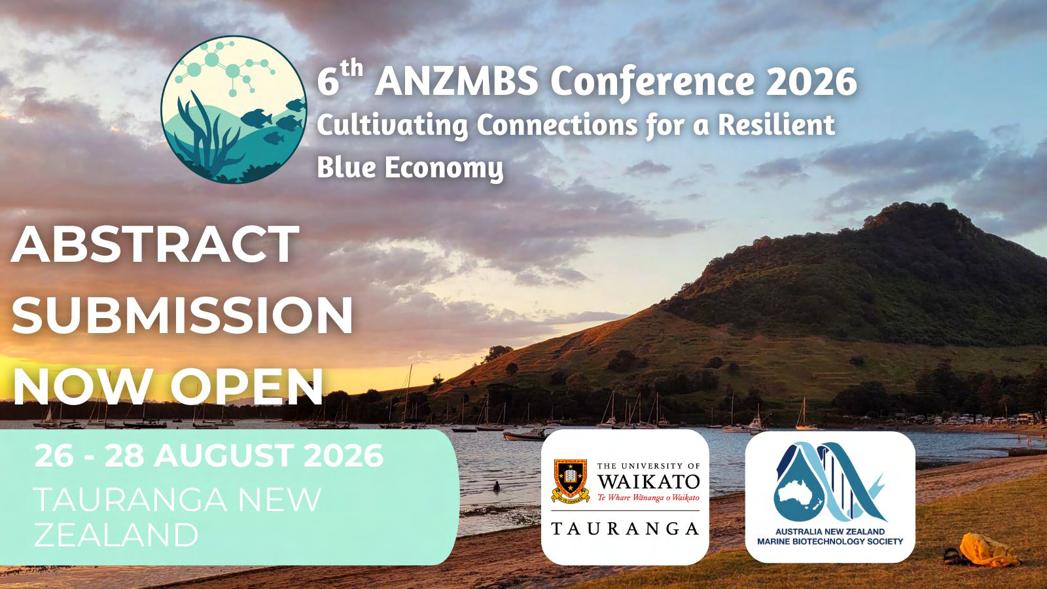
The Australia New Zealand Marine Biotechnology Society (ANZMBS) will hold its 2026 conference from 26–28 August at the University of Waikato Tauranga campus.
The conference theme, Cultivating Connections for a Resilient Blue Economy, will explore advances in marine biotechnology spanning sustainable aquaculture, algae-derived bioproducts, biomaterials, food and nutraceutical innovation, environmental technologies and marine monitoring systems.
The programme will include scientific presentations, workshops, networking events and field trips, bringing together researchers, industry and innovation leaders from across New Zealand and Australia. Abstract submissions close 27 June 2026.
Further information is available via the ANZMBS conference website.
Image credit Theeraphong - Shutterstock
Lower-sodium salt expands production capacity
SALTWELL Group has expanded production of its lower-sodium SALTWELL® salt ingredient with a new manufacturing facility in Chile.
SALTWELL® contains 35% less sodium than conventional salt while maintaining comparable taste, texture and functionality. The company says it can be used as a clean-label 1:1 replacement for standard salt, helping manufacturers reduce sodium levels in processed foods.
Produced from hypersaline water resources in the Atacama salt flats using solar evaporation, the ingredient is seeing growing global demand as food manufacturers seek healthier formulations without compromising flavour or performance. The new facility is expected to increase production capacity and improve supply chain efficiency.
Organic sector gains dedicated ministerial role
The New Zealand Government has appointed Mike Butterick MP as Associate Minister of Agriculture – Organics, creating what Organics Aotearoa New Zealand (OANZ) believes is the world’s first dedicated ministerial portfolio for the organic sector.
OANZ Chair Noel Josephson described the appointment as the most significant government commitment to organics since the Organic Products and Production Act was passed in 2023.
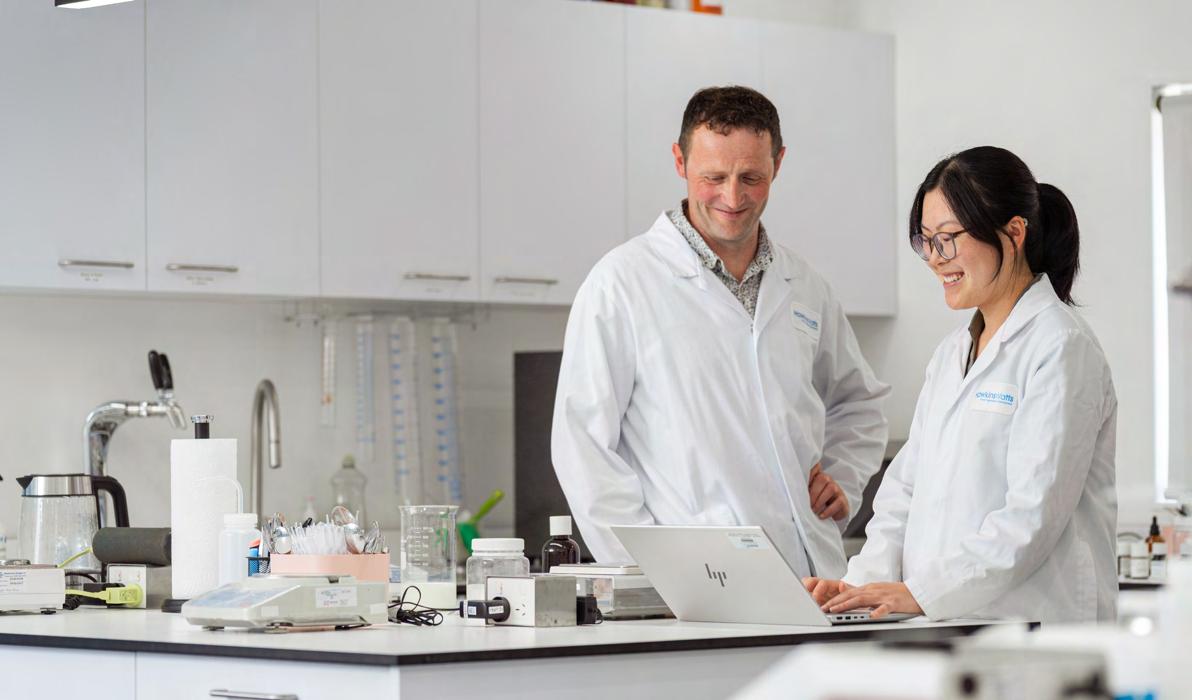
We are pleased to now offer ISO referenced method microbiological testing for a comprehensive range of dairy commodity products, including milk powders, liquid milk, ice cream, cheese, and butter/AMF.
New Zealand’s organic sector generates NZD1.2 billion annually, including NZD606.7 million in export earnings in 2024, and is growing at around twice the rate of wider food and fibre exports.
OANZ says it will work with Minister Butterick on implementation of the Organic Products and Production Act ahead of full rollout in 2028, with a focus on protecting New Zealand’s GE-free status and supporting continued export growth.
Our expanded capabilities encompass an extensive suite of microbiological analyses, including Aerobic Plate Count, E. coli, Salmonella, and many others, supporting both domestic compliance and export market requirements.
With industry‑leading turnaround times and a commitment to accuracy, we deliver reliable results so you can move forward with confidence.
Talk to one of our helpful team to find out more. 0508 HILL LABS | 0508 44 555 22
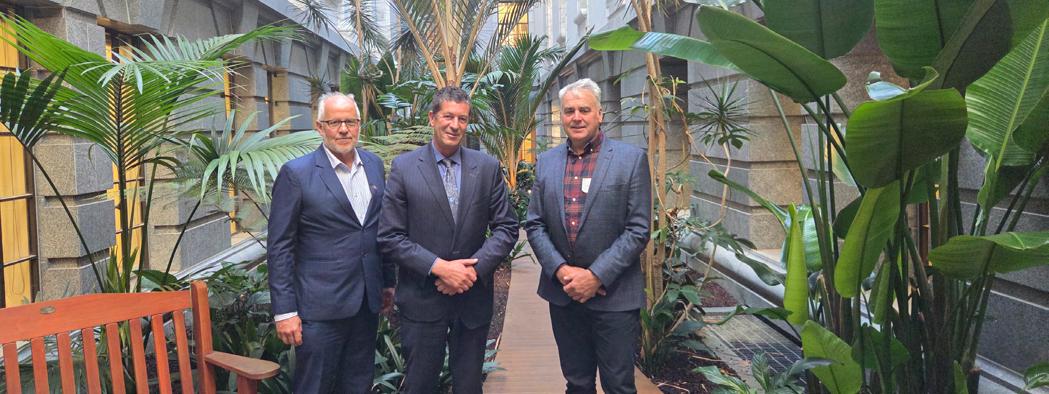
Brendan Hoare, OANZ Advisor, MP Mike Butterick, Associate Minister of Agriculture - Organic, and Scott Lawson, OANZ Board Member
New era for New Zealand Food Awards
The New Zealand Food Awards are entering a new phase in 2026, with a refreshed brand identity, updated award framework and new judging leadership. still under the
Under the stewardship of Massey University, and now in their 36th year, the Awards continue to recognise innovation, technical excellence and sustainability across Aotearoa New Zealand’s food and beverage sector. New for 2026 is the introduction of silver and bronze Quality Marks, broadening recognition across multiple levels of excellence.
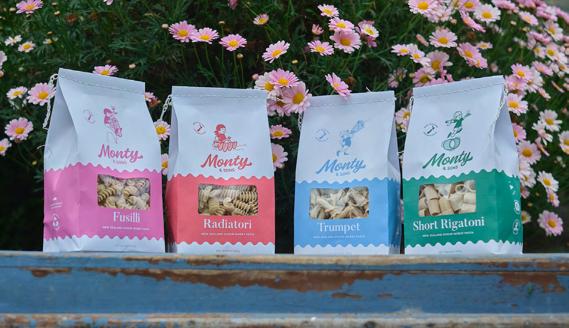
Wairarapa pasta maker recognised for regional grain innovation
Wairarapa artisan pasta maker Monty & Sons has taken out the Leefield Station Supreme Champion title at the 2026 Outstanding Food Producer Awards, recognised for a product judges described as showcasing the flavour and character of locally grown wheat.
Founded by Monty and Jess Petrie, the business grew from a desire to create “honest” food using regenerative farming principles and regional ingredients. Central to the award-winning Radiatori pasta is durum wheat supplied by the Wairarapa Grains Collective, a group of local growers producing ancient wheat varieties suited to the region’s climate.
The Awards also mark a leadership transition, with Nikki Middleditch, General Manager of FoodPilot, appointed Head Judge. She succeeds long-serving Head Judge Kay McMath, whose contribution to maintaining the integrity and credibility of the judging process over 15 years was acknowledged at the 2025 gala dinner.
Massey University Vice-Chancellor Professor Pierre Venter says the Awards continue to play an important role in connecting industry, researchers and emerging talent across New Zealand’s food sector.
Beef + Lamb NZ Awards highlight science and innovation
The 2026 Beef + Lamb New Zealand Awards recognised innovation and scientific contribution across New Zealand’s red meat sector, with winners announced in Christchurch in May as part of the wider Out the Gate industry event.
The awards celebrate the people, research and systems helping shape the future of New Zealand’s sheep and beef industries.
The Ballance Agri-Nutrients Science and Research Award was awarded to Dr Gale Brightwell and the AgResearch Food Integrity Team, recognising their contribution to food integrity research and innovation within the red meat sector.
This year’s awards formed part of Beef + Lamb New Zealand’s expanded Out the Gate programme, which also included sessions focused on genetics, AI-enabled farm data and future farming systems.
Awards Head Judge Peter Gordon said the pasta stood out for its “delicious nuttiness”, texture and digestibility, with judges initially tasting it simply with olive oil and salt to appreciate the quality of the wheat and craftsmanship.
Monty & Sons continues to use traditional bronze extruders and slow air-drying methods, while expanding distribution into specialty retailers around New Zealand.
Natural
ingredient toolbox
targets clearlabel reformulation
Spanish ingredient company Prosur has launched its Get It Natural™ Toolbox, a suite of natural ingredient systems designed to help food manufacturers reduce or replace synthetic additives in food and beverage products.
The toolbox includes solutions targeting nitrite, phosphate and sulphite replacement in processed meats, fermentation-based preservation systems, naturally derived sweetening solutions based on Mediterranean carob, and upcycled carob fibre ingredients intended as cocoa alternatives.
According to Prosur, the ingredient systems are designed to support clean-label reformulation while maintaining functionality, shelf life, texture and flavour. The company says the solutions have been validated through industrial trials and commercial applications.
The launch comes amid increasing consumer and regulatory focus on ultra-processed foods and ingredient transparency, including tighter European limits on nitrite and nitrate additives introduced in 2025.
Prosur CEO Juan de Dios Hernández said the company’s approach centres on using natural ingredients and fermentation technologies to replace synthetic additives while maintaining product performance.
Report examines food access and local food systems in South Auckland
Health Coalition Aotearoa and Healthy Families South Auckland have released a new report examining barriers to affordable, nutritious food access in South Auckland and opportunities to strengthen local food systems.
Titled He kai kei aku ringa – There is food in my hands, the report draws on a year-long research project with the Māngere community and highlights initiatives including school food programmes, community food production and improved local decision-making around food environments.
Professor Boyd Swinburn said the findings reinforce the need for longterm, systems-based approaches to food security and nutrition in Aotearoa New Zealand.
BEVERAGE MANUFACTURING & PACKAGING ASSETS FOR SALE
Late-model European beverage production facility with can/ bottle filling + full packaging line available in situ or as asset packages.
ASSET PORTFOLIO INCLUDES:
Blending, syrup and water treatment systems
Filling, carbonation and pasteurising lines
Canning and bottling packaging lines
Labelling, packing and palletising equipment
Chilling, air compression and plant support systems
Advancing food innovation: New Zealand’s leadership in nonthermal processing
Indrawati Oey1,2, Phil Bremer1 and Sze Ying Leong1,2,3
1Department of Food Science, University of Otago, Dunedin, New Zealand
2Riddet Institute, Palmerston North, New Zealand
3School of Biosciences, Faculty of Health and Medical Sciences, Taylor’s University, Subang Jaya 47500, Selangor Darul Ehsan, Malaysia
Nonthermal food processing technologies, such as High Hydrostatic Pressure (HPP) and Pulsed Electric Fields (PEF), are increasingly being investigated and implemented internationally and within New Zealand, as the food industry seeks processing solutions that preserve freshness, guarantee food safety, reduce energy demand, and unlock novel product characteristics.
In New Zealand, HPP has been commercially adopted for low-temperature pasteurisation of fruit juices, enabling extended shelf life while maintaining freshness and PEF technology has emerged as a valuable tool for structural modification of plant tissues, supporting processors of products such as French fries, sweet potatoes (kūmara), and a wide range of fruits and vegetables.
Building capability at home
A key question often raised is whether New Zealand possesses sufficient expertise in this advanced domain. The answer is a resounding YES.
Led by Professor Indrawati Oey and supported by a strong, multidisciplinary team of experts including food safety (Prof. Phil Bremer), flavour science (Assoc. Prof. Graham Eyres), food chemistry (Prof. Keith Gordon from Chemistry department), plant physiology (Assoc. Prof. David Burritt from Botany Department), sensory and consumer science (Dr. Karen Lusk, Dr. Sze Ying Leong, Dr. Pui Yee Lee and Stephanie Then), product development (Pat Silcock), pharmacology and toxicology (Assoc. Prof. Lyn Wise from Health Science), biomaterial science (Prof. Azam Ali from Bioengineering), machine learning (Dr. Veronica Liesaputra from Computer Science) and others, University of Otago has built one of the most active PEF research hubs in the Southern Hemisphere and the Asia–Oceania region. PEF is widely recognised as a green technology that operates with low energy and water requirements, produces minimal emissions, and offers high quality products, making it highly aligned with sustainable manufacturing, Industry 4.0, and smart food systems. This year marks a significant milestone: the 15th anniversary of its PEF Innovation Hub in New Zealand and Oceania.
Otago team has been instrumental in establishing and leading national capability in nonthermal food processing, particularly in electroporation-based technologies such as PEF. This hub which was set up to support both research and the food industry, is a state-of-the-art, food-grade PEF facility, the first and only tertiary facility of its kind in Oceania. This infrastructure now serves national and international
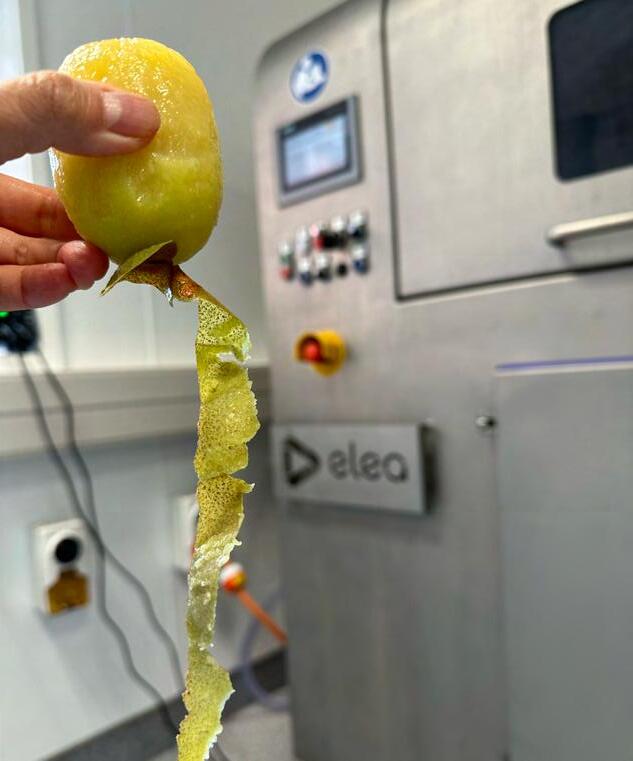
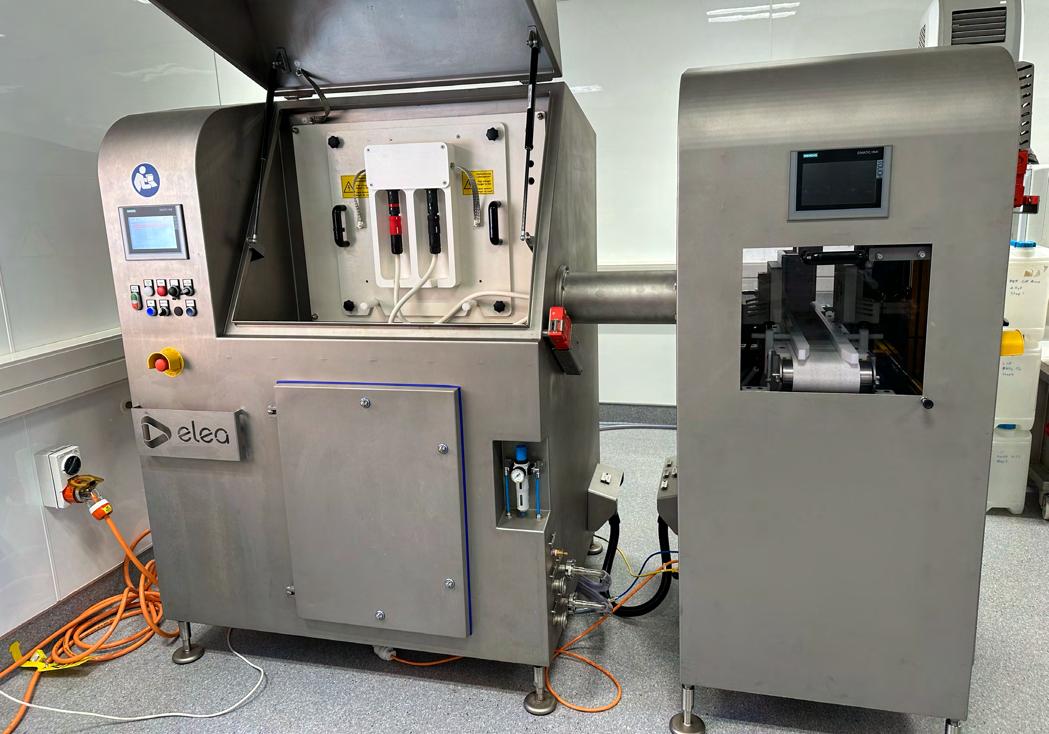
Otago PEF second system (PEFPilot generator) with batch PEF chamber (30 cm electrode gap). Example: structure modification for kiwifruit peeling.
users and forms an important part of the research support provided by the University of Otago to FoodOtago within the New Zealand Food Innovation Network.
The Otago research has significantly expanded and advanced the potential of PEF beyond its initial focus on liquid foods. Today, applications include semi-solid and solid food matrices such as potatoes, fruits, vegetables, and, more recently, meat. All areas highly relevant to New Zealand’s primary industries. Many innovations developed at the University of Otago have been adopted internationally, demonstrating New Zealand’s growing global influence in this field.
PEF systems supporting New Zealand research innovation
The University of Otago’s strength lies in its dual PEF platform, designed and developed together with leading German partners and collaborators including German Institute of Food Technology (DIL), ELEA and Karlsruhe Institute of Technology, combining research flexibility with strong industrial relevance.
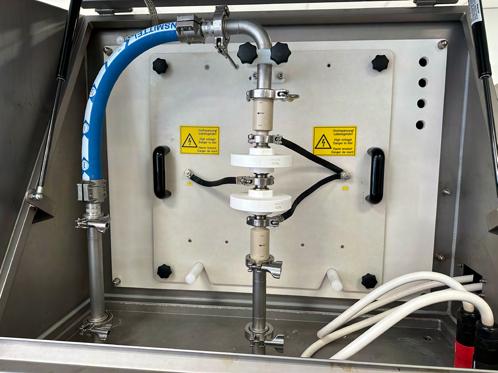
The pilot-scale ELCRACK HVP-5 system enables both continuous and batch PEF processing across liquid and complex solid matrices. It employs bipolar rectangular pulses up to 25 kV and 100 A, allowing precise control of treatment conditions. In continuous mode, titanium co-linear chambers (10 and 25 mm) support flow rates up to 500 L/h, while batch operation uses stainless steel parallel-electrode chambers with adjustable electrode gaps (2–80 mm) and sample capacities up to ~450 g. This flexible configuration supports scalable process optimisation, delivering improved extraction efficiency, texture modification, reduced oil uptake, and enhanced microbial inactivation. Otago's second system is a world-first, custom-engineered PEF chamber designed for continuous treatment of high-conductivity commodities, such as seaweed, and microalgae, and heterogeneous solids without a supporting liquid medium, enabling processing of products such as meat (including bone-in cuts). The unit is built to accommodate variability in geometry, structure, and electrical properties that conventional commercial PEF systems typically cannot manage. Trials have
“Many innovations developed at the University of Otago have been adopted internationally, demonstrating New Zealand’s growing global influence in this field.”
demonstrated its strong potential for meat tenderisation and resulting reduced downstream processing times, creating new opportunities to add value to lower-grade cuts and improve line efficiency. Technically, the platform provides a triple configuration for continuous and batch operation using monopolar rectangular pulses generated at up to 25 kV and 1000 A (PEFPilot). In continuous mode, it operates with 10, 50, or 80 mm co-linear chambers at throughputs up to 7 t/h; the larger chamber configuration also supports applications such as wine, minced meat, and other solid products. In batch mode, the system uses a 300 mm stainless-steel parallel-electrode chamber, accommodating solid samples up to approximately 5 kg.
Driving industry impact and export growth
The translation of research into real-world outcomes has been a hallmark of this work. Through Otago leadership in the Ministry of Business, Innovation and Employment (MBIE) funded Food Industry Enabling Technologies (FIET) programme (2016–2021) and other industry collaborations, the team has helped bridge critical technology
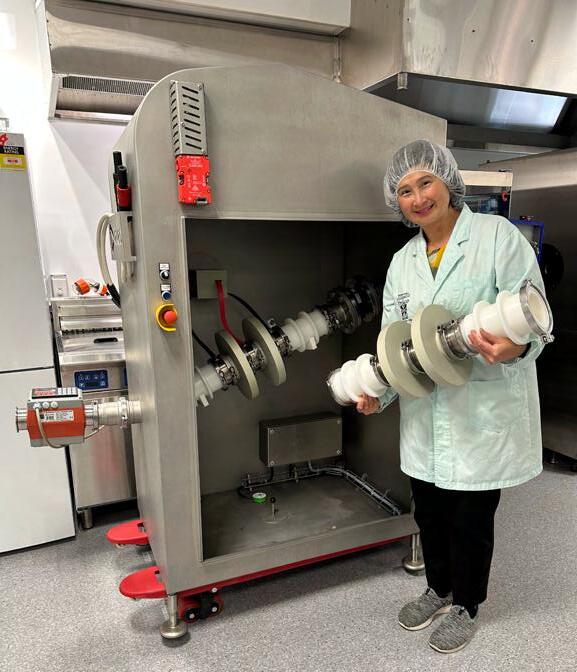
Otago PEF second system: Indra Oey with continuous co-linear PEF chamber (5 and 8 cm electrode gap) for wine and meat processing (running up to 7 ton/h)
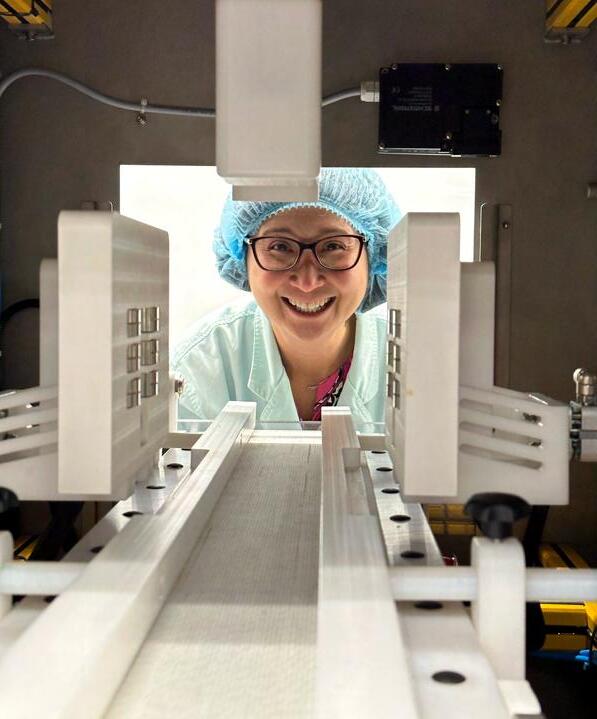
Otago PEF second system: Indra Oey with a conveyor-belt PEF chamber with moving electrodes digitally controlled using advanced data-dr iven systems.
gaps which were limiting export value and competitiveness. A major success has been the commercial adoption of PEF technology by leading French fry processors in New Zealand and Australia from 2020 onwards. These implementations have delivered measurable reductions in energy use, coal consumption, water use, and CO₂ emissions while improving product quality. Companies such as McCain Foods, Talley’s, and Mr Chips now operate PEF-enabled processing lines, each reporting substantial economic and environmental benefits.
Beyond potatoes, PEF has also been validated for the pasteurisation of milk and plant-based milk alternatives, ensuring compliance with New Zealand’s food safety and regulatory requirements. Custom-built pilot-scale PEF systems developed in New Zealand are also supporting emerging applications such as meat tenderisation and seaweed processing, demonstrating the researcher’s abilities to convert advanced science into industry-ready solutions.
Resilience, sustainability and biosecurity
The versatility of PEF technology was further demonstrated during the COVID-19 lockdowns (2020–2022), when the harvesting of the Otago potato crop was delayed, increasing the sugar content and potentially making economically unsuitable for processing. To address this concern the Otago team used their PEF expertise to reduce sugar level in the late-harvest potatoes, hence restoring their suitability for French fries processing and preventing significant losses.
The researchers have also supported growers whose crops have been infected by the Tomato-Potato Psyllid, helping mitigate the visible zebra chip defects in fried potato products. This work enabled previously discarded produce to be utilised, contributing to both farm resilience and national waste-reduction goals.
Supporting global industry standards
New Zealand’s leadership has also extended into international regulatory influence. Collaborations with the New Zealand and international wine industries have contributed to the acceptance of PEF technology by the International Organisation of Vine and Wine (OIV) in 2020 [OIVOENO 634-2020]. This milestone allows PEF-treated wines to access demanding international markets. Beyond regulatory approval, PEF offers wineries the ability to precisely manage extraction processes,
Otago PEF second system: Setting of continuous co-linear PEF chamber (1 cm electrode gap).
Otago PEF second system (PEFPilot generator) with bespoke continuous meat chamber
“With more than 500 scientific publications, the group has made a substantial contribution to global knowledge, covering fundamental mechanisms, process optimisation, and diverse applications across plant and animal-based foods, as well as emerging non-food uses.”
shortening maceration times, saving energy, and increasing production efficiency without requiring additional infrastructure. This technology is being commercially used in wine production overseas.
Developing the next generation of expertise
A defining feature of Otago’s contribution is its focus on building longterm capability. The Otago PEF Innovation Research Hub has trained a large cohort of undergraduate and postgraduate students as well as researchers from New Zealand and around the world. These individuals have developed expertise not only in laboratory research but also in industrial applications and operational systems. With more than 500 scientific publications, the group has made a substantial contribution to global knowledge, covering fundamental mechanisms, process optimisation, and diverse applications across plant and animal-based foods, as well as emerging non-food uses.
Beyond celebration and looking ahead
As nonthermal technologies continue to gain momentum globally, New Zealand is clearly positioned as both a contributor and leader in this space. The combination of cutting-edge research, strong industry partnerships, and proven commercial impact demonstrates how innovation can drive both sustainability and economic growth. ■
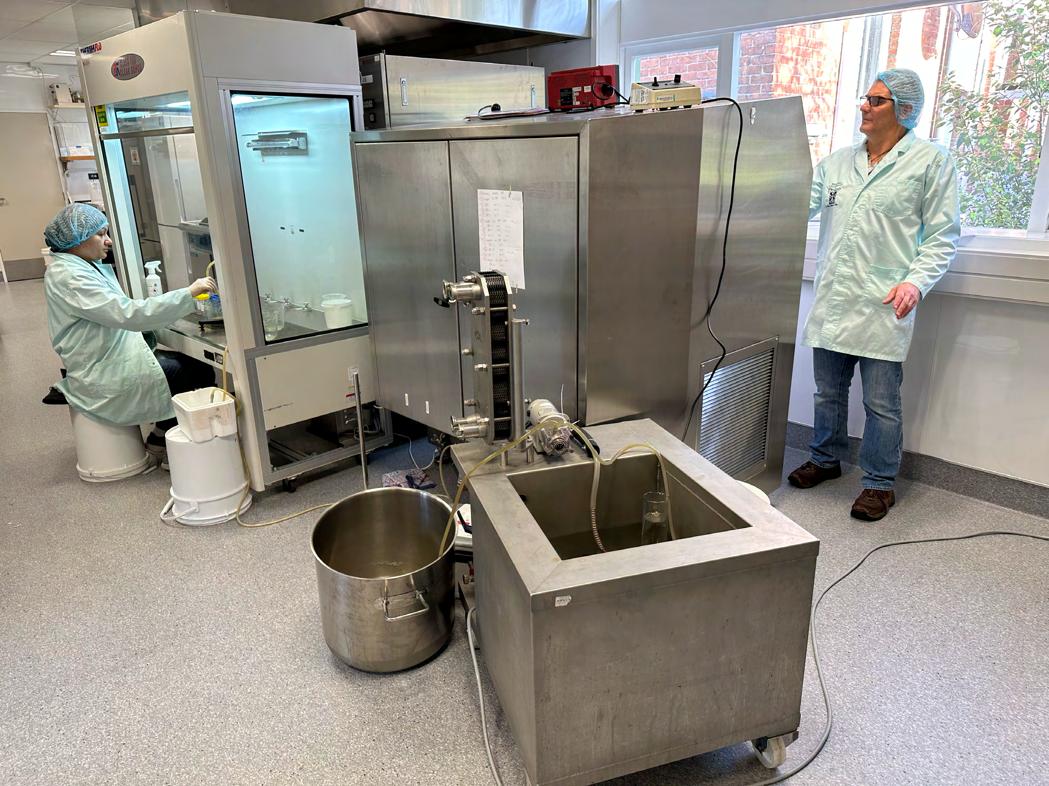
First system (Elcrack generator) completed with heating and cooling system including aseptic filling system for continuous flow. Our team is in action (left: Dr. Mina Tirgar, right: Ian Ross).
To mark 15 years of achievement, the University of Otago will host a PEF workshop on 19–20 August 2026 in Dunedin, open to researchers and industry participants. This event provides an opportunity to connect, learn, and explore the future of nonthermal food processing.
For further information, contact: indrawati.oey@otago.ac.nz
Flow cytometry in food science: advancing immune health and functional foods
Natalie Burr, Senior Research Associate, Health & Consumer Sciences, Bioeconomy Science Institute Maiangi Taiao
Food is more than fuel. The right compounds, at the right time, can prime our bodies to adapt to stressors and recover well. That adaptive lens underpins our work: connecting what we eat with how we think, feel, move and heal.
At the New Zealand Institute for Bioeconomy Science (Bioeconomy Science Institute), our Immune Health & Physical Performance team studies how foods and bioactives support stress resilience and immunity. We run in vitro cell models and human dietary-intervention trials to understand how foods influence stress resilience, immunity and recovery. The goal is practical: robust evidence that can underpin product claims for functional foods and supplements, and clear guidance for processing and formulation.
Flow Cytometry
Flow cytometry is one of our cornerstone technologies. It lets us measure immune changes with cell-by-cell resolution allowing us to understand how food can alter the numbers, differentiation, and function of these immune cells to get a multi-parameter view of how bioactives can actually shift the immune landscape in people. It involves labelling immune cells with fluorescent-coloured antibodies, allowing researchers to identify and categorise individual cell types in detail. Our connections at the Malaghan Institute of Medical Research have helped us to build our capability in spectral flow cytometry in recent years through attendance at the “Grow your Flow” training courses run by Kate Pilkington at the Hugh Green Technology Centre.
Flow cytometry technology has advanced rapidly over the last decade, with modern spectral cytometers now capable of analysing dozens of markers simultaneously to provide highly detailed insights into immune cell populations. To stay connected with advances in immunology and cytometry, researchers from the Bioeconomy Science Institute recently attended leading Australasian conferences in Perth: CytoConnect2025 and ASI2025.
Spectral Cytometry
We were lucky enough to hear Dr Florian Mair from ETH Zürich Switzerland present a talk and a workshop at Cytoconnect2025. Dr Mair is arguably the world leader in flow cytometry who first developed a 50-colour panel. He shared technical knowledge about considerations required when building these large panels, exemplifying the need for training and care when performing high-parameter flow cytometry, as it relies on stringent controls, panel design choices, and validation to ensure that the data produced are accurate and understandable.
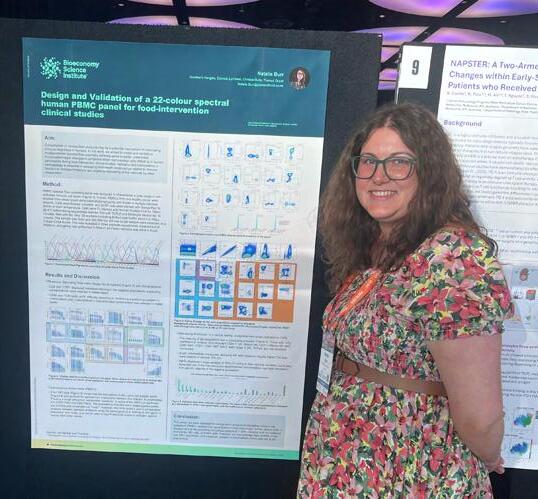
At the CytoConnect2025 conference we presented a poster describing our work designing and validating a 22-colour spectral panel for use in our food-intervention clinical studies which was well received by the flow cytometry community.
Imaging Cytometry
Beyond just increasing the number of colours detectable at one time, an additional technological jump occurring in the field of flow cytometry right now is imaging flow cytometry. Imaging cytometry takes a picture of each cell/particle that flows past the detector, creating
Natalie Burr presenting the research poster at CytoConnect2025
what is essentially a high-throughput microscope for liquid samples. Multiple researchers spoke about their applications for imaging cytometry:
• Dr Kathy Fuller from the University of Western Australia is using imaging flow cytometry, to monitor toxin-producing cyanobacteria in water-supply dams and desalination plants to inform treatment to reduce fouling of pumps. Luca Zappia of the Water Corporation of Western Australia noted that this is replacing traditional microscopy monitoring, is faster, more informative, and will cost just a fraction of the ~AUD$15 million they have spent on the old analysis over the last 20 years.
• Dr Jochen Behrends from the Research Centre Borstel in Germany has used imaging cytometry to identify and quantify pollen from beehives to understand the flowers being visited by those bees. But he also presented a plethora of data from various other applications including liposomal-load delivery, interacting cells, extracellular vesicles, and action of antimicrobial peptides on bacterial cells. This really highlights the adaptability of flow cytometry to measure particles in general, rather than being restricted to only cells.
• Both Dr Fuller and Dr Behrends also presented imaging cytometry data of sperm from various species, where they could measure sperm viability in a high-throughput format.
Sorting Cytometry
Another facet of cytometry is the ability to purify the cell/ particle you want. Sorting cytometry physically separates cells/particles-of-interest by applying charges to droplets to direct them into different tubes; a bit like drafting sheep.
• Dr Sareena Sahab from AgriBio at Agriculture Victoria spoke about their use of a sorting cytometer to sort/ isolate plant protoplasts (plant cells that have had their cell wall digested away).
• Dr Allison McInnes from The Centre for Microbiome Research at Queensland University of Technology is using anaerobic sorting flow cytometry to separate out individual bacteria from human faecal samples to build a biobank of human microbiome isolates. She noted that the autofluorescence spectra of these bacteria tend to be influenced more by the metabolism of the organism (what it’s eating/ producing) rather than being specific to a species.
• Dr John Sharpe from Cytonome (a company with R&D teams in both New Zealand and the USA) custom designs and manufactures industry-scale cell sorting cytometers for different applications. Their main example is a sperm sorter platform which provides a high-throughput, cost effective method of sex-specific sorting of bovine sperm allowing for gender preselection of sperm for artificial insemination of cows.
These are just some of the great examples of flow cytometry technology being adapted and applied to industry and makes me wonder what other applications we will be using this technology for in the food, health and agriculture spaces in the near future.
Building the future of cytometry for the New Zealand food industry
Back home at the Bioeconomy Science Institute, our role is to connect fundamental and applied scientific knowledge to the needs of New Zealand’s food and bioproduct industries. We are translating the advances in flow cytometry into impactful outputs to grow New Zealand’s bio-based economy. Some of the recent work includes:
• In Lincoln, our Premium Crops Group uses flow cytometry to measure the ploidy (genome copy number) and cell cycle of plants to help breed plants that produce higher levels of bioactive compounds. Their cytometer also has the ability to image the cells as they pass through the cytometer, providing a way of performing highthroughput microscopy of single cells/particles.
• In Nelson, our Marine Cell Technologies team are going a whole step further exploring how to utilise variations of these technologies to not just measure but gently sort cells-of-interest to isolate them for food-related applications.
• At the Hopkirk Research Institute in Palmerston North, the Bioeconomy Science Institute and Massey University are continuing to strengthen capability in flow cytometry through collaborative research and shared facilities. Researchers are applying these technologies across a wide range of areas including immune health, animal health, microbiome research, livestock productivity and genetic analysis, demonstrating the growing value of flow cytometry across New Zealand’s food, health and agricultural sectors.
Flow cytometry is a growing technology that we are finding useful applications for in the food industry. We are positioning ourselves to be at the forefront of these technological advances, while continuing to strengthen connections between research, industry and innovation across New Zealand’s food, health and agriculture sectors. ■
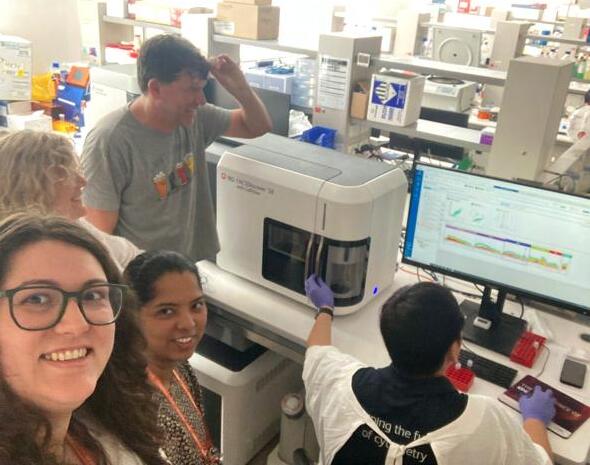
Dr Gowthami Vangala, Natalie Burr, and Joanna Roberts watching a spectral sorting cytometer live demonstration assisted by Dr Jochen Behrends.
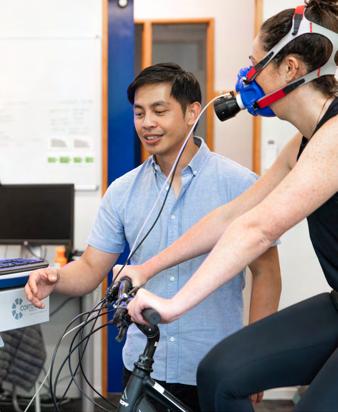
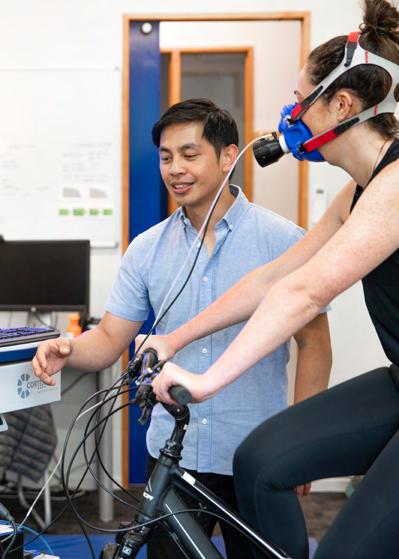
Dr Dominic Lomiwes, Immune Health & Physical Performance Team Leader, with a clinical trial participant
Food technology in the world of GLP-1 receptor agonist drugs
Raewyn Bleakley, Chief Executive, New Zealand Food & Grocery Council
A recent headline from The Times “I lost 3 stone on Ozempic but I didn’t like it” captures the challenge we may face in coming years. The benefits of taking GPL-1 receptor agonist drugs are undeniable but the side effects - akin to living with a permanent case of mild food poisoningare less appealing to some.
One in every eight Americans are taking, or have taken, GLP-1 drugs according to media reports. Their rapid increase in popularity is significantly changing the way whole populations around the world are interacting with food. Even in New Zealand, over 50,000 people have been prescribed this drug, mostly self-funded at a cost of $450-630 per month.
The drug works by tricking the brain into responding as if there is a toxin circulating around the body, resulting in slower digestion, dialling down appetite and increasing nausea. The net result is a vastly reduced energy intake and therefore weight loss and other important associated health benefits. It’s estimated that the net population benefit for diabetes rates alone is huge.
This also means a lot less food is being eaten, which is likely to have a considerable impact on what we end up seeing available to purchase over time.
With more and more people eating less energy, with less appetite but having the same essential nutrient requirements, opportunities for new food development are being pursued by many. From major international brands to ready-to-eat providers here in New Zealand, specific offers are appearing.
Dietitians advise the two most important nutrients of focus are protein and fibre, and this is where most development is centred. A good protein intake is important to maintain muscle during weight loss and many high protein foods are also good sources of minerals such as calcium and iron. Fibre is vital to maintain digestive health and, together with sufficient fluid, reduces the risk of both diarrhoea and constipation. Essential healthy fats (such as those in nuts, seeds, oils and avocadoes) help with the absorption of nutrients, and there is also an emphasis on foods that are naturally nutrient dense such as vegetables, for GLP-1 users. These requirements all offer opportunities for product developers.
“Eating patterns also naturally shift more to small meals often, rather than the traditional three meals a day.”
Eating patterns also naturally shift more to small meals often, rather than the traditional three meals a day. Foods such as functional ice blocks and waters are specifically being designed to help reduce nausea while introducing some micronutrients - where fortification is permitted by regulation.
Some reduced-energy indulgent foods with enhanced protein and added nutrients, are also being launched specially for GLP-1 users. However, literature reveals that usual cravings appear to reduce for users, and as people often lose their desire for indulgent foods, time will tell to what degree new food products will be commercially successful.
Research indicates that some users are also more sensitive to the drugs and their side effects than others. Because for many they take the enjoyment away from food, that is something people would often rather not live without. They may also apparently exacerbate depression and other mental health disorders for some. Feeling unwell due to the reasonably common side effects are enough to make some people stop.
Then there is the cost component. Apparently, many people are unaware that to continue to receive the health benefits, they must stay on the drug for life. That’s a massive commitment that many New Zealanders are likely unable to afford at the current cost. Research is also clear that as soon as people stop taking them, their appetite returns, and weight is regained rapidly.
As scientific publications on GLP-1 receptor agonists continue to appear at an exponential rate, there are still a lot of questions left unanswered. In the meantime, people are making decisions here
and now about whether GLP-1 drugs are for them or not, and food manufacturers are determining how they can address this new relationship that more people are having with food.
If you believe that food is more than energy and nutrients and its role is beyond a fuel for our bodies but also nourishment for the soul, a source of joy and an anchor of so much tradition and social interaction, the questions are beyond the clinical impacts. It’s certainly a fascinating time for all in the food and health industry ■
Dairy quality assurance
Developments in services
Elyse Coker, Key Account Manager, Hill Labs
In the dynamic world of dairy production, maintaining rigorous standards of quality and safety remains essential. ISO reference methods and Dairy Risk Management Programme (RMP) auditing are well-established practices within the industry, and continued expansion of service capability in this area reflects evolving industry needs.
ISO reference methods remain a cornerstone of consistency and quality across the dairy sector. They provide a recognised framework for testing and quality assurance, supporting producers in meeting both domestic and international safety requirements. The precision and reliability of these methods play an important role in maintaining product standards and supporting confidence across the supply chain.
Dairy RMP auditing is similarly central to effective risk management. By assessing risk management programmes, these audits help identify potential gaps and ensure operations align with regulatory and industry expectations. As production systems grow more complex and compliance requirements evolve, access to dependable auditing services is increasingly important.
The way these services are delivered is also an important consideration. Providers such as Hill Labs, which operate with a focus on responsiveness, reliability, and local support, can help ensure that testing and auditing processes integrate effectively into day-to-day operations. Consistent turnaround times and clear reporting are particularly important in supporting timely decision-making.
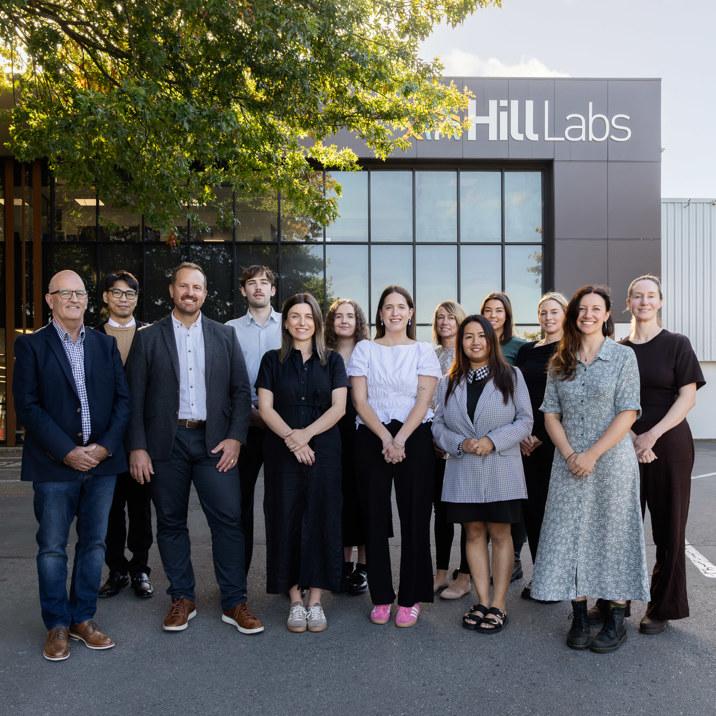
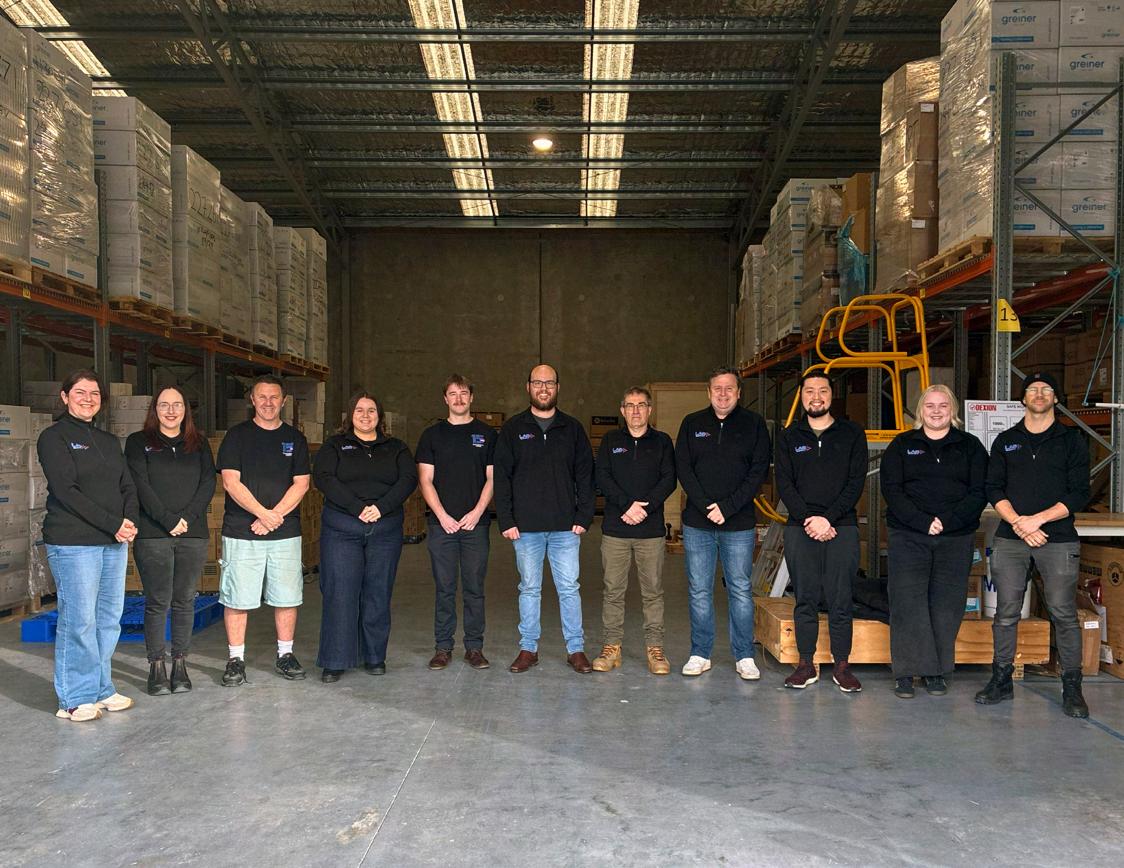
Part of the Hill Labs Inspection and Certification team at the Christchurch office
“Maintaining alignment with internationally recognised standards remains a key factor for the sector, particularly in export markets.”
A wider pool of service providers also introduces more choice into the market for dairy producers. Choice ensures providers continue to invest in their service offering, leading to improved service levels and ongoing development in how testing and auditing services are delivered. For producers, this can mean access to solutions that better align with their specific operational requirements.
Maintaining alignment with internationally recognised standards remains a key factor for the sector, particularly in export markets. ISO reference testing and RMP auditing play an important role in demonstrating compliance and supporting market access, where consistency and traceability are critical.
As the dairy industry continues to adapt, reliable and trusted quality assurance services remain a fundamental part of the production landscape. Expanded access to testing and auditing capability supports producers in maintaining standards, managing risk and responding to changing expectations.
Overall, ongoing developments in this space point to a steady strengthening of the systems that underpin dairy quality and safety, supporting both industry confidence and consumer trust. ■
Change as a Personal Capability
John Lawson, FNZIFST, Lawson Williams Consulting Group
For a long time, people built careers around experience.
You stayed loyal. You built deep knowledge. You became the person who knew the system, the process, the customer, the machine, or the market. That mattered, and it still does.
But it is no longer enough on its own.
Job security does not come from tenure, loyalty, or technical expertise alone anymore. It increasingly comes from your ability to reorient when the situation changes.
That can feel uncomfortable. Especially if you have spent years becoming very good at what you do.
Experience still matters, but it has changed
Experience used to provide a kind of protection. The longer you had done something, the more secure you felt.
Now, experience is most valuable when it helps you adapt faster. The risk is when experience becomes fixed. When people hold too tightly to the way things have always worked. When confidence in past knowledge makes it harder to notice that the context has shifted. This does not mean older skills are useless. Far from it.
It means the best people are not just experienced. They are experienced and still learning.
The new career capability
Change is no longer something you simply cope with. It is becoming a personal capability.
That means being able to:
• Make sense of unclear situations.
• Decide when you do not have perfect information.
• Stay steady when things feel uncertain.
• Learn quickly when tools, systems, or expectations change.
• Influence others even when you are not in charge.
These are not soft skills in the old sense. They are work skills. They affect whether you can stay useful, confident, and effective when the ground moves.
This series explores a growing reality for both organisations and individuals. Change is no longer something temporary that gets managed and then completed. It is now part of the environment we work within every day.
The first articles in this series challenge some uncomfortable ideas:
• Article 1 (January 26) - That stability is no longer guaranteed.
• Article 2 (March 26) - That traditional approaches to change management are struggling to keep up.
• Article 3 (This issue) - That adaptability is becoming one of the most important personal and professional capabilities people can build.
The hard part
The people who struggle most with constant change are not always the weakest performers.
Often, they are highly capable people who have built their confidence around knowing the answer.
That works well in stable environments. It becomes harder when the answer keeps changing.
John Lawson is founder of Lawson Williams Consulting Group. He initially studied Biotechnology at Massey and is a Fellow of NZIFST. He now enjoys leading a team of recruitment consultants,
If your value has always come from being the expert, uncertainty can feel like a threat. New systems can feel like a loss of control. New ways of working can feel like your experience is being dismissed. That reaction is human.
But it can also become limiting.
Adaptability is not pretending everything is fine Being adaptable does not mean saying yes to everything. It does not mean accepting poor planning, unclear priorities, or unrealistic workloads.
Adaptability is not blind positivity.
It is the ability to pause, understand what has changed, and work out what is needed next.
Sometimes that means learning a new tool. Sometimes it means asking better questions. Sometimes it means letting go of a process that used to work but no longer fits.
And sometimes it means saying, clearly and constructively, “This change will not work unless these things are addressed.”
That is adaptability with judgement.
Learning speed now matters
In a stable environment, accumulated knowledge carries you a long way.
In a changing environment, learning speed becomes just as important.
The question is not only, “What do I know?”
It is also, “How quickly can I learn what is now needed?”
That shift is especially important as digital tools, automation, AI, sustainability expectations, and compliance requirements keep changing the way work is done.
“The goal is not to reinvent yourself every year. The goal is to build enough change capability that you do not feel knocked over every time something shifts.”
Nobody can know everything in advance. The advantage goes to people who can learn, unlearn, and relearn without needing the world to stop while they catch up.
What this means for you
The goal is not to reinvent yourself every year. That would be exhausting and unrealistic.
The goal is to build enough change capability that you do not feel knocked over every time something shifts.
That starts with a few honest questions.
Do you wait for certainty before acting?
Do you resist new tools because the old way still feels easier?
Do you see change as criticism of the past, or information about the future?
Do you build skills before you urgently need them?
Change capability is not about being fearless. Most people are not. It is about being able to move while things are unclear.
And in the years ahead, that may become one of the most important career skills of all. ■
Staying ahead of food safety risks
Understanding food risks and how to control them is essential to protecting the safety and suitability of food in New Zealand.
Vincent Arbuckle, Deputy Director General, New Zealand Food Safety
While managing risks is integral to day-to-day food control, changing external conditions can challenge control systems. Changes to technology, the environment, or economic or social factors can affect how food safety risks impact our food.
New Zealand Food Safety contributes to understanding and communicating food safety risks to the wider food sector. By sharing information on new or emerging food safety risks, and ways that New Zealand Food Safety is working to mitigate them, we can reduce uncertainty and assist the food industry to prepare, minimising potential disruption.
New Zealand Food Safety monitors emerging risks and shares insights to help the food system stay prepared.
Like several of our counterpart food safety organisations, New Zealand Food Safety has established an emerging risk function to assist the New Zealand food system to anticipate surprises. Our approach was developed along traditional lines: identifying risks, considering their impacts and possible mitigations, and then reporting on them. However, we saw two opportunities to improve how effective and useful the work could be in the New Zealand context.
First, by shortening the time horizon we monitor, we can focus our observations on immediate food safety risks where necessary. The Emerging Risk team monitors current foodborne illness outbreaks and food safety recalls in overseas markets and warns when these risks could reach New Zealand, for example through imported food products. The team develops notifications daily and compiles actionable advice for New Zealand Food Safety’s Food Compliance Services team. Secondly, we focus on making risk information accessible. Risk information is most effective when it is available to those closest to the risk, as they are often best placed to manage it. We publish our work regularly, so it is openly available to the wider New Zealand food sector. To support this, the Emerging Risk team publishes a regular fortnightly bulletin for an audience approaching 5000 subscribers. This includes subscribers in New Zealand and overseas, including counterpart food safety agencies. The bulletin summarises lessons from reports of outbreaks and recalls.
The bulletin also includes summaries of current topics in food safety and emerging risk that outline drivers of change. The team scans publicly available information sources and selects items for their relevance and significance to impacts on health, consumer trust, and potential financial or economic loss. Recent topics covered in the bulletin include artificial intelligence for food safety and emerging sources of microbiological foodborne illness risk.
You can read the bulletin on the Ministry for Primary Industries’ website.
Published every two weeks, the bulletin encourages food business operators to consider how overseas food safety incidents could affect their businesses and invites them to examine how their food safety controls could be improved. By considering the future, regulators, verifiers, and operators can strengthen food safety controls, improve their resilience, and reduce harm to consumers if things go wrong.
You can subscribe on the Ministry for Primary Industries subscription webpage to receive an email notification whenever a new bulletin is published. You can also read the bulletin on the Food safety insights, emerging risks, and current issues bulletin webpage, which now includes a search interface for querying past issues. ■
Mission to the Moon
John Brooks' view of the food world through the lens of a microbiologist.
Professor John D Brooks, FNZIFST
Many readers of this journal will have suffered through my Food Microbiology lectures at Massey University or AUT. I wonder how many of them will continue reading…. Perhaps you should not read this while having lunch!
The idea for this column came from watching the Artemis II crew heading to the Moon - a very different mission from John Glenn’s first orbital flight around the Earth, but with some important similarities. Many missions followed Glenn’s, including Apollo, the Shuttle and the International Space Station (ISS). In the early stages of the Artemis II mission, the toilet malfunctioned - not a good start for a 10-day excursion! Serious illness on the ISS might result in a rescue and early return to Earth. But from the back side of the Moon … So far, so much clickbait!
In each of these missions, the crew had to eat meals produced on Earth. The food had to be totally safe. Imagine, if you are brave enough, being in weightlessness, wearing a sealed spacesuit, having eaten a meal and then suffering from food poisoning. Diarrhoea will be highly inconvenient, but vomiting would be catastrophic. Even an irradiation or thermal sterilisation process requires very careful control. Why testing alone isn’t enough
Testing of foods is fraught with problems. Anyone who has studied statistics will be aware of the sampling errors that can lead to the acceptance of a batch of product containing defective items. Testing typically analyses only a small portion of a food batch, e.g., 3 x 10g samples, which will not accurately represent the entire batch. Contaminants are often not evenly distributed, leading to potential "hot spots" that could fail to detect a low level of contamination by a dangerous pathogen. There are statistical methods to design a suitable sampling plan, but food testing cannot guarantee safety.
The origins of HACCP
The mission planners were well aware of these hazards. Possibly the first approach came in the late 1950s and early 1960s from the Natick Laboratories of the US Armed Forces with their Modes of Failure programme. The Pillsbury Company, with the cooperation and participation of The National Aeronautics and Space Administration (NASA), and the US Air Force Space Laboratory Project Group, was soon tasked with developing a more robust system to ensure the safety of astronaut food. NASA required a “zero defect” food production process. The result was the Hazard Analysis Critical Control Point (HACCP) framework. I read about the framework in an American journal around 1978 and decided to introduce it into my third-year Food Microbiology course. I may have been the first in New Zealand to consider it an important part of making safe food here.
In 1990, the European Union made the implementation of HACCP a legal requirement for all food businesses, but it had already been endorsed by the World Health Organization (WHO) in 1983. Surprisingly, it was a long time before HACCP was mandated internationally. Perhaps the real push came from the Jack in the Box outbreak of Escherichia coli O157:H7 in 1992-1993, which I discussed in my column in the April 2025 issue of FoodNZ. Consumption of contaminated beef patties led to the deaths of four children and infected 732 people in four US states. Many of the survivors suffered permanent kidney and brain damage.
HACCP in practice
The implementation of HACCP-based Food Safety Plans (FSP) is surprisingly complex. Readers who have gone through the process for their own companies will attest to this. It is not something that can be done in a couple of days when plant operation is slow. As an example, Pillsbury launched the first-ever HACCP training course titled “Food Safety through the Hazard Analysis and Critical Control Point System” in September 1972. This was a comprehensive 21-day programme that included 11 days of classroom instruction and 10 days of canning plant evaluations. Our two 1-hour lectures to students are woefully inadequate to prepare them for setting up and running an HACCP-based FSP. OK, so what is HACCP? It includes the assessment of potential hazards, prescribes for the elimination of avoidable hazards and sets tolerances for those that cannot be eliminated in the processing of food. It defines the appropriate control measures, in-process testing and criteria for product acceptance. It is a rational, systematic and documented procedure which can be used for organising and implementing the entire food safety programme. It also focuses on the plant, equipment, supporting infrastructure and staff training.
It is important to recognise that development of the FSP cannot be delegated to a consultant - the whole company should be involved for total buy-in. The crane driver in the reception yard sees all the raw materials being delivered and can have a significant input to the FSP. The FSP is also a living document that must be reviewed regularly and audited.
“Testing of foods is fraught with problems. Anyone who has studied statistics will be aware of the sampling errors that can lead to the acceptance of a batch of product containing defective items.”
Odd Spot:
I did develop an FSP for a small food processor and asked one of my students who worked there during the vacation what he thought of the plan. He hadn’t seen it. I asked the production manager about it, and he said, “Oh yes, it’s somewhere on the shelf in the office”. ■
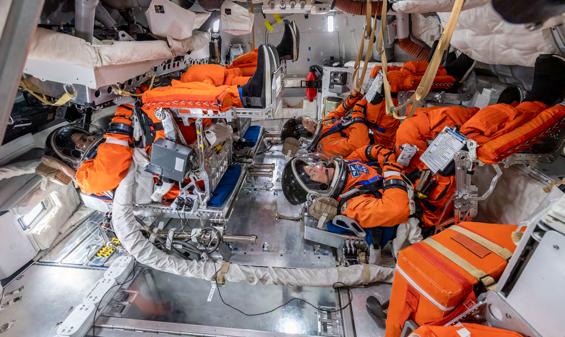
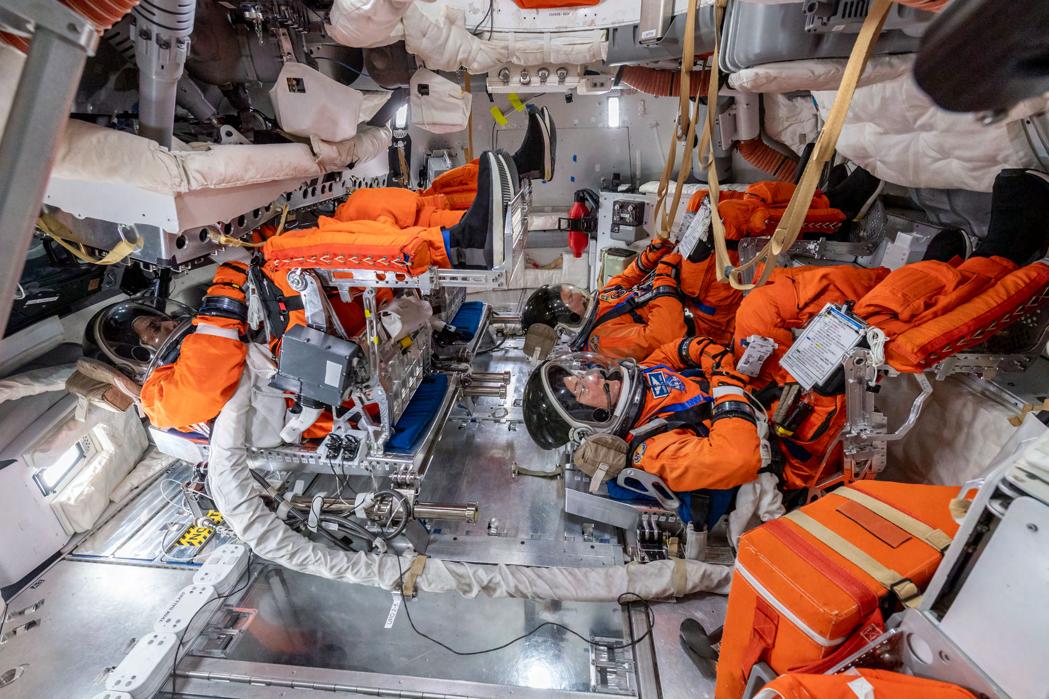
The astronauts in their take-off configuration on Artemis II
The NZ Food Safety Science & Research Centre celebrates an eventful decade
NZ Food Safety Science & Research Centre
The New Zealand Food Safety Science & Research Centre (the Centre) celebrated its tenth birthday in May and is reflecting on its achievements as well as its future direction. It was a challenging start, born out of the tumultuous Whey Protein Concentrate (WPC80) scare in 2013, which highlighted how important our reputation for producing safe foods is to the New Zealand economy.
From crisis to collaboration
Based on the recommendations of a subsequent government commission, the Centre was established to help repair and maintain the reputation of the New Zealand food industry and save them from financial harm – not to mention the number one goal of keeping consumers safe from foodborne disease. Government came to the party with a significant contribution toward the cost of any research, which would be co-designed and managed by the Centre to make it as easy as possible for industry. They would now have immediate access to the best scientists, nationally and internationally.
The Centre has been blessed with staff who really know what they’re doing – they’re expert, experienced and highly respected in the science world: former directors Distinguished Professors Nigel French and Phil Bremer, Drs Cath McLeod (now Chief Scientist at Cawthron Institute), and Libby Harrison; and Marie Bradley the current director; deputy director and associate director respectively, Drs Tim Harwood and Gale Brightwell; and associate director operations, Dr Wendy NewportSmith. Phil Bremer is now the Centre’s Chief Scientist.
Responding to real-word challenges
It is an understatement to say that the last ten years have been eventful. The Centre has supported industry in many ways that members could not have envisaged at the outset. Nigel French had been warning of the likelihood of a pandemic for many years and was just the expert needed when COVID-19 emerged. China was on the verge of shutting out our kiwifruit exports when they feared that the virus could survive on packaging. Fast work by the Centre assured them that any risk was negligible. Industry needed existential advice on PPE clothing and protocols to prevent viral transmission among staff and avoid factory/ abattoir closures. What a time.
Cyclones Hale and Gabrielle hit growers and orchardists as never before, and just as most of the apple and pear crop was about to be harvested. A tragic loss, and though when you visit Hawke’s Bay now there is hardly a sign of the flooding three years later, many growers had to walk away or are still in recovery. Centre scientists helped them make urgent decisions about what was safe to pick, and when they could replant. And they have produced clear directives on how to manage inevitable future heavy rain events. This has included extensive research by Graham Fletcher and his team at the newly formed Bioeconomy Science Institute (BSI) on how to detect, control and eliminate pathogens from horticulture products. The research has ranged from dealing with crises to ensuring that New Zealand can continue to sell its food to the world. For example, ensuring that New Zealand red meat continues to meet the US regulations around the presence of STEC (shigatoxin-producing E.coli) has involved decades of work by an entire team of scientists at BSI, led by Centre associate director Gale Brightwell, to invent new technologies to sanitise carcasses and increase their shelf life on the long journey to market.
Tim Harwood and Kirsty Smith (both at Cawthron Institute) came to South Australia’s rescue when a mega-size algal bloom formed and persisted off the coast of Adelaide, killing thousands of sea creatures and closing commercial fisheries for months. There is no trans-Tasman rivalry when it comes to environmental science. Disasters forge human bonds and show the value of teamwork.
Food safety culture comes into focus
A significant recent development is the establishment of the Food Safety Culture Lab at University of Otago - a multidisciplinary research group that focuses on human behaviours in the food industry which can lead to foodborne illnesses.
The Lab is co-led by Centre Chief Scientist Phil Bremer and Professor Miranda Mirosa, a behavioural scientist from Otago University’s Department of Food Science and member of the NZFSSRC Science Leadership Team. There will also be another close connection with the Centre through researcher Dr Wendy Newport-Smith, who specialises in food safety culture and ethical leadership.
Professor Mirosa says there is a strong focus globally on food safety culture, and the NZFSSRC has reflected this by running workshops for members, led by international food safety culture guru, Frank Yiannas.
The shift in food safety from a purely technical, science-based approach to one focused on behavioural food safety culture acknowledges that despite rigorous Hazard Analysis Critical Control Points (HACCP) plans, human error, poor hygiene practices, and lack of motivation are still responsible for many foodborne illness outbreaks.
During all the aforementioned crises and the day-to day management of research projects, Centre staff/scientists have formed trusted friendships as well as professional relationships with industry contacts including Denver McGregor (NZ King Salmon), Kaylene Larking (Meat Industry Association), Kerry Mulqueen (Poultry Industry Association of NZ), Agam Nangul (Zespri), Jeremy Hill (Fonterra) , Philip Wescombe (Oceania Dairy), and Rachel Kilmister (NZ Apples & Pears). You will see some of these key individuals interviewed in the video the Centre has just made to show new members how it can help and mark its tenth anniversary.
7 June is World Food Safety Day. New Zealanders who have the luxury of taking safe food for granted may wonder at this. But its messages are as relevant to us as any other country. We need data, data, data... science and evidence-based decisions. The standards imposed by food importers get higher and higher as our technical ability to detect contaminants improves.
Food safety is hard, because efforts have to be maintained over long periods when nothing happens and it’s hard not to let the guard down. The Centre has to keep up the pressure to remain vigilant.
Marie Bradley, NZFSSRC director
Building capability for the future
A particular focus for director Marie Bradley is to develop new capability in food safety science. As with many fields, the average age of food safety scientists is high. The Centre offers PhDs in food safety science and is proud of the calibre of past recipients – Rose Collis, Laura Biessy, Sam Murray, Erin Young, Holly Gray and Swathi Sadanandan.
Marie says, “The whole science system is in transition, which is stressful and unsettling. Money is tighter than ever, so the emphasis is on efficiency, collaboration, and coordination.”
Marie is strongly advocating for continued investment in food safety science by industry, taking advantage of the government’s and Massey’s generous co-funding.
Marie will preside over the first food safety session at the NZIFST conference at the end of June. “The conference is a big opportunity to showcase the Centre, as well as the latest science, and emerging issues we want industry to focus on. These are coming at us thick and fast. By becoming a member of the Centre, you are automatically “linked in” to the dynamic Emerging Risks Information Service (ERIS) managed by Nicola King.
“The Centre helps companies and industries not just to design research projects to address specific problems, but to learn about and apply revolutionary new technologies like whole genome sequencing and artificial intelligence. These can be simply overwhelming for smaller companies.”
If you are interested in becoming a member of the Centre, seek Marie out. Can you afford to be on the outside? ■
Kirsty Smith and Tim Harwood from the Cawthron Institute, Nelson
NZIFST Conference 2026
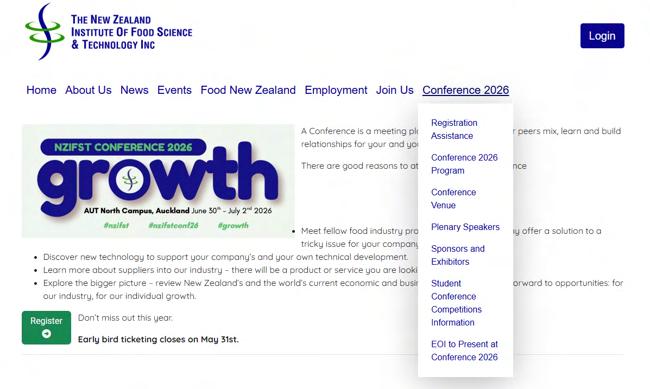
This image of the NZIFST homepage shows the dropdown menu under Conference 2026
Everything you want to know about conference is here.
There are good reasons to attend this year’s conference:
• Meet fellow food industry professionals – someone may offer a solution to a tricky issue for your company’s or your own benefit.
• Discover new technology to support your company’s and your own technical development.
• Learn more about suppliers into our industry – there will be a product or service you are looking for.
• Explore the bigger picture – review New Zealand’s and the world’s current economic and business situation and look forward to opportunities: for our industry, for our individual growth.
Ultimately, a conference is a meeting place, where you and your peers mix, learn and build relationships for your company’s and your benefit. Don’t miss out this year.
Registration now open
Please use this QR code to link to the registration form or go to https://nzifst.org.nz/ conference-2026/registration
More information available from the programme now on the website.
Anne Scott, 2026 NZIFST Conference Committee Chair
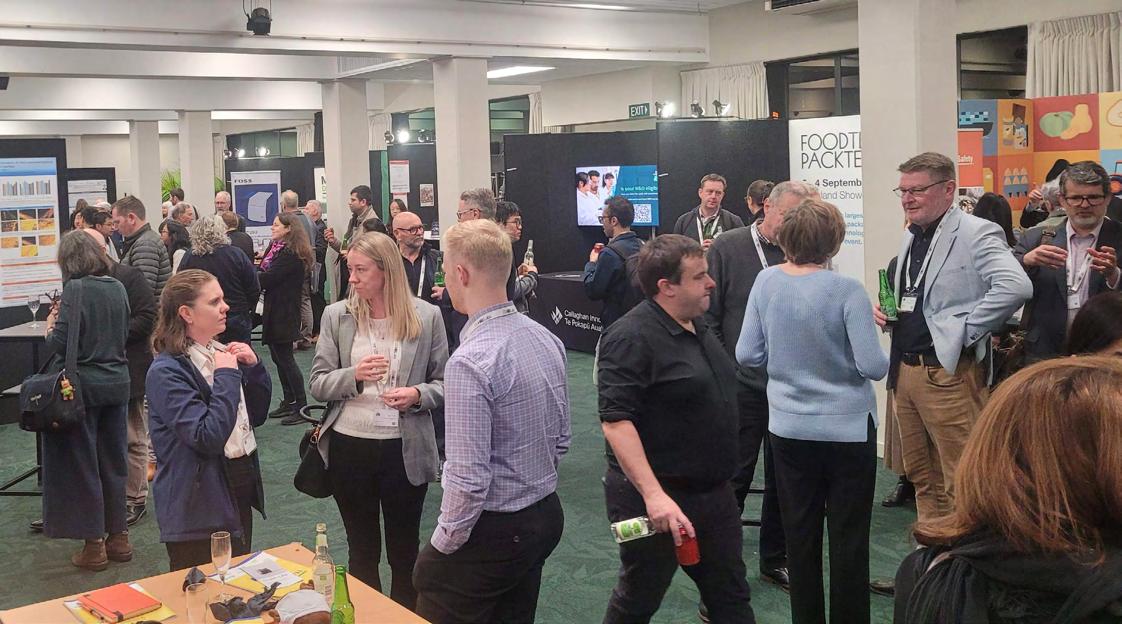
Posters and Exhibitor social event at the NZIFST Conference 2025
Q&A with Dr Anil Kaw
Dr Anil Kaw is currently the General Manager of Innovation at Yili Oceania Group, New Zealand. The company manufactures quality dairy products across retail, food service, ingredients, infant toddler and adult nutrition categories. Their brands include Westland Milk Products, Oceania Dairy, Pure Nutrition Limited, Easiyo, and Canary.
Tell us about your career history and biggest achievements.
I have been grateful to have had over 30 years in the global dairy and food industry with experience across India, New Zealand, Australia, the Middle East, and Egypt. The seeds of my career were planted whilst completing my Diploma in Dairy Technology and Masters in Dairy Chemistry at the National Dairy Research Institute in India. However, I believe the foundations were truly laid whilst doing my Ph.D. in Food Technology and Executive MBA from Massey University in the later part of my career.
My expertise centres on research and development, new product development, operations, technical/quality assurance and executive leadership. I am passionate about the integration of innovation and collaboration, and building high performing teams. This has helped keep my focus customer-centric, having developed products (B to C, B to B) for New Zealand, Australia, USA, China, Japan, the Middle East and other global markets.
What keeps you interested in the food industry?
Food is the basic requirement for all human beings. It should be nutritious and at the same time be tasty, convenient and sustainable. Researching what consumers and customers want and then developing new products with differentiation for esteemed customers keeps me interested in my job.
What’s one recent scientific or technology advance that you think will most change how food is produced or processed in the next 5–10 years?
One advance that I think will challenge and alter the trajectory of food production in the next decade is Artificial Intelligence (AI) enabled precision fermentation.
This involves the convergence of precision fermentation with AIdriven bioprocess optimisation via machine learning, digital twins, and automation. These elements are now being layered on top of fermentation to increase scalability and improve cost-effectiveness so that producing specific food ingredients can be rapidly optimised reducing dependence on large scale agriculture.
For example, precision fermentation is already being utilised on a commercial scale to produce enzymes (i.e. rennet). Rapid expansion is underway in using this technology to produce dairy proteins, egg protein, fats, collagen and natural colouring.
Where do you think the biggest opportunities lie for New Zealand producers to add value?
From a New Zealand perspective, the biggest value add opportunities sit where our natural advantages such as primary production, clean green reputation, strong science base, intersect with processing, IP,
and circularity. Based on recent New Zealand specific evidence, four areas stand out—with ingredients and waste valorisation leading, and functional foods emerging as the next layer of value capture.
1. Ingredients: moving beyond commodities (highest near term impact)
Our industry has already proven that ingredientisation works—whey protein being the classic example. Whey shifted from a problematic waste stream into one of the country’s most valuable dairy exports once processing and functionality were unlocked.
2. Waste reduction to waste valorisation (biggest unlocked value)
The strongest evidence of “low hanging fruit” is in turning unavoidable waste into saleable inputs.
Functional foods are attractive—but they work best when built on ingredient platforms, not as stand alone products, e.g. Bioactive peptides and fibres derived from dairy, brewing, fish, and plant side streams with potential roles in gut health, cardiovascular health, and healthy ageing.
4. Precision fermentation as an enabler, not the end product
Precision fermentation is not the value by itself—it is the engine that allows New Zealand to convert low value biomass into high value proteins and fats, create animal free analogues that fit New Zealand’s sustainability narrative, and build exportable IP rather than shipping raw material.
New Zealand’s biggest opportunity is not to grow more food, but to extract more intelligence, functionality, and value from what we already grow. ■
What a career in food technology has offered me
• Global Impact: Shaping nutrition and sustainability worldwide
• Innovation: Creating functional foods, beverages, and ingredients
• Leadership: Inspiring teams and driving positive culture
• Continuous Learning: Collaborating with academia and industry
• Career Diversity: Spanning operations, R&D, strategy, quality, across international roles
Advice for students and early-career professionals Be curious, build skills, network, persevere, embrace change and above all, a “Can Do Attitude” matters.
Branch news
Updates from around Aotearoa New Zealand
Catch up on the latest happenings from our national branches — from recent events and speaker sessions to prizegivings and member gatherings, this section showcases the vibrant activity and community spirit across our network.
waikato
Student Careers Evening
Waikato & Bay of Plenty
Student Careers Evening
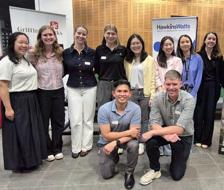
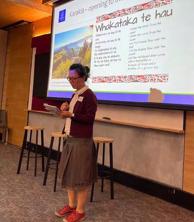
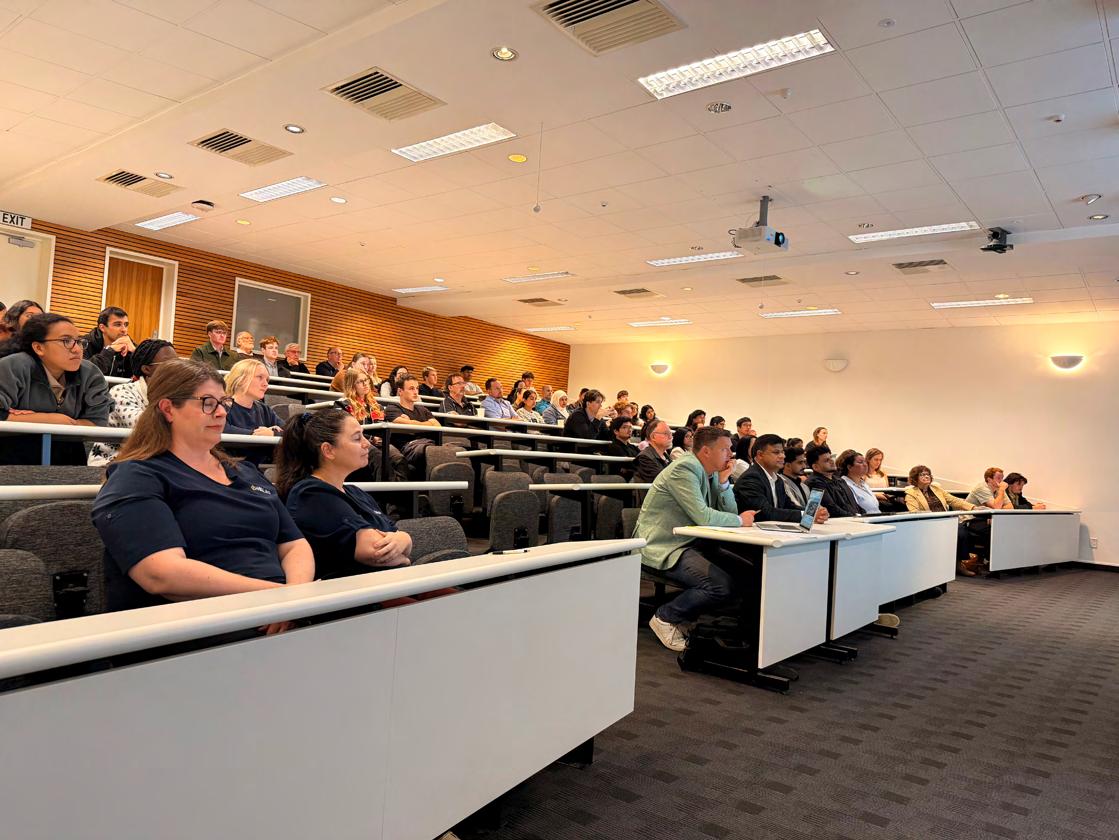
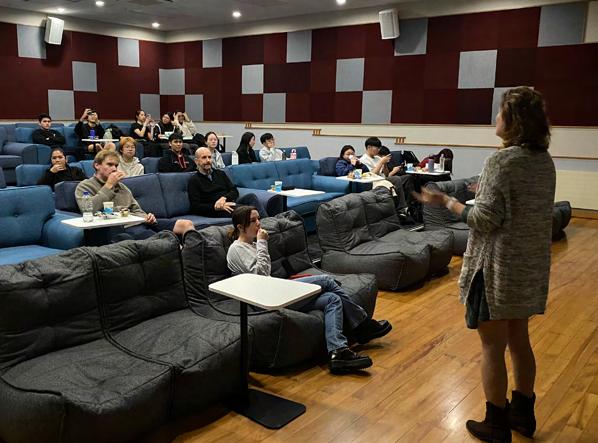
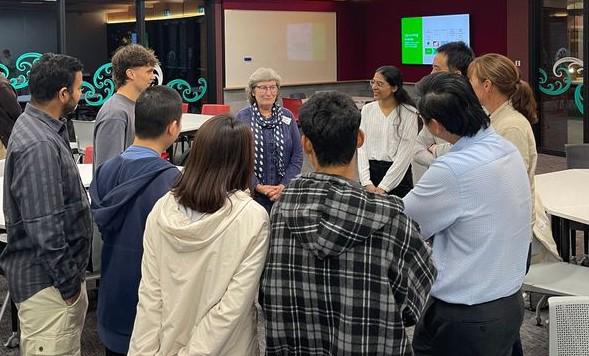
The NZIFST Waikato & Bay of Plenty Branch, together with the Auckland and Otago/Southland branches, hosted the first joint hybrid Student Careers Evening on 7 May 2026. The event attracted more than 70 attendees in Hamilton and provided final-year students, graduates and industry professionals with a valuable opportunity to connect, exchange insights and explore career pathways within New Zealand’s food sector. Hosted at Wintec, the Waikato session focused on Food & Engineering and welcomed students from Wintec and the University of Waikato, including aspiring food technologists, process engineers, and future industry innovators.
Following a virtual welcome from NZIFST President Bob Olayo and a keynote presentation by Sam Borgfeldt of Beverage and Food Gurus Limited, the Waikato programme featured presentations from Deepak Benny John of Suntory Oceania and James Bier of The Tatua Co-operative Dairy Company Limited. The speakers shared their experiences transitioning from tertiary study into careers in product
development and people management within the food industry, providing students with practical insights into professional pathways and industry opportunities. The evening concluded with an engaging networking session, where attendees connected directly with speakers and industry representatives to discuss careers and build professional relationships.
NZIFST extends its sincere thanks to Wintec for hosting the event, the University of Waikato School of Engineering for catering support, the local speakers, and participating organisations including The Tatua Co-operative Dairy Company Limited, Fonterra, Tetra Pak, Bürkert Fluid Control Systems, PDV Consultants, BHF Technologies, Hill Labs, and ALS for supporting and inspiring the next generation of food professionals. Special appreciation is also extended to Chathurika Samarakoon and NZIFST for coordinating the event and helping make this inaugural national collaboration a success.
Marcus Loi
Annual International Dinner in full swing
Otago-Southland
Annual International Dinner and Food Science prizegiving
Every year, the International Dinner is a delicious reminder of the ways food has brought this brilliant community together. Hosted by the NZIFST Otago-Southland branch, together with the Department of Food Science at the University of Otago, another successful iteration took place on 26 March.
This year, the organising committee stepped it up. With white tablecloths, decorations, and a fantastic new venue, we were delighted to welcome more than 80 attendees to a refined evening of culinary culture. Dishes from across the globe were prepared and brought to share with everyone. Roti jala with kari ayam, lentil vada, a roast vegetable bake, plump dim sum, tarte aux pommes and a southern-style, sheet-pan chocolate cake. Fourteen main dishes and twenty desserts competed for the coveted best dish awards. As the votes rolled in, clear winners emerged.
Congratulations to Sophia and Eric Liu, who won best main course with their black pepper shredded chicken. And winning for the second time in her postgraduate tenure, congratulations to Carisse Compendio, who’s stunning Buko Pandan won best dessert.
The International Dinner also hosts the Department of Food Science prizegiving, acknowledging the best and brightest undergraduate students and future leaders for the food industry.
Eric and Sophia Liu, awarded Best Main Dish at the International Dinner
Central
Movie evening at Massey University
In May, approximately 22 attendees gathered at the new 52-seat theatre in the Wool Building at Massey University’s Manawatū campus for a special movie night featuring Chef, organized by NZIFST Central Branch. The theatre, which has been custom built with large comfortable seating and surround sound, is now open for booking by Massey staff for student recreational use, teaching and staff events.
The event offered a fun and relaxed evening of entertainment and connection, over some snacks—which included Spanish fried corn posted directly from Spain to one of our committee members. Chef (2014) is a heartwarming film that highlights the power of food to bring people together, whether through family meals, shared experiences, or cultural connection. It also captures the growing influence of social media in shaping reputation and creating opportunities, showing how digital platforms can amplify both challenges and success. At its core, the film is a story about rediscovering a passion for food, staying true to one’s creativity, and demonstrating resilience in the pursuit of meaningful and fulfilling work. It really made you think about food in your own life. Overall, an enjoyable night, and good to have the integration of our local Food Technology students at this event.
Lara Matia-Merino
Congratulations to all the winners:
• NZIFST Prize in Food Science 2025 - Mae Grinlinton Awarded to the top 2nd year student majoring in Food Science
• J. Cowie Nichols Prize in Food Science 2025 - Amy Kelly Awarded to the top 3rd year student in Food Science
• Brenda Bell Memorial Prize in Consumer Food ScienceJohanna Alegado Awarded to the top 3rd year student in Consumer Food Science
• Ina and Leslie Black Prize in Food Science - Mae Grinlinton Awarded to the top student in FOSC111
• Agricultural Innovation Prize - Isla Morison and Dinela Dedic Awarded to the top students in AGRI101
• Annie Aitken Memorial Prize - Carly Smith Awarded to the top Honours student across select science disciplines
• Bee Nilson Award 2026 - Milly Sceats Awarded to the top student enrolling to MSc/BSc Honours
• Kraft Heinz Food Science Scholarship 2026 - Aimee Hills Awarded to the top first year applicant in a Food Science Major
Department of Food Science award winners (l-r) Milly Sceats, Amy Kelly, Aimee Hills, Mae Grinlinton
Jessica O’Connor, Stephanie McLeod
Auckland University introductions and student careers evening
In March, Auckland Branch committee members visited both AUT and the University of Auckland (UoA) to introduce students to NZIFST and share how the organisation can support future careers in food science and technology.
Around 30 students attended the AUT session, where the level of engagement was fantastic. Students asked questions and showed genuine interest in how NZIFST can provide networking opportunities, industry insights and career development. It was especially encouraging to see their enthusiasm for attending the upcoming student careers event.
At the University of Auckland, we spoke at a second-year Food Science lecture, with a few senior students joining the session as well. It was a great opportunity to discuss what NZIFST offers, from industry connections and events to career development opportunities for students interested in the food industry.
Building on these introductions, the Auckland, Waikato & Bay of Plenty and Otago/Southland branches collaborated on NZIFST’s first joint hybrid Student Careers Evening in May. Auckland students joined livestream keynote sessions before connecting with recent graduates and industry representatives during local networking hosted at AUT. More than 70 students from AUT and the University of Auckland attended. Auckland Branch thanks all speakers, sponsors and organisers who contributed to this successful cross-branch initiative.
Gelato time with Little ‘Lato
spoke about her experiences as a food technologist, turned business owner. From studying at an Italian Gelato University, utilising the authentic small-batch techniques to produce award-winning, hand crafted gelato and dairy-free alternatives - with almost 600 gelato flavours developed to date! She spoke of the wins (including the first gelato to win the Supreme Boutique Champion), challenges (electrical issue the day before opening the Ponsonby store!) and interesting gelato flavours such as peanut butter and kimchi, or mince and cheese pie.
After the gelato first course, 15 Foodies got together at Freeman & Grey in Ponsonby for the second course – pizzas! It was great to connect over a meal, with a mix of familiar and new faces and make some new connections. I hope to see more Foodies at events like this in the future.
In April, we hosted a sold-out event at Little ‘Lato Ponsonby. With over 36 flavours to choose from, 40 members enjoyed a scoop of gelato as their “first course”. Little ‘Lato founder Hannah Engelsman (née Wood) Hannah speaking at Little 'Lato
Auckland Branch Committee and Guest Speakers at Student Careers Evening - Neala Hart, Caitlin Menzies, Kara McLeay, Rosa de Jong, Christine Jian, Linda Yan, Violet Xu, Nicole Harvey, Jessi Cao, Lundi Chhun
Ella Zwagerman, Violet Xu, Neala Hart
Canterbury-Westland
Changing health for the better
In April, we welcomed Sam Park, Co-Founder and Co-Owner of Kōrure to our branch for a presentation titled Changing Health for the Better.
Sam first came to New Zealand from Korea as a young student to study at Cashmere High School. She fell in love with the country while viewing the starry skies above her host family’s home on the Port Hills and was determined to come back and live here. 22 years later Sam lives and works here running five companies with her brother.
The companies cover various aspects of nutritional supplements inspired by her family’s interest in health and discovering that the New Zealand-made supplements the family were using, were packed here but included many imported ingredients.
Sam’s vision to make 100% New Zealand supplements led her away from her law qualifications to working with her brother at the University of Canterbury’s (UoC) Centre for Entrepreneurship, as part of the original cohort.
The Centre provided the support they needed to get their first product; green lipped mussel oil supplement, commercialised. The method for extracting the oil was developed in collaboration with the UoC Chemical Engineering Department.
Over three years their orders grew from 10 orders a week to over 100 per day and their manual packing operation on a dining table was no longer sufficient. Now Kōrure operates from a purpose-built factory in Sockburn with freezing and freeze-drying facilities, and the original company has grown to five:
• Kōrure NZ (human supplements)
• Kōrure Pets (pet supplements)
• True Vegan
• NE Tech (natural extraction technologies)
• NZ Health Lab
We learned that the Kōrure Pet supplements were launched during the Covid-19 epidemic. This was a difficult period for many businesses but successful for Kōrure Pet because pet ownership increased significantly at this time.
Sustainability and innovation are key for the Kōrure group, and NE Tech is focussed on improving extraction techniques. Their range has grown from the original green lipped mussel oil to include supplements from berries, hemp, kiwifruit for humans and deer velvet for pets. Sustainability and innovation have also been applied to the packaging. Kōrure has New Zealand-first refillable supplements and worked with Meadow Mushrooms to develop mycelium-based packaging.
The New Zealand supplement market is too small to solely rely on, so exporting is necessary and overseas customers have grown to more than a dozen countries, primarily in Asia-Pacific and the Middle East.
Locally, Kōrure supports communities with involvement in several programmes including Beach Clean-ups (Sumner community) and tree planting.
Sam’s passion and energy for her products was evident to us all, and the branch is grateful for her making the time to talk to us.
Jasmin Estrera
Student networking event at Lincoln University
The Canterbury-Westland branch held its first Student Networking Event of 2026 at Lincoln University on 29 April. Dr Hannah Lee, from Lincoln University and branch committee member, hosted the evening and opened with a karakia.
Rex Johnstone, Branch Chair, introduced the aims of NZIFST, explained the benefits of joining and highlighted the low student subscription cost. Stephanie Trower, Branch Membership Rep, talked about joining NZIFST as a student representative and encouraged new potential student reps to apply. The branch is keen to have two student reps and ideally from different stages of their study program. Being a rep is a valuable networking and learning experience, and makes a great CV addition!
Next committee members introduced themselves with brief career summaries and then mingled with students to share more on working in the food industry, provide advice on getting started and to answer questions. Those questions came thick and fast, and Hannah had to push us to wrap up so that the room could be vacated for the next booking – a sure sign of a successful get together. A second student evening is planned for September 2026.
Margot Richards
Dr Hannah Lee opening the Canterbury-Westland student evening at Lincoln University
Students engaging with NZIFST members at Lincoln University
New members
NZIFST welcomes the following new members.
Standard members
Niki Chawla, Director, Harman Impex (NZ) LTD
Sumedha Garg, Product Development Technologist, Goodman Fielder NZ R& D Team
Taylor Wilson, Quality & Food Safety Manager, Danone Nutricia
Thomas Sowersby, Senior Food Technologist, Plant & Food Research
Syed Z Tirmizi, Founder and Food Safety & Regulatory Compliance Specialist, HQAANZ Ltd
Graduate members
Rosa Mitchell, Product Development Technologist, Beverage and Food Gurus Ltd
Amoon Wei, Product Development Intern, The a2 Milk Company Ltd
Nathaniel Richards, Product Development Partner, Hilton Foods NZ
Student members
AUT: Parvez Ahamed, Isabella Botha, India Gregory, Kelly Hooton, Almash Banu Jamal Mohamed, Paolo Laus, Jiayang Li, Anna Maliutina, Katie-Rose Marshall, Amanda Murphy, Phuc Hanh Nguyen, Revathika Senthilkumar, Afsan Ara Tanni, Breanna Turnwald.
Lincoln University: Geordie Calder, Ian Gaffney, Clarize Gayanilo, Jing Liu, Jun Liu, Jashanpreet Singh, Aalambir Singh, Ji Hyun Song.
University of Auckland: Yuhang Chen, Jason Cheung, Kirsty Chu, Shein Delos Angeles, Julie Ellaga, Maia Evans, Yige Huang, Vani Kotnala, Louise Kraemer, Nicole Lam, Yijia Li, Yuxin Lin, Abhirami Ponnanakkal Shine, Tianqi Shang, Harsh Deep Singh, Sajeer Sona, Ky Tran, Sindhuri Varanasi, Lakshikaa Vijayakumar Sangeetha, Sijie Wang, Yuan Wen, Yitong Xie, Caiyan Ye.
University of Otago: Emily Dunkel, Irene George, Mae Grinlinton, Laura Hamill, Xiaochen Liu, Annabel McArthur, Chathumadhuri Jananileeka Thennakoon Pathirana Hewage, Elena Piere, Cara Prest, Bonnie Rattray, Bonnie Rhodes, Maia Scott, Sherna Shabnam Nazar Hamish Tanner.
WINTEC: Rebekah Don, Piyushani Samarasinghe, Zoovia Uzair. Eastern Institute of Technology: Rabinas Thape.
Marlon dos Reis, New Zealand Institute for Bioeconomy Science Limited
Michal Dunn, New Zealand Food Safety Science Research Centre
Neala Hart, Lactalis
Paulette Elliott, Dairyworks Ltd
Sally Roundhill, Fonterra Co-operative Group Ltd
Thao Le, Auckland University of Technology
Wendy Newport-Smith, New Zealand Food Safety Science Research Centre
Wendy Bayliss, NZIFST Executive Manager
Welcome, nau mai, haere mai
Anne Scott, DFNZIFST
Welcome to the 2026 NZIFST Conference
This year’s conference will open with a situation analysis – a snapshot of our economy and an appraisal of New Zealand’s opportunities for growth. The New Zealand food industry, via its export trade, is the foundation of our country’s economy. The food and beverage sector accounts for 46% of goods and services exports (MBIE).
In recognition of the importance of driving and supporting growth in our industry, we have an additional Plenary Session on Day 3, to give us time to explore the underpinnings of the food industry – the people and the knowledge.
We will discuss the training and support that allows us (and those who will follow) to build our chosen careers. We will explore the support structures that underpin our industry, specifically research organisations and government policy that allow the companies and practitioners to achieve even more. Where would our export industry be without a robust, world renowned, food safety system, for example?
One of many highlights, this year’s Panel Discussion will give you tools and knowledge to counter ignorance and change minds. The panel will explore consumer exposure to food nutrition mis-information: the sources, the impacts and possible solutions. We have gathered a highly qualified and vocal team to discuss this issue, to answer questions and to solicit suggestions from the floor.
From this year’s submitted abstracts, the Programme Committee has selected presentations that offer a broad and compelling picture of food business and food research activities. The regular 3 Minute Pitch and poster competitions offer a platform for post graduate students to showcase their skills and talents to the wider industry.
We are proud to partner with NZFSSRC again in 2026 to ensure a robust Food Safety section within the programme.
It is ten years since the last NZIFST Conference in Auckland. The modern and attractive AUT North Campus is easily accessed via public transport or private vehicle as it is positioned on major Auckland North Shore roads (and bus routes) and right beside the motorway. Parking is plentiful.
The NZIFST Annual Conference is the place to meet your peers, to reconnect with friends and past colleagues and refresh yourself for the next phase in your careers. Don’t miss out.
Anne Scott CHAIR
Plenary speakers
The committee is pleased to announce the following speakers have confirmed that they will present plenary papers at the conference referencing the conference theme of Growth.
Shamubeel Eaqub
CHIEF ECONOMIST, SIMPLICITY
Shamubeel Eaqub is an experienced economist who makes economics easy. He is a thought leader unafraid to take a contrarian view.
He is an engaging and knowledgeable speaker. He is a regular and respected contributor to media, government, and business sector discussions on economic and strategic matters. He holds a BCOM with honours in Economics from Lincoln University and is also a Chartered Financial Analyst (CFA).
Justine Arroll GENERAL MANAGER, TRADE STRATEGY, FONTERRA CO-OPERATIVE GROUP
Justine is the General Manager of Trade Strategy at Fonterra, responsible for driving Fonterra's engagement and advocacy on strategic global trade issues.
A former New Zealand diplomat, Justine held a range of trade policy roles in the New Zealand Ministry of Foreign Affairs and Trade prior to joining Fonterra, including offshore roles in the US and UK. She has also served as an advisor to the Minister of Trade.
A graduate of the University of Auckland in Arts and Law, Justine has been admitted as a Barrister and Solicitor to the High Court of New Zealand, and has completed studies in international law at the University of Copenhagen in Denmark and Georgetown University in Washington DC.
Wayne Mulligan
CHIEF EXECUTIVE, NZ BIO FORESTRY
Wayne has spent his career doing what most people say can’t be done – building Māori‑led innovation platforms that operate confidently on the world stage. He moves between biotechnology, investment, health, nutrition and high-tech with the ease of someone who sees systems, not silos. Whether he’s shaping the future of bio-chemicals, science-driven ventures, or helping enterprises commercialise at scale, Wayne brings a mix of strategic sharpness and creative disruption that keeps him slightly ahead of the curve – and just outside the comfort zone of the mainstream. Internationally connected and locally grounded, Wayne is known for championing ideas that are bold, commercially rigorous, and unapologetically future-focused. He takes the work seriously, he never takes himself too seriously; there’s always room for a grin, a challenge, or a well-timed jab at conventional thinking. Wayne shows up with energy, curiosity, and a willingness to push boundaries –innovation isn’t a sector, it’s a way of operating.
John
Roche
PRIME MINISTER’S CHIEF SCIENCE ADVISER & CHIEF DEPARTMENTAL SCIENCE
ADVISER AT MPI
Dr John Roche is a globally recognised expert in agricultural science and was appointed Chief Science Advisor to New Zealand Prime Minister Christopher Luxon in May 2025. He also serves as Deputy Chair of the Prime Minister’s Science and Technology Advisory Council, which was established to guide the government on key scientific priorities and challenges. Dr Roche grew up on a dairy farm in Castleisland, Ireland, where his early experiences shaped his passion for agricultural innovation and sustainability. He holds an Honours degree in Animal Science, a Master’s in Farm Systems and Pasture Management, and a PhD in Animal Nutrition. His academic and professional career spans Ireland, Australia, and New Zealand, with a focus on advancing sustainable farming practices and improving agricultural productivity. Dr Roche has also served as Chief Science Adviser at the Ministry for Primary Industries (MPI) since 2018 – a role he continues on a part-time basis. At MPI, he led the organisation’s science forum, chaired the science governance group, and oversaw the independent Mycoplasma bovis Strategic Science Advisory Group. He also contributed to the Prime Minister’s Chief Science Advisor’s Forum and held an adjunct professorship at the University of Auckland’s School of Biological Sciences. Dr Roche’s previous roles include Principal Scientist for Animal Science at DairyNZ, where he worked on innovative solutions to enhance the dairy sector’s sustainability and resilience. His expertise in animal nutrition, farm systems, and pasture management has made him a trusted advisor in both scientific and policy circles.
James Stevenson-Wallace DIRECTOR TRA NSFORMATION , BIOECONOMY SCIENCE INSTITUTE
Keith Muirhead
DIRECTOR OF TALENT, FONTERRA
Keith leads Fonterra's strategy and delivery of talent attraction, acquisition and advancement to build a diverse, future-ready workforce for the Co-operative. With more than 30 years’ experience across some of New Zealand’s most recognisable organisations – including time leading an employment brand agency – he brings real world expertise in shaping compelling employer brands, inclusive candidate experiences and sustainable talent systems. Keith will share how we have evolved our employment value proposition to position both Fonterra and the broader dairy industry as compelling, future-focused career destinations. Attendees will gain practical insights into balancing immediate hiring needs with future workforce development, and how a more collective, industry-wide lens can unlock new talent pools and strengthen long-term capability.
Hannah Wood FOUNDER, LITTLE 'LATO
Hannah founded Little 'Lato after falling head over heels for gelato while studying at Carpigiani Gelato University in Italy. What began as a spark the joy of real, honest Italian gelato grew into a mission to bring that craft home to Aotearoa.
With a Food Technology degree from Massey and early technical experience at Fonterra, she eventually traded the corporate path for a churn, a tiny kitchen, and a very big dream. Eight years later, Little 'Lato now supplies gelato from Russell to Timaru and continues to grow.
Along the way, her commitment to quality and creativity has earned more than 120 awards, including Supreme Champion at the NZ Ice Cream Awards in 2022 and 2024 the first gelato to ever win, and later the first dairyfree product to take the title.
A self-proclaimed gelato fanatic, Hannah is on a mission to grow New Zealand's love for the real deal: authentic, handcrafted Italian gelato made with a touch of Kiwi creativity.
Kim Ballinger CEO, ASUREQUALITY
Kim has over 30 years of experience in the food industry, and is passionate about New Zealand’s leading reputation for high-quality, safe food. She put this commitment into action, joining AsureQuality as CEO in December 2020 after a career in dairy and FMCG. Kim is currently Director on two external boards – Business Leaders’ Health and Safety Forum and the NZ Food Safety Science and Research Centre. Her previous experience included a short stint as Director at Waiu Dairy Company, Chief Executive at Tip Top Ice Cream and 20 years with Fonterra, holding executive and senior management roles in New Zealand, Brazil, Mexico, China, and the USA. Kim has a Post Graduate Diploma in Dairy Science and Technology and a Bachelor of Chemical Technology from Massey University. Kim is passionate about people and proud to be leading organisations which support New Zealand’s food and primary producers, to uphold the reputation of Aotearoa for best-inclass quality food.
Sandy Botterill
HEAD OF ENVIRONMENTAL SOCIAL AND GOVERNANCE (ESG), FOODSTUFFS NZ
Sandy is Head of Environmental Social and Governance (ESG) at Foodstuffs NZ, where she leads the Cooperatives’ ESG strategy and oversees the HereforNZ programme. This programme guides how Foodstuffs supports communities, its people, and environmental outcomes. Beginning her career as an environmental lawyer, Sandy brings deep regulatory expertise alongside strong transformation capability, helping embed ESG into core business strategy and operations. The future of grocery retail is not being shaped in boardrooms alone – it’s being shaped in shopping aisles, online carts, and everyday choices that consumers want. In this keynote, Sandy Botterill explores how changing shopper expectations around value, health, sustainability and convenience continue to shape the food system.
Howard Moore
CEO, KERAPLAST
Howard is an agritech/foodtech/biotechnology entrepreneur and investor who has spent much of his career in the New Zealand dairy industry where he was associated with innovation, technology and strategy development. After becoming involved in biotechnology, he then went on to co-found Tercica (NASDAQ:TRCA), which out-licensed IGF-1 from Genentech and had it approved as a drug. After returning to New Zealand he joined the venture capital industry.
Sujay Prabakar
DIRECTOR RESEARCH & DEVELOPMENT, KERAPLAST
Sujay leads the development of high-value ingredients and biomaterials from regeneratively farmed New Zealand wool at Keraplast. He directs the company’s science strategy across nutraceutical, personal care, and medical applications, supporting the translation of keratin technologies into commercially and regulatorily aligned products. He has a background in biomaterials and product development, holding a PhD in chemistry, with experience spanning protein systems, formulation for food and cosmetic applications, and medical device technologies. He has secured funding for, and led, government and industry research programmes, advancing technologies from early-stage research through to commercial deployment. With over 15 years’ experience, he leads the R&D portfolio at Keraplast, including new product development and support of the existing product range.
Paul Harrison
FOOD TECHNOLOGIST, HARRISON PARKER GROUP
Paul Harrison is a Food Technologist, company director, and experienced business leader with more than three decades of involvement in the New Zealand and Australian food industry. He proudly holds a Bachelor of Technology in Food Technology from Massey University but mailed it back to the former Vice Chancellor over a principle of freedom of speech. During the formative years of his career, he worked with Mars Inc, which he describes as hugely influential on his business ethos. Paul has built a successful career in food ingredients and technical sales, including senior leadership roles across Australia and New Zealand, becoming a shareholder and Technical Director of Hawkins Watts Ltd, before taking time out in 2011. He is a Fellow of the New Zealand Institute of Food Science and Technology, a recipient of the Institute’s Exemplary Service Award, and a certified third-party lead auditor in ISO 9000 quality and food safety systems. Paul is a compulsive entrepreneur. He currently directs several businesses, under the Harrison Parker Group banner. He has wandered into the vagaries of Health and Safety and is currently completing a Master’s in Applied Management, focused on health and safety training. He is a committed Ironman triathlete with 26 finishes, a proud father, and grandfather, and has aspirations of one day, becoming a raconteur.
General information
VENUE AND PARKING
The AUT North Campus, located in Northcote on Auckland’s North Shore, is accessible, modern and sits between Takapuna (Auckland’s best beach, it is said) in the east, and Auckland’s Upper Harbour to the southwest. Its situation beside the Northern Motorway and on major bus routes, means getting there is a snip.
The North Shore bus services are frequent, and many routes pass the campus. The campus has on-site paid parking for those with their cars.
The event is all on one level, using two adjacent lecture theatres and one nearby lecture room. Exhibition space is right outside the lecture theatres.
The Conference Awards Dinner will be in the AUT North Stadium, a few steps away from the lecture theatres and exhibition.
REGISTRATION AND INFORMATION DESK
The Registration Desk is located in the AF Building adjacent to the AF113/Exhibition Space and is your first point of call for all matters associated with the conference, from programme and amendments to social function ticket purchases.
The registration desk will be open daily from around 7:30AM until the end of the sessions.
Registration contact – phone Wendy 022 549 8483.
SPEAKER’S PREPARATION
If you are making a presentation at the Conference you are requested to meet with the A/V technical support staff at least two hours prior to the presentation to load and check your material. Registration staff will direct you to the ‘Speaker’s Room’.
NAME LANYARDS
Sponsored by Thermo Fisher Scientific
Name badges must be worn at all times. Your name badge is your ‘entry ticket’ to the technical sessions of the conference and into the refreshment breaks.
ANNUAL GENERAL MEETINGS
NZIFST AGM
AF114 Lecture Theatre, AUT North Shore Campus.
Part I: Wednesday 1 July, 1:15PM – 2:00PM
Part II: Wednesday 1 July, from 7:00PM at the NZIFST Awards Dinner in the AUT North Stadium.
DAILY REFRESHMENT BREAKS
All morning teas, lunches, afternoon teas and the evening social functions will be served in AF113 space, outside the plenary room.
STUDENT POSTER COMPETITIONS
Sponsored by the Riddet Institute
All posters are available for viewing in AF113 at all times. Authors are expected to be in attendance with their posters on Tuesday from 5:00PM to ~7:00PM. Student Poster winners will be announced at the Awards Dinner on Wednesday evening.
CONFERENCE AMENDMENT OR CANCELLATION
The organisers have made every effort to secure the speakers as advertised but reserve the right to amend the programme without recompense to the delegates.
LIABILITY
You are reminded that you are responsible for the security of your own items. Please do not leave personal items unattended. Whilst every care will be taken by the venue and organising personnel, AUT North Shore Campus, and the NZIFST Inc. will not be held responsible for any loss or damage to any property of any delegate or exhibiting company, by theft or fire or any other cause whatsoever outside the control of the venue.
EMERGENCY
In the event of an emergency please follow the directions of the venue staff. Warn others in the immediate area as you evacuate via the nearest exit. Fire hoses and fire alarm switches must remain visible and accessible at all times.
PRIVACY
Personal details provided by you on the registration booking are confidential to NZIFST. These will be used by NZIFST for conference purposes (such as registration, name badges, delegate lists, etc) and if so authorised, made available to delegates and conference exhibitors and sponsors; or used for general contact purposes by the NZIFST Secretariat. Your details will not be passed onto any third party.
Social programme
Additional tickets for all social functions are subject to availability and may be purchased from the registration desk at the conference.
NZIFST AWARDS DINNER
AUT North Stadium, on the AUT North Shore Campus.
Wednesday 1 July, 7:00PM – 10:00PM with pre-dinner drinks from 6:30PM.
A delicious buffet dinner will support the presentation of NZIFST Awards including:
• The J C Andrews Award, the Institute’s most prestigious Award.
• NZ Food Industry Lifetime Achievement Award
• The Ron Hooker Award for Substantial Service to the NZIFST
• New Institute Fellows
• Emerging Leader Award
• Mary Earle Mentorship Award
• NZIFST Collaboration Award
• Student Poster Prizes
• 3 Minute Pitch Presentation Prizes And Food Industry Awards including:
• MPI Award for a Significant Contribution to Food Safety Come and recognise your fellow members.
One ticket included in the full (Delegate, Speaker and Student) registrations, additional tickets ($115).
NZFSSRC WOMEN IN SCIENCE BREAKF AST
Sponsored by JRS – Fibers for Life
Tuesday 30 June, 7:15AM – 8:45AM, AZ100
A conversation with Kate Gatfield-Jefferies, 2025 EY Entrepreneur of the Year, Founder of Moodi
Some of the things that will be discussed:
• Being a young, female business owner
• How being a woman has shaped and strengthened Kate's leadership skills
• Experiences working in a food-adjacent sector, and any valuable lessons that can be shared.
POSTER & EXHIBITOR SOCIAL
Tuesday 30 June, 5:00PM – 7:00PM, AF113/Exhibition Space
You are invited to join us for light refreshments at the close of sessions on the first day. One ticket included in the full (Delegate, Speaker and Student) registrations or Tuesday Day Registration.
Located in the heart of Takapuna, Fantail & Turtle is the place for everyone. A destination suitable for all occasions and the perfect venue for our drinks and nibbles event. Tickets are $40 and can be purchased as part of your conference booking, or separately via the conference website.
NZIFST FELLOWS LUNCH
Sponsored by NZIFST
Thursday 2 July, 1:15pm – 3:00PM, Takapuna Surf Club
Fellows of the Institute are invited to join their peers for an afternoon of networking and nibbles at the Takapuna Surf Club. A light lunch will be served. (By invitation only).
Additional tickets for all social functions are subject to availability and may be purchased from the registration desk at the conference.
Awards
The following awards will be announced and presented at the NZIFST Awards Dinner on Wednesday 1 July.
J C ANDREWS MEMORIAL AWARD
The J C Andrews Memorial Award is the most prestigious award presented by the New Zealand Institute of Food Science and Technology (Inc.). It is presented in memory of Massey University’s first chancellor, Dr John Clark Andrews, who proposed that a food technology degree course be established at Massey University. This prestigious award honours senior Institute members who have made a substantial contribution to food science and technology and leadership in the food industry.
The J C Andrews Award winner will be announced and will give a public address after the AGM on Wednesday 1 July in the AF114 Lecture Theatre.
NZIFST LIFETIME ACHIEVEMENT AWARD
The Lifetime Achievement Award recognises long and exceptional services and/or contributions to the New Zealand Food Industry in a scientific, technical, teaching, marketing, or managerial role.
INSTITUTE FELLOWSHIPS
Fellowship is an honour bestowed upon a member to recognise their substantial contribution to the profession of food science and technology, through outstanding service in the following areas:
• Research and development leading to the creation of new knowledge, or,
• Technology transfer and education, and;
• Development of the food industry, including promotion of its ethical standards and public image, or,
• Development of the affairs of the Institute, its Branches or Divisions.
THE RON HOOKER SIGNIFICANT SERVICE TO THE NZIFST
Established to honour and recognise the outstanding contribution given by Ron Hooker to the NZIFST since its formation in 1965, this award is to recognise significant past or current service or contribution to the NZIFST, developing the affairs of the Institute, its Branches or Divisions.
EMERGING LEADER AWARD
This award is to recognise a young technologist/scientist/engineer (aged 30 years or under) for their endeavour or achievement, and leadership potential in the food industry.
STUDENT POSTER PRIZES
Recognises the best posters submitted by student members of the Institute.
3 MINUTE PITCH COMPETITION PRIZES
Recognises the best elevator pitches presented by student members of Institute.
FOOD INDUSTRY AWARDS
MPI Award for a Significant Contribution to Food Safety. The Award recognises developments in a process or operation –either by an organisation, team or individual – to improve food safety across, or in a particular part of, the food chain. This could include developing or improving a food safety process or operation. It could be in one sector, or across a few sectors, and is not time specific.
Tuesday 30 June
TIME
7.15AM-8.45AM
SESSION
LOCATION
NZFSSRC Women in Science Breakfast sponsored by JRS - Fibers for Life AZ100
9.00AM-9.30AM Registration opens
Welcome and introduction AF114
9.30AM-10.25AM
7.30AM Plenary A
Plenary A1: Shamubeel Eaqub (Simplicity)
Plenary A2: Justine Arroll (Fonterra)
10.30AM-11.00AM
11.00AM-12.30PM
12.30PM-1.30PM
Refreshments
Concurrent B1: Understanding and Reducing Known Food Safety Risks AF114
B1.1: Evidence needs to support the changing environment for contemporary regulatory decision making - Roger Cook (NZFS-MPI)
B1.2: Comparative genomics of STEC from human, animal, and environmental sources in Aotearoa New Zealand - Jackie Wright (PHF)
B1.3: Vibriosis: New Zealand’s next pandemic, a minor foodborne illness, or both?- Graham Fletcher (PFR/BSI) / Molecular epidemiology of outbreak-associated Vibrio parahaemolyticus ST50 in New Zealand - Xiaodong Guo (LU)
Concurrent B2: Research in Consumer Science AZ100
B2.1: Consumer profiles driving market growth in balanced protein foods - Carolina Realini (BSI)
B2.2: Mental imagery and food neophobia in a changing food landscape - Mei Peng (UoO)
B2.3: Culturing flavour through fermentation - Graham Eyres (UoO)
B3.1: Not every risk is a crisis – how we decide what really matters - Aswathi Soni (NZFS-MPI)
B3.2: Growing pains: food safety systems under pressure - Jack van der Sanden (BioMerieux)
B3.3: Protecting New Zealand’s reputation: why export requirements matter - Shannon Rees and Olivia Quinn (MPI)
Refreshments
Tuesday 30 June
TIME
1.35PM-2.55PM
3.00PM-3.30PM
3.30PM-5.00PM
5.00PM-7.00PM
7.00PM-9.00PM
LOCATION
Plenary C: How Western Science and Indigenous Knowledge Can Improve Our Food Landscape AF114
Plenary C1: Mana Moana Three Lakes Project. Kia hoki mai te mauri O te wai - Kemp Solomon (Whakakī) and Marise Stuart (Ōmāpere) / How western science and Indigenous knowledge can improve our food landscape - Eden Skipper (Wairewa Rūnanga)
Plenary C2: Panel discussion: from the policy to the table - kai safety for Māori and Indigenous communities: challenges and adaptations.
Chair: Distinguished Professor Linda Tuhiwai Smith CNZM.
Panellists: Luke Williams, Julia Kihi-Coates.
Concurrent D1: Science Underpinning Food Safety: Managing the Problems AF114
D1.1: What have we learnt from the devastating harmful algal bloom in South Australia - Tim Harwood (Cawthron)
D1.2: Beneath the surface: are chemicals in agrifood water a food safety priority? - Andrew Pearson (Tonkin + Taylor)
D1.3: Food safety foresight for emerging risks in New Zealand and beyond - Nicola King (PHF)
Concurrent D2: Designing for Growth: Smarter, Safer, Sustainable Packaging AZ100
D2.1: Regulatory and sustainability landscape: where we are now and where are we going? - Raewyn Bleakley (NZFGC)
D2.2: Smart packaging and digitised labelling: QR/2D codes and beyond - Cameron Frith (GS1)
D2.3: Redefining food packaging through fibre-based materialsJosh Bruce (Detmold Group)
Concurrent D3: Sustainability in Food Processing AF116
D3.1: A framework for a just transition to sustainable and resilient food systems - Daniel Granato (AUT)
D3.2: Beyond spreadsheets: python-enabled techno-economic modelling for food process optimisation - Syanmeer How (BSI)
D3.3: Beyond the kilogram: nutrition-integrated LCA for food systems - Vincent Desaulniers Brousseau (BSI)
Poster and Exhibitor Social: Student Poster Competition Sponsored by Riddet Institute AF113/Exhibition Space
Networking Social at the Fantail & Turtle Fantail & Turtle
Wednesday 1 July
TIME
SESSION
7.30AM Registration opens
9.00AM-10.30AM
Plenary E: Towards Growth: Advancing Innovative Growth in Industry
Growing sustainable futures - yeah right. Then stop following the mainstream and start outmanoeuvring it. A pirate's viewWayne Mulligan (NZ Bio Forestry)
Plenary E2: John Roche (PMCSA)
10.30AM-11.00AM Refreshments
11.00AM-12.30PM
LOCATION
Concurrent F1: New Approaches in Food Safety AF114
F1.1: How science underpins apple production - Rachel Kilmister (NZAPI)
F1.2: New technologies including Artifical Intelligence to enhance FSJarred Mair (MPI)
F1.3: Cold atmospheric plasma and hyperspectral imaging: unlocking new approaches for contamination control in cellular agricultureSteffi Thomas (BSI/PFR)
Concurrent F2: Process Innovation in Alternate Foods
F2.1: Transformation of whole plant materials into sustainable food analogues - Jaspreet Singh (MU)
F2.2: Compositional analysis, simulated digestion and in silico modelling of keratin - based supplements - Catherine Maidment (Keraplast Ltd)
F2.3: Enhancing the bioactivity of plant-based materials through fermentation - Sabrina Tian (MU)
Concurrent F3: 3 Minute Pitch Competition AF116
15 students presenting 3 Minute Pitches. One slide, no moving parts. Who can sell their research the best in 3 minutes?!
Sponsored by University of Otago, Food Science Department
12.30PM-1.15PM Refreshments
1.15PM-3.15PM AGM, J C Andrews Address & Panel
NZIFST Workstream Activity Update
NZIFST AGM
J C Andrews Winner's address
Plenary G2: Panel re misinformation and disinformation - how can NZIFST enter the conversation? Chair: Donnell Alexander (NZFGC) Panellists: Ashley Wilson (Network Communications), Nikki Bezzant (Journalist), Dave Monro (Heart Foundation NZ)
3.15PM-3.45PM Refreshments
3.45PM-5.15PM
Concurrent H1: Supporting New Zealanders' Health Through Nutrition
H1.1: Accurate assessment of protein quality by INFOGEST in vitro digestion models – more important than ever - Andre Brodkorb (Teagasc Food Research Centre)
H1.2: Unpacking the Health Star Rating System - speaker TBC
H1.3: Where to next with sodium and sugar reduction? Evaluating two decades of food reformulation in New Zealand - David Monro (Heart Foundation NZ)
Concurrent H2: Elements of Applied AI
H2.1: Can GPTs reason as a food scientist? A workflow - based evaluation across three reasoning modes - Marlon Reis (BSI)
H2.2: Using predictive models to assess summer weather impacts on cattle performance and food safety - Delphine Rapp (BSI)
H2.3: AI and modern food innovation: from experimentation to commercial advantage - Stephanie Sisson (Deloitte)
Concurrent H3: Title TBC
H3.1: TBC
H3.2: TBC
H3.3: TBC
6.30PM
Awards Dinner
Thursday 2 July
TIME
SESSION
8.00AM Registration opens
9.00AM-10.30AM
LOCATION
Plenary I: Supporting the Growth of Our IndustryWho and How? AF114
Plenary I1: James Stevenson-Wallace (Bioeconomy Science Institute)
Plenary I2: Winning the talent game – elevating an industry and securing its future - Keith Muirhead (Fonterra)
Plenary I3: Little 'Lato: from corporate career to gelato girl: the making of Little 'Lato - Hannah Wood (Little 'Lato)
Plenary I4: Supporting the growth of our industry: building a career ‑ Kim Ballinger (AsureQuality)
10.30AM-11.00AM Refreshments
11.00AM-12.30PM
Plenary J: Growing Value with Technology AF114
Plenary J1: We're all shoppers - the future of grocery retail starts with us - Sandy Botterill (Foodstuffs NZ)
Plenary J2: Driving growth from regeneratively farmed wool to global food and health markets - Howard Moore and Sujay Prakabar (Keraplast)
Plenary J3: What we forget - Paul Harrison (Harrison Parker)
12.30PM-12.45PM Farewell and Announcement of 2027 Conference
1.15PM-1.30PM NZIFST Fellows Lunch
Takapua Surf Club
Sponsors and exhibitors
The NZIFST acknowledges and appreciates the generous support of our many sponsors and exhibitors. You will have opportunity to view exhibits and meet the staff during the refreshment breaks. Delegates are encouraged to support the exhibitors and sponsors both during and after the conference.
PRINCIPAL SPONSORS
Matt Solutions/Formula Foods www.matt.nz/www.formulafoods.co.nz
IN ASSOCIATION WITH
NZ Food Safety Science & Research Centre www.nzfssrc.org.nz
LANYARD SPONSOR
Thermo Fisher Scientific www.thermofisher.com
STUDENT POSTER COMPETITION
Riddet Institute www.riddet.ac.nz
3 MINUTE PIT CH COMPETITION
University of Otago - Food Science Department www.foodsafetyculturelab.com
WOMEN IN SCIENCE
JRS – Fibres for Life https://www.jrs-anz.com/jrs-au/
BARISTA COFFEE
Eurofins www.eurofins.co.nz
EXHIBITORS
Eurofins www.eurofins.co.nz
Mediray www.mediray.co.nz
Biotechnologies Group (Callaghan Innovation) www.callaghaninnovation.govt.nz/products/solve
Formula Foods has been part of New Zealand’s food industry for nearly four decades, with a strong focus on helping products stand out through flavour, colour, and functionality.
We’re proud to be Principal Sponsor of the NZIFST Conference 2026 in Auckland, with this year’s theme ‘Growth’ aligning closely with how we work alongside our clients and the wider industry.
Established in Christchurch in 1987, we develop and manufacture liquid and powder flavours, natural colours, and functional blends for food and beverage manufacturers across New Zealand, Australia, and beyond.
Our approach is hands-on and collaborative. We spend time understanding what our clients are trying to achieve, then tailor solutions that are practical to produce and deliver the right sensory outcome. With local manufacturing, we can offer flexibility, smaller runs, quick turnaround, and dependable support from a team that knows the products.
At Formula Foods, we’re focused on building long-term partnerships and helping our clients adapt and grow in a changing market, while staying true to the fundamentals that make great food products work. www.formulafoods.co.nz
Mätt Solutions
How do you know accelerated shelf life actually works? For us, it comes back to over 30 years of cross-validation across real products and real conditions.
Mätt Solutions is built on listening first. Every project starts with understanding what’s actually happening for our clients, then working alongside them to find the right path forward. That’s why we’re proud to be Principal Sponsor of the NZIFST Conference 2026 in Auckland, with this year’s theme ‘Growth’ being something we
Our roots go back to 1987 as part of Formula Foods, and since then we’ve focused on practical solutions that improve quality, extend shelf life, and reduce waste. From MAP gas analysis and water activity to NIR and full-picture shelf-life testing, we help turn data into
We support everyone from local producers through to global exporters, with local service, in-house capability, and people you can actually get hold of when it matters.
At the end of the day, it’s pretty simple. We partner with our clients to solve real problems and help them move forward with confidence.
New Zealand Food Safety and Science Research Centre
ADVANCING FOOD SAFETY THROUGH RESEARCH AND PARTNERSHIP
The New Zealand Food Safety Science & Research Centre is a joint organiser of the Conference with NZIFST, recognising the mutual interest in the production of reliably safe, high-quality food. The Centre was established in 2016 to bring together New Zealand food safety researchers and food industries and companies.
Massey University hosts the Centre, and together with the Ministry for Primary Industries’ NZ Food Safety, provides co-funding for members to access research expertise for a variety of projects.
In the ten years of its existence, the Centre has helped industry manage some unforeseen crises, such as COVID-19 and Cyclones Hale and Gabrielle. The geopolitical situation is presenting challenges such as longer shipping times and cost strains that may have the indirect effect of compromising food safety.
Other issues in its orbit include the major transition from plastic to alternative packaging norms, warming seas and algal blooms, extreme weather events, water quality, zero or lower tolerance of contaminants as the ability to detect them has improved, consumer demands for proof about the provenance of food, the trend towards eating raw food, and environmental phenomena such as microplastics and forever chemicals.
Members of the Centre have access to the ERIS (Emerging Risks Information Service), which informs them about anticipated export regulatory changes, as well as the rise of concerning new pathogen strains, and the issues just mentioned.
The Centre comprises 29 industry members, large and small, and science partners including the New Zealand Institute for Public Health and Forensic Science (PHF Science), the Bioeconomy Science Institute (BSI), Cawthron Institute and Massey, Auckland, Lincoln and Otago Universities. It convenes an industry group that shares problems and solutions, and fosters ‘a one for all, all for one’ collegiality, while respecting confidentiality and competitive advantage.
New Zealand’s reputation for safe food is gold and must be maintained at all costs. The fear is always that complacency will trip us up. The Centre emphasises the need for a solid food safety culture in companies, which incentivises compliance and ownership by staff.
To find out the full complement of benefits offered by the Centre, talk to Director Dr Marie Bradley (m.bradley@massey.ac.nz) or Industry Research Liaison Manager Kyla Archer (k.archer@massey.ac.nz). www.nzfssrc.org.nz
Director Dr Marie Bradley
JRS
Making food better with every fiber – JRS Food Ingredients contributes to modern nutrition as a global manufacturer of food ingredients derived from natural plant-based raw materials.
As one of the world’s leading manufacturers of dietary fibres, we offer a broad range of types suitable for almost any application, always maintaining the highest quality sourced from natural plant-based raw materials. VITACEL® Dietary Fibres fulfil all nutritional requirements of the food industry.
VIVAPUR® Functional Ingredients serve as ideal solutions for addressing texturising and stabilising challenges in a wide range of food applications. The VIVAPUR® Functional Ingredients offer tailormade solutions, providing added functionality, improved efficiency, and cost-effectiveness. Leveraging our extensive expertise and core competence in the latest special milling and blending technology, these ingredients deliver innovative and customised solutions for diverse food industry needs. Benefit from our years of know-how and advanced processing techniques to enhance your products. From fibre enrichment to texturising and fresh keeping, our goals encompass innovative and feasible solutions for a diverse range of baked goods, including fine bakery, bars, pasta and snacks. Alongside this, we serve current trends – vegan, gluten free, low carb and clean label systems.
In the world of confectionery, stabilising is the magic that transforms sweet treats into a sensory delight. Whether it is in gummy bears,
marshmallow sweets, pralines or fruit gels, mastering texturising elevates each confection to an indulgence.
We offer texturising and stabilising solutions for a wide range of beverage applications. They may be pH-neutral or acidified, dairy, or plant-based. The range includes juices and juice-based drinks, soft drinks and alcoholic beverages. We offer products for fibre enrichment and nutraceutical beverages.
Our product portfolio includes innovative solutions for classic dairy products like milk, yogurt, cream, whipping creams, white cheese and yellow cheese. Owing to today’s vegan diets, we show you how to apply our products in vegan alternatives of classic dairy products. Depending on the application, targets are stabilising, texturising, structuring, fibre enrichment, fat replacement, thermo-stability, anti-caking and protein protection.
Our portfolio of VITACEL® Dietary Fibers and Functional Ingredients fits almost every food application. www.jrs-anz.com/jrs-au
Excellence in food science feeds discovery and innovation
Established in 2003, the Riddet Institute is a Centre of Research Excellence (CoRE) focusing on fundamental and advanced food research.
The Riddet Institute’s particular expertise intersects the fields of food material science, novel food processing, gastrointestinal biology, and human nutrition. Its scientists are future-focused, working toward a healthier humanity and an end to food scarcity through world-class science and innovation.
Hosted by Massey University on the Palmerston North campus, the Institute comprises more than 160 researchers and postgraduate students, working in multiple locations across New Zealand. Its researchers enjoy global recognition, with findings that are felt well beyond Aotearoa, and solutions that are creating impact around the world.
Capability across the network is very broad, with researchers in many scientific fields, including food materials science, consumer and sensory science, analytical and structural chemistry, food product development, metabolism, public health nutrition,
engineering, and mathematical modelling. A particular strength is the ability to combine knowledge across multiple disciplines.
The Institute has strong links to the food industry and an impressive trajectory of innovation and discovery. This has led to successful technology transfer and commercialisation of its intellectual property. The Riddet Institute also provides a unique intellectual environment to train and develop the early-career scientists and PhD students embedded in its research programmes.
Like other Centres of Research Excellence (CoREs), the Institute is a collaboration between scientists from multiple organisations, funded by the government and industry. It is currently funded as a CoRE until 2028 across three main themes of research: food structure design and nutrient delivery, future proteins, and transformational technologies. www.riddet.ac.nz
University of Otago | Ōtākou Whakaihu Waka
While technical protocols remain the bedrock of food safety, the industry is increasingly recognising that the human element is the final frontier in risk management. To bridge the gap between technical knowledge and human behaviour, the University of Otago’s Department of Food Science has established the Food Safety Culture Lab – a dedicated national research hub investigating the behavioural and organisational dimensions of food safety. Led by Professors Miranda Mirosa and Phil Bremer (pictured), the initiative provides key insights into the human drivers of safety, advancing research on how food safety culture is measured, actioned, and sustained in Aotearoa New Zealand. Current projects include developing AI-based cultural analysis techniques, cultural maturity frameworks, complacency surveys, and targeted interventions. The Lab also provides specialised teaching on safety culture theory and measurement, the psychology
of behaviour change, building commitment, leadership and moral courage, and systems research. For those looking to engage, the Lab maintains an active presence at www.foodsafetyculturelab.com and on LinkedIn.
This work is powered by NZ’s most integrated farm-to-fork Food Science department, with expertise in agricultural science, chemistry, processing, microbiology, product development, packaging and consumer and sensory science. We drive impact through research groups including Food Waste Innovation, Ag@Otago, Flavour and Fermentation, Meat Science, and Novel Processing. This latest Food Safety Culture Lab commitment to excellence and impact is yet another initiative that defines the Department of Food Science at the University of Otago! www.foodsafetyculturelab.com
Professors Phil Bremer and Miranda Mirosa
University of Otago | Ōtākou Whakaihu Waka, Department of Food Science | Te Tari Pūtaiao Kai
Thermo Fisher Scientific
OVER 150 YEARS OF SUPPORTING SCIENCE IN AUSTRALIA AND NEW ZEALAND
Thermo Fisher Scientific is the world leader in serving science, enabling customers to make the world healthier, cleaner, and safer. We support scientists, researchers and healthcare professionals with a comprehensive portfolio of analytical instruments, laboratory equipment, consumables, chemicals, reagents and software, backed by global service and application expertise.
Across Australia and New Zealand, more than 1,000 colleagues work together to help customers accelerate innovation, improve productivity and address complex scientific and operational challenges. By bringing together our sales, service and technical teams, we provide customers with streamlined access to Thermo Fisher’s capabilities, technologies, and global brands. We support a broad range of industries and applications, including academic and government research, healthcare and diagnostics, biotechnology and pharmaceuticals, food and
beverage, manufacturing, mining and minerals, utilities, and environmental testing. Our local teams combine scientific knowledge with practical application support to help customers achieve reliable, high-quality results across their workflows.
From discovery and development through to production and quality assurance, Thermo Fisher Scientific partners with customers to advance scientific progress and deliver meaningful impact in the communities we serve. www.thermofisher.com
Eurofins NZ
EUROFINS FOOD TESTING – LOCAL EXPERTISE BACKED BY GLOBAL SCIENCE
Across New Zealand, from Auckland to Invercargill, Eurofins delivers trusted food testing expertise tailored to the needs of the food, dairy, meat, seafood, pet food, and beverage industries. With nine laboratories and sample collection services located close to our customers, we provide responsive local support backed by worldclass scientific capability. As part of the global Eurofins Scientific network, we connect New Zealand businesses to more than 950 laboratories worldwide, performing millions of assays each year across food, water, agricultural, and environmental testing. Our services help customers ensure product safety, composition, authenticity, origin, traceability, and purity, supporting compliance and consumer confidence in local and international markets. Combining strong New Zealand roots with global expertise, Eurofins brings the latest analytical technologies, specialist knowledge, and innovation directly to our customers – helping safeguard the quality and reputation of New Zealand food products. Local labs. Global science. www.eurofins.co.nz
Bio-Rad
ADVANCING FOOD SAFETY TESTING WITH BIORAD
Bio-Rad Laboratories, Inc. develops, manufactures, and markets a broad portfolio of innovative solutions for life science research and clinical diagnostics. The company is widely recognised for its strong commitment to quality and customer support, serving universities, research institutions, hospitals, public health and commercial laboratories, as well as the biotechnology, pharmaceutical, and food safety sectors. Founded in 1952 and headquartered in Hercules, California, Bio-Rad supports more than 100,000 customers worldwide through its extensive global network. With over 8,260 employees, the company generated revenues exceeding US$2.9 billion in 2021.
Bio-Rad’s Food Science Division operates from Hercules, USA, and Paris, France, with key production sites in France, Singapore, and the United States. A global leader in real-time PCR, Bio-Rad offers advanced solutions for food pathogen detection, including EZ-Check PCR kits, culture media, RAPID'Chromogenic media, and automation systems, ensuring high standards in food, beverage, water, and veterinary safety diagnostics.
Visit the Bio-Rad stand at the NZIFST conference or contact our team to learn more about our full range of food safety solutions. www.bio-rad.com/en-nz
DKSH
ELEVATE YOUR STANDARDS WITH BIO-STRATEGY –PART OF DKSH GROUP
Supporting GMP, GHP, and GLP across the food and dairy industries
Personal Hygiene / PPE – Protect users and products with a wide range of gloves, from high-performance Ansell options to biodegradable Munn alternatives.
Facilities / Equipment – Reliable equipment solutions, including incubators (PHCbi), ovens (Binder), and laminar flow cabinets (Esco); water activity meters (Novasina); and weighing, electrochemistry, and mixing solutions (Ohaus).
Cleaning / Sanitisation – Ensure effective sterilisation with Prioclave autoclaves, swabs and surface cleaning solutions, and advanced microbe inactivation using Radsource irradiators.
Quality Control / Labs – Support CCP monitoring across R&D, QC, and QA with Hamilton sensors and pipetting solutions; Molecular Devices microplate readers; Grant Instruments water baths; and microbiology expertise from Biokar, Alliance Bio Expertise, and Interscience.
Food Safety – Comprehensive testing solutions from PerkinElmer and Gold Standard Diagnostics for allergens, pathogens, mycotoxins, and contaminants. labshop.dksh.co.nz
Biotechnologies Group (Callaghan Innovation)
PROVIDING SOLUTIONS FOR THE NEW ZEALAND FOOD AND DAIRY INDUSTRY
The Biotechnologies Group works with industry partners to convert bio-based resources into commercially viable, high-value products. A specialist hub for biotechnology development, the Biotechnologies Group combines applied science with engineering expertise, while providing access to equipment, facilities, and technical capabilities often beyond the reach of New Zealand enterprises. To support clients in taking innovative ideas from R&D to market readiness, it assembles multidisciplinary teams to address specific commercialisation challenges.
This support extends across the full innovation pathway, including bench-scale research, process development, pilot production, scale-up, and manufacturing. Operating from pilot to semicommercial scale enables their clients to test and refine production processes while reducing the costs and risks typically associated with scaling new technologies.
Biotechnologies Group’s work spans sectors, including health, food and beverage, agritech, marine, and horticulture. Through
technical expertise and strategic industry collaboration, the group helps organisations accelerate product development and bring new bio-based innovations to market more efficiently. www.callaghaninnovation.govt.nz/products/solve
Onelab
FOOD TESTING EQUIPMENT, REAGENTS AND CONSUMABLES – NEW ZEALAND OWNED –COUNTRY WIDE
Effective measures to test your products and production environments is critical to ensure efficient operations and highquality finished products. Onelab in New Zealand offers a range of equipment and consumables relevant for your R&D and food testing needs.
• Moisture determination
• Antibiotic and mycotoxin testing
• Weighing applications
• ATP, hygiene & UHT testing
• Allergen testing
• Microbiology
• Enzymatic test kits
• Food additives/contaminants/residues testing
• Spray drying
• Freeze drying
• Titration
• NIR measurement
• Gas generation for MAP packaging, and scientific instrumentation
• pH measurement
• Pure water systems
• General laboratory equipment
• Proximate analysis – reference techniques
• Nitrogen/protein determination
• Fat extraction
• And much more.
Onelab offers products from international leaders including Charm Sciences, Buchi, R Biopharm, METTLER TOLEDO, Merck Milli Q®, Rainin, Gerber, Integra, Interscience, Peak, Seal, SSI Bio, Labconco, Megazyme, Tecan, Grant, and many others.
Onelab – where Results matter. www.onelab.co.nz
ALS Food NZ
COMPREHENSIVE ANALYTICAL TESTING FOR THE FOOD INDUSTRY
The Hamilton-based commercial food testing laboratory offers analytical testing services, having originally been established to serve New Zealand's dairy and Mānuka honey industries. Since then, ALS Food NZ has expanded its testing capabilities to encompass a wider range of food groups, as well as plant hygiene evaluation.
The laboratory currently provides testing across the following categories:
• Cereals and cereal products
• Edible oils, fats and derived products
• Nuts, fruits, vegetables and derived products
• Sauces, herbs, spices and condiments
• Dairy products
• Meat, poultry and derived products
• Fish and fish products
• Eggs and egg products
• Food additives and supplements
• Other specified fresh and preserved foods
• Canned foods
• Animal feeds
Representatives from ALS Food NZ will be available at Stand 13 throughout the conference to discuss the company's testing capabilities and services with attendees. www.analytica.co.nz
(IANZ accredited commercial testing laboratory)
Lab Supply
GLOBAL LABORATORY BRANDS, BACKED BY LOCAL EXPERTISE
As a leading New Zealand family-owned and operated supplier to the scientific community, Lab Supply supports professionals across the food technology, research, and manufacturing sectors with reliable laboratory solutions, technical expertise, and responsive service Partnering with globally recognised brands including IKA, Merck, Memmert, BRAND, and Greiner Bio-One, the company delivers solutions for laboratory and production environments.
Their extensive range includes the latest Memmert incubators and ovens, IKA Eurostar overhead stirrers, Ultra-Turrax homogenisers and laboratory blenders, BRAND liquid-handling systems, Greiner Bio-One labware, and Merck culture media, air-sampling, and hygienemonitoring solutions.
These cutting-edge products support microbiological testing, environmental monitoring, and food safety compliance across the industry. Lab Supply has teams in Auckland and Dunedin, supporting New Zealand laboratories nationwide with products, technical advice, servicing, calibration, and repairs. Visit the Lab Supply stand at the NZIFST conference to discuss what your team needs to succeed. www.labsupply.co.nz
Mediray
UPGRADE YOUR RESEARCH AND TESTING WITH MEDIRAY
Mediray is your go-to partner for smarter, faster, and more reliable food testing solutions. Proudly New Zealand owned and operated, we bring local agility, trusted support to food science and technology.
WHY MEDIRAY?
Trusted global brands
bioMérieux, Eppendorf, Hanna Instruments, Macherey-Nagel, Biotix, Greiner Bio-One, and Heathrow Scientific – supplying quality equipment and consumables to keep your lab performing at its best.
Friendly consultants
With years of experience across research and industry, our team provides tailored advice, practical solutions, and support that makes sense.
Kiwi owned and trusted
As a locally owned company, we move quickly, adapt easily, and keep things simple. Less waiting, more doing. Built on strong relationships through reliability, transparency, and results that matter. Pull up to our booth ��
Come and meet the team, explore exclusive offers, and discover the right tools to level up your workflow. www.mediray.co.nz
Hill Labs
HILL LABS LAUNCHES IN-HOUSE WHOLE GENOME SEQUENCING
Hill Labs is New Zealand's largest privately owned analytical testing laboratory with over 40 years' experience in the sector. From small beginnings as an operation supporting two technicians, it has grown into a nationwide organisation, employing over 500 people across six locations and serving the agriculture, environmental, and food sectors.
In the food sector, Hill Labs provides a broad range of
testing, verification, inspection, and certification services. These include water, product and environmental pathogen testing and identification, as well as heat treatment systems and RMP verification and evaluation services.
With a strong focus on quality and customer outcomes, Hill Labs works closely with clients to deliver trusted outcomes at every stage. www.hill-labs.co.nz
New Zealand Food Safety
A branded business unit of the Ministry for Primary Industries (MPI), New Zealand Food Safety ensures that the food that is grown, produced, prepared, shared, and consumed across Aotearoa is safe and suitable for everyone.
New Zealand Food Safety supports primary producers, exporters, importers, and consumers by implementing the legislative and regulatory frameworks of the Animal Products, Food, Wine, Organic Products and Agricultural Compounds and Veterinary Medicines acts.
This year, New Zealand Food Safety will be presenting some of their work at the NZFSSRC and NZIFST sessions.
New Zealand Food Safety sponsor the Significant Contribution to Food Safety Award, which is awarded at the conference dinner. The award recognises an organisation, team, or an individual that displays outstanding, original, or creative improvements or developments to food safety.
Find New Zealand Food Safety at exhibition stand 14 or visit the MPI website for more information, including subscribing to regular food safety updates
InterMed
ADVANCED FOOD TESTING SOLUTIONS
InterMed supports food and dairy manufacturers across New Zealand with practical testing solutions that improve quality, safety, and speed. At NZIFST 2026, we are showcasing a focused range of tools for routine and advanced analysis.
The MVP ICON system delivers fast, reliable hygiene monitoring to help teams act quickly and reduce risk. Promicol Dairy products offer trusted microbiological testing tailored for dairy environments. For beverage producers, our fruit juice analysers provide accurate measurement to support consistency and compliance. The CDR FoodLab range enables simple, high quality testing for key parameters, with results available directly on site. Our solutions are designed to fit real production workflows, with clear procedures and dependable performance. Visit booth G12 to see how we can help streamline testing, support quality assurance, and give you confidence in every batch.
https://shopscientific.intermed.co.nz/
Westlab
SUPPORTING NEW ZEALAND SCIENCE, FROM EQUIPMENT TO FIT-OUT
Westlab operates through two specialist divisions - Westlab Scientific and Westlab Spaces, offering comprehensive 360-degree solutions to New Zealand’s laboratory and scientific sectors. Westlab Scientific supplies a wide range of lab equipment, consumables, and technical solutions to organisations across research, academia, industry, healthcare, and environmental science. Alongside this, Westlab Spaces designs and delivers practical, modern lab fit-outs and customised workspaces built to suit the needs of today’s laboratories.
Together, the two divisions provide full-service support creating compliant, efficient spaces that improve workflow and productivity, through to supplying the essential products laboratories rely on every day. Supported by a knowledgeable New Zealand-based team and strong local stockholding, Westlab has built a reputation for responsive service, practical expertise, and quick turnaround times. It is an approach that reflects the company’s commitment to supporting New Zealand science with solutions that are practical, dependable, and built for long-term performance.
www.westlab.co.nz
AUT NORTH CAMPUS
90 Akoranga Drive, Northcote, Auckland
DRIVE
FACULTIES & SCHOOLS
Education Reception – AG129, AG building
Health & Environmental Sciences
Office of the Dean – Level 3, AF building
School of Allied Health – AA124, AA building
School of Nursing – AA124, AA building
School of Community & Public Health –
Level 4, AZ building
School of Sport, Exercise & Health –
Level 2, AF building
Health & Environmental Sciences
Postgraduate & Research Office –
Level 2, AF building
STUDENT HUB
Level 1, AF building
CAMPUS CARPARKS
Carparks 2 and 7 (Pay by Plate)
AKORANGA DRIVE
SERVICES & FACILITIES
AUT Integrated Health – AX building/ Northmed, 3 Akoranga Drive (800m from campus)
AUT Medical Centre – AE107, AE building
AUT Student Counselling – AE112, AE building
AUT Security – AG building
AUT Student Association (AUTSA) –AS building
Learning Lab – AS building
Library – AS building
Sports Stadium – AH building
Tech Central – AS building
Visitor enquiries (students) – Student Hub, Level 1, AF building
Visitor enquiries (general) – Security Office, AG building