FEBRUARY / MARCH 2026 | VOLUME 26, NO.1 ISSN 2744-7308 (ONLINE) ISSN 1175-4621 (PRINT)
Evidence vs hype in alternative medicine
The hidden cost of processing
Christina Reumiller, Alastair Ross, Evelyne Maes and Scott Knowles New Zealand Institute for Bioeconomy Science.
Food regulatory change: what will 2026 bring?
Raewyn Bleakley, Chief Executive, New Zealand Food & Grocery Council
Contacts
Foodcom www.foodcom.nz
FoodNZ is distributed online to all members of the New Zealand Institute of Food Science and Technology. An online edition is shared internationally. Visit www.foodnz.co.nz to subscribe.
No part of this publication may be reproduced or copied in any form by any means (graphic, electronic, or mechanical, including photocopying, recording, taping information retrieval systems, or otherwise) without the written permission of NZIFST. The views expressed in this journal are those of the writers and do not necessarily represent the view of or NZIFST.
John D Brooks, Vincent Arbuckle, Raewyn Bleakley, John Lawson, Nerida Kelton
Published by NZIFST
Notice to
Contributors
When submitting editorial for Food New Zealand please observe the following, Editorial to be submitted as plain text files, NO FORMATTING please. Images should be sent as high resolution .jpg or .tiff files. Do not embed images in word documents, send separate files. Any images smaller than 500 kb may not be printed as the clarity of the print may be compromised.
Advertisers
Material specification sheet and rate card on website, www.foodnz.co.nz
AUSTRALIAN INSTITUTE OF PACKAGING
2026 Australasian Packaging Innovation & Design Awards and Packaging Scholarships
Nerida Kelton FAIP, Executive Director-AIP, Vice President Sustainability & Save Food - WPO 28
CAREERS
Change is no longer the interruption. It is the environment. John Lawson FNZIFST, Lawson Williams Consulting Group 30 NZ FOOD SAFETY
Enjoying safe food this summer: food safety tips
Vincent Arbuckle, Deputy Director General, New Zealand Food Safety
SLIDING ON
"The moon is made of cheese, Gromit"
Professor John D Brooks, FNZIFST
Sticking to food safety standards and science amidst the global chaos
From the NZ Food Safety Science & Research Centre (NZFSSRC, aka the Centre)
38
NZIF ST UPDATES
• Workstream update
• NZIFST Conference 2026
• Meet a member: Q&A with Chathurika Samarakoon, MNZIFST
• Branch news
Executive Manager, Wendy Bayliss
PO Box 44322
Pt Chevalier
Auckland 1022
New Zealand
Phone: 022 549 8483
Email: wendy@nzifst.org.nz
Website: www.nzifst.org.nz
JOIN
NOW for Professional Development Networking – connecting with your peers
Regular information about your industry
Recognition through awards, scholarships, travel grants www.nzifst.org.nz/join/
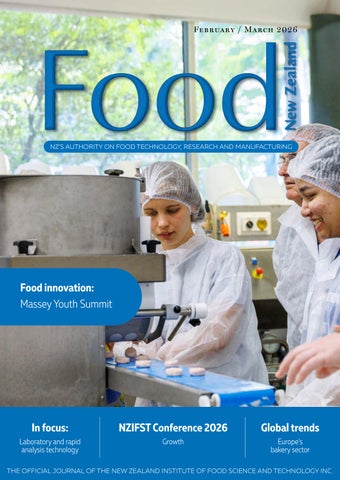
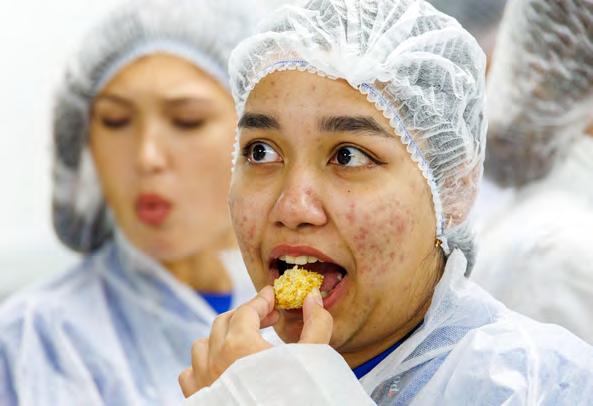
Inspiring the next generation of food scientists through hands-on innovation at the Massey Youth Summit. Read the full feature on page 10.
Image credit: Te Kunenga ki Pūrehuroa Massey University
In our first issue of the year, regular contributor John Lawson launches a new series that explores change not as a temporary phase, but as the new constant. Throughout the series, John examines how the ability to adapt and operate within this environment is reshaping the way we work — and how individuals and organisations can build the capabilities needed to function well and thrive within ongoing uncertainty.
Continuing this theme, Raewyn from NZFGC opens her regular column by quoting Bob Dylan — “There is nothing so stable as change” — and points to the regulatory shifts and opportunities that may emerge across the sector throughout 2026.
Alongside this, we have a special feature on global trends: Product Development Manager Stephanie Trower shares her experiences as part of the NZIFST Earle Travel Fellowship. Awarded the fellowship in August and travelling just weeks later, Stephanie organised the entire trip herself and was warmly welcomed into Europe’s bakery innovation hubs at short notice. As Stephanie proclaims, “it was an amazing trip”, and one that opened doors to global innovation hubs and the infamous Anuga trade show. Head to page 14 to read her key insights.
Having been in Europe myself last year, a trend I quickly became aware of — and fascinated by — was how common GLP-1 weight-loss medications have become across the UK. And how openly they are discussed. It seems to be the new normal, with many people I encountered either taking them or knowing someone who does. Interestingly, the primary motivation was often aesthetic rather than clinical. It’s a hot topic in food circles as professionals consider how suppressed appetites might reshape health, eating behaviour and product formulations. And with UK retailer M&S recently launching a ‘nutrient dense’ range designed to deliver more nutrients per calorie, industry is responding. UK-based brand and innovation strategists note that concepts such as this tend to spill beyond the initial target consumer into mainstream food culture. If uptake grows here, it could have notable implications for product development teams, nutritionists and the wider industry. One to watch.
It’s also been a challenging start to the year for many across the motu. The recent extreme weather events in Mount Maunganui and the wider Bay of Plenty region are a reminder that climate change is not an abstract future scenario. Our thoughts go out to all those affected by the devastation and to the communities rebuilding.
Climate pressures are, of course, also reshaping the food system. In this issue, NZFSSRC reflects on how geopolitical, technological and environmental forces — including warming oceans, pathogens, and extreme weather events — may influence future food safety and resilience. It’s a fascinating and timely read (pages 34 - 37).
I hope you enjoy the read, and as always, we love to hear from you: feedback, ideas or future contributions are always welcome.
Lauren Sheridan
Food New Zealand Editorial Team foodnzeditor@nzifst.org.nz
Happy New Year and welcome back to a new year of connection, learning, and collaboration within NZIFST. As 2026 gets underway, warmest wishes to you, your whānau, and your teams for a year of good health, fresh ideas, and continued success across our diverse food sector.
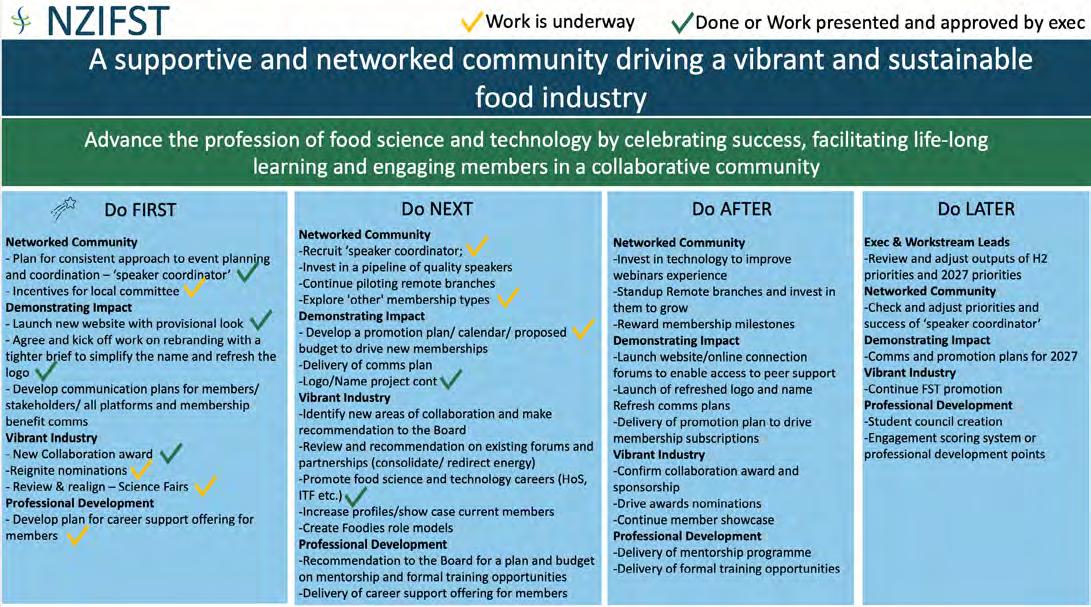
2026 will see us progressing the key workstream milestones, including the branding and visual identity piece, so that NZIFST is clearer in its purpose, stronger in its value to members, and better positioned to support and represent food professionals across the country and beyond. Thank you again to everyone who has contributed through workshops, surveys, branch discussions, and committee efforts – your insights are shaping the decisions we make.
A major highlight on the horizon is our 2026 NZIFST Conference (30 June – 2 July, AUT North Campus, Auckland), which is taking shape around the theme of Growth. Growth in people, in capability, in innovation, and in the resilience of our food system – all of which sit at the heart of our work as food scientists, technologists, and industry leaders.
We are very fortunate to have secured two highly acclaimed experts for our opening Plenary: Economist Shamubeel Eaqub and the Prime Minister’s Chief Science Adviser, Dr John Roche.
Their perspectives on the economic landscape and on science and innovation at the highest level of government will provide a powerful frame for our conference conversations about growth in and for the New Zealand food industry.
Alongside the Plenary, the programme will again highlight memberled science, innovation, and practice, and offer plenty of opportunity to reconnect with colleagues, meet new people, and support the next generation of professionals. Further details on the Plenary speakers and the conference programme can be found in the Conference update on page 40.
Thank you for all that you do for NZIFST and for our wider industry. This is your Institute, and 2026 is a year to keep building on the foundations we have laid together – in strategy, in brand, and in community.
Bob Olayo MNZIFST NZIFST President
Newsbites
National and global news and items of interest that have caught our attention at Food New Zealand.
Expanded clinical study confirms natural GLP-1 support from Dyglomera® and CQR-300®
Gateway Health Alliances has published new clinical findings showing that two botanical extracts, Dyglomera® and CQR-300®, stimulate the body’s natural GLP-1 pathway. GLP-1 is best known for its role in appetite, satiety, and metabolic balance.
In a 16-week placebo-controlled trial, participants taking the extracts
A plant-based superfood that could boost older people’s brain health is being developed
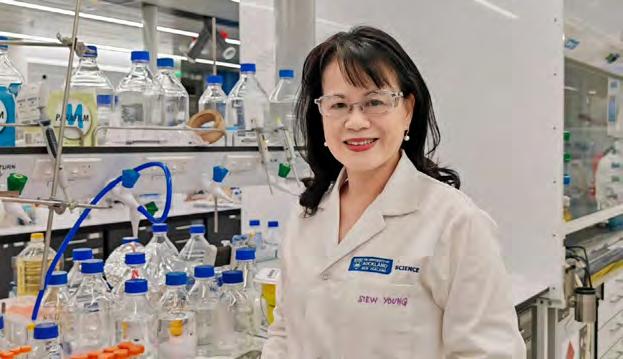
A plant-based superfood that could boost older people’s brain health is being brewed in the lab of University of Auckland Professor Siew-Young Quek. The Ministry of Business, Innovation and Employment has granted $300,000 to Quek to lead a three-year project creating a new nutrient for older people. A Professor of Food Science, Quek and Associate Professor of Engineering Meng Wai Woo aim to formulate a new superfood ingredient from nervonic acid and phospholipids, to try to maximise their absorption.
Research indicates the health benefits of nervonic acid include protecting nerves, boosting brain health, and improving cognitive function, while phospholipids support brain health and metabolism.
The new ingredient could be added to foods or used in supplements.
experienced meaningful improvements in weight management and metabolic health without a prescribed diet. Gateway says the results confirm a growing body of evidence and point toward new opportunities for GLP-1-focused ingredients in food, beverage, and supplement formulations.
Former USDA-ARS Lead Scientist and Researcher Brendan Niemira takes over as Chief Science and Technology Officer at IFT, USA
Brendan Niemira has been appointed Chief Science and Technology Officer at the Institute of Food Technologists (IFT), a nonprofit scientific association advancing food science worldwide. He joins IFT after more than 25 years at the USDA’s Agricultural Research Service, where he led a 30+ person team developing non-thermal food safety treatments to reduce pathogens across produce and other foods. Niemira has published 200+ peer-reviewed works and has long served IFT as a member (since 2003), board director, and 2023 IFT Fellow.
Professor Slew-Young Quek
Brendan Niemira Chief Science and Technology Officer at IFT
Americans scrutinise sugar consumption, new research finds
New research from the International Food Information Council (IFIC) suggests Americans are paying close attention to sugars and sweeteners. In IFIC’s 2025 Food & Health Survey focus on sugars, 63% of Americans say they are concerned about how much sugar they consume, while 56% are concerned about the type of sugar. Three in four (75%) report trying to limit or avoid sugar—most by limiting intake (61%) rather than avoiding it entirely (14%)—and the majority of those target added sugars. Common strategies include choosing water instead of sugary drinks (55%) and using the Nutrition Facts label to pick items with less added sugar (30%). IFIC also reports knowledge gaps: only 16% correctly identified the Dietary Guidelines recommendation to keep added sugars below 10% of daily calories, while 28% said they don’t know the limit. Despite this, 82% believe foods and beverages with added sugars are acceptable during celebrations.
Trusted by our customers since 1984, we are pleased to be able to offer STEC Cloth Sample Testing to add to the broad suite of tests already on offer here.
We pride ourselves on our ability to meet industry leading turnaround times across all sectors, delivering accurate results on time.
STEC CLOTH TESTING
Preferred technique of the US FSIS
Faster, safer, more efficient sampling
Faster product clearance
Talk to one of our helpful team to find out more. 0508 HILL LABS | 0508 44 555 22
New Zealand Food Safety Science & Research Centre scientists contribute to FAO/WHO report: Prioritizing food safety issues related to chemical water quality in agrifood systems
The report of the meeting at FAO headquarters in Rome, mid 2025, was attended by Centre Deputy Director Dr Tim Harwood (Cawthron Institute), and International Science Advisory Panel member, Dr Andrew Pearson (Tonkin & Taylor). The Centre is proud that two of its scientists were invited respectively as an ‘expert’ and part of the directorate. New Zealand is certainly on the FAO radar. Andrew drafted the report which was released on 22 December 2025.
Tim says, “While progress has been made identifying microbial risks associated with water used in agrifood systems, guidance on chemical hazards has remained limited. I’m pleased to help address this gap by contributing to the report and greatly enjoyed the opportunity to work with experts from around the world.”
Read the full report here: https://openknowledge.fao.org/server/ api/core/bitstreams/1b23bf8f-0b15-4368-9ac0-5d542a009d0c/ content
NZFSSC Deputy Director, Dr Tim Harwood
Consumers have an increasing interest in health, wellbeing and moderation
The New Zealand Alcohol Beverages Council (NZABC) says the latest Curia Market Research Poll shows consumers are increasingly focused on health, wellbeing and moderation, with growing interest in low and no-alcohol beer, wine and spirits. The poll highlights “zebra striping” – alternating alcoholic and non-alcoholic drinks during a session – with 21% of respondents saying they often do this and 51% saying they sometimes do. When asked why they stop drinking after a certain number of drinks, key reasons included staying under the driving limit, avoiding a hangover, not getting intoxicated, and concerns about health and cost.
Low and no-alcohol products are now described as mainstream, with 50% of New Zealanders having tried one in the past year, up from 40% in 2020. Consumption is highest among under-40s (65%), compared with 43% of 41–60 year olds and 35% of those over 61. The most common reasons for choosing these products include health, avoiding intoxication, being social, and driving. The release also notes a “drink less but better” trend. NZABC cites Stats NZ data showing a more than 30% decline in per-capita alcohol available for consumption in the year to September 2025, the lowest since 1984.
Pāmu expands organic dairy footprint and reports progress on
emissions reduction
Pāmu (Landcorp Farming Limited) says three more dairy farms at its Moutoa Dairy Complex near Foxton have achieved full organic certification, lifting its organic portfolio to 11 farms and two runoffs. The organic estate spans Moutoa and Wairākei near Taupō, covering 4,190 hectares and 6,430 cows, supplying organic milk into premium export markets. Pāmu says conversion takes around three years and involves system changes, tighter animal health protocols, and strict feed and shed-product compliance.
Pāmu also reports a 13.98% net reduction in GHG emissions in FY25 versus FY21, exceeding its FY25 target, with Toitū Envirocare providing independent assurance.
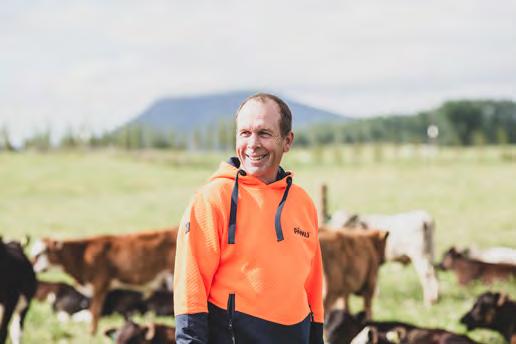
Pāmu Chief Executive Mark Leslie
Otago experts propose fibre as first new essential nutrient in 50 years
University of Otago – Ōtākou Whakaihu Waka nutrition experts are calling for dietary fibre to be officially recognised internationally as an essential nutrient - the first ‘new’ essential nutrient in more than 50 years.
The researchers say fibre should sit alongside nutrients already considered essential for humans, such as certain amino acids and vitamins.
Co-author Associate Professor Andrew Reynolds says increasing our dietary fibre intakes would deliver greater health benefits in Aotearoa New Zealand than increasing any other essential nutrient, given that our current fibre intakes are below World Health Organization (WHO) recommendations.
In a paper published in Nature Food, Associate Professor Reynolds and Professor Sir Jim Mann, both from the Otago Edgar Diabetes and Obesity Research Centre, along with Emeritus Professors Gerald Tannock (Otago) and John Cummings (University of Dundee) argue that recent advances in our understanding of dietary fibre mean that it now meets the criteria required for essentiality.
Associate Professor Reynolds says the research team examined if there were any causal associations between dietary fibre intake and health outcomes and found overwhelming evidence of benefit.
“Looking across multiple studies, we see that when people increase fibre intakes, their body weight, cholesterol, blood sugars and blood pressure all improve. When following people over decades, we see those with higher fibre intakes get less heart disease, less type 2 diabetes, less colorectal cancer, and are less likely to die prematurely,” he says.
“Focusing on increasing intakes of high-fibre foods such as whole grains, legumes, vegetables and whole fruit is likely to deliver substantial health benefits.
“The more that fibre is recognised and prioritised, the better. If people focus on increasing fibre in their diet, then food producers are more likely to reformulate products to have more fibre, making it even easier to increase your fibre intake. There are a lot of potential benefits, should fibre be recognised as essential.”
Currently, New Zealanders eat an average 20g of fibre a day, while the WHO guideline recommends at least 25g per day.
Professor Mann says recognising dietary fibre as an essential nutrient will help to ensure that dietary guidelines, nutrition education programmes and health professionals provide greater emphasis on adequate intakes of fibre, with reformulation of food products and changes in food labelling likely to follow.
“Increased intakes of fibre, which would be expected with greater awareness, have the potential to appreciably reduce the huge burden of non-communicable diseases facing Aotearoa New Zealand.”
Publication details
Dietary Fibre as an Essential Nutrient
Andrew N Reynolds, John Cummings, Gerald Tannock, and Jim Mann
Nature Food
Associate Professor Andrew Reynolds
Professor Sir Jim Mann
Young innovators explore the future of food at Massey University
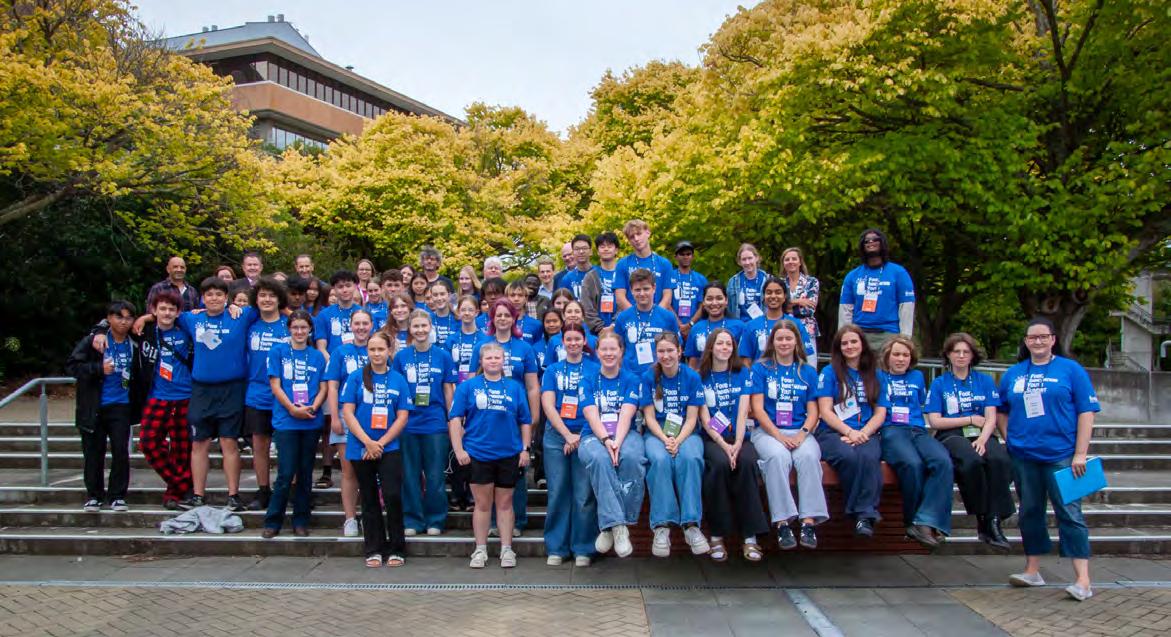
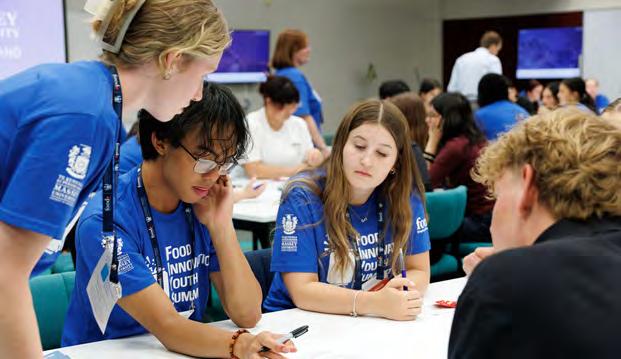
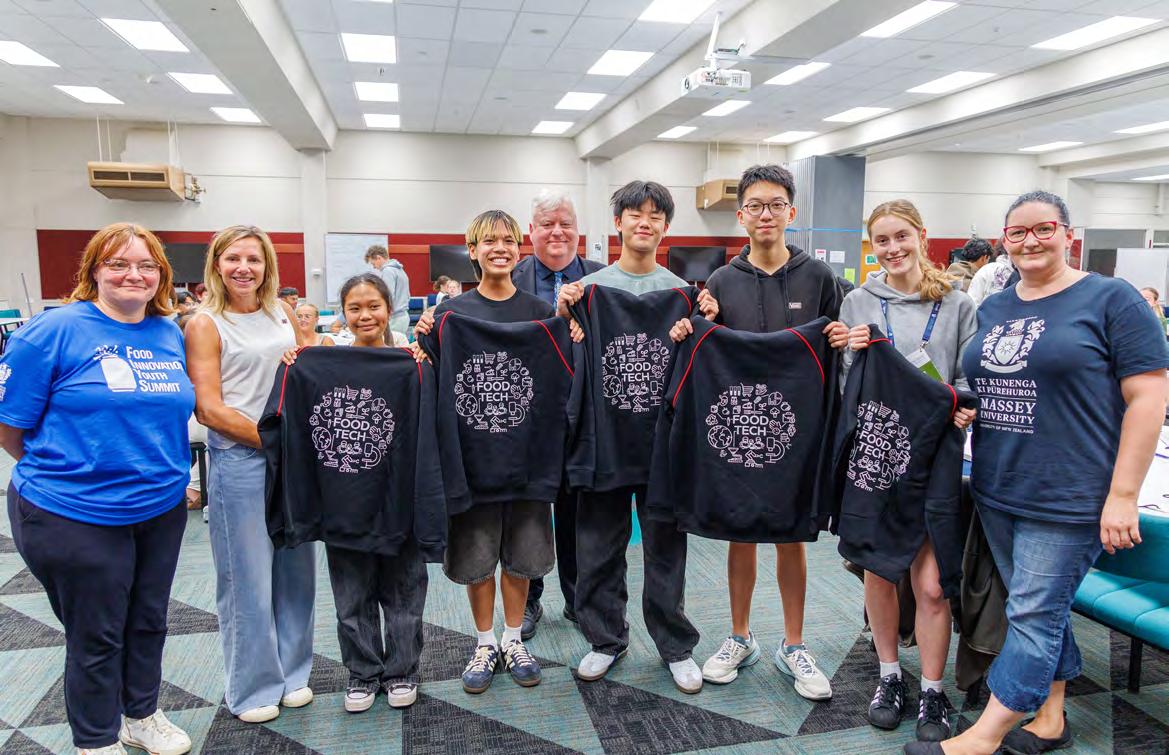
Te Kunenga ki Pūrehuroa Massey University’s Manawatū campus welcomed 56 secondary school students from across Aotearoa New Zealand for the inaugural Food Innovation Youth Summit in January. The three-day immersive experience was designed to showcase the creativity, science and collaboration behind the food industry.
Hosted by Massey University in partnership with FoodHQ, the summit gave Year 12 and 13 students a unique opportunity to explore food technology beyond the classroom. Through a mix of practical workshops, industry engagement and future-focused thinking, students gained insight into the diverse pathways shaping the food sector. For many secondary students, exposure to food technology is limited, and the industry is often misunderstood as a narrow or purely culinary field. The summit aimed to challenge that perception, highlighting food technoogy as a multidisciplinary career that blends science, nutrition, engineering, business and creativity, and plays a critical role in addressing global challenges.
The summit opened with a mihi whakatau, welcoming students, industry partners and special guests to campus, including Palmerston North Mayor Grant Smith.
Thinking about the future
Students quickly turned their attention to the big picture, exploring links between climate change, food systems and global challenges. In one workshop, they imagined what food might look like in 2035 under different future scenarios, including a world where food waste was illegal.
This was followed by a fast-paced simulation exercise in which students were assigned a country and a population to feed, while balancing finances, fuel and carbon limits. The activity highlighted the complexity of global food systems, sparking negotiation, strategy and collaboration.
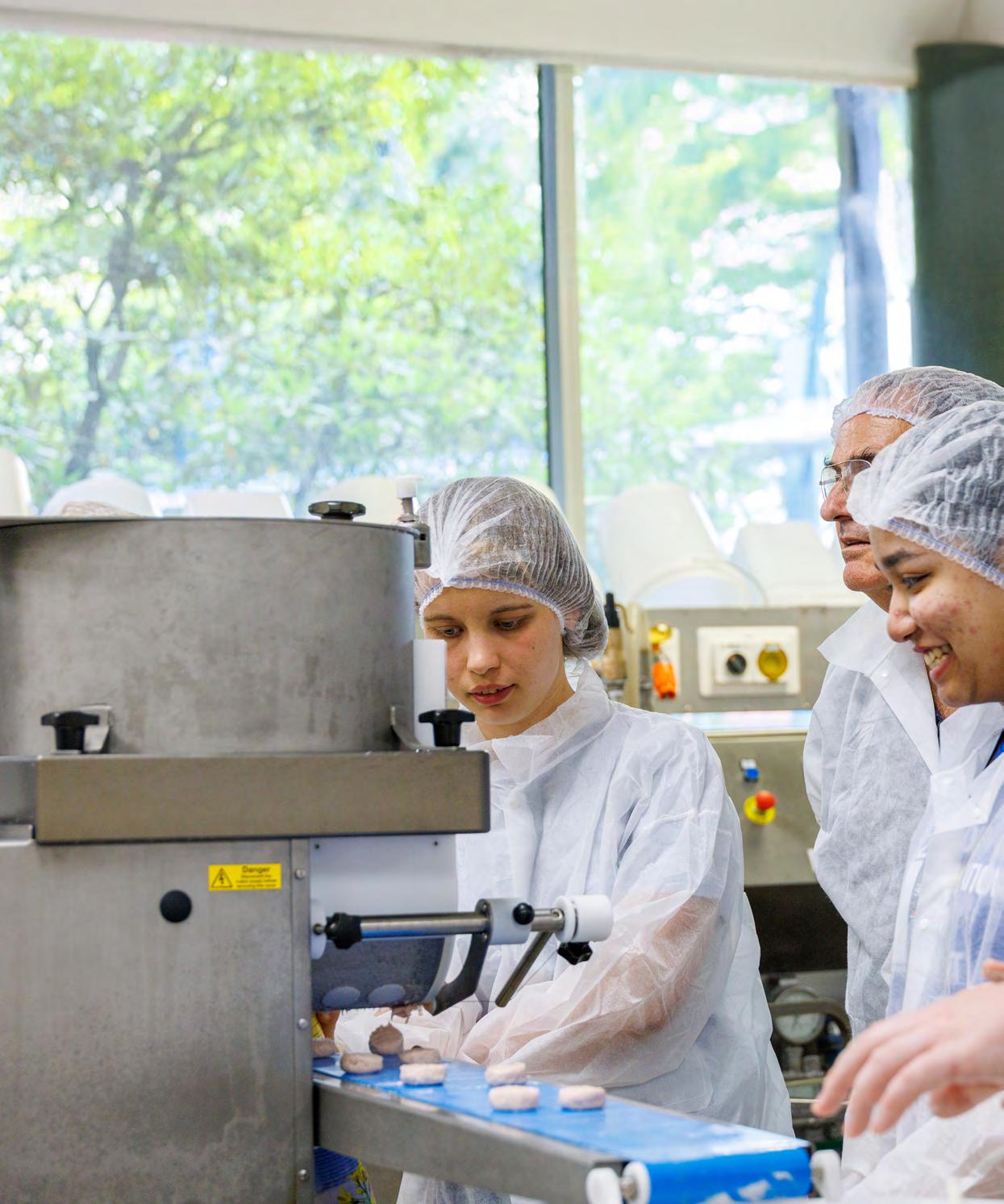
Secondary school students from across Aotearoa New Zealand gather at Massey University's Manawatū campus for the inaugural Food Innovation Youth Summit
Learning by doing
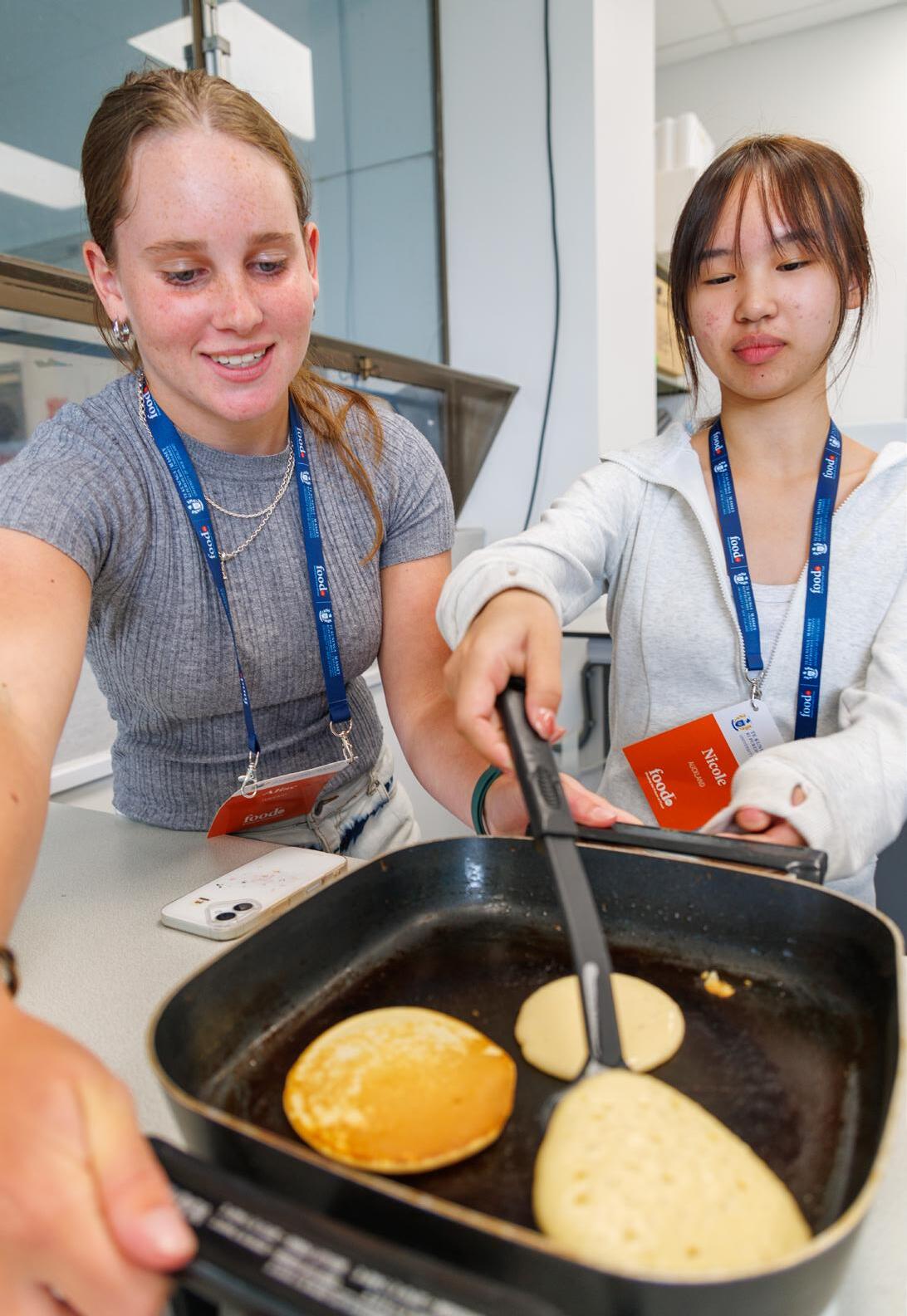
Hands-on learning was at the heart of the summit. Students rotated through practical workshops reflecting real-world food technology pathways.
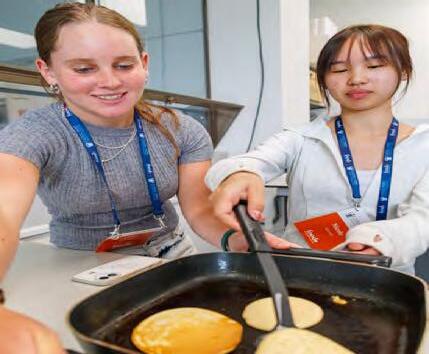
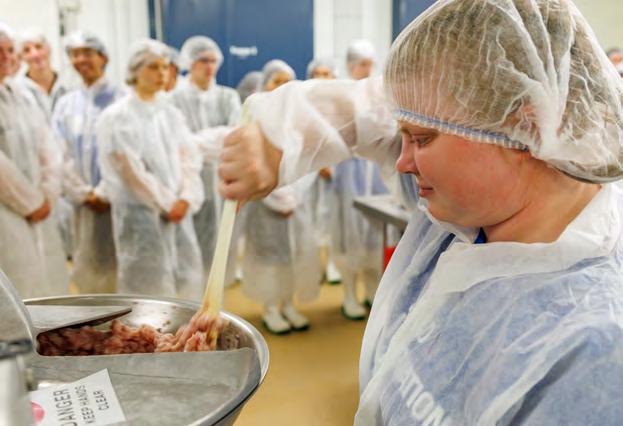
In small groups, they scaled up a simple pikelet recipe, learning how production changes when moving from a home kitchen to commerical scale. They also experienced Massey’s Food Pilot, the southern hemisphere’s largest pilot-scale food production facility, making chicken nuggets and exploring plant-based alternatives.
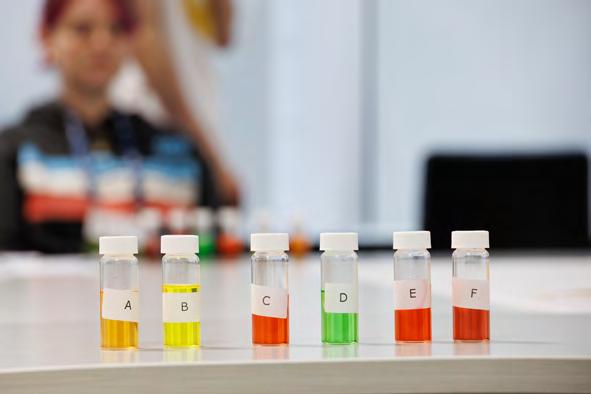
At Massey’s Food Experience and Sensory Testing (Feast) Lab, students took part in consumer sensory testing, including triangle tests, virtual reality and immersion room experiences. These activities demonstrated how consumer data, taste perception and environment influence product development.
Together, the sessions offered first-hand insight into how science, engineering and consumer research come together to create foods that are safe, appealing and scalable.
Year 12 student Ranithi from Auckland says the programme exceeded her expectations.
“At school we cook, but we don’t really go into the technical side. Here, we learnt about food production, techniques and the science behind it. We did so many activities and I’ve made a lot of friends. It’s been amazing!”
From innovation to industry
On day two, students put their creativity to the test, inventing new food product concepts inspired by existing brands. Ideas ranged from the Bluebird chip-crumbed chicken nuggets to gingernut crumb kits and even a tiramisu saveloy, showcasing the ingenuity of New Zealand’s young innovators.
Students then stepped off campus to explore commercial food production, visiting key Manawatū sites including Goodman Fielder, Fonterra and Moana New Zealand. The vists provided insight into largescale manufacturing and the breadth of career opportunities across the food sector, from product development and quality assurance to logistics, sustainability and marketing.
Year 13 student Catherine from Hamilton says seeing food technology in action was a highlight.
“I really enjoyed the factory tour. Seeing the big machines, talking to people in the industry and understanding the manufacturing side compared to the research side. It’s given me a much clearer insight into how complex food technology really is.”
The day concluded with a quiz night, complete with flavour experimentation using Massey’s soft-serve machine and a toppings bar – a memorable highlight for many students.
Careers, creativity and the food of the future
The final day focused on careers and communication. A career panel featuring industry professionals from Fonterra and Boring Oak Milk, alongside current food technology students, gave participants the chance to ask questions about study pathways and working in the sector.
Massey graduate and Fonterra Research and Development team member Ji Won Yoon spoke about the evolving nature of food technology careers.
“Working with people is one of the most important skills I learned in food technology. That won’t change as AI becomes more common. While some tools and processes may shift, communication and collaboration will always matter.”
To conclude the summit, students combined everything they had learnt to create social media-style headlines imagining what food-related stories might make the news in 2035. An Innovation Prize was awarded to the top team, followed by a ceremony led by Head of School of Food Technology and Natural Sciences Professor Jamie Quinton, where certificates and pins were presented to all participants.
When asked whether their understanding of food technology had changed over the three days, every hand in the room went up.
“That tells me we’ve achieved our objective,” Professor Quinton says.
“We wanted to share with you that food technology is exciting and fun and has so much opportunity. Your challenge from your future selves is to find and follow your passion – and if that passion is food technology, we would love to see you back here.”
Year 13 student Sean from Hastings says he joined the summit out of curiosity but left with a new perspective.
“I wanted to explore different career possibilities, and now I’m really interested in food technology – especially sensory science. Food has a much deeper impact on our lives than we realise. Food innovation connects to social, economic and even political issues.”
Professor Quinton says the summit highlighted the creatvitiy of young people and the growing need for future-focused food technologists.
“The summit showed the incredible potential of young people to drive innovation in food. Their ideas and enthuasiam reinforce why it’s so important we continue to support and develop the next generation of food technologists. They will be the ones responding to global challenges such as sustainbility and food security.”
Building foundations for the future
Following enthusastic feedback, the inaugural Food Innovation Youth Summit has laid strong foundations for a repeat event. Generously funded by Future Foods Foundation and the Central Economic Development Agency (CEDA), with support from FoodHQ, the event represents a powerful model for connecting young people with the science and industry shaping New Zealand’s food future. ■
Inside Europe’s bakery innovation hubs
Product Development Manager Stephanie Trower travelled to Europe on the Earle Travel Fellowship, exploring global bakery R&D hubs, a major food innovation trade fair, and emerging trends. Here, she shares key learnings and opportunities for New Zealand’s food industry.
Words by Stephanie Trower
The purpose of this fellowship was to gain exposure to global food technology trends and bring back knowledge that can help improve bakery innovation in New Zealand. Our industry is facing increasing pressure from imported products that are higher quality and more technically advanced, with better functionality. This trip was about learning how leading global companies achieve these results and to build connections that will help us improve product quality, reduce waste, and drive innovative growth.
Stephanie Trower is Product Development Manager at Original Foods in Christchurch, one of New Zealand’s largest commercial bakeries. Over 10 years she has progressed from a student summer job in production through Quality Assurance and Food Technologist roles. Stephanie holds a Master of Science in Food Innovation from Lincoln University and is a Professional Member of NZIFST, volunteering on the Canterbury Branch committee.
Puratos Global Innovation Centre
Germany: global food trends
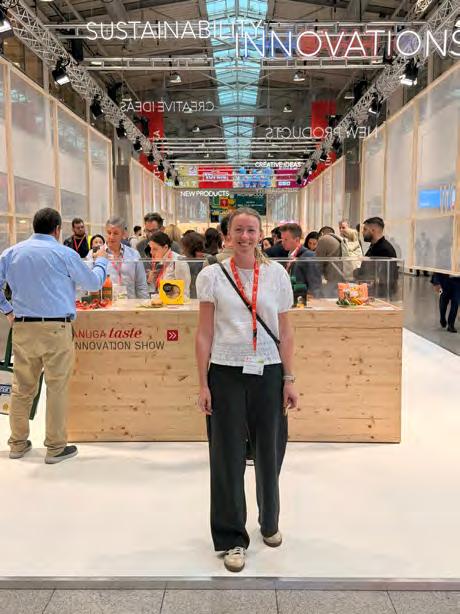
My journey started in Cologne, Germany at Anuga – one of the world’s largest trade fairs for food innovation. With 8,000+ exhibitors and 145,000 attendees over the week, the scale was incredible. I spent most of my time in the bakery section, connecting with global manufacturers and tasting new products. A common conversational theme was shelflife. Most European bakery products last longer than what we achieve in New Zealand, giving them a competitive quality advantage. I noticed that cinnamon buns were trending everywhere, along with high protein baking, pistachio flavours, and unique sour glazes for donuts.
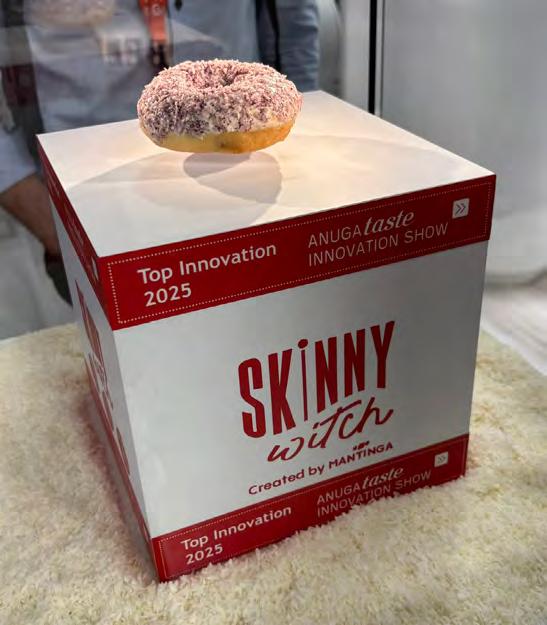
One highlight was the Taste Innovation Show, where the top 2025 innovations were showcased and judged. A standout product was a “better-for-you” donut called Skinny Witch (30% less fat, 50% less sugar, and high fibre). This sparked a great discussion with AB Mauri later in my trip on fat absorption. I also attended engaging seminars in the Trend Zone on AI for food innovation, processed foods, global market trends and packaging sustainability.
Belgium: innovation & sustainability
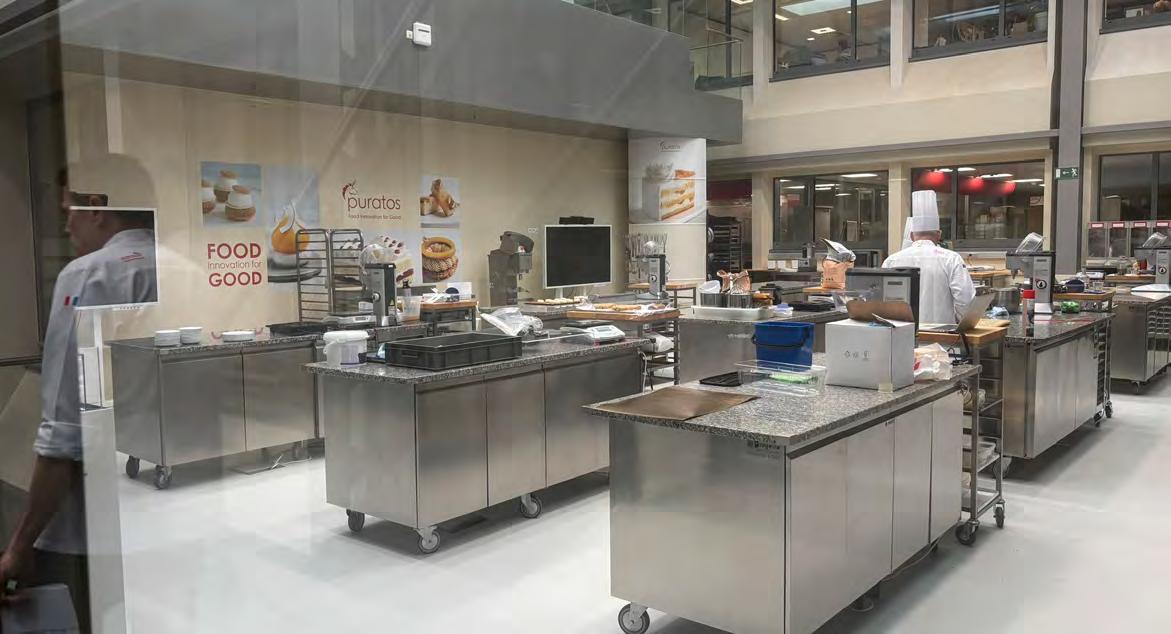
From Germany, I travelled to Belgium to visit the Puratos Global Innovation Centre. Puratos are a global leader in product development, who invest in research to drive innovation with a mission to help bakers, patissiers, and chocolatiers succeed with functional products in over 100 countries. I was warmly welcomed by their amazing product managers at HQ, and together we explored their expertise in fillings and decors, fruit fillings, and patisserie mixes.
They presented their research into global consumer trends through Puratos’ Taste Tomorrow insights, offering a fascinating perspective on what’s shaping the future of bakery worldwide. I then toured the impressive Innovation Centre before regrouping for more presentations, all while sampling an array of delicious creations made with their products throughout the day.
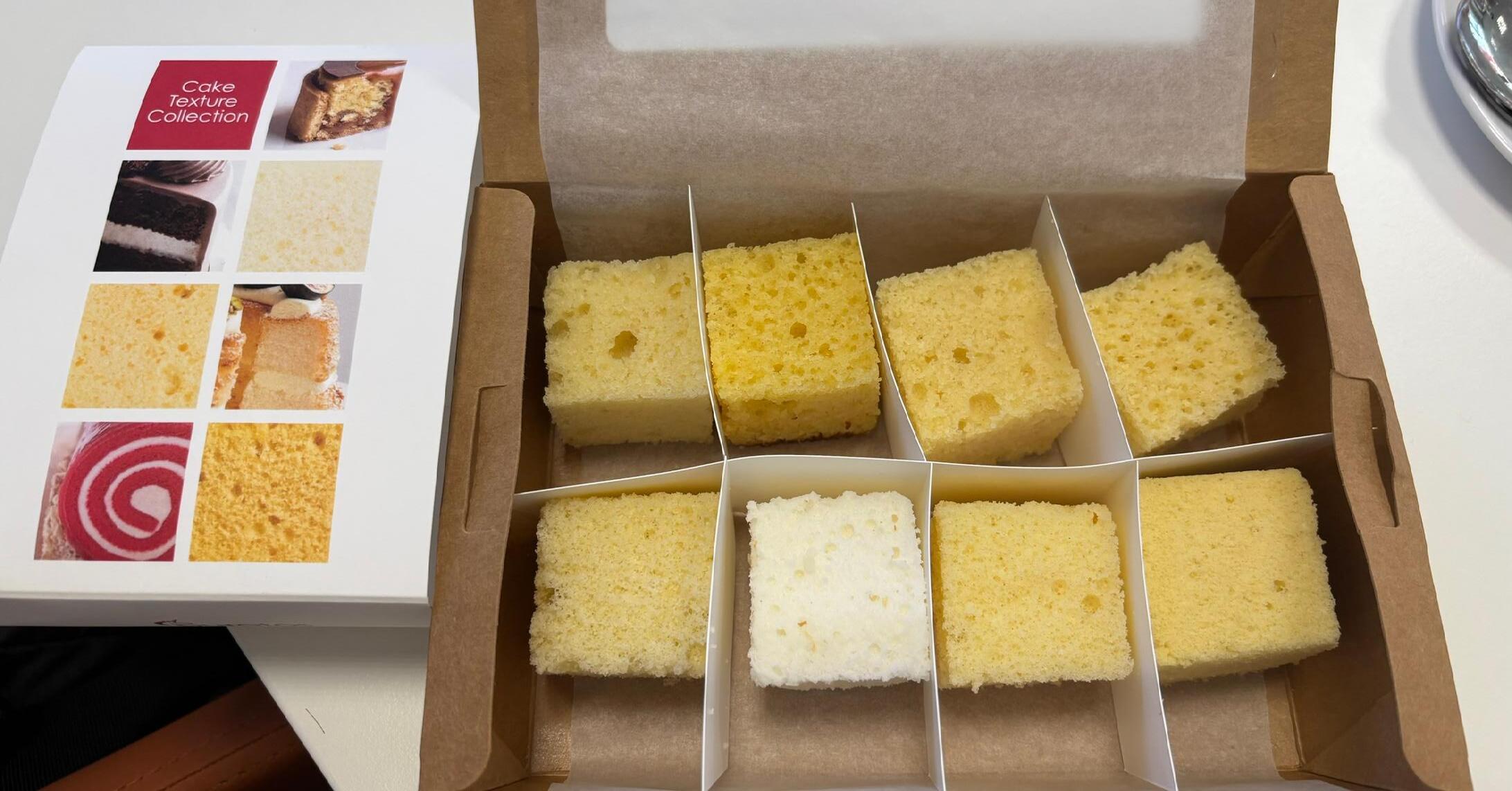
A key highlight was the Cake Texture Collection session, where eight distinct cake textures from around the world were sensory evaluated. This highlighted the differences between denser styles such as cream, moist, and pound cakes, and lighter textures including sponge, chiffon and angel. The session introduced a common texture language, focusing on attributes such as fineness, moistness, and chewiness,
and demonstrated how formulation and processing choices influence texture and its stability over shelf life.
Puratos also shared their sustainability research “Mission to Mars” project by giving me a tour of the Puradome, where they’re testing how food could be grown on Mars under extreme conditions. This level of global forward-thinking research was inspiring and an extra bonus for my visit.
Skinny Witch donut showcased at Anuga's Taste Innovation Show
Puratos Cake Texture Collection
The Netherlands: enzymes & functional ingredients
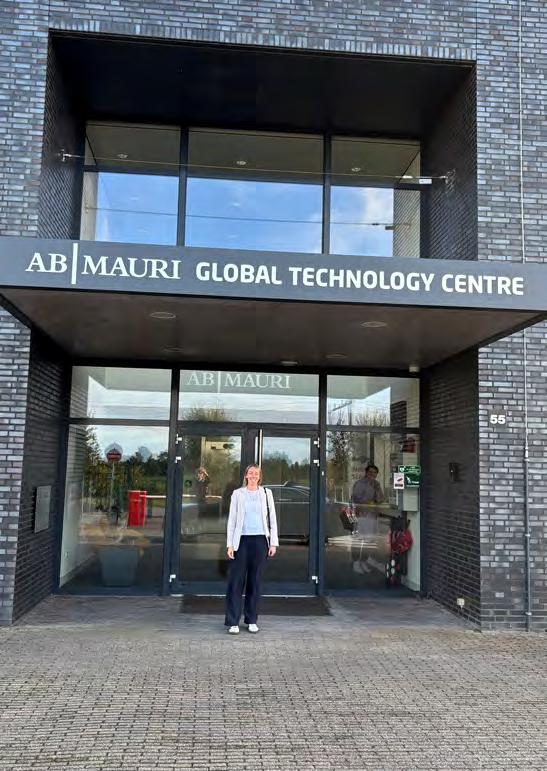
I travelled to the Netherlands to visit AB Mauri’s Global Bakery Technology Centre. At AB Mauri, I was first given a tour; the site has numerous scientific laboratories for microbial, ingredient, enzyme and product testing. Their state-of-the-art test bakery is set up in sections for sweet goods, pastry, artisan, and plant. On the industrial bakery side there are several small-scale pilot plants able to simulate larger plants for accurate assessment of their product development. From the test bakery, they carry out full shelf-life testing on products and then evaluate them in their high-tech sensory lab using a trained panel. The R&D team presented their bakery research and latest innovations with a focus on egg replacement, sugar reduction, shelf-life extension, and fat uptake reduction in donuts. I spent time learning how they use enzyme technology and the applications of their research into functional mixes. Cakes and donuts were made in advance to show the improvements when different enzymes and functional ingredients were incorporated into the recipe. At different concentrations they were significantly softer throughout shelf-life.
We then had a baking session in the test bakery trialling their egg replacement technology for plant-based baking. We made marble cakes and muffins with their formulations. The products had good volume, an even texture and they tasted great as well. Eggs are difficult to replace as they have several functional qualities within baking, but their replacement solution really showed how far their level of technology has progressed. Another highlight was their fat uptake reduction solution for donuts, which lowers calories and improves nutritional profiles by making sure the donuts absorb less fat when fried. Seeing these technologies firsthand was extremely valuable for future applications. My final stop in the Netherlands was at Bakels Senior. The global company began in Amsterdam back in 1904, so it was fantastic to be able to visit their baking centre while I was there. I was welcomed with a presentation on their latest product innovations before touring their blending facility. In their product development bakery, we tasted patisserie fillings and delicious muffins made by a local bakery using their products. I am looking forward to trialling some of their innovative products through New Zealand Bakels.
The Earle Travel Fellowship in Technology is awarded by NZIFST annually to support young professional engineers and food technologists. The aim is to build knowledge and skills through overseas travel, with the expectation that the experience and contacts gained will help improve technology in New Zealand. Applications are open to members of NZIFST, Engineering NZ, IChemE (NZ) or PDMA who are under 40. Applications for 2026 are expected to open in July. For updates, visit the NZIFST website.
Reflections and implications for New Zealand
Overall, this trip has given me invaluable exposure to global trends and technologies. I’ve come back with practical solutions to improve functionality and create higher quality products, while also gaining insight into trending innovations and bakery flavours. I’m motivated to apply my learnings to our products with the samples that are already on their way. Beyond the technical knowledge, the connections I made with global R&D leaders will be a huge asset for future collaborations and my own professional network. This experience has reinforced how important it is for the New Zealand food industry to stay connected to international innovation hubs so we can continue developing more technically advanced products.
What really stood out to me is that there is a significant amount of innovative research happening overseas and New Zealand manufacturers need to find ways to be part of the conversations. We need to actively seek out these global technologies and apply them efficiently if we want to keep up with the rest of the world. ■
"I would like to express my sincere gratitude and thanks to the Earle Technology Trust for their invaluable support. I am immensely grateful for the amazing travel opportunity I had exploring Europe’s global innovations and technologies"
- Stephanie Trower
A selection of donuts sampled at Puratos
Global bakery trends at a glance
(Based on insights from Stephanie's European travels)
• Longer shelf-life and improved texture stability
• Rapid growth in better-for-you bakery (fat, sugar, and calorie reduction; protein additions)
• Adoption of enzymes and functional ingredients to drive softness, volume and freshness
• Stronger sensory science focus - texture mapping, trained panels, common sensory language
• Expanding plant-based technologies, including egg-replacement systems
• Increasing investment in R&D hubs, pilot plants, and data-led innovation
Exploring everything on offer at the Taste Innovation Show, Anuga
In focus: Laboratory consumables and equipment, rapid analysis technologies and instrumentation
Featuring supplier-provided insights on laboratory consumables, equipment, and analytical technologies relevant to the sector.
Metrohm New Zealand: analytical instrument excellence
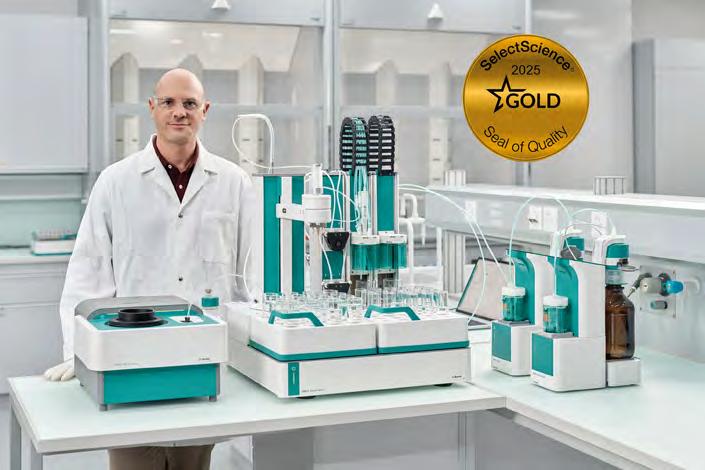
Metrohm New Zealand brings years of local and global expertise to the food and beverage industry. We offer robust, sensitive instruments and integrated solutions - from sample preparation and routine quality control through to final product verification - supported by responsive local service and expert technical support.
Metrohm New Zealand instrumentation and their unique features
Metrohm Titration Systems – From durable Eco Titrators to advanced OMNIS platforms, these systems deliver reliable, GLP-compliant measurements essential for acidity, salt, moisture, water content and other key quality parameters. They streamline routine testing and support compliance with food-labelling and safety regulations.
Biosystems Photometric Analysers – Designed for the food and beverage sector, these analysers provide rapid, specific detection of sugars, organic acids, allergens and more. The latest AOAC-approved automated gluten analysis method enhances accuracy and strengthens consumersafety workflows.
OMNIS NIR Analyser – Featuring a high-speed linear diode array detector, this system captures full spectra in under 10 seconds. One-Click Model Developer simplifies chemometrics, enabling routine users to build and refine prediction models with minimal expertise.
RETSCH Systems – Professional mills and grinders ensuring precise, reproducible particle size reduction—critical for consistent and accurate food analysis.
ELEMENTRAC CN-r – A rapid Dumas combustion system offering a fast, reagent-free alternative to Kjeldahl for total nitrogen and protein determination in under three minutes.
Carbolite Gero Ovens – High-precision ovens delivering thermal uniformity required for ash, moisture, and dry-matter analysis.
Milestone Microwave Technology – High-throughput microwave digestion for ICP (OES/MS) and AAS, and a faster, solvent-saving alternative to Soxhlet for total fat, crude fat and FAME extraction.
Exclusive New Zealand distributors for Metrohm, Biosystems, Retsch, Microtrac, BEL, Eltra, Carbolite and Milestone. Industries,
Wine & Beverage BioSystems / Titration
Dairy & Meat
Oils & Fats
Grains & Feed
Organic Acids, SO2, Alcohol, pH
OMNIS NIR / CN-r / Milestone Fat, Protein, Lactose, Protein, Ash, Total Fat/ Crude fat Analysis, FAME Extraction
OMNIS NIR / Titration / Milestone FFA, Iodine Value, Peroxide Value, Adulterants, Total Fat/ Crude fat Analysis, FAME Extraction
OMNIS NIR / RETSCH Mills / Milestone Gluten, Starch, Fiber, Moisture, Particle Size, Total Fat/ Crude fat Analysis, FAME Extraction
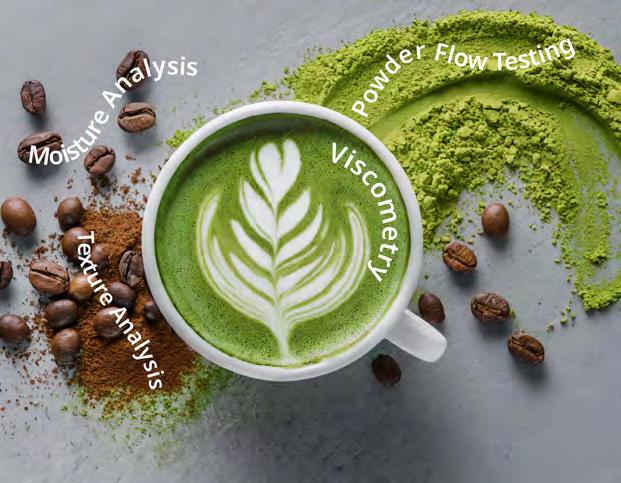
Part of DKSH Group, partnering with Brookfield Brookfield is an ISO 9001:2015–certified manufacturer and a global leader in viscosity, texture analysis, and powder flow instrumentation. For more than 85 years, their products have set the standard for measuring viscosity, texture, moisture, toxic gas, and related material properties. Their experienced engineering team continues to drive innovation in high-performance testing technology.
Onelab, where results matter
Onelab has recently acquired Food Tech Solutions Ltd, a successful New Zealand company with more than 25 years experience serving the food testing industry. Food Tech Solutions' leading brands include Charm Sciences, Stable Micro Systems, and Megazyme. This acquisition strengthens Onelab’s existing capabilities by adding Food Tech Solutions’ extensive expertise in the food industry.
Onelab has also recently partnered with Merck Milli-Q® Lab Water Solutions as the exclusive partner in the New Zealand market. Merck Milli-Q® products are world renowned, for the production of highquality purified water for laboratory use. These water purification systems are designed to deliver ultrapure water for various applications, ranging from sensitive quality control analyses to buffer preparation and glassware rinsing.
Onelab offers a complete range of laboratory and process optimisation equipment and consumables for a wide range of international leaders including Charm Sciences, Buchi, R Biopharm, METTLER TOLEDO, Merck Milli-Q®, Rainin, Gerber, INTEGRA, Interscience, Stable Micro Systems, SSI Bio, Labconco, Megazyme, Tecan and many others.
Precision that drives performance
Brookfield instruments provide precise, repeatable, and traceable measurements, enabling manufacturers to maintain tight control over raw materials and production processes. This ensures batch to batch consistency, reduces variability, minimises waste, and supports compliance with regulatory standards. With Brookfield, customers can confidently scale production without compromising quality.
Serving industries across the globe
Brookfield solutions support quality and material characterisation across a wide range of industries, including:
• Food and beverage
• Lubricants
• Paints and coatings
• Chemicals
• Pharmaceuticals
• Medical devices
• Cosmetics and personal care
• Oil and gas
Global support, local expertise
With regional offices in the USA, UK, China, Germany, and India, Brookfield provides strong global support. Bio Strategy - part of the DKSH Group, is part of this international network of trained representatives, offering expert guidance in selecting the right instruments for your applications.
Partner with us and experience Material Characterization at Its Best®.
Onelab's nova LUM II-X and PocketSwab
Evidence vs hype in alternative medicine
Lipid and nutraceutical dietary supplements
Dietary supplements and nutraceuticals occupy an increasingly complex space between food, health and medicine. Consumers seek prevention and performance, often without clinical oversight: most people taking alternative medicine do not advise their doctor they are doing so.
Heart health & oils
Extra virgin olive oil for summer
The polyphenol fraction of extra virgin olive oil may be partly responsible for its cardioprotective effects. A systematic review reported improved outcomes related to cholesterol, oxidative stress and inflammatory markers when comparing high versus low polyphenol olive oils. Good quality New Zealand olive oil has a good concentration of polyphenols around 350 ppm.
Skin, sun & summer protection
Nicotinamide (Vitamin B3)
Has photoprotective effects in vitro and in vivo. Supposed to enhance DNA repair, reduce UV radiation-induced suppression of skin immune responses, and restore cellular energy levels after UV exposure. Research later investigated its role in cholesterol management, neuroprotection, and as an anti-aging and cancer-preventive agent for the skin. Pharmacological doses have reduced actinic keratoses and nonmelanoma skin cancer incidence in high-risk individuals (University of Sydney findings). Cream (5%-10%) and tablets are available from the pharmacy. Worth a try. There have only been a few clinical trials, but a lot of people are trying it with mixed success.
One study demonstrated that the combination of genistein, vitamin E, vitamin B3, and ceramide in a topical skincare product could improve certain features of facial skin appearance.
Vitamin D
Rickets was endemic in Industrial Britain due to lack of sunlight and poor diet. Nowadays even Southern Hemisphere populations can get Vitamin D deficiency due to the prevalence of strong sun creams containing UV filters. Supplements are cheap and easy to take with no side effects.
“Have a healthy summer, use sun block - but you may need to allow Vitamin D supplementation!” – Laurence Eyres
Pain & neuroinflammation
PEA – Palmitoylethanolamide
PEA is an endogenous fatty acid amide with protective functions exerted through the downregulation of non-neuronal cells. Data highlights the effectiveness and safety of PEA in controlling neuroinflammation once it has been administered in formulations with adequate bioavailability (micronised forms). In the words of Rita Levi-Montalcini, “The observed effects of Palmitoylethanolamide appear to reflect the consequences of supplying the tissue with a sufficient quantity of its physiological regulator of cellular homeostasis.” ■
This article was compiled from notes by lipids expert, Laurence Eyres, summer 2025, who also noted that understanding the evidence behind nutraceuticals will be essential as consumer interest grows faster than clinical oversight.
The hidden cost of processing
Tracking nutrient integrity in processed plant ingredients
Christina Reumiller, Alastair Ross, Evelyne Maes and Scott Knowles New Zealand Institute for Bioeconomy Science
In this third article of a series, another project team from the Plant-Based Food Ingredients Research Programme explores the science behind ingredient composition, nutritional quality, and the molecular-level effects of processing. This five-year MBIE and industry-supported programme is validating new models of food processing that deliver more sustainable and highperforming protein-rich ingredients from local crops. The focus is on peas , oats and hempseed as exemplar plants, for their suitability to New Zealand growing conditions and relevance to global food systems. They offer a broad basis for studying mechanisms that can be extrapolated to other crops.
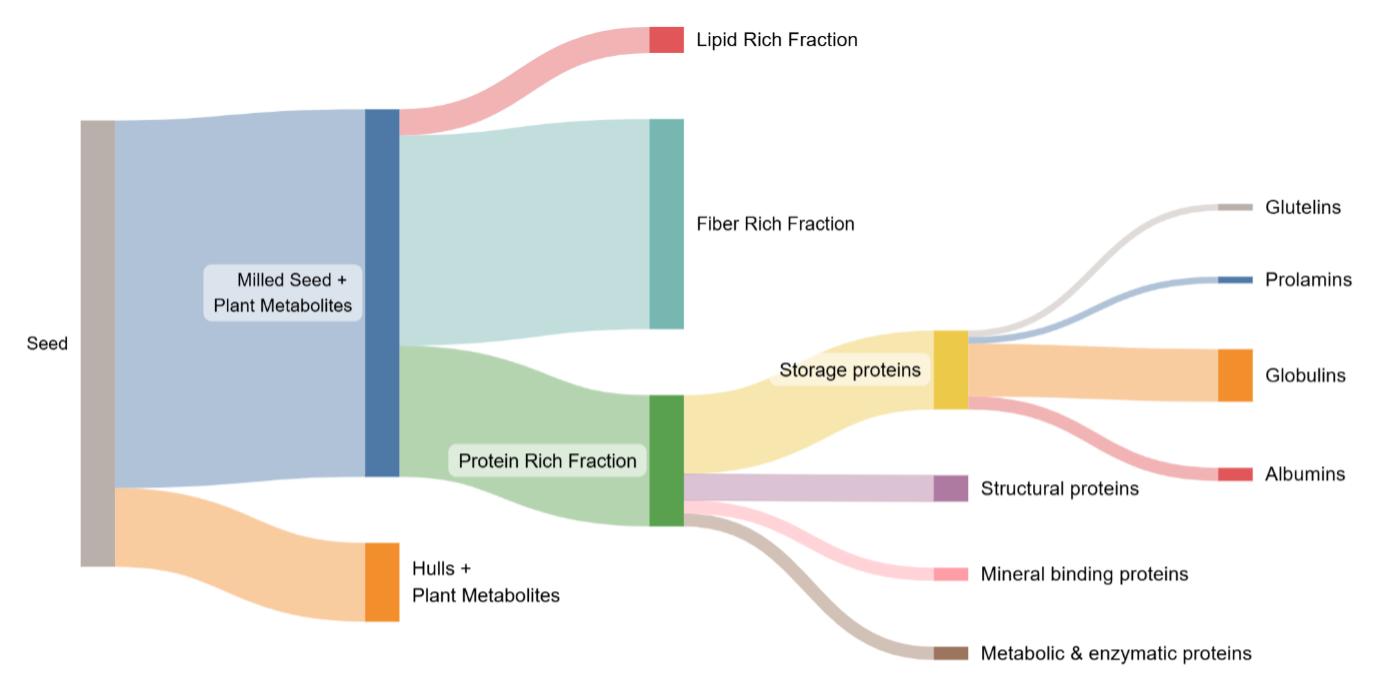
Figure 1. Sankey diagram illustrating a hypothetical pea processing pathway with stream sizes reflecting relative mass-balance. These vary depending on the crop variety and the specific fractionation methods being applied. Each step can introduce modifications to components that will affect structure, function and nutrition of food ingredients.
Figure 2. The canonical amino acid sequence (as letters) of pea Legumin A2 storage protein from AA 351 to the C-terminus. Grey shaded letters are those confirmed by mass spectrometry in a commercial pea protein isolate produced by wet alkali fractionation. Amino acid modifications are illustrated with coloured squares annotated with type of modification: A – Amidation/Acetylation, C –Carbamylation/Carboxymethyl, D – Deamidation/Dehydration, F – Formylation, H – Hexose, M – Methylation, O – Oxidation.
The programme is organised around three objectives:
1. Mathematical modelling to design resource-efficient, sustainable processes
2. Understanding of ingredient composition, microstructure, functionality, and interactions in food systems
3. Advanced ‘omics approaches to assess processing effects on consumer-relevant ingredient qualities.
Together, these investigations support improved functional and nutritional properties of plant protein ingredients.
Not all proteins are created equal
All proteins in plants and seeds are built from the same set of proteogenic amino acids (AAs), but they do not deliver the same nutritional quality when consumed in equal amounts. Natural differences in content of dietary essential amino acids (EAAs), together with variations in digestibility and bioavailability, determine how much of the protein a body can use. A ‘complete’ protein supplies all nine EAAs, but most plant proteins are limited by one or more. This limitation is important in nutrition because better EAAs uptake means better nutritional value. For example, cereals tend to be low in lysine, and legumes tend to be low in the sulphur-containing AAs methionine and cysteine. Therefore, monitoring and minimising processing-induced damage to EAAs is crucial when developing new fractionation processes while preserving nutritional value.
The major classes of proteins in seeds serve storage, structural and metabolic functions. Some are of particular interest to nutrition due to their high EAAs content or essential biological roles. Conventional measurement of seeds as a source of food has considered all the proteins together. Analytical methods (e.g. proteomics and metabolomics) allow us to evaluate characteristics of the individual seed proteins and their behaviour during processing into food ingredients (Figure 1).
Preserve whole-food goodness
Plants are central to healthy diets, and global demand for plant-derived protein-rich ingredients is growing. The challenge is to produce sustainable, profitable ingredients that meet consumer expectations [1]. Maintaining high nutritional performance during component separation requires balancing processing intensity and ingredient isolation while preserving beneficial microstructure and managing plant secondary metabolites that influence protein quality [2, 3]. The hurdles include:
• conformations of proteins that resist enzymatic digestion,
• anti-nutritional factors that affect nutrient bioavailability,
• bioactive phytochemicals that are worth preserving,
• AAs that are susceptible to processing-induced modifications. Current approaches to industrial processing typically combine mechanical, enzymatic and chemical unit operations to produce fractions as isolates of protein, starch or fibre. Integrating advanced analytical tools enables insights into component interactions and can support and validate the development of milder processes that enhance nutrition.
Molecular insights into processing effects
High-resolution mass spectrometry workflows can reveal the nature and extent of protein modification (proteomics) and measure the presence and interactions of many co-fractionated plant metabolites (metabolomics).
Proteomics can comprehensively profile peptides, quantify major and trace proteins, and detect site-specific changes missed by routine assays. This allows researchers to compare differences in protein classes across cultivars and processes, and to identify nutritionally relevant
protein modifications. For instance, during processing, redox-related modifications to sulphur-containing EAAs can reduce their availability and therefore limit overall protein quality [3-5]. Further, Maillard reaction products, formed when AAs react with sugars during heating, can enhance techno-functional attributes of plant-based ingredients but simultaneously decrease protein digestibility, highlighting the need to balance functionality with nutritional value [3, 6, 7]. To directly assess how industrial processing alters EAAs, proteomics was applied to measure the extent of modifications in commercially available pea protein isolates and protein concentrates produced using conventional technologies. Preliminary results map multiple AAs modifications in the pea storage protein Legumin A2 (Figure 2).
The extent of modification provides insight into process-associated changes, with wet-fractionated isolates exhibiting more diverse and extensive methionine or lysine modifications than the dry-fractionated concentrate. Examples from three of the commercial materials are shown in Table 1.
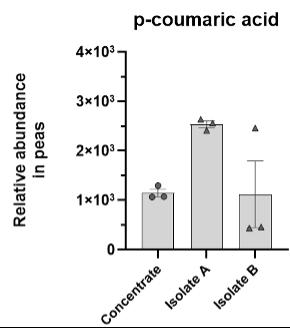
Metabolomics surveys a broad spectrum of attributes. It can identify and quantify secondary plant metabolites in chemical classes, such as polyphenols, tannins and saponins. While these compounds are known for their beneficial characteristics (e.g. antioxidant activity), imbalanced levels may also act as anti-nutritional factors and interfere with digestion. To complement the proteomic data, we compared relative abundances of metabolites in those same pea protein isolates and protein concentrates. Analyses revealed marked differences in metabolite profiles. For example, p-coumaric acid, a polyphenol associated with antioxidant activity but known to reduce mineral bioavailability at prominent levels, was differentially abundant in three commercial materials (Figure 3). We are now applying these mass spectrometry workflows to proteinenriched and protein-depleted fractions of peas, oats and hempseed produced ‘in-house’ by novel, experimental approaches to dry, wet and hybrid processing. We aim to identify eco-sensitive processing models, while demonstrating how complex plant-based ingredients can surpass generic isolates by retaining more of their whole-food character for healthier food applications. ■
Dry fractionation Wet fractionation
Table 1. Site-specific AA modification at positions M394, K500 and K506 in pea Legumin A2, comparing a dryfractionated protein concentrate with wet-fractionated protein isolates.
Figure 3. Relative abundance of the polyphenol p-coumaric acid in three protein-rich pea materials. Despite similar extraction methodologies, Isolate A and Isolate B exhibit different p-coumaric acid levels.
References
1. Weeks, M., R. Edmonds, and S. Knowles, Rethinking crop processing. Food New Zealand, 2025. 25(5): p. 22–23.
2. Aguilera, J.M., The food matrix: implications in processing, nutrition and health. Critical reviews in food science and nutrition, 2019. 59(22): p. 3612–3629.
3. Duque-Estrada, P. and I.L. Petersen, The sustainability paradox of processing plant proteins. npj Science of Food, 2023. 7(1): p. 38.
4. Poojary, M.M. and M.N. Lund, Chemical stability of proteins in foods: Oxidation and the Maillard reaction. Annual Review of Food Science and Technology, 2022. 13(1): p. 35–58.
5. Estévez, M., S. Díaz-Velasco, and R. Martínez, Protein carbonylation in food and nutrition: a concise update. Amino acids, 2022. 54(4): p. 559–573.
6. Naik, R.R., Y. Wang, and C. Selomulya, Improvements of plant protein functionalities by Maillard conjugation and Maillard reaction products. Critical Reviews in Food Science and Nutrition, 2022. 62(25): p. 7036–7061.
7. Liang, Z., et al., The fate of dietary advanced glycation end products in the body: From oral intake to excretion. Critical reviews in food science and nutrition, 2020. 60(20): p. 3475–3491.
Food regulatory change: what will 2026 bring?
Raewyn Bleakley, Chief Executive, New Zealand Food & Grocery Council
Bob Dylan said, “There is nothing so stable as change” and while change can be challenging it also brings opportunities. My column covers various avenues that may open up to the food industry in the coming months.
Health Star Rating
The first, and probably most anticipated decision in food labelling regulation for 2026 is expected when Australian and New Zealand Food Ministers meet in February to decide whether our front-ofpack labelling system, Health Star Rating (HSR), should be mandated or not. It has long been signalled that if less than 70% of all intended food products carried the HSR in November 2025, Ministers would consider mandating it. While the November results aren’t in yet, based on previous uptake surveys we are unlikely to have reached target. Food Standards Australia and New Zealand (FSANZ) has been undertaking preliminary work exploring the possibility of development of a Standard within the Food Standards Code to provide the mechanism for mandating. FSANZ has also been doing research into consumer use of the HSR in both countries, including priority consumer groups. The outcomes of this work will also inform the Ministers’ decision. The HSR Secretariat have recently updated their HSR Implementation Guide – a process that the NZFGC and our members provided feedback on. This should help industry to better understand what is involved when adding HSR to product labels.
Digital labelling trial under review
Another area of regulatory uncertainty at the time of writing this is the outcome of the government’s proposal for a trial exemption from the Food Act for some imported products in favour of digital labelling to
provide the information required by the Food Standards Code. This may provide an opportunity to evaluate, in a controlled and limited way, how feasible it is to provide mandatory information in a digital form, without it needing to be on the physical label. There are definite opportunities and risks involved in such a trial, that we have submitted should be carefully considered by Ministers.
More broadly, the Ministry for Regulation’s product labelling review recommendations are with Ministers now for their consideration. We understand any decisions will require further consultation, so we eagerly await the opportunity to provide further feedback from our members in the FMCG sector.
2026 priorities
FSANZ also have a full agenda of priorities for this year, including completing the caffeine review, re-starting the review of supplemented sports foods and preparing the first call for submissions on a review of young child formula. Preparatory work will also be undertaken on commercial foods for infants and young children. Priority is also being given to the development of service improvements, including provision of information and tools to better support Food Standards Code users and applicants. There is definite opportunity there for the food industry. Additionally, and well aligned with the FSANZ workplan, the joint Food Regulation System workplan until 2028 identified a number of
priority projects – many of which are welcomed by the food industry. Particularly, the modernisation of the Food Regulation Agreement, the establishment of a framework to evaluate the impact of food regulations, a policy guideline for packaged food sold online, and exploration of opportunities to improve food allergen management. Work will continue on the composition of foods regarding trans-fats and sugary beverages.
International nutrition guidelines spark debate
And finally, there are some interesting developments in the nonregulatory nutrition space. While we await signposted updates in the Dietary Guidelines for Australians and the Eating and Activity Guidelines for children and young people in New Zealand, the new United States “Dietary Guidelines for Americans” were released in early January. The significant volume of commentary around the latter has been quite polarised, with many nutrition scientists left scratching their heads over some of the contradictions within the Guidelines, and between the Scientific Foundation document and the Guidelines themselves.
The team at NZFGC will continue to support our members on all these issues and more, to ensure any opportunities are maximised. ■
“2026 may be the year Ministers decide whether the Health Star Rating becomes mandatory.”
Image: Mytchall Bransgrove / Stuff
2026 Australasian Packaging Innovation & Design Awards and Packaging Scholarships
Nerida Kelton FAIP, Executive Director AIP, Vice President Sustainability & Save Food WPO
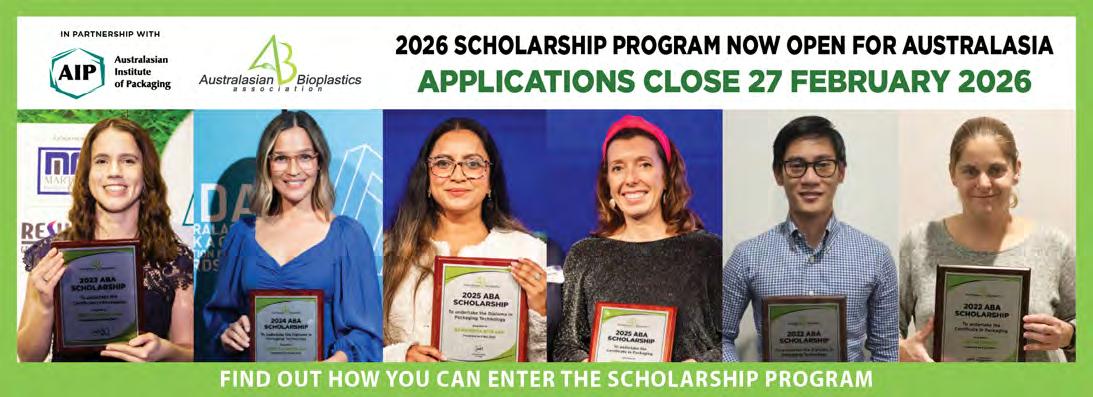
Each year the Australasian Institute of Packaging (AIP) recognises excellence and invests in the next generation of packaging professionals across Australia and New Zealand. Through the Australasian Packaging Innovation & Design (PIDA) Awards and the annual Packaging Scholarship Program, the AIP provides pathways for innovators, technologists and emerging talent to gain recognition, build capability and compete on the world stage. Together, these initiatives strengthen the region’s packaging ecosystem – from design and manufacturing through to education and professional practice. Applications are open, with entries closing on 27 February 2026.
What makes the PIDA awards program unique is that it is not only industry-led but is the exclusive entry point for the WorldStar Packaging Awards for Australia & New Zealand. Only winners from the PIDA awards can enter the WorldStar Packaging Awards each year. Receiving a PIDA Award is the pinnacle recognition for any company and individual in the industry in Australia & New Zealand. 2026 PIDA Categories include:
The Design Innovation of the Year company awards will recognise organisations that have designed innovative packaging within each of these six manufacturing categories:
1. Food
2. Beverage
There are four special awards available:
1. Sustainable Packaging Design
2. Save Food Packaging Design
3. Accessible & Inclusive Packaging Design
4. Marketing
In addition, there are three awards designed for people who have made specific contributions to the packaging industry:
1. Young Packaging Professional of the Year
2. Industry Packaging Professional of the Year
3. Packaging Technologist of the Year
The Packaging Technologist of the Year Award is unique in that it is designed to recognise and acknowledge the outstanding achievements and contribution by an individual currently working within the packaging industry across Australia, New Zealand & Asia.
6.
2026 Packaging Scholarships
The Packaging Scholarship program enables eligible candidates the opportunity to undertake either a Diploma in Packaging Technology and/or a Certificate in Packaging. Eligible Candidates will come from across the entire packaging industry in Australia and New Zealand.
Scholarship 1 (ANZ)
Diploma In Packaging Technology: Internationally recognised as the premier qualification in the packaging industry.
The Diploma in Packaging Technology is a Level 5 PIABC, 51-credit foundation degree-level qualification. The course prepares learners to take responsibility for packaging operations at any level through the supply chain and can lead to higher level study. Diploma in Packaging Technology students come from a variety of backgrounds and disciplines, but they all share a desire to broaden and deepen their knowledge and understanding of the packaging industry.
Watch the video for more info:
Scholarship 2 (ANZ)
Certificate In Packaging: The ideal first qualification for those working in the packaging industry.
The Certificate in Packaging Technology is an introduction to the industry for those starting out on an exciting career in packaging. The Certificate in Packaging is a Level 3 PIABC course that is recognised as giving an excellent foundation in, and introduction to, the packaging industry. The course provides a level of insight and understanding of the packaging industry that adds real and measurable value to careers and businesses.
Scholarship 3 (Australasia – all AIP members across Australia, NZ, Asia)
AIP President Award
The AIP President Award has been designed to work in collaboration with the ABA program to help one additional person undertake either a Certificate in Packaging or a Diploma in Packaging Technology each year. The AIP President Award will also consider applications from AIP Members from across Asia to be eligible for a third scholarship, sponsored by the AIP. Simply apply using the ABA Scholarship Criteria and entry form.
For more information on the PIDA Awards and Scholarship Program, and to enter, visit the website: https://aipack.com.au/pida-awardsoverview/ ■
Winners of the PIDA Awards and Scholarships will be announced on 28 July 2026 at the Crown Aviary, Melbourne, during FoodPro, the largest food and beverage tradeshow in the ANZ region. PIDA finalists and winners will also be showcased inside the FoodPro halls.
Change is no longer the interruption. It is the environment.
John Lawson, FNZIFST, Lawson Williams Consulting Group
Since 2020, many people and organisations across New Zealand have been operating as if they are moving through a rough patch, waiting for things to settle so they can get back to normal work, normal careers, and normal planning.
That expectation no longer fits the world we are in.
Change is no longer something that shows up from time to time. It is now a constant part of how work operates. Markets shift faster than planning cycles. Technology evolves faster than job descriptions. Workforce expectations change faster than organisational structures can keep up.
Treating change as a temporary phase leaves people exposed and organisations fragile.
This series of articles is based on a simple idea. Change management is no longer something you switch on during tough periods and switch off once things improve. It is a capability. One that individuals need to build deliberately, and organisations need to embed as part of everyday work.
Across these articles, we will look at why stability has become the exception, why many traditional approaches to managing change are no longer working, and what it actually takes to operate well when constant adjustment is the norm.
The aim is not to predict the future or offer reassurance. It is to help people build the capability to deal with what is already here. Change is no longer something you go through.
It is something you work within.
John Lawson is founder of Lawson Williams Consulting Group. He initially studied Biotechnology at Massey and is a Fellow of NZIFST. He now enjoys leading a team of recruitment consultants, helping people like you
The lie of “stability”
As 2025 came to an end, a familiar feeling kept coming up.
“I just want this year to be over.”
“Hopefully 2026 feels more normal.”
After several tough years in New Zealand, that reaction makes sense. Since 2020, people have dealt with ongoing disruption across health, work, supply chains, housing, inflation, interest rates, and employment. Many are tired, and they are tired in a very specific way. They are tired of not knowing where the ground is.
The issue is not the fatigue.
The issue is what people are hoping comes next.
The idea that 2026 will bring a return to normal rests on the belief that stability is something we lost temporarily and will soon get back. That belief no longer lines up with reality.
Stability is no longer the default. It is the exception.
An outdated way of thinking
For a long time, change was treated as something that happened occasionally. There was normal work, and then there was change. A restructure. A system rollout. A crisis. Once it passed, things would settle again.
That way of thinking no longer holds.
Markets now move faster than organisational planning cycles. Technology changes faster than skills can be updated. Regulatory and compliance requirements keep evolving. Customer expectations shift in real time.
There is no stable platform waiting on the other side of this period. There is only ongoing movement.
Waiting for things to calm down before rethinking your career or building new capability is a decision in itself. It ties you to a version of work that may not return.
Why this matters at an individual level
Uncertainty is often talked about as something external. The economy. Government. Industry conditions. Global events. What gets less attention is how unsettling uncertainty becomes when it clashes with fixed expectations.
Many people still measure security through clear roles, predictable career paths, stable organisations, and expertise that stays relevant for long periods.
Those signals are weakening, not because people are failing, but because the environment has changed.
The uncomfortable truth is this.
People who wait for certainty before acting are not being careful. They are standing still.
The hidden risk of hoping for normal
Hoping for normal feels harmless. Even reasonable. But it quietly puts people into a waiting mode.
“Change management is no longer something you switch on during tough periods and switch off once things improve. It is a capability.”
It sounds like:
• “I’ll reassess once things settle.”
• “I’ll move when the market improves.”
• “I’ll upskill when work is less chaotic.”
• “I just need one stable year.”
The risk is not these thoughts themselves. The risk is the assumption that stability has to come first.
In today’s environment, progress often happens inside instability, not after it.
Those who wait for calm often find themselves reacting to decisions made by others who did not.
Change is no longer an event
This is the shift many people have not fully taken on board. Change is no longer something you manage and then move on from. It is the environment you operate in. That does not mean constant crisis. It means regular adjustment, ongoing learning, and letting go of how things used to work more quickly.
The people who cope best are not the most upbeat or the most resilient in a motivational sense. They are the ones who have rebuilt their sense of security around adaptability rather than predictability.
They do not ask, “When will this end?”
They ask, “What do I need to be able to do next?”
Entering 2026 differently
If 2026 is framed as the year things finally return to normal, disappointment is likely.
If it is framed as the year you stop waiting for normal and start strengthening your ability to deal with change, it becomes something more useful.
This does not require a complete reinvention. It requires an honest look at how you respond to uncertainty.
• Do you freeze or experiment?
• Do you wait for clarity or create it?
• Do you cling to job titles or build transferable skills?
• Do you treat change as disruption or as the environment you work in?
There is no stable ground coming to save you.
But there is solid footing available to those who build it themselves. That is where this series starts. ■
Enjoying safe food this summer: food safety tips
Vincent Arbuckle, Deputy Director General, New Zealand Food Safety
Kiwis love to get outdoors during the summer months. We eat outside more often, host barbecues and attend more social gatherings. At New Zealand Food Safety (NZFS), we want everyone to make the most of the warmer weather and eat our favourite summer foods without getting sick.
The bacteria or viruses that can make you sick multiply faster in warmer weather. Foodborne illness may leave you unwell for several days. For at-risk people, like the frail elderly, immune-compromised, pregnant, or very young, the complications from foodborne illness can be severe, and in rare cases, fatal.
Handwashing is one of the best ways to prevent these pathogens from spreading. While we all know how to wash our hands properly, there are simple steps you can take to protect yourselves and your loved ones when you camp, cook and eat outside.
Hot tips for summer food safety success
Foodborne illnesses shouldn’t stop you from enjoying the warm weather and sunshine. By implementing these changes when preparing, cooking, transporting and storing food, you can easily achieve food safety success.
1. Skip the wash and handle raw chicken safely
Campylobacter is the most common cause of gastroenteritis illness in New Zealand, with many cases involving improper handling of raw chicken. Washing your chicken doesn’t kill bacteria; it spreads it around your kitchen and increases the risk of contamination. Despite this, approximately two thirds of home cooks wash their raw chicken before cooking it. Instead, pat your chicken dry with a paper towel and put the towel straight in your rubbish bin. Remember to wash your hands after handling raw chicken.
2. Barbecue like a pro
During summer, outdoor cooks should take extra care. Use separate utensils, chopping boards and other equipment for raw and cooked meat. Be sure to cook meat until it is more than 75°C all the way through. Make sure your barbecue and cooking tools have been cleaned with soap and water before using them. Marinate meat in a covered container in the fridge and cook the marinade before pouring over cooked meat.
Store food correctly, especially if you’re on the go
Because people enjoy eating outside or traveling to have food with friends and family, food may stay outside longer and away from refrigeration. If you’re on the move, make sure you store foods like salads, meats, and cheeses in a chilly bag or bin with ice packs or pre-frozen plastic bottles until needed. When storing food at home, keep ready-to-eat foods at the top of your fridge and raw meat and seafood on the bottom shelf. This will prevent crosscontamination between raw and ready-to-eat foods. Refrigerate or freeze leftovers within two hours of cooking. If you have long travel times, have a chilly bag or bin with ice packs in your car to transport food, and then transfer them to the fridge or freezer as soon as you get home.
Spread the food safety message this summer Summer often brings more foodborne illnesses, but this doesn’t mean you can’t have safe food. Apply these steps to have a safer summer and protect those that you care about. For more information, you can visit our website:
• Safe food preparation, cooking, and storage at home | NZ Government
• Summer food safety | NZ Government
• Food safety when fishing and gathering shellfish | NZ Government Download our Food Safety at Home booklet for more tips to keep you and your whānau safe over summer: https://www.mpi.govt.nz/ dmsdocument/3662-Food-Safety-at-Home ■
“The moon is made of cheese, Gromit”
John Brooks' view of the food world through the lens of a microbiologist.
Professor John D Brooks, FNZIFST
Quoting Wallace from one of my favourite stop-motion animated movies is a neat way to introduce this column.
By now, most foodies in New Zealand and, indeed, many around the world, have heard of the unauthorised sale of cheese that had been sent to the Putaruru Landfill. The dairy is a high-end producer of prizewinning cheeses, having attended the 2025 NZ Champions of Cheese Awards dinner, and won two top awards: Thermoflo Champion Washed Rind Cheese and Hill Labs Best-In-Class Buffalo Milk Cheese. They also were awarded the Silver Medal at the 2025 International Cheese and Dairy Awards in England for Goat Blue. Overall, they have won more than 150 New Zealand and international medals for their range of cheeses, which is among the widest in the Southern Hemisphere.
The company makes artisanal cheeses from locally sourced goat, cow, sheep and buffalo milk and judged that the cheeses involved were not suitable to be sold but provided no further comment. I was concerned that the discarded cheeses might be contaminated with pathogenic bacteria and pose an intrinsic hazard to consumption, so I approached the company to enquire about the reason for their disposal.
I was told that the cheese met all regulatory food safety standards, but that there was a process issue that meant the quality was not up to their standard. The manufacturing team decided that maintaining the brand experience for customers should be the primary focus, and thus, the difficult decision was made to dispose of the cheese.
The specific criteria used for assessing quality beyond regulatory requirements are commercially sensitive, setting a 'unique value proposition’, distinguishing their products from other brands in the market.
From dumped product to the black-market
It appears that the cheeses were removed from the landfill and offered for sale illegally on the side of the road and online in South Waikato, and possibly in other areas, on the black market at well below retail price. The
"The cheese met all regulatory food safety standards, but the quality was not up to standard."
company is working with police to find the culprits. Not surprisingly, they are devastated to learn that their products, including Camembert, Brie and Halloumi, are being offered on the black market, having originally been dumped. New Zealand Food Safety was informed of the issue by the company.
Hidden food safety risks
What are the real hazards associated with consuming cheese that has been dumped? The first is that we don’t know its history. It is certain that it has not been refrigerated since it left the factory; some was being sold from a supermarket trolley at the side of the road. Anything that's in there, besides the ordinary starter cultures, can grow. If, for example, they've got coliforms in there - Escherichia coli and possibly Listeria – that can grow and may produce illnesses in consumers. The USDA notes that “soft cheeses such as cream cheese, cottage cheese, shredded cheeses, and goat cheese must be refrigerated for safety. As a general rule, hard cheeses such as cheddar, processed cheeses (American), and
both block and grated Parmesan do not require refrigeration for safety, but they will last longer if kept refrigerated.”
The other issue is that the cheeses could have been contaminated by the landfill itself. Food waste and other infected materials may have been dumped. The packaging of the cheeses could be contaminated externally, but could also leak into the cheese. When the consumer cuts into the cheese, the external contamination could be transferred into the product, leading ultimately to poisoning of the consumer.
Economic pressures
There are probably several reasons for these events. Life is tough right now, and it’s possible that some people are picking through the dump looking for food for their families. The other possibility is that someone saw an opportunity to make a quick buck. We have all probably been offered cheap meat or fish in the pub at some time. This is always a red flag - what is the history of the food and why is it being offered cheaply in a place normally serving drinks? This kind of thing has always been around, but it is a sad commentary on our country that it’s becoming more common in the current economic climate. ■
With apologies to Annie Lennox & Dave Stewart of Eurythmics… Image credit: Barbara Mary (Instagram @barbaramaryer).
Sticking to food safety standards and science amidst the global chaos
The future, when realised, makes fools of us all. Very few predictions or worries come to pass, while unimagined developments creep up on us from behind. Nevertheless, responsible governments and businesspeople must try to discern where things are trending and make whatever preparations they can. However, predicting the future impacts associated with climate change, geopolitics or artificial intelligence feels like holding the proverbial tiger by the tail. Our geographical isolation is less of a buffer than it used to be against world events beyond our control. To a large extent, where the world goes, we go.
The New Zealand Food Safety Science & Research Centre (NZFSSRC) held its third futures forum in Wellington in November 2025. The eminent line-up of speakers was asked to address the risks to food safety from climate change, pathogens, geopolitical shifts, AI and other new technologies.
We want to feed the world, but at home?
Households
Macro forces shaping food safety
High profile economist Shamubeel Eaqub kicked it off with a survey of global concerns and economic challenges, first making the point that life expectancy and incomes have continued to improve since 1950. The consumption of meat and other animal proteins tracks rising prosperity. Our dairy products have ridden on the back of the astonishing rise in China’s standard of living. However, the rate of growth in the productivity of the New Zealand food and fibre sector has decreased since the 1990s to a mere one percent, Shamubeel emphasised. And despite our excess food production – enough to feed about 40 million people - we struggle to feed our own. Local purchases of fruit and veg, bread, meat, poultry and fish are markedly down compared to the 1980s and 90s, with associated nutritional deficits and rise in obesity. Forty percent of those questioned in a survey Shamubeel cited had not bought any fruit during the week.
Geopolitics, climate and the loss of trust
Then there’s the loss of social licence being faced by our food producers and regulators, the breakdown in world order and trust in institutions, and social media fanning sparks of discontent and disinformation bytes into blazing wildfires. There is less trust in government and reduced government capacity. No wonder people are drinking raw milk, said Shamubeel.
On the plus side of the ledger for New Zealand, the shift in the trade centre of gravity from Europe to Asia has had the benefit of reducing the distance our exports have to travel. Shorter travel times are good for food safety. New Zealand has also been moderately successful in spreading its market risk by exporting more products to more countries, but China is still by far, the largest slice of the export pie chart. The progressive march towards a convergence of standards since World War Two is now backsliding under pressure from climate change and the backlash against globalisation. Food safety is fundamentally about trade-offs.
Shamubeel noted New Zealand needs to maintain consistency, credibility and the best global standards. He talked about the importance of culture and institutions, standards and science, which are a ‘safe harbour in the tempest’.
New technologies and biotechnology breakthroughs
Jarred Mair, accurately titled Chief Insights Officer for MPI, traversed some truly amazing (an apt word in this instance) new technologies being applied already, as well as imminent applications.
AI can be used to design CRISPR (clustered regularly interspaced short palindromic repeats) gene-editing tools, with potential we can scarcely conceive. It can also analyse natural compounds for potential health and
Source: Statistics NZ, Simplicity Research Hub
other benefits at a phenomenal rate. The structure of thousand-atom proteins, which used to take a scientist or team of scientists an entire lifetime to figure out, is now but a day’s work.
Jarred expects to see humanoid robots in the milking shed and fully automated fruit picking within ten years - “The only thing that will hold this back is availability”. While this has many positives for the food industry, it will negatively impact on rural areas, which will be further depopulated, and our Pacific neighbours who currently rely on New Zealand's Regional Seasonal Employer (RSE) scheme for much-needed employment and income. Generally, we’ll be able to do more with less, as precision agriculture reduces the inputs and biotechnologies target pests without the use of chemicals.
Jarred cited several specific examples of new technologies, with or without AI. The unpronounceable, Gluconacetobacter diazotrophicus bacterium enters plants to fix nitrogen from air – up to 50% of the plants’ needs (currently used for corn, rice, potatoes, etc.) – and has already been tested on approximately 2m acres. It also supports phosphorus availability and pest management.
Following the discovery of more than 50 bioactive whey proteins that are present in pasture-fed milk, Quantec have developed a range of products with specific antimicrobial, antiviral, anti-inflammatory and antioxidant properties.
Synthetic peptides developed by Greenlight Biosciences, poison varroa mites that are killing our bees. Pests cost New Zealand $9 billion a year! Another product by Greenlight Biosciences interferes with RNA (the molecule which carries the DNA instructions for making proteins) to stop powdery mildew on grapes and comes with other benefits.
AI can predict consumer preferences with much greater accuracy. Once again, while this is positive for the food industry, it may mean more social science and marketing jobs withering on the vine.
Pathogens, outbreaks and emerging threats
On climate change, there is rarely good news, and readers will be well aware of the ominous signs outside their own window. Confoundingly, New Zealanders’ belief in climate change is decreasing (to 69%), according to Shamubeel.
Norton Atkins, policy analyst at the Climate Change Commission, said extreme events do get a lot of attention, but gradual changes are eroding productivity. There is an unseen toll on our oceans. Our waters are warming faster than in other parts of the world - 0.2 to 0.3 degrees centigrade per decade. Surface temperatures are warming faster in the north, whereas the bottom temperature is warming faster in the south. Possible responses are to breed salmon that can handle higher temperatures or shift aquaculture to cooler parts of our surrounding
“To ensure a robust, safe, and secure food supply for all… we need good science and our researchers, regulators and industry working together on our joint challenges.”
- Distinguished Professor Phil Bremer
oceans. Temperature-sensitive pathogens are on the move. Vibrio parahaemolyticus, a pathogenic bacterium which accumulates in shellfish, is an emerging health threat concerning marine scientists. Can we detect it in time to warn the public?
Algal blooms are increasing in frequency and dimension. Centre Deputy Director Tim Harwood and colleague Kirsty Smith at Cawthron Institute were called to help manage the monster algal bloom covering an enormous area off the South Australian coast, shutting down commercial fisheries for months (see the December 2025 issue of FoodNZ for the full story).
Infectious disease specialist and former Centre Director, Distinguished Professor Nigel French, warned that the highly pathogenic avian flu epidemic is “an existential threat”, and it seems inevitable that it will arrive here soon. You can’t close the border to wild birds or tell them where they can and cannot land. An outbreak could require mass euthanasia of birds, as seen on an Otago poultry farm in late 2024, and threaten both our poultry and dairy industries. Nigel gave a run-down of foodborne pathogens on the rise and notable disease outbreaks here and overseas: a major outbreak of listeriosis in South Africa from processed sausage; more virulent strains of Bacillus cereus (the toxins cannot be destroyed by cooking or reheating); Group B streptococcus; Hepatitis E; Vibrio parahaemolyticus mentioned above; Salmonella Enteritidis (from poultry and eggs); and toxigenic E. coli.
Damien Farrelly of the Fresh Produce Safety Centre made the point that with fresh fruit and vegetables there is no ‘kill step’ and while growing produce undercover can limit pathogen exposure from wind, dust, water and animals, such produce is not exposed to as much ultraviolet light which can kill bacteria and viruses. Fruits, vegetables and herbs, despite the best efforts of growers, are the third most recalled food category, frequently owing to the presence of microbial pathogens or allergens. Lessons were learned from Cyclone Gabrielle; the horticulture industry had a fragmented approach to disaster response and communications. Additional guidance for critical incidence response has since been issued to growers. Damien said a good food safety culture is the best insurance against a food safety incident.
Mathew Bannister of First Fresh Ltd, said that current food safety performance is built on ‘business as usual’. When business as usual breaks down, people start to do what they think is the right thing, during events such as Cyclone Gabrielle for example. However, it can be that “Standing around doing nothing is sometimes the best action until more is known. When we get outside of normal operations, we need to set a high standard and that should be to have no doubt about food safety. We need to plan and run exercises more for things we are currently ill-prepared for, like volcanic eruptions.”
Economist Shamubeel Eaqub
As the Greek poet Archilochus is widely attributed as saying, “We don't rise to the level of our expectations; we fall to the level of our training.” It should be noted that MPI recently ran a practice exercise for the event of a volcanic eruption, which is quite on the cards at some unpredictable time.
Regulation races to keep pace with innovation
Then there are the entirely new food products exercising food safety regulators. New regulations have had to be developed to ensure the safety of cell-cultured foods. Matt O’Mullane, General Manager of Food Safety at FSANZ, said they focussed on getting two new science-based food standards in place to future-proof a pipeline of new products, ensuring there is a clear pathway to market. Matt says this took longer than anticipated, which generated some negative feedback, “But at the end of the day, it was important to get the necessary safeguards in place to protect consumers and also create regulatory certainty for the food sector.”
Facing the future
Concludes Centre Chief Scientist, Distinguished Professor Phil Bremer, “This all seems rather a catalogue of catastrophe and frightening change, interspersed with promising, if unproved, responses and mitigations. To ensure a robust, safe, and secure food supply for all, potential food safety impacts associated with these real and anticipated changes need to be understood, and mitigation and management plans must be implemented. To achieve this goal, we need good science and our researchers, regulators and industry working together on our joint challenges. The Centre is very clear about its mission to make that happen. Let’s face the future head on and be optimistic as we embark upon a new year.” ■
The NZ Food Safety Science and Research Centre would like to acknowledge and thank all the presenters at the Futures Forum, held on 18 November 2025. We cannot summarise all the content here, but their presentations are available on the Centre’s website: https://nzfssrc.org.nz/ news/18-november-futures-forum-presentations-now-available/#/
Workstream update
Ngā mihi o te Tau Hau,
The workstream committees made significant progress in 2025 thanks to the dedication of their members, leads, and Executive Manager, Wendy Bayliss.
Esraa El Shall, NZIFST Immediate Past President
With the arrival of 2026, we look forward to finalising our priorities for the year and will provide further updates in the next issue. In the meantime, let’s celebrate some milestones and achievements reached in 2025.
Networked Community piloted remote branches, including a successful event held in Nelson. We updated graduate membership fees to be more affordable for students graduating and early graduates, and began recruiting for a role to support branch events and sponsorship. Branch Committees delivered 39 events last year, connecting members in person and online.
The Vibrant Food Industry team has launched a new Collaboration award, open for nominations shortly with sponsorship secured. They have also promoted members and Food Science and Technology careers on LinkedIn.
Under Demonstrating Impact, Wendy, our Executive Manager, led the launch of our new website with interim design. Meanwhile, the workstream team has been progressing on the NZIFST name and visual identity project, which will be unveiled soon.
The NZIFST Conference Committee successfully organised an outstanding conference in Palmerston North last year, marking it as our most significant Professional Development opportunity and providing an ideal occasion to highlight and recognise the achievements of both NZIFST members and industry associates. The workstream has been actively preparing a strategy for additional professional development initiatives and partnerships, which will enable efficient and timely delivery of these activities.
We greatly appreciate the dedication and commitment of our Branch, Conference, and Workstream Committee members. Stay tuned for updates on the 2026 plan. If you're interested in joining any workstreams or have questions or feedback, please reach out!
Ngā mihi, Esraa El Shall Immediate Past President
NZIFST Conference 2026
The Plenaries are taking shape
At time of writing, we have confirmed our opening keynote plenary speakers.
I am pleased to announce that our opening keynote speaker will be Economist, Shamubeel Eaqub.
Shamubeel Eaqub is an experienced economist who makes economics easy. He is an engaging and knowledgeable speaker and a regular and respected contributor to media, government and business sector discussions on economic and strategic matters. He is a thought leader unafraid to take a contrarian view. Shamubeel has been asked to give us a "now" snapshot of our New Zealand economy, by sectors, discussing projected and potential growth and a considered review of prospects for future growth.
Second opening plenary speaker is The Prime Minister’s Science Adviser, John Roche.
Dr John Roche is a globally recognised expert in agricultural science and was appointed Chief Science Advisor to New Zealand Prime Minister Christopher Luxon in May 2025. He also serves as Deputy Chair of the Prime Minister’s Science and Technology Advisory Council, which was established to guide the government on key scientific priorities and challenges.
Dr Roche will be asked to cover similar ground to Shamubeel Eaqub, focused on science/research supporting our food export/manufacturing industry.
There is still lots of time to submit your abstracts for Concurrent Session presentations but it’s a good idea to start planning now.
Call for abstracts/proffered papers
The Conference Committee is inviting potential speakers to submit abstracts as follows:
• Presenting an Oral Paper
• Entry in the 3 Minute Pitch Competition (Post-grad student members)
• Entry in the Poster Competition (Student members)
The QR code will take you to the NZIFST Conference Abstract portal. We have included a list of possible topic areas that you can cover. This list does not exclude any potential topics, but leads you towards a possible focus for your paper.
Anne Scott, 2026 NZIFST Conference Committee Chair
Dr John Roche
Economist Shamubeel Eaqub
Q&A with Chathurika Samarakoon, MNZIFST
For Chathurika Samarakoon, food science began as curiosity — what happens when ingredients change, transform, or interact — and evolved into a career committed to improving food quality, safety, and nutrition in ways that serve both industry and consumers. Her work now spans research, industry, and education, and she is deeply engaged in developing future food science professionals. A committed NZIFST member since 2016, she values the Institute’s ability to connect a small and highly collaborative sector.
What sparked your interest in food science and technology?
I was always curious about how food works — especially what happens to ingredients when we process, store, or combine them, and how small changes can make a big difference. Early on, I realised that food science is a discipline you apply every day, not just in a lab. That curiosity grew into a strong interest in improving food quality, safety, and nutrition in ways that also make sense for industry and consumers. It’s a field where science directly improves people’s lives, and that has kept me engaged ever since.
What achievements are you most proud of?
Apart from family, I’m most proud of building a career that connects research, industry, and education. Working on applied research projects that have improved product quality, shelf life, and consumer acceptance has been especially rewarding. I’m also proud of the leadership roles I’ve taken on both in education and within NZIFST and of contributing to the development of future food science professionals.
What major changes have you witnessed during your career, and how have they shaped your work?
One of the most significant changes I’ve observed is the growing emphasis on consumer-centric product development, sustainability, and clean-label expectations. At the same time, advances in analytical tools and sensory science have transformed how we understand food quality and consumer perception. These changes have shaped my work by encouraging a more holistic approach, considering not only technical feasibility, but also consumer expectations, environmental impact, and regulatory requirements.
Mentorship is often a key part of professional growth. Are there any mentors who made a significant impact on your path?
Absolutely. I’ve benefited from several mentors throughout my journey, including my parents, who challenged my thinking, nurtured curiosity, and set high standards for integrity and professionalism. Equally important was the confidence they instilled — trusting me to take ownership of my work and to learn from both successes and setbacks. Those lessons continue to influence how I lead, support others, and approach mentoring today.
What advice would you give young food science and technology professionals starting out today?
Stay curious and don’t limit yourself too early. Food science and technology is broad, and exploring different areas helps you discover where your strengths and interests truly lie. Build solid technical skills and critical thinking, but also invest in communication, collaboration, and adaptability. Seek out industry exposure, ask questions, and embrace opportunities that challenge you. Don’t be afraid to step outside your comfort zone as some of the most valuable learning happens there. New Zealand’s food science and technology community is small and well connected. We often say that everyone knows each other because you frequently meet the same people working across the industry. Investing time in building strong professional networks and staying engaged with industry is well worth the effort.
What makes NZIFST meaningful to you?
NZIFST creates a strong, connected professional community within New Zealand’s food industry. It offers valuable opportunities for networking, professional development, and staying engaged with emerging trends and challenges in food science and technology. NZIFST also plays a vital role in bridging academia and industry, which is essential for the ongoing growth of the sector. I’ve been a member since 2016, and the Institute has played a significant role in my professional journey, particularly by providing opportunities to contribute through leadership roles. Being able to give back to NZIFST and support the wider food science community is something I value greatly.
Any final reflections?
Food science is a dynamic and rewarding field that continues to evolve with new technologies and consumer needs. I believe collaboration, lifelong learning, and engagement with professional organisations like NZIFST are key to driving innovation and maintaining high standards within the industry. I look forward to continuing to contribute and grow alongside the food science community in New Zealand. ■
Branch news
Updates from around Aotearoa New Zealand
Catch up on the latest happenings from our national branches — from recent events and speaker sessions to prizegivings and member gatherings, this section showcases the vibrant activity and community spirit across our network.
waikato
auckland
Waikato & Bay of Plenty
End of year celebration
The Waikato & Bay of Plenty NZIFST Branch marked the end of the year with a well-attended dinner on 13 November at Windows Restaurant, Wintec Rotokauri. Members, partners, and guests — including an aspiring future food scientist — enjoyed an evening of festive atmosphere, good food, and valuable connection as we reflected on a productive term since July.
The evening began with a light-hearted pre-dinner quiz involving four teams of three. The competition remained close throughout, highlighting strong teamwork and friendly rivalry. Congratulations to Team 2, who emerged as the overall winners. All participants took home a selection of goodies in recognition of their efforts.
As we look back on 2025, the branch is pleased to reflect on a successful series of activities:
FED Talks
July: David Lowry presented “Lessons a Lifetime of Microbiological Troubleshooting Has Taught Me.”
August: Ali Ahmed delivered “Maldives – A Local’s View on Food Technology.”
Science Engagement
In August, Katharine Adam and Aishath Naila represented the branch as judges for the NZIFST Special Award at the NIWA Science Fair.
Factory Visit
In October, members toured the Dairy Goat Co-operative, an event organised by David Platts.
End of Year Celebration
In November, this year’s festive quiz was coordinated by Colin Pitt, and dinner arrangements were organised by Chathurika Samarakoon in collaboration with Windows Restaurant.
Branch Communications
Special thanks to Katharine Adam for designing promotional posters for all branch events throughout the year.
The branch extends its thanks to all members and supporters who contributed to a vibrant and engaging programme in 2025. We look forward to continuing to foster learning, connection, and professional development within our food industry community.
Waikato & Bay of Plenty Branch end of year celebration at Windows Restaurant, Wintec Rotokauri
Marcus Loi
Canterbury-Westland
End of year gathering
In 2025, Canterbury-Westland Branch opted for a potluck meal for our End of Year Event held in November. Meadow Mushrooms kindly allowed us use of their spacious meeting room and modern kitchen. With generous and varied dishes contributed by attendees, we enjoyed a very tasty buffet including a mocktail punch.
After time for eating and mingling, Rex Johnstone, our Branch Chair, introduced committee members, for the benefit of newer members, and acknowledged their time and efforts in organising the year’s many events – a good mix of factory tours, professional talks, networking and student evenings.
Next, we observed our long-standing tradition of an after-dinner quiz. Our usual quiz master was sadly unavailable, however with a little persuasion, Bob Olayo (Committee member and NZIFST President)
“volunteered” and delivered the questions in his unique style. There was no disguising his bias and area of specialist knowledge with two questions on water activity. (Bob was not impressed that many of us failed to answer either of these correctly!)
Despite the expected advantage of competing in teams for the first time, rather than as individuals, and having many more multi-choice questions, our scores didn’t seem to be significantly higher than usual, but Bob was still generous with the prizes.
Thanks to everyone’s culinary skills and choices for a delicious dinner, to members who came along early to decorate the room and cook the savouries, and to those who helped return the rooms to good order afterwards.
Margot Richards
Canterbury-Westland members enjoying the end of year gathering, with Bob Olayo (centre back) conducting the quiz
Auckland
The Auckland Branch is thrilled to be back in action after a summer holiday break for our committee members and have a number of exciting events coming up for 2026.
A perfect roll to wrap up 2025
The Auckland branch members truly bowled us over as it wrapped up the year with a relaxed, fun-filled lawn bowls event on 20 November 2025. It was the perfect way to unwind and connect with others. Hosted at the fantastic Epsom Bowling Club, the venue and hosts were topnotch, setting everyone up for success with clear instructions and handy tips - even first-timers felt right at home.
With beautiful sunny weather, a deck-side setting and delicious food enjoyed outdoors, the atmosphere was spot on. It was great to see lots of new faces alongside familiar ones, all mixing easily as teams struck up a friendly rhythm. While the vibes were social and light-hearted, things did get slightly competitive within the teams - just enough to keep everyone on their toes.
Adding to the laughs were the spot prizes including ‘Mr Gutterball’, ‘Most Improved’ and ‘MVP’, which kept the spirits high and smiles wide. All in all, it was a great way to roll out the year - proof that good company, good weather and a great venue make for a winning combination.
Rebecca Fok
Auckland Branch members at Epsom Bowling Club
Central
Happy New Year!
By the time you read this, it will be 2026!
One of the Central Branch’s firmly established—and “not to be forgotten”—rituals is our end-of-year social get-together. As mentioned in previous reports, a peculiar feature of our branch is the double-cluster of members in our two main cities, Wellington and Palmerston North, about 150 km apart. During the year we run events at both hubs, usually in a virtual format, so this annual gathering is a welcome chance for members from both cities to meet in person and share a meal somewhere roughly halfway.
This year we once again met in Waikanae but broke with tradition by trying the delightful Long Beach Tavern. Thanks to Francesca Armstrong for the recommendation and to Claire Chandler for organising the booking. The restaurant still shows a “Salt and Wood” influence (our go-to venue for the last three years), as all the craft beers were from the North End microbrewery—home of Salt and Wood.
The “Wellies” outnumbered the “Palmy’s” in the group of 18 who made it along. Another slight departure from tradition was holding the event on a Thursday night (27 November). The upside was a less crowded
restaurant and, theoretically, fewer clashes with members’ usual Fridaynight commitments. The extra weekday travel clearly didn’t put anyone off.
A special thanks to Graeme MacLeod for adding another dimension to the networking by circulating “question sheets.” These encouraged participants to get to know their fellow diners through thoughtful prompts—some professionally relevant, others just for fun. Fortunately, the staff managed to keep track of everyone’s meals despite the revolving conversations and chairs.
Judging by the positive vibe and feedback, the evening was a real success. The food and drink were first class, with the restaurant’s seaside location reflected in exceptionally fresh seafood. Our dilemma for next year will be whether to return to Long Beach Tavern or go back to Salt and Wood—a great problem to have, and one best solved closer to the time.
In previous years we’ve run a quiz before and during the meal, but it seems our members truly value the chance for one-on-one conversations. After all, it’s only once a year that the branch gets to physically bring its two ends together in such a convivial way.
Attendees gather at the Long Beach Tavern in Waikanae
Craig Honoré, FNZIFST
New members
NZIFST welcomes the following new members.
Standard members
Alison Chen, Technical System Assessor, Silver Fern Farms
Justine Klassen, Hellers Ltd.
Nathan Sutton-Mauger, QA Technician, Hellers Ltd.
Harriet Wilson, Principal, AJ Park
Professional members
Student members
Massey University: Elina Malla. University of Auckland: Benson Li, Sanjaykumar Thiyagarajan.
University of Otago: Swathi Sadanandan.
NZIFST congratulates the following members who have recently upgraded to professional membership.
Shuming Ke, Principal Technologist, Fonterra Co-operative Group Ltd
Chia Chun (Marcus) Loi, Principal Technologist, The Tatua Co-operative Dairy Company Limited
Moestijanto Moestijanto, Lead Technical Auditor, NZIDT