AUGUST / SEPTEMBER 2026 | VOLUME 26, NO.4 ISSN 2744-7308 (ONLINE) ISSN 1175-4621 (PRINT)
•
•
Craft Distillery and Brewery Study Tour of Whanganui-Taranaki
Richard Archer and John van den Beuken, NZIFST Central branch
Foodcom www.foodcom.nz
FoodNZ is distributed online to all members of the New Zealand Institute of Food Science and Technology. An online edition is shared internationally. Visit www.foodnz.co.nz to subscribe.
No part of this publication may be reproduced or copied in any form by any means (graphic, electronic, or mechanical, including photocopying, recording, taping information retrieval systems, or otherwise) without the written permission of NZIFST. The views expressed in this journal are those of the writers and do not necessarily represent the view of or NZIFST.
Editor Julie North Foodcom foodnzeditor@nzifst.org.nz
Advertising Jo Kelly-Tucker foodnzsales@nzifst.org.nz 027 543 1041
Design and Layout Foodcom
Regular Contributors
John D Brooks, Vincent Arbuckle, Raewyn Bleakley, John Lawson, Nerida Kelton Published by NZIFST
Notice to
Contributors
When submitting editorial for Food New Zealand please observe the following, Editorial to be submitted as plain text files, NO FORMATTING please. Images should be sent as high resolution .jpg or .tiff files. Do not embed images in word documents, send separate files. Any images smaller than 500 kb may not be printed as the clarity of the print may be compromised.
Advertisers
Material specification sheet and rate card on website, www.foodnz.co.nz
Executive Manager, Wendy Bayliss
PO Box 44322
Pt Chevalier
Auckland 1022
New Zealand
Phone: 022 549 8483
Email: wendy@nzifst.org.nz
Website: www.nzifst.org.nz
Professional Development Networking – connecting with your peers
Regular information about your industry
Recognition through awards, scholarships, travel grants www.nzifst.org.nz/join/
Enhancing sweetness perception in reduced-sugar fermented products
Raise Ahmad, Senior Scientist, Smart Foods and Bioproducts, Bioeconomy Science Institute
Truth on the table: tackling food and health misinformation
Raewyn Bleakley, Chief Executive, New Zealand Food & Grocery Council
Food safety: Is success our Achilles heel?
NZ Food Safety Science & Research Centre
Technical expertise is no longer enough. The rise of adaptive capability.
John Lawson FNZIFST, Lawson Williams Consulting Group
Professor John D Brooks, FNZIFST
• Workstream update
• Student Essay Winner
• 3 Minute Pitch and Student Poster Competition Winner
Meet a member: Q&A with Robyn Marshall
• Branch news
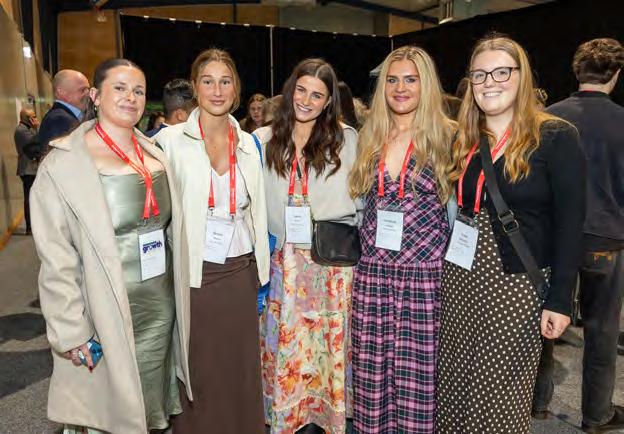
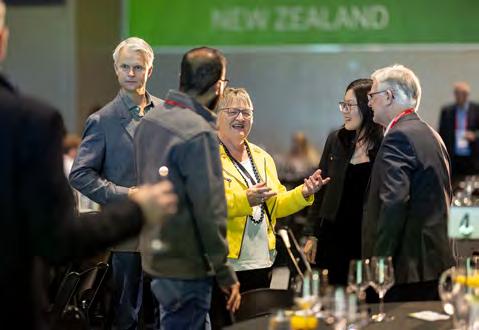
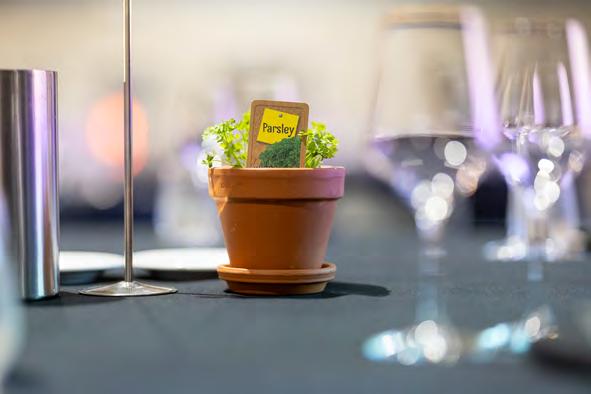
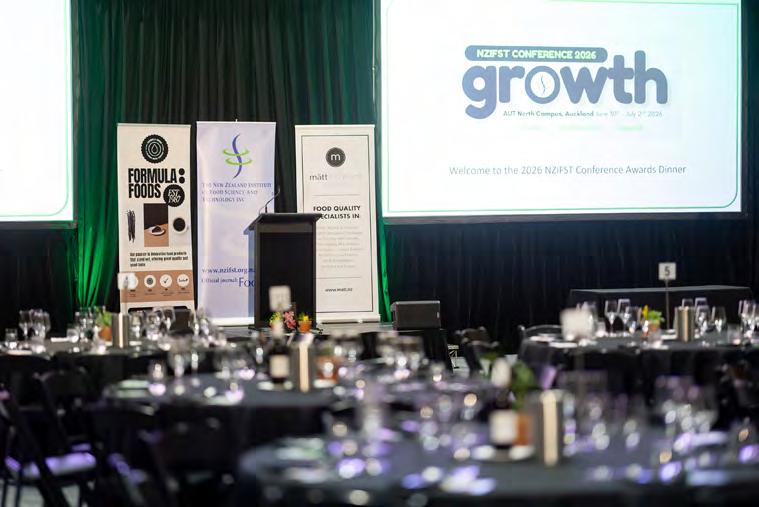
The 2026 conference theme of Growth was evident throughout the three days in Auckland, from presentation topics to the seed packets delegates took home and the edible plants decorating the venue.
OCTOBER/NOVEMBER 2026 edition of FoodNZ magazine
Features:
• In Focus: Food Ingredients – new releases in flavours, functional ingredients, core ingredients, clean label.
• Student Essay Competition, second prize winner.
Editorial and advertising deadline: 13 September 2026
Publication date: 1 October 2026
One of the things I enjoy most about editing FoodNZ is that, while much of the work happens behind a screen, every so often I get the opportunity to meet the people whose work fills these pages.
This year's NZIFST Conference was my first, and it was a genuine pleasure to connect in person with so many members and supporters of the Institute. Thank you to everyone who took the time to chat. It was a wonderful reminder that our industry is built not only on science and innovation, but on the relationships that connect us.
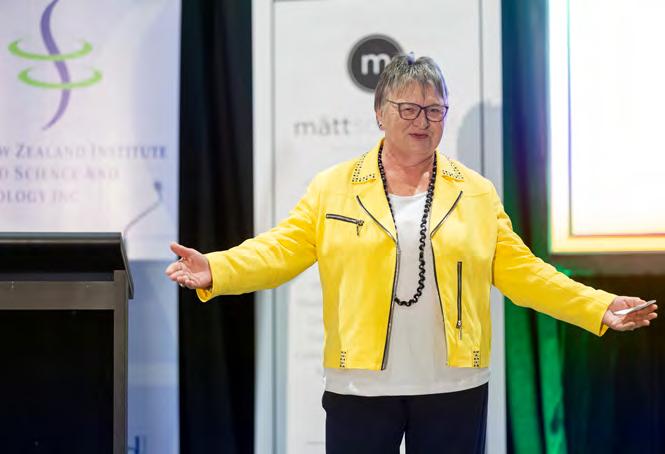
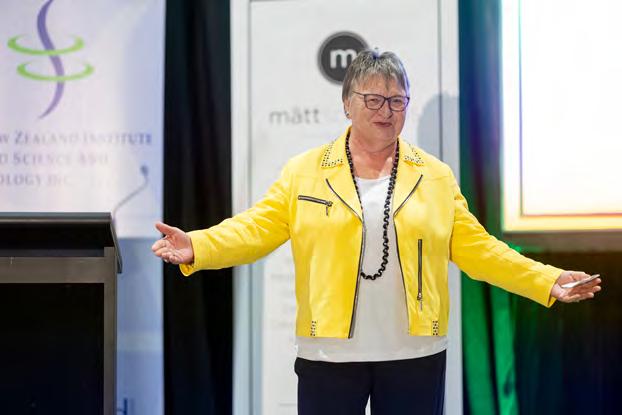
Unsurprisingly, this issue is packed with conference highlights. We celebrate this year's award recipients, look back at some of the highlights from across the three days, and share the JC Andrews Address, delivered by the inspiring Anny Dentener-Boswell. Her reflections on her journey with milk were every bit as colourful and vibrant as the memorable jackets she wore throughout the conference – entertaining, insightful and full of wisdom.
You’ll also find a conference roundup from the New Zealand Food Safety Science & Research Centre, together with a feature from the New Zealand Food & Grocery Council that builds on the discussions from the conference misinformation panel. We also step away from the conference to join our Central Branch members on their first craft brew and distillery tour, showcasing another side of the professional connections and camaraderie fostered through the Institute.
Of course, alongside these special features are the regular columns and member contributions that bring together technical knowledge, professional development and different perspectives from across the food science and technology sector.
I hope you enjoy this issue, and if we didn't have the chance to meet at conference this year, I hope our paths cross before the next one.
As always, we love to hear your feedback. If you have ideas for future stories, members you'd like to see featured, or topics you'd like FoodNZ to explore, please don't hesitate to get in touch.
Happy reading.
Lauren Sheridan Food New Zealand Editorial Team foodnzeditor@nzifst.org.nz
Dear Members
As I reflect on the recent NZIFST Conference 2026 in Auckland, I am filled with gratitude, pride and optimism for the future of our Institute. This year's conference brought together food professionals, researchers, students and industry partners from across New Zealand and beyond. The energy throughout the week was exceptional. It was wonderful to see members reconnecting, new relationships being formed, and conversations continuing long after sessions had finished. From the exhibition hall and technical sessions to the networking and social events, there was a genuine sense of engagement, collaboration and enthusiasm that highlighted the strength of our community.
The conference programme was a highlight. We heard from an outstanding mix of plenary speakers, industry leaders, and researchers who shared practical insights, emerging trends and innovative thinking from across the food sector. We were also delighted to welcome local, regional and international delegates, whose participation added valuable perspectives and strengthened our connections across the wider food science and technology community.
One of the most encouraging aspects of this year's event was the involvement of students and emerging professionals. We were proud to host the largest student delegation in the history of the conference. Their enthusiasm, curiosity and willingness to engage were inspiring and a powerful reminder that the future of our profession is bright. The poster sessions were another highlight, showcasing the impressive breadth of research, innovation and talent across our universities, research organisations and industry.
The conference also marked an important milestone in the evolution of our Institute. During the event, we shared our future identity as Food Science & Technology New Zealand (FSTNZ) and unveiled the associated branding. This work has been shaped through extensive consultation with members over many months, seeking feedback on our name, brand, purpose and future direction.
On behalf of the Board, I would like to sincerely thank everyone who has contributed to this process. Your engagement, ideas and feedback have helped shape the outcome and ensure that the future organisation reflects the aspirations of its members. The response to the new direction has been overwhelmingly positive, generating significant excitement and momentum. We are looking forward to commencing the rollout of the new branding in the coming months and sharing more details as we enter this exciting next chapter.
Alongside this work, the Board continues to advance our broader strategic review, ensuring the Institute remains relevant, valuable and influential for current and future generations of food professionals.
None of this would be possible without the dedication of our volunteers, committee members, Board, sponsors, exhibitors, speakers and members. Thank you for the time, expertise and passion you contribute to making this Institute such a vibrant and valued professional community.
Looking ahead, planning is already underway for our 2027 Conference in Christchurch (29 June – July 2027). We look forward to welcoming you to Te Pae Christchurch Convention Centre, a world-class venue in the heart of the city and building on the momentum generated in Auckland.
Thank you once again for your engagement, support and commitment. The success of our Institute comes from its members and, as I often say, this is your Institute.
Bob Olayo MNZIFST NZIFST President
Newsbites
National and global news and items of interest that have caught our attention at Food New Zealand.
Cross-sector partnerships between established food companies and biotechnology startups continue to shape the future of infant nutrition. Nestlé has announced a multiyear collaboration with US biotechnology company Helaina to combine its early-life nutrition expertise with Helaina's precision fermentation capabilities to advance research into bioactive proteins and their role in infant development. The partnership reflects a broader industry trend, with startups contributing novel technologies and larger companies providing the scientific, regulatory and commercial expertise needed to bring next-generation nutrition innovations to market.
'Fricy' trend drives processing considerations
A new whitepaper from HRS Heat Exchangers explores the rise of the 'fricy' food trend – a combination of fruity and spicy flavours – and its implications for food and beverage manufacturers. According to the company, growing demand for products such as sauces, condiments and beverages featuring these flavour combinations presents opportunities, but also challenges for processing, particularly in preserving flavour, texture and product integrity.
The paper also highlights the importance of flexible processing equipment that can support small production runs and rapid product changeovers, enabling manufacturers to respond to emerging consumer trends without significant capital investment.
Grant supports food rescue efforts
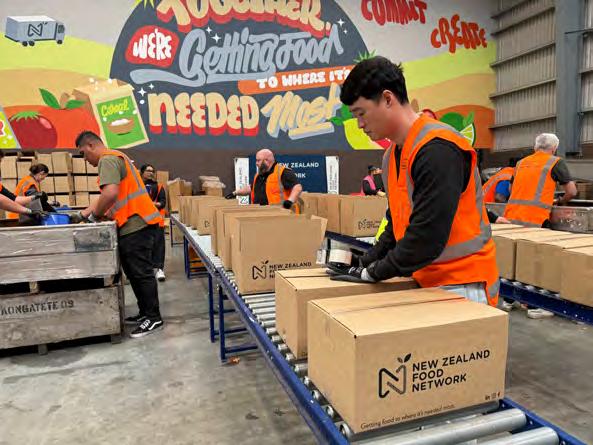
The Lineage Foundation for Good has awarded a USD $10,000 grant to New Zealand Food Network (NZFN) to support its work redistributing surplus food to communities across Aotearoa. The funding will strengthen NZFN's ability to move surplus food through its nationwide network, helping reduce food waste and improve food access.
The grant follows a recent collaboration between Lineage and NZFN that saw more than 1,000 pallets of surplus frozen vegetables redirected after they no longer met commercial sale specifications. The initiative resulted in approximately 635,000kg of product being distributed through NZFN's network rather than going to waste.
The HRS Unicus Series of reciprocal SSHEs is ideal for most situations
Filipino belly pork hamonado with pineapple and rice is typical of the fricy trend
NZFN volunteers packing produce boxes
GOOD NatureRelax targets dough elasticity
GoodMills Innovation has launched GOOD NatureRelax, a clean-label baking ingredient derived from 100% stabilised, finely ground wheat germ that naturally counteracts excessive dough elasticity. Designed for mechanical and industrial bakery production, the ingredient combines naturally occurring glutathione and protease to improve dough handling, stabilise processing and reduce waste.
The company says the ingredient enables more consistent dough shaping and weight portioning, smoother processing, and can reduce kneading time by up to 15%. GOOD NatureRelax is intended for wheat-based products including pretzels, laminated doughs, baguettes, pizzas and tray bakes, offering a natural alternative to inactive yeast and cysteine.
FOOD TESTING
Hill Labs offers fast, reliable pathogen testing - with results as soon as the next day*.
Our in-house whole genome sequencing and MALDI-TOF identification means we can quickly sequence and ID your pathogen to ensure minimal impact on production.
Trust us for fast, accurate food safety testing. 0508 HILL LABS | 0508 44 555 22 now available in-house *if received at the laboratory by 3pm
Wellness trends continue to drive nutraceutical innovation
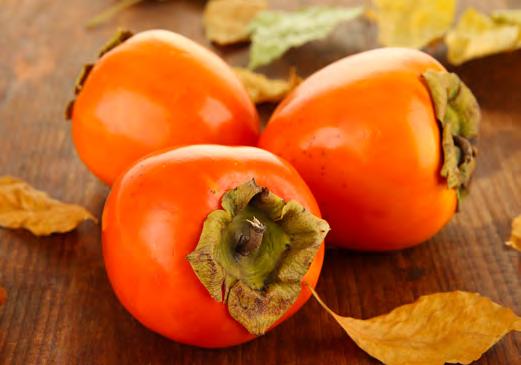
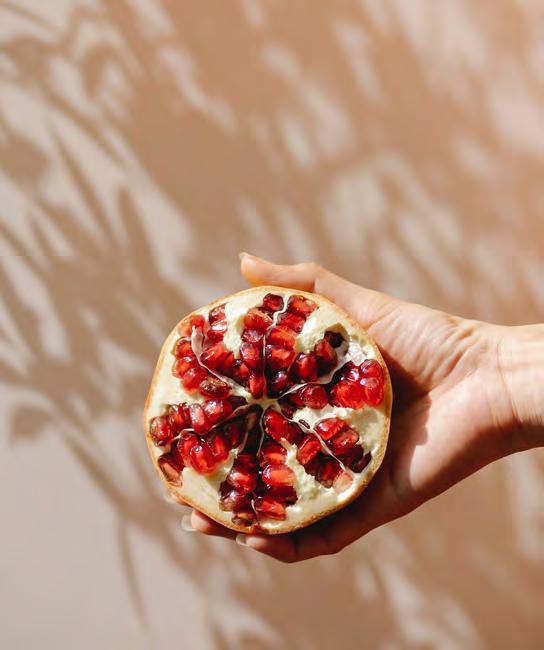
Beauty-from-within, healthy ageing and weight management continue to be key drivers of nutraceutical innovation across Asia, according to Euromed. The company says demand for natural, evidence-based ingredients is fuelling interest in botanical extracts that support skin health, healthy ageing and body composition. Its latest clinically studied Mediterranean pomegranate and persimmon extracts reflect the growing focus on science-backed, plant-based ingredients for nextgeneration nutraceutical products.
AIP partners with Packaging Cockpit
The Australasian Institute of Packaging (AIP) has become the exclusive regional partner for Packaging Cockpit across Australia, New Zealand and parts of Southeast Asia. The software platform helps businesses manage packaging specifications, assess technical recyclability, undertake life cycle assessments and prepare for global packaging regulations, including Europe's Packaging and Packaging Waste Regulation (PPWR). The platform also enables data sharing across supply chains, with a free basic version available to help brands and packaging suppliers begin digitising packaging specifications and regulatory reporting.
Call
for kotahitanga against tobacco, alcohol and junk food
Health Coalition Aotearoa has launched its Prevention Brief 2026, calling on political parties ahead of the general election to prioritise prevention policies that reduce harm from tobacco, alcohol and unhealthy food.
The coalition says around 350,000 healthy life-years are lost annually in New Zealand to preventable illness linked to these three commercial products. It is urging the next Government to enact evidence-based prevention policies, arguing this would reduce pressure on the health system and save lives.
The Prevention Brief also highlights the impact of unhealthy food marketing on children, New Zealand's high obesity rates, and ongoing inequities in smoking prevalence among Māori, Pacific peoples and low socioeconomic communities. It concludes with a call for voters to stand against the influence of tobacco, alcohol and unhealthy food industries on political decision-making.
Reducing Campylobacter through evidence and action
Vincent Arbuckle, Deputy Director General, New Zealand Food Safety
Campylobacter is one of the most commonly reported causes of foodborne illness in New Zealand. New Zealand Food Safety has a strategy and work plan in place to manage the risk of foodborne campylobacteriosis, and industry has a key role to play. Continued progress depends on evidence-led action, effective systems and sustained attention across the food chain.
In June, New Zealand Food Safety marked World Food Safety Day by drawing attention to food safety and encouraging action to help prevent, detect and manage foodborne risks. Led by the World Health Organization and the Food and Agriculture Organization of the United Nations, this year’s theme was “from burden to solutions – safe food everywhere”.
The theme is a useful reminder that reducing foodborne illness takes strong evidence, practical action and ongoing focus.
Since New Zealand’s campylobacteriosis rates peaked in 2006, New Zealand Food Safety has worked hard to help reduce reported cases by more than 70%. This progress has been supported by monitoring, research, industry collaboration and targeted food safety interventions, including consumer education.
Our Campylobacter Action Plan 2025–2030 builds on this progress and sets a more ambitious reduction target.
The action plan focuses on the poultry food chain, using a risk-based, farm-to-plate approach to guide control measures and reach a target of reducing foodborne campylobacteriosis by a further 15% by 2030. This means reducing estimated foodborne cases from 76 to 65 per 100,000 people.
Reducing foodborne campylobacteriosis takes more than one intervention. It relies on connected controls across the food system, from production and processing through to retail, food service and at home.
Consumers trust food businesses to manage risks they cannot always see. Strong food safety systems help businesses manage this responsibility and reduce the chance of people getting sick.
The role of consumers is also important. Alongside strong food safety systems, clear and practical advice helps people safely prepare food at home.
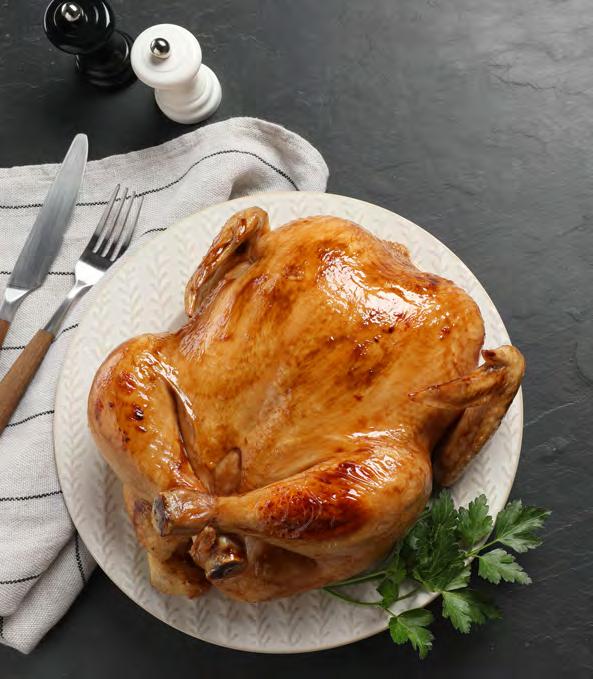
Clear advice is especially important for chicken because raw or undercooked chicken is the most common source of Campylobacter from food.
Our advice is:
• do not wash raw chicken (it spreads the bacteria);
• wash hands after handling raw chicken;
• use separate chopping boards and knives for raw chicken and ready-to-eat foods like salads and cheese;
• keep raw chicken separate from ready-to-eat foods; and
• cook chicken thoroughly until the juices run clear.
Reducing campylobacteriosis will take continued effort across the food system and action from everyone. For New Zealand Food Safety, that means continuing to use evidence, monitoring and industry collaboration to support practical action that helps keep people safe. You can find more information on the Ministry for Primary Industries’ website about Campylobacter risk management and handling chicken safely ■
Conference Highlights
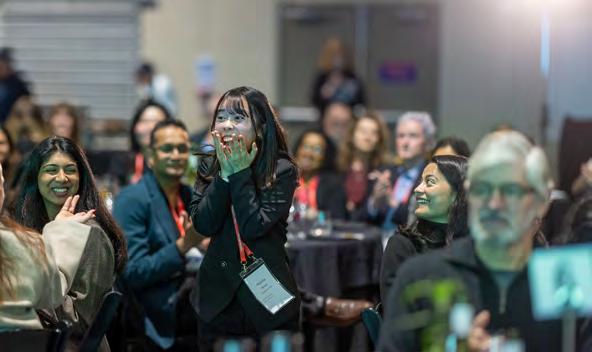
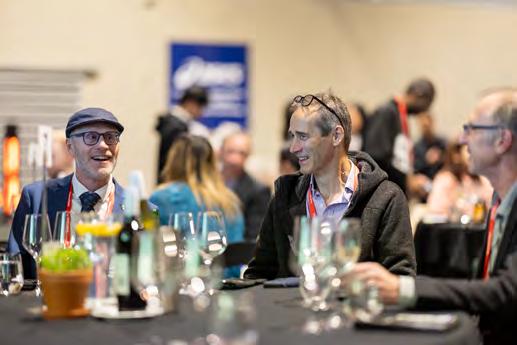
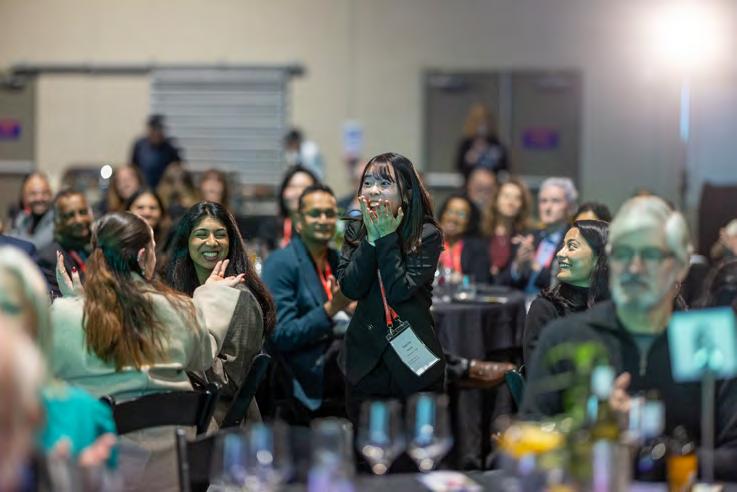
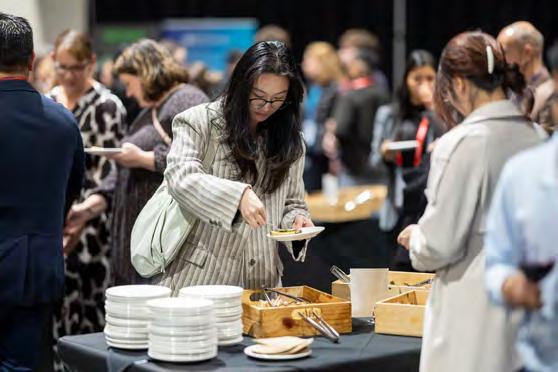
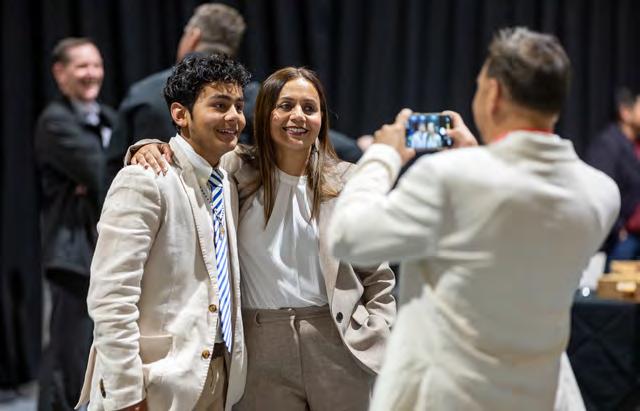
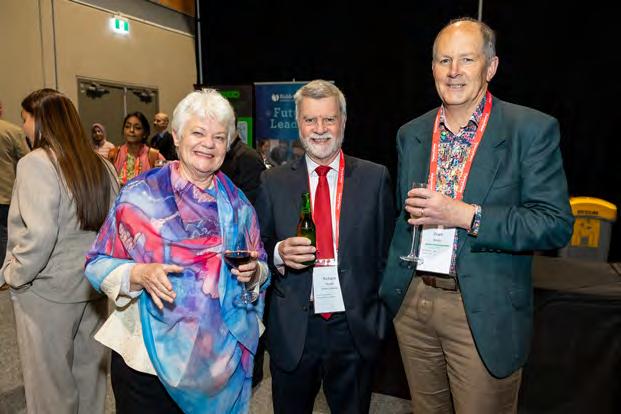
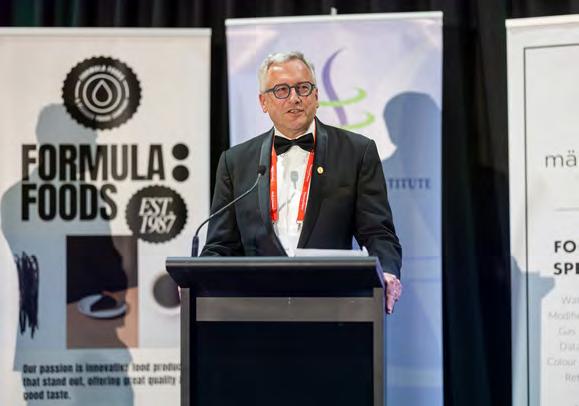
From thought-provoking presentations to lively social events, the NZIFST Conference 2026 brought together passionate professionals from across New Zealand's food industry and beyond. Here, we share a visual snapshot of the energy, connections and inspiration that defined the conference in Auckland.
“My favourite sessions (although difficult to pick a few!) was Shamubeel Eaqub on day 1, setting the scene of the economy and how it relates to food industry. Also, the career sessions on day 3 where Hannah Engelsman and Kim Ballinger spoke about their career journey and where you should take every opportunity that presents itself. As with all previous conferences I've attended, I have loved getting to meet new or see familiar faces during the conference or at networking sessions.” Neala Hart, Lactalis New Zealand.
“NZIFST 2026 Annual Conference was a valuable opportunity to connect with food science professionals from across New Zealand, share knowledge, and learn about emerging developments in food safety and microbiology. The conference highlighted how much New Zealand’s food sector has evolved and grown over the years, while also showcasing the innovation, collaboration, and science-based approaches that will help sustain this progress into the future.”
New Zealand Food Safety Team.
“I really enjoyed the conference; it featured some very good speakers.”
Glenda Lewis, NZFSSRC.
“It was fantastic to chat with a broad range of NZIFST members during the social functions and break times. I also loved the strategic nature of many keynote talks, to help us think about the broader environment we work within.”
Donnell Alexander, New Zealand Food and Grocery Council.
“Wayne Mulligan's presentation on Growing Sustainable Futures had the greatest impact on me, as I strongly agreed with his view that true innovation happens in the blind spot rather than in the mainstream. It inspired me to continue exploring new ideas, challenge conventional thinking, and seek opportunities beyond the obvious—an approach that I believe is essential for both personal and professional growth.”
“This is my first time at conference, and I’ve really enjoyed the breadth of presentations on offer, from commercial to research and everything in between.”
Ned Treacher, University of Auckland.
Marcus Loi, Tatua Co-operative Dairy Company.
“I thoroughly enjoyed this year's conference. The theme of Growth provided a range of insightful and highly relevant topics that I can directly apply to NZKS's own growth journey. The calibre of speakers was exceptional, and their inspiring career stories left a lasting impression.
One of the most valuable lessons I took away was the importance of looking beyond current markets and commodities to understand the broader future operating environment. In a rapidly changing world, sustainable growth will come from anticipating emerging market needs and designing innovative products and solutions for those future conditions, rather than relying solely on traditional commodity-based opportunities.
Another pleasant surprise was the outstanding catering, particularly the thoughtful and delicious options available for those of us with dietary requirements.
Overall, the conference was an engaging, inspiring, and memorable experience that reinforced the value of continuous learning, innovation, and taking a future-focused approach to growth.”
Cindy Steele, New Zealand King Salmon
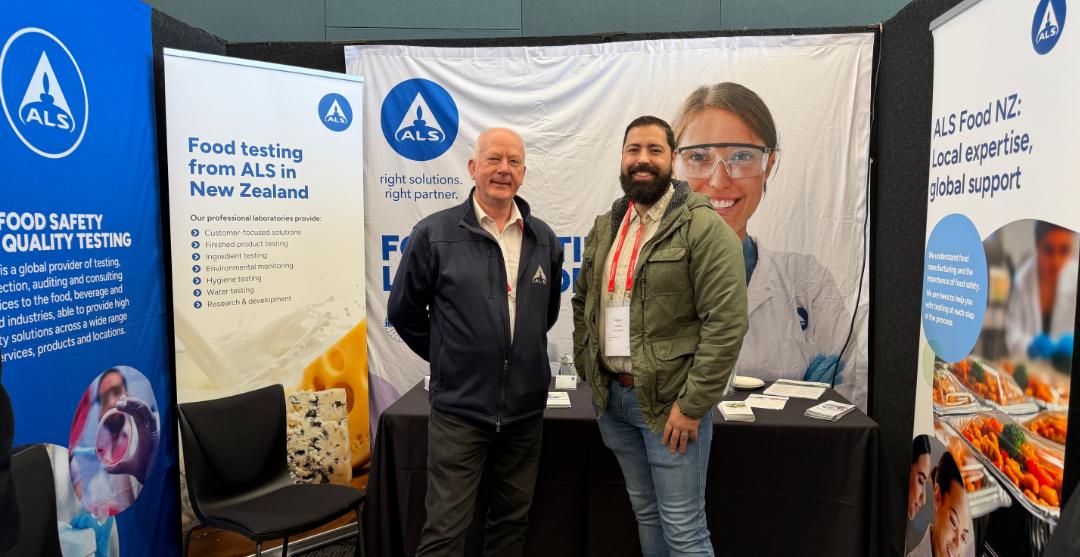
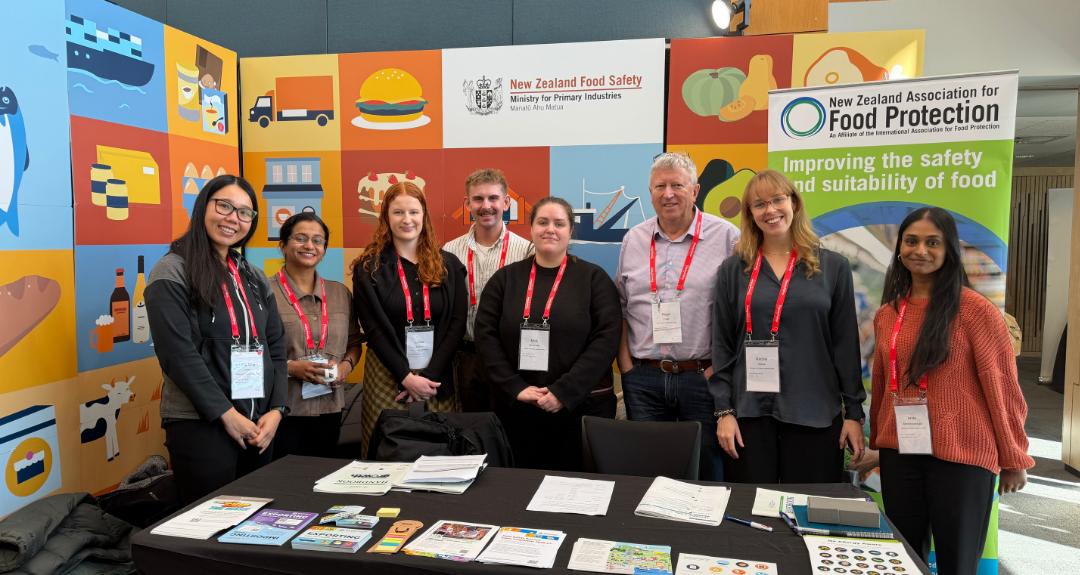
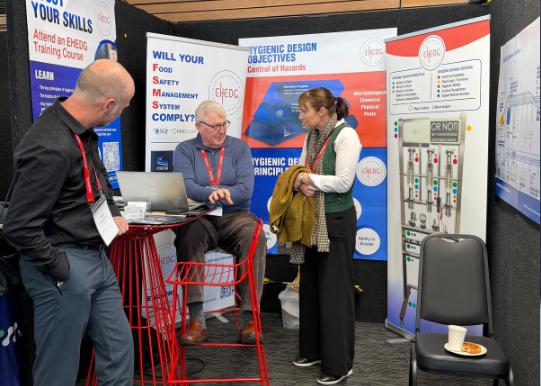
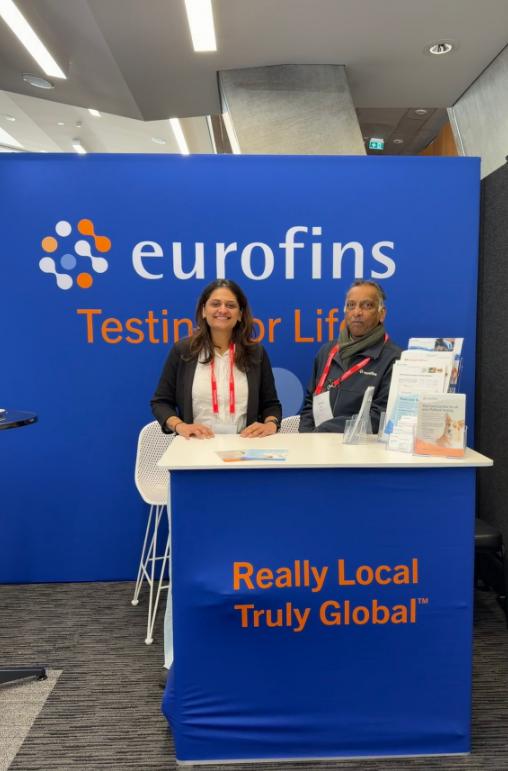
Thank you sponsors and exhibitors!
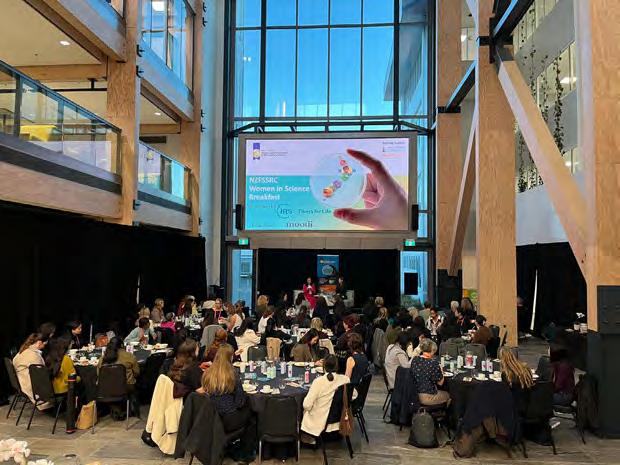
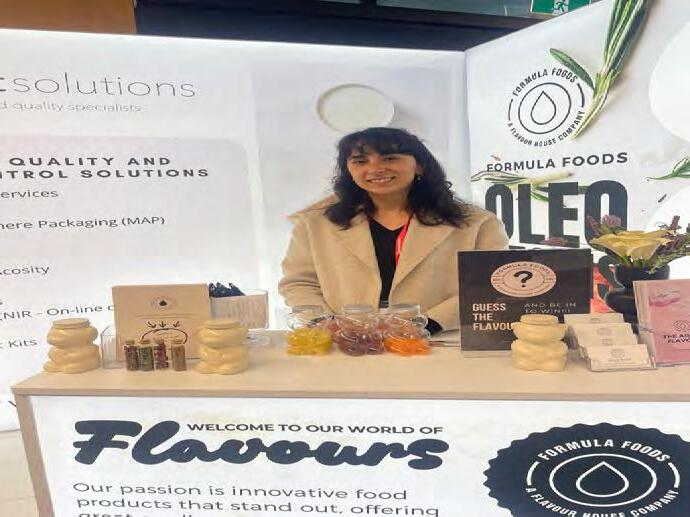
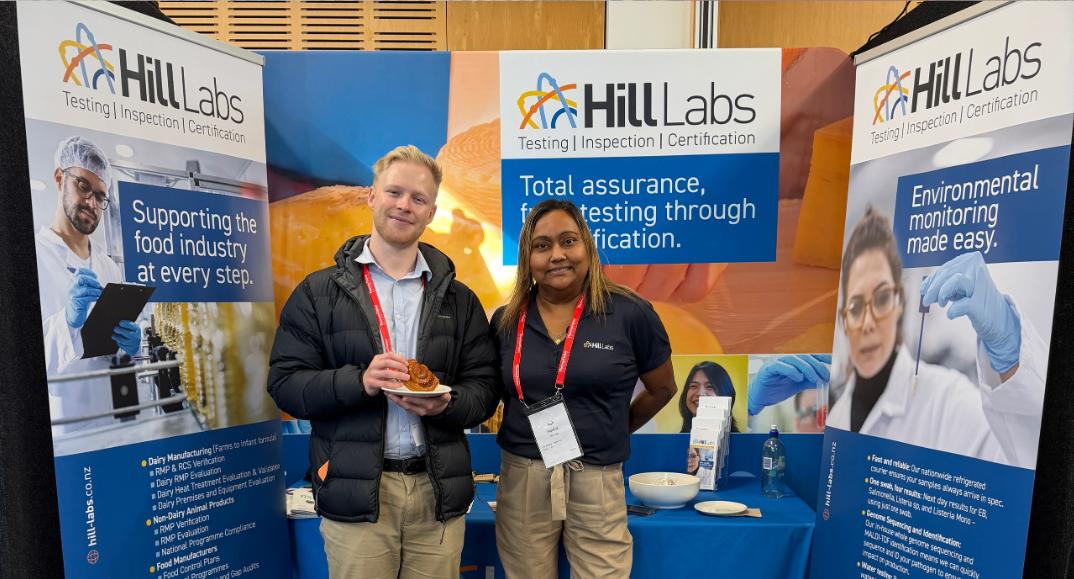
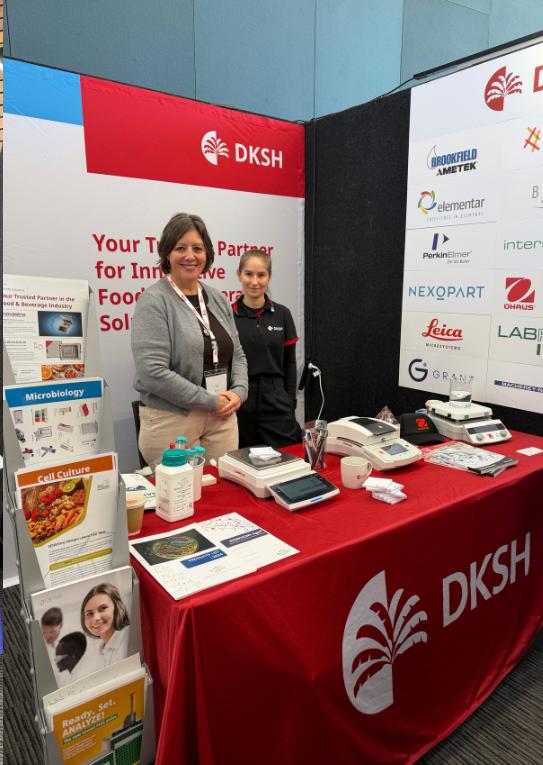
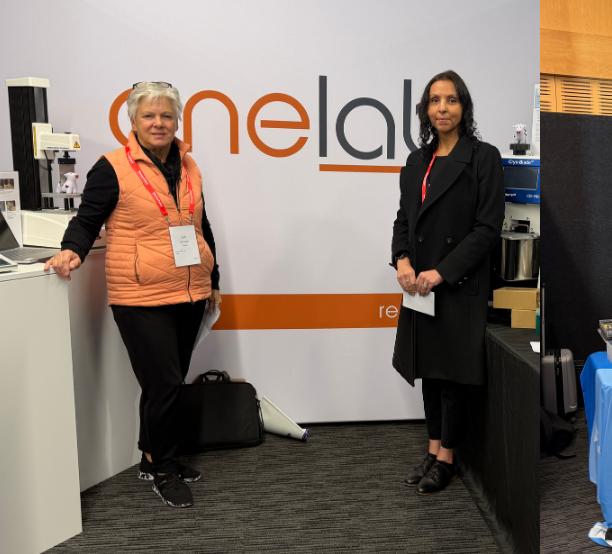
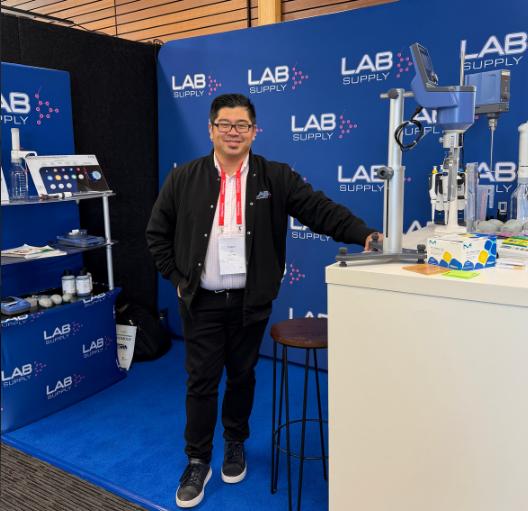
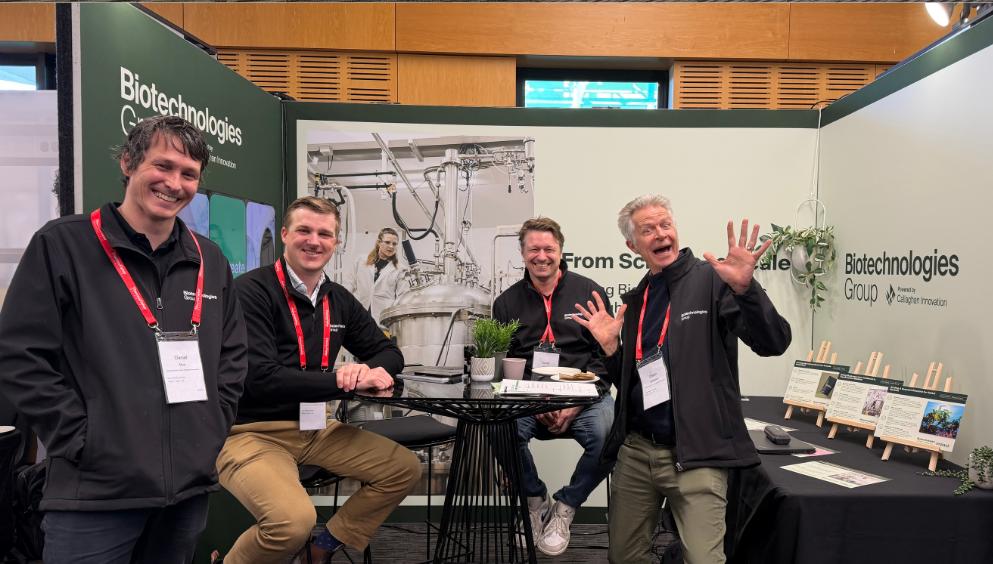
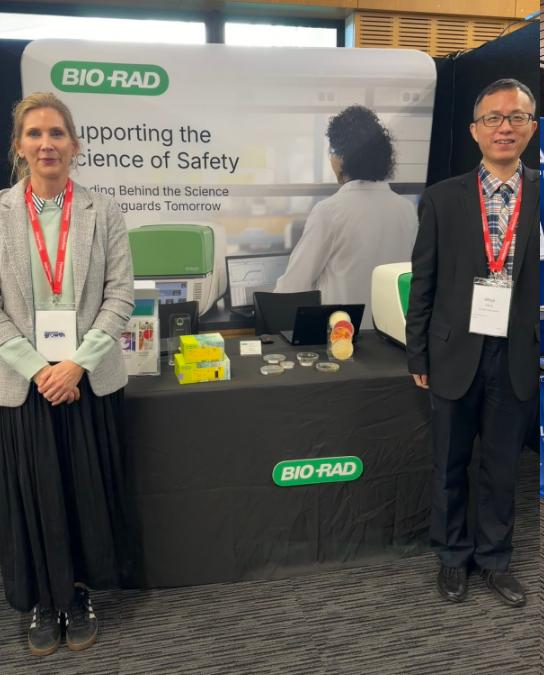
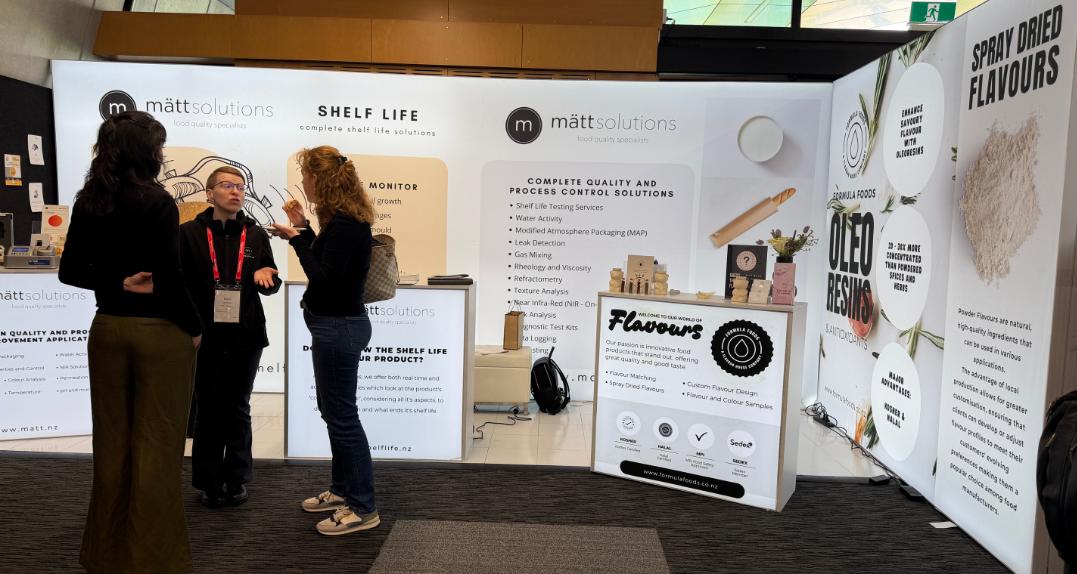
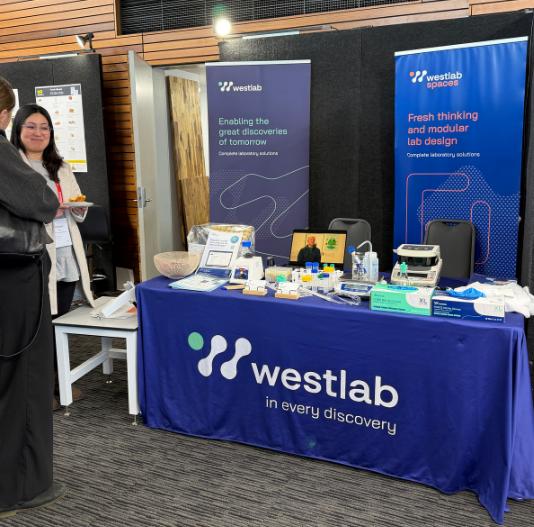
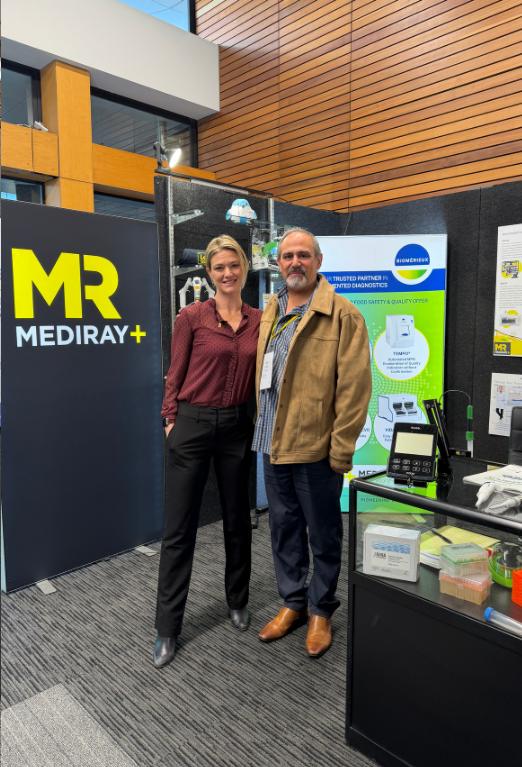
Thank you to all the sponsors and exhibitors for their generous support in making the 2026 NZIFST conference possible. These partnerships played a key role in bringing the event to life, providing a platform for collaboration, learning, and the exchange of ideas within the food science and technology community. The success of the event would not have been possible without them.
Hygienic design implementation: the need for focus
The hygienic design of food-processing buildings and equipment has had and continues to have, a major effect on global food safety across many sectors from farm to fork. Poor hygienic design has led to many profile food safety issues caused by cross-contamination of food products as a result of biological, chemical and physical hazards. Well thought-out hygienic design strategies, supported by well implemented action plans have been critical takeaway learnings from effective foodsafety management programmes.
Hygienic design is a forward-looking discipline with the ambitious goal of transforming the design of equipment and facilities to facilitate easier cleaning. An easy-to-clean food factory provides a solid foundation for maintaining a sanitary environment, enabling the production of safe, high-quality food. Cleanability is not the only positive outcome of attention to hygienic design – significant gains in sustainability (water/energy and chemicals), productivity (reduced cleaning time and resources), and total cost of ownership (TOC) over the life of the equipment and plant can be assured and very significant.
Hygienic design has evolved as an independent discipline focusing largely on food production equipment and facilities and suppliers thereto. The Global Food Safety Initiative (GFSI) has recognised its significance establishing benchmarking standards for Hygienic Design for both Suppliers (JI) and Producers (JII) in 2020. These benchmarking requirements have now been incorporated into global Food Safety Management Systems (FSMS) such as BRCGS, FSQ, FSSC 22000 and others.
However, the idealistic nature of hygienic design can sometimes hinder their implementation. Even when the need for design improvement is fully recognised, it can take decades to completely replace existing equipment and plant infrastructure. The integration of hygienic design into process or change management is in practice relatively limited, especially when re-design, replacement, or changes to equipment in process lines and facilities require substantial resources.
Today, access to hygienically designed equipment is relatively easy, and the importance of hygienic design is widely recognised by both equipment manufacturers and food producers. Still, despite many positive initiatives, challenges remain. Several factors contribute to these challenges:
• Hygienic Design as an Absolute State: The same solution may wrongly be deemed adequate for all applications; potentially leading to a lack of risk assessment for specific applications. This can result in choosing solutions that are either too expensive or do not meet the actual needs.
• Hygienic Design as an Engineering Discipline: There is a risk that hygienic design may be disconnected from other activities associated with the overall process solution. This can lead to extensive reexamination and alteration of a solution at an impractical stage in the project.
• Outdated Equipment Designs: Older equipment designs may not be phased out or updated by producers to meet current requirements. Buyers may unknowingly purchase solutions that do not comply with present and future standards for sustainability, optimised cleaning, and maintenance.
For more information on how to become a member of EHEDG and the benefit it offers – visit www.ehedg.org or feel free to contact David directly as co-chair of the New Zealand Regional Section of EHEDG – dave@lowryfc.co.nz. Sign up for our next Training Course, see adjoining page for details.
For more information on the comprehensive suite of EHEDG Guidelines (updated regularly) and Training packages visit the EHEDG website – www.ehedg.org
• Lack of User Knowledge: Users may lack knowledge about the equipment they intend to acquire, ranging from basic functional requirements to the specific needs that the equipment supplier must address. This can result in a lack of qualified dialogue, leading to faults and defects in the process solution. Ideally, a supplier should be engaged in driving the dialogue and accurately identify the needs.
Knowledge resources for industry
The European Hygienic Engineering & Design Group (EHEDG), a notfor-profit organisation was set up in 1989 with the aspirational goal of:
“Being the leading source of hygienic design and engineering expertise to enhance food safety and quality across the whole industry through raising awareness of hygienic design and engineering, develop guidance and solutions, provide a platform to promote our expertise and facilitate networking across the world.”
While headquartered in the Netherlands and using European legislation as its reference base, EHEDG is a global organisation represented in over 50 counties, including New Zealand. Members from all sectors of the food industry voluntarily provide expertise to produce Hygienic Design Guidelines and training materials. The Guidelines numbering over 60, deliver understandings of core principles and requirements to be addressed in achieving best practice as well as providing examples of both good and bad solution implementation.
EHEDG Guideline GL8, Hygienic Design Principles, updated biannually, delivers a cornerstone overview of hygienic design within the food industry. It provides a comprehensive, risk-based framework for the design, construction and integration of equipment and facilities. The latest edition reflects the increasing complexity of modern food processing environments and strengthens the alignment between hygienic design, risk management and sustainable operations. Central to the guideline are the five hygienic design principles: compatibility of materials; ability to clean; ability to access; ability to drain; ability to segregate.
Guidance on implementation
In 2024, EHEDG released Guideline GL #58 – Hygienic Design Risk Management (HDRM). It provides guidance on the assessment and management of hygiene risks in the context of the hygienic design of foodrelated buildings and equipment. The HDRM model combines hygiene risk assessment and hygiene risk reduction via design, construction, integration & installation as well as residual hygiene risk mitigation via operational procedures, e.g., cleaning, maintenance. As such it provides the context and procedures necessary for implementation.
The HDRM can be applied in many situations:
• For a food building or equipment user - to support food safety management programmes, lifecycle management of (legacy) buildings or equipment, design specification, integration, and qualification of new assets.
• For a food building or equipment supplier - to support when designing, fabricating and commissioning buildings or equipment, from unassigned components or parts to bespoke integral building or process lines.
Achieving robust food safety outcomes requires a systematic approach where suppliers and end-users are required to undertake both food safety risk assessments and hygienic design risk assessments and to communicate with each other at all steps in the design through to installation and trial production steps. ■
BOOST
LEARN
-The key principles of hygienic design
-The basics of microbiology impacting on Hygienic Design & Food Safety
-Key factors in buildings, structures and equipment designed for food production
-Detailed examples of food processing equipment applications both good and bad
-How to identify problems with construction of equipment commonly used in food processing and how to manage food safety risks they pose
More than meets the eye: Cold done right
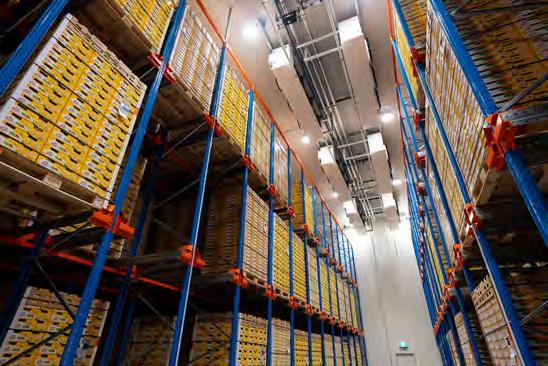
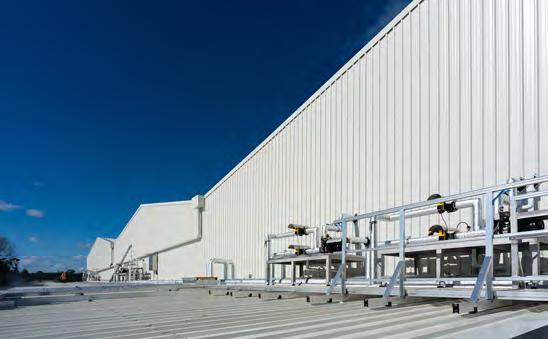
Two temperature controlled facilities can look almost identical from the outside, yet perform very differently over the next 30 years. The difference lies in the decisions made long before construction begins.
It starts with understanding the product
The best cool and cold stores aren't designed around the building. They're designed around what's going inside it.
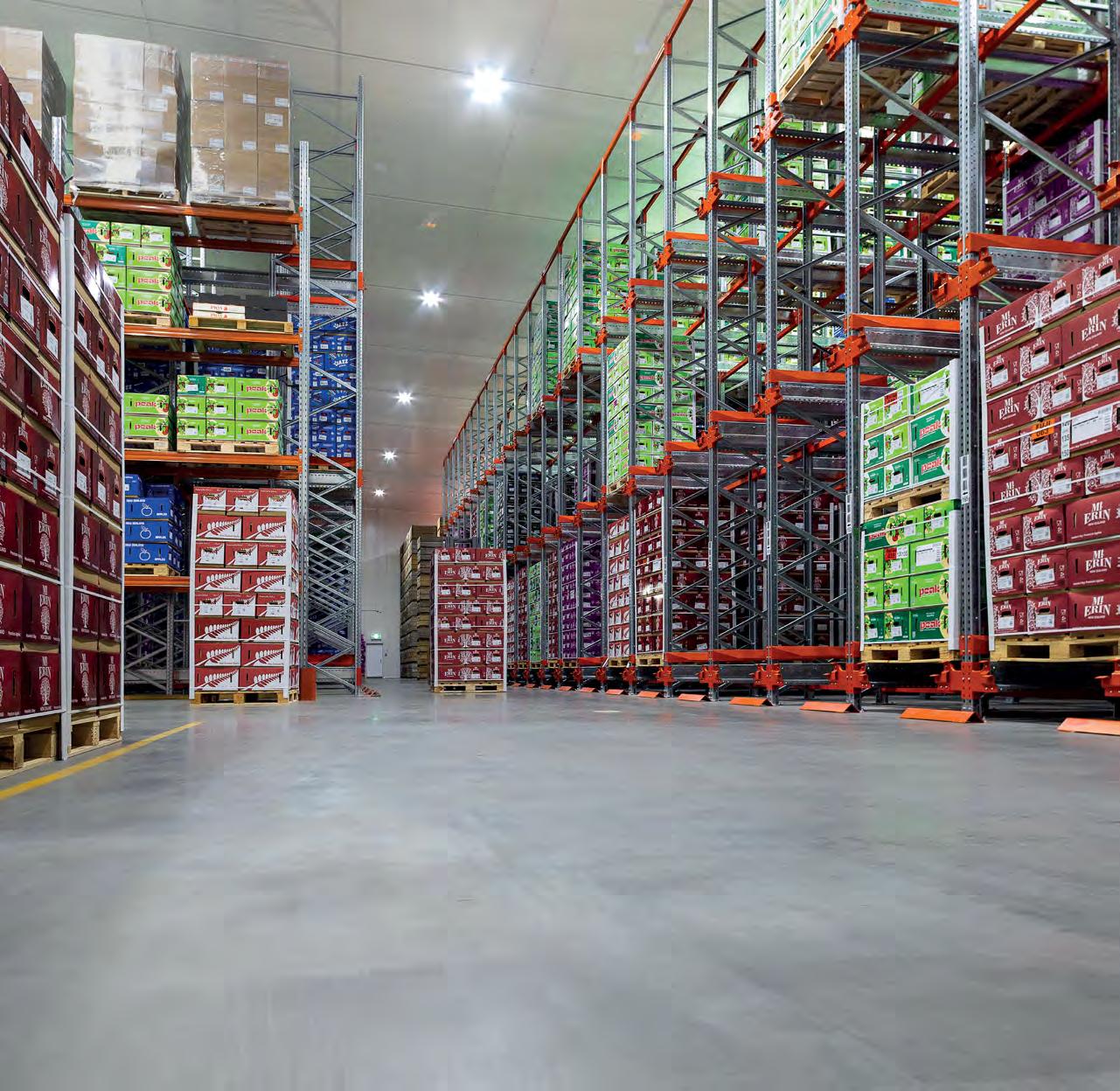
Whether you're storing apples, frozen goods, meat products or pharmaceuticals, every product has different temperature requirements, handling methods, storage systems and operational needs. Take apples as an example. The challenge isn't simply keeping them cold. It's maintaining the right temperature while circulating refrigerated air efficiently around every pallet, slowing the ripening process and preserving fruit quality.
The same thinking applies across every industry. Different products create different operational demands, and different operational demands create different buildings.
The details you can't see matter most
Just as important are the things you can't see once construction is complete. The design of the floor slab, the way moisture is managed, the thermal envelope and the integration of the refrigeration plant all have a significant impact on how a facility performs over the long term.
With freezer facilities, for example, moisture beneath the slab can freeze and expand – something called “frost heave”. Without the correct construction methodology, that movement can crack the floor and cause the entire building structure to fail. Likewise, poor coordination between building and refrigeration systems can lead to costly design conflicts and variations during construction.
Programme is another critical consideration. Many temperature controlled facilities are built around fixed harvest or production windows, leaving short build periods and zero tolerance for delay. Robust planning and smart construction sequencing are essential to ensure facilities are ready when they're needed.
Many of the decisions that determine a facility's long-term performance are invisible once construction is complete. But they're the very decisions that will influence how well it supports the business for decades to come.
At Tuatara Structures, we often say we design buildings from the inside out.
For us, that means bringing together operational thinking, technical expertise and practical experience from the very beginning. We don't see design and construction as separate disciplines, because the best outcomes happen when they're considered together.
Temperature controlled facilities are a specialised part of an already specialised industry. They demand a level of knowledge and experience that goes well beyond a standard industrial build. It's this specialist expertise that enables us to create facilities that don't just keep products cold, but operate efficiently and support business growth for decades to come.
Whether you're replacing an aging facility or require something new, the earlier we're involved, the more value we can add. From site planning and feasibility through to design, programme and delivery, we'll help you make informed decisions that support your product, operation and long-term goals.
Get in touch with the Tuatara team to start the conversation. www.tuatarastructures.com ■
Experts in keeping cool.
Optimised design | Operations integrated programmes | Long-term site planning
Temperature controlled facilities demand specialist expertise.
At Tuatara Structures, we deliver cold and coolstore solutions that perform for the long term.
Matt Jackson
Principal | Client Partnerships
Mobile: 022 674 0136
matt.jackson@tuatarastructures.com
Every facility is designed around the business operations within, then delivered to meet critical harvest or production deadlines with confidence. For practical advice on your next temperature controlled facility, talk to the team today.
JC Andrews address: My Journey with MILK
Anny Dentener-Boswel, JC Andrews Award winner 2026
I got the call from Wendy asking if I was free on 1 July. Then she said I was nominated for the JC Andrews Award, AND would I accept it? Big surprise, so I needed to consider it. Shortly after, I rang back to say yes and then went shopping for appropriate colourful outfits.
The start of my journey with milk: Hollandscheveld I graduated from Wageningen University, where the food technology degree started in 1956, a bit earlier than New Zealand’s, and during that same post-war period where food technology came out of chemistry and microbiology labs becoming a degree in its own right. The Dutch academic dairy degree started as early as 1918 and both degrees were combined in the 1970’s.
My journey with milk started in the north of the Netherlands in Hollandscheveld.
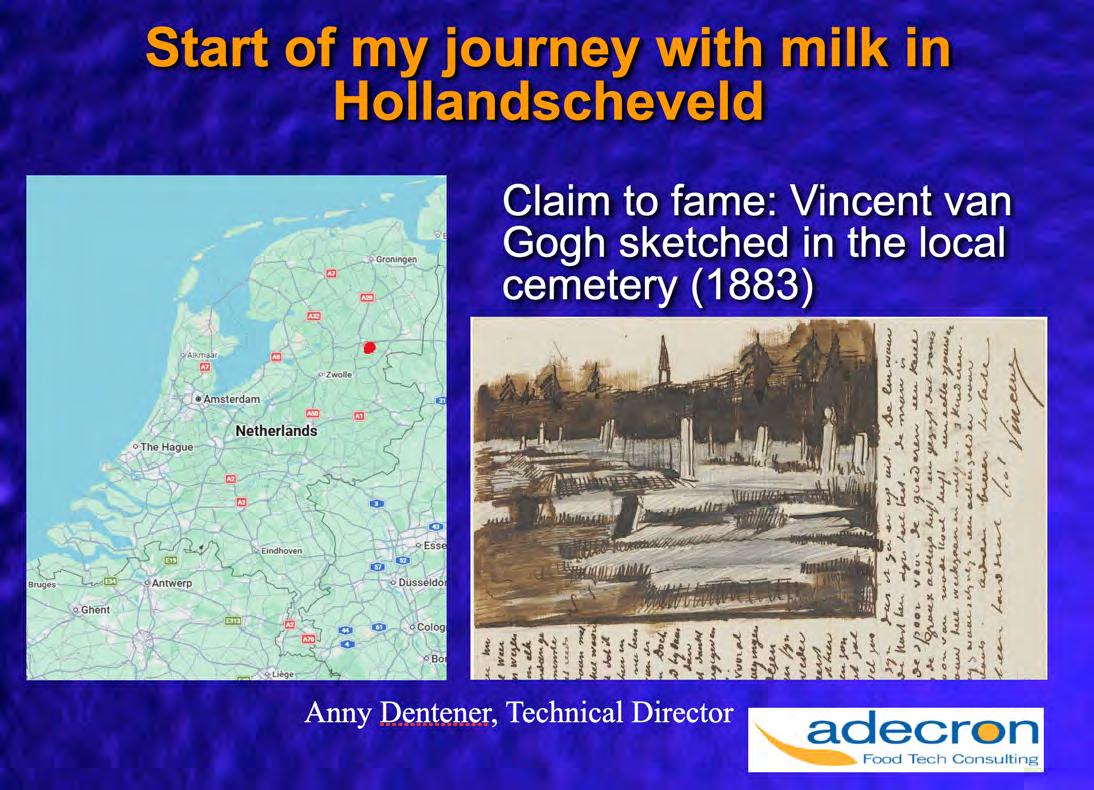
The village claim to fame is that Van Gogh sketched this picture in a letter to Theo in 1883, of the local cemetery with the church tower in the distance. This cemetery is where many of my family are buried.
What does milk mean to me?
First, growing up on a very small Dutch dairy farm, followed by a Dairy Science & Food Technology degree and emigration to New Zealand. Then a working life in dairy R&D for 10 years and consulting later. Thanks to all the milk, cheese and yoghurt, I have strong bones; 2 SD above average according to an Auckland University osteoporosis research project I was part of, on double placebo.
My parents started off on a small subsistence farm with six cows, one horse, one pig, 400 chickens and 6ha of land. Mixed farming so also horticulture such as beans. It was still hand milking from May to October in the paddock (not milking sheds), and in winter in the stables inside the farmhouse. The district was originally a peat digging
JC Andrews Award
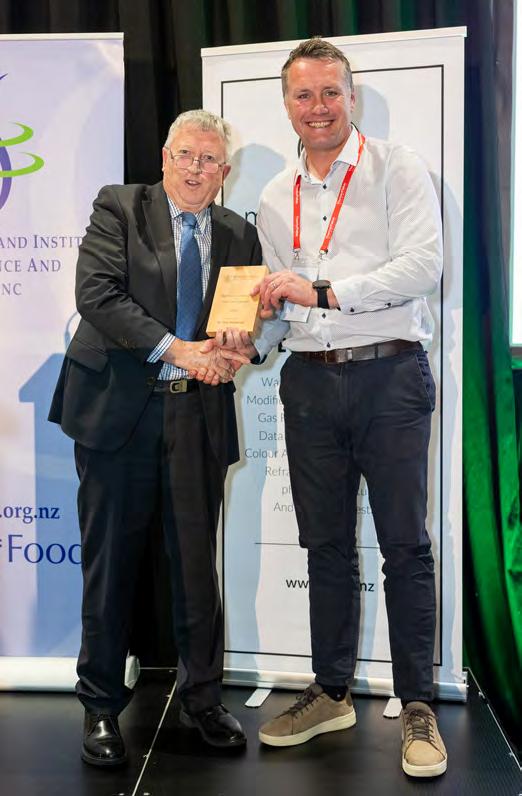
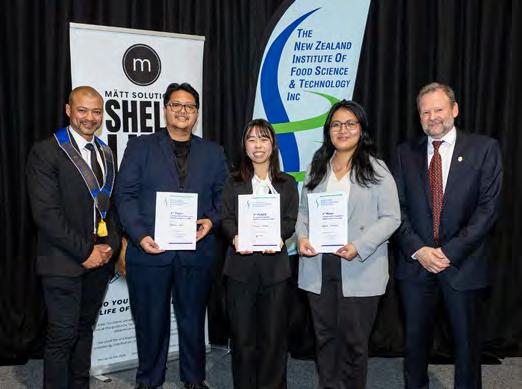
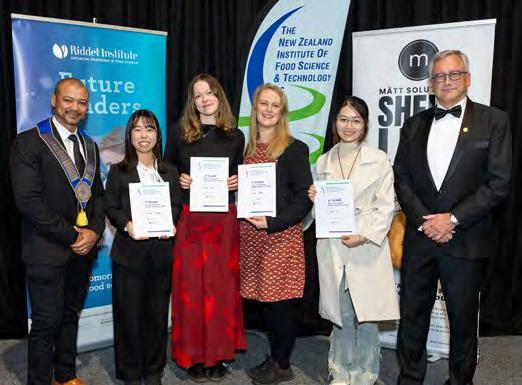
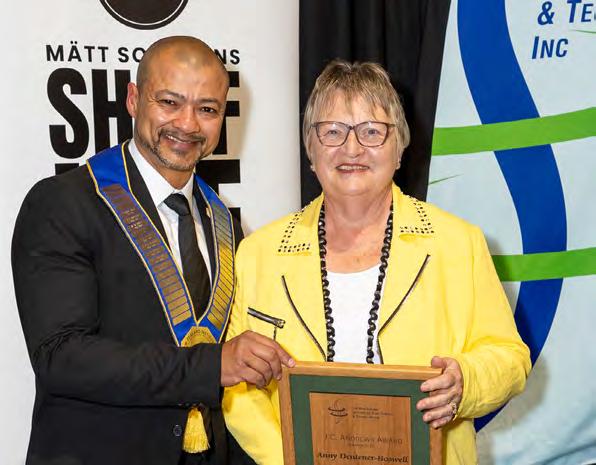
Renowned food technologist Anny Dentener-Boswell is this year’s recipient of the JC Andrews Hall of Fame Award and was presented with the award at the recent NZIFST conference held in Auckland.
The JC Andrews Award is NZIFST’s most prestigious award, recognising senior Institute members who have made a substantial contribution to science and technology leadership in the food industry.
Presented annually, the award is in memory of Massey University’s first Chancellor, Dr Jack Clark Andrews, who helped establish the food technology degree course at Massey University.
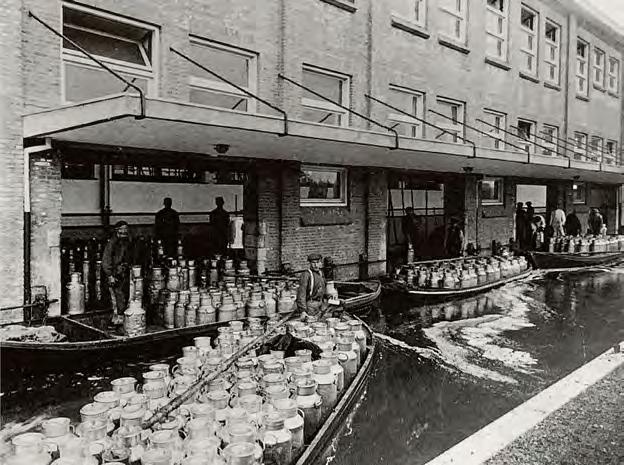
area with lots of watery canals, so the milk cans went by boat to the cooperative factory. The main canals were filled in in the 1960s. I learned to hand and machine milk. We had warm boiled milk from the farm, and it was just as well my dad liked the skin on it as it was full of cream, but I hated that. Later I discovered you could drink milk cold. My first touch point with yoghurt was my mum making a large pan of yoghurt every week from a small bottle from the milkman and culturing it overnight.
I biked to high school in the nearby town, Hoogeveen, into the new sixyear Atheneum science & maths pre-university stream. I earned money by thinning out my dad’s fodder beets (10c/8m) and picking beans and strawberries. I also did milk herd testing at different local farms in the evening after school. This meant weighing each individual cow’s milk on a spring balance in a bucket and taking a representative sample into a bottle which went into a locked box (to avoid cream top ups by the farmer overnight, of course). And I wasn’t allowed to do my dad’s herd either. This was how I earned money for a small 50cc motor bike – I still have scars on my knees from not always making a gravelly corner on this bike.
Holiday work in a frozen foods factory was my first touch point with food technology. Whilst packing fish fingers and spinach, and sorting peas, I talked to the food technologist there. I was interested in science, and I hadn’t heard of food technology before.
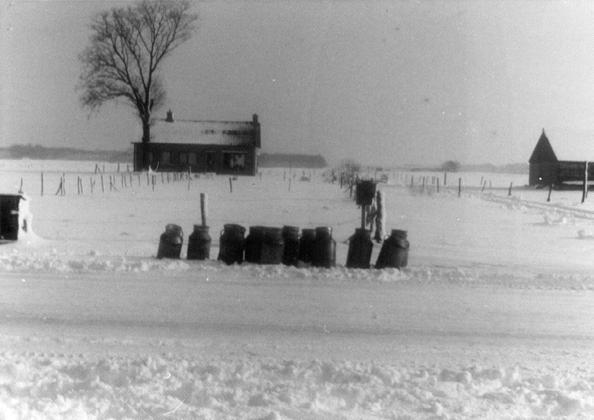
Milk cans alongside the road waiting for pickup and at the same time empties came back. Taken in 1979
After high school I went on to Wageningen University. First a common science year, which was full on with study, competitive rowing and a few boyfriends. In the second year, I tried fundamental Molecular Science but just couldn’t get inspired by things like Xray diffraction, so I switched to Food and Dairy Technology as it integrates the sciences, maths and engineering. ▶
Milk cans arriving at the Cooperative Dairy Factory in Hoogeveen
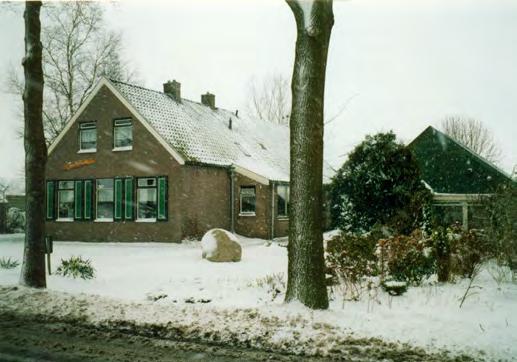
Farm house in winter, 1979
Winning the 'Head of the River Amstel', I am third rower from the front
I did well in rowing too with seven first places but didn’t get further than just under the top level; I was strong but too short and I still have the calf muscles to show for it. After two years rowing, I became the competition/training organiser, got umpiring qualifications and coached a team to a silver at the European champs. Kandidaats
My second year onwards was the Kandidaats stage, roughly Bachelor stage. The basic general science with chemistry (organic, colloid, bio, food), micro and food processing unit operations. Also, specific dairy science and technology papers, covering all milk basics (lactation, milk production, quality testing) and production of common dairy products. The things that stuck were heat stability testing of evaporated milk (this came in useful later) and calculating a counter current bisolvent reaction/extraction of an antibiotic brew with a Podbielniak Centrifuge, you can watch here - https://www.youtube.com/watch?v=Si0QYeF5ZHc. I’ll never forgot that name and clever piece of equipment. For the three months compulsory practical dairy placement, I worked in the butter, cheese and consumption milk products dairy factory my dad supplied milk to. Yum, aromatic cultured buttermilk fresh from the churn. Once I had to climb into the yoghurt tank to scrub it out, I’m not sure now if that was truly needed or if it was an apprentice type joke. I also helped with a curd tower mechanisation start up for their Gouda cheese factory; with lots of spilled whey, it was a mess. Designed by engineers with no comprehension of hygienic design, layers of slimy buildup on conveyors, and newly opened walls meant the cheese cooled too quickly, limiting fermentation. For the three months process engineering placement, I went to Stork Machinery working on ultraheat treated (UHT) evaporated milk on their tubular Stork steriliser, as well as an ultrafiltration (UF) project.
Ingenieurs
I did two Ingenieurs (similar to Master Honours) projects; one combined Dairy and Colloid Chemistry in the newly established Food Physics stream. This project was the rheology of acid gels (think yoghurt, yes again) with inert washed or interacting homogenised milkfat globules with interesting results which were published. For process engineering, I studied fouling on the UF membrane on the inner rotating cylinder in a coaxial vessel with independently controlled shear and pressure. Results presented at an international UF conference. I loved walking around with a spanner in the processing hall. With plenty of chemistry in my degree the three months extra education papers and a teaching placement gave me a teaching degree in Chemistry.
For the final dairy verbal exam, I needed to revise and know all the dairy papers; from milk to cheese maturation and milk powder drying. I did fine, with nine out of ten. I graduated as ingenieur and officially can be addressed as “Weledelgestrenge Vrouwe” which roughly translates to “Most Honourable Madam”. I discovered this last week, never knew I could sound that important.
From graduation to New Zealand
So how did I end up in New Zealand you may ask?
Why not go down the science path and accept one of the two fully funded and lecture-scale salary paid PhD projects offered in both major subjects I got first Class honours in?
Let’s change the statistics
Mary Earle was the first female recipient of this award. I am the ninth woman to receive it out of 57 recipients.
The female percentage has just increased from 14.5% to 16%.
So - please keep nominating your deserving female peers and mentors, otherwise this percentage will stay miserable.
“I later heard from my new boss at NZCDC that she laughed while reading the statement on my CV - Can hand milk a cow.”
Triggered by my then serious, entomologist boyfriend (later my husband), Peter Dentener who didn’t fancy a year or more of compulsory officer training in the army. After his six months practical placement in tropical Suriname, he also could see the benefit of escaping the Dutch climate for a more relaxed lifestyle. The common option of FAO development work wasn’t really an option for me - I didn’t see the charm of becoming a housewife in the tropics. New Zealander Peter Wood, who was on sabbatical from MAF, mentioned the opportunities for food technologists in New Zealand and gave me Mary Earle’s contact details. And so, I applied for jobs in places with universities and research institutes as it quickly became clear that there were no jobs for my husband as an entomologist holding just a Masters.
My application to the New Zealand Co-operative Dairy Company Limited (NZCDC) in Hamilton as UHT technologist was fortuitous as at that time the canned evaporated milk steriliser in Matangi was coming up for renewal and Takanini had just installed a UHT plant. So, with my experience in UHT evaporated milk and a glowing reference from my Stork supervisor, who had just built the infant formula drier in Waikato, I just slid in.
I later heard from my new boss at NZCDC that she laughed while reading the statement on my CV - Can hand milk a cow.
My husband ended up doing a PhD on the damaging effect of lucerne flea on clover in paddocks in a combined project between the Waikato University Biology department and Ruakura agricultural research station. We flatted halfway and biked in opposite directions.
NZCDC R&D in Hamilton
I started in the NZCDC R&D in the Central lab in Pukete. My projects were mainly for the UHT plant in Takanini. I remember going to Palmerston North to the Dairy Research Institute (DRI) UHT pilot plant in a Holden ute with column shift and rattling trial bottles in the back over the windy Dessert Road in winter. Staying at the Fitz, those were the days of deep-fried crumbed camembert with apricot sauce. I also remember eating lamb’s brains, soft and nice, but I wouldn’t do that anymore these days. I experienced some culture shock at times, for instance, female R&D staff not shaking hands with sales reps. Well,
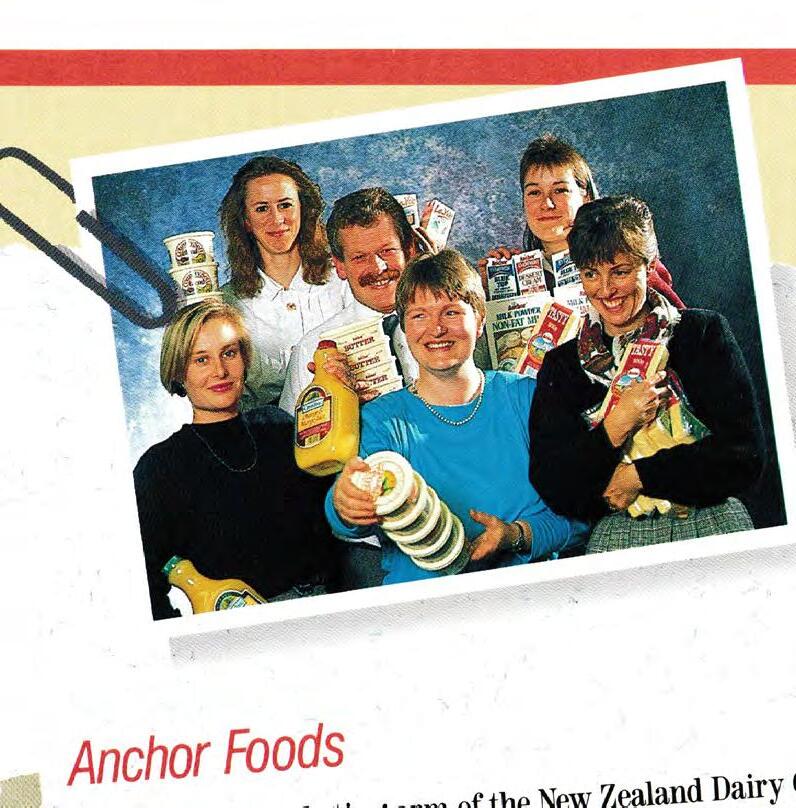
Anny at Anchor Foods (Tetra News, Dec 1990)
I wasn’t having any of that timidity thank you very much. I remember a typist laughing at my English. And thinking to myself, sure, you only know one language, I speak five. To upskill in English business lingo, I did a Diploma in Management.
Ambury in Takanini time
Decentralisation meant a move to Ambury Milk in Takanini. We bought a house in Mangere Bridge, halfway between Takanini and Department of Scientific and Industrial Research (DSIR) Mt Albert, where my husband got a job after finishing his PhD.
I started off with the most difficult product first, UHT evaporated milk, and then there were several other UHT products including UHT goats milk and Edmonds UHT custard, plus flavoured milks, yoghurt drinks, juices, and many more.
My proudest achievement is the reformulation of UHT whipping cream for Asia. A fact-finding team found that the then UHT cream formulation developed by DRI was too yellow and not performing well. I managed to achieve the needed improvement with formulation and processing changes. The current ingredient list is still the same. I’m very proud of that achievement and the multi-million dollars it contributes to our NZ GDP. As technical support for the Anchor Foods Sales team, I met Sandy Miller, now Bulmer, who worked at New American Ice Cream. She is the inventor of Goody Gumdrops ice cream. Sandy became a really good friend and later a matchmaker, introducing me to my husband Ian Boswell.
On a trip to a UHT conference in Lund, Sweden, I found out that other companies had similar problems with the Combibloc aseptic filler, so we got rid of that and stuck to Tetra Pak machines.
From Takanini to Anchor Foods
Then the 7-year itch hit. I considered my options. Get another job? Maybe. Do an MBA? No, it’s after all nicknamed the Marriage Breakup Association. Get pregnant? Yes, as that will make a difference when I am
JC ANDREWS ADDRESS
65. For maternity relief I organised Mary Lewin to step in for six months, even before I had told my boss that I was pregnant. All sorted. I came back after maternity leave and transferred to Anchor Foods as R&D Technical Officer. I remember going into the cool room fully wrapped up and using a penetrometer to test the Country Soft Blend of butter and oils that Laurence Eyres had developed for them.
After 10 years I decided to resign, I spent more time with my daughter, got involved with Playcentre, and had my son.
NZIFST involvement
My involvement with NZIFST and Dairy Industry Association of New Zealand (DIANZ) started in Hamilton and later in Auckland on the local committee including the start of a Rotorua conference organising. I gave a talk at the Gisborne conference. Mary Lewin and I ran a professional development workshop at a conference, and later on, I was part of the NZIFST professional development division.
During my parenting break, I stayed in touch with the Institute, and in particular the product development division. In 1993, I was a founding member of FoodInc’s independent consultants’ network, comprising of not just fellow food techies, but also friends and a social support network - consulting can be a lonely job. When my first husband Peter died suddenly in 2005, the supportive FoodInc social network kicked into action, wonderful.
“I was told I could talk about anything during my address. Well, at times I can be opinionated, and after all that’s not difficult for a Dutch person. The saying “The English are too polite to be honest, and the Dutch are too honest to be polite” is often true.”
Software reviews
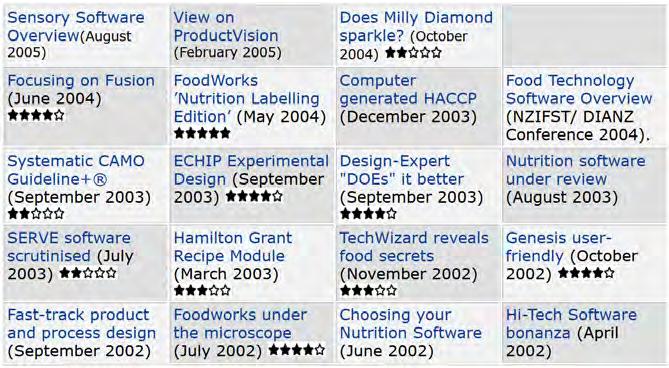
In 2002 I suggested to Rodney Fletcher of the Food Technology in NZ magazine, that I do software reviews similar to book reviews. I did that until 2005. It started with nutrition labelling and then other useful software for food technologists followed. This didn’t pay much at $300 for 1000 words, but it was fun and I sometimes got to keep the software for free; or I often paid for it if it was good and useful. I am a strong supporter of user-friendly Design of Experiments (DOE) software that you don’t need a maths degree for. I used ECHIP DOE software for the low carb/high protein cookie for the Protein Bakery, now Justines, still ▶ going after 22 years. I ran workshops at a Dunedin NZIFST conference on nutrition, ice cream/reverse engineering and experimental design software options. Hamilton Grant later wanted me to remove their review as it wasn’t all that positive and they said it was outdated. It clearly showed a date, so the answer was NO.
ADECRON Consulting
I set up ADECRON and as consultant worked with hundreds of different companies from big internationals I can’t even mention, to small start-ups with a bright idea. A call from an old Anchor Foods contact resulted in my first consulting project in 1997 for a Pacific Islands recon plant setting up raw material, processing and simple lab testing procedures. Followed by projects for Sutton, then back in Takanini during Laurence Eyres and Sandra McIver’s time. After the project finished, I popped in regularly over the years to train the staff and provide legal/labelling support. More and more clients came to me for help. The variety of work kept it interesting: Product Development, Labelling & Legal and Training (technical, software and labelling). Products varying from spice blends, the Ethiopian Berbere (still my favourite chicken spice), to more creams with the Takanini and Fonterra Research and Development Centre (FRDC) teams, to formulating infant formula for China. Milk from cow to goat, sheep, deer and camel. And many more products - too many to mention them all. I had to become familiar with all regulations for importers and exporters. Not just New Zealand and Australia, but also US, Canada, China, EU and UK, and later for a Fonterra project on legislation in all the countries they exported formulated products to. Recently as a technical expert on yoghurt, I helped Fonterra fend off an Arla patent infringement challenge.
PRODUCT DEVELOPMENT
A few examples (alphabetic)
• Anchor UHT culinary & cooking cream
• Breakfast cereals & drinks
• Flavoured milk products (butters, powders)
• Infant formula for China
• “Irish cream” frothy coffee drink
• Ice cream, incl. non-dairy & sugar-free
• Milks from sheep, goat, deer, camel
• North African spice blends, incl. Berbere
• Protein powders
• Protein cookie using ECHIP DOE (2004)
• Soups
• UHT high protein drinks
• Use of oat beta-glucan in foods
• Yoghurts
“Thank you to whoever nominated me and to the committee that decided I should receive this award.”
Nutrition Profile Score (NPS) and Health Star Ratings (HSR)
For NZIFST I gave a talk at conference on the then new, Nutrient Profiling Scoring. In workshops on NPS and HSR for Auckland, and for the NZIFST professional development FIT programme, I remember getting participants to look at a single nutrient factor in their sample first, line up in order of that, and then reshuffle on another nutrient. Then calculating the much more balanced overall scores. At a later HSR meeting I attended, it was obvious that many a nutritionist still couldn’t let that single nutrient obsession go, such as an arbitrary threshold for sugars in breakfast cereals. They wanted to make sure that the HSR calculations were reset to their sugar prejudices in such a way that Kellogg’s Nutrigrain 4-star rating (based also on multifactor incl. protein, fibre and sodium levels) would be reduced. It was the elephant in the room and I the only one to mention it by name.
Follow the constantly evolving scientific evidence, not outdated prejudices. See “GI NEWS”: Jennie Brand-Miller’s GI (Glycaemic Index) newsletter Nov 2025. According to a new metaanalysis presented by Walter Willett at a carbohydrate conference she attended, there are no ill-effects of intense sweeteners in the three large prospective cohorts of North Americans that have been followed for more than 20 years. In contrast, there are increased relative risks of type 2 diabetes, obesity, cancer, cardiovascular disease and other chronic diseases associated with sugar sweetened beverages (SSBs). Interestingly, there appear to be NO associations with solid sources of added or free sugars, such as lollies, candies, chocolate, cakes and cookies. Jennie states “This is an important and welcome finding!” but then “why are sugars in the form of SSBs unique in their ability to do harm?”. It confirms to me why I don’t drink soft drinks, especially not Cola with nasty phosphoric acid. The body cannot metabolise phosphoric acid as it can with other food acids. It should never have remained permitted in cola; the cocaine wasn’t after all. I remember the late Bob Maloney also strongly against its use. For buffering it causes calcium leaching from your bones as CaPhos. There is a known link between cola and osteoporosis as confirmed in a recent Framingham Osteoporosis Study. Read more here: https://www.health.harvard.edu/bones-and-joints/do-carbonated-drinks-weaken-bonesor-worsen-osteoporosis
Software reviews from Adecron website
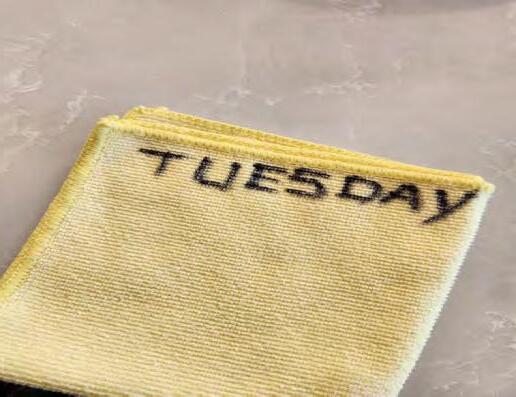
My helpful day marked cloths
My other contributions
Input and submissions into Food Regulations started early when in the old product prescriptive New Zealand Food Regulations, the committee drafted that cultured buttermilk had to be made from buttermilk powder. However, I knew from NIZO (Nederlands Instituut voor Zuivel Onderzoek) research, that this causes oxidized metallic off flavours, so stick to skim milk powder (SMP).
As a participant on the MPI Manufacturers Forum, I had to sign off on secrecy when scrutinising the draft new 2014 Food Act. I also had input into the 2016 Supplement Food Standard.
Other activities during that time were New Zealand Food Awards involvement, first as an award winner and judging later. In 2006, as a judge in the Food Awards I had a plus one ticket, so Sandy Bulmer
Memorable moments
A day in court
I once had to appear as technical witness in the High Court in Wellington. At the time fresh consumption milk supply was in glass bottles and under tight control of the Town Milk Marketing Board, it wasn’t yet available in supermarkets.
When carton filled options came in, a gap in the regulations was discovered, as it specified ‘reduced fat milk’ OR ‘solids added milk’ under their control. But not the combination in a 2/10 milk (2% fat AND boosted to 10% msnf) we made.
It’s quite an experience being cross examined by lawyers trying to trip you up by asking “so what would you call this?” expecting me to say “milk”. I countered by asking “do you want me to call this “mammary gland excretion?”
We won the court case, and it was the start of the freeing up of milk distribution.
The day I served cat milk
I surprised a tasting panel once by secretly including some UHT cat milk. Not great tasting but okay as it was lactose hydrolysed so a bit sweeter, and the tasters got a bit of extra taurine.
connected me with Ian Boswell, now my husband. Later too many of my clients were submitting products to the awards, so I withdrew from judging to avoid conflict of interest. One food award was for my contribution to the Fonterra Culinary/Cooking Cream team win, featured in a previous issue of FoodNZ magazine.
I also judged in the New Zealand Cheese Awards, mainly for the flavoured cheeses as many cheese makers weren’t that interested. My supertaster taste buds struggled with the odd bitter cheese though, as it does with stevia. Back on the NZIFST Auckland branch committee, it was fun organising tasting sessions of Food Awards finalists products. Check the NZIFST website for a recent presentation by several consultants including me, on the Pros and Cons of Consulting. ‘Retired’ life now
Retired now, but still supporting the odd small company for free. Giving back too on the selection panel for the Dick and Mary Earle Scholarship in Technology. I finally picked up the courage to join a choir, and I am now the music librarian. Changed the paper records into searchable spreadsheets - I love a good spreadsheet. I haven’t forgotten my food tech roots: I run the local “University” of the Third Age (U3A) Ormiston Food, Nutrition and Health interest group, from gut health to chocolate tastings. Also speaking on food safety under the motto “Old habits? Die fast!”, especially on Listeria risks for 65+ and I distribute MPI booklets for reference. I tend to scare people (especially the blokes) off high-risk custard slices. In order not to come across too preachy, I admit to my own mistakes, such as more regularly replacing my dish cloths now with the help of day marked cloths. I give talks to community groups on Milk, the original superfood, and explain that for protein nutrition (concentration x quality) one glass of milk equates to 8-10 litres of almond milk. Almond milk is just emulsified oil and not a contribution to the diet.
Does life go full circle?
Nearly. Ian and I built a house in Ormiston, overlooking the Whitford countryside and at times I can not only see, but also smell the cows on an eastern wind.
What was is it all about? Milk was the theme but in the end it’s He tāngata, he tāngata, he tāngata. It is people, it is people, it is people. ■
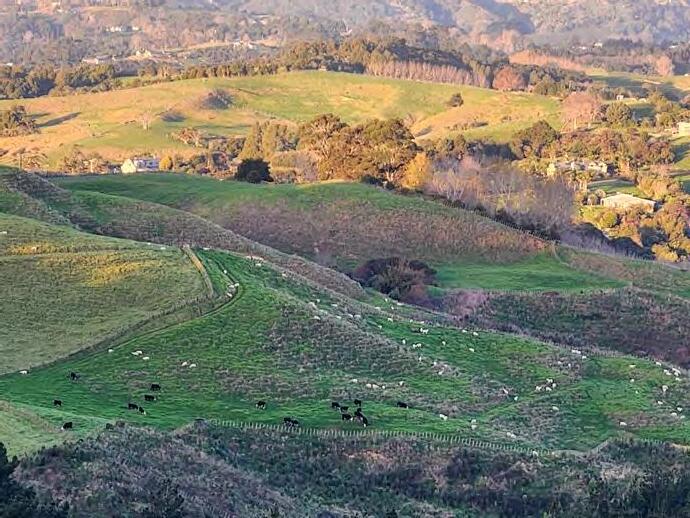
The farm view from our home with the smell of cows on the eastern wind
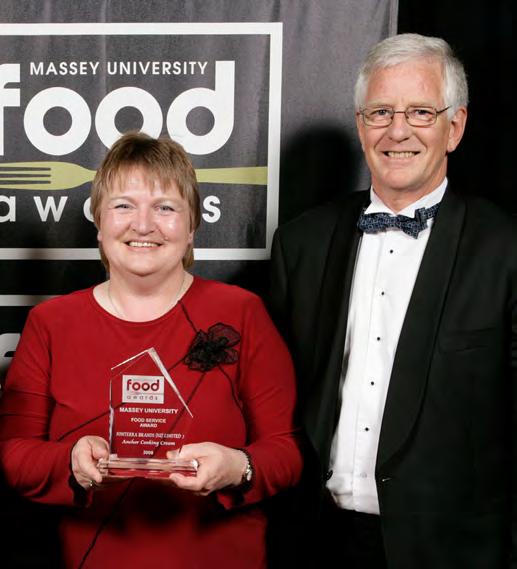
Anny pictured with Ray Winger (representing Massey University, primary sponsor of the Awards) with the trophy that she and the team from Fonterra Takanini won for the Anchor Cooking Cream in 2008
Craft Distillery and Brewery Study Tour of Whanganui-Taranaki
Could a three-day technical tour of New Zealand's craft breweries and distilleries become an annual NZIFST event? Central branch members recently set off to find out, travelling through Whanganui and Taranaki to visit nine producers and explore the science, stories and people behind some of the country's most innovative craft beverages.
The tourists
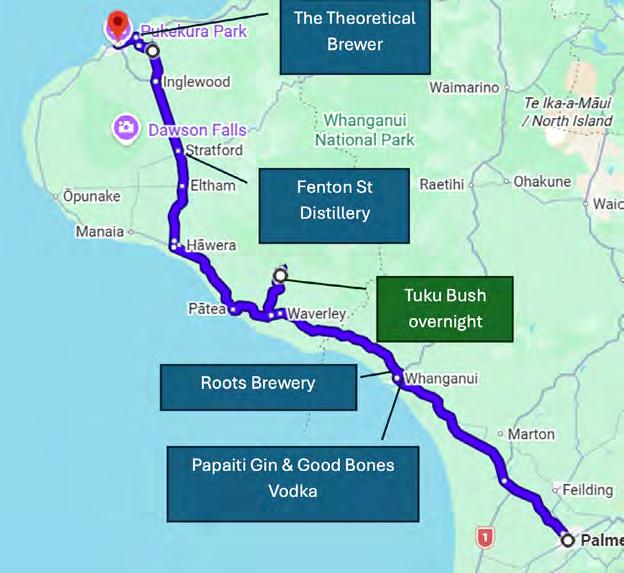
We six (Palmerstonians Richard and Deb Archer, plus Denize Portal, and Wellingtonians John van den Beuken, Tracey Cridge and Graeme Macleod) set out to visit five distilleries and four breweries in the Whanganui-Taranaki region over three and a bit days…for selfeducation purposes.
Day 0 - Thursday 18 June
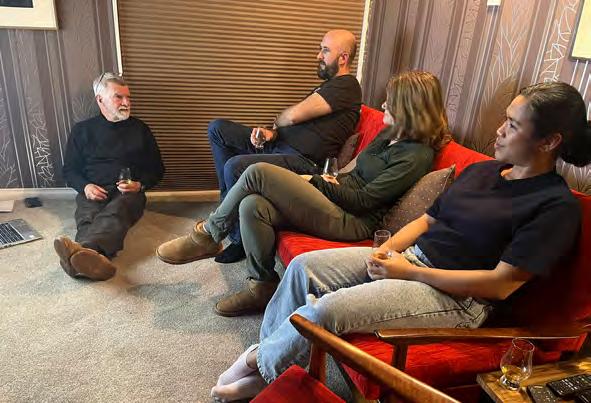
We gathered in the early evening at the Archer residence in Palmerston North for dinner and an introduction to the trip and to the essentials of whisky and gin manufacture. This was helped by a tasting tour of the Scottish whisky regions. Graeme, who hosts whisky tastings in Wellington, added an authentic touch and made good use of his tasting glasses and of Richard’s collection of malts. Wellingtonians stayed overnight at Archers. Palmerstonians at home.
Sunset on day 1
Richard Archer and John van den Beuken, NZIFST Central branch
Day 1 - Friday 19 June
Our two-vehicle convoy made the short drive to central Whanganui for a morning visit to Papaiti Gin, and Good Bones Vodka at their shared historic processing and hospitality premises.
Good Bones
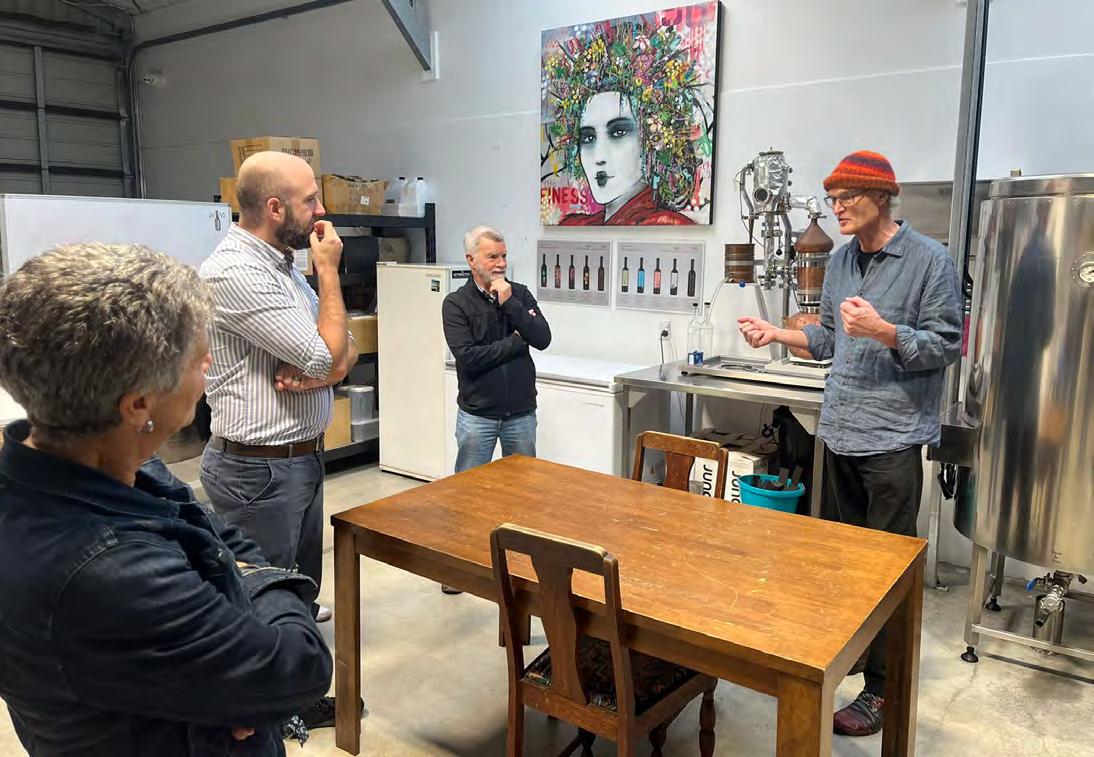
Distiller Vaughan Campbell talked of his beginnings as a home beer brewer and high-performance car mechanic, before becoming a craft distiller and later teaming up with similarly minded gin distiller Adrian Rumney, who founded Papaiti Gin. Together they have transformed an old alley brick building housing separate vodka and gin distillation plants alongside an engaging spirits and cocktail bar. We were there to hear about their story and their process and to taste their produce.
Vaughan brews from local bakery food waste to produce the ethanol for the vodka. The name Good Bones is in answer to his medical condition (bad bones). He is thriving on his distilling interests and achievements with vodkas and liqueurs including Lemon, Coffee, and Blue Raspberry - our favourite.
Papaiti Gin
Adrian Rumney founded Papaiti Gin with wife Nikki Oestele as a smallbatch distillery on an Upokongaro pear orchard up the Whanganui River in 2021. He crafts gin using mainly locally grown or foraged botanic ingredients in a redistillation process using cereal base spirit. His gins have stories connecting with local people and places around Whanganui and up and down the awa. Art and craft are plain to see through the colocation with Vaughan and Good Bones. As became the norm during this tour, we sipped and discussed gins and vodkas with varied and distinctive flavours ever looking for the next standout sip…. Including:
The Orchard: Celebrates the pear trees around their home, paired with kawakawa, nutmeg, and lime peel.
The Potager: A sun-warmed garden in a bottle featuring fresh basil, rose hip, nettle, and citrus.
Mountains to Sea: Follows the Whanganui River from the alpine herbs to the coast, using horopito, mānuka leaf, and kelp.
Whanganui Dry: A modern take on a classic dry gin
Both hosts were expert and engaging, their equipment professional and their combined bar and still room warm and welcoming. This was a great start to the tour.
Roots Brewery
After lunch at the riverside café Mud Duck, barely 100 m from the distillery, we drove to Roots Brewery just north of Whanganui and housed in an ex dairy factory it shares with a motorcycle/ATV dealership and workshop.
Roots is bright orange themed with distinctive refillable 500mL bottles. Andy Henshaw is brewer and everything else, in what appears to be a oneman band. He is a home brewer from way back and knows his craft with passion. His facility is cramped and messy but he knows his onions and can do brews of around 2500 L. He sells in bottles and in kegs. Awardwinning beers have unexpected hints of smoked snapper, kawakawa and watercress, coriander and grapefruit zest, coffee, apple, local walnuts and more using local malt and Nelson hops. Founded in 2018, Roots is one of the last two breweries in Whanganui and winning awards for craft beer and cider while aiming to re-establish Whanganui’s historic beermaking traditions. Several of us bought a few bottles to enjoy later.
Read more about Roots, in the online article: https://hoppiness.co.nz/ roots-brewing-small-but-mighty
Our accommodation for the night involved a drive north to Waverley and then ~20 km inland to the remote farm forestry block and homestead owned by Richard, Deb and friends.
See the June 2024 issue of Food New Zealand pp. 16-19 for more details on this venture.
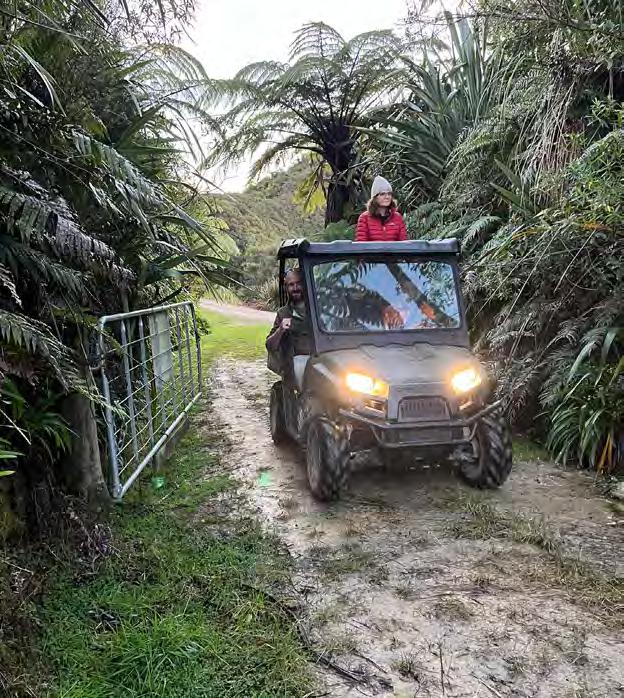
We were treated to a Polaris ride through the bush and forest, the sun setting behind Taranaki Maunga and the brilliance of the milky way later in the evening.
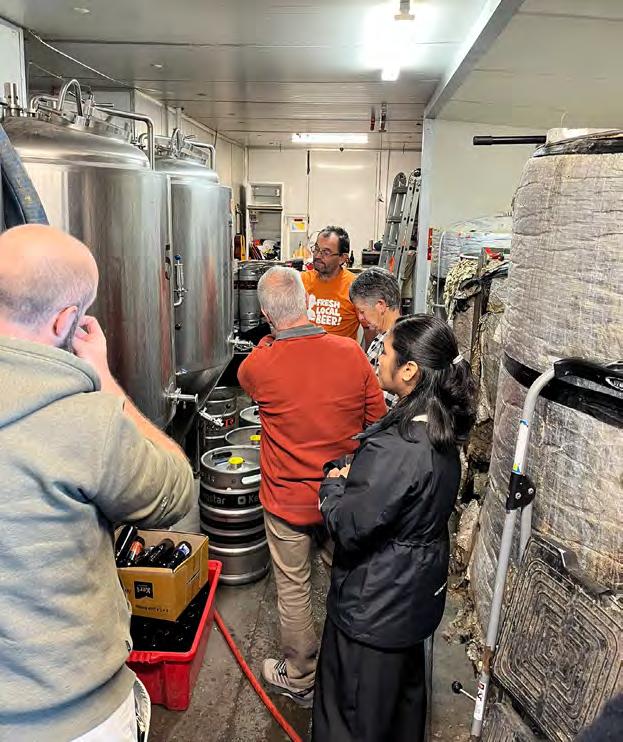
Andy Henshaw at his Roots Brewery
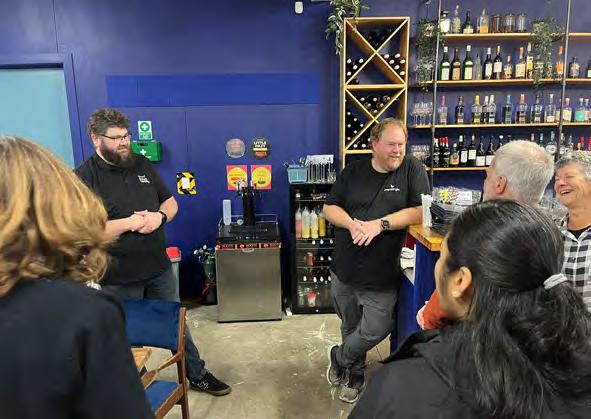
Vaughan Campbell of Good Bones, and Adrian Rumney of Papaiti Gin, sharing their knowledge with the group
Day 2 - Saturday 20 June
Fenton Street Distillery, Stratford
Our convoy took us north and east of the mountain to the Fenton Street Distillery, located in a restored 1920s historic masonry building formerly a solicitor’s premises. It is a busy place combined with bustling cafe, and art gallery owned by couple Stuart Greenhill, an award winning distiller and writer, and Jo Stallard, a notable artist and promoter of things Shakespearean in the aptly named town of Stratford. Stuart presented a range of gins and a couple of whiskies with stories to match – he is a great raconteur located in a region replete with tales true and tales plausible.
The gins are distilled using Canterbury-sourced grain spirit in small 48 litre batches, with a wide range of spices and botanicals including peppery native kawakawa and horopito. The Pioneer Gin has notes of mānuka smoke reflecting the burnt bush of the early settlers. The Beast with two Backs Gin has a Shakespearean theme, memorably aromatic with turmeric, cassia and nutmeg as well as freshly roasted coffee beans, caramelised orange, and pōhutukawa stamens.
Several of the whiskies are inspired by Stuart’s book Echoes of Fathers to Sons featuring local identities.
Theoretical Brewer
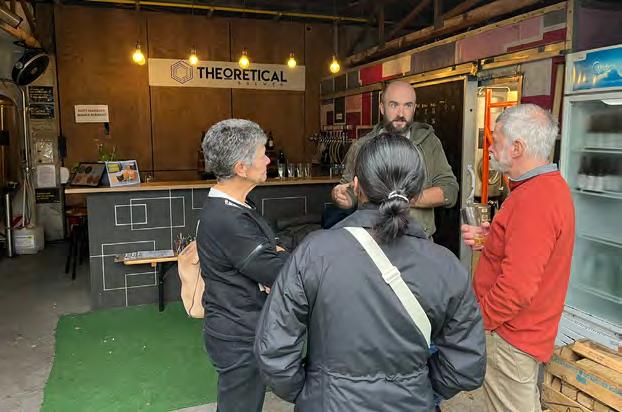
We finished with lunch before driving north toward New Plymouth via the Theoretical Brewer at Bell Block. This is the establishment of Douglas Eng, a chemical engineer, who was unfortunately absent attending a friend’s wedding. It is a very nicely put together small commercial brewery, selling mainly over their bar. The brewery pairs with a seriously industrial BBQ set-up built from an old LPG bullet - well worth the stop and taste.
New Plymouth was our stopover for the night with the group finding affordable down-town accommodation. We even squeezed in a visit to the famous Rewa Rewa walking bridge on the way into town and the excellent Puke Ariki Museum before it closed.
Shining Peak Brewery
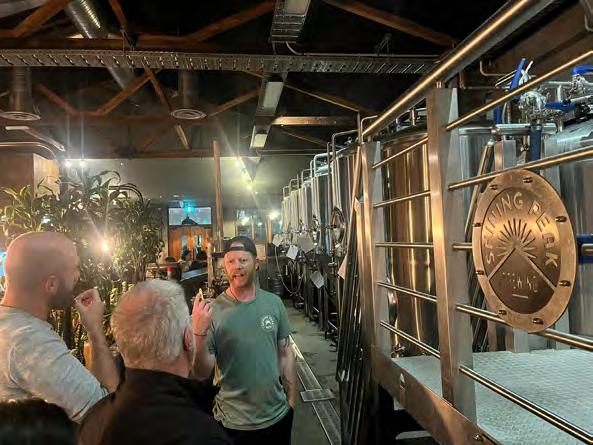
At our dinner venue, Shining Peak brewery, Luke Anderson took us through their beer process with its most impressive lineup of stainlesssteel backgrounding the bar and food. Shining Peak is probably the best known of the Taranaki breweries now that Mikes has closed, although 3 Sisters has a national reputation as well. Graeme thought Luke might be his long-lost brother except they were only 6 months apart in age and Luke was from Speyside and Graeme only from Fife - it made for a lively evening. If you are a hazy lover, try the Skunk Juice or Mad Max – you can find them in cans.
Day 3 - Sunday 21 July is our big day
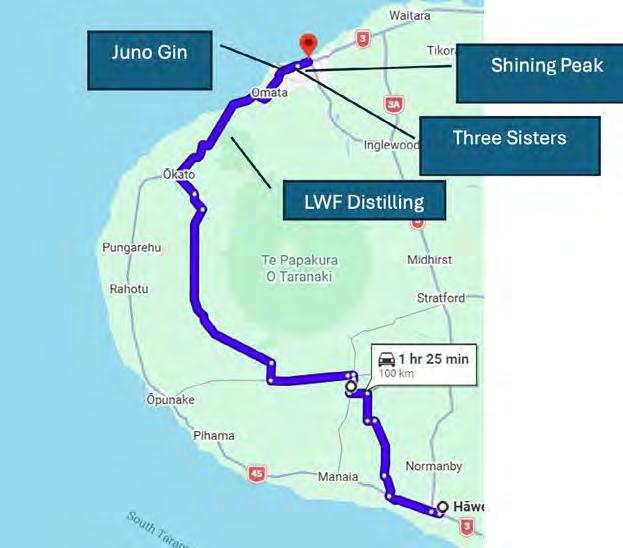
Juno Gin Distillery, mid-morning
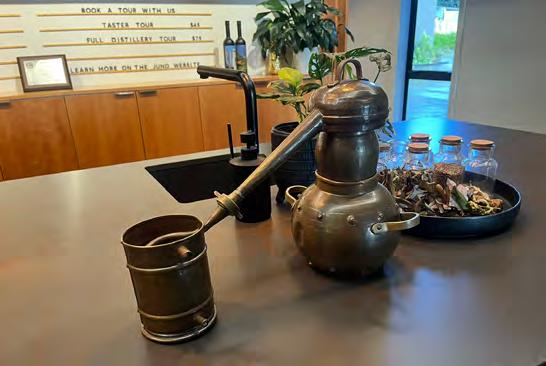
We were greeted by husband-and-wife team Jo and Dave James at their new crisp looking production and hospitality premises. We heard their story of changing careers in 2016, and coming home to New Zealand, and hometown New Plymouth, to follow a passion for crafting spirits. They clearly apply their technical knowledge and sensory expertise to distil spirit with varied botanicals into unique gins, always including a good load of juniper and vapour infusion of the other botanicals in recognition of the definition of London Dry Gin style. Their only departure is a pink which includes a drop of fruit for colour.
Dave and Jo both have Massey degrees. Dave is a Techie who spent much of his career in Fonterra. They work together wonderfully and over a decade have built a most professional operation. Dave and Jo have made extensive use of Massey staff and students in distilling, sensory and botanicals horticulture projects. They are intensely involved in the New Zealand craft spirits industry, and they articulated a few quibbles about New Zealand’s lack of specific definitions for named spirits, particularly gin, which undermines those adhering to international conventions, and results in a lack of clarity within the industry.
Dave and Jo’s company is Begin Distilling and their prime brand is Juno. They start with a very clean New Zealand-made 96% ABV neutral base spirit adding (mostly) locally sourced botanicals including horopito, kawakawa, nuts, herbs and spices including cardamom, sage, juniper berries and fresh fruits and vegetables (parsnip!) working with New Zealand growers. We were also treated to a couple of satisfying coffee vodkas. Their amazing labels are designed and owned by local artists.
Yes, we asked - Juno is the classical wife of Jupiter…
Route of days 1 and 2 from Palmerston North to New Plymouth
Three Sisters Brewery
We had lunch at the Three Sisters Brewery in central New Plymouth, in the ambience of shining rows of brew tanks and associated pipework, then drove west to Oakura.
LWF Distilling (craft rum), Oakura
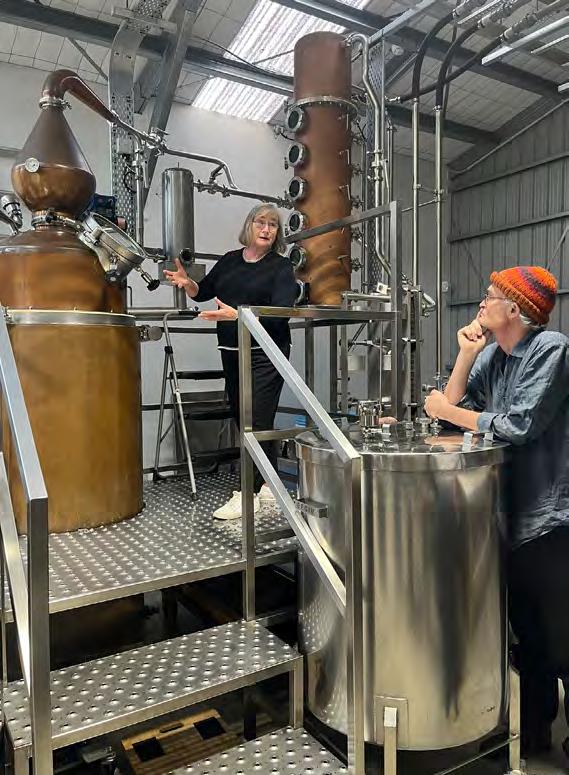
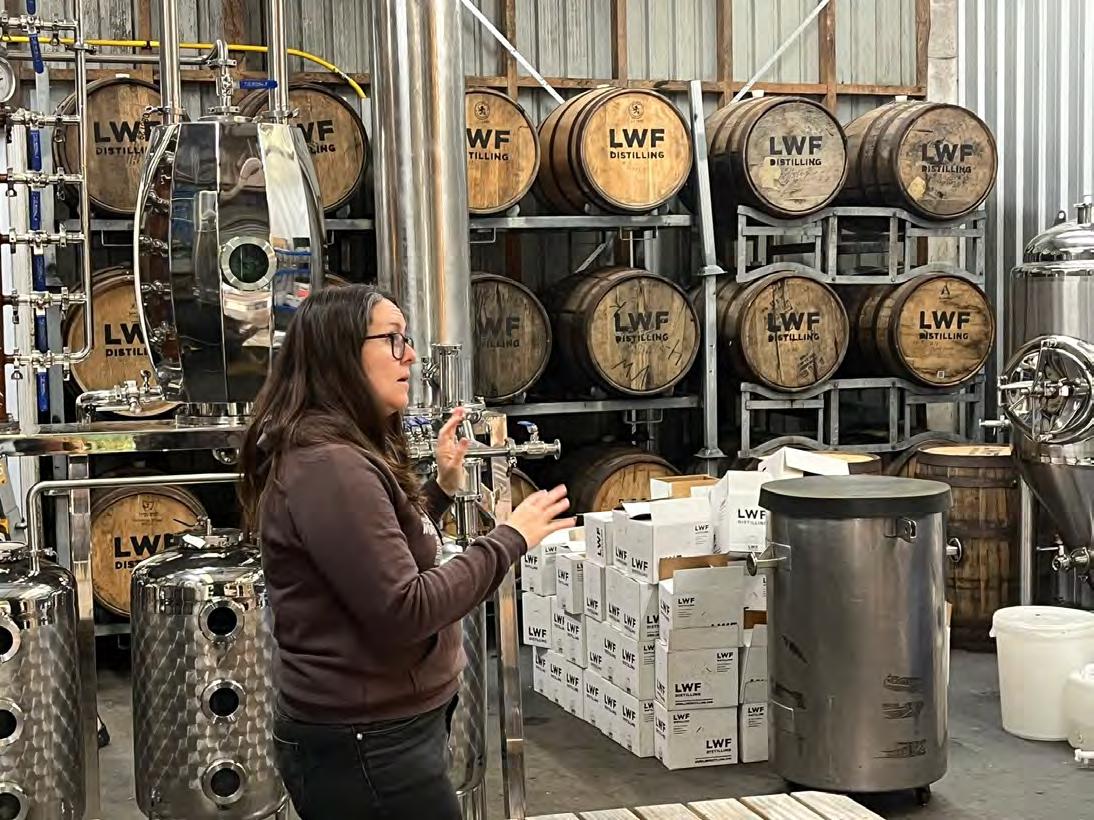
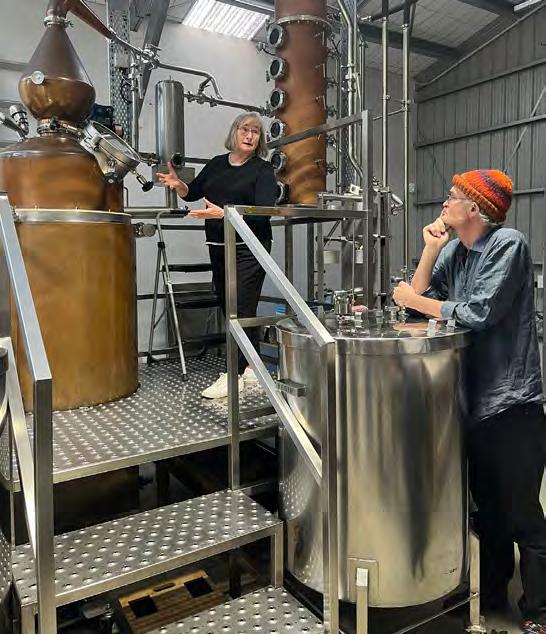
LWF rum distillery is tucked away in a farm setting near the mountain tracks of North Taranaki Maunga behind Oakura. We were greeted by founder and distiller Janet Charteris, explaining her story of the family farm and learning about distillation and associated technology - she didn’t want to blow herself up.
Why rum? Because so many are doing gin. Janet’s aim is to reinvent rum with an amazing flavoursome sipping experience – not stuff for drowning in cola. LWF can grow many of their flavour ingredients on the farm including rhubarb and limes, along with feijoa, manuka honey and wood smoke.
Janet does the whole process, fermenting Australian Bundaberg molasses, distilling in an impressive 500-litre still sourced from China with column, botanical basket and rum thumper to help create the flavoursome styles. Barrel storage and bottling in distinctive bottles follow in the former farm shed.
First part of the day 3 route from New Plymouth through Oakura, Wiremu Rd, Kaponga and Kapuni as far as Hawera.
Janet Charteris of LWF, explaining the rum thumper on her still and barrel aging
We were intrigued by how the distinct botanical flavours of the rums are greatly enhanced by the addition of a very small amount of lemonade or ginger ale. No cola in sight in case you were thinking of a rum and coke. Janet’s plan is to have some of the barrels to reach 30 years of aging. BTW, LWF stands for "Life Worth Funding".
Drive South around the west side of the Taranaki Maunga via Wiremu Rd (aka top road to the locals), past Kaponga and Kapuni and back to Waverley and Wellington. Our three Wellingtonians arrived home on Sunday night and the Palmerstonians on Monday morning after a second night at the Tuku Bush property above Waverley.
Reflections
We travelled for only three days, under 500 km (750 km for the Wellingtonians), yet met nine sets of competent, enthusiastic brewers and distillers. Each had a story to tell and a reason for being. Each had great product, some true to type and some more individualistic. Several came from technical backgrounds, others from creative pasts but all had developed blends of both. Some started their spirits with a fermentation of their own. Some started with grain spirit and some with New Zealand’s unique high-quality whey-derived neutral spirit: different mixes of excellent story and excellent product. All had some unique element, and all celebrated their locality. Most maximised use of local raw materials: it helps that the lion’s share of our malt is made at Marton*, that wild hops grow up the river valleys and horopito adorns the region’s mountains. And juniper, orris root, and angelica are all being grown in the Taranaki. We can be proud of this industry, and that is likely to be true throughout New Zealand. ■
* Note: Malteurop have just announced it will close its Marton maltings. Pity.
Slow Polaris ride at evening, with Tracey in conning position
Wee Willie, the smallest still at Begin Distilling, where Juno began
Richard, Graeme, Tracey and Denize, planning, learning and tasting
Luke Anderson at Shining Peak Brewpub
Would we do it all again?
This tour was a first. We attempted to coalesce the technical, the business and people’s stories, together with a look at one of the most scenic and idiosyncratic regions of our country. Product, process, people, and province. This tour is tailored for NZIFST, not for mere tourists. We wanted to find out if such a tour worked at midwinter and now we wonder if we should do it again for another NZIFST tour group.
We think the answer is yes, it was great (five distilleries and four breweries in three days at a relaxed pace) - at least as good as some of the expensive whisky tours abroad but far more personal. And yes, we managed the challenge of tasting and driving via careful timing of meals and tiny tipples. And yes, winter is the best time – we had undivided attention from our brewers and distillers. And yes, we should offer it again next year, perhaps with two changes:
• Eight people give a better return than the six pioneers this year. 10 would be too many.
• And we should do it two weeks later in the year – after marking has finished for the academics.
So, think about it, Friday 2 – Sunday 4 July 2027 - first in first served!
Dave James of Begin Distilling, entrancing us all with tales of Juno Gin
Jo and Dave James of Begin Distilling, explaining Leela, the biggest of their three stills, and aptly named after the female character from the cartoon series Futurama who has one eye and a ponytail
Enhancing sweetness perception in reduced-sugar fermented products
Raise Ahmad*, Senior Scientist, Smart Foods and Bioproducts, Bioeconomy Science Institute
Consumer demand for healthier foods with reduced sugar continues to grow globally, creating R&D challenges and opportunities for some products. This is particularly true for fermented dairy products such as yoghurt, because reducing sugar can compromise the delicate balance between sweetness and acidity which needs to align with consumer preferences. Researchers at the Bioeconomy Science Institute have been addressing this challenge by combining sensory science with molecular taste biology to develop new technologies that maintain perceived sweetness while adding less sugar and avoiding compensating with traditional high intensity sweeteners. The first step taken was to better understand how fermentation can be steered to improve sweetness perception.
A recent study by Senior Scientists, Raise Ahmad, Julie Dalziel and colleagues, published in the journal Food Chemistry, improved our understanding of how microbial sugar metabolism during yoghurt fermentation affects activation of the human sweet taste receptor and ultimately influences perceived sweetness.
This work was part of a collaboration between the project team at the Bioeconomy Science Institute-AgResearch and the Massey University Food Experience and Sensory Testing (Feast) Laboratory, funded by an Endeavour Research Programme “Accelerated evolution: a step-change in food fermentation” from the Ministry of Business Innovation & Employment.
Fermentation changes more than texture
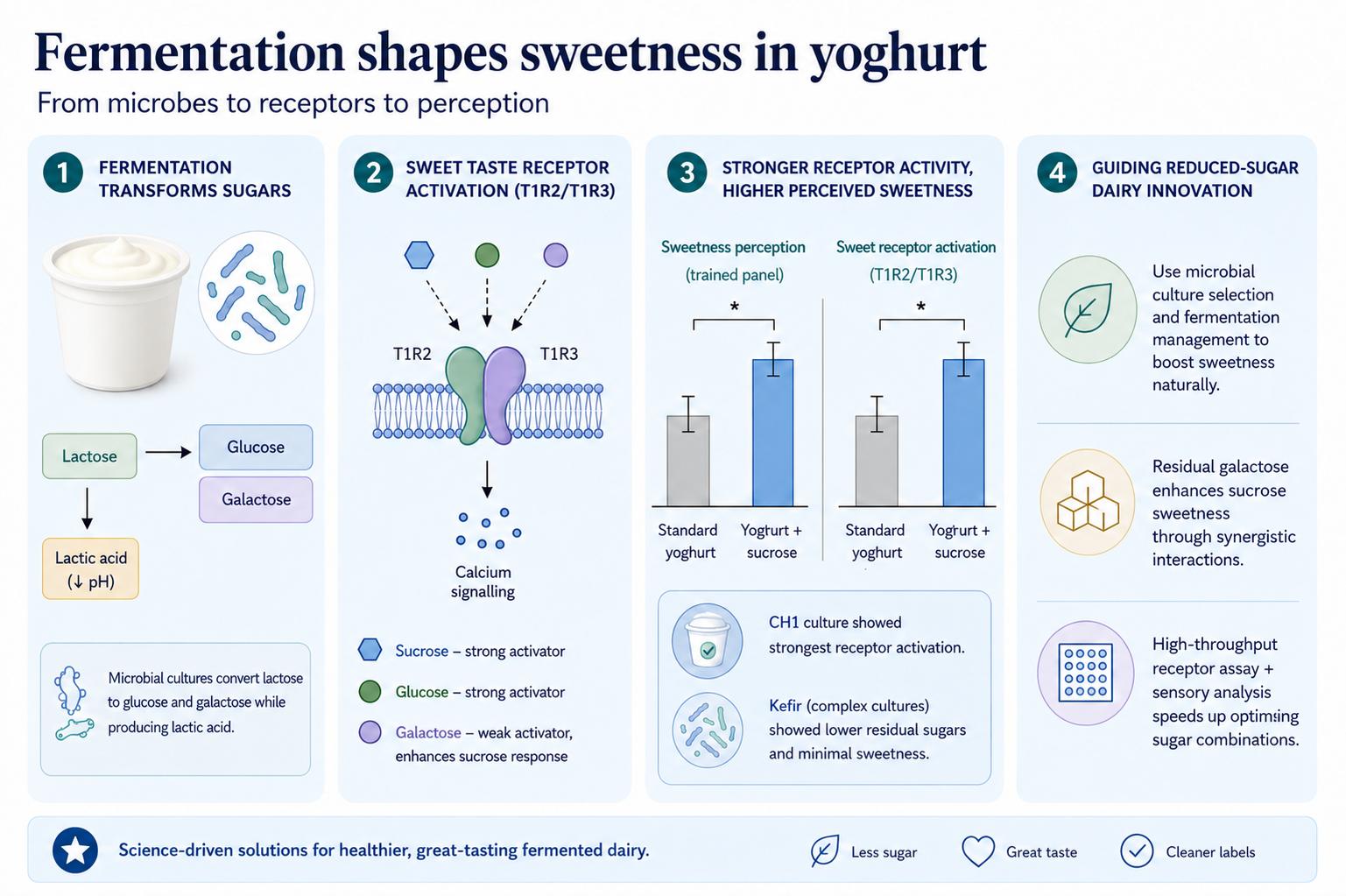
Yoghurt fermentation is driven primarily by lactic acid bacteria such as Lactobacillus delbrueckii subsp. bulgaricus and Streptococcus thermophilus. These cultures hydrolyse the milk sugar lactose into glucose and galactose which are subsequently metabolised to produce lactic acid, which lowers pH. The decrease in pH induces casein gel formation creating the characteristic thickness and acidity in yoghurt. However, fermentation also changes the residual sugar composition of yoghurt which affects overall sweetness. Different sugars can stimulate sweet taste receptors to a greater or lesser extent. This means
fermentation can substantially alter sweetness perception based on the sugar profile of the final fermented product.
Sucrose and glucose are known to strongly activate the human sweet taste receptor T1R2/T1R3. In contrast galactose has received comparatively little attention in terms of sweetness perception. Understanding how these sugars interact during fermentation could provide new opportunities for designing lower-sugar dairy products with improved sensory appeal.
Linking sensory science with molecular taste biology
To investigate these effects, the research team combined assessment by a trained human sensory panel with advanced laboratory cell-based taste receptor assays using mammalian cells expressing the human sweet taste receptor. Unlike conventional analytical methods, which measure the chemical composition of foods, receptor-based assays provide mechanistic insight into how food components interact with human taste receptors. This enables rapid screening of food formulations based on their biological activity, helping identify ingredients and fermentation strategies with the greatest potential to enhance sweetness while reducing sugar.
Yoghurt samples were produced with commercial starter cultures, Chr. Hansen's CH-1 and YFL (part of the YoFlex® series), with and without sucrose supplementation. They were evaluated for both perceived sweetness (by a human taste panel) and receptor activation (in the lab). Intracellular calcium signalling was used as a functional marker of sweet receptor activation. The results showed strong agreement between sensory perception and receptor activity, showing that the lab-based method can be used to predict human perceptions. Yoghurts supplemented with sucrose generated significantly higher sweetness ratings and stronger T1R2/T1R3 activation. Among the cultures tested, CH1 demonstrated particularly strong receptor activation, suggesting that microbial fermentation pathways can directly influence sweetness outcomes.
Interestingly, residual galactose (considerably less sweet than sucrose on its own) generated during fermentation may contribute to sweetness modulation by enhancing sucrose responsiveness, suggesting a potential interaction between sugars. In comparison, kefir samples underwent more extensive sugar utilisation during fermentation, leaving lower residual sugar levels and resulting in minimal sweetness perception (Figure 1).
New opportunities for reduced-sugar dairy innovation
The study highlighted how microbial culture selection during fermentation can be strategically used to optimise sweetness perception while reducing added sugar requirements. Rather than relying solely on high-intensity sweeteners, manufacturers may be able to leverage fermentation-driven sugar transformations to increase sweetness
naturally, without adding to the final sugar content of the product.
Our results demonstrate the value of a high-throughput approach for evaluating the interactions between starter cultures and yoghurt base formulations during fermentation. This methodology enables rapid screening of combinations that reduce sugar content while maximising perceived sweetness. Unlike conventional compositional analyses, receptor-based screening provides functional information on how fermentation-derived changes influence activation of the human sweet taste receptor.
This approach aligns with growing consumer demand for cleaner labels, reduced sugar intake, and minimally processed foods. Importantly, the work also demonstrates the expanding capability of the Bioeconomy Science Institute in molecular cell-based receptor technologies to solve industry-relevant challenges. Future work ought to consider how greater a drop in final sugar content can be achieved and whether any regulatory compliant nutrition claims can be made.
By bridging molecular mechanisms to real sensory outcomes, the research provides a powerful platform for the future development of healthier fermented dairy products without compromising sensory quality and consumer enjoyment. ■
*Reference
Ahmad, R., Dupas de Matos, A. D., Hort, J., Day, L., & Dalziel, J. E. (2026). Influence of sugar composition in yoghurt on sweet receptor activation and sensory sweetness perception. Food Chemistry, 148351.
Truth on the table: tackling food and health misinformation
Raewyn Bleakley, Chief Executive, New Zealand Food & Grocery Council
Misinformation in food and health is not new, but its scale, speed, and sophistication are evolving rapidly. This was the theme of a thought-provoking panel at the recent NZIFST conference, where my colleague Donnell Alexander facilitated a panel with Niki Bezzant, Dave Monro, and Ashley Wilson, who each brought complementary perspectives from journalism, public health, and strategic communications.
Each panellist began by reflecting on their experience navigating misinformation. Bezzant highlighted the challenge of translating complex and often uncertain science into accessible narratives without oversimplifying. Monro emphasised the health implications when misinformation undermines evidence-based guidance, while Wilson focused on how misinformation spreads and the communication strategies required to counter it effectively.
A recurring tension throughout the discussion was the distinction between genuine scientific uncertainty and manufactured doubt. Science, by nature, evolves; recommendations change as evidence accumulates. However, panellists noted that bad actors often exploit this uncertainty, presenting it as evidence that “experts don’t know anything.” The key, they argued, is transparency: clearly communicating what is known, what is not yet known, and how confidence in evidence is assessed. Framing uncertainty as a normal and necessary part of science—rather than a weakness—was seen as critical.
The durability of food and health misinformation was another focal point. Unlike many other scientific domains, food is deeply personal. Everyone eats, and therefore everyone feels qualified to have an opinion. This creates fertile ground for misinformation, particularly when it aligns with existing beliefs and presents as simple certainty. The panel also drew parallels with misinformation in women’s health, where historical gaps in research and trust have similarly enabled persistent myths and confusion.
On whether the problem is worsening or simply more visible, while digital platforms have amplified reach and speed, making misinformation
Donnell Alexander - Chair
Dave Monro
Niki Bezzant
Ashley Wilson
Misinformation panel
more visible and harder to contain, the underlying drivers (complex science, low trust, and competing interests) are longstanding.
A particularly practical discussion centred on when to respond to misinformation. Addressing false claims can risk amplifying them, yet silence may allow them to spread unchecked. Panellists suggested a strategic approach: prioritising responses based on potential harm, reach, and audience vulnerability. Not every claim warrants engagement, but high-risk misinformation—particularly that which could affect health behaviours—demands a clear and timely response.
Science literacy and media literacy were identified as foundational tools in addressing misinformation. Building public understanding of how science works—its methods, limitations, and evolving nature—can help people think more critically about information. Similarly, improving media literacy enables audiences to assess sources, recognise bias, and distinguish credible information from misinformation. These are longterm investments, but essential ones.
The panel also addressed a challenge familiar to many in the food industry: credibility. While industry professionals often have access to robust data and technical expertise, their messages are frequently viewed with scepticism. To counter this, panellists encouraged greater transparency, collaboration with independent voices, and a focus on shared public health goals. In our AI-powered world it’s important to contribute credible information online in order to shape the AI narrative.
“Science literacy and media literacy were identified as foundational tools in addressing misinformation.”
Maintaining credibility in the face of evolving science was another key theme. Historical shifts in nutrition guidance, such as changing views on dietary fats and eggs, are often cited as evidence of inconsistency. The panel emphasised the importance of contextualising these changes as progress rather than contradiction—an outcome of improved evidence and methods.
The session concluded with a call to action. Practical suggestions included establishing a regular myth-busting column in FoodNZ, increasing engagement in initiatives that promote critical thinking and media literacy, and actively supporting credible, trusted voices in the public domain.
For those working in food science and industry, the message was clear: combating misinformation is not solely about correcting facts. It requires strategic communication, empathy, and a commitment to building trust over time. The discussion also reminded us that while accuracy in food and health information is critical, it is not the only lens through which food should be viewed. Food is central to culture, identity, connection, and enjoyment which contributes meaningfully to wellbeing beyond measurable health outcomes.
As we work together to counter misinformation and improve public understanding, it is important not to lose sight of food’s broader role. Supporting people to feel confident, informed, and also able to enjoy food without unnecessary fear or confusion is, ultimately, part of the same goal. ■
Food safety: Is success our Achilles heel?
Summary of food safety sessions at the NZIFST/NZFSSRC Conference, Auckland, 30 June to 2 July 2026
NZ Food Safety Science & Research Centre
We do food safety “pretty bloody well”, said independent economist Shamubeel Eaqub in the opening NZFSSRC/NZIFST Conference plenary. But, he warned, the food industry is in danger of losing ‘social licence’ because of the unaffordability of our food at home. Could our export success also be our Achilles heel, with consequent high food prices causing political instability? Somehow, he said, we must keep our institutions strong – our regulators and entities like the NZ Food Safety & Research Centre - to maintain standards, while globally, organisations like the United Nations and the World Trade Organisation are being emasculated. Comparatively, New Zealanders still have trust in our institutions.
Fast forward to the closing plenary of the Conference. Paul Harrison (Harrison Parker) had delegates in tears with his ‘scrapbook’ of the many things New Zealand has to be proud of and which have given us a reputation and profile far greater than our tiny population. He alluded to the trust Asian parents have in our infant formula, for example. New Zealand is still very high on the “least corruption” ranking. With such plaudits, it’s tempting to rest on our laurels. Jack van der Sanden (Biomerieux) is a highly experienced food safety manager. Growth (the Conference theme) equals change, he said, and this puts food safety systems under pressure. Jack was at Fonterra in 2013, its annus horribilis. He cited the so-called Swiss cheese effect, where a number of small faults and omissions align with sometimes catastrophic results. He said there needs to be constant reinforcement with staff of why we must stick to food safety protocols. The Centre is holding its first “Food Safety Champions” workshop in Auckland, 11 August (there may still be spaces free), to create a supportive community of food safety professionals and encourage best practice.
The extensive menu of food safety presentations at the Conference included a glimpse of transformative technologies. Jarred Mair (MPI)
shocked many with his AI predictions and timeline. How does one process and adapt to such speed of change? What is the right tension between caution and the need to stay abreast of this revolution? There was a feeling, talking to some delegates, that we are hurtling into the unknown.
Roger Cook (MPI-NZ Food Safety), another experienced food safety professional in the regulatory space, took a pragmatic approach to AI – here, ready or not - outlining where he thinks it can make the biggest impact: collating and summarising evidence, enhanced analysis of electronic data, machine vision, big data and dashboards – all making for better, faster decision making. The discussion also touched on the potential for more effective inspections, remote audits, and the transformative role of New Approach Methodologies (NAMs), including innovations such as organs-on-chips, and cell-based testing which have the potential to replace whole animal testing and generate data that is more directly relevant to human health. Such positive applications balance fears of adverse outcomes.
PhD student Steffi Thomas (BSI), in her first (hard to believe!) big conference presentation took us through the various parameters of her
Dr Tim Harwood, recipient of the Significant Contribution to Food Safety Award., Pictured with Roger Cook, MPI NZ Food Safety team
experiments with new technologies such as cold plasma sanitisation techniques, which can be applied to heat-sensitive food items like berries, and in cellular agriculture – another revolution in the making. We’ll be reporting further on Steffi’s research in future.
Deputy director of the NZFSSRC, Tim Harwood, recounted Cawthron’s part in helping South Australia determine the cause of their ongoing monster algal bloom. Tim is an international expert in marine toxins and was able to help pinpoint which Karenia algal species are predominating and producing brevetoxins (K. cristata they concluded) which has killed many thousands of marine plants and animals, including the great white shark. This, and his wide-ranging work on seafood safety over many years, including helping iwi in the Bay of Plenty, earned him this year’s MPI Significant Contribution to Food Safety Award presented at the Conference dinner.
Vibriosis is a seafood-borne disease of increasing concern. Graham Fletcher, senior BSI scientist, entitled his presentation: Vibriosis: New Zealand’s next pandemic, a minor foodborne illness, or both? There have been outbreaks since 2019, probably due to our warming waters which are heating at three times the global average! 700,000 infections a year
have been recorded worldwide; 400 in New Zealand between 2001–22. Specifically, Graham was talking about Vibrio parahaemolyticus, which is foodborne, in New Zealand usually via raw or lightly cooked mussels.
PhD student Xiaodong Guo (Lincoln University) co-presented her studies into the molecular epidemiology of V. parahaemolyticus ST50 in New Zealand. Director of NZFSSRC, Marie Bradley, who is focused on capability building, said “Xiaodong is a wonderful example of how NZFSSRC and MPI work together to support emerging talent. Her research has benefited from co-supervision and collaboration across our research network, including Stephen On, Graham Fletcher and Sinisa Vidovic, demonstrating the value of partnership in building the next generation of food safety scientists.”
BSI research showed that mussels may be able to produce an immune response against V. parahaemolyticus, pointing to novel approaches to reduce risks from the organism. Graham concluded that although we are not seeing a pandemic in play, and mussels may be producing an immune response against V. parahaemolyticus, we must continue to get a better understanding of this new threat.
Steffi Thomas (BSI), Phil Bremner, Chief Scientist, NZFSSRC, and Sravanti Gupta (BSI)
Nicola King (PHF Science), as manager of the Centre’s highly valued Emerging Risk Intelligence Service (ERIS), keeps tabs on Vibrio and a long list of other emerging risks. Despite being the last speaker at the end of a long day, which began at 7am for those attending the Women in Science breakfast, Nicola (aka Nikki) kept everyone alert with her compelling presentation style. Nikki has attracted the attention of the FAO in Europe, which invited her to chair one of their meetings in Rome recently. This is yet another example of the respect New Zealand food safety scientists have earned overseas.
Paul Harrison noted how many young women are making their careers in the food industry, especially food safety. You only had to look around the theatre during plenaries to see that. And the Women in Science breakfast on the first morning of the Conference was filled to capacity, despite the punishing early hour. They’d come to hear Kate GatfieldJeffries tell the story of how an impossibly young woman, fresh out of university, was able to build a substantial food supplement business (Moodi) from a virtual zero capital base and a driving passion for women’s health. At age 27 now, she employs a staff of nearly 40 and growing, with eyes firmly set on the US market. Kyla Archer, the Centre’s Industry Research Liaison Manager, organised and chaired the event.
More than one speaker talked in glowing terms about the role of Fonterra’s intern training scheme to give recruits a solid grounding in the industry, from the bottom up. NZFSSRC Board member, Kim Ballinger, now CEO of large employer AsureQuality, gave a particularly interesting presentation on how she had built her career, which took her to Mexico, Brazil and China. She was CEO of Tip Top for a time and well knows, like Jack van der Sanden, what can happen in factories during the early hours when no one is watching. Kim has accumulated an invaluable understanding of different markets, cultures, and ways of working, and now takes her place on the top rung of the New Zealand food safety pyramid.
Aswathi Soni (MPI-NZ Food Safety) presented three recent case studies to show how the level of food safety risk is methodically evaluated, including the outbreak of H7N6 avian flu in the Otago poultry farm (2023). She wryly noted that outbreaks tend to arrive at her desk late on a Friday afternoon.
The US market has zero tolerance of Shiga toxin-producing E.coli (STEC) after more than one fatal outbreak of the disease. A significant quotient of food safety research is dedicated to this ubiquitous bacterium.
Kyla Archer and Kate Gatfield-Jeffries at the Women in Science Breakfast
Jackie Wright (PHF Science) and her colleagues from BSI APPLY comparative genomics of STEC to differentiate human, animal and environmental sources across the country, and establish transmission routes.
Delphine Rapp (BSI) demonstrated the power of co-design with industry and what could be achieved when integrating and re-purposing existing data collected along the meat supply chain. Using predictive models, she examined how recent weather conditions influence the occurrence of STEC in cattle, as well as beef productivity and meat quality. On behalf of the team behind the Food System Integrity program, led by Gale Brightwell, she and Mariza Gomez Reis also received the inaugural NZIFST Collaboration Award, which recognised the interdisciplinary work and long-term collaboration between research and industry.
Rachel Kilmister, NZ Apples & Pears, guided the industry safely through the hell of Cyclone Gabrielle and out the other side. She recounted what was done immediately and in the longer term after the Cyclone, to ensure that any apples and pears harvested were not contaminated. Rachel, highlighted the fact that pro-active research funded by NZ Apples & Pears and the Centre on the effectiveness of sanitisers used in the washing of apples, meant that the industry was well-placed to deal with the challenges thrown at it by the Cyclone. The Centre helped provide the necessary scientific support, which has now been documented for reference in future such events, which are sadly inevitable. We could do without the ruinous deluges, but nothing grows without water, and the crunch is coming, said Andrew Pearson (Tonkin & Taylor) who summarised the findings of a comprehensive FAO report he cowrote on contaminants in water used to irrigate food crops. 66% of global freshwater goes into agriculture. The report ranked the contaminants of concern both globally and locally (in New Zealand: arsenic, cadmium, fluoride, lead and radium top the list). New Zealanders can no longer depend on water availability and purity, and food safety professionals must now factor water quality into their deliberations. Andrew alluded to the pressure AI data centres will place on water resources.
On the subject of fresh water, and bringing a whole new dimension to the conference, Māori representatives leading projects to clean up their respective freshwater lakes (Kemp Solomon for Whakakī, Marise Stuart for Omāpere, and Eden Skipper for Wairewa) and ensure the safety of tuna – so important in traditional diets and their expression of manaakitanga – made for the perfect ‘keep them awake’ after lunch presentation on the first day of conference. It was followed by a panel presentation led by Distinguished Professor Linda Tuhiwai Smith CNZM, who established Te Whare Wānanga o Awanuiārangi, the Kai Institute, in Whakatāne. Linda and her impressive co-presenters (Julia Kihi-Coates, Erina Watene, and Luke Williams) also want to preserve the safety and sustainability of their beloved traditional foods, especially tuna, that are central to Māori culture. The Centre and Cawthron Institute have been helping on the ground to the immense satisfaction of both parties. Jamie Ataria is the Centre’s Pou Ruruku, or go-between, tasked with bringing Māori agribusiness into the Centre’s fold.
In the end, it’s all about relationships, and the Conference was a chance to meet old friends and business acquaintances and make new ones, face to face. Anyone who thought they’d heard it all before would have been pleasantly surprised.
Says Marie Bradley, “Till next year then. We’re proud of ‘our people’. The Centre is here to support companies large and small, so do call us if you want to join the Centre and take advantage of the professional development, the research funding, and access to the network of scientists the Centre offers. On we go.” ■
Rachel Kilmisyer, NZ Apples & Pears, and Marie Bradley, Director of NZFSSRC
Technical expertise is no longer enough. The rise of adaptive capability.
John Lawson, FNZIFST, Lawson Williams Consulting Group
If you work in science, engineering, quality, food technology, manufacturing or supply chain, you've probably spent your career adapting. You've learned new equipment, new software, new regulations, new manufacturing processes and new technologies. You understand that knowledge evolves, and you've built your career by keeping up with it. In many ways, technical professionals have always been adaptable. So why are we talking about adaptive capability? Because the nature of change has changed.
Today, the biggest challenge isn't simply learning new technology. It's learning how to remain effective while the entire environment around you continues to shift. That is a different capability altogether. Technical change is familiar Scientists and engineers are trained to think differently. They work with uncertainty. They test assumptions. They change direction when new evidence appears. They solve problems that don't yet have answers. Continuous learning isn't something new; it's part of the profession.
A food technologist today works with different ingredients, regulations and consumer expectations than they did ten years ago. An engineer continually learns new equipment, automation technologies and production methods. Supply chain professionals now manage risks that barely existed a decade ago. Learning has always been part of technical careers.
This series explores a growing reality for both organisations and individuals. Change is no longer something temporary that gets managed and then completed. It is now part of the environment we work within every day.
The first articles in this series challenge some uncomfortable ideas:
• Article 1 (January 26) - That stability is no longer guaranteed.
• Article 2 (March 26) - That traditional approaches to change management are struggling to keep up.
• Article 3 (May 26) - That adaptability is becoming one of the most important personal and professional capabilities people can build.
• Article 4 (This article) – That being an expert can be a trap. The rise of Adaptive Capability.
John Lawson is founder of Lawson Williams Consulting Group. He initially studied Biotechnology at Massey and is a Fellow of NZIFST. He now enjoys leading a team of recruitment consultants, helping people like you develop satisfying careers.
Organisational change is different
Where many technical professionals become uncomfortable isn't with technical change.
It's with organisational change.
Unlike science or engineering, organisations don't always operate on perfect evidence. Decisions are influenced by commercial pressures, customer expectations, budgets, timing and risk. Sometimes the technically perfect solution simply isn't commercially possible.
Sometimes priorities change halfway through a project. Sometimes decisions need to be made before all the information is available.
For people trained to solve problems logically, that can feel frustrating. Not because they resist change.
Because the rules seem to keep changing.
The expert trap
Many technical careers are built on becoming the expert.
You become the person who understands the process, the equipment, the product, the regulations or the science. People come to you because you know the answer.
That expertise remains incredibly valuable.
But today's workplace increasingly rewards something else as well. The ability to help people navigate situations where nobody knows the answer yet.
That is adaptive capability.
It doesn't replace technical expertise. It builds on it.
So what is adaptive capability?
Adaptive capability is the ability to remain effective while the world around you changes.
It is being able to make progress when information is incomplete, recognising when your experience still applies and when the environment has shifted enough that a different approach is needed. It means staying curious instead of becoming defensive. Learning before you have to rather than after you are forced to. Helping colleagues make sense of uncertainty instead of waiting for certainty yourself.
Perhaps most importantly, it means separating your identity from your expertise.
Your value is no longer defined only by what you know today. It is increasingly defined by your ability to keep creating value as what you know continues to evolve.
Why this matters now
Digital transformation is accelerating across almost every technical profession.
Artificial intelligence is changing how information is analysed. Automation continues to reshape manufacturing. Sustainability is influencing product design, sourcing and production. Data is becoming central to operational decision-making.
The upcoming ISO 9001:2026 revision reflects this reality. The revised standard places greater emphasis on how organisations manage ongoing change in response to digitalisation, sustainability and evolving risk.
“… over the next decade, the people who make the greatest impact are likely to be those who combine deep technical expertise with strong adaptive capability.”
This isn't simply another compliance update. It is recognition that adaptive capability is becoming a core organisational capability. If organisations are expected to become more adaptive, then the people within them must develop that capability as well.
Building adaptive capability
The encouraging news is that adaptive capability isn't a personality trait. It is something that can be developed.
It often begins with small habits rather than major career decisions. Become curious before becoming critical. Ask, "What has changed?" before asking, "Why are we doing this?" Learn new tools before they become mandatory. Stay connected to developments outside your immediate role. Accept that not every decision will come with complete information.
Perhaps the biggest shift is recognising that your role is no longer just to solve today's problems. It is to build your ability to solve tomorrow's problems, even when they look very different from today's.
The next stage of technical careers
For many years, career progression was closely linked to becoming more knowledgeable and that will always matter.
But over the next decade, the people who make the greatest impact are likely to be those who combine deep technical expertise with strong adaptive capability.
They continue learning after they become experts. They remain calm when priorities shift. They help others navigate uncertainty. They influence without relying solely on their technical authority. Technical expertise gets you into the room.
Adaptive capability increasingly determines how far you can go once you're there. ■
Down to Earth
John Brooks' view of the food world through the lens of a microbiologist.
Professor John D Brooks, FNZIFST
In the last edition, I wrote about HACCP (the Hazard Analysis Critical Control Point concept) and how it could be applied to the meals for the Artemis II astronauts to ensure that their food was safe and would not cause food poisoning. The astronauts have returned home safely, and this edition is also down to Earth. Why give up a good thing when you’re having fun?
I try to keep current with foodborne illnesses and food recalls and have the feeling that the rate of food poisoning and food recalls doesn’t appear to have reduced over the last few years. I’m not an influencer, so I decided to do some investigation.
The Food Act 2014 mandates that food businesses effectively manage food safety risks. An HACCP-based food safety programme is required for food manufacture in New Zealand. Implementing an HACCP-based plan aids in the identification and control of biological, chemical, and physical hazards.This must include having suitable production facilities, a properly designed and operated process, cleaning and staff training. One could assume that if all this is in place, safe food would be the result. Of course, the production of foods that have no controlled lethal step, such as basil pesto, or fresh foods such as bagged lettuce and salads, cut herbs and berries, is more difficult to control safely.
Since about 2015, diagnostic laboratories in New Zealand have moved away from traditional culture-based methods and implemented molecular methods. These are usually quicker and much more sensitive, which could mask actual decreases in food contamination.
Where is the evidence?
My first assumption, that data on foodborne illness in New Zealand would be easy to find, proved wrong within a very short time, and the further I went, it was obvious that diseases often regarded as foodborne may not be recorded, as individual cases of acute gastroenteritis are not notified unless (i) the infected person is in a high-risk category (e.g., food handler, early childhood service worker, or another person with increased risk of spreading the disease) or (ii) it is an infectious gastroenteritis of public health importance such as Clostridium perfringens and Vibrio parahaemolyticus. Only listeriosis is fully attributable to consumption of contaminated food.
Looking at the numbers
The majority (71.8%) of reported outbreaks were predominantly associated with commercial food operators e.g. restaurant/cafe/ bakery or caterers. This suggests a breakdown in the application of the Food Safety Programme. Only six outbreaks (15.4%) were associated with food prepared at consumers’ homes or community events. I was interested to find that Norovirus infection was the most commonly identified pathogen reported in outbreaks (10 outbreaks that involved 563 cases).
The predominantly notified infections are caused by Campylobacter, Yersinia, Shigatoxin-producing Escherichia coli, and Salmonella, with Campylobacter being listed as the leading cause of diarrhoeal infections. Further, notification rates for these foodborne pathogens are generally stable, being highest for very young children (less than 4 years of age) and for elderly people (70+ years), as with previously reported years. When I compared available New Zealand results with overseas estimates of the food-attributable proportion of selected illnesses due to microbial hazards, there was some variation, but overall, the percentages were not greatly different.
Food recalls
Changing tack, I thought that looking at New Zealand food recalls might yield more useful data. I know that our local news outlets often have recall notifications. If food has been produced in accordance with the regulations, we could expect that there would be few recalls. When unsafe food is not detected immediately, recalling the affected food from retailers and consumers is the most effective way to protect people. I expected that microbiological contamination would be top of the list, but the results were surprising.
A “consumer-level recall” is normally undertaken if a food product has a food safety problem and has been sold to consumers. However, a “trade-level recall” may occur when the product has not been sold to consumers, or it has a suitability problem. I chose consumer-level recalls for 2025.
There were 57 consumer-level food recalls in 2025, the leading causes being the presence of allergens, often undeclared in imported foods. Milk was the major trigger. Seventeen recalls were due to physical contamination and only six due to biological contamination. Again, a surprise, 37 recalls were initiated from domestically produced foods, with only 20 from imported foods.
So, is our food safer?
All of the above leads me to believe that the safety of our food has not changed greatly, but that if they are not adhered to and regularly reviewed, HACCP-based food safety programmes don’t guarantee the production of safe food. ■
“The majority (71.8%) of reported outbreaks were predominantly associated with commercial food operators, suggesting a breakdown in the application of food safety programmes.”
References
1. PHF Science (2026). New Zealand Food Safety Technical Paper No: 2026/02 Annual report concerning Foodborne Diseases in New Zealand 2024.
2. Ministry for Primary Industries New Zealand Food Safety Food Risk Management Food Compliance Services. ISBN No: 978-1-99730994-9 (Online)
NZIFST Awards 2026
NZIFST Awards are presented each year at the annual conference. The Master of Ceremonies for 2026 was NZIFST Vice Chair, Hamish Conway. With many awards presented by NZIFST President, Bob Olayo.
Fellows
This year two outstanding members were added to the NZIFST Fellowship.
Lovedeep Kaur
A well-regarded academic and researcher in the fields of muscle chemistry and processing, food microstructure-digestion relationships and the in vitro digestion of foods including alternate and plant proteins. Lovedeep’s research has frequently been designed to solve practical problems experienced by the food industry and has enhanced understanding of the digestion of food proteins, resulting in significant health outcomes as well as helping to inform the development of commercial food products. She has been a strong supporter of the Institute for many years, regularly attending and presenting at the NZIFST annual meeting and encourages and supports her post graduate students to attend and present. Over the last few years, Lovedeep has been one of the key contacts at Massey University for NZIFST activities including the student essay competition and branch events. Her work in development and promotion of the food industry and translating research and development with industry partners and the impact of research on the food industry, plus her successes in training future food scientists makes her a worthy recipient of a Fellowship.
Jaspreet Singh
A well-regarded academic and researcher in the field of Food Microstructure with an impressive academic record. Jaspreet’s research has enhanced our understanding of the role of food micro-structure on digestion which has resulted in significant health and sustainability
outcomes as well as helping to inform the development of commercial food products. He has clearly demonstrated strong development and promotion of the food industry with creating industrial applications of research and through consultancy and technology transfer. Jaspreet has made a substantial contribution to the profession of food science and technology, through research and development leading to creation of new knowledge, technology transfer and to education as a teacher and supervisor at Massey University. A strong supporter of the NZIFST for many years, Jaspreet regularly attends and presents at the NZIFST annual meeting and encourages and supports his post graduate students to attend and present. Over the last few years, he has been one of the key contacts at Massey University for NZIFST activities including the student essay competition and branch events.
Lifetime Achievement Award
This award, formerly known as the Distinguished Service Award, recognises long and exceptional service and/or contribution to a New Zealand Food Industry sector in a scientific, technical, teaching, marketing or managerial role and is specifically for industry personnel approaching or in retirement. This year we have two worthy winners.
Alan Bulmer
Alan has made a substantial and sustained contribution to the food industry over more than four decades, demonstrating exceptional
Fellows Lovedeep Kaur & Jaspreet Singh
technical expertise, leadership, and mentorship across manufacturing, research and development, and ingredient sectors. Since the beginning of his career in 1983, Alan has built deep and highly specialised knowledge in food ingredients and processing technologies, especially in the area of hydrocolloids. His breadth of knowledge has enabled him to support innovation across a wide range of product categories. Alan has a passion for mentoring, training, and sharing his technical knowledge, and has trained countless food technologists in all aspects of hydrocolloids, both within his own teams and across many customers’ technical teams. His employer has sponsored fourth year Food Technology projects for many years, and he has been a key facilitator and mentor to these students during their projects. For several years Alan was part of an industry and academic working group focused on the development of the Food Technology Degree for the future. He was an inaugural board member of the Food & Beverage Industry Training Organisation and in 2024 he was made an Adjunct Professor in Food Technology at Massey University.
Lee Huffman
A well-known and highly respected name in New Zealand food innovation, whether in academic circles or in industry, having contributed greatly to the development of new food technologies that supported the founding of food businesses. Lee’s career spans five decades, centring on the development of new food proteins in New Zealand including early-stage commercial technology development for whey protein, potato protein, macro-algal protein, pasture protein and even insect-derived protein. A PhD graduate in Food Science and Nutrition from Ohio State University in Columbus, she was supervised by Prof James (Jim) Harper who was a leading member of the international collaboration on whey proteins established by the New Zealand Dairy Board. That association led to Lee coming to work on whey proteins at the New Zealand Dairy Research Institute (NZDRI) in 1983. From 1990, she spent 11 years working for the New Zealand Dairy Board in the USA as Technical Services manager. During this time, 26 new, high-value whey protein products were developed and commercialised. Back in New Zealand, she continued working for NZDRI on whey protein to produce higher purity isolates. Moving to Crop and Food Research – later Plant and Food Research (PFR) – she continued leading a team in the Food Solutions area, providing services to the wider food processing industry, and there are many other achievements that cannot
be publicised due to their commercial confidentiality. Staff development and mentoring have been another core aspect of Lee’s career and many a skilled technologist has carried the competencies developed under her tutelage into local and global food businesses. Lee has always been an active NZIFST member and has encouraged her team to be similarly engaged with the Institute. She has also been encouraging to Massey University Food Science and Technology students through mentoring and project support, including hosting students at PFR and has been engaged in PhD supervision at Massey.
A note from Lee
"Thank you to NZIFST, my colleagues and family. Lifetime sounds like a long time…but as I shared with my high school classmates…” Snoopy reminds us to find joy in the journey, even if we aren’t sure where we are going.”
Starting out on a Midwest dairy and alfalfa farm, I never imagined my journey would lead to grad school and then in 1978 to the Ohio State & NZDRI Whey Protein Collaborative Group…then the Fulbright and moving to New Zealand.
Much of the early R&D focused on designing whey protein factories and ingredients for sports beverages and infant formula. Similac is still being sold internationally today.
Then my journey took me to Crown Research Institutes… the challenge of moving the NZ Food Composition Database online; plus being on two plant protein patents, and designing a plant protein process in USA.
Every milestone was the result of incredible teams and teamwork.
I share this honour with my many colleagues and family –Graham, who is here tonight, and Troy and Lane. Their support was critical, especially as my journey required time away from home and international travel.
To close again with Snoopy: Thank you for being part of my journey."
Lee Huffman, 1 July 2026
Lifetime Achievement Award - Lee Huffman
Lifetime Achievement Award - Alan Bulmer
Emerging Leader – Chelsea Whiteman
This award recognises a young technologist, scientist or engineer for their endeavour or achievement and leadership potential, within the food industry. The award winner receives NZ$2, 000 towards their professional development.
Chelsea graduated with a Bachelor of Food Technology (Honours) from Massey University, Albany in 2019. During her studies and since graduating she has gained experience across a broad range of food manufacturing operations and is now a valued team member in the consumer dairy sector. She has a deep understanding of plant capabilities, and whether it's working closely with her colleagues during the day or supporting them after hours, she is always ready to roll up her sleeves to make things happen, pushing boundaries and bringing a consistently positive, can-do attitude that uplifts those around her. Chelsea has a positive collaborative working relationship with internal and external stakeholders and is also a very good role model for 'doing what's right', ensuring all tasks are according to set process. Her nominators describe her as a strong, holistic emerging leader and one to watch out for in the New Zealand food industry and beyond.
Significant Contribution to Food Safety –Tim Harwood
Sponsored by New Zealand Food Safety
This award recognises a person or group who has demonstrated a positive contribution to food safety in New Zealand. As a nationally recognised leader in seafood safety research, Dr Harwood’s work has had significant and long-lasting impacts across New Zealand's seafood sector, regulatory systems, and both domestic and international communities. His development and implementation of analytical detection methods for paralytic shellfish toxins underpins routine regulatory testing, delivers faster turnaround times, and ensures analytical precision. Dr Harwood led the Seafood Safety Programme, supporting New Zealand's $2 billion seafood industry through the application of science-based, internationally aligned testing approaches that help maintain product safety and market access. His leadership reflects scientific excellence and a strong commitment to public and environmental health. Dr Harwood is currently the manager of the Food and Bioactives Group at Cawthron Institute and serves as deputy director at the New Zealand Food Safety Science and Research Centre (NZFSSRC).
NZIFST Collaboration Award – AgResearch (BSI) Food Integrity Programme
Sponsored by Produco
The NZIFST Collaboration Award celebrates the growing importance of interdisciplinary teams working across industry and research. It aims to recognise and catalyse efforts that address emerging challenges in the food sector and drive the translation of research discoveries into growth opportunities for New Zealand’s food industry. This award honours an outstanding interdisciplinary team whose innovative and impactful science over two decades of teamwork, has significantly impacted our own food industry and further afield. Creating a citation for the winners of this award presented a significant challenge. We have 4 minutes to describe nearly two decades of teamwork that has significantly impacted our own industry and further afield. In the words of the person who made the application – “We thought it was time to tell our story. Scientists often don’t like to blow their own trumpets. Our preference is to allow our research do the talking.” Food safety science is essential for protecting public health, maintaining market access, enhancing consumer confidence, and supporting the continued growth and success of New Zealand’s primary industries in the global marketplace. To achieve all this takes a truly committed team effort. The team I have led is hardworking, innovative and contains experts in trans-disciplinary fields who collaborate with the best that
overseas research has to offer. We have delivered real and lasting impact for New Zealand. We hope our story does what we do best: delivers real and tangible examples of impactful science for the sector we serve.
NZIFST Collaboration Award presented by Colin Oliver (Produco) to Mariza Reis & Delphine Rapp (BSI)
Emerging Leader Award - Chelsea Whiteman
Significant Contribution to Food Safety Award - Tim Harwood
Mary Earle Mentorship Award - Erin Young
The Mary Earle Award was introduced in 2022 and recognises members who have excelled at mentoring others in achieving their career objectives through moral, social and intellectual support.
This year’s winner has a history of providing intellectual, moral, and professional guidance to emerging food scientists throughout her 25year career. Erin’s personal experience spans multinational industry roles and academia. In her current academic role, she serves as a vital mid-career mentor who bridges technical science with practical application, directly shaping the career trajectories of undergraduate and postgraduate students through hands-on research supervision, summer scholarships, and innovative curriculum design. Beyond student mentorship, Erin actively guides her peers as the department's digital transformation lead and equity framework lead. Her dedication to the wider food science community is further demonstrated by her leadership within the NZIFST Otago branch, as a willing worker in senior committee roles. Her balanced expertise and commitment to fostering the growth of others make her highly deserving of this recognition.
Mary Earle
Award - Erin
Exceptional Leadership in the Food IndustryRobyn Marshall
This year’s winner has made a career of working in challenging industries and is fine example of leadership in food manufacturing operations. Each day Robyn leads her team in the challenging and sensitive poultry category where the stakes are high and the pressure relentless. In her 21 year tenure at Tegel Foods, Robyn has been promoted through the company from the laboratory to leading the site's whole operation in Christchurch. She has fostered the careers of dozens of young Food Scientists and Technologists as well as many hundreds of operational staff. Robyn established the Food Safety Practitioners Guild around 2011, bringing together food safety professionals across the industry to share best practice and support one another. Within NZIFST, she has been a consistent, proactive and encouraging presence on the Canterbury-Westland branch committee for more than 10 years, including her role as journal secretary and organising many an endof-year gathering. She has led judging of the NZIFST sponsored prize at the annual NIWA Secondary Schools Science Fair for many years in her region, encouraging students at school level into careers in food. A strong promoter of NZIFST in all settings encouraging membership, participation and engagement especially with students, graduates and emerging leaders.
Ron Hooker Award – Grant Boston
Established to honour the outstanding voluntary contribution given by Ron Hooker to the NZIFST since its formation in 1965, this award recognises significant past or current service, or contribution to the NZIFST, developing the affairs of the Institute, its Branches or Divisions. This year’s recipient has made a long-standing and very practical contribution to NZIFST through governance, leadership and behind-the-scenes work that has strengthened the Institute. As Treasurer, Grant has provided careful financial oversight, helping ensure the Institute remains stable and able to deliver for members. He has also been a consistent and constructive contributor at committee level bringing a pragmatic approach to decision making. He has represented NZIFST externally, including engagement with the Royal Society. Grant also played a key role in guiding the recent constitutional review to align with the Incorporated Societies Act 2022, helping navigate what was a detailed and important piece of work. His advice in this area has been both practical and dependable. He also contributed to the Strategic Review, particularly under the Networked Community pillar, supporting efforts to strengthen connections across the membership. Overall, Grant’s contribution is marked by consistency, sound judgement, and a genuine commitment to the Institute. He is a very worthy recipient of the Ron Hooker Award.
Mentorship
Young
Execptional Leadership in the Food Industry Award - Robyn Marshall
Ron Hooker Award - Grant Boston
JC Andrews Award – Anny Dentener-Boswell
This Award is presented annually in memory of Massey University’s first Chancellor, Dr Jack Clark Andrews, who proposed that a food technology degree course be established at Massey University. The award recognises Institute members who have made a substantial contribution to science and technology in the food industry.
Arriving in New Zealand from the Netherlands in 1981, Anny brought with her a Masters with Honours in Dairy Science and Technology and Food Process Engineering (a double major) with a side serving of Colloid Chemistry, plus a teaching degree, from Agricultural University, Wageningen.
Anny’s knowledge, her intelligence and her integrity have served her, our industry and our Institute very well since then. First working within the New Zealand Dairy industry for eight years, then as an independent consultant to many clients across all industry sectors for 25 years. To the Institute, she was always an expert and willing presenter at conferences, in short courses and workshops and she also organised and ran memorable events for the Auckland branch. Now retired, Anny continues to share her knowledge of all things food science at University of the Third Age groups.
Read more about Anny and her JC Andrews Address on pages 22-27.
Student competition winners
Riddett Institute Student Poster Competition
1st – Nazuna Harada, University of Otago
Turning Organic Waste into Opportunity: Insects for Sustainable Food System Growth in New Zealand
2nd – Caiyan Ye, University of Auckland
New Zealand-Sourced Locusta migratoria: Amino Acid
Release Availability and Putative Allergenicity
3rd (joint) – Amy Kelly, University of Otago
Fermentation-Driven Detoxification of Cyanogenic Glycosides and Subsequent Impact on Lignans in Flaxseed Meal
3rd (joint) – Elena Piere, University of Otago
Reducing food waste in aged residential care: Results from a national multi-site intervention
University of Otago, Department of Food Science 3 Minute Pitch
1st – Nazuna Harada, University of Otago
Turning Organic Waste into Opportunity: Insects for Sustainable Food System Growth in New Zealand
2nd – Abdullah Mutis, University of Otago
The Rise of Alcohol-free beer: Growing Market and Brewing Challenge
3rd – Cynthia Andriani, University of Auckland
Connecting Structure and Rheology in Dairy Concentrates
Student Essay Competition
1st – Amberleigh Dyer, Massey University
Outsmarting Appetite with Food Architecture
2nd – Hunter Read, Massey University
No Alcohol, Not Lower Prices: The Brewing Science Behind No- and Low-Alcohol Beers
3rd – Amy Kelly, University of Otago
Could Feeding Cows Seaweed Help Fight Global Warming?
4th – Phansin Pathammavong, AUT
From Milk Replacement to Carrier-System Design in Frozen Desserts
5th – Xu Han, Massey University
From fish waste to value: can seafood by-products become the next sustainable collagen source?
University of Otago 3 Minute Pitch Winners
Riddett Institute Student Poster Winners
JC Andrews Award - Anny Dentener-Boswell
Workstream update
ora koutou
At the NZIFST conference, we provided members with an update on progress against the 2026 roadmap, outlining key achievements, priorities, and planned activities across the workstreams.
The presentation covered NZIFST’s four strategic workstreams: Networked Community, Demonstrating Impact, Vibrant Industry, and Professional Development. It highlighted work to grow and retain membership, especially among students and graduates, through improved member experiences, stronger regional engagement, and the new Partnerships and Events Coordinator role.
A key focus was strengthening the future talent pipeline for New Zealand’s food sector. This included the House of Science partnership, which introduces school students to food science through hands-on learning and industry connection.
The update also covered major brand and identity work to increase NZIFST’s relevance and visibility. This included the member-led development of the new name, Food Science & Technology NZ, and refreshed communication assets that better represent the profession and support future growth.
Professional development activity included a new mentoring collaboration with AIFST, connecting experienced professionals with students and graduates to build capability, career readiness, and stronger industry networks.
The presentation closed with a review of progress against NZIFST’s strategic goals, showing positive momentum in membership growth and engagement while noting areas for continued focus, including awards participation and professional development attendance. It also reflected on the Institute’s communications, events, and member engagement activity, and outlined plans to maintain strong connection through 2026.
Ngā mihi, Esraa El Shall Immediate Past President
Esraa El Shall, NZIFST Immediate Past President
Kia
Outsmarting appetite with food architecture
Amberleigh Dyer, Massey University
Take an apple. Eat it whole, slice it, juice it or puree it; you will feel a different feeling of fullness even though you are essentially eating the same thing. This simple paradox highlights a significant flaw in traditional weight-loss management: that fullness is not purely dictated by calories, but rather by structure. For decades, the global battle against obesity has relied on the traditional mathematical approach of the calories in vs. calories out. Yet despite this knowledge, global obesity rates have almost tripled since 1975, with 34.2% of New Zealand adults now considered obese (World Health Organization, 2025; Ministry of Health, 2025). The missing solution isn't the numbers on the back of a packet, it's the physical structure of the food itself influencing how our bodies respond.
As illustrated by Figure 1, food structure has a critical role in the digestion rate resulting in different intensities of fullness signalling. This concept is important to understand for the future of food innovation and development. Thus, shifting the focus to how food is structurally engineered to influence digestion rates offers a new way of tackling the rising obesity epidemic, and making people more aware of why some foods leave us feeling satisfied for hours and others lead to hunger soon after eating.
Figure 1. Differences in digestion and satiety response between solid and liquid food structures. (Created with BioRender.com)
What actually creates the feeling of fullness in the body?
The moment food is ingested the satiety cascade begins. This cascade can be conceptualised as a domino effect. The process is lined with blocks of hormonal signals that begin in the mouth and continue throughout the stomach and intestines. Each block knocks over the next, sending signals to the brain and resulting in the feeling of fullness.
Student Essay Competiton
Each year, the NZIFST Student Essay Competition showcases the talent, insight and fresh thinking of the next generation of food professionals. Announced at the recent NZIFST Awards during conference, this year's winning essays impressed the judges with their quality, originality and relevance to New Zealand's food sector.
We're pleased to feature the first-place winning essay in this issue of FoodNZ, with the second- and third-place entries to be published in the coming issues.
The feeling that prevents you from further eating until the next meal, is referred to as satiety, while satiation, is the feeling that signals you to stop eating during a meal (Stribiţcaia et al., 2020). Although these are related, they occur at different stages of the cascade reaction and are important factors for appetite control.
A key process in this cascade is gastric emptying which describes the rate at which food leaves and enters the small intestine. A slower gastric emptying rate means food remains in the stomach for a longer period of time, delaying the feeling of hunger and increases the feeling of fullness (Goyal et al., 2019).
These hormonal signals act as the body's internal messenger system, which responds to what and how we eat (Wilde, 2009). The effectiveness of these signals depends on the physical state of the food, whether liquid, solid, high water content or fibrous, all directly interact differently to give unique satiety responses.
There is a growing push for the advancement of structurally engineered foods to deliberately influence satiety through structure rather than nutrient composition alone.
Why is calorie-based thinking insufficient?
So while the ‘calories in vs. calories out’ model is a traditional metric used for weight management, it is often characterised as an incomplete physiological framework that does not account for the food matrix. Foods with identical calorific value can differ in their satiating value
based on their physical structure. For instance, ultra processed foods are typically digested more rapidly, leading to faster gastric emptying rates and weaker satiety signals compared to whole foods of a higher ratio of intact structures even if eaten to have similar calorific value.
How structure changes digestion
Food structure affects how much work the body has to do for nutrients to become available. More complex food structures require greater energy to break down, leading to longer chewing times which slows down the digestion process and is linked to lower intake across a meal (Lillford, 2016). As it takes more time for the food to be made accessible to enzymes to begin the digestion and absorption processes in order to knock the first ‘block’ of the satiety cascade.
This effect extends to the microscopic level. The absence of physical barriers such as fibre networks, cellular structures and water binding components means the food is more easily digested due to lacking a complex matrix. These types of foods have rapid digestion in the body, resulting in rapid digestion and a reduced activation of the satiety cascade, causing you to feel hungry soon after consumption.
Even liquid calories often fail to trigger the same hormonal satiety signals as do solid foods. Because liquids require little to no effort to be broken down they tend to cause “weaker signals in the gastrointestinal tract” due to emptying out of the stomach at a much faster rate compared to that of solids. Yet when water is bound within a food structure rather than consumed as a liquid, it creates a much greater satiating effect of semi-solid foods compared to that of solid foods. This allows the feeling of “full on fewer calories” due to the increase in volume of the food (Almiron‐Roig et al., 2003). And again, a higher volume essentially means more food is consumed so a higher chew time, leading to increased fullness sensation.
Texture plays a key role in the food structure too. Thicker food structures, or foods that form gels in the stomach tend to stay longer in the digestive system. Dietary fibre is a prime example of this. Once digested it can increase in thickness by forming a gel and even increasing the chew time, to give a more complex food structure which helps to slow the feeling of hunger (Lundin et al., 2008).
At an even smaller scale, structure still matters. Fats enclosed in stable emulsions are digested more slowly than that of free oils, and proteins that are more tightly packed take longer to break down (Lundin et al., 2008). These factors all show that the structure determines how fast nutrients are released and how strong the satiety response is. So where to from here?
Emerging research is increasingly showing that food structure plays a key role in satiety, not just nutrient content. By changing how food is organised as a matrix, it is possible to influence how quickly it is digested and how strongly satiety signals are triggered. Techniques such as encapsulation, are now being trialled in new food products to support appetite control through structured based design.
Encapsulation works by enclosing nutrients in a protective barrier to delay their release until the desired destination in the digestive tract is reached. This slows enzymatic breakdown and absorption, helping to extend nutrient delivery and sustain feelings of fullness. Hydrocolloids, such as alginate have been explored due to their ability to form gel structures under acidic conditions, slowing movement throughout the digestive tract.
Aeration has similarly been shown to enhance satiety responses by increasing perceived volume without changing the calorific content, which delays the satiety cascade (Lundin et al., 2008). Together these approaches demonstrate the same principle, that fullness is influenced by how food behaves during digestion, not just what it contains. However, these are still clear challenges. As improving satiety through structure often changes texture, flavour and consumer acceptability (Van Kleef et al., 2012). This makes it difficult to apply these strategies to familiar foods without compromising eating experience. ■
References
• Almiron‐Roig, E., Chen, Y., & Drewnowski, A. (2003). Liquid calories and the failure of satiety: How good is the evidence? Obesity Reviews, 4(4), 201–212. https://doi.org/10.1046/j.1467789X.2003.00112.x
• Goyal, R. K., Guo, Y., & Mashimo, H. (2019). Advances in the physiology of gastric emptying. Neurogastroenterology & Motility, 31(4), e13546. https://doi.org/10.1111/nmo.13546
• Lillford, P. J. (2016). The impact of food structure on taste and digestibility. Food & Function, 7(10), 4131–4136. https://doi. org/10.1039/C5FO01375E
• Lundin, L., Golding, M., & Wooster, T. J. (2008). Understanding food structure and function in developing food for appetite control. Nutrition & Dietetics, 65(Suppl. 3), S79–S85. https://doi. org/10.1111/j.1747-0080.2008.00266.x
• Ministry of Health. (2025). Annual update of key results 2024/25: New Zealand health survey. Ministry of Health Manatū Hauora. https://www.health.govt.nz/publications/annual-update-of-keyresults-202425-new-zealand-health-survey
• Stribiţcaia, E., Evans, C. E. L., Gibbons, C., Blundell, J., & Sarkar, A. (2020). Food texture influences on satiety: Systematic review and meta-analysis. Scientific Reports, 10(1), Article 12929. https://doi. org/10.1038/s41598-020-69504-y
• Van Kleef, E., van Trijp, J. C. M., van den Borne, J. J. G. C., & Zondervan, C. (2012). Successful development of satiety enhancing food products: Towards a multidisciplinary agenda of research challenges. Critical Reviews in Food Science and Nutrition, 52(7), 611–628. https://doi.org/10.1080/10408398.2010.504901
• Wilde, P. J. (2009). Eating for life: Designing foods for appetite control. Journal of Diabetes Science and Technology, 3(2), 366–370. https://doi.org/10.1177/193229680900300219
• World Health Organization. (2025). Obesity and overweight. https://www.who.int/news-room/fact-sheets/detail/obesity-andoverweight
Student Essay winner: Amberleigh Dyer, Massey University
3 Minute Pitch and Student Poster Competition Winner
Nazuna Harada from the University of Otago was awarded first place in both the 3 Minute Pitch and Student Poster Competition at the 2026 NZIFST Awards with her exploration of Turning Organic Waste into Opportunity: Insects for Sustainable Food System Growth in New Zealand.
Nazuna pictured at the Awards dinner with Bob Olayo, NZIFST President and David Everitt from the Riddet Institute
The winning 3 Minute Pitch slide - Turning Organic Waste into Opportunity: Insects for Sustainable Food System Growth in New Zealand.
Q&A with Robyn Marshall, Site Manager at Tegels Foods, Christchurch
Canterbury Branch Committee member Robyn Marshall has a wealth of experience across production, technical, and leadership roles, specialising in meat and cooked products, and was recently recognised with the Exceptional Leadership in the Food Industry Award at the annual NZIFST Awards. Robyn is currently Site Manager at Tegel Foods in Christchurch, where she leads site operations, supports her teams, drives performance, and ensures high standards of safety and quality. Her passions lie in developing people, improving processes, and helping create products that feed New Zealanders every day.
What sparked your interest in food science and technology?
What attracted me to the food industry was my love of rural New Zealand and the outstanding products our land produces. Food manufacturing has a unique ability to blend innovation with something that impacts everyone, every day. The variety of challenges and opportunities to continually learn has kept me engaged and motivated throughout my career.
What achievements are you most proud of?
While operational improvements and business results are important, I am most proud of the people I have helped along their journey in the food industry. Seeing individuals grow in confidence, take on new responsibilities, and achieve their career goals is incredibly rewarding. Knowing that I have played a small part in their development is something I value highly.
What major changes have you witnessed during your career, and how have they shaped your work?
The industry has evolved significantly, particularly in automation, digital technology and consumer expectations. Today's food manufacturers have access to far more data and technology than ever before, enabling better decision-making and process control. At the same time, consumers are increasingly interested in product quality, sustainability and transparency. These changes have reinforced the importance of adaptability, continuous improvement and developing strong teams that can embrace innovation and cope with disruption.
Mentorship is often a key part of professional growth. Are there any mentors who made a significant impact on you?
I have been fortunate to work with a few leaders who have influenced my approach to both business and people leadership. Three mentors whom I hold in very high regard are Brendon Hasson, a former manager who allowed me to follow in his footsteps into leadership roles; Roy Biggs, an NZIFST Fellow, who taught me the foundations of quality and food safety management; and Torben Sorenson, also an NZIFST Fellow, whose exceptional ability to think outside the box, solve complex problems and
tell great stories along the way still makes me smile whenever I think of him. The best mentors challenged me to think differently, stay curious, whilst letting me spread my wings. Their guidance helped shape my leadership style and continues to influence how I support others today. What advice would you give young food science and technology professionals starting out today?
Be curious, and don't say "no" or "maybe next time". Take every opportunity to spend time on a factory floor, ask questions, and learn how different parts of a business connect. Technical knowledge is important, but communication, teamwork, and leadership skills are equally—if not more—valuable.
Don't be afraid to step outside your comfort zone and take on new challenges. Some of the best career opportunities come from experiences you never originally planned for.
What do you enjoy most about being part of NZIFST?
NZIFST provides an excellent opportunity to connect with professionals across the food industry, share knowledge, and stay informed about industry developments. I particularly value the sense of community and the willingness of members to support one another. It is a great platform for both experienced professionals and those starting their careers to learn, network, and contribute to the future of New Zealand's food sector. Being involved in NZIFST can genuinely change the direction of your career and life if you are committed and open to opportunities.
Any final reflections?
The food industry has given me the opportunity to work with exceptional people, solve interesting challenges, and contribute to products that make a difference in people's everyday lives. It is a dynamic and rewarding industry that continues to evolve. My advice to anyone considering a career in food science and technology is to embrace learning and stay open to new opportunities. The food industry is full of fabulous people and the relationships you build and the experiences you gain along the way will often prove just as valuable as the technical knowledge you acquire. ■
Branch news
Updates from around Aotearoa New Zealand
Catch up on the latest happenings from our national branches — from recent events and speaker sessions to prizegivings and member gatherings, this section showcases the vibrant activity and community spirit across our network.
waikato
Waikato & Bay of Plenty AGM attendees. Committee member Chathurika Samarakoon and Chair Marcus Loi pictured up front
Waikato & Bay of Plenty
Taste of Waikato food innovation
Waikato & Bay of Plenty NZIFST branch members were entertained and informed by a talk from Hannah Englesman, the founder of Little ‘Lato, at the Made food precinct in Hamilton East. Hannah’s description of her career path, business growth, product development, the successes and failures – all around her wonderfully successful Little ‘Lato brand had the members listening intently and applauding her success. We sampled the products and wondered at the varieties, the flavours and the presentation.
We then had a quick tour of the Made food complex to see more than thirty businesses under one roof. We enjoyed another talk from the owners at Mezzo who make and sell mediterranean and middle eastern foods. We dined, making our choices from the many ethnic foods available, and enjoyed a social evening with fellow members. Made has bakery outlets, bars, a huge variety of food styles, delis, patisserie, pasta, spices, pickles, coffee roasting, breakfast, lunch, dinner, dessert. The hunger-generating odours as one walks around are hard to resist. Many thanks to Made for hosting our group and to Hannah who has inspired many of our budding foodies here in the Waikato.
AGM and the science behind manuka honey
The NZIFST Waikato & Bay of Plenty branch held its Annual General Meeting (AGM) on 4 June 2026 at Wintec in Hamilton and online, bringing together professionals and members of the region's food science and technology community for an evening of learning, networking, and celebration.
The event began with presentations from Wintec's final-year Food Technology students, who showcased their innovative product development projects. Congratulations to Maria Rose, Piyushani Samarasinghe, Nawaji Weragoda, Zoovia Uzair, and Peace Olayiwola for their outstanding presentations, professionalism, and creativity. Attendees then enjoyed an engaging presentation by Thalia Cannon from Manukora, who explored the science behind honey processing. Her presentation highlighted the fascinating interplay between physics, chemistry, and sensory science in understanding and optimising honey quality. A particular highlight was the opportunity to compare honey samples with varying MGO (methylglyoxal) levels, providing valuable sensory insights into how multidisciplinary science contributes to the production of premium honey for global markets.
Following the technical presentations, the branch held its AGM and took the opportunity to acknowledge and sincerely thank the outgoing committee for their dedication and service during the 2025/2026 term.
Special thanks to Colin Pitt and Jane Stockton, who are stepping down from the committee after their valued contributions.
Congratulations to the newly elected NZIFST Waikato branch committee for the 2026/2027 term.
• Chair and Board Representative: Marcus Loi
• Secretary: Katharine Adam
• Committee Members: Richard Gray, Naila Aishath, David Platts, Chathurika Samarakoon, Brooke Morgan, Amit Taneja, Maria Rose (Student rep), and Zoovia Uzair (Student rep).
Thank you to everyone who attended both in person and online, and to all the presenters, students, volunteers, and members who helped make the evening another engaging and informative event.
We look forward to another successful year of supporting, connecting, and advancing New Zealand's food science and technology community.
Colin Pitt and Marcus Loi
Hannah Englesman, founder of Little 'Lato, sharing her insights
Delicious delights on offer at Made food complex
Canterbury-Westland
AGM and AI panel discussion
The Canterbury branch recently held a well attended AGM, paired with a lively and engaging panel discussion on Artificial Intelligence (AI). Rex Johnstone presided over the AGM formalities and has now stepped down as branch chair. We extend our sincere thanks to Rex for his commitment and contribution over the past two years.
Attendees unanimously welcomed our new chair, Stephanie Trower, whose enthusiasm—supported by a dedicated committee of both long standing and new members—sets the stage for a diverse and enjoyable programme of events over the next 12 months. We also express our appreciation to all committee members for their efforts and contributions throughout the past year.
An AI focused event has been on the branch’s wish list for some time, and the panel discussion certainly delivered. Three panellists—Steph Sissons from Deloitte, Benjamin Robb from Farmlands, and Bede Cammock Elliot from seeo.ai—brought distinct perspectives on the opportunities, risks, and practical considerations for organisations beginning their AI journey.
The audience was fully engaged, with questions flowing freely. Some attendees shared how they are already embracing AI and finding value in it, while others raised thoughtful concerns around security, responsible use, and the importance of developing strong critical thinking skills in the next generation.
FoodSouth plant tour
A crisp Canterbury morning welcomed 15 Canterbury branch members to FoodSouth at Lincoln University for an insightful plant tour.
The group was greeted by John Morgan, who introduced the FoodSouth team: Alex Nicolle, Grant Titheridge, Jane Petrie, and Jared Robinson. Since opening in late 2015, FoodSouth has significantly expanded both its capacity and technical capability, now housing an impressive range of infrastructure designed to support innovation and regional initiatives.
Members toured the facility, where the team highlighted key equipment and explained the capabilities that enable FoodSouth to assist businesses in product development, scale up, and manufacturing. The visit offered a valuable look into the organisation’s role in strengthening the region’s food and beverage sector.
Robyn Marshall
Canterbury branch committee members, l-r back row - Vu Tran, Bob Olayo, Stephanie Trower, Anna Soboleva, Rex Johnstone, Maya Louise Edmonson, Charlotte Sullivan, Geordie Calder, Hannah Lee, Harkamal Kaur, Craig Houston, l-r front row - Henry Battell-Wallace, Beata Mahalean, Robyn Marshall, Michelle Neyra
Alex Nicolle, Client Solutions Manager at FoodSouth describing the capability of equipment in the FoodSouth processing facility
Rex Johnstone thanks guest panellists Steph Sissons, Benjamin Robb, Bede Cammock Elliot, and moderator Anna Sovoleva
Otago-Southland
AGM and Silver Fern Farms Nature Positive Programme
To prepare for the national AGM, the Otago-Southland branch held its AGM on 11 June. The guest speaker was Nick Rowe from Silver Fern Farms, who spoke about their Nature Positive Programme (which he also leads as Head of Innovation). This innovation platform includes initiatives such as The Nature Market Accelerator, an emerging-market innovation that enables the flow of capital back to land stewards and farmers to restore and enhance their natural assets. The Accelerator has been part of the Ministry for the Environment pilot for nature market credits, linking products back to farms with metrics for nature (halting decline and enhancing nature). The innovation platform also seeks to utilise emerging measurement, monitoring, and verification tools to provide verified assurance for financial markets and buyers (e.g., customers, international finance), and to reward the mahi taking place on farms to enhance the climate and nature, whilst building a more resilient food system.
Committee changes
At the AGM, we also elected the new committee for the 2026-27 year. Thank you to the outgoing committee members (Yakun Hou and Norma Bagarinao) and officers (Graham Eyers as Branch Chair, Erin Young as Treasurer and Branch Vice-Chair, and Karen Lusk as acting Secretary) from 2025-26. And welcome to our new committee members (Shylah McLintock, Lucian Petherick, Sam Heenan, Crystal Van Gorp) and officers (Erin Young as Branch Chair, Jessica O’Connor as Treasurer, and Brigitte Klimek returns as Secretary). Pat Silcock has stayed on as the Branch Rep, and Matt Steven, Graham Eyres, Anne Gatenby, Max Nally, Stephanie McLeod, Stephanie Then, and Karen Lusk are all continuing on the committee.
NZIFST conference and awards
The national conference in Auckland was well attended by OtagoSouthland branch members, with over 20 undergraduate and postgraduate students attending. We are very proud of our student cohort for their successes in the conference competitions, particularly University of Otago student Nazuna Harada, who won both the 3-minute thesis and poster competitions.
Erin Young
Nick Rowe from Silver Fern Farms presenting the Nature Positive Programme at the Otago-Southland branch AGM
Otago students Joseph Diprose, Nazuna Harada, Akisha Nonis, Swathi Sadanandan and Abdullah Mutis, pictured at the NZIFST conference
Attendees at the Auckland AGM and sustainability panel discussion
Auckland
FED talk: the power of allergen awareness
In an era where food choices are more diverse than ever, navigating a menu or a supermarket aisle can still be a matter of life or death for millions. On Tuesday 12 May, Auckland Branch brought together two advocates to help bridge the gap between consumer advocacy and industrial execution. Featuring Mark Dixon (CEO of Allergy NZ), and Debbie Hawkes (presenting on behalf of the Allergen Bureau).
Mark opened the session shining a spotlight on the rapidly changing landscape of food allergies, particularly with tree nut, sesame and mixed allergen profiles on the rise in New Zealand. With food recalls related to undeclared allergens ranking as the top issue globally, the challenge to the food industry is how to minimise the risk of incorrect or incomplete digital information. He closed on a practical note, giving a live demonstration of how to use an EpiPen correctly “Orange to the thigh, blue to the sky”.
This was followed by Debbie Hawkes who championed the VITAL® program and how this standardised risk assessment tool can help businesses map out an essential workflow for robust allergen management within the supply chain. She noted three critical areasPEAL (Plain English Allergen Labelling) compliance, strong change management and using flash labels.
This talk served as a powerful reminder that allergen awareness is no longer just a regulatory tickbox - it is a critical pillar of public safety and digital transparency.
AGM and food for future: sustainability in action panel discussion
Our members came together for an inspiring evening in June, which combined the Auckland branch AGM with a panel discussion featuring food industry professionals working towards a more sustainable future.
The event was hosted at Everybody Eats, whose ethos of reducing food waste was reflected in the three-course meal served throughout the evening. Proceedings began with a welcome from Nic Harty-Morris, Restaurant and Volunteer Engagement Manager at Everybody Eats. Members made the most of the networking opportunities, including a lively meet and greet bingo activity at the beginning of the evening.
Supriya Sally, Vice Chair, opened the formal proceedings by presenting the 2026 AGM. Key highlights included a review of the year's activities, key events, membership updates, and financial performance.
The Auckland branch committee for 2026 - 2027 were then introduced as: Neala Hart (Chair), Supriya Sally (Vice Chair), Sumedha Garg (Secretary), Sarah Leakey, Christine Jian, Joanne Kelly-Tuckey, Lundi Chhun, Vladimir Kavrakovski, Abbie Hening, Niki Wang, and Ayushi Misra. Student representatives Kirsty Chu (UoA) and Tina Preston (AUT) were also nominated to be student representatives on the committee.
Following the AGM formalities, attention turned to the evening's main event: a sustainability panel featuring three speakers from across the food industry.
Amy Tew, General Manager at Everybody Eats, spoke about the organisation's community-driven initiatives and their vision of fostering stronger communities through food.
Royce Bold, Co-Founder and Head of Innovation at Rescued Limited, shared the company's success story of creating innovative products from surplus food, including its flagship product, Rescued Bread Flour™.
Kate Gislason, Founder of Without Waste, highlighted the success of the organisation's work with businesses and events, emphasising practical solutions for waste minimisation.
& future
The evening concluded with an engaging Q&A session, where audience members had the opportunity to ask questions and continue the discussion.
Special thanks to all our speakers, Everybody Eats for hosting the event, the AGM subcommittee volunteers (Supriya, Joanne, Christine, and Rhiannon), and our event sponsor Hawkins Watts for helping make the evening such a success.
A special thanks – outgoing committee members
NZIFST Auckland branch would like to take a moment to recognise, highlight and thank our outgoing committee members, who have volunteered their time and efforts, leading and organising events for the Auckland branch.
• Rebecca Fok (2022-2026); serving as our branch secretary the past four years and ensuring all our events admin is organised as well as organising a number of events including co-leading 2023 Student Careers Evening at AUT.
• Julia Ling (2022-2026); joined the committee as the Massey University student rep and stayed on to organise events, including co-leading 2025 Tip Top factory tour and supporting student events such as Science Fair and House of Science.
• Violet Xu (2022-2026); organised the highest attended FED talk in NZIFST history; Ultra Processed Foods with Dr Emma Beckett in 2025 and supported Student Careers Evening, university visits and House of Science.
• Ella Zwagerman (2024-2026); organised Student Careers Evening at UoA in 2025 and first hybrid Student Careers Evening in 2026 with NZIFST Otago Southland and Waikato Branches.
• Rhiannon Hudson (2025-2026); organised our first Winter coffee connect with question cards, assisted and supported all branch events.
• John Kyalondawa (2024-2025); Auckland University of Technology student rep who assisted with Student Careers Evening and supported other branch events.
• Eyka Susanto (2025); University of Auckland student rep who was pivotal in organising the 2025 Student Careers Evening at UoA and supported other branch events.
• Parinaaz Kaur (2025); Auckland University of Technology student rep who assisted with Student Careers Evening and supported other branch events.
Auckland current
branch committee members - Julia, Christine, Ayushi, Sarah, Lundi, Neala, Abbie, Vlad, Rhiannon, Supriya, Rebecca, Sumedha, Violet and Jo
Auckland 2026 committee meeting - outgoing and incoming members - Rebecca, Neala, Violet, Julia, Ella, Ayushi, Abbie, Christine, Vlad, Jo and Lundi
Rebecca Fok, Rhiannon Hudson and Neala Hart
Central
BioLumic lights up Central branch meeting
Following a brisk 16-minute AGM, our Central branch was treated to a fascinating talk from Dr Jason Wargent, founder and Chief Science Officer of BioLumic, on ‘Programming Plants with Light: An Introduction to BioLumic’.
Jason gave us an inside look at how BioLumic's proprietary xTraits™ platform uses brief, precise UV light treatments on seeds to switch on beneficial traits already encoded in the plant's genome - improving yield, vigour and disease resistance without chemicals or genetic modification. What was scheduled as a 45-minute session ran for a full 75 minutes, and the room could easily have kept going. Jason generously fielded questions on both the underlying science and the broader commercial picture, from funding and fundraising challenges in the current market to international collaboration.
A particularly interesting insight that blended both science and market relevance was learning that the light-induced changes are inheritable across generations. This means treating the parents or grandparents of seed eventually sown for food production could make treating meaningful percentages of the US seed stock economically viable with relatively few machines.
Closer to home, it was great to hear about BioLumic's collaboration with Fonterra and AgriZero on ryegrass aimed at reducing methane emissions – hopefully something that we will see come to a farm near you in the coming few years.
It's not often you get to spend an evening with a company doing such novel world-leading science right in our own backyard. Jason created a room full of advocates, and we wish him and the BioLumic team all the best with their ongoing R&D and fundraising efforts. We'll be watching for the next BioLumic good news story!
Craft distillery and brewery study tour
Central branch members recently embarked on a three-day technical study tour of craft breweries and distilleries across the Whanganui–Taranaki region. Visiting nine producers, the group explored production processes, product development, business stories and the innovation driving New Zealand's craft beverage sector.
Read the full tour report on pages 28-33, with planning already underway for 2027.
Abby Thomson, Richard Archer and John van den Beuken
Janet Charteris of LWF, during the craft distillery tour
New members
NZIFST welcomes the following new members. Standard members
Gary Ahmed, Head of Food Safety & Quality, Griffins Food Company
Helena Barnes, Technical Sales Specialist, Anton Paar, New Zealand Ltd
Ben Bright, Senior Process Technologist - Microbiology, Fonterra Manufacturing and Supply Chain
Morgan Christy-Jones, Programme Lead, Ministry for Primary Industries (MPI)
Amanda Dupas de Matos, Senior Research Officer, Food Experience and Sensory Testing Laboratory (Feast)
Helen Evans, Environmental Health Manager, Queenstown Lakes District Council
Jake Featherstone, Business Development Manager, Sherratt Ingredients
Anna Horgan, Quality Manager, PURE Sports Nutrition
Jesse Hsu, Lecturer, Fukuoka University
Elizabeth Jaray, Senior Account and Product Manager, Invita NZ Limited
Adelle Neilson, Production Manager, Sanitarium The Health Food Company