
Rathmann Departs
Athletic Director reflects on 13 years at Blake
Faith Zhao | Creative Director
Nick Rathmann first came to Blake 21 years ago as the ninth grade basketball coach. “Blake is an awesome place,” said Rathmann, who, after eight years of having various roles such as JV baseball and varsity football coach, Middle School lunchroom supervisor, 6th grade social studies teacher, finally became the athletic director.
His vision for Blake has consistently stayed the same: “dials and buckets.” “I try to look at everything we do and say, where can we turn the dial a little bit? Where can we make things a little better?” reflected Rathmann.
During his time at the school, he implemented the turf on Aamoth and the ice arena, made major changes to tennis courts and baseball
fields, updated the gym, and started new programs like Ultimate Frisbee.
“We did significant multimillion dollar enhancements to a lot of facilities that our kids get to use. We have some of the best facilities in the state,” said Rathmann. “We’ve really tried to make the incredible work that students do in the classroom with all of our amazing teachers and do the same in a different way with athletics.”
Despite all of his physical achievements, Rathmann firmly stated, “It's not me. It's a team of people always, and there's really talented people here at Blake: 3 awesome assistant ADs. 144 amazing coaches…Anne Stavney, Maren Anderson, all the deans, college counseling, admissions, transportation, security, billings and grounds… we work with every department…we're part of
a bigger team at Blake.” Rathmann continued, “All the coaches that we’ve worked with have given me so much good growth…you learn a little bit from every person you interact with, and we interact with a lot of people.”
His deep appreciation for the people around him was greatly influenced by the late Rod Anderson, former 40 year social studies teacher at the Upper School and “legendary hockey coach.”
“I had lunch with him every Wednesday at the Upper School, and he would just tell me stories about how things were…and he taught me about people.”
While winning state titles is always a joy, Rathmann said, “it’s [about] the other moments that I get to see that no one else sees. [Those] are the [memories] I remember the most.”
Rathmann sees athletes succeed at their
sport after Blake. He sees alumni take the next chapters of their lives–weddings, birth announcements, or job changes. Rathmann saw growth.
“My favorite things have always been the kids, the student athletes.” Rathmann said with a huge smile. “It's knowing people’s names, the highfives, cheering them on, the fist pumps, and being there for the moment.”
A moment that’s been precious to him is the last moment. Rathmann said, “when [the] last match is over as a senior, it's hard to watch, but [I] watch kids cry…that just means it was all worth it. I get excited about that [because it] means we did our job. It was worth it… that experience is special.”
As he closes this chapter of his own life, he concluded with the foundation that started it all: “it's about people. I’ve been blessed to be around some great people.”
ICE Raids Affect Somali Families, MN
Community unites despite hardship
Ben
Aviles | Co-Editorin-Chief
An allegedly fraudulent organization, “Feeding Our Future,” stole millions during the pandemic under the guise of feeding children. The fraud case involves members of the Somali community. Donald Trump and other voices on the right have been outspoken on the incident. They have promoted anti-Somali rhetoric and directed U.S. Immigration and Customs Enforcement (ICE) raids.
Trump has called Minnesota a "hub of fraudulent money laundering activity,” asserting “Democrats allowed a $1+ billion heist to take place.” Trump’s asserted figure is strongly disputed by a Star Tribune analysis, which suggested the alleged figure closer to $152 million.
Many of the 78 charged are part of the Somali community. After learning about the fraud, a member of the Somali community, Shucayb Harir ‘26 realized, “It was going to be used against us and used as a sort of headpiece to characterize the entire Somali
community.” Trump asserted, “She’s [ Representative Ilhan Omar] garbage. Her friends are garbage. These aren’t people who work.” Harir disputes, “They're forgetting that Somalis are just really like anybody else.” “Somali immigrants have a goal in mind: to create a space for their families to grow and to create a life that they didn't have.” Omar asserted in a Dec. 4 New York Times opinion piece, “We are doctors, teachers, police officers, and elected leaders working to make our country better.” In addition to rhetoric, the Department of Homeland Security (DHS) deployed ICE agents to the Twin Cities. In a project named “Operation Metro Surge,” ICE has seized 12 people in Minneapolis, including five Somali residents. Other ICE raids have occurred, including the 24-hour detainment of an Edina-born Somali woman. Such incidents have led Harir to think, “This can happen to us.” He continued, “As a small community, we keep each other at heart, we're all like sisters and brothers, and we all care about each other, so to see one or two or three get hurt is a hit to all of us.”

New Gatsby Exhibit Provokes Thought Free MIA experience on view through March
To honor the hundredth anniversary of F. Scott Fitzgerald’s “The Great Gatsby,” the Minneapolis Institute of Art (MIA) curated a free exhibition, “Gatsby at 100,” on view through March 22, 2026, to position the novel within its contemporary visual context. For the most part, the artwork on display was created during the 1920s, prompting a constant conversation between the book through quotations on the informational plaques and the vi-
sual trends of the time. The works on display, ranging from photographs and prints to paintings and drawings to sculpture and furniture, “embody the decadence, excess, and social upheaval” of The Great Gatsby, according to MIA’s website.
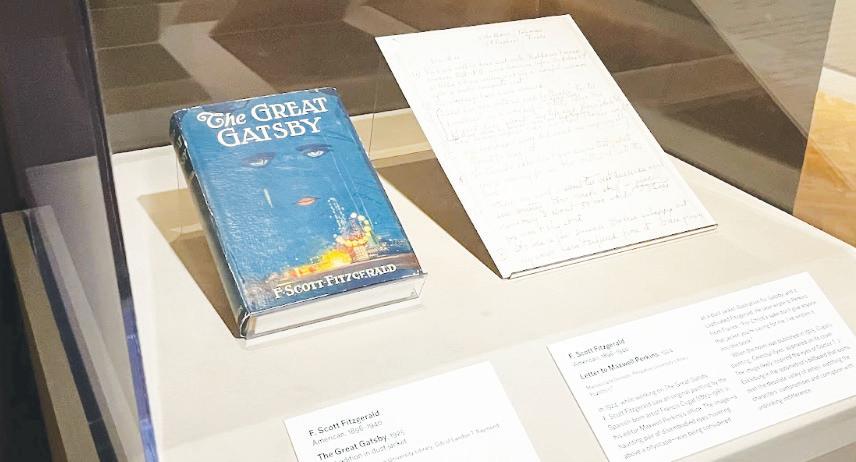
Among the works on display is a rare first edition of Fitzgerald’s novel, with the disembodied, spectral gaze from Francis Cugat’s “Celestial Eyes” hovering on the dust jacket. A visitor to the exhibit, Joe, commented that the display “brings out the ten-
sion of the 1920s—there are pieces that look quaint and parochial amidst pieces that are…modern.” Tension comes to light for modern-day viewers through an intentional curation of varying artistic styles and movements, all designed to reflect the conversations between works during the Jazz Age and their continued relevance today.
The exhibit is separated into two galleries: the “Bodies” room focuses on the human figure, and many of the “ The Great Gatsby” quotations focus on charac-
ter description. The “Places” gallery includes works that reflect physical spaces and landscapes. According to the gallery’s description, “Place is nearly a character in ‘The Great Gatsby.’” The exhibit draws attention to two facets of textual story–setting and character–and juxtaposes them with their visual counterparts.
Altogether, the exhibition frames the novel within its artistic context with sensitivity to the modern viewer. The curation brings the book to current appreciation, according to the entry text, “in an era that, like [Gatsby’s] own, pulses with ambition and
popular space for many members of the Somali community is the Karmel Mall, located just two miles from the Upper School.
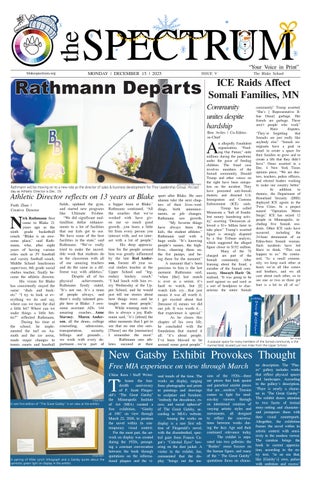
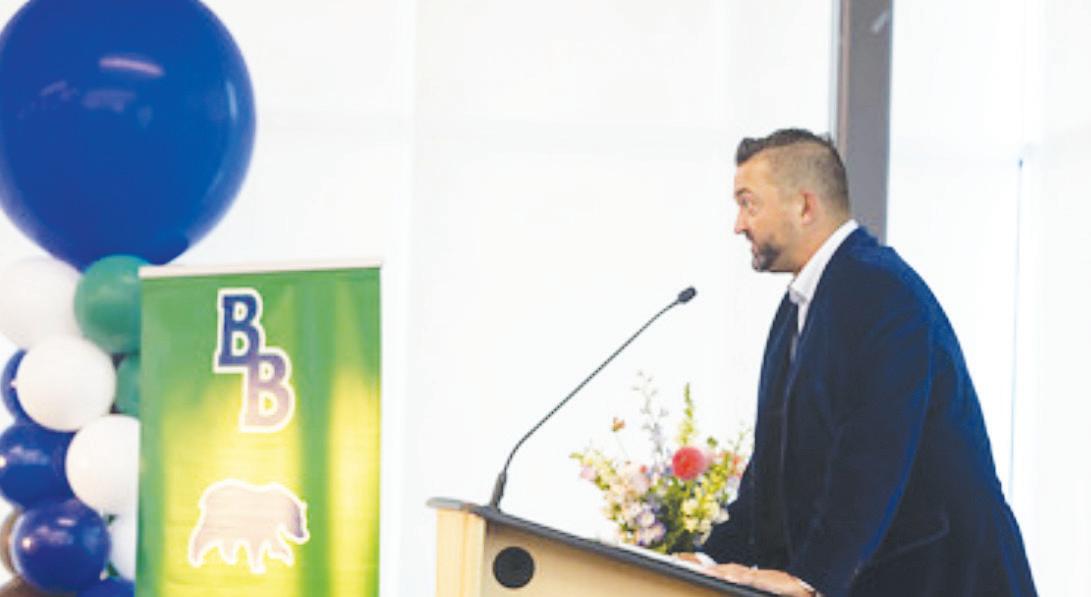
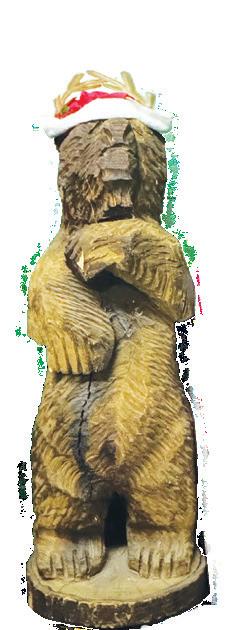
Rathmann will be moving on to a new role as the director of sales & business development for Thor Leadership Group. His last day as Athletic Director is Dec. 19.
Ben Aviles
A rare frst edition of “The Great Gatsby” is on view at the exhibit. Chloe Kern
submitted by Rathmann
Chloe Kern | Staff Writer
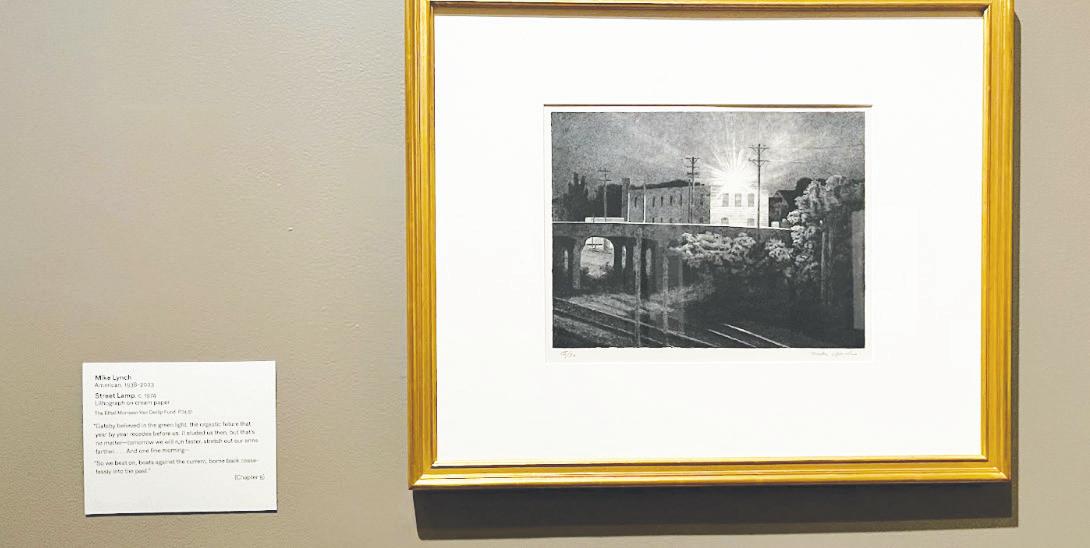
A pairing of Mike Lynch lithograph and a Gatsby quote about the symbolic green light on display in the exhibit.
Chloe Kern
excess.”
15, 2025
S T A F F
Issue V | December 15, 2025
Editors-in-Chief:
Ben Aviles | Steven Cao
Managing Editors:
Lilah Johnson | Izzie Miller
Copy Editor: Evie Chow
Creative Director: Faith Zhao
Student Life Editor:
Caitlin Strauss
Opinions Editor:
Charlie Dean
Sports Editor: Tarun Gopalakrishnan
Business Manager:
Ben Sznewajs
Columnists: Camila Pardo, Madhav Kumar
STAFF WRITERS: Oliver Brown, Karenna Church, Evan Darmawan, Eva Gleason, Chloe Kern, Sabiha Kojasoy, Nico Mithun, Leo Mithun, Rayan Nasir, Ben Passi, Lilly Tarakji, Anya Vallapureddy, Vida Wolstencroft
STAFF ARTIST: Willow Overcash
BECOME A STAFF MEMBER:
Contribute to the paper three times consecutively to be promoted to a staff writer!
JOIN SPECTRUM:
Spectrum meets in Room 351 during both lunches every Monday. Please come if you are interested in writing, drawing, designing, podcasting, or taking pictures for the newspaper.
LETTERS TO THE EDITOR: Disagree with something that’s in the paper? Have an opinion you want to share? Like to draw editorial cartoons? Take a stand and speak out. Email letters or editorial cartoons to spectrum@blakeschool. org or deliver them to room 351. Please limit letters to 400 words.
MISSION STATEMENT:
The primary purpose of the Blake School Spectrum is to report news and to explain its meaning and significance to our readers and the community. We hope to inform, entertain and provide a school forum for the unrestricted exchange of ideas and opinions.
STYLE STATEMENT:
Spectrum uses Associated Press (AP) Style as of the February 2020 issue.
Rants and Raves
Lilah Johnson | Managing Editor


School parking lot: Driving in the snow is hard enough, and parking in 5 inches of snow when you get to school makes it so much worse. The frigid walk into the building at 8:15 on a Monday morning is enough to have you questioning whether school is really worth it, and the line that takes so much longer in the snow feels torturous after a long day.
Mittens & gloves: Thereʼs no good way to keep your hands warm in the winter. Mittens donʼt allow you any mobility, but your fingers freeze in gloves. Hand warmers are bulky in either, making it even harder to move in mittens, and donʼt get to your fingers at all in gloves.
Early sunsets: When the sun goes down, it feels like itʼs time for bed, or at least to relax after a long and tiring day. In December, itʼs almost dark out when you get home, making starting homework (or doing anything productive) an impossible task. Thereʼs not even light out in the morning, so getting out of bed is still a complete drag.
Hallmark Christmas movies: Yes, they might all have essentially the same plot, but thereʼs nothing that gets me in the Christmas spirit more than a Hallmark movie. The constant mentions of hot chocolate, tree-lighting ceremonies, and other cozy traditions are what really make it feel like Christmas for me. If you havenʼt before, try curling up on the couch to watch a movie this holiday season.
Hot chocolate: Itʼs the perfect drink for every hour of the day. Itʼs sweet and comforting whether youʼre curling up to relax with a book or need something to get you through hours of homework. My favorite way of drinking hot chocolate: bring a packet of mix from home and mix it with hot water from the cafeteria.
Holiday markets: Theyʼre so much fun for the vibes and the things you can find there. Many of the items are locally made or from small businesses, which makes your purchases meaningful. The holiday spirit is also palpable among everyone there. There are many holiday markets across the Twin Cities, but my personal favorite is the Dayton Holiday Festival.
Pluralist Engagement Lacks Depth
Senior reflects on religious belonging
Harir |
Contributing Writer
Upon entering as a freshman, the lack of religious discourse quickly becomes apparent. Religion is rarely discussed openly outside a handful of curricular moments: a brief unit in ninth-grade World History, topics in World Literature, and an elective World Religions available to upperclassmen. Limited exposure hardly compensates for the multi-year gap in religious silence, affecting how students perceive their belonging on campus. Religious identity feels like something best kept quiet.
Hindu and Muslim students sense their beliefs are marginalized, sidelined in a culture centered around a white, Christian norm, even though Christianity itself isn’t explored in depth. New students often arrive assuming most peers are atheist or non-religious, citing a lack of open conversations about belief; a perception reinforced by stereotypes and self-censorship among religious students.
Even when religion appears in the classroom, discussions tend to be formal and neutral lesson plans. The school’s aim to avoid bias ironically produces an envi-


Hot Potato

Camila Pardo | Columnist
Political disagreements should strengthen, not defeat relationships
Teen friendships are under fire from politics in ways older generations never faced. Teens are growing up in a world where social media and news outlets exaggerate every disagreement, and a single repost can make a friend feel like an enemy. Students often judge peers based on political alignment, assuming that anyone with opposing views has fundamentally different, and therefore incorrect, values and morals. More often than not, this can turn casual conversations into social divisions, making it harder to connect with people who think differently. In a 2024 study conducted by Her Campus, Gen Zers were asked to weigh in on their political beliefs, voting habits, and the impact politics have on their ability to form and sustain friendships. The results are disheartening: 42% of respondents said that they were at least “somewhat likely” to end a friendship over conflicting political views.
ronment where difference is unspoken, leading to misconceptions and weak religious literacy. If this issue remains, the school will reinforce exclusion rather than foster pluralism.
Families selecting private education often face two options: a religious or a non-religious school. Public schools have a wide range of kids attending, from very religious to nonreligious, of different backgrounds. Religious private schools have a curriculum available that is very much rooted in religious literacy. Secular private schools, on the other hand, tend to end up with classrooms made up of very wealthy, nonpracticing students. This lack of religious engagement does nothing to prepare students for a pluralistic world, nor does it help them understand the real complexity of identity within other communities and their own community.
The school needs to create safe spaces and regular opportunities for open, respectful conversations about identity. Adding more frequent discussion in advisory, like after speeches and major assemblies, helps encourage authentic reflection and dialogue. By making space for real stories and heavy conver-
Sing-along sparks a bigger question
Ben Passi | Staff Writer
Religious pluralism is foundational to an inclusive community and also a core principle of the Upper School’s values. However, when a group of juniors was asked to perform another song instead of Wham!’s holiday hit “Last Christmas” at the variety show, idyllic inclusive pluralism at the Upper School became a little blurry.
While the group was given opportunities to find an alternate song, the student group declined. Even
sations, and by investigating all parts of human identity (like religion), the school can begin to model the pluralism it claims to value. Only then will students feel empowered to share who they are, and only then will the school truly represent the diversity of the world it professes to prepare them for.
with miscommunication or lack of communication, the justification behind what religious displays are acceptable is unclear at best.
As religious pluralism has become a massive talking point not only in the school community but also at a national level, this moment begs the question: Is pluralism really pluralistic when it’s selective?
Read more online.

Friendships built on trust, respect, and communication can endure political disagreements only if both sides are willing to listen. Extreme or harmful beliefs may warrant distance, but most disagreements are far less serious than students treat them. High school is one of the first places many teens confront ideas that challenge their worldview, and learning to separate opinions from personal judgment is crucial to seeing people’s politics as reflective values, not worth. True friends aren’t clones of you. They are people who challenge, question, and push you to think harder about what you truly believe in. It’s uncomfortable, messy, but necessary. If you can’t handle that, not only are you losing friends, you’re missing the entire point of growing as a politically educated and reasonably grounded person. Stop letting politics decide who you talk to. Real friends argue, question, and challenge each other while remaining loyal and open-minded.
The Blake School 511 Kenwood
Shucayb
Charlie Dean and Ben Aviles
Staff, the Parents Association and students have decorated the school with displays of holiday spirit, such as those for Hanukkah and Kwanzaa, and Solstice. This display of religion is absent from most classrooms in the other part of the year.
Nordic Ski Ready to Compete on Fresh Powder
New improvements prepare team
Brianna Savage | Staff Writer
The Nordic team is ready to hit the trails again as winter sets in. Led by Head Coach Charlie Cracraft, the team is a mix of returning athletes and newer skiers, eager to improve technique and spend time outside.
While many skiers made improvements last season, it was still challenging. Conditions were rough at times, especially on man-made snow. According to Catherine Rudolph ’29, “man-made snow is different… it feels more icy, and it’s a lot harder to get a grip on.” She mentioned that this year she hopes for better conditions, saying, “I’m coming back stronger, and I’m really looking forward to seeing what I can accomplish.”
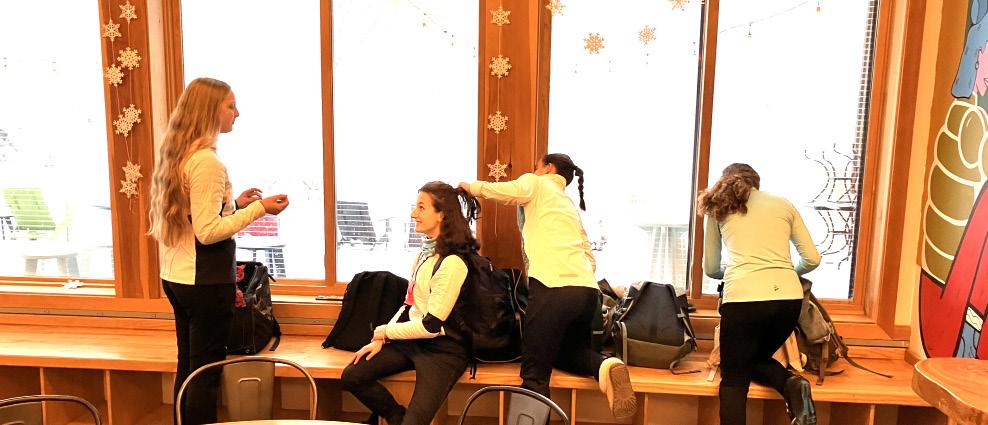
Ada Friedman ’29 also has particular goals for herself. “I’m looking forward to improving my technique and skill,” she said. Friedman continued, “[I hope to] get a new best time”
in both types of skiing, classic and skate. Skate involves a side-to-side motion, while classic is reminiscent of walking or running.
Although Nordic is an in-
dividual sport, team support is vital. Rudolph said, “We cheer for each other, and even though we’re racing against each other, we’re all wearing the same suit and from the same team.”
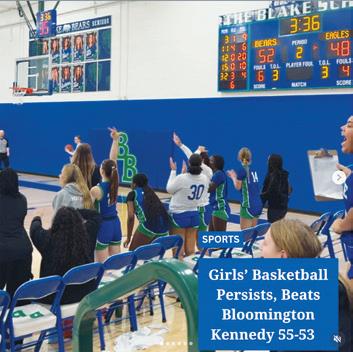
Jab Inside the Girls’ Basketball Locker Room
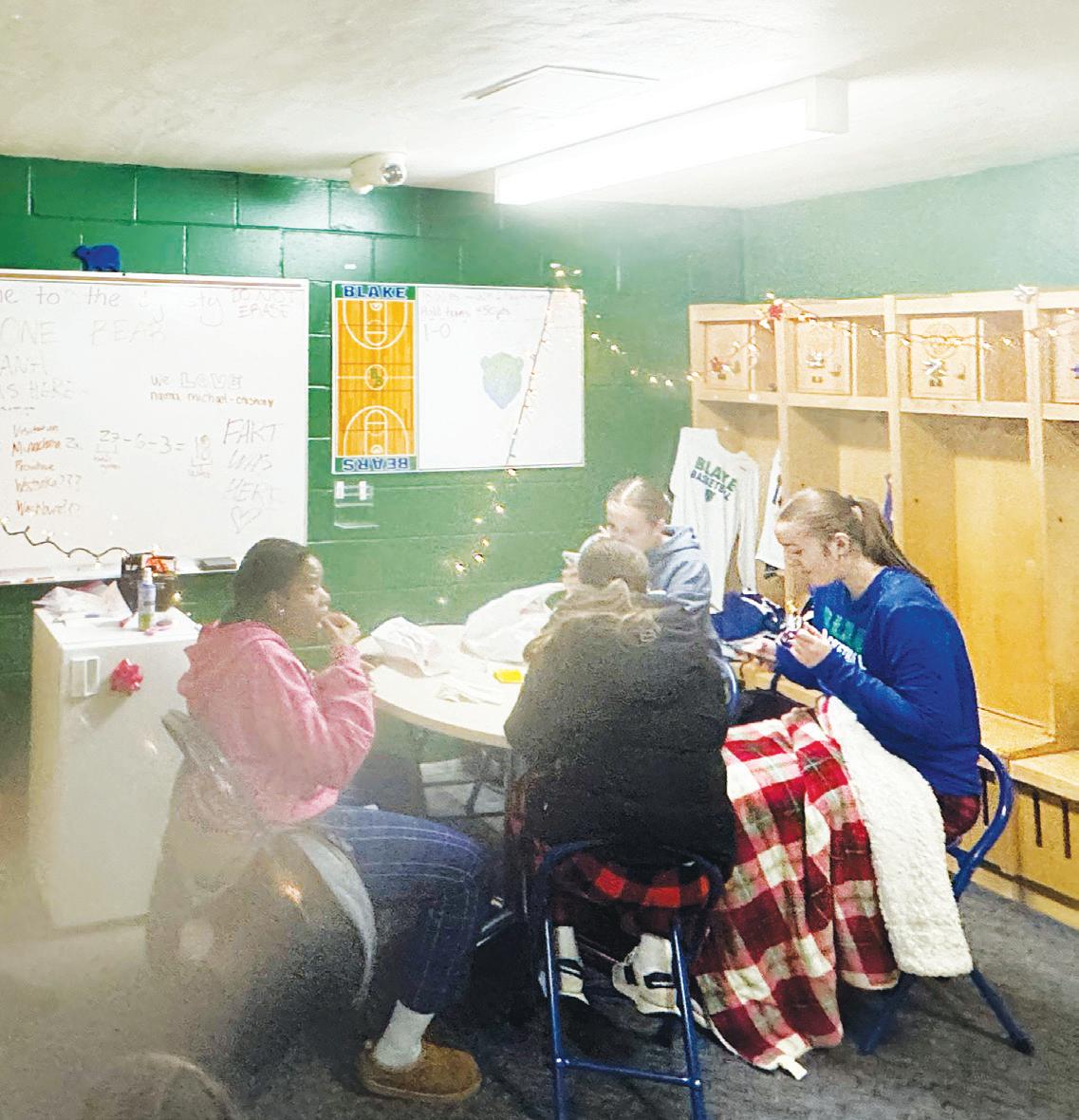
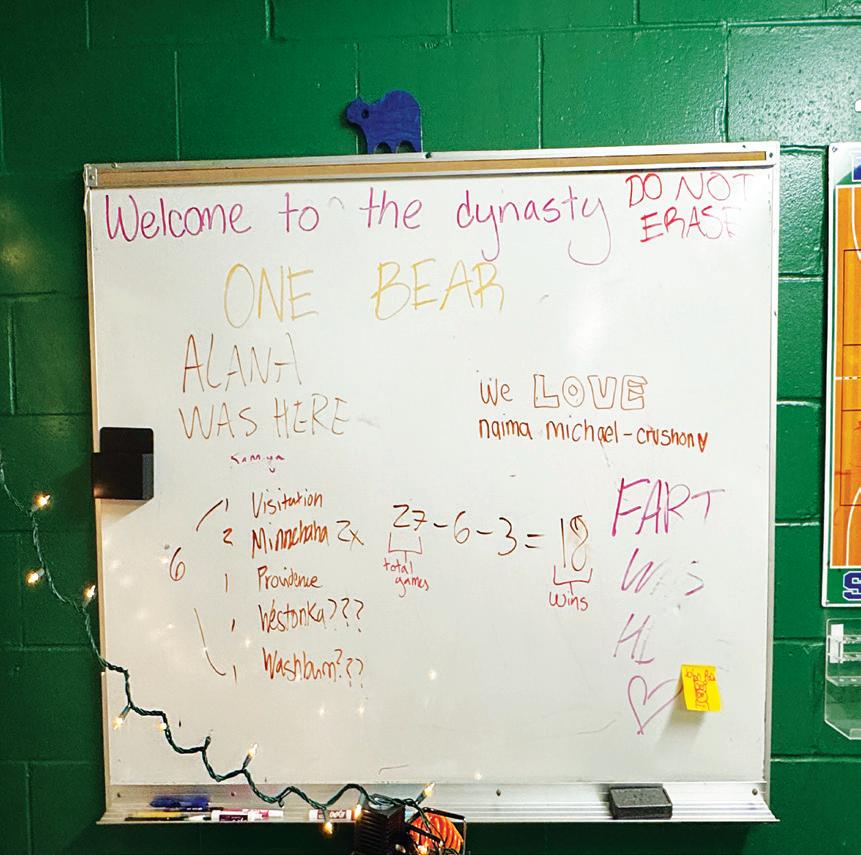
Team members braid each other’s hair and chat as they prepare inside The Trailhead for the cold.
The team awaits the season for better conditions, new personal goals, and the familiar energy of skiing together in the cold.
Ben Aviles
Study Abroad Students Return for Break
Students anticipate comfort of home
London Gilbert | Staff Writer
As students wrap up the semester in glee, with hallways growing quieter, many students are looking forward to winter break: a moment to breathe, reconnect with family, and time off from schoolwork.
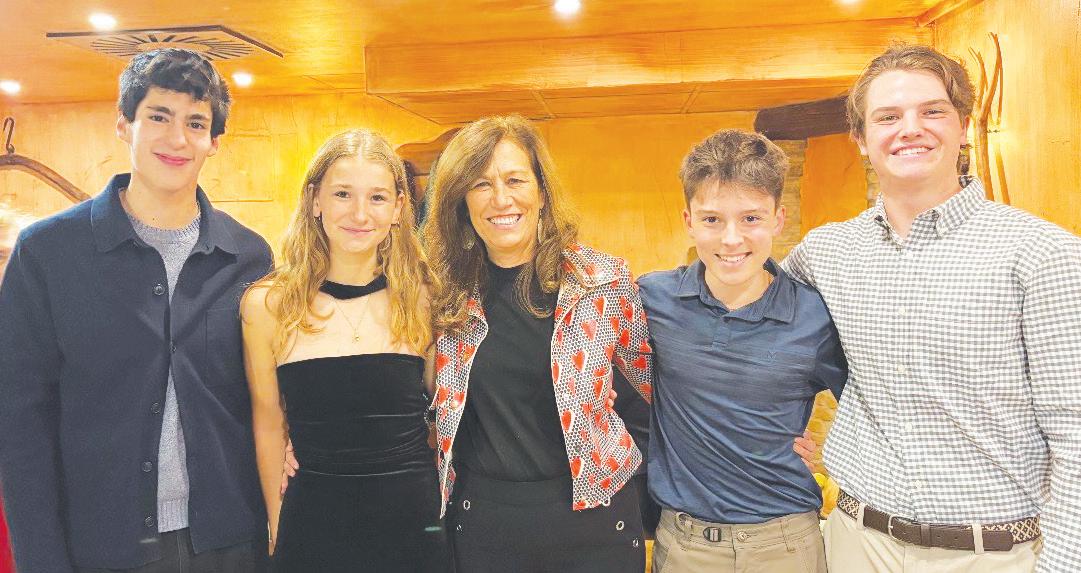
While some stay close to home, others are reuniting with loved ones. For students Olive Wilson ‘27 and Liam Cox ‘27, who have spent the semester studying in Spain and are eager to experience their loving family once again, winter break provides a shift back to the Minnesotan lifestyle.
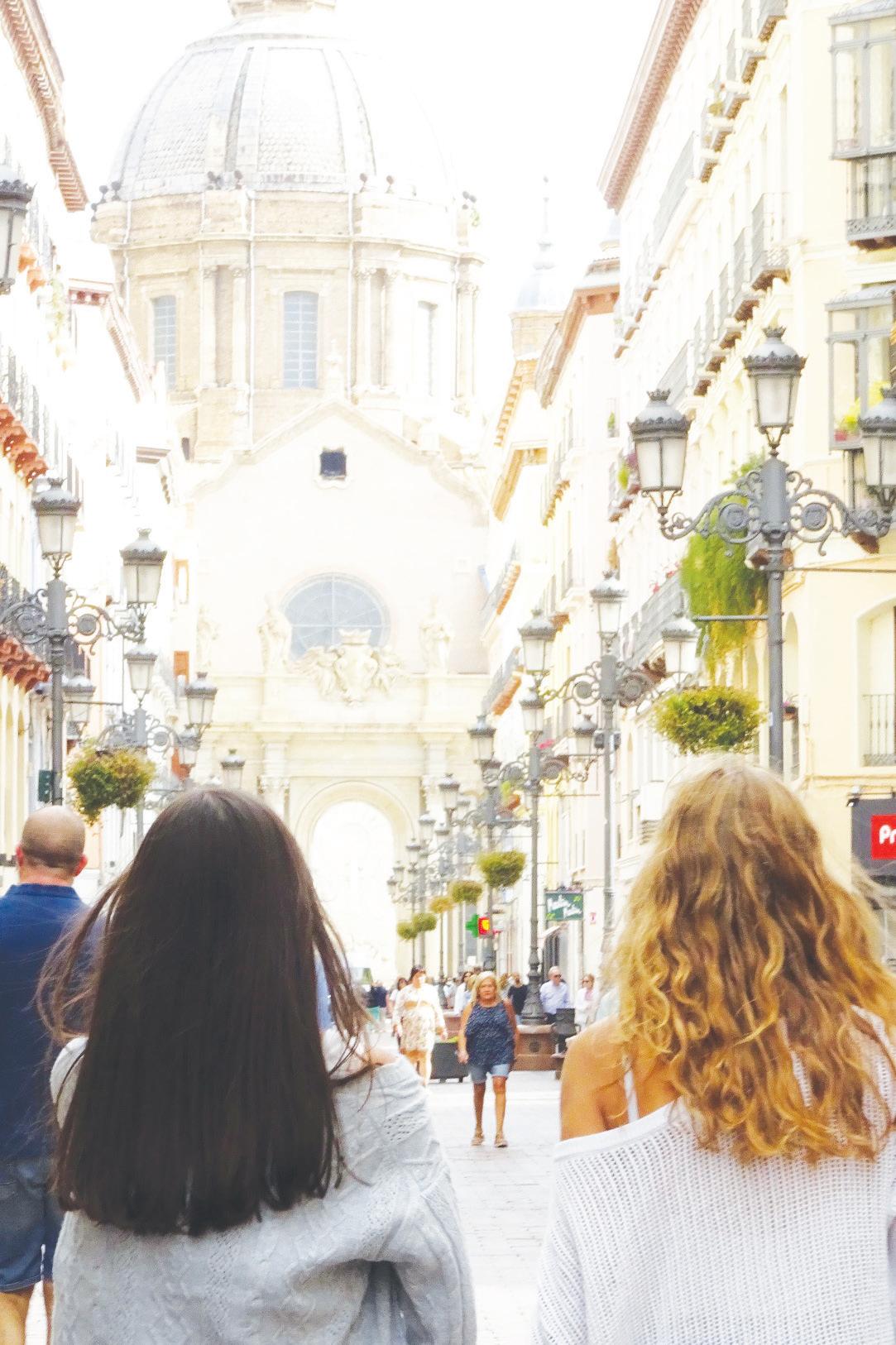
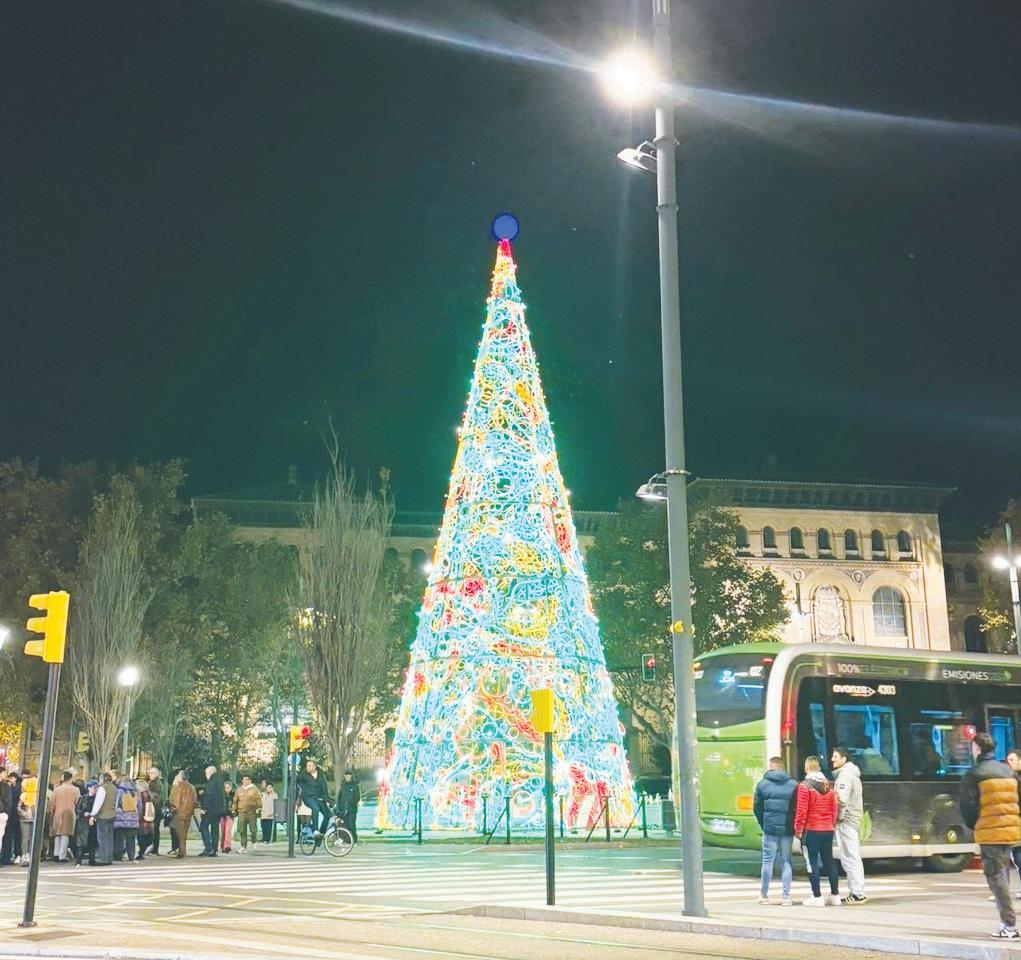
Wilson is heading home on Dec. 19, just in time for the holidays. Although she’s enjoyed exploring the Christmas markets of Zaragoza and seeing a festive village with ice skating, she admits that being away from home during the holiday season can be isolating.
“There is no snow here, but it’s cold, so I really miss the snow,” Wilson said. Still, she has been taking in the experience shopping for gifts, visiting holiday events, and planning a trip to Barcelona to see another Christmas market before returning. When she gets home, she is most excited for family time, skiing, and reuniting with her dogs.
Cox’s return schedule is similar. His classes wrap up on Dec. 17, and the next day, students head
to Madrid for a final dinner before flying home. Although he has described studying abroad as a “great adventure,” he’s ready for the comfort once again.
One thing that stood out to him in Spain was the large abundance of Christmas-themed gathering spaces in more social and festive areas than he had seen in Minnesota.
“I’m definitely looking forward to just being at home again and soaking in my familiar surroundings. Although Spain was a great adventure and I learned a lot about independence, I’m ready to come back and enjoy home.” Cox said.
Whether abroad or at home, winter break means different things to different students: rest, adventure, traditions, or simply enjoying the time away from school.
Meaning Matters Most in Holiday Presents


Students share thoughts on ideal gifts
Lilly Tarakji | Staff Writer
With the holiday season just around the corner, many students are wondering: what’s the perfect gift, and how do you find it? It can be hard to decide.
Michael Shanks ‘29 shared he “just think[s] about what they like and… what I think they would like [to receive as a gift].”
Jacqueline Dunlap ‘27 takes gift-giving more headon. “I usually just ask them, or…look at their wish list, or…try to get to know them better before I buy them a gift.”
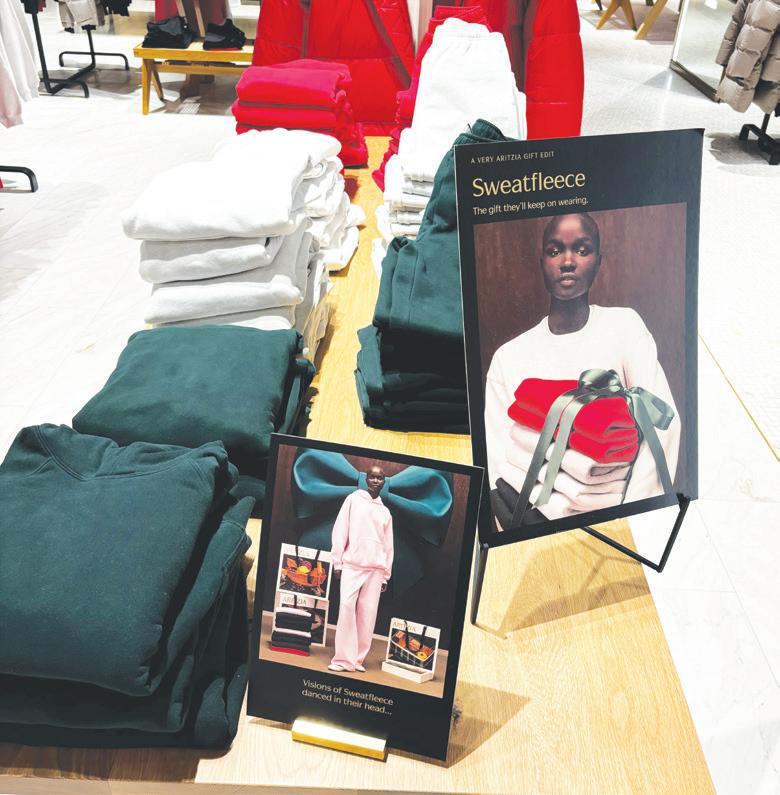
Certain trends and popular items are standing out this holiday season. Dunlap cited hair products, scalp massagers, and Aritzia’s sweatsuits. Electronics continue to dominate as popular
holiday gifts, with a wide range of products appealing to people for both entertainment and practicality.
Beyond knowing what’s popular, students also shared tips for making gift-giving thoughtful, manageable, and budget-friendly. Aspen Stay ‘28 recommends, “Budgetfriendly gifts, [homemade gifts], or…joke gifts are good. [They] usually get a good laugh, and if they have a practical use, that’s always good.” He mentioned gifts that feel deeply personal to the relationship between the gift giver and gift recipient are “the most meaningful to give and receive.”
“Pick something that’s meaningful,” Dunlap says.
“It can be physically meaningful, like something that’s useful or something that they really want, or sentimental, like something… that’ll make them smile.”
Shanks suggested electronics as the best type of gift to give, and Dunlap recommended Target as the best
place to find budget-friendly gifts. Stay and Dunlap identify 3-4 weeks before the holidays as the ideal range to begin shopping. Knowing what to buy and how to shop smartly is a big help, but Stay, Shanks, and Dunlap emphasize that the true value of a gift lies in the thought and meaning behind it.
Shanks shared that the most memorable holiday gift he ever received was an iPad from his grandmother because “[it was] a pretty big present…and I appreciate it a lot.” For Stay, it was a VR headset his dad gave him for Christmas in 2018. “It’s the most memorable [gift I’ve received] because I still play VR today, seven years later, and that was… the thing that sparked my interest for [VR].”
Whether it’s a carefully chosen store-bought gift or a handmade creation, the best gifts are the ones that show thoughtfulness, personal connection, and care.
Winter Breaks Brings Community Closer
Students’ holiday traditions differ
Anya Vallapureddy | Staff Writer
Everyone’s family has unique practices, big or small, that shape their identity.
Imogen Bershow ‘29 and her family’s break is centered around travel. She explained that they usually go somewhere different every year. Bershow added that the tradition began be-
cause her family “likes to explore new places,” and that they’ve been doing it “[her] whole life.” Additionally, her family also celebrates Hanukkah every year.
For Alessandra Duda ‘28, winter breaks are a time of friendly competition with her family. She described “every year, [we] get together and make a big batch of sugar cookies…and have a little cookie decorating competition.” This tradition has been going on since she was six years old, and it started because one break they “made cook-
ies and wanted to decorate them. It just kind of stuck, because who doesn’t love decorating cookies?”
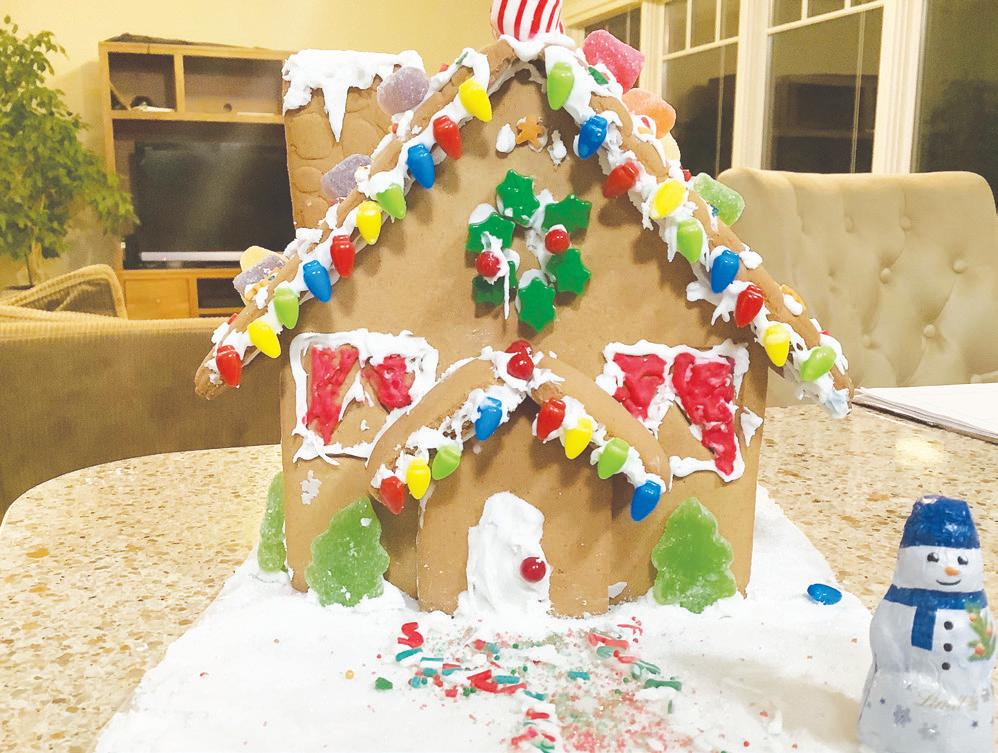
Keeping with the theme of baking competitions, for the past five years, Duda and her sister compete to see who can make the best gingerbread house. Another tradition her family celebrates is that every Christmas, “instead of opening presents early in the morning, [they’ve] started doing it on midnight of Christmas Eve.”
One of Aadhavi Natarajan’s ‘28 winter break
traditions is that “[her] family watches ‘The Hobbit’ every year.” She elaborated that her family has been doing this since she was 10 years old. Another one of her traditions started when her parents got married, and it’s when they “go to the Basilica to listen to the singers.”
Even though these traditions differ wildly in practice, they all center around a sense of community and spending time with family and loved ones, which is what the holiday season is all about.
Left: Wilson (right) and one of her friends walk down Calle Alfonso, a famous street in Zaragoza. They are walking towards Cathedral-Basilica of Our Lady of the Pillar, widely recognized as the most famous building in Zaragoza. Bottom right: Paradise Tree that illuminated for Christmas celebrations in the main plaza of Zaragoza, Spain near Wilson’s school. Top right: Wilson (2nd from left) and Cox (2nd from right) pose with their advisory at their school’s Thanksgiving dinner. Students meet with their advisories every Tuesday.
Top left: New Artizia sweatfeeces that Dunlap is interested in are trending gifts for this holiday season. The brand has described the new clothing as the “gift they’ll keep on wearing.” Top right and bottom: Apple Products for Christmas Shopping can be found at Southdale Mall’s Apple store.
All photos by Evie Chow
Submitted by Hsia
Submitted by Duda
All photos submitted by Wilson
A gingerbread house and a chocolate snowman made by Duda for Christmas festivities.