blakespectrum.org
the SPECTRUM
THURSDAY | MAY 28 | 2026
Beloved Teacher Retires After 41 Years

Profe Kahle departs
Charlie Dean | Sports Editor
“It’s always the people,” said Spanish teacher JJ Kahle when asked about their favorite part of teaching. “The kids, the students, the people. It’s always the people.”
After 41 years of teaching, and 28 at the school, Kahle will retire. They will have taught every Spanish level at the school besides the Post-AP curriculum. “41 years of doing the same thing is a lot,” Kahle said. “It’s great during the summers… you’re like, ‘I’m glad I’m a teacher.’ But during the school week… it’s a lot. I’m looking forward to not having homework, to not having papers to grade.” Additionally, Kahle has grandchildren living nearby, and cited spending time with them as “a huge motivation to retire.”
Throughout their career, Kahle has made several international trips with students. Among these are the Global Programs trips
to Iceland, Amsterdam, and Sierra Leone. They have also made seven trips to Cuernavaca, Mexico. Some experiences abroad haven’t been as easy. As Kahle detailed, “The first time I took kids abroad, a student broke her neck. It was very scary… I remember being in the ambulance, and they said, ‘Which hospital do you want to go to?’ I said, ‘The best one.’ They said, ‘Public or private?’ And I said, ‘Whichever is the best one, that’s where you take us.’”
As Kahle described, “whenever you’re at school, [teachers] are in loco parentis. That means we’re in the place of parents. I want to make the decision that a parent who loves this child more than anything in the world would make for them.”
Kahle has been considering retirement for a couple of years. While this has given time to think about next steps, their final months haven’t been impacted: “My oldest son was like, ‘You’re coasting, right?’ And I said, ‘Actually, no.’ I don’t want to coast. I don’t want to think I’m going to take my foot off the gas and not teach
anymore. I love the idea of, ‘How can I make this a better learning experience?’ I [hope to get] that one kid that doesn’t do their homework [to] engage with this activity and help them learn something.”
One thing Kahle wants to do more after retirement is connect to their German heritage. They’ve been learning German, a language that’s “very different” from English or Spanish, on Duolingo for a couple of years, and have finished the language on the app. Now, they’re using a University of Minnesota program to continue their learning. They also hope to visit Germany with their siblings soon.
Another part of Kahle’s career has been their involvement in the school’s LGBTQ+ community. Kahle remembered, “It took me a really long time to come out… [Blake] is where I came out as a teacher. And I wasn’t the first one here who was out. There were other people who were out in 1998 when I came here, and I stand on their shoulders.” They remembered a student speech, which asserted that “[LGBTQ+] students
should have role models to look up to,” which influenced their decision to come out.
While Kahle didn’t start the Gender and Sexuality Alliance (GSA), they quickly became the program’s leader. Kahle was also labeled an “LGBT Champion of Change” by the White House under the Obama administration in 2012. This award was given to six individuals who pushed for equal rights for LGBTQ+ people. Kahle served as a faculty advisor to the defunct Justice League, the antibullying school initiative. Under their leadership, the Justice League organized events such as the “Stand Up, Speak Out,” which brought together Twin Cities schools to raise aware-
ness about bullying.
“I don’t think there’s just one recipe for how to be a teacher. I think that you have to sort of take who you are. I feel like the best experiences I’ve had with students are when they feel safe to be vulnerable with me.” She added, “I feel safe enough to be vulnerable [with them],” said Kahle. “Learning is really about learning about ourselves.”
The relationships between people and in communities are the most important thing…Just the fact that [a person] exist[s] and that we’re in the same orbit for a second is more important than any lesson that they’ve ever learned. There’s nothing as important as the connections that we make with each other.”
What’s Inside?

BEAM has been on the uptick this year. Read more about its financial adventures.
Student Life: Page 3
Finals are stressful. Tests suck. Are projects the solution?
Opinions: Page 4

GTCYS, a youth Twin Cities orchestra, will tour internationally this summer. Read more about their voyages.
Arts & Culture: Page 11
New Phone Policy Sparks Confusion, Anger Changes frustrate students
Ben Aviles | Co-Editor-in-Chief
Student boos rang out on Tuesday, May 19, in the Juliet Nelson Auditorium as Upper School Director Maren Anderson announced a new phone policy for the 2026-27 school year. A statement was written on the slideshow announcing the change: “Due to tragic levels of distraction, our digital friends are going on an extended sabbatical.”
Anderson said that
the old policy had failed. “The cell phone policy, as it was, was not being enacted in the way it could have been, and probably should have been.” She mentioned that “We saw a real negative difference in the way that students were showing up socially for one another.” She cited
faculty and parent concern, a student poll, and research with other independent schools as major drivers for the change.
The new policy is relatively simple: no phones between 8:00 a.m. and 3:00 p.m. If students are caught with phones out, they will be collected
and given to Receptionist Rachel Jensen
For many students, the decision evoked frustration. “Oh my God, I was pissed,” said Harper Tegan ‘29. She added, “I text my mom every single day,” suggesting that the new policy would infringe on their communication.
John Heinmiller ‘27 thought it was too much. He said, “I think this is a very big overreaction to a problem that only affects some students.”
Stefi Patterson ‘29 concurred. She added, “This is not middle school. We are high schoolers.” See Phones on Page 2
“Your Voice in Print”
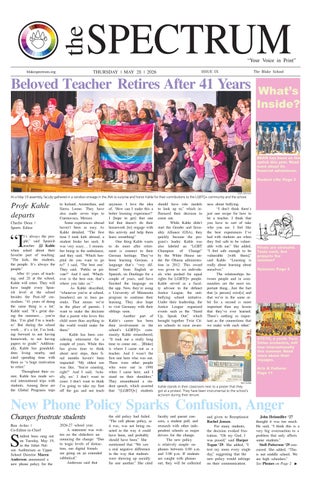
At a May 19 assembly, faculty gathered in a raindow onstage in the JNA to surprise and honor Kahle for their contributions to the LGBTQ+ community and the school.
Lilah Johnson
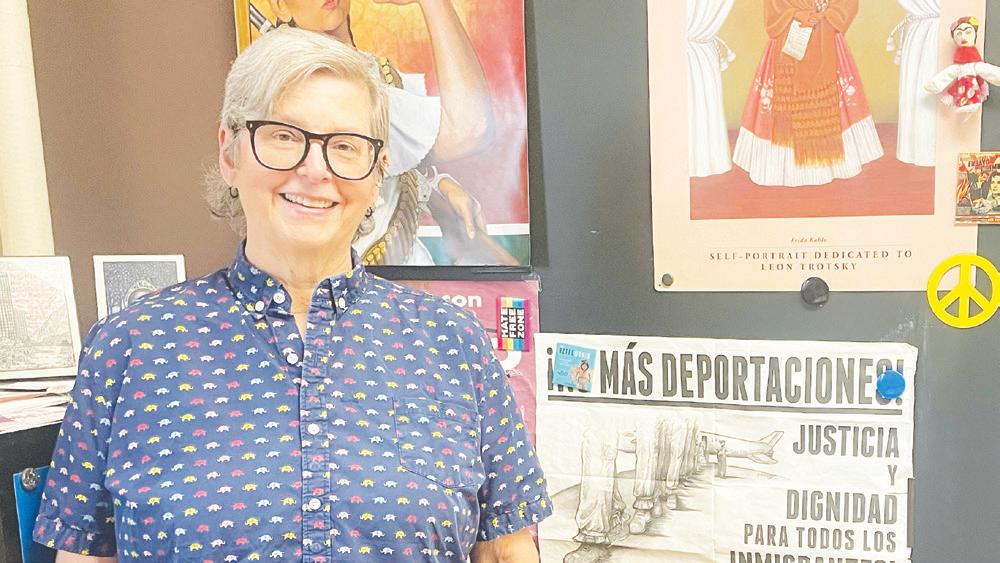
Kahle stands in their classroom next to a poster that they got at a protest. They have been instrumental to the school’s activism during their tenure.
Ben Aviles
Issue IX | May 28, 2026
Editors-in-Chief:
Ben Aviles | Lilah Johnson
Managing Editor: Izzie Miller
Copy Editor: Evie Chow
Creative Director: Faith Zhao
News Editor: Charlie Graff
Student Life Editor: Lilly Tarakji
Opinions Editor: Caitlin Strauss
Sports Editors: Charlie Dean | London Gilbert
Puzzlemaster: Charlie Dean
Business Manager: Ben Sznewajs
Columnists: Camila Pardo, Madhav Kumar
STAFF WRITERS: Oliver Brown, Karenna Church, Evan Darmawan, Chloe Kern, Sabiha Kojasoy, Nico Mithun, Leo Mithun, Ben Passi, Anya Vallapureddy, Vida Wolstencroft, Brianna Savage
STAFF ARTIST: Willow Overcash, Vida Wolstencroft
Adviser: Anna Reid
BECOME A STAFF MEMBER:
Contribute to the paper two times consecutively to be promoted to a staff writer!
JOIN SPECTRUM:
Spectrum meets in Room 351 during both lunches every Monday. Please come if you are interested in writing, drawing, designing, podcasting, or taking pictures for the newspaper.
LETTERS TO THE EDITOR: Disagree with something that’s in the paper? Have an opinion you want to share? Like to draw editorial cartoons? Take a stand and speak out. Email letters or editorial cartoons to spectrum@blakeschool. org or deliver them to room 351. Please limit letters to 400 words.
MISSION STATEMENT:
The primary purpose of the Blake School Spectrum is to report news and to explain its meaning and significance to our readers and the community. We hope to inform, entertain and provide a school forum for the unrestricted exchange of ideas and opinions.
STYLE STATEMENT:
Spectrum uses Associated Press (AP) Style as of the February 2020 issue.
Some contended that the change will hurt college preparation. Heinmiller argued that students will need to self-regulate in college, making the policy counterproductive. He said the college transition will “be a really big shock because you’re not training those selfregulation skills.”
Forum representative Rihaan Vora ‘28 felt that student voice had been omitted. He said Forum was not made aware of the cell phone changes. To him, Anderson’s announcement made it “seem like Forum had approved these changes.” He said, “The school should have done a lot more to engage students in the decision.”
Anderson pushed back on this. She said, “We heard a lot of voices from students
through Forum and SIAC. We also had oneoff conversations with people.” She also mentioned that the school collected opinions on phones in a January poll of 150 students. Others were more receptive to the change. Adrian Barry ‘29 said it was “a good message” from the school. He continued, “It’s a reasonable thing not to have phones in classrooms,” but he still wants phone availability outside of class.
Alex Mithun ‘27 could see the reasoning. She said, “After a couple of weeks, I’m sure it’ll get easier.”
Students like Heybe Samatar ‘29 called the research presented in the study “very far-fetched.” One of the most disputed statistics from the slideshow was that it takes “20 minutes after
you see your phone to completely disengage.” To help provide clarity, Spectrum looked into the slideshow’s cited research. The slideshow cited a 2025 study by Andrea Christodoulou and Petros Roussos. This study found that “the presence of a mobile phone did not significantly distract participants or impair attentional performance” and did not reference the cited statistic.
In a follow-up request, Anderson provided an explainer from University of Washington professor Sophie Leroy on what Leroy calls attention residue. Leroy proposes that when someone changes tasks, part of their mind remains focused on the previous task. Her research found an average attention residue of 23 minutes.
It appears that the slideshow incorrectly attributed Leroy’s findings to Christodoulou and Roussos.
Anderson also rolled out a three-strike plan. After three phone confiscations, a student must deliver their phone to Jensen every morning for a week. Further disciplinary action may include a parent meeting, detention, and/or suspension, according to the May 19 presentation.
“I knew this was hard. This is gonna be a huge transition for everybody,” said Anderson. She added, “It’s going to be tough, but we’ll get through it, learn from it, and evolve from it.” In a May 21 email, she outlined changes for the campus. She promised more social spaces, open gym every day, and digital wellness support.
Curious Bear Wonders: What was Twigging?
Caitlin Strauss
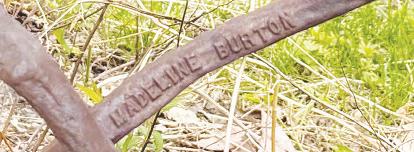
Computer Science Chair Madeline Burton ‘07‘s name is embossed on the twigged fence.
Alumni nostalgize over abandoned tradition
Caitlin Strauss | Opinions Editor
“
What if we made a fence around a whole part of the school that had this kind of ornate, floral thing happening, and each class would have a branch? It’s all connected,” shared Jim Mahoney , Associate Director of College Counseling and English teacher.
He is talking about the origin of the twigging tradition. That question sparked an especially meaningful tradition for the commu-

nity that has since faded away.
The barrier fence “Twigging” is a project that was organized as an installation by Robert Teslow , the former visual arts teacher and alpine ski racing coach. He explained that the project began in the early 2000s when Peter Herfurth ‘69 of the Parent Association reached out to him and expressed interest in placing a sculpture at the Northrup campus. Teslow said he wanted it “to be more of a community event to engage seniors, students, teachers, and alumni in an ongoing project rather than having a single sculpture just inserted and plopped down somewhere on the Northrop Campus.”
Teslow recognized that the fence project was similar to the work of Fuller Cowles ‘80 , a working artist who created metal sculptures that were “organic in nature.”
Teslow added, “It seemed to be a perfect place to start, to fill in between brick-clad pillars [that were] already there along the Kenwood
sidewalk of the East parking lot.”
Mahoney explained, “At the senior retreat in the fall...students would take these letters and place them on selected wax-shaped twigs.” He shared that all of the seniors would be “having dinner and hanging out, and they had these huge trays of all these different letters.” This fun tradition brought liveliness and energy to the annual senior retreats.
A large problem with the project was the finances. Teslow detailed that the original plan was for alumni classes to put their names on their own set of twigs along the fence, and then they could “donate [money] as a gift so that the senior class could get theirs done, too.”
However, Teslow said that “this business plan…never fully worked. Good idea, but not sustainable.”
While showing the Spectrum editors the twigs along the fence outside of the school, Mahoney noticed the names of many students and teachers that he knew. One in particular was Joseph Druskin ‘84 , Engineering & Programming Specialist at the Lower School, whose name was added to a twig on the fence.
Speaking on the interconnectedness of the twigging tradition, Mahoney also noted that the appearance of the fence changes based on the season. In the
Robinson Departs After 17 Years
Colleagues share positive sentiments
London Gilbert | Sports Editor
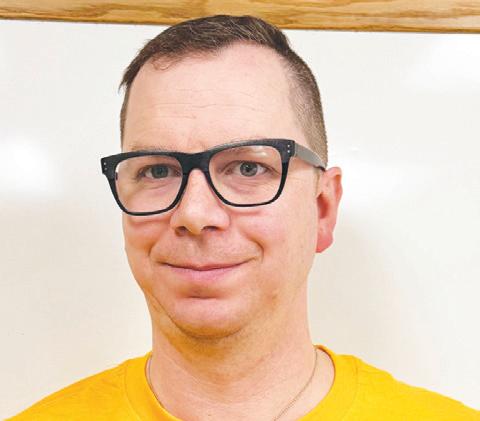
will
his career in England.
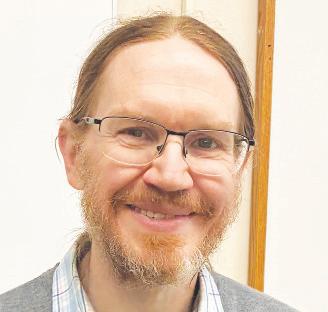
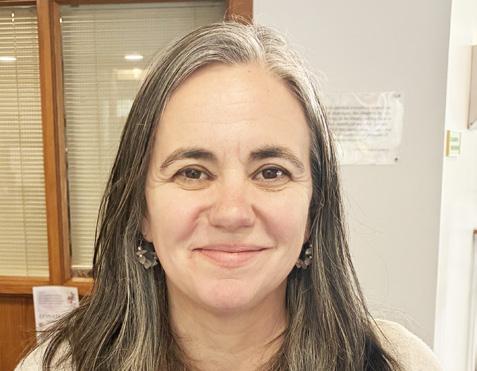
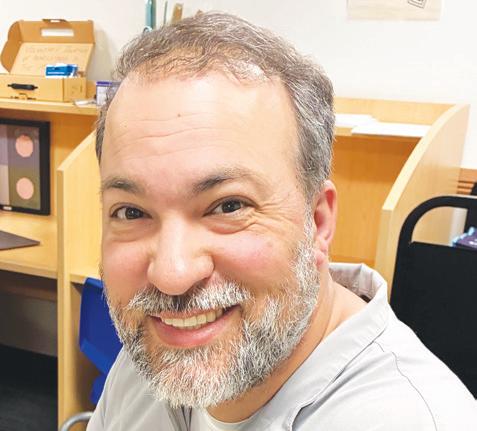
Robinson has been part of the community since 2009, and he will leave at the end of this year. As Chair of the Math Department, he has played a significant role as a teacher and leader. Here’s what his colleagues have to say about him:
spring, in particular, the greenery is a natural aspect of the fence’s beauty. Mahoney added, “[Through] the seasons, it grows over stuff.”
While reminiscing about the lasting impact of this tradition, Mahoney shared a sweet anecdote: “There was a young man [and] his name is Ezra Levy ‘09 He came back with his wife, looking for his twig [among others from his class].” Moments like these are what make the high school experience memorable and unique, even many years after graduation.
The most recent class to participate in this tradition was the Class of 2015, whose twigs are followed by a large portion of the fence that lacks added twigs with names.
According to Teslow, “It’s a shame the tradition didn’t continue.” Before he retired, Teslow created a detailed set of instructions explaining how to continue the tradition: “I thought somebody else would pick it up, and they would need [those instructions].”
In Teslow’s opinion, bringing back this meaningful tradition would require “interest, student and community engagement, and a sustainable business plan.”
For Teslow, the twigging artwork “was dynamic. It was living [and] growing. It had its place for a while, and it would be nice to see it come back.”
Read about

The Blake School 511 Kenwood
Chris
Caitlin Strauss Robinson
continue
London Gilbert Math teacher Andy Cantrell has worked with Robinson for 15 years. Cantrell thanks Mr. Robinson for “keeping the department awesome.”
London Gilbert Jesse Williams is a math teacher who has worked with Robinson. Williams has “appreciated all of his kindness over the years.
London Gilbert For math teacher Jonathan Osters, who has worked with Robinson for 17 years, Robinson “has been an excellent boss and even better friend.”
Anatomy teacher Jim Arnold’s long tenure on our website:
Tall and small
Students describe life at different heights

Senior March
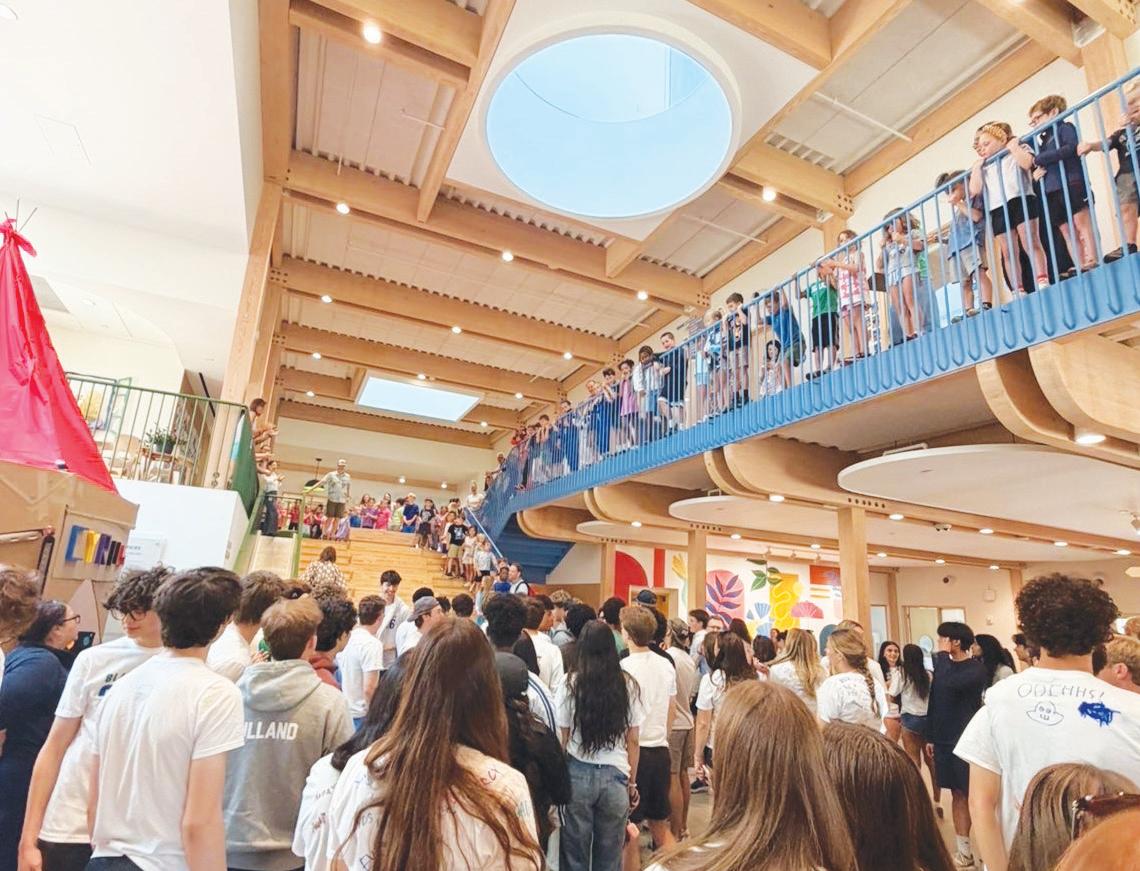
ELC students, faculty, staff, and seniors gather in the ELC as the seniors wait to ride on the slide.
Senior class marks end of an era
Lilly Tarakji | Student Life Editor
Beginning at the Early Learning Center (ELC) on their final day of school, the senior class walked through the ELC, Upper Elementary School, Middle School, and Upper School as students, faculty, and staff lined the hallways to applaud them. The first annual Senior March allowed the Class of 2026 to revisit the campuses that shaped their school experience while celebrating the conclusion of their Upper School journey before graduation.
BEAM Powers Financial Ambition
Members gain hands-on experience in finance and economics
Charlie Graff | News Editor
Earlier this school year, BEAM (Blake Economics and Asset Management Club) formed through the merger of the BAM (Blake Asset Management Club) and Economics Club, which was founded in 2017 with a $20,000 donation from an alumnus to create a student-managed investment fund.
Chloe Kern | Staff Writer room in cars, buses, and planes to be “the main downside” of being tall.
As I was walking down the hallway after lunch on a recent Monday, I heard someone stop Kamu Dominguez ‘27 in the hall and ask him how tall he was. “Six foot three,” I heard him say, to which the man responded with disbelief. Meanwhile, I’ve seen people arch their eyebrows at my friends as they claim to be 5’4”, 5’3”, or even 5’2”. It seems like everyone has something to say about height. So, I went to the experts–self-proclaimed tall and short people–to investigate what life is like on both sides of the spectrum.
After the exchange in the hallway, Dominguez commented that being tall is “overall… a pretty positive experience.” He highlighted his ability to reach high shelves, although he admitted that if he were shorter, he would “definitely probably be more comfortable on long plane rides.” He found the limited leg -
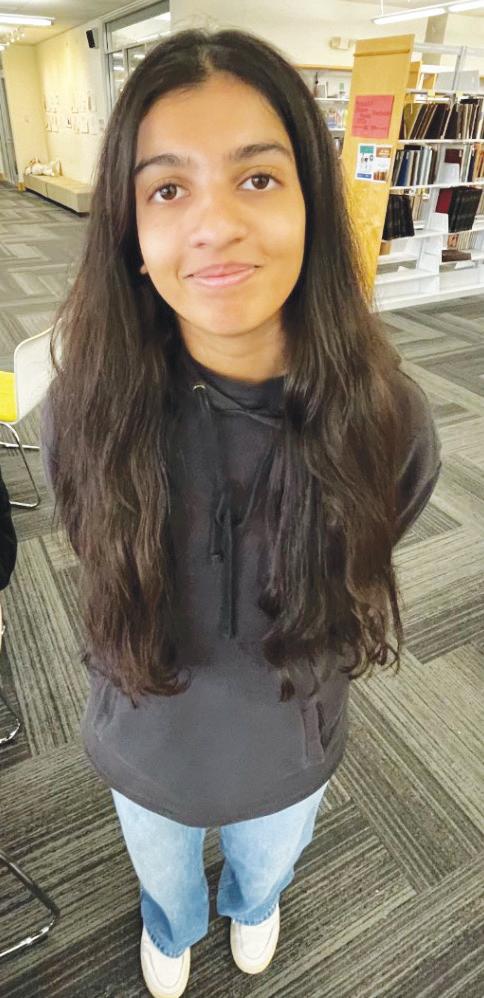
Derek Busch ‘27 is allegedly 6’5”. But after a pointed stare from his friend, he admitted, “Okay, I’m six four and one fourth. But when you add shoes, I’m six five.”
Like Dominguez, he said that always being able to reach things easily is a bonus. He also listed being able to see over heads in a crowd and locate people as an advantage. For him, his height also helps with sports like volleyball and basketball, although it makes him stand out wherever he goes.
Rhea Farhan ‘27 is a self-proclaimed short person at 5’3”. “I really like being short,” she said. “I think that I can blend in with the crowd. People don’t look at me and think wow, you look like the Big Friendly Giant.” She added that she might “have more ego” if she were tall, but she prefers being short. “When it rains,” she joked, “I can ask my tall friends if it’s raining first.”

“[My favorite part of BEAM is] hearing different stock pitches and interviewing the CEOs and other important things in finance,” says Head Analyst Will Schwemm ‘27.
During meetings, members mainly manage the stock portfolio. Members prepare stock pitches during the week and present them at meetings. The other main activity is listening to Twin Cities business leaders who are brought in as guest speakers, such as Xcel Energy CEO Bob Frenzel, who spoke at a club meeting on May 14.
For those interested in joining BEAM, “the best thing to do is to join the club, show up to meetings, give stock pitches, have a loud voice when we discuss the portfolio, bring in ideas for guest speakers, and basically just be an upstanding club member,” says co-president Jesse Posada ‘26.
BEAM recently held its final meeting of the year; however, if you would like to sign up, you can find them at the club fair next fall.
Chloe Ursu
BEAM leaders Madhav Kumar ‘27 and Posada, along with members Cole Eckes ‘26 and Connor Briand ‘27, stand with Ecolab CEO Cristophe Beck (middle right) and Federal Reserve Bank of Minneapolis president and CEO Neel Kashkari (middle left) at an Economic Club of Minnesota luncheon on May 17, 2025.
Submitted by Posada
Rhea Farhan ‘27 and Derek Busch ‘27 pose for pictures in the library. The perspective of each photograph was their suggestion.
Chloe Kern
Hot Potato

Camila Pardo | Columnist
Gardens teach life lessons
What the garden teaches us: Spring has a way of making everything feel alive again. Trees regain their color, flowers begin to bloom, people start walking outside, windows begin to roll down, and suddenly the world feels softer after months of brutal Minnesota cold. Around this time of year, it’s easy to notice the growth happening outside of us. What’s harder to notice is the growth happening within us.
Gardens are often seen as peaceful places, but growth isn’t always that way. Before flowers bloom, they spend weeks hidden underground. Roots stretch quietly where no one can see them. Growth begins long before it’s noticed. Students are similar in that way.
Throughout the school year, we spend so much time dwelling on visible achievements: grades, awards, sports wins, college decisions, leadership positions. But a lot of growth is quieter than that. Sometimes growth is learning how to manage stress better. Sometimes it’s becoming more confident. Sometimes it’s simply making it through a difficult year.
Gardens also teach us that not everyone grows at the same pace. Some flowers bloom in early spring, whereas others take until summer. Yet no one looks at a tulip and asks why it’s not a sunflower. Growth has never meant to look identical for everyone.
Final Projects Beat Exams
Different types of finals target students’ strength, endurance
Evie Chow | Copy Editor
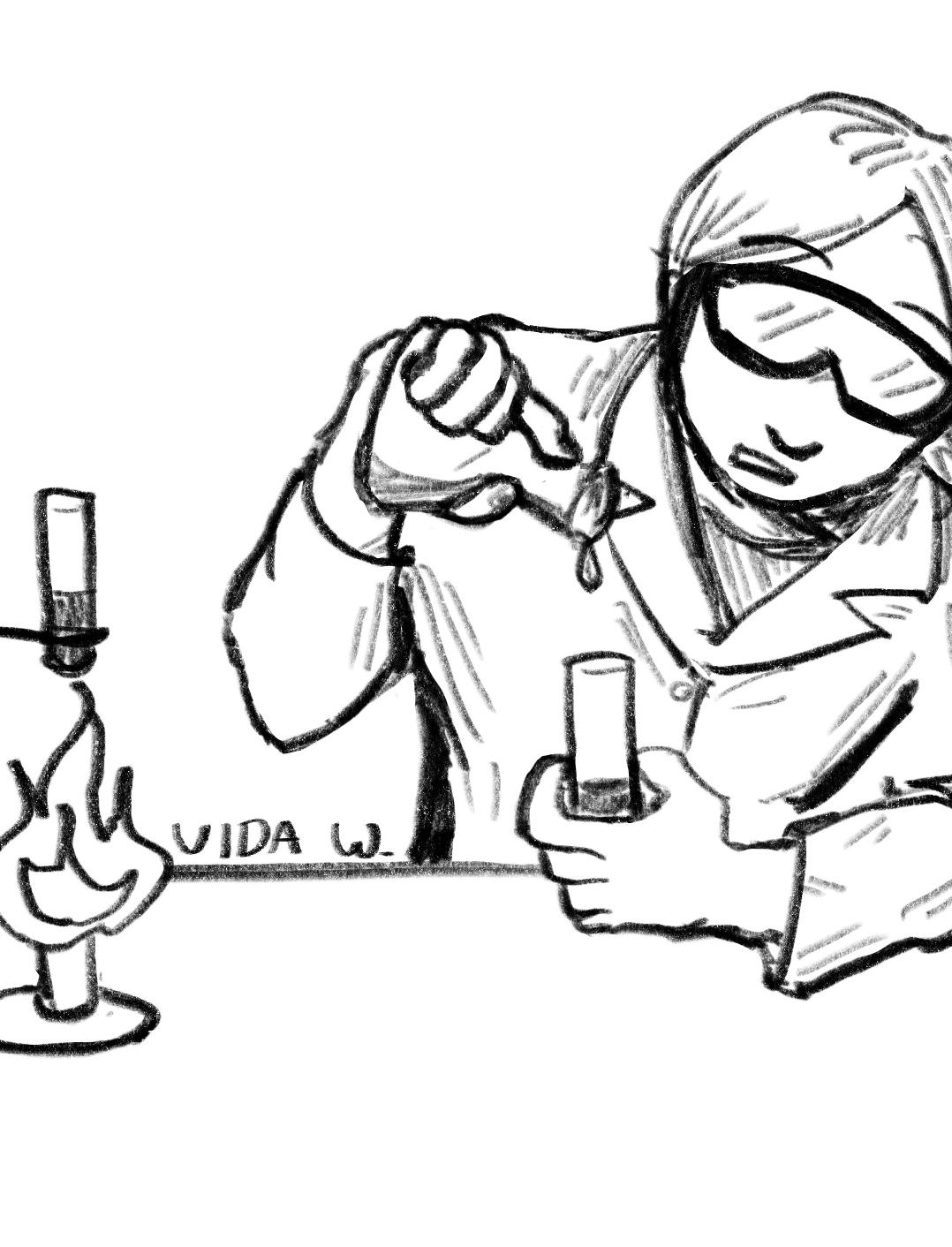


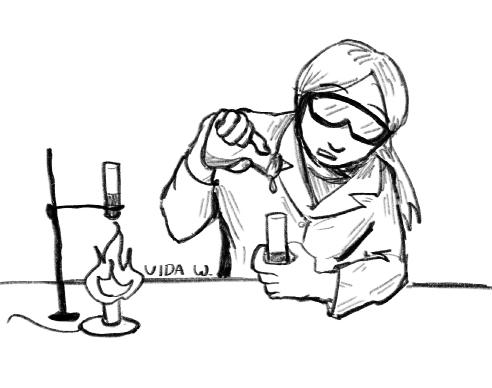
Wolstencroft’s choices about the emotions in the graphics were intentional. She said, “I
assessments, but not overdo it with the suffering.”
While the anticipation of summer rolls around during the end of the year, so does finals season. While every student has to deal with some form of finals, not all finals are created equal. For freshmen, finals can feel like a shock. The transition from middle school to high school is overwhelming in and of itself, and adding a week filled with countless major assessments can feel unbearable.
On the flip side, juniors have a different look on finals week. By junior year, they are typically more familiar with the end-of-year
stress of exams, but the pressure is higher. Coming straight off of AP exams and with the pressure of college applications nearing the corner, juniors often feel the worst amount of stress of all.
Hannah Bubb ‘27 agrees that junior year finals season “seems to be by far the worst.” Some classes opt for finals that are just like any other unit test, while others have cumulative tests that cover the content of the entire year.
I personally find that cumulative tests are the worst final of them all, because students are expected to recall and relearn con-
tried to make the expressions neutral because I wanted to show the struggle of
“Rather than a test of knowledge, finals are a test of endurance.”
tent from the entirety of the school year, while managing other finals.
However, other classes, generally humanities-based classes, feature different types of finals. Presentations, discussions, papers, or long-term assignments are growing increasingly popular amongst teachers and students alike. I personally am
a big fan of some of these projects, especially when they get introduced weeks before finals week, because I can get ahead on and submit them before finals week.
After AP season, most AP classes have projects instead of tests, although a select few other classes have these as well. In my opinion, projects are another much more fun and less stressful way of showing your learning at the end of the school year. Sydney Briand ‘28 affirms, saying that “projects are by far my favorite type of final.”
In my opinion, finals week is more
of a measure of how much stress students can handle in a short period of time than a measure of the learning that’s occurred over the course of the school year.
Rather than a test of knowledge, finals are a test of endurance, with even the students who are the best at time management struggling to find enough time.
While student experiences differ when it comes to finals, something that everyone can agree on is that the best feeling in the world is being done with finals and realizing that it’s summer.
Genuine participation benefits individuals, community
School is a place to learn, but it is also a place where we build community. Recent school sanctioned events have been seeing increasingly low participation, with the SIAC-organized Spring Fling dance even being cancelled. So how can we shift this trend back towards a culture where participation is not only expected, but enjoyed?
There are a variety of reasons for why participation is low. Maybe students feel like they are too consumed with other schoolwork or extracurricular activities to attend. Maybe they just are burnt out from social pressures and the never ending events in a day. Or maybe, they feel like they are making a statement by not attending. No matter the reason, the organizers of the events can feel the lack of energy.
It is not entirely a student issue. There are
many events that feel unnecessary, such as assemblies with incessant announcements from teachers and activities that only allow for participation from a small group of students. Allowing time for activities in smaller group settings, such as advisory, can limit the feeling of superfluity and further promote community connection. However, participation is not only low in special events such as dances, but also in student-run clubs and activities that occur within the day. During
the club fair, everyone promises the same thing -- put your name on our email list and we’ll give you a piece of candy!
As the year goes on, students will attend one or two meetings before deciding that their participation was sufficient. This prevents these clubs from being able to make any meaningful change or any significant impact on an Upper School career. The issue with skipping does not just come from teachers forcing us to attend something. It is a larger issue that needs
to be addressed through a change in perspective. On Legacy Day, think about the impact that skipping has on the younger students in your group. At events such as the SDLC Conference, think about the impact that skipping has on the students who have spent time preparing the event. At sports games, think about the impact that the lack of energy and presence has on the students competing. Upper Schoolers are easily incentivized through food and
the premise of something new and different. Promising donuts at club meetings can draw more students in, and doing something valuable with your time can help them come back. Having games or a fun theme at your sports game can attract fans, and they might leave with new memories or new friends. At the end of the day, enjoying these events all comes down to how we think about it, and whatever brings us there, it’s crucial that we stay and support.
Vida Wolstencroft
Interventionism Hinders World
Modern-day problems can be traced back to American involvement
Pedro Silva | Contributing Writer
Latino immigrants do not travel to the border for no reason. They are pushed there by U.S. policies and operations that create crises that did not begin with them, yet still land on them the hardest. When Americans as how to stop migrants, they skip the more uncomfortable question first: What made their home unlivable in the first place?
Contrary to the government’s blind claims, for many in Central and South America, the answer is not as linear as we think; it’s not just a single gang or a single corrupt administration.
In fact, we must question and examine how these groups and governments came to power. Decades of mingling in their politics and economic extraction of their natural resources, fully orchestrated and played out by the United States, are behind this.
Countries like Nicaragua, Honduras, and Venezuela did not simply fail on their own because of their “corrupt systems.” Democratically elected governments were undermined and overthrown by American force and support when the foreign government’s policies threatened American companies and their Cold War interests. Military regimes and violent dictators hand-picked by the United States are armed, trained, and financed in the name of stability, even as they mass incarcerate and murder their own citizens.
All of this is not a story of the past; these decisions that the government continues to make echo back with organized crime, poverty, and broken economies that people flee today to come to our homeland.
To understand why so many families risk everything to reach the United States, we have to trace specific cases and stories rather than vague narratives of seeking opportunity. We must ask the whys of issues because our own government cannot and will not.
When Guatemala’s 25th President, Jacobo Árbenz, tried to redistribute unused land held by a large U.S. Fruit Company, the CIA performed a coup against the government and completely derailed reforms that would make owning land more just and improve the quality of life of the average Guatemalan.
In Chile, a democratically elected government under Salvador Allende was overthrown again by the U.S. government and replaced with a violent military dictatorship led by Augusto Pinochet that imprisoned and tortured thousands of innocent Chileans.
In Central America, the U.S. armed and funded extreme right-wing combatants in civil wars in El Salvador, Guatemala, and the Contras in Nicaragua, extending and deepening conflicts whose traumas are still carried by the people today.
Apart from the moral implications of U.S.-backed regime change, their actions have caused major financial damage as income lowers, inequality grows, and key industries are hurt. This is the difference between a table with food and a home with nothing, between a town with a functioning school and a town with only functioning organized crime. Parents do not walk, run, and swim thousands of miles with toddlers just chasing opportunities that were stripped from them by the United States; they flee because staying means hunger, poverty, and death, all facilitated by the U.S.
Taking this into consideration, the U.S. border is not just a geographical line. It’s a wall that hides morals and cause and effect. A strictly closed border leads citizens to assume they
“I don’t see why we need to stand by and watch a country go communist due to the irresponsibility of its people. The issues are much too important for the Chilean voters to be left to decide for themselves.” -Henry Kissinger
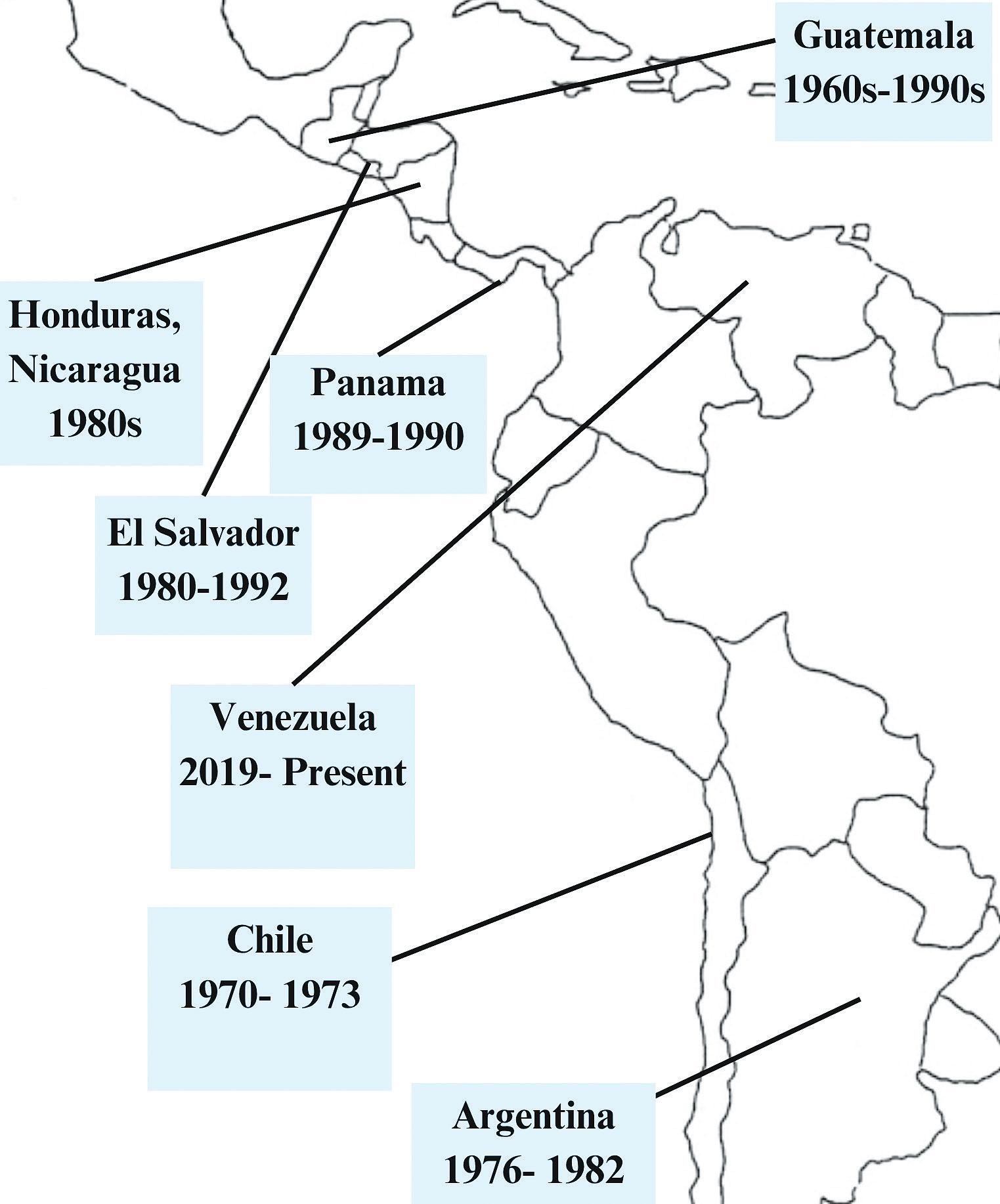
This
owe nothing to the people displaced by their own government’s foreign policy. Patriotic Americans blindly say that America is the greatest country on earth, not even cogitating how many people had to suffer and die for it to be that way.
Introducing a more open border policy does not undermine or deny that migration policies should be enforced; it is to insist that any serious conversation about this must recognize the historical link between what our government has done to these people and their homelands, and why their citizens are moving. A just border policy that gives more asylum access and treats people from these
regions as neighbors affected by our own choices is not an act of generosity. It is a form of restitution and empathy for all.
Latino immigrants are not asking for a favor when they come to the United States. They are moving through a country that has already moved through them, through their governments, their economies, and their lands. A country that has stolen everything from them and closed the door behind them.
Opening the door at the southern border is not a radical action. It is the start of justice that the United States stripped from them.
Standardized Tests Need to Become Relevant
Johnson reflects on nature of exams
Lilah Johnson | Co-Editor in-Chief
Studying for the ACT was a painful experience. Partially because I couldn’t remember anything I’d learned in Algebra II or Geometry, but mainly because I couldn’t connect it to anything. The skills required seemed so individualized to every practice question that I did. Even in the English sections, which I enjoyed more, everything felt so detached from what really mattered.
This led to tears and countless rants about how stupid and unnecessary standardized testing was. My main complaint was that this couldn’t possibly be the most valuable measure of my worth. I thought of college as a step towards my future and a step towards specialization in what really matters. As I continued to work my way through the practice modules, I would wonder how it could possibly matter if I could figure out a system

of equations or where exactly to place a comma. Simultaneously, as AP exams crept closer, I started to dread studying for them. I remembered how awful studying for the ACT had been and how much of a toll it had taken on me. However, as I crammed US History review videos and practiced writing 40-minute essays, I realized that it wasn’t completely terrible. So maybe standardized tests aren’t the issue - the issue comes when the material feels
like it doesn’t matter.
Standardized testing is defined as a method of evaluating student performance through uniform assessments that allow for comparison among individuals with similar characteristics.
Both AP exams and tests such as the ACT or SAT fall under this description. However, they resulted in very different test-taking experiences.
AP exams feel purposeful - they sum up a year’s worth of content learned in a classroom while also test-
“Standardized tests aren’t the issue--the issue comes when the material feels like it doesn’t matter.”
ing critical thinking skills. The ACT or SAT are supposed to determine college readiness, but instead just test students’ abilities to recall niche pieces of information. This undermines a large part of the purpose of school - students take math classes to learn how to solve problems, not necessarily to know exactly how to solve for the cosine of an angle.
Therefore, exams focused on more purposeful, focused content may be the solution. They help admissions officers to get a clear picture of how many students perform across uniform learning objectives, but they are not focused on obscure content that trips up students who don’t remember one lesson from geometry.
Standardized tests can still be valuable. Being able to demonstrate a complex understanding of content learned in a class or showing a complex understanding of certain topics that are actually interesting to the student is extremely valuable. At the end of the day, four hours trapped in a hot room flipping back and forth between subject matters is not what demonstrates college readiness.
map depicts some of the American military involvement including supplying weapons during and after the Cold War in Latin America.
Ben Aviles
Many students took AP tests in the gymnasium, which was filled with plastic desks.
Ben Aviles
Hardships Trouble Midwestern Farmers
Ben Aviles | Co-Editor-in-Chief
Simon Wagoner is a fourth-generation farmer in Shelton, Nebraska, a town of 1,045. There was a time in January when he “was wondering what in the heck am I doing farming because there's no way to make any money.”
The system that gets food on plates and gas in cars is under immense strain.
What Wisconsin farmer
Shelly Mueller called “a perfect storm” of systemic problems has led to this point. This includes diesel prices, dry weather, low commodity prices, and difficult entry to farming.
The problems start with what farmers call inputs: things like fertilizer, diesel, and natural gas prices. Since the Strait of Hormuz closed, global markets have been disrupted. This includes fertilizer prices, which have skyrocketed. According to the Farm Bureau, 70% of farmers nationwide cannot afford all the fertilizer needed. But the problem does not stop there.
As Joshua Westling, the CEO of a fertilizer company in Omaha, said in a May 13 Senate hearing, “Diesel costs have increased by over two dollars a gallon, and there’s no end in sight.”
Even Nebraskan farmer Chad Dane, who said he locked in his diesel prices in December, believes the protection is temporary. “Looking down the road, all that does is hurt me because oil is so expensive.”
On the fertilizer side, all of the farmers interviewed for this piece had already ordered their fertilizer for this season when the blockade started.
The Farm Bureau survey found similar results across the region, as 67% of Midwestern farmers had already bought their fertilizer when the crisis began. However, Dane said it will change the game for next year: “Regardless of what the president says, costs are going to be up. We look to buy next year's fertilizer in August. We're only three months from that.”
Rising natural gas prices are an especially big problem for farmers with pivots, an
“This year it's looking like this drought is spreading, so everybody's battening down the hatches.” At this point, Mueller is only an observer. “Hopefully, the corn will survive.”
Dane said, “It’s the driest I’ve ever seen it.” The dryness has caused fires throughout Nebraska. He added, “We had some fires get within a couple of miles of our farm.” Nebraska Public Media reported that these fires have scorched over 820,000 acres.
Breaking even is not a good result; equipment is expensive, depreciates, and must be replaced frequently. He said that if he is “not making enough cash to upgrade those pieces of equipment every few years, I’m going backwards.” He said that most people “can only do that for a couple of years, and they’re out of money.”
Lurking underneath these immediate issues is the rapid consolidation of farms and the resulting inaccessibility to the field. According to
“I work hard and take pride in holding together what [my ancestors] built.“ - Chad Dane
automated irrigation system that is powered by natural gas. Wagoner said, “If we don't get any rain, we could use well over 15,000 gallons in irrigation,” so, “we're going to feel a squeeze for the irrigation for sure.”
It is very possible that the rain may not come soon enough. The National Integrated Drought Information System (NIDIS) classified 46 states in drought, including many Midwestern states. The US Drought Monitor called it the driest spring on record. Mueller is left hoping.
Even if rain comes, corn prices are not viable for some. Nationally, corn futures are around $4.81 per bushel for December, according to the CME corn futures data. This number is used as a bargaining point for farmers in their negotiations with buyers throughout the year.
That is not enough for Dane. He said, “I'm guessing we'll need $5.50 a bushel of corn to break even. We're not even close to that.” There has been a lot of added stress, and “there are a lot of sleepless nights.”
the United States Department of Agriculture (USDA), the nation has lost around 1.88 million farms since 1980. Another part of this problem is the average age of farmers. As the Senate Committee on Aging found, the average age is 58.1, and roughly a third of farmers are over 65.
Mueller is stuck in the middle of this 50-year consolidation trend. She said, “We can't afford to get bigger than we are, and your profit per acre just continually goes down… It's a tough peel.” She said her neighbors

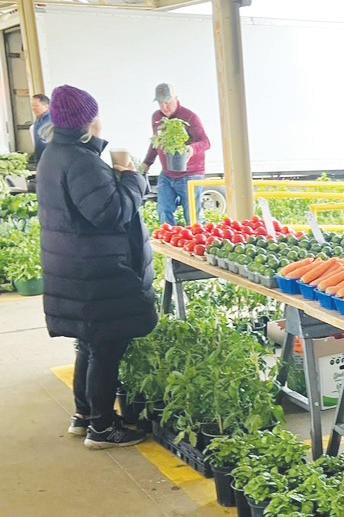
Farmers’ markets around the Twin Cities are now open for the season. Some markets, such as the Mill City Market or the Maple Grove Market, are only open one day of the week, but others, such as the Minneapolis Farmers Market (pictured above), are open almost every day. The Minneapolis market specifically is open from Wednesday to Sunday every week from 7:00 a.m. to 1:00 p.m. on weekdays and 6:00 a.m. to 1:00 p.m. on weekends
are “pretty much all in the same boat as us.” She is 71 and is transitioning her farm to her son.
Wagoner’s father quit the family farming tradition. Wagoner was only able to get back into the business because of his stepfather, who lent him equipment and land. He lamented the nature of the industry: “It is a cutthroat industry, unfortunately… I know there are people sprinkled amongst us who wouldn't help anybody out. They almost prefer to watch somebody suffer and fail.” Wagoner, who is 46, hopes his son will eventually take over the farm.
With many challenges to the system, why do they stay in the business? The answer is a mix of realities.
For Dane, it is a matter of pride. His great-greatgrandfather started farming in Clay Center, Nebraska, in 1887. He is the fifth generation of a family tradition. “I wouldn't be here without those guys.” He said he
“think[s] about grandfather and what they would think of me if I screw this up, so I work hard and take pride in holding together what they've built.”
Wagoner said, “It's just in my blood.” He added, “I love what I do, and I get to do my own thing.” He also thinks that it is a willingness to work, regardless of whether it is a weekday or a weekend. “Got stuff to do, let's get it done.”
It is a way of life for Mueller, a third-generation farmer herself. “It's a great way to raise your family, and we've lived comfortably. We've never been able to splurge on anything, but it's not always about money.” She added, “It's not all about the money, you know? People love their livestock, and they love their land.”
Closing, Mueller said, “There are enough silly people in the world like us to keep doing this, so you have cheap food.”


Farmers’ markets are a great way and purchase healthy, fresh produce–to what is sold in the supermarket. markets is often harvested within guaranteeing a fresh flavor. Farmers’ carbon emissions from transporting
Farmers around the Midwest are facing challenges due to rising prices of inputs such as fertilizer.
Submitted by Dane
NATION
Lilly Tarakji | Student Life Editor
Teachers Find Joy, Excitement in Gardening
For many, gardening is more than just growing flowers or vegetables; it is a way to connect with nature and create something meaningful.
Jen Vance, who gardens at her home in Minneapolis, grows native pollinator plants, vegetables, herbs, and cut flowers. “I do grow more flowers than food,” she said, although she recently started using raised garden beds for vegetables as well. One of her favorite plants is the Mexican sunflower because of the monarch butterflies it attracts. “Last year I had it in two spots in my yard, and I would get like five or six monarchs every day on both of them,” Vance said. “They would just hang out.”

Vance said one of the most rewarding parts of gardening is watching animals interact with the plants she grows. “When I see a goldfinch on a purple coneflower eating the seeds,” she said, “or when I see organisms interacting with the plants, and it’s sort of all coming together, I would say that’s the most rewarding part.”
She also believes

that gardening changes how people think about food and the environment.
“When you see what goes into it and how to create it,” Vance said, “that gives you a connection when you go to the grocery store.”
Dana Specht also grows a wide variety of flowers and vegetables, including roses, lilies, peonies, garlic, raspberries,
herbs, milkweed, zinnias, and cosmos. After living in Chicago with only a small community garden plot, she expanded her gardening after moving back to Minneapolis.
For Specht, gardening is closely tied to optimism. “I feel like gardening is evidence of my optimism," she said. “You put something in the ground, and you believe that it will grow.”

Specht also gardens with her son, who often picks herbs and raspberries directly from the yard. “It makes the food feel more special,” she said. Both teachers encouraged others to try gardening, even if they start small. “Just get some seeds or get a plant that you think is pretty, and just go for it,” Specht said.

Ilian DeCorte Reflects on Time as Farmer
Lilly Tarakji | Student Life Editor
While many people spend years following a straight career path, physics teacher Ilian DeCorte took a very different route after graduate school: he became a vegetable farmer.
After finishing his master’s degree in Los Angeles, DeCorte decided he needed a break from the academic world and wanted to try something more hands-on. Inspired by conversations with
his brother, who was interested in agriculture, DeCorte became fascinated by small-scale farming and its environmental impacts.
“I thought it’d be a really cool skill to have,” DeCorte said. “It seemed like a really cool way to put my climate science into practice.”
Soon after graduate school, he moved to Colorado and began working a small farm that produced specialty crops
MARKETS
way to support local farmers produce– a great alternative supermarket. Produce at farmers’ within 24 hours of being sold, Farmers’ markets also reduce transporting food long distances.

for restaurants. The farm grew more than 200 varieties of vegetables, fruits, and flowers across only a few acres.
DeCorte worked as the farm’s production manager, which meant his days started early and rarely slowed down.
“You want to [wake up] before it gets too hot,” he explained. Mornings often began with watering greenhouse seedlings before harvesting in the fields.
After the harvest team cleaned and packaged the produce, DeCorte focused on planting new crops, preparing soil, repairing equipment, and maintaining the farm.
“You have a long, long list [of things to do] that you never get to the bottom of,” he explained. “And you just try to get as many things done as you can.”
Although the work was physically exhausting, DeCorte said he

When going to a farmers’ market, be sure to bring cash to guarantee the best experience. Arrive early for the freshest food, or towards the end of the market for discounts. Remember that produce will not always look uniform like it does in a supermarket. Additionally, don’t be afraid to make conversation with the farmers and ask them questions about how to store something or how a certain food should be prepared.
loved the rhythm of farming and the strong community built around the garden. “I loved the hands-on nature," he explained. “I loved watching the garden change throughout the seasons.”
Some of his favorite crops included cucumbers, squash, radicchio, and especially carrots.
“We had really sweet carrots,” he said.
For DeCorte, farming also changed the way he thought about responsibil-
ity and beauty. “There are so many things that you do not get to decide whether or not you’re going to do,” he said.
“Because if you don’t do them, plants will die.”
Even after leaving professional farming, DeCorte still keeps a large garden and stays connected with local agriculture in the Twin Cities. Looking back, he says he would absolutely do it all again.

All photos by Ben Aviles
Both Vance and Specht enjoy growing flowers, especially ones that host pollinators such as monarch butterflies. They both encourage students to start gardening. Specht recommends doing so by “find[ing] a plant that you think is pretty.”
DanaSpecht
DanaSpecht
DeCorte completes some of the tasks on his “long, long list” from his days as a vegetable farmer in Colorado. He spent time as a vegetable farmer in order to take a break from academia after finishing grad school. SubmittedbyDeCorte
Sailing Cruises to Nationals Competition

Young team achieves record success
Faith Zhao | Creative Director Submitted
Despite the majority of members being freshmen, the Sailing team had a record-breaking spring season. For the first time in school history, they qualified for the prestigious Phoebe King National Invitation-

al Regatta in Annapolis, Maryland. The race will take place May 30-31, and feature 18 of the nation’s top high school sailing teams.
Captain Teddy Bower ‘26 emphasized that the achievement highlights the whole team’s commitment to improve. “We’ve all been superfocused on advancing our racing skills. We’ve got-
ten better at strategy and tactics and we’re hoping to bring our best to the upcoming competition.”
Selection for national high school sailboat racing is based on a tieredqualifying series. In April, Bower and Katie Gammack ‘29 competed alongside Olly Bower ‘29 and Cy Skibell ‘29 at the pre-qualifying regatta in Sheboygan, Wiscon-
sin. After winning that event, they advanced to the regional qualifier on Lake Minnetonka, where they placed seventh, high enough to qualify to the National Invitational.
“Coming into regionals after winning the prequels was a huge boost for the team, “ said Teddy. “We were confident going into each race and we were fast.”
Boys’ Captains Fights Mental Challenges
Seniors prepare for final
Nick Gajdusek | Contributing Writer

While the debate around the hardest sport is a perpetual brawl, one would have to be ignorant to forget tennis.
The sport calls for athletes to use both extreme power and precise millisecond decisions while enduring the isolated, multi-hourlong mental and physical fatigue each match creates.
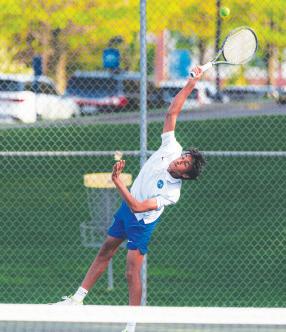
State Tournament is held in the first week of June. The tournament brings together the top schools from each section, putting forth their best singles and doubles teams to the final stage. Two captains, Tarun Gopalakrishnan ‘26 and Graham Everett ‘26 , have demonstrated
the necessary skills to compete at such a high level, placing third two years ago. Now they hope to compete, once again, in their last years.
Everett explained: “The mental difficulty of tennis is finding yourself in a slump, alone, and needing to pull yourself out if you wish to compete at all.” While tennis is built
on quick shots leading to individual points, the makeup of the game requires a long-term focus. Interestingly enough, Everett mentioned he “likes to get loud when [he is] winning, allowing [him] to build momentum.” Contrastingly, Gopalakrishnan stays composed and calm, keeping his thoughts and emotions to himself.
Tennis creates an environment of pressure to be present for every point, never slowing down or allowing fatigue to let a ball slip by. As Sections draws closer, the pressure to win builds, but for Gopalakrishnan and Everett, the wish to improve remains.
Baseball Finds Rhythm, Success
Group overcomes loss of graduates
London Gilbert | Sports Editor
On May 17, the baseball team wrapped up their regular season by splitting a high-stakes doubleheader matchup against powerhouse Duluth Marshall. They secured an important victory in the first game, 6-5, before losing the second 11-6. This spring season was one of the strongest in recent years through chemistry, discipline, and a resilient mindset that has geared them to achieving long-term goals.
After losing several seniors, the team entered the spring uncertain whether a new and younger team was ready for the initial challenge. The departure of veteran leadership left significant gaps in the lineup, creating uncertainty about how the new roster would perform. This closeknit environment allowed younger players to step up seamlessly into high-pressure roles.
According to Benji Dillon ‘27, the team has made do. “We lost some
notable seniors last year, but we’re still playing super well,” said Dillon. “Our record looks good.” The team’s ability to pivot early on in the season proved essential to maintaining their winning streak.
Players across the roster alluded to team chemistry as one of the biggest reasons for the team’s success. Team dinners, shared jokes, and time spent together outside of baseball have helped this newfound team. “We’ve really grown close as a
team and like a family,” Tyler Harki ‘28 said. These off-field connections directly translated to a deeper trust when executing plays on the diamond.
Outfielder Hugo Schantz ‘27 believes that the team bonds have translated directly into results. “We’re all very close, and I think we all have a lot of grit in us,” Schantz said. With this combination of mental toughness and unity, the team remains optimistic about its future.

Skibell and Olly compete during the Mallory Qualifier on Lake Minnetonka on May 3.
Gopalakrishnan hits a serve during a home match against Mounds Park Academy on May 11.
Submitted by Charlie Graff
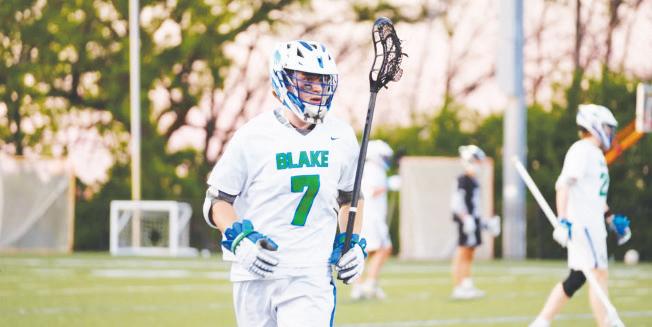
Captain Soren Reyes ‘26 jogs between plays in an 11-5 home win against Minneapolis on May 14.
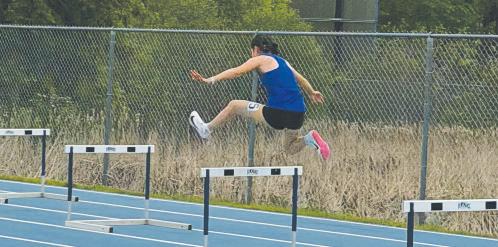
Mak Williams Catherine Rudolph ‘29 competes in the 300m hurdles event at the Breck Invite on May 19.
Chloe Ursu
Captain Jack Mark ‘26 tees off on the second hole at The Quarry at Giants Ridge on May 9.
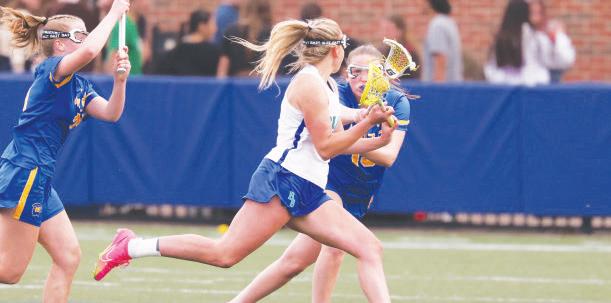
Charlie Dean Izzy Krejci ‘28 prepares to shoot before halftime during a 11-20 loss to Wayzata on May 2.
Submitted by Krejci Co-op with Gentry, the boys’ lacrosse team fought their way to a 6-7 record in the regular season. The team played their first Sections game against Maple Grove on May 27. Player Sam Spaeth ‘27 described the team as “funny, competitive, and vigorous.”
On May 14, the track team competed in Conferences. The boys team finished third and the girls team finished fifth. Sections is now underway, and will finish on May 29 at St. Anthony Village.
After dominating Conference, the boys’ golf team expects to make State. They have a chance to win. The team finished second to Detroit Lakes last year. The tournament will take place on June 9 and 10 at The Ridges at Sand Creek.
Despite numerous challenges this season, including injuries, the girls’ lacrosse team has grown in their skills and as a team. Quinn Hardy ‘28 explained, “The environment is really fun and competitive. We want to win.”
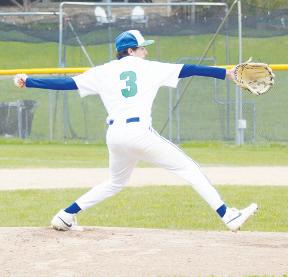
Captain Jesse Posada ‘26 throws a pitch during the team’s final home game, a 4-3 win against Saint Agnes on May 12.
Heybe Samatar
Submitted by Teddy
Every year, the Minnesota High School Boys Tennis
CharlieGraff
Charlie Wright
See Award-Winning Work by Spectrum Editors!
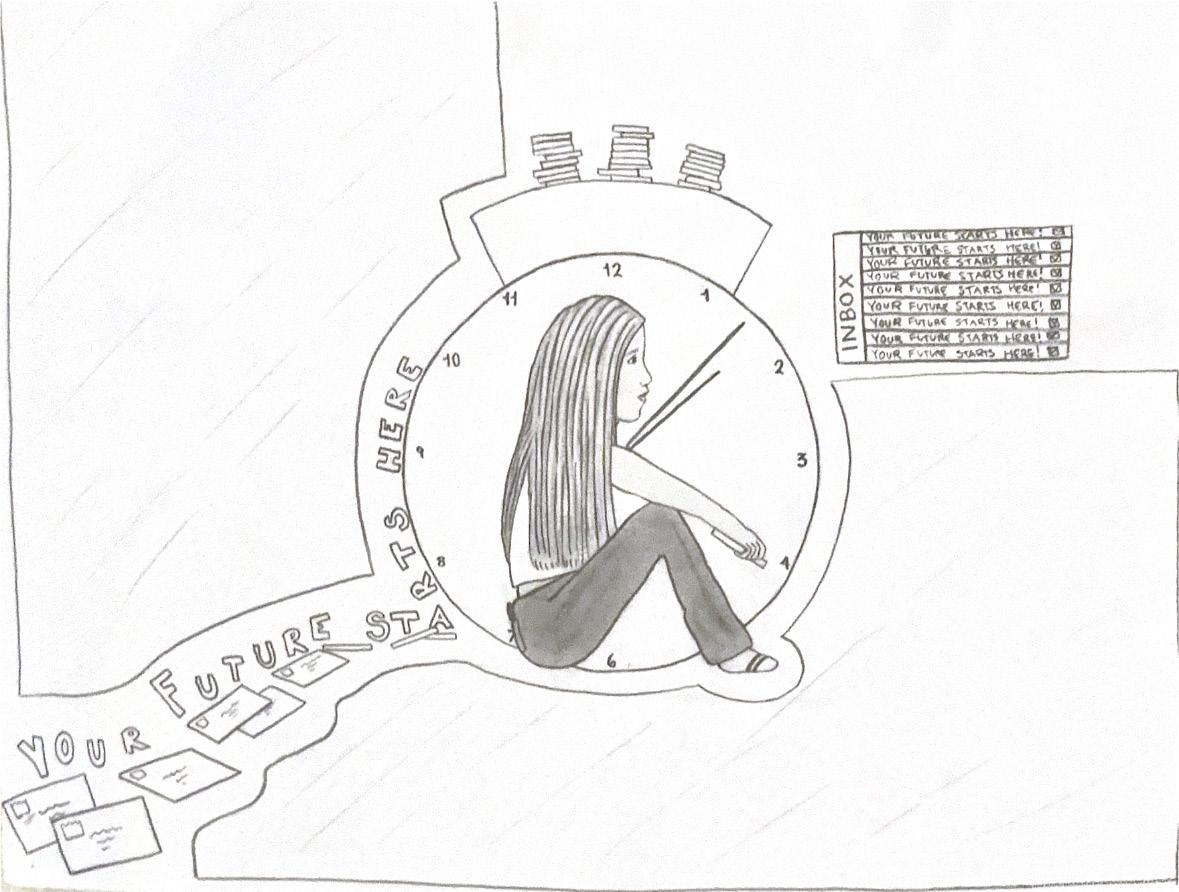
On April 17, Spectrum members attended the Journalism Educators’ Association/National Scholastic Press Association National High School Journalism Convention. They competed in art and writing contests. Journalists attended a presentation and wrote their work by hand for an hour. Their pieces have been edited for clarity.
Girls’ Flag Football Booms in Popularity
Lilah Johnson | Co-Editor-in-Chief
As US Bank Stadium sits empty during June, the Vikings Headquarters, located in Eagan, is full. On June 8, girls from across the state will compete in the flag football state championship at TCO Stadium.
Girls’ flag football has been growing rapidly in Minnesota, although not officially sponsored by the MSHSL. With support from the Vikings organization in the form of supplies, coaching clinics, and assistance
with promotional content, the number of teams has grown from four in 2024 to 104 in 2026.
It is especially important for girls to have the opportunity to pioneer an entire sport. According to the Women’s Sports Foundation, girls drop out of sports at twice the rate of boys by age 14, often due to limited opportunities or experience.
Krista Clausen, head coach of the Minneapolis North flag football team, told Vikings.com that it is “really important to see an organization at the caliber
Caitlin Strauss | Opinions Editor

of the Vikings that takes an interest in girls and their experiences and making sure they have experiences that the boys have.”
The Vikings strive to continue providing those otherwise limited opportunities. “It’s one thing [to] just write the check to cover the flag kits, but it’s another thing to say, ‘we’re going to have at least 12 of our full-time staff working and doing all this to make a production day,” said Craig Peters, Editorial Director of Vikings.com. The opportunity to create a space where girls can
not only play a sport, but also create new avenues for future girls hoping to play a high school sport is fundamental to what the Vikings hope to do.
Growing flag football is not just about growing the sport itself. Playing youth and high school sports builds critical life skills that stick with players. “If we are careful about it and we make sure they have a good experience, they stay active their whole lives,” said Jodi Rehlander, flag football head coach at Breck School.
Peters also noted that
many students are more academically engaged when playing flag football, benefiting players, coaches, and schools alike.
As flag football continues to grow from middle school to the Olympics, the Vikings plan to continue their partnership with the ever-growing number of teams. Teams are adjusting and adapting on the fly, sometimes facing growing pains, but girls’ flag football continues to be on an upward trajectory.
Contest: Sports Writing
Izzie Miller | Managing Editor
Interactive Audio Episodes Teach St. Paul History, Life Lessons
Agory urban legend, a woman’s anxiety attack, a group of buildings’ gossip sessions, and a mural’s reflection on stories: these four tales make up the first season of the Hidden Herald audio play series by Wanderlust Productions. Together, they form a meaningful and deeply resonant message for all of their listeners.
The four stories, “Ghost Story,” “Anxiety Attack,” “Gossiping Buildings,” and “A Boy Portrait,” were written by
Alayna Jacqueline in 2024. They can be accessed by scanning QR codes, found in four locations across St. Paul that correspond exactly to each story’s setting. The interconnected stories implicitly suggest that one must reach beyond a singular narrative to truly comprehend it, lest one face the risk of only possessing one side of a story. These stories are extremely immersive. By placing the listener at the site of each story, the communicate complex themes through personification, imagery, conver-
Lilly Tarakji | Student Life Editor
sations, and other interactions in a highly entertaining form.
In “Ghost Story,” bloodcurdling screams echo in listeners’ ears as they hear the urban legend of Selah, a terrifying woman who mysteriously disappeared in the pond at Mears Park. Voices float in the air to the rhythmic but panicked cries of a young woman in an anxiety attack. Buildings chatter in “Gossiping Buildings,” which playfully evokes personification into listeners’ surroundings. And in “A Boy Portrait,” the closing episode, a boy in a mural speaks to
listeners about his ever-expanding collection of stories, linking the four tales together and leaving the reader thinking deeply about the danger of a single story.
The experience is intended to be a single-listener journey that relies heavily upon the audio. This weakens its accessibility, since listeners must have high-quality speakers or headphones to understand the plot. They also cannot tune in as a large group, which poses the risk of losing the experience’s immersiveness.
Overall, the series is
a highly enjoyable listen that encourages listeners to engage with the world around them, apply complex thinking skills, and come to understand the importance of pausing to analyze and interpret narratives and stories. It is recommended to enjoy it as a single listener with high-quality headphones. For anyone looking to interact with the city of St. Paul and learn a powerful lesson with entertainment, the first season of the Hidden Herald series is the perfect experience.
Contest: Review Writing
Evie Chow | Copy Editor
Young Americans’ civic participation is on the decline, but it’s not that students don’t want to participate— it’s that they don’t know how.
In a culture dominated by technology and social media, many feel overwhelmed by the portrayal of civic participation on big platforms. I am often intimidated by the examples of civic participation that I see online. Oftentimes, users post pictures of themselves protesting or voting. These leave young people thinking they cannot participate, whether that is because of age or “status.”
Yet, what they do not realize is that there are so many accessible ways to participate. Not all civic participation has to feel out of reach. Civic participation can look like volunteering at a food bank or taking part in an environmental clean-up. There are endless amounts of ways for students to take action about issues that matter to them, but we cannot take action without guidance.
There needs to be an emphasis on practical education in schools. What does a local government do? Can a student actually make an impact in the community? How can I be involved without voting? These are all questions I have heard go unanswered. Civic participation will increase if we are taught how to be involved. We cannot be active and informed citizens without this knowledge.
As the United States looks to celebrate its history, it should also invest in its future. This generation needs the tools to take action.
May Crossword
All games by Charlie
Dean | Puzzlemaster
ACROSS:
1. The slightest bit
5. Baby goat
8. In ___ land
9. Overturn
10. Wind up alone?
12. Blake’s still mentions Highcroft
13. CAPTCHA target
14. Pizza Hut rival
20. [Facepalm]
21. Long part of a giraffe
22. Chips ___!
23. The Timberwolves’ Edwards, to fans
24. Oxen connector
DOWN:
1. ___ Romeo
2. Like sequoias
Wuzzles
Each puzzle represents a word or expression. Scan the QR code for answers!

3. Homecoming attendee, often 4. Informational repository
5. Annoyance with a headphones cord 6. Twiddling ones thumbs 7. Unit in the Monty Hall problem
9. Newspaper with a blue circle logo 11. Red Heart, for one 14. ___ colada 15. Mass reply? 16. Treaty
Cheery greeting
Cozy corner 19. Eye affliction
MISS

Brain Teasers
Sports Team Anagrams
Each of the following words anagrams to the singular form of sports team nicknames (VIKING, TWIN, etc.). The league of the team is noted beside the word. The first letters of each of the first four anagrammed words can be anagrammed into a nickname of a team a Minnesota team recently defeated.
PARROT (NBA): _________
ROAST (MLB): _________
TAINT (NFL): _________
TREASON (NHL): _________
Bonus Anagrams
THRONE (NBA): _________
RAUNCHIER (NHL): _________
TEARDROP (NHL): _________


International Tour Awaits Orchestral Musicians
Capstone performance in Sydney Opera House excites
Anya Vallapureddy | Staff
Writer
This summer, members of the Greater Twin Cities Youth Symphonies’ (GTCYS) flagship orchestra, Symphony, will be touring Australia and New Zealand.
Emily Alexander ‘26’s favorite parts of GTCYS are the performances and the international tours. She said that the group “has a lot of sightseeing activities planned
in addition to [their] performances.”
Kaining Zhang ‘26 is looking forward to exploring Australia and New Zealand because [she’s] never been there before and to try the food.
Layla Chakhvashvili ‘26 explained that they’re going to be learning about “a lot of indigenous culture and natural history in New Zealand” especially.
Sophia Alexander ‘26 “really [enjoys] collaborating with other people from different places,” so she’s excited to do “some collaborations with other youth symphonies.”
Chakhvashvili added
that she’s “looking forward to engaging with music on literally the opposite side of the world.”
For Shiyan Sun ‘28, the highlight of this trip is that they’ll “be performing at the Sydney Opera House, which is pretty cool.”
The Sydney Opera House is “like this musical Mecca, almost,” Chakhvashvili commented.
According to Zhang, the Symphony ensemble has seven pieces that they’re going to perform, and they’ve been “working on them since the start of the school year.”
Sophia Alexander also “has the opportunity to play
this piece for solo quartet” there that she’s thrilled about. In addition to the performances, the members of Symphony are looking forward to the community aspect of musical tours.
Emily Alexander noted that “traveling as a group is always really fun,” and Sun is excited to spend time with her friends.
Sophia Alexander notes that she’s made so many of [her] closest friends through GTCYS, and Chakhvashvili added that she loves “making music with a community of kids who are just equally passionate and talented.”
Zhang wants to make the most of the time with her
friends, especially “because [they’re] seniors and this is [their] last trip together” before going to college. The members of Symphony are
eager to make the most of their time in Australia and New Zealand, both through musical development and by building community.

Students Anticipate Summer Concerts
Music serves as a way to connect, make memories
Summer is often characterized by vibrant social gatherings, family vacations, and beautiful weather.
But for many students, summers are also defined by music. Packed stadiums and outdoor festivals give students an opportunity to connect with friends, support their fa-

Peak concert season has already begun in Minnesota. Shown above is up and coming artist Ty Myers touring to Minneapolis on May 14.
vorite artists live, and make memories that last well into the rest of the seasons. This summer is no exception, with an influx of popular artists touring to Minnesota such as Noah Kahan, Ed Sheeran, and Lionel Richie. With smaller artists also performing locally, the summer is bound to be filled with laughter, singing, and music.
Sanvi Kurdikar ‘28 shared that she plans to attend concerts by Malcolm Todd, Dominic Fike and Tame Impala because “they’re some of my favorite artists.”
Kurdikar explained that concerts create an atmosphere unlike anything else, explaining “I love

music, and I think it’s such a good feeling to be in that space where nothing really exists except that music and you’re with people you love listening to music you love.” She also predicted that “I Saw Your Face” by Malcolm Todd will be her song of the summer. Nahla Wetsch ‘28 also emphasized the connections that concerts help to strengthen, planning to see Chris Stapleton, Olivia Dean, and Jon Pardi this summer. She shared that these experiences are important to her not just because she likes their music, but because they are deeply intertwined in her relationships with others. For example Wetsch shared that she
and her older sister especially enjoy listening to Olivia Dean together while her love for country music drew her to the other performances. “I think concerts are super fun and memorable being in the arena and listening to music with people you like to spend time with.” Her pick for song of the summer was “Broken Window Serenade” by Whiskey Myers. For Isabella Valdesolo ‘28 , concerts are similarly tied to friendship and celebration. She shared that she is attending the Yacht Festival in July with her friend Evie Hjelm ‘28 because it’s “a really fun time and a great celebration of summer.”
She added that concerts are a good way to spend time with my friends and learn about new artists.” Her song of the summer is “Mystical Magical” by Benson Boone. Whether it’s spending time with friends, celebrating the warm weather, or discovering emerging artists, concerts are clearly an integral part of the community’s summer festivities. So, if you have a free weekend, or a few days this summer check out a local artist, invite a friend, and experience a concert yourself. The music, memories, and connections created from those moments may just resonate with you long after the summer ends.
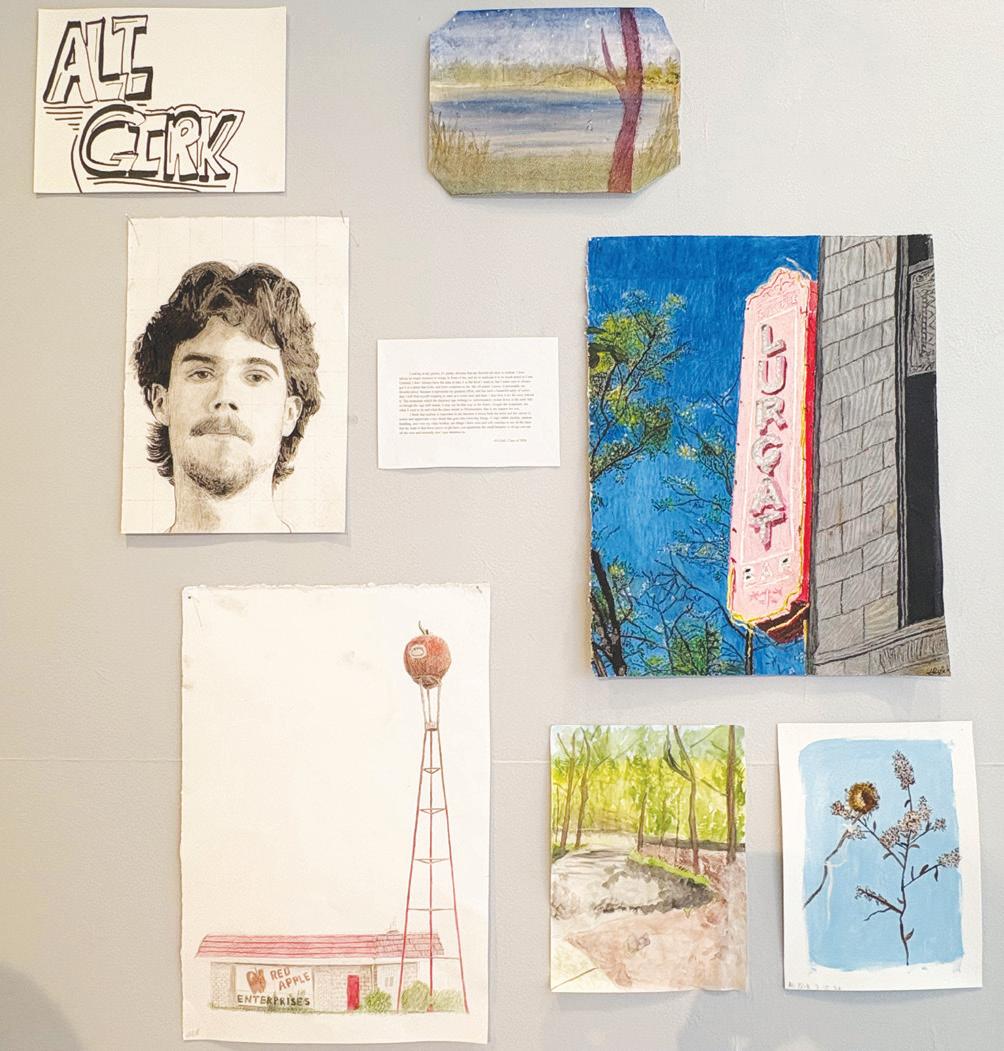
Senior Showcase
featuring art by Ali Girk ‘26, Bristol Pann ‘26, Jane Li ‘26, Madeleine Hou ‘26, & Nick Gajdusek ‘26




Evie Chow
GTCYS tours take place biennially, with their 2024 tour taking students to Southern France and Barcelona. Pictured is students rehearsing at the Palau de la Música Catalana. Several members of the community traveled with this group.
Submitted by Evie Chow
Ben Passi | Staff Writer
Photos by Lilly Tarakji and Evie Chow

The Coziest Coffeeshops
Rustica Bakery, Backstory Coffee Roasters, and Black Walnut Bakery are top spots in Minneapolis
Izzie Miller | Managing Editor Lilah Johnson |
Co-Editor-in-Chief

Near the scenic Bde Maka Ska lies Rustica, a cozy, charming coffee shop that is always bustling. Offering breakfast, brunch, and lunch, it is a perfect place to stop before or after a school day to pick up food and drinks. Featuring a variety of pastries, desserts, and coffee, Rustica offers a wide selection. Parking is extremely easy as Rustica is right next to other stores and restaurants such as Punch Pizza, Barnes & Noble, and Crisp & Green. It is a wonderful place to study or simply hang out with friends. Rustica has four locations, one of which is located at 3224 West Lake Street in Minneapolis. This location is open from 7:00 a.m. to 5:00 p.m daily.
Located in the North Loop, Backstory is a spacious coffee shop with the perfect cozy vibe. Big windows, eccentric decor, and a variety of seating options make it the perfect option to hunker down for a few hours and get some homework done, read a book, or just enjoy a delicious coffee or snack. Parking is a bit expensive, as it is located right downtown, but it is typically pretty easy to find within a few blocks. It offers all of your typical coffee options, as well as a small selection of breakfast sandwiches and pastries. Backstory has three locations, but the main one is located at 528 N Washington Avenue in Minneapolis and is open from 7:00 a.m. until 4:00 p.m. daily (aside from Sundays, when they open at 8:00 a.m.).
Located in Uptown, Black Walnut Bakery is the definition of a neighborhood coffee shop. With large windows and being located on the corner of a street, it can be a great place to study for longer periods of time. The bakery sells a variety of pasteries and desserts as well as coffee. It does tend to get fairly busy on weekends, with lines going out of the store. Parking is harder to come by because the cafe is on a busy street, so customers may be forced to park in the nearby neighborhood. Black Walnut is located at 3157 Hennepin Avenue in Minneapolis and is open from 8:00 a.m. - 2:00 p.m. on Wednesdays-Sundays.
Izzie Miller
Lilah Johnson
Izzie Miller