Bearings
From the Director
WELCOME to the autumn edition of Signals
This issue is dedicated to marking a very important milestone in our maritime history – the 125th anniversary of the Australian navy.
In 1901, following the inauguration of the Commonwealth of Australia on 1 January, the former colonies transferred their naval and military forces to the federal government.
On 1 March the Commonwealth Naval Forces came into being, and ten years later, on 10 July 1911, the force was granted the title Royal Australian Navy.
Alongside this edition, across the year the museum will present new exhibitions, major events, a national touring program and landmark gallery redevelopments.
The year’s programs provide a platform for education, engagement and recognition– bringing the navy’s past, present and future vividly to life.
We kicked off the anniversary with a special Open Day on 1 March, opening the museum and the vessels for free to mark the date. Also now open is Navy 125, a special commemorative exhibition in our Navy Gallery, which showcases people and pivotal events that have shaped the navy over its 125-year history of securing Australia’s interests in peace and in war.
This display tells stories of love, loss, vigilance, community and sacrifice unique to navy life.
We will also be touring exhibitions throughout Australia and internationally marking individual navy stories from the past 125 years, plus there will be talks, panel discussions and tours, all focusing on the rich history of our navy and its personnel.
The year’s activities will culminate in the major redevelopment of the Actions Stations naval pavilion later in the year.
These are just some of the many activities the museum will be undertaking, and our website will be the best place to find out what is happening throughout the year.
Please join us in commemorating this important maritime milestone throughout 2026.
Daryl Karp AM Director and CEO
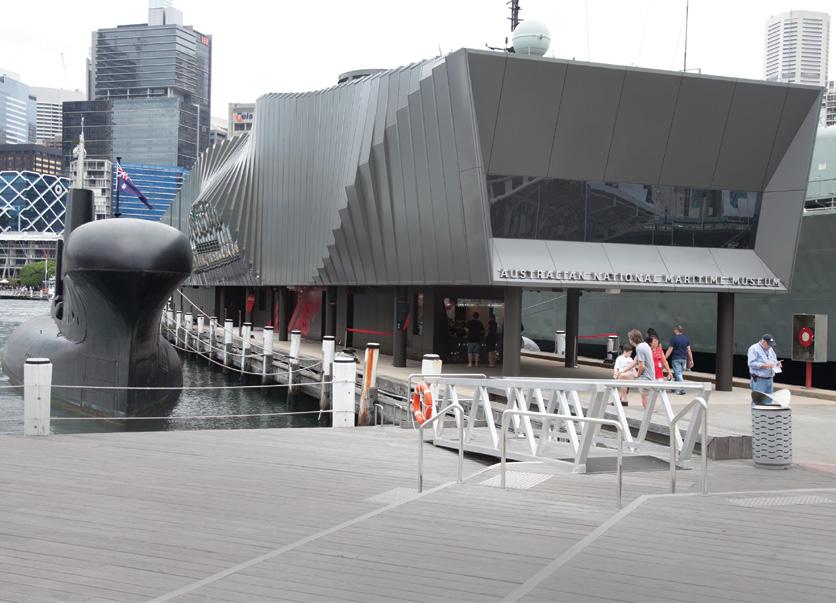
A major project this year is the redevelopment of our Action Stations naval pavilion. Image Andrew Frolows/ANMM
Contents
Autumn 2026
Acknowledgment of Country
The Australian National Maritime Museum acknowledges the Gadigal people of the Eora nation as the traditional custodians of the bamal (earth) and badu (waters) on which we work.
We also acknowledge all traditional custodians of the land and waters throughout Australia and pay our respects to them and their cultures, and to elders past and present.
The words bamal and badu are spoken in the Sydney region’s Eora language.
Supplied courtesy of the Metropolitan Local Aboriginal Land Council.
Cultural warning
People of Aboriginal and Torres Strait Islander descent should be aware that Signals may contain names, images, video, voices, objects and works of people who are deceased. Signals may also contain links to sites that may use content of Aboriginal and Torres Strait Islander people now deceased.
The museum advises there may be historical language and images that are considered inappropriate today and confronting to Aboriginal and Torres Strait Islander peoples.
The museum is proud to fly the Australian flag alongside the flags of our Aboriginal, Torres Strait Islander and Australian South Sea Islander communities.


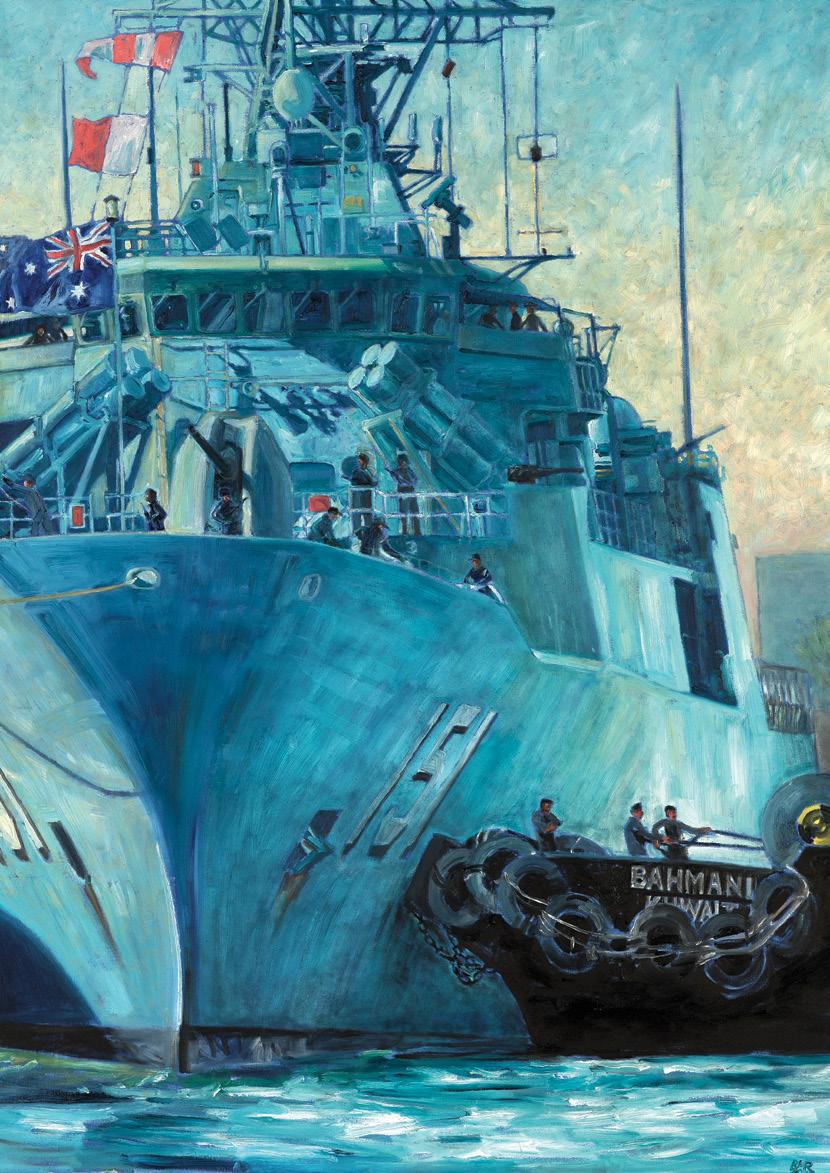
Cover Oil painting by Bob McRae depicting A nzac class frigate HMAS Arunta (II) berthing in Shuwaikh port in Kuwait Bay during its Middle East deployment in 2008. See article on page 8. © Robert McRae ANMM Collection 00050681 Reproduced courtesy of Robert McRae
2 Navy 125
A serving naval officer reflects on naval life and loss
8 The art of war
Bob McRae
14 Step inside Australia’s navy
Action Stations reimagined
18 Decades of service and sacrifice
Navy event and eras seen through objects in our collection
34 Paddling in brave footsteps
Re-creating the kayak leg of Operation Jaywick
40 Commemoration and remembrance
The 1942 midget submarine attack: both sides of the story
46 A founding warship
The long and remarkable career of Protector
54 Foundation
A wartime transformation: SY Ena becomes HMAS Sleuth
58 Join our unique tour in Indonesia
Spice, spirits and shipwrights: cultures and coastlines of Sulawesi
60 Members news and events
The latest talks and tours for autumn
64 Exhibitions
What’s on display this season
68 Education
Our new Year 10 work experience program
70 Collections
Mementoes from three generations of naval service
76 National Monument to Migration
Vietnamese names and voices for the Welcome Wall
80 Readings
The Navy Chiefs: Australian Naval Leaders 1911–1997
84 Currents
We welcome new Honorary Research Associate, Dr Vanessa Pirotta
This anniversary is not simply history – it is lived experience, connection and continuity across generations
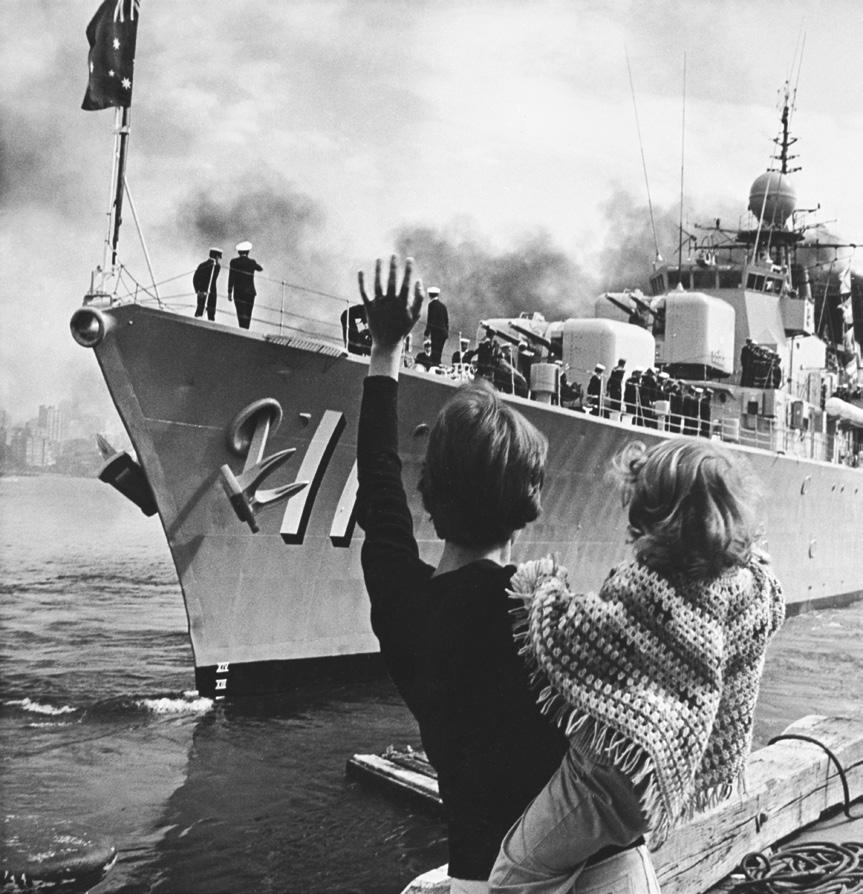
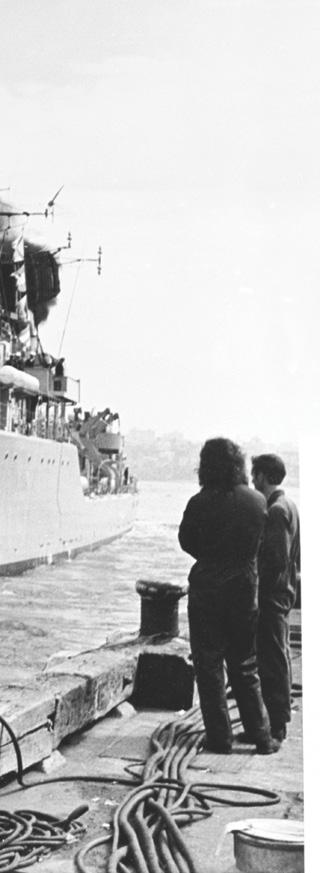
HMAS Vampire (II) leaves for duty. Garden Island, Sydney, 1972. Image RAN Imagery Unit
Navy 125 Service,
memory and the threads that bind us
This year, we mark Navy 125. One hundred and twenty-five years of naval service represent far more than a milestone on a calendar – they embody a living story of people, ships, families and communities bound together by service to Australia, writes naval officer Jessica Hammond.
FOR ME, THE LIVING STORY of the navy is deeply personal. I have served in the Royal Australian Navy (RAN) for 11 years, and I am also the daughter of a submariner. The navy has shaped my life from childhood through to adulthood – from childhood memories of farewells on the wharf to standing on a bridge wing thousands of miles from home, the navy has been a constant thread in my life. This anniversary is not simply history – it is lived experience, connection and continuity across generations.
The significance of Navy 125 lies in the navy’s enduring purpose and values. Across generations, Australians have gone to sea in the nation’s service, often quietly and without recognition, doing what needed to be done. From early fleets protecting trade routes, to sailors and officers serving in global conflicts, humanitarian operations and peacekeeping missions, the navy has evolved with Australia – technologically, culturally and socially – while remaining anchored in its core values of courage, duty and mateship.
As a female officer in the Royal Australian Navy, Navy 125 is also a reminder, for me, of how far we have come. For much of the navy’s history, women were excluded from sea service and leadership roles. Today, women serve across every warfare category. They command ships, lead sailors, deploy on operations and shape the future of the navy at every level. That progress did not happen overnight, nor by accident. It was built on the service of those who challenged norms, proved capability, and ensured that commitment and professionalism – not gender – define a sailor. I am proud to be part of a navy that values professionalism, integrity and commitment above all else.
Serving today, I am conscious that I stand on the shoulders of those who came before me, both men and women. Navy 125 is not only about commemorating our story; it highlights the cultural change that has allowed the navy to better reflect the society it serves. That inclusivity strengthens us operationally and ethically.
It ensures that future generations of Australians can see a place for themselves in uniform, regardless of background.
My operational service has taken me far from home on multiple deployments. Like many sailors, I have experienced the long watches, the missed birthdays, the quiet pride of doing a job well that can never be spoken about, and the deep bonds formed at sea. I have also experienced loss – of friends and shipmates who are no longer with us. Those experiences fundamentally change how you understand and commemorate anniversaries like Navy 125. History stops being abstract. It becomes personal. That is where the Australian National Maritime Museum plays such an important role.
As a museum volunteer, I see first-hand how memory is preserved and passed on. Museums are often thought of as places for objects – uniforms, medals, ship models and
photographs – but their true value lies in the stories behind those objects. A faded photograph is not just an image; it is a moment in someone’s life. A decommissioned ship is not just still; it is thousands of watches stood, friendships formed and sacrifices made. The vessels we now display once carried people, purpose, and a shared mission.
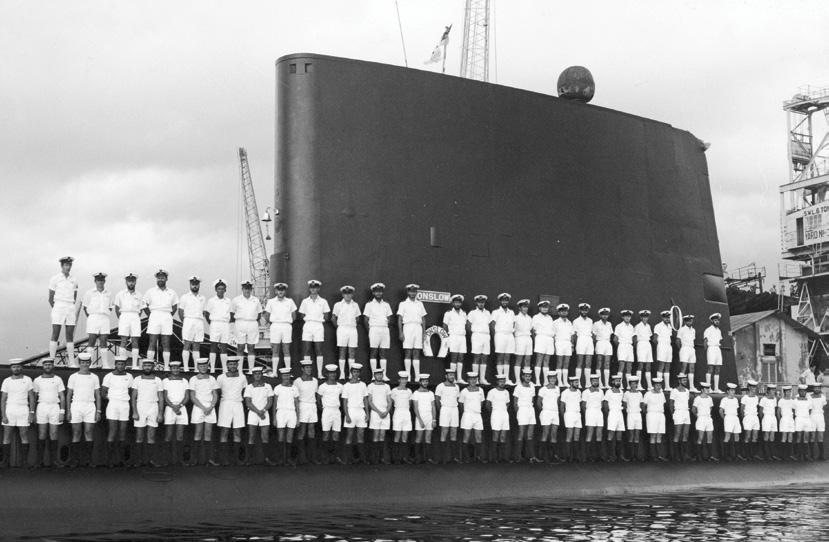
Through volunteering, I have had the rare opportunity to work on my father’s first submarine, HMAS Onslow – a boat that was decommissioned 16 years before I even joined the navy. Standing inside that submarine, I am acutely aware of the generations of sailors who passed through its compartments, stood watches and trusted one another in one of the most demanding environments imaginable. It is a powerful reminder that Navy 125 is not simply a chronological record, but a continuum of service that links past and present in very real ways.
Across generations, Australians have gone to sea in the nation’s service, often quietly and without recognition
01
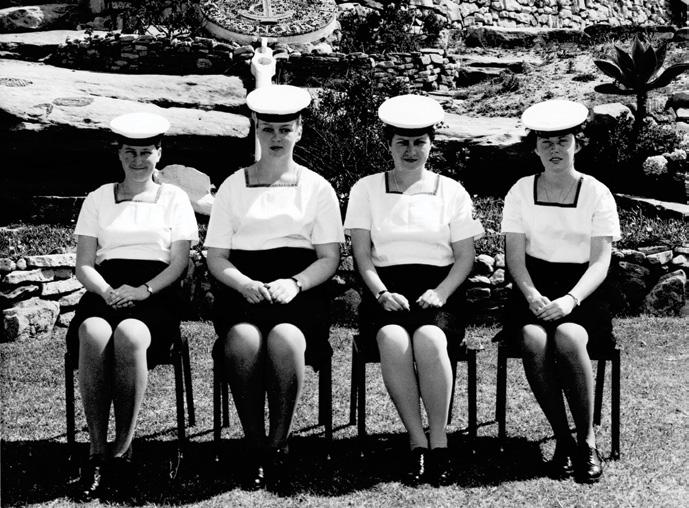
Four members of the Women’s Royal Australian Naval Service (WRANS), in uniform with HMAS Watson caps, 1968. ANMM Collection ANMS0832[039] Gift of Margaret White
02
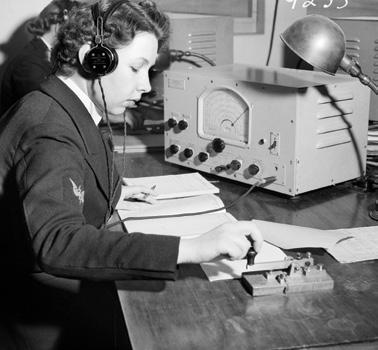
A WRANS (Women’s Royal Australian Naval Service) telegrapher sends Morse code from HMAS Harman, Canberra, 1941. Harman was the first establishment at which women served as part of the RAN.
03
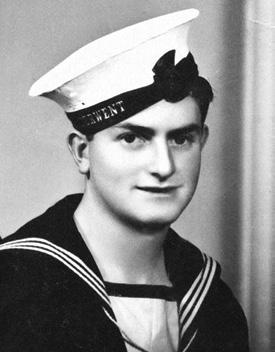
Studio portrait of Edward ‘Teddy’ Sheean, who was awarded the Victoria Cross in 2020, almost 80 years after his death. Off Timor in 1942, his ship, HMAS Armidale (I), had been hit by Japanese torpedoes and was sinking quickly. Although gravely injured, Sheean ignored the order to abandon ship, strapped himself to a gun and fired at Japanese planes that were strafing survivors in the water. He went down with Armidale in battle, aged 18. He is Australia’s only naval recipient of the Victoria Cross. Image Australian War Memorial 044154
The navy’s role extends well beyond conflict, encompassing humanitarian assistance, disaster relief, regional engagement and the protection of Australia’s interests at sea
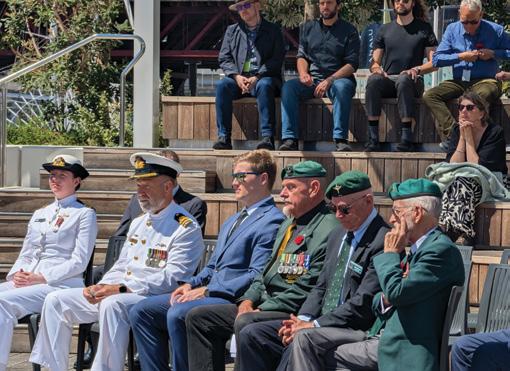
01 Australian Defence Force members, veterans, staff and visitors at the museum’s 2025 Remembrance Day ceremony. The author, LCDR Jessica Hammond, is at far left. Image Hannah Newman/ANMM 02
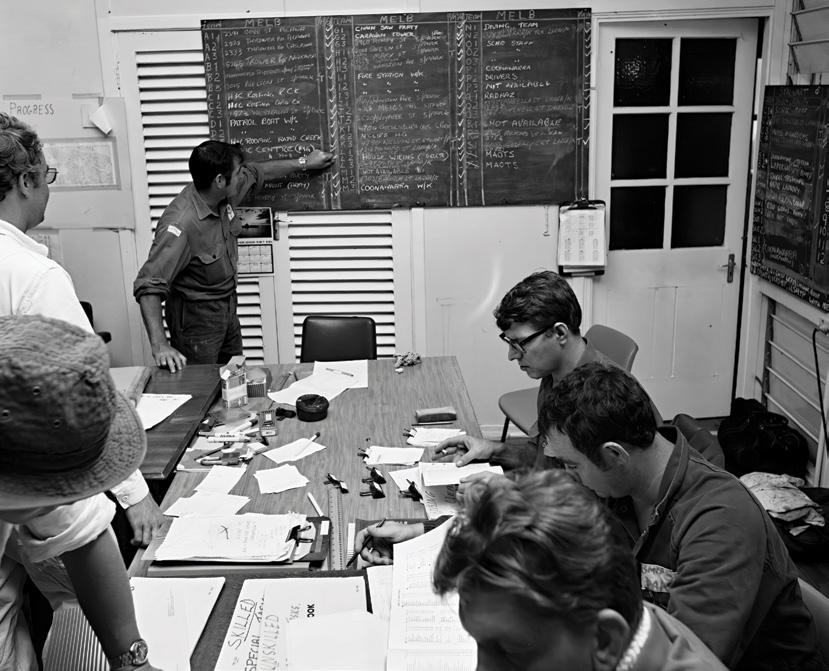
Officers and sailors from destroyer HMAS Vendetta (II) plan the initial disaster recovery work after Cyclone Tracy in December 1974. Image National Archives of Australia A6180 28/1/75/24
Working on that submarine has given me a unique perspective. I now serve in a navy that has evolved dramatically from the one my father joined, yet the fundamentals remain unchanged: professionalism, trust, resilience and mateship. The platforms may be different, the technology more advanced and the workforce more diverse, but the heart of naval service is constant. That continuity is at the core of Navy 125.
Volunteering at the museum is service of a quieter kind –helping to ensure that our maritime history is preserved, understood and shared. When visitors, particularly young Australians, engage with these stories, they begin to see that naval history is not distant or irrelevant. It is made up of ordinary people doing extraordinary things, and it is connected to who we are today.
For Australians, Navy 125 offers a powerful opportunity to reflect on service beyond the headlines. It highlights that the navy’s role extends well beyond conflict, encompassing humanitarian assistance, disaster relief, regional engagement and the protection of Australia’s interests at sea. It shows that service takes many forms –on operations, in support roles and in preserving history so others can learn from it.
The museum asks us not only to remember, but to consider our responsibility to that memory. Remembrance is not passive. It is active. It is reflected in how we care for veterans and their families, how we support those currently serving, and how we teach future generations about the cost of freedom.
For me, Navy 125 is a celebration of service – past, present and future. It is about standing alongside those who served before me, contributing to the Royal Australian Navy today, and preserving their legacy for tomorrow. It is about remembering that the navy is more than ships and equipment. It is the people, the shared experiences and the values that endure. As we commemorate 125 years of naval service, may we reflect on the sailors, officers, families and communities who have built and sustained the navy. May we honour them not only with anniversaries and ceremonies, but through understanding, respect and continued commitment to the values they upheld.
Navy 125 is a celebration of the past, a recognition of the present, and a promise to the future.
Jessica Hammond RAN is a Lieutenant Commander in the Royal Australian Navy and a museum volunteer.
Bob McRae, war artist
Documenting naval life and action
Bob McRae, a painter, sculptor and former TAFE art teacher, has been an official navy war artist on several occasions, including on Middle Eastern deployments. He relates some of his experiences.
I HAVE LONG BEEN INTERESTED in military history and the work of war artists such Frank Norton, Dennis Adams and Ivor Hele. Hele would insist on drawing soldiers just back from patrol in the New Guinea campaign during World War II, and these are remarkable pictures.
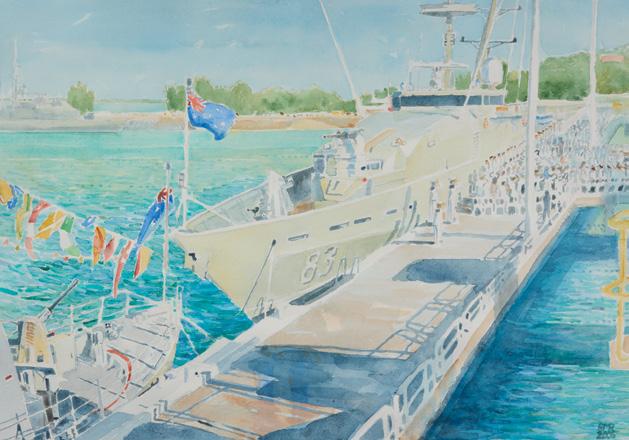
In 1999, I was on sabbatical leave in Darwin. Wanting to create images that related to these artists’ works, I painted watercolours of the UNAMET (United Nations Mission in East Timor) ships for the Darwin Port Authority. Once home in New South Wales, I contacted the Australian War Memorial, who were interested in purchasing some naval ship paintings –previously, war artists appointed by them had only painted land conflicts.
In 2005, I was invited to the commissioning of HMAS Armidale (II) in Darwin, resulting in many paintings of this new patrol boat, the first of its class.
Later, in January 2008, I was invited to join the Royal Australian Navy (RAN) History Unit’s visit to the Persian Gulf as an official artist aboard HMAS Arunta (II). The then Commodore, Allan du Toit, invited me to travel with the team to record the activities of Task Force 158, part of Operation Catalyst. The navy specifically requested that I record its men and women actively involved at work, at arms and performing maintenance.
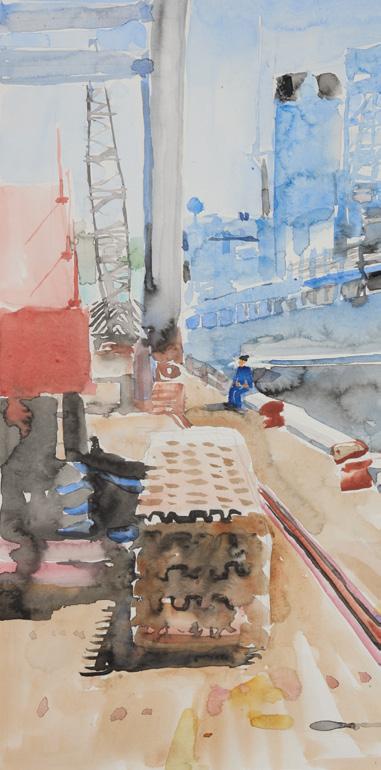
HMAS Tobruk (II) and Canadian supply ship HMCS Protecteur loading up at Fort Hill wharf, Darwin, on the way to Timor, 1999. ANMM Collection 00030087
All images © Robert McRae. ANMM Collection reproduced courtesy of Robert McRae and licensed for use by the museum
Arunta’s captain, Lieutenant Commander Tim Brown, had a sense of RAN history, and sent me on many expeditions to record his crew
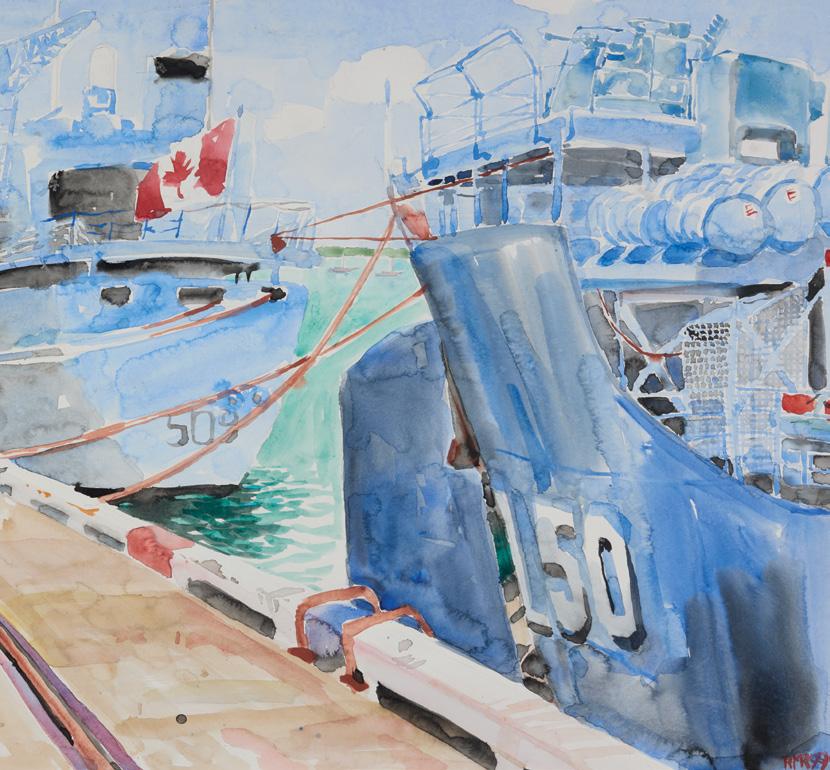
01 Watercolour of the commissioning ceremony of patrol boat HMAS Armidale (II), 2005. Navy personnel wait to board; HMAS Gawler (II) faces Armidale at left.
ANMM Collection 00039799
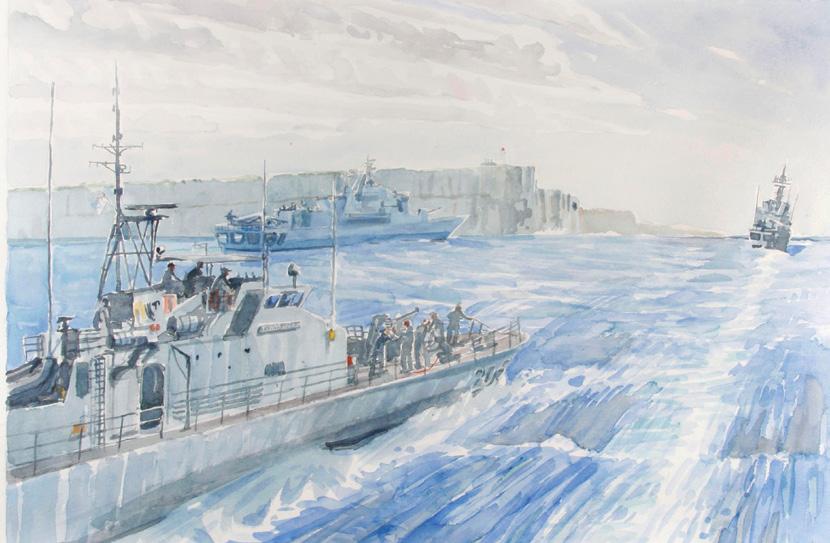
02 HMAS Townsville (I), captained by LCDR Ivan Ingham, leaving Jervis Bay during Operation Ocean Protector, 2006.
ANMM Collection 00040495
I quickly fitted into everyday shipboard life, observing day and night and asking many questions regarding the ship’s routine and events. This resulted in drawings and paintings about the RAN’s active role in the task force. One of the first paintings I completed was from the bow of Arunta looking back toward the bridge, with crew involved in pistol practice on a cold, overcast afternoon. Another picture was of a church service on the fo’c’sle deck to commemorate the loss of HMAS Canberra (I) in World War II.
Arunta ’s captain, Lieutenant Commander Tim Brown, had a sense of RAN history, and sent me on many expeditions to record his crew protecting the oil pumping stations, boarding ships, refuelling at sea and visiting other nations’ ships in Khawr Abd Allah, a significant waterway between Kuwait and Iraq.
On one occasion, Arunta travelled to Kuwait, where Captain Brown met with General Ahmad Al-Mulla of the Kuwait Navy, taking me along to observe and draw the meeting and to discuss the General’s own artwork. The General’s opening comment was to the effect that just as Captain Cook had travelled with an artist, so too did Captain Brown. A diplomatic party on board Arunta was held that night, another opportunity for me to draw guests from the various nations.
In January 2008, I was invited to the Persian Gulf as an official artist aboard HMAS Arunta (II)
Drawing portraits of Arunta ’s crew soon became very popular when they realised that a copy of the image could be sent home to loved ones in Australia and that the original would end up as a part the navy’s history collection.
I was also able to work on other ships in the Gulf. I spent a day on HMS Campbeltown drawing the British crew patrolling the Persian Gulf and also went on board an American patrol boat during their operations. On another occasion I boarded a supertanker with Arunta ’s rigid-hulled inflatable boat team, later drawing the experience of armed personnel searching the ship and questioning tanker crew as part of their role of enforcing international maritime law.
The navy specifically requested that I record its men and women actively involved at work, at arms and performing maintenance
01 Captain Doug Theobald on the attack periscope, HMAS Rankin, 2015. ANMM Collection 00054889
02 Bob McRae at work on the deck of Arunta, 2008. Image courtesy Bob McRae
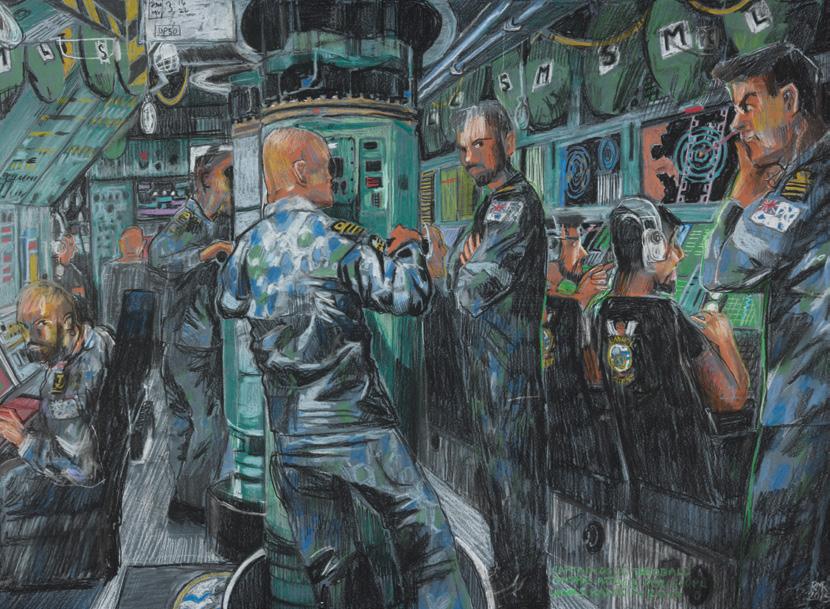
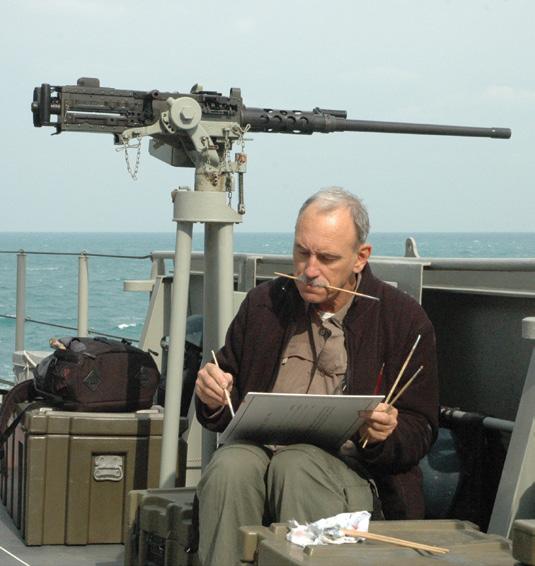
I quickly fitted into everyday shipboard life, observing day and night and asking many questions regarding the ship’s routine and events
On the final night aboard, an exhibition was held that featured all the paintings and drawings I had done during my stint on Arunta. Captain Brown was kind enough to observe that my time on the ship had been very well received and was one of the highlights of its deployment to the Middle East.
Following this trip, Captain Brown introduced me to Peter Horobin, a former submarine commanding officer and then President of the Submarine Institute of Australia (SIA). The SIA commissioned an oil-painted screen of Collins class submarines and facilitated a seaway trip on HMAS Rankin from Geelong to Jervis Bay.
When the wreck of AE1, Australian’s first submarine, was found in 2017, the SIA’s president, retired Rear Admiral Peter Briggs, commissioned an oil painting describing the boat’s loss, discovery and crew. The work was presented to descendants of the crew at the Australian National Maritime Museum in March 2018.
In 2019, I was again commissioned as a navy war artist, on board HMAS Ballarat (II) during Operation Manitou, Australia’s contribution to the international effort to promote maritime security, stability and prosperity in the Middle East region of the Gulf of Oman.
As well as recording past and present military events through direct observation, I sometimes create works through listening and talking to those involved. On a number of occasions, navy personnel have recalled incidents and I have drawn and painted the events as they described them, thus recording a truthful representation of their memory.
I am currently waiting for the Department of Defence to inform me of the next submarine rescue exercise, hopefully sometime this year, where I will draw and paint the LR5 submarine rescue vehicle as it practises docking with a submerged Collins class submarine.
I am also working on a very large work comprising a screen, oil painting and sculpture of the Battle of Fromelles and the World War I monuments, through to the discovery of the lost burial ground and current genetic studies of the lost soldiers.
Bob MacRae’s work is held in many national collections, including the Australian National Maritime Museum, Australian War Memorial in Canberra, Royal Australian Navy, Northern Territory Art Gallery and Museum and Darwin Military Museum.
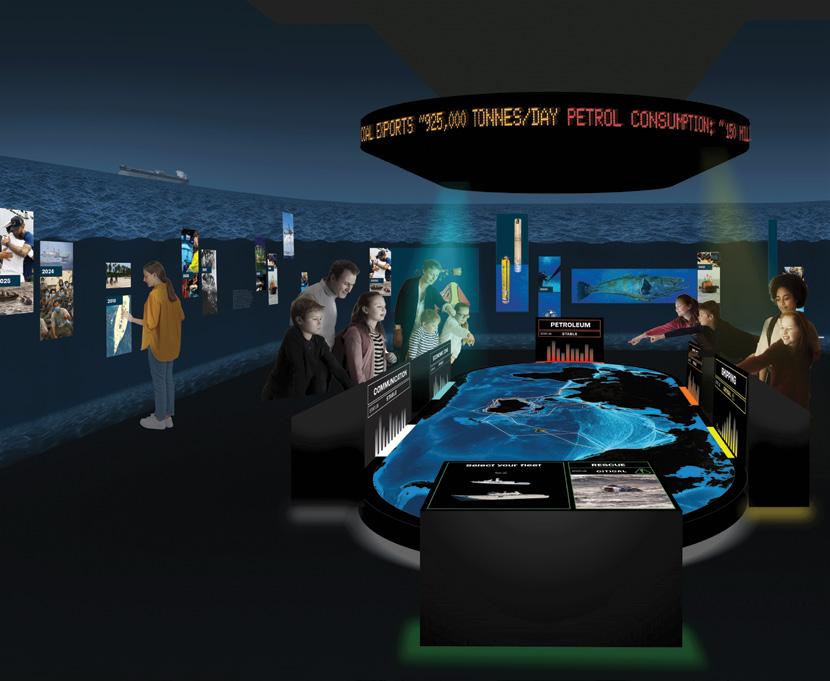
Through handson STEM-based interactives, visitors will explore sonar, sound, detection and the science of remaining unseen
Artist’s impression of the Situation Room – a fully interactive, immersive environment where visitors can step into the role of naval decision-makers.
Image Freeman Ryan Design
Step inside Australia’s navy
Action Stations transformed
The Royal Australian Navy will take centre stage at the Australian National Maritime Museum in 2026, when Action Stations is transformed into a bold new immersive navy pavilion. By Alessandra Brook of Freeman Ryan Design.
THERE ARE MUSEUM EXPERIENCES you remember because you saw something remarkable – and then there are the rare ones where you felt it.
For over a decade, Action Stations at the Australian National Maritime Museum has delivered that kind of moment. Visitors step from the brightness of Sydney Harbour into the steel worlds of two extraordinary naval artefacts: HMAS Onslow, a Cold War submarine defined by secrecy and stealth, and HMAS Vampire (II), a destroyer built for speed, strength and life on the surface. You can walk their corridors, stand where sailors worked, and feel the intensity of service at sea. It’s visceral, immersive – and unique in Australia. Now, that experience is about to go further.
Scheduled for completion this year, Action Stations will be reimagined as a fully immersive, interactive experience. Developed in partnership with the Royal Australian Navy (RAN), this multimillion-dollar transformation will celebrate Australia’s naval legacy while firmly focusing on the present and the future –revealing why the navy matters to everyday life in ways that are immediate, personal and unforgettable.
A bold partnership, a shared purpose
The new pavilion is the result of a major naming rights partnership between the museum and the RAN, uniting curatorial expertise with operational insight to create an experience that is authentic, contemporary and deeply engaging.
The museum’s Director and CEO, Daryl Karp AM, says:
This redevelopment is more than an exhibition. It’s a national platform for engagement and storytelling about the important role the navy plays in our region. We are proud to partner with the Royal Australian Navy to bring these stories to life and to invite the public into the heart of Australia’s maritime defence journey.
Conceived by Freeman Ryan Design, an award-winning Australian exhibition and experience design studio, the experience is intuitive, non-linear and participationled. Visitors are encouraged to explore at their own pace, engage hands-on with interactive elements, and discover the navy through action rather than instruction. The experience unfolds through a series of thematic areas that reflect how the navy operates – across domains, through teamwork and under pressure.
Why the navy matters – to you
At the heart of the new exhibition is a simple but powerful idea: the navy protects our everyday life.
Australia’s way of life depends on the ocean. Shipping lanes carry fuel, food and goods. Subsea cables carry data, banking and communication. Energy, security, trade and connection all rely on safe and open seas.
The new permanent exhibition will bring this reality into sharp focus, showing visitors how the navy monitors and protects these lifelines – from the surface to the sea floor. It will frame maritime defence not as something distant or abstract, but as a constant presence that underpins how we live, work, shop and communicate.
The
Situation Room: step into the pressure
At the centre of the new experience will be the Situation Room – a fully interactive, immersive environment where visitors step into the role of naval decision-makers.
Using a large digital world map, visitors will respond to real-world scenarios drawn from contemporary maritime challenges: threats to trade routes, risks to underwater infrastructure, emergencies at sea and regional instability. Visitors will collaborate, make decisions under time pressure and watch the outcomes unfold in real time.
Sailors, past and present, will tell their own stories of life at sea, and the emotional realities of service
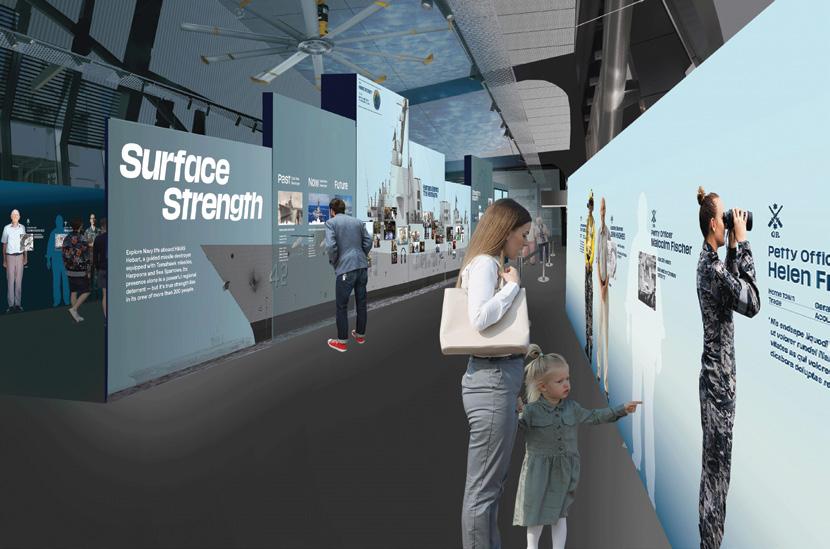
01 Action Stations will present stories that reflect the diversity of the navy and show how it has adapted to cultural change.
Image Freeman Ryan Design
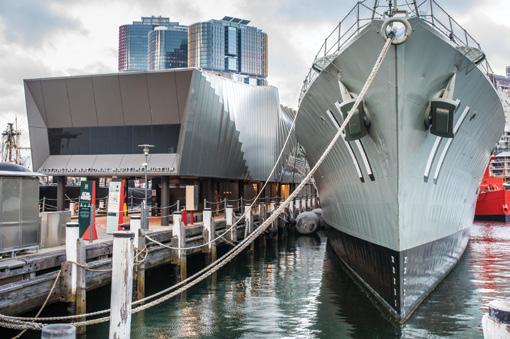
02 The reimagined Action Stations experience will also provide improved access to former RAN ships Vampire and Onslow
The Situation Room will be fast-paced, collaborative and absorbing. It will transform complex strategic issues into tangible experiences and make the navy’s role instantly understandable. This is where visitors will feel the weight of responsibility – and why the navy’s work matters every day.
Deep Stealth: the unseen domain
Through hands-on STEM-based interactives, visitors will explore sonar, sound, detection and the science of remaining unseen. They will learn why submarines are considered one of the navy’s most powerful capabilities – able to operate where no other vessel or aircraft can, gathering intelligence and monitoring activity without being detected.
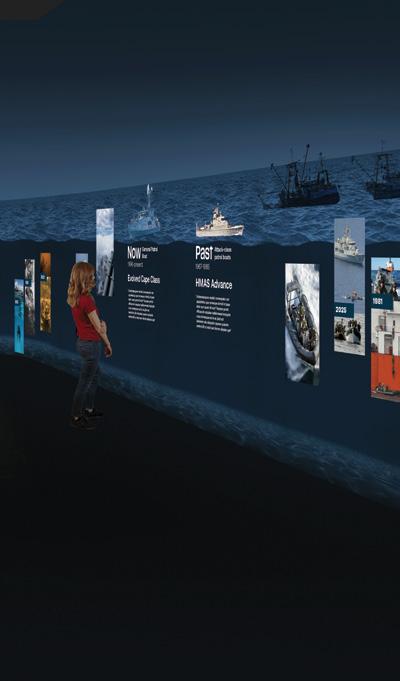
By travelling from the past to the present and future, the exhibition will place historic submarines alongside today’s Collins class fleet and the future SSN–AUKUS vessels. It will reveal how technology has evolved –and how human skill, teamwork and judgment remain critical.
Actual submariners’ voices will ground the technology in real experience, turning complex systems into human stories.
Honouring sailors and historic vessels
Sailors, past and present, will tell their own stories of life at sea, teamwork in close quarters and the emotional realities of service. The stories will reflect the diversity of the navy and acknowledge the challenges of cultural change, recognising that while technology advances rapidly, social change can be complex and slow.
Onslow and Vampire remain essential to the experience – not as stand-alone attractions, but as powerful, authentic extensions of the pavilion’s themes.
The new exhibition builds towards the moment visitors step on board, giving context to what they see, feel and experience on the ships. By the time visitors board, they will understand not only the vessels, but the people, technology and purpose behind them. The ships become more than historic artefacts; they become lived workplaces – and tangible proof of the navy’s mission across generations. Alongside new content, the experience will deliver a more accessible and comfortable visitor experience, welcoming a wider range of audiences. Clearer orientation, improved flow and thoughtful design will ensure that visitors can engage deeply – whether it’s their first visit or their fifth.
The museum looks forward to welcoming you to the new Actions Stations in 2026.
Decades of service and sacrifice
Our navy at war and in peace
For more than a century, Australia’s navy has defended our country in times of war and supported it in times of peace. Tim Barlass takes a decade-by-decade look at some of its major events, through images and objects in the museum’s collection.
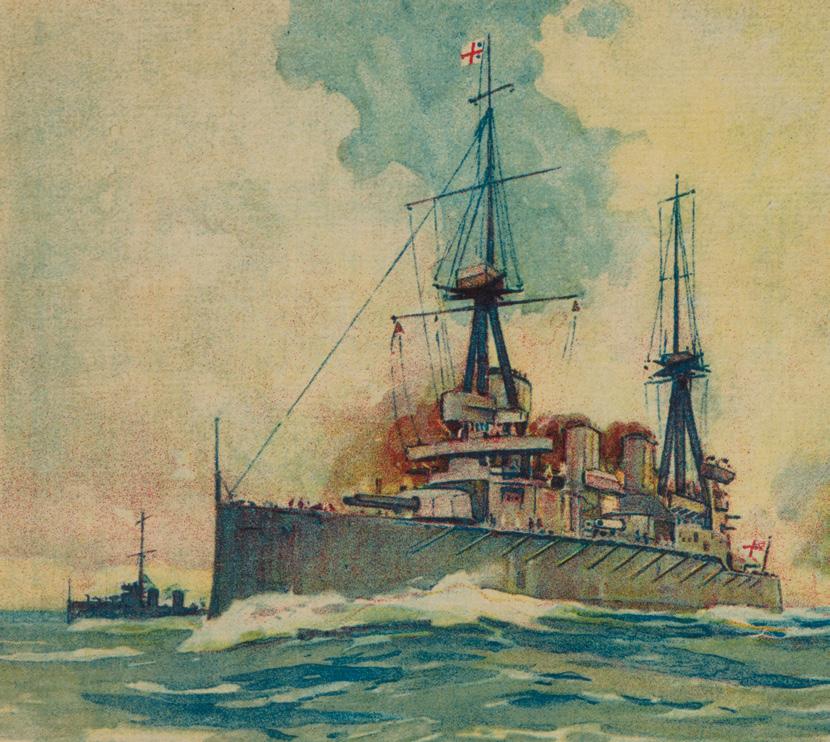
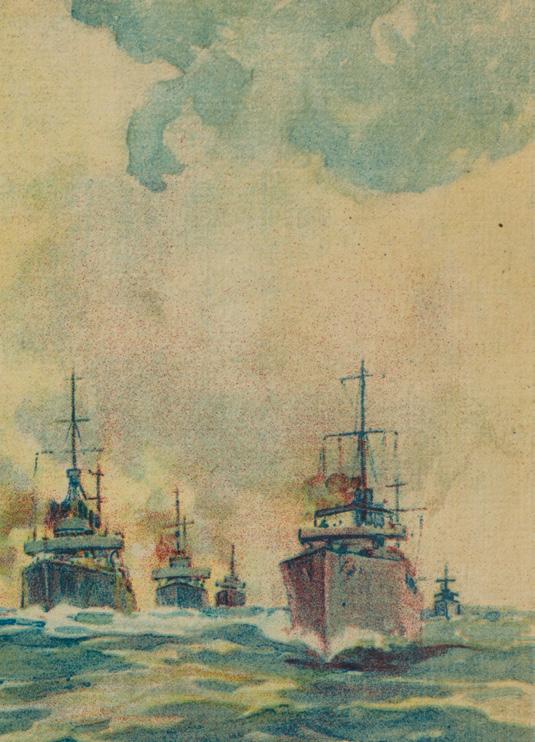
On 10 July 1911, King George V granted the naval forces the title Royal Australian Navy
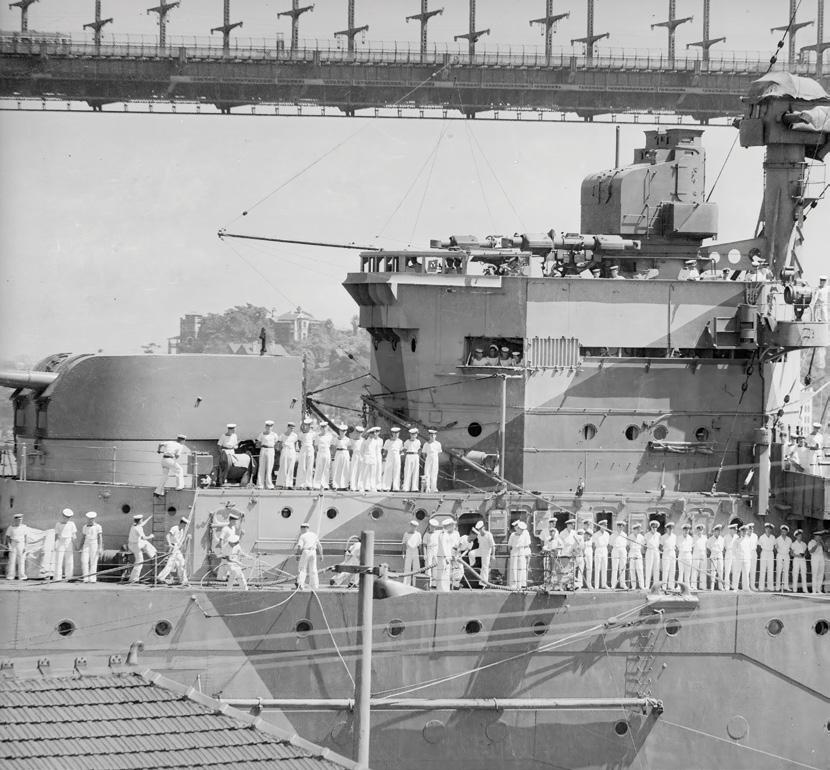
The first ships of the Royal Australian Navy enter Sydney Harbour on 4 October 1913: from left, battlecruiser HMAS Australia (I) and light cruisers Melbourne (I) and Sydney (I). In 1914, when World War I began, the RAN had 3,800 personnel and 16 ships. By the end of the war, four years later, it had 37 ships and more than 5,200 men. ANMM Collection 00016601
01
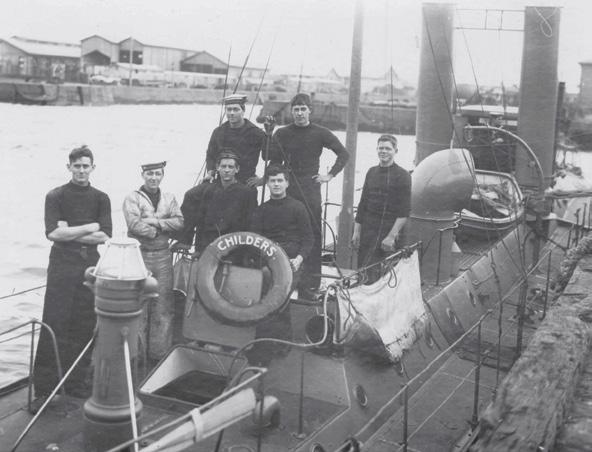
First Class torpedo boat Childers was built for the Victorian colonial government in 1884. After Federation in 1901, the vessels of the various colonial navies were transferred to Commonwealth ownership. Image courtesy Navy Images
02
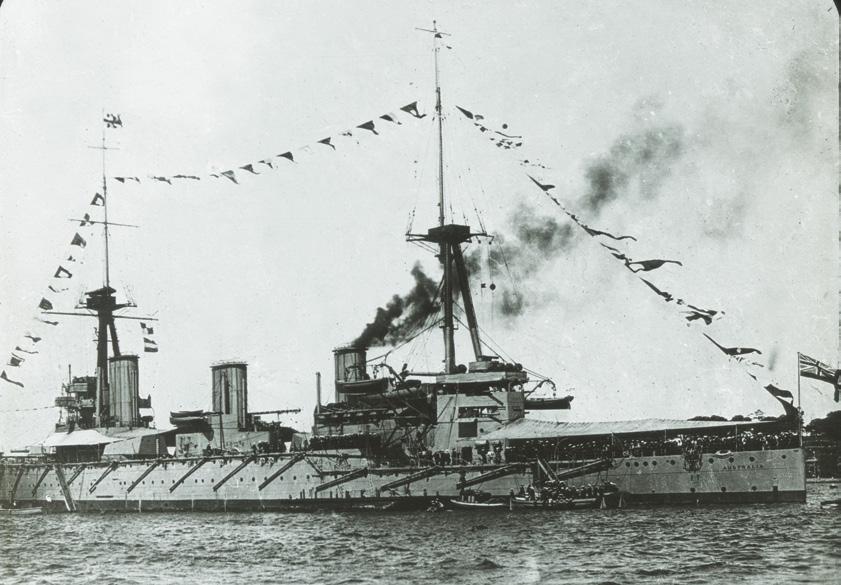
Lantern slide depicting battle cruiser HMAS Australia (I) dressed overall in Sydney Harbour. As the flagship of the newly named Royal Australian Navy, it led the first ships of the fleet into Sydney Harbour on 4 October 1913. ANMM Collection 00033924
Politicians thought naval defences should remain with Britain’s Royal Navy; Captain William Creswell disagreed
1900s
ON 1 JANUARY 1901, Federation united the six colonies of New South Wales, Victoria, Queensland, South Australia, Western Australia and Tasmania, forming the Commonwealth of Australia. On 1 March, the former colonies transferred naval and military forces to the federal government. The Commonwealth Naval Forces (CNF) had a budget for 1901–02 of £67,000 (equivalent to $12.5 million today) and inherited a handful of torpedo boats and gunboats ready for the scrapyard.
Politicians, including Defence Minister Sir John Forrest, thought that naval defences should remain with Britain’s Royal Navy; Captain William Creswell disagreed. A former Royal Navy officer with two decades’ experience of Australia’s naval defence, he argued that Australia was open to attack by sea. As Director of Naval Forces in 1904, Cresswell recommended spending £1.8 million ($338 million today) on three cruiser–destroyers,16 torpedo boat destroyers and 13 torpedo boats. In February 1909, three destroyers –HMA Ships Parramatta (I), Yarra (I) and Warrego (I) – were commissioned. The CNF later grew to include submarines and coastal destroyers.
1910s
On 10 July 1911 King George V granted the naval forces the title Royal Australian Navy, and its warships were given the prefix HMAS. Sightseers crammed Sydney’s headlands on 4 October 1913 to witness the entry into Port Jackson of the battlecruiser HMAS Australia (I) along with three cruisers and three destroyers. Australian submarines AE1 and AE2 arrived in Sydney on 24 May 1914.
On 4 August 1914, Australia entered World War I. The first loss for the RAN was just five weeks later, on 14 September, when AE1 failed to return from patrol near Rabaul, New Guinea, with the loss of all 35 crew. Its fate remained a mystery for more than a century, until its wreck was finally discovered in December 2017.
Australia’s first single-ship battle at sea was between HMAS Sydney (I) and Germany’s light cruiser SMS Emden on 9 November 1914. By October, Emden had captured or sunk 25 Allied steamers and two warships. Emden arrived off Direction Island, in the Cocos (Keeling) Islands, on 9 November. The station superintendent sent out a distress call that was picked up by HMAS Melbourne (I), which sent Sydney to investigate.
Emden made the first hits and Sydney suffered four fatalities and more than a dozen wounded – the only Australian casualties. Fire engulfed Emden and in the hope of saving lives it was deliberately grounded. Emden had 316 crew; the battle left 134 dead and 65 wounded.
On 25 April 1915, Australian submarine AE2 became the first Allied vessel to transit the Dardanelles. Following orders to ‘run amok’, AE2 entered the Sea of Marmara and patrolled for ships and transports to sink. Although unsuccessful, it tied up Turkish assets and proved the value of submarines. On 30 April, AE2 was hit by gunfire from Turkish torpedo boat Sultanhisar. Its commander ordered it to be scuttled, and the crew was captured. The wreck of AE2 was located in 1998, lying in 72 metres of water.
1920s and 30s
After expending £377 million (more than $70 billion today), the Australian Government ended the war with debts of £262.5 million ($49 billion today).
By 1920 the RAN had a battlecruiser, three cruisers, six J-class submarines and 12 destroyers. The nation’s financial situation made it difficult to justify the expense of keeping the RAN at this size.
In 1924, Australia scuttled the battlecruiser HMAS Australia (I) as part of the British Empire’s disarmament agreement. The Great Depression struck further blows to the RAN. At its lowest point, in 1932, our navy could muster only three ships.
When the Australian Government again declared war, on 3 September 1939, the RAN had 13 operational ships plus four under construction. The naval reserves were called up, doubling the RAN’s permanent force from 5,440 to 10,259 personnel.
01
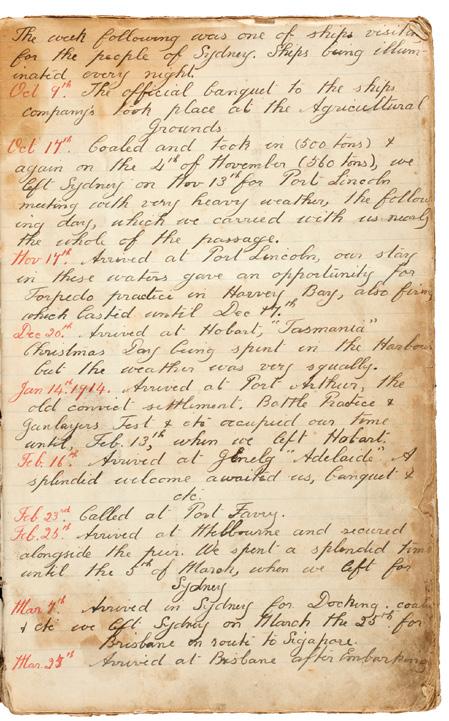
Log from first commission of HMAS Sydney (I), 1913–19, with details and photos of its commissioning voyage and wartime movements, including the battle with SMS Emden, plus ephemera and postcards from places visited. ANMM Collection
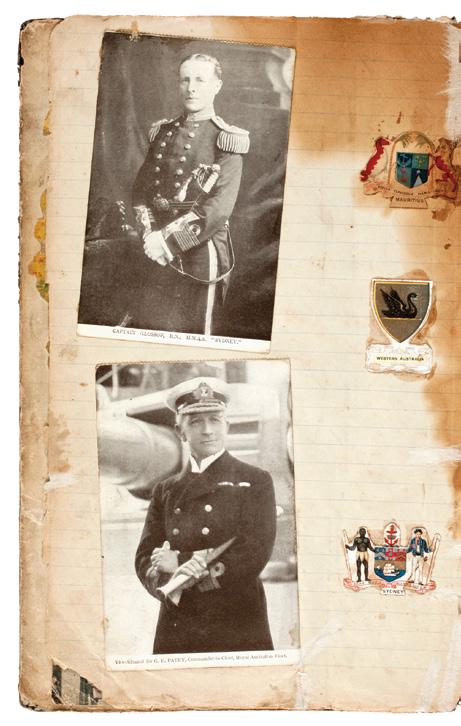
00006362 Gift from K Daskalopoulos
02
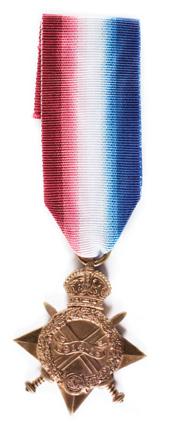
1914–15 Star awarded posthumously to Signalman George Dance, who was on board submarine AE1 when it disappeared in 1914. ANMM Collection 00054405 with assistance through the ANMM Foundation
03
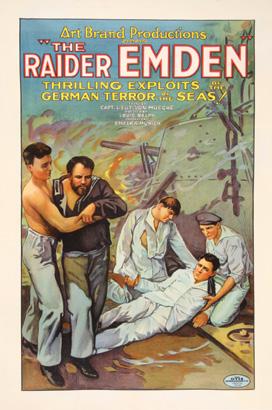
Large-format cinema poster for the 1928 USA release of Louis Ralph’s German silent film Kreuzer Emden (released in the USA as The Raider Emden). ANMM Collection 00046579
01
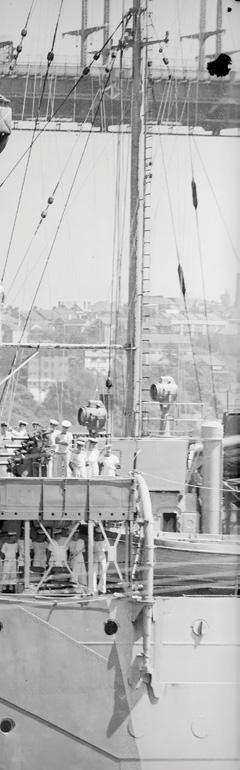
HMAS Sydney (II) returning to Sydney on 10 February 1941 after service in the Mediterranean with the 7th Cruiser Squadron. Later that year, the ship and all 645 of its men would be lost in their battle with HSK Kormoran
ANMM Collection 00020342
Samuel J Hood Studio
02
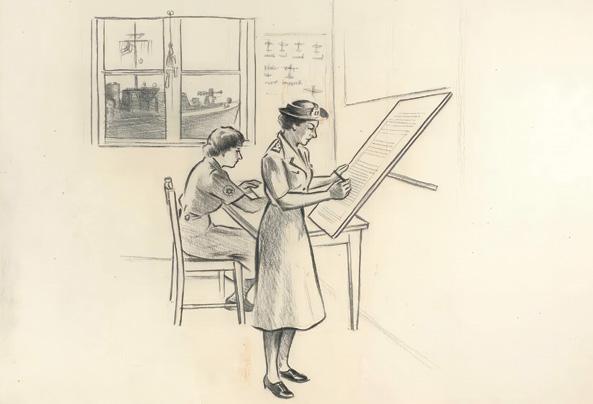
A sketch by official war artist Rex Julius depicting a Third Officer WRAN and WRAN writer at work in the Fairmile School Office, HMAS Rushcutter, 3 April 1944.
Image National Archives of Australia NAA: B6121, 19E. Public domain
Within half an hour both Sydney and Kormoran were severely damaged; both sank that night
1940s
At least seven RAN ships, and hundreds of personnel, took part in the Battle of the Atlantic, a long campaign fought by Allied forces against German submarines.
The Women’s Royal Australian Naval Service (WRANS) was formed in April 1941. Their shore-based communications work included wireless telegraphy and signals intelligence.1 By the end of the war, more than 3,000 women had enlisted.
On 1 May 1941, the Australian coastwatching network was established to provide information on the movements and disposition of enemy forces in the South Pacific.
On 19 November 1941, HMAS Sydney (II) unexpectedly encountered a vessel while off the northwest coast of Western Australia. When Sydney closed on the other ship and ordered it to identify itself, it revealed itself to be the German raider HSK Kormoran, and fired the first salvo. Within half an hour, both ships were severely damaged; Sydney sank later that night, as did what was left of Kormoran after its complement of mines exploded and blew the ship apart. On Kormoran, 318 of its 399 personnel survived. Debris from Sydney was found, but all 645 of the ship’s men perished – the RAN’s largest ever loss of life. 2
On 27 November, HMAS Parramatta (II) was sunk with the loss of 138 lives near Tobruk, Libya, torpedoed by a German U-boat.
On 7 December 1941, Japan mounted a surprise attack on Pearl Harbor, Hawaii, which brought the United States into the war. Within 24 hours, Japan had attacked Malaya and other British and American outposts. The Pacific War had begun.
On 19 February 1942, Darwin was attacked just before 10 am by 188 Japanese aircraft launched from four aircraft carriers in the Timor Sea. Several RAN vessels were in Darwin and their crews defended the harbour with anti-aircraft fire.
01 01
02
On the night of 27 February 1942, an Allied force of 14 ships, including HMAS Perth (I), engaged Japanese naval forces in the disastrous Battle of the Java Sea. Attempting to prevent invasion of Java, five Allied ships (three Dutch and two British) were lost.
Perth and USS Houston were the only large Allied warships to survive the Battle of the Java Sea, but both were lost soon after, in the early morning hours of 1 March, during the Battle of Sunda Strait. Perth received four torpedo hits in less than 30 minutes; after the second, its captain, Hector Waller, gave the order to abandon ship. Perth sank at about 12.25 am; of the 681 personnel aboard, 353, including Waller, perished. Another 106 Perth crewmen died in Japanese captivity (including 38 killed aboard Japanese ‘hell ships’ sunk by the Allies).
War came by stealth to Sydney when, on the night of 31 May 1942, three Japanese midget submarines entered Sydney Harbour. Reginald Andrews was on the civilian patrol boat Sea Mist, equipped with depth charges, when at 4.30 am he was asked by the commanding officer of the minesweeper Goonambe to investigate an object in Taylors Bay:3
I came up alongside of the propellers that were coming up out of the water and by this time they were well clear and the hull was also coming out of the water and I ran up alongside, that close that I could have easily have stepped off the deck onto the submarine. Just before getting to amidships, the coxswain, who was tending to the depth charges aft, called out that there were two more behind me. I looked round quickly and on the port quarter there were two more submarines with their conning towers well above water.
The first became entangled in anti-submarine nets; the second fired two torpedoes, one of which hit the RAN depot ship HMAS Kuttabul, which sank immediately with loss of 21 Allied naval ratings – 19 Australian and two British.4 The third was targeted by depth charges and was not seen in the harbour again. 5
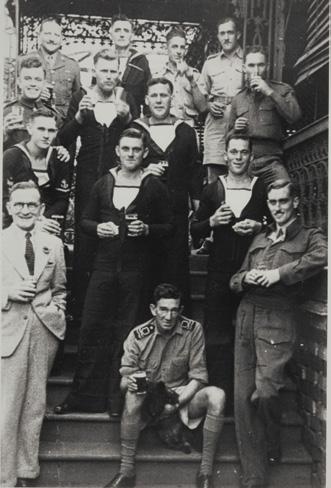
In 1942, the RAN heavy cruiser HMAS Canberra (I) operated with the US Navy in support of the American landings on the strategically vital islands of Guadalcanal and Tulagi. These operations ended with the loss of Canberra in the Battle of Savo Island on 9 August 1942. Just over 1,000 Allied sailors lost their lives, and another 700 were wounded, as a result of this battle. Canberra alone suffered 84 dead and 109 wounded.
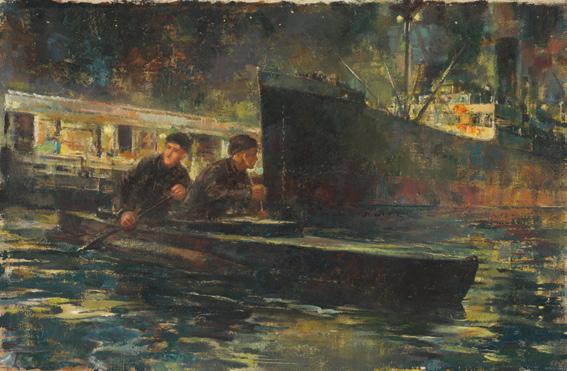
On the night of 26 September 1943, 14 members of Australia’s Z Special Unit carried out a daring clandestine raid against Japanese shipping in Singapore’s Keppel Harbour. To avoid detection, they had travelled deep into enemy territory aboard a Japanese built vessel, disguised as local fishermen. Six of the men launched their attack using folding kayaks and limpet mines, which they attached to the hulls of their targets. The mission, Operation Jaywick, was a complete success, damaging or destroying six Japanese ships with no Allied losses. HMAS Sydney (III) was commissioned at Devonport in the UK on 16 December 1948. It departed for Australia the following April, with the Fleet Air Arm’s first naval air squadrons, 805 and 816 squadrons, on board. They arrived at Jervis Bay a month later, on 25 May.
Informal group portrait of personnel connected with Operation Jaywick. Australian War Memorial 045420
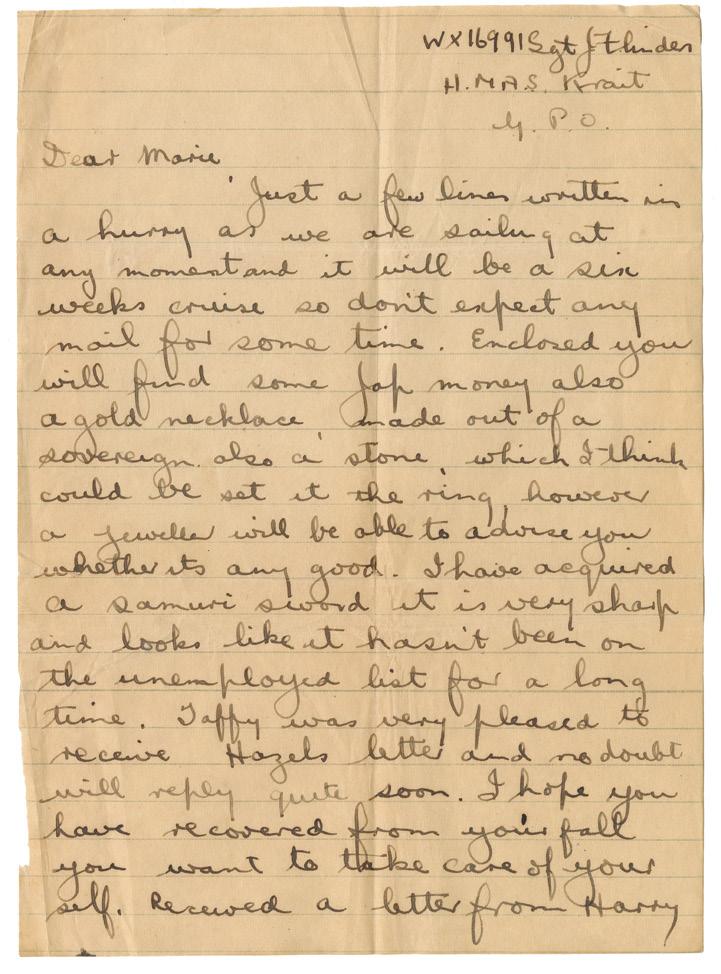
Letter from Jack (John) Flinders to his sister Marie, written while attached to HMAS Krait in 1945, when it was sent to Ambon for the Japanese surrender at the end of the war.
01
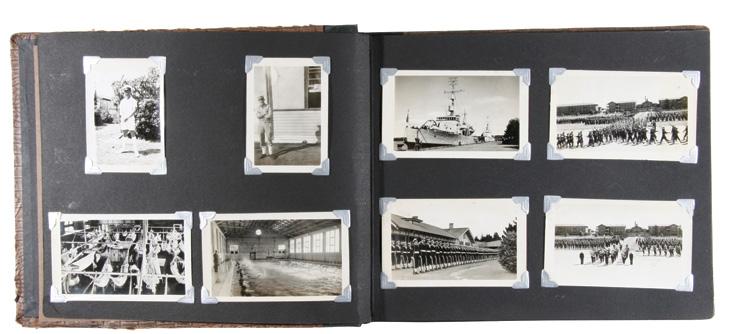
Album recording the naval service of Harry Owen Hamment aboard the aircraft carrier HMAS Sydney (III) during the Korean War.
ANMM Collection 00046503
Gift from William Hamment
02
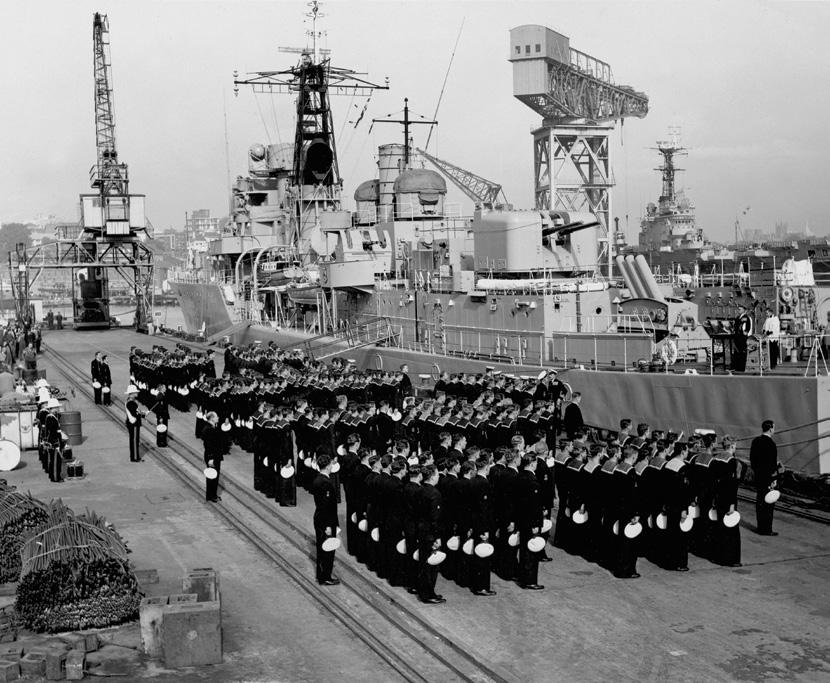
Scene from the commissioning ceremony of HMAS Vampire (II)at Garden Island, 1959.
ANMM Collection 00028536
Gift from the Royal Australian Navy, HMAS Waterhen
03
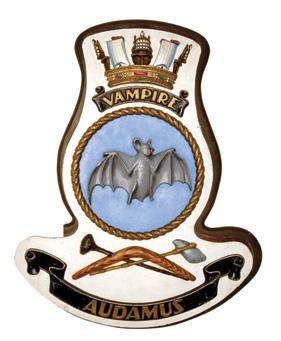
HMAS Vampire (II) wooden crest with the motto ‘Audamus’ (‘Let Us Be Daring’).
ANMM Collection 00030115
04
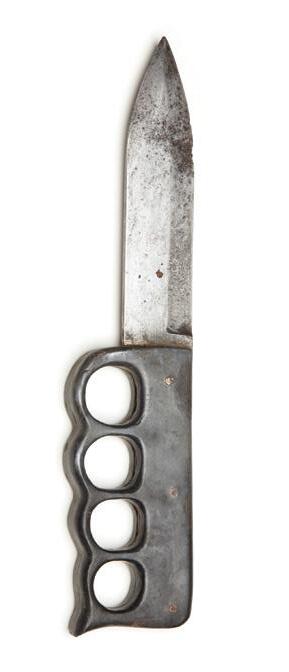
Steel knuckle knife issued to Lt Hubert Edward ‘Ted’ Carse for Operation Jaywick.
ANMM Collection 00055853
Purchased with the support of the Australian Government through the National Cultural Heritage Account and the Australian National Maritime Museum Foundation through the generosity of the families of Ted Carse’s brothers
More than 4,500 men aboard nine Australian warships served in the operational area during the Korean War
1950s
The Korean War broke out on 25 June 1950, and complete control of the sea by the United Nations was considered critical to preventing the immediate fall of South Korea. The United States was first to commit support, with Australia second. The Korean War ended with the signing of an armistice agreement on 27 July 1953. Overall, more than 4,500 men on board nine Australian warships served in the operational area. Three members of the RAN – all pilots from 805 Squadron – were killed during the conflict and six were wounded. Sixty-two members received commendations. HMAS Vampire (II) is a British Daring class destroyer that served with the Royal Australian Navy from 1959 until 1986. It was built at Cockatoo Island Dockyard in Sydney in the early 1950s, and was one of the last big gunships used by the RAN before missiles superseded heavy guns.
1960s
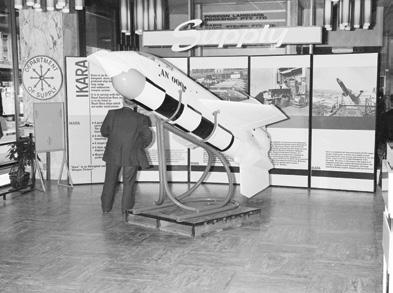
In 1961, the Australian Government announced its decision to acquire US-built Charles F Adams class destroyers. HMA Ships Perth (II) and Hobart (II) were commissioned in 1965 and HMAS Brisbane (II) in 1967. They carried the Australian-designed and built anti-submarine missile known as ‘Ikara’. This missile system greatly extended the range at which ships could engage with submarine targets.
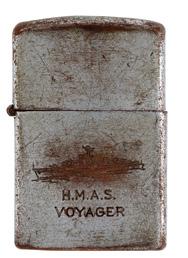
In 1963, the Naval Board recommended that the RAN acquire four Oberon class submarines. They were to be built by Scotts’ shipbuilding yard in Scotland, and two more Oberons were subsequently added. The Oberon was an advanced diesel–electric submarine, renowned for quiet operation and reliability. The class was involved in Cold War surveillance, shadowing Soviet submarines. On the night of 10 February 1964, 20 nautical miles southeast of Jervis Bay in New South Wales, the RAN aircraft carrier HMAS Melbourne (II) collided with the destroyer HMAS Voyager (II). The smaller Voyager was cut in two, with the forward section sinking within 10 minutes and the after section by midnight. The reputations of both captains were called into question, and the navy’s public standing suffered. Despite the frantic rescue efforts that followed, and acts of great bravery and heroism, 82 men of the Voyager crew lost their lives.
In April 1965, the Australian Government committed an infantry battalion to the Vietnam War. Transporting the battalion required heavy sealift and fast troop transport, which was provided by the former aircraft carrier HMAS Sydney (III). Australian Clearance Diving Team 3 (CDT3) was trained in the business of explosive ordnance disposal, both on the surface and under water.
The RAN’s Navy Helicopter Flight Vietnam (RANHFV) was a unique unit that combined US Army airborne soldiers and RAN helicopter pilots and ground crew.
1970s
The RAN embarked upon its largest peacetime disaster relief operation to date in December 1974. In the early hours of 25 December, Cyclone Tracy devastated the city of Darwin. Winds speeds exceeded 160 knots (296 km/h). The cyclone killed 49 people ashore and a further 16 at sea. The response of Operation Navy Help Darwin was swift; RAN aircraft arrived the next day.6
1980s and 90s
In January 1982, it was decided that Australia needed six conventional submarines to replace the RAN’s Oberon class vessels. Six Collins class submarines were built in Adelaide, at a cost of $3.9 billion, launched during 1993 and 1994, and commissioned in mid-1995.
The Royal Australian Navy started the Anzac class frigate program in the mid-1980s, intending it to replace the aging River class frigates. In all, 10 ships were built for the RAN and two for the Royal New Zealand Navy. 2000s
The RAN had a significant presence in the Middle East between 1990 and 2021, with 68 individual ship deployments across six separate Australian operations. After the terrorist attacks on 11 September 2001, the Australian government increased the RAN’s presence, under Operation Slipper. Another three-ship task group arrived in the Persian Gulf by December 2001. Mine-clearing operations were conducted and RAN Clearance Diving teams cleared mines from the Khawr abd Allah, a narrow stretch of water leading to the port at Umm Qasr, Iraq. Australia was responsible for keeping this port open, and for seizing and securing Iraqi offshore oil platforms.
In May 2009, the Australian Government announced that the frigate already deployed in the Middle East under Operation Slipper would also take on counterpiracy operations, as piracy off the coast of Somalia emerged as an issue.
The RAN had a significant presence in the Middle East between 1990 and 2021
01
HMAS Onslow at the Singapore naval base. ANMM Collection 00038504 Gift from John Hodges
02
Ikara missile display at the Science Museum, Melbourne, 1972. © Museums Victoria/ CC BY (licensed as attribution 4.0 International)
03
HMAS Voyager (II) cigarette lighter, which survived the Melbourne/Voyager disaster in 1964. ANMM Collection
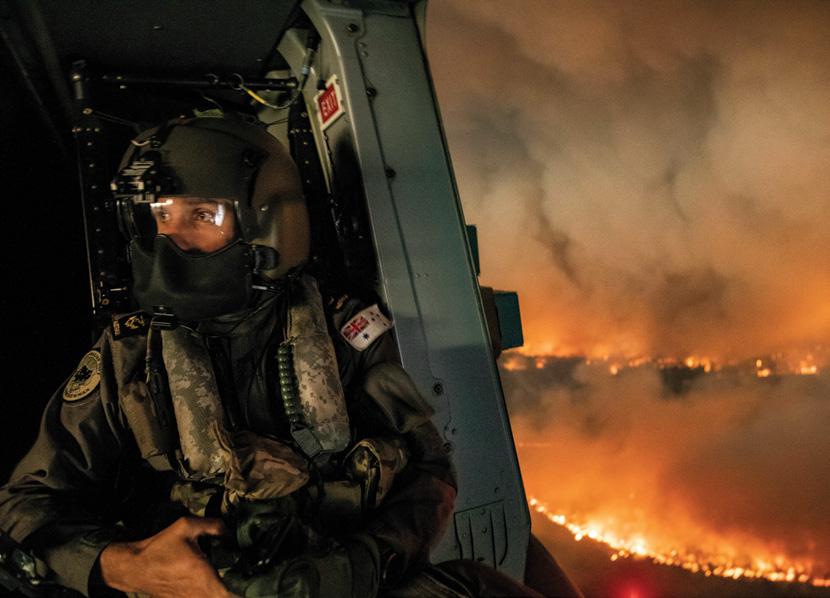
Navy personnel were among more than 8,200 ADF members who contributed to Operation Bushfire Assist in 2019–20
01
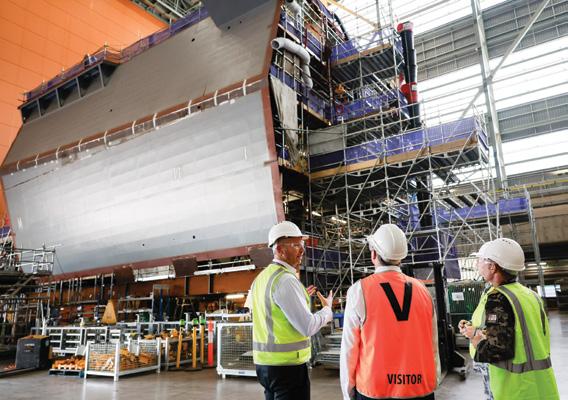
Minister for Defence Industry and Capability Delivery, the Hon Pat Conroy MP, tours the Hunter class frigate production line at the Osborne Naval Shipyard, South Australia, in January 2025. Image Kym Smyth, reproduced courtesy RAN
02
Royal Australian Navy Aircrewman
Leading Seaman Ben Nixon of 808 Squadron assesses the Tianjara fire in the Moreton and Jerrawangala national parks out of an MRH-90 Taipan Military Support Helicopter. Photographer CPOIS Kelvin Hockey, image courtesy RAN. Image series S20193355
2010s
Operation Bushfire Assist began on 31 December 2019. Over the next three months, the Australian Defence Force supported civilians and emergency services across the country. RAN personnel were among more than 8,200 ADF members – including 2,500 reservists – who contributed to Bushfire Assist.
2020s
With the commissioning of HMAS Arafura in June 2025, the RAN introduced the first of six Arafura class offshore patrol vessels (OPVs) to replace the Armidale class. The OPV design supports specialist mission packages, such as a maritime tactical unmanned aerial system.
Construction is under way of six new Hunter class frigates, which are a modified version of the Type 26 frigate built by BAE Systems and will be one of the most advanced anti-submarine warships in the world. The frigates will be built in Australia by ASC Shipbuilding at the Osborne Naval Shipyard in South Australia, and will operate the MH-60R Seahawk Romeo helicopter. The first three ships will carry the names HMA Ships Hunter, Flinders (II) and Tasman
A fleet of 11 multi-role frigates will replace the Anzac class ships, with delivery by 2029. Mitsubishi’s upgraded Japanese Mogami class was chosen in August 2025 and will be equipped for undersea warfare and local air defence.
The United States intends to sell Australia three Virginia Class SSNs (nuclear-powered submarines) from the early 2030s, a deal authorised by the US Congress in December 2023. The SSN Virginia Class will provide Australia with a nuclear-powered submarine capability.
Australia’s purpose-built nuclear-powered submarines – SSN-AUKUS – will be based on the UK’s nextgeneration design that incorporates technology from the UK, USA and Australia. The combination of technology from all three partners will deliver a world-class submarine that meets Australia’s long-term defence needs while bolstering trilateral industrial co-operation.
The UK will commence construction of its first SSN-AUKUS in Barrow-in-Furness, UK, as early as the late 2020s, and intends to deliver its first SSN-AUKUS to the UK Royal Navy in the late 2030s. Australia will begin building its first SSN-AUKUS in Adelaide, South Australia, by the end of the 2020s.
1 See Signals 152 for the story of Gwenda Moulton, one of the first WRAN recruits to serve in World War II.
2 The wrecks of HMAS Sydney (II) and HSK Kormoran were found in March 2008 by volunteer group the Finding Sydney Foundation. The ships lie about 112 nautical miles (207 km) off Western Australia, at a depth of some 2,470 metres. Both wreck sites were subsequently documented in April 2015 by a team led by the Western Australian Museum and Curtin University.
3 Interview with Reginald Andrews, 1977. ANMM Collection 00047661
4 The naval depot at Garden Island in Sydney was commissioned as HMAS Kuttabul in 1943 to honour the lives lost.
5 The third midget submarine managed to escape the harbour. Its fate remained unknown until 2006, when its wreck was found off Sydney’s Northern Beaches. See story on page 40.
6 For more about Operation Navy Help Darwin, see Signals 154 (December 2024), page 14.
Tim Barlass is a journalist who has worked at The Sydney Morning Herald, and is now writing under contract to the museum.
Paddling in brave footsteps
Retracing the route of Operation Jaywick
In September 2017, a group of Australian veterans re-created the kayak legs of the famous Operation Jaywick commando raid. Their purpose was to honour the memory of the men from 75 years before and to raise money for a veterans’ charity. Martin Graves details their trip.
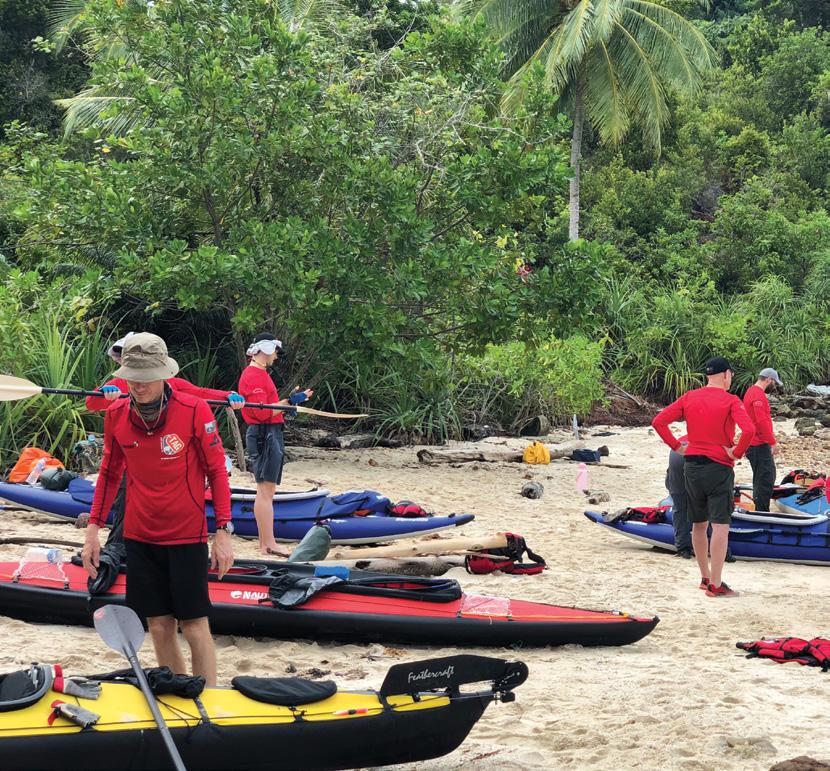
We spent three hours assembling the kayaks in the oppressive afternoon heat, finishing just as a tropical storm broke
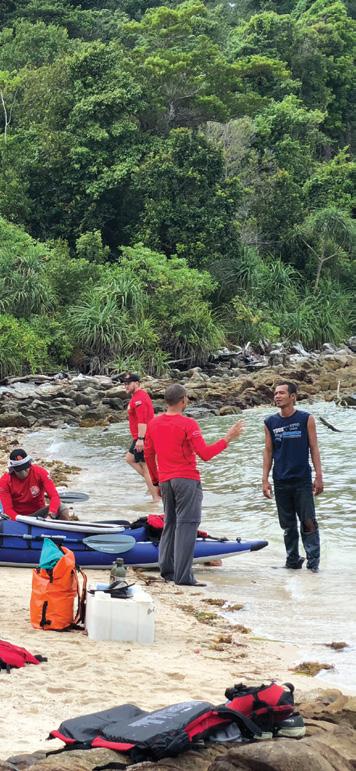
ON THE NIGHT OF 26 SEPTEMBER 1943, six men in folding kayaks paddled silently into Singapore harbour. Their mission: to create havoc by placing limpet mines on Japanese supply ships sitting at anchor. Named Operation Jaywick, this was arguably the most audacious maritime commando raid of World War II. Months of planning and training culminated in the raiders spending 40 days behind the lines in enemy waters, seven cargo vessels being destroyed or damaged and the team returning to Australia undetected.1
Logistics
We had obtained three two-man folding kayaks: a Feathercraft Expedition Double, a Nautiraid Grand Raid II and a 1970s Folbot, all with a flexible hypalon hull and a folding frame. Our Folbot was almost identical to the kayaks used in the original raid. These kayaks have a relatively low top speed of three knots, but are suited to military operations due to their relatively large payload and reduced magnetic signal.
Folded, each kayak weighed between 25 and 30 kilograms, and was carried in two large bags. Assembled, they had a length of 5.45 metres and a beam of 87 centimetres, and could take a payload of 450 kilograms. Inflatable sponsons along the inside of the hull tensioned the skin to give the kayaks some inherent flotation in the event of flooding.
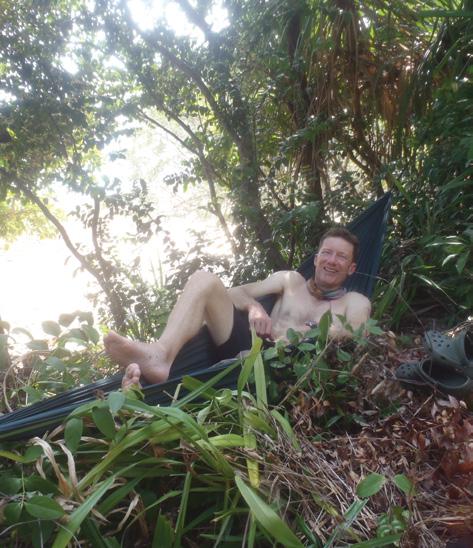
Environmental conditions meant camping equipment could be minimised to paddlers sleeping in a hammock under a mosquito net and tarp. Due to weight restrictions on flights, personal gear was limited to one waterproof top, one change of dry camp clothes and a set of smart casual clothes for travel and functions in Singapore.
Food for the trip consisted of dehydrated meals and muesli bars brought from Australia and locally acquired noodles, rice and dehydrated shrimp. We filtered local water using an MSR filter and supplemented it with bottled water purchased locally.
The paddlers and support crew load their canoes on Panjang Island. Image Martin Graves
Given the remote location, we carried a substantial medical kit, repair items for the kayaks and communication and safety equipment – including personal flotation devices.
Alongside the kayaking team was a support team consisting of an officer in charge, a logistician, an interpreter and a cameraman located at Sekupang in Indonesia. The team had access to a local motor launch and communications with the kayaking team via VHF radio and satellite trackers.
The paddle
The route was planned from notes in Lt Donald Davidson’s after-action report, held at the National Archives of Australia. 2 Over six days, we would paddle 60 nautical miles (110 kilometres), camping on the same beaches exactly 75 years after the original raiders had hidden at those locations during daylight hours.
For navigation, we used Admiralty charts 202 and 501, and obtained data on tides and currents through tidal apps and tidetechmarinedata.com. The Singapore and Batam straits have complex tides due to their location between the Indian and Pacific oceans. This, combined with many small islands around the straits, produces fast and complex currents of up to 4 knots (8 km/h) – greater than the top speed of a fully loaded kayak. It was imperative to get our calculations right to ensure we were not carried backwards.
The group flew from Brisbane to Singapore on 17 September 2017, each with 46 kilograms of equipment. We travelled onwards to Sekupang by ferry then made our way down the archipelago by bus. Finally, at Melayu Beach, we spent three hours assembling the kayaks in the oppressive afternoon heat, finishing just as a tropical storm broke. Keen to make it to Rempang Island that night – 75 years to the day since the original raiders had been dropped there by their vessel Krait – we set off to paddle three kilometres through lashing rain, winds of 20 knots and seas with a one-metre swell.
When we arrived, the storm had calmed. We held a quiet ceremony on the beach, then set up camp and went to bed. The next morning we were keen to start our paddle to Bulat Island before the temperature climbed too high, and we slipped out onto the now smooth ocean, threading our way through the small Islands. Despite the calm waters, one kayak capsized as we all rafted up for a break. This gave us a chance to practise the re-entry techniques that a few of the crew had only just learned off Melayu Beach the afternoon before.
01 The author resting in his hammock on Dongas Island.
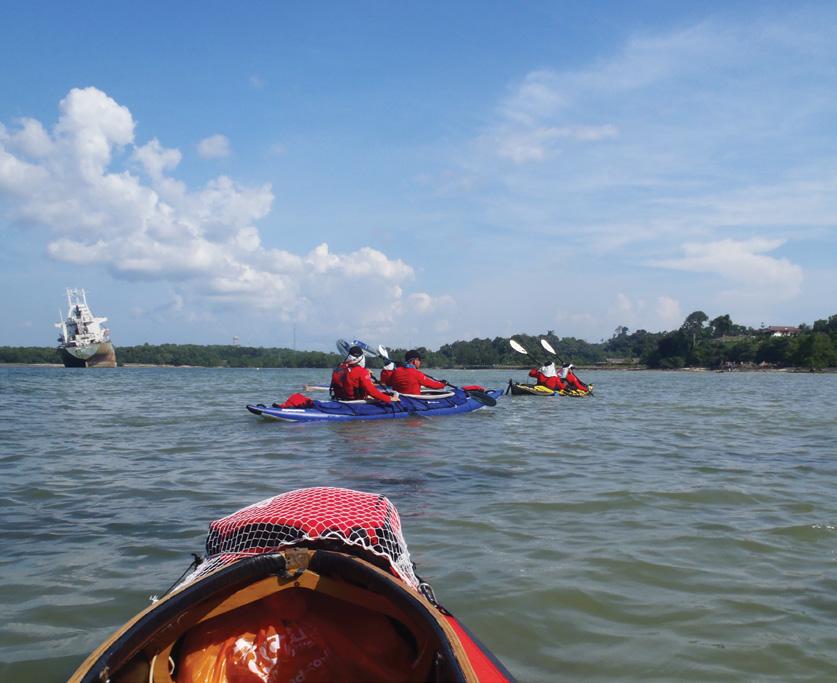
02 Paddling to Dongas Island. Images Martin Graves
02
The Singapore and Batam straits have complex tides due to their location between the Indian and Pacific oceans
At Kranji War Memorial, the magnitude of what the Jaywick men had achieved really hit home for me
02
Study for Australian commandos attacking Japanese shipping in Singapore Harbour, September 1943 by Dennis Adams, 1969.
Australian War Memorial ART 28538
After two days paddling along the Bulan Strait, we reached Dongas Island where, after some bush bashing, we found the location where Jaywick commander Ivan Lyon had set up his observation post overlooking Singapore harbour. Heading back to the beach, we decided the most fitting way to honour the Jaywick men would be to complete the next leg at night and paddle against the northeast current before heading to Subar Island, as they had. At last light, after packing camp, we silently slid our kayaks into the dark waters and paddled into the flow. Each paddle stroke caught the lights from Singapore city which, although 20 kilometres away, seemed tantalisingly near. Perhaps at this stage, the Jaywick raiders also felt that their destination was deceptively close.
We reached Subar before dawn and brewed tea while we waited for sunrise. With first light, we realised little had changed from Lyon’s report 75 years ago. Not a tree grew on the island; there was no shade and nowhere to hang a tarp, let alone a hammock, so we waited for favourable tides to begin our final leg. Given how many large cargo vessels transit through the busy Singapore Strait, we had been unable to obtain permission from Singaporean Customs to paddle across it. Instead we paddled to the terminal at Sekupang and transited the strait via ferry, then reassembled the kayaks to complete the paddle from the Singapore Terminal to the Royal Singapore Yacht Club.
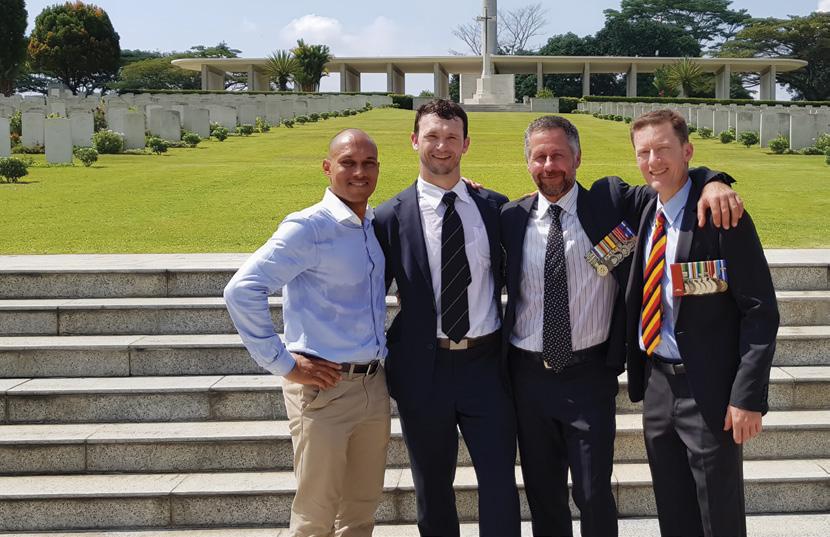
Paddlers (from left) Fabrice Abbey, Troy Huckstepp, Mike Kosieradzki and Martin Graves at Kranji War Memorial, Singapore. Image Martin Graves
At the eleventh hour, we faced our biggest challenge. To paddle with the current, we arrived at the ferry terminal on an ebbing tide, leaving us to cover the final two kilometres dragging our boats through thigh-deep mud and across oyster-encrusted rocks. This agonisingly slow process sapped the strength from our legs and coated our equipment with a pungent black tarry mud. After two hours of struggle, with the jetty only metres away, a 30-centimetre gash was torn in the bottom of the Folbot.
Sitting next to the terminal, we began cleaning ourselves and our equipment so we could travel on the ferry, and set to fixing our poor Folbot’s skin with plumbing tape and glue. In the end, all three kayaks were able to paddle the final five kilometres along Singapore’s shore and into the yacht club to be met by relatives and friends, including the family of Horace Young, Operation Jaywick’s telegraphist.
Afterwards
After the reception at the yacht club, we quickly changed into dry, clean clothes to attend a memorial service at Kranji War Memorial. Here, the magnitude of what the Jaywick men had achieved really hit home for me. Standing in front of the perfect rows of headstones of this Commonwealth war cemetery, our leader Mick gathered us together to say a few words. He reminded us of the hardships that our forebears had endured to
successfully complete a mission many thought had no chance of success. While we had finished our paddle, 75 years ago the men of Jaywick still needed to rejoin Krait then navigate 2,000 miles of enemy ocean before they were safe. Mick finished by stressing that, after their success with Jaywick, many of the men involved would sign up again for the ill-fated Operation Rimau in 1944. None would survive; six of them lay before us. 3
Standing before the grave of Captain Bob Page, who had been a medical student at the beginning of the war, I decided then that I would return to paddle the route he had taken while attempting to escape the enemy during Operation Rimau.
Seventy-five years before, the Jaywick men had successfully completed their mission. Our mission had been to follow their paths and find the beaches they had landed on, and to raise money for charity. We had camped on the beaches they had hidden on during the day, and had raised $45,000 for veterans’ programs run by the White Cloud Foundation.
1 Smith, S, and Wyatt-Spratt, N. ‘A unique mission: Remembering Operation Jaywick, 80 years on’. Signals 145, pages 80–83.
2 Diary/log book relating to Operation Jaywick [Singapore] compiled by Lieut DMN Davidson, RNVR. 1942–1943. National Archives of Australia NAA: A3269 - ITEM E2/C
3 Silver, LR. Deadly Secrets: The Singapore raids 1942–1943. Sally Milner Publishing, 2010.
Commemoration and remembrance
Australia, Japan and the 1942 midget submarine attack
Curator of Navy Stirling Smith discusses the museum’s exhibition Secret Strike – War on our shores, and looks at the important role historic objects and museum displays have played in post-conflict reconciliation between Australia and Japan.
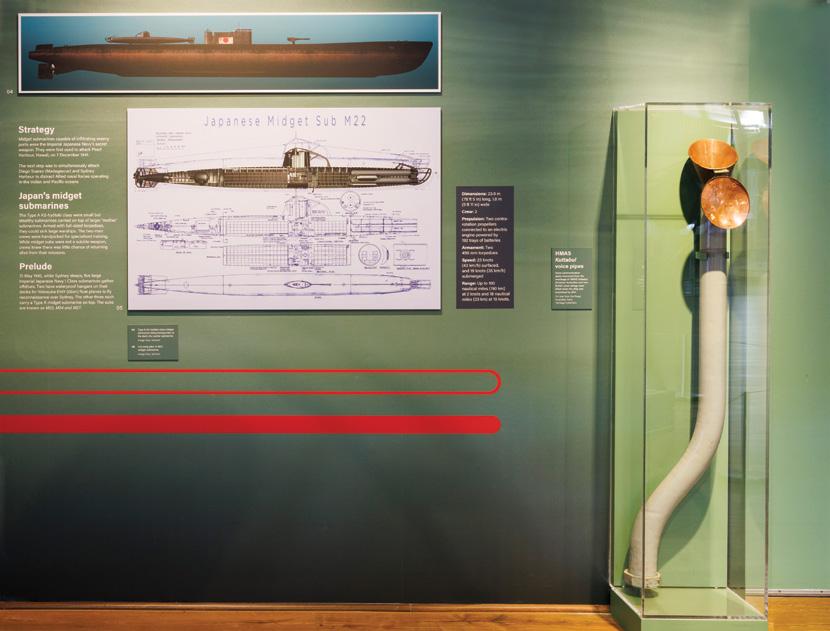
In late May 1942, five huge Japanese I class submarines gathered off the coast of Sydney. Two had waterproof aircraft hangars mounted on their decks, each housing a Yokosuka E14Y (Glen) reconnaissance float plane. The remaining three each carried a top-secret Type A Ko-hyoteki class midget submarine, referred to as M22, M24 and M27, on their decks.
2025 MARKED THE 80TH ANNIVERSARY of the end of World War II, the most widespread and deadliest conflict the world has ever seen. In commemoration, the Australian National Maritime Museum ran a yearlong program of events, activations and exhibitions under the banner ‘World War II – The World Remade’. This included a temporary exhibition called Secret strike – War on our shores , which focuses on the Japanese midget submarine attack on Sydney in 1942 and features original objects such as the stern section of the midget submarine M22 and a voice pipe from HMAS Kuttabul. The exhibition examines the attack and its aftermath, including first-hand accounts of the impact the raid had on ordinary people’s lives.
On the evening of 31 May and the early morning of 1 June 1942, the three midget submarines penetrated Sydney Harbour’s defences. Their mission was to sink as many Allied ships as possible, including the heavy cruisers USS Chicago and HMAS Canberra (I). During the attack, HMAS Kuttabul, a former Sydney ferry converted into a depot ship, was sunk, killing 19 Australian and two British sailors. Two of the midget submarines, M22 and M27, were sunk in the harbour and recovered almost immediately.
The third, M24 – which fired the torpedo that sank Kuttabul – was able to escape the harbour and disappear. Its final fate remained a mystery until 2006, when it was found virtually intact in the waters off Bungan Head on Sydney’s Northern Beaches, with the remains of its two crew entombed inside. Only a week after the midget submarine raid, two of the I Class submarines, I-24 and I-21, returned to shell Sydney and Newcastle with their deck guns, but caused little damage.
The midget submarine attack on Sydney Harbour still holds a fascination for many people
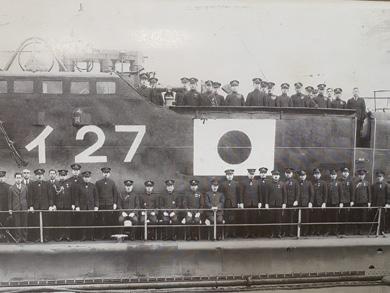
01
Officers and crew of I-27
Image reproduced from the cover of the book The Activities of I-27 Submarine, given by Mrs Ikumi Mukuda to the museum’s library. Mrs Mukuda’s grandfather is pictured among the crew.
02
The battered remains of midget submarine M22 being recovered from Sydney Harbour. Image Australia War Memorial 060696
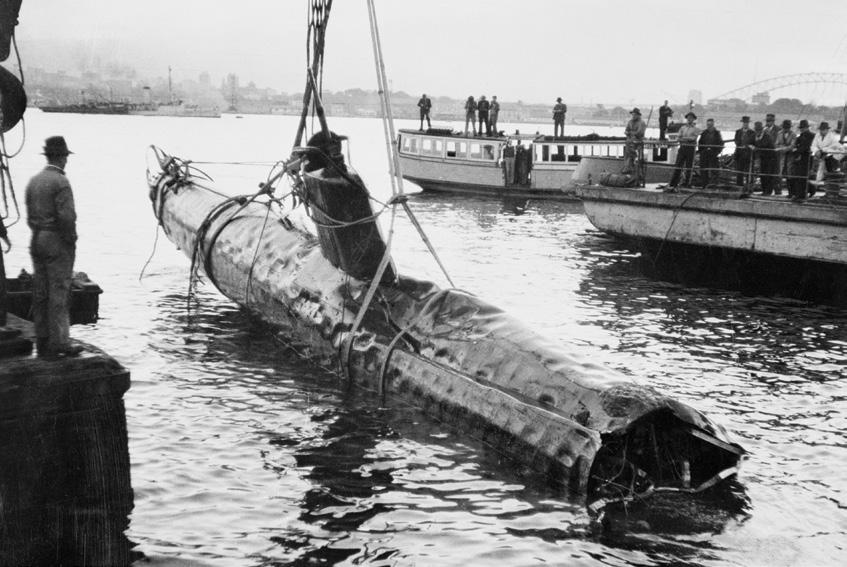
The 21 sailors from HMAS Kuttabul and the four Japanese submariners from M22 and M27 were buried with military funerals at Sydney’s Rookwood Cemetery on 3 June 1942. The following year the bodies of the four Japanese crew were exhumed, cremated and sent back to Japan through diplomatic channels.
The military funerals afforded to the Japanese submariners were very controversial. However, Rear Admiral Gerard Muirhead-Gould, who was in command of Sydney’s harbour defences at the time of the attack, defended his actions by saying, ‘How many of us are really prepared to make one thousandth of the sacrifice that these men made?’1
After the attack, the remains of M22 and M27 were mounted on trailers and taken on a road tour of New South Wales, Victoria and South Australia, allowing the public to view the infamous enemy submarines and encourage them to buy war bonds and raise funds for the Royal Navy Relief Funds. After the tour, the battledamaged sections of M22 and M27 were taken to the Australian War Memorial (AWM), where sections of the two submarines were combined to make a single complete submarine. This composite submarine is still part of the AWM collection.
When the midget submarine was first put on display at the AWM, it was designed as a display of military technology and to celebrate an Allied victory. However, after the war the submarine slowly started to become something more, acting as a focal point of commemoration and remembrance for both Australian and Japanese visitors alike. This was an important step towards reconciliation between the two countries.
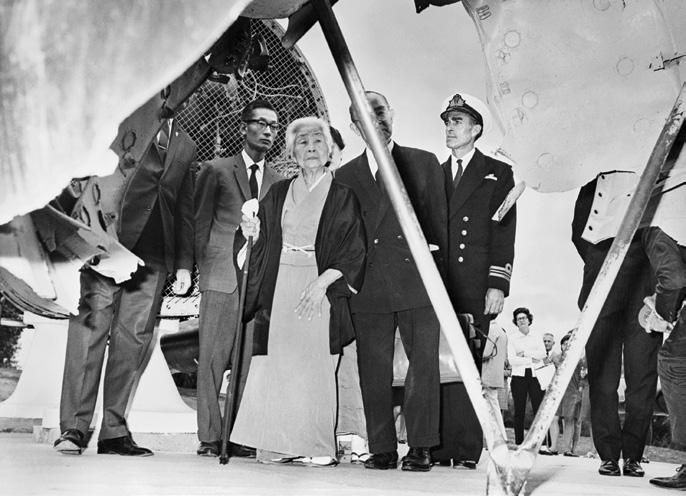
Probably the most touching and emotional visit occurred on 1 May 1968, when Mrs Matsue Matsuo, mother of Lieutenant Keiu Matsuo, who commanded M22, visited Australia. Mrs Matsuo had waited 26 years to come to Australia to see the remains of her son’s submarine and pay her respects. At the base of the composite submarine, she laid a wreath, read prayers and a poem she had written and placed Japanese sake as an offering to the submarine’s crew. Her poem expressed her sincere thanks to the Royal Australian Navy (RAN) for the treatment of her son’s remains during the war. It reads ‘I can never forget the chivalrous attitude of those who mourned enemy’s war dead in the midst of war’.2
The warm reception that Mrs Matsuo received from the AWM and RAN in 1968 had a significant impact both in Japan and Australia. During his 2002 visit to Australia,
Mrs Matsuo had waited 26 years to come to Australia to see the remains of her son’s submarine and pay her respects
then Japanese Prime Minister Junichiro Koizumi referred to this event in his speech at a lunch held at Parliament House in Canberra, in which he expressed his admiration and profound gratitude. 3
Today that same spirit of reconciliation and commemoration continues with the annual memorial service held on the anniversary of the attack at Sydney’s Garden Island naval base. Representatives from the Allied nations and Japan attend the service, lay wreaths at a memorial plaque near where HMAS Kuttabul was sunk and pay their respects to the 21 Allied and six Japanese servicemen who lost their lives.
A poignant reminder is also on display in the Royal Australian Navy Heritage Centre, where the remains of the battled-damaged M22 control centre are on display. This building is no longer open to the public, but each year representatives from the Consulate-General of Japan lay a wreath at the base of the control centre next to where the original poem by Mrs Matsuo is also on display.
Even though the events of May/June 1942 are now a distant memory and our two countries have developed very close economic, cultural and military ties,
the midget submarine attack on Sydney Harbour still holds a fascination for many Australian and Japanese people. Since the Secret Strike exhibition opened last year, it has drawn a variety of visitors from Australia and overseas.
School education has been an important component of the exhibition. Accompanying it is a worksheet aligned to the Australian Curriculum that students can use to examine primary and secondary sources from the museum’s collection to understand the significance of the Japanese midget submarine attack on Sydney Harbour in the context of the war in the Pacific. For many students, this is the first time they have learnt about this historically significant event and how it fits into the wider history of Australia.
Others visit the exhibition because of long-standing family connections. One couple from Melbourne visited to see a piece of the midget submarine that their father had talked about when they were young. Their father was on HMAS Canberra at the time of the attack, and they grew up hearing stories of his experience of that night and wanted to see it for themselves. Some families, generations removed from the events of that May evening, have also come to see this tangible evidence of stories told by their parents or grandparents.
Mrs Matsue Matsuo examines the remains of the midget submarines during her visit to the Australian War Memorial in 1968. Image Australian War Memorial 135589
The overwhelming message from Mrs Mukuda was the importance of preserving and commemorating such an important part of our shared heritage
01
Part of the Secret Strike exhibition, featuring the voice pipes from HMAS Kuttabul ANMM image
02
Mrs Ikumi Mukuda and her husband, Mr Hiroshi Mukuda, with the museum’s Curator of Navy, Stirling Smith. Mrs Mukuda holds a photo of her grandfather, Ihara Minoru, who was an officer on the I-27 submarine. Image Alix Fiveash/ANMM
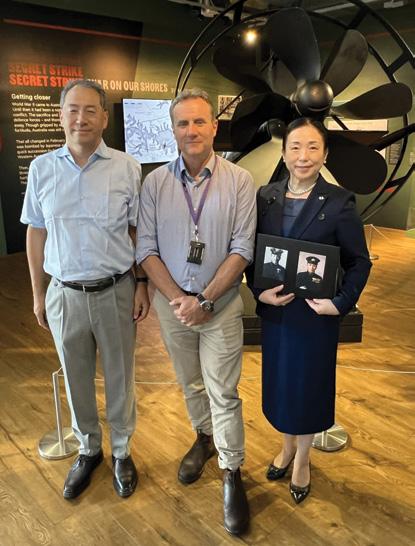
The exhibition has also attracted visitors from Japan. In October 2025, the museum was privileged to host Mrs Ikumi Mukuda and her husband, Mr Hiroshi Mukuda. Mrs Mukuda has a very close family connection to the midget submarine raid. Her grandfather, Ihara Minoru, was a sub-lieutenant on the I-27 submarine, which launched the midget submarine M27. The I-27 survived the attack on Sydney Harbour but was eventually sunk south of the Maldive Islands on 12 February 1944, with only one of its 100 crew surviving.
Mrs Mukuda has been researching the history of I-27, and came to look at the exhibition and pay her respects to both the Japanese and Allied sailors who lost their lives. She kindly donated copies of her research, a book on I-27 and original photographs supplied with approval from the Japanese Maritime Self-Defence Force. The overwhelming message from Mrs Mukuda was the importance of preserving and commemorating such an significant part of our shared heritage and continued peace between our two countries.
The midget submarine attack on Sydney Harbour, while it did little damage from a military perspective, had a major psychological effect on the civilian population.
Up to that point in the war, Sydney was considered to be safe and well behind the front lines. The events of late May and early June 1942 shattered that illusion and brought the realities of war to the shores of our largest city. Over the last 80 years, however, Australia and Japan have come a very long way in reconciling the events of World War II and are now close allies. This has been achieved through a range of diplomatic and cultural work, including conserving and interpreting our shared cultural heritage such as the midget submarine remains.
Although there are few people alive today who experienced the attack on Sydney Harbour, it is important to recognise the role that cultural institutions like the Australian National Maritime Museum play in educating current generations and supporting crosscultural exchange and ongoing peacebuilding activities between nations formerly involved in conflict.
1 Jenkins, David. Hitting Home: The Japanese Attack on Sydney 1942 Sydney: Random House Australia, 1992.
2 Consulate General of Japan, ‘Commemoration services for the attack on Sydney Harbour,’ Letters and Essays from Sydney 2.0, Volume 14, published 8 June 2023 <https://www.sydney.au.emb-japan.go.jp/ files/100916620.pdf>
3 Ibid.
A founding warship
The remarkable tale of Protector
Few Australian naval vessels have as storied a history, and as much relevance to the founding and early years of the Royal Australian Navy (RAN), as Protector. Its active-duty career spanned Australia’s colonial navies, as well as the establishment of the Commonwealth Naval Forces and RAN, and it participated in three major conflicts involving Australia. Dr James Hunter profiles its career.
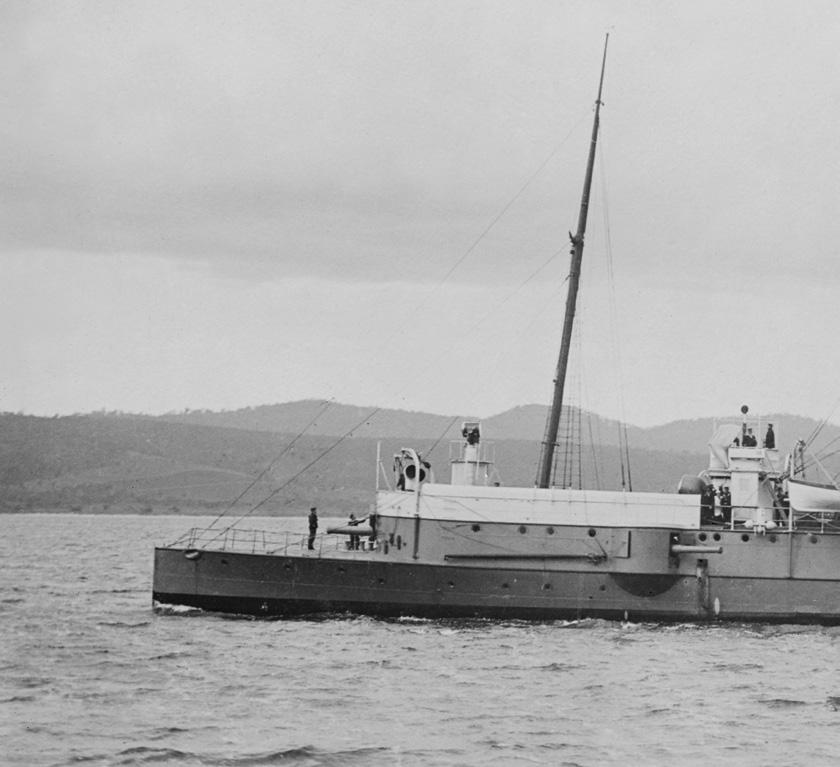
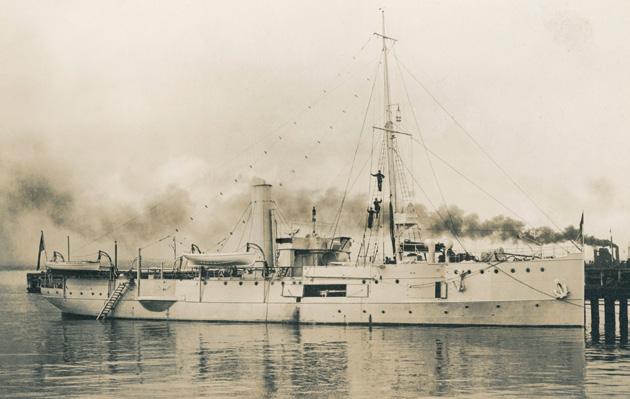
HMCS Protector served as flagship of South Australia’s colonial navy and is shown here prior to its deployment to the Boxer Rebellion, c 1900. Image State Library of Victoria
Protector was well armed for its size and featured an array of weaponry
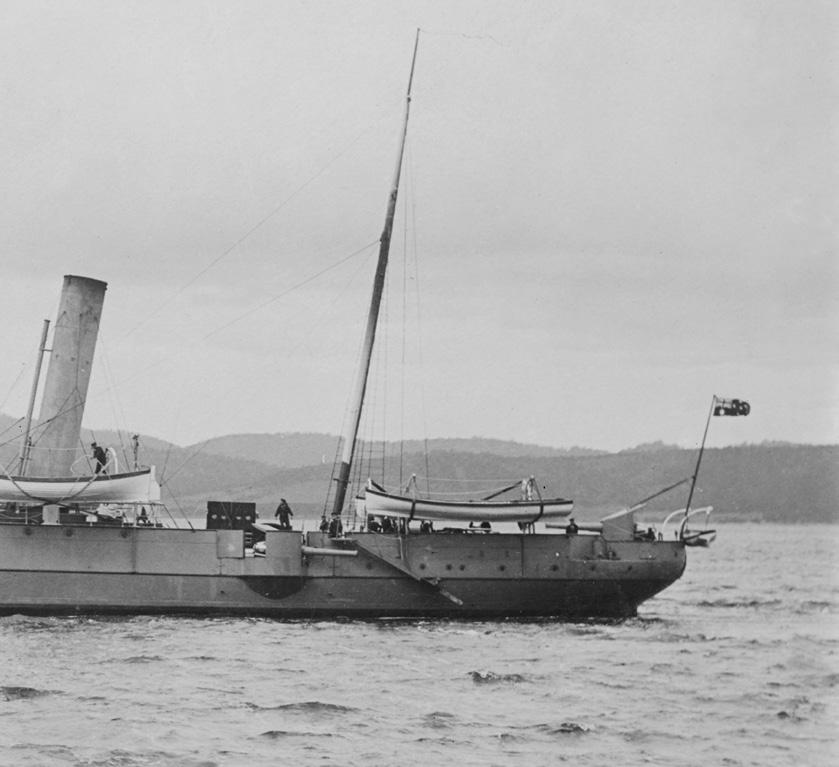
LAUNCHED IN A BRITISH SHIPYARD in 1883, Her Majesty’s Colonial Ship (HMCS) Protector arrived in South Australia the following year. The South Australian colonial government bought it in response to several ‘Russian scares’ that plagued Great Britain’s Australian colonies during the late 19th century. The Victorian gold rushes of the 1840s and 50s created apprehension within the Australian colonies that foreign powers might invade and take its newfound mineral wealth by force. This climate of fear was exacerbated by long-simmering tensions between Great Britain and Imperial Russia in the wake of the Crimean War. While fears of assault and invasion ultimately proved unwarranted, the Australian colonies generally remained suspicious of Russia’s intentions and, under British advice, began to upgrade their colonial defence networks.
South Australia’s initiative to develop its own naval capability was spurred by two factors. Colonel William Jervois, a British military engineer commissioned during the 1870s to report on the defence capabilities of the Australian colonies, opined that Russian naval forces would – in the event of war with Great Britain – harass South Australia’s merchant shipping to destroy its economy. This assessment was punctuated by the arrival of an unannounced Russian naval contingent at Holdfast Bay in February 1882. By this time, South Australia’s parliament had ordered the creation of a naval force and signed a contract for the construction of a specially designed warship that could operate within the shallow, confined waters of Spencer Gulf and Gulf St Vincent with armament sufficient to engage commerce raiders and smaller classes of naval vessel.
At Jervois’ suggestion, the South Australian government hired British firm Sir William Armstrong & Co of Newcastle-on-Tyne to build its new naval vessel. Protector was constructed according to a ‘flat-iron’ gunboat design first introduced during the Crimean War and originally estimated to cost £40,000–£50,000. It was the largest gunboat ordered by the Australian colonies, with an overall length of 188 feet (57.3 metres), beam of 30 feet (9.14 metres) and draught of 12 feet 6 inches (3.81 metres). Its displacement was 920 tons. The vessel’s two compound surface-condensing engines generated 1,500 horsepower to attain a top speed of 14 knots (26 km/h). To conserve coal, Protector ’s designers originally outfitted the vessel with optional auxiliary propulsion comprising a schooner rig with flying square topsails.
Following Federation, Protector was transferred to the Commonwealth Naval Forces
01
Protector as a Royal Australian Navy asset around the time of the First World War. Note the dramatic modification to the bow section, when compared to the ship’s hull as it appeared while in colonial navy service (image on previous pages).
02
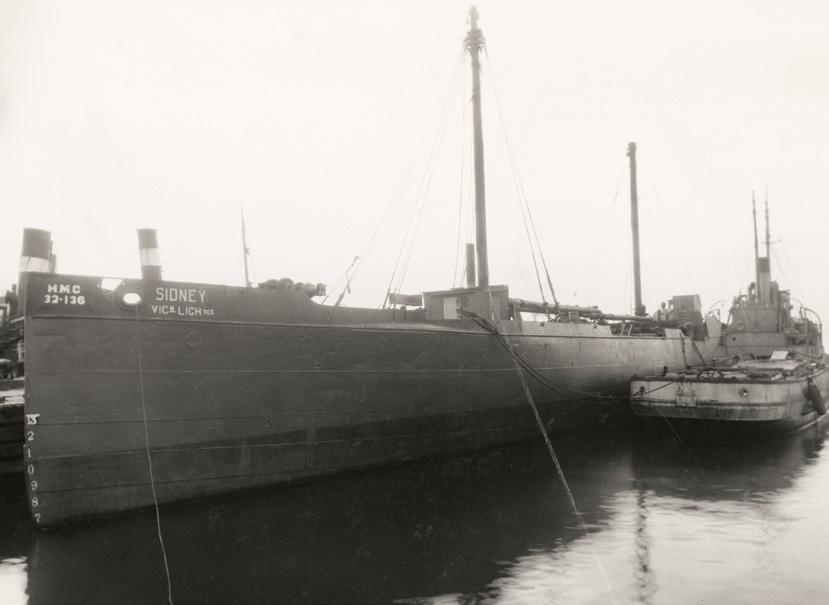
The lighter Sidney (formerly HMCS/HMAS Protector) during its tenure with the Small Ships Section of the US Army Services of Supply, 1943. By this time, the ship’s entire superstructure and armament had been removed.
Images South Australian Maritime Museum
Protector was well armed for its size and featured an array of weaponry. The ship’s original fixed armament included one bow-mounted 8-inch Armstrong rifled breech-loading gun, five 6-inch Woolwich-Armstrong rifled breechloading guns, four 3-pounder Hotchkiss QF cannon, and five 10-barrel Gatling machine guns. An additional defensive measure in the form of a 1¼-inch (32-millimetre) thick armour belt was installed around the hull along the waterline. Due in part to its heavy armament and robust hull, Protector was ultimately classified a light cruiser.
Construction commenced on 8 December 1882, and was expected to take 14 months. However, at the request of the South Australian government, alterations and additions were incorporated into the original design, including provision for electrical lighting and the installation of steam-powered steering gear and disconnecting propellers – modifications that delayed Protector ’s launch until 27 December 1883. They also increased the final cost of the vessel to £65,000 (equivalent to $14.5 million today). Protector finally departed for Australia on 27 June 1884. At the helm was Commander John Cotterell Phillip Walcot of the British Royal Navy, who oversaw a crew of 52 ratings, five officers and two warrant officers. Sailing via Gibraltar, Malta, Port Said, the Suez Canal, Aden and Colombo, Protector arrived in Albany, Western Australia, towards the end of September 1884. After taking on coal and other stores, the ship departed King George Sound on 24 September 1884 and arrived at Port Adelaide six days later.
Protector ’s career was largely uneventful for the remainder of the 19th century, as South Australia’s coffers lacked sufficient funds to regularly deploy it on coastal patrols. Consequently, Protector was normally stationed just outside the Port River at the Largs Bay anchorage. Its crew assisted in extinguishing fires on the Port Adelaide waterfront on a handful of occasions, helped lay a telegraph cable between the South Australian mainland and Althorpes Island, and in 1888 – following the shipwreck of the barque Guldax and clipper ship Star of Greece – assumed responsibility for training and maintenance of South Australia’s life-saving service. A handful of crewmen from Protector were also trained in submarine mining (torpedo) equipment and tactics, and regularly detached to the North Arm Torpedo Station on the Port River.
In August 1900, the South Australian government offered Protector and its crew to assist the Imperial British government and other Western powers in their suppression of the Yihetuan Movement in China. The uprising, dubbed the ‘Boxer Rebellion’ in the English language, was the result of a trade imbalance between China and merchants from the United States and Europe (particularly Great Britain) that was tilted heavily in the West’s favour, as well as extensive land acquisition and other actions by Western merchants that impinged upon China’s sovereignty. Anti-European secret societies formed within China as Western influence increased; the most violent and popular of these groups was alternately called the I-ho-ch’uan
01
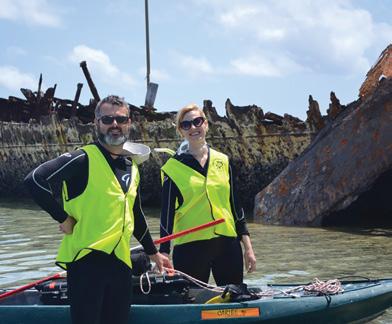
James Hunter and Emily Jateff stand next to Protector ’s shipwreck site at Heron Island in 2013. They co-directed that year’s archaeological and 3D photogrammetric survey project. Image Nick Herath
02
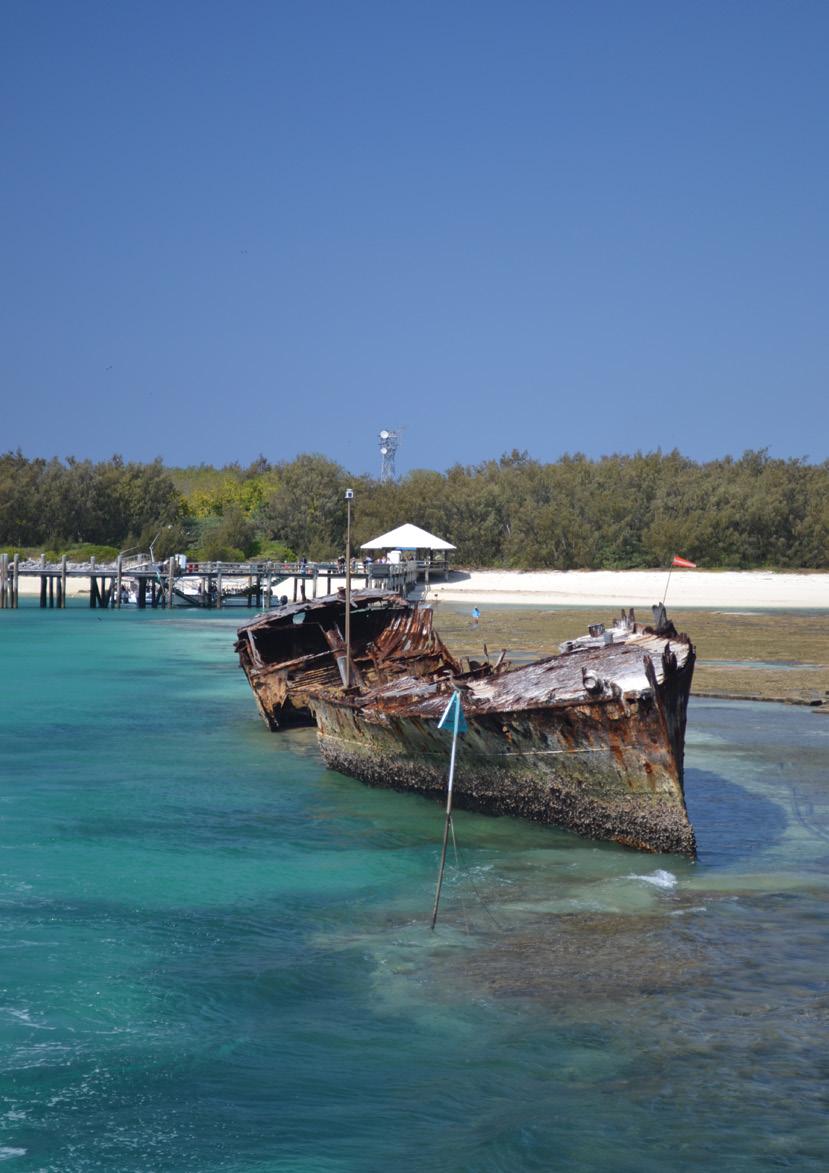
Protector ’s shipwreck site at Heron Island in 2013. Following a collision at Gladstone in 1944 that severely damaged its hull, the lighter Sidney (ex-HMCS/ HMAS Protector) was towed to Heron Island and installed as a breakwater, a function it still performs today. Image James Hunter
(Righteous and Harmonious Fists) or Yihetuan (Militia United in Righteousness). Members were dubbed ‘Boxers’ by European and American media and gave the ‘Boxer Rebellion’ its name.
Protector departed Port Adelaide for China on 6 August 1900, calling at Sydney and then Brisbane, where Captain William Rooke Creswell, a former British naval officer and Commandant of the Queensland Maritime Defence Force, boarded the vessel and assumed command. Creswell previously served aboard Protector as its First Lieutenant, and later as the Commandant of South Australia’s colonial navy. He would go on to advocate for an Australian national navy following Federation and is considered the ‘father’ of the Royal Australian Navy.
The ship arrived at Hong Kong on 9 September 1900 and over the course of the next two months travelled first to Shanghai and then Shanhaiguan, a port city where the Yihetuan Movement began. It arrived at Shanhaiguan as preparations for a naval and amphibious assault on the city were well under way. However, just as the ship’s crew prepared to finally fire their guns in anger, the Yihetuan forces retreated inland, and their coastal fortifications surrendered. Protector spent the remainder of its deployment in Chinese waters conducting hydrographic surveys and acting as a despatch vessel. It departed for Australia on 24 November 1900, stopped at Sydney to participate in ceremonies marking Australia’s Federation, and arrived in Port Adelaide to much fanfare at the beginning of January 1901.
Protector was constructed according to a ‘flat-iron’ gunboat design first introduced during the Crimean War
In 2013 and 2024, researchers and representatives of the Queensland government travelled to Heron Island to conduct comprehensive archaeological surveys of the ship’s remnants
01
James Hunter (right) and maritime archaeologist Ed Slaughter (formerly Cultural Heritage Manager for Queensland’s Department of Environment and Science) conduct a baseline offset survey of Protector ’s submerged interior hull during the 2013 archaeological survey. Image Emily Jateff
02
Surveyor Nick Herath prepares to laser scan the aft section of Protector ’s interior hull during the 2013 survey. Image James Hunter
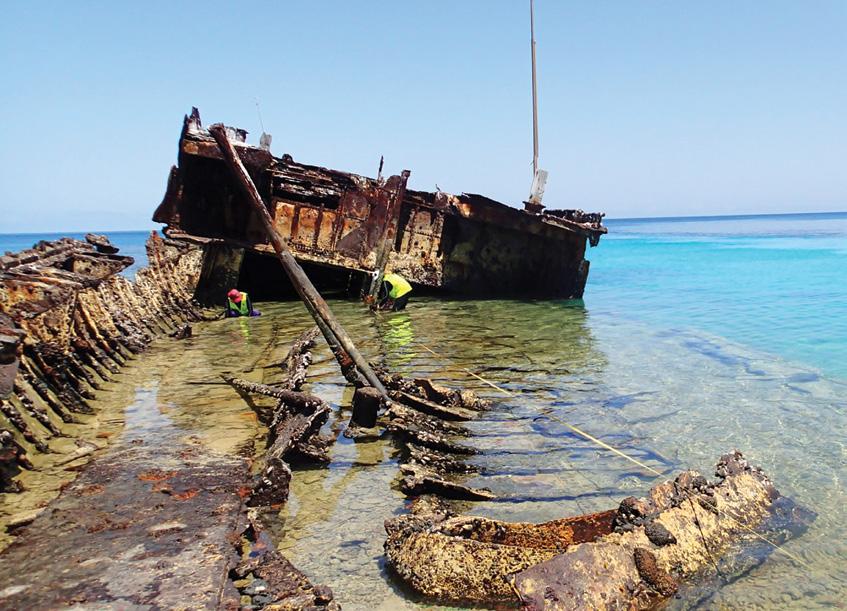
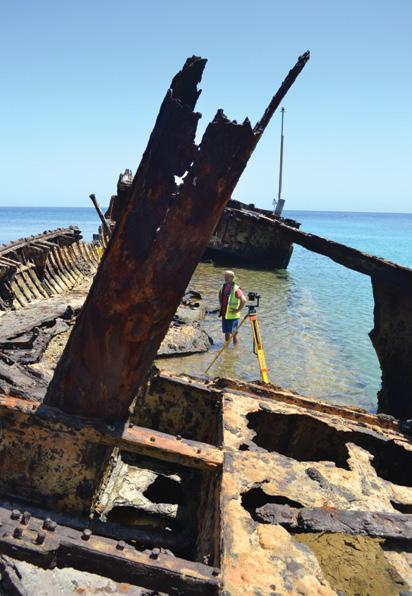
In 1924, Protector was decommissioned from naval service, purchased by civilian interests and converted for the storage and transport of bulk commodities. After a 19-year hiatus, it was requisitioned by the US Army during the Second World War and reactivated for military service, but collided with another vessel shortly thereafter and was condemned at the Queensland port of Gladstone. The hulk was purchased in 1944 and installed as a breakwater the following year at Heron Island on the Great Barrier Reef.
Following Federation, Protector was transferred to the Commonwealth Naval Forces and served primarily as a training vessel for the naval militias of New South Wales, Victoria and South Australia. From this point, its connection to South Australia gradually diminished; it occasionally took up its former station at Largs Bay but spent increasingly more time in the waters of New South Wales and Victoria. Protector was integrated into the Royal Australian Navy in 1911 and assigned to the naval facility in Williamstown, Victoria, where it served as a tender to the depot ship HMAS Cerberus During the First World War, Protector served as a tender to the Australian submarines AE1 and AE2, guarded the port of Rabaul in New Guinea and conducted minesweeping patrols in Australia’s coastal waters. It also reported on the wreck of the Imperial German Navy cruiser SMS Emden, which had been forced ashore at the Cocos-Keeling Islands during an engagement with HMAS Sydney (I) in November 1914. Protector completed its naval career as a tender at Flinders Naval Depot in Western Port, Victoria.
Protector has since evolved into an icon of the local Heron Island landscape and is regularly visited by patrons of Heron Island Resort, as well as staff and visiting scholars affiliated with the University of Queensland’s Heron Island Research Station. In 2013 and 2024, researchers and representatives of the Queensland government travelled to Heron Island to conduct comprehensive archaeological surveys of the ship’s remnants. The 2013 project used a combination of digital video, 3D photogrammetry and laser scanning to capture Protector in the virtual realm, while 3D models generated during the survey – used in conjunction with other archaeological data collected during the field investigation – have explored and answered questions about the vessel’s construction, conversion, modification, deterioration and site formation. These digital assets have also provided a threedimensional record of the surviving hull in perpetuity – an issue of critical importance, given Protector is the last vessel of its kind anywhere in the world and currently suffering environmental impacts and gradual structural collapse.
Dr James Hunter is the museum’s Manager of Maritime Archaeology. He was the Archaeological Director of the 2013 Protector shipwreck survey.
The wartime service of SY Ena
From harbour luxury to naval patrol vessel
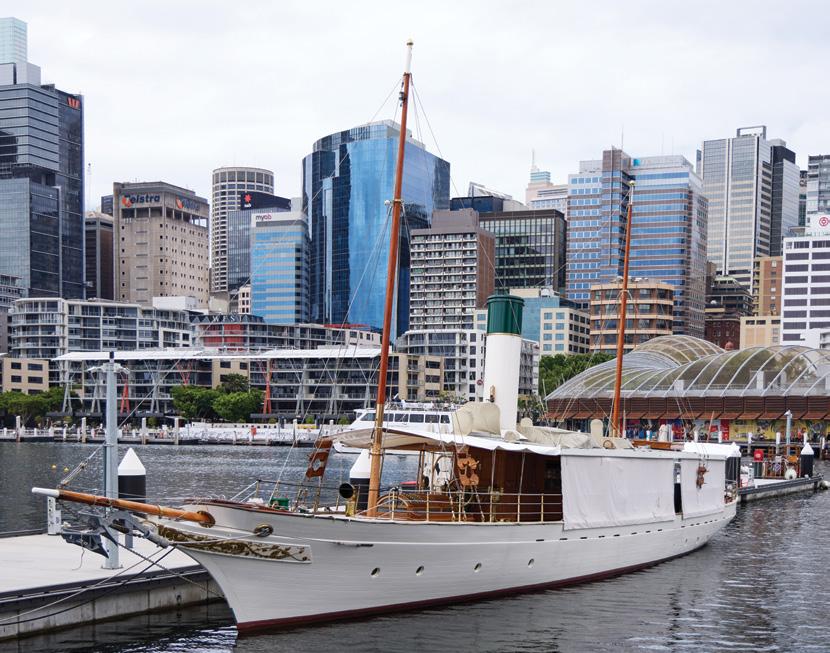
Ena is the only known World War I–era commissioned RAN vessel still afloat
WHEN THE STEAM YACHT (SY) ENA was launched in 1901, war was the furthest thing from anyone’s mind. Designed by prominent naval architect Walter Reeks and built just across the harbour at WM Ford boatbuilders in Berrys Bay, it was commissioned by Thomas Allwright Dibbs – banker, yachtsman and commodore of the Royal Sydney Yacht Squadron – and named for his wife, Tryphena. Dibbs used Ena as a luxury pleasure craft on Sydney Harbour and Pittwater, and occasionally for government functions. Its varnished timber, refined fittings and quiet engines earned admiration wherever it went.
For more than a decade, Ena embodied leisure and elegance. Yet by the outbreak of the First World War, Australia’s young navy faced a grim practical problem: it had too few small vessels to protect an enormous coastline. And necessity overruled aesthetics.
Requisition and conversion: from yacht to warship
In November 1916, the Royal Australian Navy (RAN) purchased Ena for £1,000 (equivalent to $125,000 today). It was turned into an austere patrol craft: repainted naval grey, fitted with a quick-firing Hotchkiss three-pounder gun, equipped with wireless telegraphy, issued the call sign GVRX and commissioned as HMAS Sleuth on 18 January 1917.
Its small complement – two officers and nine ratings – reflected its civilian origins rather than naval design. Acting Lieutenant James Ernest Capstick-Dale RANR took command, with Gunner William George Monteith as his second-in-command.
Sleuth ’s assignment was the Torres Strait, operating out of Thursday Island, one of the most strategically important maritime chokepoints in the region. Coal routes, merchant shipping, the pearling fleet and trade links to Southeast Asia all passed through the strait. A single attack or mining operation by a German raider such as SMS Wolf could have crippled shipping and isolated communities. After weather delays and repairs on its delivery voyage, Sleuth arrived at Thursday Island on 27 February 1917 and began patrols on 5 March. The reality of tropical service soon revealed the vessel’s limitations. Its boilers produced severe heat in the cramped engine room, it had no refrigeration, fresh water was minimal, and its maximum speed of around 10 knots (18.5 km/h) made it slow and vulnerable. The crew carried out patrols of five to seven days at a time, however, interviewing missionaries and traders, landing on uninhabited islands and investigating rumours of unidentified lights or ships.
Groundings, accidents and hard lessons
Ena ’s naval service was marked as much by mishap as by routine patrols. On 10 March 1917, Sleuth ran aground between Moa and Badu islands, remaining stranded until local assistance and the next high tide freed it, although divers later found torn copper sheathing. On 16 June, it struck an uncharted coral outcrop near West Island, damaging the propeller and flooding compartments, and soon after collided with two unlit pearl luggers while being unslipped in poor harbour conditions. The most dangerous incident occurred on 15 September, when spontaneous combustion of salt-soaked flares ignited a fire in the after hold. The crew, assisted by six Torres Strait Islanders, extinguished the blaze. By the end of 1917, after this succession of problems, Capstick-Dale concluded that Sleuth was totally unsuited for northern patrol work – too slow, too fragile, too hot, and fundamentally ill-equipped for sustained tropical service.
Ena berthed at the museum’s Heritage Pontoon. Image Jasmine Poole/ANMM
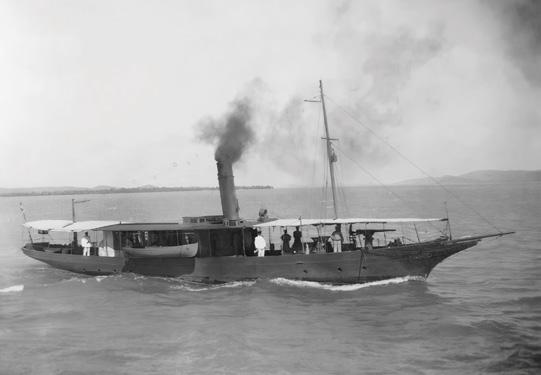
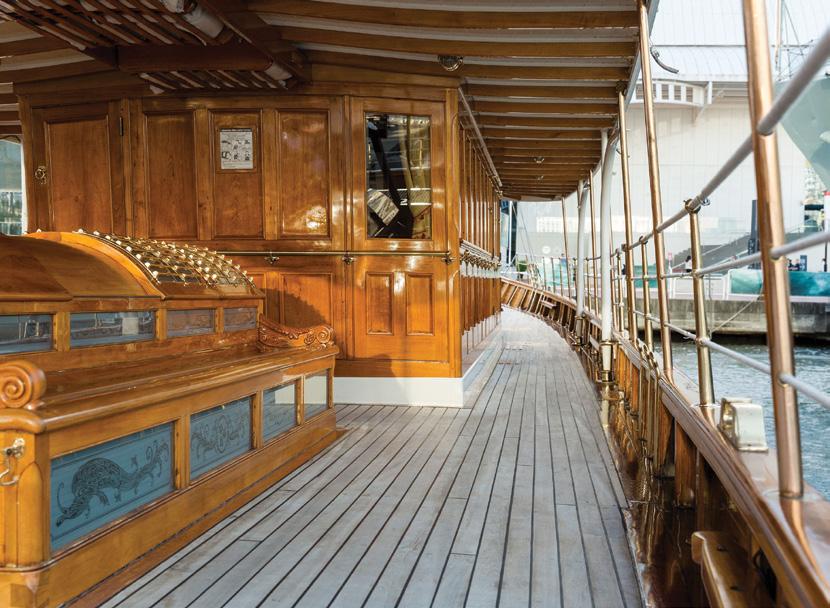
Sleuth’s assignment was the Torres Strait, a strategically important maritime chokepoint
01
HMAS Sleuth on patrol in Torres Strait during 1917, with a Hotchkiss three-pounder quickfiring gun on the forward deck. Image courtesy Sea Power Centre
02
The decking and cabin of SY Ena. The vessel’s fittings incorporate teak repurposed from HMS Nelson, formerly one of the Royal Navy’s largest first-rate ships. ANMM image
Service closer to home
Sleuth was reassigned to coastal examination duties between Thursday Island and Cooktown, including searches for the missing steamer SS Matunga (later discovered to have been captured by Wolf ). Finding no evidence of raider activity, it was ordered south.
Returning to Sydney in December 1917, Sleuth was refitted and recommissioned as a tender to the training ship HMAS Tingira. Instead of hunting raiders, it now ferried young cadets around Sydney Harbour, Botany Bay and Broken Bay, and was remembered by many recruits less for seamanship than for seasickness aboard the lively old yacht.
During the 1919 influenza pandemic, Sleuth was again repurposed, patrolling off North Head to help enforce quarantine as troopships returned from Europe.
Return to civilian life
Decommissioned on 19 February 1920, Sleuth was sold for £1,350 and reverted to its original name, Ena What followed was a second, wildly varied life. It served as a Tasmanian trader transporting goods, including apples. Later renamed Aurore, it was converted from steam to diesel power and used as a commercial work vessel into the 1970s for trawling, scallop harvesting and shark fishing. In 1981, Aurore struck an unidentified object and sank in Tasmania’s D’Entrecasteaux Channel. Yet its story did not end there.
Help preserve Ena for future generations
The ongoing care of Ena – and the conservation of vessels like it at the Australian National Maritime Museum – relies on philanthropic support. If you would like to help ensure that this rare World War I survivor continues to be maintained, displayed and shared with the public, please consider making a donation to the museum’s Foundation. Your generosity helps safeguard Australia’s maritime heritage and keeps stories like Ena ’s alive for future generations.
Donation options:
Online via the QR code
By direct deposit
BSB 062 000
Account number: 16169309
Or by phone to the Foundation Office on 02 9298 3777 or emailing foundation@sea.museum

A business syndicate salvaged the vessel in the early 1980s. Master shipwright Nick Masterman began a meticulous restoration in 1987, returning it as closely as possible to its original 1901 pleasure-yacht configuration. Ena later circumnavigated Australia (1987–88), became a charter vessel, and in 2017 was generously donated to the Australian National Maritime Museum by John Mullen AM and Jacqui Mullen.
Today, Ena is the only known World War I–era commissioned RAN vessel still afloat.
The story of SY Ena/HMAS Sleuth is one of adaptability and survival. A luxury yacht built for harbour leisure became an improvised patrol vessel guarding Australia’s remote northern gateway. It endured groundings, fire, tropical hardship and repeated repairs, and later served in training and quarantine roles – all far from its designer’s intentions.
Ena ’s post-war decades as a trader, trawler, scallop boat, shipwreck and finally restored icon testify to its remarkable resilience. Today, preserved at the Australian National Maritime Museum, Ena stands as a living connection to Australia’s wartime ingenuity and maritime heritage – a reminder that even the most elegant vessels can find themselves reshaped by history.
Monica Connors, Foundation Manager
Join our unique tour in Indonesia
Spice, spirits and shipwrights: cultures and coastlines of Sulawesi
THIS SEPTEMBER, join visiting maritime museum professionals to experience an extraordinary 14-day journey through southern Sulawesi, the orchid-shaped island where Asia meets Australasia. This exclusive maritime-themed tour has been developed by the museum in conjunction with the 2026 International Congress of Maritime Museums. The tour is priced at a very reasonable AU$5,500 per person (excluding air fares). It will be led by Jeffrey Mellefont, an Honorary Research Associate of the Australian National Maritime Museum, where he was a founding consultant, long-time staff member and the developer and editor of its magazine Signals. He has been visiting Indonesia since 1975 as a traveller, sailor and researcher. Jeffrey’s fluency in the Indonesian language and personal contacts open doors and provide opportunities to meet local people and experience their culture.
Once known as the fabled Celebes, Sulawesi was home to rival sultans, fearless Bugis sailors, and sea-gypsies who roamed the waters long before European ships arrived. Today, its seaport Makassar is a thriving city with a rich maritime soul. Its old forts, bustling bazaars, Chinese and Arab quarters, and timber-hulled trading fleet tell a vivid story of cultural exchange – and its seafood and street food are among the best in Indonesia.
On tour we’ll meet the island’s legendary boatbuilders and seafarers, the Makassarese, as well as the Bugis, Mandar and Bajo peoples, who still live closely connected to the sea. We’ll travel inland to explore remote rivers, lakes and the dramatic Toraja highlands, known for spectacular rice terraces, grand carved houses, ancestral ceremonies and mountain landscapes.
The tour’s bookings and logistics are being handled through the leading international travel specialist World Expeditions, whose consultants can also advise on flights and pre- or post-tour travel and accommodation.
Tour details
Dates in Sulawesi 21 September–4 October 2026
Price $5,500 twin-share; single supplement $1,290 (same-gender room share available)
Trip grading Adventure touring
What’s included
Trip escorted by ANMM specialist Jeffrey Mellefont
English-speaking Sulawesi guide-coordinator
All land transport by air-conditioned coach
Entrance fees to all sites listed in the itinerary
Meals included as specified in itinerary
Traditional wooden boat ride Makassar to Samalona Island
Traditional wooden boat ride Bira to Liukang Island
Long-boat ride at Sengkang on Tempe Lake
Airport transfers between Makassar airport (UPG) and hotel, on days 1 & 14
For more details on the 2026 International Congress of Maritime Museums, go to sea.museum/icmm-26 .
For more information, to register interest or to make a booking, see www.worldexpeditions.com/ssmm
01 Residents of the floating villages on Lake Tempe, which the tour will visit.
02 Effigies (tau-tau) of deceased ancestors watch from balconies hewn alongside crypts in the limestone cliffs of the highlands Toraja people.
Images Jeffrey Mellefont
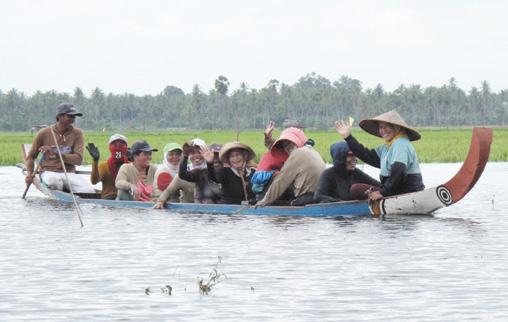
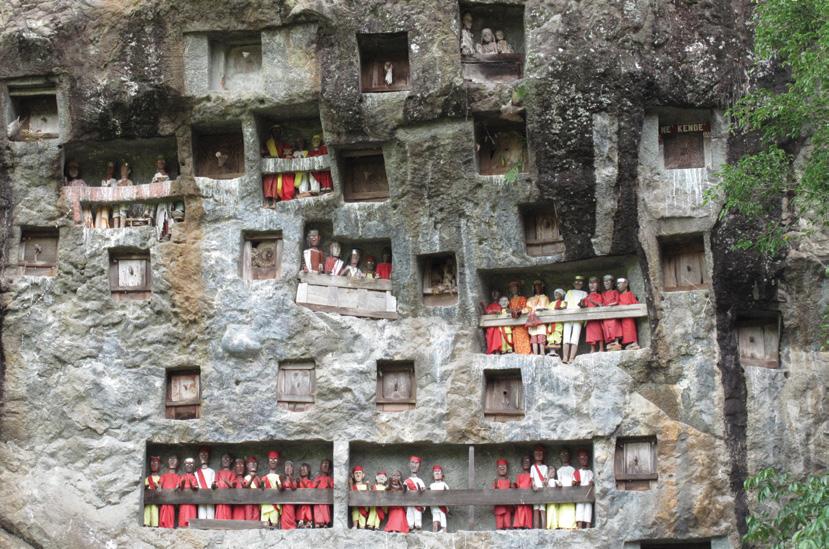
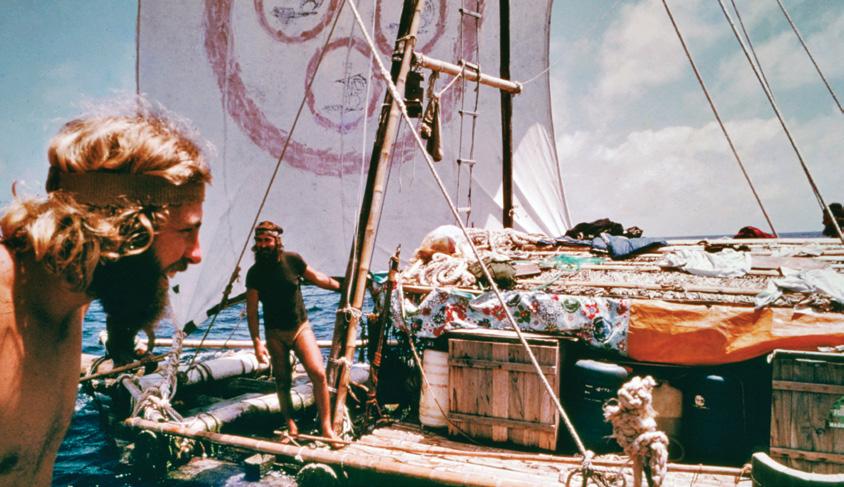
Message to members
We’ve got a big year planned at the museum, with milestone anniversaries, fascinating new exhibitions and a packed schedule of events, talks and tours.
2026 IS A BIG YEAR AT THE MUSEUM, as we celebrate our 35th birthday, and commemorate the 70th birthday of HMAS Vampire (II) and the 125th anniversary of Australia’s navy.
We will have a series of events throughout the year relating to these milestones, including a refresh of our Action Stations warship pavilion.
There are also some great exhibitions coming up, including Treasures from the Viking Age: The Galloway Hoard, from the National Museum of Scotland. This unique and mysterious treasure trove from early medieval Scotland includes Viking-age jewellery, personal heirlooms and one-of-a-kind objects from as far away as Central Asia.
Towards the end of the year, we will bring you Croc! Lost giants to living legends. Walk alongside one of the planet’s most powerful and fascinating animals, on a journey stretching back over 130 million years. This interactive all-ages exhibition will bring you face-toface with the mighty crocodile. From ancient ‘supercrocs’ that once roamed with dinosaurs to the unique crocodile species living across the world today, Croc! Lost giants to living legends explores the science, culture and enduring connections between people and these remarkable creatures.
Plus, we will have a wide range of members events, including speaker talks, book launches, tours, trips and cruises on the harbour.
If you have any questions about events or your museum membership or annual pass, please do not hesitate to contact us.
We are looking forward to seeing you back at the museum during 2026!
All the best, Matt Lee and the Membership team
Still from The Raftsmen Image courtesy Chadden Hunter
Book launch
Joseph Conrad’s Eastern Voyages
2–3.30 pm 12 March
Before Joseph Conrad became a master storyteller, he was a master mariner, and his first command was the three-masted barque Otago on a voyage from Bangkok to Sydney. He lived an adventurous life at sea in the final, glorious days of sailing ships. In this fascinating talk, Ian Burnet explores the life and times of Conrad and the voyages of the Otago to Australia, including its demise on the banks of the Derwent River in Hobart.
Copies of the book will be available for purchase and signing by the author.
Free for all attendees
Speakers talk
French explorers of Australia
2–3.30 pm 26 March
During the late 18th and early 19th centuries, there were five major maritime expeditions to Nouvelle-Hollande (Australia) from France. The French played a significant role in charting and documenting the land mass, flora, fauna and human inhabitants of Australia.
Delivered by Andrew Phippen from our volunteer Museum Speakers group.
$10 / Free for members. Enter promo code MEMBER
Engraving from an account of Nicolas Baudin’s expedition, depicting Tasmanian Aboriginal bark canoes. ANMM Collection 00001137
On the water
Harbour cruise on SY Ena 10 am–12 pm or 1–3 pm
Thursdays 19 March and 30 April
Join us for a leisurely two-hour cruise on Sydney Harbour on our beautifully restored Edwardian steam yacht Ena SY Ena was designed by Sydney naval architect Walter Reeks and built in 1900. Shipwright Nick Masterman fully restored Ena in the 1980s as close as possible to the yacht’s original specifications as a pleasure yacht. In 2017, Ena was generously donated to the museum by John and Jacqui Mullen.
Includes light refreshments. $100 non-members / $70 members
Speakers talk
After the sinking – the later lives of Titanic survivors
6–7.30 pm 20 March
Join Justin Holmwood from the museum’s Speakers Group to learn about the aftermath of the sinking of the Titanic and what happened to the survivors.
In the wake of such a tragedy, many had to deal with official cross-examinations, personal bereavement, uncertain financial futures and significant health issues. What did the future hold for them, and how did they cope?
$10 / Free for museum members. Enter promo code MEMBER
Special film screening
The Raftsmen
2–4 pm Saturday 28 March
In 1973, a dozen adventure-mad misfits set out to cross the world’s largest ocean ... on three log rafts. They aimed to sail 14,500 kilometres, non-stop, across the South Pacific, navigating by the sun and stars as they headed from Ecuador towards Australia.
Fifty years on, revisit this perilous journey. Award-winning documentarian Chadden Hunter blends original 16-mm footage with stories from the surviving rafters. This special screening will be followed by a Q&A with the film’s director.
$15 / $10 for museum members
Author talk
Swallow with Alexandria Burnham
2–3.30 pm 18 April
Author Ally Burnham, in conversation with Rupert Degas, will discuss her historical adventure novel based on the true story of convict William Swallow – the last man tried for piracy in an English court.
It’s 1829 and Swallow has been sent to Van Diemen’s Land – for the second time. But on the journey from Hobart to the hell-hole of Sarah Island, he rallies his fellow convicts and leads them to mutiny.
Free for all attendees
Detail of Swallow cover artwork. Image courtesy Westwords Publications
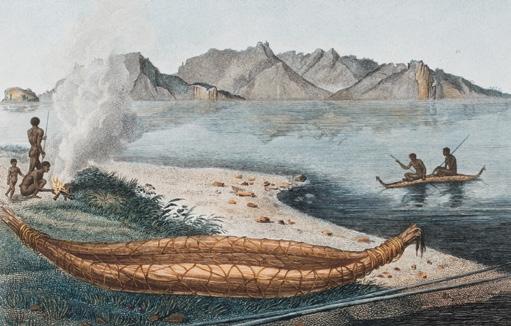
Members tour
HMAS Waterhen
Date to be confirmed
HMAS Waterhen, in Balls Head Bay, is the Royal Australian Navy’s lead establishment for mine warfare. This shore establishment, occupied by many professional sailors, is home to some of the most advanced mine countermeasure equipment and technology, all contributing to the navy’s mission.
Our exclusive tour for museum members will include a presentation from the Maritime Deployable Robotics Experimental Unit (MDREU), who will talk about unmanned surface vehicles and autonomous underwater vehicles that are currently in operation. Australian Clearance Diving Team 1 (AUSCDT-1) will discuss equipment being used by clearance divers, such as explosive ordnance, and our group will then tour one of the navy’s four Mine Hunter Coastal (MHC) ships in service. The ship’s company will walk us through the ship and show us how they operate on board day to day.
Members only $60
Aerial photograph of HMAS Waterhen, Balls Head Bay. Image courtesy Saberwyn/ Creative Commons Attribution 3.0
Author talk
Archaeologies of food in Australia
2–3.30 pm Thursday 21 May
Twenty-first century Australia is a nation obsessed with food. From cookbooks to television screens, we are surrounded by conversations about what and how we eat. This fixation highlights the fact that food is, and always has been, a central component of human culture.
Come and hear Madeline Shanahan talk about her new book Archaeologies of Food in Australia, which addresses the archaeology of food from deep time to the recent past. It showcases the many varied approaches to the study of food in Australia, from the archaeological sciences (such as zooarchaeology and archaeobotanical analysis) through to discussions of historic kitchens and cookery.
Free for all attendees
On the water
Members Vivid cruise
6 pm Thursday 28 May
Our exclusive two-hour chartered cruise lets you see Sydney transformed into a wonderland of light as Vivid Sydney returns.
Enjoy a relaxing atmosphere and delicious catering aboard MV Eclipse from Sydney Charter Boats. It’s the easiest and most stress-free way to see this annual festival of light, sound and ideas from the water. Eclipse offers panoramic views of Sydney Harbour with a crowd-free view of Vivid
Members and their guests: Adults $99 / Children $70
Image Mark Heider/ Shutterstock 2719430081

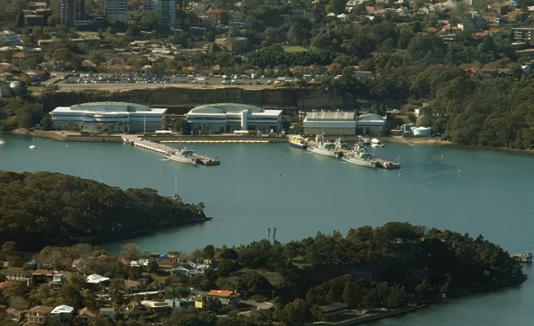
More events will be announced shortly. Please keep an eye on our website.
Bookings are essential.
Email memberevents@sea.museum and tell us which event you wish to attend, and who is coming. Or book through Eventbrite, phone us on 02 9298 3777, or scan the QR code at left.
For all other events, including family and school holiday events, please see sea.museum/whats-on
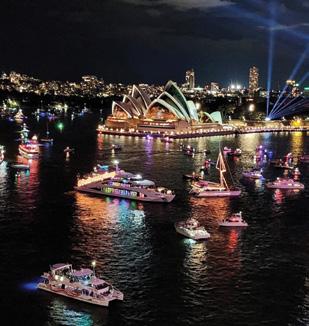
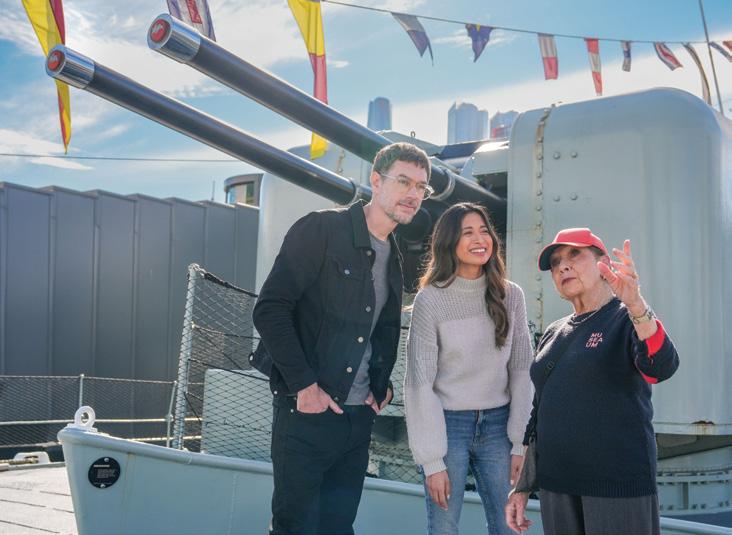
Volunteer with us
Our volunteers are the beating heart of the museum. We’re always on the lookout for new members of our crew. Whether you’re a maritime buff or just looking to be part of your community, we have a wide range of roles for people of all interests and backgrounds.
For more information sea.museum/volunteer
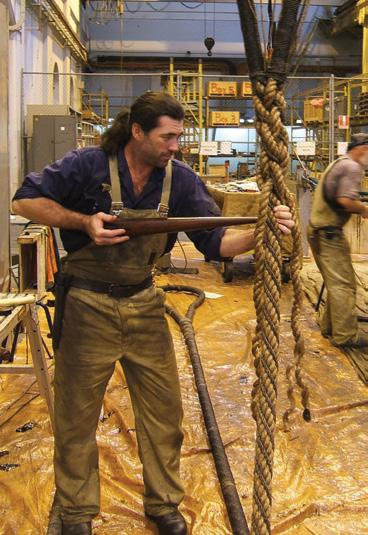
Preserving a national icon
A major conservation project has begun to replace Endeavour’s standing rigging – the 56‑mm shrouds that support each mast and spar, carrying all 28 sails under constant tension. This is highly specialised work, carried out using centuries old ropemaking techniques.
It will take months to complete, but it is essential to keeping Endeavour seaworthy for generations to come.
You can join us on this journey. Your donation will help preserve one of Australia’s most important maritime icons – not just for today, but for the future.
Donate now and help keep Endeavour sailing through history.
Donate now: sea.museum/donate

Exhibitions
Ocean Photographer of the Year
Closes 3 May
Explore the awe-inspiring beauty and fragility of our oceans through Ocean Photographer of the Year.
FEATURING 116 EXTRAORDINARY IMAGES, this exhibition celebrates the beauty of our planet by showcasing the wonders of our oceans and the urgent need to protect them.
On show are shortlisted and winning images by photographers from around the world, both amateur and professional, in nine categories – Fine Art, Wildlife, Adventure, Conservation (Impact), Conservation (Hope), Human Connection, and Young Photographer of the Year – plus the overall winner.
A special prize, the Female Five Fathoms Award, is given to the female photographer with the most outstanding portfolio.
sea.museum/ocean-photographer
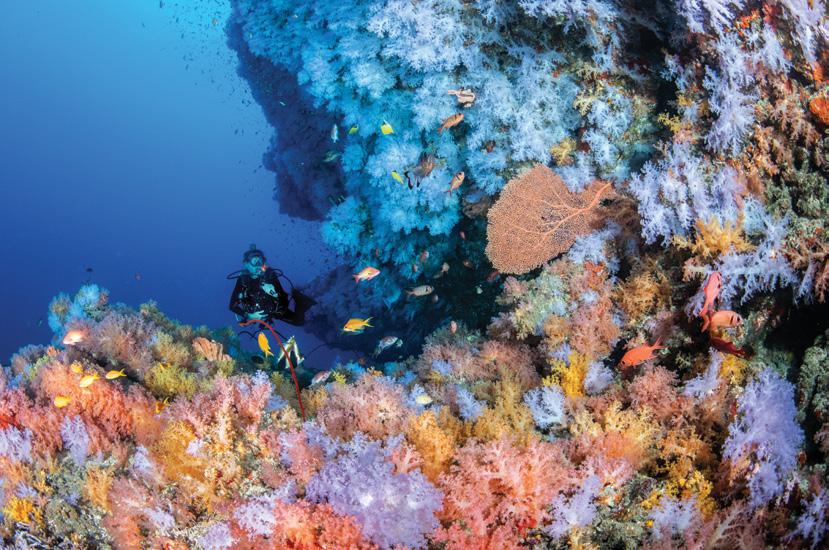
Colourful soft corals at Maalhoss Thila, North Ari Atoll, Maldives. Image © Catherine Holmes/ Ocean Photographer of the Year
Treasures of the Viking Age: The Galloway Hoard
From 28 May
Travel back in time to early medieval Scotland and discover unique and mysterious Viking-age treasures.
Buried around AD 900, and found in 2014 by metal detectorists, the Galloway Hoard contains over 5 kilograms of silver, gold and other materials. It brings together a stunning variety of rare objects and ancient heirlooms from the early medieval kingdoms of Britain and Ireland, mainland Europe, and as far away as Central Asia. The careful way the hoard was buried helped preserve incredibly rare organic materials such as silk and other textiles.
The hoard has transformed our understanding of the Viking Age in Scotland at a critical moment in history: the formation of the political entities we now know as Scotland, England and Ireland, in a time of Viking raids.
Over 90 objects will be on display, offering visitors a tantalising glimpse into who buried the hoard, their stories, the world of Viking-age Europe, and the cutting-edge conservation and research now revealing the hoard’s secrets.
sea.museum/galloway
Gold mounts in the form of fantastical beasts’ heads from the Galloway Hoard. Image © National Museums Scotland
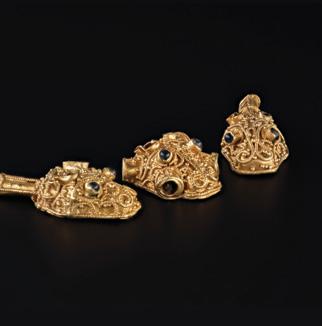
Navy 125
Now showing
Australia’s navy has secured Australia’s interests in peace and in war throughout its 125-year history.
This short-term commemorative display examines some of the people and pivotal events that have shaped the navy over this time. It shares stories of love, loss, vigilance, community and sacrifice unique to navy life.
sea.museum/navy-125
Ultimate
Depth: A Journey to the Bottom of the Sea
Now showing
There is only one world ocean, and it covers 70 per cent of the planet. Ultimate Depth invites you to experience and understand our ocean, so together we can help to protect it. Join us as we dive into each zone, encounter extraordinary creatures, and uncover the cutting-edge technologies that reveal their secrets and their hidden world – including DEEPSEA CHALLENGER , the submersible that took James Cameron to these extreme depths in 2012.
sea.museum/ultimate-depth
View from the Docks: written and illustrated by Sam Wallman Now showing
In the mid-20th century, a group of worker-artists created The Wharfies’ Mural to capture the industrial and political struggles of their time. Today, the wharves are dominated by smart machines – but has everything changed?
Artist and wharfie Sam Wallman thinks not. He offers a contemporary lens on dock life, capturing its enduring spirit through bold, graphic artworks that connect past and present.
sea.museum/sam-wallman
Ur Wayii (Incoming Tide)
Now showing
Torres Strait artist Brian Robinson uses painting, printmaking, sculpture and design to illustrate the region’s mythology, cosmology and spirituality. Robinson incorporates contemporary icons taken from video games and Hollywood movies to reflect on Islander history, humour and love of fishing.
sea.museum/incoming-tide
Brian Robinson with this large-scale artwork Tropical Efflorescence Hibiscus . Image Marinco Kojdanovski
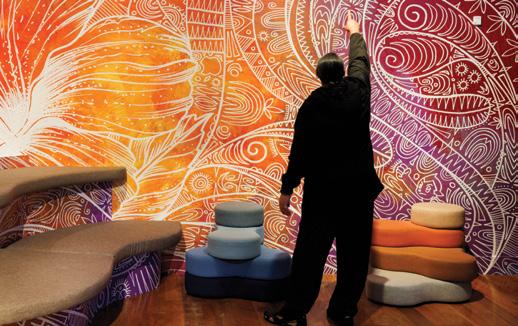
Secret Strike: War on our shores
Now showing
2025 marked the 80th anniversary of the end of World War II. To commemorate this historic milestone, a new temporary exhibition focuses on the 1942 Japanese midget submarine attack on Sydney Harbour. Secret Strike: War on our shores features the stern section of the midget submarine M22 and voice pipes from HMAS Kuttabul. The exhibition explores the raid and includes historic images of the aftermath of the attack and first-hand accounts of the impact it had on ordinary people’s lives.
*Please note, Secret Strike: War on our shores is located in Wharf 7, adjacent to the main museum building, and is not open on weekends or public holidays.
sea.museum/secret-strike
Frozen Witness: Aurora’s polar
voyages
Now showing
Voyage back in time to the early decades of Australia’s Antarctic exploits and the journeys of SY Aurora. Generously supported by Charlotte Fairweather through the ANMM Foundation, the exhibition features the expeditions of Ernest Shackleton and Douglas Mawson – and the remarkable story of a wooden vessel pitched into the icy unknown. sea.museum/frozen-witness
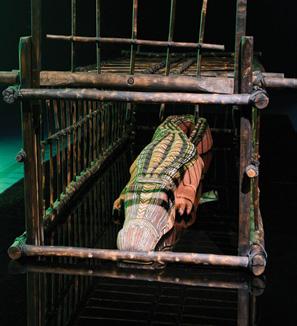
Touring exhibitions
Croc! Lost giants to living legends
Queensland Museum Kurilpa, Brisbane
Now showing
Meet one of the planet’s most powerful and fascinating animals – the crocodile. This interactive all-ages exhibition brings you face to face with the ancient ‘supercrocs’ that once roamed alongside the dinosaurs, right up to today’s crocodile species.
Co-produced by Australian National Maritime Museum, Queensland Museum and Museum and Art Gallery of the Northern Territory.
Spirit Removed by Djabugay/Yirrgay artist
Bernard Lee Singleton Jr. Image Markus Ravik
A Graphic Tale of Shipwreck
Victor Harbor National Trust Museum, SA
Now showing
This visually arresting exhibition takes visitors through the process of creating a graphic novel about South Australia’s oldest known shipwreck, the whaling ship South Australian (lost 8 December 1837).
After years of research, the wreck site was finally discovered in 2018. Since then, maritime archaeologists have re-created the disaster in the form of a stunning graphic novel of the site. This exhibition presents the dramatic imagery from the novel as well as real shipwreck artefacts recovered from the site.
Artworks by Holger Deuter. ANMM image
Voyage to the Deep
Horniman Museum, London, UK
Now showing
Based on French author Jules Verne’s 1870 classic, Twenty Thousand Leagues Under the Seas , the exhibition brings to life the adventures of Captain Nemo, his fantastical Nautilus submarine and his mythical world. Kids can venture through the world below the waves, including the octopus’s garden with its huge clamshell, a giant squid to slide down and a maze of seaweed to wander through in the kelp forest. This exhibition’s tour is managed by Flying Fish.
James Cameron – Challenging the Deep
Vasa Museum, Stockholm, Sweden
Now showing
Encounter the deep-ocean discoveries, technical innovations and scientific and creative achievements of underwater explorer James Cameron.
Created by the Australian National Maritime Museum’s USA Programs and supported by the USA Bicentennial Gift Fund. Produced in association with Avatar Alliance Foundation.
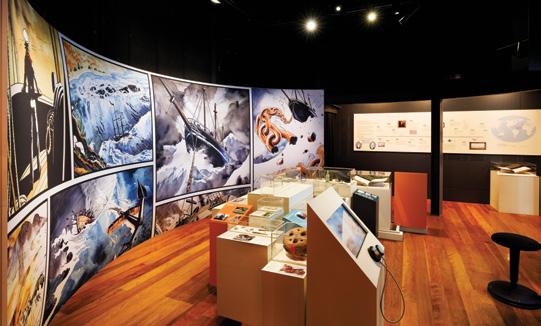
Dark Victory Fleet Air Arm Museum, HMAS Albatross, Nowra Hill, NSW Until 1 April
Royal Australian Naval College, HMAS Creswell, Jervis Bay, NSW From 7 April
This display tells the story of Operation Jaywick, the secret commando raid on Japanese shipping in Singapore harbour in September 1943, and the unforeseen consequences it had for the civilian population.
sea.museum/dark-victory
Mariw Minaral – Spiritual patterns
Jervis Bay Maritime Museum & Gallery, Jervis Bay, NSW Until 31 May
This beautiful exhibition brings together some of the finest examples of Zenadth Kes (Torres Strait Islander) artist Alick Tipoti’s unique and intricate linocut printmaking practice. The exhibition also contains some of his award-winning sculptural works, contemporary masks and film.
Valerie Taylor: An Underwater Life Tomaree Lodge, Shoal Bay, NSW From 18 March to 30 April
Forster Civic Centre, Forster, NSW From 6 May to 23 July
At a time when oceans are under more threat than ever, Valerie Taylor AM has been a key change-maker, breaking the mould, pushing boundaries, and capturing an underwater world that – in some places – no longer exists. She shows the impact one person can have and embodies the urgency to act now.
Over 60 years in the ocean, Valerie Taylor has captured the underwater world and shared her knowledge with the public, encouraging greater protection of species and their habitats. In 2018, she donated a vast archive of photographs, objects and stories to the National Maritime Collection.
Valerie Taylor: An Underwater Life is not just one woman’s incredible story, it is a call to action for all the potential ocean change-makers out there – to inspire all of us to advocate for the oceans in our own way.
This touring exhibition is supported by the Australian Government’s Visions of Australia program.
Image © Valerie Taylor Australian National Maritime Museum Collection. Reproduced courtesy of the Ron and Valerie Taylor Collection
For information regarding all touring exhibitions, please see sea.museum/ touring-exhibitions
Brickwrecks – sunken ships in Lego® bricks
Mystic Seaport, Connecticut, USA
From 28 March
Featuring large-scale LEGO® models, interactives and audiovisuals, Brickwrecks explores some of the world’s most famous shipwrecks, including Vasa, Batavia, Titanic, Terror and Erebus
Developed and designed by the Western Australian Museum in partnership with the Australian National Maritime Museum and Ryan McNaught.
Image Oliver Dixon
Cats and Dogs
Albury Library Museum
From 7 April
In a seafaring life from which families and children are usually missing, and are often very much missed, pets provide a focus for emotions and affection. Sydney photographer Sam Hood went aboard countless ships between 1900 and the 1950s. He took hundreds of photographs of crew members as souvenirs of their visit or to send home to families. This selection of images shows how much pets meant to many seafarers.
Inspiring the future Year 10 work experience placements
A new work experience program for Year 10 students was launched at the Australian National Maritime Museum in 2025. Isabella Trope shares the importance of this program and what it has achieved so far.
EDUCATION AT OUR MUSEUM inspires and engages students in maritime history and environments. Most often this takes the form of gallery tours and workshops, but in 2025, the Learning team took education to the next level by welcoming Year 10 students to the museum for a new work experience program.
Work experience is not mandatory in New South Wales, but is supported and strongly encouraged by schools. Such placements are usually the first opportunity students have to peer into the world of work, helping them decide on potential career paths and university courses, which in turn informs their subject choices for years 11 and 12.
Work experience also helps students move from abstract ideas about their future to actively planning and visualising it. If ‘seeing is believing’, then giving students the opportunity to see museum careers in action allows them to believe that museum careers are possible for them. This makes work experience a valuable component of museum education.
The new work experience program was a success in 2025, with more than 60 program applicants and seven successful students. Students completed application forms that included questions designed to gauge their personal connection to maritime history and the sea. Each successful student brought a unique perspective to the program; they came from diverse schools and had a variety of hobbies, from scuba diving and marine science to archaeology and maritime history.
During their time at the museum, the students made significant contributions. One student found a home in the Education collections, as he loved going through the objects and treasured handling them. He was immensely helpful with our collection re-organisation project. A pair of students collaborated to create a fantastic social media video, which was featured on the museum’s Instagram account. Another student joined our Fleet team for the week and proved herself to be such a capable addition to the team that they wanted her to stay longer. Even though these students were aged just 15 and 16, they surprised all they met with their enthusiasm and ability.
At the end of the week, the students participated in a collective interview to offer insight into their experiences. They said that everyone they met at the museum was ‘willing to be part of their experience, and willing to show us things’. They also valued the chance to hear people talk about their work and what they were passionate about, and to ‘hold objects and understand what they were’. One student reflected that her time at the museum had ‘taught me so much about myself, my interests, my prospects, and has inspired my future … and encouraged me to pursue a future within a historical or maritime sector’.
The museum will run another Year 10 work experience program in 2026. It’s the perfect opportunity for students with a love of all things maritime to get behind the scenes of a unique museum set on one of Sydney’s most stunning waterfronts.
To learn more about this work experience program, please visit sea.museum/en/about/workwith-us/work-experience . Check our webpage to find when this program starts again in 2026.
Work experience helps students move from abstract ideas about their future to actively planning and visualising it
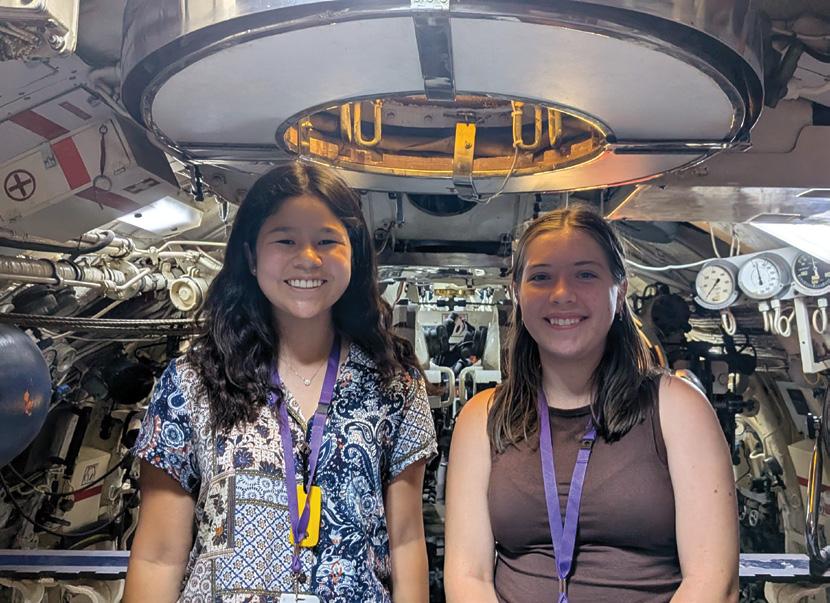
Work experience students in HMAS Onslow. Image Isabella Trope/ANMM
The Zammit Family Collection
Memories from three generations of naval service
A large collection of Australian naval items recently left to the museum by Ian Zammit recalls the service of three generations of his family –grandfather Joseph, father Victor and brothers Alan and David – whose careers spanned most of last century, including both world wars.
By Laura Jelovic.
IAN ZAMMIT was a second-generation Australian of Maltese descent. His father, Victor, was born in Malta in 1896, the son of Francisca and Joseph. The family immigrated to Australia when Victor was a child. Aged 18, Victor left school in Sydney to join his father, Joseph, in the canteen of the cruiser HMAS Encounter on 4 August 1914, the day that World War I broke out. Victor spent six years on Encounter. With little refrigeration space on the ship, the crew often had to subsist on tinned salmon and salted meat. The canteen was well patronised as a result. In this era, canteens on navy ships were run by private contractors, but although technically civilians, the canteen manager and his assistants were classified as members of the crew and played an integral part in running the ship.
Among the objects donated by the Zammit family was a circular metal ashtray made from brass salvaged from HMAS Australia (I). This battlecruiser was commissioned in 1913 as the flagship of the newly formed Royal Australian Navy (RAN). After serving in the Atlantic theatre through World War I, Australia was scuttled in 1924, due to the limitation of capital ship tonnages under the terms of the Washington Peace Treaty.1
Before Australia was sunk, most of the ship’s fittings were removed and numerous souvenirs were fashioned from the salvaged material, such as the metal ashtray in the Zammit collection. A similar example is held by the Australian War Memorial, but it is clear that the Zammit family’s example was heavily used, since its impressed image of Australia is partially erased. 2 This is hardly surprising: among the most popular commodities sold in ships’ canteens were smoking products, including pipe tobacco and cigarettes.
After World War I ended, Victor served on the light cruiser HMAS Melbourne (I), which carried out routine fleet duties, including exchanges with the Royal Navy’s Mediterranean Fleet in 1926. Two years later, Melbourne was disarmed and sailed for Portsmouth in England with a crew destined to commission the newly built HMAS Australia (II).
Aged 18, Victor left school to join his father, Joseph, in the canteen of HMAS Encounter on 4 August 1914, the day that World War I broke out
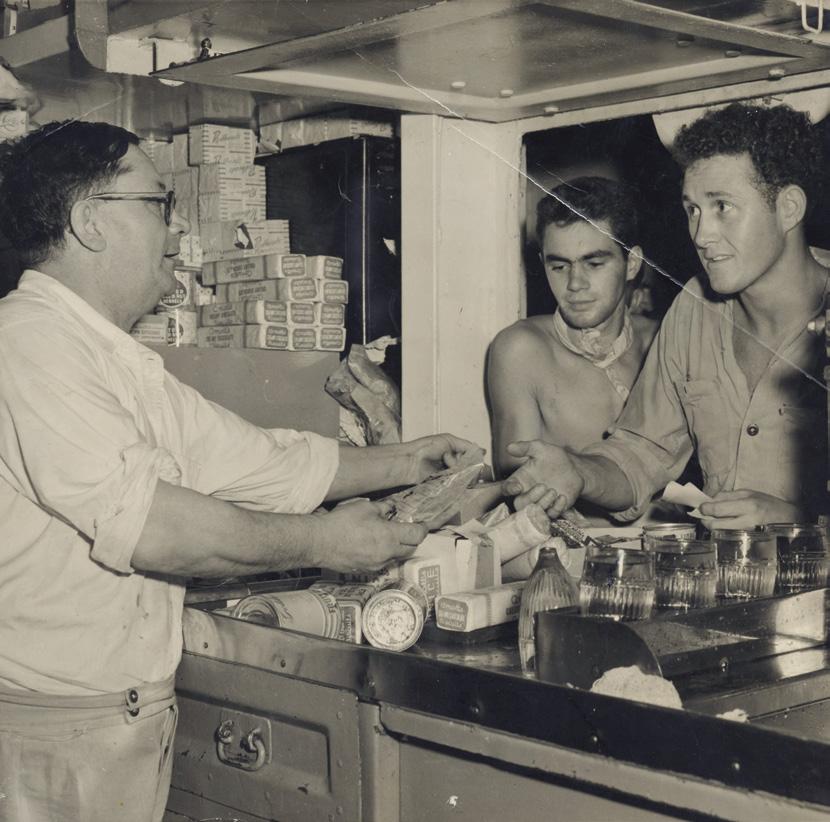
Victor Zammit serving two Australian sailors in the canteen of HMAS Australia (II). Image courtesy David Ford
01
Photographs of New York City, where HMAS Australia (II) stopped in 1944, from the album in the Zammit Family Collection. ANMM Collection 00056662
02
Against a photograph of the remains of a Japanese kamikaze aircraft on Australia ’s deck, Victor wrote ‘Wreckage of “zombie” engine’. ANMM Collection 00056662
All items featured in this article: Australian National Maritime Museum Collection Gift from David Ford in memory of Ian Zammit
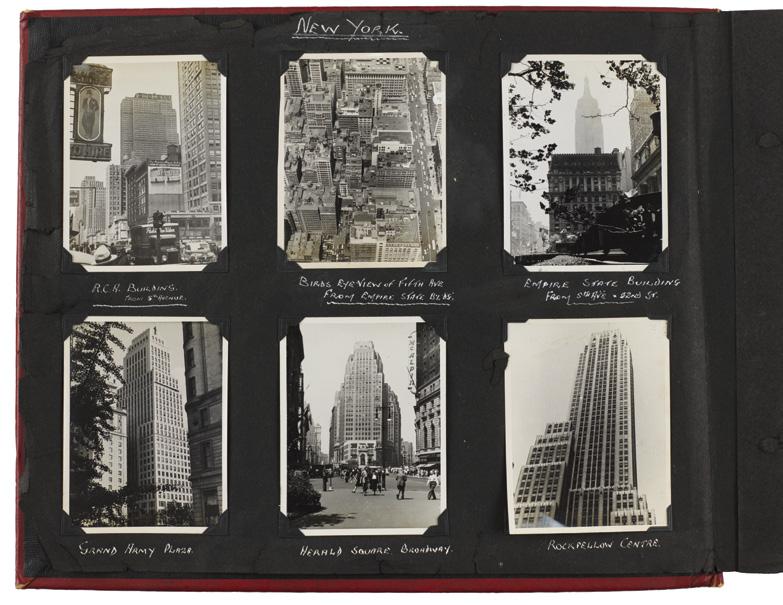
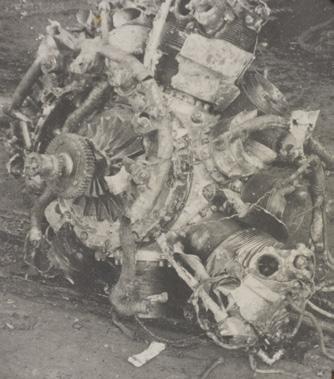
Australia’s first aircraft carrier, Sydney (III), was home to Victor and his sons Alan and David for more than six years
Victor Zammit went on to serve on board Australia (II) for 20 years, from 1928 until 1948. His son Alan, aged 17, joined him as a canteen assistant at the end of World War II. Victor’s cousin, Salvatore Michael Zammit, meanwhile served as the canteen manager on HMAS Sydney (II) during the conflict. Sadly, he was lost with the ship on 19 November 1941, when it was sunk by the German auxiliary cruiser Kormoran off the Western Australian coast. Sydney had 645 men on board; none survived.
One of the most notable objects donated by the Zammit family was an auburn-coloured album, containing labelled photographs and postcards that document the journey of Australia (II) throughout 1944 and 1945. The book features photographs of the different locations that Australia visited, including wartime New York City.
On 20 October 1944, RAN ships including Australia were part of the massive Allied invasion fleet that landed American troops at Leyte Gulf, in an effort to liberate the Philippines from Japanese control. The next day, during the Battle of Leyte Gulf, Australia became the first Allied warship to be struck by a kamikaze attack, in which Japanese aircraft were armed with bombs or packed with explosives and deliberately crashed into Allied vessels. This was a novel and terrifying phenomenon, which did not originally have a name among Allied personnel. Indeed, against a photograph of the remains of one Japanese aircraft on Australia ’s deck, Victor wrote ‘Wreckage of “zombie” engine’.
This kamikaze attack caused Australia to be removed from action for repairs, before returning in January 1945 for what would be its last deployment of World War II. The album photographically documents a significant event: the RAN’s flagship, Australia (II), leading a naval taskforce into the Lingayen Gulf on 6 January 1945 as part of the Allied invasion of Luzon Island.
After the war ended in August 1945, both Victor and Alan continued to work in the canteen of Australia (II), serving in 1947 with the British Commonwealth Occupation Force in Japan. They visited Shanghai during a time when communist forces were gaining control of China.
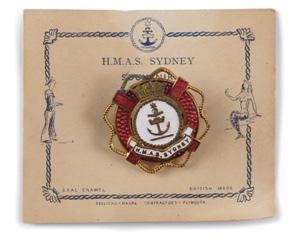
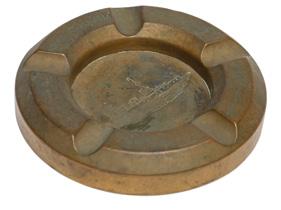
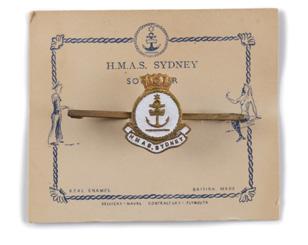
01 HMAS Sydney (III) sweetheart brooches from the Zammit Family Collection. ANMM Collection 00056664 and 0005665
02
The circular metal ashtray from the Zammit Family Collection, made from brass salvaged from HMAS Australia (I). ANMM Collection 00056661
03
The wooden mantle clock from the Zammit Family Collection, presented to Victor Zammit in May 1948. ANMM Collection 00056660
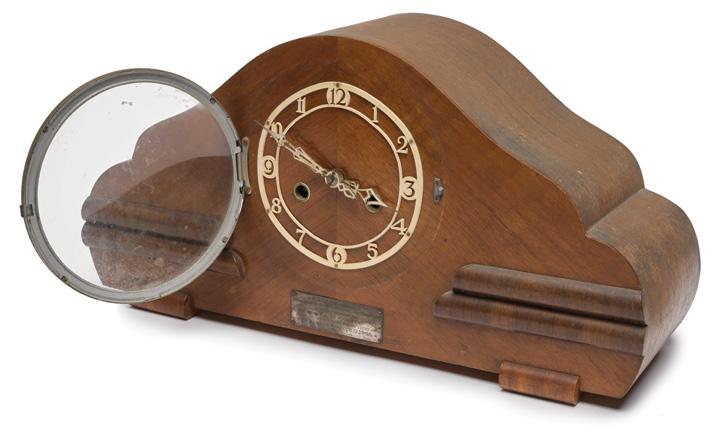
Among the most popular commodities sold in ships’ canteens were smoking products, including pipe tobacco and cigarettes
Another object donated by the Zammit family was a wooden mantle clock, which was presented to Victor Zammit in May 1948, in appreciation of his 20-year service as canteen manager on HMAS Australia (II). The clock’s maker is unknown, but it was presented by Captain Herbert Buchanan DSO RAN, captain of Australia, on Victor’s last day aboard the heavy cruiser.
That was far from the end of the Zammit family’s connection to the RAN, however. Victor’s son Alan served on HMAS Kanimbla (I) in July 1948 and then the Royal Navy aircraft carrier HMS Glory (R62) until the end of December. Alan then joined his father and brother David on the newly commissioned HMAS Sydney (III).
Australia’s first aircraft carrier, Sydney (III), was home to the Zammit family for more than six years. Their service included two tours of duty in the Korean War, as well as witnessing Britain’s first atomic bomb test, at the Montebello Islands off Western Australia, in 1952. The Zammits also joined the tour to Britain for Queen Elizabeth’s coronation in 1953.
In 1955, canteen services on naval ships were taken over by the government rather than being run by private contractors. Victor and his two sons retired from RAN service that year, having won several Australian Service Medals. Alan went on to write naval history for journals and newspapers.
Three of the objects donated by the Zammit family were HMAS Sydney (III) ‘sweetheart brooches’ – badges produced for those serving on Australian warships to send home as souvenirs, providing a small personal token. Sweetheart brooches were typically worn by female relatives as a reminder of their loved ones who were still serving in the armed forces – or sometimes of those who had lost their lives while on service. While such brooches were likely part of the stock aboard Sydney (III)’s canteen, they are a poignant reminder of the passing of Victor’s cousin, Salvatore Michael Zammit, when the previous Sydney was lost with all hands.
The volume and variety of items that make up the Zammit collection provide personal insights into the RAN’s significant deployments over the 20th century. What makes these items unique is their role in documenting the experiences of civilians who lived –and died – aboard Australian warships on active service. Together, the collection evidences the previously unsung contribution that the Zammit family made to Australia’s naval history.
1 See Peter Hobbins, ‘Pride of the fleet’, Signals 148, 2024, pp 22–9.
2 ‘Souvenir ashtray: HMAS Australia I’, Australian War Memorial, REL31272.
Laura Jelovic completed a placement at the museum in 2024.
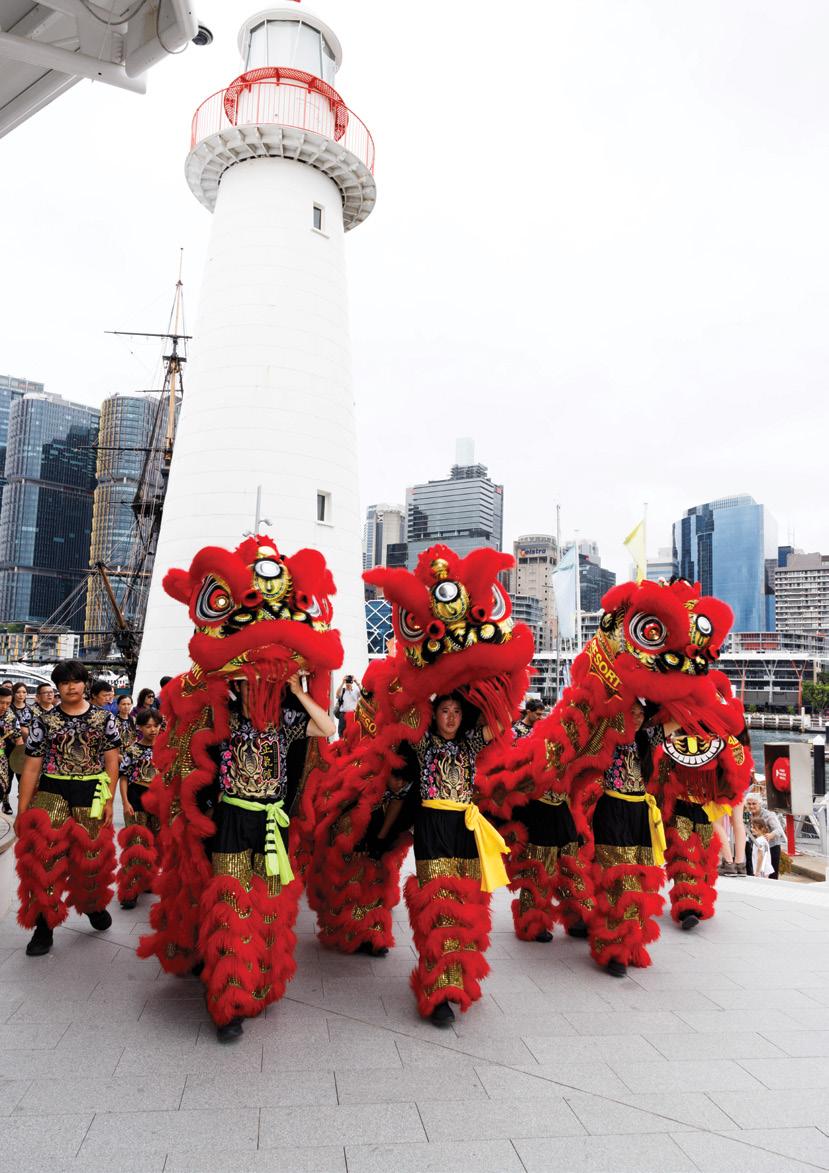
Lion dance troupe Australian Eastern Tradition Centre performed around the museum precinct during the ceremony. Image Marinco Kojdanovski
A Vietnamese voice for the Welcome Wall
New names unveiled
In November the Vietnamese community was the focus of a special ceremony at the National Monument to Migration, which unveiled, for the first time, a panel dedicated to Vietnamese immigrants. By Tim Barlass.
ON A WING AND A PRAYER from their parents, some 250 babies, many in temporary cardboard cots, were airlifted out of war-torn Vietnam 50 years ago to begin a new life in Australia.
In April 1975, with advancing North Vietnamese forces and Saigon under siege, US President Gerald Ford announced Operation Babylift. This mass evacuation relocated more than 3,300 children from South Vietnam to the United States, Australia and other Western countries at end of the Vietnam War.
Among those babies was Sue-Yen Luiten, whose name has just been added to the museum’s Welcome Wall, Australia’s National Monument to Migration. Two unveiling ceremonies were held on 22 November, at which 814 inscriptions from 56 different countries were revealed, including a dedicated Vietnamese ceremony and panel of names.
At just three weeks old, Sue-Yen became a child between worlds, not fully belonging to either. She was placed with an Australian family and, growing up, navigated two identities:
At school, I was the child who looked different, whose name teachers stumbled over, and who had to explain why my family didn’t ‘match.’ At home, I was simply their child – loved and cared for.
Being adopted into Australia is beautifully complicated. It is gratitude and grief intertwined, privilege and loss side by side. I am grateful for the life I’ve been given – for opportunities, education and safety. Yet I carry questions that may never be answered – about birth families I may never know, about siblings whose names are lost to history, about a mother who faced an impossible choice.
Federal Government Fair Work commissioner, Oanh Thi Tran, said her extended family left Vietnam in fits and starts in the aftermath of the fall of Saigon:
When I was two, we left – my parents, a brother and three sisters, most of us under 10 – in my father’s fishing boat. He had coordinated about 30 men, women and children to travel together. But on the night of our departure, more than 50 people turned up – to get on a boat no larger than two cars placed end to end – but he didn’t turn anyone away.
For a tax deductible gift of $500, your name, or the name of a family member, relative, co-worker or friend, will be etched in bronze onto the Welcome Wall, Australia’s National Monument to Migration, as a lasting acknowledgment of their journey across the seas to make Australia home. Register now online at sea.museum/nationalmonument or phone (02) 9298 3777 to be included in the next unveiling ceremony.
01, 02
More than 1,000 people attended the unveiling of 347 new Vietnamese names.

Images Marinco Kojdanovski
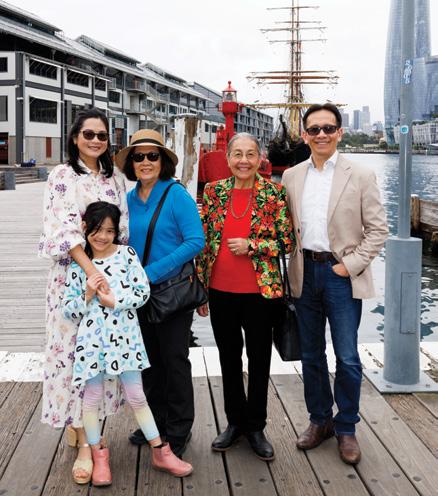
They left Vietnam in 1982. By then, the dangers of the journey were well known – the distance, pirates and an uncertain welcome at the other end.
My father had painted sticks to look like guns so that we could pretend to be pirates if attacked. We were attacked.
Everyone on that boat arrived safely in Malaysia. We spent about a year in the UNHCR camp in Pulau Bidong before my family was eventually and wholly reunited in Australia.
I’m honoured to be here today, to be part of the unveiling of the next panel on the Welcome Wall. Its extensiveness is testament to refugees and migrants being the very fabric of Australian society.
David Hua, director of audio and language content at SBS, was born in Da Nang in Vietnam and went with his family by boat from Vietnam to Hong Kong, where they stayed in a refugee camp:
We actually were offered placements in a number of places, and it was my mother who said she liked the way the Australian troops conducted themselves more than others, so she held out … there was a yearning in my family for political freedom, and to be Australian.
Sue-Yen Luiten sums up what the Welcome Wall means to those whose names appear on it:
This monument is more than a marker of migration – it affirms that we belong, and that our story is now woven into Australia’s story.
All quotes in this article are taken from speeches given at the Vietnamese ceremony on 22 November 2025 and are reproduced with permission.
The Australian National Maritime Museum thanks the following Vietnamese–Australian community groups and individuals for their support of the dedicated Vietnamese panel on the National Monument to Migration:
Australian Vietnamese Health
Professional Association
Canterbury Bankstown Council
Community & Cultural Connections
Fairfield City Council
Inner West Council
Julie Ly and Sheila Pham and the museum’s Tu� do community reference group
Little Asia 2166
SBS Vietnamese
The Sunrise Daily
Vietnamese Community in Australia, NSW chapter
Dr Peter Thang Ha, President
Dr Bill Tran
Viet Luan Newspaper
Viet TV Australia
Ken Phan, Director
Kim Hong Nguyen, Editor in Chief
Vietnamese Women’s Association in NSW
A tough gig Navy leaders in war and peace
AS FORMER SENIOR CURATOR of the museum’s naval collection, I was pleased to be asked to review this work, as I have crossed paths with many of the authors (among them noted naval historians) and some of the subjects over the years. The book demonstrates an impressive depth of research and analyses. The introductory chapter by Dr John Reeve offers an excellent overview and insight into the many and varied changes that have affected the Royal Australian Navy (RAN) since its inception in 1911.
Here we have studies of the professional lives of the first 24 officers who led the Royal Australian Navy in times of both war and peace, from before the First World War to the First Gulf War. Each chapter outlines that officer’s naval career and reveals his achievements (and, in some cases, failures) during his tenure, as well as analysing his management approach. Challenges encountered in the political, strategic and financial domains are also discussed. The Navy Chiefs outlines the culture of the Royal Navy as it defined and shaped the force and its leaders in the early decades. It also explains how a distinctive Australian naval culture came about as the RAN dovetailed with the maturing of Australia’s national defence, industry, trade and international diplomatic efforts.
Each chapter is an account of leadership, whether it be during high-intensity naval warfare or peace-keeping and disaster relief efforts. These men were not just leaders of a capable navy; they had to learn quickly how to interact with government at all levels (most especially the top tiers). They needed to advocate for naval interests and effectively inform or influence often uninformed public servants and politicians. The Chief of Navy must manage change in the workforce, argue for better surface ships and submarines and up-to-date technologies, and balance the expectations of their sailors and officers and of the public and government. It is, and always will be, a tough gig indeed.
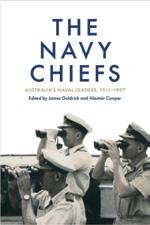
The Navy Chiefs –Australian Navy Leaders 1911–1997
Edited by James Goldrick and Alastair Cooper, published by Allen & Unwin, Sydney. 554 pages, illustrations, index. ISBN and RRP 9781761471445 $50.00 (hardcover), 9781761189883 $33.00 (softcover). VEL 359.3 GOL
The Navy Chiefs considers the personal strengths and weaknesses of each leader, their interactions with government leaders of the time, and evolving foreign policies and security co-operations. The concluding chapter by Vice Admiral Chris Ritchie (Chief of Navy 2002–05) makes valid observations on defence reorganisations that in the past 30 years have challenged the effective management of the RAN. Sadly, this has led to a loss of naval skills and a reliance on contractors and consultants, which has resulted in many complex and lengthy processes that have caused consternation within the navy. This has also gone hand-in-hand with recruitment and retention problems – a recurring theme in the book. It’s good that the authors have not shied away from the negative impacts of some defence reforms.
Who would enjoy this book? If you have an interest in the development of Australia’s naval history, this is a recommended read, providing greater insight into defence leadership and the trials, tribulations, challenges and successes that go with such an important job.
Reviewed by Honorary Research Associate Lindsey Shaw.
PRESENTED BY
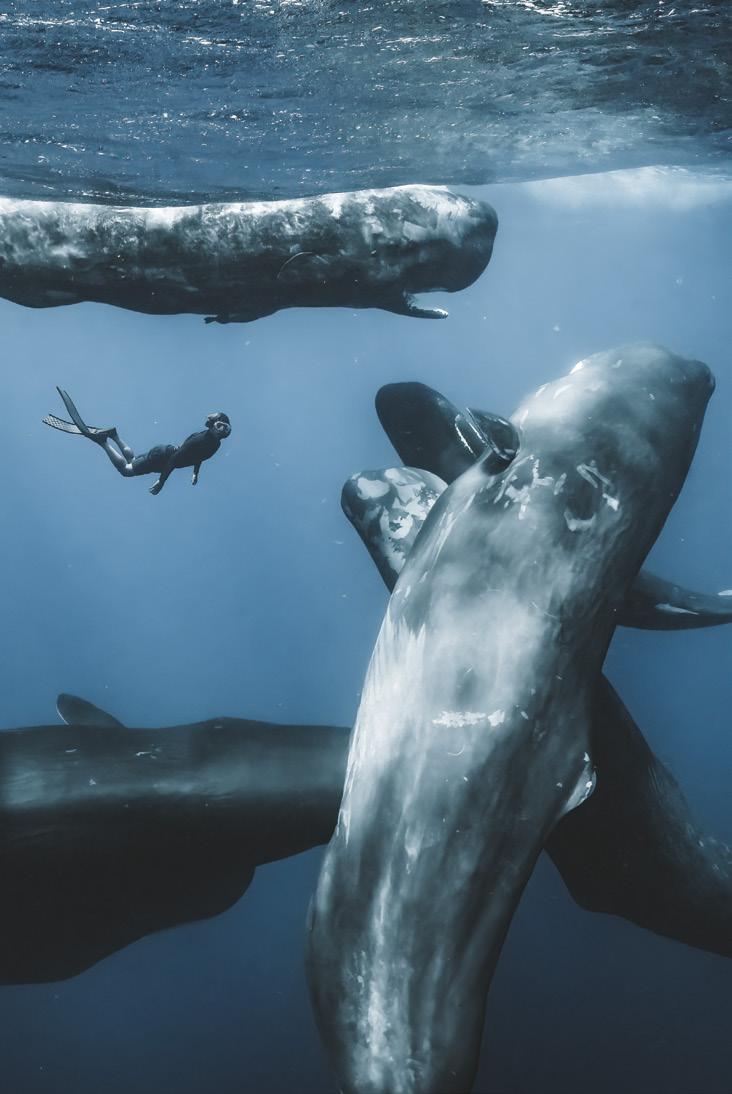
6 November 2025 – 3 May 2026
EXHIBITION SPONSORS
TICKETS

©
Romain Barats
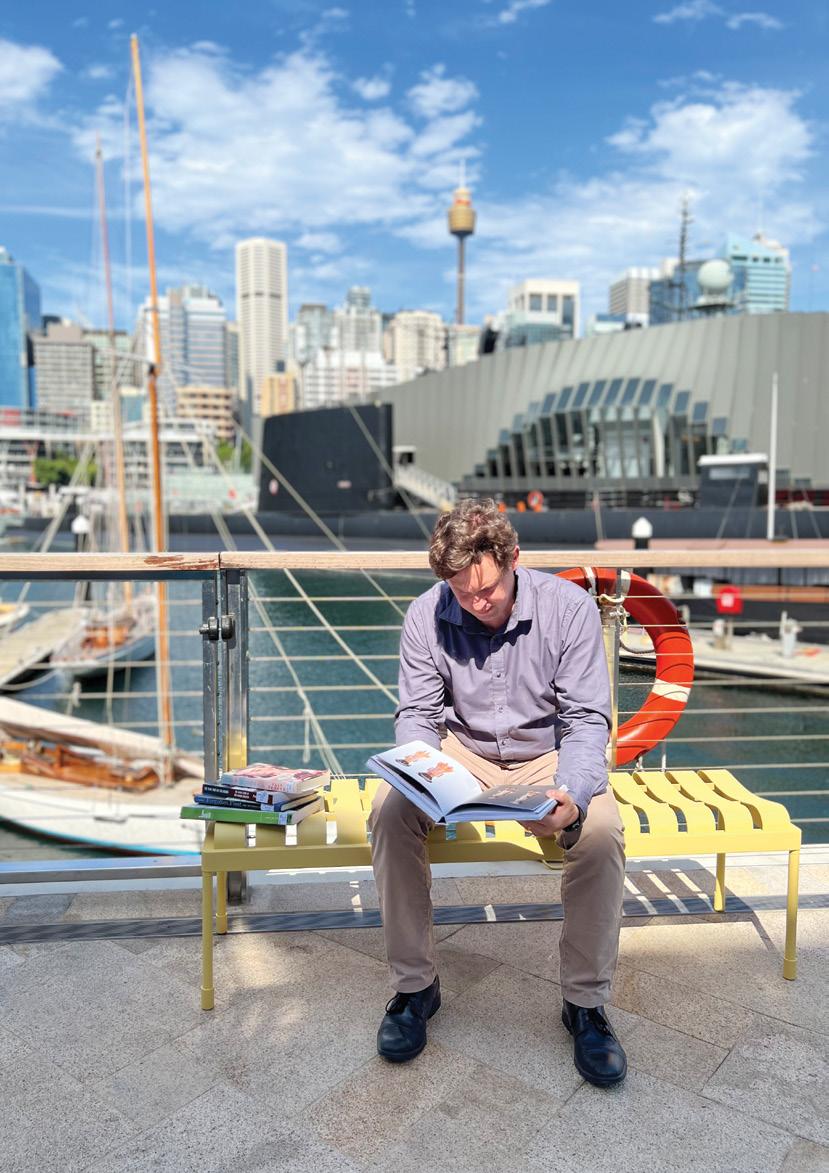
Recent additions to the Vaughan Evans Library
We are constantly adding new works to our library across a wide range of topics. We also offer new magazines and maritime, genealogical and general research databases. Check our library catalogue, schedule a visit and enjoy our great new books. Visit sea.museum/collections/library
Art Gallery of NSW
Yolŋu power: the art of Yirrkala
709.994 YOL
BBM Ltd
BBM: 100 years of journeys
304.894041 BBM
Gordon R Boyle
A History of British tramp shipping, 1870–1914: Volume 1 – Entry, enterprise formation, and early firm growth 387.544 BOY
Gerald Daniel Cohen
In war’s wake: Europe’s displaced persons in the postwar order 940.53145 COH
Peter FitzSimons
The courageous life of Weary Dunlop 940.547252 FIT
Image Leonie Jones/ANMM
Flinders University Art Museum Crosscurrents
709.2423 CRO
Peter Jerram
The team that hits the rocks: the inside story of the Wahine disaster
910.45309931 JER
Darryl Jones
Be(wilder): journeys in nature 577.27 JON
Clem Lloyd and Jacqui Rees
The last shilling: a history of repatriation in Australia
362.860994 LLO
Daniel Madsen
Forgotten fleet: the mothball navy
359.83250973 MAD
Ann McGrath and Jackie Huggins (eds)
Deep history: country and sovereignty 305.89915 MCG
Alli Parker
Until the red leaves fall 823.4 PAR
Andrew Peters
Ships’ figureheads: famous carving families 736.4 PET
Shane Simpson and Ian McDonald
Collections law and ethics: galleries, libraries, archives and museums 344.092 SIM
Max Speedy and Bob Ray (eds)
A bloody job well done: the history of the Royal Australian Navy Helicopter Flight Vietnam, 1967–1971 (2nd edn) 959.704345 SPE
Yanyuwa, Marra, Garrwa and Gudanji families with Karin Riederer
Gulf Country Songbook 781.62 GUL
Introducing Dr Vanessa Pirotta
Our newest Honorary Research Associate
IN 2014 THE MUSEUM ADOPTED a system of honorary recognition for former employees and other eminent people who have contributed significantly to museum operations and engagement, in the role of Honorary Research Associate (HRA). HRAs contribute to specific museum programs and projects within their area of expertise as trusted external advisers and content providers. The museum would like to extend a warm welcome to our newest HRA, Dr Vanessa Pirotta.
Dr Pirotta is one of Australia’s most renowned wildlife scientists, pioneering innovative technologies to transform wildlife conservation across marine environments (whale snot drones) and on land (AI to detect illegal wildlife trafficking). A globally recognised science communicator, she is driven by a passion for making science accessible, influential and inclusive, earning recognition as one of the Australian Financial Review’s Top 100 Women of Influence, and one of Science & Technology Australia’s Superstars of STEM. Her leadership has been honoured through major accolades, including the NSW Premier’s Woman of Excellence, an Australian Eureka Prize for Promoting Understanding of Science, the Australian Institute of Policy and Science Young Tall Poppy Science Award, French–Australian Excellence Awards, and the National Academies Eric and Wendy Schmidt Awards for Excellence in Science Communications.
Her research strives to empower communities through wildlife, including the Tongan Whale Tourism Project in the Kingdom of Tonga and the creation of the Wild Sydney Harbour citizen science program collaborating with First Nations Gamay Rangers to unite Indigenous knowledge with cutting-edge Western science.
Dr Pirotta is a celebrated author of wildlife books for children and adults, a trusted media voice and an invited MC for the Prime Minister’s Prizes for Science. She says:
I’m honoured to be an Honorary Research Associate for the Australian National Maritime Museum. This is a unique position for me to further the quest to increase Australia’s connection with our blue backyard.
Dr Pirotta is already an established part of the of the museum family, having launched her books Humpback Highway, Oceans at Night and Voyage of Whale and Calf at our site, served as keynote presenter for Women in Science events and collaborated with the museum’s Learning team to establish the first annual Humpback Day on 7 May 2025. At that event, together with the CSIRO, we provided free and live educational resources on whale conservation to K–6 students across Australia and internationally.
This year, the museum hopes to utilise our new dive vessel Sea Muse to support her research with the Gamay Rangers and the Wild Sydney Harbour Project. Plans are also afoot to collaborate with regional museums on conservation and science communication projects. We also look forward to the second annual Humpback Day on 6 May this year.
The museum is delighted to welcome Dr Vanessa Pirotta and wishes also to acknowledge and thank all current Honorary Research Associates for their continued service and support of our organisation.
Emily Jateff, Curator of Ocean Futures
Honorary Research Associates contribute to specific museum programs and projects within their area of expertise
ANMM Honorary Research Associates
RADM Peter Briggs AO RAN
John Dikkenberg
Dr Nigel Erskine
Dr Ian MacLeod
Jeffrey Mellefont
David Payne
Dr Vanessa Pirotta
Lindsey Shaw
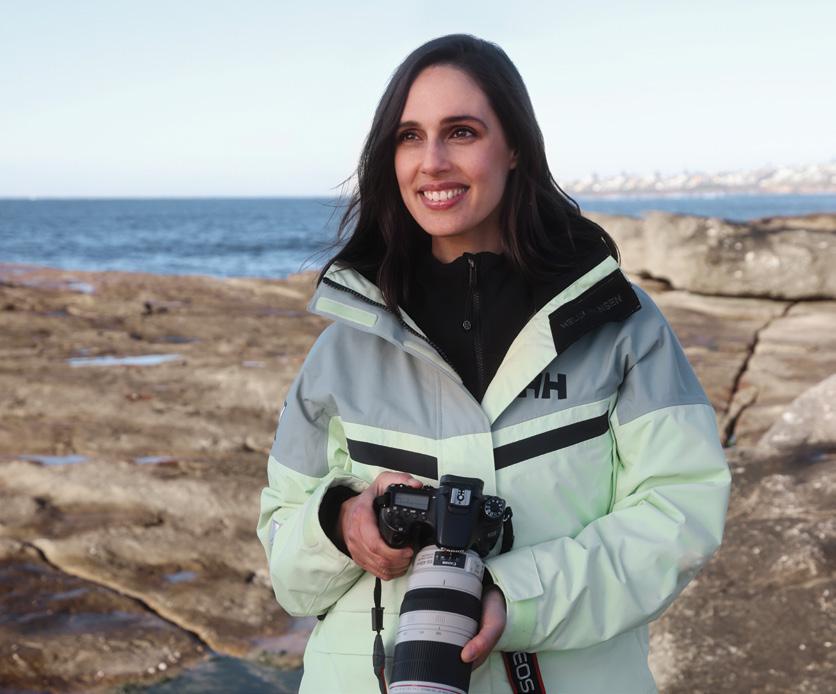
Dr Vanessa Pirotta is a cetacean researcher, wildlife scientist, science communicator, author, TEDx speaker, Antarctic Science Foundation Ambassador, and founder of the Wild Sydney Harbour citizen science program. Image courtesy Vanessa Pirotta
Acknowledgments
The museum’s honours system recognises individuals who have made a significant contribution to the museum and to Australian maritime heritage and culture generally.
Honorary Fellowships are the highest honour conferred by the Council, awarded to people who have made an exceptional contribution to the museum and whose status and ongoing association will serve to promote the museum and its activities.
Ambassadorships are awarded by Council to people who have donated $100,000 or more to the Australian National Maritime Museum Foundation.
Honorary Fellows
Peter Dexter AM
John Mullen AM
Valerie Taylor AM
Ambassadors
Norman Banham
Christine Sadler
Dr David and Jennie Sutherland
Major Donors
Peter Dexter AM
Daniel Janes
David Mathlin
Benefactors
Margaret Cusack
Basil Jenkins
Dr Keith Jones
Janette Parkinson
RADM Andrew Robertson AO DSC RAN
Peter Whitsed
Geoff and Beryl Winter
Signals
ISSN 1033-4688
Editor Janine Flew
Associate editor Stirling Smith
Staff photographer Jasmine Poole
Design & production Austen Kaupe
Printed in Australia by Pegasus Media & Logistics
Material from Signals may be reproduced, but only with the editor’s permission.
Editorial and advertising enquiries signals@sea.museum
Signals back issues
Back issues $4 each or 10 for $30
Extra copies of current issue $4.95
Email theshop@sea.museum
Search all issues at sea.museum/signals
Australian National Maritime Museum
2 Murray Street Sydney NSW 2000 Australia. Phone 02 9298 3777
Our opening hours are 10 am–4 pm
(NSW school holidays 9.30 am–5 pm)
The Australian National Maritime Museum is a statutory authority of the Australian Government
Become a museum member
Options for individuals, families and people who live interstate or overseas offer a great range of benefits, such as unlimited entry to our museum, vessels and exhibitions, as well as special discounts.
Visit sea.museum/members

Signals is printed in Australia on Sovereign Silk 250 gsm (cover) and Sovereign Silk 113 gsm (text) using vegetable-based inks.
Honorary Research Associates
RADM Peter Briggs AO RAN
John Dikkenberg
Dr Nigel Erskine
Dr Ian MacLeod
Jeffrey Mellefont
David Payne
Dr Vanessa Pirotta
ANMM Council
Hon Hieu Van Le AC (Chair)
Daryl Karp AM
Councillors
Padraig (Paddy) Crumlin
Dr Bülent (Hass) Dellal AO
Nataliya Dikovskaya
Dr Kevin Fewster AM CBE FRSA
Hon Donald Harwin
Hon Leo McLeay
Alison Page
RADM Christopher Smith AM CSM RAN
Australian National Maritime Museum Foundation Board
Daniel Janes, Chair
Hon Hieu Van Le AC (ex officio)
Daryl Karp AM (ex officio)
John Barbouttis
Simon Chan AM
David Mathlin
Grazyna Van Egmond
American Friends of the
Australian National Maritime Museum
Robert Moore II
John Mullen AM
Daryl Karp AM
Lindsey Shaw Follow
What’s in the shop?
Check out our shop in person or online for a great range of clothing, gifts, books, games, homewares and mementoes for all ages.
BoldB jewellery
The Aqua Collection from BoldB combines bonded beach sand, aqua blue resin and metal pigments. Each unique piece reflects the beauty of Australia’s coasts. Designed in Melbourne.
From $54.95–$79.95 / Members $49.45–$71.95
Bamboozld bamboo socks
Eco-friendly, sustainably sourced and breathable. Designed in Australia in collaboration with Indigenous artist Nathan Patterson and featuring native animals –barramundi, whale, turtle and pelican.
Adult $16.95 / Members $15.25
Child $9.95 / Members $8.95
NautiGo range from Van Go
The NautiGo Collection features yachting designs on stylish and sustainable bamboo dinnerware and drinkware. Perfect gifts for boat and maritime lovers.
$9.95–$110 / Members $8.95–$99

Members receive 10% discount
Open 7 days a week
Email us at theshop@sea.museum
Shop online sea.museum/shop
Follow us on Instagram instagram.com/seamuseum_shop
Thank you to our partners
We gratefully acknowledge the generous support of our valued partners. Their commitment empowers the Australian National Maritime Museum to inspire current and future generations to explore, understand and connect with Australia’s rich maritime heritage and the oceans that shape our world.