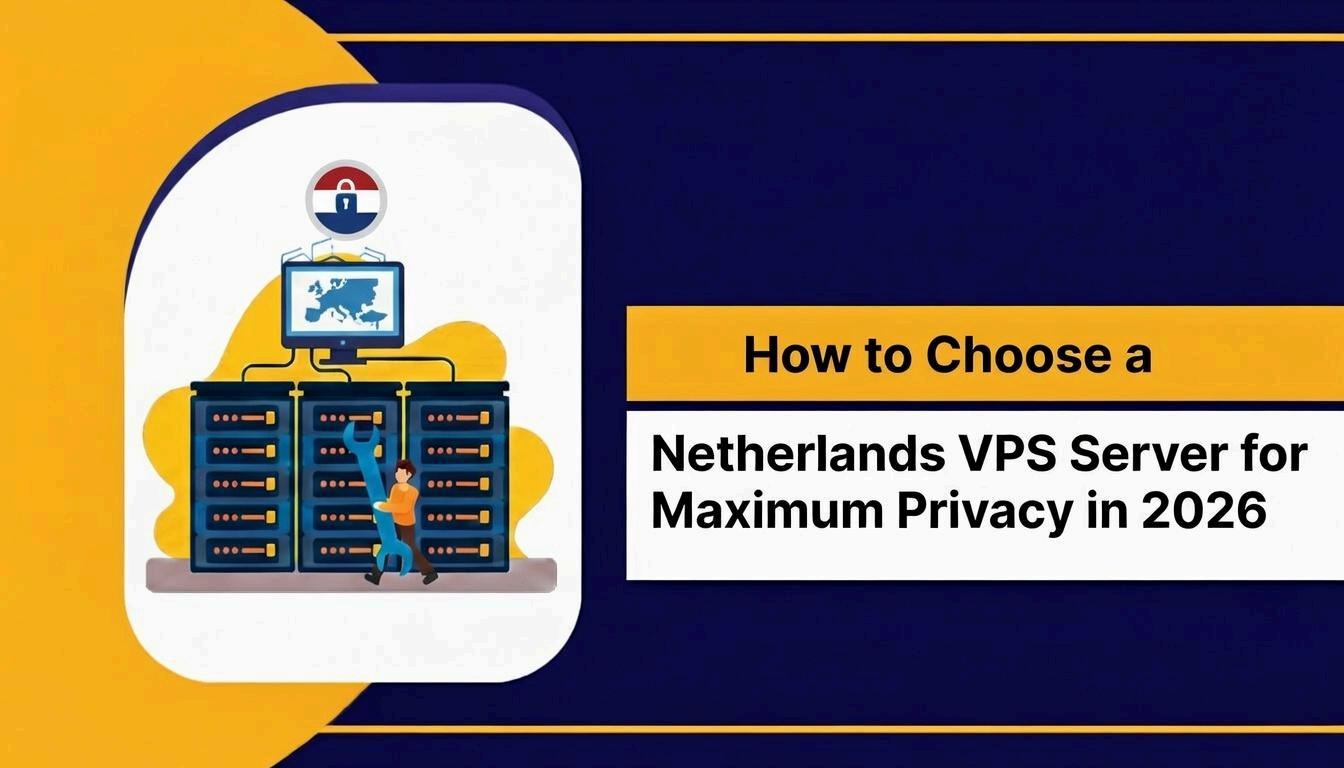
How to Choose a Netherlands VPS Server for Maximum Privacy in 2026
How to Choose a Netherlands VPS Server for Maximum Privacy in 2026
In an era where every click, download, and transaction is tracked, protecting your digital footprint is no longer a luxury it is a fundamental necessity Data breaches are a near-daily headline, and global surveillance programs are a known reality. For businesses and privacy-conscious individuals, relying on the public cloud or domestic hosting is becoming an unacceptable risk
Many people need a high-performance server that offers both speed and uncompromising privacy, but they are unsure which geographic location and technical features truly deliver on that promise.
This professional guide will walk you through the essential criteria for selecting a Netherlands VPS server in 2026. The Netherlands has long been a haven for hosting due to its stable infrastructure and strong legal environment By the end of this article, you will know exactly how to choose a provider and configuration that delivers maximum privacy and security for your operations
Based on an analysis of global data protection trends and hosting infrastructure, the Netherlands offers a strategic blend of European data privacy laws and world-class network connectivity, making it a top-tier choice for securing your most sensitive digital assets
What Makes a Netherlands VPS Server a Privacy Champion?
A Virtual Private Server (VPS) is a hosting environment that mimics a dedicated server within a shared physical machine It gives you dedicated resources (CPU, RAM, storage) and complete operating system-level control without the cost of an actual dedicated server.
A Netherlands VPS server simply means this virtual server is hosted on a physical machine located in a data center within the Netherlands This specific location is highly valued for privacy due to two core factors: strong local laws and exceptional infrastructure The Legal Framework: Data Protection Laws
The primary legal shield is the European Union’s General Data Protection Regulation (GDPR). This regulation is one of the strictest and most comprehensive data privacy laws globally, governing how personal data is collected, processed, and stored
Choosing a server within the Netherlands means your data is directly protected by the GDPR.
● Explicit Consent: Companies must obtain clear, affirmative consent before processing personal data.
● Right to Be Forgotten: Individuals have the right to have their personal data erased
● Strict Penalties: Violations of GDPR carry massive fines, which encourages host providers to maintain extremely high compliance standards.
While the Netherlands has domestic surveillance laws, its overall legal stance, coupled with GDPR adherence, provides a strong initial layer of defense that is often superior to many non-EU jurisdictions The Infrastructure Advantage: Stability and Speed
The Netherlands is a global leader in internet infrastructure.
● Amsterdam Internet Exchange (AMS-IX): Home to one of the world's largest internet exchange points, ensuring minimal latency, especially across Europe and North America
● Network Redundancy: Dutch data centers are known for their modern facilities, redundant power supplies, and excellent cooling, translating directly to high uptime guarantees
● Neutrality: The country’s history of supporting an open and free internet is a cultural factor that subtly influences the hosting industry’s operational ethos
Essential
Choosing a Netherlands VPS is only the first step True digital privacy is achieved by selecting a host that implements specific technical features.
1. Anonymous Payment Methods
A critical yet often overlooked step in securing a private server is how you pay for it The payment trail can be the weakest link.
● Cryptocurrency Payments: Look for providers that accept privacy-focused cryptocurrencies like Monero or even Bitcoin, which can decouple your identity from the hosting account.
● Cash/Anonymous Options: While rare, some highly privacy-focused hosts may offer prepaid cards or even cash-by-mail options for maximum anonymity.
2. Off-Shore Ownership and DMCA Compliance
While the server is physically located in the Netherlands, the provider’s corporate jurisdiction and its policy on handling takedown requests matter.
● Host Location vs. Company Location: Some hosts use Netherlands data centers but are legally incorporated elsewhere. Research the parent company’s jurisdiction.
● Digital Millennium Copyright Act (DMCA): The Netherlands is outside the direct jurisdiction of the U S DMCA This means that U S -based takedown requests are typically handled according to Dutch and EU law, often requiring a formal court order rather than an immediate, automated server shutdown
3. Server Configuration for Security
The software environment must be as robust as the legal environment.
Full Root Access (Admin Access) Gives you 100% control over the operating system, allowing you to install firewalls, security hardening tools, and encryption without reliance on the host’s default settings
Operating System Choice
Prefer privacy-focused Linux distributions (like Debian or CentOS) over Windows, as they offer more control and less proprietary code that could pose a risk
Data Center Security (Physical)
Look for providers that detail their physical security: multi-factor access, 24/7 monitoring, and on-site staff, ensuring no unauthorized physical access to the server hardware
4. Advanced Network and Encryption Features
Your connection to the server must be just as secure as the server itself
● Encrypted Connections: Ensure the provider only allows access via secure protocols For Remote Desktop, this involves using the encrypted Remote Desktop Protocol (RDP) connection.
● DDoS Protection: Distributed Denial of Service protection is a sign of a high-quality, resilient network While not a direct privacy feature, a stable network that can weather attacks ensures your services remain online and uncompromised.
● High-Speed Bandwidth: Good bandwidth is necessary for smooth remote operations, preventing the need to use less secure, slower workarounds.
How to Evaluate a Netherlands VPS Provider
When looking to buy a Netherlands VPS in 2026, don't just compare resource allocation (RAM/CPU) You must prioritize their commitment to privacy
Step 1: Read the Terms of Service (ToS) and Privacy Policy
The fine print is where privacy commitments are made or broken.
● Logging Policy: The most critical detail The best providers maintain a strict No-Logs Policy They should explicitly state that they do not log your traffic, connection timestamps, IP addresses, or the resources you access.
● Data Retention: How long do they keep your non-essential data (billing, payment history)? The less time, the better.
● Cooperation with Authorities: The policy should clearly outline the legal process they follow before releasing any data, such as requiring a legally binding court order from the appropriate Dutch or EU authority.
Step 2: Check Customer Support Expertise
Your privacy setup will be complex, and you will need support that understands the stakes.
● Availability: Look for 24/7 technical support
● Privacy Knowledge: Test their support with privacy-specific questions (e g , "What is your policy on GDPR requests?" or "Do you support anonymous payment methods?"). A generic answer is a red flag
Step 3: Analyze the Server Hardware and Specifications
High-performance hardware can be a security feature, as it allows you to run robust, resource-heavy encryption and security layers
● Storage Type: Always choose NVMe or SSD storage over older HDD technology. NVMe offers superior speed and performance consistency, which is vital for any professional application.
● Dedicated Resources: Ensure your plan explicitly guarantees dedicated resources Shared resources can introduce performance volatility and potential security vulnerabilities.
Step 4: Look for Transparent Pricing
A privacy-focused provider must have transparent pricing
● Hidden Fees: Watch out for unexpected fees for setup, bandwidth overages, or mandatory managed services
● Renewal Costs: Ensure the renewal rate is clearly stated and does not jump dramatically after the initial promotional period. Consistent costs allow for long-term budget planning
Who Needs a Privacy-Focused Netherlands VPS?
This type of server is a strategic tool for various professionals and organizations.
1. Digital Entrepreneurs and Marketers.
● Geo-Targeting: The server's location allows for effective testing and management of North American or European campaigns
2. Remote Developers and IT Professionals
● Off-Site Testing: Developers can use the VPS as a clean, high-performance environment for software testing, running builds, or hosting demo applications without impacting their local workstation
● Server Management: IT teams can use an Admin RDP connection to manage other servers or network devices remotely from a stable, secure, and dedicated control point
3 Financial Traders
● Forex and Crypto Bots: Trading applications require ultra-low latency and 99 9% uptime A well-chosen Netherlands VPS ensures these applications run constantly and reliably, protecting your investment from downtime.
Frequently Asked Questions (FAQs)
What is the most critical feature of a privacy-focused Netherlands VPS?
The most critical feature is the provider's No-Logs Policy You must ensure the host explicitly states that they do not collect, monitor, or store any metadata about your connection, including IP addresses, timestamps, or traffic data
How does the Netherlands' location help with privacy compared to the US?
The key difference is the legal jurisdiction. The Netherlands falls under the General Data Protection Regulation (GDPR), which provides stronger and more explicit rights over personal data Furthermore, being outside of U S jurisdiction can offer a degree of legal insulation from U.S.-based surveillance or takedown requests like the DMCA.Is a
"Cheap Netherlands VPS" still private?
Yes, the price point of a Netherlands VPS does not automatically determine its privacy level A "cheap" provider may simply have smaller resource allocations (less RAM, less storage). However, you must meticulously check its Terms of Service and Privacy Policy for a strict No-Logs commitment, as this is the true measure of its privacy focus, regardless of cost
Can I run a business operation on a Netherlands VPS?
Absolutely. The stable, high-performance network infrastructure in the Netherlands, combined with its strong legal framework, makes a Netherlands VPS server ideal for a wide range of business operations, including hosting e-commerce sites, running development environments, managing digital marketing tools, and operating financial trading bots.Is the Remote Desktop Protocol (RDP) secure?
Conclusion
Choosing the right hosting location is a critical business decision, and for privacy, the Netherlands remains a strategic powerhouse in 2026. The country’s intersection of strong EU/GDPR laws and state-of-the-art internet infrastructure creates an environment where digital security can thrive
Maximum privacy is not a default setting it is a conscious choice By focusing your selection criteria on a strict No-Logs Policy, anonymous payment options, full root access, and a transparent legal stance on data requests, you can transform a standard VPS into a highly secure, private digital asset
Invest in a host that values your privacy as much as you do Doing so will allow you to focus on your core business operations with the confidence that your data is protected by both superior technology and robust law.-