Why Human Graphic Designers Still Matter in the Age of AI
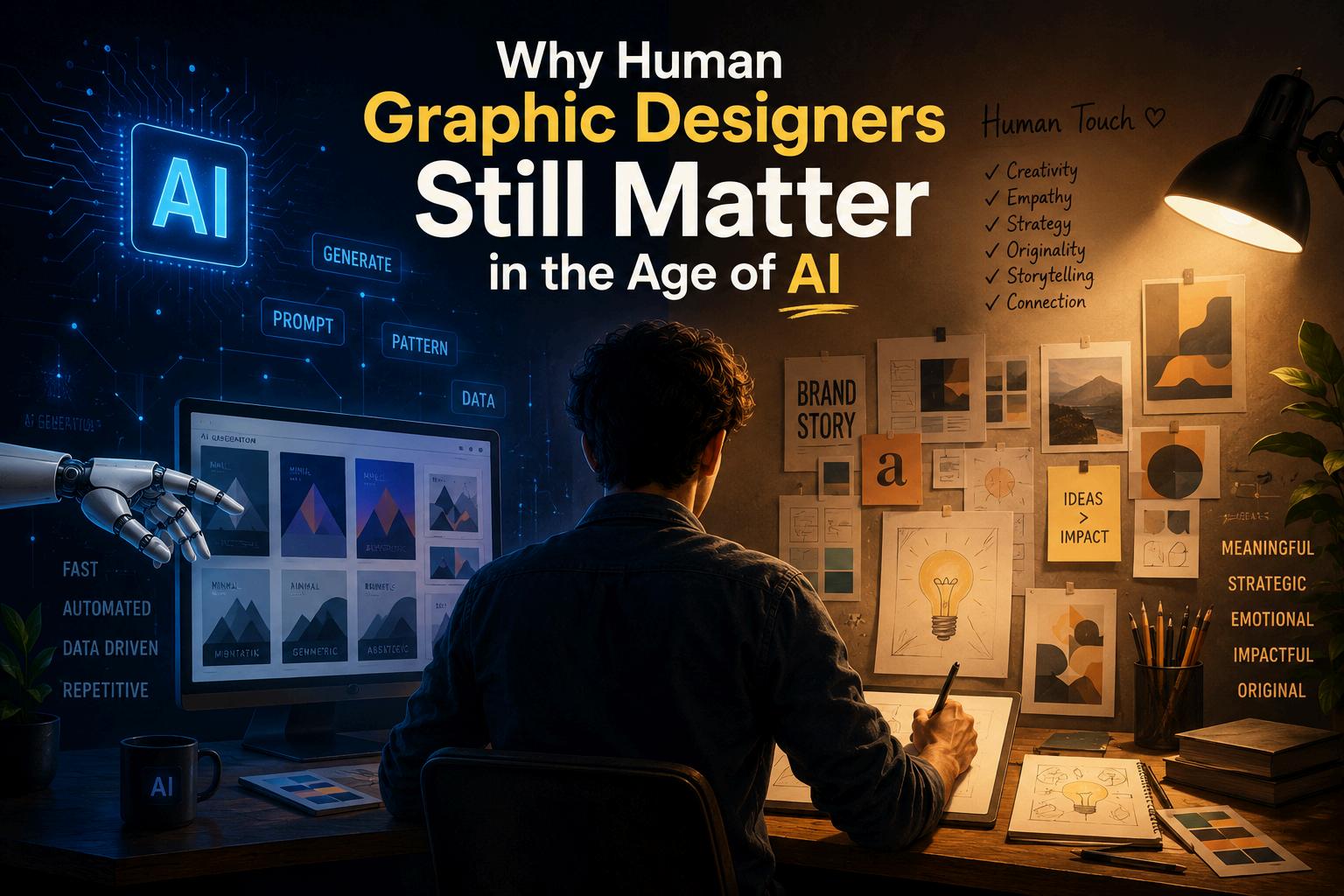
Why Human Graphic Designers Still Matter in the Age of AI
Artificial intelligence has changed the creative industry at an incredible pace Today, anyone can generate logos, social media posts, illustrations, and marketing graphics within seconds using AI-powered tools While this technology has made design more accessible, it has also created a major misconception: that design is simply about producing visuals quickly In reality, great graphic design is not only about aesthetics it is about communication, emotion, identity, and human connection
As businesses compete to stand out in a crowded digital world, personalization and originality have become more important than ever. This is where human graphic designers continue to provide unmatched value AI can imitate styles and automate repetitive tasks, but it cannot truly understand human experiences, cultural nuances, emotions, or brand storytelling in the same way a skilled designer can.
For companies, entrepreneurs, and personal brands seeking authentic visual communication, hiring a human designer remains one of the smartest investments. If you want to explore professional creative work crafted with a personal touch, you can check out this Behance portfolio: Anik's Behance Portfolio
Design Is More Than Just Generating Images
AI tools are excellent at creating quick outputs based on prompts. However, they often rely on existing patterns, trends, and datasets This means many AI-generated designs end up looking similar, generic, or lacking a clear identity
Human designers approach projects differently. They do not simply create visuals they solve problems A designer studies a brand’s mission, audience, goals, competitors, and emotional tone before creating anything. Every color choice, font selection, layout, and visual element is intentionally crafted to communicate a message
For example, a luxury fashion brand requires a completely different visual identity than a children’s educational startup. A human designer understands these emotional and psychological differences naturally, while AI often depends entirely on how detailed the prompt is
Great design involves strategic thinking, and strategy is still deeply human.
Personalized Creativity Cannot Be Automated
One of the biggest advantages of working with a human designer is personalization Every brand has its own story, values, and personality. Human designers take the time to understand these elements and translate them into visuals that feel authentic.
AI-generated designs often lack individuality because they are built from massive collections of existing content. Even when the output looks impressive, it may not truly reflect the unique identity of a business or creator
Human designers can:
● Capture the personality of a brand
● Understand emotional goals
● Adapt to client feedback creatively
● Create original concepts tailored specifically to a project
● Build long-term visual consistency
This level of customization creates stronger emotional connections with audiences. Consumers today are increasingly drawn toward brands that feel real, human, and relatable Personalized design helps businesses build trust and recognition over time
Human Designers Understand Emotion
Emotion is one of the most powerful elements in design. Whether it is excitement, nostalgia, confidence, trust, or empathy, effective visuals trigger emotional responses that influence customer behavior
A skilled designer understands how different visual choices affect human psychology. They know how spacing can create calmness, how typography can create authority, and how colors can influence mood
AI may replicate styles, but it does not truly understand emotion. It predicts patterns mathematically rather than emotionally Because of this, AI-generated designs can sometimes feel “empty” or disconnected despite being visually polished.
Human designers bring empathy into the creative process They understand the emotional intent behind a project because they themselves experience emotions. This creates work that feels more genuine and meaningful
Originality Matters More Than Ever
As AI-generated content becomes more common, originality is becoming increasingly valuable. Businesses do not want to look like everyone else They want memorable branding that differentiates them from competitors
Human designers are capable of developing unique visual systems from scratch. They combine imagination, cultural understanding, personal experiences, and experimentation to create fresh ideas
AI tools, on the other hand, are heavily influenced by existing data. This can lead to:
● Repetitive styles
● Unintentional similarities
● Generic visual trends
● Lack of creative risk-taking
Originality is especially important for businesses building long-term brands. A distinctive visual identity helps customers remember and recognize a company instantly
When brands rely too heavily on AI-generated content, they risk blending into a sea of similar-looking designs online.
Communication and Collaboration Are Human Skills
Design is rarely a one-step process Clients often change ideas, adjust goals, or need help clarifying their vision Human designers excel at communication and collaboration, which are essential parts of successful creative projects.
A professional designer can:
● Ask insightful questions
● Understand unclear instructions
● Offer creative suggestions
● Interpret feedback intelligently
● Adapt concepts based on evolving goals
AI cannot truly collaborate in the same way It generates outputs based on commands but does not build genuine creative relationships.
Working with a human designer creates a collaborative experience where ideas evolve naturally through conversation and feedback This often leads to stronger results than automated generation alone.
Human Designers Understand Culture and Context
Design does not exist in isolation Cultural trends, social values, language, humor, and local context all influence how visuals are perceived. Human designers can recognize:
● Cultural sensitivities
● Regional preferences
● Industry trends
● Social meanings behind symbols and colors
● Audience behavior patterns
AI tools sometimes struggle with cultural context because they rely on generalized training data This can lead to designs that unintentionally feel inappropriate, disconnected, or out of touch with specific audiences
A human designer brings awareness and contextual intelligence that helps brands communicate more effectively with real people.
Authentic Branding Builds Trust
Modern audiences are becoming more aware of AI-generated content While many people appreciate AI for speed and convenience, there is also growing demand for authenticity
Consumers want to support brands that feel human. Authentic branding creates trust, and trust is essential for customer loyalty
Human-created design often feels more thoughtful because it reflects intentional decisions and creative craftsmanship When businesses invest in professional designers, they signal that they care about quality, originality, and customer experience
This matters especially for:
● Small businesses
● Personal brands
● Creative agencies
● Luxury brands
● Startups seeking credibility
In competitive industries, authenticity can become a major advantage.
AI Lacks Deep Creative Intuition
Creative intuition is difficult to define, but it plays a huge role in design excellence Experienced designers often make instinctive decisions based on years of observation, experimentation, and emotional understanding
Sometimes the best creative ideas emerge unexpectedly during brainstorming, sketching, or collaboration. Human creativity is nonlinear and influenced by imagination, memory, emotion, and curiosity
AI does not truly “think creatively” in the human sense It predicts probable outputs based on patterns. While this can produce visually attractive results, it often lacks conceptual depth. Human designers are capable of creating entirely new artistic directions rather than simply remixing existing ones.
Long-Term Brand Consistency Requires Human Oversight
Strong branding is not created through isolated visuals. It requires consistency across websites, advertisements, packaging, social media, presentations, and marketing materials
Human designers help maintain this consistency over time by developing comprehensive visual systems and brand guidelines. They understand how all design elements work together to reinforce identity
AI-generated content can sometimes vary significantly between outputs, making it harder to maintain a cohesive brand image
Businesses that prioritize long-term growth benefit greatly from having dedicated designers who understand their evolving vision and maintain visual alignment across all platforms.
Human Designers Add Strategic Value
Design impacts business performance directly Good design improves user experience, strengthens marketing campaigns, increases engagement, and boosts brand perception
Professional designers think strategically about:
● Conversion rates
● User behavior
● Readability
● Accessibility
● Visual hierarchy
● Audience engagement
This strategic thinking goes beyond simply creating attractive graphics Human designers understand how visuals influence real business outcomes.
AI tools may help speed up workflows, but strategy still requires human expertise
The Future Is Collaboration, Not Replacement
AI is not necessarily the enemy of graphic design In many cases, it can be a useful assistant that helps designers automate repetitive tasks, explore ideas quickly, or improve efficiency. However, AI works best as a tool not as a complete replacement for human creativity
The most successful future designers will likely combine human creativity with AI-assisted workflows But the core elements of design empathy, storytelling, emotional intelligence, originality, and strategic thinking will remain deeply human
Businesses that rely entirely on automation risk losing the authenticity and emotional connection that customers value most
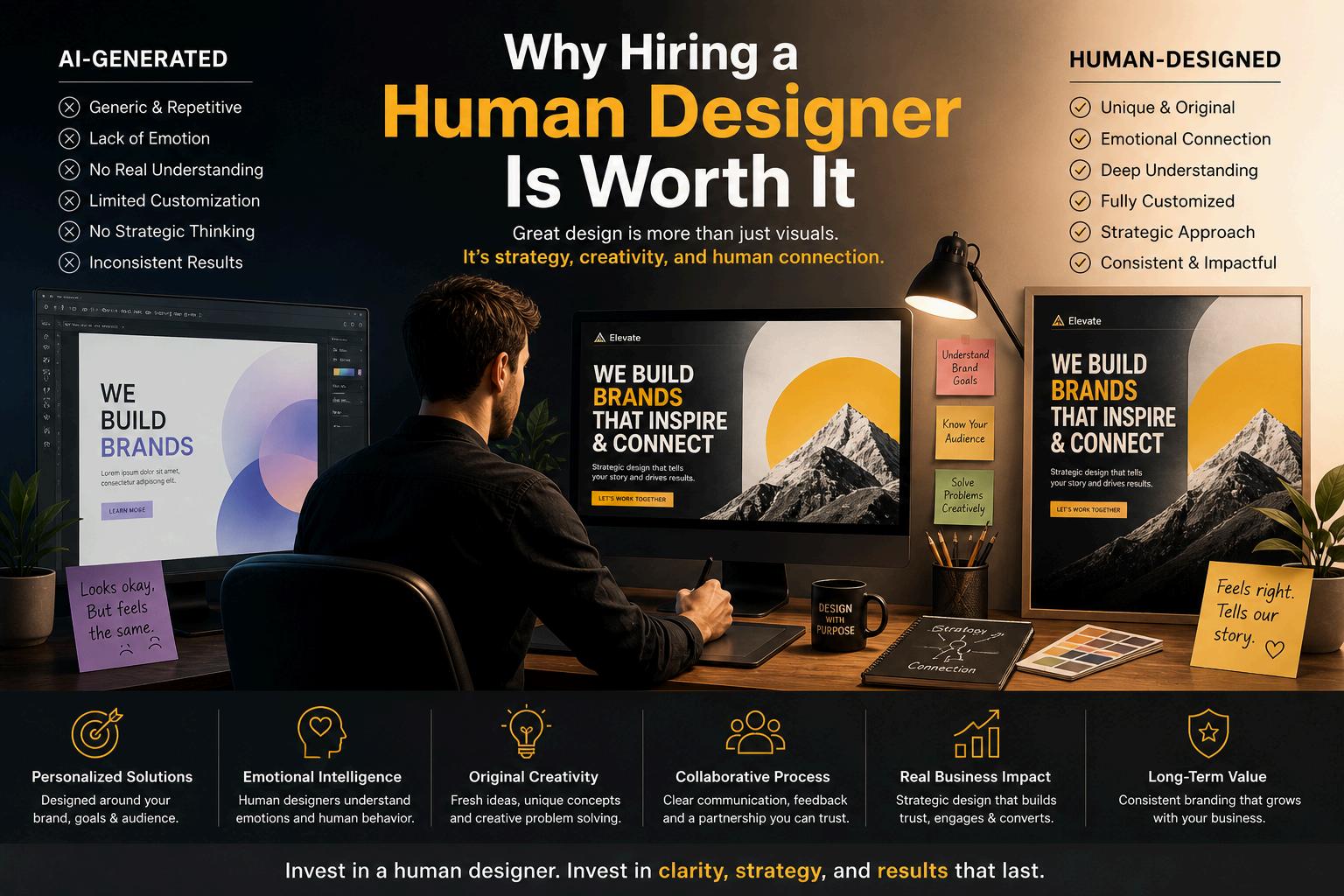
Why Hiring a Human Designer Is Worth It
Hiring a human designer is an investment in originality, strategy, and brand identity. While AI can generate fast visuals, human designers create meaningful experiences tailored specifically to your audience and goals
A skilled designer offers:
● Personalized creative solutions
● Emotional intelligence
● Strategic brand thinking
● Cultural understanding
● Originality and authenticity
● Collaborative problem-solving
● Long-term brand consistency
These qualities are difficult and often impossible to fully replicate with automation alone.
In a world increasingly flooded with AI-generated content, human creativity is becoming even more valuable because it stands out People connect with stories, emotions, and authenticity, and those are qualities that human designers naturally bring into every project.
If you are looking for creative work that prioritizes originality and personal artistic vision, explore this portfolio on Behance: Anik's Behance Portfolio
Ultimately, technology will continue to evolve, but genuine creativity remains one of the most powerful human strengths