46 Parentage Assured Bulls
Friday 5 th June at 1.30pm | 82318 State Highway 2, Pahiatua
Yearling Sale - Tuesday 15 th September 2026 at 12pm






Friday 5 th June 2026 at 1.30pm | 82318 State Highway 2, Pahiatua
46 Parentage Assured Bulls
Friday 5 th June at 1.30pm | 82318 State Highway 2, Pahiatua
Yearling Sale - Tuesday 15 th September 2026 at 12pm
Friday 5 th June 2026 at 1.30pm | 82318 State Highway 2, Pahiatua
Your inspection welcome anytime
- BULLS ON VIEW FROM 10am ON SALE DAY -
All females and males are i50k tested (breeding values are genomically enhanced), sire verified SV, parent verified PV.
Points to Note: Free Delivery in North Island
T.B. Status – C10.,Totaranui is in an endemic-free area. All bulls have been tested negative and vaccinated for BVD. All bulls are scanned for Carcase Traits in September 2025. All bulls independently assessed in March 2026. All bulls freeze branded for identification.
Totaranui Contacts
Daimien Reynolds & Tally Jackson
M: 021 430 710
E: bulls@totaranuistud.co.nz
John Jackson 0274 454844
PGG Wrightson - Mark Crooks 027 590 1452
Auctioneer and Agents for the sale: PGG Wrightson
Overriding commission of 6% to non participating companies.
PLEASE BRING THIS CATALOGUE TO THE SALE
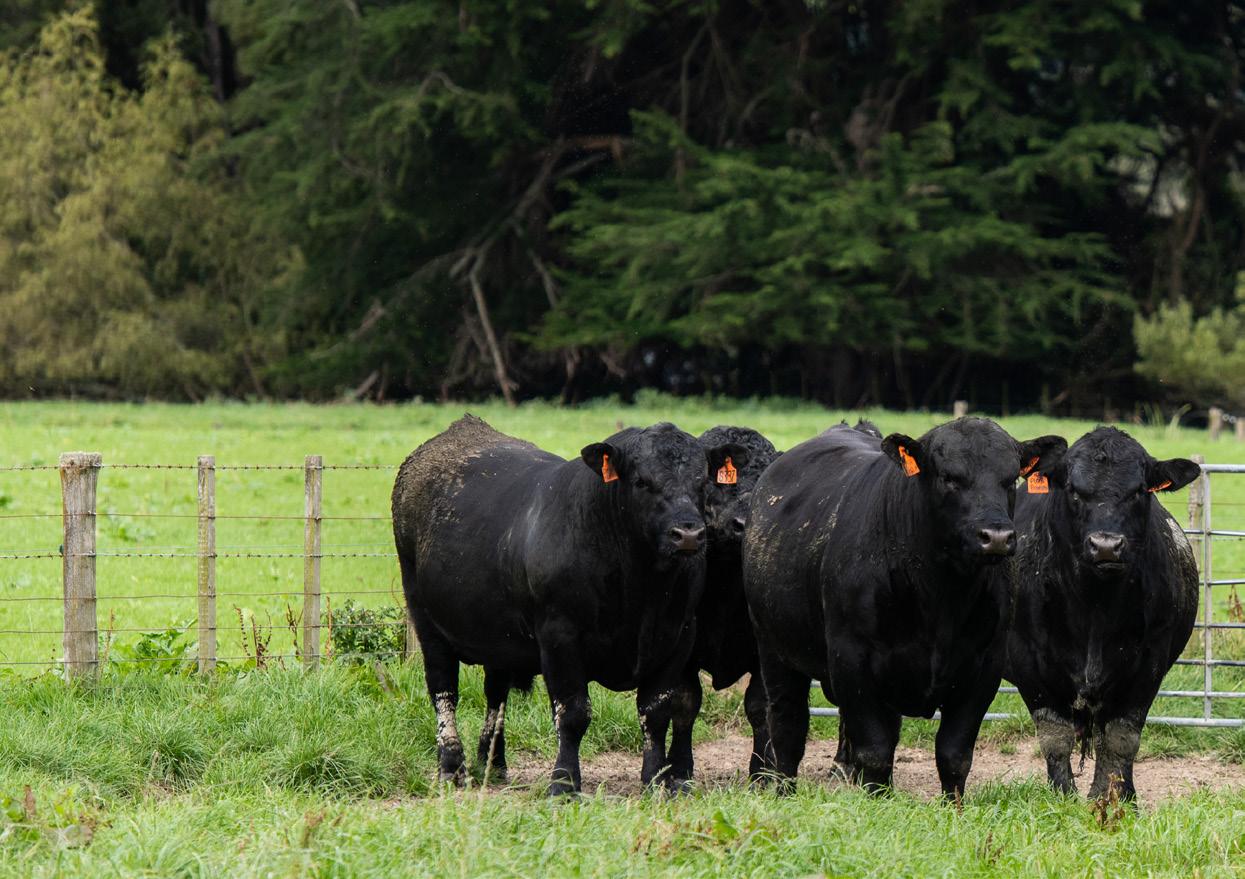
Thank you for taking the time to look through our catalogue. We are very pleased with the lineup of bulls this year. We present bulls of good data and type, that we think express what our breed objective is all about.
Our breed objective here at Totaranui is to breed functional, fertile cattle that have enough power to really make an impact on our client’s weaning weights and growth of progeny while maintaining maternal values.
In reality this is easier said than done. In New Zealand there are very few studs that have effectively combined power, type and maternal traits. This is our breed objective, it is our journey.
The offering in the catalogue is a time snap of our programme. Weaners this year include progeny from Tangihau Ultimate and 2026 pregnancies include those from Turiroa 787 and Turihau Revenge. We are looking forward to blending these more traditional style of cattle with the powerful programme we have with imported genetics.
You are welcome any time to view the cattle, please ring and we look forward to seeing you here on sale day.
Kind regards Daimien, Tally, John and the team here at Totaranui.
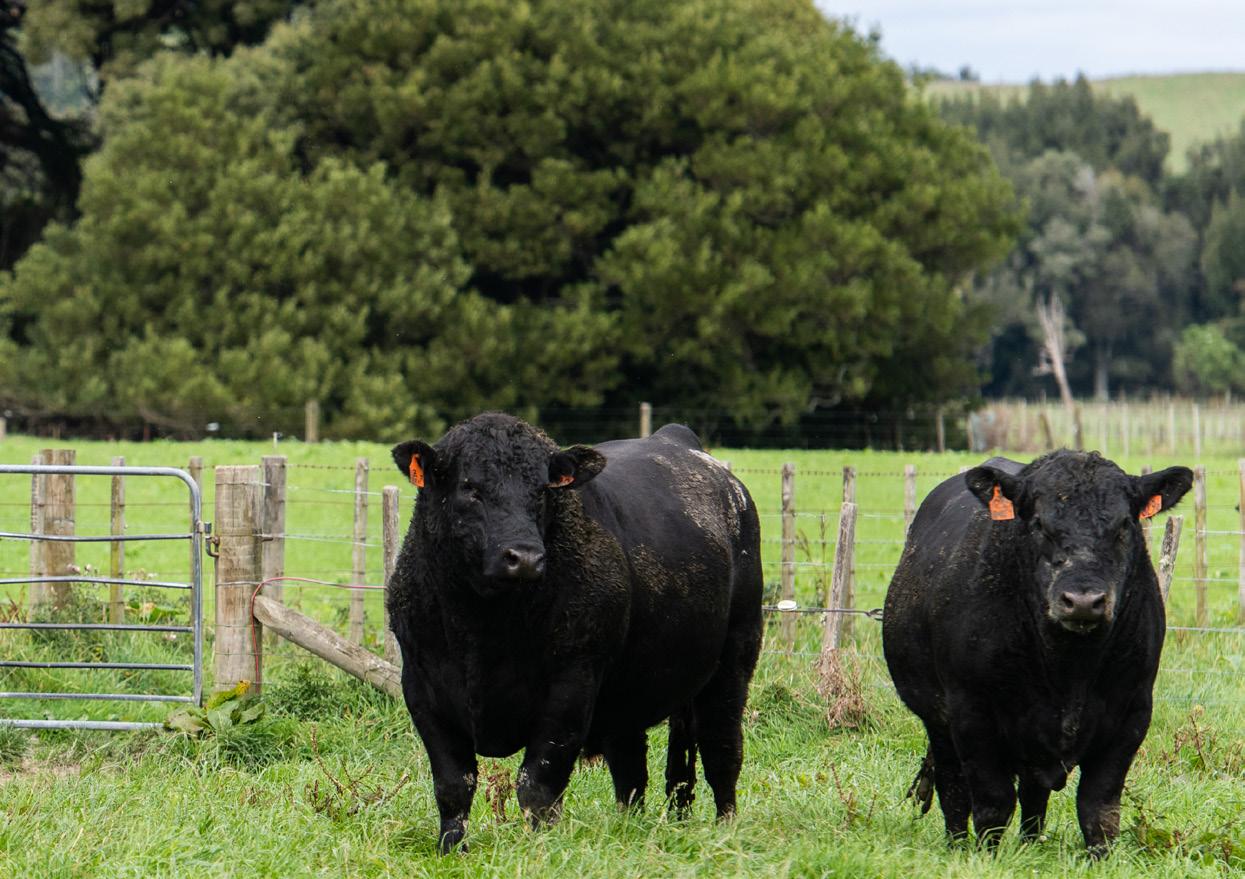
It’s no easy life for the Totaranui cow. She spends the hard winter months behind the ewes, cleaning up the pastures, just as the commercial farmer would expect of her.
Totaranui run two separate stud cow herds; one to generate high value A+ two year old bulls and the other to generate low birth weight yearling bulls. Our yearling bulls are not second class citizens, they’re bred specifically for heifer mating in the beef and dairy markets.
While docility and structure are paramount in all our animals, they are now a given as we won’t breed from an unsound animal. Fertility is bred in our herd, so to speak, as we’ve mated all the yearling heifers for over 35 years.
The cows are never given a second chance in this commercial hill country environment. They must calve and rear their calf as a two year old and then get back in calf every year thereafter. Any glitches and she’s down the road, no second chances. This has also had a major contribution to our high fertility.
Profitability is the bottom line and the Totaranui Angus bloodlines grow fast, have a high yield and marbling, and consequently perform well for our clients.
The big shift towards improving carcase and eating quality happened in the early 1990s when John Jackson travelled to the USA on a bull scouting trip with AngusPure’s Guy Sargent and others. John was wholeheartedly behind Guy’s ethos of improving the marbling within grass fed Angus beef here in New Zealand, and set about searching for sires that would increase the IMF and EMA of the Totaranui herd, whilst still maintaining soundness and the mature cow size.
AI enables us to utilise the newest, most progressive genetics available from across the globe every year and both John and Daimien still travel to the USA each Autumn, to ensure they can carefully inspect the bulls they’re using in the herd.
At Totaranui we’re looking to target the discerning farmer who wants more than just another black bull. The farmer that understands the true benefits of technology and demands more than just a grazing tool to aid his sheep programme.
It’s ultimately about profitability and the progeny from your high performance bulls should contribute more to your bottom line.
• Totaranui has mated yearling heifers for over 3 decades. Calving ease is inherent in our herd.
• All calves are tagged and weighed at birth accurate recording of birth weights.
• All cattle are i50k genomically tested which includes parent verification (a requirement by Angus Australia, not required in NZ). This gives us a level of information for each female as if she has already got up to 13 calves on the ground and it enhances the accuracies of the ebvs.
• Every cow must have calved as a heifer, or she’s culled.
• Our program has included selection for carcass traits for over 30 years meaning progeny will do well in the recent premium beef programs.
• We deliver our own bulls free of charge within the North Island within 2 weeks of sale.
• The selection pressure at Totaranui is very high. Being predominantly a sheep farm cows are for most of the year…on the back tit.
• AM, NH, CA and DD tested Free or remain Untested Free.
• All bulls have been tested negative and vaccinated for BVD.
• All bulls are independently Beef Class structurally assessed.
• All bulls have passed official fertility and semen testing.
AngusPure NZ has teamed up with 91 Angus studs who share in our vision - to focus on the end consumer. This stud is proud to be named as one of them, and by using the finest genetics and implementing best management practice they can help you produce more premium quality Angus beef.
Only our AngusPure Partner studs display these devices in their sale catalogues. They indicate bulls endorsed by AngusPure NZ.
AngusPure NZ continues to endorse bulls for sale that are either at or above +$131 for the AngusPure index (API) and at or above +$118 for the AngusPRO index ($PRO). These indexes give commercial farmers confidence that by using these selection tools, bulls are most likely to leave progeny with superior carcase quality. At the same time, they achieve desirable outcomes for self-replacing herds, as the AngusPure & AngusPRO indexes still reward cattle with strong maternal attributes like calving ease, scrotal and growth, along with carcase weight.
To qualify, bulls will be => +$131 for AngusPure index OR => +$118 for AngusPRO index
In addition to the ‘A’, and to assist bull buyers who wish to select for more marbling AngusPure is rewarding those animals that are either at or above +$147 for the AngusPure Index (API) and at or above +$132 for the AngusPRO Index ($PRO). In addition to this, they must have an IMF EBV (for marbling) equal to or greater than +2.6. These bulls will be awarded an ‘A+’ endorsement. Marbling is one of the very highest eating quality attributes and is necessary in order to meet some of the highest premium requirements for the export program, AngusPure Special Reserve.
To qualify, bulls will be => +$147 for AngusPure index OR => +$132 for AngusPRO index, and in addition all bulls must be => +2.6 for IMF EBV AngusPure NZ recognises the need to lift the amount of marbling in our New Zealand cow genetics, in order to fill the requirements of consumers going forward. Marbling has two critical components; genetics and feeding. Feeding on a rising plane of nutrition is vital but without the right genetics, these attributes will not be able to express themselves.
Everyone in the industry knows that profitability within a cattle system can be improved by making educated predictions with factual data. It’s scientifically proven.
AngusPRO are a group of New Zealand Angus studs that encompass over 40% of New Zealand’s registered Angus cattle. These studs have united and made the shift across the ditch, to join the progressive governing body that is Angus Australia.
Angus Australia pride themselves on their quality of leadership in the delivery of innovative programs that will enhance and promote the value of Angus cattle and beef.
Cleardale
Grampians
Kahurangi
Kakahu
Komako
Lake Farm Genetics
Mount Linton
Ngāputahi
Oranga
Ranui
anguspro.co.nz
Rimanui Farms
Rissington
Rotowai
Seven Hills
Stokman
Storth Oaks
Takapoto
Te Mania
The Sisters
AngusPRO are a group of New Zealand Angus studs that encompass over 40% of New Zealand’s registered Angus cattle. These studs have united and made the shift across the ditch, to join the progressive governing body that is Angus Australia. Angus Australia pride themselves on their quality of leadership in the delivery of innovative programs that will enhance and promote the value of Angus cattle and beef.
Everyone in the industry knows that profitability within a cattle system can be improved by making educated predictions with factual data. It’s scientifically proven. While ensuring cattle are of sound structure and are quiet in nature, the additional use of science and genomics can assist in viewing what’s under the skin of an animal, providing an insight into what future progeny will look like, grow like, breed like and essentially, eat like.
By shifting to Angus Australia, AngusPRO have opened the gateway to technological and education facilities for the studs involved and their clients that are second to none. In what may seem like an administrative shift, we’re all gaining a support network of 30-odd staff, countless educational documents and webinars, training sessions, technological tools, extensive research and continuing breed development. And that’s just the tip of the iceberg.
Angus cattle are the backbone of the New Zealand beef industry. In the commercial environment they’re expected to survive. Amid winter conditions of driving rain and inches of snow they will forage and not only survive, they will thrive. It’s in their DNA.
When stud females are mated as heifers, this replicates the commercial farming model and improves overall fertility within the herd. Increased profitability is therefore bred into those progeny, so to speak. EBVs are the best available tool we have in predicting future progeny and when stud breeders use technologies such as HD50k and Angus GS, the accuracy of EBVs and Indexes is increased.
Angus Australia is focused on supporting the genetic improvement of Angus cattle. Their Angus.Tech suite includes a range of software tools and technologies, such as Angus SELECT, which has been developed to support members in improving the profitability of Angus genetics within the beef supply chain, by assisting with the identification of those genetics that are most aligned with their breeding goals and objectives.
While increased profitability for the client is at the forefront of our AngusPRO members’ aspirations, producing the finest grass fed eating
experience for the end consumer is absolutely imperative. This is their ultimate focus.
Maintaining high standards of sustainable farming practice to ensure the land is enhanced for generations to come is of course, part of daily life for the AngusPRO team. The environment here in New Zealand must be nurtured, with clear water in the streams and rich soils underfoot. It should go without saying that animal husbandry is paramount. These ideals and quality grass fed Angus beef go hand in hand for the end consumer.
Although we are a newly formed entity, many of the studs represented have stood the test of time. They are the perfect synergy of old school reputability and new school technique.
AngusPRO are committed to bettering Angus cattle within the New Zealand beef industry and ensuring Angus is the tastiest beef on everyone’s lips.
Selection indexes have been published within the TransTasman Angus Cattle Evaluation for several decades and have made an important contribution to the genetic improvements that have been achieved within the Angus breed during this time.
Selection indexes aid in the selection of animals for use within a breeding program where there are several traits of economic or functional importance by providing an overall “score” of an animal’s genetic value.
Selection indexes are calculated for a specific breeding purpose and are calculated based on weightings placed on individual traits that are deemed to be important for that purpose.
The selection indexes assist in making “balanced” selection decisions, taking into account the relevant attributes of each animal to identify animals with genetics that are most aligned with the breeding objective for the given selection scenario.
The selection indexes published within TransTasman Angus Cattle Evaluation are economic selection indexes and are derived using BreedObject software, as developed by the Animal Genetics & Breeding Unit (AGBU) in Armidale, NSW.
Ten indexes are currently published as part of the TransTasman Angus Cattle Evaluation. Of these, the Angus Breeding and
Angus Breeding Low Feed Cost selection indexes are general purpose selection indexes that are suitable for use in the majority of commercial beef operations, while the AngusPRO selection index is specific to New Zealand production systems and beef markets.
• New Zealand production system
• Self replacing herd
• Daughters are retained for breeding
• Steer progeny are finished on pasture for the AngusPure programme
• Steer progeny slaughtered at a carcase weight of 290 kg at 20 months of age
• Significant premium for steers that exhibit superior marbling
The AngusPRO index ($PRO) estimates the genetic differences between animals in net profitability per cow joined in a commercial self-replacing herd based in New Zealand that targets the production of grass finished steers for the AngusPure programme.
Daughters are retained for breeding and therefore female traits are of importance.
Steers are assumed marketed at approximately 530kg live weight (290kg carcase weight with 10mm P8 fat depth) at 20 months of age, with a significant premium for steers that exhibit superior marbling.
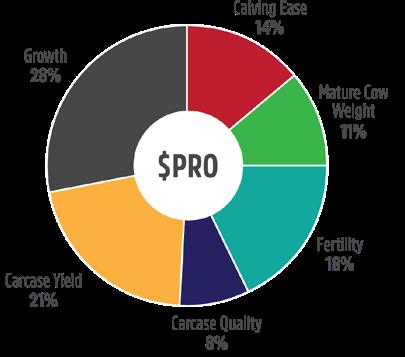
Figure 1 shows the traits that are considered in the $PRO index, and how much they contribute to the overall balance of the selection index. The larger the segment, the greater the impact on the Selection Index.
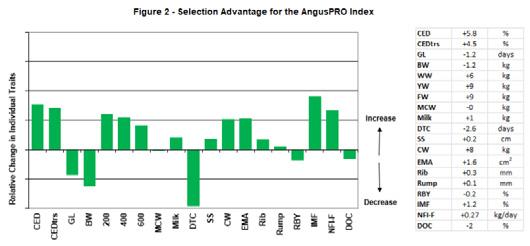
Figure 2 shows the selection advantage if animals are selected using the $PRO index.
The selection advantage is calculated by ranking well-used sires within the Angus breed on the $PRO index, and comparing the average EBVs of the sires in the highest 10% with the average EBVs of all sires from which they were selected. For example, the sires ranked in the highest 10% based on the $PRO index had 9kg higher 400 Day Weight EBVs and 1.2kg lower Birth Weight EBVs than the average EBVs of the sires from which they were selected.
The selection advantage is indicative of the long-term direction and relativity of response that will occur in individual traits if selection is based on the $PRO index. The actual response that is observed will vary depending on the features of the individual breeding program.
A feature of the $PRO index is a selection advantage of close to zero for mature cow weight, meaning that selection on this index will maintain mature cow weight, while still increasing growth to 200, 400 and 600 days of age.
The TransTasman Angus Cattle Evaluation is the genetic evaluation program adopted by Angus Australia for Angus and Angus influenced beef cattle. The TransTasman Angus Cattle Evaluation uses Best Linear Unbiased Prediction (BLUP) technology to produce Estimated Breeding Values (EBVs) of recorded cattle for a range of important production traits (e.g. weight, carcase, fertility).
The TransTasman Angus Cattle Evaluation is an international genetic evaluation and includes pedigree, performance and genomic information from the Angus Australia and Angus New Zealand databases, along with selected information from the American and Canadian Angus Associations.
The TransTasman Angus Cattle Evaluation utilises a range of genetic evaluation software, including the internationally recognised BLUPF90 family of programs, and BREEDPLAN® beef genetic evaluation analytical software, as developed by the Animal Genetics and Breeding Unit (AGBU), a joint institute of NSW Agriculture and the University of New England, and Meat and Livestock Australia Limited (MLA).
An animal’s breeding value can be defined as its genetic merit for each trait. While it is not possible to determine an animal’s true breeding value, it is possible to estimate it. These estimates of an animal’s true breeding value are called EBVs (Estimated Breeding Values).
EBVs are expressed as the difference between
an individual animal’s genetics and a historical genetic level (i.e. group of animals) within the TACE genetic evaluation, and are reported in the units in which the measurements are taken.
TACE EBVs can be used to estimate the expected difference in the genetics of two animals, with the expected difference equating to half the difference in the EBVs of the animals, all other things being equal (e.g. they are joined to the same animal/s).
For example, a bull with a 200 Day Growth EBV of +60 would be expected to produce progeny that are, on average, 10 kg heavier at 200 days of age than a bull with a 200 Day Growth EBV of +40 kg (i.e. 20 kg difference between the sire’s EBVs, then halved as the sire only contributes half the genetics).
Or similarly, a bull with an IMF EBV of +3.0 would be expected to produce progeny with on average, 1% more intramuscular fat in a 400 kg carcase than a bull with a IMF EBV of +1.0 (i.e. 2% difference between the sire’s EBVs, then halved as the sire only contributes half the genetics).
EBVs can also be used to benchmark an animal’s genetics relative to the genetics of other Angus or Angus infused animals recorded with Angus Australia. To benchmark an animal’s genetics relative to other Angus animals, an animal’s EBV can be com -
pared to the EBV reference tables, which provide:
• the breed average EBV
• the percentile bands table
The current breed average EBV is listed on the bottom of each page in this publication, while the current EBV reference tables are included at the end of these introductory notes.
For easy reference, the percentile band in which an animal’s EBV ranks is also published in association with the EBV.
An accuracy value is published with each EBV, and is usually displayed as a percentage value immediately below the EBV. The accuracy value provides an indication of the reliability of the EBV in estimating the animal’s genetics (or true breeding value), and is an indication of the amount of information that has been used in the calculation of the EBV.
EBVs with accuracy values below 50% should be considered as preliminary or of low accuracy, 5074% as of medium accuracy, 75-90% of medium to high accuracy, and 90% or greater as high accuracy.
EBVs are calculated for a range of traits within TACE, covering calving ease, growth, fertility, maternal performance, carcase merit, feed efficiency and structural soundness. A description of each EBV included in this publication is provided on the following page.
CEDir %
CEDtrs %
GL days
BW kg
200 Day kg
400 Day kg
600 Day kg
MCH cm
MBC score
MCW kg
Milk kg
DtC days
SS cm
CWT kg
EMA cm2
Rib Fat mm
P8 Fat mm
RBY %
IMF %
Genetic differences in the ability of a sire’s calves to be born unassisted from 2 year old heifers.
Higher EBVs indicate fewer calving difficulties in 2 year old heifers.
NFI-F kg/day
Doc %
Genetic differences in the ability of a sire’s daughters to calve unassisted at 2 years of age.
Genetic differences between animals in the length of time from the date of conception to the birth of the calf.
Genetic differences between animals in calf weight at birth.
Genetic differences between animals in live weight at 200 days of age due to genetics for growth.
Genetic differences between animals in live weight at 400 days of age.
Genetic differences between animals in live weight at 600 days of age.
Genetic differences between animals in the height of mature females.
Genetic differences between animals in the body condition of mature females.
Genetic differences between animals in live weight of cows at 5 years of age.
Genetic differences between animals in live weight at 200 days of age due to the maternal contribution of its dam.
Genetic differences between animals in the time from the start of the joining period (i.e. when the female is introduced to a bull) until subsequent calving.
Genetic differences between animals in scrotal circumference at 400 days of age.
Genetic differences between animals in hot standard carcase weight at 750 days of age.
Genetic differences between animals in eye muscle area at the 12/13th rib site in a 400 kg carcase.
Genetic differences between animals in fat depth at the 12/13th rib site in a 400 kg carcase.
Genetic differences between animals in fat depth at the P8 rump site in a 400 kg carcase.
Higher EBVs indicate fewer calving difficulties in 2 year old heifers.
Lower EBVs indicate shorter gestation length.
Lower EBVs indicate lighter birth weight.
Higher EBVs indicate heavier live weight.
Higher EBVs indicate heavier live weight.
Higher EBVs indicate heavier live weight.
Higher EBVs indicate taller mature females.
Higher EBVs indicate more body condition of mature females.
Higher EBVs indicate heavier mature weight.
Higher EBVs indicate heavier live weight.
Lower EBVs indicate shorter time to calving.
Higher EBVs indicate larger scrotal circumference.
Higher EBVs indicate heavier carcase weight.
Higher EBVs indicate larger eye muscle area.
Higher EBVs indicate more fat.
Higher EBVs indicate more fat.
Genetic differences between animals in boned out saleable meat from a 400 kg carcase. Higher EBVs indicate higher yield.
Genetic differences between animals in intramuscular fat (marbling) at the 12/13th rib site in a 400 kg carcase.
Genetic differences between animals in feed intake at a standard weight and rate of weight gain when animals are in a feedlot finishing phase.
Genetic differences between animals in temperament.
Higher EBVs indicate more intramuscular fat.
Lower EBVs indicate more feed efficiency.
Higher EBVs indicate better temperament.
Claw Set
Foot Angle
score
score
Leg Angle score
$A $
Genetic differences in claw set structure (shape and evenness of claws).
Genetic differences in foot angle (strength of pastern, depth of heel).
Genetic differences in rear leg structure when viewed from the side (angle at front of the hock).
Genetic differences between animals in net profitability per cow joined in a typical commercial self replacing herd using Angus bulls. This selection index is not specific to a particular market end-point, but identifies animals that will improve overall net profitability in the majority of commercial, self replacing, grass and grain finishing beef production systems.
The $A-L index is similar to the $A index but is modelled on a production system where feed is surplus to requirements for the majority of the year, or the cost of supplying additional feed when animal feed requirements increase is low.
Lower EBVs indicate more curl of the claw set.
Lower EBVs indicate less heal depth.
Lower EBVs indicate a more angular leg angle.
Higher selection indexes indicate greater profitability.
$A-L $
$D $
While the $A aims to maintain mature cow weight, the $A-L does not aim to limit the increase in mature cow weight as there is minimal cost incurred if the feed maintenance requirements of the female breeding herd increase as a result of selection decisions.
Higher selection indexes indicate greater profitability.
$D-L $
Genetic differences between animals in net profitability per cow joined in a commercial self replacing herd targeting the domestic supermarket trade. Steers are either finished using pasture, pasture supplemented by grain, or grain (e.g. 50 -70 days) with steers assumed to be slaughtered at 510kg live weight (280kg carcase weight with 12mm P8 fat depth) at 16 months of age.
The $D-L index is similar to the $D index but is modelled on a production system where feed is surplus to requirements for the majority of the year, or the cost of supplying additional feed when animal feed requirements increase is low.
While the $D aims to maintain mature cow weight, the $D-L does not aim to limit the increase in mature cow weight as there is minimal cost incurred if the feed maintenance requirements of the female breeding herd increase as a result of selection decisions.
Higher selection indexes indicate greater profitability.
Higher selection indexes indicate greater profitability.
$GN $
Genetic differences between animals in net profitability per cow joined in a commercial self replacing herd targeting pasture grown steers with a 250 day feedlot finishing period for the grain fed high quality, highly marbled markets. Steers are assumed to be slaughtered at 800 kg live weight (455 kg carcase weight with 30 mm P8 fat depth) at 24 months of age, with a significant premium for steers that exhibit superior marbling.
Higher selection indexes indicate greater profitability.
$GN $
Genetic differences between animals in net profitability per cow joined in a commercial self replacing herd targeting pasture grown steers with a 250 day feedlot finishing period for the grain fed high quality, highly marbled markets. Steers are assumed to be slaughtered at 800 kg live weight (455 kg carcase weight with 30 mm P8 fat depth) at 24 months of age, with a significant premium for steers that exhibit superior marbling.
Higher selection indexes indicate greater profitability.
$GN-L $
$GS $
The $GN-L index is similar to the $GN index but is modelled on a production system where feed is surplus to requirements for the majority of the year, or the cost of supplying additional feed when animal feed requirements increase is low.
While the $GN aims to maintain mature cow weight, the $GN-L does not aim to limit the increase in mature cow weight as there is minimal cost incurred if the feed maintenance requirements of the female breeding herd increase as a result of selection decisions.
Higher selection indexes indicate greater profitability.
$GS-L $
Genetic differences between animals in net profitability per cow joined in a commercial self replacing herd targeting pasture finished steers. Steers are assumed to be slaughtered at 650 kg live weight (350 kg carcase weight with 12 mm P8 fat depth) at 22 months of age. Emphasis has been placed on eating quality and tenderness to favour animals that are suited to MSA requirements.
Higher selection indexes indicate greater profitability.
$PRO $
The $GS-L index is similar to the $GS index but is modelled on a production system where feed is surplus to requirements for the majority of the year, or the cost of supplying additional feed when animal feed requirements increase is low.
While the $GS aims to maintain mature cow weight, the $GS-L does not aim to limit the increase in mature cow weight as there is minimal cost incurred if the feed maintenance requirements of the female breeding herd increase as a result of selection decisions.
Higher selection indexes indicate greater profitability.
$T $
Genetic differences between animals in net profitability per cow joined in a commercial self replacing herd based in New Zealand that targets the production of grass finished steers for the AngusPure programme. Steers are assumed marketed at approximately 530 kg live weight (290 kg carcase weight with 10 mm P8 fat depth) at 20 months of age, with a significant premium for steers that exhibit superior marbling.
Higher selection indexes indicate greater profitability.
Genetic difference between animals in net profitability per cow joined in a situation where Angus bulls are being used as a terminal sire over mature breeding females and all progeny, both male and female, are slaughtered. The Angus Terminal Sire Index focusses on increasing growth, carcase yield and eating quality. Daughters are not retained for breeding and therefore no emphasis is given to female fertility or maternal traits.
Higher selection indexes indicate greater profitability.
AngusPRO cattle are registered with Angus Australia, and recently, this has given them the addition of two new EBVs to utilise — Mature Cow Body Condition and Mature Cow Height.
Profit drivers for beef producers are commonly linked to growth and carcass traits. However, to continue to make more informed selection decisions for overall herd profitability, consideration of mature cow traits that impact the performance of the cow herd will be essential. Mature Body Condition score (MBC), Mature Cow Height (MCH), and Mature Cow Weight (MCW) should be considered for their impact on the efficiency of the cow herd and tailored to your environmental conditions and market demands.
Current selection practices often rely on traits measured in younger animals, such as live ultrasound and carcass fat depth, to infer mature cow body condition and the ‘doing ability’ of females.
Mature Cow Body Condition (MBC) EBVs provide estimates of genetic differences between animals in the body condition of mature females. Mature Cow Body Condition EBVs are calculated from a subjective assessment of an animal’s body condition and are expressed in score units. Higher Mature Body Condition EBVs indicate an animal is expected to produce daughters with more body condition as mature females
Mature Cow Height (MCH) EBVs provide estimates of genetic differences between animals in the height of mature females Mature Cow Height EBVs are calculated from height measurements taken at the hip and are expressed in cm units. Higher Mature Cow Height EBVs indicate an animal is expected to produce daughters that are taller as mature females.
Angus bulls sold within New Zealand are registered in two different databases — Angus Australia (AngusPRO animals) and Angus New Zealand. The TACE percentiles in sale catalogues are only relevant to the population they are compared against, meaning you can compare one AngusPRO animal against another, but these percentiles can’t be compared across different breed societies i.e. animals registered with Angus NZ.
It is however important to note that the TACE EBVs themselves are comparable. For most EBV traits, the direct EBV is comparable to establish expected progeny performance differences, however,
where the animal sits in reference to the rest of that population (its ranking) can be substantially different across the Angus Australia and Angus New Zealand societies.
Let’s look at the breed average for IMF. Angus Australia’s 50th percentile is +2.4, whereas Angus NZ’s 50th percentile is +0.9 (February 2025 TACE analysis). If you’re selecting bulls based on percentiles, please ensure you are aware of the population they’re compared with, or check the actual EBV figures carefully.
Complying with the Health & Safety in Employment Act 1992 and Health & Safety at Work Act 2015 we are required to advise people of possible hazards. Please be aware of these prior to entering the property to ensure your personal safety.
• Cattle can be unpredictable, especially toward children.
• No children under the age of 15 allowed in the inspection yards.
• Move quietly, be vigilant at all times.
• All possible care has been taken in arranging the sale seating but caution in attaining your seat is still necessary.
• Appropriate footwear should be worn.
• There may be slippery surfaces.
• Be aware of vehicles and machinery.
• Please refrain from smoking in and around all buildings.
1. The New Zealand Stock and Station Agent’s Association Conditions of Sale and, to the extent deemed relevant by PGG Wrightson Limited (PGW), PGW’s Terms of Sale apply to this sale. When proceeds are credited or a purchase is debited to a PGW monthly credit account, then PGW’s Monthly Account Terms of Trade (as amended from time to time) apply to the extent deemed relevant by PGW. These terms can be inspected at the registration desk and on the wall in the auction room. The current versions of PGW’s Terms of Sale and Monthly Account Terms of Trade are also available online at: www.pggwrightson.co.nz\OurCompany\ Terms-and-Conditions or in hardcopy on request.
2. Each lot is catalogued unless other wise stated. While every effort has been made to ensure accuracy, the auctioneer or vendor will not be held responsible for any errors contained herein.
3. Each lot becomes the property of the purchase at the fall of the hammer.
4. Insurance: Transit and term insurance cover is recommended and can be arranged with the auctioneer on sale day.
5. Purchasers are requested to complete the Purchasers Instruction Slip at the back of this catalogue and hand it to the auctioneer at the completion of the sale.
6. Fertility: The entry of any bull in this catalogue constitutes a Guaranteed of Fertility. Notice of infertility in all cases of such are to be in writing and in the hands of the vendor not later than twelve calendar months from the date the of sale. The purchaser price of any bull proved to be infertile shall be refunded without interest, expense, cost or damages. Any disputes will be settled by an arbitrator appointed by the auctioneers. A veterinary surgeon’s certificate shall be produced by the purchase, when required. The purchaser will provide good husbandry.
7. Structure: if for any reason within a 3 year guarantee period the bull does not perform as a result of his own fertility or structural defect, excluding injury, we will provide credit for the residual value of the bull or part thereof. A certificate from an approved veterinarian is required to substantiate the claim.
8. Semen for in herd use: Totaranui reserves the right to take semen off any bull sold before delivery for inherd use only.
9. Purchasers Rebate: All intending purchasers must register at the sales office prior to the sale. PGW will pay a purchasing rebate of 6% of the purchase price excluding GST, plus GST, to livestock companies & recognised independent livestock
agents with a PGW account who have introduced buyers to PGW before the sale and/or accompanied buyers to the sale.
When a bull leaves Totaranui he is leaving the security of a mob, and will arrive in a strange environment at the purchaser’s property. On arrival make sure he has a steer or a cow as a companion, straight away, possibly with a feed of hay, and put them into a good grass paddock.
Young bulls are still growing fast and need enough feed to maintain their growth pattern and be able to settle the cows quickly and efficiently. Respect your bulls, and handle them quietly, walk them rather than rushing them. Treat them with care and in a gentle manner and they will do likewise to you. Totaranui bulls are used to being handled by stockmen on quads or on foot, also with dogs. They treat electric fences with respect. Monitor your bull regularly while out with the cows, as accidents can happen. When the season is finished, your bulls should be drenched and put away with enough feed in front of them. Adequate feed will help stop fighting and help bulls to settle into the bull group. We wish you all the best.
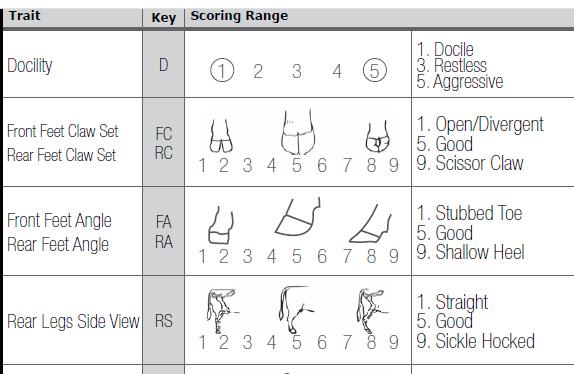
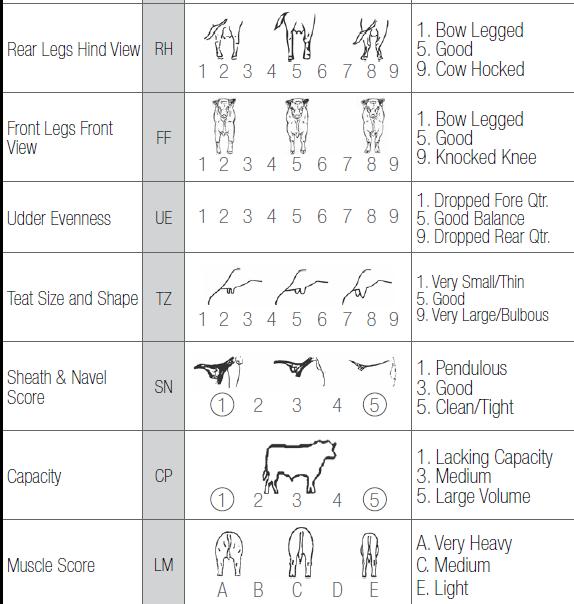
For docility - 1 is ideal (docile), 3 is less ideal (restless) and 5 is aggressive. (scores of 1 and 2 are preferred).
For trait scored 1 - 9:
• 4 and 6 show slight variation from ideal but this includes most animals. Any animal scoring 4 and 6 would be acceptable in any breeding progam.
• 3 and 7 shows greater variation, but would be acceptable in most commercial breeding programs, but seed stock producers should be wary.
• 2 and 8 are low scoring animals and should be looked at closely before purchasing.
• 1 and 9 should not be catalogued and are considered culls.

* Breed average represents the average EBV of all 2024 drop Australian Angus and Angus-influenced seedstock animals analysed in the Mid April 2026 TransTasman Angus Cattle Evaluation
* The percentile band represents the distribution of EBVs across the 2024 drop Australian Angus and Angus-influenced seedstock animals analysed in the Mid April 2026 TransTasman Angus Cattle Evaluation
That’s why we have over 100 Agribusiness Partners nationwide.


Moderate BW bull that cranks up top 1% growth indicators and posts solid management EPD with top 1% Docility, top 10% claw set and top 3% foot angle. Combination sire that records a top 1% $M and top 10% $B to attain high top 1%
$Combined Index. Dam was the $160,000 high selling female from the 2021 Baldridge Female Sale and posts a nursing ratio 2@121 with ultrasound progeny 59@101 for IMF and 59@103 for ribeye.
Mid April 2026 TransTasman Angus Cattle Evaluation

CONNEALY CONFIDENCE 0100#
Sire: CONNEALY CONFIDENCE PLUS#
ELBANNA OF CONANGA 1209#
AMF,CAF,DDF,NHF,DWF,MAF,MHF,OHF,OSF,RGF
Outstanding data set with a proven sire line going back to Intensity. His structure is top end and rock solid as is his temperament. Mature body condition in top 20%, he has made a great contribution to the herd. Sire: RENNYLEA L519PV
H414SV
Beautiful thick type right through the body, we have used him to import some body type and data. Great growth and a trait leader for feed efficiency.
Quarterback has close to 6000 progeny recorded and has accuracies of 99% across his key production ebvs. He has done well and made a valuable contribution across our herd. Great spread of data.
We wanted some exposure to Beast Mode and found it at Ngaputahi in the form of R160. The progeny have been stand outs. His structure has come through, he is a foot improver. We look forward to breeding from his daughters.
Mid April 2026 TransTasman Angus Cattle Evaluation
F,MAF,MHF,OHF,OSF,RGF
His power has complemented what many of our females had to offer in type and data. Top 2% in the AngusPro index.
A bull we have used across the years, first as a heifer bull. We used him because of his data, type and good docility. He has sired 59 recorded progeny in our herd.
A bull by Wall Street that we saw in the States and liked. Dam sired by Intensity, keeping the consistency Intensity has brought through to our herd.
This bull has done really well in our herd. We used him to continue the influence of Zephyr. On the dam side Infinity and Woodbank 428 continue to influence the herd. Nice balance. This bull has the data where it counts including growth, top 5% for mature body condition, carcass and structure.
An Enhance son used primarily as a heifer bull. We used him to expand the influence of Enhance which he has done nicely. Phenomenal calving ease, adequate growth, excellent temperament and solid carcass traits.
Used as a power heifer bull and this has crossed over to produce some solid herd bulls and cows. Has solid growth, carcass traits and feed efficiency. Sire: SPRING COVE RENO 4021#


Very nice bull, stands proud. Good top line and hind shape, square carcass. Very strong data set including mature body condition for progeny. Positive calving ease with ample growth. Out of a very good cow that has a pedigree going back to Infinity, Predestined and Woodbank 428 - balanced. She’s been very fertile, 6 progeny since calving as a two year old, natural mating as a heifer - the rest she has held to AI. Sire: DUNOON RECHARGE R102PV
By the stand out sire Recharge that carries across trait excellence in calving ease, growth, carcass and structure. This bull has the data, especially in growth and carcass weight. Good temperament result in his structural assessment.
Very proud upstanding bull. A nice pedigree mix of Recharge and Stokman All In. Stokman All In has done so well in our herd, passing on maternal traits from his dam - a milestone dam, and data. Growth, mature body condition and carcass weight all in abundance. Out of a more moderately sized dam, good footed and nice udder shape given her age.
RENNYLEA L519PV
Sire: DUNOON RECHARGE R102PV
DUNOON ELINE M459SV
Mid April 2026 TransTasman Angus Cattle Evaluation AMFU,CAFU,DDFU,NHFU Traits: GL,BWT,200WT,400WT,SC,Scan(EMA,Rib,Rump,IMF),DOC,Structure(Claw Set x 1, Foot Angle x 1),Genomics Purchaser:
Very nice type of bull, thickness to his carcass. Power of Poss Winchester over the carcass and type of the L508 dam. Data set has calving ease, growth and carcass weight. Out of a productive, nice typed quiet dam. Sire: POSS
Very quiet but proud too. Thick. Dam productive, 6 calves, last one just weaned sired by Tangihau Ultimate. Phenomenal growth here, with great body condition, docility and carcass weight in data set. Sire: DUNOON RECHARGE R102PV
Soft fleshed bull, nice type and good temperament. The pedigree has the strength of Ngaputahi R160 across the softness of Te Mania 17380. Mature body condition in the top 15%. Out of a very quiet dam, displaying the great temperament of the sire 17380. Sire: NGAPUTAHI R160SV
Mid April 2026 TransTasman Angus Cattle Evaluation AMFU,CAFU,DDFU,NHFU Traits: GL,BWT,200WT,400WT,600WT,SC,Scan(EMA,Rib,Rump,IMF),DOC,Structure(Claw
A lot of data on the right side of the ledger. Calving ease, growth, carcass weight and IMF. Quarterback has close to 6000 progeny recorded and has accuracies of 99% across his key production ebvs. He has done well and made a valuable contribution across our herd.
Sire: MURDEDUKE QUARTERBACK Q011PV
Great growth outlook of progeny and mature body condition in top 10%. Dam has a great top line and tail set.
Docile. Strong data set including growth, carcass and structure. Out of a very productive cow, as a 10 year old, still looking great, good feet, good udder. 9 calves.
BALDRIDGE LIMITLESSPV
Thick and quiet. Good calving ease and growth, excellent carcass traits, carcass weight in top 5%. Strong pedigree, includes some solid sires that have done well at Totaranui; Payweight, Intensity, Lotto and Enhance.
Good thick bull. A Winchester with good calving ease and growth and also a powerful data set for carcass with positive fats and IMF. Dam is a very nice type by the reliable Rennylea L508.
Very nice type and quiet. Home bred and looks good. Thick and soft. Strong ebv set including growth in top 15% and mature body condition in top 10%.
Good thick bull, moderate size. Woodhill Authentic over a L508. Dam quiet and thick. Solid growth here and carcass weight. Good eye muscle and IMF.
Sire: WOODHILL AUTHENTICPV
Very thick meat ball. Out of a quiet moderate sized dam with a performance pedigree - Rennylea on the top and Exceed on the bottom. Phenomenal growth and carcass weight here, in top 5%.
Strong growth outlook for progeny, 200 400 and 600 day weights all in top 5%. This follows on to carcass weight, top 1%. Out of a very nice A cow.
Quarterback over a dam bred by the quiet and thick M48 by Comrade. Circa 6000 recorded progeny sired by Quarterback, we used over 200 straws and have been very pleased with his impact on the stud. This bull has the calving ease, growth, fertility, carcass and docility to make him a very useful bull.
Sire: MURDEDUKE QUARTERBACK Q011PV LAWSONS MOMENTOUS M518PV MURDEDUKE BARUNAH N026PV
M048#
N473PV Dam: TOTARANUI R441PV
Mid April 2026 TransTasman Angus Cattle Evaluation AMFU,CAFU,DDFU,NHFU Traits: GL,BWT,200WT,400WT,600WT,SC,Scan(EMA,Rib,Rump,IMF),Structure(Claw Set x 1, Foot Angle x 1),Genomics
Very nice bull. Soft and well proportioned. Another Totaranui R205 with some key performance sires in the pedigree; Wall Street, Intensity, Rennylea and In Sure. Very nice data set - balanced right through. Both calving ease and growth.
Sire:
Powerful bull with a good strong carcass. Another Winchester over a Dusty dam. A very strong data set with growth, mature cow condition and carcass weight. EMA in top few percent. On the dam side, the strength of Dusty is balanced out by the softness and maternal traits of Woodbank 0110.
Dam pedigree balanced between Enhance’s performance and Woodbank 0110’s type and maternal traits. Crossed with Crossroads this bull carries good growth and carcass quality potential for progeny, including feed efficiency.
A very strong pedigree including proven sires Intensity, Payweight, Complement and Totaranui 238. A strong growth ebv set with mature body condition in top 5% as with carcass weight and feed efficiency in top 3%.
Mid April 2026 TransTasman Angus Cattle Evaluation
DEER VALLEY WALL STREET#
Sire: TOTARANUI R205SV
TOTARANUI 15233#
TOTARANUI M037#
TOTARANUI M265# Dam: TOTARANUI P502PV
AMFU,CAFU,DDFU,NHFU Traits: BWT,200WT,400WT,600WT,SC,Scan(EMA,Rib,Rump,IMF),DOC,Structure(Claw Set x 1, Foot Angle x 1),Genomics
Another dam sired by Stokman L194, who’s own dam was a milestone dam, flushed by the Stokmans with 30 progeny to her name. Dam’s grandsire on the bottom side In Sure who has laid his mark at Totaranui with performance and consistency. A good dam to put Recharge over, his balanced ebv set doesn’t really give anything away, cross trait excellence.
A powerful dataset driven by both sides of the pedigree, influenced by the Lotto and Zephyr lines that have done well here at Totaranui.
The dam’s pedigree is quite safe with Journey on the top and Insure on the bottom, Winchester provided the power that she lacked in the data side of things. This bull has great growth potential for progeny, with growth ebvs in top 5%. Also has solid feed efficiency outlook, top 5% of breed.
Quarterback over an Enhance. Adequate growth with strong carcass traits including carcass weight, fats and IMF.
Out of a very nice cow, quiet, well footed, strong type. This bull has 200 day weight in top 20%, good mature body condition and happens to have extremely good feed efficiency, carried in the pedigree rather than measured here at Totaranui.
Mid April 2026 TransTasman Angus Cattle Evaluation
Out of a favourite dam, very thick right through body, has been very productive. She was born into the spring of 2017, one of the worst wet mud springs here in recent times. This bull carries strong growth potential, top 10% on ebv percentiles. Also has strong feed efficiency and carcass weight/EMA.
Limitless over a solid dam sired by Stokman L194 who’s own dam was a milestone dam - at 13 she still had a perfect udder and feet. Dam’s grand sire on bottom side Merchiston Timeline - a solid sire line in itself. This bull’s ebv set showing strong growth and useful carcass data.
Sire:
Out of an A cow, very nice type and sound pedigree. She was sired by Waitangi L204 - a reserve national champion with perfect foot scores and the dam side goes back to Woodbank Jocko - John would have checked his feet to be sure. So a great dam to cross with Winchester who has the power. This bull has a good ebv set right through including solid growth.
Out of a young cow with calving ease shoulders, her data confirms calving ease. This bull displays calving ease and growth, growth that improves up to 600 day being in top 10%. Mature body condition very good and carcass weight reflects the growth.
and
CONTACT YOUR LOCAL REP FOR EXPERT ADVICE.
SIMON SMITH
Lower North Island - Genetics Rep
027 444 0733
CALLUM STEWART
Manawatu - Livestock Rep & Auctioneer
027 280 2688
TOM SUTTOR
Lower North Island - Genetics Rep 027 446 9967
BJORN ANDERSEN
Dannevirke - Area Livestock Manager
027 440 5888
MARK CROOKS
Pahiatua - Livestock Rep 027 590 1452
CAMERON SMITH
Pahiatua / Dannevirke - Livestock Rep
027 446 9963
LARS HARDY
Dannevirke - Livestock Rep
027 289 9872
PGG Wrightson Genetics is New Zealand’s only team of dedicated livestock genetics specialists. For more information go to pggwrightson.co.nz/genetics
Scan here to go to our Genetics Hub fb.com/pgwgenetics instagram.com/pgwgenetics
Limitless over Ashland, a powerful pedigree, with ebvs showing this. Excellent growth, docility and carcass traits expressed in the data set.
Out of a Rennylea L508 daughter - she goes back to Totaranui 825 on her dam side, he was bred by John and featured beautiful type. Crossed with the power of Winchester this bull has a good data spread featuring solid growth and mature body condition. Scrotal in top 20%.
Out of a very quiet, thick cow. Bull brings together calving ease and growth. Good scrotal. Quarterback has proved consistent for us, coupled with Intensity on the dam side, this bull has a good strong pedigree.
A bull with good growth, docility and feed efficiency. Has some good carcass attributes too.
Home bred by Q239. Thick and quiet. Out of a smaller quiet cow. Good growth and nature body condition. Sire: TOTARANUI Q239SV
Moderate size but thick and soft. By the homebred Q239, a dusty son out of an Intensity dam. V57’s dam is a top and productive cow, great maternal head and muzzle, square and thick, sound udder and teats right through to her senior age. Sire: TOTARANUI Q239SV
The Quarterbacks sold well last year. Here is another of nice type. Good growth, carcass weight and IMF. Out of a moderate, thick and square dam that presents with a sound temperament.
A solid Poss Winchester out of a safe pedigree dam - Trust on the top of the pedigree and Woodbank 9071 on the bottom. Very good calving ease inherent in this bull, solid growth and top 10% mature body condition.
Quarterback and Real Deal. Both well proven lines. Very quiet, soft fleshed and well proportioned. Safe bull with Real Deal in his pedigree. Good calving ease and carcass traits.
Moderate framed and soft fleshing. Another Quarterback, over a Journey dam - an A cow, square, larger frame. Good spread of data here - good calving ease and growth, with solid carcass traits.

• Export Centres for Semen and Embryo collections
• Fertility Evaluations and on Farm Freezing of semen
• AI programs and Fresh Semen collection for AI
• Import and Export of Semen and Embryos
• Storage of all species and Despatching Services


06 376 4955
tararuabreedingcentre@tvg.co.nz
tararuabreeding.nz
Cattle, sheep and goat reproductive specialists



Please fill in this form as soon as you have purchased your new bull(s) and hand it to your FMG representative. This form MUST be fully completed for Premier Bull Sale Insurance.
FMG Account Number: FMG Account Name:
Purchaser’s full name:
Purchaser’s address:
Purchaser’s phone:
Agent arranging insurance on behalf of the purchaser? Provide your full name:
Purchaser’s email:
Date of purchase:
$ Breed: DOB:
Please select your payment method: FMG direct Farmlands Rural Co.
NO VERBAL INSTRUCTIONS WILL BE ACCEPTED Signature of Purchaser: Date: / /
Disclaimer
Please note this is only a summary of the product and is subject to our specific product documentation. For full details, you should refer to the policy document. You can get these documents, and any other information you need, from your FMG representative, by calling us or visiting, https://www.fmg.co.nz/what-we-cover/fmg-policy-wordings/animals/livestock
Privacy
FMG is collecting your personal information in order to provide you with the insurance you are requesting. The information is collected and held by FMG. Contact us if you have any questions or concerns, want access to the information we have about you, or you need us to update your information.
On receiving a completed FMG Premier Bull Sale Insurance form from an exisiting FMG client, FMG provides insurance cover for bulls including theft, death caused by certain accidents, injury, disease, illness or humane destruction and permanent infertility, provided the bull’s purchase price does not exceed $50,000 +GST. Please contact an FMG representative if you are not an FMG client, or you purchased a bull for over $50,000+GST.
Your specified bull(s) can be insured for up to 12 months on FMG Premier Bull Sale Insurance.
Infertility
Theft or death
Vet costs
Cover if your specified bull has to be intentionally slaughtered due to permanent infertility caused by certain accidents, disease, or illness.
Cover for your specified bull for theft or death caused by certain accidents, disease, injury, or illness (including while in transit anywhere in New Zealand).
Cover up to $500 for treatment of your specified bull to prevent death.
FMG will pay the fair market value of your specified bull, less any amount you receive for the sale of the carcass, up to the amount shown on the insurance certificate.
Please complete this slip and hand to the Booking Clerk before leaving the sale.
Purchaser’s full name:
Agents full name and relationship to the owner:
If purchasing on behalf of, what is your relationship to owner?
Buyer No:
Purchaser’s postal address: NAIT No.:
Delivery address:
Farm/business name:
Purchaser’s email:
Lot: Tag: $ Breed:
Transport instructions: Stock firm to be charged:
Post Code:
Purchaser’s phone:
DOB:
I acknowledge and agree for my personal information contained in this Purchaser Instruction to be shared between the parties involved in this bull sale, including but not limited to the vendor or their representatives, livestock agencies and transport operators. The information is shared for the purpose of completing the sale and purchase of the bull.
NO VERBAL INSTRUCTIONS
WILL BE ACCEPTED Signature of Purchaser or Agent: Date: / /