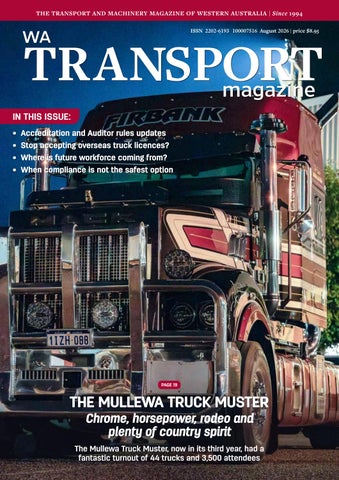
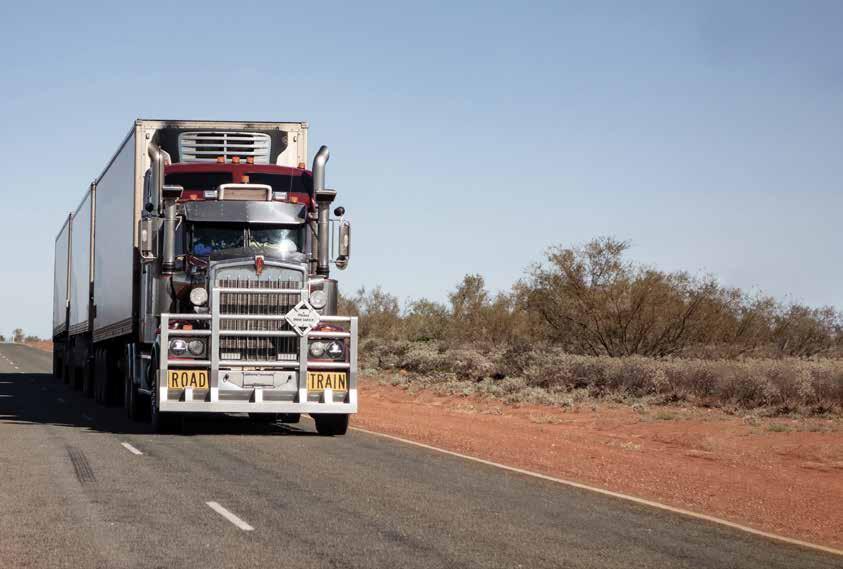
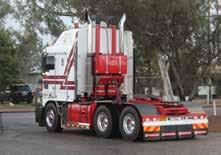
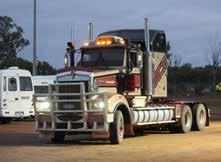
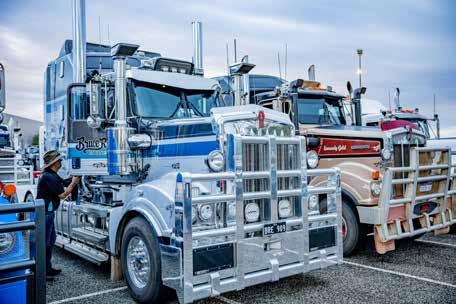
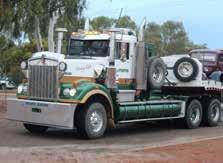
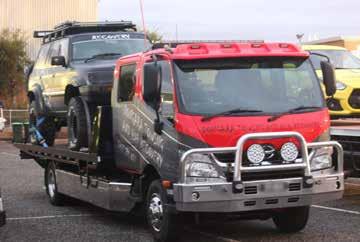
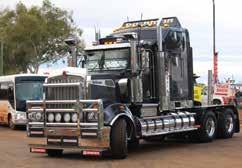
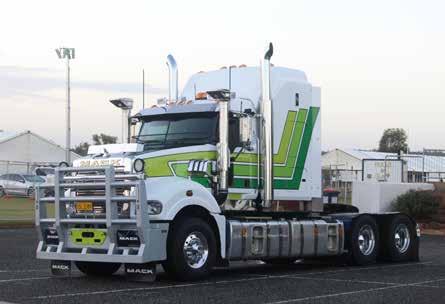
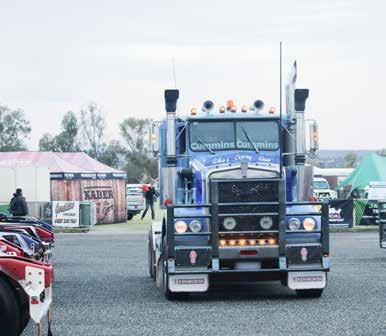
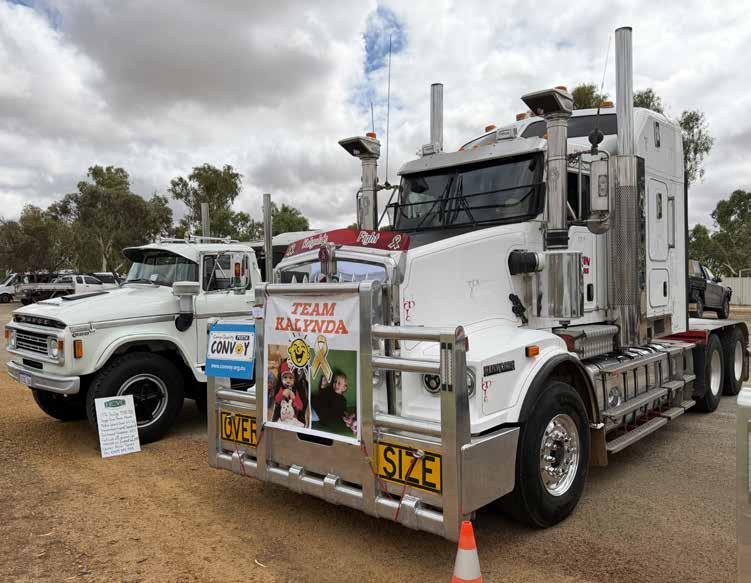
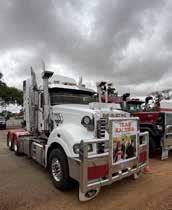
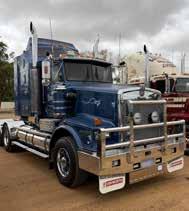
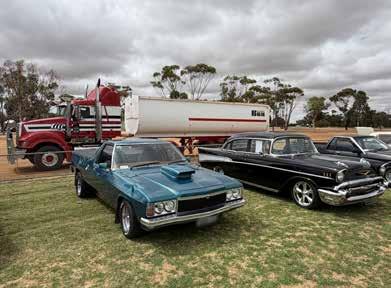
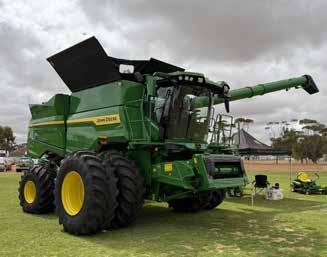
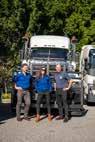
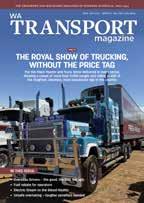
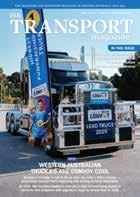
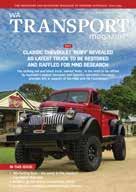
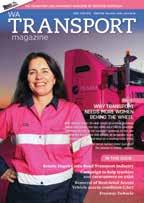
Chrome, horsepower, rodeo and plenty of country spirit
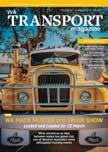
The Mullewa Truck Muster, now in its third year, had a fantastic turnout of 44 trucks and 3,500 attendees
The Heavy Vehicle Helpdesk is open from: 7am to 6pm Monday to Friday, and WA Public Holidays.
On weekends the Main Roads Customer Information Centre will receive telephone calls on behalf of the Heavy Vehicle Helpdesk on 138 HVO (138 486) and email enquiries can be sent to hvs@mainroads.wa.gov.au
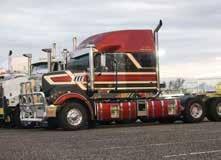
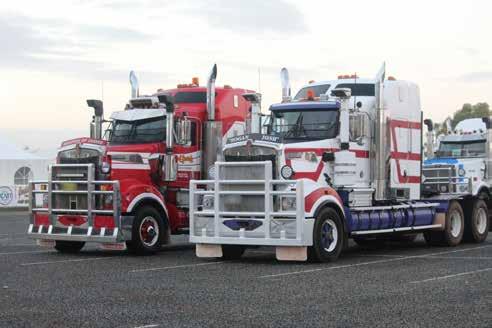
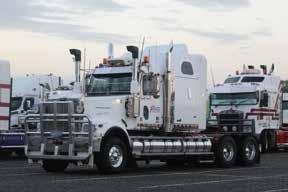
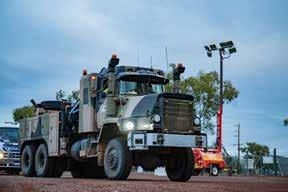
In a world where there is so much doom and gloom it is our Western Australian country folk who remind us of what living is. Especially if you are country folk who have a love for trucks and the Mullewa Recreation Grounds recently came alive with chrome, horsepower, rodeo and plenty of country spirit as truck enthusiasts from across WA Australia rolled in for another unforgettable Mullewa Truck Muster, held in conjunction with the Mullewa Muster and Rodeo.
The Mullewa Truck Muster, now in its third year, had a fantastic turnout of 44 trucks and our congratulations to the organisers on a growing event that captures the essence of life in regional WA.
Main Roads have lots of news for transport operators in this edition (Pages 4 and 5). The theme this month seems very orientated towards ‘road safety’.
FROM THE PUBLISHER Contents
In Walshy’s Perspective (Page 11) he questions if Australia should stop accepting overseas driver’s licences and would this make our roads safer? Cliff Graham (This is the Outback) brings some food for thought with his personal experiences of when compliance does not stack up against actual safety.
Western Roads Federation explores in depth where our future Australian transport workforce coming from we thank the award winning superannuation specialist fund Team Super for their article on reducing the impacts of financial stress – something we are all feeling.
As always, thank you to everyone who supports our home-grown WA transport magazine now in its 32nd year.
Best,
2 Resilient by Design – Why Western Australian Transport operations can’t rely on efficiency alone
4 Main Roads News – Accreditation Business rules and Auditor document updates
5 Main Roads News – RAVS and MOVES update: What the latest Main Roads release means for industry
8 Mid-West grain rail capacity upgrade
10 New research reveals Australian fleets are turning to connected technology
11 Walshy’s Perspective – Should Australia stop accepting overseas truck licences to make our roads safer?
12 CEVA Logistics opens new high-performance logistics centre in Perth
13 Trucking industry backs WA bill to improve train lighting
15 Western Roads Federation – Where is the future workforce coming from?
16 Superannuation – Reducing the impacts of financial stress
19 Mullewa Truck Show – Chrome horsepower, rodeo and plenty of country spirit
Angry Chicken Publishing Pty Ltd
Telephone 0430 153 273
www.angrychicken.com.au
ABN: 35 486 530 095
PUBLISHER / COMMISSIONING EDITOR
Karen-Maree’ Kaye T: 0430 153 273
Email: karen@angrychicken.com.au
WRITERS
Karen-Maree’ Kaye, Russell McKinnon
CONTRIBUTORS
Jan Cooper, Cam Dumesny, Cliff Graham, Lara Jensen, Carol Messenger, Ray Pratt, Russel Walsh
ADVERTISING ENQUIRIES
Angry Chicken Head Office T: 0430 153 273 E: karen@angrychicken.com.au
DESIGN / PREPRESS
Cally Browning | Bare Creative
ACCOUNTS
T: 0430 153 273
E: karen@angrychicken.com.au
PRINTER
Daniels Printing Craftsmen
SUBSCRIPTIONS
Subscriptions available directly from the Publisher.
T: 0430 153 273
E: karen@angrychicken.com.au
Australia: 1 year $130 (inc GST)
Overseas subscribers: Airmail postage will be added to subscription rate.
Editorial Submissions: The Publisher welcomes editorial submissions. Once received they will become the property of the Publisher who reserves the right to edit the or adjust the content to fit with the format of our publication.
West Australian Transport Magazine (WATM) is published by Angry Chicken Publishing Pty Ltd
ABN: 35 486 530 095 All rights reserved. No part of this publication may be reproduced, adapted or transmitted in any form by any process (graphic, electronic, mechanical or storage and retrieval system) or sold, resold or otherwise exploited for any purpose without consent of the Publisher.
The publisher, contributors, editors and consultants disclaim any and all liability and responsibility to any person or party, be they a purchaser, reader, advertiser or consumer of this publication in regards to consequences and outcomes of anything done or omitted, or being in reliance whether partly or solely on the contents of this publication. No person, organization or party should rely on or on any way act upon any part of the contents of this magazine without first obtaining the advice of a fully qualified person. The Publisher shall have no responsibility for any action or omission by contributor, consultant, editor or related party for content within WATM. The opinions and content within WATM does not necessarily reflect those of the Publisher, editor or their agents. No responsibility is accepted for damage or loss of material supplied to the publisher.
By GEORGE NINIKAS
RESILIENT BY DESIGN:
Why Western Australian Transport and Logistics Operations Can’t Rely on Efficiency Alone
For decades, supply chain strategy across Western Australia was defined by one overarching goal - efficiency. Transport operators, mining logistics providers, and freight distributors invested heavily in optimisation technologies designed to reduce transportation costs across the state’s vast distances, streamline delivery networks serving remote communities and resource operations, and maximise fleet and machinery utilisation. The prevailing belief was simple - the more optimised a WA supply chain became, the more competitive it would be.
However, the past several years has challenged that assumption.
Today’s WA supply chains operate in an environment defined by volatility; but also, by the unique pressures of operating across one of the world’s most geographically dispersed logistics environments. Tight service level expectations from mining, agricultural, and remote community customers, chronic driver and machinery operator shortages, and rising sustainability expectations around fleet emissions all compound the challenge. For WA transport operators, the distances involved mean that disruptions do not just delay deliveries — they can leave remote operations without critical supplies for days or longer.
Resource sector and agricultural customer expectations continue to tighten even as volatility rises. Faster turnaround on parts and consumables deliveries to mine sites, narrower scheduled maintenance windows for heavy machinery, and more demanding freight reliability requirements leave WA transport operators with less room to absorb disruption. Resilience therefore becomes not only a cost issue, but an operational uptime
and contract performance issue for the industries served.
On top of this, geopolitical tensions affecting fuel and equipment imports, extreme weather events including cyclones, flooding, and the closure of key road corridors across regional WA, shifting regulatory requirements around heavy vehicle compliance and road access, and fluctuating demand from the resources and agricultural sectors have introduced new levels of uncertainty for transport and logistics operators across the state. What once appeared to be temporary disruptions are increasingly becoming structural features of the global economy.
The scale of supply chain activity itself underscores the stakes involved. According to recent industry data, U.S. business logistics costs reached approximately $2.6 trillion, representing 8.7% of the nation’s GDP.¹ With supply chains accounting for such a large portion of economic activity, even small inefficiencies or unexpected disruptions can have significant financial consequences.
As volatility increases, many organisations are realising that efficiency alone is no longer enough and relying solely on minimising kilometres, reducing fleet size, or cutting inventory buffer at regional depots can leave freight networks critically exposed when disruptions inevitably occur. The most optimised supply chain on paper can quickly become fragile when real-world conditions change.
The Limits of Efficiency-Driven Supply Chains
Traditional WA transport and supply chain optimisation models were developed during a period when operating conditions
were relatively stable. Demand patterns were easier to forecast; supplier networks were more predictable, and global trade operated with fewer disruptions.
In that environment, optimisation delivered impressive results. Companies designed transportation networks that minimised empty miles, consolidated shipments, and balanced warehouse workloads.
But today’s operating environment is far less predictable.
Industry research shows that supply chain disruptions have become both more frequent and more costly. In fact, many organisations report that disruptions now occur twice as often as they did just a few years ago, and companies can lose 5 – 10% of annual revenue as a result of supply chain interruptions.²
When disruptions occur, companies often respond by making rapid operational adjustments, rerouting deliveries, expediting transportation, or reallocating inventory across distribution centers. While these actions may resolve short-term challenges, they often erode the efficiency gains that were originally modeled during strategic planning.
Over time, the savings projected during network design will gradually disappear during day-to-day operations.
The Strategic–Operational Gap
One of the most common challenges organisations face today is the disconnect between strategic supply chain design and operational execution.
At the strategic level, companies make long-term decisions about distribution centre locations, supplier networks, and transportation structures. These decisions
are often supported by advanced modeling tools that identify the most cost-effective network configuration.
However, such optimal distribution networks may look efficient on paper based on stable demand assumptions. But if customer order patterns shift, driver and labor availability tightens, or delivery windows change, planners often compensate manually; adding routes, changing schedules, and reallocating capacity. The network continues to function, but the original savings model defined during strategic planning quietly erodes over time.
Bridging this gap requires a broader perspective, what many supply chain leaders now describe as taking a ‘helicopter view’ of the supply chain. Because the real challenge is not optimising individual functions, but managing the interaction between strategic design, tactical planning, and daily execution.
The Value of a Helicopter View
A helicopter view means understanding the supply chain as a connected ecosystem rather than a collection of isolated decisions.
Network design, transportation planning, inventory management, and real-time execution are all interconnected. Decisions made in one area can significantly influence performance in another.
For example, modifying delivery zones might improve route efficiency but increase complexity within distribution centers. Similarly, diversifying suppliers to reduce risk may alter transportation flows or change inventory positioning across the network.
Organisations that evaluate these decisions independently risk optimising individual components while overlooking the broader system.
By contrast, a holistic perspective allows companies to connect long-term strategy with operational reality and ensure supply chain decisions remain adaptable over time. This is where a resilient supply chain begins, with intelligent design supported by technology that can model uncertainty, validate real-world feasibility, and continuously adapt as conditions evolve.
Designing Supply Chains for a Volatile World
Adaptability has emerged as a mission critical requirement for every transport and
Focus
logistics operator in WA – from long-haul road freight carriers and mining logistics contractors to regional freight distributors serving the Pilbara, Kimberley, Goldfields, and agricultural south. WA’s geographic scale, limited road network redundancy, and the operational criticality of the mining and resources sector mean that supply chain disruptions here carry consequences far greater than in more densely networked logistics environments. Building genuine resilience is not a premium capability – it is the baseline requirement for operating reliably across the state. Global supply chains are increasingly described as operating in a ‘permanent state of disruption’ with trade tensions, climate events, and regulatory shifts continuously reshaping logistics networks. ³
In response, many WA transport and logistics operators are redesigning their networks with flexibility built in — establishing strategic depot and fuel points across regional corridors, qualifying backup carriers and machinery suppliers, and investing in technology that enables faster decision-making when road closures, equipment failures, or demand surges require rapid reallocation of fleet and resources.
Resilient WA transport and logistics operations are enabled by technology that spans the full lifecycle of operations. At the strategic level, scenario modelling and territory design tools allow operators to test whether their depot and route network can withstand seasonal freight volume changes, road access restrictions, or major shifts in resource sector activity. At the tactical and operational levels, advanced routing solutions validate payload and road train configuration feasibility, heavy vehicle access and permit constraints, driver fatigue management requirements, and remote site delivery scheduling, while still enabling rapid re-planning when road closures, equipment breakdowns, or weather events require immediate fleet reallocation.
Equally significant is real-time visibility. Driver applications, proof-of-delivery systems, and control tower dashboards provide immediate insight into execution performance, allowing organisations to respond proactively rather than reactively when conditions deviate from plan.
necessarily mean sacrificing efficiency. The most advanced supply chains are learning how to balance both.
A New Supply Chain Imperative
If the past several decades emphasised efficiency above all else, the coming decade will likely prioritise adaptability and resilience.
The frequency and scale of supply chain disruptions suggest that volatility will remain a defining feature of global commerce. Organisations that succeed in this environment will be those capable of aligning long-term network design with daily operational decision-making.
Resilience also depends on continuous improvement. AI is increasingly enabling organisations to move beyond reactive analysis toward predictive intervention –identifying where network assumptions repeatedly fail, surfacing structural inefficiencies, and recommending adjustments before performance deteriorates. By analysing historical execution alongside planned scenarios, AI can stress-test networks, uncover planning blind spots, and simulate future conditions, allowing organisations to proactively refine both strategy and operations.
The result is a synchronized decision ecosystem where strategic design, tactical planning, and operational execution continuously inform and reinforce one another. In this model, resilience is not a reactive capability, but a built-in advantage.
The critical question for WA transport and logistics leaders is no longer whether their route and depot network is optimised for today’s freight task. It is whether it remains optimised — and capable of maintaining service to remote and resource sector customers — when a cyclone closes the Great Northern Highway, a mine ramps up production overnight, or a key piece of fleet machinery is grounded without warning.
About The Author: George Ninikas is the Senior Vice President of Sales and Accounts, Supply Chain Planning, Americas for ORTEC, a leading provider of advanced analytics and optimization solutions. For more information visit www.ortec.com/en-us
Accreditation Business Rules and Auditor Document updates
On 10 June 2026 HVS released a suite of important updates to the Western Australian Heavy Vehicle Accreditation (WAHVA) framework, following extensive feedback from accredited auditors and industry stakeholders. These updates apply across several core documents, including:
• WAHVA Business Rules - www.mainroads.wa.gov.au/49f2fb/ globalassets/heavy-vehicles/accreditation-and-auditing/ wahva-business-rules.pdf
• WAHVA Auditor Certification Policy and Process - www. mainroads.wa.gov.au/49f756/globalassets/heavy-vehicles/ accreditation-and-auditing/wahva-auditor-certificationpolicy-and-process.pdf
• WAHVA Guidelines for Audit Providers - www. mainroads.wa.gov.au/49f370/globalassets/heavy-vehicles/ accreditation-and-auditing/wahva-guideline-for-auditproviders.pdf
• WAHVA Auditor Certification Process FAQs - www. mainroads.wa.gov.au/49c844/globalassets/heavy-vehicles/ accreditation-and-auditing/wahva-auditor-certificationprocess-faqs.pdf
• WAHVA Auditor Code of Conduct - www.mainroads. wa.gov.au/49c8de/globalassets/heavy-vehicles/accreditationand-auditing/wahva-auditor-code-of-conduct.pdf
Operators and auditors play a vital role in maintaining the safety and integrity of the heavy vehicle industry by meeting and verifying key WAHVA standards including Maintenance, Fatigue, Dimension and Loading, and Mass Management where applicable.
Greater Flexibility for Operators: Choice of Audit Method
Introduced
A key outcome of the consultation is the introduction of operator choice for System and Compliance audits. Operators may now select either:
• Face to face audits; or
• Electronic submissions for remote completion. While remote options are now available for System and Compliance audits, Entry and Re entry Audits will continue to require face to face completion.
This ensures:
• Operators and auditors meet in person at least once every three years;
• Critical onboarding and reaccreditation processes maintain high assurance.
This formalises the outcome of the Remote Audit Requirements Trial that commenced in July 2023 and reflects strong industry support for more flexible, technology enabled audit pathways.
Important Change for Auditors: Reduced Record Keeping Requirements
Another significant improvement is the reduction in the period auditors must retain final audit reports. Auditors are now required to:
• Keep the final audit report for 12 months (previously three years);
• Be able to produce, upon request, copies of all records cited or relied upon during any audit to demonstrate that evidence was reviewed and correctly assessed.
This change reduces administrative burden while maintaining strong evidence based assurance.
28 Day Audit reminder process
Under the previous arrangements, if your annual scheduled audit was not received by the anniversary due date, Main Roads issued a 28-day letter while your Accreditation remained active.
Since 5 June 2026, once the 28-day letter is issued, your Accreditation Certificate is suspended immediately. This means:
• Any permits requiring Accreditation will become invalid;
• Any orders requiring Accreditation will become invalid;
• Transport Inspectors will enforce this suspension.
Additional Amendments Strengthen Governance and Clarity
The updated documents also include improvements to several administrative processes, such as:
• Suspension Process updates;
• Change of Business Name procedures;
• Auditor Breach Process refinements.
These amendments streamline workflows, reduce ambiguity and support consistent application of WAHVA requirements across the industry.
New funding to boost road safety through sport
The State Government is investing $560,000 into expanding a successful partnership with the State’s top sporting body - SportWest - to deliver road safety behaviour change where it's needed most.
SportWest is engaged with more than 140 member organisations providing access to more than 5,500 clubs and 700,000 participants across the State.
In 2025, the Road Safety Commission announced a four-year $1.98 million partnership with SportWest to deliver the Best on Road program. The program aims to improve road safety
behaviours and culture by linking education and behaviour changing initiatives within the State’s sporting community.
The program has received an overwhelmingly positive response from WA’s sporting community and was the catalyst to expand the program with an additional $560,000 to be invested over two years.
With the government’s financial support - which now tops $2.54 million - SportWest will deliver a new stream of communitybased road safety education through major sporting events across Western Australia and continue to expand the Best on Road program.
Updated Documents Available
All revised documents are available on the Main Roads WA website at www.mainroads.wa.gov.au/heavy-vehicles/accreditationauditing/ providing operators and auditors with immediate access to the updated requirements.
Auditor Conference
A reminder that a WAHVA auditor conference will be held on 25
MSeptember 2026 at Aloft Perth, providing an opportunity to share insights, strengthen consistency, and support continuous improvement in heavy vehicle accreditation. As the program is shaped, auditors were recently warmly encouraged to contribute their ideas, playing a key role in ensuring the conference reflects the priorities and interests of the auditor community. A detailed agenda, including session timings and delivery format, will be shared as the event approaches.
RAVS and MOVES update: What the latest Main Roads release means for industry
ain Roads’ recent release of RAVS and MOVES update mark a significant leap forward in simplifying heavy vehicle permitting and improving compliance clarity across the industry. At its core, the update focuses on automation, self-service, and reduced administrative burden – delivering a more efficient experience for both operators and regulators.
A key change is the introduction of revised accreditation statuses that provide a more transparent framework distinguishing between “Accredited” and “Not Accredited” operators. With clearer status definitions such as Suspended, Expired, and Revoked, operators now have a better understanding of their eligibility.
The expansion of self-service permits in MOVES is a standout feature of the release. Operators can now apply for and receive permits – including Accredited Mass Management System
(AMMS) and block truck related permits, without any backoffice intervention. This shift enables faster approval, reduced paperwork, and greater control for operators.
The introduction of automated fee calculations for AMMS and mass-based permits removes the need for manual processing, ensuring fees are calculated consistently based on mass, duration, and permit type. Combined with the new Maximum Modified Mass input, the system now delivers more accurate, tailored permit outcomes.
Several usability enhancements address long-standing points, including improved permit copy and reissue notification functionality and increased axle limits on trailers (now up to eight axles). These updates streamline daily tasks and improve overall system reliability.
Overall, the 2026 release signals a move towards a digital, userfocused operating landscape and reducing administrative burden.
We don’t have a truck driver shortage - we have a shortage of professional drivers
For more times that I can remember I’ve been writing about the skill and training necessary to become a successful professional truck driver. Too often, I have had concerns about the dangers of fast tracking bums into seats simply to ease the driver shortage and the consequences of lowering standards in the name of filling vacancies.
Talk to any experienced competent truck driver and they will say that until you walk a mile in their shoes you will never understand what it means to be a true truck driver. This job is hard work and we do it not for the money but because we love it. The freedom of being our own boss, travelling this great country, the challenges it throws at us and it can be a great career.
Not everyone can climb into the cab of a 100-tonne combination and accept the responsibility that comes with it. Even smaller trucks can be daunting for a learner driver. The ability to safely move freight across vast distances, in often in difficult conditions and under immense pressure, is not something that can be taught in a few weeks or measured by holding the right licence.
Yet somewhere along the way, our industry stopped valuing experience
and professionalism and started chasing numbers.
We don’t have a truck driver shortagewe have a shortage of professional drivers.
The predictable response from corners of the industry is just put more bums on seats and tick the compliance boxes but when that seat is occupied by an inexperienced driver the industry and the community are paying the price.
Every single day - trucks rolled onto their sides because someone entered a corner too fast. Loads move, tankers surge, high centres of gravity shift and speed limits don’t account for every situation. Knowing when to back off, read the road and understand the behaviour of the combination underneath you only comes with proper training and experience.
You cannot download judgment, teach instinct from a handbook or fast-track wisdom.
Then there is the great unspoken in our industry - load restraint.
I’ve witnessed shocking examples of poor load restraint that should never have left the yard and seen the aftermath when it all goes wrong leaving vehicles and freight damaged, road accidents with possible fatalities.
Yet we continue to pretend that anyone who can hold a steering wheel can safely operate a heavy vehicle carrying enormous loads through towns, cities and highways alongside the general public. Imagine applying the same logic anywhere else.
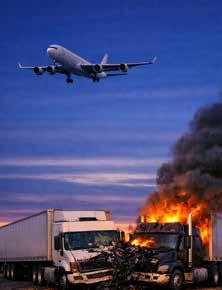
Would you board an aircraft flown by someone who had been rushed through training because there was a pilot shortage because this industry needed more bums on seats?
The public would never accept it, so why do we accept it in trucking?
Why is it considered reasonable to hand the keys to one of the largest and potentially most dangerous vehicles on our roads to people who haven’t the experience, time or mentoring to do the job safely?
The uncomfortable truth is that the industry helped create this problem as experienced drivers have been pushed harder for lower returns, their knowledge undervalued and their warnings ignored. Companies have exploited truck drivers so it is no surprise that many of the best have simply walked away and the next generation loses the opportunity to learn from those who spent decades mastering their craft.
Truck driving is a craft. It requires mechanical sympathy, risk assessment, patience, discipline and an unwavering respect for the consequences of getting it wrong.
The solution to our driver shortage isn’t lowering standards, or accelerating training, or hoping for the best with inexperienced drivers - the solution is to rebuild professionalism, reward experience, value mentorship, pay drivers properly and treat them with respect recognising that true professionals are developed over years, not weeks.
Lowering the bar in trucking is resulting in poor customer service, delayed deliveries, rolled trucks on the side of the highway and innocent families sharing the road with people who were never properly prepared for the responsibility they were handed.
The least we can do is ensure the people driving trucks are equipped with the skills, experience and professionalism required to do the job safely. This industry was built by professionals but it won’t survive if we replace them with passengers occupying a driver’s seat. Keep it safe, Ray Pratt.
by Ray Pratt
NTI’s Mike Edmonds recognised
NTI is proud to congratulate Mike Edmonds, Executive General Manager – Commercial, for receiving the Australian Trucking Association (ATA) Outstanding Contribution to the Australian Trucking Industry Award.
Mike’s recognition reflects almost three decades of service to the transport and logistics industry, including 25 years in an executive role with NTI, where he has led the organisation’s connection with industry and become one of the most trusted voices across both trucking and insurance.
NTI Chief Executive Officer Janelle Greene said Mike’s contribution is defined by genuine care, practical insight and a deep commitment to the people who keep Australia moving.
“Mike has always understood that transport is more than an industry. It is a community built on hard work, trust and resilience,” she said.
“His contribution has often happened behind the scenes, but its impact has been significant. From
safety programs and industry advocacy to mentoring, association partnerships and support for operators, Mike has consistently worked to help build a stronger, safer and more sustainable industry.”
Mike’s career began as a police officer, and he often credits those early years with shaping his empathy, communication skills and calm approach to difficult situations.
His connection to trucking deepened when Ron Finemore took a chance on him early in his transport career. Mike has often said he knew he had found the right industry because trucking was honest, practical and rewarded people who got on with the job.
At NTI, Mike leads the commercial insurance division, but has also guided the organisation’s association strategy, supported industry partnerships, driven safety initiatives, and represented industry interests across government and the community.
Mid-West grain rail capacity upgrade
Construction is underway to upgrade a critical section of the Midland Line to boost grain-to-port rail freight capacity in Western Australia's Mid-West region.
Arc Infrastructure is upgrading approximately 78 kilometres of track on the Midland Line between Carnamah and Mingenew.
The works will see the replacement of timber sleepers with about 55,000 modern concrete and steel sleepers to increase the tonne-axle load (TAL) from 16 to 19 tonnes.
Once complete, the project will streamline grain handling, boost capacity and deliver savings on freight costs to local grain growers by increasing the amount of grain that can be carried on a single train by 25 per cent.
The Midland Line plays a vital role in
transporting grain to Geraldton Port, with CBH Group using the corridor to transport about half a million tonnes of grain annually.
In consultation with CBH, Arc Infrastructure has temporarily closed the line to undertake the construction, with the project expected to be complete by early next year.
This project is funded through the $200 million Agricultural Supply Chain Improvements (ASCI) program, towards which the Albanese Government is contributing $160 million and the Cook Labor Government $40 million.
As part of the Midland Line upgrade, the Australian and Western Australian Governments are contributing $45 million through ASCI for the design and purchase
Australasian Fleet Champions Awards
The 2026 Australasian Fleet Champions Awards, sponsored by AutoSense, are now open for entries.
Safety-conscious organisations from across Australia, New Zealand and the Pacific running any size or type of fleet, and organisations that provide road safety services or products to fleets, are invited to enter. There are eight categories for the 2026 Awards:
• Company Driver Safety
• Fleet Safety Product
• Road Safety in the Community
• Safe Vehicles
• Sustainable Journeys
• Fleet Driver of the Year
• Road Risk Manager of the Year
• Outstanding Commitment to Road Safety
If you have a safety initiative that deserves recognition, or you know someone in the industry who should be recognised, please consider submitting an entry or nomination.
To find out more visit www.brake.org. nz/campaigns-events2/1534-fleet-awards
Entry deadline Friday 21 August
The line is temporarily closed, with the project expected to be complete by early next year
of construction materials, with Arc Infrastructure contributing $22 million for construction works.
Senator for Western Australia Glenn Sterle said, “By investing $160 million for rail in WA’s grain-growing regions, we are future-proofing our freight network.
“This means less heavy traffic on our local roads and more grain safely making its way to the market, while backing local jobs and supporting farming communities.”
New ACDelco heavy-duty battery range available through Battery Mart
AACDelco is strengthening its presence in Australia’s heavy duty battery market with the introduction of three new models designed for demanding commercial environments.
For over 100 years, ACDelco has been recognised as a world leader in the automotive aftermarket and has been at the forefront of automotive innovation since the birth of GM in 1908.
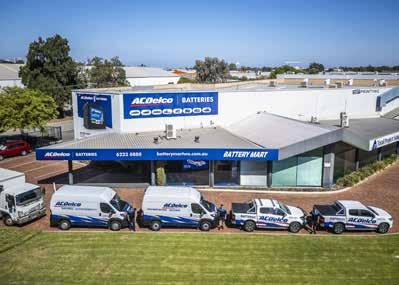
The commercial range will be available through family-owned Battery Mart who has been operating for nearly 40 years with locations in both Perth and Geraldton.
With a focus on customer service and quality products, Battery Mart has been appointed by General Motors as the state distributor for ACDelco’s range of automotive and commercial batteries.
“We saw the market was looking for a quality maintenance free battery that was competitively priced and the ACDelco range was a perfect fit,” says Battery Mart’s Director Gary Halton.
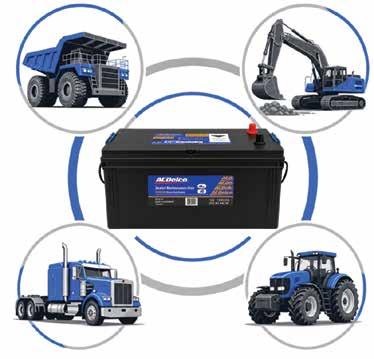
“The expanded ACDelco range supports Battery Mart’s move into key commercial segments including mining, earthmoving, heavy haulage and broadacre agriculture, giving operators broader access to battery solutions engineered for tough local conditions.
“Built for applications where reliability matters most, the new additions combine strong cranking performance, heavy duty construction and maintenance-free convenience. Together, they extend ACDelco’s offering deeper into sectors where uptime, durability and vibration resistance are critical to keeping equipment and fleets productive,” says Gary.
Leading the launch is the ACDelco S8D-1500SMF (N200 Casing), a premium sealed calcium/calcium heavy duty battery developed to deliver dependable starting power and long service life. With 1500 cold cranking amps, 200Ah capacity and 440
minutes of reserve capacity, the S8D-1500SMF is purpose-built for high-demand commercial applications. Its thicker expanded grid plates, advanced lead calcium technology and integrated liquid gas separator are engineered to support durability, reliability and extended operating life in Australia’s toughest conditions.
Complementing the range are the new S4D-1400MF and S4D-1400RMF (N150 Casing Size) models. Both are premium quality maintenance-free heavy-duty batteries with 1400 cold cranking amps. Designed to meet or exceed original equipment specifications, both variants feature, enhanced grid design and anchor-bonding for increased vibration resistance.
Gary explains, “For commercial operators, it means access to a battery range developed for real-world heavy-duty use, where performance under load, resilience in harsh environments and reduced maintenance requirements all contribute to lower disruption and greater operational confidence.
“For Battery Mart, the launch marks an important step in broadening our footprint across commercial sectors that demand proven aftermarket solutions. By adding the new ACDelco heavy duty range, Battery Mart is better positioned to support customers working across the heavy-duty markets with products designed for strength, endurance and dependable power delivery,” finishes Gary.
New research reveals Australian fleets are turning to connected technologies
Geotab Inc. a global leader in connected operations, video telematics and AI-powered insights, released its inaugural Connected Fleets in Australia Report 2026, revealing that Australian fleet operators are increasingly investing in connected vehicle technologies to improve safety, reduce operational risk and strengthen business performance.
Based on a survey of 517 fleet managers, executives and mobility professionals across Australia, the report provides new insights into how organisations are using telematics, video-based safety solutions, asset tracking and AI-powered fleet technologies to address some of the industry's most pressing challenges.
The findings show that driver drowsiness and fatigue and safety remain the leading concerns for Australian fleet managers, followed by meeting customer expectations, fuel costs and operational efficiency.
As organisations look for new ways to protect drivers and reduce incidents, adoption of video telematics continues to grow. More than half of Australian fleets now use in-cab video technology, reflecting a broader shift towards data-driven safety programs and proactive risk management.
The report found that organisations using video telematics reported significant improvements across key safety and operational metrics, including:
65% improvement in driver safety
61% reduction in false claims
49% reduction in safety incident costs
39% reduction in insurance costs
The research also highlights the growing role of video telematics in supporting driver coaching, fatigue management and compliance initiatives, particularly in industries where vehicles operate in higherrisk environments or over long distances.
“The Australian fleet industry is navigating a complex mix of safety, compliance and operational challenges, with driver fatigue, rising costs and increasing customer expectations placing greater pressure on fleet operators than ever before,” said David Brown, Associate Vice President Sales, APAC at Geotab.
“Our research shows that connected vehicle technologies are becoming essential tools for organisations looking to improve safety and performance. In particular, video telematics is helping fleets move beyond reacting to incidents and towards proactively identifying risk, supporting driver coaching and creating safer outcomes on Australian roads.
“As fleets continue to embrace datadriven decision-making, we're seeing growing recognition that safety, efficiency and sustainability are closely connected. The organisations achieving the strongest results are those using real-time insights to better protect their drivers, optimise operations and build more resilient businesses.”
The Connected Fleets in Australia Report 2026 highlights growing adoption of video telematics as fleets prioritise driver safety, compliance and operational performance.
Beyond safety, the report found that connected fleet technologies are delivering measurable business value across Australian organisations. 75% of businesses using GPS tracking solutions reported they were highly beneficial for fleet management, while 70% reported reducing fleet costs, 57% improved productivity and more than half achieved a positive return on investment within 12 months.
As Australia's transport sector continues to evolve, connected fleet technologies, AI-powered insights and video telematics are expected to play an increasingly important role in supporting safer roads, stronger compliance outcomes and more efficient fleet operations.
New Chair appointed to Freight and Logistics Council of WA
Former Western Australian Government Minister Bill Johnston has been appointed as the new Chair of the Freight and Logistics Council of WA (FLCWA).
Established in 2009, the FLCWA provides strategic advice on issues faced by the freight and logistics industry in WA, with members appointed by the Minister for Transport.
Mr Johnston brings a wealth of experience to the role having served as a senior Labor Government Minister across several portfolios prior to his retirement in 2025.
As Mines and Petroleum Minister, he oversaw record resource industry exports, and as Energy Minister delivered significant government investment into renewable energy generation and storage.
Mr Johnston also held the Industrial Relations portfolio, delivering landmark reforms for workers across the State.
Mr Johnston currently serves on several boards including the McKell Institute, the Burswood Park Board and the Gaming and Wagering Commission.
Transport Minister Rita Saffioti said, “I am pleased to welcome Bill as the new Chair of the Freight and Logistics Council of WA and look forward to working with him to improve our state's freight and logistics outcomes.
"In a state as large as Western Australia, co-ordination of our freight and logistics operations are critical and the FLCWA plays an important role in facilitating effective engagement across government and industry.
“Bill brings a depth of experience to the position that will be invaluable to support an efficient, resilient and sustainable freight and logistics system.
“I would also like to acknowledge outgoing Chair Megan McCracken and thank her for her valuable contribution to the FLCWA.”
Walshy's PERSPECTIVE
Let me introduce myself.
My name is Russel Walsh. I have been in and around trucks for around 40 years. My driving career started at 20 in the town where I grew up, Mukinbudin and over the years I’ve owned, driven and fixed a couple of trucks. I did a cert IV as a heavy commercial vehicle mechanic later in life and managed a large private fleet workshop. I’ve carted most types of freight including livestock, end tippers Ag cartage to side tippers on ore jobs in Leonora, Groote Eylandt, The Granites and Bootu Creek plus some general and refrigerated and now fuel to throw into the mix.
Should Australia stop accepting overseas truck licences to make our roads safer?
This question of should Australia stop accepting overseas truck licences to make our roads safer has been doing the rounds and I think it is a genuine question given the huge increase in the number of heavy vehicle accidents, incidences and near misses, many involving foreign drivers.
In Western Australia, if you hold a valid overseas truck license, you can drive for up to three months without transferring it to a WA driver's license.
The Australian Governments, industry and corporates are all smashing us with ridiculous amounts of compliance. NHVR are massively increasing fines that predominantly attack the driver instead of the owner and I believe they are trying to put a Band-Aid on a wound that has been open for a long time. We all knew this driver shortage was coming years ago however, industry did nothing to attract and train new drivers to fill the short fall and is still doing nothing.
With the implementation of the COR laws, we are seeing them tested in court with some hefty fines going to the owners of companies. Because of that we now have stupid levels of compliance and monitoring in heavy vehicles forced onto us in a bum covering exercise by fleet owners and managers including corporate customers. The level businesses are going to in order to protect themselves from COR laws has hit top gear.
This is pushing older experienced drivers out and we are failing to attract new ones. The toxicity and the ‘us and them’ mentality between drivers and companies is at an all-time high and it seems that it is only the foreigners desperate to make a dollar that are jumping into the empty seats. The sad part is they can get an MC licence easily in Australia which means they
What we are seeing is if they have a stuffup they jump on a plane and go home… and then there is plenty more to take their place
get into a Road Train with no experience because the system is a failure.
What we are seeing is if they have a stuff-up they jump on a plane and go home… and then there is plenty more to take their place.
Industry chose to pluck drivers from the shallow pool with new trucks and higher wages to keep the wheels turning and now that pool is empty, enter foreigners with fast tracked licences and no training.
What could possibly go wrong you ask? It has been an absolute disaster turning our work
place into the most dangerous in Australia.
The day I wrote this article I read that six trucks have been destroyed after an incident on the Hume Highway south of Goulburn. Remarkably no one was killed and my question is this, “What is it going to take to make the Albanese government wake up. They got it wrong when they chose getting the job done before safety.
The problem is fast tracked licences, little or no training, different cultures and too much compliance forcing older drivers from the industry.
The problem is a failure to attract younger new drivers from Australia because of the toxic nature of road transport, too much compliance and they too can see how dangerous it is from the media reports every day of truck accidents.
In an article I read recently, it asks the question, “Safety first or productivity first - does Australia need to stop accepting overseas truck licences to make roads safer? This issue raises a serious debate between road safety and workforce demand. Supporters argue that stricter licensing rules would ensure all heavy vehicle drivers meet consistent Australian safety standards, reducing accidents and improving public confidence. Critics however, say overseas drivers help fill critical labour shortages in the transport industry and already undergo testing and verification. Removing recognition of foreign licences could slow supply chains and increase costs for consumers. Should safety come first, even if it creates economic pressure, or is Australia relying too heavily on skilled migrant drivers to keep the economy ticking?
What do you think?
Until next month, keep the shiny side up and stay safe. Cheers, Walshy.
CEVA Logistics opens new highperformance logistics centre in Perth
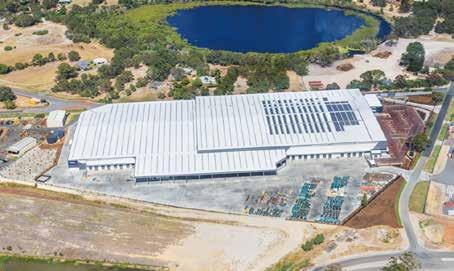
CEVA Logistics has officially opened its new Lakes Road logistics hub in Hazelmere, Western Australia, marking a major investment in innovation, operational excellence and sustainable growth in the local market. The new facility is a high-performance logistics centre designed to meet the ever-evolving needs of customers’ supply chains, with a strong focus on sustainability.
Construction of the new warehouse on Lakes Road began in September 2024, with the first two phases completed in November 2025. Following the final handover on April 1, 2026, all operations previously located at Abernethy Road were successfully relocated to this larger, purpose-built facility. The transition was executed seamlessly, with no disruption to customer operations.
Strategically positioned with direct access to Perth’s major arterial road and freight networks, the Lakes Road site enhances CEVA’s ability to serve both regional and national markets efficiently. The facility features 37,000 square meters of internal warehouse space, 13,500 square meters of external hardstand and a 4,600 square meter breezeway, providing the scale and flexibility required to support end-to-end logistics operations. It supports inbound and outbound handling, storage and inventory management, and bonded services, while complementing CEVA’s
established strengths in transport, freight management and project logistics across Australia to deliver fully integrated supply chain solutions for a wide range of sectors, as Automotive and Tyres, Consumer and Retail, Telecommunications, Industrial, as well as Energy and Mining.
The facility incorporates advanced infrastructure to support both operational performance and sustainability objectives, including 700 kW of solar generation, a 600 kW battery system and 10 electric vehicle (EV) charging stations. Customers benefit from a high-clearance design that maximizes storage density, alongside modern infrastructure and robust
sustainability credentials—including an onsite renewable energy system that powers 90 percent of the facility's electricity needs.
Felipe Turra, vice president of contract logistics, Pacific, CEVA Logistics said, “The opening of our Lakes Road supersite marks an important step in strengthening CEVA’s contract logistics footprint in Australia. This facility has been purpose-built to give our customers greater capacity, flexibility and efficiency, while also supporting their sustainability ambitions through modern infrastructure and smarter energy solutions. It positions us well to meet growing demand in Western Australia and deliver long-term value for our customers.”
Trucking industry backs WA bill to improve train lighting
The trucking industry has urged the Western Australian Parliament to pass a private member’s bill that would mandate minimum lighting standards for trains.
The Australian Trucking Association (ATA) and Western Roads Federation (WRF) made the call, ahead of the second reading of the Rail Safety National Law Application Amendment (Rolling Stock Lighting) Bill 2026. The bill was introduced by Nationals WA Leader Shane Love.
ATA CEO Mathew Munro said the bill would, if passed, be the first law in Australia to mandate train lighting standards.
“Trucks and cars are subject to strict lighting and visibility requirements, and it would surprise most road users to learn that there is no equivalent standard for train lighting,” Mr Munro said.
“The ATA has long supported mandatory train lighting measures, including side lighting and flashing beacons.
“Improved train lighting has been recommended by coroners, called for by the families of crash victims, supported by research and talked about for decades.
“This commonsense bill is the WA Parliament's chance to decisively deal with
this issue for the state,” he said.
WRF CEO Cam Dumesny said that truck drivers regularly operated in lowlight conditions, including at dawn, dusk, overnight and during adverse weather.
“Trains can’t stop when they see a truck, so it is critical that truck drivers approaching level crossings can see approaching trains,” Mr Dumesny said.
“The visibility of trains should not be left to chance. We urge the WA Parliament to pass the bill to protect lives in Western Australia and to serve as an example for the rest of the country,” he said.
First conviction under WA towing reforms
APerth towing company has become the first convicted under the State Government's towing reforms.
The new laws have been introduced to ensure proper regulation of crash towing in Western Australia, improve industry accountability and better protect WA drivers.
Towlife Enterprises Pty Ltd was convicted in the Perth Magistrates court on Friday, 12 June for breaching Regulation 17 (4) of the Towing Services Regulations 2025, fined $10,000 and ordered to pay legal costs.
The court found the company failed to provide requested material, such as paperwork and other records, needed to investigate potential breaches of the towing laws. The offence carries a
maximum penalty of $60,000.
The next phase of reforms comes into effect on 1 July 2026, requiring towing businesses to be authorised and meet fit and proper person requirements, as well as prescribed storage yard standards.
Businesses that operate without the required authorisation face penalties of up to $200,000, while individuals can be fined up to $40,000.
The Towing Services Act 2024 was passed in October 2024, immediately introducing a ban on advertising or payment of spotter fees.
In January 2025, the Towing Services Regulations 2025 introduced maximum charges for towing and storage of crashed light vehicles in the Perth and Peel regions, as well as increased penalties for authority to tow breaches.
The Towing Services Act 2024 was passed in October 2024, immediately introducing a ban on advertising or payment of spotter fees
SUPER THAT WORKS AS
WESTERN ROADS FEDERATION
By Natalie Grinceri
Where Is the Future Workforce Coming From?
The Workforce Pressure Point
Have you ever had to turn down work because you didn’t have enough staff? How much time do you or your managers spend recruiting?
Western Australia is sitting at a precipice. The rising freight demand, an ageing workforce, and strong competition from mining. Ask yourself the question then, where will the next generation of workers come from? It’s time to start looking outside the box and recognise four distinct and emerging talent pools - young people, long term job-seekers, career changers and prisoners.
Who’s Coming Through the Pipeline?
In the coming months around 25,000 young adults will be finishing their secondary schooling and looking for their first foray into the world of full-time work. Ask a student planning of doing
an apprenticeship what trade they are interested in and you will find the majority say electrical or auto mechanics. How many say logistics or supply chain? Not many. And why is that?
What about Job seekers? Those reentering the workforce after unemployment or underemployment? According to WA Government figures, in June 2026 there are over 81,000 individuals of working age, unemployed. These are individuals, who, when supported with short, targeted training would become strong candidates, ready to start.
Experienced change-of career adults – in this day and age people can expect to have between three and seven distinct career changes. The Transferrable skills like customer service, safety awareness, teamwork found in those coming out of other employment areas like hospitality, retail, mining, construction shouldn’t be discounted. Career changers can be an invaluable asset to a team when given
the opportunity. Consider the wealth of knowledge that an experienced long-term driver or yardie who wants a change from a driver’s seat to something different.
Ever made a mistake in your life? But not gotten caught? There are people right now getting ready to be released from incarceration – people who did get caught and are ready to take the clean slate they have been given, to make changes, be better for their families, and aspire have something better.
What Skills Are Required?
Currently the top three most in-demand roles in Western Australia's transport and supply chain industry, roles driven heavily by our active mining, resources, and distribution sectors are heavy vehicle (truck) drivers, supply chain and logistics coordinators, and warehouse workers/ forklift drivers.
Dig deeper, what skills do we actually
need to bolster our workforces? It starts with the non-negotiables: safety awareness, absolute reliability, and solid communication. In the yard, we obviously need technical boxes ticked, from heavy vehicle licences and forklift tickets to load restraint knowledge. But modern logistics also demands digital literacy. Workers today must confidently navigate handheld tablets and handle basic data entry without skipping a beat. Above all, success comes down to strong customer service, realworld problem solving, and the adaptability to handle a changing schedule.
What Roles Are Available?
Welcoming these diverse talent pools means looking at the variety of open doors across our sector. The transport and logistics sector is massive, and we need everyone from drivers on the road to coordinators in the office. Opportunities are immediate, varied, and available across several entry points:
• Heavy Vehicle Drivers: High-demand roles for those holding or pursuing HR, HC, and MC licences.
• Bus and Coach Drivers: Crucial positions covering regional school routes and urban charter networks.
• Warehouse Operators: Fast-paced
roles focused on pick/pack accuracy, forklift operations, and inventory management.
• Logistics Coordinators: Analytical desk positions managing daily scheduling, freight dispatch, and client and customer service.
• Fleet Maintenance Roles: Handson yard support including heavy mechanics, tyre fitters, and essential yard staff.
• Entry-Level Admin: Accessible pathways focusing on booking systems, safety compliance, and digital data entry.
The Employer Reality Check
Look at your current operation honestly. If you are still relying on the same traditional job boards and expecting a flood of perfect applicants, you are fishing in an empty pond. The reality is simple: the future workforce will not come from a single, magic source. It will come from a tapestry of multiple, untraditional streams.
Ask yourself these critical questions:
• Are your recruitment practices flexible enough to onboard a motivated school-leaver or a worker exiting the justice system?
• Do you have the patience to value transferable skills over direct industry experience?
• Are you prepared to support industryled training schemes and form partnerships to build your own pipeline?
Securing your business continuity means engaging early. It means walking into schools, partnering with employment services, and connecting with transitional prison programs. Solving our systemic workforce shortage requires a deep, longterm investment in people; not just frantic, short-term recruitment bursts when an operational crisis hits.
The transport and logistics sector is the backbone of Western Australia. It is a stable, future-focused, and technologically advancing industry with room for everyone. But to keep it moving, we must rethink where we look for talent.
Stop looking for the finished product and start looking for potential. By opening your doors to youth, jobseekers, career changers, and those looking for a genuine second chance, you do more than just fill a vacancy. You build resilience. Let’s stop competing for the same shrinking talent pool and start building the next generation of WA’s workforce together.
Superannuation
REDUCING THE IMPACTS OF FINANCIAL STRESS
Financial worries affect most Australians at some point and with the increasing cost of living, many people are feeling the pinch.
According to research, many retirees and pre-retirees worry about outliving their retirement savings*. And for young Australians, the cost of living is the single biggest concern, with the affordability of housing also a significant stress factor^.
So, if you're feeling the pressure of your financial responsibilities, you're definitely not alone. But it's not just your bank balance that feels the strain, as financial stress can affect your mental and physical health too. The good news is that there are plenty of support services to help you through.
What causes financial stress?
You're probably well aware of what causes you financial stress in your own life, whether it’s mortgage repayments, rent, being unable to set aside money for a rainy day or juggling monthly bills.
Other more serious triggers include losing your job, being unemployed, unable to pay off debts or having gambling problems.
*Sources:
What are the effects of financial stress?
Common effects of financial stress include:
• arguing with the people closest to you about money;
• having trouble sleeping;
• feeling angry or fearful;
• mood swings;
• feeling tired; and
• loss of appetite.
If you relate to anything on this list, it’s important you know that there are things you can do. And remember, anyone can experience problems with money, no matter your background. It’s important to not try to deal with it alone, but to seek support from family and friends. It’s also important to look after your physical and mental health by eating a healthy, balanced diet and getting regular exercise.
How can you reduce financial stress?
There are things you can start immediately to help you deal with financial stress. A good starting point is to identify the issues that cause you the most financial stress –whether that's your mortgage, other debts or retirement planning.
Financial management resources
• The Moneysmart website, an Australian Government service, provides tips and advice on managing your finances. Go to moneysmart.gov.au.
• If you have debts and don't know where to start, the National Debt Helpline is a not-for-profit service that can help you with managing your debts, negotiating payment plans and getting you back on track. Call them for free on 1800 007 007 or go to ndh.org.au.
Are you a member of Team Super? Advisers from Team Super Financial Advice can help you plan and manage bigger financial decisions and help put the right strategies in place to achieve your goals. See teamsuper.com/ advice to find out more.
Mental health resources
Financial stress can also cause existing mental health problems to worsen. If you are feeling depressed or anxious about your situation, it’s important to seek support. Talk to your doctor or a trusted friend or family member to discuss your situation, and how you are feeling.
There are also several organisations you can contact for help, including:
• Beyond Blue – if you’re feeling depressed or anxious, call 1300 224 636 or go to beyondblue.org.au to chat to a counsellor online. This is a free service available all day, every day.
• Lifeline – if you need support through a personal crisis, call 13 11 14 or go to lifeline.org. au to chat online. This is also a free service, available all day, every day.
* Independent Financial Adviser, www.ifa.com.au/cost-of-living-fostering-fear-of-running-out-in-retirement-report 16 April 2025. ^ Headspace, https://headspace.org.au/our-organisation/media-releases/cost-of-living-housing-affordability-biggest-concerns-among-young-people/ 3 April 2023.
Team Super is Team Super Pty Ltd AFS licence 246864, the trustee for the Team Superannuation Fund. Refer to the PDS and TMDs on Team Super’s website at teamsuper.com when considering if their financial products are right for you. Any financial advice in this article does not take into account your financial situation, needs or objectives, and you should consider these factors before taking any action. Financial planning services are provided by Team Super Financial Advice a trading name of Team Super Services Pty Ltd AFS licence 502700.
This is ‘The Outback’
By Cliff Graham
When compliance is not the safest option
Road safety and compliance - there’s plenty of reports from eastern states about changes in regulations, which is the politically correct way of saying they are increasing penalties for non-compliance.
Years ago, I was intercepted while driving a heavy vehicle in Queensland. I felt to the best of my knowledge I was good and I was waved in and checked over. I passed inspection, so in the conversation I asked one of the inspectors, “When is the last time you pulled a heavy vehicle over for the sole purpose of asking the driver how their day is going and do they have any queries about the industry?”
He said, “I never have and actually that’s a fair point”.
I said, “That friendly gesture might be just what a driver needs and will help build rapport with drivers and regulators.”
On another occasion I was pulled over by a police officer who went back through my logbook for months until he found a mistake which incurred a $600 fine – more than low level drink drivers got.
Recently, I attended a seminar on road safety with the main emphasis being on compliance to regulations. I certainly understand the need for regulations, especially with so many changes in the industry and new truck technology which means when if they breakdown, there’s nothing drivers can do themselves. However, in recent years road safety has
shifted more to compliance to regulations and penalties for non-compliance have become so ridiculous that this is the reason many genuine operators are leaving the industry in droves. Nowadays, it’s no longer the ability to drive a heavy vehicle safely that is sought after but someone who will comply with the ever increasing regulations.
Also, the brotherhood of helping each other is truly missing today. Mind you, it was a different time before mobile phones and Starlink. Back then, quite a few had HF long distance radios but mainly made their own decisions on what needed to be done including changing and fixing their own flat tyres. I remember a time when drivers could swap engines out the back of a roadhouse but now the technology just too complicated.
We have gone from a time of road safety being ‘professionalism and accountability’ to now where we are not encouraged to think for ourselves - just comply with regulations.
There needs to be a level playing field road safety for every chain in the link including companies and governments. Yet, some government departments seem to be exempt from accountability.
There’s still roadworks where sections are breaking up before the roadworks are finished and I’ve seen 80 km sign just before a big pot holes in a major road – and someone had to drive there to put the sign up. I am no
engineer, but wouldn’t a barrow of premix to fill the hole made the road safer? That is what used to happen in the past.
A few years ago, I was travelling south on the NWCH with two B-doubles connected to six decks loaded with fat, heavy cattle and towing a dolly behind. I had the same units as a Quad road train but in a safer combination and I wasn’t over length. Yet I was intercepted by transport officers who were policing the regulations given to them. I thought I was ok because I had it in the safest combination but the officers said that this was not allowable under their guidelines on configurations. An infringement notice for a $1000 noncompliance fine which was paid, yet if I had a B-Double then a dolly and a B trailer then a dolly and an A trailer I would have been completely compliant and legal.
However, my 46 plus years-experience carting cattle highlighted having a loaded A trailer with stock swinging around is a recipe for potential rollover, death and injury to livestock and not to mention the impact on other road users. So, my experience would strongly argue at this instance compliance was not the safest option for road safety.
My call is to look into changing the regulations to allow dollies to be towed behind combinations as long as that combination is not over length. ‘Safety’ on the roads should be everyone’s highest priority.
One rule for the train industry, another for everyone else…
By LARA JENSEN
The extent to which the government and organisations involved with rail safety have gone to resist introducing safety lighting on trains in Australia is nothing short of extraordinary.
The long-repeated claim by politicians, bureaucrats and rail industry representatives that 75% of rail crashes occur in daylight, making additional train lighting unnecessary is a fallacy.
Day light is defined broadly. In the Office of the National Rail Safety Regulator (ONRSR) 2024-2025 Rail Safety Report daylight it is interpreted as, ‘a sun position of above 6 degrees below the horizon, also known as civil twilight.’ Darkness was defined as ‘a sun position of less than 6 degrees below the horizon and included nautical twilight (centre of the sun is between 6 and 12 degrees below the horizon) and astronomical twilight (when the centre of the sun is 12 to 18 degrees below the horizon).’
The idea that “daylight” includes a period before or after the sun is visible is outlandish to me.
I’ve looked outside during civil twilight and it’s not daylight. Unlit objects are hardly visible in the dark against a semibright sky. It’s worse against the brighter sky where the sun is rising or setting.
Based on their definition, it is no surprise that between July 2014 and July 2025, 84.9% level crossing occurrences were reported to have occurred during daylight and 15.1% during darkness. We don’t know of or can’t find any other road safety analysis that uses these definitions.
Why ONRSR’s definition of ‘daylight’ is
flawed is because as humans, we don’t just see consistently one way. We have focused (foveal) vision and peripheral vision. We have photopic (day vision) and scotopic (night vision) and mesopic vision in the transition. In a nutshell, the colour of light changes between daylight and twilight - the colours and contrast we see are different. Human eyesight is not the same during the day and night, and importantly there is a transition period during ‘twilight’ when that change occurs.
Why ONRSR’s definition of ‘daylight’ is flawed is because as humans, we don’t just see consistently one way
It is false to assume that observing in daylight is the same as twilight. The colours and contrast are physically/ scientifically different - it’s not a difference in human perception.
Furthermore, ONRSR do not assess light quality and there is almost no data available regarding the ambient light conditions at the time of level crossing crashes. The data behind their statistics comes largely from crash reports that mostly have two categories, ‘day’ and ‘night’ which ignores dawn, dusk, fog, dark clouds, rain, dust and sun glare. It ignores train camouflage against certain backgrounds or their lights being mistaken for farmhouses, field
equipment, cars or other lighting.
ONRSR (established in 2012) still doesn’t have quality information about the light quality at the time of rail crashes or near hits – only the time of day.
Road safety authorities in WA do report lighting conditions at the time of crashes. For example, on the Main Roads WA website the Traffic Incident Reporting Form includes categories such as daylight, nighttime, dusk, dawn in addition to atmospheric conditions stipulated as clear, overcast, raining, fog/ smoke dusk and they also have categories for street lighting and road conditions.
If you’re in WA, look no further than the Insurance Commission of WA’s website stating the time of day or night of motor vehicle accidents. If you define daylight as between 7 am and 5 pm, they show 65% happen during daylight, versus 35% between 5 pm and 7 am.
Yet we don’t find the automobile and trucking industries or the general public requesting that all visibility lighting be removed from cars and trucks, just because less accidents happen at night.
I commend The Nationals WA Leader Shane Love for introducing legislation to the WA Parliament to make train lighting mandatory – a united rail safety Liberal and National Alliance Priority that will be debated in Parliament on August 12th.
It does however remain to be seen if the WA Cook government will put safety before politics and back the lifesaving train lighting improvements outlined in this historymaking Bill.
THE MULLEWA TRUCK MUSTER
Chrome, horsepower, rodeo and plenty of country spirit
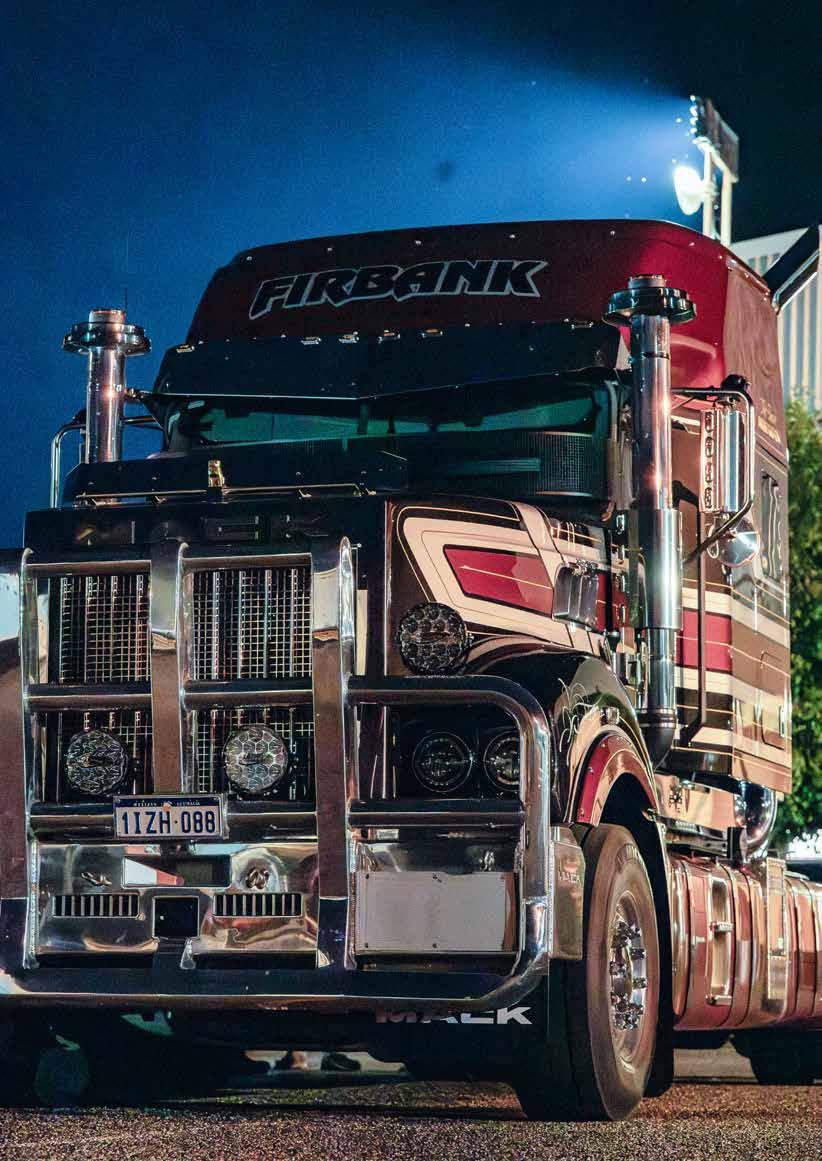
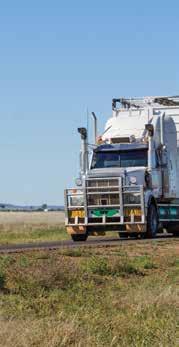
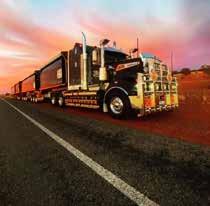
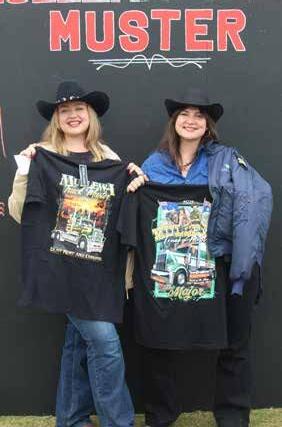
The Mullewa Recreation Grounds came alive with chrome, horsepower, rodeo and plenty of country spirit as truck enthusiasts from across Western Australia rolled in for another unforgettable Mullewa Truck Muster, held in conjunction with the Mullewa Muster and Rodeo.
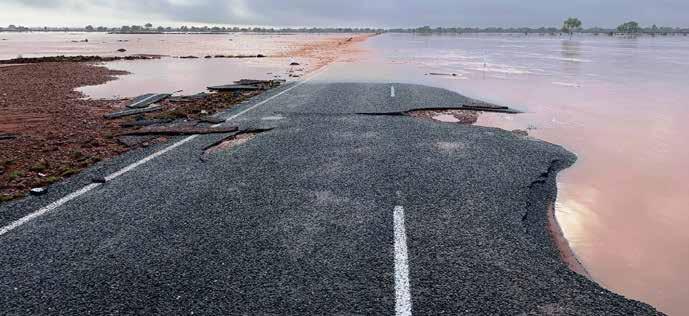
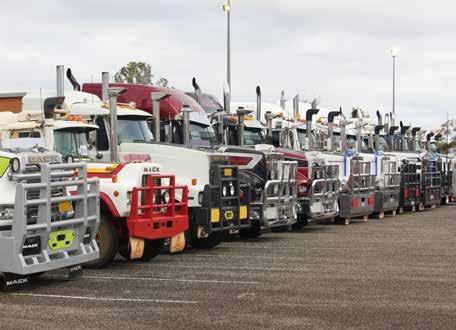
The Mullewa Truck Muster, now in its third year, had a fantastic turnout of 44 trucks travelling to the small rural town of Mullewa, 457km North of Perth. Mother Nature threw some wet and wild weather their way however the rain certainly didn’t dampen the atmosphere proving that the trucking community, local and a far, is stronger than ever.
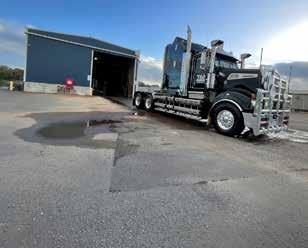
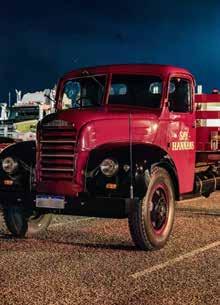
With beautifully restored classics, trucks fresh off the factory line, and everyday workhorses, there was something for everyone to admire. Families, industry supporters and truck lovers gathered throughout the day, sharing stories and celebrating the industry, the people and the machines that keep Australia moving.
One of the biggest honours of the day, Truck of the Show - proudly sponsored by TAJ Mechanical, was awarded to Daniel Yates from Bruce Rock Engineering, whose outstanding 2024 Kenworth T909 impressed both judges and spectators alike.
The crowd also had their say in the People’s Choice Award - sponsored by Maisey Fuels, with Mitchell Jakovich from Jakovich Transport taking home the popular vote with his 2007 Mack Superliner.
Local transport companies such as Patience Bulk Haulage, Firbank’s Agxpress, Geraldton Towing Services, Red Dust Holdings, CJ Swift Transport and NCMT put in the massive effort of bringing along multiple trucks from their fleets as well as plenty of owner/operators making the trip across to Mullewa.
With 3,500 attendees through the gates of the Mullewa Muster & Rodeo, it certainly was a big day out enjoyed by all. Apart from the Mullewa Truck Muster the
day consisted of exciting rodeo action, live country music from acts Michael Honan and Kaitlyn Thomas, Bootscooting, Spit n Polish and the Mullet competition. Kids were also included in the day with free activities including pony rides, arts & crafts, face painting, bouncy castle, and Old MacDonald’s Farm petting zoo.
Unfortunately, the rain set in and the concert was forced to end prior to Max Jackson and the ever-popular Y.O.G.A were able to take the stage.
CATEGORY WINNERS
BEST FLEET – Sponsored by Bridgestone Service Centre Geraldton Patience Bulk Haulage
BEST CLASSIC (30+ Years) – Sponsored by Macao Compliance
Eddie Kendall
BEST PAINT JOB – Sponsored by Wayne’s Spraypainting
Grant Van Den Boomen – Agxpress
BEST MACK – Sponsored by Truck Centre WA Bronson Patterson – Agxpress
BEST KENWORTH – Sponsored by Refuel Australia
Michael Dearing – NLD Transport
BEST WESTERN STAR – Sponsored by Penske Trucks ANZ
Red Dust Holdings
BEST EUROPEAN – Sponsored by Truck Centre WA
Kevin Easton
BEST AMERICAN – Sponsored by Bridgestone Service Centre Geraldton Richard Correy – Rainman Logistics
BEST JAPANESE – Sponsored by Geraldton Towing Services
Mick Perkusich – Dongara Towing & 4x4 Recovery
BEST RIGID – Sponsored by Geraldton Towing Services Geraldton Towing Services
BEST WORKING TRUCK – Sponsored by Bridgestone Service Centre Geraldton Chevy Hawkins – Hawkins Haulage
Events
Events like these simply wouldn’t be possible without the support of generous sponsors, and the event organisers encourage everyone to support the businesses that continue to support our industry.
A huge thank you from the event organisers goes to TAJ Mechanical, Rowhaul, Truck Centre WA, Geraldton Towing Services, Maisey Fuels, Wayne Spraypainting, Macao Compliance, Refuel Australia, Penske Trucks ANZ, Bridgestone Service Centre Geraldton, Suncity Signs & Graphics, AB Cleaning, Bruce Rock Engineering, CJ Swift Transport, Midwest Safety & Training, Good Looks Auto Detailing and MaxiParts Geraldton.
Special recognition also goes to Truckin’ Paparazzi – West Australian Truck Photography, whose lens captured all the highlights and memories from the day.
Their incredible photos ensure the stories and smiles from the event will live on long after the mud has dried.
The organisers sincerely thank the volunteer judges, whose expert industry knowledge and dedication helped make the event such a success. Their time and experience ensured every category winner received the recognition they deserved.
“Most importantly, thank you to everyone who brought a truck, purchased a ticket, volunteered, or simply came along to support the day. Seeing so many people brave the rain and turn out for the event was truly humbling. The support shown by the trucking community once again proved why this event has become such a highlight on the calendar. Rain, mud and all, the 2026 Mullewa Truck Show was a tremendous success — and we can’t wait to do it all again in 2027.”
Mt Marshall Motor Show
By KEVIN TOOVEY
Earlier in the year I travelled to Bencubbin for the Mt Marshall Motor Show. This year was the 94th show, a country show that is held annually. It has something for everyone vehicle displays, horse events, freestyle BMX bikes, modern machinery, exhibition hall, live music and a very good fireworks display to finish the day off.
I left Perth nice and early and after four hours of constant noise from my old Dodge truck I pulled up at the showgrounds. I was welcomed by Karen Peters and her daughter in law Kareena who are the main organisers of the motor show, they offered me a place to park the truck and camp for the night so that part was sorted out straight away as I arrived. There were other trucks that had made the trip from Perth
the day before to join the local trucks for the show. The BMW Motorcycle club also come up for a ride on the day.
Show organisers had secured many excellent sponsors for the truck, car and motorbike sections of the show. I thoroughly enjoyed the show and recommend it to anyone looking for a country show to go to. All the people stayed around for the fireworks in the evening there were plenty of food vans and people were walking around, talking and listening to the live music. In the morning, we were treated to breakfast at Gary and Karen Peters Bencubbin Bulk Haulage where we were staying before heading back to Perth. Yes, it is what I call country hospitality at its best and look forward to the next show. Thanks for a great weekend.
Kevin Toovey’s Dodge and Craig Peters’ Kenworth
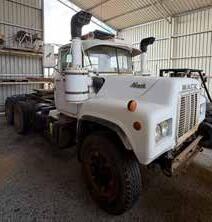
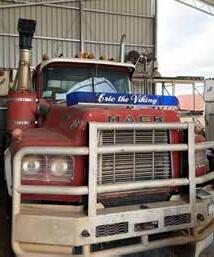
(Above and below) Gary Peters’ Macks in the shed waiting for restoration
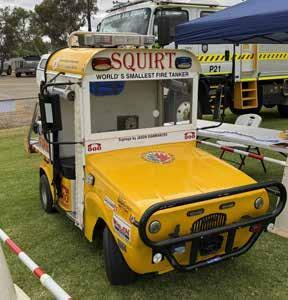
Squirt, the world’s smallest fire tanker
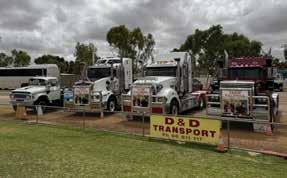
Some of the line up of trucks on display
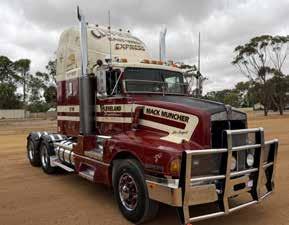
MPM Diesel’s Kenworth Mack Muncher
Modern machines
Modern machines
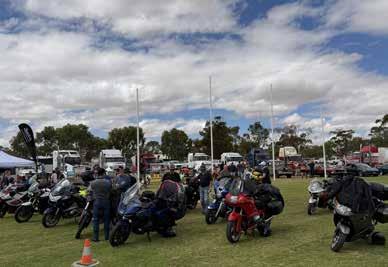
BMW Club made the annual trip to the show
MPM Diesel’s Kenworth
Good looking Macks
Classic cars and Bencubbin Bulk Haulage
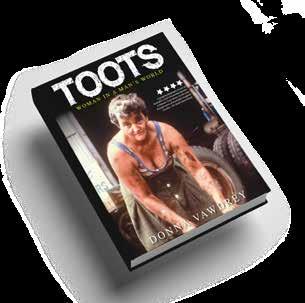
A BOOK BY DONNA VAWDREY
TOOTS – Woman in a Man's World
Follow the inspiring and at times devastating journey through Toots Holzheimer’s life. Australia’s most recognised truck driver battling non-existent roads and no telephones from the 1960s to 1990s.
• To purchase Toots’ inspiring book and merchandise visit toots-thebook.com.au •
Bill found the perfect place for Chauncey in McLeod Street, not far from Bell’s Transport. He had sufficient money left over to also buy into the trucking partnership.
Toots missed her brother terribly but found some comfort in going round to his new place and doing some gardening. It was while walking the few blocks to McLeod Street that Toots met Dinghy. Frederick Arthur Hipworth (Dinghy) was born on the 6th of July 1928 to John Hipworth and Ruby Jane Black. Theirs was another case where the two brothers married two sisters. John’s younger brother Francis married Ruby’s sister Ivy.
Dinghy had been working as a stockman on a station near Darwin in 1942. The station manager received a directive that all the animals in the area had to be killed so that the Japanese, who were bombing Darwin, would have no food if they landed on Australian shores. Dinghy was given the job and in carrying out the orders was accidentally shot in the stomach. Unfortunately, the wound became gangrenous and he was sent back to his parents in Cairns, who also lived in Grove Street, to convalesce after numerous operations.
It was many years before Dinghy was fit enough to find full time employment as a butcher. An incident at work, where he accidentally sliced the top of his finger off, saw Dinghy again convalescing at home on worker’s compensation. He spent his days walking around the neighbourhood and often dropped into Bell’s Transport where he met Toots and Quintice.
Dinghy was captivated by the attractive, bubbly Toots and their relationship developed rapidly. Weekends were spent swimming and fishing, two of Dinghy’s favourite activities. He adored both Toots and her little boy JB. With Toots’ approval Dinghy asked Jack for permission to marry his daughter. Jack, who had just retired, consented and on the 3rd of January 1953 Toots became Thora Daphne Hipworth. Toots was glad to have her brother Chauncey back home as nine months after the wedding on the 27th of October Jack died, succumbing to throat cancer. After the funeral Chauncey sorted his father’s belongings. He found a port under this bed containing six bottles of Swan Lager undoubtably being kept for a special occasion. They looked at least twenty years
old and keen to know if they were still good, he chilled them down. His mates Bill and Bob helped him test the lager. They drank the lot.
Jack died not knowing that he would be a grandfather again. In fact, Toots herself did not know she was pregnant at the time. Toots grieved the loss of her father but in her usual pragmatic manner she got on with life as both a wife and mother.
Dinghy signed a contract on a two bedroom commission home in East Stratford, a northern suburb of Cairns, signing the papers in joint names. Toots did not know this at the time but this would become significant many years later. It was a high set home with an outside toilet. Living in the centre of Cairns Toots was used to septic but in the suburbs, there was no septic or sewerage facilities.
The sanitary man, or ‘dunny man’ as some called them, came twice a week to empty the pan. There were some boys in the neighbourhood who took great delight in setting traps for the sanitary man who would inevitably end up tripping, spilling the contents of the pan all over himself.
Toots set about making the house a home and on the 17th of June 1954 she gave birth to a beautiful baby girl, Kaylene Gene. Two months after Kaylene was born, Toots fell pregnant again and on the 2nd of May 1955 delivered another healthy girl, Cheryl Anne. Toots loved babies but was not too sure how to feel when three months after Cheryl was born, she found herself pregnant again. During her last trimester Cyclone Agnes hit Cairns on the 6th of March.
Kaylene, Cheryl & Donna
ON THE ROAD
PRE-ORDER A HARD COPY POSTED TO YOU
The ‘must have’ book for transport operators giving you the locations (distances) of Transport Parking Bays, Bridge information, roadside facilities and their services throughout mainland regional Australia. Hurry Limited copies left Only $30 plus postage TO ORDER visit
Last published in 2010 (note, no updates – this is a reprint only), On the Road – Trucks gives you the distances (pegs) of truck parking facilities, bridges and roadside facilities nationally plus suitable dirt tracks in Western Australia.
Printed with a hard cover, wire bound A4 format, the internal pages can be easily written on so you can keep your own notes. $65 plus postage within Australia * Can be picked up from Henley Brook, Western Australia. ALSO AVAILABLE IN DIGITAL FORMAT – $45
Can be printed or stored on your phone and is emailed to you in PDF format
To receive either option, email karen@angrychicken.com.au with your name, company name and postal details (hard copy), or nominate the PDF copy and you will receive a tax invoice with
DIGITAL EDITIONS
(11 per year) FREE OF CHARGE
Our digital editions (11 per year) are available at ‘no cost’ and to subscribe please email karen@angrychicken.com.au
You will receive a monthly email from us and be given a link to a high quality Flip Book that you can download and access any links within the publication.
HARD COPIES ~ (11 per year) $130
We do not make any profit on our subscriptions. Due to the rising costs of postage and producing the magazine we charge only ‘what it costs us’ to print and post your publication to you.
To receive the hard copies, please email karen@angrychicken.com.au with the following details and you will receive an invoice with EFT details:
Note, this option costs $140 (one year) and the price includes ISUBSCRIBE fees on top of $130 base cost (printing and postage only). Thank you for your understanding and support of an independent publisher who has been producing the WA Transport Magazine for 30 years