Rental Affordability Snapshot
Victorian Rental Market 2026
Victorian Rental Market 2026
Anglicare Victoria’s (AV) 2026 Rental Affordability
Snapshot (RAS) was conducted as part of the national snapshot undertaken by Anglicare Australia. The RAS is an annual survey of the affordability of rental properties for Victorians living on low incomes, such as those earning the minimum wage or receiving Commonwealth income support payments. It is also an opportunity to highlight the challenges many of our clients face in the rental market and make the case for policy changes to alleviate pressure on vulnerable individuals and families who are struggling to find a safe and affordable place to live.
The 2026 RAS reveals that the most vulnerable groups in our society remain locked out of the rental market. Suitable and affordable rental properties are out of reach for students, single parents, job seekers, age pensioners and those living with a disability.
The 2026 Victorian RAS examined 15,244 private rental listings advertised on the weekend of 1415 March 2026 across 32 local government areas (LGAs) in metropolitan Melbourne and 48 LGAs in regional Victoria.
This data was used to calculate the proportion of listings that would be both appropriate and affordable for 14 different household types: individuals, couples and families living on the minimum wage, a Commonwealth income support payment or a pension, including relevant supplements. The RAS follows the internationally accepted benchmark that rent needs to be no more than 30 percent of a household budget to be affordable for people on low incomes. Properties must also have enough bedrooms to avoid overcrowding.
Further details about the methodology and data are available in the Data and Methodology section at the end of this report.

On the Snapshot weekend of 14-15 March 2026, 15,244 private rentals were available across Victoria. These are the number of unique properties affordable and appropriate for: RENTAL AFFORDABILITY
Households on income support payments
121 (0.79%)
Households on minimum wage
4,706 (30.87%)

On the Snapshot weekend of 14-15 March 2026, 15,244 private rentals were advertised for rent in Victoria, across 32 local government areas (LGAs) in metropolitan Melbourne and 48 LGAs in regional Victoria.
Compared to 2025, there was a slight decline in the number of rental properties available in all areas of Victoria, from 16,219 to 15,244. The largest change was a decline in listings in the Melbourne CBD of almost a quarter (24.8 per cent).
As in previous years, the 2026 RAS data shows that Victorians replying on income support are essentially locked out of the private rental market. While median rents have stabilised in most areas this year, rents in metropolitan Melbourne have risen by 40 per cent since 2022, when the median rent was just $420. In regional Victoria they have increased by 26 per cent over the same period, from $395. This increase, combined with the rapidly rising cost of other household essentials such as groceries, utilities and petrol, means low-income households are struggling more than ever.
Of the 15,244 private rentals available across Victoria on the Snapshot weekend:
Just 121 properties (0.8 per cent) were suitable for at least one household type living on income support payments.
• 4,706 (30.9 per cent) were suitable for households living on the minimum wage.
The headline trends are as follows:
Families without paid work are being priced out of the rental market.
Across the state, just 121 (0.8 per cent) individual properties were suitable for at least one household type living on income support payments without placing them in housing stress. This is the same percentage published in the 2025 RAS, showing no improvement. Just one property met the affordability criteria for a single parent relying on the Parenting Payment (Single).
The most vulnerable cohorts are still being left behind. There were no properties that met the affordability criteria for singles on JobSeeker or Youth Allowance, and just one property in the entire state that was affordable for a single person on the Disability Support Pension. These figures are similar to the findings of the 2025 RAS. Across the state, just 23 listings were deemed affordable for a single person receiving the Age Pension. Of these, 22 were rooms in shared accommodation, not standalone properties.
Median weekly rents remain stable, with a slight increase in the regions and CBD.
Median rents across the state and in metropolitan Melbourne remain unchanged at $570 per week. Regional LGAs saw an increase of $30 per week (6.4 per cent), from $470 in 2025 to $500 in 2026. The CBD recorded an increase of $40 (5.8 per cent), with rents rising from $690 in 2025 to $730 this year.
Even regional areas are unaffordable for people relying on government payments.
Of the 2,682 properties available for rent in regional Victoria, just 75 (3 per cent) were suitable for at least one household type living on income support payments without placing them in housing stress, compared to 100 (3.6 per cent) in 2025. Forty-nine per cent (1,325 properties) were suitable for people earning the minimum wage, up from 47 per cent (1,291 properties) in 2025.
Affordability improved modestly for low-income workers.
4,706 (30.9 per cent) individual properties were suitable for at least one household type living on minimum wage without placing them in housing stress. This figure was 3,878 (24 per cent) in 2025 and 2,778 (21.6 per cent) in 2024. As the median weekly rent remains essentially the same, much of this improvement can be attributed to increases to the minimum wage in the last couple of years.
Increase income support payments and Commonwealth Rent Assistance
The low rates of Commonwealth income support payments mean people are trapped in poverty and housing stress. Payments such as JobSeeker should be increased to at least $82 per day1, and Commonwealth Rent Assistance reformed, so that vulnerable Australians aren’t forced to go without essentials just to survive.
Build more social and affordable housing
The Victorian Government currently spends less than every other state and territory on social housing per person2, and the public housing waiting list illustrates the impact of this chronic underfunding. The state should prioritise building more social and affordable housing to meet the needs of low-income Victorians who cannot afford to pay private rent.
Promote family violence protections for renters and increase funding for support services
Family violence can impact every domain of a victim’s life, including their finances and housing situation. The Victorian Government should do more to ensure that people leaving violent relationships are aware of their rights and know where to turn for help. More investment is also needed in support services and refuges.
Victorians living with a disability deserve safe and secure housing
Just one property in the entire state was deemed affordable for a single person living on the Disability Support Pension. Further research and funding is needed to develop effective policy solutions for the needs of this group.
More in-depth discussion of these recommendations can be found in the Policy Recommendations on page 19.
1 Raise the Rate, https://www.raisetherate.org.au/, accessed 20 April 2026.
2 Council to Homeless Persons, Victoria’s spending on social housing shrinks as unmet need soars, 30 January 2026, https://chp.org.au/article/ victorias-spending-on-social-housing-shrinks-as-unmet-need-soars/#:~:text=%E2%80%9CThe%20Victorian%20Government%20spent%20 %242.16,on%20social%20housing%20per%20person, accessed 20 April 2026.

On the Snapshot weekend, these are the number of unique properties affordable and appropriate for:
46 (0.37%)
Households on income support payments
3,381 (26.91%) Households on minimum wage
There were 12,562 properties advertised for rent across 32 local government areas (LGAs) in metropolitan Melbourne on Snapshot weekend. This is a decrease from the 13,468 properties available in 2025.
Of these listings:
• 46 properties (0.37 per cent) were suitable for at least one household type living on income support without placing them in housing stress.
• 3,381 properties (26.91 per cent) were suitable for at least one household type living on minimum wage without placing them in housing stress.
Melburnians on income support have few options
While there was a slight increase in the number of properties in metropolitan Melbourne that met the affordability criteria for at least one household type on income support, the situation for these Melburnians remains challenging. Just 46 properties (0.37 per cent) were affordable for this group, compared to 27 (0.2 per cent) in 2025.
Singles, students and people with disabilities are priced out of the market
On the Snapshot weekend, none of the 12,562 properties available for rent in metropolitan Melbourne were deemed affordable for single people receiving Youth Allowance, JobSeeker payment or the Disability Support Pension. Single parents also find themselves priced out of the Melbourne rental market.
Older Melburnians are still struggling
Just 31 properties were affordable for couples receiving the Age Pension this year, a negligible improvement compared to 12 in 2025. Single people on the Age Pension have even fewer options, with 15 properties deemed affordable, a similar figure to the 13 listings which met affordability criteria in 2025.
The outer suburbs remain the most affordable option
Melbourne residents on income support or minimum wage will have the best chance of finding an affordable property in the outskirts of the city. Mitchell Shire (48km from the CBD), Melton (63km from the CBD) and Wyndham (21km from the CBD) LGAs had the highest number of listings deemed affordable for households on minimum wage, while Frankston (43km from the CBD) was the most affordable LGA for those on income support – noting that this amounted to just four properties.

Affordability has improved for minimum wage earners in Melbourne
There were 3,381 properties deemed affordable for households earning the minimum wage in metropolitan Melbourne this year, compared to 2,587 in the 2025 RAS. The proportion of Melbourne properties that were affordable for minimum wage earners increased from 19.2 per cent in 2025 to 26.9 per cent in 2026. This was helped by an increase in the rate of the minimum wage and a relatively flat rental market compared to the year before.
In 2026, no properties across Victoria were available for rent that were affordable for singles relying on Youth Allowance or JobSeeker payments
Just one property out of more than 15,244 private listings was affordable for a single parent relying on the Parenting Payment
The most vulnerable people are being locked out of the rental market
Table 4. Most affordable LGAs in metropolitan Melbourne for households on income support
Table 5: Most affordable LGAs in metropolitan Melbourne for households on minimum wage
On the Snapshot weekend, these are the number of unique properties affordable and appropriate for:
75 (2.8%)
Households on income support payments
1,325 (49.4%)
Households on minimum wage
There were 2,682 properties advertised for rent across 48 regional local government areas (LGAs) on Snapshot weekend. This is a slight decrease from the 2,751 properties available in 2025.
Of these listings:
• 75 properties (2.8 per cent) were suitable for at least one household type living on income support payments without placing them in housing stress. 1,325 properties (49.4 per cent) were suitable for at least one household type living on minimum wage without placing them in housing stress.
People with paid employment are faring better than those on income support
Just 75 properties across regional Victoria were deemed affordable for a household reliant on an income support payment or pension, compared to 1,325 properties which were suitable for a household with at least one minimum wage earner. The difference in affordability is particularly stark for single parents, who could afford to rent 329 properties if they supplemented their Parenting Payment with paid employment, but just one property if Centrelink was their only source of income.
The elderly and those with disabilities continue to be left behind
Of the 2,682 properties available on Snapshot weekend, just eight met the affordability criteria for a single person on the Age Pension, while 63 were affordable for a couple. People living with a disability have little choice but to spend more than 30 per cent of their limited income on rent, with just one property deemed affordable for this household type – a onebedroom unit in the town of Numurkah, 37km north of Shepparton.
Couples have more options than single parent families
Couples with both parents earning the minimum wage could afford to rent almost half (48 per cent) of the regional properties listed on Snapshot weekend, while only 12 per cent were affordable for a single parent on minimum wage.
The most affordable LGAs had few properties available
A trend that continues from the previous years is the very low number of properties that are available to rent in the most affordable regional and rural LGAs. For example, while 100 per cent of the properties available in West Wimmera were deemed affordable for a household on income support, this equated to just one property. It’s a similar situation for those on minimum wage. One hundred per cent of the listings in the Central Goldfields and Hindmarsh LGAs met affordability criteria for this group, but the total number of listings in these areas was just eight and three respectively. This means that while low-income earners may not technically be priced out of the rental market in these areas, in practice they are competing with other potential tenants for a very scarce resource.

Across Victoria, just 121 out of 15,244 rental properties (0.8 per cent) were affordable for those relying on income support payments to get by
Just 75 out of 2,682 regional listings were affordable for those on income support
Whether singles, students, families or people with disabilities, those relying on income support payments are being left behind
Table 9: Most affordable LGAs in regional Victoria for households on income support
Percentage of listings affordable and appropriate to at least one household type receiving income support or a pension
Table 10: Most affordable LGAs in regional Victoria for households on minimum wage
Percentage of listings affordable and appropriate to at least one household type receiving income support or a pension
Increase income support payments and Commonwealth Rent Assistance
The low rates of Commonwealth income support payments mean people are trapped in poverty and housing stress. The data collected for the 2026 RAS reveals that people relying on payments such as JobSeeker, Youth Allowance and the Parenting Payment (Single) are being priced out of the private rental market in Victoria. With so few affordable properties available, age pensioners and people living with a disability are forced to make impossible choices to keep a roof over their heads. After paying high rents, their budgets simply cannot stretch to cover basic living costs such as food, medication, and utilities. Research by ACOSS has found that three quarters of people receiving JobSeeker skipped meals and six in ten could not afford medical care3.
The Anglicare network supports the Raise the Rate campaign, which is advocating that income support payments such as JobSeeker be increased to $82 per day so that vulnerable Australians aren’t forced to go without essentials just to survive4.
Commonwealth Rent Assistance is also in dire need of reform. Fifty-eight per cent of households that rent in the private market in Victoria are in housing stress and are struggling to afford other essentials5. In recent budgets, the Albanese government has lifted the maximum rate of Rent Assistance by 27 per cent over and above inflation, but this has not been enough to offset rising rents. Forty-three per cent of households who receive Rent Assistance still experience housing stress6.
The Grattan Institute recommends increasing Commonwealth Rent Assistance by 50 per cent for singles and 40 per cent for couples. To address ongoing affordability concerns, they suggest indexing future rates to changes in rents in the cheapest 25 per cent of homes in capital cities. The cost of doing so would be around $2 billion per year, but the Grattan Institute suggest that savings made by tightening superannuation tax breaks, making changes to negative gearing legislation, and the capital gains tax discount could help pay for this much-needed investment in housing security for at-risk cohorts5.
3 ACOSS, People on low incomes cutting back on meat, fruit and vegetables, 9 September 2024, https://www.acoss.org.au/media_release/people-on-low-incomes-cutting-back-on-meat-fruit-and-vegetables/#:~:text=The%20 research%20%E2%80%93%20which%20surveyed%20760,51%25%20are%20skipping%20meals%20altogether, accessed 20 April 2026.
4 Raise the Rate, https://www.raisetherate.org.au/, accessed 20 April 2026.
5 Grattan Institute, Raise Rent Assistance: Submission to the Economic Inclusion Advisory Committee, November 2025, https://grattan.edu.au/wp-content/uploads/2025/11/Grattan-2025-EIAC-submission.pdf, accessed 20 April 2026.
6 Productivity Commission, Report on Government Services 2026, https://assets.pc.gov.au/2026-01/rogs-2026-partg-overview-and-sections.pdf?VersionId=DJ0WPgLS0oRZ331n7zuWmWcyw4PStkZB accessed 20 April 2026.
Social housing is meant to be a safety net for people on low incomes who are locked out of the private rental market, yet the Victorian Government currently spends less than every other state and territory on social housing per person7. In 2024-25, social housing accounted for just 1.4 per cent of government expenditure, or a total of $2.16 billion – a decrease of nine per cent on the previous year7. This drop in funding occurred despite a recommendation from Infrastructure Victoria that increasing social housing should be a top priority. Victoria has the highest number of people seeking support from homelessness services, but the lowest proportion of social housing in the nation. Social housing makes up just 2.88 per cent of housing stock in Victoria, and in the decade between 2016-2025, there was a net increase of just 36 public housing homes in the state7.
The public housing waiting list illustrates the impact of this chronic underfunding. According to Homes Victoria, the number of people on the priority waiting list for a public housing property rose from 29,951 in December 2024 to 31,872 in December 2025. During the same period the number of people experiencing homelessness increased from 15,625 to 16,8278.
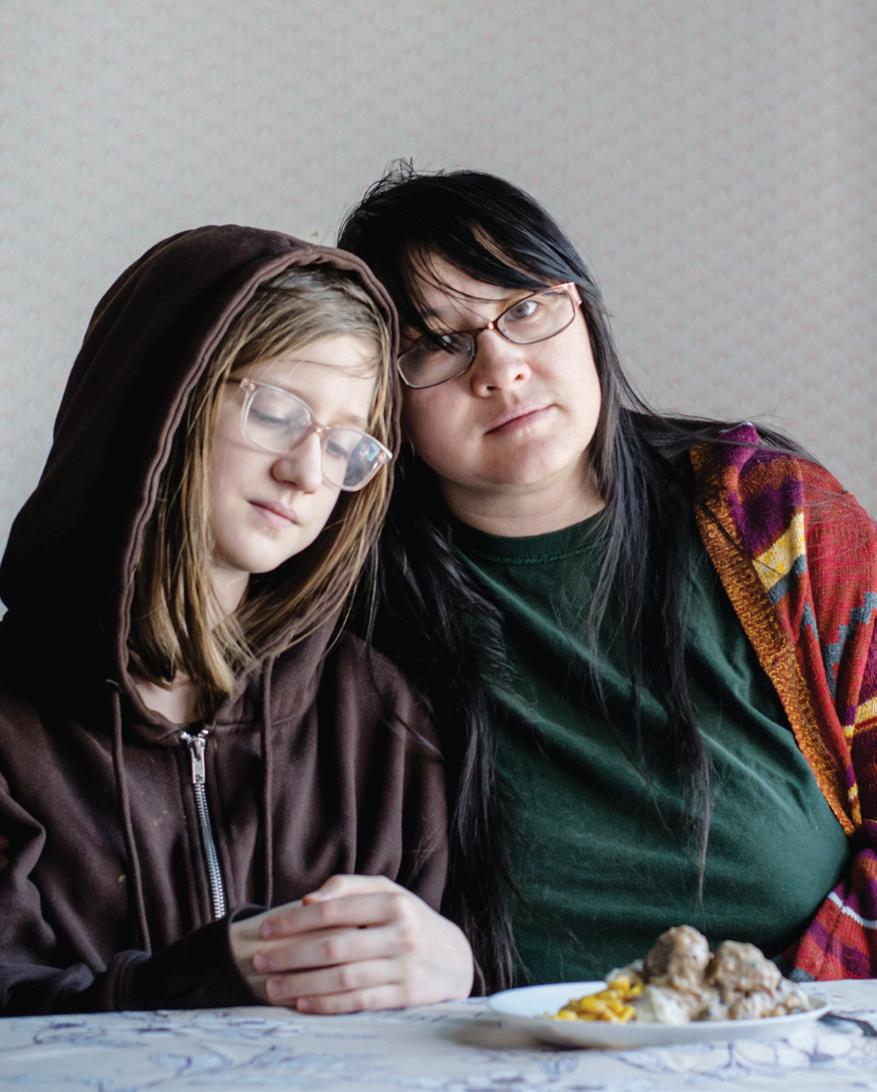
The need among the most vulnerable cohorts also increased. The number of people on the waiting list who have special housing needs is up from 7,481 to 7,978 (6.6 per cent), while those with special housing needs who are also aged over 55 rose from 5,868 to 6,131 (4.4 per cent). The total new applications due to family violence increased from 3,093 to 3,486, and applications (12.7 per cent) from elderly singles rose from 10,763 to 11,427 (6.1 per cent)8. These are the people who are most in need of a safe, secure, and affordable home, yet they are likely to be waiting several years for a property to become available.
There is ample evidence that social housing works. Just 0.2 per cent of public housing tenants were in rental stress in June 2025, and social housing tenants reported that they experienced wellbeing, social connection and economic participation opportunities through living in social housing9. The Victorian Government should prioritise building more social and affordable housing to meet the needs of low-income Victorians who cannot afford to pay private rent.
“The rental crisis is forcing people to remain in unsafe and unsuitable homes. We have clients who are renting directly through a landlord and the landlord won’t arrange repairs or maintain the property to the required minimum standards. They feel that they have no choice but to accept this because they know won’t be able to find another affordable or available property to rent. Other clients who are renting through real estate agencies tell us they’re scared to report repairs and issues in case it puts their tenancy at risk. When we offer to refer them to legal help and other support, they often say no, because they feel there is no point. They say they feel trapped.”
– Jane Kennard, Program Manager, Anglicare Victoria Community Services
7 Council to Homeless Persons, Victoria’s spending on social housing shrinks as unmet need soars, 30 January 2026, https://chp.org.au/article/victorias-spending-on-social-housing-shrinks-as-unmet-need-soars/#:~:text=%E2%80%9CThe%20Victorian%20 Government%20spent%20%242 16,on%20social%20housing%20per%20person, accessed 20 April 2026.
8 Homes Victoria, Applications on the Victorian Housing Register (VHR), https://www.homes.vic.gov.au/applications-victorian-housing-register-vhr, accessed 20 April 2026.
9 Productivity Commission, Report on Government Services 2026, https://assets.pc.gov.au/2026-01/rogs-2026-partg-overview-and-sections.pdf?VersionId=DJ0WPgLS0oRZ331n7zuWmWcyw4PStkZB accessed 20 April 2026.

According to Safe and Equal, Victoria Police attend a family violence incident every six minutes10. Women, particularly Aboriginal women and those with a disability, are most affected. Family violence can impact every domain of a victim’s life, including their finances and housing situation.
Young mum Amira* left a violent relationship with her two children. Unable to find an affordable rental in metropolitan Melbourne that suited her needs, she had no choice but to sign a lease for property that cost more than half of her income.
The high rent, combined with medical expenses and the cost of transport, left Amira struggling to balance her budget. Determined to keep a roof over her children’s heads after a period of instability and trauma, she prioritised paying her rent and, as a result, fell into $5,000 debt with her energy retailers.
Victoria’s rental laws have safeguards aimed at protecting people who have been affected by family violence. Measures including protecting their bond and the right to make modifications required for their safety, such as changing the locks11.
“A lack of secure, affordable and available housing options remains an issue for many tenants who are experiencing family violence. They tell us they are too scared to leave the relationship because they will be unable to afford to pay rent by themselves. Some end up in rooming houses which promote themselves as crisis accommodation for people escaping family violence but have steep rental rates and use some concerning methods to get these vulnerable people to sign up to agreements.”
– Simon Suttie, Program Manager, Gippsland Community Legal Service
There are also provisions designed to ensure that victim-survivors of family violence are not held liable for damage caused to the property by the perpetrator11. However, many victim-survivors are unaware of their rights, and may be taken advantage of by unscrupulous landlords and property managers at a time when they are the most vulnerable.
AV client Lucy* was the victim of serious family violence. She was very fearful and needed to end her tenancy and move to safety. Even though Lucy had done nothing wrong, the real estate agency who managed the property refused to terminate the lease unless the Lucy paid for damage caused by the perpetrator and relinquished her bond.
The Victorian government needs to do more to ensure that people like Lucy and Amira are aware of their rights and know where to turn for help. More investment is needed in support services to help victims navigate complex systems and processes, such as applying to VCAT to have a perpetrator removed from the lease. More refuges are also needed for those who are unable to remain safely in the property. AV echoes the Council to Homeless Persons recommendation that the Victorian Government invest $24.4 million over four years to build 18 new refuges for women, children and young people fleeing family violence12.
10 Safe and Equal, Understanding family violence: Family violence statistics, https://safeandequal.org.au/understanding-family-violence/statistics/, accessed 20 April 2026.
11 Tenants Victoria – Family Violence. https://tenantsvic.org.au/explore-topics/situations-while-renting/family-violence/, accessed 20 April 2026.
12 Council to Homeless Persons, State Budget Submission: Ending Homelessness: A Roadmap for Homelessness Reform, page 5.
“Across our service we’re seeing more women, often fleeing family violence, spending over half their income on rent. What that means in real terms is that they are going without heating in winter or cooling in summer just to stay housed. These aren’t choices, they’re trade-offs that no one should have to make. The impact on their health, their children, their sense of stability and their personal mental health and wellbeing is profound.”
– Sinmayan Thilagarajan, Emergency Relief Team Leader
People living with a disability have little choice but to spend more than 30 per cent of their limited income on rent, with just one property in the entire state deemed affordable for this household type – a onebedroom unit in the town of Numurkah, 37km north of Shepparton. On the Snapshot weekend, none of the 12,562 properties available for rent in metropolitan Melbourne were deemed affordable for a single person on the Disability Support Pension.
David* started visiting AV’s Homelessness Support Program for help with meals. David needs to live close to the CBD, near his healthcare providers, support services, and established community network, but his only source of income is the Disability Support Pension, which isn’t enough to pay for a private rental. He’s on the public housing waiting list, but his disability means he has special accommodation requirements, which significantly limit the availability of properties that are suitable for him.
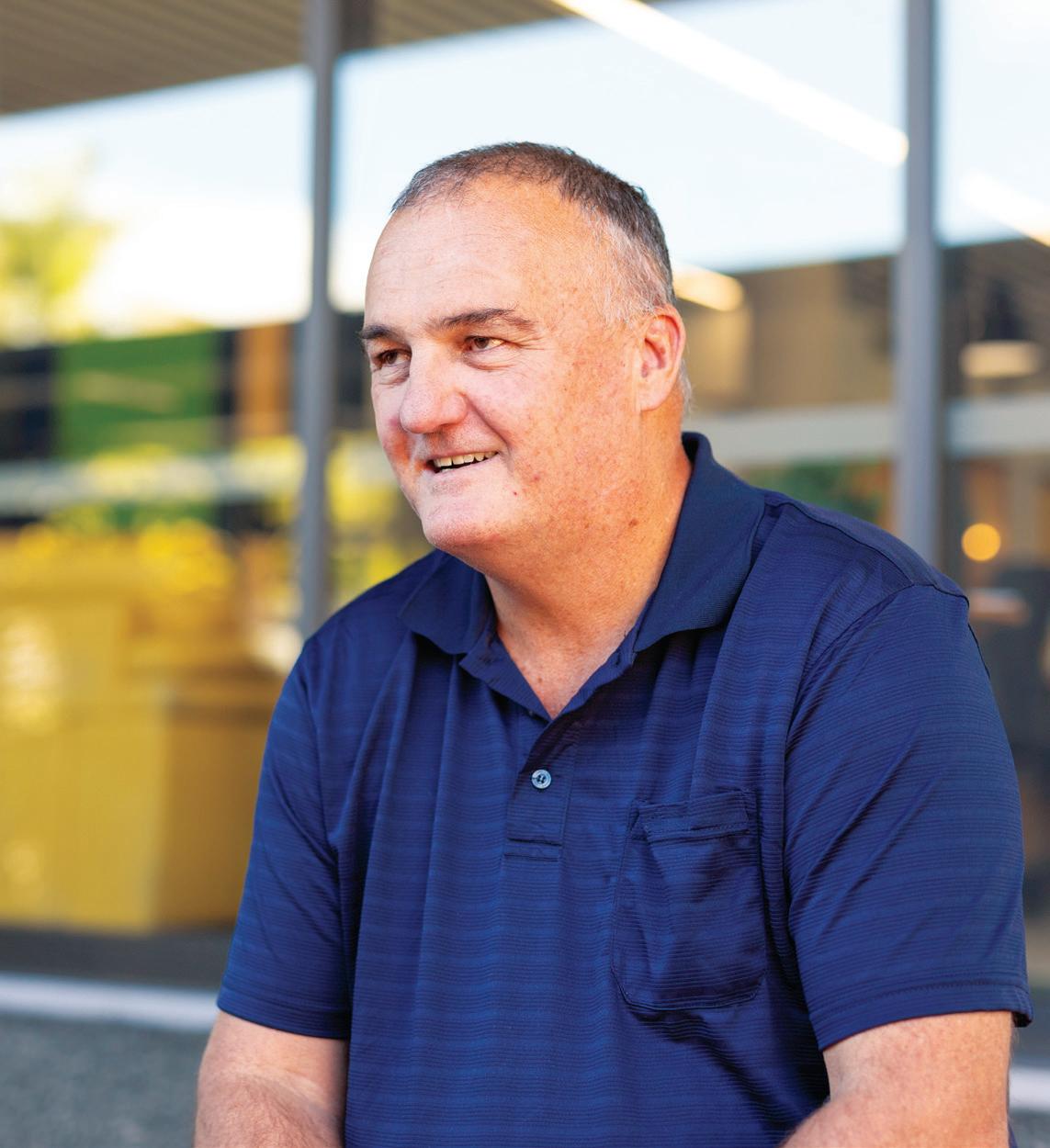
As a result, he’s spent time couch surfing, squatting, and even rough sleeping, just to stay close to the services that are critical for his safety and wellbeing.
David is not alone. According to the National Centre for Disability Advocacy, many people with a disability are trapped in unsuitable or temporary living arrangements because wait times for public housing can be 10 years or more13. The lack of accessible, affordable housing in the CBD and metropolitan suburbs means people are forced to move to rural and regional areas, away from their families and support networks and the services they need, such as accessible transport, NDIS providers and healthcare facilities.
*All client names used in this report have been changed for privacy
13 National Centre for Disability Advocacy, How the housing crisis is failing people with disability, 1 July 2025, https://dana.org.au/how-the-housing-crisis-is-failing-people-with-disability/, accessed 20 April 2026.

Family support services
• Family violence services
•
•
Financial counselling
www.anglicarevic.org.au

Anglicare Victoria’s 2026 Rental Affordability Snapshot (RAS) was conducted as part of the national Snapshot undertaken by Anglicare Australia. It covered 80 local government areas (LGAs) in metropolitan Melbourne and Victorian rural, regional, and coastal areas – 32 from metropolitan areas and 48 in regional Victoria.
On the weekend of 14-15 March 2026, realestate. com.au provided a data dump of all rental listings for the Victorian RAS. The data was cleaned to remove duplicates, conditional accommodation, serviced apartments, properties listed as ‘rent to buy’ and commercial properties – including car spaces, warehouses, office spaces and sheds.
The suitability of listed properties was assessed against the different categories of various low-income households. A dwelling was deemed suitable if it was both affordable and appropriate for a low-income household. Household groups were made up of single people or family groups living on Commonwealth income support and/or minimum wage.
How was affordability defined?
Renting was affordable if it cost less than 30 per cent of a household’s total income (above 30 per cent is the internationally accepted benchmark considered to indicate housing stress for low-income households). We included Commonwealth Rental Assistance (CRA) as income. We also added the energy supplement, pharmaceutical supplement and pension supplements to the household income calculations.
How was appropriateness defined?
Appropriateness refers to rentals containing enough bedrooms for each household type. Specifically:
a share house room or bedsit was suitable for most single people, including age pensioners – but not a couple or a disability support pensioner.
• a one to two-bedroom property was suitable for a single person or couple.
a two to three-bedroom property was suitable for parents with a small number of children.
A property can be affordable and appropriate for more than one household type. For example, a bedsit or a three-bedroom home are both suitable for a single person to rent.
Free and confidential assistance is available
We’re here for you
Call Anglicare Victoria on 1800 809 722 to chat to a financial counsellor
Or visit www.anglicarevic.org.au/our-services/financial-counselling to find out more.
Additional support services
National Debt Helpline – 1800 007 007
Parentline – 13 22 89
MensLine Australia – 1300 78 99 78
Lifeline Australia – 13 11 14
Kids Helpline – 1800 55 1800
1800RESPECT – 1800 737 732
Safe Steps Family Violence – 1800 015 188 Carers Australia – 1800 242 636
Central Office
103 Hoddle Street, Collingwood VIC 3066
PO Box 45, Abbotsford VIC 3067 P. 1800 809 722 E. Info@anglicarevic.org.au