

Encounter
CHOOSING HOW WE LIVE

Newcastle Anglican acknowledges the sacred connection Aboriginal and Torres Strait Islander people have with the land, sea, sky, and waterways.
We recognise, support and advocate for the sovereign rights of these nations as they navigate through the various impacts of colonisation.
This acknowledgement is aligned with our church’s commitment to creating a diverse and inclusive community. We embrace the call to recognise and acknowledge the people, culture and history that make up our beloved shared community.


Choosing how we live
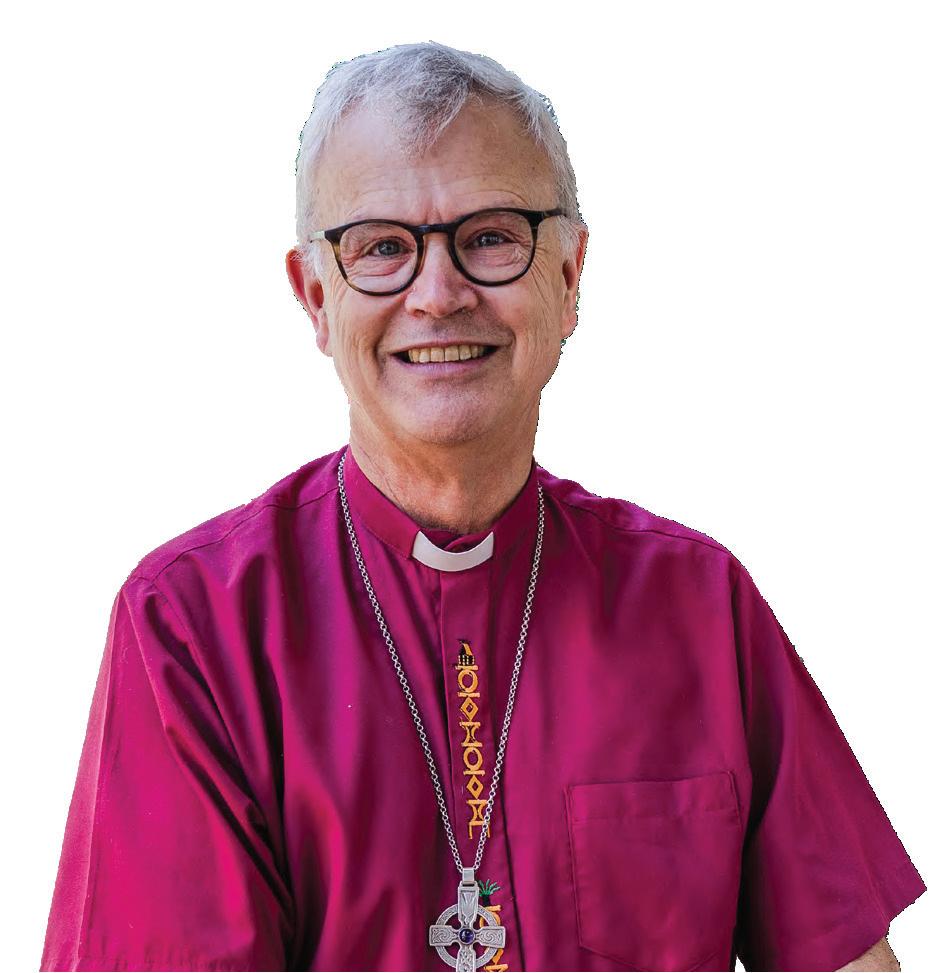
I am going to begin my Holy Week and Easter message in a very stark way. I am going to name a truth. Each one of us will die. Our circulatory, respiratory, and brain functions will cease. Death is inevitable. Dying is a process we will all go through.
What happens next is one of the most enduring questions in human life.
Some believe there is nothing beyond death.
Others believe there is something more.
Christians speak of a resurrection from the dead. They believe that there will come a time when Jesus will raise people to life again. Those who are raised will have a spiritual body and a heavenly expression.
They will be imperishable and immortal. This change will come upon us like a flash in the twinkling of an eye.
Now humans experience the finite nature of time and life. Then
there will be an experience of eternity. Now creation experiences sadness, anguish and trauma. Then there will be an end of pain, grief, and destruction. It will be banished forever.
The scriptures outline the events of the first Holy Week and Easter to proclaim a profound hope. Christianity encourages people to see sin, evil, and death as temporary. The love and goodness of God are permanent.
I have been careful, so far, in this reflection not to use the word “us”.
Who shares in this promised life?
Is it everyone, or only a few?
Bishop Peter shares his Easter Message
Bishop Peter
Almost everyone can identify some people in history they hope will not be granted a hope-filled eternity. They name the evil they have wrought and the suffering they have imposed as reasons wanting them banished into nothingness or worse.
Almost no one wants everyone to get to heaven.
At the same time, we struggle with the barriers that some religious groups try to erect around entry to heaven. Almost everyone who has a sense of eternity has someone they hope will experience it. Their desire becomes more earnest the deeper the love or compassion they have for these people.
Within the Christian scriptures we see this exploration being played out. We hear that belief in Jesus should give us confidence. We discover that expressing generous love reveals God’s life in us and our life in God.
We recognise that turning towards goodness, kindness, and holiness draw us closer to God and God’s hopes for the cosmos.
An essential part of the Christian faith is knowing that some day we will die but then choosing how we will live. Not simply about being and doing good but also about how we think and orient our lives.
We have a choice about the impact we have on others and how we think about ourselves.
Christians ultimately say that we come to understand these things
through the witness of Jesus. Will you be guided by him?
Are you open to seeing Jesus as God amongst us?
Are you willing to live as he would have us live? St John wrote:
This is how God showed his love among us: He sent his one and only Son into the world that we might live through him. This is love: not that we loved God, but he loved us and sent his Son as an atoning sacrifice for our sins.
Dear friends, since God so loved us, we also ought to love one another. No one has ever seen God; but if we love one another, God lives in us and his love is made complete in us.
1 John 4: 9 – 12.
May you, this Easter, be filled with the hope of Jesus!
+Peter
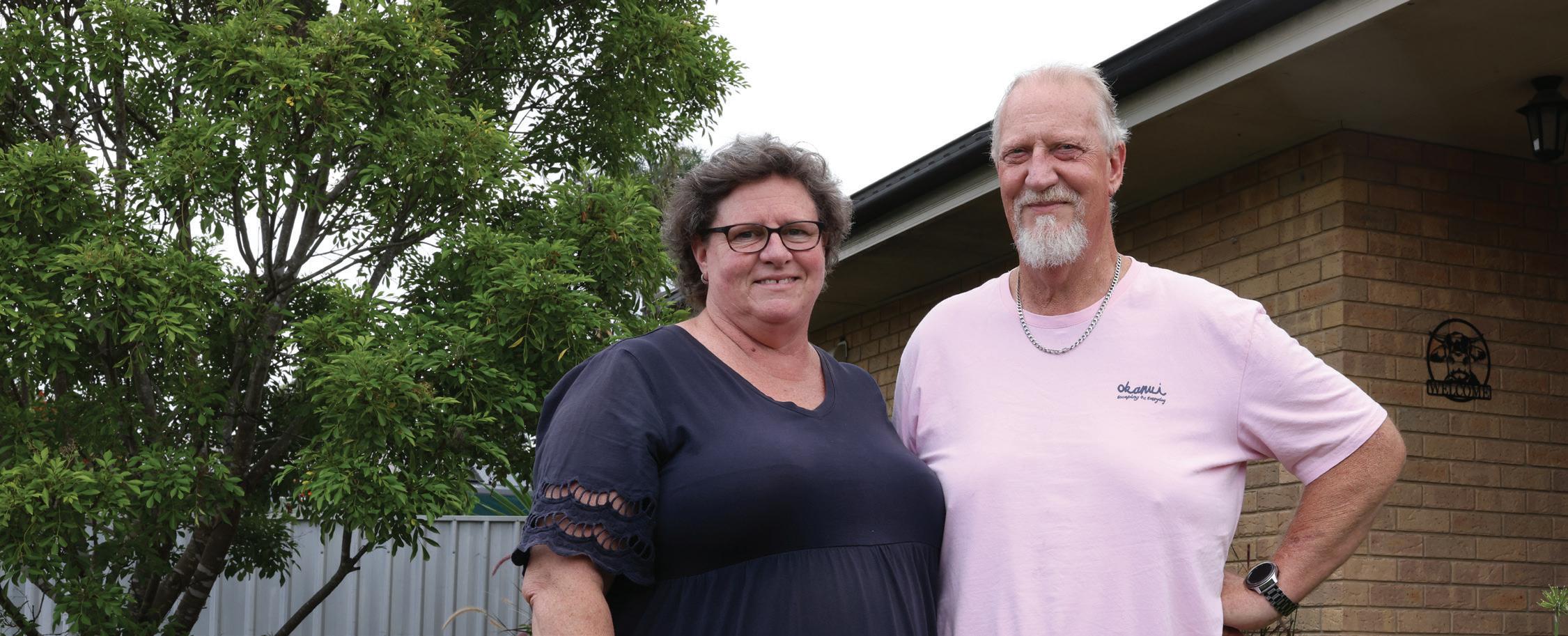
Offering love and care one step at a time
Donreve and Jeff Miles have spent more than a decade helping young people find a genuine sense of belonging.
In 2012, the Lower Hunter-based couple decided they wanted to make a difference and became respite carers through Samaritans.
“We started with respite care, primarily on weekends. We were both working full-time but had the opportunity to help a child and give a bit of extra love,” Donreve says.
“We take the role of respite carers as being grandparents to those kids. So, when they do come here to visit, they get spoilt.”
Respite care is a way for children in foster care to build additional positive relationships and experiences outside their current arrangements.
It also allows fostering families to take a break and can be a first step for those who want to see if it is right for them.
“I think sometimes people are afraid to take that first step, thinking: ‘What would I do?’
But there’s somebody there to answer those questions before you even start having a child in your home,” Donreve says.
“You don’t have to do it every weekend. We only did it once a month to start with, and then it was fortnightly.
“If at any point in time you don’t want to do it that regularly, you just put your hand up and tell somebody that you need the weekend off. They are more than understanding.
“Doing the respite, you know it’s giving their full-time carer a break, too.”
Foster carers come from all walks of life. You don’t need to be rich or own a big house, you just have to be able to offer a child a loving, safe, and supportive environment.
Respite carers Donreve and Jeff Miles.
“People need to know the child is not going to be put in their home and they have to feed them, clothe them, or anything like that,” Jeff adds.
“They are supported financially through Samaritans. We always said whatever allowance we got we’d spoil the kids with.
“It’s just giving a child an opportunity to feel like they belong, somewhere to take a break, someone to talk to, and someone to love them.”
For the Miles’, respite care has been an incredibly rewarding experience.
They said the positive difference they’d been able to make in the life of one young person, in particular, was eye-opening.
The then-16-year-old was shy and extremely reserved. Her placement had broken down, and she wanted to move out.
Samaritans decided to help her through its Supported Independent Living (SIL) program, but she needed to prepare.
Donreve and Jeff met her for coffee, formed a connection, and she stayed with them for the next six months.
During that time, her confidence grew and she started to feel like she belonged.
Her lack of trust in people, especially men, slowly faded.
“It was difficult when she first came here for me to get a connection, but she’s got to have a hug as soon as she comes in now,” Jeff says.
“She’s been gone nearly a year, and I still get a ‘goodnight’ from her every night on the phone.
“We told her we were there for her when she moved out, too.
“We helped build her furniture. If she loses her key, I’ll come and help her. If she needs a lift, we’ll give her one.
“We just helped her feel like she belonged in society but, more importantly, that she still belongs to our family.”
If you are interested in respite or foster care with Samaritans, click the link below to visit our website.
Learn more about our foster care community.
samaritans.org.au/fostercare







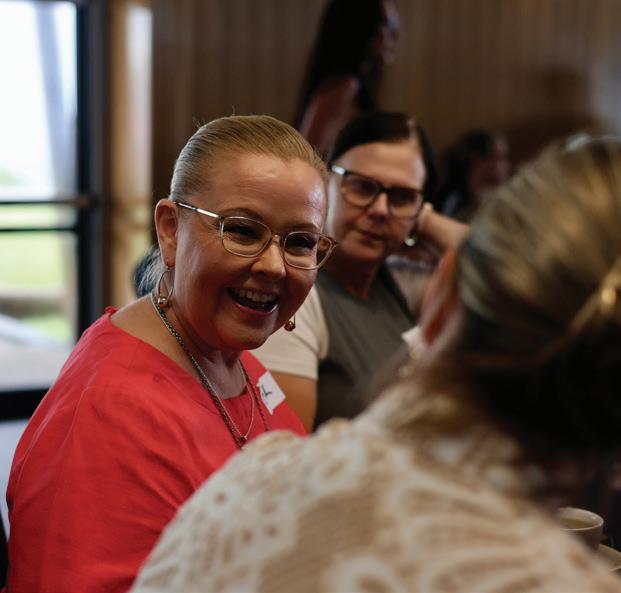

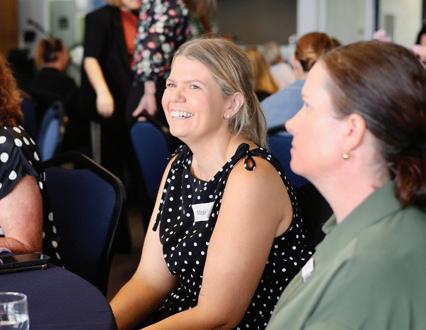

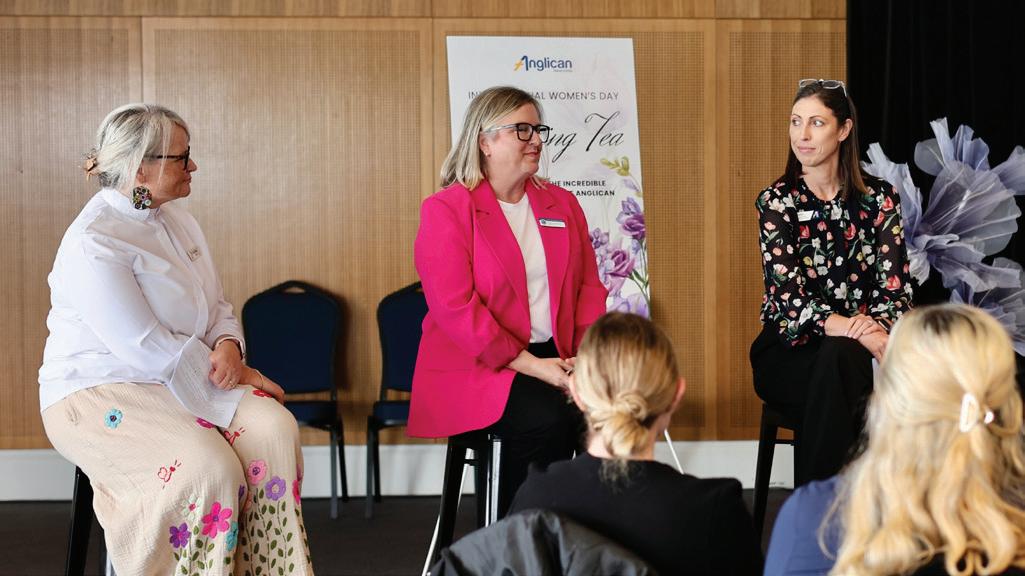
Newcastle Anglican is proud to be a leader in workplace gender equality.
Our workforce is filled with highly talented women who inspire those around them every day.
Women represent:
78% of our total workforce and 76% of our senior leadership team.
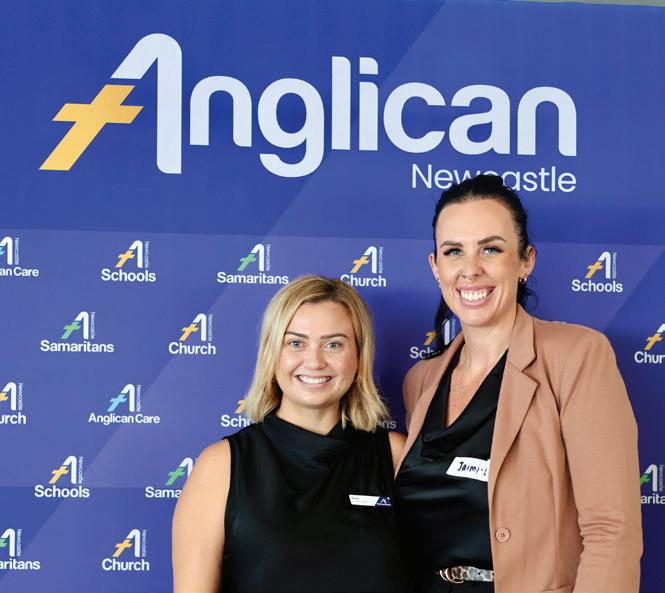
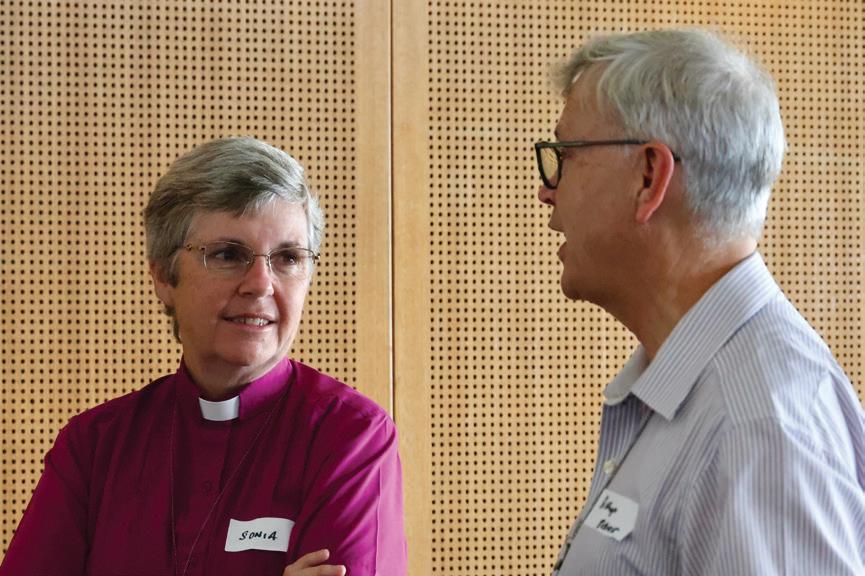
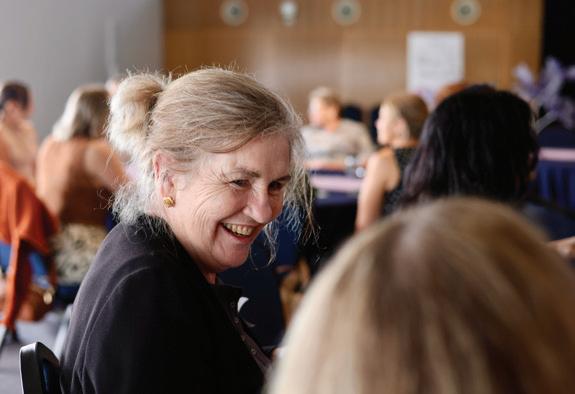
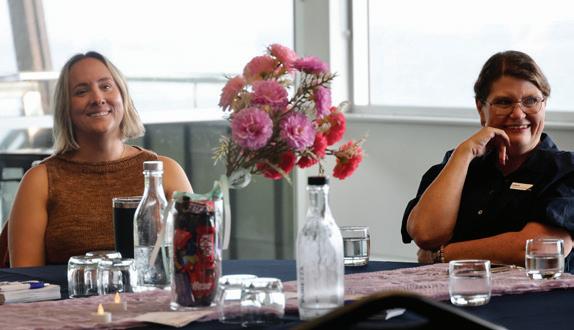
In March, nominated staff across our organisation attended a small International Women’s Day gathering at Fort Scratchley.
Special guest speaker and former Samaritans Student Accommodation resident, Natalia Hogan, shared her inspirational story of resilience and hope. She also noted the important impact of our work.
“Today, standing here in front of executive leaders, managers, school staff, women who influence hundreds, maybe thousands of lives, I want to say this:
The work you do matters more than you will ever fully see.
The stability you provide. The belief you offer. The opportunities you create.
You may never stand on a stage like this and hear the full story of the ripple effect, but I am one of those ripple effects.”
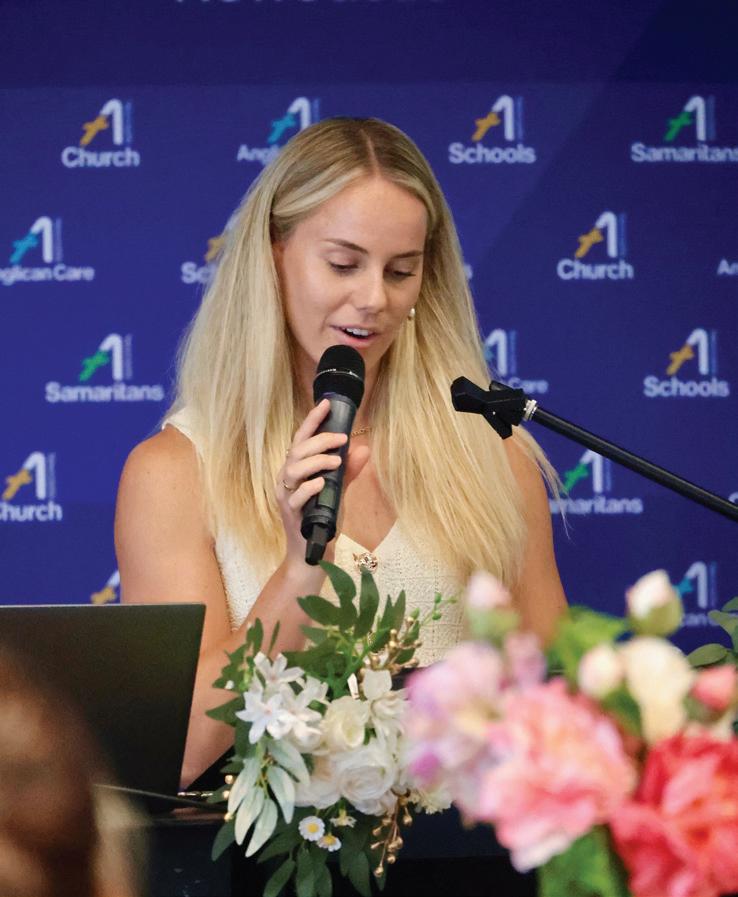
International Women’s Day celebrates the social, economic, cultural, and political achievements of women, while also marking a call to action to accelerate gender equality.
Our Anglican identity
In this column, Bishop Peter outlines an area of debate emerging in the Anglican Communion.
Those who follow church news closely will know that, in March, a group of Anglicans gathered in Nigeria proposing an alternative understanding of how the Anglican Communion should be ordered.
The historic way of expressing Anglican identity has been through the communion of 42 churches or provinces, representing around 85 million people, in relationship with the Archbishop of Canterbury.
Those who gathered in Nigeria are angered at discussions in the Church of England about human sexuality and some are angered by the appointment of a female to be the Archbishop of Canterbury.
The Anglican Church of Australia is constitutionally linked to the Archbishop of Canterbury.
While some may seek to change that connection, any such move would require significant constitutional support and is unlikely for the foreseeable future.
A few years ago our Synod, by Ordinance, reaffirmed this connection with the Archbishop of Canterbury and our commitment to the established structures that link Anglicans across the globe.
Clergy who come to work in this Diocese are expected to affirm this bond.
Those proposing an alternative structure for the Communion rely on the Jerusalem Declaration (2008) as the cornerstone of their understanding of Anglican orthodoxy.
It is a contested statement not simply because of its focus on a definition of marriage as between a male and a female but also because of the way it tries to establish a particular authority for the 39 Articles and Book of Common Prayer.
It also proposes a particular way of interpreting Scripture, appealing to what it describes as the historic and consensual teaching of the Church. Anglicans have always debated how the Christian faith is to be expressed and lived.
Dialogue has been integral to Anglicanism, particularly since the 19th century when the Anglican Communion emerged as churches beyond the shores of Great Britain developed their own provincial life while remaining in fellowship.
We are held together in this nation by an Anglicanism defined not by a single declaration but by our Constitution, our shared creeds, our reception of Scripture, and our common life in word and sacrament.
Our Fundamental Declarations say this (and no more):
The Anglican Church of Australia, being a part of the One Holy Catholic and Apostolic Church of Christ, holds the Christian Faith as professed by the Church of Christ from primitive times and in particular as set forth in the creeds known as the Nicene Creed and the Apostles’ Creed.
This Church receives all the canonical scriptures of the Old and New Testaments as being the ultimate rule and standard of faith given by inspiration of God and containing all things necessary for salvation.
This Church will ever obey the commands of Christ, teach His doctrine, administer His sacraments of Holy Baptism and Holy Communion, follow and uphold His discipline and preserve the three orders of bishops, priests and deacons in the sacred ministry.
The place of the 39 Articles, Book of Common Prayer, and the Ordinal is affirmed this way.
This Church…retains and approves the doctrine and principles of the Church of England embodied in the Book of Common Prayer together with the Form and Manner of Making, Ordaining and Consecrating of Bishops, Priests and Deacons and in the Articles of Religion sometimes called the Thirty-nine Articles.
The essential Article of Scripture sets a simple boundary.
That doctrine affirms that Holy Scripture contains all things necessary to salvation: so that whatsoever is not read therein, nor may be proved thereby, is not to be required of anyone, that it should be believed as an article of the Faith, or be thought requisite or necessary to salvation.
May we find a way of sharing our common life as Anglicans in this Diocese, which is a blessing to the community that God has called us to serve.
May we find some ways of being an example of living tenderly with difference, as we seek to proclaim the hope of heaven which is in our hearts.
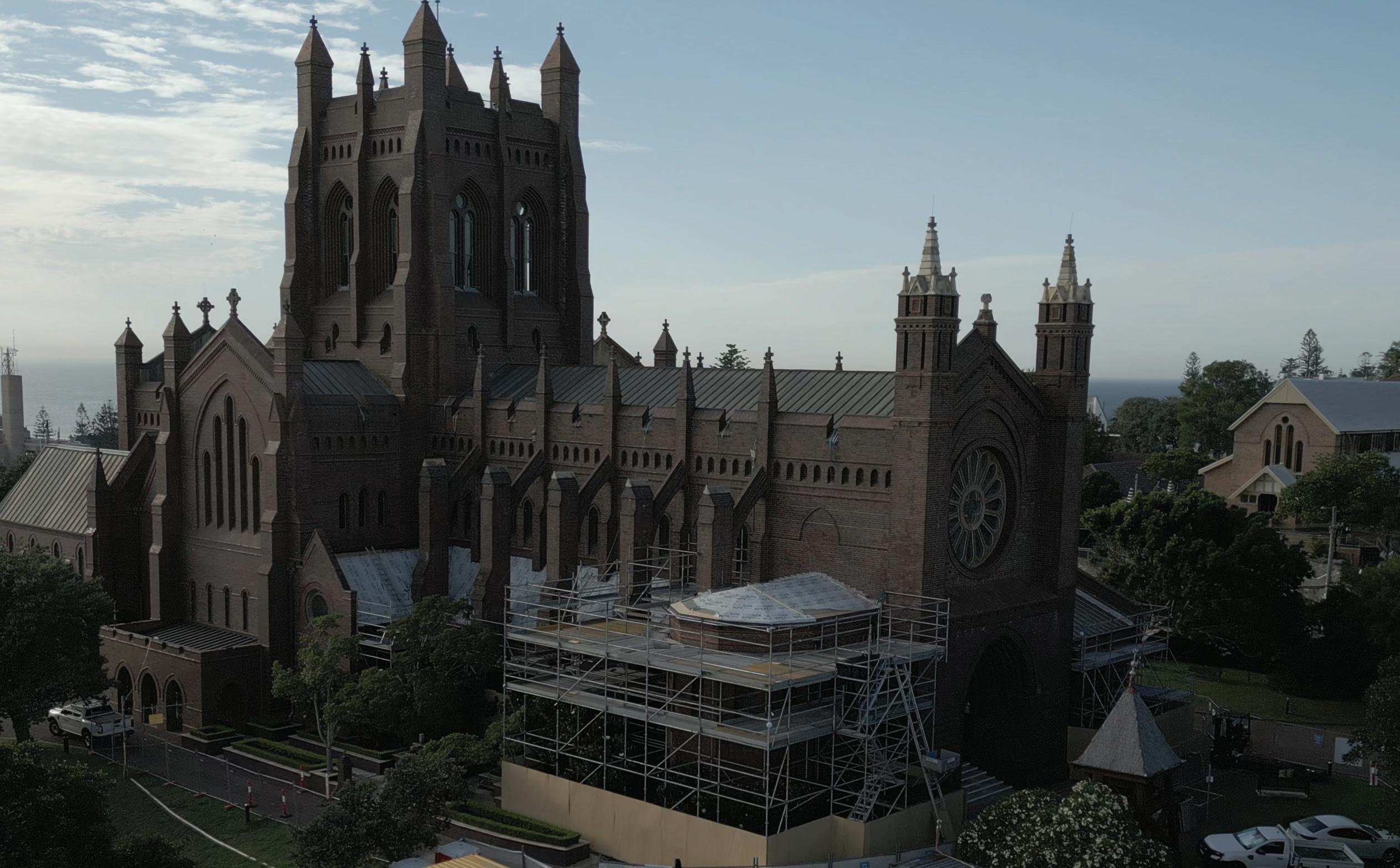
Cathedral’s heritage treasures preserved
More than a place of worship, Christ Church Cathedral is home to much of Newcastle’s history.
Experts have carefully removed many of the heritage items to ensure they are protected and preserved during the restoration works.
IAS Fine Art Logistics General Manager Jeremy Mundey said every object from the Cathedral’s priceless collection was treated with the utmost care.
“We’re removing some paintings, and we’ve got some heritage chests and drawers, [as well as] tapestries and other kinds
of pieces that have been in this church for some time,” he said.
“And then we’re putting them into very high-quality climatecontrolled storage.
“I would say our storage facilities would be second to only medical grade storage facilities in terms of the cleanliness and the environment that they’re in.”
IAS Fine Art Logistics has been safeguarding delicate collections since 1987.
Christ Church Cathedral.
The family-owned company has built a strong reputation in handling a range of items, from precious museum artefacts to entire science collections.
Artefacts from the Cathedral were individually assessed before being packed and stored based on their specific needs.
“We don’t necessarily store all of these items together,” Mr Mundey said.
“Everything is given appropriate care and space, and inventory is very detailed in terms of photographs and dimensions.
“The [Birdwood] flag is remaining here. It was my recommendation that we don’t move it because it’s extremely fragile.
“It’s sitting on an angle specifically. I think if it was vertical, [it would] put a lot of strain on the actual flag itself.
“The fibres are very delicate because it’s well over 100 years old.”
Items that are too delicate to move will be protected in situ throughout the duration of the restoration.
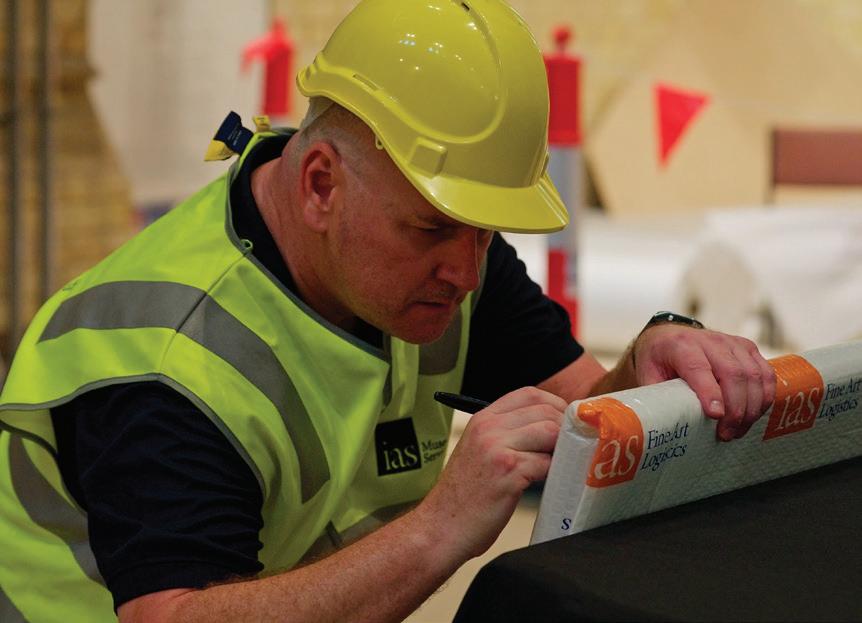
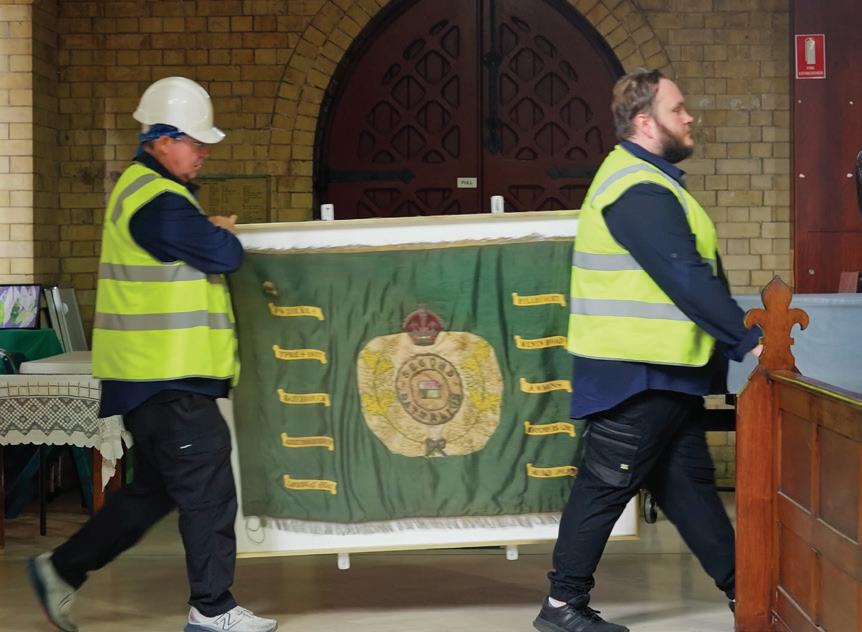
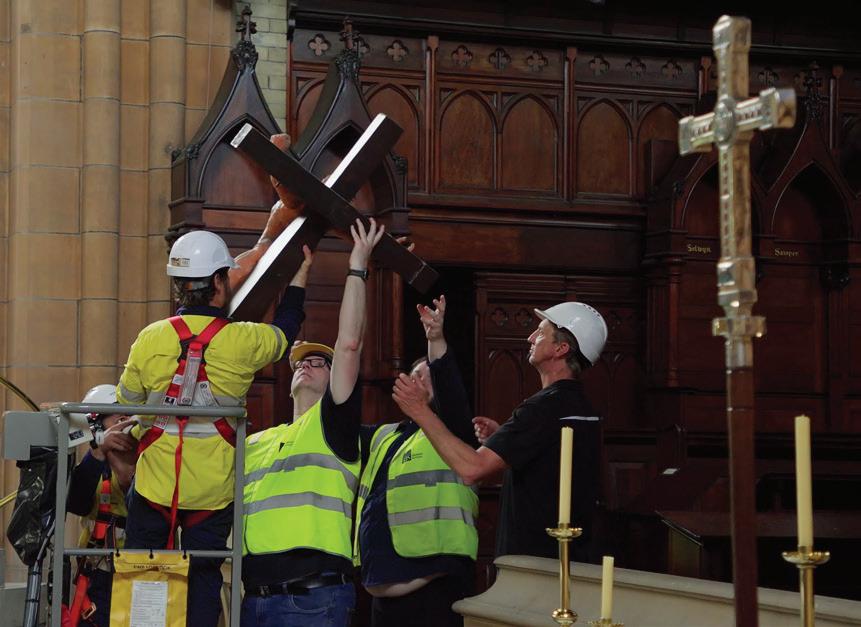
Heritage items being carefully removed from Christ Church Cathedral.
IAS Fine Art Logistics General Manager Jeremy Mundey.
Watch the video

Marking the start of a new era for MVAC
Manning Valley Anglican College (MVAC) is excited to welcome its new Principal, Mr Mark Newton, from the start of Term 2.
Newcastle Anglican sat down with Mr Newton to chat all things MVAC, the amazing Mid North Coast community, and how the students embody the school slogan, Let Your Light Shine.
Q: Are you excited to be joining Manning Valley Anglican College?
A: I’m very excited to be joining MVAC and coming to what I know is a beautiful part of the world. I’m honoured to be leading a faith-based community that is already thriving and has a wonderfully positive future, so yeah, tremendously excited.
Q: You’re no stranger to the region. Was that part of the attraction to come here?
A: Absolutely. Yeah, I do know the region well having lived in this area for most of my life.
I’ve been in Queensland for the last 12 years for other work, but the opportunity to come back to this beautiful part of the world where we have wonderful beaches and a beautiful natural environment right on our doorstep was one I couldn’t turn down.
Manning Valley Anglican College’s new Principal, Mark Newton.
I think rural communities offer something that metropolitan communities don’t because you’ve got the opportunity to get to know the students, the parents, and other community members at a personal level.
I think when you’re asking families to trust us with their children, that’s important.
Q: MVAC’s motto is ‘Let Your Light Shine’. How do you see that manifesting in how students carry themselves around the school?
A: Yeah, look, I think there’s a wonderful feel about the school. I think when you first walk into a school you get a sense of the culture; you get a sense of just the atmosphere and how that all feels. It’s been so positive from the moment I walked in here.
But we have a responsibility that when we enroll a student, whether that be in pre-prep, Kindergarten, Year 7, that we are providing an opportunity for them at every year level.
As students get into secondary and particularly those upper years of secondary education, it really is imperative that we can meet the demands of their chosen pathway. And that’d be a real focus for me, ensuring that our students can really let their light shine in their chosen pathways and we’re able to meet that need.
Q: You’ve spent a long time in education. What’s your personal philosophy in teaching and leading a school?
A: I think that I’m very relational and I really believe in getting to know people. I think if you want to do well you have to be well and feel well. So, for me it comes down to being an authentic leader. I am not above the team as principal, and I am absolutely focused on acting in the best interests of our students and community. I think the starting point for that is by working relentlessly to create the best learning and teaching environment possible.
Attracting and retaining quality staff is a challenge these days. There are lots of opportunities for education and I think it’s critical that we have established that environment where staff feel valued and have the opportunity for career development and personal satisfaction. Their welfare, for me, is a priority.
Q: One final question. What are you most looking forward to?
A: I’m looking forward to getting started now. The growth in this college has been remarkable and that’s a wonderful testament to the work of the staff here. The best advertisement for a school, particularly in a rural community, is word of mouth. That’s been overwhelmingly positive and I want to come in and enhance that and show people that I’m here to lead the college through to its next stage of growth and embed myself in the community.
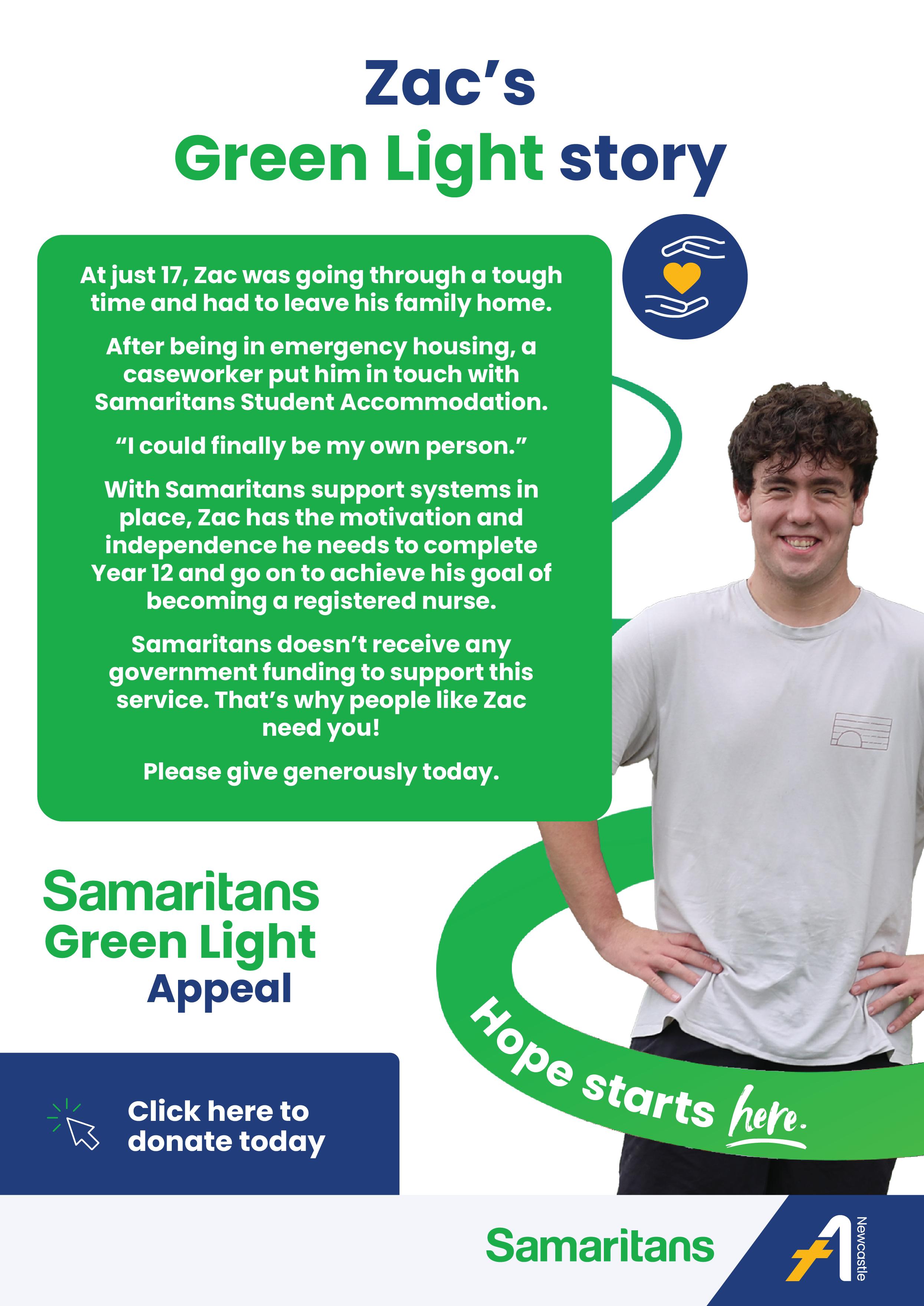
Green Light Appeal is back again, raising awareness and funds for Samaritans Student Accommodation.
Green Light Appeal gives hope to young people
After its successful launch in 2025, the Green Light Appeal is back again this year to raise awareness and funds for Samaritans Student Accommodation.
Since 2012, Samaritans Student Accommodation has provided safe, supportive and independent housing for young people aged between 16 and 24 who are homeless or at risk of homelessness.
These young people have often fled traumatic or unsafe family situations but are dedicated to completing their education or vocation.
Samaritans Student Accommodation provides mentoring and case worker support to empower the students to Green Light their goals.
Based at Wickham, it is the only service of its kind in the Hunter Region and receives no government funding.
It is 100% reliant on the generosity of the local community.
“It’s a critical program because there are no other programs that offer this, so if you’re a 16 year old there are limited options for your accommodation,” Samaritans Student Accommodation Service Coordinator Matt Anderson said.
The Green Light Appeal will launch during NSW Youth Week in April, so keep an eye out for activities and ways to get involved.
You can find out more about the appeal by visiting Samaritans website. Visit our website
Empowering our people to respond
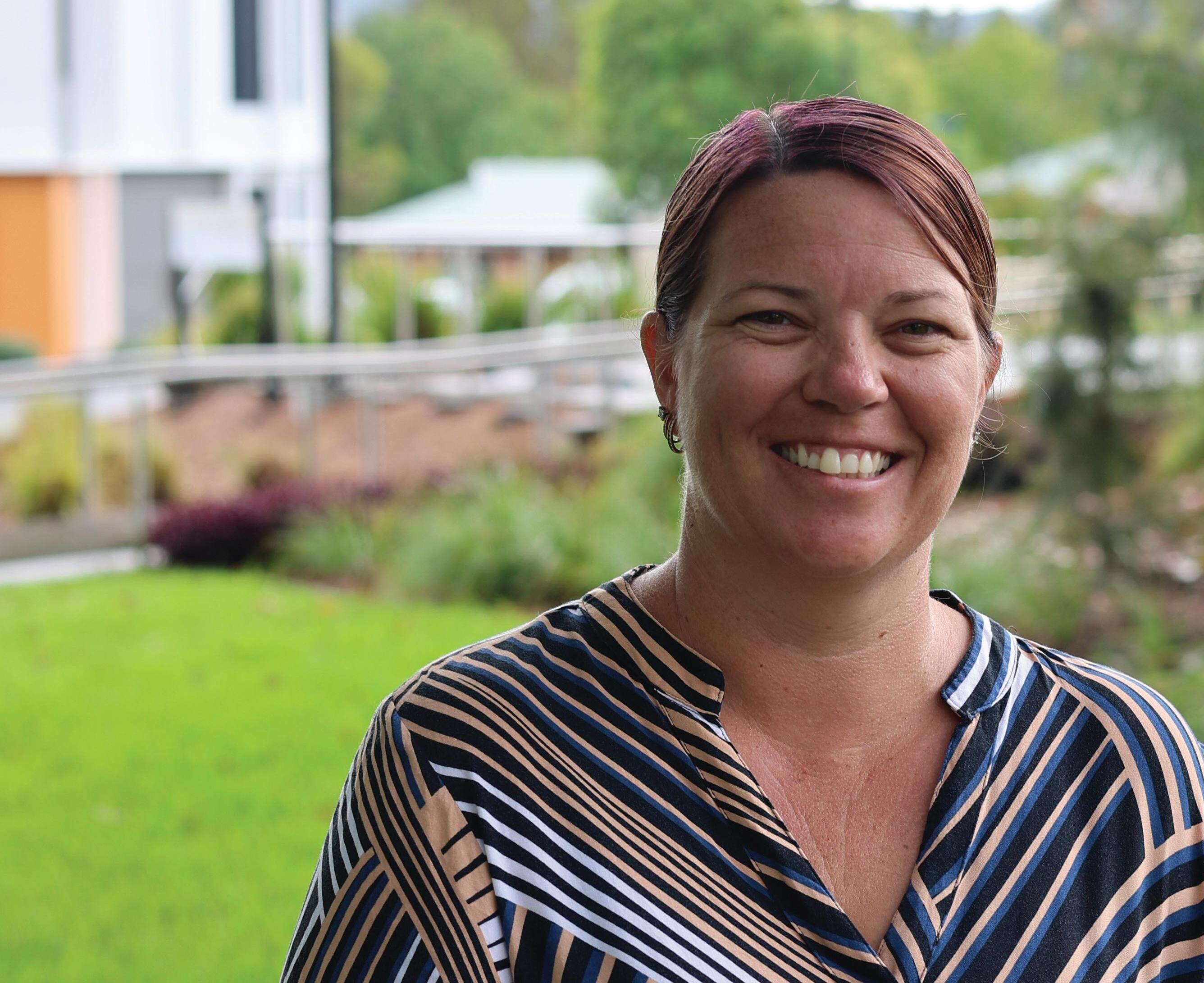
Encourage, empower, and educate. This is what Stacey Gately will be focusing on in her new role at Newcastle Anglican.
Stacey has been identifying areas for improvement since joining the organisation as Domestic and Family Violence Education Officer in December.
She previously spent the better part of two decades on the frontline, with the majority of
her work focusing on domestic and family violence at various refuges across the region.
More recently, she was in senior leadership roles at Jenny’s Place in Newcastle and also worked at Carrie’s Place in Maitland for 10 years.
One of her main passions is upskilling people so they have access to accurate information and strong support networks.
Stacey says a key part of her role will be building

staff confidence to respond to domestic violence issues — without expecting them to become specialists.
“My role isn’t about turning everyone into domestic violence experts or expecting them to have all the answers,” she says.
“Like every part of the community services sector, it’s constantly changing.
“There are always new services, funding streams, and even new language.
“It’s really about making sure people feel confident to respond and can walk alongside someone while connecting them with the right services.
“We all need to understand the statistics. It’s not just about the people who use our services, we’re also talking quite possibly about colleagues of ours who could be on either side [of domestic or family violence].
“So, it’s important to know the warning signs and ask appropriate and respectful questions.”
Stacey’s vision is to provide a consistent and compassionate approach across the whole organisation, where every person who is experiencing domestic or family violence is believed, supported, and connected to specialist services.
She has been working with members of the Executive Leadership Team (ELT) to understand what currently exists and develop high-level frameworks, policies, and procedures.
“It’s also about meeting some of the frontline workers within our organisation to get my face around a bit more,” she says.
“I’m more than happy to come to team meetings, or to be a resource for people.”






Keeping our people safe and independent
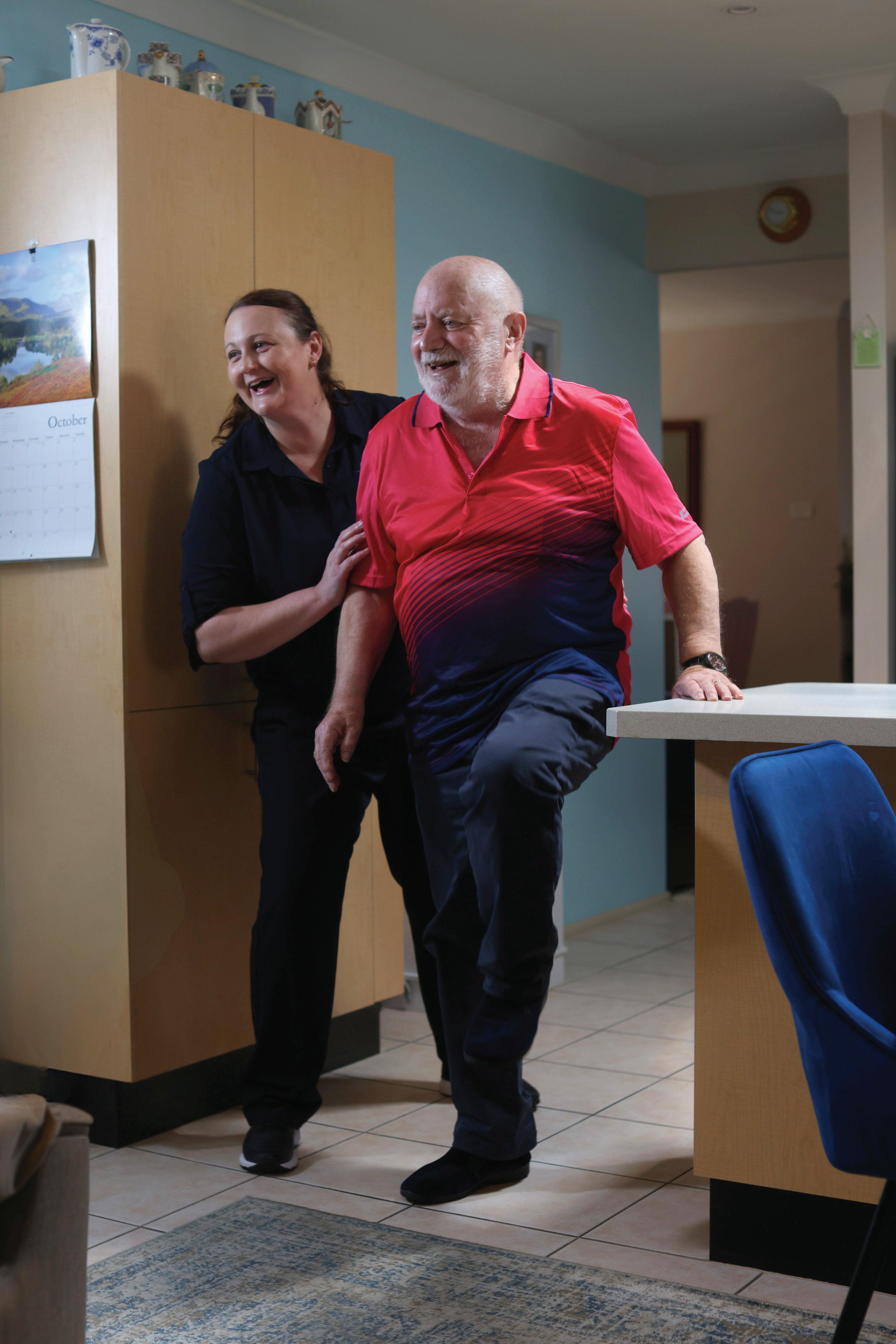
Every week in Anglican Care facilities, exercise programs are helping keep residents safe.
About 30% of people aged over 65 fall each year in NSW, with 37% of injury-related deaths being caused by falls.
According to the NSW Fall Prevention and Healthy Ageing Network, regular exercise reduces falls by 23%.
It’s one of the reasons Anglican Care has strengthened its exercise programs.
Director of Assurance Melissa Cromarty says the multi-pronged approach also focused on enhancing quality care and education.
“We looked at increasing exercise programs because we know that movement, strength, and stability are key in keeping people safe,” Melissa says.
“We also do a practice called intentional rounding. It’s not just going and doing a task – it’s what is behind that task.
“Does the person I’m supporting have their call bell? Do they need to go to the toilet? Have they got their walker with them? Is their buzzer handy?
“It’s intentional and, without even knowing, we’re mitigating risk.”
April Falls Month is an annual campaign to raise awareness about the impact of falls and to promote the latest best practice fall prevention strategies.
This year’s theme is ‘Let’s talk about falls – staying safe starts with a chat’.
It aims to break the stigma around talking about falls to help Australians access appropriate care and begin early interventions.
“What we see is when people have a fall, it takes months to help them build confidence again to get back to where they were,” she says.
“So, if we’re preventing that and keeping people confident, we’re keeping people safe, we’re keeping people mobile, and we’re keeping them independent.
“I think that’s one of the key things that sets us apart as a leader in the industry.
“We’re looking to keep people as independent as we can while keeping them safe.”
Anglican Care facilities will be hosting a number of activities and events throughout April Falls Month.
Four decades of caring for others
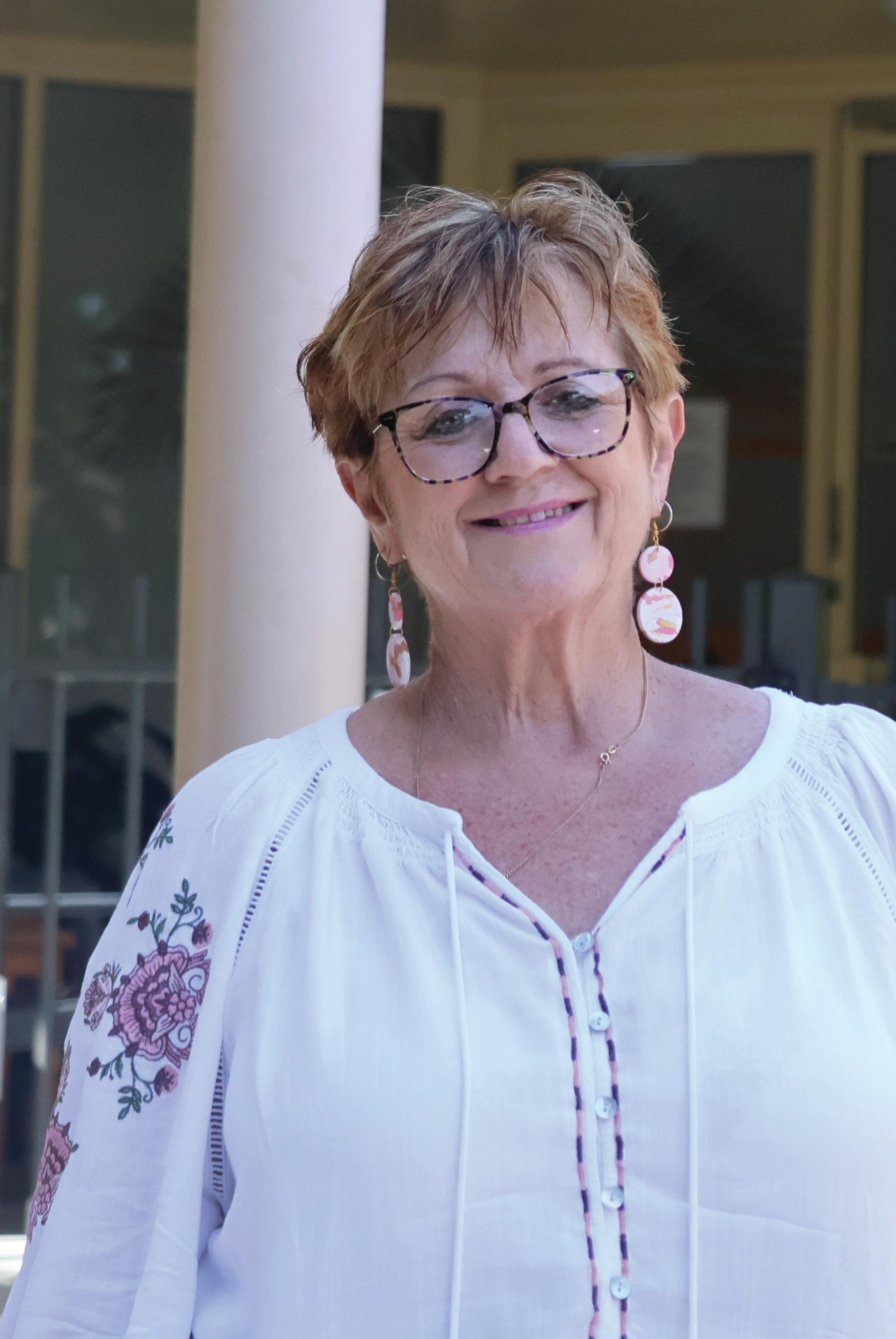
Leonie Doig filled her working days by caring for others, forming lifelong friendships and sharing laughs along the way.
Leonie initially joined Anglican Care as a volunteer at C.A. Brown with the goal of buying a new fridge for her young family.
Fast forward 41 years, and a few fridges later, she has retired from her position as an enrolled nurse.
“I’ve worked with some incredible people. I worked with some great leaders, great managers, or great matrons as they were called in the day,” Leonie says.
There was rarely a quiet moment as she took on a variety of roles throughout the years.
“I was there for 15 years at C.A. Brown as a nurse on the floor,” Leonie says.
“Then I injured myself and had to have surgery on my shoulder, and they retrained me in a clerical role, so I went over to administration and worked [in] that space for seven years.
“I was a supervisor for 11 years in Carey Bay, which I loved, and spent the rest of my time here at McIntosh Court.”
In times of hardship, Leonie knew the community would come together to support one another.
Leonie Doig retired after 41 years with Anglican Care.
“We had the earthquake in 1989, and I can remember coming in off duty because I knew they’d need staff to be moving residents from A to B, which we did,” she recalls.
“Even my husband came with me to help with relocating the residents.
“Then we had fires around the area... and we transported residents to Jesmond Grove to get them in, because there were no fires near the building.
“I remember we had all these residents, and we slept on sleeping bags at Jesmond Grove to be there for the residents.
“So, it was a real community. Everyone pitched in, which was amazing.”
Ultimately, the people were at the centre of Leonie’s experience and continued to inspire her.
“When I first started, I was young and I thought that the object of the game was to get it all done really quickly,” she says.
“If you got your tasks done, that was [being] a good nurse.
“As I matured, I realised I was here for the residents.
“I’ve met and cared for some amazing people. You learn so much from people who have been here for so long and who have lived a totally different life to us.
“They’re the people that we can learn from.
“I was sad to say goodbye to my colleagues and the residents.
“It was a big move, but I’ve still got a lot of life in me, a lot of living to do.”
Leonie plans to spend her retirement travelling with the lifelong friends she made at Anglican Care.
Thank you, Leonie, for your longterm dedication and commitment to ensuring we deliver the care our community deserves.
Help us celebrate
70 years of Anglican Care
Anglican Care is celebrating its 70th year in 2026, and we want to hear from you!
Do you have any photos or stories you can share with us?
Please submit them using the button below >
Click here to get started

What’s On
There are plenty of events and activities happening across our organisation over the next couple of months. Check out some of them below.
April





service times at Christ Church Cathedral can be found here. For other services, check with your local parish.
May June


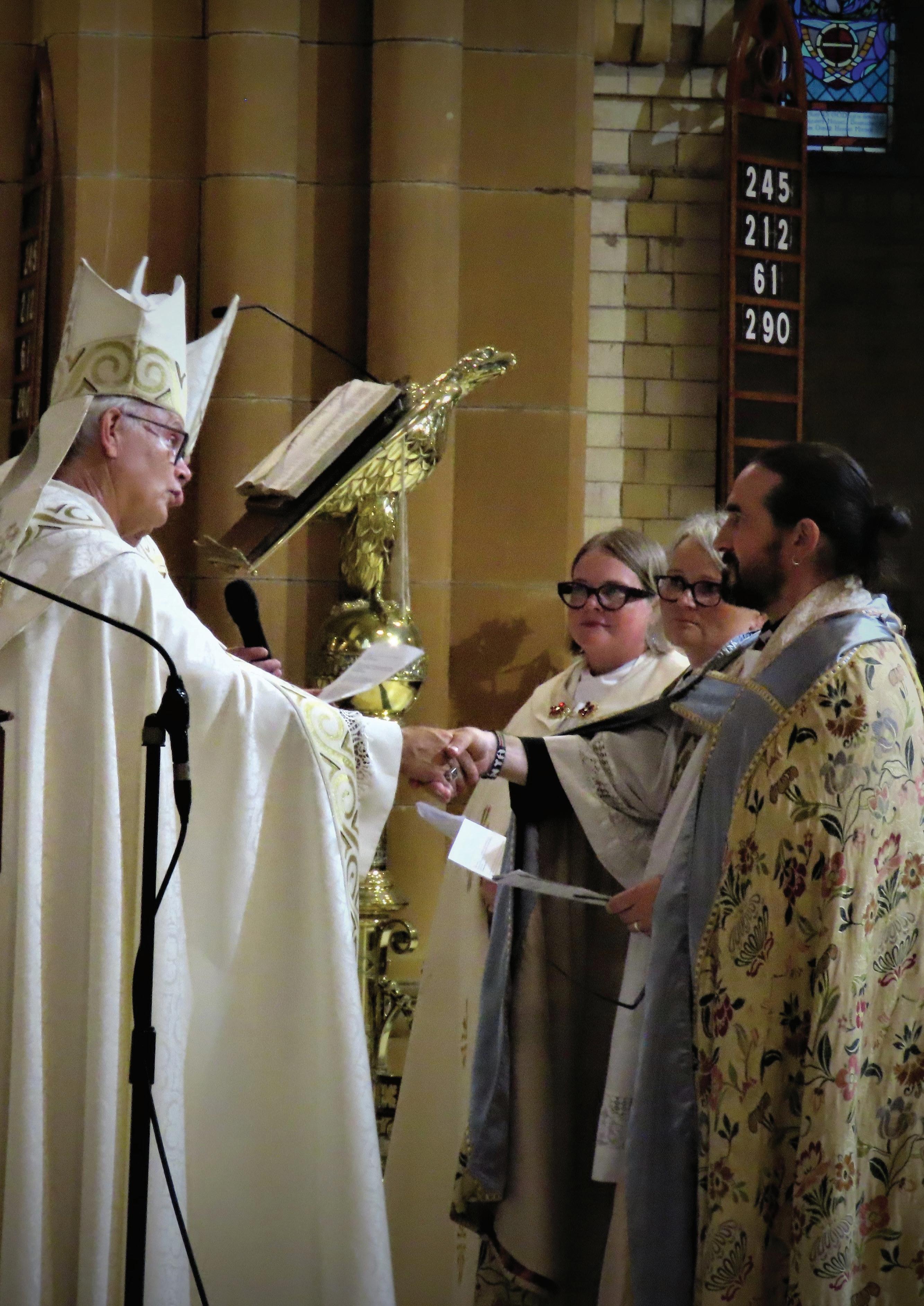
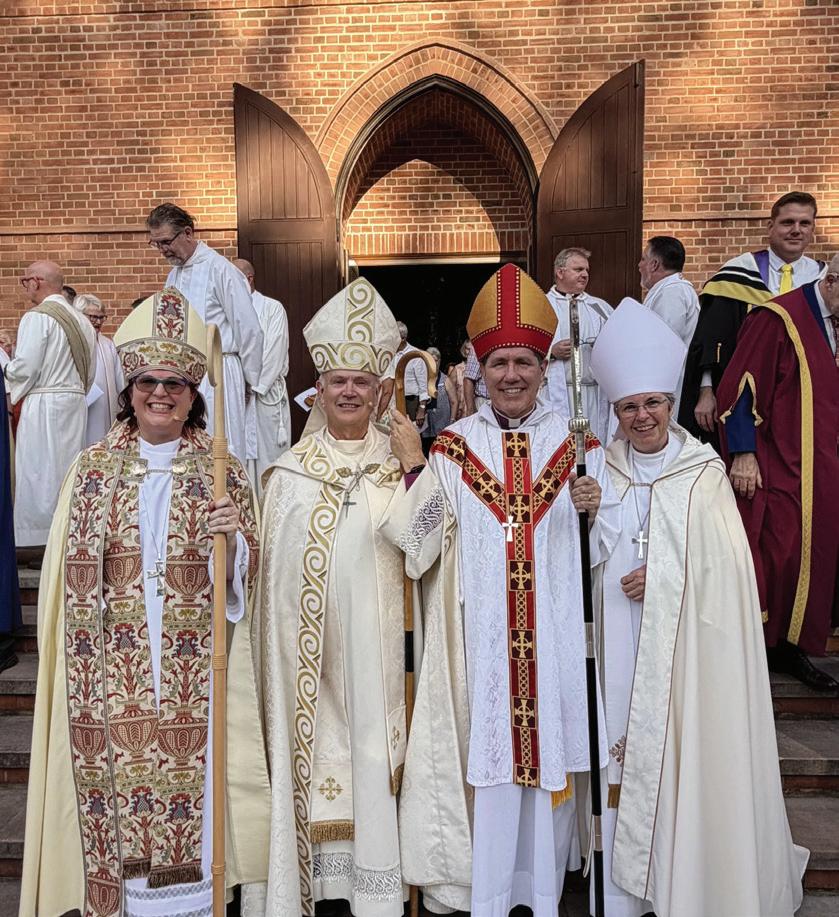
Bishop Peter Stuart, left, appointed the Venerable Canon Andrew Eaton and the Venerable Toni Wein as Archdeacons of the Hunter and Coast, respectively.
Photo: David E Smith
Celebrating appointments across the diocese
There were plenty of celebrations across our parish communities to start the new year.
A number of parishes formally welcomed new rectors during commissioning services, while there was also a collation at Christ Church Cathedral.
Over at St Peter’s East Maitland, Bishop Peter Stuart commissioned Andrew Eaton as Rector.
The church was filled with members of the parish and the wider community, all gathered in great spirit to support Father Andrew and his family as he began this new chapter in his ministry.
Just a few days later, at Christ Church Cathedral, he was collated as Archdeacon of the Hunter alongside the Venerable Toni Wein, who was collated Archdeacon of the Coast.
The evening service also included the commissioning of the Reverend Canon Dr Christy Capper.
Dr Capper is exploring discipleship in the diocese. Her initial phase of work will focus on listening and learning to gain an understanding of what is currently happening in parishes and other ministries.
A few weeks later, there was another warm welcome as
Bishop Peter commissioned The Reverend Andrew Cooper as the new Rector for the Parish of Lambton and Wallsend.
The service at St Luke’s Wallsend included a number of selfies as Father Andrew started an exciting new chapter of his ministry.
To wrap up a joyful start to 2026, parishioners also gathered at Dungog Anglican Church to welcome new Rector Amanda Brockwell.
Congratulations to all.
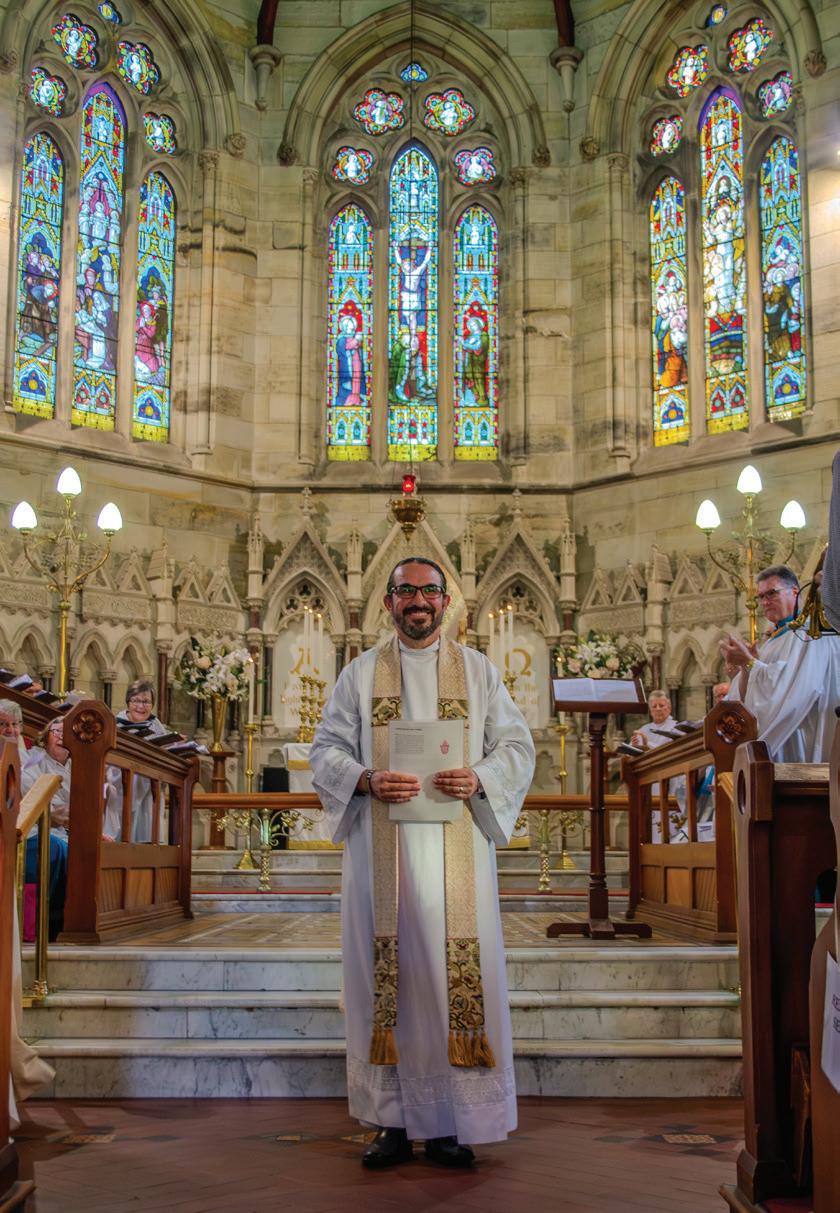
Rector Andrew Eaton was welcomed to the parish of St Peter’s East Maitland. Photo: Adam Draper
Lent: a time for hope and reflection
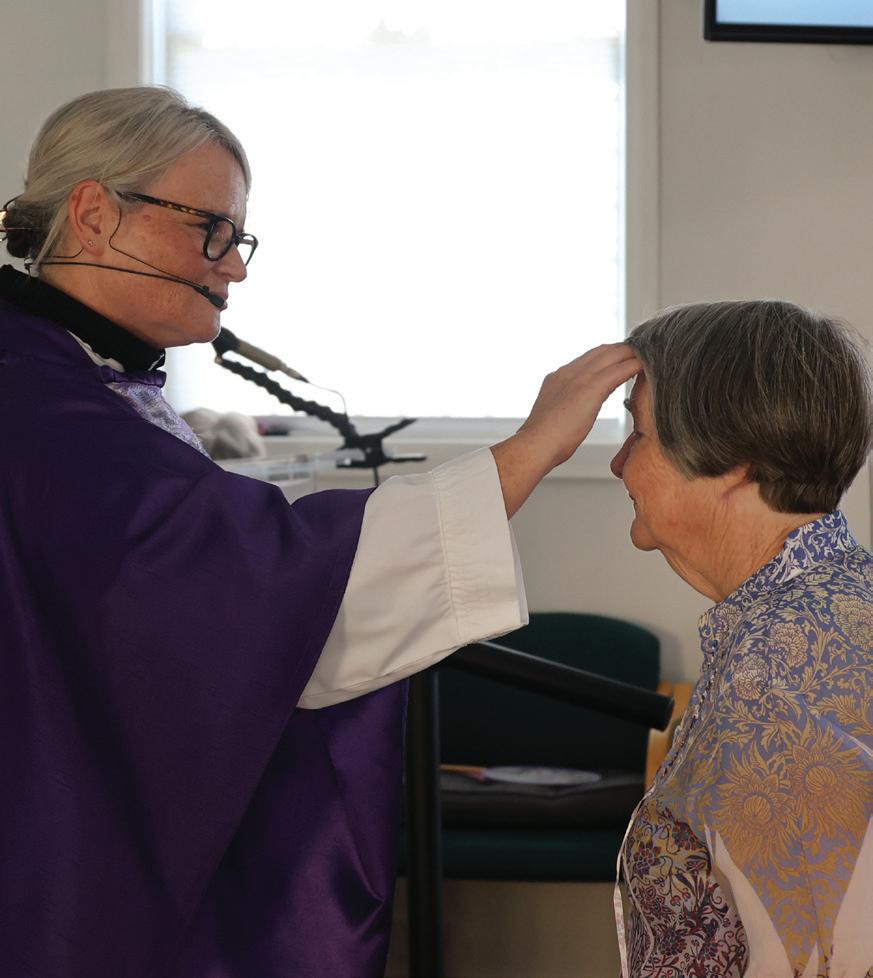
In the church, Ash Wednesday begins the season of Lent.
Many Christians regard the 40 days of Lent as a time to “journey” with Jesus in the wilderness. For some, it is a time of reflection and prayer.
For others, it is an opportunity to practice a spiritual discipline, such as giving something up, as we remember that Jesus fasted in the wilderness.
Lent can also be a time to take something up, as a way of deepening a person’s spiritual life.
During Lent, Assistant Bishop Sonia Roulston encourages us to reflect on the world around us and consider how we could bring hope to others.
She highlights two things to consider, in particular.
“Firstly, our approach to Ash Wednesday and Lent can become something obvious that doesn’t take much thought,” Bishop Sonia said.
“Let me encourage you to use Lent intentionally this year as a way of responding to God’s presence and grace in our life, or as a way of seeking to refresh your relationship with God.
“Secondly, all of this happens in a wider context. I wonder, how can the church speak words of hope and faith to the wider world today, in a voice that can be heard?
“And how can the wider community awaken the church to aspects of God’s call to us?
“Perhaps these are also good questions for Lent – a time of reflection, hope, and deepening faith.”
The season of Lent will conclude on Good Friday (3 April 2026).
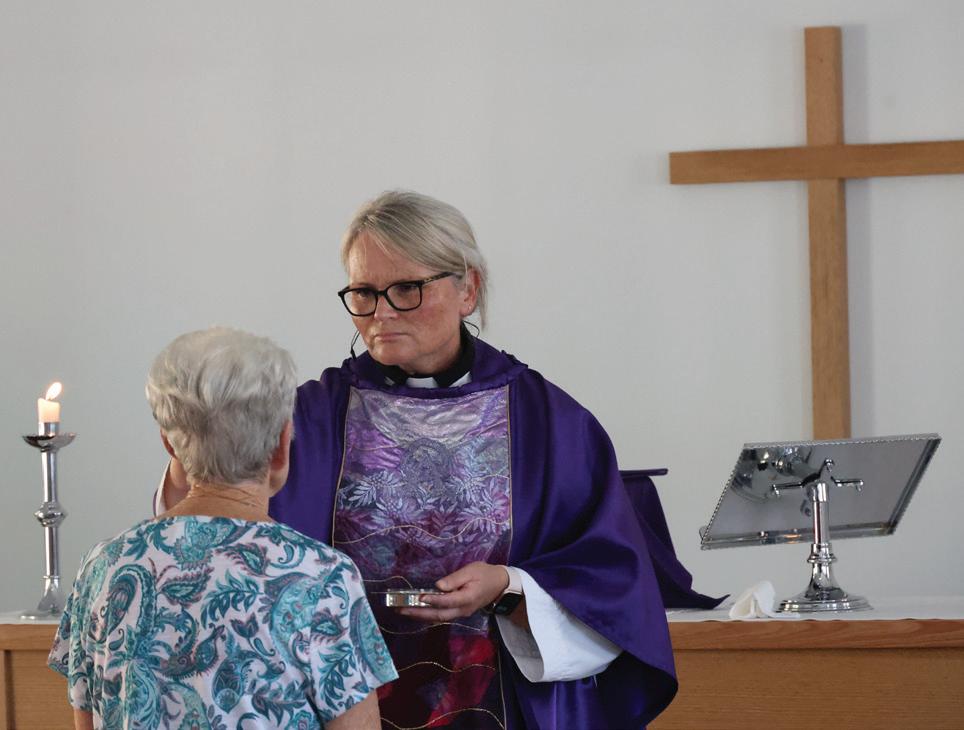
Reverend Toni Wein and parishioners marked the start of Lent at Glenrock parish on Ash Wednesday.
Piping up for historic organ’s milestone
A historic pipe organ – one of only 11 to arrive in Australia and the oldest in operation – is celebrating its 150th anniversary at St Peter’s Anglican Church East Maitland in 2026.
The Father Willis organ, named after renowned British organ builder “Father” Henry Willis, arrived at St Peter’s in 1876 and remains largely unaltered.
Each Father Willis organ has its own characteristics, styles, and trademark sound.
St Peter’s was one of five churches within the Maitland local government area to receive the unique instrument during the Victorian era.
Anglican Parish of East Maitland Music Coordinator Thomas Barnes said the local area boasted a rich history of pipe organs.
To mark the 150th anniversary at St Peter’s, a Recital Series, featuring an exceptional lineup of organists from across NSW, is taking place each month until November.
Mr Barnes said all proceeds would go towards the organ’s upkeep.
“This is the second organ that came here and it’s currently the oldest one from Father Willis in operation in Australia,” Mr Barnes said.
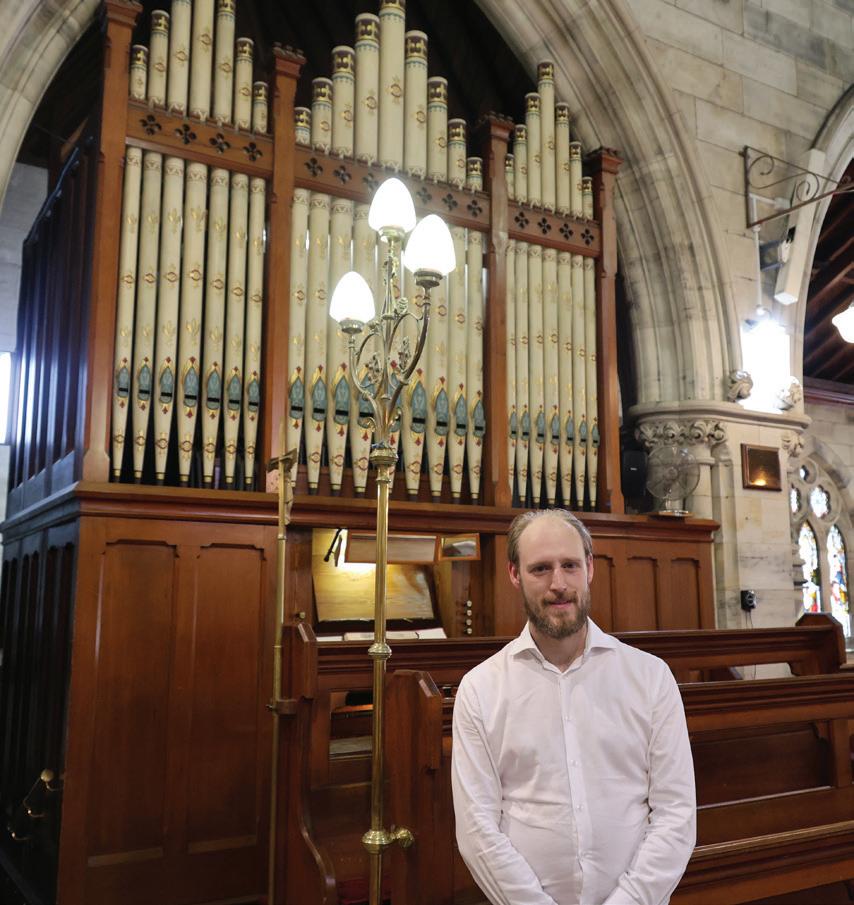
“It’s still in its original condition from when it left the United Kingdom in 1876, [apart from] a few slight alterations over the years.
“If it requires an overhaul, that will mean pulling all 634 pipes out of it, cleaning them all, repairing the soundboards that the pipes sit on, and reassembling it all together.
“There’s a lot that goes into it.”
Anglican Parish of East Maitland Music Coordinator Thomas Barnes in front of the Father Willis organ.

Inclusive faith-based education
Offering the best possible start in life to quality education through Newcastle Anglican schools, we provide our children and youth with an inclusive, dynamic, and family-orientated environment to be the best that they can be.
Enquire today about school enrolment fee discounts for Newcastle Anglican staff. Speak with your manager today.
Newcastle Anglican Schools
We provide inclusive, faithbased education where every child is known.
With four schools, two preschools and one pre-kindy, Newcastle Anglican Schools provide holistic education shaped by a Learning Powered approach and a consistent commitment to living and sharing transformative values.
We offer broad academic and vocational pathways, traumainformed practice, pastoral care, allied health and values driven education.
Our approach equips our students with curiosity, independence, resilience and the confidence to navigate uncertainty.
Students are provided with a highquality, inclusive, dynamic education with a Christian Ethos in the Anglican tradition.
Under the governance of Newcastle Anglican, our shared vision is for people to flourish because of what we do, inspired by the way of Jesus.
It’s through our schools, parishes, Anglican Care and Samaritans that our vision is brought to life.




Bishop Tyrrell Anglican College
Lakes Grammar - An Anglican School
Manning Valley Anglican College
Scone Grammar School
Sharing spirit of college community
Bishop Tyrrell Anglican College warmly welcomed families to its 2026 Open Day, and what a wonderful celebration of community it was.


From the moment guests arrived on campus, there was a genuine sense of connection and excitement.
Student leaders proudly guided tours across the campus, sharing not only the facilities but their own personal experiences of life at the college.
Classrooms were alive with conversation, creativity and handson learning, offering visitors an authentic glimpse into the heart of the school day.
Families had the opportunity to meet passionate staff and chat with students, who spoke confidently about their learning journeys.
It was particularly special to see the youngest learners engaging so naturally with older students, a beautiful reflection of the continuity and belonging that comes from being part of a truly connected college community.
Throughout the morning, there was a strong sense that the Open Day was about more than showcasing facilities. It was about sharing the college’s spirit.
Visitors experienced the warmth, care and encouragement that underpin a Bishop Tyrrell education, where every child is known, valued, and supported to grow.
The college is grateful to staff and students who represented it with such pride, and to the many families who joined on the day.
It was a joy to open the gates and share the spirit of the college community.
Kindergarten has landed at Lakes Grammar
With four classes this year, Kindergarten at Lakes Grammar – An Anglican School hit the ground running when students leapt into ‘big school’ in Term One.
Some students tentatively held on to mum or dads’ hands when they arrived but were quick to let go and join in on the fun on the play equipment. Others wasted no time in running headfirst into morning playtime.
Once goodbyes were shared and those last cuddles and sneaky tears behind the scenes from parents’ shed, Lakes’ littlest learners took the mighty leap into their designated classrooms.
Our excited Kindergarten students were ready to take the reins and begin their journey.
The day included reading ‘The Kissing Hand’ by Audrey Penn, a story about a raccoon named Chester and his mum who always kisses his hand to give him reassurance of her love any time his world feels a little scary.
After reading the book together, Kindy took off around the school grounds on an exciting scavenger hunt where they followed the raccoon footprints, seeing all the important locations and people in the Primary School.
They met the office staff, canteen manager, and head of Junior School, Cynthia Jobe-Parker, along the way. It’s safe to say everyone went home exhausted after a giant first day and have settled into the Lakes Grammar community perfectly!


Making a splash at annual swimming carnivals
It was two outstanding days of sunshine and school pride when students from across Scone Grammar School dove into action at the 2026 Secondary and Primary Swimming Carnivals.

Both carnivals were held in February, delivering exceptional performances, fierce house competition, and a wonderful display of community spirit.
On day one, Scone Grammar Secondary students took to the pool for a full day of outstanding athletic performances.
From the first starter’s whistle to the final relay, the atmosphere was electric.
House chants echoed across the venue, teammates lined the deck in support, and every finish whether a record-breaking swim or a personal best was met with applause.
On day two, Scone Grammar School’s youngest competitors made a spectacular splash at the Primary Swimming Carnival.
Cheers, laughter and determined swim strokes filled the air from the first race to the final relay.
The pool deck was alive with colour and energy as students cheered passionately for their peers, parents lined the poolside in support of their “little fish,” and staff worked tirelessly behind the scenes to ensure a smooth and successful day.
Principal Mr Paul Smart officially opened proceedings, setting the tone for an event defined not just by competition, but by community.
Across both days, while records were broken and champions crowned, what truly stood out was the encouragement shown by students for one another.
From nervous first-time competitors to seasoned swimmers chasing history, every effort was celebrated..
MVAC rowers compete against nation’s best

Four Manning Valley Anglican College (MVAC) Rowing team members swapped boats for planes as they took flight to Tasmania for the Australian Rowing Championship.
The championship was held at the Lake Barrington International Rowing Course in late March.
MVAC students Ava Falzon, Nyah Simmons, Hayden McPhellamy and Oliver Sampson worked tirelessly to secure a spot at this event.
It brought together rowers from all over the country to compete for medals.
MVAC’s dedicated rowing coach, Mr Murray Doust, and support staff
Mrs Vanessa Croker, have helped the students grow stronger. They’ve achieved great results so far this year and the training schedule has been tough.
“We’ve had a rigorous training schedule, with the students training up to nine times a week,” Mr Doust said.
Rowing has grown in popularity as a Friday sport of choice as MVAC continues to improve its rowing program.
MVAC’s rowing team is a source of inspiration for those watching back home.
Good luck to the team for all future events – you’ve earned your time to shine!