WONDERFUL INDONESIA
UNITY IN DIVERSITY


BATIK
BATIK MAKING
VISAS
BUKU INI
BERLAKU UNTUK SELURUH NEGARA DAN WILAYAH KECUALI
DITENTUKAN LAIN
THIS BOOK IS VALID FOR ALL COUNTRIES AND AREAS UNLESS OTHERWISE ENDORSED
Buku ini berisi 41 halaman / This book contains 41 pages

Indonesia, country located o the coast of mainland Southeast Asia in the Indian and Pacific oceans.
The Netherlands East Indies, often known as the Dutch East Indies, was the previous name for Indonesia. A German geographer first used the term Indonesia in 1884; it is believed to have originated from the Greek words indos, which means "India," and nesos, which means "island." Despite this, the name Indonesia was not adopted as the nation's o cial name until after independence. In 1945, following the Japanese rule of Indonesia from 1942 to 1945, the country proclaimed its independence from the Netherlands.

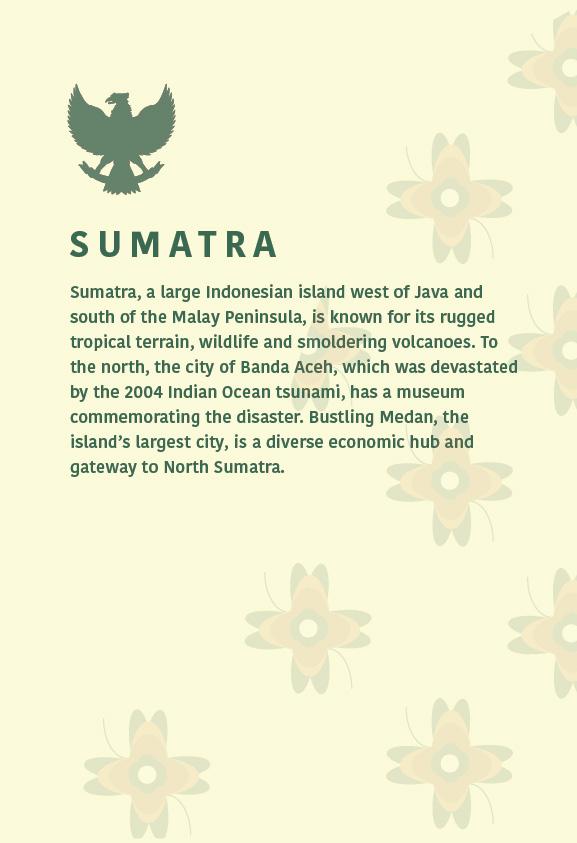

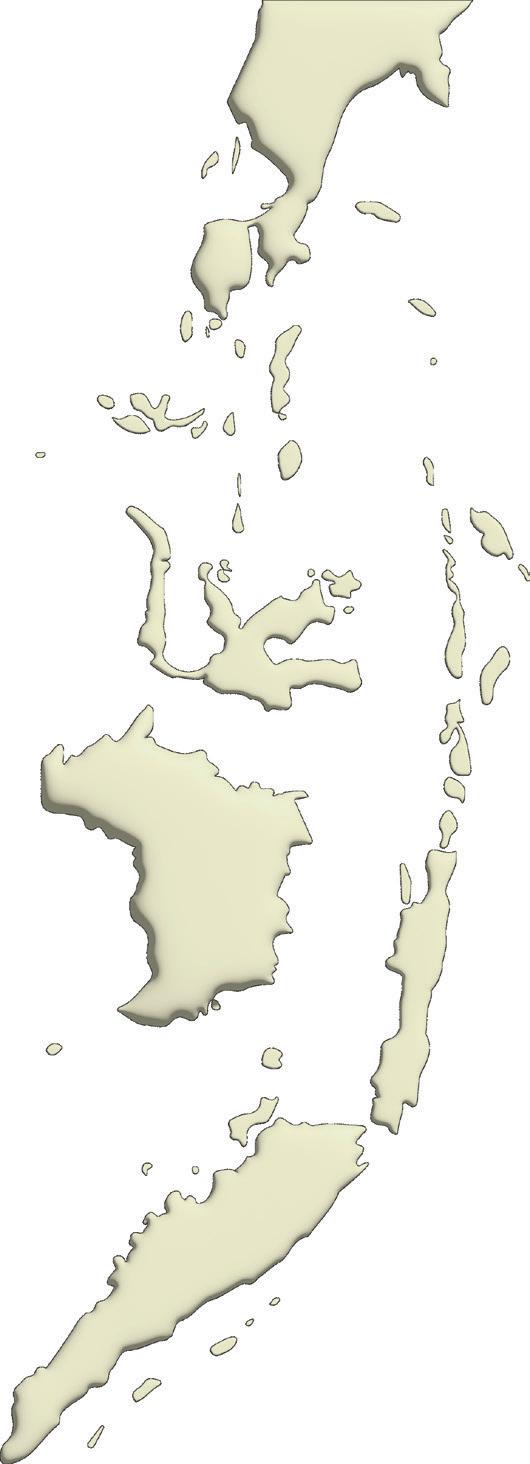
Java, lying between Sumatra and Bali, is a volcano-dotted island that’s at the geographic and economic center of Indonesia, and home to more than half its people. Java’s largest city is modern, sprawling Jakarta, the nation’s capital. It’s home to the expansive National Museum, an old town (Kota Tua) with Dutch colonial buildings, as well as upscale hotels and shopping malls.
Sulawesi, an Indonesian island east of Borneo, comprises several long peninsulas radiating from a mountainous center. It’s known for coral reefs and dive sites such as Bunaken National Park, the Togian Islands and Wakatobi National Park. Its largest city is Makassar, home to Fort Rotterdam, a former Dutch fort now housing 2 museums. Outside Makassar, Leang-Leang Historic Park preserves prehistoric cave paintings.

Kalimantan – the expansive Indonesian part of Borneo – is an adventure in every sense of the word. Remote jungle, snaking rivers and interior mountains serve up endless opportunities for epic rainforest hiking, while its cities are low-key and little visited by Indonesian standards. You can travel here for weeks without meeting another foreigner, and at least some knowledge of Bahasa Indonesia is recommended.
Papua, Indonesia's easternmost province, encompasses a number of other islands as well as the western portion of New Guinea. With its mountains and rainforests, this ecologically and culturally diverse region is home to a variety of animal species, including birds of paradise and tree kangaroos, as well as native Melanesian civilizations. Whale sharks may be spotted swimming amid the hard coral gardens at Cenderawasih Bay
National Park's north coast diving site.
There are about 300 di erent ethnic groups that make up the country of Indonesia. The Javanese make up the biggest group, making up over 40% of the population, followed by the Sudanese with 15%. Islam makes up 86.1% of Indonesian population; the remainder are Buddhist, Hindu, or Christian.
- Angklung
- Wayang
- Gamelan
- Saman Dance
Nasi Goreng
Satay
Soto
Gado-Gado
Rendang
Bakso
Mie Ayam
Batagor
Martabak
Ayam Goreng
After the collapse of Japan in 1945, the area went through a period of transition and upheaval during the Indonesian national struggle for independence. During the Japanese occupation and from the perspective of the Indonesian nationalists who declared independence on 17 August 1945, the city was renamed Jakarta.
With 86.9% of the population practicing Balinese Hinduism, Bali is the only province in Indonesia with a majority of Hindus. It is well known for its highly developed artistic disciplines, which include music, sculpture, painting, leatherworking, metallurgy, and both traditional and modern dance. Bali is the most visited island for tourist starting from locals to international.

There are five techniques to make batik.
- Batik Tulis
- Batik Cap
- Batik Print
- Batik Lukis
- Batik Celup
With Canting the wax is applied to the cloth by using a kind of pen with a copper container on a wooden handle. With Cap wax is printed on the cloth with a copper stamp. Making the Cap, copper stamp, is an artform on its own. Sometimes Canting and Cap are combined in making a Batik cloth.
Batik print technique is a technique of wax-resist dyeing applied to the whole cloth. This technique originated from the island of Java, Indonesia.

Batik lukis is a technique of making batik by painting on a white cloth using a medium or a combined medium like canting, brush, banana stalk, broomsticks, cotton or other media. We can see gradation e ects as well in batik painting.
Batik celup or known more as tie-dye refers to a variety of resist dyeing methods and the colored goods that come from them. When dying fabric, the usual steps involved are folding, twisting, pleating, or crumpling, tying it with string or rubber bands, and then adding colors.

Batik is both an art and a craft, and it is becoming increasingly popular and well-known among modern artists throughout the world as a wonderfully creative medium. The skill of decorating fabric with wax and dye has been practiced for ages in countries such as China, Japan, India, South America, and Europe.
Batik is an ancient tradition on the Indonesian island of Java, where some of the world's best batik cloth is still produced. The name batik is derived from the Javanese word "tik," which means to dot. Batik is often done on a fabric surface (such as cotton, silk, linen, rayon, or hemp), but batik techniques can also be used on paper, wood, leather, and even a ceramic surface.
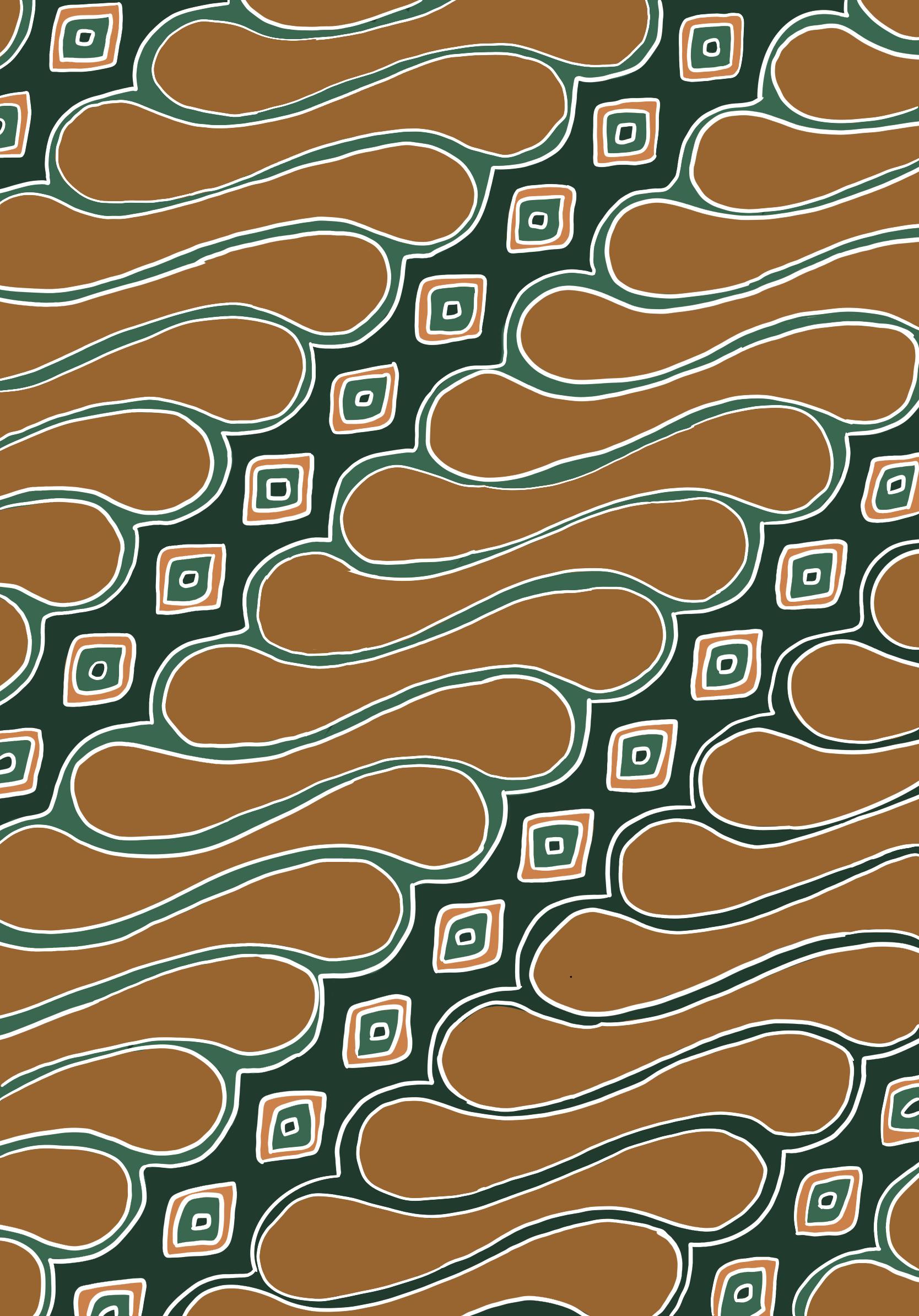
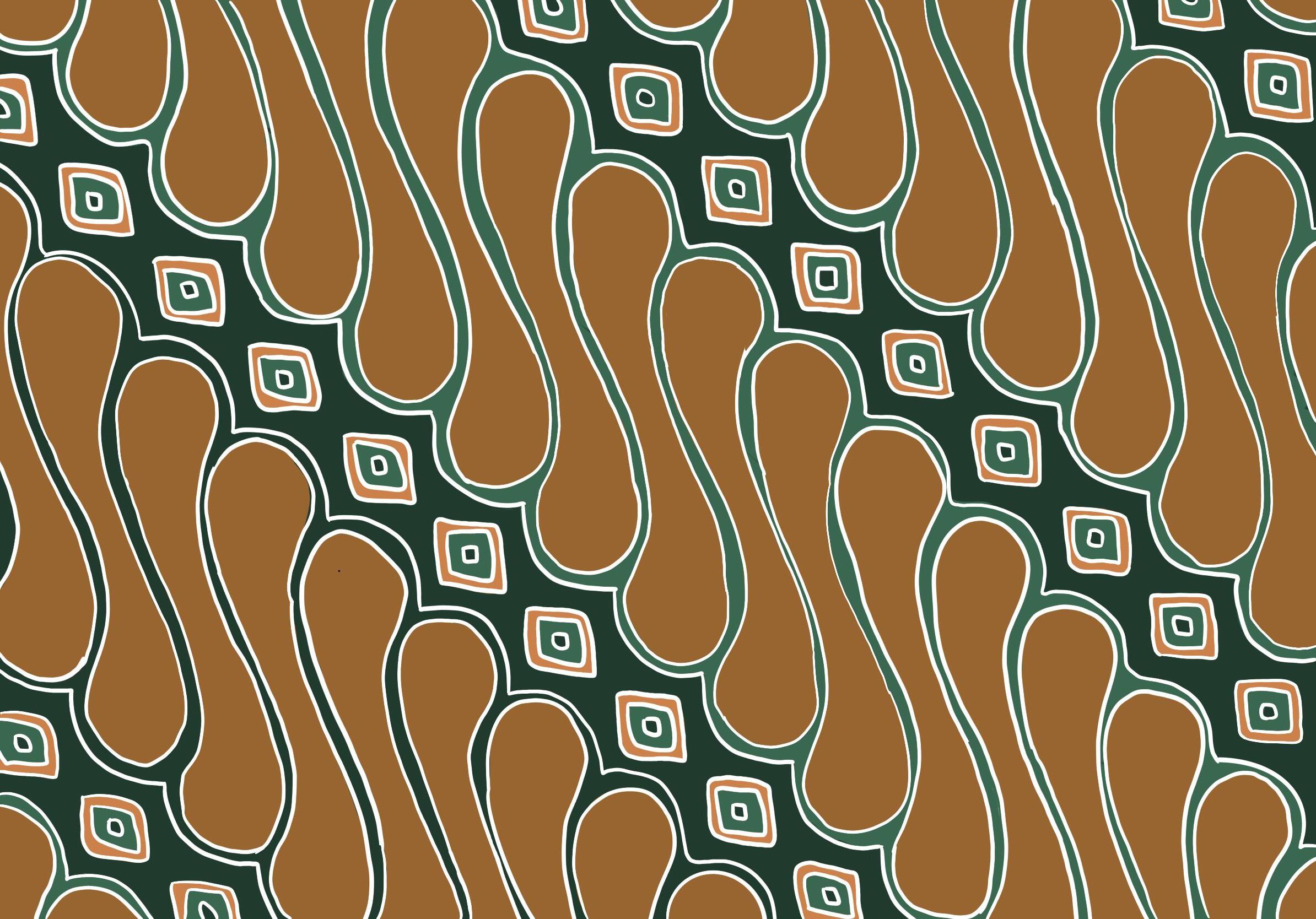

Simbut means ‘blanket’ in Sundanese, and is one of the traditional cloth pieces of the Baduy tribe. Usually used for birth, death and circumcision rituals, it is believed to protect its wearer, and is used for the wrapping of ceremonial paraphernalia. The simbut pattern uses a paste of sticky rice and subsequent application of the resist dying technique. It used to be hand drawn. It is believed that this technique represents the origin of batik resist dying.
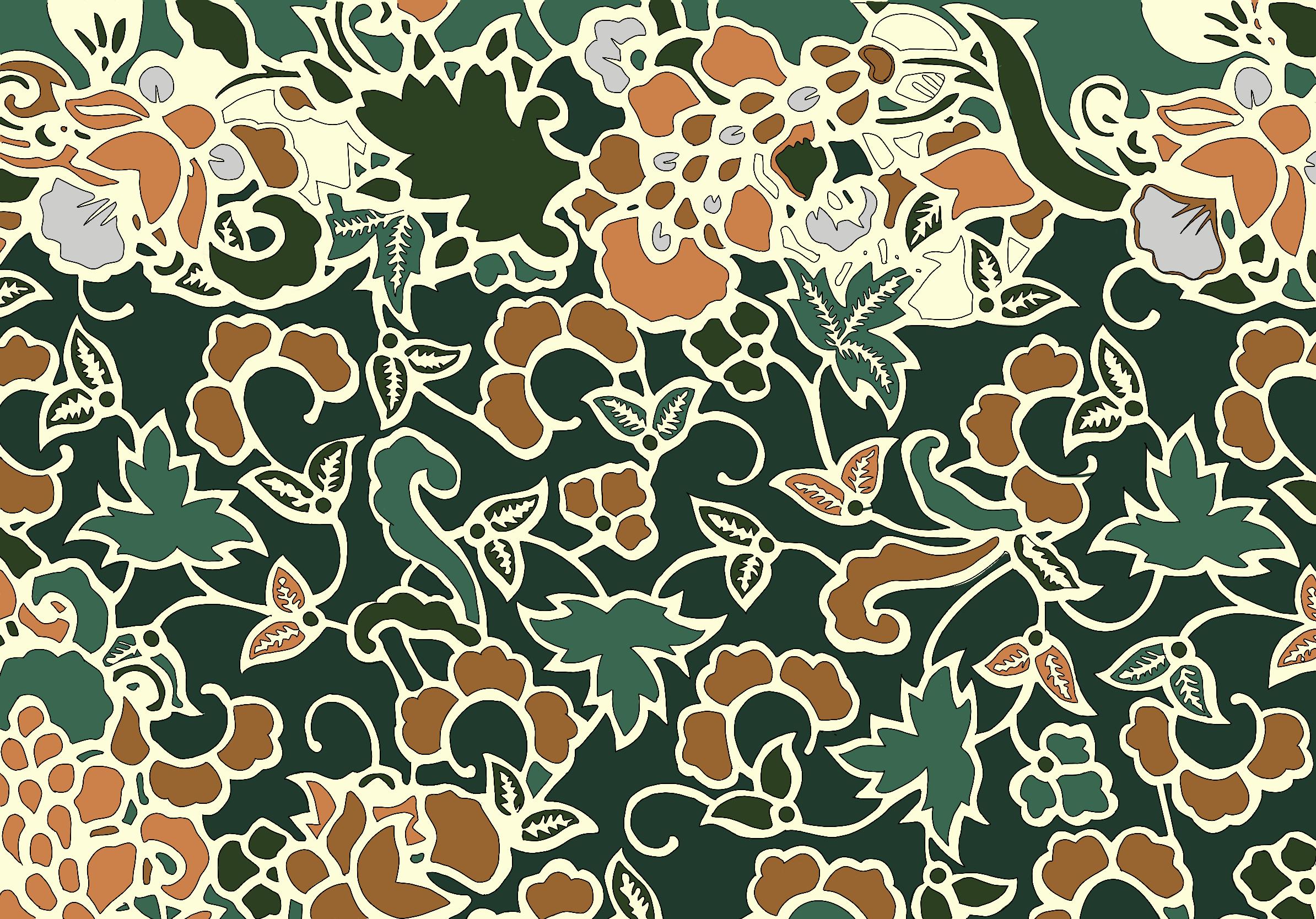
The Kawung is one of the oldest batik motifs, consisting of a four lobed stylised flower, based on the Areca Palm blossom. The cross section of the palm fruits and their seeds are also said to inspire the design. Part of the Ceplok (circle) family of designs, the Kawung can be arranged as intersecting circles in some of its variations, making dynamic repeated patterns.
Simbut means ‘blanket’ in Sundanese, and is one of the traditional cloth pieces of the Baduy tribe. Usually used for birth, death and circumcision rituals, it is believed to protect its wearer, and is used for the wrapping of ceremonial paraphernalia. The simbut pattern uses a paste of sticky rice and subsequent application of the resist dying technique. It used to be hand drawn. It is believed that this technique represents the origin of
The Kawung has many symbolic meanings, its association to the palm blossom indicates purity and honesty, while the palm fruit refers to fertility and hope. There is also a profound philosophy attached to it of universal energy and the sacred origin of human life, longevity and eternal life.
The design was originally worn only by the Sultan and his family and was one of the forbidden batik motifs for the general population. In this context the Kawung was linked with power, wisdom and justice and was thought to imbue these qualities to the wearer.
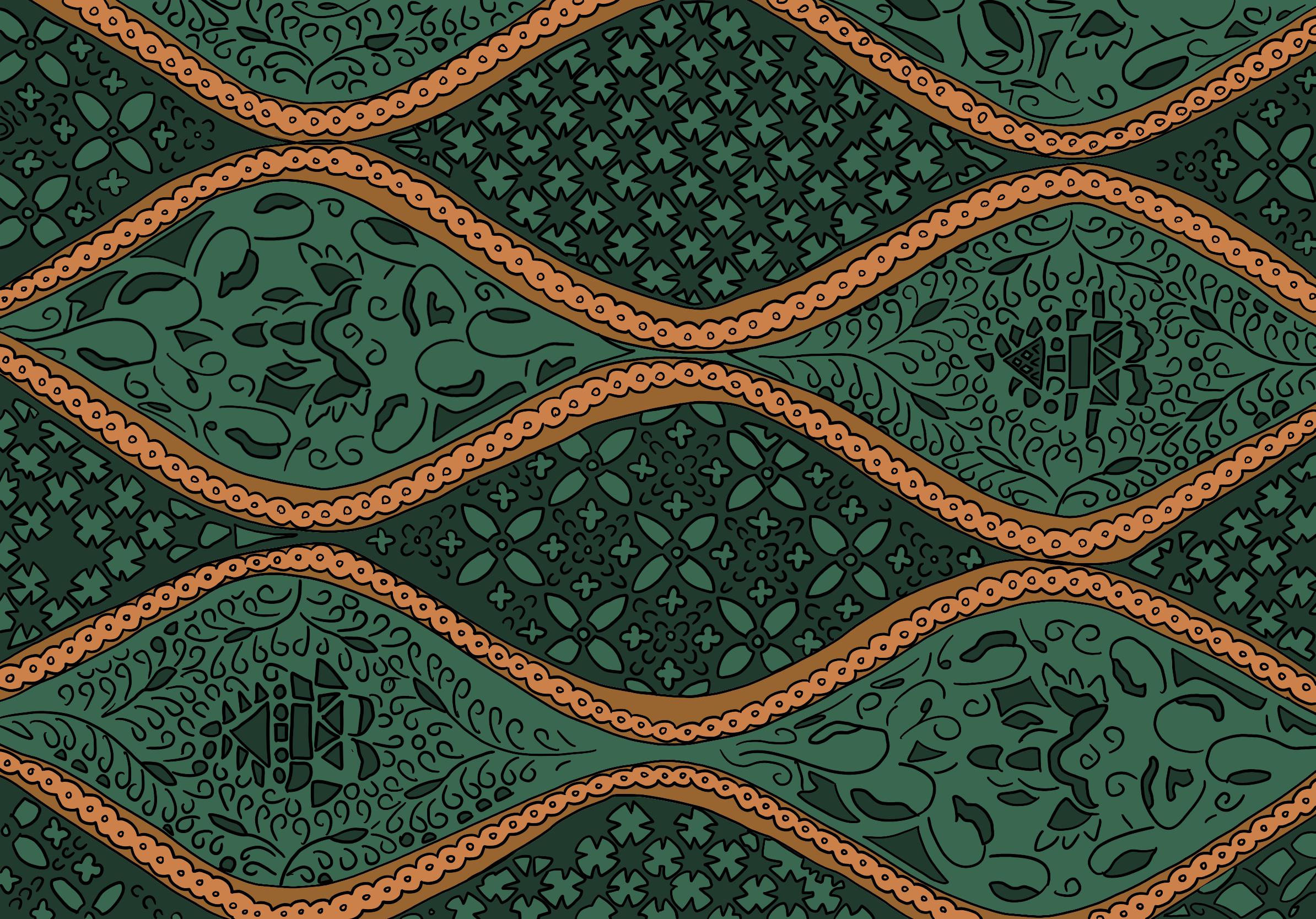
Tujuh rupa batik (Indonesian: Batik tujuh rupa) is one of the Indonesian batik motifs originating from Pekalongan, Central Java. This tujuh rupa batik motif is very thick with natural nuances. In general, tujuh rupa batik displays animal or plant motifs. The motifs are taken from various mixtures of local culture and Chinese ethnicity. Because, in the past, Pekalongan was a transit point for traders from various countries. Thus, it is this cultural acculturation that makes Pekalongan batik unique to nature, especially the jlamprang motif, the bouquetan motif, the moonlight motif, the cement motif, the pisan bali motif and the lung-lungan motif.
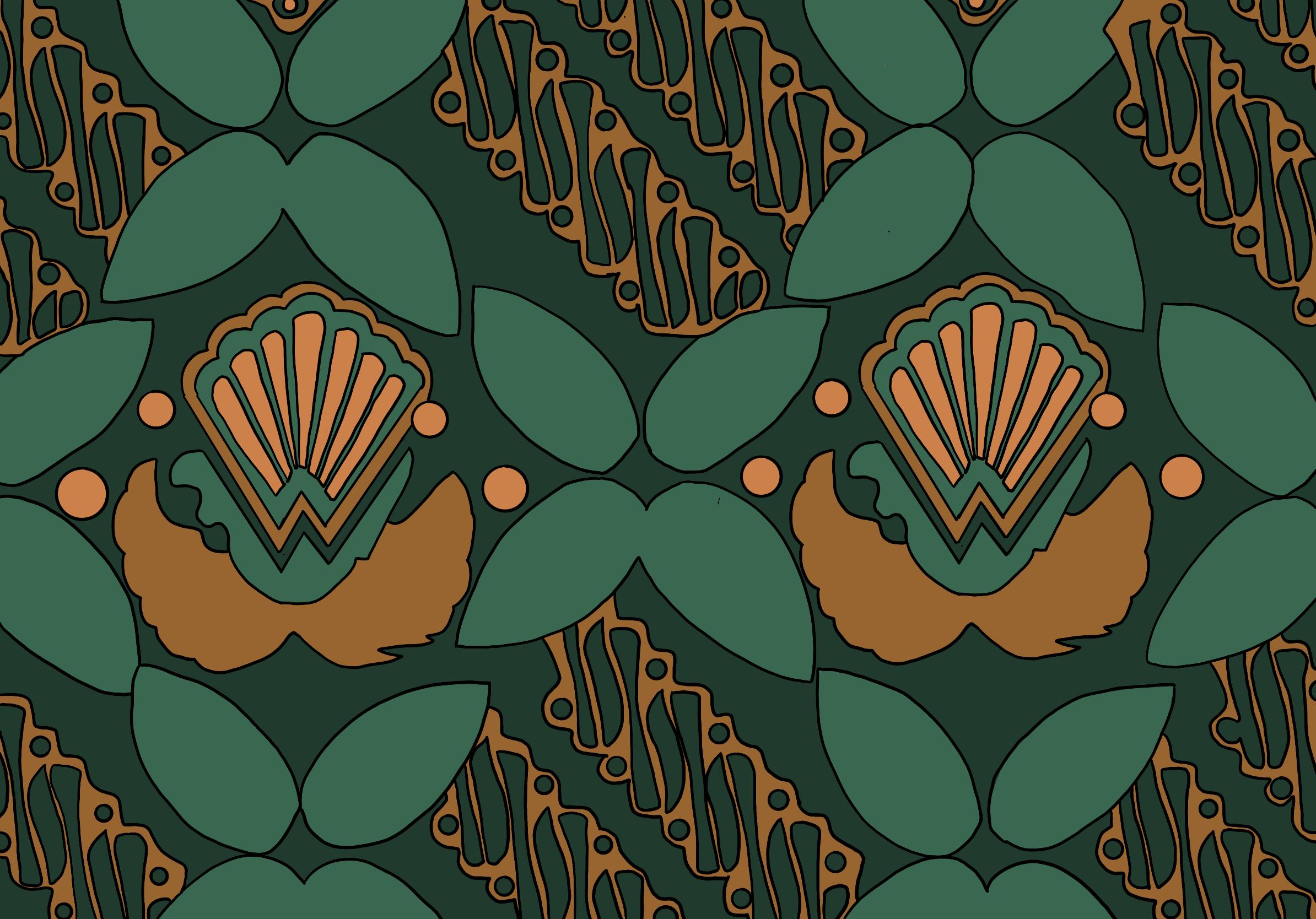
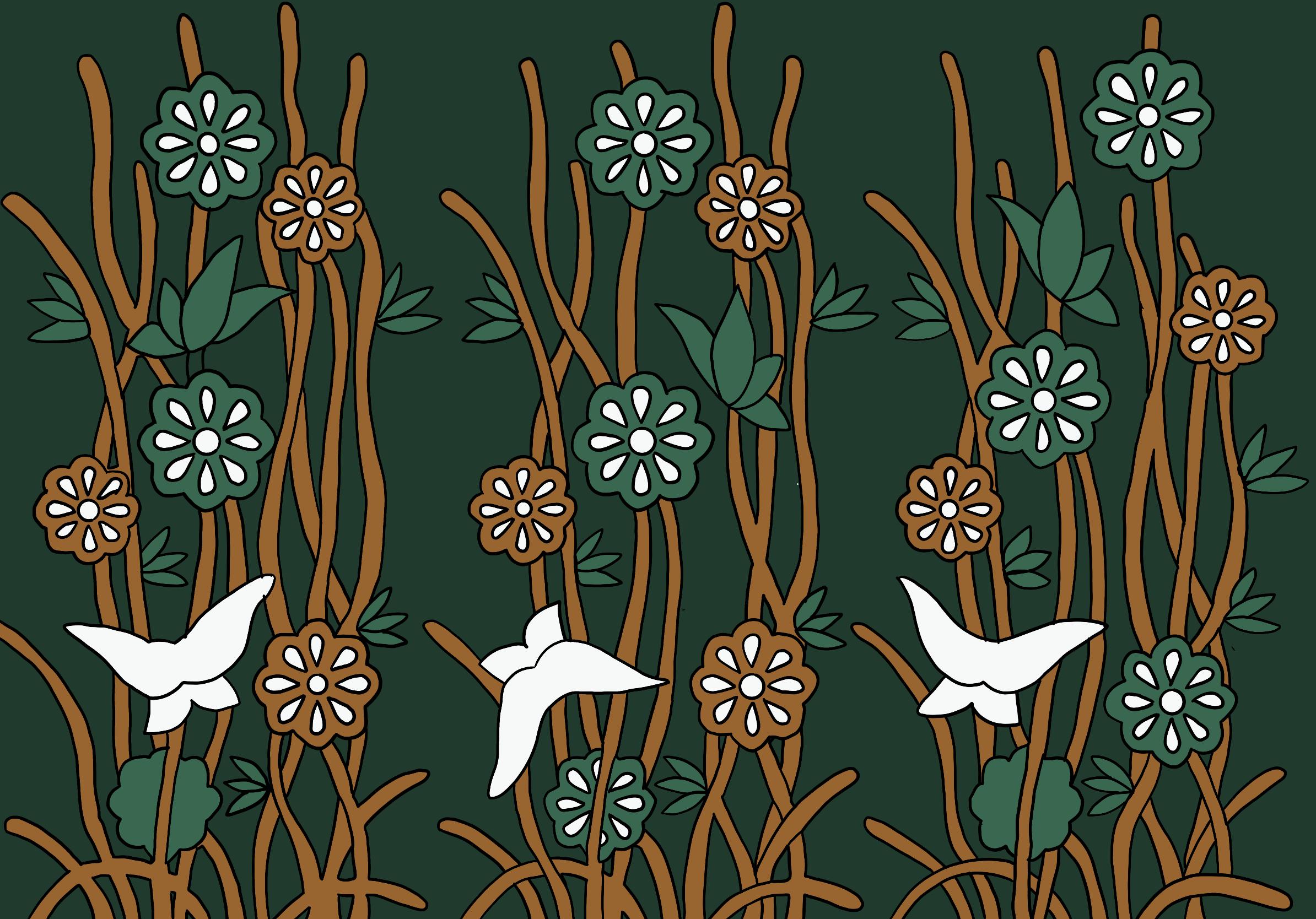
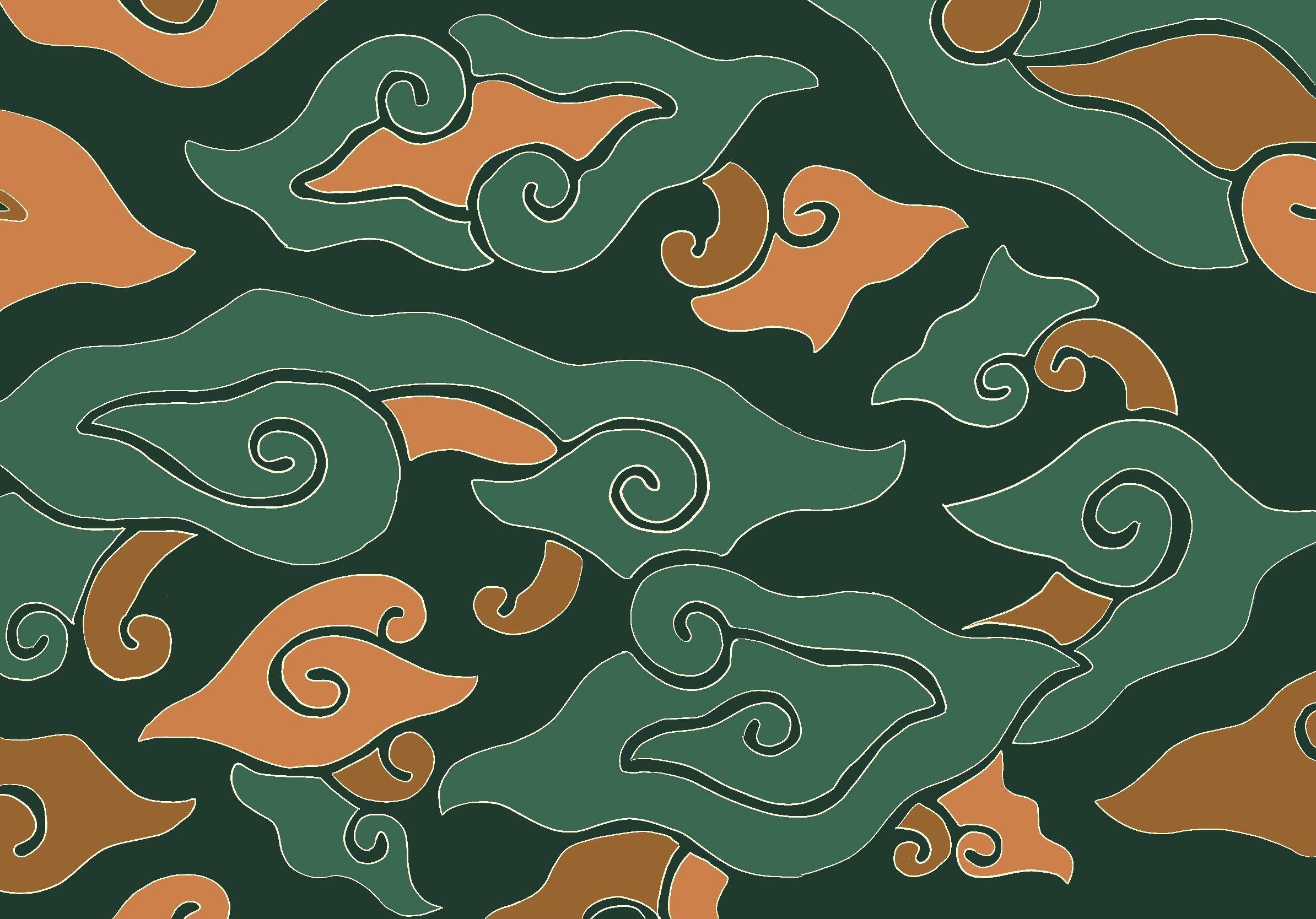
This motif was invented by a King of Pajajaran Kingdom (923-1428) during his meditation to seek for guidance in the midst of the war. The word “Mega” means the sun rays, and “Mendung” is an Indonesian word that indicates the cloud that covers the sun. This cloud motif implies staying cool and calm in any situation, and being an inspiring, lofty-minded leader who protects and cares for the needs of the people.
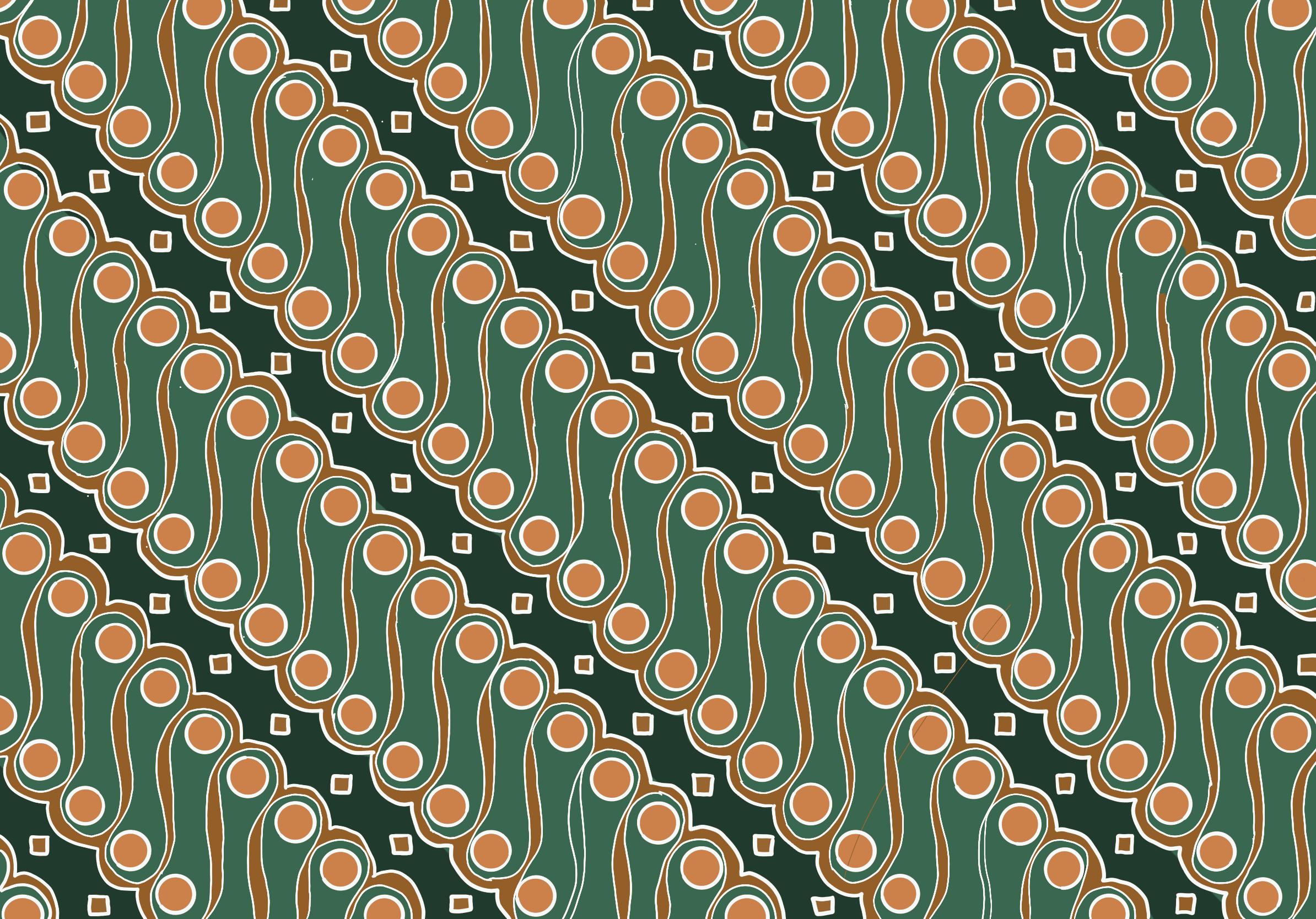
Batik Parang is one of the oldest Indonesian batik motifs. Parang comes from the Javanese word pereng which means slope, parang depicts a diagonal line descending from high to low.
Parang means war, Javanese kings and knights always wear parang batik which means war against their passions every day. Only kings and knights are allowed to wear parang batik. Parang batik is like religion, to achieve the perfection of a better life.

The word “Sogan” refers to batik cloths which use brown color produced from Soga’s tree (Peltophorum pterocarpum). This tree is commonly found in Asia. This natural color is used in batik clothes to create a natural brownish color with the special characteristic of having additional certain ornaments mostly colored in black. As a pioneer of the Betawi Batik motif with sogan colors, we always create new motifs that tell the cultural arts of the city of Jakarta. So that it can help Betawi batik lovers who are fond of sogan colors, to stay comfortable using and look elegant. You can customize products that can be adjusted to your needs such as clothes, uniforms, masks and others.

The meaning of this batik motif is to show the simple and elegant motif in the form of a bamboo motif, so it is often also referred to as Pring batik. This motif is indeed a simple philosophy, where bamboo gives a meaning of tranquility, shade, and harmony. Apart from that, bamboo/pring also has a deep philosophy for Javanese people, namely that everything within us must provide benefits to others, from birth to death.
Batik Gentongan was unique, for it was found only in Madura. The batik was called “gentongan” (Javanese “gentong” means barrel) because it was manufactured using a barrel for soaking the cloth. The barrel was planted in the ground and was used repeatedly for countless times in a long period.
The process of making batik Gentongan took a long time (6–12 months), and there were myths that must not be violated. The myths surrounding the making has been persisting to this day and coloring the socio-economic life of Tanjung Bumi community.
Batik Keraton is batik that flourishes in the royal environment, especially Yogyakarta and Surakarta. In the early Dutch colonial era, this region was called Vorstenlanden, which means the territory of the Islamic Mataram.
Batik Keraton began to develop during the Islamic Mataram Kingdom around the 16th century. Batik Keraton is closely related to the traditions, customs, and beliefs in the royal palace.
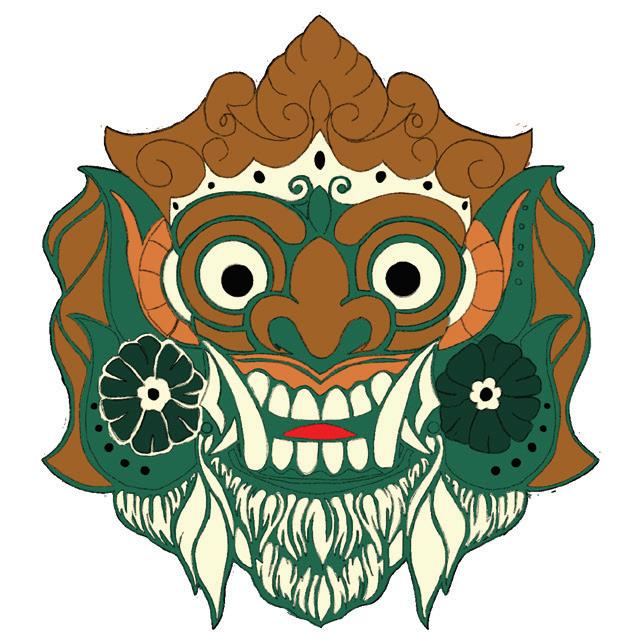
Batik that comes from the Indonesian province of Bali is called singa barong batik. Within Javanese and Balinese traditions, the Barong Bali batik motif holds great cultural value because of its elaborate portrayal of a mythical and magical monster.