PORTFOLIO.
Andrew Li
Andrew (Fuxiao) Li
Carnegie Mellon University
3rd Year B.Arch |2022-2027
fuxiaol@andrew.cmu.edu
206-605-3238
linkedin.com/in/andrewli7568
Personal Statement
The art of architecture does not lie in monochromatic aesthetics or engineering; rather, architects balance geometries and systems with the human scale. We are curators of experiences for the human emotions, engaging the design with narrative and societal context. My goal for curating this portfolio is to express my passion for this task in design while exploring the branches of materiality and sustainability.
Profiency
Design: Architectural Representations & Details Drafting, Computational Design & Fabrication, Modeling & Rendering, Urban mapping & Analysis, User Research & Prototyping, Front-end Development
Digital/Programming: Python, Rhinoceros, Revit, Grasshopper, Sketchup, vRay, Enscape, D5 Render, QGIS Axure RP, Figma
Adobe: Photoshop, Illustrator, InDesign, Premiere Pro, After Effects, Lightroom, Portfolio
Analog: Woodworking, Free-hand drawing, Oil painting
Language: English, Mandarin/Chinese
Relevant Experience
T.Y.Lin International Chongqing, China
Product Management Intern May 2024 - July 2024
• Assisted in the development of iKanjian Collaborative Management Platform, an intelligent system that integrates clients, designers, and contractors with the full-life-cycle management for urban construction and architectural projects.
• Collaborated with front-end and back-end teams to design prototypes catered to specific on-site construction situations.
BIM Management Intern Jiangjin District, China
• Assisted in the inspection of BIM models and plans for the post-construction phase of Science Avenue, an infrastructural project for the Science City development in the Jiangjin District.
Education
Carnegie Mellon University
Pittsburgh, PA
Bachelor of Architecture, Minor in Human-Computer Interations August 2022 - May 2027
• GPA: 3.76
• Relevant Courses: Poiesis Studio, Praxis Studio, Fundamentals of Programming, Detailing Architecture, Structural Design, Materials & Assembly, Interaction Design, Designing Human-Centered Software.
Cornell University Ithaca, NY
Architecture Summer Program June 2021 - August 2021
• Introduction to Architecture summer program at Cornell University College of Architecture, Art, and Planning.
Activities
All University Orchestra
Pittsburgh, PA
2nd Chair Clarinet August 2022-Present
Tartan Wind Emsemble Pittsburgh, PA 1st Chair Clarinet August 2022-December 2022
Honors
College of Fine Arts Dean’s List Fall 2022, Fall 2023


01 Riparian Gateway
Praxis I Studio, Fall 2024
Coordinator: Heather Bizon
Instructors: Jared Abraham and Brad Groff
In Collaboration with: Tom Shen
Event, Housing, and Infrastructure
Before the 'City of Steel,' Pittsburgh was the 'Gateway to the West, ' owing its rise to the Ohio, Monongahela, and Allegheny rivers. Running West, the rivers brought industries and culture to the site, enabling the city to grow in steel, glass, and technology. However, the fall of the steel industry left most manufacturing infrastructures in regions like Herr's Island and Strip District abandoned, leaving the city searching for new industries.
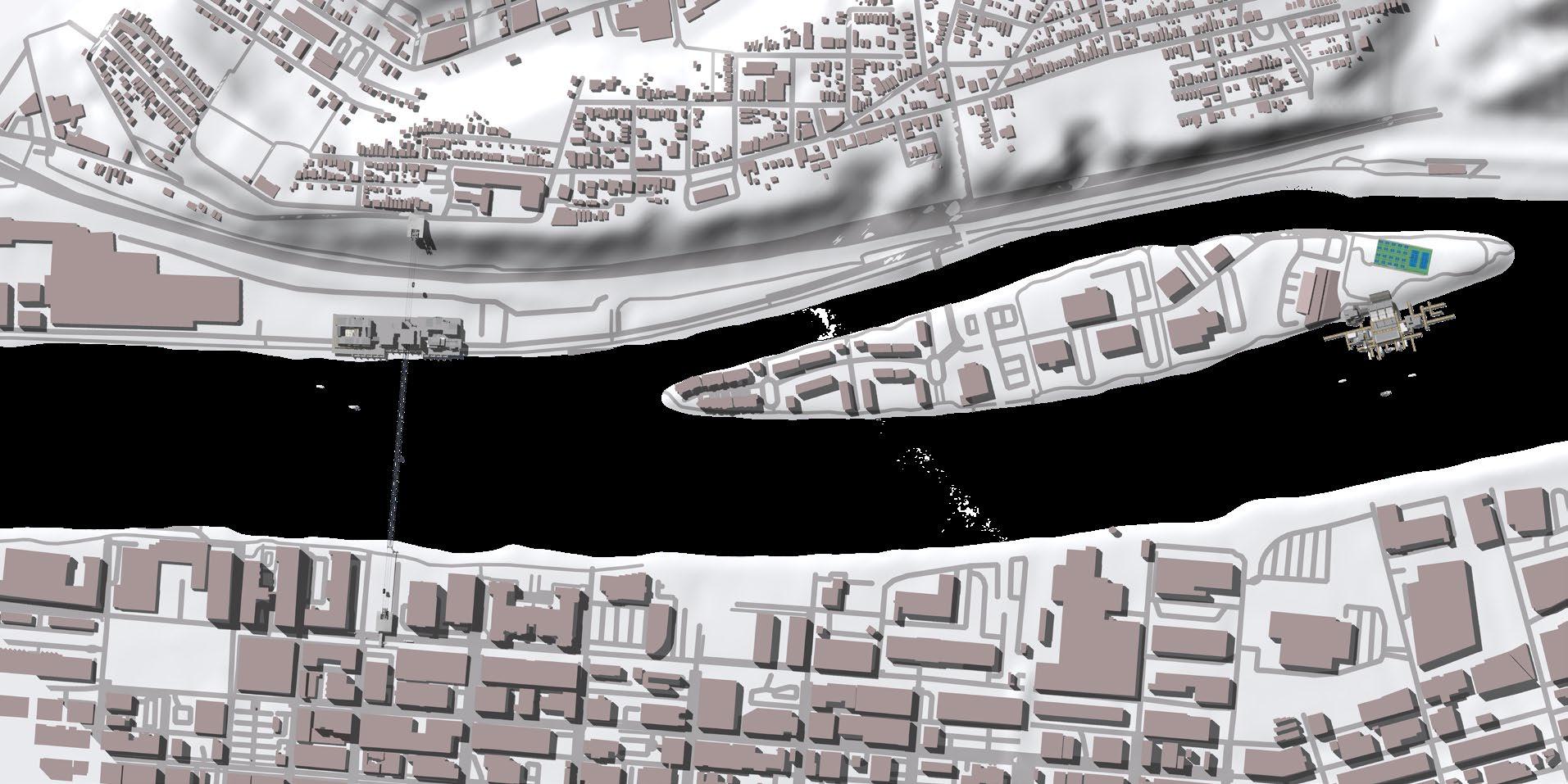
This project reimagines the river based on its historic property to enable urban growth as not a barrier between urban areas but an activator and connective corridor for the Pittsburgh urban fabric; this exploration attempts different forms of 'bridging' the banks through event, housing, and infrastructure by introducing nexus points for other forms of travel, including boat, land, and cable car.
Herr's Island Stage
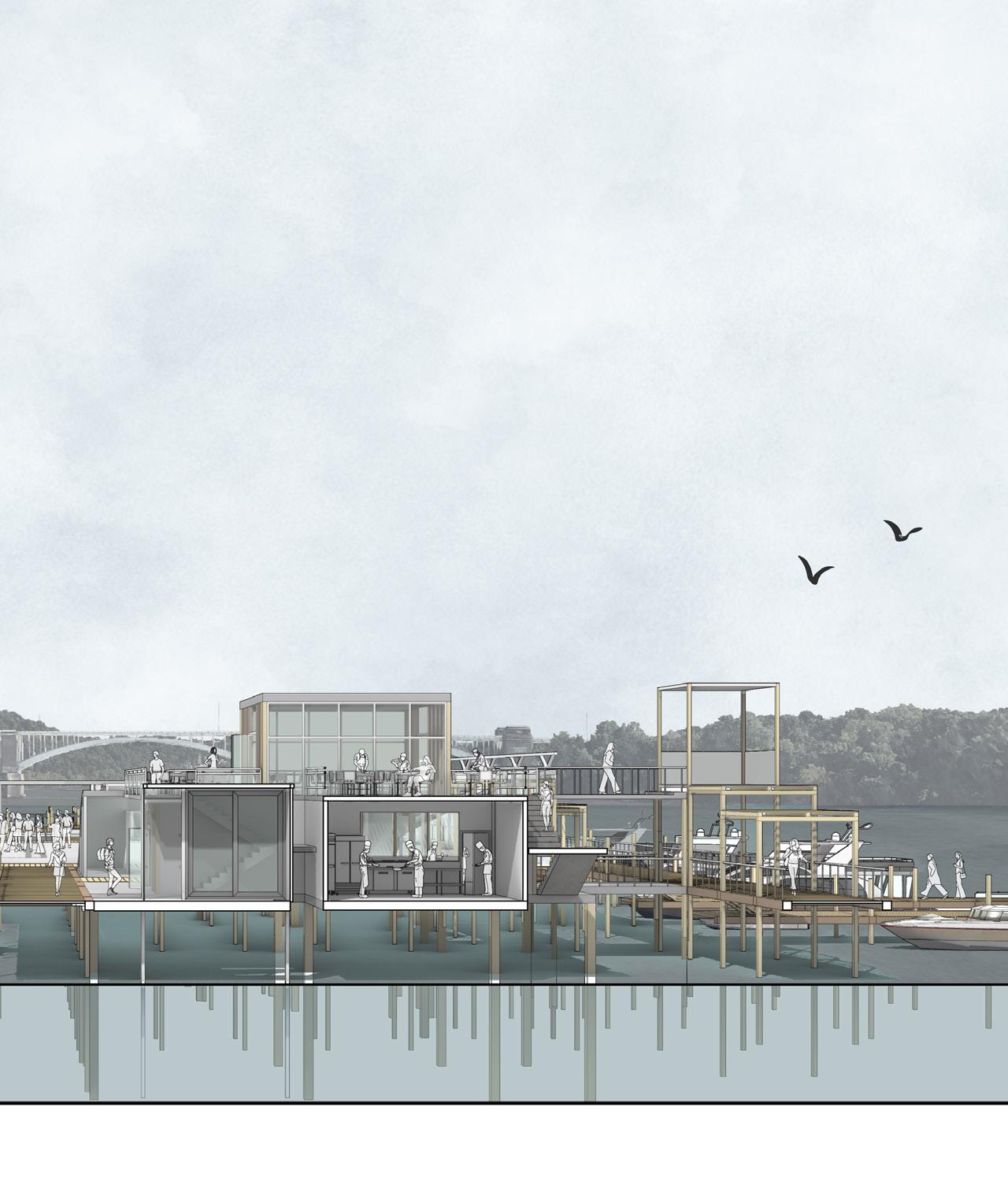
Taking inspiration from the city-wide music event South by Southwest Festival in Austin, Texas, an event that involves an entire city, its residents, and visitors into one connected cultural exchange, the event stage canopy sites by the river edge of Herr's Island that brings performance and community space with river transportation.
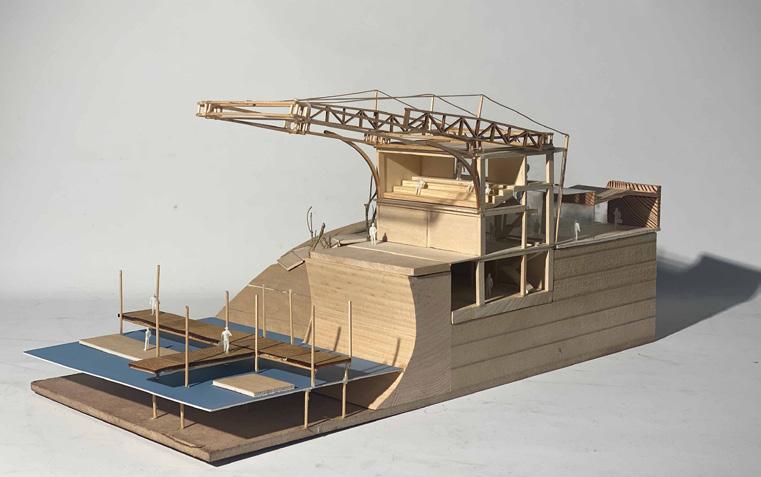
The stage is separated into two sections: the main stage facility with a steel canopy and community center are embedded on land while event attendance sits on water-based pier platforms, which includes seating, resturants, bars, as well as cosmetic shops. Together, the stage creates a mixed-use gathering space for residents accessible by land and water.
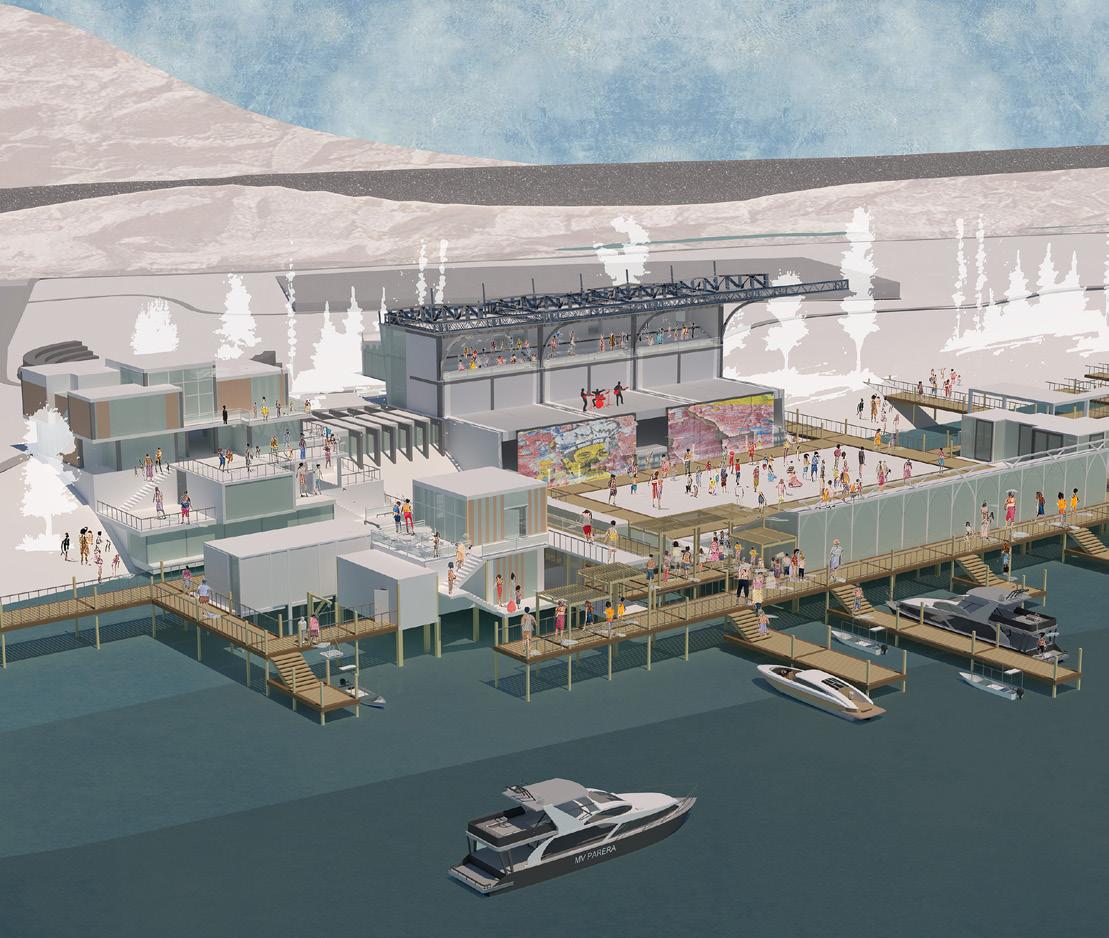
View
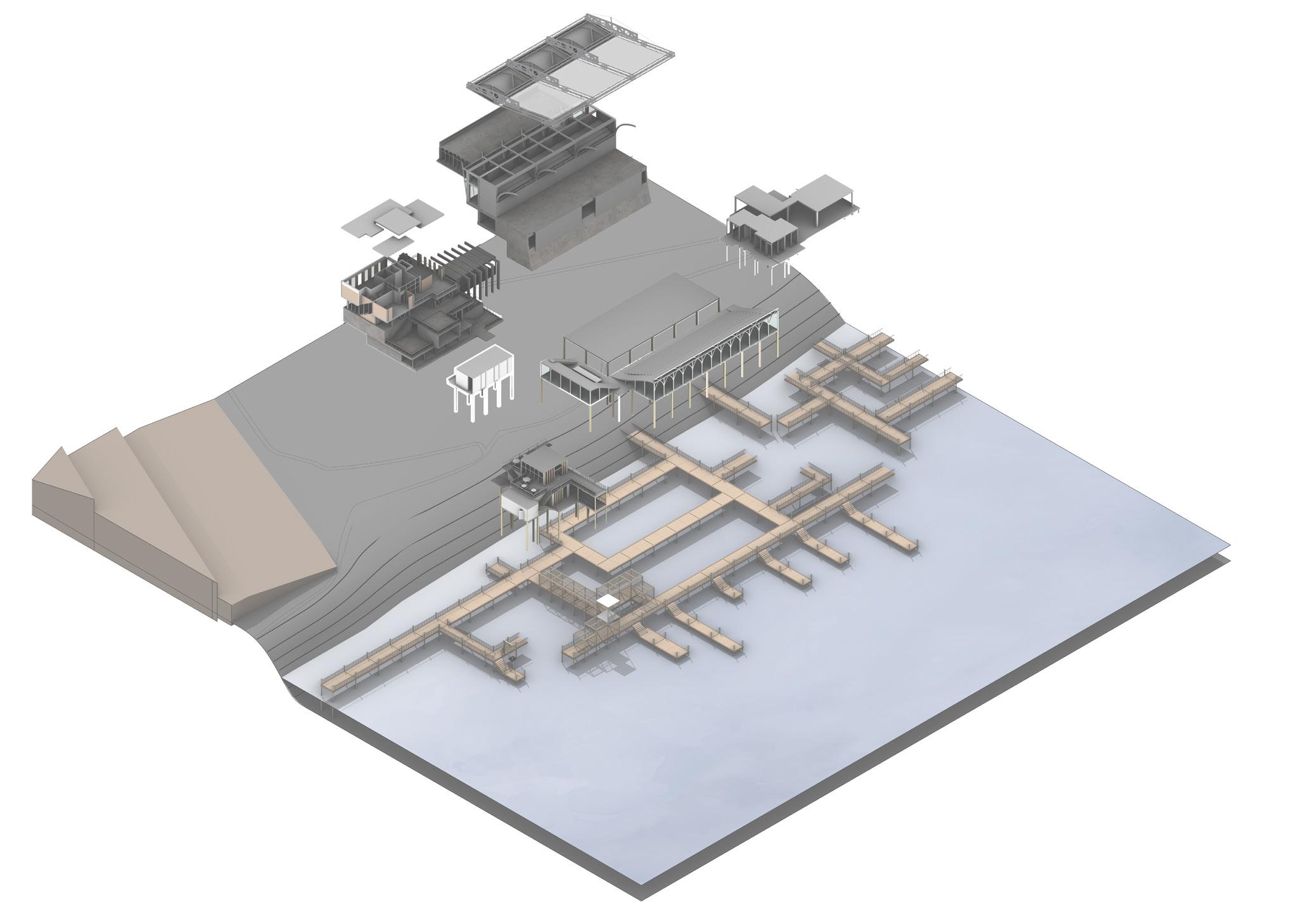
Program Layout Diagram
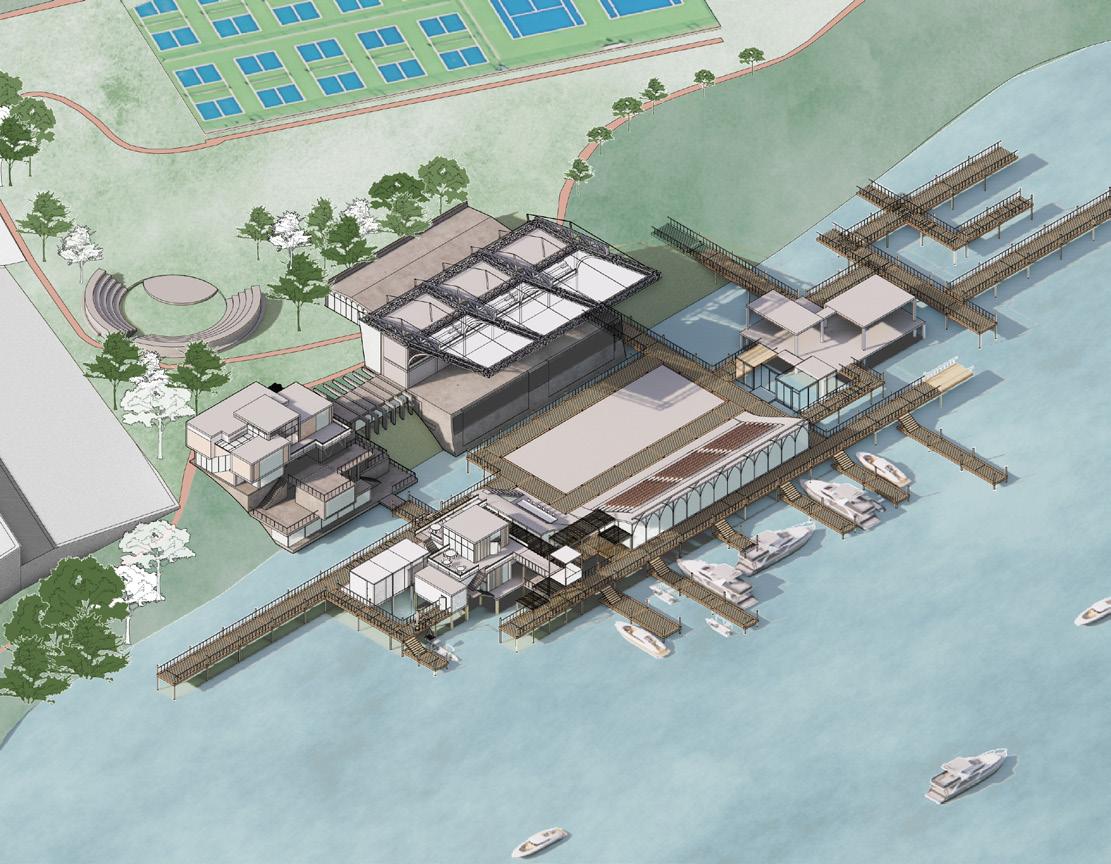
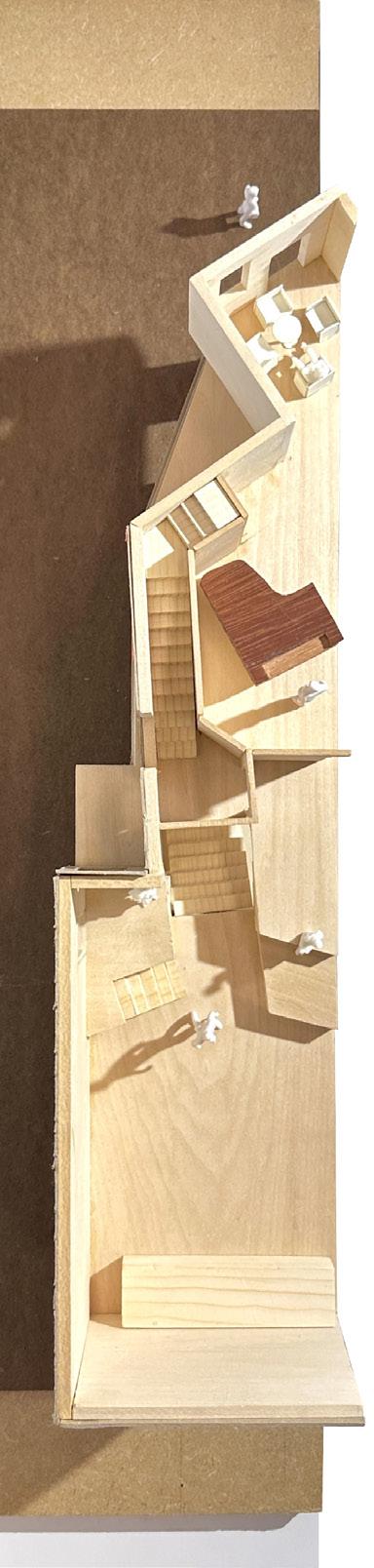
The on-land stage and community center feature multi-leveled spaces for meeting, artists' practice, and performance, with the stage supporting behind-stage seating. When no event is being held, the stage can become a connected extension of the community center to be used for recreation and gathering.
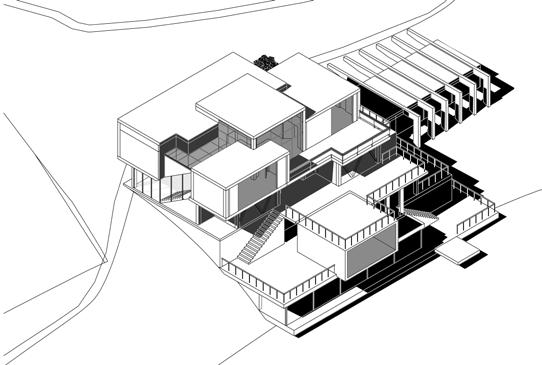
Axonoemtric View
Level 2
The back of the stage has an open workshop that allows different usages. In performance season, it can become the preparation backstage or stage set production; in other cases, it can be a rehearsal theatre or public event gathering.
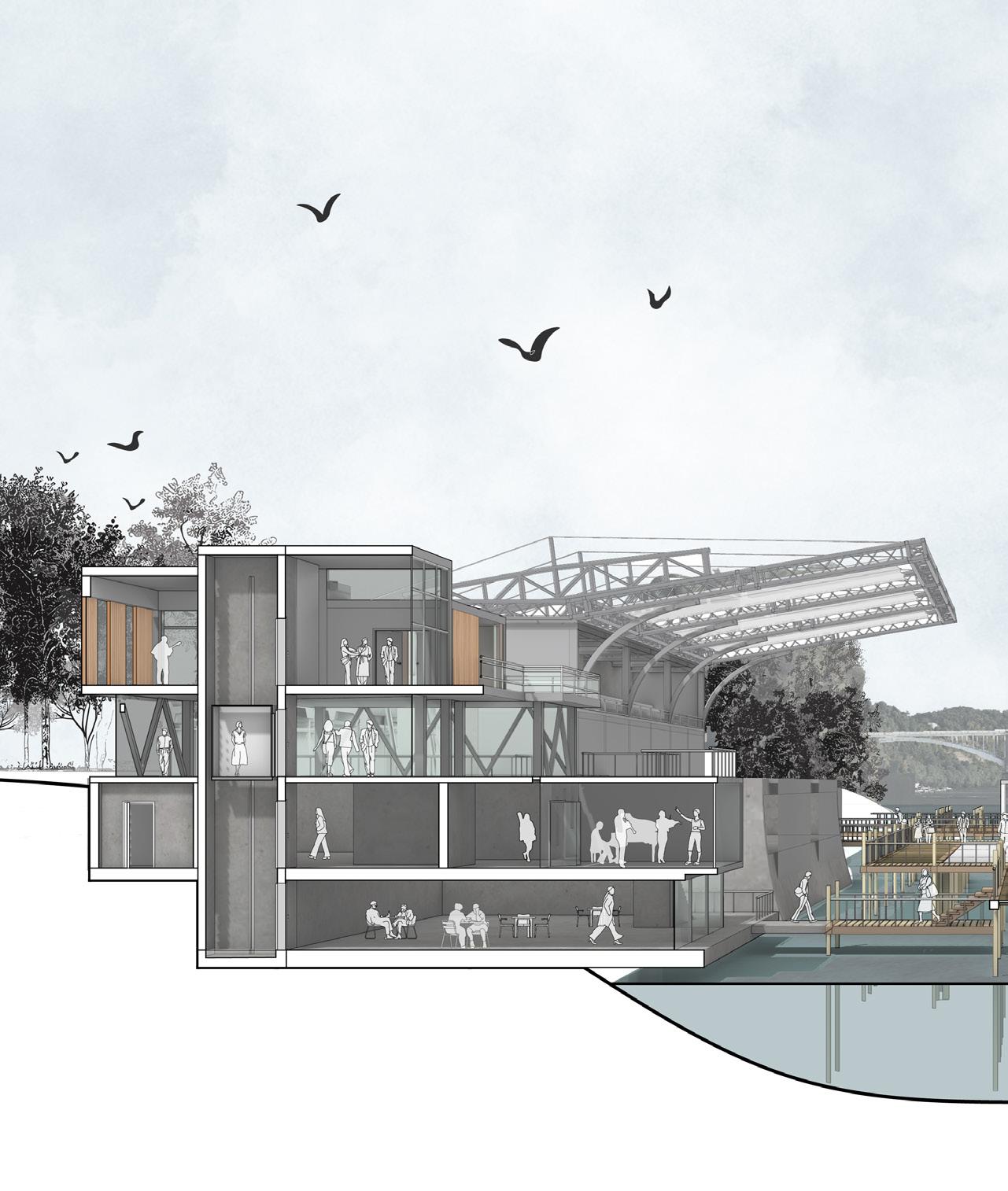
Visitors can choose to either move inland from the riverfront or access the piers from the island, all through the connected pier pathways. The piers vary in standing height from the river to both account for stage visibility and boat docking as well as ecological shifts like flooding.
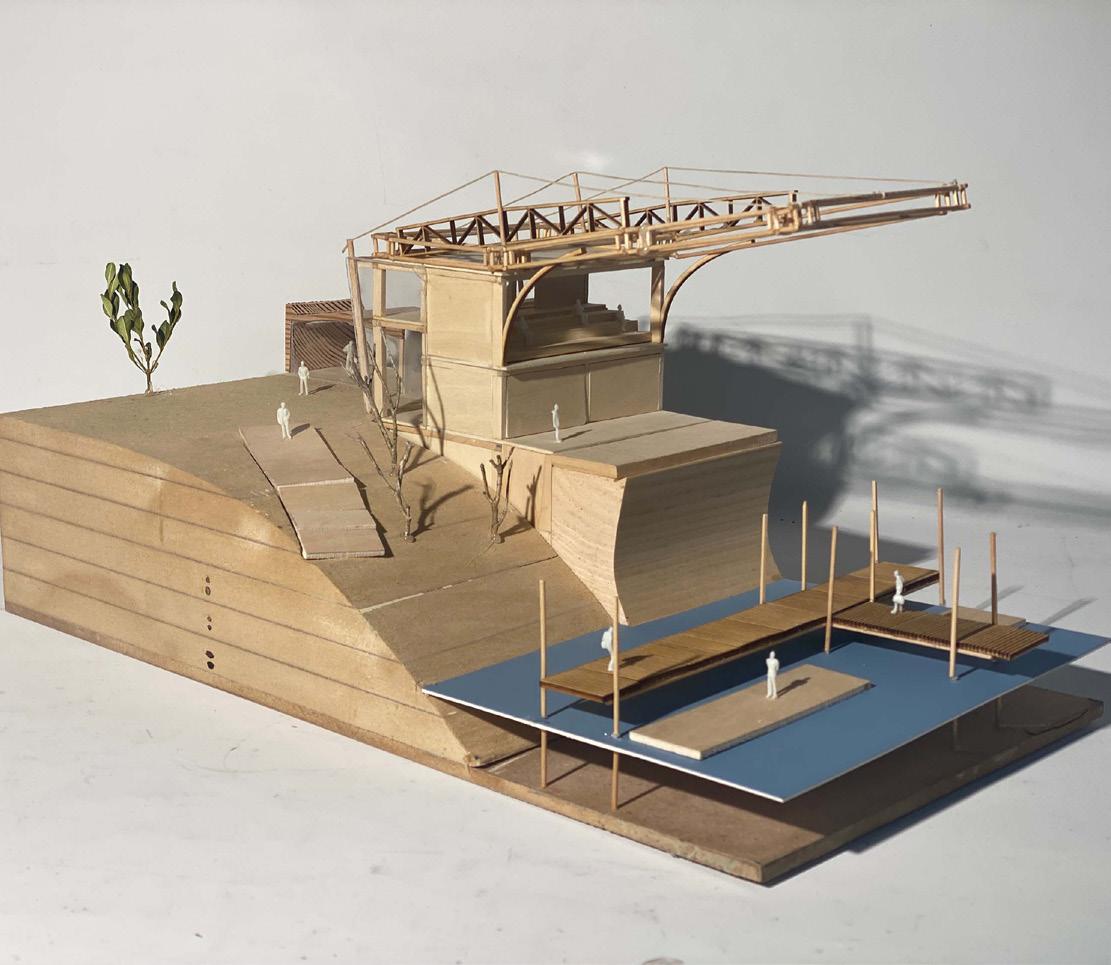
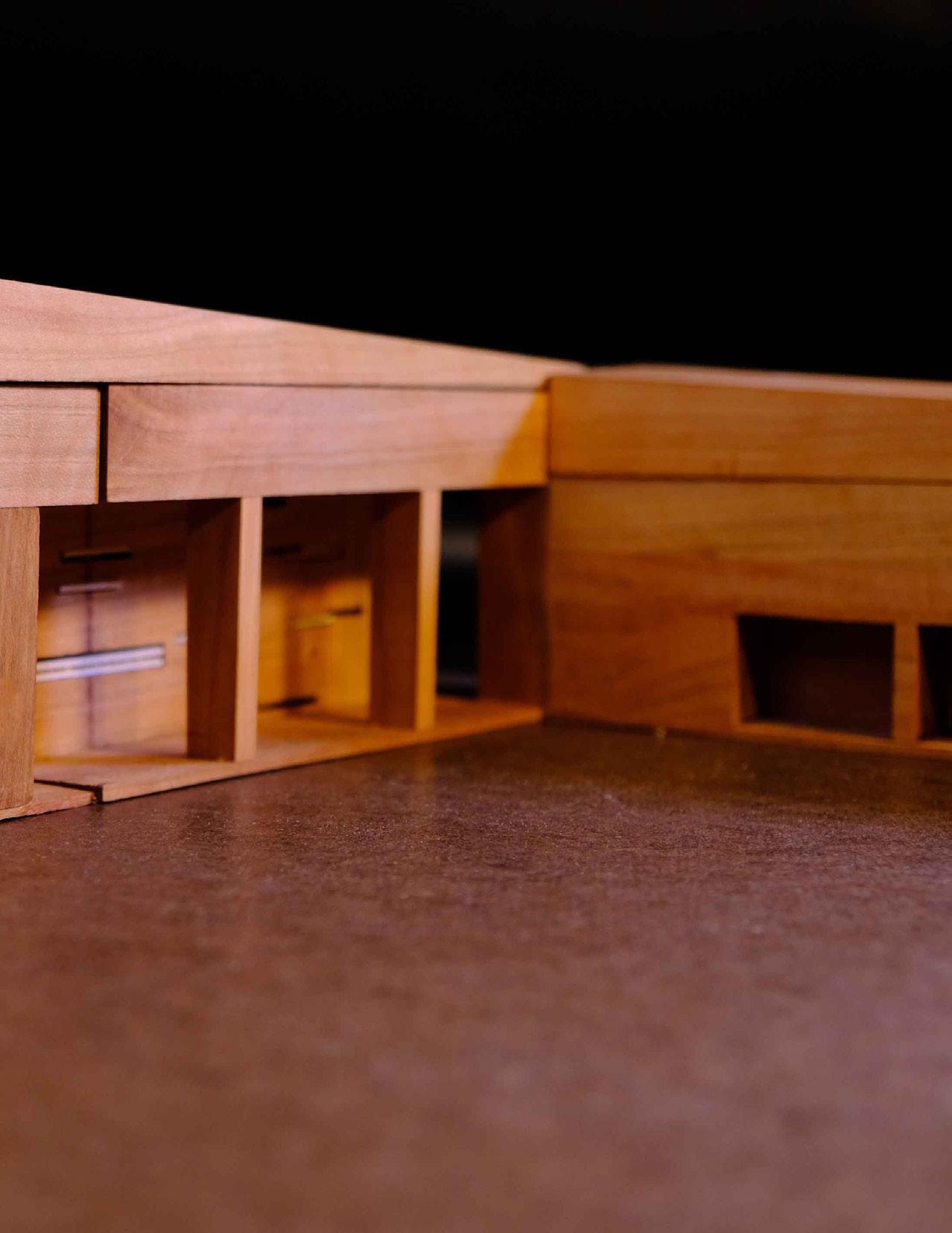
Section Model
Floors of Stage and Workshop Space
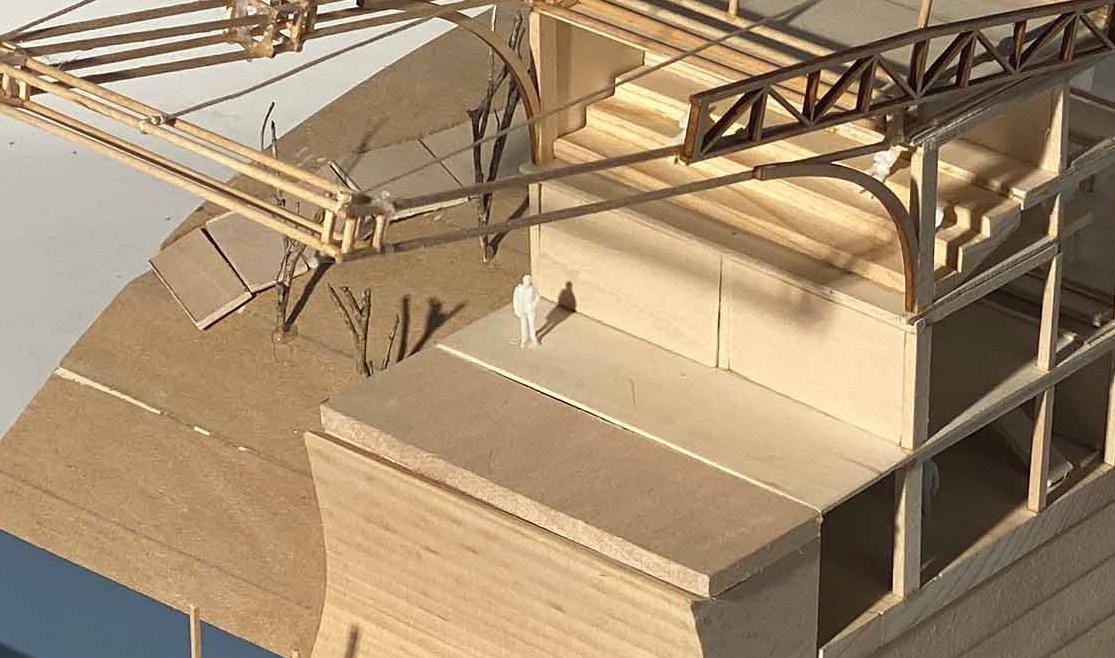
Canopy Structure
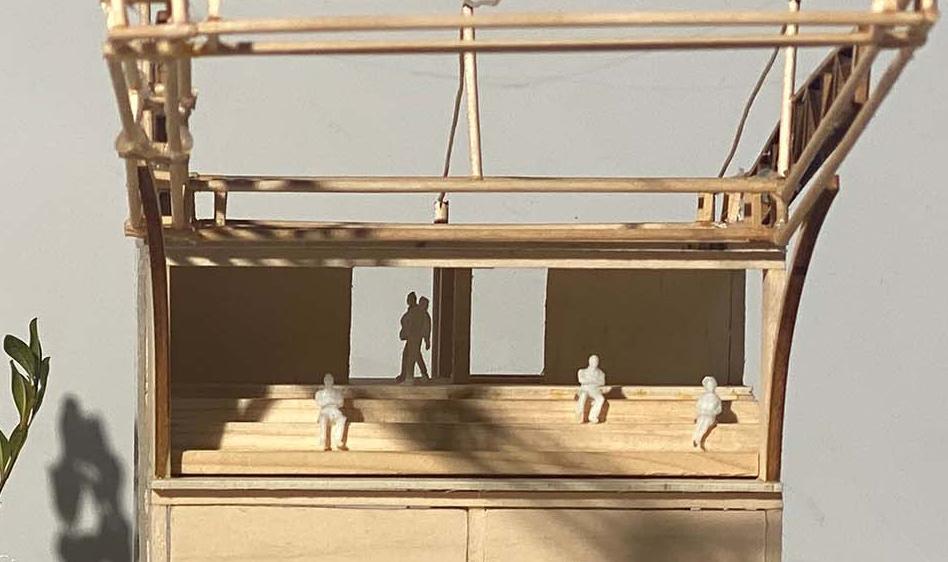
Behind Stage Seating
Housing
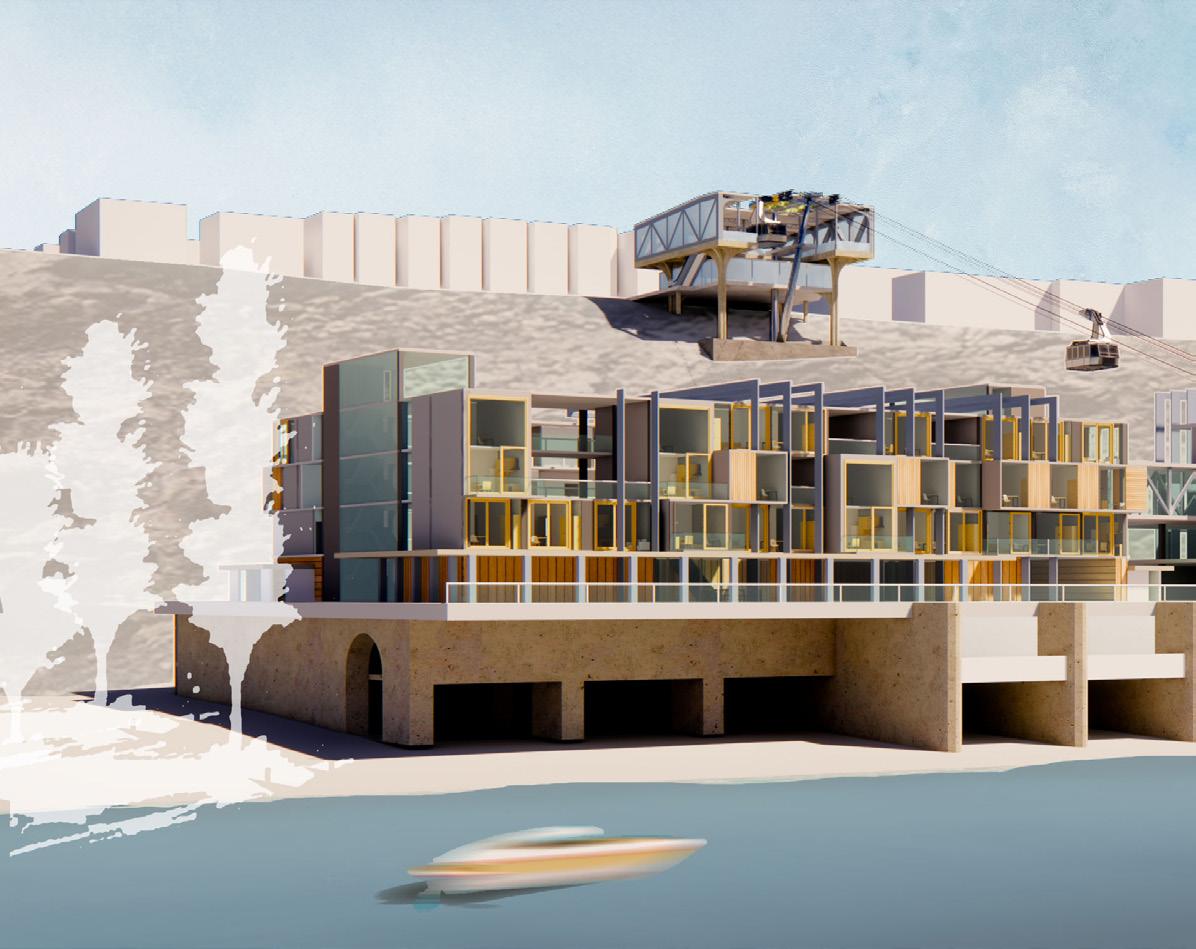
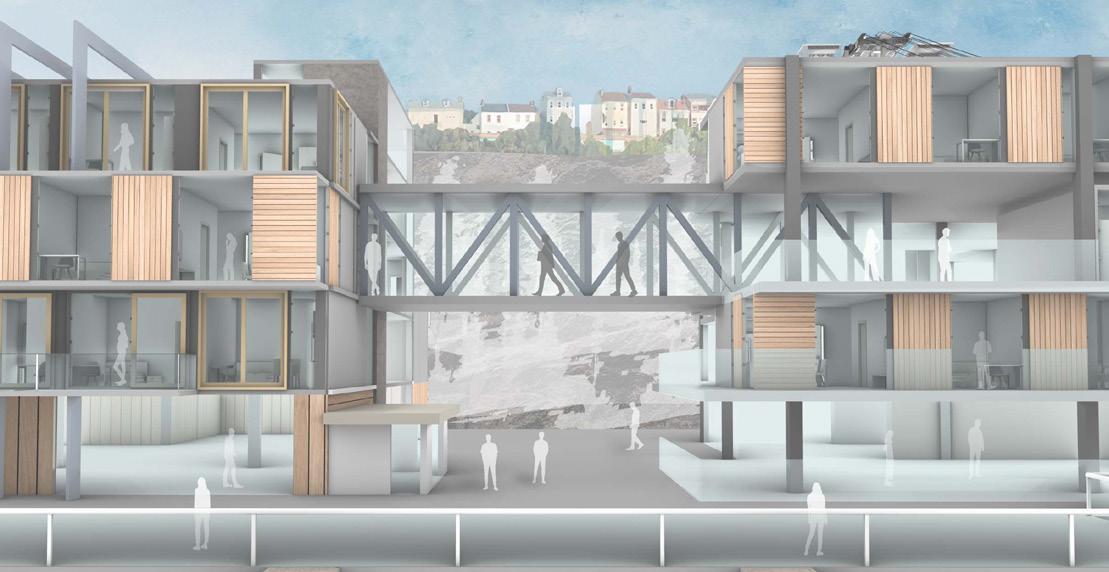
Using the river as a means of travel, locals and event visitors can access the Wools Lofts housing siutated on the previous site of the Pittsburgh Wools Company. Repurposing the site, the housing aims to not only provide housing but also 'bridge' the areas on opposing sides of the river like Strip District and Troy Hill through river travel and cable cars, generating a nexus corridor that both connects the banks and receives access
from the river flow.
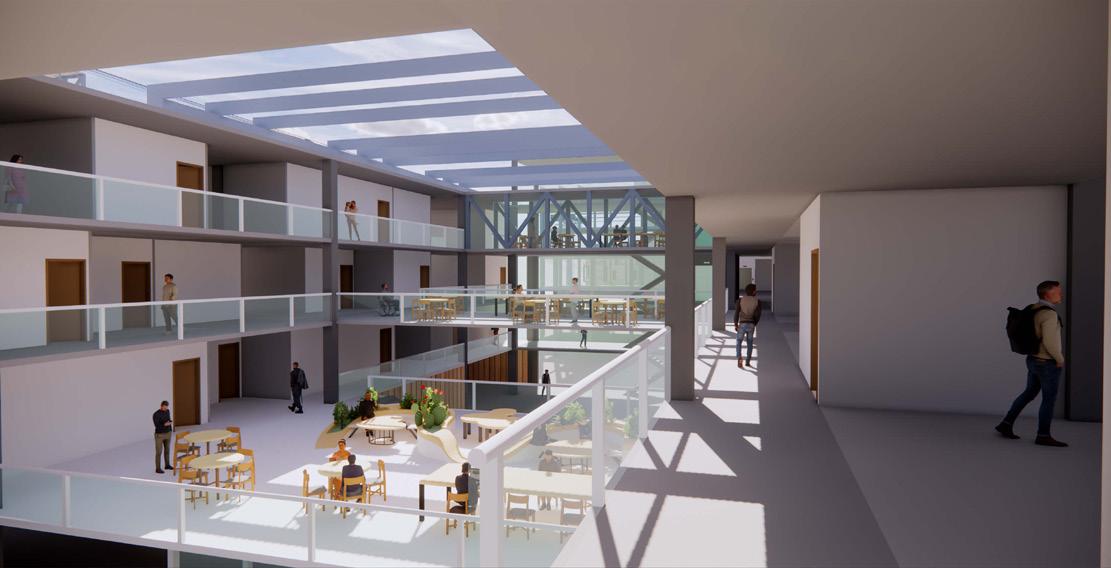
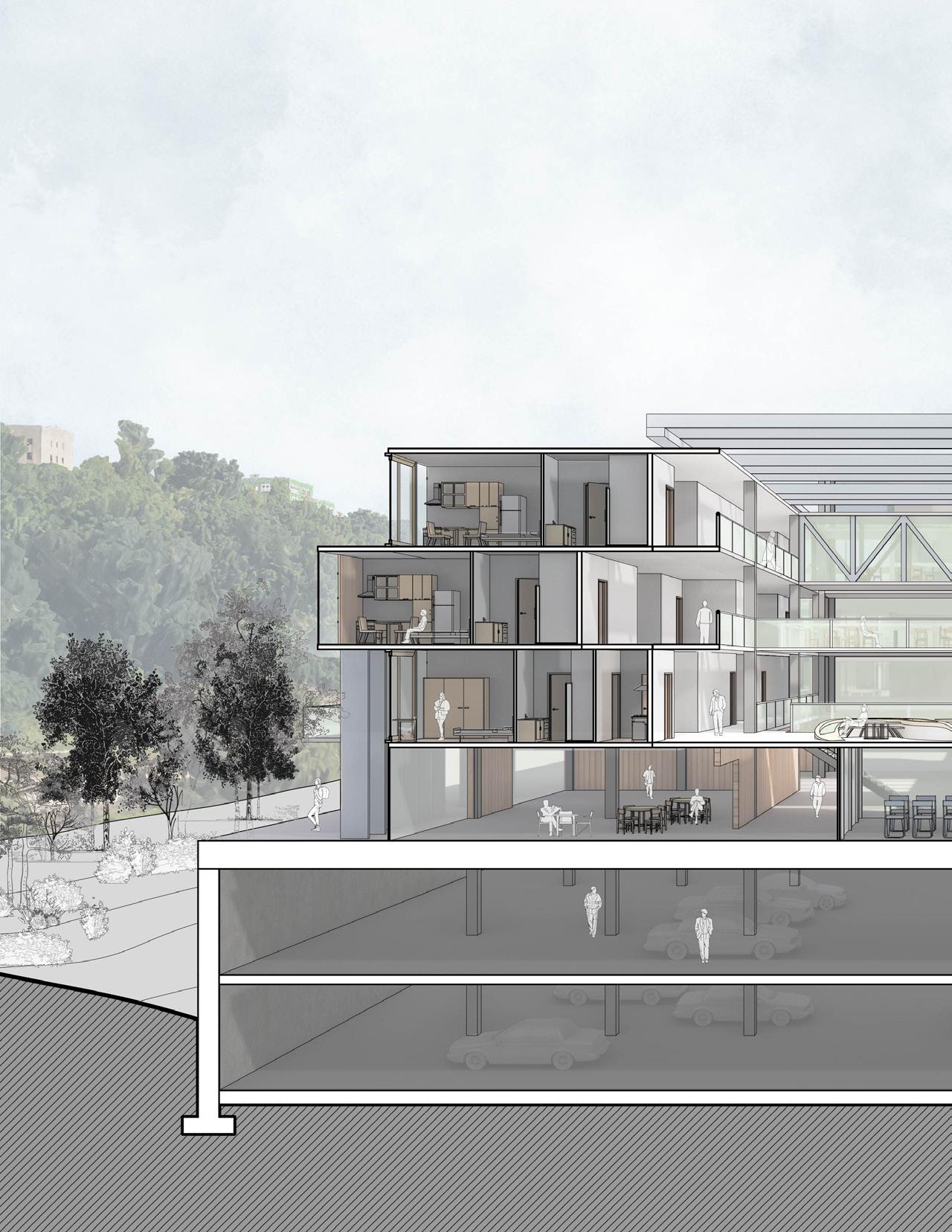
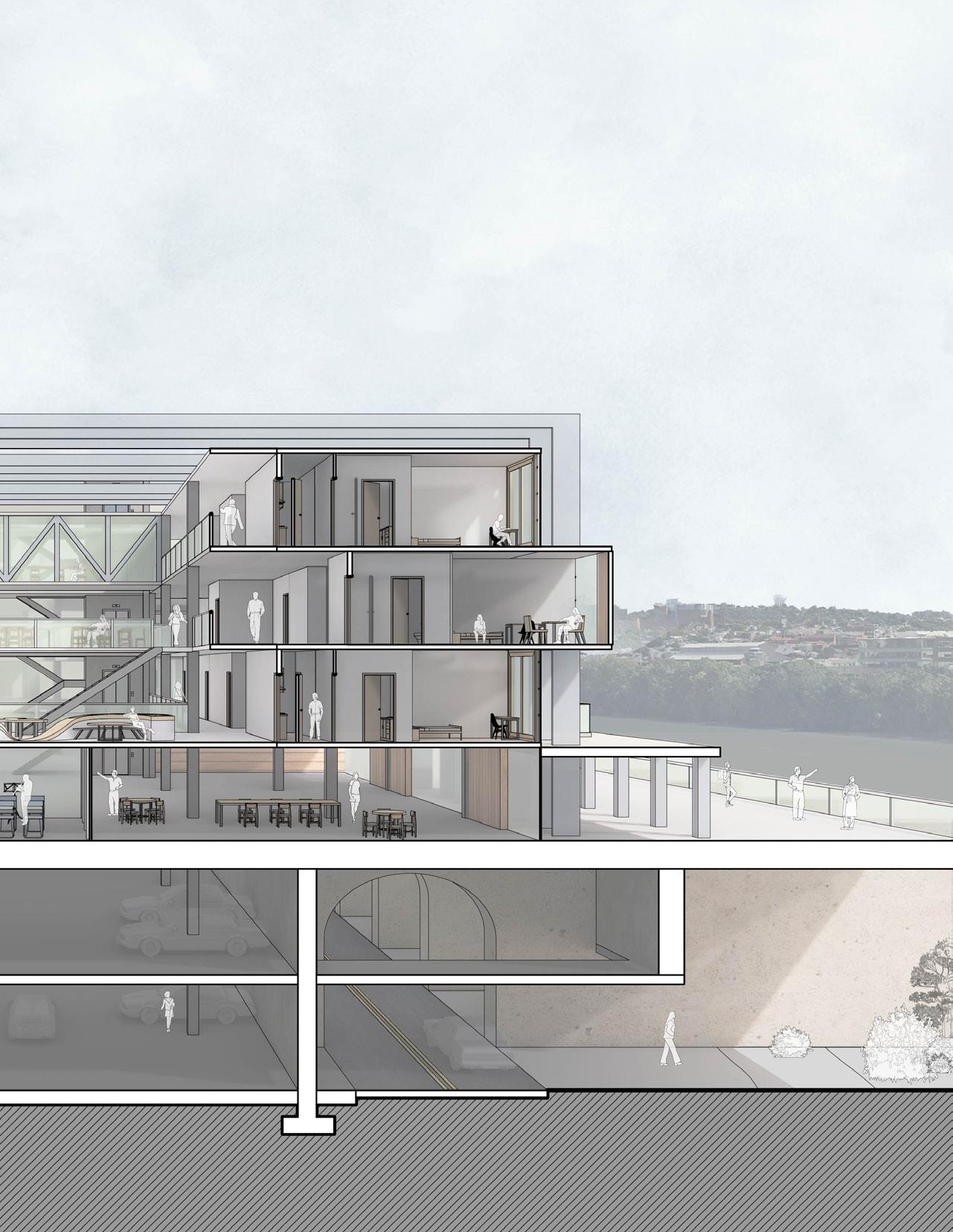
The complex provides residential blocks connected via bridge platforms to other blocks, a general community utility center, and the cable station, allowing access from Troy Hill, Strip District, and visitors for the music event. With the connected cable line and waterfront proximity, the housing can provide living opportunities for the two neighborhoods and temporary visitors.
The Wool Lofts
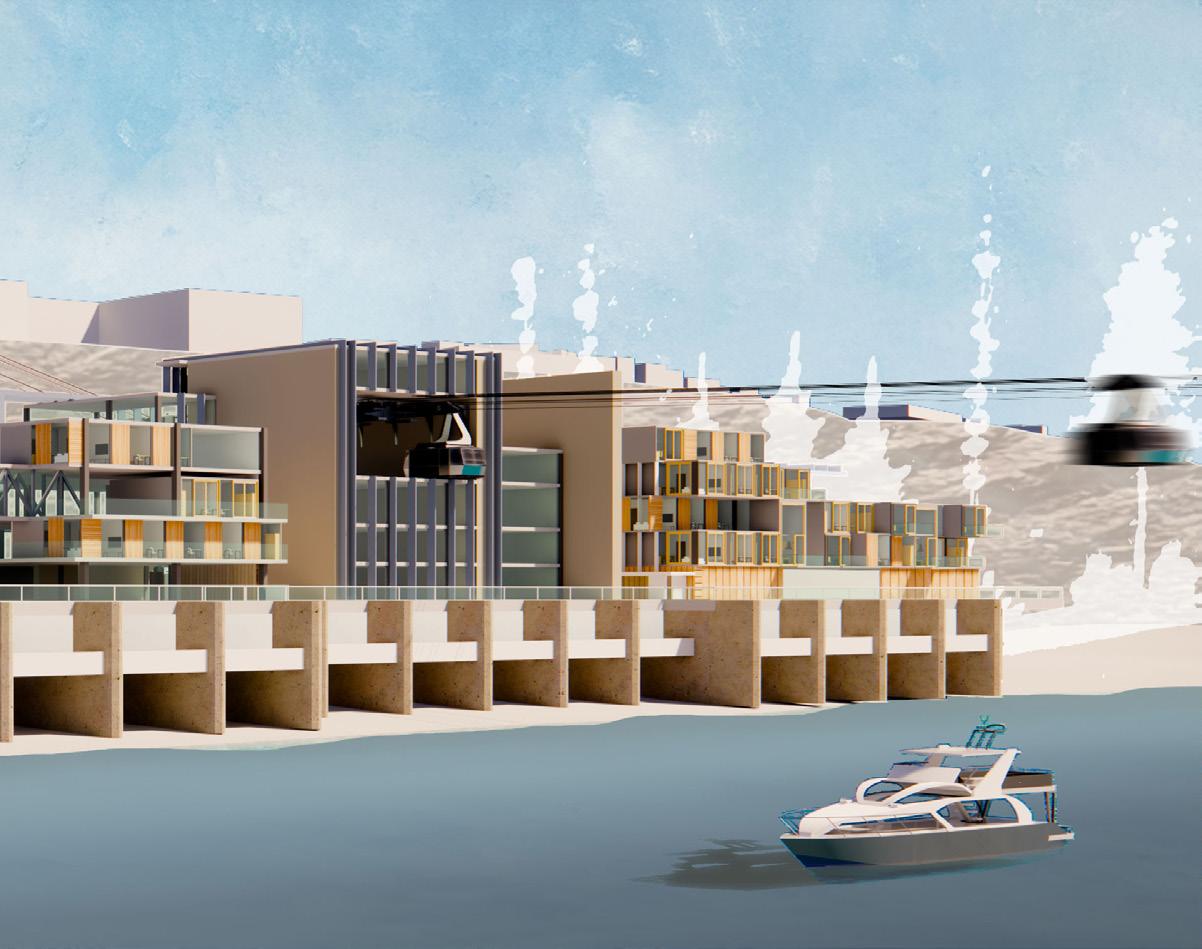
Troy Hill Wool Company
Allegheny River Strip District
The protruding and retracting
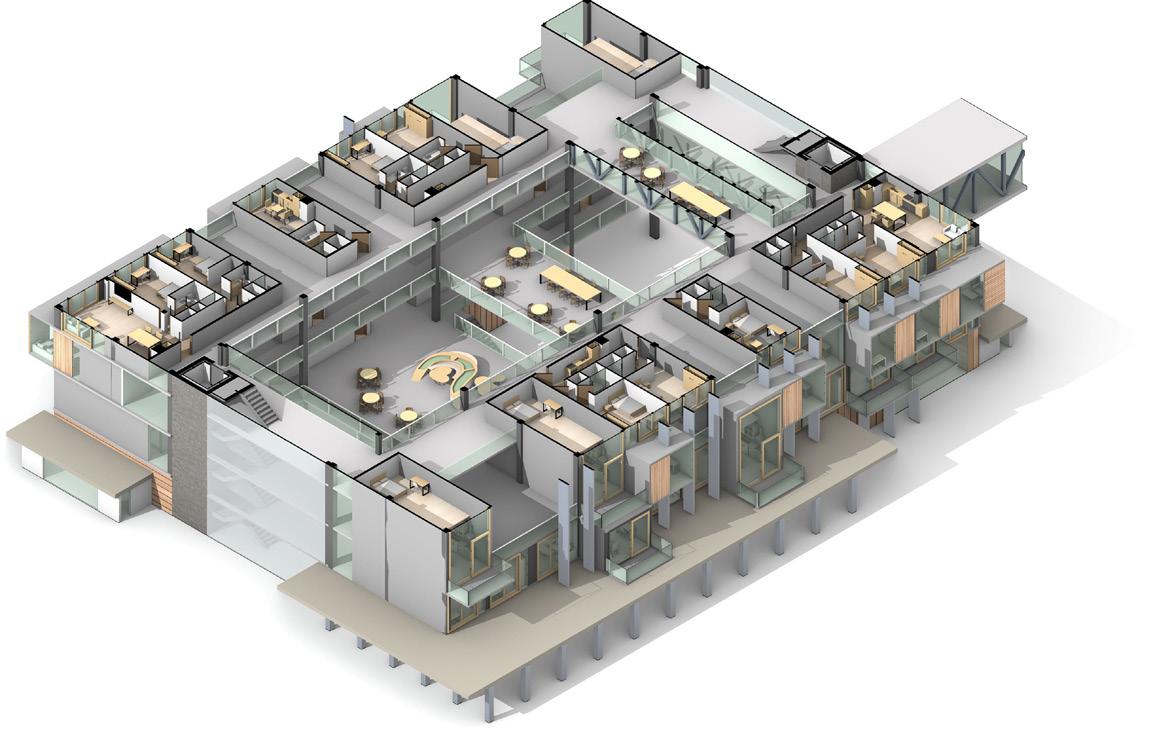
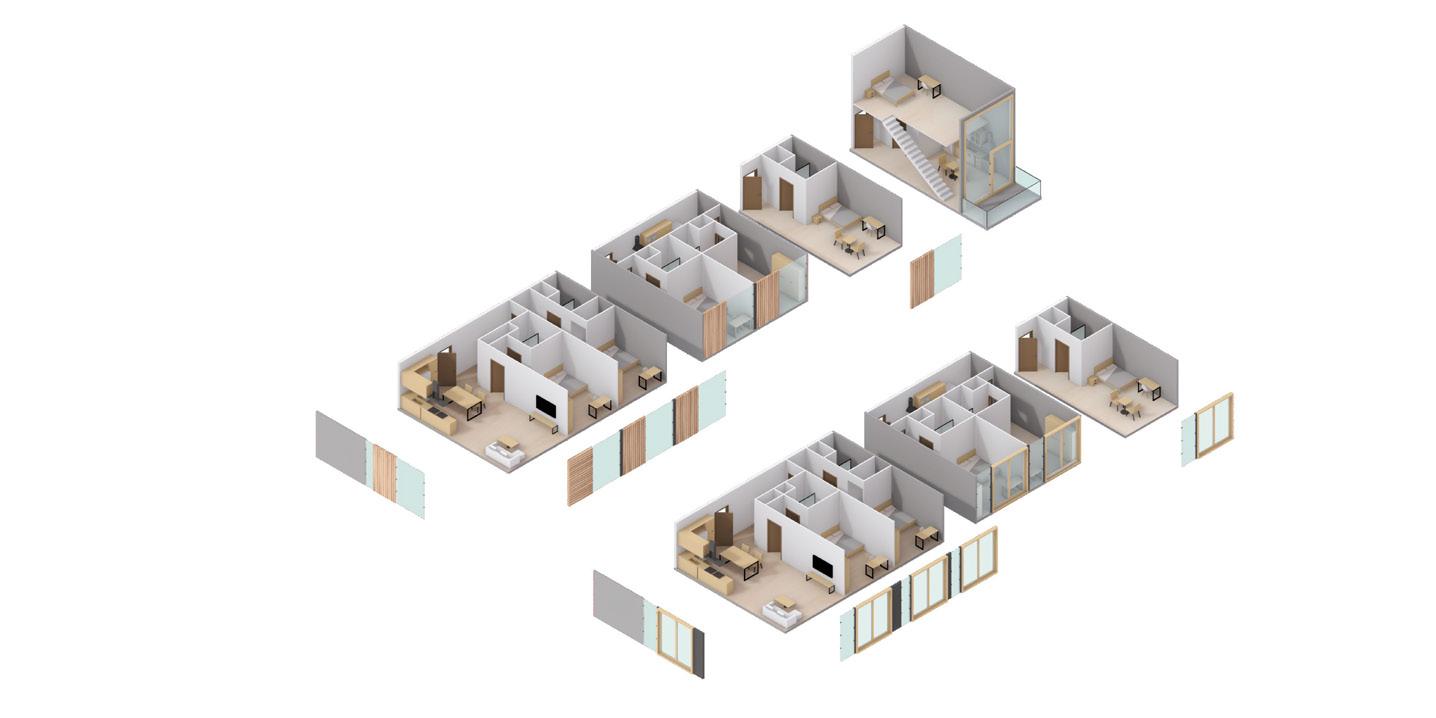
Cut Axonometric View of Residential Block
Program Layout Diagram



Building Site Plan
View of interior Terraces and courtyard
The residential opportunity is comprised of a range of housing units, from single studio or two-floored lofts to 2-bed 2-bath units. More options include units with balconies and living rooms.
Unit Floor Plans
View of Connecting Bridge Between Blocks







Infrastructure
Cable Car Stations

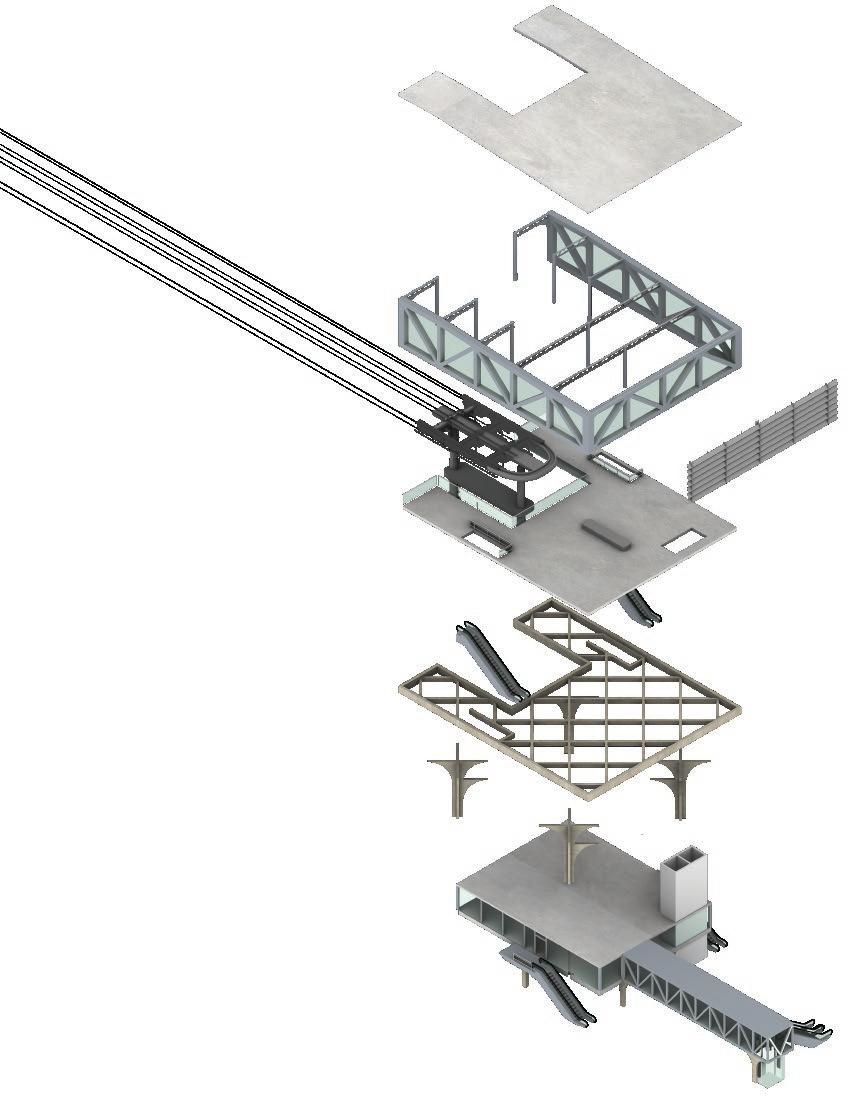
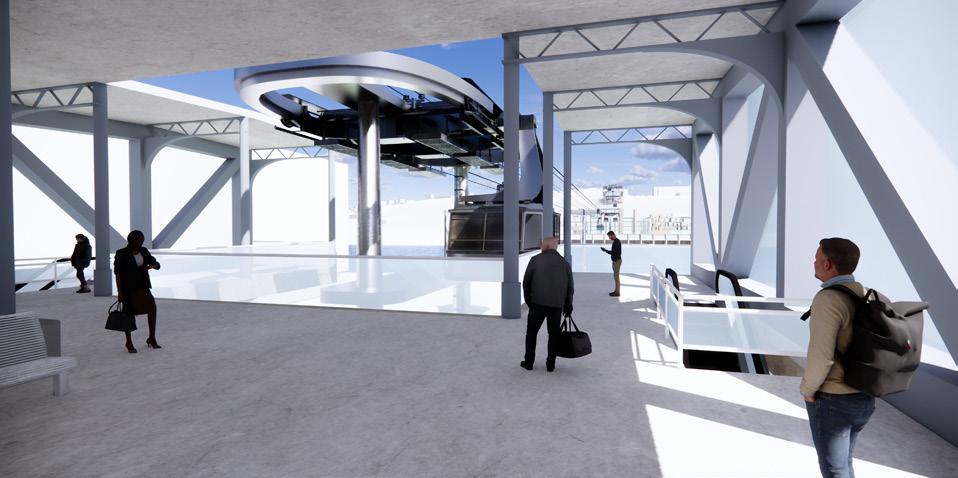
Utilizing steel-trussed structure with the concrete supported frame, the Cable Station receives cable cars traveling in the loop between Strip District, the middle nexus point at the Wool Lofts, and the Troy Hill.
The stations situated in Strip District and Troy Hill share the same structural and floor construction, with ticketing on the raised first floor, connected via a bridge extension to across the street, and a cable car boarding level.
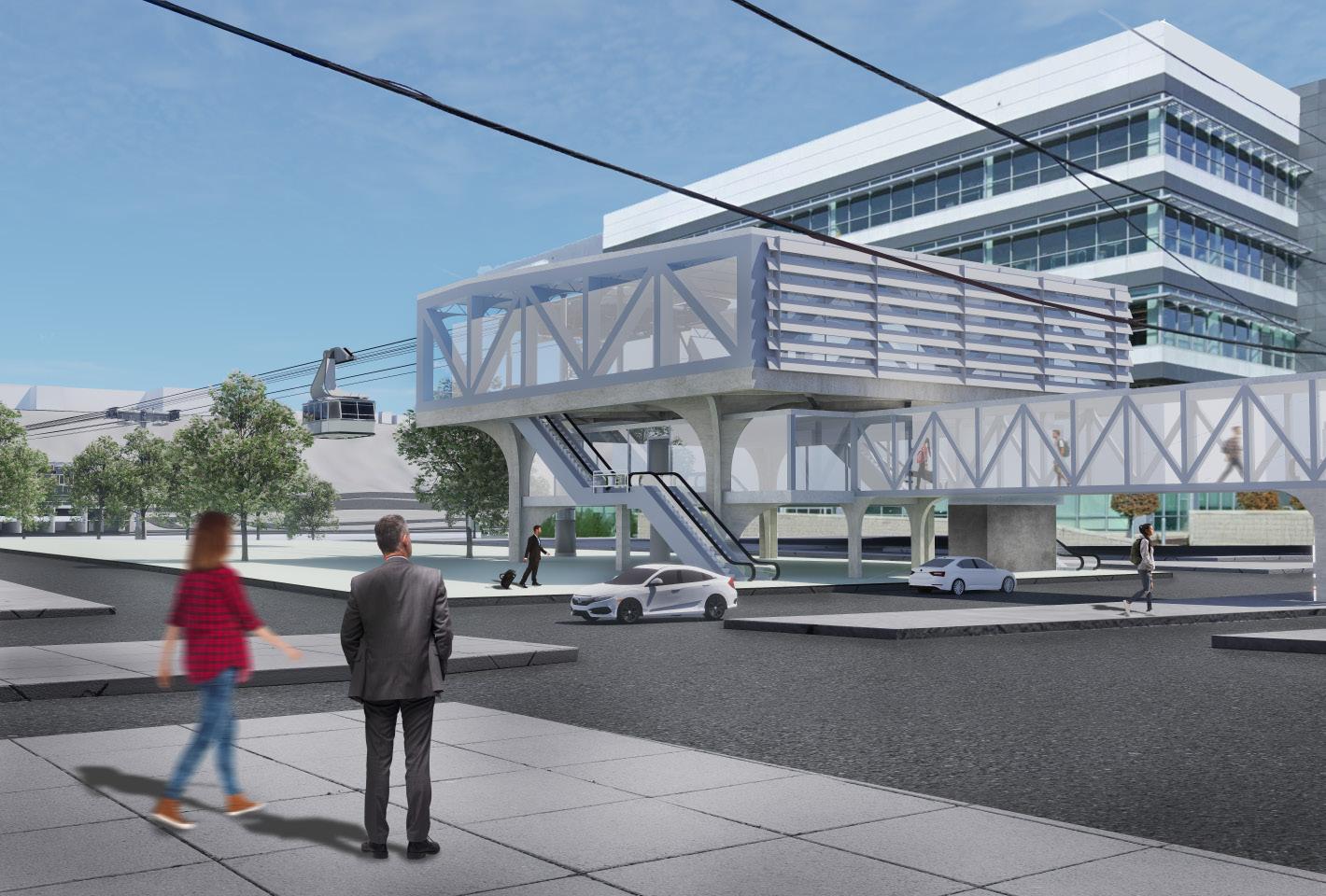
Exterior View of Cable Car Station (From Strip District)
Axonometric View
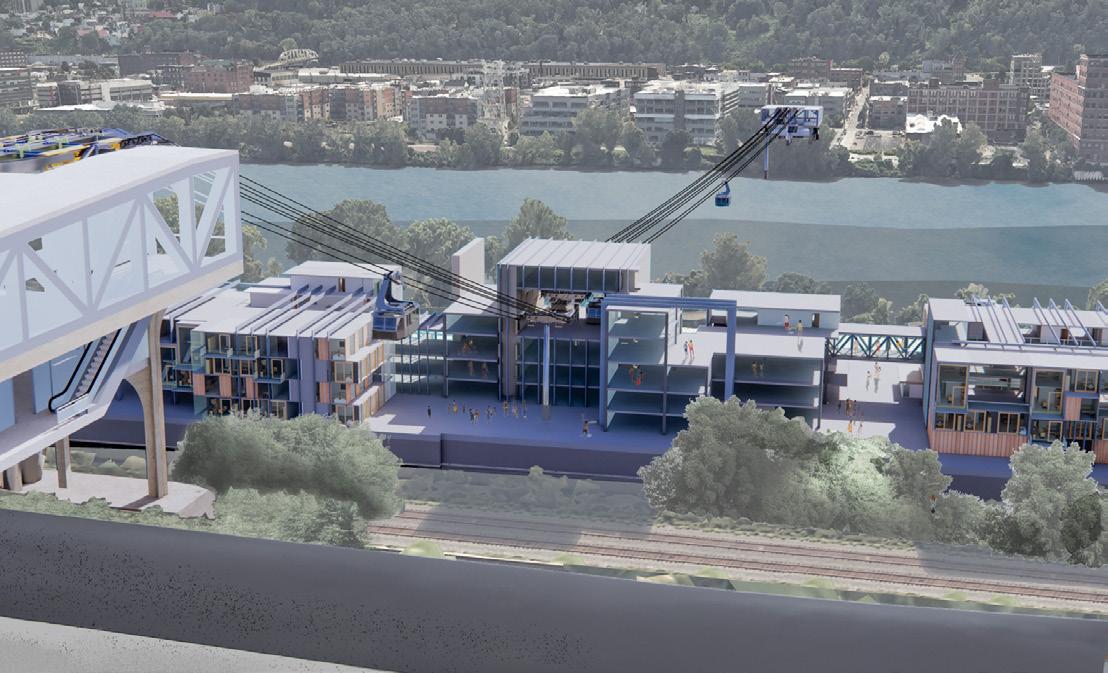
By bridging and connecting to the Wool Lofts housing, the cable line not only allows a faster and more direct way to get from Troy Hill to Strip District but also creates a crossed transportational hub by connecting the access to the river.
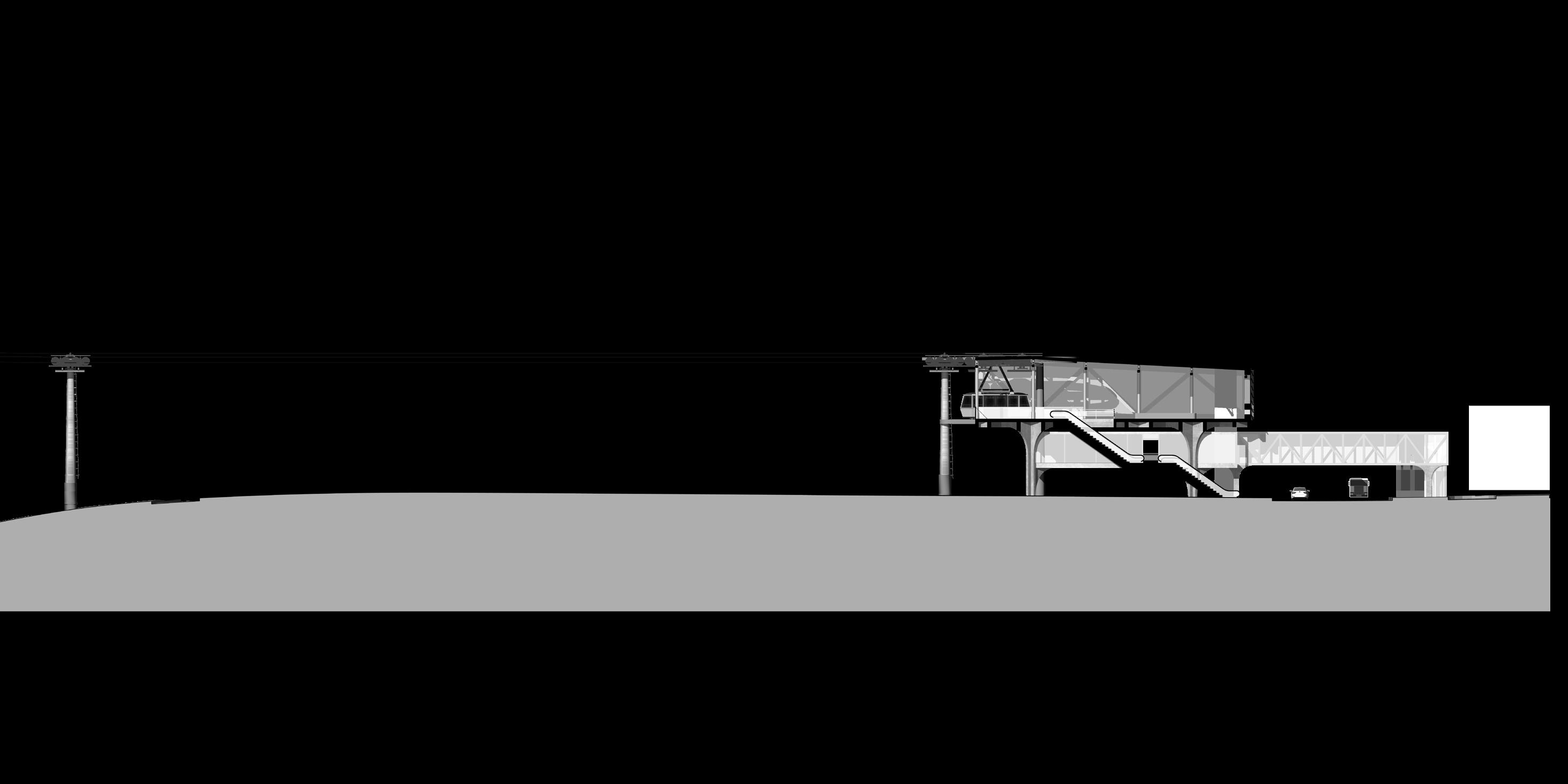
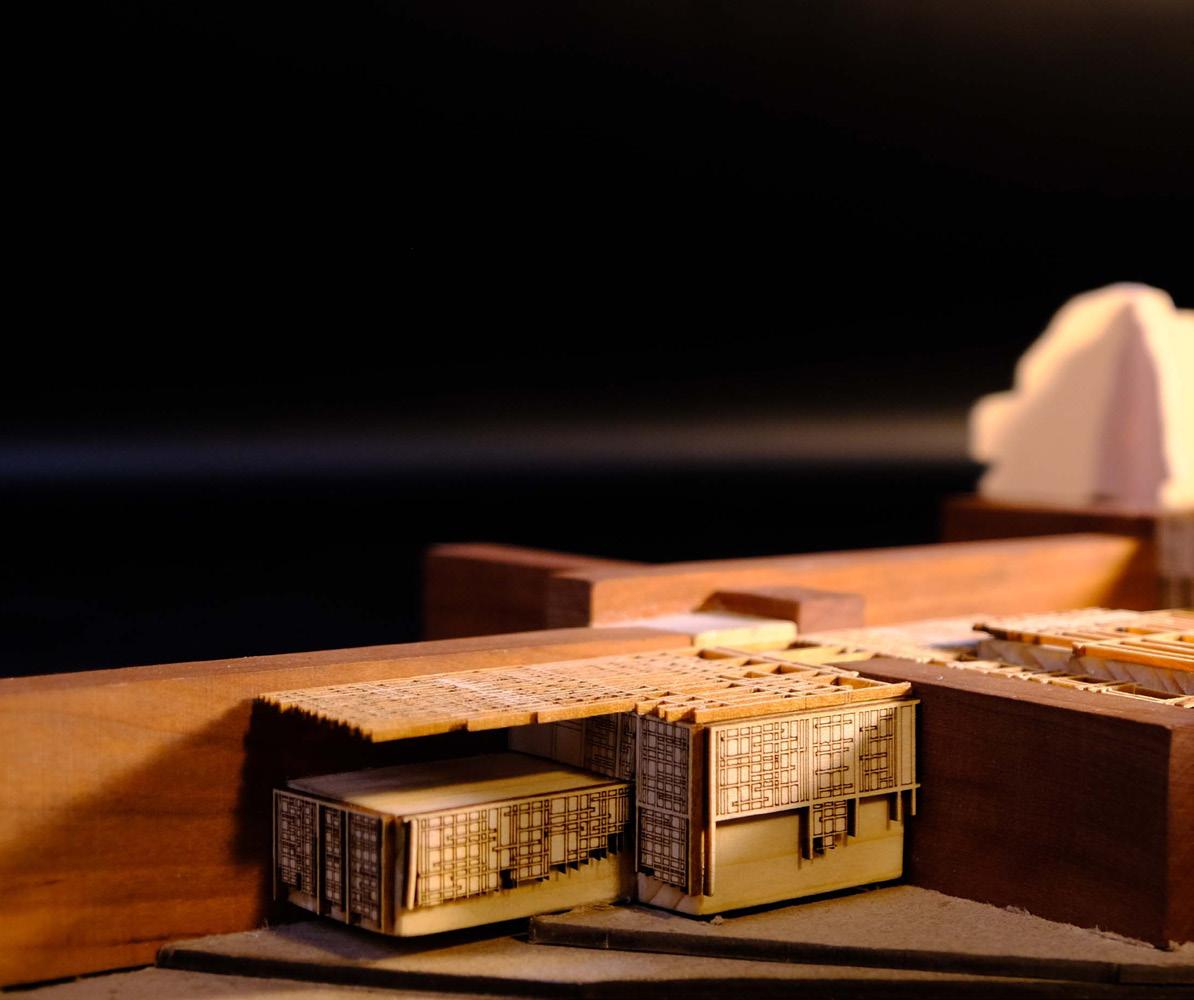
View of the Housing and Stations (From Troy Hill)
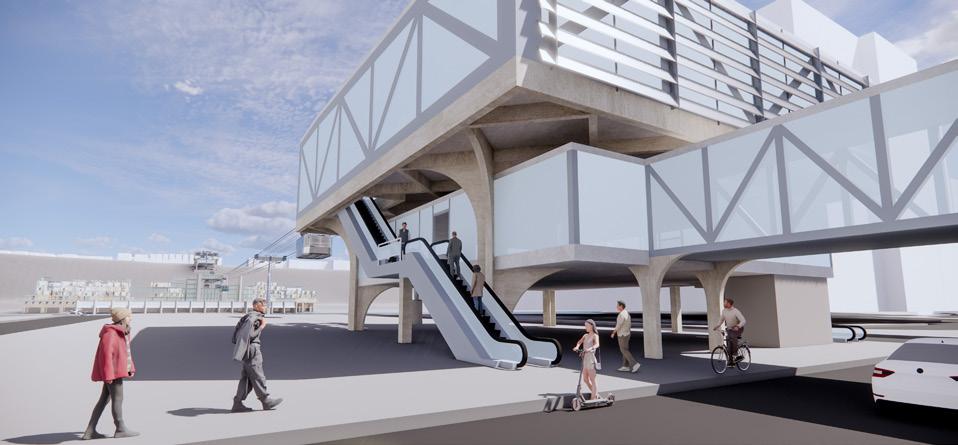
View of Station Entrance
View of Cable Car boarding Terminal
02 Schenley Culinary Institute
Poiesis III Studio, Fall 2023
Coordinator: Laura Garofalo
Instructor: Briyanka Bista
In Collaboration with: Kiki Kuang, Tian Ming
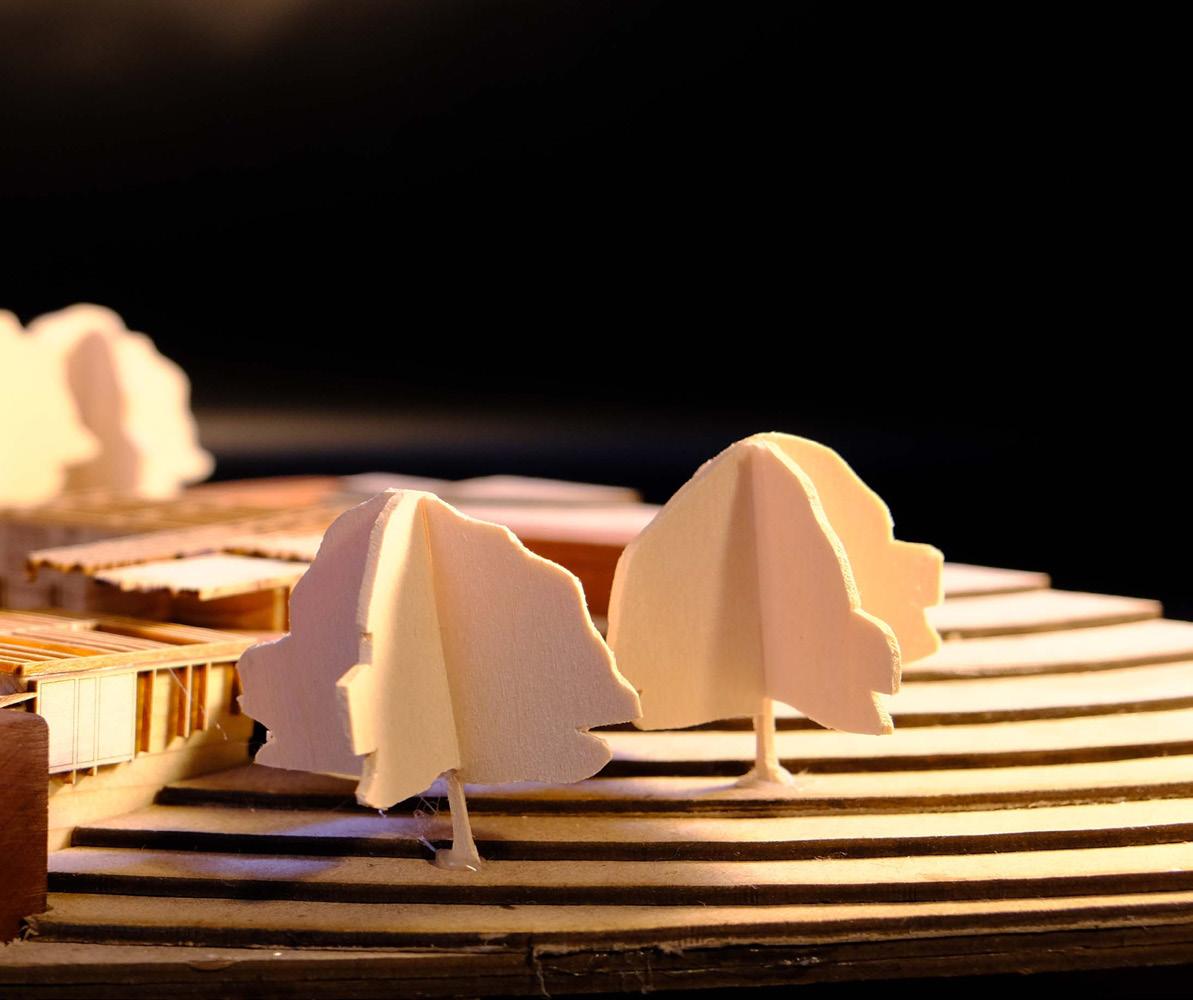
Closing the Loop
The Schenley culinary institute is situated between Carnegie Mellon University's southern border and Schenley Park. Informed by the culinary ideologies of contemporary chefs and their fields, the institute design is rooted in a process of closing the loop, the ideology which challenges how ingredients are acquired and attempts to use grown ingredients. The loop closes on levels ranging from circulation,
program access, and ingredient raising.
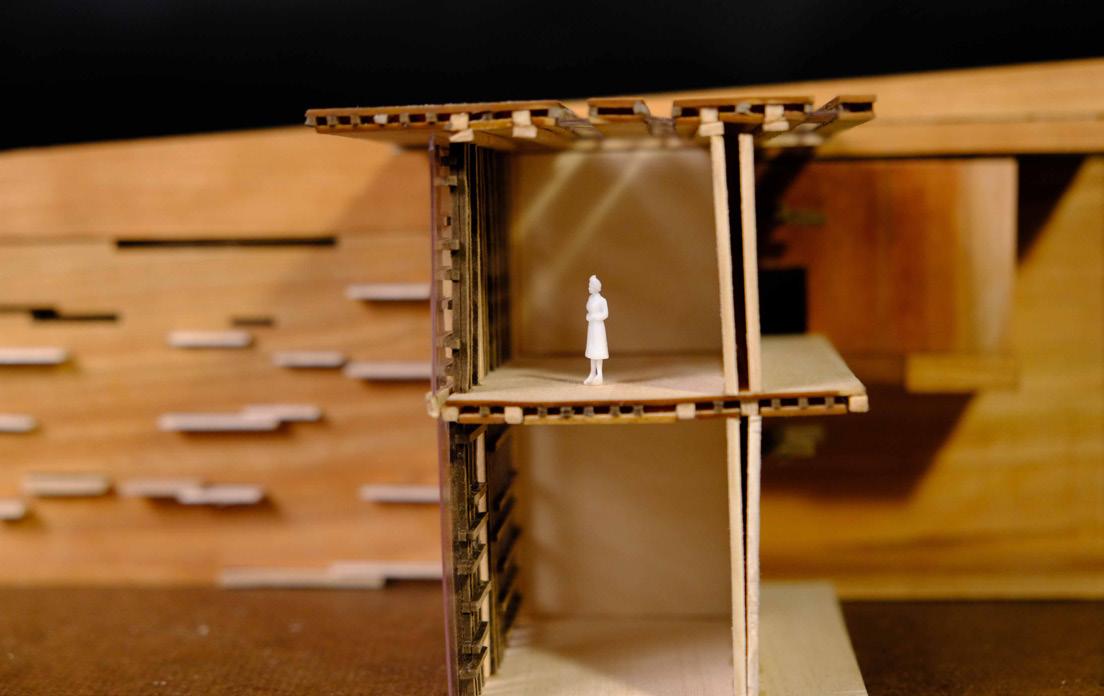
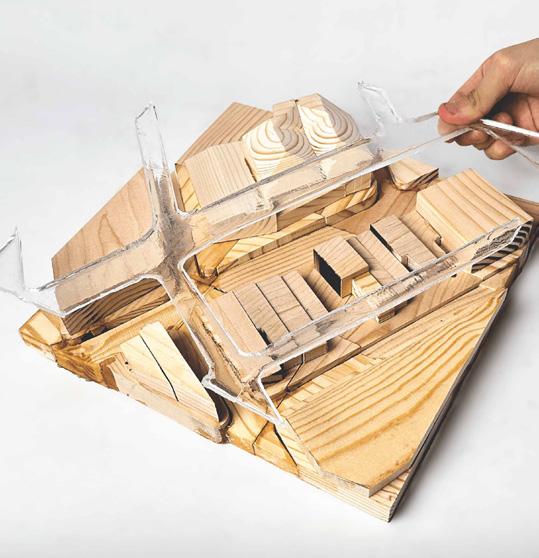
The design adapts and translates the tiered retaining and plank layering language from a generative field drawing exploration made using the elements from Bajau Laut Boat Houses and Matmata Caves as precedents, generating massing and program strategy of stepped, porous culinary programs supported by brick retaining walls.
Schenley
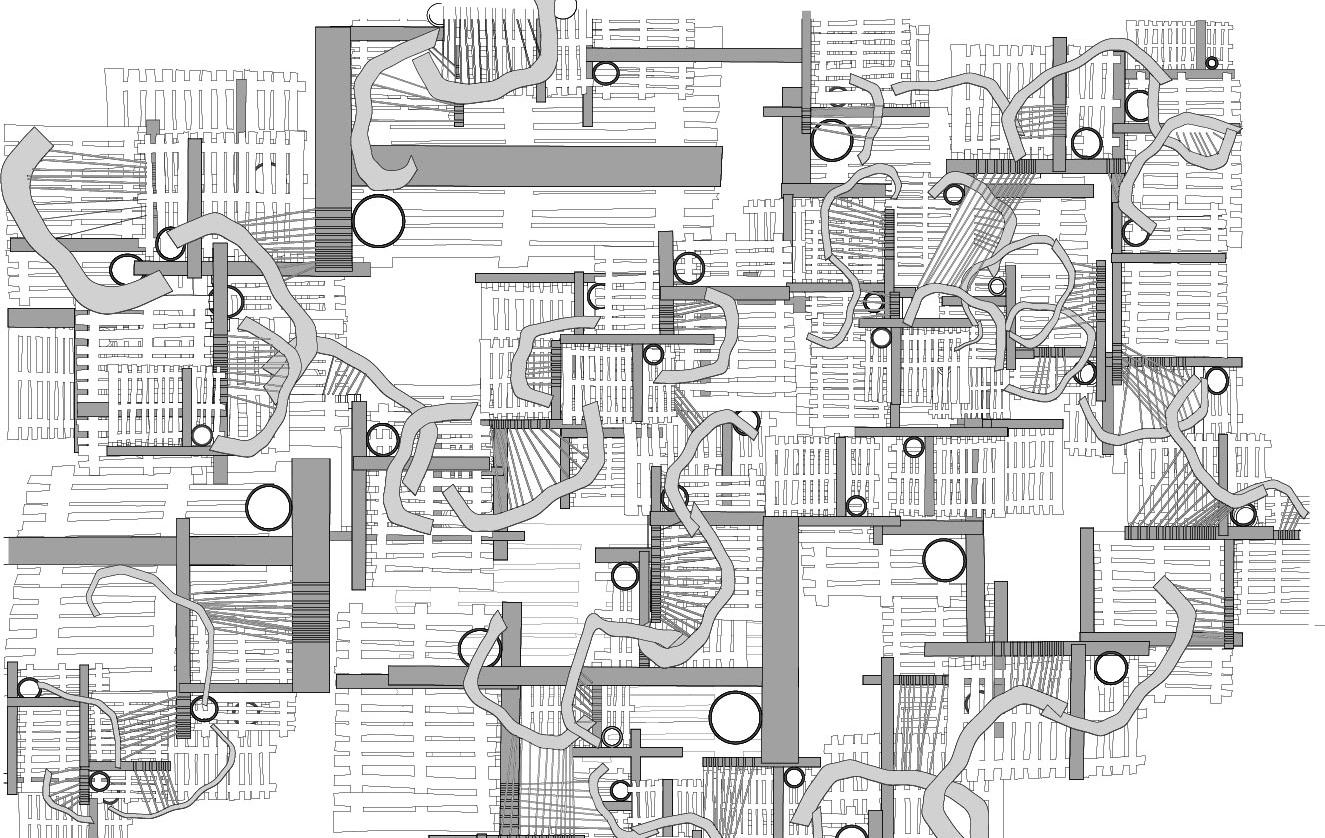
Generative Field Drawing
Precedent 1:
Precedent 2:
Stilt Houses of Sea Nomads, Bajau Laut
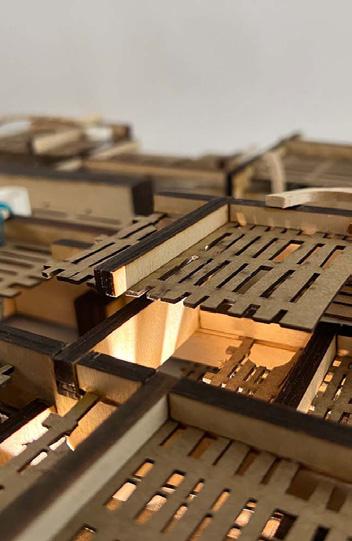
This generative field drawing draws inspiration from the Majau Laut Boat houses' construction technique of layering the floor planks that also allow refracted light through and the concaving and convexing shapes of Matmata Caves.
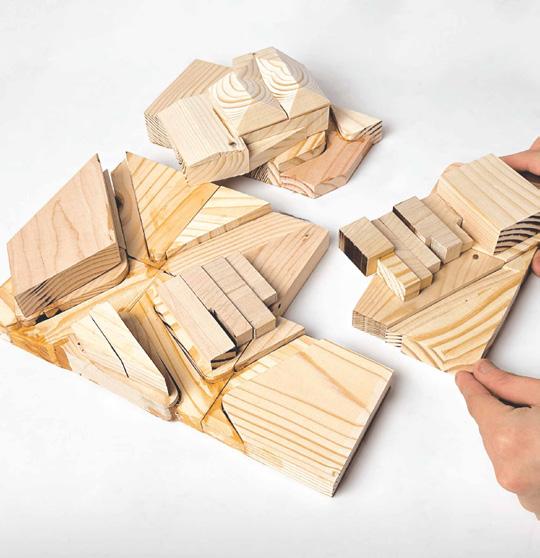
By scaling and jointing the elements, we created intertwining layers of interior spaces where light refracts and travels through the enclosure held up by heavy retaining walls.
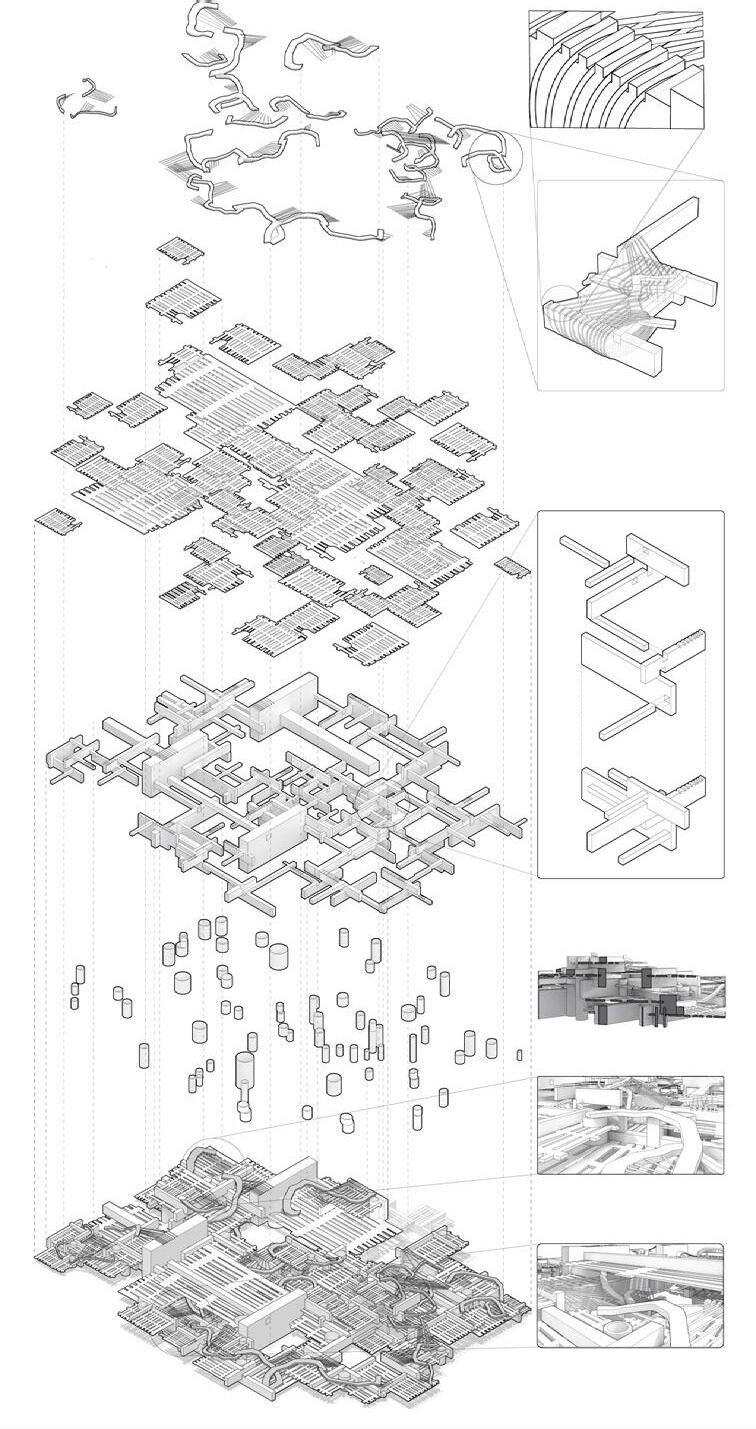
Field Exploded Structure Diagram
Field Model
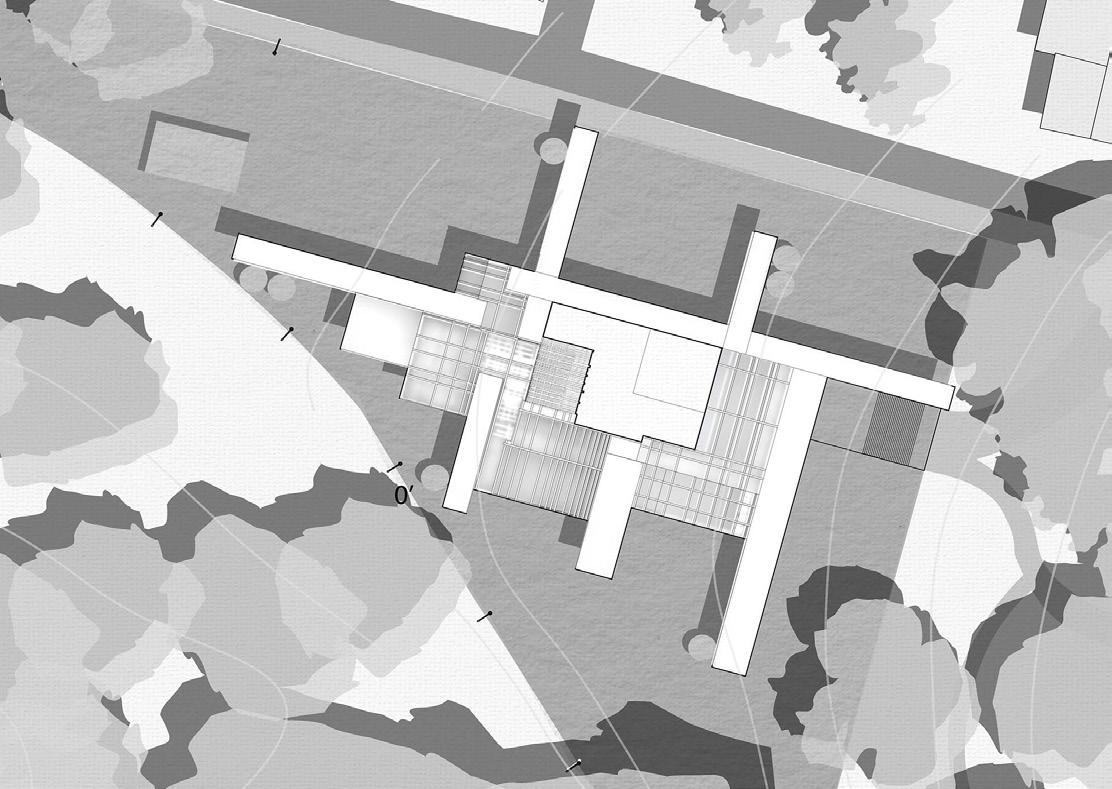
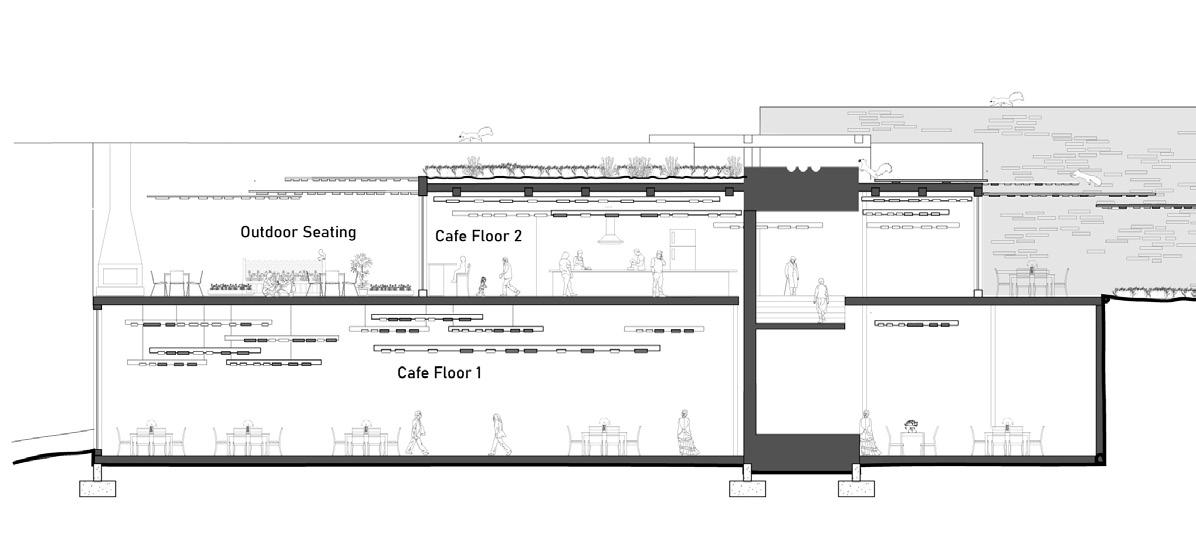
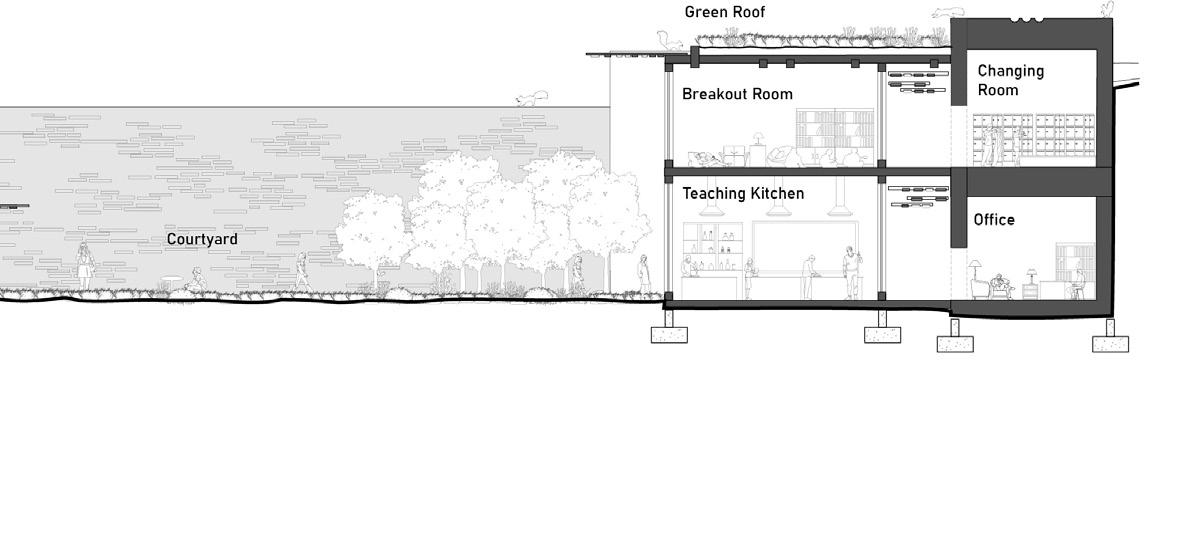
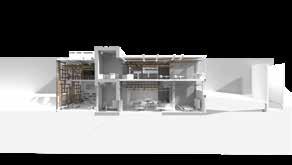
The building creates for the users a connected circulation within the building that extends and travels through not just essential institutional programs such as demonstrating kitchens, student breakout rooms, and teachers' facilities but also public programs geared towards general public access.
Building Situation Site Plan
Level 2
Level 2
The cafes connect directly to the encased central courtyard, creating a dynamic experience of the exterior environment and the interior garden.
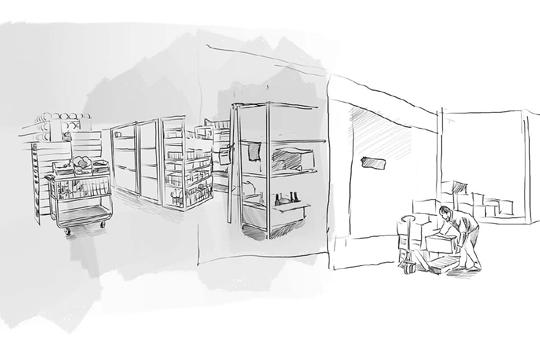
The focus on the closed loop extends beyond the programmatic layout and towards material reuse and how both human and animal occupants interact with the building, with recycling existing site conditions such as rain water and vegetation and collaborating with animal forage behaviors.
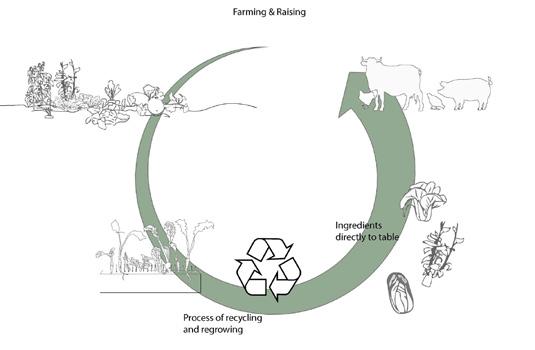


Ingredient Loop Diagram


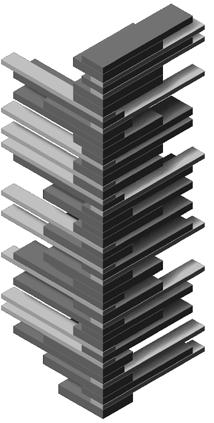
Building Construction System
The building system mainly uses wood and stone to create grided facades and lighting strategies, as well as plantable green roofs. The retaining walls are constructed with stone slabs of a set of dimensions, stacked into modular layers to create an appearance of natural formation, inspired by the technique in Therme Vals by Peter Zumthor.
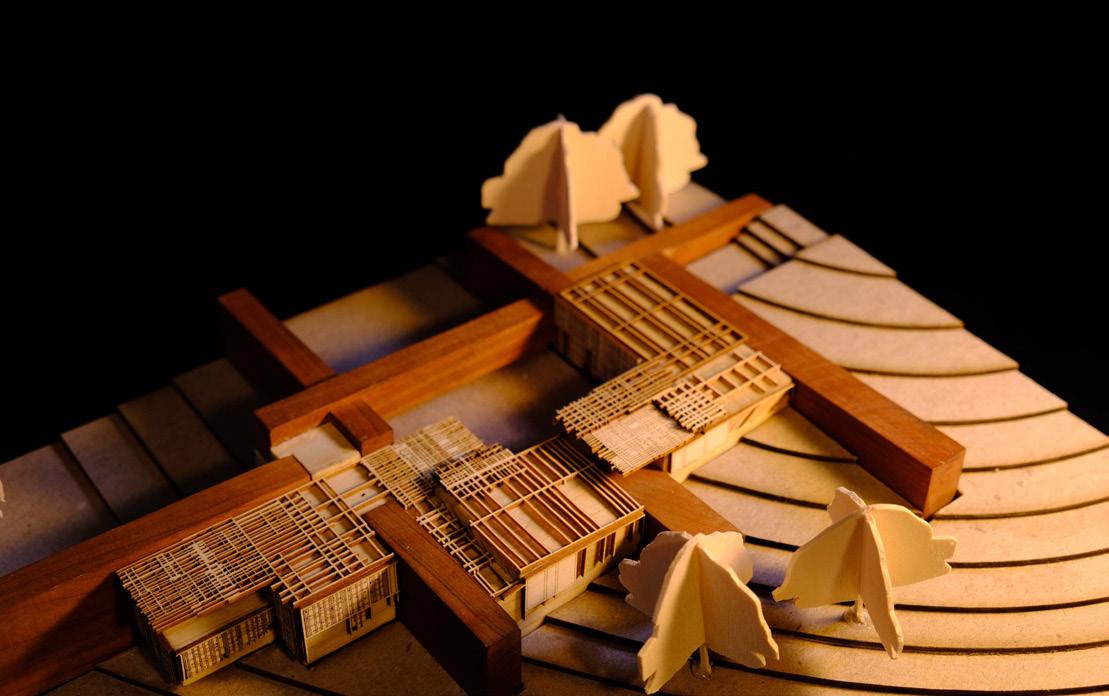
Building Details Model
Site Situation Model
03 Jazz House on Butler
Poiesis II Studio, Spring 2023
Coordinator: Tommy CheeMou Yang
Instructors: Nickie Cheung, Colin Cusimano
Of Innovation
Pittsburgh is rich in jazz music; neighborhoods such as the Hill District and Lawrenceville had been the cradle for innovation in new genres such as Be Bop and Hard Bop, all made possible as artists collaborated in musical spaces like the Crawford Grille. However, with deindustrialization and racial gentrification, a lot of these historic places are either torn down
or abandoned. This project aims to continue the legacy of Jazz houses like Crawford Grille and emphasize the importance of a unique space for artistic collaboration that can inspire innovation by repurposing an abandoned lot in Lawrencille by providing a musical performance space that also supports living, merging the public and residential functions.
Jazz House on Butler
Floor/Roof Displacement
Separated Spaces
Connected Through Circulation
Massing and Programming Diagram
Exploded Axonometric
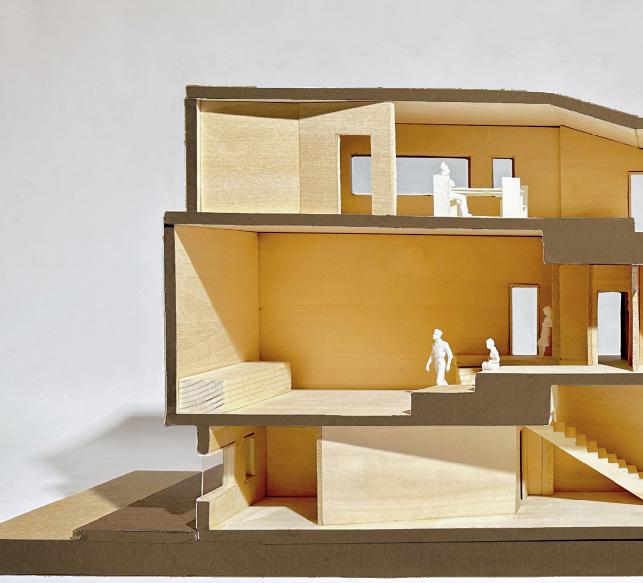
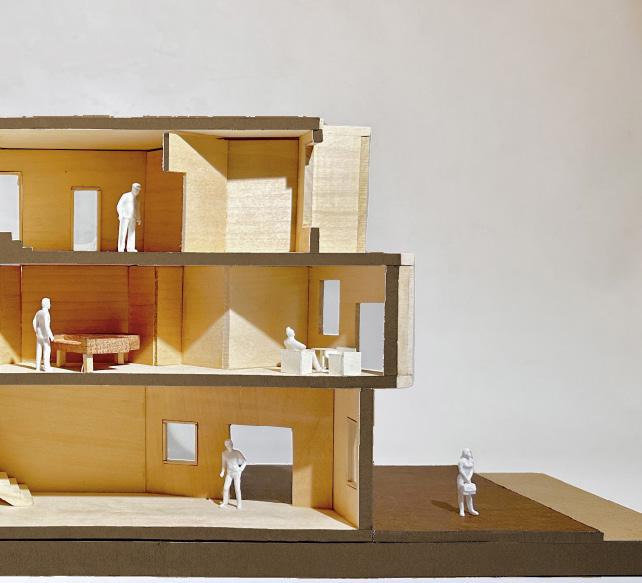
Through shearing, shifting, and displacing vertical and horizontal programs within the limited site lot, the design creates an integrated circulation between the public and private programs, inviting public performance events while supporting residential needs of families.
Section perspective
Exploded Axonometric
Floor 1 Floor
Jazzphere
Butler St.
Jamnasium
Front Elevation Short Sections
Street
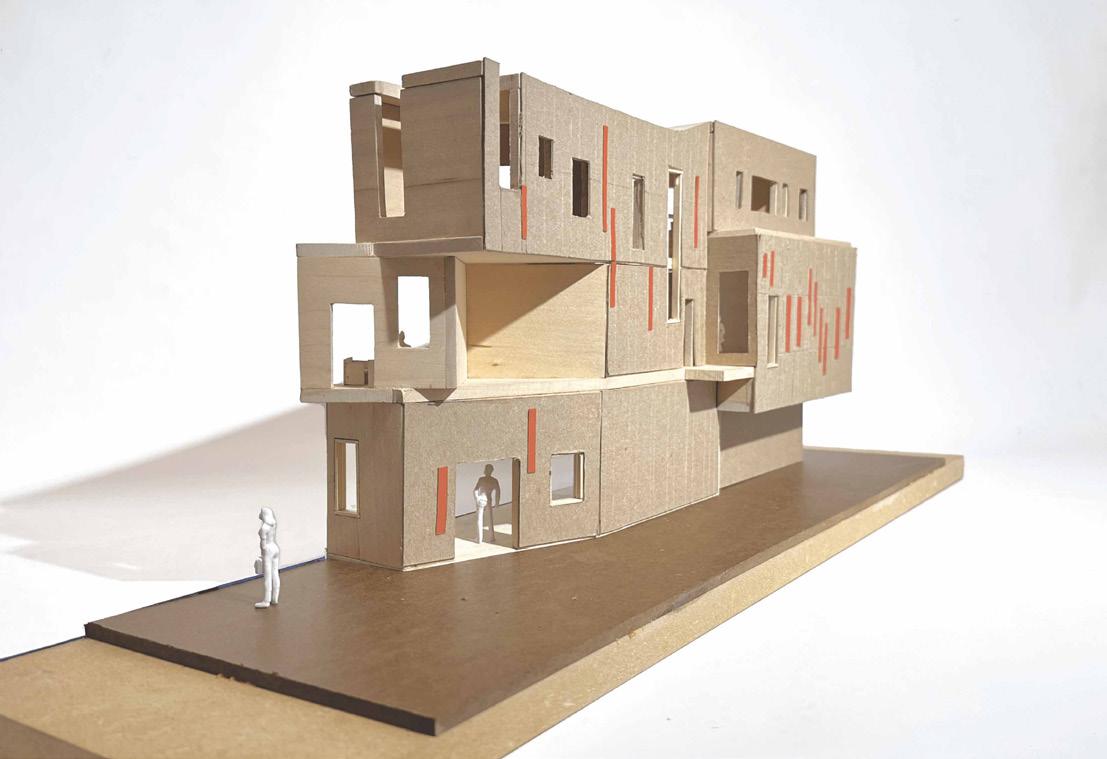
Building Section Model
Site Links and Circulation Model
Site Links and Circulation Model
04 Sprout Garden
Fundamental Computational Design, Spring 2024
Instructor: Vernelle Noelle
In Collaboration with: Leo Wu, Tian Ming, Tom Shen
Computation and Modularity
Our intention for the design of the vertical garden is to employ the organic and natural curve. We designed different modules that consist of identical curves by connecting them in the same direction or connecting them after mirroring. Through rotating different modules around a circle, we generate ringed shapes of petals, mimicking the process of sprouting.
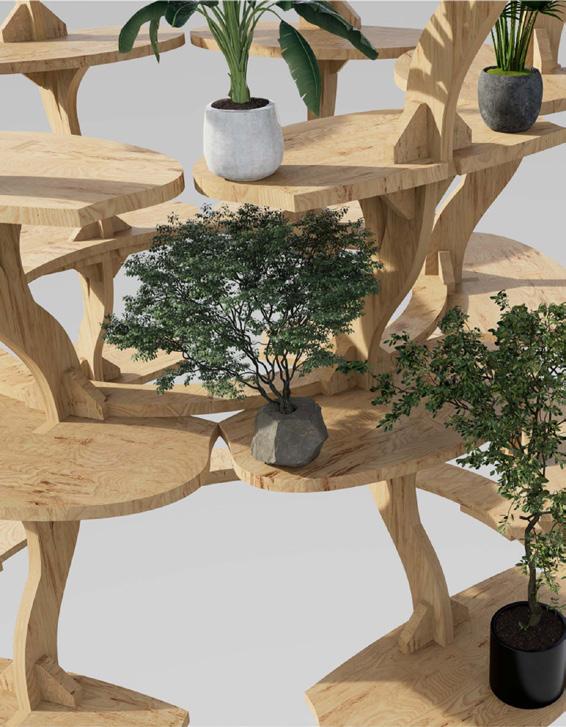
The modular connections are designed as finger joints to hold different pieces in the vertical direction. While interlocking the plate, it is not only connected to the vertical curve through the hole but also locks the curves in the horizontal direction, which makes the whole system a selfsustained structure.
Design Diagrams
05 Drawings & Crafts