PREFACE
Live In Harmony With Nature
The natural environment is the source of all human activities, and natural resources provide an irreplaceable driving force for human evolution. The process of architectural design is also closely related to nature, and everything from design inspiration to construction materials is based on nature. The collection of Chinese classical poems "The Book of Songs" used to describe the ancient palace architecture in the following way: "Like a bird's wing, like a jade spine, like a bird's leather, like a bird's fly". This shows that the relationship between architecture and the environment has a long and intimate history.
With the development of science and technology in the modern era, the architectural design gradually becomes more functional, and it is almost no longer necessary to consider whether it is compatible with the environment. How to face the relationship between contemporary architecture and the natural environment? The first two projects will try to build a bridge between high-tech buildings and the natural environment through a series of analyses and attempts so that the architectural design will return to its origin and return to nature.
Efficient Society: Active Urbanization
In addition to the interaction with the natural environment, architecture also often faces the elimination and iterations brought about by the development of the times. The technological revolution of the twentieth century and the subsequent urbanization brought unprecedented changes to the architectural design industry. A large number of high-rise buildings have risen, and a large number of people have moved to the city ... Urbanization has given architects room to show their ideas and knowledge, and it has also brought many problems: old and disrepair houses, high prices, big cities Excessive traffic pressure, and so on. Therefore, how to build a positive urbanization development model is imperative.
The last two projects are dedicated to the study of architectural design in urban renewal and posturbanization era. The goal is to provide local residents with a new, vibrant and organized lifestyle and change the vitality of the city through lifestyle changes. Regardless of whether you are transforming an existing building or a new house, you should pay attention to the lives of users and beat with the pulse of the city. This is also an essential part of the process of constructing ongoing urbanization.
Rediscovery Of Learning For The Elderly
Site: Bailu Park, SIP, Suzhou, China
Architecture Design
Buliding Area: 5000m2
Academic Individual Work
Tutor/Advisor: Mr Liang Xu, Ms Peta Carlin, Ms Jiawen Han Module Supervisor : Ms Jiawen Han (Jiawen.Han@xjtlu.edu.cn)
2017-18 Academic Year Semester Two Studio Design (ARC102)
2018.3 - 2018.6
Xi'an Jiaotong-Liverpool University
Suzhou's population has been ageing rapidly. The spaces and architecture that cater to the elderly should give them more self-confidence, social connections, and vitality. Such designs have been extremely inadequate in China. Learning plays an important role in active ageing; lifelong learning enables elderly people to maintain the quality of their lives by enhancing their self and coping areas of physical health and social relationship.
Elderly people in China are paying increasing attention to their health problems. However, in most cases, this attention merely results in increased medical costs. The research will focus on the rediscovery of learning for the elderly, which will transform public health demand from passive ( medical care based) to active.
This design aims to provide a space for learning and related activities for the elderly that has the potential to activate their minds and bodies, to emancipate themselves from all forms of domination and free their own possibilities for the last stage of life.
"Forest Garden"
Of The Suzhou Old
Suzhou Old Town (From 600 BC)Suzhou Industrial Park (SIP) (Since The 1980s)
Proportion of elderly people in the city 70%
Proportion of the GBP 20%
Proportion of elderly people in the city 30%
Proportion of the GBP 80%
Suzhou is one of the oldest ancient cities in Chinese history. The proportion of the elderly population here has been maintained at about 25%. The elderly have a strong demand for activities and education. There are a large number of elderly people living in the ancient city alone.
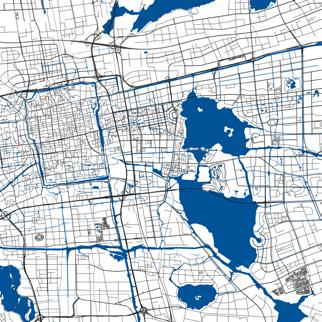
The site is located in the southern part of SIP in Suzhou City, Jiangsu Province. It is a new urban area newly developed in Suzhou in recent years. The colleges and commercial offices are mainly areas nearby. This location determines that the building function must meet the most urgent needs of the elderly to attract the elderly to come here.
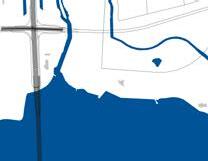
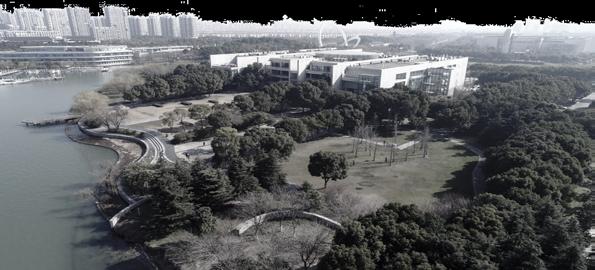
The site is located right in the middle of the largest green space in the industrial park. It has a good natural environment loved by the elderly. The nearby Dushu Lake Library is also one of the most important cultural centres in the park. Therefore, the site is partially attractive to the elderly.
Nearest Neighbourhood (The Largest Source Of Elderly people)
Lake Library
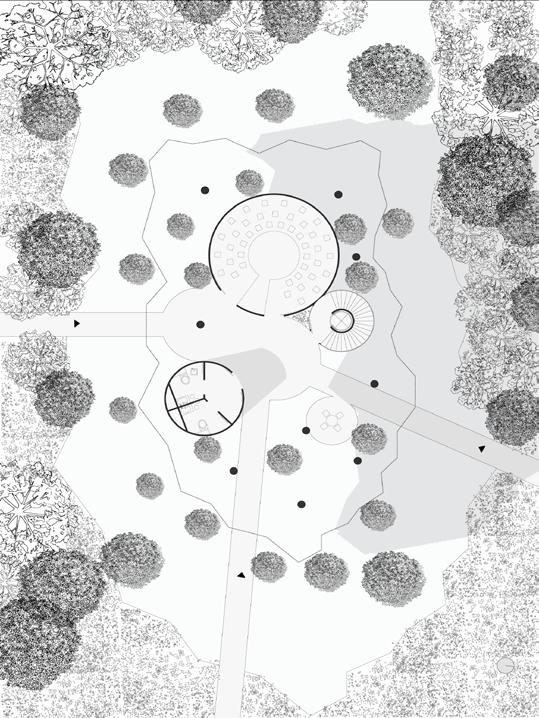
The site is a piece of grassland in the park, ten meters from the lake shore. There are eighteen trees in the center of the site, And these trees cannot be moved on demand.
with abundant natural greenery facilities around The site is located in a park with abundant natural greenery facilities around
Higher Education Area (Student-oriented)
Dushu
Lingering Garden
In here I selected the masterpiece of Suzhou Gardens - Lingering Garden for analysis.
Lingering Garden contains the three most basic parts of Suzhou garden architecture: the garden, the pavilion in the garden, and the daily living area.
Guanyun Peak
Guan Yunfeng is the most famous rockery in China. It consists of a whole piece of natural Taihu stone and is located in the center of the Lingering Garden.
The analysis will begin from the three characteristics of the Taihu stone: the cavity, the corners, and the surface.
In the process of generating spatial sequences and elements, the local culture and local characteristics of Suzhou, where the site is located, have been borrowed. At the same time, these elements are also familiar and loved by the elderly group.
The Suzhou garden is the oldest and most distinctive architectural in Suzhou. For most of the local seniors in Suzhou, gardens are where they lived since childhood and have profound cultural significance.
Taihu stone is a kind of stone produced in Suzhou. It is porous, full of angles, and towering. It is used by locals to decorate gardens or to build gardens. In ancient times, Taihu Stone was a symbol of prosperity and prosperity of the family.
By extracting elements from these two cultural symbols and transforming them, I can obtain basic inspiration in the arrangement of the interior space and facade of the elderly activity center.
Interception Of Building Parts
The first step is to break each case into different parts. The gardens are classified according to regional use while Taihu stone is classified according to texture modeling.
The second part is to further subdivide each part and select interesting or functional parts for comparison.
Circle Or Curve Elements (Most From Viewing Area/Interior)
Square And Rectangular Elements
(Most From Living Area/Surface)
Element
Exchange
According to China's Yin-Yang theory, there is a balanced relationship between landscape and architecture, which can either follow the trend or change in the opposite direction.
Here we reverse exchange element types and groupings to create new relationships.
For Viewing Area/Surface
For Living Area/Interior
Abstract Unit
The extracted part is imaged and lined to form the basic curve or block to complete the extraction of architectural elements.
Why To Choose Element Exchange?
In traditional Chinese architectural design methods and Suzhou garden construction methods, designers like to use rectangular, square or straight lines to design parts of residential areas and curves and polylines are used extensively in the design of gardens, rockery, and lakes. This aesthetic conception of lines and curves conflicting, but interdependent has a long history in China.
In the process of extracting the elements for the new elderly activity centre, I continued to use this element mode, so that the new building can make the elderly feel "familiar Suzhou garden style". However, changes have been made in the functional areas corresponding to the elements. Therefore, the idea of Yinyang was introduced here, the original functional areas corresponding to the two groups of elements were exchanged so that the traditional design method was slightly changed and closer to the current times and needs.
The music hall is the largest room in the centre. At the same time, it is also a multifunctional hall of this centre. In addition to music performances, it can also perform several activities such as singing competitions and dance performances.
The walls of the entire room follow the curve element idea and use arcs, which also has a specific acoustic effect based on ensuring the room area.
Among the two floors that the concert hall runs through, the ground floor is the stage, the orchestra and a small number of seats, while the main seats are arranged on the second floor. The audience can see the panoramic view of the stage and get a better visual and acoustic experience.
The roof of the building is designed as an open outdoor platform space. There are many circular elements of grass and platforms on this floor , providing outdoor activities and conversation spaces for seniors.
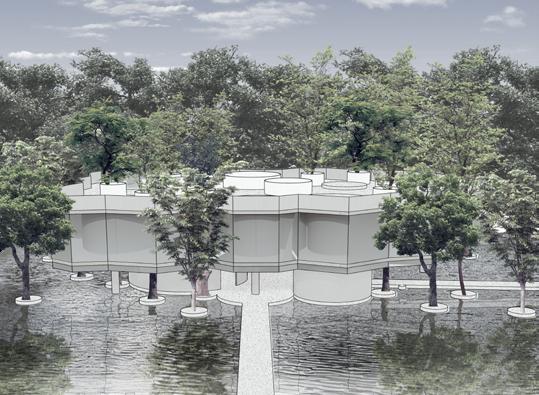
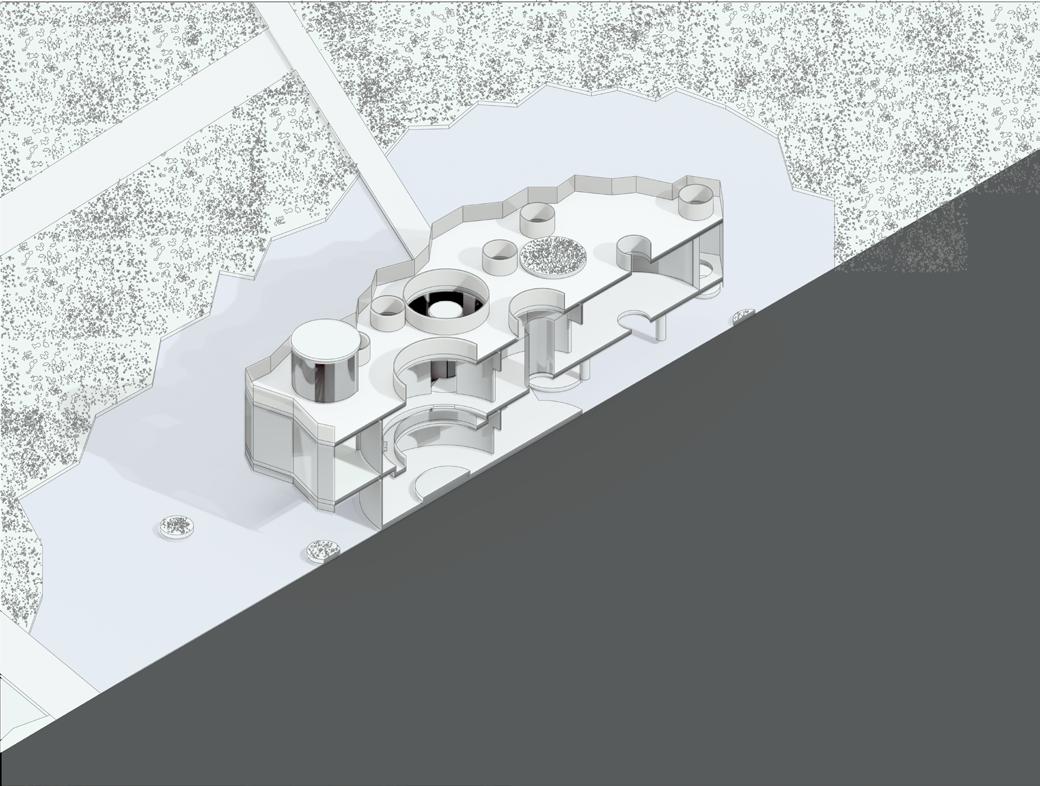
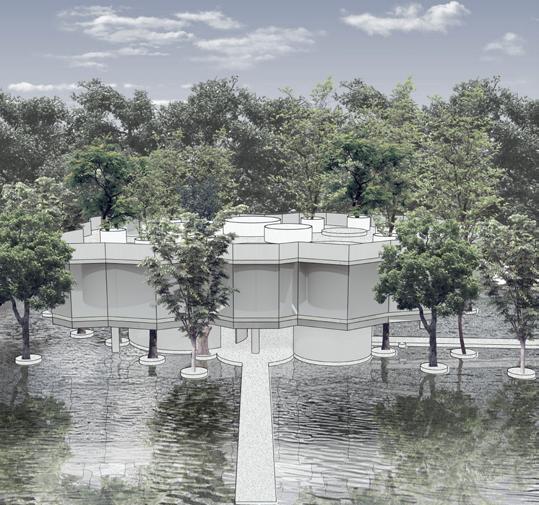
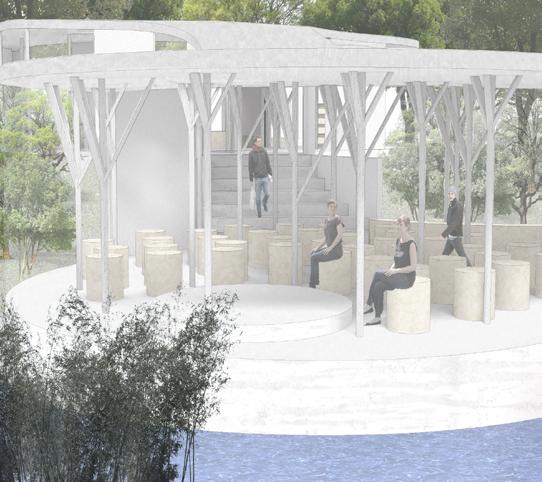
The building sits on a small pool, one end of which is connected to a nearby existing lake through a channel, and the other purpose is deep into the surrounding forest. Existing trees on the site will be retained by adding small platforms on the water. On the route organization, users enter the center of the building through three pedestrian bridges that span the pool
Music Hall (Concert hall)
Roof Garden
Landscape pool
The New center a circular inner designed in the them to introduce and greenery into user's space comfort.
For the oaffected center designed locations to naturally through destroying the
Mezzanine Garden
Architectural Design And Functional Layout
The design concept of the new elderly activity centre is "Forest Garden", which aims to create a new architectural model suitable for the development model of the current era by paying tribute to the traditional architectural techniques of Suzhou. The building is fully integrated with nature. Through a series of greenery, the design of trees and ponds makes the building "disappear" with nature and become a part of nature.
For the elderly group who use the activity centre for learning and activities, the building has fully considered their specific needs and preferences, selected the most popular types of activities for the elderly and made targeted designs according to functional requirements.
I hoped that this design can effectively mobilize the interest of the elderly group in continuous learning and sports, attract the elderly group to participate in daily learning, and find more possibilities for the elderly group in Suzhou.
Garden And "Tree Hole"
The Performance
Of Elements In Design Process Structures
Floor Hole
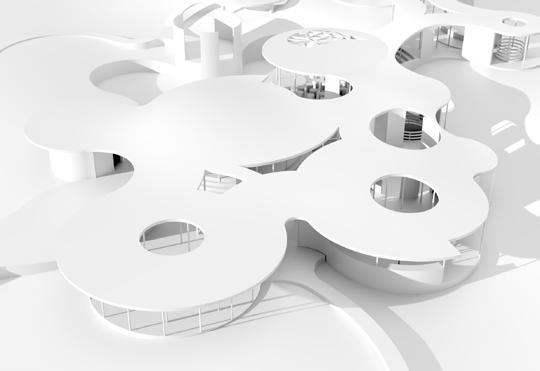
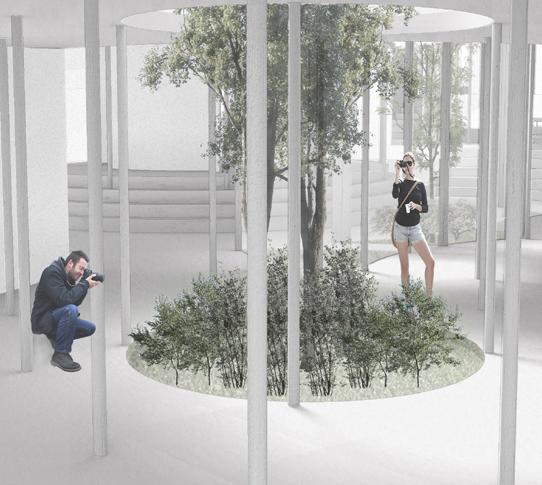
Due to the blocking of trees in the center of the site, through the form of openings in the floor during the design process, let the trees grew through the building.
Round Room
Contrary to the traditional Suzhou garden architecture, all rooms are designed to be circular. In addition to effectively ensuring specific functional requirements (such as acoustic requirements), the circular design can also be flexibly combined to achieve multiple uses.
Irregular Facade
The outer surface of the building is composed of a layer of U glass. The glass curtain walls of different sizes and angles can increase the number of reflections and refractions. It is also a re-simulation of the Taihu stone‘s outline
Wave Inner Glass
Some rooms are equipped with glass curtain walls to assist in daylighting. The design of the curtain walls refers to the winding corridors of Suzhou gardens.
Indoor Garden
A semi-open indoor garden is located between the inner and outer layers of glass, which serves as a buffer for the indoor and external environment, and also has a landscape function.
Linear Trails
The main entrances and exits of the building maintain the Chinese architectural tradition and are dominated by straight flat slope passages, which are convenient for the elderly to enter and exit.
Ground Floor Plan Of New Elderly Activity Center
First Floor Plan Of New Elderly Activity Center
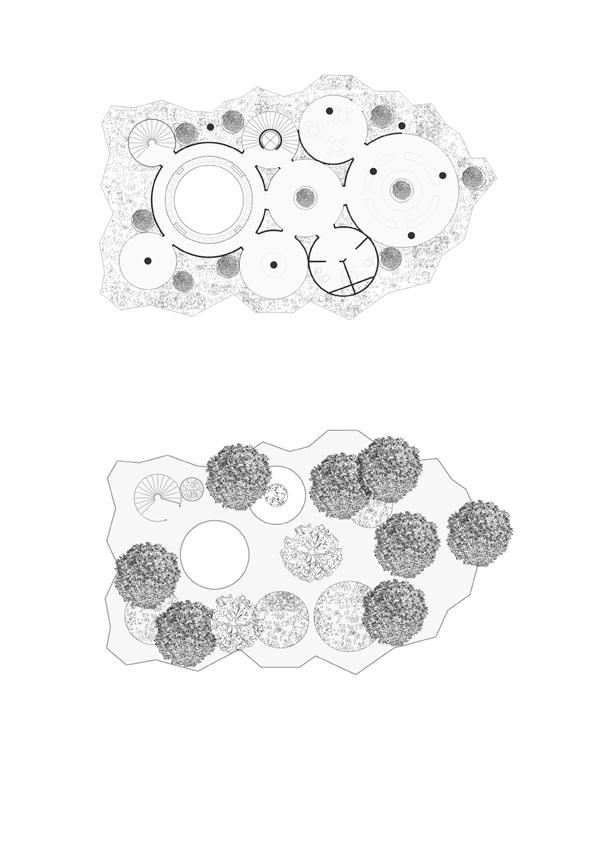
The first floor is the most important part of the activity center, including the learning facilities most needed by the elderly, and it is also the area with the most dense architectural elements.
Second Floor Plan Of New Elderly Activity Center
The top floor is an open-air platform, which is convenient for elderly groups to carry out sports activities, communicate and study.
Scene Efect Picture
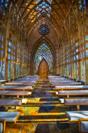
"Botanical Chapel"
Research Of Architecture Hybridization: A Compatibility Experiment Of Typologies
Site: Liverpool, UK
Architecture and Landscape Architecture Design
Buliding Area: 350m2
Landscaple Design Area: 8100 m2
Individual Work
Independent Study 2019.3 - 2019.12
Cities are compact and sophisticated systems. In order to adapt to the changing urban environment, different building types are continually being mixed and redefined. The demands of modern society for efficiency and land require that previously incompatible programs need to coexist in the same physical structure, which is the potential to create new typologies and urban experiences. How to mix two different programs, spatially and experientially? How does the combined space fit into the various uses assigned to it? This will be the issue that this design aims to explore.
During the design process, the botanic garden and the chapel were selected to perform hybrid experiments and in daily life, these two types of buildings have nothing in common. I hope that through the following analysis to find breakthroughs for the integration and dependence of different functions in a structure, to maximize the combination of building functions through this integration to save the land and add momentum to urban development.
Why To Choose Botanic Garden And Chapel For Hybrid Research?
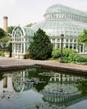
The botanical garden is a representative of social service buildings. It achieves many functions by hosting plant exhibitions and landscape excursions, such as education, leisure and tourism. In the UK, botanical gardens and their parks provide large areas of green space and outdoor activity spaces for surrounding communities, which have a positive impact on urban development.
In contrast to the botanic garden, the chapel is a representative of religious architecture. There are 25 million members of the Anglican Church in the UK alone, as well as a large number of Catholics and Protestants. Churches or small chapel exist in almost every English town and occupy an essential place in the daily life of the British.
The botanic garden is entirely open to society, while the chapel has its fixed audience. The number of visitors to the botanic garden varies according to the season of plant growth. At the same time, the chapel is determined by the time of worship, and the number is relatively fixed. Botanic gardens and chapels were chosen as the object of hybrid research because of the conflict in their daily spatial and temporal organization.
How to make the botanic garden have stable passenger flow throughout the year? How to increase the number of visitors and influence of the chapel? Hybrid with their functions to get more possibilities to provide society with stable and adequate public service, that's why I chose these two architectural forms.
Research On Architectural Functions Of Chapel/Cathedral And Botanic Garden (Take the the University of Liverpool nursery and Liverpool Cathedral as an example) Regional Distribution
Research
Here selected several types of plants in the UK and show their flowering seasons. It is found that their opening hours (the peak period of the botanic garden visit) are from the end of March to the beginning of September
The density of people in different functional areas and the change of people flow over time were studied. The prayer area has always been an area with the highest value.
The instability of visitors to the chapel can also be seen in the picture (the number of people on the weekend is significantly more than the number of workdays) The prayer area in the center of the church is the most noisy (no place to stay longer than 70 dB), and other areas are quieter.
Imagination
According to the results of user research, heat research, crowd use and frequency of use, we compare different activity spaces into circles with different proportions. The circle becomes larger, indicating that the activity facility has the highest heat.
The chapel is a representative of religious architecture, and the interior of the chapel often hopes to bring people infinite reveries through the design to pursue the power of God. Therefore, "imagination" is the primary design idea of this type of building.
The circular elements after different quantization results are connected to each other according to the ratio. Then take the tangent curve to form a curved outline connected end to end. The outline includes different kinds of circular spaces, which can be used for different purposes activities.
Th e botanic garden is the embodiment of the power of science and nature. The design of the botanic garden meets the various needs of users to visit, learn and visit, and to provide users with new knowledge and feelings. Therefore, "expressive power" is the primary design idea of this type of building.
Expression
Chapel Collection of architectural space elements
Botanic Garden Environmental space elements collection
In the process of hybrid research, how to deal with the relationship between the building (the main body of the chapel) and the natural environment (mainly the botanic garden) has become the most important issue. Many different combinations are discussed and demonstrated here. The design logic is enriched by various methods such as simulation, division, wrapping, and promotion of each other.
Viewing on the bridge, the bridge effectively separates different plant species and height types.
The partition wall separates the internal and external environment, forming a relatively hidden space.
Indoor path separate different plant areas
From chairs, pillars to ceilings, all imitate the morphological design of plants in nature.
Enclose "block of nature" into the building and make nature a part of the building.
Covered bridge
Space Partition
Landscape Path
Natural Imitation
Design Enclosed Environment
Restricted Field Of View
Nature - Interior - Nature
08. Environmental Partition
09. Waterfront Landscape
Narrow windows of a certain size and a certain height to limit the viewing angle of visitors.
Entering the natural garden for a short distance while indoor activities, to creating a rich sense of layering.
The garden extends into the building area and “wraps” the building, forming a partition from the interior.
The part of the building facing the water is open. Through the design of stairs and platforms, the transition from indoor to outdoor natural environment is formed.
Plan Of The Botanical Chapel
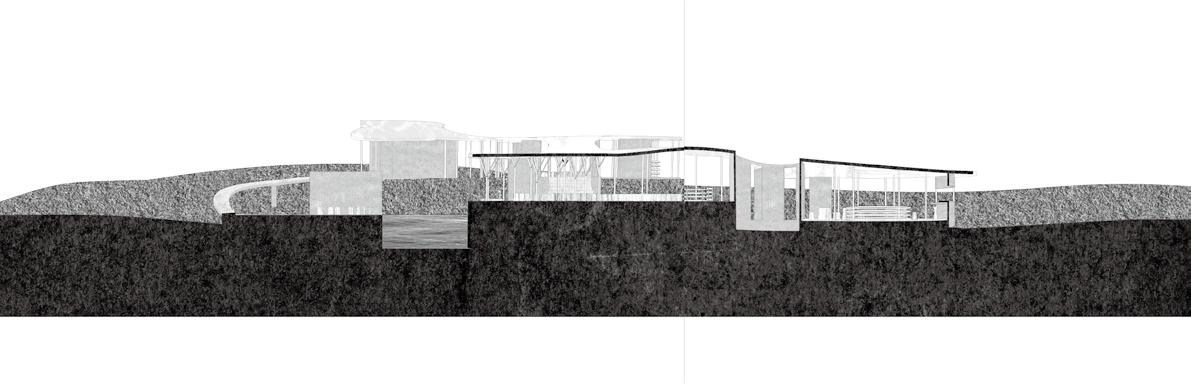
After previous morphological and functional studies, the plan of the building was finally generated. The entire structure sits on a gentle slope and gradually rises from south to north, forming a curved flat shape. The functions of the botanical garden and the chapel are scattered in different locations, thus creating the overall design of the entire building.
The
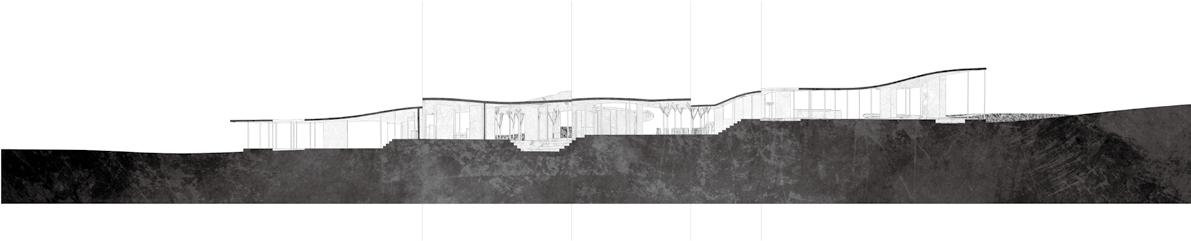
Due to the irregularity of the plan and the limitation of the terrain, the section adopts the method of polyline section. It passes as many different unit modules as possible. At the same time, it can also see the changes in plant height and species with terrain and location.
Section Of
Botanical Chapel
Viewing
Area Chapel Function
Greenhouse Botanic Garden Function
Restaurant Botanic Garden Function
"Botanical
Aluminium sheet 3mm (pre-shaped via cold-forming)
Stainless steel water guard
Aluminium sheet 3mm (hammer-formed)
Solar thermal glass, curved (12mm laminated safety glass + 16mm cavity + 8mm heatstrengthend glass + 16mm cavity +8mm toughened glass)
Hinged column: (213/16mm CHS anti-corrosion coating, three layers steel grade)
From top to bottom:
Oak planks 25mm
Brick floor moudle with integrated heating pipes/battens 50mm
Wood fibreboard 15mm
Rough tongue and groove boarding 27mm
Thermal insulation/battens welded bitumen sheeting 2x80mm
Reinforced concrete composite deck 300mm
Scene Efect Picture (Chapel Area)
Scene Efect Picture (Plant Exhibition Area)
Dialogue: Volumes, Units and Structures
Mass Speculation
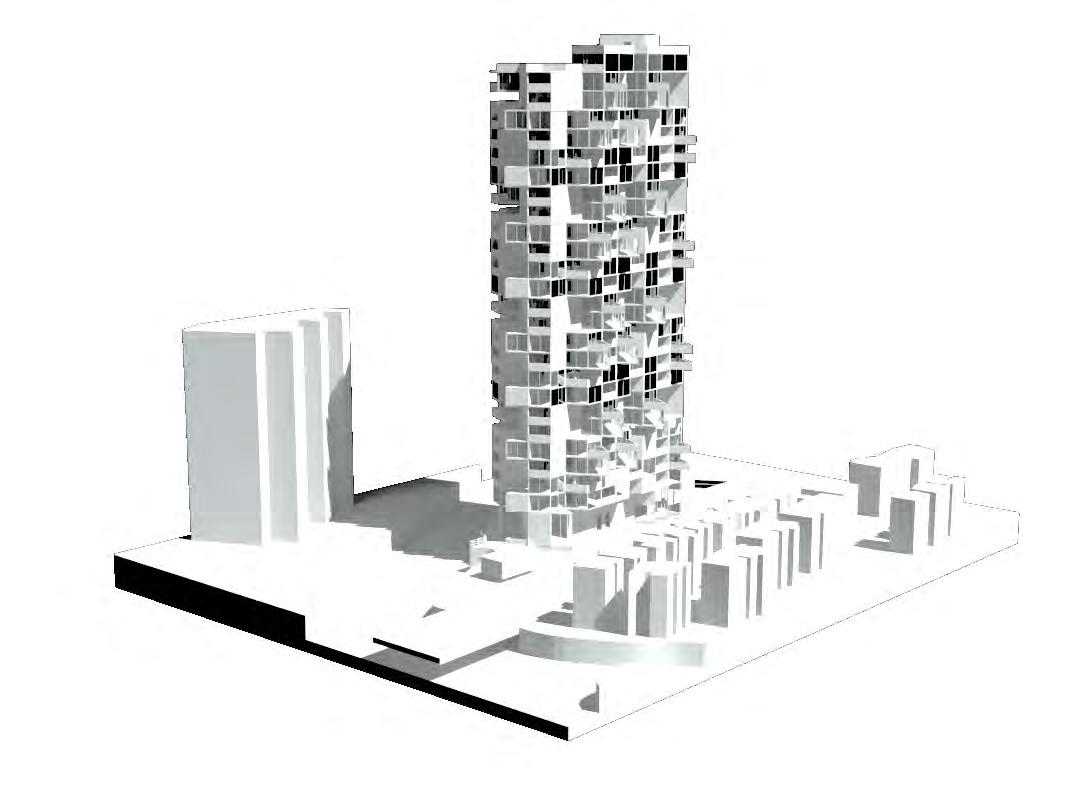
After the analysis, the reconstruction plan was gradually presented. Through the analysis of traffic, residents' activities and Light/shadow, the building mass was changed to suit the new living environment requirements.
Analysis Of Work Performed And Age Group Of Residents
The majority of the residents are employees/clerks working in the surrounding office area.
Under 40 is the largest residents group here.
Structural Deliberation
Five Basic Unit Forms - “Lego Blocks”
Through model derivation and inspiration from Lego blocks, five basic unit modules were generated. Each unit is designed for a specific residential user in the estate, and is designed internally according to different incomes and ages. Different units can be independent or combined with each other, showing the same diversity as Lego bricks.
New Ground Floor Plan
In the new building, most of the ground floor is open to the public. Citizens can enter the building area and the central courtyard from the narrow street nearby.
Besides, the original residents-only facilities on the ground floor are also open to the public. Shops and restaurants have been designed in the hotspots of transportation. It is hoped that this setting will boost the vitality of the area.
N
First Floor Plan
The first floor is different from the ground floor, this floor is a residential area. 80% of the added residential units are located on this floor. The residential units on this floor can have better daylighting.
Second Floor Plan
The second floor is the highest floor of the remodelled part. Due to the limitation of the sunken courtyard, some smaller residential units are arranged on this floor, and the other parts are converted into outdoor platforms in accordance with the original garden use.
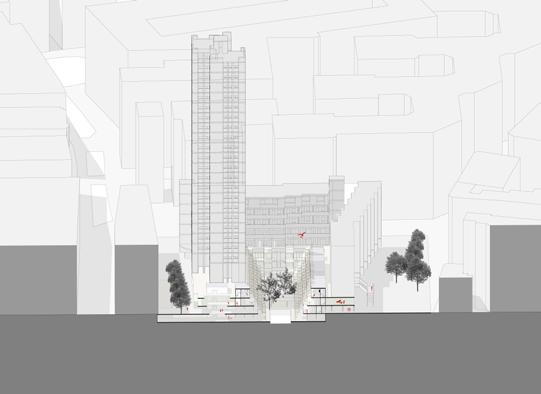
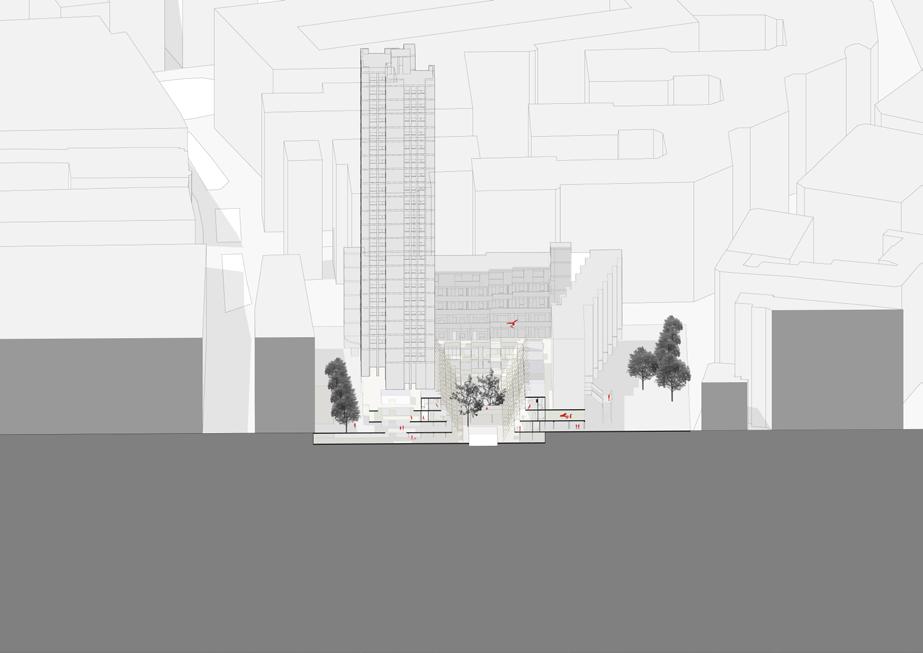
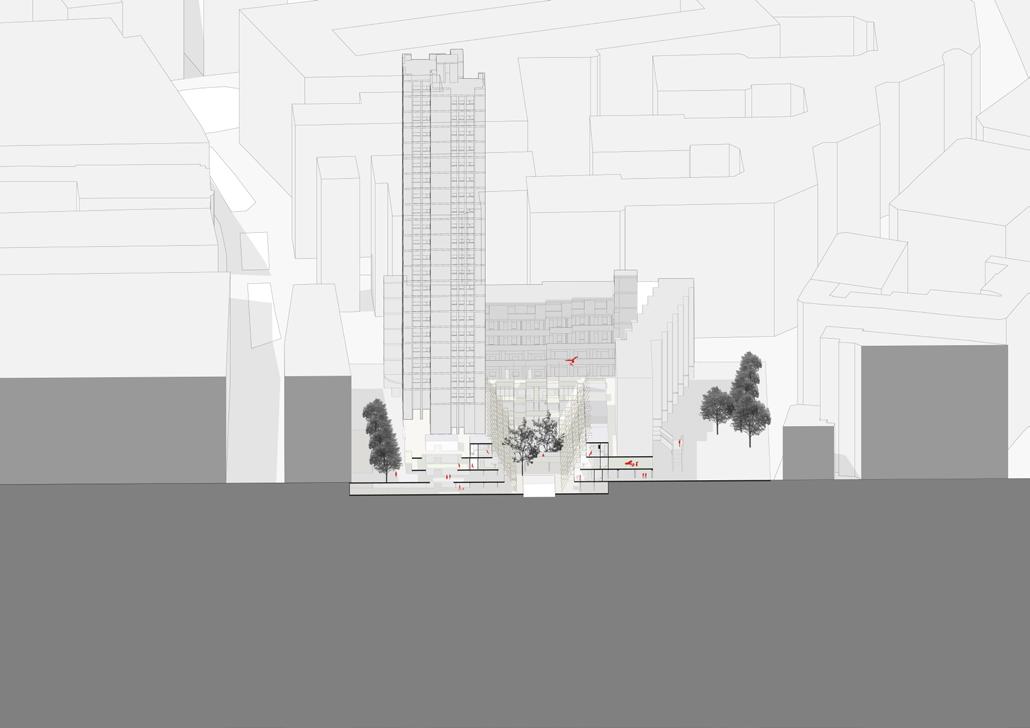
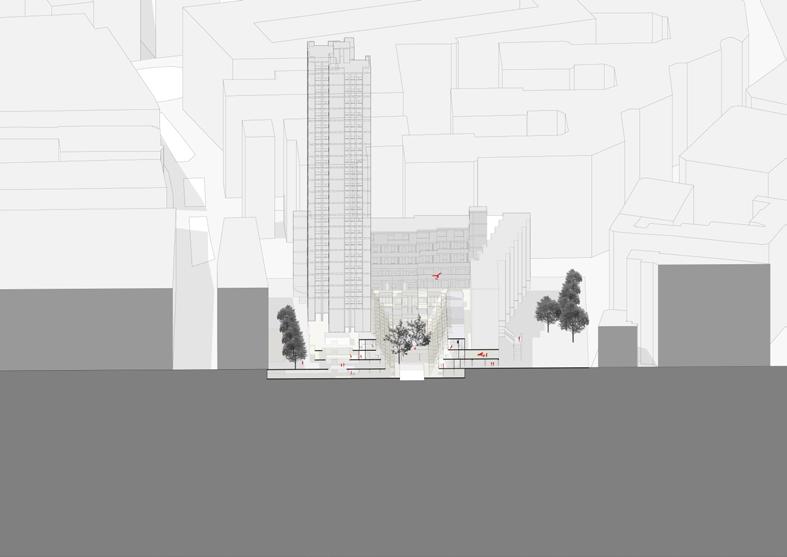
Scene Section - New Middlesex Lifestyle
The new central courtyard will bring a new lifestyle to the estate. Citizens can directly cross the building without detours, and the latest design can provide individual commercial facilities and living service facilities for the surrounding area, which can provide vitality for the surrounding development. For the residents of the Middlesex estate, the new design allows them to choose a living plan that suits them, and the commercial facilities on the ground floor also save them the time of purchasing and facilitate the communication between the residents.
In short, through a series of changes, effectively increasing the residence time of residents in the housing area, improving the vitality of the residential area, and creating a new living mode, which is precisely the primary purpose of this design.
Connecting Bridge and Central Courtyard
The centre of the central courtyard is planted with green plants to create a good living and passing environment for residents and citizens.
The bridge in the centre of the courtyard is arranged in a north-south direction (the direction of the most substantial pedestrian flow obtained from the previous analysis) to facilitate citizens to pass through the yard.
These cantilever made of reflective materials can both reflect light and illuminate the lower part of the courtyard after multiple diffuse reflections.
As a result of the site analysis, certain areas of the site could not be illuminated for long periods. Under the premise of a vast sunken courtyard to help lighting, two additional daylighting patios were added to assist in daylighting in areas with the least sunlight. Because each floor moves backwards from the basement floor to the second floor, each room has a small dormer, which can enhance daylighting and open to promoting
At the same time, it also serves as a symbol, consistent with the "inverted pyramid" at the beginning.
Dormer
Decorative Cantilever Auxiliary lighting patio
"Topological Triangle"
Composition/Non-Composition: Micro-House Design
Site: Zhangjiang, Shanghai, China
Architecture Design
Buliding Area: 9000m2
Academic Contest Design
Group Work Project, Work With Mr. Chan Tak Ming (Except for the drawings and texts specially marked in this section, all are made by myself.)
2019.7 - 2019.8
This project starts with the research of the combination of a single unit. The equilateral triangle, as the minimal component of the project, is a two-dimensional form that can be perfectly combined. After a compelling combination, the six equilateral triangles form another element of the project, the equilateral hexagon. Eventually, the combination of several equilateral hexagons creates the planar grid of the building.
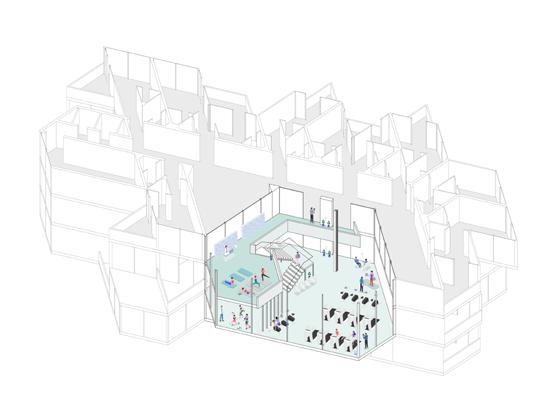
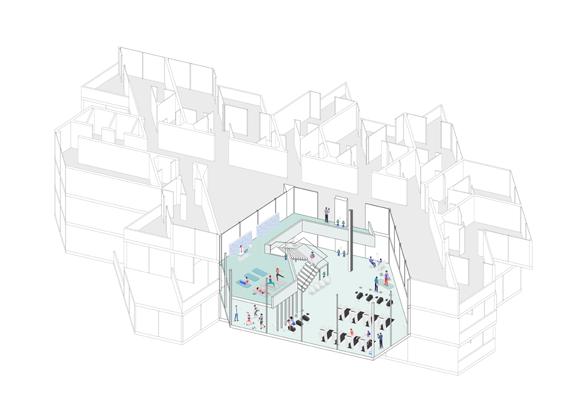
In this planar grid, different units have various combination types. Therefore, they have different floor areas, spatial flow, window numbers and orientations to meet the needs of diverse kinds of inhabitants. Besides, the plane space of different floors is also separate due to the change of the internal combination mode of the grid.
The target group of the project is Shanghai contemporary youth, who are mostly composed of home workers such as young professionals, online retailers, live streamers, and so on. Nowadays, young people all have a strong desire for social communication, lifelong study and personal privacy. In response to this social phenomenon, the studio will explore the organic relationship between private space and shared space, and finally creates a commensal community which satisfies the inhabitant’s need.
For the personal space, the entrance is designed with a passage space composed of a kitchen and a dining table, which visually separates the private space from the public space, satisfying the young people’s pursuit of privacy. For the shared space, in addition to the traditional open space, after the spatial combination of different units, unique interactive places such as shared balconies and shared kitchens are formed to achieve the goal of enhancing social interaction between young people.
(Write By Chan Tak Ming)
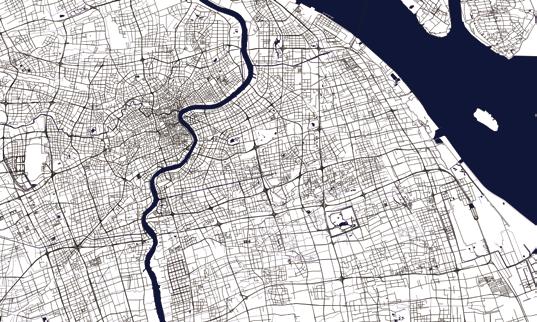
The Shanghai Metro is the second-longest rail transit system in the world in terms of mileage and passenger transportation. More than 10 million people pass through the Shanghai Metro to various parts of the city every day. At the same time, this system is also the first choice for most office workers to go to the workplace daily.
Metro Line 2 is the most crucial east-west line of Shanghai. It connects Shanghai's two major airports, Lujiazui Financial District and the Bund Historic District. The site is located at Guanglan Road Station of Line 2. This is an essential node for Line 2 transfers. A large number of passengers transfer here every day to Pudong International Airport or to the city.
As China's most significant international city, the population density of Shanghai's central area exceeds 20,000 people per square kilometre. It is dominated by the service industry and office space, with more than 10 million people working in the field every day.
Suburban Residential Area
International Airport
Pudong Airport is the third-largest airport in China and the main transportation hub in Shanghai. It is also the frequent destinations for visitors who visit the site. There are a large number of migrant workers and young workers in Shanghai, and the high housing prices in the city centre are forcing them to live or rent in suburban areas. As a result, a large number of single residential regions are distributed around the urban area of Shanghai, and a large number of people flow between the urban and suburban areas every day.
The site is located in the Zhangjiang Science and Technology Park in the suburbs of Shanghai. It has a large number of high-rise residential areas and it is one of the larger residential areas in the suburbs of Shanghai.
Proportion Of Migrant Workers : 86%
It can be seen that like the previous project in London, the United Kingdom, large cities around the world are facing the situation of vacant residential areas. Here I call it the "sleeping city" phenomenon. This phenomenon means every day, a large number of workers do their jobs during the day and do not return to their suburban residences until night. Such a living style would be difficult to support on the development of the suburbs and even make the transportation system crowded.
How to change the "sleeping city" phenomenon and revitalize the suburbs? Here we have selected the young people who account for the most significant proportion of local households and try to stimulate the region's innovation by creating an efficient and intensive space for them.
Pudong
The triangular structure is generally enjoyed as one of the most stable structures. In architectural construction, it has ductility and combined properties that are not available in other rectangular structures. Through the combination, splicing, opening and superposition between different triangular modules. The triangular frame structure can provide users with a variety of spatial combinations and uses. This is not possible with a generally rectangular frame structure.
Each rectangular block cannot be directly connected due to structural constraints so that only a single space is formed.
Besides, the very regular unit plan is easy to make residents tired, lack of privacy and the indoor moving routes are challenging to design , which can not meet the needs of usersyoung people's accommodation and activities.
Unit Type Unit Perspective Plan View (Print By Chan Tak Ming) Number Of Occupants
The triangular structure can be stressed only at the endpoints, so the triangular units can be divided or connected, and combined into indoor spaces of different areas.
Through the stitching of triangles in different positions and directions, the building can create rich levels of route design. At the same time, fresh designs can also meet young people's requirements for innovation and privacy.
Of Privacy
The right drawing is a typical room unit in the design. The basic triangular modules at different angles and positions form several functional modules necessary for the building through splicing. From the entrance to the private balcony inside, the degree of privacy gradually increases to meet the contemporary Young people demand high privacy.
In the interior design, triangle elements are also used to the extreme. In the design process of furniture, triangle elements are used in large quantities.
Rectangular House Design
House Design