ARCHITECTURE PORTFOLIO
CONTENTS
Andrea Carmona-Rossell
Lily Pads
Uptown Archive
Double House
Miscellaneous -
QGIS Mapping
Casa Poli
Thermal Overlay

Andrea Carmona-Rossell
Lily Pads
Uptown Archive
Double House
Miscellaneous -
QGIS Mapping
Casa Poli
Thermal Overlay
Lily Pads is a multi-unit residential housing proposal designed for the student population surrounding Northeastern University. The project explores flexible housing arrangements by offering a variety of unit types and bedroom sizes that accommodate different budgets while allowing students to live communally.
The building form is carved to create a series of interior voids that bring light, greenery, and circulation into the center of the project. These openings form shared pathways and informal study spaces that extend across multiple floors. Ground-floor amenities including a gym, café, laundry, and meeting spaces, all to support daily student life. While the rooftop has gardens and lounges to provide additional communal space. The design prioritizes mobility, incorporating bike storage and accessible ramps for students navigating the city by bicycle or scooter.
DATA:
Total # of Units : 80
Unit Distribution : (12) 1BR | (44) 2BR | (16) 3BR | (8) 4BR
Parcel Area : 86,248.8 sqf
GPA : 169,546 sqf
Density : 40.4 Units per Acre
Percent Open Space : 56.54% FAR : 1.965
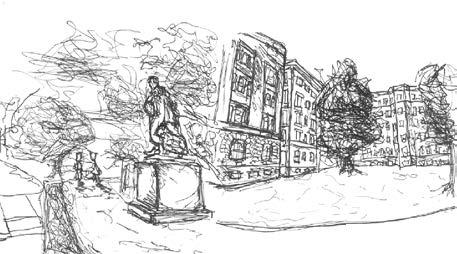
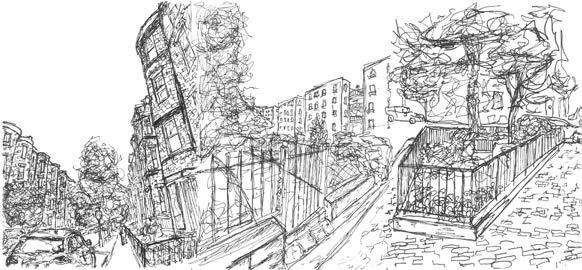
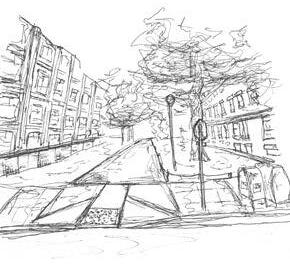
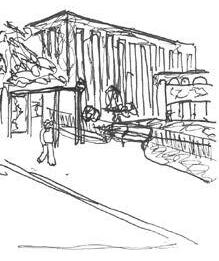
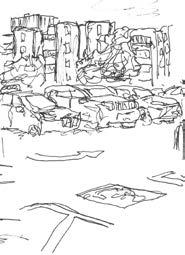
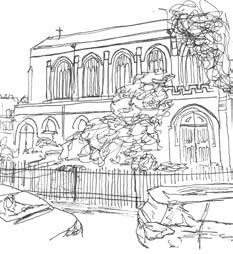
This diagram documents the network of open spaces surrounding the site through on-site observation and hand sketching. Many of these spaces function as informal gathering areas and incorporate greenery. This analysis informed the design strategy of bringing vegetation and communal outdoor spaces into the building through carved interior voids and planted terraces.
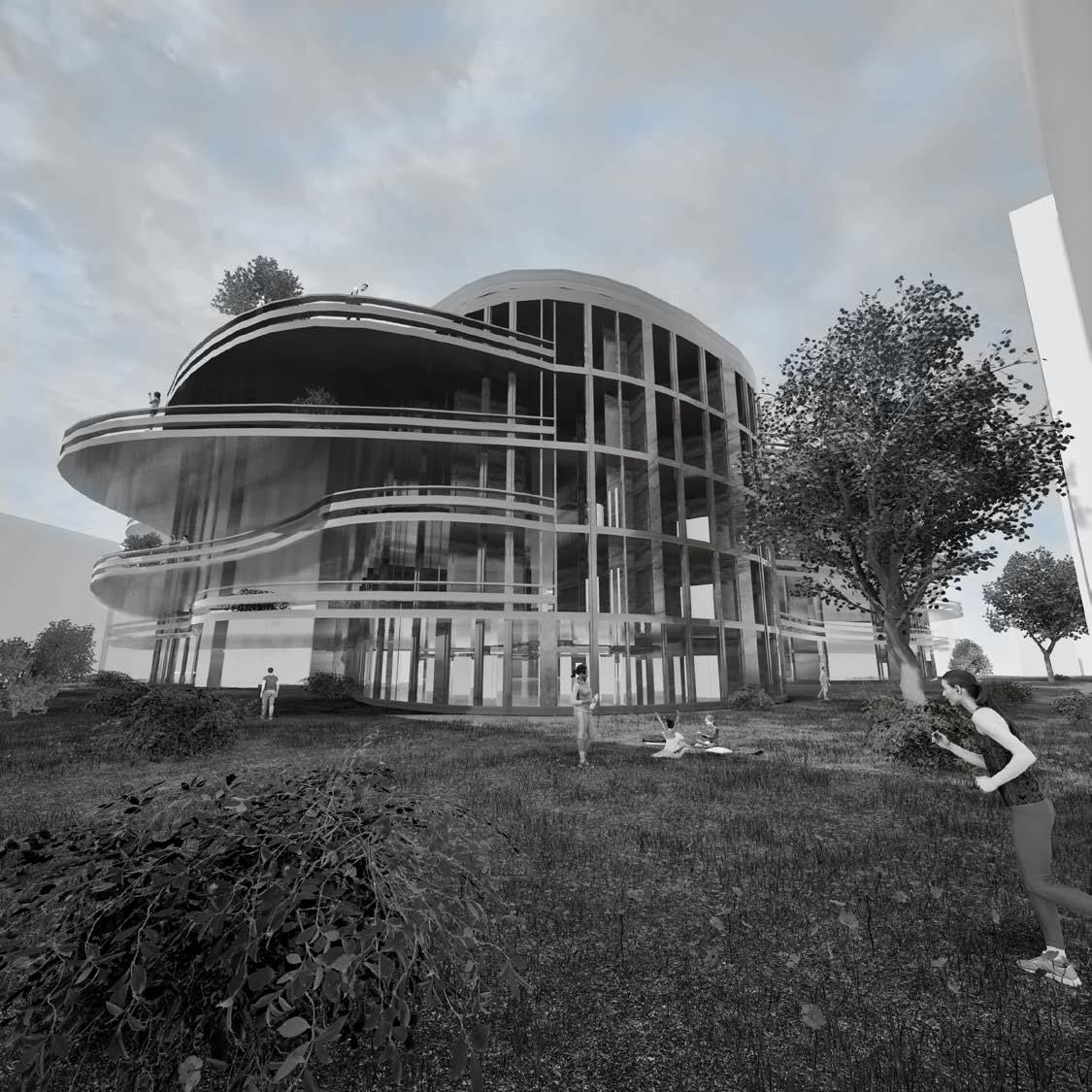
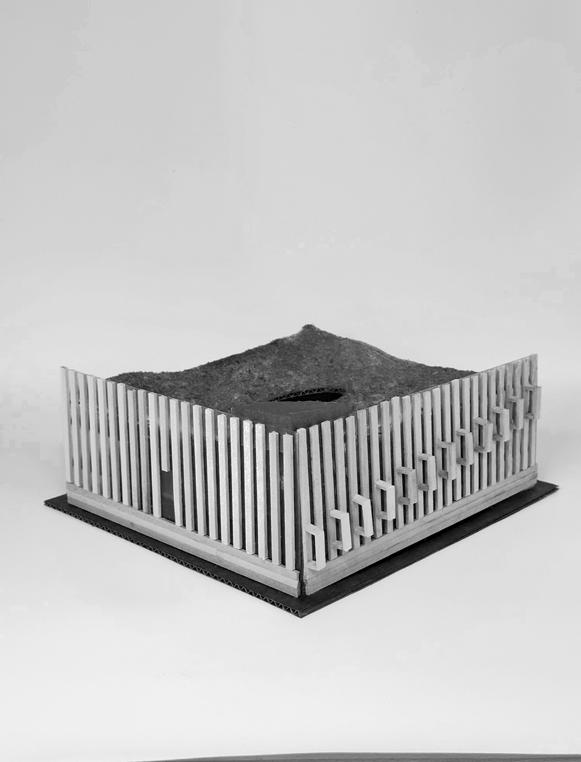
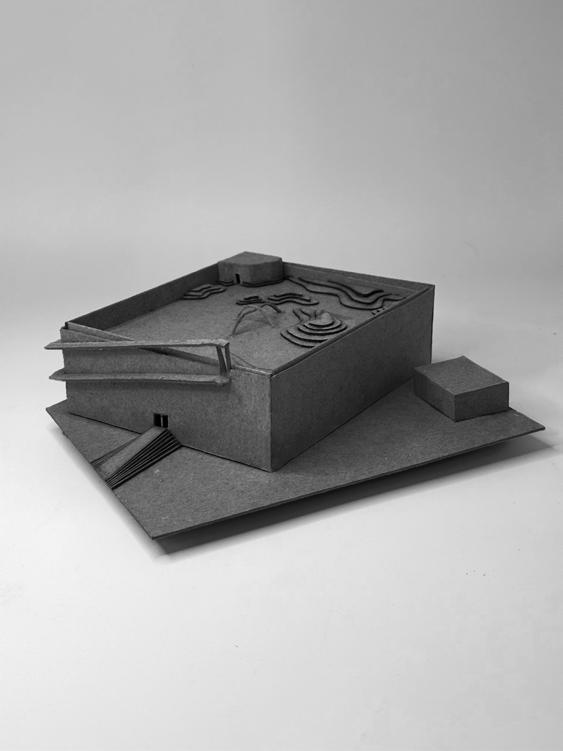
The Uptown Archive is a community library designed around the contrast between a simple exterior form and a dynamic interior spatial experience. From the outside, the building appears as a restrained cubic volume wrapped in glass and vertical wood panels that filter daylight and regulate glare within the library spaces. The façade creates a rhythmic screen that softens incoming light. At the center of the building is a large spherical void that functions as an auditorium and communal gathering space. As the dome descends toward the lower level, the space becomes smaller and more intimate, housing the children’s library beneath the auditorium.
Above the auditorium, the main library collections and adult reading areas surround the central volume. The dome interacts with the roof by pulling away in some areas to allow light to filter through, while penetrating the roof in another location to form a skylight that highlights the auditorium below. The rooftop becomes a public landscape inspired by San Francisco’s rolling terrain, creating a playful gathering space accessible by an ADA ramp that wraps around the building’s exterior.
SECTION CUT ONE
Social and quiet spaces are layered vertically around the central auditorium. Public gathering areas occupy the middle levels, while quieter reading spaces are positioned above and below. Ultimately creating a social sandwich.
Circulation flows around the central spherical auditorium, connecting reading areas, gathering spaces, and the rooftop terrace. Active movement zones surround the core, while quieter spaces are placed along the perimeter.
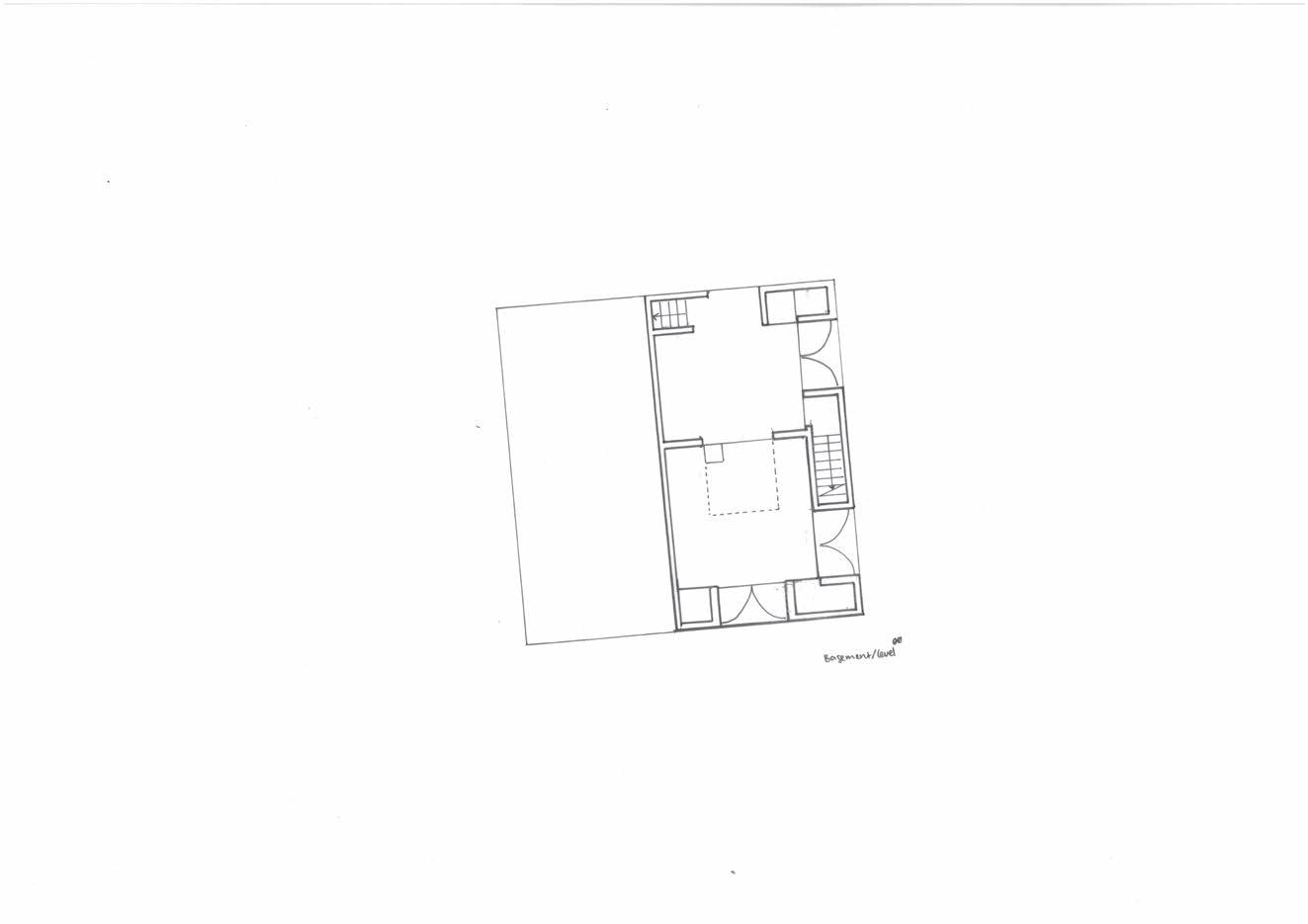
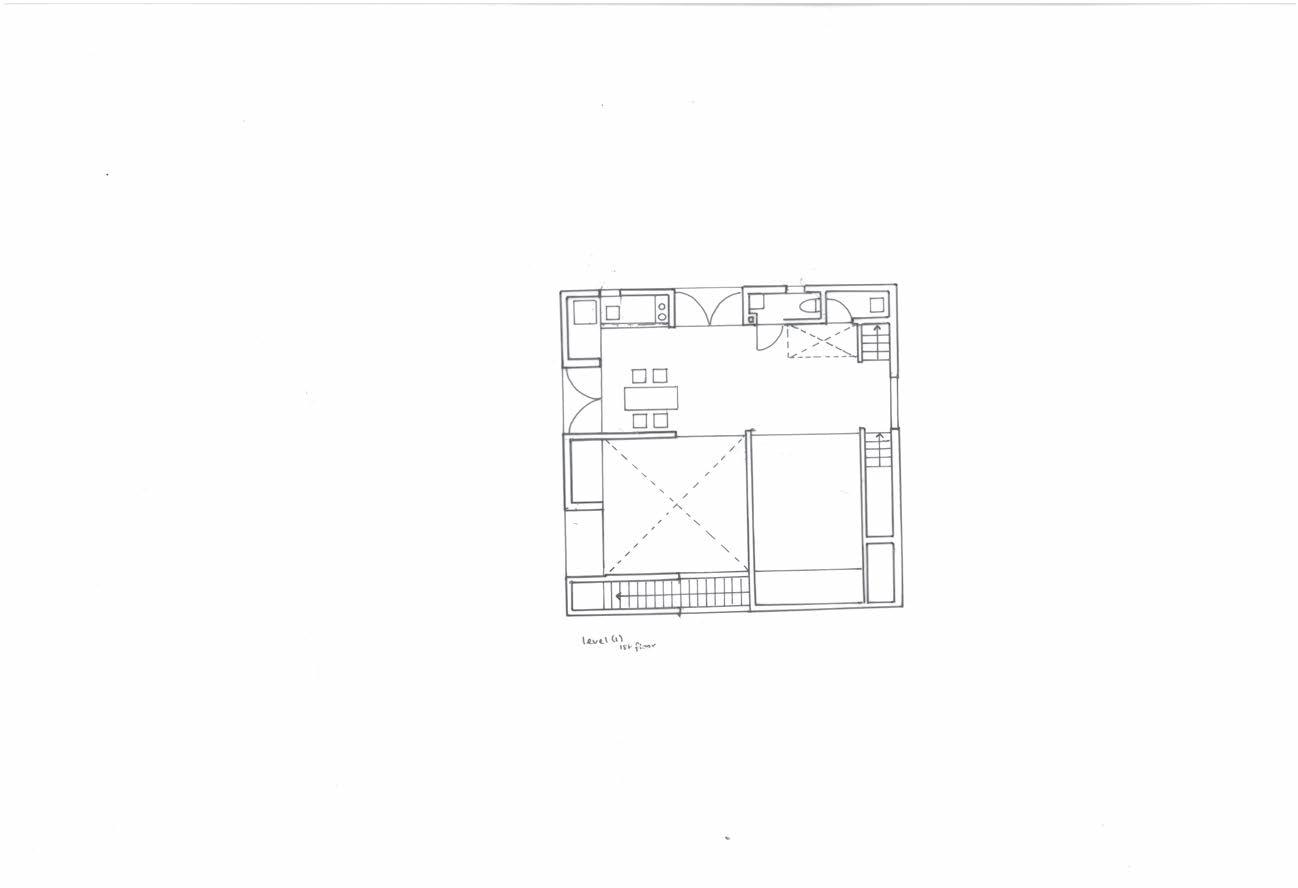
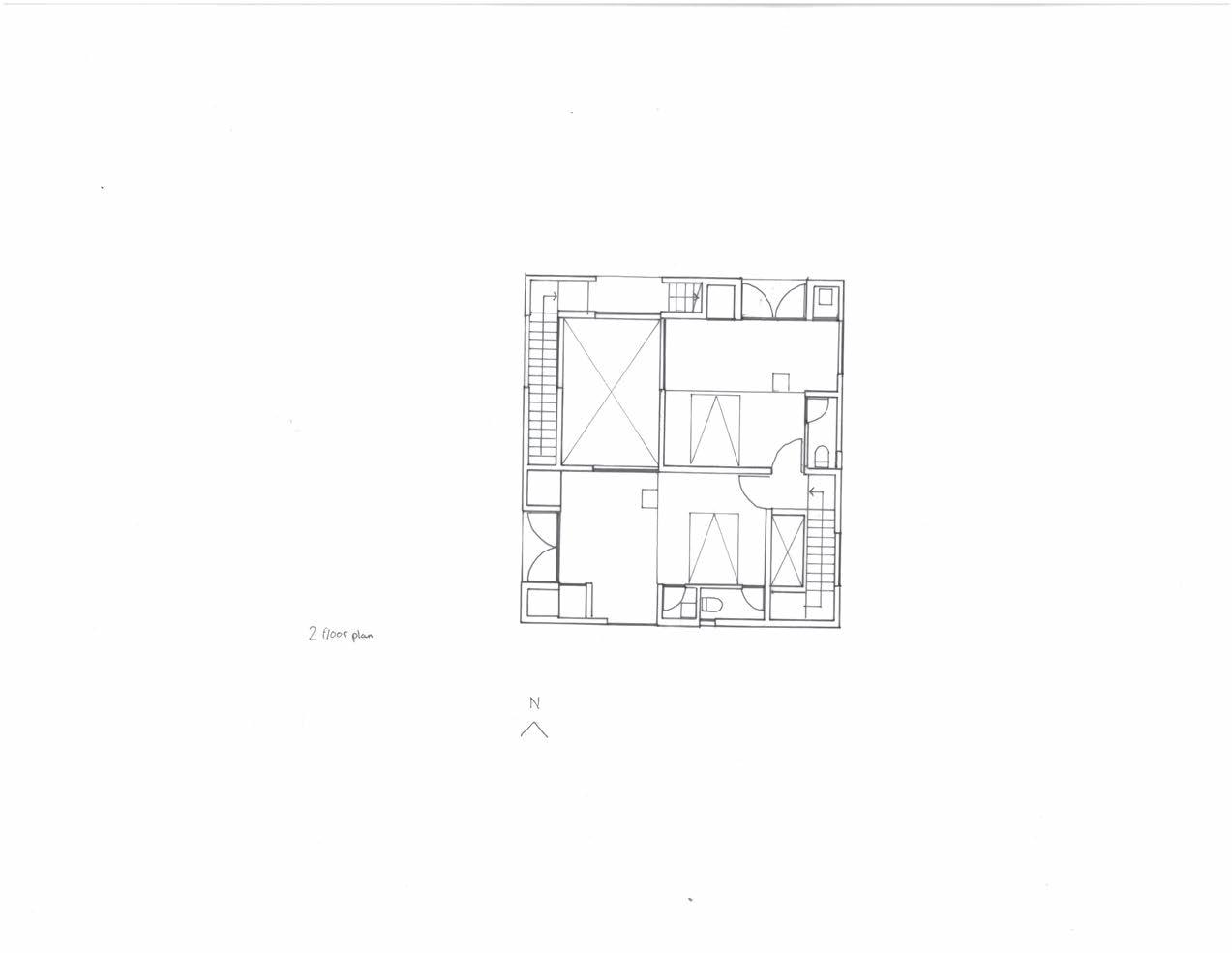
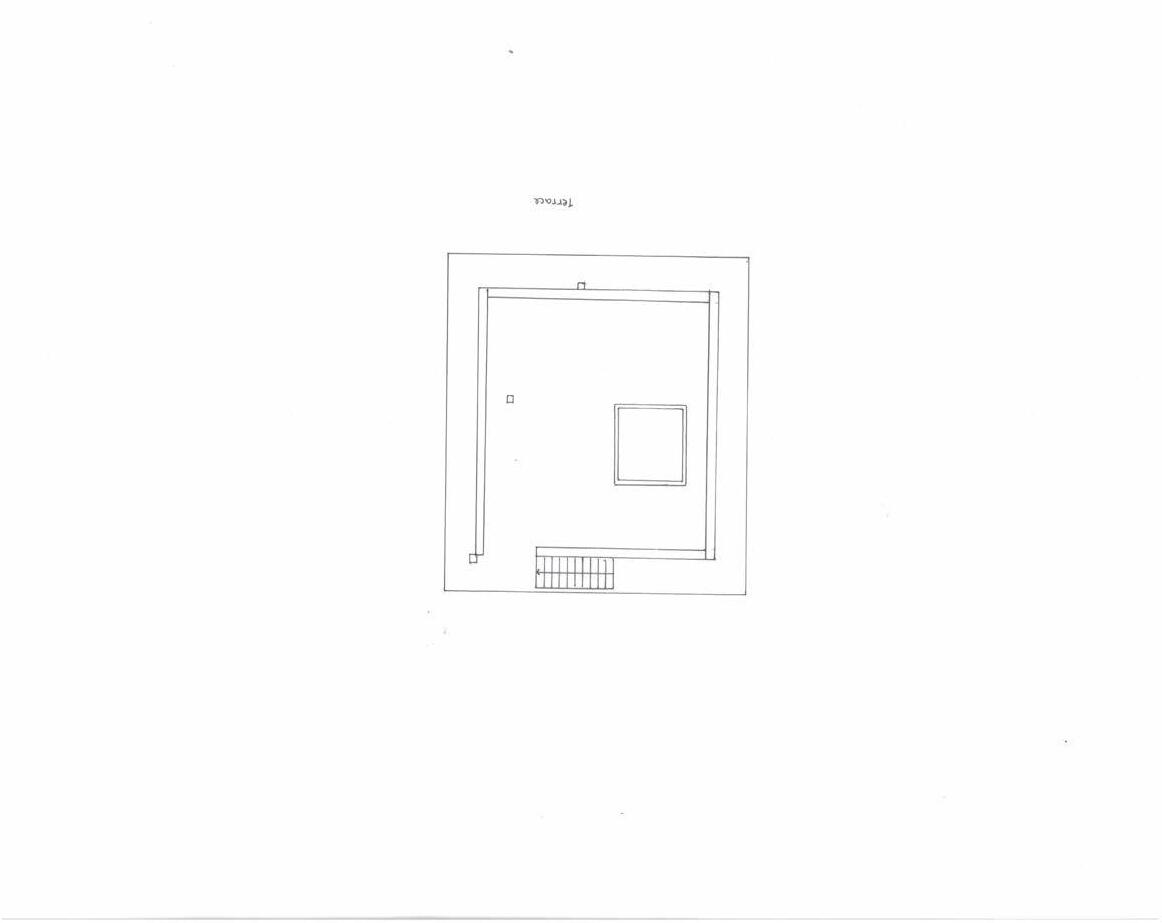
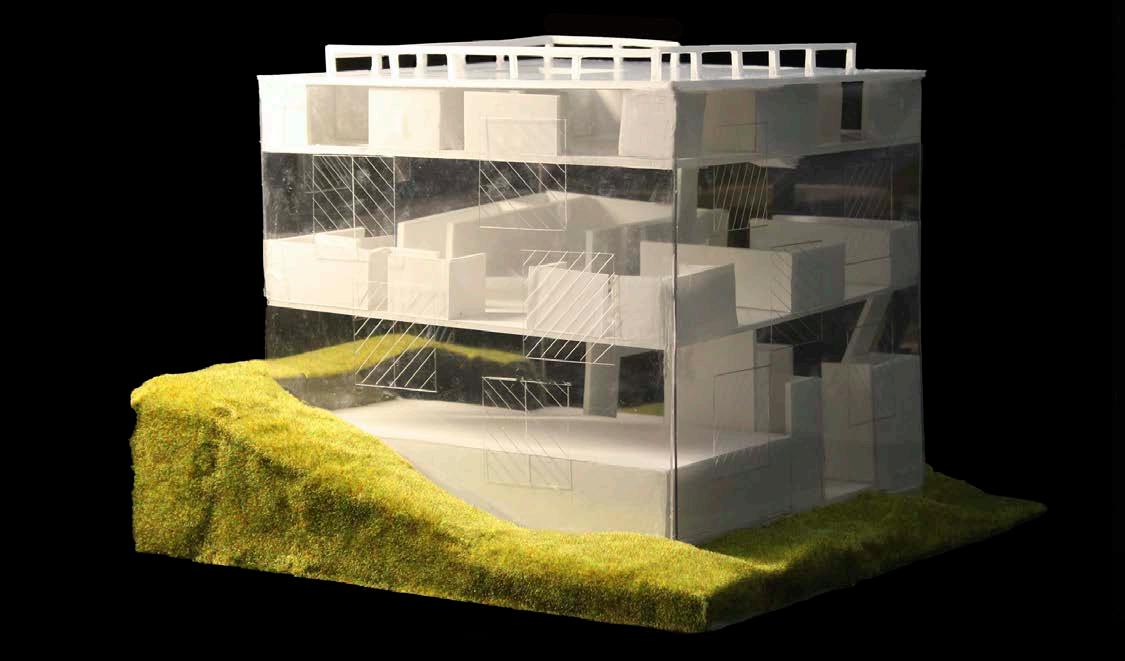
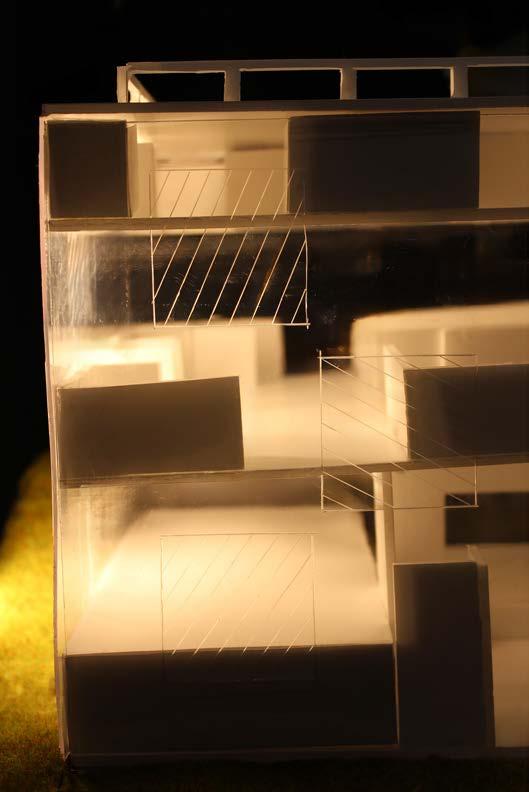
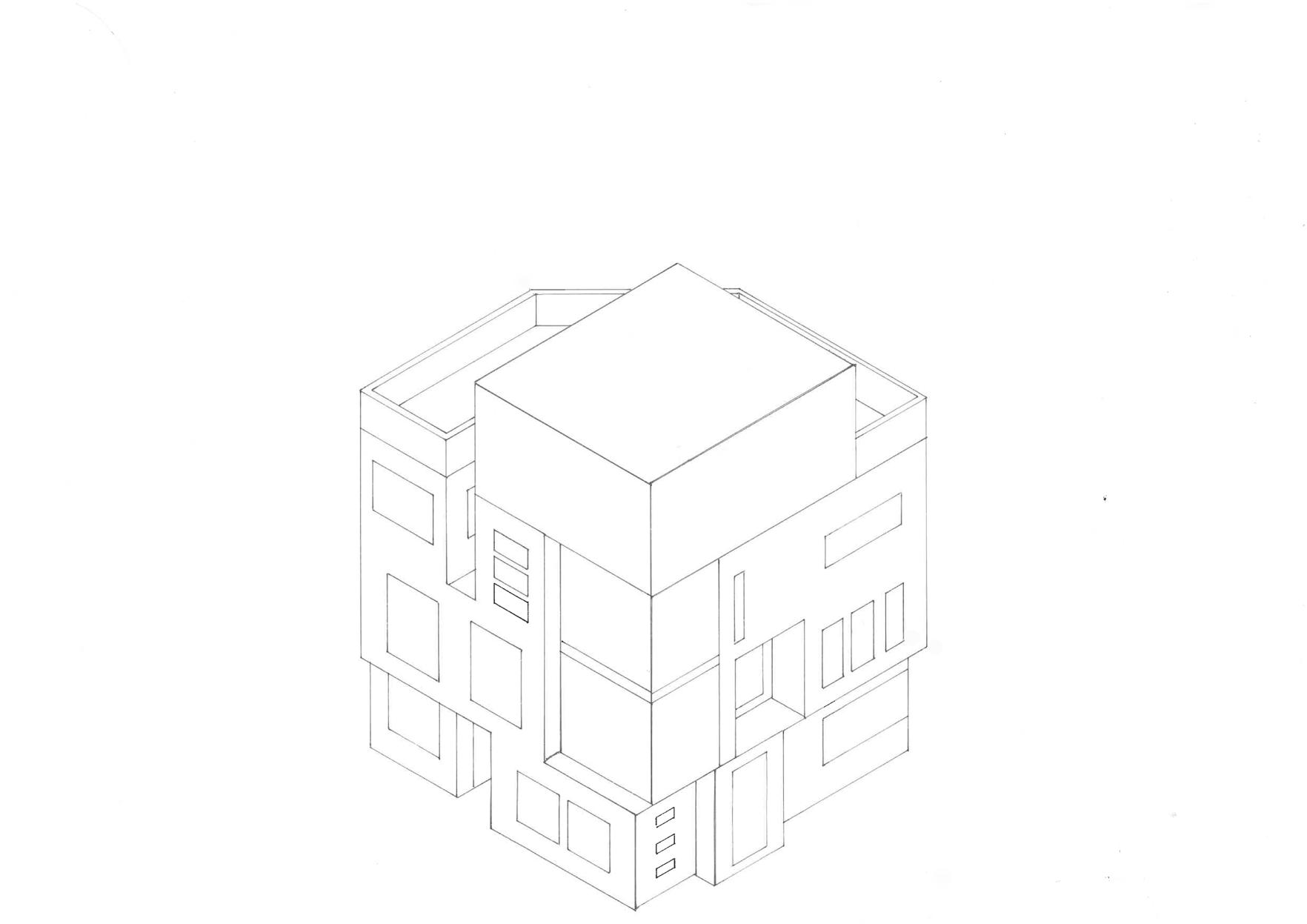
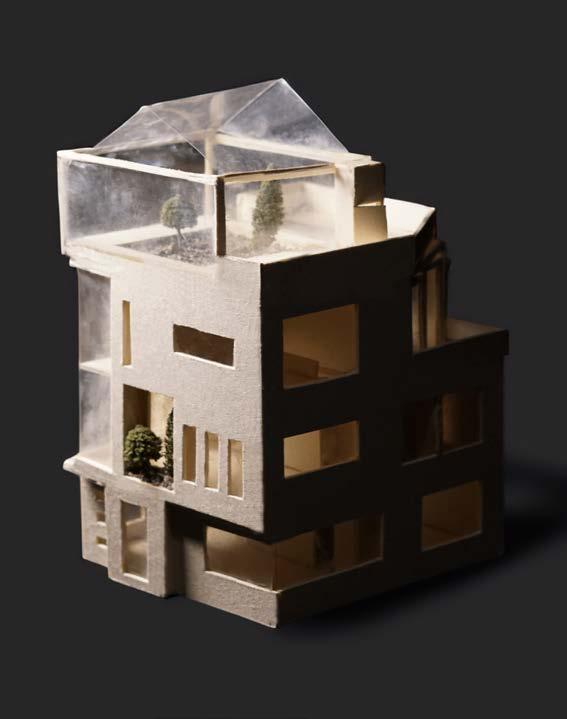
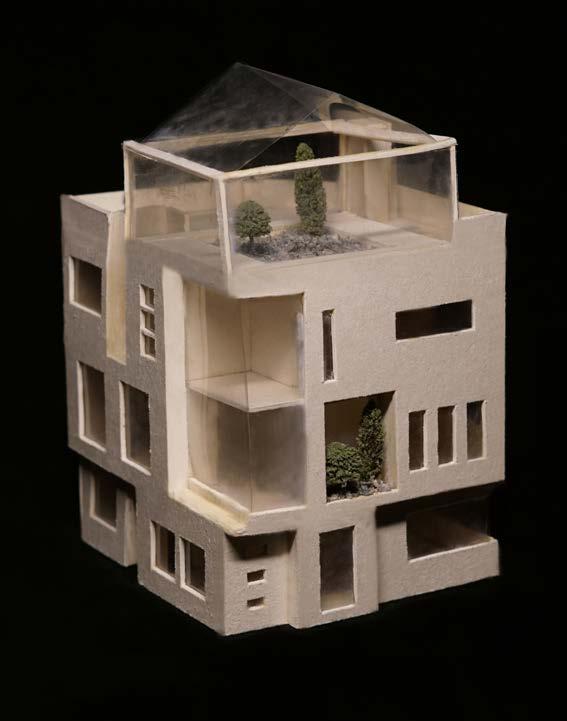
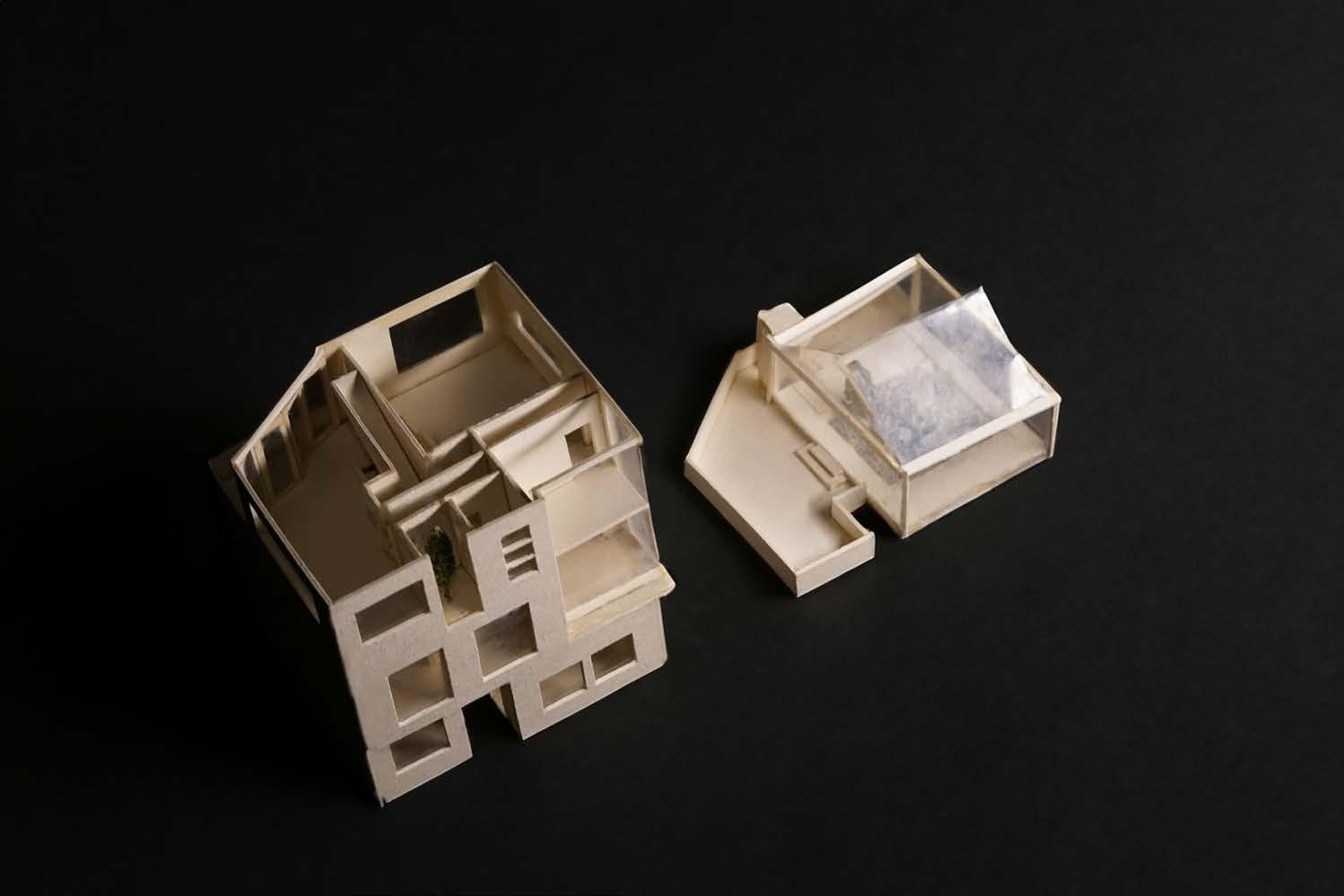
The Double House explores a shared residential structure designed for two contrasting clients: a botanist and a chef. While the building functions as a single volume, the interior is divided into two distinct living environments that respond to each resident’s lifestyle and daily routines. The botanist’s spaces prioritize daylight and vegetation, incorporating large windows and interior planting areas that support his work. In contrast, the chef’s spaces focus on social gathering and cooking, with an open kitchen connected to the rooftop through large accordion doors that enable indoor–outdoor living.
The two living spaces remain independent while sharing a central circulation core and a communal rooftop. The rooftop greenhouse provides a shared space where plants can be grown for both research and cooking, creating a connection between the residents’ professions while encouraging interaction between their otherwise distinct living environments.
QGIS Mapping
Thermal Overlay
Casa Poli
This mapping project analyzes demographic patterns and lived experiences in the Mission Hill and Roxbury neighborhoods of Boston. Using QGIS data alongside in-person interviews with residents, the study explores how racial and ethnic diversity and rising housing costs influence how people experience the area. The maps visualize demographic distributions and highlight the social and economic factors shaping the neighborhood.


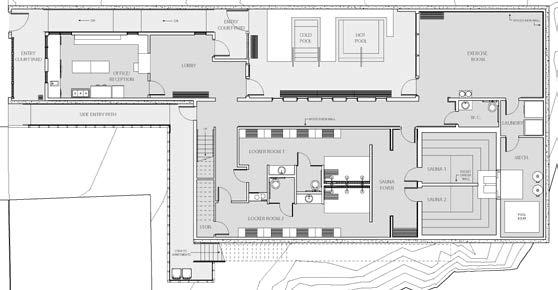
Washington Baths - Portland, Maine
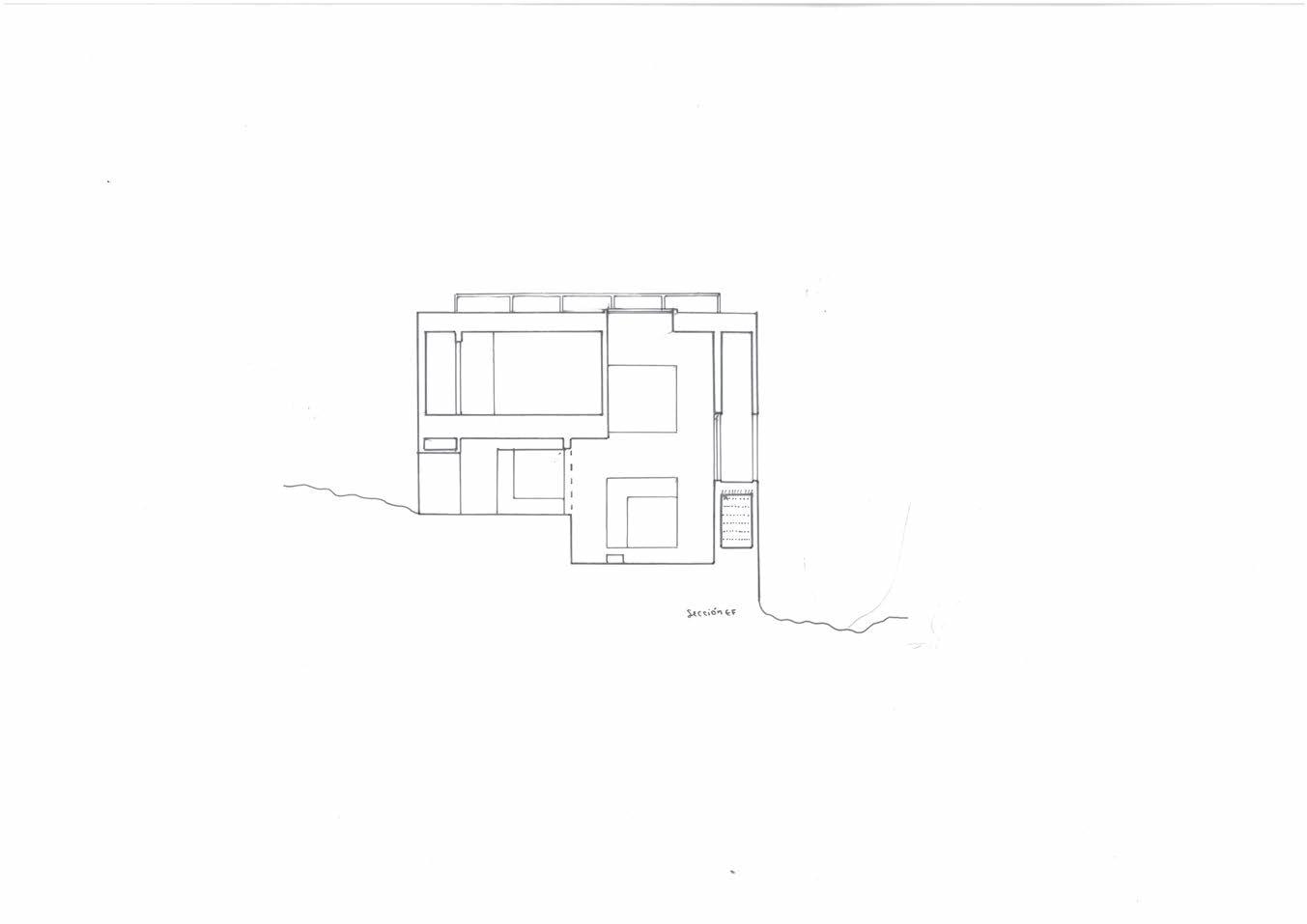
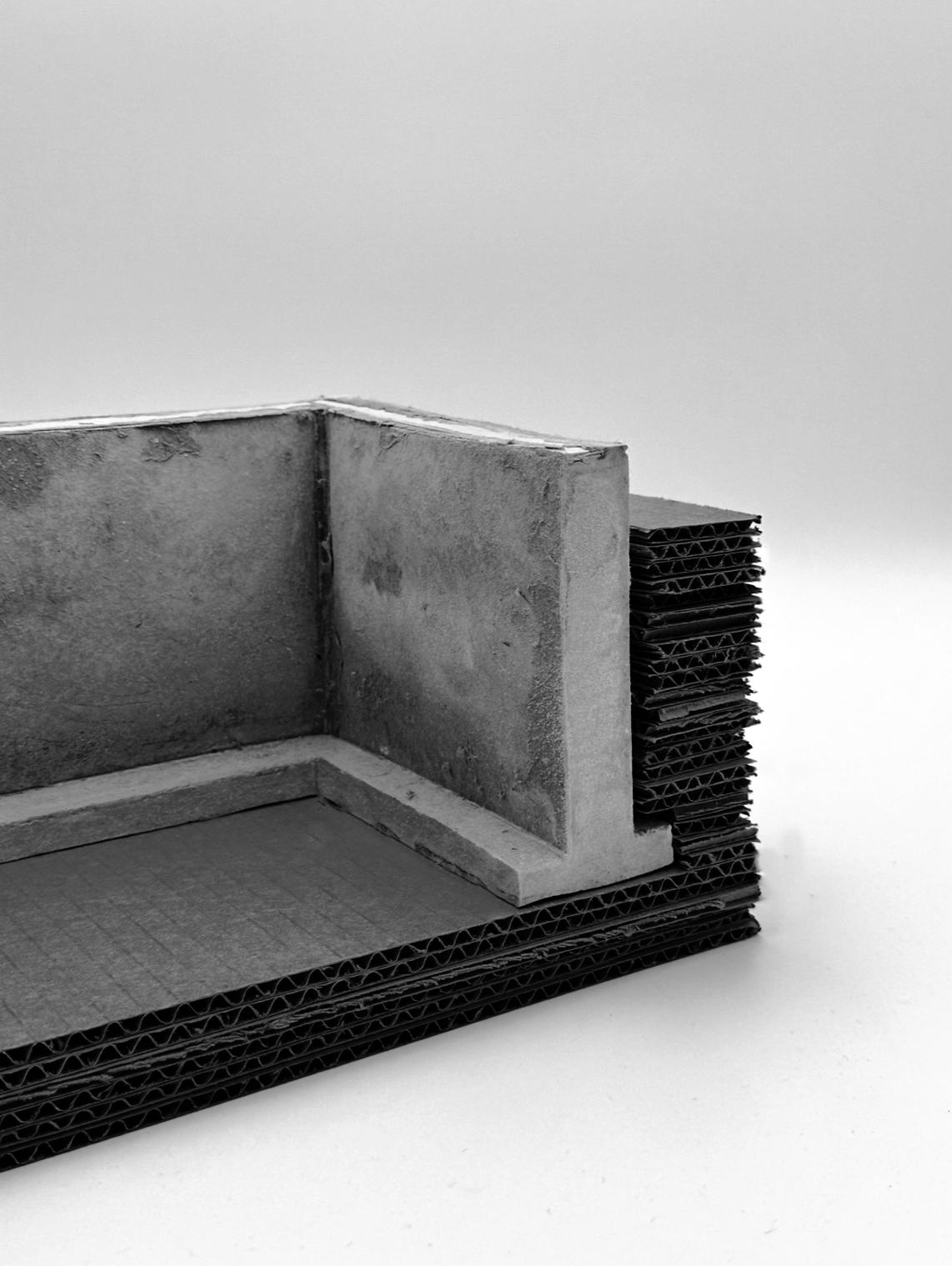
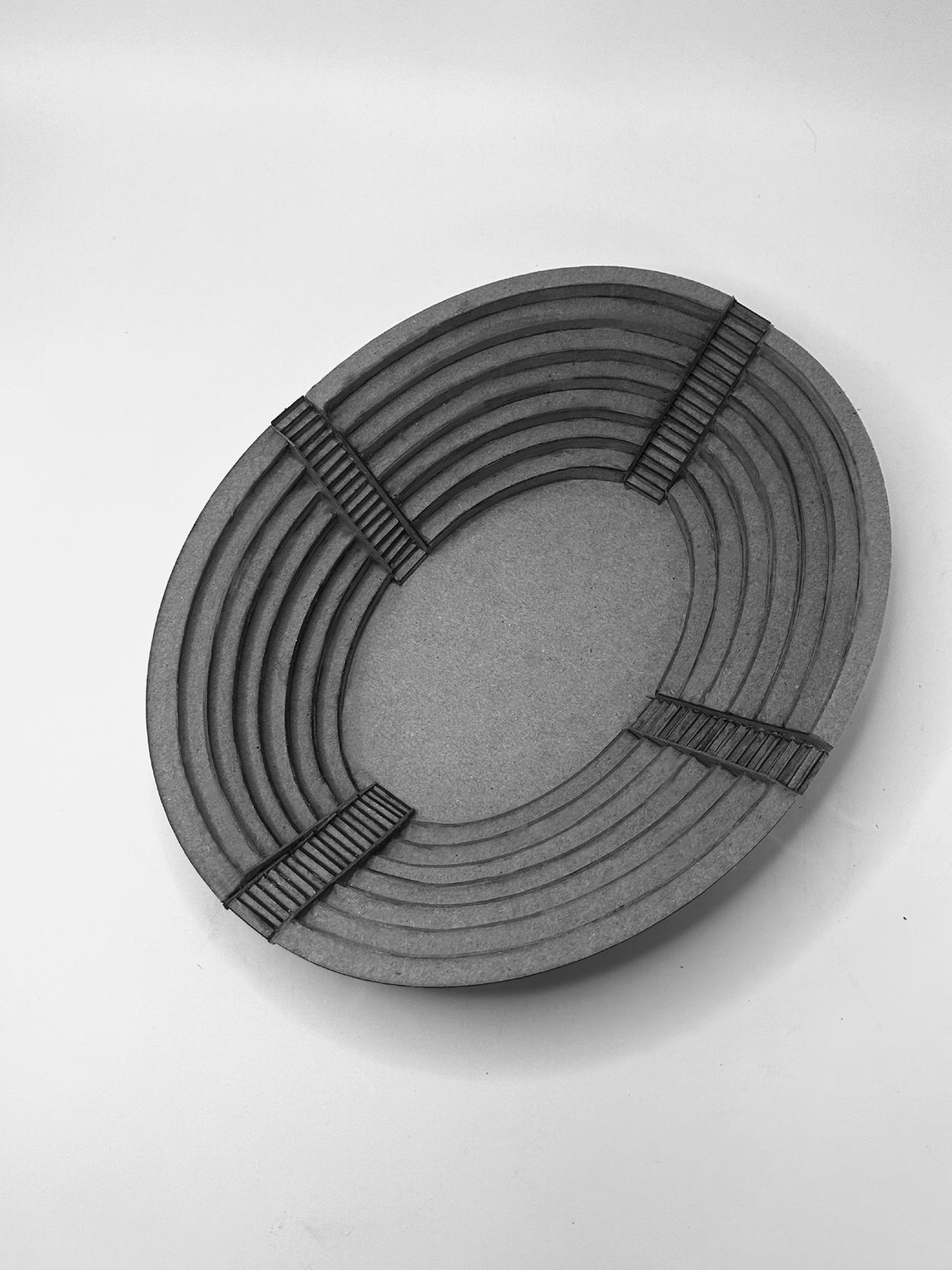
This study analyzes Casa Poli by Pezo von Ellrichshausen, examining how a monolithic cubic structure organizes interior spaces around a central void while framing views of the surrounding Chilean coastline. Through plans, sections, and model studies, the analysis explores the relationship between structural mass, spatial hierarchy, and controlled natural light.
This speculative thermal overlay was created for an Environmental Systems assignment analyzing the sauna area of Washington Baths using photographic references and research. The diagram examines how radiant heat, convection, and cross ventilation influence the interior thermal environment. Warm air rises through thermal stratification while cooler air enters and circulates through the space. The water basin provides localized cooling, while occupants contribute body heat and humidity, shaping the overall thermal experience of the sauna.