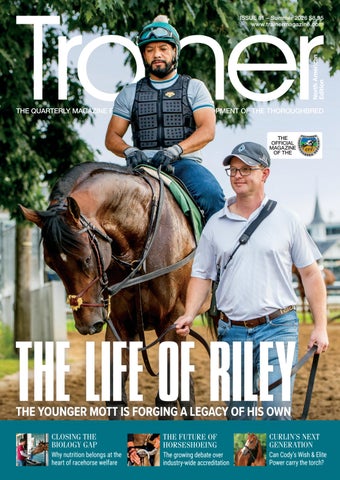
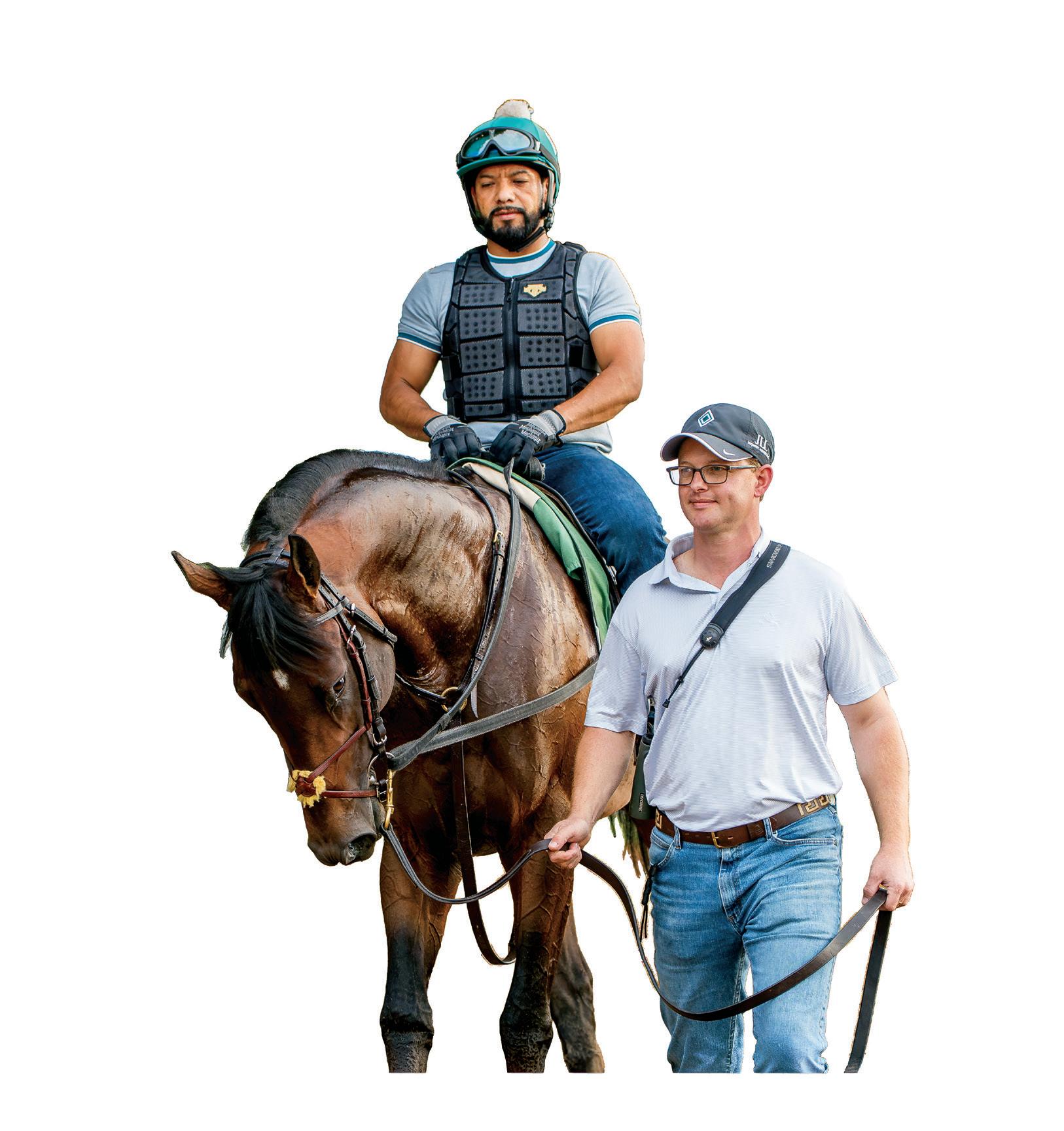
THE LIFE OF RILEY
CLOSING THE BIOLOGY GAP
Why nutrition belongs at the heart of racehorse welfare
THE FUTURE OF HORSESHOEING
The growing debate over industry-wide accreditation
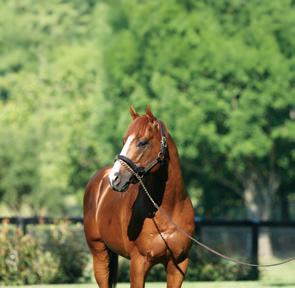
THE YOUNGER MOTT IS FORGING A LEGACY OF HIS OWN
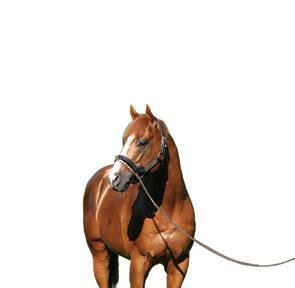
CURLIN’S NEXT GENERATION
Can Cody’s Wish & Elite Power carry the torch?

GILES ANDERSON PUBLISHER’S OPINION

Just where have the last twenty years gone?
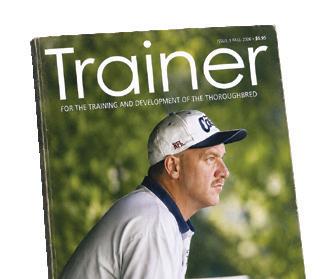
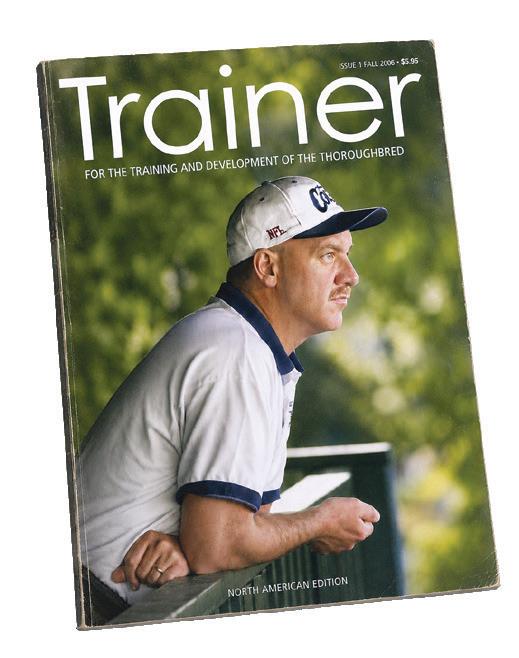
In the early fall of 2006, we published our first ‘official’ issue which featured Kenny McPeek as our cover trainer profile.
So, I thought for this issue, twenty years later, it would be a good one to catch up with McPeek and to get his reflections on the last two decades as well as his thoughts on the industry today.
In September 2006, McPeek was a trainer hungry to hit the big time, searching for the athletic potential in a horse. At the time, it would be fair to say, McPeek didn’t have the budget to go for the big ticket horses.
At the Keeneland yearling sale the year before, Kenny – who had briefly stepped away from training, picked up hip #2261, a son of Smart Strike who went through the ring for a modest $57,000.
As Ken Snyder discovered in his interview with McPeek, the horse was overlooked by many, simply as he had a perceived OCD.
Time and time again, it just goes to show that horses who present at the yearling sales with ‘issues’ during the vetting process, doesn’t necessarily mean that the ‘issue’ is going to impact their racing careers. This is a subject we’ll be delving into for our next issue of the magazine.
The horse McPeek signed for was named Curlin, and after his maiden win in 2007 for McPeek’s former assistant - Helen Pitts, he was sold to join the barn of Steve Asmussen.
Curlin went on to amass earnings of over $10.5m. He won 11 of his 16 starts and finished ‘in the money’ on 15 occasions. He was also voted Eclipse Horse of the Year on two occasions.
It would be fair to say that Curlin has now established himself as a sire of sires of his generation.
In 2022, Rich Strike became his first grandson to win the ‘Run for the Roses’ and in 2023 it was the turn of Mage to make it number two.
Curlin himself finally sired his first Kentucky Derby winner this past May (Golden Tempo) and his bloodline also shows up in the 2nd and 3rd placed horses.
As Alicia Hughes tells us, this year, it’s now the turn for two of his champion sons to be represented in the yearling sales ring for the first time. Both horses – Cody’s Wish and Elite Power were conditioned by Bill Mott.
As the senior Mott has already been the subject of our cover profile, we turn to Bill’s son Riley – who, given his pedigree, is certainly going to be a trainer for the next twenty years.
Wherever your racing takes you this summer – good luck!

CONTRIBUTORS
Editorial Director/Publisher & Advertising Sales
Giles Anderson (859) 242-5025
Sub-Editors
Nico Jeeves & Virginia Lisco
Advert Production, Circulation/Website
Nico Jeeves & Virginia Lisco (859) 242-5025
Cover Photograph
Jetta Vaughns /Eclipse Sportswire
Trainer Magazine is published by Anderson & Co Publishing Ltd.
Tel: (859) 242-5025 Fax: (888) 218-4206 info@trainermagazine.com www.trainermagazine.com
North America
PO Box 13248, Lexington, KY 40583-3248
United Kingdom
Ground Floor Office, 72 Medstead Road, Beech, Hampshire, GU34 4AE
Trainer Magazine is the official magazine of the California Thoroughbred Trainers. It is distributed to all ‘Trainer’ members of the Thoroughbred Horsemen’s Association and all members of the Consignors and Commercial Breeders Association, the Maryland Horse Breeders Association, the Massachusetts Thoroughbred Breeders Association, the Pennsylvania Horse Breeders Association, the Virginia Thoroughbred Association and to members of the National Steeplechase Association.
Alan F. Balch was hired as executive director of the California Thoroughbred Trainers in April 2010. His professional career in racing began at Santa Anita in 1971, where he advanced to senior vice president of marketing and assistant general manager and was in charge of the Olympic Games equestrian events in Los Angeles in 1984. He retired in the early 1990s to become the volunteer president of the National Equestrian Federation of the USA, as well as the National Horse Show at Madison Square Garden.
Silvana Čeko has always been involved in the equine field, working alongside veterinarians in equine hospitals and at racetracks. She recently graduated from the Ontario Veterinary College, University of Guelph, and is currently completing her PhD in Pathobiology, focusing on equine respiratory health and disease.
Dr. Gabriele Gross is a German-trained veterinarian (1987), equine nutritionist, PhD pharmacologist, former Thoroughbred owner/trainer, and independent consultant specializing in equine health, nutrition, and performance. For more than three decades, she has advised trainers, owners, breeders and veterinarians across Europe, North America, and other international racing jurisdictions.
Bill Heller is an Eclipse Award–winning author who published his 27th book, Fred Hooper – The Extraordinary Life of a Thoroughbred Legend. His other biographies include those of Hall of Fame jockeys Ron Turcotte, Randy Romero, and Jose Santos. Bill and his wife, Marianne, live near Gulfstream Park.
Mark Hickcox CF is The Victory Racing Plate Company’s Sales Manager, who studied at Colorado State University, achieving a B.S. in Business Administration. Mark is a graduate from the Heartland Horseshoeing School and now a Certified Farrier with the American Farrier’s Association and Farrier International Testing System (FITS). With more than 25 years as a small business owner, sales management roles in medical device and farrier industries, Mark is still shoeing horses part-time and learning things full-time, while also serving as president of the Farrier Industry Association.
Alicia Hughes is an award-winning writer and reporter with more than 20 years of experience. She currently serves as Director of Communications for Ocala Breeders’ Sales Company and previously served as Racing Editor for The Blood-Horse and lead turf writer for the Lexington Herald-Leader newspaper from 2008 to 2016.
Jennifer S. Kelly is an author and freelance turf writer. Her first two books, Sir Barton and the Making of the Triple Crown and The Foxes of Belair: Gallant Fox, Omaha, and the Quest for the Triple Crown, chronicle the lives and careers of the first three American Triple Crown winners. She also contributes to The Racing Biz, America’s Best Racing, and TwinSpires Edge
Ken Snyder is a turf writer for Gallop Magazine, and a turf/travel-culture writer for Kentucky Monthly magazine. His work has also appeared in other publications, including The Blood-Horse. He and his wife, Cassie, reside in Kuttawa, Kentucky.
Catherine Rudenko is an independent registered nutritionist with a focus on thoroughbreds. Based in the UK, Catherine has worked in the USA, Europe and Asia with trainers and studs creating feeds and feeding plans customised to their needs and climate. With a keen interest in education and research, Catherine works with professional bodies and universities to promote knowledge of nutrition and its importance in the management of thoroughbreds and other breeds.





Trainer Magazine (ISSN 17580293) is published 4 times a year: February, April, July and October by Anderson & Co Publishing and distributed in the USA by Modern Litho | Brown Printing, 6009 Stertzer Road, Jefferson City, MO 65101. Periodicals postage paid at Jefferson City, MO, and additional mailing offices.
POSTMASTER: Send address changes to Trainer Magazine, Anderson & Co Publishing, PO Box 13248, Lexington, KY 40583-3248.

The World Watches as
FUTURES ARE FOUND. HISTORY IS WRITTEN.
CHAMPIONS ARE CROWNED. AND LEGACIES ARE CEMENTED.
Keeneland Fall 2026
September Yearling Sale
Sept. 14-26
The Keeneland Fall Meet Oct. 2-24
Championship Sale at the Breeders’ Cup Oct. 28
Breeders’ Cup World Championships Oct. 30-31
November Breeding Stock Sale Begins Nov. 3
November Horses of Racing Age Sale
Nov. 11
Be here for every moment.
CONTENTS
FE ATURES
08 Life of Riley – cover profile
Jennifer Kelly tells the story of Riley Mott, who is building his career on horsemanship, family values, and a drive to make his own name in racing.
20 Kenny McPeek – buying winners, building champions
Ken Snyder looks at how one of racing’s most accomplished trainers, Kenny McPeek, uses his eye for conformation, pedigree, and value to identify future champions and build one of the sport’s leading operations.
24 Nutrition for joint recovery and performance
Catherine Rudenko explains how specific nutrition and supplements can support joint health, reduce inflammation, and help horses recover and perform well.
32 Sons of Curlin
Alicia Hughes compares Cody’s Wish and Elite Power as these champion sons of Curlin are represented with their first yearlings at auction this year.
42 The biology gap
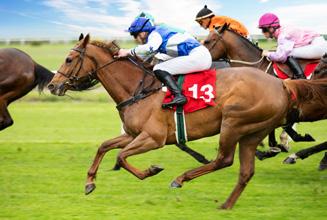
Dr. Gabriele Gross explains how a horse’s biological needs shape modern racing, nutrition, welfare, and regulations.
52 The future of horseshoeing
J. Mark Hickcox, CF, examines whether a national racetrack farrier certification could improve standards for HISA and modern Thoroughbred racing.
58 Evolving understanding in EIPH
Silvana Č eko reviews the latest research on exercise-induced pulmonary hemorrhage (EIPH), including its causes, diagnosis, risk factors, and proven ways to prevent and manage it in racehorses.
64 Graded stakes winning owners
Bill Heller profiles the owners behind Om N Joy, Tawny Port, and West End Kid, whose graded stakes success is making an impact on the sport.
72 State of good hope
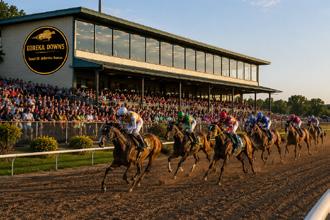
Ken Snyder on the return of Thoroughbred racing to Kansas with the revival of Eureka Downs and the debut of Wyoming’s Thunder Plains, renewing optimism for the sport.
06 View from the CTT
Alan Balch on Santa Anita’s Olympic legacy and racing future.
76 #Soundbites
Bill Heller asks “What have been the greatest innovations or changes you’ve seen in racing the last 20 years and what changes or innovations would you like to see in the next five years?”



ALAN F. BALCH
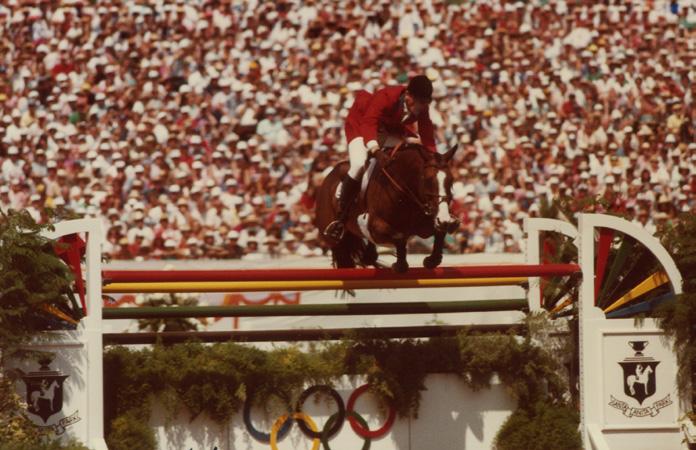
CITIUS, ALTIUS, FORTIUS – COMMUNITER
Pierre de Coubertin established the motto of the “modern” Olympic Games in 1894. And in 2021, “communiter” was added (together) to the original: swifter, higher, stronger.
We Americans of a certain age grew up with the ABC television version of the Olympics, presented by the inimitable Jim McKay. ABC’s “Wide World of Sports” also showcased his talent, covering everything from Acapulco Cliff Diving to skiing wrecks in the Giant Slalom to horse shows and racing. It didn’t hurt a bit that he loved horses, and was the founder of the Maryland Million. The Olympic ideals of perfected human nature inspired us all.
Moreover, it’s not a stretch to say that without the 1932 Olympics in Los Angeles, Santa Anita might never have been successful; in fact, it might never have been. Period.
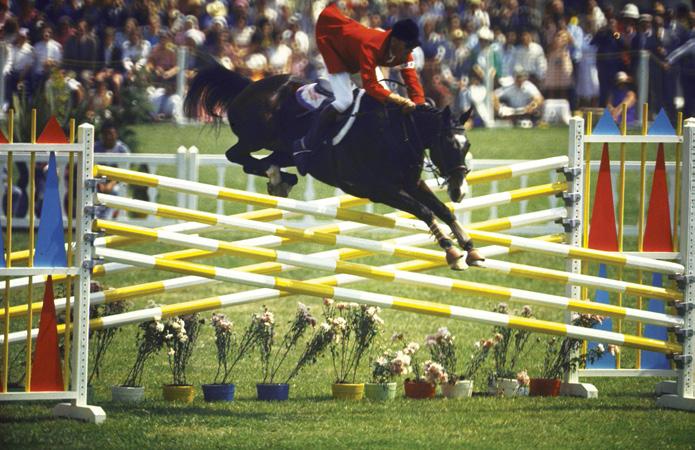
LEFT: Two American Thoroughbreds (top: Maryland-bred Touch of Class with Joe Fargis; bottom: California-bred Snowbound with William Steinkraus) were the first Olympic Gold Medalists in Jumping for the USA, at Santa Anita, 1984 and Mexico City, 1968, respectively.
In 1923, the International Olympic Committee sought to find the host city for those ’32 Games. There was only one applicant: remote Los Angeles. It wasn’t much different in the 1970s. After the calamities of Munich terrorism and Montreal’s financial disaster, only two nations were interested in the 1984 Games: Iran and the United States.
Consider that a hundred years ago, Los Angeles appeared to the rest of the world as an exceptionally remote outpost. Its civic leaders, however, believed in its future, and were willing to stake their confidence on successfully bringing the world’s greatest sporting event and best amateur athletes to California. They couldn’t have predicted the Great Depression when they broke ground for the Los Angeles Coliseum; building that massive 100,000-seat stadium was the IOC’s requirement for their award of the Games.
So, where does Santa Anita enter the picture?
Dr. Charles H. Strub was a San Franciscan. In the early 1900s, California’s financial and population centers were all in the north. The entrepreneurial Strub had achieved magnificent success with the San Francisco Seals baseball club and his own revolutionary dental practice, as well as property speculation following the 1906 earthquake. When California horse racing licenses became available in 1933, he first sought a suitable San Francisco location, but was unsuccessful.
He then looked to the south, and to the surprising success of the 1932 Olympic Games. Once he located the heritage property at Lucky Baldwin’s old Rancho Santa Anita, he set out to assemble his management team: from the administration of the Olympics.
Gwynn Wilson had been a track star and student body president at the University of Southern California, and later became athletic director there. He and his wife started the USC-Notre Dame football rivalry, and he was General Manager of the 1932 Los Angeles Olympic Games. Strub’s vision for Santa Anita was Olympian, too. With Wilson, who operated Santa Anita from 1934 until 1960, he traveled the racing world
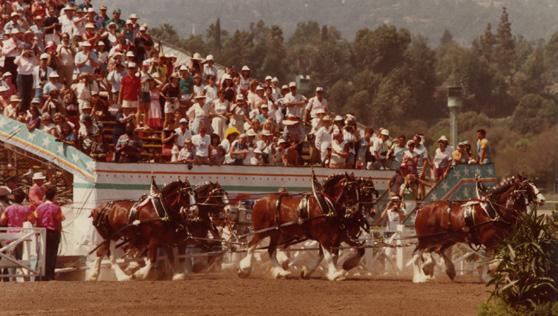
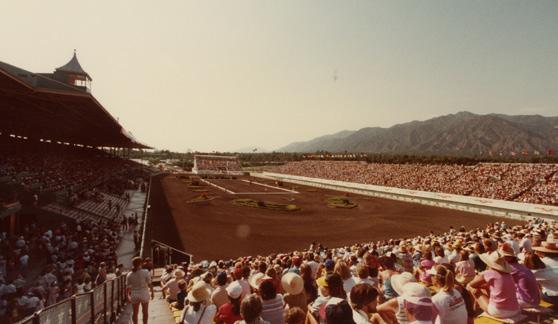
LEFT: His Royal Highness The Prince Philip, Duke of Edinburgh, president of the International Equestrian Federation, made a surprise appearance driving the Santa Anita Clydesdales into the stadium bringing the podium for the final Gold Medal presentation of the 1984 Games. Capacity crowds of over 30,000 witnessed Dressage, Jumping, and Eventing.
gathering ideas for its construction and evolution. Wilson formed Santa Anita’s original management team from his Olympic colleagues. Its ethos was based on the same ideals.
By the 1970s, Dr. Strub’s son Robert headed Santa Anita, and was intent on maintaining horses in every aspect of the racing experience possible. Hackneys of the Yorktown Livery took the judges to their posts. Belgians and then the Budweiser Clydesdales (who had their own show barn in the Paddock Gardens) positioned the starting gate. Exhibitions of Jumpers and Dressage opened public Morning Workouts each December, the Black Stallion and Lipizzans packed the stands on special racing days, and a major all-breed competition began in 1977. The idea of becoming the Equestrian Sport venue for the 1984 Games of the XXIIIrd Olympiad took root and flourished. The years immediately preceding and following became the most successful racing seasons in the track’s history.
The majesty of Santa Anita, conveyed to massive worldwide television audiences … and horse sport itself in its infinite variety … were the undeniable reasons.
Now, with Santa Anita again the Olympic site for Los Angeles ’28, will its ability to host and charm enormous audiences with both racing and non-racing spectacles ensure its racing future?
MOTT IS DEFINING HIS PATH TO THE TOP WITH FAMILY AND A STRONG FOUNDATION
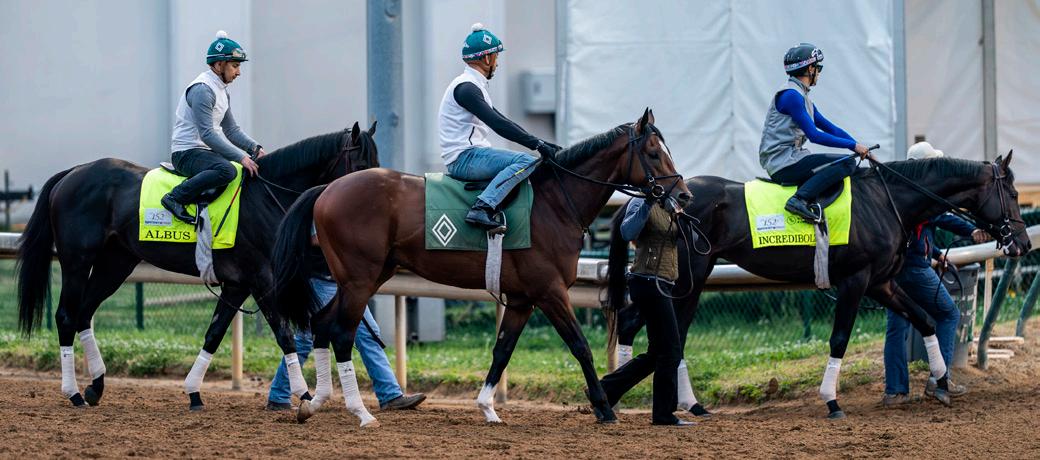
Riley Mott decided to enter Incredibolt, whom he saddled to a sixth-place finish in the 152nd Kentucky Derby, in this year’s Preakness while eating an Uncrustable at his kitchen table. His first call was to the racing office to see if entries for the second Triple Crown classic were still being accepted. Then he rang the man who had provided this young trainer with an enviable foundation in horsemanship, his father, Bill Mott.
Nothing better illustrates where racing finds this rising star than the crustless peanut butter and jelly sandwich, the ultimate symbol of young parenthood, and the quick conversation with a parent who also happens to be a Hall of Fame trainer. In his fourth year at the helm of his own stable, the younger Mott dances between his passion for horses and for family, maneuvering between each thanks to the foundation he built in his formative years alongside his classic-winning father.
With his love for racing and a lifetime’s experience on the backside, Riley Mott is building a career that carries on the Mott legacy on and off the track while making a mark on the sport that is all his own.
He sent out his first starter American Tattoo to a sixthplace finish in a $40,000 claiming race at Churchill Downs on November 2, 2022, and then, eight days later, got his first winner with Unifying in a maiden special weight under the Twin Spires. Three and a half years later, Mott led over not one, but two Kentucky Derby starters, Pin Oak Stud’s
Incredibolt and Albus, into the paddock for the country’s most famous race. Alongside was his father’s trainee Chief Wallabee, marking the first time since 1964 that a father and son faced off on the first Saturday in May. For any other younger trainer, the occasion might have been exciting yet overwhelming, but not for this Mott.
“There were really no surprises when I started training, and I would say it was a very similar situation for the Derby. Having been in that environment and observing how you conduct yourself, how you have to make certain decisions under pressure, when the microscope is on you all week,” Riley said. “It was something that I felt like our team handled extremely well, and I felt like I handled it extremely well. I just made a point to try to focus on my job, train the horses, and make sure we got the horses to the race in as best shape as possible and made decisions based on the best interest of the horse.”
That approach is indicative of what the younger Mott is building in this first decade of his solo career, during which his eight years as an assistant trainer in his father’s barn gave him the professional knowledge needed to go out on his own. In contrast, a childhood spent with fellow trainers’ sons, Will Walden and Miguel Clement, both of whom are also at the helm of their own operations, built the hands-on skills necessary to succeed at the highest levels. Those early days on the backside of Payson Park training center and Saratoga provided Mott not only with the opportunity to learn from his Hall of Fame father, but also from the late Christophe Clement, whose family was good friends with the Motts.
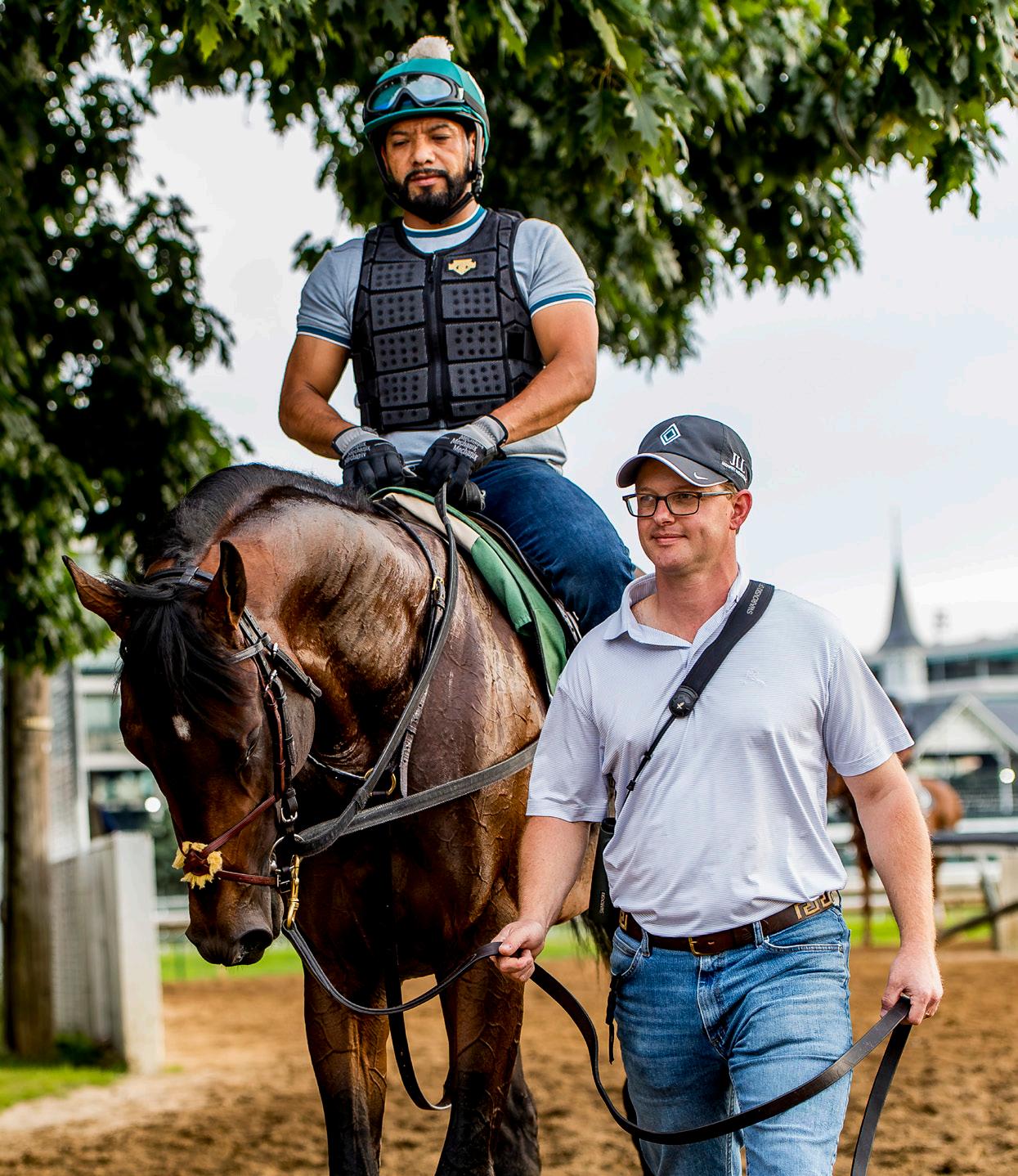
“I wasn’t on the payroll for anybody else besides my dad, but much of the year we would share a barn with Christophe at Payson and at Saratoga, and we were right next to them at Belmont,” Mott remembered.
“So, as a kid walking hots, I’d make a turn around the barn and be on their side of the barn and learn from observation. That’s how I learned. Even from my dad, you know, he’s not necessarily one that’s going to sit you down and say, ‘Son, you have to do A, B, and C, like this.’ You watch, you hang around, you work, you put your head down, and a few years go by, and you look up, and you realize, ‘Wow, I have learned so much in a pretty short amount of time.’”
His osmotic exposure to their programs has deeply informed his approach to his craft. Since launching his stable in 2022, Mott has grown his operation to 80 horses and over 50 employees focused on the Kentucky circuit of Churchill Downs, Keeneland, and Ellis Park. This year he has added a Saratoga contingent for the first time, returning to the scene of his first graded stakes and first Grade 1 win with World Beater’s victory in the 2025 Saratoga Derby. He credits his team, which includes assistant trainers
Sophia Thompson, Bethany Baumgartner, Horatio Padilla, and Sandra Washington, for the stable’s rapid success.
“We’ve accumulated a great staff that I’m extremely proud of and comfortable with and confident in. I feel as though we’re prepared for growth and higher-quality horses. I think I’d stack our staff up with anybody else in the country,” Mott said.
“In that regard, I think we’ve done a fantastic job, and the people we work for, the people we get to train for, we’ve got a great roster of owners. People that we’re proud to lead our horses up to the paddock and have their silks on our horses. It’s pretty cool to be able to work for the people that we’re working for.”
With owners like Pin Oak Stud, who own World Beater in addition to Incredibolt and Albus, behind him, Mott is able to approach his job as conditioner the same way he did when he
was working as one of his father’s assistants from 2014-2022. The goal is to let “the horses speak for themselves, and they tell us what they’re ready for, not ready for,” said Mott. “I don’t think there’s a real philosophy to our training. I think it’s just more reading the individual. They can’t speak for themselves. They can’t tell us verbally what they want to do, what they don’t want to do. But as a trainer, over the years I’ve been blessed to have learned a lot of the nonverbal things that they tell us.”
“You train them, and when they give you the signs that they’re not ready for what you’re asking them to do, you stop or you back off. If they’re thriving on what you’re throwing at them, then give them some more.”
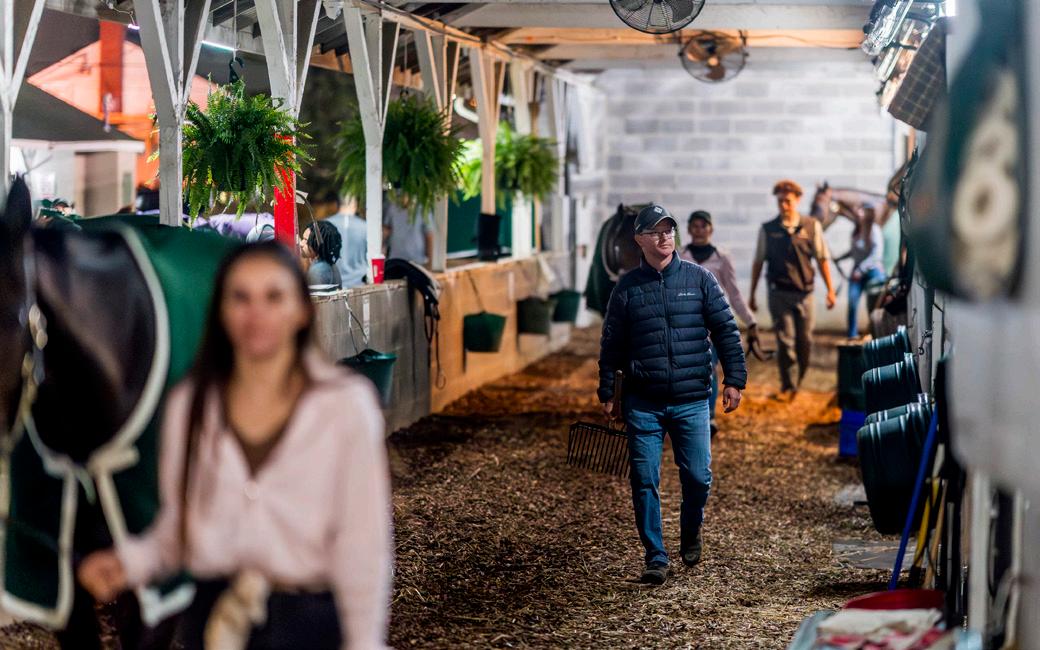
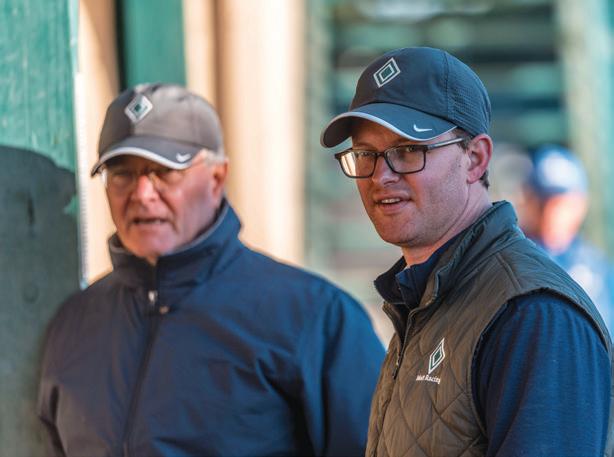
Bill & Riley Mott.
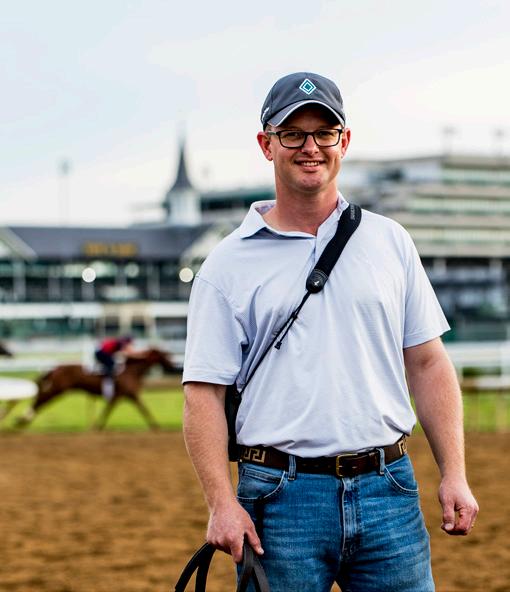
That horse-first approach allows Mott to be flexible as he works with equine athletes at a variety of ages, stages, and surfaces. That first graded stakes win came on turf, but he also has stakes wins on dirt and at tracks like Churchill, Woodbine, and Colonial Downs. “When people ask me, ‘Are you more of a two-year-old, an older horse, a turf trainer?’ We evaluate each individual, and that’s what type of trainer we are,” Mott said.
“If the horse is a turf horse, that’s what we do. If they’re a precocious two-year-old, that’s how we train them. I don’t think we lean one way or the other. I think just reading the horse, that’s the name of the game.”
Each of his eighty horses gets one-on-one attention from Mott and his team, who spend time with their athletes daily, getting in the stall, going over their physical condition, and monitoring those all-important non-verbal cues that help determine where they are, both in the short and long term. Whether they are on track to start their careers or progress to the next level, Mott starts each with a target and then goes from there. For his high-level horses like World Beater and Incredibolt, that kind of planning is especially important.
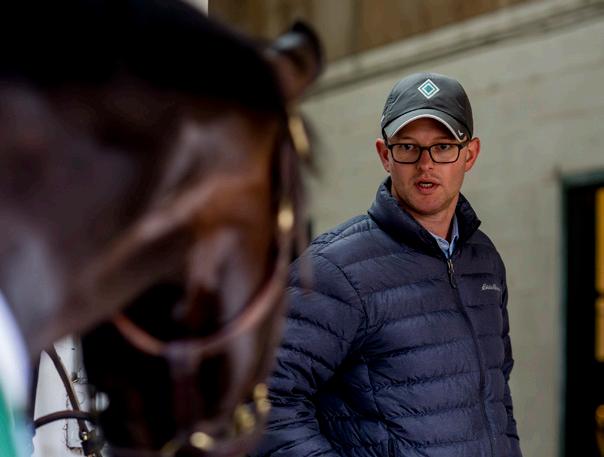
“With these very high-level horses, to a degree you have to think very forwardly and map out a plan from your end goal or your main target. I think the big picture and having a long-term plan are extremely important. At the same time, you know, you want to take things day by day and race by race, but I think you can blend the two and be successful,” Mott said.
Four years into being his own boss, with his first two Kentucky Derby starters – “now that fire gets lit in your belly and you get that taste of the Derby and you just want to do it every single year” – on his resume, this 34-year-old trainer has built his stable on a foundation of decades of hands-on experience thanks to an abundance of passion and a family eager to cultivate it.
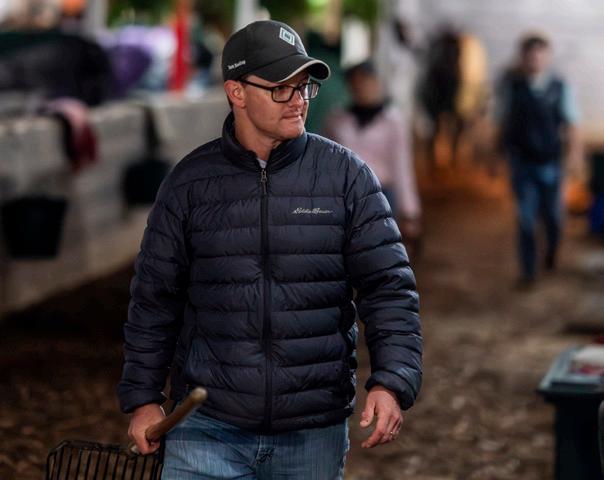
Any conversation with or about Riley Mott inevitably includes a mention of his father Bill, the Hall of Famer and multiple Eclipse Award winner, for whom he worked first as a toe-headed toddler trying to wield a rake much taller than him up through his adult years as a husband and a father. Like his peers and childhood friends Clement and Walden, this young trainer grew up with no other passion catching his eye.
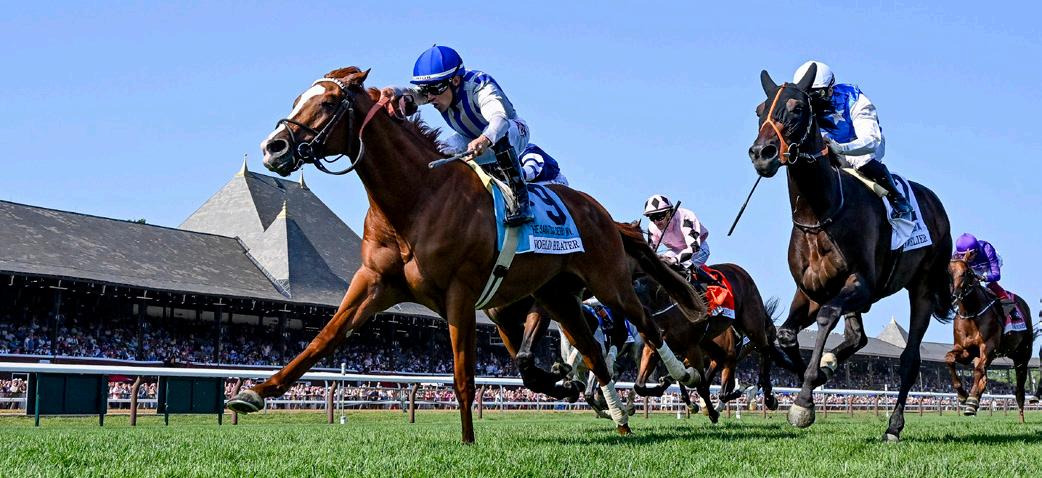
World Beater, ridden by Junior Alvarado, won the 2025 Saratoga Derby at Saratoga Race Course, giving Riley Mott his first Grade 1 victory as a trainer.

Except maybe for one icy childhood ambition: “When I say I wanted to be an NHL (National Hockey League) player, that was when I was 10, and I thought there might be a chance, and then everyone caught up to me and surpassed me. So maybe I’m not a pro athlete,” Mott laughed.
Instead, though, for Mott and friends, “this is our life’s work, and I think it’s like really the only thing any of us have ever wanted to do. We’re all at the same time living out our dreams and finding success. It’s just been a pleasure to watch both of them. They’re the future. And I hope our barn’s the future as well.”
“I’m very lucky, so is Riley, that from a young age, we always knew it was going to be in horse racing. We always knew our profession, and it’s just a question of which path we take to get there,” Clement observed. “I think the two of us were always on track for this. It was always horses. I think there was never a question of anything else.”
Their fathers’ names follow them, and this next generation has, as Riley sees it, “the motivation to work just as hard as the next person just because we want to prove that we can make it on our own.”
That work ethic is born not only of watching his father work but also of an abundance of energy that necessitated an outlet for this middle son of Bill and Tina Mott. The elder Mott would bring Riley with him to the barn, those early experiences planting a seed. “He’s always been an early riser. Even when he was four years old, he’d be up at 3:30 in the morning. We’d have to make him go back to bed. He’s been that way his entire life,” his father shared.
Bill Mott won his first race as a trainer before he had even graduated from high school, then worked under another Hall of Famer, Jack Van Berg, as an assistant before striking out on his own in 1978. He saw his son’s eagerness and gave him the chance to decide for himself how he wanted to use that enthusiasm. The Motts have focused on letting their three children, including son Brady and daughter Olivia, find their own path in life. If that involved horses, then they were happy to provide the environment to cultivate that interest at any age.
“He was kind of self-taught to a certain extent, but he would come out to the barn and ride the pony,” the elder Mott remembered. “And then when he was old enough to rake up and fill water buckets, he would come to the barn on the days he wasn’t in school or summer vacation. He pretty much hung out a lot of the time.”
The younger Mott started with hotwalking, then grooming, and after graduating from the University of Kentucky in Lexington with a degree in economics in 2014, had progressed to assistant trainer in his father’s barn. Along the way, he picked up the skills and lessons that would come to define his methods of conditioning his own horses. That hands-on time on his father’s shedrow, where he was privy to classic success with Drosselmeyer as well as Breeders’ Cup successes with Elite Power and Tourist among others, gave him access to an elite education in Thoroughbreds.
“I think we all learn the hard way at some point in time, and we all make mistakes, and hopefully we learn from them. But he picked everything up quite easily, and I think he was a lot like me,” said the elder Mott. “I think he learned by doing. I’m much better if I do something myself, try it, maybe make a mistake, and then I learn it, rather than watch somebody else do it.
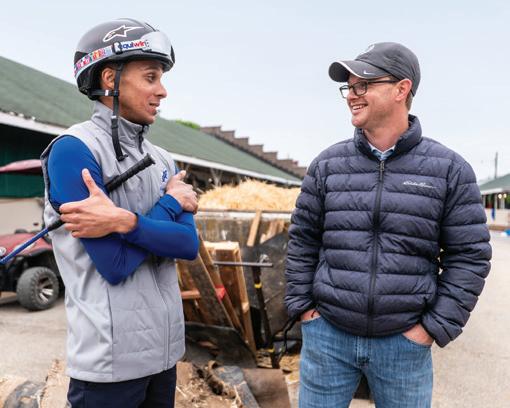
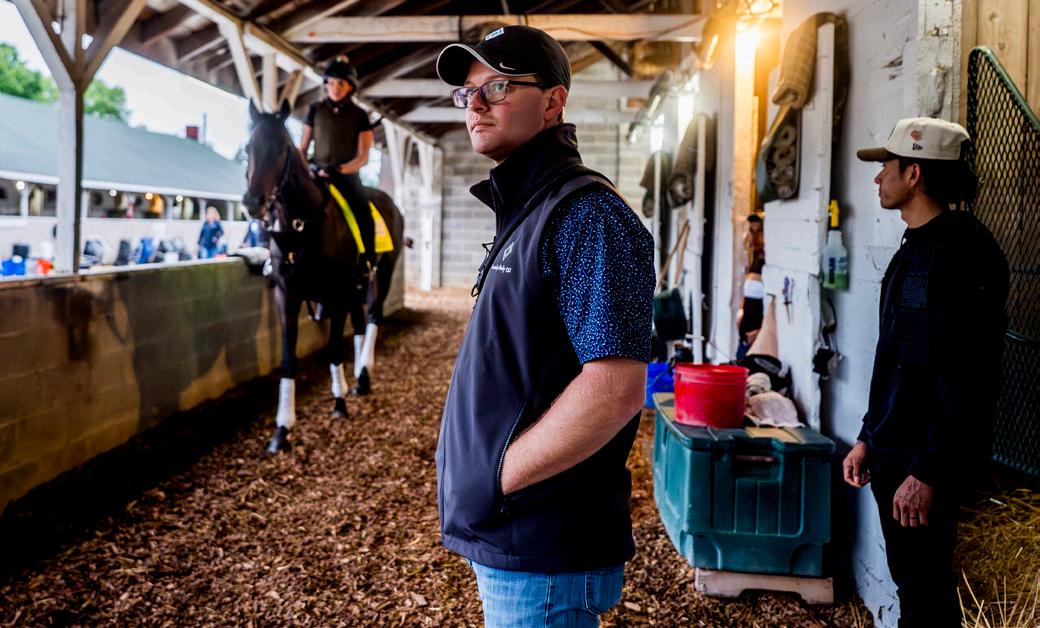
Riley Mott with jockey Jaime Torres.
I think we were both the same way. I think the experience that I had and what he had by actually being in there and getting his feet wet and getting his hands dirty. I think that’s how he learned it the best.”
As part of the Bill Mott barn, Riley was part of a successful program. He went to Saudi Arabia and Dubai as an assistant, crisscrossing the racing world with this top-tier stable because he was reliable and hard-working, thriving in that role as he progressed from young adult into marriage and then parenthood. The question of whether he would succeed his father or go out on his own naturally arose with each year he spent in the spotlight.
“I even suggested to Riley at one point, maybe you should go and work for another trainer besides me, just to see a different angle and how somebody else viewed the business,” the elder Mott said. But the younger trainer did not take him up on that, opting to stay with his father for the long term, though the thought of starting his own stable did cross his mind.
“I thought that, by the age of 30, I’d love to be on my own. I probably could have stayed with my dad for another 10 years
and been content. I was making really good money working for him and doing very well,” Mott said. “Life was good, and we had Margot.” Riley and his wife Megan, who also grew up in a horsey family and rode as a competitive hunter/jumper in college, welcomed their first child, Margot, in 2021, and then their sons William and Tucker. Margot Mott was diagnosed with a brain tumor in 2023 and then passed away in early 2024.
“I could have just stayed where I was and been happy, but I wanted the challenge. It was a lifelong goal and dream. As far as the particular time to do it, I just thought, all right, let’s make the jump and see what happens,” Mott said.
That leap came after a conversation with his mother Tina, who saw that his father was not going to retire anytime soon, and if he wanted to work for himself, Riley would have to make the call, which he did in 2021. “It was basically one full year, November to November. I was able to recruit staff and horses without stepping on anyone’s toes,” Mott said. “I was able to acquire tack and equipment, which is obviously something you really need, and stalls, putting all my ducks in a row on the business side of things.”
WE’RE IN IT FOR THE LONG HAUL
From the backstretch to breeding sheds, sales grounds to starting gates, this industry moves because of the people behind it.
SUPPORTING THE HORSES AND PEOPLE IN THE INDUSTRY WE SERVE.
Proud to Support the Broader Thoroughbred Community
• Thoroughbred Retirement Foundation
• Stable Recovery
• Backside Learning Center
• Belmont Childcare Association
• Secretariat Center
• Florida Thoroughbred Breeders’ and Owners’ Association (FTBOA)
• KY TB Farm Managers
• Ocala Farm Ministry
• Race Track Chaplaincy of America
• Permanently Disabled Jockeys Fund
• Therapeutic Horses of Saratoga
• TB Charities of America
• RRP
Those years gave Riley a leg up in understanding how to set up his stable across all its necessary facets, from clients and equipment to practicalities like licenses and accounting. “I didn’t want just to say like, oh, next month I’m going to go out on my own and be discombobulated and unprepared. I think giving it that full year and having all my T’s crossed and I’s dotted was very important.”
“He’s done well. What he’s done, he’s done on his own. He made all of his arrangements, he’s acquired his clients and says I had some owners that gave a horse or two to train to start with, and that was great,” Bill said. “He’s done a good job with it. But for the most part, he’s made all his connections. He’s done most of that all on his own with the horses that he’s got in the barn.”
Alongside that foundation, the years with his father gave him friendships with Clement and Walden, which also provided the kind of support only those who have walked the same path can offer.
“I’m glad he’s got peers that are in the same profession because it’s nice to know that you’ve got this continuity throughout your life, you’ve got these people that can identify with where you’ve been, when you were younger and now as adults,” the elder Mott said. “Will was talking about now they’re both married, and they have kids, and they’ll play golf, and they’ll talk about, you know, horses, but they’ll also talk about kids and life. And it’s nice.”
Walden had turns in the Mott barn as well as stints with Hall of Fame trainer Todd Pletcher and Taylor Made Farm in central Kentucky, so he had the chance to watch both men work, knowing that he and his friend were both working toward the same goal. He also saw the makings of the conditioner that his friend had become.
“Riley was always a very hard worker, and he still is. He’s a lot like his dad. He stays on the move between sets, always checking on the grooms and his employees and making sure that everybody’s doing what they’re supposed to be doing. He’s setting the standard and really setting an example, not just telling people what to do but showing people what to do,” Walden observed.
“I think it’s something he got from his dad and then has taken it and put it in his own arsenal. He’s just methodically walking through and paying attention and showing people how the job’s supposed to be done.”

While the younger Mott is setting the standard for his barn, he is also maintaining the bond his family has with the Clements, including Miguel, who took over after his father, Christophe, died in 2025. The pair grew up together, sharing many a sleepover in their youth – “My mom was the strictest one of the two, so as a result, Riley got himself his fair share of timeouts at our household,” the younger Clement shared – and now the pair still bond over their shared passion for the sport.
“If I have any issue, he’s just one phone call away, and he always picks up. And it’s just like an old friendship where you kick off right back where you left off,” said Clement.
“He’s probably one of the few individuals that whatever I’m experiencing, he’s probably gone through it too, to be honest with you. Yeah, we’re a similar age, have similar backgrounds, and we’re in a similar profession and in a similar spot in our careers. Sure, I’m pretty sure whatever I go through, he’s going through and vice versa.”
His early years spent in his father’s barn with friends who share the same calling have set Riley Mott up for the next phase of his career and given him the tools to realize his potential as both a trainer and a father.
Riley and son William.
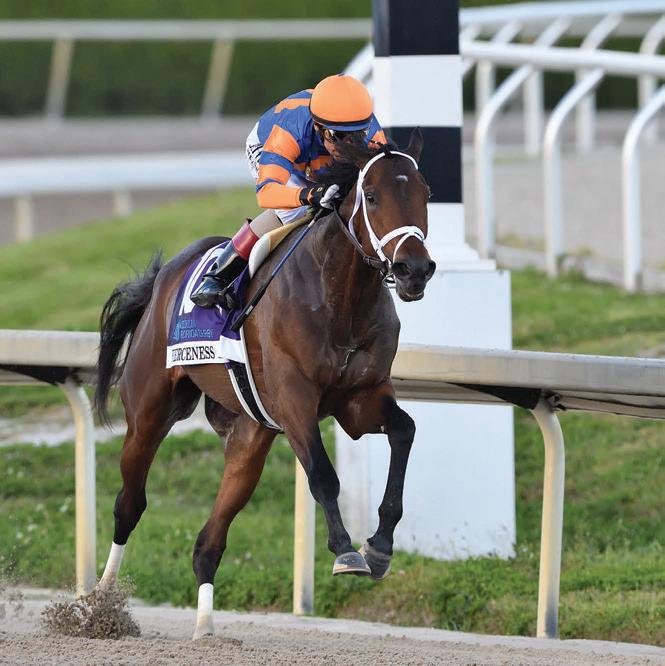
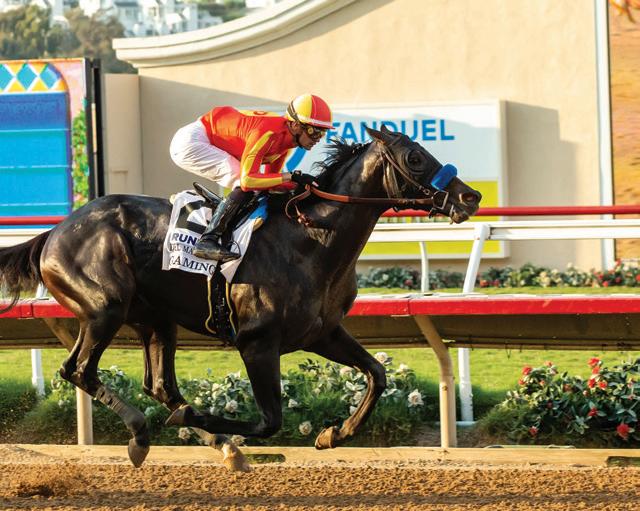
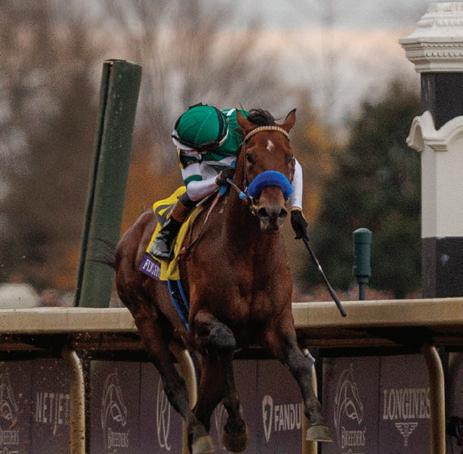
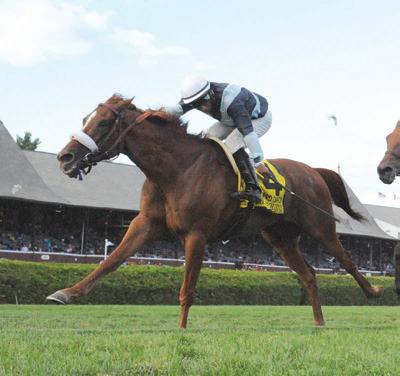
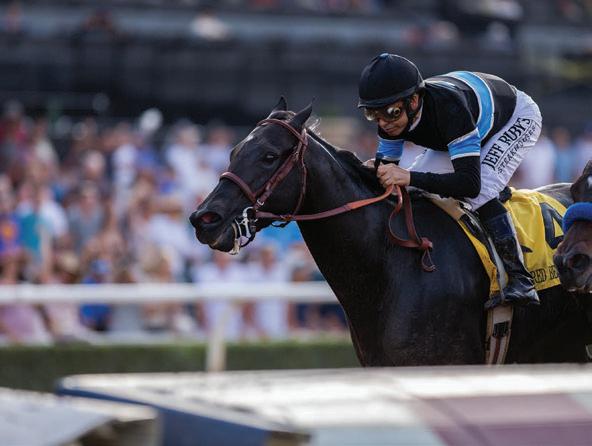
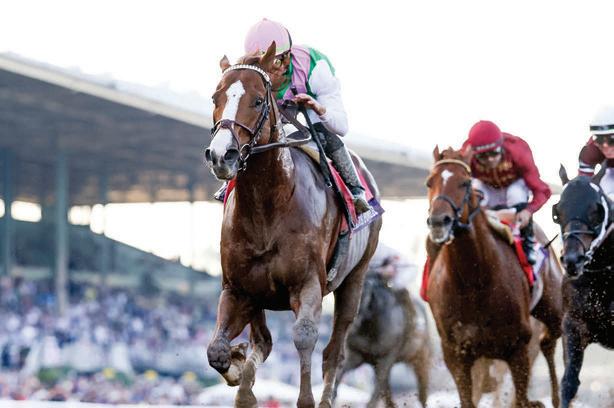
LANE’S END GRADUATES
ACCOUNT MORNING LINE LAST FULL MEASURE PATHFORK
SWAGGER JACK DIALED IN GEMOLOGIST GRAYDAR IN LINGERIE LIAISON
IN THE LAST 20 YEARS
GIFT BOX PALACE MALICE HONOR CODE FLIGHTLINE
51 G1 WINNERS
GLANCE CLICQUOT GIFT BOX CISTRON CITY OF LIGHT DANCING RAGS FLAGSTAFF
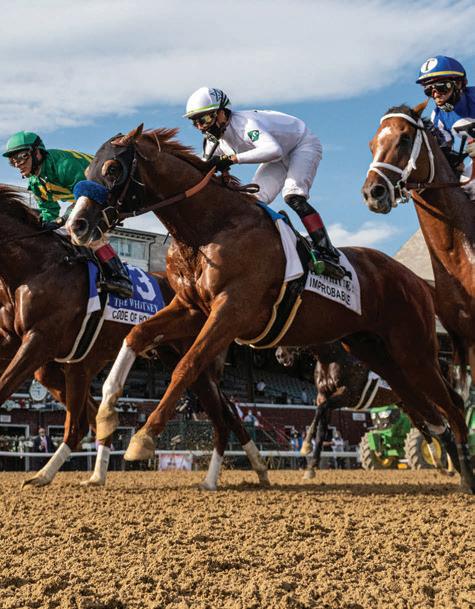
8 BREEDERS’ CUP CHAMPIONS
ELITE POWER FIERCENESS SWITZERLAND MCKINZIE MOONSHINE MEMORIES
11 ECLIPSE CHAMPIONS
MOZU SUPERFLARE CODE OF HONOR CONCRETE ROSE GAME WINNER IMPROBABLE KEEP
SOLD OR RAISED BY LANE’S END
ER OF THE STARS VEKOMA WAR OF WILL COLLUSION ILLUSION EXPRESS TRAIN MAX
Including 2025 G1 Cotillion S. Winner Clicquot
PLAYER FLIGHTLINE
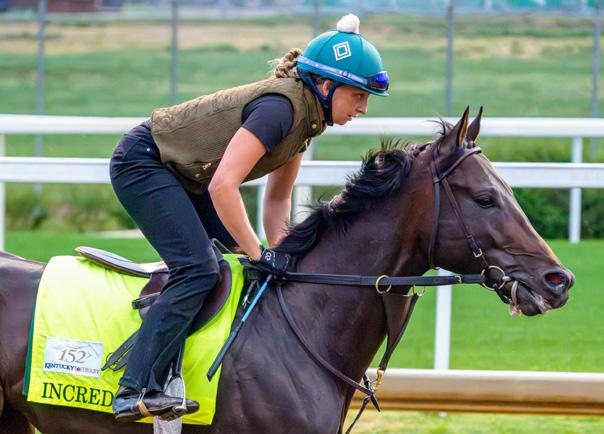
Incredibolt gave Mott one of his five graded stakes wins in 2025 with a 1 ¾-length victory in the Grade 3 Street Sense at Churchill Downs. The trainer gave the Pin Oak colt three months off and started his Road to the Kentucky Derby with the Grade 3 Holy Bull at Tampa Bay Downs, an 8.5-furlong test intended to give the son of Bolt D’Oro his first steps toward Louisville and the first Saturday in May. When Incredibolt turned in a lackluster performance and finished last of six, that could have derailed his three-year-old campaign in only its first month. Instead, Riley Mott fell back on what he had learned.
“I’ve been in the barn my entire life, so I feel fortunate that, you know, a lot of things that we come across we’ve seen before,” Mott said. “We communicate with the owners about what’s going on, analyze the particular situation, and make a plan. Sometimes it’s a matter of turning this horse out and giving it time. Or we have to just back off in its training and let it resolve, or this is something that they can kind of power through.”
Mott gave Incredibolt six weeks and tried the Virginia Derby at Colonial Downs, a gambit that paid off with a four-length victory and enough points to guarantee him a spot in the Derby
starting gate. That strategy demonstrated an awareness about the horse and the moment that is characteristic of this son of a Hall of Famer.
“It’s a big ownership group that spends a lot of money on horses that want to compete on the biggest days, that want to be in those races. And the way he ran, a lesser man could have been paranoid about losing the ownership, losing the horse, all that,” Walden observed. “Riley didn’t bat an eye. He just stuck to a program that he knew, fell back on all the education that he’s had, came up with a plan, and executed it to perfection.”
“It doesn’t matter what Incredibolt goes on to do or doesn’t do. It’s the body of horsemanship that it took for those 90 days to get him there, from the Virginia Derby to run and get beat six lengths in the Kentucky Derby was a huge feat.”
Riley himself credits his success not only to that foundation in horsemanship but also to his support system at home, especially his wife, Megan. Though the life of a trainer means early mornings, the schedule also allows him to balance work and family. “I’ve been extremely blessed to have Megan as my partner, and at the same time, I feel as though I do a really good job at balancing that family and work life,” Mott said. “Most of the time, we’re done training by 10 or 11 am. I try to tie up all my loose ends and then go home and spend the afternoon with my kids if we’re not racing. And if we are racing, the whole family often goes. We make it work.”
“My family is everything. So it’s an easy, easy thing to do to come home and be a dad.”
That side of his life makes his father Bill just as proud as his achievements on the track. “I’m very proud of him because he’s really good with his family. He’s a great father and husband,” the elder Mott said.
And if his sons decide that they want to follow their grandfather and father into the family business, Riley says, “I’d be totally supportive. From what I’m seeing to this point, they might have a passion for it because they love being around the barn and they love watching the races, but if one day that changes, I’ll be totally fine.”
“I think just by growing up in our household and seeing what I do every day, as I was with my dad, you know that’s what your life is. They’ll know if they want to do it or not. I would tell them that it’s a tough game. It’s an unforgiving game. We lose a lot. We give clients bad news a lot. And that’s part of the reason why you have to have a passion for it.”
At the heart of Riley Mott’s outlook on life as a trainer, a father, a friend, and a son carrying on a legacy of excellence remains that focus on the fire that fuels the long days and long odds of success at the highest levels of Thoroughbred racing. Fed by the family and friends who have supported his lifelong journey, this young trainer has learned to meet every challenge with the steady belief — passed down as much as earned — that will carry him toward the kind of personal and professional success that has guided his passion for the horse and the sport since his earliest days.
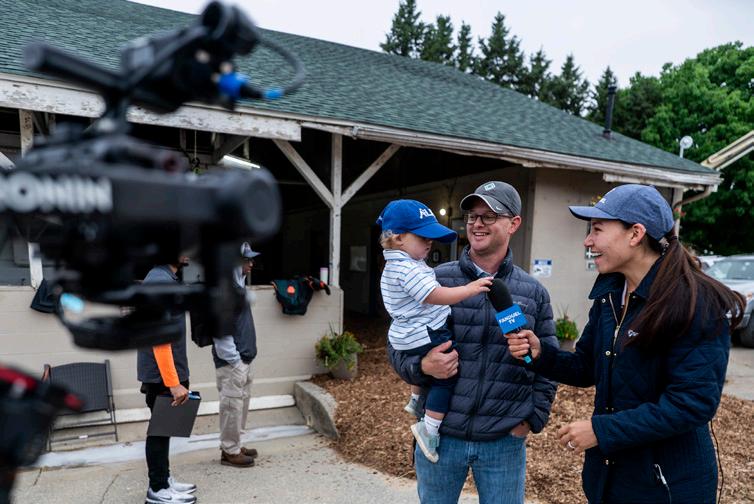
LEFT: Riley Mott and son William chat with FanDuel TV’s Andie Biancone about Albus and Incredibolt’s final workouts before the 2026 Kentucky Derby.
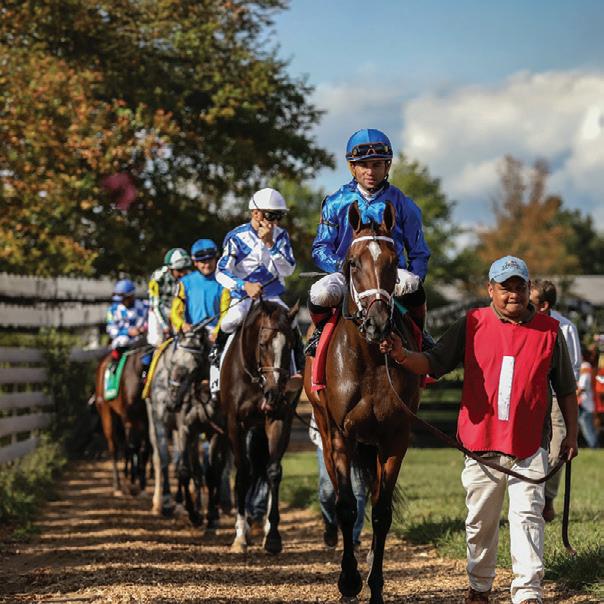

AMERICA’S MOST LUCRATIVE RACE MEET
ALL TURF— Aug. 29, 30, Sept. 3, 5, 6, 7, 9

More than $40 million (includes KTDF), in purses, over seven race days including the world’s richest maiden races at $170,000 (includes KTDF). Allowance races worth up to $250,000 (includes KTDF).
Home of a record 11 stakes worth at least $1 million (includes KTDF), led by the $3 million Nashville Derby (G3). 19 stakes overall, 11 graded.
KENTUCKY DOWNS 2026 STAKES SCHEDULE
BUILDING CHAMPIONS KENNY MCPEEK
BUYING WINNERS ,

Twenty years ago trainer Kenny McPeek had a ho-hum year, relatively speaking. His horses earned $1.3 million and he earned for himself a cover photo and story in the very first issue of this magazine. That year, 2006, might have been a turning point for him; it was the last year his earnings would be below $2 million. It also marked the beginning of a trajectory leading to $16.2 million in 2024 when Thorpedo Anna won the Kentucky Oaks and Mystik Dan, the next day, won the Kentucky Derby, a feat only two other trainers had accomplished. Over the next 20 years after 2006, his earnings have averaged $5.7 million and he has never been out of the top 100 in annual purses.
Future success was still a question mark for McPeek back in 2006. In our first issue was this quote from McPeek. Referring to his 14 years of training prior to 2006, he said, “I’ve tried just about everything over the years to win races.” He went on to say he was “trying something entirely new…and in the process of reinventing his training methods.” Changes apparently not only helped him win races but also go from a middling trainer to a contender and winner in Triple Crown races.
A product of his success has meant one major change for him, but it is not in what he does in training horses but in how he does it. ”We’re more organized. I think I’ve concentrated on the bigger our operation the more I’m dependent on my staff. We’ve really worked hard to try to bring really talented people in like Jimmy Jerkins in New York and Greg Dyer in Kentucky. These guys are competent trainers in their own right.”
A hot summer Saturday morning at the Fasig-Tipton’s July Sale in Lexington was a case in point. McPeek debated with a friend whether to drive the two hours and 40 minutes to Shelbyville, Indiana outside Indianapolis for the Grade 3 Indiana Oaks where he had a starter. He didn’t need to be there; an assistant was with the horse. Maximum Offer, by the way, who went off as fourth choice in the betting, scored for McPeek, earning $120,000 of a $200,000 purse.
The biggest change for McPeek in the past 20 years has, perhaps, not been in training, but in his work as a bloodstock professional. Where he shops now, what he is able to buy for himself and clients, and the money to do it with have undergone a radical change.
Way back in 2006, McPeek was known for multiple treks to Brazil scouting Grade 1 winners in that country. He had begun carving out a niche with imports around 2000 and his first import to win a Grade 1 in the U.S. was a Brazilian champion, Hard Buck, who won the 2002 Gulfstream Park Handicap. Today, he prefers sales in his home city, Lexington, with Saratoga a secondary choice. Success has continued on his “home court.” He can show you the path at Fasig-Tipton where he first saw a filly named Thorpedo Anna. The horse earned three Eclipse Awards and won the Longines Breeders’ Cup Distaff in 2024.
Another change is he now focuses on yearlings only. “I don’t do anything else. I don’t do two-year-olds. I don’t do mares. I don’t do weanlings.
“I think yearlings are my strength, and you stick to your strength. I don’t dilute myself.”
The one thing that hasn’t changed over the years with McPeek is his uncanny ability in conformation analysis and pedigree. He knows not just the elements of conformation but how they function as a whole. “It’s all about motion.” He marries that to a deep knowledge of pedigree—one of the deepest in the sport—to make buying decisions.
Reviewing yearlings at the Fasig-Tipton sale he said, “There are some horses that I like physically in here that I’ve marked off because I didn’t think the page [pedigree] could take me further than seven furlongs.”
That is another thing that hasn’t changed in 20 years. He said this in 2006: “A good horse is made a certain way. I’m looking for a certain conformation. And I’m basically looking for long distance and turf horses.”
He finds more of them now and in recent years compared to 2006 and earlier when Triple Crown races were a goal and a hope. This has refined his perspective, no surprise with horses like Thorpedo Anna and Mystik Dan.
“When you’ve won the Derby, the Oaks, the Preakness, and the Belmont, there is what I call a fine line. You realize what kind of horse it’s gonna take, and what kind of pedigree it takes.”
Back in 2005 there was an exception, a colt at the Keeneland September Yearling Sale, that caught his eye and led him to investigate one major flaw with the horse that had practically all prospective buyers marking him off their list: a left ankle swollen from OCD (Osteochondritis dissecans). It is a joint disease, primarily with young horses, where cartilage fragments detach from bone to create joint issues.
Rather than cross the horse off his list of prospective purchases McPeek asked about the ankle with a trusted consignor behind the sales ring at Keeneland. The consignor told him the horse’s owners weren’t optimistic about the horse attracting more than $20,000 but also that the OCD had been removed.
McPeek investigated further. “I had two vets look at him and they both said he had an infected joint capsule,” hence the swelling. The prognosis, however, was good. “One vet told me that OCD had been the size of a dime but had regressed to the size of an eraser head.” The next piece of information that followed from the vet made the decision for McPeek: “Give it three months and it’ll fill in, and you’ll never know it was there.”
Case closed. McPeek got the horse with a $57,000 bid.
The rest, as they say, is history and what a history Curlin wrote: seven Grade 1 wins, including the Breeders’ Cup Classic in 2007 (see our Sons of Curlin feature, page 32).
WORDS: KEN SNYDER PHOTOGRAPHY: ECLIPSE SPORTSWIRE
Trainer Magazine, Issue 1, Fall 2006.
Curlin was actually “classic McPeek,” spotting horses in the $50,000 range back in the early 2000s that turned out to be runners. Now he has clients who can go after the pricier horses that come into the sale ring.
Even with coffers full, McPeek still seeks that edge to land a Curlin or other horses that might go under the radar at a sale. ‘You can outsmart the big money—young stallions and young mares. You can beat the market to the punch on a stallion.” He advises, though, to not get enamored with pedigrees. “You get enamored with the body.”
The bloodstock agent who shopped the bargain bin in the past is still looking for and finding treasures.
Purchasers have changed, too, McPeek notes, with buyer groups supplanting individuals at sales. These days, McPeek doesn’t differentiate between horses he is buying for himself and for others in a group.
“I wait for the horse that I like and the horse that I want to have in the barn to come and go through the ring. And if I acquire it, that’s good, thank you. Then we sort through ownership after that.”
A trend toward groups began after the economic downturn of 2008 and has continued to become fairly standard in horse sales. It minimizes risk for the individual group member and, for the seller, maintains prices as a result.
Like most in the racing industry he sees a sport that needs an infusion of new fans. McPeek has seen Hialeah, Calder, Arlington, and Hollywood Park close. “You’ve got to grow the sport. You’ve got to grow the fan base.” While that’s a persistent and seemingly permanent challenge, McPeek has hope. “I think the foal crops will grow.”
Recently, plans for a racing-only track in Las Vegas have been announced, a move that is important given the state of racing in the West that saw the closing of Golden Gate Fields in Northern California in 2024. There are concerns, too, about the future of Santa Anita.
There’s been talk before of a team-based racing “league.” Now it may become a reality with racing luminaries like Sheikh Mohammed bin Rashid al-Maktoum, Vinnie Viola, and Kenny Troutt owning teams like in other professional sports. The league would consist of ten teams each with eight horses, trainers, and jockeys. The league would launch after a draft like that conducted by professional football and basketball.
Racing has proven adaptability but McPeek is part of an overwhelming number of people in the industry who say the sport needs uniform rules in every racing jurisdiction, a need based in common-sense.
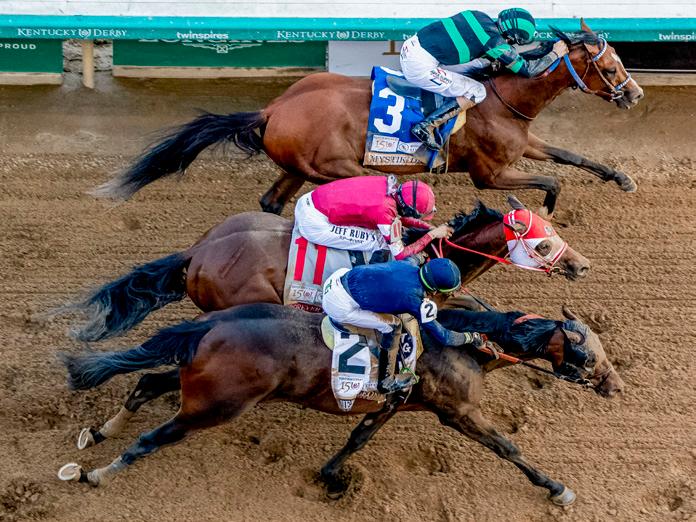
The heart of the sport and what will always sustain it to one degree or another is, of course, the athletes—the horses. McPeek shared some of the back story with his Derby winner, Mystik Dan, that captures the essence of the sport. First, he freely admits “I thought he had to have everything go his way—a good trip.
“I told Brian [Hernandez] don’t take off the rail, no matter what.
“We drew the three-hole and I told him just to stay inside when the hole opens. If you got enough horse, just stay inside.
“Sierra Leone and Forever Young went wide and wider. We got the rail trip and I ain’t giving it back, I can tell you that,” said McPeek with a laugh.
“He was two lengths in front at the eighth pole and I’m thinking, he’s going to pull this off.” And that he did.
In the aftermath, McPeek heard “he didn’t run the best horse,” a somewhat familiar charge for Derby winners. McPeek shared his response to that which was classic: “Well, isn’t that what horse racing is about, isn’t it?”
That is what will never change.
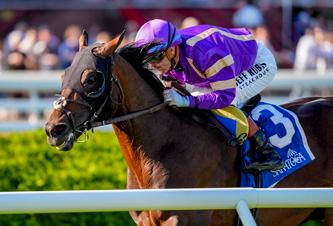
BELOW: Mystik Dan (3), ridden by Brian J. Hernandez Jr., wins the 150th Kentucky Derby by a nose over Sierra Leone (2) and Forever Young (11) at Churchill Downs on May 4, 2024. Trainer Kenny McPeek’s winning strategy to stay on the rail proved decisive in the dramatic three-horse photo finish.
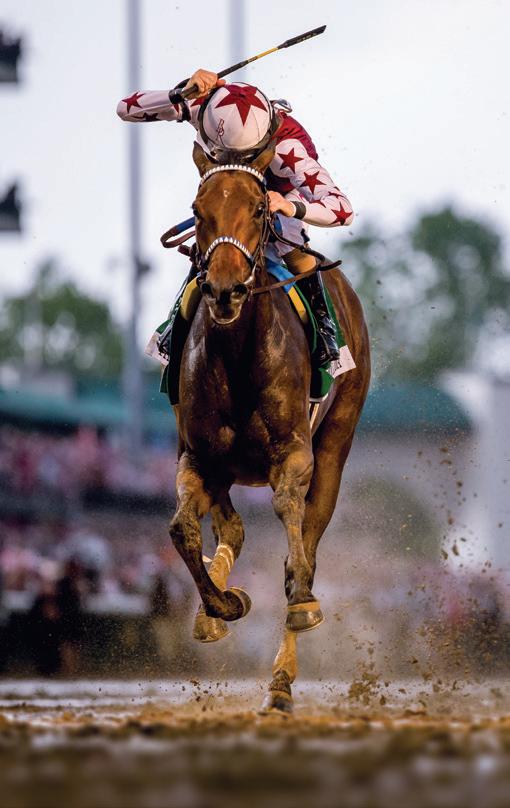
Thorpedo Anna, under Brian Hernandez Jr., captures the 2024 Kentucky Oaks at Churchill Downs, launching a historic weekend in which trainer Kenny McPeek won both the Oaks and Kentucky Derby with Mystik Dan.

NUTRITION FOR JOINT RECOVERY & PERFORMANCE
There are many factors that influence athletic performance including joint and muscular function. Training naturally places stress on both joints and muscles and this is where nutrition plays a key role. Nutrition is a powerful tool for managing inflammation, facilitating recovery and supporting repair and regeneration at a cellular level.
When used in a targeted manner, oral nutritional supplements can help horses adapt to training, recover more effectively, and support long-term performance.
Part one of this two-part series focuses on joint health and the role of nutrition in supporting it. In the next issue, the role of oral nutritional supplements in soft tissue recovery will be discussed.
Joint health and performance
Joint supplements are not just for older horses, those with ‘high mileage’ or with a diagnosis of osteoarthritis. Research into yearlings and young horses shows the advantages of supporting joint health with a view of protecting function and integrity.
To understand the benefits of nutrition for joint health it is necessary to understand the anatomy of a synovial joint. Synovial joints, such as the knee or fetlock, are comprised of articular cartilage, subchondral bone, synovial membrane and synovial fluid within the articular capsule and are stabilized by supporting ligaments. Nutrition is influential for both articular cartilage and synovial fluid.
Articular Cartilage is a form of specialized connective tissue designed to absorb shock, reduce friction, distribute load and support ease of movement. Articular cartilage consists of chondrocyte cells, extracellular matrix (ECM) which is made up of collagen fibres and proteoglycans, and water.
Proteoglycans with the ECM attract and retain water molecules, forming a hydrated gel. Proteoglycans are essential for joint integrity and are involved in repair and maintenance of cartilage. Loss or degradation of proteoglycans results in reduced compressive resistance and joint degradation.
Nutrition is important for production of glycosaminoglycans (GAGs), which are the key components of proteoglycans. Proteoglycans are formed from a core protein to which glycosaminoglycan (GAG) chains are attached. GAGs are produced naturally in the body. They are categorized as unbranched polysaccharides and include chondroitin sulfate, keratan sulfate, heparan sulfate and hyaluronic acid (HA). In the case of HA, its purpose is twofold, being an important part of proteoglycan formation and also being an important component of synovial fluid.
The combination of proteoglycans and collagen fibres within the ECM is key to cartilage maintaining its structure and ability to absorb shock and withstand compression.
The role of nutrition
Nutrition influences joint health through provision of key components, building blocks for key components and its role in managing inflammatory response. Ingredients, plants or their extracts are typically used in combination to get the best results by supporting both articular cartilage and synovial fluid. Some ingredients are dual purpose in nature being both a component and influencing inflammation.
Common inclusions for orally administered joint health products include glucosamine, chondroitin sulfate, hyaluronic acid and collagen. In addition to these, plant-based solutions such as avocado soya unsaponifiables (ASU) and boswellia are proving effective and an important consideration when looking to protect and maintain healthy joints.
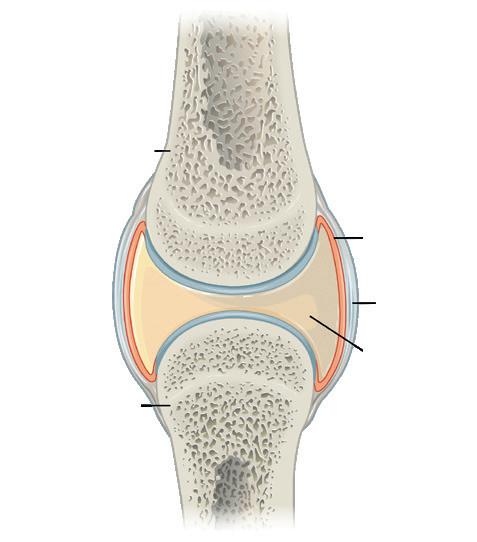
Articular cartilage
Articular capsule
BELOW: Synovial joint anatomy highlighting the articular cartilage and synovial fluid targeted by nutritional support strategies.
Articular cartilage
Chondrocytes
Calcified cartilage
Subchondral
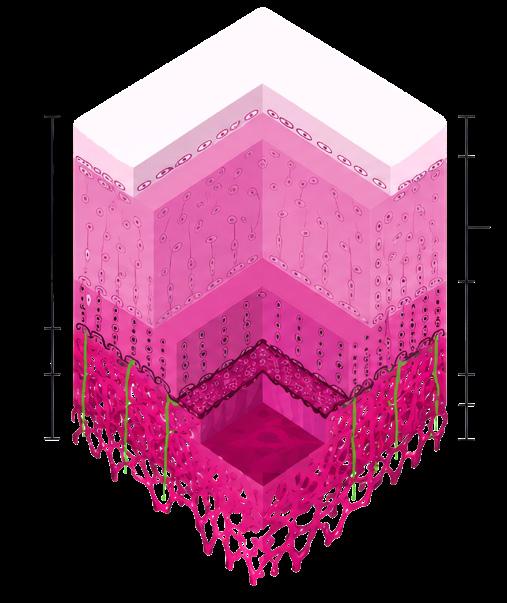

Superficial zone
Transitional zone
Deep zone
Tide Mark
Extracellular matrix
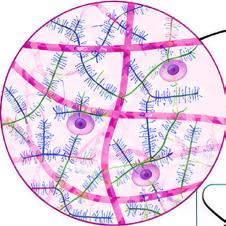
Subchondral bone plate
Subchondral trabecular bone
Hyaluronic acid: Provides the backbone for proteoglycans to attach to.

Core protein: Central protein to which GAG chains are attached.
GAGs (glycosaminoglycans): Attract water and create a hydrated gel.
ABOVE: Illustration of healthy articular cartilage showing its zonal organization and extracellular matrix, composed primarily of type II collagen fibrils and proteoglycan aggregates that provide tensile strength, hydration, and resistance to compressive loading.
• Glucosamine
Glucosamine is commonly found in joint supplements as it is a building block for GAGs. Glucosamine is an amino sugar formed by combining glucose and the amino acid glutamine. The body can produce its own glucosamine if adequate glutamine is present. Glucosamine is however more than just a substance required for GAG production. Glucosamine has two actions of interest for joint health, as an anti-inflammatory and its role in preventing cartilage degradation.
Glucosamine works by reducing inflammatory mediators, whilst also upregulating anti-inflammatory mediators. These actions help protect cartilage, along with its effect on catabolic enzymes, whereby glucosamine inhibits their actions.1
Glucosamine is valuable for horses in training where mechanical trauma can impact on joint integrity. Glucosamine helps mitigate intra-articular inflammation and provide longer term support for joints. Management of inflammation is an important part of avoiding ECM degradation, protecting the joints’ ability to absorb shock and withstand compression. This concept has been studied in horses of various ages including yearlings. 2
Use of glucosamine is important for horses where joint concerns already exist but is also of interest for younger or sound horses when looking to pro-actively manage joint health. Glucosamine has been studied in a small group of 12 sound horses for its effects on biomechanical parameters, where it was shown to modestly improve front leg retraction distance and fetlock flexion. 3 Using glucosamine directly or providing glutamine as the key building block of glucosamine within the diet, may be an advantage when considering how to best support both younger and older horses in training.

Proteoglycan aggregate
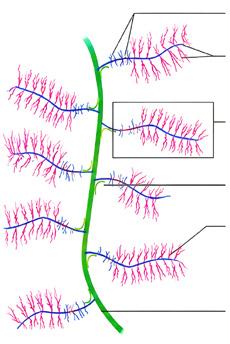
Keratan sulfate chains
Chondroitin sulfate chains
Proteoglycan aggregate
Link protein
Core protein
Hyaluronic acid
• Chondroitin Sulfate
Chondroitin sulfate is a GAG needed for formation of proteoglycans in the ECM. Much like glucosamine there is more to consider other than the provision of a structural component. Chondroitin sulfate has both immune-modulatory and antiinflammatory effects.4 These are essential for helping manage the inflammatory aspect of joint degradation. In addition, chondroitin sulfate influences catabolic enzymes in the same manner as glucosamine, as well as there being evidence of pro-anabolic actions whereby chondroitin sulfate influences production of proteoglycans and type II collagen fibers. For these reasons glucosamine and chondroitin sulfate are often paired together in research.
In equine research combining glucosamine and chondroitin sulfate in experimentally induced osteoarthritis researchers found that supplementation improved lameness and markers of inflammation. 5 As with glucosamine the majority of research focuses on use for arthritic horses, however chondroitin sulfate may equally be of interest for younger horses in a similar manner to that of glucosamine as their actions are similar.
• Collagen
Collagen is a key component of the ECM in articular cartilage with type II being the dominant form. When considering joint health there are two types of supplementary collagen to consider, these are undenatured collagen and hydrolyzed collagen. Both offer benefits for joint health.
Undenatured type II Collagen (UC-II) benefits articular cartilage health through its effect on oral tolerance.6 Oral tolerance is an immune process through which the body learns whether a substance is harmless or an invader. UC-II stimulates pathways that enable T regulatory cells, which specifically target type II collagen, to secrete anti-inflammatory mediators. This action helps reduce inflammation and promote cartilage repair.
Vascular channels
Type II collagen fibrils










Hydrolyzed collagen is a processed form, derived from enzymatic hydrolysis to facilitate easy absorption. Hydrolyzed collagen is digested prececally in horses and has been reported to influence synovial fluid production and reduce inflammation, reducing joint capsule thickening. While often considered for management of horses with osteoarthritis, collagen may also be beneficial before onset of osteoarthritis, with studies in young foals undergoing training showing hydrolyzed collagen to have a protective effect.7
Collagen, or rather peptides from hydrolyzed collagen on reaching cartilage stimulate chondrocytes to synthesize extracellular matrix (ECM), supporting joint homeostasis. Collagen is well documented in human studies for its effects on joint function and ability to recover from joint injuries.8 Research in horses has investigated collagen for its effects on induced synovitis, where it was proven effective at reducing inflammatory markers.9
Collagen supplementation is often accompanied by supplementation of vitamin C amongst other nutrients. Healthy formation of collagen relies on the amino acids glycine, proline and lysine, along with vitamin C and Iron. Presence of vitamin C and iron are required for the conversion of proline to hydroxyproline, which plays a role in thermal stability of collagen, and for the conversion of lysine to hydroxylysine, which provides cross-linking and attachment of sugars. Whilst the horse has the capability to synthesize vitamin C an exogenous supply ensures adequate contribution. As vitamin C has multiple benefits outside of collagen formation, including its role as an antioxidant, additional provision can be considered beneficial to performance as a whole.
• Hyaluronic Acid
Hyaluronic acid is a key component of synovial fluid along with lubricin and phospholipids. Hyaluronic acid chains trap water in synovial fluid, creating a gel-like network. This enables the joint to respond to both low movement speeds and high movement speeds, providing lubrication and elasticity. Without adequate hyaluronic acid synovial fluid loses viscosity and its protective capabilities.
Hyaluronic acid is not just about the mechanical function of the joint. Hyaluronic acid is also considered chondroprotective, increasing GAG and proteoglycan synthesis. In addition, healthy high molecular weight hyaluronic acid plays a role in managing inflammation. Where hyaluronic acid becomes degraded or has a low molecular weight, as seen in osteoarthritis, hyaluronic acid can become pro-inflammatory.
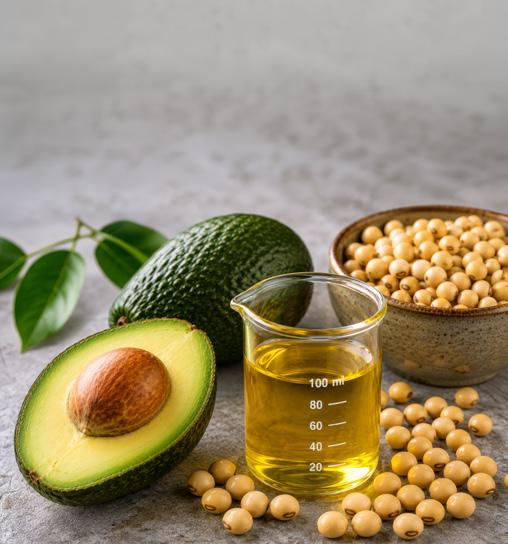
ASU is a concentrated extract of avocado and soybean oils that supports cartilage health, joint function and a balanced inflammatory response.
Oral use of hyaluronic acid in Thoroughbred yearlings with OCD undergoing surgery has been proven effective in reducing postoperative joint effusion.10 The mode of action for hyaluronic acid is thought to be through its effect on reducing migration and interaction of articular degrading enzymes and other cells.
• Avocado Soy Unsaponifiables (ASU)
Avocado Soybean Unsaponifiable (ASU) is a concentrated mixture of bioactive plant compounds extracted from avocado oil and soybean oil. ASU benefits joint health through stimulation of proteoglycan and collagen synthesis,11 helping to restore normal cartilage structure. Its effects on cartilage metabolism relate to its anti-inflammatory, anti-catabolic and anabolic actions. ASU is also noted for its antioxidant effects,12 helping to manage oxidative stress which contributes to the development of osteoarthritis.
ASU is well documented in humans and other species. Equine specific research is limited in comparison but has confirmed the same effects have been observed. In equines one study using ASU over a period of 70 days in horses with experimentally induced osteoarthritis demonstrated a reduction in articular cartilage erosion score and reduction in synovial membrane hemorrhage.13 The effect of ASU on chondrocytes from equine articular cartilage when fed alone or in conjunction with alpha-lipoic acid has also been investigated and proved effective in suppressing inflammatory markers.14


Boswellia resin is a natural source of boswellic acids, valued for their anti-inflammatory properties and role in supporting joint health.

• Boswellia
Boswellia, also known as Indian frankincense, is a substance well documented for its effect on human arthritis. Its therapeutic effects are mostly attributed to boswellic acids, in particular acetyl-11-keto-beta-boswellic acid (AKBA). Clinical studies have shown boswellia extract to have anti-inflammatory and anti-arthritic properties, as well as influence pain and physical movement.15
Work in equines for boswellia is available, although commonly in combination with other extracts. In one study using twenty five 2 year old Thoroughbreds in training a combination of boswellia, curcumin and coenzyme Q10 researchers identified changes in the inflammatory response and the horse’s ability to adapt to training.16
Considerations
Lameness is a common cause of days lost from training, with a recent study placing this figure at over 80%.17 There are of course many causes behind lameness, including inflammation. Inflammation is an inevitable aspect of training which affects both joints and soft tissues. Nutrition in the form of oral supplements offers the opportunity to combat inflammation, protect joint function, stimulate repair and regeneration, helping horses adapt to the rigors of training and stay in training.
While joint supplements may traditionally have been considered for the older horse, where joint degradation is more advanced, this is no longer the case. Research in younger active horses is proving that benefits exist at this earlier stage.
Supplements providing multiple inclusions that target joint function, offer chondroprotective effects and help manage inflammation are ideal for horses in training where joint trauma is an expected outcome from high intensity exercise.
As when considering any supplement, it is important to work with companies that are transparent in their listing of active ingredients, that operate under strict quality control schemes that help manage the risk of naturally occurring prohibited substances and are formulated to be compliant under the rules of racing. It is worth noting that some nutritional supplements may contain substances that require a withdrawal period prior to racing depending on the region and local regulations should be checked carefully before feeding any supplement to horses in training.
References:
1. Vasiliadis, H. S., & Tsikopoulos, K. (2017). Glucosamine and chondroitin for the treatment of osteoarthritis. World Journal of Orthopedics, 8(1), 1–11.
2. Lucia, J. L., Gehl, K. L., Coverdale, J. A., Arnold, C. E., Dabareiner, R. A., Winsco, K. N., & Lamprecht, E. D. (2013). Influence of oral glucosamine supplementation in young horses: Intra-articular lipopolysaccharide challenge. Journal of Equine Veterinary Science, 33(5), 328.
3. Carden, A. N., Duberstein, K. J., & Turner, K. K. (2013). Effects of oral glucosamine sulfate supplementation on gait parameters and blood oxidative status in the aged horse. Journal of Equine Veterinary Science, 33(5), 322–323.
4. Chevalier, X., & Conrozier, T. (2017). Access to highly purified chondroitin sulfate for appropriate treatment of osteoarthritis: A review. Medicine Access @ Point of Care, 1, 1–12.
5. Yamada, A. L. M., Vendruscolo, C. do P., Marsiglia, M. F., Sotelo, E. D. P., Agreste, F. R., Seidel, S. R. T., Fülber, J., Baccarin, R. Y. A., & da Silva, L. C. L. C. (2022). Effects of oral treatment with chondroitin sulfate and glucosamine in an experimental model of metacarpophalangeal osteoarthritis in horses. BMC Veterinary Research, 18, Article 215.
6. Gencoglu, H., Orhan, C., Sahin, E., & Sahin, K. (2020). Undenatured Type II Collagen (UC-II) in Joint Health and Disease: A Review on the Current Knowledge of Companion Animals. Animals: an open access journal from MDPI, 10(4), 697.
7. Araújo Júnior, A. M. C. de, da Silva, A. H., Arantes, J. G. M., Buroxid, R. P., Yamada, A. L. M., Moraes Filho, L. A. J. de ., Faleiros, R. R., & Gobesso, A. A. de O. (2025). Evaluation of Collagen Supplements to Reduce the Occurrence of Orthopedic Injuries in Trained Foals. International Journal of Equine Science, 4(1), 81–90.
8. Khatri, M., Naughton, R. J., Clifford, T., Harper, L. D., & Corr, L. (2021). The effects of collagen peptide supplementation on body composition, collagen synthesis, and recovery from joint injury and exercise: a systematic review. Amino acids, 53(10), 1493–1506.
9. van de Water, E., Oosterlinck, M., Dumoulin, M., Korthagen, N. M., van Weeren, P. R., van den Broek, J., Everts, H., Pille, F., & van Doorn, D. A. (2017). The preventive effects of two nutraceuticals on experimentally induced acute synovitis. Equine Veterinary Journal, 49(4), 532–538.
10. Bergin, B. J., Pierce, S. W., Bramlage, L. R., & Stromberg, A. (2006). Oral hyaluronan gel reduces post-operative tarsocrural effusion in the yearling Thoroughbred. Equine Veterinary Journal, 38(4), 375–378.
11. Salehi, B., Rescigno, A., Dettori, T., Calina, D., Docea, A. O., Singh, L., Cebeci, F., Özçelik, B., Bhia, M., Dowlati Beirami, A., Sharifi-Rad, J., Sharopov, F., C. Cho, W., & Martins, N. (2020). Avocado–Soybean Unsaponifiables: A Panoply of Potentialities to Be Exploited. Biomolecules, 10(1), 130.
12. Jangravi, Z., Basereh, S., Zaree Mahmoudabadi, A., Saberi, M., Alishiri, G. H., & Korani, M. (2021). Avocado/soy unsaponifiables can redress the balance between serum antioxidant and oxidant levels in patients with osteoarthritis: a double-blind, randomized, placebo-controlled, cross-over study. Journal of complementary & integrative medicine, 18(4), 769–774.
13. Kawcak, C. E., Frisbie, D. D., McIlwraith, C. W., Werpy, N. M., & Park, R. D. (2007). Evaluation of avocado and soybean unsaponifiable extracts for treatment of horses with experimentally induced osteoarthritis. American journal of veterinary research, 68(6), 598–604.
14. Frondoza, C. G., Fortuno, L. V., Grzanna, M. W., Ownby, S. L., Au, A. Y., & Rashmir-Raven, A. M. (2018). α-Lipoic Acid Potentiates the AntiInflammatory Activity of Avocado/Soybean Unsaponifiables in Chondrocyte Cultures. Cartilage, 9(3), 304–312.
15. Yu, G., Xiang, W., Zhang, T., Zeng, L., Yang, K., & Li, J. (2020). Effectiveness of Boswellia and Boswellia extract for osteoarthritis patients: A systematic review and meta-analysis. BMC Complementary Medicine and Therapies, 20, 225.
16. Horohov, D. W., Sinatra, S. T., Chopra, R. K., Jankowitz, S., Betancourt, A., & Bloomer, R. J. (2012). The effect of exercise and nutritional supplementation on proinflammatory cytokine expression in young racehorses during training. Journal of Equine Veterinary Science, 32(12), 805–815.
17. Dyson PK, Jackson BF, Pfeiffer DU, Price JS. Days lost from training by two- and three-year-old Thoroughbred horses: a survey of seven UK training yards. Equine Vet J 2008;40:650-7.














SONS OF CURLIN
Their careers commenced within months of each other in the second half of 2021.
And from the moment the two sons of Curlin began flaunting the ability honed by their shared Hall of Fame trainer, Godolphin’s homebred Adonis named Cody’s Wish and Juddmonte’s purple-bred yearling purchase aptly deemed Elite Power would share nearly everything in a competitive setting other than a starting gate.
the
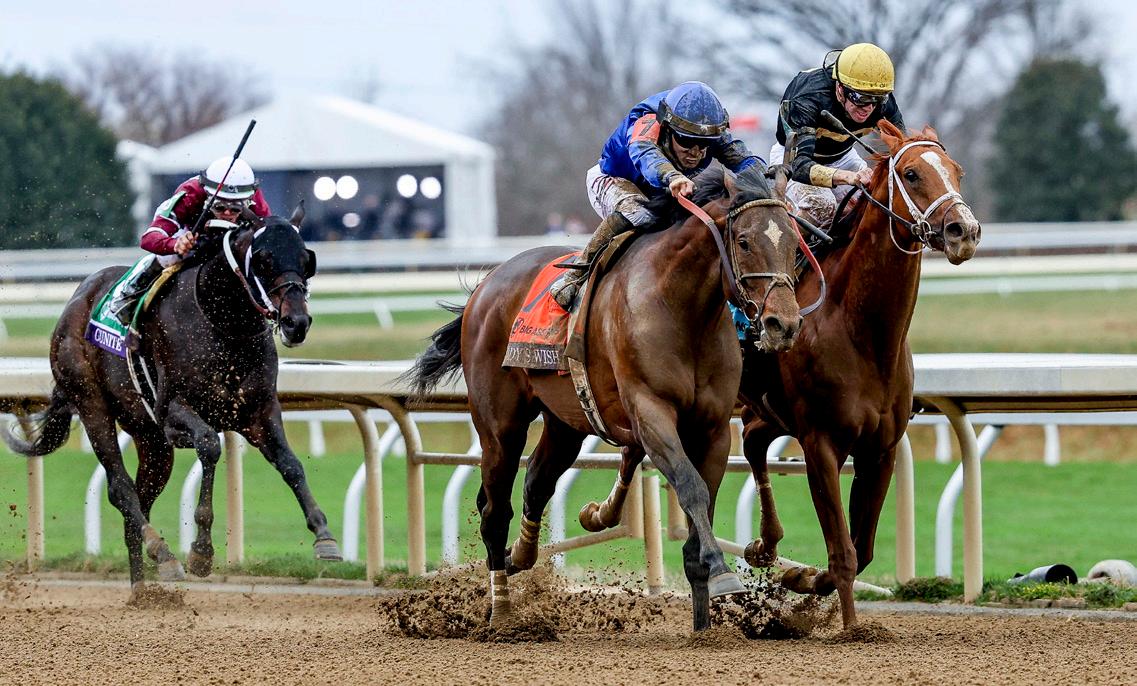
It took both Bill Mott-conditioned protégés a minute to get a handle on their physical prowess as each lost their first three starts before making a maiden visit to the winner’s circle at Churchill Downs. They each boasted pedigrees that indicated their prowess would come in a route of ground over two turns. Yet, they collectively thumbed their noses at that relegation, adopting sprint-type speed as their primary weapons while graciously taking turns vanquishing rivals who attempted to volley between the two in the nation’s top races from six to eight furlongs.
When the time came for their on-track careers to end, they even brought the curtain down in near identical fashion –cementing Eclipse Award honors following the 2023 Breeders’ Cup after joining the rarified ranks of horses to win races at the World Championships in back-to-back years. Who would have prevailed had the pair of champions faced one another? That query will forever hang in the air.
Now separated by their respective residencies in two of the most prolific breeding sheds in the Thoroughbred industry, a head-to-head battle for supremacy between the former barn mates has finally materialized. With their legendary sire in the twilight of a stud career that has been defined by exceptionalism, Cody’s Wish and Elite Power are each poised to make another surge to the forefront, this time in a quest to lead a talent-laden sire class in what their connections hope is the first step toward becoming the dutiful heir.
Regal bloodlines and top-level race results guarantee nothing when it comes to predicting whether a stallion will ultimately pass on the traits necessary to become a sought-after member of the sire ranks. Such advantages do, however, give stud prospects a decided leg up when attempting to conquer the commercial marketplace. With the yearling sales season about to take center stage in the Thoroughbred public auction arena, the dynamic duo of 2023 Horse of the Year Cody’s Wish and two-time champion male sprinter Elite Power are again set to be in the spotlight as their first yearlings go through the ring at the industry’s bellwether exercises.
Cody’s Wish and Junior Alvarado (centre) capture
2022 Breeders’ Cup Dirt Mile at Keeneland before repeating the feat in 2023 at Santa Anita.
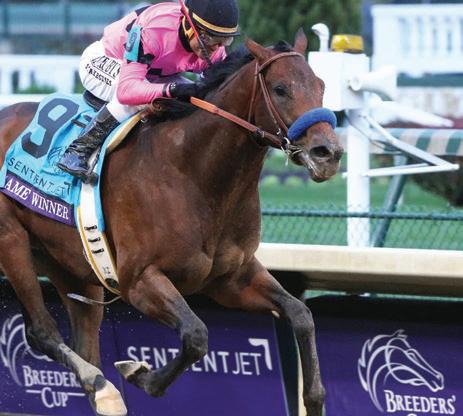
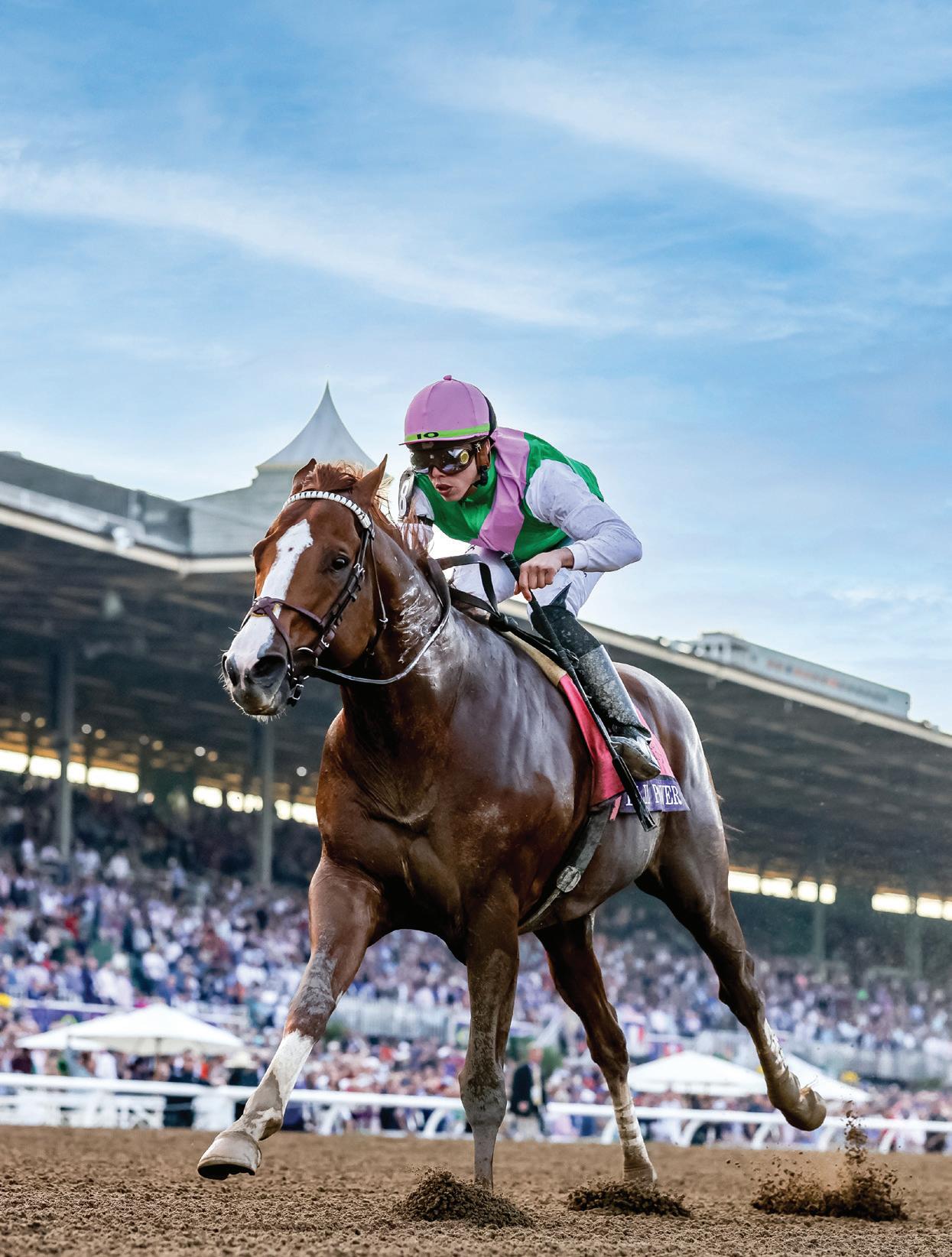
LEFT: Elite Power, ridden by Irad Ortiz Jr., wins the 2023 Breeders’ Cup Sprint at Santa Anita Park, his second consecutive victory in the race.
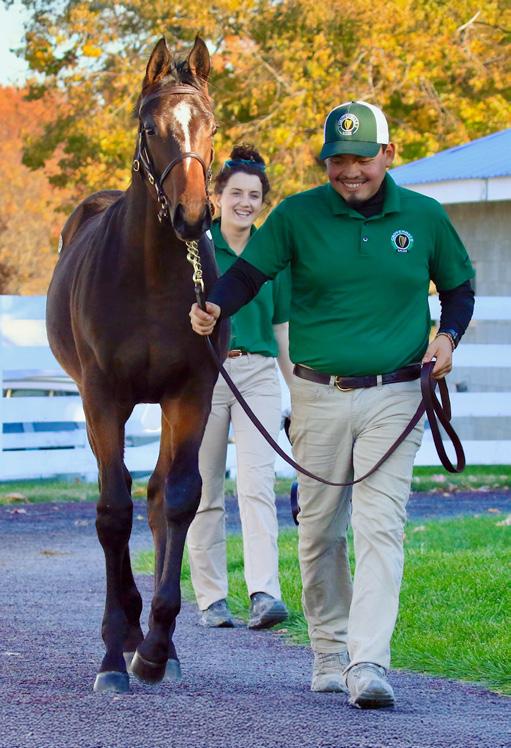
Following on the heels of a heralded 2023 stallion class that featured unbeaten Horse of the Year Flightline and multiple Grade 1 winner Life Is Good, Cody’s Wish and Elite Power are similarly set to headline a group of upcoming freshman sires that includes their shared Grade 1-winning rival Gunite, champions Arcangelo and Forte, and Kentucky Derby (Gr.1) winner Mage. Already, they are continuing their pattern of notching achievements in tandem as Cody’s Wish and Elite Power both had weanlings sell for $550,000 at the 2025 Keeneland November Breeding Stock Sale.
As sons of the indefatigable Hall of Famer Curlin – who, at age 22, continues to reinforce his reputation as one of the top stamina influences in recent times with his son Golden Tempo capturing this year’s Kentucky Derby and Belmont Stakes (Gr.1) – they hail from a sire line that is synonymous with yielding classic-type runners that age like the finest varietals. Though neither displayed the precocity that often serves as an irresistible beacon for buyers, Cody’s Wish and Elite Power both present a seemingly perfect storm of intangibles for breeders: miler-type speed backstopped by bloodlines whose mettle swells as the furlongs pile up.
“Both those horses, Cody’s Wish and Elite Power, were really fast sons of Curlin and…it’s really a shame they didn’t run against each other because it would have been interesting to see what would have happened,” said owner/breeder Craig Bernick, president of Glen Hill Farm, who purchased the $550,000 weanling by Elite Power at Keeneland November. “Once a stallion is successful, people will go back and tell you why, but
it’s very hard to predict which ones will have runners. I prefer horses that are faster than their pedigrees. So, if their pedigree says they’re supposed to go nine or 10 furlongs, and their best races are a furlong or two or three shorter than that, I really like those horses.
“A lot of times as stallions, the genetics come through and their progeny are good over what you would expect because of the blood, but I think having that speed is a huge thing. I’ve seen very few successful stallions that didn’t have speed,” Bernick continued. “I do think these two horses, they have a real chance at stud. Not to say other ones by the same sire don’t, but I would think these two are as solid of stallion prospects as I’ve seen in a long time.”
The expectations for Cody’s Wish and Elite Power were set at lofty levels their initial seasons at stud with the former standing for an advertised fee of $75,000 at Darley America and the latter commanding $50,000 at Juddmonte, co-second highest for the sire class. Such ambition was validated as Cody’s Wish – who bred 165 mares that first year – led the first-crop sires by weanling average at Keeneland November at $227,000 with Elite Power – who garnered 203 mares for his first book - next at $185,667.
Though they have mirrored one another at nearly every point of call, what lured breeders in, and what has kept their respective books filled with quality in those crucial second and third seasons, are the unique attributes both young stallions have carried with them into their second careers.
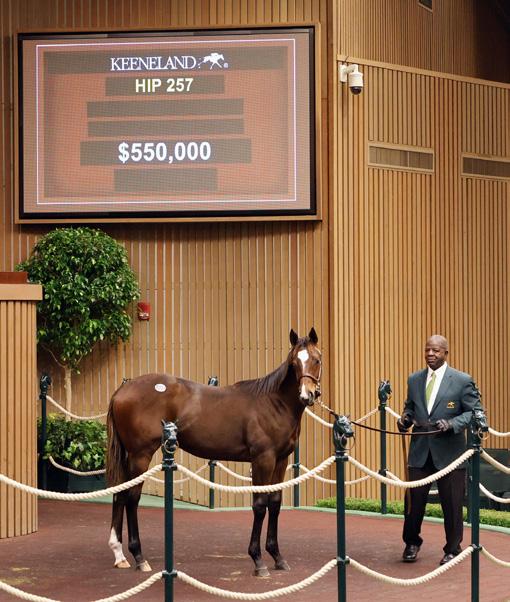
LEFT: An Elite Power colt out of Mrs. Postman, consigned by Grovendale Sales, was a $550,000 co-session topper purchased by Craig Bernick of Glen Hill Farm at the 2025 Keeneland November Breeding Stock Sale.
ABOVE: A Cody’s Wish filly out of Union Maiden, consigned by Lane’s End, was a $550,000 co-session topper purchased by Randy Hartley on behalf of Tom Durant at the 2025 Keeneland November Breeding Stock Sale.

In the history of the American Turf, only three stallions have sired a Classic Winner in each of their first two crops. Man o’ War Gallant Fox Good Magic
SIRE OF FIVE SONS AT STUD IN HIS FIRST TWO CROPS
MR. PROSPECTOR
CODY’S WISH
CAREER HIGHLIGHTS:
• Horse of the Year (2023)
• Eclipse Champion Older Dirt Male (2023)
• Two-time Breeders’ Cup Dirt Mile winner
• Five Grade 1 victories
• 11 wins from 16 starts
• Earnings: $3,106,030
CURLIN
2026 FEE:
• $60,000 S&N
• Standing at Darley, Lexington, KY
As you wish
DANCE CARD
SMART STRIKE
SHERRIFF’S DEPUTY
TAPIT
TEMPTING NOTE
CLASSY ‘N SMART
DEPUTY MINISTER
BARBARIKA
PULPIT
TAP YOUR HEELS
EDITOR’S NOTE
TEMPT
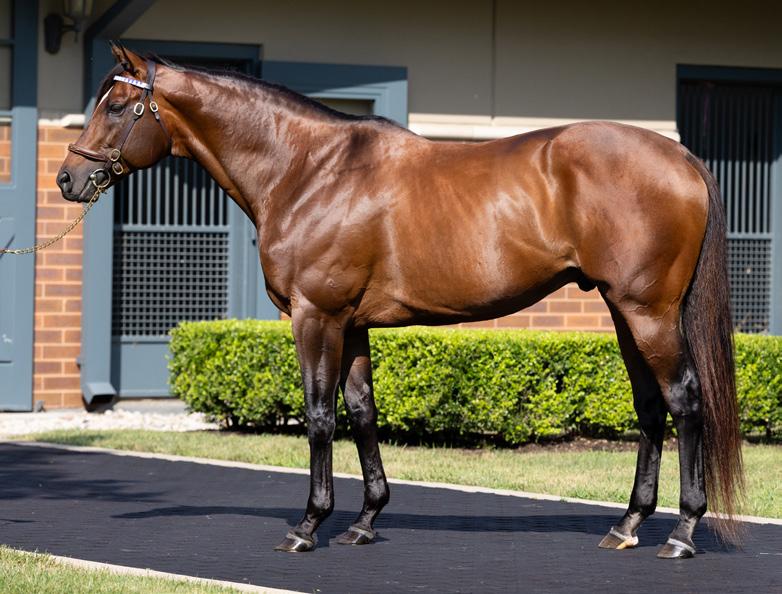
“What I would say about Cody’s Wish is I could show him seven days in a row, and each day, he blows me away. Even to this day, he’s a physical wow.”
– Darren Fox, sales manager for Darley Stallions.
It starts with the shoulder; deep and powerful and angled in a way that allowed the five-time Grade 1 winner to uncork a turn of foot that frequently left his rivals helpless. It stops Fox in his tracks nearly every time the Darley Stallions sales manager settles his eyes on the horse who won consecutive editions of the Breeders’ Cup Dirt Mile (Gr.1). And as Cody’s Wish moves before breeders, bouncing on toes that hit the wire first in 11 of 16 starts, it is the perfect complement to a frame that both intimidates and inspires.
“He is big, but he is proportioned. He’s very racy, he’s got a great hip, good hind leg,” Fox said of the dual Eclipse Award winner. “But my favorite feature on him has to be his shoulder. His depth of shoulder is just tremendous. The rest of him is awesome as well…but his shoulder is just incredible.
“We are seeing a lot of good substance (in his offspring), good leg, good size. And that shoulder is certainly something in the weanlings and yearlings that I’m looking for in his progeny. They’re just forward, imposing, eye-catching horses.”
On the track, Cody’s Wish adopted a dramatic late kick as his signature winning move, a trait that showcased the brilliance of his Grade 1 winning dam, Dance Card, and bullish tenacity of his legendary broodmare sire, Gainesway’s flagship stallion Tapit. Though Dance Card earned her top-level triumph over 1 1/8-miles in the 2012 Gazelle Stakes (Gr.1), she had the speed to finish third behind two-time champion Groupie Doll in the 2013 Breeders’ Cup Filly and Mare Sprint (Gr.1).
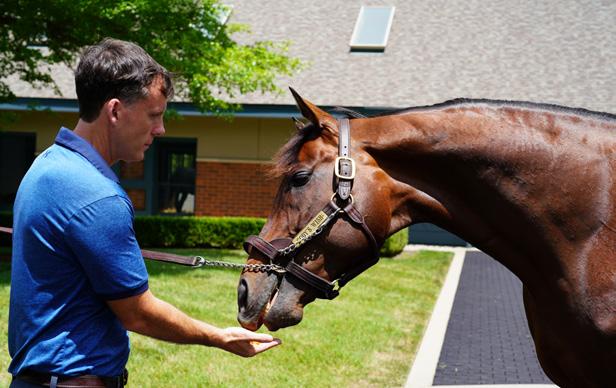
Cody’s Wish & Darren Fox.
Cody’s Wish – like Curlin and Dance Card – did not make his career debut until his sophomore season. Hence, one wouldn’t necessarily peg his offspring as ones to fill the gates of those early 2-year-old races. If the end game, however, is to produce athletes best equipped to handle the rigors of training and racing at the highest level, the physical attributes Cody’s Wish passes on combined with added injections of speed could result in runners that improve with a flourish once the initial buds start to bloom.
“I think breeders maybe are compensating for a lack of 2-year-old form and sending him mares that either had 2-yearold form or have thrown 2-year-old winners,” Fox said. “I do think that tends to average out. I would anticipate he has mares with some precocity to them that will hopefully complement him. I certainly would not be looking for (his offspring) to come out in April of their 2-year-old seasons at Keeneland, but I would anticipate getting into the Fall, you would start seeing them make some noise.
“They say milers make the best sires but with his pedigree, I would not be surprised one iota for him to get some proper two-turn horses in addition to horses in his own mold from a distance perspective. I do feel like he’s in that sweet spot to hopefully get a little bit of everything and give the market what they want in terms of performance at the track.”
Just over 12 miles down the road from where Cody’s Wish resides, a familiar friend graces the bucolic Juddmonte grounds, running his own burgeoning campaign to become freshman class president.

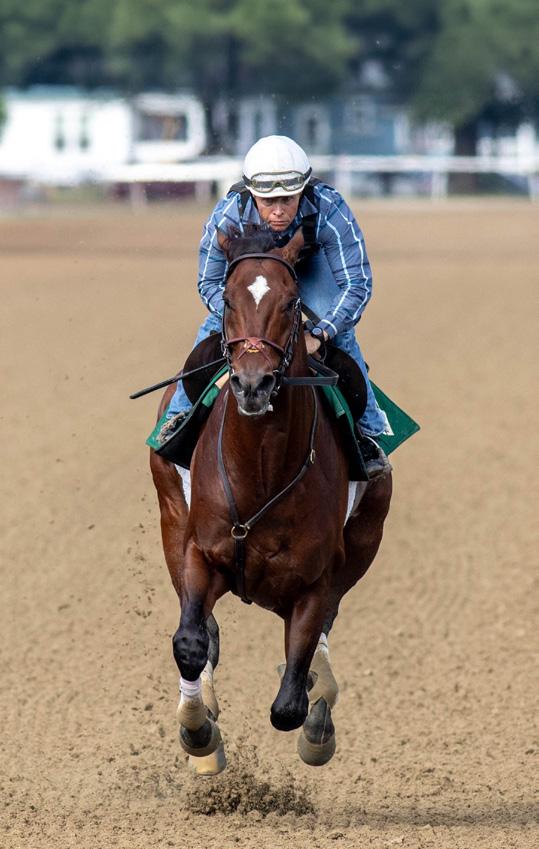
Dominate
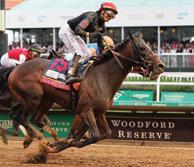
Golden Tempo, shod by farrier Chad Boston and wearing Kerckhaert Race Plates, won the 2026 Kentucky Derby and Belmont Stakes. This was the fourth year in a row the Kentucky Derby Winner was wearing all four Kerckhaert shoes.
FPD congratulates the Golden Tempo team and thanks all the teams who continue to support Kerckhaert Race Plates.
View the full line of Kerckhaert Race Plates and find an FPD Dealer near you at farrierproducts.com/race.
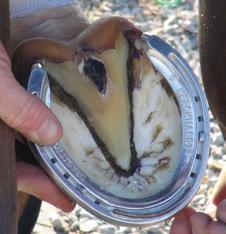
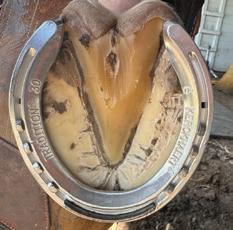
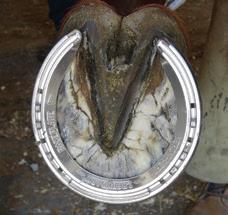
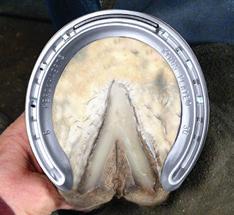


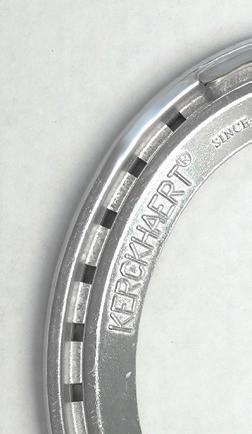

Kerckhaert Legendary Front
Kerckhaert Kings Front
Kerckhaert Tradition TC Hind
Cody’s Wish
MR. PROSPECTOR
ELITE POWER
CAREER HIGHLIGHTS:
• Eclipse Champion Male Sprinter (2022 & 2023)
• Two-time Breeders’ Cup Sprint winner
• Five Grade 1 victories
• 9 wins from 13 starts
• Earnings: $3,775,711
CURLIN
2026 FEE:
• $35,000 LFSN
• Standing at Juddmonte Farms, Lexington, KY
Power surge
BROADWAY’S ALIBI
SMART STRIKE
SHERRIFF’S DEPUTY
VINDICATION
BROADWAY GOLD
CLASSY ‘N SMART
DEPUTY MINISTER BARBARIKA
SEATTLE SLEW
STRAWBERRY REASON
SEEKING THE GOLD MISS DOOLITTLE
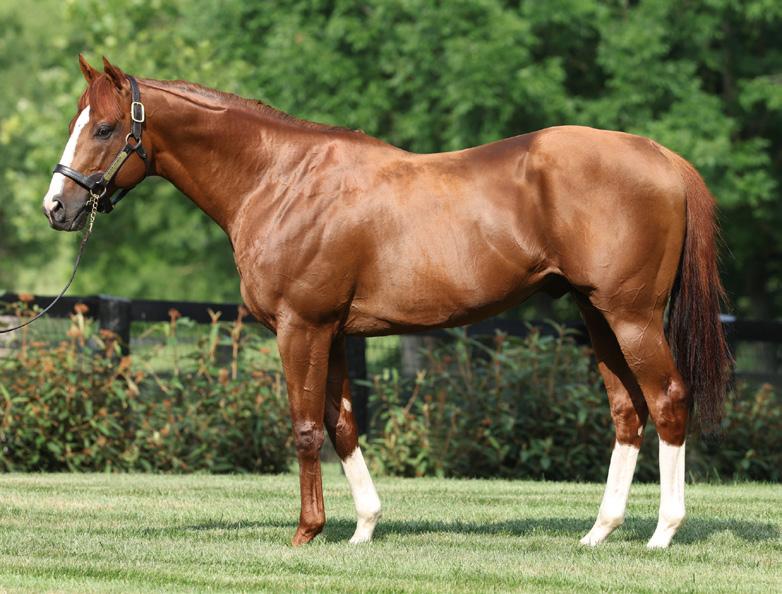
“It’s hard to make a slow horse fast. I think it’s easier to make a fast horse get a little bit further against the classic distances. Definitely, he has plenty of latent stamina genes in his makeup.”
– Garrett O’Rourke, general manager Juddmonte USA.
When the hammer fell after a final bid of $900,000 lit up the board for Hip 278 at the 2019 Keeneland September Yearling Sale, the Juddmonte team thought they had secured a colt who would ultimately be chasing glory in the American Triple Crown races. Not only was the chestnut youngster a son of the mighty Curlin, but his dam, Broadway’s Alibi, had fallen just three-quarters of a length short of victory in the 2012 Kentucky Oaks (Gr.1).
Cue the adage about best-laid plans and all that.
“To be honest, he was a little bit of a surprise to me because we bought him with the Kentucky Derby in mind,” O’Rourke said of Elite Power. “Obviously he turned out to be a very fast horse and very dominant sprinter.”
Ironically, it was a slow burn of a journey for Elite Power to ascend to his divisional mountaintop. When he made his career debut in September of his 3-year-old season, the results were non-descript – a sixth-place finish first time out, followed by two
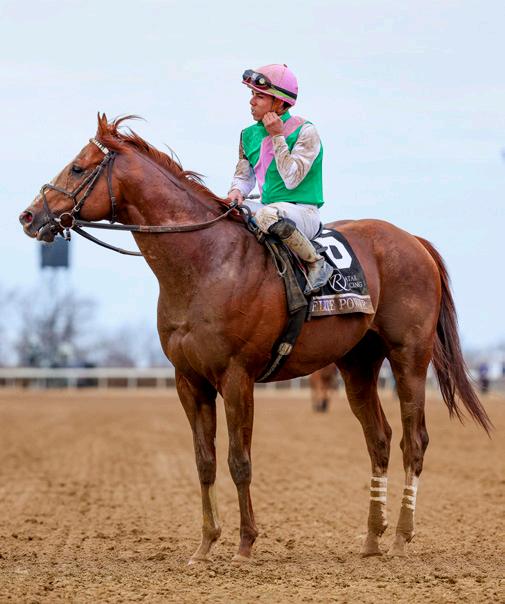
Elite Power and Irad Ortiz Jr. after winning the 2022 Breeders’ Cup Sprint.
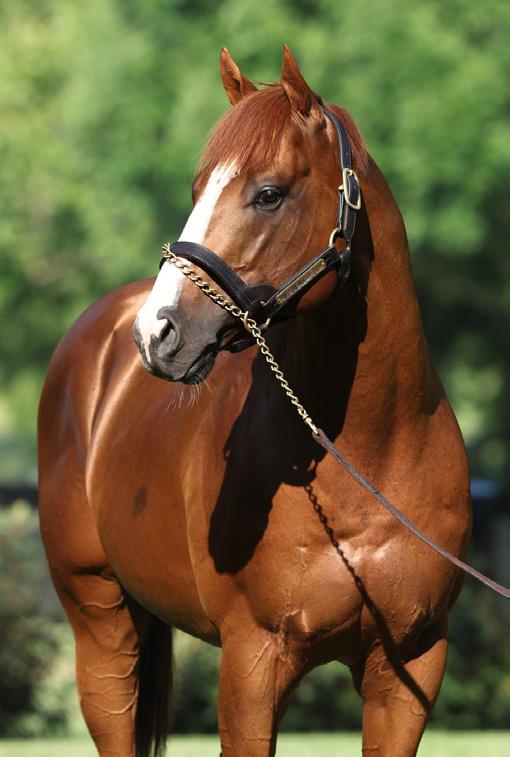
Out of EXPERIENCE
Twenty-one years of refinement stand behind every Stonestreet yearling. Built over time. Proven on the track. Out of Stonestreet.
more defeats. When the lightbulb finally clicked on in the form of a nine-length maiden triumph at Churchill Downs in June 2022, it illuminated at a blinding level with Elite Power winning nine of his final 10 career outings highlighted by consecutive victories in the 2022-23 Breeders’ Cup Sprint (Gr.1).
A balanced specimen with a decidedly athletic body type, the blend of qualities Elite Power houses gives breeders no shortage of options when it comes to selecting his mates. Bring a faster mare to him and one could absolutely get earlier-type individuals. Send a mare with added stamina his way and the classic aspirations he initially carried could end up materializing.
“I think one of the beauties of a horse like him is he’s not too big. He’s one of those horses who are beautifully in the middle,” O’Rourke said. “When I was doing the matings for Juddmonte, I never felt like I was pigeonholed into breeding a specific type to him. It’s just a matter of what you’re looking to get from the offspring.
“You could breed small, fast mares to him, and you could breed big, stamina mares to him and I think he’d fit any of them.”
The common thread that applies to virtually every top offspring by Curlin is they have the physical makeup and mental capacity to thrive on the work they are given. Having already elevated his legacy with their on-track exploits, both Cody’s Wish and Elite Power are well positioned to further cement their father’s stature as a sire of sires.
Yearlings offered at Keeneland and Fasig-Tipton
ABOVE: Bought to chase Triple Crown glory, Elite Power instead became one of racing’s most dominant sprinters, winning nine of his final 10 starts, including back-to-back Breeders’ Cup Sprint titles.
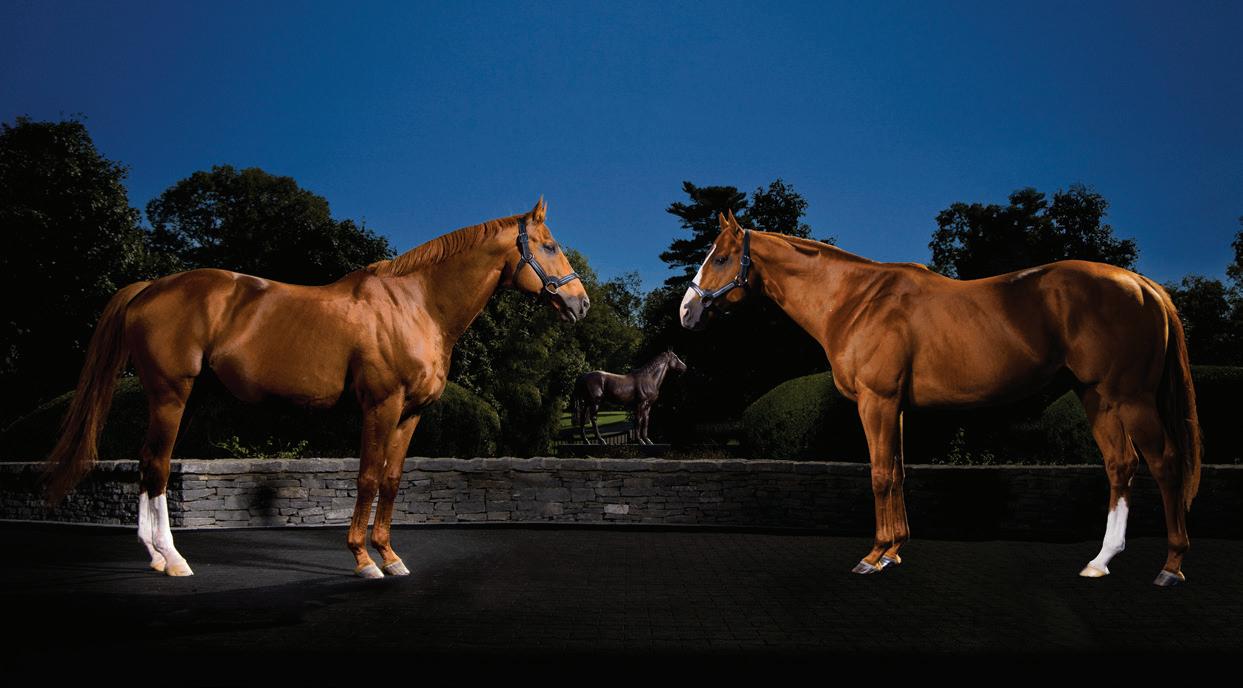
Carrying the Torch
“I think that sire line, whether it’s through a direct son of Curlin or through a grandson, it’s really good. It’s not going away.”
– Craig Bernick, president of Glen Hill Farm
Housed alongside Curlin in the airy stud barn at Hill ‘n’ Dale at Xalapa is proof his classic ability can translate for generations to come. His champion son and fellow Hill ‘n’ Dale stallion Good Magic, winner of the 2017 Breeders’ Cup Juvenile (Gr.1), had a pair of Triple Crown race winners from his first two crops in Mage and 2024 Belmont Stakes (Gr.1) winner Dornoch. In addition to outside support, Good Magic had the crucial backing of his breeder and co-owner Stonestreet, which maintains one of the more elite broodmare bands in the industry. That kind of regal pipeline is something Cody’s Wish and Elite Power also have in their corners with Darley and Juddmonte as they navigate the make-or-break first handful of seasons.
“They’re both going to get such support from the homebred operations so (their offspring) are going to be trained by Bill Mott and Brad Cox and Bob Baffert and Brendan Walsh,” Bernick said of the two young stallions. “And they’re going to be out of those great dam lines, so they’re going to have every opportunity. Now we’ve all seen lots of stallions you don’t think can miss that do but…I’m probably going to breed to those horses next year just because if they hit, it will be your last chance to breed to them at an affordable price.”
Having compiled their race records in lockstep, Cody’s Wish and Elite Power – who stood the 2026 season for $60,000 and $35,000, respectively – still can’t shake their habit of being joined at the statistical hip. Each covered 161 mares during the 2025 breeding season. Soon enough, their offspring will settle the debate as to who will prevail in the latest test of their abilities. Should they continue to build upon the achievements of their bloodlines, however, there is unlikely to be a loser.
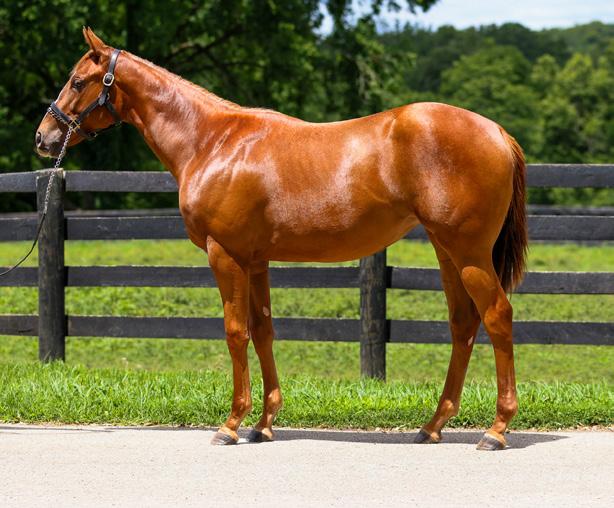
“I think the Curlin influence on the breed going forward will be very, very strong and I think that’s going to be very strong for (Elite Power),” O’Rourke said. “He looks very much like Curlin, he’s probably faster than Curlin and that’s a good thing. If he can reproduce what he is himself, he’ll be a very good stallion. And what we’re seeing from the first couple of crops is that he is throwing very much to what he looks like himself, so that’s encouraging.”
“He needs to prove his mettle as a sire before he can attempt to step into filling some of those shoes, but he certainly has all the attributes to hopefully carry that line forward,” Fox said of Cody’s Wish. “He’s so well made, so racy, so athletic. I love watching his races back because when he got rolling and started to pick horses off one by one, it was a sight to behold. What he had was talent, speed, and that amazing stride length and ability. Those are all traits that will serve him well in his second career.”
Curlin (left) and his champion son Good Magic (right) at Hill ‘n’ Dale at Xalapa. As Good Magic has already shown the ability to extend the Curlin legacy with a fast start to his stud career, Cody’s Wish and Elite Power now seek to become the next influential branches of one of North America’s most potent sire lines.
An Elite Power filly out of Fast Retailing will be offered by Hill 'n' Dale at the 2026 Fasig-Tipton Saratoga New York-Bred Yearling Sale in August.
20% NEW YORK-SIRED 1ST, 2ND, 3RD AS MUCH AS $20,000 10% NON-NEW YORK-SIRED 1ST, 2ND, 3RD AS MUCH AS $20,000
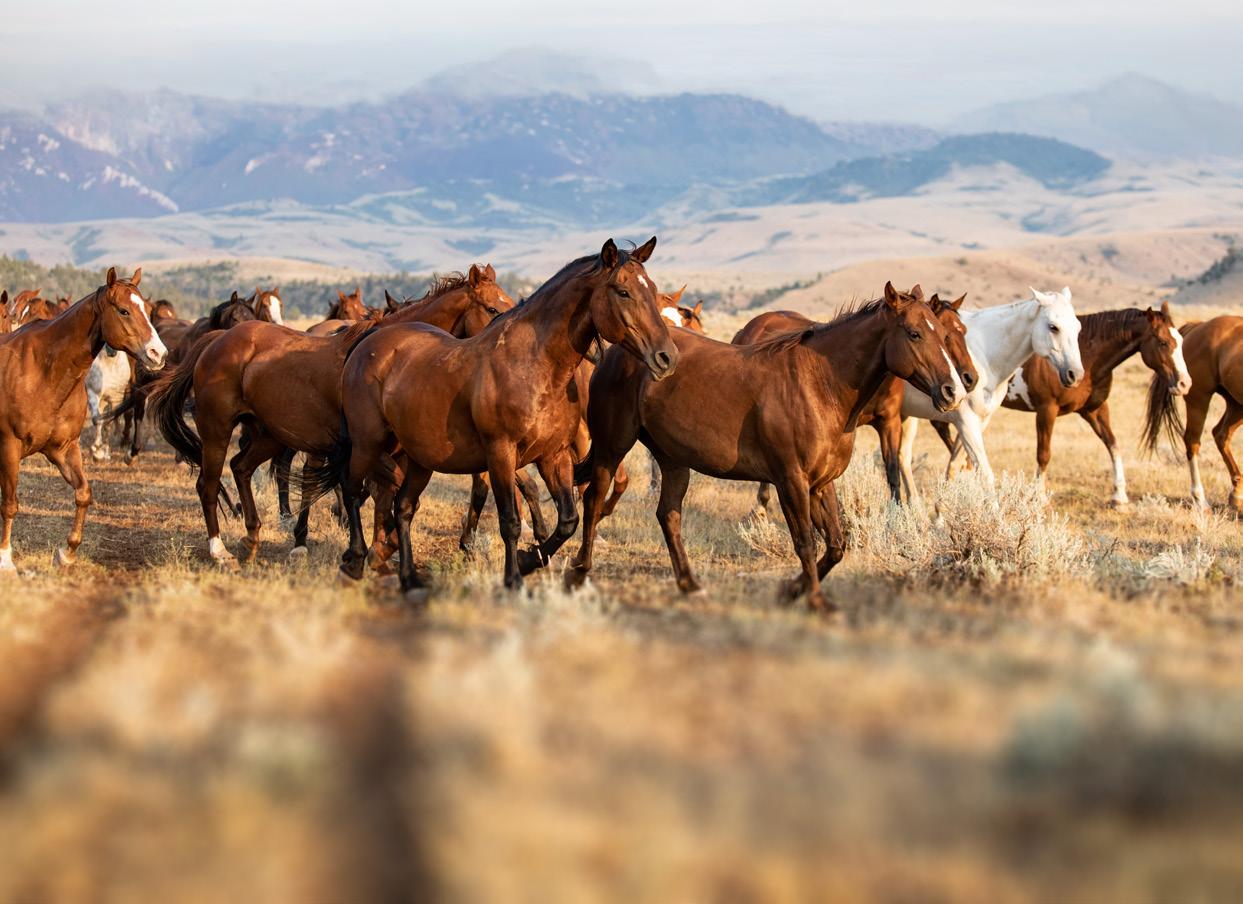
THE BIOLOGY GAP
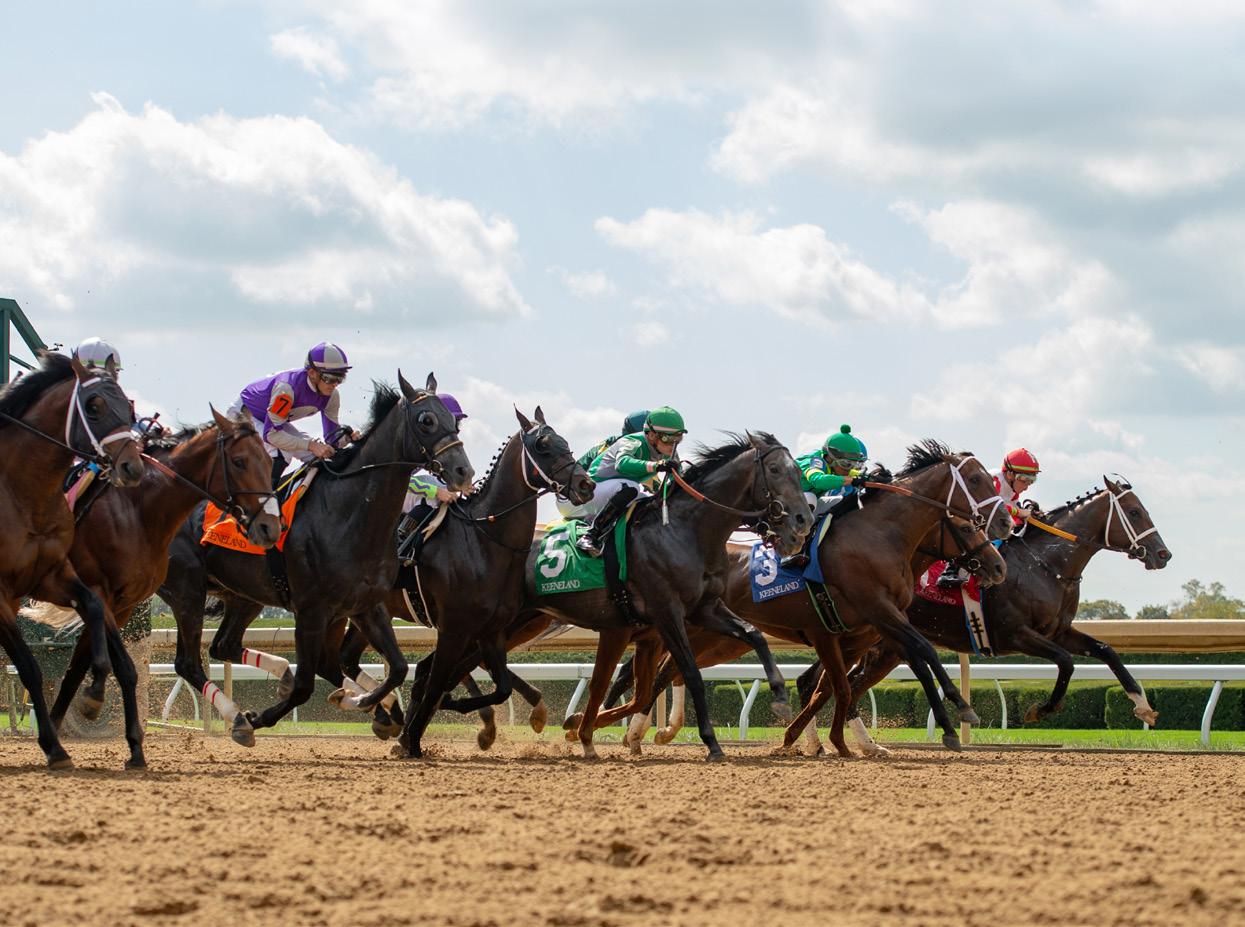
A WELFARE-BASED PERSPECTIVE ON NUTRITION, SUPPLEMENTATION, AND INTEGRITY IN MODERN THOROUGHBRED RACING
This article reflects the perspective of an independent veterinarian, equine nutritionist, pharmacologist, former Thoroughbred trainer and owner, and lifelong horsewoman. It is not written on behalf of a feed company, supplement manufacturer, pharmaceutical company, racing organization, or political interest. Its purpose is to encourage constructive dialogue among trainers, veterinarians, nutritionists, owners, HISA, and HIWU in pursuit of a shared goal: the welfare and integrity of the Thoroughbred racehorse.
Are we really on opposite sides?
Before discussing nutrition, supplements, medications, prohibited substances, or regulations, I would like to begin with something more important: Respect .
Over nearly four decades as a veterinarian, researcher, nutritionist, consultant, and, for several memorable years, as both a Thoroughbred trainer and owner, I have met remarkably different people whose lives revolve around one extraordinary animal. Trainers, veterinarians, owners, farriers, nutritionists, researchers, regulators, stewards, and the people serving HISA and HIWU may disagree passionately about the path forward. Yet I have never met anyone who genuinely cared about Thoroughbred racing without caring deeply about the horse itself.
That observation forms the foundation of this article. I do not believe we are divided by our goals; we are divided by our perspectives. The welfare of the Thoroughbred, the integrity of competition, fairness for every participant, and public trust in our sport are not competing objectives but shared responsibilities. The question is not whether we all want healthier horses but how we best achieve that goal in a horse whose life has changed dramatically from the one nature designed.
This article is not intended as criticism of HISA or HIWU. In fact, I believe both organizations have undertaken one of the most challenging responsibilities in modern horse racing: protecting equine welfare while maintaining public confidence in the integrity of the sport. Instead, I hope to offer a perspective that has not yet received sufficient attention. Nutrition should not be viewed as marketing, or as an alternative to regulation, but as an essential component of welfare.
Arthur
Long before I became a veterinarian, nutritionist, or trainer, I was a little girl who adored horses. My first riding instructor stood nearly sixteen hands tall, was jet black from ears to tail, and answered to the name Arthur. I was five years old, and Arthur was, without question, my first love. Tall, dark, handsome, and considerably wiser than his tiny rider. Arthur possessed endless patience, but only with riders who were willing to learn. If I gave him the correct aids, he responded generously.
If I became impatient and reached for the crop instead of improving my communication, he offered what I came to recognize as a civilized warning. He would simply lift his hindquarters, almost as if saying, “Let’s try that again.” Ignore the lesson and repeat the mistake, however, and Arthur could produce a buck worthy of a rodeo.
At five years old, I thought he was being difficult. Many years later, I realized he had been teaching me my first lesson in equine biology: horses respond best when we understand and tend to their nature. Whenever we ignore that nature, they eventually remind us.
Jack
Many years later, life gave me another teacher. From 2004 through 2008, I owned and trained twenty-two Thoroughbreds. During that time, I had the privilege of partnering with the late Jack Van Berg, Hall of Fame trainer, Kentucky Derby winner, and one of racing’s true old cowboys. If anyone had assembled a committee to create two people least likely to work together, Jack and I might have topped the list. Jack represented generations of practical horsemanship. I represented German veterinary education, scientific curiosity, and perhaps a little too much confidence in textbooks. Looking back, I suspect we discovered the same truth: science without horsemanship is incomplete. Horsemanship without science is incomplete. The horse needs both.
Our arrangement was straightforward. Many horses entering my care had been laid up. My responsibility was to rebuild their bodies and prepare them to return to training. Once ready, they returned to Jack for racing. Financially, it was not my greatest business decision. We agreed to split the purse money. Unfortunately, there was often very little to split. Yet those years became among the most valuable of my professional life.
Jack never spoke about oxidative stress, mitochondrial metabolism, or the gut microbiome. Yet he understood something modern science continues to confirm: Healthy horses usually perform better than unhealthy horses, and happy horses usually train better than unhappy horses.
One memory still makes me smile. Jack would occasionally arrive at the barn around four o’clock in the morning carrying a large box of donuts. Before his pickup came into view, every horse in the shedrow knew he was there. Heads appeared over stall doors as loud whinnies echoed through the barn. Jack simply stood there with an enormous grin on his face.
One might argue they were only judging the donuts. I saw something else. Horses care little about titles, regulations, or scientific papers. They simply respond to how we care for them.
The question that changed my thinking
Over the years, I have changed my mind more than once. Clinical practice challenged ideas I learned in veterinary school. Research challenged assumptions I made in clinical practice. Horse racing challenged conclusions I drew from research. Nutrition challenged nearly everything. Today, I am less interested in proving myself right than in asking better questions.
One question has gradually come to dominate my thinking: What if we are asking the wrong question? For years, discussions surrounding nutrition in Thoroughbred racing have centered on a deceptively simple question: Do racehorses really need supplements? It is understandable, but I believe it is the wrong question. The better question is this: What would nature have provided if horses still lived the lives they evolved to live?
That question changed how I think about nutrition. It also changed how I think about welfare and integrity.
The Biology Gap
The diagram below is a concept I call “The Biology Gap”: the difference between the environment the horse evolved for and the environment we ask it to live in today. For approximately fifty-five million years, evolution shaped the horse without feed mills, veterinary hospitals, pharmaceuticals, nutritional analyses, racetracks, starting gates, or barns. The horse evolved as a grazing prey animal. Its digestive system evolved around selective forage intake and hindgut fermentation. Its musculoskeletal system evolved around constant but slow movement with occasional short sprints. Its behavior evolved around social interaction, seasonal grazing, migration, and the freedom to seek different plants and soils as nutritional needs changed. Then, in evolutionary terms, almost overnight, we changed nearly everything.
The Biology Gap is not a criticism of domestication. It is an acknowledgment of responsibility. No reasonable person would suggest returning the modern Thoroughbred to the open prairie. Through centuries of selective breeding, careful management, and generations of dedicated horsemen and women, we have created one of the most extraordinary athletes in the animal kingdom. The modern Thoroughbred possesses speed, courage, athleticism, and willingness to partner with humans.
The question is not whether domestication was worthwhile. It is whether our understanding of the horse’s biological needs has kept pace with the demands we now place upon it. Today’s racehorse travels widely, lives in a stall for much of the day, consumes harvested forage instead of selecting hundreds of plant species, and trains at speeds and intensities wild horses
rarely experienced. Its environment has changed dramatically while its biology has not. Evolution does not redesign mineral metabolism, connective tissue physiology, or the microbial ecosystem of the hindgut simply because humans altered the horse’s surroundings. Nature wrote the horse’s inner blueprint over millions of years. We changed the environment within only a few thousand. That is the “Biology Gap”.
How far was nature’s sprint?
One simple way to appreciate the Biology Gap is to consider why horses evolved to run. Nature did not design the horse to race 5 to 12 furlongs but designed the horse to survive with brief, high-speed escape sprints. In racing language, such a sprint might reflect roughly one or two furlongs. When a predator appeared, survival depended on acceleration. The horse exploded into motion, created distance, and soon the predator abandoned the pursuit because continuing consumed more energy than the potential meal justified. The sprint ended, the horse returned to grazing, muscles recovered and metabolism returned to its normal rhythm.
Modern Thoroughbred racing asks something very different. The horse maintains extraordinary effort for several times that natural flight distance. That is what makes the sport remarkable. It is also one reason modern racehorses possess nutritional needs unlike those of their wild ancestors.
BELOW: The Biology Gap. Nature wrote the blueprint. We changed the environment. Now it’s our responsibility to bridge the gap.
THE BIOLOGY GAP
A 55-Million-Year Journey from Evolution to Domestication and Modern Management
The environment horses evolved for over 55 million years. Domestication transformed that environment in just 5,000 years.

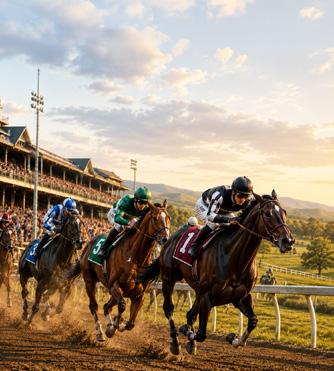
Our responsibility is to replace what nature once provided.
HOW FAR DID NATURE DESIGN A HORSE TO RUN?
Evolutionary Purpose vs. Modern Athletic Demands
EVOLUTIONARY MAXIMUM EFFORT
On average, a predator gives up after a high-speed chase of approximately 200–400 yards (1–2 furlongs).
WILD HORSE: EVOLUTIONARY DESIGN
MODERN COMPETITIVE MAXIMUM EFFORT
On average, a Thoroughbred race requires a sustained high-speed effort over approximately 5–12 furlongs.
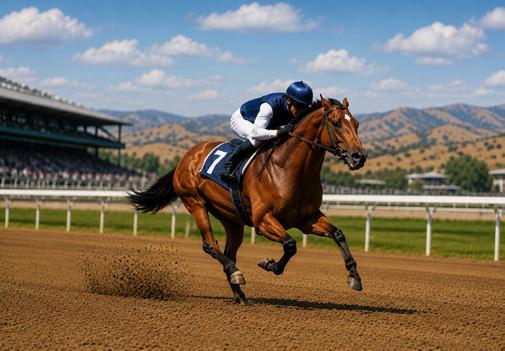
THOROUGHBRED: MODERN REALITY Survive GOAL Compete Conserve ENERGY STRATEGY Produce Occasionally SPRINT BEHAVIOR
Repeatedly Immediately RECOVERY Train again
The principle of substitution
One of the most influential lessons of my professional life did not come from a veterinary textbook. It came from a zoo. During my veterinary studies in Hannover, Germany, our class visited the local zoo for a behind-the-scenes tour. In the primate exhibit, animals of dramatically different sizes shared the same enclosure, from small monkeys to imposing gorillas.
With youthful confidence, I challenged the zoo director. If a gorilla chased one of the smaller monkeys, how could it escape in a limited enclosure? The director smiled and introduced me to the principle of substitution. He pointed toward a large tree trunk lying across the enclosure. One section curved upward, leaving a narrow opening between the wood and the ground. At that moment, a small monkey darted toward the log with a gorilla behind it. The monkey slipped underneath. The gorilla could not follow and abandoned the chase.
“We cannot recreate the jungle,” the director explained. “So, we ask what the biological purpose of running away is. It is not distance, it is survival. If we cannot reproduce nature exactly, we must reproduce the biological function.” At the time, I thought we were discussing zoo design. Later, I realized we were discussing every domesticated animal, including the Thoroughbred.
Whenever we remove what nature once provided, we inherit the responsibility to replace its biological function. No supplement can replace a prairie, no feed can replace migration, and no stable can replace freedom. But thoughtful management can often substitute for the biological functions those natural conditions once provided.
Veterinary medicine is built partly upon this principle. When dehydration threatens life, we provide fluids. Nutrition follows the same logic. When fresh pasture no longer supplies adequate vitamin E, we replace that function. When forage no longer
ABOVE: Evolution prepared the horse to survive by sprinting briefly. Modern racing asks the Thoroughbred to sustain that effort several times longer. Meeting these modern athletic demands begins with nutrition designed to support sustained performance and recovery.
provides mineral diversity, we must consider what is missing. When athletic effort exceeds what evolution prepared the horse to experience, nutritional requirements may change. The objective is not enhancement, but restoration.
The conversation we should be having
The Biology Gap does not argue against regulation, nor for unrestricted supplementation. It argues for perspective. HISA and HIWU have an important responsibility to prevent substances that manipulate performance or conceal injury. Trainers have an equally important responsibility to prepare healthy horses capable of competing safely. Veterinarians restore health, shoers contribute to soundness, owners invest in the horse’s future. Nutritionists support the biological systems upon which every discipline depends.
These responsibilities do not compete, they overlap. Rather than asking whether nutrition belongs in welfare discussions, we might ask a better question:
Can we fully discuss equine welfare without giving nutrition a permanent seat at the table?
I believe the answer is no. Not because nutrition is more important than veterinary medicine or regulation, but because biology does not recognize professional boundaries. The horse certainly does not, and its welfare is the result of the combined decisions we make.
Are all supplements created equal?
If nutrition is so important, where do we draw the line? This is one of the most important questions facing Thoroughbred racing. The word ‘supplement’ has become an umbrella term for products with fundamentally different purposes, mechanisms, and biological effects.
Products designed to replace an essential nutrient are often discussed in the same conversation as products intended to influence inflammation, metabolism, behavior, or athletic performance. That is where much confusion begins.
Not all supplements are created equal. More importantly, not all should be evaluated by the same standard. To have a meaningful discussion, we must distinguish between nutritional supplements and nutraceuticals.
Nutritional supplements provide substances essential for normal biological function: vitamins, minerals, amino acids, electrolytes, certain fatty acids, and digestive support. No one questions whether calcium, sodium, vitamin E, lysine, selenium, copper, or sulfur play biological roles. The questions are: how much, for which horse, and under which circumstances? Those are nutritional questions.
A Thoroughbred deficient in vitamin E is not healthier because it remains deficient. A horse lacking copper does not become more honest because its deficiency goes uncorrected. Correcting an electrolyte deficit after strenuous exercise or furosemide does not create unfair advantage. It restores physiology.
Nutraceuticals occupy a different category. They may contain biologically active compounds that influence physiological processes beyond replacing an essential nutrient. Examples may include certain herbal products, plant extracts, and compounds that at some point became the basis for drug development. Some may improve welfare. Others deserve scrutiny. They raise different scientific questions and may warrant different regulatory approaches.
Treating every product labeled supplement as one category oversimplifies a complex field. Medicine would not classify antibiotics, vaccines, and intravenous fluids as one therapeutic category simply because they are all administered to patients. Nutrition deserves similar precision.
The horse does not know the difference
The horse itself does not recognize categories such as vitamin, medication, nutraceutical, or prohibited substance. Cells receive the nutrients they require, or they do not, red blood cells are produced efficiently, until they are not, nutrition is absorbed, or it is not. Biology is indifferent to human terminology. Our responsibility is not merely to regulate what enters the horse but to understand what the horse needs to maintain biological function within the environment we created. That does not weaken regulation; it strengthens it. Meaningful regulation must begin with meaningful distinctions.
A practical example: The soil beneath the horse
The difference between restoration and enhancement becomes clearer when we move from theory to practice. Consider copper. Copper is not an exotic performance aid or novel nutraceutical, but an essential trace mineral required for normal life. Yet relative copper deficiency is one of the nutritional patterns I encounter frequently in my consulting work. A copper deficiency will produce anemia with all the consequences of a lack of oxygen carriers. The answer begins, surprisingly, not in the horse but in the soil on which the hay grows.
We often think of hay as standardized, but it is not the same in different locations. Hay is the nutritional fingerprint of the soil on which it was grown. The nutritional value of forage begins in the soil, not in the feed room. A horse living in Kentucky does not necessarily consume the same mineral profile as a horse living in California, Florida, New York, or Oregon, even when both receive excellent hay.
THE SOIL–HAY–HORSE CONNECTION

ACIDIC SOIL
Low pH soils increase iron uptake by plants and reduce copper availability.
FORAGE MINERAL PROFILE
Forage grown on acidic soils typically contains higher iron and lower copper concentrations.
HORSE CONSUMES FORAGE
Over time, the horse consumes forage containing excess iron and relatively low copper.

TISSUE MINERAL IMBALANCE
Iron accumulates while copper remains relatively low, creating a mineral imbalance.
BIOLOGICAL CONSEQUENCES
May contribute to fatigue, reduced performance, poor recovery, and hoof/connective tissue problems.
One important example is the relationship between soil pH, iron, and copper. Iron and copper are essential minerals, but they are physiological antagonists. When iron becomes excessively abundant in the diet, copper utilization becomes more difficult. Acidic soils can favor iron uptake by grasses while reducing copper availability. The result is forage that may contain abundant iron but relatively little copper. This pattern is common enough in some coastal regions of the United States that it should be considered when evaluating horses eating locally produced hay. Over months and sometimes weeks, that difference can become biologically significant.
Looking beyond disease
Traditional veterinary medicine quite appropriately asks, “Is this horse sick?” Performance medicine asks another question: “Is this horse functioning at its biological potential?” Those are not always the same.
Every athletic performance depends on oxygen. Oxygen reaches working muscles through red blood cells. Healthy red blood cell production requires several nutrients working together, including iron, copper, and cobalt. If one becomes limiting, red blood cell production may become less efficient even when iron is abundant. The result may not be dramatic clinical anemia. It may be a horse that tires sooner, struggles to recover, feels behind the leg, or simply never performs to its apparent ability.
For years, the common assumption has been that anemia means insufficient iron. Iron-containing products may then be recommended. But if iron is not the limiting factor, and if the horse already consumes excess iron while remaining relatively low in copper, adding more iron may miss the problem or worsen the imbalance. Successful nutrition is not simply supplying more. It is supplying the right nutrients in the right balance.
LEFT: Conceptual pathway illustrating how acidic soils can influence forage mineral composition, leading to elevated tissue iron, relative copper deficiency, and potential effects on biological function in horses.
Precision nutrition
During the past two decades, Thoroughbred trainers and horse owners from across the United States and around the world have sent me mane hair samples for tissue mineral analysis. Over time, I observed patterns rather than isolated abnormalities. Horses from some regions frequently showed elevated tissue iron with comparatively low copper. Others showed different relationships. This reinforced an important lesson: nutrition should become increasingly individualized. The future is unlikely to be one universal feeding program suitable for every horse. It lies in understanding the biology of the individual horse standing in front of us.
That does not mean every performance issue begins in nutrition, nor does it mean every nutritional issue responds to the same supplement. It just means responsible nutrition begins with evaluation, not assumption.
When biology whispers
One frustration of nutritional consulting is that biology rarely announces itself dramatically. Long before obvious disease appears, the horse often whispers. A horse with a relative copper deficiency may appear persistently sore after work, not necessarily from excessive training, but because oxygen delivery and recovery are compromised. Another may seem lethargic or breathe harder than expected, encouraging a search for respiratory disease when oxygen-carrying capacity may also be part of the picture.
Copper also supports enzymes involved in normal collagen maturation and connective tissue development. Tendons, ligaments, joint capsules, and hoof horn are built and repaired every day. When building materials become inadequate, consequences may appear months later as weaker hoof quality, reduced heel growth, recurrent abscesses, slower tendon recovery, or diminished connective tissue resilience.
None of these observations prove copper deficiency. Training, conformation, footing, genetics, biomechanics, shoeing, and disease all matter. Nutrition is one piece of the puzzle, but it is a piece that should not be ignored. Restoring a genuine deficiency does not create unfair advantage. It gives the horse the opportunity to express the biology it was meant to have.
Restoring biology is not enhancing performance
Suppose an evaluation shows a meaningful mineral imbalance, and the horse’s history, geography, forage source, and clinical presentation support that finding. Suppose a careful feeding program gradually restores balance. Has the horse been enhanced? Or has its biology been restored? This answer matters. Purpose determines ethics.
Nutrition designed to restore biological function should not be confused with pharmacological manipulation designed to exceed it.
Recognizing this distinction may be one of the most important steps toward a regulatory framework that protects both welfare and integrity. It also raises another question: what happens when a well-intentioned trainer unknowingly uses a product that is neither a simple nutrient nor an obviously prohibited drug, but something in between?
That happened to one of my clients.
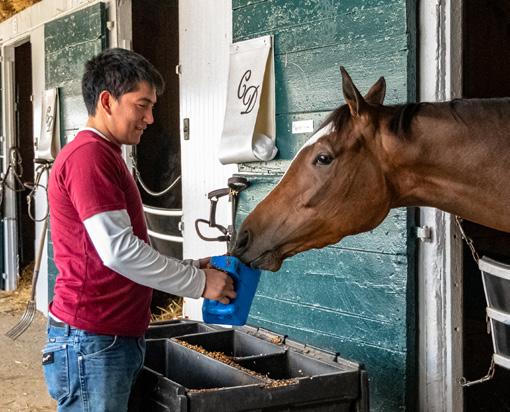
Good regulation begins with good education
Every successful regulatory system faces the same challenge. Rules alone are never enough. The most effective systems combine clear standards, enforcement, and continuous education. Horse racing is no different. HISA and HIWU have accepted the difficult responsibility of protecting the welfare of the Thoroughbred while preserving integrity. That deserves recognition. However, enforcement alone cannot prevent every problem. Some violations are intentional, some are careless. But most occur because well-intentioned people do not understand the biological or pharmacological consequences of products they are using.
Several years ago, a Thoroughbred trainer contacted me after one of the most difficult experiences of her career. She had been suspended after two fillies tested positive for testosterone following a race. She was devastated, not because she had intended to cheat, but because she had not.
Like many conscientious trainers, she had been trying to support her horses’ health. One product listed DHEA on its label. What she did not understand was that DHEA is a steroid precursor and can be converted in the body into androgenic hormones, including testosterone. The suspension damaged her reputation, confidence, and trust in nutritional products. When she first contacted me, she approached every recommendation with understandable skepticism. She had learned an expensive lesson she never intended to learn.
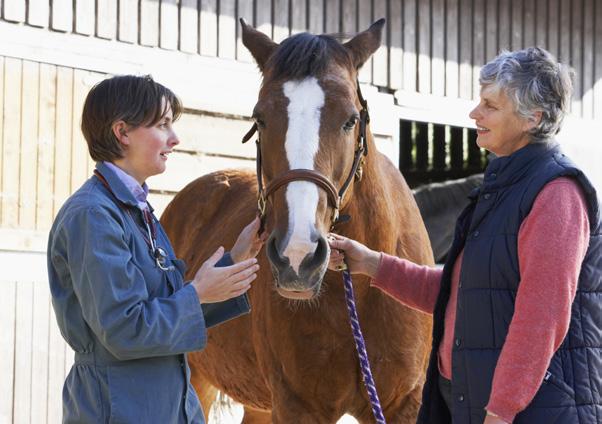
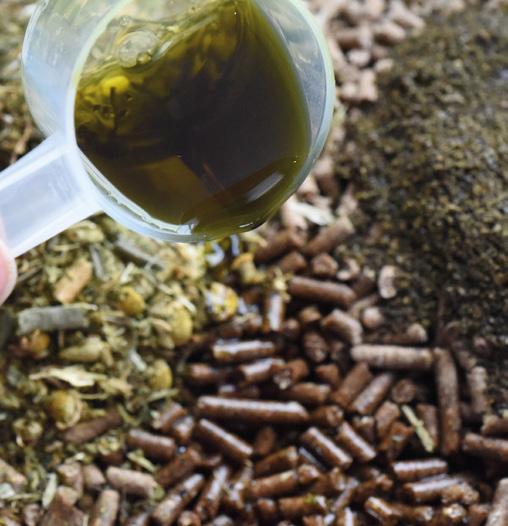

QUESTIONS TRAINERS SHOULD ASK BEFORE USING A SUPPLEMENT:
1 Does this product replace an essential nutrient or attempt to influence physiology?
2 Is every active and inactive ingredient fully disclosed on the product label?
3 Could any ingredient act as a hormone precursor, stimulant, anti-inflammatory, sedative, or masking agent?
4 Has the product been reviewed against current racing rules and regulations?
5 Has an independent nutrition expert evaluated whether this horse needs it?
From a regulatory perspective, the laboratory result was straightforward. A prohibited substance had been detected. From a welfare and prevention perspective, another question remained: how can trainers be better equipped to distinguish products intended to restore biology from products capable of altering physiology in ways that create regulatory risk?
One discussion determines accountability, the other prevents future mistakes. Both matter.
Modern equine products are increasingly complex. Some contain essential nutrients, others combine vitamins, minerals, amino acids, digestive enzymes, probiotics, and antioxidants. Still others include botanical extracts, endocrine-active compounds, or concentrated phytochemicals.
Expecting every trainer to independently evaluate the pharmacology, metabolism, and regulatory implications of hundreds of products is unrealistic. We do not expect every trainer to interpret every MRI or genetic test without specialists. Nutrition deserves the same respect. Sometimes the best nutritional recommendation is not what to add, but what to remove. Sometimes the greatest contribution a nutritionist makes is identifying an ingredient that appears harmless on a label but carries unintended biological or regulatory consequences.
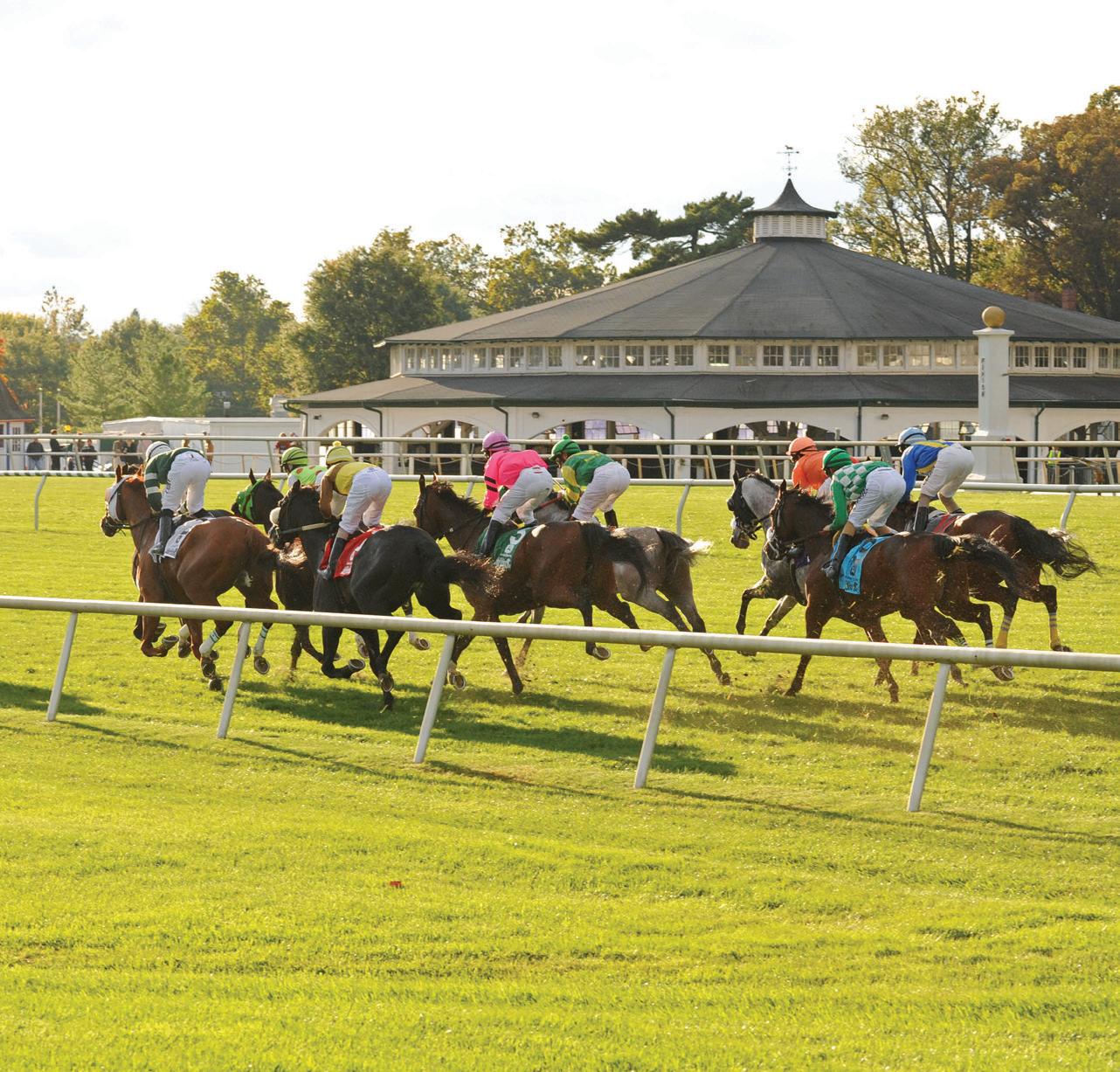
RIGHT: Every Thoroughbred’s welfare depends on a team. Trainers, grooms, veterinarians, farriers, nutritionists, and regulators each contribute a different expertise, but all share the same responsibility: putting the horse first.
A seat at the same table
Throughout this article I have argued that welfare and integrity are complementary responsibilities. The same applies to regulation and nutrition, neither discipline can accomplish its mission fully in isolation. Regulators understand policy, veterinarians understand disease, shoers understand biomechanics and hooves, trainers understand daily management. Nutritionists understand the biological consequences of what enters the feed bucket every day. The horse benefits when those perspectives work together.
Perhaps the next step in advancing Thoroughbred welfare is not simply writing more rules but expanding the conversation. Imagine future discussions in which trainers, veterinarians, HISA, HIWU, nutrition scientists, toxicologists, pharmacologists, and independent equine nutritionists sit at the same table, not because they agree on every issue, but because they share the same objective: healthy horses, fair competition, and public trust.
The strongest regulatory systems are not built on enforcement alone; they are built on knowledge.
Conclusion
When I first climbed onto Arthur’s back as a five-year-old child, I believed good horsemanship meant convincing the horse to do what I wanted. Arthur patiently taught me something different. The horse responds best when we first understand the horse. Many years later, Jack Van Berg reinforced that same lesson. Despite our different backgrounds, we shared one conviction: healthy horses are the foundation of honest competition. Success does not come from shortcuts. It comes from respecting the horse.
The modern Thoroughbred lives in a world evolution never anticipated. We have bred extraordinary athletes, changed their environment, altered their diets, transported them across continents, and asked them to perform at the highest level. None of those achievements are wrong. They simply create responsibilities that nature never had to solve.
Closing the Biology Gap requires many disciplines working together: good training, excellent veterinary care, thoughtful
DR. GABRIELE GROSS
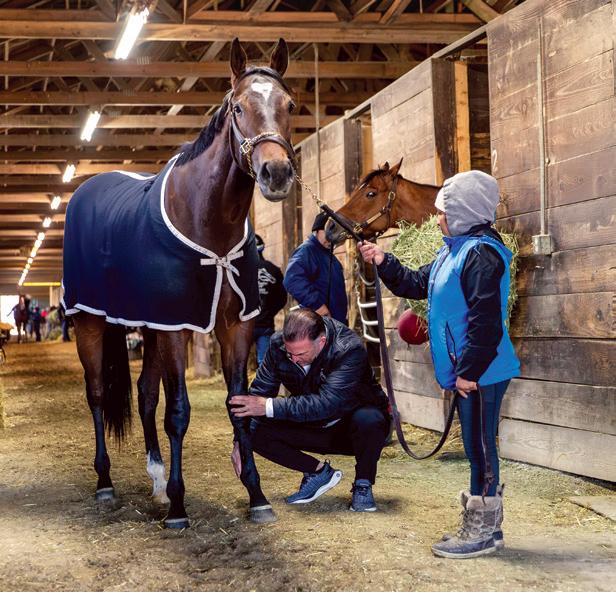
farriery, responsible nutrition, and sound regulation. These are not competing philosophies; they are complementary responsibilities.
My hope is that nutrition becomes a larger part of the conversation. Not because nutrition replaces regulation, but because good regulation is strengthened by sound biology, independent expertise, and continued education.
Perhaps the most important question is no longer whether racehorses need supplements. Perhaps it is this: How can we better distinguish between restoring biology and enhancing performance? Answering that question thoughtfully could benefit trainers, veterinarians, regulators, owners, and, most importantly, the horse itself.
Nature wrote the blueprint, we changed the environment, therefore we have responsibility, because the Thoroughbred has no voice in this discussion. It depends on ours.
Dr. Gabriele Gross is a German-trained veterinarian (1987), equine nutritionist, PhD pharmacologist, former Thoroughbred owner/trainer, and independent consultant specializing in equine health, nutrition, and performance.
For more than three decades, she has advised trainers, owners, breeders and veterinarians across Europe, North America, and other international racing jurisdictions. Her interdisciplinary approach combines veterinary medicine, pharmacology, and nutrition to identify factors influencing health, soundness, and athletic performance.
Her areas of expertise include nutritional evaluations for Thoroughbred racehorses in training, tissue mineral analysis, feeding and supplementation strategies, and consultation for international racing and breeding operations.
To learn more about Dr. Gabriele Gross’s work:
EMAIL: DrGross@HorseHealthCoach.com
CELL: +1 (425) 465-0407 (USA)
WEB: HorseHealthCoach.com
PHOTOGRAPHY: LAURA PALAZZOLO, ECLIPSE SPORTSWIRE, PAM MACKENZIE PHOTOS, SHUTTERSTOCK
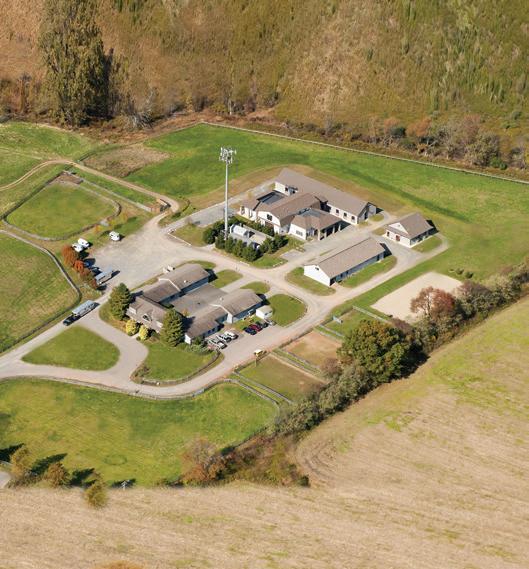
We offer every type of medical care your four-legged athlete could ever need. With board-certified specialists in all fields we provide everything from upper airway, arthroscopic and laparoscopic surgeries, to internal medicine, complex fracture fixation and advanced diagnostic imaging, including bone scans, CT scans and MRIs – all in one place. It’s enough to make a human jealous.
800.724.5358 40 Frontage Road Ringoes, NJ 08551 www.midatlanticequine.com







WHY A ORSESHOEING NDUSTRY TANDARD CCREDITATION MIGHT BE REQUIRED

ut of necessity, cowboys became their own farriers in the American West, and they passed down their knowledge to the younger hands on the ranch. A dayworker could increase his pay substantially if he could shoe a few horses for the boss before the day was over. These days U.S. farrier schools are training farriers and social media has generated interest in a trade that goes along with a seemingly western way of life. The American horse culture is seen online in posts and streamed to every household by networks like EQUUSTV, and equine-loving YouTubers from seemingly every state, while reaching audiences of every age. Feed, supplements, grooming products, tack,
equine sportswear, trucks, beer, and real estate promote with horses and sometimes farriers too. How often do you see a horseshoe in a logo or company/product branding campaign?
In racing, trainers choose their farrier in most cases. However, a skilled farrier may not be available or hard to find at some racetracks. If HISA requires that a specifically credentialed farrier must be hired for Thoroughbred racehorses, will this make hiring a farrier more difficult? Unintended consequences as they are, making it harder to find this HISA farrier is a very real possibility. Currently, there are fewer new farriers entering apprenticeships with racetrack farriers or coming out of farrier schools and looking to work at the racetrack.
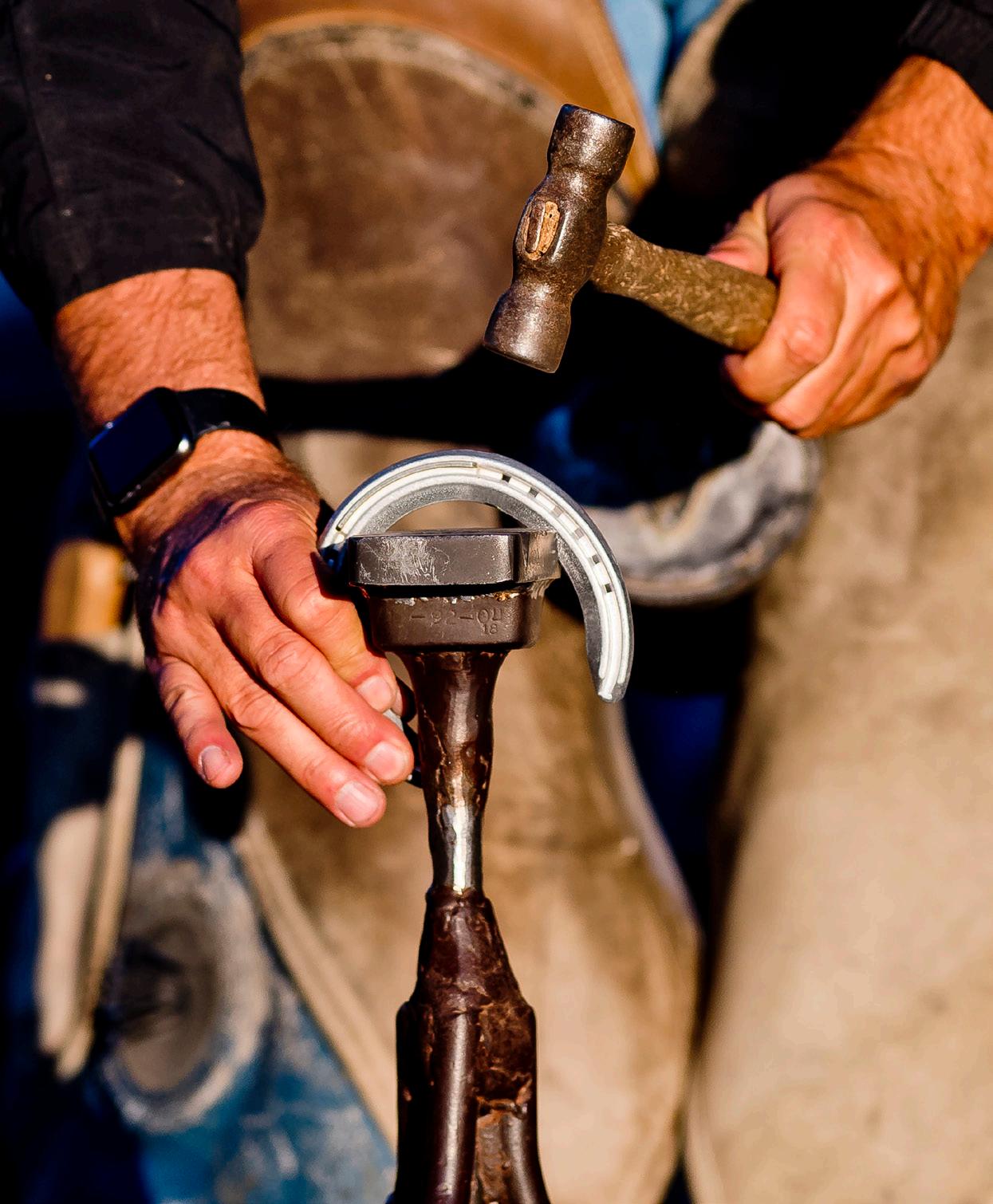
was
WORDS: J. MARK HICKCOX, CF
PHOTOGRAPHY: ECLIPSE SPORTSWIRE, GALOPPFOTO.DE, J. MARK HICKCOX, CF
This opinion piece
submitted by J. Mark Hickcox, CF, for the benefit of the Thoroughbred industry. Hickcox serves as Sales Manager for The Victory Racing Plate Company and as president of the Farrier Industry Association.
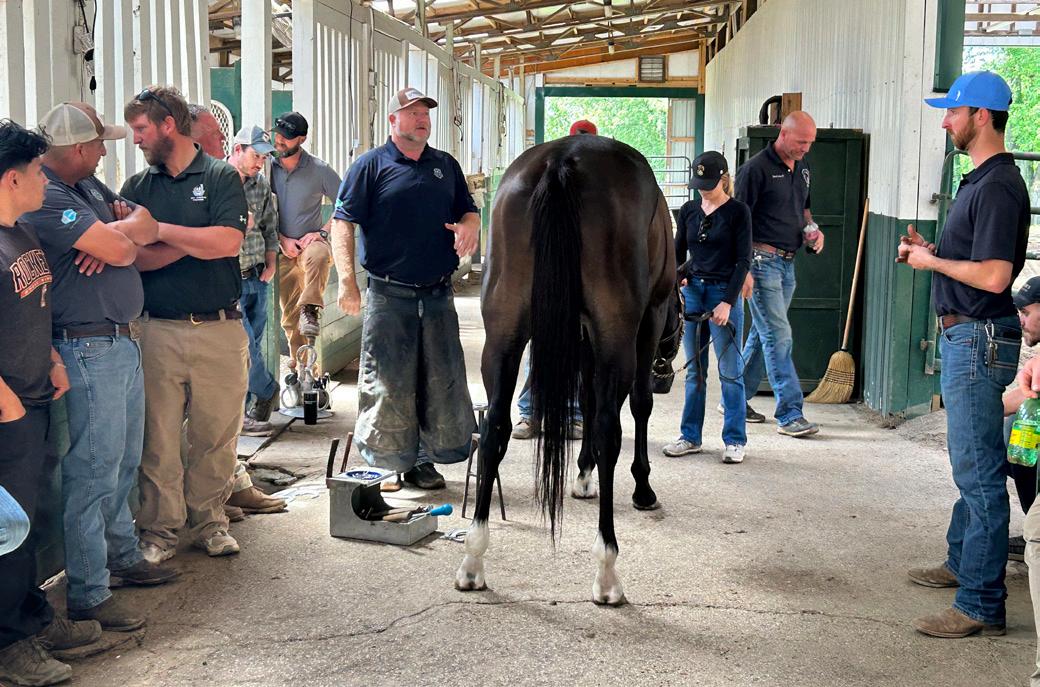
As with most skilled trades, for every farrier that retires there are fewer new ones looking to take their place. Could we see a shortage of racetrack farriers, just like the situation with the equine veterinary specialty? It is a real possibility that the “no foot, no horse” adage of old, would affect the racing industry since these equine athletes need a farrier every 4 weeks.
“The Horseracing Integrity and Safety Authority (HISA) was created to implement, for the first time, a national, uniform set of integrity and safety rules that are applied consistently to every Thoroughbred racing participant and racetrack facility.”
(hisaus.org – OUR MISSION)
The farrier (horseshoer, raceplater, or blacksmith) is a specifically designated Covered Person that cares for all aspects of hoof care services to Covered Horses. HISA is beginning to seek some assistance for a standardized Thoroughbred racehorse farrier qualification. The old timers at the track may remember the International Union of Journeymen Horseshoers (IUJH), or stories of farrier testing at the racetrack provided by the IUJH. The IUJH was organized in 1874. It is one of the oldest labor unions in North America and had many thousands of members. Some jurisdictions still have a “union test” for farriers that wish to work at the track but it hasn’t been given on a regular basis in decades. This testing and certification process may now be handled by the American Farrier’s Association (AFA). The AFA was founded in 1971 and has been testing/certifying farriers since 1981. Thousands of farriers are members of the AFA and hundreds attend a Pre-Certification Workshop and/or undergo the AFA
Certification process each year. A candidate may be hoping to attain a basic Certification, and more experienced candidates may be taking an upper-level Certification test or attempting a CJF Specialty Endorsement that is specific to an aspect of the farrier trade. The current levels of AFA Certification are: AFA Certified Race Plater (AFA CRP), AFA Certified Farrier (AFA CF), Certified Tradesman Farrier (AFA CTF), and AFA Certified Journeyman Farrier (AFA CJF). Specialty Endorsements at the Certified Journeyman Farrier level are available for the Therapeutic Endorsement (TE), Forging Endorsement (FE), and Educational Endorsement (EE). AFA Certifications are hosted by individual state or regional AFA chapters, and held around the country every year. The AFA also holds at least one Certification in Mexico yearly with Spanish speaking testers and examiners.
Recently the AFA developed the Certified Race Plater (CRP) exam to meet the need for a basic examination of farrier skill at the racetrack. In 2025 Pat Broadus, CJF, CRP, of Shelbyville, KY was the first farrier to pass the CRP examination. Pat owns and operates Bluegrass Horseshoeing, a multi-farrier practice that specializes in high-end performance horses in the Thoroughbred racing and show horse world.
Pat began his farrier career alongside several International Horseshoeing Hall of Fame members including his father Sonny Broadus, Jackie Thompson, and Jack Reynolds. Well into his now 30-year farrier career shoeing racehorses he decided to pursue his first AFA Certification in 2020, with the help of another Bluegrass Horseshoeing team member and International Horseshoeing Hall of Famer, Danvers Child, CJF. Once Pat passed the AFA Certified Farrier (CF), he was then on a mission to pass his Certified Journeyman Farrier (CJF), become an AFA tester, and then he helped to develop the CRP Certification test with former AFA president Tom Trosin, CJF, and others.
Pat Broadus, CJF, CRP, leads a hands-on demonstration during an AFA Certified Race Plater pre-certification clinic at Second Stride in Prospect, KY.
ST FRONTS AND ST HINDS
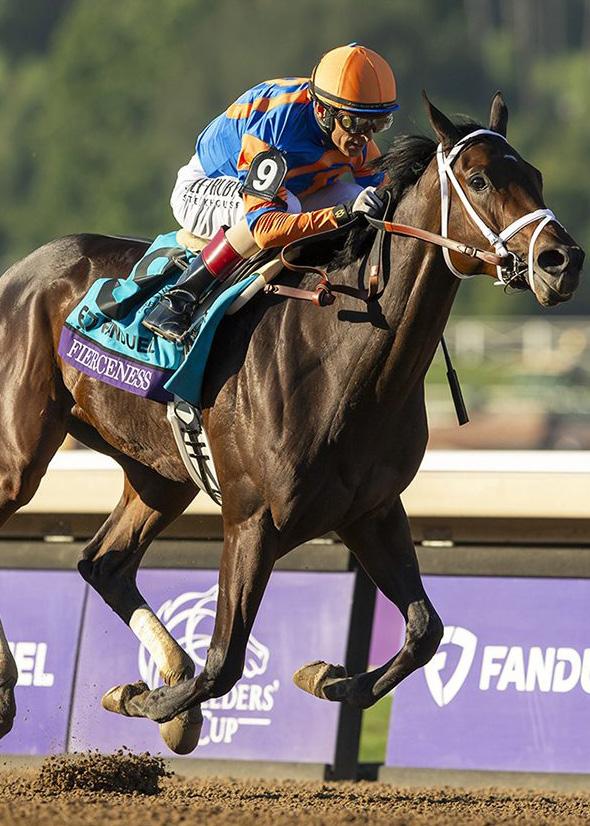

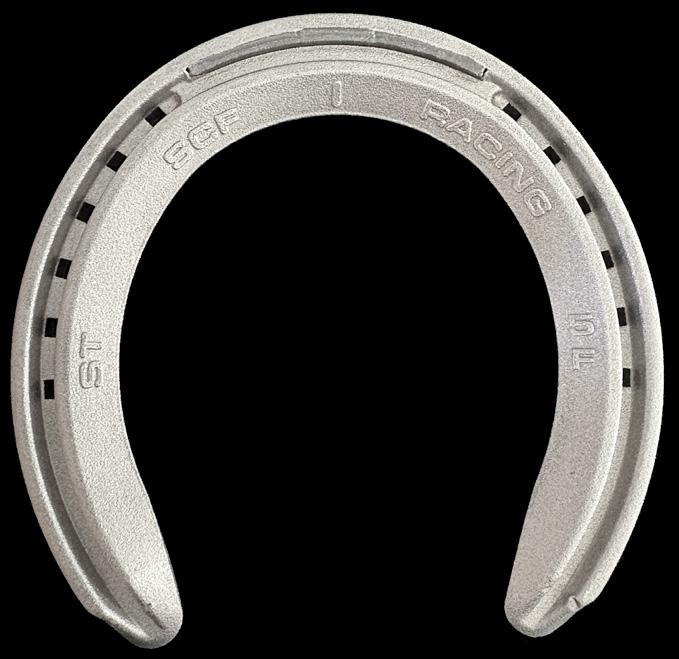
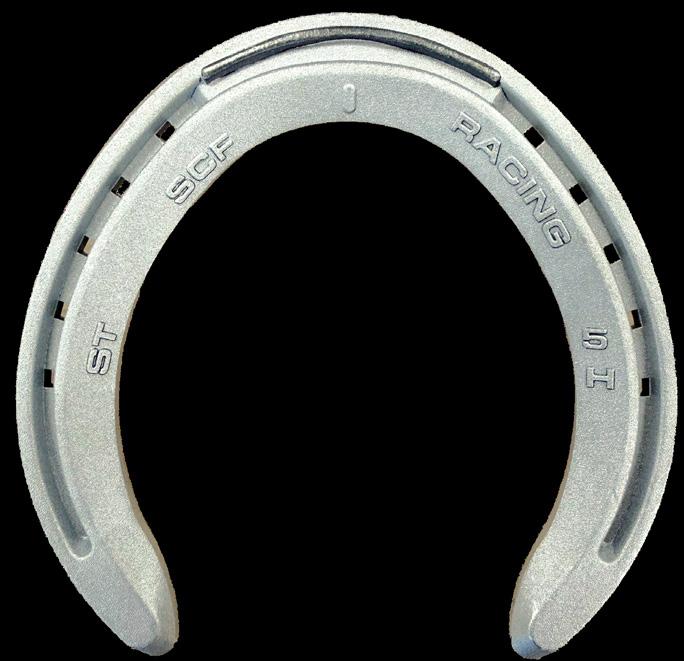
“The ST front shoes are designed for performance. The boxed & tapered heels give you confidence to shoe your horses with a full & supportive fit. The ST pattern require less shaping. The nail spacing & crease depth work great with the Capewell 3.5XL nails. The Capewell nails are my go-to nails & provide minimal damage to the hoof wall.”
-Dean Balut, California Scan

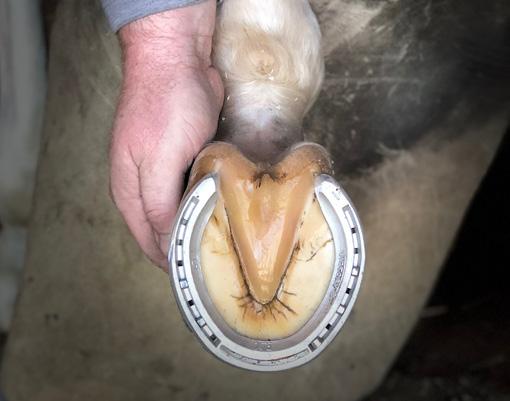
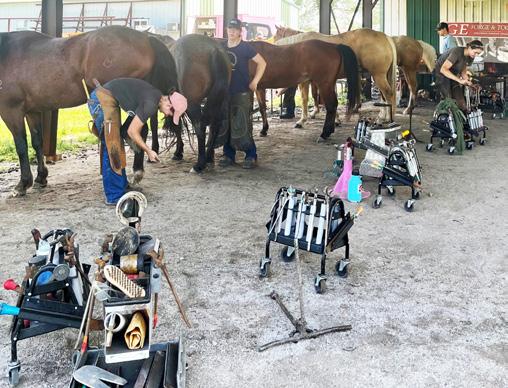
“It’s the AFA Certified Farrier (CF) written test, which is 60 questions including bones and joints, hoof structure, tendons and ligaments, blood circulation, pathology, horseshoes, conformation, gaits, and physiology. The practical test is twoparts, plating a racehorse to a set standard under the time limit of 75 minutes for one-part, the other part is preparing a horseshoe with a rim pad and making a racehorse specific straight bar shoe to fit a pattern in 60 minutes. The last portion of the test is answering HISA-specific and racing industry specific oral questions” says Pat.
HISA RACETRACK SAFETY PROGRAM
(Rule Series 2000) – page 93
2276. Horseshoes
a) The following prohibitions apply to the use of horseshoes during training and racing:
(1) on dirt surfaces, Traction Devices (as defined in Rule 2010) other than full rims 2 millimeters or less in height from the ground surface of the horseshoe are prohibited on forelimb horseshoes. Traction Devices other than full rims 4 millimeters or less in height from the ground surface of the horseshoe, or toe grabs 4 millimeters or less in height from the ground surface of the horseshoe, are prohibited on hindlimb horseshoes.
(2) on synthetic surfaces, Traction Devices other than full rims that are 2 millimeters or less in height from the ground surface of the horseshoe are prohibited on forelimb and hindlimb horseshoes.
(3) on turf surfaces, Traction Devices are prohibited on forelimb and hindlimb horseshoes.
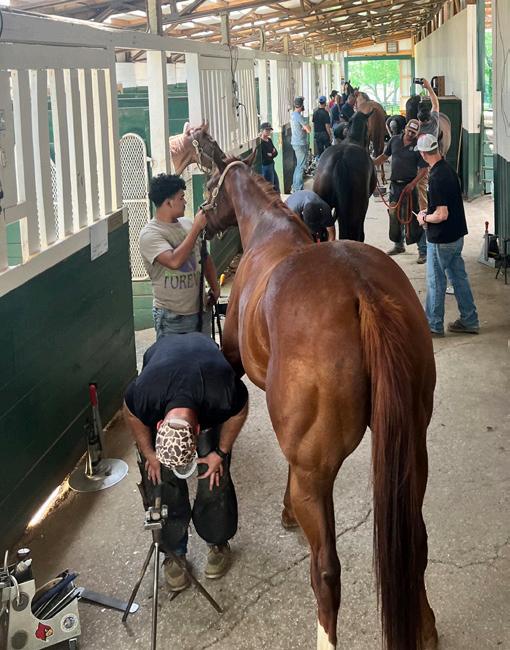
Listed above are the only 3 rules that HISA created to specify which horseshoes would be deemed legal on Thoroughbred racehorses. The only requirement for farriers at most racetracks is that they are HISA registered Covered Persons and pay for the appropriate credential that the racetrack or state racing commission requires. Most state racing commissions reciprocate, meaning a credential can work across several states.
Pathways to a successful farrier career might include an apprenticeship, a farrier school diploma, industry certification, or none of the above. Horseshoeing tools and a horse that is somewhat willing to be shod are really the only requirements in our country. If the shoes stay on for the entire shoeing cycle and the process doesn’t injure the horse, you now qualify as a “good” farrier here. Other countries require a 4-year apprenticeship followed by an examination process that must be passed to qualify as a farrier. It is against the law to shoe a horse in the United Kingdom if you are not a qualified farrier, recognized by the Worshipful Company of Farriers (founded in 1356).
If existing farriers at the racetrack are grandfathered into the HISA qualified farrier list, and retiring farriers are replaced with a new HISA credentialed farrier (AFA CRP), you can see how this might raise the standard for hoof care professionals. This may be a situation where doing the right thing for the horse is better for the raceplater too. It wasn’t that long ago that the majority of farriers in the U.S. likely shod racehorses or trained under a farrier that came from a plater background. The most skilled blacksmiths were from the track and the techniques for keeping horses sound in all disciplines came directly from these professionals. Most believe that the post-war farrier industry was kept alive by the raceplaters because so many skilled farriers were drafted into other occupations in their military service or never made it home. You can bet that raceplaters will continue to keep horses sound to the best of their ability, moving forward with or without certification, because HISA needs farriers.
Farriers hone their skills while shoeing horses at an AFA Certified Race Plater pre-certification clinic at Second Stride in Prospect, KY.
Heartland Horseshoeing School in Lamar, MO.

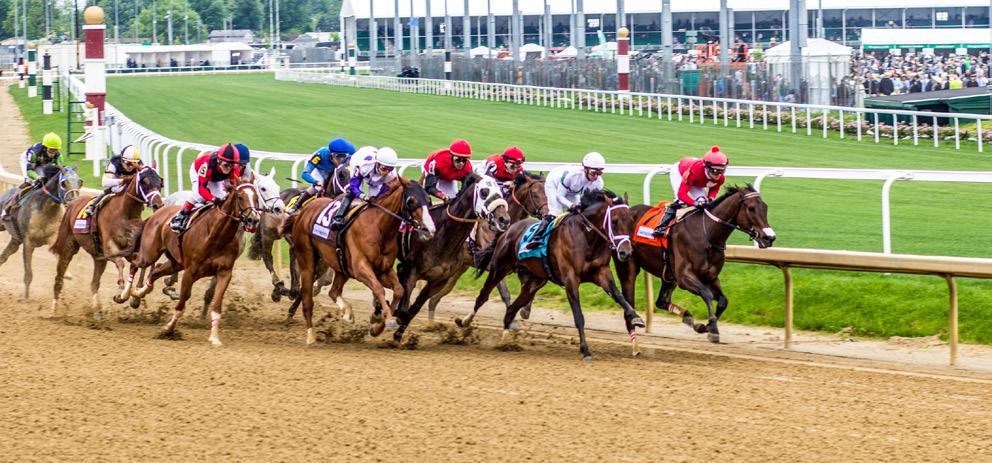

SPORT QUEENS FRONT & HIND
EC QUEENS FRONT & HIND
EC QUEENS WEDGE FRONT & HIND
RX FRONT & HIND
SPORT XLT HIND
SPORT XLT WEDGE HIND
SPORT LT HIND
EC XLT HIND
EC XLT WEDGE HIND
EC LT HIND


RX XLT HIND VI SI T HI SAUS . ORG F OR UPDAT E D RUL E S




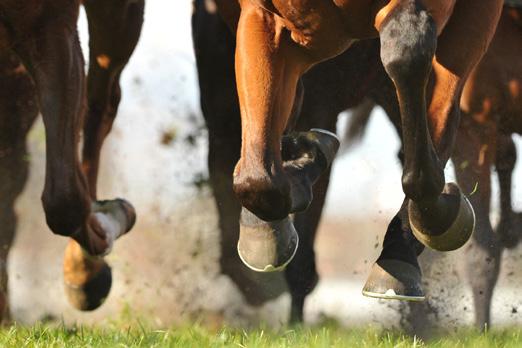
VICTORY MODEL
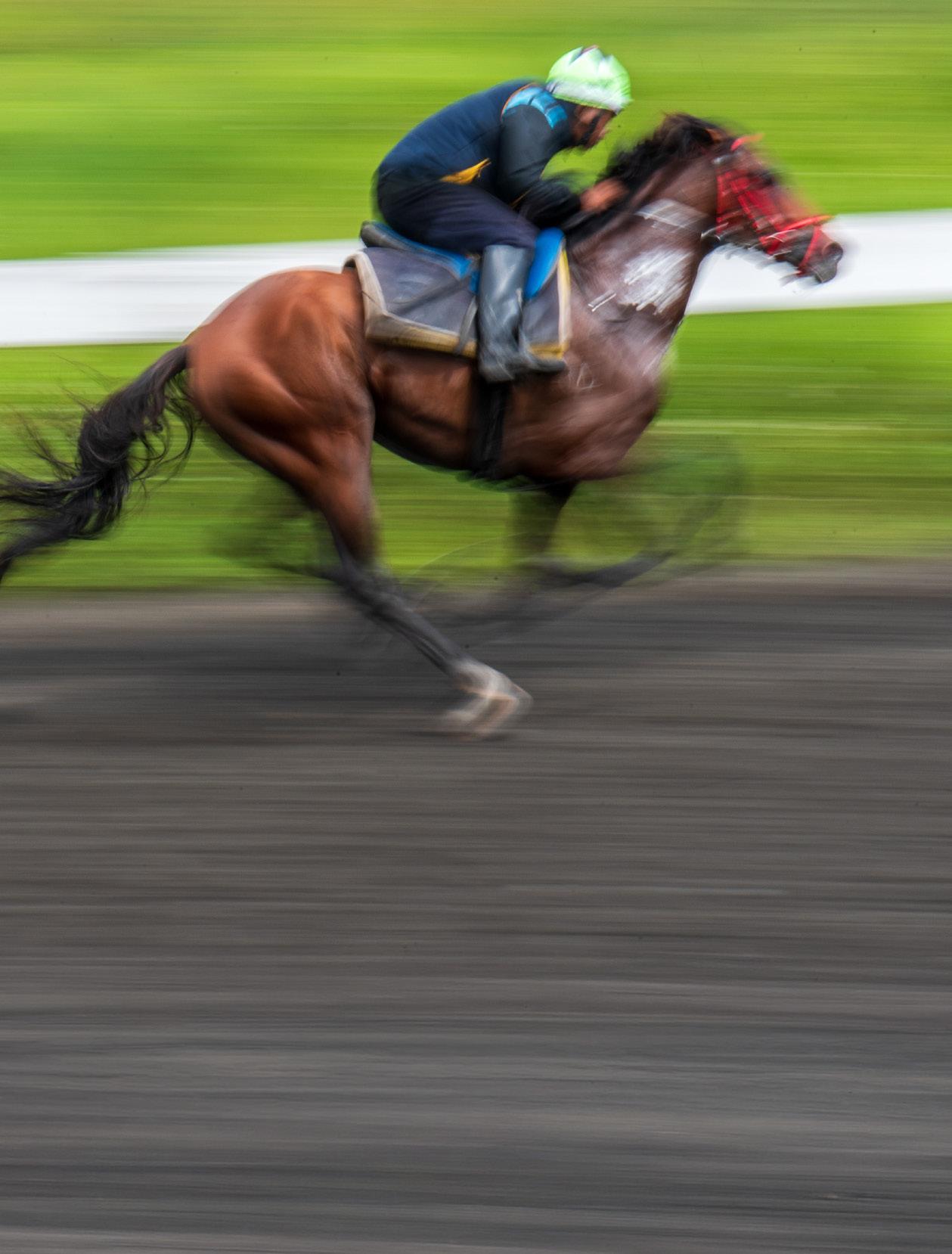
Exercise-induced pulmonary hemorrhage (EIPH) is more than a simple nosebleed. Although it was once associated only with the occasional horse that bled from the nose after strenuous exercise, modern diagnostic tools have shown that the condition originates in the lungs and is far more common than once believed.
EVOLVING UNDERSTANDING IN EXERCISE-INDUCED PULMONARY HEMORRHAGE
Ccommonly referred to as “bleeding,” EIPH has been recognized in horses for centuries.
For much of its history, the condition was understood only through the occasional horse that developed a nosebleed (epistaxis) after intense exercise. With the advent of endoscopy and bronchoalveolar lavage (“lung wash”), it became clear that visible nosebleeds are merely the most dramatic manifestation of a much more common condition originating in the lungs.
Today, EIPH is recognized as a widespread feature of equine athletes, with studies identifying it in up to 95% of Thoroughbred racehorses.
But just because most horses have it, and it doesn’t appear to harm performance, does that mean bleeding has no serious consequences? No. Fifty years of research indicate that EIPH causes lung damage that builds up over time. These changes mean it is an actual disease and has consequences for respiratory health and athletic performance. This shift in understanding, together with what we now know about key risk factors, has changed how we manage and try to prevent EIPH.
Written by Silvana Čeko, a horsewoman and PhD Candidate in Pathobiology at the University of Guelph, this article distills current EIPH research, with contributions from Drs. Amy Lack and Janet Beeler-Marfisi — professors and researchers in equine lung diseases at the Ontario Veterinary College.
Historical perspectives on EIPH
EIPH was described as early as 1688 where horses were seen to have blood streaming from their nose after strenuous exercise. Bleeding was initially attributed to the rupture of fragile blood vessels within the nasal cavity due to increased blood pressure during exercise. However, this explanation was disproved as our understanding advanced.
By the 1970s, we realized that bleeding from both nostrils could not be fully explained by broken blood vessels in the nose, and researchers began to wonder whether the lungs were the source of the blood. A major turning point came in 1981 with the introduction of fibreoptic endoscopy, or “scoping”, which allowed us to directly see blood in the windpipe (trachea) and main airways to the lungs (bronchi) of horses.1 Importantly, these observations led us to understand that EIPH can occur without a nosebleed. But whether EIPH could be considered a true disease, something that might actually be causing the horse harm, continued to be debated. In 2015, the American College of Veterinary Internal Medicine published a paper that combined findings of decades of research. This paper determined that because EIPH was so common, appeared in some bloodlines, was associated with lung damage, and had performance impacts, that it should be considered a true disease.2
Takeaway: EIPH is not just the “occasional nosebleed”, but a common and often invisible disease that causes lung damage, and continues to be researched today.
The horse’s lung and why it is vulnerable
Horses are powerhouse athletes, and much of that ability comes from their incredible heart and lungs. During intense exercise, a galloping horse can take up to 133 breaths per minute, inhaling 5 gallons of air with each breath, compared to Olympic athletes who inhale about 1.3 gallons of air per breath. The air sacs of a horse’s lungs also have a large surface area— about half a football field, or 10 tennis courts compared to the surface area of a human’s lungs which is only about one tennis court. Each air sac is wrapped in a network of tiny capillaries. Like the air sacs, the walls of these capillaries are extremely thin. The high lung surface area and thin-walled capillaries are designed for rapid movement of oxygen into the blood and carbon dioxide out of the body (gas exchange), but this also means the capillaries are very fragile.
The lungs sit within the chest cavity, protected by ribs, supported by nerves and muscles, like the diaphragm, which all assist in breathing. At a gallop, a horse’s breathing is linked to stride (a pattern known as “locomotor-respiratory coupling”), which is why we often hear a breath for each stride. As the forelimbs reach forward, the rib cage expands and the horse inhales, then when the body compresses during the gathered phase of its stride, the lungs are compressed and air is pushed out causing a push-pull effect on the lungs.
Ground impact, or hoof strike, also generates whole-body vibrations, which are transmitted through the chest to the lungs with impact.3 These events, combined with high heart rate and increased blood pressure, place the delicate capillaries of the lung under high physical stress. These factors combine to push the capillaries past their pressure limit, causing them to break. This breakage causes blood to leak into the air sac, which we recognize as EIPH. Finally, although the lung has a “self-cleaning” capacity which can heal the damage, this self-cleaning feature also causes inflammation that, in turn, leads to lung damage.
Takeaway: A horse’s lung is engineered for performance, but its design also makes it vulnerable to physical stress and injury during intense exercise.
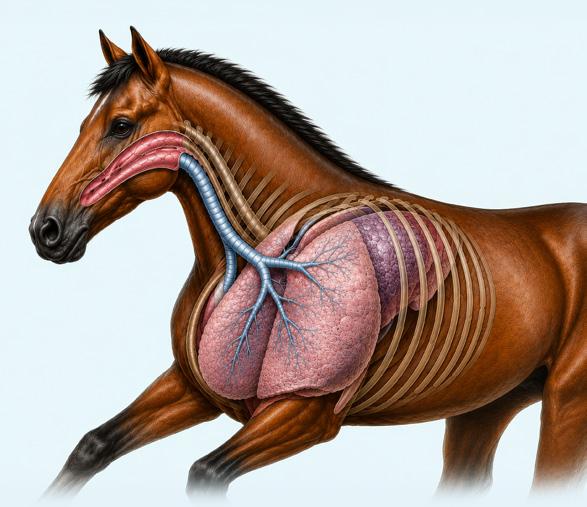
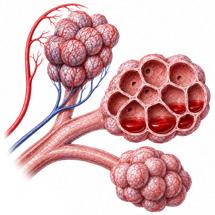
RIGHT: EIPH typically occurs in the back (dorsocaudal) parts of the lungs. The inset shows a close-up of an air sac (alveolus) with blood pooled by gravity in the lower area to represent how blood can collect in the air sacs.
Galloping creates high blood pressure, negative airway pressure, and impact/vibration in the lungs.
INFLAMMATION

Inflammation follows as part of the lung’s clean-up response.
CAPILLARY STRESS FAILURE
HIGH BLOOD PRESSURE (PUSH)
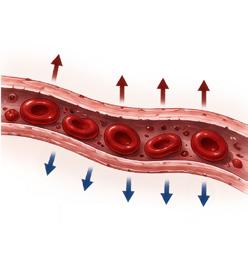
NEGATIVE AIRWAY PRESSURE (PULL)
Push (high pressure) and pull (suction) exceed the strength of the thin capillary walls.
SCARRING (FIBROSIS)
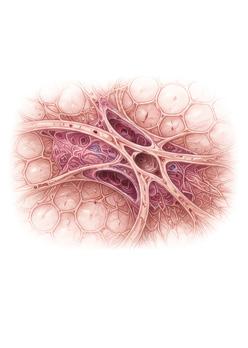
Chronic inflammation leads to scarring (fibrosis) around capillaries and airways.
ABOVE: The cycle of exercise-induced pulmonary hemorrhage (EIPH). Repeated bleeding triggers inflammation and scarring, increasing the likelihood and severity of future hemorrhage.
EIPH: Mechanisms, Injury, and Adaptation
Many factors go into causing EIPH, but the most widely accepted explanation is a process known as “pulmonary capillary stress failure”. The lung region most affected by EIPH is the upper-back part of the lung (or, “caudodorsal region”). This area lies beside the diaphragm, receives high blood flow and undergoes physical stress during hoof strike.
Looking more closely, EIPH occurs during strenuous exercise due to a “push and pull” effect on the capillaries. “Push”, refers to the high blood pressure inside the lung capillaries, which pushes red blood cells against the capillary wall. “Pull” occurs on the air sac side, where negative pressure, which happens when the horse inhales, acts like a suction cup on the capillary wall. These push and pull forces can exceed the structural strength of the capillary wall. And that’s when blood gets into the air sac.
The cleanup crew of the air sacs are cells called macrophages. These cells gobble up the red blood cells and are the ones veterinarians see when they look at lung wash fluid and diagnose EIPH. But as the macrophages clear away the red blood cells, they also cause inflammation. Over time, this inflammation leads to scarring in the lung, especially around the capillaries. This scarring promotes EIPH by increasing capillary pressures.
Takeaway: EIPH is caused by lung capillary breakage from high pressure. Repeated EIPH episodes cause worsening lung damage. More damage means a higher risk of EIPH and reduced lung function.
BLOOD ENTERS ALVEOLI
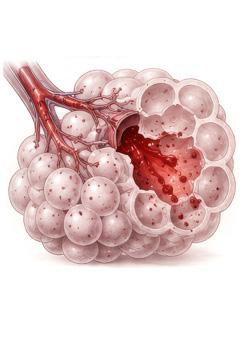
Capillary rupture allows red blood cells to leak into the air sacs.
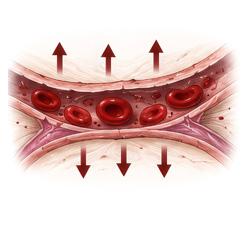
Scarring reduces capillary capacity and compliance, increasing pressure within the lung.
Diagnosis decoded
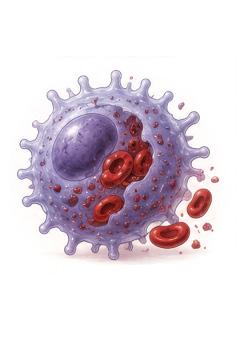
Macrophages ingest red blood cells. Evidence of bleeding is seen in lung wash.
GREATER RISK OF FUTURE EIPH
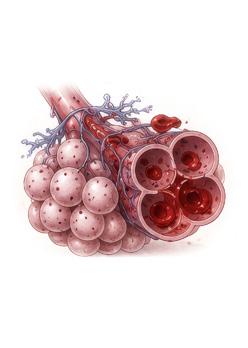
Damaged lungs are more likely to bleed again —continuing the cycle.
Epistaxis, or blood out of the nostrils, was once how EIPH was diagnosed. Today, we know that bleeding from the nose associated with EIPH happens in less than 0.2% of race starts.4 This shows that most cases will be missed without scoping or lung wash.
The two most common methods of EIPH detection are post exercise scoping, formally known as “tracheobronchoscopic examination” and lung wash, or “bronchoalveolar lavage”. Scoping involves passing a fibreoptic endoscope into the windpipe to look for blood. Because EIPH starts deep in the lungs, the movement of blood toward the windpipe depends on how much blood there is and for how long the bleeding lasts, it can take 30 to 90 minutes after exercise for enough blood to reach the windpipe to be seen.
Scoping too early or too late increases the risk of “missing” EIPH. Also, a horse should be scoped after three consecutive works to be sure the disease is ruled out. Presence of blood in the trachea after exercise is diagnostic of EIPH, with severity graded on a universal scale of 0 to 4: none, mild, moderate, moderate-to-severe, and severe. However, this method cannot confirm prior EIPH episodes, as it only detects bleeding on the day of evaluation.
Lung washing avoids this problem by taking cells (macrophages) directly from the smallest airways and air sacs, making it the best method for diagnosing current and past episodes of EIPH. The procedure involves flushing a small amount of saline into the air sacs and immediately removing it for laboratory analysis. The laboratory determines whether red blood cells are fresh or older, with older cells detectable for up to 21 days after a horse has bled.⁵ This procedure requires sedation, specialized equipment, and quick processing. Although minimally invasive, the horse should be monitored for fever and should not work for 24 hours after a lung wash.
RIGHT: EIPH doesn't always present with obvious signs. Horses may cough after exercise or show reduced performance, while epistaxis (nosebleeds) is a rare finding that usually indicates severe EIPH.
Other methods to look for red blood cells include tracheal wash, and for evidence of lung damage, ultrasound, x-rays, or nuclear scintigraphy. Although evaluation of lung wash fluid is preferred, in the right hands tracheal wash can be relatively reliable and a less invasive substitute. Ultrasound and x-ray require a higher degree of lung damage before evidence of EIPH can be seen, so these tests are mainly used to monitor disease progression. Nuclear scintigraphy can detect disease well so long as other lung diseases aren’t present, but is generally only used in research.
Takeaway: Lung wash is the “gold standard” to detect past and present EIPH. Scoping is reliable if performed within 30-90 minutes post-exercise but requires at least 3 examinations to rule out EIPH. Tracheal wash can be performed, although BAL is still preferred if circumstances permit it.
How to spot EIPH
• Coughing after exercise: Frequently mentioned, often observed.
• Poor performance or exercise intolerance: May only affect horses with EIPH scores >2.
• Epistaxis:
Rare, but occurs most commonly with EIPH scores of 4.
Takeaway: EIPH signs are subtle, emphasizing the importance of monitoring, prevention and early intervention.
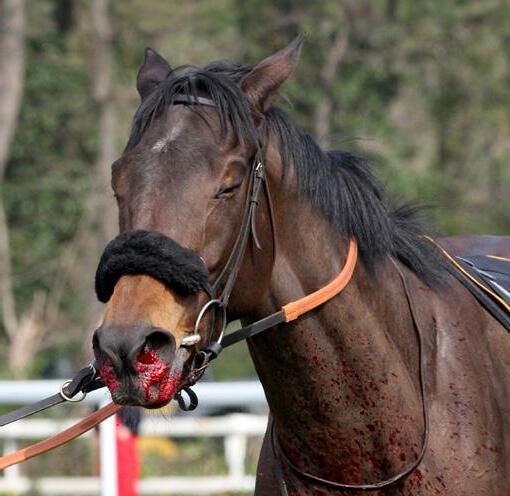
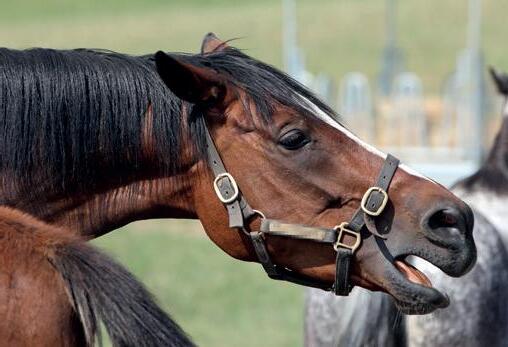
Understanding the risk factors
There is no single factor that determines EIPH risk. Research indicates that EIPH is collectively influenced by management, environmental, and physical factors. Risk factors for EIPH have been determined in the Northern and Southern hemispheres and include but are not limited to:
• Age and accumulated time in training and racing
Increasing age and lifetime starts are associated with higher EIPH scores, however this is closely linked to how long a horse has been in training and how many high-intensity exercise efforts it has experienced.6, 7
Each additional year in training roughly increases the odds of EIPH by 1.5 times, which suggests that repeated work promotes cumulative lung damage.7
Horses with >50 starts are 1.8 times more likely to have EIPH scores of moderate to severe.8
Takeaway: Horses who have been racing and training, and who have had more than 50 race starts, would benefit from increased EIPH surveillance and management.
• Ambient air pollution
Recent and previous research sponsored by Equine Guelph at the University of Guelph showed that ozone as a part of air pollution from road traffic and wildfire smoke increased the likelihood and severity of EIPH, and other components of air pollution caused lower airway inflammation in racehorses. 9 Recent research from the U.S.A. supports that an air quality index > 100 was associated with EIPH in Thoroughbred racehorses.10
Takeaway: Consider consulting air pollution metrics (especially ozone) when planning training and racing activities.
• Lower outdoor temperature •
In Australia, horses racing at temperatures below 68 ºF (20°C) are up to 2 times more likely to develop EIPH than at temperatures above 68 ºF. In North America, this has been observed in horses racing at less than 45 ºF (7 ºC) and less than 5 ºF (-15 ºC).8
Takeaway: Intense exercise in colder temperatures may warrant extra caution in horses known to have EIPH.
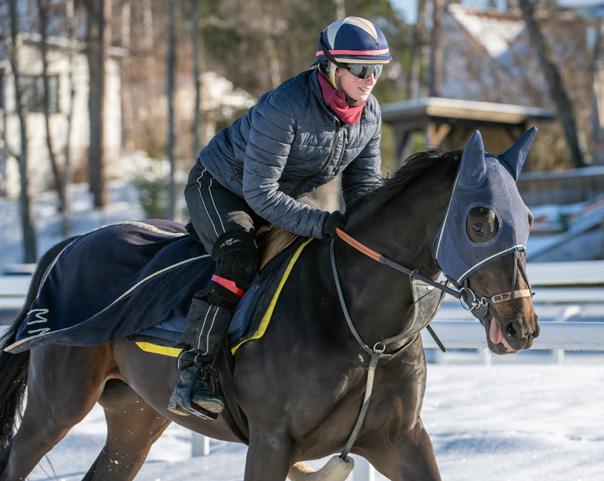
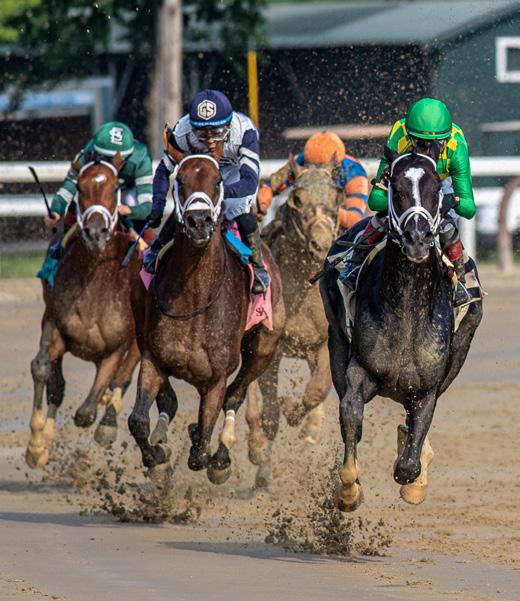
• Race distance •
The data is conflicting on whether race distance affects EIPH, with some researchers finding that horses racing distances of 6-7 furlongs (1,300-1,500 meters) had worse EIPH than 2-year-olds racing in shorter faster races or longer slower ones.11 But another study found the opposite.8
Takeaway: Race distance interacts with running speed to influence the risk of EIPH.
• Bar shoes
In Australia, horses shod with bar shoes were substantially more likely to experience, and have moderate-to-severe EIPH than horses without bar shoes. Suggested to be linked to hoof pain and altered hoof strike mechanics, and heart/lung strain.12
Takeaway: Alternatives to bar shoes may warrant consideration for horses susceptible to EIPH.
• Upper airway obstruction
Upper airway obstruction (dorsal displacement of the soft palate, laryngeal hemiplegia) hampers breathing, which may add pressure to the capillary wall, promoting EIPH. Studies do not agree on whether using nasal strips helps prevent EIPH.15,16
Takeaway: Horses with upper airway conditions may benefit from increased EIPH surveillance and management.
• Length of rest period between races
For horses with previous moderate or moderate-to-severe EIPH increasing the number of days between races reduced EIPH score on their next examination. Intensity during racing preparation can increase EIPH severity.13
Takeaway: Increasing rest periods between races, and limiting intense exercise close to a race reduces EIPH risk.
• Genetics
EIPH is known to run in some bloodlines, but there is not one “EIPH gene”, rather the disease is caused by the interaction of several genes in conjunction with all the aforementioned risk factors.14
Not all horses from these bloodlines have poor race performance, but there is lung damage being done.
Takeaway: We can’t change genetics, but we can monitor horses more closely.
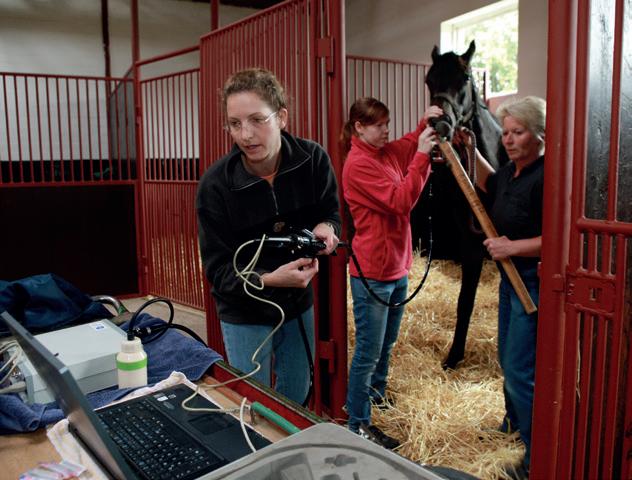
EIPH Treatments
The only research-backed treatment shown to reduce EIPH severity is furosemide. Because it is a diuretic that causes increased water loss through increased urination, furosemide reduces blood fluid volume, which decreases pressure on the capillary wall. However, furosemide use is not permitted in every racing jurisdiction.
Drugs like aminocaproic acid, bronchodilators, corticosteroids, nonsteroidal anti-inflammatory drugs (NSAIDs), or pentoxifylline have been evaluated for reducing EIPH severity, but there is little to no scientific evidence that any of them work. This is largely because EIPH is not associated with an inability to clot blood, nor with airway constriction. Prevention therefore relies on careful management and monitoring of equine athletes.
Newer therapies like platelet-rich plasma (PRP) and stem cells are often discussed, but there is little scientific evidence to support their use. In one study, PRP was delivered to the lungs of horses using an endoscope and was shown to reduce EIPH.15 However, that was a single study involving a small number of horses, and more studies would be required to support this finding. To the authors’ knowledge, no papers on stem cell use for treating equine lung conditions are currently available. As for nasal strips, the evidence suggests that they help reduce EIPH, but neither nasal strips or furosemide, even in combination eliminate the issue entirely.16-19
Conclusion
Our understanding of EIPH has come a long way, and although there is still much to discover, many aspects of prevention lie within the day-to-day management of the horse. Thoughtful training progression, appropriate rest, attention to airway health, and careful management of environmental conditions all offer practical ways to reduce risk and support the horse’s long-term health.

&
References:
1. Pascoe, J., et al., Exercise-induced pulmonary haemorrhage in racing Thoroughbreds: a preliminary study. American Journal of Veterinary Research, 1981. 42(5): p. 703–707.
2. Hinchcliff, K.W., et al., Exercise induced pulmonary hemorrhage in horses: American College of Veterinary Internal Medicine consensus statement. J Vet Intern Med, 2015. 29(3): p. 743–58.
3. Epp, T., et al., Exercise‐induced pulmonary haemorrhage during submaximal exercise. Equine Veterinary Journal, 2006. 38(S36): p. 502–507.
4. Weideman, H., et al., Epistaxis related to exercise-induced pulmonary haemorrhage in South African Thoroughbreds. Journal of the South African Veterinary Association, 2003. 74(4): p. 127–131.
5. Doucet, M.Y. and L. Viel, Alveolar Macrophage Graded Hemosiderin Score from Bronchoalveolar Lavage in Horses with Exercise-Induced Pulmonary Hemorrhage and Controls. Journal of Veterinary Internal Medicine, 2002. 16: p. 281–286.
6. Sullivan, S. and K. Hinchcliff, Update on exercise-induced pulmonary hemorrhage. Vet Clin North Am Equine Pract, 2015. 31(1): p. 187–98.
7. Cardwell, J. and T. McGilvray, Training related risk factors for Exercise Induced Pulmonary Haemorrhage in British National Hunt racehorses.
8. Hinchcliff, K.W., et al., Risk factors for exercise-induced pulmonary haemorrhage in Thoroughbred racehorses. Equine Vet J Suppl, 2010(38): p. 228–34.
9. Brankston, G., et al., Increased Weekly Mean PM2.5, and NO2 Are Associated With Increased Proportions of Lower Airway Granulocytes in Ontario Horses. Front Vet Sci, 2020. 7: p. 185.
10. Pinnell, E., et al., Relationship between prevalence and severity of exercise-induced pulmonary hemorrhage and environmental factors. Journal of Veterinary Internal Medicine, 2026. 40(2): p. aalag052.
11. Shoemaker, S., et al., Prevalence and severity of exercise-induced pulmonary hemorrhage in 2-year-old Thoroughbred racehorses and its relationship to performance. Journal of Veterinary Internal Medicine, 2024. 38(2): p. 1167–1176.
12. Crispe, E.J., et al., Bar shoes and ambient temperature are risk factors for exercise-induced pulmonary haemorrhage in Thoroughbred racehorses. Equine Vet J, 2016. 48(4): p. 438–41.
13. Crispe, E.J., et al., Exercise-induced pulmonary haemorrhage in Thoroughbred racehorses: a longitudinal study. Equine Vet J, 2019. 51(1): p. 45–51.
14. Velie, B., et al., Heritability of epistaxis in the Australian Thoroughbred racehorse population. The Veterinary Journal, 2014. 202(2): p. 274–278.
15. Pires, N.R., et al., Effect of intrabronchial platelet rich plasma on the exercise-induced pulmonary hemorrhage endoscopic score in thoroughbred racehorses using furosemide: a preliminary study. Arquivo Brasileiro de Medicina Veterinária e Zootecnia, 2021. 73(03): p. 605–612.
16. Geor, R., et al., Effects of an external nasal strip and frusemide on pulmonary haemorrhage in Thoroughbreds following high‐intensity exercise. Equine Veterinary Journal, 2001. 33(6): p. 577–584.
17. Kindig, C.A., et al., Efficacy of nasal strip and furosemide in mitigating EIPH in Thoroughbred horses. Journal of Applied Physiology, 2001. 91: p. 1396–1400.
18. Poole, D.C., et al., Effects of external nasal support on pulmonary gas exchange and EIPH in the horse. Journal of Equine Veterinary Science, 2000. 20(9): p. 579–585.
19. Valdez, S.C., et al., Effect of an external nasal dilator strip on cytologic characteristics of bronchoalveolar lavage fluid in Thoroughbred racehorses. Journal of the American Veterinary Medical Association, 2004. 224(4): p. 558–561.
Equine Guelph is the horse owners’ and carers’ centre at the University of Guelph in Canada. If you found this article interesting and would like to learn more about EIPH, we encourage you to explore the literature referenced above. For more equine education, explore courses at Equine Guelph and TheHorsePortal.ca
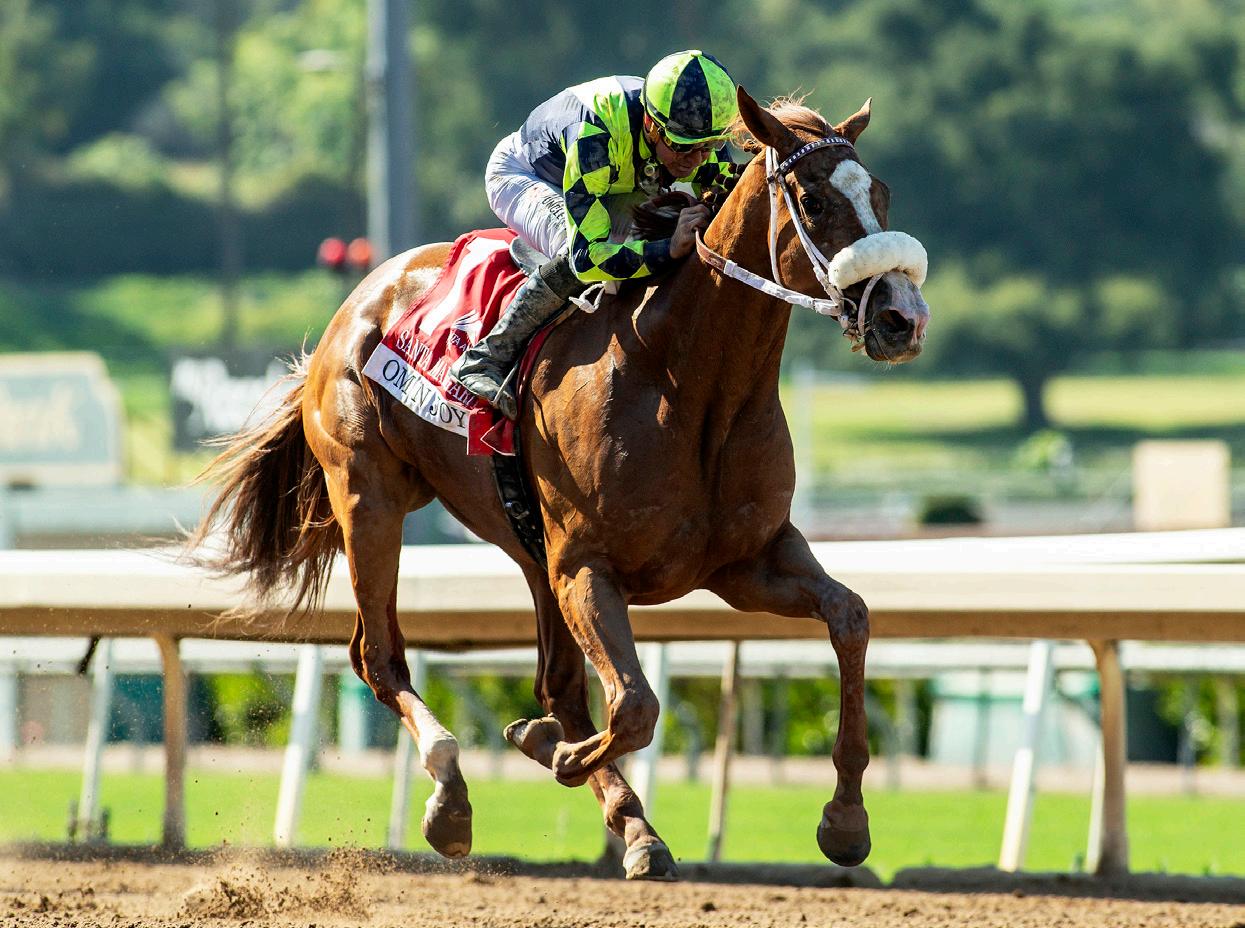
CONNIE & JERRY BAKER
OM
N JOY
Connie and I have a problem,” Jerry Baker said. “We fall in love with our horses.”
So when their first horse together, Margie’s Minute, a $20,000 claimer they purchased in 2016, was done racing a year later, they didn’t want to lose her. So they bred her.
Good decision. Her third foal, the five-year-old gelding Vodka Vodka, finished second in the Gr.1 Santa Anita Handicap March 7th and has earned $569,750. Less than three months later, his four-year-old halfsister Om N Joy, racing just seven days after finishing seventh in a California-bred turf stakes, dominated her competition on dirt, taking the Gr.2 Santa Margarita Stakes by 3 ¾ lengths under Kent Desormeaux. She’s now over $600,000 in earnings. Not bad for a filly who lost her first eight starts before winning five straight.
Jerry, a career real estate man, said, “We’re lucky.” Connie said, “Very lucky.”
But Om N Joy’s victory was bittersweet. Her dam had passed away April 10th. “Very sad,” Connie said. “She was having problems. I told the vet, when it’s time, I don’t want to make her suffer.”
She didn’t. And Om N Joy, a daughter by Om, will ultimately become their new foundation broodmare, continuing Connie’s horse racing legacy that traces back for generations.
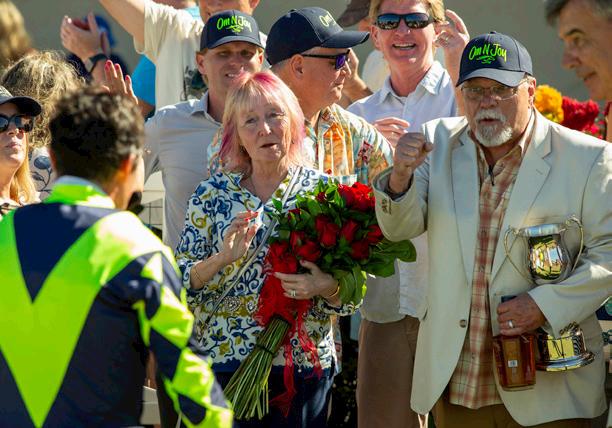
Her father, Richard Blackmore, had a profound impact on Connie’s life. He not only introduced her to racing, but later introduced her second husband Jerry to racing, then re-introduced Jerry to Connie, 35 years after they had met at a Christmas party. Jerry and Connie went into the real estate business together, married and bought their first horse together, Margie’s Minute.
“My dad’s father and mother, they both loved horse racing as well,” Connie said. “My dad used to go to the track, all the time, Santa Anita, Hollywood Park, Los Alamitos and Del Mar. When I was at Arcadia High School, I took a class in racetrack management. Half my school day was spent at Santa Anita. We spent a few weeks with the vets, others with the pari-mutuel clerks. After high school, I started out as a pari-mutuel clerk. They always put me in a very nice spot in the Turf Club or in the clubhouse. It was kind of a natural thing.”
Connie’s first husband, Bob Snider, bought her first horse, Hy Fire, who was frequently claimed and managed two wins, one second and one third in 21 starts, earning just $3,885. “I loved him so much,” Connie said. “He wasn’t special on the track, but he was special to me. I started taking lessons and so did the horse. We became jumpers. He was a real good hunter jumper.”
Connie went into business with her father, buying an air conditioning and heating company. “I was involved in that for about 15 years, from 1980 to 1995.”
Jerry, meanwhile, followed his father into real estate. “Basically, it’s all I’ve ever done to make money, it’s allowed me to do other things.”
When Connie reconnected with Jerry after the passing of her first husband, they got together, fell in love and decided to pursue racing. The idea was to get a couple of horses as a hobby.
They claimed Margie’s Minute, a daughter of Hard Spun out of Halo Miss America by Jolie’s Halo, with a very good friend, William Moore. “When Margie was done with racing, we bought
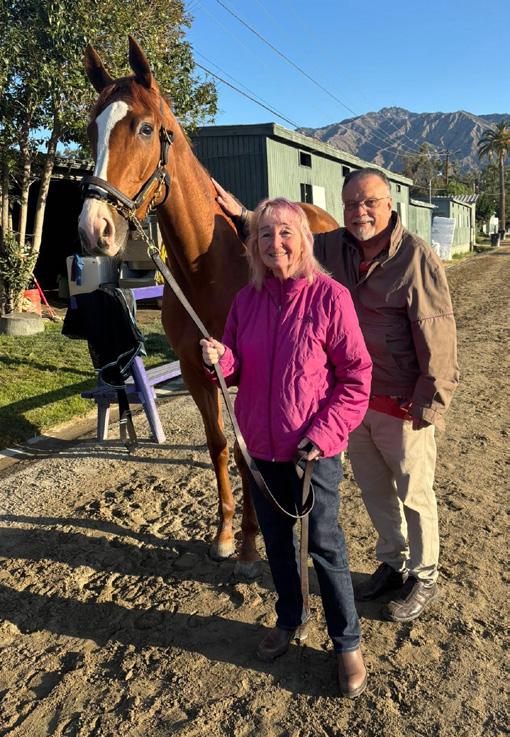
his share,” Jerry said. “He was 82 or 83. He said he was too old to get involved in breeding.”
Jerry, then 67, and Connie, 59, weren’t.
Margie’s Minute’s first foal, Sugar Kisses, did okay, but not enough to be competitive in Southern California. Her trainer, Carla Gaines, suggested they try her in Northern California with trainer Aggie Ordonez, who has a fascinating background, the daughter of Pete Anderson, who rode Forego in his first nine starts, including his fourth-place finish in the 1973 Kentucky Derby to Secretariat, before becoming a trainer.
“As soon as I was old enough, I went to the track with my dad every weekend and after school when he was riding,” Ordonez said. “He was my best friend. Hialeah was my playground.
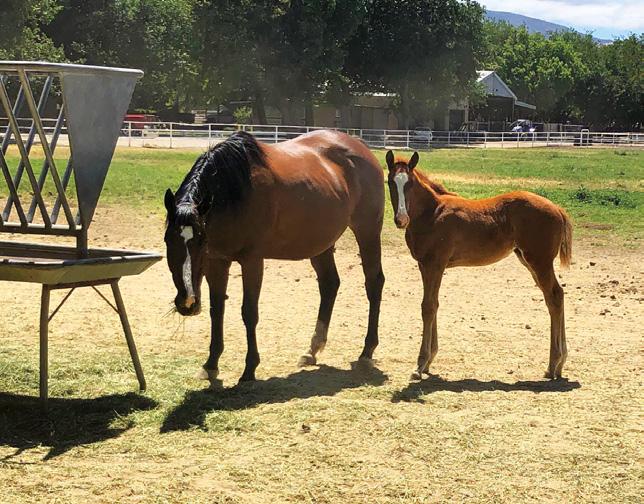
ABOVE: Connie and Jerry Baker celebrate with jockey Kent Desormeaux after Om N Joy’s victory in the 2025 Torrey Pines Stakes at Del Mar.
LEFT: Om N Joy, once again ridden by Kent Desormeaux and trained by Aggie Ordonez, wins the 2026 Santa Margarita Stakes at Santa Anita Park.
Connie and Jerry Baker with Om N Joy.
Om N Joy and her dam, Margie’s Minute, at the Harris Farms ranch.
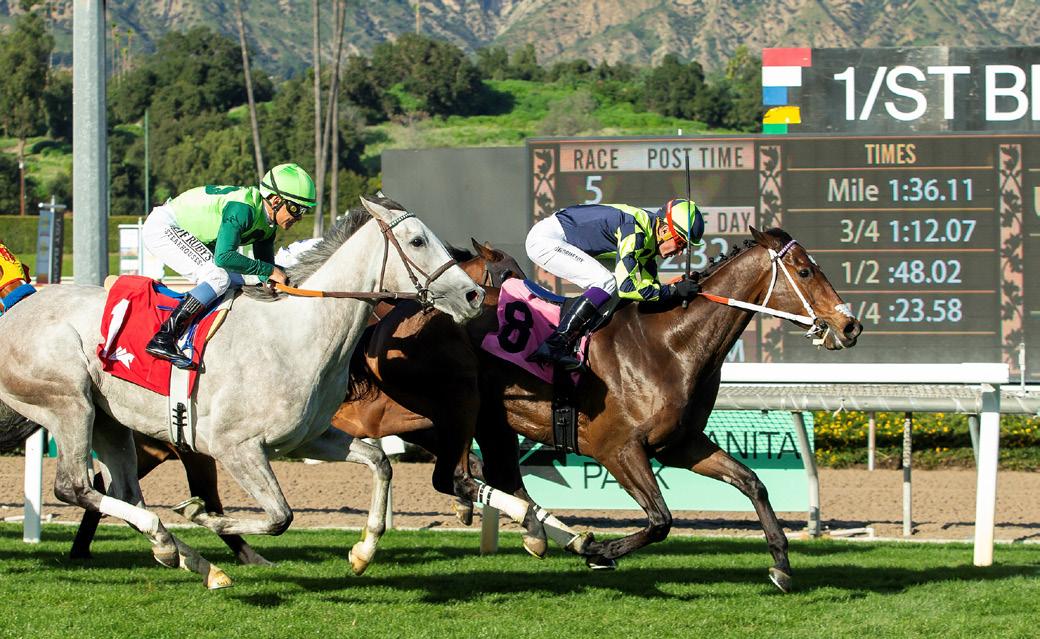
When he first started training, I was about eight or 10. He had a string for LeRoy Jolley at Monmouth Park. We traveled up and down the East Coast. I lived in Queens and Florida. Back and forth we went. It was a mutual love that my dad and I had. A bond. He was my best friend.”
Asked about what her father said about Forego, she remembered his quote about the giant gelding: “I don’t want to call him clumsy, but he was no Fred Astaire.” He would, however, be a three-time Horse of the Year.
Ordonez went to Tulane University, majored in political science, and did not have a clue what to do with it when she graduated. So she went back to a familiar place: the racetrack.
“My first job was in the press box at Calder,” she said. “I’d interview jockeys and trainers and do barn notes. I loved it. Moved across to Gulfstream. That was a blast. There were barns of champions. That was when Billy Mott had Cigar. I created a little blurb on the bottom of my press notes every day: Cigar Notes. I drove Billy crazy. I just picked his brain about Cigar. People loved that. It got picked up in the L.A. Times. Allen Jerkens had Devil His Due at the time. I got info from the best horsemen in the world on why they did things.”
She remembers her father and Jerkens having beers at Belmont: “They were good friends. In the early evenings, they’d both be grazing horses. We’d walk over to Allen’s barn and graze. They would just talk bull and tell stories. I wish I had recorded it.”
Ordonez was hired as Director of Publicity at Hialeah in 1994. That summer, she worked in the press box at Arlington doing an in-house television show: “I was behind the camera asking questions of horsemen. It started to strike me: I wanted to be on the other side of the camera talking about my good horses. I missed the smells and the sounds of the barns. That started going through my mind. Switching. I was always a horseman. I started at four.”
In the summer of ’95, when she was 27, she began training horses at The Woodlands in Kansas City: “It was a cheap track, but you learn a lot from cheap horses. My jockey was Cowboy Jack Kaenel (who won the 1982 Preakness). We won five races. I think I was five-for-20 at the meet. Just crushed it.
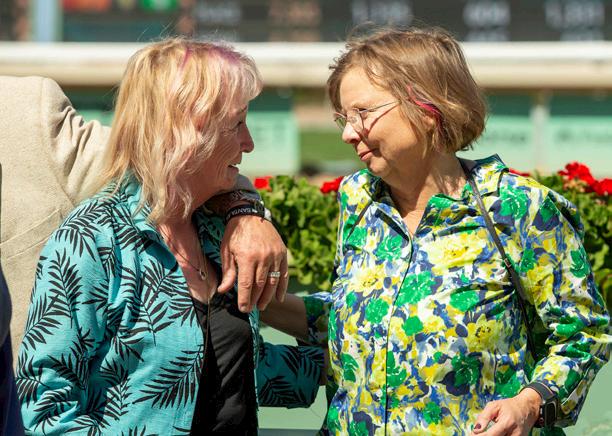
“I was supposed to go back to be publicity director at Hialeah. I couldn’t stop.”
She trained at Remington Park and Turf Paradise before taking a job as an assistant to trainer Brent Sumja in Northern California. She did that for seven years. Then Sumja decided to retire, asking his owners to stick with Ordonez. They did. “One week later I found out I was pregnant,” she said. “And there went the next 18 years of my life. I was a full-time mom and a full-time trainer. I didn’t sleep much. Over 20 years, I would get horses from Carla. She’s a bad ass. She’s an inspiration. She is a queen. We had similar philosophies. The horse comes first. Keep them happy and sound and win.”
When Carla sent Sugar Kisses to Ordonez, she and the Bakers formed an incredible friendship. “We hit it off,” Ordonez said. “They are the salt of the earth. They are good people. They love their horses. They love the game. They’re a great team in business and they’re a great team in horse racing.”
Sugar Kisses won one race for Ordonez, who was considering trying Southern California: “We saw the writing on the wall that Golden Gates wasn’t going to make it in the long haul. I was trying to dip my toe into Southern California. I raced some horses in the summer at Del Mar.”
Connie Baker with Aggie Ordonez.
LEFT: Om N Joy’s half-brother, Vodka Vodka, and jockey Kent Desormeaux won the 2026 Unusual Heat Turf Classic at Santa Anita Park for co-owners the Bakers and trainer/co-owner Aggie Ordonez.
One for the Bakers raced poorly. “They said they wanted to talk to me after the race,” Ordonez said. “I didn’t know what to expect. I thought they were going to fire me.”
Instead, they told her they loved her, wanted her to be their full-time trainer and, with a couple of nice two-year-olds in the future, asked her to move full-time to Southern California. “I thought about it for about 1.5 seconds,” Ordonez said. “I said, ‘I’m not going back to Golden Gate.’ I applied for stalls at Santa Anita the next day, and away I went.”
Margie’s Minute’s second foal, Zzyzx, made $64,077. Her third foal Vodka Vodka, a son of Stay Thirsty, is a star. “I fell in love with Vodka Vodka immediately,” Ordonez said. The Bakers let her buy five percent of the horse. “My mom was passing,” Ordonez said. “She loved Vodka Vodka. I told her, ‘Tell Dad, we’ve got a good one, and I’m going to be okay.’ I wanted to make my dad proud. I wanted to develop this horse into something special.”
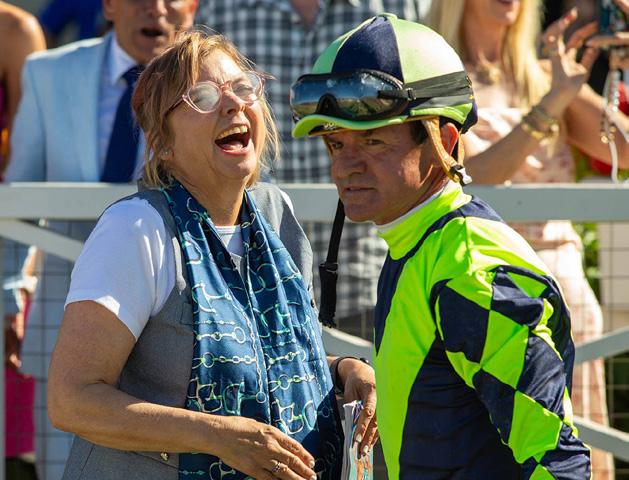
She did. Then came Om N Joy: “She is truly a joy to be around.” Never mind, that she prepped for the Santa Margarita with a dreadful race on grass seven days earlier, making her zero-for-five on turf. “If she ran dull in the Santa Margarita,
I would have gotten roasted,” Ordonez said. “One of my favorite angles is a horse who runs an off race on a non-preferred surface and returns to their preferred surface. They explode. That was in the back of my mind. I went for it. I knew it in my heart. I knew it in my gut. This filly was ready to run the race of her life. And she did.”
Aggie Ordonez with Kent Desormeaux.
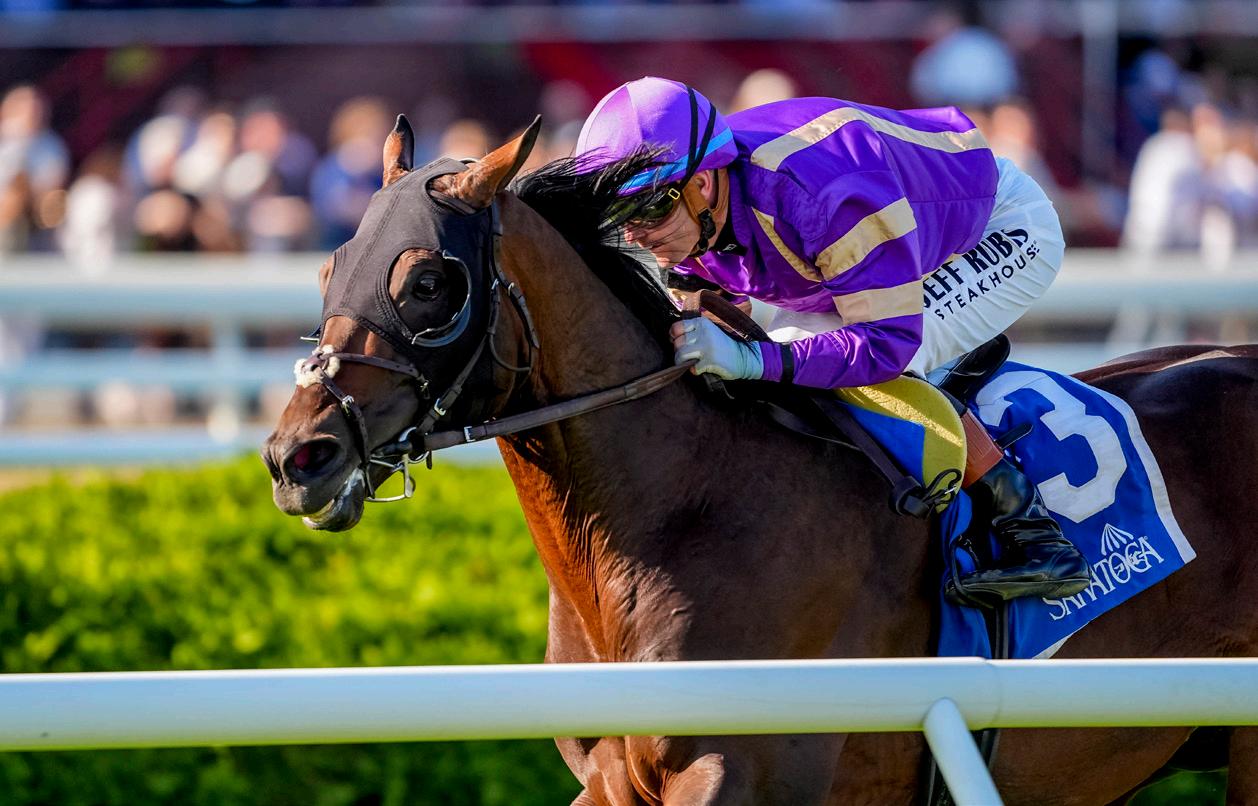
JOHN P. FORT PEACHTREE STABLE TAWNY PORT
Wise enough to learn from great trainers; humble enough to take a job as a hotwalker at the age of 35 to learn more and smart enough to take his Peachtree Stable to the highest level of competition is how 83-year-old John P. Fort continues to make his mark in Thoroughbred racing.
Along the way he became a talented polo player and finally got Allen Jerkens to train his horses more than 20 years after a rocky first encounter. His latest stakes winner, Tawny Port, ended a twoyear losing streak, taking the two-mile Gr.2 Belmont Park Gold Cup at Saratoga June 4th in track-record time, earning a free ‘Golden Ticket’ to the Melbourne Cup, the race that stops a nation, in Australia. Miguel Clement trains Tawny Port. Fort met him when he was five years old at the Saratoga Dog Show. Fort and his dog Flexi were dressed up like a lion tamer and his lion: “Thirty years later, we’re winning stakes races. The river runs deep.”
Sure does for him. When he was nine, he accompanied his father, a university professor who had been invited to England to lecture at Cambridge University for a year. That allowed him to attend an English school. “It was life-changing to go to an upperclass English school,” Fort said. “It was a wonderful experience.”
Fort’s interest in horses traces back to hanging out at the training center at the Columbia Fairgrounds at the age of 14: “Max Hirsch and Woody Stephens wintered there. I was intrigued enough to go out and see what was going on.”
After graduating from the University of South Carolina –while taking a year off to go sailing with his brother – he taught at College Preparatory School in Charleston for a year before joining the Merchant Marines for nearly three years. He served in Vietnam. “Constantly under fire,” he said. “I was with the roughest people on the face of the Earth.”
After getting home, he visited friends in New York in the advertising business. He was pressed into service as a model in a fashion show with famed clothing designer Bill Blass at Lincoln Center. “I had my seaman’s gear,” Fort said. “He took one look at me and said, ‘you’re hired.’ He wanted someone who didn’t look like a New York model.”
Fort then became the founder and headmaster of a school, Charleston County Day School, based on his experience in an English school. “I taught there as headmaster and coach of the various athletic teams for two years,” he said.
The school got publicity and Charles Fraser, the developer of Hilton Head Island, called Fort and offered him a job. “I developed some projects, like restoring an old fort,” Fort said. “I made more money than I ever did before.”
Then a friend introduced him to polo: “It became very much a part of my life.”
A business trip to New York in 1975 heightened his interest in racing: “I read about a big race, the Wood Memorial. I took the A train out to Aqueduct Racetrack and hung out on the apron. All these fans had their Racing Forms. I didn’t know what the Racing Form was. Foolish Pleasure won the Wood. I came out all enthused.”
He upped his involvement in polo: “I was getting good at polo, not great. It was a hands-on experience. I learned about horses
and horse people. That was a great incentive for me to follow through on the horses. I bought some cheap horses, really cheap horses. Frankly, it didn’t go well in the beginning. But I was learning. Try to figure out what makes people successful. What is Allen Jerkens all about?”
Hall of Fame trainer Horatio Luro trained Fort’s first winner, Sparky Ridge, who won a maiden race under Jerry Bailey at Calder December 7th, 1981. “I can’t tell you how excited I was,” Fort said. “I picked up my wife, Elizabeth, over my head in the winner’s circle. She didn’t weigh that much. She was a professional model.”
Fort then sent his horses to Hall of Fame trainer Angel Penna Sr. “He was one of my idols,” Fort said. Fort met him after figuring out that “I didn’t know anything about horses. I drove my pick-up truck to Belmont Park. The first barn I saw was Calumet Farm. John Veitch was the trainer. I said I wanted a job. I walked hots. I became a groom. I was 35. It’s old for a hotwalker with a college degree and a farm in South Carolina. I worked hard. I worked harder than anyone in the barn. I respected the people who I worked for, and they respected me. They understood me.”
When racing in New York shifted to Saratoga, Calumet Farm was stabled at Clare Court. “Allen was there, too,” Fort said. “Allen was a tough person to get to know beyond the surface. Most people were scared of him, including me. I was terrified of him. I tried to talk to him a couple of times, and he growled at me. I had a few horses with Dickie Dutrow. I wanted to send a horse or two to Allen. I said to Allen, ‘I’d like you to train a couple of horses.’ He looked at me and said, ‘Do you pay your bills?’ He was standing there with a pair of baggy britches and no shirt walking horses around. He looked like a homeless person. I said, ‘Yes sir.’”
Fort skulked away and waited more than 20 years to send Allen a horse. “It took me about 20 years to get my nerve up,” Fort laughed.
By then, Fort had struck gold with Invisible Ink, a son of Thunder Gulch out of the Conquistador Cielo mare Conquistress trained by Todd Pletcher. “That was a turning point in my life, because I was at a point,” Fort said. “I was winning races, but not winning big races. I was mentally satisfied. Good is the enemy of great. I was being satisfied with good.”
But Invisible Ink nearly died before making his first start: “Going into his two-year-old year, he got colitis. I was in Vietnam and I’ve never seen anything look more like he was going to die than Ink.”
Fort called Dr. Robert Copelan, whom he’d been introduced to by Will Farish decades earlier: “I told him, ‘you can bring a horse back from the dead, and this one isn’t dead.’ He said, ‘buy a gallon of milk. Let flies get into it. Put it in the horse by a tube in the horse’s stomach.’ It was the nastiest stuff you’ve ever seen. He survived and was second in the (2002) Kentucky Derby.” My focus turned from good to great.”
Merchant Marine, a son of Tiznow out of Head East (Gone West), was purchased by Fort for $350,000 and didn’t start out great. In fact, he nearly didn’t start at all. Merchant Marine was originally with a trainer who told Fort the horse had no speed and two bowed tendons. Fort had him castrated and was ready to send him to New Vocations to train for a new career, when his friend who had him in his barn called and said he thought he
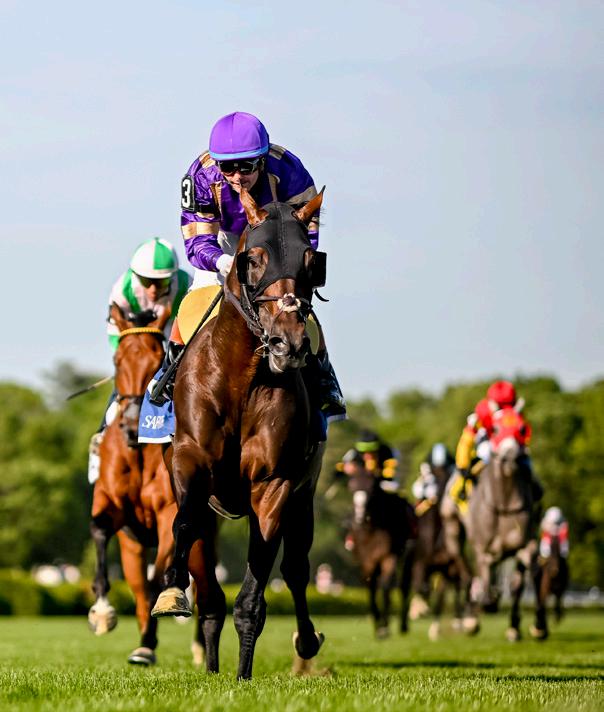
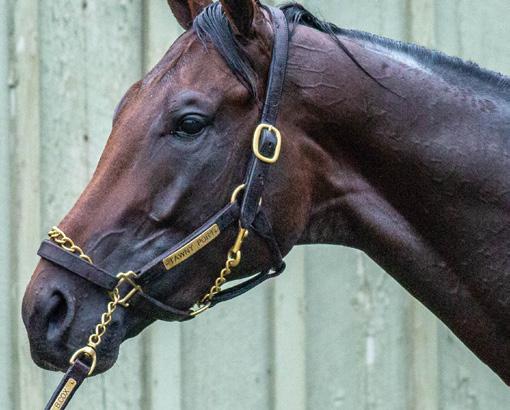
didn’t have any bowed tendons. They put him back on the track: “I thought, ‘Well, I’m going to try something different.’ I called Allen Jerkens. He was at Saratoga. I said ‘I have a horse I’d like you to try.’” Jerkens agreed.
Merchant Marine won his first two starts, added two stakes victories and finished third in the 2008 Grade 1 Jockey Club Gold Cup to Curlin. He made more than $300,000. “I wound up selling him to the Arabs for $500,000,” Fort said. He raced five times in the UAE, finishing 12th, sixth, eighth and seventh twice. “I got a call,” Fort said. “They said, ‘He can’t outrun a fat man. What do you suggest?’ I said, ‘You bought the horse. You should have bought the horse and Allen Jerkens.’”
Peachtree Stable has won nearly 600 races, another 200 in partnerships. “I attribute it to stuff I learned from Dr. Copelan about back legs,” Fort said. “He was a great teacher. He was an expert on conformation. A wise, wise man. The greatest compliment I ever got was from him. He said, ‘The student has surpassed the master.’”
LEFT & RIGHT: Tawny Port, ridden by Flavien Prat, wins the 2026 Belmont Gold Cup at Saratoga for Peachtree Stable and trainer Miguel Clement.
Tawny Port
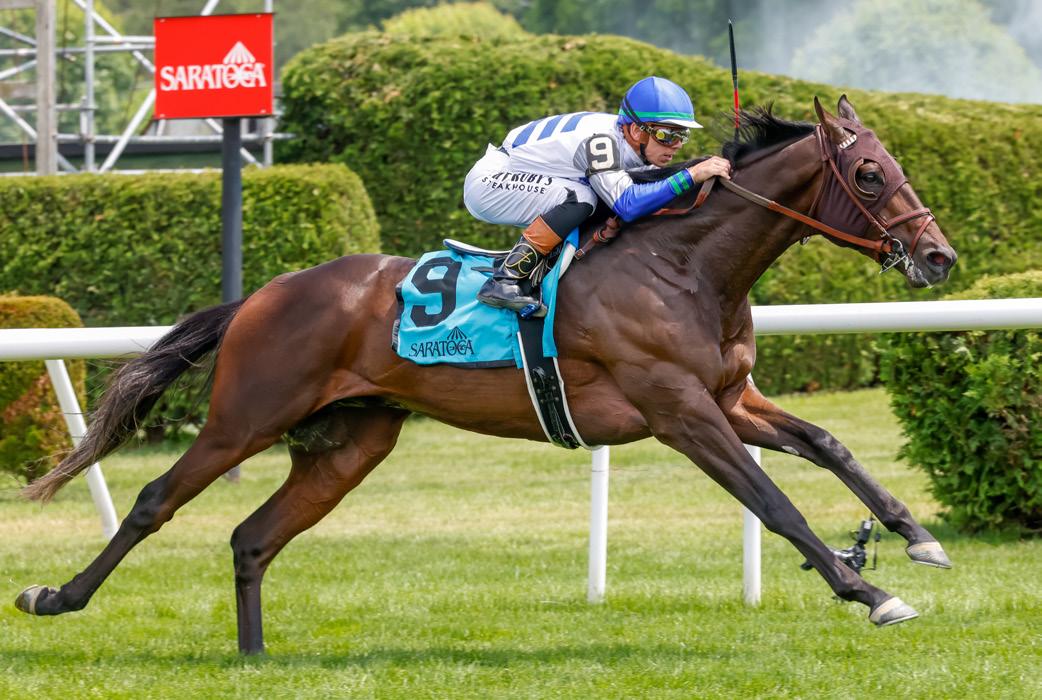
SCOTT MAWAKA MO SPEED RACING WEST END KID
Maybe it was chance, or fate. Call it karma or destiny or happenstance. All Ohio businessman
Scott Mawaka knows is that it changed his life:
“As a young man, my first customer that I signed for my business, I offered to take him golfing or go out for lunch. He said, ‘That’s not what I like. I like to handicap the ponies.’”
Off they went to Thistledown in Cleveland. Mawaka remembers seeing “a stereotypical bunch of guys with their papers and cigars. Probably 30 years ago.”
Not long after, Mawaka claimed his first horse, Fame and Gold, for $5,000 at Thistledown on October 10th, 2001. Fame and Gold won a $3,500 claimer in his third start for Mawaka and was ultimately claimed. “That got the bug in me,” Mawaka said. “Our first couple of claimers, I bought with my dad.”
Mawaka was born in Pittsburgh and moved to Hudson, Ohio, when he was eight. “I became a Cleveland kid,” he said. “It’s on the outskirts.”
Mawaka’s father started Fleet Response, an automobile and property claims management company which has grown into what Mawaka calls a mid-sizes company. “It’s called a thirdparty administrator,” he said. “We have 500-plus employees and we do $500 million in sales.”
He started working for his father as a teenager. “I’ve always loved it,” he said. “I started in my bedroom as a 16-year-old. I worked for my father out of college. I left and went to a major national insurance company. After six years of success, I came back to my dad’s business. I bought him out 10 years ago.”
After his initial fling with claimers, Mawaka got out of horse ownership: “I was still enjoying racing from a handicapping level, but I was a young professional and not financially well off enough to get better.”
He got back five years ago. “When I decided to get more heavily involved in more expensive horses, I established my own team.” Previously, he had raced under his own name and as River’s Edge Racing. That morphed into Mo Speed Racing, a name derived from his childhood nickname, Scotty Mo.
Then a mutual friend introduced Mawaka to Alistair Fyfe, who runs Ali Fyfe Racing, and they had immediate success with Fingal’s Cave, a daughter of Carpe Diem out of the Mineshaft mare Barbie on a Budget. Trained by David Donk, Fingal’s Cave won her first four starts, including the Fleet Indian Stakes for New York-breds at Saratoga in 2022. She then finished second in the Gr.2 Raven Run Stakes, third in the Gr.3 Distaff Stakes and fourth in the Gr.2 Ruffian Stakes. She was retired with five victories, one second and one third in nine starts and earnings of just over $400,000. “I didn’t want to lose her,” Mawaka said. “She was my first stakes-winning horse. So it just
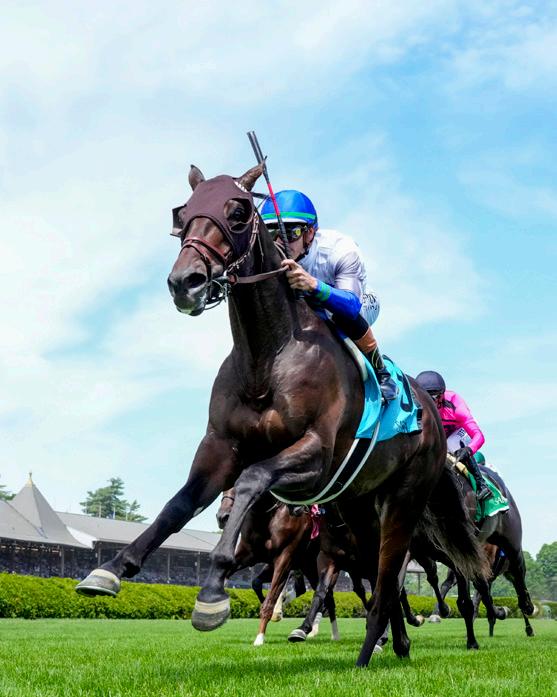
increased my interest in getting involved. I had to either sell her or buy her and start breeding. I bought out Ali from his portion.”
He also began acquiring broodmares with the help of his bloodstock agent Marette Farrell. He has a yearling colt by Into Mischief and a yearling filly by Gun Runner.
Mo Speed Racing purchased West End Kid, a son of Twirling Candy out of To a Friend by Scat Daddy for $350,000 at the two-year-old sale in Ocala in April, 2025. Trained by William Walden, West End Kid was named for his dad’s rough gang of friends. Raced only on grass, he followed a fast-finishing fourth in his debut with consecutive victories in a maiden race, allowance race and then the Gr.3 Pennine Ridge Stakes at Saratoga June 4th. “My dad was with me,” Mawaka said. “It was a great day. It was my first graded stakes.”
Mawaka and his wife have shared their good fortune in business and in horses the last 20-plus years through their Scott & Julie Mawaka Charitable Foundation. Created in 2004, the foundation has benefitted multiple non-profit organizations in the Cleveland-Akron area including, the Ohio Chapter of the ALS Association, the Akron Children’s Hospital Showers Family Center for Childhood Cancer and Blood Disorders and Habitat for Humanity.
“Twenty years ago, my dad and I used to do a golf outing and over time we donated the money to charity,” Mawaka said. “It grew from there. It seems like the right thing to do. I’ve been very fortunate in my life.”
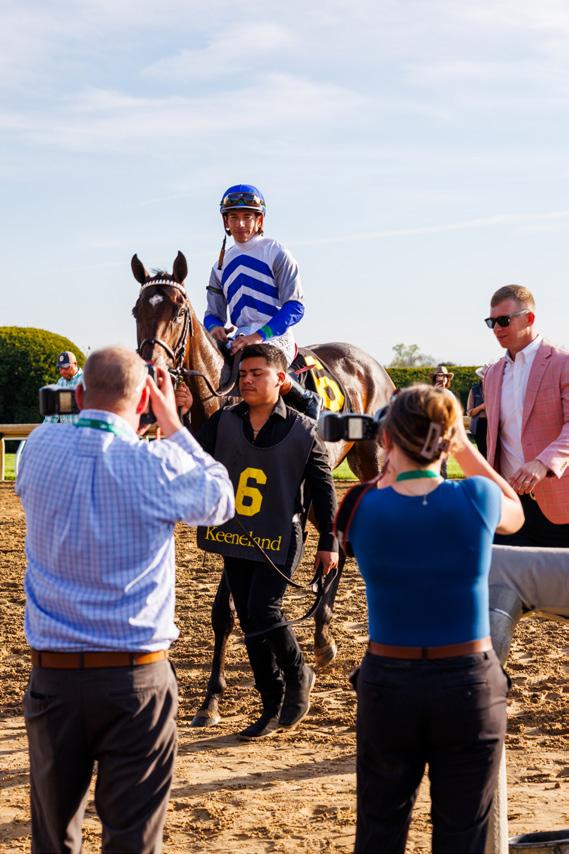
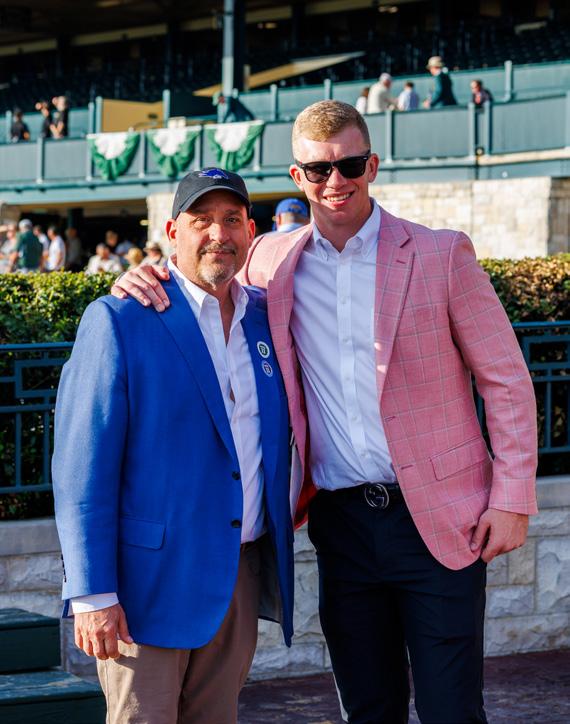
LEFT & BELOW: West End Kid, with Tyler Gaffalione up, wins the 2026 Pennine Ridge Stakes at Saratoga Race Course for trainer Will Walden and owners Mo Speed Racing.
ABOVE: West End Kid broke his maiden at Keeneland in April 2026 with jockey Tyler Gaffalione aboard for trainer Will Walden and owners Mo Speed Racing. BELOW: Will Walden celebrates the victory with Mo Speed Racing’s Scott Mawaka.
STATES OF GOOD HOPE
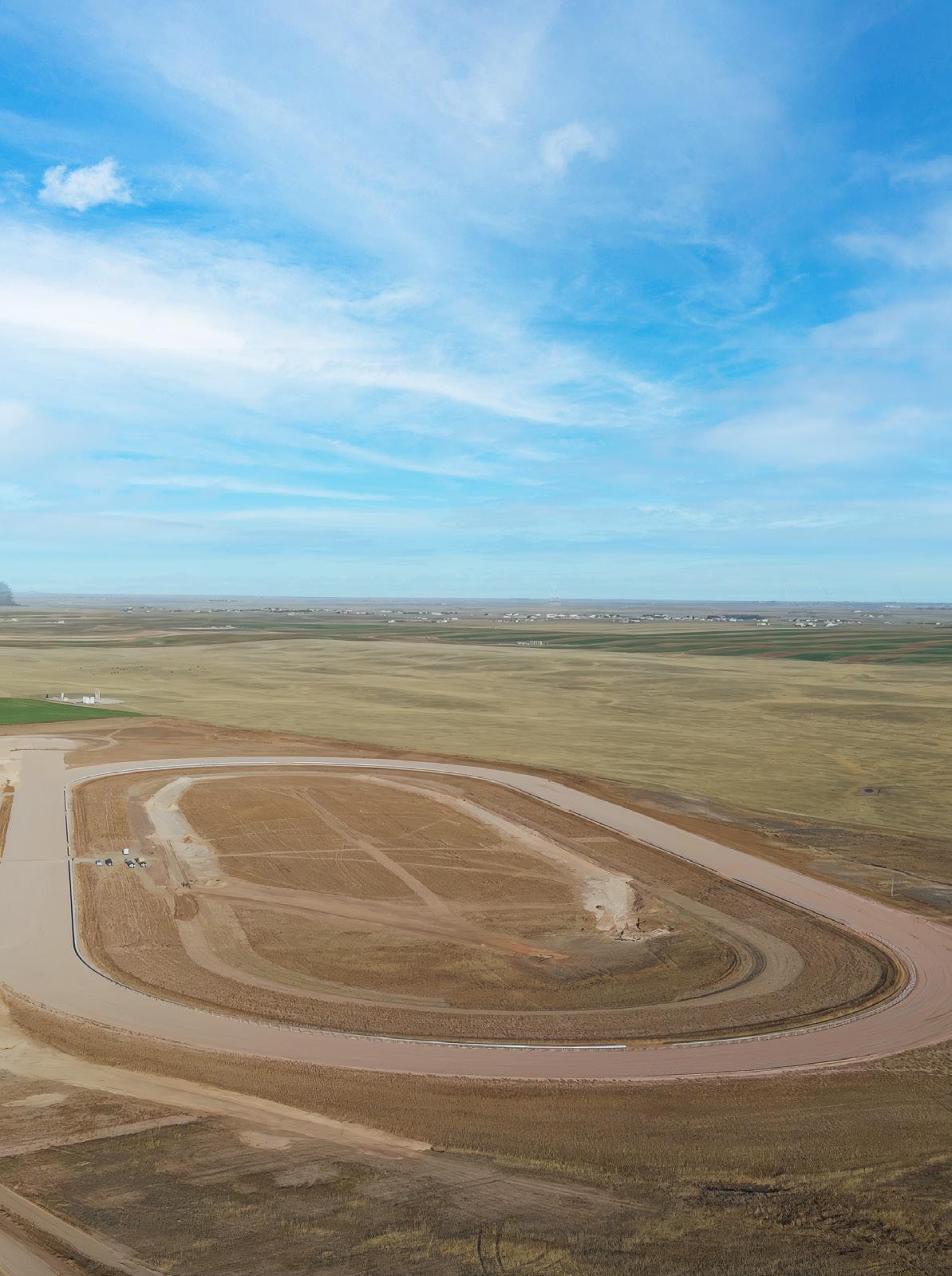
Racing to return to Kansas and a new track coming to Wyoming this year – what’s behind the renewed enthusiasm for Thoroughbred racing in both states?
Thunder Plains, Wyoming.
Ihave a friend with a formerly zestful appetite for booze who used to say in his drinking days, the question is not if the glass is half empty or half full but “are you going to finish that drink?”
With Thoroughbred racing in America we probably all need a drink. The reason is not, however, what you might think. This year, not one but two racetracks make their debut in the United States. In October, a resurrected Eureka Downs in Kansas will begin 11 race days with the first on October 3 and the last November 1. Also in October, Thunder Plains, near Cheyenne, Wyoming will begin a 16-day race meet. The math is monumental: two racetracks added to U.S. racing in the same year.
Okay, it’s not Hialeah reopening or Hawthorne in Chicago staying open and maybe it’s not worthy of popping champagne corks, but it’s not horse racing waving a white flag either.
Where Wyoming in particular is concerned, there are precisely 3,579 active Historical Horse Racing (HHR) terminals in that state. Nick Larramendy, Wyoming Gaming Commission director, stated the obvious when he said, “HHRs will dictate how far the racing goes.” He added, “And we haven’t seen any slowing on the HHR side yet.”
One can’t imagine the revenue when it does peak. As recently as 2023, the handle for pari-mutuel events generated $1.6 billion of which a whopping 98% came from HHRs. That revenue, obviously, has made Thunder Plains possible. Significant too, Wyoming is equally fertile when it comes to breeding. In fact, according to Larramendy, “Wyoming has probably one of the best, if not the best, breeders’ award programs per capita in the nation.
“The breeding is crazy,” as in “crazy good” and he has the statistics to prove it. “In 2020 the Wyoming breeders award program paid out $2.7 million to owners and breeders. This year, we’re going over ten million dollars.” That money comes from 10% of simulcast source fees or fees from out-of-state wagers as stipulated by Wyoming statute.
Wyoming racing hasn’t gone under the radar either with horsemen outside the state. “Looking at my licensing stats for 2025, we’ve got horsemen from as far away as Alaska [coming in].” Perhaps missing a few states, he ticks off California, Pennsylvania, Florida, Louisiana, Minnesota.
“We got them from all over now.”
The draw is purses trending upward. “In 2022 for Wyoming Downs, their average purses were about $6,700 per race. As recently as ‘24 it was $12,200.” That’s more than “pretty good” for a state that had zero racing in 2010 and 467 races as recently as 2023. Thunder Plains will have, in all likelihood, purses at least equal to its counterpart on the western side of the state.
In addition to owners and trainers, purses have impacted the jockey pool which, heretofore, was “regionalized.” Now, according to Larramendy, jockeys are coming in from all over to ride beside Westerners from Wyoming, Utah, and Idaho.
Through spring and early fall horsemen can remain in the state, moving from Wyoming Downs east on I-80 to Sweetwater Downs in Rock Springs, and then continue on I-80 to Thunder Plains and its one-mile oval on the east side of the state just 100 miles north of Denver.
The safety rail from California’s historic Golden Gate Fields racetrack has found a new home at Thunder Plains, where it now lines Wyoming’s newest Thoroughbred racing venue.
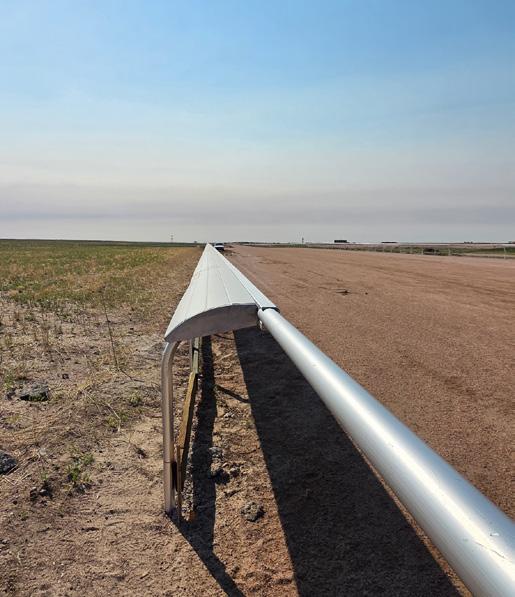
“Wyoming is a real success story for live horse racing across the nation. Years ago we didn’t have any live horse racing at all. The tracks were shuttered, and there was nothing there, and now, yeah, we’re running,” an understatement of epic proportions by Larramendy.
If there is anything that possibly equals a brand spanking new racetrack, it is the resurrection of a venerable venue that opened its gates in its current location way back in 1902. (The original Eureka Downs opened in 1872). The racetrack, in the town of the same name, will host 11 days of racing after sitting idle since 2011. In future years, Eureka Downs is allotted 44 days of horse racing. HHRs—1,000 approved by the state of Kansas and $2 million allocated by the state have made this possible. HHRs will provide 3% of gross revenues—30% of that going to the Kansas Horse Breeding Development fund and 70% going to the Fair Horse Racing Benefit Fund. The latter will fund purse supplements, capital improvements, and operating expenditures.
PHOTOGRAPHY: EUREKA DOWNS, PEACH MADL, THUNDER PLAINS, WILL EDWARDS
Thunder Plains site plan.
All 1,000 of the HHR machines will be offsite in Park City, Kansas north of Wichita at an entertainment venue called Gilley’s that was formerly the Wichita Greyhound Park. Ironically, it was the closing of that facility in 2007 and The Woodlands Racetrack in Kansas City a year later that began a decline at Eureka Downs culminating in its closure.
Peach Madl, executive director of the Kansas Thoroughbred Association and a horse breeder with her husband Ted, has been instrumental in an effort to revive racing in Kansas that succeeded after many years of trying. Already, $2.9 million has been applied to the Fair Horse Racing Benefit Fund, according to Madl.
She estimates the breeding fund will also have $1.5 million by October. “We’re working on maybe getting that money into interest bearing accounts and anything we can do with the money to grow it.” The goal, of course, is incentivizing breeders in Kansas, producing eventually races restricted to Kansas-breds.
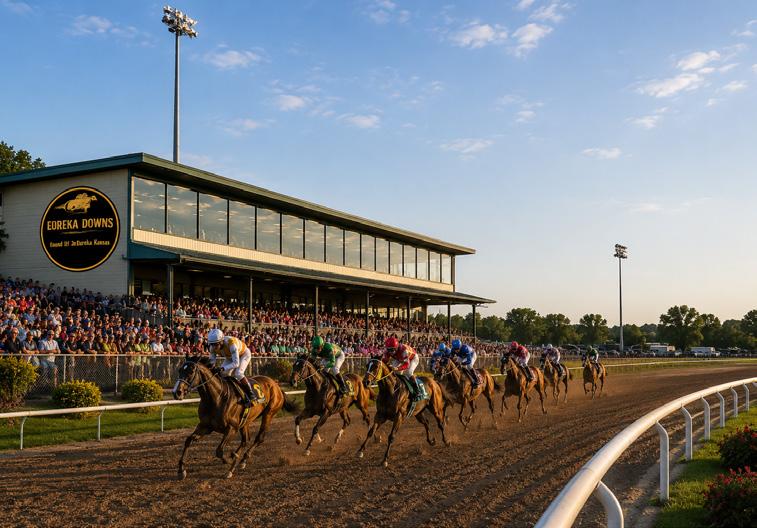
Months away from Eureka Downs opening, the impact of racing coming back to Kansas is already being felt. “I think we had thirty in the breeder’s program. Now, within a short period of time, we’re at almost two hundred fifty.”
The thirty is a testament to the faith of Kansans that racing would return. “People kept certifying them in Kansas even though there wasn’t racing and even though there wasn’t a [breeders’ ] program.
“It was hard for everybody to believe it was going to happen, because we have had several attempts to bring racing back and we, as all of our breed associations, have had struggles trying to get our breeders to take the risk in full.
“We have a lot of population-building to do in Thoroughbreds and finding all of the Thoroughbred people that have been racing out of state. I did a check with Equibase and last year, at the time I did the check, the number of horses running in the United States that were foaled in Kansas was twelve Thoroughbreds.”
Despite those numbers, Madl expects no issues filling racing cards. “We’re kind of coordinating with Prairie Meadows after their meet,” she said. Madl added that Eureka Downs will be a logical and logistical landing spot also for Oklahoma horsemen. “It’s only a couple of hours away from a couple of their tracks.” Plans include adding barns to the Eureka Downs backside to accommodate anticipated growth in the number of trainers coming in.
The Madls have done their part already, breeding one of her farm’s mares, Mo Gayle, to a stallion at Taylor Made Farm in Kentucky. This year, Taylor Made offered a “State-Bred Initiative Program” that waived stud fees for five stallions to out-of-state breeders if mares foal in that state or any other except Kentucky. It is a win-win for Taylor Made and breeders like the Madls. Taylor Made is supporting and incentivizing both their stallions and regional programs outside Kentucky. For people like the Madls, the only expense is getting a mare to and from Taylor Made.
Although Wichita is only an hour west of Eureka, Madl estimates the biggest chunk of Eureka’s market will come from Kansas City, roughly two-and-a-half hours northeast.
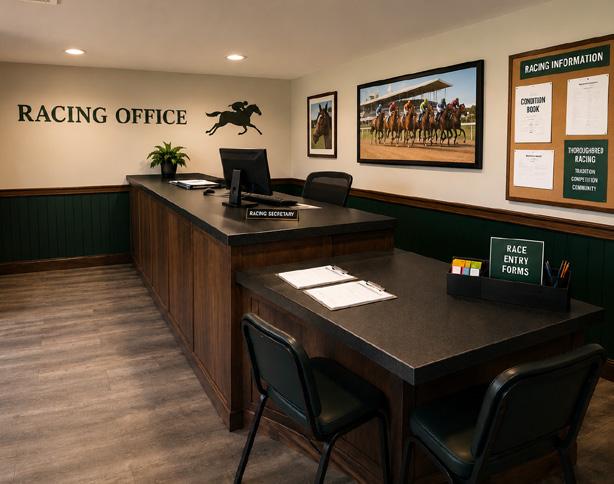
“We’re used to that [driving distance] and we don’t have traffic congestion.
“We have under three million people in the entire state and we’re still pretty ‘Ag,’ (agriculture). Something like Eureka Downs opening doesn’t happen often. It’s celebrated.”
She thinks Eureka Downs might draw a population that wouldn’t ordinarily choose a small town of 2,332 (2020 census) in which to settle. “I think that due to real estate values in the populated areas it [ Eureka] is attractive to move here because of lower real estate costs.”
It has been 88 years since Lawrin, a Kansas-bred crossed under the wire first in the 1938 Kentucky Derby ridden by Eddie Arcaro. It was the famed jockey’s first of five Derby wins. Lawrin, who never ran at Eureka Downs, was the first and last Kansas-bred to win the Derby ... so far.
ABOVE & BELOW: Artist’s impressions of the proposed Racing Office and Grandstand at the revitalized Eureka Downs racetrack in Kansas.

BUILT FOR SPEED. DESIGNED FOR HEAT.
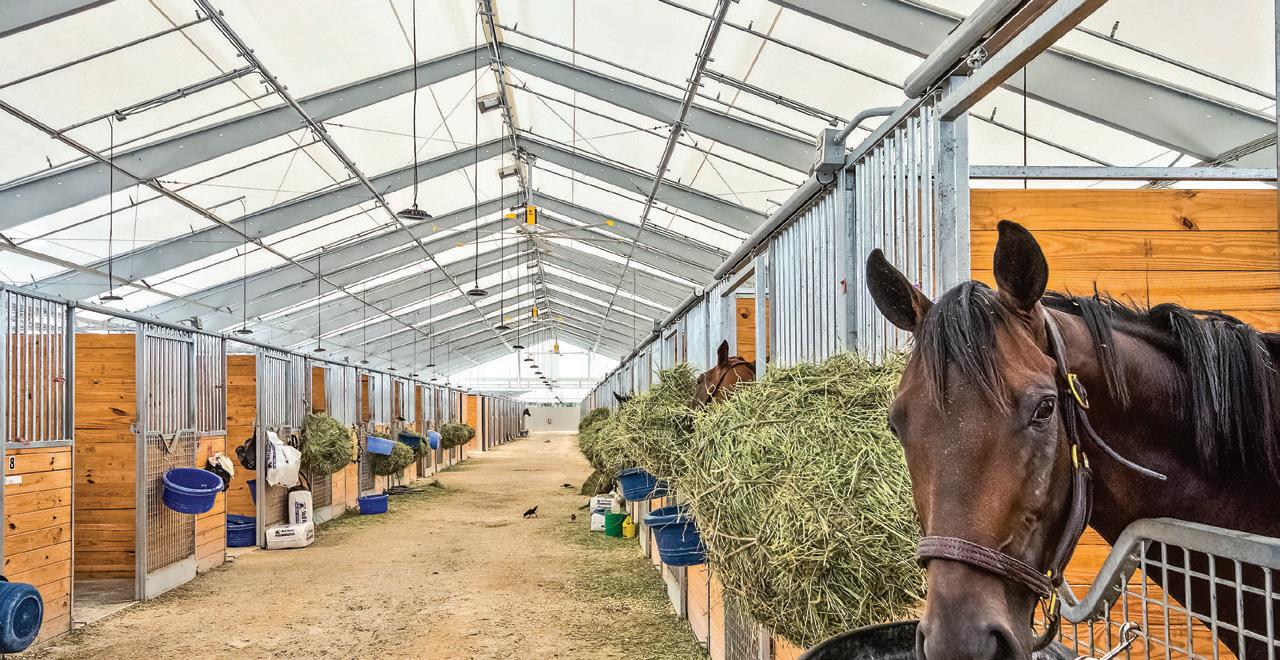
Racehorses are elite athletes, and their environment should perform at the same level. Legacy Building Solutions’ PVC clad barns are engineered to help manage heat and airflow in high-WBGT conditions—creating a cooler, more comfortable space for training, stabling, and recovery.
ENERGY EFFICIENT EXCLUSIVE FABRIC OPTIONS PATENTED ATTACHMENT
Legacy Building Solutions designs and manufactures high-performance PVC-clad and fabric structures for elite equine facilities—built for extreme climates, durability, and long-term value. FULLY CUSTOMIZABLE FAST-TRACK CONSTRUCTION IN-HOUSE ENGINEERING
A white PVC enclosure reflects solar heat while a ventilation-first design promotes continuous air movement, helping lower the “apparent” temperature felt by horses. The result: improved comfort, better recovery, and consistent performance when conditions matter most.
ABOUT LEGACY BUILDING SOLUTIONS
MIKE WEISS TAKES THE REINS AT EUREKA DOWNS
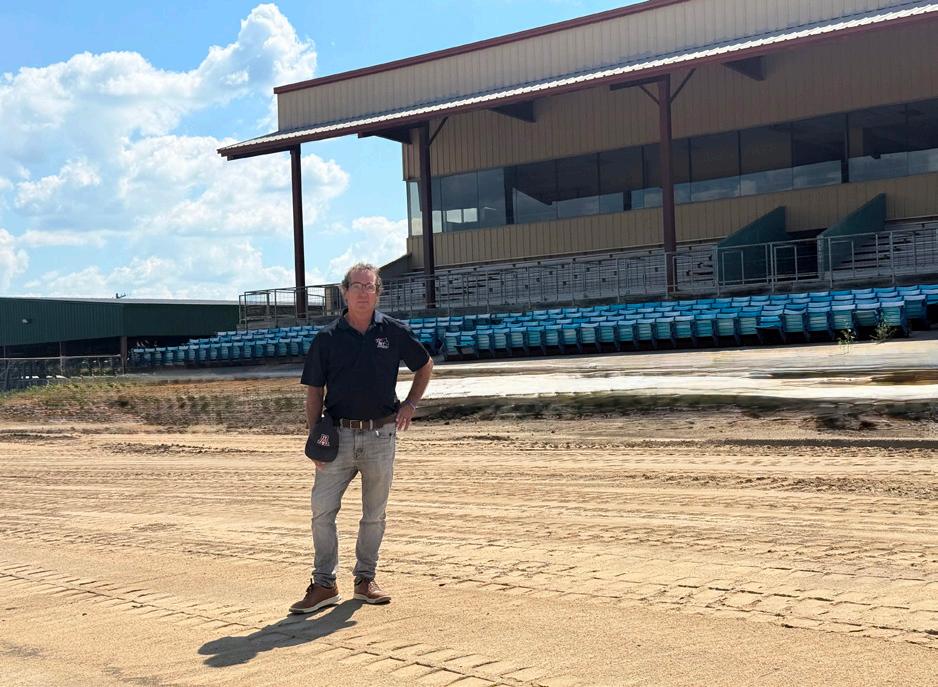
Eureka!” was the exclamation from a Greek mathematician after discovering a means of measuring the purity of gold: “I have found it!”
Mike Weiss, general manager at the latest iteration of Eureka Downs in the Kansas town of the same name, may have the same response.
The first Eureka Downs was built in 1872 before moving to its present address in 1902. To put that in perspective, baseball’s Wrigley Field didn’t open until 1914.
Track reopenings are not new for Weiss, who managed reopenings at Prescott Downs and Rillito in Arizona along with the North Dakota Horse Park. Weiss is equally experienced in racing and racetrack management. He was racing manager and then general manager of Beulah Park in Ohio for 22 years.
Before Eureka, he was content operating PariBet, an Advanced Deposit Wagering (ADW) site he founded and manages with his wife, Patty, from their home in Singer Island, Florida.
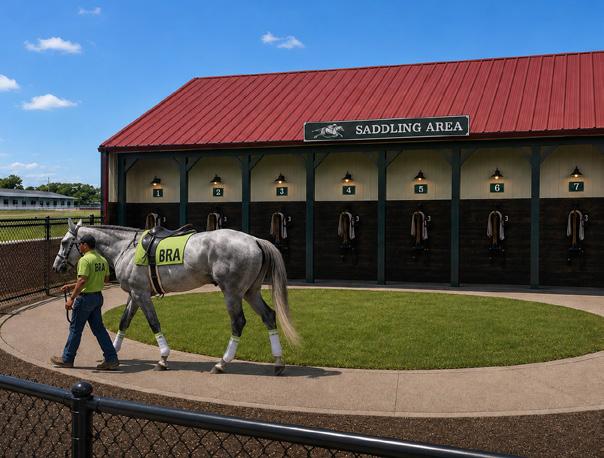
“I got a call, ‘Hey, they’re trying to get this track open, would you like to run it?’ Initially I said ‘not really’ before my wife kicked me in the butt, and said, ‘You love doing stuff like this.’”
Time had taken its toll. Eureka Downs had also been closed for 15 years. “Most of the barns didn’t even have roofs on them,” he said, after an EF-2 tornado in 2016 and an EF-3 tornado in 2018 caused extensive damage.
Before beginning backside construction, Weiss’s first task is installing a safe racing surface.
“We’ve widened it. And we’re actually taking part of the far turn out, moving the finish line back 55 yards to make that turn safer.”
Weiss added that the racing surface alone before adding the rails has cost $2.2 million. “We’re rebuilding the paddock and the racing offices,” he said.
“It’s not like taking a piece of ground and building a race track. We’re rebuilding and hopefully revitalizing the track, the town, and racing in the whole state of Kansas.”
Weiss has met with county officials and community leaders, something that didn’t take long in a town about 2,300 people. He hopes to bring in local organizations, vendors, and entertainment talent to create a county fair/festival environment the whole community can point to with pride. He plans, also, for students from the local high school to work concessions to make money for their school clubs or teams.
While Eureka will be up to date with renovations and a general sprucing up, Weiss wants to capitalize on Eureka Downs’ unique place in American horse racing history.
“Am I going to be charmed out of my socks by kind of a Wrigley Field-type atmosphere, something that’s historic?” That’s exactly what Weiss hopes to achieve. “I hope to impress newcomers from Wichita and other Kansas environs by a regeneration of a part of Kansas’ history.”
Weiss believes Eureka Downs, with its country location and flavor, will impress newcomers and those who remember it from days past. For entertainment, atmosphere, and good racing, Weiss believes patrons, like the Greek mathematician, will also say, “We have found it.”
Mike Weiss in front of the grandstand at Eureka Downs.
An artist’s impression of the paddock and saddling area at Eureka Downs.


FPD is considered a leader in bringing groundbreaking products and service to the farrier industry as a wholesale distributor of farrier and equine
FIND AN FPD DEALER NEAR YOU farrierproducts.com/locations • (800) 468-2879 facebook.com/FarrierProductDistribution youtube.com/farrierproducts • instagram.com/fpdinc



# SOUNDBITES
What have been the greatest innovations or changes you’ve seen in racing the last 20 years and what changes or innovations would you like to see in the next five years?
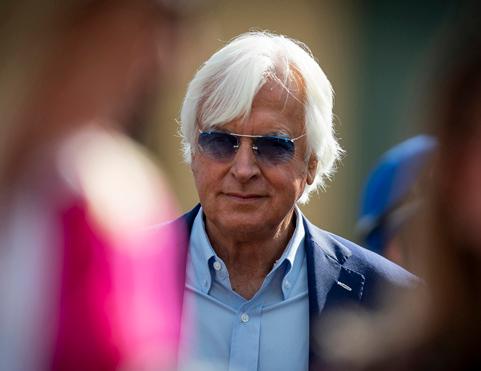
# Bob Baffert
A lot of the equipment is really improved: the nuke scan, the PET scan. The diagnostics that we have now are a huge improvement where you can find things that you couldn’t find before, things that wouldn’t show up on an X-ray. Sometimes, the X-rays can’t pick it up. You can prevent injuries. The machines have been a big plus. Also, the jockey safety equipment.
# Shug McGaughey
That’s a loaded question. The game’s changed quite a bit in the last 20 years. You kind of go with the punches. I like the transparency part of it that they’re trying to enact. I’d like to see more two-turn racing and getting our stakes schedule evened out with Belmont opening back up. I’d like to see more interaction between horsemen and administration.
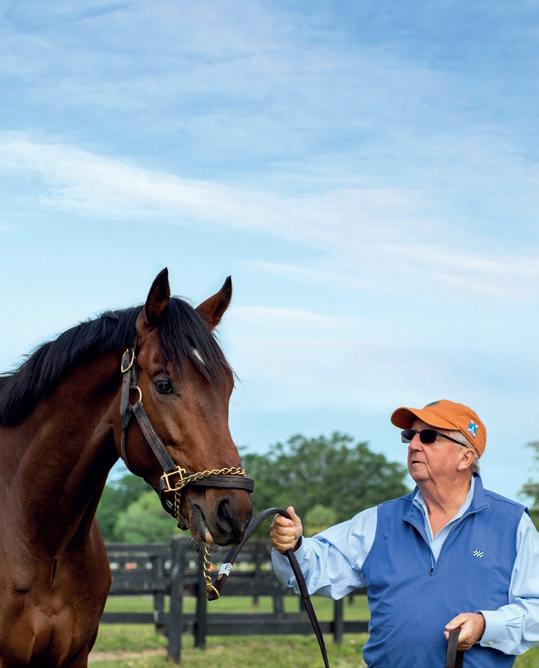

# Richard Mandella
We’ve lost our fan base at the races. It’s great that people are able to sit at home and watch TV, but there’s nobody here at the races and it takes away the excitement and the feeling like you’re really doing something without people cheering and socializing. Even the horse trainers. Thirty years ago, there was a coffee station and you’d see Whittingham, Barrera, Frankel and Jones. There’s just not a lot of atmosphere at the races anymore. What I’d like to see done is find a way to get the people back out to have fun and excitement and enjoy the races and get back in the game. Somebody’s got to find a way to put some magic back into it.
# Ron Moquett
Quite a few that have benefitted the horse medically: on site digital X-rays and scopes. The medical stuff has gotten a lot better. Also, being able to watch racing from your phone. When I’m on a tractor, I can watch a horse run. I think that’s pretty good. I used to have to drive to the track or OTB. I would like to see better testing. Stop testing for minute amounts. Let’s not confuse our customers. Do away with contamination testing instead of having trainers defend themselves. It paints the whole sport as less than integrity-driven. Let’s try to get it right.
# Bill Mott
I think the biggest changes are the positive innovations in new technology that we’ve got in regard to the veterinarian aspects of the business. With the CT scans, PET scans and bone scans, we can detect problems earlier on our horses instead of sort of guessing what we’re trying to see. And the drug testing is much advanced. In the future, I think we’d all like to see uniformity and permissible thresholds on medication before they call it a positive, not only therapeutic but also illegal medications because in certain instances there’s contamination. That’s for the protection of the trainers. I’m sure there are people who have lost their livelihood over things that shouldn’t have been called positives.
# Mark Casse
Good question. One of the greatest innovations is something I’ve been using the last four years called the sleip app. It videotapes a horse and it gets analyzed. It shows if there’s an issue in the horse’s gait. It’s definitely a great tool for us. Saudi Arabia and the Melbourne Cup require it. They want to see the horse. Also, 20 years ago, we didn’t have the ability to watch racing from all around the world. We couldn’t even watch it sometimes in our own backyard. In the future, I want to see a new racetrack in Florida. Hopefully in Ocala. It’s going to happen.
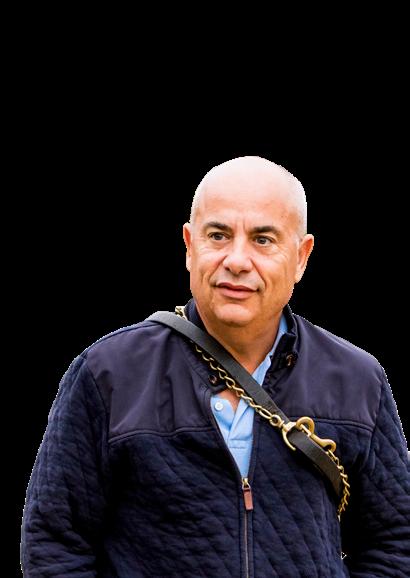
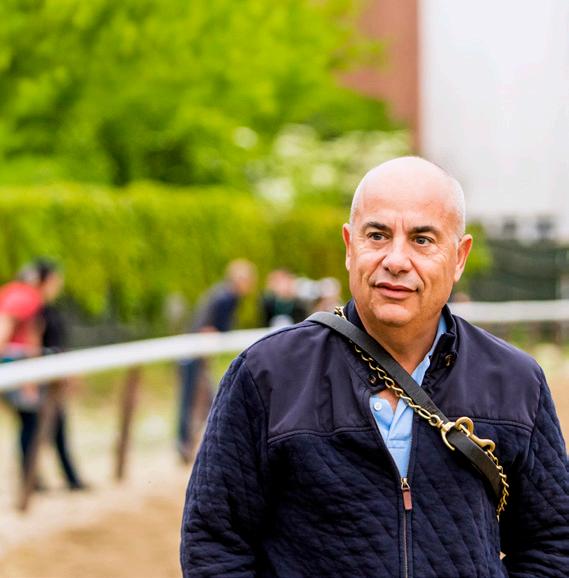
# Nick Zito
For better or worse, I think the regulations as far as protecting the horses, we didn’t sign up for this. We didn’t sign up for anything that drastic. I wish we could have policed our own sport. Every other state, whatever they did, they had a blind eye. The state should have done a better job. That’s where the government came in. Hopefully, in the long road, it’ll be better for racing. In the next five years, I’d like to see racetracks being more friendly with the patrons. That’s what I’d like to see.
Oral Paste for Horses and Foals
• Approved by FDA under NADA # 141-123
Brief Summary: This information is not comprehensive. Before using Gastrogard® (omeprazole) Paste, please consult the product insert for full prescribing information. The product insert may be obtained from your veterinarian or by visiting www.gastrogard.com.
Caution
• Federal (USA) law restricts this drug to use by or on the order of a licensed veterinarian.
How Supplied
• GASTROGARD (omeprazole) Paste for horses contains 37% w/w omeprazole and is available in an adjustable-dose syringe. Each syringe contains 2.28g of omeprazole. Syringes are calibrated according to body weight.
Indications
• For treatment and prevention of recurrence of gastric ulcers in horses and foals 4 weeks of age and older.
Dosage Regimen
• For treatment of gastric ulcers, GASTROGARD should be administered orally once-a day for 4 weeks at the recommended dosage of 1.8 mg omeprazole/lb body weight (4 mg/kg). For the prevention of recurrence of gastric ulcers, continue treatment for at least an additional 4 weeks by administering GASTROGARD at the recommended daily maintenance dose of 0.9 mg/lb (2 mg/kg).
Directions For Use
• GASTROGARD for horses is recommended for use in horses and foals 4 weeks of age and older. The contents of one syringe will dose a 1250 lb (568 kg) horse at the rate of 1.8 mg omeprazole/lb body weight (4 mg/kg). For treatment of gastric ulcers, each weight marking on the syringe plunger will deliver sufficient omeprazole to treat 250 lb (114 kg) body weight. For prevention of recurrence of gastric ulcers, each weight marking will deliver sufficient omeprazole to dose 500 lb (227 kg) body weight.
• To deliver GASTROGARD at the treatment dose rate of 1.8 mg omeprazole/ lb body weight (4 mg/kg), set the syringe plunger to the appropriate weight marking according to the horse’s weight in pounds.
• To deliver GASTROGARD at the dose rate of 0.9 mg/lb (2 mg/kg) to prevent recurrence of ulcers, set the syringe plunger to the weight marking corresponding to half of the horse’s weight in pounds.
• If, after dosing, the syringe is not completely empty, it may be reused on following days until emptied. Replace the cap after each use.
Warning
• Do not use in horses intended for human consumption. Keep this and all drugs out of the reach of children. In case of ingestion, contact a physician. Physicians may contact a poison control center for advice concerning accidental ingestion.
• The safety of GASTROGARD has not been determined in pregnant or lactating mares.
Adverse Reactions
• In efficacy trials, when the drug was administered at 1.8 mg omeprazole/lb (4 mg/kg) body weight daily for 28 days and 0.9 mg omeprazole/lb (2 mg/kg) body weight daily for 30 additional days, no adverse reactions were observed.
• To report suspected adverse drug events, for technical assistance, or to obtain a copy of the Safety Data Sheet (SDS), contact Boehringer Ingelheim Animal Health USA Inc. at 1-888-637-4251. For additional information about adverse drug experience reporting for animal drugs, contact FDA at 1-888-FDA-VETS, or online at www.fda.gov/reportanimalae.
Efficacy
• Dose Confirmation: GASTROGARD, administered to provide omeprazole at 1.8 mg/lb (4 mg/kg) daily for 28 days, effectively healed or reduced the severity of gastric ulcers in 92% of omeprazole-treated horses. In comparison, 32% of controls exhibited healed or less severe ulcers. Horses enrolled in this study were healthy animals confirmed to have gastric ulcers by gastroscopy. Subsequent daily administration of GASTROGARD to provide omeprazole at 0.9 mg/lb (2 mg/kg) for 30 days prevented recurrence of gastric ulcers in 84% of treated horses, whereas ulcers recurred or became more severe in horses removed from omeprazole treatment.
• Clinical Field Trials: GASTROGARD administered at 1.8 mg/lb (4 mg/ kg) daily for 28 days healed or reduced the severity of gastric ulcers in 99% of omeprazole-treated horses. In comparison, 32.4% of control horses had healed ulcers or ulcers which were reduced in severity. These trials included horses of various breeds and under different management conditions, and included horses in race or show training, pleasure horses, and foals as young as one month. Horses enrolled in the efficacy trials were healthy animals confirmed to have gastric ulcers by gastroscopy. In these field trials, horses readily accepted GASTROGARD. There were no drug related adverse reactions. In the clinical trials, GASTROGARD was used concomitantly with other therapies, which included: anthelmintics, antibiotics, non-steroidal and steroidal antiinflammatory agents, diuretics, tranquilizers and vaccines.
• Management Considerations:
Safety
• GASTROGARD was well tolerated in the following controlled efficacy and safety studies.
• In field trials involving 139 horses, including foals as young as one month of age, no adverse reactions attributable to omeprazole treatment were noted.
• In a placebo controlled adult horse safety study, horses received 20 mg/kg/day omeprazole (5x the recommended dose) for 90 days. No treatment related adverse effects were observed.
• In a placebo controlled tolerance study, adult horses were treated with GASTROGARD at a dosage of 40 mg/kg/day (10x the recommended dose) for 21 days. No treatment related adverse effects were observed.
• A placebo controlled foal safety study evaluated the safety of omeprazole at doses of 4, 12 or 20 mg/kg (1, 3 or 5x) once daily for 91 days. Foals ranged in age from 66 to 110 days at study initiation. Gamma glutamyltransferase (GGT) levels were significantly elevated in horses treated at exaggerated doses of 20 mg/kg (5x the recommended dose).
Reproductive Safety
• In a male reproductive safety study, 10 stallions received GASTROGARD at 12 mg/kg/ day (3x the recommended dose) for 70 days. No treatment related adverse effects on semen quality or breeding behavior were observed. A safety study in breeding mares has not been conducted.
For More Information
• Please call 1-888-637-4251. Marketed by: Boehringer Ingelheim Animal Health USA Inc., Duluth, GA 30096, U.S.A. Made in Brazil
GASTROGARD® is a registered trademark of Boehringer Ingelheim Animal Health USA Inc. All Rights Reserved. ©2026 Boehringer Ingelheim Animal Health USA Inc. US-EQU-0242-2022
Rev. 07-2020
Reference: Product Insert 147528-002
Revised 05/2019

# Barclay Tagg
The HISA rules. They don’t know how to handle it. They don’t know what to do with it. It’s a horrible thing. It’s like communism. You have a business you’re running and they whisk away your business. We never get a chance to discuss it. It’s just wham bam, you’re dead. Nobody’s really trying to get away with anything. And they’re not even testing for the stuff people are using. They’re always one step ahead of HISA. Who are they to make up the rules? It’s a bad thing. I hate it. They just did it all wrong.


# Al Stall
I don’t want to sound like an old curmudgeon from the old school, but I personally think a lot of fun has been taken out of the game, the prices at big events or regulatory stuff or the way horses don’t seem to be as durable as they used to me. There’s more day-to-day stress for the trainers. That’s been the biggest change, unfortunately. I’m still all-in, but it’s just not quite the same. I’d like to see some of the right people making the important decisions. Trainers like Steve Asmussen with 50,000-plus starts and George Arnold with years of experience. Or Todd Pletcher. No one asks us.
# John Servis
In the last 20 years, it’s the microshare partnerships they do. It’s been very good at introducing new owners into the game. Being based in the mid-Atlantic, I’d love to see in the next 5 years racetracks working together on dates so they’re not competing against each other.