Akathist to Saint Olga of Alaska
Healer of the Abused and Broken
SECOND EDITION
Archpriest L A wrence r . F A r L ey
A ncient FA ith pub L ishing chesterton, indi A n A
Akathist to Saint Olga of Alaska: Healer of the Abused and Broken, Second Edition
Copyright © 2026 Lawrence R. Farley
All rights reserved. No part of this publication may be reproduced by any means, electronic, mechanical, photocopying, recording, scanning, or otherwise, without the prior written permission of the publisher.
Published by: Ancient Faith Publishing A Division of Ancient Faith Ministries 1050 Broadway, Suite 6 Chesterton, IN 46304
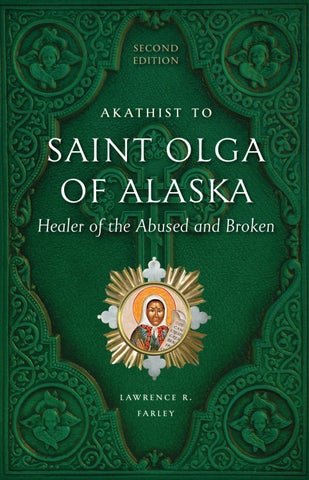
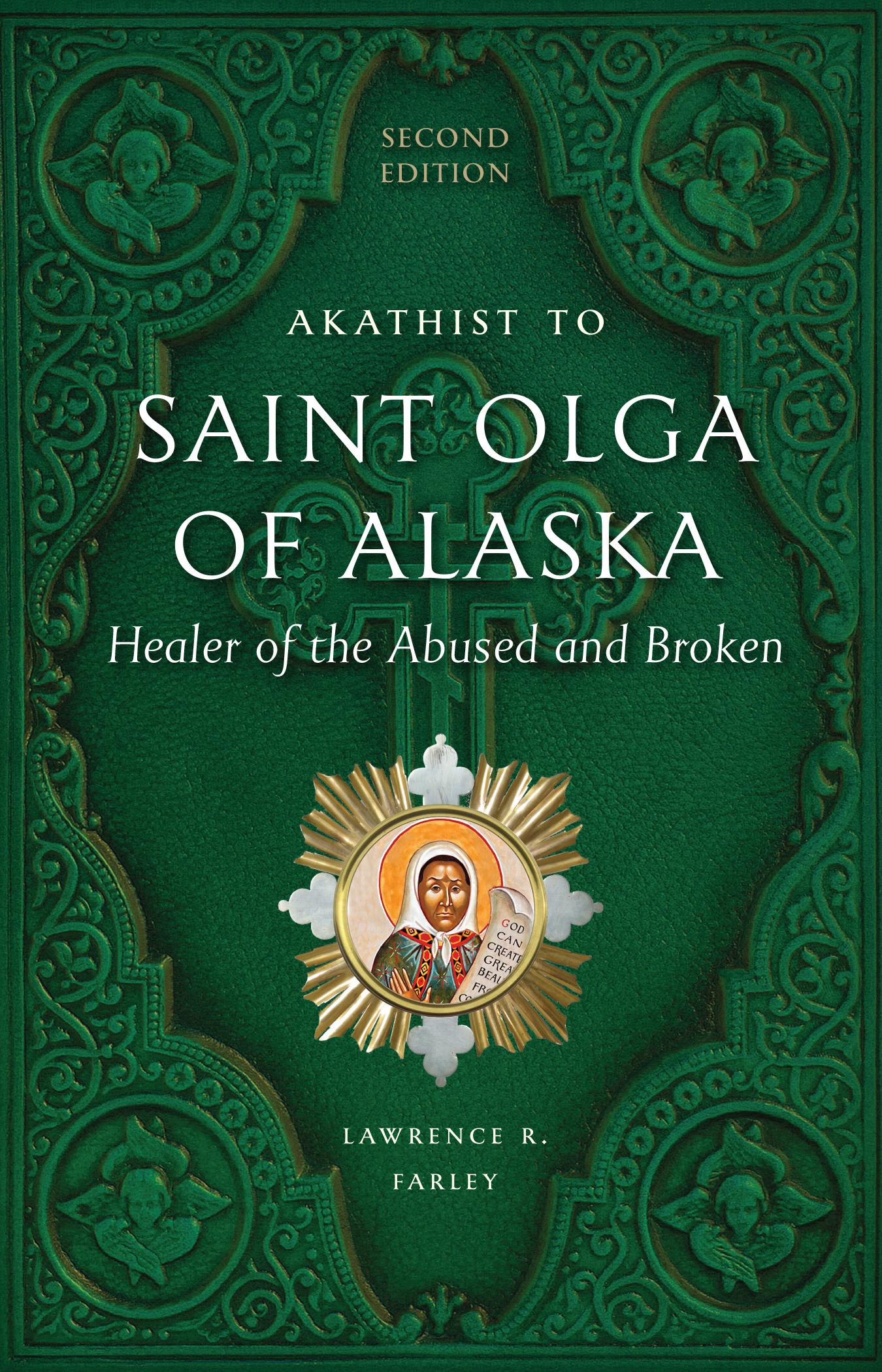
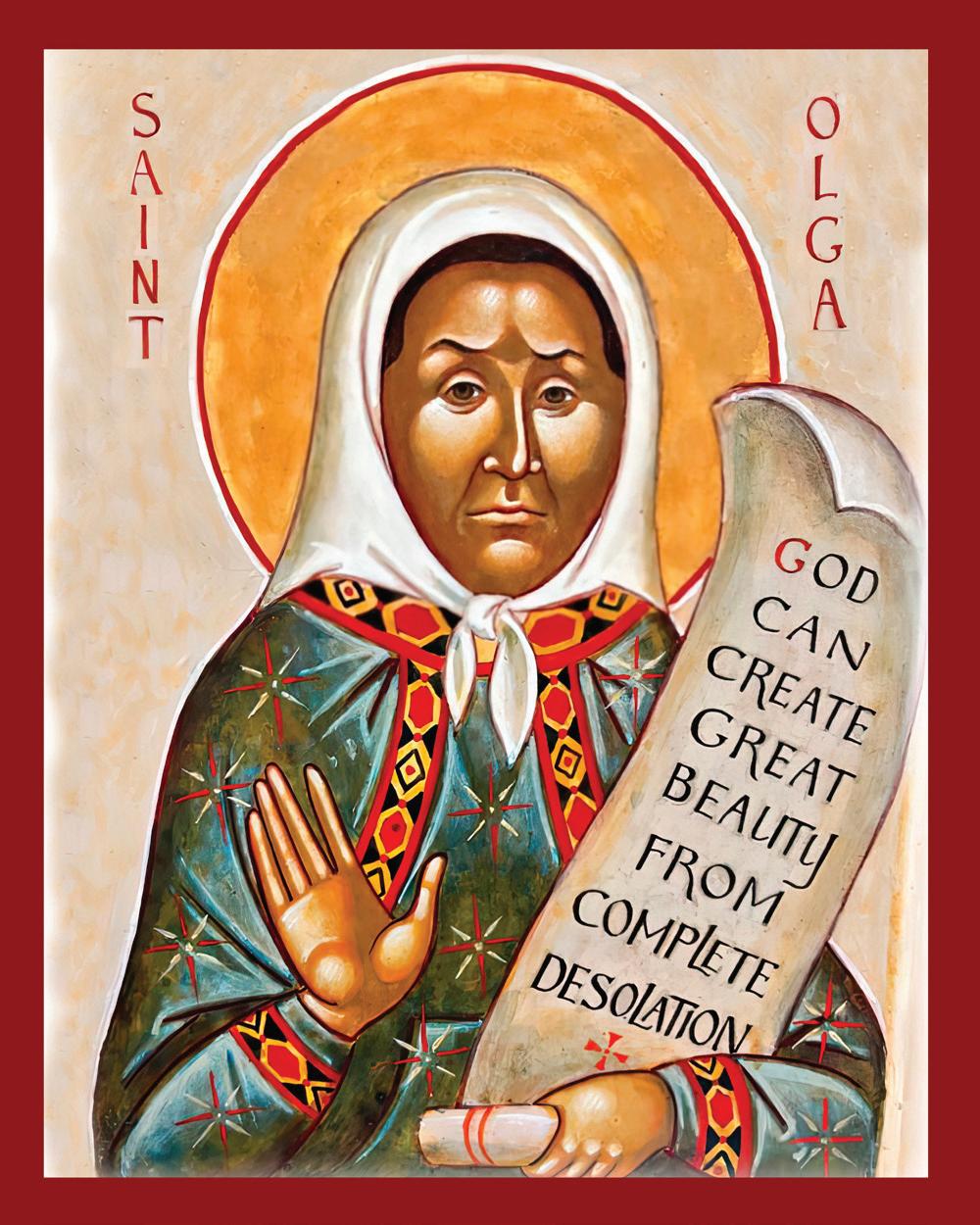
Icon of Saint Olga by the hand of Heather MacKean.
ISBN: 978-1-968863-08-1
Printed in Canada
Author’s Note on the Second Edition
As I wrote in the 2018 introduction to this akathist, then titled Akathist to Matushka Olga: Healer of the Abused and Broken, sanctity is selfauthenticating. That is, Christians know when they have a saint in their midst, and this includes Matushka Olga. That is why on June 18, 2025, the Holy Synod of the Orthodox Church in America (OCA) glorified Matushka Olga as “the Righteous Olga of Kwethluk” in a service presided over by Metropolitan Tikhon, primate of the OCA, thereby sealing the desire of the faithful to canonize her and officially declaring her to be a saint.
The Holy Synod’s action was in response to the groundswell of devotion that, well before St. Olga’s canonization, had inspired her icon and prayers to her, including this present akathist. Christ has promised to guide His Church into all truth (John 16:13) in matters of the heart as well as the head. The Lord leads His
Church to accept such important things as the Nicene definition of Christ’s divinity as well as such homely things as recognizing a saint who should be canonized and held up as a universal example for Christians. Thus, it is through the work of the Holy Spirit that we welcome St. Olga of Alaska, the Righteous Olga of Kwethluk, into the church calendar and into our hearts and lives.
Saint Olga, pray to God for us!
—Archpriest Lawrence R.
Farley
Feast Day of St. Matrona of Thessalonica March 27, 2026
Introduct Ion
Sanctity is self-authenticating. That is, Christians know and recognize real holiness when they see it. We do not need to wait for synods of bishops to officially declare someone a saint in a canonical act of glorification before we can know that he or she was a saint. Indeed, it is because of this prior recognition of sanctity on the part of the Christian community that the official pronouncements of episcopal synods are made in the first place. The bishops place their seal on the testimony of their flocks, as they are part of the community that recognizes that a saint has been among us.
This is the case with Saint Olga of Alaska. As the good Christian people of Alaska knew that Elder Herman was a saint while he walked among them, so they recognize the sanctity of Matushka Olga as well. This is especially true since people all over the North American continent have recently experienced her miracles in visions, healings, and encounters.
Saint Olga was born in 1916, a Yup’ik of Alaska. When her husband, the village postmaster, was
ordained priest, Olga found herself mother not only to her own children (she would bear thirteen, of whom eight survived), but also spiritual mother and matushka to those in her parish. Olga served quietly, working as midwife in her village and constantly caring for the needy. Though her own family was poor, she often gave away her children’s clothes to those who were poorer. Matushka had a special gift in working with those who suffered abuse, especially sexual abuse. In her quiet ministry as midwife to the village, she was known for her ability to discern when a woman was pregnant, even before the woman knew herself. After her repose on November 8, 1979, many people experienced her coming to them in dreams, bringing her healing gifts. Matushka Olga’s sanctity reveals the possibilities for genuine theosis and holiness, even for those living in the world.
The sanctity of Saint Olga is significant for another reason as well. When one surveys the list of saints in the Synaxarion, one might be tempted to conclude that sanctity is something of a male preserve, for men quite outnumber women in our hagiographies. Also, monastics quite outnumber people “in the world,” so that it is even more tempting to conclude that sanctity
is not really possible outside a monastery, or that people attempting to be holy in the world should strive to live as if they were monastics. In short, our concept of holiness has become monasticized. We do not quite believe that one can become a saint if one is married, bearing and raising children, and living as a layperson in a parish.
The life of Saint Olga reveals that it is otherwise. Sanctity is possible for anyone—even for married laypeople living unexceptional lives in their own parishes, going to services, keeping the fasts, saying their prayers, serving on church committees, and interacting with the other parishioners at the post-Liturgy coffee hour. One does not need to be a celibate or a martyr or plant churches to be a saint. God can take, use, and transform any heart He is given.
Copyright ©2026 by Lawrence R. Farley.
Akathist to Saint Olga of Alaska
Konta KIon 1
(Tone 4)
Our God who makes the moving curtain of the northern lights1 made you as a living light, shining in the far north and lighting up the desolate with His great beauty. Beholding this radiance, we your children lift up our voices and sing: Rejoice, Matushka Olga, healer of the abused and broken!
i kos 1
(See Acts 9:36f)
You labored in the far north as a new Tabitha, making clothes to shelter the poor from the cold and warming their souls with your love. We who endure the icy winds of this age also find shelter in your heavenly intercession and offer you these praises:
1 In a vision, Olga once said, “The moving curtain of light was to be for us a promise that God can create great beauty from complete desolation and nothingness.”