Kisholoy is produced by youth members of Ananda Mandir. Thearticles, drawing or photographs of this magazine are copyrighted and should not be reproduced in any other forms without the consents of the owners.
We would like to acknowledge the contributions of the followings:
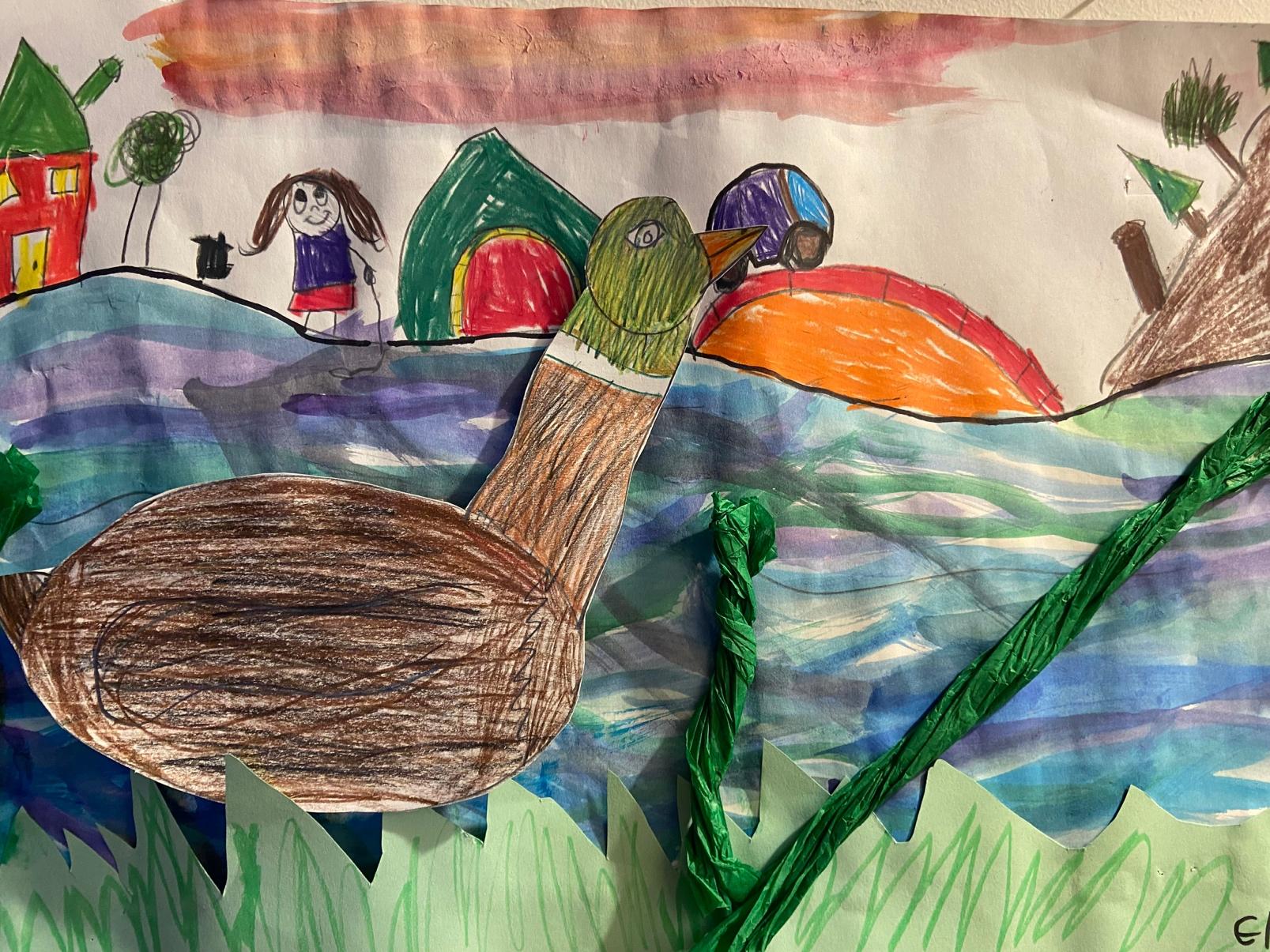
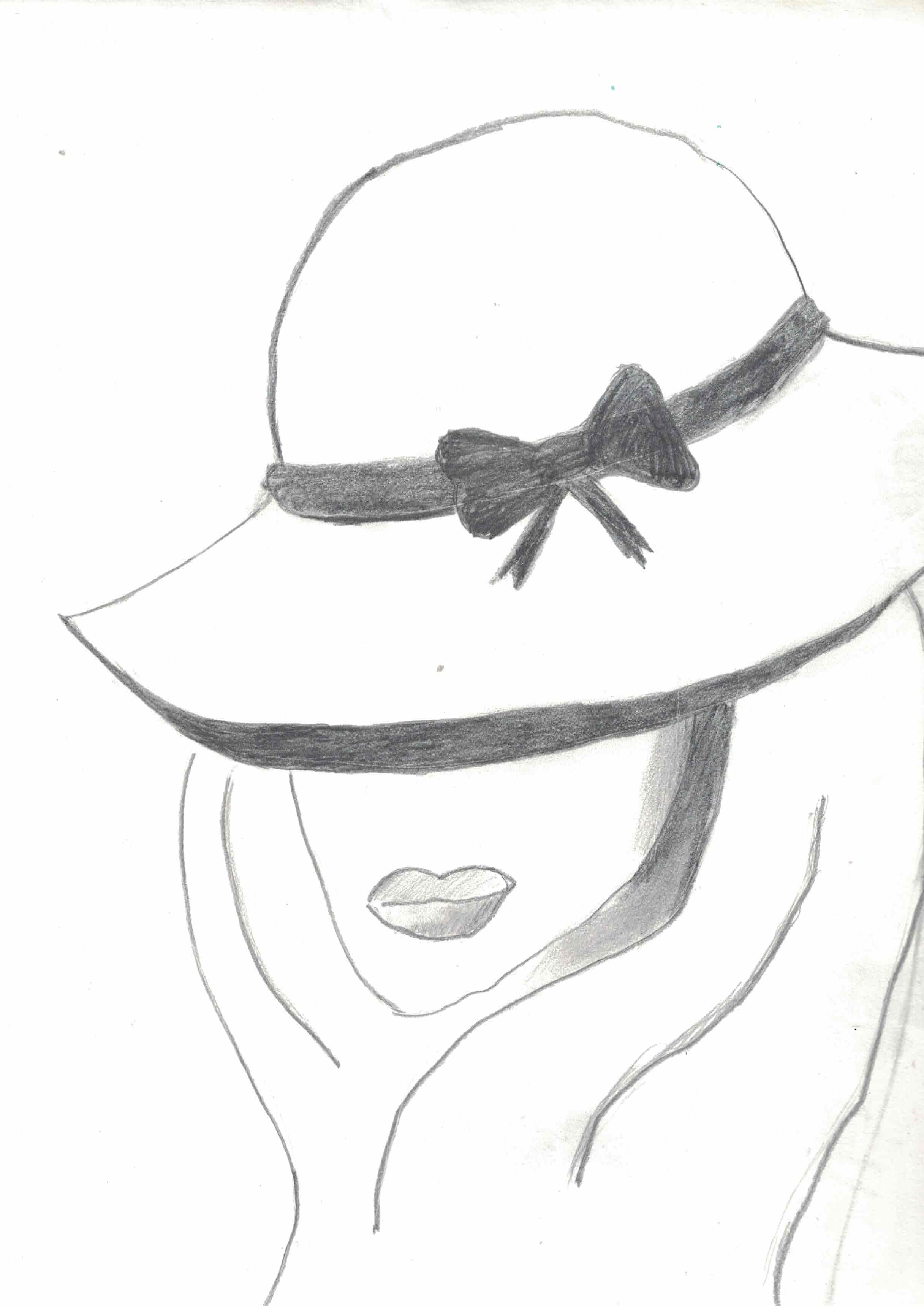
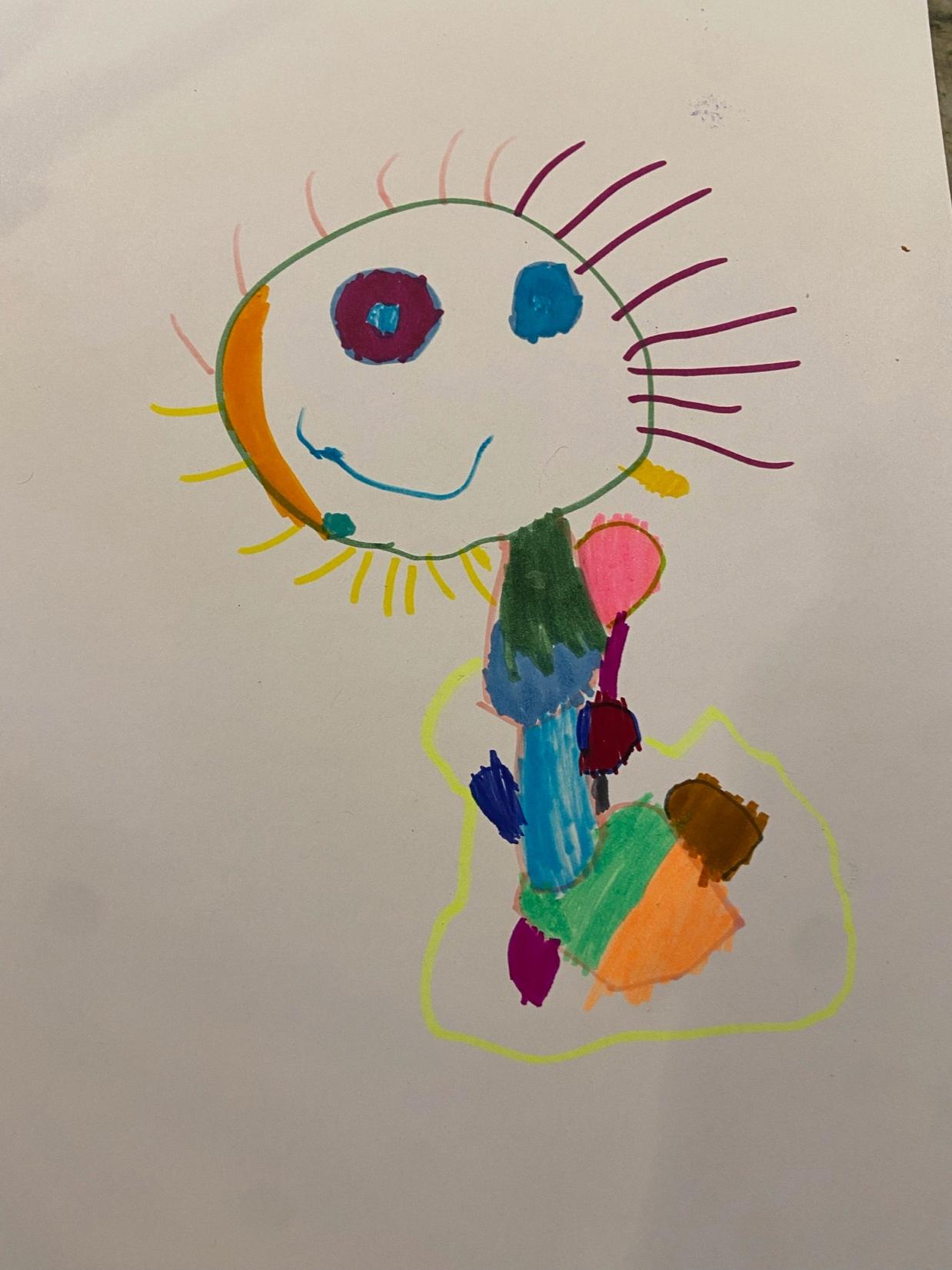
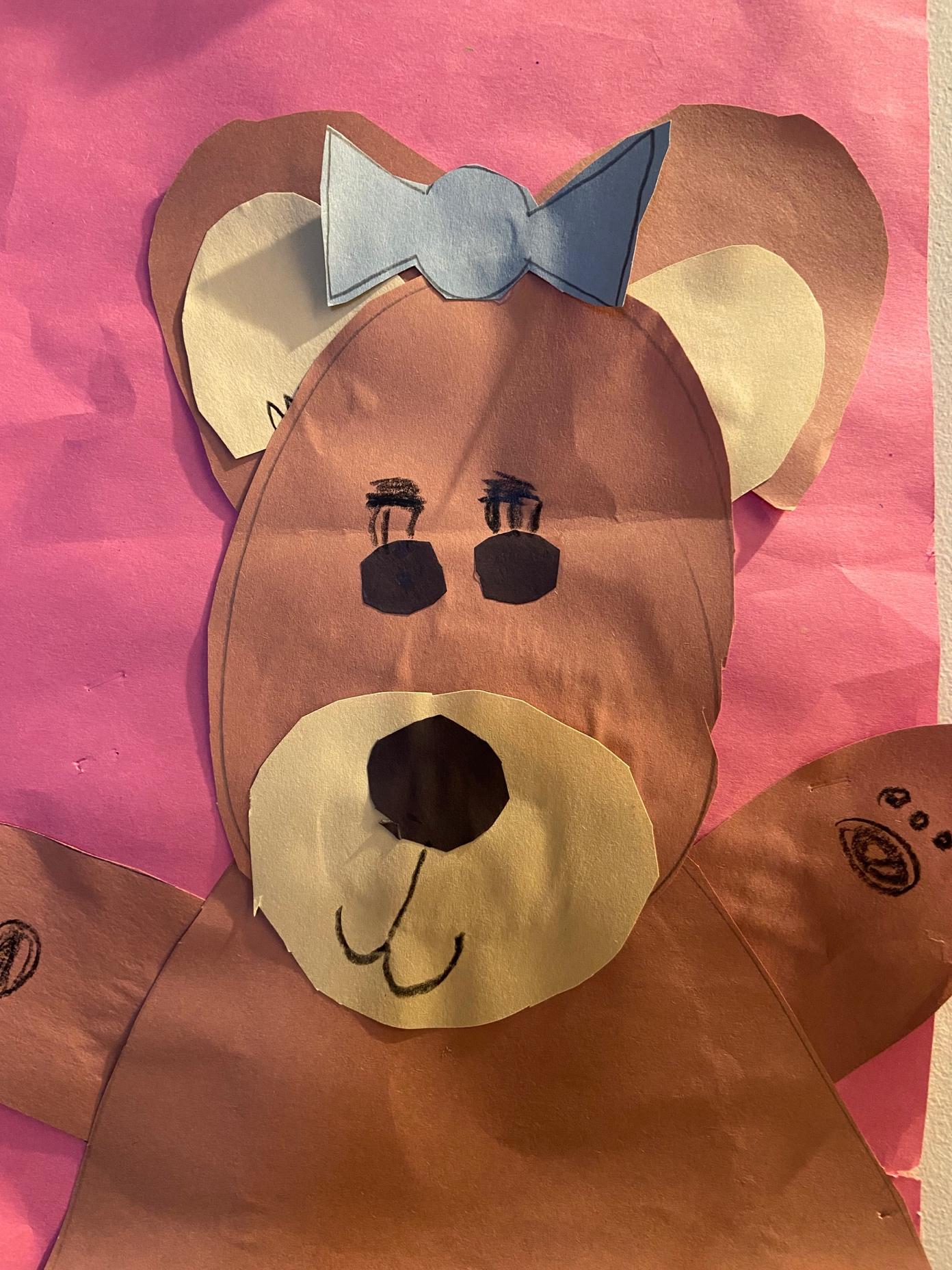
Drawing: cover - Ella Pancoast (age 9); Inside - Nora Pancoast (age 3), Sophie Pancoast (age 5), Elina Daw (age 6), Aarohee Dhara (age 8), Anooshka Sen (age 8), Adrija Bhattacharya (age 10),
Editorial: Dipak K. Sarkar, Utpal Sengupta, Sudipta Bhanja Choudhury
Magazine Composer: Dipak K. Sarkar
For information about the Kisholoy – contact Dipak K. Sarkar via email (Dipakksarkar@hotmail.com).
Drawing by - Anooshka Sen (age 8)
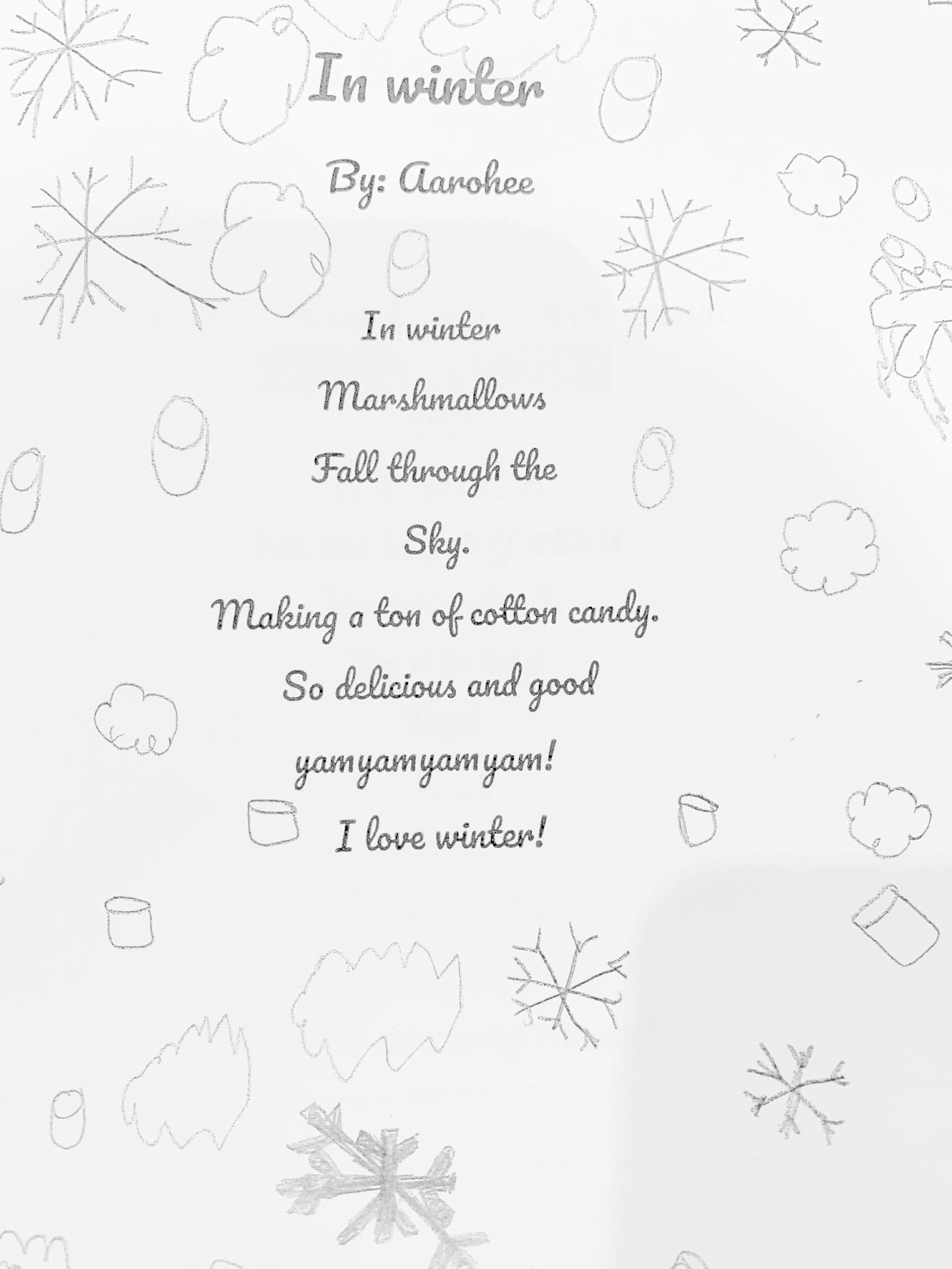
In winter
By - Aarohee Dhara (age 8)
Drawing by - Nora Pancoast (age 3)
Your life has meaning
By - Sahil Ghosh (age 12)
We are d iver se, With faults and virtues, What’s your blu eprint?
Color, Race, Money, and Religion, describ e only a smidgen, The burden of stares & disrespect not to melt, Is too much to pelt,
Powerless, Enraged, Lonely, Tired
When the sky turns dark, The universe appears, stark, Our true nature grows obsolete, time seems to fleet, Don’t stand down!
We all live, aiming to be renown Why should we suppress ourselves?
When we can work like elves, Sometimes we just need a leap of faith,
To realize we all are made of flesh and bones…
“What is your life’s Blueprint?” - MLK
The end –
Drawing by - Sophie Pancoast (age 5)
Under the Moon
By - Aniket Roychoudhury (age 13)
The moon
A beautiful sight
A source of light in the night sky
A celestial body
Light and dark
Two sides
Wherever there is light
A shadow is sure to follow The moon is split into two One of light and one of darkness It is simply a balance
Halves
Two parts of a whole
The moon
A side basking the darkness And one alight in the blaze
Both sides are at a standstill
Balance
Although each are opposite Although each are contrary They are complementary And give rise to each other As they interrelate with one another
Sides
Opposite sides of the moon One is alight while the other is in darkness They are conflicting forces Yet they are interdependent
Halves
A mother and a son
Split between different worlds
Yet they are still interconnected By bonds which go beyond that of this world And although they are separated They are still connected as they fall asleep Under the same moon
*This was inspired by the idea of Yin Yang, an ancient Chinese philosophy, and by Taoism, a religion and a philosophy from ancient China. Yin Yang is a Chinese philosophical concept that describes how obviously opposite or contrary
forces may actually be complementary, interconnected, and interdependent in the natural world, and how they may give rise to each other as they interrelate to one another.
The end –
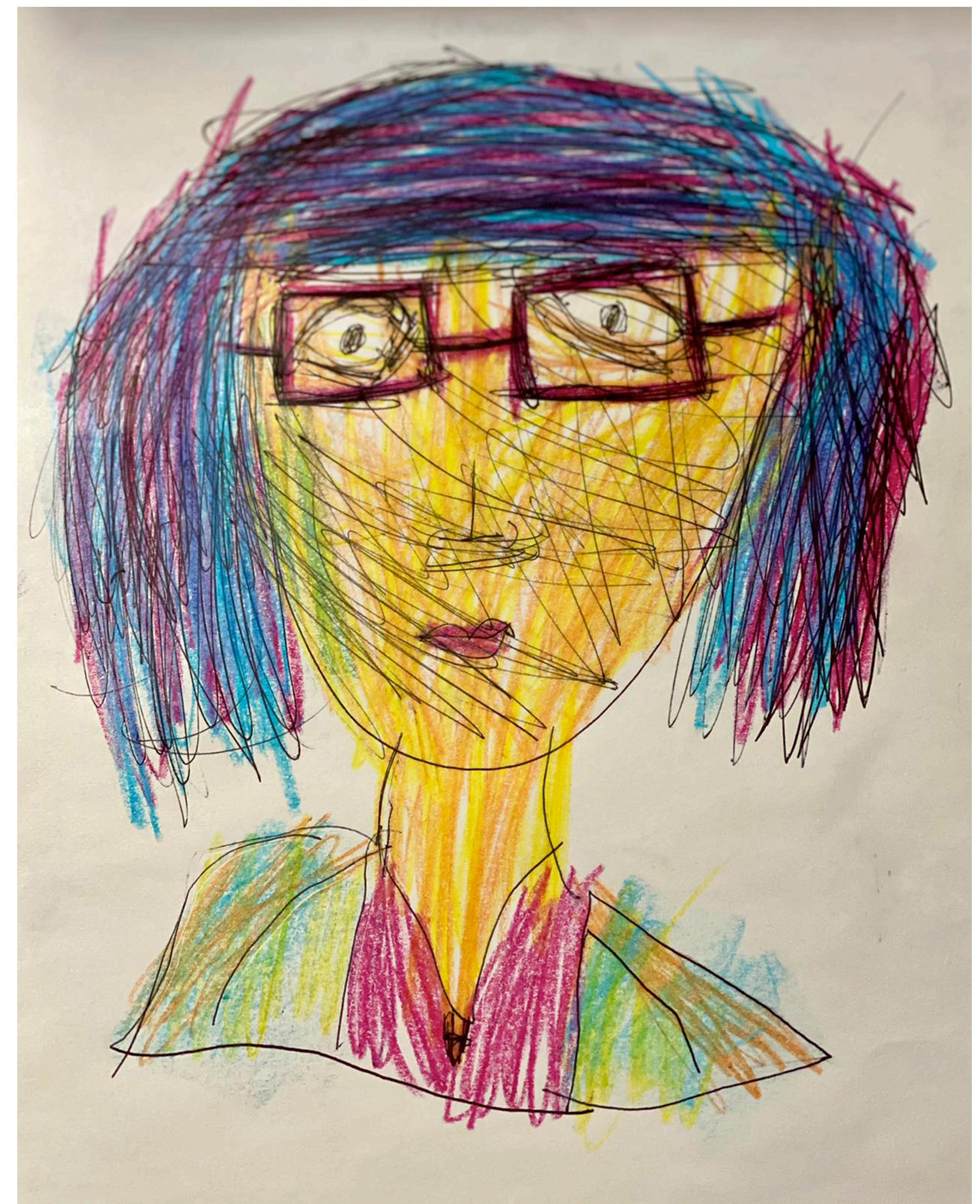
Drawing by - Aarohee Dhara (age 8)
I made the portrait of Aaji (dida) as I love her and wanted her to hang it on the door of her room.
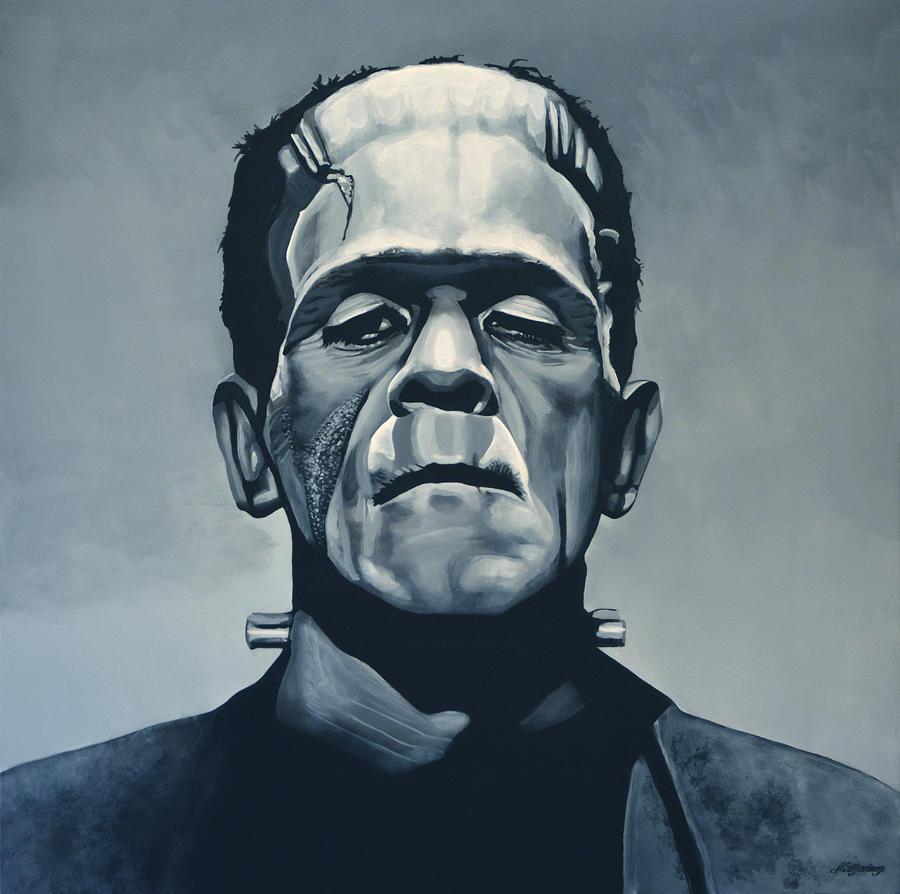
Frankenstein - The Monster or the Maker?
By - Aishik Sen (age 16)
In 1816, a teenage girl named Mary Shelley was given a challenge by her friend, Lord Byron. The challenge was to see who could write the better ghost story. The very next year, at the age of 19, Shelley published her ghost story, and it soon became one of the most popular horror stories on Earth. The book was named Frankenstein, after its main character Victor Frankenstein. Victor Frankenstein, the main character, is a man obsessed with nature and the idea of creating life. After years of work, Frankenstein eventually succeeds in giving life to a creature sewn together from dead bodies. The author draws interesting connections between Frankenstein and the creature, eventually leading the readers to a question of who really fills what role. Is Frankenstein the monster, or the maker?
First, let’s consider the question in a literal manner. Is Frankenstein the monster or his creator? Despite the book being out for more than 2 centuries, it is still a common misconception that Frankenstein is the monster, which is not true. In reality, the monster was never given a name by his creator, Frankenstein, but was only ever called “monster.” This gives us an interesting view into Frankenstein’s way of thinking. Despite the fact that he created every aspect of the creature and brought it to life, he labels the creature as the monster instead of recognizing his own fault. The very next thing that Frankenstein could think to do was flee. He ignores its existence until it kills his brother, at which point he develops a deep hatred for the creature.
This question can also be used to ask something slightly different. Instead of a literal question, we can observe the more metaphorical side of the question. Is Frankenstein (Victor) the maker or the monster? We can develop an answer by observing an interaction between Victor and the creature, when the creature informs Victor (and us, the readers) what exactly he’s gone through since his creation. The creature makes one thing explicitly clear. “He had abandoned me, and in the bitterness of my heart I cursed him”(156). Frankenstein, the closest thing he had to a father, ran away from him, and so did everyone that saw him. He hid in a village and learned to speak, but was still kicked out from the village once he was discovered. Because of his physical appearance, everyone treated him as a monster, despite now having the same maturity as a peaceful, well educated person. During the interaction where the creature tells Frankenstein what he’s been through, we see another point to consider from Frankenstein. When listening to the creature, he’s swayed by his stories and requests, and even admits “did I not as his maker owe him all the portion of happiness that it was in my power to bestow?”(176). Frankenstein acknowledged him as a “creature of fine sensations” but the moment he remembered the creature’s physical appearance, he started treating him as a monster again.
This is where we begin to see a strange connection between Frankenstein and the creature. The creature repeatedly draws a connection between himself and Adam, the first man. “I ought to
be thy Adam, but I am rather the fallen angel, whom thou drivest from joy for no misdeed”(114). As the creature exhibits more and more human tendencies, Frankenstein becomes more harsh and inconsiderate. We see this when Frankenstein, in a fit of rage, destroys the mate he was making for the creature. His main reasoning for it was that “a race of devils would be propagated upon the Earth” if they were able to mate. He ruins any chance of the creature being happy, so the creature curses him and promises revenge. Once again, we see that Victor’s obsession with nature and his tendency to play god have brought nothing but destruction to him. His desire to create life resulted in the loss of everyone he loved. Through this, we see that even in a book about a man and the monster he created, there is no true definition as to who the true monster is.
The end –
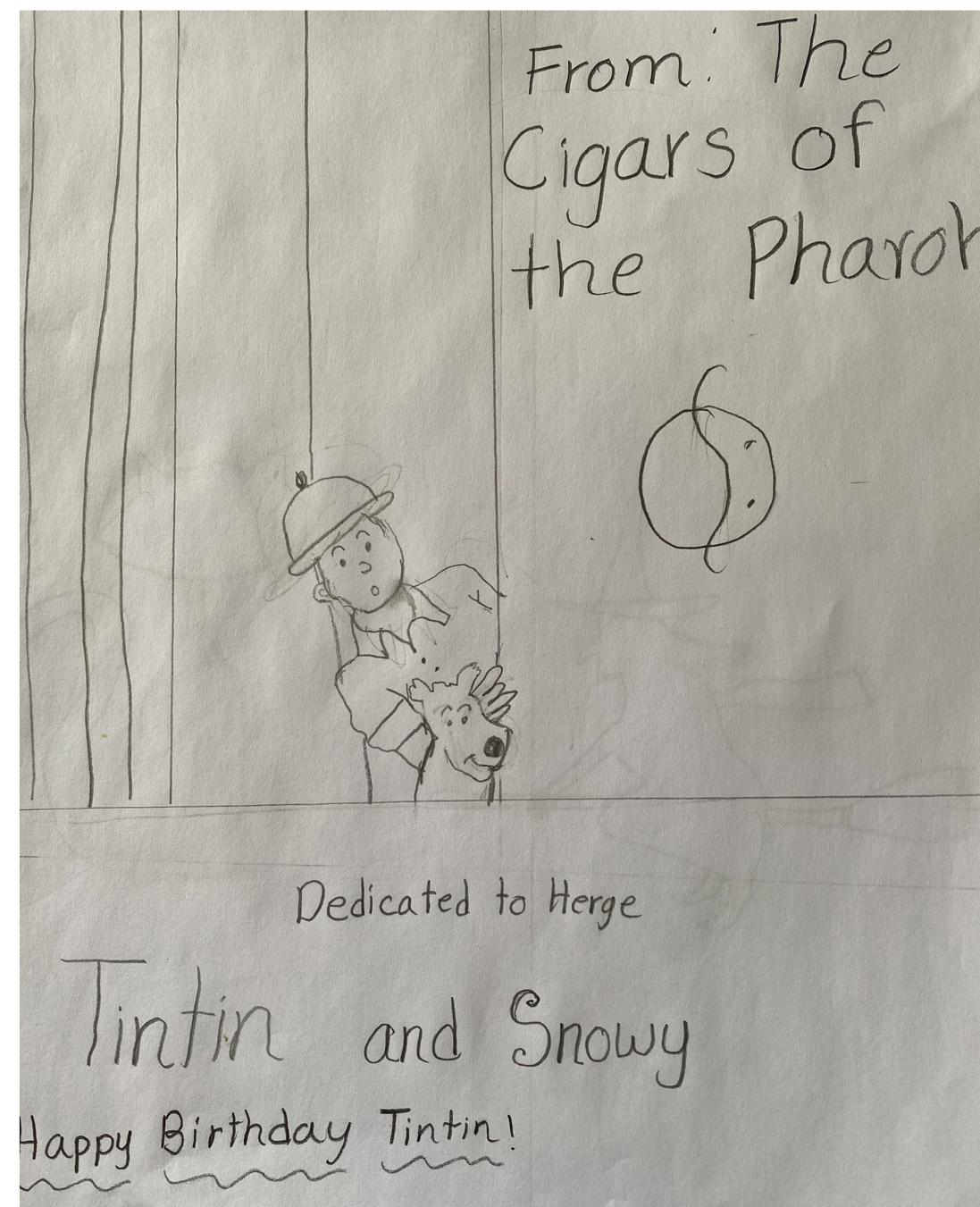
Drawing by Adrija Bhattacharya (age 10)
I love reading Tintin and his adventures. This is one of my favorites because I like Egyptology. The world celebrated his 93rd birthday on January 10th.
Doomsday
By - Shama Dinesh (age 21)
Dread.
The end of the world lies a mere fateful night away Millions fallen; continue to perish till the last breath of the day
Freedom for us; freedom for life, to survive
An illusion which sparks hatred and breeds strife.
Destruction.
The dead lie in hundreds and thousands
Families lost, killing your own foes and friends
Trapped in an eternity of hopelessness
The powerful reigning over the oppressed.
Death.
The war is won and is lost in a day
The cost of it people remain unwilling to pay
The dead are forgotten, the wounded abandoned People lose faith as humanity remains burdened.
Despair.
Streets tainted with blood; rivers run red
The Reaper runs rampant as the tears are shed Struggling against nameless, faceless foes