Kisholoy is produced by youth members of Ananda Mandir The articles, drawing or photographs of this magazine are copyrighted and should not be reproduced in any other forms without the consents of the owners.
We would like to acknowledge the contributions of the followings:
Articles: Anooshka Sen (age 8), Auroni Sen (age 11), Ruhani Sarkar (age 12), Shivan Mukherjee (age 16), Shama Dinesh (age 20)
Editorial: Dipak K. Sarkar, Utpal Sengupta, Sudipta Bhanja Choudhury
Magazine Composer: Dipak K. Sarkar
For information about the Kisholoy – contact Dipak K. Sarkar via email (Dipakksarkar@hotmail.com).
Self Driving Cars: Give it a Second Thought
By- Auroni Sen (age 11)
People have always imagined self-driving cars would come in the future, and now they are finally here. But are they as good as we thought they would be? Self-driving cars have faced a lot of controversies, with some people thinking there is nothing wrong with them and some people being against them. There are a lot of pros and cons when it comes to self-driving cars. I think that self-driving cars can hurt more people than they can help. I think this because selfdriving cars don’t allow the drivers to be in control of their vehicle, they could get out of control, and if the person who owns the car isn’t driving, why would they get insurance?. These are reasons why I don’t think self-driving cars are good.
Self-driving cars do not allow the person driving the car to be in control of the vehicle. People like to be in control of their actions, especially when they are driving. When the technology in self-driving cars tries to correct your every move, it can be frustrating and confusing for people. It’s almost like we aren’t trusted to make our own decisions and need a computer to make our decisions for us. They restrain people from being in control. The cars will take over your driving from you, and while this can help in many ways, it can also be bad. There will be cameras and sensors everywhere and this is not going to feel normal. It’s going to make you feel controlled by a piece of computer software. For years people have imagined flying cars or cars that could drive on its own, and park on its own. But now that it’s really here, it doesn’t seem like how we imagined it to be. If cars can drive by themselves now, what else can they do? Normal, everyday tasks are getting easier for people because of computers. For example, nowadays, people rarely leave their houses because they can do things from their house. Things like online shopping and smart TVs don’t require people to leave their houses and go to stores or the movies. Kindles don’t require people to actually pick up a book and read it. People hardly write on paper anymore because everything is online. Now there are self-driving cars, and people won’t be able to do things by themselves. All these reasons connect to the fact that people should be able to make their own decisions.
My second reason why I don’t think that self-driving cars are a good thing is the fact that technology isn’t 100% accurate all of the time. Relying entirely on technology could result in people getting hurt. The car can glitch at any given moment, risking the lives of the people in and around the car. This is highly dangerous and defeats the whole purpose of the technology in the car, which is to keep humans from making mistakes while driving. What if the car is the one who makes a mistake? When a glitch happens on your computer or your phone, it’s only momentary and doesn’t cause any real damage. But glitches can be deadly when it happens in a car with people in or around it. These cars can lose control and hurt people. If a person who owns the car isn’t able to control the car, the car could have a mind of its own and that could be deadly. Technology has gotten better, but that doesn’t mean it can’t make mistakes. The more dependent we become on technology, the more we get hurt when things go wrong.
The third reason why self-driving cars aren’t good is the legal issues. Legally, the driver is responsible for the safety of the vehicle. If something happens, who is responsible? Shouldn’t the manufacturer of the car be held responsible if something happens? The person held accountable for any damage should be the driver, but if they aren’t actually driving, what should they do? If the driver isn’t actually driving, why should they get insurance? They aren’t
technically responsible for any accidents. Should the person who owns the car get a driver's license, since they aren’t the one driving? This is another problem that needs to be worked out. A self-driving car is not quick to respond to sudden movements. If a car comes flying out of nowhere and almost hits you, your car will not be able to turn to the side in time to avoid getting hit by the car. It won’t be able to brake fast enough if an animal or a small child suddenly appears in front of your car. This could be harmful as well. There are a lot of legal issues that have not yet been accounted for when it comes to self-driving cars.
Based on the evidence stated above, you can conclude that there are a lot of ways selfdriving cars can harm people. Self-driving cars don’t allow the driver of the car to be in charge. The car could have a glitch and hurt many people. Then come the various legal issues that need to be sorted out about self-driving cars. Self-driving cars can harm people and can overall be a danger to society. Drive a regular car instead of having a car drive you.
- The End –
Picture gallery
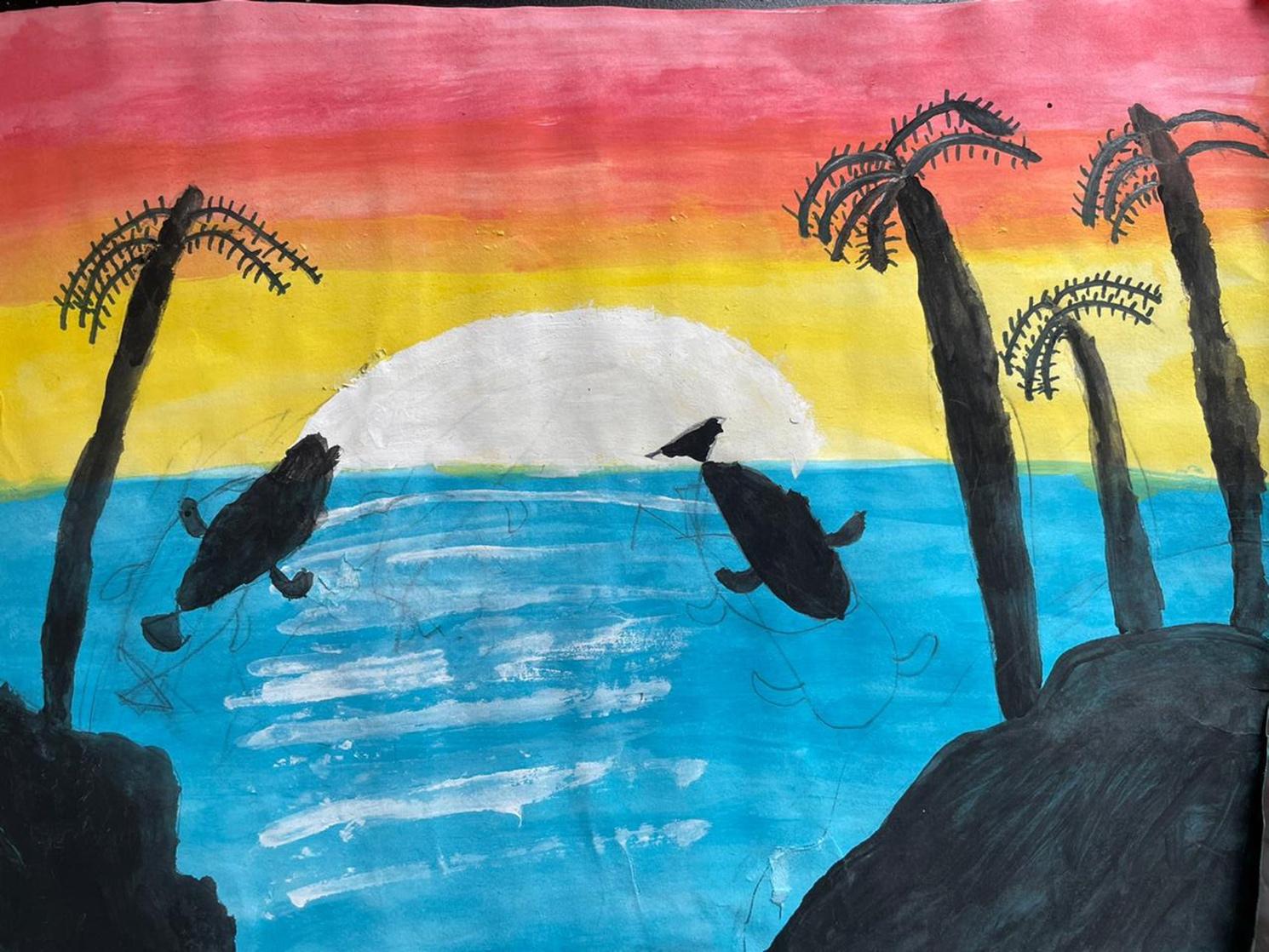
Drawing of Prisha Chatterjee (age 7)
When there is a despair of diving in the water there is also a hope of rising up to the sun rays. But both have its own purpose !!
The Real Durga
Ruhani Sarkar (age 12)
“Durga…...eee Durga…..., go and oil your hair! There will be people to see you. Hurry up! ” Amma yelled while cooking the parathas.
Eleven years old Durga was milking her cow, which was tethered to the mango tree in their front yard. She always wondered, “Why can’t I play with Raja and Dev? They are playing without getting told to lose weight and try to be fairer."
She kept the milk can on the verandah and amassed hay to feed the cow Her twin brothers Raja and Dev, who were only 8, were busy playing football with a big, round grapefruit and perturbed her so much that she couldn’t hear herself think.
She went to her room and looked at her clay dolls she played with, and thought, “Who will take care of them? Will I ever get to play with them again?”
“Durga, a suitor is coming today and he is very rich. You will be married next week. Oil your hair! What will they think? Wash your face too.” Amma shouted from the kitchen.
Durga felt a heaviness in her chest. She looked at the mirror hanging on the earthen wall of their bedroom. What could she see in the mirror was a child’s face burdened with lots of unsolved questions, “Who will brush her hair and kiss her goodnight before bed? Who will wake her up in the evening if she falls asleep without taking food? Who will cuddle her when she is sad?” A tear rolled down her face as she thought about all the things she would miss after marriage.
Durga was devastated. She still wanted to complete school and become a teacher. The last thing she wanted was a marriage. Finally, though she was very skittish, she gathered all her courage to tell her father about her feelings.
“Bapu, may I speak to you, please?” Durga quivered while Banwarilal was cutting some corn. “I don't want to get married, Bapu. I still want to continue my studies, and be a teacher. Please, Bapu,” Durga begged with teary eyes.
“What? Such an audacious demand is not tolerable in this family. NO, of course not. Look, your husband has not demanded any dowry, and he has enough money to feed you. Only men can work, and you will get married to him. That is final. How can you be so selfish?” Banwarilal screamed and vehemently denied his daughter’s plea.
Durga ran out of the house as quickly as she could. She ran and ran down the rocky hills until she felt the sweet breeze of the jewel blue Ganges.
She soaked her feet in the crystal clear water of the holy river and whispered to herself, “If I have to stop the marriage, I need to do something fast. My new husband’s family is coming in the evening.”
Durga and her family lived in a small village in the foothills of the Himalayas. They didn’t belong to the elite class of people of the village whose children went to town to get higher education. They were just poor farmers, so they had to marry their daughters off to a somewhat rich boy. They didn’t even give a second thought about it.
Her mother also got married at the age of ten, and Durga was born when she was only thirteen. Durga had seen her mother suffer. Her mother, Sharmila, had no education, hence, no voice. Sharmila was not capable of thinking by herself and couldn’t make a single decision on her own. It felt like she was a prisoner in her own home. Most of the time she was sick and depressed. Durga didn’t want the same to happen in her life. Then, a ray of hope sparkled in her mind, as she thought, “MS. BHAVNA! She is the only hope.”
Durga’s elementary school teacher, Ms Bhavna, always told her students, “Marrying under the age of 18 isn’t legal and it doesn’t comply with the law If this happens, girls are free to go to the police and district magistrate. They can stop the child marriage.”
But, the parents never listened, and the girls in her class started to slowly drop-out one by one, getting married.
Durga rushed to Ms Bhavna’s place and told her all about the situation.
Ms. Bhavna looked at Durga’s eyes and was surprised to see how circumstance had forced the little girl to shake off her childish immaturity and made her as grown up as possible, “Oh my, we must tell the district magistrate. We need to stop this, at once.” Ms. Bhavna hurried to get her purse as she dragged Durga to the magistrate’s office.
The magistrate informed the police, and they headed towards Durga’s house.
“Banwarilal, you need to change your perspective towards girls. Your daughter can get an education, a job and make money by herself. She can get married later on. Think about it, do you want her to get married at such an early age and suffer her whole life? Don’t you want her to be happy? Child marriage is a human rights violation and is against law. If you still get your underage daughter married, we will put you into prison,” one police officer explained to Durga’s father.
Ms. Bhavna called Sharmila separately and said, “ You are her mother Sharmila, you should know how difficult and painful it is to get married at such a tender age. Look at you, you are only twenty four and already with three children. Your health has taken a toll for giving birth to so many children at this young age. Do you want the same fate for your little girl? Don’t you want her to enjoy her childhood? Let her grow up. Don’t you want her to live a respectful happy life?”
Sharmila broke down and started to cry, “ No, I don’t want my girl to suffer as I did. I want her to get education and grow.”
Banwarilal was in unison with Sharmila and hugged Durga, “I promise, I will never make this mistake again. I am so sorry, you are not getting married now. You can study as much as you want.”
Durga was very happy and thanked Ms Bhavna and the police officer for helping her.
Ms. Bhavna said, "If anyone deserves applause, it is you Durga. You have shown lots of courage to stand up against this heinous crime of child marriage. If every girl comes out and raises her voice against getting married at an early age, our society will be so much better. In the quest of a better world, everyone, including a small child, can contribute in her/his own way. We don’t need to fight against evil people all the time, sometimes, we need to fight against evil practices of society too. You are our real Durga, the goddess who fought against the evil and tried to make a safer world, safe for everyone including the girls.”
Footnotes: Estimates suggest that each year, at least 1.5 million girls under 18 get married in India, which makes it home to the largest number of child brides in the world - accounting for a third of the global total. Nearly 16 per cent adolescent girls aged 15-19 are currently married”. unicefindia.org
- The End –
The Rise of Cryptocurrency
By- Shivan Mukherjee (age 16)
Bitcoin and many popular cryptocurrencies have recently reached record highs in the midst of major bull runs; this can be attributed to many major corporations including Tesla beginning to accept such currencies as modes of payment as well as the mass popularization of cryptocurrency across the masses.
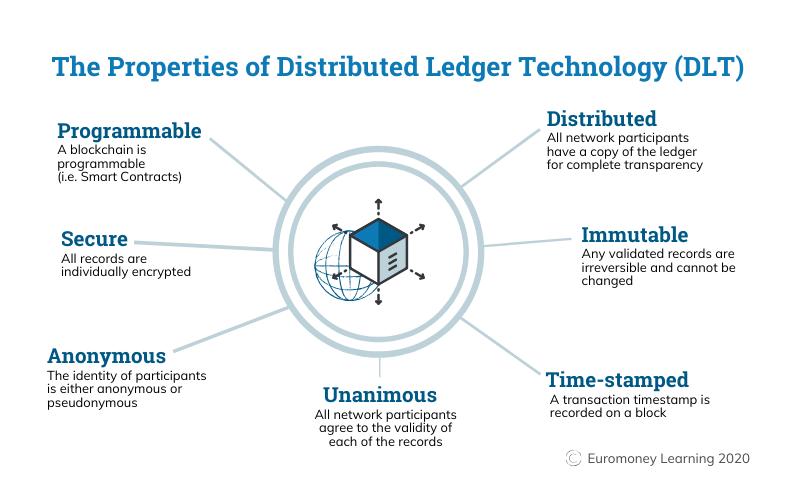
Cryptocurrencies are networks of virtual currency, many being decentralized, that are considered alternatives to traditional mediums of exchange. These currencies are secured using cryptography and encryption which are used to verify transactions. Bitcoin, specifically, uses the blockchain network which acts as a ledger of transactions that is immutable once added by anyone. The validity of any transaction is guaranteed through this blockchain, enabling Bitcoin to be decentralized from any singular country or bank and instead finding its intrinsic value from its system. While not all forms of cryptocurrency are created equal, they each have their own pros and cons which cater towards all populations. Ethereum, for example, expands the purpose of blockchain with the ability to create smart contracts that are secure and do not need any external verification. This enables money to be held in escrow, and for transactions to occur only upon the agreement of both parties, all without the hassle of dealing with banks and bureaucracies. Such contracts are executed and created with the ability to code on the blockchain (utilizing a coding language called Solidify) that allows for the contracts to be added to the network. Even further, there are little to no fees for such tasks either. Coins such as Ethereum are referred to as Altcoins or “alternatives to bitcoin.” However, while bitcoin is the most popular, it too has yet to truly become a consistent alternative for payments.
One of the major selling points of cryptocurrencies is the aspect of decentralization. This means that transactions are fast, secure, and cannot be seen by government regulators. While it is attractive to regular consumers, governments are wary of criminals utilizing such systems to launder money or avoid paying taxes. Other speculators are wary of the idea that cryptocurrency has been popularly considered a stock. The rapid increases in value of Bitcoin as well as other currencies such as DogeCoin have caused currency owners to hold the coins instead of actively using them as a method of monetary transactions. The current speculation is to attempt to gain money through cryptocurrency rather than as a medium of exchange. While there may be some uncertainties regarding the future of cryptocurrencies, with the market cap of cryptocurrencies reaching 1 trillion, one thing is for sure: it is not going anywhere for a while.
https://www.rochesterfirst.com/news/finance/rise- of-cryptocurrency/ https://www.investopedia.com/terms/b/blockchain.asp - The End –
Moment
By - Shama Dinesh (age 20)
It wasn’t much long ago that we watched and idolized someone, hoping to our best that we could reach half the success, fame, and happiness they have found. Actors, singers, athletes, writers. Maybe even someone we knew in person- parents, relatives, friends, neighbors. We then entered the path to achieve our goals and worked hard, losing track of time. Minutes and hours; days and years. And now for the first time, stuck in the middle of this pandemic, quarantined in isolation with nothing but our thoughts and regrets to keep us company, did we realize how fast time flew by.
The people we knew, fresh in their youth with an unmatched spirit, have grown old, their choices in life weighing hard on their shoulders. One peek at the mirror will reveal the same about us. We didn’t just age physically but we had our past reflect itself upon us, both the good and the bad. Each year that passed us by took us closer to the end of our lives and every minute that we spent chasing dream after dream, we found no time to question why we were stuck in this endless loop of dream chasing.
It all begins small- your first step, your first word. Then expectations grow higher and the pressure increases- good grades, awards, prestigious universities, reputable professions. Yet, we still yearn to grow further- promotions, bonus, pay-checks. With the professional side of life, our need to live with honor, dignity, pride, and privilege also increases. The one little thing we forget about most, is often - what happens next?
Your dreams are never-ending. Of course, it is wonderful to dream big and aim higher. But what of now? When will life stop being an uphill battle and be steady for you to enjoy all the hard work you have been doing?
In a few years’ time, when you look back to the prime of your life, you might even forget what kept you going; what made all the suffering worth it. You will forget the lyrics behind your favorite song today. You will forget the memories you made watching a movie or a show. You will forget the meaning behind the picture tucked in the middle of your favorite book. You will forget how simple things in life would bring you more joy than any amount of money ever could. In time, as we transition into adulthood, humanity and relationships take a backseat as our focus remains falsely fixed on erroneous priorities. We dream too big; we achieve some, we fail some. But the success never seems to measure up to the piling failures. Ultimately, all it does is sow the seeds of self-loathing. We forget to see the blessings we have now but instead focus on ‘if’s’ and ‘but’s’.
In the end, friends turn to strangers, family turns into an obligation. We have no time to build human connections that is not driven by ambition, envy, passion, or profit. We let the moments pass by, unseen, unheard, unchecked. We forget what it is like to be young, and full of hope. While we fall behind the pattern so clearly repeating itself for thousands of years, we never stop and wonder about what lies ahead in the end, and what matters now until then.