Kisholoy is produced by youth members of Ananda Mandir The articles, drawing or photographs of this magazine are copyrighted and should not be reproduced in any other forms without the consents of the owners.
We would like to acknowledge the contributions of the followings:
Articles: Anooshka Sen, Anirudh Sarkar, Shama Dinesh, Shivan Mukherjee,
Editorial: Dipak K. Sarkar, Utpal Sengupta, Sudipta Bhanja Choudhury
Magazine Composer: Dipak K. Sarkar
For information about the Kisholoy – contact Dipak K. Sarkar via email (Dipakksarkar@hotmail.com).
2020 – The year of the pandemic
By Anooshka Sen (age 8)
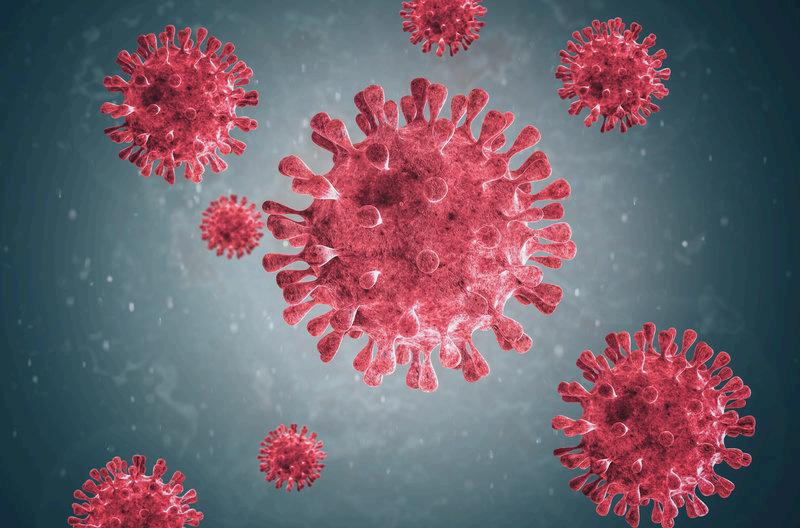
In the beginning of the year 2020 everything was normal, kids could go to school, grown-ups could go to work and people could take public transportation to reach office. We could meet our friends and family; play with our friends without wearing masks. But things were very different on the other side of the world, in China. People were getting sick with a strange disease, caused by a virus known as COVID-19.
In COVID-19, CO stands for corona, VI tands for virus, D stands for disease and 19 stands for 2019. Soon New York had the most cases and deaths, more than any other state in the U.S. As time passed the virus infected thousands of people and spread in all the countries. Life changed for everyone. Office and schools were closed. Kids had to attend classes online. Some grown-ups worked from home. But some people had to go to work even in the face of the virus. For example doctors and nurses had to go out to help the infected people. People started to run out of food and supplies.
Hospitals were overwhelmed, running out of space for patients and supplies to fight the virus. Scientists started working hard to finding a vaccine that would protect us from the deadly virus. And in December 2020 came the good news that some vaccines have been tested successfully and found safe for humans. I really hope that the vaccines work so that we can go back to our life as it was before the year 2020
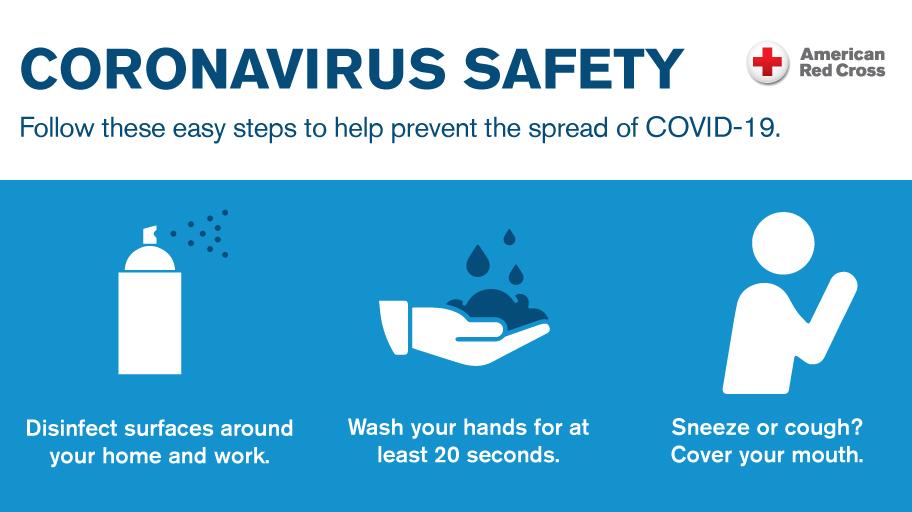
Image s ource: www.npr.or Image s ource: www.redcross.org
Picture gallery
By Anooshka Sen (age 8)
Evolution
By Anirudh Sarkar (age
14)
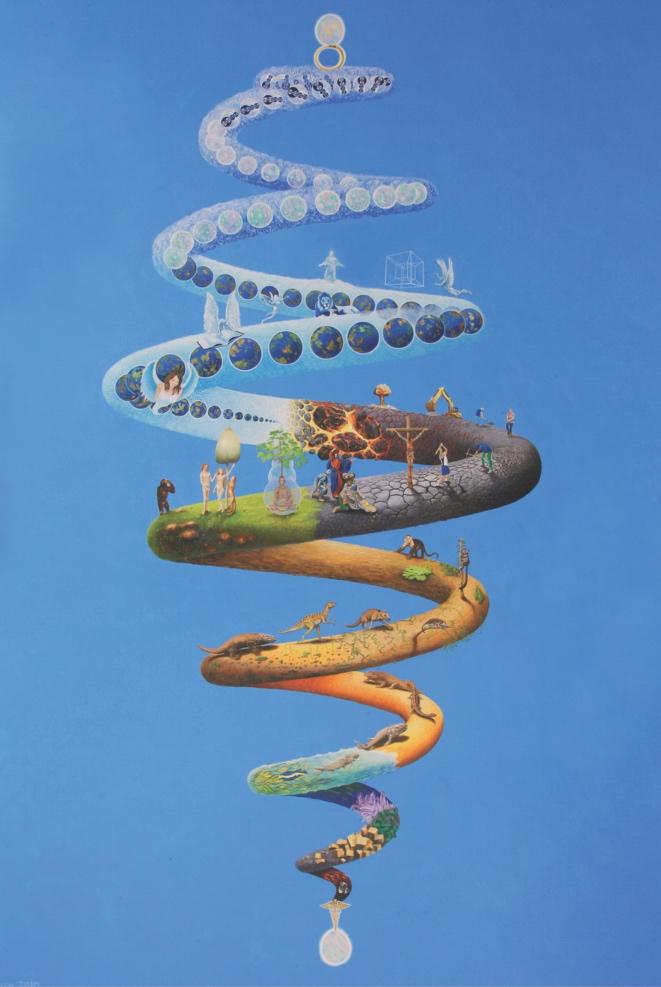
Evolution. What is evolution? Anyone can ask the most highly trained professions and their answer cannot be concrete. This is because, evolution itself is not concrete. The concept of evolution is no more real than the big bang theory. Charles Darwin’s theory of evolution is only so popular given that it has so much evidence behind it. The Darwinian theory was not developed inconspicuously. After a very long time of trial and error throughout the course of several scientists in the past few hundred years, is how we have a better understanding of it. Even though, in the whole grand scheme of things, this is minimal, given it’s a theory, not a theorem. Before Darwin, there was another scientist who had the idea that animals change for their betterment. Prior to Darwin’s path to surmount evolution theories as a whole, a scientist, by the name of Jean Baptiste Lamarck, had a few ideas that as a matter of fact, immensely assisted Darwin’s venture of data accumulation.
Jean Baptiste Lamarck was a scientist who had released his information out to the public in February 12, 1809. Which, coincidentally, was the date in which Darwin was born. He, contrary to common belief inspired Darwin’s data. During his many years of observations, he concluded few things that were completely wrong, and some that were practically the foundation of the modern idea about evolution. One of them, being that all organisms have a desire to be better than their former self, and then, in turn, become perfect, in terms of survival aspects in their certain environment. What it means is, that as you’ve seen before, you’ve seen animals on how they used to be as fossils and then scientists or tour guides in a museum showing you their modern variant and how they changed “for the better”. Secondly, he believed that at the snap of a finger, or completely derived from will alone, organisms can change their own bodies. The key in his report portrays that new traits of changes were acquired. Although it sounds normal, just like red hair, it’s not acquired. It is a new mutation encoded in your DNA. What it means for something to be acquired, is that phenotypes can be passed down to an offspring, not just genotypes. Before I shed more light into what I just said, it is important to comprehend and differentiate phenotypes and genotypes. Phenotypes, are physical traits. Physical traits, indicates aspects to animals such as muscle, weight, etc. Not anything that has cosmetic value such as a tattoo. Now coming back to Lamarck’s second statement, he stated that phenotypes can be passed down alongside genotypes (genes). To give an example, a flamingo perched
on the midground of a river, doesn’t want to be submerged in the water to obtain its food; he does it by his will power. According to Lamarck’s theory, the Flamingo obtained the long legs out of his will not to be submerged. The flamingo will reproduce and pass the “long legs trait” to its offspring. That is his third aspect of his published findings.
Then, comes Darwin. He was born on February 12th (when Lamarck published his findings). He died in April 19th 1882. Darwin started his journey to sail on Her Majesty’s Beagle which was a 5 – year long journey. As strange as it seems, he collected bugs and birds. He then found 3 aspects of/to biodiversity. Species vary, around the world, locally, and over time. His first part regarding the fact of it being around the world, states that places around the world with similar habitats often had animals which were ecologically similar. One example of this is of several species of flightless birds called the Rheas, Ostrich, Emu. They are quite important because they are flightless birds in completely different continents. Perhaps if you were to go down memory lane, you were to hear of the supercontinent Pangea. All of these flightless birds share the same phenotypes, because before Pangea broke apart, the birds shared the same environments and locations from equator and tropic of Cancer and Capricorn. Secondly, saying that species evolve locally states about places like the Galapagos Islands, and their Finches which were included in Darwin’s study. Saving best for last, species vary over time. Proof of this consists of fossils of extinct species and their variants in modern times. However, we are only able to observe this through rare incidences because fossils need to be in perfect condition so that they don’t break or get decomposed. An example of this, the glyptodont is around 10 bigger than the modern armadillo, but the glyptodont is no longer live. Why? It’s because the food source in that given area for all of the glyptodonts isn’t enough to pass around to everyone. So, the winners of that competition evolve in order to stay as the winners.
In conclusion evolution, the theory, is well backed up enough to be considered a theorem however definitionally, it is not. As stated earlier, in the whole grand scheme of things, this is minimal, given it’s a theory, not a theorem. So, I ask again. What is evolution? The sad truth remains. However, Darwin’s study is forever a puzzle. This is because, evolution itself is not concrete. But its important that we learn from what he studied to further comprehend the wonderful, and unexplored aspects to life itself!
Smart farming techniques
By Shivan Mukherjee (age 16)
As much as the pandemic urges us to stay at home, our requirement for food has never decreased. In order to meet the needs of a country and an entire world, farmers have not, or rather, could not stop farming. In fact, the increase in demand for safety protocols and food has become a driving factor for the agricultural market.
Through the utilization of smart farming techniques, farmers have been able to further automate processes with additional infrastructure. One such technique is known as precision farming. In precision farming, the use of computer algorithms and artificial intelligence helps to determine precise amounts of water and nutrients needed for every plant and seed. A number of sensing elements are placed in a sensor to measure temperatures, nitrate concentration, and dryness to adjust the quantities of nutrients necessary on a daily basis. Further, these nutrients can be applied directly to the plant itself through vertical farming.
Such methods work to not only improve efficiency but also to remove pollution and cost for farmers. In times of economic struggle, the use of such methods of farming enable farmers to continue working at peak efficiency. However, farmers across the world are still finding themselves to be in hard times both financially and in terms of labor shortages. In addition, even though farmers are looking to improve infrastructure, many of the manufacturing companies (such as DTN) are also struggling to deliver products effectively to their consumers.
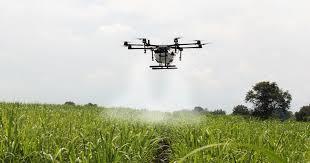
Further, as work continues to reduce dependence on human labor in agriculture, new tractors have emerged that can operate using computer vision navigation to work day and night without the need for an operator. Such machines have already increased efficiency highly, and will work to further it as more investments are made into the growing agricultural industry. However, other challenges continue to persist. Connectivity to Internet Systems poses a roadblock to farms, especially those located remotely. But the Coronavirus pandemic has created an impetus for the growth of such infrastructure across the world as we continue to navigate an unprecedented situation. Advanced farm systems can further include more advanced irrigation systems and
agricultural drones. Through the continued use of such solutions, smart farming may become a true solution to food security issues in the world.
XXXXXXXXXXXXXXXXXXXXXXXXXXXXXXXXXXXXXXXXXXXXXXXX
Empty
By: Shama Dinesh (age 20)
The vain, the vile, and the vehement Abandon the world on its own; The one with the vision remains blind The one with the voice remains silent
They turn it on, and turn it off At their will does their mercy remain Herding the naive to their demise As innocents sink into perdition
Our lives above the rest, We remain selfish of our own, and our ways Sensing the sickening sweet scent of Death Craving to reap souls in its rotten hands
Mourning the losses, the failures; the lost, the broken The hate and rage finds no victim For love is in kindness, and sacrifice You either stand tall, or take the fall The whispers of memories surround the space As you lay yearning for freedom in death