Kisholoy is produced by youth members of Ananda Mandir The articles, drawing or photographs of this magazine are copyrighted and should not be reproduced in any other forms without the consents of the owners.
We would like to acknowledge the contributions of the followings:
Articles: Anooshka Sen, Anirudh Sarkar, Anuraag Sarkar, Auroni Sen, Shama Dinesh, Shivan Mukherjee,
Editorial: Dipak K. Sarkar, Utpal Sengupta, Sudipta Bhanja Choudhury
Magazine Composer: Dipak K. Sarkar
For information about the Kisholoy – contact Dipak K. Sarkar via email (Dipakksarkar@hotmail.com).
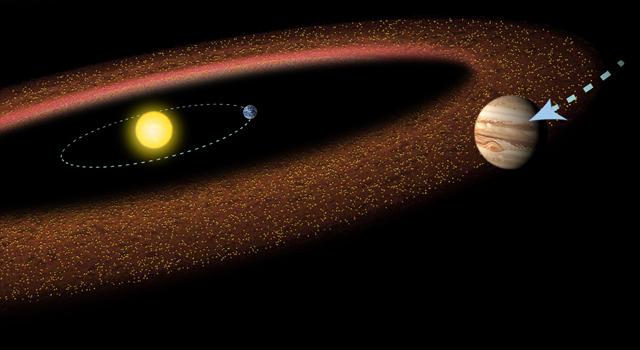
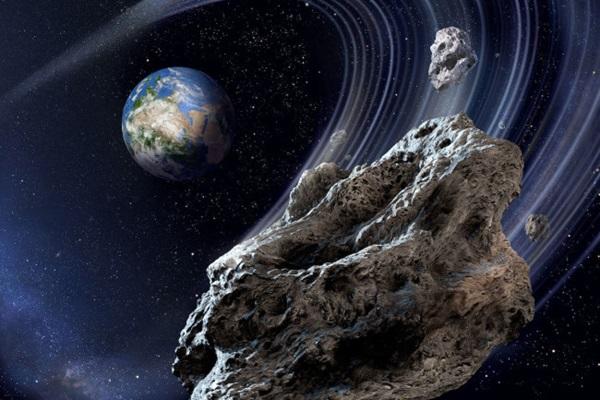
Asteroid Belt
By Anooshka Sen (age 8)
Image source: www.nasa.gov
Image source: www.astronomy.com
The Asteroid belt is a ring-shaped region in the solar system located roughly between the orbits of the planets Jupiter and Mars. It is occupied by a large number of solid, irregularly shaped bodies called Asteroids or mind planets. These asteroids are of different sizes and much smaller than the planets of the solar system.
Early in the life of the solar system dust and rock circling the sun were pulled together by gravity to form planets. But not all of that was consumed in creating new planets. From what was left behind, formed the asteroid belt, which is a region between Mars and Jupiter.
Smaller rocky particles in the asteroid belt are called a Meteoroid. When a Meteoroid enters the Earth’s atmosphere and vaporizes it is called a Meteor. In the sky it appears like shooting stars. When a small asteroid or large meteoroid passes through Earth’s atmosphere and lands on the surface it is called a Meteorite. The biggest meteorite ever found on Earth is the Hoba meteorite in Namibia, Africa.
Asteroids can be classified by the materials they are made up of. A C-Type asteroid also known as Carbonaceous asteroid is rich in carbon content. About 75% of all known asteroid are carbonaceous asteroids. A S-Type asteroid also known as Gray-Siliceous asteroid is rich in iron and magnesium silicates. A M-Type asteroid also otherwise known as Metallic asteroid is a mix of iron and nickel similar to the Earth’s core.
Ceres and Vesta are the two biggest asteroids in the asteroid belt. NASA’s satellite DAWN, orbits both the massive asteroid in the asteroid belt and to collect data for analysis that will help us better understand asteroids.
Mesopotamia
By Auroni Sen (age 10)
Mesopotamia was one of the first cities to ever exist. The word Mesopotamia, in Greek, means,” the land between the two rivers”. Mesopotamia was located in the middle of two rivers - the Euphrates and the Tigris.
Mesopotamia was known for having an advanced way to live. The early Sumerians (c. 45001900 BC), inhabitants of southern Mesopotamia (now southern Iraq) used their knowledge of agriculture to grow crops. The land in which they grew crops was fertile because it was in the middle of two rivers. The rivers left a fine layer of silt which was suitable for growing crops. They stopped the flooding of crops by building gates around the place where they grew crops. When the dry months arrived, the farmers left the gate open so that the river water could flow in.
Sumerians were known for inventing things we use today such as government, wheels, writing, and many other things. Mesopotamia had farmers, doctors, carpenters, merchants, priests, and scribes. Scribes were people who knew how to write. Not a lot of people could go to school to learn how to write. To learn how to be a scribe, you had to go to school for 12 years. Teachers gave children riddles and proverbs to write. The people in Mesopotamia wrote in cuneiform. The word cuneiform means, "wedge-shaped” and people wrote in pictures to tell stories. To make one, you need wet clay and a stylus made out of reed. Then, you would bake the tablets or leave them out in the sun.
The culture was an important part of the lives of the people in Mesopotamia. They were also very religious. They mainly believed in two gods, Enil, the god of wind, storm, and rain, and Ea, the god of water and wisdom. They built ziggurats for the gods. Ziggurats are temples for gods to sit on. Priests were in a high social class. Kings and priests were the highest social class while the lowest was a slave.
The people of Mesopotamia had a monarchy. They believed that the gods would choose their leader. Their leader would have to be the strongest man in Mesopotamia. The government of each city-state was ruled by a monarchy. A city-state is a city and the farmlands around it. The people of Mesopotamia elected a king who made all the decisions for their country. They elected King Hammurabi who was a good leader and made fair decisions for their country. But, he did make harsh punishments for people who broke the law. He would make laws such as,” an eye for an eye” which means that if the criminal damages a person's eye, they would have to do the same for him. And if he stole a sheep or cattle he would have to pay 30 times the amount that he stole.
These are some of the things that the people of ancient Mesopotamia did.
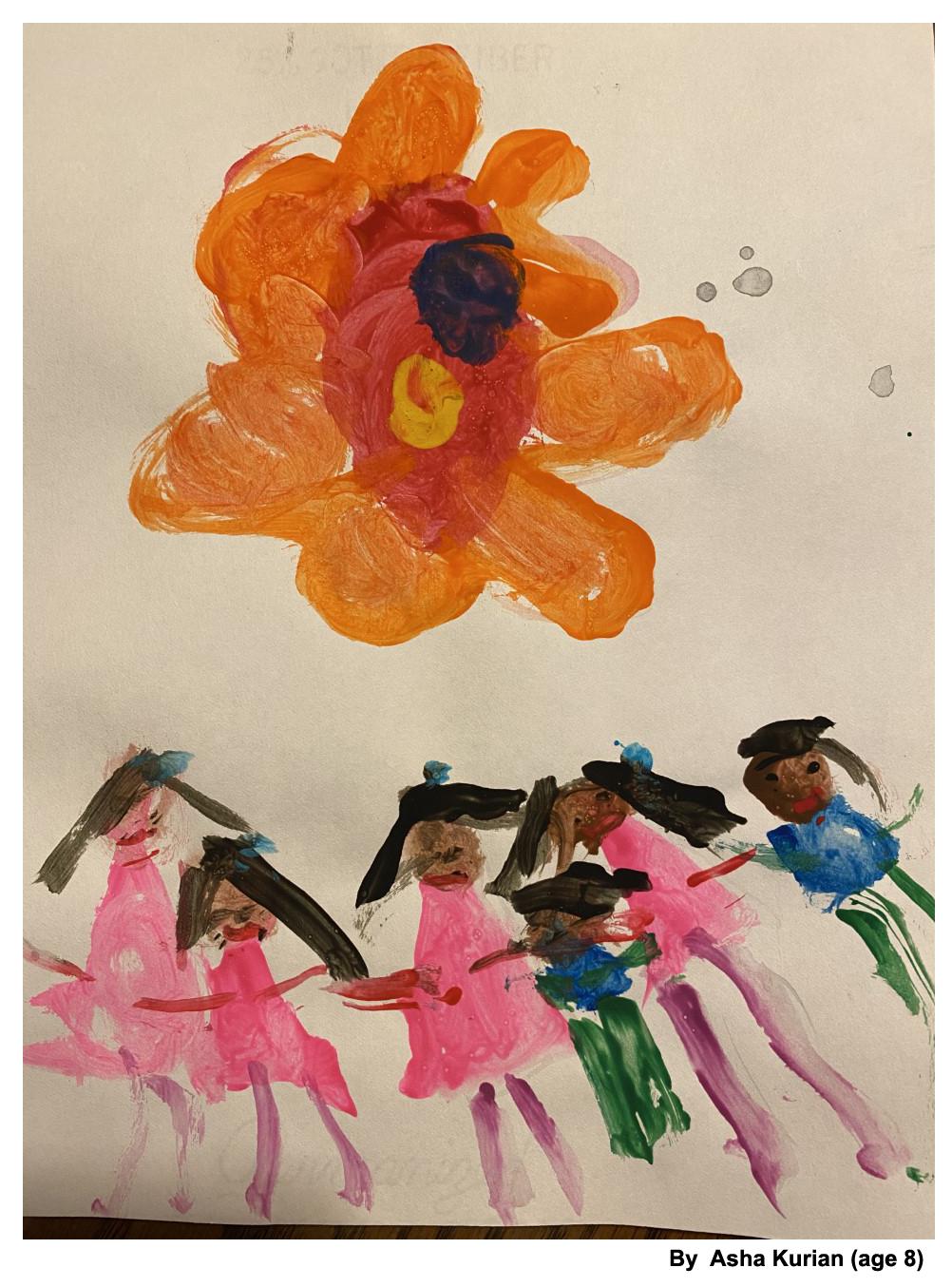
Asha Kurian told the story about this painting: This picture is about Lokkhi Pujo. My whole family is holding hands and singing and looking at the special flower just for the goddess Lokkhi.
Picture Gallery
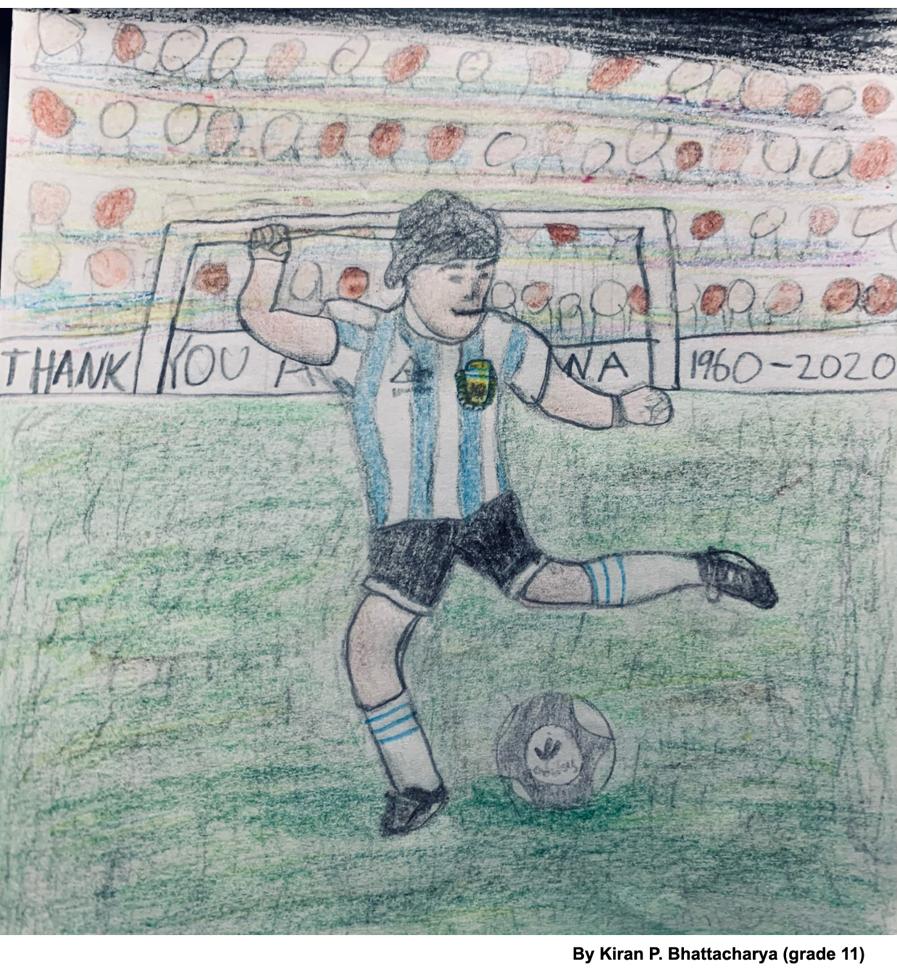
By: Kiran P. Bhattacharya (grade 11)
How mistakes in science could lead into an amazing discovery
By Anirudh Sarkar (age 14)
Humans have on several occasions taken spiders into space more than once in order to study the relevance of gravity to the process in which they create their webs. This originally began as a relatively unsuccessful PR experiment for high school students. This experiment however has yielded the information that light plays a larger role in arachnid orientation than thought before.
The experiment that branches off of this high school failure, is conducted by NASA. The goal at hand was straightforward. Given that spiders built their intricate webs in optimal positions in order to catch prey. Furthermore, these spiders have their heads pointed in the direction of gravity. They do this because it is easier for them to catch and secure their prey when they have gravity on their side. So that begs the question for scientists: what do they do in space, where gravity is not part of the equation anymore? NASA wanted to inspire middle school students approximately 10 years ago in order to find out. Although simple at the first glance, this task was not easy to execute. Species of spiders in the international space station were sent with a spider, and a backup in case the first one had died. However, something went wrong.
Upon travel, the backup spider (in case the first one died) had broken out of its reserve. Furthermore, for safety reasons, the spider could not be recovered. Several problems occurred as a result of this. The spiders spin their webs on the ship that had intertwined with one other making for an awkward construction. As a result, the food that scientists had prepared for the spiders with (flies) had reproduced to a surprising amount during the trip. Their babies grew to such an amount that when opening the ship, the spiders were unable to be seen over all of the fly larvae. This was one of the most aggravating failures of this experiment for NASA. When a new opportunity presented itself in 2011, there were 4 spiders this time. Two went to the international space station, and two stayed on Earth. So how did this go wrong?
A mistake had already occurred before the flight was even commissioned. The spiders that were taken for testing were supposed to be juvenile females. At a juvenile stage, spiders can make it quite difficult to differentiate sex. In the experiment, two of the spiders turned out to be males, however, one of the males was on the station, and one on earth. This was extremely lucky as it made the experiment actually executable. The spiders did what they were meant to do, spun their webs and design changes between being on the international space station, and on Earth. They analyzed 100 webs and their orientation, which revealed that the webs built in the space station, which had no gravity, were significantly more symmetrical than the ones on Earth. However, something else was noticed. The spiders that constructed their webs under lamps or in the dark were different. Webs in space, under a light were as asymmetrical as those on Earth.
This essentially indicates that light plays a role in the orientation of the spider webs in space. This actually happened to be an act because one of the crew members Zschokke, said that since the lamps were attached at the top of the chamber, they would never have discovered the effects of light on web-making. Further analysis shows that spiders in the dark oriented their body in random directions, yet when exposed to light they fixed it.
Hyperloop
By Shivan Mukherjee (age 16)
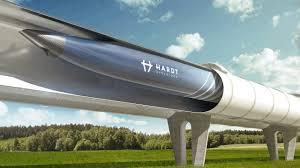
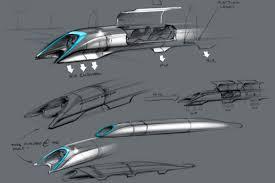
From cars to high speed planes, Travel has been steadily revolutionized for decades now. The next revolutionary innovation is Hyperloop technology. Hyperloop is a proposed method of ground travel that involves the use of tubes and tunnels with low pressure to transport capsules full of people. Through this reduction of friction, pods are estimated to be able to travel at up to 750 miles per hour. In addition, rather than using wheels, hyperloops have had several designs. Some designs utilize thin skis as a deterrent to friction while others utilize maglev technology, similar to the Shanghai Maglev which can reach speeds of up to 300 miles per hour. Besides speed, Hyperloop is theoretically much more fuel efficient and could be cheaper than air travel.
Based on its design, the construction of hyperloop infrastructure would be quicker and cheaper than those of railroads. The current top speed of a common Acela train in Amtrak is 150 miles per hour. Through a substantial increase in speed, pressure on traditional railroads can be reduced and frequent increments in trips can be utilized, thus optimizing profit and efficiency.
Hyperloop was first proposed in 2013 by Elon Musk. He published a paper theorizing that aerodynamic aluminum capsules could be filled with cargo and people to be transported at high speeds. In present day companies such as Virgin Hyperloop and Dirk Ahlborn’s Hyperloop Transportation Technologies are among the closest to succeeding in making the project a reality. Recently, two people rode a hyperloop pod through an airless tube at 100 miles per hour which marks the first successful test in Hyperloop Technology. The acceleration is similar to that of a plane’s take off. And, while the test only reached a speed of 100 miles per hour, Virgin Hyperloop has made the projection of reaching an eventual speed of 670 miles per hour. To date, the company has reached 240 miles per hour in an unmanned pod.
As research into the Hyperloop continues, many challenges lay ahead. Governments are yet to have approved the Hyperloop system or approve the construction of the hyperloop system. It is currently estimated that it’s construction would be in the billions of dollars costing millions of dollars per mile. This amount of money is much greater than a simple high speed rail. As a result, companies would need to raise funding and acquire the necessary amount of land to even begin construction. Not to mention, especially as speeds increase, certifications of speed would be necessary. At a minimum, the hyperloop is still well off from being realized.
A memoir on the wisest man
I ever knew
Anuraag Sarkar (Grade 11)
My grandfather was an amazing person.
Whenever I met him, his eyes were always beaming with confidence and wisdom. He would often look over my history homework and remark about the failures and victories of many prominent figures. He would also passionately recommend novels he had read in his childhood and talk about why one was a better read than another. I was planning on having lively conversations with him and asking for book recommendations the next time I travelled to India, however, that opportunity will never come.
Everything started going downhill when my grandfather got a sore throat. One of his greatest and worst qualities was his confidence and calmness in any sort of situation. During this time, however, it was detrimental. He told almost no one about his sore throat, and when the family eventually found it out, he claimed that it came from a cold beer that he recently had. Although we were a little relieved by his consistent reassurance, my mother pressured him into getting a Covid test.
When the Covid test came back, we were all in shock. The results on the letter had large words on the top that jumped out from the rest- POSITIVE. When my aunt called us about it, I remember my mother almost breaking into tears. Seeing her so upset made it seem like the world around me was burning down. I had never experienced such a strange mix of emotions before. I felt upset. Knowing how many lives Covid had taken in the past year. I felt angry at my grandfather, who did not ever wear a mask. But even with such negative emotions coursing through me, I felt hope, knowing that there was a high chance that my grandfather could survive this ordeal. At the time, I had thought that God was only giving him a test- a test that he would pass with flying colors.
Because of the sudden news, my entire family was chaotic. Grandfather had to go to the hospital, which made everyone worried. Although his entire family was scared out of their minds, my grandfather still took everything casually. He wore a bright colored shirt and laughed when we video called him. When he set out to go to the hospital, it was as if he was going out for an exciting school field trip.
The next few days were a mess. My parents stayed up extremely late to wait for any news. My mom barely got any sleep, which was evident by her sluggish movements. Oftentimes, I would see her sitting on the couch for hours on end, staring at the wall and waiting for any phone calls. Although I was not very attached to my Grandfather compared to the rest of the family considering they live very far away, seeing my mother look so terrible always made me feel worried and upset.
A few days after being admitted to the hospital, my Grandfather’s health only worsened. He found it extremely difficult to breathe and eventually had to be put under a ventilator so he could expel carbon dioxide effectively. My parents started to resemble lookouts- they were always vigilant, stayed up late, and were alarmed by any texts and calls.
Everything seemed to have come to an end when Grandfather was taken out of the ventilator. We had gotten a call from our Aunt, who excitedly conveyed how he no longer had Covid-19 and was able to breathe successfully. When we heard the news, my parents and I had taken a collected sigh of relief, and we were thrilled that the worse had come to pass. My mom video chatted with Grandfather, and although my mother bombarded him with questions about his health, he only returned those questions nonchalantly with inquiries about his business.
After a few more days, however, we got another phone call while my mom was cooking. When she picked up the phone, our aunt frantically explained that Grandfather had been put under the ventilator again and was not feeling well due to an infection. All of a sudden, the happy atmosphere vanished and was instead replaced with panic.
Deep in my heart, I still held hope that Grandfather could survive. I reasoned that if he had managed to survive the ventilator the first time, he would surely survive the second.
But my hopes were shattered when we got the fatal call. I was in the middle of virtual school at the time. While writing an essay, I heard loud, frantic words.
“He’s no longer here.”
My mom had begun crying profusely, and my dad started comforting her. I felt a sudden shock, and stood still for a few minutes. Slowly, I went up to my mother and tightly hugged her. According to my aunt, Grandfather died of cardiac arrest due to being incredibly weak from the infection.
Before Grandfather’s death, I had thought that death would be followed by dramatic changes. I had an image of death bringing large waves of sudden character changes or a wave of emotions. But I was surprised to see that instead of chaos, I was instead met with silence.
It was a very terrible silence. The entire family stopped moving, and the previously bustling house felt as if it was abandoned. My mother was no longer cooking in the kitchen, and my father was no longer slouching on the couch watching TV. Instead, both were behind closed doors in the bedroom dealing with their emotions.
Although it was not chaotic, the stillness was unbearable. It became increasingly apparent that Grandfather would no longer be around to give his tidbits of wisdom or laugh with us. When we had heard that his ashes had been dumped in the Ganges river, this void grew even more. Despite all this, however, I did not grieve. My main concern was my mother, and I instead focused on trying to cheer her up.
One day, I was lying on the bed unable to sleep. My mind wandered to my deceased Grandfather, and I was suddenly reminded of the many memories I had with him. I began to think about the times he would walk around to different stores in the morning to bring my sister and me sweets. I also remember the time he gave me a big smile after I organized all the books on his bookshelf for him. With all these memories flooding in, it finally hit me that my Grandfather was gone, and I cried for the first time since his hospitalization.
After many, many days, my parents propped a picture of Grandfather above a desk. The picture portrayed Grandfather wearing glasses looking at something out of the frame, making him seem very wise. Although I knew that he was no longer in this world, I began to envision Grandfather lying on a couch above the clouds, eating fruits and spending long hours on the television. The image made me laugh. Although I had not spent much time with him compared to my parents or cousins, the few memories I do have with him were some of the best. Knowing him, he was
probably watching over me. Sometimes, when doing my history homework, I leave the textbook open for a few minutes, giving Grandfather a chance to ponder about the many great figures of History.
Phantom
By: Shama Dinesh (age 20)
In the dawn of a world, rotten and spiteful
Where people choose hatred over love, vice over integrity
In the path of destruction with a heart hateful
Cruel, merciless, eyes devoid of pity
An existence without purpose, lost and confusing
Parts of yourself lost into the emptiness
Cursed to an eternity of suffering
Fearing the unknown, the pain, the loss, the loneliness
Tales of deceit, betrayal and treachery
There is no peace in the eternal sleep
For in death, still bound to duty
No moment to waste, to rejoice or weep
The past still catches on, the future in unrest
The demons of the dark crawling out to play
With no one left but yourself to detest, Will you choose to brave another day?