Kisholoy is produced by youth members of Ananda Mandir. The articles, drawing or photographs of this magazine are copyrighted and should not be reproduced in any other forms without the consents of the owners.
We would like to acknowledge the contributions of the followings:
For information about the Kisholoy – contact Dipak K. Sarkar via email (Dipakksarkar@hotmail.com).
Venus: - The Second Planet in Our Solar System
By Anooshka Sen (age 7)
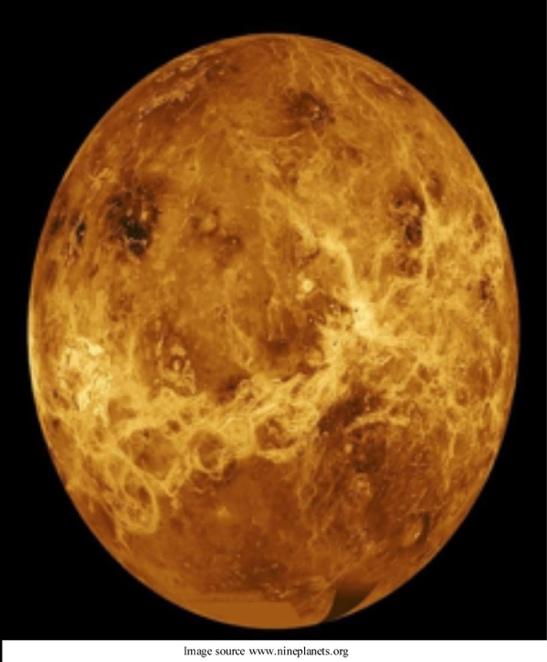
Venus is the second planet in our solar system. It was named after the roman god of “Love and Beauty”. Venus is 67.642 million miles from Sun and it is the third smallest planet in the solar system. Venus is also known as sister planet to Earth as it is nearly the size of Earth. Diameter of Venus is 7520.8 miles. At its closest point Venus is 24 million miles away from the Earth.
Venus orbits the Sun every 224.7 Earth days but one Venus day is 243 Earth days. One Venus day is longer than a Venus year because it rotates very slowly on its axis. Venus also compared to other planets. Scientists believe this may have been caused by a collision with an asteroid or other objects, which caused the planet to change it rotational path.
Billions of years ago, the climate of Venus was similar to that of Earth and scientists believe that Venus once possessed large amount of water or oceans. However, due to the high temperatures produced from the extreme greenhouse effect this water boiled off long ago and the surface of the planet is now too hot and hostile to sustain life.
Venus is the hottest planet in our solar system with an average surface temperature of 863 degrees Fahrenheit. Venus’ atmosphere is dense with 96.5% carbon dioxide which trapped heat and caused the greenhouse effect which evaporated any water sources billions of years ago
Sleepy Sleep
By: Asihani Chakraborty
When you ar e feeli ng sleepy, You feel lik e going to sleep,
Y ou stop w hat you ar e doi ng, And start to get a dream.
When you ar e feeli ng sleepy, Y ou r un to your bed, Feel like underneath the sky (s ometimes), A nd all your worries fade.
When you ar e feeli ng sleepy, Y our mom will come to kiss, Feel like on top of the world, A nd touc hi ng every bliss.
When you ar e feeli ng sleepy, Think for the day next, Alw ay s stay r es pec tful, And try to give your best
The Social Brain Hypothesis
By Anirudh Sarkar (age 14)
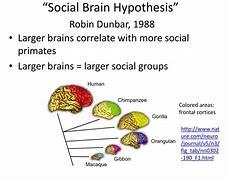
For an extensive period of time, scientists have questioned the correlation between the brain size of an insect and how complex the society they live in is. Their questions primarily revolves around the complexity of insect society, with constructs like hive minds, and altruism. The Social Brain Hypothesis suggests that the insects’ brain size is reflective upon the complexity of their society. However, this is not certain upon all species still. It maintains simply a theory yet supported with a plethora of evidence and research.
This process, like most, needs to have some conditions met before it becomes effective for survival. Namely, some aspects of group behavior, which are insects’ forte. Group behavior in the whole grand scheme of survivorship, is very beneficial due to the given benefits of survival when working with one another, but for individual benefit. Group behavior allows individuals to maintain safety as well as get the food they require. Also it can be energy saving. Migrating geese, for example, use the energy of the bird in front, allowing the wind through the bird, making lift for the birds behind it. This does not allow much effort to fly during the long migration. So energy is conserved.
Furthermore, schools of fish swim around together, but also have ways to separate and avoid their predators that pose a threat. This encapsulates social and non-social groups’ ability to be safe. Similarly, having evolved into a bigger brain will allow and strengthen sociality between animals to ultimately boost survival in said facets. However, this isn’t represented in all situations given there are exceptions. This is so, because solitary animals live in an environment that has their food source scarce and scattered. This kind of environment is not typically around that often. Also it leaves them vulnerable to predators. Whereas on the other hand, grouping creatures reduce the chance of being targeted one by one. However, keeping the minority aside, this encapsulates how creatures have evolved for social benefits.
A Shift in the Semiconductor Industry
By Shivan Mukherjee (age 16)
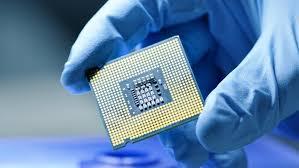
A semiconductor, as implied by its name, is a material that partially conducts electricity and is used extensively in the electronics industry. Usually, semiconductors are composed of crystals which are composed of partially conductive materials such as silicon. Semiconductors are a practical application of valence shells of electrons. Essentially, electrons are organized in layers in an atom. The outermost shell is called the valence shell. Most conductors only have one electron in this outer layer which contributes to its conductivity. Semiconductors contain 4 electrons in this shell. When these atoms are near each other they are able to bond to each other creating a crystal using covalent bonds. While pure crystals made of these bonds are not conductive, the combination of using crystals and not using crystals enable their use in the electronics industry. Using this method, there are two different types of semiconductors: n-type and p-type. They are named this way because the structure of the atoms create positive and negative charges creating the p-type and n-type semiconductors respectively.
With the insatiable need for progress, there is also a subsequent increase in cost of manufacturing. Over 50 years, this trend, described by Moore’s law, has been omnipresent with chips and materials needed for technology consistently increasing in price. As we continue to advance, such a trend is not sustainable. Companies would need to sell million, billions of units just to break even in profit. As a result a paradigm shift is necessitated. Instead of continually making technology smaller, the shift has converted to making more advanced technology within the current sizes of chips. Only few high performing apps can justify using chips with less than 20nm. This shift has already begun. Companies have shifted their focuses and, as a result, have noticed significant benefits as well. Rather than experimenting with smaller nodes, using established nodes leaves time for focusing on other aspects of the product allowing for great innovation, without the ever increasing cost of manufacturing.
The Little Girl In The Closet
By: Shama Dinesh (age 18)
Crying into my pillow in the dark Windows hammering whilst the dogs bark I heard soft laughter from across the room From the little girl crouching in the gloom
With soft footfalls I approached her In the dark, her features were a blur But the little girl had pretty eyes I held her hand to her surprise
“Will you be my friend?” I said And she replied with a nod of her head The girl with pretty eyes and beautiful hair Said I was all hers and she wouldn’t share
The little girl stayed with me all night She would hide in my closet when the day turned bright She would help me study and make me grin It was my secret, having her as my secret twin
She would close my eyes when my parents fought She held my hand when I felt distraught She covered my ears when the thunder roared She ensured I was never abhorred
The little girl in closet would beam with joy When I told her tales of how I used to enjoy The little girl's eyes would turn red When I told her what people always said
As the tales got darker, my mind came undone The little girl said, “The game has begun” As days passed, the corpses dropped My demons were slaughtered and the nightmares stopped
The little girl refused to ever share me
If someone made me cry, their souls would soon be set free My parents left me, my friends said I was a monster But I had the little girl, so it didn’t matter
The little girl inside my closet refused to grow While years passed, I aged with the time’s flow I was afraid she would leave me behind So I did what was at the back of my mind
I took the little girl to the West I hugged her close to my chest As I drew the knife and stabbed her back Looked her in the eyes as they turned black The little girl just laughed with a start As I glanced down to see the knife buried in my heart
The little girl in my closet laughed and held my hand As my corpse was slowly buried in the sand