Kisholoy is produced by youth members of Ananda Mandir The articles, drawing or photographs of this magazine are copyrighted and should not be reproduced in any other forms without the consents of the owners.
We would like to acknowledge the contributions of the followings:
Articles: Anooshka Sen, Anirudh Sarkar, Auroni Sen, Shama Dinesh, Shivan Mukherjee,
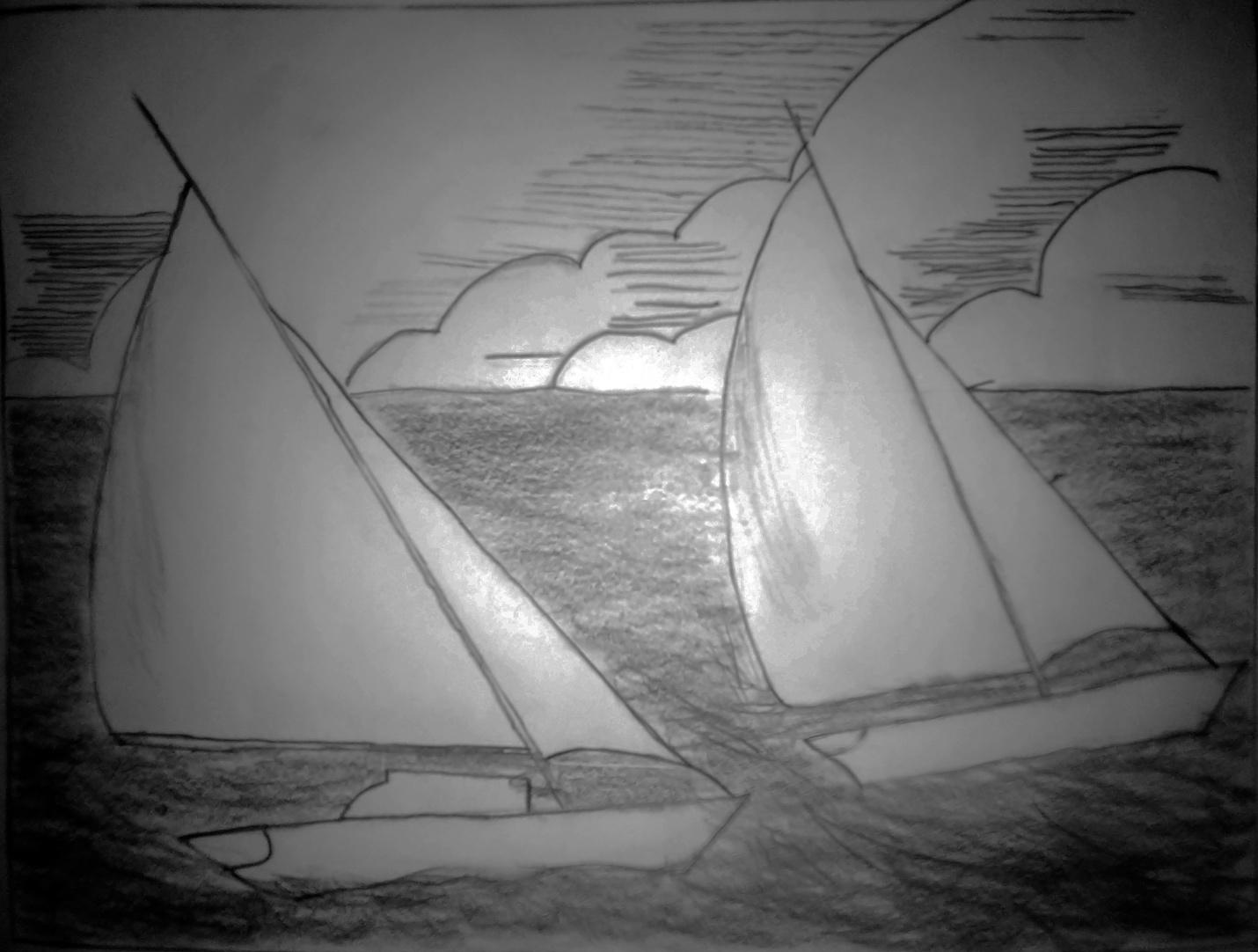
Drawing: cover - Anooshka Sen
Editors: Dipak K. Sarkar and Utpal Sengupta
Magazine Composer: Dipak K. Sarkar
For information about the Kisholoy – contact Dipak K. Sarkar via email (Dipakksarkar@hotmail.com).
Mercury: - The First Planet in Our Solar System
By Anooshka Sen (age 7)
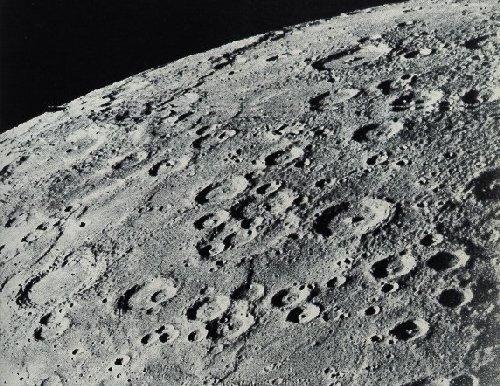
Mercury is the first planet in our solar system. Mercury was named after the Roman god of travel. It is 36 million miles away from the sun, and is the smallest planet in our solar system, nearly the size of Earth’s moon. Its diameter is 3032 miles.
Mercury is the closest to the sun which makes it very hot, but it is not the hottest planet in our solar system. That title goes to Venus. On the sunny side of Mercury the temperature can reach up to + 800 degree Fahrenheit and on the dark side the temperature drops to – 290 degree Fahrenheit. Mercury gets very cold on the dark side because it has almost no atmosphere to hold the heat and keep the dark surface warm. Mercury has no moon and it also has a very weak magnetic field.
Mercury orbits the Sun once every 88 Earth days, but a day on Mercury is longer than Earth’s day. One Mercury day is 59 Earth days long.
It is hard to study Mercury from Earth because it is so close to the Sun. We need special spacecraft to survive the hot Mercury temperature. NASA launched a robotic spacecraft named Mariner 10 that flew by Mercury in 1974 and took pictures of less than half of Mercury’ surface.
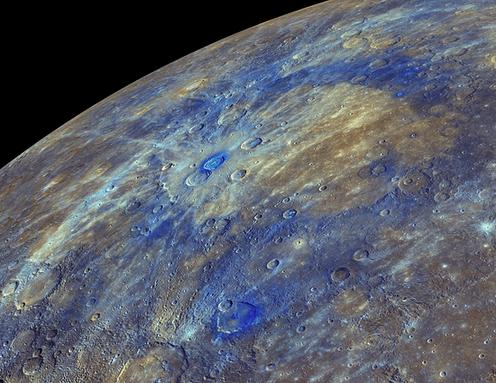
Then NASA’s MESSENGER flew by Mercury on 2008 and 2009 and sent valuable information to the scientists. It began to orbit Mercury in 2011and collected data on the surface rocks, and measured the heights of the mountains and the depths of craters and valleys.
Data collected by MESSENGER helped scientists know more about Mercury’s chemical composition, geology and magnetic field. Scientists found that Mercury has reservoirs of ice sitting deep inside permanently shadowed craters at it’s poles
All the evidence that scientists have, indicates that life never existed on Mercury. The harsh conditions and weak atmosphere makes it impossible for life to exist.
www.theconversation.com
The Whirlpool
by Auroni Sen (age 10)
“ Let’s go on that one next!” Rayna exclaimed, pointing to a ride called “ The Whirlpool.”
I looked over at the ride. There were people screaming as they were sitting inside a cart getting flipped upside down. It looked scary but I also wanted to go on it.
“ Come on!” Rayna said.
“ Um, The line is too long.” I said hoping she would change her mind. But she didn’t.
“ Yeah, so we should get into line now so it doesn’t get longer!” She said.
“Okay.” I sighed. I was scared to go on the ride because they didn’t strap you in before you flipped upside down. I slowly got into the ride with Rayna. The screaming was louder now that we were closer to the ride. The people in front of us were talking loudly. They were talking about how their friend threw up on the same ride last year. Rayna and I looked at each other.
“ You don't think-” I started
“ No, of course not. Right?” Rayna asked, sounding unsure.
“ Yeah, maybe that guy was just sick.” I responded. But we were both still nervous as we stepped onto the ride.
“ Let's sit here. “ Rayna said. I could tell that she was nervous and so was I. I stepped onto the cart. Suddenly I heard a noise. Rayna could tell how worried I was.
“ Don’t worry, the ride is not that scary.” She assured me.
Suddenly, the ride started with a jolt. Everyone jumped. The girls sitting opposite from us were holding things in their hands. One girl had a blue rubber ball that she won at a game at the fair, which she put in her bag as the ride started, but the other girl had a pair of sunglasses on her face. The ride spun around. Everyone screamed.
“ Ahhhhhhhh!”I felt like I was on an actual roller coaster. Then , the girl that was sitting in front of us leaned to the side and her sunglasses fell off of her face. She sounded like she had just dropped something more important like her wallet or her phone. She was screaming VERY loud only because her sunglasses fell. But nobody had time to react or process the fact that her sunglasses fell off. The ride kept getting faster and faster and soon everyone was dizzy. The ride was going really fast now. I was gripping onto Rayna’s arm while she was holding onto the bar on the side of the cart that kept Rayna and the other girl in front of us from falling out of our cart.
“ This ride is going on forever!” Rayna had a quick moment to say as our side of the ride hovered in midair for a moment.
“ I know, right?!” I had time to agree before the ride rushed downward again. Everyone screamed again.
Finally, after what seemed like hours, the ride sped up a lot, then ended very abruptly. Everyone was shaken and we all sat there for a minute until finally, people started getting up and leaving to go on other rides. Rayna and I slowly got off the ride.
“ That ride was INTENSE!!!” Rayna exclaimed as we got off the ride. “ That last drop was just awesome, and I was really scared when the ride tilted like that and then it just kind of-” she stopped talking when she saw my face.
“ Auroni? “ Rayna said. “ Are you okay?”
I started to say something, but I couldn’t get the words out. “ Auroni?” Rayna asked again.
I didn’t answer. Then, I laughed.
“Let’s go on it again!” I exclaimed. We both smiled as we ran back to get in the line.
Wikipedia: Resourceful, or Misleading?
By Anirudh Sarkar (age
14)
Wikipedia can be used in limitless ways, for as many reasons. It can have limitless perspectives for student assignment sources. Ever since Wikipedia’s launch in 2001, it has grown to consist of about 20 million pages, with 82000 contributors and supporters. Also, it has articles in over 270 languages, with over 400 million viewers each month. In truth, the source, if used correctly can open doors to countless areas or subjects, broadened or reduced, and can be a great tool for research. It is a great source because many pages have been edited by thousands, it helps with starting a subject and getting a general idea about it, and is a great tool for use in citation.
Wikipedia has thousands of entries with tons of editors, so it's a very safe site to use. According to an article, “Age of Revolution: Wikipedia: OK to use?” dissenters state that many Wikipedia entries comprised inexperienced volunteers’ entries. Wikipedia has let anyone with biased or directly incorrect information write or edit entries that millions of people might see. Furthermore, the article states that it is also vulnerable to mistakes. One might have no experience in certain subject while another could be a highly trained expert on the matter However, the said Wikipedia pages have and still are undergoing a constant change in evolution. Expert or non-expert, the pages are getting edited every day, by so many people. It is the same as getting thousands of peoples’ input on one subject, and whatever they have in common among those people stays in the page. Wikipedia’s pages are constantly being edited and improved on a daily basis, making it the best site, with the information from thousands of volunteers, who of course know what they are writing about.
On top of the constant edits and improvements, it helps in getting loads of information in certain subject someone is looking for. An article from the New York Times, states that Wikipedia is an ideal site for its repetitive use of hyperlinks, great for tackling a subject that the student does not know. They can help said student focus down on a certain portion of the subject that the student needs to research. Furthermore, unknown vocabulary can be often a struggle for a student when tackling an unknown subject, so hyperlinks are provided for that as well to get the best understanding of the topic. Blinded dissenters might believe that the information given by the hyperlinks could be misleading. As if the hyperlinks guide said students for something that they are not assigned to and they are following the wrong path. And they have not the right
information that amounts to saying its information is false, and written by inexperienced editors. But that is hardly the case.
Lastly, Wikipedia also has a great quality of citing information properly. Citations are the most important aspect for Wikipedia because without proper citations or references to sources, the said page would be invalid. Opposers of Wikipedia argue that the citations may not have enough information and the reasons presented could be false or some sort of fabrication. Also they would claim that cited websites themselves might contain information not even related to the subject. Although an irresponsible editor might make such a mistake, many editors come on every day and analyze any mistakes made. Then, they’d make their own corrections. So, it's great for showing its validation.
All in all, Wikipedia is a resourceful source and if manipulated right, it can clearly prove its validation through legitimate citations, it helps when starting a subject and its constant chain of evolution helps provide correct information for millions of daily users.
Einstein’s Theory of General Relativity
By Shivan Mukherjee
(age 16)
Einstein’s theory of General Relativity, which explains how gravitational force works, has become an essential tool in Astrophysics. It is through his theories that our current understanding of black holes has reached the point that it has. After being put through test after test, his theory has become the most accurate way to predict gravitational interactions and was able to replace theories developed by Isaac Newton, one of his heroes, centuries prior.
In layman’s terms, the basics of General relativity can be surmised in two statements. Time and space are both phenomena that are not fixed and are distorted by mass and energy and gravity is not a force, but rather a distortion of time and space. Finally, the effects of gravity and acceleration are almost identical over a small space.
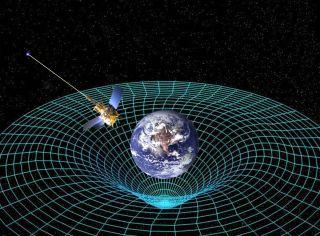
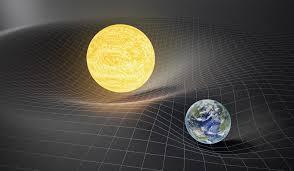
The central idea of general relativity is that space and time are two aspects of something known as spacetime. Einstein considers that Spacetime is like a piece of fabric. Whenever there is a mass or energy this fabric becomes curved threedimensionally creating the phenomenon we know as gravity. It is not that we are being pulled because of gravity, but, rather, that because of the curved spacetime we tend towards that object. A real-life example of this is that as light gets closer to the sun, it bends towards the sun twice as much as is predicted by classical physics. The sheer mass and energy of our sun cause a curve in space-time which causes the light to bend in a warped reality. This was a phenomenon that could not be explained or predicted by anything accurately before Einstein’s theory of General relativity.
A special case of General relativity is Einstein’s theory of Special relativity. He composed this theory a number of years prior to his publishing of General Relativity. The difference between the two is that Special relativity is a theory of space in the absence of gravity while General relativity is able to relate gravitation with all other phenomena and forces of nature. In order to create a situation where there is no gravity, special relativity explains how space and time are linked for objects that are moving in both a straight line and at a constant velocity. In general relativity, however, it explains how space and time are linked for objects that are moving in an accelerated frame. Einstein theorized that if there was an elevator in space and it was going upwards, the person or objects inside would feel the same pressure as they went up, as they would from gravity on Earth. This led him to the realization that acceleration and gravity have the same effects: “anything that can happen inside of a box picking up speed, also happens in the presence of gravity.” With that said, Einstein was able to create several equations that explained this, showing how gravity could cause objects to move as a result of a warped reality, enabling them to accelerate without Newtonian forces.
Citations
1. "How to Understand Einstein's Theory of Gravity | Discover ...." 24 May. 2019, https://www.discovermagazine.com/the-sciences/how-to-understand-einsteins-theory-ofgravity. Accessed 7 Jul. 2020.
2. "General Relativity explained like you've never seen before." https://vis.sciencemag.org/generalrelativity/. Accessed 7 Jul. 2020.
3. "Einstein's Theory of General Relativity: A ... - Space.com." 7 Nov. 2017, https://www.space.com/17661-theory-general-relativity.html. Accessed 7 Jul. 2020.
4. "General Relativity - University of Pittsburgh." https://www.pitt.edu/~jdnorton/teaching/HPS_0410/chapters/general_relativity/. Accessed 7 Jul. 2020.
DYSTOPIA
By: Shama Dinesh (age 18)
Mortals surviving in the land of the living Some struggling to scrape by, others outrageous We are but a pile of bones and flesh That diverges from the sole, monotonous mankind
People detached from their own Families split, emotions torn In the name of belief, do they all Lose the last bit of compassion in their obsession
Some believe in God, others may not But did God desire his children To plant the seeds of hatred In his name?
Did the Lord you worship Ever seek pain and bloodshed? Did your faith demand the tears of the innocent? Did they ask for the cruelty and violence?
How many more should be sacrificed Until their deaths have meaning In the name of divinity, we are losing our humanity To appease whom?
Certainly not the Lord himself For he cares for his creation Certainly not the faith Which preaches love, peace, and compassion
Bigotry, prejudice, and unreasonable hate Sons atoning for the sins of their fathers In times of crisis, should we conquer disparities For in the end where shall we stand, if not together