Kisholoy is produced by youth members of Ananda Mandir The articles, drawing or photographs of this magazine are copyrighted and should not be reproduced in any other forms without the consents of the owners.
We would like to acknowledge the contributions of the followings:
Articles: Anooshka Sen, Anirudh Sarkar, Auroni Sen, Rohan Chatterjee, Shama Dinesh, Shivan Mukherjee,
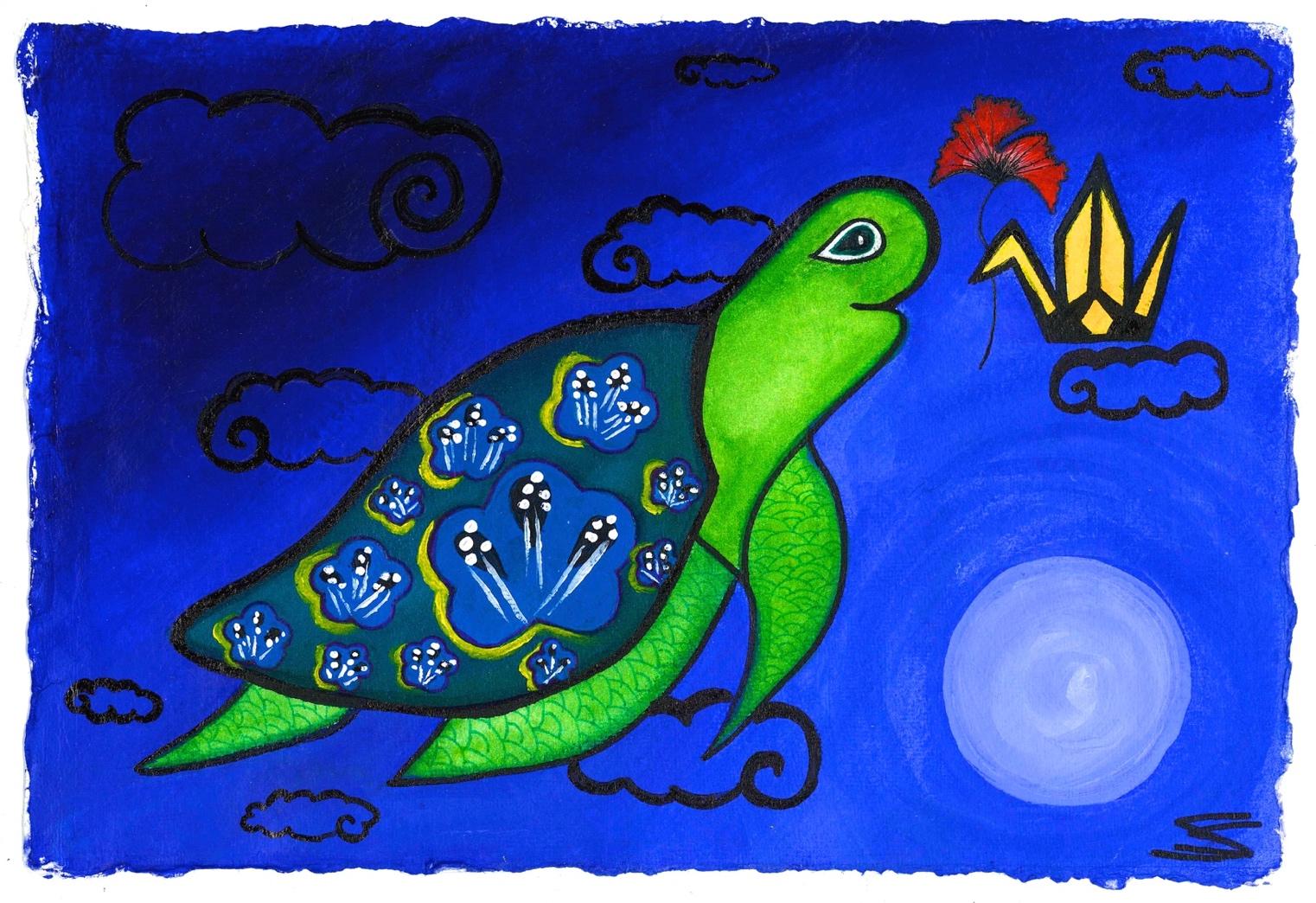
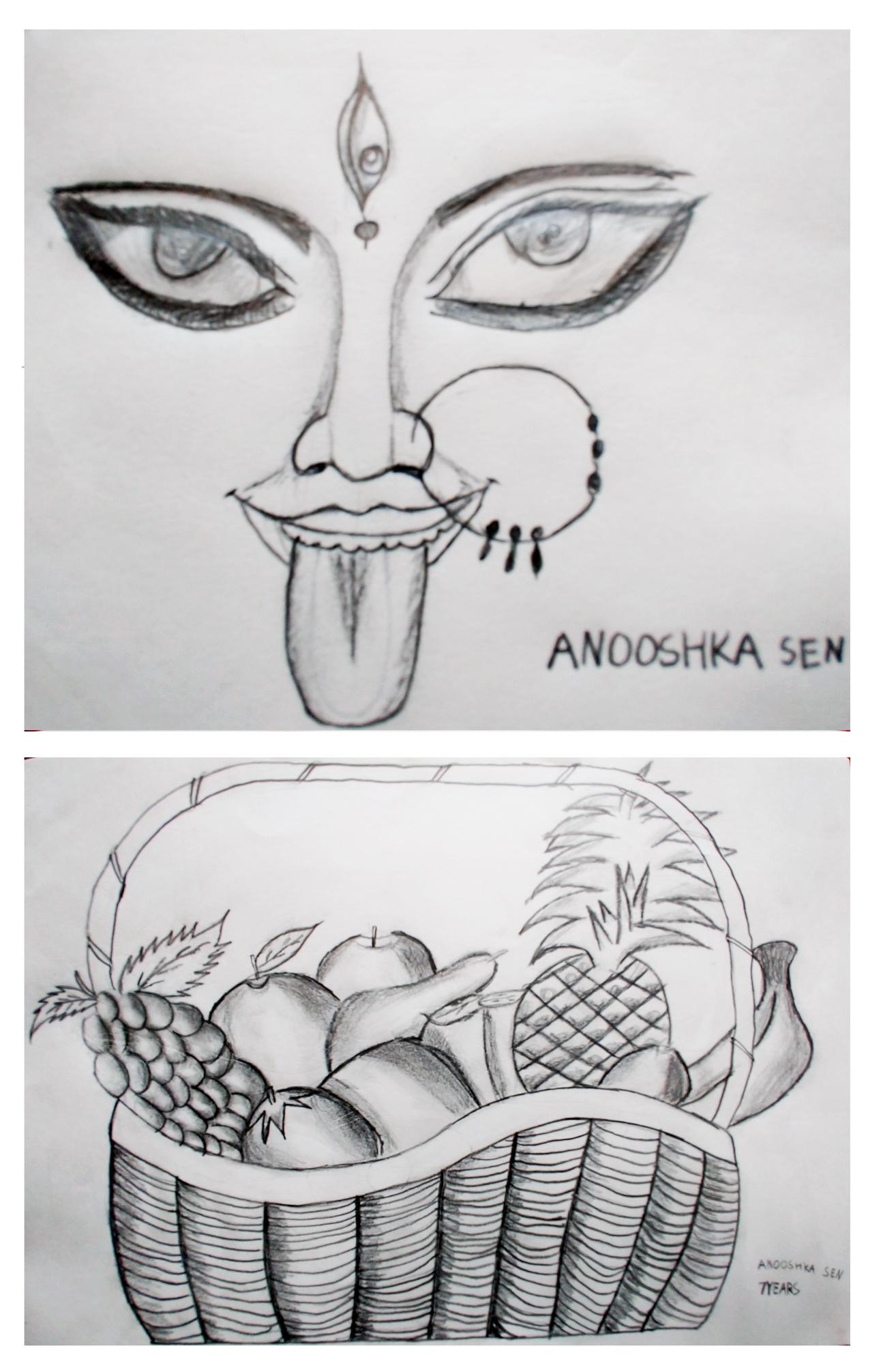
Drawing: cover - Sophie Sarkar (at age 23) and inside - Anooshka Sen (at age 7)
Editors: Dipak K. Sarkar and Utpal Sengupta
Magazine Composer: Dipak K. Sarkar
For information about the Kisholoy – contact Dipak K. Sarkar via email (Dipakksarkar@hotmail.com).
Spring Season
By Anooshka Sen (age 7)
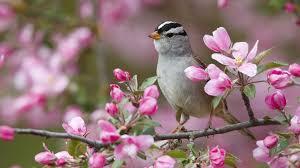
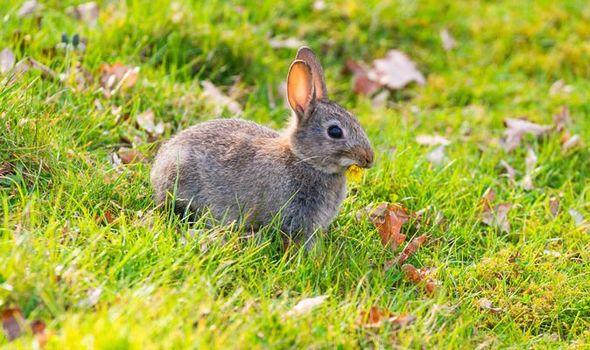
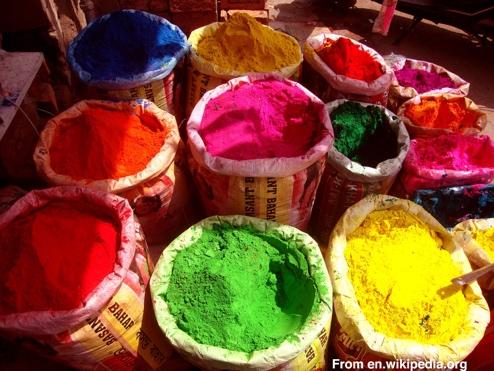
Spring is a season between winter and summer. Winter is very cold and summer is very hot but Spring is warm, which makes it nice and pleasant. We can wear light jackets and can play outside. It also rains a lot in Spring which brings nature back to life. The trees are full of leaves and flowers. Daffodils are the first flowers to bloom. They are bright yellow in color. The warm temperature awakens animals from their hibernation, birds chirps and bunnies hops happily. The air is full of joy and happiness. Spring is a time for celebrations and colors. Holi, the festival of colors is celebrated in Spring.
This is why I like Spring. Do you like Spring as well?
Felu Da
By Auroni Sen (age 9)
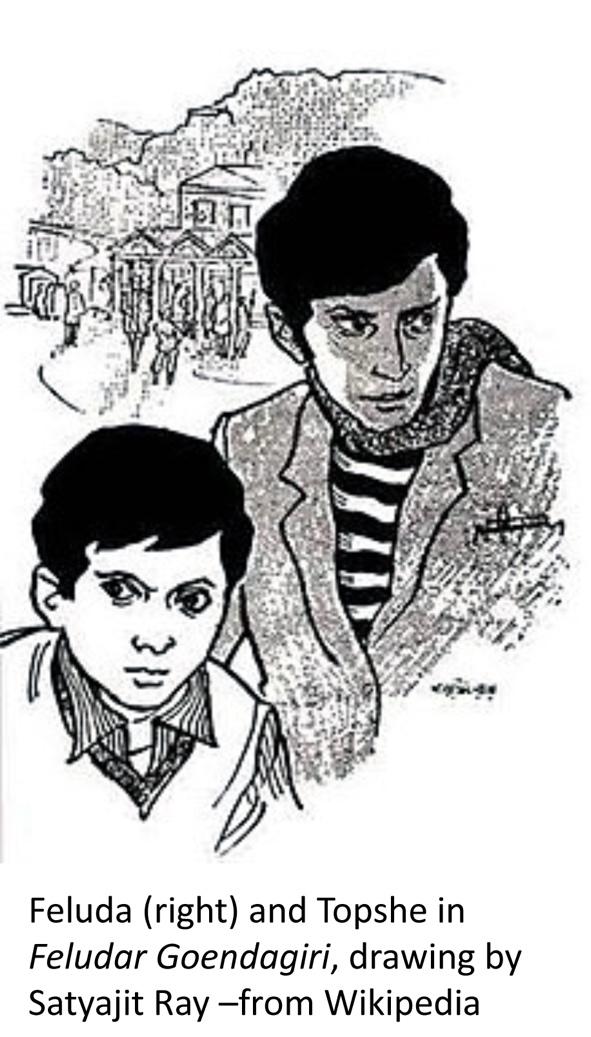
It was a Friday night and we were deciding what movie we wanted to watch as a family. It was getting late that night and we needed to pick a movie right away. My mother suggested we should watch an old classic Indian detective movie. I really didn't want to but my mom convinced me. I reluctantly gave in. We found the movie on YouTube and played it . It was called,”Shonar Kella.” The movie started playing and I didn't think I would be interested in this movie. 15 minutes through the movie, I realized this was a really good movie. I became interested and at about 20 minutes, I decided to pause it, so that I could put away my empty dinner plate and get my blanket to snuggle in and watch this developing mystery. This turned out to be one of the most entertaining detective movies I have ever seen. Truly a masterpiece. I can completely understand why my parents called it a classic when they were kids.
The movie director's birthday was last weekend. Director Satyajit Ray won many awards and medals for his movies. He also won an Oscar for his contribution to films .
I am now hooked on to "Felu da" and will try to watch the entire series. Each movie is about 2 hours long.
It is going to be our new Friday night entertainment while we stay in lockdown. What can be better than sitting in front of the TV with our dinner, watching detective movies and staying up late!
Nearest Black Hole to Earth Might B e Nearer Than Y ou T hink
By Anirudh Sarkar (age 14)
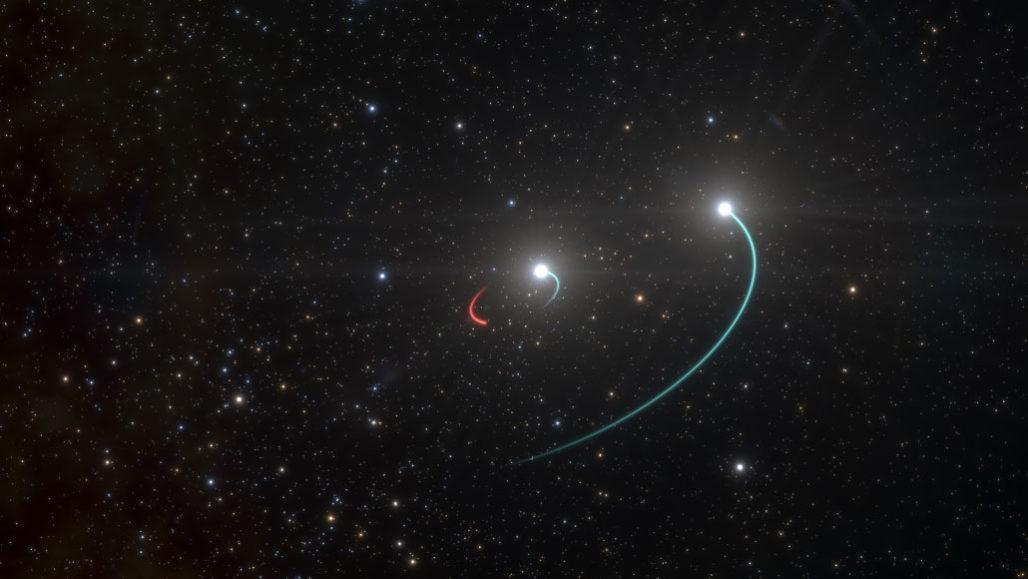
To our surprise the nearest cosmic disaster is closer to our planet than one might think. Apart from the Earth at nearly 1000 light years away, this black hole is 4.2 times bigger than our own sun. This black hole surprisingly is invisible. All relative cosmic masses like this are invisible, but it is tracked through the aftermath of its interaction with its environment. Believe it or not, our own Milky Way galaxy harbors almost 100 million to a billion black holes. Unfortunately they cannot be seen and are hidden in plain sight. The most recent one located, named V616 Mon is about 3200 light years away.
So how did we find that particular one? As said before, black holes are initially invisible. However, this black hole started sucking up gases from the two surrounding celestial bodies. Those stars were then being noticed to revolve and move in an orbit. That’s when it was known that a black hole was running that whole operation the whole time. The one that was found at this time, is known and classified as HR 6819. It is not active and not eating away at other planets, so it remains undetectable. However, it appears to have two companions orbiting around its gravitational field. It is said that it is so close that on a clear dark night, it is visible to naked eye.
So the question is : should the people be worried about this gigantic celestial mass. No. Although visible to the naked eye, it is 1000 light years away, and gigantic. So, although it seems daunting, it poses no threat to earth at this moment.
Printed Intelligence
By Shivan Mukherjee (age 16)
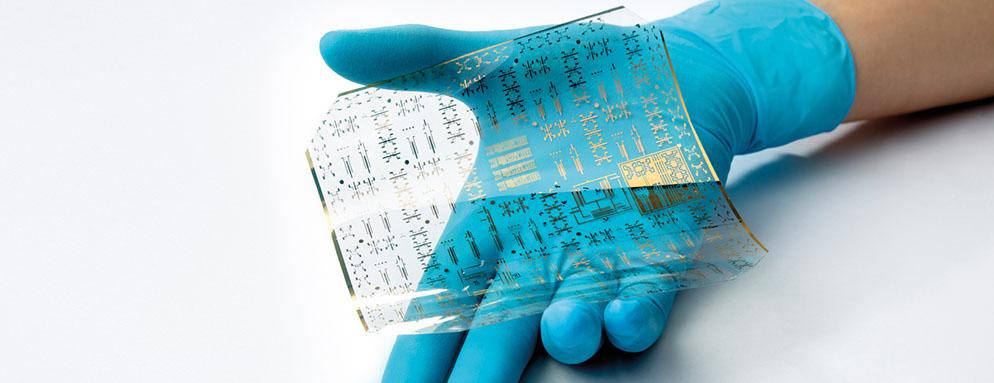
Focused on expanding the functionalities of everyday existing products, printed intelligence is a new and growing field of technology; it utilizes existing methods of manufacturing to create innovative products. Primarily based in ink, these technologies can be manufactured using cost-effective and high output mechanisms such as roll to roll printing, digital printing, and laser processing. Printed intelligence also goes hand in hand with the process of printing electronics. Although printing electronics focuses on the production of cheap electronics, it has many similarities with printed intelligence and goes hand in hand. These simple electronics can be combined with fiber-based products like paper and can be embedded virtually anywhere. A common example is the use of QR codes which are 2-dimensional ink codes that can be scanned and interpreted by mobile phones leading to websites and information about the product that is attached to.
There are many applications for printed intelligence which have already been implemented. Because of its easy manufacture, printed intelligence bridges the gap between traditional paper and electronics. Products include smart tags and indicators as well as sensors and OLED displays that can be integrated into printed products. They also include optical and electronic codes and bioactive materials. Such products can function independently or as a part of a larger system requiring power or external computing sources and reading devices. Even beyond traditional printed media, the use of printed intelligence can be applied to existing technologies as well. It can help to reduce the sizes of products and may even be able to replace circuit boards. In any case, there are still many functionalities of this technology that are yet to be explored.
The use of printed intelligence can also be environment friendly through the use of bio-degradable materials working to increase the sustainability of continued gical expansion. Printed intelligence shows the ability to integrate technology into existing traditional printed products. As the use of these products continues to expand, they can help verify the authenticity of products, sense surrounding environments, and even save lives. In addition, they are easily disposable and recyclable, thereby helping massproduction. As the demand for new technology continues, scientists also continue to innovate, and are now working towards the creation of integrated circuits that can be printed by an application of current manufacturing processes that enable the printed intelligence to be digital as well.
Holi Festival
Rohan Chatterjee (age 17)
Holi is an ancient festival of India and was originally known as 'Holika'. The festival finds a detailed description in early religious works such as Jaimini's Purvamimamsa-Sutras and Kathaka-Grhya-Sutras. Historians also believe that Holi was celebrated by all Aryans but mostly in the Eastern part of India.
It is said that Holi existed several centuries before Christ. However, the meaning of the festival is believed to have changed over the years. Earlier it was a special rite performed by married women for the happiness and well-being of their families and the full moon (Raka) was worshiped.
There are two ways of reckoning a lunar month- 'Purnimanta' and 'Amanta'. In the former, the first day starts after the full moon; and in the latter, after the new moon. Though the Amanta reckoning is more common now, the Purnimanta was very much in vogue in the earlier days.
According to this Purnimanta reckoning, Phalguna purnima was the last day of the year and the new-year heralding the Vasanta-ritu (with spring starting from next day). Thus the full moon festival of Holika gradually became a festival of merrymaking, announcing the commencement of the spring season. This perhaps explains the other names of this festival - Vasanta-Mahotsava and Kama-Mahotsava.
Besides having a detailed description in the Vedas and Puranas such as Narad Purana and Bhavishya Purana, the festival of Holi finds a mention in Jaimini Mimansa. A stone inscription belonging to 300 BC found at Ramgarh in the province of Vindhya has reference of Holikotsav on it. King Harsha, too has mentioned about Holikotsav in his work Ratnavali that was written during the 7th century.
The famous Muslim tourist - Ulbaruni too has cited Holikotsav in his historical memories. Other Muslim writers of that period have mentioned, that Holikotsav were not only celebrated by the Hindus but also by the Muslims.
The festival of Holi is very important to the people of India today, as we celebrate the love of the God Krishna and his birth. Through this festival, Indians celebrate the festival of love in the season of spring, only a month after the recent tradition of love celebrated through Valentine’s Day in the United States. Krishna’s birth and his upbringing allow us to celebrate this festival.
The Prom Queen
by Shama Dinesh (age 18)
The crown rests gracefully atop the elegant curls
A pleasing smile rests upon her lips
The Queen of high-school greets her minions
The one’s she ruled with an iron fist
They smile at her with admiration
While their eyes tell a different story
As she looks down at them from her throne of poison ivy