Ananda Mandir
269 Cedar Grove Lane
Somerset, NJ 08873


Ananda Mandir
269 Cedar Grove Lane
Somerset, NJ 08873
By ashok rakhit, President
Construction
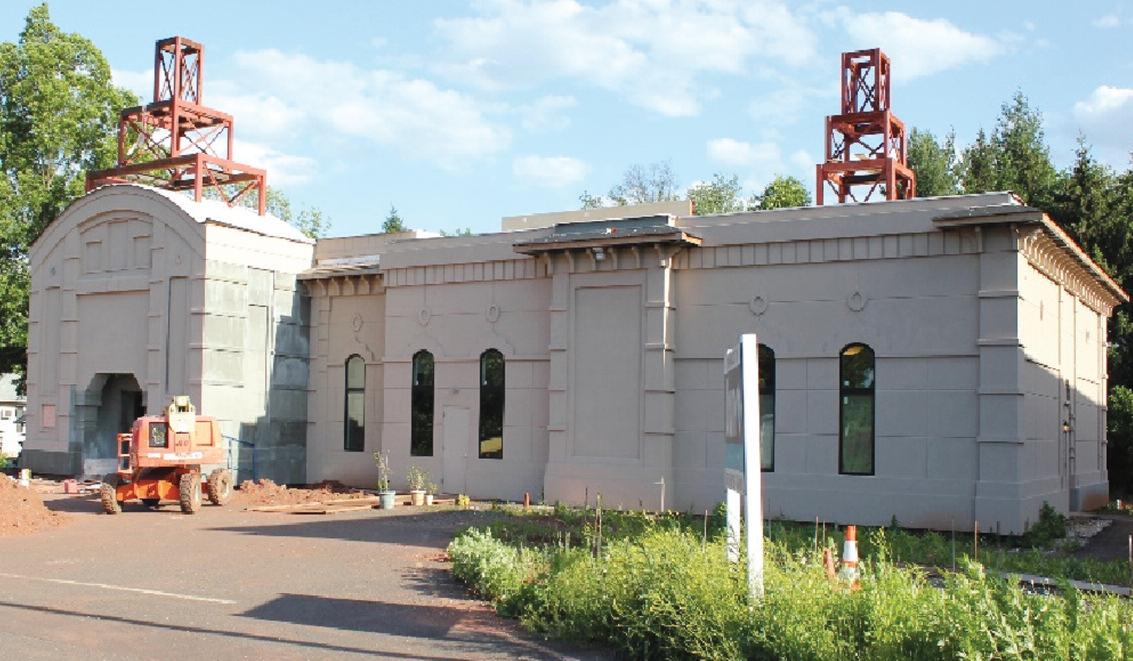
Currently, we are working inside both the buildings to complete all necessary details such as tiles on the floor and carpet installation inside the auditorium hall All the bathrooms too are currently being completed Kitchen equipment has arrived as designed for both buildings and installation is in progress for all of the A/V equipment in the
auditorium. The list of details that need completion is also currently being organized We are awaiting the arrival of two artists from Kolkata along with a large shipment of art materials, for installation on the temple façade They will stay on-site for a month and do the additional artwork inside the temple as needed We are hoping to complete
Financial
We presented our financial status at the Annual General Meeting (AGM) of Life Members last March. While we are on target in terms of expense against the original contract with WOW construction, we have a large number of change orders and additional items that were dropped from the original contract because a smaller bank loan was approved as compared to the original amount that was needed. The majority of these items were not related to the structural part of construction, but were necessary for functional and cosmetic improvement This amounts to a little over $500,000 of unmet funds With your help, we hope to raise these funds in the next two years of annual fundraising WOW Construction has kindly agreed to allow us to pay a substantial part of this balance as a zero interest loan within next 18 to 24 months
PLease jOin The annuaL FunD raising eVenT On sunDaY, augusT 14, 2016
We have challenges on the financial end that need immediate attention Our construction loan of $3 5 million will be closed in August and will be converted to a 19year mortgage with the first payment starting in September this year The terms of this loan is a 5-yr fixed prime + 1 5 with minimum 5% with monthly mortgage payment of about $24,000 (5% rate) Accommodating the first six months of expenses will be the most difficult challenge because our revenue from the expanded center will be minimal during first two quarters of operation We need to raise $250,000 during this year’s fundraiser To meet this goal, we have set the date for the Annual Fund Raiser for Sunday, August 14, 2016 Finally, we are close to completion of building a beautiful
Continued to page 6
the interiors of both the buildings by the end of June At that point we plan to apply for the Temporary Certificate of Occupancy (TCO) We will also start working on the landscaping surrounding our property and try to complete the final layer of paving in the parking area We still have to add the private puja room attached to the temple lobby and an entrance gate as per our architectural plans before the final CO can be acquired
Our plan is to receive the
TCO before Durga Puja Several hurdles still remain with respect to the removal/reuse of the large amount of soil on-site as well as the completion of additional banked parking We are having discussion with township officials for a mutually acceptable solution Thank you for your patience and understanding regarding potential delays, so that these administrative hurdles can be resolved satisfactorily

Debir ghotake agaman O ghotake gaman
October 6, Thursday Debir Bodhan 6:30 pm – 8:00 pm
October 7, Friday Debir Amantran O Adhibas 6:30 pm – 8:00 pm
October 8, Saturday SAPTAMI
Puja 7:30 am – 9:30 am
Pushpanjali 9:45 am
October 9, Sunday ASHTAMI
Puja 9:00 am – 11:30 am
Pushpanjali 11:45 am
SANDHI PUJA 5:10 pm – 5:58 am
October 10, Monday NABAMI
Puja 9:00 am – 11:00 am
Pushpanjali 11:15 am
October 11, Tuesday DASHAMI
Puja 9:30 am – 11:00 am
Sindur Khela Evening
October 15, Saturday KOJAGARI LAKSHMI PUJA Evening
October 29, Saturday MAHA KALI PUJA
Puja 7:45 am – 11:00 pm
Pushpanjali 10:00 pm
Devotional Songs 8:00 pm – 10:00 pm
Calendar of Events (Dates are subject to Change)
Please check our website frequently www.anandamandir.org Tel: 732-873-9821
NOTE: If a particular Puja time is not listed, please contact temple or visit our website:anandamandir org
juLY (*)
ratha Yatra
Wednesday, 06
Bipad Tarini Puja
Tuesday, 12
ulto ratha Yatra
Thursday, 14
satyanarayan Puja
Sunday, 17
sahitya O alochana
Friday, 15, 8:00 PM
ananda sandhya Not scheduled
augusT (*)
sahitya O alochana
Friday, 19, 8:00 PM
ananda sandhya Not scheduled
sePTemBer (*)
sahitya O alochana
Friday, 23, 8:00 PM
ananda sandhya Not scheduled
OCTOBer (*)
mahishasura mardini Live event
Sunday, 02, 4:30 am
Durga Puja
Thursday, 06 to Tuesday, 11
(See details on front page box) kojagori Lakshmi Puja
Saturday, 15
kali Puja
Saturday, 29, 7:45 pm – 11 00 pm
Pushpanjali, 10 00 pm
Devotional Songs 8 00 – 10 00 pm
sahitya O alochana
Friday, 21, 8:00 PM ananda sandhya Not scheduled
(*) Call Mandir for Puja Schedule
special religious services: Upon request, the priest of Ananda Mandir offers services such as inhouse Shraddhas, Rituals associated with Cremations (Antyesti Kriya), Shraddha Anniversaries, Pre-wedding rituals (Naandimukh, Ashirwad, etc), Upanayan (Paitey), Annaprasan, Wedding Ceremonies & Wedding Anniversaries, Griha Prabesh (Bhumi Puja), Consecrations of new cars (New Car Pujas) and others if you have needs for any of the above or more, please feel free to contact Biswabhai @ 732-873-9821
ananDa sangBaD
A Periodical Newsletter
Published By ananDa manDir (A Tax-Exempt, Non-Profit Organization) 269 Cedar Grove Lane Somerset, NJ 08873 Ph: 732-873-9821
Website: www anandamandir org
PuBLiCaTiOn COmmiTTee OF ananDa manDir
Chairperson: Pronoy Chatterjee, pkc usa@yahoo com
Assistant Chairperson: subrata Bhaumik, Bhaumik subrata@gmail com
Editor-in-Chief: Debajyoti Chatterji, Debsmee572@gmail com
Managing Editor : Ananda Sangbad: guru Chakravarty, guruchakravarty@yahoo.com
Managing Editor, Anandalipi: amitabha Bagchi, amitabhanj@gmail.com
Editors: subrata Bhaumik, bhaumik subrata@gmail com subhodev Das, subhodev das@gmail com sushmita Dutta, sushmitadutt2@gmail com amrita kangle, amritakangle@hotmail com nupur Lahiri, nupurlahiri@aol com
Associate Editor: ruby Banerjea, r banerjea@yahoo com
Members-at-large: Bhaswati Bhadra ashok rakhit
All queries, articles, news reports and letters should be directed to the Managing Editor: Phone: 908-752-3065, E-mail: guruchakravarty@yahoo com
For general information, please contact the following executives of Ananda Mandir: ashok rakhit, President
jaiprakash Biswas, Vice President
The dream of building “a place of our own” in New Jersey began to take shape in the early 1990s when a few visionaries of the Bengali community initiated earnest discussions about establishing a temple-cum-community center complex Previous attempts by some community members in New Jersey to establish such a facility had failed Many doubted that Bengalis would be able to sacrifice their egos, would listen to each other and would selflessly donate large sums of money Well, it turned out that these visionaries were not afraid to give large donations and to work with each other with trust and respect Soon, enough money was raised to buy a property In 1995, a 7 5 acre property with a ranch house and two large shed-like structures was purchased The organization was named Ananda Mandir These selfless people with vision and imagination were the early heroes of Ananda Mandir
Soon many others started to believe in the commitment and dedication of the organizers and started to coalesce under the Ananda Mandir umbrella The ranch house was utilized by the community to get together for religious activities as well as to conduct children’s classes for language and culture Donations started to pour in, thanks to tireless fund-raising efforts Now it was time to draw a plan to build a real temple by demolishing the sheds and utilizing that space Many dedicated and knowledgeable people worked incredible hours to get the design done, and worked with the township officials to get permits, raised funds and offered their expertise to supervise the construction Deities were made in Calcutta and Jaipur, in accordance with our specifications to suit the temple size. In 2004, Ananda Mandir opened its newly built temple to the public, with a resident pujari. These selfless people who gave their money, time and effort were the next group of heroes of Ananda Mandir.
As the organization became stable with regular religious functions and started to attract a larger number of devotees, the Board of Trustees perceived the need for the next phase of Ananda Mandir expansion Along with that, the need to make provisions for sustaining the organization by generating a steady income to pay off a big bank loan and to maintain the property in good shape for future generations became apparent A new Heritage Center was planned so that it could be used by the community for all sorts of social functions and get-togethers Again, just like the other phases of upgrades, the organizers faced the challenges of raising large amount of funds, intelligently planning all construction details and securing dedication from many volunteers to make it all happen And now, after three years of sustained efforts on all fronts, the newly expanded facility is about to open its doors to the public These people who have ceaselessly channeled their energy to bring the project to a successful completion are the newest heroes of Ananda Mandir
And we should not forget the volunteers who, through all these years, supported the organization with planning and attendance at religious activities, fund-raising activities, expanding memberships, organizing attractive musical programs, cooking, cleaning, decorating, publishing, involving the new generation, designing and maintaining our websites and databases, and generally, treating the Temple as their second home They are also heroes of Ananda Mandir
At this juncture of the imminent opening of the new expanded facilities, we hail all the heroes of Ananda Mandir!
guru Chakravarty Managing Editor,
Ananda Sangbad
Dear Members of Ananda Mandir, I have been elected by the Board of Trustees (BOT) as President of Ananda Mandir for the next term of two years This is somewhat unusual since eight years ago I had completed two terms as President I decided to accept the BOT's mandate again because this is a challenging time for Ananda Mandir, and I wanted the organization to succeed
We are all excited to see our Heritage Center nearing completion – with a brand new look with two beautiful buildings, each designed with Bengali architectural traditions in mind and with significantly increased functional space to meet the needs of our fast growing community However, with that excitement comes the challenge of meeting the enormous financial burden of a bank loan of $3 5 million and managing this large site on a day-to-day basis
At its May meeting, the BOT elected a new Executive Committee (see below*) and appointed Chairs of major organizational functions The BOT also welcomed four new trustees who were elected at the Annual General Meeting, held in April: Dhriti Bagchi, Indrani Dhar, Biswajyoti Nayak and Rik Sen Their membership in the BOT strengthens our strategic goal of having a well-balanced team of experienced and younger members We believe that such a balanced team will help us ensure a stable management while bringing in fresh minds and ideas to open new paths that are forward looking without being not disruptive
For the next 6 to 12 months, our focus will be on the following construction-related goals: a) completing both buildings and getting an approved Temporary Certificate of Occupancy (TCO) well before the Durga Puja season; b) setting up a management team for the oversight of rental of the Community Hall, and c) completing site work and other minor construction tasks that would be required for getting the final, approved CO. Simultaneously we will be facing the challenge of managing our financial resources to ensure that we have a steady stream of funds. We will be working hard to organize a highly successful Annual Fund-Raising Lunch (scheduled for Sunday, August 14th) and achieve sizable rental income from the Community Center and steady revenue stream from the religious services in the newly expanded temple
To achieve all our goals, we need your help! As soon as we receive the TCO, we will make the announcement At that point, please make every effort to rent the new Community Center facilities for all occasions, large and small, so that this beautiful new facility is optimally used, remains financially strong and can continue to grow to meet the needs of our community for decades ahead During first six months of operation, services may not be optimal since it will be a learning process for the management but with your cooperation and understanding, we will be able to overcome all obstacles This is your community home, so please join us to celebrate and enjoy memorable occasions such as weddings, anniversaries, birthdays etc Spread the word among your friends and business contacts so that they may also rent the community hall for their festive occasions
Thank you,
l l Didn't receive Your Copy of
suprasad Baidyaroy, Vice President
arun Bhowmik, Vice President
sajal mukherjee, Gen Secretary
Chanu Das, Treasurer
ashok rakhit
President, Ananda Mandir
* Executive Committee:
Ashok Rakhit (President), Sajal Mukherjee (Gen Secretary), Chanu Das (Treasurer), Jai P Biswas (vice President and Chair Community Hall), Arun Bhowmik (Vice President and Chair Cultural Committee), Suprasad Baidyaroy (Vice President and Chair Food Committee), Dipak Sarkar (Chair Educational Center), Biswajyoti Nayak (Chair Temple Committee)
If you are a Life Member or an Associate Member, but didn't receive your copy of Ananda Sangbad, it may be because we do not have the correct address on file for you. Please send an email to guru Chakravarty (guruchakravarty@yahoo.com) with your correct address, and we will send you another copy.
By amitabha Bagchi
When I was in graduate school, there was a physics colloquium that left a deep impression on me
The speaker, presumably a physicist with a religious bent (or at least curiosity) was trying to explain in scientific terms the miracle of Jesus walking on water –specifically his walking on the Sea of Galilee to approach the ship carrying his disciples in stormy weather
Jesus walking on water is one of the fundamental miracles of the Christian faith. The colloquium speaker, however, contended that the event had a simpler explanation that was less than divine. In his view, it was a matter of optical illusion – a mirage of sorts In high wind and darkness, when Jesus was walking on the beach and coming toward the ship -- which the storm had forced to remain close to the shore -- he simply appeared to be walking on water
When Peter actually tried to step on the sea to get to his master, he nearly drowned and was rescued by Jesus in relatively shallow waters
The speaker tried to buttress his point with pictures of beaches on the Sea of Galilea under various weather conditions But what intrigued me most about his explanation was not so much the science itself as the willingness to bring scientific scrutiny to bear upon religious events that are imbued with faith but are of questionable historicity Here was a case study of science facing religion, I thought appreciatively, and almost facing off against it
Later in life, I became friendly with an Englishman who taught mathematics in college and who had “found faith,” in his words, as a young man Talking to him, and also other religious Christians with a rational or scientific mind, I found that they had certain discomfort with many of the socalled miracles of their faith. This is especially true of Roman Catholicism where, even to this day, two miracles vouched for by observers are considered sine qua non for the canonization of a deceased person to sainthood
This exposure to faith and science had the following effect on me I began to think that the faith I inherited at birth, namely Hinduism, ought to be subjected to similar scientific scrutiny I began to make statements to that effect, to anyone who would listen, without quite realizing or properly articulating what I meant To begin with, I was not sure which miracles to scrutinize While Hinduism is full of mythological stories, wherein deities interact with humans and perform wondrous acts, there are relatively few miracles with all human agents The handful of modern ones – typically,
snakes protecting babies, Sai Baba remotely sending aromatic ashes to his devotees, or statues of Lord Ganesha dispensing milk through tusks – are too mundane to merit a thorough investigation and debunking
Recently, however, I discovered a huge gap in my knowledge I learnt that Bengali authors of a previous generation had indeed grappled with certain stories widely popular in the Hindu faith, and tried to bring the divine down to the merely mortal. I am referring here, in particular, to how Kunti conceived her children in the Mahabharata.
Per the story as narrated in the Hindu epic, Kunti was an unmarried princess who, at her father’s behest, took on the task of looking after and providing hospitality to the irascible sage, Durvasa, when he came to visit their kingdom Durvasa was very pleased with her effort and gave her a mantra as a boon, through the incantation of which she could invoke any god and bear a child by him The young Kunti, naturally curious, tried the mantra once before marriage and had a child (Karna) by the Sun god Later, after being married to Pandu and becoming aware of his curse (of certain death during copulation, which might arguably be a fig leaf for impotence), she got her husband’s permission to have three sons by three different gods, and taught the mantra to Pandu’s second wife, Madri, to let her bring forth twins
This story at some level screams for scientific rebuttal, and I found out that it was given by two stalwarts of Bengali literature First, Samaresh Basu, writing as Kalkut, posited that the boon story was nonsense and Karna was in fact the love child of Rishi Durvasa. Next Prativa Basu went a step further and speculated that the children of both Kunti and Madri were fathered by Pandu’s half-brother, Vidura.
Both these explanations are entirely plausible, but that is not the point I wish to make Rather, I wish to explore why (aside from my limited knowledge of literature on the whole) I was not aware of these alternate stories for fifty-odd years, why these stories never got traction or currency to compete with the version described in the Mahabharata The explanation, I believe, lies in the human reaction to miracles, myths and their intersection with faith For the reasons described below, I have now tempered my previous enthusiasm for the use of scientific methodology to challenge tall religious tales
First of all, Mahabharata, at some level is a soap opera on paternity Hardly any of the chief protagonists is a son (or daughter)
of their putative father The epic is instead full of juicy stories about who fathered whom and how The Kauravas cannot trace their lineage to King Kuru, nor are the Pandavas biological children of King Pandu. Draupadi emerges not as a baby from her mother ’s womb but as a fully-formed young woman from King Drupad’s yagna fire To speculate and insert characters like Durvasa and Vidura into this paternity mix, howsoever logical, is therefore not scandalous per se – simply quotidian The modified narrative is unexciting to the secular, sacrilegious to the devout, and is of limited interest overall
Second, unlike a miracle, which typically involves ordinary humans, myths by definition involve supernatural beings and deities or demigods As a result, they are far more difficult to put under the scientific microscope Mahabharata’s stories, mostly paranormal and mythological, are therefore harder to bring under the ambit of scientific inquiry
Third, even for religious miracles from the Bible or the Koran, it is not clear how many people truly care about their possible scientific interpretation I have heard attempts to explain the parting of the Red Sea by Moses, and its subsequent reversion to drown the Egyptian Army, in terms of dams, water diversion and breached levees I do not see any sign that such explanations have gotten hold of the popular imagination. On the contrary, people seem content to fantasize about tall tales and not worry overmuch about their reality or scientific credibility.
Finally, there is the question of faith Faith essentially consists of a willing suspension of disbelief, but it is more than that It is a type of suspension of disbelief suffused with soulful spirituality Empirical science appears there as an unwelcome intruder, unless you are inclined to challenge the basic spirituality itself The devout will never be swayed by ordinary logic Let me summarize this way I am still deeply impressed by scientists trying to explain Biblical miracles in empirical terms I still hold that Hindu beliefs need to be subjected to a similar scrutiny But I also realize that such challenges make sense for the modern-day milk-dispensing Ganesha rather than mythologies from Hindu epics or puranas Certain myths, after all, cannot be framed in terms of scientific inquiry: God saving Isaac from being sacrificed by Abraham in the Old Testament; the angel Gabriel foretelling the birth of Jesus to Virgin Mary in the New Testament; or Prophet Muhammad’s overnight trip from Mecca to Jerusalem in Islam are but some examples. I am now more inclined to put a majority of stories from ancient Hindu scriptures in that category.
By amrita kangle
One score and five years ago, when I was a practicing architect in Mumbai, there used to be working in the stilt area of a building that I had designed and which was under construction, a man by the name of Lakhubhai Lakhubhai seemed as old as time, as permanent as a Peepul tree and as calm as a home after the children have left for school He greeted everyone with a welcoming smile which actually seemed to begin in his heart Attired in a spotless starched, long white shirt with matching pajamas and a white cap on his head, Lakhubhai was a picture of pristine calm He was a Real Estate Broker He conducted his business from the ground levels of new buildings under construction
Ever since those days, the picture that I associate with the word 'broker' is that of a calm blue sea, with a soothing melody playing in the background, tender green fronds of palm swaying gently in the breeze and sparrows chirping their welcome chirps to people moving into their new homes At that time, the world of real estate brokerage seemed so very attractive Just accompany people to show them new homes they choose-sign a contract-move into their home-the broker rakes the money in by bushels To a frazzled and harried architect, whose contractors were giving her nightmares this seemed as attractive as candy to a two year old The attraction was reinforced by the fact that Lakhubhai always seemed to be putting money into his pocket Not just some notes but wads of them: of the 500 rupees denomination variety.
Quite contrary to the picture that I had in my mind, in those days (the dinosaur-ean era, as my irreverent offspring puts it) the profession of Real Estate Broking was not counted amongst the 'Top Ten Professions' in the country. In fact, the prototype of a broker was a character with a glinting gold tooth and oily hair slicked back, grinning at the world evilly and trying to entrap an unsuspecting soul in his web Please note, that the profession was restricted to the male of the human species and at least in Mumbai a female real estate broker was not even heard of Fast forward to the twenty first century New Jersey United States of America Women in this country have been working in Real Estate as a profession since a very long time now They are an elegant, smart and an extremely pragmatic lot Frankly, long before I became a part of this profession, the whole lot of female real estate agents scared me silly They were so self-assured, so sophisticated that one approached them with large doses of trepidation But, who was it that said that appearances were deceptive? Well, whoever said it first happens to have hit the nail on the head The female real estate agents were actually very like Lakhubhai their outer shell was pure unruffled serenity but just below the veneer lay the strength of steel These ladies were more than prepared to roll up the sleeves of their very elegant jackets, take a broom in hand and get down to clean up a house on the day of the closing if the sellers had somehow 'forgotten' to do so The buyer of course would not dream of moving into a dirty home and this could just prove to be the deal-breaker All that matters is closing the deal So, who do you think puts it all together? But of course, your real estate agent!
But let me begin at the beginning which is usually a very good place to start I got very inspired by all the real estate brokers that I came across and decided that 'Brokering' was now my chosen career Architecture could now take a back seat The whole path which I was choosing to walk upon was as clear to me as it was foggy to the rest of my family I had visions of myself in elegant attire, snootily showing people homes They saw a couple of them, loved them on the spot and bingo! A deal was struck I make it absolutely clear to you that this was my dream And you good people know exactly how closely related dreams are, to reality!
Buying a house, for every person in the world, is a major decision. It is not like buying a tee-shirt. And we know how people dither over choosing a tee-shirt! So just imagine what their state of mind is when buying a home which is a major investment.
To begin with, they approach a Real Estate agent with suspicion flowing through every vein in their body With housing websites trying to do such a good job, your average home buyer believes that they know all there is to know about buying a home Definitely much more than their real estate agent does And when they are so full of enthusiasm and cheer, it feels like a criminal act to tell them that the beautiful home that they saw on a website at midnight yesterday, was actually off the market
reported by Debajyoti Chatterji
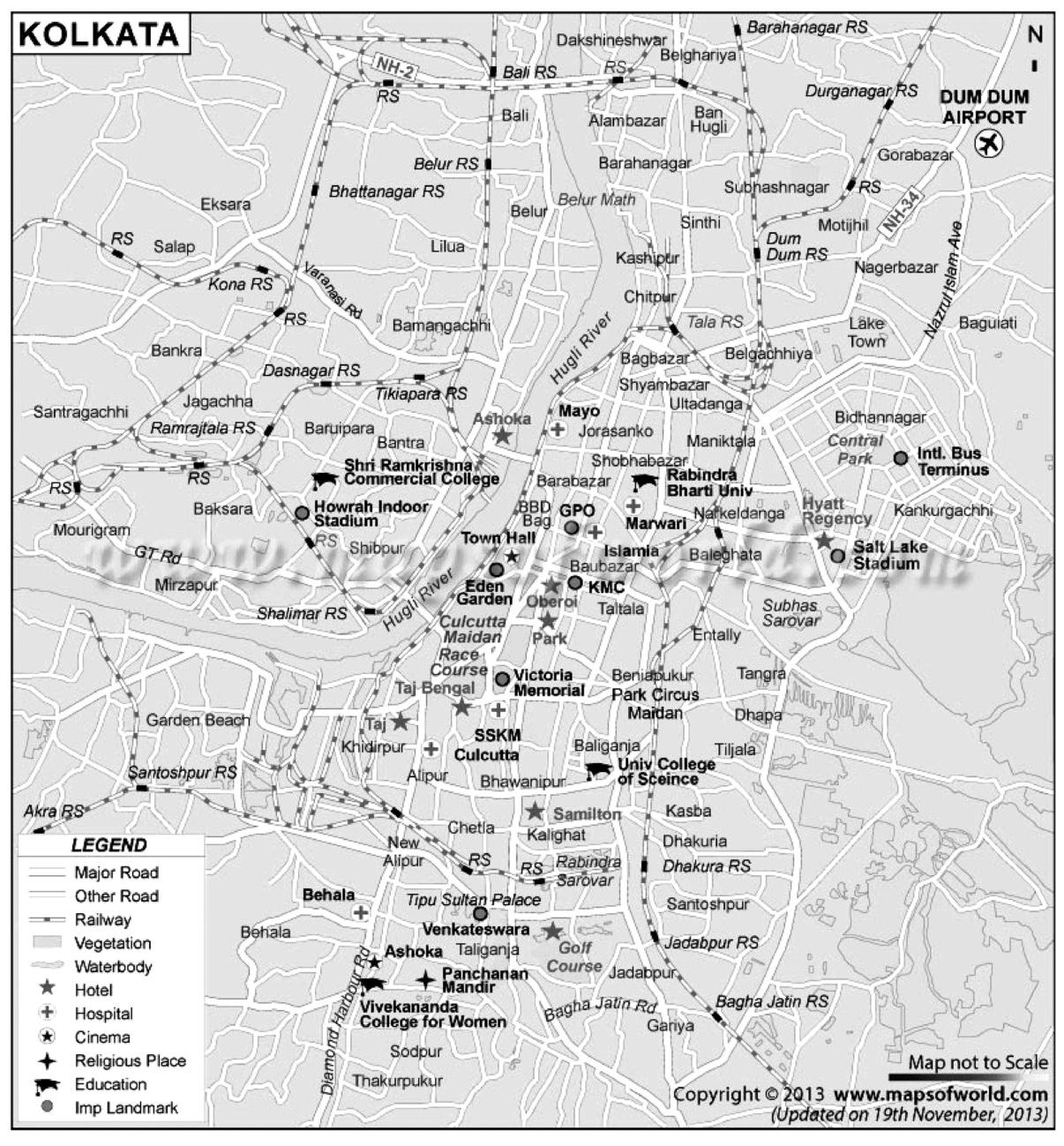
To put it mildly, Bengalis are fond of Kolkata Even Bengalis who are not residents of Kolkata, think of the city as the center of their emotional and cultural universe, their connection to everything Bengali Bengalis from the far corners of the world return time and again to Kolkata to get hefty doses of Bengali culture, if not big servings of delicious Bengali food, and return to their physical homes with a heightened sense of emotional renewal
But do Bengalis really know Kolkata? Sure, they know the charming bookstores and cozy coffee shops on College Street, the fancy restaurants on Park Street, the famous institutions like Presidency College and the National Library, the tourist destinations like the Victoria Memorial and the Botanical Gardens, the big events like the Durga Puja and the Boi Mela, and so on But what do they know about the vast wetlands on the eastern end of the city, the big blue patches and zigzag blue lines on the map of Kolkata, just a couple of miles beyond Salt Lake (Bidhan Nagar) and the Eastern By-Pass? Do they know that these blue patches and zigzag lines (indicating wetlands comprising of lakes, ponds and canals) represent an environmental lifeline for their beloved city and is a treasure to be admired and protected by all?
A quick check with some of my friends who spent their formative years in Kolkata – and have
returned to the city many times since – yielded “yes and no” answers: yes, they are aware of the existence of the “East Kolkata Wetlands”, but no, they do not know why these sparsely populated and rarely visited areas are critical to the sustenance of their favorite city I did not know much about these wetlands either until I stumbled upon an eye-opening article by Patrick Barkham on TheGuardian com, the website of a well-known British newspaper This is a must-read article for all who love Kolkata, Bengalis and non-Bengalis alike, and who want to preserve the city and its rich heritage long into the future. Here are the key points made by Mr Barkham, supplemented with some relevant information gathered through my brief research on the subject.
east kolkata Wetlands Facts and Figures
The East Kolkata Wetlands (EKW) is the largest multi-resource, multi-purpose wetlands in the world EKW covers an area of 12,500 hectares (approximately 47 square miles) and includes 300+ fish ponds, numerous vegetable fields, many rice paddies, and a big garbage dump known as the Dhapa Square Mile, all connected through canals, channels and a few roads Some 60,000 people live in 43 villages within the East Kolkata Wetlands In 1992, a ruling by the West Bengal High Court established EKW as an environmentally pro-
tected area where unauthorized development would no longer be permitted EKW was further recognized in 2002 as a RAMSAR site, and it drew international attention for its complex but highly beneficial ecosystem of plants, fish, animals and humans. (NOTE: The RAMSAR convention is an international treaty, signed by many countries in the city of Ramsar, Iran, in 1971, for the conservation and sustainability of wetlands around the world ) invisible and silent Processor of sewage Kolkata does not have a sewer treatment facility In fact only eight Indian cities (Hyderabad, Ahmedabad, Delhi, Mumbai, Pune, Ludhiana, Chennai and Vadodara) have facilities to treat some of their sewage load Kolkata, a mega-city of 14 5 million inhabitants, produces 707 million liters of raw sewage-cum-wastewater and 3500 tons of municipal waste per day, so where does all that messy and unhealthy stuff go and how is it “treated”?
The short answer is that it all goes to the East Kolkata Wetlands (EKW) where the plentifully available ultraviolet rays of the sun and the ever-present green algae work together to “cook” much of the bacteria through complex biochemical reactions. But the city has underground sewage pipes only in some areas, and many sections still have open, roadside drainage channels. So how does the entire sewage load of the city find its way to the EKW? Mr Barkham says that “During the days of the British empire, a Bengali engineer, educated in Glasgow, designed and built gently graded channels that transferred Kolkata's wastewater from the city to the wetlands and on to the Bay of Bengal” through the river Kulti-Bidyadhari The unnamed Bengali engineer deserves the gratitude of all Kolkatans for his clever design of the city-wide drainage network that has silently carried out its humble duties over many decades
When the wastewater from the city enters the East Kolkata Wetlands through many manmade canals, it goes to a series of jheels and then a number of bheris Jheels are elongated trench-like ponds, and these are separated from each other by layered garbage barriers where
many kinds of vegetable are grown Sewage is detained in these ponds for some time, and then the sun-treated water is used to irrigate the vegetable fields. In the bheris (shallow fish ponds) the wastewater is made to flow through a network of drainage channels, all the while being subjected to solar radiation The effluents from these ponds, now with significantly reduced levels of bacteria and other organic matter, flow into strategically planted rice fields The discharges from these rice fields finally drain into the Kulti river
The wetlands are also home to thousands of acres of garbage dumps (the most well-known being the Dhapa dump) and many small, privately operated vegetable farms
Kolkata's wetlands represent a wonderfully symbiotic relationship between man and nature that has been made possible by an ingeniously designed drainage system and is ideal for a poor country in a tropical climate The wetlands represent the world's biggest “free filtration system” for sewage and wastewater The EKW are quite correctly termed by some as “the kidneys of Kolkata ” a heaven for Fishing and Farming Bengalis love fish, and the residents of Kolkata eat tons of fish every day. Where does that much of fish come from? EKW is one of the biggest, if not the biggest, source of that daily supply of fish to Kolkata's numerous markets. The bheris and jheels in the wetlands are very efficient fish farms that require virtually no maintenance and are highly productive throughout the year
Much of the fish caught from EKW are transported fresh to the city by individual traders on bikes, auto rickshaws and small motorized vehicles
The East Kolkata Wetlands also produce a big fraction of the vegetables sold in the city's markets Many kinds of vegetable are grown by individual farmers on small plots on the garbage and soil-layered barriers separating the jheels Larger tracts of land in the Dhapa dump are homes to somewhat bigger vegetable farms With abundant irrigation and rich organic soil, these fields produce plentiful harvests for the city's residents
The Wetlands reportedly “produce 10,000 tonnes of fish each year and the 'garbage farms' provide 40 to 50% of the green vegetables available in the Kolkata markets ” But are the fish and the veg-
etables grown in the wetlands safe to eat? Tests generally suggest that the fish and the vegetables are not contaminated but a few experts have expressed some doubts Fortunately the sewage and the wastewater from the city carry only very small levels of toxic metals like arsenic The wetlands are not efficient scavengers of such chemical contaminants
natural Protection against Devastating Floods
Kolkata is a low-lying megacity, rising, on an average, only about 15 feet above sea level, and is located between two major rivers and surrounded by many waterways It is extremely vulnerable to flood from heavy rains – and to any rise in sea level from global warming World Bank estimates that a rise of only 8 inches in sea level will make Kolkata “the third most exposed city in the world to the risk of flooding ”
Kolkata's primary defense against heavy flooding is the wetlands region In the absence of these wetlands, Kolkata could face the same fate that befell Chennai last year when a huge flood paralyzed the city for many days Patrick Barkham notes that “Twenty years ago, Chennai had 650 wetlands in and around the city Today it has 27 ” He blames “super-charged” urban development for this huge loss of wetlands in Chennai
Is Kolkata protecting its natural flood barrier or drifting towards a defenseless future?
environmental impact from rapid housing Development
Dr Dhrubajyoti Ghosh is a Kolkata-based ecologist who is credited with studying the Kolkata wetlands in great depth and discovering and publicizing its environmental and economic benefits. He began his research on the wetlands in the early 1980s, painstakingly mapped the area, came to understand how it functions, and fell in love with it Dr Ghosh was critical to securing the ruling from the Kolkata High Court and the RAMSAR recognition He has been on a life-long campaign to protect the wetlands because he strongly believes that Kolkata will suffer huge damages if these wetlands are destroyed through uncontrolled activities
Unfortunately, in recent years, Dr Ghosh's worst nightmares have begun to materialize Construction of numerous highrise apartment buildings close to the wetlands (in Rajar Haat and neighboring areas) and unauthorized building activities within the EKW area are beginning to reduce the size and the ecological strength of the wetlands Increased recognition of the disastrous environmental consequences and public pressure on the government are the only ways now available to protect this important lifeline for the city
Just like any other Indian, I love to visit my birth land as often as I can, always on the lookout for any opportunity to do so Weddings, seeing friends and relatives, visiting places that are still unseen, theater and bringing back those special Kolkata sweets are enough reasons for me to buy that ticket. Whenever you go, you are impressed with things that have changed and things that remained unchanged as time continues to make its mark in people’s lives and the surroundings
Here, I make an attempt to chronicle the progress and the lack of it, as witnessed by me during my visit in March, 2016 general Progress
We can see that changes are in the air Progress can be seen all around in education, accommodation, food, shopping, infrastructure, and, yes, in health standards The usual feature of a short and scrawny body with protruded cheekbones are replaced by medium to tall bodies, enough flesh on the bones and a look of contentment Endless buildings with flats for purchase have sprung up in all parts of the city and the suburbs, providing comfortable living I was pleased to see the abundance of overbridges, with somewhat excessive glittering lights, all over Kolkata, reducing the traffic jams to almost non-existent Actually, I remember to have gotten stuck in a traffic jam just once during my two weeks of stay in Kolkata And then there is the KolkataDurgapur Highway, a toll road that qualifies as equal to an American expressway. Flower plants in the median make you appreciate the good planning by the government. It made my travel from the airport to my home in Bankura a pleasurable experience
The progress is slow to come to villages Housing and jobs are in deplorable condition in many villages In my ancestral village of Shaltora, most people still depend on agriculture for sustenance, barely earning enough for living About 50% of the homes are made of mud-wall with a thatched roof I was pleasantly surprised to find that government is building small two-room brick housing for a few deserving poor families free of cost Another happy surprise - a few poor widows are receiving money in the form of social security payment Supply of drinking water and associated plumbing remain a dream The only drinking water source in the village is government-built tube-wells, strategically installed in a few locations A small percentage of people (say, 15%) who secured a teaching or a bank job, or a government job in one of the village development offices, are relatively well off with brick houses and their own wells with plumbing Another 15% or so, who
By guru Chakravarty
dared to go out of the village in search of better lives are living in Kolkata area in reasonably good condition Forty five years after I left my village to come to the U S , I saw a permanent road being built finally through the village, replacing the dead-ended earthen road
And now the things that never changed – the things that keep reminding you of the insurmountable problems attributable to the enormous population As I took my daily evening strolls along the Chowringhee Road, I saw many people including women and children sleeping on the sidewalks Walking outside is hazard because of dust and stench Still, walking on wide sidewalks at Chowringhee was a breeze compared to that at Gariahata You cannot walk there at any time of day without brushing against others Driving in Kolkata, or for that matter anywhere in India, remains a picture of chaos Not only visitors do not dare to drive, even car-owners are scared, hiring drivers or taking taxis instead. There is no compliance of staying within the traffic lanes. There will be at least three cars in a two-lane road, with drivers vying to pull ahead.
education
I see a great leap made in the field of primary education
Even the girls of the lower income families, namely Bagdis and Bauris in our village, are attending school, instead of wandering around, trying to earn a buck And why not? They get free tuition, free meals at school, free bicycles to ride to school when eligible And to top that, they get a one-time Rs 25000 scholarship if they stay in school after age 18, as unmarried
On the flip side, teaching in government schools and even
private ones alike is in shambles Each and every student must have one or more private tutors to do well in tests Although teachers’ salaries are high enough compared to equivalent government jobs, and private tuition is unlawful, the system is completely out of hand Parents must cough up 200-300 rupees per teacher per subject even in the village The poor villagers cannot afford it and therefore their children fall behind, unable to do well in Joint Entrance Examination, unable to progress beyond high school This condition is prevalent in the entire state of West Bengal, be it a village or a city One higher-secondary student, Monika, told me that her regular higher secondary classes are not held because most teachers do not come to the class, instead choosing to make money from private tuition Money plays a big hand in the lives of these students Those who can afford, spend a lot of money to prepare for Joint Entrance Examination in private tutorial schools, and those have-nots fall wayside. It is good to see that organizations like GSCA (see gsca.us/philanthropy) have started scholarship programs in a small way to help some of those have-not students
A large number of government and private Medical and Engineering institutions are now established Even an average student who can afford to pay huge fees, can get into the private institutions Bank loans are now available for such studies Job market in the IT field is still relatively strong, especially outside West Bengal healthcare
Here is the most devastating scene I happened to witness in Kolkata In one of the great med-
ical institutions of the last century, the R G Kar Medical College & Hospital, I saw hundreds of patients lying outside on the pavements, for lack of beds inside the hospital Some of them are waiting for treatment, and some others released too soon after the treatment They are there to avail free treatment, however, the conditions are simply heartless
Many hospitals with great facilities and qualified doctors, some of them trained in the U S and Europe, are available for those who can afford the enormous fees Government employees and people working in good private companies get health insurance through their employers
A vast majority of the population simply do not have any insurance or have minimum coverage, who are at peril of losing all their savings in any surgical procedure at a private hospital There is no way out for them other than simply depending on fate
Healthcare is available in village areas in the form of small health centers, where government provides free primary medical treatment, and some free medications. Here again, the system is in anarchy, like the education system. It is unlawful for any government physician to do private practice, however, almost everyone does it So, all doctors, in village or city surroundings, encourage patients to go to their private nursing homes and buy medications through their network of pharmacies
Healthcare is the biggest worry for the non-resident Indians to visit India If one gets suddenly ill requiring hospitalization, the conditions may be dire There is no 911 type service to call Ambulance service is not dependable as it may take forever to arrive and then traffic has to
be navigated Upon arrival at the hospital, a hefty deposit must be made at the registration before any medical staff comes to see you In case of maltreatment there is no legal avenue to speak of, to seek remedy
Cleanliness
Dirt and dust are everywhere, as soon as you step outside the house. There is garbage collection in many localities, still too much garbage on the streets is common, with stench as you walk. I was pleased to see covered drains at many locations, however, there are many uncovered drains within Kolkata and in almost all suburbs Mosquitoes are plentiful, and you need a protective net to sleep in most locations throughout the state Grassy lawns are almost non-existent, except in specially maintained parks and grounds
Pleasant experience
I made a special effort to visit my alma mater, Jadavpur University, in search of my old classmates I got a pleasant surprise when I ran into Asit Mitra, my old classmate of not JU, but of IIT Kharagpur Asit got his BS at Jadavpur and did MS and PhD at IIT, eventually becoming Head of the Department in Chemical Engineering, before retiring More importantly for me, he happened to be the current President of the JU Alumni In his presence at the Alumni office, I got a warm reception, and I gladly joined the Alumni Association He asked me to come to their Wednesday evening get-togethers I was glad that I went to participate in the “Adda”, meeting a few of them, all retired They talked and laughed, some sang Rabindrasangeet, and all looked happy. I must mention Debasish, a much younger alumnus, who made me feel at home at my first Alumni Adda.
A second pleasant moment was having lunch with Pranoy Roy, our layout designer of Ananda Sangbad and the Lipi, in presence of our very own Pronoy Chatterjee It was planned beforehand and turned out really enjoyable!
Denmark takes the top spot as the happiest country in the world, displacing Switzerland, according to the World Happiness Report 2016, published by the Sustainable Development Solutions Network (SDSN), a global initiative of the United Nations The report takes into account GDP per capita, life expectancy, social support and freedom to make life choices as indicators of happiness. India ranked 118th out of 156 countries in the happiness list, down one slot from last year on the index, coming behind China (83), Pakistan (92) and Bangladesh (110). The US is ranked 13th, coming behind Australia (9) and Israel (11)
heritage center for our community that has been a part of our dream for many years. Over the last 20 years, we have been working on this goal starting with an initial fund of only ~$60,000 while looking for a property in central New Jersey We have come a long way to building the current facility of ~$10 million value in a 10-acre property Please open your hearts at this monumental time for our
immigrant community that has dreamt of this cultural and religious center, not only for us but also for the generations to come! if you have not become a Life member yet, please do so. Become a part of this historic occasion if you have already done so, please donate generously, especially during this time when we need your help so urgently We also humbly request all our Life members to request their
Continued from page 3
since the last week and the said website had not yet found time to update the status
working children to become individual Life members. The success of this heritage center depends on the active participation of the next generation in order to shape its direction We hope that in 2 to 3 years we will be operationally and financially stable with optimal use of our facility to meet the needs of our community Here is the list of sponsorship items approved by the Board of Trustees for your support:
item Donation amount Form of recognition (new Funds)
Donation $500 In recognition of a donation of $500, AM offers as a token of thanks, one Puja for the family at mandir - to be used within 2016
Donation $1000 and up In recognition of a donation of $1000 and up, AM offers as a token of thanks, one Puja for the family at home- to be used within 2016.
sponsorship Form of recognition Location Plaque
Ma Saraswati
Ma Laxmi
Shiva Linga
Ganesh
Jagannath
Radha Krishna
$2,500 Names of wife and husband in a Suitable place in Temple (TBD) Plaque recognized (up to 5 families)
$2,500 Names of wife and husband in a Suitable place in Temple (TBD) Plaque recognized (up to 5 families)
$2,500 Names of wife and husband in a Suitable place in Temple (TBD) Plaque recognized (up to 5 families)
$5,000 Names of wife and husband in a Suitable place in Temple (TBD) Plaque recognized (up to 5 families)
$5,000 Names of wife and husband in a Suitable place in Temple (TBD) Plaque recognized (up to 5 families)
$5,000 Names of wife and husband in a Suitable place in Temple (TBD) Plaque recognized (up to 5 families)
Ma Durga $5,000 Names of wife and husband in a Suitable place in Temple (TBD) Plaque recognized (up to 5 families)
Temple Entrance $5,000 Names of wife and husband in a Suitable place in Temple (TBD) Door Plaque recognized (up to 5 families) (Singha Durja)
Veg Kitchen $5000/family One Organization (up to 5 families) Suitable place outside Kitchen (basement) $20,000/group
Ma Kali $10,000 Names of wife and husband in a Suitable place in Temple (TBD) Plaque recognized (up to 5 families)
Plaque (new Funds)
Non-Veg Kitchen $5,000/family Suitable place outside $20,000/ group One group (up to 5 families) kitchen
Please accept our warmest gratitude and regards for your support Thank you and wish you Ma’s blessings bestowed on you and family Continued from page 1
Then comes the next stage, when they actually start going around to see homes You try and accompany them as much as possible but sometimes it becomes a little difficult to do the 'amoeba act' of binary fission, so while you are taking one party out to an 'Open House', your other clients are free to go around seeing an OH on their own This is the time you realize that you, the real estate agent have also unwittingly donned the mantle of a parent A strict one! Without you to point out the merits and demerits of a home, your clients behave like kids let loose in a candy store There is nothing more dangerous than that Just as an example, your client goes around seeing homes that they have found on the web You feel suitably chastised that you were not the one that pointed them towards this one Odes are sung about the curb appeal of the house This is the house of their dreams Your clients want to make an offer for the house You, the real estate agent, now sit to do the not-so-glamorous job of finding out all the information about the house. You go into the tax records and seller's disclosures and property information. It is a million plus in value with beautifully manicured gardens, a pool and a designer patio, a fully finished basement with a built in wine cellar, a home theatre and a sixth bedroom with a fully finished bathroom as well. A dream! It is a beautiful, sunny, south facing home which was flooded with sunlight even on the bleakest of days And then bam! You are hit by a missile How could you have even shown them a house which was facing the south? All their religious 'gurus' had told them about the demerits of living in a house which faces the south You gently point out that they had found this house on the web You remind them about the fact that you had been a lax agent in not having found this gem But, can you argue with a client? Not unless you are prepared to be minus one!
You try to point out to them that a South facing home is extremely pleasant to live in They are actually ideal in a place like New Jersey which is the Weather God's playground Strategically placed windows in a South facing home add a lot more to creating a cheerful home than its 'wrong' orientation could towards taking the cheer away But you the realtor are making a huge mistake if you think that you can educate your clients more about homes than can their friends who are experts in the field 'Vastu Shastra' can! Finally, you lose that beautiful home and thus begins the journey of looking for a suitable home all over again Well, you live and you learn
Six months and approximately about thirty eight and a half houses later, your clients finally find their dream home Then begins the process of putting across the offer You sit and do a complete Price Trend Analysis so that your clients can make an educated offer but here too, you lose badly to the group of colleagues who give their considered opinions about what the price of the home should be Your PTA does not stand a chance! Having been adequately vanquished, you martyr yourself at the feet of your cause and finally your offer clears the Attorney Review By this time, if truth be told, you are feeling lesser and lesser like the 'Strong and Resilient Agent' that you had envisioned yourself to be You stand in front of a mirror and give yourself a talk on being a 'man'; you read the poem 'If ' by Rudyard Kipling at least five times each day when the going gets especially tough and somehow, the day of the 'closing' dawns bright and clear. The inspection issues have all been settled, the mortgage issues have been settled and the title to the property is miraculously clear of all liens. You start once again, in believing in the miracle called 'God'.
Conference Room $10,000 One / two families
Suitable place outside Conference Room
The closing ought to get done in a breeze Miracles are known to happen but they do not occur with unfailing regularity On the final day during the final walk through, your client discovers that the faucet in the garden has sprung a leak No, this cannot be overlooked The question doesn't arise This has to be addressed or else the deal falls through! You see yourself going through thirty eight and a half homes all over again Why did you not remain an architect? The contractors were such teddy bears, weren't they? You pull out your phone and start calling all the plumbers that you know finally one of them is kind be enough to come and do the job immediately You send up a silent prayer to 'Our Father who art in Heaven' and finally after eight long months you close the deal
You promise yourself that you are going to apply for the post of a Teller in the bank as soon as you get home, when, all of a sudden, your phone rings
It is the couple who you met last week in your Open House! They want to move into a new home before the next school term Can you help them?
By Basab Dasgupta
The conventional wisdom is that one must study physics if one wants the answer to all the questions regarding how the universe works At least, in my case, that was what prompted me to specialize in physics However, as I grew older and made a transition from academia to industry in my profession, my view of physics started to change In this article, I would like to present some of those other perspectives.
The traditional education in physics can be divided into three phases. The first phase is at the high school level. It is very intriguing because one can relate what one is studying with events experienced in everyday life: various kinds of motion, concept of hot and cold, color of the sky and the rainbow, operation of a fire alarm or a ceiling fan, glowing of a light bulb, and so on The second phase involves the undergraduate and introductory graduate courses The real appeal of physics during this phase is its mathematical elegance and the introduction of some abstract concepts like entropy
The third phase consists of the doctoral research period Physics gets extremely complicated in this phase -- whether one studies the theory of relativity, unified field theory, quarks and other elementary particles or the quantum theory of solids Apart from mathematical and conceptual difficulties, it becomes very clear that it is not easy to answer the questions about the mysteries of the universe in a definitive way; there are only educated guesses built upon very limited experimental data
It was many years later that I wondered if physics answered any of my starting questions. On the surface, it seemed that it certainly did. However, when I thought about it, the explanations seemed superficial. We accepted them because we were too easily satisfied If you keep on asking “why?”, “why?”, “why?” like a curious child, then at some point physics cannot answer anymore and it says, “Well, that is the way it is It is the law – the law of physics” I will give you one example Sky is blue; why? Because sunlight consists of lights of all wavelengths but the air molecules predominantly scatter blue wavelength towards us Why do the air molecules scatter blue light more than red light? Because the scattering effect is inversely proportional to the fourth power of the wavelength and blue light has smaller wavelength than red Why is the scattering power inversely pro-
portional to the fourth power of wavelength? That is the result of solving electromagnetic wave equations Why do we have to solve the electromagnetic wave equations? This is the point where physics says: well that is the way it is; it is the law You can play this game with any explanation When you think this way, physics just consists of the laws of physics and a whole array of brilliant mathematical deductions. When physics explains a phenomenon, it is really tracing it back to the laws of physics by some logical argument, but keep in mind, we never explain the laws of physics; we simply take them for granted So I concluded that physics did not explain anything; it is simply an analytical tool!
Whether or not physics explains anything, many people credit physics and physicists with inventing all the devices and appliances -- from the light bulb to the Pentium chip that made our life convenient and comfortable In reality it was the engineers!
Most people put the physicists and engineers in the same category The fact is that they are entirely different breeds The physicists follow a precise track laid down by their education, laws of physics and the inherent discipline implied therein whereas engineers are more of a free spirit, willing to try all kinds of things just out of curiosity to see what their efforts lead to Even the experimental physicists are restricted by discipline Their experiments are set out in a certain way to prove certain theories or predictions and have to be performed under controlled conditions In fact, most of the inventions and discoveries by physicists happened by accidents. On the other hand, things that are practical and useful have been invented by engineers in a creative spirit of building something practical and without much thought about the laws of physics
This is not very surprising considering the fact that the physicists can develop a theory only after something has been built and studied; theory cannot lead to invention
While physics education does not give all the answers one was seeking, it has a profound impact on the personalities of the physics students On one hand physics teaches one to be structured and logical, but at the same time it restricts one's creative freedom and inhibits one's spontaneity The students of physics are exposed to physics during the most formative and impressionable period of their
lives (say, from age twelve to twenty five) As a result their personalities get shaped by physics They lose their passion or, at least, the ability to express their passion
Take passion for music as an example: how many physicists do you know who would hit the dance floor to the tune of Michael Jackson’s “Billie Jean”? They like to talk about classical music because classical music has the same “elitist” implications as physics Same is true when they try to write a letter or a short story Instead of being a spontaneous release of emotions and random thoughts the writings always end up looking like physics papers with an objective, postulates, explanations and conclusions How many physicists do you know who would want to do stand-up comedy? I am not talking about clever puns and subtle tongue-in-cheek comments, but just go on stage in front of a crowd, improvise, be heckled and literally make a fool of one-self I suspect not too many How many physicists would take off with their romantic mate for Paris or Niagara Falls at a moment’s notice as a spontaneous action? No sir, they have to first search the internet and find out the best fare, most convenient schedule etc
The physicists learn to become very proper, logical, precise and consistent in their conversations and behavior The worst of all is the fact that physics education takes them away from God Most physicists are either atheist or agnostic, presumably because existence of God cannot be proved from laws of physics. They do not realize that physics in particular and science, in general, is a closed self-serving prophecy in the sense that it claims that human intelligence can explain everything including the origin of intelligence As a result, physicists never learn (because they never try) things that can be learned by means other than intelligence – by faith, intuition and experience
Is physics education worth the effort? I believe so, but not for understanding how the universe works Learning how to apply a systematic and analytical approach to solve a very complex set of phenomena in all areas of life- both personal and professional - is the greatest lesson of physics Let us consider the following situations
Suppose one has to manage a very complex project Managing a project is similar to explaining a physical phenomenon in terms of laws of physics In physics in order to explain the behavior of some new system we typically do two things: first we construct a model In construct-
ing a model, we try to retain the key characteristics of whatever we are modeling and eliminate non-critical things and smooth out irregularities Then we try to solve the equations of motion for this model which simply means making its properties consistent with the laws of physics and thus explain its behavior.
Similarly, when you are managing a project, any project, you first identify the key issues which are like the laws of physics in the sense that you cannot refute them Examples are the following: i) project must be completed within a certain time period; ii) project has a certain budget; iii) the goal is well defined in terms of some specifications Then you construct a model of the working of the project: this should address items like how many people would work on the project and how they would interact, how to allocate available resources, how to measure incremental progress You ignore the non-critical items and irregularities Then you see how to move the project forward in a way consistent with the basic rules, just like tracking the motion of a system following the laws of physics
The same approach would be very effective in many other areas of our lives In a marital problem, for example, one might go through a soul-searching process to find root causes such as: i) one spouse is a controlling person; ii) financial expenses are exceeding the total family income and iii) there is interference from some third party. Then one can make an intelligent decision about what to do. Another example is an analysis of the decline of the economy in the USA over the past twenty years or so. I attribute it to four fundamental laws: i) this country is run by big corporations; ii) cost of higher education is unreasonably high; iii) people in this country are litigious and iv) the urge for instant gratification of every desire is very strong
Almost all the physicists who have gone into other areas such as industrial jobs, economics and finance, information technology and computer science, medical fields, real estate business and even politics have done exceedingly well in their new fields I believe that the reason is what they learned from physics: the ability to systematically analyze a complex situation
Let us now turn to another aspect of physics which I will call the philosophical aspects The laws of physics apply only to inert material objects I often wonder if the laws of physics are just a small subset of much more generalized principles with much wider range of applications, in-
cluding not only the physical movements of living beings but the changes in their emotional states as well I will give you several examples to make my point
- Let us start with mechanics and Newton’s laws of motion Words like “inertia”, “coasting”, “friction”, “push”, "pressure" already overlap between physics and everyday language and really signify similar concepts. An idle person sitting on his rear-end would probably want to continue sitting unless forced to do something and a person can coast along if there is no obstacles or push along the way It certainly requires larger push to overcome larger obstacles You cannot kiss without being kissed; isn’ t that Newton’s third law in disguise?
- In any organizational structure, the activities of the individual contributors revolve around their boss i e the department manager The manager ’s duties revolve around his boss, the director The directors revolve around the Vice President and so on Isn’ t that a little like a solar system?
- Entropy is a measure of disorder in a system and entropy of the universe always increases We can easily correlate that with the fact that it is easier to create clutter than order Perhaps it also implies that it is easier to be noisy and chaotic than calm and quiet and it is easier to hate than love
- We often associate anger with concepts from heat; we say things like “he is mad as hell”, “he is so agitated he could explode”, “he is boiling”, “let him cool down”, etc. and just like the exchange of heat, we know that one could calm down by the influence from a “cool” person, like a pastor or a counselor.
- Electromagnetic field (which is present everywhere) could just be a physical embodiment of God himself with the duality of electric field and magnetic field playing the role of Yin and Yang – the eternal male and female aspects of God
- Successful predictions of astrology indicate that it could be some generalized version of quantum mechanics where the probability that a person’s life would evolve in a certain way depends on the “initial” conditions of the planets at the time of his/her birth
- People of opposite sex attract each other just like particles of opposite charge attract On the other hand, gravitational attraction between neutral objects is similar to the non-sexual human bonding among all people
I can go on and on My point is that perhaps the physicists are
Continued to page 11
reported By krishna Dutta roy, Chair, Puja Committee
Here are the highlights of our puja activities during the last quarter.
march
Our big festival of the month was Maha Shiva Ratri on Monday, the 7th The temple was open from 11:30am to 11:30pm All day long people came in to pour milk on Shiva Lingam and offer their puja Throughout the day, Shiva Sahasra naam was chanted by people taking turn In the evening there was a pretty large crowd Around 9:00pm the Abhishek and Rajbesh process started First the devotees had a chance to bathe Lord Shiva with different kinds of oil, ghee, honey, aguru etc The deity was then cleaned with water and dried Then the Lingam was dressed with kingly clothes with a crown, and decorated with flowers and garland The whole process
the puja was celebrated according to tithi. Even though these were weekdays, more than 30 people showed up on each day Ashtomi, regarded as the most auspicious puja day, fell on the 14th This year, 14th happened to be the Naba Barsha day also So, the celebrations that started in the morning, continued through the evening A small cultural program was held to celebrate the Bengali New year Sweets were served for the special occasion Next day, after completion of Dashami puja, Ghat Bisarjan/ Niranjan was performed
Our monthly Satyanarayan puja was celebrated on the 17th may
Our monthly Shyama Puja was celebrated on the 6th On 9th May, we observed Akshaya
was completed by around 11:00pm After the usual arati, prasad and dinner were served
On 8th March, we celebrated the monthly Shyama Puja
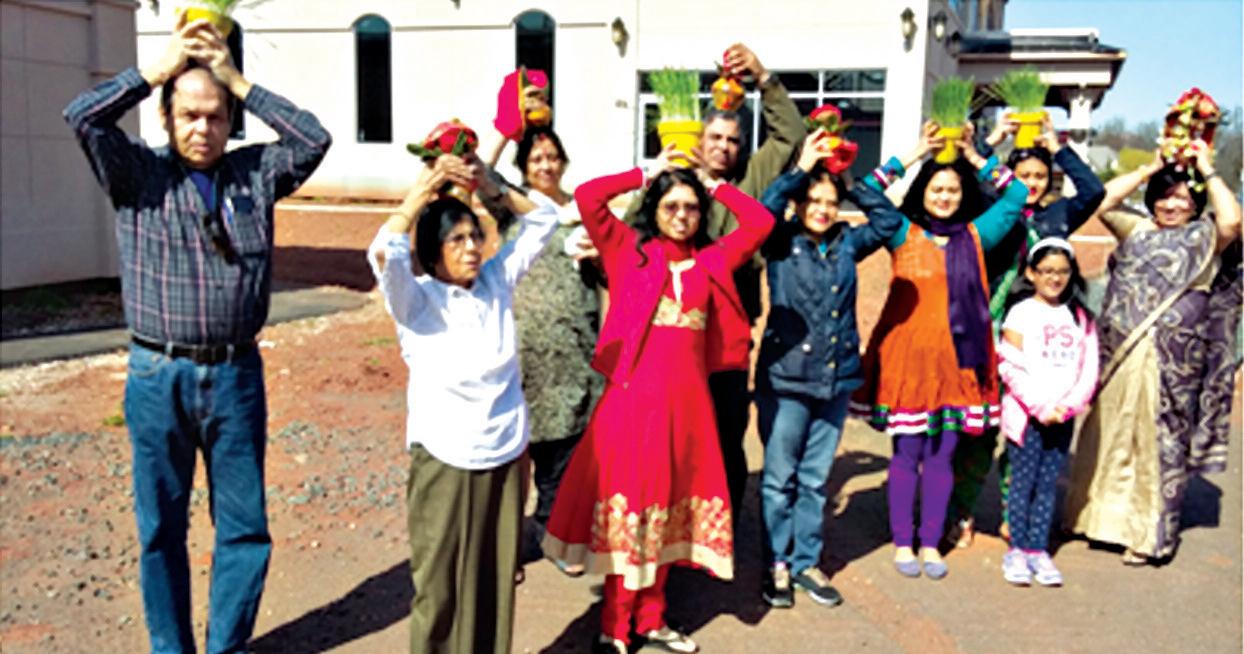
Dol Purnima and Satyanarayan puja were celebrated on 23rd March The festivities were held from 4:00pm to 8:00pm After puja a small cultural program was organized Our volunteer group Anadadhwani sang a few songs welcoming the spring After arati, everybody played with Abir of different colors, rubbing it on each other including children
The celebrations ended with good food and a lot of fun april
April was a busy month Our monthly Shyama Puja was celebrated on the 6th. Big festival of this month was the Basanti Puja that was celebrated from 12 -16th April. In between, on the 14th, there was Poila Baishakh /Bengali Naba Barsha. Every day,
Tritia, a very auspicious day to all Hindus
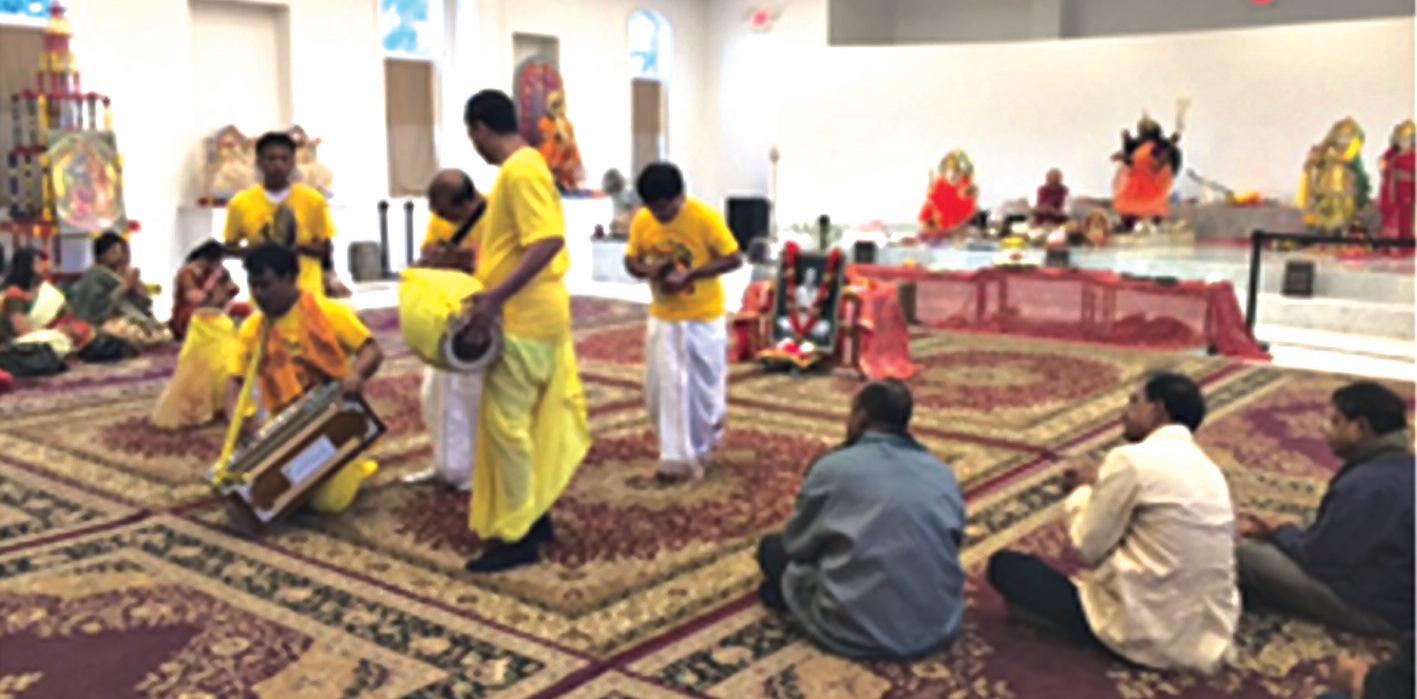
On 15th of May, we celebrated the “Sri Raam Thakur Smaran Utsav” Like other years, a group of Kirtaniyas was invited to Ananda Mandir to perform “Hare Krishna” chanting in the evening hours All devotees present there, joined them in chanting while dancing around in a circle It was a devotionally enjoyable time for all who participated After the usual puja, arati and anjali, dinner was served to all
On 21st of May, we celebrated the monthly Satyanarayan puja june
The Phalaharini Kali Puja, a big event in many parts of India, was celebrated on Saturday, 04 June More will be written on this event in the next issue.
Please check Ananda Mandir’s website for the schedule of events. You can get in touch with the Puja Committee Chairperson at: k dutta roy@yahoo.com.
reported By Debajyoti Chatterji
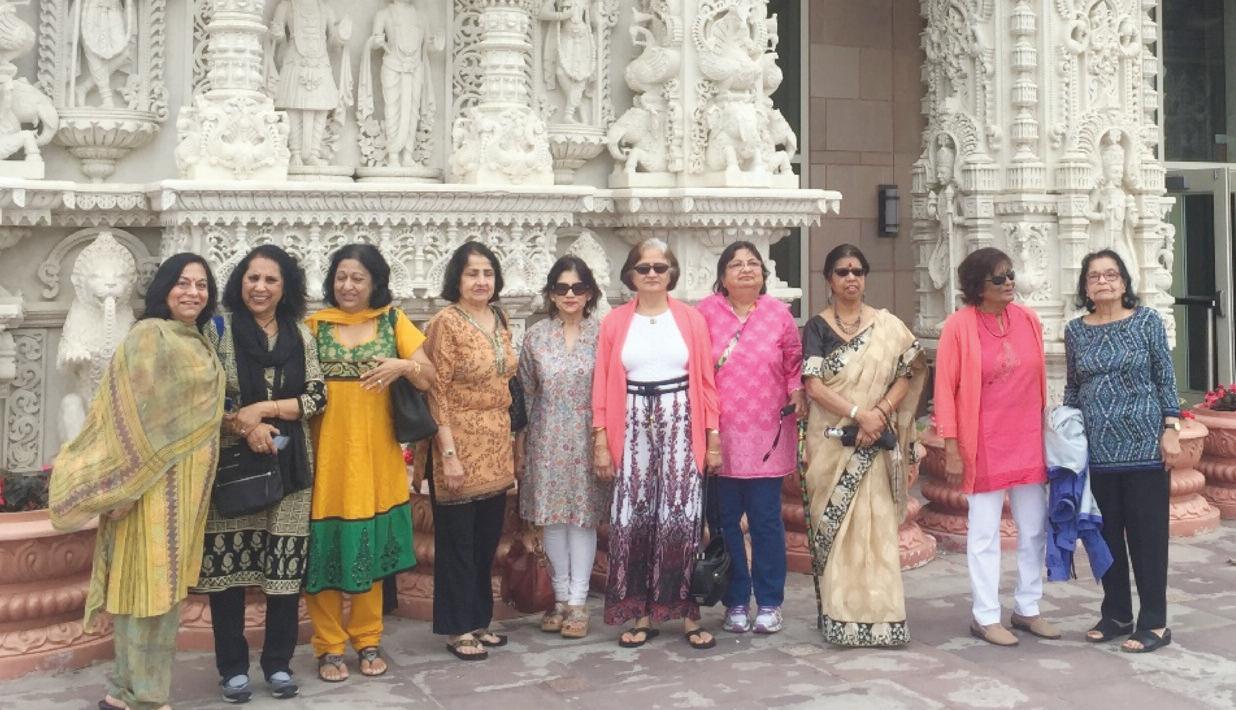
Seniors Forum members enjoyed a full calendar of activities during the second quarter of the year Participation level was very high at all the events, ranging from 20 to 30 members Ananda Mandir seniors are now enthusiastically waiting for these monthly get-togethers and coming up with new and exciting ideas for future group activities
The first event of the last quarter, held on Sunday, March 27, featured gary mistry, an Insurance specialist, who had earlier given a very informative presentation on Medicare Mr Mistry was invited back by the group to talk about “Long Term Care: issues and Options”, a subject that is of growing importance to all who are 50 years or older Medicare does not cover long term care costs, so it is important for all to plan ahead for such eventuality, and such planning should begin at a relatively early stage of life As was expected, Mr Mistry did an excellent job of explaining the financial burdens imposed on families of long term care patients He then discussed insurance and other options available to individuals who are interested in planning for their long term care
On Sunday, April 24, Ananda Mandir seniors greeted each other with exclamations of “Shuvo Nababarsha!” as they enjoyed a multi-course lunch and celebrated the Bengali New Year. Beyond the delicious pot luck lunch, the highlight of this get-together was a special presentation by Dr. samir Dutta on “Traveling to kolkata? Plan ahead for medical needs!” Dr. Dutta explained in a very clear, easy-to-understand, and systematic manner the preparations a traveler must make before reaching Kolkata and the actions he must undertake soon after landing in the city – long before the need for any medical care may arise. Dr. Dutta's professional presentation and personal insight as a physician carried a strong impression on the 30+ participants, and a very informative and intensive Q&A session followed At the request of all, Dr Dutta promised to write up an article on this subject for Ananda Sangbad Before concluding the meeting, Sikha Chatterji thanked all the volunteers who had brought delicious items to the pot luck lunch: Chhanda aditya, jayashree Chatterjee, swapna Chatterjee, haimonti Choudhury, kalpana Dhara, samir Dutta, ira ganguly, manjulika ghosh, Prativa hore, Bharati mookherjee, subhra Paul, and mita sinha.
The final event took place on Sunday, June 5 Twenty three highly enthusiastic seniors braved the forecast of “heavy rain and very strong wind” to visit the BaPs swaminarayan Temple in robbinsville, nj. The primary purpose of the visit was to see the fabulously intricate and beautiful stone carvings in and around this very large temple Two official guides took us around the temple and provided us with many interesting information about the temple The main temple is made entirely from Italian marble and is housed inside a larger building to protect it from the weather extremes seen in New Jersey Virtually every inch of the temple walls and ceilings is adorned with superb carvings in white marble and the floors boast of intricate and colorful mosaic work Our guides explained to our utter amazement that 2000 artisans in Rajasthan worked for 4 3 million hours to do all the hand-carvings on large pieces of Italian marble, and these pieces were handassembled in Robbinsville following detailed architectural plans Every member of the Seniors Forum was truly impressed by the quality and intensity of the sculptural splendor created by modern day artisans in India – Following this visit, most members of the group enjoyed a sumptuous buffet at the Shalimar Restaurant in North Brunswick to bring the day to a fitting close For July, the group is planning a picnic or a day-cruise on the Hudson River In August, two invited speakers will share their recent travel experiences in two of the world's most exotic destinations: the Galapagos Islands and the Arctic Circle Please feel free to join these events
NOTE: The Seniors Forum has changed its name to reflect its true spirit! It is now called “The evergreen Club of ananda mandir”
By
"The
Everyone tells stories in everyday life
Whether you think of yourself as a storyteller or not, you tell people what happened to you –be it over a long phone conversation or in a Facebook “status” update How profoundly are you engaged in such activities? Jeremy Hsu notes in The Secrets of Storytelling: Why We Love a Good Yarn (Scientific American, August/September, 2008) that personal stories and gossips make up 65% of our daily conversations!
It is not surprising that human history is nothing but a series of stories When told correctly, these stories can teach us lessons, give us insights into a variety of concepts, or entertain us. Every story serves a purpose, even if to simply relay a message. Without history, without chronicled stories, mankind would never learn from its mistakes, would never dream to emulate past heroes, and would never see anything but the now We would be clueless to the past, and therefore helpless for the future
Scriptures such as the Vedas and the Bible’s Old Testament spoke of men and women, of events and lessons learned that occurred many, many years before they were written A majority of the books relied on solid resources for their writings What were these resources?
Stories People witnessed events, heard the stories and kept them alive through word of mouth They told their friends, families and communities about the events, and a chain was formed, one link, one storyteller, at a time
Shakespeare’s plays and sonnets weren’ t meant to be published, but his status became legendary once they were He was known as a great storyteller to many of his close friends, but soon became immortalized in the works he produced From a young street rat in London to being the greatest writer in the English language and the world's pre-eminent dramatist, he made his mark on literature forever. How did he do it?
Storytelling.
Steve Jobs was famous for his keynotes Whether launching new products or making an announcement, Jobs would agonize for hours over the details of his presentations People were amazed at his ability to craft a
narrative, to create and maintain suspense and to deliver a solid message It wasn’t dazzling special effects or crazy props
It was storytelling
The history of storytelling comprises stories of all varieties: myths, legends, fairy tales, trickster stories, fables, ghost tales, hero stories, and epic adventures Passing down over generations, these stories reflect the wisdom and knowledge of early people There are stories explaining important but often confusing events and natural disasters at those early times, e g , fire, storms, thunder, floods, tidal waves, lightening etc It was common for people to believe in the stories of gods, which bound them to a common heritage and beliefs.
In fact, it is believed by most historians and psychologists that storytelling is one of the many things that define and bind our humanity. Humans are perhaps the only animals that create and tell stories
Wikipedia defines storytelling as the conveying of events in words, and images, often by improvisation or embellishment
Stories or narratives have been shared in every culture as a means of entertainment, education, cultural preservation, and instilling moral values
Don’ t you want to know how it all began?
Stories predate our recorded history As human civilization evolved, the art of captivating audience through stories transformed However, our desire to tell and hear stories has remained unchanged Today, stories are woven into the fabrics of our societies and culture Movies, books, music, news media, religions, architecture and painting, you name it, and the influence of storytelling can be seen in all aspects of our life Proliferation of video games has given rise to the new genre of interactive storytelling
The storytelling history is quite ancient, lost in the fog of time. Nobody knows when the first story was actually told. Thirty four thousand years ago, in a large cave in Southern France, an artist used pigment to create some of the first known paintings Herds of bison, charging rhinos, leaping gazelle – the animals, some of them now extinct, were rendered in startling
Continued to page 11


By Pronoy Chatterjee
Getting ready to walk to the main gym floor from locker room when a young boy, a teen ager, six foot tall, comes to me and abruptly asks, “Are you Hindu?”
I step back and look at him in surprise
Over the years, I faced the questions like “Are you Indian or are you Bengali or are you South Indian or are you Mexican (because of the color of my skin)?” but never before a direct question without any preamble, “Are you Hindu?” and that too from a young boy.
The boy waits for an answer, but I repeat his question to him, “What about you?”
“I am Sikh, from South India,” he says.
“Yes, I am Hindu, from North India,” I answer in return
He starts repeating it over and again, like chanting, “SikhHindu, Hindu-Sikh ” He pauses, thinks deeply and repeats the words again
I realize that he may have some sort of problem which he is struggling with and I too fall into a deep thinking on how difficult it is for the boy whose whole life is ahead and how frustrating it is for the family to handle the problem of the child without any remedy in sight He could be autistic, retarded or simple stupid
We both dive into the waves of thoughts, of different kinds, none the less they are all thoughts While continue to dwell on the thoughts about the boy’s confusion, I go to the gym floor and begin my schedule, first, workout on a stationary bike I start it with a book opened in front of me to overcome the boredom of sitting and pushing the paddles without getting anywhere, for the next half an hour
I get absorbed in the story The thoughts of the author now controls me, my emotion and my senses. I am following how different characters of the story are evolving, interacting and clashing on each other. Now the thoughts are generated from the novel and controlling me The thoughts become the driver and I am being driven by them
While I am concentrating on my thoughts about the characters of the novel, here comes a man, lightly touches me to get my attention and when I look up, he asks, “Are you reading Dickens, I mean Charles Dickens?” I say, “No, it’s Pushkin’s ‘The Captain’s Daughter’ ”
“Ah! Alexander Pushkin He was great Looking at the size of the book and the cover design from a distance I thought Dickens Have you read Dickens,” he
asks I say “Yes, only a couple of books He too was a great author ”
“Indeed, indeed” he says, “and you know, reading stories silently is one thing and orally, another ”
“How do you read orally?” I ask
“I mean, loudly, so that you can hear it,” he says
“What do you mean?” I ask him, pausing the paddling of bike
He looks at me, straight at my eyes and says, “Reading orally gives another dimension to enjoying stories. I read orally, modulating my voice and I feel the emotion of the conversation as it flows.”
His eyes glare, his face brightens up like a shining bulb He is driven by his thoughts and he finds that he generates new thoughts in me He continues,” when I read orally (aloud) I hear a music coming out of the sentences I hear the rhythm and lyrics as I utter the words and flow through the sentences My thoughts flow smoothly and take me to that time and place where the scene of the story had first unfolded ”
I see that he is indeed floating on his own thoughts while talking to me I don’ t know if he is seeing me anymore, although he is looking at me Perhaps he is seeing only the flow of his own thoughts However, I learn something from him about getting another dimension of pleasure, in reading books “orally” as he phrased it, rather than reading silently
My thought goes back to the days of my childhood, when at night we would sit or stay halflying on our stomach in a circle on the floor of our common bedroom, with a kerosene lantern that we called hurricane at the center, while my two older sisters would take turn in reading stories, expressing feelings and emotions of the characters of the stories and their interactions. It was so beautiful to hear the stories, much more than reading them alone silently Those were the days when story telling was a major entertainment in our village too Yes, indeed the stories played a kind of music in my ears when I sat and heard the stories in those days
My thoughts take me into the past, seventy years back and I start dwelling in the past until I hear the voice of the gentleman again when he says, “and you know what?”
I look at him
He says, “I am of the Russian
origin, my parents came from the Soviet Union in fifties. I was born in this country and taught myself Russian by listening to the tapes while I was driving or working out. I now read the original Russian classic literature and read their English translation, translated by renowned Russian writers I hear such a wonderful music in the original, which I find gets lost in the translation but it rings a different tone and different note in my ears I now make movies of those writings in my home and put those on Facebook ”
I ask, “How do you do movies, who are the actors?
“I do it all by myself, act on different roles all by myself When I need a woman’s role, I ask my wife to join me She does, but reluctantly”
Is it craziness? I don’ t know, but he certainly has a passion to ride on his thoughts Amazing character of the man, I thought Thoughts drive different people different way He keeps on telling me about his life since he retired from a teaching position at a New York university He did his PhD from Columbia University in English Now he enjoys reading orally and making movies at home
When he leaves, I resume my exercise bike to complete my routine program. As I finish, before starting the next program I meet an engineer who comes from Punjab and who constantly worries about the decision he makes, which he thinks is not perfect. I try to tell him that that there is no right or wrong decision; it’s all relative, based on the circumstances at the time and the experiences that you had in the past that shaped your thought process He doesn’ t agree, but he never fails to bring
up his thinking problem whenever I meet him at the gym. We talk and then we go back to our routine, exercising on one devise to the other, as our thoughts take us to do.
This is just a glimpse of the scenes at the gym, where I find time to think at my will without having an urge to complete the daily routine Here I leave myself to float on thoughts as does that Russian man, who knows how to float with the sound of the words that come out of the stories that he reads But all these are the game of thoughts
Thought takes us to where it wants us to be Thought tells us when to enjoy, be happy or sink in sorrows Thought is our master Thought controls us, tells what to do, when to do and how long to do Thought has made us its slave and thought frees us from the bondage of slavery
What is this thought? How does it evolve and how can we control it? Scientists, philosophers and sages dwelt on it for centuries after century, but it is yet to be defined We just know that we have to abide by our thoughts and thought is our controller, our master
Thought and time have an entwined relationship Thought moves with time in one direction, linearly It moves without retracting. It moves forward carrying the memories of the past, actions of the present and dreams of the future.
Perhaps all thoughts are stacked together like a deck of card, like time. It just slides like cards, separates and floats to take us from one point of evolution to the next, eternally, in a nonstop manner There is no origin of thoughts and there is no ending
In our minds, thoughts float
in discrete forms If we practice meditation and accomplish the goal to some extent, we would see that the thoughts float like patches of cloud or like waves. As one patch of cloud or crest subsides, next one appears. Finally all coalesce to cover our mind with a continuum of thoughts
I am still perplexed, I do not comprehend the thought and this thought is now carrying my mind to an unknown destination I shivered with the thought that it can take me to a thoughtless world that is a dark desolate land
I finish my work out at gym, take shower and drive towards home while immersed in discrete thoughts that float in my mind like patches of clouds in the sky I feel restless After getting back home, I open my computer and search for the meaning of “thought” in Google’s search engine I read an explanation of thought from J Krisnamurti’s lecture series in England, “From our experience we acquire knowledge, from knowledge memory; the response of memory is thought, then from thought action, from that action we learn more, so the cycle is repeated That is the pattern of life ”
So we are trapped in that cycle of experience–knowledgememory-thought-action that shrouds our mind and puts a veil in our consciousness to realize the beauty of the “Nature” and “Truth.” We need to free ourselves from this pattern of life to enjoy complete freedom in life. Until we discover the path to free us from the cycle we would be driven by thoughts of our past experiences and illusive future and miss the hidden message of Nature or God, “The Absolute Truth ”
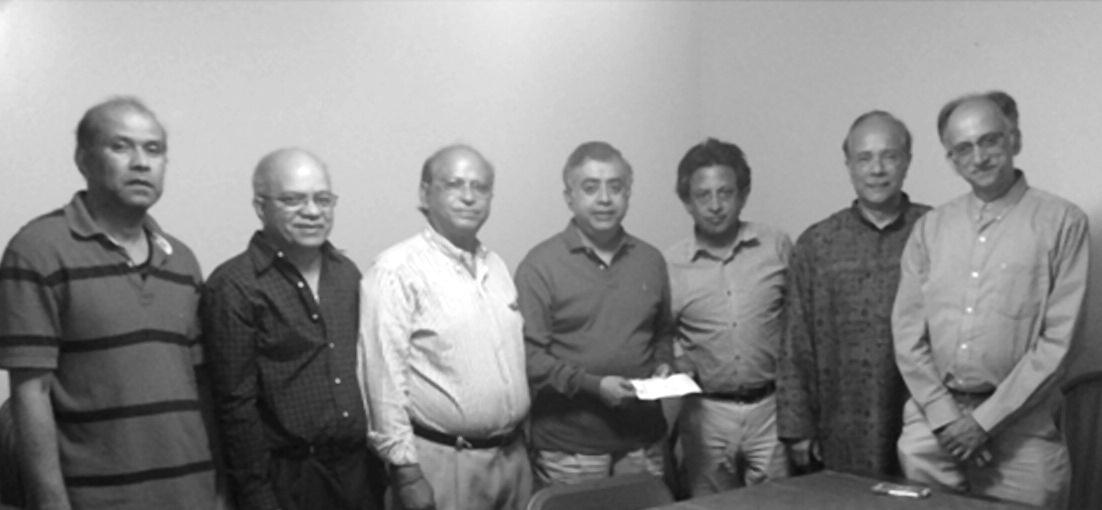
Continued from page 9
detail However, these were not simply portraits The animals were interacting with one another – and interaction is story
The artist was a storyteller
During Mesolithic era (10,000 to 4,000 B C ), storytelling through rock art emerged in Europe, Africa, Asia, Australia and the Americas The notable among these rock paintings are the ones found in B himbetka, India These mostly depict groups of humans engaged in hunting, dancing and various other rituals, as well as everyday activities. When closely examined, these early murals actually followed very simplistic series of events in their narratives.
Fast forward to 700 B.C. The first printed story, the epic of Gilgamesh, was created and began to spread from Mesopotamia to other parts of Europe and Asia
The story was carved on stone pillars for all to see and share
In the 200s B C , Aesop’s fables were documented, which continue to teach life lessons even today Aesop lived in the 500s B C , but his stories were remembered for centuries through oral tradition Isn’ t that amazing? Oral storytelling was so powerful and people remembered Aesop’s tales so well that even 300 years later the stories were revered enough for mass consumption Around the time Aesop’s fables were being popularized in the West, Jataka Tales, a collection of some 550 anecdotes and fables depicting earlier incarnations of Gautam Buddha, was being incorporated into the canon of sacred Buddhist literature in the East Storytellers of that era discovered fables to be the appropriate vehicle to encapsulate ideas that were timely and appealing and to be more amusing than tales. Fables turned out to have lasting appeal because of their many interpretational levels and because their heroes are reflections of ourselves.
Stories have been carved, scratched, painted, printed or inked onto wood or bamboo, ivory and other bones, pottery, clay tablets, stone, palm-leaf books, skins (parchment), bark cloth, paper, silk, canvas and other textiles More recently, stories are being recorded on film and stored electronically in digital form Oral stories continue to be created by impromptu storytellers, as well as committed to memory and passed from generation to generation, despite the increasing popularity of written and televised media in much of the world Modern storytelling has a broad purview extending beyond history to encompass personal narrative, political com-
mentary and evolving cultural norms
Some believe that the origin of storytelling may have come across as an excuse for failure
Perhaps stories were used as ways to calm the fears or doubts of a family As families grouped with other families and formed clans, the storyteller, who was good at telling heroic events or other important events of the tribe began to reach position of respect and power People found them interesting and began to listen to them The priest, the judge and the ruler were perhaps the earliest to use this craft with efficacy.
The ability to tell stories effectively and memorably was a valuable skill. Why? As wars were fought and valiant deeds were done, people needed a way to remember them Instead of simply stating what happened, stories began to emerge as a way to preserve the raw emotions of the actual event Storytelling days became important in social calendars
Before man took to writing, he had to rely on his memory to learn anything For this, he had to be a good listener A good storyteller could easily find an audience, eager to devour every exciting bit of information in the stories These stories were also shared with others in faraway lands, when people traveled And when they returned home, they brought with them exciting new tales of exotic places and people In order for stories to live on, they must appeal to human emotions Thus, the art of storytelling rely on sound, rhythm and repetition of words to paint word pictures A story can only be told at a particular place and time, with someone telling it and someone else listening Since every situation is unique, it follows that there is no unique way to tell stories.
Stories can be told from an omniscient point of view, where the person telling the story sees and knows everything, or from a limited point of view, where the reader only sees, hears, or knows what a certain narrator does Some stories use different points of view at different points in the story
Fractured fairy tale is a classic example of storytelling It utilizes familiar stories but alter characters, setting, points of view or plots The popular children stories such as The Princess and the Pea, Jack and the Beanstalk, or Little Red Riding Hood belong to this genre Most traditional fairy tales are told by a narrator from the omniscient view point but who still has a certain way of looking at things For example, the wolf is always “the bad guy ”
But many new versions of these stories narrate from a different point of view for example, these are told by the giant or the pea
If you’ve enjoyed listening and would like to try storytelling, here are a few basic rules (according to experts)
The first step is to find good stories A good story has single theme which is well defined with a good plot With a dramatic appeal, it is faithful to source It should bear good characterization and be appropriate for the listeners. The best stories often come from personal experiences.
One should learn the story as a whole, always knowing the first and last lines by heart! The beginning of the story should set the stage, introducing the characters and the location One should not lose the original flavor and essence of the story while simplifying or adapting it Even when narrating an old and well known story, narrators can use their imagination to make the story come across as fresh and alive
The true storytelling art aims at keeping the storyline brief and simple and taking the story as close as one can to the audience Adapting to the audiences is essential for effective storytelling, for the audience has a very important role to play A good storytelling involves deep interaction between narrator and listener However, with the attention spans getting shorter and more demanding, storytelling has become more difficult
People are not good at visualizing things and imagining independently However, a well-stimulated audience may able to use their imagination to feel, smell, touch and listen, visualizing vivid pictures So one’s storytelling skills should be strong and immaculate to lock the attention of the audience completely. A good and well-presented story is remembered long after over others.
Stories can reach well beyond their intended audiences. According to the noted screenwriter Robert McKee, stories "fulfill a profound human need to grasp the patterns of living not merely as an intellectual exercise, but within a very personal, emotional experience "
Stories connect human race
When Malaysian Airlines flight 370 disappeared on March 9, 2014, the media launched extensive coverage of the story I, for a change, followed the news for weeks What drew cable subscribers like me to feast on the information coming out of the search and rescue command post?
The answer is simple At the
heart of every issue is a human element that leads to the question: What happens next? One who can fulfill that yearning is a storyteller
Psychologists and neuroscientists have begun to explore the human predilection for storytelling Why do our brains seem to be wired to enjoy stories? And how do the emotional and cognitive effects of a narrative influence our beliefs and real-world decisions?
The answers to these questions appear to be rooted in our history as a social animal. We tell stories about other people and for other people. The safe, imaginary world of a story may be a kind of training ground, where we can practice interacting with others and learn the customs and rules of society And stories have a unique power to persuade and motivate for such role playing, because they appeal to our emotions and capacity for empathy
What are the physiological underpinnings of storytelling? It turns out that our brain activities are higher during storytelling engagements than when passively participating in intellectual discourses When we tell to others, the stories that have really helped us shape our thinking and way of life, we can have the same effect on them too The brains of the person telling a story and listening to it can synchronize, says Prof Uri Hasson of Princeton University Greater the anticipatory speaker–listener neural coupling, greater is the story comprehension
Why does the format of a story, where events unfold one after the other, have such a profound impact on our learning? It is because our brain is wired that
way A story, in its most elemental form, is an ordered set of causes and effects And that’s exactly how we think Whenever we hear a story, we want to relate it to one of our existing experiences That's why metaphors work so well with us While we are busy searching for a similar experience in our brains, we activate a part called insula, which helps us relate to that same experience of pain, joy, or disgust A simple story is more amenable to metaphorical analysis than a complex one, hence has a greater appeal.
Self-revelatory stories, such as those heard on the Moth Radio (themoth.org), often have cathartic and therapeutic effects. The goal of the self-rev is the expression and transcendence of the issue, and the transcendence might even be in the future, but it is alluded to in the performance These efforts are growing in their use and application, as in Psychodrama, Drama Therapy and Playback Theatre
We all crave stories because they allow us to sympathize with characters Tell your audience a story, and you will gain their support You will create a following for your cause and inspire your audience to act and believe
In your next presentation, remember the power of storytelling Remember that even in a straightforward business presentation, a story helps to illustrate a point better than a set of facts A story gives people a reason to care about what you’re saying They relate to the characters, the plot and the lessons learned They relate to your story, and therefore your message
So, what’s your story?
Continued from page 7
on the wrong track Perhaps we should reconsider spending zillions of dollars in research to find the origin of universe or build mega-energy colliders to find the structure within quarks or Higgs Bosons In our effort of chasing the extremities of material world we may be missing out on understanding the mysteries of life which are much closer to our heart and existence; I believe that we are fully capable of studying and unfolding them with our intellect and physics education Just like Newton invented calculus to quantify the Newtonian mechanics and Heisenberg came up with matrix mechanics for quantum phenomena, we may need an entirely new approach It may not even require mathematics, but some intuitive insight to fully appreciate the beauty and order in this wonderful world
By nupur Lahiri, m.D.
(Editor’s Note: We are pleased to bring this important column in Ananda Sangbad. The author can be reached at her email address, lahirimd@aol.com)
In my mid-20s I was prancing away with humongous enthusiasm about life abroad and in the excitement of easy availability of world literature
Back home in Kolkata I grew up with a father whose passion was to buy one book every day of the year When I left home, although my life was never settled in one part of the world for more than a year, I carried on the mission and kept on buying books as often as I could In early 1970s, I came across a book titled “Passages”, by Gail Sheehy – the subject was Predictable Crises of Adult Life I was intrigued by the title but I was just at the very initiation of my adult life with responsibilities, joys and ecstasy of mastering many skills I did not face any discernible crisis and only the earlier chapters describing the passage through mid-thirties, made any sense to me.
Since then I have gone through many predictable crises and somehow managed to deal with the stress and discomfort I experienced but also observed my friends and some family members being faced with some very predictable and unpredictable crises but with no advance preparation to deal with them
In 1967, two psychiatrists, Thomas Holmes and Richard Rahe examined the medical records of over 5,000 medical patients as a way to determine whether stressful events might cause illnesses Patients were asked to tally a list of 43 life events based on a relative score The numbers of “Life Change Units” that apply to events in the past year of a person’s life are added to obtain a final score that predicts a rough estimate of how stress may affect health and other faculties
I have decided to select only eight major stressful events that are significant in our society and culture of immigrants trying to assimilate and raise families in an environment which leads to isolation, apprehension and fear
1: Death of a spouse= 100
2: Marital separation= 65
3: Death of a close family member=63
4: Personal injury or illness=53
5: Marriage=50
6: Being fired from work=47
7: Retirement=45
8: A son or daughter leaving home =29
Death of a spouse; Bereavement
A strong, active woman in her mid60s, who held an important job for most of her life, loses her husband after a protracted illness. Although she has a large extended family with sons, daughters-in-law, nephews, nieces and grandchildren, she becomes panic stricken and develops many physical
symptoms that cannot be explained She is afraid to live alone, afraid to leave the house, afraid to fall asleep She feels a terrible sense of loneliness and sadness She worries, what if she is not able to manage her finances, what if she gets sick and cannot reach a doctor or any of the family members What if she’s not able to afford the marital home that she lived and raised her children for many years? At times she feels confused, scared and wishes to escape and join her late husband
Research shows that there can be up to a 70% increase in death risk of the surviving spouse within the first six months after losing the partner Also there is a high incidence, about 40%, of people suffering from anxiety and depression in the form of grief during the first year after the death of a loved one.
Mourning helps. Mourning is the outward expression of a loss. There is a tremendous value for performing culturally determined rituals such as a religious service like sraddha, a memorial service with friends and family members, or batsorik, a service after one year to finalize the acceptance of the loss
Prayer helps and joining a prayer group or participating in community events at the temple can be very healing It may be practical and necessary for a spouse living alone to move to a smaller dwelling with several neighbors One should stay in touch with friends and family through phone calls, emails and actually meeting face-to-face on a frequent basis One tends to neglect eating healthy food because eating alone is no fun Meeting friends at a close by restaurant or inviting a small group of friends for a simple meal will break the silence and loneliness at home One never recovers from the final parting of a person with whom one shared major part of the conjugal life, but life goes on marital separation
A marital separation in our community is not the same as a legal separation between spouses that frequently leads to a divorce in the Western culture However there are many instances of long separation from the husband of a wife due to delay in obtaining a visa for months, a spouse being transferred to a different city needing weekly commute or traveling out of town for days and weeks at a time. It can become very stressful for the spouse responsible for caretaking the children alone and especially during their illnesses when one partner is away The other spouse may
Continued to page 14
reported by subrata Bhaumik
Sahitya O Alochana (SOA) is a monthly literary and topical discussion forum under the aegis of Ananda Mandir (AM) It completed its 8th anniversary in January 2016 and will have organized ninety (90) sessions by the time the current edition of Ananda Sangbad goes to press These monthly discussion sessions feature exciting and illuminating discussions on diverse subjects including literature, theater and movie, history, philosophy and religion, science and mathematics, economics and business, social issues, sports, and current affairs The following is an account of the recent sessions organized by the SOA committee of AM
march 2015
The March session was entitled “nadine gordimer - Lifetime of Literary Work Fighting apartheid." As the title suggests, the discussion was about the Nobel laureate author from South Africa who dedicated her life to writing about institutional and cultural injustice and oppression in that country under the white dominated and racially segregated society of the recent past
Utpal Sengupta, the discussion leader, presented a marvelous account of the works and life of this moderately celebrated literary giant who despite her own admission "would have been completely apolitical if born in a country other than my own," went on to produce some of the greatest political novels of our times that won her the prestigious Booker and the venerable Nobel prizes The discussion also focused on her portrayal of the seemingly unredeemable misery and doom that donned on the oppressed in that racially segregated society under the then prevailing power structures - a stunning testimony of her ability as a writer to squarely move in tandem with the broad movements of history and its impact on society
The attendance was robust, and the participants eagerly shared their fortuitous trysts with Gordimer ’s work and/or own South African experiences A ton of thanks goes out to Mr Sengupta
april 2016
The April session, in a way, was kind of a sequel to the March discussion, particularly from the angle of racism as it relates to movement of people set in the context of Indian immigration to the US It was entitled “indian immigrants in the us: Past, Present and Future.” History of humanity is replete with Xenophobia – institutional or cultural. It existed through the ages of our civilization, and yet has been unable to deter peoples' movement from all over our world to their perceived lands of freedom and opportunity When the fabrics of the society are under severe stress, internally brewed or externally imposed, this monstrous human nature shows its ugly face And we are seeing a disproportionate amount of that being played out in the current political arena
While Indians currently living in the US are often viewed as a “model minority,” their past in this country was a different story Were we welcome to the country and the American society in the 1930s and maybe 50s? Were our predecessors embraced by the government and the people of this land? More importantly perhaps, what can and will
happen in the future? Will we continue to enjoy the peace, prosperity and respect that we have garnered over the past several decades, or will we see a return of the societal cruelties and legalized indignities bestowed upon us by the pre1950 -60's America? Some of these questions/issues were addressed in the session in depth with analytical authenticity
Debajyoti Chatterji, the discussion leader, presented a marvelous account of the history of Indian immigration to the US: the arrival, the initial segregation and legalized cruelties, the continued rejection by the locals to embrace them as a part of the society, and finally the various milestones changes in the legal landscape that ushered the gradual recognition that were due them for their enormous contribution to America. The discussion also analyzed the concept of moving beyond the "melting pot." A robust audience actively debated questions like "has the good old 'blending in' lost its significance in a growingly diverse society?" Must we learn to respect our differences and become more of a "patchwork quilt?" etc Thank you Mr Chatterji for leading a wonderful and informative session like this!
may 2016
In May we returned to one of our favorite topics: discussing and celebrating the works of the established writers in our midst The session was entitled sun, sand, and nomadic people. Nomadic people in this context symbolized those happy, free-willed, and yet ruthless human beings and their tribes who inhabit some of the most arid lands of our planet They thrive in the harsh and unfriendly nature around them and reject the shackles of the norms and behaviors of our civilized society - yes, they are the Bedouins! Romantic is a word that sometimes describes their lives Poets around the world including Rabindranath Tagore penned verses with their lives and spirit as a subject Jayashree Chatterjee, a fine writer with novels and scores of short stories to her credit, read a historical and cultural report that she authored for The Statesman back in the mid1980s narrating as she saw them The title of that report was "The Bedouins of the Kuwaiti Sands "
It was a marvelous presentation on the lives, culture, and society of the Bedouins, and the robust crowd in attendance enjoyed every bit of it. Loads of thanks go out to Ms. Chatterjee.
Quite a few interesting sessions are in the pipeline for the next several months. They feature eclectic topics including a multimedia presentation on the evolution of “The Art of Story Telling,” – a repeat of one of our highly acclaimed sessions brought back by popular demand; a session on Bertolt Brecht, one of the greatest dramatists and writers that ever lived and an unsung hero of the Nobel Prize (possibly due to his pro-communist thinking and affiliation); and a few sessions on Bengali literature and culture
The friends of Sahitya O Alochana would like to thank Ananda Mandir for its continued support for the forum’s contribution to the cultural enrichment of the local Indian and Bengali communities
By rahul ray
By the time this article is published Hillary Clinton has clinched the nomination of the Democratic Party for the November Presidential election, Bernie Sanders has released his delegates to the winner, media is abuzz with Hillary and Trump, and Sanders is thrown into the abyss of everpassing time, as if he never existed
But wait That is not what seems to be happening Sanders, who has no chance of reaching the White House seems to be having a commanding role in setting the agenda at the Democratic Party convention in Philadelphia The buzzwords of Sanders campaign i e universal health care, campaign reform, reversing Citizens United are slated to be hotly debated items in the convention But wait again, aren’ t these hallmarks of socialist policies, and then in capitalist America! Something must be seriously wrong, or is it?
The meteoric rise of Bernie Sanders, an avowed socialist as a serious contender for the Democratic Party ticket has left many people scratching their heads in disbelief In the beginning it was a joke, then came the general assertion that he doesn’ t have a prayer to win anything. And then slowly but certainly his candidacy became a reality. According to common wisdom most Americans ‘hate’ socialism. Then how so many people are passionately rallying behind this seventy fourold man! Bernie, as he is commonly known is even talking about a ‘socialist revolution’, and people, particularly young people are following him around as if he is the fabled ‘Pied Piper of Hamelin’, of course without a sinister ending as in the legend Even Hillary Clinton is following Sanders’s coat tails by assimilating his socialist agendas in her manifesto!
Not surprisingly, people on the right are aghast and spewing
fury against these ‘socialists’.

Conservative talk shows are jammed with right wing talking heads, and traditionalist evangelical Christians calling to rise against the socialists The country appears to be sharply divided between two extreme camps Encyclopedia Britannica defines ‘socialism’ as a doctrine “that calls for public rather than private ownership or control of p r o p e r t y and natural resources everything that people produce is in some sense a social produc Society as a whole, therefore, should own or at least control property for the benefit of all its members ”
On the other hand, Wikipedia, the present day go-toall source of information defines ‘democratic socialism’ as “a political ideology that supports economic and social interventions to promote social justice within the framework of a capitalist economy, and a policy regime involving welfare state provisions, collective bargaining arrangements, regulation of the economy in the general interest, measures for income redistribution, and a commitment to representative democracy.”
Similarities between two doctrines are evident, yet significant differences exist First, the socialist doctrine proposes ‘ownership or control of property and natural resources’ by the state which is ultimately responsible for the welfare of its citizenry In contrast, the social democratic doctrine proposes to attain the same goal under the ‘framework of a capitalist economy’, thus recognizing private ownership of property The other difference is commitment of the latter doc-
trine to ‘representative democracy’
From the twentieth century onwards social democracy has flourished in Western Europe, particularly in Nordic countries where cradle to grave social services are fully implemented through free education, health care and the right to work while maintaining representative democracy.
In America, when Franklin Delano Roosevelt (FDRE) was elected as the President nearly twenty five per cent of the population was unemployed, banks were failing right and left, people stood in long lines in soup kitchens to get free food, elderly people were forced to live in ‘poor houses’ under despicable conditions till they died penniless By the time FDR was inaugurated in March 1933 nearly 140 billion dollars of the depositor money vanished through bank failures and ‘the great depression’ ensued

Within a hundred days of his inauguration FDR created the Security and Exchange Commission (SEC) and the Federal Deposit Insurance Corporation (FDIC) under ‘New Deals for America’ For the first time in the history of the country the government directly intervened in regulating the buying and selling shares in companies, and ensuring that the bank accounts of ordinary people were protected. Today every bank proudly announces it is insured by FDIC/SEC to assure depositors that their money will not be lost
Another major goal of FDR was to put unemployed people to work by infra-structure development, such as building highways,
New Life Members ($1,000 – 4,999)
• Sumona Gupta
• Tanuja Chakraborty and Sumanda Basu
Patron ($ 5,000 – 9,999)
• Moumita Ghosal
• Divyendra Bajpai
bridges, public buildings, planting trees, and providing electricity in rural areas By two executive orders FDR created the Works Progress Administration (WPA) and the Rural Electrification Administration (REA) to administer these projects
In the 1930s as industrial revolution took hold in America more and more jobs were created in cities driving younger people to move into cities from rural communities leaving behind their retired and elderly parents to fend for themselves. The result was disastrous! Poor houses and soup kitchens were set up by local and state governments Church-based and other benevolent organizations stepped forward to alleviate the plight of poor and elderly
It is to be emphasized that caring for poor and elderly was left entirely in the hands of benevolent organizations, and there was no social or governmental mandate to help these people Within three years of his first presidential inauguration FDR created the Social Security Administration (SSA) Soon mechanisms were set up to deduct money from paychecks of workers to be deposited with SSA, and to be collected in a systematic fashion at retirement For the first time in the history of this country guaranteed benefits were provided to retired workers from public and private sectors
In 1960s FDR’s legacy was augmented by Lyndon B Johnson (LBJ) under his ‘Great Society ’ concept In 1965 Medicare and Medicaid Acts were enacted to provide healthcare insurance for people of age 65 and over, and people with low income respectively. LBJ was also credited for creating administration for Housing and Urban Development (HUD) to provide housing for low-income people These efforts were further expanded in 2014 by the Affordable Care Act (ACA) under President Barack Obama to provide healthcare for everyone irrespective of age and
health condition
Not surprisingly people on the right of the political spectrum did not sit idly while the country shifted steadily to the left Three decades after FDR, Ronald Reagan, a Republican followed by Bill Clinton, a Democrat removed many laws regulating the banking industry causing economicmeltdown domestically and globally in the first decade of the twenty first century. These two presidents are also to be credited for spearheading efforts to create various trade treaties causing flight of capital and jobs from the American soil
During the past several months Bernie Sanders has been protesting heavily against stranglehold of big banks on the economy, amassing of wealth by a handful few, and foreign trade treaties that are hurting American workers This is not unexpected from a declared FDR-brand socialist But most amazing is solid and enthusiastic support he is garnering from a large section of the population, especially the young
In this election season when everything is a fair game, nobody from either political side is talking about tinkering with social security, Medicare-Medicaid and other such programs They realize how these social safety programs have become an integral part of the American society, and how opposition to these will simply bring about their own demise
Today, it is impossible for working people even to imagine that they cannot depend on social security and Medicare/Medicaid after retirement It is also to be highlighted that these social services work the best with poor and underprivileged. One wonders, don’ t these policies constitute basic tenets of socialism making perceived American antipathy against socialism rather hypocritical? Therefore, can it not be concluded that America, the capitalist leader of the world is in reality a social democratic country?
P l e a s e n o t e t h a t yo u c a n b e c o m e a n Associate Member of Ananda Mandir by d o n a t i n g a m i n i m u m o f $ 5 0 . Yo u r subsequent donations of $50 or more a re c re d i t e d t o yo u r a cc o u n t . W h e n your total cumulative donation reaches $ 1 0 0 0 , yo u b e c o m e a L i fe M e m b e r. Yo u r s u p p o r t , s m a l l o r l a rg e , i s m o s t welcome and sincerely appreciated.
a hearTY WeLCOme TO a neW eXeCuTiVe COmmiTTee
NJPA held the 2016 Annual General Meeting on Saturday, April 23rd, 2016 at the East Brunswick Public Library A large number of members attended Great discussion, healthy disagreements, good food, good company- it was a successful event
The highlight of the meeting was the establishment of a new Executive Committee All seven positions were filled by members via self-nominations
The Executive Committee for the 2016-2018 term consists of:
President: Pankaj Mishra
Vice President: Anshula Sarkar
General Secretary: Nimai Ghose
Treasurer: Mihir Basu
Members at large: Aparajita Sen Gupta, Rongoli Sen & Soma Mookherjee
The brand new team of new and old is ready to start. They have plans, they have dreams and they have hopes that they will not have to go it just by themselves. They will reach out to you, asking for help and advice. Please hear them and join them. Let all of us together carry NJPA to a new height.
In the meantime, keep an eye out for NJPA.net for upcoming events and ‘Like’ NJPA Parivar on Facebook for interesting tidbits.
THANK YOU for being there, for NJPA
The Executive Committee, NJPA
Theater lovers within the Ananda Mandir community eagerly look forward to the annual South Asian Theater Festival, organized by the Epic Actors Workshop. This year the 2-day festival will be held on Saturday, August 27, and Sunday, August 28, at the George Street Playhouse in New Brunswick, NJ. The festival will feature three full-length plays in Bengali ( “Light of Asia” by Mrittika, NJ; “AA-AAA-Ka-Kha” by Spotlight, OH; “Sagina Mahato” by Epic Actors, NJ), one in Hindi (“Sakubai” by Theatrix, NJ), and one in English (“The Masrayana” by Indian Cultural Center, NJ) In addition, four short plays by different theater groups, will be staged, and the popular “Theater in the Breaks” will be presented on both days For further details, please contact Dipan Ray (Phone: 917-531-0184; Email: info@epicactorsworkshop com)

Sophie Sarkar, a member of Ananda Mandir's Kishalay (Youth) group, was recently recognized on Outdoor Industry's first-ever “30 Under 30” list Out of over 600 nominees received across the US and beyond, Sophie was chosen by her peers, colleagues, and industry leaders as “one of the most influential individuals under thirty in the outdoor industry" Sophie is an Outdoor Recreation Planner with the National Parks Service and is committed to issues such as environmental justice and outdoor access
Congratulations, Sophie!
(Excerpted from an article published by The Times Of India in their Special Issue Magazine 2015 called 'Healthcare: Pioneers Of The East)
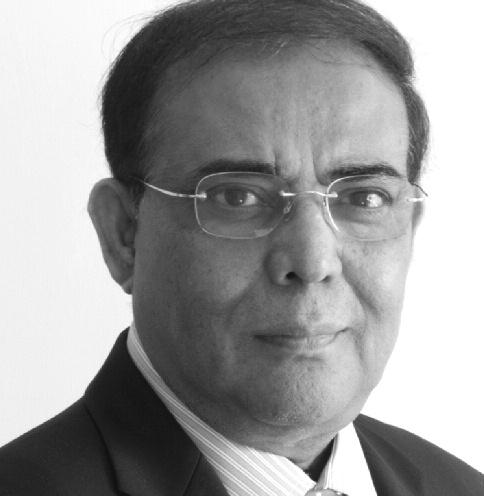
Ruby Hospital received the prestigious ‘Healthcare Achievers Award’ in 2014 for the Best Multispecialty Hospital in Kolkata This award was given by The Times of India to one hospital in each of the largest metropolitan cities. Ruby Hospital competed with more than 20 other hospitals. The award is given for outstanding services to patients and community.
“With my lifelong dedication, I have tried to bring some much-needed change in the future of medical care in India” said Dr. Kamal Dutta, chairman & managing director, Ruby General Hospital at Kolkata Dr Dutta is an active supporter of Ananda Mandir
Continued from page 12
spend days and nights in a lonely hotel room surviving by consuming substandard fast food or restaurant food This kind of loneliness often leads to drinking alcohol in an attempt to cope with the separation Resorting to Facebook, Face Time, Skype and email may become the saving grace
Death of a close family member
Our culture promotes closeness with and dependence upon our family members whether they live nearby or far Due to the great distance from our homeland and difficulty in making travel arrangements quickly one feels the guilt about not being able to stand by the side of the family going through grief and bereavement. We forget to renew our passports and visas, have difficulty in getting time off from work and arranging the schedule for the rest of the family such as absences from school for the children. Many a times while living abroad we rely on the advice and suggestions from an older family member and a loss of one such leads to desperation and helplessness It is imperative that one prepares for such unforeseen emergencies
Since we live in small family units, if one is ill or sustains an injury, the family suffers It is difficult to manage day to day activities such as transportation to and from work, making visits to the doctor, shopping for food and finishing household chores if one of the primary people becomes disabled If the illness or injury becomes long-term, there is fear of losing employment and financial security Asking friends for a helping hand during such times can be invaluable marriage
Although the event of getting married can be joyful and gay, one may feel the stress of adjusting to a new person with expectation and demands When couples date for a period of time before getting married, the stress of adjustment is less However, most of our marriages are arranged, in which case the bride and the groom are complete strangers to each other There is need to prove one’s capability, desirability and the ability to fulfill the expectation of the other partner One goes through a period of apprehension and anxiety about being able to tolerate the togetherness and intimacy that ensues inevitably after a marriage. Talking to a close friend or a family member may answer some unknown queries.
Being fired or being laid off from work
In the era of enormous influx of competent IT personnel there is also tremendous job insecurity and risk of being laid off Some of the jobs are short-term, on the basis of a limited contract period and do not provide any of the standard benefits such as health insurance, disability benefit or paid vacation time It is not uncommon for a bright young individual to face the loss of employment stress, financial crisis and the responsibility of supporting a family while living abroad. Active networking and developing alternate strategies are essential.
The golden years of one’s life bring many changes, but all that glitter may not feel so golden after a while If the husband retires first, he becomes frustrated and annoyed because he is unaccustomed to being home alone and misses the company of his wife bitterly There comes boredom and absence of appreciation one receives at the place of work The wife usually manages to keep busy with household activities, chatting with friends, creating sumptuous and gourmet meals and sharing the pictures of their garden of flower on Facebook Then comes the task of downsizing the home, relocating to a smaller and more manageable dwelling and acquainting with new friends and neighbors It can also foster new interests, opportunities to develop new hobbies and time for travel that have been on the wish list for many years a son or daughter leaving home
It is extremely hard for the parents to let go of the children as they become adults and start their journey as independent individuals Mother is devastated to think that she will not feed them home-cooked meals, tuck them in bed after sharing day’s events at the end of the evening There will be constant worry about them getting hurt, getting sick and getting themselves in danger Ultimately there comes the looming fear of the daughter or the son dating and finding a partner of their choice. Parents need to be prepared for the empty nest and emancipation of their offspring(s).
At the end of the day we have no way of predicting certain events and crises in our lives. We need to be prepared, be realistic and pragmatic and accept the inevitable as it comes
Ja Hobar Ta Hobe Que sera sera
Invites retirees and near-retirees to participate actively in Forum meetings and activities
Seniors Forum usually meets on the third Sunday of every mon that 1:00 PM. However, the date may change ecause of conflict with other Ananda Mandir events.
Please contact Debajyoti Chatterji (Cell: 908-507-9640) for latest updates on the meeting dates.
Kishalay is a monthly wall magazine for the youth When you come to Ananda Mandir, you will see it hanging on the wall in the community building Any youth member of Ananda Mandir can submit poetries, short stories, scientific articles, artworks, and photographs for the magazine All youth group volunteers will receive official certificates from Ananda Mandir for their volunteer services For more information, contact Dipak Sarkar at email: sarkar@AESOP Rutgers edu; Phone: 609 651 1023
Located at 101 Leggett Rd, Stone Ridge NY, this 82 acre estate comprises of various historical perspectives including buildings that have stood from 1890 and rooms that historical figures such as Swami Vivekananda and Sister Nivedita themselves have lived in for more than ten weeks
During my visit on April 30, I learned a lot about the way the people lived at that time. For example, to reach the once 800
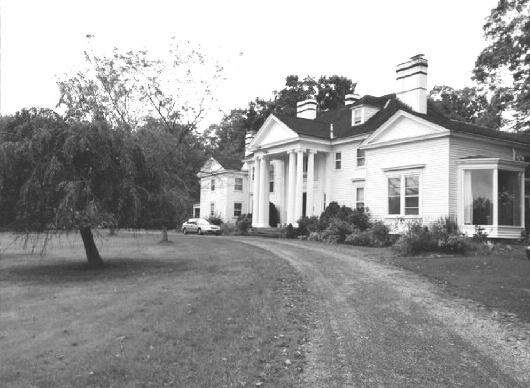
acre estate, Swami Vivekananda had to take train after train until they reached a local station about 3 miles from the estate
There, a butler would be waiting with a horse and buggy to take
him to the houses The owner, Mr Leggett originally bought the property as a weekend estate but it soon became a guest house for people of his choosing Swami Vivekananda came to his estate
3 times The first time in April 1895 for 10 days The second in December 1895 for 10 days And the third time was in May 1898 for 10 weeks which is the longest he spent anywhere in the United States. Almost 100 years later
the Vivekananda Retreat, Ridgely was founded The house itself was very well preserved with a lot of original furniture from that time that can still be used For example the
dining table and chairs are all from the time Swami Vivekananda was there and they are still in use! Another example would be Swami Vivekananda’s room where he had many revelations and it is a very holy place
There are many reasons to go to the Vivekananda Retreat In my belief, I think the atmosphere itself is very tranquil and pristine which is very different from the urban land most of us live in. It is always quiet and peaceful and there are places of worship inside the main “Manor” house It is surrounded by the Catskill Mountains and directly across is a beautiful Lake
In conclusion, the entire estate is touched by history with relics of Swami Vivekananda all around Its serenity is in total contrast to the endless hustle and bustle of everyday life and is truly a place to see If you do want to learn more call 845-6874574 or visit their website: Ridgely org
Cash awards of $500 each will be given to recognize two writers of excellence (one in Bengali, one in english) who have authored essays, poems, short stories or plays in magazines published in north america within the last five years.
gayatri memorial awards have been made possible through a contribution made by jerry gamarsh to honor his late wife.
Please visit our website for further details on nomination eligibility and submission requirements including nomination form.
submission Deadline for 2016 awards: july 31, 2016
269 Cedar Grove Lane, Somerset, NJ 08873
For Further Information
Please Visit www.anandamandir.org/gayatriaward.html or Contact: Debajyoti Chatterji (debsmee572@gmail com) or Guru Chakravarty (guruchakravarty@yahoo.com)
Recently, the Board of Trustees of Ananda Mandir has established an annual “Kishalay Award for Writing Excellence in Memory of Gauri Sen Gupta ” This has been made possible by an endowment from Avijit Sen, a respected life member of Ananda Mandir, in the memory of his late mother in law
The award is intended to inspire the young school age children and kin of the members of Ananda Mandir to enhance their writing skills and promote community involvement It will be administered by the “Awards Recognition Committee” of Ananda Mandir The committee has established guidelines, rules, and procedures for the award, which are being announced separately in this issue of Ananda Sangbad For further information, please contact Subrata B haumik at B haumik.subrata@gmail.com or Pronoy Chatterjee at pkc usa@yahoo.com.
We wish to express our sincere thanks to Avijit Sen for taking this noble and exemplary step to memorialize Gauri Sen Gupta’s devotion to youth development
kishalay awards in memory of gauri sen gupta For Writing excellence
The Kishalay Awards in Memory of Gauri Sen Gupta have been recently established by Ananda Mandir The awards have been made possible by a donation by Avijit Sen, a member of Ananda Mandir, to honor his late mother in law, Gauri Sen Gupta The program is administered through the Awards & Recognition Committee of Ananda Mandir, Somerset, NJ Two cash awards would be offered each year to recognize superior writing skills of school age children and kin of Ananda Mandir members Following are the basic rules that govern the award administration
1) The first place winner will earn prize of $300, and the second prize is worth $200
2) It is available for only school age children and kin of Ananda Mandir members The contestants for the awards need to reside in the US, and preferably enrolled in a high or middle school
3) A contestant will need to be nominated by a member of Ananda Mandir or be self-nominated following the nomination rules set forth herein
4) Potential contestants over 18 years of age will be automatically disqualified
5) Number of submissions is limited to two (2) per contestant per year Only English prose (essay, story, report, article, etc ) would be considered, and the length should be limited to 2,500 words
6) Submission of published article in any magazine (school or others) is highly encouraged although unpublished work will be accepted as well.
7) Nominations should include short biography of the author and his/her connection to Ananda Mandir
8) Deadline for nominations (with copies of the submissions) for the 2016 awards is September 30, 2016 Awards will be announced and presented in late fall 2016 or winter 201617
9) All nominations will be made using the Nomination Form downloaded from Ananda Mandir ’s website For copies of nomination form, please contact Subrata Bhaumik and /or Pronoy Chatterjee at the following email addresses Completed forms should be supported by the submitted piece(s) of work of the young author
Please send nominations (with supporting documents) to subrata Bhaumik Bhaumik.subrata@gmail.com (preferred way) Or at 32 scheurman Terrace Warren, nj 07059
In case of questions, please email Subrata Bhaumik (Bhaumik.subrata @gmail.com or Pronoy Chatterjee (pkc usa@yahoo com)
Based on the recommendations of the Awards & Recognition Committee of Ananda Mandir, the Board of Trustees has recognized Chhanda Aditya and Sikha (Smee) Chatterji as Outstanding Volunteers of the organization
Chhanda has been with Ananda Mandir from its very beginning She and her husband, Kamal Aditya, played major roles in the purchase of the Ananda Mandir site back in 1997 She has served on the B oard of Trustees since that time and was one of the early presidents of the organization. For the last 15+ years she has been a tireless volunteer for various pujas and religious activities. She is a silent worker who helps our priest on numerous occasions, sometimes to very late hours. She works with a smile and a pleasant personality She is an asset for the organization.

Ruby General Hospital, the brainchild of Dr Kamal Dutta from the U S , is a large 300 bedded multi-specialty hospital with more than a thousand employees and 350 medical consultants There is constant communication between Indian and US-based doctors with the continuous transfer of knowledge and technology
“Ruby General Hospital takes care of the most marginalized sections of our society where more than 10% of the patients are treated at a subsidized cost under the well-established charity care programs.” Dr. Dutta said.
Dr. Dutta received his medical education from RG Kar Medical College in Kolkata and graduated in 1972. He received specialized training in surgery with obstetrics and gynaecology from the New York Medical College, NYC in 1981. He served as chairman of the department of obstetrics and gynaecology at two prestigious New Jersey hospitals – St Mary ’s and Passaic General Hospital He has authored numerous peer reviewed articles and has written titled A Simple Guide to Birth Control
Ruby Hospital is the training center for American Heart Association for giving training in Advanced Cardiac Life Support, Basic Life Support and Pediatrics Advanced Life Support
Ruby Hospital received the prestigious ‘Healthcare Achievers Award’ in 2014 for the Best Multispecialty Hospital in Kolkata This award was given by The Times of India to one hospital in each of the largest metropolitan cities Ruby Hospital competed with more than 20 other hospitals The award is given for outstanding services to patients and community
Sikha joined the B oard of Trustees soon after Ananda Mandir was formed and has served as a trustee several times. She has helped the organization innumerous ways, ranging from painting all the rooms in the old “community center building” to personally cleaning the bathrooms in the early days to save money, from selling raffle tickets and getting advertisements to staying long hours at the donation collection desk for most major events. She served on the Puja Committee for several years, and is currently the Co-Chair of the Seniors Forum (renamed recently as the Evergreen Club) Like Chhanda, Sikha is an organizational asset.
His work at Ruby General Hospital is an addition to managing a practice in urogynaecology in New Jersey and serving as a medical director of Advanced Surgery Center, a premier surgery center in New Jersey He is a patron member of the American Association of Physicians of India
Dr Dutta’s charitable work has touched thousands of lives and he received the prestigious Hind Rattan Award (Jewel
of the Republic Day in 2011 With his many contributions, Dr Dutta has made the international Indian