Ananda Mandir
269 Cedar Grove Lane
Somerset, NJ 08873
Return Service Requested


Ananda Mandir
269 Cedar Grove Lane
Somerset, NJ 08873
Return Service Requested
Ananda Mandir’s Annual General Meeting was held on April 12, 2015 at Ananda Mandir premises, 269 Cedar Grove Lane, Somerset, NJ The meeting started at 1:30 pm after lunch with Biswa bhai’s “welcome” speech The ladies musical group “Ananda Dhwani” presented welcome songs Attendees stood for a minute in silence to remember the deceased past President of Ananda Mandir, Sukanta Sengupta President Dipak Sarkar talked about “Our achievements, where we are, our vision, our goal” He briefly touched on various departments and their efficient performance in keeping Ananda Mandir a robust, cheerful, and successful organization He announced that our annual Fund Raising event for this year will be on June 14
General Secretary Arun Bhowmik presented AGM meeting minutes from 2014, which was unanimously approved Financial Committee Chairperson Chanu Das presented a very detailed financial report, which showed that the institution is on solid financial ground
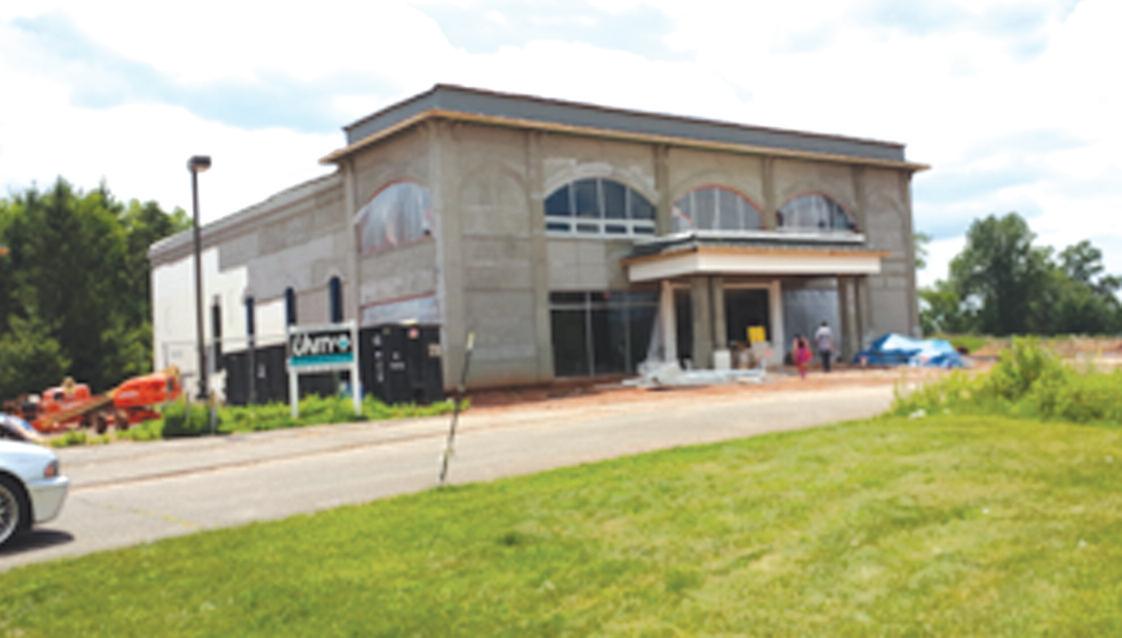
Construction Committee Chair Ashok Rakhit discussed construction status, and gave an overview of our target milestone dates Our goal is to do Durga Puja and Kali Puja this year in the expanded temple, and to complete all construction activities by middle of 2016 Puja Committee Chairperson Krishna Dutta Roy mentioned that even with reduced temple size at the moment, the usual puja activities are proceeding without interruption.
“Distinguished Leadership” awards were presented to Sukanta Sengupta (posthumous) and Chandi Maitra Ujjal Sanyal and Susmita Biswas were recognized as “Outstanding Volunteers”
Pronoy Chatterjee talked about our publications “Ananda

Sangbad and Anandalipi”, requesting more sponsors to support the publications Debajyoti Chatterjee presented “Senior Forum” activities, talked about AARP’s six hour lesson to reduce auto insurance premiums
Dipak Sarkar introduced the active members of youth magazine “Kishaloy”, and presented awards Cultural secretary Arun Bhowmik mentioned that due to limited space at the moment, some cultural activities may have to be curtailed for a short time. However, the signature programs like Mahalaya, Kabi Jayanti, and few other special programs will be held Subrata B haumik talked about the monthly event “Sahitya O Alochana”, and discussed functions and activities of the Literary Committee The results of the partial election of the Board of Trustees were announced. There were (9) winners, including two first-timers: Sajal Mukherjee and Mitra Purkayastha
DEBIR GHOTOKE AGOMON -O-DOLAI -GOMON

Sunday, October 18, 2015 Bodhon 6:00pm to 7:30pm
Monday, October 19, 2015 Amantran -O-Adhibas 6:00pm to 7:30pm
Tuesday, October 20, 2015 Saptami Puja 7:30am to 9:15 am Pushpanjali 9:20am to 9:40am
Stuti & Sandhya Aarati 6:30pm to 8:00pm
Wednesday, October 21, 2015 Ashtomi Puja 6:00am to 8:00am Pushpanjali 8:00am to 8:10am
Sondhi Puja 8:11am to 8:59am
Stuti &Sandhya Aarati 7:00pm to 8:30pm
Thursday, October 22, 2015 Nabami -O-Dashami puja 6:30am to 10:30am and Pushpanjali
Sindur Khela & Aarati 7:00pm to 8:30pm
Monday, October 26, 2015 Kojagori Lakshmi puja 6:30pm to 9:15pm & Satyanarayan puja
Calendar of Events (Dates are subject to Change) Please check our website frequently www.anandamandir.org Tel: 732-873-9821
NOTE: If a particular Puja time is not listed, please contact temple or visit our website:anandamandir org
JULY Shyama Puja
Wednesday, 15, 6 PM – 8 PM Ratha Jatra
Saturday, 18, 6:30 PM – 8 PM
Bipad Tarini Puja
Saturday, 25, 10 AM – 11:30 AM
Ulto Ratha Jatra and Satyanarayan Puja
Sunday, 26, 5:30 PM – 8 PM
Sahitya O Alochana
Friday, 17, 8:00 pm
Ananda Sandhya Not scheduled
AUGUST
Call Mandir for Puja Schedule
Sahitya O Alochana
Friday, 21, 8:00 pm
Ananda Sandhya Not scheduled
SEPTEMBER
Janmashtomi
Saturday, 05, Call for time
Ganesh Chatuthi
Thursday, 17, Call for time
Sahitya O Alochana
Friday, 25, 8:00 pm
Ananda Sandhya Not scheduled
OCTOBER
Mahishasura Mardini
Live Event
Sunday, 11, 4:30 AM
Durga Puja
Sunday, 18 to Thursday, 22, Call for details
Special Religious Services: Upon request, the priest of Ananda Mandir offers services such as inhouse Sraddhas, Rituals associated with Cremations (Antyesti Kriya), Death Anniversaries, Pre-wedding rituals (Naandimukh, Ashirwad, etc), Upanayan (Paitey), Annaprasan, Wedding Ceremonies & Wedd ng Anniversaries, Griha Prabesh (Bhumi Puja), Consecrations of new cars (New Car Pujas) and others
If you have needs for any of the above or more, please feel free to contact Biswabhai @ 732-873-9821
A Periodical Newsletter Published By ANANDA MANDIR
(A Tax-Exempt, Non-Profit Organ zat on)
269 Cedar Grove Lane Somerset, NJ 08873
Ph: 732-873-9821 Website: www anandamandir org
PUBLICATION COMMITTEE OF ANANDA MANDIR
Chairperson: Pronoy Chatterjee, pkc usa@yahoo com
Assistant Chairperson: Subrata Bhaumik, Bhaumik subrata@gmail com
Editor-in-Chief: Debajyoti Chatterji, Debsmee572@gmail com
Managing Editor, Ananda Sangbad: Guru Chakravarty, guruchakravarty@yahoo com
Managing Editor, Anandalipi: Amitabha Bagchi, amitabhanj@gmail com
Editors:
Subrata Bhaumik, bhaumik subrata@gmail com
Subhodev Das, subhodev das@gmail com
Sushmita Dutta, sushmitadutt2@gmail com
Nupur Lahiri, nupurlahiri@aol com
Members-at-large: Bhaswati Bhadra
Santosh Mukherjee
Ashok Rakhit
All queries, articles, news reports and letters should be directed to the Managing Editor: Phone: 908-752-3065 E-mail: guruchakravarty@yahoo com
For general information, please contact the following executives of Ananda Mandir: Dipak Sarkar, President
Jaiprakash Biswas, Vice President
Suprasad Baidyaroy, Vice President
Chanu Das, Treasurer
Arun Bhowmik, General Secretary
Ananda Sangbad is constantly striving to earn your admiration of the quality of our publication We have a decent pool of writers who are highly knowledgeable in the fields of our interest – literature, medicine, science and technology, Vedic literature We throw in a good mix of lighthearted materials like travel, pilgrimage narratives, sports and amusements Then there are community news about drama and theater, new books published, programs and activities of local organizations Above all, we are the vehicle of news about our core organization, the Ananda Mandir Anything that happens at Ananda Mandir gets published for the benefit of the members of Ananda Mandir We proudly showcase the Ananda Mandir expansion news that goes in the front page A Puja calendar on the front page gives details of
all puja events to let people set their own calendar accordingly Children performing at various cultural events at the Mandir are highlighted. And we at Ananda Sangbad share that news as an important accomplishment of the Ananda Mandir organizationgetting the children of the community involved
Then there is other news about the events popularized by concentrated efforts of some dedicated people Ananda Sandhya is a popular event, attracting music lovers of the community Sahitya O Alochana sessions that remind us of the famous “Coffee House Club” of Kolkata, provide a platform for the local literature geeks “Senior ’s Forum”, a popular club of the ageing community members, just does not sit there and gossip, but organizes fun trips Articles written by school
students in “Kishaloy”, a wall magazine at Ananda Mandir, sometimes end up in the Youth Section of the Sangbad We keep track of new memberships and upgrades in the donation categories Dedicated selfless workers are showcased as outstanding volunteers inviting members of the community to follow in their footsteps
Ananda Sangbad keeps a balance of news of Ananda Mandir with matters of interest to all community people It wants to succeed in publicizing Ananda Mandir to the community while satisfying the appetite of the community for information and reading enjoyment. We want you to comment on our efforts, provide your views and write “Letters to the Editor” We want to be better Guru Chakravarty Managing Editor, Ananda Sangbad
I am delighted to inform you that our construction effort is progressing well and we are expecting to celebrate 2015 Durga Puja at our new temple. If we can complete the expanded temple and obtain the certificate of occupancy, we will be able to accommodate more than 300 devotes at the same time in the prayer hall Also, it may be possible to complete the community center for use by the end of this year We will then be able to host small and large parties for wedding, birthday, retirement, graduation, anniversary and Shraddha We will also be able to hold small or large size cultural programs, movie shows,
plays and many other events Additionally, we will have several office spaces for renting for art, dance, language and religious classes.
I also want to bring your attention to one of the initiatives of Ananda Mandir that promotes youth activities For this, we have started an internship program during past three summers Ten youth members have worked in research laboratories and at Ananda Mandir facilities during summer in last three years. Some youth members are also involved in maintaining a monthly wall magazine Kishaloy that hangs on the wall of Ananda Mandir Community
Building They write short stories and scientific articles, draw pictures and post photographs for this wall magazine Youth group volunteers receive official certificates from Ananda Mandir for their volunteer service I am also happy to report that this year, we are able to elect two new trustee members, Mitra Purkayastha and Sajal Mukherjee with expertise in dance and theater They plan to create youth oriented programs at Ananda Mandir in the near future, so please stay tuned. As you know Ananda Mandir runs with financial and volunteering help from our community We are in need of more
volunteers I request that if you have some time to spare, please come to Ananda Mandir and give us an extra hand to keep our organization running smoothly and keep it healthy We are also in desperate need of more revenue for our continuing growth Please consider becoming a life member by paying $1000 or a patron member by paying $5,000 Please join me to make Ananda Mandir strong so that this organization continues to provide religious and cultural services to hundreds of Bengalis, and non-Bengalis as well, in the tri-state area Dipak K Sarkar President, Ananda Mandir
companies in the US match their employee’s (even their retirees’) contributions to non-prof i t organiz at ions on a 1-t o-1
e ffe c t ive ly doubl ing t he amount of t he donation. Some companies even give two dollars for every dollar given by an employee t o a
Ananda Sangbad
By Basab Dasgupta
Almost all physical systems on this earth naturally tend towards a condition of equilibrium or “equalization”, and there is a continuous movement or turbulence in the system until this condition is reached When a water tank situated at a level higher than another tank is somehow connected to the second tank, water from the higher tank would continue to flow to the lower tank until the pressure or the water level becomes the same in two tanks If a hot object comes in contact with a colder object, heat would flow from the hot object to the colder object until they both reached the same temperature. If an electrically charged object touches an uncharged object, charge would flow from the charged object until they both have the same potential If we add a tablespoonful of sugar into a glass of water, sugar molecules would disperse into water until the concentration is uniform throughout the body of water
The list goes on
Many of us also believe in a similar principle in our social life
They tend to think that some type of more uniform wealth or resource distribution would be the remedy for all the ills and turmoil of the society including various conflicts, poverty, hunger etc., and as a result, the human society would reach a peaceful stable status In any case, they feel that this should be the goal of the society at large One can even go further and assert that, since all men are created equal, they all deserve to enjoy all the resources on this earth equally and have a fundamental right to do so This is basically the concept of utopia and many religious people believe that this is also God’s intention
I would like to argue that there is a flaw in this line of thinking In my opinion, the human race would never reach this utopia and this is not God’s intention There are three fundamental reasons for my assertion:
i) While wealth equalization (like equalization of temperature or pressure in case of physical processes) is certainly out of the question for various practical reasons, even achieving an equitable wealth distribution is not a natural process; most wealthy people do not want to simply voluntarily donate part of their wealth to the less fortunate, no
matter what the situation might be
ii) From geographical and meteorological points of view, the earth is not uniform Most of it is water and the terrain of the land is highly non-uniform Weather-wise, there are very hot regions and very cold regions and regions with all temperatures in between
iii) Contrary to the belief that “all men are created equal”, the fact is that all men are not created equal
On the first point, it appears that the natural process is almost opposite of a fair wealth distribution! No one simply wants to donate their wealth to others, and it seems that wealthy people use their wealth to bring in more wealth In fact, I would propose a “Gedanken” experiment whereby a large number of people are given the same amount of money and taken to an island, full of all kinds of natural resources and left there for a long period of time in isolation from the rest of the world to see how they behave in a socio- economic sense My speculation is that, if one makes a follow-up trip, say five years thereafter, one would see a Gaussian or a “bell-shaped” distribution in their wealth
Some people would find a way to exploit others and gain more resources by doing less. This is human nature! As a result, the rich people get richer and the poor people get poorer So, if we now force some artificial wealth distribution scheme through some political edicts and economic regulations, I doubt that it would lead to a permanently stable and peaceful society
Secondly, a more uniform resource distribution would require a more uniform population distribution across the entire world
For example, it would not make sense to distribute same amount of wealth to people who cluster around large cities compared to the ones who struggle in the extreme weather conditions in some remote part of the world
The inherent non-uniformity of the earth’s surface and weather pattern would almost automatically favor persons in certain regions over the ones from other regions whether there is a wealth distribution scheme is in place or not In fact, these two non-uniformities are ultimately responsible for development of different races and cultures, which in turn
By Amrita Kangle
contributes to various inequalities and conflicts The reason the USA is such a wealthy nation is simply because it is a vast country full of natural resources and is very sparsely populated
Let me now elaborate on the third point There are some obvious reasons why all people are not created equal if we interpret it literally: the differences in their DNA, culture, climate, mental and physical condition at birth, socio-economic condition of their social stratum and so on However, this statement was incorporated in the American Declaration of Independence more in a philosophical and Biblical sense The conclusion in the declaration was that the government must provide an “equal opportunity” for everyone because God said so I would argue against it from the point of view of Hindu philosophy and concept of reincarnation
The reason I believe that people are not born equal is they are all at different points in their “Karmic” voyage towards “Nirvana” i e at different stages of progress in their hundreds of reincarnations There are some who are in very primitive early stages and there are others in a more advanced stage from a spiritual point of view, depending on their activities in previous lives I do not think that God wants to make this earth equally pleasant and comfortable for everyone so that people can live happily ever after That would make this earth equivalent to some type of heaven and defeat the purpose of reincarnations!
I have heard one comment/question from almost all of my atheist and agnostic friend: “If there was a God, then why is there so much misery on this earth? Why do innocent people get killed for no reason?” It seems to me that a conceivable answer would be to say that God does NOT want our life on this earth to be wonderful and full of bliss In fact, the whole point is for everyone to realize that life on this earth is indeed full of misery and the goal should not be to come back and go through the same agony again in our next life The people who seem to have all the material wealth are not necessarily the happy people The fortunate ones, who have seen the “light from God”, so to speak, are truly the happy ones; their happiness does not depend on the amount
Continued to page 7
Watching television is a national pastime common to all the nations of the world This has been so, since the last forty years and more So much so that today if anyone talks about a time when there was no television, he is looked upon as a dinosaur belonging to a prehistoric age, by the children around Please note that I am using the term 'children' loosely here I mean all the general public under the age of forty two
"No television? Reàlly ?? What did you people do then? How did you have dinner?"
I don't blame the 'kids' really There has never been a time in their lives when the 'Idiot Box' has not been in front of them Right from the time that they got aware of the world that they inhabit, they have been watching the antics of the Teletubbies, Tinky-Winky, Dipsy, Laa-Laa These are creatures who, apart from having ridiculous names, make weird sounds and look like nothing on earth But to the wide eyed little angels, they were like Manna from heaven and to the parents, they were miracles with which they could get their little monsters to drink their milk, eat their food and keep quiet and not howl! These rotund bundles were succeeded by Dora and Boots, Barney, Sponge Bob, Bob the Builder, Scooby Doo and what have you!
For the slightly older children, television was a great tool in the hands of the parents with which they made the little horrors bend to their will
"Okay television for an hour, only after you have completed your homework/ cleaned your room/ eaten your vegetables," or whatever it was that they wanted done
Of course, with the advent of the iPad and smart phones, parental control has become slightly difficult and television now seems like the lesser of all the other evils which are floating around
By now it is a well accepted fact that television has become a necessary accompaniment at mealtimes, for young and old alike It is as important to food as salt And the chances are that if the show on television is interesting enough, then maybe the lack of salt will not even be that evident This is of course a very good time for all you ladies, to get your family to eat what you want them to and not what they want to, since at this time, they all resemble zombies Totally into whatever is going on, on the screen in front The hand goes from the plate to the mouth as if put on auto-pilot There is no awareness as to what exactly is going into the mouth. And now with the television having become 'net savvy', it has begun to assume even larger dimensions in a person's life It plays music, you can watch Youtube on it, you can log onto your Facebook account on it! Oh the list is limitless
Now, last night we had just sat down for dinner and as usual, like all loving couples who have been together for thirty years and more, we were having a heated argument over what channel we should watch And as usual, the male component in the family emerged victorious We were going to watch the news! The mother-in-law was going to get slaughtered by the scheming daughter in law and the evil brother would bring his girl friend home. My poor leading lady had just died for the fourth time Her body was unidentifiable and a hazy look-alike had shimmied into the horizon arising from amidst a lot of multi-colored smoke My hero would be left penniless and alone and instead of being by his side, I was going to have to watch the news Really! It was too bad
Honestly speaking, I don't mind the News Channels so much They are sometimes much more entertaining than my daily soaps And the contents are so much more ludicrous! It is a complete entertainment channel all by itself. This time too, I was not disappointed Two desperate convicts had just escaped from a maximum security prison and were on the loose They had accomplished this feat, very much in the style of my favorite film 'The Shawshank Redemption', traveling through the sewers and escaping through a manhole a few miles away from the prison They had used power tools to cut through the reinforced walls of the penitentiary The lawenforcers of several states were up to their ears in trying to apprehend these fugitives
The only question that crossed my mind on hearing this was, how on earth had they managed to use power tools to cut through the steel walls, without making any sound at all? I mean, when I switch on the exhaust fan or the blender in the kitchen, they make so much of a racket that I can barely hear myself Here we are talking about cutting through reinforced concrete walls Nobody heard them and they crawled to their freedom as easily as if they were walking from one room to another I told you! The news channels are as entertain-
Ananda Sangbad
(This is the second installment of an article which is being serialized in Ananda Sangbad)
Knowledge is familiarity, from experience The unfamiliar is made familiar by comparing it with past experience You can ‘understand’ an apple only because there is such a thing as pear. (Indian philosophy or darshan speaks of pramanas means of valid knowledge and included therein is upamana or analogy Probably all knowledge is acquired via analogy?) That is why an unprecedented experience is called a 'miracle' Interestingly, Einstein says: There are two ways to live your life, one is as though nothing is a miracle, the other is as though everything is a miracle Wouldn’ t you wholeheartedly agree? It is revealing that physicists have named an attribute of sub-atomic particles ‘strangeness’ Come to think of it, isn't everything 'strange', or nothing is? It is obvious that language could evolve only because words trigger recall of shared experience A word is defined by invoking definitions of other words, as a dictionary eminently illustrates; comprehension is a referral network That is why one who lacks a certain experience is sometimes loath to accept the veracity of such experience of another. A case in point is that of The Royal Geographical Society of England no less initially disbelieving Johannes Rebmann’s discovery of permanent snows on the equator: Mt Kilimanjaro, latitude 3º South Also, perhaps that is why 'knowledgeable' men tend to reject descriptions of deepest religious experiences as sham But, don’ t they forget that it is we who learn from Nature and not Nature from us?
Question 1: How does one 'acquire' knowledge, from where? Does it reside in the object known and propagate from it to the knower? A parallel question: Is an object's speed resident in it like its colour is, or is it spread across space and time like ripples on water created by a moving boat? It is most difficult to answer this, even though we are usually cocksure that we do ‘understand’ ‘speed’! Nevertheless, most will agree that knowledge is not obtained from outside; it comprises observation plus attendant mentation (via manas the sixth sense) that cause things to happen inside the observer A book louse could well consume an entire set of Encyclopedia Britannica gaining much nourishment (and pleasure besides) but no knowledge Vedanta says knowledge is ever within, a priori; uncover it. (Vedanta also states that bliss too is ever within; objects trigger it) Question 2: If there were only one sole object in the universe, and I the sole subject ever, would I 'understand' that object? No, with nothing else to refer to, there would be no idea of 'understanding', the word would not be coined, model-making would not be possible I would only be conscious of the object Question 3: Eliminating object, what if there were only (one) subject? Along with 'knowing' and 'understanding' would evaporate all thought, all acts, events, in the Aloneness of 'The One-and-Only', the Brahman of Vedanta, past conventional comprehension, ever unknowable Let us listen to a dialogue of Sri Ramakrishna with a devotee of his where he represents
By Prasanta Ray
Brahman by the real sun and the myriad beings like us by suns reflected in pots of water Sri Ramakrishna: Imagine there are ten water-filled pots; the sun has reflected in them How many suns are seen? Devotee: Ten reflected suns And the real sun is there of course. SR: Imagine you break one pot How many suns are seen now? D: Nine The one real sun is of course there SR: Ok, nine pots are broken now How many suns will be seen? D: One reflected sun The real sun is there as well SR: What remains if the last pot is broken? D: Sir, that real sun SR: No One cannot say what remains What is, is what is How will you know of the real sun unless there is the reflected sun? And indeed, who would ask what of whom and who ‘know’? The passage from two to One is an awesome passage into the Incomprehensible, where, per Vedanta, speech and the mind cannot reach Sans plurality, mathematically, Brahman is not 'one' but a-dvaita, nondual
Let us revert to ‘observation’ We consider the case of seeing an elephant We see a bulky body, four legs, a trunk, a small tail, a moving combination of these We think closely and realize that we really see a rotund mass, four pillar-like objects, a rubbery tube-like object, and so on In essence, we really see descriptions of what we consider to be entities Our senses register attributes or adjectives, and not any noun We cannot pierce the veil of attributes howsoever refined the descriptions Sri Ramakrishna says: You peel off layers of onion skins to find nothing in the end
A noun, or name, is a named set of attributes, which (attributes) only are perceived; the noun, if any, is ever unperceivable We cannot 'know' it; at any rate, we cannot say what the noun is, we can at best say how it may be (via ‘modelmaking’and even that ‘best’ is in all likelihood a far cry from fact). Here is a story from the early 1900s A villager, having to make his first train journey, asked his friend to describe it The friend describes the (steam) engine: a black bulk with a light in front and smoke issuing from it For good measure, he adds that he shouldn’ t budge from his seat and should wave his ticket at those trying to displace him! It is winter and it is nighttime and the platform is ill lit The man spies the ticket checker: a fat man in a black uniform, smoking a cigar He steals up behind the hapless ticket checker and latches on to his back for dear life, waving his ticket under his nose and throttling the life out of him! What happened? Simple: the set of attributes that the helpful friend described was incomplete and alarmingly so! (So, beware of the lethal power of incomplete sets of attributes: thus indeed says Vedanta!) ‘All crows are black’ is a cyclic statement; for crows are black per definition One may call a white crow differently, or again a ‘crow’ by dropping the attribute ‘black’ Swami Vivekananda says we limit a thing by defining it The creepy realization dawns that it is we who create entities, by naming sets of attributes We thereby see pseudo many in the Real One
Isn’t that a bewitching power of name? Sri Ramakrishna says: Seeing many is ignorance, seeing One is knowledge Vedanta says: 'Name-cum-form', namarupa, is illusion, Maya Einstein says: Reality is merely an illusion, albeit a very persistent one Swami Vivekananda says: ‘Tis but One! 'Object Oriented Programming' (OOP) is a current methodology of developing computer software Here, an 'object' is a result of a program; it has a name and a set of variable characteristics (parameters), events can happen to it, and it can cause events to happen This description is very similar to that of usual objects that we routinely experience Thus, software objects too are basically named sets of attributes
Evidently, therefore, the act of ‘acquiring knowledge’ is not a movement from noun to adjectives, but its reverse, if anything
Back to ‘understanding’ Many would say understanding involves reasoning too So, enter ‘Reason’ A child wants to jump from the rooftop The ‘reasonable’ response is that it would be ‘unreasonable’ (and irresponsible indeed!) to allow the child to indulge its fancy Clearly, the result of the jump is predictable. Reason thus is, essentially, predicting power, obviously obtained via a series of (experiments), observations and conclusions, the procedure that gives knowledge Reason is applied knowledge Logic is organized and codified reason The intellect collates and classifies the data culled from experience This is possible because of a certain repetitiveness in nature, of some events tending to have a nexus among them Such perceived patterns lend replicability to many events Reason is the cognition of such replicability So, reason is the faith that what has been repeating will repeat again The Bible says: Man walks not on his legs but on faith If a very special inner faculty, it consists in the ability to classify data Thus, reason too is founded in observation If events were random and/or experience too narrow, reason would not evolve, (even assuming the observer alive in such a random world!) Could relativity, quantum phenomena be divined by sheer reason? Relativity and the quanta operate in a certain way, but is there any a priori reason why they should so operate? Says Sri Ramakrishna: Only reasoning, for a million years, will not bring any understanding Get the vision
Many accept mathematics as one of the if not the purest forms of logic. Referring to no particular object but to forms and processes involving objects it saves itself from possible corrupting influence Mathematicians aver that it enables the discovery of the profoundest scientific truths with mystifying efficacy So, an enquiry into what is ‘understanding’ must involve an enquiry into what is mathematics Many rationalists hold that the highest understanding of truth is mathematical understanding; mathematics represents truth, it is truth, it is verity
An elementary mathematical statement is: 1 + 2 = 3 Obviously, this statement has its roots in observation The number system and digital mathematics originated in the ‘one-to-one’ correspondence perceivable among different collec-
tions of clearly identifiable objects, enabling the size of collections to be uniformly (and universally) described by the numbers ‘1’, ‘2’ and so on, without reference to the objects 3 equals 1 + 2 because 3 is defined so The process ‘+’ represents an observed association, ‘’ an observed dissociation and ‘ = ’ an observed correspondence A complete statement would be: 1 apple + 2 apples = 3 apples
The noun that the numbers qualify can be left unsaid because ‘1 + 2 = 3’ is obeyed by a large set of nouns Even then, before making the statement ‘1 + 2 = 3’ with reference to a given noun, one has to quickly consult one’s experience to decide whether the noun can be justifiably included in that set Saying ‘1 + 2 = 3’ is like saying ‘blue + yellow = green’, leaving the noun ‘dye’ unsaid The complete statement would be: blue dye + yellow dye = green dye, understanding ‘+’ to mean 'mixing' It would be preposterous to say ‘blue apple + yellow apple = green apple’
We have seen that, in the new mathematics of quantum physics, statements such as ‘2 quanta + 3 quanta = 5 quanta’ are meaningless Evidently, mathematics is no a priori knowledge, no prescience Extending this discussion, it would be realized that ‘1 + 2 = 3’ is usually taken to be correct for distances and volumes of liquid also, e g : 1 litre of water + 2 litres of water = 3 litres of water, but ‘+' here is quite unlike that for apples It is notable that when talking of (compressible) gases, scientists would be reluctant to say ‘1 litre + 2 litres = 3 litres' unless pressure and temperature were spelt out In the chemical reaction: 2H2 + O2 = 2H2O, 2 litres of hydrogen combining with 1 litre of oxygen produces 2 litres of water vapour, not 3 Thus, ‘+’ or ‘addition’ assumes different connotations for different kinds of entities Another illustration: for directional quantities (vectors), say, ‘displacement’, 10 Km northward + 10Km eastward = (roughly) 14 Km north-east-ward, not 20
The above discussion is with respect to ‘discrete’ variation, where measurement varies in whole numbers The mechanism adopted for continuous variation is rather like this: first, divide the given quantity into a number of equal countable units and ascertain the requisite result on the basis of such number, then see the trend of the change of the result with progressive reduction in the size of the unit, and ascertain the final result by 'extrapolating' such trend to when the size of the units is 'vanishingly small'. Notice how one starts from units of the familiar, finite sizes and proceeds to the unfamiliar 'vanishingly small' (whatever that means) Thus, all in all, mathematics too is founded on the empirical, like understanding, knowledge or reason; it is logic highly formalized
Once the building blocks of mathematics are created, mathematicians can deal with them forgetting their genesis Mathematics is measurement, which can be of adjectives only. So, further evolution of mathematics is in the realm of adjectives
As seen, 'knowing' involves inferring nouns behind adjectives; mathematics steers clear of such nouns (Is that the reason why it succeeds?) In applied mathematics, starting from observed data and
Continued to page 6
Ananda Sangbad
Continued from page 3
ing as the daily soaps!
I was quite ready to forget this news item and move on to larger issues like Iraq and Afghanistan, quite confident that our law enforcement officers knew their job; but the effect that this news had on my better (?) half, was extremely dramatic! He left his half eaten dinner and jumped up from the table Closed all the blinds and drew the curtains fully closed Locked the garage door and switched on the alarm of the security system I was feeling a bit dazed by this time Could not really understand what was happening. Hesitantly I asked him, "Why did you close the door? Is it raining?"
"Shhhh, don't talk so loudly They will know that I have closed our door," he said
"Who will know?"
"Don't go near the window You will become the perfect target!" he cautioned
Our nearest neighbor is a good 1000 feet away, and they are really nice people I couldn't quite see them as using me for target practice I made this point to him quite confidently
"Not from so far away They may be lurking in the Rose bushes just outside," he whispered
"Why would Mike lurk in the bushes? And anyway, it is very difficult for anyone to lurk in a Rose bush The thorns would kill them!" I said, totally exasperated by now.
"We must buy a gun That is the only solution!" he triumphantly announced in the manner of one who had just discovered the formula for running a car without any fuel
By now I was totally confused and not just a little concerned as to why the 'head of the family' was behaving like this Patiently, as if I was talking to a two year old I asked him what exactly he was talking about
"Didn't you hear the news? There are two escaped convicts on the loose and I am sure I just saw some movement in the garden It is the two of them," he announced
"But they have traveled north We are in the extreme south. How can they be here? They don't even have a car You just heard the news " I was totally exasperated by now!
"They have just told that to people to throw them off the track Actually they are here and to protect my family, I need a gun You must carry one with you too, at all given times "
As I saw it, plans were underway to buy two guns in the very near future, so I thought it prudent, at this juncture to bring to his notice that I did not know how to shoot
"There's nothing to it," announced the Olympic award winner for shooting, who had never held a gun in his life "You just aim and pull the trigger Now that you are in America, you must own a gun Even when you are gardening, you must have your gun with you."
I tried to picture myself around my plants, with a gun in one hand Drawing it as soon as I saw an intruder and shooting to kill The image was so unimaginable that my imaginative powers failed me totally I just gaped like a goldfish who does not know what to do after having a full meal
But nothing I would do or say was enough to sway him from his convictions Immediately the different kinds of guns available were researched Google is indeed a fount of information on the subject (and all subjects) and plans were made as to where we would purchase them In our minds we had already killed these and all other deadly convicts whose sole purpose in life was to head straight to our home after escaping from prison And boy! weren't they in for the greatest surprise of their lives!
Now I am just waiting for dinner time tomorrow You never know We may be making plans to join the military and going to Afghanistan by then It all depends on what the news channels say on television Everywhere I look, life seems to be filled with a whole bunch of glorious uncertainties The 'Idiot Box' is no longer an idiot It has a new name Do give it it's due respect Ladies and Gentlemen, I present, 'The Smart TV'
Didn't Receive Your Copy of
If you are a Life Member or an Associate Member, but didn't receive your copy of Ananda Sangbad, it may be because we do not have the correct address on file for you. Please send an email to Guru Chakravarty (guruchakravarty@yahoo.com) with your correct address, and we will send you another copy.
By Amitabha Bagchi
Boys are known to torment friends and fellow students with nicknames Your given name sometimes disappears in a sobriquet like Motu (Fatso) or Uchchhe (Shorty; literally Bitter Squash) that adheres to you all your life like crazy glue The nickname is supposed to betoken fondness, except that its object often feels more victimized than showered with affection.
My older cousin, just above me in age among male cousins in the extended family household, was a past master in the art of conferring nicknames One year I came back from spending a summer month with my grandparents and found that we had a new family as next-door neighbors The family matriarch was noticeably fecund, having borne over ten children of both sexes One Sunday afternoon, some of the boys were playing with the children of the locality in a nearby field when my cousin and I joined them
My cousin naturally took over as the group leader, barking out directions Hey May-Kay, throw me the ball, he bellowed You Bay-Day over there, kick the ball that way, shouted he I thought that way I got to know the names of the two boys So, in the midst of the game, I politely asked May-Kay-da to pass me the ball
“My name is not May-Kay,” my new dada snarled in a low voice
Quite confused, I later asked my cousin to explain the meaning of this strange behavior He grinned and said that those names were nicknames given by him May-Kay stood for Mete Kelo (or Dirty Brown), while Bay-Day meant Be(n)te De(n)to (or Buck-toothed Shorty) No wonder our boy neighbors fumed and stewed over the appellations
During my school years, I was only moderately victimized by nicknames The thing that mainly irritated me was that most of my friends preferred to call me by my last name, somehow preferring its brevity to my lengthy and polysyllabic first name I was wise enough to know the futility of fighting nicknames, but I was pleased and amused when a friend came calling for me to the front steps of our apartment and my uncle at the door sternly told him that everyone in the house was a Bagchi!
Things became more complicated in college, where my close friends decided to name me Pa(n)chu I had little option but to grit my teeth and bear the new name with a pained grin. The only saving grace was that my other friends, under mutual consent, had names like Khagen, Rampada and Dhinikeshto I could not complain a whole lot after that But then I got two more nicknames with which I would have a life-long association
One afternoon, my friends suddenly started calling me Ahmed I was mystified I have been a life-long supporter of Mohun Bagan in football, and Ahmed to me was the stalwart striker and leading goal scorer of our hated rivals, East Bengal I was clueless as to how I got the nickname
At about the same time, I started –relatively late in life as a teenager – to learn swimming as the Hatkhola Swimming Club in North Calcutta The instructor there started calling me Amit, which
kind of floored me At one level, it was the most obvious contraction of my name At another level though, no one had ever used that shorter form of my name to address me in my then seventeen plus years
My experience with the swimming instructor came in handy when I came to America. It became clear soon enough that my American classmates were unwilling to call anyone by a name that extended beyond a single syllable I dutifully offered up Amit
Pretty soon, I found out also that the unaccented Bengali pronunciation of Amit was beyond anything Americans could master By and large, in my graduate student days, my friends put the accent on the latter part and turned my name into Awmeet. The elongated “e” sounded quaint and amusing to me, and I accepted this little alteration of my name with pleasure until, some years later, I ran into more fastidious Americans with a penchant for verbal accuracy
“Where should I put the accent?” someone would ask “Is it A’mit, ot Ameet’?”
Huh? I thought. I really do not know. Bengali is so unaccented But then I thought that accent on the first part of the name was closer to the Bengali pronunciation So I started promoting accent on the first syllable as my preference, making the name sound like Aw’-mit’ Little did I realize than the other American propensity -- that of turning a name in their tongue many times over till it sounded vaguely familiar -- would come back to bite me in the rear.
I realized the unforeseen consequence of my choice when my neighbor in Chicago started twisting Aw-mit around and proceeded to call me Awh-met, and several variations thereof, before settling on a highly elongated Ah-maad The experience was far from unique My sudden change of religion was rather disconcerting I tried rectification I repeated the correct pronunciation of my name I explained my desire not to confuse myself with the Prophet On occasion, I even toyed with the idea of starting to use my full first name with Americans If Zbigniew Brzezinsky can survive and prosper with that name, could I not hope to follow in his footsteps?
It now amazes me that when my buddies started teasing me by calling me Ahmed on the grounds of Presidency College, they were on to something I had not realized at that time. As for saving my name from being mangled, I am about to throw in the towel Just the other day, I called my friendly Lebanese taxi driver from Los Angeles to pick me up from the Newark airport I winced when I heard him call me Ahmet Should I object? Should I henceforth insist that the accent be put on the second syllable and become Ameet instead? I console myself with the story of my friend Titas, a beautiful Bengali name taken from a river, because his colleagues tittered and turned it into TitAss So he decided to spell his name Titus, with the letter “i” being pronounced as “y ” Wonder if he is aware of or feels a kinship with the tragic Shakespearean hero, Titus Andronicus
Ananda Sangbad
March
In my last report, I mentioned that we will celebrate monthly Shyama Puja on 19th March and we did celebrate Shyama Puja on that day in front of a gathering of about 40 people with puja, chandi paath, Aarati, Anjali and prasad and dinner also distributed
Basanti puja was celebrated from 25 to 29th March just like Sharadiya Durga Puja Sosthi on 25th, Saptami on 26, Ashtomi and Sondhi puja on 27th , Nabami, Raam Nabami and Kumari Puja on 28th and Dashomi on 29th. This puja was celebrated in the week days, still the attendance was quite satisfactory
On Nabami evening ,we had Kumari puja and on that evening we had a better gathering, about 40 people or so As usual along with puja, Aarati and Anjali, prasad and food had been distributed to our attendees On
Reported By Krishna Dutta Roy, Chair, Puja Committee
29th morning we had Dashomi celebation and in the evening we had our monthly Satyanarayan puja
April
On 13th April we had Nil Yatra, and Chaitra Sankrantiwas on the 14th On 15th April we celebrated Naba barsha (Bengali New year) with puja, prasad distribution and a small program of devotional songs
On 18th of April we had scheduled our monthly Shyama Puja in the evening Puja, Chandi paath, Aarati ,Anjalieverything was done in usual manner ending with prasad distribution and dinner On 21st of April Akshaya Tritia was celebrated from 10 am to 11:30 am Satyanarayan puja was scheduled on 26th of April
May On 3rd May we celebrated Baishakhi Purnima On 9th May
we celebrated Rabindranath Tagore's Birthday with lighted candles, flowers and Rabindrasangeet in front of a small gathering
On 17th of May, we celebrated Phalaharini Kali Puja. This is an auspicious day for the devotees in India as well as in here Our puja started at 6:00pm and continued till 8:30pm Though our current temple can accommodate about 50 people, more people showed up for this day Anyway, the puja, Aarati, Anjali , Chandi Paath – all were done in usual manner Chandi Paath by our own Biswabhai was a special attraction on this special Kali puja day Celebration concluded with Prasad distribution and Dinner
On 24th of May we celebrated " Raam Thakur Smaram Utsav " and monthly Satyanarayan Puja from 4:00pm to 8:00pm A group of Kirtaniyas were invited from New York. The Kirtan continued until 7:30pm,
and our attendees also joined them in chanting and dancing in circles SriSri Raam Thakur's photo was decorated with garlands, flowers, candles, incense sticks and placed on a small Bedi Devotees were paying their homage at the Bedi In a word it felt like we were at the "Kaibalya Dham" in Jadavpur, Kolkata After the Ram Thakur Utsav, Satanarayan puja, Brata katha followd by Aarati and Anjali were performed Prasad and dinner were distributed On May 28th, we had Dashohara and Ganga Puja from 9:00 am to 11:00am.
June
On June 2nd we celebrated Jagannath Mahaprabhu's Snan Yatra from 10am to 11am
Our monthly Shyama Puja is scheduled on 15th June, Kamakshaya Aradhana on 22nd June and Satyanarayan puja on 28th June Please check our website
and also follow our Saptahik announcement through your emails for all our puja schedule
All puja events are so enjoyable at Ananda Mandir only because of dedicated support from the Puja Committee volunteers and other volunteers who work hard unconditionally for our Temple To join the team please write to Krishna Dutta Roy at k dutta roy @yahoo com For upcoming puja dates please check our web site www Anadamandir org
Note to the devotees of Ananda Mandir
During the construction period of Ananda Mandir temple part, puja will be done according to schedule, but there might be a smaller gathering area inside the temple So, please check ahead of time before coming to the temple Thank you for your understanding and cooperation
is pleased to announce the program to award financial grants to support Community Service Projects aimed at helping the South Asian community in the Greater New Jersey area
Project Proposals Are Welcome From Organizations and Individuals Please visit www.anandamandir.org for program details and application requirements or Contact:
Pronoy Chatterjee (pkc usa@yahoo.com) or Debajyoti Chatterji (debsmee572@gmail com)
Continued from page 4
mathematically processing them to a result, one reverts to observation to check the veracity of the result in a closed loop of empiricism Why so? Because it is we who learn from Nature and not vice versa. Recall how conventional mathematics misfired with the quantum Galileo did not dream of quantum phenomena when he said: Measure that is measurable, make measurable that is not measurable; science has no use for that cannot be measured On the other hand, more recently, Einstein is found to say: Not everything that counts can be counted, and not everything that can be counted counts
Let us probe some more this wonder that is mathematics which of course it truly is Let us try to understand ‘mathematical understanding’! We consider the nature of light Question: How do we intend to understand the nature of light?
Answer: By studying light’s behaviour, or attributes, not light per se (Can we ever study anything save attributes?) Question: How do we intend to study such behaviour? Answer: By seeing what kind of mathematics fits light ’s behaviour. We know that initially the mathematics of par-
ticles was seen to agree with light's behaviour; on closer scrutiny, the mathematics of waves was found to be in better agreement The belief is that the mathematical model that fits a certain phenomenon explains or describes it too Is this belief ‘reasonable’? ‘1 + 2 = 3’ fits cats as well as humans; shall we then say humans are feline? (Well some are catty you might say! Granted!) Mathematics at best describes how a given phenomenon may be like, and not really how it is To be strictly correct, mathematics only states that a certain mathematical model fits the given phenomenon or, rather, its measurements; it states nothing more We interpret the fit to be an explanation An illustration: again the nature of light. As seen above, the particle model was displaced by the wave model, and both by the quantum mechanical model of 'wave-particle duality', which is incomprehensible So, eventually we understood by admittedly not understanding! Einstein says pithily: As far as the laws of mathematics refer to reality, they are not certain, as far as they are certain, they do not refer to reality Mathematics, like conventional science itself, is a formal tool for the prediction, use and manipula-
tion of phenomena But being able to do so does not necessarily imply understanding A driver may well drive a car with élan without understanding how it runs Darwin's evolution theory may describe how evolution happens, but not what evolution is, or why. Conventional science states 'How Things Work', not 'What Things Are' Multiplication is the bringing together of equal collections to form a bigger collection; division is the breaking up of a collection into smaller equal collections ‘15 nuts / 3’ means forming 3 collections of 5 nuts each out of 15 nuts; we understand this from experience But can we form 3 plums collections out of 15 nuts as in ‘15 nuts / 3 plums? No, we emphatically say unless we’ve gone nuts ourselves! But hang on! ‘Speed’ is length divided by time More: momentum is mass × velocity, i e , mass × length / time Isn’ t it kind of gobbledygook? The entities ‘velocity ’ , ‘momentum’ and so on are mathematical expedients and conventions, understood, if at all, and really not, from experience and not from mathematics Physicists recognize mass, m, velocity, v, momentum, mv, (kinetic) energy, mv2, as entities, but not mv3, m3v2 or m2/v3. Why not? Usu-
ally, those mathematical expressions that frequently occur, or participate in ‘laws of nature’, are called entities Isn’ t it again possible then to see that it is we who create entities by naming certain mathematical expressions to the exclusion of others, and they really do not exist as such outside of our mind; else all exist? Einstein: Physical concepts are free creations of the human mind, and are not, however it may seem, uniquely determined by the external world
The bottomline is that of form versus substance, the age-old philosophical riddle The prefix ‘sub’ implies ‘a something’ beneath the form, underlying appearance What then is the ‘thing-in-itself ’ shorn of form ‘noumenon’? Western thinkers have pondered this question with no conclusion Indian thinkers have sometimes called it ‘padartha’, literally meaning (pada = word + artha = meaning) ‘meaning of the word’, the rationale being that nothing more can be, or ought to be, said about it Vedanta says: The Reality, Brahman, 'permeates all creation' Is the 'thing-in-itself ’ , then, underlying all adjectives, forms and appearances, that Brahman, ‘The Great First Cause, least understood’?
Ananda Sangbad
"The development of full artificial intelligence (AI) could spell the end of the human race," warns Stephen Hawking Elon Musk fears that the development of AI may be the biggest existential threat humanity faces Bill Gates urges people to beware of it
AI or the field of study concerned with developing intelligent behavior of nonhuman kind, i e , of machines and software, has seen explosive growth over the past several decades. The ever increasing power of computers and the rigorous scientific work by researchers have brought AI within the reach of common man Strangely, in this dawn of AI, we hear such dire predictions about our future
Dread that the abominations people create will become their masters, or their executioners, is hardly new But voiced by a renowned cosmologist, a Silicon Valley entrepreneur and the founder of Microsoft hardly Luddites and set against the vast investment in AI by big firms like Google and Facebook, such fears have taken on new weight With supercomputers in every pocket and robots looking down on every battlefield, just dismissing the premonitions as science fiction seems like self-deception The question is how to worry wisely
Today’s AI produces the semblance of intelligence through brute number-crunching force, without great interest in approximating how minds equip humans with autonomy, interests and desires Computers do not yet have anything approaching the wide, fluid ability to infer, judge and decide that is associated with intelligence in the conventional human sense
Yet AI is powerful enough to make a dramatic difference to human life It can already enhance human endeavor by complementing what people can do For example, a recent study has shown that an AI framework-based simulation modeling that understands and predicts the outcomes of treatment could reduce health care costs by over 50 percent while improving patient outcome by nearly 50 percent
IBM’s Watson supercomputer is evaluating evidence-based cancer treatment options using analytics to help a physician consider all related texts, reference materials, prior cases, and latest knowledge in journals and medical literature when treating an illness The analysis could help physicians determine the best options for diagnosis and treatment in a matter of seconds!
Because of the 'humanity gap' between artificial and a real human mind, a human working in conjunction with any AI machine will always be more powerful than AI working on its own. If, however, Stephen Hawking’s premonition comes to truth: “It (AI) would take off on its own, and re-design itself at an ever-increasing rate ”
Many philosophers, futurists, and AI researchers have conjectured that humanlevel AI will be developed in the next 20 to 200 years If these predictions are correct,
By Subhodev Das
it raises new and sinister issues related to our future in the age of intelligent machines The power of atom laid dormant throughout history until humans unleashed it in 1945 Can the current century be the age of “intelligence explosion?”
In “Superintelligence: Paths, Dangers, Strategies” (Oxford University Press, July 2014), Nick Bostrom, a futurist at the University of Oxford, argues that if machine brains surpass human brains in general intelligence, then this new superintelligence could replace humans as the dominant lifeform on Earth If that happens, it would be stealing a page from the book of human history
We are already seeing Google’s Deep Mind and Microsoft’s Project Adam claiming to better human performance at image recognition tasks Unlike human brain, the AI machines have no physical limitation These can be as fast – a 604 GHz microprocessor has been reported by the University of Illinois recently, while neurons fire at 200 Hz – and as vast – a computer can be warehouse-sized but a human brain is enclosed in the cranium
The critical threshold beyond which “intelligence explosion” or singularity happens is still a theoretical conjecture and is yet to be confirmed experimentally There are great uncertainties about technological progresses, particularly hardware and software bottlenecks to achieve the “full” AI capabilities However, it is undeniable that the future after the creation of smarterthan-human intelligence is absolutely unpredictable
While specific predictions regarding the consequences of superintelligent AI vary from potential economic hardship to the complete extinction of humankind, many futurists like Nick Bostrom agree that the issue is of utmost importance and needs to be seriously addressed
The hysteria around superintelligent AI or artificial superintelligence may be overblown, according to most serious AI researchers Those who have dabbled in the AI technologies can appreciate the enormity of the task in ushering a superintelligence revolution As a practitioner of general (as opposed to friendly) AI, I’m yet to see the first glimmers of monstrous sentience gestating in today's code Perhaps Gates, Hawking and Musk, by virtue of being incredibly smart guys, know something that I don't
We certainly don’ t know how the neural processing speed or the size of the brain is related to intelligence in a qualitative sense Mammals like elephants and whales have much bigger brain than humans However, their intelligence may be limited when compared to that of humans. We do not know the relation in brain size to intelligence across animals, because we have no useful measure or even definition of intelligence across animals And these quantities certainly do not seem to be particularly related to differences in intelligence between people
Bostrom claims that once we have a
Continued from page 3
of their material possession
machine with the intelligence of a man, superintelligence will be achieved just by making the machine faster and bigger However, all running faster does is to save time If there are two machines A and B and B runs ten times as fast as A, then A can do anything that B can do if one is willing to wait ten times as long Similarly, his claim that a large gain in intelligence would necessarily entail a correspondingly large increase in power seems far-fetched
Some AI researchers argue that seemingly superintelligent systems may have limited autonomy IBM’s Deep B lue could beat the world chess champion but it may not share the same level of intelligence as humans Soon, airplane auto-pilots and self-driving systems for cars will be more reliable than human pilots and drivers Does that mean they are more intelligent than people? In a very narrow way, these systems are “more intelligent” than people, but their expertise applies to a very narrow domain, and they have very little autonomy They can’ t really go beyond the task they were designed to perform
The difference between panic and caution is a matter of degree So, random, unsupported comments – yes, even from Bill Gates – can do more harm to the psyche of the common masses when the intention is to urge caution Certainly a general artificial intelligence is potentially dangerous; and once we get anywhere close to it, we should use common sense to make sure that it doesn’ t get out of hand
The programs that have potentially farreaching capabilities, such as those controlling the power grids or the nuclear bombs, should be conventionally designed whose behavior is very well understood They should be protected from subversion by AI’s; but they have to be protected from human sabotage anyway, and the issues of protection are not very different A machine should have an accessible “off ” switch; and in the case of a computer or robot that might have any tendency toward self-preservation, there should be an off switch too that it cannot block
Even so, one might reasonably argue that the dangers involved are so great that we should not risk building a computer with anything close to human intelligence Something can always go wrong, or some foolish or malicious person might create a superintelligence with no moral sense and with control of its own off switch I certainly have no objection to imposing restrictions that would halt AI research far short of human intelligence
It is certainly worth discussing what should be done in that direction. However, Bostrom’s claim that we have to accept those quasi-omnipotent superintelligences are part of our future, and that our task is to find a way to make sure that they guide themselves to moral principles beyond the understanding of our puny intellects, does not seem to me a helpful contribution to that discussion
I believe that wealthy people have wealth as a result of their good deeds in previous life However, God did not give them wealth for them to accumulate more wealth or to indulge in materialistic possessions and physical pleasures Wealth is meant for them as a means to free up their time so that they can do better things in life; being wealthy means one has to spend less time in the struggles of life and more time to think and seek self-realization A good example is Rabindranath Tagore He did not have to work a single day in his life because his family had plenty of money So he ended up devoting the time he had on his hand in pursuit of creative and spiritual thoughts I have no doubt in my mind that he has been reincarnated in a “higher” life Steve Jobs was a multibillionaire, but he devoted his time with passion in various creative inventions which benefited billions of people. That was his way of seeking a higher power Neither one was known to be a promoter of wealth redistribution, but they spent their money in establishing their values which benefited generations
Now, if one feels a divine joy in sharing one’s wealth with others or donating everything one has to others, then one makes substantial progress in one’s spiritual journey and gets closer to God However, to make this progress one must feel that this joy is beyond anything one has experienced from materialistic possessions and physical pleasures This joy is what I call “a ray of light from God” – just a glimpse of the heavenly bliss that waits for one at the end of the journey But this feeling has to come from one’s inside and not from reading books or listening to sermons from a pastor or out of fear of going to “hell”, and certainly not from a political agenda One must feel this divine joy in one’s heart It is not related to what is happening with one’s donated or shared wealth and how many other people it has benefited
So if one becomes generous because of some government policies or in order to boost one’s social image then all the generosity does not count for anything in an ultimate spiritual sense for that person, in my opinion Of course, it would be beneficial to some people, just like any other social tax Should we not care for the poor people who are hungry or homeless or suffering from some illness? Of course, yes, but only if your heart says “yes” If you do not feel any compassion and simply walk away, that does not mean that you would end up in hell or some such horrible place; it simply means you have a long way to go and many more reincarnations are waiting for you before your divine enlightenment Remember, this earth is not the heaven; one might say coming back on this earth so many times is probably as bad as going to hell!
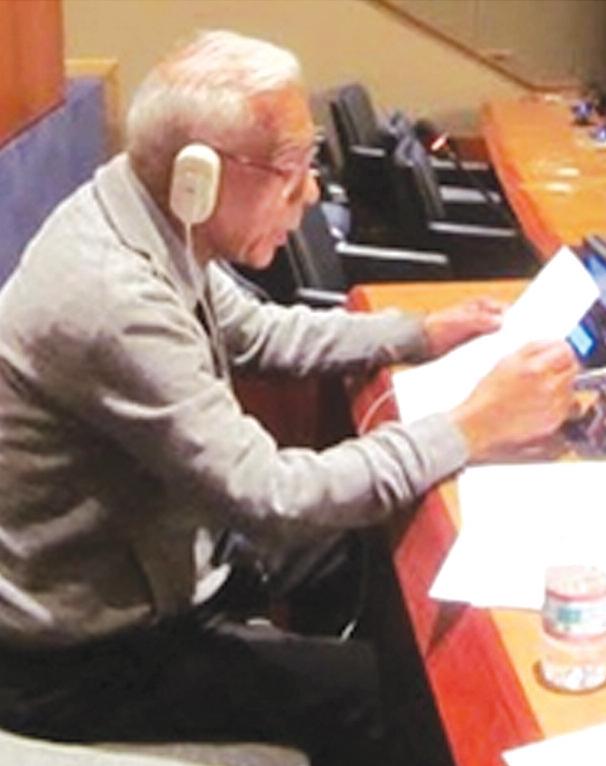
Making us proud, New Jersey resident, Dr Sudhangshu B Karmakar, Chairman of International Committee For Peace And Reconciliation Inc , a member of Ananda Mandir, was a speaker at the 53rd Session of the United Nations Commission for Social Development held on February 5, 2015 Dr Karmakar ’s talk under the thematic content captioned “Rethinking and Strengthening Social Development in the Contemporary World” was based upon some crucial issues on how to eradicate poverty from the society and strengthen the social structure
Dr Karmakar emphasized that “Society is a collection of individuals united by a few common goals Parameters like poverty eradication, education, health care, justice and human rights, are integral parts of social development and integration About 20 years ago, he emphasized, a Summit of the world leaders was held in Copenhagen At the Summit delegates agreed to give special
Reported By Sushmita Dutta

Reported By Debajyoti Chatterji
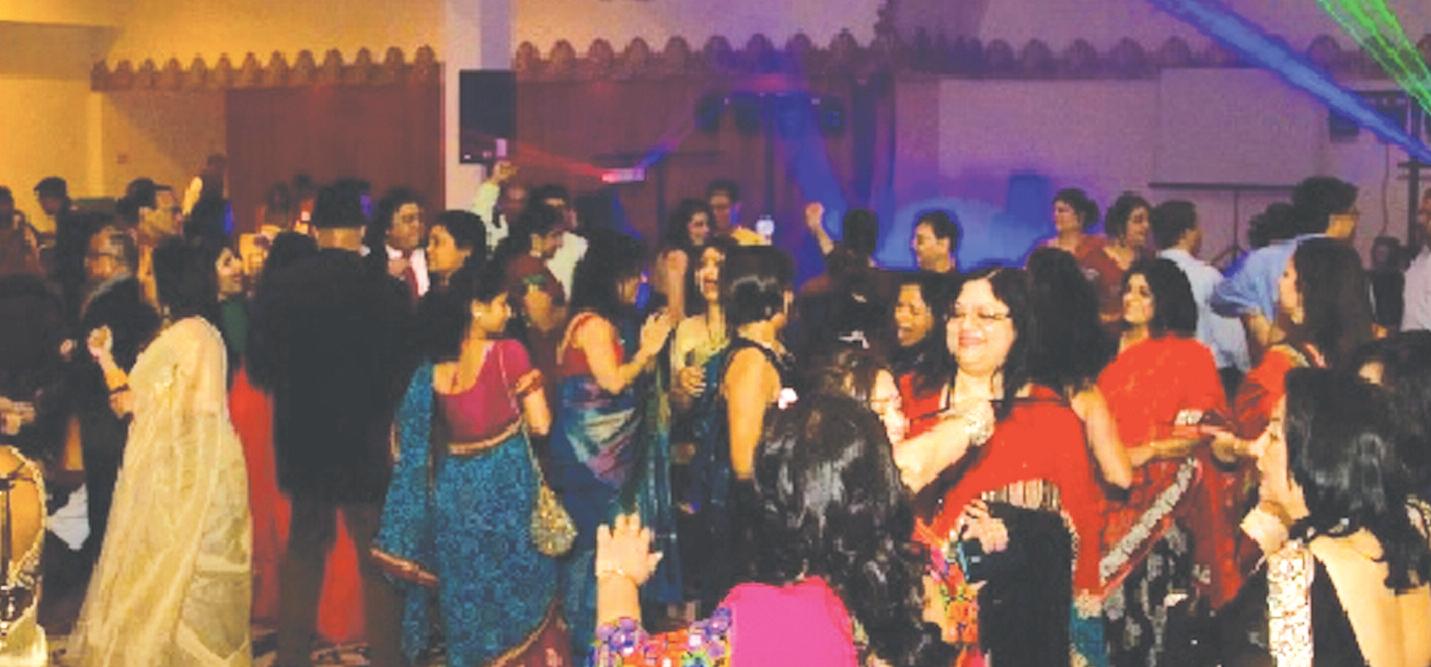
Kallol Women’s Forum (KWF), a subsidiary of Kallol of New Jersey, was established in 2006 with very small resources ($300 in funds) but a very big heart They set themselves the objective of raising money to “help build the future of children in need” and decided to focus primarily on the disadvantaged kids in India Over the years, the group has grown in size and strength and established a solid track record of accomplishments On March 15, 2015 Kallol Women’s Forum hosted their annual gala fundraiser Over 170 supporters attended the event held at Royal Albert Palace in Edison, NJ The theme for the
evening was “Movie Magic” Many guests dressed up as actors, and several of these “movie personalities” gave enjoyable stage performances as well This charity event was a big success and over $8000 was raised
The “Movie Magic” and other themed gala events such as
Continued to page 13
After a long stretch of over 100 lovely Ananda Sandhya concerts, we would like to inform the community that due to major construction activities in our premises in connection with our temple expansion, our next Ananda Sandhya events will be on hold for a few months until the temple floor is ready again for our presentations. We will post the date of next Ananda Sandhya with all details on our web site and thru mass email. Please stay tuned.
development goal their highest priority and launched a global drive Dr Karmakar emphasized it is time to review the Copenhagen Summit to determine how much of those goals have been achieved and what remains to be done A recent OXFAM report reveals that the wealth accumulated by the richest 1% will exceed that of the rest 99% by 2016 The replacement of human work force by machine has the potential for large scale unemployment
He cited statistics that today, nearly 1 in 7 people worldwide do not get enough food to be healthy and to lead a meaningful life. A society where there will be no exploitation of the weak and the downtrodden, where there will be peace and justice, where there will be no hunger and poverty, where the world will not be broken down into fragments by narrow domestic walls, is a distant possibility But there must be a wakeup call to
Continued to page 13
(As reported in “The Telegraph” of Kolkata)
Ford will launch two cars in India based on a new platform the company has developed for the Figo Aspire "As part of our Vision 2020 program, we will launch three products in the next 12-15 months in India The Figo Aspire is the first of the three," Raj Sarkar, vice-president (marketing) of Ford India, said at the unveiling of the Figo Aspire here today The compact sedan will be formally launched in the Indian market later this year, before the festive season Raj is son Dwipendra Sarkar, a long time member of Ananda Mandir, and an active participant in the Senior’s Forum Raj is born and educated in the U S , and is currently on assignment in India
GSCA Philanthropic Committee provides financial support to Needy and Meritorious students in post-secondary education for higher professional studies, in India and U S It started in 2012 with supporting three high school graduates from Plainfield High School It grew to six students in 2013 In 2014, GSCA offered scholarships to fourteen (14) students in the fields of Medicine, Engineering, Nursing and Accountancy in India and one high school graduate from Plainfield In 2015, they will continue to support existing college students in India with proof of satisfactory progress and will seek out more eligible students Details of scholarships are provided in their website www gsca us in the philanthropy section
Ananda Sangbad

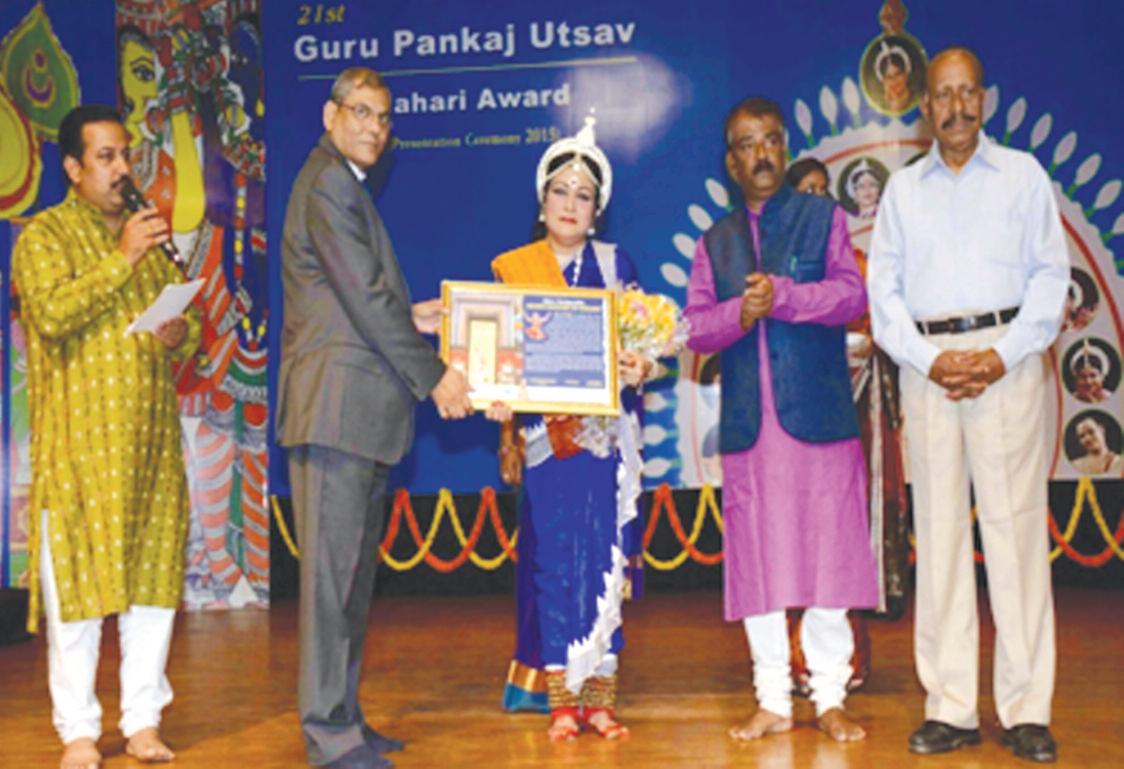
The Guru Pankaj Charan Odissi Research Center celebrated the Guru’s 96th birth anniversary by holding the 21st Guru Pankaj Utsav and Mahari Samman in the city of B hubaneswar, from 17th-19th March, 2015 It was inaugurated by the CGM of State bank of India Shri Krishna Mohan Mohan Dwivedy He felicitated the famous danseuse from the USA, Shrimati Mitra Purkayastha with a special award for her dedication to the age-old dance form of Odissi Mitra performed “Brajaraj kumara nasile bibeka mohara” as part of the festivities to pay homages to the Adi Guru. How Krishna is drowned in Rasa Shringar, after being mesmerised by lovely Radha, was the main theme of this beautiful piece Various dancers from different parts of the country presented their dances to a captivated audience at Rabindra Mandap, Bhubaneswar

Str onger T han Gr avity Faster T han Light
By Arnab Karmakar
A collective anthology of short stories involving first generation Americans juggling the nuances of American and Indian customs With five starts customer reviews, the paperback is available at Amazon.com
Reported by Debajyoti Chatterji
On May 2, a sell-out crowd of over 400 volunteers, supporters and sponsors gathered at the Akbar Restaurant in Edison, NJ, to celebrate the 30th anniversary of Manavi, a nonprofit organization that has been working tirelessly since 1985 to end violence against women in the South Asian community The event organizers did a splendid job in highlighting Manavi’s struggles over the past three decades, its current programs, and the challenges it still faces The most revealing presentations of the evening were the “survivor stories” from several victims of domestic violence who had been helped by the organization in many ways These women shared their heartwrenching but inspiring stories of breaking away from their abusive relationships and learning to lead economically independent lives through

guidance and support from Manavi’s staff and volunteers
From its humble beginnings (Manavi was formed by six South Asian women fresh out of college), the organization has grown considerably in size, scope and strength but so has the number of South Asians in the NJ-NY area, and an increasing number of women victims of violence and abuse have needed help Today Manavi offers a whole array of services to such women, ranging from crisis intervention to culture-specific counseling, legal referrals, interpreter services, assistance with immigration matters, transportation and outreach and community education In 2014, a total of 415 women (and 4 men) sought help from Manavi At the center of Manavi’s services is the operation of Ashiana, a “safe house” at an undisclosed location that

Contact: Samragnee Majumdar 732-692-4818/ 732-744-3908
provides shelter to abused women who must leave their home to escape domestic violence In 2014, sixteen women and children were given free room and board at Ashiana for a total of 2850 days of residency. Unfortunately, because of limited facilities, 92 women and children are still on Ashiana’s waiting list Manavi desperately needs active financial support from the South Asian community to purchase a larger facility for Ashiana To that end, the 30th anniversary celebration was a fitting occasion to launch a capital campaign to raise $500,000. Since the launch of that campaign, almost $50,000 has already been raised If you are interested in making a contribution, please call 908-507-9640 or email to debsmee572@gmail com at your earliest opportunity
SAMRAGNEE MAJUMDAR NAMED MEMBER OF MILLION DOLLAR ROUND TABLE (New York Life Leads Million Dollar Round Table for the 60th Consecutive Year)
EDISON, NJ, March x, 2015 – Samragnee Majumdar, an agent for New York Life in New Jersey, has earned membership in the Million Dollar Round Table (MDRT) for 2014. Achieving membership in MDRT is a distinguishing life insurance career milestone, attained only by those who have demonstrated superior professional knowledge, experience and client service MDRT membership represents the top life insurance and financial service professionals worldwide MDRT is an international, independent association of the world’s best life insurance and financial services professionals In addition, this is the 60th consecutive year that New York Life has dominated the MDRT in the United States
Leading the MDRT’s membership ranks for 60 years speaks to the unwavering dedication of New York Life’s family of agents as well as to our industry leading training program Our agents are unsurpassed in providing families and businesses with extraordinary professionalism and outstanding service year after year, and in upholding the professional standards set by generations of agents before them,” said Mark Pfaff, co-president of the Insurance and Agency Group, New York Life “I am proud that we have attained this level of achievement for sixty consecutive years and I want to thank all of our agents and managers past and present for helping us reach this level of success ”
Ms Majumdar has been a New York Life agent since 2010 and is associated with New York Life’s New Jersey General Office in Edison She is actively involved with the Kallol Women’s Forum of New Jersey, a nonprofit organization supporting deprived children in India Ms Majumdar currently resides in Hillsborough, NJ with her six-year-old daughter
Founded in 1927, the Million Dollar Round Table (MDRT), The Premier Association of Financial Professionals®, is an international, independent association of nearly 42,729 of the world’s leading life insurance and financial services professionals from more than 473 companies in 71 countries MDRT members demonstrate exceptional professional knowledge, strict ethical conduct and outstanding client service MDRT membership is recognized internationally as the standard of sales excellence in the life insurance and financial services business Please visit MDRT’s website at www mdrt org for more information
“This column is prepared with the assistance of Dr. Rajat Bannerji (Member, Rutgers Cancer Institute of New Jersey; Associate Professor of Medicine, Robert Wood Johnson Medical School) ”
By Jayati Sarkar, M.D.
Jayati Sarkar, MD is a board certified EYE MD (Ophthalmologist) specializing in cataract, cornea, and laser vision correction She completed ophthalmology training at Weill Cornell Medical College/New York Presbyterian Hospital, New York in 2008 Her fellowship training at the same institute was in cornea and refractive surgeries, which she successfully completed in 2009 She currently practices at EyeCareMD of NJ at Morristown Prior to that she was Assistant Professor of Clinical Ophthalmology at Weill Cornell Medical College and Attending Ophthalmologist at New York Hospital Queens, Flushing, New York She received the 2012 Outstanding Teaching Award from Weill Cornell Medical College for her contribution towards residency training She received her initial medical training at premier institutes in India, having completed undergraduate medical education at Jawaharlal Institute of Post Medical Education and Research (JIPMER), Pondicherry, followed by Ophthalmology Residency at All India Institute of Medical Sciences (AIIMS), New Delhi Glaucoma is a disease that causes damage to the optic nerve, the cable which connects the eye to the brain It is estimated that three million Americans have glaucoma, but only about half of them know that they have it Glaucoma is a leading cause of blindness for people over 60 years old B lindness from glaucoma can often be prevented with early
a layer of light-sensitive tissue lining the inside of the eye and is made up of many nerve fibers The optic nerve is like an electric cable made up of many wires which sends signals from your retina to your brain, where these signals are interpreted as the images you see
A clear fluid called aqueous humor circulates inside the front portion of our eye The fluid leaves the chamber at the open angle where the cornea and iris meet (See diagram above) When the fluid reaches the angle, it flows through a spongy meshwork, like a drain, and leaves the eye A healthy eye pressure is maintained by a fine balance between the amount of aqueous humor which the eye produces and the amount which flows out of our eye If you have glaucoma, the aqueous humor does not flow out of the eye properly Fluid pressure in the eye builds up and over time, causes damage to the optic nerve fibres, causing glaucoma
There are several types of glaucoma: Open-angle glaucoma
Normal tension glaucoma
Angle-closure glaucoma (also called “closed angle glaucoma” or “narrow angle glaucoma”)
Congenital glaucoma
Secondary glaucoma
The most common form of glaucoma is called primary open-angle glaucoma
cause symptoms or pain, and it happens so slowly that you may lose an extensive amount of vision before you're even aware of a problem The exact cause of primary open-angle glaucoma remains unknown
Angle Closure Glaucoma
Angle-closure glaucoma, also called closed-angle glaucoma, occurs when the iris bulges forward to crowd or block the drainage angle formed by the cornea and the iris As a result, fluid can't adequately flow and drain through the drainage channels, and your eye pressure may increase abruptly Angle-closure glaucoma usually occurs suddenly (acute angle-closure glaucoma), but it can also occur gradually (chronic angle-closure glaucoma).
A sudden dilation of pupils may trigger acute angle-closure glaucoma in some people with an abnormally narrow drainage angle
Normal Tension Glaucoma
In normal-tension glaucoma, your optic nerve becomes damaged However, your eye pressure remains within the normal range Doctors don't understand why this occurs You may have a sensitive optic nerve, or you may have less blood being supplied to your optic nerve This lack of blood supply could be caused by atherosclerosis an accumulation of fatty deposits (plaques) in the arteries or another condition limiting your blood circulation
Congenital Glaucoma
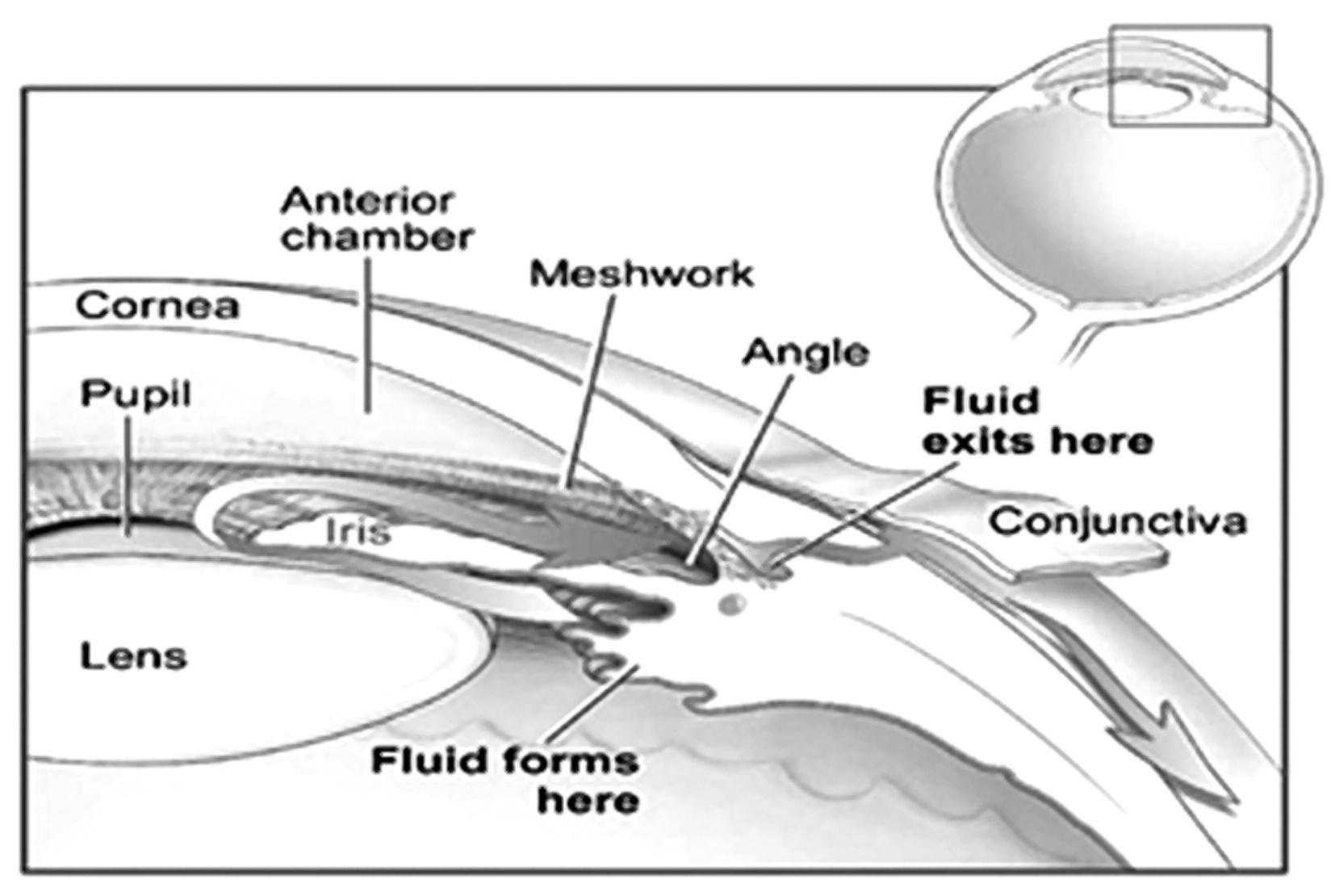
treatment Glaucoma is a slow and silent disease, with absence of early symptoms and very slow progression In this way, glaucoma can steal your sight very gradually Fortunately, early detection and treatment (with glaucoma eyedrops, glaucoma surgery or both) can help preserve your vision.
The optic nerve is the cable which connects the retina to the brain The retina is
Primary Open Angle Glaucoma:
In primary open-angle glaucoma, the drainage channels (trabecular meshwork) in the angle are partially blocked, causing the fluid to drain out of the eye too slowly. This causes fluid to back up in your eye, and pressure gradually increases within your eye
Damage to the optic nerve doesn't
Some infants or children may be diagnosed with glaucoma Rarely, some children may be born with glaucoma (congenital glaucoma), develop glaucoma in the first few years of life (infantile glaucoma) or develop glaucoma after age 4 or 5 ( juvenile glaucoma) Children usually won't have any symptoms However, they have optic nerve damage, which may be caused by angle malformations (primary infantile glaucoma), or it could develop as the result of other conditions (secondary glaucoma)
Secondary Glaucoma
Secondary glaucoma happens due to a disease in the eye or in the body that affects the eye They often affect one eye and not both eyes, unlike primary open angle or angle closure which affect both eyes All secondary glaucomas share the feature of high eye pressure due to a cause that affects the normal outflow of aqueous
Risk Factors
Because chronic forms of glaucoma can destroy vision before any signs or
symptoms are apparent, be aware of these factors:
• Elevated internal eye pressure (intraocular pressure) If your internal eye pressure (intraocular pressure) is higher than normal, you're at increased risk of developing glaucoma, though not everyone with elevated intraocular pressure develops the disease
• Age. You're at a higher risk of glaucoma if you're older than age 60 You may be at higher risk of angle-closure glaucoma if you're older than age 40 For certain groups such as African-Americans, however, the risk of developing glaucoma is much higher and occurs at a younger age than that of other groups. If you're African-American, ask your doctor when you should start having regular comprehensive eye exams
• Ethnic background. AfricanAmericans older than age 40 have much higher risk of developing glaucoma than do whites (Caucasians) African-Americans also are more likely to experience permanent blindness as a result of glaucoma. People of Asian descent have an increased risk of developing acute angle-closure glaucoma People of Japanese descent may be more likely to have normal-tension glaucoma
• Family history of glaucoma. If you have a family history of glaucoma, you have a greater risk of developing it Glaucoma may have a genetic link, meaning there's a defect in one or more genes that may cause certain individuals to be more susceptible to the disease
• Medical conditions. Several conditions may increase your risk of developing glaucoma, including diabetes, heart diseases and high blood pressure
• Other eye conditions. Severe eye injuries can cause increased eye pressure
Other eye conditions that could cause increased risk of glaucoma include eye tumors, retinal detachment, eye inflammation and lens dislocation. Certain types of eye surgery also may trigger glaucoma
• Long-term corticosteroid use
Using corticosteroid medications, especially eyedrops for a long period of time may increase your risk of developing secondary glaucoma
If left untreated, glaucoma will cause progressive vision loss, normally in these stages:
• Blind spots in your peripheral vision
• Tunnel vision
• Total blindness
Your doctor will review your medical history and conduct a comprehensive eye examination
Your doctor may perform several tests to diagnose glaucoma, including:
• Measuring intraocular pressure. Tonometry is a simple, painless procedure
Continued to page 11
Ananda Sangbad
Continued from page 12
that measures your internal eye pressure (intraocular pressure), after numbing your eyes with anaesthetic eye drops It's usually the initial screening test for glaucoma
(A tonometer measures pressure inside the eye to detect glaucoma)
• Test for optic nerve damage. To check for damage in your optic nerve, your eye doctor uses instruments to look directly through the pupil to the back of your eye This can reveal slight changes that may indicate the beginnings of glaucoma
• Visual field test. To check whether your side ( peripheral) vision has been affected by glaucoma, your doctor uses a special test to evaluate it.
• Visual acuity Your doctor will test your ability to see from a distance
• Measuring cornea thickness (pachymetry). This test determines the thickness of each cornea, an important factor in diagnosing glaucoma If you have thick corneas, your eyepressure reading may read higher than normal even though you may not have glaucoma Similarly, people with thin corneas can have normal pressure readings and still have glaucoma
• Other tests. To distinguish between openangle glaucoma and angle-closure glaucoma, your eye doctor may use a technique called gonioscopy in which a special lens is placed on your eye to inspect the drainage angle Other tests, such as imaging tests, have been developed and may sometimes be used
Treatment
The goal of glaucoma treatment is to lower pressure in your eye (intraocular pressure). To treat your condition, doctors may lower your eye pressure, improve drainage of fluid in your eye or lower the amount of fluid produced in your eye
Glaucoma can't be cured, and damage caused by the disease can't be reversed, but treatment and regular checkups can prevent vision loss in people with early glaucoma If vision loss has already occurred, treatment can slow or prevent further vision loss
Glaucoma treatments include medicines, laser trabeculoplasty, conventional surgery, or a combination of any of these While these treatments may save remaining vision, they do not improve sight already lost from glaucoma Medicines
Medicines, in the form of eyedrops or pills, are the most common early treatment for glaucoma Taken regularly, these eyedrops lower eye pressure Some medicines cause the eye to make less fluid Others lower pressure by helping fluid drain from the eye.
Before you begin glaucoma treatment, tell your eye care professional about other medicines and supplements that you are taking Sometimes the drops can interfere with the way other medicines work
Glaucoma medicines need to be taken regularly as directed by your eye care professional Most people have no problems However, some medicines can cause headaches or other side effects For example, drops may cause stinging, burning, and redness in the eyes
Many medicines are available to treat glaucoma If you have problems with one medicine, tell your eye care professional Treatment with a different dose or a new medicine may be possible
Because glaucoma often has no symptoms, people may be tempted to stop taking, or may forget to take, their medicine You need to use the drops or pills as long as they help control
your eye pressure Regular use is very important
Make sure your eye care professional shows you how to put the drops into your eye
Laser trabeculoplasty
Laser trabeculoplasty helps fluid drain out of the eye Your doctor may suggest this step at any time In many cases, you will need to keep taking glaucoma medicines after this procedure
Laser trabeculoplasty is performed in your doctor’s office or surgery center Before the surgery, anaesthetic drops are applied to your eye As you sit facing the laser machine, your doctor holds a special lens to your eye A high-intensity beam of light is aimed through the lens and reflected onto the drainage structure inside your eye. You may see flashes of bright green or red light The laser makes several evenly spaced burns that stretch the drainage holes in the meshwork This allows the fluid to drain better
Like any surgery, laser surgery can cause side effects, such as inflammation Your doctor may give you some drops to take home for any soreness or inflammation inside the eye You will need to make several follow-up visits to have your eye pressure and eye monitored.
If you have glaucoma in both eyes, usually only one eye will be treated at a time Laser treatments for each eye will be scheduled several days to several weeks apart
Studies show that laser surgery can be very good at reducing the pressure in some patients However, its effects can wear off over time Your doctor may suggest further treatment Conventional surgery
Conventional surgery makes a new opening for the fluid to leave the eye. Your doctor may suggest this treatment at any time Conventional surgery often is done after medicines and laser surgery have failed to control pressure
Conventional surgery is performed in an operating room Before the surgery, you are given medicine to help you relax Your doctor makes small injections around the eye to numb it
For several weeks after the surgery, you must put drops in the eye to fight infection and inflammation These drops will be different from those you may have been using before surgery.
Sometimes after conventional surgery, your vision may not be as good as it was before conventional surgery Conventional surgery can cause side effects, including cataract, problems with the cornea, inflammation, infection inside the eye, or low eye pressure Prevention
• Get regular eye care. Regular comprehensive eye exams can help detect glaucoma in its early stages before irreversible damage occurs. As a general rule, have comprehensive eye exams every two to three years after age 40 and every year after age 60 You may need more frequent screening if you have glaucoma risk factors Ask your doctor to recommend the right screening schedule for you
• Treat elevated eye pressure. Glaucoma eyedrops can significantly reduce the risk that elevated eye pressure will progress to glaucoma To be effective, these drops must be taken regularly even if you have no symptoms
• Eat a healthy diet While eating a healthy diet won't prevent glaucoma, it can improve your physical and mental health It can also help you maintain a healthy weight and control your blood pressure
• Wear eye protection Serious eye injuries can lead to glaucoma Wear eye protection when you use power tools or play high-speed racket sports on enclosed courts
Reported by Subrata Bhaumik
Sahitya O Alochana is a monthly literary and topical discussion forum under the aegis of Ananda Mandir It completed its 7th anniversary a few months ago and will have organized eighty (80) discussions with the June 2015 session These monthly sessions feature exciting and illuminating discussions on diverse subjects including literature, theater and movie, history, philosophy and religion, science and mathematics, economics and business, social issues, sports, and current affairs The March – May 2015 was no exception with discussions on Bengali Detective Stories, predisposition of creative geniuses to madness, and what artificial intelligence means to the future of human beings
March
In March Sujan Dasgupta, an acclaimed author of Bengali detective stories (Ekenbabu famed) and a member of our Sahitya O Alochana Group, led a discussion on “The History of Bengali detective stories ” Mr. Dasgupta delved into the details of the topic including evolution of western and Bengali detective stories; the basic structure and superstructure of the genre of literature; some of the plots, central characters, and the authors As expected, this session was a runaway success, and it afforded the attendees a clear glimpse of the romanticism they enjoyed in the growing up years spending countless hours on analyzing and speculating the unravelling of mysteries by the Auguste Dupins, Sherlock Holmes', and Sharadindus of the world The frosting on the cake was the segment on the detective stories authored by him Many of them were thoroughly engaging and entertaining at the same time
April
The April session featured a fascinating discussion on “Creativity and Madness ” The idea that very creative people are also a little crazy has been around since humanity's earliest days In ancient Greece, Plato noted the eccentricities of poets and playwrights, and Aristotle saw that some creative types were also depressives In modern times, that connection has persisted, from Mozart’s famous mood swings to Robert Schumann hearing voices guide his music; Sylvia Plath sticking her head in an oven to Van Gogh cutting off his ear; and Michael Jackson being Michael Jackson So, is there any germ of truth to the link between creativity and mental illness? Latest research suggests there is something to the connection, but the truth is much more interesting That’s what the April session was all about.
The discussion leader (Dr Nupur Lahiri) deftly unwove the myth and conjecture around the subject, and knitted them back into some kind of a predictive relationship - a “crystal ball of some sort It was a wonderful session indeed
May
This session was entitled “Is Artificial Intelligence (AI) the Frankenstein of our time?” Subhodev Das, a veteran of our alochana community and an authority on AI, enlightened a robust crowd in attendance about its evolution, current state, and what the thinkers and shapers of our times have to say about the future of AI including Stephen Hawking, the eminent physicists cum Cosmologists, Elon Musk, the maverick multi-billionaire tech entrepreneur (Tesla Motors famed), Bill Gates, etc He further explained why these experts thought a fully developed AI might mean the beginning of an era where artificial intelligence would trump human intelligence In other words, the machine intelligence (AI) we create might soon turn into a Frankenstein that would destroy the human creativity that is at the core of its creation, and is meant to protect and help further The case for exploiting AI through oversight and regulation to the common good of human being was also examined with due care and probing details.
It was a very interesting and stimulating session that evoked an animated and long discussion amongst the attendees on the future of AI Future sessions
Quite a few interesting sessions are in the pipeline for the next several months They include a centennial commemorative event on the life and works of the famous Indian playwright, director, and thespian Sambhu Mitra; a discussion on freedom of speech, democracy, and religion; and an Urdu Shayari session combining poetry reading and musical recital by distinguished artists
The friends of Sahitya O Alochana would like to thank Ananda Mandir for its continued support for the forum’s contribution to the cultural enrichment of the local Bengali and Indian communities
Ananda Sangbad
Reported by Debajyoti Chatterji
After a long hibernation during the harsh and frigid winter of 2014/2015, Ananda Mandir’s Senior Forum welcomed the spring with a flurry of activities And we plan to have more activities during the coming summer months
On March 28, more than 20 seniors met at the Chutney Mary Restaurant in South Brunswick, NJ, for a most enjoyable group lunch As our members know, we choose our meeting venues carefully with convenient location, good food and pleasant ambiance as our main criteria for selection Chutney Mary met all our requirements as well as expectations The group had a fun time talking about the miseries of the winter, recent experiences in Kolkata/West Bengal, and talking about activities we could undertake in the summer months However, we did stop talking occasionally to stuff our mouths with delicious food from the multicourse buffet
The April thaw brought thirteen seniors to the Paper Mill Playhouse in Millburn, NJ, to see the US premiere of the musical, “The Hunchback of Notre Dame”. The production was a breathtakingly impressive transformation of Victor Hugo’s classic tale into a stage show The acting, the singing and the stagecraft were all impressive, and the seniors group left the matinee performance on April 4 with a unanimous agreement to return to Paper Mill to see at least one show in the coming season

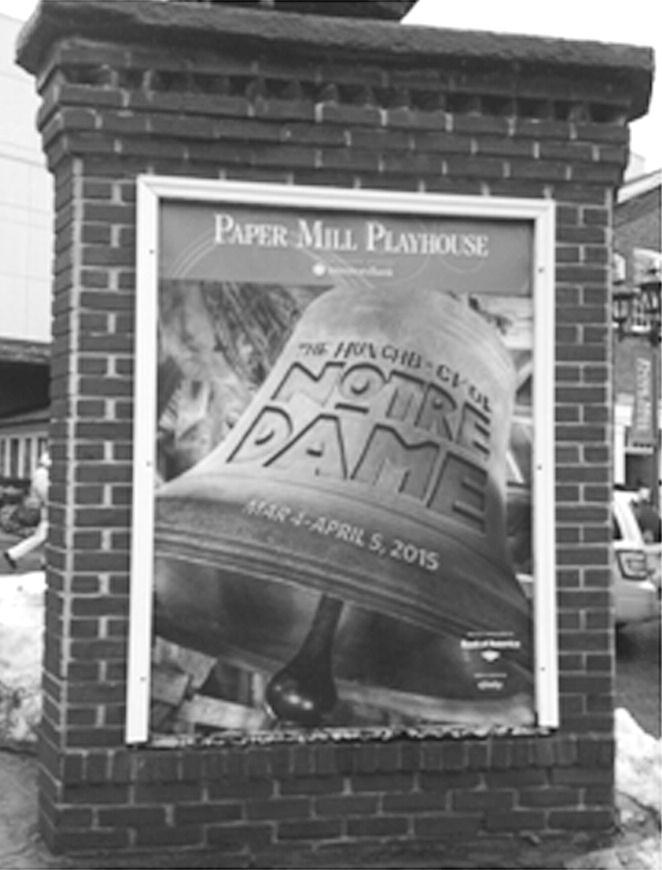
Since our attempt in January to organize a “movie date” to see “PK” as a group had to be replaced at the last minute with a lunch get-together (held on January 17 – and reported in the last issue of Ananda Sangbad), several members have been urging another “movie date” When we found the newly released Hindi/Bengali movie, “Piku”, playing in Edison, NJ, a small group decided not to miss the opportunity So, on May 30, seven eager seniors met up in Edison to have a lunch at Mirchi, a nice Indian restaurant reputed for its grand buffets, and then enjoy the movie, featuring Amiabha Bacchan as cranky old B haskar Banerji and Deepika Padukone as his architect daughter, Piku, who is controlled and harangued by her ageing father Many seniors could not join this outing because it conflicted directly with another major social event taking place on the same day at the same time.
In the months ahead, Seniors Forum has plans to visit the Dorris Duke Estate Gardens (Hillsborough, NJ) and the Morris Museum (in Morris Township, NJ), see one or more Indian movies, and organize at least one pot luck lunch or picnic Saturday, June 27 is the date for our next get-together, and if the weather forecast is good, the group will tour the Dorris Duke Estate and enjoy a picnic lunch If you are interested, please call Debajyoti at 908-5079640
Invites retirees and near-retirees to participate actively in Forum meetings and activities
Seniors Forum usually meets on the third Sunday of every mon that 1:00 PM
However, the date may change because of conflict with other Ananda Mandir events
Please contact Debajyoti Chatterji (Cell: 908-507-9640) for latest updates on the meeting dates.

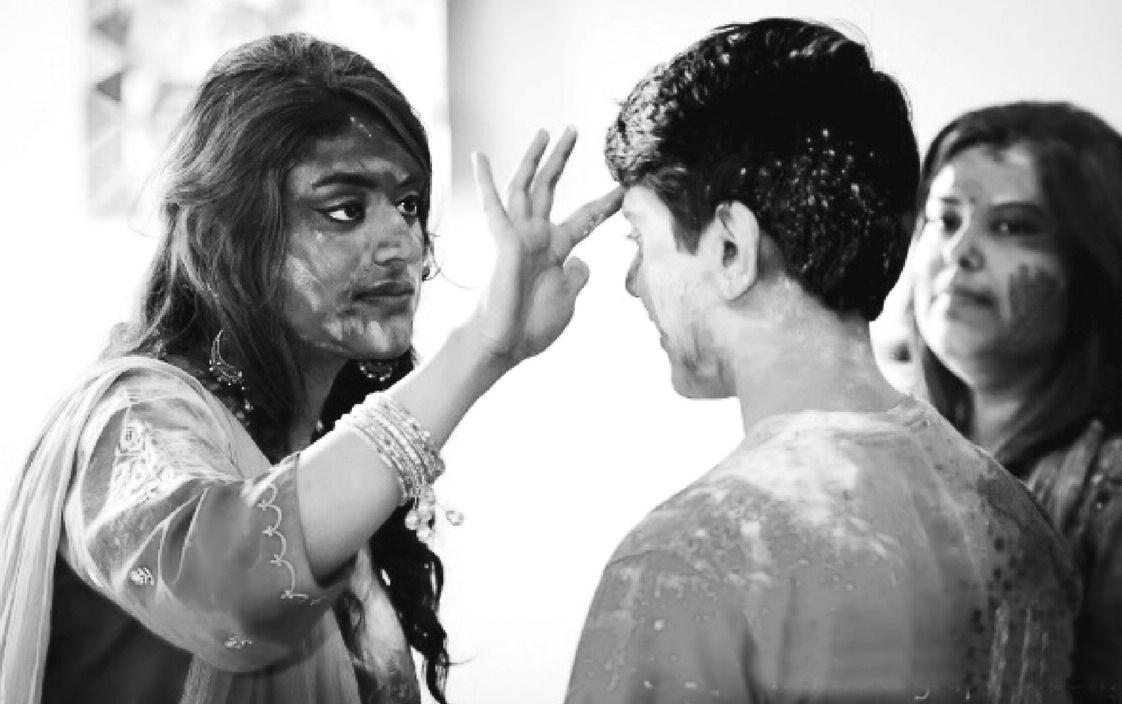
As the past season transitioned from snowstorms to colorful pansies, for the first time, the Indian Community Center celebrated Dol Utsav on March 22, 2015 in Denville, NJ with great festivity and color The entire community welcomed the new season with Aabir Khela that touched everyone’s heart with love and happiness! Overall, this was an event that brought the community together for a fun-filled and colorful afternoon
Another event that brought us together in a big way was the 2015 Baishakhi celebrations on May 16th 2015 in Dover, NJ The turnout was much beyond usual and the series of programs kept the audience around until the very end The event started with a theme based art competition for children which revealed some amazing artists working with their creations related to nature and city life The cultural programs started with Kobi Pronaam which was an ovation to different Bengali poets through beautiful rendition of their work by ICC members Other pro-
grams brought the hidden talents of many to the forefront in every sphere of dance and music Classical Indian dance forms like Bharatnatyam, Odissi, Folk and Fusion dances – all added great energy both on and off stage Children of all ages surprised the audience with their talent playing various kinds of Indian and Western Musical Instruments viz Piano, Guitar, Tabla, Sitar The performances were so extraordinary that left the listeners spellbound There were also recitations by children which demonstrated their love for Bangla and their effort to keep the rich literature alive in the next generation
Among other programs was a Shruti Natok Hamba by ICC members A musical program Jugey Jugey Bangla Gaan comprising of traditional and modern Bangla songs was presented by guest artist Ajanta Siddiqui A delicious Bengali dinner cooked by the ICC members was enjoyed by one and all Overall, it was a fun filled evening for everyone who attended
Hard to believe, we are already at the middle of the year Just like everyone else, NJPA is also gearing up for summer and then the rest of the year
We held our Annual General Meeting on April 18th and a new Board of Trustees was selected The new Board is comprised of:
Nimai Ghose – Chairman of the Board
Rita Bhowmick
Swati Ray
Anshula Sarkar
Ex Officio: Avijit Sen
The new Board was heartily welcome by the attending members
Well, let’s now gear up for summer.
On July 25th, we will hold our annual picnic at Mercer County Park This is a major upgrade in venue and we are excited to plan a fun filled day for our friends
Mark your calendar also for August
15th for a special event to celebrate India’s Independence Day and our community
The details of both of these events will be sent out very shortly Please keep an eye on your e-mailbox but please save these dates on your calendar now
Our 2015 Kalipuja/Diwali festival is slated for Saturday, Nov 14th and bringing the year to a happy end with a bash on Dec 31st
We end our 2nd quarter reporting by thanking Ananda Mandir and the editors of Ananda Sangbad for providing this platform for NJPA All of us at NJPA are proud to be a part of Ananda Mandir as a corporate member and look forward to serving our community together
Wishing everyone a great summer
The Executive Committee, NJPA
Ananda Sangbad
By Nupur Lahiri, M.D.
(Editor’s Note: We are pleased to bring this important column in Ananda Sangbad The author can be reached at her email address, lahirimd@aol com)
Sonia:
I cannot take this life with Dipak anymore He is always in trouble He does not seem to be the same man I married twelve years ago. This man was smart, witty, assertive and such fun to be with He was so ambitious that he could not stop talking about his unique business ideas and would go on for hours He could do without having a wink of sleep for days at a time He could think of five different projects in one sitting with his friends and me I could not give him enough physical pleasure in a day and he would still feel unsatisfied His need for fun has been insatiable Then started these gambling sprees, buying sprees, numerous affairs with women he came across in his life Then came his drinking and days of depression I can never understand how Dipak could be so happy, ecstatic at times and then pull the covers over his head and feel down in the dumps I think this time he reached the bottom His new venture of making millions by selling heath food and vitamins has failed like many others in the past He has not slept in last five days He looks awful, stressed and miserable He has been drinking steadily for the last two weeks He does not talk to the children or me In fact the kids are afraid of him He shouts at them and then breaks into tears. He says repeatedly that life is not worth living I cannot go to his parents anymore and ask them to rescue him again from this financial doom They have had their share of shelling out thousands of dollars for Dipak’s failed misadventures
I may have to leave him and go on with my life He is destroying the children and me I cannot talk to him about any of my problems He will not listen to me and will go on talking about his own utopian ideas of making a quick fortune He gets so angry when I try to interrupt him and bring him back to his senses He seems to be a complete stranger to me. He does not trust me anymore. He does not trust anybody He believes that his partner betrayed him by getting in the way of his idea of another half a million-dollar loan for the business I feel his partner was wise enough not to drain any more money into this absurd venture
I want him to see his doctor but he does not believe anything is wrong with him I must make him go and see the doctor I still love him very much but I cannot take these huge waves of mood swings anymore
Dipak’s wife Sonia brought him to my office one day and said, Doctor, there is something wrong with my husband
He does not sleep or eat for days He stays up all night working on this business plan of selling vitamins and health foods He has had no experience in business and he already bought this new computer system, rented an office for an exorbitant price and bought himself a new van We have no money and he did all this on his credit card He is always angry and cannot be interrupted He talks nonstop and sometimes does not make any sense He is talking about converting to Buddhism and becoming a Shaman. He believes that he can save the world by his vitamins and health food and nobody will ever have a heart attack
Last year he got so depressed after a similar venture that failed that he did not come out of his room for two weeks He did not bathe, shave or talk to any of us including his children He constantly talked about dying and wanting to shoot himself He finally saw our priest and got himself out of this state
Dipak was a hardworking accounts manager and lived with his wife and children He told me once that his father suffered from Manic Depression In those days he had to have shock treatments to come out of his severe depression Medicines did not work and made him very ill Dipak would not listen to me and would not take the
pills I prescribed He walked out of my office in a rage and called me an imposter, a quack and a fraud He was always polite and respectful in the past He had come to me for some anxiety and occasional sad mood. He never agreed on taking any drugs
I got a call from his wife the next afternoon Dipak did not go to work, he stayed home and drank a bottle of vodka and took some sixty Tylenol pills that his wife used every now and then for headaches She found him in the den when she came home from work Dipak went to the hospital in an ambulance He had his stomach pumped and stayed in the intensive care unit for two days He had to have blood tests every few hours and take the antidote for the ingested Tylenol to save his liver from getting destroyed.
Dipak:
Why do I feel so good and high as a kite?
I can do anything I want and whatever I touch will turn into gold!
I can become Bill Gates and make millions by selling this vitamins and health food I just have to hire some twenty assistants and rent a big office and set up this computer system.
I can handle this; I will just use my credit card for now Sonia will never understand how smart I am. She always stops me from telling her my plans May be I can hire that chick from Starbucks and put her to work at my company Someday I will run away with her She drives me crazy I have so much energy I cannot sleep Who sleeps when you have such brilliant ideas about floating this incredible business?
I am going to write up the whole business plan tonight I just have to search the Internet for the best deals in pickup trucks and vans. I will need them for the business. What about a cutting age phone system for my employees? Let me check that out first
All of a sudden I feel so tired
Nothing will work My credit limit is ten thousand and I need close to fifty
I called my father for a loan and he said, “Dipak, you are at it again?”
He won’t help me again I lost fifteen thousand last time when I tried the healthy ice cream venture Nobody will help me. Nobody likes me.
I feel so worthless It is hopeless for me I cannot live like this anymore A drink will help Great, there is this bottle of vodka I can swallow all the Tylenol in this bottle and I will be dead before Sonia comes home
I am in the ICU They are taking my blood Making me swallow this horrible tasting medicine called mucomist
My Tylenol level is so high that it will kill my liver if I don’t take this antidote
My doctor had told me I have a chemical imbalance I did not believe her It is happening to me again and again It is like a roller coaster ride. I have no control when I feel high or low These are such incredible highs that I lose all reasoning and do such stupid things I know that I am irrational and crazy to think like that But I cannot stop it My lows are so devastatingly low that I feel horrible and the pain is excruciating Only escape is to kill myself
May be my doctor is right May be I do have a chemical imbalance I will see her and talk about treatment that will stop these highs and lows.
May be my life will become manageable and I will not hurt Sonia and the children anymore I know I will have to be on pills the rest of my life; but it will be a worthwhile life
I don’t want to feel so worthless again
I have manic depression
Continued from page 8
“Spa Day” and “Bollywood Class” are only few of several avenues being pursued by KWF to raise funds for projects to help disadvantaged children in India KWF volunteers sell home-made snacks and other refreshments at various community events throughout the year, and they solicit donations from corporate sponsors, individuals and families, and get matching gifts from employers Through these activities, the group raised almost $13,500 during the period March, 2013 to March, 2014
During the same period, Kallol Women’s Forum disbursed almost $12,000 to support ten projects with FCRA clearance in India In the previous year KWF disbursed around $11,000 to support similar number of projects KWF has provided financial grants to small, volunteer-driven educational initiatives, and the funds have been used by the recipient organizations to buy books and other educational necessities as well as uniforms for students KWF has also provided funds to some organizations for mid-day meals for the school children. To make sure that the money given by KWF is used properly by the recipient organizations, the group has established as informal audit process Whenever possible, KWF volunteers visit these organizations during their holiday trips to India and review their activities and progress KWF maintains complete transparency of its activities and finances
If you are interested in helping KWF in any way, please contact Ranjana Sanyal (rsanyal@hotmail com), Baishali Chatterjee (c baishali@gmail com) or Achira Ghosh (achira.ghosh@gmail.com).
Continued from page 8
march forward towards that goal by all the nations
The secretary general of the United Nations, Mr Ban Ki-moon also addressed the conference and approved Dr. Karmakar’s speech for translation and distribution in five major languages – Arabic, Chinese, Spanish, French and Russian The conference was attended by foreign ministers, NGO representatives from different parts of the world and delegates from foreign embassies to the United Nations
The Board of Trustees expresses its deep appreciation to Suprasad and Rita Baidyaroy for their continued financial support to the publication of Ananadalipi
By Ishani Sanyal (Grade-X)
As an average Indian American, living in the multicultural climate of New Jersey has had many advantages and disadvantages Since I am considered as a second generation Indian, I experience odd phases of trying to figure out whether I am an Indian or American and who everyone sees me as The combination of the Indian and American cultures in New Jersey has puzzled many young adults like me in terms of how we are characterized as and whether we fit in as “true” Americans or otherwise In fact, our identity is unclear to us as we stand at the crossroads of being either “authentic” Indian or American However, on the flip side the many cultures of New Jersey have allowed me to see a wide diversity of customs, religions, and ancient cultural traditions from the Indian sub-continent Being raised in such an interactive multicultural part of the country has exposed me to the music, dance, and theater that I have watched and learned as skills which I can now never forget, but know that they will form an important part of my future life This has taught me how to experience diverse cultures simultaneously, and to appreciate the American mainstream and the Indian cultures Overall, the co-existing cultures have made me into the person I am today
Having a strong Indian influence from both my parents, I have noticed how both my parents' expectations of me and their likes and dislikes are focused on achieving academic excellence and my safety I have learned from my brother's experiences how hard it is for Indian parents, or to be more specific Bengali parents, to accept the typical American culture and style Leaving my brother and me alone with our friends and allowing us to come home late at night was a difficult thing for my parents to tolerate My parents prefer my safety and well-being rather than my ability to have a social life and to “fit in,” which was never a problem for me I have learned, over the past few years, that my parents appreciate it when my brother and I try our utmost best in academics and extracurricular activities and when we work hard to achieve in them, which any parent would want I have learned from my parents
that failure is not a burden unless we have not worked hard enough in a subject or activity. In both the American and Indian culture, children are expected to do well in everything they set their minds to and to follow their dreams Both cultures expect children to have integrity and to be unique in one way or the other My parents only push me in academics and in activities such as dancing and singing so that I can be a successful and knowledgeable adult I am glad to have such supporting and traditional parents because they make me a better person and a better American everyday
Being a high school student who is involved in musical activities, both in school and out of school, I witness a significant difference in two different styles of music The western classical music brings a class and superiority to the world of my music as it nurtures a group of voices to sing in harmony in “Ginny's” choir in my school On the other hand, Hindustani classical music requires a different type of understanding where all aspects of the music, for example, the alaap, vistaar, taan, taal, melody, all need to be mastered by the singer Along with the music the singer understands also the poetry of the lyrics that are mostly about the Hindu God Krishna and his consort Radha It encourages melody from mainly one voice and leaves all of the responsibility on one person In Indian classical music, one singer is expected to impress a big audience by showing his or her techniques and attained knowledge in singing A professional singer is expected to know how to improvise with different Ragas and Thaats he or she has learned and is supposed to know the qualities of each and every Raga or Thaat by memory In western music, the same pressure and expectations go to the group of singers and people look for how well they can together perform a song In certain ways, western classical music is much more structured and leaves less room for improvisation than Indian classical music The beauty of western classical music lies in its simplicity and intricate harmonies Yet Indian classical music has a beauty of its own and tells a story in every Raga or Bha-
Continued to page 15
Kishaloy is a monthly wall magazine for the youth When you come to Ananda Mandir, you will see it hanging on the wall in the community building Any youth member of Ananda Mandir can submit poetry, short stories, scientific article, artwork, and photographs for the magazine All youth group volunteers will receive official certificates from Ananda Mandir for their volunteer services For more information, contact Dipak Sarkar at email: sarkar@AESOPRutgers edu; Phone: 609 651 1023
By Aniketh Sarkar (Grade – X, A Kishaloy Article )
If you watch/read the news lately, you are likely to be faced with what seems to be the perennial argument over the veracity of recent studies demonstrating the global effect of climate change Contrary to popular belief, however, there really isn’ t much of a debate On one side, you have the collected data of thousands of scientists around the world, pointing to the danger climate change poses to the entirety of the human race, while on the other are average people, as well as some conservative members of the society, that deny the concept of climate change and simply ignore the scientific results
One of the biggest points that the anti-climate change side of the debate poses is that in the late 1900s, scientists were warning of global cooling, while a few decades later, they are now warning of global warning This is true, but there is a reason for this supposed flip-flop If everything was proceeding normally, global cooling would be a major contemporary problem This is because as our solar system moves around our galaxy, the Milky Way, it passes through regions of high and low star densities Regions of high star density are generally warmer than those of low densities, and the Solar System is currently moving into one of low star density, so logically, global temperatures should be dropping, glaciers should be growing, and permafrost should be increasing in area However, global temperatures are on the rise, permafrost is shrinking, and glaciers are melting Evidently, the effects of climate change are so powerful that they are not only stopping the natural trend of global cooling, but reversing it as well Another point that some climate change deniers bring up is that the general trend of global warming is simply a natural cycle and not indicative of any human intervention They additionally believe that humans are too “small” to have a s i g n i f i c a n t effect on the atmosphere of an e n t i r e planet To counter the first point, ignoring the fact that the natural cycle means the Earth should be dropping in temperature, this is what the “natural cycle” looks like
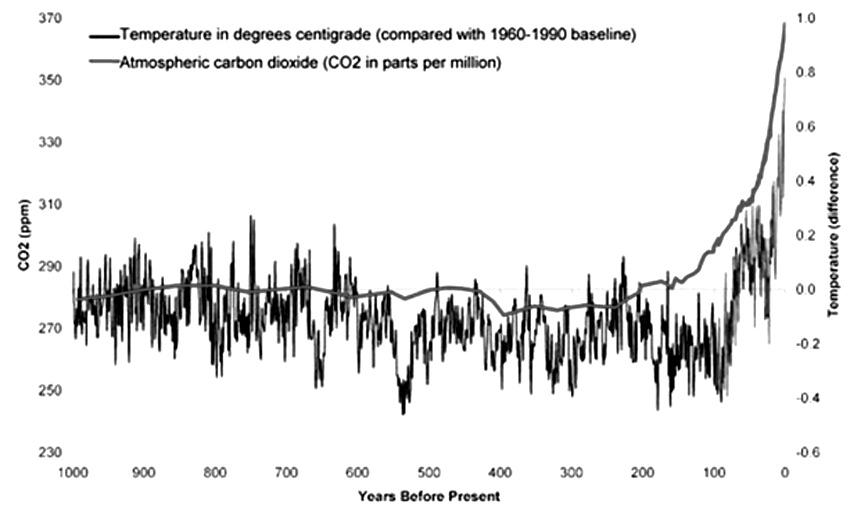

The actual natural cycle is seen as the small seasonal variations of both temperature and CO2 levels The exponential growth of both those parameters began around 1910 This is significant because WW1 and its associated explosive
growth of manufacturing (for the war effort) was the beginning of the end for the true natural cycle. This also disproves the second point, that humans cannot make such a big difference to the Earth’s atmosphere, because the spike in temperature and CO2 levels began at the start of one of humanities greatest wars Another thought that many people have about climate change is,”So what?” Scientists warn that a temperature rise of only a few degrees could be catastrophic, but most people are not able to understand why. After all, if the weather jumps from 55 to 60, it’s not exactly the end of the world, and some areas seem to be decreasing in temperature (They’re not It only seems that way because it has grown warmer the rest of the time) However, the scientists were talking about global temperatures A useful analogy to think about in this regard is a fever The normal human body temperature is 98 6 degrees Farenheit, or 37 degrees Celcius If that temperature goes up by just a few degrees, you have a fever, a few more, and you can die. Equate that analogy to the world and it is easy to see why even a slight change in temperature can be deadly In addition, many low-lying areas such as Bangladesh or the Netherlands would have more and more of their land submerged under water For some Pacific island nations, their entire country could be underwater in just a few decades The increased heat would also lead to increased generation of hurricanes and typhoons, and the weather would become less and less predictable. Developed nations, such as the constituents of NATO, are taking steps to fight this problem, by promoting clean and renewable energy However developing countries, such as India and China, are pursuing a shortterm goal of growth and productivity, without taking into account the l o n g - t e r m costs of such actions Alr e a d y , s c i e n t i s t s have predicted that a certain section of Antarctica’s ice sheet will definitely break off and melt, no matter what steps are taken, because of the damage we have wreaked on our planet The only way we can save what is left of our one and only planet is to bring together a meaningful coalition of nations to fix our egregious mistakes, and leave a beautiful and healthy Earth for our descendants to inherit
Ananda Sangbad
By Parama Das (Grade – XI, A Kishaloy Article)
The United States is referred as a melting pot but more recently as a salad bowl The term melting pot means that the society which previously was heterogeneous is becoming homogenous; the different aspects of culture are blending together to form one common culture The term salad bowl is different than the term melting pot because the cultures do not blend together; a salad contains different components
The society of the United States is made up of people who come from different backgrounds People are beginning to appreciate and recognize other cultures Americans grow up in diverse communities, and as a result some may pick up dialect, customs, and religious traditions from the cultural groups that surround them But some are going to the extreme of taking aspects of culture that they enjoy and using them for their own personal benefit which is cultural appropriation Using someone else’s cultural symbols to satisfy a personal need for
self-expression is an exercise in privilege Cultural appropriation typically involves members of a dominant group “borrowing” from the cultural of minority groups
The idea of cultural appropriation is a concept that remains difficult for people to grasp According to Susan Scafidi, a law professor at Fordham University, and the author of “Who Owns Culture? Appropriation and Authenticity in American Law”, defines cultural appropriation as taking intellectual property, traditional knowledge, cultural expressions, or artifacts from someone else's culture without permission This can include unauthorized use of another culture's dance, dress, music, language, folklore, cuisine, traditional medicine, religious symbols, etc It's most likely to be harmful when the source community is a minority group that has been oppressed or exploited When the object of appropriation is particularly sensitive, e g “sacred objects”, those who appropriate other cul-
tures typically don’ t know that they are doing it There is a difference between cultural appropriation and cultural inspiration or appreciation It is important for people to be aware of the significance and source of that difference Cultural appropriation reinforces negative stereotypes about a culture and ingrains an image of what people of that culture look like which isn’t necessarily true It is important to recognize that cultural appropriation is a problem today as people wear culturally affiliated items without knowing the significance of those items Bindis, dreadlocks, Native American accessories and Arabic scriptures are items that are culturally appropriated and are turned into mainstream fashion trends People should educate themselves about other cultures so that they know not to offend other people through cultural appropriation By learning about other cultures we are embracing different communities of people and hopefully one day that will lead to a harmonious society
Continued from page 14
jan performed I remember learning about the meanings of every Raga and seeing different personalities and phases of the beloved Lord Krishna and Radha in each Raga I remember being lost in the meaning of the Raga while singing or practicing it at home During my early years as a student of Indian classical music, I recall learning about the variations of different Swars (notes) and understanding the difference between a Komal Swar (lower-sounding note) and a Shuddha Swar (original note) Oddly enough, recently I have noticed the confluence between Indian and western classical music. I have discovered that western classical music also has variations of notes in its harmonic and minor scales And surprisingly in both styles of music, my teachers look for the exact same thing, confidence and singing with enough power and stamina to amaze an audience To summarize, of course living in this Desi-American over-
Nominations are invited for
ruled state called New Jersey can be difficult in many ways Yet as a student, this dual of two different worlds has been the most beneficial learning experience for me and will continue to be so I am accustomed to seeing different cultures because of my bicultural life, which I am exposed to everyday This collision of two cultures teaches me to be proud of my Indian culture and teaches me to be proud of who I am It is because of my Indian culture that I learned how there is something intriguing about being of Indian origin I have learned more about my identity and my way of thinking because of my cultures I also have witnessed how many similarities there are between the Indian culture and the American culture. I hope to maintain both my cultures and to pass them down to future generations I anticipate that these cultures of mine will not begin to fade away in the future and that the skills and knowledge I have obtained from my culture will be taken into consideration by future generations
Cash awards of $500 each will be given to recognize two writers of excellence (one in Bengali, one in English) who have authored essays, poems, short stories or plays in magazines published in North America within the last five years.
Gayatri Memorial Awards have been made possible through a contribution made by Jerry GaMarsh to honor his late wife.
Please visit our website for further details on nomination eligibility and submission requirements including nomination form.
Submission Deadline for 2015 Awards: July 31, 2015
269 Cedar Grove Lane, Somerset, NJ 08873 For Further Information Please Visit www.anandamandir.org/gayatriaward.html or
Contact: Debajyoti Chatterji (debsmee572@gmail.com) or Guru Chakravarty (guruchakravarty@yahoo.com)
Ananda Sangbad
Chandi Maitra was honored as a Distinguished Leader of Ananda Mandir at its Annual General Meeting on April 12, 2015
In presenting the award, he was recognized as, “ the person whose long range vision on community’s need and his relentless efforts, dedication and encouragement with significant financial contribution have been the major driving force for the establishment of a Center for the Bengali community in New Jersey, which is Ananda Mandir ”
When the membership of this organization was striving to acquire a real estate property for building a temple, Chandi came
forward with a hefty donation and that made the ball rolling in collecting the required fund to purchase this land at Somerset, New Jersey In each and every locally organized function at the time, Chandi was always seen to walk to the stage with a banner to campaign for Ananda Mandir’s cause Chandi Maitra was the President of Ananda Mandir at its initial formative stage, he was the founding President, and he has been serving the Board ever
since He continues to support the organization with his visionary ideas, financial contribution as well as volunteering time whenever he can Chandi Maitra is a philanthropist and a dedicated community member By profession, he is a civil engineer and educated in IIT, Kharagpur, University of Leeds in England and Rutgers University in USA Chandi has his own consulting-engineering-construction management firm, called Maitra Associates, Inc
Based on the deliberations of the Awards and Recognition Committee, Ananda Mandir Board of Trustees has announced Rita Bhowmik as an outstanding volunteer of the organization
Rita has been ever enthusiastic and actively volunteering in many areas of Ananda Mandir ’s vital functions since the inception of this organization She single handedly manages quite a few critical jobs that are so important for the operation of Ananda Mandir She diligently takes care of several major aspects of Durga puja and Saraswati puja celebrations, such as Kumari puja, organizing children’s cultural program during Bani Bandana and etc She initiated and
volunteered in introducing the breakfast program for participants and attendees of the annual Mahishasura Mardini program which takes place every year at early in the morning. People still talk about the “Luchi Tarkari” that she made at the first year with only a few of her friends at that early hour of the day She always considered that “no work is too small or too big,” as long as it advances the cause of Ananda Mandir She pursues
her commitment even if she does not feel well at times, and always with a sweet smiling face She is selfless, a model volunteer, who inspires others to follow her track.
Ananda Mandir is grateful to have such a person in its volunteer roster Ananda Mandir is benefitted not only for her volunteering service but for her wonderful personal interactions with its members and the community at large She is an asset to Ananda Mandir
The Board of Trustees of Ananda Mandir recognizes “Outstanding Volunteers,” selected from the nominations received from the Life Members of Ananda Mandir. The application form for nomination is available at www.anandamandir.org.
If you are a Life Member and believe that someone deserves this recognition, please feel free to e-mail nomination to Pronoy Chatterjee (pkc usa@yahoo.com)

New Life Members: $1,000 to $4,999
l Subhendu & Sutapa Mukhopadhyay
l Harsh & Nitika Sood
l Anindo & Kasturi Sanyal
Please note that you can become an Associate Member of Ananda Mandir by donating a minimum of $50. Your subsequent donations of $50 or more are credited to your account. W h e n yo u r t o t a l c u m
support, small or large, is most welcome and sincerely appreciated.