Ananda Mandir 269 Cedar Grove Lane Somerset, NJ 08873

Ananda Mandir 269 Cedar Grove Lane Somerset, NJ 08873
Debajyoti (DC): Let’s begin at the beginning. Where were you born, and what were your memorable childhood experiences?
Shyamal (SS): I was born and raised in Kolkata. My parents had migrated from East Bengal (now Bangladesh) and settled in a humble environment in East Calcutta. There was no running water, electricity or underground sewer system in our community. My father and uncle jointly ran a small eatery business. Their income was barely enough for our household expenses, including the cost of educating a total of eight children in the joint family. Even before reaching high school, I used to help out by earning a few rupees as a private tutor to younger kids.
Speaking of memorable childhood experiences, I vividly remember my younger brother and I walking over 2 kilometres daily to go to St Paul’s High School in Central Kolkata. We followed the road by the East Canal, through small tin-shed workshops of many kinds. For some reason, I liked to observe the kinds of activities that went on inside those humble factories. I was fascinated by a lathe machine that turned a piece of iron into a machine tool and by the matchstick maker who made match boxes with match sticks. I loved watching carpenters create tongue and groove joints to make wooden beams without using iron nails. There were many more
By Debajyoti Chatterji
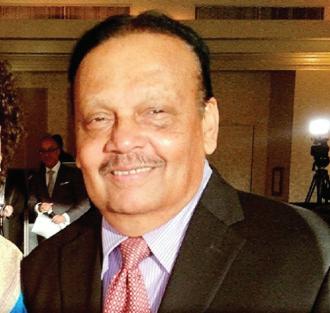
Successful Bengali entrepreneurs are relatively rare, especially among Bengalis living in the US. Shyamal Sarkar of New Jersey is one such rarity. As an entrepreneur, he has succeeded in running businesses ranging from pharmacies to restaurants to real estate to tech companies, He is well known for his keen business acumen, his friendly and gentle personality, and his exemplary support of community initiatives. But few of us know much about the many interesting life experiences that have shaped his professional career and personal views and values. The author recently met with Shyamal to gain an insight into his evolution from humble beginnings to a successful entrepreneur through the many unplanned turning points in life.
activities to watch: how biscuits were made from dough, and how cookies were cut to shape and then baked in coal fired ovens before packaging. Unknowingly I had acquired a mindset to become interested in different types of businesses from that young age.
DC: Let’s move on to your college years and experiences. You went to Jadavpur University in Kolkata after finishing high school. Why did you choose to study Pharmacy?
SS: To get a better job after college. A Bachelor’s degree program in Pharmacy had just been introduced at Jadavpur University, and it offered good job prospects for new graduates.
DC: Any important events or experiences in your college years that had a lasting impact on your life?
SS: Interesting that you ask that question! My years at Jadavpur University (19681972) were socially and politically tumultuous, and what I saw during those years left a strong impression on me.
Debir Ghotake Agoman O Dolaye Gaman
Further details will be posted on Ananda Mandir Website October 14th Sunday thru October 19th Friday. ALSO October 24th Wednesday Kojagori Laxmi puja November 6th Tuesday Maha Kali Puja
For those of you who are not familiar with West Bengal’s post-independence history, let me briefly explain the political climate of that period. It was the era of the United Front, an alliance of
their factories. And a peasant uprising in Naxalbari in North Bengal spread rapidly and spontaneously throughout the state, and much to the United Front’s dismay, a large number of young intellectuals signed on for this cause. The police, with the tacit support of the CPM-led government, began a brutal clampdown to defeat the Naxalite movement. Thousands of young idealists, mostly students, were jailed without habeas corpus, and countless men disappeared overnight or were killed by the police. On top of these developments came the flood of millions of refugees into the state from East Pakistan. That flood of refugees finally
left-wing parties, led by the Communist Party of IndiaMarxist (CPM for short). United Front, and the people of West Bengal, thought that the time was right to replace the old social system that had failed to alleviate poverty, corruption and injustice. However, the leftist alliance promoted an aggressive form of trade unionism, and many medium- to largesized companies shuttered
led to India’s invasion of that country and the formation of an independent Bangladesh in 1971.
This was the political and social climate in which I completed my college education in 1972. Of course, I could not remain aloof and disinterested. I heard and read arguments on all sides of trade unionism and the
continue to page 4 }
Calendar of Events (Dates are subject to Change) Please check our website frequently www.anandamandir.org Tel: 732-873-9821
NOTE: If a particular Puja time is not listed, please contact temple or visit our ebsite: anandamandir.org
APRIL (*)
Noboborsho
Sunday,15, 9:00am-9:00pm Shyama Puja
Sunday,15, 6:30pm-8:30pm Lord Jagannath Chandan Jatra and Akkhai Tritia
Wednesday 18, 8:30am-10:30am Ram Thakur Smoronotsav and Kirtan
Sunday, 29, 5:00pm-6:30pm Boishakhi Purnima Satyanarayan Puja
Sunday, 29, 6:30 pm-8:30pm Sahitya O Alochana To Be Announced Cultural Program
Sunday, 29, 11 am to 6 pm NJ Cultural Festival, Tagore Hall
MAY (*)
Folharini Kalika Puja
Monday, 14, 6:30pm-8:30pm Satyanarayan Puja
Sunday, 27, 6:00pm-8:00pm Sahitya O Alochana To Be Announced
JUNE (*)
Shyama Puja
Wednesday, 13, 6:30pm-8:30pm Doshohara
Saturday, 23, 9:00am-10:30am Satyanarayan Puja
Saturday, 23, 6:00pm-8:00pm Lord Jagannath Snan Jatra
Thursday, 28, 8:30am-10:00am Sahitya O Alochana To Be Announced Cultural Program (*)
(*) See www.anandamandir.org or Call Mandir for details
Special Religious Services: Upon request, the priest of Ananda Mandir offers services such as in-house Shraddhas, Rituals associated with Cremations (Antyesti Kriya), Shraddha Anniversaries, Pre-wedding rituals (Naandimukh, Ashirwad, etc), Upanayan (Paitey), Annaprasan, Wedding Ceremonies & Wedding Anniversaries, Griha Prabesh (Bhumi Puja), Consecrations of new cars (New Car Pujas) and others. If you have needs for any of the above or more, please feel free to contact Biswabhai @ 732-873-9821
Ananda Sambad
A Periodical Newsletter
Published By
ANANDA MANDIR
(A Tax-Exempt, Non-Profit Organization)
269 Cedar Grove Lane Somerset, NJ 08873
Ph: 732-873-9821
Website: www.anandamandir.org
Publication Committee of Ananda Mandir
Chairperson: Pronoy Chatterjee, pkc_usa@yahoo.com
Assistant Chairperson: Subrata Bhaumik, Bhaumik.subrata@gmail.com
Editor-in-Chief: Debajyoti Chatterji, Debsmee572@gmail.com
Managing Editor, Ananda Sangbad: Guru Chakravarty, guruchakravarty@yahoo.com
Managing Editor, Anandalipi: Amitabha Bagchi, amitabhanj@gmail.com
Editors:
Subrata Bhaumik, bhaumik.subrata@gmail.com
Subhodev Das, subhodev.das@gmail.com
Sushmita Dutta, sushmitadutt2@gmail.com
Amrita Kangle, amritakangle@hotmail.com
Nupur Lahiri, nupurlahiri@aol.com
Associate Editor: Ruby Banerjea, r_banerjea@yahoo.com
Members-at-large: Ashok Rakhit
l
All queries, articles, news reports and letters should be directed to the Managing Editor
Phone: 908-752-3065
E-mail: guruchakravarty@yahoo.com
l
For general information, please contact the following executives of Ananda Mandir: Ashok Rakhit, President
Jaiprakash Biswas, Vice President
Suprasad Baidyaroy, Vice President
Arun Bhowmik, Vice President
Sajal Mukherjee, Gen Secretary
Pradip Majumdar Treasurer
part of our community travels to Kolkata to hibernate during the winter months as a routine part of retired life, mostly to get reprieve from the harsh winter. Some like to go to celebrate family ceremonies with relatives. Others look for opportunities to seek out old friends, to reminisce about old times with the alumni. Some like to catch up on the latest trend in theaters. Many are attracted by the Book Fair that has enhanced the cultural life of Kolkata to a great extent. This indeed has created a new opportunity for the NRIs, to enter into the guarded compound of the Kolkata literary circle. We are seeing more and more Bengali authors from this side of the horizon to venture into writing. Numbers of these writers are on the rise because they are able to find publishing houses to print their books at a far less cost than in the U.S. And what is better than to see your book displayed in a stall at the Book Fair, next to Shirshendu or Samaresh?
Kolkata has a special significance for Ananda Mandir this year because of NABC. It is customary for the NABC management to hold an inaugural meeting with the sponsors and performing artists of Kolkata, an event that is well publicized in the media. Since this year’s NABC is being hosted by Ananda Mandir, many of our members, in charge of various committees, welcomed the opportunity to participate in this showcase meeting, held in January.
Kolkata has always occupied a part of our hearts even when we moved out of there to settle down elsewhere, be it the U.S., Canada, U.K. or Australia. It is an annual pilgrimage for the NRIs to come back home. A good place to sense the composition of the NRI crowd is the International Guest house at Ramakrishna Mission at Golpark. Once you get to the dining hall, you meet them all. Today, you may sit beside a couple from New York, or a couple from Houston, or some other parts of the U.S. Tomorrow, you are certain to meet a couple from Australia, or Canada or U.K. Don’t be surprised if a visitor from Netherlands or Japan ask your permission to sit at your table.
All in all, Kolkata is back in our lives more than ever before. Through the dirt and dust pollution of the atmosphere, through a continuous stream of honking on the streets, through walking on the broken footpaths risking a twisted ankle, people like to come here to be in Kolkata. They would love to assemble at their favorite corner coffee shop and talk over and over about what is wrong with Kolkata and what should the Government do about it. They will admire the cleanliness of Rabindra Sarobar Park and ask why aren’t more such places made available to the public. They will admire the Uralpools, the Metro rail, and talk about how Kolkata is getting better with less traffic jams.
Ananda Sangbad wishes good will and good luck to all the perennial Kolkata visitors of our community and asks them to share their experiences with us upon their return. They will have a lot of stories to tell.
Guru Chakravarty
Managing Editor, Ananda Sangbad
If you are a Life Member or an Associate Member, but didn’t receive your copy of Ananda Sangbad, it may be because we do not have the correct address on file for you. Please send an email to Guru Chakravarty (guruchakravarty@yahoo.com) with your correct address, and we will send you another copy.
Dear Sir,
Just wanted to say that I thoroughly enjoyed Amrita Kangle’s article, “The Great Divide”, in the October 2017 issue of Ananda Sangbad. I can certainly relate to the experience of her father calling vegetarian food “GhaasPhoos”!
I request Mrs. Kangle to keep writing and feel free to share.
I do a bit of creative writing as well and some of them are posted at www.dchatt.com
Thanks
Debashish Chatterjee
Reported by Pradip R. Das
Holiday Party
GSCA wrapped up the year (2017) with its annual holiday party on December 9th, at The Crowne of India restaurant, Plainsboro. Despite the snowstorm, members and patrons participated enthusiastically in large numbers. To keep the gathering entertained all evening, several short programs were arranged. A vocal talent contest followed by some singers taking advantage of the open mike, pleased all. The open dance floor brought out the junior and not so junior members dancing and swaying to the rhythm (and sometimes not) of the delightful music. The sumptuous dinner buffet was a treat for all. All in all, a wonderful evening of company amongst friends, entertainment and food and exchanging pleasantries.
Saraswati Puja
Withstanding temperatures in the mid-30’s on February 3rd, nearly 300 people attended GSCA’s first community event of the year, Saraswati Puja, at Woodrow Wilson Middle School, Edison.
As is customary and part of the puja rituals, several young children had their “haathekhori” with our priest, as parents eagerly and proudly looked on.
The variety cultural program commenced with “Devi Bandana” in which an adult singer led eleven children in this rhythmic and melodious rendition. Several children in different age groups also participated in an off-stage arts and crafts competition. A comedy skit by two middle schoolers was well scripted by the children themselves. A solo guitarist with his tunes, took us back to the nostalgic years of our youth in India. The drama ‘Naughty Binodini”, performed by local actors (some for the first time) was hilarious and enjoyed by all. “Antakshari” was indeed a community program where five groups from other Bengali organizations in NJ also participated, in addition to GSCA’s. This program was monitored by Abhijit Sanyal, EBC Radio’s announcer, who kept the competition both engaging and exciting. The four judges had a busy time.
GSCA had a wonderful start to the New Year!
GSCA’s philanthropic efforts, currently overseen by Bimal Saha and Guru Chakravarty, are witnessing the results of its service to needy students in India. Both of them met with several of our supported students during their visits to India and keep in touch with them during the course of their studies. Recently one student, Uzzal Mandal, sent a heartfelt thank you note gratefully acknowledging GSCA’s help in making him a registered doctor in Bangladesh by financing his MBBS study program, thus bringing his family out of poverty.
A total of eight students have graduated thus far with GSCA’s financial assistance, three in medical, three engineering, one BS (Nursing) and one Cost Accounting. Currently we are supporting nineteen students in India of which eleven are in medical (MBBS) programs, remainder in engineering, nursing and business. Additionally we help, through our scholarship program, deserving graduating seniors at Plainfield High School every year. Thus GSCA keeps on giving back to the community it has been a part of in this country as well.
By Amitabha Bagchi
Different things have intrigued me at different times as I have returned periodically to Kolkata over the years. But one constant has been my amazement at the steady encroachment of footpaths (i.e., sidewalks) by hawkers, and the acceptance of the phenomenon with seeming indifference by the city’s residents.
The process starts mildly enough. The empty wall of a building is used as support for a vendor to erect his modest bamboo-and-tarpaulin stall – with a raised dais for displaying his wares and a small awning to protect them from the elements. Pretty soon, the available walls around the existing stores on a block are all taken up. A fraction of the footpath is lost to pedestrians, but the effect is tolerable overall. This is no different from what is seen in New York City, say, where stores selling fruits spill over onto sidewalks, and the south side has vendors cheek by jowl selling fake Rolex watches and various artifacts.
But, then, the vendors of Kolkata go one step further. They begin encroaching on the footpath from the opposite, i.e., pavement side. There is no longer any wall to provide support on one side. So, lean-tos are erected with wooden boards or metal sheets for backing; daises and awnings are built with support from bamboo poles or wooden blocks; and the entire structure is covered with tarpaulin for protection from wind and rain. The aesthetics from the street-side is ghastly: a wall of serried bamboo-and-tarp structures that hide the storefronts and signboards of established businesses that rent space in brick-and-mortar buildings.
But the eyesore that the structures are from the streetside are as nothing compared to the inconvenience faced by pedestrians on the footpath side. There is now but a narrow passage left between the hawkers’ make-shift stores that face each other. Twoway foot traffic jostle in that narrow space with buyers examining whatever the vendors have to sell. A running joke that I had with my regular taxi driver the last time I was in Kolkata was this que-
ry from me, “Whose footpath is it anyway?” To which he would retort, “For the squatters, of course!”
This time in Kolkata, however, I had an epiphany of sorts. I noticed that the awnings of the hawkers’ stores facing each other are now often connected with what looks like waterproof cloth. This creates the effect of a covered mall as one walks between stores, bumping against haggling buyers and oncoming pedestrian traffic. Makeshift for sure – no way competing with grander malls like Forum or Quest with their INOX theaters and high-end boutiques like Gucci and Swarovsky – but a quasi-covered area nonetheless for shoppers to shop without unfurling their umbrellas in the rainy season. I, too, succumbed to their lure of lower prices as I went to one of those stalls to buy a pair of flip-flops, spurning Khadim, Bata and other established stores.
II. A Question of Balance
A different pair of slippers, however, caused me a lot of unexpected grief.
After a couple of weeks in the city, I felt confident enough to try walking around like its normal denizens. I decided to shun my shoes in favor of a pair of sturdier Bata chappals or sandals. I wore them to go buy a daily paper from a stall at Rash Behari Crossing.
As soon as I started walking, I realized my lack of practice with the footwear. They had a habit of slipping off my feet and getting ahead of me. I was forced to walk gingerly, sticking by and large to footpaths, and making sure not to leave my sandals behind as I hurriedly crossed busy streets.
I was pleased with my success at crossing wide streets with considerable vehicular traffic at Rash Behari Crossing. I got my paper and started to walk back home. I felt almost smug as I crossed the formidable Shyama Prasad Mukherjee Road and, moving west toward Tolly’s Nullah and Chetla, came to the much narrower Pratapaditya Road. Then, without warning, disaster struck!
There being no cars in sight, I took a step from the

By Sushmita Dutta
In the January issue of Ananda Sangbad, I had reported on top ten technologies of 2017 leading to technology innovations in 2018 and beyond. On the list of mostly researched technologies, I had mentioned augmented reality which is expected to deliver revolutionary technology gadgets this year. Software giant Microsoft has already launched the first version of an augmented reality-based headset called HoloLens which is now being experimented by doctors. HoloLens is designed to help doctors see through the body while operating on a patient. Results of a series of tests conducted by a team at the Imperial College, London, reveals that for the first time using HoloLens, surgeons could see the bones and tissues while operating on a leg surgery. The technology helped overlay CT scan images with detailed visuals of bone positions and blood vessels enabling the surgeons to see through the limb during surgery which tremendously benefited the surgical procedures. Surgeons using this technology could locate and reconnect key blood vessels during reconstructive surgery. (Published report in The Journal of European Radiology Experimental). Philip Pratt of Imperial College, London said, “With the HoloLens you look at the leg and essentially see inside of it. You see the bones, the blood vessels, and can identify exactly where the targets are located.”
al-time images from ultrasound, confocal microscopy probes, position of a tumor in video of an endoscope, radiation exposure risks from X-ray imaging devices, and functional videos to further facilitate treatment. Augmented reality usage also includes viewing a fetus inside a mother’s womb. A system has been developed for laparoscopic liver surgery using augmented reality to view sub-surface tumors and vessels. Augmented reality has also been used to remind patients to take medications.
What is Augmented Reality?
Here is Mariam dictionary definition: “An enhanced version of reality created by the use of technology to overlay digital information on an image of something being viewed through a device (such as a smartphone camera); also: the technology used to create augmented [enhanced] reality.”
Another definition: “Augmented Reality is a live view of a physical, real-world environment whose elements are “augmented”[enhanced] by computer-generated perceptual information, ideally across multiple sensory modalities, including visual, auditory, haptic, somatosensory, and olfactory.
what augmented reality is. It is the technology that delivers augmented (enlarged or enhanced) information on a real-life object you are interacting with. Fascinating, isn’t it? I am sure in next few years we will have augmented reality tools and devices for the consumers’ market. Our smartphones will have added features with augmented reality for our personal use. Of course, it will then bring about huge issues with personal confidentiality and protection of personal data. I would definitely not want to have anyone see through me to check on my wallet and credit cards or even see through my clothes and read the labels of my under garments while taking a snap shot or wearing a headset like the HoloLens.
How does HoloLens work?
Other Medical Usages of Augmented Reality: Augmented reality also provides surgeons with information on patient’s medical data including imaging records like X-ray and re-
Here is an example, say through your mobile camera, you are looking at the Tagore Hall building from the parking lot of Ananda Mandir. If the view is through a headset like the HoloLens, you will see overlay images of the program that is going on in the auditorium with detailed information on the show’s performers, organizers, how many tickets sold and other related data. That is in short
Product information released from Microsoft says, “HoloLens is a fully untethered [unstrapped], see-through holographic computer.” On November 24, 2017, Microsoft released HoloLens saying it is “the company’s holographic, augmented reality headset that promises a never before like holographic experience to its users.” The user wears headset like a pair of glasses, the set has a computing processor, display overhead, sensors and input devices. An image seen through the eye glass overlays detailed information about the image in view. That’s how HoloLens works. Modern mobile computing devices like smartphones and tablets contain a camera and MEMS sensors such as accelerometer, GPS, and solid state compass. These features make smartphones and tablets aptly suit-
page
} continue to page 5 }
By Bakul Banerjee
“Why do you want to chase wild buffalos in the jungle while eating at home?”
This common expression is often used by Bengalis to criticize anybody who spends time volunteering. How many of us have heard this colorful comment or similar ones from our friends and family when we mention that we were busy volunteering? I find it difficult to answer this question. How am I going to explain the wonderful rewards that I receive in exchange? I am retired and have some extra time on hand beyond my daily chores although they seem to be growing every week. After spending many years working long hours in a professional environment and coming home to cooking, cleaning, and kinship management, I want to devote time to one or more worthy causes of my choice. Yes, I still enjoy putting together feasts for family and friends and organizing my international collection of spices and sauces.
Anybody born and raised in an Indian Hindu family would occasionally think about Vanaprastha as they cross the milestone age of fifty. The literal meaning of Vanaprastha is retiring to the forest. This is the third stage in the life-cycle that comes after the stage of Grihastha, when humans are supposed to create and raise their progeny. Grihastha is certainly a daunting stage of life. Most of us enter this stage without much thought. We simply jump into it mostly driven by hormones. However, we get a little break as we approach Vanaprastha, the stage when we are supposed to separate ourselves from daily hassles and hand over the day to day responsibilities of family life to the next generation. Did I mention that finding a livable forest to disappear inside isn’t easy? Unfortunately, in most part of the world, men and women do not really get any break from the basic chores but our engagement certainly becomes lighter. Many of us spend more time with grandchildren. However, we get some time to plan for it. In the modern world, this is often called retirement planning. The planning is not just for the financial aspects of our life but also about what we should do with the rest of our still productive life.
With ever-increasing longevity, we can safely assume that ancient sages would have recommended that the Vanaprastha should start at the age of sixtyfive, closer to the official retirement age in the US. Although many people continue to work full-time into their eighties, others often find it fulfilling to channel their passions into other aspects of life around that age. Some may delay retirement by five or ten years. In any case, to follow one’s passion for a healthy and fulfilling retired life requires careful planning ahead of time. I am sure some of my readers have already done so. Depending on physical and financial situations some will travel, others will spend more time with friends and family. Yet, such activities may not keep everybody occupied for a sustained period of time.
About fifteen years before my own retirement, I was stricken by an irrational fear that I might get terribly bored at the end of regular employment. As I searched for a new passion, I realized that I have many stories to tell – stories from a childhood with my parents who moved to many cities, stories about my travels throughout the world, and experiences at workplaces where I was often the only woman, in particular, a brown one. I am sure my experiences were not exactly unique but they were certainly interesting. I started writing essays, stories, and poems snatching minutes away from lunch breaks and weekend nights. Fortunately, people liked them and continue to page 6 }
| continue from page 3
Naxalite movement, and saw police brutality as well as terror inflicted by rebellious idealists. But I tried to understand the cause-and-effect relations in all the actions and reactions and stay calm and appreciate all the different points of view. I think that helped me later in my life to deal with uncertainties and adversities.
DC: After graduating with a degree in Pharmacy, what did you do?
SS: Like many other young men and women of that time, I wanted to get away from the social and political unrest in Kolkata. I got a job as a medical representative, stationed in Patna.
DC: What prompted you to come to the US in 1977?
SS: After the American government liberalized the immigration system in 1971 and welcomed technically qualified people from India, some of my college friends started applying for “green cards” while a few others came for graduate studies. I was not interested in higher studies but I had developed a lot of curiosity about America after watching an impressive short film, “America the Beautiful” on a panoramic screen at the Eden Gardens in the late 1960s. So, I followed the path of many of my friends and applied for a “green card”. Soon I left my well-paying job behind and headed for New York City.
DC: Did you find a place to stay and a good job after your arrival?
SS: Yes and no. When I arrived, my friends from college, Bires Biswas and Pijush Chakrabarty, invited me to stay with them in their Jersey City apartment. I stayed there for a couple of weeks and then moved to Clinton Arms Hotel in New York, an inexpensive boarding house, to be better able to interview for jobs in the big city. Unfortunately, the job market in 1977 was really depressed, and to make matters worse, American companies did not value degrees from Indian universities, so I could not get the job of a pharmacist in the US.
I landed a job as a busboy in a well-known Indian restaurant and worked long hours. The winter of 1977-78 was a really low period for me. But I fought on for six months and saved as such money as I could, with the conviction that better days would come sooner or later.
DC: Did better days come? When? What did you do next?
SS: Yes, they did. In the
spring of 1978, I decided to continue my physically demanding but honest job without feeling guilty or frustrated – and started working towards my license as a pharmacist. In due course I passed the exams and secured my license. My life in America finally reached its professional destination.
My big break came in 1980. I was working as a pharmacist when I was interviewed and then hired by Upjohn as a pharmaceutical salesperson with a good salary, excellent bonus potential, full benefits -- and a shiny new car! Coincidentally, Ruby, my wife, joined me around that time, and together, we began enjoying life in America. And for five years, we experienced a very satisfying and exciting life as I performed well in my professional career and was amply rewarded by Upjohn.
DC: When and how did you start your own business?
SS: That happened in 1985. I suffered a massive heart attack. I was not even 35 years old! I quit my job as a pharmaceutical sales person. It was a stressful job, and because of my intense determination to do better than others, I worked very hard. Now I had to look for a less demanding job to reduce my stress level. This was another painful period in my life, but I am glad I took that decision. I decided to explore opportunities to own and run a pharmacy. Through a combination of luck and persistence I succeeded in buying a small neighborhood pharmacy in a South Bronx. That happened in July, 1985, just a few months after quitting my job.
DC: Rest, as one says, is history, right?
SS: Indeed. I learned the pharmacy business on the back of that initial investment and soon started buying other pharmacies which were not doing well financially. I turned those businesses around and bought some more. In a matter of a few years, I owned and operated more than a dozen pharmacies in the city. Sometimes I worked with a partner, and that strengthened my business skills in many ways. I then decided to diversify into hospitality business. In time I owned a number of restaurants in NYC. In all cases my business approach was simple: acquire businesses that are not run well, manage them better with discipline and computerization, increase the revenue, and then sell them at a higher price.
DC: Besides pharmacy and
hospitality businesses, you also successfully ventured into real estate and technology sectors. Weren’t these businesses big step-outs for you? Rosedale apartment complex with more than 650 luxury units was a major project in Kolkata at the time it was launched.
SS: Yes, I made a bold move into the high-end housing market in Kolkata when it started to take off in the Rajarhat/New Town area 10-12 years ago. It was a step out but it required the basic skills in business management that I had already acquired: choosing a good business and finding the right local partners. Santosh Mukherjee was a great partner because he could secure the land for the project, and my construction partner was experienced and well-regarded. I was primarily involved in creating a sound business plan, putting the deal together, and helping with the launch marketing. I also had to remain vigilant to ensure that our “all-inclusive” residential complex for NRIs was completed on time and on budget. Rosedale project was a wonderful experience for me.
DC: What advice would you give to an aspiring entrepreneur who would also like to enjoy a good family life?
SS: First, no business venture is risk-free, so you have to take risks. But invest the amount of money that you can afford to lose without risking your lifestyle. Second, timing the entry point is very difficult but choosing the right time to exit may be more important. Get out if you think your venture has achieved its peak -- or if you are no longer enjoying the challenge. Third, don’t regret failures. Learn from the experience and apply that insight to your next venture. I am a believer in diversification. While trying out different opportunities, I have suffered more failures than successes. I do not regret those failures. All the ventures were my conscious efforts, and I sincerely believed in them.
I have been very lucky to have a loving and supporting wife. Ruby has been with me through all ups and downs and has been a friend and a straighttalking advisor. And I have taken time off to spend time with my family. Balancing work and family life requires conscious effort, and an aspiring entrepreneur should put in the needed effort.
DC: Thank you, Shyamal. I wish you continued success in the years ahead.
| continue from page 3
footpath toward the pavement. They were roughly at the same level, but between the two was a deep V-shaped depression of the gutter for water to flow to the drain. As I stepped across the gap, the front of my chappal slipped slightly forward and hit the top edge of the pavement. I stumbled and could not recover my balance. In a trice, I saw myself lying face down, fully prostrate, on the pavement of Pratapaditya Road.
This was indeed a new experience for me. Thankfully, there were no cars on the road to run me over. I quickly surveyed the situation. I was unhurt, except for a bruise on my left knee. No cuts and no broken bones, thank God! Even my glasses were intact. What was bruised most of all was my ego. Out of the corners of my eyes, I could see anxious faces of people who had run to help me. They were relieved when I stood up on my own and dusted off my clothes. Then a policeman appeared. He asked me politely if I had been sick – had a stroke, for example, or a heart attack. I told him No. It was the fault of the bloody chappal, I said, as I looked wretchedly at the offending footwear that lay on the road a few feet away.
Except that I thought better than to use the word “bloody.” Age demands decorum, right?
III. All about Hijabs I took a short side-trip to Dhaka for four days. The last time I was in Bangladesh was exactly six years ago. Back then, it was relatively uncommon to see a woman on Dhaka streets wearing a hijab (covering head and body) or a niqab (covering head, face and body). You had to go out into the countryside to see women in head-to-toe covering. This time, however, the use of hijab or niqab was widespread in the Bangladeshi capital. It looked like regression in my eyes – sort of a revolt against the feminist movement. Except that, as an old friend and wag put it, a woman in hijab could get away with greater physical proximity with male friends without inviting social opprobrium because of her presumed religious piety.
What was even more odd, I thought, was the visibility of hijab and niqab in the Indian state of West Bengal. I first noticed it when I went with some friends to the beach at Mandarmoni on the Bay of Bengal. One evening, at dinnertime, we were seated next to a table with a Muslim family. The men were indistinguishable in looks from their Hindu counterparts; the women, however, wore veils. One of my friends approached them with a friendly smile and asked which part of Bangladesh they
were from. No, he was told, they were from a near-by village in the same district of East Medinipur. Back in Kolkata, I began noticing women in veils far from neighborhoods known to be predominantly Muslim. In fact, I noticed a young woman in black hijab in a car of Kolkata’s underground Metro railway. She was with some male friends, tittering and flirting, and brought to mind comments on veiled females by my friend in Dhaka.
The biggest surprise was when I went to Santiniketan. On the campus of Vishwa Bharati university, built on the Tagorean concept of ecumenical religiosity and universal humanism, I saw veiled coeds riding bicycles or driving motorcycles. Etched in my mind is the image of a young woman in a light-colored (not black) niqab on a motorcycle. A hijab covered her head tightly, a white handkerchief lay over her nose and mouth, and her eyes were hidden behind a stylish pair of sunglasses. No skin or other part of her body was visible. The image (or apparition) was mummy-like, and one could only speculate about the physiognomy of the person behind the layers of clothing.
What exactly is the cause of this loud announcement of one’s religious identity? In Bangladesh, it may be possible to attribute it to the pressure of the mullahs. But what of secular India, where one is by and large free to choose what to wear? Is wearing hijab – a deliberate choice – meant as a protest against the Hindutva ideology of the country’s present rulers? Is it a symbol of minority empowerment and a political statement? Or is it just submission to religious dictates and reversion to fundamentalist ideas from the past?
I posed the questions to a female friend, a Hindu. She did not know and wondered why newspapers were not interviewing the veiled young females to find out the answer. Interestingly enough, she spoke of both hijab and niqab as burka, even though the latter technically refers to the most concealing of all Islamic veils, which covers everything and leaves only a mesh screen for the eyes. I knew burka well when I was little, just after India’s independence, when my family rented rooms in a house next to a mosque in east Calcutta. A lot of women in burka passed on our street, and my mother would discipline me by threatening to give me away to one of those veiled figures, who would carry me hidden in her cloak. I always thought of female emancipation as women emerging from their burkas. I now struggle with the thought that female empowerment may mean women freely and willingly getting back into them.
By Amrita Kangle
Atthe end of the four-hour journey I felt as Gautam Buddha must have felt so many centuries ago under the sacred Bodhi Tree in far-away Bodh Gaya. I felt enlightened! I felt as the earth must feel when the sun has fully emerged from the fog and the green fields and fresh flowers around are aglow with dazzling light. And apart from hearing a faint buzz from the direction of my brain, my eyes feeling a wee bit unfocused and my knees feeling as if they would buckle under me at any given minute, I felt as awakened as your flittering butterfly emerging from a chrysalis. As I paid him his dues he imparted a final bit of advice. Roughly translated it was this .....life may not be the grand party that we had hoped for, but since we were here already we should enjoy the music! Very profound, won’t you say? The money that I was paying suddenly seemed so tawdry when faced with such deep philosophy! I was deeply impressed and made my way totteringly towards the lift lobby.
My mind was a churning whirlpool of information. For the last four hours it had been fed with the molten lava of informed intelligence and was having a very hard time processing it all. And the person who I now think of as the veritable fount of knowledge in the world was my taxi-driver, Pandeyji!
Now Pandeyji was the prototype of your typical Mumbai Taxi driver. The clan is a breed apart. Without exception, they have all come to Mumbai from far away UP and Bihar to make a living. Without exception they are all well versed with the political situation in the country. Not only that, they also have a hands-on solution to all the ills plaguing the country and also without exception, they know the economic policies in the country inside out. Much more so than our erstwhile Finance Minister. And not only that, they make it their life’s mission to educate the general public and bring them up to date in all these matters, the minute they get half a chance.
The traffic movement in Mumbai just helps their noble cause. You see, it just does not move and this just encourages Pandeyji and his ilk to make best use of the time available and hone their oratorical skills. Practice makes perfect, don’t you know? Of course, as it happened with me, his passengers get off from their ride feeling sufficiently enlightened though totally bemused and with a strong urge to hide their faces because they have just been made to realize how ignorant they are.
Though by profession they are taxicab drivers and their daily bread and butter comes from following the said profession, ferrying passengers to their desired destinations is just a by-product of their day. I am sure you all must have faced this at some point in your lives. The instinctive response to your query whether they are free, is a very definite ’NO’. I felt so chastised some-
times that I instinctively wanted to apologize for having got in their way. Now if you are courageous enough to ask them why since they seem to be doing nothing else except just sitting in their cabs, the answers you hear could easily form the syllabus for a creative writing class. They are either waiting to hand over the cab to the next driver or they have to fill in gas in their cars. They may be on their way to meet a relative who needs help or pick up a maternal uncle from the railway station. It may be lunch time or siesta time, in which case they won’t even bother to answer. However, if the Gods had blessed you sufficiently that morning and your stars were aligned perfectly and it just happened to be your lucky day, and your destination just happened to fall on the way to the place where they were headed, then lucky you! You would have actually succeeded in getting a ride. You would feel so obliged and thankful that your irritation at having been refused by at least thirty cabdrivers before this one, would melt into oblivion. I had actually caught myself thanking a Pandeyji-clone profusely after emerging victorious from my cabsearch one day, till my own ridiculous behavior struck my rational self. But by then, I had been thoroughly educated and had gathered enough knowledge about the de-monetization policies of the government and was quite happy with myself. I could finally have an ‘informed’ argument with my son as soon as I got home! Pandeyji had told me so! And that let me tell you, was as good as getting educated by Socrates himself! There was another cab-driver who I particularly remember for his amazing social skills. This person was quite a regular since my son hired him very often as the traffic of Mumbai encourages you to hire cabs and not drive your own car. This very regular interaction had managed to evoke very proprietorial sentiments in his heart towards my son and he felt that it was his moral duty to appoint himself his local guardian. He would keep track of my son’s routine and was actively involved in encouraging him to ‘find a nice girl and settle down’. As this was exactly what I wanted as well, I did not object to the presence of this second ‘mother’ in his life! That day I got to see Chandrika (that was his name) at his social-best! As we sat in his cab and he drove us around, I saw the kind of social clout that he wielded. His cell-phone ran almost off the hook. I heard him giving advice, arrange loans for his brethren and take a long- distance call from his uncle in far-away Jaunpur who wanted to send his son to the magical land of Mumbai to become a film star. Apparently, Chandrika had some ‘connections’ in the film industry as well and he assured his uncle that he would get something done! He arranged for the bail money for one of his nephews who was in police custody for some misdemeanor and also kept his wife updated
continue to page 6 }
| continue from page 4
published them in magazines lovingly produced by volunteer editors with no financial motivations. Most of these magazines and anthologies were labors of love. Literary mentors invited me to join their writing groups and helped me improve my craft in selfless ways. They nurtured their tribes of writers for years.
Later, when I had the opportunity to lead one of these literary tribes, I had the first taste of active volunteering. It was with a writing club in continuous existence for more than thirty years. Oh, what fun it was to learn how to run a small non-profit group, organize literary events, moderate critiquing sessions, and listen to aspiring writers dissecting their favorite authors. I did so for four years and still organize literary events to promote local poets. Just this week, I volunteered as an usher for an excellent non-profit theater company.
The grand idea of altruism may motivate some. Some may be motivated by localized appreciations. Others volunteer to promote their religious or ideological beliefs. However, most volunteers simply step into a task to help their fellow beings, humans, animals or plants. They want to learn by doing. They are interested in understanding what makes people tick to achieve greater good as a team. In this country, there is no shortage of opportunities to volunteer for organizations of different sizes or as solo acts. Have you heard about Mr. Deutchman , nicknamed “ICU Grandpa” in Georgia, who has been cuddling premature babies at night in the hospital? He has been doing this for 12 years so that parents could take a break. (see references at the end)
Recently, one of my friends told me that she does not want to retire because she is afraid that she might get bored.
“But there are many meaningful volunteering opportunities in the US,” I replied.
“Bakul, you are a curious person. It is easier for you to find the right thing for yourself,” she said.
She was right. Being curious is important for finding
the right niche. However, everybody is curious about something. I may be perceived as judgmental, but I know many women are passionate about putting together a perfect outfit. They maintain a high level of knowledge about saris, jewelry, and makeup. Even these practical interests can be transformed into charitable works. I wish to stress the point that everybody can find appropriate interests.
Spirituality and religion are two aspects of humanity that motivate many. I am aware of many who spend hours every month volunteering for religious organizations. While working and raising children I did that too out of my sense of duty as taught by my parents. I also had the selfish reason for instilling a sense of tribal identity in my children. As a first-generation immigrant, it was important to me. However, I must admit that it is ‘that’ curiosity that motivated me to take a bigger challenge. Since my teen years, I have been interested in ancient Sanskrit scriptures, particularly those related to social well-being including public worships and sacramental rituals. Studying them on my own was my hobby. I also helped out with arrangements for such events since I landed in Baltimore more than forty years ago. After retirement, one of the Chicago area temples needed somebody as a volunteer priest. In addition to conducting the rituals, it was expected that this person would also make complicated arrangements for Hindu worships, cleaning up after the event, shopping for the long list of items prescribed in the ancient texts, and sitting down for extended periods of time. It was also necessary to travel back and forth to the temple at odd hours through rundown neighborhoods during all kinds of Chicago weather. I volunteered for the job. To perform these worships well, I spent weeks researching and learning scriptural texts and hymns. This was probably the best way to gain an in-depth understanding of the knowledge that ancient sages poured into their beautifully crafted poems. I have only scratched the surface of their accumulated wisdom, yet it wouldn’t have happened un-
less I volunteered. Additionally, I was humbled by the respect and appreciations I received from the congregation even after the permanent priest filled that position. I am still invited to perform other sacramental rituals in the community.
Afterwards, I stepped into a leadership position with a large non-profit professional society that I have been associated with for a long time. Although I spend many hours, I am within my comfort zone and still continue to learn about how a very large professional society with worldwide reach works and how to work with a diverse team.
Once it became known that I was available for volunteering, I continued to get other requests. However, I have to be careful. I learned that it is important to allocate adequate time for the work. Many sign up but cannot fulfill the tasks because of the lack of time. It puts undue burdens on others. It is also important to know when to step out with a transition plan in place. My professional organization is well-structured with by-laws rules, and conventions. We also have access to excellent electronic tools. The tribe is well-disciplined with several experienced, retired persons. However, in smaller organizations, some leaders continue to hold on to their positions for a very long time denying others opportunities.
In conclusion, I cannot help but reflect on the idea of chasing those wild buffalos. I can visualize young buffalo-keepers running around in a tropical l forest. Once, I had the chance to observe a group of them in a remote village. They were making games out of their chores. Like them, I am delighted to be with my many tribes. I am sure that they were not always unhappy about their tasks. Fortunately, in Vanaprastha I earned the right to belong to multiple tribes of different flavors and I can enjoy their company, mostly by being physically present, but sometimes virtually. I should end my reflections now as snow is piling up outside. I must get ready to join a four-hour long virtual meeting.
References: Senior Corps Program https://www.nationalservice.gov/programs/senior-corps ICU Grandpa http://www.independent.co.uk/news/world/americas/icu-grandpa-cuddlesbabies-premature-georgia-hospital-a7993136.html
Now doctors can see through the body-organs, tissues and bones…
| continue from page 3
able for augmented reality.
A few lines on Augmented Reality Technology: We now have many SDKs (software development kits) like CloudRidAR which can be tested for rapid development of augmented reality programs. Augmented reality Markup Language (ARML) is a data standard developed within the Open Geospatial Consortium (OGC), which consists of XML grammar to describe the location and appearance of virtual objects in the scene, as well as ECMAScript bindings to allow dynamic access to properties of virtual objects. Mobile devices like smartphones and tablets having built-in features like camera, MEMS sensors, GPS and solid state compass are ideal platforms for augmented reality programs.
When I used to work at Microsoft Corp. in Redmond, to feel the power of Windows, I used to stand below three flags at the entrance of the campus – the flag of United States, the flag of State Washington and the flag of Windows logo. Windows made Microsoft. With the first version of Windows (1.0) sold in 1985, and the most recent version – Windows 10 released in 2015, Microsoft has 1.25 billion PCs running Windows today. Will Microsoft command similar monopoly over augmented reality with tools like HoloLens? Not sure. Unlike Windows eras, this time we have other players in the industry who are actively working on augmented reality tools. So, stay informed. Stay tech-savvy.
| continue from page 4
every hour as to where he was. And all this while he negotiated the crazy traffic and gave other drivers a piece of his mind. I could only marvel. My own life seemed so tame as compared to his. It seemed to me that driving a taxi was just his hobby. It was actually a savvy politician sitting behind the wheel.
I was very intrigued and taking advantage of one of the rare pauses in his conversations I asked him about himself and his family. What I heard made me pause. Chandrika and Pandeyji were actually human beings and not the Demi-gods that they appeared to be. They have left their homes and their families far behind and come to this large metropolis to eke out a living. They live amidst squalor, six or seven to a room, in an effort to maximize their savings and beat the cost of living in Mumbai. They cook their food by rotation and it is very basic fare, cooked after a day of hard work driving through the city. They are sometimes verbally abused by their passengers but despite it, they drive twelve to fourteen hours a day in their veritable struggle to make ends meet. The advent of Ola and Uber has only added another notch of difficulty to their existential struggle since their passengers have reduced whilst their families and extended families that they have to support back home in their villages keep increasing. The policemen in this large metropolis extract their own pound of flesh from these cab-drivers by way of bribes. Living in the same pond, they are forced to make friends with the crocodiles! And still they smile.
I marveled at the resilience of this breed. This was how life was to be lived. This day-to-day triumph in the face of struggle, their funny and sometimes bizarre behavior to mask the real situation, which was one of struggle, and make it seem not only desirable but aspirational, that really was an attitude of the ultimate winner. Their larger than life attitude in the face of misery by which they were determined to turn every defeat into victory could well be put as Chapter One in the book called ‘Lessons in Life’. Pandeyji, I salute you.
Iwas a few hours away from boarding my plane to Chennai on Dec 1, 2015 when I called my mother just to let her know that I was leaving and would be in Chennai in a couple of days after the transit at Frankfurt. The rains had been incessant over the last few days in Chennai, and I thought it was just a nuisance. When I called her, there was worry in her voice, and she told me it would be better if I did not come at this time since there seemed to be a possibility that Chennai would be flooded. I was completely taken aback because she was asking me to cancel at the proverbial last hour. I then started looking up social media and was seeing my classmates posting from Chennai. They said that the Army was called out to help with the flooding and the airport was closed. At that point I called up the airlines and cancelled my trip.
The flooding in Chennai in Dec 2015 was a perfect story of poor to non-existent urban planning, a catastrophic stagnant hurricane and gross mismanagement by government. There are some similarities between the cause for the flood in Chennai and many of the other floods in the recent past in the US mainland like Hurricane Katrina in 2005 and Hurricane Harvey in 2017. In the US, the government response and the rescue mission are normally much more effective, but the underlying cause of poor urban planning seems to be a common thread.
Chennai was not thought to be a flood-prone area. In fact, for most of the years that I had been there, it reeled from water shortages and droughts. This proneness to drought could have been the reason that many of the lakes and water bodies had gone dry for many years. The Corporation of Chennai and the Chennai Metropolitan Development authority, which were responsible for urban planning, were probably just tools of the politicians and corporate interests saw this as a windfall. They allowed high-rise buildings and governmental projects on all this land where the lakes had dried up or had ended up as a swamp.
Some of the most well-known areas in Chennai, including T.Nagar , the famous shopping hub with Nalli’s and many other well-known stores, has been built on a lake called Long Tank that shows up in 1909 maps. There is no lake in existence now in T.Nagar. The whole area becomes water-logged whenever there are even light downpours, no surprise. Closer to my house, there used to be a lake called the Velachery Lake, which is near the IIT campus. It was a large lake when I used to be at the IIT campus. Now the size of the lake is about a tenth of what it was in the 1980’s and another lake close by called the Adambakkam lake which has now been completely built over.
By Tathagata Ghosh
This is the area where there was major flooding in 2015 and also perpetual water-logging every time there are rains. Lack of urban planning seems to be a bane for most Indian cities including Chennai. A dried-over lakebed may be the only property available to build on and they just happen to be cheaper than the properties on high ground. There were by some estimates, more than 150,000 illegal structures and many of them built on the 300 lakes, canals and ponds that have disappeared.
The problem is that floods are not just a nuisance when they happen but a permanent disaster altering every aspect of urban living for years to come. When we were in New Orleans in 2015, we visited the areas in the Lower Ninth Ward that was flooded in 2005, ten years ago. Many people had perished there. Large portions of those areas were decimated and abandoned. Majority of the survivors left never to return.
Why did it flood in Chennai in 2015?
There were heavy rains for a whole week in Chennai during late November of 2015. A foot of rain fell in November; many times the normal average rainfall in a month. This led to total saturation of the ground and all the catchment areas started running at full capacity. As is the case in many flood events, there came a second onslaught. Another tropical depression developed that led to a major rain system within a week on December 1, 2015. There was a fear that the Chembarabakkam catchment area that provides water for Chennai would breach due to these additional rains and would lead to a catastrophic flooding event. To avert this potential future flooding, without adequate warning or communication to people, the water from the Chembarabakkam Lake was released in the wee hours of the morning into the canals that lead through the city into the Bay of Bengal. This sudden uncontrolled discharge resulted in the flooding of all the areas adjacent to the banks of every canal affected
and caused calamitous flooding. It caught many people unawares in the early hours and many people lost their lives. There was no evacuation order from the government, no coordination, no relief.
People need to be aware if they planning to move into a low-lying area. That should be as important to know as whether they are moving to a well to do neighborhood. If they have to live in the areas in danger, they need to be aware of the dangers of flooding in their areas and plan to evacuate in case of an eventuality. Presumably, people have an inkling of a problem because of minor flooding that may have occurred in the area at the slightest downpour. This was the case in Houston too, where a lot of construction happened in areas that were flood-prone and they had to evacuate when Hurricane Harvey came calling in 2017.
Travel in times of flood
The gravity of the flooding frequently is not communicated properly to the airlines and other transport entities. When I had called my airline to check whether the flight was being cancelled a few hours before departure, they blithely told me that the flights were not cancelled. This was despite the fact that flights were not landing in Chennai and were being diverted to Bangalore and other nearby airports. The airline did not seem to have that information and they told me that it was my decision to cancel. I went ahead and cancelled my trip and that was one of the best decisions that I could have made. I would have been stranded either mid-way or in Europe on the stop-over. If willfully the airline abandoned common-sense and proceeded to Chennai we would have been diverted before landing because the Chennai airport was flooded. I had no expectation of any refund but I did eventually get the complete refund for the trip because the Chennai leg of the trip was cancelled as I had expected. The Chennai airport remained closed for almost a week; passengers who were stranded at the airport, I guess had to fend for
themselves.
The whole of Chennai had also come to a total standstill. At my brother’s place, my brother had left the city before the storm and could not get back in because all domestic flights and trains had stopped. My sister-in-law, my mother and my niece had to fend for themselves for about three days. They lived in a multi-storied house on the upper floors and on higher ground. Their ground floor had only the garage and hence they did not face flooding except in the elevator room. The electricity was shut-off and there was no generator. So water supplies started running out and communication to the outside failed because their cell phones charge drained away very quickly. People from the Bengali community did help them with water supplies. People lived on their existing food supplies because most stores could not open.
After about three days, the flood waters started receding and then relief supplies started flowing in, as did politics and politicians. Many homes were damaged especially those on the ground-floor. Many cars were destroyed in the floods, many of them had floated away or were too badly damaged to salvage. The bridges became passable again as the water levels dropped in the local canals. The stores opened and people were able to travel into and out of the city. There was no apology from the government for their mishandling; and nobody was probably relieved from their jobs. The elevator at my brother house remained damaged for months effectively trapping my mother to the upper floors, unable to go down for her walks.
The real estate market in the lowlying areas has taken a hit since the floods. On the governmental front, it is doubtful if anything will change. Inefficiency, corruption and uncontrolled sprawl will still be there. The residents of Chennai are now probably a little better prepared with building associations investing in generators and people themselves probably would consider evacuating early if ever a similar flood situation happened again.
The food for the needy comes from generous donations made by you - our members, temple attendees and all well-wishers of the community. Will you please help? This is a year-round program, so any time is good for the donation. All kinds of non-perishable food and toiletries are needed. No glass jars please!
Thank You,
Krishna Dutta Roy, Chair, Ananda Mandir Humanitarian Activities
Reported by Krishna Dutta Roy, Chair, Puja Committee
Theyear 2018 arrived and brought with it a period of severe chilly weather. On New Year’s day, we generally keep our Temple open from 9:00am to 9:00 pm. This year was no exception. Despite harsh weather, more than a hundred people came to the temple to pay homage to Ma Kali.
In the evening we had a Satyanarayan puja. As scheduled, Puja, Anjali and Aarati was done and people were served with prasad and this was followed by dinner. Though it was very cold, people still stayed on until 10:00pm. This was how we celebrated the first day of the New Year.
January was a very busy month. On 14th of January we observed Ratanti Kali Puja. To Bengalis this is a
very auspicious Day. This puja comes once a year. We had about sixty people who attended this puja, though it was a weekday evening and bitter cold. After aarati was done and Anjali was offered, all attendees were served with Prasad and delicious dinner prepared by our Food committee.
Next was Saraswati Puja which was celebrated on the 22nd of January. Puja was scheduled from 8:30am to 11:30am. This is a very important puja for all of usyoung and old. From early morning the children and their parents could be seen, all ready for the puja and some of them were ready for Bidyarambha or Hatekhori.
On this day Amitabha Bagchi was the second priest, who helped Biswabhai with Anjali
which the attendees offered to Ma Saraswati.
Around 10:30am, a havan was done in their specific names for each child who was ready for Hate khori. Amitabha brought them in and started to help them write on the slate with chalk. This time we had six or seven tiny tots who had their hatekhori. Around 12:00pm we started serving lunch. This was how Saraswati puja was concluded.
We have a tradition at Ananda Mandir that If Saraswati pujs falls on a week day, we arrange another Saraswati puja on the Sunday right after the original puja for the school going kids. We do not want the children to miss the fun of this puja. Therefore, on Sunday 28th of January we scheduled Bani Bandana for the children only. Of course, adults always attend this puja. This is just another Saraswati puja
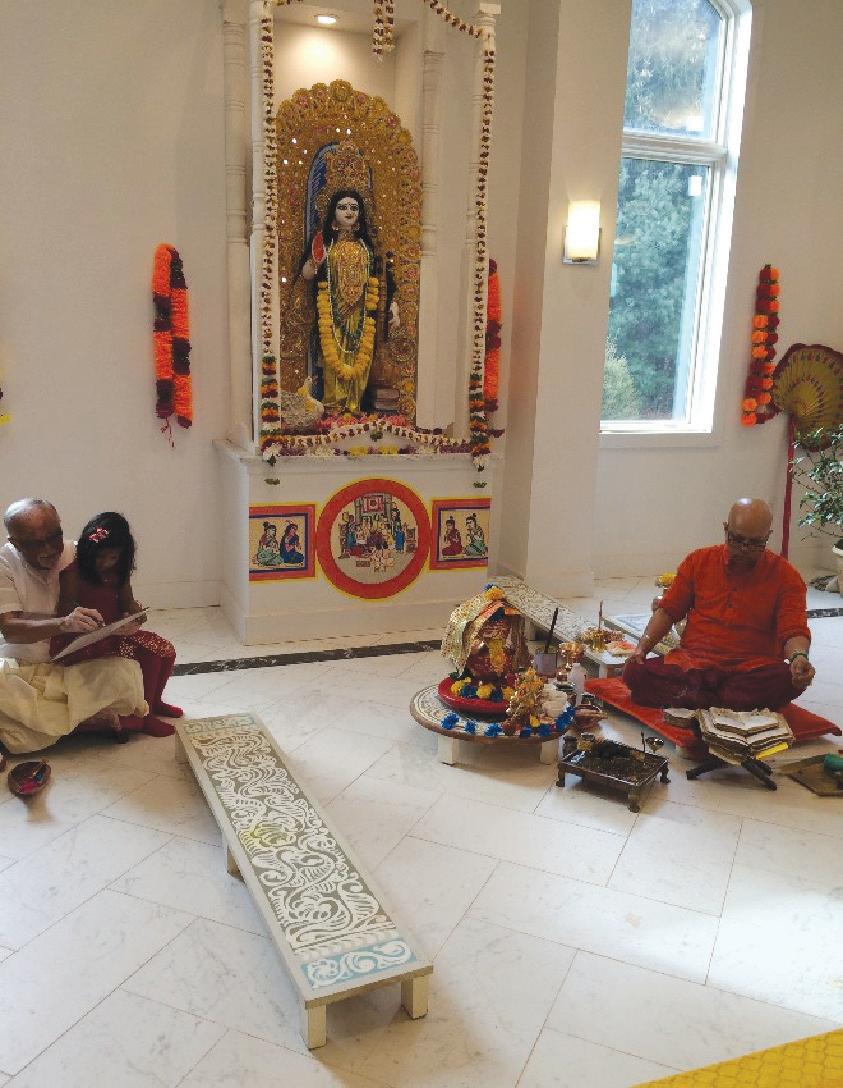
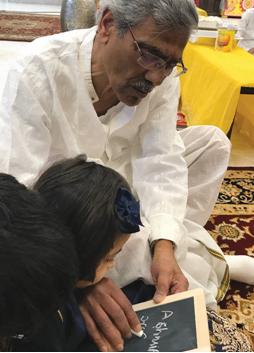
normally scheduled around 10:30 am, so that all the kids can offer Anjali to the Goddess of learning. The best part for the children is that they can show case their talents in singing, dancing etc. right after the puja. This time Pronoy Chatterjee presided over the ceremonies with Biswabhai, with Anjali Mantras and also performed Hate Khori for a few other kids. This time about four children were ready for Hate Khori, and Pronoyda did a great job. All the children who had their Hate Khori on both the days received a goody-bag from Ananda Mandir.
Right after lunch by 11:30am, the kids rushed to our Tagore hall for the cultural program. This was not the end though. In the evening we observed Satyanarayan Puja. As it was a whole day program and people were tired we did not expect too many people and as expected only a few were present. Thus the last puja of January was done.
In February we had only two pujas. Maha Shiva-Ratri on 14th February. The Temple was open from 9:00 am to 9:00pm. Normally people come to the Temple early in the morning before going to work. Milk, water and other things required for the puja are kept ready for them. They
can worship the Shiva Linga in whichever manner they want. Thanks to Biswabhai, who keeps everything ready for them. Since they fast for this event, we keep breakfast ready, so that they can go straight to work after the puja. Thus starts the day of Shiva Chaturdashi. All throughout the day people kept coming. Puja started in the evening. There were individual pujas for char prahar and then again a special bathing of Lord Shiva was begun. After Lord Shiva was dried up. and dressed in kingly gorgeous clothes, a crown was put on him. This is called Rajbesh. All the men, women assembled in the temple personally took part in bathing Lord Shiva and performed the Aarati and offered Anjali. All the rituals were concluded around 10:00 pm and dinner was served.
The last puja was monthly Shyama Puja on 15th. Like any other puja, this puja was scheduled from 6:00pm to 8:00pm. Puja, aarati and anjali were done in an orderly fashion.
Prasad and dinner was served.
All these pujas and arrangements are done by our priest and volunteers. Nothing would be possible without volunteers. Please volunteer with us.
Reported by Arun Bhowmik, Chair, Cultural Committee
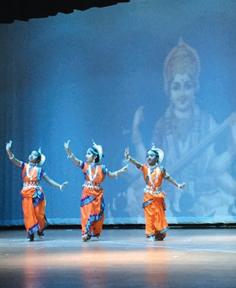
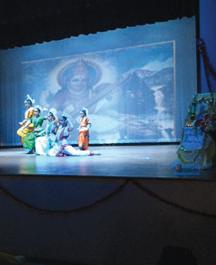
The Bani Bandana celebrations at Ananda Mandir this year was again a grand success. After the morning Puja, “Hatekhori” and lunch, the auditorium at Tagore Hall was full of children who presented their talents in singing, dancing, recitations, other short stage shows. Parents and other community members supported the event wholeheartedly, and the participants were extremely happy to be on the big stage to do their little show. This is the only event at Ananda Mandir where our community children get to perform on the big stage, and they were thrilled.
Our Biswabhai opened the ceremony with a lovely short speech. Then the show began with some solo performances and numerous group performances. The solo performers were Aroni Sen, Maya Stoker, Oishi Sarkar, Rajoshi Basu, Ishani, Debalina Saha, Anirud Sarkar, and Anuran Chakraborty. For the group presentations, we had students of Mrittika (Dhriti Bagchi), RDM school (Mitra Purkayastha), Ananda Mandir chidren program (led by Sudipta B Chowdhury), Swagata Goswami’s music school students, Ragesri Music school (Gayatree Sarma), a dance ensemble led by Arpita Gupta, and Ritam Dance academy (Reeta Baidya Roy).
The “Bani Bandana” program at Ananda Mandir is getting wide popularity, and our community children, little musicians – singers - dancers, all eagerly wait for this day to be a part of the festivities.
The entire event was planned, coordinated, and managed by Rita Bhowmik.

Rahul Ray
For a very long time the (West) Bengal film-industry looked moribund. The once-mighty medium where the likes of Satyajit Ray, Ritwik Ghatak, Mrinal Sen, Tapan Sinha and likes made their mark faced a slow but certain death. My father-in law was a film-producer. He also owned several movie houses. I saw agony and distress in him whenever we discussed about the demise of the industry. Cinema-halls, as we called them closed their doors in rapid succession due to rampant and unauthorized copying of movies and easy availability of such copies. People simply did not feel like paying
money, however small to see a movie on a large screen. Instead they chose the small television screen attached to a video player. The enjoyment of seeing a cinema on a large screen fell on the wayside. It was a grave loss. A small screen can never replace a very large screen where things happen in a magical way. As a collegegoing young adult growing up in Kolkata I occasionally ventured into Metro and New Empire cinemas in the Chowringhee area of the city, which screened movies made in Hollywood. What movies some of them were! The other day I was crooning ‘Edelweis’ from the movie The
Sound of Music, and goose bumps came all over me! The handsome face of Christopher Plummer flashed in my mind as if it were yesterday! Then, there were Butch Cassidy and the Sundance Kids or Dirty Dozen. I am definitely not a gun-devotee, but must admit that gun-slinging and hip-shooting actors certainly made an impression on me. Then, there was Lawrence of Arabia. I will never forget the beginning of the movie where a small speck of whirlwind in the horizon in the scorching and simmering desert sun and shifting sand dunes becomes a galloping camel-rider (Omar Sharif) while lanky Peter O’Toole looked on, right in front of my eyes! What a thrill that was. I also must admit that
part of my attraction was to get a taste of the ‘forbidden fruit’ in movies with an ‘A’rating.
However, I must admit that movies made under the banner of Metro-Goldwyn Mayer provided the maximum number of thrills. Imagine sitting in a pitch-dark movie theater when suddenly the huge screen lights up and a fully maned adult lion moves his head from one side to the other and growls in an ear-splitting roar. It was pure magic! Then there was music to go with many films. The Sound of Music opens with the thunderous and vibrant sound of ‘The hills are alive with the sound of music’ while the Austrian Alps open up like a rolling carpet! Only a large screen can do that.
Bengali films have never had the kind of resources required to make such bigscreen movies1 because the market for Bengali movies is limited only to the eastern part of India, and to some extent Bangladesh. In addition, there has always been the over- arching shadow of Hindi films with their highly entertaining song and dance routines. However, lack of resources, limited audience and competition were never impediments to talents pouring into Tollygunge, the hub of the Bengali film industry. Directors of international fame like Satyajit Ray roamed the grounds of Tollywood, as it is called lovingly. There were movie stars like Uttam
continue to page 12 }
removal is one of the most commonly performed surgeries in the world. According to an article published in Review of Ophthalmology, 3.6 million cataract surgeries were performed in the US in 2014, and more than 20 million cataract surgeries were done around the world in the same year. A 2011 report from the National Program for Control of Blindness (NPCB) in India, 6 million cataract surgeries were done in the country in 2010. That number is expected to rise to 7 million by 2020.
By surgical standards, cataract removal is a simple operation that does not need hospitalization and can be safely done in a doctor’s clinic as long as local anesthesia can be administered. Considering the simplicity and relatively low cost of cataract surgery, the benefits of timely removal of cataracts are impressive. Not only do the patients enjoy an improved quality of life through significantly improved vision, some of them are also saved from partial or total blindness.
Last year I became a part of the cataract surgery statistics. Cataracts in both of my eyes were surgically removed within a span of one week by a well-reputed surgeon. For each eye, the surgery itself took less than half an hour, although the pre-operative preparation took about an hour and the post-surgical recovery required about a half hour. The procedure was painless, thanks to the miracles of modern anesthesia. For me, the surgical experience overall was pleasant. At the time of discharge, I was given a list of do’s and don’ts and a prescription for an antibiotic eye drop to prevent infection. My wife drove me
By Debajyoti Chatterji
home after discharge because I was not allowed to drive for 24 hours (to allow time for the anesthetic to wear off).
A couple of weeks before the first surgery took place, I had met with the surgeon and his ophthalmologist associate. They checked my eyes out thoroughly, and the surgeon then outlined how the surgery would be performing later. I was told about the risks and the benefits, and an associate explained to me the costs involved and the co-pay I would be responsible for after Medicare reimbursement. I also learned that there would be several follow-up meetings with both of them, and I would be given prescription for a new pair of eyeglasses at the right time. The cost of these follow up sessions were already included in the price quoted by the associate. All in all, my pre-surgical experience with the surgeon and his associates was very good.
The day after cataract removal from one eye, I was simply stunned by the change in vision in that eye. Everything was much brighter and whiter! For the first time in many years, I realized that sunlight was white, not yellow. And I could clearly see small letters scrolling at the bottom of TV news channels without glasses or straining my eyes. When I drove the car in the evening, I was no longer bothered by the glare from the headlights of on-coming traffic.
But my ecstasy from the greatly improved vision diminished somewhat over the following couple of
months. Cataract surgery has been definitely beneficial for me, but I wish I had been given more information on what to expect after “successful cataract surgeries”. I am sharing my experience to prepare you better, if you or a loved one is planning to get cataract surgeries done in the near future.
About three weeks after my first surgery, I began to have red eyes and my eyes felt tired all the time. The eyes didn’t really hurt but I felt better if I kept them closed, as if to release stress that had built up around and behind the eyeballs. After a good sleep, the eyes felt better but after only a very short period of time, the eyes felt heavy and stressed again. Soon thereafter, my eyes started itching a bit and giving me that weird “sand-in-the-eye” feeling. I had taken the antibiotic eyedrop regularly as prescribed, so my issues could not be from infection, I assured myself.
Fortunately, I was due for my onemonth follow-up with the ophthalmologist. She took one look and said that I had “dry eyes” and needed to use an eye drop to alleviate the discomfort. The eye drop was available without a prescription, and it apparently helped the eyes produce more tears to properly lubricate them.
I will spare you the subsequent details and just say that it took over two months of daily use of this eye drop to get rid of my “dry eye” problem. So, I decided to do some research on “dry eyes after cataract surgery”. This is what I learned: (1)
dry eyes are common occurrence after cataract surgery; (2) dry eyes and the associated discomfort can last for many months; and (3) eye drops like “Tears” are quite effective in alleviating the discomfort. But I also found that the cataract surgeon or the ophthalmologist should have investigated if the patient had a history of dry eyes BEFORE the surgery. In many cases, especially among senior citizens, patients often do not know that they have undiagnosed dry eyes problems. In either case, the dry eye problem, diagnosed or undiagnosed, should be treated before the surgery takes place! Sadly, there had been no such discussion between myself and the surgeon or the ophthalmologist before my surgery. (For more information on this subject, read “The Forgotten Syndrome: Dry Eye in Cataract Patients, Ophthalmology Times, by Dr. Marguerite MacDonald, October 1, 2008)
Besides the dry eye problem, I also noticed that my eyes took a lot longer to “stabilize” than the six weeks I was told would be needed. As a result, I ended up getting one set of eyeglasses, only to be replaced with a second set after another few weeks. The resulting inconvenience and cost were a bit irritating, I have to say. Additionally, and unfortunately, at the end of this fairly lengthy “stabilization” process, my vision is not as sharp as it was immediately after surgery. Without glasses, I don’t see the small letters scrolling at the bottom of my TV screen as clearly as I did right after surgery. A relatively small disappointment, but a disappointment nevertheless.
By Mandira Chattopadhyay
In 1942 at the Bay of Bengal, a steamer jammed full of refugees waited to set sail from Burma to India. The oldest of the five brothers (ages ranging from thirteen to twenty-three) was holding on to his father’s arms. “Where are we going?” He kept repeating the question, until someone said, “There’s no time! No time! Hurry! We must leave! The sooner we leave, the better!”
The family in question, was none other than my fatherin-law’s which included his four younger brothers and his parents.
War had broken out in Rangoon, and all the Indians were getting out of Burma. The family had to leave their home and head back to India. Only a handful of accounts of that exodus, some seventyfive years ago, exist. I poured over Dadu’s diary that my grandmother-in-law, Thakuma, had carefully preserved. My curiosity grew as I heard the news of the Rohyngas, fleeing Burma, trying desperately to find a new home in Bangladesh and India.
Dadu was bigger and broader in the shoulder than most men. He was accustomed to the dusty lanes and alleys that curled around them in the city, especially near the harbor, so that you could never see beyond the next curve. However, the children could not, so he had to guide them to the dock carefully. The restlessness in the sea was in tune with the environment -- the tidewater stretches of the coast where Burma and Bengal collide in a whirlpool of unease. These events of exodus from Burma were seventy-five years in the past, but their memory freshly preserved in the scraps of papers that Thakuma handed to me.
Throughout this project I have been haunted by the feeling that I have invaded an unknown space. I wasn’t sure how I could write about the inner feelings of someone whom I didn’t know firsthand. It is very hard to write a story about an individual unless it is your own life story, but after grappling with my feelings of inadequacy, I feel confident enough to embark on his story. Even before I start to write, I know my account will never be enough
and never have the depth it needs. I worry that my words will fall short of his experience. Lying in bed many a times, my mind became swamped by facts, maps and faces. I started piecing together the ordeal of 1942, keeping in mind Dadu’s scrap papers. My story of Dadu will be one of fact and fiction, and I realize that the amalgam is a difficult one.
Dadu didn’t look like a hero, but he became one during the trek. He was hired as an accountant for the British army and had migrated with his family, basking in the golden era of Burma.
In his journal he scribbled:
The sudden explosion of bombing by the Japanese ruined the peaceful sky. I read in the other documents that many Indians condemned the declaration of war by the British because there was no preparation.
The action continues. Shops are empty. We lived through shattering and terrifying days. Our lives are turned upside down. A total and utter destruction in every sense of the word.
I have been very fortunate for having been able to squeeze my family in the steamer after bribing the officials, but I wonder about the safety of my family.
On the dock Thakuma craned her head to see Dadu, her husband of twenty-five years, for what she feared might be the last time. At daybreak when the sky lit, the steamer was gone.
I still wonder why Dadu stayed back. Was it for the lack of space, or was it because of his obligation to the British army? Perhaps Dadu never wanted to admit his lack of decision. Soon, thousands like Dadu had no other choice but to trek to the border.
Again Dadu wrote:
A long hardship is waiting for me. I found the roads choked with Indians fleeing the stricken city. Men, women, and children carrying whatever they had managed to salvage on their heads and shoulders. There has been an outbreak of cholera. Suddenly the air raids began. It was clear moonlight. Bombs were dropped. Every mother clung to her child. Most of Rangoon was deserted ex-
cept for the howling pack of starved wronged dogs. As the night fell, the sky lit by the lunatic Burmese setting fire to the well-to-do Indians and the Hindu laborers.
Dadu underlined:
The deserted homes of Rangoon burned merrily.
The smell of death and charred wood singed the air of Rangoon. The criminal and the crazy ranged the city, looting whatever they could and burning whatever they could not.
In March of 1942 the Japanese entered Rangoon. The major tragedy of Burma landed squarely on the millions of Indians who had always done all the work to make the country function. The Burmese did not want those jobs, but they still never really liked the Indians who ran Burma. The poor Indians would have to hike their way out. With the Indians on the run, the Burmese had their fun. They charged the Indians an anna for every cup of water. The Burmese police exacted false charges on them. They gave them their last bite. Dadu wrote that all around dying people were begging for help: “Please give me some water!” Everywhere showed the immutable flux of events.
The movement of Indians out of Burma lasted about six months. One hundred to two hundred thousand Indians left Burma on foot. Sadly, the British government who hired these Indians was the cruelest of all. Many Indians were employed by the colonial British, mostly in the office, or by the auditor general in the railways. However, during the crisis the British cared only for their own safety. Everyone else was abandoned. Innumerable stories tell about how fleeing officials used the transportation to carry away pianos and dinner sets, while their subordinates abandoned their meager possessions.
He continued:
The beautiful country that Kipling adored and that in his next life he wanted to be born in Burma, and meet those pretty, almond-eyed Burmese girls. Those days are now gone, like the clouds in the sky.
With the city with its jostling bombs, British were using all means of transpor-
continue to page 13 }
By Debajyoti Chatterji
UK Minister Resigns for Being One Minute Late
In an impressive display of the value given by the British to punctuality and civility, Michael Bates, UK’s International Development Minister, resigned on the spot when he realized that he was one minute late to a session of the House of Lords. He apologized for the “discourtesy” he had shown to the House by being late and then resigned on the spot. (Lord Bates later withdrew his resignation at the personal request of Theresa May, the British Prime Minister.) (Washington Post, Feb 1, 2018)
Man Gets Trapped in MRI Machine and Dies
Rajesh Maru, a 32-year old resident of Mumbai was tragically trapped in an MRI machine in a local hospital and lost his life. He was carrying an oxygen cylinder when he entered the MRI room. He had apparently been cleared to enter by the individual(s) responsible for the operation of the machine. Arrests have been made, and police investigation is continuing. (Washington Post, Jan 29, 2018)
Mother Sues Son and Gets Nearly $1 Million
The Supreme Court in Taiwan ruled in favor a mother who had sued her dentist son for approximately $1 million as compensation for raising him. The dentist son had refused to take care of the mother in her old age, and the mother claimed that the son owed her at least $1 million for raising and educating him. (NY Times, Jan 2, 2018)
Longest Running Rainbow in Taiwan
Residents in Taipei, Taiwan, were treated to a rare natural phenomenon: a rainbow in the sky that lasted continuously for nine hours. Astronomers think that this occurrence will probably qualify for a world record. (Daily Mail, Dec 1, 2017)
Your Own Military Tank on the Front Lawn?
Tom Buzzbee, a resident of the River Oaks neighborhood in Houston, bought a refurbished Sherman tank (of WWII vintage, weighing 32 ton) for $600,000 at an auction and put it on display on the front lawn of his multimillion dollar home. The fully functional tank, except for the gun, attracted numerous gawkers and soon brought complaints from neighbors and the homeowners association. At first, the owner resisted. “They can try to tow it,” he told the local TV station. He finally surrendered and relocated the tank to his ranch in East Texas, where, he says, “it will do what tanks do best”. (AARP Bulletin, Dec 2017) Largest Starbucks Store in the World?
Starbucks has opened a giant “cafe” in Shanghai, China. The store has 29,000 sq. ft. of floor space and is staffed by 400 employees. Customers can not only enjoy numerous types of coffee, tea and snacks, they can also watch the inner workings of a very impressive “roastery”. They can see raw beans being carried to roasters, then to a twostory tall bronze vessel decorated with hundreds of traditional Chinese seals and patterns. From there, the beans are piped to a crew of dozens of baristas who make the coffee ordered by the customers. (NY Times, Dec 6, 2017) The Old Drug Was Free. Now It Costs $109,500/Year Daranide (now re-branded as Keveysis) is a drug used to treat “periodic paralysis”, a rare and debilitating disease, where patients suddenly become (and remain) paralyzed for hours. It was first approved by FDA in 1958 for treatment of glaucoma and was very inexpensive for many years. In 2015 the drug was approved for periodic paralysis treatment and was given free to the limited number of patients in the country that suffered from this rare disease. Now a company has bought the rights to manufacture the drug and is charging an exorbitant price! At higher dosage, annual cost for a patient can reach $219,000. (Washington Post, Dec 18, 2017)
| continue from page 10
kumar, Soumitro Chatterji, Suchitra Sen and others, and let us not forget the actors of the caliber of Chhabi Biswas, Pahari Sanyal, Kali Banerji, Anup Kumar Das, Anil Chatterji, Madhabi Mukherji, Sabitri Chatterji, Supriya Chaudhuri, Aparna Sen and many others. All the famous Indian musicians, with the likes of Ali Akbar Khan and Ravi Shankar pitched in with their musical scores. Incredibly talented songwriters and composers like Gouriprasanna Majumder, Pulak Bandopadhyay, Salil Chaudhuri, Hemanta Mukhopadhdhyay and many more provided never-to-be-forgotten lyrics and music for playback singing giants like Hemanta Mukhopadhayay, Manna De, Sandhya Mukherji, Shyamal Mitra, Lata Mangeshkar, Asha Bhonsle and many others. Then there were numerous behind the scene cinematographers, cameramen, editors, make-up artists and what nots whose names never saw the limelight. To top everything there were ace storytellers like Rabindranath Tagore, Sarat Chandra Chatterji, Tarashankar Bandopadhyay, Mani Shankar Mukhopadhdyay, Ashutosh Mukhopadhyay, Samaresh Bosu, Sunil Ganguly, Satyajit Ray and numerous others. It was a vibrant industry despite its chronic financial and other problems.
As Bengali cinema goes, there has always been the ‘artsy types’ on one end and the ‘commercial ones’ on the other. The movies that brought Bengali cinema to the world stage belong to the first category. However, these cinemas, strongly influenced by French, Italian and other western and Japanese ‘Nouvelle Vague’ or New Wave cinemas with directors like Truffaut, Godard, Rousseau, Eisenstein, Fellini, Antonioni, Kurosawa, Bergman and others had audience only among city-dwelling intellectual elite. Not surprisingly, such movies did not make much money. However, directors like Satyajit Ray and Ritwik Ghatak, who championed such movies carried on with their unwavering belief in this art form. On the other hand, there was the other type, lumped together as ‘commercial cinema’ consisting of many subtypes, including religious movies to purely entertaining ones, the boymeets-girl, song-dance-fight cinemas, fashioned after Bollywood movies. My father-in-law produced several art films by famous directors such as Tapan Sinha, but he made the maximum amount of money with Mahat-
NOTES:
irtha Kalighat, a religious film.
The large space between the two extremities of Bengali movies consists of several categories of cinemas that include purely romantic types with high drama. Notables in this category are some of the all-time favorites like Saptapadi and Harano Sur. There are lovable comedies, like Sarrey Chuattor, as well as thrillers like Sajarur Kanta. There are movies depicting social awareness and political upheaval, as in Interview and Calcutta 71. Satyajit Ray, the grand master of Bengali cinema made an entirely new genre of Bengali movies involving fantasy and make-belief with his ‘Goopy-Bagha’ series. The popularity of these movies, along with his Feluda thrillers among common folks as well as city elite suggests that he must have had a plan to give cash-strapped Bengali movies, including his own a long-awaited shot in the arm. Then, there are various other types of films depicting lives of famous people, movies with historical contents etc. In essence, Bengali cinema has always been an even mix ranging from high art to cheap entertainment.
However, as the decade of the eighties rolled in, the entire Bengali film industry went on a tailspin and faced assured death for reasons stated earlier. People in the cities simply stopped going to see films in movie theaters which were still open. Nonetheless, the thrill of cinema as an entertainment remained alive to some extent in villages and rural areas. However, rural folks have a different taste than city people, and movies meant only to entertain with song-dance-fight and high melodrama came to the rescue. The brothers Ajay and Sukhen Das pair came up with melodramatic plots and provided music, while Tapas Pal, Debashree Roy, Prosenjit Chatterji to name a few delivered the acting parts. It is noteworthy that later on Prosenjit (Posenjit in rural dialect!) underwent almost a metamorphosis. He has shown his mettle as a high caliber actor in Moner Manush, Autograph, Utsab and other films.
Although experts of films may hold their noses at movies made by the Das brothers, like Maan Marjada and Pratisodh, these people actually carried the Bengali film industry on their shoulders for almost two decades and provided the proverbial ‘Coramine’ to keep the industry alive. This is not to mean that people stopped making serious and art films altogether. Directors, like Buddhadeb
Dasgupta (Charachar, Tahader Kotha), Gautam Ghosh (Moner Manush, Paar, Padmanodir Majhi), Aparna Sen (Parama, Juganta, Chotuskone), Rituparno Ghosh (Utsab, Sob Charitro Kalponik, Chokher Bali) picked up the baton from now–deceased Satyajit Ray and retiring Mrinal Sen, and produced highly acclaimed movies, some with international fame, until they were succeeded by a fresh crop of movie-makers of the twenty first century. By this time, the industry was back from coma, and breathing on its own.
Fresh faces in current Bengali cinema are aplenty. Several directors, including Kaushik Ganguly, Srijit Mukherji, Aniruddha Raichaudhuri, Nandita Roy and Shibaprasd Mukherji duo are making big splashes with their smart direction depicting contemporary themes including globalization and its effects, as well as themes that were not touched upon earlier. For example, Shobdo by Kaushik Ganguly revolves around the life of Tarak, a sound-effect artist until he becomes completely distraught in his world of sound. This film won a National Best Film award for its uniqueness of content and approach. Chotoder Chhobi, also by Kaushik Ganguly depicted the lives of midgets, a forgotten part of our society. Anik Dutta, a complete newcomer took the cue from Satyajit Ray and directed Bhuter Bhabishyot, a fantasy about ghosts from the past, which became an instant hit. New actors including Parambrata Chatterji, Ritwik Chakrabarty, Jishu Sengupta, Abir Chatterji, Biswajit Charabarty, Saswata Chatterji, Paran Bandopadhyay, Rituparna Sengupta, Raima Sen, Paoli Dam, Swastika Mukherji and many others are now adorning the silver screen. On the ‘entertainment only’ side, Dev is making a big splash. A fresh crop of lyricists and composers, like Anupam Roy, Shantanu Moitra, Suman Kabir, Indradeep Bhattachraya and others have been busy filling the shoes of past music artists. Internet has made a revolution in viewing Bengali movies. Many or most of these films are now available free of charge on the net so that one can curl up under a blanket and watch a movie of choice on a large TV screen, not exactly the large screen experience of yesteryears but somewhat close. Then the questions come: How will the directors make money to think about future movies? How will the artists and crew get paid? How will the movie theaters, if any left, thrive? Why would any pro-
ducer invest in this process? These perennial questions take us back to the familiar cycle of movie making of the past. In other words, will Bengali cinema remain a boutique venture for the near future?
A quick typing ‘latest Bengali movies’ in the search engine (https://www.filmipop.com/bengalilanguage-movies) pulled up a web page listing all (presumably) Bengali movies made in the year 2017. The number is a staggering ninety-two! This simply attests to the fact that Bengali cinema is vibrant and thriving. It also shows that producers, who are mostly non-Bengali business persons as per tradition, are making enough money to re-invest in making new movies after their cut. What is happening?
Global advancement of video and DVD technology did put a damper on the movie-industry in general, and Bengali cinema was no exception. However, in recent times the industry has made a strong comeback, particularly in America. The reason for the turn-around is complex. The movieloving public may simply have become tired of staring at a small screen and are now coming back to movie theaters. The movie theaters have also changed. Independent theaters are all but gone, and the remainder have folded into large conglomerates, as a part of economic necessity.
The Internet, once thought to be disastrous for the film-industry has actually become a boon. People, who traditionally did not want to make a trip to the theater are now joining movie clubs, like Netflix or Roku for a fee, and watch movies of their liking any number of times. Movieindustry is getting a part of this fee to thrive. Most importantly, movieviewership has actually expanded instead of shrinking due to easy availability of technology. It is noteworthy that copyright laws have put some reins on free-viewership so that the most popular movies in English are not available free of charge on the net. That is not the case for Bengali movies, at least not yet. However, Netflix-like pay-for-use film apps such as Hoi-choi catering to Bengali movies are springing up. This expanded paid viewership on the net, along with revenue from movie halls is sure to pump added energy into the Bengali film industry. In conclusion, resurgence of Bengali films is no longer a questionable phenomenon. All indicators point that the Bengali film industry is thriving and humming along at a healthy pace.2
1. In 2013 and again in 2016 director Kamaleswar Mukherji, with producers Mahendra Soni and Shrikant Mohta brought large screen movie experience first time in Bengali cinema in Chander Paharh 1 and 2, starring Dev.
2. There are many names in this article, which may spell trouble. Some names, which should duly be included, might be omitted, or some names are included that are not worthy of being in the list. However, names bring up memories, conjure up images, associate themselves with information in ways that is otherwise impossible to attain. Therefore, after weighing risks and benefits, names are kept intact. Opinion expressed in this article is strictly that of the writer.
| continue from page 11
tation for their own benefit. The atmosphere of the city was very tense, and the terror was raging at its ugliest. Shells started to fall. The roads streamed with people looking desperately for shelter.
He pulled some clothes and a few other necessaries together and followed the path the crowd was taking. His life in Burma was over.
I was not part of the history, but Dadu’s legacy has been branded in me. When the air raids came on December 23 and 25, the government ordered all the inhabitants to leave within 48 hours, but with no directions about how to conduct the evacuation. They did generously caution the refugees, however, about a particular route where wild creatures posed a danger. In any case, a great number of Indians streamed out of Rangoon and central Burma in a vast crowd, clogging the principal road. The march quickly developed an unstoppable momentum.
On their journey, though, Dadu wrote about
Our sense of equilibrium held throughout the journey. We cooked rice and daal and shared a divine experience of brotherhood. During the journey we huddled together so as not to lose each other. Sometimes for two days in a row we could not stop.
He saw crying babies sucking the nipples of their dead mothers. Fatigue dogged them all. But even in the weariness of the journey Dadu felt peace and surrendered himself to God.
In the silence of his diary he writes:
Human life is an adjustment. The dust and stones of the streets were as precious as God. The greetings by the trees on our trek were like something divine protecting us. I found strength from strong and upright trees. I started meditating on beauty, on the holiness of nature as a way to transgress suffering. I stayed vigilant. We walked for two days straight, stopping only at streams to drink water . . .
One of the unsettling things about my journey mentally, physically, and emotionally was that I was not sure where it was going. I was just moving with the flow of the crowd . . .
I came to discover the self, as the yogis do in their meditation. Painful, as it may be, Hinduism insists on the “Manasa Dharma”, meaning it insists that a man should be true to essential nature, which is godly and divine.
Their feet stirred up long, snaking clouds of dust that hung above the road like ribbons. The tapestry of Dadu’s diary is woven in strands of mysticism and Hindu religion, in hope: “I thought of the cycle of Karma.”
In the end, one fine day, Dadu simply walked into town. He completed the harrowing months of his journey applauding his comrades who hoisted
the flag like mountaineers upon reaching the summit. His appearance after six months coincided with the conclusion of the war that lasted the same period of time.
Not much was reported about this war, so the story of the march of Indians out of Burma faded. Even Dadu didn’t want to disclose what he endured, so I am left with a sense of unease which prevents closure.
As Dadu wrote:
I felt that I was starting over and over again. I was always on the move, always going somewhere. While we walked, sometimes I lagged behind. To survive each passing day was my goal in life. I knew that everything was temporary, and that we were only passing through. . . . I enjoyed watching the moon appearing and reappearing from behind the clouds. But I wondered about all the dead. How many times do we have to come to terms with death before we find safety?
His family in India had no clue about his struggles. Thakuma made frequent visits to religious readings and the Kali temple to pray. All these things I heard from her and that she did not want to accept herself as a widow. At night while the family slept, Thakuma with her long black hair and chiselled face would wipe her tears with her thin cotton garment.
Dadu wrote:
Sometimes I put my head down and lie on my back, trying to hold on to the memories of my family. Their faces seemed to be far away, somewhere in my mind. I long for the hands of my wife and my children.
Thakuma told me how she missed making food for him.
He wrote:
In our journey we began rummaging the bushes for whatever food looked edible. While the women cooked, men would provide all that was necessary. Even though our journey was difficult, every once in a while, we were able to do something that was normal and made us happy. On our path I felt like the sky was telling the story of the seven seers (saptarshi). Some nights the vast sky wept stars as if weeping for us like our mothers.
Dadu had difficulty formulating his thoughts when he reached Calcutta and entered his old home after six months. He writes:
My eyes struggled to be familiar with the surroundings again. I had a tingling sensation in my stomach as I entered my home and my throat began to ache.
Now Dadu’s scraps of papers have returned to their former place in my file cabinet, but the influx of Rohingya brings them back. Dadu was not a storyteller, so I had to be. I tried to put together the episode properly. As I sit here to review this episode, I battle with myself to come to any distinct conclusion. The 1942 long march evades categorization but it is a story that must be heard.
By Anirudh Sarkar (Age 12)
This article was inspired by two reports that attracted the author’s attention. Customers do more than just shop. They help a business thrive and thus support the owners who work hard to make their ventures successful. As a matter of fact, customer support means a lot to the owners, and it is a way of telling them that they are essential factors in the community. I recently came across two excellent examples of customer-business interdependence that are worth highlighting. The first example was the subject of a news story, “Small Town, Big Hearts”, and the second is titled “There’s No Free Lunch … Except Here”.
“Small Town, Big Hearts” illustrates a community effort in a small town (Chagrin Falls, Ohio) to assist an old store that had its share of tough times. The report explained that wherever there are “big-box stores”, there is an abundance of people who will bypass the local businesses and go to such big stores to save a dollar. However, in this community, one man, Jim Black, decided it was time to say thank you to one local business for the “years of dedication to the community”, suggesting that there are some consumers who are more concerned with the value behind small businesses. To add to that, the report explained that an email, written by Jim Black to about 40 of his friends and family members, Urged the recipients to visit that store on a particular day and buy “at least $20 worth of merchandise” to show their appreciation. The result was a deluge of customers at that store on the day set by Black. The large number of people who showed up to make purchases from the hardware store clearly conveyed the message that generosity in customers has the potential to warm hearts for a store, and what Jim Black did was a deed long overdue for that store. “Through the years, the store has seen its share of tough times. Road construction at the store’s front door some years back crippled business for a time, and more recently, the weakened economy and the “big boxes” have reduced the flow of customers. On January 21, though, those storylines were forgotten.” The store had experienced troubles throughout its existence, but a community effort revitalized the store and reenergized its owners.
The second example of community benefits relates to Panera Bread Company’s “Community Cares Café Program”. As part of this program, the company has opened up “free restaurants” in many communities that allow customers to choose their own price for the food they obtain in these restaurants. The company states, “Whether the experimental enterprise will succeed, however, depends largely on whether customers will abide by the motto. It hangs above the café’s counter: Take what you need, leave your fair share.” Additionally, the report states, “Miller, the cashier, noticed that some customers paid half price or took a discount of a few dollars. But a majority of customers opted to pay full price for their meals. In fact, 33 percent of the café’s customers contributed more than the suggested price.” Lastly, the articles states,”It would be, like, $12,” cashier Michael Miller told a customer after she inquired about her order’s total. When the customer offered $12 in cash, Miller reminded her that she wasn’t obligated to pay anything. He directed her to deposit any contributions into the café’s donation boxes.” From one example, that of Michael Miller, the reader can see that there are many people who would be willing and paying patrons to such a “free restaurant”. They could have received the shop’s products for free, but their generous and spontaneous supports had a big impact on the Panera Bread’s restaurant at that location.
These reports highlight the true worth of support from a community. Because such reports draw attention to the generosity of customers, they have the potential to influence the public to become more involved in their community and help provide for those who are in dire need of support. An additional reason for the motivation in writing these articles is to recognize the individuals who were involved in large scale community efforts. The authors of these reports most likely want to spread the message of how people can help in several ways whether it be paying hundreds of dollars to a very old store, to customers helping a store when they can just completely take advantage of it. Or maybe giving 5 dollars to a homeless man or woman. No matter what one can do, being a good community figure helps more people than one can think.
The customers from the Panera Bread Company and Jim Black’s messages sparked a fire in good citizens that helped those stores thrive. Both “Small Town, Big Hearts” and “There’s No Free Lunch Except Here” distinctly share the theme, indicating generosity from customers can go a very long way for a store.
For more information on these stories, check the following sources:
(1) https://www.theblaze.com/news/2012/01/26/cash-mob-viralemail-rallies-locals-to-support-historic-small-town-hardware-store
(2) https://www.panerabread.com/en-us/articles/panera-carescommunity-cafes-the-spirit-of-giving.html
By Pronoy Chatterjee
Irecall a report, titled “White Paper on Creative Innovation,” that was published in late 1970s under joint authorship of the US National Academy of Science and its Japanese counterpart. It focused on their findings on diminishing creativity in the US and Japanese industries. This was indeed an alarming concern that rapidly drew the attention of corporate leaders. They took it very seriously and corporate leaders of those two countries independently came up with certain plans that they thought would fix the problem of creativity right away before starting to lose their competitive edge in the complex business world.
However, the leaders of those two countries did not implement their plans jointly, because in the marketplace they were bitterly competing with each other, so each of them wanted to keep its remedial plan within its private domain. Those of us, who were here in the US at the time, knew how Japanese were taking over the lead in automobile and electronic product businesses in the US. Naturally, the US leaders wanted to keep their own ingenious plan separate, to outsmart the other.
The US group (US corporate leaders) got together, scratched their heads and came up with a multimillion dollars training plan for coaching their already accomplished scientists on how to be more creative. They also set up creativity bonus and other reward systems to provide additional incentives to their matured experienced scientists to enhance more creativity in innovation.
Japanese corporations on the other hand invested a large sum of money dedicating to the young children in academic institutions to train the young minds to be more creative. US corporations didn’t spend a single dime in the academic institutions towards enhancing creativity techniques in developing minds of the young students.
Guess, which country succeeded in enhancing the creative innovation in their industries in the next decade or so. It was Japan, which advanced far more in creative innovations than the United States. This was because the seeds of creativity in young brains germinate far more rapidly than in the matured brains and that was realized in Japan, but not in the United States, at least not at the time.
Maturity of mind comes through experience; and more the people gain experience, more they lose the malleability of brain to develop creative ideas. It forces them to move into the path that leads them to achieving higher perfection by staying in their previously acquired knowledge. Such an approach would assure them to avoid taking risks of failure. Experience gives them the tools to do
the job more efficiently, but takes away the spirit of venturing into the unknown world and hence deprives them to be truly creative. Thus, experience helps to become more perfectionists but takes away the skills to be creatively innovative. This is the paradox of experience and creativity.
Experience, which is a desirable trait in life to become perfectionist, robs the skills of creativity that would enrich the life far more than being perfectionist. To deal with this paradox, we must get deeper into the understanding of creativity - what it is and what ammunition we need to be creative. Ideally, to be most productive in a particular field, we should have both, experience as well certain degree of naiveté to venture blindly into an unknown path. Then, and only then, we could be creatively productive in any field, technical or non-technical.
People at young age, when they have not acquired sufficient experience in life, are more prone to explore the world, take risk without fear and wander in new spheres of life and thus develop skills in doing things in nonconventional manners, in creative ways.
Creativity, in general, evolves from the inexperienced mind. Experience creates the hidden fear of failure in venturing into an unknown path and thus impede the discovery of new pathways, a new way to solve the problem. This paradox of experience has not been generally recognized in the society. The corporate system emphasizes people to get more and more experience in a particular field and then they were given the task of coming up with a process to solve a problem in a creative way and they fail, ironically, to avoid the prospect of failure.
Our academic system emphasizes on gaining experience through known pathways with strict disciplines. It allows very little leeway, very little free time to venture into abstract thinking and roaming into the unknown forest of thoughts. Now, with the advent of new digital technology and the associated easy to operate gadgets, whatever the free time is available, people remain engaged in playing with those digital systems. These new technologies, however important in running our lives smoothly, they rob the time for free thinking to develop creative means.
Thomas Edison was undoubtedly an icon of creativity. Today’s lifestyle that we enjoy is largely due to Edison’s creative thinking. We can’t imagine what the life would have been without his creative innovation of light bulbs, audio system and scores of other products that we use today. He never stopped venturing into the totally unknown area and never feared for failure. He learned from
his failure and in many cases he abandoned his past experience and moved through an unknown path, because he knew the paradox of experience. In his late life, he started believing that death is not the end of everything; we continue to exist outside of this life. So, he thought, there must be way to communicate with the dead. Like most veteran scientists or technologists, he did not go into studying who said what before pondering into this subject. He gave deep thoughts in his own way and ventured into developing a gadget to communicate with dead persons. Sounds pretty absurd thought, but this was a thought from Thomas Edison, the master of creativity. His mind was like the mind of a child, which did not hesitate in jumping into the unknown territory and discover a world of new things. Unfortunately, he didn’t live long enough to develop his creative equipment to communicate with the dead.
Einstein did not use any conventional equipment or math to develop his earth shattering relativity theory. It was his magical mind that allowed him to venture into a so called thought experiments, which he did when he got bored in his job as an experienced patent examiner. He came up with his creative idea, because he did not use his brilliant mind to roam into the known world but moved into the completely unknown world.
The most modern scientific theory or philosophy to understand the universe and creation, as we may call it, besides string theory or membrane theory, is quantum mechanics. Quantum mechanics tells us that a material can suddenly evolve from nothing. Scientists will soon tell us how the universe was created from nothing using the quantum mechanical theory. This quantum mechanics was not developed based on scientists’ experiences on standard scientific paths, but by taking risk to venture into unknown territory, not based on existing experience. This is the way to develop creative concept, that’s the essence of the message in this article..
Some autistic kids are so creative in musical and some other artistic area. This thing had been featured frequently in CBS’s “60 Minutes” on Sundays. Autism takes away the pleasure of being with the crowd and pushes them into loneliness. Therefore, the autistic kids lack many practical experiences that normal kids get. They therefore venture into the unknown path in their minds and become outstandingly creative in certain fields, mainly music and painting where they could express themselves in their own worlds.
According to some published literature, creativity is “the ability to transcend traditional ideas, rules, patterns, relationships, or the like, and to create meaningful new ideas, forms, methods, interpretations, etc.” Originality, progressiveness, or imagina-
tion brings the creativity, not the past experience or bookish knowledge.
Though the extensive reading stimulates creativity, but not by applying directly the acquired knowledge from those readings, but by ingeniously evolving in new pathways in between the domains that was depicted in those which were read.
In essence, creativity trait develops when we deviate from our path of experience. That’s why creativity is more prone to younger mind than the old matured mind. In matured mind, the creativity could flourish if the mind is trained to take risk in venturing into the path that was not established through past experiences. This is true in every field - science, engineering, literature, music or painting. To be creative in any field one must have courage to get into the unknown territory, without any fear of failure or embarrassment. It’s a risk, particularly for adult matured people who had established themselves in their social or professional life very well. Creative work in any field rejuvenates us and to get that pleasure we must learn how to deviate from our safe standard path to venture into a risky unknown path
Oldman winter is gasping for a few last shivers. Spring is not too far behind. Crocuses are peeking through the ground, the magnolia outside my window is covered with fat little buds, waiting for that warm air of April, kids are choosing the right summer camps and their parents, that perfect family vacation.
NJPA celebrated the New Year’s Eve with usual fanfare, music, dance, games and prizes. As always, it was a family affair, parents, kids, friends, making memories together.
The very first event of the year for NJPA is usually the Saraswati Puja, but unfortunately, in 2018 due to several unavoidable difficulties, NJPA could not celebrate this event. The Executive Committee regrets cancelling this long-standing tradition.
This is the time, when hope returns, people look outside their windows and think outside the box. NJPA is no exception. The Executive Team is regrouping and planning for the year ahead. We will reach out to all of you shortly with our future plans. Be friends with www.facebook.com/njpa.net for on-time updates.
In the meantime, air out your t-shirts and flip-flops, ice tea jugs and ice cream scoops. Spring is in the air and summer is knocking on your doors. Enjoy a happy and healthy 2018.
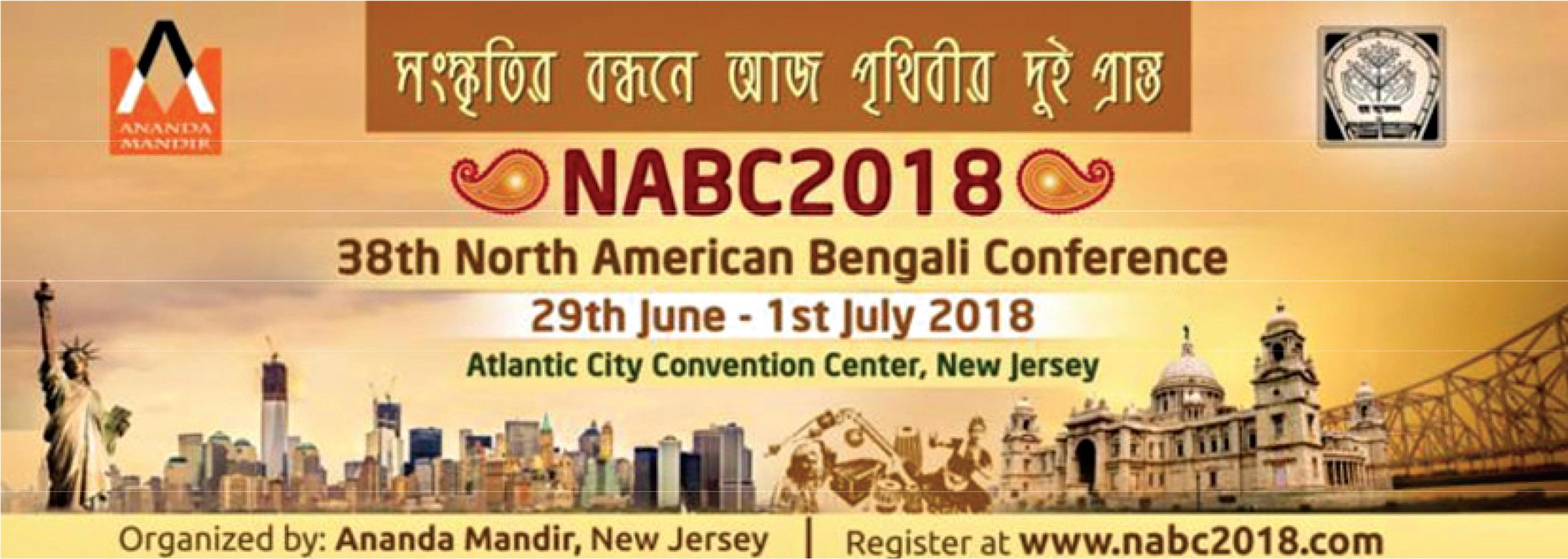

Shreya Ghoshal
Bickram Ghosh
Srabani Sen
Shovon Ganguly
Rituparna Sengupta
Subhamita Banerjee
Angshuman Kar
Rajatabha Dutta
Chandan Sen
Greg Ellis
Anupam Ray
Sabyasachi Chakrabarty
Sanjeev Abhayankar
Sayoni Ghosh
George Brooks
Srijato Bandopadhyay
Kanchan Mullick
Shantilal Mukherjee
Abhijit Basu
Ghatam Suresh
Sukalyan Bhattacharya
Iman Chakrabarty
James Aditi Mohsin
Kiran Chandra Roy
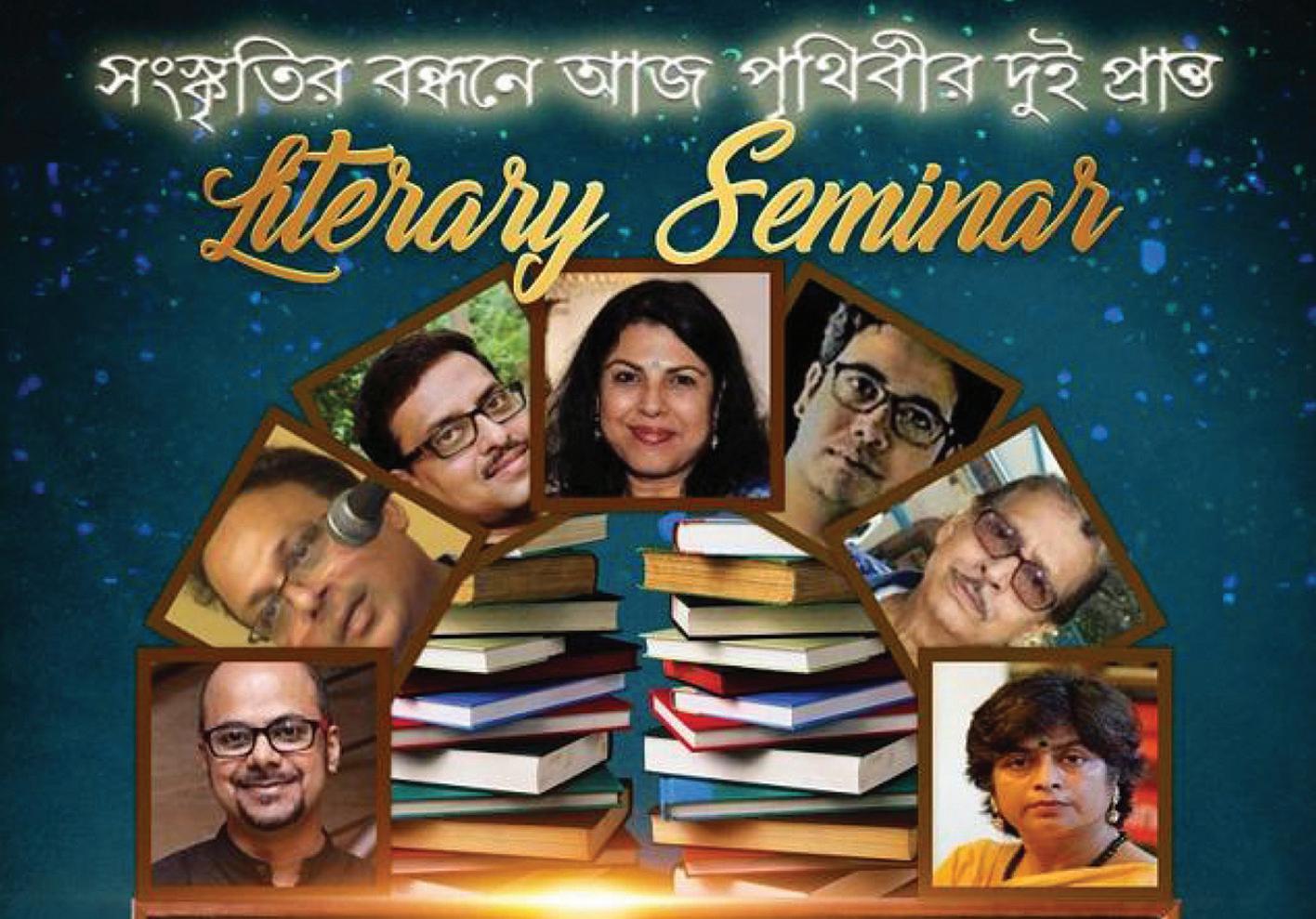
Srijato Bandopadhaya Poet, Novelist
Sekhar Basu, Writer/Novelist
Angshuman Kar Poet
Chitra Banerjee
Divakaruni Novelist
Tilottama Majumdar Novelist
Kushanava Choudhury Writer & Journalist
Goutam Datta Poet, Dramatist