Ananda Mandir
269 Cedar Grove Lane
Somerset, NJ 08873
Return Service Requested


Ananda Mandir
269 Cedar Grove Lane
Somerset, NJ 08873
Return Service Requested
Nupur Lahiri’s article entitled, “Myths of Mental Illness,” in the last October issue of Ananda Sangbad focuses on a serious health issue and also cites some alarming statistics and symptoms of certain mental illnesses. Data shared in the article overwhelmingly pointed out the social stigma and lack of knowledge on mental illnesses or behavioral disorders were the cause of sufferings of hundreds and thousands of people, which could have been avoided by simply recognizing the problem at the initial stage and seeking professional help.
This stigma and ignorance should be eradicated, if we want a healthy and progressive society We must recognize an illness, be it physical or mental, as purely an illness It’s not a crime or shame to be inflicted by mental illness, and we don’ t have to hide it from the people around us We can educate our community on how to be compassionate and supportive
Like any other physical illnesses, if we come across a situation where we find anyone is suffering from any mental or behavioral disorder, we should discuss it with others in order to find out how we can help the person before it gets into a traumatic stage
In continuing this discussion, I wouldn’ t make any distinction between mental illnesses or disorders and behavioral disorders; although in psychology there is a subtle difference between the two This article is not a technical discussion on psychology; it’s intended to focus on an unhealthy attitude of our society that must be brought out to the fore and rectified for the well being of the society
We don’ t need a textbook or any special instruction to under-
The Board of Trustees expresses its deep appreciation to Suprasad and Rita Baidyaroy for their continued financial support to the publication of Ananadalipi
By Pronoy Chatterjee
stand how social stigma can cause a serious misery to anyone affected by deep depression or anxiety by inhibiting the person from seeking a professional help
I saw a member of my family had a mild depression first, and then the person started totally withdrawing from the active world, spending most of the time confined to a room with windows and doors closed and torn newspapers scattered all over the floor The family was agonized by seeing this abnormality, but didn’t know what to do and didn’t ask for help from anyone out of fear of getting the family ’s stature degraded He gradually got into an acute clinical depression, confined himself to his bed for twenty four hours a day, except bathroom breaks, and finally died in misery a year later He never had any treatment because the family kept it secret
I have seen a young man at the height of his career suddenly quit his job and stayed in isolation The family tried to hide it, rather than seeking any professional help He committed suicide later by jumping in front of an incoming train
I had come across to a brilliant young engineer who came to USA from India to build his career, but couldn’ t cope with the cultural changes in this fast moving society He quit everything abruptly, suffered in anxiety and stayed in isolation and finally returned to India He didn’t get any help from the members of his community who were ignorant of recognizing the symptoms of mental disorders, and didn’t want to discuss about it because of the social stigma. He went back to India thinking that he would get back his old secured comfort zone, but didn’ t, so killed himself by tying a rope around his neck and hanging himself from the ceiling He wanted to live, but couldn’ t, because of the lack of social support and professional help
I have seen men and women compulsively washing their hands frequently and widows taking showers ten-fifteen times a day on an illusion of contaminating their body by touching unclean clothes or left over food, but we never thought of helping them to get any psychiatric help They continued to suffer and we tried to ignore their sufferings
I have come across too many others, who continued to suffer, days, months and years with this kind of behavioral disorder, first with mild symptoms and then severe illnesses, for not being treated due to lack of recognition of the illness and the associated social stigma
We should ask ourselves why? Why can we not openly discuss if we find anyone is suffering from any mental or behavioral disorder? Why we cannot come forward to help by providing the support that he or she needs? Why there is so much hesitancy and secrecy surrounding it? The answer, I guess, is partly because we are ignorant of mental illnesses and partly we don’ t trust confiding to our community This is our culture; this is the dark side of our culture, which we do not want to have exposed
This rigid crust of ice of ignorance and distrust must be removed and sublimed. We all desire to remove it but don’ t know how to One way to do this is to form a proactive support group with people who are able to recognize the symptoms of behavioral/mental disorder This group may take an active role in planning and implementing things that would help to break this rigid crust of ice of ignorance and distrust
We are all, to some extent, familiar with the symptoms of disorderly behavior, but we shut our eyes and minds to avoid recognizing them, because we don’ t know how to handle these situations This support group should therefore be composed of people who would be willing to help those who have mental problems The group should also have some professional mental health practitioners who are willing to come forward to educate the society on how to overcome the social stigma on mental illness
This support group should take an active role in educating and counseling the community through frequent seminars at different levels, and at different places and times; publish relevant articles in community newspapers and publicize their mode of operation on helping people in need The group, through its myriad activities, would focus to help all levels of people - profes-
ORG US POSTAGE PAID NEW BRUNSWICK, NJ PERMIT NO. 1215
sional, educated, and not so educated people It must establish its credibility and trustworthiness in the society, and only then it can serve the community effectively
The group must create an environment where the people would feel that they could trust them, and the group should be able to maintain the confidentiality they need for maintaining their dignity in the society Therefore, this group, as an organization, must stand on its own, independent and self sufficient, not as a part of any existing religious or cultural organization of the community It must be registered as a non profit organization with resources of its own by implementing different ways of fundraising and applying for financial grants to various national and international foundations
While the group should stand independently of its own, it must also establish a network of other non profit organizations in the community who would subscribe to the cause and be willing to support with their resources of people and money
The groups’ mission could be defined as, “To promote the awareness of mental/behavioral illnesses in the community, recognize the symptoms of illnesses and provide the necessary support to the person and the affected family to get proper professional help ” In other words, the group would actively support the community in addressing mental health issue conflicts and provide means to resolve them
This is a call to the members of our community to take an active role for the cause of our community’s mental health It’s a call to create a system of support for our children and grandchildren who may one day get entwined with this unwanted, undesirable situation and wonder how to handle it Once we establish a solid framework of the system, it would perpetuate as an ongoing process.
We love our community, we love our family; let’s proceed to fill a gap that exists in our social culture, which needs to be filled now, not later Without a strong support from the community this project would never take off and succeed Let’s work towards this mission
Calendar of Events
(Dates are subject to Change) Please check our website frequently www.anandamandir.org Tel: 732-873-9821
NOTE: If a particular Puja time is not listed, please contact temple or visit our website:anandamandir org
APRIL Nil Yatra
Monday, 13, 10 AM – 12 PM
Chaitra Sankranti
Tuesday, 14, 10 AM- 12 PM
Naba Barsha Morning
Wednesday, 15, 9 AM – 1 PM
Naba Barsha Evening
Wednesday, 15, 5 PM – 8:30 PM
Shyama Puja
Saturday, 18, 5 PM – 8:30 PM
Akshaya Tritia
Tuesday, 21, 10 AM – 11 AM
Satyanarayan Pyja
Sunday, 26, 4 PM – 8 PM Ram Thakur Smaran Utsav
Sunday, 26, 4 PM – 8 PM
Sahitya O Alochana
Friday, 17, 8:00 pm
Ananda Sandhya Not scheduled
MAY
Baisakhi Purnima
Sunday, 3, 10 AM – 11 AM
Phalaharini Kali Puja
Sunday, 17, 6PM – 8:30 PM
Dashahara & Ganga Puja
Thursday, 28, 9 AM – 11 AM
Satyanarayan Puja
Sunday, 31, 6 PM – 8 PM
Sahitya O Alochana Friday, 15, 8:00 pm
Ananda Sandhya Not scheduled
JUNE Pujas –Not scheduled at this time Call Mandir
Sahitya O Alochana Friday, 19, 8:00 pm
Ananda Sandhya Not scheduled
Special Religious Services: Upon request, the priest of Ananda Mandir offers services such as inhouse Sraddhas, Rituals associated with Cremations (Antyesti Kriya), Death Anniversaries, Pre-wedding rituals (Naandimukh, Ashirwad, etc), Upanayan (Paitey), Annaprasan, Wedding Ceremonies & Wedd ng Anniversaries, Griha Prabesh (Bhumi Puja), Consecrations of new cars (New Car Pujas) and others
If you have needs for any of the above or more, please feel free to contact Biswabhai @ 732-873-9821
2
A Periodical Newsletter Published By ANANDA MANDIR
(A Tax-Exempt, Non-Profit Organ zat on) 269 Cedar Grove Lane Somerset, NJ 08873
Ph: 732-873-9821 Website: www anandamandir org
PUBLICATION COMMITTEE OF ANANDA MANDIR
Chairperson: Pronoy Chatterjee, pkc usa@yahoo com
Assistant Chairperson: Subrata Bhaumik, Bhaumik subrata@gmail com
Editor-in-Chief: Debajyoti Chatterji, Debsmee572@gmail com
Managing Editor, Ananda Sangbad: Guru Chakravarty, guruchakravarty@yahoo com
Managing Editor, Anandalipi: Amitabha Bagchi, amitabhanj@gmail com
Editors:
Subrata Bhaumik, bhaumik subrata@gmail com
Subhodev Das, subhodev das@gmail com
Sushmita Dutta, sushmitadutt2@gmail com
Nupur Lahiri, nupurlahiri@aol com
Members-at-large: Bhaswati Bhadra Santosh Mukherjee Ashok Rakhit
All queries, articles, news reports and letters should be directed to the Managing Editor: Phone: 908-752-3065 E-mail: guruchakravarty@yahoo com
For general information, please contact the following executives of Ananda Mandir: Dipak Sarkar, President
Jaiprakash Biswas, Vice President
Suprasad Baidyaroy, Vice President
Chanu Das, Treasurer
Arun Bhowmik, General Secretary
We all do We can feel the need of voluntary work everyday around us Volunteers are needed for our friends and neighbors Volunteers are needed at Ananda Mandir
We live in a community that is economically and educationally high up Engrossed with our success, we tend to neglect communicating with the fellow community members in a heartfelt way A feeling of invincibility comes over that defies the truth that a disaster can cripple a family suddenly. And when it comes, one is too proud to open up to friends, too proud to ask for help But then the real problem can raise its ugly head, because there aren’ t many around who can spend time to offer voluntary help This is where an organization like Ananda Mandir can be effective to build a volunteer group that can provide the necessary help
Our community has a myriad of problems There is physical sickness, incapacitated elderly who can not drive, lonely with
no companion, mentally down, so on and so forth While some affected people do get attention from friends, many people do not get any help Who can spend time to give ride to a sick person for doctor’s visits? Who can spend time with a lonely person who lost his/her companion? Who has the time to talk to an octogenarian who is counting his days?
Debajyoti Chatterjee, through the formation of a Senior’s Forum, has attempted to build an Emergency Volunteer Group, but it is largely non-functional
In this issue of Ananda Sangbad, Pronoy Chatterjee has articulated one particular problem – the mental health It is a very unique problem The social stigma associated with mental illness can cause anyone from seeking professional help, or even talking about it This problem is not related to old age, rather it affects more people at a younger age Pronoy has made a strong appeal to the community to build a support
If you are a Life Member or an Associate Member, but didn't receive your copy of Ananda Sangbad, it may be because we do not have the correct address on file for you. Please send an email to Guru Chakravarty (guruchakravarty@yahoo.com) with your correct address, and we will send you another copy.

Invites retirees and near-retirees to participate actively in Forum meetings and activities
Seniors Forum usually meets on the third Sunday of every month at 1:00 PM However, the date may change because of conflict with other Ananda Mandir events
Please contact Debajyoti Chatterji (Cell: 908-507-9640) for latest updates on the meeting dates

group that would actively address the mental health issue conflicts and provide means to resolve them
Then there is the young generation who can use plenty of voluntary guidance
Ananda Mandir has taken the lead to arrange summer internship for school and college students who can benefit from work experience and monetary remuneration There are high school students who can benefit from voluntary tutorials by some of our engineers and scientists Parents can get their children involved in doing voluntary service work like cleaning, planting, lawn work and such other things to let them know that it is their Mandir to keep up in future
Ananda Mandir provides a genuine platform for such voluntary efforts It is waiting for volunteers to come forward
Guru Chakravarty
Managing Editor, Ananda Sangbad

Gayatri Memorial Awards have been established by Ananda Mandir (Somerset, NJ) to recognize authors who have demonstrated excellence in writing through their published essays, poems, short stories or plays The awards have been made possible through a significant contribution from Jerry GaMarsh, husband of late Gayatri GaMarsh. Gayatri was an accomplished author and artist, and a key member of the editorial team of Ananda Sangbad and Anandalipi, publications of Ananda Mandir The Gayatri Award is administered through the Awards & Recognition Subcommittee of Ananda Mandir
Two cash awards will be given each year to recognize outstanding works published in North America-based literary magazines within the last five years One award will be given to an author of Bengali works, and another will be given to an author in English. Each award will consist of $500 in cash and a certificate
An author may nominate himself/herself -- or may be nominated by third parties (using the Nomination Form shown below) The nomination must be supported by photocopies of two (and only two) essays, poems, short stories or plays published in North America-based Bengali or English magazines The two supporting publications can be of the same type or of different types (e g , one poem and one short story) Unpublished works of literature will not be accepted Full publication references must be submitted for the articles submitted with each nomination Articles published in magazines outside of North America will not be considered
Nominated authors must be 18 years or older Each of their published articles (prose or poems), submitted with their nominations, should be relatively short (no more than 5 or 6 printed pages in length)
Nominations should include short biographies of the authors Judging, however, will be based primarily on the two supporting publications Judges' decisions will be final
Members of the Awards & Recognition Subcommittee and the judges cannot submit nominations for themselves nor can they be nominated by third parties.
Deadline for nominations (with supporting documents) for the 2015 awards: July 31, 2015 Submission details will be announced in the next issue of Ananda Sangbad
In case of questions, please email Debajyoti Chatterji (debsmee572@gmail com) or Guru Chakravarty (guruchakravarty@yahoo com)
Ananda Sangbad
Sometimes I wonder if all of my perspective towards life is simply based on DNA transferred from my father My father was a very unique person While he held a good job and provided a very comfortable life for us, he always seemed to remain somewhat aloof towards the details of everyday life We always had a car and a refrigerator (two key symbols of the status of upper middle class). We had a servant and a cook We had nice furniture, china set and lived in western-style company-provided quarters with running hot water and bath tub We would go on vacation at least once a year At the same time, my father never drank alcohol; he never spent too much money on himself He did not pay too much attention to how he dressed or looked
He had a set of framed portraits that he hung on the walls of his home office. The portraits were those of famous yogis: Shyamacharan Lahiri Mahashay, Sri Yukteswar Giri, ParamhansaYogananda and a few others He often talked about his past association with the “Sat Sanga Mission”some type of ashram or retreat located at Ranchi My mother had a distinct dislike for this association as well as those portraits on the walls. Over time I realized why Before his marriage, my father used to be a “brahmachari” at Ranchi Sat Sanga Mission He had intended not to get married and to devote his entire life to the promotion of so-called “Kriya Yoga” – a sophisticated breathing control technique passed on through a tightly-knit group of disciples starting with Lahiri Mahashay Sri Yukteswar Giri was a disciple of Lahiri Mahashay Yogananda came to USA and established “Self-Realization Fellowship (SRF)” My father and Yogananda were both disciples of Sri Yukteswar Giri, so in a way they were colleagues; but my father also served as Yogananda’s personal secretary when he returned to India for a few months
Yogananda wanted to bring my father to USA with him This was the moment of decision for my father He could truly leave his family and the society, come to USA and devote his life to SRF; or he could go back to a domestic life and take care of his two unmarried sisters and an old widower father He opted for the latter and eventually got married (and I am certainly glad that he did!) My mother always saw my father’s connection to this yoga institute as a threat to her marriage She probably had the uneasy feeling that one day my father could simply walk out on everything with no warning I could understand her emotions and since I was much closer to my mother I also ended up developing anti-Yogananda, anti-Kriya sentiments I remember my father frequently talking about Yogananda’s ashram in California on a bluff overlooking the Pacific Ocean and his book: “An Autobiography of a Yogi” I must confess that I did not pay too much attention to this side of my father.
My father seemed to be always in the same mood all the time I never saw him in severe grief or extreme delight He was philosophical about everything – someone’s death or my excellent grades at school I did not necessarily like this aspect of my father’s character; I wished he would be more involved with me in little things in life: playing tennis or chess with
By Basab Dasgupta
me, swimming together or simply having a detailed discussion about something At the same time, I had a hidden respect for him and his calmness under all circumstances I wondered if I was going to be just like him when I grew up I visited my father in India a few months before he died My mother had passed away nine years earlier I was glad to see that he had gone back to his passion of his pre-marital period i e Kriya Yoga and SRF In fact, he had started to write books He had already written and published one book on Kriya and Sri Yukteswar and was in the process of writing another one on Yogananda We spent most of the mornings and evenings discussing this aspect of his interest Unlike my childhood days I then had keen interest in listening to him and understanding him. At one point he said “I want to give you and Bouma the Diksha in Kriya” Diksha is the formal process of transferring this secret knowledge of practicing Kriya According to my father, practicing Kriya was one way of making contact with the spiritual world that we all craved for at one time or another in our lifetime He said that regular practice of a certain breathing technique (“pranayam”) eventually allowed one to develop a “third eye”, right in between the two eye-brows and one could then “see” the other world through this third eye
In case of Shyamacharan Lahiri Mahasay, the one who started this whole practice of Kriya, he was simply fortunate or perhaps the chosen one He was a very ordinary man of the world with a government job and a family to support The story went that, while he was posted at Ranikhet on an official assignment, he heard his name being called out of nowhere during an evening stroll through a secluded area After looking around, he saw an old man who was calling his name He simply touched Lahiri Mahasay on his forehead and that gave him an instant third eye
From that point on Lahiri Mahasay ’s charter was to get as many people as possible involved in Kriya. The old man was simply referred to as “Babaji” and might have been God himself in disguise My father told me that Lahiri Mahasay never gave up his family or wife In a way he led a double life He continued to do all of his duties to the society including his government job and family obligation At the same time he lived in another world, preaching Kriya and immersed in spiritual thoughts He had started by giving Diksha to his wife. This concept of living appealed to me a lot My father was a little bit like that I wished that I could be like him too I was also very excited at the thought of getting Diksha from my father, a direct disciple of Lahiri Mahasay
My respect for my father was further enhanced by a guy named Ned Waller Ned Waller was a male nurse by profession in some New England state – Maine, I think Somehow he got interested in Kriya Yoga and contacted the SRF organizations in USA However he was not quite satisfied with the people he communicated with or what they told him He wanted to get his Diksha in Kriya from a genuine master I was totally impressed to hear that Ned tracked my father down in a small suburban town of Calcutta As
a male nurse he must have been a man of modest means Also this was the period long before internet and websites With nearly a billion people in India and my father living with no telephone and no advertising material, it was a miracle that he found my father I met Ned briefly In fact just the day before I was returning from my India trip, Ned showed up for his second visit to India. He looked kind of like George Harrison during the Mahesh Yogi period I instantly liked him He seemed like a genuinely good man I was grateful to Ned that he was giving my father just the support he needed I was glad that I visited my father He passed away only four months after my visit He never got that chance to give me Diksha in Kriya I had no contacts of any kind with Ned for more than twelve years after I came back from India.
Then one day, out of the blue, my friend Avijit called me and asked “Do you know anyone by the name Ned Waller?” I had moved to San Diego, California by then I was shocked; I never told Avijit about Ned or anything about my father’s interest or involvement in the practice of Kriya I asked him “how the heck do you know him?” He said that he was surfing the internet through some online news magazines in Calcutta and ran across an ad in the personal ad section, stating “Looking for Basab Dasgupta If anyone knows his contact information, please call this number” Avijit had called that number and talked to Ned, but wanted to make sure that it was ok with me before he gave Ned my number I said “Yes, go ahead”
I talked to Ned at some length; I felt like finding a long-lost brother He informed me that he had created a website (www yoganiketan net) dedicated to my father and posted my father ’s book on Kriya (along with some other books) at this website He told me that this was in accordance with my father’s wish that his books were to be shared with all interested readers for free The reason Ned was trying to contact me was related to another manuscript, the one my father wrote about Yogananda’s life and teaching Some publisher in Calcutta had the custody of the manuscript and he was not going to release it to Ned without some authorization from me The manuscript was written in Bengali but Ned had already identified someone who could translate it into English and then post it at the website. I was more than happy to oblige.
Right around that time, I was going through a major transition in my personal life I had just obtained a divorce from my college sweet-heart and wife of twenty one years I was sad, angry, confused and basically lost; I was wondering about meaning of life, my purpose in this world, and other philosophical questions
One day, during that period, a woman friend told me, “I want to show you one place that you might like”. She took me to a bluff-front retreat-like garden in Encinitas, a small suburb of San Diego Guess what? It was part of the ashram of Self-Realization Fellowship, established by none other than Yogananda This was the place that my father used to talk about all the time I stood there, gazing at the never-ending majestic Pacific Ocean and tears came to my eye What a strange
twist of fate! My father never saw this place and I even did not know of its existence even though I was living probably fifteen miles from it And of all people, it was this American woman who brought me to here I told her briefly about my father and his connection to Yogananda We walked over to the ashram library Sure enough, I found the book, “An Autobiography of a Yogi” by Yogananda. I could not wait to go home and read the book All I can say is that the book changed my life
There are probably thousands of yogis, gurus, sanyasis, saints and all kinds of miracle men in India Many of them are probably phonies and running some sort of scam to get money from people Who knows what they think, what they do and what they are after The beauty of this book was that it was written in plain but excellent English by a person who candidly wrote what he saw and thought, sometime even with a touch of humor Reading this book was similar to listening to a CNN commentator describing a journey It was not a religious book He was not trying to preach Hinduism or convert anyone or say that he was right; he did not use any difficult Sanskrit slokas from the scriptures and interpret them It was just an autobiography! The most intriguing chapter was chapter 43, titled, “The Resurrection of Sri Yukteswar”
According to this chapter in the book, Yogananda was sitting in a hotel room in Bombay and suddenly his guru, Sri Yukteswar, who had passed away already, appeared before him Yogananda was ecstatic to see him and embraced his body made of real flesh. He wanted to know what happens when a person dies and asked a myriad of other questions with a child-like curiosity Sri Yukteswar answered all of them in a matter of fact way and Yogananda just gave a “ball by ball” account of what he said! You can reach only one of the following three conclusions after reading this chapter: i) Yogananda made up all of these in order to sell his books; ii) he probably saw his guru and communicated with him in some way, but it was some sort of meditative communication and hence not real; iii) what he saw and heard really happened Even if one does not believe anything in that chapter, but simply considers it to be a “science fiction” or “fairy tale” it is excellent reading I believed every word of the book Yogananda was my father’s colleague; it was almost like listening to my father.
The book changed me in a profound way and for the better. In particular, I was no longer afraid of death after reading this book; I almost started to look forward to death in the same way people look forward to going to some new exciting place It also provided me with a comprehensive and self-consistent model of our time on earth and “life” after death, which appealed to my “physicist” side I realized that our life on the earth is just a miniscule period in the continuum of existence of our soul Most of the things that happen in our lives, including fame, fortune, education, jobs, marriage, deaths do not really mean anything I developed an understanding of when and how I would not only develop an appreciation for, but also experience universal and uncondi-
Continued to page 5
By Amrita Kangle
I did not want to learn to drive Let me make it very clear at the outset I had no issues whatsoever about enforced passivity whilst sitting in a car and accepting helplessness In fact it was quite the opposite for me But, let me start at the beginning I come from a family in which fifty percent of its members loved to spend hundred percent of their free time at home The outdoor did not beckon them nor did an overly active social life The other half of the family loved to spend most of their free time out of doors, either communicating with nature or with like-minded fellow humans This caused a lot of war like situations at home but thankfully things never reached the dish-throwing stage! Because, apart from this issue where they were the two ends of the diameter of a circle, in all other matters they were at the center of that circle Just one single origin They thought alike My parents!
Now, I have turned out to be like my father
Having inherited all the 'loveto-stay-at-home' genes from him, I grew up to be the type who loved her books and her sketch pencils with a passion that surpassed all else I was at my happiest when I could curl up with a good book, a romance preferably The whole world and its problems could either solve themselves or remain unsolved for all the difference they made to my life I was definitely not one of your feisty feminists I loved having a man look after me Open doors for me, hold open the car door while I arranged myself in the seat and then drove me to my destination Not for me were the terribly masculine activities, as I thought of them, like driving a car That seemed so unladylike. Imagine the heroine of a Barbara Cartland romance dirtying her hands on the steering wheel of a car (or on the reins of a horse, as was the case in the stories that I read)
Now good things do not last forever I understood this the minute I stepped out into the real world Not only did I have to drive my own car but I had to change the tire as well, when the silly thing managed to get itself punctured I could no longer sit in the car writing sonnets on butterflies whilst the lesser mortals took care of the horribly practical things like buying vegetables and fish I had to be a part of the huddled masses I had to start thinking of myself as a proletarian Definitely not a member of the aristocracy anymore!
First and foremost there is the knowledge test This was not a big deal It was a multiple choice affair There are two answers which are obviously wrong Then there are two more which come under
the category of 'may-be-right.’ If you randomly choose one out of these 'may-be-right' ones, then you can sail through The trick is in knowing the definitely wrong ones Nothing to it! Which just shows that tests are not all that they are made out to be Being good at passing a test has very little to do with being actually good at what that particular test is testing
Now the road test is another matter altogether First, I had to learn how to drive All these years I had not given too much of thought to the technicalities of a moving car I mean, it moved smoothly It was supposed to do so Whoever gave any importance to things like an accelerator or a brake? And to think that these were the very things that made it move Quaking in my shoes I took my place behind the wheel I was told to start the car I did so and almost died of shock The thing seemed to come to life! And after putting it in gear it actually moved And I was responsible for it How on earth could I control it? Then came the devil – parallel parking Today if you ask me to parallel park my car, I can assure you that I will fail miserably But that day, I passed my test!
Driving is seriously dangerous You have under you a solid piece of metal, weighing about two tons or more, and with just the turn of a key, you can get it to start With a little pressure on the gas pedal you can get it to move. You then aim this missile at any unsuspecting individual, like an innocent passer-by and press down on the pedal a bit more, and there you have the beginnings of a disaster It is as dangerous as having a gun in your hand It is actually a weapon
Having finally got my permit, I was now expected to drive, to be a normal driver on the roads Armed with a heart which was pumping fear with every beat and a shiny new license which had an unidentifiable picture of me emblazoned on it, I decided to take the devil by its horns I decided to drive fifty miles to my husband's office to pick him up I drove at a frightened, steady pace of fifteen miles an hour Impatient cars roared past me I realized after a while that the sounds I could hear were impatient taxi cabs honking furiously at me I wondered why I took a deep breath and repeated my mantra within my head 'I love driving I love driving I love driving' And I prayed very hard that the Almighty would forgive me for telling an untruth.
I was driving at fifteen miles an hour, trying not to think I had the radio on and was trying to sing along from time to time, to prevent me from thinking since I had read somewhere that dread is a
product of our imagination. If I couldn't think then I wouldn't imagine If I couldn't imagine then I wouldn't be scared That is what I rationalized within my mind To prove to myself that I was not scared, I decided to speed up a bit and gently slide into the next lane My heart was beating so loudly that even the irritated horns around me seemed to have become silent I pushed the accelerator till I saw the speedometer display thirty mph I was delirious with happiness at my own prowess! Suddenly a loud burst of a horn shook me out of my reverie! While trying to change lanes, I had completely forgotten to look into my rear view mirror and had merrily strayed onto the path of a sixteen wheeler coming up from behind That I was alive still had nothing to do with me and everything to do with the driving skills of the driver of the other vehicle I actually should have been well on my way to join the Angels in heaven He made a very rude gesture and I could only smile weakly back at him I mean, I was alive because of him!
Finally I arrived at my destination I saw my husband standing, waiting for me at the curbside with a colleague My joy knew no bounds- for two reasons, to tell you the truth The lesser reason was that I had achieved my goal- and the larger, the much much larger one was that now I could hand over the steering wheel to someone who really and truly loved driving I could finally sit back and really enjoy the music I could buy my fries and a bucket of my favorite Kentucky Fried Chicken and a large Coke Had I not done everything to deserve them? Totally lost in my self indulgent dreams, I forgot that the car was still in my control. I totally let go Let go of my coherent thoughts Let go of the brakes as well And before I knew it, before I could control it, to my utter horror and shock I had knocked down the gentleman who was standing with my husband
Let me count my blessings:
Thankfully, I had not run over any part of him
Thankfully, he was unhurt because of my low speed
Thankfully, I did not get sued because he was a friend
But I was so embarrassed that had there been a hole in the ground I would willingly have crawled into it Even today, when in my estimation, I am the greatest driver that the world has ever known, my family just has to remind me about this episode and all my illusions about my prowess as a driver gets blown into tiny little pieces 'It's not my fault really,' I tell myself; a car is really a very dangerous weapon!
Ananda Sangbad

By Amitabha Bagchi
Maybe it is the Saradha scandal taking its toll, but Calcutta seemed dirtier than it looked the last couple of times I was there Those were the heady days for Trinamul Congress Flush with their victory in the state legislative elections of 2011, they tried to banish the “Red Brigade” by painting walls, fences (on roads and parks) and whatever else they could lay their hands on in white and blue Trident lights were installed on many city streets, and there was vague talk of turning Kolkata into London. Now the sheen seems a bit off. Streets were not exactly terribly dirty, but accumulated garbage was visible at street corners and on sidewalks Not all Kolkata residents, however, agreed with my observation about cleanliness; some felt that I was focusing on older neighborhoods like Kalighat and not newer and spiffier enclaves
I admit that associating the lackadaisical garbage collection with the Saradha scandal was entirely in my imagination That is because I was constantly bombarded by news (and analysis) of the scandal in major newspapers and television outlets –especially those belonging to the Ananda Bazar group (A friend provided a more prosaic explanation for the city ’s poorer appearance: the new mayor of Calcutta Corporation was less efficient than his predecessor ) With major Trinamul leaders like Madan Mitra and Mukul Roy either in jail or hounded by CBI interrogators, the political opposition was having a ball with quips and barbs The BJP organizational supremo Amit Shah had a field day with a comment that fed off a popular movie title: It would be Bhag Madan Bhag in 2014; Bhag Mukul Bhag in 2015; and B hag Mamata B hag in 2016 Mr Shah had perhaps spoken a bit too soon. Not only did Didi’s party sweep the parliamentary polls of West Bengal in 2014, but Trinamul won both of two by-elections (one for MP, one for MLA) when I was in India Jubilant Trinamul supporters brought out a small procession in my neighborhood shouting the refrain: Narendra Modi Bhag, Bhag!
In spite of the recent electoral wins, Didi’s image has taken a beating of late, and not solely because of the Saradha scandal The most remarkable fact about West Bengal in recent years has been the deteriorating law-and-order situation caused largely by political meddling Examples of indiscipline abound in all walks of life. A popular target of assault appears to be college administrators and university vice-chancellors First, the Vice-Chancellor of Jadavpur University was forced out by gheraos and dharnas for an alleged lack of alacrity to investigate the complaint of molestation lodged by a female student Next, the Vice-Chancellor of Vishwa Bharati was the object of a widespread student-faculty protest regarding admission quotas that stopped classes for days until the Central Government intervened Finally, staff workers demanded the scalp of Kalyani University’s Vice-Chancellor, and a female staff member was shown in a droll newspaper photo assaulting (Durga-like?) a hapless male administrator. In fact, the situation has reached such an absurd level that policemen are shown cowering under tables as mobs ransack police stations in North Dinajpur and elsewhere The policemen (and women) apparently are the least empowered people in today ’s West Bengal, where the most popular TV show is aptly named (tongue-in-cheek) Dadagiri, after the host Saurav Ganguly (aka Dada)
Nevertheless, life goes on at its usual, languid pace After Singur and Nandigram, Didi’s Bengal has gladly opted for agricultural economy and eschewed large-scale industrialization.
Extraordinary solicitude is shown to street vendors who seem to have taken up almost all the available footpath space, turning sidewalks with pedestrians into overcrowded minimalls The expansion of the metro railway system along the EM Bypass to the airport appears stalled But through all this, people seem to be in reasonably good humor, and the resurgence of Bengali cinema is one hopeful sign of a possible Bengali cultural re-awakening
I cannot end without mentioning the fact that, this time around, young women in buses and trains frequently vacated their seats to make space for me The polite gesture filled me with equal parts appreciation and dismay: appreciation for the Bengali culture that teaches the youth to show consideration and respect to the elderly; and dismay at my manifest elderly looks that brought out the show of respect in the first place!
Ananda Sangbad
5 April 2015
Encouragement is an important factor in propelling us to perform better, achieving higher goals than what is expected without a pat in the back For our children we promise to buy the Xboxes they have been begging for if they get better grades in school It is no less important for the adults as well Many companies pay annual bonuses to their employees encouraging them to perform better, and in return they expect to enhance their profit margins
In contrast, discouragement is not considered to be of much importance in achieving higher goals. Instead, it is often considered as a tool to dissuade someone from a mischief or two Moms discourage their young children from watching too much TV and neglecting homework Even for adults, discouragement is used to prevent the undesired I grew up in Kolkata at a time when the society in general was considerably more orthodox than what it is today My physician maternal grandfather had courage and gall to singlehandedly shield a Muslim man from being slaughtered by a raging Hindu mob during the Hindu-Muslim pogrom in Kolkata in 1947 And yet, when one of his daughters announced that she wanted to get married to a man of a different caste, he thundered that he would much rather see her kill herself by taking poison pill than marrying that man It was a tool of discouragement to prevent the undesired and preserve his orthodoxy Fortunately, for one reason or other, that nuptial did not take place, and my aunt did not have to commit suicide Interestingly, a few years later, my aunt was married off to another man of a different caste Possibly fire in my grandfather’s belly was extinguished, or he finally caught up with changing times
In Indian psyche Mahabharata remains the main source of all tales, all examples of human behavior - good and nefarious Acharya Drona taught archery to Kaurava and Pandava boys But he had particular liking for Arjuna and Pandavas in general Yet, by strange twist of events and particularly by Duryodhona’s cunning, he ended up fighting for Kauravas And fighting he did! On the fifteenth day of the Kurukhestra war, septuagenarian Dronacharya was fighting like a lion with adrenaline rushing through its veins. A reign of terror hung heavy on Pandava camp Bodies were falling right and left, and it felt like the war would be over that day on the side of Kauravas
Facing imminent catastrophe Krishna, the advisor to Pandavas and the trickster, stepped in and insisted that Judhisthir, the eldest Pandava publicly announce thatAswathama, the elephant, had died Aswathama, the famed war elephant, was indeed killed that day, and there was nothing untrue about that announcement But that was not in Krishna’s mind Dronacharya’s son was also named Aswathama. So, Krishna coaxed Judhisthir to announce loudly that the war had taken the casualty of Aswathama, and then drop his voice to a whisper – “the war elephant ” Judhisthir never told a lie in his life and rejected Krishna’s idea outright Then Krishna pulled out the greatest trick from his bag He insisted that it was Dronacharya’s destiny to die in the battlefield on that day and Judhisthir was merely a cog in the wheel to fulfill that destiny But, most importantly, such an act would discourage Dronacharya to fight on and that would prevent an impending and assured defeat of the Pandavas in his hands
Everyone on both sides of this battle was convinced of Krishna’s mystical powers and knowledge of past, present and future Judhisthir was no exception And believing that he was only hastening Dronacharya’s destiny, Judhisthir carried out the trickery according to Krishna’s coaching
In Judhisthir, Krishna chose the fittest person because he was known for his honesty Therefore, Dronacharya could not help but believe Judhisthir ’s pronouncement. Furthermore, Dronacharya with failing hearing due to advanced age did not catch the trailing end of Judhisthir’s announcement He truly believed that his beloved son Aswathama was dead It is fair to say that Krishna took a chance on this Dronacharya’s reaction to the announcement of the alleged death of his son could have gone either way Drona could either have fought on with renewed vigor and eventually defeat Pandavas, or been
By Rahul Ray
discouraged to fight on Things went according to Krishna’s plan, and Dronacharya was beside himself with grief He dropped his weapons and refused to fight on Dronacharya was the guru to almost all the warriors in the battlefield, and nobody in the Pandava side would touch him A strange lull fell in the battlefield
At this moment, another drama unfolded Dronacharya and king Drupad, father-in-law of Pandava brothers, grew up together as childhood friends Eventually, Drona became a teacher and Drupad became the king of Panchaal At some point, Drona was in dire financial hardship and went to king Drupad’s court at Aswathama’s insistence with a proposal that he be installed a teacher of weaponry at the royal court But king Drupad mocked at his proposal. He even refused to recognize Drona, the rag-clad commoner, as his childhood friend insisting that friendship could be established only between persons of equal status Badly humiliated by someone whom he thought was a friend, Drona promised to avenge the insult
From Panchaal Drona went to Hastinapur in search of a job There, after a magical demonstration of his prowess in weaponry he was installed an acharya or teacher of the Kaurava and Pandava boys. After the completion of training Dronacharya demanded, as guru-dakshina from his pupils, that king Drupad be defeated and brought to him in chains Kauravas, led by Duryodhona failed on the task whereupon Pandavas, led by Arjuna, went to Panchaal and successfully executed Dronacharya’s order
Dronacharya divided Drupad’s kingdom into two, kept one for him, and thus became Drupad’s equal and avenged the insult Now it was Drupad’s turn to be humiliated He performed a “Yagna” wishing to have a son, who would slay Dronacharya, and a daughter to marry Arjuna who would be instrumental in Drona’s demise Thus, Drishtodyumna, the commander-in-chief in the Pandava army, and Panchaali or Draupadi, wife of Pandava brothers whose insult in Kaurava royal court precipitated the Kurukhestra war, were born out of the fire of Drupad’s “Yagna ”
Krishna, the omniscient, knew about this incident He stepped in and urged Drishtodyumna to avenge the insult that Dronachrya had bestowed upon his father Drishtodyumna dutifully obeyed Krishna’s wish and with a thrust of his sword beheaded grief-stricken and unarmed Dronacharya Krishna’s plan of discouraging Dronacharya to fight on with a falsehood bore its desired fruit King Shalya exemplified yet another example of the power of discouragement He had the dual honor of being the charioteer of Karna, the mightiest warrior in the side of Kauravas and the last great warrior to fall in the battle in Kurukhestra But, it was not meant to be that way In real life, Shalya was the brother of Madri whose sons Nakul and Sahadev, along with their three halfbrothers - Bheem, Arjuna, and Judhisthir - constituted the Pandava clan.
When all negotiations between Pandavas and Kauravas failed, and the war was imminent, Durjodhona, the head of the Kauravas, sent out emissaries to all kings and landlords in the vicinity and far to plead them to join his side Durjodhona was clever; he did not discriminate between his friends and enemies Therefore, he sent emissaries to Madra Desh to plead king Shalya to join his side knowing fully well that Shalya must belong to his enemies due to blood relationship. At start, Shalya laughed at Durjodhona’s proposal But Durjodhona persevered and finally won Shalya’s allegiance by sweetening the deal with various forms of enticement
Soon Shalya realized his mistake and was highly repentant about his foibles By this time, the war was about to start, and a great deal of brinkmanship was going on between the two sides So, Shalya went to the Pandava side to speak to Krishna, the person with mythical power and foresight Shalya described how he was trapped by Durjodhona, and how much he repented for his action. He also deliberated how helpless he was because he had “eaten Durjodhona’s salt”, and that being a
Khatriya how he could not change side even if he wanted to Krishna understood Shalya’s dilemma and soon came up with a plan
- King Shalya, the great warrior, you are destined to go to war siding with Kauravas You cannot change that But certainly you can do something to take you out of your repentance
- I will do anything to correct the wrong, exclaimed Shalya
- I can foresee that you will be chosen the charioteer of Karna, the greatest warrior on Durjodhona’s side You must do your duties with fidelity and honesty
- I will do that, Sir But how will that take me out of my follies?
Krishna smiled, and replied
- Simple, you need to discourage Karna to fight on When Karna faces Arjuna in the war you tell Karna that he is no match for Arjuna Or, what is the point in fighting this war as an underdog. It is his destiny to lose.
Shalya scratched his head in disbelief
– Something as simple as that will do?
At that Krishna put his hand on Shalya’s shoulder
- King Shalya, you know that I can foresee everything I prophesy that nobody will survive this war And you, by dint of your act, will rise to heaven after your death Shalya did everything that he was advised to do by Krishna During Karna’s last stand Shalya kept on warming Karna’s ears about how inferior he was to Arjuna, why it was not worthy of fighting this unjust war By the time when wheels of Karna’s chariot were stuck in mud by Krishna’s magic, he was thoroughly exhausted and discouraged by Shalya’s patter Karna could not pull the wheels out, and was slain by a volley of arrows from the Gandib, Arjuna’s mythical bow
Karna’s death left no warrior of any stature in the Kaurava side standing, except Shalya On the eighteenth day of the war Shalya fought valiantly to instill terror in Pandavas Hope was raised among Kauravas, and it was felt that the war might drag on longer than expected But eventually Shalya was assassinated by Judhisthir and the war quickly came to an end.
All and everything worked out according to Krishna’s grand plan including use of discouragement as a weapon
Continued from page 3
tional love It was also interesting to note how the concepts of heaven and hell were implicit in what Sri Yukteswar said I came to the conclusion that there was only ONE purpose in life – to find out who you really are – the self-realization!
I have never been a religious person in my entire life I do not go to temples, do not attend pujas, do not take all of our Hindu rituals very seriously. I have never read Geeta or Vedanta or Upanishad This one chapter was enough for me to rediscover my roots in Hinduism I realized that the Hindu holy men have said it all, thousands of years ago and all the religions after that simply rehashed in different ways! It also seemed that my physics education was a barrier to completely free myself from the mechanics and logic of how this material world functioned, which I now knew to be just an illusion
In fact, ever since I read that Chapter 43, I always mentioned its content to almost everyone in a philosophical or spiritual discussion. I hoped that it would perhaps show them their spiritual destiny the way it showed it to me Many such people have read it, especially since Chapter 43 is available online for free Unfortunately, most of my physicist and engineer friends have made fun of it By the same token, I also “clicked” with some friends who read the book and had reactions similar to mine I was delighted when I learned from a recent biography of the Apple co-founder Steve Jobs, that, he had only one book downloaded onto his iPad: “An Autobiography of a Yogi” Yogananda wanted to bring my father to USA to help him spread the word of Kriya. My father could not do it Perhaps my ultimate purpose in life would be making an effort to meet that unfulfilled expectation of Yogananda from my father
Ananda Sangbad
“You will never live if you are looking for the meaning of life” --- Albert Camus Perhaps, it is the same way with spirituality There is no point in looking for the meaning; one just has to practice it Recently, I concluded the duty of performing all major 2014 Hindu worships as the primary priestess at the B harat Sevashram Sangha’s monastery at Aurora, Illinois It was a rare privilege granted to a Hindu woman However, as a scientist and a life-long seeker of knowledge, it was also a great opportunity to explore systematically why we humans are drawn toward spirituality and seek participation in rituals This is my story of personal growth I am by no means an expert, but do we really need to be an expert in such matters?
Like any Hindu born in India, I soaked up the traditions of Hinduism even though I was never very religious My parents were not particularly religious either, although they believed in a higher power and embraced intrinsic goodness in humans and their faiths Visiting temples or Gurus, that is spiritual teachers, was not important to them My mother always maintained a little glass-encased shrine filled with mini-icons of gods and prophets of several religions In front of it, she prayed for a few moments every morning and evening She always produced multiple new hundred rupee notes when the orange-robed monks, or Swamijis from B harat Sevashram Sangha visited us for donations, even though it meant giving up some essentials for the household Swamijis always told us interesting stories about their travels to different parts of India, mostly on their disaster rescue missions Our small family moved to several cities throughout India because of my father ’s government job Monks always kept track of us and came to visit us wherever we went My parents supported this particular organization because its primary mission was, and still is, ‘Services to Humanity ’ Since they did frontline relief work due to natural or political disasters and built schools and hospitals for the poor, instead of building grand temples, my parents supported them throughout their lives.
Strongly influenced by national euphoria instilled by the Satyagraha (seeking the truth) movement for Indian freedom, driven by Mahatma Gandhi, my father became a believer in individual spirituality in his early years Perhaps to validate his views in his forties, my father, an electrical engineer by profession, spent most of his spare time following writings by luminaries in literature and philosophy Exis-
tential authors like Albert Camus and Sartre were among his favorites Regular libraries in Kolkata did not carry their books, but he routinely bought the Penguin India editions of their works, much to the chagrin of my mother Later in life, his night table was always stacked with big tomes on religion I noticed English translations of Quran, Old Testament, Granth Sahib and various Hindu texts including Gita and Upanishads My mother stayed with philosophical texts of Rabindranath Tagore and epics of Ramayana and Mahabharata
Being the first born, I read many of the books they read
My maternal grandfather, an English professor during his working life, dedicated his retirement years studying Hindu philosophy, particularly interpretations written by Sri Aurobindo, the modern-day exponent of Advaita Vedanta philosophy I spent some of my summer vacations trying to study the works by Sri Aurobindo with him I must confess that I did not understand much at that time, but seeds were sown in my young mind However, my devotion to my grandfather had an unusual outcome. Once I asked him why Hindu women like me, who have studied Sanskrit scriptures far more than their male counterparts, are not allowed to perform worships He was intrigued by my question and consulted his books for few days Later, he assured me that there were no such restrictions in ancient primary scriptures My next request to him was to grant me proper ordination by performing the ceremony called Upanayan He, who conducted such ceremonies for other boys, performed a simplified version for me Even though it was supposed to be a big deal for a woman I never thought much about it for many years
Being a shy teenager through my high school and college years, I spent a lot of time reading books that had nothing to do with my required textbooks I also studied Sanskrit for several years in school gaining competency with this highly structured ancient language of Hindu scriptures
After completing Higher Secondary education, I entered Presidency College. During my long bus rides to college and back to Nagerbajar, a suburb of Kolkata, I would go past many famous temples and watch other passengers bring their palms together and raise them in reverence to the gods or goddesses inside them I could never do that, but always wondered what
By Bakul Banerjee
my fellow men were praying for, perhaps a blessing for their children, a cure for a relative or adequate amount of food A strange serenity would come over me with the knowledge that I was within the realm of their spirituality Ordinary people prayed without any frenzy or pretentions As we know, teenage years are precious because our core values, good or bad, are formed during that period Those days of solitude also gave me time to think and read books I would be thankful for that time later in life During that period, I tried to assimilate the lessons on spirituality coming at me from different directions I concluded that it cannot be found by simply following conventional religious protocols
In mid-70’s I arrived at Baltimore, USA, moving to the Chicago area in early 80’s There were only a few traditional priests within the local Bengali community who would perform major worships During my initial trips back to India, my father-inlaw in Kolkata helped me collect Hindu texts for rituals and presented me with special items needed to conduct worships When my husband and I were approached to organize some of these events, we were ready My husband, being a born Brahmin, took the seat of the priest, but I had the fun part of researching scriptures, preparing scripts, making elaborate arrangements for rituals, and counseling relevant parties We also took an important decision from the beginning. Like in other religions, services of Hindu priests are feebased We decided to perform these services strictly pro-bono
and only for exceptional reasons
Hindu rituals are based on scriptures written more than three thousand years ago Although they have been modified through ages, depending on the regional geography and customs, they still retain their ancient flavors Since ancients had a lot of time on their hands, some of the worships took up to a week or more to complete Even today, some wedding ceremonies and worships of primary goddesses are celebrated for a week Making a commitment to organize these events could be challenging to busy participants and priests Over the years, we performed more than a dozen weddings and numerous worships of gods and goddesses It is interesting to note that most requests to perform weddings came from interracial and interfaith couples who desired to keep the ceremonies short. It is always a challenge to customize them for appropriateness and to provide adequate instructions to the participants For example, the primary emphasis for a Hindu wedding ceremony is to seek blessings for reproduction However, I attempt to bring out the beauty of the union itself through the ritual
In most interfaith weddings, there are usually ceremonies for two faiths Making the implicit connection between faiths is important to me Once I was a part of a Jewish and Hindu wedding For the Hindu wedding, young men and women raised a canopy, or Chandoa, made out of red and yellow cloth, over the bride and groom as they exchanged garlands Within hours, a temporary house with a canopy, or Chup-
pah, of blue cloth was erected for the Jewish wedding The wedding took place under the Chuppah. When I organize last rite ceremonies with cremation, one of my tasks is to shine seven coins by dipping them in cola overnight Shiny coins are placed on the body as a part of the rite Ancient Greeks used to place coins or Obols in the mouth of their dead before cremation, a custom still observed by Hindus The only conclusion I can draw from these reflections is humans have universal needs for spiritual engagements
As a full-time working woman in a technical field while raising two daughters, I had no time to dig deep into the significance of rituals However, with changes in my life-style, I have time and energy to interpret and internalize classic scriptures and practice guides now. Recently, I was attending a literary talk I found myself talking about my volunteer work at the temple to a delightful woman who defined herself to be an open-minded atheist
“I am born Hindu, but I like to visit places of worship of different religions Faiths of others inspire me ” I said
“Oh, are you a seeker?” She asked
“No, my seeking days are over I am a keeper now ” Words came out of my mouth spontaneously, but they rang true to me Every Hindu ceremony begins with the chanting of the following words: “Let me perform this duty [of worship] to the best of my capabilities ” Every time I utter them, I become aware of the collective spirituality of the congregation present I sense that I am doing my part as a keeper of my ancient spiritual traditions
Many companies in the US match their employee’s (even their retirees’) contributions to non-profit organizations on a 1-to-1 basis, effectively doubling the amount of the donation. Some companies even give two dollars for every dollar given by an employee to a non-profit organization, thus tripling the size of the donation Some of these companies are:
BASF, Chubb Insurance, Doris Duke Foundation, Naples Marketing, Merck, Pfizer, Microsoft, Ericsson, Exxon Mobil, United Way of New York, Unity Bank, Merck, Rockville Bank, etc.
Please ask your HR department if your company has a “matching gift” program, and if it does, what procedure you need to follow to double (or triple) your donation to ANANDA MANDIR. Or you may want to visit the website http://www matchinggifts.com/search/planusa iframe to get information on your company ’s program.
PLEASE increase the value of your donation though your company ’s “matching gift” program if your employer offers one If you have any question, please call Surya Dutta (908-227-7298) or Debajyoti Chatterji (909-507-9640)
Ananda Sangbad
7 April 2015
Cricket has been an escape and entertainment for many of us since we were little kids We played many different forms of cricket including ‘galli’ cricket, and only a few have actually played with a cricket ball on a cricket field There was underarm bowling cricket, when we batted with our palms and faced the deadliest underarm spins from a few meters out I have also played rooftop cricket, which I found to be the most challenging, because if you lifted the ball beyond the parapet, you had to walk three floors down to re-
pitches to favor their bowlers
The Indian bowlers have thrived on Indian wickets and the visiting team have had limited success on the Indian pitches In noticeable contrast, we see that ‘away’ series ratio, WA/LA, shows only one winning decade while the rest of the decades have woefully underperformed One consistent area of failure was the inability and inexperience of Indian Test cricketers against genuine pace and swing bowling India started winning consistently in the early seventies and even won a couple of away se-
By Tathagata Ghosh
worth a mention Our nemesis, also active from the previous decade, was Pakistan Our avuncular team was enticed to visit Pakistan and then handed out a drubbing which became the stuff of legend and fostered eternal animosity Zaheer Abbas, Javed Miandad, Imran Khan and many others in that superbly talented team made mincemeat of our spinners During this period, we were still depending on Gavaskar and his brother-in-law G R Vishwanath and also the new guard of Mohinder Amarnath, Ravi Shastri and many others On the
singularly talented star in the firmament of Indian cricket and was soon joined by another prodigious talent in Rahul Dravid Also joining them was India’s future captain Sourav Ganguly Ganguly would turn out to be India’s most successful captain, with a swagger that rarely was witnessed in Indian cricket
From the stats it is evident that the golden era of Indian cricket began with the new millennium and the decade that followed 2000-2009 The Indian cricket team was feared for the first time When they set foot on
Anil Kumble and the colorful Harbhajan Singh were the strike force and many genuine pace bowlers started showing their mettle
The current decade will be challenging, with the retirement of our key players from the golden decade, in the early part of this decade The expanding variety of formats of cricket have also relegated Test cricket to a sport for the purists Also as a footnote, Azharrudin, a brilliant player who was evicted from cricket in disgrace, was rehabilitated in some small measure
trieve the ball. Many of us rarely got a chance to watch test cricket in person but like most from that era, followed live commentary on transistor radios for the entire period of a five day test match My fondest test match memory was at Chepauk, where GR Vishwanath was square-cutting his way to a century against the West Indies pace battery which included Malcolm Marshall and Andy Roberts
For India, winning at "home" vs winning on an "away" series has always been a tale of stark contrasts The very same bowlers and batsmen who excelled at home normally floundered in an away series, causing heartache for the millions of listeners in India glued to their transistors at ungentlemanly hours The chart below is the decade-by-decade analysis of India’s Test series results starting with the 1970’s It allows one to readily compare and contrast Indian teams from every decade with hard facts These numbers have been crunched based on information extracted from the ESPNcricinfo com website
The last 2 columns summarize the win vs loss results The WH/LH is the win to loss ratio at home series For about 50 years, India has a winning record since the ratio has always been at least 1 It is a known fact that every home team prepares their
ries. How did this come about given the famed Indian aversion to pace? It was Dilip Sardesai and Gavaskar who were consistently scored centuries against the fierce West Indies bowlers in the 1970 series This was a turning point of sorts where a couple of batsmen in an innings were able to finally weather a genuine pace attack and also pick up runs. The good work continued in the England series by Gavaskar, Sardesai and Wadekar These two Test series were away series where the pitches were not friendly for Indian batsmen India was seen as a strong Test nation until the debacle at England in 1974, when the entire team was bundled out for 42 in an innings The only player who managed double digits was Eknath Solkar By the end of the decade, the mojo was back, and the Test series in England in 1979 was a closely fought one, with England winning by a whisker This was also the decade of the spinning ninja foursome of Chandrashekhar, Prasanna, Bedi and Venkatraghavan.
The next decade, 1980-1989, was a little bit of a letdown from the previous decade in terms of Test cricket results The teams just managed to salvage a drawn record at home Our biggest rivals who tormented the Indian team and the Indian pride for a long time in this decade are
bright side though, it was during this decade that India reached the pinnacle of instant cricket: a limited 50-over contest In 1983, India won the World Cup with an innocuous pace attack on cricket’s biggest stage That was the grand-daddy of every limitedover victory since The next decade, 1990-1999, was a little bit of the dark ages for those of us who were in the US, when watching cricket was not feasible in the pre-internet and limited cable era This was when some of the brightest stars in Indian cricket started playing The teenager, Tendulkar was the
a new continent, they went to conquer, not to be a jolly good sport This was undeniably the most talented Test squad that India had ever seen In 2004, they decimated Pakistan in Pakistan, avenging some humiliating losses from decades earlier They also won against every team they played against during that decade
Against Australia, they could only win at home The stats say it all; India was practically invincible at home Abroad, they held their own and for the first time in decades, they had a winning record Amongst the bowlers,
Ananda Mandir
when his lifetime ban for matchfixing was quashed by the courts
Has the sanctity of the statistics been diluted by match-fixing from decades bygone? The stats as it stands now at mid-decade in 2015, has reverted back to familiar averages We are doing well at home but not very effective in the away series according to the stats
Time and talent will tell whether we have seen our best days or pleasant surprises lie in wait in the future
The ‘galli’ cricketers and the ‘xbox’ cricketers are still watching
is pleased to announce the program to award financial grants
to support Community Service Projects aimed at helping the South Asian community in the Greater New Jersey area
Project Proposals Are Welcome From Organizations and Individuals Please visit www.anandamandir.org for program details and application requirements or Contact: Pronoy Chatterjee (pkc usa@yahoo.com) or Debajyoti Chatterji (debsmee572@gmail.com)

Reported By Krishna Dutta Roy, Chair, Puja Committee
Last time I reported puja activities of 2014 now it is 2015 Ananda Mandir welcomed January 1st by keeping the Temple open almost whole day for public In the evening, we had a small devotional program by our local talents After puja, aarati, prasad and dinner we called it a day
January was really a busy month at Ananda Mandir Monthly Satyanarayan Puja was held on 4th January and the monthly Shyama Puja on 20th January On19th January we held our ever popular Ratanti Kali Puja This was a Monday, but there was no lack of devotees at the Temple to offer puja and anjali, and to listen to Biswabhai’s enchanting Chandi Paath Celebration concluded with prasad and delicious dinner cooked by our food committee
On 25th January was puja of Mother Saraswati, This year Saraswati puja Tithi fell very early in the morning, from 6:30am to 8:22am But to our surprise, we noticed over 60 people at the temple at that early hour, with many more streaming in as the time passed, to observe the puja and offer anjali Many brought their young children for Hate Khori, also known as Bidyarambha (Inauguration of learning). There were about (15) candidates for Hate Khori All were given coloring books and other fun stuff to remember this event
Everything was completed before 8:30am Like other years we also arranged "Bani Bandana" for school children, from 10:00 am to 11:30 am After lunch around 1:30pm we had the cultural program by the children in front of Debi Saraswati, the Goddess of Learning and Arts. This is a popular event for our Bengali school, and different dance schools, where the children get to show their talents in front of a big gathering
This year the program was divided into three parts The program started with the introduction by Rita Bhowmik Mrittika, the Bengali school established by Dhriti Bagchi, presented their program first They started with a Saraswati Stotra in Sanskrit "Saraswati Mahabhage" in chorus After that they individually recited Bengali poems Then they sang a Rabindrasangeet "Basante Phool Ganthlo" in Chorus, and Amrita Paul danced with that This was a very well organized program Participants in the whole program were: Kiri and Sunyaya Dasgupta Meuller, Swangsuvra, Sayansuvera, Srijan, Ridhi, Riya, Hiya Shivam Mukherjee recited Saraswati Stotram in Sanskrit with a very clear pronunciation that was appreciated by all Then Rishab Das played a piece by composer Bach on key board very nicely There were more
recitations by our young members, Akaash Saha and Auroni Sen Srinita Banerjee, with her very young melodious voice, sang “Saat B hai Champa”, very nicely As in previous years, Nikhil Kundu presented Shyama Sangeet and Najrul Geeti in his melodious voice
Next presenter was a new comer, Rajasi Basu, who sang a Rabindra Sangeet "Mama Chitte", to everyone’s appreciation That concluded the first part of our program.
The second part was started with a dance recital by Anuran Chakrabarti He danced with a Durga Bandana Although it was his first presentation in front of audience, he was very comfortable and did a great job
Next program was by Ritam Academy of Princeton, established by Reeta Baidyaroy Their presentation started with Bharatanjali, a variety of dances in the tradition of B harat Natyam. First was "Vandana Trayee", a salutation to Lord Ganesha, Goddess Saraswati and Guru Vandana The three junior students, Shivani Shankar, Anushay Afroz and Jazmine Rana, danced with confidence The next presentation called Sarvamangalam, a unique presentation of South and North created by late Ravi Shankar offering Salutation to Universe, the elements of world and all its creations, was performed by Anuska Ghosh, Apurva Chanda and Ruthika Sen It was followed by a creative composition of traditional dance style to a contemporary song This was performed by Rahin Za and Jazmin Prana
The final dance was Shiva Tandavam, performed as a duet on a composition of Swami Dayananda Saraswati Performers were two accomplished graduates of Ritam Academy, Subha Samanta and Swati Gayen This dance showcased the high levels of choreography, the training and individual accomplishment of the dancers, and it was a hit with the audience
Next dance was by Sreya and Priya Mukherjee Their first dance was Saraswati Bandana followed by the second one, Ganesh Bandana
The last dance program was a unique presentation of glorifying Devi Saraswati by Rhythms of Dance and Music school, established by Mitra Purkayastha Their presentation was "Ya Kundendu Tushara Haar DhabalaEso Debi Eso E Alokey" Participants were Shilpa Mitra, Nisha Singh, Ria Mukhopadhya, Porita Sarkar, Arushi Bhatia, Anwesha Misra, Isha Mahapatra, Sunaya Dasgupta Mueller, Manisha Nath, Vedika Sengar, Ananya Mukherjee, Aishi Roy Chowdhury, Upasana Banerjee, Sinji Sinha, Aishani Chakrabarty, Misti Paul, Ishani Ghosh Dastidar, Kuhu Dutta, Kritikka Pal, Ahana Banerjee, Aheri Basu, Siona Mo-
Note to the devotees of Ananda Mandir.
hanti, Nisha Mitra,, Nayanika Ray, Juni Kundu, Neha Rout, Treya Kundu, Ria Kadambi , Adrith Raj Also, in vocal and Tabla was Ananya Mukherjee and Sunayana Mukherjee It was a masterful choreography by Nrityacharya Guru Muralidhar Majhi, Mitra Purkayastha and Sukalyan Bhattacharya
Last part of the program was a vocal music segment Sreya Chowdhury sang a Stotra From Mitali Bhawmik's school, Shankhadip Chakrabarti, Roshmi Banerjee, and Aratrika De gave us a medley of devotional and semi classical songs Audience was spellbound with their melodious voices
Last program of the day was a group program by the students of Bharatiya Kala Kendra, established by Parthasarathi Mukhopadhyay This was really well coordinated and well prepared program The songs, the narration and above all, the delivery, were really astounding The participants were Sreya Deb, Sneha Deb, Nirupa Scewcharan , Ashrita Schewcharan, ,Shivam Mjkherjee, Ishani Sanyal, Pritha Halder, Malhar Lakshman, Yashil Pandey, Manan Bhat, Punyaha Mukherjee and on Tabla was Shivalik Ghoshal The program was directed by Parthsararthi Mukhopadhya.
The whole program of this day was arranged by Rita B howmik and conducted by Arun Bhowmik
In the month of February, the monthly Satynarayan Puja was held on 1st and the monthly Shyama Puja on 18th One of the big event in February was Maha Shiva Ratri Puja started around 11 am in the morning and continued to late night Rajbesh and Himachandan aarati was done around 8:45 pm We had about 80 people who braved the cold and snow of this day All through the day more than 150 people came to the Temple and every body was served prasad
In the month of March we celebrated Dol Purnima and Satyanarayan Puja on 05 March Monthly Shyama Puja is planned on 19th March and Basanti puja from 25th March through 29th March
All puja events are so enjoyable at Ananda Mandir only because of dedicated support from the Puja Committee volunteers and other volunteers who work hard unconditionally for our Temple To join the team please write to Krishna Dutta Roy at k dutta roy @yahoo com
For upcoming puja dates please check our web site www Anadamandir org
During the construction period of Ananda Mandir temple part, puja will be done according to schedule, but there might be a smaller gathering area inside the temple So, please check ahead of time before coming to the temple Thank you for your understanding and cooperation.
By Arun Bhowmik, Chair, Cultural Committee
We had Anirban Dasgupta's Sarod concert on January 16, 2015
Anirban is the youngest son and disciple of Pandit Buddhadev Dasgupta Anirban took to playing the Sarod from an early age under the able guidance and tutelage of his illustrious father A wonderful product of in-

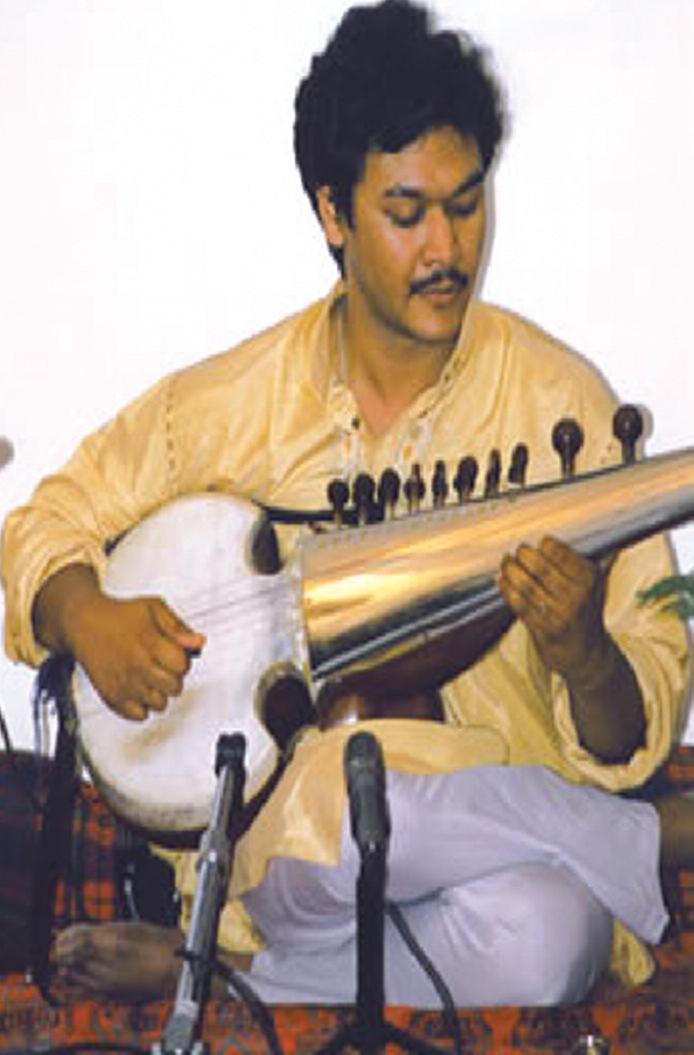
nate talent, years of grueling toil and delicate musical nurture, Anirban remains an extremely humble and self-effacing artist In 1987, he stood first in the All India Radio Music Competition He has performed widely in India as well as in the UK, Netherlands, Germany, Belgium and USA He released his first CD album in 2002 from the Netherlands Anirban has followed his father’s footsteps in balancing a dynamic musical career with commendable academic and professional pursuits He holds a Masters degree in Electrical Engineering from Jadavpur University, Calcutta and is employed as a senior IT executive in New Jersey, USA. Anirban presently lives in New York
Tabla accompaniment was provided by a very familiar face at Ananda Mandir, Gokul Panda, another highly talented musician of our community
We are temporarily stopping Ananda Sandhya events due to construction activities in connection with temple expansion We just do not have the space we need for any good cultural program at this time
After a long stretch of over 100 lovely Ananda Sandhya concerts, we would like to inform the community that due to major construction activities in our premises in connection with our temple expansion, our next Ananda Sandhya events will be on hold for a few months until the temple floor is ready again for our presentations We will post the date of next Ananda Sandhya with all details on our web site and thru mass email Please stay tuned
NJPA celebrated its traditional Saraswati Puja on March 7, 2015
This year also, the venue was the Senior Center of Monroe Township, Monroe, NJ
This is normally our first event of the year, so people eagerly wait to be part of this celebration After severe winter, NJPA members and friends came out to have some quality time spent together Coincidentally, it was also the Holi weekend and we came to throw some color around, the color of joy and happiness After Puja in the afternoon, the evening was full of entertaining activities In fact after many years, we had a stand up play performed by very talented local artists and everyone was excited about it For our new life members this was the first event and we were happy to welcome them and to appeal to them to actively take part in NJPA activities
Going back, we had a blast at NJPA New Year party at Royal Albert Palace on 31st Dec 2014. As expected the event was sold out and everyone welcomed the new year of 2015 with the wish that it brings lots of prosperity, progress and peace in everyone’s life
NJPA Annual General Meeting is scheduled on April 18, 2015 at our regular venue in East Brunswick We look forward to meet everyone there and present the accounts of the whole year
Our annual summer picnic is scheduled on Saturday July 25, 2015 This year the venue is Mercer County Park – East picnic area This is an amazing facility and much sought after by picnic lovers We wanted to have our picnic on this facility since quite some time and this year because of sincere efforts of some dedicated NJPA members we could grab this facility. We are sure to have good time here
Last but not the least we want to thank our supporters, patrons and volunteers from the bottom of our hearts They are the single largest force for the success of all NJPA programs
As in previous years, the year 2015 will be full of cultural and religious activities We look forward to active participation of everyone For further details please visit our website www njpa net Please do send your suggestions, if any, to our executive committee
The 2014 Annual General Meeting for ICC Garden State was held on December 21, 2014 (Sunday) at 30 Calais Rd, Randolph, NJ 07869 wherein the members elected the new Executive Committee for the years 2015-16 The members of the new Committee are:
Role
dren and adults glued to their seats trying to guess the right answer from the choices given This was a unique opportunity for children to learn about the significance of this auspicious day in a fun interactive way The evening opened with the new Executive Committee intro-
Name
President Arpita Gupta
Vice President Chaitali Sinha
General Secretary Chandrima Bandyopadhyay
Communication Secretary Soma Chaudhuri
Social Secretary Nirmal Kundu
Treasurer Sudip Saha
Cultural Secretary Nilay Hait
Recreation Secretary Debojit Mukherjee
Member at Large Sangrami Lahiri
The newly elected ICC Committee executed its first event, Saraswati Puja as per traditions in a solemn and yet "gharoa" ambiance at Dennis O’Brien Elementary School, Rockaway, NJ The children and members of ICC showcased their creativity through an exhibition of arts and craft The medium used had a wide range from pastel colors to drift wood The Quiz on Ma Saraswati was one of the most exciting events that kept chil-
ducing them through a very elegantly written verse delineating their respective roles and functions The Cultural programs opened with the song “Saraswati Bidyeboti” sung by the ICC Kids A set of remarkable dance performances from “Rhythm of Dance” choreographed by Mitra Purkayastha enthralled the audience The renditions included Shanti Mantra, Ganesh Vandana,
Vande Mataram etc. In another dance program, the ICC Kids also danced to the medley of songs from the evergreen “Sound of Music” and “Amader Chhuti Chhuti” The short play “Shotorupa” by Kalavati Group celebrated the different facets of womanhood and evoked varied emotions Last, but not the least, the evening was filled with captivating music from guest artists Prakhar Ghosh and Jayati Ghosh who connected with the audience, both young and old, and made the evening memorable ICC has announced the next upcoming event “Dol Utsav” on Sunday, March 22 2015 to welcome Spring with great festivity and color For more details, please visit http://www iccgs.org/. ICC wishes all readers Season’s Greetings and a very Happy New Year
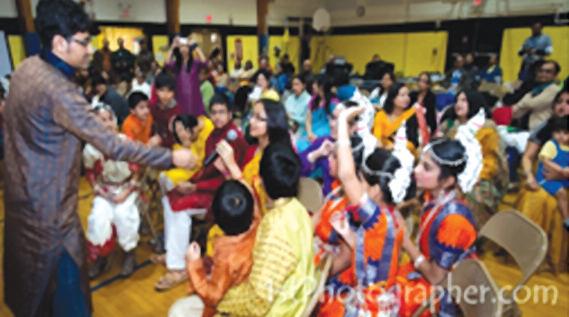
On Sunday November 23, as the first rays of the sun beamed over the City of Brotherly Love, over 35,000 runners pounded the pavement in the freezing cold It was the start of the 2014 GoreTex Philadelphia Marathon These athletes were drawn from all walks of life spanning the globe, who had transformed Downtown Philadelphia into the "City of Brotherly Run and Sisterly Endurance " The Bengali community of Central Jersey was ably represented at the event by Anirban B hattacharya (Piscataway), Indrajit Giri (Hillsborough) and Sandip Mukherjee (Edison) Anirban is the founder of the Jersey-based K Road Runners Club (KRRC) that also includes Indrajit. It was the first marathon outing for Indrajit, while Anirban opted for the half-marathon course Sandip came into the race after completing the Chicago Marathon in October
In preparation for the race, the trio had slowly built up stamina and endurance by following popular regimen such as the 20week long Hal Higdon training program for beginner marathon runners They had to put in 20-35 miles/week of practice run, of which 10-20 miles would be on the weekend They had also participated in a number of shorter competitive races, including half marathons, to boost their confidence Running the course with thousands of marathoners who share their passion was a great experience in the trio’s view In the end, it came down to a “mental game ” Each achieved his goal with the support of the family, friends and throngs of cheering spectators who had lined up the course Sandip reached the 26 2 mile mark in 3:58; Indrajit did it in 4:24; while Anirban finished the 13 1 mile course in 2:21 These were indeed moments to savor!


Life insurance Agent: Key to estate planning
You may be used to doing just about everything yourself or trying to become an instant expert by reading the latest articles on the hottest subjects Still, when it comes to your financial affairs, it may be more efficient and effective to work with a team of experienced professionals Chances are that they can better guide you in the management of personal finances than you could by yourself
There’s a wealth of business, financial, tax, insurance, and estate planning experience readily available Tapping into these resources is a matter of knowing who to look for and how to get started A life insurance Agent is a valuable resource.
There are many reasons why a life insurance Agent should be a key member of your estate planning team A life insurance Agent’s job is more than just simply selling insurance and financial products it’s much more
Specifically, your Agent can:
1 Help you to coordinate business and personal affairs. Your personal and business matters may be closely intertwined, and if that’s the case, they should be addressed simultaneously Needs may include family decisions in business succession planning, estate planning and conservation, and retirement funding. Your Agent can help you decide on a program tailored to meet your financial goals
2 Conduct what is called a fact-finder. In the privacy of your home or office, a life insurance Agent can help you see where you are at this stage in your life, financially, and where you’d like to be in the future
3 Discuss financial products Life insurance is not a one-size-fits-all product A life insurance Agent can explain the various types of life insurance and other financial products, and how they can be customized to meet your specific needs Of course, the final decision will be up to you
4 Your life insurance Agent can serve as the “quarterback” of your insurance team. Life insurance Agents are trained to see the big picture and will be glad to cooperate with your other advisors in the creation of a professional team whose objective is to work in your best interests At New York Life, we believe in and practice the team concept of estate planning Our Agents will help you to evaluate your needs and provide solutions in concert with other team members Talk to a life
Ananda Sangbad
Reported by Sushmita
Ekushey February - Bhasha Shohid Dibosh day recognizes sacrifices of the martyrs for establishing Bengali as a national language of Bangladesh It's a memorable day in every Bengali's life and now, 21st February is observed in all UN countries as International Mother Language day
In recognition of Ekushey February, The Love for Theater group organized an event at Indranil Mukherjee's residence Discussions were held on the importance of 21 February in promoting awareness for Bengali language. Each participating group member advocated Bengali language by reading/reciting rare and some original/authentic Bengali literary works Indranil Mukherjee read "Kopotakkho Nod" by Michael Madhushudan Dutta and then read the popular "Banglar Mati Banglar Jol " In contrast, he read a con-
temporary literary piece named "uposh" which clearly exemplified Bengali language trends in the past and now
Amitabha Sengupta read a poem "Bangla Tangla" written by Apurba Dutta and a "Ekushey"- a play written by Zahir Rahan
Nupur Lahiri read a rare hilarious piece - "Bachoshpoti" by Rabindra Nath Thakur Tandra Das and Shubhasish Das read Facebook pages written by Kuntal Rudra Tandra and Indranil sang "Ami Banglay Gaan Gaai..." and the group joined in chorus filling the ambiance with a touch of emotion for Bengali as mother tongue Sushmita Dutta recited her own composed poem "Samjhota" -Love for Theater group meets every month to promote theater and literary works
On 9th February, 2015, New Jersey community member, Nupur Lahiri M D , a practicing psychiatrist and educator in the field of psychiatry was invited guest speaker over Tara Bangla TV show “B halo Achi, B halo Thako” discussing Mental Illness and stigma around it. The facilitator was Urmimala Basu, a wellknown anchor and reciter from Kolkata The program was viewed by a wide audience both in India and US Telecast at 2:30 pm IST (Monday - Thursday), the popular television show “B halo Achi, Bhalo Thako” is a live show, particularly aimed at women viewers and deals with well-being - various ways of keeping oneself well The focus of the show is primarily on mental health Being a live show, audience can call in and share their views, experiences of personal sufferings, as well as share stories of distress The guest speakers discuss the issues, no matter how complex the problems are to restore confidence among
the viewers and promote well-being Dr Nupur Lahiri discussed Depression, Anxiety, Obsessive Compulsive Disorder, Childhood Separation Anxiety, Marital conflicts and finally a way of reaping happiness and peace in our troubled world of conflicts. There were about seven members from audience with a variety of questions and all of them were answered expertly by Dr Lahiri with interjections by the show anchor Urmimala Basu Dr Lahiri cited seven steps of pursuit of happiness and ended the program reciting one of her poems titled: Don’ t call me crazy, I’m just blue (in Bengali) Making all of us proud in this community, Dr Lahiri has been invited to reappear on the show whenever she is in Kolkata again
For Ananda Sangbad readers, here is the email contact of Tara Bangla TV’s “B halo Achi, B halo Thako”bhalotheko@taratv com, in case one is enthused to take part in the show when in Kolkata
By Debajyoti Chatterji
Schemes, scams and flimflams to defraud vulnerable individuals have been around for centuries Unfortunately, with the advent of the Internet, the number and variety of these illegal and immoral activities have increased manifold Now we receive daily email barrages (spams) about lotteries we have won without buying tickets, funds we have inherited from people we have never heard of, “genuine” medicines we could buy at dirt cheap prices from “authorized” pharmacies, and so on We are warned that there is something wrong with our bank or credit card accounts, and that we have to enter our account details to “straighten things out” We also learn that one of our good friends or relatives has lost his passport and all the money while traveling abroad and we must wire him some money right away If you are like me, you think you are wise enough to spot these schemes, scams and flimflams and steer clear of them You are too smart to fall in these traps, right? I thought so myself In fact I had gone to great lengths in highlighting some of these scams at social gatherings to garner audience admiration Little did I know that I was as gullible as the hundreds and thousands of scam victims who fall prey to unscrupulous fraudsters every day around the globe A recent incident in Hawaii opened my eyes and taught me a lesson While vacationing in Maui, my wife fell severely ill. She had to undergo emergency surgery – and then had some further complications We were advised by the doctors that she could fly back to New Jersey, a distance of over 5000 miles, only after a two to three week recovery period The problem was “no vacancy” signs everywhere in the beautiful island of Maui! It may be hard to believe but that was indeed the case around the Valentine’s Day/Presidents Day weekend this year in Maui. Our original plan was to leave just before that weekend but now we were forced to look for accommodation for several days before that weekend and about 10-days beyond Extensive on-line research by my friend, Rama Haldar (who was traveling with us with his wife, Baruna), and by me only turned up rooms at the Four Seasons Hotel for $1800 per night (yes, per night)! At that point, my family members back in New Jersey decided to pitch in. They scoured the Internet and extended the search beyond the usual hotel rooms and looked for condos and timeshares as well as bed-and-breakfast establishments and single-family homes One searched the Airbnb site, another dug in VRBO com and HomeAway com -- and the third looked through the Craig’s List Some accommo-
dations were available through Airbnb and VRBO but none was available for the entire three weeks that we needed
As the clock ticked away and we inched towards the prospect of homelessness in paradise, one of my daughters spotted two very promising listings on Craig’s List Very attractive condos in oceanfront timeshare complexes were available at decent prices The locations, rooms and amenities in both cases were appealing, so I authorized them to sign up with the first party that would take us “Tommy” was the first party, and he was a very pleasant fellow to work with. He emailed the rental agreement right away which looked fine We drove over to the listed location to see the area and that was fine too However Tommy could not process credit card payment or handle payment through PayPal Since he said that he lived in Maui, I wanted to meet him and pay him with cash But he was at that time in Honolulu. So he wanted me to send the money through bank transfer We became a bit concerned at this and decided to move on to the second party, “Carol” Lo and behold, after going through a very similar set of zigs and zags, Carol wanted us to send funds to her through Western Union! By then, all the alarm bells were ringing out loud in our heads, and we realized that these were pure and deliberate attempts to lure unsuspecting victims into fraudulent rental traps When I decided to confront “Tommy” on the phone and threaten to inform Craig's List about his scam, he simply hung up
What lessons did I learn from this experience? First, if a deal seems to be too good to be true, it probably is When the whole island had “no vacancy” signs, how could I believe that two beautiful condos were available for almost three weeks at very reasonable prices? Second, be suspicious of listings in websites such as Craig's List where advertisers can place listings at no cost and whose credentials are not verified by the website administrators While the vast majority of advertisers in websites like Craig's List are legitimate and honorable individuals and businesses, some crooks do lurk in there and try to make quick bucks through schemes and scams So, be aware, especially if the advertisers want to be paid through Western Union or bank transfer I shudder to think of the poor victims who send piles of money to these types of crooks, show up in a distant island or a foreign country with a useless rental agreement in hand, only to find no accommodations anywhere during a sold-out season
ANANDA MANDIR will celebrate Bangla Naba Barsha On Wednesday, April 15, 2015
Ananda Sangbad
By Subhodev Das
Is gender-based violence rooted in the nurture of the perpetrators or in the nature primarily determined by the human genome of these individuals?
The human genome the complete set of human genes comes bundled in twenty–three separate pairs of chromosomes Of these, twenty–two pairs are numbered in approximate order of size, while the remaining pair consists of the sex chromosomes: two large X chromosomes in women, one X and one small Y (actually, the smallest) chromosome in men
A male inherits the X chromosome from his mother while the Y chromosome is handed down by the father Genetics or the study of genome has made many startling discoveries, but nothing more astounding than that of the human body being effectively a vehicle for the ambitions of the genes
Evolutionary psychologists propose that human rape appears not as an aberration but as an alternative gene–promotion strategy that is most likely to be adopted by the 'losers' in the competitive, harem–building struggle If the means of access to legitimate, consenting sex is not


available, then a male may be faced with the choice between force and genetic extinction If he succeeds in impregnating one or two 'stolen' women before being castrated or lynched by the 'owner' males, then his genes (and thus behavioral tendencies) will pass on to the next generation
In A Natural History of Rape: Biological Bases of Sexual Coercion (pub 2000), biologist Randy Thornhill and anthropologist Craig T Palmer of the University of New Mexico expounded that rape (in the vernacular of evolutionary biology) is an adaptation encoded by genes that confers an advantage on anyone who possesses them Back in the late Pleistocene epoch 100,000 years ago, the book contended, men who carried rape genes had a reproductive and evolutionary edge over men who did not: they sired children not only with willing mates, but also with unwilling ones, allowing them to leave more offspring (also carrying rape genes) who were similarly more likely to survive and reproduce, unto the nth generation That would be us. And that is why we carry
rape genes today The family trees of prehistoric men lacking rape genes petered out in the natural selection process
Subsequent scientific investigations have discredited the programmed–to–rape idea In 2009, Sharon Bagley wrote an investigative essay in Newsweek that highlighted an anthropological study involving the Ache hunter–gatherer tribesmen of Paraguay The Ache live much as humans did 100,000 years ago The study concluded that reproductive costs outweigh the benefits of rape by a factor of 10 and thus could not support the “rape is selectively advantageous for procreation” theory
Let us look into the potential genetic underpinning to rape as suggested, but not substantiated, by the evolutionary psychologists The male rape gene would be located on the Y chromosome Among the genes on the Y chromosome, SRY (Sex–determining region Y) gene is perhaps the most important one. It makes men into men; its gene sequence is remarkably consistent among men and has remained nearly unchanged since the last common ancestor of all people 200,000 years ago or so Compared with other active genes, SRY is one of the fastest evolving However, its gene mutations are linked to Swyer syndrome in females
In order for the male rape gene to survive the evolution, it must offer distinct benefits to the carriers, say in reproduction The sexual antagonism or sexual conflict theory states that when the two sexes have conflicting optimal fitness strategies concerning reproduction, particularly over the mode and frequency of mating, evolutionary arms race can potentially ensue between males and females For instance, males may benefit from multiple mating, while multiple mating may harm or endanger females According to the proponents of the theory, the more social and communicative a species is, the more likely it is to suffer from sexually antagonistic genes The most social and communicative species on earth is humankind So is the male rape gene of a sexually antagonistic variant?
Interestingly, SRY and DAX, a recently discovered gene on the short arm of the X chromosome, are antagonistic to each other Matt Ridley discusses this antagonism in his insightful book Genome (pub 2000) Since an X chromosome spends two–thirds of its time in females and only one–third in males, it is three times as likely to evolve the ability to ‘attack’ the Y chromosome At the onset of the human race, the ability to seduce women might have been good for the Y chromosome However, it came under threat from the driving X genes, so much so that it has shed as many genes as possible and has shut down the rest, to ‘run away and hide’ The great bulk of its length now consists of non–coding DNA serving no purpose at all
During the last decade, several important genetic discoveries were made It is now conclusively proved that human
Continued to page 14
By Sushmita Dutta
Digital technology has changed our lives And, here are some facts extracted from our digital world interactions that control our work and day-to-day living:
● Over 90% of all the data in the world was created by us in the past 2 years with overwhelming usage of emails, mobile messages (SMS), social media and other digital technologies
● Every two days we create as much information as we did from the beginning of time to 2003.
● In every single minute of our living world today, we send 204 million emails
● Our usage of smartphones is witnessing phenomenal growth This year, there will be over 1 2 billion smartphones in the world loaded with sensors and data collection features
● Our transmitted data over mobile networks increased by 81% to 1 5 Exabyte (1 5 billion gigabytes) per month between 2012 and 2014.
● We use Facebook to share 30 billion pieces of content every day We generate 18 million likes and upload 200 thousand photos on Facebook each day
● We deliver 60,000 tweets each day Companies monitoring Twitter analyze 12 terabytes of data every day (1 terabyte = 1000, 000, 000, 000 bytes of data )
● Our Google search processes average over 40 thousand search queries each second, making it over 3.5 billion searches in a single day
● We upload 100 hours of video on YouTube every minute and it would take us about 15 years to watch every video uploaded by us on YouTube
● It is expected that by 2020 the amount of digital information we have today will have grown from 3 2 Zettabytes to 40 Zettabytes.
(1 ZB = 10007bytes = 1021bytes = 1000000000000000000000 bytes).
Around all these activities generated by us in the digital world, we are users of emails, SMS, Social Media tools like Facebook, Twitter, YouTube etc And, we are creators of tons and tons of information which translates into big volumes of data that are transmitted, captured, processed and stored for re-use Therefore, Big Data and Social Media are two technology terms that are integrated with our digital world, and hence, here is an attempt to deliver to our readers some meaningful insights into Big Data and Social Media without getting down to complex technicalities
This is a simple reading material to get an overview of these technology terms which may help our readers understand what we do in the digital world and how it works in the technology arenas. I have attempted to provide simple explanations for these two technology terms So, to start with, what is Big Data?
Big Data:
Some rudimentary stuff: What is data? Data is a collection of facts like numbers,


words Three terms: Data, information and knowledge are tied together While data is collected and analyzed to create information, knowledge is derived from a given set of information on a subject For example, the space of our new temple at Ananda Mandir is a data This data combined with other data like description of the temple activities within this space is information for others to decide how useful this space will be for an activity Using experiences with activities held within the space will deliver knowledge as to how and when to use the space within the temple
Big Data is all about Information that will be meaningfully useful to specific target users For example, Facebook handles 50 billion photos from its user database eBay uses two data warehouses for search, consumer recommendations, and merchandising Amazon handles millions of back-end data operations every day, as well as queries from more than half a million third-party sellers. These activities keep Amazon running with the world’s three largest databases Walmart handles more than 1 million customer transactions every hour, which are imported into large databases having the equivalent of 167 times the information contained in all the books in the US Library of Congress
Simply defined, Big data refers to the very large and complex collection of data (data sets) to address tasks like:
● Predictive data analysis: This helps analyze data and make predictions about future, or otherwise unknown, events Essentially, this is used to select the elements of the data that need to be analyzed, and put those into a format from which insights can be attained
● Data capture: Applying multiple methods in capturing data from various sources. This is how data arrives in an organization’s database It includes everything from sales records, customer feedback, social media channels, marketing list, email archives and any data found useful for organizational operations
● Data curation: Used for the management and maintenance of research data and making it available for reuse and preservation
● Data search: Used for efficient retrieval of specific items from a set of items, such as a specific record from a database
Continued to page 14
“This
By Shubho Sarkar, M.D.
Dr Shubho Sarkar is Board Certified in Internal Medicine, Nephrology and Clinical Hypertension He was born in Krishnagar, Nadia, West Bengal however grew up in Nagpur, Maharashtra His initial Medical Education was at Nagpur ( MBBS and MD Medicine) and Nephrology training in Mumbai After spending 2 years in hemodialysis research he completed Residency at Beth Israel Medical Center in New York City in 2006 and Fellowship at Weill Cornell Medical College/ New York Presbyterian Hospital in 2008 He has been in Private Practice for last 7 years based in Morristown with privileges at Morristown Medical Center and St Clare’s Hospital
Denville Diabetes is one of the commonest diseases affecting adults in the US. As many of you may know, it ’s a disease in which a person has high blood glucose (blood sugar) This is either because insulin production is inadequate (type ), or because the body's cells do not respond properly to insulin ( type 2), or both In type 1 diabetes, kidney disease rarely begins in the first 10 years after diagnosis of diabetes In type 2 diabetes, some patients already have kidney disease by the time they are diagnosed with diabetes About 30 percent of patients with Type 1 ( juvenile onset) diabetes and 10 to 40 percent of those with Type 2 (adult onset) diabetes eventually will suffer from kidney failure. Before the discovery of artificial insulin, doctors would give patients 6 months for survival following the diagnosis of diabetes Untreated diabetes resulted in death due to failure of multiple organs Now, diabetes is less feared due to the ready availability of insulin With better survival its impact on several organs have become more evident especially those affecting the eyes, nerves, heart and the kidneys
Involvement of the kidneys with diabetes is one of commonest causes of kidney failure resulting in the need for dialysis and kidney transplantation Being one of the organs with high blood circulation, the kidneys are an early target of deposits of blood sugar and its derivatives, leading to slow kidney failure Each of our kidneys contain approximately 1 million filtering tubes which filter out waste and excess water and holds back good substances including all the blood cells and serum proteins Normally there is an extremely low quantity of protein in the urine as they are held
back in the blood for their distribution to the muscles and other organs Diabetic kidney disease, like many other primary kidney diseases, is characterized by loss of protein (mostly albumin) in the urine As albumin passes down the filtering tubes it irritates the surrounding normal kidney tissue which gives rise to scarring With persistent protein loss, the scarring process continues and leads to damage of the filtering tubes and membranes with progressive kidney failure
Patients with diabetes who find they have eye or nerve problems should immediately speak with their doctor to have their urine checked for protein and blood to detect any kidney disease. A blood test will show if there are high levels of urea and creatinine (a muscle protein). Elevated blood levels of these substances may indicate kidney disease Diabetes patients may also have high blood pressure, high cholesterol, obesity and heart diseases and/or stroke It’s important to have regular blood tests and have close physician follow up for the early detection of any organ damage caused by diabetes
Treatment of diabetic kidney disease is focused around decreasing the rate of progression of the disease There are no drugs available to reverse the process although a few have been studied in clinical trials Once high levels of protein loss and renal dysfunction are established, the process is by and large irreversible Tighter blood sugar control should be the goal with an effort to keep the hemoglobin A1C (test for 3 month blood sugar control) lower than 7 0% Blood should be regularly checked for any rise in creatinine and associated problems with electrolytes (especially potassium), and checked for a decrease in hemoglobin levels
B lood pressure, in diabetics, should be targeted at a much lower level (< 130/80) than recommended for those who do not have diabetes This is to lower the pressure on the filtering tubes and avoid pressure related damage to them. A special category of blood pressure medications (called angiotensin receptor blockers or angiotensin converting enzyme inhibitors) can lower the protein loss by the kidneys and slow the scarring process Some patients may not tolerate these medications due to a risk of high potassium levels and a rise in creatinine Stopping smoking, indulging in regular exercise and weight loss all go a long way
Reported by Subrata Bhaumik
to slow the disease progression
For some patients, dialysis may be required Dialysis sometimes needs to be started a little earlier for diabetics than for other diseases This is due to the high incidence of cardiac and vascular disease in these patients If dialysis is required, most studies have not found a survival difference between hemodialysis and peritoneal dialysis in diabetic patients. Few diabetic patients perform home hemodialysis, the single modality with the highest patient survival rate Nephrologist may recommend kidney alone or kidney and pancreatic transplantation as an option based on a patient’s qualification for the surgery Kidney transplantation should be explored even before the need for dialysis initiation considering the ability of kidney transplantation to avoid side effects related to dialysis Also compared with dialysis, kidney transplantation is associated with increased patient survival and a better quality of life
Diabetic kidney disease during pregnancy is particularly difficult to manage and carries a high risk to both the baby and the mother Angiotensin inhibitors are contra-indicated and urine protein loss is difficult to manage Close follow up with both an endocrinologist and an obstetrician is recommended
You should always consult your doctor for your questions regarding diabetes and its impact on the kidneys, as individual cases will have unique issues Below are common questions that I receive from my patients:
1 Are both of my kidneys affected?
Yes When there is evidence of excess protein loss and increase in blood creatinine level both the kidneys are affected
2. My blood sugars are fluctuating a lot, any risk to the kidneys if I stop my diabetic medications?
Risk of protein loss and progression of kidney disease decreases and all effort should be made to keep blood sugar under tight control not only for the protection of kidneys but other cardio vascular benefits Obviously low blood sugar levels should be avoided Dose of insulin and pills for diabetes (oral- hypoglycemic agents) may decrease significantly with worsening kidney function and close follow up with an endocrinologist is recommended Some patients on dialysis can actually stop them altogether. This happens due to
Continued to page 14

Sahitya O Alochana is a monthly literary and topical discussion forum under the aegis of Ananda Mandir It completed its 7th anniversary a few months ago, and will have organized seventy eight (78) discussion sessions in April 2015 These monthly sessions feature exciting and illuminating discussions on diverse subjects including literature, theater and movie, history, philosophy and religion, science and mathematics, economics and business, social issues, sports, and current affairs The December 2014 – February 2015 was no exception with discussions on eclectic topics including a presentation by “Manavi,” the famous NJ based Women’s rights organization, and the absence of “Class Based Politics in Bengal ” No session was held in February
December
This session was entitled “Quest for Safety in the Lives of South Asian Women ” Violence against women has been one of the gravest ills of our civilization Needless to say, human beings are not egalitarian by any stretch of imagination when it comes to gender safety and equality It is abhorrently paradoxical that our behavioral pattern as recorded thus far in the evolutionary process is often at odds with what we preach or believe at an intellectual level And gender-based violence directed to women is probably the greatest example of such disparity The session featured a presentation on behalf of “Manavi,” a New Jersey based Women’s Rights organization that pioneered the movement to combat violence against women at the grass-root level, and is recognized as the first organization in the U S to focus on such problem in the South Asian community
Ms Shamita Das Dasgupta, a co-founder of Manavi, presented to a robust crowd an overview of the genesis of the organization, its activities, programs, outreach, and challenges it has faced in last 30 years and is facing now It was an eye-opening account of lives of the victims of violence against women, one of the oldest ills of our society, and Manvi’s tireless efforts to fight it
It was an extremely powerful and informative session that cleared a lot of myth about the subject that existed in our minds Attending crowd was moved by the information shared, and was very appreciative of the work that Manavi does
Of note, Ananda Mandir awarded a community service grant to Manavi in recognition of the organization's work in combating such violence and providing help to the community members impacted by such heinous crime
January
In January, We ushered in the New Year with yet another very interesting topic that explored the interface between religion and politics in the backdrop of sociological evolution in Bengal The topic was entitled "Caste and Politics: The Religious Basis for Bengali Egalitarianism "
Amitabha Bagchi led the session and eloquently presented to the attending crowd a very thoughtful and informative analysis of the case for and against the hypothesis and examined if it was real or notional. He further delved into the potential reasons for the seemingly absence of caste-based politics in Bengal relative to its neighboring states and rest of India for that matter He led us through the annals of history and traced the Bengali religious experience of Buddhism, Tantrism (in both Buddhist and Hindu contexts), Islam, Vaishnavism, and their assorted offshoots (Bauls and Sufis) in relation to the rise and fall of different political dynasties -- the Palas, the Senas, and the Turkic and Mughal rulers In conclusion, a final evaluation was made of the impact of the British rule and European Enlightenment on Hindu egalitarian thought in the Bengal Renaissance, in both religious and secular spheres
It was a wonderful session indeed, and we look forward to organizing many more session like this
Future sessions
Quite a few interesting sessions are in the pipeline for the next several months They include a discussion on detective novels and stories in Bengali literature, a centennial commemorative event on the life and works of the famous Indian playwright and thespian Sambhu Mitra, a discussion on impact of “Artificial Intelligence on Human Evolution”, and an Urdu Shayari session combining poetry reading and musical recital by distinguished artists.
The friends of Sahitya O Alochana would like to thank Ananda Mandir for its continued support for the forum’s contribution to the cultural enrichment of the local Bengali and Indian communities
Ananda Sangbad
Don't call me crazy, I'm just blue
Why feel so hazy, I have no clue
Maybe I'm sad, but don't call me mad
All my feelings are true Don't call me crazy, I'm just blue
My soul melts away Can't stop feeling this way I cry out for help May die to escape
Feeling such gloom Save me from my doom
Don't call me crazy, I'm just blue
"It was really hard to get out of bed in the morning I just wanted to hide under the covers and not talk to anyone I didn't feel much like eating and I lost a lot of weight Nothing seemed fun anymore I was tired all the time, and I wasn't sleeping well at night But I knew I had to keep going because I've got kids and a job It just felt so impossible, like nothing was going to change or get better "
Everyone occasionally feels blue or sad But these feelings are usually short-lived and pass within a couple of days. When depression persists for more than two weeks and interferes with daily life it becomes a serious illness
Most likely, depressive illnesses are disorders of the brain and caused by a combination of genetic, biological, environmental, and psychological factors In addition, trauma, loss of a loved one, a difficult relationship, or any stressful situation may trigger a depressive episode
Signs and symptoms:
• Persistent sad, anxious, or "empty" feelings
• Feelings of hopelessness or pessimism
• Feelings of guilt, worthlessness, or helplessness
• Irritability, restlessness
• Loss of interest in activities or hobbies once pleasurable, including sex
• Fatigue and decreased energy
• Difficulty concentrating, remembering details, and making decisions
• Insomnia, early-morning wakefulness, or excessive sleeping
• Overeating, or appetite loss
• Thoughts of suicide, suicide attempts
• Aches or pains, headaches, cramps, or digestive problems that do not ease even with treatment
There are several forms of depressive disorders.
Major depression severe symptoms that interfere with your ability to work, sleep, study, eat, and enjoy life. An episode can occur only once in a person’s lifetime, but more often, a person has several episodes
Persistent depressive disorder depressed mood that lasts for at least 2 years A person diagnosed with persistent depressive disorder may have episodes of major depression along with periods of less severe symptoms, but symptoms must last for 2 years
Some forms of depression are slightly different, or they may develop under unique circumstances
Psychotic depression, which occurs when a person has severe depression plus some form of psychosis, such as having disturbing false beliefs or a break with reality (delusions), or hearing or seeing upsetting things that others cannot hear or see (hallucinations)
Postpartum depression, which is much more serious than the "baby blues" that many women experience after giving birth, when hormonal and physical changes and the new responsibility of caring for a newborn can be overwhelming It is estimated that 10 to 15 percent of women experience postpartum depression after giving birth
Seasonal affective disorder (SAD), which is characterized by the onset of depression during the winter months, when there is less natural sunlight. The depression generally lifts during spring and summer SAD may be effectively treated with light therapy, but nearly half of those with SAD do not get better with light therapy alone Antidepressant medication and psychotherapy can reduce SAD symptoms, either alone or in combination with light therapy
Bipolar disorder, also called manic-depressive illness, is not as common as major depression or persistent depressive disorder Bipolar disorder is characterized by cycling mood changes from extreme highs (e g , mania) to extreme lows (e.g., depression).
Depression, even the most severe cases, can be effectively treated The earlier that treatment can begin,
(Editor’s Note: We are pleased to bring this important column in Ananda Sangbad The author can be reached at her email address, lahirimd@aol.com)
By Nupur Lahiri, M.D.
the more effective it is
Many people with a depressive illness never seek treatment But the majority, even those with the most severe depression, can get better with treatment.
Major depressive disorder is one of the most common mental disorders in the United States. Each year about 6 7% of U S adults experience major depressive disorder Women are 70 % more likely than men to experience depression during their lifetime The first step to getting appropriate treatment is to visit a doctor or mental health specialist
Once diagnosed, a person with depression can be treated in several ways The most common treatments are medication and psychotherapy Resistant depression is treated with Electroconvulsive therapy and other brain stimulation therapies
Psychotherapy
For mild to moderate depression, psychotherapy may be the best option However, for severe depression or for certain people, psychotherapy may not be enough
Medication
Antidepressants primarily work on brain chemicals called neurotransmitters, especially serotonin and norepinephrine Other antidepressants work on the neurotransmitter dopamine
All antidepressants must be taken for at least 4 to 6 weeks before they have a full effect Although antidepressants are not habit-forming or addictive, sudden ending can cause withdrawal symptoms or lead to a relapse of the depression.
Anxiety disorders, such as post-traumatic stress disorder (PTSD), obsessive-compulsive disorder, panic disorder, social phobia, and generalized anxiety disorder, often accompany depression PTSD can occur after a person experiences a terrifying event or ordeal, such as a violent assault, a natural disaster, an accident, terrorism or military combat
Alcohol and other substance abuse or dependence may also co-exist with depression
Depression also may occur with other serious medical illnesses such as heart disease, stroke, cancer, HIV/AIDS, diabetes, and Parkinson's disease People who have depression along with another medical illness tend to have more severe symptoms of both depression and the medical illness, more difficulty adapting to their medical condition, and more medical costs than those who do not have co-existing depression
How do women experience depression?
Depression is more common among women than among men Biological, life cycle, hormonal, and psychosocial factors that women experience may be linked to higher depression rate in women For example, women are especially vulnerable to developing postpartum depression after giving birth, when hormonal and physical changes and the new responsibility of caring for a newborn can be overwhelming Some women may also have a severe form of premenstrual syndrome (PMS) called premenstrual dysphoric disorder (PMDD) PMDD is associated with the hormonal changes that typically occur around ovulation and before menstruation begins
During the transition into menopause, some women experience an increased risk for depression
Finally, many women face the additional stresses of work and home responsibilities, caring for children and aging parents, abuse, poverty, and relationship strains.
How do men experience depression?
While women with depression are more likely to have feelings of sadness, worthlessness, and excessive guilt, men are more likely to be very tired, irritable, lose interest in once-pleasurable activities, and have difficulty with sleeping Men are more likely than women to turn to alcohol or drugs when they are depressed They become frustrated, discouraged, irritable, angry, and sometimes abusive Some men avoid talking about their depression with family or friends, or behave recklessly And although
more women attempt suicide, many more men die by suicide in the United States
How do older adults experience depression?
When older adults do have depression, it may be overlooked because seniors may show different, less obvious symptoms and are less likely to experience or admit to feelings of sadness or grief Grief that is complicated and lasts for a very long time following a loss may require treatment Older adults also may have more medical conditions such as heart disease, stroke, or cancer, which may cause depressive symptoms Or they may be taking medications with side effects that contribute to depression White males age 85 and older actually have the highest suicide rate in the United States
How do children and teens experience depression?
Children who develop depression often continue to have episodes as they enter adulthood A child with depression may pretend to be sick, refuse to go to school, cling to a parent, or worry that a parent may die
Older children may sulk, get into trouble at school, be negative, irritable, or angry and feel misunderstood
“Don’ t call me sad, I am just mad”, the usual mood state
By age 15, girls are twice as likely as boys to have had a major depressive episode
Depression during the teen years comes at a time of great personal change when boys and girls are forming an individual identity, grappling with gender issues and sexuality, and making independent decisions for the first time in their lives. It can also lead to increased risk for suicide
How can I help a loved one who is depressed?
The most important thing you can do is help your friend or relative get a diagnosis and treatment
• Offer emotional support, understanding, patience, and encouragement
• Talk to him or her, and listen carefully
• Never dismiss feelings, but point out realities and offer hope
• Never ignore comments about suicide, and report them to your loved one's therapist or doctor.
• Invite your loved one out for walks, outings and other activities Keep trying if he or she declines, but don't push him or her to take on too much too soon
• Provide assistance in getting to the doctor's appointments
• Remind your loved one that with time and treatment, the depression will lift
How can I help myself if I am depressed?
• Do not wait too long to get evaluated or treated There is research showing the longer one waits, the greater the impairment can be down the road Try to see a professional as soon as possible
• Try to be active and exercise. Go to a movie, a temple, or another activity that you once enjoyed
• Set realistic goals for yourself
• Break up large tasks into small ones, set some priorities and do what you can as you can
• Try to spend time with other people and confide in a trusted friend or relative Try not to isolate yourself, and let others help you
• Expect your mood to improve gradually, not immediately Do not expect to suddenly "snap out of " your depression Often during treatment for depression, sleep and appetite will begin to improve before your depressed mood lifts
• Postpone important decisions, such as getting married or divorced or changing jobs, until you feel better
Discuss decisions with others who know you well and have a more objective view of your situation
• Positive thinking will replace negative thoughts as your depression responds to treatment
• Continue to educate yourself about depression
“The gates of the sky are opened, the temple is revealed! My land is a sorrow-less land ” –Kabir
Ananda Sangbad
Continued from page 11
genes evolve much more rapidly than previously suggested Some genes seem to be only 10,000 years old, and some may be even younger The natural selection process produces the most dramatic changes in the gene pool when the environment is changing rapidly, such as when agriculture was invented or city–states rose Thus, instead of being locked in cavemen DNA, human genes have actually evolved These genes along with the changing environment have contributed to human nature that is variable and flexible at its core
Evolutionary psychology has sought to describe mechanisms that cause people to behave in adaptive ways (to the extent that they do) The most important category of mechanisms for producing adaptations is development the myriad processes that take us from the genetic information that we inherit from our parents to the flesh and blood, thinking and feeling, experience–filled creatures we are today With the help of genetics, the evolutionary psychologists have begun to look at the development of individual differences in men's propensity to rape and a picture very different to Thornhill and Palmer's is emerging
When we look at the mechanisms that might predispose men to rape in more or less the adaptive way that Thornhill and Palmer describe, rape no longer seems to be "in its very essence, a sexual act." Instead, men's propensity to rape seems to be in large part developmentally contingent on boys' and young men's subjective experience of risky and uncertain environments These are environments in which the flow of resources, especially of social and emotional types, is inadequate or unpredictable There is abundant evidence that the early subjective experience of too much risk and uncertainty (i e , chronic early stress or fear) predisposes young men (and women) to impulsiveness, a taste for risky activities, or a tendency to act too quickly without fully considering the consequences
The subject of risk brings us to the "warrior gene" on the X chromosome that is linked to aggressive behavior or impulsivity Men with the "warrior gene" are not necessarily more aggressive, but they are more likely to respond aggressively to perceived conflict Because men have one copy of the X chromosome, a variant that reduces the function of this gene has more of an influence on them Women, having two X chromosomes, are more likely to have at least one normally functioning gene copy, and variants in women have not been studied as extensively The linking of genes to specific human behavior is just beginning.
James Dabbs of Georgia State University studied 4,462 men in 1990 and found that a combination of high testosterone the primary male sex hormone from the androgen group bound to AR (androgen receptor) gene located on the long arm of the X chromosome and growing up under difficult, stressful conditions was associated with having significantly more sex partners and a lower likelihood of ever marrying but among
the men who did marry, a significantly higher incidence of extramarital sex and violence against wives These findings are doubly intriguing because men who grew up under more difficult conditions were also more likely to have high testosterone levels.
A recent study by the Centre for Cellular and Molecular Biology of Hyderabad, India reports that short repeats of certain DNA segment in the AR gene has been observed in men prone to crimes like rape and murder The study involved 400 men convicted of rape or murder or both Psychogenetic analysis of a rapist’s mind, the study says, reveals that it is the environment (abiotic) that plays a key role in activating the genes and anti–social personality disorder in the person
Of course, none of this 'genetic logic' is conscious, nor does it constitute moral justification for rape, but the evolutionary theory does provide a deeper understanding of the phenomenon Most obviously it explains why rape is an almost exclusively male crime there is a gross imbalance regarding the commodity value of sexual services for men and women respectively Secondly, it is consistent with the characteristics of typical rapists young, virile, high in sex drive, lacking in impulse control, low on the social ladder and likely to have a history of burglary Thirdly, this theory predicts the characteristics of the typical victim young, sexually attractive, fertile and vulnerable
The point is that human rape at the very least is about high levels of testosterone and impulsiveness, the all–too–common consequences of living in risky and uncertain environments And it is in precisely such environments that the most pressing adaptive problem would be passing on one's genes When the flow of resources is inadequate or unpredictable, the risk of death is high When the future is objectively risky and unsure, it can be evolutionarily rationale to take even huge risks for just a small chance at passing on one's genes This phenomenon has been observed in several species, most notably in scorpion flies
If rape is not all about sex then Thornhill and Palmer's policy of preventing rape by having women dress more sensibly is not likely to "really work " On the other hand, if rape is even partly about growing up under conditions of chronic risk and uncertainty, where access to material and social–emotional resources is inadequate and unpredictable, then maybe we should think of ways to reduce the risk and uncertainty that people encounter while they are growing up
If inequality (including power differentials) is the major source of risk and uncertainty in peoples' lives then perhaps we should reduce inequality Of course we didn't need evolutionary theory to tell us that inequality is wrong, but it's gratifying to discover that it offers reason to believe that by reducing inequality we might reduce the incidence of rape Our only scientific theory of life, far from being the racist, sexist brute of fearful imaginations, can help us think of even more ways to identify and realize our deepest social and political goals.
Continued from page 12
the fact that even a little quantity of insulin from the pancreas can stay for a long time in the blood circulation as their breakdown in kidney is slowed down from kidney failure
3 Do I need a kidney biopsy to make the diagnosis?
Sometimes. Biopsy may be required, when the eyes are not affected by diabetes and there are symptoms or signs of other diseases which can give rise to protein loss in the urine The kidney biopsy will help to determine if the kidney disease is due to diabetes or due to another cause It’s better to get the biopsy done earlier than later as most other treatable kidney diseases can respond better to medications when treated at an earlier stage of the disease Also, a kidney biopsy will provide information about the extent of scarring and might be useful
before a kidney transplant surgery by providing information about risk of recurrence of any possible non diabetic kidney disease
4 Can restriction of protein in the diet help?
A low protein diet can lower the work load on the kidneys to dispose of waste from protein metabolism However, evidence of a linkage between low protein diet and kidney disease is not clear. Carbohydrates (sugar) and fats are already restricted in diabetes and restricting protein may make it impossible to avoid calorie deprivation Most physicians will not recommend it
5 Am I doomed to die soon?
Although diabetic kidney disease has a higher mortality rate than most other forms of kidney disease mortality rate measured at 10 years after onset of kidney involvement has improved significantly (from 50-77% to 18%) over last several
Continued from page 11
● Data sharing: The process to make data available to others Clear and concise communication is essential, and this output can take the form of reports, charts, figures and key recommendations
● Data storage: Process that records (stores) and retrieves (reads) information (data) This is where Big Data lives, once it is gathered from various sources A computer with a big hard disk might be all that is needed for smaller data sets, but when we start storing and analyzing big data, a more sophisticated, distributed system is needed
● Data transfer: Handles the speed with which data can be transmitted from one device to another Data transfer rates are often measured in megabits (million bits) or megabytes (million bytes) per second
● Data visualization: Helps understand the significance of data by placing it in a visual context like patterns, trends and correlations which are recognized better with data visualization
● Information privacy and data privacy: Handles the relationship between collection and dissemination of data in view of public expectations of privacy, and the legal and political issues surrounding information privacy and data privacy
Big data is roaring through all sectors of the global markets The value of the big data economy is predicted to reach $125 billion in 2015 The figure is from research by the market research specialists IDC (International Data Corporation) 1 9 million IT jobs will be created in the US by 2015 to carry out big data projects But, there will be a shortage of data talents
Social Media:
Social media are computer-mediated tools like Facebook, Twitter, YouTube etc that allow people to create, share and exchange information, ideas, pictures and
videos within the cyberspace of virtual communities and networks
Social media is defined as "a group of Internet-based applications that build on the ideological and technological foundations of Web 2 0, and that allow the creation and exchange of user-generated content ” “Social media depend on mobile and web-based technologies to create highly interactive platforms through which individuals and communities share, co-create, discuss, and modify user-generated content They introduce substantial and pervasive changes to communication between businesses, organizations, communities, and individuals ” The total time spent on social media in the U S across computers and mobile devices increased to 121 billion minutes in July 2012 compared to 66 billion minutes in July 2011 In 2017, it is estimated that there will be around 191.2 million social network users in the United States compared to 173 6 million in 2014
Big Data integration with Social Media:
Integrating Big Data with Social Media is the current trend to address any large customer base Here is an example: National gas in US adopted Wi-Fi/store antenna based technologies of local gas stations to send SMS with coupons to every smartphone that would come within the antenna/Wi-Fi range of the gas station The coupons would attract customers, thus increasing the revenue of National gas with or without customer loyalty Mobile market having a million users is not the objective; having them converted into customers is the goal The way we do business today through such push technologies (sending unsolicited SMS/coupons to mobile devices) may raise eyebrows about ethical/unethical aspects of business. But that ’s how it is. With Big Data and Social Media integration, this trend of “jumping into user’s fence” to influence our purchasing behavior will grow Take it or leave it
Ananda Sangbad

By Debajyoti Chatterji
Winter months in New Jersey are usually not conducive to social and cultural activities, and the 2014-2015 season has been quite brutal in that regard. Undeterred by unusual cold and snow, Ananda Mandir managed to organize and celebrate all the important religious events such as the Saraswati Puja and the Dol Purnima, thanks to the dedication of our priest, Biswabhai, and his devoted followers Even the Seniors Forum members decided to brave the frigid weather and go on a group outing The group enthusiastically agreed to the idea of seeing an Indian movie as a team and then enjoy a leisurely lunch in a nearby restaurant The newly released mega-hit movie, “PK”, was selected because it had received rave reviews all across India and was highly recommended by a few Ananda Mandir members who had seen it already. The movie had broken all previous Bollywood records in terms of revenue – and had charmed numerous critics, even the ones who normally stay away from song-and-dance routines of Hindi movies
The outing was scheduled for Saturday, January 17 The logistics of transporting all the interested seniors to the movie hall was worked out and the restaurant was lined up But as is often the case, man proposes and God disposes On Friday, January 16, we learned that the movie “PK” was not going to play on Saturday, January 17! We had to quickly develop and implement an alternate plan Our veteran member, Surya Dutta, found an excellent Indian restaurant in Edison, NJ, that could take a sizeable lunch crowd on a very short notice The group, in a very generous gesture, decided not to bemoan the absence of a movie viewing and wholeheartedly embrace the idea of having a leisurely lunch And a good lunch it was, with excellent vegetarian and non-vegetarian selections to satisfy all Someone counted that there were 18 dishes to choose from the elaborate buffet, not counting salads and pickles and other condiments of all sorts
During the three hour lunch, the group excelled in the wellrecognized Bengali social sport: adda We discussed a wide range of topics, had some arguments and counter-arguments that would make any Bengali proud, and collectively decided that the outing had been “great fun” – and that “we should do this more often, movie or not!”
We hope to go on a similar outing in late March (after the arrival of Spring)
(October 1, 1925 - February 22, 2015)

A Patron Member of Ananda Mandir, Dr Manoranjan Dutta, Professor Emeritus at Rutgers University, was an internationally recognized economist who had published several books and numerous papers, especially on Asian economies He received his PhD from the University of Pennsylvania and was the recipient of Fulbright Fellowship twice Residents of NJ for over 50 years, he and his wife, Kanak Dutta, made many contributions to the local Bengali community Dr Dutta is survived by his wife, his daughter, a grandson and a granddaughter
We are saddened by his death and pray for eternal peace for his departed soul
By: Kajoree Renée Bhattacharya
“I’ll be Cinderella!” Sarah said as she curtseyed and took her shoe off. We were under the yellow slide during recess in the first grade, deciding what Disney princesses we would be “I’ ll be Princess Ariel!” I excitedly exclaimed in a hurry so I could be my favorite princess before anyone else claimed her “No, you’re not white You can be Jasmine!” is the reply I got After I protested a couple of times, I agreed to play Jasmine (quite grudgingly, if I can add) so not to be excluded from playing
I never felt different from anyone before, but this incident got me thinking There were other times where my classmates made it clear that I wasn’ t like them by correcting me in everyday things I was taught at school that the correct term was “period” and not “full stop” or that chicken nuggets are finger foods but not macaroni and cheese
Now, this isn’ t to say that there weren’ t other Indian students in class but that, now looking back, I’m grateful that my parents had me immersed into the Indian culture first so I don’ t lose my heritage along my American existence. Of course, at the young age of 21, I am grateful now, but I wasn’ t always
Throughout high school (and a little after), I constantly struggled with my identity Was I American? Was I Indian? I knew I couldn’ t be both because I was never treated as both in India or America When I went home, I couldn’ t always share stories or jokes because it involved American pop-culture, something older generations don’ t understand, let alone my immigrant parents And when I wanted to share something that meant so much to me, like Kishore Kumar songs, Feluda films, and Tagore and Badal Sirkar plays elements I grew up with, my American peers just won’ t get it However, whenever I tried, I appeared as a stereotype Do you know how many times I’ve been asked, “Are you secretly studying theater so your parents don’ t get mad that you’re not studying to be a doctor?” Anyone who knows my theatrical parents, know what a ridiculous question this is It’s funny to think of now but then, it was a struggle I felt such a loss – from both sides -- to a point where I lost a bit of myself What was I? And not only was there the social factor that was different, but so was the academic factor too My parents and I would argue and yell over a “B” I got in my report card They wanted me to do better because of the competitive world, and I didn’ t see the big deal After all, no other parents made it a big deal I see now that my parents came from a world where a little under “the best ” swept you to the underbelly of India and the opposite being America’s relaxed nature; I would never feel the pressure to do better And if I was going to study Theater and Journalism, I would have to strive harder, simply because there weren’ t many people like me in those fields
Unfortunately, this pressure made me hate my parents and my heritage I wanted to be white To be popular and accepted I was tired of the pressure to do better and work harder than my peers Tired of flip flopping between two worlds, and tired of not knowing who I was and am In governmental papers, I never (and still don’ t) have had any idea of what to fill out under any column under Race. (I think for the longest time, I filled out “Pacific Islander” Not even kidding- haha). It’s humorous now, but was far from it before. Depression settled in A light dusting at first but it layered and layered over the years, thickly and heavily becoming an unbearable weight Not only was I a teenager figuring out life and love, but I was a shell of a body with a divided soul My parents and friends, whom I loved and enjoyed the company of, were now strangers, that didn’ t understand me I had to fight this lonely battle by myself Who am I? Am I making my parents proud? Maybe I should become a doctor and follow the American stereotype, like a lot of my Indian classmates, and make them proud At the same
time, my parents were struggling too They didn’ t know how to reach me and didn’t fully understand how I was struggling to balance this see-saw Growing up in a culture of inquiry, I would constantly question my parents and for them to come from a culture of blind trust, they didn’ t understand why I just couldn’ t trust them
At first, the identity crisis wasn’t so bad since it was mainly tailored to academics and I had other outlets to turn to But then came a point where, I noticed, that it started affecting my passions The only place to relieve myself of all tensions was the stage But I noticed that my heritage got in the way. It was like all the baggage I bore was now being noticed and judged because it was seen in my skin something that I couldn’ t easily hide I was always casted as the maid, doctor, terrorist, and/or regressive character on the American stage I also couldn’ t really do shows with my parents either because I couldn’ t read Bengali or Hindi And if I did join them on stage, none of my American peers would support me because they don’ t understand the significance of the play. This was how I hit rock bottom and isolated myself
This is weird to say but, that isolation was the best thing for me during that time It was a way for me to battle my inner demons and come to terms of who I was and what I wanted to do with my life I’ve come to a point where I can embrace my culture and my birthplace all at the same time Instead of thinking of my heritage as a step back, I now view it as a step forward I understand that my career goals aren’ t accustomed to Indians in the field, but who’s to say I can’ t be the one to pave the path for other kids like me? I’ve also taken it as my duty to correct and educate people about my culture so that the Indian culture isn’ t an exotic, untouchable exhibit to Americans, but a different, welcomed friend
As for my parents, not only have I seen them as guides, but I see them as human beings They are people from a drastically different culture filled with norms that aren’ t considered normal in America Through this process, the three of us have a better relationship better than a lot of people, I dare say Were they always right? Absolutely not. But it ’s through that that I have learned to implement the good They did whatever they could for my best and for that, they were never wrong They are beautifully flawed human beings that love me for me It’s okay that they may never fully understand American culture and they’ve accepted that I will never fully understand their homeland And it ’s okay to have our disagreements time to time They are the ones that have seen me as a whole and not in the fragmented way both America and India have seen me To them, I’m not Kajoree – the American student at Rutgers. And I’m not demure Renée who grew up running around Durga Pooja To them, I am just their crazy kid and for that, I am forever thankful
So, have I fully eliminated those inner demons? Unlike Durga, no, but I have learned to increase the distance between them and I And I’m still learning to love myself a little more every day It’s okay for me to get tired of Indian food and grab a pizza as well as blast Kishore Kumar in my car and hate Taylor Swift. And it’s even better to share my loves with my welcoming friends and teach them about my colorful culture Through this new acceptance, I’ve been the one to wear my grandmother’s sari to graduation and prom as well as a lot of social gatherings I even like wearing saris around the house just for fun and have requested my mom to make me bori-mourola on my birthday! I love my India and I love my America because they are both in me I don’ t think I’ ll ever have everything figured out of where I solely stand between the two, and I don’ t think anyone really does -- but isn’ t that the reason to discover where life will take you?
Ananda Sangbad
Based on the deliberations of the Awards and Recognition Committee, Ananda Mandir Board of Trustees has announced Susmita Biswas as an outstanding volunteer of the organization

For many years now, Susmita Biswas has been an ever-smiling, ever-helpful presence at almost all of our religious events, be they big events like Durga Puja and Kali Puja or be they more informal religious ceremonies like Satyanarayan pujas She helps our priest, Biswabhai, in every way possible at these pujas. She does not hesitate to spend hours patiently on tasks like reading out the names and gotras of hundreds of sponsors throughout the day -- or to work tirelessly to prepare offerings to the deities before the puja and to help clean the puja bedi thoroughly afterwards. Susmita is always willing to lend a helping hand in tasks like preparing vegetables for food preparation and serving food to guests, always with a smiling face. She is ready and willing to do the shopping for temple needs, make garlands of flowers essential for pujas, and prepare for pushpanjalis by the devotees On some occasions (like the Mahalaya Mahisasurmardini recital), she has arrived at the temple at 4 am and left the building late in the evening after Amabasya puja that same day She is an exemplary volunteer when it comes to making our priest's job easier and more complete and making the devotees pleased Susmita Biswas
New Life Members: $1,000 to $4,999
1. Chandan & Kumarika Banerjee
2 Asok & Ajanta Baral
3 Ananda Mitra & Rashmibala Bhambore
4. Hrid Biswas
5. Avijit Chattopadhyay & Rupashree Mukherjee
6 Gautomi Chowdhury
7. Sujan & Shamita Dasgupta
8. Sipra De & Sumita Dutta
9 Ashok & Mahua Ganguly
10. Pratapaditya Mallick
11. Ratnakar & Mala Mitra
12 Rama & Manjula Mukhopadhyay
13 Sambhu & Sujata Mukhopadhyay
14. Subhendu & Sutapa Mukhopadhyay

Please note that you can become an Associate Member of Ananda Mandir by donating a minimum of $50. Your subsequent donations of $50 or more are credited to your account. When your total cumulative donation reaches $1000, you become a Li fe Member Your support, small or large, is most welcome and sincerely appreciated.
15, Biswajit & Sreelekha Ray
16. Soumya Roy & Sayanti Basu
17. Boudhayan & Mitan Roychowdhury
18. Bijan & Jayaita Sengupta
19 Vinod Sharma
Patron: $5,000 to $9,999
1 Gautam & Suchitra Bose
2. Subhra Chaudhury
Grand Patron-Silver: $10,000 to $24,999
1. Dipti & Sumita Ghosh
2 Chinmayee Bagchi
Grand Patron-Gold: $25,000 to $49,999
1. Amal B. & Reeta De
2 Biswajyoti Nayak
The Board of Trustees of Ananda Mandir recognizes “Outstanding Volunteers,” selected from the nominations received from the Life Members of Ananda Mandir The application form for nomination is available at www.anandamandir.org.
If you are a Life Member and believe that someone deserves this recognition, please feel free to e-mail nomination to Pronoy Chatterjee (pkc usa@yahoo.com)