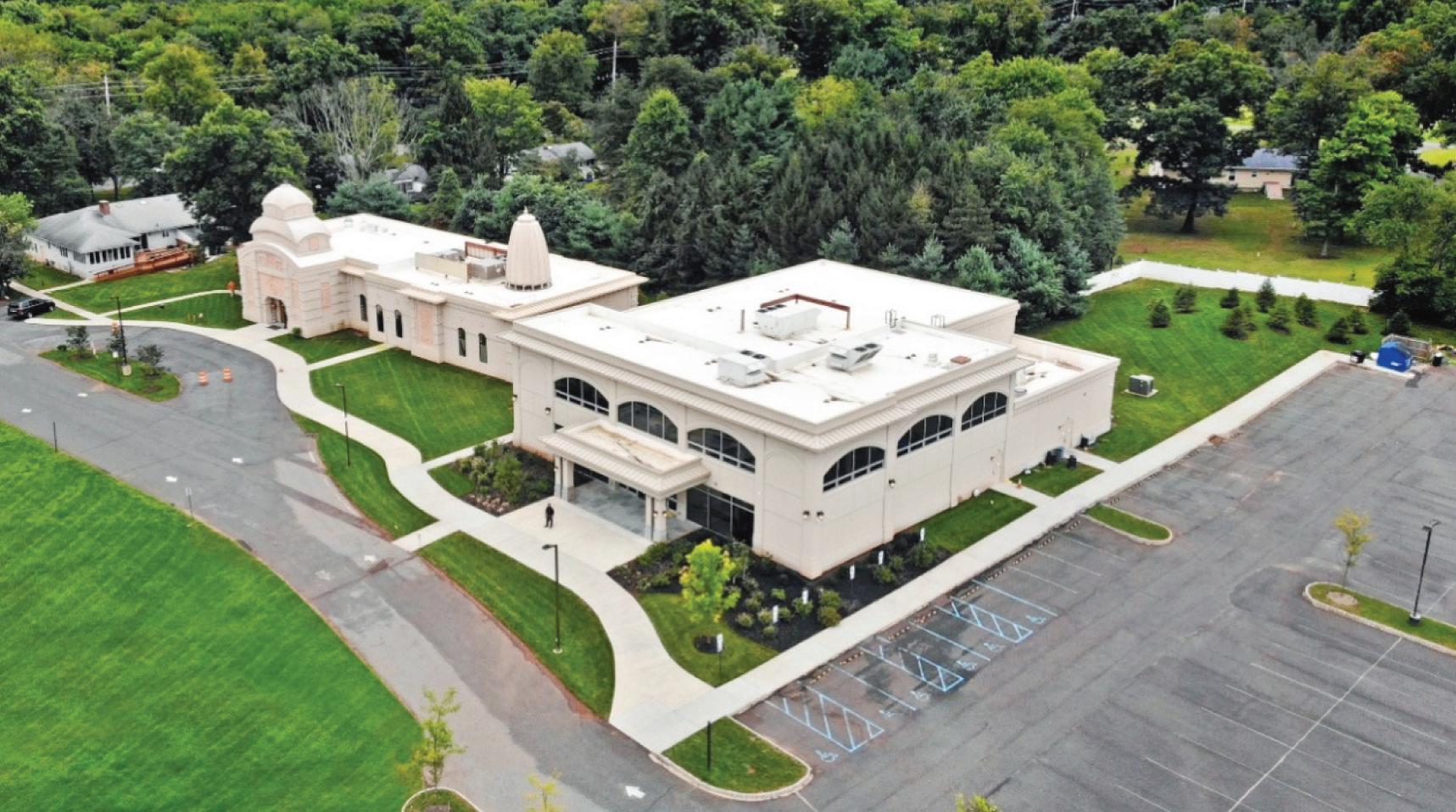
Ananda


Ananda
reported By Debajyoti chatterji
Every summer the Board of Trustees (BOT) of Ananda Mandir assembles a team of volunteers and launches its “annual fund-raising campaign” with a lot of hope and some apprehension. Hope – because these fund-raising campaigns are extremely critical to the organization’s financial well-being. Apprehension – because raising donations is never an easy task with a predictable outcome. When the BOT started planning its campaign this year, it began the task in May, a lot sooner than usual – and with a lot more apprehension than hope. The pandemic had tightened its grips on America, and Ananda Mandir was already in financial stress. The temple had closed its doors to the devotees since mid-March, and Tagore Hall had begun cancelling reservations far into the future. A success-
ful fund-raising was needed more than ever before, the volunteers knew that very well. They also knew that because of the pandemic, everybody was receiving requests for donations for numerous worthy causes, and Ananda Mandir was going to face strong competition for every donation dollar. Under the circumstances, the prospect for a successful fund-raiser was grim.
Mahishasura Mardini
Sunday, 18 October 5:00am – 7:00am
durga Puja
sosthi 2 Wednesday, 21 October
debir Bodhan, amantran o adhibas 5:00pm – 9:00pm
saPtaMi 2 Thursday, 22 October
Puja & Pushpanjali 9:00am – 2:00pm
stuti & Pushpanjali 5:00pm – 9:00pm
ashtaMi 2 Friday, 23 October
Puja & Pushpanjali 9:00am – 2:00pm
stuti & Pushpanjali 5:00pm – 9:00pm
sondhi Puja 2 Saturday, 24 October 1:30am – 2:18am
naBaMi 2 Saturday, 24 October
Puja & Pushpanjali 9:00am – 2:00pm
stuti & Pushpanjali 5:00pm – 9:00pm
Bijoya dashaMi 2 Sunday, 25 October
Puja & Pushpanjali 9:00 am – 2:00 pm
stuti & Pushpanjali 5:00pm – 9:00pm
Kojagori LaKshMi Puja
Friday, 30 October 5:30pm – 9:00pm
The situation was even more complicated because it soon became clear that the traditional “reception/ lunch/meeting” format was not going to be viable for this year’s fund-raising day because of the governmental restrictions on large gatherings and indoor food service. So, we had to replace the conventional “fund-raising luncheon at Tagore Hall” with something that was doable yet enjoyable for our members and well-wishers. A tall order indeed!
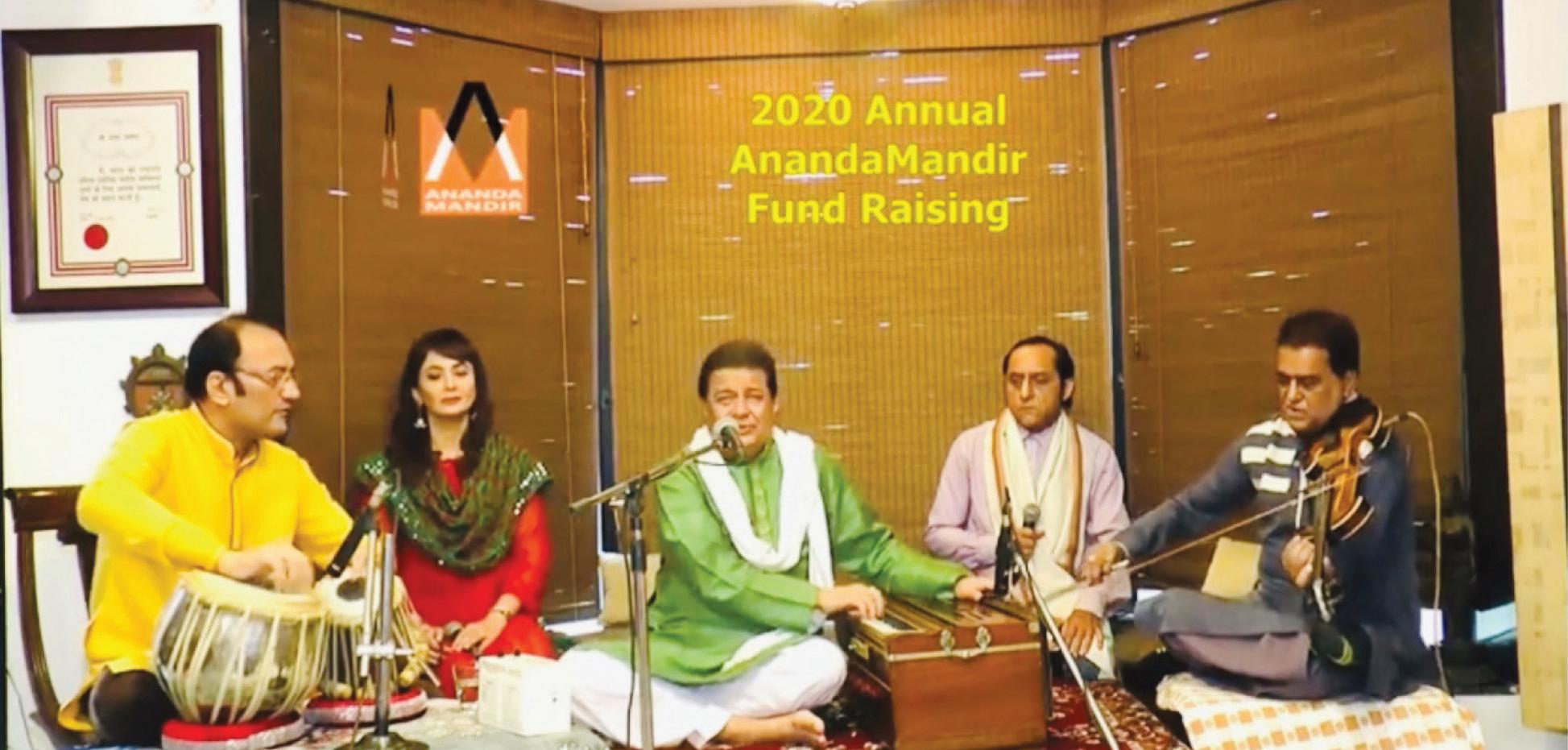
Our team of volunteers wrote letters to numerous donors and followed up with personal calls -- and explained to them the difficult financial situation facing Ananda Mandir. To our great relief and happiness, Ananda Mandir members and well-wishers responded to the appeal enthusiastically and caringly. And they welcomed the plan to replace the traditional “fund-raising luncheon” with a “virtual concert of devotional songs” by distinguished local and India-based musicians!
What was the end result of this year’s totally on-line campaign for fund-raising and a virtual cultural program (in place of a traditional reception-cum-lunch
as our token of appreciation to all the donors for their kind support)? A record collection of approximately $330,000 of donations -- and a memorable “virtual” cultural program appreciated by all!
The cultural program focusing on devotional music was titled “Bhakti”, and it aired on Sunday, August 9, the designated “FundRaising Day”, from 11 am to 12:30 pm, to the delight of over 1500 viewers worldwide. The program began with a stuti by Biswabhai and was followed with a beautiful and original rendering of Shiva Tandava Stototram by our very own Suranjan Bhanja Choudhury. The final part of “Bhakti” featured Bhajan Samrat Pandit Anup Jalota who mesmerized the worldwide audience with a number of devotional songs. The program was a first-rate production, both in terms of technical quality and artistic appeal, and received high accolades from the audience.
All in all, this year’s fundraising campaign yielded outstanding results – and we are truly grateful to our loyal members for their understanding and generosity in these challenging times.
Calendar of Events (Dates are subject to Change) Please check our website frequently www.anandamandir.org Tel: 732-873-9821
NOTE: If a particular Puja time is not listed, please contact temple or visit our website: anandamandir.org
OctOBer (*)
Shyama Puja
Friday, 16, 5:30pm - 7:30pm
Mahishasura Mardini
Sunday, 18, 5:00am – 7:00am
Durga Puja
(See box announcement)
Kojagori Lakshmi Puja & Satyanarayan Puja
Friday, 30, 5:30pm – 9:00pm
Sahitya O Alochana (*) cultural Program (*)
NOveMBer (*)
Kali Puja
Saturday, 14, 5:00pm –1:00am
Jagaddhatri Puja
Monday, 23, 9:00am – 1:00pm ras Purnima & Satyanarayan Puja
Sunday, 29, 6:0pm – 8:00pm
Shyama Puja
Tuesday, 18, 6:30pm – 8:30pm Satyanarayan Puja
Sunday, 30, 6:00pm – 8:00pm Sahitya O Alochana (*) cultural Program (*)
DeceMBer (*)
Shyama Puja
Monday, 14, 6:00pm – 8:00pm Satyanarayan Puja
Sunday, 27, 6:00pm – 8:00pm
Sahitya O Alochana (*) cultural Program (*)
JANuAry 2021(*)
New year’s Day
Friday, 9:00am – 9:00pm
Shyama Puja
Tueday, 12, 5:30pm – 7:30pm Satyanarayan Puja
Sunday, 24, 5:30pm – 7:30pm Sahitya O Alochana (*) cultural Program (*)
(*) See www.anandamandir.org or Call Mandir for details
Special Religious Services: Upon request, the priest of Ananda Mandir offers services such as in-house Shraddhas, Rituals associated with Cremations (Antyesti Kriya), Shraddha Anniversaries, Pre-wedding rituals (Naandimukh, Ashirwad, etc.), Upanayan (Paitey), Annaprasan, Wedding Ceremonies & Wedding Anniversaries, Griha Prabesh (Bhumi Puja), Consecrations of new cars (New Car Pujas) and others. If you have needs for any of the above or more, please feel free to contact Biswabhai @ 732-873-9821
Ananda Sangbad
A Periodical Newsletter
Published By
ANANDA MANDIr
(A Tax-Exempt, Non-Profit Organization)
269 Cedar Grove Lane Somerset, NJ 08873
Ph: 732-873-9821
Website: www.anandamandir.org
PuBLIcAtION cOMMIttee OF ANANDA MANDIr
Chairperson: Debajyoti chatterji, Debsmee572@gmail.com
Assistant Chairperson: Subrata Bhaumik, Bhaumik.subrata@gmail.com
Editor-in-Chief: Amitabha Bagchi, amitabhanj@gmail.com
Executive Editor, Ananda Sangbad: Guru chakravarty, guruchakravarty@yahoo.com
Executive Editor, Anandalipi: Subhodev Das, subhodev.das@gmail.com
Editors: Sushmita Dutta, sushmitadutt2@gmail.com Amrita Kangle, amritakangle@hotmail.com Nupur Lahiri, nupurlahiri@aol.com
Associate Editor: ruby Banerjea, r_banerjea@yahoo.com
Advisors: Pronoy chatterjee pkc_usa@yahoo.com Ashok rakhit ashokrakhit@gmail.com
l All queries, articles, news reports and letters should be directed to the Managing Editor Phone: 908-752-3065
E-mail: guruchakravarty@yahoo.com
l For general information, please contact the following executives of Ananda Mandir: Jai Prakash Biswas President
Suprasad Baidyaroy Vice President
Debajyoti chatterji
Vice President
Ashok rakhit
Vice President
Arun Bhowmik
General Secretary
chanu Das
Treasurer
Pradip Majumdar
Assistant Treasurer
are we all holding up? Most of us are cooped up at our homes staying safe, venturing out only for necessities with protective masks on. Sadly, one member of Ananda Mandir community is known to have died from Covid-19 infection. Our priest Biswajyoti was called upon to perform the last rites for the deceased, via telephone. As of now, about a thousand people are dying every day in the United States.
Here is an account of what is happening in our community:
1. Durga Puja: The one celebration that Bengalis await passionately in the world over is in jeopardy for the first time in our lives.
From Kolkata to New Jersey and all places in between, the celebrations are muted, down to a bare minimum. The Puja organizers in New Jersey are straining to find the best way to navigate this situation. Two notable Bengali religious organizations, the Bharat Sevashram Sangha and the Ananda Mandir, are planning to perform the Pujas every day, in accordance with Bangla Panjika. Prominent Bengali Associations like GSCA, Kallol and ICC, are likely to observe highly curtailed versions of the Puja with limited attendance as allowed by the law. This is the first time that the all-important Pushpanjali will be offered by most devotees in their own homes, at the direction of the pujaris via Zoom. There will be no community dinner of goat meat and khichuri, no purchasing of new clothes at the sari stalls, and
more importantly, no entertainment program by big artists from Tollywood or Bollywood.
2. E-Entertainment:
While the Entertainment industry is in dire stress,, the E-entertainment is filling in the needs of the consumers. Suddenly, various organizations have found technical ways to hold entertainment programs via Zoom or YouTube or other similar ways to broadcast entertainment programs mostly free of charge. These programs are able to attract famous artists from Kolkata and Mumbai to perform at their own homes or studio, while we tune in sitting in the comfort of our living rooms. Ananda Mandir has held a series of such Jolshas, including a fund raising event that was graced by live performance of Bhajan-Samrat Anup Jalota. CAB organized several such programs including one presided by our consul general Sandeep Chakravorty. Kallol and GSCA also organized such programs attracting a large number of viewers. Interestingly, while a handful of people used to attend classes on religious teachings at Bharat Sevashram, almost 30-40 devotees tune in to Swamiji’s weekly Gita program now.
3. Income of the Temples: This has been a serious problem for Ananda Mandir and other temples. Income of the temples depends on visitors which have fallen off drastically. People are unwilling to come to the temples because of the regulatory restrictions and the fear of contamination. There is continuous pressure on the temple man-
agement to raise funds to meet the expenses, and that is not easy. The temples and the local cultural associations collect their funds mostly during large festivals like Durga Puja and Kali Puja. This time, there will be no extravagant festival, so the avenue of income is largely closed off.
4. Schooling: The parents of young children have a tough problem in hand. First, the children are averse to stay cooped up; they must be exposed to some outdoor activities. Parents have to plan those activities very carefully with safety measures in mind. Now, the time has come for schools to open. They are tormented with the question of whether to send their children to school or not. This is a life-threatening decision that parents are forced to cope with under Covid-19. In many cases, a combination of on-line schooling with in-person classes are offered with detailed explanations of safety measures from the educationists to persuade the parents.The parents are justifiably scaredto the core.
5. Community Service by Ananda Mandir: A community service event to offer free Covid-19/ Antibody Tests to the community was organized by Ananda Mandir on Sunday, August 16, in cooperation with the Interfaith Council, Franklin Township, and the Office of the Governor. The medical professionals, including nurses, and other qualified associates worked from 9 am to 9 pm. According to the reports from the representatives of FTIC and Mayor’s Office,
there were 212 COVID-19 testing and 218 antibody testing for a grand total of 430 testing. Test results were sent directly to the individuals tested. A more detailed report on this event is provided on page 9 of this issue.
6. Meetings: This is another winner under the Covid-19 restrictions. Missing attendance at organizational meetings is now a thing of the past. While driving to the meeting, being there and then driving back home, was a painful waste of time for many, the problem is now mitigated. Zoom has made the problem largely go away. You just sign in for the Zoom, and then participate in the meeting while sitting at home, may be even in your pajamas.
7. Social Parties: What a big loss this is – unlimited drinks with fantastic snacks, foods with culinary wonders, and the heavenly Bengali sweets – are no more. The absence of social meetings, the extravagant parties at homes of friends and neighbors, are gone. On top of that, restaurants are serving in a limited way, and most people are scared to go there to eat.
None of us ever experienced such restrictive conditions in our lifetime. We are going through a new chapter in the chronicle of human history. It is up to us to learn from what is happening and how to prepare for such pandemics which will surely appear in future again and again.
Guru Chakravarty Executive Editor, Ananda Sangbad
access your donation history From our updated Website!
You can access your donation history and check the completeness of our records. If you find donations that are not recorded or are recorded incorrectly, you could bring such omissions/errors to our attention. To access your donations history, look at the drop-down menu under “Members Corner” – and click on “Members Log In”. If you created a user id and a password before, use those to log in, and under “What would you like to do” question, click on “My Donations” to see your donations over the past 8 years (and the cumulative donations total before 2011).
By Amitabha Bagchi
Ithinkof the ancient Indian epics, Ramayana and Mahabharata, less as religious scriptures and more as the history of the Aryan settlement of the country, leavened and embellished with divinity and magic. So, following in the footsteps of scholars and authors before me, I feel free to speculate about the nature of the society described therein. Of special interest to me is the nature of the male-female interaction back then, and its contrast with the modern Indian society.
In the India where I grew up, immediately after Independence, the womenfolk were demure and laid back in their social interaction. Although Hindu women did not practice purdah, there was widespread use of ghomta – a variant of hijab –among married women. An iconic image I have from the time I was ten is of my grandmother instinctively lifting the edge of her sari over her head when she saw a friend of mine come into the house to get me to the playground. Young, unmarried girls did not use ghomta, but they were severely constrained by circumstances – separate-sex schools, arranged marriage, etc. – from meeting boys of similar age. Even so, there were instances of attraction leading to love and marriage, but they had to be handled quietly and discreetly within the social set-up.
In contrast, the stories of the epics show that malefemale interaction was far less constrained in ancient times. There is no reference to any use of purdah or veil to protect a woman’s modesty. Women were far more forthright in their profession of love or sexual attraction. This is especially true of the females outside the Aryan pale – i.e., the Anarya women. This article will focus exclusively on them.
Let me first explain what I mean by non-Aryans. They are described in the epics in a variety of ways: rakshasas (fierce forest-dwelling demons); tribes identified with animals, such as apes (Sugrib, Hanuman), birds (Jatayu),
reptiles (Naga kingdom); and lastly tribes identified by their means of livelihood, such as hunters (Nishaadas), fishermen, and so on.
I posit that rakshasa is a generic term reserved for forest-dwelling tribes ranging from the less civilized tribal groups of north India to the highly civilized tribe of Sri Lanka under Ravana’s rule. Small wonder rakshasas interfered, often violently, with the yagnas of Brahminical sages (rishis) in the forest, because the latter were clearly encroaching upon and usurping their land. In this context, the rakshasas are described as ugly demons but fierce warriors. The most famous example of this is Taraka Rakshasi, who was slain by Lord Rama at Rishi Vishwamitra’s behest. But at least the female rakshasis had the ability to transform themselves into enchanting damsels. In a sense they could become the Indian counterpart to the forest nymphs of Greek mythology.
Let me examine here the passion and sexuality of three such women: the rakshasis (demonesses) Shurpanakha and Hidimba, and the princess of the Naga tribe, Ulupi.
The case of Shurpanakha is especially interesting because she plays a crucial role in the unfolding of the plot of Ramayana. She comes off as an independent and self-assured woman who is very comfortable in her own skin. First, she defies her own brother, Ravana, and marries someone from a different clan (Danava). Her husband unfortunately gets killed in a vain attempt to slay Ravana. Now a distraught widow, Shurpanakha moves from Sri Lanka to southern India, roams the forests there, and has a chance encounter with Rama, Lakshmana and Sita in the Panchavati forest. Turning herself into a beguiling figure, she first professes her love to Rama, who rejects her because he is married to Sita. She then turns to Lakshmana, but her amorous advances are cruelly rebuffed by Lakshmana, who cuts off her nose and left ear with ar-
rows.
In Ramayana, Shurpanakha’s desire for revenge leads to the abduction of Sita, Rama’s march (with his Vanara brigade) to Lanka, and the battle royale that leads to Ravana’s death and Sita’s rescue. But there are two things of note here from our modern-day perspective. First, there was no intercourse (miscegenation) with an Anarya female; racial purity is thus not disturbed. Second, Shurpanakha’s normal, if libidinous, impulse is treated far too harshly by Lakshmana. Several later authors have retold Shurpanakha’s story with more sympathy for the victim.
Miscegenation is front and center in Mahabharata in the story of Hidimba. She is a rakshasi (demoness) who lives in a forest with her brother (Hidimbo). They encounter the Pandavas in their habitat as the latter were escaping from Jatugriha. Hidimbo commands her sister to transform herself into an enchanting female to lure the Pandavas to his lair for his dinner. Hidimba is absolutely smitten by the sight of the powerful Bhima and confesses the plot to him. Bhima fights and kills Hidimbo, after which Hidimba proposes marriage to him. Bhima refuses at first, but later relents when ordered by her mother, Kunti. In an interesting commentary on the web is this opinion from one writer: “Kunti being a wise woman saw Hidimba and the possible progeny from her as strong future allies and ordered Bhima to marry her.” Which of course he does, on condition that he would leave her once she bore a child.
The story has several fascinating aspects. First, there is the case once again of a mature and self-confident female expressing love and proposing marriage to a stranger. The situation might have been made palatable in Mahabharata by placing her outside the Aryan pale. Second, the union results in a mixed-race child, Ghatotkacha, who is immensely powerful. Finally, Bhima married Hidimba before the Pandavas came to the kingdom of
By Mandira chattopadhyay
The year 2020 marks the start of the centennial year of Satyajit Ray’s birth and is an extremely important time to remember him. He remained to the end indifferent to the movie world glamor. He was a great admirer of the neorealism movement that originated in Italy. Neorealism does not have a heavy plot; it usually has an episodic structure, focused on ordinary problems and everyday struggles. The movies in this category are characterized by seemingly uneventful plots, centered on the characters. Pather Panchali authored by Bibhuti Bhushan Bandyopadhyay was published in 1931. Satyajit Ray read this novel in the 1940’s while he was an advertising artist and an illustrator. He was asked to do the illustration for the new edition of the book. That’s when it struck him that the book would make a great film. Satyajit Ray and the movie, Pather Panchali go hand in hand. But we should recognize that two leading directors, Vittorio De Sica (an Italian), and Jean Renoir (a Frenchman), were indeed instrumental in shaping his thoughts.
Since my high school days, I was drawn to Satyajit Ray. A tall, stoic figure clad in white kurta and pajamas, he was always accompanied by one of his assistants as he would circle my grandmother’s neighborhood on Lake Temple Road of Calcutta. As I became a college student, my friends and I as young girls watched our physique and development and admired each other’s beauty. The idea of becoming a movie actress or an air hostess would often crop up. In my grandma’s house I overheard that Satyajit Ray would sit in his living room and welcome anyone irrespective of their age to audition for a role in his films. One day we tiptoed to the front of his house. The doorkeeper with a wide mustache at the gate asked us, “What do you want?”
Not prepared to answer him, we were scared and ran away from the scene. Even to this day, I think I should have
auditioned for a role in his movies, since I have always enjoyed acting.
In 1950, Satyajit Ray went to England for a while on behalf of his firm. While there, he saw more than ninety films. He was studying everything in the films ceaselessly. But it was the theme of The Bicycle Thieves that gave him the idea of how to make his own films. No stars, and mainly shot on location. The post-World War II Italian neorealist movement was based on making films on the street, observing people in the surroundings with an immediacy that was powerful.
Satyajit Ray’s art of extracting spontaneity from untrained and new actors was something he learned from Vittorio De Sica. He thought De Sica was a master of handling actors as puppets, telling them what to do next. He maintained that in Vittorio De Sica’s The Bicycle Thieves, the young boy’s acting was amazing, particularly in the last scene where the boy holds his father’s hands and starts to cry. When Ray asked De Sica as to how he came up with that scene, De Sica replied that he poked fun at the poverty of the boy’s family and made him cry. De Sica continued, ”I was so ashamed of myself when I got to that scene…it was so shameful of me.” He said, “ ’my little boy‘ was so very proud and lived in such a poor condition in the same room with his mother and father and his brothers and sisters, and they all slept on the same bed and yet he was terribly proud, and he didn’t want anyone to make fun of that; so I made fun of it, and made him mad, and he cried, cried and cried. After that I grabbed and kissed him.”
In the second film of Ray’s Apu Trilogy, Aparajito, there is a scene towards the end where the mother is dead, and the boy sits and cries on the little verandah; the old man sits smoking his hookah, and he consoles Apu by saying – “You know, man is not immortal. Everybody
By Jayashree chatterjee
Ona short, narrow and winding lane that connects Gariahat Road with Southern Avenue, a lane that most people do not know the name of, stands the entrance to the guest house of the Ramakrishna Mission at Gol Park, Kolkata. The result of this is that though most taxi drivers can take onestraight to Gol Park and Ramakrishna Mission’s Institute of Culture without needing instructions, few are aware of where the entry gates to the guest house stand. Fortunately, my daughter and I stayed at the guest house about fourteen years ago, and so I was able to tell the driver where to go.
The two guards at the gate directed us to the guest house office and checking in was a pleasant experience because the Maharaj In-charge greeted us warmly. He even gave us cups of tea. We must be tired after such a long flight, he said.
We had asked for a room on the third floor. My previous experience had made me reluctant to stay on the lower floors - the traffic had kept me awake at night. In fact, it was for this very reason that I had not wanted to stay in a room on the wing that lies along Gariahat Road, which is busy at all times of the day and night
But, three months ago, when we had made our reservation, we had been told that the only room available was in this wing. The office staff had assured us that the windows of the rooms had been made soundproof. So, we felt that if we stayed on the third floor, perhaps we would not be that exposed to the disturbing noise of endless traffic.
The double bedroom that we were now ushered into was not as posh as those in Kolkata’s well known hotels but not bad either. Unlike the double bedroom that we had been given fourteen years ago, and that had two single beds next to each other, this room’s two beds were lined up, lengthwise, along one wall. Opposite, were two desks.
All the rooms opened out
onto a long corridor that ran along the entire wing, and so, in the early afternoon, it was pleasant to walk the length of the corridor, and look down, from time to time, at the circular arrangement of flowering plants that lay in the midst of the four wings of the mission. Those shrubs and flowers had all the beauty of a well-tended garden. We were served tea at 6:30 in the morning and afternoon tea at 4 pm. in our room but for breakfast, lunch and dinner, we had to go downstairs to the dining room on the ground floor. The dining hall itself was functional with long wooden tables and chairs set around them, and we were given a choice of Indian or continental meals. The Indian meals were usually Bengali. So, it was good to be presented with a menu that included dal, a vegetable dish and fish or chicken every day, and to know that they were being prepared in a kitchen that was reasonably clean. At home, I normally use very little cooking oil and spices when I prepare meals, and so at times I felt that the fish or the vegetables had been fried with over generous amounts of oil; however, almost everyone else was really satisfied with the food. What I liked most about the dining room was meeting the other guests. There were students, some of whom were taking courses for different board exams, people from different parts of India who were visiting Kolkata, expatriate Indians who came to Kolkata once a year, and foreigners who were in Kolkata to participate in conferences. A doctoral student from Dacca who was doing research on the establishment of Dacca Medical College told me about her experiences at Kolkata’s National Library. When she heard that I was looking for a particular book on Dara Shikoh, she immediately volunteered to look for it the next time she went to College Street. A doctor from London said he came to Kolkata for a month every year to volunteer at the Emergency Room at Ramakrishna Mis-
sion Hospital on Lansdowne Road. I also got to know someone who used to live in Dum Dum but who has now settled in Delhi. I asked her whether she had seen Clive’s house in Dum Dum. She not only told me how she used to play in its large courtyard as a child but also guessed that I liked visiting historic houses. She made it a point to call her friends and ask them if they knew of houses I could visit.
There were things about the guest house that I really liked, and others that I wished could have been different. Amongst the former, there is one that lies etched in my memory. We had an important meeting to attend and we had to be on time, but our driver didn’t show up when he was supposed to. The owner of the driver center was truly apologetic. He assured us that he would send someone else but explained that it would take at least an hour to find another driver. But we didn’t have that kind of time. I rushed to the office because I had seen the maharaj arrange car rentals for guests. Unfortunately, his center could not get anyone to come immediately, either. The maharaj rose to his feet, walked quickly to the guard at the front gate, and instructed him to get us a taxi at once. We made it to our meeting on time, I was so relieved. It struck me again, as it had several times before, that the maharaj was very helpful, and really tried to meet all our needs.
The guest house had many conveniences that we appreciated. Its location was one. Most of our friends and relatives live in South Kolkata, and so it was easy for us to visit them and for them to visit us. Some of the other amenities were that right after we got our morning tea, a vendor would come to our room to deliver the newspapers of our choice. He was closely followed by a staff member who took our laundry items, washed and ironed them, and then returned them to us the very next day,
There were other positive things about the guest house that were clearly part of its identity as a Ramakrishna Mission institution. One morning, I went to Gate No. 4 at about 7 o’clock, and was
intrigued when I saw people lined up, card in one hand and a milk container in the other. They were being given milk from huge milk cans. I asked what was happening. “This is for people in need,” the guard replied. “It is so important for them and their families to have milk.”
As guests of the mission, we were also allowed to use the mission library, though we could not check books out. And then the cultural programs of the Institute of Culture were held in the wing that was at right angles to ours. Some of the programs that were held there during our stay were several concerts, and many lectures on religious and social matters. One evening, when South Kolkata was ablaze with protest marches against the Citizenship Amendment Act, I attended the mission’s annual Christmas celebration at which a bishop from St. Xavier’s was the chief guest. It was wonderful to listen to his lecture. He had clearly spent a lot of time familiarizing himself with the Upanishads and the Vedas. After his lecture, the youth choir of the Ramakrishna Mission sang Christmas carols. And right in front of the stage was a lovely floral arrangement surrounding a picture of Christ. I left the auditorium feeling blessed to be at a Hindu religious place that both celebrated Christmas and welcomed Muslim researchers in its guest house.
But there were also things that we wished could have been different. When our friends came to visit us they were not allowed in our room. We had to meet with them in the visitor’s room downstairs in the next wing. But there we could only talk with them; there was no cafeteria from where we could buy them tea or snacks. I could understand the reason for this - a Ramakrishna Mission guest house should have rules that favor peace and privacy. But I wished that we could have bought even just cups of tea for our friends. Someone told us about Hobbit’s Cafe that is outside the Ramakrishna complex and opposite Gate No. 5, and many of our friends were absolutely delighted at the prospect of going to a cafe
named after Tolkien’s famous literary character. We found it a bit harrowing crossing the street because though it is a short and narrow lane it is always full of traffic, and even when the traffic light at the end of the lane is red, motor cyclists come tearing round the bend. So, it is not always easy to cross the road, particularly if one is not used to the terrifying speed of traffic in India. The first two times we took friends to the little cafe, we were pleased with the service but the third time, and the other tables in the cafe were occupied, and because the cafe is so small it was very noisy. We could not carry out a meaningful conversation.
Then there was the matter of Wi-Fi access. Wi-Fi access was supposed to be available in our rooms, but we just could not get a good connection. Guests who had stayed there before told us that the best place to get a good connection was in the visitor’s room. So, every night after dinner, many of us had to make our way to the visitor’s room in order to check our email or access the Internet. The other thing that we missed was not having a TV in our room. There was one for guests on the first floor of the building that housed the office, but it seemed too much of a hassle to keep going there.
We had asked to stay at the mission for two months but had been told that we would have to move out of the guest house for four days, and then return after that. (Later, someone informed us that it was the policy of the mission not to allow guests to stay there for over a certain number of weeks at a stretch, but I do not know if that is really so.) We didn’t want to pack, move out and then move back in again, and so when it was time to move out, we checked out completely. But that morning, as we drove away, I asked myself whether I would want to stay there again sometime in the future. I thought of how much I had felt at home at the mission and of how friendly it felt when compared with the impersonal sense of proficiency that pervades most hotels. My immediate answer to myself was “Yes!”
This is a much changed world. Things will never be the same again. Much as we try to deny this fact, it does not get denied. We can never ever go back to a time when shaking hands was the normal way in which people greeted each other. A warm hug was a natural expression of the affection between two people and putting your heads together to whisper an all-important secret into your friend’s ear was enough to proclaim that you were best friends! A tiny little microorganism, which cannot even be seen by the naked eye, has managed to change all that. It has managed to change the very concepts which constituted the word ‘society’. Community living is no longer desirable, and man is being made to recognize that he is an island unto himself. Social gatherings of any kind are severely frowned upon, if not totally banned. Leave alone social gatherings, children cannot go and visit their own parents for fear of spreading the virus.
In this atmosphere of uncertainty, my one-and-only, the apple of my eye agreed to finally settle down in holy matrimony. I was ecstatic. After what seemed like a million years my dreams of becoming a mother-inlaw were going to come true. To be entirely fair to the offspring, he had made up his mind late last year and the ceremony was scheduled to take place during the month of May. The word Coronavirus was not anything that was accorded any importance at all by anyone in the civilized world at that time. It was a minor virus which was affecting people in a faraway corner of the world. Not us. We were the mighty humans equipped with the most modern of medicines and technology and to even acknowledge the existence of this virus would be below our dignity. Even my physician said so, maybe using less forceful language. But the gist was the same. Little were we to know that this very minor little virus was about to wreak havoc upon an unsuspecting world and bring the mighty human race to its knees.
In my role of a prospective mother-in-law I got into my act with gusto. Lists were prepared, relatives spoken to, plans put in place, tantrums thrown and tolerated......all in all, a frenzy of important activity, easily comparable in intensity alone and in contrast to, the one of total non-activity being planned by Mother Nature, was taking place in our household and that of our extended families.
Since the venue was Mumbai, my hometown, my presence there was an imperative necessity. I reached there and immediately flew to Kolkata to meet my relatives and begin the exciting activity of saree shopping. I have never enjoyed myself as much as I did then. And all with that puffed up feeling that now I could do anything, since I was going to be the allimportant mother-in-law! Big tomes have been dedicated to mothers-in-
By Amrita Kangle
law over the centuries and now I was about to enter that privileged club!
I can swear to you that throughout my stay I saw not a single person wearing a mask. Coronavirus, the word, had just started being bandied about but in a jocular fashion. I guess we were in denial. I managed to fly back to Mumbai and within four days of reaching there, the infamous lockdown was clamped on the city. The virus had invaded the country and was spreading faster than butter does on hot toast! Travel was banned by most countries and the whole world came to a grinding halt.
My significant other half meanwhile remained stuck in New Jersey. Normally I pride myself on being the perfect manager and cook extensively for the H before I go on any extended trip but this time I had not done so because my head was filled with myriad other details and in any case he was supposed to join me very soon. But things could not go as per
cup of steaming hot ginger tea. The tea is wonderful, but do you really see yourself subsisting on it? So, he had to make a beginning. Firstly, he had to know his kitchen and the tools of his trade perfectly. Here began a period of intense activity for the newly converted chef. This was now the new project,
PROJECT: KNOW YOUR KITCHEN!
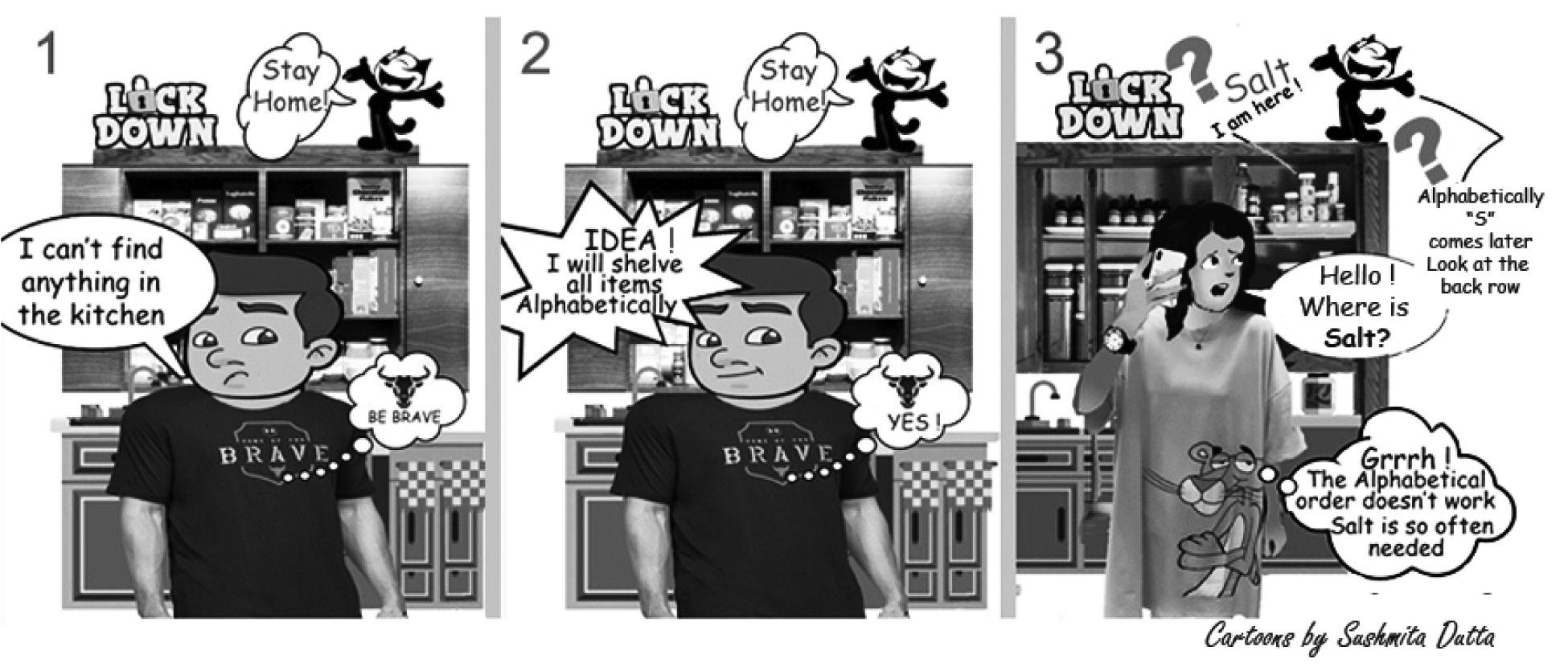
As a first step every bottle, every jar, every packet from every cupboard and shelf in the kitchen was pulled down and was laid out all over the kitchen table and platform, just so that they could be labeled appropriately. This was something I had never done, and it was pointed out to me. I accepted this error on my part with abject humility and accepted the kindness with appropriate gratitude while all the time muttering under my breath, “This too shall pass, This too shall pass.” These days technology does not ever allow you
der because that too began with a C. Meanwhile Masoor Daal and Moong Daal (M) were relegated to the back benches due to their hierarchy in the alphabetical order and the most needed seasoning, Salt, was in the last row on the topmost shelf, right next to Sugar (S) and that bottle of Pepper (P) Of course they had Urad Daal (U) for company up there and the various Pastas (P) of course. I now would fully appreciate the utility of the step ladder in my newly-arranged-kitchen. Gone were the days when I could just stretch out my arm, with my eyes closed, and pull out what I required. Into this kingdom of heaven, I returned from India. Another surprise lay in store for me. The freezer and deep freezer were filled to capacity with cooked food so that I wouldn’t have to enter the newly arranged kitchen for quite some time. I was so touched that I didn’t have the heart to voice my opinion about the arrangements. So, what if I had to keep jumping on and off the ladder for eternity? What’s a few jumps when compared to a caring heart?
plan and we were forced to postpone the happy event. Initially we were all busy trying to cope with the news of utter devastation taking place all around us. Eating and drinking were not important enough except to keep body and soul together. The rest of the time was spent washing our hands and sanitizing every surface available. And staying indoors. But given its true nature, the stomach is not something that can be denied for too long and slowly but surely the H-man began to feel the need to eat something resembling what he was used to eating and not just something that would fill the belly.
Let me say here that he is a very decent cook and has been so since the very beginning. In fact, he was the one who had taught me to make Dosas and Idlis at a time when all I could manage to do perfectly was boil water! But many moons have passed since then, and the balance has shifted more than just a little. The renowned chef of yore has become more of a visitor to the area around the gas stove these days and the only thing that he cooks up with élan is a
to feel left out of things, so I was even shown this sight over FaceTime and was asked to identify most of the contents. To my credit, after the initial shock had passed, I managed to control my emotions adequately and remained extremely civilized. It is another thing that my nightmares kept me awake for the next few nights. Next an Excel spreadsheet was prepared where every spice, flour, grain, condiment along with their picture, availability, quantity and location in the kitchen was tabulated. The rule laid out by the new chef was that every time something was used, it had to be entered in the spreadsheet and a forecast had to be made when we would need to replenish it. This would avoid duplication, an affliction which the kitchen, under the previous management had suffered from, according to the Master Chef! Another rule was that all the contents in the pantry had to now be arranged in an alphabetical order.
Regardless of their genre. For example, Chana Daal would take pride of place in front because it began with a C, next to it would be Chili Pow-
Two months have gone by. Initially that spreadsheet had become the focus of my existence. One could not function outside its perimeter. But slowly workplaces have opened up and attention has got diverted. Project Know your Kitchen has been replaced by Project Office. The step ladder has gone back to its place because Salt has occupied its rightful place in the front row of the middle shelf. The Spreadsheet has slowly gone into a drawer, but very unobtrusively. Officially this is a changed kitchen but just dig a little deep and you will find the same, familiar arrangement as before. Once again, this is a secret and we don’t advertise it, but my mind is at peace and Mr. Master Chef is happy in the knowledge that he has got the kitchen under control. All it needed was his expert touch. I am happy to just let things be! Hopefully we too will soon have our world back the way it was with just a few minor, much needed changes and though we are all using that step ladder now, very soon it should be a thing of the past. Relegated to history!
| continue from page 3
has to die sooner or later, so don’t cry.” That old man was a complete amateur. Ray found him in Benares on the ghats, the steps going down to the Ganges. He asked him whether he would be willing to act in the film, and he agreed. This old man was a real amateur with no sense of acting at all. This is the technique that he learned from De Sica.
Ray believed that children are not always natural actors, and that some of them are very hard to handle. He would treat children as adults and take them in his confidence. He would whisper directions to them and never speak loud to them. He felt that whispering to them would imply something confidential was being communicated to them, so they would immediately get interested. When he was working with Apu it was very difficult. Like De Sica he wanted to know the person he was working with, know his moods, his abilities and his intelligence. In the scene where Apu is looking for his sister in the field of flowers, Ray admitted that the walk was very difficult to get it right. So, he put little obstacles in his way which Apu had to cross, and it became natural immediately. Apu was stiffening his body too much. So, Ray put a number of objects in his path to extract the right mood. That is the most difficult thing to do just to look for somebody. There were a number of exceptions as well. The girl Ray picked to play the role of Durga, Apu’s sister in Pather Panchali, he said had a great natural talent, so he did not have to work with her too much. The girl Ray picked to play the role of the servant-girl in the movie Postmaster, he found to be very intelligent, an amazing eleven-year old, to whom he could tell the entire story. He told her, “When you go, look here, and look there.” To Ray it mattered, as he would carefully rehearse with the girl, in terms of where she was looking, how long she would pause, and these pauses were dictated by him. These looks and pauses would create the mood even for the professional actor Anil Chatterjee, who played the role of the postmaster in that movie.
Jean Renoir, who had similar cinematic affinities to
De Sica, also influenced Ray. Renoir came to India to make the film The River. When Renoir began to look for locations for the movie, he put an ad in the newspaper and started to interview actors for various parts. As the advertisement manager for a newspaper, Ray came to know that Renoir was in town, and subsequently accompanied him on his location hunts, because he was quite familiar with the countryside. The conversations between Ray and Renoir were extremely enlightening for Ray. Renoir would insist on details and the value of details in his films. They would drive through the countryside, and Renoir from time to time would say, “Look at that!” He would point to a clump of bananas or plantain, and would comment, “This is Bengal, that little palm, that is quintessential Bengal for me.” He was always trying to find in the landscape details that he felt were characteristic of the place and he was hoping eventually to use them in the film. All these left a deep impression on Ray because he too was interested in the details.
Renoir had influenced Ray immensely. By that time Ray had already made illustrations for a special edition of the novel Pather Panchali. He was already a film buff and started a film club in Calcutta. He was toying with the idea of changing his profession because he was getting a little tired of advertising. He told Renoir what he had in his mind for a film, to which Renoir encouraged him strongly to go for that. But Ray had not started writing the script then. He wrote his first draft on his way back from England by sea.
Like Renoir, Ray the director looked, looked and looked again at the same time that he ever listened, building his films through painstaking observations and assisting his players to act with that suggestion of unforced naturalism which looks spontaneous. His sensitive work with actors is part and parcel of his films and it has been characterized as humanistic cinema in the manner of Jean Renoir. Vittorio De Sica’s The Bicycle Thieves influenced him greatly as he made Pather Panchali in the same way, by using natural locations and unknown actors.
He spent more time on locations with actors and their surroundings. Historically in European cinema and American filmmaking, there has been much dependence on constructing an image from component parts. But Satyajit Ray went outside the studio. Shot on location in Calcutta and elsewhere, his The World of Apu (1959) is his last film of the Apu Trilogy. The trilogy includes Pather Panchali (1955) and Aparajito (1956) in which the culture is exposed by seeing the characters in their natural landscape.
Ray’s work drew on the Bengali novel and to some extent on the New Theater’s attempt to bring literary respectability to the cinema. Previous Bengali films were either the conventional ones modeled on Hollywood, their structures or climaxes derived from the theater, or they were devotional or mythological. The only kind of professional encouragement he got was from one single man, Renoir. Satyajit had worked with Renoir on The River and had told him of his plan. Later when he met Renoir, the Frenchman insisted that the Indian should not give up. He did not, and by 1952 he had scraped together enough to make a beginning. Even to this day I regret that I did not step into Satyajit Ray’s house to give him the narrative of the Deoghar house of my grandparents. How I was not pleased to hear when I was in the Lake Temple Road, as I was getting ready to pursue graduate study, that my uncle had finally made the transaction to sell the Deoghar house, and the delights of my childhood were gone. Gone was the strolling along the path through the mango trees or the path to the guava trees. Uncle said that he was sad to hear that the grandpa’s age-old gardener claimed that they should receive the lumpsum profit from the sale of the estate, since Deoghar was their land, and my uncle was shocked to see the gardener’s family and that of the housekeeper armed with bows and arrows sitting inside the house over their land. Satyajit Ray could have made a great movie about this human struggle and human suffering and bring his art of neorealism to this story, replete with his love for ordinary people.
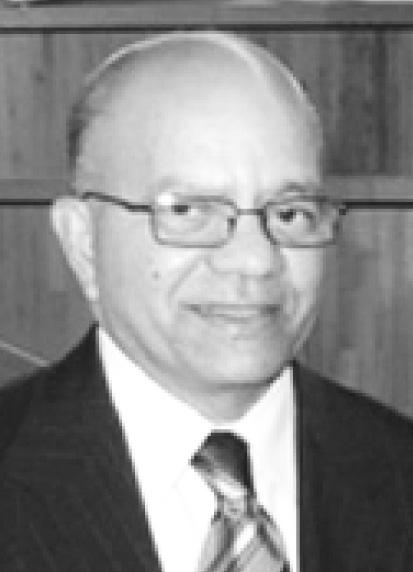
NJ Academy of Science (NJAS) is hosting a seminar to award the NJAS inaugural Advancement of Science Award to Dr. Dipak Sarkar. This award honors scientists, engineers, STEM educators, leaders, spokespeople, or professional organizations that have demonstrated excellence in science and have developed an outstanding contribution to knowledge or support in the biological, physical, mathematical, or engineering sciences.
Dr. Dipak Sarkar’s lifetime scientific contribu-
tions showcased by his one hundred ninety-four peer reviewed journal articles, sixteen book chapters, three hundred and thirtythree abstracts and invited speaker opportunities, two book publications, and one hundred and thirty public citations gives great merit to this award. He has contributed to a better understanding of neuroendocrine cell growth, differentiation and secretion, Natural Killer Cells, cancer, epigenetics, and the alcohol exposure scientific discipline.
The NJAS virtual seminar for this occasion, held on August 22 using zoom, was filled with scientific topics on neuroscience, circadian rhythms, alcohol studies, and cancer. In addition, some NIH/ NIAAA officers also joined to discuss the current NIH grant initiatives.
Dipak Sarkar is a member of the Board of Trustees and a former President of Ananda Mandir. Our hearty congratulations to Dr. Sarkar!
| continue from page 3
Panchal and wins Draupadi at her Swayamvara. So technically, Ghatotkacha is the eldest child of the Pandavas, but his mixed-race background would have made him ineligible to be a successor to the Hastinapur throne, and the problem is short-circuited in the epic when Ghatotkacha loses his life in the battle of Kurukshetra.
The story of Ulupi is thematically the same as that of the other two. Once more there is a tribal princess, in this case the daughter of the king of the Nagas (serpents), who is consumed by passion upon seeing Arjuna taking a bath in the Ganges. She grabs Arjuna from below and pulls him to her father’s underwater kingdom. There she professes her love for the hero, and with seductive reasoning, talks him out of his vow of celibacy during his period of exile and gets him to marry her. The result of their union is a mixed-race son, Iravan, who also perishes in the Kurukshetra battle.
I draw a number of conclusions from this telling of the epics. First, women in ancient India were more forthright and less demure in social interactions than their modern-day counterparts of my younger days. Second, the inter-relation between Aryans and non-Aryans moved with time from just friendship in Ramayana to physical intimacy in Mahabharata Finally, while non-Aryan women expressed their passion more openly in my stories here, I hope to discuss the passion of their Aryan sisters as captured in the epics in a later essay.
reported by Mita Sinha, chair, Puja committee
Corona! Corona!
That is all we have been hearing since March of this year. The word corona in Bangla translates to “do not do it” – do not gather in large groups, do not go out in public without your mask. All these restrictions imposed upon us by the Covid-19 are for our own good but they are also preventing us from attending the daily pujas, arati and pushpanjali.
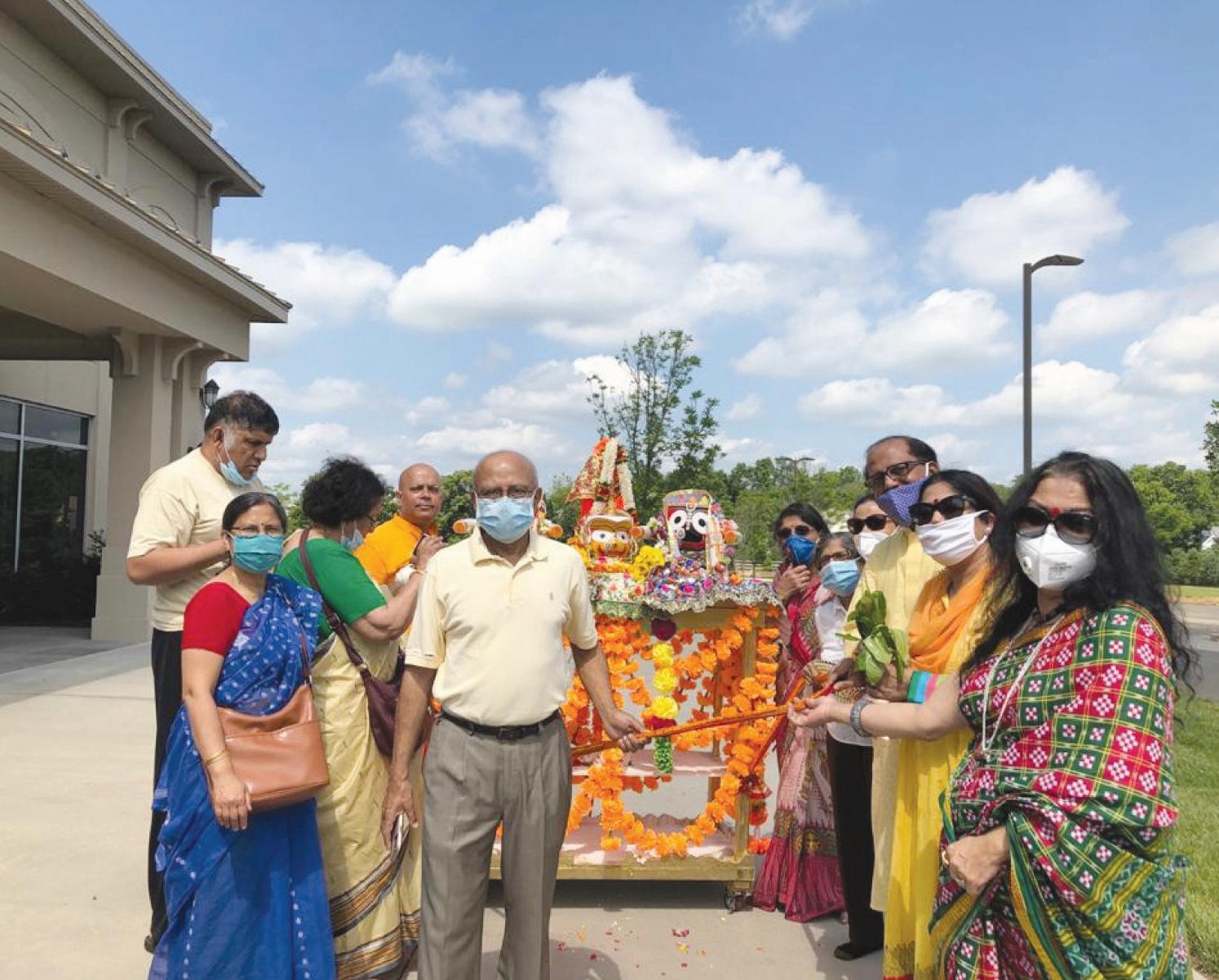
The Mandir is still not open to the public because we want everybody to be safe. Biswabhai, our priest, is performing all of our pujas regularly. On June 1st. we had Dashohara, Ganga Puja, Jagannath Mahaprabhu’s Snan Jatra and Satyanarayan Puja. The monthly Satyanarayan Puja is a popular event and a lot of people usually come to the Mandir for this occasion but this time only a handful of devotees showed up. Our monthly Shyama Puja happened on June 20th. This puja was performed in the evening and there were only a few devotees attending. We had our Rath Jatra festival on June 23rd. This is one of our very popular festivals. Under normal conditions, hundreds of people come to the temple to pull the Rath but this year we had it in a small-
er scale. Still, all the rituals were performed.We chanted Hare Krishna as we walked with the Rath around our temple compound. We also played dhak, shankha, and ghanta as we sang. Bipadtarini Puja was the last puja of the month celebrated on June 27.
The month of July started with Ulto Rath and our monthly Satyanarayan Puja. Ulto Rath is always a fun celebration like the Rath Jatra, with large attendance from young and adults. This year we celebrated it in a much smaller scale. Guru Purnima was celebrated on July 5thand the month ended with our monthly Shyama Puja on July 20th. There are some diehard devotees who always come to celebrate the pujas.
August was a busy month for us at the temple. On August 3rdwe celebrated Rakhi Purnima, and our monthly Satyanarayan Puja. Then came Krishna Janmashtomi on August 11. Janmashtomi, the birthday of Lord Krishna, is celebrated across India with much fervor and enthusiasm. At Ananda Mandir it
continue to page 9 }
Ananda Mandir, the Franklin Township Interfaith Council (FTIC), the Office of the Mayor of Franklin Township, and the Office of Governor Phil Murphy cohosted a COVID-19 Testing/ Antibody Testing event on Sunday, August 16th, from 11 am to 7 pm at our campus. This event was open to all who registered beforehand as well as to unregistered walk-ins. People of all ages and ethnicities were welcome. Ananda Mandir had provided its parking lot and the Tagore Hall/Auditorium to conduct the testing. They also provided volunteers to greet, register and direct the arriving traffic to individual test centers, while authorized healthcare personnel, contracted by the Mayor’s office and FTIC, took care of the testing itself. The testing was free of cost per instruction from the Governor’s office, though individuals having medical insurance were requested to provide their insurance details that could cover their cost, to help reduce Govt. expenditure. Because intermittent showers were forecast for the day, the healthcare agency
reported by utpal Sengupta
opted to do all testing inside the Tagore Hall while registration was handled in the foyer of the hall as well as inside tents pitched just outside the Hall. Ananda Mandir presented thoroughly cleaned premises, helpful and knowledgeable volunteers who worked from 10:00am to
currently in high school and college.
The healthcare officials, including nurses, pathologists and associates qualified to conduct the testing, did their job diligently and used help from the volunteers as needed. At the end, all test samples were sent by

9:00pm and provided healthy snacks to the volunteers. A significant number of the volunteers were young students

the agency in sealed bags to respective laboratories approved by the County for tests, analyses and reporting of results. The entire operation lasted from 9 am to 9 pm. The organizers of the Interfaith Council and the Township Police commended Ananda Mandir for the well-cleaned premises, organized and safe operations, and friendly volunteers.
Later, on Sunday, August 23rd, the representatives of FTIC and Mayor’s Office confirmed that the testing at Ananda Mandir on the previous Sunday had resulted in 212 COVID-19 testing and 218 antibody testing for a grand total of 430 testing; test results were sent directly to the individuals tested.
It was a very successful and a highly appreciated community service by Ananda Mandir during the Pandemic, following all rules and safety regulations prescribed by the authorities. Ananda Mandir looks forward to building stronger ties with Franklin Township and Somerset County, and engaging in more community events in the future!
reported by Amitabha Bagchi
Ananda Mandir celebrated the 73rd anniversary of India’s Independence with a two-part program titled Swadhinata. It was a video collage that was broadcast on back-toback weekends over the digital media of YouTube and Facebook. Part 1 was broadcast on August 23 and Part 2 on August 29.
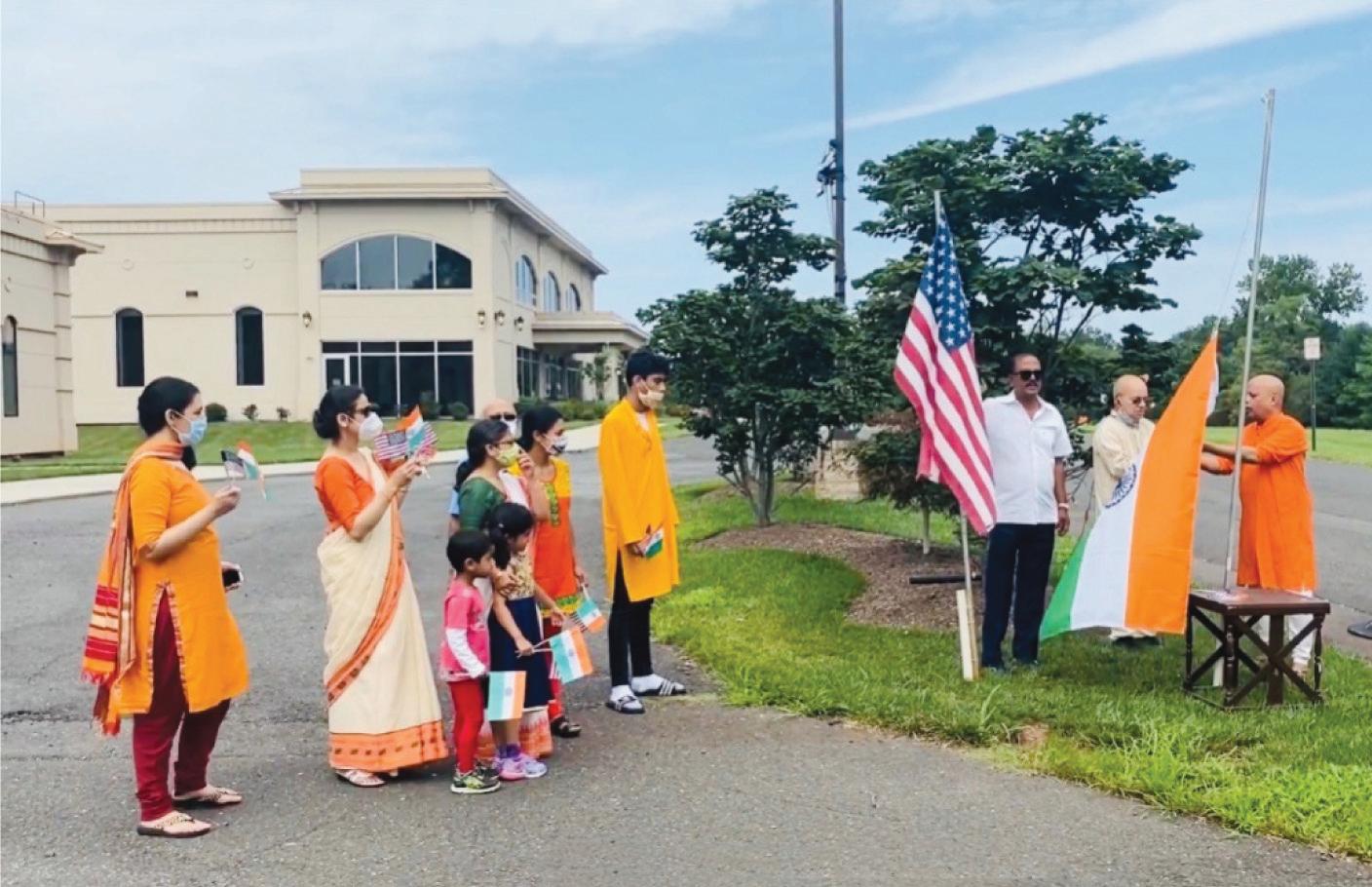
The first day’s program began with an introduction by Mitra Purkayastha. She mentioned Ananda Mandir’s long-standing role in promoting activities by the community’s youth. Following her was the first segment of the cultural program. It started with a dance to Vedic chanting by five young children -- one boy and four girls. Next was a video of flag hoisting on Ananda Mandir’s premises, filmed on 15 August that featured Biswabhai, Dipak Sarkar and Jai Prakash Biswas. Then a group of young children of the community sang “Jana Gana Mana” -- with some holding small Indian flags. Adwaita Goswami singing the “Star-spangled Banner” brought this portion of the first day’s program to a close.
The next segment of the virtual celebration of Independence was anchored by two teenagers of the community: Murchhona Dasgupta and Madhur Chatterjee. Speaking calmly and interacting with easy chemistry, they introduced the following programs:
l The Nazrul song, “Chol, chol,
chol,” sung to the accompaniment of musical instruments by a group of youth of the community.
l A young boy (Toorjo) recited the iconic Tagore poem, “Where the Mind is without Fear.”
l Students and friends of Mrittika’s children enacted “Mukti-r Sondhane” (In Search of Liberation), a short play describing the contribution of seven freedom fighters from Bengal to the cause of India’s Independence.
l Anuron Chakraborty recited Nazrul’s patriotic poem/song “Karar Oi Louho Kapat” to the accompaniment of Kathak bol
l Five young members of the community performed a skit on the meaning of Swadhinata. Written and directed by Swayamshuvro Chakraborty, it looked at “colonial-
continue from page 8
is our tradition to collectively chant the name of Lord Krishna for at least 10,000 times in this holy day. We put Gopal in a swing and all of us take turn to swing the cradle, which is a part of our ritual. We maintained our tradition this year as well. We had Ganesh Chaturthi on August 22. This day marks the birth of Lord Ganesh, the God of new beginnings and a fresh start. Lord Ganesh symbolizes wisdom, good luck and fortune. On August 30th we held our Satyanarayan Puja. We are still maintaining our distancing and all the attendees inside the temple are required to wear a mask. Also, gathering inside the temple was always less than 12 people at any time.
Because of COVID-19 we are hav-
ing streaming of Sandhya Arati for a few times a month. Please check our website www.anandamandir. org for date and time. We are also accepting on-line puja. Anyone can sponsor on-line puja and the puja will be offered with sponsor’s name and gotra.
Durga Puja is around the corner and we can feel it in the air already. I don’t think the situation will improve too much in a month or two, but we have to keep our hopes up. We will be celebrating Durga Puja in October this year in conformance with safe practices and all regulations. Please check the Ananda Mandir website for the schedules of Durga Puja and Kali Puja. Stay safe, stay strong and we will all meet soon at Ananda Mandir.
ism, patriotism and liberty through the lens of teenagers.”
l Rupkotha Dutta showed impeccable memory and uncommon flair while reciting “Swadhinata dekhte kemon / Swadhinata-r asol mane.”
l A wonderfully patched song and dance combination (Jugolbandi) came next -- done in a “virtual setting” and based on Tagore’s “Nai, nai bhoy.”
l Tagore Society of Houston Youth Orchestra competently rendered Tagore’s “Sokatore oi kandichhe sokole” as a “virtual chorus and concert” with physically separated young performers.
l The segment concluded with another virtual chorus – this time of percussion played by eight boys of the Prana School of Music and Art of Katy, TX.
The day’s program ended with the overall coordinator, Sudipta Choudhury, taking a well-deserved bow and acknowledging the production support she received from many young schoolchildren and Ananda Mandir volunteers.
The second day’s program was introduced by Ranjana Sanyal. She pointed out Ananda Mandir’s support of young performers both in
New Jersey and in other parts of the USA. This was followed by Odissi dancing (Ganesh Vandana) by Nayanika. Murchhona and Madhur then returned as emcees to introduce the following programs.
l “Yearnings for a Brighter Future” – described by Murchhona as “a bouquet of different patriotic experiences” -- presented by the students of Ta Thoi of the Maryland-Washington, DC area. It included dances and songs in Hindi, English and Bengali.
l Ishanaa recited Shubho Dasgupta’s poem paying homage to Netaji.
l Anisha danced to the tune of Vande Mataram as played on keyboard by Shivan, with tabla accompaniment by Srijon.
l The brother-sister duo, Asmit and Aishani, recited John Lennon and then Rabindranath Tagore’s “Chitta jetha bhoishunyo” in both Bengali (Aishani) and English (Asmit).
l Students of Malini Mazumdar presented a “choral rendition” of Tagore’s “Anandaloke Mangalaloke,” preceding it and merging with the Rig Vedic chant with a similar tune, “Sangachadhwam, samvadadhyam.”
l Anika, Dev and Sayan played Salil Chowdhury’s iconic “Duranto ghurni-r, ai legeche paak,” on saxophone, drums and piano.
l Pal Academy of Boston presented two songs of Tagore: “Alo amaar alo ogo,” and “kharo bayu boi begey.”
l Next came “Shwopner Naam Shwadhinota” – a program describing the tale of two sisters, Rudrani and Ritisha, on patriotism and independence through speech and songs.
l The final program was by the Dallas Bengali school. “Asol Swadhinata” was a full-scale program featuring songs, dances, and poetry recitations.
The final wrap-up was done by the overall coordinator Sudipta Choudhury. She must be congratulated for bringing to the Ananda Mandir digital platform such a high-quality and memorable production.
Please note that you can become an Associate Member of Ananda Mandir by donating a minimum of $100. Your subsequent donations of $50 or more are credited to your account. When your total cumulative donation reaches $1000, you become a Life Member. Your support, small or large, is most welcome and sincerely appreciated.
[Editor’s Note: This article melds physics (body), metaphysics (soul) and their correlation with mind. The concept of energy as used here goes beyond pure physics (physical energy) to things beyond physics (mind energy and the sound energy of chanting). The connection of these with human wellness is under research which is the scope of this article. Readers’ comments are welcome as “Letter to the Editor”]

By Sushmita Dutta
now live in a fastpaced era of Digital Technology. Almost every aspect of life is controlled by technology. Yet, dependency on spirituality continues like it used to in the past several ages. On a social media site like YouTube, chanting “Om Namah Shivaya”for 108 times got Ten (10) Million Views (please see thesite link - https://www.youtube.com/ watch?v=05c7SkvFY_o).At this link, there are more than 1,865 praises promoting “Om Namah Shivaya” as a helpful mantra. Evidently, there are benefits of chanting this mantra prescribed in Hindu scriptures from ancient times. Similarly, many other Hindu prayers and rituals are in practice even today that are said to benefit human sustenance. Additionally, modern, scientific research on Human Wellness recognizes ‘Spirituality’ as a need for human health and wellbeing. Logically, how do prayers, rituals and mantra chanting benefit us and help us live better lives? Let’s explore.
Human Wellness and Spirituality:
I am in the process of designing a software to digitally implement Holistic treatment - a treatment that combines mind, body and soul integration. In consultation with physicians for clinical advice, we are evaluating dimensions of Human Wellness and other related sciences. Here is a brief note on Human Wellness research which recognizes spirituality as an integral part of good healthy living:
In 1962, Dr. Halbert L. Dunn, introduced the concept of Human Wellness
combining Mind, Body and Soul. Since then researchers (Dr. Donald B. Ardell, 1977) advanced the concept to include ‘physical domain’, ‘mental domain’ as two integrated dimensions for human wellness. Expanding on the physical and mental domains researchers (Dr. Bill Hettler, 1984) included ‘Emotional’, ‘Social’, ‘Spiritual’, ‘Intellectual’ and ‘Occupational’ aspects of life for better health and living. The most recent model on Human Wellness (Dr. Margaret Swarbrick, 2006) includes eight dimensions: Physical, Emotional, Mental, Spiritual, Environmental, Social, Financial and Occupational – these dimensions of life impact healthy living.
I was intrigued by the Spiritual dimension mentioned by so many modern, scientific researchers as important element for healthy living. Being a Hindu, I pray, I recite mantras and I perform many rituals, so, I began exploring scientific reasons behind these spiritual activities. As I have mentioned in the Introduction, every human act involves three primary fundamentals – Physical energy, Mind energy, and Sound energy. Physical energy in this context involves acts like ‘folding hands’ while praying, offering flowers, foods etc. to the deity; mind energy is focusing on the deity we pray to; and sound energy includes the mantras we chant. In Hinduism, all these three acts together result in a spiritual experience. How do these spiritual experiences impact our physical body and help promote good health? Let’s dive into this.
When we talk about Hinduism, we mention four primary domains – Shaivism (worshippers of Lord Shiva), Vaishnavism (worshippers of Lord Vishnu), Shaktism (worshippers of female Gods like Durga, Kali), and Smarta (worshippers of Brahman). Each group follows prayers, mantras and rituals which are specifically prescribed for them. I am focusing on Shaivism for this article. By India Census report, 240 million people worship Lord Shiva. Shaivism in Hindu scriptures can be traced back to Vedic literatures of 2nd millennium BCE. Ancient scripture, Rig Veda mentions conception and worship of a deity named Rudra which is another name of Lord Shiva. Both Hindu epics Ramayan, 5th century BCE and Mahabharat, 1500-2000 BCE, mention the worship of Lord Shiva. So, for Hindus, Lord Shiva is a very ancient God. The most popular prescribed ritual to worship Lord Shiva is to chant “Om Namah Shivaya.” What is the significance of chanting this mantra and how does it benefit human wellness? Let’s explore.
Chanting “Om Namah Shivaya” - Meaning and Significance:
man health connection of this mantra. Our body is made up of five elements - Earth, Water, Fire, Wind and Sky. In Na mah Shi va ya, ‘Na’ represents Earth, ‘Ma’ stands for Water, ‘Shi’ represents Fire, ‘Va’ denotes Wind and ‘Ya’ represents Sky. Sound energies incurred from chanting this mantra actually refine and cleanse all the five components of our physical being. Sound vibrations created from chanting this mantra act on energy deficiencies of our body and rejuvenate us. Therefore, Hindu scriptures prescribe chanting of this mantra 108 times and even 1008 times to intensify the sound energy and create an aura of physical wellness. Let’s look at this scientifically:
Neurophysiological correlates of religious chanting:
water on Shiva Lingam – Meaning and Benefits:
Another well practiced Hindu ritual under Shiva worship is pouring water and milk on the Shiva Lingam also called Linga. A “Shiva Linga” is an abstract representation of Lord Shiva, the timeless pillar perceived as an emblem of generative power representing the beginning of all creations and physical manifestations of divine male and female energies.
Ancient Hindu sage, Adi Shankaracharya said –“Whoever recites the hymn “Om Namah Shivaya” is always near Lord Shiva and will attain the abode of Lord Shiva and enjoy His bliss.” Om Namah Shivaya (Sanskrit) means “Salutation to the Auspicious One!”, or “Adoration to Lord Shiva”. It is called a “Panchakshar” mantra having five syllables– Na, Ma, Shi, Va, Ya. Hindu Vedas mention hu-
Religious chanting “appears to increase endogenous neural oscillations – a rhythmic neural activity that originates from the brain”. Our brain responds to rhythmic sensory input. For example, a repeated mantra chanting has a sound pattern and rhythm. The vibrations created by the sound energy influence physical and mental conditions and also behavior. Additionally, studies found that religious chanting can increase the stability of cardiac functioning. Rhythmic sounds repeated over a period of time complement blood circulation and overall balanced functioning of the mind, body and soul. The neurophysiological correlates of religious chanting lists multiple findings that benefit human living conditions.
One of the oldest forms of the stone Shiva Linga is found in the Parashurameshwara temple, in a hilly forest near Tirupati in Andhra Pradesh, India. The temple is dated to the 3rd-2nd century BCE. For ages Hindus have prescribed pouring water and milk on Shiva Linga. What does this ritual mean and how it relates to human wellness?
A Linga is perceived as a protective stone which repels and blocks negative energies. Linga delivers environmental purification, cleansing of our emotional body, negative thoughts, anxieties, anger or feelings of unworthiness.
Pouring water on Shiva Linga simply relates to “purification” of the Lord, offering him “Abhishek” which Lord Shiva is extremely fond of. Abhishek is a Sanskrit word for giving bath to a deity, the word literally means “to cleanse”.
Also, a linga is perceived as having vibrant, radiant energy and hence continuously pouring drops of water slowly and steadily over it keeps the linga cool. It also has a symbolic implication to our body components. 72% of the human body is
Introduction: This is not an article on religion. Scientific research has been attached to reasons behind spiritual activities we perform to establish linkage with God. Every human act involves three primary fundamentals – Physical energy, Mind energy, and Sound energy – in Sanskrit we call them “Kaya, Mana, Vakya” which means the Physical body, the Mind and Speech. If we apply this principle to the acts of praying and performing rituals prescribed in Hinduism, we find logical and scientific reasons behind such spiritual activities. What are the benefits of these prayers and rituals? This article presents scientific reasons behind some very common and popular prayers and Hindu rituals. continue to page 14 }
By Asok Baral
These words conjure up an image of extreme cruelty, of savage treatment, and of suffocation and deaths. But what exactly happened? And why? This article narrates the events and the controversies related to that dreadful night of June 20, 1756.
The story goes back to the time when the British East India Company was trying to expand its business in India. In 1613, it had received permission from the Mughal emperor Jehangir to do trading in India. By late 17th century, the Company had a thriving business from Calcutta (Kolkata). The British, from the very beginning,felt the need for an army base for the success of their business. Their belief in expansion was not just through peaceful negotiations, but with the backing of military strength, as best summed up by Job Charnok, “peace is best made with a sword in hand.”
With this in mind, in 1696, they started building a fort on the banks of the Ganges, near the present day BBD Bagh and it was named Fort William after William Orange, who was at that time both the king of England and thestadholder of part of the Dutch Republic.
Both the British and the French were vying to expand their trading sphere, and in 1756, a confrontation seemed likely. So, the British started fortifying the Fort. Bengal’s ruler was 24-year old Nawab Siraj-ud-Daula. He did not like the military build-up and ordered both sides to stop. The French complied, but the British did not.
The Nawab was angry that his order was ignored. He sent out his army andlaid siege to the Fort. The British commander managed to escape with most of his soldiers to the Company’s ships moored in a nearby harbor and left behind others under the command of John Zephaniah Holwell, a senior bureaucrat of the Company. Holwell was a physician by training, he had started with the Company as a military surgeon, and gradually rose to become a member of the Fort William Council.
The siege resulted in the capture of Holwell’s men - English officers and merchants, some Anglo-Indian soldiers and a few local civilians who had been sheltered in the Fort. The Englishmen, including Mr. Holwell, were rounded up by Siraj’s soldiers, and they started looking for a place to lock them up. There was a little dungeon inside the Fort, it measured 14 feet by 18 feet and was often used for holding 2 or 3 petty criminals. As the night was setting in, Siraj’s soldiers decided to put all the prisoners in that little cell. At about 8’o clock in the evening, all the Britishers were
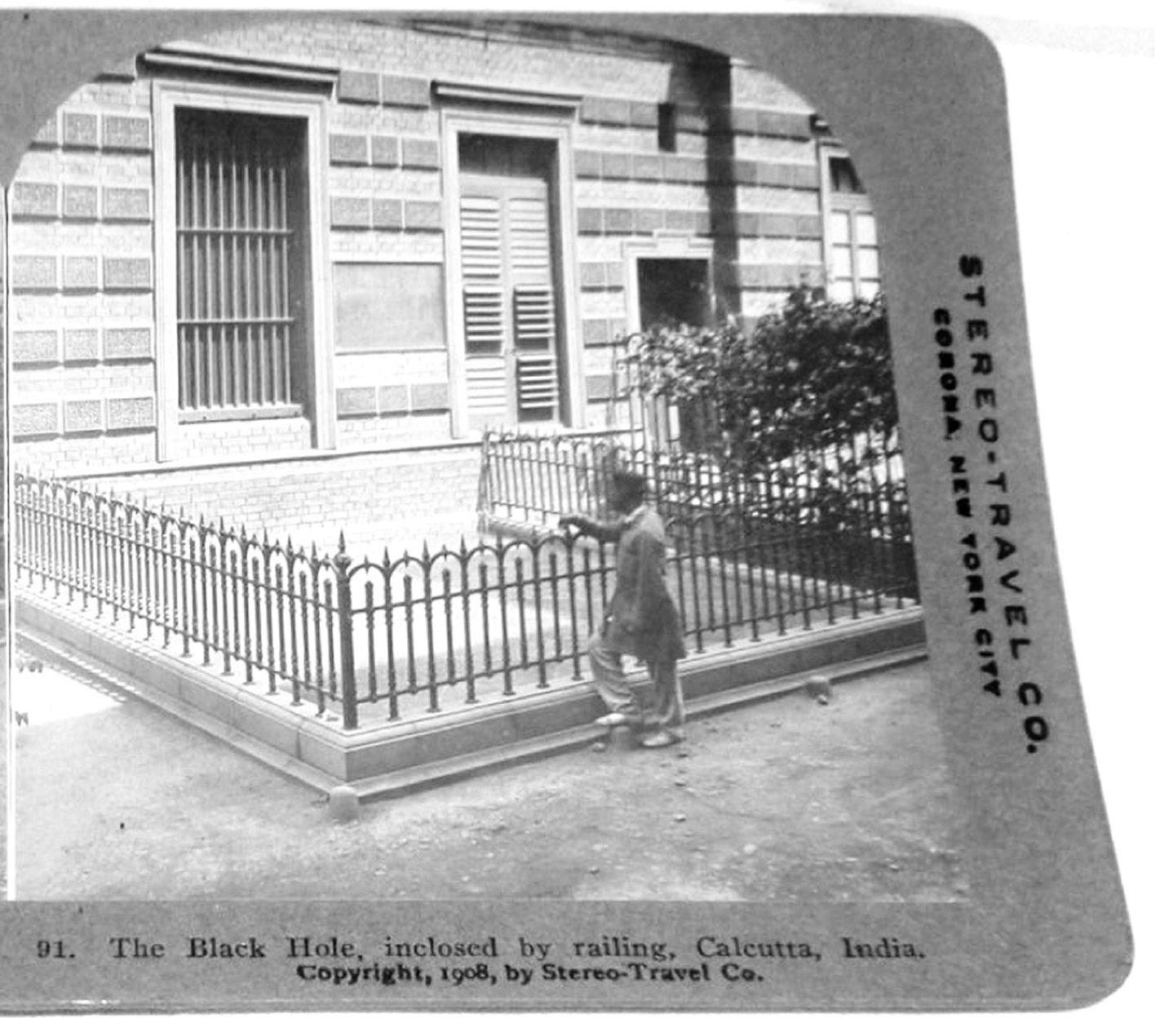
forcibly crammed into the cell.
The room had two small windows, one looking out onto a veranda outside. There were thick iron bars in the windows, and these impeded the ventilation. When the prisoners were put into the room, there were raging fires in different parts of the fort, adding to the sweltering summer heat.
In the unbearable heat, prisoners were falling sick as soon as the doors were closed. One of the guards posted in the veranda was offered 1,000 rupees to have the prisoners moved to a larger room. He left and came back with the message that the moving was not possible. The bribe was doubled, and he came back again with the same message. The Nawab was asleep, and no one dared to wake him up.
Upon hearing the prisoners’ frantic cry for water, one of the guards felt very sorry and out of compassion brought them some water. Mr. Holwell and few others received it in their hats. In the scramble that followed, most of the water was spilled. Everyone was struggling to get closer to the two windows, and in the ensuing melee the weakest were trampled upon or crushed to death. Prisoners were dying all around, and many were delirious. They raved, fought, prayed, blasphemed, many were simply exhausted and waited for their end.
When the Nawab woke up at 6 o’clock in the morning, he was informed of the imprisonment. He ordered the door to be opened. When they got the first breath of fresh air, the survivors were either stupefied or raving. There were corpses piled up and these were thrown into ditches. Holwell and three others were taken as prisoners, and the remaining survivors were freed on the order of the
Colley, did not accept Holwell’s version.
In 1916, scholar J. H. Little published an article entitled “The Black Hole – The Question of Holwell’s Veracity”, in which he pointed out several flaws in Holwell’s story. According to him, 146 prisoners could not simply be fitted in that size room. He said that Holwell was not a man to be trusted, and the whole incident – if it happened at all – was grossly exaggerated by Holwell in a bid to portray himself as a hero. Some people go so far as to say that the Black Hole never happened, because the only narrative came from Holwell.
But according to Brijen Kishore Gupta, who did extensive research and authored the book “Sirajuddaullah and the East India Company”, the incident did take place , and he also confirmed the numbers - 64 prisoners and 21 survivors. He also gave evidence that Siraj-ud-Daula did not order the imprisonment and came to know about it only the next morning.
Nawab. When Holwell was taken to the Nawab, he expressed no sympathy for the sufferings and deaths, just ordered a chair and a glass of water for Holwell.
Although the Nawab showed total indifference, Holwell did not use any harsh words against him in his writings. In his opinion, neither had Siraj ordered the imprisonment nor had he any knowledge about it. Holwell described Siraj’s soldiers’ actions as “the result of revenge and resentment in the breasts of the lower Jemmautdaars (sergeants), to whose custody we were delivered, for the number of their order killed during the siege”.
This account of events is by Holwell, published in the Annual Register and the Gentleman’s Magazine in 1758, and in his1764 writing “A Genuine Narrative of the Deplorable Deaths of English Gentlemen”.
There are disagreements on Holwell’s account of events, especially the exact numbers of prisoners and casualties. Holwell claimed that 146 persons were imprisoned out of which 123 died. He even provided a list of the names, except for 82 names, about which he said that he did not know them.
According to Stanley Wolpert, an American historian, who wrote “A New History of India” in 2009, there were 64 prisoners and 21 survivors. D. L. Prior, who wrote about Holwell in “Oxford Dictionary of National Biography”, also confirmed the same numbers.
In 2012, Partha Chatterjee in his book, “The Black Hole of Empire: History of a Global Practice of Power”, stated that most of Holwell’s contemporaries, including British historian Linda
In many ways, the whole incident was instrumental in setting a course of history. When Holwell’s report reached England, the nation was shocked, and the dungeon earned the notorious name “Black Hole of Calcutta”. Some within the British government and the merchant class saw an opportunity to use the atrocious event as a propaganda tool to promote imperial control in the subcontinent. They argued that the Mughal emperor could not be trusted for the safety of the British subjects, and the British had to take care of themselves.
The orders reached the Englishmen in Madras in August 1756, and Lieutenant Colonel Robert Clive and Admiral Charles Watson were sent to Bengal to retaliate against the Nawab. With both the ground and naval troops, and with the help of some local Indian allies, the British recaptured the Fort in January 1757. In the same year in June, with the connivance of Mir Jafar and others, Clive waged a war against Siraj-ud-Daula in the Battle of Plassey. Siraj’s army lost, despite vastly superior army strength, and this event is considered to be the beginning of the British Raj in India.
After the war, Holwell wanted to commemorate the victims, and erected a monument near the dungeon and it came to be known as Holwell Monument. When the Fort was moved by Lord Clive to its new location in Maidan, the monument fell into ruin and became a place for the homeless. It was taken down in 1821 by Lord Moira, the then governorgeneral. In 1899, when Lord Curzon
By Basab Dasgupta
My early life in India can probably be put in chronological order by associating its various phases with different songs from Bollywood movies. Each song reminds me of a certain event or place or person. I did not even have to make a special effort to listen to these songs. They came blasting out of loudspeakers during all kinds of religious festivals and social ceremonies. Even if my radio was not tuned in to Vividh Bharati or Radio Ceylon, I could certainly hear them from my neighbors’ radios.
These songs appealed to our generation because most of them had pretty catchy tunes that covered the entire gamut of melodies ranging from Indian classical ragas to Punjabi folk songs to blatant imitations of Western songs. Perhaps a more important reason was that we had nothing better to do (apart from studies, of course).
Most Bengali parents advocated avoiding Bollywood movies altogether because of their absurdity and lewdness and as an extension we were also discouraged from listening to Hindi film songs. Coming from the land of Tagore, they considered Hindi songs to be a far inferior class of creative output both in terms of lyrics and tunes.
Here is the irony. It was actually the Bengali music directors and vocalists who played a major role in the evolution of Bollywood music and in shaping the musical structure of the songs for decades. In fact, the great Bengali singer/composer Pankaj Mullick was one of the pioneers of Bollywood music as early as 1930s and 1940s. He is widely recognized as the person who first introduced playback singing in Indian cinema. It would be interesting to review this evolution during my lifetime and see how Bengalis were involved.
If we go back to the 1950s, the Bollywood music scene was completely dominated by three Bengali music directors – S. D. Burman (SDB), Hemant Kumar (HK) and Salil Chowdhuri (SC)– and Bengali playback singers, both males (HK, Manna
Dey and Kishore Kumar) and females (Geeta Dutt). In particular, SDB directed music for superhit movies like “Pyaasa”, “Kagaaz ke Phool”, “Devdas”, “Kala Pani”, “Nau do Gyarah” and “Chalti ka Naam Gadi”; HK was responsible for “Anand Math”, “Nagin”, “Jagriti”, “Inspector”, “Yahudi ki Ladki” among others while SC was the music director for “Do Bigha Zamin”, “Madhumati”, “Jagte Raho” etc. I believe that contrary to the apprehension of Bengali parents, they brought a “soft” touch to Bollywood music. The songs relied more on emotional expressions and lyrics rather than instrumental beats. In fact, all three of the music directors mentioned above frequently used exactly the same tune for a Bengali song and a corresponding Hindi movie song (of course, with different lyrics). So, it was just like listening to Bengali songs! Although Kishore Kumar was primarily a vocalist, he also earned reputation as a music director in movies like “Door Gagan ki Chhaon Mey”. SC and HK gradually faded out in the first half of the 1960s, even though HK composed music for superhit movies like “Sahib Bibi aur Gulam”, “Bees Saal Baad” and “Khamoshi” in the early part of the decade. SC had a superhit movie “Anand” in 1970. Their softer music could not compete in popularity with the more fast-paced and westernized music offered by duos like Shankar-Jaikishen and Laxmikant-Pyarelal (LP). However, the very popular duo Kalyanji-Anandji (KA), who created numerous super-hit songs throughout the 1960s and 1970s both used to be assistants to HK and considered HK to be their mentor. It would not be an exaggeration to say that HK’s influence continued in the 1960s through KA. Even LP started out as assistants to KA and probably owed their foundation to HK as well. SDB maintained his own legacy and kept up with the changing musical taste of the movie-going public with various styles of music in movies like “Guide”,
“Taalash” and “Aradhana”. As far as vocalists were concerned, Geeta Dutt’s personal tragedy and untimely death paved the way for the mega success of Lata Mangeshkar and Asha Bhonsale.
However, it was SDB’s son Rahul Dev Burman (RDB) who emerged in the late sixties and was responsible for the next major transformation in Bollywood music. This transformation could only be termed a “revolution”. Unlike his father’s style which was heavily dependent on Bengali folk songs and classical ragas, RDB’s style was influenced by Latin beats like Bossa Nova, a variety of middle-eastern and western compositions as well as classical Indian music. He was heavily influenced by elaborate western musical instruments and did not hesitate to blatantly imitate any foreign music that he liked.
RDB almost single-handedly dominated the Bollywood musical industry throughout the 1970s and well into the 1980s. He provided musical scores for 331 movies! RDB teamed up with Kishore Kumar (and the actor Rajesh Khanna) and the trio made 32 films together during this period. Another unconventional Bengali music director emerged in the late eighties as a successor to RDB and his name was Bappi Lahiri. He was dubbed “Disco King” and led Bollywood further in the direction of western-style fast-tempo music. During this period, a lesser known Bengali, Swapan Chakrabarty, who was a protégé of RDB, directed the music for hit movies like “Zameer”
The Bengali music directors were largely absent from the Bollywood music scene during the 1990s and most of the early part of this century, even though playback singers like Shaan, Kumar Sanu, Abhijeet and Sapna Mukherjee were very popular. This was the era of composer A. R. Rehman (ARR) who introduced a totally different style of music which was different from that of RDB or Bappi Lahiri. ARR’s style can simply be classified as “Indianization of Bollywood music”. He is a musical genius and experimented with clever mixing of Indian folk songs
| continue from page 11
became the Viceroy of India, he noticed that that there was nothing to mark the spot of the Black Hole. He commissioned a new monument in 1901, mentioning the existence of the prior one.
A few decades later, when India’s independence movement gathered steam, the monument turned into a cause celebre for the freedom fighters. Congress leaders likeNetaji Subhas Chandra Bose lobbied hard for its removal, and the Muslim League joined in the movement. A young student leader, Abdul Wasek Mia of Nawabgunj, led the removal of the monument in July 1940. It was moved to a new location in the graveyard of the St. John’s Church in Calcutta, and it remains there.
As the landscape of Calcutta has changed, the exact location of the Black Hole is not obvious now. It is in an alleyway between the General Post Office and the next building in the north-west corner of BBD Bagh.
Due to Holwell’s lack of credibility, the Black Hole was nearly forgotten. But itmade a dramatic comeback to British consciousness when Thomas Macaulay described it in 1840 as “a great crime memorable for its singular atrocity”. And “The Black Hole of Calcutta” became synonymous with savage cruelty and crammed conditions. And the words found their ways intoEnglish literatureand movies.
For example, references of Black Hole can be found in Thomas Pynchon’s novel, Mason & Dixon (1997). Edgar Allan Poe’s “The Premature Burial (1844)”, and Eugene O’Neil’s1956 Pulitzer Prizewinningmasterpiece, “Long Day’s Journey into Night”. In the 1953 British movie “Break to freedom”the German prisoner-of-war camps for allied soldiers were compared with the Black Hole.
In early 1960’s, the physicist Robert Drake mentioned the discovery of “Black Hole” in space in a somewhat ironic reference to Black Hole of Calcutta.
The Black Hole of Calcut-
ta was a tragic event caused by a war, when the war itself was caused by the British greed – the greed for riches and land. The British chose the path of war for their commercial interests and paid a heavy price with the lives of 43 soldiers and civilians, as cruel as their ends were. Every life is precious, and every loss is to be mourned. But an argument can be made that in the absence of the British greed, the tragedy would not have happened.
We should also note that there was no established practice like the Geneva Convention for the treatment of the prisoners-of-war at that time, and the captors, disorganized as they were, treated the captives in an inhumane way. The 43 victims are among the millions who lost their lives in horrific event in the many wars of history, each with its own reckoning. Like those events, the loss of these 43 lives has been indelibly branded as a symbol of cruelty.
References:
• Brijen K. Gupta, Sirajuddaullah and the East India Company, 1756-1757
• Black Hole of Calcutta: A 1756 Tragedy by Geri Walton (www.geriwalton.com/ black-hole-of-calcutta-a1756-tragedy/)
• Black Hole of Calcutta from Wikipedia (https:// en.wikipedia.org/wiki/ Black_Hole_of_Calcutta )
• Black Hole of Calcutta: Encyclopedia Britannica (www. britannica.com/topic/BlackHole-of-Calcutta)
• Myth of Empire – The story about the Black Hole refuses to die by Rudrangshu Mukherjee (www.telegraphindia.com/opinion/ myth-of-empire-the-storyabout-the-black-hole-ofcalcutta-refuses-to-die/ cid/1025320)
• The Black Hole of Calcutta by Kallie Szepanski (www. thoughtco.com/what-wasthe-black-hole-of-calcutta-195152)
• Is the Black Hole of Calcutta a Myth? By John Corrado (https://www.straightdope. com/columns/read/1961/ is-the-black-hole-of-calcuttaa-myth/)
• Here’s the history behind the black hole bySteve Kates (https://ktar.com/story/2526956/heres-the-history-behind-the-black-hole/
Thediabetic foot is one of the most challenging aspect a podiatrist and/or a vascular surgeon may have to deal with. According to the American Diabetes Association, from their 2018 statistics, 34.2 million Americans or 10.5% of the population had diabetes. Nearly 1.6 million Americans have type 1 diabetes, including about 187,000 children and adolescents
• Undiagnosed: Of the 34.2 million adults with diabetes, 26.8 million were diagnosed, and 7.3 million were undiagnosed.
• Prevalence in seniors: The percentage of Americans age 65 and older remains high, at 26.8%, or 14.3 million seniors (diagnosed and undiagnosed).
• New cases: 1.5 million Americans are diagnosed with diabetes every year.
• Prediabetes: In 2015, 88 million Americans age 18 and older had prediabetes.
• Among Asian-Americans, Asian-Indians have the highest rate of being a diagnosed diabetic at 12.6%.
Now that we have a working knowledge of how prevalent this disease is and how us Asian Indians are at most risk of being diagnosed as a diabetic, let us delve a bit deeper as to why the diabetic foot presents such a conundrum to the healthcare team. Complications associated with a diabetic foot include:
1. Diabetic Peripheral Neuropathy (DPN)
2. Peripheral Arterial Disease (PAD)
3. Charcot Foot (Neuroarthropathy)
4. Osteomyelitis (OM)
5. Diabetic Foot Ulcers (DFU)
6. Gangrene
7. Amputations
8. Emotional
9. Socio-economic
Diabetes is a disease where the human body fails to properly regulate the blood sugar levels. When we eat food, carbohydrate is broken down to simple sugar which provides the energy our body needs. The pancreas secretes the hormone insulin to regulate and manage the proper sugar levels in our body. An imbalance of this homeostasis leads to diabetes. As we all know, there are 2 types of diabetes—Type 1 and Type 2. Type 1 diabetics develop diabetes from a very young age because islet cells in the pancreas that secrete the hormone insulin do not work. Hence, they cannot produce insulin and are usually treated with exogenous insulin. Type 2 diabetes is also known as adult-onset diabetes and usually is as a result of impaired receptors on the cells that do not respond to insulin properly. As a result, the sugar instead of being absorbed into the cells tend to hang out in the blood stream thereby increasing blood glucose levels. Later on in life, Type 2 diabetics start to produce less insulin as well.
By: ujjwal Datta, DPM, FAcFAS
(Editor’s Note: Ujjwal K. Datta is a Board-Certified Podiatrist, with two practice locations in Central Jersey. Bound Brook (732-537-9200) and Perth Amboy (732-442-3668). Please visit his website at www.gardenstatepodiatrist.com for more information)
Regardless of being Type 1 or Type 2 diabetic, a diabetic who is not properly controlled will develop symptoms. Uncontrolled diabetes causes problems in the circulatory system and the peripheral nervous system. Diabetes is known as a small vessel disease. This simply means that longstanding uncontrolled diabetes can cause blockages in the small vessels such as the small arteries in the foot, eyes, brain, kidneys. It can also cause atherosclerotic (cholesterol laden) plaques in medium-sized arteries as well such as those in the heart and legs. When a foot or leg artery develops a blockage, it is referred to as Peripheral Arterial Disease (PAD) and if not intervened at the right time it can lead to gangrene and limb loss. Please note that elevated lipid levels in the body in the absence of diabetes can also cause Peripheral Arterial Disease and Coronary Artery Disease. However, a diabetic’s risk is higher. When the kidneys are affected one develops diabetic nephropathy, when the eyes are affected one develops diabetic retinopathy. Blockages in the small blood vessels in the brain can lead to strokes. Nerve conduction is also affected by elevated blood sugar and leads to a condition called Diabetic Peripheral Neuropathy (DPN). I will discuss more about these next.
Diabetic foot complications are primarily caused by the following two entities. So, let us look at each in some detail.
1. Peripheral Arterial Disease (PAD)
Here are some facts about PAD:
1. PAD affects 8 to 12 million Americans, and one in every five people over the age of 70 has the disease.
2. PAD and diabetes are the leading cause of non-traumatic, lowerlimb amputations.
A buildup of plaque on the artery walls in the legs is Peripheral Arterial Disease (PAD). PAD is one of the leading contributors for diabetic foot complications. Weak/non-palpable pedal pulses combined with trophic changes is a clinical manifestation. Oftentimes manifests as acrocyanosis (bluish tinge) of the toes and forefoot. Claudication/cramping to calves
Symptoms of Diabetic Neuropathy may include the following:
1. numbness, tingling, or pain in the toes, feet, legs, hands, arms, and fingers
2. wasting of the muscles of the feet or hands
3. indigestion, nausea, or vomiting, diarrhea or constipation
4. dizziness or faintness due to a drop in blood pressure after standing or sitting up
5. problems with urination
6. erectile dysfunction in men or vaginal dryness in women
7. weakness
8. Symptoms that are not due to neuropathy, but often accompany it, include weight loss and depression.
upon exercise or even at rest. It can cause pain and numbness, which can increase a person’s chance of getting an infection and makes it difficult for the body to fight the infection. The arteries carry oxygen rich blood to perfuse our tissues. When an artery develops a blockage, the perfusion is affected, and the tissues start to slowly die off from oxygen deprivation leading to a condition called gangrene. Once gangrene sets in, the usual outcome unfortunately is amputation. Once a circulation deficit is identified, it is extremely important to get a vascular referral and intervention. It is critical for the patient to relay any and all symptoms to their doctors so a diagnosis can be reached via appropriate diagnostic tests and referrals.
2. Diabetic Peripheral Neuropathy (DPN)
Uncontrolled diabetes from improper glucose metabolism can lead to accumulation of a sugar alcohol called sorbitol in the bloodstream. Sorbitol affects nerve conduction and is the leading cause of diabetic neuropathy. Nerve damage is likely due to a combination of factors:
• Metabolic factors, such as high blood glucose, long duration of diabetes, abnormal blood fat levels, and possibly low levels of insulin
• Neurovascular factors, leading to damage to the blood vessels that carry oxygen and nutrients to nerves
• Autoimmune factors that cause inflammation in nerves
• Mechanical injury to nerves, such as carpal tunnel syndrome
• Inherited traits that increase susceptibility to nerve disease
• Lifestyle factors, such as smoking or alcohol use
Polyneuropathy in the Diabetic foot
There are 3 major kinds of neuropathy
1. Sensory---numbness, pins and needles, Loss of Protective Sensation (LOPS)
2. Motor---biomechanical changes leading to increased pressure points
3. Autonomic---impaired sweat glands leading to dry, fissured skin
Charcot Foot
Charcot foot is a sudden “softening” of the bones in the foot that can occur in people who have significant nerve damage from diabetes-Diabetic Neuropathy. The bones are weakened enough to fracture, and with continued walking the foot eventually changes shape. As the disorder progresses, the arch collapses and the foot takes on a convex shape, giving it a rocker-bottom appearance, making it very difficult to walk. Charcot foot is a very serious condition that can lead to severe deformity, disability, and even amputation.
A DFU is the most common cause leading to osteomyelitis and possible non-traumatic amputation in a diabetic. A subtle or obvious foot deformity plays a large role in DFU development and its chronicity, e.g. bunions, hammertoes, Charcot collapse. Oftentimes, an underlying plantar foot ulcer may be covered by a thick layer of hyperkeratotic tissue (callus). Pathophysiology is usually Neuropathic, Ischemic or a combination of both. Onset of LOPS heralds increased risk of developing DFU.
A diabetic foot is insensate due to peripheral neuropathy. As a result, a patient does not react to any painful stimuli. So, if they step on a sharp object such as a nail, thumb tack, or anything sharp they will not feel it. If they get cut by something, they will not feel that. As a result, they will continue to walk on the injured insensate foot and develop an ulcer. That ulcer eventually gets infected enough to start producing an offensive odor. It is usually a family member or someone else that usually picks up the infection days or sometimes even weeks later. By that time the infection becomes rampant and extends to deeper tissues and into bone. When the bone becomes infected, it is called Osteomyelitis (OM). When this stage is reached, the treatment of choice is either 6-8 weeks of IV antibiotics or if that fails, an amputation. Combined with the peripheral neuropathy, if a diabetic also has peripheral arterial disease, gangrene can set in which
continue to page 14 }
| continue from page 13
can also lead to limb loss. This is why it is so critical for a diabetic to routinely see a podiatrist who can check to make sure that their patient get the proper vascular referral if tests or office examination picks up signs of circulatory disorder in the foot and leg. Unfortunately, there are no treatments for Diabetic Neuropathy. For symptom management there are different medications that can be used. However, glycemic control is key in the management of diabetic neuropathy. Hence, a diabetic must also be under the care of an endocrinologist who will make sure that the patient maintains a proper glycemic control. Hemoglobin A1c (HbA1c) is the marker for proper glycemic control. A diabetic should aim to have their HbA1c less than 7%. Proper glycemic control has been linked to a reduction in microvascular complications.
Diabetes is the leading cause of non-traumatic, lower-limb amputations. The rate of amputation for people with diabetes is 10 times higher than for people without diabetes. After an amputation, the chance of another amputation within 3 to 5 years is as high as 50 percent.
Before an unfortunate cascade of events can start, the patient and his healthcare team should work together to prevent such an event. That would entail routine visits with a primary care physician (PCP), an endocrinologist, and a podiatrist. Biomechanical abnormalities are consequence of neuropathy, they lead to abnormal foot pressure. Foot deformity & neuropathy increase the
risk of ulcer. Pressure relief is essential for ulcer healing and/or prevention. Frequent inspection of shoes & insoles is mandatory. Appropriate footwear significantly reduce ulcer recurrence. Ophthalmologist and a nephrologist should also be part of a diabetic’s medical team.
Diabetic foot ulceration and its associated complications is serious. In patients with diabetes, a HISTORY of foot ulcer alone INCREASED MORTALITY RISK BY 47%. The following chart (Armstrong DG, Wrobel J, Robbins JM. Guest editorial: are diabetes-related wounds and amputations worse than cancer? Int Wound J. 2007;4(4):286-287) demonstrates the severity of a diabetic foot ulcer and mortality.
Presence of a DFU for 30 DAYS or longer carries 4-fold risk of infection. 85% of lower limb amputations, in patients with diabetes, ARE PRECEDED BY ULCERATION.
ly. A full foot amputation -- surgery and hospitalization -- costs $25,000 to $65,000, excluding rehabilitation. Treating a single diabetic foot wound costs $7,000 to $28,000 over a twoyear period, according to one study. Hyperbaric oxygen treatment, which increases the capacity of the blood to carry oxygen to infected tissue and heal wounds, costs from $8,000 to $10,000. One of the most important cost - saving considerations in caring for the patient with a DFU is expeditious and complete wound healing to avoid serious complications.
A diabetic foot is like a forest in a drought—stable enough from a superficial inspection but susceptible for rapid destruction if a spark occurs. Long-standing/uncontrolled diabetes leads to peripheral nerve damage leading to Diabetic Neuropathy. Proper glycemic control, early recognition, appropriate referrals, and appropriate treatments
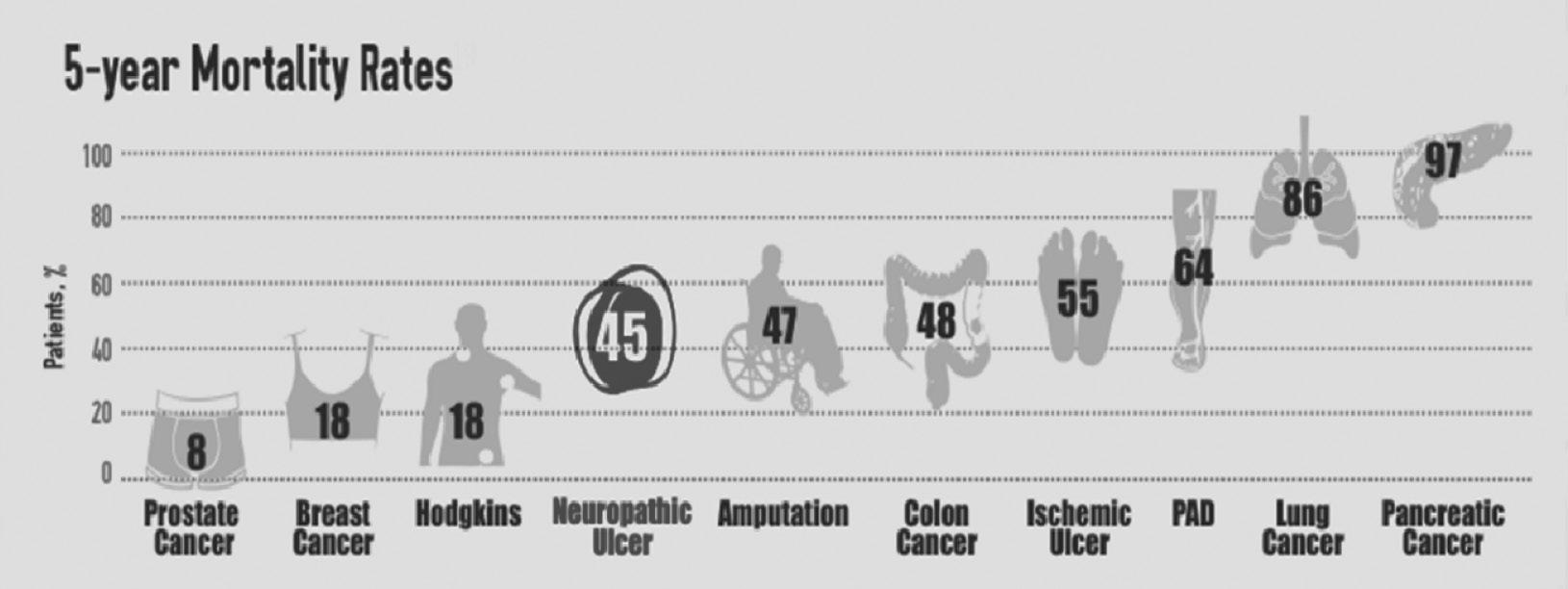
Diabetic Foot Ulcer related hospitalizations and concomitant treatments pose a tremendous burden on our society. Over the last 15 years, the U.S. rate of foot amputations from complications of diabetes has soared, approaching 100,000 annual-
can manage the diabetic foot properly BEFORE the FOREST GOES ON FIRE. Proper management of this condition can greatly improve patient’s quality of life and in-turn create a lower financial stress on our society.
| continue from page 12
from various parts of the country. Gone were the days of sixty-piece orchestras and emphasis was on very basic instruments and vocal skills. He also had considerable influence on his contemporary music directors who all started to emulate him.
The period starting from the time of ARR’s retirement to present times can be termed as a “confused” phase of Bollywood music. It seems that movie music today is a big hodgepodge of many different styles and there are a large number of music directors each of whom has had a few hit movies to his credit, but no one has yet managed to dominate the musical scene. There is a huge emphasis on songs accompanying dance routines and these dance routines are all very elaborate presentations involving dozens of dancers brilliantly choreographed for a pleasurable visual impact. The dances can be Bhangra-style or classical style. Indian dances or imitations of rap-style American dances with the dancers in scanty costumes, some even with English words in the
lyrics.
While Bengalis had significant contributions in composing and singing, they have been notably absent in the area of writing the songs. It points out towards a profound language barrier that goes to the core of Bengali culture. I suppose the reason is that they did not make any effort to study or learn the Hindi or even Urdu language. It is a shame. Just imagine someone like Gauri Prasanna Majumdar, who was a phenomenal lyricist in composing songs for Bengali movies, making an effort to pen Hindi lyrics. Even Salil Chowdhuri who always wrote his own lyrics for the Bengali songs he composed, relied on others to compose the lyrics for his Hindi songs. The only exception is Kishore Kumar who wrote some of the lyrics of the songs he composed, for example in “Door Gagan ki Chhaon Mey”.
It is not clear what direction the Bollywood music is heading towards at present. . It seems that what is required is the emergence of another musical genius like SDB or ARR, who will show the way. The
| continue from page 10
water. By pouring water on the Shiva Linga and simultaneously chanting “Om Namah Shivaya”, purifies the water molecules within us resulting in the cleansing of our own mind, body and soul. Fondly, we also bathe a linga with panchamrit a concoction of five naturally pure ingredients - milk, honey, curd, sugar and ghee as a ritual that pleases Lord Shiva. The very thought that by offering panchamrit we are pleasing Lord Shiva heightens our devotional feelings and gives us a strong sense of spirituality.
The impact of Heightened Spirituality – The Scientific aspect:
In this context, the best explanation is what Lionel Tiger, an evolutionary biologist at Rutgers University says –
“Religion is really made by the brain. It is a secretion of the brain. The root of religious belief is an evolutionary drive to seek this “secretion”— namely Serotonin —which provides the believer with feelings of well-being. A neurotransmitter that regulates mood and appetite, Serotonin is linked to feelings of well-being when it floods the central nervous system.”
Neurophysiological effects of religious believes, acts of devotion, chanting and performed rituals, lead to one singular goal – increased secretion of brain chemicals that support health and wellbeing. In Hinduism, Durga Kavacham, for example, is a mantra that specifically seeks protection from Goddess Durga for all our cells, organs, hair, skin, and the entire body. Repeated chanting of this mantra is prescribed for health benefits.
good news is that several Bengalis are again under the spotlight. They include vocalists like Shreya Ghoshal and Monali Thakur and music directors like Pritam Chakrabarty (“Dhoom”, “Race” etc). It is also interesting to note that there has been a recent trend to adapt tunes from Tagore songs to Bollywood music, most notably “Piyu Bole” from the movie “Parineeta” by music director Shantanu Moitra.
It is too early to say if Pritam is that leader. Pritam has some unique traits not shared by his peers which also explain his popularity. He has succeeded in truly blending western beats with Indian music including classical Indian music. Secondly, he has integrated various types of Indian music that has taken the entire country by storm. On the other hand, it is also possible that a more Tagore-centric musical culture would be welcome in Bollywood as a refreshing change of pace from the current fast paced tunes. In any event, it is likely that another Bengali music-director might guide us to the future.
My salutation to all those ancient Hindu sages who truly knew how to establish religious acts and rituals principally aimed at human wellness and not just to please the Gods. Contributions of these intellectually thriving sages made Hinduism a truly scientific religion. This is the only religion in the world where we greet deities and each other with folded hands which denotes – “The divine in me respectfully recognizes the divine in you.” What a lovely thought in recognition of the truth that every entity in this universe is part of one universal energy, every human act, a prayer, a chant or performing a ritual all contribute toward enriching self. The energy attained from self-betterment reverberates around to enrich the entire universe we live in.
I am desirous to discuss scientific aspects of other mantras and rituals prescribed for Vaishnavism and Shaktism, but space for this article is limited. So, readers who are Vishnu and Shakti worshippers, please stay tuned, will cat-up later. Stay tuned.Stay blessed!
References: The author consulted numerous publications to write this article. Interested readers may contact the author at sushmitadutt2@gmail.com.
(For the period July 1, 2019 to August 31, 2020)
Benefactors -- Gold
Shyamashree Sengupta
Kalyan K. & Paromita Basu
Benefactors
Pronoy & Swapna Chatterjee
Sajal & Sharbani Mukherjee
Grand Patrons -- Gold
Bimal K. & Chhabi Biswas
Chanu R. & Lopa Das
Debashish & Srijata Sarkar
Dilip K. & Jayashree Chatterjee
Kalyan & Chitra Mondal
Mitra & Arijit Purkayastha
Mitrajit & Rashmi Mukherjee
Pradip & Shikha Majumdar
Rama K. & Baruna Haldar
Sheuli Gupta & Dhananjay Gupta
Tapan K & Geeta Audhya
Utpal Sengupta
Grand Patrons -- Silver
Ankuresh & Maya Ghosh
Ashis & Jayati Rakhit
Ashish & Shukti Mukherji
Indrani & SubrataDhar
Krishna & Nirmal Kundu
Kumarika & Chandan Banerjee
Panna L & Deepa Dutta
Prakash K. & Moyukh Sen
Sandipan& Dhirja Gangopadhyay
Krishnendu & Sangeeta Mukhopadhyay
Sanjukta & Surajit Mitra
Satyajit & Sucheta Bhattacharya
Sisir & Saswati Biswas
Subrata & Seema Bhaumik
New Patrons
Amit & Mamata Chattopadhyay
Ananda & Krishna Chakrabarty
Arka & Mita Mukherjee
Asish Sengupta
Birendra N. & Nandita Pramanik
Chinmay & Ranjana Chakrabarty
Dhananjay Gupta
Dilip K & Ivy RayChaudhuri
Dwipendra K. Sarkar
Garden State Cultural Association
Ira Ganguly
Manabendra Nath & Indrani Sen
Manoj & Ashima Basu
Mihir K. & Anuradha Sinha
Mukul & Malabika Majumdar
Sandip Patel
Sangeeta Roy Paul & Dipanjan Paul
Satyajit & Tapati Bandyopadhyay
Shravani & Alexander Kosnik
reported by Arpita Gupta
2020 has been a memorable year that has required our lives to drastically change. The COVID-19 pandemic caused state lockdowns which severely limited the ability of members to commune and gather for many of our cultural celebrations. Even in light of these adversities, the
Soumen & Anasua Roy
Sunith K & Prasanthi Roy
Sushmita Dutta
Swapan & Jayasri Roy
Tapan & Eva Chatterjee
Ujjal & Ranjana Sanyal
Urna Biswas
New Life Members
Abhijit & Arshil Debnath
Abhishek & Priya Nag
Alokesh & Himeli Dey
Amit & Rupa Khetarpal
Anind & Sanchita Datta
Anirban Banerjee
Arun Kumar Dey & Lina Mitra
Arundhati & Sumana Gupta
Ashish & Suparna Das
Atri Guha
Bharati Deka
Bithi Sengupta
Debaprasad Chaudhuri
Debashis Mukherjee
Dhritiman & Debjani Banerjee
Dibyendu & Sheuli Roy
Dipasree Sinharoy
Esha Rakhit
Hemanta & Ruma Bhattacharya
Indrajit & Malini Ghosh
Indranil & Barnali Dasgupta
Joydip & Chandrima Bandyopadhyay
Kanishka Foundation, Inc
Kaushik Datta
Nilanjana Das & Shiv Kar
Nukulini & Nilesh Patel
Pijush Mallick
Pinaki & Rumana Chattopadhyay
Purnendu & Gouri Datta
Raghavendra K & Surabhi Tangirala
Raja Mukherjee & Heidi Knowlton
Raju Patel
Ranendra & Ratna Chakraborty
Ranjita Sengupta & Das Sharma
RATHINDRA K ROY
Salil & Madhumita Banerjee
Sanjeeb Bhattacharya
Satyajit Chakraborty
Shankhadip Chakraborty
Shraboni& Sabyasachi Chakraborty
Siddhartha & Shobha Basu
Soumyadeep & Riteka Sen
Subinay & Kalpana Ganguly
Suddhasatta & Anindita Acharyya
Sudeep & Sheela Bhattacharjee
Sudip& Bhaswati Roychoudhury
Suman Banerjee
Tapash & Srabani Sengupta
Vikas Singh & Sumita Pandit
executive members of ICC handled this and created a platform for Baisakhi to be held. While many people would have loved to celebrate in person, due to the spread of COVID-19 across the US, the decision was made to not cancel the celebrations, but to do it online, following the theme of 2020. Through the amazing work of Communication Secretary Arpita Gupta, who coordinated with all the performers as well as the executive members President Nirmal Kundu, GS Nilay Hait and Cultural Mridul Paul, who would give speeches, a smoothly run online stream was created for viewers to watch on both YouTube as well as Facebook. The performances consisted of traditional
reported by Pradip r. Das
OnJune 6th, GSCA organized an online discourse on “Spirituality in Daily Life” by Swami Sarvapriyananda, minister and spiritual leader of the Vedanta Society of New York, and a Nagral Fellow for 2019-20 at Harvard Divinity School. The event was also graced by the then Consul General, NY, Sandeep Chakravorty.We all have been living in unprecedented times caused by covid-19 outbreak from a new coronavirus for the past several months. Spirituality along with meditation could help us focus and calm our minds.The discourse was a lively discussion where questions from the online viewers were entertained by the Swamiji. Amongst other topics, he also discussed some elementary yoga and Vedanta techniques to strengthen the mind. His clear understanding of the core issues manifested in the lucid explanations that he offered to many questions.
On Saturday, June 27th, GSCA hosted a scientific seminar on Covid-19. The panel discussion on this online seminar was moderated by Dr. Shuvendu Sen, MD, author and a community physician (covid-19 panel chair at Indian Consulate, NY, and invited speaker at CNN, India).
Amongst the participants in the discussion were two physicians (both children of GSCA members) who presented informative narratives of their own experiences at their respective hospitals during this pandemic. Statistical analyses of this pandemic by patient demographics etc. and some detailed pictorial representation of the PPE’s being used by frontline physicians when dealing with covid-19 infected patients added to this interesting seminar.
Also present amongst the panelist was a clinical psychologist/psychotherapist (also a daughter of a GSCA member) who discussed the mental health aspects of patients suffering
dance, poetry and musical shows of talent by the youth of ICC as well as their senior members. It was far from easy, but through careful coordination and great teamwork the members of the ICC were able to do their annual Baisakhi program almost seamlessly for the members of this community. The program consisted of various speeches by executive members of the ICC such as Nirmal Kundu, Nilay Haiti and Mridul Paul, and was MC’d by Bidita Bhattacharya, who ran through the program with Arpita Gupta multiple times before the program’s actual date to ensure no issues when they went live. The hours of practice running through the program would pay off
from covid-19. Anxieties from job losses and related uncertainties have added to mental disturbances also. Statistical data was also presented on the general mental health related issues of South Asians in this country.
Finally, two pharmaceutical scientists, an organic chemist and a microbiologist presented some basic biological and chemical aspects of the coronavirus responsible for covid-19. Also included in their presentations were elementary aspects of virology, the chemical structure of the covid-19 protein and the steps of clinical trials required for product approvals.
All in all, this was a very informative seminar for the common person. Details of this online seminar can be found at http://gsca.us/live.html or at http://gsca.us/fb.html
On July 11th the children of GSCA entertained us with a virtual performance. During the past several months of the current pandemic, they have been unable to go to schools, meet their friends, indulge in outdoor activities and faced the challenges of adjusting to the “virtual learning” processes. All these have caused turbulence in their young lives. This youth program was a wonderful outlet and platform to demonstrate their musical and dance talents to the viewers. Talents were galore in this two-hour long program with participants predominantly being elementary school through high school students. Vocal presentations, both songs and recitations, and dance renditions were a treat to watch. It was very heartening to see that our next generation, inspired and encouraged by their parents, are keeping our Bengali/Indian culture and heritage alive and flourishing.
Watch this program at http://gsca. us/live.html
This year, Covid-19 has forced all major Bengali organizations to hold Durga Puja in a highly curtailed manner. As of now, GSCA plans to hold it just for one day, on October 24th. Our regular venue, the Plainfield High School will not be available. We are planning to hold the puja at the Ved Mandir in Milltown, NJ. Please stay tuned to GSCA website for further details.
spectacularly as the streams amassed a large viewing audience on YouTube and Facebook, summing to almost 1,500+ views across all streaming platforms. The response by the community to this effort was extremely favorable, highlighting the significant work put in to make this a success. This was ICC’s first experience in streaming one of their annual cultural programs and they rose to the occasion to provide households with the Baisakhi celebration that they were so eagerly looking forward to.
Just like other Bengali organizations, ICC is planning to celebrate Durga Puja in a highly curtailed manner. Please stay tuned for further details to the ICC website.
saMragnEE MajuMdar naMEd
Edison, new jersey, june 2019 – SAMRAGNEE MAJUMDAR has been named a member of the 2019 Executive Council of New York Life Insurance Company. Members of the Executive Council are among the most successful of New York Life’s elite sales force of 12,250 licensed agents.
Ms. Samragnee Majumdar has been a New York Life agent since 2010, and is associated with New York Life’s New Jersey, General Office in Edison. Ms. Samragnee Majumdar is very successful and have been a Council member every year.
Samragnee Majumdar is a
l MBA from Maharishi Arvind Institution of Science and Management, India with Marketing Major and HR minor
l Worked for Xerox Modi Corp , India as Sales Executive ( B2B Sales)
l Internship from Pepsi Co , India as Market Research Executive for Aquafina ( bottled water launch)
l Worked for Idearc Media (Verizon Yellow Pages) NY, NY as an Advertisement Consultant and have been one of the top performers and won award trips.
l Presently working for New York Life as an agent for over 9 years
Personal:
l Mother of a 10 year old daughter
l Resides in Hillsborough, NJ


l Actively involved with a community club Kallol OF NJ and a committee member of Kallol Women’s Forum ( supporting deprived kids of India for funding their education and food)
New York Life Insurance Company, a Fortune 100 company founded in 1845, is the largest mutual life insurance company in the United States* and one of the largest life insurers in the world. New York Life has the highest possible financial strength ratings currently awarded to any life insurer from all four of the major credit rating agencies: A.M. Best (A++), Fitch (AAA), Moody’s Investors Service (Aaa), Standard & Poor’s (AA+).** Headquartered in New York City, New York Life’s family of companies offers life insurance, retirement income, investments and long-term care insurance. New York Life Investments*** provides institutional asset management and retirement plan services. Other New York Life affiliates provide an array of securities products and services, as well as retail mutual funds.
Please visit new york Life’s Web site at www.newyorklife.com for more information.